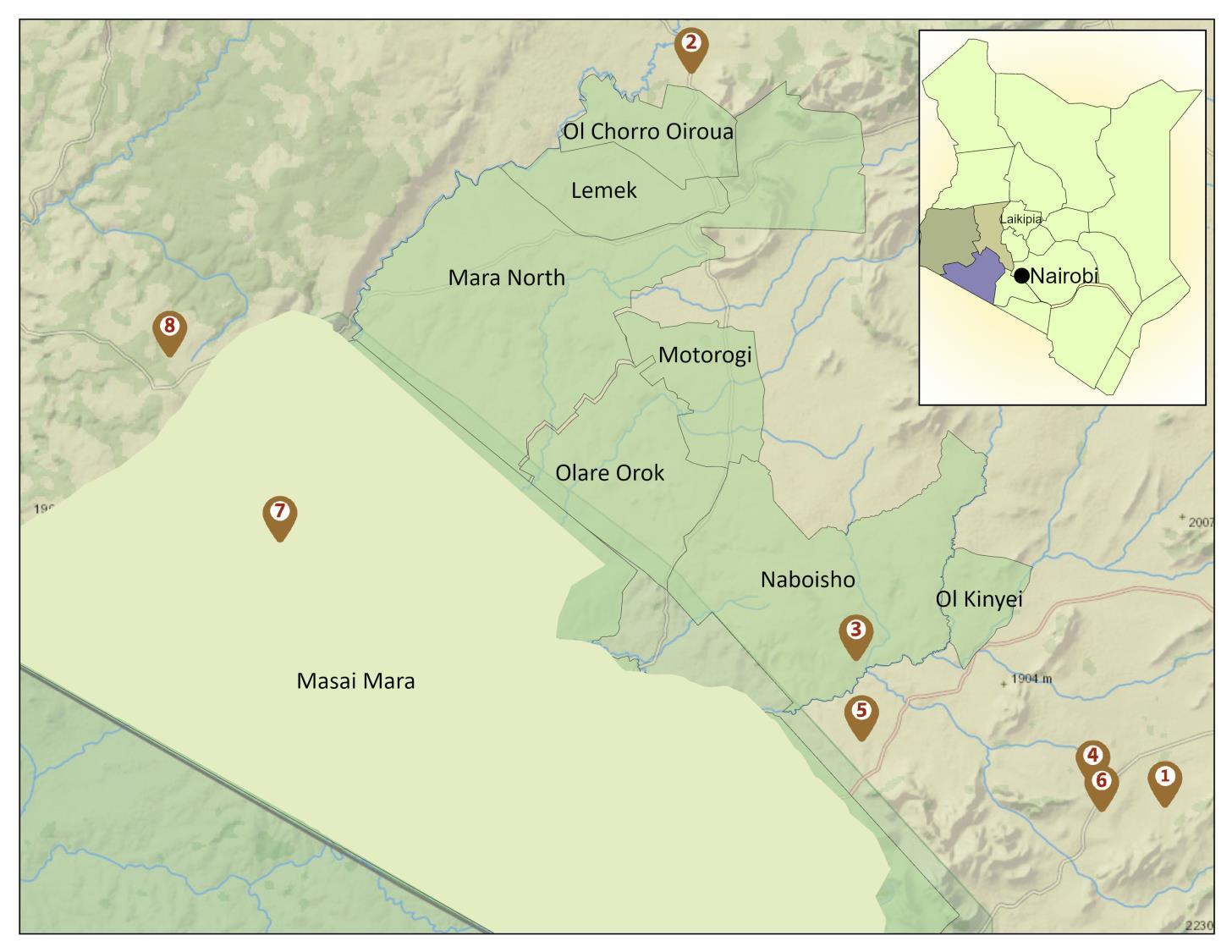
The better part of April remained dry, with elevated daytime temperatures and relatively cooler nights. In contrast, the final week of the month brought intermittent rainfall across much of the Mara ecosystem. Despite this variation in the weather pattern, the rivers continued to flow and the grass is in plenty, largely due to the rejuvenation of the ecosystem following the substantial rainfall received in March. With this, we are optimistic of the continued availability of forage and water resources for wildlife in the coming months. During the reporting period, the SWT/KWS Mara Mobile Veterinary Unit attended to seven wildlife cases and carried out an assessment in the Olorien-Nyakweri ecosystem following reports of stranded buffaloes and other affected wildlife species.
Acknowledgement
Sincere gratitude to Elizabeth Scarlett for the generous funding of the Mara Mobile Veterinary Unit through the Sheldrick Wildlife Trust. Your support ensures that wildlife within the Mara ecosystem receive timely and high-quality veterinary care, thereby contributing to ecological sustainability. We also extend our appreciation to the Kenya Wildlife Service for the managerial oversight through the Assistant Director of Narok County, as well as the Head of the KWS Veterinary Services Department. We are equally grateful to the Elephant Aware teams, alongside all individuals who reported cases and provided essential field support during the interventions. The success of our work is deeply rooted in your collaboration and assistance. 8 Cases in April 2026
Case Details
injuries following an attack by a hippo, likely during a predation attempt
April 2026
Case 1 – 2nd April 2026
Elephant Postmortem
Ripoi Village, Narok County
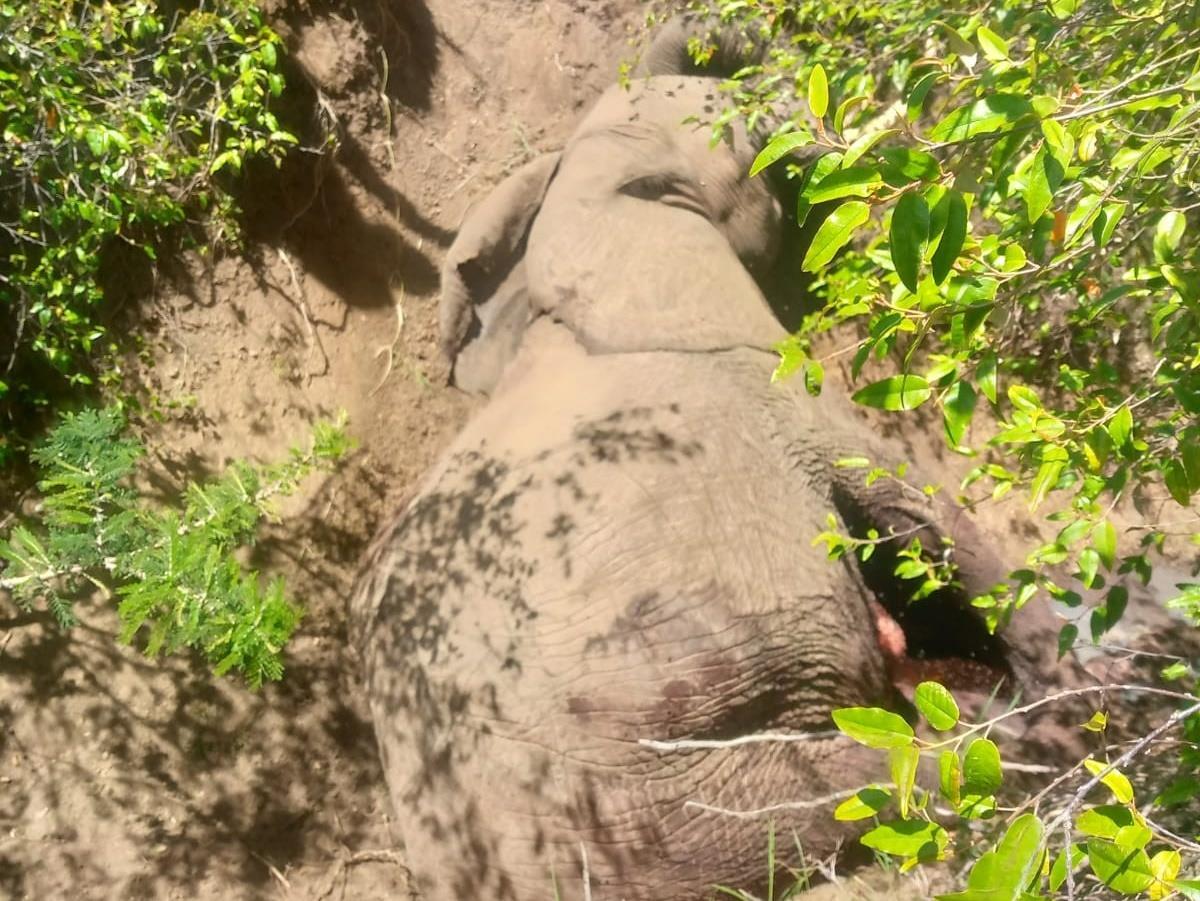
The Mara Mobile Veterinary Unit received a report regarding the sighting of an adult female elephant carcass in a lagga within Ripoi Village, Siana Ward. The team was requested to help ascertain the cause of death.
Postmortem examination
The carcass was found still fresh with no evidence of advanced decomposition. Mild scavenger activity was observed on the ventral abdomen, while the remainder of the carcass was largely intact. The animal was in fair body condition (3/5).
The carcass was found within a lagga and in sternal recumbency (dog-sitting) posture. The forelimbs were slightly flexed and tucked under the body, limiting their ability to extend and support standing. The surrounding soil appeared to have been disturbed consistent with an accidental fall into the lagga, followed by unsuccessful attempts by the elephant to extricate itself. Mild cutaneous abrasions and pressure-related skin changes were noted, likely secondary to contact with the ground. No indications of infectious discharge or systemic disease were visible externally.
Cause of death
The field findings are consistent with a natural cause of death following an accidental fall into the lagga.
Case 2 – 11th April 2026
Elephant
Postmortem
Olengishu Conservancy
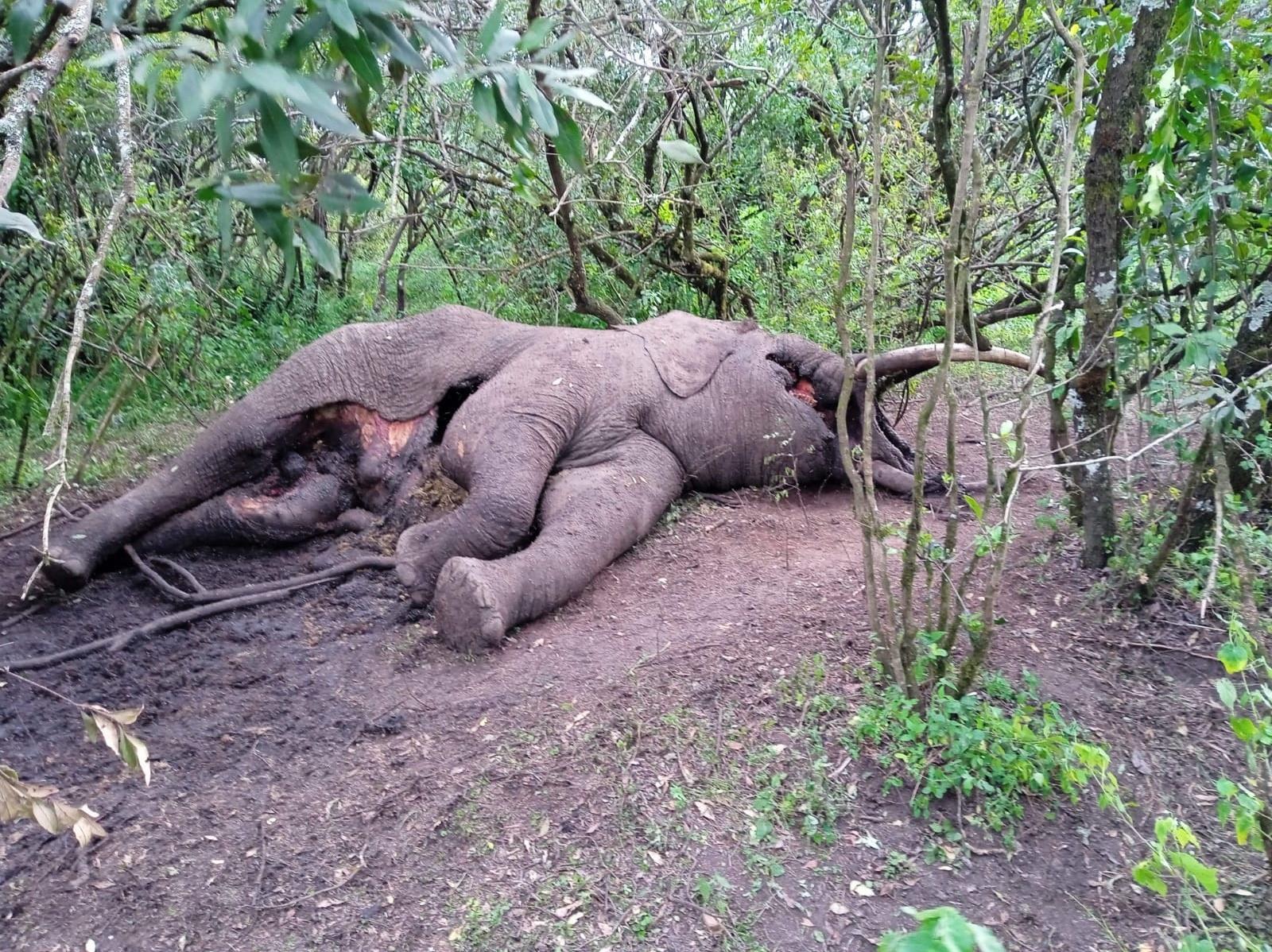
The Mara Mobile Veterinary Unit received a report regarding the sighting of an adult male elephant carcass in Olengishu Conservancy. The team was requested to help ascertain the cause of death
Postmortem examination
The carcass was found lying on left lateral recumbency and in a moderate stage of decomposition. It was in fair body condition (3/5). There was extensive tissue loss affecting the hindquarters and ventral abdomen with most internal organs eaten, consistent with post-mortem scavenging, most likely by hyenas. Both tusks were intact at the time of examination and were retrieved and secured at the Olchororua Rhino Base. Examination of the cutaneous system revealed no evidence of ante-mortem trauma or injuries. The large wounds observed on the hind quarters and ventral abdomen were irregular and associated with scavenger activity, not primary lesions. Due to decomposition and extensive scavenging, no definitive pathological lesions could be identified.
Cause of death
Due to extensive scavenging and decomposition, the exact cause of death couldn’t be ascertained. However, given the absence of identifiable injuries and given the carcass’s condition, the elephant is most likely to have died from natural causes (either internal pathology or systemic condition).
Lion Natural Causes
Naboisho Conservancy
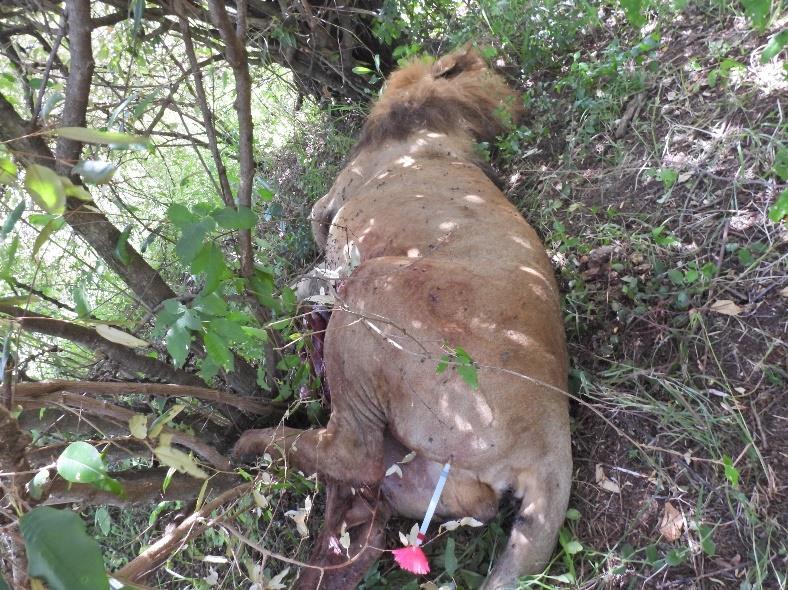
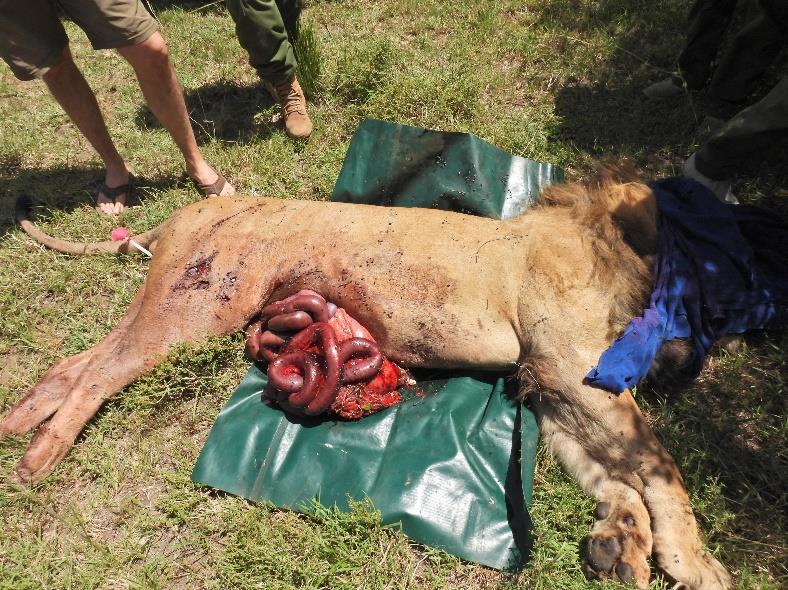
Naboisho Conservancy reported that one of their prominent adult male lions, Kiminati, a member of the Koka males coalition currently dominating the Enesikiria core pride had sustained severe injuries. He was reported to have eviscerated intestines and was largely immobile.
Immobilisation, examination and treatment
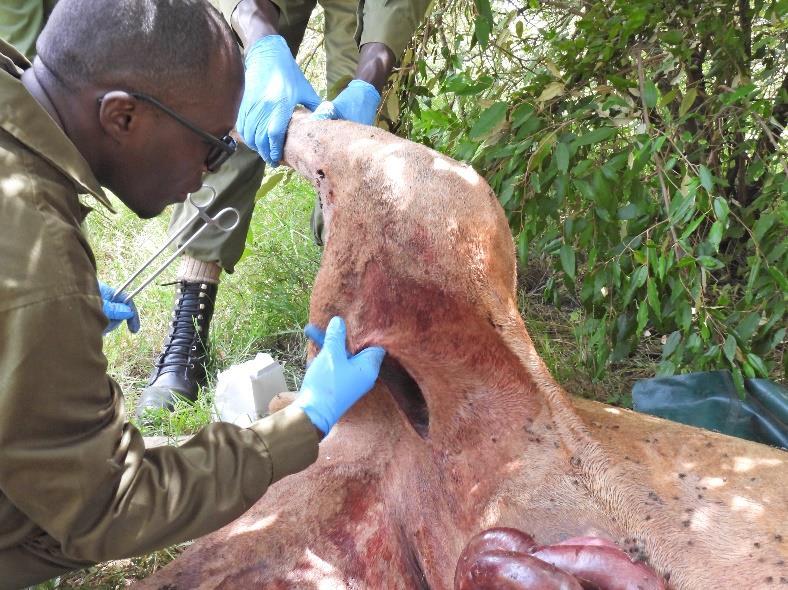
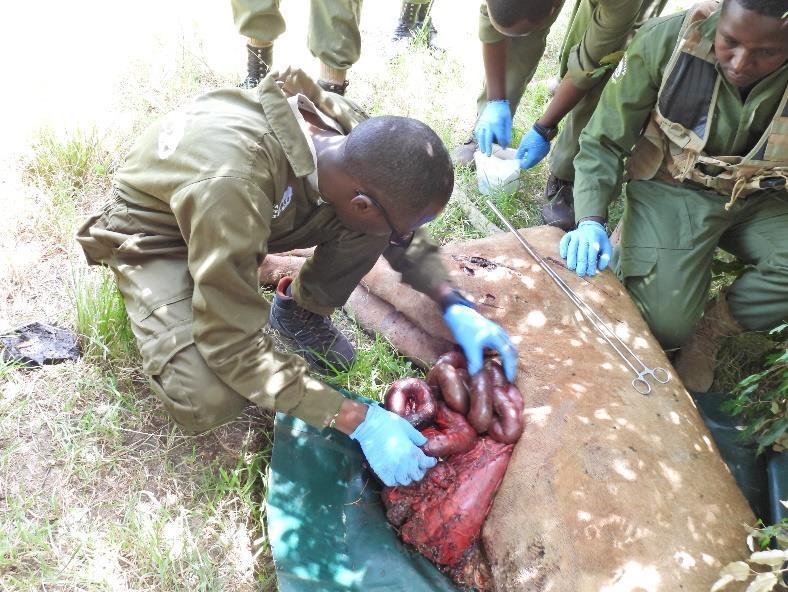
Kiminati was found sheltering from the intense heat under some shrubs. He was slowly approached using a vehicle and darted with 8mgs Medetomidine and 280mgs Ketamine. On examination, he was found to have sustained a ventral abdominal injury that had resulted in evisceration of a large portion of the intestines and stomach; the eviscerated organs had become necrotic and desiccated. In addition, the stomach had been perforated, leading to leakage of gastric contents. He was also found to have sustained a deep, through-andthrough puncture wound on the right hind limb. He had lost a significant amount of blood, and his extremities were cold. It is suspected that Kiminati sustained these injuries following an attack by a hippopotamus, likely during a predation attempt on a calf. During the examination, he developed anaesthetic complications but was successfully stabilized. However surgical intervention was deemed unfeasible.
Prognosis and management
The severity of the trauma, high risk of septic peritonitis, and the intensive post-operative care required markedly reduced the likelihood of survival. Consequently, humane euthanasia was performed
Case
Spear Siana Conservancy
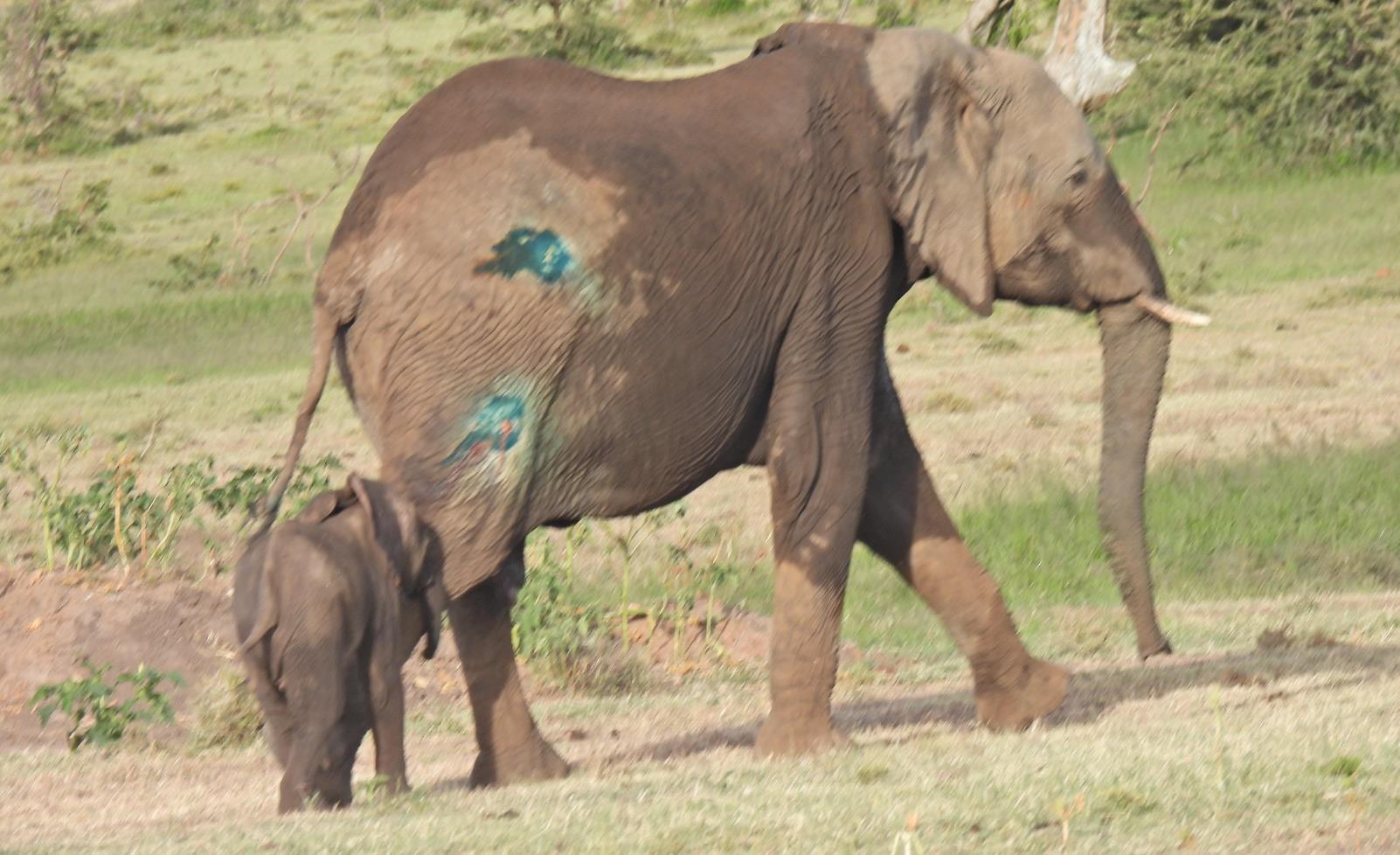
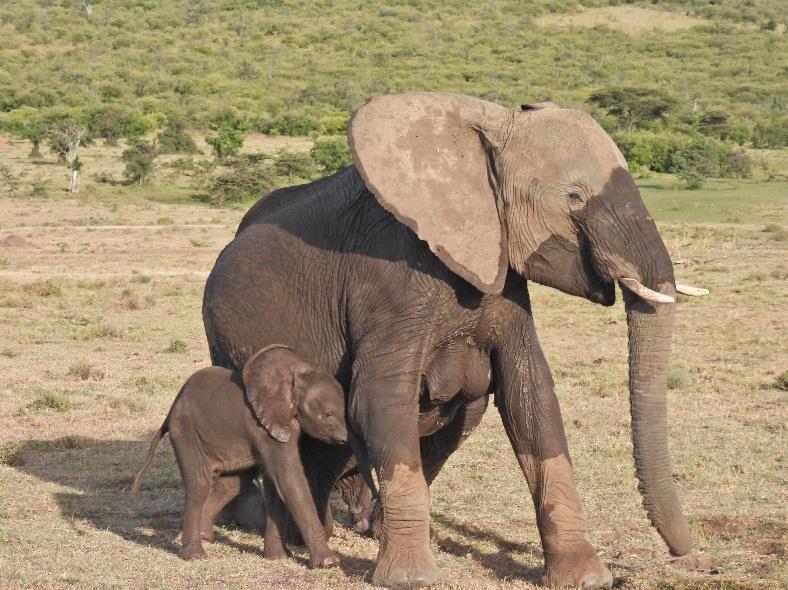
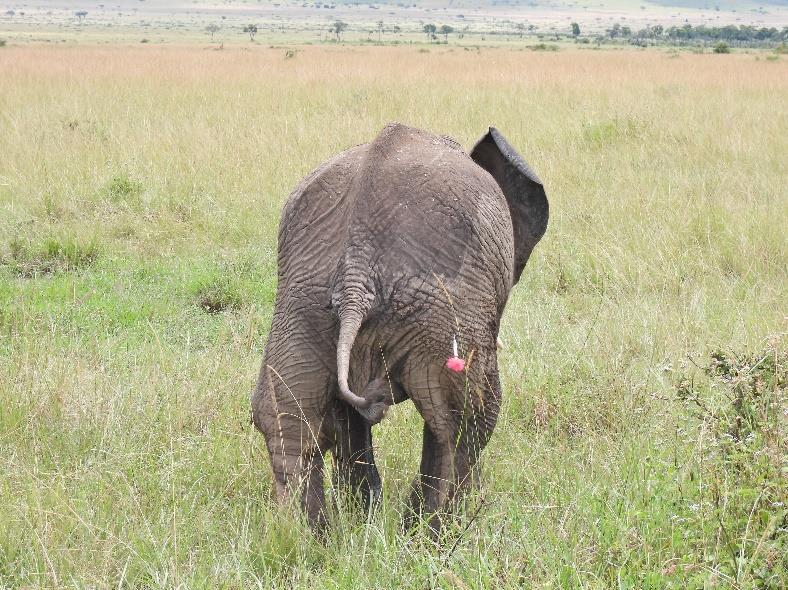
Elephant Aware reported an injured adult female elephant accompanied by a young calf.
Immobilisation, examination and treatment
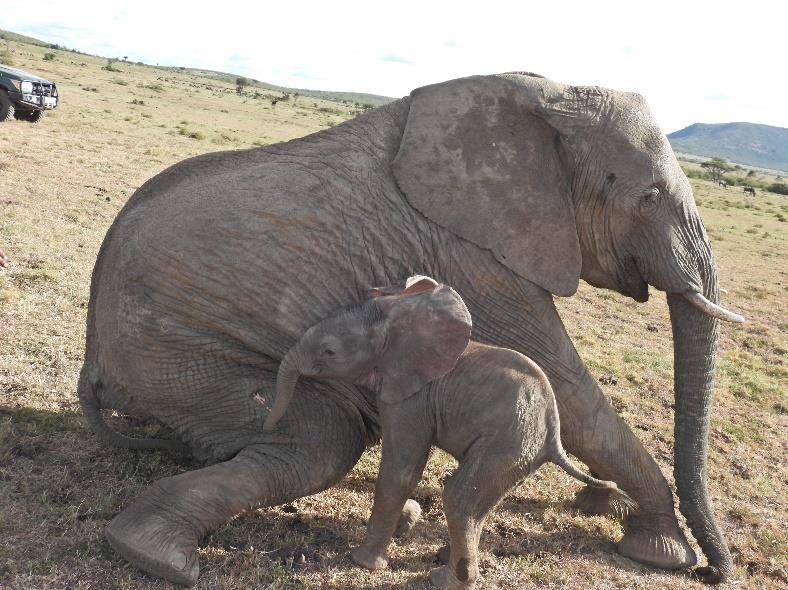
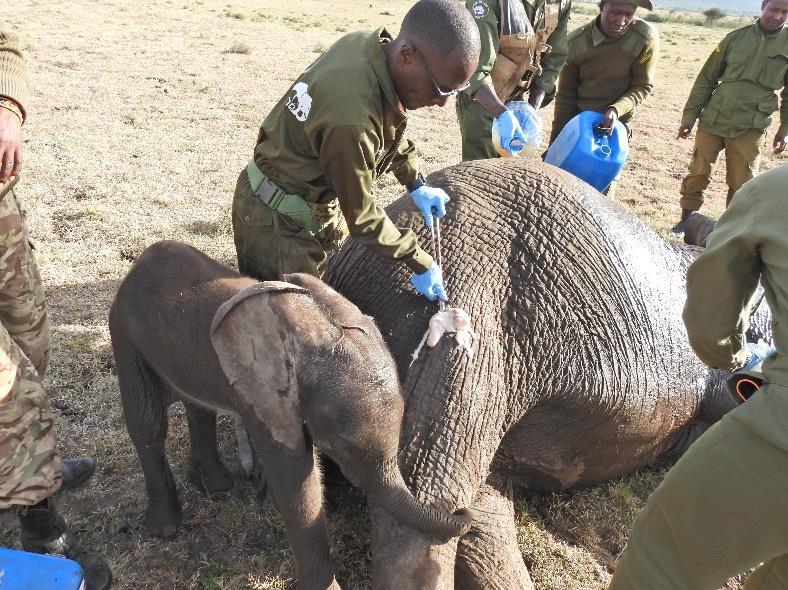
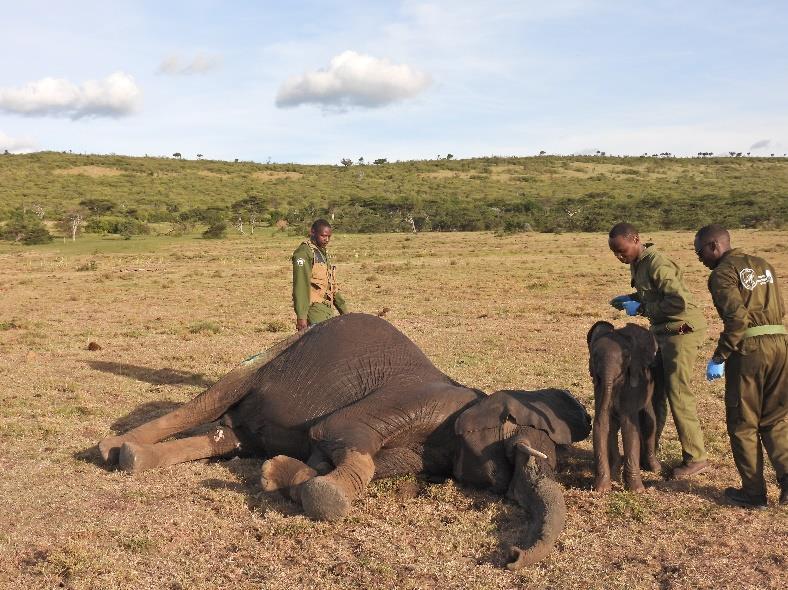
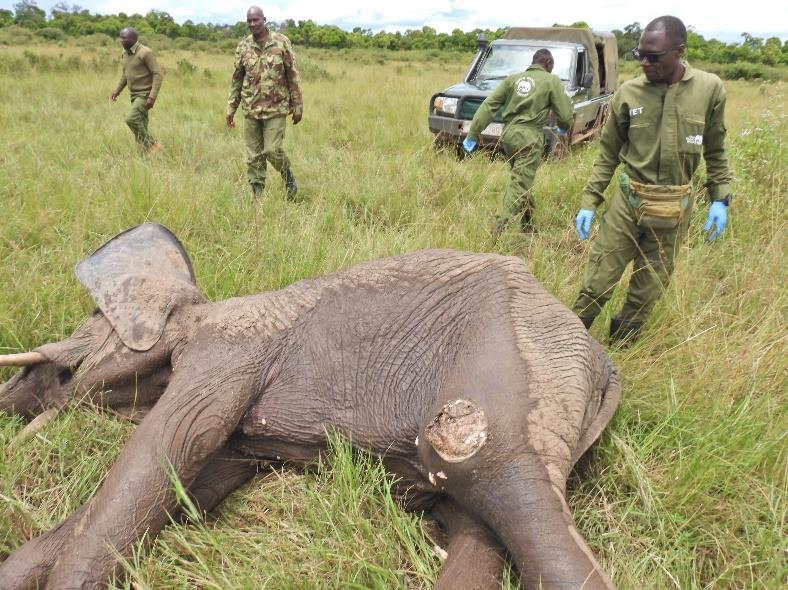
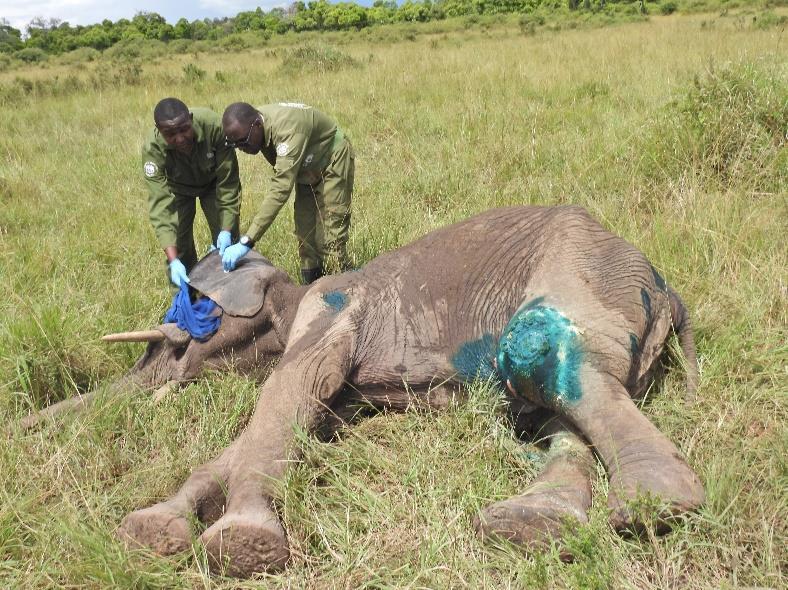
The injured elephant was located within a herd, accompanied by a one-week-old calf. She was approached cautiously using a vehicle and darted with 16mgs Etorphine. The anaesthetic drug took effect rapidly, and within five minutes she assumed sternal recumbency, with her calf remaining close by. The rest of the herd was then pushed to a safe distance to allow for examination and treatment. The calf was secured to prevent accidental injury in case the mother collapsed onto it. To minimize stress to the calf, it was released and allowed to move freely around the mother as the team proceeded with treatment.
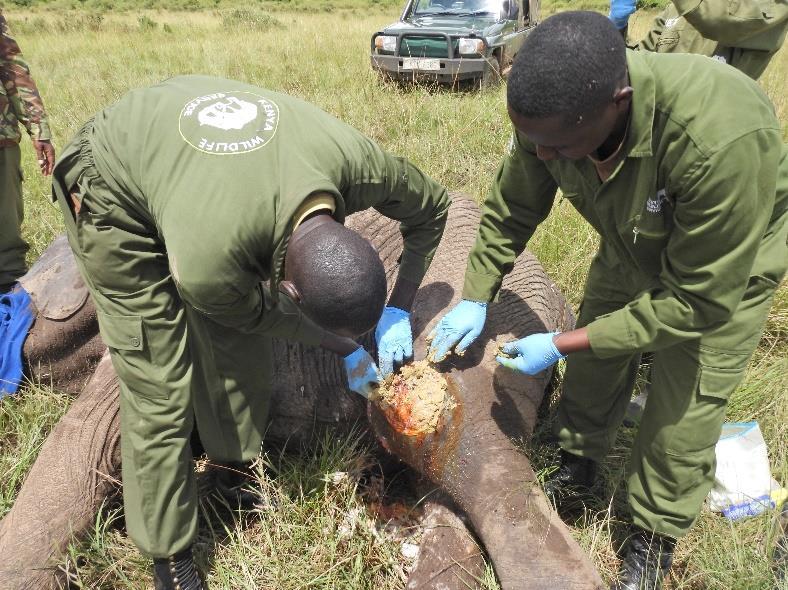
On examination, the elephant was found to have sustained a fresh spear wound, approximately 40cms deep, on the right hindlimb, while an older wound was located more dorsally over the upper hip. The wounds were thoroughly cleaned with water, debrided with Hydrogen peroxide, flushed with Iodine, infused with antibiotic ointment and packed with antibiotic pessaries before being dressed with green clay. To manage inflammation and prevent bacterial infection, systemic antibiotics and anti-inflammatory drugs were administered.
Prognosis
She regained her footing within two minutes of anaesthetic reversal with her calf by her side and slowly moved off to rejoin the rest of the herd. The prognosis for full recovery is good
Case 5 – 25th April 2026
Giraffe Spear
Nashulai Conservancy
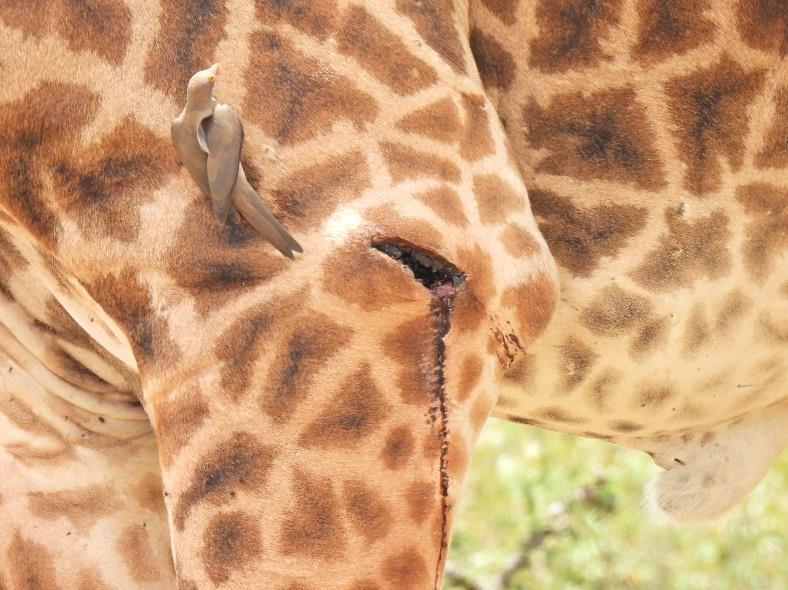
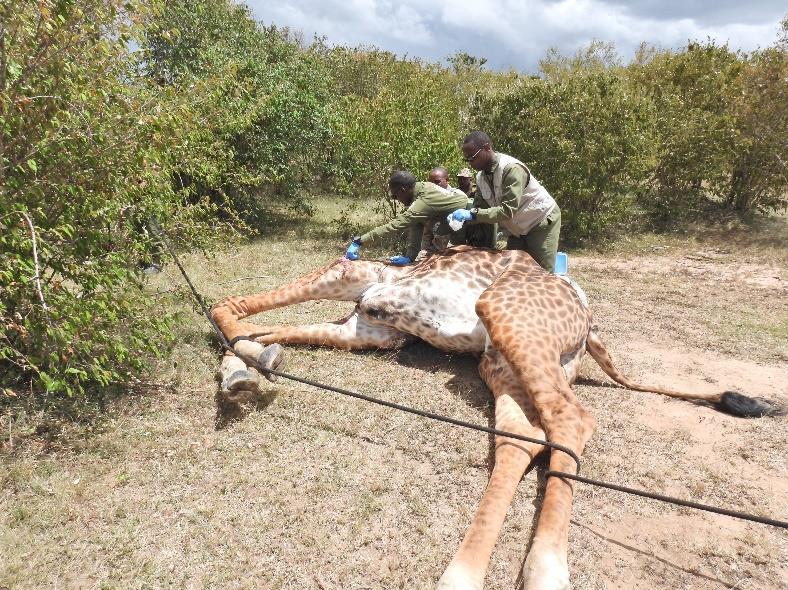
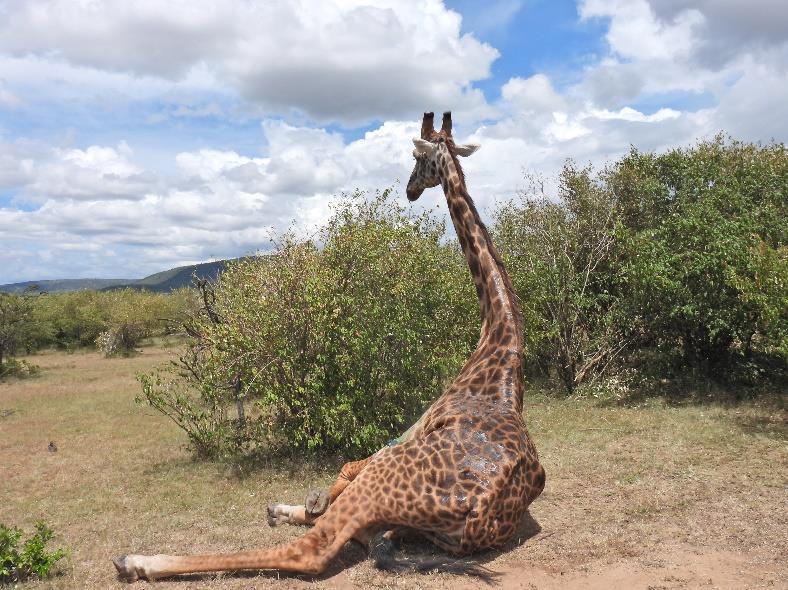
Nashulai Conservancy Rangers reported four giraffes with spear injuries. One retreated into dense bush before the team’s arrival and two were found to have minor injuries not requiring treatment. One had impaired mobility and deep wounds on the left forelimb requiring intervention.
Immobilisation, examination and treatment
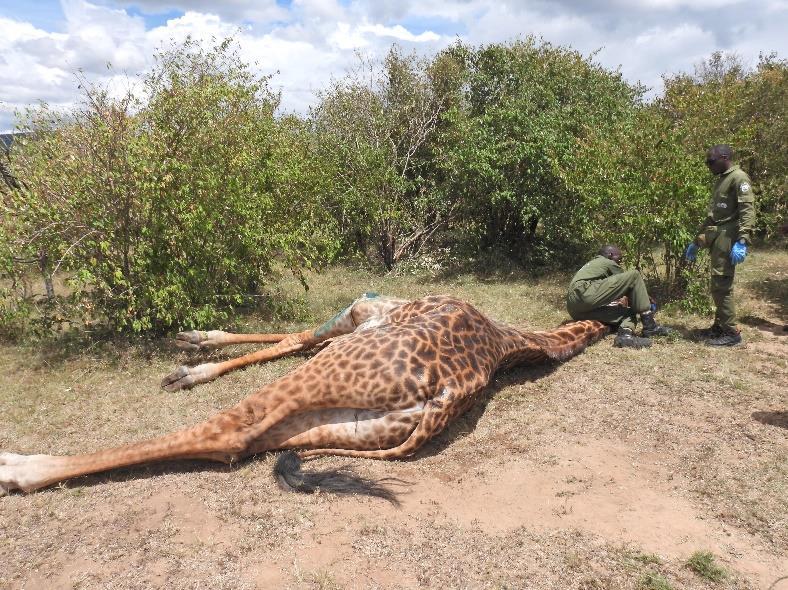
He was approached with a vehicle and darted with a combination of 14mgs Etorphine and 30mgs Azaperone. The drugs took effect rapidly, and he unfortunately went down in sternal recumbency within dense shrubs. Using ropes, he was carefully secured and moved to an open area to facilitate safe examination and treatment, and to minimize the risk of self-injury. He was blindfolded and physically restrained The anaesthesia was reversed before proceeding with wound assessment. On examination, he was found to have sustained a 30cm spear wound, to the elbow of the left forelimb. The wound was moderately contaminated and infested with maggots. It was thoroughly cleaned with water, and the maggots were manually removed before the wound was flushed with Hydrogen peroxide and Iodine solution, then infused with antibiotic ointment and packed with antibiotic pessaries. It was covered with green clay for its wound-healing properties, and an antibiotic aerosol was applied to deter flies. Systemically, he received 3,000mgs of Flunixin and 7,200mgs Oxytetracycline.
Prognosis
Following treatment, he was released. However, the injury had resulted in dislocation of the elbow joint and damage to the surrounding joint tissues, resulting in a poor prognosis. Ground teams were advised to closely monitor his progress.
Zebra Snared Siana Conservancy
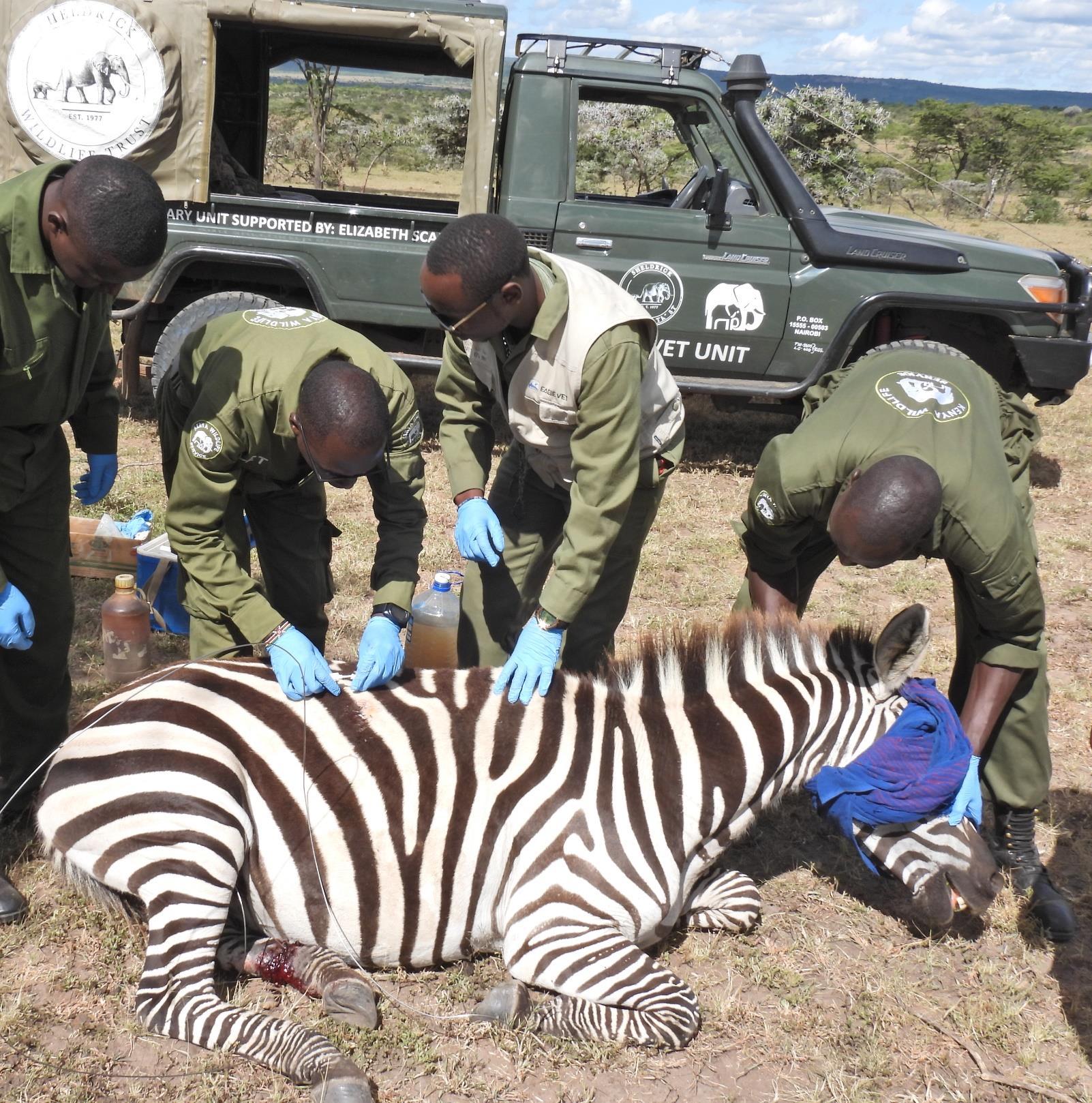
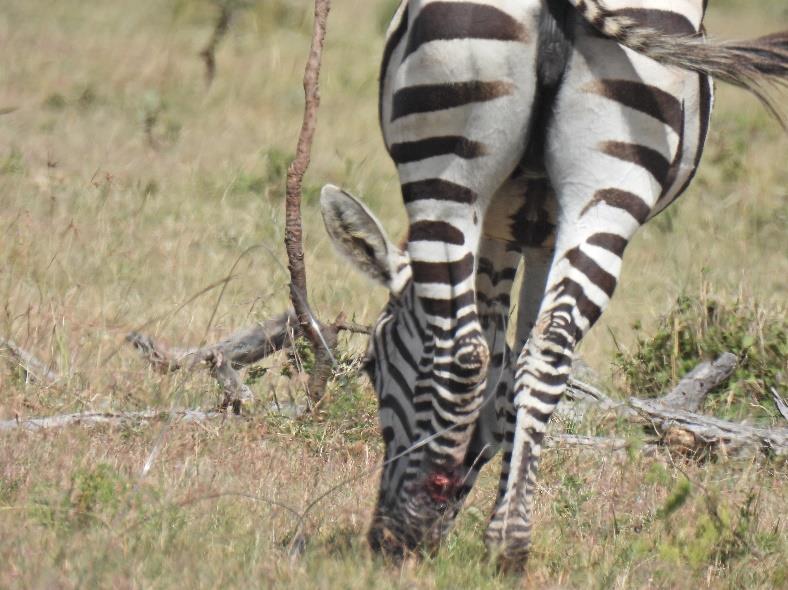
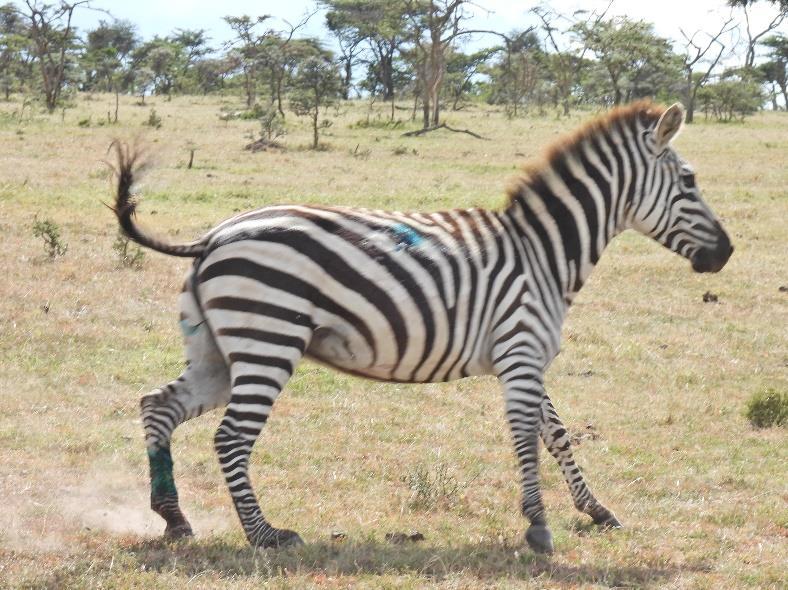
While attending to the speared giraffe in Nashulai Conservancy, the Unit received a report from Elephant Aware rangers regarding a zebra sighted with a wire snare tightly encircling her left hind limb.
Immobilisation, examination and treatment
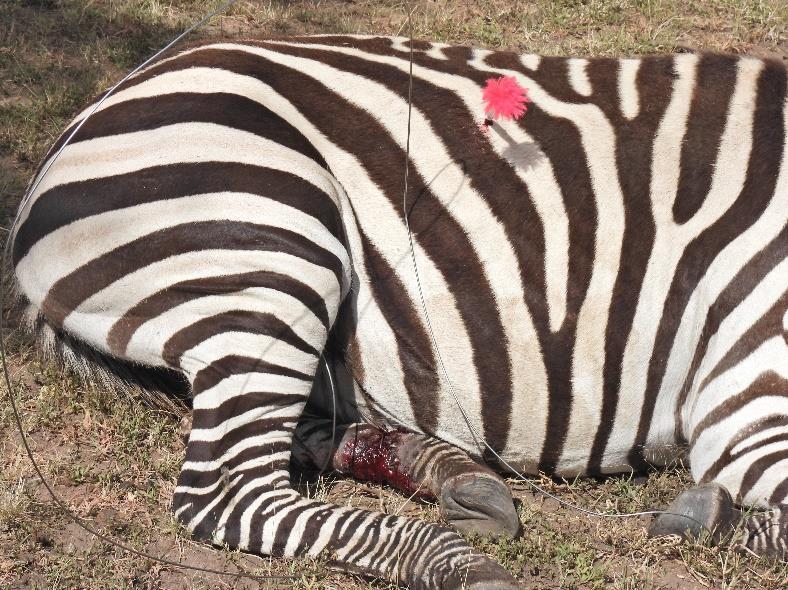
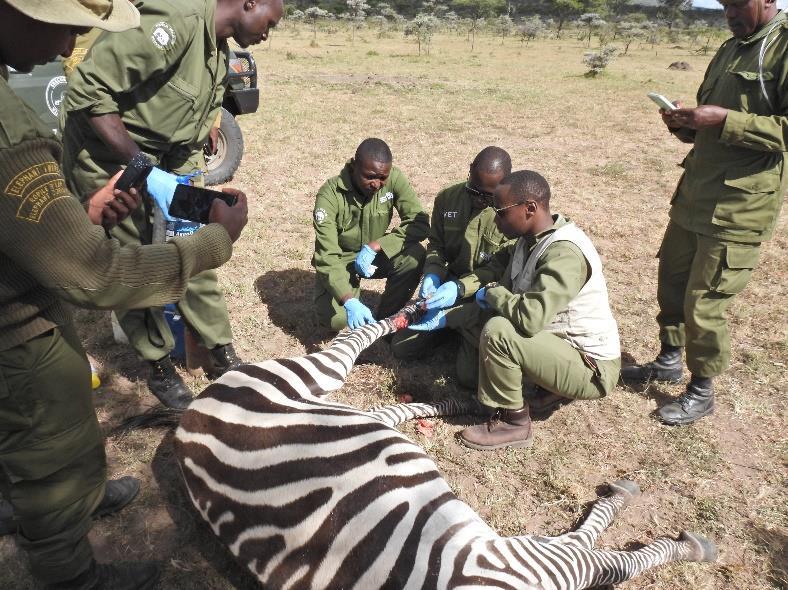
The zebra was found grazing alongside her young foal. She was cautiously approached with a vehicle; however, she was initially skittish. With patience, she was eventually darted successfully with a combination of 9mgs Etorphine and 60mgs Azaperone and within 5 minutes she assumed sternal recumbency. She was quickly secured and blindfolded to prevent ocular injury and reduce visual stimulation. She was then carefully positioned in right lateral recumbency to allow for examination of the affected limb. On assessment, she was found to have a single-strand wire snare tightly encircling the coffin joint of her left hind limb. The snare was cut and removed, and fortunately, it had only caused superficial subcutaneous injuries, likely due to timely reporting. The wound was thoroughly cleaned with water, flushed with Iodine solution, and covered with green clay for its wound-healing properties. To manage bacterial infection and inflammation, she was administered 3,000mgs Amoxicillin, 500mgs Flunixin meglumine and metabolic stimulants.
Prognosis
Anaesthesia was reversed 10 minutes later using 100mgs Naltrexone. She regained her footing within two minutes and ran off to rejoin the rest of her herd. The prognosis for full recovery is good
Case 7 – 27th April 2026
Elephant
Natural Causes
Mara Triangle
Mara Conservancy reported a juvenile male elephant presenting with marked lameness and swelling of the left hind limb.
Immobilisation, examination and treatment
The male elephant was in a small marshy area and carefully guided onto dry ground to facilitate safe handling and assessment. He was found to be exhibiting marked ambulatory difficulty, with non-weight-bearing lameness of the left hind limb. The affected limb showed pronounced swelling around the stifle joint, and purulent material was observed draining intermittently, particularly when the animal attempted to bear weight. He was darted with 7mgs Etorphine, and within five minutes he was recumbent in right lateral position. Examination revealed a dislocation of the stifle joint, which had progressed to ankylosis, resulting in severely reduced joint mobility. An ulcerated wound was present over the affected joint with evidence of secondary bacterial infection and maggot infestation. Additionally, small openings on the lateral aspect of the joint were discharging purulent exudate, consistent with a likely abscess formation secondary to the initial injury. The purulent material was expressed, and the joint was thoroughly cleaned with water, Hydrogen peroxide and Iodine. All maggots and necrotic tissue were carefully excised then the wound was infused with an antibiotic ointment and packed with antibiotic pessaries before being covered with green clay. The elephant received 15,000mgs Amoxicillin, 600mgs Cyanocobalamin, 3,000mgs Flunixin meglumine and 200mgs Ivermectin.
Prognosis
Given the chronic nature of his condition and the extent of joint involvement, the prognosis for full recovery is guarded to poor. While survival remains possible, the elephant is likely to retain permanent deformity and some degree of lameness .
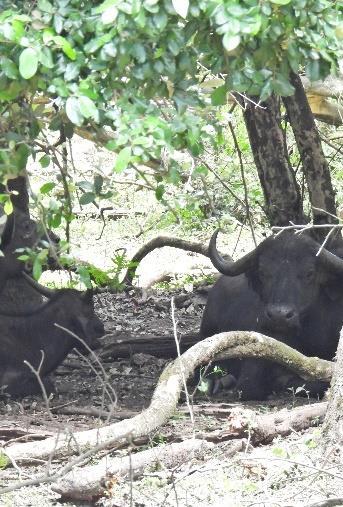
Rapid population growth and land use changes have significantly reduced the extent of formally protected and available habitats for wildlife. As farmland expands, settlements spread, and infrastructure projects encroach upon natural ecosystems, the spaces that once supported diverse species have become fragmented and increasingly scarce. This reduction in habitat has intensified competition among wildlife for the remaining resources, while increasing human-wildlife conflict. Following reports of stranded buffaloes and other wildlife species within the Olorien Nyakweri Forest ecosystem, a critical habitat that serves as a refuge for the giant pangolin, there was need to evaluate the broader ecological pressures driving such occurrences. The Kenya Wildlife Service, in collaboration with the Wildlife Research and Training Institute Maasai Mara Research Centre, was tasked with conducting a comprehensive assessment of the ecosystem.
Findings
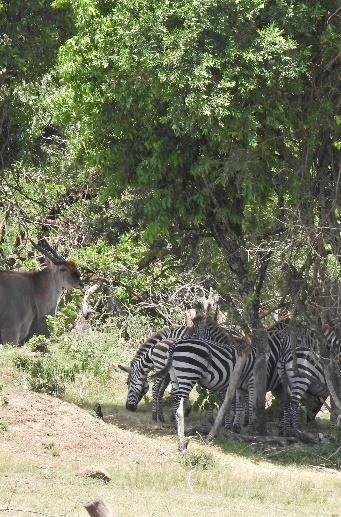
Active clearance of forest areas was observed, primarily to expand agricultural land. Many of these farmlands were found to be enclosed, with some utilizing electric fencing, thereby restricting free movement of wildlife. Field observations confirmed that approximately 20 buffaloes were confined within two isolated forest patches, alongside other species including Maasai giraffes, elands, and common zebras, which were similarly restricted within fenced private farms. Owing to the pressures arising from land use changes, the situation indicated a potential need to relocate the affected animals to a more suitable environment.