

Colin Jung ’28
by Lauren Yoon ’28 by Ainsleigh Noell ’28

Colin Jung ’28
by Lauren Yoon ’28 by Ainsleigh Noell ’28
By Lauren Yoon D’28 Faith, Peace, and Freedom
Christian Response to Suffering By Emmanuel Uyigue D’28
Defending the Wager The Case for Christian Dogmatism By Colin Jung D’28
I Spy... Iconography? A Discussion of Christian Iconography and Creation By Priscilla Villalvazo D’27
Give Us This Day Our Daily Bread
The Eucharist Means for St. Thomas Aquinas's Philosophy By Everett Yau D’28
What Do We Truly Worship? The Dangers and Sources of Idolatry Today By Daniel Davidsen D’28
Compelled to Joy
as an Expression of Faith and Longing for God By Jacob Hasbun-Rivera D’28 Silence Isn't the Answer
Women's Voices in the Church By Ainsleigh Noell D’28
Xavier Laack D’27, Editor-in-Chief
Charlie White D’27, Managing Editor
Lila Gillon D’28, Publisher
Gabriel Martin D’28, Art Director
Efstratia Nicholson D’25, Senior Editor
Joanie Wood D’27, Editor
Tyler Long D’27, Editor
Marissa Benz D’26, Editor
Sadie Jackson D’27, Editor
Gracie Bartos D’27, Editor
Luke Aloe D’27, Editor
Albert Zhang D’25, Senior Layout Editor
Ava Tsolis D’28, Layout Editor
Nico Allison D’28, Layout Editor
Eden Gray D’28, Layout Editor
Attilio Ciccozzi D’28, Layout Editor
Paul Letson D’28, Layout Editor
Catherine Horner D’26, Editor-in-Chief Emeritus
Matthew Kim D’26, Managing Editor Emeritus
Aleksa Sotirov D’26, Publisher Emeritus
Gregg Fairbrothers D’76
Eric Hansen, Professor of Engineering, Thayer
James Murphy, Professor of Government
Lindsay Whaley, Professor of Classics & Linguistics
Council on Student Organizations
The Eleazar Wheelock Society
To subscribe to our journal, visit our website or scan the QR code below. Subscriptions to the journal are free and subscribers get each new issue delivered right to their front door!


We welcome the submission of any article, essay, or artwork for publication in the Dartmouth Apologia that seeks to promote respectful, thoughtful discussion in the community. We will consider all submissions from any members of the community but reserve the right to publish only those that align with our mission statement and quality rubric.
We deeply value your opinions and encourage thoughtful words of support, dissent, or other views. We will gladly consider any letter that is consistent with our mission statement’s focus on promoting intellectual discourse in the Dartmouth community.
The Dartmouth Apologia exists to articulate Christian perspectives in the academic community. We do this through our biannual publications, lecture series, and weekly reader groups where we read and discuss the works of exemplary apologists such as G.K. Chesterton and C.S. Lewis.
We at the Dartmouth Apologia invite people from all intellectual, religious, and spiritual backgrounds to join us in our discussions as we search for truth and authenticity. If you would like to get involved, please feel free to email us or visit our website.
Visit our website: dartmouthapologia.org Send us an email: the.dartmouth.apologia@dartmouth.edu
Dear Reader,
Welcome to the Dartmouth Apologia. In an age where the demands on our attention are manifold, I am glad you have chosen to take the time to read the long-form essays in this journal.
The topics you will find addressed in this Spring 2025 edition are wide-ranging—from the role of women in the church to modern idolatry to Christian dogmatism—but each writer’s aim is the same: to thoughtfully and rigorously articulate a Christian perspective to the academic community. This is our mission at the Apologia, and this journal you now hold marks another step forward in its pursuit. We are convinced that through the integration of faith and reason, we can foster academic conversations about the Christian way of life and serve as faithful witnesses for Christ.
As this edition marks the culmination of my first term as Editor-in-Chief, I would like to thank all the remarkable students and alumni that helped me transition into this role. I am so grateful to be able to call all the people listed on the previous page friends. The Dartmouth community is blessed by their commitment to this journal and to God.
I hope that the following essays will be as much of a blessing to you as they have been for me.
In Christ,



Xavier Laack D’27 18th Editor-In-Chief of the Dartmouth Apologia


The
exists to articulate Christian perspectives in the academic community.

The fool says in his heart, ‘There is no God.’ They are corrupt, their deeds are vile; there is no one who does good,” writes David in the book of Psalms.1 The Christian assertion that morality is inseparable from belief in God contradicts a long tradition of atheist moral claims. As atheist intellectual Richard Dawkins argues, “It seems to me to require quite a low self-regard to think that, should belief in God suddenly vanish from the world, we would all become callous and selfish hedonists, with no kindness, no charity, no generosity, nothing that would deserve the name of goodness.”2 Most recently, atheist philosopher Shelly Kagan and Christian apologist William Lane Craig contributed to this long-standing dialogue in their debate over the necessity of God for moral truth.3 This article will continue the dialogue by bringing several atheist claims to morality under scrutiny and, afterward, present the Christian divine law as a more plausible moral system. First, let us define a few key terms. At the core of this article is metaethics, the most fundamental level of ethics, which concerns itself with concepts such as where one can find the meaning of “morally good,” the validity of moral judgments, and how one can access moral truths.4 All metaethical systems fall under one of two categories: realism or anti-realism. realism describes a metaethical system in which moral principles are objectively true, discoverable
by humans, and mind-independent, meaning they are not determined by what humans think or believe.5 Anti-realism is the denial of realism, considering all moral truths to be subjective.6 Next, the two main metaethical systems within realism are naturalism and non-naturalism. The naturalist believes the definition of goodness must be found in something natural, such as pleasure. The non-naturalist believes we intuit moral goodness through our reason or moral sense.7 After determining the metaethics of a system, normative ethics covers more specific questions within metaethical categories. Normative systems define “good” and build their systems around that definition.8 For example, the utilitarian defines good as that which is pleasurable, building a set of rules that maximizes pleasure for the most amount of people. Since pleasure is natural, the normative utilitarian system would fall under the metaethical category of naturalism.
I will begin by describing the main metaethical theories of atheist realism. For both naturalism and non-naturalism, I will present general objections and objections specific to the particular normative theories in which they have taken shape. Subsequently, I will discuss anti-realist metaethical systems, arguing that they are more internally consistent than realist systems, yet more unappealing and difficult to live out. Finally, I will discuss the theist claim to morality,
arguing that the divine law withstands the scrutiny under which the atheist systems fall apart. I will demonstrate that theism is the most intellectually plausible and internally consistent foundation for moral truth.
Several atheists have built their ethical systems on a realist foundation, laying claim to moral truth without the existence of God. This section will discuss and refute atheist realism, demonstrating that the systems which follow from it lack an objective foundation.
The first metaethical theory we will discuss is naturalism, which says that there exist moral facts that are as true and natural as scientific facts and can be discovered through science.9 These moral facts are unchanging, mind-independent, and empirically derivable.10 As naturalist Gilbert Harman wrote, “We must concentrate on finding the place of value and obligation [morality] in the world of facts as revealed by science.”11
The problem with venturing for “value and obligation in the world of facts” is that it is nonsensical to derive moral obligation from the mere observation of a fact. For example, we may observe that slapping someone across the face causes physical harm; however, we cannot derive the moral rule, “I ought not to slap someone across the face” from this sole fact. David Hume expresses this dilemma as the “is–ought gap,” where an “is” statement by itself cannot lead to an “ought” statement.12 Thus, Harman’s search for moral truth in facts has a gaping logical hole. C. S. Lewis illustrates this logical gap by posing the question: should we risk ourselves for a person in danger? In his example, we have an “is” statement: “Someone is in harm.” From this “is” statement, the naturalist arrives at the “ought” statement: “I ought to risk myself for the person in harm.”13 However, the naturalist made a logical leap from the “is” to the “ought” statement. They fail to answer the question, “Why must I help a person just because they are in danger?” The naturalist might say that I ought to risk myself for my neighbor because I ought to protect the species. Still, the naturalist must explain why it is good to protect our species. Why is my following the herd instinct morally favorable to following my instinct for self-preservation?14 The naturalist might respond, “Because it is good to protect the species.” Thus, the naturalist reduces good to “the protection of the species” in this example. G. E. Moore describes this naturalist reduction of the definition of good as
the “naturalistic fallacy,”15 arguing that such a reduction is over-simplistic. Science and observation help us know facts about the world, but on their own, facts do not logically lead to moral obligation.
Science and observation help us know facts about the world, but on their own, facts do not logically lead to moral obligation.
Moore also conveys this problem through his Open Question Argument. Moore argues that the concept of “good” is simple, meaning it cannot be further defined. Thus, any definition of “good” must be identical with itself. The question, “Is X the good?” should be meaningless in the same way as the question, “Is an unmarried man a bachelor?” Because “unmarried man” and “bachelor” are identical, the question is essentially, “Is a bachelor a bach-
elor?” In the same way, “X” should be so identical to “the good” that the original question is essentially “Is the good the good?”16 However, the naturalist definition of good is not as identical to “the good” as they believe it to be. We will see this incongruence when we analyze the normative theory of utilitarianism. Another formulation of the Open Question Argument was proposed by Stephen Darwall, Allan Gibbard, and Peter Railton. Through a theory known as “internalism,” they argue that the property of Goodness is distinct from human motivation or desire to act. Ideally, human motivations would match the Good, but in reality, they are not identical. All human desires and motivations are certainly natural inclinations, but since they are not the same as Goodness, the Good itself cannot be naturally grounded.17
Let us examine the most common normative system within naturalism: utilitarianism. utilitarians such as Jeremy Bentham and J.S. Mill say, “Pleasure is the Good.”18 Thus, the utilitarian believes we achieve Goodness by rationally determining the set of rules that will lead to the most pleasure for the most people.
One refutation of utilitarianism applies Hume’s is–ought gap. The utilitarian says: “Action X maximizes pleasure,” thus, “I ought to do action X.” However, this statement cannot be true without the belief, “pleasure is the Good.” Now applying the Open Question Argument, “Is pleasure the Good?” is a meaningful question. The bodily desire for pleasure is different from Goodness because Goodness exists whether or not the body desires it. Some pleasurable actions align with Goodness while others do not. For example, it may bring me great pleasure to steal candy from a grocery store, but this does not make it good for me to steal. Furthermore, utilitarianism claims that pleasure is the Good simply because everyone desires it, but this would make their claim to Goodness rest upon a mind-dependent property, excluding them from the realist tradition. utilitarianism has not sufficiently answered the question: why is pleasure the Good? The utilitarian must explain why pleasure is objectively good from a mind-independent, desire-independent stance in order to truly fall within realism. Otherwise, the utilitarian must face the frightening implications of anti-realism, which we will examine later.
The second metaethical theory that lays claim to objective moral truth is non-naturalism. The non-naturalist believes that moral properties are not discoverable by em-
pirical means or by science. Instead, non-naturalists claim that we intuit moral truth by an innate moral sense.19 In his book The Right and the Good, non-naturalist philosopher W. D. Ross details his belief in prima facie duties, or self-evident duties that guide our behavior.20 Note that Christian ethics falls under this metaethical category, except that it posits that moral sense is God-given. For this section, however, we will only discuss atheist normative systems of non-naturalism, returning to the Christian system later.
Let us first discuss a few general objections to non-naturalism. The non-naturalist must explain the existence of moral disagreement. If each person has a moral sense that indicates to them a common moral truth, then morality should not—but does—vary across culture and time.21 Ross would explain this discrepancy by saying that a man must reach moral maturity before he can properly use his moral intuition. Nonetheless, philosophers—such as Harman and Mill—have created broad and varying ethical systems that are intellectually designed, yet dissimilar. These systems indicate high degrees of moral maturity, yet their perceptions of morality differ. Furthermore, the non-naturalist must explain how one can verify moral judgments.22 Who is to say which individuals have reached moral maturity, have the right to determine the objective morals, or determine which individuals are more in touch with their moral sense? If there is no way of verifying moral judgments, it seems impossible to put non-naturalism into practice. We will see how these objections play out in a few normative systems which come from non-naturalism.
The first system we will analyze is that of Aristotle, one of the earliest non-naturalist philosophers. Aristotle’s sys-
tem of ethics revolves around the idea of ergon, or “function.” Aristotle believed that everything serves a function according to what makes that thing unique. For example, a cell phone is unique from any other object because it is a small, portable device that allows us to talk to one another without having to be in the same place. Thus, the purpose of a cell phone is mobile, long-distance communication. In the same way, Aristotle found that human beings are unique in that they have reason. Because of this distinct capability, he determined that the end of man must be rational activity. From here, Aristotle argued that achieving a perfectly rational moral system should be the goal of mankind.23
Thus, if human reason is faulty and moral truth is unverifiable by what is, then here lies the necessity for a mind with perfect reason to determine what ought to be.
Aristotle’s system raises the question of why human reason should be deemed valuable. As Augustine wrote in his De libero arbitrio voluntais, human reason sometimes strives to reach the truth, while sometimes it does not.24 In other words, human reason is faulty and inconsistent and, therefore, cannot be the Good, because the Good must be unchanging and infallible. Augustine compared moral reasoning to mathematical reasoning; just as a person’s mathematical reason can cause them to make arithmetic errors, so can their moral reason lead them to faulty moral principles.25 Our mathematical conclusions must be judged according to the unerring, unchanging rules of mathematics to be deemed correct or incorrect. In the same way, our moral conclusions must be held up to the judgment of the infallible, unchanging moral truth. As the truth has the power to judge our rational decisions, Augustine concluded, such a truth must exist as its own entity above our reason. Now, mathematical and moral truth differ in that mathematics studies how the world is, whereas ethics
strives to understand how the world ought to be. Mathematical error is verifiable by observation of what is. Moral truth, however, is not verifiable by observation, for the world is not necessarily how it ought to be. Thus, if human reason is faulty and moral truth is unverifiable by what is, then here lies the necessity for a mind with perfect reason to determine what ought to be. And if there exists such a perfect mind, we would classify that mind as God, for its infallibility is higher than our fallible minds.
The second system which we will discuss is Kantian ethics, which is established on two main principles. First, Kant’s Humanity Formula states that all humans have innate value because of their reason and free will. The second of Kant’s foundational principles is the Categorical Imperative, which consists of a test for determining moral precepts. Kant’s test takes a maxim, applies it universally, then determines if the maxim will work favorably as a universal law. In essence, Kant reworks the Golden Rule by determining moral precepts based on their consequences if everyone were to adopt the same precepts.26
However, in response to the Humanity Formula, humans cannot have innate value simply because they happen to have reason and a will. Kant’s system has no way of verifying that reason and free will are objectively good or that humans have value. Once again, here lies an is–ought gap: the “is” statement, “humans have reason,” does not lead to the “ought” statement, “I ought to treat my fellow humans as though they have value.” Kant may feel that humans are valuable, but he cannot objectively tell his neighbor that they ought to believe the same without a perfectly rational mind to verify this belief, as we discussed earlier. Thus, the Categorical Imperative that follows from this belief in equal human value also falls apart. Unless there exists a concrete basis for human value, this system lacks logical grounding, and there would be no individual incentive for submitting to the system.
Lastly, let us examine the modern non-naturalist system of Shelly Kagan. In Kagan’s system of contractarianism, he envisions a group of perfectly rational minds coming together to create a social contract of obligatory laws. Kagan argues that the universal agreement of all perfectly rational minds upon the contract would constitute it as objectively correct, and that we should rationally derive and adopt these theoretical laws. Like Aristotle, Kagan believes that sheer, perfect reason is sufficient to determine moral truth.27
Nonetheless, this system is far from applicable. Like the questions raised by Aristotle’s system, how are we to deter-

mine the laws of this system if, as Kagan admitted, no human is perfectly rational? What makes one human’s reason closer to perfection than the next? Such a judgment would have to be made by a perfect mind. Furthermore, a mind which is perfectly rational would not be a human mind. Instead, the perfect mind would have to be above our minds, a promising premise that I will resume in my conclusion.
Now that we’ve examined the problems with atheist systems that lay claim to objective moral truth, let us discuss the anti-realist systems. To reiterate, anti-realism is the belief that there exists no objective, mind-independent moral truths.
The first metaethical system within anti-realism is Emotivism, which states that moral arguments are just expressions of emotion. For example, when someone says, “murder is wrong,” they are essentially saying, “I don’t like murder.” A.J. Ayer and C.L. Stevenson hold this view with their boo-hurrah theory, where they equate moral utterances to saying “boo” towards some actions and “hurrah” towards other actions.28 Because emotions are arbitrary reactions, Emotivists like Ayer and Stevenson do not believe there exist true moral judgments or rules.
Another common system is Relativism, which states that there can only exist objective morals within a society or culture. Therefore, what one culture may deem right, another may deem entirely wrong. The Relativist believes moral truth exists within defined societies, but these truths vary because they are subjectively constructed by the members of those cultural contexts.29
Anti-realism is internally consistent with an atheist worldview. If there is no perfectly rational mind communicate moral truth, then moral truth is indiscoverable and pointless. While consistent, the implications of anti-realism are incredibly unappealing, for they force the emotivist and the relativist to adopt some outrageous beliefs. For example, the emotivist cannot believe that murder is always wrong because he believes that there only exists a distaste for murder. For the emotivist, if someone happens to like murder, it would be entirely acceptable for that individual to kill since choosing between actions is like ordering food at a restaurant—simply a matter of taste. The relativist faces similar problems since he allows morality to be socially determined and vary based on cultural preference. The relativist must believe that murder, rape, and adultery are perfectly acceptable in any culture that deems them acceptable. For example, if slavery was acceptable in American culture,
the relativist must believe that any American would be justified to own slaves. Similarly, if Aztec culture said that human sacrifice was necessary, the murder of innocent people would be culturally justified to the relativist.30
The Anti-realist must recognize the logical conclusions of their worldview. Many atheist philosophers, from Aristotle to Kagan, perpetuate atheist realism in an attempt to justify the existence of moral truth while rejecting the devastating implications of anti-realist morality. Yet atheist realism lacks a truly objective foundation for moral claims. In light of this shortcoming, there is a third option which reconciles the inconsistencies of atheist realism and the unattractiveness of anti-realism: the existence of a perfectly moral, rational, and intelligent mind to define the moral law.
a thiRd alteRNative the PeRfect miNd
For there to exist a moral law—a perfect and unchanging moral code that transcends human opinion, faulty reasoning, and subjectivity—there must be an eternal mind from which flows the essence and definition of goodness. In fact, this third option would reconcile the realist desire for moral objectivity with the Anti-realist desire for a mind to define Goodness.
Plato wrestles with the seemingly impossible reconciliation of realism and anti-realism through Euthyphro’s dilemma. In the first of his Five Dialogues, Socrates asks Euthyphro the question: “Is the pious loved by the gods because it is pious, or is it pious because it is loved by the gods?”31 For our purposes, we will assume that “pious” is interchangeable with “morally good,” since this is essentially what “pious” meant at the time. The first option, which says that an action is loved by the gods because it is good, expresses the belief of the realist, for it asserts that good exists independent of what the gods think. The second option, which says that an action is good because it is loved by the gods, is the anti-realist alternative, holding that the Good is a mind-dependent entity which is defined by the gods.
Plato captures the following dilemma: humans are drawn to the unchanging morals of realism as well as belief in a mind to define those morals. It is rational that such intelligent moral laws would need an intelligent mind to compile them and communicate them to humanity. Shelly Kagan attempts to reconcile this dilemma, but his contractarian system makes the law unverifiable since it has no way of accessing any of the perfect minds he envisions. Furthermore, we run into the following
problem with contractarianism: if the law is compiled by a mind, its objectivity is undermined. Is it possible for moral truth to be objective and unchanging while also having a mind which defines it?
If we are unable to let go of the moral truth that many of us long to believe in, then we cannot let go of the existence of this Mind that we call God.
Alvin Platinga argues that this apparent contradiction can be reconciled. The only resolution to Euthyphro’s dilemma is if there exists a perfectly rational, eternally unchanging mind that can define the Law of human conduct.32 As we did with several of the atheist realist systems, we can hold this assertion up to the Open Question Argument. Consider the following question: “Is goodness that which a perfectly good, rational, and unchanging mind deems is good?” This question appears to be meaningless, for the definition is identical with the term. If there exists a mind that possesses all these qualities, would we not call that mind God? If we are willing to dismiss the existence of true good, then we can ignore this option, but if we are unable to let go of the moral truth that so many philosophers long to believe in, then we cannot let go of the existence of this mind that we may call God.
Now, while we do not have time to formally prove that this God must be the Christian God, I will conclude by proposing that he matches the above definition of the perfect, unchanging mind from which flows the Law. Psalm 18:30 writes, “As for God, his way is perfect: The Lord’s word is flawless.”33 The Bible illustrates a God whose character is perfect, and thus, whose law is perfect: “The law of the Lord is perfect, refreshing the soul.”34 Furthermore, the Bible demands we follow the Law, “For we are God’s handiwork, created in Christ Jesus to do good works, which God prepared in advance for us to do.”35 We not only have a perfect law and perfect Lawgiver, but also an innate, God-given purpose to follow that law.
Furthermore, the Bible explains realist philosophers’ inclination to discover and follow the Christian moral law. Paul writes in Romans, “Indeed, when Gentiles, who do not have the law, do by nature things required by the law, they are a law for themselves, even though they do not have the law. They show that the requirements of the law are written on their hearts, their consciences also bearing witness.”36 God has filled each human with innate knowledge of his law. Thus, Aristotle’s “reason” and Ross’s “moral sense” are explained by their God-given knowledge of the law. It is by this same intuition that Kant believes in human value and the Golden Rule, both of which are deeply Christian concepts,37 and it is by this same intuition that, when recalling Ayer’s boo-hurrah theory, most people would probably say “boo” to murder and “hurrah” to charity.
Therefore, we see that all the aforementioned atheist moral theories lack an objective ground on their own and can only find such grounding in the existence of an omnibenevolent, omniscient, and changeless God. Belief in such a God, of course, is an article of faith only to be attained through the grace of the Holy Spirit. Nonetheless, we have sufficiently shown that those unwilling to appeal for such grace must put down their protest signs, abandon their “human rights” movements, and live by the nihilist creed: “Meaningless! Meaningless! Everything is Meaningless!”38


1 Ps. 14:1.

Lauren Yoon D'28 is from Lexington, MA and is pursuing a major in prospective Philosophy and Religion major with a minor in Public Policy.
2 Richard Dawkins, The God Delusion, (London: Bantam Press, 2006), 227.
3 Debate between Shelly Kagan and William Lane Craig, Veritas Forum, June 24, 2012.
4 Geoff Sayre-McCord, “Metaethics,” The Stanford Encyclopedia of Philosophy (Spring 2023 Edition), ed. Edward N. Zalta and Uri Nodelman.
5 Geoff Sayre-McCord, “Moral Realism,” The Stanford Encyclopedia of Philosophy (Winter 2023 Edition), ed. Edward N. Zalta and Uri Nodelman.
6 . Matthew Lutz, “Moral Naturalism,” The Stanford Encyclopedia of Philosophy (Summer 2024 Edition), ed. Edward N. Zalta & Uri Nodelman.
7 Sayre-McCord, “Metaethics.”
8 Britannica, T. Editors of Encyclopaedia, “Normative Ethics,” Encyclopedia Britannica, June 8, 2023.
9 . Lutz, “Moral Naturalism.”
10 Lutz, “Moral Naturalism.”
11 Harman, “Explaining Value and Other Essays in Moral Philosophy,” 79.
12 Max Black, “The Gap Between ‘Is’ and ‘Should,’” The Philosophical Review 73, no. 2 (1964): 165–81.
13 C.S. Lewis, The Abolition of Man, (Oxford University Press, 1943).
14 C.S. Lewis, The Abolition of Man, (Oxford University Press, 1943).
15 Gauthier, David P. “Moore’s Naturalistic Fallacy.” American Philosophical Quarterly 4, no. 4 (1967): 315–20.
16 G.E. Moore, Principia Ethics, (Cambridge University Press, 1903), 35.
17 . Stephen Darwall, Allan Gibbard, Peter Railton, Moral Discourse and Practice: Some Philosophical Approaches, (Oxford University Press, 1996).
18 Walter Sinnott-Armstrong, “Consequentialism,” The Stanford Encyclopedia of Philosophy (Winter 2023 Edition), ed. Edward N. Zalta & Uri Nodelman.
19 Michael Ridge. “Moral Non-Naturalism,” The Stanford Encyclopedia of Philosophy (Summer 2020 Edition), ed. Edward N. Zalta.
20 W.D. Ross, The Right and the Good, (Indianapolis: Hackett, 1930), p. 29.
21 Ridge, “Moral Non-Naturalism.”
22 Ibid.
23 Richard Kraut. “Aristotle’s Ethics,” The Stanford Encyclopedia of Philosophy (Fall 2022 Edition), ed. Edward N. Zalta & Uri Nodelman.
24 . Augustine, On the Free Choice of the Will, 2.6.14.
25. Ibid.
26 Michael Rohlf, “Immanuel Kant,” The Stanford Encyclopedia of Philosophy (Fall 2024 Edition), ed. Edward N. Zalta and Uri Nodelman.
27 Debate between Kagan and Craig.
28 C.L. Stevenson, Ethics and Language, (New Haven: Yale University Press, 1944).
29 Chris Gowans, “Moral Relativism,” The Stanford Encyclopedia of Philosophy (Spring 2021 Edition), ed. Edward N. Zalta.
30 Lizzie Wade, “Feeding the gods: Hundreds of skulls reveal massive scale of human sacrifice in Aztec capital,” Science, June 21, 2018.
31 Plato, Euthyphro 10a.
32 . Alvin Platinga, “How to be an Anti-Realist,” Proceedings and Addresses of the American Philosophical Association 56 No. 1, Sep., 1982, 47-70.
33 . Ps. 18:30.
34 . Ps. 19:7.
35 . Eph. 2:10.
36 . Rm. 2:14-15.
37 . Matt. 7:12.
38 . Eccles. 1:2.

Do you look at the suffering in the world and wonder where God is? At some point, we all will— seeing the news, personal tragedies, or global injustice—question the existence of a truly benevolent God. Disease, violence, exploitation, and death call into question the nature of a loving God. While many great minds have given intellectual answers to this dilemma, these explanations rarely comfort those in grief.1 The pain often feels too overwhelming to be soothed by theology—even C.S. Lewis, one of the greatest Christian thinkers, struggled with this reality after his wife's death. He confessed in a letter to his friend Mary Willis Shelburne, “The moment at which I called most desperately and clamorously to God for help were the moments when I seemed to get none.”2
During a heartfelt conversation with a friend, he asked me plainly, "Why would God allow the suffering of innocent children or the cruelty faced by slaves throughout history?” He asked the question from a position of deep honesty and care, grappling with the contradiction between God’s love and the existence of evil. After a moment of silence, I responded, "I don’t know why. But I know the Bible emphasizes faith, even in uncertainty.” While sharing my perspective, I could see my response was insufficient. This was the reason he could not believe in God. His struggle is not uncommon. The problem of evil and
the existence of suffering have challenged many to question or even lose their faith, as they find it difficult to reconcile God’s love with worldwide suffering.
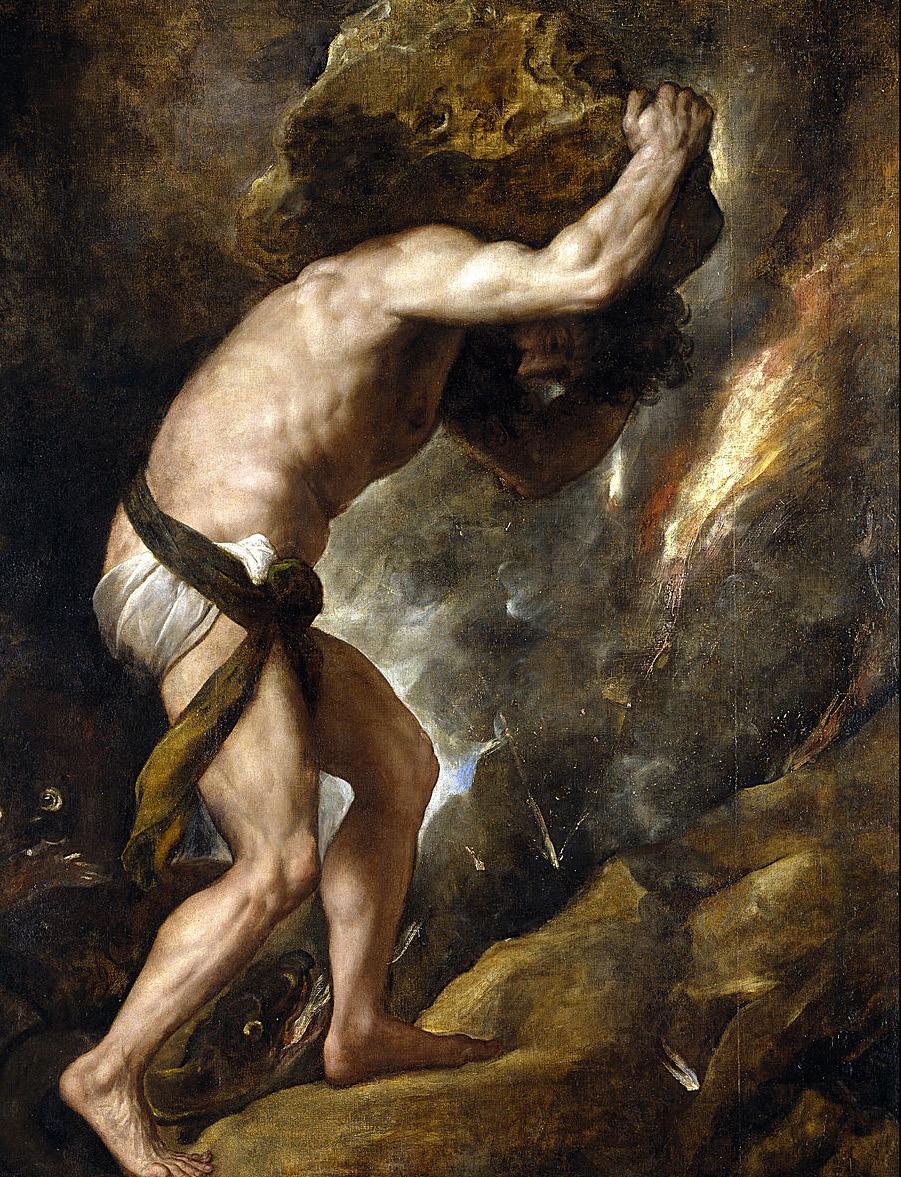
In this article, I’m not seeking to answer the problem of evil. Instead, I am trying to delve into the Christian response to suffering. What should faithful Christians do during times of anguish? As the Bible directly addresses evil and human suffering, we can first look to it for the answers it offers. In the book of Job, we encounter a man who endures profound suffering. Like no other on the face of the earth, Job was faultless, upright, and innocent—fearing God and shunning evil.3 He was blessed with abundant wealth, respect from his community, and a loving family. However, in a test of character, Job loses everything. He loses his children, his wealth is stripped away, and his health is taken from him.4 In his anguish, he screams, “My sighs have become my food and my cries of despair poured out like flowing streams.”5 Engulfed in agony, he lashes out at God demanding an explanation for his suffering stating, “I cry out to You, but You do not answer me, let the Almighty answer me, that he may put his indictment in writing.”6
When Job hears from God, God does not answer him. God instead demands answers from Job. He asks unanswerable questions. He asks questions of power and knowledge of every intricacy in creation. God asks, “Who is this
Just as God provides food for the young ravens when they cry out to him, will he not in his goodness care for us, we who are worth many sparrows?
that obscures my plans with words without knowledge?...
Where were you when I laid the earth’s foundations?”7 and “Would you discredit my justice? Would you condemn me to justify yourself?”8 Through these questions, God reminds Job of his sovereignty over creation, wisdom, and ideal of justice that exceeds human comprehension. After God's interrogation, Job is reminded of his limitations and acknowledges God’s sovereign power, saying, “I know you can do all things; no purpose of yours can be thwarted.”9 Following Job’s realization and development of humility he learns to depend on God, stating, “Surely I spoke of things I did not understand, things too wonderful for me to know.” Afterward, God restores his prosperity, and health, signifying God's everlasting love and grace.
From Job’s story, the Christian experience of suffering does not entail straight answers. The Christian relies on and trusts in a God who knows, sees, and loves even when we cannot understand the full picture. God reminds Job that his thoughts are higher than our thoughts and that His ways are not our ways, revealing the stark difference between God’s understanding and man’s limited perspective.10 Similarly, we too need to be reminded of this often. God does not explain Job’s suffering but demonstrates his dominion over creation and goodness. In times of grief and deep confusion, God invites us to hold fast to our faith, trusting in his sovereignty. Just as God provides food for the young ravens when they cry out to him, will he not in his goodness care for us, we who are worth many sparrows?11 We are God’s joy, and He loves us more than other creatures.12 Amidst suffering, the Christian response is faith. We know that “suffering produces endurance, endurance produces character, and character produces hope.”13 Hope in the one who is infinite love, controls everything,

and permits trials for our greatest good. This same idea of faith and trust in God’s will can also be seen in the biblically inspired series, The Chosen.
The Chosen (2017-ongoing), created by Dallas Jenkins, portrays Jesus Christ’s life through his followers’ eyes. Not shying away from pain, confusion, and grief, the show provides a humanized depiction of the experience of those who encountered Jesus. At its roots, the series emphasizes the essence of faith and God’s abounding love. The series displays how characters confront suffering, finding hope and healing. Each episode takes creative liberties to build context, being inspired by but not being verbatim from the Bible. The stories of Mary Magdalene and Simon Peter are examples. The series uses artistic freedom to fill in details of their lives, details not found in the Bible. The first episode introduces the audience to Mary Magdalene, possessed by seven demons and suffering relentlessly. After encountering Jesus, she is healed and set free from the demons. However, her past trauma and struggles resurface later in the series. In her grief, Mary flees from Jesus plunging into her old life of drinking and gambling. Yet, Jesus does not abandon her. He sends Peter and Matthew to find her and bring her back. After meeting with Jesus, she struggles to believe that she can be accepted after falling back, feeling she discarded
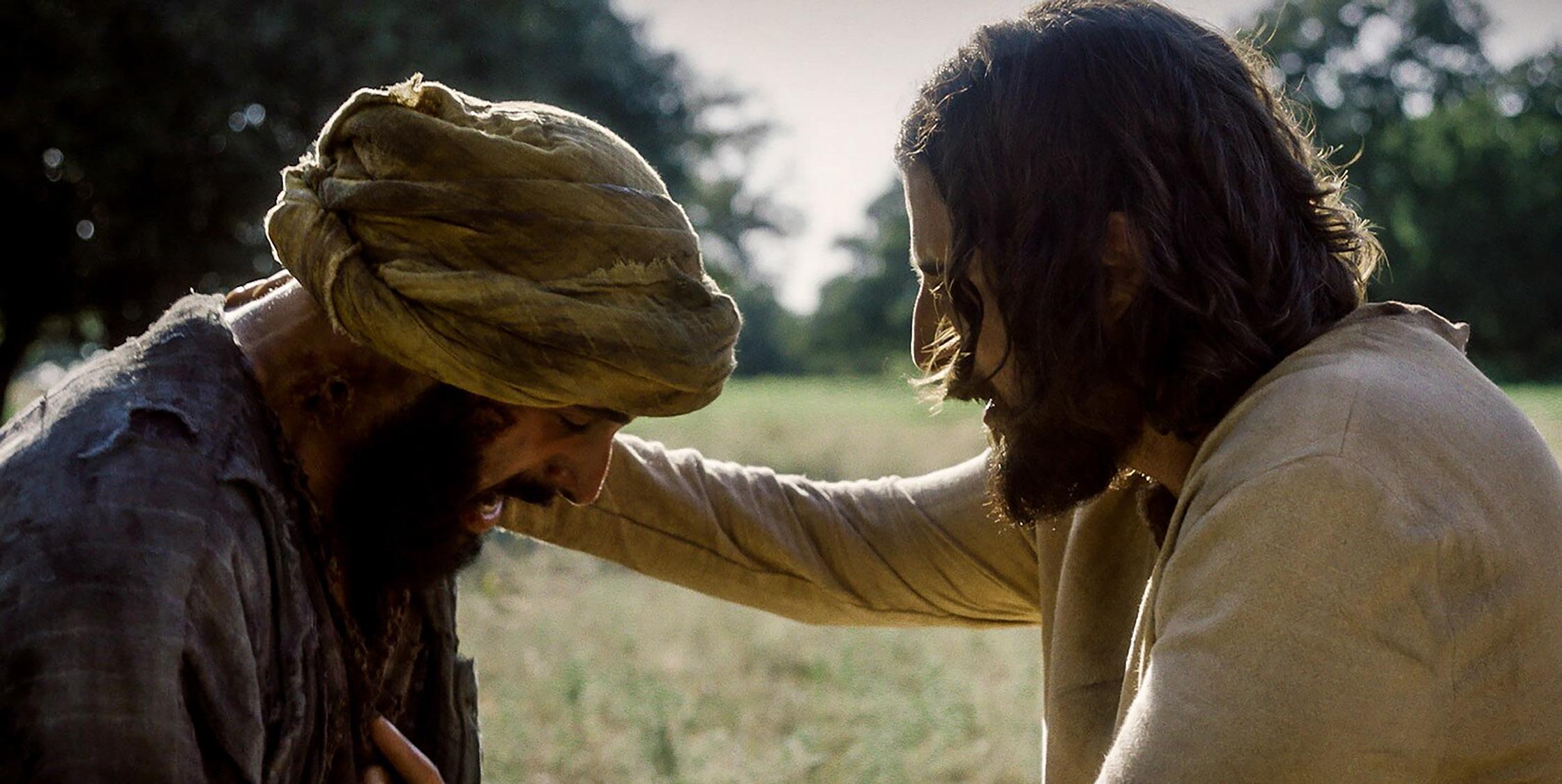
her earlier redemption. She confesses her uncertainty about living up to Christ’s expectations for her life. How does Jesus respond? “I just want your heart.”14
Another example is the canonically accurate character Simon Peter. In episode 4, Peter and his family are in a large sum of debt. Fearing that he will not be able to provide for his family, he breaks the commandment to rest on the Sabbath and fishes through the night. Peter catches nothing. In despair, he encounters Jesus by the shore, who tells him to cast his net in the sea one more time. Peter does so and miraculously catches enough fish to capsize the boat. Christ then asks Peter to follow him. Through Peter’s suffering, he is invited to a life of faith and obedience having someone to depend on. 1000 years earlier, King David wrote, even through his own painful and troubled life, that “The Lord is close to the brokenhearted and saves those crushed in spirit.”15 Peter’s call of faith reveals God’s love for us amidst suffering and signals us to cling to God, to cast all our anxieties on him.16
Yet, The Chosen also portrays that not all suffering is immediately alleviated by miraculous acts. The series introduces Peter’s wife in the gospel but creatively develops her character building extraneously on the Bible.17 In Season 3, episode 5, Peter’s wife suffers a miscarriage. Peter, understandably, suffers greatly from the loss of his unborn child. He questions how Jesus could heal total strangers but allow his disciples, his friend's child to die. Jesus does not bring Peter’s child back to life. Instead, he sits with him. He com-
forts him. The show portrays the scene of Jesus walking on water in Season 3 as a pivotal moment of Peter’s character growth. When Jesus is seen walking on water, Peter asks Jesus to call him to walk as well. After witnessing the turbulent winds and storms mirroring the evil in our life and the world, he begins sinking.18 Yet, Jesus pulls him up saying “Oh you of little faith, why do you doubt?” This reassures Peter to trust him, holding tightly to faith in who he is and that he has promised to work everything out for good.
The Lord is close to the brokenhearted and saves those crushed in spirit.
Considering our suffering and the emphasis on faith, we should call to mind the words of St. Teresa of Avila, who after almost being carried away by a river, exclaimed to God “If this is how you treat your friends, I can see why you have so few!”19 God allows his friends to experience suffering to cultivate spiritual growth, develop our characters, and deepen our faith. St. Teresa’s statement accentuates the profound truth that our suffering should draw us closer to God. Revealing the depth of faith and hope we ought to have in God—a faith that embraces suffering as
an opportunity for growth and hopes that views pain not as abandonment but as an invitation to draw closer to him. Unlike human relationships, where suffering often leads to distance and abandonment, God uses moments of grief to draw us closer to Him, comforting and guiding us through our pain. As displayed in the series, his response to our suffering may not always be miraculous interventions but it is always one of sincere compassion and understanding.
The Chosen beautifully portrays the Christian response to suffering: trusting in God's love, even when we do not understand our circumstances. Just as Job ultimately came to trust in God despite his unanswered questions, so do the characters in the series. Through their stories, we are reminded that our suffering isn’t purposeless but leads to a deeper dependence on God’s love and goodness, growing in faith, even amid our struggles. The Christian faith calls us to rest assured that God sees and understands our pain, encouraging us to respond with patience and perseverance. As St. John of the Cross profoundly stated, we are called, “to suffer and to be patient, to endure and not to lose heart,”20 confident that God’s abundant love is enough.21 Now, if The Chosen is a modern depiction of Christian suffering, let us consider Dostoevsky’s depiction of the Christian response in 1880.
While The Chosen portrays suffering as an opportunity for faith and growth, Dostoevsky presents a darker view in The Grand Inquisitor where suffering confronts the ideal of freedom.22 The Grand Inquisitor is a philosophical and theological poem by Fyodor Dostoevsky from The Brothers Karamazov. Situated in Spain, the poem is a dialogue between the characters Ivan Karamazov, an intellectual, and his younger brother, Alyosha, a novice monk. In the poem, the Grand Inquisitor, a powerful church official, encounters Jesus Christ, who has returned to Earth in 16th-century Seville. Jesus performs miracles, such as healing the blind and the lame, yet the Grand Inquisitor has him arrested. During Christ’s interrogation, the Inquisitor condemns him for rejecting the authority of worldly power, giving humanity freedom rather than taking divine control of the world. He believes the Church has corrected this mistake. Humans are unable to handle their freedom as they are “weak, vicious, miserable nonentities born wicked and rebellious.”23 The Grand Inquisitor explains that in offering free will, Jesus abandoned humanity in uncertainty and anguish. This is the problem of suffering. However, the Church has solved this problem by providing people with peace, through authority.
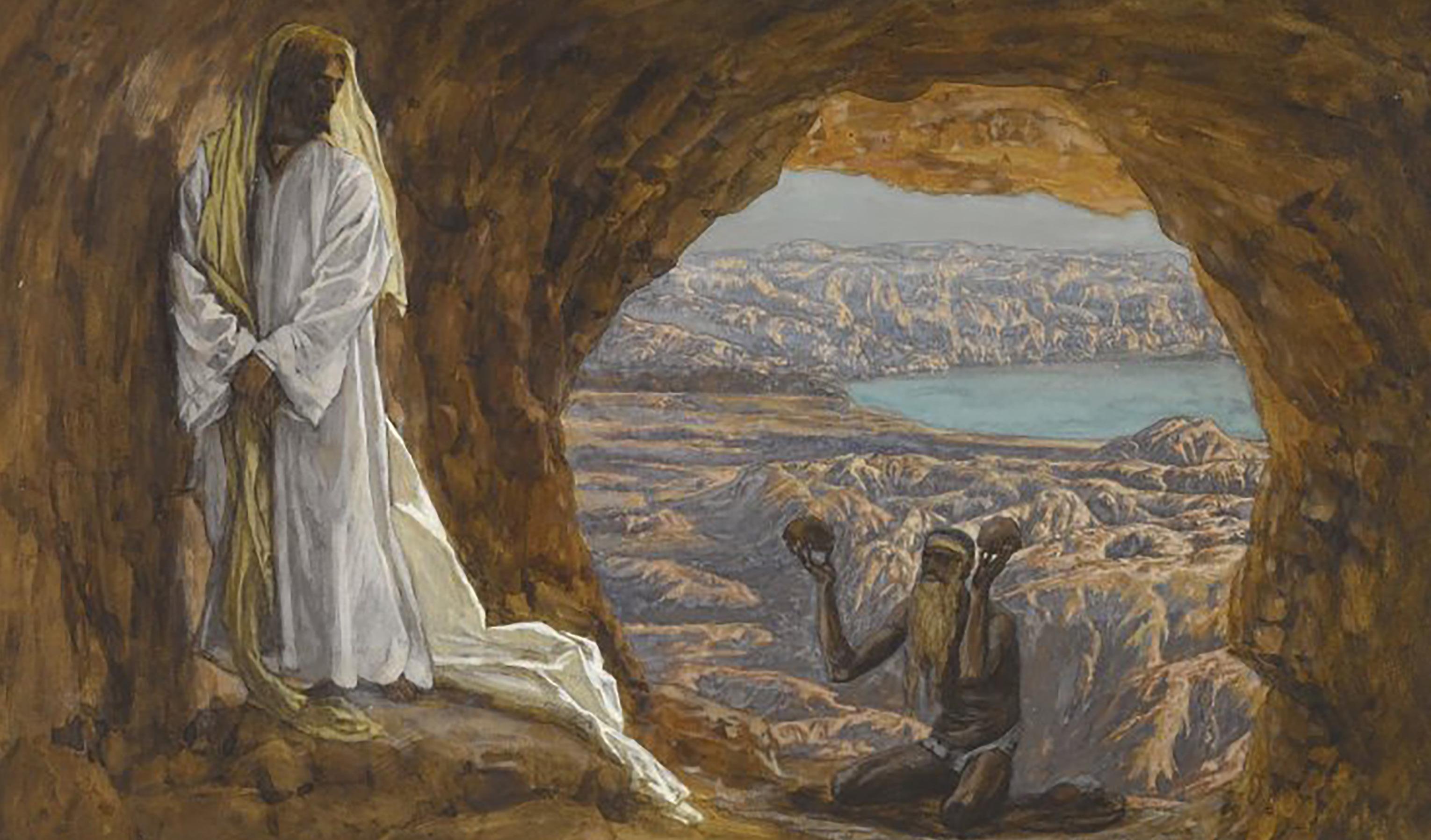
Referencing the famous Bible story of Christ’s temptations in the wilderness, the Inquisitor rejects Christ's choices.24 The Inquisitor sees three pillars as essential for man’s happiness. In rejecting the first temptation to turn stone into bread, the Inquisitor argues that Jesus denied material comfort from man, condemning them to struggle with hunger and suffering. The second temptation consists of Jesus refusing Satan’s request to throw himself from the pinnacle of Jerusalem’s temple, knowing angels would come and gloriously save him. In rejecting this, the Inquisitor criticized Jesus for not displaying his divine power, deny-
Jesus’ response embodies the Christian approach to evil: not questioning its existence, but confronting it with an overriding act of love.
ing humanity the assurance of the coming of the Messiah. Finally, the Inquisitor views Jesus declining Satan's offer to grant him political authority, if Christ bows and worships him, as a grave mistake. By rejecting Satan’s offer, he cannot give humanity peace, security, or order. At the end of their interaction, the Inquisitor tells Jesus that his return threat-
ens the Church's established order and he will be burned at the stake by the very organization that supposedly loves him. Jesus says nothing. However, as his response, Jesus kisses the Inquisitor on the lips. Moved by this response the Inquisitor frees Jesus.
The Grand Inquisitor highlights the worldwide suffering and misery that stems from the freedom given to man—freedom that is, supposedly, a burden to mankind. The Inquisitor believes that Jesus should have accepted Satan's temptation, as doing so would have brought humanity security and comfort. Yet, Jesus’ response embodies the Christian approach to evil: not questioning its existence, but confronting it with an overriding act of love. This pure and unconditional love presented to the Inquisitor is the same love God has for us. In rejecting Satan’s temptation, Jesus offers a radical act of self-sacrificial love through freedom, choosing to suffer, and redeem humanity his way.
The Grand Inquisitor cannot comprehend that faith is not about having all the answers or a means to end suffering but about trust in God’s goodness and sovereignty. When we suffer, God offers his presence, a comfort indeed. He asks us to trust in the one who knows, walking by faith, not by sight.25 Christ himself said, “Come to me, all you who are weary and burdened, and I will give you rest.”26 Just as Job does not receive answers but realizes God’s power, so too do the characters in The Chosen find answers in their walk of faith, cultivating a relationship of faith with God. One built on love that comforts them in all their struggles. Christ embraces all our weaknesses, acknowledges our suffering, and wants us in our vulnerability to deepen our dependence on him.

Paul acknowledges that “our present sufferings are not worth comparing with the glory that will be revealed in us” capturing the tension between the undeniable reality of suffering and the promise of hope yet to come.27 The problem of suffering has caused many to wrestle with their faith as the pain they experience can feel overwhelming and inexplicable. In the light of suffering, our response should not be to curse the world or view it as purposeless. We ought to depend on and rejoice in God’s wisdom, his power, and unchanging love—one that, as St. John of the Cross says, is “beyond all knowledge.”28 Just as King Solomon said, “[trusting] in the Lord with all our heart, not leaning on our own understanding.”29 From Job learning to be still before God, Mary Magdalene, and Peter in The Chosen receiving comfort, and Christ’s kiss in The Grand Inquisitor, the Christian response to suffering is faith in God’s sovereign love. The Grand Inquisitor offers a tempting path of authority and certainty as the response to suffering. However, it is faith and trust in God that ultimately leads to peace. Through this faith, we face suffering, not seeking answers but trusting: trusting that our suffering has a purpose. To draw us closer to God, to know him more intently, and to deepen our relationship with him. In faith, there is peace. In peace, freedom. Freedom, not necessarily from our suffering, but from our worries and fears of this world, understanding God’s love is enough to sustain us, in every circumstance. Therefore, the Christian response ought not to be seeking answers to why we suffer but to deepen our trust in a loving, sovereign God holding fast to our faith. Knowing that in our darkest moments, God’s love is unwavering, everlasting, and sufficient.


Emmanuel Uyigue D'28 is from Nigeria and Chicago. He is interested in studying cognitive science.
1. IMBeggar, “Why does God let bad things happen? (The problem of evil).,” YouTube, March 9, 2022.
2 . Edwards, Bruce L. “A Message in a Bottle: C. S. Lewis’s American Epistolary Friendships.” Sehnsucht: The C.S. Lewis Journal 15 (2021): 121–30. https:// www.jstor.org/stable/48682366. (128)
3. Job 2:3 (NIV)
4. Job 1:13-20 (NIV)
5 . Job 3:24 (NIV)
6 . Job 30:20-31 (NIV)
7 . Job 34:4-12 (NIV)
8. Job 40:8 (NIV)
9 . Job 42:2 (NIV)
10 . Isaiah 55:8-9 (NIV)
11 . Luke 12:7 (NIV)

12 . Genesis 1:27 (NIV)
13 . Romans 5:3-4 (NIV)
14 . Jenkins Dallas, The Chosen, season 2, episode 6 “Mercy and Not Sacrifice,” Angel Studios, June 2022, 29 min., 42 sec., https://watch.thechosen.tv/video/184683594358.
15 . Psalm 34:18 (NIV)
16 . 1 Peter 5:7 (NIV)
17. Mark 1:30 (NIV)
18 . Matthew 14:28-32 (NIV)
19 . Robert Hugh Benson and Alice Mary (Weld-Blundell) Fraser Lovat Baroness, The Life of Saint Teresa (London: Herbert & Daniel, 1913), 583.
20. Saint John of the Cross, and E. Allison PEERS. Ascent of Mount Carmel. New York: Image Books, 1958.
21. Jenkins Dallas, The Chosen, 2017–present.
22 . “Dostoevsky, Fyodor. The Grand Inquisitor. From The Brothers Karamazov (1880, II.v.5). Translated by Richard Pevear and Larissa Volokhonsky.
23 . Dostoyevsky, The Grand Inquisitor
24. Matthew 4:1-11 (NIV)
25 . 2 Corinthians 5:7 (NIV)
26 . Matthew 11:28 (NIV)
27 . Romans 8:18 (NIV)
28 . Saint John of the Cross. Ascent of Mount Carmel
29 . Proverbs 3:5 (NIV)

It is a perennial charge made against Christians that we think in a “dogmatic” manner, unlike our supposedly “free-thinking” counterparts. It is accused (to great effect) that we blindly accept teachings found in Scripture or made by the Church without evidence. Indeed, so effective is this attack that many Christians today go to great lengths to dispel it: attempting to derive Christian doctrines with the same unfettered reason by which any other philosophical, historical, or scientific inquiry is conducted.
Even when I am sympathetic to these attempts, I propose that they miss the point. Dogmatism is a feature, not a bug, of the Christian faith. I, for one, did not come to believe in each doctrine of the Church upon independently assessing and understanding their truth. Rather, after the Catholic monk, Anselm of Canturbury, if I had not believed first, I would not have come to understand. 1 Indeed, I can say with confidence that my experience is all but universal. Virtually no one becomes Christian by accepting each doctrine one by one after a rigorous independent inquiry for each.
Nevertheless, I do not hold that Christians must concede that we are simply less rational than secular thinkers. I will argue that there are good reasons to believe that Christian dogmatism, far from being irrational, is at least as ra-

tional as its principal modern adversary: a kind of materialistic secularism that calls itself “free thought.” Moreover, I claim that Christianity is preferable to this alternative for its uniquely plausible claim of attaining perfect happiness in the fulfillment of all desire.
Those who condemn dogma tend to consider themselves “free thinkers.” I will define free thinking for the purposes of this piece as not believing anything to be true without “sufficient evidence”: in the form of either observation, reason, or a combination thereof. I trust this definition is not unduly narrow; I know many self-supposed free thinkers who would agree that it accurately represents the way they hope to think, if not the way they actually think. Indeed, I have found that the vast majority of those who see Christianity as less rational than secularism appeal to the fact that they appeal to “reason” as their ultimate authority, as opposed to divine revelation. I am myself almost sympathetic to this worldview, given that I, too, thought this way for the majority of my life.
But this kind of “free thinking” is practiced by virtually no one, nor should it be. Everyone has their dogmas—some just don’t admit them. This is because dogmas (non-self-evident pre-rational assumptions about the world) are neces-
sary in order to have a philosophy that answers questions worth answering. We can consider the contemporary philosophical debate about the existence of God as illustrative of this.
It is noteworthy that most atheist scholars today will not attempt to actively prove the absence of God. Indeed, such scholars correctly observe it is nigh impossible to do this. Rather, they make the mere claim that the world around us can be explained without reference to deity. Of course, the ability to conceive of a world without a thing is not itself reason not to believe in that thing. One could conceive of a world in which the sun or your next-door neighbor are but hallucinations. But this in itself hardly constitutes good reason not to believe in neighbors or the sun.
One common response to this conundrum is agnosticism. I do not here refer to the state of being unsure or undetermined while in the process of weighing the evidence and arguments on either side. I mean instead the position that one can and should believe neither that God exists, nor that God does not exist. But agnosticism is impossible—for there are forced choices that are entailed by belief or lack thereof in God. Suppose, for example, the matter of prayer. One can either pray or not pray, but not neither. If the theist’s God is real, one certainly should pray—if he is not, then it would be a foolish thing to do. There are many other such choices. And in each instance, the agnostic, by his actions, betrays his allegiance to one side or another. But because the agnostic’s philosophy cannot answer the question of how he must live his life, from the smallest matters to the greatest (e.g. What should he eat? In what profession should he work? Should he pray? Should he marry? Should he have children?), he must make these decisions based on irrational bases: habit or bigotry, convention or instinct.
After the Catholic monk, Anselm of Canterbury, if I had not believed first, I would not have come to understand.
tical and quintessentially human job: to create a worldview (or a coat) with which human persons might go about life.
Everyone has their dogmas—some just don’t admit them.
It was Michael Sugrue who said that the thinker who restricts his own ability to answer questions for the sake of certainty and elegance is like a tailor who makes a coat without arms on the basis that they are inelegant and hard to craft.2 After all, the philosopher, like the tailor, has a prac-
Given this, many thinkers appeal to general “principles of reasoning” to resolve agnosticism and answer questions like that of the existence of God. One common example is called Occam’s razor: the idea that the simplest possible explanation for a phenomenon generally ought to be considered the correct one. But there is little rational justification for believing in such a razor. What evidence or logic brings us to think that the world operates in the simplest way conceivable? Most atheists will not provide one (in-
deed, it is very hard to justify this principle). They merely take this idea on faith.
Another way to resolve this problem is what I will call skepticism. The skeptic holds that we ought not believe in things of phenomena for which we have no positive evidence, even if we do not have evidence for the lack of it. But such a principle would only be rationally justified if we supposed that all true things and phenomena in reality are accessible to proof by human reason and observation. Given the many things we know that we do not know about our world, we have little reason to believe this is so. Indeed, so limited is our ability to know that the skeptic’s own principle (that claims without positive evidence are not true) is unable to meet its own criteria, for we have no positive reason to believe it. And even disregarding its incoherence, skepticism is itself a dogma—accepted pre-rationally.

The last supposedly neutral principle I refer to in this piece, albeit certainly not the only other such attempt, is what Karl Popper termed the principle of falsifiability. This states that a claim is only “credible” (i.e. worthy of belief) if it can be falsified by some empirical experiment. But this
principle falls into the same trap as the one above: it cannot clear its own bar. For it is impossible to derive an experiment that could falsify the idea that only falsifiable claims are credible. A fortiori, it is not something that can be rationally demonstrated.
It may be rightly protested that these assumptions (Occam’s razor, skepticism, falsifiability, etc.) are more reasonable or at least more modest than the dogmas proposed by any religious faith. I would certainly grant the latter claim. But it must be observed that these dogmatic principles of reasoning are not different in kind from the dogmas that are used in religious thought, in that they are accepted as a prerequisite for reason, not as a result of it. This observation reframes our question: it is not whether or not to accept dogma, but which dogmas to accept.
It is not whether or not to accept dogma, but which dogmas to accept.
To account for the above (that non-trivial assumptions must be made as a prerequisite to useful rational inquiry), many philosophers have turned to something called “coherentism.” Coherentism is simply the idea that a worldview should be evaluated as a whole and according to two measures: (1) its internal coherence and (2) the degree to which it explains the world around us. Indeed, there are many contexts in which we think in a manifestly coherentist way. For example, when jurors in a criminal case are asked to evaluate whether the prosecution has proven its case “beyond a reasonable doubt,” they are to find whether there is any (1) coherent (2) explanation for the evidence in which the defendant is not guilty. The natural sciences likewise use this method. Models in the sciences must generally pass a two-fold test in order to be considered valid: (1) the mathematical coherence of the model must be demonstrated in the abstract, then (2) experiments must be conducted to ensure the model does in fact explain the real world.
Likewise, many debates about Christianity follow this two-fold structure: first, whether Christian doctrines are coherent (i.e. whether or not there are contradictions among them), and whether those doctrines in fact explain
the world we experience. The coherence and explanatory power of the Christian faith will not be fully defended in this piece. This is for two reasons: because the breadth of the various accusations of inconsistency or non-correspondence exceeds the capacity of a shorter-form essay, and because I never found these accusations particularly convincing, even as an atheist (with only some notable exceptions). There is however, for the interested, much outstanding work that has been done in defending the faith against many such charges.
Instead, this piece will address what is a noteworthy difficulty with coherentism itself: that it seems possible that several different—indeed contradictory—worldviews can each explain a given set of evidence in a coherent way. For example, someone who sees a small, clear shard on the street in winter might conclude either that it is a piece of glass from a broken window or that it is a piece of ice from an icicle. Both theories are coherent; there is nothing intrinsically incoherent about either a broken window or an icicle falling. And both theories would explain why there is a small clear object in the middle of the street. Yet these
theories cannot both be true: for the object could not be a piece of ice and a piece of glass at once.
Of course, this is a trivial problem in this context because one could very easily gain more evidence and rule out one possibility or another. But in many questions regarding faith, it seems that no extant evidence can clarify which of two competing explanations may be better. Suppose the example of the resurrection: Christians will say that the formation of a small band of dedicated believers (who would go to their death in defense of the Christian faith) is evidence that Jesus of Nazareth did in fact rise from the grave. But secular scholars will arrive at alternate conclusions. One notable scholar proposed, for example, that Jesus Christ had an identical twin who pretended to be the risen Christ, convincing the apostles of a falsehood. More commonly, others have suggested that the Apostles suffered from a kind of hallucination. Of course, (imprecise) claims may be made about the probabilistic likelihood of one or another given inconclusive historical evidence. But at the end of the day, no evidence that is available to us can definitively resolve this conflict.
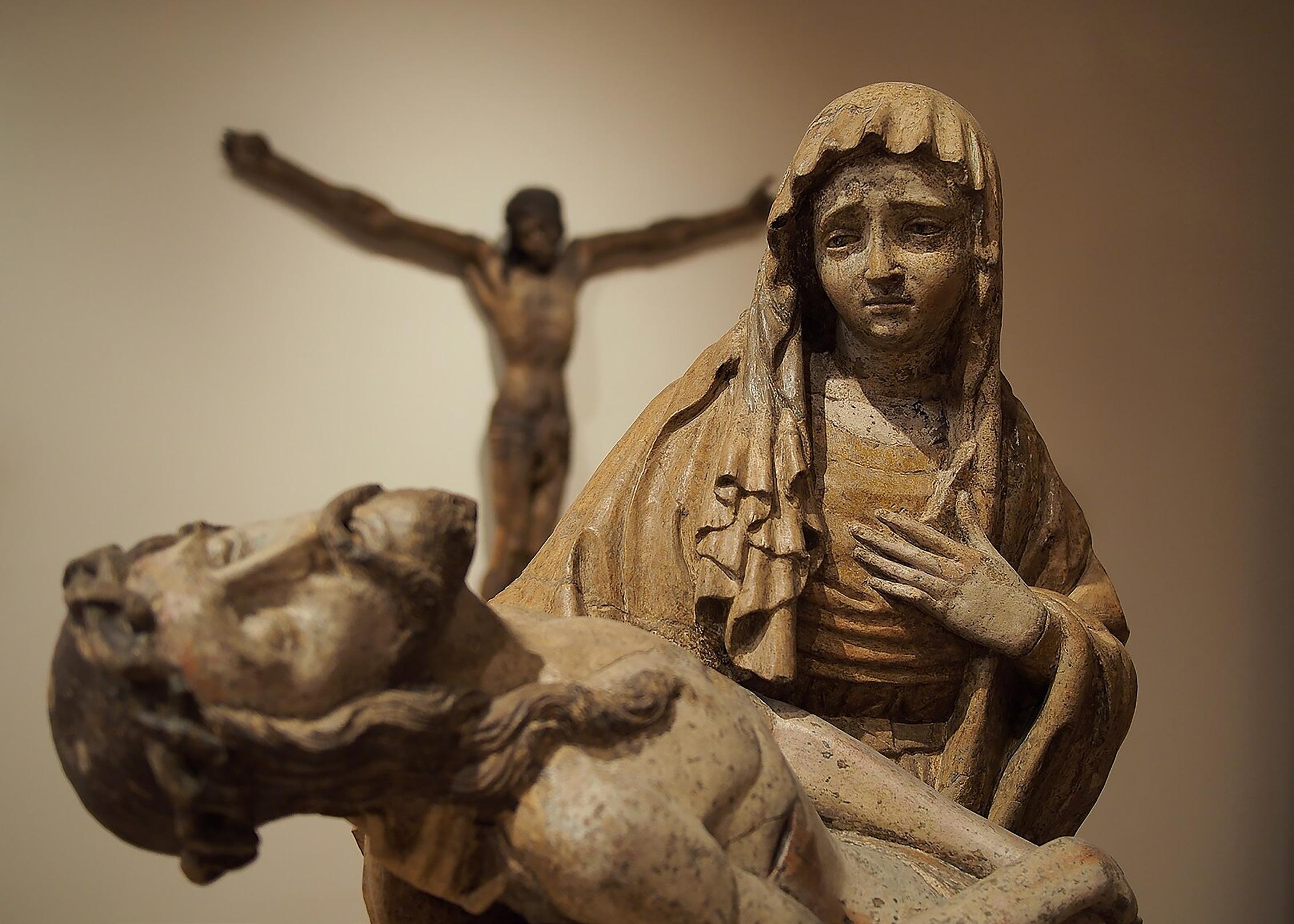
Perhaps even more difficult than these historical questions are questions about the human soul. For example, it is universally admitted that we persons have a deep desire for love and meaning. The Christian says this is a reflection of our being created in the image and likeness of a God who is love, in whose love we might find ultimate and objective meaning. The secular atheist might instead say that these are mere instincts, purely neurophysiological and accidental byproducts of the evolutionary process. Indeed, both of these world views may appear to be coherent and explanatory of the human experience. But of course, they cannot both be true.
Having set up what I hope is an interesting dilemma, I will maintain that I do not think it is so much of a dilemma at all.
More broadly, it may well appear that Christianity as a whole and secularism as a whole each explain the world in ways that are mutually exclusive, yet each internally consistent (i.e. someone who accepts the premises of Christianity would accept its conclusions, and likewise, one who accepts the premises of secularism would likewise accept its conclusions). Then—how can one be found more correct than the other? Are we left only with a kind of relativism, that the one may be my truth and another yours?
Having set up what I hope is an interesting dilemma, I will maintain that I do not think it is so much of a dilemma at all. For there are good reasons to suppose that secularism lacks both explanatory power and coherence.
Most traditional “arguments for God” attack the explanatory power of secularism, positing that it cannot explain causation, motion, the existence of complex life, morality, consciousness, or any number of other phenomena. Without explaining any of these in great detail, I direct the interested reader to Edward Feser’s “Five Proofs for the Existence of God” for an excellent introduction to this class of arguments.
Besides these, there is a subtle problem of coherence that is entailed by the secular worldview. Namely, there is no mechanism by which the secular individual can have confidence he has found the correct set of pre-requisite assumptions, or even that he has reasoned correctly from such assumptions. For there are others who formulate their beliefs in the same way as him and reach another conclusion. Given that any individual is approximately as prone to error as any other, he cannot even theoretically have confidence that his ideas are correct and his adversaries’ are not. Christianity, in contrast, at least satisfies the requirement of coherence by providing a mechanism by which his beliefs are shielded from the error that is intrinsic to human persons— namely, special Divine Revelation from an omniscient God.
But suppose you are unconvinced by the arguments briefly referenced above. Or even if you are convinced, perhaps you don’t see how these arguments have much bearing on your own life. At various points in my life, I have thought the former, then the latter.
Two things changed my mind: first, a throughline in the work of many thinkers, themselves separated by millennia; second, a soft but constant listlessness about the meaning of my own life. I will try and fail to present them with a warning that we have altogether left the world of precise thoughts and rigorous demonstrations (if we were ever there to begin)…
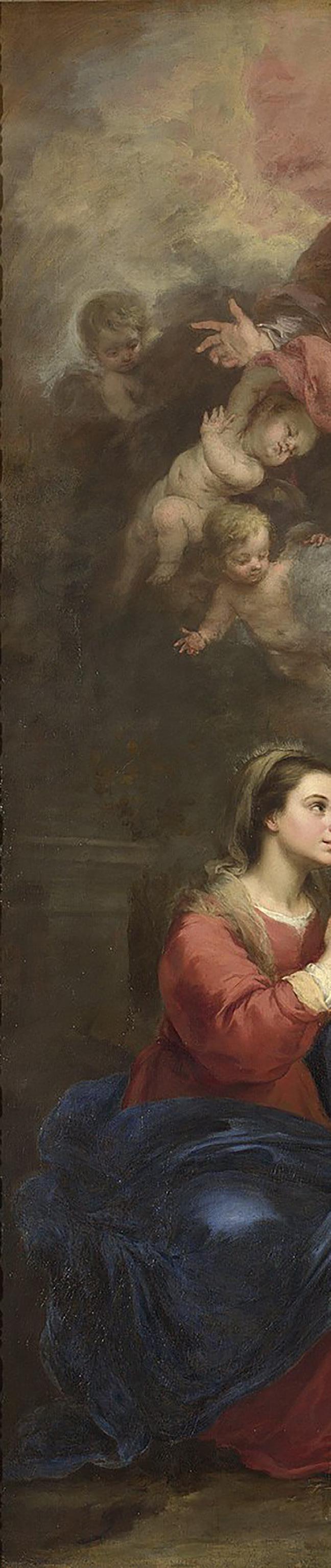
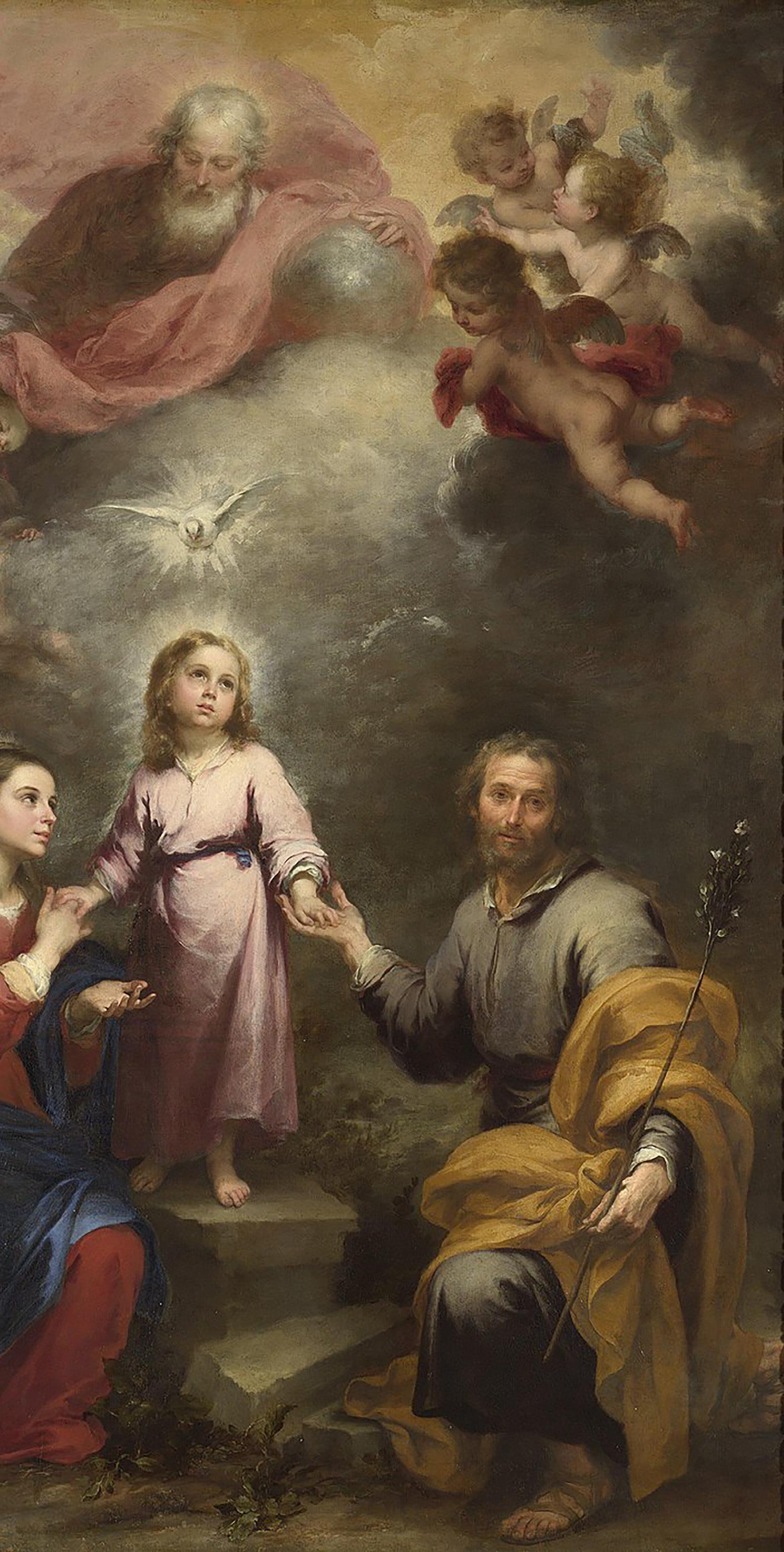
What do we want? On one level, it is a simple question. Most people could list off a dozen things they want, large and small: getting a good grade on a test, our love-interest returning our affections, winning the lottery, eating a good dinner, or having a restful night’s sleep. But we want most of the things we want, not for their own sake, but for something else. These things themselves, we want for the sake of other things still. Which leads us to ask: what is it that we really want, not for the sake of any other thing, but for its own?
Ancient thinkers were profoundly interested in this question. Some simple answers are found immediately wanting. Power or wealth (which is really a form of power) are useful only for the sake of attaining some other thing, so cannot be what we ultimately want for its own sake. More plausible are the pair of pleasure and honor—which seem to be things we value for their own sake. But the tragedy of these is well attested in history and fiction alike, for the human desire for pleasure and honor do not subside with their attainment, but only grow—leaving them intrinsically unable to provide satisfaction for the anxiety that comes with unfulfilled desire. So clear is it that pleasure and honor are not what we ultimately want that even those (like Hobbes) who say they are will admit that, in fact, our desires do not ultimately direct us to any coherent end at all.
By and large, the philosophers of our modernity have accepted this Hobbesian claim that existential anxiety is an intrinsic part of the human experience. Exemplarily, Albert Camus writes that our innate desire for ultimate happiness or meaning is little more than a cosmic accident, and that a happy life involves coming to terms with this eventuality as opposed to fighting it.3 He echoes what was the consensus of Greek and Roman philosophers millennia before him, indeed, and also what many in the far east had taught even before that: because our desires are too great for
this world, the way to happiness is not to follow them, but to resist them. In a world with little food, the hungriest will be most miserable. Perhaps a gastrectomy would be best?
But between the ancients and the existentialists there were a thousand years in which an entire continent never asked this question. I had long thought it was because Europe during the Middle Ages was a backward place characterized by hard labor, cruel wars and an unthinking populace averse to intellectual inquiry of any sort. But sometimes I wondered if there was more to the faith that enraptured a civilization for a millennium.
Christianity answers the question above in a way that is, at first blush, platitudinous. Simply put, it posits that the ultimate human desire is love. It is easy to protest that besides being trite, this answer is also demonstrably in error. For lovers know that love brings at least a dozen tears for every smile (I’ve counted), that it leads a person to
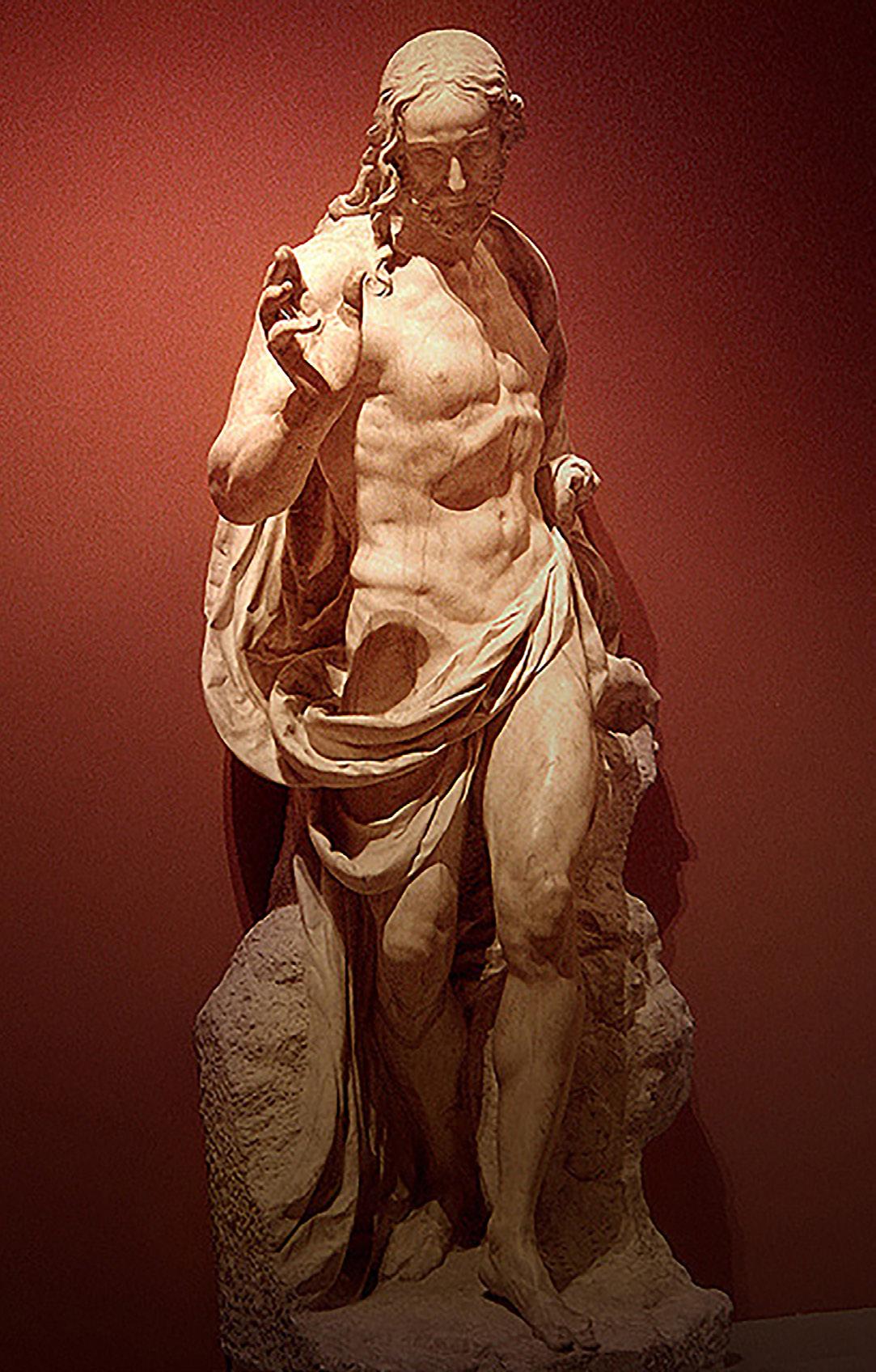
make reckless and regrettable choices, that it leaves a person vulnerable to be deeply hurt according to the vicissitudes of fortune and the whims of another.
But what if there were a perfect lover? One who was indeed ever faithful, ever patient, one perfectly worthy of admiration and adoration of every kind—indeed, perfect in every way? It certainly seems the way people love (absolutely, superlatively, irrationally) would be better suited to have such a lover for its object as opposed to another human being. Of course, one might insist that no one could ever be so perfect, and nothing so perfect could ever be a human being. Perhaps so. But the Christian indulges this love-thought a little further: wouldn’t the perfect lover make himself into a form accessible enough for us to love? How about a baby, a boy, a man? How about someone we could see and touch, everywhere throughout the world?
If the richest optimism is at least as reasonable as anything else, then isn’t it worth a try?
While philosophers in Rome and Greece debated the question of human happiness to futility, a small sect of Jews came to believe (independently from the above analysis) that their God, who created Heaven and Earth and every one of us, who sustains every part of creation in every moment, became a man called Jesus Christ. Maybe they’re wrong. But if what they say is true, one cannot help but think again of the above. The great St. Augustine, well versed in the debates of classical philosophy, certainly saw the parallel. “For Thou madest us for Thyself, O Lord,” he wrote, “and so our hearts are anxious until they rest in Thee.”4
Perhaps you think this is a nice sentiment. But isn’t it just wishful thinking taken to an extreme? It is true that we cannot prove that God became man in Judea on Christmas Day in the first year AD. It is even true that we cannot prove that to love this God-man is the fulfillment of all desire and the source of perfect happiness. But as we already established above, pre-rational assumptions (dogmas) are a necessary part of thinking. The “secular” assumptions above are no more rational than these; just simpler and
more pessimistic. It is only custom and feeling that might lead us to suppose that simplicity and pessimism are more “reasonable” than richness and optimism.
I took that wager five years ago. I won it… true happiness that does not manage the frustration of desire, but reaches toward its fulfillment altogether.
And so, I offer a variant of Pascal’s oft-maligned wager: if the richest optimism is at least as reasonable as anything else, then isn’t it worth a try? For if the promise of secularism is to “manage” the anxiety that comes from unfulfilled desire: to allay the pain of starvation, the promise of Christianity is clearly better—that such desires will be altogether fulfilled—slowly here on Earth, then completely in the life to come after death (i.e. the “bread of life,” to whom “he that cometh to me shall never hunger”).5 ***
I took that wager five years ago. I won it. Besides seeing how the Christian faith is a coherent explanation of the world, I have attained its promise: true happiness that does not manage the frustration of desire, but reaches toward its fulfillment altogether. I do not mean by this that I no longer have worries or anxieties or other desires. I mean rather that although worries and anxieties may set in, there is an underlying confidence that takes the sting from them (e.g. the difference between watching a film for the first time and watching a classic whose happy ending is well known—one may feel anxiety during the latter, but to a lesser degree, and not without salve). Of course, I fall short daily—I am but a human person, who does what I know will make me less happy for less-than-rational reasons, as we are all wont to do. But every time I fall short, I am reminded how all other goods are but a shadow of the “the peace of God, which passeth all understanding ”6
Of course, one doesn’t get to choose what he believes. Indeed, we hold that faith is a gift that God alone can provide. But this is not to say that we are merely passive agents when it comes to belief. For the Christian faith does not propose an altogether alien concept for belief. It rather reframes our quotidian experiences in a supernatural light. It is effective, then, to consciously choose to see our lives in this way—our obstacles are not mere accidents, but trials and crosses from God—our successes are not our own, but aided by Providence—our life is not biological happenstance, but intimately planned by a loving Creator. And faith is as much praxis as it is belief. Prayer is as much the source of faith as the effect of it, and if all else fails, prayer for the gift of faith rarely goes wanting for a swift reply. For it is written: “Ask, and it shall be given you; seek, and ye shall find; knock, and it shall be opened unto you.”7



Colin Jung D'28 is from Chicago, IL and is majoring in Government with a focus on Public Law and Political Theory.
1 . “Anselm and Centre Traditio Litterarum Occidentalium. 2010. Proslogion. Brepolis Latin. Turnhout: Brepols Publishers.”
2 . Sugrue, Michael, dir. n.d. Great Minds of the Western Intellectual Tradition. https://youtube.com/playlist?list=PL30RAv-0lkxGh5iMfRmZV8wEVeN50K06X&feature=shared.
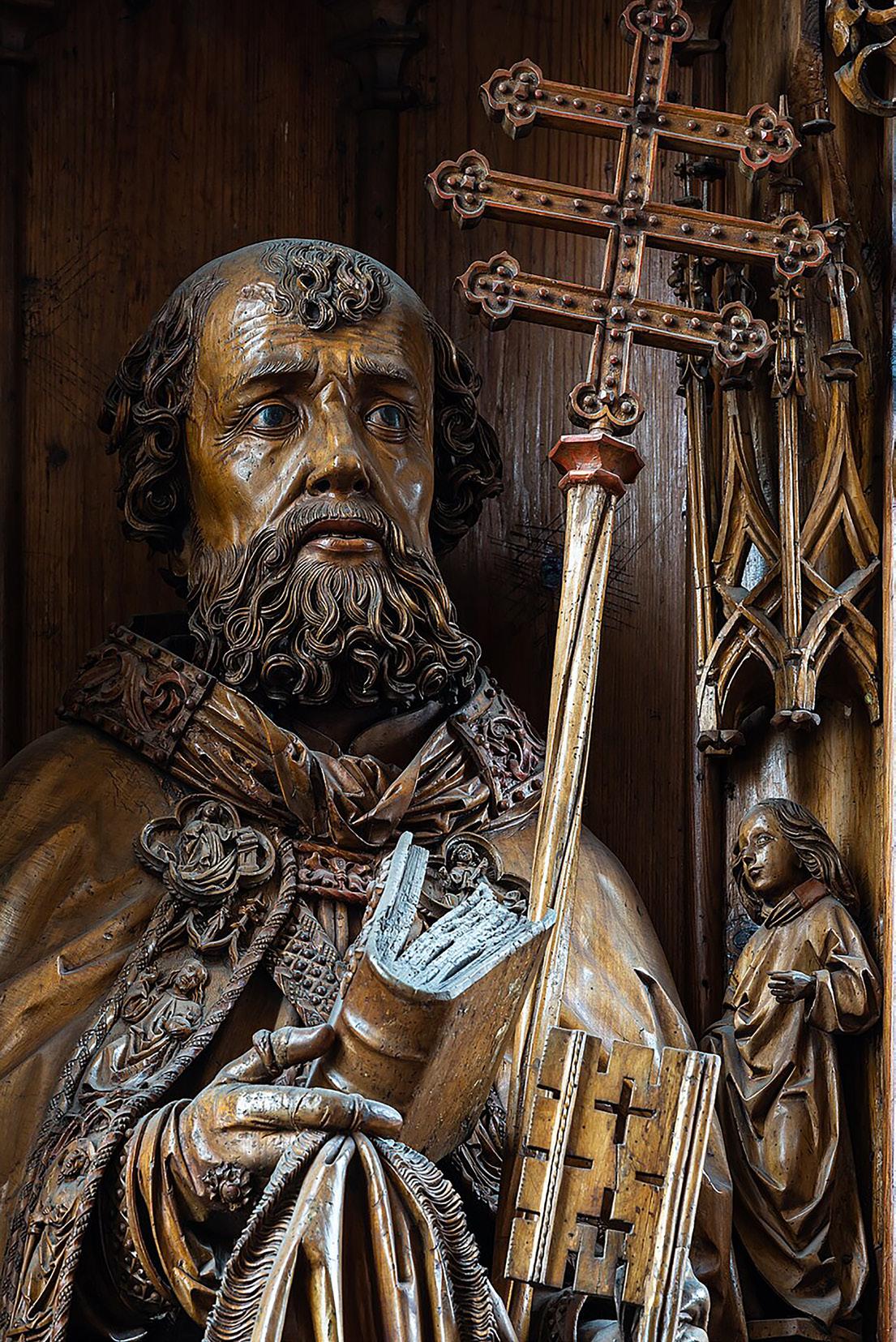
3 . Camus, Albert. The Myth of Sisyphus : And Other Essays. New York: A.A. Knopf, 1964.
4 . Augustine. Confessions. Translated by William Watts. Cambridge, MA: Harvard University Press, 2014.
5 . John 6:35 (KJV)
6 . Philippians 4:7 (KJV)
7 . Matthew 7:7 (KJV)

Imagine walking through a Christian church playing I-Spy. Your footsteps quietly echo as you pass between the pews, and you sit and gaze upward towards the looming ceilings and around at your surrounding environment. What do you see? Likely, you would point out the architecture of the building, intricate stained glass, candles or lights, windows, religious paintings and sculptures, and probably the person in front of or next to you too. After a primary consideration, some of these images and objects seem relatively nuanced, while others appear largely typical for a religious establishment—the seats are patently meant for sitting, and the stained glass adds an attractive element to the church. The candles or lights bring luminosity to the place, the windows allow for better air circulation and add additional lighting, the paintings and sculptures are meant to depict important figures or themes, and the person in front of you is dozing off.
Nevertheless, when these images and items are considered in the context of artistic expression and intentionality, they take on a completely different form. The looming ceilings create a sense of importance and spirituality—their heights reminiscent of a reach toward the heavens. The wooden pews are hand-fabricated with meticulously chiseled ornamentation. The stained glass is complex, a mixture of minuscule shapes that collaborate
to form a complete depiction, such that when light shines through them, they transform and cast reflections of color about the room. The candles were each designed with their width specifically chosen, their wicks trimmed to a particular height, and their stands constructed with brass, silver, or gold. Even the seemingly unornamented windows are intentional, with pointed, squared, or rounded frames fashioned with bespoke wood or metalwork. The paintings might have taken years to plan and even longer to make, each color mixed with another, then layered and textured to create the final composition.
One of the most important aspects of human culture is our ability to communicate ideas, events, and feelings through images. Therefore, the discussion of creation and art is vital in understanding our personhood and society. From an artistic viewpoint, images and icons serve a plethora of roles. Images are intertwined into the very fabric of our culture, and although sometimes unbeknownst to us, they formulate everything we see. They play a major role in the places we frequent, the jobs we secure, and the conscious or subconscious opinions we form about a place. Yet, individuals speed past billboard signs, rip through a product’s packaging from the store, and glance once at a graphic on a t-shirt. Seldom do we appreciate the intentionality behind each item and the individuals who took the time
to create them. It is easy to overlook the profound effect that images and icons have on our lives, perhaps because of their widespread nature or our desensitization and overstimulation towards images in modern society. With such a plethora of artistry strewn around us, how can we begin to appreciate art in relation to faith? Furthermore, how can we create with intentionality and humility, in an attempt to reflect the goodness, beauty, and intricate nature of our Creator?
Before discussing iconography in a theological context, it is important to examine the background of Christian iconography and its relevance in modern society. Because of its importance in civilizations, iconography has always played a major role in different religious practices and has been innately intertwined with Christianity for centuries. After Constantine legalized Christianity with the Edict of Milan in 313 AD and Christianity became an accepted religion, the concentration of Christian iconography grew extensively, particularly from 379 to 395 AD.12 Early Christian art underwent many changes based on popular denominations and expressions, allowing for a wide variety of subject matter. Christian art took on a Hellenistic style during the first four centuries, but in the fifth century, as power transitioned toward the East, art became more focused on apocrypha, which are non-canonical texts or themes often apocalyptic in nature. Because of this geographical shift, depictions gradually became more stylized, partially based on the regions in which they were initially popularized. Consequently, figures were portrayed more distinctly than in
the Hellenistic period, with abundant diversity in content matter, features, attire, and evocation of religious belief. Although this shift was gradual, it was substantial, ultimately leading to different schools of Christian art in the East.2
This era marked a change within society, as Christian images began to integrate more closely into the secular, significantly influencing the Renaissance during the fourteenth century and Baroque art during the sixteenth century.3 Renaissance and Baroque art drew from a plethora of religious themes, including depictions of God, divine beings, Madonna and Child, and narratives from the Bible. The Christian images created during these eras remain some of the most influential and admired works in the contemporary world. Leonardo Da Vinci, one of the most well-known Renaissance artists, is infamous for his painting The Last Supper, which depicts Jesus communing
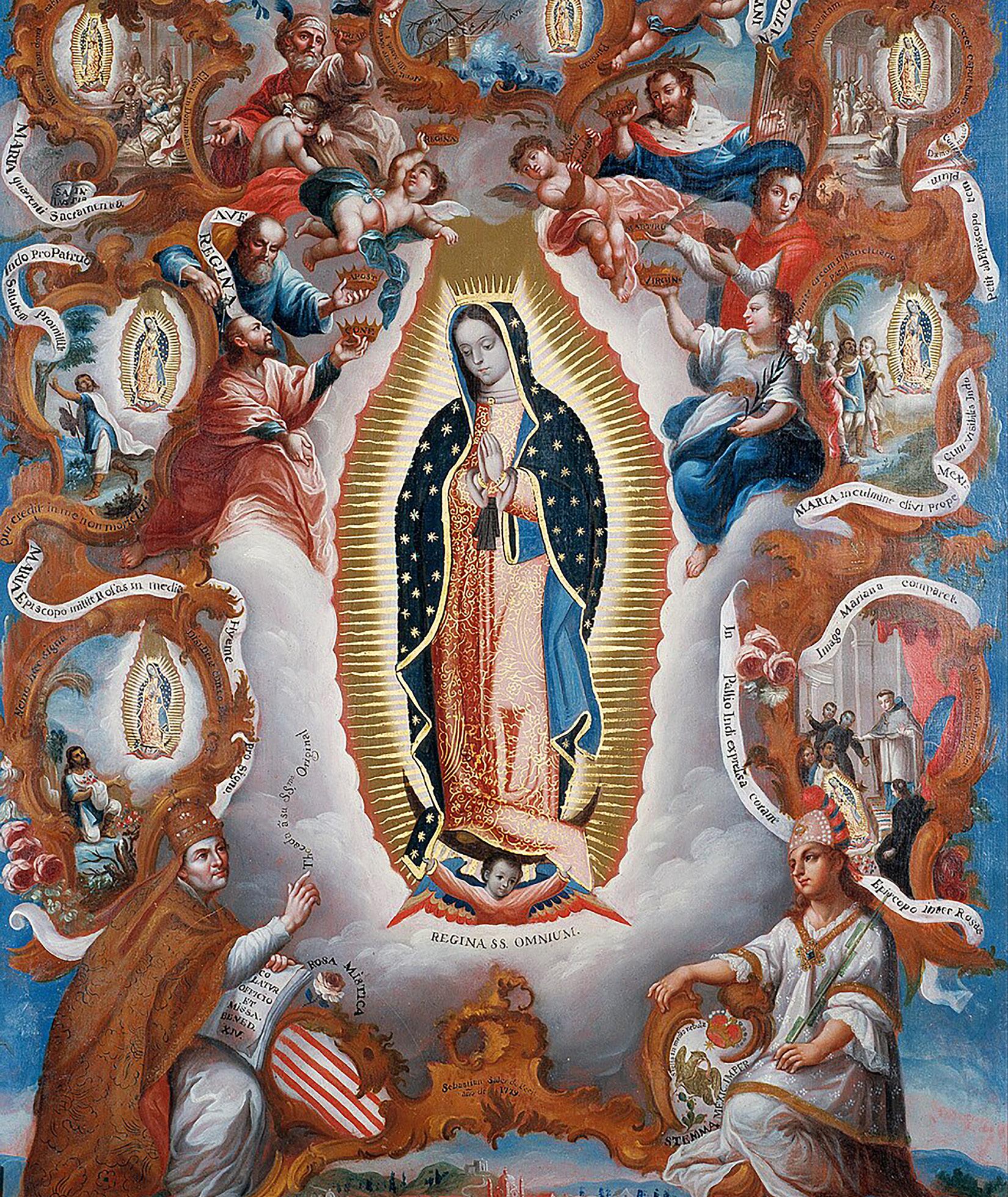
among the Disciples. Michelangelo’s expansive frescos on the ceiling of the Sistine Chapel also exemplify this admiration of and focus on highly religious themes. Some other well-known artistic contributors during this period include Donatello during the Renaissance and Carlo Maderno and Lorenzo Bernini during the Baroque era.4
Besides spurring visual interest and integrating creativity and color into a physical space, what is the importance of Christian images and icons? Every religious space has layers of historical artistic value, and every image or icon in the place has a purpose. Whether purposefully or inadvertently, an image will directly impact navigation inside of a space and how the place is understood by those who visit it. The very existence of an image marks a place as significant in some way—there exists a meaning behind the piece’s existence, and purpose behind its placement. Images set religious spaces apart by evoking a sense of spirituality and sanctity, which denotes it as distinct from secular spaces. Regardless of the art’s literal physical
magnitude or beauty, a sense of respect is invoked simply through the existence of the piece in a religious context. Images and icons play a significant role in religious spaces and among religious individuals in the Orthodox and Catholic Churches. In fact, during the post-Soviet period, the Russian Orthodox art market became the largest artistic market in the country, dominating an economic space that is commonly seen as hyper-secular.5 Perhaps just as important as the cultural aspect of art is the artistic capacity for emotion. This is especially true in a religious context, as viewers can appreciate the objective beauty of a piece while also understanding it in a more subjective, personal, faith-based context. The importance of iconographic images is exemplified through the dense concentration of Madonna and Child and Mary depictions in the Catholic Church. Particularly in the Catholic view, Mary serves as a reminder of purity, proximity to God, grace, and humility, among other traits.6 This veneration, distinct from idolization, positively reflects the purpose of artistic depiction. This notion motivates a change in perception by encouraging us to see what is in front of us and how God exists in its midst. Besides adding to the
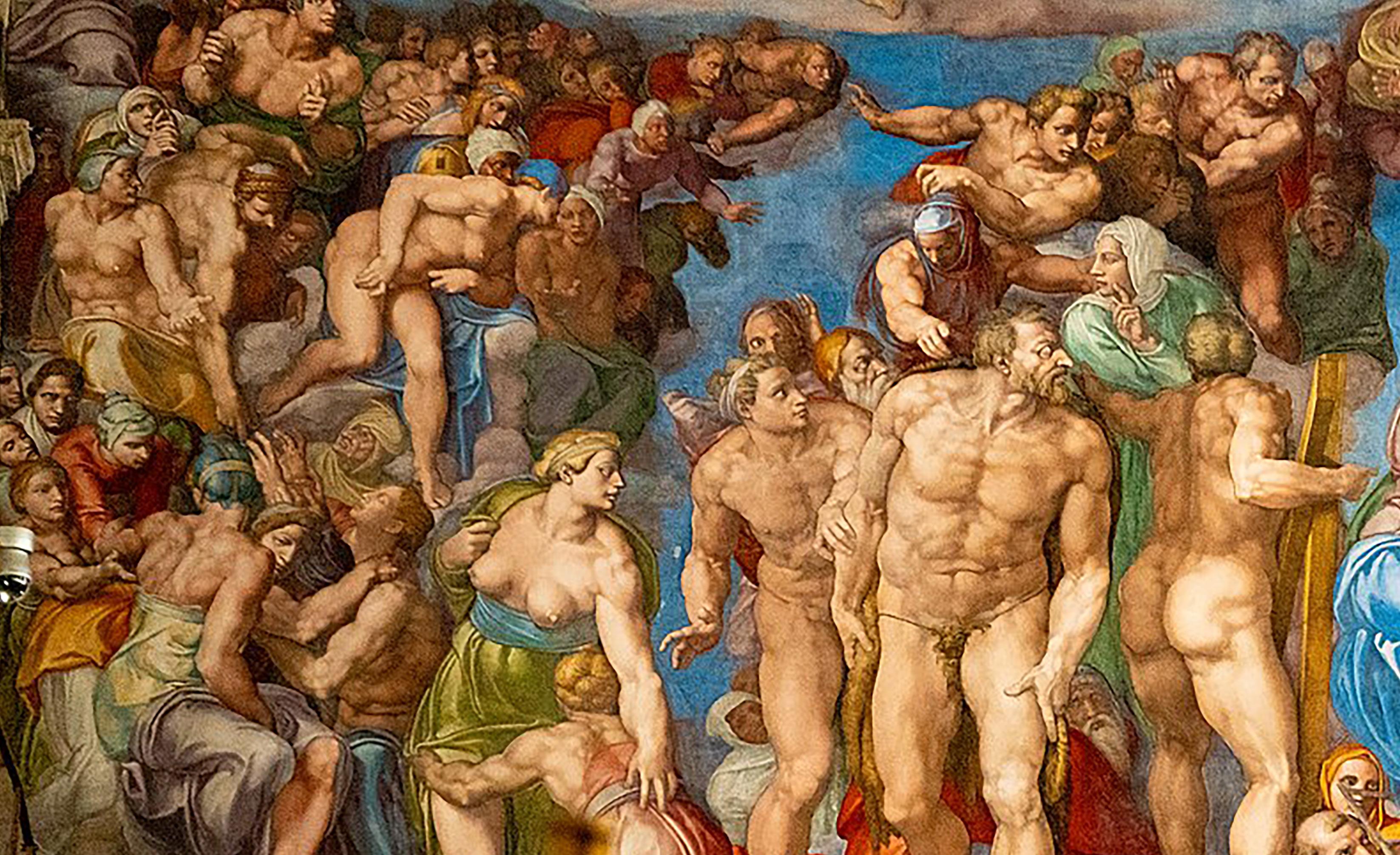
visual aesthetics of a place and reminding us of an important historical event, images can remind us of who we are and who we want to be. They contribute to retrospection, reminding us of our mortality and faults, and spurring inspiration and change. This Christian view on art also reveals something much more intimate to self—the innate desire to create.
Although experiencing art is vital, it is important to understand the motivation behind Christian artistic creation. Gifted artists, images, and other forms of artistic expression are highly respected in Biblical texts. Exodus 35 describes the immense time and effort that was needed to create the Tabernacle and the intricate handiwork of its elements: “And he has filled him with the Spirit of God, with wisdom, and understanding, and knowledge, and all teaching, to design and to fashion, with gold and silver and brass, and with engraving stones, and with the skill of a carpenter. Whatever can be skillfully invented, he has given to his heart.”7 Moses implies that this skill does not come from the men themselves but instead from God’s influence. This
passage combines the God-given skills and innate character of the artists with the will and the plan God had for them. Here, Moses understands the intricacy of their roles and the importance they would carry in the community. He knew that the artistic intentionality behind the Tabernacle would showcase God’s glory, beauty, and magnitude. From this passage, we can gather that these intents lie at the heart of creation and composition—they are the very reason we are inspired to create.
Yet, within this story of artistic creation, lies a contradiction. The people of Israel were given these honored roles, specific to their personalities and talents, then gently directed to create a work of art, yet they were later reprimanded when they created another image—a golden calf. Exodus 32 states, “They have been quick to turn away from what I commanded them and have made themselves an idol cast in the shape of a calf. They have bowed down to it and sacrificed to it and have said, ‘These are your gods, Israel, who brought you up out of Egypt.’”8 Why is one form of artistic expression revered while the other is rebuked? The Israelites’ actions are not only a direct act of disobedience, but in worshipping the calf, the Israelites elevate two things above
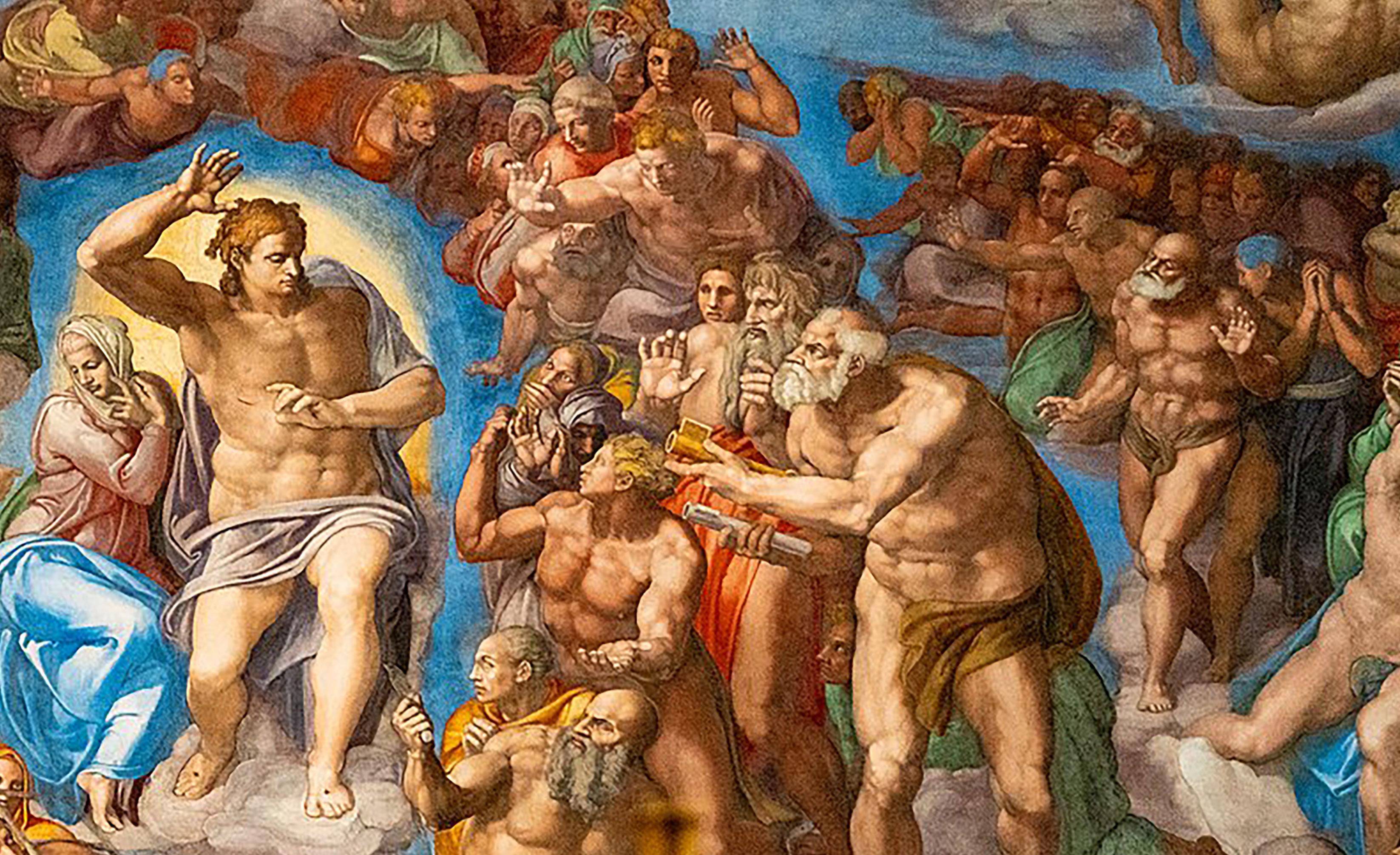
God: the glory of an inanimate object and their personal glory, believing they need not rely on God and instead can be redeemed through their own power.
The problem here does not lie in artistic creation itself but in their worship of the image they created instead of God, who gave them the ability to construct it in the first place. This concept is exemplified in the book of Daniel, in which Daniel was summoned by Belshazzar, son of Nebuchadnezzar, to interpret a passage written on the palace wall. Daniel states, “But you, Belshazzar, his son, have not humbled yourself, though you knew all this. Instead, you have set yourself up against the Lord of heaven. You had the goblets from his temple brought to you, and you and your nobles, your wives and your concubines drank wine from them. You praised the gods of silver and gold, of bronze, iron, wood and stone, which cannot see or hear or understand. But you did not honor the God who holds in his hand your life and all your ways.”9 In both instances, the individuals are not rebuked for the actual creation or their admiration of an icon, but for their reasoning behind it and their literal and figurative worship of it. These situations show that, biblically, the ability to create and what we choose to create should have a purpose, not to be ingrained in our own understanding or personal gain, but
The ability to create and what we choose to create, should have a purpose, not to be ingrained in our own understanding or personal gain, but instead focused on a goal greater than ourselves.
instead focused on a goal greater than ourselves. Through this desire to extrinsically impact, we begin to influence the world around us and our own intrinsic nature, expanding our meaning and purpose in relation to God’s. What we create ultimately shows our heart’s intention, as outward expression often reflects our internal nature.
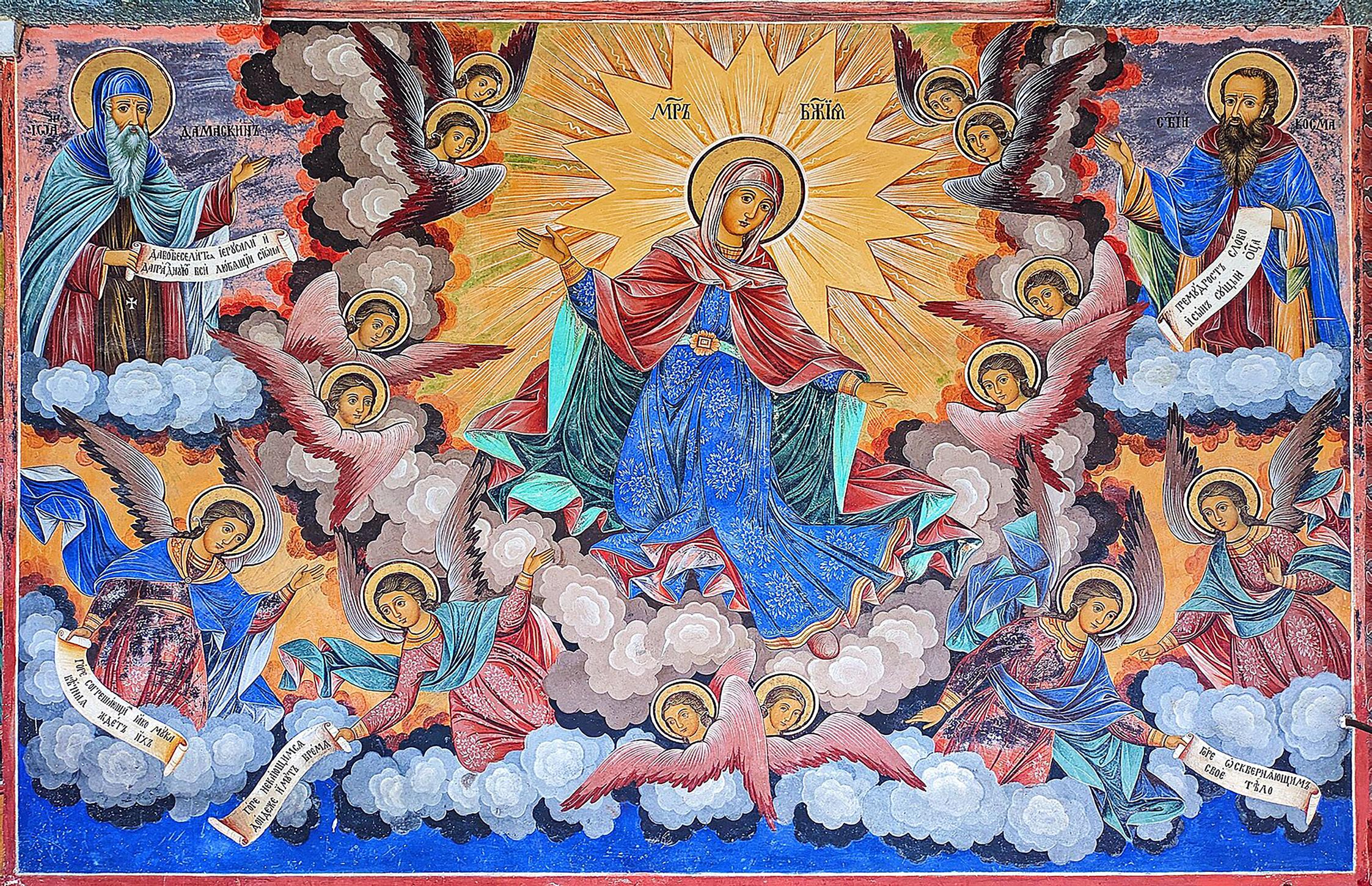
This discussion reveals a dissonance of sorts, as respect implies admiration or reverence toward a subject matter. What is the difference between respect and idolatry, and how can we refrain from subconsciously or intentionally idolizing? As previously showcased in the book of Daniel, one factor that plays a huge role in this inquiry is that of humility. Humility pertains to both the artist and the viewer and is a necessary component of the consideration and understanding of an image. In an artistic sense, this humility means understanding that a piece of art is not and cannot be perfect, regardless of revision, time elapsed, and effort exerted to create the piece. This humility does not mean viewing our own art as unsubstantial or unattractive but understanding our human form and its limitations.
While Exodus 35 depicted art and images as honored, the book of Isaiah questions their purpose and idolization, inquiring how objects can be made with the likeness of God and with the same importance as God: “With whom, then, will you compare God? To what image will you liken him? As for an idol, a metalworker casts it, and a goldsmith overlays it with gold and fashions silver chains for it.”10 These two simple questions demonstrate the difference between admiration and idolization. Admiration of an image is not inherently egregious, but the error lies in comparing and worshiping an inanimate object with no actual religious authority, as God is an incomparable being.
The phrasing of the "likeness" or "comparison" of God presents a question of intent. Are images of God considered idols even if they were not created with such purpose? Again, this ties back into the motive behind the artistic piece and the objective of the individual who admires it. Christian art is meant to glorify God, reflecting the beauty and intricacy of God. In Christian thought, God is a creator who appreciates admiration and worship. Therefore, making an image in the likeness or the representation of him is not inherently negative. Instead, it showcases the depth of human desire to connect with others and to respect and honor figures of religious importance. God is an artistic, creative being, forming beauty, art, and sculpture in the world’s natural elements. Therefore, to revere him through art means that we are reverencing him in one of his initial acts of love towards humankind: the act of creation. Although it is important to note the ways we can negatively utilize art, it is also vital to remember how important art is to God and all of humanity. Through art, individuals are given the power to influence parts of self that are deeply rooted in the subconscious and intimately connected with
introspection and religion. The line between admiration and idolization is fragile, but recognizing and utilizing this notion when creating and considering art is profoundly impactful. As humans and as a society, we will likely never achieve something perfectly beautiful, created with all the perfect intentions and reasonings. We are innately flawed and our pride and desire for praise or acceptance often surpass our aspiration for rectitude. Yet to strive to showcase true goodness, true beauty, and true creation, akin to the exemplary qualities of our initial Creator, should be our foremost goal. To glorify God in every gentle stroke of a paintbrush, each hand-formed clump of clay, the curled
Then, to revere him through art means that we are reverencing him in one of his initial acts of love towards humankind: the act of creation.
shavings from wood carving, and the chipped glass from a mosaic—what a priceless opportunity and what an unmistakably beautiful thing.


Priscilla Villalvazo D'27 is from New Braunfels, TX and is double majoring in Religion and Studio Arts.
1 Kiilerich, Bente. 2015. “The State of Early Christian Iconography in the Twenty-first Century,” Studies in Iconography 36. 99-134 http://www.jstor.org/stable/44735520.
2 Smith, E. Baldwin, Early Christian Iconography And A School of Ivory Carvers In Provence. Princeton University Press, 1918.
3 Charles, Victoria. Renaissance Art. Translated by Marlena Metcalf. Parkstone International, 2012
4 Carl, H. Klaus, and Victoria Charles. Baroque Art. Parkstone International, 2012.
5 . Kravchenko, Elena. “The Making of Faith: Human Intentions and Material Influences in the Orthodox Christian Practice of Iconography,” Material Religion 19, no. 1 (2023): 55-78. 10.1080/17432200.2022.2161247.
6 . Matovina, Timothy. Horizons of the Sacred: Mexican Traditions in U.S. Catholicism Cornell University Press, 2018.
7 . Exodus 35:31-35 (CPDV).
8 . Exodus 32:8 (NIV).
9 . Daniel 6:22-23 (NIV).
10 . Isaiah 40:18-19 (NIV).

St. Thomas Aquinas was one of the most influential philosophers and theologians of the Middle Ages. His masterwork, the Summa Theologiae (Summary of Theology), was massive in its breadth and yet often exhaustive in its depth. While the works of St. Thomas are still influential today, this article will argue that they should be more so, stemming from its thesis: if Catholicism is true, then Aquinas’s philosophy is largely true.
For non-Catholics and unbelievers, this argument will function in a similar way to Pascal’s Wager.1 By this, I mean that it aims to promote action by claiming that something is good, not that it is true. For example, Pascal did not claim that it is true that God exists, but rather, that it is good to act as if he does. In the same way, this article will not argue that Catholicism is true, but rather that it would be good to act as if it was, through the merits of St. Thomas’s philosophy.
Paul calls the Christian faith a mystery, and by this, he means that it cannot be known entirely by reason.2 Thus, it may be useful to orient apologetics towards showing the coherency, beauty, and explanatory power of Christian theology, or the theologies of certain Christian denominations. This strategy could help non-Christians understand
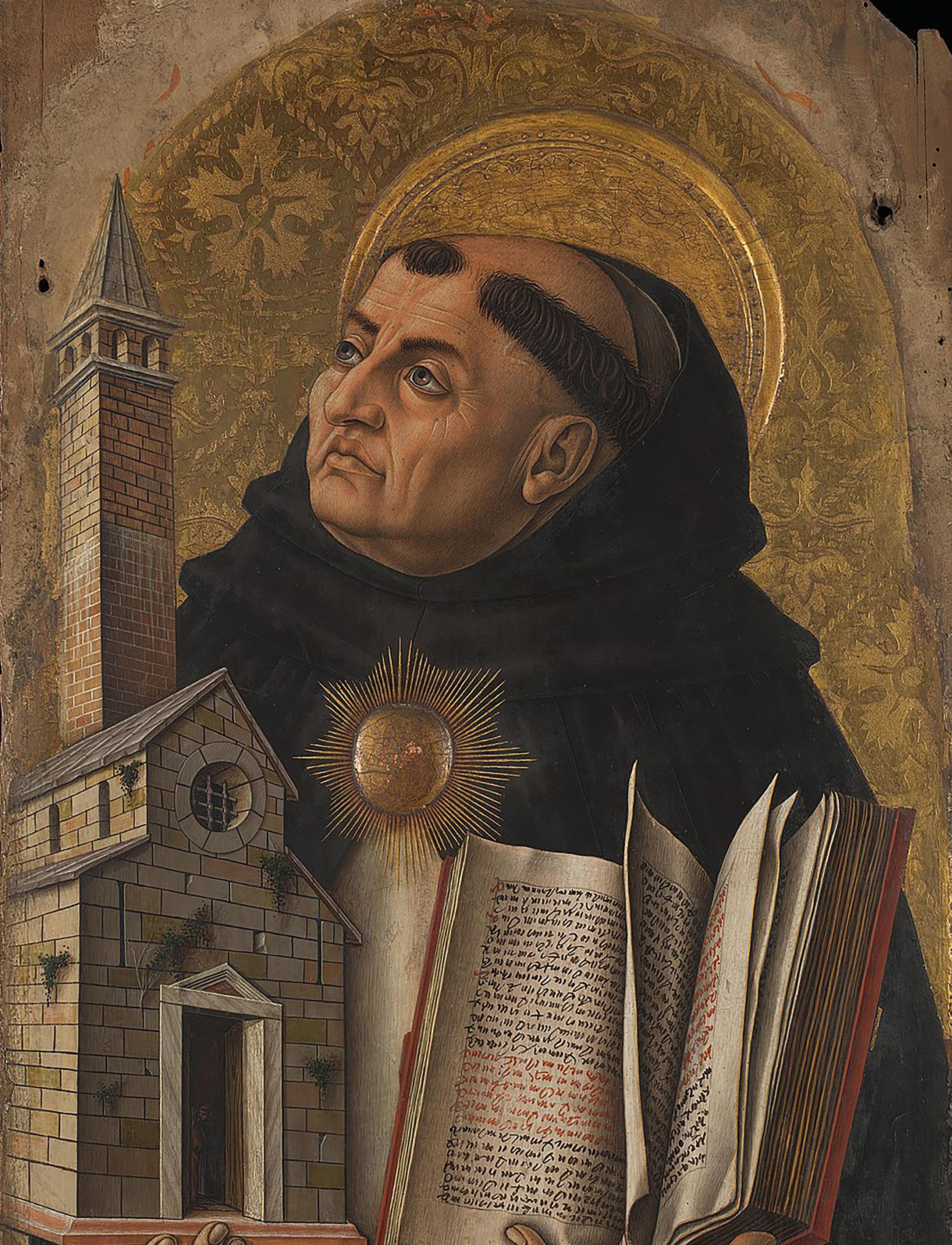
the faith better than trying to force-feed them with logic and classical apologetics. Thus, at the end of this piece, I will attempt to show three uses for Aquinas’s philosophy: providing unmatched explanatory power to Catholicism, equipping Christians philosophically with a perspective that challenges mainstream culture, and assisting Christian discernment for situations and issues the Church has not explicitly spoken about.
Thus, to build up to its thesis, this article will not attempt to prove Catholicism, but instead start from the assumption that it is true. When we assume so, we also assume that everything the Church teaches is true: “In order to preserve the Church in the purity of the faith handed on by the apostles, Christ who is the Truth willed to confer on her a share in his own infallibility. By a ‘supernatural sense of faith’ the People of God, under the guidance of the Church’s living Magisterium, ‘unfailingly adheres to this faith.’”3 Since Church teachings are claimed to “unfailingly adhere,” if there is error found in any of those issues, the Church itself must be false. This article assumes that the Church is true, so it must be correct in all issues it claims to infallibly teach.
One such teaching is the Eucharist, which is a sacra-
ment in the Catholic Church where churchgoers eat bread and drink wine that are consecrated and said to literally become Jesus. Catholicism centers around the Eucharist, and thus it is fitting that the argument for Aquinas’s philosophy will as well.4 The reason for the Eucharist’s prominence lies in the doctrine of the Real Presence. The Catechism, a compilation of the Church’s teachings, explains, “By the consecration the transubstantiation of the bread and wine into the Body and Blood of Christ is brought about. Under the consecrated species of bread and wine Christ himself, living and glorious, is present in a true, real, and substantial manner: his Body and his Blood, with his soul and his divinity.”5 In this quote, “transubstantiation” refers to the process through which the Body and Blood become present. As a brief background for how this is feasible, in Aristotelian metaphysics, all physical objects are matter-form composites. Matter is shaped by form, which determines the acts that the matter has. Thus, a chair may have the forms “to be chair” and “to be brown.” These two acts are different, and Aristotle separates them into substantial form, or substance, which makes a thing what it is (“to be chair”) and accidental form, which constitutes its attributes (“to be brown”). Through transubstantiation, the substance of the bread and wine becomes the substance of the Body and Blood, while it retains its accidents, so it seems to our senses the same as before.
Now that we have a metaphysical claim in the Real Presence that we know for certain is true, the goal is to prove that it implies Aquinas’s metaphysics. In order to do so, it is necessary to take a slight detour into history. In the twelfth and thirteenth centuries, Medieval Europe rediscovered a large group of Aristotle’s writings.6 They were quickly recognized as brilliant and became widely influential. Aristotle’s emphasis on empiricism bolstered a current in Western culture that was already largely shifting in a scientific direction. While some Christian philosophers opposed the new impulse, seeing the emphasis on reason as fundamentally opposed to faith, others embraced it wholeheartedly. One of those theologians was Thomas Aquinas.
For St. Thomas, it was impossible that reason and faith could contradict each other, as both come from the same source: “All truth is God’s truth.”7 Aquinas’s epistemology fully reflects this tendency. He rejects the opinions of two previous philosophers, the first of which is Heraclitus, a pre-Socratic. He explains Heraclitus’s view in the Summa: “...the early philosophers, who inquired into the natures of
things, thought there was nothing in the world save bodies. And because they observed that all bodies are mobile and considered them to be ever in a state of flux, they were of the opinion that we can have no certain knowledge of the true nature of things. For what is in a continual state of flux, cannot be grasped with any degree of certitude, for it passes away ere the mind can form a judgment thereon.”8 Aquinas also rejects Plato’s view, which attempts to solve this problem by arguing that what the intellect is able to grasp is an immaterial form (in the same sense as Aristotle) that each individual body participates in.9 However, this answer is not good enough for Aquinas either, as it doesn’t account for knowledge of movement and change, which are the foundations of the scientific tendencies he wants to preserve. Instead, Aquinas adopts Aristotle’s answer, which is that bodies are matter-form composites. Plato’s forms are not in a higher realm, but present to varying degrees within corporeal things. Humans are able to abstract forms from sensory experience, and then form a relation with the unchanging form, solving both the problem of change presented by the early philosophers and the incongruence between Plato’s theory and science. Through this epistemology, Aquinas solves the first part of his equation, preserving the viability of knowledge from the observation of the natural world.
Thus, it may be useful to orient apologetics towards showing the coherency, beauty, and explanatory power of Christian theology.
Aquinas also set out to protect knowledge through faith. For him, faith is above reason, yet never contradicts it. The reason why may be found in a distinction he draws between two different types of knowing: the Latin ratio and intellectus
Ratio is active, discursive thinking, in which the intellect works out or “composes and divides” the knowledge it has obtained through the senses to come to some new conclusion. For example, when a person does math, they
are using ratio to try to find the right answer. Intellectus is receptive, intuitive knowing. St. Thomas defines knowledge as the intellect’s obtaining of, or relation with, a form. An example is when a mother tells her son that a stove is hot and not to touch it. The son never knows that the stove is hot through his senses, because he never touches it and comes into contact with the accidental form, “to be hot.” He obtains it anyways, however, through his mother’s information, and is able to act for his well-being through it. Thus, while it is possible to come to knowledge through the arduous process of human reason, a relation can also be formed through faith: simply believing something true is knowledge. While it may seem strange to modern culture, this form of knowing is more perfect than reason for Aquinas. He even says that this intuitive, instant understanding is how the angels know everything they do, as beings who are intellectual like humans but do not have bodies.10
For St. Thomas, it was impossible that reason and faith could contradict each other, as both of them come from the same source: “All truth is God’s truth.”
A challenge to Aquinas comes along in William of Ockham, a late Medieval English priest and theologian, who acted from a very different impulse. While Aquinas sought to reconcile faith and reason, Ockham wanted to preserve faith through severing the link between the two. Ockham thought science and reason overstepped their bounds when they were used to explain things of God and asserted that only faith, instead, should serve in that role. To achieve this goal, Ockham challenged Aquinas’s epistemology, becoming one of the most ardent early proponents of a metaphysical doctrine called nominalism.11
Ockham’s Razor, the principle that “entities are not to be multiplied without necessity,” characterizes his chal-
lenge. Ockham recognized the epistemological problem presented by the early philosophers and solved it by locating the stability necessary for the intellect to grasp a constantly changing thing inside the human mind rather than outside it. That stability is in the names that humans apply to things, because they let us unify a whole host of divergent experiences into one label. For example, even though chairs look so different, we can create the name “chair” and can now refer to them. Names do not exist externally, and are only mental: we “make them up.” This solution, called “nominalism,” requires less “entities” in the form of actually existing universals (in the forms) than Aquinas’s and Aristotle’s do.
Ockham’s project proves successful in reducing Aristotle’s influence in the West, but fails in his primary goal, namely, to preserve the primacy of faith above reason. In severing faith and reason, he served as a herald to the Modern period, where reason became prioritized above all else, including faith.
Here we will return to the beginning of the article and use the Eucharist to determine which of these two competing worldviews is correct. First, note that Aquinas’s epistemology gives rise to a metaphysics—if humans know by knowing the forms of things, that implies that those forms exist. The Church’s doctrine of the Eucharist seems to vindicate this exactly. Despite the bread and wine looking the same as before, it becomes the Body and Blood of Christ. Based on this change, something other than physical appearance must make the bread to be bread and the wine to be wine. This lines up perfectly with Aquinas’s idea of substantial form.
From there, the rest of Aquinas’s philosophy readily follows, as I’ll show at the end of this section. However, there are a few possible objections that I’ll address here. First, a subtle reader will note that nominalism is epistemology and not metaphysics. Although nominalism proceeds initially from Ockham’s Razor, which is metaphysical, in arguing that there are no substantial forms, nominalism is just the idea that humans know things through creating categories for them. Despite the minuteness of this distinction, it produces a possible objection: universals may actually exist, but we may never be able to access them. To illustrate, in Aristotle’s work, he posits the existence of an “active intellect,” which would be necessary to extract the substantial form from the senses.12 An objector may concede that substantial forms exist and enable transubstantiation, but there
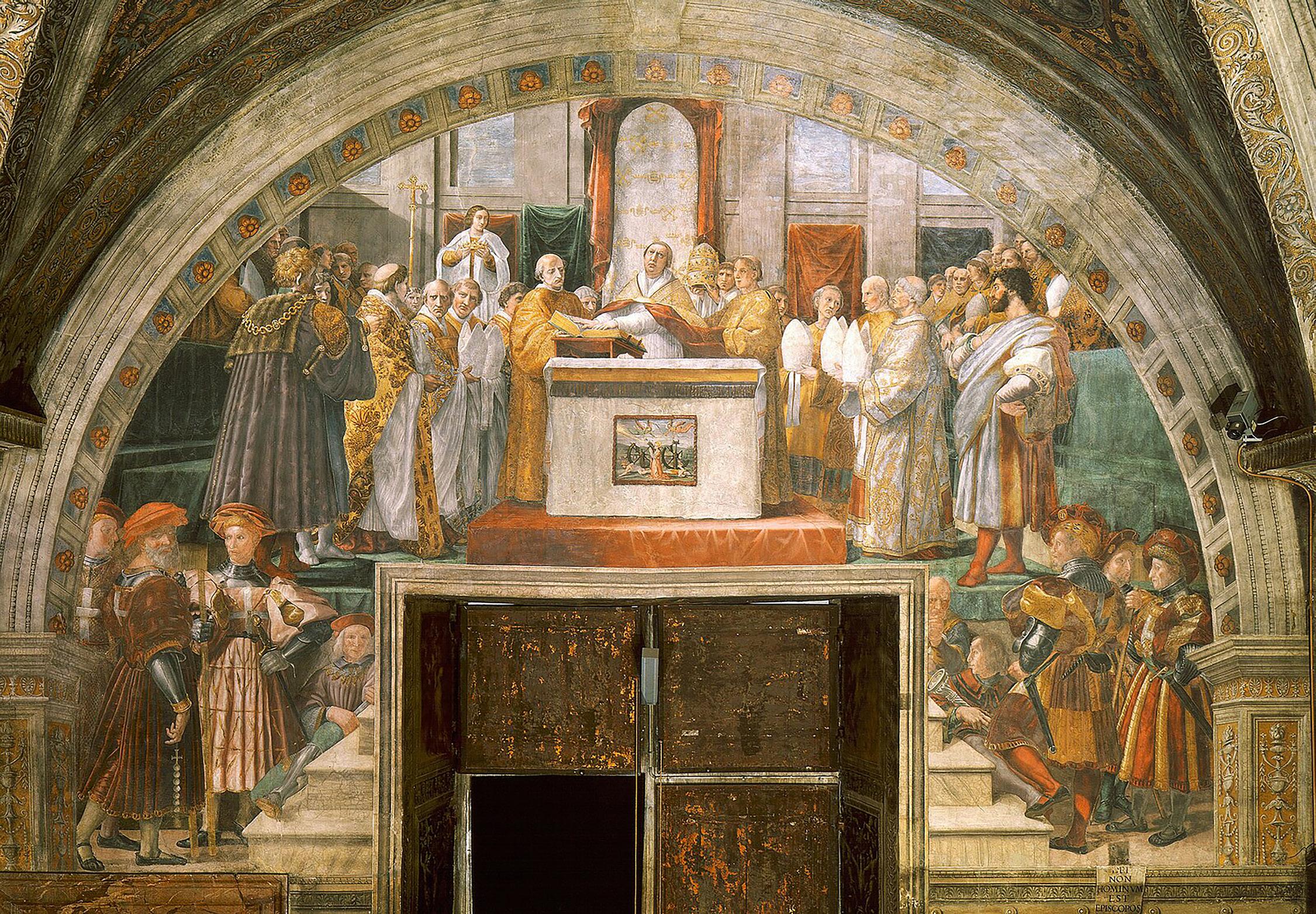
is no active intellect. Instead, humans are left creating their own universals to group the world in a way that may or may not be the way it actually is.
In reply: first, note that the question being debated is not whether substantial forms exist, but whether we interact with them in any way. This makes the burden of proof far less extreme. Our interaction with these forms would explain phenomena such as the general universality of how objects are labeled and how we are able to quickly identify those objects. Furthermore, we at least were able to create categories that accurately reflect bread, wine, body, and blood, because those all must be substantial forms for transubstantiation to work. By this I mean that the objector must at least concede that even if our creation of categories is somewhat arbitrary, we must sometimes “guess” right. However, this seems even more problematic for the objector. If substantial forms exist but human categories mostly do not align with them, they must be ordered in some way very foreign to the human mind. But if humans were able to accurately categorize these four substances, the objector may have a difficult time explaining why we would not be able to do the same for other substances.
Second, an objector may argue that we do not know that form as a whole exists, but instead that just bread, wine, body, and blood exist. Again, this is a strange objection, given that the process of identifying something as bread, wine, body, or blood seems exactly the same to us as identifying anything else. This objection somewhat bleeds into the first, but I’m going to try to separate them for simplicity. For example, posit some unknown non-Thomist epistemology (not necessarily nominalism) that explains how we identify all other objects. If we used this alternate epistemology to identify everything else, and the active intellect to identify bread, wine, body, and blood, there would likely be a marked difference in how the two separate processes seemed to us
Third, one may say that we have only proven Aquinas’s metaphysics and epistemology and nothing else. To refute this, I will detail how the rest of Aquinas’s philosophy follows what I have previously shown. Of course, the rest of his inferences are not infallible, but if he is wrong it is because he was logically wrong, not because his presuppositions were wrong. I will only cover this briefly here, as there is not enough space to go into detail. Aquinas’s epis-
temology leads to his anthropology, in the sense that what makes humans special is the ability to know things—we are rational animals. Along with the intellect comes free will, because humans can move towards and away from what they know to be good or bad, instead of purely reacting to their senses through pleasure and pain, like other animals do. For example, a man can choose to exercise despite it being painful, knowing that it will ultimately be good for him. Aquinas’s ethics begin with the observation that the word “good” seems to simply denote desire. However, Aquinas identifies the commonality in these objects of desire as perfection of that object’s being.13 In other words, we desire objects that are what they are fully. Thus, we can also say that the good is being, as an object becomes perfect when it “bes” what it is more fully. For example, while what makes a good plant and a good human is different, they share a biological dimension in health. For instance, it is bad for a plant to be dead and for a human to be sick. Humans, however, also can know and choose freely, and to live well, must additionally perfect those powers. In this way, a bad human is also one who misuses his free will and intellect, which is sin, and will be explained later in this article. St. Thomas’s project then goes in a distinctly Christian direction, when he uses these observations and expands on them to explain everything from the theological virtues, which are supernatural perfections of the powers that make use human, to the sacraments.
to be Catholic already for this argument to prove that he is right? If Catholicism claims to already provide believers with infallible knowledge about everything they need to know to be a good Christian, then what’s the point of proving Aquinas? As argued before, his philosophy has three uses.
The first merit is in explanatory power. While a person with faith may know that it is bad to lie or commit sexual sin, if asked by an unbeliever, the Christian may not be able to explain why any further than a simple “God told me so.” And while that is—and should be—a sufficient answer for a Christian reconciling teachings with themself, it may seem overly dogmatic or even irresponsible to an outsider. In 1 Peter 3:15 (DRB), the Apostle Peter famously writes on the importance of being able to explain faith to unbelievers: “But sanctify the Lord Christ in your hearts, being ready always to satisfy every one that asketh you a reason of that hope which is in you.” Thus, while many use St. Thomas’s philosophy to build toward Christianity, perhaps his works are best suited for those who are already Christian—to help them determine how they should act and how to explain it to others.
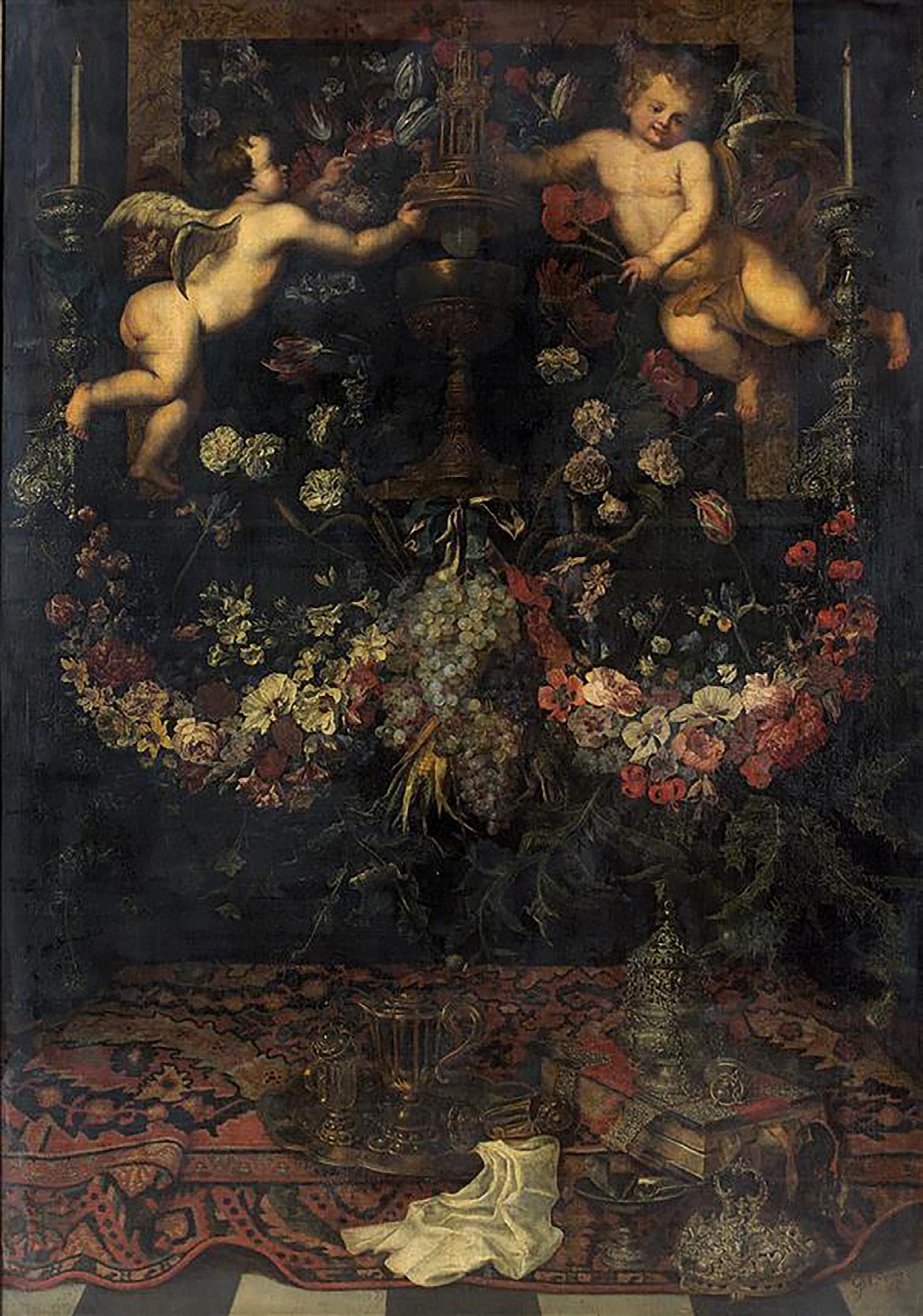
hoW is this imPoRtaNt?
Now, the final, and perhaps most important question of this article arises: how useful is Aquinas if a person has
Take an example. Evil, for Aquinas, does not actually exist. Since good is being, anything that exists must be good. However, things can be bad as well, and that badness is imperfection. Thus, humans are good—in that we’re made in God’s image—but simultaneously evil—because we sinned and fell short. Sin is an evil action—an action that causes the privation of being. Aquinas’s ethics, as detailed above, allows us to determine why different sins are bad and their gravity. Let’s employ his ethics for the sins of gluttony and fraud. Gluttony is bad because it is essentially dehumanizing. Instead of an individual acting with their
higher powers of intellect and will to determine what is good, they choose to act based on the pleasure of food. It is important to note that while pleasure is essentially good, it becomes sinful when it is disordered—when a person places it higher than it should be. Fraud is bad because it is when a human uses their intellect and will for a bad purpose; they discern what is good and bad and intentionally choose what is bad. In this way, fraud is worse than gluttony, because while pleasure is ignoring the powers which make us human, fraud is corrupting them.
Thus, Catholics have a certain advantage in finding meaning within the field of philosophy— they have a direct challenge to the very presuppositions of contemporary thought.
Second, the truth of Aquinas’s metaphysics is invaluable for any Catholic interested in philosophy or its implications on their life. Contemporary philosophy is characterized by a rejection of metaphysics, mostly as a reaction to Kant. As historian Richard Tarnas writes, “Henceforth, philosophy concerned itself largely with the clarification of epistemological problems, with the analysis of language, with the philosophy of science, or with phenomenological and existentialist analyses of human experience. Despite the incongruence of aims and predispositions among the various schools of twentieth-century philosophy, there was general agreement on one crucial point: the impossibility of apprehending an objective cosmic order with the human intelligence.”14 Thus, Catholics have a certain advantage in finding meaning within the field of philosophy—they have a direct challenge to the very presuppositions of contemporary thought. Whether that advantage manifests in refuting anti-Christian positions, or adapting newer thinkers to improve theology, is up to each individual to decide for them-
self. Regardless, Aquinas is undoubtedly useful for anyone who thinks about philosophy. It’s important to note, however, that this is mostly helpful in resolving modern and later philosophy but significantly less useful when discerning the truth in intra-Scholastic or Christian debates.
The last benefit of Aquinas’s philosophy perhaps only applies to Catholics, but it still could be useful for non-Catholics if they’re interested in similar theological topics. Aquinas wrote about many topics on which the Church has not explicitly explained all the details, such as the nature of the beatific vision and the nature of angels. If it is the case that these topics are connected to whether Aquinas’s metaphysics are correct, then it becomes much easier to decide on them one way or another.
Thus, Catholics should be careful to stay close to St. Thomas’s philosophy and reap the benefits it provides. And for those outside the Church, I hope this essay has been helpful in showing its beauty and coherence in a way that makes it seem good, if not necessarily true.


Everett Yau D'28 is from Menlo Park, CA and is majoring in Philosophy and minoring in Linguistics.
1 . “Pascal’s Wager,” Wikipedia, https://en.wikipedia.org/wiki/Pascal%27s_wager.
2 . Ephes. 1:9
3 Catechism of the Catholic Church (Vatican: Libreria Editrice Vaticana, 1993), §889.
4 Catechism of the Catholic Church (Vatican: Libreria Editrice Vaticana, 1993), §1324.
5 Catechism of the Catholic Church (Vatican: Libreria Editrice Vaticana, 1993), §1413.
6 . Richard Tarnas, The Passion of the Western Mind: Understanding the Ideas That Have Shaped Our World View (New York: Ballantine Books, 1991), 176.
7 . Augustine, Confessions, trans. Henry Chadwick (Oxford: Oxford University Press, 1991).
8 . Thomas Aquinas, Summa Theologica, I, q. 84, a. 1, trans. Fathers of the English Dominican Province (New York: Benziger Bros., 1947).
9 . Aquinas, Summa Theologica, I, q. 84, a. 1.
10 . Aquinas, Summa Theologica, I, q. 54, a. 4.
11 . Tarnas, The Passion of the Western Mind, 202.
12 . Aristotle, De Anima (On the Soul), trans. J. A. Smith, in The Complete Works of Aristotle, ed. Jonathan Barnes, vol. 1 (Princeton: Princeton University Press, 1984).
13 . Aquinas, Summa Theologica, I, q. 5, a. 4.
14 . Tarnas, The Passion of the Western Mind, 353.

Daniel Davidsen D'28
In the modern era, it is uncommon for people to be concerned about idolatry. After all, the popular conception is bound in ideas of primitive tribes’ pagan relics of wood and stone. Perhaps those with a somewhat greater degree of Biblical literacy can conjure mental images of the golden calf to which the Israelites turned during Moses’s trip up Mt. Sinai.1 Almost invariably, the contexts in which the examples are situated seem distant and disconnected from the society in which we live. While the examples are correct, the understanding of idolatry which nominates them is erroneous insofar as it places the emphasis on the statues themselves rather than the attitudes and behaviors of the societies which produced them. A proper Christian understanding of the definition of idolatry, conversely, implicates far more people alive today. It centers around giving any earthly person, place, thing, or idea the deference, respect, and worship of which God alone is deserving. This has been an enduring problem in every epoch of human civilization.
There is a certain pernicious arrogance associated with the idea that something which is constructed on Earth of Earthly materials alone is capable of being worthy of worship. This is because of the Fall of Man: the individual moment in which the first humans chose to openly disobey God, leading to mankind’s expulsion from the Garden of
Eden and a significant deterioration in our relationship with our Creator.2 They unleashed the corrosive influence of sin, which has been passed down through every generation and which has stretched to every corner of the globe, corrupting not only human nature but the natural world as well. Thus, there is an inherent futility associated with the pursuit of divine perfection on Earth today.3 For one to dedicate the majority of his endeavors to something or someone other than the perfect Lord of all creation is to serve something fundamentally broken.
It is a worthwhile examination of conscience for an individual to ask himself what circumstances would excuse the reallocation of time previously pledged to God (whether for Sunday worship, morning prayer, or other such points at which one worships the Lord and strengthens his relationship with the Almighty) for other pursuits. It is similarly worthwhile to examine the potential opportunities which would cause someone to reallocate money previously set aside as a tithe or offering for advancing the Kingdom of God. It is easy for an individual to intellectually understand the importance of prioritizing one’s relationship with God and respecting what has been pledged to Him. It is much harder for humans to remain guided by that value in the face of Earthly temptation. However, moments in which individuals choose other pursuits over
a pursuit of God without genuine repentance afterwards reveal what they genuinely worship.
Scripture makes it abundantly clear that it is essential that God must not only be placed in a position of prominence but one of primacy in the lives of His children. It is present within the Ten Commandments,4 it runs through Jesus’s exhortation to prioritize storing treasure in Heaven rather than on Earth5, and Jesus explicitly states that “No one can serve two masters”—people will either devote themselves to God or an idol.6 The beginning of the story of Cain and Abel provides a useful illustration: both Cain and Abel choose to sacrifice some of the fruits of their dif-
ficult labor to God. However, God accepted Abel’s offering over Cain’s because Abel offered the firstborn of his flock— giving God the best he had to offer—while Cain provided only assorted produce left over after he had taken what he desired.7 It is valuable to consider which brother’s approach to offerings aligns most closely with our outlook and practices in our own respective lives.
Choices which subordinate God to other pursuits are seldom made as conscious rejections of God. However, the thoughtlessness with which these slights against God are perpetrated does little to reduce their potentially eternal consequences. Moments in which individuals fail to put God first can potentially lead to the deterioration of virtuous habits and a gradual deleterious shift in attitude towards the importance of maintaining one’s bond with God.
When one begins looking, many things usurp the role of God in people’s lives. In many cases, the most potent idols are things which are fundamentally good but are incorrectly turned into peoples’ ultimate aims.
It is natural and healthy for humans to seek connections with one another, and it is important to establish and maintain friendships. However, it is unhealthy to enter a
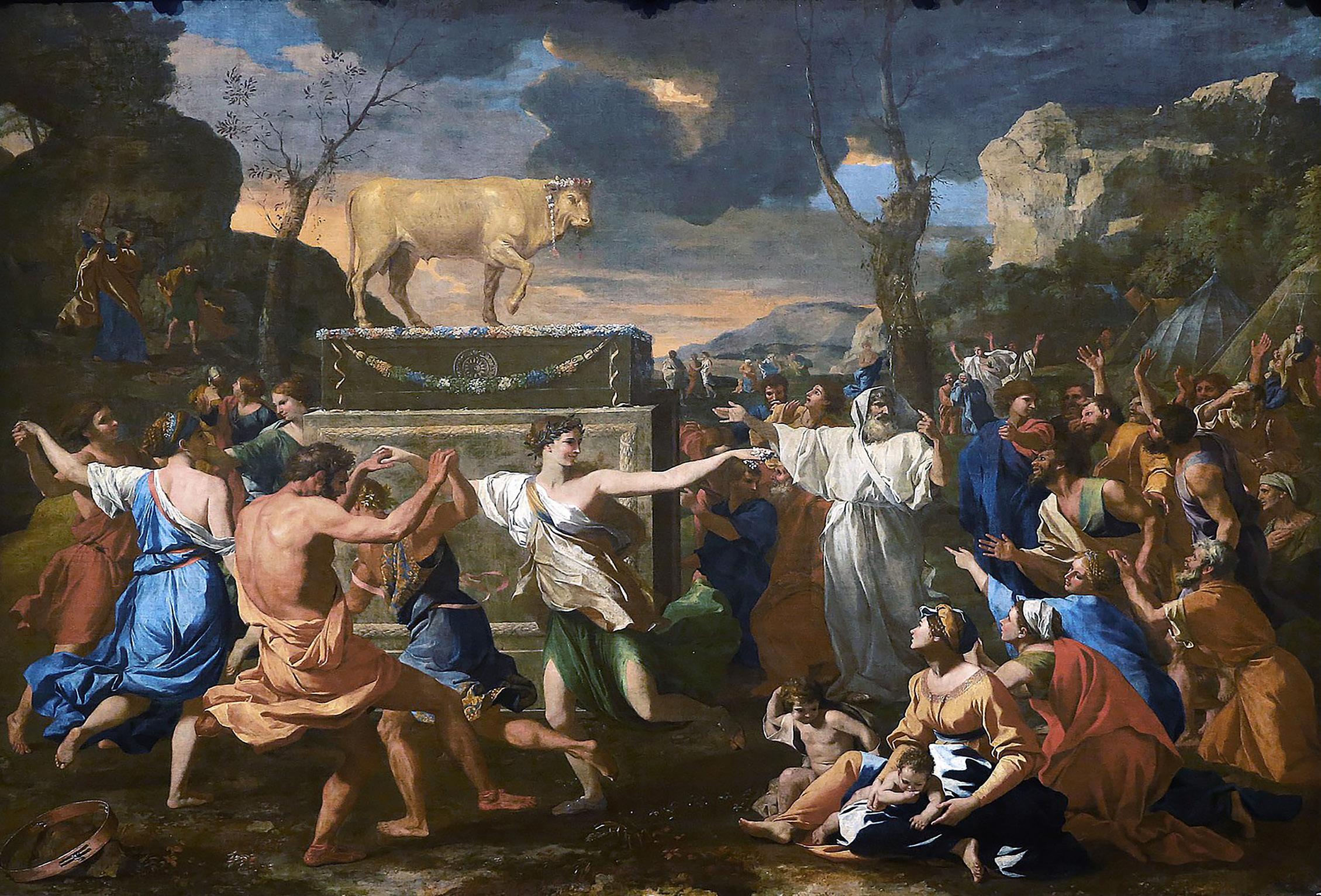
state in which the maintenance of social capital is a cause for which an individual is willing to sacrifice his other espoused values. If a student feels too embarrassed to say grace prior to eating a meal with friends, it signifies a prioritization of Earthly relationships over a healthy relationship with the Lord. Often individuals will use coarser language to conform to their peers’ patterns of speech despite the Bible’s warnings.8,9 Acceptance within desirable social circles can often involve cruel and indecent behaviors. Beyond college, it is saddeningly common for those in the public eye to be driven by pride and a thirst for public attention into destructive decisions.
Work is necessary for the maintenance of civilization, work was present in the Garden of Eden before the Fall of Man,10 the Apostle Paul had very little patience with able-bodied individuals who refused to work,11 and diligence has long been recognized as one of the seven capital virtues.12,13 At the same time, it is certainly possible to become consumed by work to such an extent that obligations to family and God go unfulfilled. College students, who sit on the precipices of entry into their respective careers, are well situated to maintain well-ordered priorities if they are present from the outset. Becoming involved in community
If a student feels too embarrassed to say grace prior to eating a meal with friends, it signifies a prioritization of Earthly relationships over a healthy relationship with the Lord.
organizations and starting a family should be factored into a college student’s initial life plans lest they be muscled out by the growing demands of his job.
However, the student does not only need to carefully consider the work he anticipates in the future: he should also reflect on his approach to collegiate scholarship. The

The anxiety they feel will persist as long as their focus remains on the Earth itself over the Earth’s Creator, who is the source of endless love and hope.
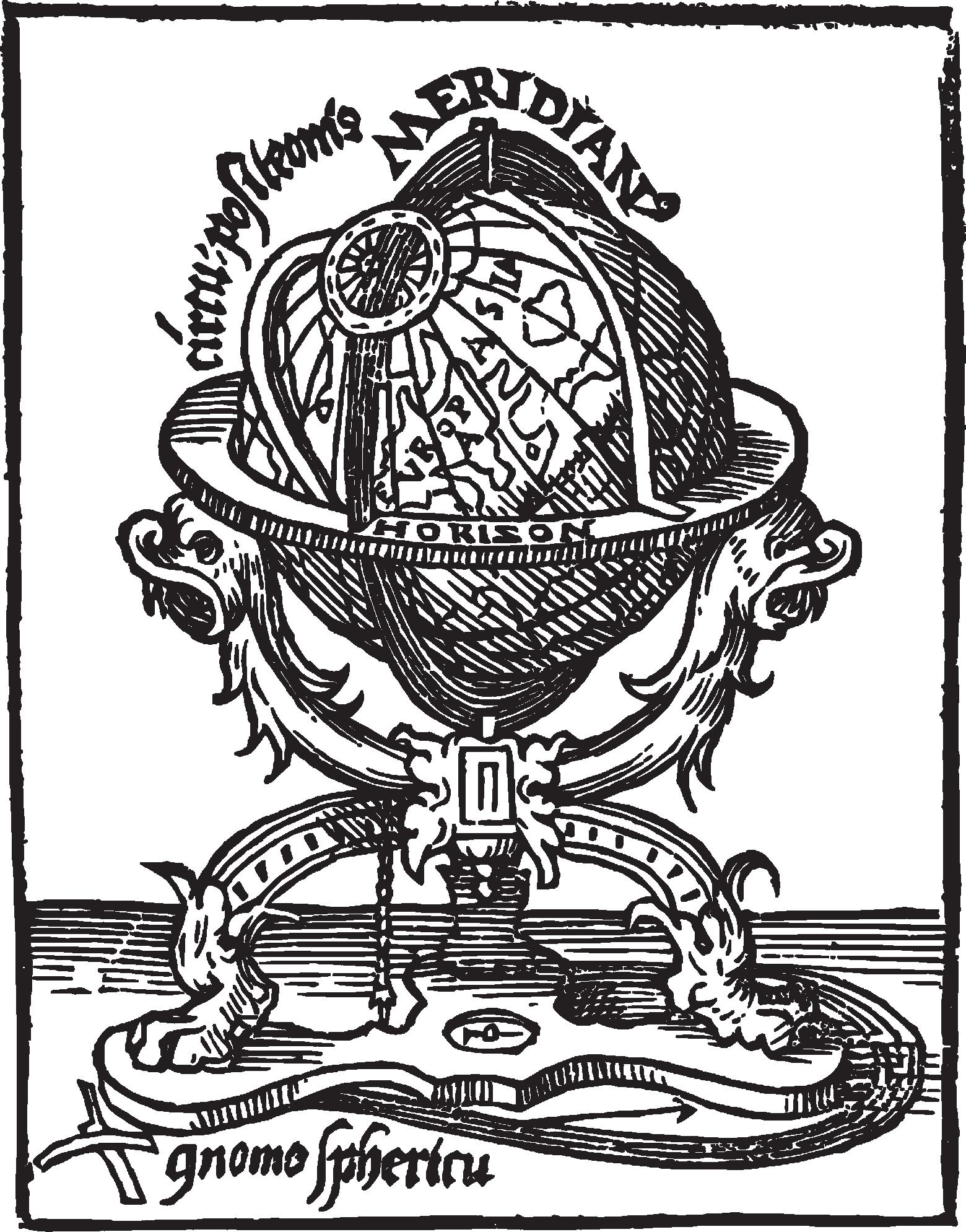
work of a college student in accumulating and meaningfully applying knowledge has immense value to both the individual and his community. At the same time, it is a mistake for any student to bury himself in the minutiae of a field of study without giving thought to the grand, central questions which contextualize it. For centuries in the West, the field of theology enjoyed a designation as the “queen of the sciences,” owing both to the paramount importance of the questions it attempts to answer and its presence within all academic disciplines.14 Many of the greatest thinkers and scientists were motivated through analyzing His creation; Johannes Kepler notably specifically by a desire to understand more about God characterized his contributions to physics and astronomy as “thinking God’s thoughts after Him.”15 Many of the world’s oldest and most prestigious institutions of higher learning—including Dartmouth— were founded by religious organizations and denominations.16 Exploring the intersection of one’s studies with Christianity will both help the student gain a fuller understanding of the content and will allow those studies to draw him closer to God. It is important for those who will eventually work with the student after graduation as well: the accumulation of knowledge without a robust understanding of the ethics of its applications is a sincerely dangerous thing.
God left us as stewards of his creation with a responsibility to protect the beauty and splendor of the natural world, and it is important that we safeguard the environment. However, certain individuals become consumed by that noble cause to such an extent that their advocacy becomes a sort of worship of the Earth itself. When the University of Helsinki chose to confer upon young climate activist Greta Thunberg an honorary degree, they chose to award her a doctorate in Theology despite the school’s possessing a program in Environmental Science.17 Science is advanced through a rigorous spirit of questioning, but those who propose suggestions outside of the standard dogma (e.g. focusing on nuclear en-

The knowledge of the potential for eternal life is a more potent source of hope—even in times of despair—than anything the Earth alone can provide.
ergy in the short term over an immediate switch to renewable sources) are denounced as “anti-science” heretics in the court of public opinion. Many young people today invest apocalyptic consequences in everyday actions and common purchasing decisions. Dwelling on the “carbon footprints” of children has led to a propagation of antinatalism among young adults, which reveals that their desire to protect the Earth supersedes an interest in their progeny’s experiencing it.18 Not only does the Bible compel us to “be fruitful and multiply,” it also declares our right to “fill the Earth and subdue it.”19 The beliefs of many extreme environmentalists possess religious characteristics, one of its most unique elements is its grounding in anger and terror. The anxiety they feel will persist as long as their focus remains on the Earth itself over the Earth’s Creator, who is the source of endless love and hope.
Staying informed on the issues most affecting communities, attempting to effect positive change in society, and defending meritorious institutions are all virtuous. However, this past election cycle has revealed the extent to which individuals on both sides of the aisle make an idol of politics through placing more faith in political candidates than the Lord. Many politically involved young people have a tendency to uncritically accept the views of their favored politicians and discuss them with a reverence due to God alone. Christ’s command to love our enemies often goes forgotten in the thick of campaigns. The grief individuals feel over lost elections would be greatly assuaged if the knowledge was more widespread that despite the temporal consequences of elections Christ’s reign in heaven continues uninterrupted. This all points to a society more concerned with the naturally imperfect laws of man than the infallible laws of God.
The personal fulfillment one can gain through worshipping the true Lord exceeds all which is possible elsewhere. The mission of building God’s kingdom through learning God’s messages about how to live and worship, spreading them to others, and living them out as much as possible fills believers with a uniquely strong sense of purpose and motivation connected to the unique virtue of the task. The knowledge of the potential for eternal life is a more potent source of hope—even in times of despair— than anything the Earth alone can provide. The knowledge that we are created in the image and likeness of God is powerful. Everyone has committed personal sins, and the extent of God’s love and forgiveness despite our own brokenness is comforting.20 Above all, it is essential to remember that God walked among us and died on a cross so that we can be saved—even despite the fact that all humans alive today are sinners.
Above all, it is essential to remember that God walked among us and died on a cross so that we can be saved—even despite the fact that all humans alive today are sinners.
The early theologian Tertullian wrote extensively about the sins of thought Jesus discussed. In his reading of the Bible, he considers idolatry “the principal crime of the human race.” He sees it as a sort of adultery, since directing worship away from God constitutes a sort of severe infidelity in our relationship with Him. He also views idolatry as a prerequisite for and a component part of the sin of murder, since for one to justify murder to oneself requires the adoption of a corrupted moral framework wholly distinct from God’s.21 The prevalence of idolatry in all communities was further reinforced by the Protestant Reformer John Calvin, whose statement that “the mind of man is… a perpetual manufac-
tory of idols” speaks to our collective propensity to create idols in every part of life.22 However, remaining cognizant of this tendency and vigilant in our own lives can help aid us in redirecting our focus where it properly belongs: on God.


1. Exodus 32:1-4
2. Genesis 3
3. Romans 3:10-20
4. Exodus 20:3-6
5. Matthew 6:19-21
6. Matthew 6:24
7. Genesis 4:2-7
8. Matthew 12:36
9. Colossians 3:8
10. Genesis 2
11. 2 Thessalonians 3:10
12. Colossians 3:23

Daniel Davidson D'28 is from Smithtown, NY and is pursuing a double major in Government and Physics.
13. Siker, Jeffrey S. Jesus, sin, and perfection in early Christianity. Cambridge University Press, 2015.
14. Oliver, Erna. (2016). Theology: Still a queen of science in the post-modern era. In die Skriflig/In Luce Verbi. 50.
15. Barker, Peter and Bernard R. Goldstein. “Theological Foundations of Kepler’s Astronomy,” Osiris 16: Science in Theistic Contexts. University of Chicago Press, 2001. 16. Britannica, T. Editors of Encyclopaedia. “Eleazar Wheelock.” Encyclopedia Britannica, April 20, 2024. https://www.britannica.com/biography/Eleazar-Wheelock.
17. Rogers, Zachary. “Greta Thunberg gets honorary doctorate from Finnish university.” ABC News, March 21, 2023. https://abcnews4.com/news/nation-world/university-gives-greta thunberg-honorary-doctorate-helsinki-climate-activist-faculty-theology
18. Karuga, F. F., et. al (2022). The Causes and Role of Antinatalism in Poland in the Context of Climate Change, Obstetric Care, and Mental Health. International Journal of Environmental Research and Public Health, 19(20), 13575.
19. Genesis 1:28
20. Romans 3:23
21. Tertullian (Translated by Sydney Thelwall). On Idolatry 22. Calvin, John (1536). Institutes of the Christian Religion

Joy is a fundamental aspect of Christianity that, unlike happiness, is eternal and independent from any temporal conditions. St. Augustine argues that joy is rooted in longing for and depending on God. Since unlike money and earthly pleasures, God is eternal and perfect, Augustine states, “He who has God is joyful.”1 Joy is different from happiness because it relies on something beyond our world and all its flaws; it is a connection between our imperfect and constantly shifting emotions and the timeless perfection of God.
C.S. Lewis differentiates joy from happiness, stating that the only thing joy has in common is “the fact that anyone who has experienced it will want it again.”2 He describes joy as “an unsatisfied desire which is itself more desirable than any other satisfaction.”3 Joy is simultaneously an expression of faith in God and Providence and a longing to be with God through recognition of what we have and shall have when we are united to God. Joy is not a passive or fleeting feeling; it is an active, challenging, yet rewarding feeling that needs to be sought out. When it is sought out, joy is impactful, rewarding, and a pillar of faith in God. Happiness is a fleeting, temporal emotional state, while joy is a persistent and hopeful longing for God. Rejoicing in God and feeling joy is also an expression of faith: despite harsh conditions and the trials we face, there is an
ultimate good worth waiting for. Paul agrees and writes to the Romans, “I consider that our present sufferings are not worth comparing with the glory that will be revealed in us.”4 Joy is following Paul’s example and waiting for God to redeem us—it is the knowledge that being near God for eternity is such an infinite good that any suffering we face is infinitely small in comparison. It is then an expression of belief in God and belief in this “glory that will be revealed in us.”5 Seeking joy is not only pleasurable for us, but is also fundamental for our quest to be nearer to God. Paul delves further into this distinction between joy and happiness in Romans 14:17 by stating, “For the kingdom of God is not a matter of eating and drinking but of righteousness and peace and joy in the Holy Spirit.”6 The separation of joy in the Holy Spirit and eating and drinking is a dichotomy between bodily pleasures and joy.
There is also an emphasis on seeking joy in challenging conditions or seeking joy through persevering adversity. James in his epistle writes, “Consider it pure joy, my brothers and sisters, whenever you face trials of many kinds, because you know that the testing of your faith produces perseverance.”7 By facing trials and keeping faith in God throughout them, despite whatever may come our way, we can consider our faith and perseverance as true joy. Finding true joy is not only ideal but also a moral obligation, since
is a connection between our imperfect and constantly shifting emotions and the timeless perfection of God.
Christians are called to trust and long for God. That longing and trust are part of what faith is, and we are called to stay true to our faith, which makes joy a necessity. Not to be confused with forcing yourself to be happy, seeking joy is seeking to trust more and to long for God’s glory to be revealed in us. James calls upon us to seek out joy no matter what trials await us and to always believe that there is something infinitely good waiting for us.
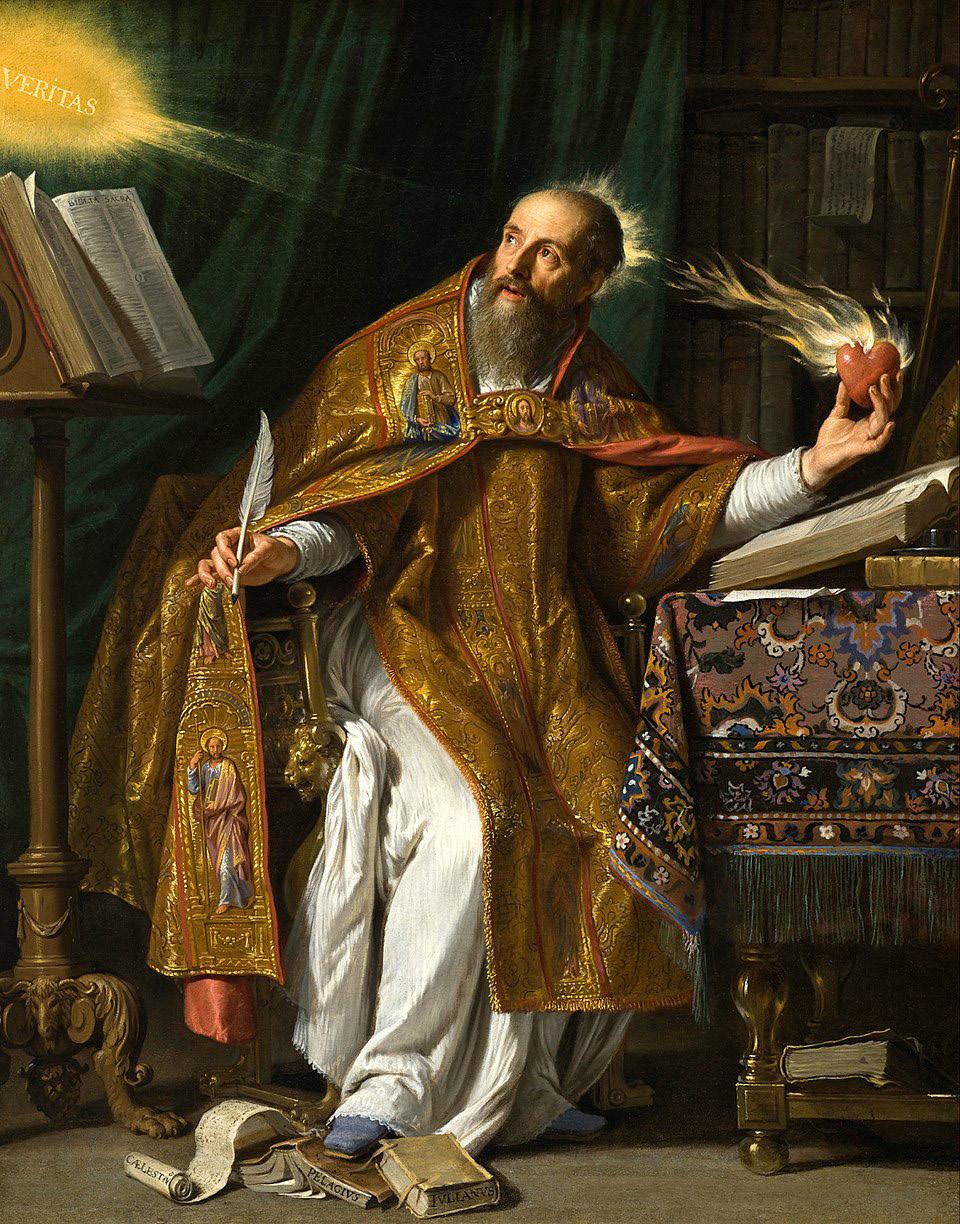
Examples of this belief and longing are found not only in religious expression but also in secular forms of expression. Brazilian samba is a prime example, though musicians who produce samba frequently live in “favelas,” which are
crowded housing districts where poverty and violence are commonplace. Despite the harsh conditions these musicians face, they often produce some of the most joyful and simple songs expressing themes like the love of God, of his creations such as nature, and gratefulness. Artists such as Martinho da Vila and Zeca Pagodinho express immense joy and resilience in their songs; in Martinho da Vila’s hit song “Canta Canta, Minha Gente” (Sing Sing, My People), he implores people to sing despite how bad things may be and to keep hoping for a better tomorrow:
Canta canta, minha gente / Sing sing, my people
Deixa a tristeza pra lá / Leave the sadness behind Canta forte, canta alto / Sing strongly, sing loud
Que a vida vai melhorar / Because life will get better8
It is not only Da Vila who expresses hope in the future and joy—joy is the central theme in samba. Artist Zeca Pagodihno expresses the futility of seeking fleeting happiness in earthly pleasures and the need to not only be thankful towards God for what we have, but the need to acknowledge that no matter what our circumstances are, the longing for God and the gratitude we hold is a blessing itself. As Zeca Pagodihno states in his song, “Deixa a Vida Me Levar” (Let Life Take Me):
Eu já passei por quase tudo nessa vida / I’ve been through almost everything in this life
Em matéria de guarida, espero a minha vez / In terms of wealth, I’m waiting for my turn
Confesso que sou de origem pobre / I confess that I am from a poor background
Coração é nobre, que Deus me fez / But my heart is noble, that’s how God made me
Só posso levantar as mãos pro céu / I can only raise my hands to the sky
Agradecer e ser fiel / Appreciate and be faithful
Ao destino que Deus me deu /
To the destiny that God has given me9
No matter what our circumstances are, the longing for God and the gratitude we hold is a blessing itself.
It is no less surprising than it is inspiring that a genre of music started by Brazil’s poorest and most marginalized people is one of the most joyful and hopeful genres of music out there, not only in its lyrics but also in its sound. Joy and the belief in Providence are exceptionally critical to faith in times of desperation and challenging conditions. The frequent themes of hope and appreciation for things as often overlooked as the sun and the weather show not only resilience but also the active search for joy. The active search for joy despite harsh conditions has been a poignant theme in Christian literature for centuries; for example, Dostoevsky points out the importance of joy in these circumstances in Memoirs from the House of the Dead,
his semi-autobiographical novel. Dostoevsky describes the horrible conditions faced by prisoners in Soviet Russia. He goes into the excruciating details about how guards would physically and psychologically abuse prisoners and how the unhygienic and abusive conditions would often make prisoners hurt themselves to be hospitalized, as even that was preferable to prison.10
Dostoevsky, however, does not idealize the prisoners as blameless martyrs. In his usual ambivalent style, Dostoevsky describes many prisoners’ horrible crimes. Dostoevsky, however, admires the prisoners who, despite these conditions, repent and look forward to the future instead of despairing at the present. Dostoevsky’s protagonist even-

tually can achieve this, and instead of despairing at the fact that he is in prison, he is excited at his release and redemption, stating, “I remember, too, that I was filled with a mighty longing for my resurrection from that grave, which gave me strength to bear up, to wait, and to hope.”11 The allegory between the prison and his ‘resurrection’ from that grave is intentional; through his longing for redemption and freedom, Dostoevsky’s unnamed protagonist can find joy. Joy is not only redemptive in nature but is also beneficial for those who experience it as it incentivizes our search for God and rejection of sin. This facet of joy is beautifully explored by a prominent doctor of the Church, St. Teresa of Avila, who describes joy as longing for a connection with God and emphasizes that through joy the human soul can grow closer to God and stray further from sin and earthly temptation. In her most famous work, Interior Castle, St. Teresa of Avila describes this journey towards God as seven castles in which the soul gradually learns to leave sin and grow closer to God until it enters a “spiritual marriage” with God.12 St. Teresa of Avila portrays joy as the longing for God, which is not only an expression of faith but also an active agent in making the soul adverse to sin and more likely to seek out virtue. Ancient thinkers such as Aristotle agree that joy is closely related to leading virtuous lives, Aristotle’s idea of joy, or “eudaimonia” as expressed in his Nicomachean Ethics, involves living our lives following virtues that are still recognized in Christian thought, such as temperance, courage, and magnanimity.13 Seeking out joy through virtue then, becomes a positive cycle in which we feel joy and so are incentivized to live more virtuously, and by living
more virtuously deepen our connection to God, which increases our longing for him.
A complication seemingly arises when considering the epitome of Christian virtue and the example all Christians ought to follow, Jesus Christ. Jesus does show joy throughout the Bible but also shows moments of sadness and fear. Christ’s last words on the cross, according to Matthew and Mark, are “My God, my God, why have you forsaken me?”14 Seemingly contradicting the definition that joy is faith in God and longing for him, it is easy to view Jesus’s words as doubtful. However, Jesus’s words are anything but. He quotes Psalm 22 which narrates sufferings that are very similar to what Jesus went through:
My God, my God, why have you forsaken me? Why are you so far from saving me…
All who see me mock me; they hurl insults, shaking their heads.
“He trusts in the Lord,” they say, “let the Lord rescue him”...
They pierce my hands and my feet.
All my bones are on display; people stare and gloat over me. They divide my clothes among them and cast lots for my garment.15
Psalm 22 is not meant to be read in isolation, as it directly leads to Psalm 23, which emphasizes trust and faith in God and overcomes all adversities. The chapter begins with the famous line, “The Lord is my shepherd; I lack nothing,” and ends with the psalmist expressing absolute faith and comfort in God, writing, “Surely your goodness and love will follow me all the days of my life, and I will dwell in the house of the Lord forever.”16;17 By Jesus crying out and
Joy is not only redemptive in nature but is also beneficial for those who experience it as it incentivizes our search for God and rejection of sin.
asking the Father why he has forsaken him, he does not call to despair and anguish as it might initially seem; he instead calls on us to remember the Psalm and to trust that God’s goodness and glory will be revealed in us.
In the Garden of Gethsemane, Jesus weeps at what he knows will be his death on the cross. Despite his agony, Jesus calls on us to trust God, who brings joy, when Jesus says, “Father, if you are willing, take this cup from me; yet not my will, but yours be done.”18 Jesus not only conquers his fears and decides that the will of God is above any human emotion, but he also rebukes his disciples for letting their earthly desires overtake them when they fell asleep, saying, “Watch and pray so that you will not fall into temptation. The spirit is willing, but the flesh is weak.”19 The theme of joy being a higher desire than happiness and even earthly pleasures is present not only in theologians’ and writers’ work, but in the gospel as well. Joy is not incompatible with sadness and pain; it is often made stronger by overcoming adversity and trusting in God as Christ did when he knew he would die. The commonality between Christ, Samba, and asceticism is that through conquering emotion, desire, and agony, joy is made stronger even when it seems impossible.
Sorrow and joy are not opposites that cannot co-exist; we are told to feel sorrow insofar as it leads us to redemption and contrition. We are also told to feel sorrow as a form of empathy toward others, as Paul writes in Romans
12:15 (NIV): “Rejoice with those who rejoice; mourn with those who mourn.” Sorrow can lead to God and is not the opposite of joy, as joy is not synonymous with happiness. Joy is the longing for God and fervent admiration for God; it includes gratitude and appreciation, but it does not always include happiness. We can experience sorrow as Jesus did while still longing for God. This type of sorrow is what the Bible calls “godly sorrow” and leads not to despair, which is the opposite of joy, but to repentance, as stated in 2 Corinthians 7:10 (NIV): “Godly sorrow brings repentance that leads to salvation and leaves no regret, but worldly sorrow brings death.” Godly sorrow is compatible with joy and synergizes with joy, whereas despair does not; the obligation to seek out joy is not to be happy but to be hope-
In seeking out joy, especially in the face of adversity, we recognize that the eventual union with God is greater than any present suffering.

ful in our longing for God. The duality and necessity of joy and sorrow are perfectly demonstrated in Christ, both on the cross and in the Garden of Gethsemane, where, though Christ did feel sorrow, he never ceased in his longing for the will of God the Father to be done.
Seeking out joy, then, is not only something beneficial to us but also a pillar of faith that Christians ought to try to seek. In the same way, prayer and charity are actions that Christians are called to live out; seeking joy is essential to fostering our faith and growing our trust in God. In seeking out joy, especially in the face of adversity, we recognize that the eventual union with God is greater than any present suffering. The result of joyfulness is charity and an increased union with God. Aquinas went as far as defining joy as being charity, while St. Teresa of Avila believed that joy, the longing for God, made the soul adverse to sin and more predisposed to virtue. Since joy produces positive effects in those who feel it, joy is not only a positive emotion to have; it is a moral obligation that Christians are compelled to seek out, just as we seek out faith and other virtues. We are compelled to seek out joy not only for the sake of joy, but also for the fruits it bears and for the effect that it has on us.


Jacob Hasbun-Rivera D'28 is from McAllen, TX and is majoring in Politics, Philosophy, and Economics.
1 Augustine, Soliloquies: St. Augustine’s Cassiciacum Dialogues, Volume 2, trans. Michael P. Foley (386: New Haven: Yale University Press, 2021), 28.
2 C.S. Lewis, Surprised by Joy: The Shape of My Early Life (1955: California: Createspace Independent Publishing, 2016), 23.
3 C.S Lewis, Surprised by Joy (1955), 23.
4 Romans 8:18, NIV.
5 Romans 8:18, NIV.
6 Romans 14:17, NIV.
7 James 1:2-3, NIV.
8 . Martinho Da Vila, “Canta, Canta Minha Gente,” recorded 1974, track 1 on Martinho Da Vila, RCA Victor.
9 Zeca Pagodihno, “Deixa a Vida Me Levar,” by Serginho Meriti and Eri do Cais, recorded 2002, Universal Music.
10 Dostoyevsky, Fyodor. Memoirs from the House of the Dead. London ; Oxford University Press, 1956.
11 Dostoyevsky, Fyodor. Memoirs from the House of the Dead. London ; Oxford University Press, 1956.
12 Teresa of Ávila, The Interior Castle (1588: San Bernardino, CA: Createspace Independent Publishing, 2017), 178-184.
13 Aristotle, Nicomachean Ethics, trans. W. D. Ross, ed. Lesley Brown (ca. 335-322: Oxford, UK: Oxford University Press, 2009), 12-15.
14 Matthew 27:46 and Mark 15:34, NIV.
15 Psalm 22:1-18, NIV.
16 Psalm 23:1, NIV.

17 Psalm 23:6, NIV.
18 Luke 22:42, NIV.
19 Matthew 26:41, NIV
Few figures in Christian scripture have sparked as much debate about gender roles in the church as the Apostle Paul. As Elaine H. Pagels notes, Paul has often been cast as the “arch chauvinist,” a perception shaped largely by a handful of passages that appear to subordinate women.1 In certain Christian contexts, these verses have been isolated from their literary and historical contexts and used to define women’s roles narrowly, resulting in a deeply ingrained theological culture in which women’s voices are silenced, their roles confined, and their potential in ministry completely stifled. Yet such interpretations risk oversimplifying Paul’s theology and neglecting the broader canonical witness of his letters. A more historically and textually attentive reading reveals a complex and sometimes countercultural picture—one in which Paul’s words, though shaped by their first-century context, also offer resources for a more expansive vision of gender and ministry within the body of Christ.
Reclaiming women’s voices in Christian spaces requires confronting the theological foundations that have historically been used to suppress them. Much of this conversation about Christian culture and gender roles is often attributed to evangelical traditions, particularly those fostered by institutions like the Southern Baptist Convention,

which emphasize male headship as God’s design. Within this framework, women are encouraged to embrace submission and support rather than lead. In theory, this structure reflects God’s plan for men and women to be equal, but separate in their ordained roles. However, this perspective in practice has resulted in the marginalization of women's voices and contributions within the church and in broader social and political spheres. For example, John Macarthur, an evangelical preacher in California, commented that “Women need to get themselves under control and realize they are not to speak in a church…If women are in charge, we’re in trouble. And if you look carefully at our nation, you would have to agree that it is childish, young, inexperienced, ignorant women who are ascending into power. When you overthrow the divine order, the results are always disastrous.”2 While his rhetoric certainly does not represent all evangelicals, it reflects a broader cultural tendency to restrict women’s participation in the church under the banner of doctrinal faithfulness. Such perspectives deserve thoughtful examination, particularly when they risk obscuring the unique ways God calls and equips all believers to serve.
These stances on women’s roles frequently rest on literal interpretations of two New Testament passages: 1 Cor-
inthians 14:34-35 and 1 Timothy 2:11-15. 1 Corinthians 14:34-35 states,
“Women should remain silent in the churches. They are not allowed to speak, but must be in submission, as the law says. If they want to inquire about something, they should ask their own husbands at home; for it is disgraceful for a woman to speak in the church.”
Similarly, 1 Timothy 2:11-15 reads,
“A woman should learn in quietness and full submission. I do not permit a woman to teach or to assume authority over a man; she must be quiet. For Adam was formed first, then Eve. And Adam was not the one deceived; it was the woman who was deceived and became a sinner. But women will be saved through childbearing—if they continue in faith, love and holiness with propriety.”
At face value, these passages appear to support the interpretation that women should not wield authority over men but rather defer to their husbands—in all fairness, this is the straightforward, literal reading of the text.
There is an inherent danger in reading Biblical texts through this literalist lens as it assumes that every single verse conveys an unchanging, universally applicable truth, devoid of metaphor, cultural context, or historical nuance.
denies the reality that language is fluid, full of symbolic meanings, and cultural references. Furthermore, it denies the widely accepted doctrine of the “Clarity of Scripture,” which acknowledges that that not all passages are equally clear, requiring interpretation through clearer biblical texts to discern their true meaning.3
One frequently cited example used to illustrate the pitfalls of Biblical literalism is slavery. Historically, slavery was
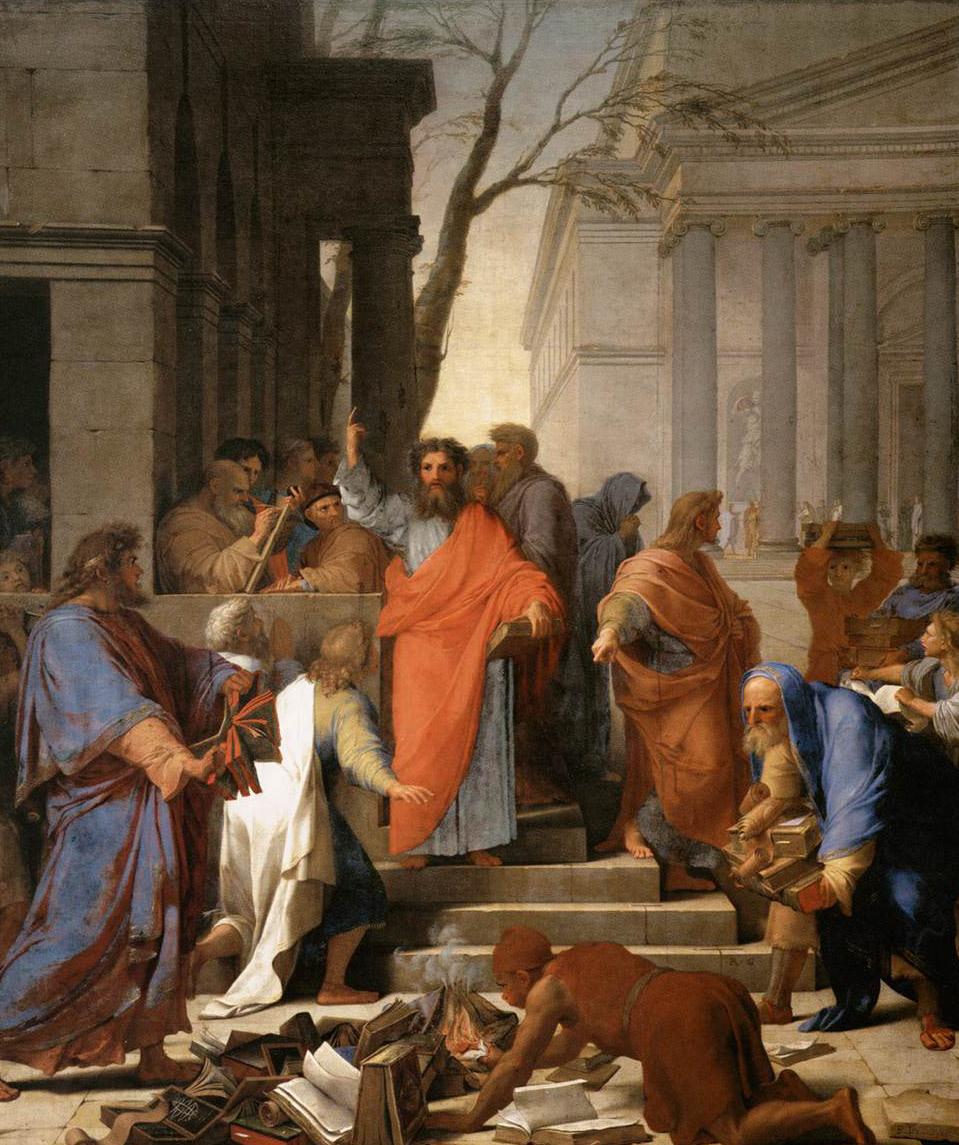
But that’s precisely the issue—literalism. There is an inherent danger in reading Biblical texts through this literalist lens as it assumes that every single verse conveys an unchanging, universally applicable truth, devoid of metaphor, cultural context, or historical nuance. This approach
considered to be biblically sanctioned, “so long as it [was] administered in accordance with the precepts laid down by the Apostles,” as articulated by the influential Episcopal bishop Henry Hopkins.4 This view originated from a literalist reading of passages such as Ephesians 6:5, which instructs, “Slaves, obey your earthly masters with respect and fear, and with sincerity of heart, just as you would obey Christ.” The argument followed that because the Bible does not explicitly condemn slavery but instead provides conditional rules for its practice, slavery was therefore biblically justified. However, Christians across denominations reject this idea today. Instead, these passages are generally understood as working within the cultural norms of their time rather than prescribing universal truths.
In a similar vein, a closer examination of Paul’s directives regarding women reveals that they should be interpreted within their specific cultural context rather than as boundless, prescriptive mandates.
1 Corinthians was addressed to the new church in Corinth, a Greek city renowned “throughout the ancient world for its wealth, profligacy, and ritualistic orgies.”5 Amidst this culture, the nascent church faced considerable challenges in establishing a distinct identity, “struggling with division, immorality, idolatry, and theological confusion.”6 The cultural excesses of Corinthian society starkly contrasted with the values of the gospel, prompting Paul to write this letter to address his concern about the church’s
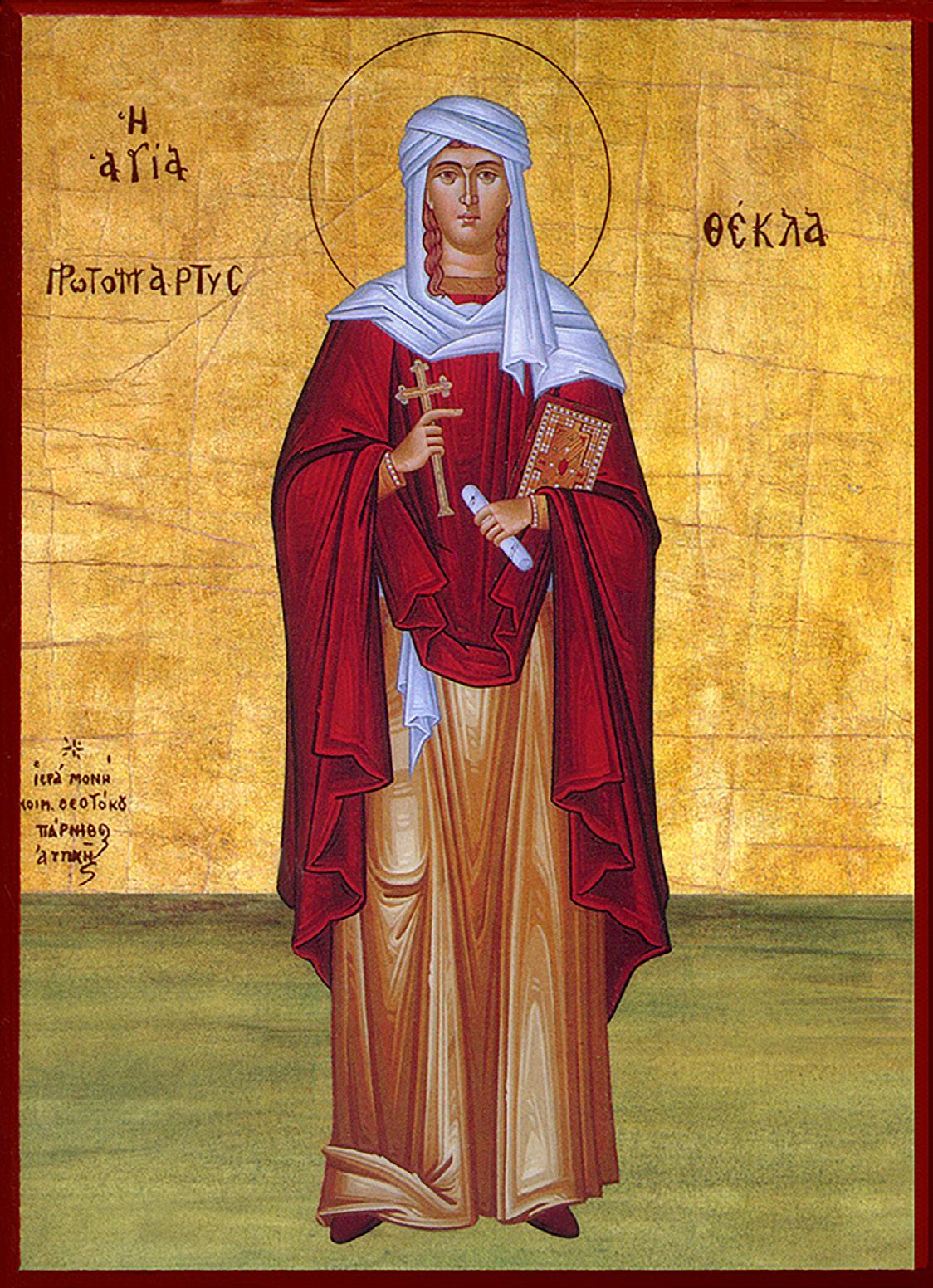
ability to embody a countercultural witness. Among his concerns was the issue of church order. For Paul, order was not an end in itself but a means to facilitate the effective proclamation of the gospel. Problems such as disorderly speech and speaking in tongues without interpretation were causing confusion and turning people away. Therefore, the directives in chapter 14, including those related to women’s speech, must be interpreted within this broader context of promoting unity and edification. Rather than issuing a universal prohibition, Paul’s instructions aimed to ensure that all members—men and women alike—conducted themselves in ways that reflected their transformed
identity in Christ and supported the church’s mission.
This point is further clarified when examining the surrounding verses in 1 Corinthians 14, which primarily address prophecy and speaking in tongues within the broader context of orderly worship. The section concerning women is embedded within this discussion, continuing Paul’s concern for maintaining decorum during prophetic speech and church gatherings. Notably, his instructions for women closely parallel to his instructions for all Christians in the preceding verses, particularly verse 28 and 30 especially. In these verses, Paul uses the verb sigao (translated as “be silent”) to instruct all believers to cease prophesying in certain circumstances.7 When Paul tells women to be silent, he employs this verb again, suggesting a call for situational silence rather than a blanket prohibition.
This interpretation is further supported by his use of the verb laleo (“to speak”) to describe women speaking in church. Laleo can take on several meanings, depending on its tense: in the present tense, it often connotes incessant or disruptive chatter; in the aorist tense, it typically refers just speaking.8 Here, Paul uses the present tense, indicating he is cautioning against ongoing or disruptive speech rather than commanding women to remain perpetually silent. This reading aligns with Paul’s overarching emphasis on worship order, ensuring that the focus remains on Christ rather than on the disruptive behavior in church.9
The church is called to be a community where believers submit to the established order while also navigating their identity in Christ within the complexity of that order.
Moreover, historical context suggests that women within the Corinthian church, due to their lack of spiritual education, were commonly speaking out of turn and
interrupting the worship service in order to ask their husbands clarifying questions.10 Verse 35 thus makes some more sense when understood against this backdrop, as such questioning was not only disruptive, but also regarded as socially inappropriate, given prevailing cultural norms that considered it improper for a wife to speak publicly, much less in a way that undermined her husband’s authority.11 Paul’s use of the term aischros (“disgraceful”) suggests that his concerns were partially shaped by these cultural norms. By instructing women to ask their husbands questions at home, Paul was not silencing them indefinitely but rather encouraging the preservation of societal order of their time. This reflects a broader principle found in Paul’s teachings regarding Christian living. As N.T. Wright notes, “God
wants human society to be ordered [and] being Christian does not release one from the complex obligations of this order.”12
Paul’s teaching here, then, is not a denial of women’s right to speak or participate, but an exhortation to maintain order within the church—an order that respects cultural norms while still allowing the gospel to be preached and embodied. The church is called to be a community where believers submit to the established order while also navigating their identity in Christ within the complexity of that order.
Similarly, 1 Timothy focuses on maintaining ecclesial order amid the proliferation of false teachings threatening the Ephesian church. Traditionally attributed to Paul,
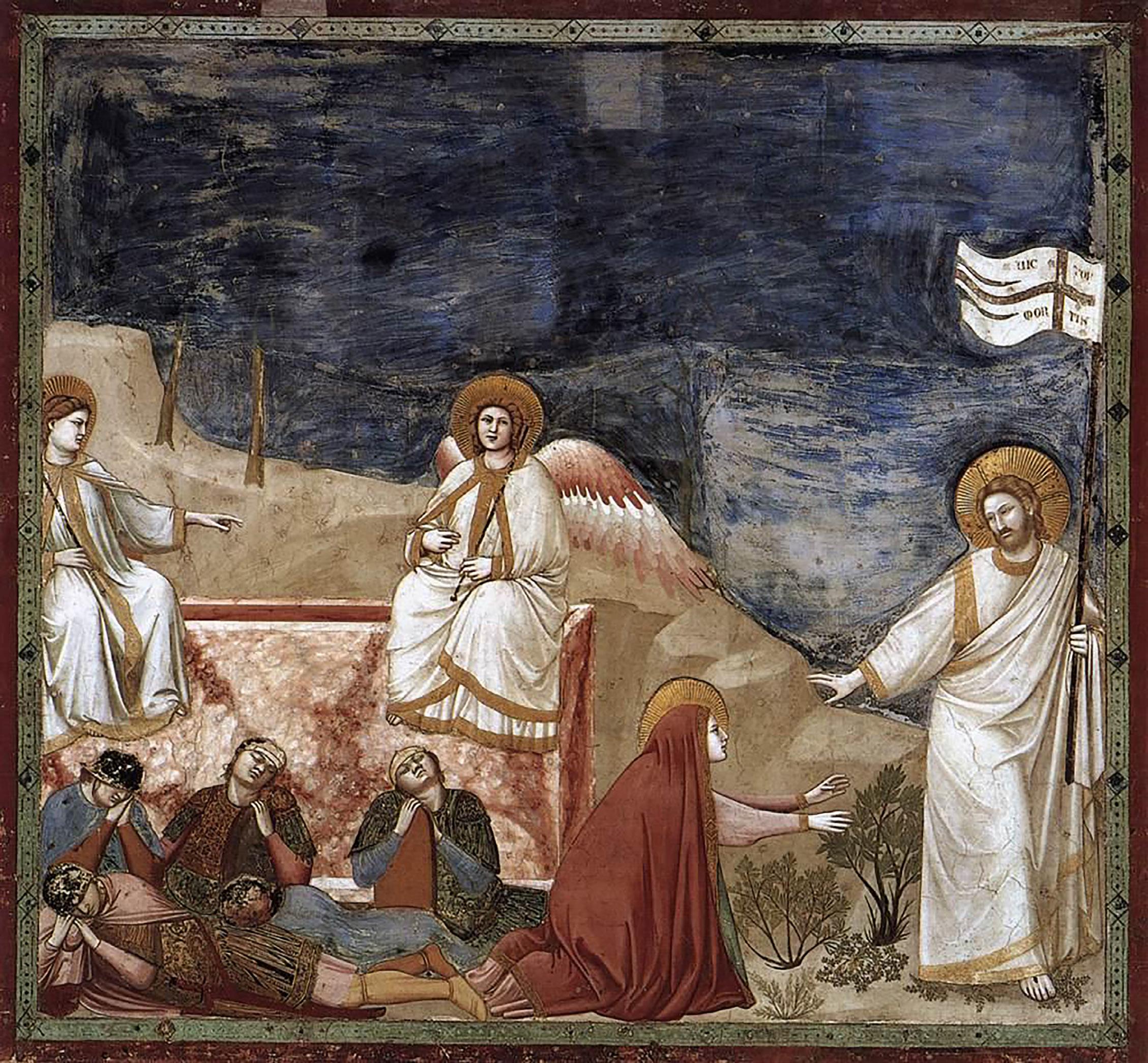
this epistle instructs Timothy to uphold sound doctrine, reinforce church leadership structures, and cultivate steadfastness within the community. Ephesus, renowned for its Temple of Artemis and associated cultic practices characterized by moral laxity and orgastic rituals, presented a cultural milieu that complicated the church’s formation of a distinct identity.13 Women in the Ephesian congregation, much like those in Corinth, faced particular struggles in disentangling themselves from prevailing societal norms. Within this context, the injunction in 1 Timothy 2:11-15 for women to exercise silence and submission should not be read as isolated or universal mandates but as targeted responses to specific heterodox teachings circulating in the
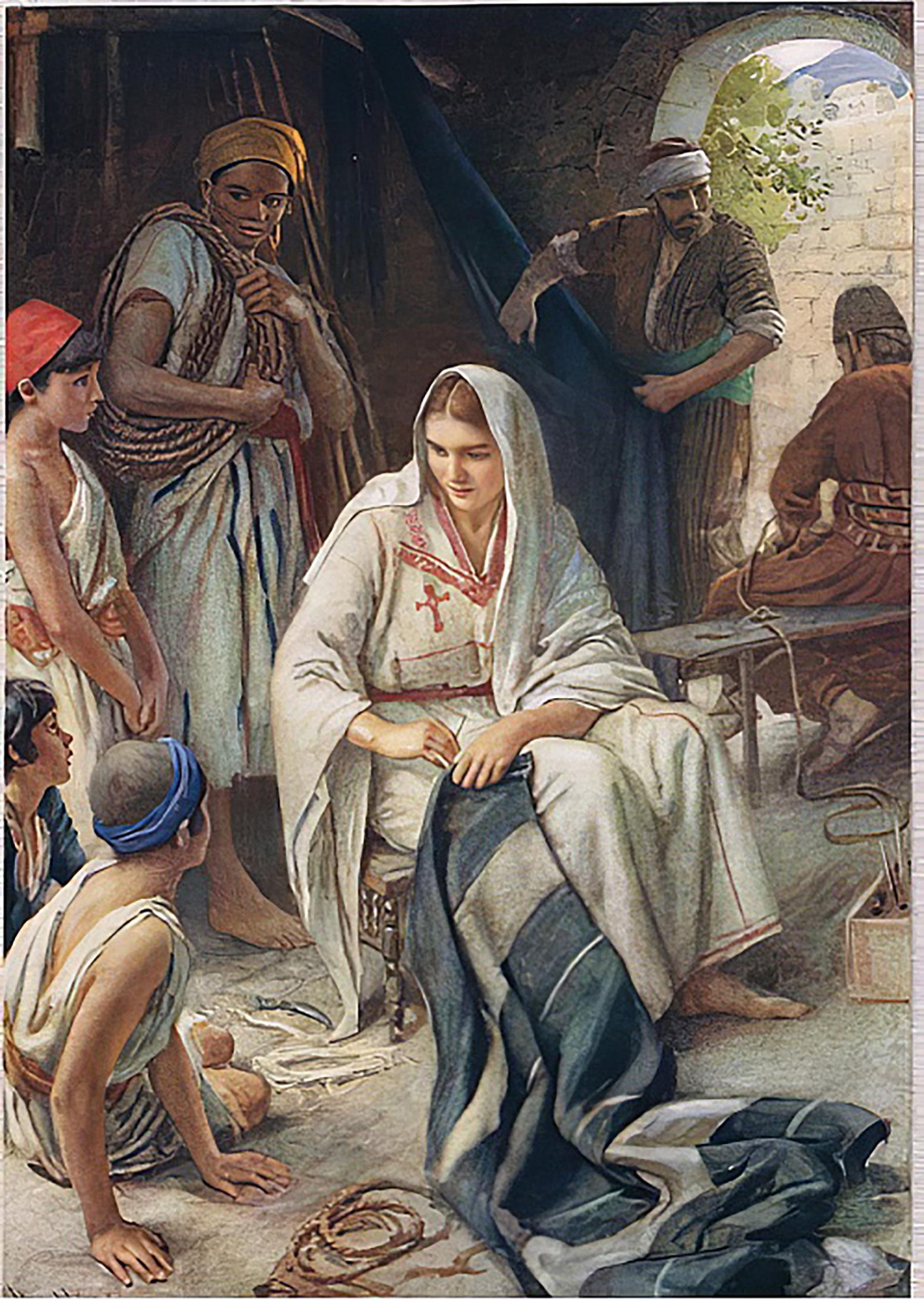
community. These teachings seem to have found expression especially among certain women who were implicated in distorting apostolic gospel proclamation and disrupting ecclesial order. Thus, the text’s directives emerge as corrective measures aimed at preserving doctrinal purity and communal cohesion in a culturally fraught environment. Firstly, it is crucial to clarify the meaning of Paul’s word for quietness: hēsychia. This word does not signify a “gagging order,” as some scholars have colorfully described it, but rather denotes an attitude of “listening attentively and respectfully.”14 This instruction to learn in quietness is not given exclusively to women, but to men as well, as seen in other scriptural passages (cf. Acts 22:2; 1 Thess 4:11; 2 Thess 3:12; 1 Pet 3:4). As it is used here, hēsychia connotes peacefulness, humility, and receptiveness, not enforced silence. Biblically, it reflects a heart posture fostering learning and spiritual formation, particularly in the setting of worship. The theological significance of this term, therefore, lies in its call to cultivate an inner disposition of openness to divine teaching, rather than the imposition of a rigid muteness. Secondly, Paul's admonition that women are to learn in “full submission” does not explicitly identify the object of this submission. While it is commonly assumed that this submission pertains to male authority—especially in light of the subsequent verse—the text itself is more ambiguous. Within the immediate context of 1 Timothy 2, which provides instructions on worship and prayer, this passage on female submission seems somewhat incongruous if interpreted solely as a mandate for hierarchical gender submission. Rather it is plausible to understand this submission as an attitude of humble receptivity to the instruction of God, the ultimate locus of authority in Christian life.15 This reading aligns with the consistent biblical emphasis on submission as a posture of humility before
God and within the Christian community. For example, Scripture exhorts believers to “clothe yourselves with humility toward one another” (1 Peter 5:5) and to “value others better than yourselves” (Phillippians 2:3), underscoring that submission functions as mutual deference grounded in love and reverence for God. Moreover, in the context of worship outlined in 1 Timothy 2, this kind of submission fosters a spirit of humility and attentiveness essential to communal learning and spiritual growth—an orientation expected of all believers. To read this passage as endorsed a fixed, patriarchal hierarchy risks reducing its theological richness and neglecting the transformative communal ethos of early Christian worship.
Having addressed this exhortation for quietness and submission, we now turn to the rationale Paul provides in verses 13-14. Paul states that women should not exercise authority over men, appealing to the order of Creation and the events of the Fall: “For Adam was formed first, then Eve. And Adam was not the one deceived; it was the woman who was deceived and became a sinner” (1 Timothy 2:13-14). This reasoning has long prompted debate among scholars, as it seems to introduce an almost primogeniture-based argument for male authority. As Thomas C. Oden wryly notes, if priority alone were sufficient for preeminence, John the Baptist would outrank Jesus on account of his earlier birth.16 Moreover, the Old Testament consistently subverts primogeniture norms: God chooses Abel over Cain, Jacob over Esau, Moses over Aaron, Joseph over his elder brothers, David over his older siblings, and Solomon over Adonijah. The pattern is clear: God’s calling is not constrained by human hierarchies, including birth order. Thus if divine authority were inherently tied to birth order/the order of creation, the biblical precedent would be strikingly inconsistent.
As for Eve’s deception, it is worth noting that Paul elsewhere places the burden of sin on Adam (Romans 5:12-19), not Eve. The contrast between Adam and Eve here, then, is likely not about establishing a permanent gendered susceptibility to deception but rather serves as a rhetorical and pastoral function in the Ephesian context. Given that women in Ephesus were particularly vulnerable to the false teachings spreading in the church—due in part to limited access to education and social pressure from the Artemis cult—Paul’s reference to Eve may be intended as a cautionary typology rather than a theological indictment of all women.17 In this reading, Adam and Eve serve as representative figures: Adam as the one who was formed first and instructed directly by God, and Eve
as the one who was deceived in isolation. The implication is not that women are inherently more gullible, but that without proper formation in sound doctrine—something Paul insists women must receive in verse 11—anyone can be misled, like Eve by the serpent.18 Thus Paul’s use of the Genesis narrative may function more as a contextual analogy than as an ontological claim about gender.
The discomfort of ambiguity is precisely what invites us into a deeper, more nuanced faith. The challenge, then, is not to shy away from the hard questions but to approach Scripture with a humility that allows us to wrestle with its complexity.
With this in mind, we finally turn to verse 15. A rigid, literal reading of 1 Timothy 2:15 suggests that salvation for women is attained through becoming mothers. What a horrifying thought. What does this mean for single women? Or infertile women? This is perhaps one of the most difficult verses to grapple with in the Bible, especially considering that Jesus says salvation is exclusively attainable through him (John 14:6). Paul himself says Ephesians 2:8-9 that “it is by grace you have been saved, through faith—and this is not from yourselves, it is the gift of God—not by works, so that no one can boast.”
Upon closer examination, this verse in its original Greek includes a crucial article left out in the English: the. Women are not saved through childbearing; they are
saved through the childbearing (tēs teknogonias)—a reference to the birth of Christ.19 This subtle shift reframes the entire passage. While Paul associates Eve with deception in the preceding verse, his conclusion pivots from fallenness to redemption. By invoking the birth of Christ, Paul reminds the Ephesian church that women, though once associated with the Fall, are now central to the unfolding of salvation history. Rather than reinforcing a permanent gendered hierarchy, this turn emphasizes the inclusion of women in God’s redemptive work and offers theological grounding for their restoration and participation within the worshipping community.
Thus, the passage as a whole encourages a balanced and dynamic approach to authority, attentive to the specific needs of the community—such as safeguarding the congregation from false teachings—yet shaped by the renewing power of the gospel.
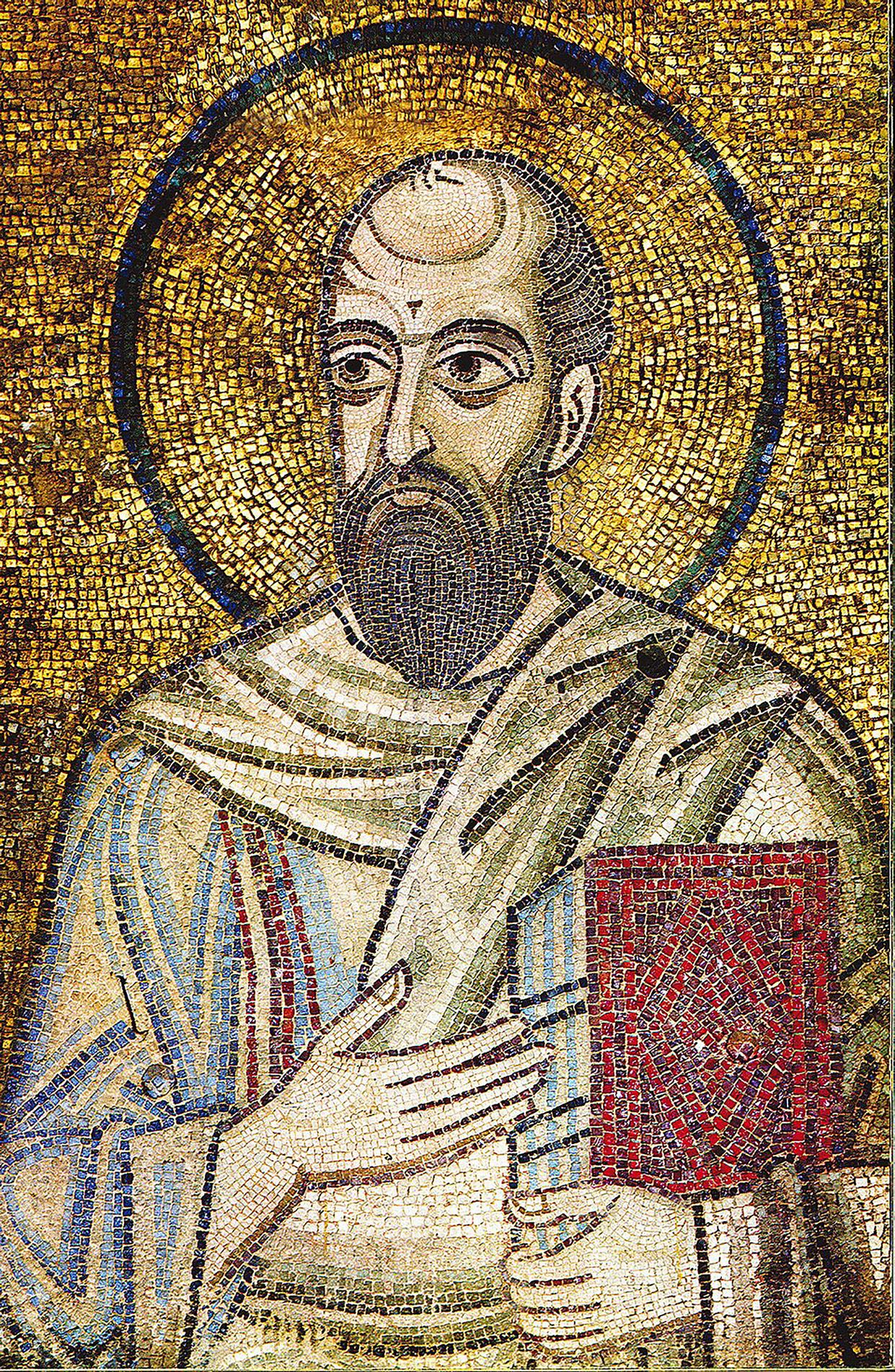
We are also called to remember that the church’s mission is not simply to preserve tradition for its own sake, but to live out a community shaped by the gospel’s vision.
Finally, the same Apostle Paul who penned the allegedly restrictive verses in 1 Corinthians and 1 Timothy also praised female leaders such as Phoebe, a deacon (Romans 16:1), and Junia, a prominent apostle (Romans 16:7). While some claim that these women were not true authority figures, many early Christians affirmed these women’s ministries. For example, Origen, a third-century theologian, noted in his commentary on Romans that women were appointed to church ministry by apostolic authority, citing Phoebe’s role in the church at Cenchreae and Paul’s commendation of her exemplary service.20 Paul’s recognition of these women demonstrates challenges the notion that he sought to exclude women from leadership.
The question, then, is not whether Paul sought to silence women, but rather how his words have been co-opted to do so. By revisiting key Biblical texts within their broader context, we ultimately engage in a more responsible approach to interpretation. Yet this approach inevitably raises a concern about whether a holistic reading creates ambiguity. How can one determine what is euphemism, cultural convention, or historical truth? In addressing this tension, Martin Luther’s insight remains relevant: “The Christian can approach them with the expectation that a growing familiarity with the Scriptures as a whole, greater facility with biblical languages, further engagement with Christ as its subject matter, will open up their meaning.”21 The discomfort of ambiguity is precisely what invites us
into a deeper, more nuanced faith. The challenge, then, is not to shy away from the hard questions but to approach Scripture with a humility that allows us to wrestle with its complexity.
Revisiting these passages that have been used to silence women invites us to consider that Scripture's message is not one of exclusion, but partnership. It can be daunting to question centuries of church tradition, and we do so with deep respect for the faithfulness of those who have gone before us. Yet, we are also called to remember that the church’s mission is not simply to preserve tradition for its own sake, but to live out a community shaped by the gospel’s vision. So let us, with humility, embrace the discomfort that comes with this process, and as Luther encourages, allow the Spirit to help us uncover Scripture’s deeper meaning.



Ainsleigh Noell D'28 is from Austin, Texas and is majoring in Classics and Religion with a minor in Art History.
1. Elaine H. Pagels. “Paul and Women: A Response to Recent Discussion,” Journal of the American Academy of Religion 42, no. 3 (1974): 538, http://www.jstor.org/stable/1461971.
2. Leah MarieAnn Klett. “John MacArthur Clarifies Views on Beth Moore, Women Preachers: 'Empowering Women Makes Weak Men',” The Christian Post, November 13, 2019, https://www.christianpost.com/news/john-macarthur-clarifies-views-on-bethmoore-women-preachers-empowering-women-makes-weak-men.html.
3. Westminster Assembly, The Westminster Confession of Faith, 1646, reprint (London: The Banner of Truth Trust, 1966).
4. Darius Jankiewicz, “Hermeneutics of Slavery: A ‘Bible-Alone’ Faith and the Problem of Human Enslavement,” Journal of Adventist Mission Studies 12, no. 1 (January 1, 2016): 50, https://doi.org/10.32597/jams/vol12/iss1/4/.
5. Eugenie Andruss Leonard, “St. Paul on the Status of Women,” The Catholic Biblical Quarterly 12, no. 3 (1950): 318, http://www.jstor.org/stable/43720223.
6. ESV Bible, “Introduction to 1 Corinthians.” Crossway, n.d., https://www.esv.org/resources/esv-global-study-bible/introduction-to-1-corinthians/.
7. Northside Church of Christ, 1 Corinthians 14 Discussion, October 2021, https://www. nscoc.org/wp-content/uploads/2021/10/1-Corinthians-14-Discussion.pdf.
8. Gerhard Kittel, ed., Theological Dictionary of the New Testament, vol. 4, trans. Geoffrey W. Bromiley (Grand Rapids, MI: Wm. B. Eerdmans Publishing Company), 3-5.
9. Northside Church of Christ, 1 Corinthians 14 Discussion
10. Emmanuel Olujide Adetunji, and Adebayo Ola Afolaranmi, “Women in Ministry: Re-Reading 1 Corinthians 14:33-35 in the 21st Century Context,” Diligentia: Journal of Theology and Christian Education (Online) 6, no. 3 (2024): 53, doi:10.19166/dil. v6i3.8598.
11. Adetunji and Afolaranmi, “Women in Ministry,” 53. 12. “State and Church in the Teaching of N.T. Wright,” Theological Studies (UK), https:// theologicalstudies.org.uk/article_state_wright.html.
13. L'tasha Shields, “Let Her Daughters Speak: A Challenge to 1 Corinthians 14:3435 and 1 Timothy 2:11-15,” PhD diss., (Regent University, 2023), https://www. proquest.com/dissertations-theses/let-her-daughters-speak-challenge-1-corinthians/ docview/2883477085/se-2.
14. Deborah C. Inyamah, “Contrasting Perspectives on the Role of the Feminine in Ministry and Leadership Roles in John 4 and 1 Timothy 2:11-15,” Journal of Religious Thought 60-63, no. 1-2 (2008): 87-IV, https://www.proquest.com/scholarly-journals/ contrasting-perspectives-on-role-feminine/docview/1313216066/se-2.
15. Fergus J. King and Dorothy A Lee, “Lost in Translation: Rethinking Words about Women in 1–2 Timothy,” Scottish Journal of Theology 74, no. 1 (2021): 52–66, doi:10.1017/S0036930621000053.
16. King and Lee, “Lost in Translation,” 56.
17. Mark Giesbrecht Doerksen, “Paul's use of Genesis in 1 Corinthians 11:16, Ephesians 5:21-33, and 1 Timothy 2:11-15,” PhD diss., (Providence College and Seminary, 1997). https://www-proquest-com.dartmouth.idm.oclc.org/dissertations-theses/pauls-usegenesis-1-corinthians-11-16-ephesians-5/docview/304412872/se-2; see also: Kenneth L. Waters, “Saved through Childbearing: Virtues as Children in 1 Timothy 2:11-15,” Journal of Biblical Literature 123, no. 4 (2004): 709, https://doi.org/10.2307/3268466.
18. Waters, “Saved through Childbearing,” 710.
19. King and Lee, “Lost in Translation,” 60.
20. Beth Allison Barr, The Making of Biblical Womanhood: How the Subjugation of Women Became Gospel Truth (Chicago: Brazos Press, 2021).
21. Martin Luther, cited in Mark Thompson, A Clear and Present Word: The Clarity of Scripture (Downers Grove, IL: InterVarsity, 2006), 147.

This prayer by professor of religion Lucius Waterman appears on a plaque hanging at the entrance of Parkhurst Hall.
O Lord God Almighty, well-spring of wisdom, master of power, guide of all growth, giver of all gain. We make our prayer to thee, this day, for Dartmouth College. Earnestly entreating thy favour for its people. For its work, and for all its life. Let thy hand be upon its officers of administration to make them strong and wise, and let thy word make known to them the hiding-place of power. Give to its teachers the gift of teaching, and make them to be men right-minded and high-hearted. Give to its students the spirit of vision, and fill them with a just ambition to be strong and well-furnished, and to have understanding of the times in which they live. Save the men of Dartmouth from the allurements of self-indulgence, from the assaults of evil foes, from pride of success, from false ambitions, from hardness, from shallowness, from laziness, from heedlessness, from carelessness of opportunity, and from ingratitude for sacrifices out of which their opportunity has grown. Make, we beseech thee, this society of scholars to be a fountain of true knowledge, a temple of sacred service, a fortress for the defense of things just and right, and fill the Dartmouth spirit with thy spirit, to make it a name and a praise that shall not fail, but stand before thee forever. We ask in the name in which alone is salvation, even through Jesus Christ our Lord, amen.
— The Reverend Lucius Waterman, D.D.

We, the editorial board of The Dartmouth Apologia, affirm that salvation is given through faith in Jesus, that the Bible is inspired by God, and that we are called to live by the teachings of Jesus and the apostles. We affirm the Nicene Creed, with the understanding that views may differ on baptism and the meaning of the word “catholic.”
We [I] believe in one God, the Father almighty, maker of heaven and earth, of all things visible and invisible.
We [I] believe in one Lord Jesus Christ, the Only Begotten Son of God, born of the Father before all ages. God from God, Light from Light, true God from true God, begotten, not made, consubstanstial with the Father; through him all things were made. For us men and for our salvation he came down from heaven, and by the Holy Spirit was incarnate of the Virgin Mary, and became man. For our sake he was crucified under Pontius Pilate, he suffered death and was buried, and rose again on the third day in accordance with the Scriptures. He ascended into heaven and is seated at the right hand of the Father. He will come again in glory to judge the living and the dead and his kingdom will have no end.
We [I] believe in the Holy Spirit, the Lord, the giver of life, who proceeds from the Father [and the Son], who with the Father and the Son is adored and glorified, who has spoken through the Prophets.
We [I] believe in one, holy, catholic, and apostolic Church. We [I] confess one Baptism for the forgiveness of sins and we [I] look forward to the resurrection of the dead and the life of the world to come. Amen.

[1 Peter 3:15]