
Featuring: Intolerant Truth in a Tolerant Society
By Joanie Wood ’27
Also inside:
Magnanimity and Breaking Bad This, Then, is How You Should Pray
by Catherine Horner ’26

by Matthew Kim ’26

THE DARTMOUTH APOLOGIA

HOW TO SUBSCRIBE?
To subscribe to our journal, visit our website or scan the QR code to the right. Subscriptions to the journal are free and subscribers get each new issue delivered right to their front door!
HOW TO SUBMIT?
We welcome the submission of any article, essay, or artwork for publication in The Dartmouth Apologia that seeks to promote respectful, thoughtful discussion in the community. We will consider all submissions from any members of the community but reserve the right to publish only those that align with our mission statement and quality rubric.
L ETTERS TO THE EDITOR
We deeply value your opinions and encourage thoughtful words of support, dissent, or other views. We will gladly consider any letter that is consistent with our mission statement’s focus on promoting intellectual discourse in the Dartmouth community.
GETTING INVOLVED
The Dartmouth Apologia exists to articulate Christian perspectives in the academic community. We do this through our biannual publications, lecture series, and weekly reader groups where we read and discuss the works of exemplary apologists such as G.K. Chesterton and C.S. Lewis.
We at The Dartmouth Apologia invite people from all intellectual, religious, and spiritual backgrounds to join us in our discussions as we search for truth and authenticity. If you would like to get involved, please feel free to email us or visit our website.
CONTACT
Visit our website: dartmouthapologia.org Send us an email: the.dartmouth.apologia@dartmouth.edu.
EDITORIAL BOARD
Catherine Horner D’26, Editor-in-Chief
Matthew Kim D’26, Managing Editor
Aleksa Sotirov D’26, Publisher
Sadie Jackson D’27, Art Director, Editor
Gracie Bartos D’27, Editor
Luke Aloe D’27, Editor
Marissa Benz D’26, Editor
Xavier Laack D’27, Editor
Tyler Long D’27, Editor
Charlie White D’27, Editor
Joanie Wood D’27, Editor
Amelie Bradley D’25, Senior Editor
Emil Liden D’25, Senior Editor
Tula Nicholson D’25, Senior Editor
ADVISORY BOARD
Gregg Fairbrothers D’76
Eric Hansen, Professor of Engineering, Thayer
James Murphy, Professor of Government
Lindsay Whaley, Professor of Classics & Linguistics
S PECIAL THANKS
Council on Student Organizations
The Eleazar Wheelock Society
Letter from the Editor
Dear Reader,
We are delighted to share with you our newest issue of The Dartmouth Apologia.
It is true that you are holding a bundle of fifty some pages, but it is just as true that you are holding a bundle of personalities, labors, and imaginations. You are holding what is the fruit of days spent in faith, love, and hope.
John begins, “In the Beginning was the Word and the Word was with God and the Word was God” (John 1:1). Indeed, language is an access point to the transcendental. It allows us to speak “across difference,” as we discuss at Dartmouth; to come to realize our human similarities, no matter our eccentricities or differences of circumstance; to reach truth and justice, through the dialectics and the rule of law; to crack jokes and laugh; to sing in exaltation; and to do a thousand other things. There is also an onus for the written word to point to truth and goodness, across every day and age, across all publication types.
So much depends upon the word—even that funny poem about the red wheelbarrow has language to thank for the thousands of readers who have come to appreciate it. At the Apologia, we cherish words and we understand our responsibility towards them. To engage with words, to point our hearts and minds to truth and goodness—that is enough.
There are many people to thank for the completion of Volume 19, Issue 1. Thank you to our writers and editors, our fearless Art Designer, Sadie Jackson, and our alumni mentors, Charlie Clark, Sarah Clark, and Anthony Fosu.
Warmly,


Catherine Horner D’26, Editor-In-Chief


The
Dartmouth Apologia exists
to articulate Christian perspectives in the academic community.

MAGNANIMITY AND BREAKING BAD
The Christian Response to Ambition
By Catherine Horner D ’26
Does Christianity permit ambition? Ambition is everywhere. It is the force that drives free market competition, it undergirds our American system of checks and balances, and it is a common trait of high school students preparing for higher education.
As we Americans are consigned to meet or undertake ambition in our own lives, we must reflect on its merit in our Christian faith. When Jesus declares, “so the last will be first, and the first last,” he seems to contradict every lesson of success we have heard since toddlerhood.1 Who ever ran the race to finish last? Hearing this verse, I have grimaced at the idea that ambition is un-Christian. So begins an inner debate. I think ambition cannot be all that bad. After all, God designed me with certain aptitudes, as he did for every person. Surely, I should attempt to maximize these aptitudes. But with Machiavellian flourish, I turn to consider how someone succeeding often necessitates others losing. I have observed this zero-sum dynamic in competitive sports, job markets, and curved
courses. When a person wants to achieve greatness, good is good insofar as it forwards your cause to be great— greatness as recognition in these institutions. If a person wants greatness and so mechanizes goodness, he will dispose of goodness the moment it becomes more efficient to achieve greatness with corruption over honesty, belittling humor over silence, or murder over mercy. Ambition has no qualms with cutting corners, especially when interests are placed up against each other. Thus, two human ideals seem to conflict: one is to be great, the other, to be good. I discovered the tension between these two ideals reflected in an unlikely place: the television show Breaking Bad. Such is the gift of art, particularly literary art, that it reveals the conflict before the resolution, the tension before the slack. Breaking Bad portrays the moral tension of ambition, as the protagonist Walter White, portrayed by the actor Bryan Cranston, navigates his desire to achieve entrepreneurial greatness.
Breaking Bad follows the story of ingenious chemist

Walter White, through his rise and fall in the New Mexican drug trade. In events prior to the show, young Walter founds the company Gray Matter Technologies with his friend from college. After an argument with this partner, he quits the company and sells his stock, before Gray Matter goes on to rise to billion-dollar value. Years later, when the show begins, Walter is found balancing two jobs: one as a car washer and another as a high school chemistry teacher, yet he still struggles to support his family. Walter has pent-up intellectual and entrepreneurial potential, for which he has found no outlet in civil society, since he sold the Gray Matter stock. Far from gathering scientific prizes, accolades, or professorships, Walter cannot even make his high school students pay attention to his Bunsen burner. So, when Walter learns that he has terminal cancer, he attempts to build an entrepreneurial empire on his own. To do this, he turns to the criminal underground, where drug lords achieve power through force and tact, an undeniable meritocracy based in the survival of the criminal fittest. Walter uses his talent in chemistry to cook methamphetamine, the blue crystalline drug, which is highly addictive to its users. Across the show, Walter moves from cook to kingpin, but he ends up discovering that what goes up must come down. In the end, Breaking Bad warns its viewers that ambition can lead to personal catastrophe.
So now to return to my original question: What should drive our ambition, when the road of ambition seems lined with moral degradation? Centuries prior to Breaking Bad, the medieval theologian St. Thomas Aquinas encountered this same question. He proposed an answer in the concept known as “magnanimity.” In this essay, I will explain 1) how Thomistic magnanimity resolves the tension in ambition; that is the question of how we can be great as well as good, and 2) how Walter White, the anti-hero in Breaking Bad, lacks magnanimity to his
Great deeds are not contingent on winning, but they are contingent on excellence or their proximity to things beyond this world.
detriment.
What is MagnaniMity?
According to Aquinas, the magnanimous man “stretches forth the mind to great things.”2 What does it mean to stretch forth the mind? The answer is simple: Stretching forth the mind means that you leave your comfort zone and access your capabilities in waiting. And what are great things? Great things are deeds that command widespread respect, otherwise known as social honors. Consider Simone Biles on the vault, Steph Curry at the three-point line, or Robert Frost at his writing desk. These people are considered great because we honor their achievements. But importantly, this respect does not come from their mere winning. Sure, Simone won gold. Sure, Steph made the most all-time NBA threes. And sure, Frost won the Pulitzer Prize. In these contexts, they earned their titles by outperforming their competition, but this relative stature is not the ultimate reason they are considered great. Rather, it is because these figures encircle an ideal of excellence in their crafts. When Simone completed her first vault in Paris this past summer, the commentator yelled, “this is out of this world!” not, “this is better than second place.” Great deeds are not contingent on winning, but they are contingent on excellence or their proximity to things beyond this world.
But how does magnanimity inform ambition? In answer to this question, the magnanimous man aspires to honor his maker through his aptitudes. When we honor our maker, we mirror his nature, or “walk in him.”3 But our God is not a god of might alone; given his divine embodiment in Jesus Christ, we know our Lord loves humankind as one people and many persons. Therefore, to mirror Christ, we must attempt to love humankind as he did, as one people and many persons. Through this love, the magnanimous man honors his maker. But what does it mean to love humankind, love both social and individual? Christ perfected virtue, as that which “preserves the good of reason in human affairs,” writes Aquinas.4 But our human affairs are complicated. The common good encounters endless political, economic, and ethical dilemmas, and the individual good encounters logistical and emotional dilemmas. In the end, the magnanimous
person navigates these pragmatic choices through an individual relationship with God. Paul writes, “I have been crucified with Christ. It is no longer I who live, but Christ who lives in me. And the life I now live in the flesh I live by faith in the Son of God, who loved me and gave himself for me.”5 The human is the vessel for Christ, which means we want our deeds to mirror him, loving humankind and human. Some might say, it begins with making cures, not drugs.
Magnanimity also requires a certain mindset towards social honors. Honors are good when they promote positive values throughout society. But honors reveal their double edge when the honoree begins to value his reputation first. At this point, magnanimity enters conversation with humility, its Thomistic sister virtue. No matter how far we stretch ourselves to accomplish great things, we must ask ourselves what we expect from our accom-

Gerbrand van den Eeckhout, the Magnanimity of Scipio, from Wikipedia Commons
plishments. Honors exist on the backend of immense effort; these honors affirm that we have not wasted our time. When an individual relationship with God spurs the original effort to achieve greatness, this same relationship provides us with the knowledge on the backend that we have or have not wasted our time. The verdict of God is more venerable and reliable than that of any crowd. Donna Dow of Christendom Graduate School writes, “A truly magnanimous man inclines himself to the performance of deeds which warrant great honors for which he knows he is worthy, but for which his excellence may not be rewarded or recognized.”6 For the magnanimous person, prizes, popularity, wealth, and all other forms of social recognition, are beside the point. They are like the free item at the drugstore—not the reason you came in, but something you might in fact use—like that travel-sized hand sanitizer bottle. Or like the extra
sauce packet found in your drive-thru order—not something you requested, but something you might share with your friend. Social honors neither make nor break your achievements, as long as you know that you have done something good that could garner respect, knowledge that derives from your relationship with God. We might want to go to Dartmouth, because we can say the word “Ivy.” We might desire glamorous internships, because we can add that line to our LinkedIn page. But at what point do we begin to substantiate these "status-symbols" that can command respect, with real accomplishments beneath them? Greatness lives in reality, not perception. In general, Thomistic magnanimity resolves the tensions that emerge when humans pursue both greatness and goodness without reference to the singular god who embodies these dual ideals in their totality. Political theorist and Notre Dame professor Mary M. Key describes

Albuquerque Sandia Mountains from Wikimedia Commons
But at what point do we begin to substaintiate these "status-symbols" that can command respect, with real accomplishments beneath them?
three such tensions:
1) Between love of self or rather of one’s superiority and love of nobility or virtue as such…
2) Between a focus on honor and contempt for it.
3) Between a longing to accomplish the greatest of deeds, and a bittersweet sense that in human life nothing is truly great.7
The first tension is loving your superiority versus lov-
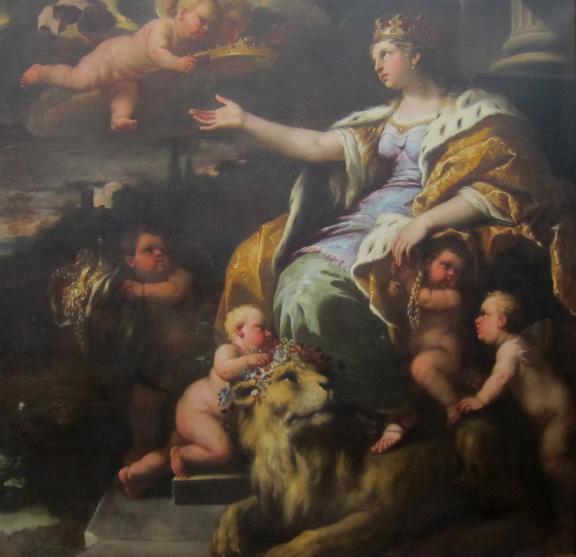
Allegory of Magnanimity by Luca Giordano, Getty Center, Wikimedia Commons
ing your achievements as good. In the first case, you venerate yourself, and in the second case, you venerate God, for God sows his spirit in the good of achievement. If our abilities are indeed blessings from God, then using those abilities to their fullest is a matter of ritual. The second tension is desiring popular praises versus shunning them. Thomistic magnanimity encourages ambivalence towards praise, on the basis that your relationship with God affirms that you have done something important. Without this central relationship, our eyes will flicker from one human ideal to the next, and we will embark on one great game of whack-a-mole with our insecurities. The third tension is the most interesting to me. It is that we all want to do something important in the world, but our legacies will fade over time. It is true that our names will be lost in books and our faces in dusty photographs, which have been bundled away in attics. One day, the digital cloud will be supplanted by another better storage device, and our digital memories will fade in translation. Policies will be reversed, and houses will crumble as the wood erodes. Despite these imminent declines, we humans strive to do something lasting. So, our task is to find what is in fact infinite and align our deeds with that infinite power. When we do this, our legacies will likewise be infinite, maybe not in name, but in sentiment. The Christian faith believes that our infinite God is all-loving, so to do good is the greatest and most infinite deed possible.
If our abilities are indeed blessings from God, then using those abilities to their fullest is a matter of ritual.
Walter White: What not to Do
Walter White reveals what happens in the absence of magnanimity. The protagonist is not magnanimous for three central reasons: his business does harm to others, his ambition is based in his pride, and he demands respect from others.
First, Walter is not magnanimous because he uses his skills in chemistry to enrich himself while harming other people. In order to be magnanimous, you must do something with the potential to do good, or to promote “the good of reason in human affairs,” as Aquinas defines virtue. Walter should have chosen a different industry, one that did not tear apart families, ruin lives, corrupt businesses, and spread danger and addiction throughout Albuquerque.4
Second, Walter is not magnanimous because his ambition derives from his narrow pride, pride being defined as “satisfaction in oneself.” Across the seasons, Walter cannot admit as to why he began cooking meth. He repeatedly claims that he was reacting to his terminal cancer diagnosis and securing his family financially. But Walter shows that his ambition does not derive from the altruism he claims. In the first episode, his young partner Jesse asks him why he wants to cook meth as an old and suburban dad. Walter responds with a flick of his hands. “I am awake,” he says.8 Walter cooks meth because he takes personal satisfaction in using his intellect and entrepreneurial skills. He does not follow any cause beyond his success in business, and so he faces no scruples to murder, steal, deceive, or coerce. In the final episode, Walter confesses these true intentions to his wife, Skyler: “I did it for me. I liked it. I was good at it. And I was alive.”9 Between these two quotations, Walter has not changed his ambition from Season One to Season Six. He wanted greatness for nothing beyond himself.
Third, Walter is not magnanimous because he de-
Walter sought to muster the very honors that greatness admits but from the resentment of his pride.
mands respect from others. Walter begins to develop a cult of personality around his product and his alter-ego, under the name Heisenberg, which he completes with a black porkpie hat. Law officers and drug peddlers alike speak the name with some combination of reverence, intrigue, and fear. Despite this effect on others, Walter continues to care about his reputation to the point that he struggles to hold his tongue when his power is underrated. When C.S. Lewis names pride as the most evil of the sins, he describes the measurement of pride as follows,
If you want to find out how proud you are, [sic] the easiest way is to ask yourself, 'How much do I dislike it when other people snub me, or refuse to take any notice of me, or shove their oar in, or patronize me, or show

off?' The point is that each person's pride is in competition with every one [sic] else's pride. It is because I wanted to be the big noise at the party that I am so annoyed at someone else being the big noise.10
Walter wants to make his prowess known and visible—the biggest noise in Albuquerque—but this obsession ironically causes him to damage his relationships with his wife and business partners, the very people he wants to impress. For example, when Skyler one time implores Walter to go to the police for protection, Walter lashes out against her for misrepresenting him as the one in danger. His famous monologue runs as follows:
Who are you talking to right now? Who is it you think you see? Do you know how much I make a year? I mean, even if I told you, you wouldn't believe it. Do you know what would happen if I suddenly decided to stop going into work? A business big enough that it could be listed on the NASDAQ goes belly up. Disappears! It ceases to exist without me. No, you clearly don't know who you're talking to, so let me clue you in. I am not in danger, Skyler. I am the danger! A guy opens his door and gets shot and you think that of me? No. I am the one who knocks!11
We can either seek closeness to the loving God or distance from our fellow men.
When Walter reveals his true murderousness to Skyler, he damages their relationship past its current strain. In another example, with caustic effects on his business, Walter preserves evidence in his home about his persona as the meth-making Heisenberg. The evidence is a gift whose note praises Walter for his abilities as a chemist. Walter is ultimately found out by the Drug Enforcement Agency when they discover this gift. He could have destroyed the gift, but in doing so, he would have destroyed an artifact in praise of his power. As actor Rainn Wilson aptly points out in an interview with Bryan Cranston, Walter White “did everything based out of this no one respects me [sic] and he went to his grave going like no one respects me!”12 He sought to muster the very honors that greatness admits, but his motivation for these honors came from his bitter pride. From his obsession of demanding respect, Walter lost all the grounds for respect in the first place.
The distortion of magnanimity in Breaking Bad raises social concerns as much as individual ones. If we call certain people great, we must ask ourselves what values these people hold. The drug world values those who can kill without hesitation. What does our community value instead? In meritocratic systems, the line is thin between who you are and what you deserve. We can understand our cultural mores through observing who receives the social honors.
There are two ways in which we can characterize the force behind ambition. We can either seek closeness to the loving God or distance from our fellow men. When the layers are peeled back at each juncture of human decision, we move not in social but theological directions.



Catherine Horner D’26 is from Richmond, VA and is pursuing a major in Politics, Philosophy, and Economics.
1. Matthew 20: 16, ESV
2. Thomas Aquinas, Summa Theologica, "Question 129, Article 1," https://www.newadvent.org/summa/3129.htm#article1
3. Colossians 2:6-7, NKJV
4. Thomas Aquinas, Summa Theologica, Article 129, Question 3, https://www.newadvent.org/summa/3129.htm#article3
5. Galatians 2:20, ESV
6. Donna Dow, "Thomas Aquinas On Magnanimity and Its Vices," Christendom Graduate School.
7. Mary M. Keys "Aquinas and the Challenge of Aristotelian Magnanimity." History of Political Thought, vol. 24, no. 1, 2003, pp. 37-65. JSTOR, http://www.jstor.org/stable/26219933. Accessed Oct. 2024
8. "Pilot." Breaking Bad, created by Vince Gilligan, Season 1, Episode 1, AMC, 20 January 2008. https://www.youtube.com/ watch?v=WYpZpSWJeD4
9. "Felina." Breaking Bad, created by Vince Gilligan, Season 5, Episode 16, AMC, 29 September 2013. https://www.youtube.com/ watch?v=Beu8eDYc0RM.
10. C.S. Lewis Mere Christianity, Chapter 8 "The Great Sin" 11. "Cornered." Breaking Bad, created by Vince Gilligan, Season 4, Episode 6, AMC, 21 August 11. https://www.youtube.com/ watch?v=31Vox1H40zl
12. Rainn Wilson, Host. "Bryan Cranston (Part 2): Is Breaking Bad a Mirror to Modern Morality?" Soul Boom, Spotify, August 13 2024.

OUR FRAGILE GOD
Catholic Conceptions of the Eucharist at Dartmouth Colllege
Tyler Long D ’27
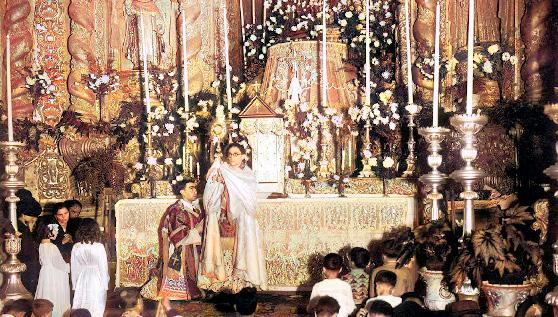
Beyond you, expanse—soon to be filled with the whirling, aromatic, accusatory scent of incense. Below you, holy ground—upon which trod the devoted Catholic and the divinely clothed alike. Beside you, pews—kneeling is commonplace here, one of the only places in our modern world where the tradition remains. Before you, the altar—the consummation of all’s time spent in the chapel. You believe that Jesus of Nazareth will be brought to bear for the congregation in the form of bread and wine—a mystery known as the Eucharist.
The Eucharist, also called the Sacrament of the Alter or the Blessed Sacrament, has a duality of theology and spirituality attached to it. For a considerable amount of Catholic history, ink was spilled on understanding what the mystery entailed, how it happens, and why it is meaningful. However, we do not seek here to understand the Eucharist; rather, we seek personal conceptions of the Sacrament, chipping away at truth greater than the scope of this paper (truly, greater than any paper’s scope). Therefore, we ask not the question, “What is the Eucha-

rist?” (or, even more lofty, “How” or “Why”) but “What do you think of the Eucharist?” To answer this question, I have interviewed my colleagues and peers, regulars of Dartmouth’s Catholic Student Center, and put them in dialogue both with each other and their forefathers: Early (c. 150-300 AD) and Medieval (c. 1200 AD) theologians, esteemed by the Catholic Church as Doctors (Doctors of the Church being a select group of the most accomplished writers, thinkers, and preachers).
To better provide context, we will dissect the Mass, wherein the Eucharist is celebrated. During the Catholic mass, the priest will move through liturgical elements. Liturgy used here means sets of prayers, songs, responses, and other actions that have historical and ritual significance — an example being the reading of a passage from the Book of Psalms to the congregants. First is the Liturgy of the Words, containing the Biblical readings and sermon, then the Eucharistic Prayers follow, then Communion (the time in which communicants receive the Eucharist), and the presiding priest asks for a blessing over the people to finish mass. From this rhythm, where the
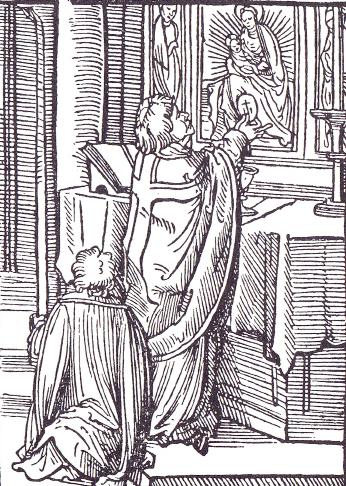
Corpus MeuM

From this rhythm, where the readings build up to the celebration of the Eucharist, the spotlight is saved for the Eucharist. It was this focus on something small, ordinary, mundane that interested me in the first place.
readings build up to the celebration of the Eucharist, the spotlight is saved for the Eucharist. It was this focus on something small, ordinary, mundane that interested me in the first place. Truly, this focal point looks like a small pale wafer and a splash of white wine. To Catholics, the Eucharist is ancient, outside of time, believed truly to be the Body and Blood of Christ Jesus, in the form of bread and wine eaten and drunk.
In all, I interviewed seven people (five students, from a range of class years, and two of the Aquinas House’s leaders, seven people in total) and included three greatly respected Church writers. All my interlocutors consented to have audio recordings of the interviews, which I transcribed and quoted with minimal editing, amending for clarity. Each participant was given the final copy before submission and approved for it to be published. Two students asked to be made anonymous. This article was adapted from an essay for Prof. Sergei Kan’s class ‘From Sacred to Salvation,’ Spring term of 2024. It must also
be said that the beliefs outlined in the paper are not exclusive to Catholics alone nor Catholic doctrine alone: the Orthodox, some Protestant churches, and others all have their theology concerning this subject. Here we only focus on practicing Catholic interpretations of the Sacrament.
To a non-Christian, even to some non-Catholics, the Eucharist is a silly thing, a kooky interpretation of Scripture lacking any veracity, a tradition either fabricated or severely misunderstood, or an example of cannibalism and religious fanaticism. But the Eucharist is integral to the Catholic faith, a cornerstone of the most populous Christian denomination on the planet, and greatly informs conceptions of God in the Catholic mind. In other words, to understand the Catholic, one must understand the Eucharist. To many who have Catholic friends or family, or a pure interest in the faith, the Sacrament of the Altar cannot be overlooked — to understand it properly, we will start with some of the earliest known Eucharistic writing.
Let me take you to the second century AD. Circa 156, St. Justin Martyr writes to the presiding Roman emperor, Antoninus Pius, and argues for a lapse of Christian persecution. By describing Christian theology and procedure, he hoped to elucidate the emperor and win the freedom to practice Christianity under Roman rule. Interestingly, this work is considered one of the first Christian apologies, a literary genre meant to defend and rationalize Christian belief. The Dartmouth Apologia takes its name from this term (using the Latinized form of the Greek απο-λογος, meaning defense, explanation, or reason, literally “away-from speech”). Chapter 67 of St. Justin’s First Apology describes the Eucharist in great detail in plain,
To a non-Christian, even to some nonCatholics, the Eucharist is a silly thing.
And this [bread and wine] is called among us Ενχαπιστια [the Eucharist], of which no one is allowed to partake but the man who believes that the things which we teach are true, and who has been washed with the washing that is for the remission of sins [baptism], and unto regeneration, and who is so living as Christ has enjoined. For not as common bread and common drink do we receive these; but in like manner as Jesus Christ our Saviour, having been made flesh by the Word of God, had both flesh and blood for our salvation, so likewise have we been taught that the food which is blessed by the prayer of His word, and from which our blood and flesh by transmutation are nourished, is the flesh and blood of that Jesus who was made flesh. For the apostles, in the memoirs composed by them, which are called Gospels, have thus delivered unto us what was enjoined upon them; that Jesus took bread, and when He had given thanks, said, This do in remembrance of Me, this is My body (Luke 22:19); and that, after the same manner, having taken the cup and given thanks, He said, This is My blood; and gave it to them alone.1 [Emphasis added]
Justin Martyr’s assertions on the Eucharist are still orthodox within the Church more than eighteen hundred years later. Integral to his writing is a belief called real presence. The literal understanding of Luke 22:19-20, which the phrase “the food which is blessed… is the flesh and blood of that Jesus” refers to, is where Catholic belief comes from. This seemingly paradoxical nature of the Eucharist was conceptualized in the 13th century, via Aristotelian metaphysics by St. Thomas Aquinas. Aristotle
In other words, to understand the Catholic, one must understand the Eucharist.
proposes that a thing has two natures: its substance (what a thing is) and its accidents (how a thing appears). St. Thomas claims that the Eucharist is an example of this: while the Host has the accidents of bread and wine, it truly is Jesus’ flesh and blood. As a Catholic student here at Dartmouth told me, “Jesus is hidden by the bread and wine.” Hear how St. Augustine describes the Eucharist in a sermon to newly baptized Christians: “That bread which you can see on the altar, sanctified by the word of God, is the body of Christ. That cup, or rather what the cup contains, sanctified by the word of God, is the blood of Christ.”2 This real presence is never understood as a sensory fact but something that must be taken on faith. Yes, the wafer still looks a wafer and the wine still wine. Yet, as St. Thomas Aquinas describes the entire affair, “The presence of Christ's true body and blood in this sacrament cannot be detected by sense, nor understanding, but by faith alone, which rests upon Divine authority.”3
We have heard from distinguished writers of the Church, from the second century to the fourteenth, but the meat of Catholic thought lies in the experience of its churchgoers broadly. Yes, St. Thomas Aquinas is known for his incredible synthesis and exposition of theology in the Summa Theologia, but to understand if there is ever a thing as a Catholic Conception, we must go to the living too.
When asked the question "What pops into your mind when I say the word “Eucharist?," Corinne Murphy (Dartmouth’s Catholic Center campus minister), replied: “Jesus. Like true presence. Like body, blood, soul, and divinity of Christ.”4 Student Matthew Kim ‘26, born and
raised Catholic, phrases his answer a little differently: “the body of Christ as celebrated in the mass. The bread and wine are [transubstantiated] into the body of Christ, and so that's what I think of when you say Eucharist.”5 Father Timothy Danaher, when answering this question, quoted and expanded on Medieval poetry as follows:
Thomas Aquinas writes in verse 2 of his Eucharistic poem [Godhead Here in Hiding]: ‘Seeing, touching, tasting are in thee deceived / what says trusty hearing? That alone shall be believed / what God's Son has told me take for truth I do / truth himself speaks truly / Or there's nothing true.’ So the Eucharist is what Jesus says it is…on the very last night of his ministry, he takes the bread and says this is my body, takes the cup of wine [and] says this is my blood.6
These contemporaries match their forefathers well: in Matthew Kim, we see the significance of the Eucharist in the Mass, in Fr. Tim we see literal and poetic faith in the Eucharist, and in Corinne Murphy, we see a more developed conception of the “body, blood, soul, divinity,” a common phrase in Eucharistic theology. Certainly, each informant would agree with each other’s statement—truly, it would be ridiculous for a priest not to believe in the Eucharist’s importance during Mass or for a campus minister to lack faith—but I separate the three merely to highlight different sides of the same shape. The reactions of people, expressed in language, do not necessarily differ in what they describe but rather in how they describe it.
The Eucharist, a complex and divine thing, can be described by faith, poetics, or theology. Indeed, St. Thomas was, in addition to an incredibly prolific theologian, known for his Eucharistic poetry. Thus, while Matthew and Corrine and Fr. Tim have initial responses that differ in focus, they are not contradictory but complementary: serving a greater and broader understanding of the Eucharist in all its expressions.
Father Tim also explained the relationship between accidents and substance, saying later in the same conversation, “[Let’s say] we pass a 45-year-old woman shopping for lamps or whatever… I’d be like, ‘can you tell if she's a mother or not?’ No. By looking we, neither you nor I, couldn’t tell if she's a mother. But a mother is a huge identity shift in a woman.”6 A similar identity shift occurs in the consecration of the Eucharist during mass. The bread and wine are normal at the start and throughout the Eucharistic Liturgy, the priest offers such prayers that the elements may be transubstantiated into Jesus’ body and blood. Just as the mother looks the same before and after having a kid, so too does the Host (both the changed bread and wine) look the same. However, as any mother would tell you, there is an immediate and substantive change in identity.
Throughout Church history, from the great Medieval scholar St. Thomas Aquinas (the namesake of Dartmouth’s Aquinas House and Father Tim’s cited poet, if
you were paying attention), to the proto-apologetics of St. Justin Martyr in the second century, to St. Augustine of Hippo in the fourth—also one of the most impactful writers in Christianity—to the very near Aquinas House leadership and student members, the Eucharist is understood as real, complex, and beloved.
Of course, the question remains: what do we do with the Body of Christ, now that it is held in our hands? Well, we eat it. The Eucharist is seen as spiritual nourishment, a continual remembrance of Jesus’s sacrifice and resurrection, his love and presence. My next question asks after this line of thought, the idea of action and assimilation surrounding the Blessed Sacrament. To the question What does the Eucharist do? one student said, 'I believe that the Eucharist sanctifies us and makes us holy. I believe that in receiving the Eucharist, we become more like Christ and he pours out his grace or stirs it up within us."7
The sanctifying element, the sacralizing power, the gift of grace all compound within a person when receiving the Eucharist. The Eucharist has some element that specially invites grace and virtue to the communicant. The process of becoming “like Christ” through this sacrament is expanded more by Matthew Kim when he speaks of “a con-
ception of being digested by the Eucharist so you become more like Christ. Rather than in most digestion, you have whatever you're eating like animal flesh or plants or fruit or something like that becomes like you, but you become more like Jesus in the consumption of the Eucharist.”8 As St. Augustine remarks in Sermon 227, “If you receive [the Eucharist] well, you are yourselves what you receive… So receive the sacrament in such a way that you think about yourselves, that you retain unity in your hearts, that you always fix your hearts up above.”11 In Matthew’s exposition as well as St. Augustine’s, there is a great focus on the ability of the Eucharist to change. Indeed, St. Augustine has such a strong belief in this that there is no doubt: “you
Of course, the question remains: what do we do with the Body of Christ, now that it is held in our hands? We eat it.
are yourselves what you receive.” The Eucharist is something that changes you. We have seen many different sides of the Host but this is perhaps most important — whether or not you start levitating (as some saints have reportedly done), the reception of the Body and Blood of Jesus Christ is always something to reflect on.
In a different direction, Corrine Murphy relays the Eucharist as “making me a tabernacle… [in that] I am carrying Christ around with me to other people. And then also at the same time, I think of it as receiving Christ into my life exactly where I am… Christ meeting me where I am and like journeying with me in that way.”9 Further building on the ide, student Naomi Gonzalez ’24, raised Catholic, says, “It is Jesus coming into your body and like replenishing you… It just feels like all of the worry, all of the doubts, everything that you've been struggling with over the week, tests, things that worry you about other people that you know, things that make you mad, all of these things, I just feel like they're heard.”10 As St. Thomas Aquinas writes in his hymn Godhead Here in Hiding: the Eucharist is a “memoriale mortis Domini” (reminder of Christ crucified, as some translations have it).12 These quotes tie together an incredible thread, an idea of divine support. In receiving the Eucharist, grace (the presence of favor of God) is poured out upon you in a certain way — unique to the Blessed Sacrament. Specifically, this grace is the material reality of Christ being with you: supporting you, walking with you, helping you, guiding you. The Eucharist is a memorial of all Jesus has done and continues to do in the lives of the faithful.
Our last two quotes do best in direct dialogue with each other, not contradicting each other but contrasting two sides of Eucharistic emotion. Father Tim, has plenty to say on feelings, emotions, and experiences attached to the Eucharist:
I get a lot of tangible joy when I get certainty that I've been visited by Christ… I noticed that it gives me joy. It gives me refreshment. It's almost like taking a shower in a way…
I've never regretted taking the Eucharist— like it's always kind of a chore to get there and to begin but it always—you're always happy. There's a gladness like, ‘Glad we did that’. I've had some significant moments [with the] Eucharist like putting people in my mind to pray for like while I'm receiving it. I think of people, they come to mind and I realize like I'm praying for them because they're in Christ's mind.13
On the opposing side is non-feeling. Responding to the question, What does the Eucharist make you feel?, one student says,
Sometimes nothing. Most often humble. I haven't had a whole lot of emotional experiences at the Eucharist and I think that it's one thing to accept it intellectually that I believe that this is Christ's body and his blood and another to accept that in my heart and feel like it is, if that makes sense. And sometimes I feel that way. Sometimes I don't. And sometimes like that, how does the Eucharist make me feel? I would say, often at peace. In general, often at peace. There's a sense of warmth, whether physical or otherwise. And sometimes, yeah, sometimes emotional, like happy, sad, whatever it is. But yeah, sometimes strong emotions, but often I feel at peace. I feel that I'm drawn closer to God and I trust that he's there. But yeah, sometimes I look and I'm like, wow, like this is Christ. I'm receiving Christ, Jesus Christ, the King of the universe. I'm receiving him right now. And I feel that. And sometimes I look and I know it's Christ and I profess that I believe it because I do. But it doesn't feel that way.14
It must be emphasized that this conflict between “gladness” and “sometimes nothing” does not invalidate the truth of the Eucharist for either person. It is an accepted (if unfortunate) fact by every Catholic cited or interviewed here that sometimes, sometimes you receive Communion and it feels like nothing. Sometimes the substance is hidden well by the accidents. Sometimes the real presence is quiet. Even so, no one would reprove the veracity of the Blessed Sacrament based on feeling or non-feeling. Indeed, it is natural to consider the mundaneness of the Eucharist as something that allows for greater faith in the faithful’s life, something to reflect and draw deep insight from a simple thing.
Perhaps more than any other subject in Christianity, the Eucharist is a source of contemplation. From poetry, prayers, insights, and arguments, this tradition has set aflame hearts and minds in a way that only the mysterious and mystical can. To consider it only as a Catholic practice, which this paper has done, is to disregard the great Orthodox contribution to Eucharistic thought and leave behind the varied array of Protestant beliefs, as well as the smaller denominations’ teachings on the Sacrament
Indeed, many devoted would claim that the mundaneness of the Eucharist allows for greater faith on the part of the believer and thus more ability to lean on the side of God, surrendering to blindness and love.
of the Altar. At the beginning of this paper, I attempted to put you in my place: the seat I occupy as a non-Catholic at mass, aware of the great space in all directions pressing in on me, fed and fueled by the Eucharist. However, this spatial description pales to what is most accurately yet insufficiently described as something infinite and, like many acts of God, strange.
What is the Eucharist to me? Something absurd, confusing, beautiful. A real presence of the divine, a symbol of all the ways Christianity is paradoxical. By faith, we call it true. By faith, we claim that our eyes, hands, and taste buds are fooled. By faith, we admit to a large expanse between what we claim to know and what God is, a supreme canyon between where our senses lead us and where truth is. The Eucharist, if you close your eyes and blot out your tongue, listening only to the words of a Nazarene Rabbi long written down, is a longing gaze into this heavenly abyss.

Tyler Long D’27 is from Vail, CO and is studing Religion, Anthropology, and Agriculture.

1. “The First Apology.” CHURCH FATHERS: The First Apology (St. Justin Martyr). https://www.newadvent.org/fathers/0126.htm.
2. Augustine. You Are Yourselves What You Receive. Sermon 227. 414-415. St. Anselm Institute for Catholic Thought, https:// stanselminstitute.org/files/SERMON%20227.pdf.
3. Aquinas, St. Thomas. The “Summa Theologica” of St. Thomas Aquinas. Part I QQ L.-LXXIV. Translated by the Fathers of the English Dominican Province, vol. 3, Burns, Oates, & Washbourne, 1922, https://www.documentacatholicaomnia.eu/03d/1225-1274,_ Thomas_Aquinas,_Summa_Theologiae_%5B1%5D,_EN.pdf.
4. (CM, personal communication, May 8, 2024)
5. (MK, personal communication, May 7, 2024)
6. (Fr. TD, personal communication, May 9, 2024)
7. (personal communication, May 5, 2024)
8. (MK, personal communication, May 7, 2024)
9. (CM, personal communication, May 8, 2024).
10. (NG, personal communication, May 8, 2024)
11. Augustine. You Are Yourselves What You Receive. Sermon
227. 414-415. St. Anselm Institute for Catholic Thought, https:// stanselminstitute.org/files/SERMON%20227.pdf.
12. Thomas Aquinas. “Godhead Here in Hiding.” Hymnary.org, translated by G. Manley Hopkins. https://hymnary.org/text/godhead_here_in_hiding.
13. (Fr. TD, personal communication, May 9, 2024)
14. (personal communication, May 5, 2024)

INTOLERANT TRUTH IN A TOLERANT SOCIETY
The Justification for Christian Love Against the Postmodernist Alternative
Joanie Wood D ’27
It is essential for all individuals, regardless of spiritual identity, to understand the implications of living in a tolerant society. Though polarization continues to create social tension in America, there has been a contrasting shift in recent years towards a culture of widespread affirmation and tolerance.1 The persistence of conflict, despite an emphasis on acceptance, exposes the dichotomy between broad acceptance and individual truth claims, inviting us to evaluate what it truly means to be tolerant.
Tolerance has historically been defined as the “willingness to accept behavior and beliefs that are different from your own, although you might not agree with or approve of them.”2 This definition of tolerance, which I will subsequently refer to as “old tolerance,” is a type of social response that manifests in extending
respect to individuals and ideas with whom one does not agree. In recent years, a definitionally distinct “new tolerance” has arisen. This new tolerance is socially understood to mean “respect, acceptance and appreciation of the rich diversity of our world’s cultures, our forms of expression and ways of being human.”3
Under the new definition of tolerance, the contrast between what one believes and that which one tolerates has been abandoned. The respectful dialogic forum, which the old definition proffered, is now nonexistent under the mandate of acceptance.
New tolerance aims to facilitate and encourage social progress by promising inclusivity and validating all truth claims, perspectives, and beliefs as equally plausible. In theory, the movement should produce a social culture characterized by pluralism, respectful

dialogue, mutual acceptance, and the autonomy of self-determination. While the goals of new tolerance are not overtly harmful, the movement fails to operate by its idealized design. Instead of abolishing universal truth claims, new tolerance becomes the new universal standard, replacing rational and moral conclusions with relative truth. In this environment, dialogue loses its relevance and is rendered ineffective, thereby endangering the interactive pursuit of truth. Under new tolerance, beliefs are no longer judged according to correctness but whether they are deemed tolerant or intolerant.
New tolerance is incapable of achieving the social progress it so promises because it compromises truth and dialogue for validation; it will never operate by its romanticized design because the ideology is logically flawed. In contrast to new tolerance, Christianity offers a more rational route to acceptance, mutual respect, and validation. In this essay, I will (1) explain the origins of new tolerance, (2) explore the implications of founding a movement on subjective truth versus objective truth, (3) show how new tolerance is incompatible with rationality and logic, and (4) contrast the true effects of new tolerance with the fruits of Christianity.
the rise of neW toleranCe
While many institutions in the Western world largely owe their existence to the Christian tradition, empiricism began to increase as faith began to decline, upon the 19th century.4 Society shifted towards logic and rationale, which resulted in widespread secularization and the rise of modern philosophy.
In the late 1970s, postmodernism emerged as the reaction against modernism’s empirical assertions. Postmodernism denounces meta-narratives, universal truth claims, and overarching explanations that enable
Without a universal reference point to standardize subjective experiences, ideas can no longer be refined or progressed but merely exchanged.
people to find extrinsic meaning in their experiences.5 It promotes pluralism, skepticism, and individuality, asserting that all knowledge is relativistic, or context dependent, instead of objectively true. 6 The movement suggests that there is more value in personal interpretations than established truths, which can grant equal validity to all perspectives, regardless of their truthfulness.7 In its rejection of universal truth, postmodernism places all meaning at the discretion of the individual.
German philosopher Jürgen Habermas claims that postmodernism is “an emotional current of our times which has penetrated all spheres of intellectual life.”8 To his point, postmodernism has bred a culture of extreme subjectivity, which increasingly undermines logical reasoning. Without a universal reference point to standardize subjective experiences, ideas can no longer be refined or progressed but merely exchanged. Since postmodernism encourages widespread subjectivity, while rejecting logical integrity and rationalization, it results in a dialogic stalemate.
Prior to the rise of postmodernism, societies could progress by comparing their current state to the ideals of their meta-narratives, conforming to those ideals, and observing incremental improvements.
Although new tolerance aspires to create an accepting society, the movement only succeeds in bolstering personal validation and living in a self-ordained fashion.
However, there is an unavoidable abrasion between the postmodernist assertion of relative truth and the forum for intellectual debate under old tolerance. Given that the postmodern world does not accept social evolution through dialogue, another meritorious approach must be adopted to dictate society’s idealized direction. In its place, new tolerance has emerged as the postmodernist ideal for social progress.
Like postmodernism, new tolerance asserts that power is held by the individual, truth is subjective, and opposing perspectives can coexist with equal validity. From this point, the social ideal is to be tolerant, in its new construction, and the societal ideal is the widespread acceptance of relativism.9 If postmodernism accepts everything, the only dissonant disposition is unacceptance. New tolerance therefore posits that widespread acceptance and appreciation—coined as plain tolerance—should be the societal ideal. With the progressive utopia defined, social growth is seen to be achieved through purging those dispositions contrary to the idealized standard. In a society built on new tolerance, intolerance must be eliminated.
the neW toleranCe is the neW objeCtiVe stanDarD
The intolerant label is commonly applied to belief systems that hold a view of old tolerance, particularly if these systems recognize objective truth. Objective truth, also known as universal truth, asserts that truth is exclusive, that it exists independently outside of human perception, and that it remains uninfluenced by personal biases.10 By distinguishing between what is true and what is not, objective truth rejects the notion of widespread relativity, making it incompatible with an entirely tolerant society. Dismissing universal truth claims does not diminish their validity because objectivity is not reliant on societal perceptions of truth. For example, agreement about the geocentric model of the universe did not mean that the Sun and planets began rotating around the Earth, because social beliefs do not equate to objective truth. Rejecting objective truth creates a barrier to new tolerance because the ideology imposes its own objective standards.
One such imposition is the claim that reality is subjective, which itself constitutes a universal truth claim. If one asserts that society is entirely subjective, it contradicts the notion that objective truth does not exist. Claiming that everything is relative undermines the open-ended nature of relativity, and it is logically inconsistent to make such claims while asserting the absence of objective knowledge. By denying objective truth, new tolerance also rejects the only mechanism by which it could bestow widespread truth with authority and reliability. If reality is perceived and defined by the individual, and if validation and acceptance can only be experienced by the individual, then all new tolerance does is validate individual agency.
With new tolerance offering only individual validation, it is poorly suited for achieving societal
progress, which requires coordinated improvement beyond the individual. The movement incentivizes every member of society to hold their own personal perception of goodness and truth, thereby transforming truth from an instrument that encourages individual growth to a relativistic pursuit of individual affirmation. Although new tolerance aspires to create an accepting society, the movement only succeeds in bolstering personal validation and living in a self-ordained fashion.
the laW of non-ContraDiCtion
The new tolerance movement, in its quest to bolster individual agency and validate all viewpoints, attempts to undermine core logical principles. One such principle is the law of noncontradiction—one of the three pillars of logic as identified by Aristotle—that asserts that nothing can both be and not be in the same
context.11 For something to have meaning, it must mean one thing and not mean something else. For instance, the number three cannot be even, if it is already classified as odd. Logic is universally applicable and not restricted to a particular society, field of study, or method of understanding; thus, rejecting it leads to logical fallacies and inconsistent reasoning. The law of noncontradiction is foundational for all understanding because it provides the contrast necessary for humans to distinguish the components of reality. Since this law defines those components in an exclusionary manner, it inherently opposes relativism and, by extension, new tolerance.
Ironically, while attempting to undermine logical reasoning, new tolerance relies upon the contrast rendered by the law of noncontradiction. New tolerance cannot be understood without implicitly
understanding the meanings of words, philosophies, and motivations—all of which rely upon the law’s aforementioned contrast. The challenge of eliminating the contrast provided by logic manifests again when society is forced to differentiate tolerant and intolerant behavior. If new tolerance aims to promote a specific
set of acceptable behaviors, it relies on the law of noncontradiction to create that distinction.
Though new tolerance relies upon logical principles, claiming to reject traditional reasoning should, in theory, allow contrary truth claims to coexist with equal validity. This is not the case. Validating contrary viewpoints does not bring one closer to the truth; instead, holding that two contrary assertions are equally true undermines the validity of both. Aristotle critiques the faulty reasoning of relativism by noting, “For he who says that everything is true makes even the statement contrary to his own true, and therefore his own not true (for the contrary statement denies that it is true).”12 Those who embrace the extreme relativism promoted by new tolerance have abandoned their confidence in objective truth and are no longer able to assert that their beliefs are truly right. There is no rational justification for allowing contradicting ideas to coexist with equal affirmation, and new tolerance cannot escape the constraints of logical reasoning.13
The Relativist Fallacy—the rejection of a truth claim, on the grounds that it is not true for an individual, despite it being true for other individuals— also exposes a flaw in the logic of new tolerance. The Relativist Fallacy follows this form of reasoning: Claim X is presented. Person 1 asserts that X may be true for others but that it is false for him/her. Therefore, Claim X must be false because Person 1 makes a claim contrary to its truth. 14 This type of relativist reasoning suggests that in the same context, something can both be true and untrue, but this suggestion has already been rendered impossible by the law of noncontradiction. It is important to note that when Person 1 asserts that Claim X is untrue, what they are truly stating is that they “believe” that Claim X is untrue. Another example would be Person 1 telling Person 2 that for him or her,
the Earth is flat. If this claim is true and the Earth really is flat for Person 1, he or she would be on a different planet than the rest of humanity. Since Person 1 is having this dialogue with Person 2 (presumably on Earth) and Person 1’s claim is at odds with the stance of modern science, it can be deduced that Person 1’s claim is a personal belief rather than truth. This highlights a common issue within new tolerance, where people mislabel their personal beliefs as statements of truth. Belief can be subjective to the individual, but truth must be accurate, objective, compatible with the law of noncontradiction, and independent of individual perception.
Given these logical deficiencies, it can be concluded that the notion of truth promulgated by new tolerance is illogical. If logic is truly inescapable, then what is true must be consistent with logical principles. New tolerance fails to meet this standard. In contrast to the new tolerance movement, logic is compatible with the foundations of Christian epistemology. Logic requires universal consistency, and Christianity teaches that the immutable truth arises from God’s unchanging and eternal nature.15 Just as God cannot contradict himself, true knowledge cannot be self-contradictory. Viewing the Christian God as the source of all wisdom, knowledge, and verity thus becomes consistent with the rationality, a connection that new tolerance cannot reconcile 16 Since the laws of logic align with the Christian understanding of God and stand in opposition to the principles of new tolerance, our ultimate authority and truth must be either internal—as new tolerance suggests—or external to humans.
There is value in promoting diversity, but Christianity actually guarantees it.
and connected society in which individuals interact with each other respectfully. By deeming all perceptions of morality as equal, people are encouraged to be more understanding of perspectives they may otherwise dismiss entirely.17 Unfortunately, there is no way to reconcile truth and widespread relativism in a newly tolerant society, and compromising the former will stagnate progress. As an alternative to achieving an understanding, diverse, and “tolerant” society through new tolerance, Christianity offers these desirable characteristics while maintaining the integrity of truth and extending true belonging to all.
New tolerance cannot truly offer open-minded societies when it has eradicated any sort of systemic dialogic structure in which ideas can be heard, analyzed, and refined. The movement destroys meaningful discourse, devalues truth by granting equal merit to all perspectives, and ultimately foments a society of hostility and confusion. If society can no longer distinguish between truth and falsehood, “then it becomes impossible to recognize what is good; the distinction between good and evil loses its basis.”18 Consequently, new tolerance designates tolerant behavior as the only moral good, effectively establishing a society where moral discourse is impossible.
the true effeCts of toleranCe anD hoW Christianity CoMpares
New tolerance claims to promote an open-minded
In contrast, Christianity asserts that all good is from God and that all who are in him will reflect his goodness with the fruits of the spirit: love, joy, peace, patience, kindness, goodness, faithfulness, gentleness, and self-
control.19 New tolerance seems to be pursuing the secularized versions of these fruits, but the movement will never this desired outcome, because it is separated from he who is the source of good. Though all believers fall short of God’s perfection, his work in us enables those fruitful interactions of compassion, patience, and love, resulting in an environment where individuals build each other up.20 The goal of Christianity is to refine those who believe through their relationship with Jesus. A commitment to Christ changes us internally and better equips us to be agents of goodness and positive change, for which new tolerance endlessly toils.
Diversity and inclusion are two of the social goals new tolerance promotes and after which it toils. The new tolerance movement promotes, and mandates, ideological diversity to make society more inclusive and representative. Unfortunately, new tolerance can only achieve ideological diversity by making significant sacrifices: the movement elevates individual validation, pluralism, and ideological diversity, while it devalues
truth. Christianity can achieve the diversity that new tolerance pursues while still bolstering truth, as seen in Colossians 3:11: “Here there is no Gentile or Jew, circumcised or uncircumcised, barbarian, Scythian, slave or free, but Christ is all, and is in all.” 21 In Christ, the grace of God can cover all ethnicities, socioeconomic statuses, personal histories, or other features of identity that have long divided the human race. In fact, it is written in Revelation that believers will come from every nation, tribe, people, and language, showing that the love of God knows no socially defined boundaries. There is value in promoting diversity, but Christianity actually guarantees it.
Though it seems that there are some shared goals or outputs between the two entities, new tolerance and Christianity are fundamentally opposed. This is illustrated in John 14:6, where Jesus declares, “I am the way, and the truth, and the life. No one comes to the Father except through me.”22 Since new tolerance and Christianity cannot coexist yet both offer competing
routes for acceptance, it is necessary to compare their merits. With the positive goals of new tolerance outlined and their Christian points of comparison explained, we will now evaluate how each option responds to adversity.
When discussing the disposition of the new tolerance movement, Evangelical theologian and professor D. A. Carson records the following: “Advocates of the new tolerance often find no more scalding epithet to hurl at those with whom they disagree than ‘intolerant’ and related categories: bigoted, narrow-minded, ignorant, and so forth.”23 Rather than constructing the accepting environment the movement idealizes, when faced with undesirable social circumstances, new tolerance breeds a culture where dissenters are subjected to ad hominem This negative social response incentivizes individuals to hedge their viewpoints and conform to new tolerance to avoid social abrasion. This hedging is an act of self-preservation, and within communities that do not subscribe to the movement’s relativistic ideology, there is pressure to conform to the social standard.
One such community is the Christian church. The fear of social ostracism is so intimidating that some churches hesitate or refuse to speak out against behaviors, ideologies, and sins that society has normalized. Pastor John MacArthur observes that “popular Evangelical churches fear being out of touch with the culture, so they desperately try to become friends of the world which is, according to James, hostility to God.”24 New tolerance casts Christians into an arduous situation, in which they must navigate the conflicts between their biblical beliefs and the widespread ideological acceptance that society demands. Accepting new tolerance’s subjectivity would compromise the duty of the Christian to uphold biblical teachings and Christ’s claim of singular truth, but failing to conform to
Love, not tolerance, is key to a truly progressing society.
new tolerance may lead to some Christians receiving undesirable social titles. As some churches embrace new tolerance while others resist it, the confusion for individual believers persists. This challenge makes it crucial to recognize the distinctions between the two ideologies, as well as their true dispositions.
Unlike new tolerance, which resorts to insults for dissenters, Jesus instructs the following: “Love your enemies, do good to those who hate you, bless those who curse you, pray for those who abuse you.”25 Despite making exclusive truth claims, Christ extended kindness to all, regardless of ideology or belief. Love does not mean that all ideas are equally accepted, but it also does not mean that ideological differences are ever an excuse to withhold kindness. Instead, love implores us to be patient and kind, to rejoice with the truth, and to bear with one another always with humility and gentleness.26 Love, not tolerance, is the key to a truly progressing society.
ConClusion
New tolerance is so infused in current Western culture that it is nearly unavoidable. The movement is not wrong for idealizing an accepting society, but it will never yield the results it seeks. While it is necessary to be gracious to people regardless of ideology, blind affirmation does nothing to foster genuine progress. New tolerance tries to achieve acceptance by sacrificing truth, effective discourse, and rational action—all of which are necessary for a society to reflect and grow.
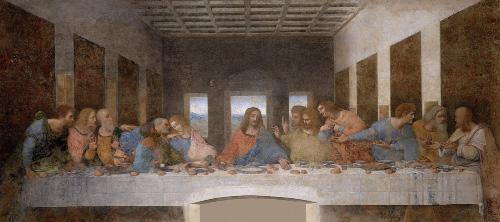
In their pursuit of a secularized version of affirmation, those who subscribe to new tolerance fail to realize that their desire for growth, validation, and acceptance can only be satisfied through Christ and his love.
Still, if Christianity relies on an understanding at odds with the prevailing societal worldview, how are the two to tolerate each other? In response, Archbishop Charles J. Chaput offers the following wisdom: “We have a duty to treat all people, regardless of their beliefs, with justice, charity, mercy, prudence, patience, and understanding. We’re not asked to ‘tolerate’ them but to love them, which is a much more demanding task.”27 In the perfect example of this advice,
Christians can always consult Christ’s behavior as a guide. Jesus did not sit amongst sinners to encourage their sins, but he also did not condemn them because they were not walking as he walked. Instead, by leading with love and truth, he revealed another path—one marked by fellowship, grace, and true acceptance.

Joanie Wood D’27 is from Calcutta, OH and is pursuing a doable-major in Economics and Psychology with a minor in Public Policy.
1. Chong, Dennis, Jack Citrin, and Morris Levy. “The Realignment of Political Tolerance in the United States.” Perspectives on Politics 22, no. 1 (2024): 131–52. https://doi. org/10.1017/S1537592722002079.
2. Tolerance | definition in the Cambridge English Dictionary. (n.d.). https://dictionary.cambridge.org/us/dictionary/english/ tolerance
3. UNESCO. (n.d.). UNESCO’s 1995 Declaration of Principles on Tolerance. International Day for Tolerance. https://www.unesco.org/en/days/tolerance
4. The secularization of the West. CERC. (2001, March 7). https://www.catholiceducation.org/en/culture/history/thesecularization-of-the-west.html
5. Gratton, P. (2018, September 21). Jean François Lyotard. Stanford Encyclopedia of Philosophy. https:// plato.stanford.edu/entries/lyotard/
6. Baghramian, M., & Carter, J. A. (2020, September 15). Relativism. Stanford Encyclopedia of Philosophy. https://plato.stanford.edu/entries/ relativism.
7. McDowell, J. (1996). Tolerating the Intolerable: A Mandate to Love. Josh McDowell Ministry.
8. Habermas, JÃ., Thomas McCarthy, and Larry Kert. The Philosophical Discourse of Modernity: Twelve Lectures. Oxford: Wiley, 1990.
9. Verkuyten, M., Yogeeswaran, K., & Adelman, L. (2020). The Negative Implications of Being Tolerated: Tolerance From the Target’s Perspective. Perspectives on psychological science: a journal of the Association

for Psychological Science, 15(3), 544–561. https://doi. org/10.1177/1745691619897974
10. MacArthur, J. (2023, January). Facing a Tolerant World with Intolerant Truth. Speech, Sun Valley; CA.
11. Aristotle. (1990). Aristotle: Metaphysics. Harvard University Press.
12. Aristotle. (1990). Aristotle: Metaphysics. Harvard University Press.
13. Leech, J. (2015). Logic and the Laws of Thought. Philosophers’ Imprint.
14. Parsons, J. (n.d.). Relativist Fallacy. https://www. hebrew4christians.com/Clear_Thinking/Informal_Fallacies/ Relativist_Fallacy/relativist_fallacy.html
15. Hebrews 13:8 ESV
16. Colossians 2:3 ESV
17. The U.S. Needs Tolerance More Than Unity. Association for Psychological Science - APS. (2021, March 17). https://www. psychologicalscience.org/news/the-u-s-needs-tolerance-morethan-unity.html
18. Ratzinger, Joseph Cardinal. Truth and tolerance: Christian belief and world religions, c.1-2. San Francisco: Ignatius Press, 2004. Text.
19. James 1:17 NIV, Galatians 5:22-23 NIV
20. Hebrews 10:24-25 ESV
21. Colossians 3:11 NIV
22. John 14:6 ESV
23. Carson, D. A. (2012). The Intolerance of Tolerance Eerdmans Publishing Co.
24. MacArthur, J. (2023, January). Facing a Tolerant World with Intolerant Truth. Speech, Sun Valley; CA.
25. Luke 6:27-28 ESV
26. Ephesians 4:2 NIV, 1 Corinthians 13:4-7 ESV
27. Chaput, C. J. (n.d.-b). Religious tolerance and the common good: Charles J. Chaput. First Things. https://www.firstthings. com/web-exclusives/2007/05/religious-tolerance-and-thecommon-good

WHEN HELL FREEZES OVER
In Defense of Universalism
Atanas Iliev D ’26
For Therefore we both labour and suffer reproach, because we trust in the living God, Savior of all men, specially of those that believe 1 Timothy 4:10, KJV
The main idea of universalism is contained in the notion that God, being all good, will never let someone be eternally damned. If I am perfectly honest, this article isn’t going to say much more. One major takeaway I hope readers ponder is that universalism should be the default position and thus should only require further justification when facing a specific objection. This is a pretty strong claim. Am I really claiming that everyone will eventually be saved? What about non-believers? What about Hitler or Judas? I am. How do I propose we establish this?
We begin this article by stating precisely what we mean by universalism, i.e. the thesis we will be defending (Section I: Universalism). We then proceed with a discussion of some premises we are going to be assuming and why they are important (Section II: Adjectival

Description of God). Here we also make our ‘argument’ and draw our conclusion. Next, we deal with three main types of objections: those derived by claims that something is required for salvation, those derived by a concealed dismissal of one of our premises, and those citing scriptural evidence that supposedly establishes a case for eternal damnation (Section III: Three Objections). Having completed this outline, let us proceed directly with our discussion on universalism.
uniVersalisM
In essence, we can broadly define universalism as a belief or position within Christianity that all will be saved.1 In the context of this article, we will place a couple specifications to our definition.
First, we will only consider universalism conforming

to trinitarianism. The reason behind this has to do with why universalism is not the default position for many of us. Certain scriptural verses play a part, of course, but another contributor is the unfortunate association of any belief in universal reconciliation with unitarianism. Broadly speaking, there isn’t anything inherent in the doctrine of unitarianism, i.e. the denial of the Trinity, that damages the universalist argument itself. In fact, several prominent historical figures were unitarians, including John Adams and John Quincy Adams,2 Ralph Waldo Emerson, and potentially even Sir Isaac Newton.3
That said, unitarians deny the ecumenical councils and creeds, making it difficult for more mainline Christian denominations to partake in theological research along with unitarians. This is not necessarily xenophobic given that a denial of the Trinity might as well (in my opinion, rightfully) be considered to directly imply a belief in a god different from the Christian God.
Unfortunately, the fundamental mistake behind unitarianism may cause trinitarians to dismiss various theological positions held by (some) unitarians without first inspecting whether a belief in the Trinity is necessary for the validity of the aforementioned position. Universalism, in particular, has suffered greatly because of the contemporary popularity of unitarian universalism, a religious movement that asserts no creed at all and does not require theism in the first place.4 In this article, we shall see that whether universalism is true or not has no logical conditionality on the Trinity or its rejection.
Second, we will only try to justify the belief that everyone will eventually be saved (not necessarily immediately or at the same time). This admittedly requires some justification. Is universalism really that weak that we need this further condition? Yes and no. On one hand, it makes our life easier when replying to the last class of objections we consider the ones from Scripture. From
the ones I have explored, at least two-thirds of all the references of damnation are easily dismissed by observing that the individuals or groups referenced in them need not necessarily be damned for eternity.
On the other hand, the argument in support for universal salvation is not really dependent on that condition. This is not necessarily grounds to dismiss it. In essence, our main argument in support of universalism will be the exact same one that leads to the notorious problem of evil.5 That being the case, I am unable to provide a solution to the problem of evil (not in this article at the very least). Hence, as unfortunate as it is, the scope of evil we allow God to commit (i.e. temporary damnation) shall remain a topic of discussion for further exploration. Note that logically this does not damage our argument. If one is not content with avoiding this issue but is convinced by our argument for universalism, one should either reject one of our premises and/or abandon their Christian faith. Since I like my premises and don’t like the latter option, I leave the larger problem for another day.
Last, let us explicitly state a few more things universalism does not claim particularly in relation to Hell. As observed from our definition, we do not require that Hell does not exist, that it eventually ceases to exist, or that it is empty right now. We simply require that eventually Hell will be empty. Let us now proceed with our next section that shall help us clearly establish the premises needed for our argument.
aDjeCtiVal DesCription of goD
Our argument will take the following form: 1) God exists. 2) God is such and such and such. 3) Therefore, all must eventually be saved. Hence, our first task is to come up with some description of God that is both theologically sound and to our benefit.
If one was to ask Christians about God they might
Houghton Meadows from Wikimedia Commons
I think anyone would find it hard to logically argue that a benevolent and allpowerful God will ever not save someone."
describe him as the Trinity, Jesus Christ, the Saviour, etc. However, if we assume we are speaking to someone who isn’t too familiar with Christianity a more reasonable approach might be to describe what God is like. This also coincides with our own agenda. Is he beautiful or is he ugly? Is God red or blue, or yellow? Is he reasonable or impulsive? When it comes to adjectival descriptions the theology enthusiast might be familiar with an often-cited difference between Western and Eastern Christianity, according to which positive descriptors (cataphatic theology) are preferred by the former and negative ones (apophatic theology) by the latter.7,8 Some of the most famous “positive” ones are the ones I call ‘omni’ attributes. God is believed to be omnipotent, omniscient, and omnibenevolent. (The second one is usually logically deduced from the first one).
Say then that an observer has formed some idea of Heaven and Hell or of salvation and damnation and hears about God who is said to be all-powerful and all-loving. It seems probable then that this observer will have no trouble understanding why people choose to believe in this God. After all, should such a God exist, all must be saved. Certainly then, all believers must be universalists. And yet, I doubt a single major denomination, Eastern or Western, Protestant or not, has ever subscribed to such a chain of reasoning.
I think anyone would find it hard to logically argue that a benevolent and all-powerful God will ever not save someone. That is, should we believe the premises outlined in the first paragraph, it is fine to conclude that the intuitive case supports universalism rather than rejecting it. Hence, it is only natural to first challenge our premises and explore them in detail. I propose we first lay them down as follows:
1) God exists.
2) He is all-powerful. (omnipotence)
3) He is all-good. (omnibenevolence)
On the first premise, we remain silent. Should God not exist the whole topic is moot.
The second one is definitively the most intriguing, at least to me. Initially, I would have ‘blissfully’ rejected this premise in favor of arguing that God is the most powerful or as powerful as possible, thus limiting him enough to challenge both universalism, and more importantly, the broader problem of evil. However, it was pointed out to me that the Nicene Creed, in the original Greek, begins as follows: Πιστευομεν
where the last word means ‘ruling over everything’ or ‘having power over all.’9 Hence, this is now a dead end. On a more positive note, this helps us establish universal support for this premise among trinitarian Christians. Indeed, I think God’s omnipotence (given the support from the Creed) is something that almost all approve of regardless of their tradition.10
Now we come to omnibenevolence. It is by far the most disputed of the three. For one, it is not cited nearly as often as any other attribute. In English, its first appearance is from the 17th century,11 and the Roman Catholic church does not include it neither in liturgy nor Catechism.12 Instead, ‘benevolence’ appears more
often among theologians of various denominations and traditions. Now, I can think of several explanations behind that apparent anomaly, given that there is no point in worshiping an evil God. First, we have mere convenience. Omnibenevolence is indeed a long word.
Second and way more intriguing, the semantics of the term are challenging. All-powerful and all-knowing are easy to understand. Given a thing, he can do it and he knows it. But all-good? Notice that in one of my earlier paragraphs I used all-loving. This is certainly easier to grasp (one who loves all), but it is not necessarily the same thing. All-good? But what is ‘good’? Even if we limit ourselves to moral goodness, the all-good translation is objectionable.
What does it mean for one to be all-good? Perhaps to always do a good thing regardless of the situation. First, that necessitates the possibility of good action in any situation. This gets complicated quite quickly. Second, the phrase doing good seems to intertwine moral goodness with action, which isn’t necessarily true.
The question then remains: What to do with our premise three? Thankfully, I don’t think a strict definition is required as of now. Instead, we can limit omnibenevolence severely to a point where I hope it’ll be accepted as a premise. We first try this interpretation: that God does the morally best thing for each person. This, however, presents two challenges we better avoid. First,

nave of St. Ignatius of Loyola by Brother Andrea Pozzo from Wikimedia Commons
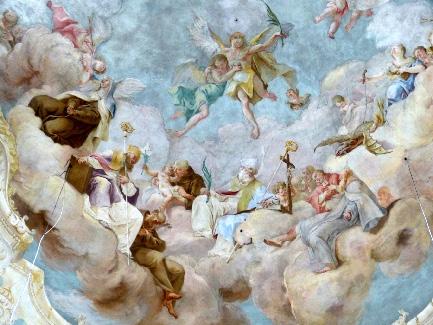
the verb does again shackles the concept of benevolence to acting and one may not be entirely convinced we are entitled to that for the reasons mentioned above. Second, while the word best may sound unproblematic, it is allowing God some leeway which we need not extend him. Say there is a situation where we can only think of two courses of actions both undesirable and yet one of them is clearly lesser evil. To allow God to choose this and still claim benevolence would jeopardize this whole article as one will just have to mention the dreaded problem of evil… No, we must instead stick with the less desirable and more abstract ‘good’ for now. To get rid of the first problem, we apply a clever trick. Let us ponder about whether we agree to interpret God’s (omni)benevolence in the following way:
God always intends to do good to all people.
Now, intention is not necessarily an action, and yet it won’t hinder our argument because of God’s omnipotence.13 Of course, should God intend something, he will do that thing because he can do it. Now, at this point I expect some readers to think something along the lines of: ‘Wait a minute! That is becoming way too easy for you: if God can do anything and always intends to do good for everyone, and if salvation is better than the alternative, surely everyone will be saved.’ And indeed that is all there is. For then surely intuition is on the side of universalism. A responsible reader may find some linguistic inaccuracies, but I doubt one can challenge the validity of the intuition case.
One thing we do need to mention is that implicit premise 4) we keep secretly assuming, namely that ‘salvation is better than the alternative.’ In this case it is preferable to limit ourselves to this potentially meaningless proposition in order to avoid any deceiving claims that one who has rejected salvation is better left unsaved. We are about to explore this and other criticisms in detail in the next section that deals with various objections to our intuitive case.
three objeCtions
We have made our argument and examined our premises. Universalism has been shown to be the default position pending Scripture. Yet this is not the place to stop! Far from it. Why, given all that, is there so much backlash and reluctance to accept universalism? In what follows, we discuss this question. We separate the objections into three main groups: 1) The role of faith objections. 2) The premise-dismissing objections. 3) Biblical evidence.14 Let us move forward and face the first of these courageously.
In my mind, the first group of objections (the ‘faithful’ objections) is, by far, the strongest one. The issue arising from our reasoning is distressingly similar to the one early reformers faced when they asserted works are not necessary for salvation. You see, by asserting that all will be saved, and particularly non-believers, we can’t really go on about how justification is by faith alone. The problem lies in that justification now happens by nothing… at least on our part.
To resolve this, consider the sola gratia. Salvation by grace alone is pretty much universally accepted although I dare say interpretation varies considerably. First, consider a pair of verses from Ephesians: "For by grace are ye saved through faith; and that not of yourselves: it is the gift of God: Not of works, lest any man should boast.16" We find an intriguing paraphrasing of this seemingly pro-reformed
passage in the National Catholic Register: “But we’re not saved by faith alone (that’s where Protestantism errs); we’re saved by grace alone. We may describe Catholic soteriology as follows: By the grace of God, we are saved through our faith; this faith entails by its very nature, good works, always enabled by prior grace, without which this faith is dead.”17
But this seems strange for it suggests the following chain of events: 1) God wishes we are saved. 2) This causes us to have faith. 3) This results in us doing good works. 4) We are then saved. Rather contradictory– it is not only faith because there are also works, and so it is only grace? And yet the Biblical evidence itself seems conflicted. Ephesians says works don’t play a part. James seems to insist that they either do or that they are necessary for faith to have any effect and substance.18 We, however, seem to eradicate the need for both faith and works. The good news is that we have no problem with grace. It may be needed for salvation because it’s an act of God and hence does not contradict our premises. In particular, grace is not something that we are responsible for, and so it doesn’t go against universal reconciliation. Still, we need a solution for the problem of faith lest our soteriology becomes too heretical even for those persisting with me thus far. Let’s compare Ephesians 2:8 with the last sentence of the excerpt from the Register. There is an interesting subtle difference.
The latter says through our faith, whereas the former makes no such clarification. Furthermore, it goes and that not of ourselves: it is the gift of God. Of course, the immediate interpretation is that that refers to God’s grace and it either to grace or salvation itself. Both say that it happens by grace and through faith and according to the Register this is an important distinction. The way I interpret through faith is that faith makes salvation possible but does not cause it itself. That is, there is no
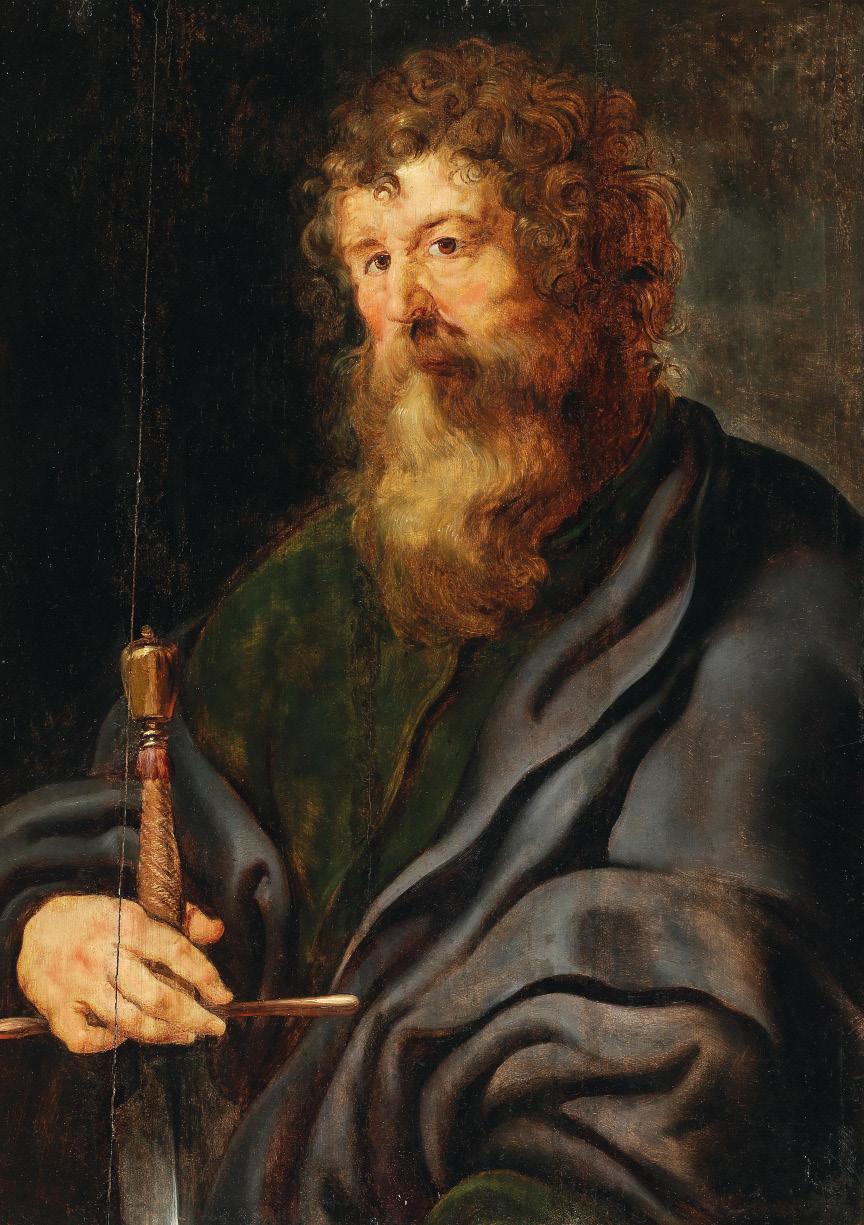
salvation without faith and yet it is God’s grace that causes salvation. The way this has been reconciled in Calvinist traditions is, as I understand it, that God wishes us to be saved and causes us to have faith which saves us. But this is unsatisfactory to me. It is not a real semantic distinction so much as a linguistic one. Hence, I propose that salvation is indeed by grace alone, indeed impossible without faith, and yet… has not a bit to do with our faith.
I suggest that it is God’s faith that matters just as it is his grace that matters. Christ sacrificed himself not for his sake alone but for ours, and so it makes sense that he had faith for our salvation and not his own alone. This solves the apparent paradox. It is Christ’s faith that enabled his grace to save us. Now, a more free-willed interpretation might argue that the faithful among us also play a part. It is not only his but our faith too that enables the salvation of everyone. It is vital that Christ still plays a role. This is not simply some apologetic nonsense, but a logical need
should our argument successfully deal with the objection. For if he doesn’t, and there remains a single believer, he will be responsible for his salvation which goes against Ephesians.
This is obviously a very broad overview of a possible response to the first objection but given the limited size of this article, I doubt we’ll do any better. Keep in mind that Ephesians is on our side (that faith is not of ourselves) and so is intuition– it can’t be by grace alone and by faith alone, the moment you say alone it is one or the other. Hence, it is through faith and the moment we accept the distinction we can see it does not really have to be our faith doing the work. And it’s not only Ephesians. Romans expresses a similar stance:
6. And if by grace, then is it no more of works: otherwise grace is no more grace. But if it be of works, then it is no more grace: otherwise work is no more work.19 24. Being justified freely by his grace through the redemption that is in Christ Jesus.20
One thing to mention is that this does not necessarily mean personal faith is pointless. Who knows how that works? Maybe it helps Christ. Maybe it doesn’t. Maybe it helps us. But we don’t need to have faith to be saved for God is powerful and he is good enough to save us. My personal view is that faith has much more to do with our current lives than it does with our salvation. One of my favorite verses attributes the manifestation of a miracle not to God but to an individual’s faith, so I humbly request you don’t consider me a determinist: "And he said unto her, Daughter, be of good comfort: thy faith hath made thee whole; go in peace."21 The story is found in all of the synoptic gospels. So faith does play a part. Yet personal
faith has nothing to do with salvation. And if that sounds discomforting, imagine how cruel interpreting sola fide as by faith instead of through faith really is. A benevolent omnipotent God will not let the infants be damned and yet grace is not enough if we interpret sola fide the way described above.
We now move to the second objection which is the most annoying to deal with. It is raised by people who claim to affirm God’s omnipotence and benevolence only to then pose restrictions on him. Unfortunately, it requires an even more annoying approach to defeat it. First, let’s detail what ‘arguments’ fall under these hypocritical objections. These are ones that claim that for an array of reasons God couldn’t save everyone. Some will frame it as a respect of man’s free will to choose damnation, others might claim Heaven to not always be preferable, and yet others come up with a logical impasse preventing God from fulfilling that.
What empowers all of that talk is the centuries old question ‘Can God create a rock he cannot lift?’ Well, I have an answer. Yes, he can. Furthermore, he can then lift that rock and yet the rock will still be an unliftable one. How is that possible? Don’t ask me. But it is either that or God is not omnipotent, simple as that. When one says allpowerful one must very well mean all-powerful for if not
Christ sacrificed himself not for his sake alone but for ours, and so it makes sense that he had faith for our salvation and not his own alone.
the line separating what he can and cannot do becomes blurry quite quickly. A common argument against my answer is that logic is somehow a part of God and hence violating it will somehow go against God. This can then quickly evolve in an all-out attack against universalism claiming violating free will is against his nature. Even if that were true, it simply dodges the question. ‘Can he create an unliftable rock and lift it?’ is a different question from ‘Will he?’. We agreed to respect premise 2) in this paper. Hence, God is omnipotent. Therefore, he can boil all of us alive and he can sit on a throne made of clouds with some popcorn and laugh at our screams. But will he? Of course not. So much for the logical issue.
Addressing the free will problem, and the objection that states that for those who don’t believe it’s better to be damned, I say those arguments are just as hypocritical as the previous one. First, free will. Why does it have to do anything with salvation? Did God give us ‘free will’ to go to sleep one night and wake up as unicorns?22 Nowhere does it say that we are free to choose everything. So why insist on freedom to be damned? But even if we grant that, there is still a solution. Those are the most dangerous people — the ones who claim it is better to be free to choose damnation over salvation than to be forcefully saved and yet still insist that salvation is better than damnation.23 As shown above, they all deny omnipotence and pretend they don’t. If that was the case and God was omnipotent he was surely not benevolent. For you see, a benevolent omnipotent God could have made the universe so that we are free to choose damnation and that yet we are all going to be saved if both freedom and salvation are indeed good things. It does not matter whether this appears or it is logically contradictual from our understanding of logic or of what is, in reality, possible for if God is omnipotent he can make logic and reality anyway he wants. Again, this is because omnipotence requires that he can do anything.
This is the real argument. An omnipotent benevolent God can make it so the best thing for us is what our free will perceives to be the best thing for us because he is both omnipotent and benevolent.24 The omnipotent part ensures he can. The benevolent part ensures he will make it so that our will is in pure bliss all the time.25
At long last, we turn towards the final category of objections. These critiques are not based on any deductive chain of reasoning but rather appeal to Scriptural authority. Since there is quite the number of verses that supposedly challenge universalism, we are unable to present them one by one.26 In essence, we can divide the ‘problematic’ verses into two main categories. The first may damage a more liberal view of universal reconciliation that would require no punishment at all, no existence of Hell, no suffering in general and so on. The second, a particularly narrow set, poses actual challenges to our thesis. To defeat those we first remind the reader that it has been shown universalism is the proper default position. Second, we quote an appropriate number of verses in support of our position in the spirit of the old theological debates.27
Let us begin with the first of these groups. We further separate them into a few subcategories for easier dismissal. Verses like Matthew 25:41, Revelation 21:8, Mark 9:43, John 3:36, Mark 9:48, Matthew 5:22, 13:50, John 5:29, Psalm 37:20, Galatians 6:8, Psalm 145:20 and many others are easiest to do away with. They either mention a punishment some of which might be permanent (e.g. an eternal fire) but claim nowhere that those suffering will stay in that eternal place indefinitely or reference a potential eternal punishment but do not establish that a single person will certainly be sentenced to it. Mark 3:29 and the other verses that talk about blasphemy against the Holy Spirit are the only places where an unforgivable sin is mentioned. However, none of them establishes that a single person will surely commit such a sin. Others like
Even if that were true, it simply dodges that question. "Can he create an unliftable roack and lift it? is a different question from "Will he?"
2 Peter 2:4 and Jude 1:6 mention what appears to be an eternal punishment along with certain sufferers of said torment, but none of the last are humans. In the two verses quoted, these are angels, in others they are demons or the devil. Finally, a great number of verses reference the existence of a place of damnation whether calling it Hell or something else, but they don’t require that this place is populated or that it will stay populated forever.
The second group of verses are challenging in the way that they do appear to clearly reference people suffering for what seems to be eternity. There are 5 such verses that I have identified: 2 Thessalonians 1:9, Revelation 20:10, Daniel 12:2, Isaiah 66:24, Ezekiel 18:20, the first perhaps the strongest. Indeed, none of them is enough to win a debate against us given our analytical argument and the fact we have our own Scriptural champion: 1 Timothy 4:10 which you can find at the top of the article. To help said advocate, we quote a number of verses in our support in order to conclude this section: Romans 5:18-19, establishing the sacrifice of Jesus is enough for everyone’s justification, 1 Corinthians 15:21-22, explaining that all will be made alive in Christ, 2 Corinthians 5:19, proclaiming the disregard of trespasses, Philippians 2:11, claiming that everyone will proclaim Jesus as Lord, and 1 Timothy 2:3–6, which proves God desires to saves all and

ones again informs that Christ’s sacrifice was enough for everyone.
Finally, an incredibly short summary. First, we assume the following premises: God exists, God is omnipotent, God is omnibenevolent, salvation is better than damnation. Given those we claim both logically and intuitively that at the very least everyone will eventually be saved forever. We defect any attack along the lines of ‘God can’t do [insert something here]’ by saying that this automatically defies the omnipotence premise. We reject the objection that faith is no longer necessary if everyone is to be saved by claiming that it could have never happened without Jesus’s faith and that his faith was predetermined so that everyone could indeed be saved all along. Last, we survey Scripture for seriously hurtful verses and dismiss most of them on grounds of attacking a stronger universalism than the one established. If anyone still needs convincing and insists the Bible is the only source of reasoning we point to 1 Timothy 4:10 and its allies, thanks be to St. Paul.

1. MacDonald, Gregory (2011). All Shall Be Well. p. 1. At the most simple level Christian universalism is the belief that God will (or, in the case of "hopeful universalism", might) redeem all people through the saving work of Christ.
2. "God in the White House". pbs.org. Archived from the original on 2019-12-04. Retrieved 2019-12-04.
3. Baierlein, Ralph. (1992). Newton to Einstein. Cambridge: Cambridge University Press & Assessment. p. 54. ISBN 0-52142323-6.
4. Casebolt, James; Niekro, Tiffany (March 2005). "Some UUs Are More U than U: Theological Self-Descriptors Chosen by Unitarian Universalists". Review of Religious Research. 46 (3). Cham, Switzerland: Springer Verlag: 235–242. doi:10.2307/3512553. ISSN 2211-4866. JSTOR 3512553. S2CID 147127153.
5. This will be further explored and explained in the next section.
6. The reader is invited to verify that it is not necessary for Hell to then remain empty at all times, although at this point this really is simply a semantic point bordering on sophism.
7. This is somewhat bizarre given that pretty much everyone would use at least some negative adjectives such as immortal or infinite
8. Vladimir Lossky, The Mystical Theology of the Orthodox Church (1957 [1944]), page 25.
9. https://earlychurchtexts.com/public/nicene_creed.htm, We believe in one God, Father almighty
10. That is although it is a positive description I doubt many Orthodox or other Eastern Christians will reject the idea that God is all-powerful.
11. Hoffman, Joshua; Gary Rosenkrantz (2002). The Divine Attributes. Blackwell Publishing. ISBN 0631211543. Used throughout the book.
12. "First Vatican Council". dailycatholic.org. http://www. dailycatholic.org/history/20ecume1.htm. Retrieved 2008-05-02.
13. At this point I should note that basically every time I mention omnipotence what I really mean is omnipotence and omniscience due to the general consensus that the latter follows logically from the former.
14. We are going to use the KJV (the authorized version) or the ESV translations. The KJV is my preferred translation whereas the ESV is quicked to search and paste the way I do it. The ESV is only used for dealing with the third group of objections.
15. Armstrong, Dave (5 February 2018). "Is Grace Alone (Sola Gratia) Also Catholic Teaching?". National Catholic Register.
16. Ephesians 2:8-9, KJV
17. https://www.ncregister.com/blog/is-grace-alone-sola-gratia-alsocatholic-teaching
18. James 2:14-26, KJV
19. Romans 11:6, KJV
20. Romans 3:24, KJV
21. Luke 8:48, KJV
22. I actually think, asking "Well, why didn’t he?’ as a response is a perfectly valid and insanely intriguing question.
23. Of course, should you reject the last point, the whole discussion is moot and uninteresting.
24. At this point I use benevolent and omnibenevolent interchangeably.
25. This, of course, returns us to the problem of evil. Please see the discussion on it in the sections before this one.
26. Indeed, in the interest of space we only quote the verses we address instead of displaying their content in the body of this article.
27. As in the ones full of quoting the Bible.
Atanas Iliev D’26 is from Plovdiv, Bulgaria, and is pursuing a double major in Mathematics and Classics.

"Sunday at St. Marks"
By Gracie Bartos D’27

there was lavender on the altar today little seneca wincing with the chalice to her lips: mom pats her on the head “be brave”
joe letting his pocket change cascade from his palm and clink in the offering tin sitting alone in the first row but craning his neck to talk over the organ pipes and abby taping her string bracelet loom to the pew in front of her red, then green, then pink, then red again sydney crossed the aisle to introduce herself with a lovely blue ribbon around her dress “peace. it’s good to see you again,” said rebecca roy raising a prayer for transition and john for tradition and even the fly molesting the rose beside God’s table whispered to me that this was a slice of Heaven.
"The Maturation of the Stoles' Boy."
By Tyler Long D’27

In a stand of trees sat a house. Outside the woodland fence was seemingly endless almost infinite native prairie, rolling and loping along itself with no pressing place to be. The house is old and likely has lead in its paint if you cared to know. Bottles empty for generations rest on shelves and the whole place creaks and breathes with the wind which passes through the trees.
At the fire, the only life inside, are sitting and crouching a father and son. They are waiting patiently and impatiently but neither move. The fireplace burns, the only life in the house.
At some point in time, whatever time is in the great grasslands, both the father and the son knew the latter had to go. Without saying a word and almost soundlessly the son gets up and leaves the house without looking back. In fact it was never even a start of a start of an errant thought that he might look back.
The son walked down the worn and eroded stone staircase from the door to the gravel pathway on the overgrown lawn. It was the first time he had ever seen the sun. He squinted at it. He didn't think much of it. He walked without shoes beyond the tree cover and looked down the unpaved road the house squatted by like a coyote lapping at a stream. Both ways the road was playing catch-up with the prairie over the low

hills and distant fog and it was clear to all the road was losing. Nothing moved including him as he wondered which way he ought to go.
Wondering, he heard the grasshoppers chirp their marching band song. Wondering, he saw the gently rolling ocean of inedible grain go through high and low tide. Wondering, the sun stared and didn't think much of him.
A bird flew overhead and caught his attention like a dragonfly buzzing into a glass window at a hundred decibels. It flew to the right. At this distance and time of day, whatever distance and time mean in this golden sea of organic matter, he couldn't pick out any details about the bird. He couldn't see it was a dove. To him, it looked black as the night sky he had never seen.
The bird continued its flight like a hole that had been ripped in the sky. At any moment something could fall through the stadium ceiling or the man upstairs could leer down and make eye contact with anything arrogant enough to look up at him. The abyssal puzzle piece pathed straight across the pale blue ceiling until it was puzzling far enough down that a fool could deceive himself the world solved. The son turned to the right and began to walk and he was no fool.
THIS, THEN, IS HOW YOU SHOULD PRAY
What the Lord's Prayer says about why and how you should pray
Matthew Kim D ’26
DDo I have to be kneeling down with my hands clasped with a strange glow surrounding my head? Should I expect to hear the voice of God coming down from the heavens like in Monty Python? These options might sound silly, but prayer is often seen by Christians and non-Christians as a very mystical thing. Many times it seems like when I pray I am just saying some words in my head without much of a goal or even an understanding of how my prayers do anything. But Christians do believe that prayer does something, that it can do a lot. Saint Pope John Paul says that “It is prayer that always, first of all and essentially, demolishes the barrier which sin and evil may have raised between us and God.”1 It is the intent behind the prayer, not the emotional response, that is the most important. That is not to say that you can’t just recite prayers without intent, but that chasing a feeling is often unhelpful. Lucky for us, our rejection of evil and outreach towards God is not contingent on our ability to manufacture happiness or
sadness or serene calm. Words alone are also lacking. If there is one prayer that every Christian knows the words of, it is the Lord’s Prayer. Otherwise known as the Our Father or the Pater Noster in Latin, the words are pulled directly from the Bible as a quote from Jesus in Matthew 6:913. For many people, even though they may have learned the words, the meaning of the prayer is not perspicuous. The difficulty of prayer lies, therefore, in understanding what we should be intending. Unsurprisingly, Jesus has an answer to our need.
“This, then, is how you should pray: ‘Our Father in heaven,"2
This prayer, while short, is a profound formula for approaching God. Organized into seven petitions, Jesus’s prayer contains profound teachings on how we should relate to God, other people, and the world. He starts by orienting us toward God who we can call our father.

The difficulty of prayer lies, therefore, in understanding what we should be intending.
Jesus, as the Son of God, teaches us that we can assume a relationship with Christ our brother and therefore assume a filial relationship with the Father through baptism. While the slogan “Child of God” may seem dry as cardboard nowadays, two thousand years ago the only children of gods were gods themselves, the greatest heroes of legend, or the kings and emperors whose faces were stamped on coins. In context, the awesome nature of the Father’s invitation to join an intimate relationship with him through baptism is accentuated. A personal approach of holiness therefore becomes possible through prayer. As Saint John Damascene said in De Fide, “Prayer is an uprising of the mind to God or a petitioning of God for what is fitting.”3 As we raise our minds we learn about God our creator and also ourselves as the created.
Hallowed be your name, Your kingdom come, Your will be done, On earth as it is in heaven.”4
These first three petitions may seem strange at first. This looks like praying for the sky to be blue. It already is. Christians believe that his kingdom will come, and that his will must be done because he is all powerful and all knowing. Similarly, the holiness of God’s name was eminently apparent to all the Jews to whom Jesus was preaching. Based largely on traditions built from the second commandment, “You shall not misuse the name of the Lord your God,”5 many Jewish people do not say the
name that God gave to Moses even today. The Mishneh Torah, a 12th century book of Rabbinic Jewish law says,
Instead, it is forbidden to mention even one of the names designated for God although one does not take an oath. For the verse [Deuteronomy 28:58] commands us, saying: ‘to fear the glorious and awesome name.’
Included in fearing it is not to mention it in vain.6
So clearly the name of God was and is hallowed. Beyond Jewish tradition, in Revelation, we see that there are created beings in heaven who “Day and night they never stop saying: “‘Holy, holy, holy is the Lord God Almighty,’”7 So even if not a single person on Earth hallows God’s name, it will be hallowed in heaven. The other two petitions, for the kingdom and God’s will, also do not rely on human intervention to be accomplished. As Saint Augustine says “Come [his kingdom] surely will, whether we will or no.”8 Nothing that we do could cause or prevent it. So why does Jesus command that we pray for these things? The change that we desire is not of an external reality, but an internal one. Our petitions to God in the Lord’s Prayer reflect back upon us and direct our own change. In a less concise form, the lines could be read: may we, the human race, keep your name holy, may we yearn for your kingdom, and may we align our wills and action here on earth to your will as the angels and saints in heaven already have done.
As we raise our minds we learn about God our creator and also ourselves as the created.
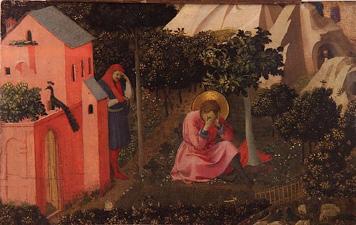
“Give us today our daily bread” 9
Situated after we have prayed on our relationship with the Father, the next petition seems much more down to earth. Bread was the staple food product in Jesus’s day and still happens to be quite popular. Our need for food and drink as embodied persons is fundamental. In that way, we are asking for our daily needs to be met. However, there is a spiritual meaning joined to the physical, just as
The Lord's Prayer asks for the things necessary for life, the physical and spiritual bread combined as Jesus said he is.
Jesus is the combination of God and man. He says “I am the living bread that came down from heaven. Whoever eats this bread will live forever. This bread is my flesh, which I will give for the life of the world.”10 and “Indeed, the water I give them will become in them a spring of water welling up to eternal life.”11 In the Exodus, the Israelites call out for food and water in the desert. In response, God gave them manna and Moses struck a rock to create a spring. In this way, Jesus models himself as the new Moses, sent to save his people. While Moses brought Israel out of slavery in Egypt through manna from God, Jesus brings the world from death into life through his own body. The Lord’s Prayer asks for the things necessary for life, the physical and spiritual bread combined as Jesus said he is.
“And forgive us our debts, as we also have forgiven our debtors.”12
The petition for forgiveness is contingent on our own forgiveness of others. Instead of setting ourselves as judges over others we are called to forgive as freely as God does. This is supported by Jesus’s later teaching “Do not judge, or you too will be judged. For in the same way you judge others, you will be judged, and with the measure you use, it will be measured to you.”13 Only God can see the measure of the human heart. However, the false conclusion of moral relativism should also be avoided.
One cannot forgive without realizing that some wrong has been committed. Other translations of debts in this verse are wrong doings, sins, or trespasses. God can forgive us because, as Paul says, “all have sinned and fall short of the glory of God.”14 We endeavor to right the relationship and forgive those who have wronged us, no matter what they may have done. Christ says we should forgive our brother “not seven times, but seventy-seven times.”15 Seven is significant because it is a symbol of divine completeness.
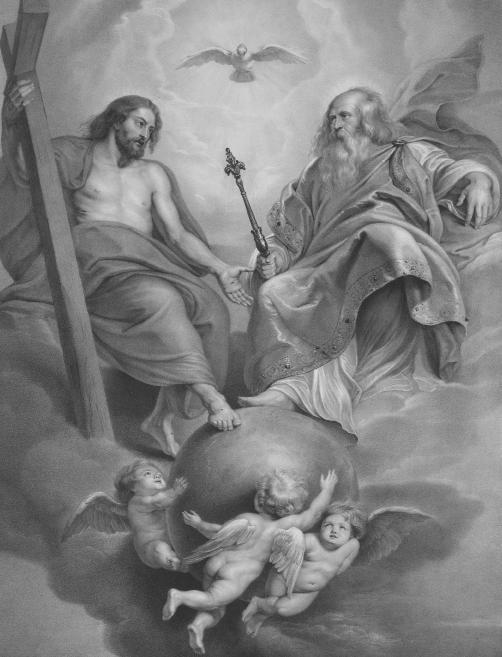
One cannot forgive without realizing that some wrong has been committed.
Jesus’s use of seventy-seven, seven times seventy in other translations, means that there should be no limit to our forgiveness of our brother. Jesus teaches us in the Lord’s Prayer, in alignment with his other teachings, that we should love our enemies and pray for their good. Our common human experience is a striking testament to the necessity of forgiveness after falling into temptation.
“And lead us not into temptation, but deliver us from the evil one.’”16
However much we ask for forgiveness, we must also “Flee from sin as from a snake.”17 Therefore, we ask that we might be spared from temptation. During Jesus’s agony in the garden he admonishes his disciples who have fallen asleep. “Watch and pray so that you will not fall into temptation. The spirit is willing, but the flesh is weak.”18 We can be tempted by our fallen natures, the world, and the evil one. With temptation in the material and immaterial, how can anyone hope to avoid sin? Yet
But he promises that our desires, when conformed to the good of his plan for us, are fulfilled completely and superabundantly.
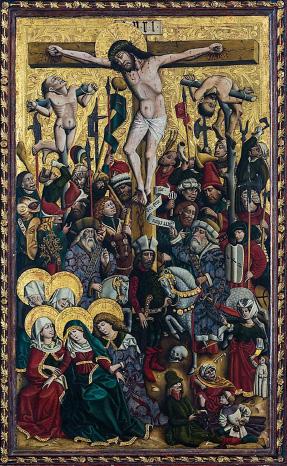
Jesus calls every person to “Be perfect, therefore, as your heavenly father is perfect.”19 Christians should be the first to admit that humans are inclined toward the sins of the flesh: pride, lust, gluttony, greed, sloth, anger, and envy. In short, we are not perfect. Instead of despairing our destitution though, Christians recognize that “God is faithful; he will not let you be tempted beyond what you can bear. But when you are tempted, he will also provide a way out so that you can endure it.”20
Jesus teaches us to pray not so that we can help him, nor because God needs us to tell him how great he is. Instead, as Saint Augustine says, “It is for ourselves, not for God, that we pray.”21 Communing with God changes us to be more humble, more trusting, and more loving. Unlike practices of emptying oneself, or focusing intensely on one’s desires, prayer is an attention to God and an accepting of him in life.
Unlike a genie, God doesn’t grant wishes. But he promises that our desires, when conformed to the good of his plan for us, are fulfilled completely and superabundantly. Prayer is the way we can cooperate with him.
Come Holy Spirit, teach us to pray.

Matthew Kim D’26 is from New Canaan, CT and is pursuing a Bachelors of Engineering in Materials Engineering.
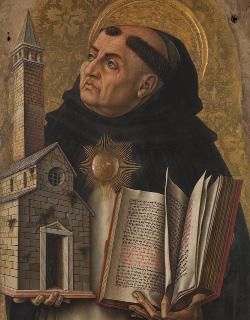
1. Pope John Paul II in his general audience on March 14, 1979
2. Matthew 6:9 (NIV)
3. St. John of Demascus, De Fide 3.24
4. Matthew 6:9-10 (NIV)
5. Exodus 20:7 (NIV)
6. Maimonides, Moses, Mishneh Torah (Middle-Age Egypt: c.1176-c.1178 AD), Oaths 12:11.
7. Revelation 4:8 (NIV)
8. St. Augustine, Sermon 7
9. Matthew 6:11 (NIV)
10. John 6:51 (NIV)
11. John 4:14 (NIV)
12. Matthew 6:12 (NIV)
13. Matthew 7:1-2 (NIV)
14. Romans 3:23 (NIV)
15. Matthew 18:22 (NIV)
16. Matthew 6:13 (NIV)
17. Sirach 21:2 (NCB)
18. Matthew 26:41 (NIV)
19. Matthew 5:48 (NIV)
20. 1 Corinthians 10:13 (NIV)
21. St. Augustine, Sermon 7
St. Thomas Aquinas from the Dermidoff Altarpiece by Carlo Crivelli from Britannica

A PRAYER FOR DARTMOUTH
This prayer by professor of religion Lucius Waterman appears on a plaque hanging at the entrance of Parkhurst Hall.
O Lord God Almighty, well-spring of wisdom, master of power, guide of all growth, giver of all gain. We make our prayer to thee, this day, for Dartmouth College. Earnestly entreating thy favour for its people. For its work, and for all its life. Let thy hand be upon its officers of administration to make them strong and wise, and let thy word make known to them the hiding-place of power. Give to its teachers the gift of teaching, and make them to be men right-minded and high-hearted. Give to its students the spirit of vision, and fill them with a just ambition to be strong and well-furnished, and to have understanding of the times in which they live. Save the men of Dartmouth from the allurements of self-indulgence, from the assaults of evil foes, from pride of success, from false ambitions, from hardness, from shallowness, from laziness, from heedlessness, from carelessness of opportunity, and from ingratitude for sacrifices out of which their opportunity has grown. Make, we beseech thee, this society of scholars to be a fountain of true knowledge, a temple of sacred service, a fortress for the defense of things just and right, and fill the Dartmouth spirit with thy spirit, to make it a name and a praise that shall not fail, but stand before thee forever. We ask in the name in which alone is salvation, even through Jesus Christ our Lord, amen.
— The Reverend Lucius Waterman, D.D.

NICENE CREED
We, the editorial board of The Dartmouth Apologia, affirm that salvation is given through faith in Jesus, that the Bible is inspired by God, and that we are called to live by the teachings of Jesus and the apostles. We affirm the Nicene Creed, with the understanding that views may differ on baptism and the meaning of the word “catholic.”
We [I] believe in one God, the Father almighty, maker of heaven and earth, of all things visible and invisible.
We [I] believe in one Lord Jesus Christ, the Only Begotten Son of God, born of the Father before all ages. God from God, Light from Light, true God from true God, begotten, not made, consubstanstial with the Father; through him all things were made. For us men and for our salvation he came down from heaven, and by the Holy Spirit was incarnate of the Virgin Mary, and became man. For our sake he was crucified under Pontius Pilate, he suffered death and was buried, and rose again on the third day in accordance with the Scriptures. He ascended into heaven and is seated at the right hand of the Father. He will come again in glory to judge the living and the dead and his kingdom will have no end.
We [I] believe in the Holy Spirit, the Lord, the giver of life, who proceeds from the Father [and the Son], who with the Father and the Son is adored and glorified, who has spoken through the Prophets.
We [I] believe in one, holy, catholic, and apostolic Church. We [I] confess one Baptism for the forgiveness of sins and we [I] look forward to the resurrection of the dead and the life of the world to come. Amen.

[1 Peter 3:15]