
by Aleksa Sotirov ’ 26

23 by Will Bryant ’ 24

THE DARTMOUTH APOLOGIA
exists to articulate Christian perspectives in the academic community.

by Aleksa Sotirov ’ 26
23 by Will Bryant ’ 24
exists to articulate Christian perspectives in the academic community.
VOLUME 17 ISSUE 2
A Demon Re-Emerged
Acedia in the Modern Day
Why does Science Work?
Divine Solutions to the Problem of Induction
Revolutionary Science and Miraculous History
A Kuhnian Approach to the Philosophy of Miracles
Jacob Parker D’23
Will Bryant D’24
Blake Whitmer D’23
Tula Nicholson D’25
An Ancient Faith in a Modern World
Managing God’s Wealth Brink
Poetic Exposition
Misdemeanor or Malady?
Rethinking Sin with Eastern Christianity
Thy Neighbor and Thyself
Reframing Self-Care at Dartmouth with the Second Great Commandment
The Abiding Word
A Philosophical Defense of Mystical Interpretation




Jacob Parker D’23 (“A Demon ReEmerged,” p. 4) is from Winston Salem, NC and is pursuing majors in Classical Languages and Literatures and English and a minor in Linguistics.
Will Bryant D’24 (“Why Does Science Work?,” p. 12) is from Hingham, MA and is pursuing majors in Quantitative Social Science and Religion modified with Philosophy.
Blake Whitmer D’23 (“Revolutionary Science and Miraculous History,” p. 20) is from Harrison, AR and is pursuing a major in Philosophy and a minor in Mathematics.
Tula Nicholson D’25 (“Managing God's Wealth,” p. 28) Tula Nicholson D’25 is from Bergen County, New Jersey and is pursuing a major in Government and a minor in Public Policy.




Elizabeth Hadley D’23
Aleksa Sotirov D’26
Gideon Gruel D’26
Christopher McCardle
Elizabeth Hadley D’23 (“Brink,” p. 36) is from North Caldwell, NJ and is pursuing a major in Classical Languages and Literatures with an English minor and is on the Pre-Med track.
Aleksa Sotirov D’26 (“Misdemeanor or Malady?,” p. 38) is from Belgrade, Serbia and is pursuing a double major in Linguistics and Cognitive Science.
Gideon Gruel D’26 (“Meaning Beyond Religion,” p. 46) is from Pocatello, Idaho (among other places) and is planning to pursue majors in Philosophy and Classical Languages and Literatures.
Christopher McCardle (“The Abiding Word,” p. 54) is a student at the University of Auckland, New Zealand studying law, history, and politics and studied history at Dartmouth as an exchange student.
Najma Zahira D’24, Editor-in-Chief
Jack Brustkern D’25, Editor-in-Chief-elect
Isaiah Menning D’24, Managing Editor
Emil Liden D’25, Managing Editor-elect, Art Director
Will Bryant D’24, Publisher
Amelie Bradley D’25, Publisher-elect
Drew Whitley D’23, Senior Editor
Blake Whitmer D’23, Senior Editor
Hailey Hao D’24, Poetry Editor
Charles Ambrose D’25, Editor
Annie Ballard D’24, Editor
Ryan Proulx D’25, Editor
Anthony Fosu D’24, Art Director
Jack Donofrio D’25, Digital Manager
ADVISORY BOARD
Gregg Fairbrothers D’76
Eric Hansen, Professor of Engineering, Thayer
James Murphy, Professor of Government
Lindsay Whaley, Professor of Classics & Linguistics
SPECIAL THANKS
Council on Student Organizations
The Eleazar Wheelock Society
To subscribe to our journal, visit our website or use your phone’s camera to scan the QR code to the right. Subscriptions to the journal are free and subscribers get each new issue delivered right to their front door! For more information, visit our website or send us an email at the.dartmouth.apologia@dartmouth.edu.

We welcome the submission of any article, essay, or artwork for publication in The Dartmouth Apologia that seeks to promote respectful, thoughtful discussion in the community. We will consider all submissions from any members of the community but reserve the right to publish only those that align with our mission statement and quality rubric.
email: the.dartmouth.apologia@dartmouth.edu
We deeply value your opinions and encourage thoughtful words of support, dissent, or other views. We will gladly consider any letter that is consistent with our mission statement’s focus on promoting intellectual discourse in the Dartmouth community.
email: the.dartmouth.apologia@dartmouth.edu
Dear Reader,
I hope this finds you well. However this issue of The Dartmouth Apologia came into your hand, I wish that you take something from it in the next stage of your life.
The gloomy, monotonous winter has finally blossomed into spring and with it comes an air of change. Spring at Dartmouth is never without an exodus. The Class of 2023 are leaving into the post-Dartmouth world, while the rest of us are left to fend for ourselves without their guidance. Although this campus will feel different without them, I welcome the change, as the Class of 2024 ascends to our final year.
The Apologia is not exempt from this season of change. This term we welcome our new Editor-in-Chief-elect Jack Brustkern and our new Managing Editor-elect Emil Liden. It has been a joy to work with them over the past year. They love the Apologia and are excited to see what it can become. I cannot wait to see them lead next year.
Although our leadership has changed, the mission of The Dartmouth Apologia has not. Amidst all the changes on campus, the Apologia presents a stable force in the Dartmouth Christian culture. Over our 15-year history, our goal has remained constant: articulate Christian perspectives in the academic community. We have strived to produce a product that is a witness to the message of Christ while engaging with the academic community, a goal that continues to remain salient on this campus, or else this journal would no longer exist. As long as there are people willing to carry this goal, the Apologia will remain, true to its mission.
This issue makes me especially proud as this is, for the majority of authors, their first contribution to the Apologia. It takes an incredible amount of effort to write a 3,000-word academic article and to go through weeks of editing. I congratulate our writers for making it to the end. With our articles, our aim is not to scream into the void but to have a conversation. We are not here to simply tell you why we are right and why you are not but to engage with you, dear reader, and to make you think. As you read about the Christian response to despair or the Orthodox perspective on money management, approach them with an open mind, a mind that’s open to change.
As my last issue before I step down as Editor-in-Chief, I would like to reflect a bit on my time here. The Apologia has been a lifeline throughout my Dartmouth journey. It was the bright light at the end of the tunnel that ushered me into a world of theological engagement and introduced to me a wonderful, welcoming community that has defined my experience here. I am so grateful that I was able to serve the journal in this capacity, and I want to give special thanks to Managing Editor Isaiah Menning D’24 and Publisher Will Bryant D’24 for your help and guidance over this past year. I love this journal, and I hope that, through the hours and hours that folks have put into making it, you, dear reader, can see our love for this journal too.
In Peace,
Najma Zahira D’24 15th Editor-in-Chief of The Dartmouth Apologia


by Tobin Yates

Every Dartmouth student knows the great drama of pushing a paper off until the last minute, cramming all night before a midterm, and continuously delaying work until the final possible moment. Unfortunately, procrastination has become the norm for many students. While every student always laments living deadline to deadline on assignments, the cycle of delay feels inescapable. No matter how illogical or unhealthy it is, students are overwhelmed when trying to break the normalization of last-minute work. No one likes it, but few do anything to prevent it.
Procrastination is the most obvious example of a greater lethargy that has gripped young people across the country. A larger lack of energy and care seems to dominate Generation Z, with hyper-short attention spans and a sense of doom plaguing this new generation. For some, procrastination is the least of their worries, and a growing sense of hopelessness has spread, bringing a dreadful despair along with it.
Overwhelmingly, the defining aspect of this ailment
is a general lethargy or lack of enthusiasm when approaching life. On college campuses, this lack can best be seen by the aforementioned delay of assignments but also from a sense of doom over their future once they leave the safety of the classroom. Sheltering in the comforting compounds of online internet cultures or communities is a trend that can be felt both on and off college campuses. All in all, fueled by a lethargy and lack of care for the world, young people are continually retreating from the immediate real world into the confines of their own making.
Lethargy and hopelessness have various explanations and causes. From medicalizing this experience to over-abstracting it into nonsense, varying material and psychological theories are commonplace in discussing these issues. This article takes a different approach, arguing that this condition is not new. In fact, the symptoms of what we see nowadays are simply modern twists on what our ancestors suffered, faced, and overcame in the past.
As Christianity spread in the generations following Jesus and his disciples’ ministry, the faith expanded and grappled with many different human communities and experiences. One of the more notable early Christian groups was the Desert Fathers. This movement, founded by St. Anthony, consisted of monks venturing out into the solitude of the Egyptian Desert, setting the stage for the great tradition of Christian monasticism. The Desert Fathers’ heyday lasted through the third, fourth, and fifth centuries, and while the troubles and challenges they faced might seem quite bizarre compared to that of our own, the wisdom which these men recorded can be of great use when fighting our modern lethargy.1
Evagrius, a disciple of one of St. Anthony’s students, recorded various teachings on how monks could overcome and fight the various temptations and demons that they encountered. When he was writing in the fourth century, Christianity had reached an important normalcy in society. Emperor Constantine had given political protection to the faith in the early part of the century, and by the latter half of the century—when Evagrius was writing—paganism had reached its “final generation” of adherents.2 Because Evagrius did not need to address the violent political persecution as some previous Christians did, he was able to focus on the spiritual battles happening in these communities. This included a greater focus on overcoming spiritual temptations.

Here is where his teachings become relevant to our purpose. Evagrius discusses the various demons that
monks and all other Christians must ward off in their spiritual battles. One of the most potent demons he discusses is that of acedia. Acedia is difficult to translate into English, but at its core, it is the lack of energy: the lack of care which takes hold of man’s soul when his spiritual guard is down. Seeping in when he is not even aware, acedia grips man in a paralysis of being, where he is unable to act or care, and he is not even sure what is limiting him.3
Acedia grips man in a paralysis of being, where he is unable to act or care, and he is not even sure what is limiting him.
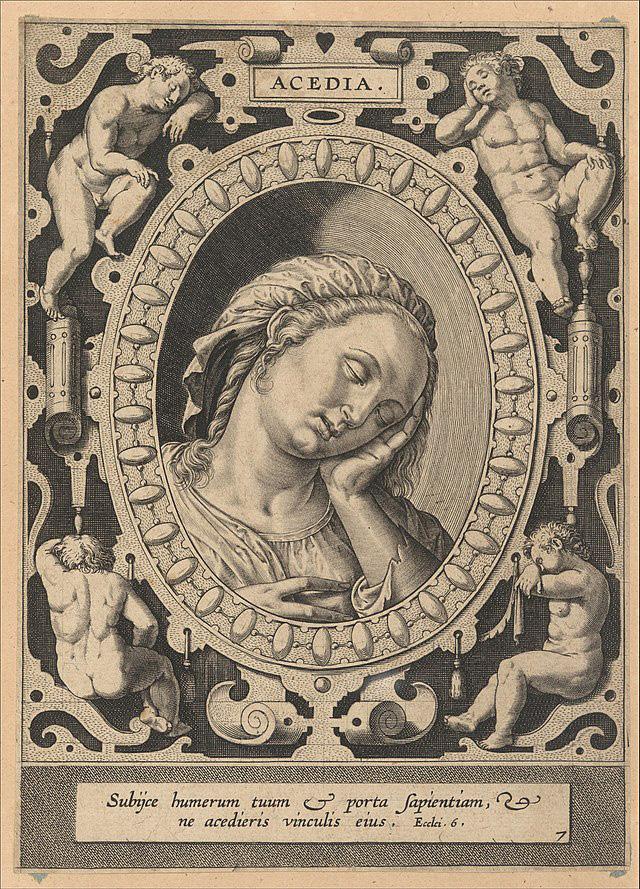
In many ways, acedia is a lost term, one that has been forgotten over a couple centuries. This loss makes the word strange and hard to understand for a contemporary audience. Even the Latin-speakers of the fifth century struggled to translate it, which was why instead they merely transliterated it from Greek. At times, the term has been translated in many different ways: languor, torpor, despair, laziness, boredom, or disgust, but none of these translations adequately capture the true essence of the word.
Looking at the etymology of the word in Greek, acedia means “lack of care” (“α-” lack + “κηδία” of care). This definition raises the question: lack of care for what? Originally, the term referred to negligence in burying one’s dead, a lack of care that results in an animalistic condition of man. Evagrius expanded this meaning to not just a lack of care for the deceased, but a lack of care for the spiritual and salvation itself.4 This meaning is where the true importance of acedia emerges. By capitalizing on man’s material focus, acedia attacks the inner sacred values of man. Out of a negligence toward the spiritual, it attacks the joy and friendship which God offers man, turning man away from what he needs most and causing a spiral of despair and anguish.
Unique among other wicked concepts, acedia is special in that it attacks on both a corporeal and spiritual level. It pierces man and exploits material focus when he is distracted or obsessed with material concerns. This attack is the origin of the name “Noonday Devil.”5 When the sun is at its height and man is suffering under its heat, he is weak from this condition, lapsing and allowing acedia to seep into himself. From here, acedia attacks man’s soul, exploiting this material condition to turn man away from the joy of God.
Fittingly, the Desert Father, Evagrius discusses acedia in relation to his own situation in the desert, but acedia is, of course, present in many different situations. The most important condition for acedia is that of distraction which makes a man weak as he ignores his spiritual being and focuses simply on his material well-being. This distraction can take many forms, both of abundance and of poverty, from the heat of the Egyptian desert even to the decadence of a college campus.
While the root of acedia is difficult to pinpoint, its widespread consequences are ubiquitous in the modern
world. Jean-Charles Nault, the abbot of the Benedictine Abbey of Saint-Wandrille, identifies five principal manifestations of acedia: a certain interior instability, an exaggerated concern for one’s health, an aversion to manual work, neglect in observing rules, and general discouragement.6 These five manifestations will be explained in order, understanding them will help us recognize and ward off acedia’s encroaching force.
First, acedia manifests itself as a certain interior instability which often takes the form of an excessive yearning to move about the physical world. When a person is constantly changing scenery and is never comfortable where he or she is, acedia convinces man that his physical location is responsible for an interior confusion.
To solve this, man must constantly move around. However, movement allows acedia to further grab a hold of man’s soul: “The demon of acedia suggests ideas of departure—the need to change your place and your way of life. He depicts this other life as your salvation and persuades you that if you do not leave, you are lost.”7 As a monk, Evagrius advised remaining physically in one’s cell, but in the modern world, this physical confinement takes a different form and remedy. The hustle and bustle of modern life persuades man to abandon his traditional or familial home in pursuit of monetary rewards. The story of an intelligent young person leaving home to go to a far-off college for an education and, after, to go to a far-off city for a lucrative career has become the expectation for many modern students. Building a career to benefit yourself and those you care about is not bad in and of itself, but when man abandons his home to wander about in strange lands, he opens himself up to various confusing forces that poach his wayward self. Acedia grabs upon this confusion and causes a constant cycle of looking elsewhere for a life that always seems just out of grasp. As man wanders farther and farther away from his physical home, he becomes less and less concerned about his spiritual well-being, cutting off his relationship with God. Relentlessly pursuing the next opportunity can cause man to neglect or forget his spiritual life, not placing his full trust in God’s hands. This trick, this material wandering to spiritual negligence is a tool of acedia. To combat this hoax, man must reaffirm and embrace his own physical home and not seek to leave behind what has been given to him. By maintaining and cherishing what he has been physically given and not looking to constantly change his own location, man can make a home that is impenetrable to the allure of acedia.
Second, an exaggerated concern for one’s health distracts man by convincing him that his physical health is all that constitutes his own well-being. Maintaining one’s own physical wellness is a laudable virtue, but becoming obsessed with physical health to the point where one sacrifices spiritual awareness should be fought off. The recent COVID-19 pandemic illustrates this tradeoff well. As physical health became the absolute priority for society, important non-physical aspects of man have been forgotten and a subsequent mental health crisis has immediately followed the pandemic. To combat this, man must be concerned by more than merely his physical health and focus on being well both spiritually and materially.
Third, acedia convinces man to avoid manual work as it is beneath him and a waste of time. Playing on the pride of man, acedia convinces man to become lazy and neglectful of his material responsibilities. Simple, repetitive work and attention to small details can free man’s mind from the distractions of the world, allowing man to open his mind toward the calling of the Lord.8 Humbleness and determination combat laziness and pride, and even merely noticing small details during an otherwise menial physical activity can help stave off acedia.
Fourth, a neglect in observing rules and customs causes chaos both in man and society which further distracts man from his spiritual nature. Evagrius’s chief concern was neglecting the monastic duty of prayer. An important task in its own right, but neglect towards rules has an impact outside mere monastic existence. Each man has certain customs or laws placed upon him that provide order and stability for both his material and spiritual life. To neglect these rules allows chaos to proliferate throughout his life: a distraction which acedia encourages and exploits. The response to neglecting rules is not to employ blind obedience, but to better live one’s life through the customs and tendencies that allow for
greater balance in one’s own life. These rules placed on man often have an order and reason to them that allows man to flourish and develop a stability that works against the forces of confusion which acedia employs. Finally, general discouragement is the great and obvious manifestation of acedia. Turned away from God, man lives in a confused and clouded existence. Unsure of which way to orient himself, he becomes distressed and disheartened with his own existence. Man’s disgust with the spiritual develops into disgust with being. This discouragement is what acedia desires most in man. As acedia sweeps into and over man, he becomes more and more disenchanted with the state of his own life and the world, convincing man not only to turn away from God but also to turn away from himself in the end. Evagrius puts this final conclusion best:
The soul…due to the thoughts of sloth and listlessness that have persisted in it, has become weak, has been brought low, and has dissipated in the miseries of its soul; whose strength has been consumed by its great fatigue; whose hope has nearly been destroyed by this demon’s force; that has become mad and childish with passionate and doleful tears; and that has no relief from anywhere.9
Acedia in its most potent form erodes the human person through a twofold process: first the loss of meaning and then the ultimate temptation of despair. These two processes will be laid out next.
When acedia causes man to deny his spiritual life and turn away from God, man reorients himself in a framework that lacks direction. Living in this confusion, acedia then convinces man that his confusion is
Man becomes obsessed with his own sadness and hopelessness, and because the source of this sadness is his denial of the spiritual, he is working against that which would alleviate him from his troubles.
not confusion at all, but truth. This lack of orientation in life is not dangerous, but a correct understanding of nature as nature has no direction. Through redefinition and reorientation, acedia convinces man to feel justified in his confusion and accept the “temptation of nihilism,” or that man’s life has no orientation and life is just a string of absurd and nonsensical events.10 This acceptance extinguishes any hope of a return toward the joy of God as man begins to relish in his own confusion. Nothing is true to him and everything is absurd. As man lives a fun house existence, man retreats into an existence where he is radically alone in the world, unable to lift his head to the joy which God wishes to give.
When he has lost meaning, a “self-conscious sadness” sweeps over him, and the temptation of despair overcomes him.11 Despair is acedia’s “first daughter, the most terrible of all” and acts as the ultimate outcome of acedia.12 Man living in a confused world becomes a confused being. Accepting the logic of this confusion, man turns man away from God, leading him to exist in a sadness that is immediately aware of its own existence yet unsure of its sources. In other words, man becomes obsessed with his own sadness and hopelessness, and because the source of this sadness is his denial of the spiritual, he is working against that which would alleviate him from his troubles. This self-conscious sadness defines man in this state and brings him to inhabit a world that appears fully hopeless.

The biggest tool of acedia is its ability to hide, to deny that it even exists, and so a great first step to combat it is through awareness. Acedia is not a material or physical malady that could be treated by a pill but a spiritual ailment. Spiritual awareness is hard for modern man to even conceptualize. In a time that values instant gratification and Cartesian certainty, spiritual existence feels unscientific, but this impulse to deny the spiritual is exactly what acedia exploits to sway man’s soul. An awareness of the spiritual—that man is more than mere flesh and blood—is a first step toward combating this force.
Photo by Priscilla
One way to grow this spiritual awareness is to simply emphasize the sacred in one’s life. Going to sacred spaces, such as a church or a prayer chapel, or participating in sacred rituals, such as a Mass or other Christian services, reminds man of a spiritual existence that is forgotten and dismissed in today’s material world. Engaging with the sacred—either through a certain place, prayer, or ritual—is the best way for individuals to rekindle a spiritual existence.
This recommendation for the sacred should not be taken as a call for the “spiritual, not religious” lifestyle that is common in today’s parlance. No, acedia will not be fought with crystals but with serious spiritual discipline. The nonchalant way the culture at large deals with the spiritual has no wherewithal to build the discipline to ward off the forces of acedia. This casual relation with the spiritual—one where true faith becomes uncomfortable—is again exploited by acedia. The Desert Fathers

devoted their entire lives to serious spiritual discipline, living in extreme poverty and extreme environmental conditions just so they could genuinely grow in spiritual life. Today, we do not need to give up all our earthly possessions and retreat into the wilderness to fight acedia; however, the spiritual awareness and discipline that is needed to fight acedia is not fleeting or ethereal but solid and concrete, and we should acknowledge it as such.
Together spiritual discipline and awareness can combine to form a joyful perseverance that can overcome the noonday devil.13 Ideally, this perseverance can lead a person to form an active prayer life just as acedia can create a spiral of despair. This perseverance will create a feedback loop that can cause humans to flourish and be joyful through both desolate and plentiful times. The power of prayer is the single best way to combat spiritual temptation. Taking time to step outside the material world and properly look toward the heavens continues to be the best and most productive way of spiritual healing. Simply, saying one prayer or one “Our Father” does not give you the secrets to the universe, but cultivating the habitat of engaging in the spiritual practice of prayer is the best way to build awareness and combat the force of acedia and other malignant forces.

1. Jean-Charles Nault, O.S.B.The Noonday Devil: Acedia, the Unnamed Evil of Our Times, Ignatius Press, 2015, 21.
2. Watts, Edward. Final Pagan Generation, University of California Press, 2020. 3. Robert Cardinal Sarah, The Day Is Now Far Spent, Ignatius Press, 2019, 122-123. 4. Nault, 26.
5. The “Noonday Devil” originally comes from Psalm 91:6: “nor the pestilence that stalks in the darkness, nor the plague that destroys at midday.” This name was repurposed for Nault’s book: The Noonday Devil: Acedia, the Unnamed Evil of Our Times.
6. Nault, 30-36.
7. Evagrius, Deocto vitiosis cogitationibus, as quoted by Nault 30. 8. Nault, 32-33.
9. Evagrius in Antirrhetikos VI, 38, as quoted by Nault 36. 10. Nault, 108.
11. Cardinal Sarah, 123.
12. Nault, 109.
13. Nault, 134.

Science works incredibly well. Every waking moment among the technologies that define life in the modern world testify to the astonishing achievements of the scientific method. Phones and computers flawlessly process millions of bits of information every second, connecting people from around the planet. Cars, planes, and trains travel millions of miles every day, relying on finely engineered machines to guarantee the safety of millions of passengers. Healthcare technology, through the dedicated scientific research of the global academic community, saves countless lives everyday.
ica as the origin of the modern scientific project.1 This book, published in 1687, has spawned the countless technological wonders of the modern world. In a little less than 350 years, we have progressed from Newton’s falling apple to particle physics, gene editing, and artificial intelligence. How did we travel so far, so fast?
Science possesses a neurotic obsession with evidence that can often seem unreasonable.

Why does science work? Undoubtedly, it does—but what fuels the scientific engine? The scientific method, for all of its success, is a surprisingly recent phenomenon. The philosopher and historian of science Michael Strevens points to Isaac Newton’s Principia Mathemat-
For one, science possesses a neurotic obsession with evidence that can often seem unreasonable. In its rapacious desire for more and more data, science can make incredibly large leaps to powerful theoretical conclusions, but the prior justification for obtaining the data can sometimes seem flimsy or downright stupid. Take, for example, the 1977 Nobel Prize in Medicine, which was awarded to Dr. Andrew V. Schally and two co-authors “for their discoveries concerning the peptide hormone production of the brain.” There is no finer example of science’s foolish, wild-eyed lust for evidence.
Dr. Schally and his co-authors earned the Nobel Prize because they isolated hormones produced in the brain in vanishingly small quantities. They accomplished this by dissecting, blending, and chemically processing the brains of “about a million”2 pigs. In his Nobel lecture, Schally makes impressive use of the passive voice as he describes how he obtained the brains: “Arrangements were also made in 1962, after I moved to New Orleans, for the procurement of hundreds of thousands of hypothalami. Oscar Mayer & Co. generously donated about a million pig hypothalami.”3 This seems like altogether too many pig brains. Why in the world would anyone, even a brain scientist, want so many?
Dr. Schally, of course, has a perfectly reasonable answer to this question. The prevailing endocrinological theory holds that the hypothalamus must produce certain peptide hormones, only at vanishingly small quantities. To confirm this theory, Schally needed to obtain a large enough quantity of brain matter to successfully isolate and analyze those hormones. In order to isolate only 5mg of one such hormone, for example, Schally dissected and chemically processed 250,000 pig brains. The Nobel Prize was awarded for the isolation of many hormones, each one requiring at least several tens of thousands of brains.
This example illustrates two essential features of modern science. First, it is incredibly powerful. With nothing but confidence in a theoretical prediction, Dr. Schally processed a mind-boggling amount of pig brain. He successfully tested the theoretical prediction, and was able to study new brain hormones for the first time. Scientific theory is incredibly demanding—up to and including requests for millions of pig brains—but it is also incredibly rewarding. It issues iron-clad predictions about the most arcane features of the natural world.
Second, the scientific method is certifiably crazy. Who in their right mind has a desire for a million pig brains? No amount of confidence, in any method, should inspire someone to “make arrangements for the procure-
ment of about a million pig brains.” Science claims to be rational, but Dr. Schally’s actions appear to be highly irrational. For anyone besides the Nobel Prize-winning endocrinologist, the possession of that many brains would be a serious cause for concern. If it were not for the support of scientific theory, Dr. Schally’s project would be entirely laughable.
But of course, his project is not laughable; it won the Nobel Prize. I bring up Schally’s award-winning science to show that, though science works incredibly well, it can appear a little foolish upon closer inspection. Schally—and the rest of us—place immeasurable trust that the scientific method will produce guaranteed results. But why do we trust science?
This essay is concerned with the question of trust in the scientific method. Why are we certain that science— even seemingly crazy science—works? How does scientific theory produce such robust predictions? In this paper, I argue that science is, in a sense, certifiably crazy. That is, it does not have a rational justification. Following the 18th-century philosopher David Hume, I will first argue that science’s basic premise—that inductive reasoning is valid—is logically unjustifiable. But if science is logically unjustifiable, how can we trust it? I will conclude this essay with a sketch of the theological underpinnings for the scientific method. The Christian tradition offers a robust account for the effectiveness of science, because it holds that God is the unifier of all creation and all knowledge.
What follows is a brief explanation of the kinds of arguments scientists make to justify their conclusions— inductive arguments. Inductive arguments draw conclusions that extend beyond the given premises.4 For example,
1. I saw a white swan.
2. I saw another white swan.
3. I saw another white swan.
Therefore, all swans are white.
Inductive arguments are normally distinguished from
deductive arguments, whose conclusions are contained within the premises.5 Deductive arguments are the domain of mathematicians and philosophers, not scientists. For example,
1. All swans are white.
2. I just saw a swan. Therefore, I just saw a white swan.
The trouble with inductive arguments is that they are risky. Their conclusions are not logically guaranteed by their premises. The first argument above, though inductively valid, is not actually true. Black swans can be
found across much of Oceania.
Contrast this with the second argument from above. If it is true that all swans are white, then it is logically guaranteed that any swan I see will be white. It simply must be the case. Deductive arguments are completely airtight. If their premises are true and they follow a valid logical structure, then their conclusions must be true. Inductive arguments, on the other hand, are weaker. Even if they have true premises, they may always be disconfirmed by contradictory evidence.
Unfortunately, science relies entirely on inductive arguments.6 Indeed, British zoologists, before reaching Oceania, made the exact inductive error described above. Having only seen white swans, they concluded that all swans everywhere were white. It was entirely inconceivable to them that a swan could be black. But in 1697, the Dutch explorer Willem de Vlamingh, while traveling in Australia, witnessed a black swan.7 This information rapidly spread back to Europe, where it turned the science on swans upside-down. Something that had been assumed to be a natural law—that all swans are white— had been false all along.
Many of the scientific “truths” that guide the most basic intuitions about the world are subject to the same problem of induction. Newton’s law of gravitation, for example, predicts that objects
will fall towards the center of the Earth with the same acceleration.8 A little more than 100 years later, the English scientist Henry Cavendish discovered the precise number: -9.8 m/s2 9 But these conclusions rest only on repeated observations of the same physical phenomena. Newton, Cavendish, and countless other early physicists would drop objects of various sizes and weight and record the time and distance they fell. In every case, the object would fall with an acceleration of 9.8 m/s2 towards the center of the Earth. These scientists then used the following inductive argument:
1. I just dropped an object, and it fell with an acceleration of 9.8 m/s2.
2. I just dropped another object, and it fell with an acceleration of 9.8 m/s2
3. I just dropped another object, and it fell with an acceleration of 9.8 m/s2 …etc….
Therefore, all objects fall with an acceleration of 9.8 m/s2
This conclusion, like the conclusion that all swans are white, is not logically guaranteed. And yet, the assertion that the acceleration due to gravity on Earth is 9.8 m/ s2 seems to hold a greater value than the belief that all swans are white. Is there some way to justify this greater degree of confidence?
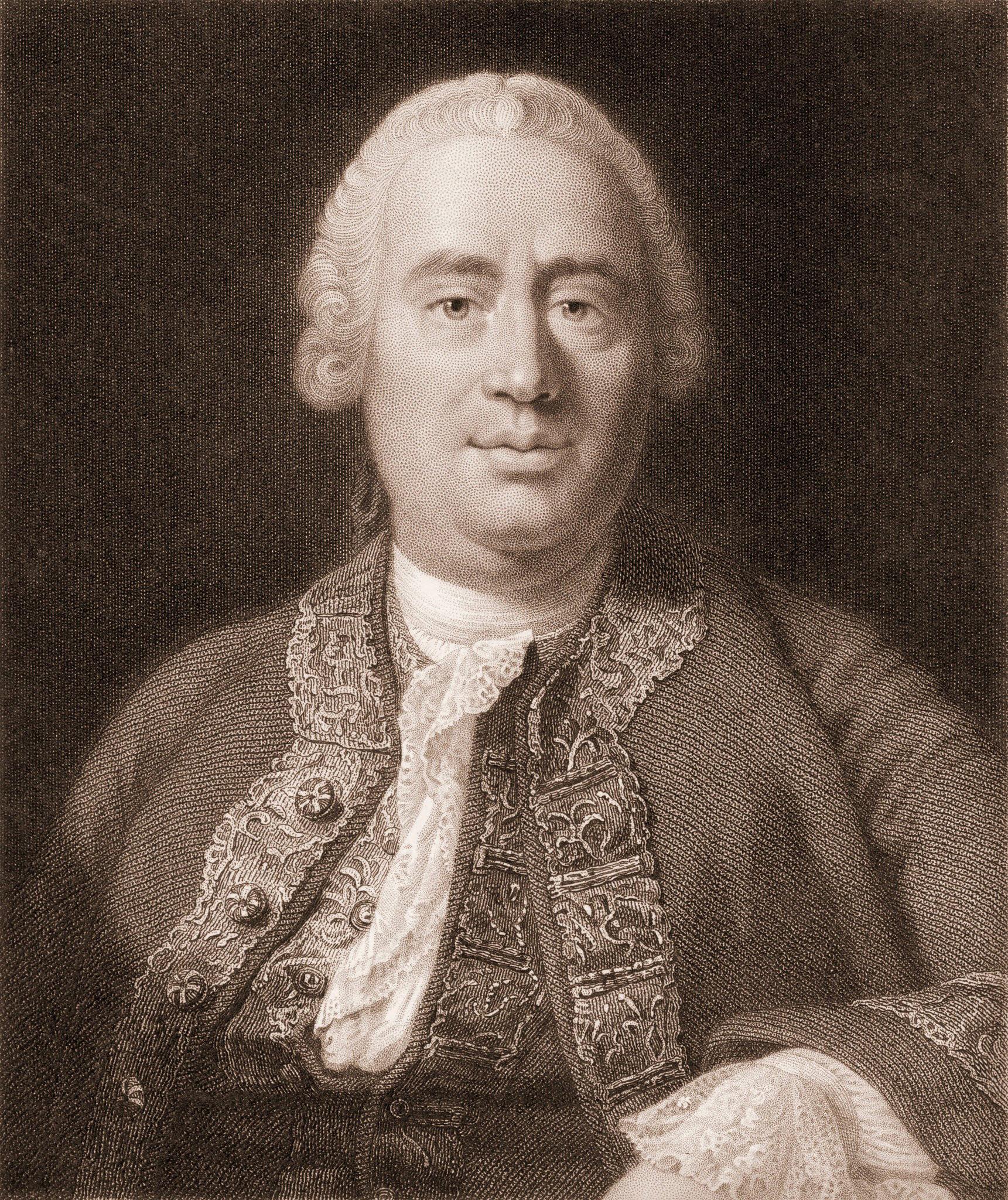
Unfortunately, there is not a way to justify a higher degree of confidence, according to the 17th-century philosopher David Hume. In his work An Enquiry into the Nature of Human Understanding, Hume lays out the so-called “Problem of Induction.” The problem can be paraphrased as follows.10
Imagine two scientists sitting next to each other in the lab, about to perform an experiment. Scientist A stands up and drops a ball onto the table. Scientist B meticulously records the time and distance the ball falls. They crunch the numbers and, lo and behold, they find that the ball fell with an acceleration of -9.8 m/s2. They perform the test twice more, finding the same result each time.
The scientists then take a step back and consider the evidence. Each of the scientists follow a certain rule for weighing the evidence, and these rules will help them make predictions about what will happen the next time they perform the experiment. Scientist A follows the rule
“more of the same.” However fast the ball fell in the previous experiments, Scientist A predicts that it will fall the same speed in the future. This view reflects the conventional style of induction outlined above.
Scientist B, on the other hand, weighs the evidence with the following rule: “Whatever just occurred, the opposite will occur in the future.” In accordance with this rule, Scientist B predicts that the next time Scientist A drops the ball, it will fall upwards towards the ceiling with an acceleration of 9.8 m/s2.
Here is the question: how can Scientist A convince Scientist B that she is correct? Of course, the next time she drops the ball, it will fall to the ground, just as it always does. But what is the justification for the belief that the ball will fall as it always does?
Scientist A comes up with the following argument and tries to convince Scientist B:
1. Yesterday, when we performed this experiment and tried to predict the results, I was right and you were wrong. My rule for weighing the evidence works better than yours.
2. Today, the same thing happened as yesterday. My rule for weighing the evidence works better than yours.
Therefore, in the future, the same thing will happen. My rule for weighing the evidence will work better than yours.
In this example, Scientist A represents what most people think of when they think “scientist.” She believes that the natural world follows predictable patterns, and she uses inductive arguments to discover those patterns. Scientist B, on the other hand, is deeply unscientific, unwilling to accept that the natural world follows any consistent pattern.
The question remains: is Scientist A actually right? Can she convince Scientist B that inductive scientific arguments are better? Hume argues that, no, she will be unable to convince Scientist B because her argument in favor of induction is, itself, an inductive argument. In order to justify the claim that the inductive method—”more of the same”—will work in the future, she shows that it has worked in the past. This connection only holds true given the premise that the future will be like the past, and that there will be more of the same. Even though Scientist A predicts correctly every time, and Scientist B predicts incorrectly every time, Scientist A cannot convince Sci-
There is simply no logical guarantee that the predictions of science will continue to be accurate.
entist B to change her method. As Hume writes, “Why experience should be extended to future times and to other objects which for all we know, may be only similar in appearance; this is the main question on which I insist.” The premise that there will be more of the same” is “by no means necessary.” There is no support for the inductive method that does not use the inductive method. At any moment, things could radically change.
This conclusion poses a real problem for science.
The far-reaching theoretical conclusions that undergird our everyday experience with technology are “by no means necessary.” It is entirely possible that tomorrow, the charge of the electron doubles and all electronic devices stop working. Or maybe, water will suddenly become more dense when it freezes, sinking the ice caps and killing all aquatic life. There is simply no logical guarantee that the predictions of science will continue to be accurate. In order to justify itself, science needs a source of external validation for the premise that there will, in fact, be more of the same.
For those who place their faith in the scientific method, the Problem of Induction should be unsettling. Hume shows that science cannot be self-justifying. Science is the feverish and sometimes foolish investigation into the predictability of nature, but it cannot prove why it works. In order to arrange for the procurement of a million pig brains, for example, Dr. Schally needed to place enormous—and scientifically unjustified—faith in the idea that nature is consistent and predictable. He believed, in the very core of his being, that after he had dissected all of those brains, he would find five grams of a very specific hormone. Science is incredibly powerful, yes, but it requires external validation of the premise “more of the same.”
This essay concludes with a brief sketch of an exter-


nal validation for this premise. The Christian tradition offers a robust explanation for the predictability of the natural world. God, in his all-encompassing creativity, unifies all things. God is “the maker of heaven and earth, of all things seen and unseen.”11 God unifies everything in the material world—“heaven and earth.” He also unifies all knowledge—“things seen and unseen.” The core assumption of the scientific method—that the natural world is fundamentally unified—is essentially theological. Science supposes some all-encompassing ordering principle that justifies the uniformity of the natural world. God is, essentially, that principle.
To clarify, the scientific method does not imply every characteristic of God according to Christianity. Science does not require the Trinity, the divinity of Jesus, or any other particularity of the Christian tradition. Science does, however, require some principle that gives the natural world its unified predictability. God meets this criterion; I will explain how in two ways.
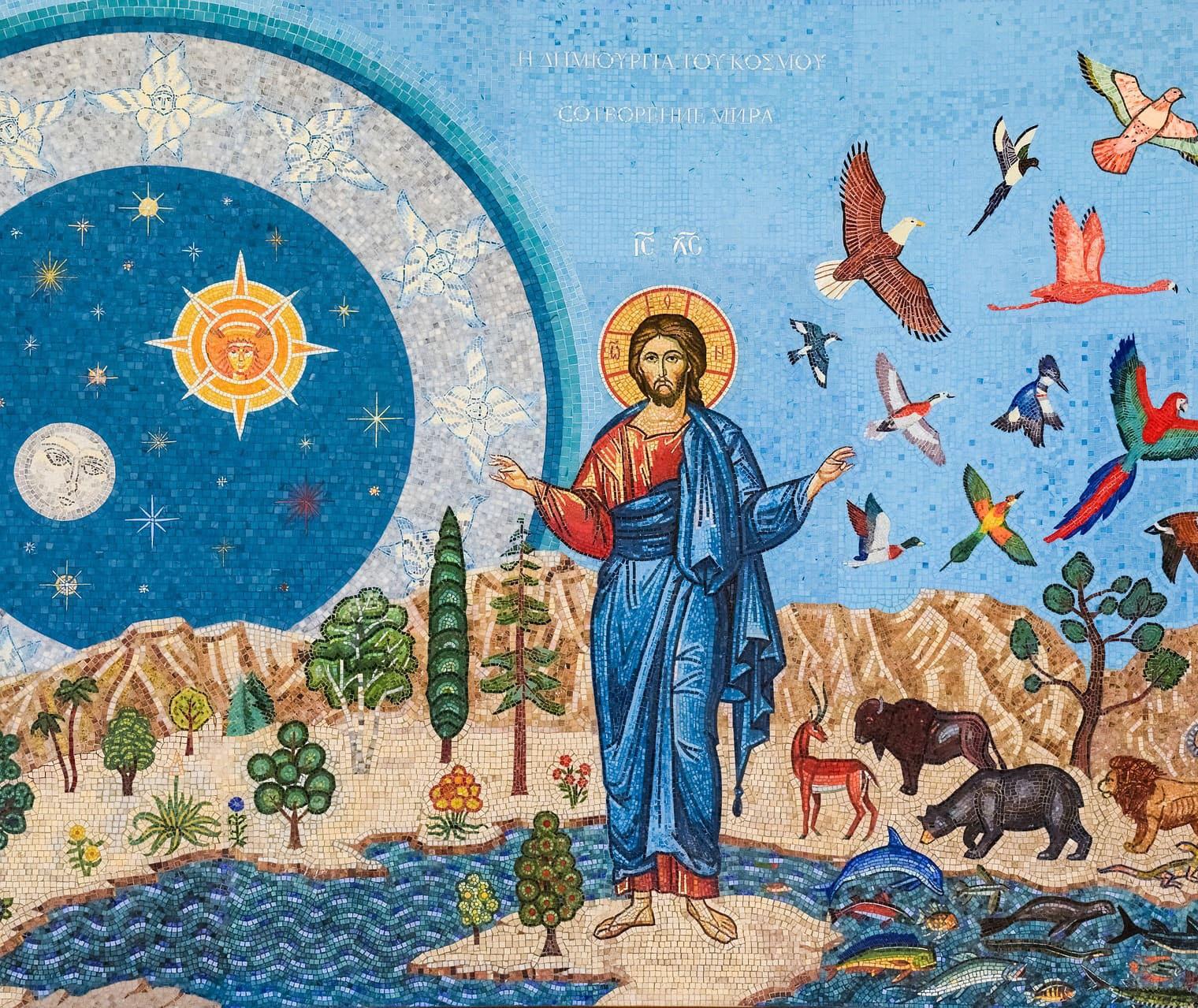
First, God unifies the natural world because he created it, and continues to sustain it. “In the beginning,” according to Genesis, “God created the heavens and the earth…The earth was formless and empty…And God said, ‘Let there be light,’ and there was light. God saw that the light was good, and he separated the light from the darkness.”12 Just as a carpenter is the unifying principle of the table he builds, so too God unifies what he creates. God gives the earth—which was originally “formless and empty”—its definition and shape. He gives it light, the moon and stars, and all the living creatures. God is the first cause of all things that exist, and so he unifies all things. Furthermore, God continually sustains the cosmos at every moment of its existence. In a sermon recording in the book of Acts, for example, the apostle Paul argued that “[God] is actually not far from each one of us, for ‘in him we live and move and have our being.’”13 God is not some distant clockmaker who set the world in motion; instead, he is always present in the fabric of existence.14 In his letter to the Colossians,
The core assumption of the scientific method— that the natural world is fundamentally unified—is essentially theological.
Paul writes, “[God] is before all things, and in him all things hold together.”15 No matter the time or location, God is the unifying principle of reality. In this way, God provides a foundation for the scientific method.
Not only does he establish the material world, God unifies all human knowledge. The 4th-century Christian bishop Augustine wrote about God’s ability to “illuminate” all aspects of reality as emanations of Godself. As one commentator summarizes, “The condition of possibility and the criterion of truth for [the cognition of objects] is none other than God.”16 In order to conceptualize an object, Augustine argues, the human mind requires God’s illumination to connect the dots. When scientists perform experiment and inductive argument, they require God’s illumination to unify observation and theoretical concepts. In order to move from one white swan to all white swans—in terms of the example in the introduction—the scientist requires the divine unification of premise and conclusion. There is no justifiable reason, apart from the divine union of all knowledge, that would allow a scientist to argue in this way. In his unification of the material world, and of human knowledge of that world, the Christian God provides a foundation for the scientific method.
Science, in sum, is a fundamentally theological project. Whether or not a scientist believes in God per se, he or she must believe in some all-encompassing principle of unification that governs the predictability of the natural world. Without such a principle, the core of the scientific method—inductive argument—has no justification.
More than argumentative justification, this theological picture of science also offers a more compelling picture of the goals of the scientific method. Science, in this picture, is not the passionless examination of dead material. It is in fact the foremost method for uncovering the beauty that lies at the very heart of the created order. God has manifested a divine glory in the boundless com-
plexity of the natural world; it is the project of science to proclaim that glory.
1. Michael Strevens, The Knowledge Machine. (Liveright Publishing: New York, 2022).
2. Andrew Schally, “ASPECTS OF HYPOTHALAMIC REGULATION OF THE PITUITARY GLAND WITH MAJOR EMPHASIS ON ITS IMPLICATIONS FOR THE CONTROL OF REPRODUCTIVE PROCESSES,” 8 December, 1977. https:// www.nobelprize.org/uploads/2018/06/schally-lecture.pdf
3. Schally, 2.
4. Ian Hacking, Introduction to Probability and Inductive Logic. (Cambridge University Press: Cambridge, 2001), 11.
5. Hacking, 1.
6. Hacking, 1.
7. Smith, W.. "flag of Western Australia." Encyclopedia Britannica, October 25, 2018. https://www-britannica-com.dartmouth.idm.oclc.org/topic/flag-of-Western-Australia.
8. Britannica, T. Editors of Encyclopaedia. "Newton’s laws of motion summary." Encyclopedia Britannica, November 11, 2021. https://www-britannica-com.dartmouth. idm.oclc.org/summary/Newtons-laws-of-motion.
9. Gregersen, E.. "Cavendish experiment." Encyclopedia Britannica, January 17, 2019. https://www-britannica-com.dartmouth.idm.oclc.org/science/Cavendish-experiment.
10. This explanation of the Problem of Induction comes from Professor James Binkoski’s class PHIL 1.09: Science, Superstition, and Skepticism.
11. Botefuhr, W. D. C. Nicene Creed. Boetefuehr, W. D. C., Fort Smith, monographic, 1885. Notated Music. https://www.loc.gov/item/sm1885.25226/.
12. Gen 1:1-3, (ESV).
13. Acts 17:27-28, (ESV). Here, Paul is likely quoting the Greek philosopher Epimenides of Crete.
14. Attempts to reconcile science with Christianity during the Enlightenment often resorted to the view of God as a “clockmaker.” This view, called Deism, was propounded by many notable Americans, including Thomas Jefferson and Thomas Paine. In my view, Deism is irreconcilable with historic Christianity. For more on Deism, see Bristow, William, "Enlightenment", The Stanford Encyclopedia of Philosophy (Fall 2017 Edition), Edward N. Zalta (ed.), URL = <https://plato.stanford. edu/archives/fall2017/entries/enlightenment/>.
15. Colossians 1:17 (ESV).
16. Tornau, Christian, "Saint Augustine", The Stanford Encyclopedia of Philosophy (Summer 2020 Edition), Edward N. Zalta (ed.), URL = <https://plato.stanford.edu/ archives/sum2020/entries/augustine/>.
God has manifested a divine glory in the boundless complexity of the natural world; it is the project of science to proclaim that glory.

Many critics of Christianity claim that we cannot in good faith believe in miracles. The 18th-century skeptic David Hume wrote: “A miracle is a violation of the laws of nature; and as a firm and unalterable experience has established these laws, the proof against a miracle, from the very nature of the fact, is as entire as any argument from experience can possibly be imagined.”1 More recently, the 21st-century biologist Richard Dawkins has championed the view that religion and science are in conflict. In his 2006 documentary The God Delusion, Dawkins states: “Science is a discipline of investigation and constructive doubt questing with logic, evidence, and reason to draw conclusions. Faith, by stark contrast, demands a positive suspension of critical faculties.”2 Hume and Dawkins are not making identical claims, but their views are similar. Both agree that miracles violate some type of law: for Hume, miracles violate the laws of nature; for Dawkins, miracles violate the laws of science. Both also agree that these laws ought to be established through experience, although Dawkins only cares about the experiences of

scientists collecting scientific evidence.
Many criticisms have been leveled against Dawkins and Hume, both from Christian defenders of miracles and philosophers of science. A full overview of these criticisms is beyond the scope of this essay. Instead, I will focus on one specific aspect of science that Dawkins and Hume avoid discussing: the role that history plays in the scientific method. Science has changed quite significantly over the course of human history. When Hume wrote his An Enquiry Concerning Human Understanding in 1748, the world had no knowledge of Einstein’s relativity, Lavosier’s chemistry, or Darwin’s natural selection. Can we say with confidence that miracles violate the laws of nature when our understanding of the laws of nature are constantly changing?
I argue that once we consider the history of science, we cannot confidently say that miracles violate the laws of nature. Instead, two conclusions appear. First, anomalies in the laws of nature are a normal part of the scientific method and more often than not encourage further science rather than doubt. Second, we ought to adopt a
position of epistemic caution, realizing that our current scientific claims are not truly universal but instead merely the best models we currently have.
The rest of this essay will be divided into three sections. The first will define a few key terms and contextualize the current discussion. The next two sections will discuss these two conclusions, respectively.
Before I begin, it would be useful to define the terms “miracle” and “science.” Unfortunately, the philosophy of science is a complicated field full of numerous interrelated questions. Even simple questions (such as “what is science?”) can generate multiple answers and vigorous debates. In this section, I will propose tentative definitions of “miracle” and “science,” but it is worth noting that my definitions are subject to debate.
What is a miracle? As a tentative answer to this question, the Oxford dictionary defines a miracle as “A marvellous event not ascribable to human power or the operation of any natural force and therefore attributed to supernatural, esp. divine, agency.”3 This, however, leads us to another question: what makes an event or force “natural”? If a “natural force” is merely a thing that aligns with the laws of science, then the definitions of science and miracles are interrelated. It is a sufficient, although not necessary, condition of miracles that they cannot be attributed to the laws of science.
The same basic principle lies at the core of the scientific method taught by Dawkins, Feynman, and your elementary school teacher: the principle of falsification.
ning with making an observation, then formulating a hypothesis, and ending by formulating and communicating a conclusion. Beyond elementary schools, many philosophers and scientists defend this view, such as philosopher Karl Popper and physicist Richard Feynman. Feynman breaks down the process of discovering a scientific law into three steps: “First, we guess [a scientific law]. Then, we compute the consequences of the guess to see if the law is right, what it would imply. Then, we compare the consequences of this law to nature. If it disagrees with experimental results, it’s wrong.”5 The same basic principle lies at the core of the scientific method taught by Dawkins, Feynman, and your elementary school teacher: the principle of falsification. By this principle, science can never prove anything. Rather, it can only disprove things. This method is incomplete. In particular, the philosopher and historian of science Thomas Kuhn thinks that this view, first, does not align with the history of science, and second, runs into a handful of epistemological problems. I will explore these two criticisms in the next two sections, respectively.
In his 1962 work The Structure of Scientific Revolutions, Thomas Kuhn convincingly breaks down the history of science into two mutually dependent phases: normal science and paradigm shifts (also called revolutionary science).
What is science? In the philosophy of science, this issue is known as the “demarcation question,” and it has been subject to vigorous debate. In his documentary, Dawkins gives an answer to this question: “Science proceeds by setting up hypotheses, ideas, or models, and then attempts to disprove them.”4 Dawkins’s scientific method is not unique. It is quite similar to the seven-step scientific method taught in elementary schools, begin-
I will begin with the first of these phases: normal science. Normal science consists of the routine, day-to-day activities of a scientist, and it always takes place within the context of a broader scientific paradigm. Kuhn provides multiple examples of normal science, such as determining stellar position and magnitude in astronomy, determining the specific gravities and compressibilities of materials in physics, determining the boiling points
Contrary to the traditional falsificationist view of the scientific method, Kuhn stresses that scientific paradigms are never falsified in a single night.
and acidity of solutions in chemistry, fleshing out specific scientific constants (such as the astronomical unit, Avogadro’s number, Joule’s coefficient, and the electronic charge), and testing scientific theory.6 The one thing that these scientific activities have in common is their reference to a paradigm. This leads us to the next phase of science: paradigm shifts.
To Kuhn, a scientific paradigm is any scientific achievement that holds two characteristics. First, “their achievement was sufficiently unprecedented to attract an enduring group of adherents away from competing modes of scientific activity. Simultaneously, it was sufficiently open-ended to leave all sorts of problems for the redefined group of practitioners to resolve.”7 Kuhn gives several examples of this such as Aristotelian dynamics, Ptolemaic cosmology, Newtonian physics, the chemical revolution, Darwinian evolution, Maxwell’s equations, Einstein’s theory of relativity, and modern quantum mechanics. These paradigms always emerge as a response to a crisis within the previous paradigm. For example, in the time of Galileo, since his “contributions to the study of motion depended closely upon difficulties discovered in Aristotle’s theory by scholastic critics.” Similarly, a crisis in Ptolemaic cosmology allowed for the Copernican revolution, and thermodynamics and quantum mechanics were only possible because of a variety of difficulties in the preceding theories.8
For Kuhn, the stages of normal science and paradigm shift are mutually independent. Normal science must take place within the context of a paradigm, otherwise it is nothing more than “mere fact-gathering.” Science must have a unifying theory to tie discoveries together, otherwise it is not clear what features of the natural world are important to highlight. For example, before the time of Benjamin Franklin, some theories of electricity regarded attraction as fundamental, some regarded repulsion as fundamental, others regarded both as equally fundamental, and some theories even regarded electricity as a theory. It was only with the scientific revolution of Franklin that a theory arose “that could account with something like equal facility for nearly all these effects.”9
Paradigms, thus, make it possible for normal science to occur. Similarly, normal science makes it possible for paradigm shifts to occur. This is because during normal science, various bits of evidence will pop up that are difficult to reconcile with the established scientific paradigm. Kuhn claims that “the aim of normal science is not major substantive novelties.” Rather, the primary aim of normal science is to “solve puzzles” in the established paradigm.10
In the course of this problem solving, “New and unsuspected phenomena are, however, repeatedly uncovered by scientific research,” forcing new paradigm shifts to occur.11 Contrary to the traditional falsificationist view of the scientific method, Kuhn stresses that scientific paradigms are never falsified in a single night. It takes time for enough anomalies to accumulate that science is driven into a state of crisis. It is only with this state of crisis that a given paradigm can then be overturned.
This informs a fuller definition of “science” and the scientific method. We can also break down Kuhn’s scientific method into three stages. First, there is normal science. Then, there is a crisis. Finally, there is a scientific revolution, and then the process reverts to step one.
This brings me to my first point: anomalies in the laws of nature are a normal part of the scientific method, and they more often encourage further science rather than doubt. My first point appears to be consistent with historical evidence. For example, when Mercury’s orbit differed ever so slightly from the orbit pre-

dicted by Newtonian mechanics, scientists did not throw away all of physics; rather, they theorized that there was another planet in our solar system in between the sun and mercury. This is what Newton thought, and scientists searched for this mysterious planet for years—until Einstein showed that it did not exist.12 Alternatively, look at Ptolemy’s geocentric model of the cosmos. This model is a remarkably good approximation, and it was even used in Kuhn’s time for computer approximations.13 See also the presence of dark matter in modern physics. The matter we can observe accounts for only five percent of
the universe.14 In all of these cases, science was (and in the case of dark matter, is currently) close to the observable data, but the model is not a perfect match. And in all of these cases, the discrepancy between the observed data and theory is taken as an impetus for further science. Why should we not take the same attitude towards miracles? Even if we cannot test miracles, for the sake of consistency, we ought to view unexpected events with curiosity, rather than skepticism.
In conclusion, anomalies in science play a necessary role in the scientific method, as they lead normal science

to the stage of crisis. They are not something that ought to be avoided, as Dawkins thinks when it comes to miracles.
Beyond the ideas of normal science, scientific revolution, and the paradigm shift, Kuhn also introduces the idea of the “incommensurability thesis.” This thesis argues that new scientific paradigms are not merely improvements upon former scientific paradigms; rather, they are fundamentally at odds with each other.15
The incommensurability thesis has two main implications. First, the debate between any two paradigms cannot be settled by any routine procedure. Rather, the debate between different paradigms is settled by a variety, such as aesthetic beauty, the ability to avoid problems with the past paradigm, and the faith that the new paradigm has more potential for future research.
Second, the grand story of scientific progress is not a story with any end or telos. Because there is no clear stream of scientific progress from Newton to Einstein, we cannot say that Einstein is “closer to the truth” than Newton. For the same reason, we cannot say that science is a process that continually moves “closer and closer to the truth.” Rather, in the same sense as Darwinian evolution, science is a “process that moved steadily from primitive beginnings but toward no goal.”16
Dawkins or Hume might argue against the incommensurability thesis with a variety of contentions. Could
we not argue that older scientific paradigms are merely approximations of newer paradigms? For example, can we not say that Newtonian mechanics is the same thing as general relativity but is only accurate at slow velocities? After all, Newtonian mechanics and general relativity only disagree in extreme cases.
Kuhn addresses this point with a simple argument. One of the core features of science is its ability to make useful predictions about the external world. This means that we must assume that scientific claims are true, even when we cannot empirically test to see that they are true. Therefore, we must assume that scientific claims hold in all cases.17 Thus, we cannot simply ignore the cases where Newton and Einstein agree. Rather, we must admit that they are in strict contradiction.
In response to this, Dawkins and Feynman might try a different approach. Rather than being approximations, could we not argue that older paradigms are merely specific cases of newer paradigms? For instance, could we not say that Newtonian mechanics is the same as general relativity but only when objects are moving slow?
Kuhn addresses this point with another simple observation: different paradigms use different languages. For Newton, there was a universal standard of time. For Einstein, time is impossible to disentangle from space, and as such, Einstein introduces the concept of space-time. Thus, we cannot merely say that old paradigms are specific cases of new paradigms without having a means to translate one system into the other. And it is impossible to create an unbiased system of translation, as any translation will be a modification of one paradigm or the other (for instance, if we define Newton’s understanding of time as “Einstein’s definition of time at low velocities,” then we must modify Newtonian mechanics). Thus, we must conclude that different paradigms speak past each other.18
Evolution, chemistry, and general relativity are useful for describing the specific phenomena that they were designed to describe, but it is unwise to assume that they are unbreakable laws of nature.
This brings me to my second point: we ought to adopt a position of epistemic caution, realizing that our current scientific claims are not truly universal, but instead merely the best models we currently have. I do not mean to imply

that science is flawed or to motivate any sort of science denial. Rather, I want to argue that the results of science ought to be treated as domain-specific. In other words, we should realize that quantum mechanics, for instance, is useful at describing the world only when limited to the specific phenomena that it was designed to describe— such as subatomic particles. Similarly, evolution, chemistry, and general relativity are useful for describing the specific phenomena that they were designed to describe, but it is unwise to assume that they are unbreakable laws of nature. The implication of this for phenomena outside the bounds of current scientific paradigms, including miracles, is easy to see; science cannot say anything about miracles because miracles lie beyond the scope of any particular domain of science.
The Christian faith is, arguably, full of claims that violate the laws of science. The cornerstone of the Christian faith is the resurrection, the belief that Jesus Christ rose from the dead, giving humanity hope for eternal life. Beyond this, the Bible also records hundreds of smaller miracles, and Christian tradition since the time of Jesus has claimed to encounter many miraculous healings, visions, and dreams. Can we in good faith believe in miracles, especially in an age enlightened by science?
I argue in the affirmative. With a proper understanding of the history of science and the scientific method,
we come to find that miracles lie beyond the scope of the scientific method and, as such, cannot be disproven by science.
1. David Hume, An Enquiry Concerning Human Understanding with a Letter to His Friend in Edinburgh and Hume’s Abstract of A treatise of Human Nature, trans. Eric Steinberg, 2nd ed. (Indianapolis: Hackett Publishing, 1993), 76.
2. Richard Dawkins, The Root of All Evil? (The God Delusion), directed by Russell Barnes and Richard Dawkins (2006: EyeDoubleYouSee Media, 2011), YouTube video, https://www.youtube.com/watch?v=8nAos1M-_Ts.
3. Oxford English Dictionary Authors, “Miracle,” Oxford English Dictionary, Oxford, accessed August 31, 2022, https://www.oed.com/view/Entry/119052?rskey=ICoD6I&result=1#eid.
4. Dawkins, 9:10.
5. Unidentified Filmer, “Feynman on Scientific Method,” YouTube, February 18, 2011, https://www.youtube.com/watch?v=EYPapE-3FRw. Accessed 23 Aug. 2022.
6. Thomas S. Kuhn, The Structure of Scientific Revolutions with an Introductory Essay by Ian Hacking, 50th Anniversary Edition (Chicago: University of Chicago Press, 1996), 23-28.
7. Kuhn, 10-11.
8. Kuhn, 67-68.
9. Kuhn, 14-15.
10. Kuhn, 36.
11. Kuhn, 52.
12. Simon Worrall, “The Hunt for Vulcan, the Planet That Wasn't There,” National Geographic, May 3, 2021, https://www.nationalgeographic.com/science/ article/151104-newton-einstein-gravity-vulcan-planets-mercury-astronomy-theory-of-relativity-ngbooktalk.
13. Kuhn, 68.
14. CERN authors, “Dark Matter” CERN, accessed August 23, 2022, https://home. cern/science/physics/dark-matter#:~:text=Dark%20matter%20seems%20to%20outweigh,the%20content%20of%20the%20universe.
15. Eric Oberheim and Paul Hoyningen-Huene, "The Incommensurability of Scientific Theories", The Stanford Encyclopedia of Philosophy (Fall 2018 Edition), Edward N. Zalta (ed.), https://plato.stanford.edu/archives/fall2018/entries/incommensurability/.
16. Kuhn, 169-172.
17. Kuhn, 100.
18. Kuhn, 101-104.



In 2023, young people participate in a complex web of economic activity. They purchase products off Amazon, order takeout, invest in stocks and crypto, and apply for jobs in a wide range of professions from business to medicine. As they dip their feet into adulthood, countless Instagram influencers and financial counselors are vying for their attention online, trying to advise them on how to manage their money. Often overlooked in these communications is the moral aspect of money and its management, which many religious faiths have grappled with since ancient times. The Orthodox Christian faith is uniquely positioned to preserve ancient insights due to the unbroken chain of traditions and practices that traces all the way back to the early saints. While the saints are not infallible, they have special insight into the Bible’s teachings due to the era they lived in and their divine encounters, and their works are key to deducing an Orthodox Christian economic ethic that is packed with timeless wisdom.1
The profound relationship between Orthodox theology and economics exists within the framework of stew-
ardship, whereby humans are stewards of God’s wealth. Crucial to this idea is God’s identity as the Creator; everything else is His creation—including humans, their mental faculties and physical capabilities, the raw materials at their disposal, and their own creations (including their wealth and possessions).2 God bestowed humans with His divine image and likeness, designing them to be able to care for the Earth and all its creatures.3 Thus, interwoven in the Story of Creation is a spiritual responsibility to manage one’s wealth in accordance with God’s will.
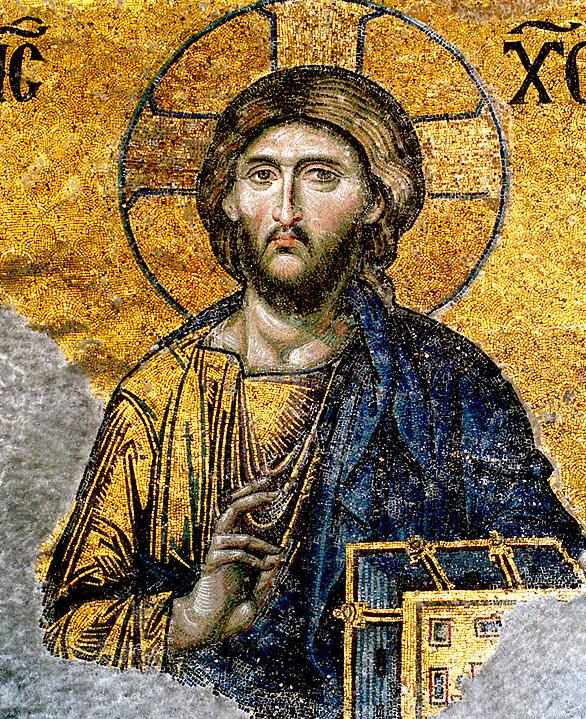
What exactly does one’s role as a steward entail? A key biblical passage on stewardship is the Parable of the Talents in Matthew 25.4 In this parable, three servants are charged with managing their master’s “talents,” units of currency used in the ancient world, while the master goes on a journey. Two of the servants traded and doubled the amount they were given, but the third servant buried the talents he was given in the ground. When the master returned, he said to the first two, “Well done, good and faithful servant,” and to the third he said,
“You wicked and slothful servant!”5 In this parable, the talents represent not only wealth, but all the gifts God has bestowed upon mankind.6 In another version of this parable, the servants may have been gifted quickness with numbers or public speaking skills. If the master’s business faced an accounting crisis while he was away, or if a large potential customer came to town expressing a need for a service the master’s business provided, the master would expect his servants to put their gifts to use. Thus, the Parable of the Talents teaches wise resource management and the active use of God’s gifts for good, rather than letting them sit dormant or be misused. While this parable presents a strong introduction to the idea of stewardship, it does not provide direct answers for how Christians should manage money in 2023. In this paper, I will explore the Orthodox Christian economic ethic, beginning with the ascetic tradition of the saints and then shifting to a more flexible perspective on wealth that developed over time. I hope to demonstrate how modern people can conform to an ancient doctrine in the practices of giving, spending, and saving.
There is a strong Orthodox Christian tradition of asceticism—a purposeful life of poverty, owning no property and surviving off what one can find and what one is given by others. The aesthetic lifestyle was inspired by passages from Matthew 19, which records a rich man who approached Jesus and asked him, “All [the commandments] I have kept. What do I still lack?” Jesus answered, “If you would be perfect, go, sell what you possess and
give to the poor, and you will have treasure in Heaven; and come, follow me.”7 This passage has become an iconic symbol of the Christian duty to deny one’s earthly desires and lay down one’s wealth in pursuit of Christ. When the rich man in this passage turns down the challenge put before him, leaving sorrowful, Jesus remarks that “it is easier for a camel to go through the eye of a needle than for someone who is rich to enter the kingdom of God.”8 Accordingly, many of the early saints practiced asceticism. The notable early church leaders Saint John Chrysostom, Saint Basil the Great, and Saint Gregory the Theologian were all born into wealth and chose to give everything up to live as ascetic hermits at some point in their lives. Saint John Chrysostom was so dedicated to asceticism in his youth that he permanently damaged his stomach from eating too little.9 In the Rule of Saint Basil, Saint Basil advises monks to renounce their property, sell all their possessions, and restrain themselves from the desire of money, seeking “simplicity and cheapness in all things.”10 Saint Gregory the Theologian, in his Fourteenth Oration, wrote that meekness, self-restraint, simplicity, humility, poverty, and contempt for worldly goods are all “fine thing[s].”11 For a long time, poverty was associated with virtue.
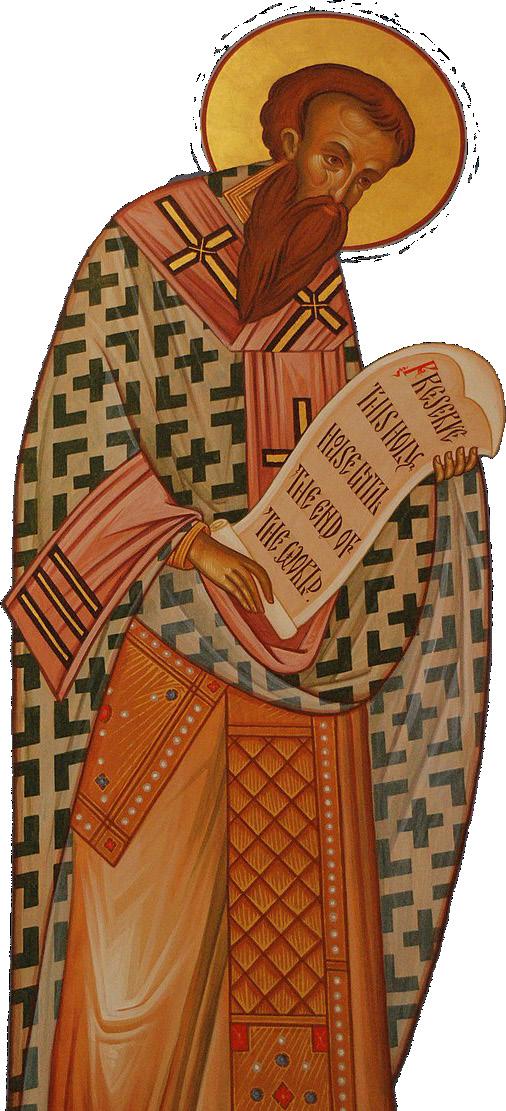
Over time, however, many saints began to acknowledge the practical benefits of owning wealth. For example, after living alone in the desert for six years, Saint John Chrysostom changed his
belief that living as an ascetic monk is the only path to salvation, deciding that helping the needy is a higher calling than disciplining oneself.12 Saint Clement of Alexandria similarly identified the utility of money, preaching that a life of poverty consumes one’s mind and efforts with bodily needs, preventing them from helping others: “How could anyone nourish the hungry and give drink to the thirsty…if each man were himself already in want of all these things?”13 He continues, “How much more profitable is the opposite course—that a man should have sufficient, and himself be in no distress concerning his property, and also help those he ought to.”14 To Saint Clement, as with Saint John Chrysostom, wealth is an instrument to be wielded righteously to the aid of others.
Saint Clement also argued that Jesus never required asceticism in the first place. In his sermon “Who is the
Rich Man that Shall be Saved,” he interpreted the passage traditionally used to defend asceticism with a new focus on the rich man’s mindset. He asserts that Jesus telling the rich man to sell all his possessions and give to the poor has more to do with that young man’s heart posture than with a duty to live in poverty.15 He was concerned that many wealthy Alexandrian merchants were taking themselves out of the running of salvation altogether because they misunderstood this passage, but he reassured them that “the inheritance of the Kingdom of Heaven is not altogether denied them.”16 His message that wealth alone will not stop someone from entering Heaven was anchored in his interpretation of Jesus’s response in Matthew 19:16-30. Saint Clement believed “sell that thou has” was not a command to “cast away the property [one] has and give up his wealth” but a command to “banish

from his soul his opinions concerning wealth, the feeling for it, the excessive desire, the passionate and diseased excitement concerning it, the cares, the thorns of earthly life, which choke the seed of true life.”17 Jesus was not telling the man to give up his things, but to give up his love for his things. Saint Basil the Great also agreed that the rich man claimed to want eternal life but “was utterly addicted to the enjoyment of this present life.”18 He was so attached to his possessions that he could not for a moment consider giving them up, which is why he walked away. His attitude towards wealth stood between him and Heaven, not the wealth itself.
As a result, while some may be called to a life of asceticism, God does not require that lifestyle of everyone. Thus, while the answer to the question of how much to give to the poor was once “everything,” leaving no room for spending or saving (even on basic comforts and safety nets), a more nuanced ethic for the general public has since developed. Now, further discussion is needed on how to be good stewards of our wealth.
The strongest message with regard to stewardship in the Bible and in the writings of the saints is to engage in almsgiving. In Matthew 22:37-40, Jesus exalts two commandments above all the others:
“You shall love the Lord your God with all your heart and with all your soul and with all your mind. This is the great and first commandment. And a second
is like it: You shall love your neighbor as yourself. On these two commandments depend all the Law and the Prophets.”19 In addition, Proverbs 19:17 says, “Whoever is generous to the poor lends to the Lord, and He will repay him for his deed.”20 Using these two passages, many saints asserted that if one truly loves the poor and truly loves God, he will give to the poor.
The saints lamented over the physical suffering of the poor, as well as their spiritual well being. Saint Kosmas Aitolos wrote that by treating the poor badly, the rich poison the poor people’s relationship with God and lead to their spiritual death.21 Poor people are in a vulnerable and challenging state, likely questioning their zeal for life and faith in humanity; if the people bearing the name of God—the epitome of Love and Justice—treat the poor with hatred, they foster disbelief in him. If one truly loves God, he will represent God well, and if he truly loves his neighbor, he will show the neighbor God’s light shining through him. Giving, whether financial or otherwise, can be this beacon; one might donate to charities or the church, give directly to struggling individuals, or provide pro bono services in one’s line of work. For example, Saint Kosmas Aitolos believed that since Jesus gave His grace to mankind for free, people should counsel and teach each other for free as well, which he himself did by preaching and refusing to accept monetary compensation.22 Irrespective of the specific method of giving, it is clearly good and virtuous to give to those in need.
On the question of how much to give, God does not expect one to give what he does not have. In Luke 21, a widow puts two small coins in a collection tray after rich men contributed more before her. While any ordinary onlooker may have assessed the rich men’s contribution to be more valuable than the widow’s mite, Jesus remarks that the widow gave more than the others who gave out of their wealth, because out of her poverty, she gave all that she had with the wholeness of her heart.23 Jesus did not judge the woman on how little she gave or expect her to give as much as others, but praised her for her sacri-
The rich man's attitude towards wealth stood between him and Heaven, not the wealth itself.
If giving is a display of love for God and for mankind, it must begin with the heart, even before the hand has reached the wallet.
fice. Similarly, in the Parable of the Talents, the master gave each servant a different number of talents and did not expect them to each end up with the same amount as the other had when he returned, but only an amount that was proportional to what they had each been left with.24 Thus, one should not be discouraged from giving what he can because he believes it to be too little.
Equally important to the amount that one gives is the manner in which one gives. While giving can be done grudgingly and with reluctance, 2 Corinthians 9 says God loves a cheerful giver.25 Not only did the widow give more from what she had, but she gave with purer intentions and greater sincerity than the others around her, exemplifying the mindset that one should attach to giving. One should not give to feel better about himself or to enhance his reputation. Nor should he regret what he has given, complain about the financial loss he has sustained, or calculate all the things he could have spent his money on instead. If giving is a display of love for God and for mankind, it must begin with the heart, even before the hand has reached the wallet.
The subject of spending also must be analyzed through the lens of inner dispositions. The saints preached extensively on sinful motives as they pertain to spending, especially that of pride, which the Bible consistently denounces. In Proverbs 16:5, King Solomon writes that “everyone who is arrogant in heart is an abomination to the LORD.”26 The saints were well aware of the sin of pride in the context of spending. For example, Saint John Chrysostom spoke about the ills of spending money with the intention of seeking status and boasting of one’s wealth. He asked the rich people he preached to, “Do you pay such honor to your excrements as to re-
ceive them in a silver chamber-pot when another man made in the image of God is perishing of cold?”27 His words speak to how status-oriented spenders, whether they realize it or not, value themselves astronomically more than others, which can lead to clothing something as insignificant as a toilet better than another living human being.
Another sinful motivation for spending is idolatry— or an unhealthy focus or dependence on anything other than God, which can present itself as an untamed love of things. For example, Saint Basil wrote that Christians should not make pleasurable tastes the goal of their meals, lest they “make a god of [their] belly.”28 While eating flavorful foods is not a sin, a person’s life should not

be centered around the foods he eats or the restaurants he frequents––that is, one should eat to live, not live to eat. In fact, if there is anything at all that a person is so attached to that he could not give it up if God asked him to, he has made that item an idol. In the words of Saint Basil, an idol “sticks to you closer than the limbs of your body,” so that “he who would separate you from it grieves you more than someone who would cut off your vital parts.”29 Just as this person lacks a grasp on reality for believing his possessions to be one of his limbs, so too does a person who believes meaning in life can be found outside of the God who made him. Thus, idolatry, like pride, is a potent internal force that often motivates
A useful question to ask is,
“Am I attaching my identity, worth, or happiness to this thing instead of God?”
spending.

Someone striving towards an Orthodox Christian economic ethic, then, should first identify the intention behind his purchases. A useful question to ask is, “Am I attaching my identity, worth, or happiness to this thing instead of God?” For example, a woman might buy a beautiful ring because it makes her happy or reminds her of her late grandmother, or conversely, she might buy it because she desires to boast of her wealth or thinks she needs it to be beautiful. Regardless of how she justifies the purchase to herself, an indication that her motivation is astray is if she cannot picture a joyful future without the ring or if she cannot recognize her own hand without it. Such thought experiments illuminate the posture of one’s heart.
While the spiritual emphasis is primarily placed on intentions, genuine intentions are met with actions. As Saint Luke Simferopol says, “The rose does not speak, but puts forth a strong fragrance. We too, should put forth fragrance, pour forth spiritual fragrance, the fragrance of Christ. The fragrance of our deeds should be heard from far around: good, pure, and righteous deeds, full of love. Only thus can the Kingdom of God appear within our hearts, appearing not through words, but with power.”30 This necessary connection between intentions and actions is rooted in the Bible where Saint James says that faith without good works is “useless” and “dead.”31 Thus, while actions alone do not suffice, neither does a superficial or substance-less good will. At the end of the day, one can claim to love the poor as much as he wants, but in the words of Saint Gregory, if we “lounge within luxurious homes” while the poor suffer, this love cannot be very strong. In fact, every cent spent on oneself is a cent that could have been spent on others.32
Does this mean Christians should only keep as much as they need and give everything else, committing to a standard quite close to or as close as possible to asceticism? And if Christians can spend money on non-necessities, how should they go about deciding
how much to spend? As previously mentioned, Jesus does not command the abolition of all excess, so it is not necessarily a sin in and of itself to buy something one does not need. However, if a person is trying to live as righteously as possible, a clear model to aspire towards is giving more and spending less, limiting excess as best as one can wherever one can. This model is extremely difficult to emulate, and very few do. But gracefully, Jesus saves all, even when we fall short. Saint Basil writes that “your heart is tested as on a balance, to see if it shall incline towards the true life or towards immediate gratification.”33 In other words, that salvation does not hinge on being the perfect philanthropist is not an excuse not to strive towards becoming one. Christians should attempt to pursue God’s will to the best of their ability out of love for Him and love for their neighbors.
Onto the issue of saving, a similar analysis is required based on one’s inner motivations. The Bible and the saints clearly express that saving out of love of money and possessiveness is sinful. The Bible denounces this attachment to wealth in Matthew 6:19-21: “Do not lay up for yourselves treasures on earth, where moth and rust destroy and where thieves break in and steal, but lay up for yourselves treasures in heaven, where neither moth nor rust destroys and where thieves do not break in and steal. For where your treasure is, there your heart will be also.”34 This passage explains that making earthly wealth into one’s greatest asset, when a far superior asset lies in reach, is not a rational decision. First, pouring all of one’s time and energy into collecting wealth is a risky business, fraught with insecurity; such a person will be devastated if that wealth is stolen, lost, or used up, which is not an infrequent occurrence. More importantly, however, ownership of material possessions is tragically temporary; even if a person manages to keep his money his entire life, he still cannot take it to his grave.35 Addressing the short-sightedness of those who fail to grasp this point, Saint Basil writes that “lovers of gold are happy to be bound in handcuffs, so long as it’s gold that binds them.”36 A foolish man, when he is arrested, is so enamored with his golden handcuffs that he misses the bigger asset at stake—his freedom. Similarly, people who focus on accumulating money do not even notice that they are walking towards a spiritual jail cell, both in this life and the next. Therefore, saving out of a love for money, for the sake of hoarding it, and not for the ultimate purpose
of spending it in a particular manner, is sinful and irrational.
In contrast, one might save money from a well-founded desire to be prudent and prepare for necessary purchases. For example, saving for one’s retirement is saving to be able to afford costs faced later in life after one has stopped working. Technically, if a woman keeps a retirement fund running, that means she has money on hand that she is refusing to donate to feed the hungry and clothe the needy. However, if she drains that retirement fund to feed the hungry and clothe the needy, when she grows old and can no longer work, who will take care of her? This burden will largely fall on others, like her children, unless she prepares. As Saint Clement wrote, it is more virtuous to provide for oneself and others than to provide only for oneself or to expect others to provide for oneself.37 Thus, saving for one’s retirement seems to be a wise decision by a steward. Similarly, saving for a home aligns with the idea of covering one’s basic needs, as a home or apartment is needed to support oneself and one’s family. In terms of the size of the home one is saving to buy or the type of lifestyle one is saving to retire into, one must defer to the previous discussion on spending. Finally, one might save money with the intention of investing, or multiplying his own wealth, which can either be moral or immoral depending on how the newfound wealth will be used. For example, money that a student saves to invest in a college education will ideally be repaid and exceeded by the income that student earns with his degree upon entering the workforce. If the student uses this income in a manner consistent with the aforementioned giving and spending principles, he has stayed close to the Orthodox Christian economic ethic. However, Saint John Climacus points out that people often say they want to make money to give to the poor, but once they have the money, “the grip tightens.”38 Saving to invest can quietly lend way to saving to hoard, which is a symptom of avarice and love of money. If one saves to invest, he must not lose sight of his intention to give back with his multiplied wealth. Considering this tendency, college students should be careful not to lose their humanitarian lens once they graduate and begin earning the money they once dreamed of donating. Similarly, young people may begin to invest in the stock market with noble intentions, but if they never liquidate their stocks, they cannot use their returns on investment on the poor. Such was the case in Antioch, when Saint John Chrysostom noticed that the rich were not investing to

multiply their wealth and their good uses of it, but merely to protect their wealth from being lost.39 Thinking of their souls, he advised them to give to the poor to invest in Heaven and eternal paradise.
The Orthodox Christian economic ethic is rooted in the idea of stewardship and grows from a genuine desire to honor God and carefully manage His things. When your father asks you to look after his car, you do not let it collect dust—you wash it. When he tells you to look after your little brother, you do not let him go hungry— you feed him. Your love for your father compels you to honor his requests. At the same time, his love for you prevents him from disowning you for breaking rules, like crashing the car or hitting your sibling. The Heavenly Father’s love is even greater than a parent’s love—it is truly unconditional.40 Understanding this special love and realizing that nothing we have could have existed without God will motivate you to live out this economic ethic: give often and joyfully; do not allow sin to guide your spending; and save money with a purpose, not to hoard. This ethic is not about earning salvation but about honoring God as a “good and faithful servant.”41
1. The works of some saints are especially embraced by the church today, including but not limited to Saint John Chrysostom, Saint Basil the Great, Saint Gregory the Theologian, and Saint John Climacus; “Sources of Christian Doctrine: The Fathers.” Orthodox Church in America, https://www.oca.org/orthodoxy/the-orthodox-faith/ doctrine-scripture/sources-of-christian-doctrine/the-fathers.
2. Anthony Scott. Good and Faithful Servant: Stewardship in the Orthodox Church (Yonkers: St. Vladimir's Seminary Press, 2003), 174.
3. “Then God said, ‘Let us make man in our image, after our likeness. And let them have dominion over the fish of the sea and over the birds of the heavens and over the livestock and over all the earth and over every creeping thing that creeps on the earth.’ So God created man in his own image, in the image of God he created him; male and female he created them. And God blessed them. And God said to them, ‘Be fruitful and multiply and fill the earth and subdue it, and have dominion over the fish of the sea and over the birds of the heavens and over every living thing that moves on the earth.’” Genesis 1:26-28 (ESV).
4. Matthew 25:14-30 (ESV).
5. Matthew 25:14-30 (ESV).
6. Scott, 183.
7. Matthew 19:16-30 (ESV).
8. Matthew 19:16-30 (ESV).
9. J. H. W. G. Liebeschuetz, Barbarians and Bishops: Army, Church, and State in the Age of Arcadius and Chrysostom (New York: Oxford University Press, 1990), 215.
10. Basil, The Rule of St Basil in Latin and English: A Revised Critical Edition, trans Anna Silvas (Collegeville: Liturgical Press, 2013), 105.
11. Martha Vinson, The Fathers of the Church, (Washington: Catholic University of America Press, 2003), 40-41.
12. Liebeschuetz, 180.
13. Clement, A Homily of Clement of Alexandria, Entitled: Who Is the Rich Man That Is Being Saved?, trans. P. Mordaunt Bernard (London: Society for Promoting Christian Knowledge, 1901), 32.
14. Clement and Mordaunt, 31.
15. Matthew 19:16-30 (ESV).
16. Clement and Mordaunt, 17.
17. Clement and Mordaunt, 28.
18. Innocent Duchow-Pressley, “St. Basil the Great's
the Baptist Greek Orthodox Church, 21 Aug. 2015, http://stjohngoc.org/st-basil-thegreats-sermon-to-the-rich/.
19. Matthew 22:37-40 (ESV).
20. Proverbs 19:17 (ESV).
21. Kosmas and N. M. Vaporis, Father Kosmas, the Apostle of the Poor: The Life of St. Kosmas Aitolos, (Brookline, Mass: Holy Cross Orthodox Press, 1977), 6. 22. Kosmas and Vaporis, 13.
23. Luke 21:1-4 (ESV).
24. Constantine Efstathiu, “Slothfulness or Gratitude? – Stewardship Sermons.” Greek Orthodox Archdiocese of America, https://www.goarch.org/-/slothfulness-or-gratitude, April 3, 2023.
25. 2 Corinthians 9:6-7 (ESV).
26. Proverbs 16:5 (ESV).
27. Liebeschuetz, 176.
28. Basil, 101.
29. Duchow-Pressley.
30. “The Rose Does Not Speak, But Puts Forth a Strong Fragrance. St. Luke of Simferopol.” Icon and Light, 19 June 2015, https://iconandlight.wordpress. com/2015/06/19/the-rose-does-not-speak-but-puts-forth-a-strong-fragrance-st-lukeof-simferopol/.
31. James 2:14-26 (ESV).
32. Vinson, 50.
33. Duchow-Pressley.
34. Matthew 6:19-21 (ESV).
35. Genesis 3:19 (ESV).
36. Duchow-Pressley.
37. While ascetics cannot provide for others materially in any substantial manner, they can do so spiritually; Clement and Mordaunt, 31.
38. Climacus, The Ladder of Divine Ascent, Colm Luibheld, et al. (Mahweh, NJ: Paulist Press, 1982), 187.
39. Blake Leyerle, “John Chrysostom on Almsgiving and the Use of Money,” The Harvard Theological Review, vol. 87, no. 1, 1994, 29–47, 47.
40. “For while we were still weak, at the right time Christ died for the ungodly. For one will scarcely die for a righteous person—though perhaps for a good person one would dare even to die—but God shows his love for us in that while we were still sinners, Christ died for us.” Romans 5:6-9 (ESV).
41. Salvation cannot be earned through good works. Mankind owes God love but constantly defaults on that duty as we sin throughout life. As long as this debt against God remains unpaid, we cannot enter Heaven. But who can repay this debt? Our good deeds do not “undo” the pain our wrongs have inflicted; everyone on Earth has a negative balance. Only God can live a perfect life with enough moral “credit” to repay this debt. So God the Father sent Jesus, God the Son, to take the punishment destined for sinners—death. He then defeats death and ascends into Heaven; Matthew 25:14-30 (ESV).
Curling under the sheets, reaching in the dark for you, 3 am, no sleep, missing, aching, breaking, after 27 years of your presence, I still am not used to your absence. I didn’t know emptiness before.
•••
That old-fashioned glass of liquid courage, it’s right at the lips— what if— one sip, one slip— please—
••• My tear, tears, creating a creek of hopelessness down my cheek, wind harsh against me, walking home alone, what else could I give? What more could he want? Where is the warmth, the ease, where is there comfort?
•••

Photo by Emil Liden

He is here. He is in you.
You are not lost.
You sleep through the night, you put that glass down, you walk yourself home.
You find that inner strength— you find Him— somehow, somewhere buried deep in you.
You find Him in the peak of sunlight glossing through the trees, the rain that quenches your thirst.
In the arms that held you years ago, the hands that taught you how to ride a bicycle.
You find Him in the green eyes of the one you love.
You find Him here.
You find Him everywhere.
Afew weeks ago, between avoiding a paper and putting off a problem set, I found myself rewatching a stand-up special by George Carlin, one of my favorite American comedians. Near the end of a bit, in one of his classic morbid verbal landscapes, he offers the following description of religion:
There’s an invisible man living in the sky who watches everything you do, every minute of every day. And He has a special list of ten things He doesn’t want you to do. And if you do any of those things, He has a special place, full of fire and smoke and burning and torture and anguish, where He will send you [. . .] But He loves you!1
This characterization is obviously a humorous caricature, but it offers real insight into how many people understand the Christian conception of the world. In fact, these days, even Christians tend to fall into this way of thinking.
When talking about their faith, Christians are eager
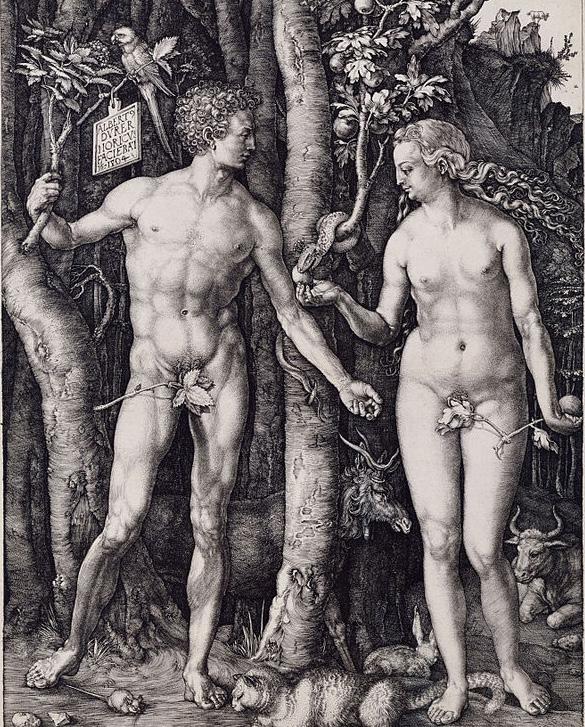
to mention all the fluffy topics: compassion, tolerance, love, salvation—you get the idea. And yet, there are certain other, more uncomfortable aspects of faith that many believers tend to sweep under the rug. These sources of bad PR include the problem of evil, the reality of death, and, perhaps most importantly, the concept of sin. How do we have a good and productive conversation about an idea that is not only unsavory and unpleasant to think about, but also is something that many people have been lectured annoyingly and endlessly about since childhood, be it by parents or from the pulpit?
When I came to America, having been raised in Eastern Christianity, I was surprised to see how the rhetoric surrounding sin tends to unfold. Sin is often understood as a kind of transgression against the divine law, and its negative consequences were seen as a punishment from God. In this article, I will look more closely at the origins and consequences of this legalistic-sounding view of sin. I will then lay out a more authentic reading of sin as ailment: a state of the soul which brings about suffering, as opposed to a punishment from an arbitrary and wrathful
To start with, let us go back in time to explore the origins of this erroneous view.
The roots of this misreading can be traced all the way back to the early Latin Church. This section will focus on three Latin authors—Tertullian, Augustine, and Anselm—whose ideas were later misinterpreted to form a guilt-based view of sin.
Tertullian was based in second-century Carthage and has long been considered the father of Latin Christianity, with his main contribution being a significant development in the kind of language we use to characterize God. Just as Jesus of Nazareth was a carpenter by trade, and his rhetorical style reflected that, Tertullian’s language was influenced by his personal occupation: law.
There is no shortage of legal and judiciary language in Tertullian’s writings. While this certainly helped make Jesus more accessible to an audience immersed in Roman law, it sometimes made the faith feel too precisely and neatly defined. For example, in his treatises, Tertullian describes sin in terms of “guilt” and “penalty,” and repentance as “the price at which the Lord has determined to award pardon; He proposes the redemption of release from penalty at this compensating exchange of repentance.”2 To him, confession is what we use to “appease God4 and “earn [His] favor,” and furthermore this is a process to which God “invites by offering reward – salvation.”3 This law-like language persisted

through the ages and ended up being the basis of a lot of the vocabulary we use today.
Sin is often understood as a kind of transgression against the divine law, and its negative consequences were seen as a punishment from God.
Some 200 years later, we find another Christian writer, St. Augustine of Hippo, who inherited much of Tertullian’s juridical language. His main contribution to theology, however, was the concept of original sin: the idea that guilt can be inherited. Augustine focuses on the account of the Fall of Adam and Eve,4 which is, in essence, the Christian faith’s justification for the existence of sin. So, our interpretation of this story has monumental consequences
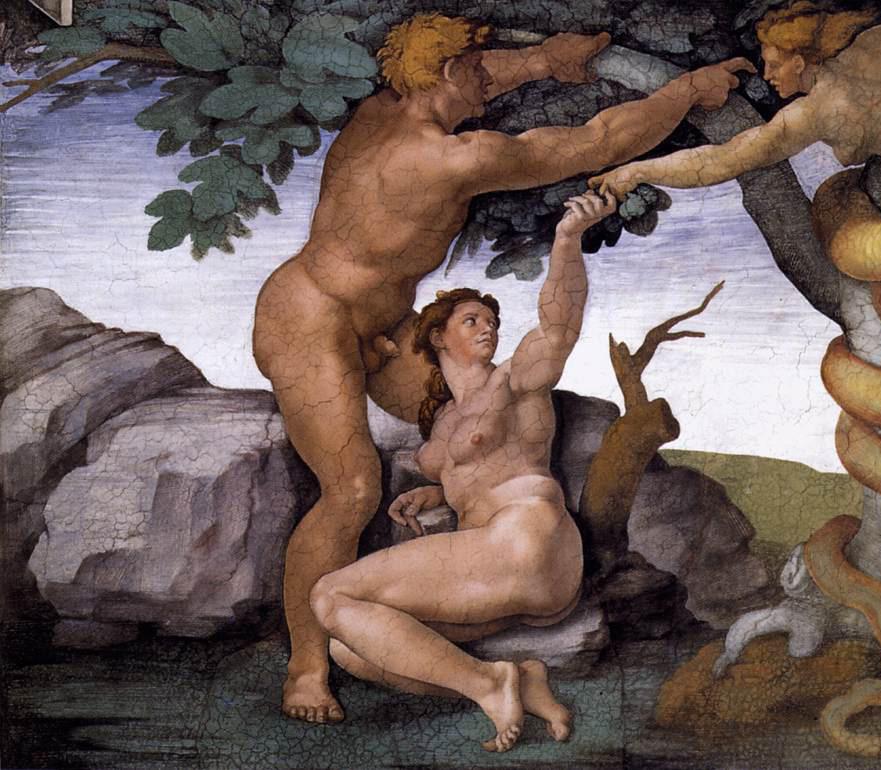
for our interpretation of sin.
The sin of Adam, Augustine argues, was disobedience against the Divine Will. Upon eating the forbidden fruit, Adam and Eve’s first action was to conceal their nakedness, a manifestation of their guilt and shame. This sin brings God to punish humans in many ways, one of which is the pain of childbirth. Because all of us are descended from these archetypal figures through sexual reproduction, we also inherit their guilt. In this way, all of us are tainted from birth.5
Augustine not only codifies Tertullian’s language into doctrine, but he also paves the way for a much more
guilt-based view of how we atone for sin. To understand how this develops, we turn to Anselm of Canterbury’s satisfaction theory of the atonement.
On coming to America, I started hearing the phrase “Jesus died for your sins” much more frequently. I was very curious what a statement like that could mean, as it seemed to me that the overuse of this mantra tended to reinforce a view of sin as something to be “repaid.”
As it turns out, this phrasing is a boiled-down view of Anselm’s theory of atonement. He claims that the sin of humanity is so great that there is nothing we could ever do to appease God’s wrath. So, instead, Christ had
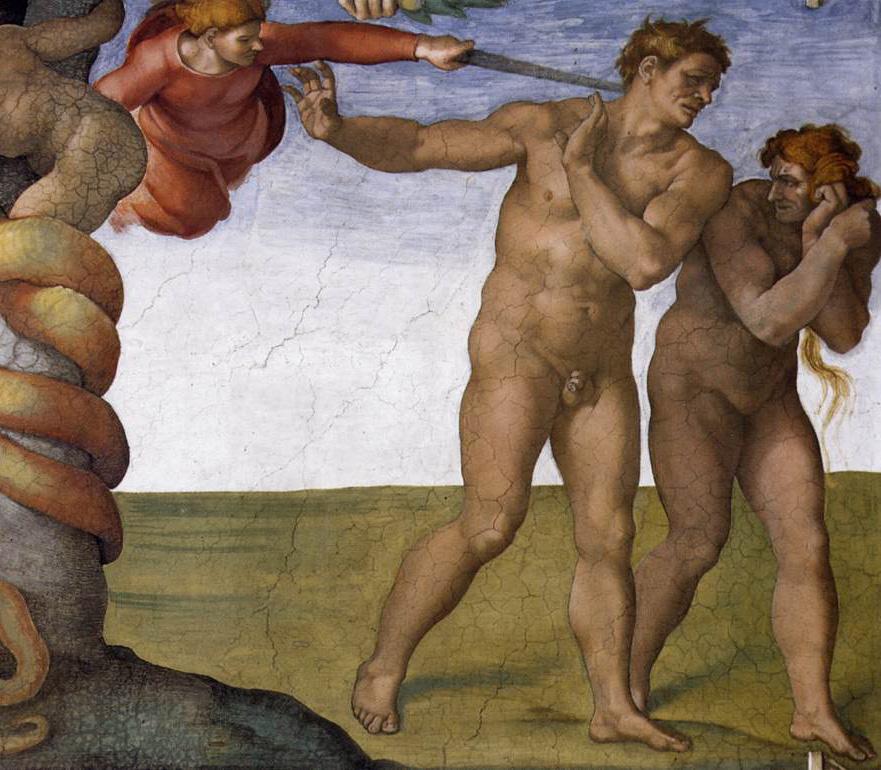
to become incarnate and take all the sins of the world on to Himself. Christ’s sacrifice, in other words, is viewed as a repayment to God the Father.6 An overemphasis on this particular idea has left many modern people feeling alienated from religion. Not only does this seem to make humans hopelessly indebted, but it also paints sin as something that can be “bought and sold.” This mercantile view of sin is the final piece of the puzzle. It must be noted, at this point, that these oversimplifications–the legal language and the focus on guilt–are not part of the official beliefs of any mainstream Christian tradition.7 Public opinion, however, is a different matter.
Most people are not theologians, and so whether or not these ideas about sin are accepted as philosophical axioms, the rhetoric that is used to describe them has profoundly influenced the rhetoric of many believers today and, by proxy, how non-believers perceive Christianity. Let us now turn to a vision of sin that is more authentic to the message of Christ.
To start, it must be said that the God of Scripture is quite far removed from the God of George Carlin. For one, we know that Christ’s main teaching was that of
forgiveness. In fact, the actual story of the crucifixion demonstrates this well. Christ suffers the most horrible and gruesome death that anyone has ever suffered, and yet, at the end of it, he still has the power to say: “Forgive them, Father, they know not what they do.”8 Christ takes this message to the extreme: even when there is a clear perpetrator of the wrongdoing in sight, he does not even contemplate the who and why and wherefore. Instead, he takes it upon himself with a persisting love and kindness.
It must be said that the God of Scripture is quite far removed from the God of George Carlin.
For one, we know that Christ’s main teaching was that of forgiveness.
esis account of the Fall as a story of the rejection of God’s love.11 It is fundamentally un-Christian to believe that God could ever turn his face away from Man.
In order to help us see a more thoughtful depiction of sin in this framework, I will discuss three thinkers from the Greek patristic tradition.
To start with, St John Chrysostom’s Homilies on Genesis offers a very different reading of sin: indeed not as a transgression against God, but as a rejection of him. When discussing the Fall of Adam, he includes the part of the story where Adam attempts to blame Eve for his transgression in the Garden of Eden.9 This is an almost comical depiction of the human impulse to “pass the buck” when faced with our own wrongdoings. Indeed, as we so often forget while we try to get through life, playing the “blame game” is nothing but foolishness. To that point, St John Chrysostom points out that there is an important distinction that must be made in God’s responses to the biblical characters.10 He asks Eve, “Why have you done this?” whereas he greets the Serpent with “because you have done this.” Adam and Eve forgot a simple truth: God’s goal is to destroy evil, not the evildoer. The Serpent, in this case, is a symbolic representation of the evil that resides in each of us. So, when thinking about our own sin, to focus on guilt rather than on distancing ourselves from evil is to completely miss the point.
Rather than a story of transgression and punishment, St John Chrysostom instructs us to instead read the Gen-
Rather, in this story, Man has turned his face away from God. The Fall is, at its core, a story of what arrogance and conceit do to a person–this kind of pride cuts them off from communion with their fellow creatures and all that is Good. The account of what happens after the Sin of Adam is not a punishment from God, it is the natural consequence of the erroneous way in which we exercise our free will. In fact, that is the original Greek meaning of the word ‘sin:’ “to miss the mark.”12 It is through our own bad judgment that we bring all kinds of suffering into the world, and that is precisely what the Genesis account is about.
It should be clearer, now, that the idea of inherent guilt is fundamentally flawed. However, the language of original sin has permeated into Christian circles to such an extent that the sentiment persists–in a deeply Anselmian way. We all seem to believe, on one level or another, that human nature is fundamentally corrupted.
As a cure for this hopelessness, we should reinvigorate in ourselves a belief in the goodness of humanity. St Gregory of Nyssa gives us a reading that affirms this: as humans were made in the image of God, human nature is fundamentally good.13 In fact, sin is that which opposes humanity, that which corrupts our thoughts and clouds our judgment. It is not a matter of good conduct or bad conduct, but a matter of being human or inhuman.
It is through our own bad judgment that we bring all kinds of suffering into the world, and that is precisely what the Genesis account is about.
Here we finally see the all-important distinction between the two clashing paradigms. St Gregory does not see sin in terms of a transgression or crime, but rather as a spiritual sickness. Much in the same way that a physical infirmity is contracted and
eats away at our body, so too does the sin we contract end up eating away at our spirit. If we take this view seriously, then we must reconceptualize our entire way of dealing with sin. Do we judge the ill for their illness? Or do we try to help cure them? Do we feel guilty about having the flu? Or do we try to get better? We should always be conscious that, while being ill is unpleasant and we should do our best to avoid it, there is nothing inherently shameful or worthy of judgment about it.
This highlights the second problem with the view of God as a judge. If we focus on guilt, not only will we be unhappy, but we will also have no way to heal and learn from our suffering. So, in thinking about sin, we must forget about the assignment of blame. But if we are free of blame, then how can we still claim to have a responsibility in our relationship with the Divine? Why, then, do we need worship?
Perhaps our responsibility is not towards a master, but rather towards a Father. St Basil the Great illustrates this point quite well when he tells us that there are three possible profiles of worship.14 The first is that of the Slave. This is the kind of Christian who does good deeds because he is afraid of Hell, just as slaves in the ancient world performed their work because they were afraid of being punished by their masters. The second profile, St Basil says, is that of the Mercenary. This is the kind of Christian who is not necessarily afraid of anything, but who still equally believes
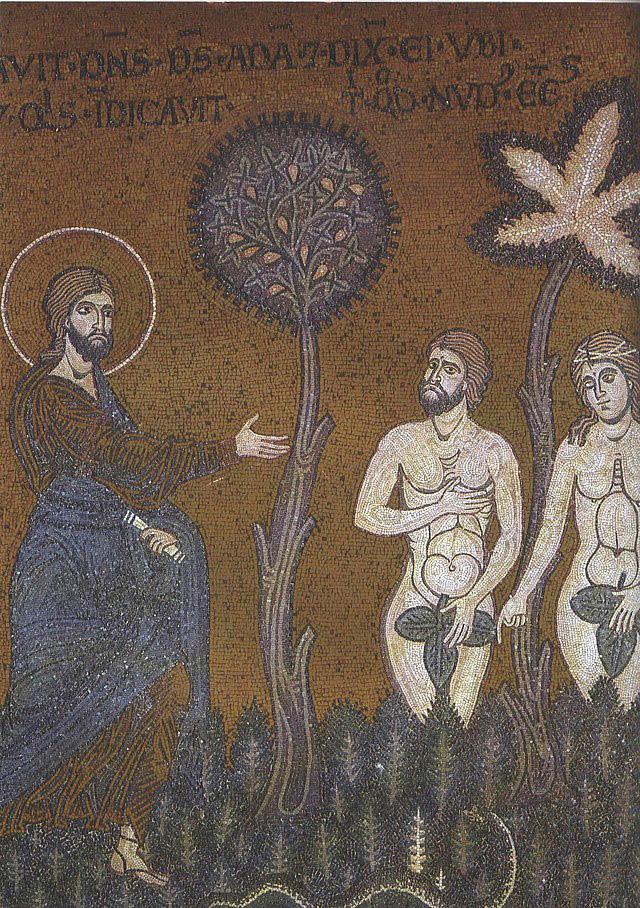
Perhaps our responsibility is not towards a master, but rather towards a Father.
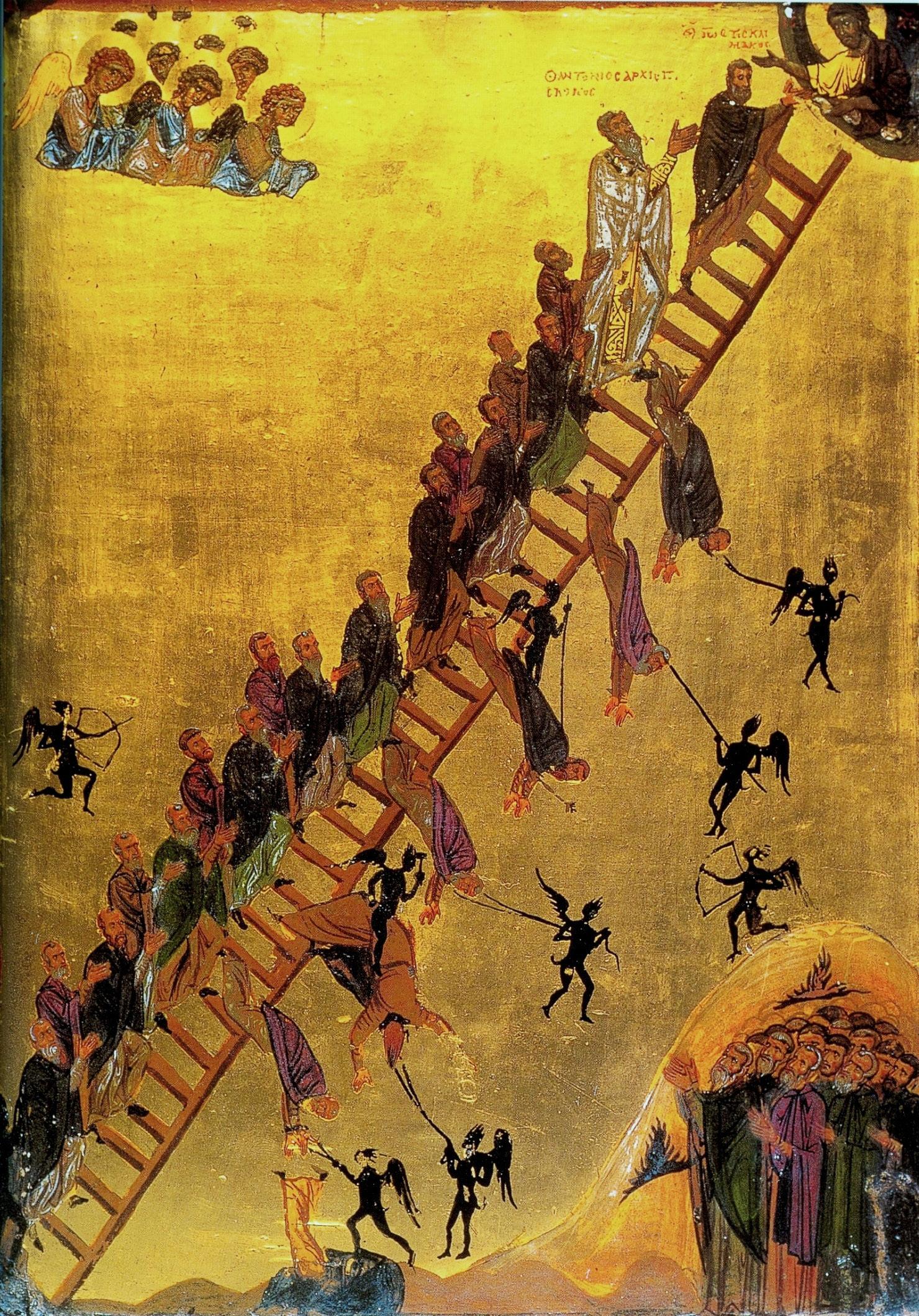
in God’s justice. He does good deeds expecting a reward, just as a mercenary does his work expecting payment from his employer. This too, however, is unbecoming. What could be more shallow and superficial than weighing sins and virtues like cheese at a marketplace?
We can find the start of our solution in St Basil’s third profile – that of the Son or Daughter. These are the Christians who are contingent neither on the fear of punishment, nor on the hope for reward. Rather, they relate to God in the same way that a little child would relate to a mother or father. At that early age, our parents are the ones who created us and the ones who nourish us; for us, they are the source of life. So, we have a natural inclination to get closer to them, to imitate them, and
indeed to listen to their words. Not for any selfish reasons, but on the contrary, because we feel their immense love for us and want to reciprocate it. This is precisely why St Basil claims that this is the best model for our relationship with God. Unlike the first two models, the center of attention in this arrangement is not on ourselves–it is focused on the other person. Rather than thinking about “what am I doing right and wrong” or “what do I get out of this arrangement,” we ought instead to selflessly focus on how to achieve communion with the highest Good. In this way, the life of a faithful person is neither a guilt-ridden nightmare nor a zero-sum bargain, but instead a great adventure.
Therefore, the authentic Christian way of dealing with the illness of sin is to achieve true communion with the divine healer. Christ partook of human nature so that we might partake of the divine nature, by living as he did.16 Perhaps this is the key to finding a meaningful solution to the problem of sin.
So far we have discovered that a truly Christian worldview should not include the blindly certain language of either guilt or reward. The world is a mystery, so trying to unravel precisely why everything happens and balancing the books of life is a futile endeavor. Instead, we should re-envision our entire theory of the universe, from one that is centered around ourselves, to one that is centered around the ideal good, which we believe to be Christ.
In this framework, we can finally have a consistent conception of what it means to sin. If we accept that God is the highest good, evil must be anything that moves us further away from God, and sin is, at its core, a refusal to reach out to God. So these claims are not mutually exclusive–yes, sin is real and it does cause evil and suffering, but not due to God’s wrath. Rather, if we do not choose to seek out him Who Is Life, then we perish by definition. It is as if a glorious feast was set before us, and we chose not to eat of it; is our hunger, then, the
chef’s judgment on us?
Sin, therefore, is not anything we have to explain, rationalize, bargain about, or repay. Rather, it is an internal sickness keeping us from union with God that we must defeat within ourselves. And, in our ignorant state, the only feasible way to do that is to offer ourselves to Christ as fully as possible. This way of living is encapsulated by one of the most distinguishing concepts in the Eastern Orthodox tradition: theosis.
Theosis is, perhaps, best detailed out by St. John Climacus in his book The Ladder of Divine Ascent. It is in the poetic prose of this work that the true key to understanding the relationship between sin and virtue lies. In one passage, St John describes, in picturesque brevity, the Orthodox view of Heaven and Hell.17 The presence of God, he says, is akin to a flame. For those who have filled their hearts with purity and goodness, and so have turned their hearts towards God, this flame is a source of infinite light and warmth. Conversely, those who have strayed from the path and fallen into bad habits feel this same flame as a scorching and engulfing force.17 In other words, God is a constant. It is the state of our own spirit (and how closely it aligns with that of God) that determines how we will experience him. Heaven and Hell are, in fact, words that we use to denote extreme states of the soul.
By this logic, the best way through life is to align our own will with the divine will. This, in a nutshell, is theosis. Theosis is the desire to get closer and closer to God, a desire which stems from neither fear nor from cold reason, but from love. In a sense, it is like any human relationship. If you truly form a connection with someone, you will no longer be concerned with how you look, what they think of you, or what you can gain from it. You will only be concerned with how you can selflessly offer them your time, your love, and yourself.
What theosis teaches us in terms of sin, then, is that we ought not to define it as a legalistic codification of what is evil, but rather as an exclusion of what is good.
In other words, rather than focusing on avoiding sin, we should instead seek out virtue. In the end, it is not the lack of guilt, but the presence of the Spirit of Truth that makes the life of a believer so full of joy.
Sin will be with us, always. How can it not be? The world is full of temptation, human judgment is flawed, people can be incredibly cruel, and our ability to control our impulses is not in the least enviable. None of this, however, means that we should waste our limited time on this planet in constant judgment, either of ourselves or of others. Instead, we should defer our attention to seeking out the Giver of Life with all our mind and all our heart, and leave aside the cold, judiciary rhetoric that has been fed to us. We need not punish ourselves, as we are not criminals. We are ailing. But the Cure is always available to us. We need only reach out and grab it.
1. Carlin, George. “On Bullshit,” You Are All Diseased (1999). Available at https:// www.youtube.com/watch?v=QZ8hefESt7c.
2. Tertullian, On Baptism, trans. S. Thelwall. From Ante-Nicene Fathers, Vol. 3. Edited by Alexander Roberts, James Donaldson, and A. Cleveland Coxe. (Buffalo, NY: Christian Literature Publishing Co., 1885.) Revised and edited for New Advent by Kevin Knight, V.; Tertullian, On Repentance, trans. S. Thelwall. From Ante-Nicene Fathers, Vol. 3. Edited by Alexander Roberts, James Donaldson, and A. Cleveland Coxe. (Buffalo, NY: Christian Literature Publishing Co., 1885.) Revised and edited for New Advent by Kevin Knight, V.
3. Tertullian. On Repentance, IX; Tertullian. On Repentance, VI; Tertullian. On Repentance, IV..
4. Genesis 3 (ESV).
5. St Augustine of Hippo, "On Original Sin". Translated by Peter Holmes and Robert Ernest Wallis, and revised by Benjamin B. Warfield. From Nicene and Post-Nicene Fathers, First Series, Vol. 5. Edited by Philip Schaff. (Buffalo, NY: Christian Literature Publishing Co., 1887.) Revised and edited for New Advent by Kevin Knight. Compare also Ezekiel 18:20 (ESV).
6. Anselm of Canterbury, Cur Deus Homo. (Chicago, The Open Court Publishing Company, 1903, reprinted 1926)
7. See the catecheses and statements of faith of the denomination of your choice.
8. Luke 23:34 (ESV).
9. St John Chrysostom, Homilies on Genesis. Translated by J. Walker, J. Sheppard and H. Browne, and revised by George B. Stevens. From Nicene and Post-Nicene Fathers, First Series, Vol. 11. Edited by Philip Schaff. (Buffalo, NY: Christian Literature Publishing Co., 1889), XVII.
10. St John Chrysostom, Homilies on Genesis, XVII.
11. St John Chrysostom, Homilies on Genesis, XVII.
12. See: ἁμαρτάνω, author’s translation.
13. St Gregory of Nyssa. Letters, XVII. Translated by William Moore. From Nicene and Post-Nicene Fathers, Second Series, Vol. 5. Edited by Philip Schaff and Henry Wace. (Buffalo, NY: Christian Literature Publishing Co., 1893)
14. St Basil the Great, Patrologia Graeca, XXXI, 896 B.
15. See, for example, 2 Peter 1:4 (ESV).
16. St John Climacus, The Ladder of Divine Ascent, XXVIII. Translated by Archimandrite Lazarus Moore. (Harper & Brothers, 1959)

Reframing Self-Care at Dartmouth with the Second Great Commandment
Soon after the beginning of the fall term of 2022, Dartmouth College President Phil Hanlon ’77 announced the tragic deaths of two undergraduates. After the announcements, events were postponed; the College provided access to mental health resources; and emails filled student inboxes as deans, religious organizations, student groups, and others reached out to the community to offer support.
In a grief-stricken email, Dean of the College Scott Brown, then interim dean, urged students to “take care of yoursel[ves], support one another, and seek help when you need it.” In a similar email, the Dartmouth Mental Health Student Union, a student-led organization working to enhance mental health resources on campus, encouraged students to “please take care of yourselves and each other.” Eventually, President Hanlon announced a “Day of Caring” that would offer “a variety of programs and gatherings intended to allow time and space for selfcare” as students grappled with the news. When reports circulated that both students died by suicide, another surge of grief and anger rippled through

campus: their deaths in part products of a corrosive culture to which many of us have contributed. I witnessed the pain of scores of students and faculty as they expressed their own feelings in classroom discussions, many seeing the “Day of Caring” and other reactions of the administration as performative.
Our “Day of Caring” seemed like a convenient token passed down by Dartmouth’s administration, an empty symbol of supposed progress. As a first-year student navigating the novelty of Dartmouth, I was saddened by the announcement, but this pattern of loss is not new to the Dartmouth community. At least two other students have died by suicide in the last two years, and since the announcements referenced above, yet another Dartmouth student has died.
Despite the disconnect—real or imagined—that I noticed between administrators and the greater Dartmouth community, a focus on self-care was consistent throughout their tacit clash: both declared that extending empathy to ourselves and others was necessary for healing. Far from a solitary instance, however, Dartmouth’s
cries for self-care mimic broader social movements, which have arisen to address systemic deficiencies in mental health resources, highlighted most notably by the worldwide spike of documented depression and anxiety during the ongoing COVID-19 pandemic.
This burgeoning shift in societal priorities, which parallels the discourse happening at Dartmouth, demands that a healthy self precedes healthy interactions with others.
Efforts to counteract the stunting effects of the recent pandemic have strengthened campaigns for self-care, which Dr. Shainna Ali explains is “a continuous process of proactively considering and tending to your [own] needs and maintaining your wellness.” This burgeoning shift in societal priorities, which parallels the discourse happening at Dartmouth, demands that a healthy self precedes healthy interactions with others.
While a healthy self does affect the way we interact with others, I believe that, despite well-meaning intentions, the message of the self-care movement has become distorted. Instead of balancing love for the self and others, it has come to mean demoting a love for others, especially strangers. In particular, the consumerist reaction to the self-care crusade demonstrates the misguided motives of an otherwise positive movement. As Mary Sasso, a writer for Medium, points out, self-care trends condition us “to think we need more, to buy more, in order to love ourselves more.”
Instead of promoting an ethic to care for oneself, these twisted trends resemble self-interest, promoting self-veneration with pomp and indulgence. This idea is not new. Sigmund Freud, the pioneer of modern psychology and psychoanalysis, posited an ethical framework that resembled today’s warped self-care practices.
In Civilization and Its Discontents, his seminal 20th-century work, Freud explores the conflict between individual desires and civilization’s group dynamics. Ultimately, he critiques the Christian command to love one’s neighbor. He finds it not only impossible but irrational in its insistence to offer love to strangers—for “such an enormous inflation of love can only lower
[love’s] value.” He proposes, instead, a selective praxis of love, putting oneself first and withholding love from all except the most deserving of friends.
By cautiously selecting the people we love, Freud maintains that we avoid any “disadvantage vis-à-vis the person who disregards [our love].” In other words, by guarding our love and its expressions, we are less likely to experience rejection, betrayal, or other pain, the possibility of which love’s inherent vulnerability presupposes. Modern consumerist trends of self-care thus find expression in Freud’s unenamored understanding of love: both emphasize that putting oneself first is the most effective way to actualize love.
Thus, the efforts of Dartmouth’s administration to lead students safely through sorrow and enact proactive measures to bolster mental health on-campus should consider the complicated meaning and social milieu of self-care, especially its implications for Dartmouth’s community dynamics.
While the communications of Dartmouth’s administration in reaction to recent deaths encourage us to reach out to others, the lacking “Day of Caring” and its accompanying platitudes leave one yearning for a more robust philosophical principle for building healthy communities. Without sufficiently defining and applying a concrete strategy, is a historically self-centered solution to community mental health failings sufficient?
Instead of promoting an ethic to care for oneself, these twisted trends resemble self-interest.
In this article, I provide an answer to Freud’s “Civilization Paradox:" a contradiction he elicits wherein the social interactions that comprise civilization both sustain us and pain us. This contradiction gives basis to the utility of modern self(ish)-care, or consumerist and other toxic self-care practices. I first detail Freud’s main objections to religion—namely that religion is a fruitless, infantile pursuit—in order to situate his construction of the Civilization Paradox and his resistance to the Second Great Commandment. Then, I focus on his critique of the Second Great Commandment, the commandment to love your neighbor as yourself, respond-
The commandment to love your neighbor as yourself, or the Second Great Commandment, rooted in a productive mutuality, solves Freud’s paradox by balancing a love for self and others.
ing to his remonstrations with an explanation of the Commandment that answers his concerns.
I posit that the Second Great Commandment, rooted in a productive mutuality, solves Freud’s paradox by balancing a love for self and others. In fact, a thorough understanding of the Second Great Commandment actually addresses the contents of Freud’s critique and simultaneously offers healthier, more productive ways of regarding and engaging with each other.
Contrary to modern consumerist trends and Freud’s musings, efforts to turn outward and to love those around us are always positive, no matter how incomplete or bumbling, because they soothe the sting of the Civilization Paradox, granting succor to others and thus ourselves. Applying a framework of action based on the Second Great Commandment within the Dartmouth community would prove valuable as we work to heal and address our community’s mental health issues.
In Civilization and Its Discontents, Freud claims that subconscious desires are the primary influences that shape our interactions with those around us. In his telling, the instinctual feelings and drives that compose our inner-selves simultaneously repel us from and impel us toward the phenomena of civilization. He designates these drives as Eros—sexual, romantic love, and Thanatos—a tendency to seek and revel in destruction.
According to Freud, these forces propel both our introspective interactions with ourselves and our associations with others; they also stand in opposition to each other. Eros drives us toward pleasure, best achieved in intimate conjunction with another person, while Thanatos rouses us to ruin everything around us, including interpersonal relationships.
This subliminal tension mirrors our tense ties to civilization. While the community inherent to civilization provides opportunities to connect with others, improve
our lives, and find purpose, it simultaneously stipulates conformity, pledging pain to people unwilling to comply. Thus, Freud identifies a paradox: civilization simultaneously grants our greatest possible pleasure and greatest possible pain.
Freud denies that religious practice offers a panacea to the Civilization Paradox. He is skeptical that any religious principle or system bears fruit sufficient to warrant worship. Freud believes that participation in the arts and sciences offers a similar experience to religion, but, to him, secular pursuits are preferable because they are accompanied by advancements that refine our human experience (i.e. useful inventions, beautiful art, enlightening ideas), which religion cannot claim. To Freud, religion is a fruitless pursuit that misguides the masses away from purposeful self-reflection, perennially outshined by the products of mankind’s erudition and innovation.
Freud labels religion as “patently infantile” and “foreign to reality,” belying his obvious frustration that “the great majority of mortals will never be able to rise above this [religious] view of life.” His worry concerns the beliefs that religion’s “system of doctrines and promises” imparts to man: myriad explanations to the well-worn questions of life that simultaneously promise future reward in a heavenly realm. Freud seems to posit that, with these answers, there exists little impetus for us to progress, encouraging an apathy to everything removed from one’s religious circumstances.
Highlighting this stunted state, into which religion lulls its believers, Freud employs a line from the poet Goethe: “He who possesses science and art also has religion; but he who possesses neither of those two, let him have religion!” Freud identifies the arts and sciences with the learned and leaves religion to the unlearned, even though they are both mitigative methods used to treat the “pains, disappointments, and impossible tasks” of the world. Thus, according to Freud’s interpretation, religion is positioned as lesser than and in tension with the lively and humane investigation inherent to “the two highest achievements of man,” art and science.
This distinction arises because, unlike the great advances spurred by human ingenuity, Freud doubts the future that religion promises. Religion’s process of sublimation is doomed because, to Freud, it only yields a
denial of reality and a false sense of comfort, contrasting considerably with the positive products and pragmatic coping mechanisms that flow from the arts and sciences.
Freud argues that religion is, however, not only an inferior project but a restrictive one. Within its confines, man is limited to a single path: straight and narrow. He identifies religion as an expression of the “reality principle,” a diminutive iteration of the “pleasure principle.” The pleasure principle is a pattern of living that seeks to maximize the presence and potency of pleasure in one’s experience.
Similarly, the reality principle also prizes pleasure, but, here, the imperative becomes to avoid the possibilities of pain and suffering that accompany mortality as opposed to maximizing pleasure. Thus, the reality principle becomes a method of living wherein “the task of avoiding suffering pushes that of obtaining pleasure into the background.”
Among the many methods employed to reduce such suffering, Freud identifies the most popular and pervasive as one that “regards reality as the sole enemy and as the source of all suffering.” Such a characterization, Freud says, renders necessary a break from reality, replacing reality with an understanding that ascribes digestible meaning to suffering and sufficient rewards for its endurance. To successfully attain relief from pain, methods to relieve pain, or palliative methods, should be diversely engaged since “worldly wisdom will advise us not to look for the whole of our satisfaction from a single aspiration.”
Thus, religion stands at odds with worldly wisdom because it “imposes equally on everyone its own path to the acquisition of happiness and protection from suffering.” Freud maintains that no one set of principles can sufficiently address and soothe the experience and pain of every person. Therefore, the supposed universal solutions inherent to religion fail. Proposing a universal palliative is futile because the pursuit of pleasure and the problems of pain are personal.
Beyond religion’s impinging influence on human invention and free will, Freud denounces the wisdom and utility
of the Christian directive to “love thy neighbor as thyself.” To Christ’s reiterative imperative he asks: “What good will it do us? … how shall we achieve it?” Freud’s concern turns upon his understanding that “[his own] love is something valuable to [him] which [he] ought not to throw away without reflection.”
Truly, love is the consequence of a personal, intimate experience and connection that could not possibly be replicated easily with many people, let alone every neighbor. To Freud, the demanding expectation that we “must be ready to make sacrifices” for strangers is absurd: especially when the rewards remain unreaped until the afterlife. In attempting to assume such a lofty expectation, “a revolt will be produced” within us, crying that “the commandment is impossible to [fulfill].”
Therefore, Freud refuses to accept the commandment on the grounds that pursuing it leaves us more be-
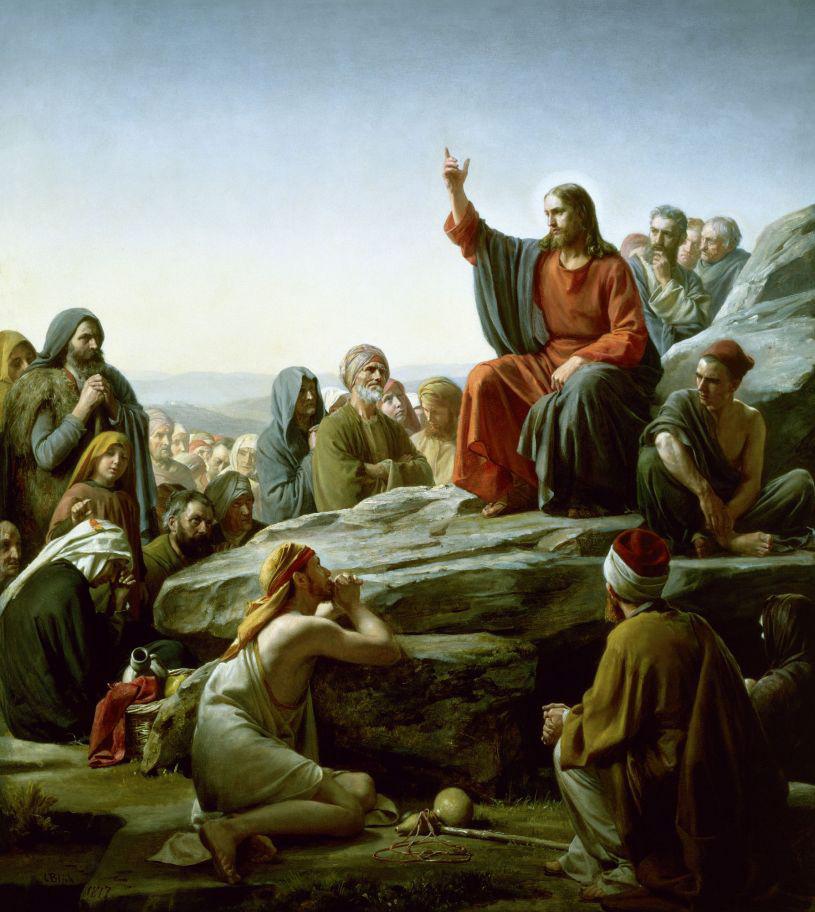
leaguered with unnecessary duties than refreshed by its supposed righteousness. Upon explaining our intrinsic distaste for such a love, Freud introduces his depiction of Thanatos, a subconscious instinct innate within us all, which drives us to revel in death and destruction. To Freud, our inability to fully obey such a commandment evidences Thanatos, the death instinct, a universal failure that, to him, precludes us from ever fulfilling the Second Great Commandment.
The previous paragraphs framed three key facets of Freud’s argument against religion. First, Freud contends that religion is an inferior endeavor because, compared to secular fields like science and literature, it is not as recognizably productive for the advancement of mankind. Second, he identifies religion as a narrow, arbitrary path which seeks to apply a blanket solution to individuals suffering diverse personal pains. Since he believes pain should be addressed case-by-case, Freud explains that religion alone cannot succeed in relieving pain. Lastly, Freud targets the Second Great Commandment, cri-
tiquing its expectation that we must love and sacrifice for people unknown to us. And beyond its unreasonable expectations, Freud postulates that it is beyond our capacity as human beings to love so unselfishly.
The following three paragraphs will address Freud’s concerns, arguing he underestimates and misrepresents the ability of religion to ennoble humanity. First, I demonstrate that—far from being surpassed by the arts and sciences—religion encourages a unique introspection which has continually lifted minds to great heights. Next, the supposed narrowness of commandments does not demand perfection but presents a rubric for life that allows for shortcoming while inspiring improvement. Finally, the Second Great Commandment resolves Freud’s initial Civilization Paradox. This commandment answers Freud’s cynical suggestion that we love selectively by demonstrating a mutuality, involving ourselves, Christ, and the recipient of our love, that elevates our mortal situation. Thus, in the following section I explore these responses to Freud in turn.
The search for truth, wisdom, and purpose is an endeavor that religion shares with the arts and sciences. Instead of being eclipsed by the humanities, as Freud avers, religion is altogether invested in answering the same questions, just with an added lens that offers increased clarity. In scriptural sources, for example, we find pleas to “teach me good discernment and knowledge” for “the
mind of the intelligent seeks knowledge.”
Through scripture and prophets, God, a Knower and Teacher, has sought to refine and enhance our understanding. The pursuit of truth and wisdom is the aim of anyone truly committed to religion, for religion does not cultivate or presuppose naivety. Instead, since “every good gift and every perfect gift is from above,” it avails those who aspire to excellence in the arts and sciences to supplement their search with religion.
For centuries, thinkers of diverse disciplines have encountered and grappled with the concept of God. C. S. Lewis, the famed Christian apologist and academic, notes “Men became scientific because they expected Law in Nature, and they expected Law in Nature because they believed in a Legislator.” Thus, having shaped and bestowed us with our faculties, that same Law Giver is ready to enhance and inspire our efforts, of which the arts and sciences are included. Our recognition of that fact gives meaning to everything we do, enhancing our earthly experience with purpose and direction.
In addition to the robust intersection of secular success and faith, religion is a universal palliative—a soothing source of succor that promotes individual well-being. Religion meets us where we are, sometimes pained and piteous, other times proud and sure, and promises improvement. Inherent to that promise is an expectation that we submit ourselves, bridling passion and whim, to the will of God. It matters not the particular temptations that draw us away, just that we recognize our error and seek to ameliorate it. “All [we] who labour and are heavy laden” are distressed by the overwhelming possibilities of pain and suffering: on that Freud is right.
However, I find Freud’s concerns about the universality built upon sand. The universality of religion defines its transforming, enabling power. His supposition that engaging in an equally diverse and varied set of “remedies,” none of which guarantee or even propose progression and purpose, is absurd. Indeed, only a palliative that is universal can hope to address our many pains. If not that, then some number of palliatives together. But not too many, for grasping at an infinite array of palliatives poses its own futility. Or maybe none. I submit that the only palliative of any worth would be a universal one. By presupposing
faults and foibles specific to each lived experience, religion can supply a personalized Balm of Gilead for every one of our pains.
Freud disagrees that any palliative method can sufficiently address all of humanity’s varied psychological contours. Thus, he believes that the narrowness of religion’s path makes it an overall ineffectual method for combatting reality. He takes particular issue with the Second Great Commandment. An initial counter to this rests in the stunning diversity and prevalence of religious thought across cultures: the obvious variety of which no doubt includes an uncountable mix of mental processes. However, beyond that, the answer to Freud’s concern lies within the commandment he critiques. It starts with love.
Love is a paradox: an intoxicating state of supreme vulnerability. In Freud’s words, “we are never so defenseless against suffering as when we love.” While in a state of reciprocated love, we are satisfied more completely, but equally presented with profound pain upon its prickly dissipation: a gray area between a true sense of home and homelessness.
According to Freud’s reality principle, the economy of suffering seems to suggest that we avoid love, especially attempts to extend love to strangers. However, because it supplements our experience with an omniscient, perfectly loving God, religion both provides an intermediary to hedge against love’s potential loss and inspires in us a love independent of its reception. God will make
Instead of being eclipsed by the humanities, as Freud avers, religion is altogether invested in answering the same questions, just with an added lens.
up for the gaps in our expressions of love and the gaps in the response that others have toward our love. Thus, in our efforts to turn outward—though imperfectly—we not only fulfill the commandment but help to alleviate the suffering of others.
Freud, however, may answer that commandments pose another, more sinister limit upon us: being unable to measure up, to answer such a demanding call. His misunderstanding rests in a dogmatic claim that, like placing
money “into a bag with holes,” any effort to fulfill an impossible commandment is untenable. Freud’s position seems intuitive, especially to those unfamiliar with celestial math: where God supplies the figures that otherwise would not exist. However, key to understanding the value of commandments is the eternal timeline with which they are given. For example, when Christ said “Be ye therefore perfect, even as your Father which is in heaven is perfect,” he issued a commandment to His disciples in every age: a commandment to be perfect, complete, like unto God the Father.
Any length of experience in our fallen world is enough to understand the apparent impossibility of such a directive, divine though it be. And differentiating between positive and negative commandments—the ‘thou shalts’ and ‘thou shalt nots’—unveils, in part, the motivations behind certain commandments. Negative commandments are usually specific, identifying certain behaviors and discouraging them. Positive commandments, on the other hand, encourage a continual growth in our capacities to fulfill the commandment. Thus, when Freud claims that the Second Great Commandment is impossible to fulfill, he misunderstands that this commandment anticipates the infinitely varied aptitudes and affinities of all those who make an effort toward fulfilling this commandment—and that effort fulfills the commandment.
The commandment to love our neighbor resolves the paradox of love and civilization by endowing us with a positive purpose that strives to build happiness and home around us. Like the modern tenants of self-care practices, it promises self-improvement, but, contrary to the toxic self-sufficiency it can encourage, doesn’t insist on perfection but effort.
Where, before God, our love’s survival depended on others, now in Him we discover, everyday it seems, the way He makes up for the worldly shortcomings inherent in interactions with the imperfect. Freud is right that a duty follows from commandments, but he too quickly dismisses the rewards that such active efforts at community can accomplish.
Dartmouth students are particularly predisposed to overworking themselves, a seeming necessity to balance the varied academic, personal, and social facets of our lives. We often sacrifice self-care, and when we carveout time for ourselves, it rarely reifies the peace or fulfillment that we are told it should. Instead it resembles self-spoiling, taking time away from our usual pursuits to indulge ourselves in ways that society promises will relieve or dampen the daily pain we live with. There is a real disjunction between the promises and the reality of self-care—as presented by Freud and modern consumerism.
At Dartmouth, that disjunction exacts a terrible toll on our mental health, a deadly toll. Despite the push for remediation by the College’s administration, the solution to Dartmouth’s disjunctive culture of self-care transcends supportive emails, academic relief from professors, and even a “Day of Caring.” With the underlying philosophical implications of the Second Great Commandment, Christianity—and other systems of religion and thought that emphasize serving others—offers a substantive answer to the disenchanting mosaic of performances that compose Dartmouth’s “all-gas, no brakes” culture.
The Second Great Commandment balances Dartmouth’s characteristic swing of intense socialization and self-seclusion, from frat basements to the stacks. While I focused on a Christian commandment to frame the cultural shift I proposed, religious minutia is ultimately unnecessary to apply—in pieces or entirely—the principles of the Second Great Commandment. Instead of separating our efforts to love, love is found—for ourselves and others—as we come together with minds ready to serve, accepting service on our behalf with grace. The process of coming together with open hearts and willing minds can heal our community because it eclipses the pain inherent in the fractured foibles of human behavior, declaring a destiny undamned by the debilitations of the discontents.

1. Brown, Scott C. Condolences on the Death of Sam Gawel '23, September 21, 2022.
2. Dartmouth Mental Health Union. We Are Here for You., September 22, 2022.
3. Hanlon, Phillip J. Our Day of Caring – Friday, October 21, October 14, 2022.
4. Peter Biello, “Dartmouth College Grapples with Four Student Deaths This Year,” New Hampshire Public Radio, June 3, 2021, https://www.nhpr.org/nhnews/2021-06-02/dartmouth-college-grapples-with-four-student-deaths-this-year;
5. “COVID-19 Pandemic Triggers 25% Increase in Prevalence of Anxiety and Depression Worldwide,” World Health Organization, World Health Organization, March 2,2022.https://www.who.int/news/item/02-03-2022-covid-19-pandemic-triggers-25-increase-in-prevalence-of-anxiety-and-depression-worldwide.
6. Shainna Ali, “Is Self-Care Just a Trend?” Psychology Today, Sussex Publishers, January 22, 2019. https://www.psychologytoday.com/us/blog/modern-mentality/201901/is-self-care-just-trend.
7. Mary Sasso, “When Self-Care Meets Consumerism.” Medium, The Writer's Cove, March 5, 2021. https://medium.com/the-writers-cove/when-self-care-meetsconsumerism-575a381992fd.
8. Sigmund Freud, Civilization and Its Discontents. Edited by Samuel Moyn, New York: W.W. Norton & Company, 2022, 65.
9. Freud, Civilization and Its Discontents, 65. 10. Freud, Civilization and Its Discontents, 10.
11. Johann Wolfgang von Goethe, Zahme Xenien IX (Gedichte aus dem Nachlass), as quoted in Freud, Civilization and Its Discontents, 11.
12. Freud, Civilization and Its Discontents, 12.
13. Freud, Civilization and Its Discontents, 11.
14. Freud, Civilization and Its Discontents, 13. 15. Freud, Civilization and Its Discontents, 16. 16. Freud, Civilization and Its Discontents, 19.
17. Matt. 22:39 AV
18. Freud, Civilization and Its Discontents, 37.
19. Freud, Civilization and Its Discontents, 65. 20. Ps. 119:66 AV; Prov. 15:14 AV
21. Jas. 1:17 AV
22. Lewis, C. S. Miracles: A Preliminary Study. San Francisco, CA: HarperSanFrancisco, 2001, 169.
23. Matt. 11:28 AV
24. An herb with medicinal and healing properties used with reference to the healing power Christ and His Atonement. See Jeremiah 8:22; 46:1 AV
25. Freud, Civilization and Its Discontents, 17.
26. Hag 1:6 AV
27. Matt. 5:48 AV
Just as we are more struck by beauty than accuracy, we are more horrified by atrocity than error. For all the Bible’s seeming factual inaccuracies, it is Scripture’s multitude of moral atrocities that capture the modern mind. This moral shock is not the product of critics attempting to score cheap points cherry-picking the faults of Scripture, but an honest reaction to instances of divine violence that depict God as brutal, callous, and cruel. For every pedantic polemic that fixates on—for example—the fact that 1 Kings 7:23-26 gets the ratio of a circle’s diameter to its circumference wrong, there is a compassionate, well-intentioned individual who is honestly shocked that the Bible could contain such horrors.1 On both sides of the debate, scriptural discourse has been hijacked by relentless literalism. Against literalism, I will argue that we should adopt an approach to Scripture that readily embraces mystical, metaphorical, and spiritual interpretation. In the first part of this essay, I will introduce a mystical approach to the interpretation of Scripture based on the work of the Church Father Origen of Alexandria. Following

this, I will argue that this approach has deep roots in the Christian tradition. I will then provide a philosophical defense of mystical interpretation, rooted in recent work on Christian mysticism and contemporary approaches to the problem of divine hiddenness. Against critics who rely on a literalist approach to critique Scripture, I will show that reading Scripture mystically is an entirely coherent source of Christian belief.
To second-century theologian Origen of Alexandria, the scriptural problems pointed out by critics of Christianity were obvious. A person who examines the Gospels for inconsistencies “will be made dizzy by the results.”2 The Early Church also recognized the brutality of the instances of divine violence described in the Bible. A later follower of Origen’s method, St. Gregory of Nyssa, remarks regarding the killing of the first-born in Exodus: “Where is justice? Where is piety? Where is holiness?”3 He concludes that it was simply impossible for these events to have taken place historically: “How can the
history so contradict reason?”4 Gregory is entirely explicit about his rejection of the literal truth of the text. “Do not be surprised,” he writes, “if … the death of the firstborn … did not happen to the Israelites.”5 It is not a unique mark of modernity to notice major problems in Scripture. It is, however, a unique mark of modernity to apply a doctrine of uncompromising literalist inerrancy to these passages.6
The recognition of problems in Scripture, however, do not lead Origen to reject it wholesale. He argues, rather, that Scripture has a threefold distinction between historical, moral and mystical senses (corresponding to the threefold distinction between body, soul and spirit).7
The historical and literal sense of Scripture is akin to the “bitter rind of a nut,” the moral lessons of Scripture are Scripture’s “protective shell,” and the mystical sense of Scripture contains the nourishing “mysteries of the wisdom and knowledge of God.”8 From the example of St. Gregory, we see that the historical meaning of Scripture can be entirely untrue and a spiritual meaning can still be present.
For the purposes of this article, I will use the broad term “speculative exegesis” to refer to the entire range of interpretative practices that depart radically from the meaning of a text that would be obtained from its plain meaning and historical context.9 This practice was so common in the ancient world that Origen asks, “Is it for the Greeks to philosophize in their interpretations … and for all non-Greek peoples to pride themselves in their mysteries and secret truths … only for the Jews … to have received no share in the Divine power?”10 Origen is pointing out that, to the ancient mind, it would be somewhat odd if a holy text did not contain hidden meaning. If a text was truly supernatural in origin, why would it not contain obscured divine truths?
Origen’s innovative understanding of Christ as the root of all creation, provides a grounding for his interpretive method. For Origen, the Word (logos) that became incarnate in Christ is the image of the Father.11 Following the usage of “Word” in the gospel of John, Origen understands the Word as the way in which the Father reveals himself.12 Following the Stoics, Origen sees the Word as the intrinsic law or principle of all creation.13 Put more simply, the Word is a kind of objective purpose or meaning that is present in all things.14 As well as being present in creation, Origen sees the Word as being literally present in Scripture. By nature, the Word “announces the hidden things of the Father.”15
It is not a unique mark of modernity to notice major problems in Scripture.
For Origen, then, Scripture does not have meaning in the manner an ordinary text has meaning. Scripture, rather, is literally imbued with the living presence of God through the incarnation of God’s presence within the text. Origen, therefore, has a view of Scripture that puts biblical literalism to shame in its reverence for God’s Word. The Bible is not just a book; it is spiritually alive with God’s presence. This view of Scripture informs Origen’s method of interpretation. Origen takes Christ’s statement that “not one letter, not one stroke of a letter” would pass away from the law, to mean that all of Scripture—down to the smallest “stroke of a letter”—was “full of mystery.”16 Because it dwells within the pages of Scripture, higher spiritual insight is necessary to properly interpret it.
In the above section, I outlined Origen’s method of speculative exegesis. Speculative exegesis is not, however, unique to Origen; it has deep roots in the Christian tradition. Origen himself notes that the practice goes back to St. Paul.17 For example, Paul describes the Israelites wandering in the desert, being “baptized” by the pillar of cloud and drinking from Christ, the supernatural Rock that followed them.18 Making an obvious point, Origen observes that “you can see how different Paul’s tradition is from the historical reading.”19 Given that Paul himself utilizes this interpretive method, “does it not seem right that such a method … should serve as a model in all other instances?”20
Paul uses creative readings of the Old Testament to argue that the Jewish Scriptures typify Christ’s actions.21 This typological interpretation of the Old Testament has a deep basis in Pauline theology. In grappling with the question of whether Gentiles needed to abide by the Mosaic Law, Paul develops the idea that the “spirit” of the law matters more than its literal commands. For Paul, the letter kills, and the Spirit brings life.22
Christ himself is constantly depicted in the Gospels as grappling with overly pious scribes and lawyers, who insist on rigid obedience to the Mosaic Law.23 For example, by healing a man on the Sabbath, Jesus deliberately
contravenes the ‘‘letter’’ of the law to point out that the law must serve its underlying ‘‘spirit’’ of promoting righteousness.24 Moreover, Jesus claims that the Old Testament speaks of him.25
Yet, akin to the practice of spiritual interpretation, the view of the Gospel writers seems to be that Christ’s presence in the Old Testament is not readily apparent, requiring spiritual communion with Christ to grasp.26 On the road to Emmaus, the Risen Christ describes how the Old Testament speaks of him (Luke 24:25-27). Though he expounds the Scriptures while he is walking with the disciples, it is not until he ate with them that their “eyes were opened” (Luke 24:31). Clearly, Jesus did not simply persuade the disciples of his presence within the Old Testament by skillful exegesis. It is only through a direct encounter with the Risen Christ, and a recollection of how their hearts were burning while he explained the Scriptures to them, that they came to recognize that the Prophets spoke of him (Luke 24:32).
Jesus criticizes those who “search the Scriptures,” thinking they can gain eternal life by these means alone.27 Immediately before this, Christ criticizes the same crowd by remarking that “you do not have the word abiding in you” because they do not believe in him.28 Thus, for the author of John’s Gospel, it seems that knowing Christ by faith and having the Word abide in you are necessary preconditions for correct interpretation of Scripture. Speculative exegesis is a core part of the New Testament’s teaching. Origen’s stance against the “letter which kills” goes back to Paul, the Gospel writers, and Christ himself.
Debates over Christianity frequently center on objectionable passages from Scripture like the killing of the firstborn or Joshua’s conquest of Canaan.29 Some Evangelical commentators have attempted to perform mental gymnastics to argue that various genocides of the Old Testament were somehow moral.30 As far back as the time of St. Gregory of Nyssa, Christian intellectuals have seen that such stories (taken literally) are entirely inconsistent with the character of the Christian God. If we want to be authentic Christians following in the footsteps of St. Paul, St. Gregory, the Evangelists, and Christ himself, we must interpret some Scripture speculatively.
However, showing that speculative exegesis has a history within the Christian tradition is insufficient to justify it to non-Christians. Even if speculative exegesis

If we want to be authentic footsteps of St. Paul, the Evangelists, we must interpret some

has a history in the Christian tradition, how do we know that it is not just a long tradition of making stuff up? In this section, I will argue that, as well as being justified by the Christian tradition, speculative exegesis is justified by contemporary philosophy.
One misguided attempt to ground speculative exegesis in contemporary philosophy has been to appeal to a constructivist view of truth.31 Dale Martin, professor of New Testament at Yale, takes the view that texts do not have meanings beyond the reader’s act of interpretation.32 Further, he denies that propositions can be objectively true, beyond the discursive context they are placed in.33 Thus, Martin might conclude that Origen’s speculative exegesis produces beliefs that are “true” within Christian discourse while “false” within historical discourse.34 Unfortunately, this postmodernist approach can only have limited success. While Martin is correct to acknowledge that Patristic authors took biblical stories to be true without being literally true, the nature of this non-literal truth cannot be adequately captured by social constructivism.35 Origen regarded spiritual exegesis as revealing the ultimate spiritual reality of the Word.35 While Origen does not regard the existence of the Word as empirically verifiable, the Word is nevertheless real in a full, objective sense, independent of discourse.37
An alternative way of viewing speculative exegesis, informed by recent work in the philosophy of religion, is to regard speculative exegesis as the use of a spiritual sense, akin to the perceptual knowledge granted by the five senses. Recall how those who witnessed Christ on the road to Emmaus remarked how their hearts were “burning” as he walked with them and explained the Scriptures to them.38 This recognition of a sense of “burning” is directly connected with their realization that Christ is Risen.39 It is only by recalling this inner sense that they come to understand his presence in Scripture. Arguably, this is an early example of the Christian idea that special spiritual insight (here manifested as a physical sensation of “burning”) is necessary to perceive the true meaning of Scripture. Von Balthasar describes Origen’s “scriptural mysticism” as “flashes of lightning” that are constantly “surging up from the innermost source.”40 Modern work on the philosophy of mysticism can allow us to come to create a general theory of scriptural mysticism, beyond the specific techniques utilized by Origen.
Drawing on the work of the mystic St. Teresa of Ávila, feminist theologian Sarah Coakley argues that communal mystical experience constitutes a “private,” expe-
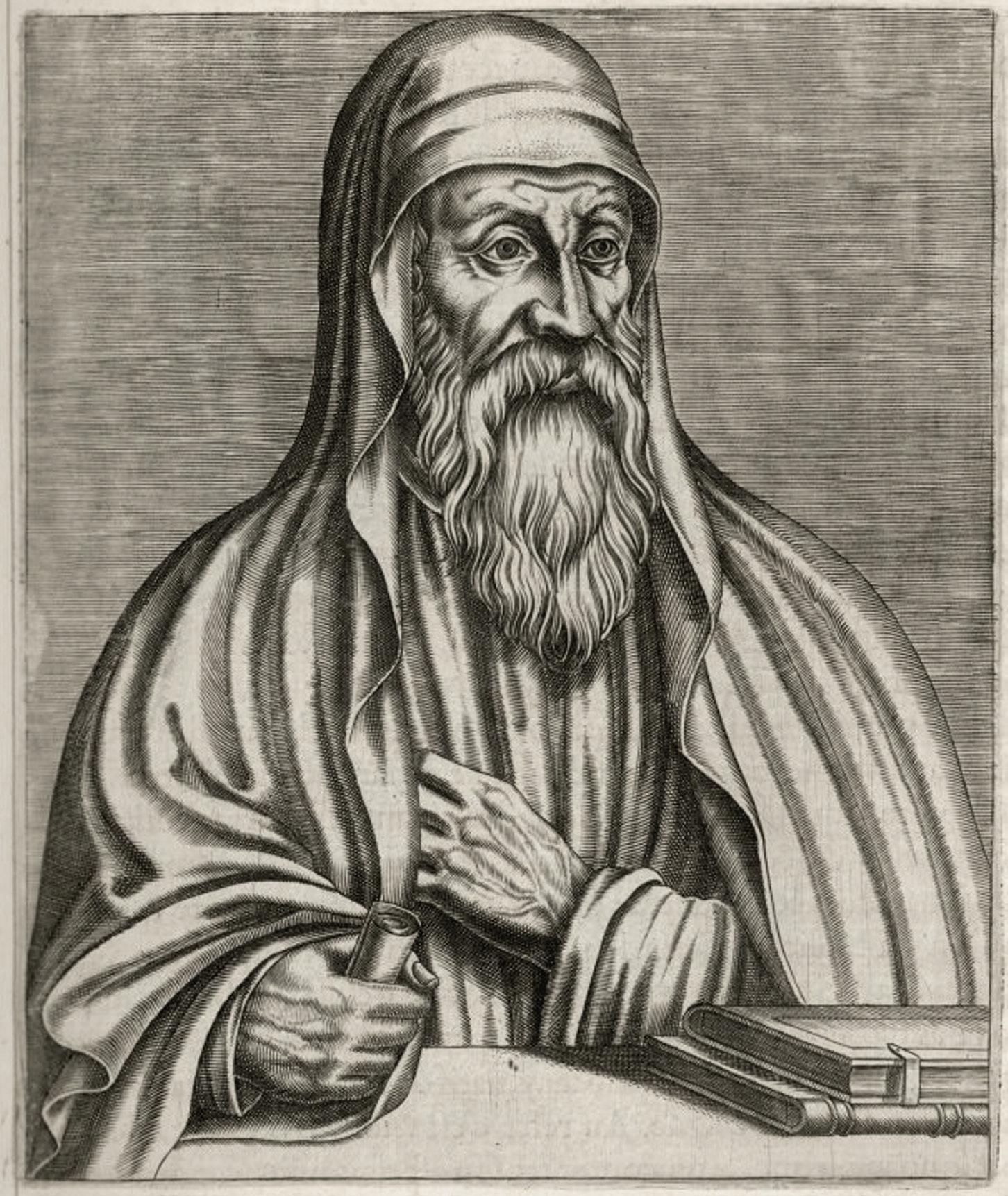
riential way of knowing that produces true beliefs about God.41 Coakley draws on the work of philosopher William Alston, who argues that mystical experience constitutes a communal knowledge-making practice, which we are presumptively justified in accepting in the absence of obvious evidence to the contrary.42 This framework can easily apply to speculative exegesis. Origen’s “flashes of lightning” or the “burning” felt in the hearts of the disciples on the road to Emmaus constitute individual instances of mystical experience, which form parts of a communal knowledge-making process. Further, St. Teresa’s mystical language of union with God can be equated with the abiding word of John 5:38 and Origen’s WORD, to explain how spiritual communion with Christ
underlies the Christian approach to Scripture.43 Any community, however, can form a set of practices based on experience. What justifies Christians in trusting these practices? Alston argues that we are justified in placing initial trust in our experience, because if we did not do this we could not know anything at all.44 Due to its analogies with perception, Alston argues, we are entitled in placing trust in mystical experience.45 Thus, the Christian community is justified in trusting an inner sense that the Bible has a spiritual meaning, in the absence of evidence to the contrary. Christians, however, must also provide an account of why God would choose to reveal himself through speculative exegesis. Why would God not simply provide Scripture entirely free of error in its literal, historical sense?
The idea that God must reveal himself clearly is a profoundly modern one. To Origen and to Ancient Pagans like the Roman Emperor Julian, it was perfectly plain that whatever divinity there was would manifest itself through somewhat obscure “myths” that had to be allegorized and philosophized.46 It is admittedly more difficult, however, to argue that the Christian God, who is all-powerful and all-loving, would not be able or willing to reveal himself in a clear way. It would be seemingly out of character for Yahweh to reveal himself through obscure oracles in the manner of Apollo. Nor is
the Christian God impersonal, distant, or separated from reality like Deism’s “clockmaker God.”47
Dustin Crummett, a Christian philosopher, argues that this problem overlaps with the more general problem of God choosing to remain hidden from those who honestly seek him.48 Analogously, why would a personal, loving, all-powerful God choose to communicate spiritual truth in a mystical, ambiguous way? In response, it is first necessary to point out that mystical views of Scripture do not necessarily hold that God’s presence within Scripture is totally hidden from normal methods of reading. And yet, why would God hide spiritual truth even to this extent?
God might hide spiritual truth to preserve the collective autonomous development of the Christian tradition.49
God may prefer Scripture to be unclear to preserve an “epistemic distance” from him.50 This epistemic distance allows Christians significant autonomy in determining doctrine through the interpretation of Scripture. Doctrine that emerges from a process of communal negotiation over thousands of years may have greater intrinsic value than dictated doctrine, since it is the partially autonomous development of the community of believers. This applies not only to the creation of doctrine, but to the collective process whereby texts become Scripture. If God wanted to ensure that Scripture was entirely unambiguous, he would have needed to diminish the freewill of the biblical authors by removing their capacity for error.51 He would also have to steer the collective historical process by which certain texts gradually came to be regarded as Sacred Scripture by Christian communities before the biblical canon was formally codified. Further, God may want to grant certain virtuous individuals or reveal himself in an exclusive way to an oppressed minority through their lived experience.52
None of these ethical considerations entail that God was not providentially involved in the development of Christian doctrine. Rather, God has sought to
achieve the twin goals of ensuring true doctrine and encouraging the community of believers to develop autonomously. A mystical understanding of Scripture, whereby spiritual truths are revealed in an indirect, experiential way, is one method of achieving these twin goals. Scriptural mysticism allows God to embed spiritual truth in texts without violating the autonomy of their original authors and creates enough room to allow the Christian tradition to develop autonomously. In this essay, I have shown that speculative exegesis is rooted in the Christian tradition and is a valid source of spiritual truth. Origen saw Scripture as laden with spiritual meaning, a belief that he derived from the thought of St. Paul and, ultimately, from the Gospels themselves. Just as mystics can access God through mystical perception, mystical exegetes can catch glimpses of the Word that dwells in Scripture. God has a habit of revealing himself in perplexing, paradoxical ways. God chose to transform a frail, corruptible human form hanging on a cross into a locus of the greatest conceivable spiritual truth. Likewise, God chooses to become incarnate in the body of Scripture formed from the fallible, errant records of the experiences of his followers across time. Though the historical writings of the biblical tradition are profoundly imperfect, by God’s grace they can convey perfect truths.53
1. For several paragraphs advancing precisely this critique see Sam Harris, Letter to a Christian Nation (New York, NY: Vintage Books, 2008), 61. Also see 2 Chronicles 4:2-5 (NRSVUE).
2. Origen, Spirit and Fire: Origen: A Thematic Anthology of His Writings, ed. Hans Urs von Balthasar, trans. Robert J. Daly (London: Bloomsbury T & T Clark, an imprint of Bloomsbury Publishing Plc, 2018). 93.
3. St. Gregory of Nyssa, The Life of Moses, trans. Abraham J Malherbe and Everett Ferguson (Mahwah, New Jersey: Paulist Press, 1978), 74.
4. St. Gregory of Nyssa, The Life of Moses, 74.
5. St. Gregory of Nyssa, The Life of Moses, 75.
6. See “The Chicago Statement on Biblical Inerrancy,” The Gospel Coalition, accessed November 7, 2022, https://www.thegospelcoalition.org/themelios/article/the-chicago-statement-on-biblical-inerrancy/.
7. Origen, Spirit and Fire, 103; Daly (Spirit and Fire, xvi-xvii) notes that Origen’s method actually has two variations, according to whether history or law is being interpreted, for the sake of simplicity I have not addressed Daly’s distinction.
8. Origen, Spirit and Fire, 103.
9. Some examples of this include the pesher of the Dead Sea Scrolls, the spiritual in-
terpretation of St. Gregory and Origen, as well as esoteric interpretations of Plato and Homer favored by Pagans.
10. Origen, Spirit and Fire, 92.
11. Origen, Spirit and Fire, 77.
12. John 1:18 (NRSVUE).
13. Origen, Spirit and Fire, 79.
14. Origen, Spirit and Fire, 86.
15. Origen, Spirit and Fire, 87.
16. Origen, Spirit and Fire, 89; Matthew 15:17 (NRSVUE).
17. Origen, Spirit and Fire, 101.
18. Origen, Spirit and Fire, 100-101; 1 Corinthians 10:1-4 (NRSVUE).
19. Origen, Spirit and Fire, 101.
20. Origen, Spirit and Fire, 101.
21. See for example Galatians 4:21-5:1 (NRSVUE).
22. 2 Corinthians 3:4-6 (NRSVUE).
23. See for example, Luke 5:30, 6:7, Mark 2:16 (NRSVUE).
24. Mark 3:1-6 (NRSVUE).
25. John 5:39 (NRSVUE).
26. Luke 24:42, John 5:39 (NRSVUE).
27. John 5:39 (NRSVUE).
28. 2 Corinthians 3:4-6 (NRSVUE).
29. For an example of this debate see Michel Bergmann, Michael J Murray, and Michael C Rea, eds., Divine Evil?: The Moral Character of the God of Abraham (Oxford: Oxford University Press, 2013).
30. For an example of this approach see Paul Copan, Is God a Moral Monster?: Making Sense of the Old Testament God (Grand Rapids, MI: Baker Books, 2011).
31. Dale Martin, Biblical Truths: The Meaning of Scripture in the Twenty-First Century, 1st ed. (New Haven, Yale University Press), 2017, 33-34
32. Martin, Biblical Truths, 33.
33. Martin, Biblical Truths, 34.
34. Martin, Biblical Truths, 34.
35. Martin, Biblical Truths, 2.
36. Origen, Spirit and Fire, 77.
37. Origen, Spirit and Fire, 78-79.
38. Luke 24:32 (NRSVUE).
39. Luke 24:32 (NRSVUE).
40. Von Balthasar, Spirit and Fire, 10-11.
41. Sarah Coakley, “Dark Contemplation and Epistemic Transformation: The Analytic Theologian Re‐Meets Teresa of Ávila ,” in Analytic Theology: New Essays in the Philosophy of Theology, eds. Oliver Crisp and Michael C Rea (Oxford: Oxford University Press, 2011), 280-312, 312.
42. See William P Alston, Perceiving God: the Epistemology of Religious Experience (Ithaca, NY: Cornell University Press 1991). Alston’s overall argument is that we can draw an analogy between religious experience and other ways that we can come to acquire knowledge about the world. Alston uses the term “doxastic practices” to refer to the ways in which communities come to understand the world based on sense-perception. For example, if we think we have seen something unusual we will apply various conventional rules to verify our perception. We might consult other witnesses, check that we were not under the influence of intoxicating substances, and consult scientific literature on whether the phenomenon we witnessed can actually occur. Alston’s important insight here is that the justification of doxastic practices is circular. We cannot justify the ways in which we use our senses and memory to understand the world without appealing to our senses and memory. To avoid external-world skepticism, Alston concludes that we are rationally justified in trusting a doxastic practice in the absence of evidence to the contrary. Alston argues that Christian mysticism constitutes a communal doxastic practice and, by analogy with other doxastic practices, does not depend on external verification for its validity, unless there is good reason to think mystical perception is unreliable.
43. Coackley, “Dark Contemplation,” 296-297.
44. Alston, Perceiving God
45. Alston, Perceiving God
46. Robert L. Wilken, The Christians as the Romans Saw Them, 1st ed. (New Haven, Connecticut: Yale University Press, 1984), 182; Origen, Spirit and Fire, 92.
47. Attempts to reconcile science with Christianity during the Enlightenment often resorted to the view of God as a “clockmaker.” This view, called Deism, was propounded by many notable Americans, including Thomas Jefferson and Thomas Paine. In my view, Deism is irreconcilable with historic Christianity. For more on Deism, see Bristow, William, "Enlightenment", The Stanford Encyclopedia of Philosophy (Fall 2017 Edition), Edward N. Zalta (ed.), https://plato.stanford.edu/archives/fall2017/entries/enlightenment/.
48. Dustin Crummett, email to author, October 11, 2022, for a classic statement of the problem see J L Schellenberg, Divine Hiddenness and Human Reason (Ithaca, New York: Cornell University Press, 2006).
49. For a similar argument, based on collective responsibility rather than autonomy, see Dustin Crummett, “‘We Are Here to Help Each Other,’” Faith and Philosophy 32, no. 1 (2015): 45-62, https://doi.org/10.5840/faithphil20153428.
50. For the concept of “epistemic distance” see John Hick, Evil and the God of Love (Basingstoke: Palgrave Macmillan, 2010).
51. See Randall Basinger and David Basinger, “Inerrancy, Dictation and the Free Will Defence,” Evangelical Quarterly: An International Review of Bible and Theology 55, no. 3 (1983): 177-180, https://doi.org/10.1163/27725472-05503005.
52. This could be derived from a mystical interpretation of “Blessed are the pure in heart, for they will see God” Matthew 5:8 (NRSVUE). Also see James Hal Cone, A Black Theology of Liberation (Maryknoll, N.Y: Orbis Books, 1989), 23-26.
53. I would like to thank Will Bryant for extremely valuable edits on drafts of this article.

This prayer by professor of religion Lucius Waterman appears on a plaque hanging at the entrance of Parkhurst Hall.
O Lord God Almighty, well-spring of wisdom, master of power, guide of all growth, giver of all gain. We make our prayer to thee, this day, for Dartmouth College. Earnestly entreating thy favour for its people. For its work, and for all its life. Let thy hand be upon its officers of administration to make them strong and wise, and let thy word make known to them the hiding-place of power. Give to its teachers the gift of teaching, and make them to be men right-minded and high-hearted. Give to its students the spirit of vision, and fill them with a just ambition to be strong and well-furnished, and to have understanding of the times in which they live. Save the men of Dartmouth from the allurements of self-indulgence, from the assaults of evil foes, from pride of success, from false ambitions, from hardness, from shallowness, from laziness, from heedlessness, from carelessness of opportunity, and from ingratitude for sacrifices out of which their opportunity has grown. Make, we beseech thee, this society of scholars to be a fountain of true knowledge, a temple of sacred service, a fortress for the defense of things just and right, and fill the Dartmouth spirit with thy spirit, to make it a name and a praise that shall not fail, but stand before thee forever. We ask in the name in which alone is salvation, even through Jesus Christ our Lord, amen.
— The
Reverend Lucius Waterman, D.D.
We, the editorial board of The Dartmouth Apologia, affirm that salvation is given through faith in Jesus, that the Bible is inspired by God, and that we are called to live by the teachings of Jesus and the apostles. We affirm the Nicene Creed, with the understanding that views may differ on baptism and the meaning of the word “catholic.”
We [I] believe in one God, the Father almighty, maker of heaven and earth, of all things visible and invisible.
We [I] believe in one Lord Jesus Christ, the Only Begotten Son of God, born of the Father before all ages. God from God, Light from Light, true God from true God, begotten, not made, consubstanstial with the Father; through him all things were made. For us men and for our salvation he came down from heaven, and by the Holy Spirit was incarnate of the Virgin Mary, and became man. For our sake he was crucified under Pontius Pilate, he suffered death and was buried, and rose again on the third day in accordance with the Scriptures. He ascended into heaven and is seated at the right hand of the Father. He will come again in glory to judge the living and the dead and his kingdom will have no end.
We [I] believe in the Holy Spirit, the Lord, the giver of life, who proceeds from the Father [and the Son], who with the Father and the Son is adored and glorified, who has spoken through the Prophets.
We [I] believe in one, holy, catholic, and apostolic Church. We [I] confess one Baptism for the forgiveness of sins and we [I] look forward to the resurrection of the dead and the life of the world to come. Amen.
The Dartmouth Apologia exists to articulate Christian perspectives in the academic community. We do this through our biannual publications, lecture series, and weekly reader groups where we read and discuss the works of exemplary apologists such as G.K. Chesterton and C.S. Lewis.
We at The Dartmouth Apologia invite people from all intellectual, religious, and spiritual backgrounds to join us in our discussions as we search for truth and authenticity. If you would like to get involved, please feel free to email us at the. dartmouth.apologia@dartmouth.edu or check out our Instagram or Facebook @dartmouthapologia. To subscribe to the journal or to check out past issues of the journal, visit our website at www.dartmouthapologia.org.

by

[1 Peter 3:15]