by Luke Dickens
Humans disagree. A great deal. As creatures who have access to different sorts of information, and who are endowed with the rational faculties necessary to form more complex beliefs from that information, it seems inevitable that humans should differ on important subjects In the face of this disagreement, how should we proceed? It feels tempting, on the one hand, to lean steadfastly against one ’ s own knowledge and to argue stubbornly from that most trusted vantage point As students, we ’ ve all seen that classmate who seems to foolishly overstep the clear boundaries of his actual knowledge and valid argumentation into something distinctly outside his expertise or into the ridiculous It also feels tempting, on the other hand, to call every difference of opinion an adherence to “ one ’ s own truth ” Those who maintain this relativistic outlook show the same wish to cling to their own knowledge as the foolish overstepper: after all, if no one else’s “truth” can be called wrong, neither can yours.
Twelve years ago, Andrew Schuman ‘10 founded The Dartmouth Apologia during orientation week of his freshman year, in large part to combat the prevalent notion on campus that “Christian” and “unintelligent” were essentially synonymous terms. The Apologia, and many journals of Christian thought like it that now exist across the country and internationally, serve to articulate Christian perspectives in the academy: to earn and maintain a respected seat at the academic table Today, twelve years later, we believe that our biggest challenge in gaining a real hearing at this table is no longer the staunch anti-theist raising his voice, louder and more aggressively, over ours; rather, our biggest challenge today in getting a real hearing is the polite smile accompanied by the words, at once accepting and deeply dismissive, “That is your truth. ” Today, we find that the prevalent relativistic culture concerning truth on our campus and beyond inhibits genuine consideration of ideas that differ from one ’ s own just as much as outward assertion of one ’ s own knowledge, if more insidiously: on the surface, no one is wrong and everyone is right, but my application of the label “ yours ” to a viewpoint you articulate seems to grant me permission to avoid considering whether it has enough validity to ever be “mine,” too
We, the staff of the Apologia, do not claim to have all the answers We do not seek to proselytize but to discuss: to join with anyone who searches for truth and authenticity in an aim to find it, together As our founder Andrew Schuman wrote twelve years ago, this is a journal of seekers We link arms in a genuine search for truth We believe that this truth can be found in God, and we aim to articulately share this perspective and its details in the academic community. Critically, as a vital part of this discussion, we each strive to listen to really listen to all perspectives that differ from our own. We then are able to exploit the best part of the academy: we draw from these different perspectives, backgrounds, and disciplines these different fragments and facets of reality to try to assemble a fuller view that will bring us closer to Truth.
We warmly invite you to join us in this discussion

Jeffrey Poomkudy Editor-in-Chief
We welcome the submission of any article, essay, or artwork for publication in The Dartmouth Apologia. Submissions should seek to promote respectful, thoughtful discussion in the community. We will consider submissions from any member of the community but reser ve the right to publish only those that align with our mission statement and quality rubric Email: The Dartmouth Apologia@Dartmouth Edu

Editor-in-Chief
Jeffrey Poomkudy ’20
Managing Editor
Hailey Scherer ’20
Editorial Board
Jake Casale ’17
Margaret Cross ’19
Hyemin Han ’20
Miles Temel ’20
Business Manager
Peter O’Lear y ’19
Production Manager
Kristi Williams ’20
Production Staff
Luke Dickens ’18
Maura Cahill ’20
Michael Steel ’21
Eli Boardman ’22
Photography
Joshua Tseng-Tham ’17
Tanner Riley ’22
Contributors
Joshua Tseng-Tham ’17
Chris Kymn ’18
Brett Seeley-Hacker ’18
Micah Taylor ’21
Cecilia Zugel ’21
Advisory Board
Gregg Fairbrothers
Eric Hansen, Thayer
James Murphy, Government Lindsay Whaley, Classics

Hailey Scherer Managing Editor

We value your opinions and encourage thoughtful submissions expressing support, dissent, or other views. We will gladly consider any letter that is consistent with our mission statement ’ s focus on promoting intellectual discourse in the Dartmouth community
Special thanks to Council on Student Organizations
The Eleazar Wheelock Society
Subscription information for the journal or bi-weekly blog is available on our website at dartmouthapologia.org. Past issues of the journal are available online for archival viewing. The opinions expressed in The Dartmouth Apologia are those of the authors and do not necessarily reflect those of the journal, its editors, or Dartmouth College Copyright © 2019 The Dartmouth Apologia






Tand Faith: An Interview with Dr. Ian Hutchinson
Jeffrey Poomkudy ’20
AND FAITH IN HEIDDEGGER AND KIERKEGAARD
Chris Kymn ’18
Selfishness and Humility
in the Book of Esther Cecilia Zugel ’21
A Christian Defense
Luke Dickens ’18
The Role of Authority in Biblical Inquiry
Maura Cahill ’20
Mental Health in Japanese Society
Micah Taylor ’21

H u t c h i n s o n
c o n d u c t e d b y J e f f r e y P o o m k u d y


Ian H Hutchinson is Professor of Nuclear Science and Engineering at the Massachusetts Institute of Technology His primar y research interest is plasma physics, especially the magnetic confinement of plasmas (ionized gases): seeking to enable fusion reactions the energy source of the stars to be used for practical energy production. Following undergraduate education at the University of Cambridge, his graduate studies, as a Commonwealth Scholar at the Australian National University, involved experiments on one of the earliest tokamaks to operate outside the Soviet Union After groundbreaking research (1976-9) on MIT ’ s earliest major tokamak experiment, he worked on a different confinement configuration, the Reversed Field Pinch, with the U K Atomic Energy Authority He returned to MIT in 1983 as a member of the Nuclear Engineering department faculty He directed the Alcator project from 1987 to 2003, and ser ved as Head of the MIT Department of Nuclear Science and Engineering from 2003 to 2009 He has also written and spoken widely on the relationship between science and the Christian faith. His most recent book, Can a Scientist Believe in Miracles? An MIT Professor Answers Questions on God and Science, was released in 2018.
Q: What is your faith background?
A: To make a long stor y short, I didn’t grow up a Christian Well, I wasn ’ t completely ignorant of Christianity I had studied the New Testament for academic purposes in my high school When I went to Cambridge University, which is where I did my undergraduate studies, I had two close friends who were Christians, whose intellect, personality, and lives I enjoyed and admired. As a result of that, I started to take Christianity much more seriously. I hadn’t believed it, but I began to take it seriously.
They invited me to go to a series of lectures by a speaker called Michael Green, who was a ver y popular Christian speaker in the United Kingdom in those days I was struck at the time by two things which I had never really thought about First of all, that actually the evidence for the resurrection of Jesus is quite good I came to see that that was true, and I still believe that Secondly, that Christianity isn’t so much of a theor y, belief structure, or tradition it’s a call to a personal relationship with God, through Jesus Christ. That also came to me as a new idea.
In the course of the few weeks in which these lectures were taking place, I came to realize that I sort of did believe the stor y of the Gospels Not beyond a shadow of a doubt, but it seemed pretty reasonable to me I realized, based on what I’d been hearing, that to go further than that would take more of a step of faith and actually a step of commitment It was at that time, one evening, in my student dorm in Cambridge that I knelt and asked God for forgiveness and pledged to become a follower of Jesus Christ. I have been ever since. Many decades now.
Q: Throughout your career, you’ve been an outspoken critic of scientism What do you think is problematic about that sort of philosophy? Do you think “scientistic” thinking poses any problems for us today?
A: Scientism is, in short, is the belief that all real knowledge comes from science. It’s a viewpoint which is ver y often not explicitly explained or advocated, but it is a kind of background belief which is extremely common in the academy in the West today and in society as a whole I think it’s simply a mistake I think it’s a dreadful mistake But it became important to me to understand it better when I realized that scientism is actually one of the most important underlying causes of the tension between science and religion, and specifically between science and Christianity because I think it’s the case that religious beliefs and the truth of Christianity cannot be established by science. And so, if science is the root of all knowledge, then one might conclude, if one subscribed to scientism, that Christianity is not knowledge that it’s not true.
But that thinking is based on a mistake There are many other things other than religion that cannot be established by science, and that doesn’t mean that they are bereft of knowledge On the contrar y, if you think about a discipline like histor y what historians know they almost all know not because of science, but because of other means of investigation that bear no relationship to the way we find out about the natural world: through repeatable experiments, obser vations, and the description of the results of those obser vations and experiments with a sort of crisp clarity.
So scientism is, in fact, just a ghastly intellectual error

As long as it’s maintained, it puts pressure on religion, but it does so in an unjustified way. In fact, scientism is one of the main legs on which the anti-theists of this centur y rest their case People like Dawkins and Sam Harris and so forth subscribe to scientism They don’t necessarily subscribe to it explicitly, but they subscribe to it implicitly, in the ways that they write and in the ways that they argue, because their arguments largely
There are actually 223 questions altogether, but one of those questions is: Can a scientist believe in miracles? The reason why this question makes it into the title of the book is that it’s an extremely important question when you ’ re talking about the relationship between Christianity and science Christianity itself is centrally dependent upon the most important miracle, which is what the Apostles staked their claims on when they
I’m a scientist, so I k now quite a lot about the laws of physics, and I find them ver y compelling and ver y well established, but nothing in science can prove that those laws are inviolable.
consist of accusations that religious knowledge is not found by science and that therefore it isn’t knowledge But the same argument, although they don’t apply it, would apply to histor y or the knowledge of music or jurisprudence or philosophy for that matter.
Q: My next question is related to a book of yours that just came out, Can a Scientist Believe in Miracles?: An MIT Professor Answers Questions on God and Science Do you think you can answer the book’s titular question?
A: The book is about all the questions that I have been asked at Veritas Forums, at which I’ve spoken for something like the past 25 years I transcribed all the questions from forums that were video or audio recorded, which became an interesting sample of the kinds of questions about science and faith that young people in universities these days ask.
went out and took the Gospel to the earliest people whom they evangelized The miracle is that Jesus had risen from the dead
So if a scientist can ’ t believe in miracles, then I would argue a scientist can ’ t actually become a Christian. So, it’s actually a central question for Christianity and science. The quick answer to the question is yes, scientists can believe in miracles. The supposition that scientists cannot believe in miracles is probably largely based on the view that science has discovered lots of natural laws laws of physics, if you’d like An additional view is that those laws are inviolable that it is impossible that those laws should be broken or that anything in the events of the world should not obey those laws.
I’m a scientist, so I know quite a lot about the laws of physics, and I find them ver y compelling and ver y well established, but nothing in science can prove that those laws are inviolable. And in fact, it is not the case
that you have to believe in inviolable laws in order to be a scientist In fact, many of the great scientists of histor y, like Boyle and Newton and Galileo and Maxwell and Faraday and Dalton and many others, did believe in miracles because they were Christians and believed in the resurrection So it’s clear that it’s perfectly possible for a scientist not just a workaday scientist like me, but a great scientist of histor y to believe in miracles.
And the reason logically why it’s possible is that while science does describe the world insofar as it is reproducible in terms of these reproducible laws, it does not establish that absolutely ever ything in the universe obeys those laws all the time, because science is unable to investigate unique events Because
to give us that faith, and there are of course many people who are not people of religious faith who are excellent scientists But it’s still the case that science bases its whole practices on the belief in a powerful and consistent and intelligible universe, and the study which springs from that understanding still goes on today under that same rubric. So a quick answer is no. Miracle belief is not a science stopper.
Q: What do you think is the relationship between faith and science? Are they compatible, and do you think science can inform faith?
A: Yes I think faith and science are consistent, and I also think that they inform one another. Before
...it ’s still the case that science bases its whole prac tices on the belief in a power ful and consistent and intelligible universe, and the study which springs from that understanding still goes on today under that same rubric.
science depends upon repeatability, and unique events don’t have repeatability, science is, in a certain sense, powerless to prove the presence or absence of a miracle
Q: Isn’t belief in miracles a kind of science-stopper? Does it lead us to be ineffective scientists?
A: The quick answer is obviously not, because, as I just said, many of the greatest scientists of histor y did in fact believe in miracles So it’s simply not true historically that belief in miracles has been somehow debilitating towards the practice of science.
And certainly folks like me, who believe there are such a thing as miracles, naturally aren ’ t looking ever y moment for a miracle. I mean, it has to be the case that miracles are relatively rare, other wise natural science the way we practice it couldn’t work But saying something is rare isn’t the same thing as saying that it never happens, and it’s important to draw that distinction
So the idea that religion generally, or belief in miracles, is actually a discouragement to science is in fact probably the opposite of what is true. A good case can be made that the reason why natural sciences and modern science as we know them grew up in the West in the sixteenth and seventeenth centuries was actually because of a biblical worldview: a belief in creation as being the rational creation of an intelligent God, and the world as comprehensible, was an underlying article of faith for many of the earliest scientists
Today, we no longer rely on religious reasons
I say something about that, it’s probably best to say something about what I think faith is
We’re often invited by people of a skeptical viewpoint to regard faith as some kind of believism the notion that you ’ re basically believing in things that you know ain’t so or that are contrar y to evidence. That is a pathetic caricature of what is meant by faith.
Faith has three strands of meaning One is belief in propositions quite often, propositions which aren ’ t proved Another involves trust: we have trust, or faith, in a person or a thing For example, an airplane The third strand of meaning is that we have certain loyalties to someone We put our faith in something, and we act in faith toward that ideology or ideal or person in whom we are exercising faith. Faith has those three strands of meaning, and when it comes to the Christian faith, the emphasis isn’t so much on believing propositions: it’s on trust in God and in Christ and in loyalty towards that, towards them It’s important to think of faith in those three ways and not to just take a narrow view and regard it as belief in unprovable propositions
Let me talk about the Christian faith, and I think perhaps your question was getting at the question of theology Is theology informed by science? I think the quick answer is yes. I’ve already given you an argument which says science was affected by theology historically in the development of modern science as we know it.
I think it’s commonplace for most people to realize that certain aspects of theology have been affected by science It was once the case that Christians believed that the sun orbits the earth Actually, it wasn ’ t just
Christians it was ever ybody in society prior to the sixteenth centur y that thought that the sun goes around the Earth Well, now we know that it’s the other way around that the Earth orbits the sun and the sun appears to go around the Earth because the Earth is rotating on its axis Clearly, that corresponds to a correction if you like in the cosmology that was widely accepted by Christians that science brought about.
In the time when that change was taking place, there were various claims made by people interpreting the Bible that it couldn’t be that the Earth goes around the sun because in the Psalms it says, “The earth is firmly established and cannot be moved,” and so forth Clearly, science has influenced our interpretation of the Scriptures so that today no one would offer that as a reason to disbelieve in the current Copernican understanding of the solar system. Maybe there are some people who are sufficiently ignorant that they would offer it as a reason, but no one with any intelligence would offer that as a reason because we have realized that the Psalms were using the language of description and of appearance We shouldn’t turn to that type of language for some kind of cosmology
other words, they’re not at war with another There are certainly from time to time tensions that arise, but to regard them as being perpetually at war is simply a mistake I like to think of them as being brothers Maybe siblings have tensions and arguments within the family, as well as helping one another and supporting one another, but to focus on just the arguments between brothers or between siblings is to misunderstand the relationship between them. Similarly, to focus on the tensions that exist from time to time between science and Christianity is to misunderstand their relationship.
Q: Shifting gears here a little bit: what is your understanding of the scientific veracity of the Bible? Is the Bible plausible, given our understanding of science today?
A: Yes, thanks for the question. I personally take a high view of the Scriptures. I think that all Scriptures are inspired by God and profitable for teaching, reproof, and correction. So, anyone who’s a Christian who wants to understand their faith and understand God should pay serious attention to the Bible, study it, and get to know what it says to them and to all people
If you approach the Bible think ing the Bible is going to teach you science, it isn’t—it was never intended to.
Theology is influenced by science and science is influenced by theology. Actually, their mutual interaction is not at all compelled to be negative. In
But the Bible is a complicated book. It’s actually full of different types of literature. It has histor y, it has religious instruction, theology, prophecy, songs,

poetr y, letters, biography all kinds of different types of literature But the one type of literature that is not in the Bible is modern scientific literature The Bible was not written when science as we know it today even existed If you approach the Bible thinking the Bible is going to teach you science, it isn’t it was never intended to. It’s ver y important to come to the Bible understanding what the Bible is tr ying to get at and recognizing that the Bible is not tr ying to teach us cosmology in the sense that we apply it to scientific cosmology today.
So, when we read of seven days of creation, this is not intended by the original authors to be a histor y of how God created the Earth Instead, it’s essentially a celebration It’s a kind of liturgy, that is expressing, for the people of Israel, the significance of the God with whom they were dealing That God, their God Yahweh was not just some kind of tribal deity like the gods of the people around about them. But that God, if he’s God, is the creator of ever ything. In other
he was a creeping plant with green leaves We have to apply interpretation to almost ever y part of the Bible because that’s the way language works It works through metaphor and stor y and so on And so we shouldn’t tr y to make the Bible into a scientific description of a creeping plant with green leaves That’s foolishness
Q: What about stories that seem to be implausible given our current scientific understanding, such as Jonah spending three days and nights in the belly of a whale?
A: Well, I would say that there are certain events that are contrar y to our understanding of science There are in the Bible descriptions of things that, in the normal course of scientific events, couldn’t take in place, and some of these are simply miracles. And we know, for example, that people who are crucified don’t rise from the dead on the third day. That’s scientifically impossible. But we as Christians assert that (and the
People k new in the first centur y that people who were crucified didn’t rise from the dead on the third day. That ’s why it was a miracle.
words, the Book of Genesis, in my view, is teaching us that God is the creator and that’s the most important thing about it. If you look at the way that the first chapter of Genesis is constructed, it’s constructed in such a way that it places participants in creation in relationship to one another and to God in a way that is descriptive of their roles, not of the histor y.
So, what a Christian should be doing when they come to the Bible is tr ying to understand what the Bible was meant to say by its authors and by the people to whom it was originally written And be ver y careful projecting backwards our own concerns and the way we think today onto the Bible, as if the Bible ought to be some kind of scientific dissertation about how natural histor y developed. I don’t think that’s what the purpose of the Bible is.
So, I get lots of questions in my various talks about the Bible and how I understand various things. Sometimes those questions just simply assume that the Bible is full of errors and inconsistencies Actually, I don’t think the Bible is full of errors and inconsistencies, but I do think that the Bible is ver y varied literature We ought to approach it with an intelligent view of interpretation Interpretation is a vital part of our understanding of the Bible, and we shouldn’t adopt some kind of literalistic view. There is no such functional literalistic view of the Bible. When Jesus said, “I am the true vine,” he wasn ’ t saying that
evidence for it is really quite good) we understand this as being a situation in which God allowed the universe to proceed in a way different from the normal course of events that’s been established by science.
And of course, there’s nothing really, in a certain sense, different in our modern view of [these cases] from the view that people would have had in the first centur y I mean, people knew in the first centur y that people who were crucified didn’t rise from the dead on the third day That’s why it was a miracle So it’s not that this is a contradiction with science, it’s a contradiction with the normal course of the world, whether it’s understood through modern science or not.
And similarly, people knew in those days that people are not swallowed by big fishes and then vomited up three days later in the normal course of events, and so the stor y of Jonah is clearly a stor y that couldn’t have happened in the normal course of events I wouldn’t offer an authoritative interpretation of the Book of Jonah, although it’s certainly the case that the Book of Jonah is more about questions of justice and forgiveness and repentance than it is about whether people can be swallowed by whales or not
I think to focus on Jonah and the fish is missing the point of the Book of Jonah, but I don’t say one way or another whether it happened because I don’t know, and I don’t think anybody else knows. We do know that it’s
contrar y to the normal course of events What we don’t know is whether that miraculous event was crucial to God’s plans. I don’t think it’s ver y profitable to look at the Book of Jonah and either to assert that it had to be that Jonah experienced this or that in a particular way, or that it couldn’t possibly be that Jonah was swallowed by a fish. I don’t think either of those two situations are particularly helpful in this case
Q: My last question relates to your own work How has your work in your lab studying physics specifically informed your understanding of God and Christianity, and affected your spiritual life?
A: I think my faith and my scientific work have definitely influenced one another. I think my faith has influenced my science with respect to things like choice of research problem that I pursued The fact that I’ve pursued something which has the potential to be important and contribute to human welfare is something that I’m happy about I think I would have been unhappy to have been in other areas of science which were developing other, potentially less advantageous things. But I think that scientists are not in some special place with respect to their faith, either positive or negative. Scientists qua scientists are not more able or less able to be serious disciples of Jesus. If we ’ re Christians, whatever our field of endeavor is, we are called to be followers of Jesus, putting Jesus as Lord of our lives and seeking to live out the call that he has given us individually And that is certainly what I have tried to do
One of the things that I’ve tried to do while I’ve been in the sciences is not to divorce my Christian discipleship from my science And so there are ways in which being a disciple of Jesus has helped me to be a better scientist Science isn’t all just about intellectual endeavor and solving equations a big part of science is getting along with other people, working in teams, and organizing big experiments. And those are skills that I learned much more in church than in the lecture theater. I think, during my life, the interaction between my faith and my work have been constructive in both directions And far from being at war with one another or somehow in contradiction with one another, I find that being a follower of Jesus and being a scientist is mutually supportive
This interview has been edited and condensed for clarity
by Christopher Kymn
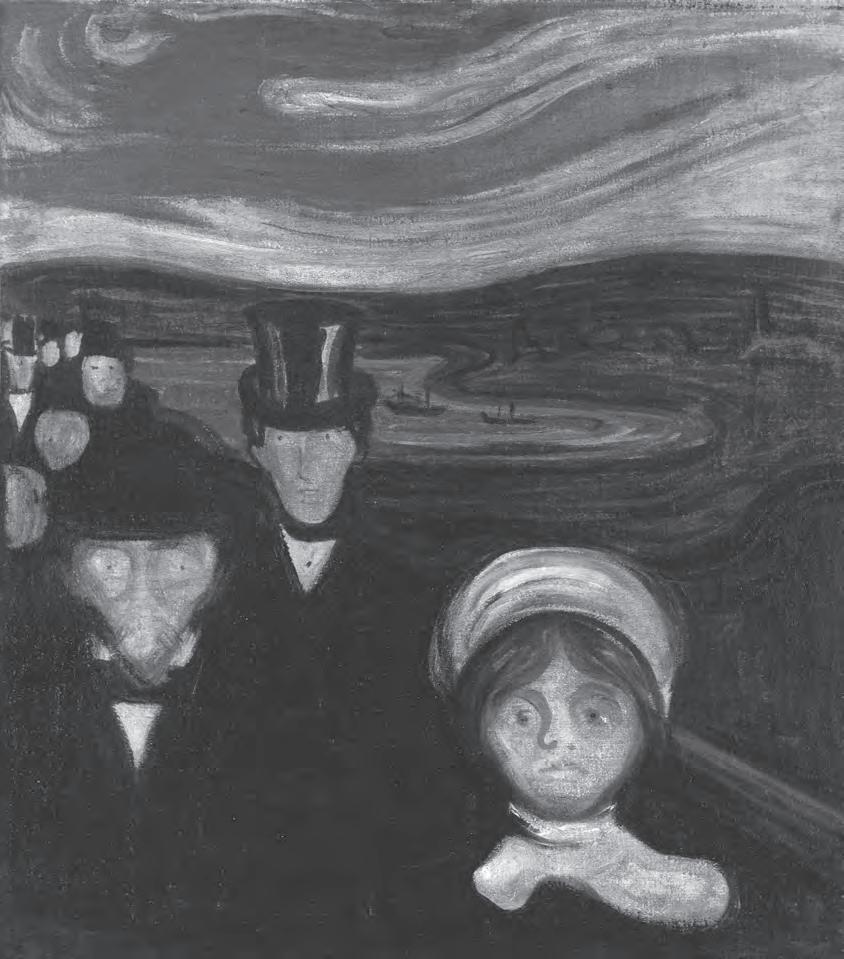
Whatdoes it mean to be human? In part, this meaning comes from humans being the kind of being that finds things to be meaningful While a rock could not care less if it were kicked into the street, a person would find the same deeply disturbing. We often cannot help but view things as meaningful, whether it be a particular pen, a nostalgic song, or a valued friendship Even when we do not care about certain things, that we can care is significant Emotions are one way that we meaningfully respond to the world. For example, the joy of spending time with friends is an experience that reveals how valuable they make our lives. We may not even realize, consciously, that we are experiencing joy; we may be so immersed in reveling that we forget the fact that we
experience joy. Yet upon proper reflection, the experience seems to show us that there are some experiences that are meaningful and that they are meaningful for us
I will not argue the above point in detail, but the main intended takeaway is that analyzing emotions can help us understand what it means to be human, as they reveal the ver y kinds of experiences that can be meaningful Indeed, two philosophers, Martin Heidegger and Søren Kierkegaard, use the emotion of anxiety to reveal something about the human condition.i While their accounts lead to similar diagnoses of what anxiety is, they disagree on the proper treatment of the dilemma anxiety poses In short, they agree that anxiety is a disruption of ordinar y meaning, in that it reveals meaning as
groundless (a term that will be explicated further later). Their accounts differ, however, on the proper response to anxiety While Kierkegaard’s account emphasizes faith, Heidegger’s does not.ii I leave it up to the reader to decide for herself whether their accounts are useful in
method of analyzing what the phenomenon means. iii For example, a conceptual analysis may read as follows: English declarative sentences have a two-part structure, consisting of a subject and a predicate. The conceptual analysis is non-empirical, as its truth is not determined

Heidegger and Kierkegaard would emphasize that the objec t is frightening only because it threatens my future, which is a relevant component of my personhood.
describing her own personal experiences, but I aim to inform this evaluation by showing that there are meaningful ways to interpret anxiety; I furthermore aim to show that these interpretations can lend credibility to faith, which requires a personal commitment to make life meaningful and moreover benefits from a Christian perspective.
Before addressing anxiety more specifically, it will be helpful to distinguish how Heidegger and Kierkegaard’s philosophical methods for understanding anxiety might differ from a purely psychological or physiological method. One way to understand emotions is to treat them as a matter of cause-and-effect: discussing, for example, which stimuli prompt certain emotional responses, or which neurotransmitters correlate with a given emotion. While these methods are empirical, analyzing data in the natural world, Heidegger and Kierkegaard are performing a conceptual analysis, proposing a
by looking at examples of sentences. Rather, it is a logical prerequisite to empirical inquiries: to analyze sentences, we need to know what counts as an example of one.iv
The conceptual analyses of Heidegger and Kierkegaard use emotion as a way to reveal something about the self. There are two points to consider here. First, we can recognize that only some entities have emotions.v A powerful robot with advanced sensor y and reasoning capacities would avoid things that bring about its demise, but it might not be wired to fear its demise. Second, emotions reveal more about the self than they do about the rest of the world. This point may seem counterintuitive; after all, it seems that fear is about a scar y object, such as a snake or forest fire Against this, Heidegger and Kierkegaard would emphasize that the object is frightening only because it threatens my future, which is a relevant component of my personhood So if I fear a snake attacking
me, it shows I value what I may lose it reveals something I value, or an aspect of the self.vi
Fear and anxiety are usefully contrasted On the one hand, both are often unpleasant to experience; on the other hand, Heidegger and Kierkegaard claim that anxiety is often misinterpreted as fear.vii The difference between them is that while fear seems to be about an object (fear is fear of something), anxiety is not about anything else at all For example, I fear taking a test if I anticipate negative consequences from doing poorly, whereas I am anxious if I question why I should take the test at all. There are of course different ways that anxiety can feel, whether it takes the form of a crippling stress or a lackadaisical ennui.
The central revelation of anxiety is this feeling of meaninglessness. Kierkegaard compares the feeling of anxiety to the dizziness of looking into an abyss He writes:
Anxiety may be compared with dizziness
He whose eye happens to look down into the yawning abyss becomes dizzy
But what is the reason for this? It is just as much in his own eye as in the abyss, for suppose he had not looked down.viii
The dizziness arises from the difficult freedom of choosing amongst several lifealtering commitments.ix For example, consider a college student who is struggling over what major to choose and worried over making the wrong decision. Seeing herself as an openminded person, she might feel over whelmed by the number of possible majors to choose from. Whereas fear is often due to the lack of control in a situation grizzly bears would not be feared if easily detected and eluded anxiety is an experience of too much freedom to decide. But this freedom, in the face of anxiety, can be paralyzing: why should I choose one possibility, rather than another? Why is taking the test really any better than just sleeping in? Anxiety makes the choice appear to us as if it were meaningless.x
The challenge, therefore, is how to avoid the dilemma of nihilism, in which nothing is valuable at all, and defend the meaning of ordinar y encounters from anxiety’s suggestion that they lack a deeper foundation The dilemma

occurs not just when having a particular episode of anxiety even when in a good mood, we may question if some supposed goodness is really valuable. Nothing said here criticizes a person for experiencing a certain level of anxiety the capacity to experience anxiety is perfectly general, and it reveals an important characteristic of the human condition. In fact, lacking the capacity to experience anxiety might itself be a danger, as such a person might mistake meaning when there is none to be found xi Anxiety is often uncomfortable, and one strategy to cope with it is to deny it was ever experienced. For example, one could make oneself so busy such that contemplating the meaning of life never occurs. However, to Heidegger and Kierkegaard, this strategy just amounts to running away from the problem. We cannot show how things are really meaningful until we take seriously that they might not be.
In Being and Time, Heidegger’s magnum opus, anxiety plays an essential role in uncovering the condition of Dasein, Heidegger’s term for the kind of being that can question the meaning of its own being.xii It is worth noting that Heidegger’s account of anxiety borrows directly from Kierkegaard’s, both in terms of its structural similarity and in direct acknowledgment in a footnote.xiii That Heidegger’s response is structurally similar to a Christian thinker’s might not be surprising
given his earlier interest in theology. While he attended seminar y schools, he gave up on the goal of becoming a priest before writing Being and Time xiv
Heidegger’s method of responding to anxiety, in a word, is authenticity. xv Roughly, authenticity recognizes the groundlessness of projects but denies that this groundlessness presents a challenge to seeing things as meaningful Rather, authenticity recommends that we should carr y on with the things that seem meaningful to us, such as engaging in projects and helping others, without duping ourselves into thinking that the project requires an ultimate basis to be meaningful xvi Arguing against Heidegger, one could deny that projects really are groundless and that some ways of living are justifiably better than others. Against this critic, Heidegger might allege that these supposed justifications themselves rely upon unjustified premises that are implicit within societal norms Seen in this light, authenticity is the appropriate response to such groundlessness.
It is ultimately unclear what authenticity constitutes for a particular individual This ambiguity can be seen as a benefit to Heidegger’s theor y as it does not claim to tell us what to do. In another sense, however, it can be seen as a deficit, as it makes it difficult to determine how a concrete individual can live authentically. The concern is not quite that I do not know whether to judge if others are authentic, though this may also be true. Rather, the concern is primarily first personal: beyond knowing not to fall into certain traps, how can I be more authentic in a concrete way?
Kierkegaard’s discussion of anxiety differs from Heidegger’s in an important way. Heidegger’s discussion is systematic, attempting an interpretation of what it means to be Dasein, and conducting a phenomenological analysis to supplant that investigation: he aims to show that anxiety is a constitutive part of Dasein Kierkegaard, on the other hand, conducts a dogmatic discussion. His primar y goal is not to explicate the self, but rather to connect anxiety to sin, a relation that he does not attempt to
prove by means of logical analysis. Still, there are worthwhile reasons to believe in his method and his connection of anxiety to sin
In response to anxiety, Kierkegaard develops the notion of the leap of faith. xvii Minimally, the leap of faith is best understood as the making (and continual renewal of ) a world-defining, concrete commitment.xviii A commitment is worlddefining when it defines the values on which it makes sense for me to act A commitment to memorize the digits of pi is almost certainly not world-defining, since ver y few life choices, if any, depend on this hobby. On the other hand, a commitment to fight global warming is worlddefining, since taking it seriously requires not only certain work but also a certain lifestyle that bears on ordinar y decisions. A commitment is concrete when it is devoted to a specific project. For example, a commitment to fight global warming by developing a type of alternative energy technology is concrete
By calling this form of commitment a leap of faith, Kierkegaard emphasizes that the commitment being made is ultimately unjustified: it is not made on the basis of some rational calculation Kierkegaard nevertheless exists that the leap of faith is a better response to anxiety than other candidate responses. For example, suppose one ’ s reaction to anxiety was to make all decisions on the basis of whatever maximized her personal happiness This response has some practical deficits, due to cognitive limits of persons to achieve their happiness, but more importantly, it fails to justify why one ’ s personal happiness resolves the meaninglessness surrounding anxiety Religious commitments, on the other hand, directly attempt to provide a way of life that provide better prospects for a leap of faith.
To understand the type of religious project at stake here, it is worth visiting a distinction Kierkegaard makes Kierkegaard distinguishes Religiousness A from Religiousness B xix Religiousness A is a sort of intellectual surrender to God that annihilates one ’ s own will in favor of subser vience to God’s will. The problem with Religiousness A, according to Kierkegaard, is
that it attempts to create a secure intellectual foundation for theology when no such thing can be guaranteed In attempting to secure a position of invulnerability from anxiety, it denies the freedom of the individual. Kierkegaard’s preferred alternative, Religiousness B, emphasizes the personal responsibility in living out one ’ s religion. Religion should not be seen as merely some algorithm that determines ever y particular decision an individual will make. Rather, it provides goals on how to live a meaningful life, with individuals facing choices on what those goals entail for their particular cases
The leap of faith, according to Kierkegaard, is best exemplified in terms of a Christian way of life.xx Kierkegaard draws from the Genesis account to argue that anxiety is inextricably tied to sin xxi Original sin helps to explain why we are saddled with anxiety, because it shows our dilemma as a synthesis of physical and psychical being.xxii In other words, we have both a body and a mind but are neither just a body nor just a mind This duality makes us capable of anxiety, since we have the freedom to decide amongst possibilities but also realize we are subject to physical laws and eventual death. This predicament is unique to humans, according to Kierkegaard, as he claims that neither other animals nor angels are saddled with anxiety xxiii Moreover, he argues, the fall from the Garden of Eden reveals this predicament to us and makes of self-conscious of it. Christianity, then, provides a framework for understanding the predicament that ever y human undergoes xxiv
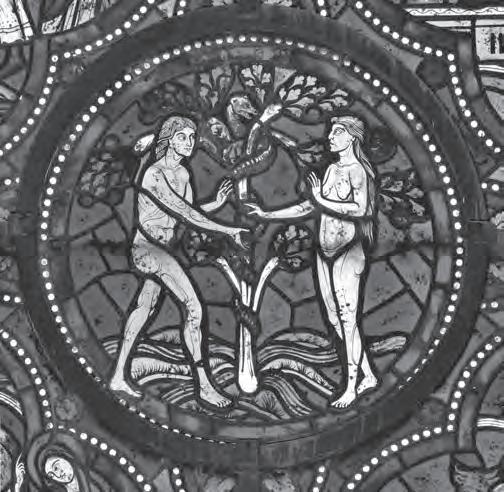
Original sin helps to explain why we are saddled with anxiety, because it shows our dilemma as a synthesis of physical and psychical being. In other words, we have both a body and a mind but are neither just a body nor just a mind.
the above discussion of original sin shows one benefit of adopting the Christian perspective; a second benefit is that the Christian perspective provides concrete examples on how to live out one ’ s faith, even in the face of adverse circumstances For example, Abraham faced the difficult choice of whether or not to sacrifice his son, Isaac, and Job decided to believe in God in spite of his colossal suffering.xxvi Both of these examples are cited by Kierkegaard in other works, and they point to his use of his biblical study in understanding his faith.xxvii
Interpreters claim that nothing compels the leap of faith to be a specifically Christian leap of faith.xxv This claim seems consistent with Kierkegaard’s thought anyway, as he stresses that his discussion is dogmatic Nevertheless,
Notably, Kierkegaard claims, “ With the help of faith, anxiety brings up the individuality to rest in providence.”xxviii There are two claims worth elaborating upon here First, the prospect of providence implies that faith is in some way associated with the divine. Indeed, Kierkegaard describes faith as a “gift from God” which requires an individual commitment to be fully realized.xxix Second, anxiety is itself responsible for the prospect of providence Recall that anxiety reveals our freedom and the endless possibilities we can choose from. While this can
be a distressing revelation, that freedom allows us to choose faith, i.e. to choose to make a worlddefining concrete commitment Providence, perhaps, allows us to see this choice in a less distressing way, since we have divine guidance, through the concrete guidance of the Bible, in our choice.
Thus, Christianity can ser ve as a guide to individual choice, accepting the cost that the leap of faith leaves nothing guaranteed It therefore provides more concrete guidance on how to live than Heidegger’s does, through the Bible and a tradition of believers, without suggesting a rational basis for that guidance Granted, this is not to suggest that all forms of Christian thought align with Kierkegaard. After all, he is critical of a religious understanding that mirrors what he calls Religiousness A. Religious truths should not be treated like certain obscure mathematical truths that seem irrelevant to daily life; rather, accepting religious truths requires a personal commitment to uphold their values.
Heidegger and Kierkegaard show that there is a philosophically fruitful way to investigate anxiety Kierkegaard shows how anxiety can be fruitfully addressed by the leap of faith and a Christian perspective. Kierkegaard’s Christian perspective, in its connection to sin, provides an account of why we are saddled with anxiety and how we can understand it through study of the Bible If nothing else, Kierkegaard shows us just how important our specific, concrete commitments are in curating our lives.
i Martin Heidegger, Being and Time, trans James MacQuarrie and Edward Robinson (Oxford: Blackwell, 1962); Søren Kierkegaard, The Concept of Anxiety, trans Reidar Thomte (Princeton: Princeton, 1980). To be technically precise, however, neither author might endorse the term ‘emotion’ to describe anxiety. For Heidegger at least, the technical term is Befindlichkeit
ii Hubert Dreyfus and Jane Rubin, “Kierkegaard, Division II, and Later Heidegger,” Being-in-theWorld: A Commentary on Heidegger’s Being and Time, Division I, Hubert Dreyfus (Cambridge: MIT, 1991): 299 Following this article, I focus on Heidegger’s exposition of anxiety as developed in his most well-known book, Being and Time However, as the authors note, Heidegger revisited and revised his account of anxiety in later publications (Dreyfus
and Rubin, 336). The evolution of Heidegger’s views is an interesting topic but unfortunately outside the scope of this present discussion
iii Heidegger, 179; Kierkegaard, 14
iv Heidegger, 75 Kierkegaard presents a different argument for why psychology is not sufficient for analyzing society: anxiety is conceptually tied to sin, but sin is not properly analyzed by psychological investigation. See Kierkegaard, 14.
v Kierkegaard, 43.
vi Heidegger, 180.
vii Heidegger, 230; Kierkegaard, 42
viii Kierkegaard, 61
ix While both Heidegger and Kierkegaard agree that anxiety reveals the world as meaningless, only Kierkegaard explicitly discusses the connection between freedom and anxiety. In fact, freedom is not an important concept for Heidegger in Being and Time Therefore, the exposition of anxiety as connected to freedom should be attributed only to Kierkegaard Apart from this point, most of the discussion on anxiety thus far I take to be shared by both authors
x Heidegger, 393.
xi Kierkegaard, 157.
xii Heidegger, 226.
xiii Heidegger, 492.
xiv Sarah Bakewell, At the Existentialist Café: Freedom, Being, and Apricot Cocktails, (New York: Other, 2016): 143
xv Heidegger, 235
xvi Heidegger, 434
xvii John Caputo, How to Read Kierkegaard, (London: W W Norton, 2007): 71
xviii Dreyfus and Rubin, 297
xix See footnote 44 for Dreyfus and Rubin, 297
xx Dreyfus and Rubin, 297
xxi Kierkegaard, 32
xxii Kierkegaard, 43
xxiii Kierkegaard, 155
xxiv McDonald, William. “Søren Kierkegaard.”
Stanford Encyclopedia of Philosophy, 2017 (accessed 7 October 2018), <https://plato.stanford.edu/entries/ kierkegaard/>
xxv Dreyfus and Rubin, 298
xxvi Genesis 22 (NABRE); Job 42 (NABRE)
xxvii McDonald.
xxviii Kierkegaard, 161.
xxix McDonald.

Christopher Kymn ’18 is from Palos Verdes, California. He recently graduated from Dartmouth with majors in Computer Science and Philosophy modified with Neuroscience

by Cecilia Zugel
Many of us especially as college students are concerned with making our marks on the world Whether it be founding a successful startup, doing research to help find a cure for a disease, charming others with our performances, or simply providing for our families, we each have a dream of how we might impact the people around us and be remembered in a positive light for our accomplishments. These twin goals making a positive difference in the world and being remembered or recognized for that difference constitute the heart of what it means to make our marks
Of course, achieving this feat is more easily said than done Many become entangled in overthinking the steps necessar y to reach the ultimate goal, and still others experience anxiety and frustration as the events of their lives inevitably stray from their own plans for themselves. While attempting to understand how to best make our marks, Christians and non-Christians alike can learn from the examples of characters in the book of Esther, who impacted their world in countercultural ways.
The book of Esther follows a young Jewish orphan as she becomes a Persian queen and saves her people from genocide i After Esther proves to be the most beautiful and charming virgin in the kingdom and King Xerxes crowns her his queen, her cousin and guardian Mordecai injures the pride of Haman, a royal official ii Haman then declares that he will kill all of the Jews as retribution for Mordecai’s actions.iii However, through several unexpected twists, Mordecai and Esther both contribute to the salvation of the Jewish people and to the downfall of Haman. In doing so, they make their
perhaps all-too-familiar notion, the book of Esther suggests that success in making one ’ s mark depends on humility rather than self-centered thinking Through the experiences of the characters in Esther, readers can see that those who are successful in making a positive impact on the world and in being remembered for it also courageously humble themselves in the face of danger while those who think only of their own lives fail to make their marks. The humble Mordecai and Esther both succeed in making their marks on their society, while Haman proves to be a selfish character and fails to have a positive impact or to be remembered for any good deeds Each figure has a choice to respond to his or her situation either humbly or selfishly, and the consequences of his or her actions impact the rest of his or her life Through the examples of Mordecai, Esther, and Haman, we see how humility can empower each of us to make our own marks on the world.
In the beginning of the book, Mordecai, Esther’s cousin and caretaker, is faced with a decision to either act selfishly or to courageously and humbly obey God When King Xerxes elevates the royal official Haman to a seat of high honor, the king commands that all who see Haman kneel down before him v God commands that Mordecai should not idolize any person or thing above the Lord, so when he sees Haman, Mordecai must make a difficult decision: Mordecai would be sinning if he were to obey King Xerxes in kneeling before Haman, because Mordecai would be idolizing Haman, showing him the type of honor that is only due to God; on the other hand, if Mordecai refuses
The book of Esther suggests that success in mak ing one’s mark depends on humility rather than self- centered think ing.
marks on society; their success is recognized ever y year in the Je wish Purim celebration.iv Remembered annually for their remarkable stor y, Esther, Mordecai, and Haman have become centuries-old examples of people who either succeeded or failed in making their mark.
Today, there seems to exist a widespread sense that making our mark depends on a rock-solid sense of selfassurance and expert control over ever y aspect of our lives Many of us believe that in order to succeed, we must make our own special moments or be ready for them when they come, out of our own agency alone This understanding requires that we turn our focus inward, attempting to force our own legacy out into the world by the sheer power of our own mental, physical, or emotional strength. Contrar y to this
to kneel, he could be severely punished even to the point of death for his disobedience to the king’s earthly authority.vi With this dilemma in mind, Mordecai must weigh the importance of his own safety as it compares to the importance of obeying God’s command and decide whether he will think of himself and tr y to save his own life or willingly and humbly sacrifice his own safety to adhere to his belief in God
Though Mordecai risks being harshly disciplined by the king for his refusal, he sets his own interests aside and humbly obeys God’s command not to idolize or kneel before anything but God vii As a result of Mordecai’s courageous humility, God works in his favor. When Mordecai refuses to kneel and pay Haman honor, Haman becomes so “enraged” that he decides to “destroy all Mordecai’s people, the Jews.”viii Had

Mordecai simply kneeled before Haman in an effort to save himself, the official may not have become angr y with Mordecai and plotted to kill all of the Jews in the first place. However, the Bible says that if Mordecai had acted selfishly instead of following God’s will, God would have refused to give him help.ix Because Mordecai chooses to be humble, God looks favorably upon him x While Mordecai’s decision to humbly obey God in the face of frightening possible consequences
altogether, accruing more power than Haman ever previously possessed and utilizing that power to help his people.xiii When Esther reveals Haman’s scheme and Haman is executed, King Xerxes elevates Mordecai to a position of remarkable legal power to help the Jews. xiv In response, Mordecai promptly enables his people to fight back against those who have oppressed them.xv Additionally, Mordecai retains his new position as one of the king’s officials even after the immediate threat
Because Mordecai humbly obeys God and refuses to k neel before Haman, Mordecai is able to make his mark on the world by producing a better outcome for himself and the Jewish people than if he had been selfish.
incites Haman to mass murder, it also ensures that God will defend Mordecai and redeem the situation to create a positive outcome for Mordecai and the oppressed Jews xi
Because Mordecai humbly obeys God and refuses to kneel before Haman, Mordecai is able to make his mark on the world by producing a better outcome for himself and the Jewish people than if he had been selfish.xii Though Mordecai’s humility and selfsacrificial attitude initially causes the Jews’ plight, his altercation with Haman ultimately ser ves to better the situation of the Jewish people. As a result of Haman’s plot against the Jews, Mordecai displaces Haman
to his people is gone.xvi As a result, the Jewish people gain a new advocate in the king’s court and Mordecai lives out the rest of his days in peace, happiness, and power, widely recognized for working “for the good of his people ”xvii Because Mordecai chooses to obey God, refusing to bow to Haman even in the face of possible punishment, Mordecai becomes instrumental in saving the Jews and helping to better their circumstances Mordecai thus makes his mark and is remembered even today.
Esther
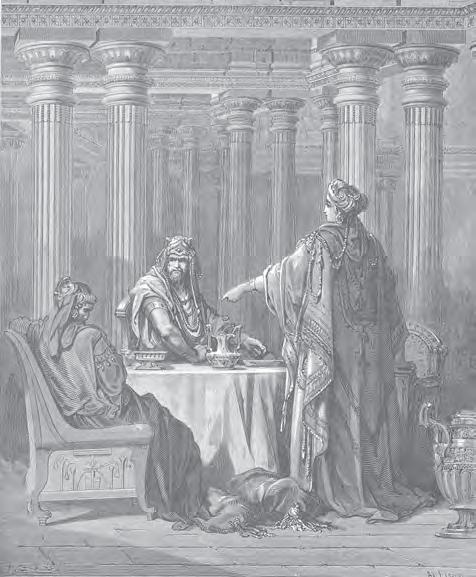
When Haman hatches his plans for genocide, Esther, like Mordecai, must also decide whether to bravely obey God or to selfishly attempt to control her own earthly fate despite God’s commands When Mordecai finds out about Haman’s plans, Mordecai asks Esther to approach the king on behalf of their people.xviii To agree with Mordecai’s request would be for Esther to obey God, who commands that she “ rescue ” the powerless “from the hand of the oppressor.”xix However, visiting the king without being summoned is punishable by death; if she does what Mordecai asks, she risks her life xx She must choose either to preserve her own earthly existence by keeping quiet about Haman’s murderous plans, or to courageously set aside her fear for her life and decide to humbly obey the will of God
Esther bravely chooses to obey God by approaching the king, which proves to be the decision that allows her to make her mark on the world. Instead of killing Esther, the king calmly agrees to meet with her.xxi On the other hand, if she had chosen to “remain silent” out of her own self-interest, the text tells us that “relief and deliverance for the Jews” would have arisen “from another place” and Mordecai and Esther’s family would
have “perish[ed] ”xxii Though Esther’s humble obedience in visiting the king requires immense courage, it turns out to be a choice that is instrumental in saving Esther, Mordecai, and the Jewish people as a whole
Like Mordecai, Esther chooses to obey God and ends up making her mark on the world as a result, impacting an immense number of people because of her humble obedience to God’s command. When Esther approaches the king, he promises to give her anything that she might request.xxiii As a result, she is able to sentence Haman to death for his crimes and enable the Je wish people to fight back against their oppressors xxiv Esther positively influences Persian policy in order to save the Je wish race from annihilation and goes down in histor y as a heroine of her people xxv Esther’s courageous choice to stand up for her people, obeying God’s command for her despite the danger she herself faces, allows her to become her best, most influential self, instead of dying as a result of her own selfishness.
Haman also faces a difficult decision when Mordecai refuses to bow to him Haman could choose
’s courageous choice to stand up for her people, obeying God’s command for her despite the danger she herself faces, allows her to become her best, most influential self, instead of dying as a result of her own selfishness.
to continue with his life, refraining from lashing out against Mordecai xxvi Ideally, Haman could even take this moment to realize that it is better to be humble than self-important, and begin to reshape his character a n d c
by a l l xxvii Haman could choose to humble himself, an act that would require a shift in his worldview, or Haman could continue to attempt to force ever yone to bow to him.
Unlike Mordecai and Esther, Haman chooses a path of prideful selfishness, seeking to control the elements of his life and bend them to his own will, ultimately aiming to exterminate the Jewish race His choice to act in this way seems to ser ve him to his advantage for a few days, but it harms him in the long run xxviii If Haman had humbly chosen to consider the lives of others instead of tr ying to force them to glorify him, the Bible says that God would have given him “ grace.”xxix However, because Haman chooses selfish pride and attempts to kill all of the Jews in order to avenge Mordecai’s wrongs against Haman’s image, Haman and his sons are hanged for his crimes against

i Esther 1:1 10:3 (NIV)
ii Esther 3:1-5 (NIV)
iii Esther 3:6-9 (NIV)
iv Esther 1:1 10:3 (NIV); Veronika Bachmann, “The Esther Narratives as Reminders For Jews and For Christians,” European Judaism: A Journal for the New Europe 47, 1 (2014): 118.
v Esther 3:1, 2 (NIV).
vi Exodus 20:3-6 (NIV).
vii Exodus 20:3-6 (NIV). Though Esther 3 does not specifically explain why Mordecai does not kneel, it is important to note that Mordecai tells those curious about why he “refuse[s] to comply” that he is a Jew {Esther 3:6 (NIV)} This reference to his race after his refusal to bow to the haughty Haman is reminiscent
of the stor y of Shadrach, Meshach, and Abednego, who are also identified as Jews after they refuse to worship a false God {Daniel 3 (NIV)} Mordecai acts much like the three men, who neglect to kneel to an important figure though theirs is made of gold whereas Mordecai’s is an actual person even though a royal decree obligates them to In both passages, the men ’ s Jewishness is specifically identified as the trait that makes them different from those who kneel and worship the figures; as such, I would attribute both refusals to obedience of Exodus 20:3-6: “You shall have no other gods before me You shall not make for yourself an idol in the form of anything in heaven above or on the earth beneath or in the waters below. You shall not bow down to them or worship them; for I, the LORD your God, am a jealous God, punishing the children for the sin of the fathers to the third and fourth generation of those who hate me, but showing love to a thousand generations of those who love me and keep my commandments ” For examples of the severe punishments the king could dole out at any given time, see Esther 3:23 or 4:11
viii Esther 3:2, 5, 6 (NIV)
ix Proverbs 3:34 (NIV)
x Proverbs 3:34 (NIV)
xi Proverbs 3:34 (NIV)
xii Esther 3:2, 5, 6, 5:9-8:2, 10:1-3 (NIV).
xiii Esther 3:2, 5, 6, 5:9-8:2, 10:1-3 (NIV).
xiv Esther 8:2 (NIV).
xv Esther 8:2, 7-12 (NIV).
xvi Esther 10:1-3 (NIV)
xvii Esther 10:1-3 (NIV)
xviii Esther 3:1 4:8 (NIV)
xix Jeremiah 22:3 (NIV)
xx Esther 4:11 (NIV)
xxi Esther 5:2-5 (NIV)
xxii Esther 4:14 (NIV)
xxiii Esther 5:2-5 (NIV)
xxiv Esther 7:1-10, 8:5-11 (NIV).
xxv Esther 5:1-8, 7:1 10:3 (NIV). In fact, Esther’s courage and positive influence is still celebrated today in the Jewish Purim festival {Esther 9 (NIV); Bachmann, 118 }
xxvi Esther 5:10 (NIV).
xxvii For information on God’s command that people be humble, Micah 6:8 contains one of the most famous calls for humility in the Bible.
xxviii Esther 3:1-15, 5:9-14, 7:1-10, 9:7-10, 13, 14 (NIV)
xxix Proverbs 3:34 (NIV).
xxx Esther 9:25 (NIV).
xxxi Nicole Hochner, “Imagining Esther in Early Modern France,” The Sixteenth Centur y Journal 41 3 (2010): 770; Bachmann, 123; Esther 3:1-15,
5:9 7:10 (NIV).
xxxii Esther 6:6 (NIV)
xxxiii Esther 6:7-11, 8:1-2, 10:1-3 (NIV)
xxxiv Esther 5:14, 7:1-10 (NIV)
xxxv Bachmann, 118
xxxvi I’d like to give credit to Bachmann, whose essay was the first to get me brainstorming about Esther’s actions as examples of great humility Additionally, I am so thankful for my wonderful editor, Hyemin Han ’20, who worked closely with me as I wrote this article and pushed me to think and write more seriously and critically with each successive draft I would also like to thank Hailey Scherer ’20 and Jeffrey Poomkudy ’20 for all the hard work and encouragement they put into helping both Hyemin and me as we edited the final few drafts together Finally, a huge thank you to my family and my boyfriend for being willing to take the time to help and support me in ever y way that they could as I worked, reworked, and sometimes struggled through writing my first-ever Apologia article Without them and God, this essay would not have made it here to the journal!

Cecilia Zugel ’21 is from Haymarket, Virginia. She is a prospective double major in English and Film, with a minor in Linguistics.


by Luke Dickens

“The civilian has been pronounced dead. His death, which was yet only faintly audible in 1940, sounded loudly for all at 8:15 A.M. on August 6, 1945, in Hiroshima, Japan.” i
Modern warfare has threatened to obliterate the distinction between combatants and noncombatants. The international outrage provoked by actions such as the chemical attacks in Syria suggests that the death of this distinction is not a matter to be celebrated. Many will condemn blatant violations of noncombatant immunity, but often for different reasons Some claim that intentionally targeting noncombatants is always unacceptable; on the other hand, many others offer conditional defenses of noncombatants Such a conditional defense might hold that noncombatants should not be targeted because their deaths would not ser ve a legitimate militar y purpose or because they happen to be on “ our side.” Yet if targeting noncombatants accomplishes an apparently higher end such as ending a war more swiftly and thereby saving countless more lives fewer people side with noncombatants This phenomenon is well illustrated by a poll conducted in 2015 by the Pew Research Center, which found that 56% of Americans believed that the use of atomic bombs on Hiroshima and Nagasaki was justified.ii
The decision to bomb Hiroshima and Nagasaki remains the subject of a fierce and ongoing debate. Strangely, people with similar worldviews often take different sides in this debate; Christians are no exemption to this peculiarity. Many Christians have defended the bombings as justified actions that
saved lives, while others have published scathing condemnations of the bombings.iii That Christians disagree on the morality of the bombings of Hiroshima and Nagasaki reflects a deeper doctrinal disagreement on the question of noncombatant immunity. As a Christian deeply bothered by the lack of doctrinal unity on this important matter, I wish to argue for the following position: it is morally impermissible to intentionally kill noncombatants I believe that a proper understanding of Christian ethics renders this conclusion unavoidable for professing Christians Mounting a compelling defense of Christianity one that would ground elementar y Christian beliefs that are requisite to a Christian defense of noncombatant immunity is beyond the scope of this article. Therefore, this article will presuppose basic Christian beliefs in order to make the following argument:
P1) It is morally impermissible to commit an evil act so that good may come from it
P2) Intentionally killing noncombatants is an evil act
C1) Therefore, it is morally impermissible to intentionally kill innocent noncombatants.
The first premise (P1) is quite uncontroversial among Christian theologians and ethicists. Christians believe that the highest end that human beings can pursue is the glor y of God, as evidenced by the New
Testament exhortation to “do all to the glor y of God ”iv
Hence the Westminster Larger Catechism asserts: “Man’s chief and highest end is to glorify God, and to fully enjoy him forever ”v To glorify God requires one to acknowledge God as the only being worthy of worship and to joyfully worship him Accordingly, Christians believe that when they earnestly strive to ser ve and enjoy God, God is glorified. Although it may seem counterintuitive, God can also be glorified through human shortcomings. For example, God’s power and grace are made manifest through human
Romans, Thomas Aquinas notes: “For just as it is not correct to deduce truth from falsity, so it is wrong to reach a good end through evil means.”x John Calvin echoes this conclusion in his commentar y on Romans, writing, “Now the answer to this [Paul’s question] is evident, That evil cannot of itself produce anything but evil.”xi How then could God be glorified through human weaknesses? Because such failings provide God with the opportunity to exercise his power and grace to bring good out of evil In other words, God is not glorified by humanity’s evil actions, but is rather
Evil ac tions are no less evil because they happen to give God the occasion to bring more glor y unto himself.
weaknesses vi This is why the Apostle Paul could faithfully say: “where sin increased, (God’s) grace abounded all the more ”vii
These teachings prompted some Pharisaical opponents of early Christianity to accuse Paul and other apostles of preaching a doctrine of cheap grace: that Christians ought to sin so that God would be glorified.viii Paul confronts these charges in the Book of Romans, asking, “Are we to continue in sin so that grace may abound?” to which he emphatically responds, “By no means! How can we who died to sin still live in it?”ix In his commentar y on the book of
glorified by his providential work to overcome those evil actions with good Evil actions are no less evil because they happen to give God the occasion to bring more glor y unto himself. It follows that it is morally impermissible to commit an evil act so that God may be glorified. Furthermore, if consciously intending the highest end glorifying God cannot justify an evil action, then consciously intending a lesser end will likewise be unable to justify an evil action This line of reasoning entails P1: it is morally impermissible to commit an evil act so that good may come from it It is necessar y to explain what is meant by

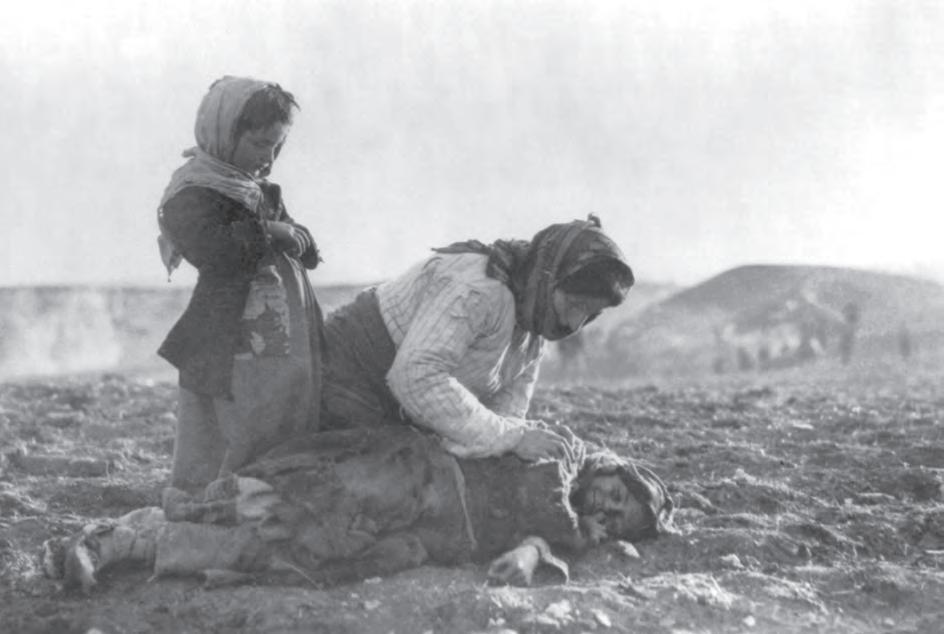
“noncombatants” and “intentionally killing” before mounting a defense of P2. To argue for noncombatant immunity from biblical principles, one must define a noncombatant in such a way as to make it roughly interchangeable with an innocent. In ordinar y discourse, an innocent is an individual who is not guilty of a specific wrongdoing or wrongdoings In the context of war, an innocent is someone whose moral desert is not the same as that of the principal participants in the war, i e the rulers/elites promoting it and the soldiers fighting it; in other words, while the
there is a philosophically significant distinction between the foreseen and intended consequences of an action.xiii This distinction can be elucidated through the following thought experiment. Suppose a general is considering whether to order a drone strike that would kill a dangerous terrorist. The terrorist’s death would contribute to the safety of the citizens in the general’s countr y a ver y desirable goal The drone strike is a means to accomplish an end the terrorist’s death which in turn is a means to the end of promoting national security However, since this terrorist always
Christians believe that the highest end that human beings can pursue is the glor y of God.
architects and executors of an unjust war are widely considered legitimate targets, innocent individuals are not legitimate targets Therefore, a noncombatant can be defined as such a person, i e someone who deser ves not to be intentionally targeted in the prosecution of a war xii
Having clarified the meaning of noncombatants, it is necessar y to perform a similar exercise for “intentionally killing.” Not all wartime actions that result in noncombatant deaths qualify as instances of “intentionally killing.” Quite often noncombatants are killed as a tragic but unintended consequence of attacks on legitimate militar y targets In other words,
keeps a cage of civilians in his immediate vicinity to ward off drone strikes, a drone strike would not only kill the terrorist, but also the caged civilians These two outcomes the death of the terrorist and the death of the caged civilians are distinct in that the former is intended by the general whereas the latter is merely foreseen. The civilian deaths are not causally related to the death of the terrorist; if the civilians were liberated prior to the drone strike, the drone strike would have the same intended outcome the death of the terrorist. This suggests the following definitions for intended and foreseen consequences: an intended consequence of an action is either the chosen end of that action or
something that must occur for the action to achieve its end(s), and a foreseen consequence of an action is neither the chosen end of that action nor something that must obtain for the action to achieve its end(s). Therefore, “intentionally killing” noncombatants occurs when such deaths are the intended consequence of the attackers’ actions
Vindicating noncombatant immunity is no easy task On the one hand, the Sixth Commandment states: “You shall not murder ”xiv Yet anyone familiar with the biblical accounts of the Israelite conquest of Canaan knows that God commanded the Israelites to decimate to entire cities. Furthermore, there have been plenty of times throughout the histor y of Christianity when Christians condoned or participated in the slaughter of noncombatants. For example, Pope Innocent III commissioned the bloody Albigensian Crusade to kill hundreds of thousands of Cathar heretics, and Puritan colonists indiscriminately massacred members of the Pequot tribe during the Pequot War xv Finally, many theologians, including Saint Augustine, have argued that intentionally killing noncombatants during a war can be justified under certain circumstances.xvi It is necessar y to examine each of these issues the Old Testament historical record, the legacy of Christian violence, and the inconsistency of theological attitudes toward protecting noncombatants in order to elucidate the appropriate posture in Christian ethics toward the intentional killing of noncombatants
The Conquest of Canaan is a sobering account of violence, in which God commands the Israelites to
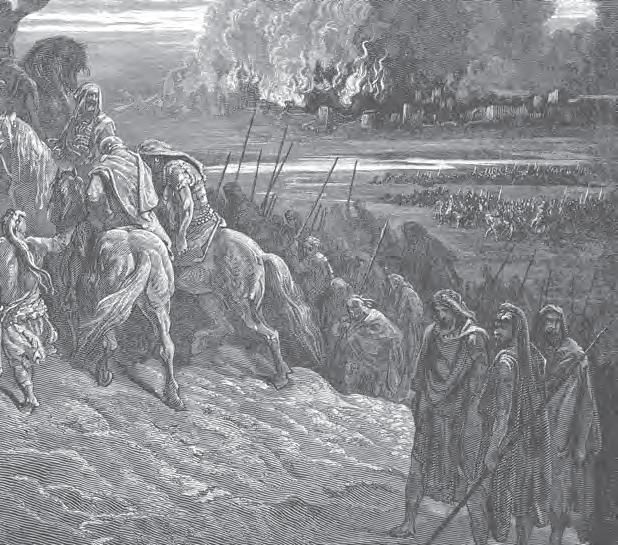
take possession of Canaan and devote its inhabitants “ to complete destruction,” which is what the Israelites proceeded to do.xvii Anyone familiar with the details of this account could hardly be faulted for declaring this historical episode inconsistent with a principle of noncombatant immunity. However, noncombatant immunity is perfectly consistent with the Conquest of Canaan for the following reason: the Conquest of Canaan was an instance of divine justice, whereas noncombatant immunity is a legal precept that applies to earthly justice and earthly actors
Christians recognize a distinction between the authority to execute justice that God reser ves for himself and the authority to execute justice that God has delegated to earthly governments. According to Christian belief, God, a sinless and perfectly just being, possesses authority over all of his creation. This authority entails the ability to justly punish sinners for their sins, condemning unrepentant sinners to eternal damnation in hell xviii Therefore, since ever y Canaanite was a sinner, God could justly condemn them to death if he so chose That God happened to designate the Israelites as the actors who would carr y out his divine justice on the Canaanites does not entail that the Israelites could usually employ such methods against their foes. On the contrar y, when the Israelites laid siege to any city outside the land of Canaan, they were commanded by God to spare the noncombatants of the city and refrain from employing star vation tactics against that city xix God’s extraordinar y command that the Nation of Israel visit divine justice upon the Canaanites temporarily privileged the Israelites with a degree of authority that they other wise lacked; therefore, P2, a principle of noncombatant immunity that concerns how nations ought to behave in the ordinar y scheme of things, is not invalidated by the Conquest of Canaan.
Violence throughout church histor y does not pose a steep challenge to noncombatant immunity. Clearly, Christians have condoned and participated in the slaughter of innocents and noncombatants throughout histor y However, citing such violent acts to discredit P2 is a classic case of the red herring fallacy: the veracity of moral assertions has nothing to do with the frequency with which those assertions are upheld or disregarded. While violence throughout church histor y attests to inconsistent attitudes toward noncombatant immunity and a failure to translate beliefs into practice, it does not prove that there are no biblical grounds for a principle of noncombatant immunity
The most daunting challenge to noncombatant immunity comes from the works of Saint Augustine and other theologians who believed that there were certain
circumstances under which noncombatants could be justly killed Augustine and some of his predecessors maintained that the rightness or wrongness of an action derived from the dispositions leading an actor to act, and not from anything inherent to the action itself xx This argument can be defined as the nonintrinsic objection: it is not intrinsically evil for earthly authorities to intentionally kill noncombatants. If this objection were true, then it would be possible for a soldier to justly kill noncombatants provided that he was motivated by virtuous rather than vicious dispositions. Furthermore, many medieval theologians believed there was such an intimate relationship between individual and social morality that “ an unjust nation (would) not be characterized by the presence of a just citizenr y ”xxi This notion will be defined as the collective moral guilt objection: the moral guilt of a nation that initiated an unjust war precludes the innocence of its individual constituents. If noncombatant immunity is to be preser ved, then these both of these objections must be addressed.
The Bible makes clear that “there are certain things forbidden whatever consequences threaten ”xxii In other words, some actions, such as adulter y and murder,
biblical principles concerning what earthly authorities may and may not do; accordingly, the non-intrinsic objection fails to undermine noncombatant immunity and can thus be discarded
The collective moral guilt objection challenges noncombatant immunity in that it proposes that there are no innocents at all in the countr y at fault; if there are no innocents in that countr y, then nobody not even people traditionally considered noncombatants is exempt from being targeted. However, proponents of the collective moral guilt objection must support their claims: they must show why ever yone in the enemy nation is “guilty ” They could claim that anyone who materially contributes to the enemy ’ s war effort is thereby guilty; however, this claim does not collectivize moral guilt far enough, because it cannot condemn as guilty the swathes of children and elderly persons who do not contribute to their nation’s war efforts. Similarly, it will not do to note that ever yone in the enemy nation is a sinner, as such an allegation is equally applicable to one ’ s own nation; furthermore, governments only have the authority to punish people for certain egregious sins It is impossible to blame ever y constituent of an enemy nation without lowering the threshold of guilt
An intrinsically evil ac tion is an ac tion that is wrong regardless of the circumstances in which it was per formed or the intentions of its ac tor.
are intrinsically evil. An intrinsically evil action is an action that is wrong regardless of the circumstances in which it was performed or the intentions of its actor The Old and New Testaments unwaveringly affirm that it is intrinsically evil for any earthly authority to intentionally kill innocent individuals In Exodus 23, the context in which the command to “ not kill the innocent and righteous” is given implies that it applied to the civil and religious authorities of the Kingdom of Israel, and not merely individual Israelites.xxiii God refused to pardon Manasseh, a wicked king of Judah, when he legalized infant sacrifice and “filled Jerusalem with innocent blood.”xxiv As for the New Testament, Romans 13:3 states that rulers appointed by God “ are not a terror to good conduct, but to bad,” which implies that the coercive authority of the state may not be used indiscriminately xxv In the same vein, the Apostle Peter claimed that governing authorities are supposed “ to punish those who do evil and to praise those who do good.”xxvi The Old and New Testaments confirm that respecting this distinction between the innocent and the guilty is a fundamental function of government. The non-intrinsic objection is incompatible with
to a point where being guilty no longer entails worthy of being targeted. Fittingly, the famous Protestant Just War theorist Hugo Grotius dismissed claims of collective moral guilt: “Nature doth not allow Retaliation, unless against the personal Offenders; neither is it enough to pretend, that the Enemies are but one entire Body engaged against us ”xxvii
The arguments above demonstrate from a Christian perspective that it is morally impermissible to intentionally kill noncombatants. It entails that the bombings of Hiroshima and Nagasaki, the My Lai Massacre, and ever y past violation of noncombatant immunity amount to nothing less than moral atrocities As people called to “abhor what is evil,” Christians must unwaveringly condemn violations of noncombatant immunity, repent of Christian complicity or participation in such atrocities, and work toward preventing their occurrence in the future xxviii
i Richard Shelly Hartigan, The Forgotten Victim: A History of the Civilian (Chicago: Precedent Publishing, Inc , 1982), 1
ii Bruce Stokes, “70 years after Hiroshima,
opinions have shifted on the use of atomic bomb,” Pew Research, 4 August 2015, accessed 9 October 2018, <http://www pewresearch org/facttank/2015/08/04/70-years-after-hiroshima-opinionshave-shifted-on-use-of-atomic-bomb/>
iii Br yan Fischer, “A Christian View of Hiroshima,” American Family Association, 31 May 2016, accessed 3 September 2018, <https://www.afa.net/the-stand/ faith/2016/05/a-christian-view-of-hiroshima/>
iv 1 Thessalonians 5:22; 1 Corinthians 10:31 (ESV)
v The Westminster Confession of Faith and Catechisms, A1
vi 2 Corinthians 12:9 (ESV)
vii Romans 6:21 (ESV)
viii ESV Study Bible, notes on Romans 3:5-8
ix Romans 6:1-2 (ESV)
x Saint Thomas Aquinas, “Commentar y on Romans,” Aquinas Study Bible, accessed 3 September 2018, <https://sites.google.com/site/ aquinasstudybible/home/romans/st-thomas-aquinason-romans/chapter-1/chapter-2/chapter-3>.
xi John Calvin, Commentary on Romans (Grand Rapids: Christian Classics Ethereal Librar y, 1999), 69
xii Richard J Arneson, “Just Warefare Theor y and Noncombatant Immunity,” Cornell International Law Journal vol 39, no 3 (2006): 664
xiii G E M Anscombe, “Modern Moral Philosophy,” Philosophy Vol 33, No 124 (1958): 9
xiv Exodus 20:13 (ESV)
xv Bruce L Shelley, Church History in Plain Language: Third Edition (Nashville: Thomas Nelson, 2008), 211; Andrew Preston, Sword of the Spirit, Shield of Faith: Religion in American War and Diplomacy (New York: Anchor Books, 2012), 31.
xvi Richard Shelly Hartigan, “Saint Augustine on War and Killing: The Problem of the Innocent,” Journal of the History of Ideas vol 27, no 2 (1996): 203
xvii Deuteronomy 20:17 (ESV).
xviii Romans 6:23 (ESV).
xix Deuteronomy 20:14,19-20 (ESV).
xx Roland H. Bainton, Christian Attitudes Toward War and Peace: A Historical Survey and Critical Reevaluation (Eugene: Wipf & Stock, 2008), 92
xxi Hartigan, “Saint Augustine on War and Killing,” 202.
xxii G. E. M. Anscombe, “Modern Moral Philosophy,” Philosophy nol 33, no 124 (1958): 8
xxiii Exodus 23:7 (ESV)
xxiv 2 Kings 24:4 (ESV).
xxv Romans 13:3 (ESV).
xxvi 1 Peter 2:14 (ESV).
xxvii Grotius, The Rights of War and Peace, ed. Richard
Tuck (Indianapolis: Liberty Fund, 2005), 3.11.16.2. <http://oll libertyfund org/titles/grotius-the-rightsof-war-and-peace-2005-ed-vol-3-book-iii>
xxviii Romans 12:9 (ESV)

Luke Dickens ’18 is from Fortson, Georgia He is a double major in Economics and Philosophy


L I C T R A D I T I O N :
The concept of authority what it is, who has it, and who should have it never fails to incite debate, particularly within the Western individualistic paradigm Those skeptical of authority view it as oppressive, while supporters of authority believe it to be a prerequisite to social stability Within philosophical contexts, the concept of authority comes into play in epistemological debates, which ask: “How do we know what we know?” Indeed, authority plays a central role in understanding and legitimizing knowledge. Proponents of authority in epistemology cite it as a tool to fill in the gaps of non-expert understanding, whereas skeptics of authority cite its tendency to overstep its boundaries and supplant rational exploration of beliefs As in other domains, authority is contentious issue among different Christian worldviews
While scholars may rationally disagree about the proper size and influence of authority, they cannot dispute its prevalence in society. For many, the pursuit of truth depends on subconscious appeals to external authorities, especially in areas in which they have little expertise For example, while people may not have the time or ability to learn the complexities of astrophysics, they believe that other galaxies exist because they trust the conclusions of the scientific community Likewise, when people seek certified physicians to diagnose illnesses or trust scientific information in peerreviewed journals, they rely on authority to recognize truths that may not be self-evident. The social order often depends on truths established by authority.
For many Christians, understanding faith which transcends the senses requires an authority to recognize non-obvious truths Authority shapes Christians’ understanding of doctrine, which in turn shapes their religious identity This subject has tremendous consequences: as the religious wars of the sixteenth and seventeenth centur y in Europe demonstrate, the question of the legitimacy of certain religious authorities has shaped the histor y of the world, prompting the formation of debates and councils to determine which doctrines align with Christian orthodoxy. As illustrated by the Protestant Reformation, during which Christian groups challenged the legitimacy of papal authority and broke away from the Roman Catholic Church, religious disagreements have often underpinned by different understandings of what constitutes proper Christian authority During the Reformation, two dominant paradigms emerged: the Protestant paradigm of sola
scriptura and the Catholic adherence to both Scripture and Tradition
According to sola scriptura, the Bible is the only infallible and divinely-inspired ecclesiastical authority for Christians i While Catholicism recognizes the importance of Scripture, it also maintains that the Magisterium the teaching body of the Catholic Church, made up of the bishops and and the pope is an infallible interpreter of Scripture under certain circumstances. Catholics believe that the Magisterium is inextricably linked to Scripture insofar as it plays a crucial, complementar y role in interpreting and understanding it In other words, the Catholic Church views Tradition and Scripture as two facets of one divine truth Whereas Protestants will be more likely to defer to the Bible alone when contemplating the divine, Catholics will accept both the Bible and the Church’s authoritative interpretation of it.
In the modern world, many Americans have not paid much attention to justifications of the Catholic reliance on Tradition, which may seem undemocratic, anachronistic, or oppressive. After all, individualism is the dominant ethos in the United States, and the individualist understanding of authority conforms well to a Protestant paradigm that treats authority skeptically This article aims to provide a different perspective by articulating and defending the Catholic paradigm of authority, particularly in its relationships to Scripture and to questions of orthodoxy.
Many devout Christians recognize the importance of authority because it is inherently connected to questions about the content and interpretation of the Bible Unlike Muslims, who view the Quran as the literal word of God, or Mormons, who believe that the Book of Mormon was revealed directly to Joseph Smith, most Christians recognize the Bible as a compilation of divinely inspired texts The Bible is commonly understood as an essential collection of writings that provide religious truths and moral guidelines. Written by man, it is considered to be divinely inspired rather than directly given or revealed. Both Catholics and Protestants recognize these truths as the framework for Christian belief and orthodoxy However, the importance of the Bible to Christian orthodoxy has not stopped Christians from interpreting the Bible differently, both individually and among denominations
The Catholic position argues that differences in
Authority shapes Christians’ understanding of doc trine, which in turn shapes their religious identity.
biblical interpretation stem from competing notions of what constitutes religious authority As previously mentioned, the Protestant paradigm maintains that all essential Christian doctrine can be found in the Bible a belief known as sola scriptura While many adherents of sola scriptura deny the interpretative authority of the Church hierarchy itself, they do not reject religious epistemological authority outright. In fact, a careful examination of religious practices reveals that most denominations implicitly recognize some sort of external authority in biblical interpretation.
One example of this phenomenon occurs within the context of the Protestant debate over the legitimacy of infant baptism The infant baptism debate pits those who support baptizing babies (e g Lutherans and Presbyterians) against those who restrict baptism to professed believers (e g Baptists and Pentecostals). Because there exists no explicit affirmation or denunciation of infant baptism in Scripture, many Protestants implicitly refer to early church traditions or to their own sources of authority, such as denominational founders or sect leaders, when engaging in this debate In an oral debate between prominent Protestant theologians R C Sproul and John MacArthur, for example, Sproul points to biblical passages to support infant baptism while MacArthur does the same to argue against the practice However,
they reference other sources of authority to back up their respective positions ii Presumably, according to MacArthur, since the Bible does not explicitly describe infant baptism, it must be forbidden MacArthur, who purports to rest his case on the Bible alone, nevertheless references a “voluminous amount of literature on the subject,” appealing to an extra-biblical hermeneutic when he refers to “the Calvinistic principle of Scripture: if Scripture does not command it, it is forbidden.”iii R.C. Sproul counters that Scripture does not explicitly prohibit infant baptism, and therefore the case for infant baptism comes by making inferences from what Scripture has explicitly proclaimed iv Sproul references several specific writers including John Calvin and New Testament scholar Oscar Cullmann While both debaters quote from Scripture (and even use the same passages), the exegesis of such passages differ Although they would not claim to appeal to external authority directly, MacArthur and Sproul implicitly recognize some kind of authority beyond personal exegeses. Thus, a belief that the Bible can be read in total isolation from an external authority cannot be upheld because drawing from some external authority is necessar y to clarify, at the ver y least, theological issues which the Bible does not explicitly address
Renouncing external sources in the adoption of sola scriptura proves not only theoretically
A belief that the Bible can be read in total isolation from an ex ternal authority cannot be upheld.

impossible, but also practically problematic As some Protestant thinkers have acknowledged, the rejection of a “rule of faith” that is, a mechanism for upholding orthodoxy often results in an inordinate individualism which distorts Scripture In a critique of modern American Protestantism, influential evangelical theologian Stanley Hauer was worries that, “individualism the conceit of self-sufficiency has thoroughly corrupted American Christians’ ability to interpret Scripture.”v In a profile of Hauer was, Baptist writer John Shelton commends Hauer was ’ s criticism of the evangelical preoccupation with individualism Shelton, together with Hauer was, claims that faithful biblical interpretation must be bound by tradition vi In summarizing Hauerwas’s critiques, Shelton argues that in early Christian debates on heresy, both sides used the Bible to make their arguments; however, only the rule of faith passed down by the Apostles enabled the formation of established doctrines like the Trinity.vii
More extreme adherents of sola scriptura, who may be called followers of solo scriptura, claim that tradition ser ves no function because the Holy Spirit reveals biblical truths to any sincere believer through a reading of Scripture alone However, this belief contradicts the historical development of Christianity: as Hauer was and Shelton argue, the maintenance of faith was only made possible due to a “ pattern ” handed down through time and sustained by the Apostles viii The alternative to acknowledgement of this “ pattern, ” as recognized by both Catholic and Protestant thinkers, is a Christianity without the “rule of faith,” which is the only mechanism that can prevent confusion and
he or she has received this truth While sola scriptura ultimately operates on the principle that individuals are authorized to receive religious truth, the Catholic approach demands criteria to determine who possesses legitimate authority
It is important to note that many adherents of sola scriptura do not agree with the characterization that their position is individualistic. Dr. Keith Mathison of the Calvinist-influenced Reformation Bible College, for example, claims a distinction between adherents of sola scriptura and adherents of solo scriptura. x According to Mathison, a claim to sole reliance on the Bible and personal judgement in determining matters of faith may be classified as solo scriptura, as previously mentioned He exposes this belief as a modern and individualistic distortion of sola scriptura, which acknowledges the support of secondar y authorities and traditions deemed to be in line with Scripture. Mathison recognizes that Scripture provides no mechanism for interpretation of itself and thus requires some person or persons to interpret it.xi Sola scriptura, argues Mathison, is the correct Protestant position, and the Catholic argument against sola scriptura is a straw man critique of solo scriptura xii
However, as Catholic writer Brian Cross obser ves in his article “Solo Scriptura, Sola Scriptura, and the Question of Interpretive Authority,” when sola scriptura is properly considered, it ultimately boils down to the subjectivity of solo scriptura. xiii Cross reiterates Mathison’s qualification of sola scriptura: “ Whereas solo scriptura rejects the interpretive authority of the Church and the derivative authority of the creeds, sola scriptura
The post-Reformation proliferation of Christian denominations... suggests that the abandonment of the “rule of faith” has had real historical consequences.
doctrinal chaos.ix The post-Reformation proliferation of Christian denominations some of which have developed vastly different conclusions about basic Christian beliefs and practices such as infant baptism suggests that the abandonment of the “rule of faith” has had real historical consequences
Because Christians must appeal, whether consciously or subconsciously, to some existing tradition or authority in order to practice their faith without embracing individualism in biblical exegesis, it is necessar y to determine how authority is manifested and which authorities are legitimate. If a Christian claims to possess the truth, he or she must justify how
affirms the interpretive authority of the Church and the derivative authority of the creeds, except when they teach something contrar y to one ’ s conscience, as informed by one ’ s own interpretation of Scripture ”xiv The problem with sola scriptura, notes Cross, is the final caveat Whereas solo scriptura purports to be a direct refutation of secondar y authorities, sola scriptura indirectly subscribes to the same principles of individualism because it allows the individual to submit only to the authorities with which he or she agrees. In effect, circular reasoning ensues as the individual chooses the correct interpreter of the Bible according to his or her interpretation of the Bible. Without explicit criteria for authority, Cross argues, the Protestant paradigm in practice results in submission only to the particular

The Protestant paradigm in prac tice results in submission only to the par ticular institution, congregation, denomination, or other authority which is agreeable to the individual.
institution, congregation, denomination, or other authority which is agreeable to the individual.xv Thus, sola scriptura only shifts the problem of subjective authority and ultimately leads to the same difficulties as its supposedly more extreme counterpart, solo scriptura If the latter position implies refusing to submit to any authority beyond one ’ s individual interpretation of the Bible, the former circles back to the same problem of subjectivity. In the sola scriptura example, there is no way to determine objective truth if the choice of authority is arbitrar y. Because sola scriptura allows for subjective recognition of authority, the individual person is ultimately the sole interpreter of scriptural truth under this view
Unlike sola scriptura, the Catholic paradigm offers a solution to the arbitrar y selection of authority because it recognizes a concrete definition of what constitutes the Church xvi The proponent of sola scriptura may argue that because humans are imperfect beings, it is unreasonable to expect a human institution to understand the complex truths of Christianity, and so the individual interpretations implicit in the Protestant paradigm are the humblest and most reasonable attempts at living out Christianity. In response, the Catholic Church argues that Christ laid
the foundations for an institutional Church in order to correct for human error In both Catholicism and Protestantism, “the church” is considered to be the Body of Christ, the living and physical manifestation of Jesus on earth However, unlike many Protestant denominations which have varied perceptions of what the term “church” means in tangible terms Catholics believe that Christ passed down his legitimate authority through an apostolic lineage.xvii
Because the Church’s authority is ultimately derived from Christ’s authority, the notion of tradition in the Catholic paradigm is radically different from tradition as understood in the Protestant paradigm While tradition in the Protestant paradigm vests ultimate authority in texts, the Catholic paradigm understands authority to be derived from persons; such authority manifests most perfectly in Christ, through the Incarnation. Christ desired his people to remain united, and so, according to Catholics, he instituted the Apostles as the first bishops and chose Peter, whom he called the “rock upon which he would build [his] church,” as the first pope xviii Since the time of the Apostles, that authority has been passed down through the teaching authority of the Church, or the Magisterium, in what Catholics term apostolic
Reliance on persons in authority, unlike reliance on tex t as an authority, enables humans to engage with truth through both faith and reason.
succession. xix The Church acts as an means through which authority is passed down from person to person in a stable and traceable manner. Reliance on persons in authority, unlike reliance on text as an authority, enables humans to engage with truth through both faith and reason xx Because texts cannot interpret themselves, textual authority requires the use of human reason to determine truth Thus, apostolic succession provides a reliable framework through which authoritative personhood is passed down and maintained.
Because it rejects the idea of apostolic succession, the Protestant position has no conclusive markers of what constitutes “the church.”xxi Some Protestant traditions claim that “church” refers to all baptized Christians, but this term has few practical implications and does not delineate authority Both Protestantism and Catholicism affirm the Holy Spirit’s guidance in biblical interpretation, but only Catholicism provides a method for correcting human errors in judgment caused by irrationality or the distorting effects of sin The theor y of apostolic succession provides a structure for maintaining orthodoxy that the Protestant paradigm lacks due to sola scriptura’s inevitable reduction to the subjectivity of solo scriptura. The theor y of apostolic succession provides a framework
for maintaining orthodoxy, whereas in principle Protestantism has no such method for determining truth beyond individual and secondar y authorities. While the Catholic paradigm claims authority through apostolic succession, Protestantism cannot fundamentally separate authority from the individual
The theories of apostolic succession and reliance on tradition are both supported by Scripture and rooted in the histor y of the pre-New Testament early Church. In the earliest years of Christianity, Christ’s Apostles and disciples preached the stor y of Jesus of Nazareth orally and through letters. The Gospels and epistles, as well as the Acts of the Apostles and Revelation, were composed independently during the first few centuries, but as Christianity expanded, the earliest Christians relied on teachings received directly from the Apostles whom Jesus had chosen to lead the Church Paul testifies to a commitment to Tradition in 2 Thessalonians 2:15 when he says, “So then, brothers and sisters, stand firm and hold fast to the teachings we passed on to you, whether by word of mouth or by letter.”xxii Likewise, in 1 Corinthians 11:2, he says, “I praise you because you remember me in ever ything and hold fast to the traditions, just as I handed them

on to you ”xxiii In his letters, Paul emphasizes adherence to the teachings of the Apostles beyond the written word, as they are handed on
The primacy of the Apostles in the early Church does not exclude the possibility of disagreements among them; in fact, the disagreements in the early church illustrated the necessity of authority. The first major dispute in the Church, for example, manifested at the Council of Jerusalem (c. 50 AD), in which early Christians determined the position of non-Jews within the faith.xxiv The Council of Jerusalem was the first of many ecumenical councils in which the early church separated right doctrine from heresy; many strains of Protestantism accept the authority of these councils, which clarified major teachings of the Church Apostolic succession maintained tradition prior to and during the establishment of the Biblical canon, or books included in the Bible, at the Councils of Carthage in 397 and 414. While the early Church certainly referenced Scriptural texts to reach their conclusions, they also relied heavily on Tradition and knowledge passed on through the Apostles, which they interpreted through the authority vested in them through the Church At the Council of Nicaea (325 A D ), which occurred decades before the Bible was officially compiled, leaders of the Church affirmed the divinity of Christ, along with other central tenets of the faith that constitute the Nicene Creed, a declaration of the essential doctrines of the Christian faith.xxv
As this article has illustrated, while sola scriptura indicates belief in the Bible as the only primar y basis of the faith, it is inevitable that most Christians will refer to secondar y authorities in their quest for biblical truth At the same time, because of the lack of criteria for authority, sola scriptura naturally reduces to the subjectivity of solo scriptura and the prioritization of the individual On the other hand, the Catholic belief in apostolic succession emphasizes the authority of persons rather than that of texts alone and is therefore more internally consistent than its alternative, sola scriptura. If apostolic succession is a vital component of authority, then we would expect that the interpretation of Scripture would not exist in isolation, and that the Church’s oral tradition would be equally authoritative Thus, Catholic doctrine regarding subjects like the status of Mar y and the existence of Purgator y is supported by the testimony of the early oral Church and can be supported by modern Christians In the present world, just as in the early Church, authority is still necessar y for a proper understanding of Christianity, not only for the determination of basic doctrine which must be continuously interpreted and affirmed
but for rightly applying Christian principles in the face of rapidly changing social norms Despite the importance of individualism to the American ethos, religious individualism in the form of sola scriptura can limit rather than facilitate adherence to objectivity Therefore, authority in the Catholic context should not be viewed as oppressive, but rather as a stabilizing force and facilitator of historical continuity, unity, and orthodoxy in the Christian world.
i Brian Cross, “Solo Scriptura, Sola Scriptura, and the Question of Interpretive Authority,” Called to Communion (November 4, 2009).
ii R.C. Sproul and John MacArthur, “Baptism Debate,” Ligonier Ministries National Conference (1997). Debate.
iii MacArthur and Sproul
iv MacArthur and Sproul
v John Shelton, “Stanley Hauer was: Modern American Puddleglum,” Mere Orthodoxy, 8 May 2018 (accessed 8 October 2018), <https:// mereorthodoxy com/stanley-hauer was/>
vi Shelton
vii Shelton
viii Shelton
ix Shelton
x Br yan Cross, “Solo Scriptura, Sola Scriptura, and the Question of Interpretive Authority,” Called to Communion (November 4, 2009).
xi Cross.
xii Cross.
xiii Cross.
xiv Cross (emphasis mine).
xv Cross
xvi Cross
xvii Catechism of the Catholic Church, 77-79
xviii Matthew 16:18 (NABRE)
xix Catechism, 784
xx Ray Stamper, “The Catholic and Protestant Authority Paradigms Compared,” Called to Communion ( June 24, 2012).
xxi Cross.
xxii 2 Thessalonians 2:15 (NABRE).
xxiii 1 Corinthians 1:12 (NABRE).
xiv Acts of the Apostles 15 (NABRE)
xxv Catechism, 168-175

Maura Cahill ’20 is from Manasquan, NJ. She is majoring in English with a minor in Government

by Micah Taylor
Whenmy parents told me that we were moving to rural Japan, I had no idea what to expect. As a child raised in suburban Alabama, Japan was just about as different an environment as I could imagine
I soon discovered the wonders of my new surroundings. I spent hours following cool mountain streams to their heads and afternoons reading books in the mossy forests near my house. The countr y ’ s highly developed economy is accompanied by a topranked education system and affordable, accessible healthcare i,ii Its people are personable and polite, and its streets are safe and free of trash
Throughout my nine years spent in Japan, I witnessed firsthand how considerate the Japanese people are. Once, my wallet fell out of my pocket in the most crowded part of downtown Tokyo I came back an hour and a half later to find it placed on a fence, with no cash missing
As a kid, I remember speeding around town on my little mountain bike. I would meet up with friends whenever I wanted. My parents didn’t worr y about me as long as I was home for dinner I wasn ’ t an outlier in this case, either most Japanese children walk to school by themselves from the age of six iii Even in Tokyo, a metropolis much larger than New York City, I saw groups of first graders walking the streets or
taking the trains home. To me, the world seemed safe.
Japan was an incredible place to be as a kid. I was happy, and from my experience, most other kids seemed happy, too As I grew older, the parts of Japan that I had loved did not go away However, I slowly began to notice common occurrences that felt wrong to me.
Imagine you are sitting in a train car after a long day, just waiting to get home. You want to get to bed or watch a bit of TV Suddenly your train stops, and an announcement comes over the speakers A “personal incident” has transpired, and the train will be delayed for 30 minutes. Before you can catch yourself, you roll your eyes and sigh and then, immediately, you feel a sudden, intense guilt. Over time, these sorts of experiences became normal to me; it was just another part of growing up in Japan
I remember one middle school conversation vividly A friend had witnessed a suicide on his way to school. For a 12-year old, he was incredibly matter-offact in his description of the incident. “It’s a shame,” he said. “It’s so selfish to do it in public like that.”
Japan actually has one of the world’s highest suicide rates; the sixth highest in the developed world iv A large proportion of victims are middle aged men often caused by losing a job or a feeling of purposeless v However, a significant number of suicide victims in
Japanese youth commit approximately 4,600 suicides a year. Thir ty times that number are hospitalized for self-inflic ted injuries, annually.
Japan fall between the ages of 11 and 20
Japanese youth commit approximately 4,600 suicides a year.vi Thirty times that number are hospitalized for self-inflicted injuries, annually.vii And no one knows how many more are affected by severe, soul-crushing despair and depression viii
As a teenager, these statistics felt ver y real In middle school, one girl skipped a week of school and came back completely fine, smiling and laughing with friends. A couple months later, I heard that she had attempted suicide. Her parents had found her just in time
Suicide was always present in the peripheries of our lives My brother and I both had close friends who suffered. This personal experience indicates a more widespread existing problem. The 2016 World Happiness Report found in that two-thirds of Japanese youth see no point in “looking for ward to a brighter future ”ix Many of us had ver y little hope
And unfortunately, more and more people around the world are experiencing the same symptoms Despair is a global issue. The Center for Disease Control reported in 2016 that US suicide rates had increased by 25% since 1999.x
It is always difficult to extrapolate patterns seen in one nation or culture to another However, looking closely at Japanese society could help us to obser ve some causes of the global phenomenon.
Each culture has core values. For example, individualism is a central tenet of the American cultural value system xi Children are encouraged to develop their identities based on their unique qualities, and their personal accomplishments are thoroughly lauded Individual freedoms are heavily protected both in law and in culture.
Collectivism, in the form of deep respect for society and one ’ s place in it, is one of Japan’s core
values Early education prioritizes community through activities like cleaning the school and ser ving each other food during lunch. Children are taught to put the needs of the community over their own individual desires xii
However, collectivism can become more than just a value: it can escalate into a system that measures people’s individual worth only in the context of the collective. This sort of unforgiving collectivism can have serious consequences, beginning in early childhood. An example of this is group bullying.
A stor y went out last year in the Mainichi Newspaper A young boy from Sendai had committed suicide at the age of 13 According to a classmate, he had been “told by other boys that he was smelly and dirty since he was in the first grade.” The word “die” was once written on his desk.xiii
Though bullying can be distressing no matter the countr y, cases in Japan tend to be especially traumatic Harassment in other countries occurs on a smaller scale, usually with three or four students picking on one another. In Japan, most cases involve a large percentage of the class inflicting consistent psychological torment on a single victim.
“Bullies in Japan are not rotten apples,” says Mitsuru Tazaki of the Japanese Ministr y of Education “It is a group phenomenon ”xiv
Certain groups are at much higher risk of harassment than others. People who are especially vulnerable are often targeted. After the Fukushima disaster in 2011, many relocated evacuees were tormented by their new classmates In one mediacovered stor y, an 11-year-old boy was forced to hand over his family’s evacuation compensation funds He gave his extorters $13,000, leaving school permanently once the cash ran out.xv
Collectivism itself is not uniquely conducive to

bullying However, it is clear that many bullying cases in Japan occur due to the conformity that collectivist attitudes tend to promote. When the ability to fit in is equated with being a good person, people who are different are easily devalued It is easy to rationalize harassment under these conditions It is easy to think
reaction to this mounting sense of shame, a categor y of adults numbering over 500,000 called the Hikokomori do not leave their rooms.
Hikikomori isolate themselves to escape and attempt to cope with the increasing pressure they encounter in their lives They sur vive by buying food
"But I realized I had to conform forever when I got those job offers. I felt hopeless. I couldn’t wear a suit. I felt like my hear t had broken.”
that “they were asking for it” by not fitting in with the group
Aside from judging others, people begin to judge themselves based on collectivist values. When the majority of the members of society judge each of its constituent individuals based on one standard, each tends to begin to judge him or herself based on that standard
The consequences of self-judgement have manifested in institutionalized injustice. Workplace bullying also occurs in Japan, in which a boss or a coworker will harass an employee by excluding them from office social activities xvi This behavior is especially hurtful when targets hinge their self-worth on their ability to fit in to the workplace community, and for those who are not targeted, continued conformity becomes a high priority.
When each member of an entire office is exerting so much effort to avoid standing out, employers can get away with enforcing demands that would not be deemed permissible in other contexts According to the BBC, nearly a quarter of Japanese companies have employees working more than 80 hours overtime a month, often unpaid; a sizable 12% work their employees past the 100-hour mark.xvii Employees do not leave before their coworkers to do would require standing out and taking initiative Thus, entire offices of workers will unhappily wait for hours, often having finished their work long before xviii
Because of how important fitting in at work is, family life often suffers. Japan Times contributor Kaori Shoji reminisces on her first encounter with a non-Japanese dad: “This was in the first grade… I was shocked to find an adult male on the premises in broad daylight, relaxing on the couch and laughing with Mar y ’ s mom I couldn’t wrap my mind around that one, and continue to mar vel at dads who engage in [family life] with ease and aplomb.”xix
It is difficult to break these patterns. When nearly ever yone is afraid to stand out, if one person decides to go against the established norms, that individual will often be alone When enough people derive self-worth from fitting in, each member of society is affected.
Many begin to view themselves as broken when they find that they cannot perfectly fit in. The guilt can become unbearable so unbearable, indeed, that, in
in the night, or by having relatives deliver sustenance to them Their lives are completely solitar y
Psychologist Sekiguchi Hiroshi describes the condition: “Hikikomori feel a deep sense of shame that they cannot work at a job like ordinar y people. They think of themselves as worthless and unqualified for happiness ”xx
“ I didn’t belong in the strictly regimented education system ” said Hayashi Kyoko, a former Hikikomori “This feeling manifested itself in physical symptoms, and I stopped going to school… I spent all my waking hours criticizing myself… I couldn’t find the tiniest bit of worth in myself. I thought my life was meaningless ”xxi
A 55-year-old anonymous man gave a similar testimony to the Japan Times “I went to a good university my parents wished me to go to and tried hard to conform,” he told a non-profit worker specialized in helping the isolated. “But I realized I had to conform forever when I got those job offers I felt hopeless I couldn’t wear a suit I felt like my heart had broken ”xxii
For those who have been taught from early childhood that their ability to fit in with society was all-important, and that part of being Japanese is to work hard and long in a company for decades, life becomes a trap between, as Hiroshi phrased it, “the self that cannot go out into the world and the self that constantly condemns their failure to do so ”xxiii
Japanese society shows examples of the potential negative consequences of a collectivist value system, but this is not to say that either Japan or collectivism is uniquely flawed. Collectivism is not somehow more dangerous than individualism. The effects of collectivism in Japan are simply more visible: collectivism on a societal level produces aggregate, obser vable effects because most people in society are participators. In individualist society, there is no such uniformity. But people judge themselves harshly against flawed or unattainable standards within the context of their societal value systems It just may be harder to obser ve
Modern individualism tells us to find our own meaning in the things that are the most important to each one of us. These things can include our health, our families, or our work. They can be our good looks or our friends or our political affiliations.
These things are good and important to value Just like collectivism and its many benefits when taken in moderation, health and work and friends and family can all improve quality of life. That said, if a person roots her sense of self-worth or her idea of the value of her life too strongly or exclusively in one or a mixture of these things, lives can become undone This possibility is obvious in the typical examples of money and academic or career success. When these matters become prioritized to a certain radical extent, other aspects of life fall out of focus Our loved ones become less valuable than achievement, and we promise ourselves that we will focus on them as soon as we have more time
That said, putting our relationships ahead of all other matters can likewise lead to imbalance. Ernest Becker writes on such over-prioritized, deified relationships in his Pulitzer Prize-winning book The Denial of Death Beginning by stating that no human relationship can bear the “burden of Godhood,” he moves on to argue that if your partner is your all, “ any shortcoming in him becomes a major threat to you.”xxiv If one ’ s identity is built completely on one ’ s relationships, if and when that relationship veers off the desired course (as, we know, they inevitably do, at least to some extent), so does one ’ s sense of identity
In his book Making Sense of God, Pastor Tim Keller uses the example of a mother he knew with a “brilliant and beautiful daughter.” Whenever her daughter did not obey her or “show respect and affection,” the mother’s reaction was “deep explosive anger ”xxv The mother experienced what should have been seen as normal teenage behavior as deep rejection, because she put her identity in the hands of her daughter
Besides the judgement of others, placing our value in any good, yet temporal thing leads to the harsh

judgement of self When we fail to live up to our own expectations, we begin to mirror the Hikikomori’s crippling self-doubt. In extreme cases, we reflect their paralysis.
Keller quotes theologian Thomas Oden: “Suppose my god is sex or my physical health or the Democratic party If I experience any of these under genuine threat, then I feel myself shaken to the depths. Guilt becomes neurotically intensified to the degree that I have idolized finite values.”xxvi
In this way, what Keller calls the “ultimate things” in our lives can become addictions xxvii Even if these addictions are not threatened if family life is going well, or if friends love us, for example we still fear losing them, and our lives are affected by that fear. The result of this constant anxiety is that deep dissatisfaction with which most are likely familiar a dissatisfaction that keeps us searching for happiness
One proposed solution may be to avoid so closely linking our happiness or sense of self-worth with such things. As long as we do not judge ourselves based on worldly things, and maintain our sense of identity independent from our relationships and achievements, we cannot go wrong.
Practically, however, this solution is not feasible Even if we say that we will not build our happiness or security from one thing, we end up linking our identities to our personal freedom and independence. It is impossible to avoid this insecurity through our own efforts alone.
Christianity provides a worldview that can promote the cultivation of a resilient sense of self while providing a deep sense of meaning The Christian worldview does not lead to judgement of others; in fact, it dismantles the metrics that allow people to feel superior over others. And it gives respite from selfjudgement, by allowing self-forgiveness through the knowledge that all has been forgiven As Keller writes:
If Jesus is your center and Lord and you fail him, he will forgive you Your career can’t die for your sins Jesus is the one Lord you can live for who died for you who breathed his last breath for you Does that sound oppressive? xxviii
The knowledge of Christ’s forgiveness can prove to be unimaginably freeing It means that rejection from society, or the inability to live up to external standards is ultimately inconsequential to authentic personal worth. The only thing that matters is the fact that God loves unconditionally, and that his son Christ Jesus was willing to die to extend that love
I would like to suggest that a true understanding of this belief system not a cultural Christianity, nor a superficial following of rules, nor the imposition of Western values, but rather a genuine understanding of Christianity would allow for an alleviation of the intense anxiety members of both Japanese and
American experience in the cultivation of their sense of self-worth (or lack thereof ), and would moreover benefit the wellbeing of those individuals and the societies they constitute overall. Medicines and wellness routines are valuable and have saved many lives
However, from a Christian worldview, these practices and their successes are like bandages covering wounds; real healing happens through Christ’s subversion of society’s values a subversion that allows people to grow from a place of peace.
But isn’t Christianity just as judgmental as any other worldview? Is it not the case that Christians measure individuals’ worth by the number of laws that they follow correctly, or the number of good deeds that they have done?
While some have misinterpreted, it is ver y difficult to study the Bible closely and conclude that simply “doing good things” is its message In fact, Jesus’ greatest opponents were the Pharisees, law-following religious men who denounced Jesus for ‘sins’ like healing a man on the day of rest.
was nothing like the deep pain of failing to meet my own man-made standards.
Now, even when I am at my lowest, I can still have hope I am aware of the fact that “all have sinned and fall short of the glor y of God ”xxxii But I also know that “all are justified freely by his grace through the redemption that came by Christ Jesus.”xxxiii I am encouraged by the fact that “God so loved the world
The only thing that matters is the fac t that God loves unconditionally, and that his son Christ Jesus was willing to die to ex tend that love.
One of Christianity’s most central teachings is that all are sinners; that all are in need of forgiveness and grace. In Luke 18, Jesus tells a stor y of two men, one a religious teacher and the other a corrupt tax collector, both praying in a temple The religious teacher stands in the ver y front of the room, and says, “God, I thank you that I am not like other people robbers, evildoers, adulterers or even like this tax collector. I fast twice a week and give a tenth of all I get.”xxix In contrast, the tax collector stays at a distance. He is too ashamed even to look to heaven. “God, have mercy on me, a sinner,” he says, beating his breast xxx To this, Jesus had an answer that shook the norms of his own society: referring first to the tax collector, he said, “I tell you that this man, rather than the other, went home justified before God. For all those who exalt themselves will be humbled, and all those who humble themselves will be exalted.”xxxi
But then what about the tax collector was he not judging himself too harshly? From many of our cultural viewpoints, it can seem strange that a loving God would have us feel such sorrow.
Before I became a Christian, I held this exact concern. To me, Christianity seemed like a religion of self-judgement, designed to make me feel ashamed about myself and my actions
As my faith in God and my understanding of the tenets of Christianity grew, however, I started to realize that this was not entirely the case. Yes, I felt more remorse for the things that I did wrong. This was part of God’s transformation in my life. But this remorse
that he gave his one and only Son, that whoever believes in him shall not perish but have eternal life.”xxxiv And I can be sure that even when I forget God’s forgiveness and beat myself up for lack of achieving some level of worldly perfection, even if I feel worthless for not fitting in or not being good enough, God has emphatically said: “Never will I leave you; never will I forsake you.”xxxv
i “Strong Performers and Successful Reformers in Education: Lessons from PISA for the United States,” (Paris: OECD, 2011), 138.
ii “Japan Health System Review,” Japan Health Care System Review, 2018 (accessed 8 August 2018), <http://apps who int/iris/bitstream/ha ndle/10665/259941/9789290226260-eng. pdf;sequence=1>
iii “In Japan, First Graders Travel Solo to School on the Train,” CBS News, 15 December 2015 (accessed 29 September 2018), <https://www cbsnews com/ news/japanese-young-children-solo-commutesubway-school/>.
iv “Suicides Down, but Japan Still Second Highest among Major Industrialized Nations, Report Says,” Japan Times, 5 May 2017 (accessed 30 August 2017), <https://www.japantimes.co.jp/news/2017/05/30/ national/social-issues/preventive-efforts-seen-helping2016-saw-another-decline-suicides-japan-21897/>.
v “ Teen Depression & High Suicide Rates in Japan:
The Causes & Factors,” The Right Step, 19 October 2017 (accessed 27 September 2018), <https://www rightstep com/mental-health-blog/teen-depressionhigh-suicide-rates-japan-causes-factors/>.
vi “ Teen Depression”; “The Myster y behind Japan’s High Suicide Rates among Kids,” The Wilson Quarterly, 22 October 2015 (accessed October 08, 2018), <https://wilsonquarterly.com/stories/themyster y-behind-japans-high-suicide-rates-amongkids/>.
vii “ Teen Depression.”
viii “ Teen Depression ”
ix Michael Hoffman, “Japan Is as Happy as It Feels Miserable,” The Japan Times, 9 April 2016 (accessed 6 October 2018), <https://www japantimes.co.jp/news/2016/04/09/national/ media-national/japan-happy-feels-miserable/# W1yuMtgzbOQ>
x Ritu Prasad, “ Why US Suicide Rate Is on the Rise,” BBC News, 11 June 2018 (accessed September 27, 2018) <https://www bbc com/news/world-uscanada-44416727>
xi “Compare Countries,” Hofstede Insights (accessed 27 September 2018) <https://www.hofstede-insights. com/product/compare-countries/>
xii Linda Bennett, “Expectations for Japanese Children,” Social Studies and the Young Learner, 10, no. 3 (1998): 27-29.
xiii Um Soo-ah, “School Bullying Is Notorious in Japan,” The Huffington Post, 4 May 2017 (accessed 28 September 2018), <https://www.huffingtonpost. com/entr y/school-bullying-is-notorious-in-japan us 5909b326e4b05279d4edc129?guccounter=1 >
xiv “ Why Bullying in Japanese Schools Is Especially Traumatic,” The Economist, 12 April 2017 (accessed September 28, 2018), <https://www economist com/ asia/2017/04/12/why-bullying-in-japanese-schoolsis-especially-traumatic>.
xv “ Why Bullying in Japanese Schools Is Especially Traumatic ”
xvi Chris Weller, “Japan Is Facing a ‘death by Over work’ Problem Here’s What It’s All About,” Business Insider, 18 October 2017 (accessed 28 September 2018), <https://www businessinsider com/what-is-karoshi-japanese-word-for-death-byover work-2017-10>
xvii Edwin Lane, “The Young Japanese Working Themselves to Death,” BBC News, 2 June 2017 (accessed 29 September 2018), <https://www.bbc. com/news/business-39981997>
xviii Rochelle Kopp, “Can Cutting Work Hours
Solve Japan’s Productivity Puzzle?,” BBC News, 4 September 2017 (accessed 28 September 2018), <http://www bbc com/capital/stor y/20170903can-cutting-work-hours-solve-japans-productivitypuzzle>
xix Kaori Shoji, “ Where did all the Japanese fathers
go?” Japan Times, 23 March 2015 (accessed 14 October 2018), <https://www japantimes co jp/ life/2015/03/23/language/japanese-fathers-go/>
xx Hiroshi Sekiguchi, “Islands of Solitude: A Psychiatrist’s View of the ‘Hikikomori,’” Nippon.com, 31 July 2018, (accessed 17 October 2018), <https:// www nippon com/en/column/g00455/>
xxi Ishizaki Morito, “The Underground World: Living in Withdrawal from Society,” Nippon.com, 16 Januar y 2018 (accessed 28 September 2018), <https://www.nippon.com/en/column/g00472/>.
xxii Natsuko Fukue, “Japan’s Older Hikikomori Live in Isolation, Shunning Society for Years,” The Japan Times, 21 March 2018 (accessed 17 October 2018), <https://www.japantimes.co.jp/ news/2018/03/21/national/social-issues/japansolder-hikikomori-live-isolation-shunning-societyyears/#.W8aLo5NKjOQ>.
xxiii Sekiguchi.
xxiv Ernest Becker, The Denial of Death (Free Press 1973), 166, ePub
xxv Tim Keller, Making Sense of God: Finding God in the Modern World (Penguin Books 2016), 311, ePub
xxvi Tim Keller, The Reason for God: Belief in an Age of Skepticism (Penguin Books 2008), 407, ePub.
xxvii Keller, The Reason for God, 410, ePub.
xxviii Keller, The Reason for God, 134, ePub.
xxix Luke 18:11b-12 (NIV)
xxx Luke 18:13b (NIV)
xxxi Luke 18:14 (NIV)
xxxii Romans 3:23 (NIV)
xxxiii Romans 23-24 (NIV)
xxxiv John 3:16 (NIV)
xxxv Hebrews 13:5b, (NIV).

Micah Taylor ’21 is from Nagano, Japan He is a prospective major in Government, with minors in Human-Centered Design and Computer Science.
This prayer by professor of religion Lucius Waterman appears on a plaque hanging outside Parkhurst Hall.
O Lord God Almighty, well-spring of wisdom, master of power, guide of all growth, giver of all gain We make our prayer to thee, this day, for Dartmouth College Earnestly entreating thy favour for its people For its work, and for all its life Let thy hand be upon its officers of administration to make them strong and wise, and let thy word make known to them the hiding-place of power. Give to its teachers the gift of teaching, and make them to be men right-minded and highhearted. Give to its students the spirit of vision, and fill them with a just ambition to be strong and well-furnished, and to have understanding of the times in which they live. Save the men of Dartmouth from the allurements of self-indulgence, from the assaults of evil foes, from pride of success, from false ambitions, from hardness, from shallowness, from laziness, from heedlessness, from carelessness of opportunity, and from ingratitude for sacrifices out of which their opportunity has grown Make, we beseech thee, this society of scholars to be a fountain of true knowledge, a temple of sacred ser vice, a fortress for the defense of things just and right, and fill the Dartmouth spirit with thy spirit, to make it a name and a praise that shall not fail, but stand before thee forever. We ask in the name in which alone is salvation, even through Jesus Christ our Lord, amen.
The Reverend Lucius Waterman, D.D.
The Dartmouth Apologia invites people from all intellectual, philosophical, religious, and spiritual backgrounds to join in our discussion as we search for truth and authenticity We do, however, reser ve the right to publish only that which aligns with our statement of belief
We, the members of The Dartmouth Apologia, affirm that the Bible is inspired by God, that faith in Jesus Christ is necessar y for salvation, and that God has called us to live by the moral principles of the New Testament We also affirm the Nicene Creed, with the understanding that views may differ on baptism and the meaning of the word “catholic ”
We [I] believe in one God, the Father, the Almighty, maker of heaven and earth, of all that is, seen and unseen
We [I] believe in one Lord, Jesus Christ, the only Son of God, eternally begotten of the Father, God from God, Light from Light, true God from true God, begotten, not made, of one Being with the Father. Through him all things were made For us and for our salvation he came down from heaven: by the power of the Holy Spirit he became incarnate from the Virgin Mary, and was made man. For our sake he was crucified under Pontius Pilate; he suffered death and was buried On the third day he rose again in accordance with the Scriptures; he ascended into heaven and is seated at the right hand of the Father He will come again in glory to judge the living and the dead, and his kingdom will have no end.
We [I] believe in the Holy Spirit, the Lord, the giver of life, who proceeds from the Father [and the Son] With the Father and the Son he is worshiped and glorified He has spoken through the Prophets We believe in one holy catholic and apostolic Church. We acknowledge one baptism for the forgiveness of sins We look for the resurrection of the dead, and the life of the world to come. Amen.
The inside back cover image draws inspiration from several sources The composition is a direct reference to Francisco de Goya’s 1814 work, The Third of May, 1808, a painting which illuminates the horrors of combat in the context of the Peninsular War. Goya’s masterpiece depicts a group of captives held at gunpoint, presumably to be slaughtered Without weapons, the captives appear to be innocent, the scene thereby resonating with the theme of this issue’s cover article. The black and white color scheme casts a solemn tone upon the cover image and subtly alludes to the horrifying black and white images of the aftermath of WWII nuclear warfare in Japan
Given the brutal nature of these underlying references, the imager y and figures are depicted in a playful, cartoony language to render the cover and theme a bit more accessible to the viewer The final inspiration is the recurring biblical motif of the sheep being led to the slaughter Isaiah 53:7: “He was oppressed and he was afflicted, yet he did not open his mouth; like a lamb led to the slaughter” Embodying innocence, the lamb is led to its death- through the imager y of the lamb and the collaboration of these inspirations, the stage is set for the theme of the cover article: a Christian defense of noncombatant immunity