Apologia e Dartmouth
A Journal of Christian ought

SEVEN YEARS IN REVIEW

SEVEN YEARS IN REVIEW
You hold in your hands a special edition of e Dartmouth Apologia. In this issue you will find a selection of articles and letters we have published during the seven years since the journal’s founding in the fall of 2006. ese selections not only reflect the collective vision that inspired the journal’s launch and early development, but actually helped to distill and refine the journal’s vision. We hope this collection will communicate what continues to excite us about the mission and approach of Apologia.
In the spring of 2007 the founding editors of Apologia, then freshmen and sophomores, wrote in the inaugural editors’ letter:
We, the staff of the Apologia, are Christians. We believe that the mystery of God was revealed in Jesus and He demonstrated His matchless love for us through His life, death, and resurrection. Members of the Catholic, Protestant, and Eastern Orthodox traditions, we formed this journal because we believe that Christianity is as relevant and important today as it was in the first century. Inspired by the early Christian apologists, we seek to articulate Christian perspectives in the academic community.
We endeavor to think critically, question honestly, and link arms with anyone who searches for truth and authenticity. We don’t claim always to be right or to have all the answers. is is a journal of seekers, people who desire to love God with their minds as well as their hearts and souls. e Dartmouth Apologia does not exist to proselytize but to discuss, and I warmly invite you to join us in this discussion.
In this editors’ letter we see the core commitments of the journal: ecumenical Christianity, historical-rootedness, intellectual rigor, and charitable discussion. Over the past seven years our understanding of our mission has deepened, but the essence has remained the same.
Waterman Institute
Providing the Dartmouth community with opportunities to explore Christian thought and its relevance to all of life and learning. www.watermaninstitute.org
Augustine Collective
A network of Christian journals on college campuses throughout the United States. www.augustinecollective.org
Eleazar Wheelock Society
An organization of Dartmouth alumni, faculty and students dedicated to promoting discourse on faith, reason and vocation. www.eleazarwheelock.org
Wheelock Conference
An annual event connecting Dartmouth alumni, students, and faculty on topics of faith, reason, and vocation. www.wheelockconference.org
Fare Forward
A quarterly Christian review of ideas and cultural commentary, founded by Apologia alumni. www.fare-forward.com
Robert Cousins ‘09
Tessa Winter ‘09
Charles Dunn ‘10
Bethany Mills ‘10
Andrew Schuman ‘10
Cassandra Sieg ‘10
Charles Clark ‘11
Sarah Clark ‘11
Peter Blair ‘12
Emily DeBaun ‘12
Lee Farnsworth ‘12
Suiwen Liang ‘13
Brendan Woods ‘13
Chris Hauser ‘14
Hayden Kvamme ‘14
Steffi Ostrowski ‘14
Robert Smith ‘14
Nathaniel Schmucker ‘15
Betsy Winkle ‘15
DESIGN DIRECTORS
Kaite Yang ‘09
Bethany Mills ‘10
Alex Mercado ‘11
Minae Song ‘14
Gregg Fairbrothers, Tuck
Richard Denton, Physics
Eric Hansen, ayer
Eric Johnson, Tuck
James Murphy, Government
Leo Zacharski, DMS
SPECIAL THANKS
Council on Student Organizations
e Eleazar Wheelock Society
Cecil B. Day Foundation





Apologia was founded in response to the assumption on college campuses that committed faith is antithetical to the life of the mind. We found this perception to be ignorant of history as well as Christianity and sought to bring about a shift in the way faith is discussed in the academic setting. We wanted to see a discussion informed by the intellectual riches of the Christian tradition, and that invited all students to integrate faith and reason in scholarship and vocation.
It is rewarding to see how far the publication has come. On campus, Apologia has grown into a twice-a-year publication that also organizes a lecture series, a regular blog, and discussion groups. e publication has been twice awarded “Best Dartmouth Publication” and has been mentioned in the Wall Street Journal for its rigorous approach to faith. Inspired by Apologia, Dartmouth faculty, alumni, and staff have partnered with the journal to create the Eleazar Wheelock Society, the Wheelock Conference, and the Waterman Institute to further the conversation on faith, reason, and vocation at Dartmouth through seminars, internships, and conferences.
Beyond Dartmouth’s campus, Apologia has served as a founding member of the Augustine Collective, a growing network of like-minded publications on colleges across America. Additionally, the national publication Fare Forward, founded by Apologia alumni, is becoming a focal point for the next generation of Christian thinkers. At the center of all this activity are the simple commitments to thoughtful Christianity and the integration of faith, reason, and vocation in the academy and beyond.
Moving into the future we envision a growing space in the Dartmouth community where students, faculty, alumni, and staff come together to explore and discover a vital faith in the modern world. rough mentorship and thoughtful inquiry we hope to live out a Christian faith that touches every aspect of our vocations, communities, and intellectual pursuits. We have begun to see the many ways faith, reason, and vocation contribute to the flourishing of our universities and culture—and there is much more we want to do. We value your insights and we hope you will join us as we continue this journey.
Finally, we thank you—our readers—for your letters, your criticism, your support, your patience, and your partnership. It has made the effort more than worth it. e best is yet to come!


Andrew Schuman ‘10
Charles Clark ‘11
Peter Blair ‘12
Tolle Lege,
Brendan Woods ‘13
Chris Hauser ‘14
Betsy Winkle ‘15
Editors-in-Chief, 2006–2014 e Dartmouth Apologia Dartmouth College Hinman Box 6181 Hanover, NH 03755
apologia@dartmouth.edu www.dartmouthapologia.org
e vision for Apologia took shape in stages. As we look back at the first seven years, we see the letters in this section as capturing the essence of what the journal has come to embody. e first two selections are taken from our very first issue. ey are written by founding Editor-in-Chief Andrew Schuman ‘10, and founding Business Manager Chris Blankenship ‘09. Each subsequent selection is taken from the tenure of the Editors-in- Chief who followed: Charles Clark ‘11, Peter Blair ‘12, Brendan Woods ‘13, and Chris Hauser ‘14.
Apologia values articles that draw broadly upon cultural and historical sources to articulate fundamental aspects of the Christian faith in today’s context. In this article, former Editor-in-Chief Peter Blair ‘12 argues that Christianity is not a “moral straightjacket,” but rather casts a vision for moral living founded on freedom and happiness.
In pursuing a Christian vision for the integration of faith, reason, and vocation, Apologia is committed to elevating historical examples of Christian vocation and service. In this article, former Managing Editor Sarah Clark ‘11 examines the life and times of William Wilberforce to show how Christian faith motivates social reforms based in humility, sacrifice, and a sense of higher calling.
Apologia aims to bring the best minds in society into dialogue with the most important questions, and with each other – modeling conversations that are charitable, intellectually rigorous, and spiritually insightful. is interview brings together two prominent intellectuals, one atheist and one Christian, to discuss questions of doubt and faith, morality and the origins of life.
In this article, founding editor Charles Dunn ‘10 gathers evidence from history, archeology, philosophy, biblical studies, and experience to argue for the historical reality of the resurrection of Christ. is article demonstrates Apologia’s commitment to examine the particular history of the Christian faith through the lens of intellectual inquiry to prompt a renewed discussion of Christianity in the academy.
Andrew Schuman ‘10
Charles Clark ‘11
Peter Blair ‘12
Brendan Woods ‘13
Chris Hauser ‘14
of Morality, Freedom, and Happiness
Peter Blair ‘12
Spring 2010
William Wilberforce and the Abolition of the Slave Trade
Sarah Clark ‘11
Spring 2009
Spring 2009 4 10 17 21 25
Daniel Dennett & Francis Collins
Charles Dunn ‘10
Spring 2009
and a Christian Understanding of Romanticism
Nathaniel Schmucker ‘15
Spring 2012
How Two Men Forged the Con ict Between Science and Religion from Bad History
Charles Clark ‘11
Fall 2009
Chris Hauser ‘14
Spring 2011
QUANTUM MECHANICS AND DIVINE ACTION
Emily DeBaun ‘12
Winter 2011
HISTORICITY AND HOLY WAR
Putting the Crusades in Context
Blake Neff ‘13
Fall 2011
Apologia is committed to exploring the intimate relationship between faith, art, and the humanities that has existed throughout the Christian tradition. In this article, Managing Editor Nathaniel Schmucker ‘15 examines the work of Caspar David Friedrich to shed new light on the nature of our longing for eternity, as portrayed in the paintings of German Romanticism and inspired by the general revelation of God in nature.
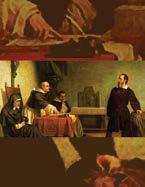
In this article, former Editor-in-Chief Charles Clark examines the suspicious scholarship of two 19th century writers, John William Draper and Andrew Dickson White, to expose historical misconceptions about the conflict between science and religion that persist in the popular imagination today. is article demonstrates Apologia’s commitment to fostering a conversation about science and religion that is historically informed and avoids self-serving caricatures and polarizations.
is article by former Editor-in-Chief Chris Hauser looks to C.S. Lewis and G.K. Chesterton to show how works of imaginative fiction, especially fairy-stories, invite us to experience the world with a renewed sense of wonder, humility, gratitude, and praise. is article is an example of Apologia’s desire to seriously engage the world of literature to discover and elevate moral and spiritual truths.
Apologia is committed to examining the latest discoveries of science alongside the Christian vision of reality in a way that appreciates God as the source of all truth. In this article, former Managing Editor Emily DeBaun suggests a way to reconcile the theory of quantum mechanics with the existence of a personal God who is intimately involved in the world today.
In this article, former staff writer Blake Neff untangles some of the misconceptions surrounding the Crusades of the Middle Ages by looking again at their historical context. is article is an example of Apologia’s commitment to setting the context for contemporary discussions of faith by clarifying caricatures and examining the history of the issues in view.
Dear Reader,
Everyone at Dartmouth has an opinion about God. Sometimes it is carefully thought out; sometimes not. Often it is hard to see how God matters in daily life. With all of the exciting things to accomplish, sitting down and seriously thinking about God can seem like a waste of time. After all, there is a test tomorrow, a party tonight, and what does God have to do with any of this anyway?
e Dartmouth Apologia is founded upon the belief that what one thinks about God is of the utmost importance. We believe that one’s choice of religion, including no religion at all, is the most important choice any of us will ever make. Religion, while on the one hand a deeply personal faith, is also the philosophical framework that guides our thoughts, our values, and our lives.
We, the staff of the Apologia, are Christians. We believe that the mystery of God was revealed in Jesus and He demonstrated His matchless love for us
through His life, death, and resurrection. Members of the Catholic, Protestant, and Eastern Orthodox traditions, we formed this journal because we believe that Christianity is as relevant and important today as it was in the first century. Inspired by the early Christian apologists, we seek to articulate Christian perspectives in the academic community.
We endeavor to think critically, question honestly, and link arms with anyone who searches for truth and authenticity. We don’t claim always to be right or to have all the answers. is is a journal of seekers, people who desire to love God with their minds as well as their hearts and souls. e Dartmouth Apologia does not exist to proselytize but to discuss, and I warmly invite you to join us in this discussion.
Tolle lege,

Andrew Schuman ‘10 Founding Editor-in-Chief 2006–2009
Ato criticism grounded in logic and reason. Its goals are to parry an ideological attack and to convince the attacker of the validity of the defended belief. e discipline of apologetics began in the second century when “Christians felt the need to refute rumors and misconceptions regarding their beliefs and practices.” Writers such as Justin Martyr and Irenaeus sought to counter claims of cannibalism and incest levied against Christians due to the practice of communion and the habit of referring to one another as brothers and sisters. ese accusations proved relatively easy to dispel, but a far more difficult task remained. Greek and Roman intellectuals—drawing on a centuries-old tradition of rationalism—declared the faith intellectually lacking, a religion for the simple-minded. Contemporary literature argued that Christianity drew its converts from children and uneducated women and declared that Christians should focus on day to day matters instead of eternity. In response to these assertions, the apologists began to adopt the same tradition
of rationalism, which “enabled them to explain Christianity to the educated… ey presented it as the rational religion…” Christianity was not seen by the apologists as valid only if left unchallenged by the dominant philosophies of the day, but rather as a belief system at least worthy of consideration by even the most erudite citizens.
It is to this tradition that we aspire. While religion necessarily requires faith, faith and intellect are by no means antithetical. We strive to articulate Christianity in a manner that requires neither blind acceptance nor the rejection of one’s education. Furthermore, we seek to bring the weight of a two thousand year old intellectual tradition to bear in discussions of contemporary issues in society. Our goal with the Apologia is to present our views in a manner reflective of the level of thought that we bring to our own personal faith, and in doing so promote discussion among the Dartmouth community. e relationship between faith and intellect is worthy of exploration and challenge. We hope you’ll join us in this journey with a pedigree of more than two thousand years.

Chris Blankenship ‘09 Founding Business Manager 2007–2009
Religion is often marketed for its usefulness. It is endorsed with appeals to our pursuit of happiness, meaning and personal development, just like a political campaign, wonder drug or self-help bestseller. At the Apologia, we find this approach unsatisfactory and even distasteful, because it suggests that our beliefs suit our ulterior motives instead of reflecting our convictions about the nature of reality. We are determined not to be peddlers of our religious beliefs but to present with integrity what we hold to be objective fact. We are primarily interested not in Christianity’s usefulness but in its veracity. at is to say, we are not Christians because we view Christianity as the best means to make ourselves happy or the world a better place, though we may hold those views as well. We are Christians because we think that Christianity is an accurate reckoning of the world and humanity’s place in it—regardless of religion’s advertised benefits. In saying this, I am paraphrasing C.S. Lewis, who once wrote, “Christianity is not a patent medicine. Christianity claims to give an account of facts—to tell you what the real universe is like.”
We call the claims that Christ made about himself the Gospel, or Good News. is Gospel has always been the core of Christianity, and in it Christ asserts—as fact—that He is a God against whom we have sinned. Furthermore, he maintains that he will forgive our sins if we put our faith in Him, that is, if we acknowledge that the claims he makes about Himself are true and live our lives accordingly. ese claims are either true or false. If true, Christ’s claims about His Godhood, our sinfulness and His work of redemption are the supreme facts of our existence. If false, they are dangerous nonsense fit only for refutation and categorical dismissal. e alternative between true and false cannot in this case be ignored: the meaning of life depends on it. erefore, one must either accept Christ wholeheartedly or reject him outright. Honest, intellectually gifted people have come down on both sides of the question, but there is no rational middle ground.
At the Apologia, we make the case that Christ’s claims are true, but you may notice that few directly apologetic articles are published in this journal. Just as we have no intention of hawking religious snake oil, we prefer not to bludgeon our readers with arcane proofs for the existence of God, the superiority of Christian morality or the necessity of an Intelligent Designer. Instead, you will find articles addressing the sciences, the humanities and the arts, all from the unique perspective of Christianity. We are presenting evidence that the coherence and explanatory power of the Christian perspective supports the truth of its principal propositions, namely the truth claims of Jesus.
Richard Swinburne, this issue’s interviewee, writes in Is ere a God?, “We find that the view that there is a God explains everything.” We affirm this claim, and, in the spirit of Dartmouth’s liberal arts education, we seek to demonstrate that the truth of Christianity is relevant to every field of study. In so doing, we make every effort to ask and answer the hard questions, and we encourage you to do the same.


Charles Clark ‘11 Editor-in-Chief 2009–2010

Ever since the work of the philosopher Rene Descartes, modern philosophy has tended to view knowledge and belief as purely intellectual enterprises. Descartes’ famous phrase, “I think, therefore I am,” had the perhaps unintended effect of reducing the human person to his or her intellect. e result is that the intellect, decontextualized from the rest of the human person, became the primary aspect of man, and knowledge and belief were thought to be solely those propositions or facts grasped and held by the mind.
However, the traditional Christian understanding of knowledge is much different. Father Pinckaers explains this alternative understanding in his book Sources of Christian Ethics: “On the text of John 10:14, ‘I am the good shepherd; I know my own and my own know me,’ the Jerusalem Bible notes: ‘In Biblical language, ‘knowledge’ is not merely the conclusion of an intellectual process, but the fruit of an ‘experience,’ a personal contact; when it matures, it is love.’ Knowledge, and the vision it brings, must be understood as happening at the heart of a personal relationship. It engages the entire person: the mind, where wisdom dwells; the will, which desires and love; the imagination, the sensibilities, even the body.”
In the Biblical view, knowledge has physical, experiential, and relational components, in addition to its intellectual aspects. It is not something we discover solely by the mind, but something that engages our whole person. erefore, Christianity is not merely a set of propositions which some affirm and others deny. Christianity is rather grounded in the encounter and experience with reality, both the reality of the natural world, through which God is indirectly revealed, and the Reality of the Word Incarnate, though which God is directly and luminously revealed to us. is encounter does not give rise only to intellectual belief. As Chris Hauser ’14 notes in his article “Lessons from Fairy Tales,” it also engenders a certain attitude towards the world, one of gratitude,
wonder, and joy. And as Susan Conroy, a Dartmouth alumna who worked closely with Mother eresa, explains in her interview in this issue, this gratitude in turn inspires us to give to others. Christianity, then, is about experience, love, emotion, and action as much as it is about intellectually held beliefs.
erefore, we at the Apologia are not trying to promote clever sophistry nor to browbeat the skeptic with aggressive argument. e Apologia does not exist to argue people into faith; rather we exist to use all the disciplines of thought—from history to science to philosophy— to better investigate the rational structure of our faith and to comprehend the world by it. We are a community of people who have been formed by a decisive encounter with Reality, and who seek to understand and examine the world through the light of that experience. In his now famous quote, C.S. Lewis said of Christianity, “I believe in Christianity as I believe that the sun has risen, not only because I see it, but because by it I see everything else.” In the light of Christianity, we see the world. is journal is the fruit of effort to articulate that vision.


Peter Blair ‘12 Editor-in-Chief

As college students, we are skilled at managing cognitive dissonance. We learn about systems of morality in philosophy and religion classes, but in Econ 1 we are told to ignore the effects those systems can have on human behavior. We volunteer regularly, and some of us take to heart the call to “make the world’s troubles your own,” but scarce few seek to do such noble work after graduation. In the life of the modern student, there seems to be a disconnect between what one believes, what one learns, and what one does.
Our generation has grappled with these issues of cognitive dissonance for so long that it seems we’ve given up on the hope of finding a coherent worldview altogether. Catholic philosopher Charles Taylor points out that this is partly due to the uniqueness of our times. At few other historical points has there been so much progress and so much destruction: as he writes, the past 100 years have been a time “of both Auschwitz and Hiroshima and of Amnesty International and Medecins sans Frontieres.” Events and advances in knowledge have so undermined the old ways of thinking that, rather than seeing our selves and our lives as a coherent whole, we now wear different hats on different occasions: Religious on Sundays, Poets on Mondays, Scientists on ursdays, Epicureans on Fridays.
What is distinctive about the Christian tradition is that it challenges us to have a more coherent worldview. e faith has always sought an integration of belief, knowledge, and action. To see what it means

for one’s metaphysics to profoundly affect one’s daily living, see the monks and nuns of the contemplative orders of the Catholic Church. To see the connection between faith and works, see the Christian missionaries providing health care and critical services around the world. And to see the connection between knowledge and belief, see the writings of Christian scientists who see in their work not a threat to their preconcep- tions of creation, but the hand of a God who works in mysterious ways.
In today’s age, a coherent worldview is hard to come by. It is one of Christianity’s great strengths that it attempts, and provides, just such a view—not by ignoring details, and not by hiding from facts that are inconvenient. Rather, as Taylor writes, it welcomes all the facts of this world while recognizing that there is a point to our existence that is not exhausted by life. In this issue, you will encounter attempts by a variety of Christians to dig deeper into this unique way of life. Some are popes, some are saints, and some are college students. But the work they do in seeking Christ in areas like work, art, happiness, and science shows that, contrary to what we might sometimes think, there is at least one possibility for living life in a fully integrated way.


Brendan Woods ’13 Editor-in-Chief 2011–2012
Truth, the great 13th century philosopher omas Aquinas insisted, can only ever be one. Against the claims of his contemporary Siger of Brabant during the age of the rediscovery of Aristotle in the West, this humble saint was adamant: there can be no conflict between faith and reason. “Since therefore grace,” Aquinas wrote in what would become one of his most famous phrases, “does not destroy nature, but perfects it, natural reason should minister to faith as the natural bent of the will ministers to charity.” In this single sentence, Aquinas has articulated Apologia’s core claims about Christianity: with respect to what exists, grace does not destroy but perfects nature; with respect to what we can know, faith likewise does not destroy but perfects reason; and with respect to ethics and human freedom, caritas or love for God also does not destroy but perfects the freedom of the will. Faith does not inhibit the progress of science but rather guides our search for understanding and ensures that we will not rest content in anything but the fullness of truth. Without faith, reason is at best unknowingly near-sighted, at worst arrogantly blind; without reason, faith is at best innocently unarticulated, at worst patently nonsensical.
Eight centuries later, although the vocabulary has changed, we still grapple with the difficulty of the same relationship. Critics of Christianity often begin with an unconscious reformulation Siger of Brabant’s distinction between the truths of science and the truths of religion, until they realize they can just as easily claim there are no religious truths but only scientific truths. Discouraged, many modern people, especially college students, settle for relativism, trapped by the whirlwind of competing religious and scientific voices into resigning themselves to the fact that there just is no objective religious truth, or at least none that we can know. Nevertheless, there are voices, like Apologia, insisting that there are answers and we can know them; while we don’t have all the answers and certainly don’t think they are found easily, we refuse

to give in and say there are no answers, especially to questions of morality, religion, and purpose. Across America’s college campuses, likeminded journals have begun to draw upon the rich intellectual tradition of Christianity to not only defend the Christian faith but also discover in it unique answers to perennial social and philosophic problems, problems that often seem unanswerable.
In the pages that follow, you will encounter articles, book reviews, and an interview tackling just these difficulties. You will notice that as we explore both misconceptions about Christianity and its unique answers to questions like that of true friendship, we examine the writings of ancients and moderns, the secular and the religious. Indeed, it is with confidence that we dive into all pools of knowledge, just as confident as secular humanists that we can discover real truths about our world but humble enough to admit the world might be a more wondrous but also more serious place than we could imagine without the light of faith. We invite you to explore some of Christianity’s unique (and often paradoxical) answers to humanity’s greatest questions.



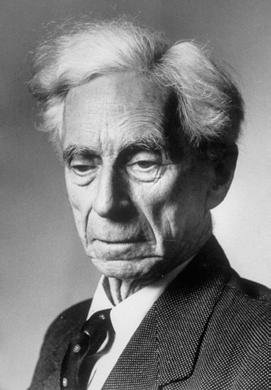
Bertrand Russell wrote, “ ere are a great many ways in which at the present moment the church, by its insistence upon what it chooses to call morality, inflicts upon all sorts of people undeserved and unnecessary suffering.”1 He goes on to explain that Christian morality is harmful “because [the church] has chosen to label as morality a certain narrow set of rules of conduct which have nothing to do with human happiness; and when you say that this or that ought to be done because it would make for human happiness, they think that has nothing to do with the matter at all.”2 is is a common indictment of Christianity: that it puts people in a moral straightjacket, enslaving them to an outdated moral system, and thereby greatly diminishes their happiness and even inhibits the progress of the human race. According to this view, Christians are by nature priggish, puritanical moralists.
But the Bible, which Christians believe is divinely inspired, is full of statements that present a very different view of Christianity than the one Russell offers. In his Epistle to the Galatians, St. Paul writes that “it is for freedom that Christ has set us free.”3 In the Gospel of John, Jesus Christ is recorded as saying, “I came that they may have life, and have it to the full.”4 Echoing this biblical message, Christians throughout the ages have expressed a great joy that derives from their faith. G.K. Chesterton once wrote, “Joy… is the gigantic secret of the Christian.”5 C.S. Lewis titled the spiritual autobiography that detailed his conversion to Christianity Surprised by Joy e message of the Bible is one of freedom and liberation, and the experience of many Christians throughout history has been one of irrepressible and uproarious joy. What, then, explains
the enormous gap between the Christian idea of liberation and the popular perception of Christianity, as expressed by Russell? How can these two views of Christianity be reconciled?
e popular view articulated by Russell does contain a grain of truth. Christianity does have a moral code that it enjoins upon all its adherents, and its code is in some ways stricter than the codes offered by other philosophies and worldviews. Furthermore, Russell’s view is not without some empirical basis. ere have been, and continue to be, self-identified Christians who approach their faith in a highly legalistic and moralistic way, who conform joylessly to a moral code they don’t fully understand or even agree with, who look and feel enslaved, and who even take a perverse delight in destroying the happiness of others. However, the salient question is not whether some self-identified Christians have such an attitude, but whether Christianity as a belief system logically implies and requires such an attitude. When the issue is examined, it seems that rather than imposing such an attitude on believers, Christian moral thought is characterized by a desire for happiness, freedom, and beauty.
e prejudice against Christianity’s moral claims is due in part to a general human tendency to resent all rules and restrictions—religious, political, or otherwise—as unfair and destructive of liberty. However, as Tim Keller notes in his book e Reason for God, “In many cases confinement and constraint is actually
a means to liberation… freedom is not so much the absence of restrictions as finding the right ones, the liberating restrictions. ose that fit with the reality of our nature and the world produce greater power and scope for our abilities, and a deeper joy and fulfillment.”6
e idea of “liberating restrictions” may seem paradoxical, but Keller uses several examples to make his point. He discusses the condition of a pet fish taken out of its fishbowl. e fish has thus been freed from the limits of the fishbowl, from restrictions of place and movement—but removed from its proper environment, the fish will die. Because the fish is free to live and move only when it is limited to a bowl full of water, the restrictions placed on it are essential to ensuring its freedom, flourishing, and survival. is example illustrates why it is that restrictions can simultaneously bind and free; it is only in being bound by some rules that we can live at all or enjoy any kind of meaningful freedom. Just like the fish, all things have their proper environments, and if the barriers keeping things in their environments are destroyed, so too is the ability to thrive.
Keller uses a pianist as a further example of this principle. If somebody has natural musical aptitude and wishes to develop that aptitude in order to become an accomplished pianist, he or she must endure relatively great restrictions on his or her time, because lots of practice is necessary to develop musical skills. e aspiring pianist must give up absolute freedom
over the use of his or her time in order to achieve, as Keller says, “a richer kind of freedom to accomplish other things.”7 In this example, we see that the development of a skill or an art requires accepting some restrictions on one’s time and one’s freedom. e end result of these regulations, however, is not a lesser freedom but a greater freedom: in this case, the ability to play piano pieces excellently whenever one wishes. One has acquired a new skill, and the ability to freely practice that skill brings joy and contentment.
Example upon example could be added to ways in which our everyday life depends upon this idea of “liberating restrictions.” When we think politically, the vast majority of humans recognize the need for limits and rules. We recognize that anarchy—the complete absence of governmental authority—is not a desirable political arrangement, and that the restrictions on our freedom enforced by laws and taxes actually allow for human prospering and flourishing in a way that anarchy never could.
In all these cases, it is restrictions, limits, and rules that actually free a person; in these situations, limits liberate us and actually give us more to do by restricting what we can do in certain ways. is is the general idea behind both government and piano practice: by allowing everything, you effectively destroy everything; but by forbidding some things, you allow everything else. True freedom is only possible where freedom is limited.
Yet this idea of “liberating restrictions” implicit in so much of our life is somehow forgotten when the object of discussion is the Christian moral code. Christianity is thought to be oppressive and legalistic simply because it makes moral demands. But as C.S. Lewis points out in his book Mere Christianity,
natural desire) will have to be controlled anyway, unless you are going to ruin your whole life.8
Lewis argues that all people have codes of behavior that limit them because everybody—in practice if not in theory—understands that some restraints are necessary for happiness and freedom. And that is precisely the claim that Christianity makes about its own moral code. Christianity does not seek rules for the sake of rules, but for the sake of true happiness and freedom. It seeks rules for the same reason that everybody seeks rules: in order to allow us to survive and flourish.
Moralism or legalism, that is, rules for the sake
For any happiness, even in this world, quite a lot of restraint is going to be necessary... every sane and civilized man must have some sort of principles by which he chooses to reject some of his desires and to permit others. One man does this on Christian principles, another on hygienic principles, another on sociological principles. e real conflict is not between Christianity and nature. For ‘nature’ (in the sense of
of rules, is much more an intellectual attribute of secular thought than of Christian thought. e 18thcentury secular philosopher Immanuel Kant is the clearest example of secular legalism. He espoused a duty ethics which emphasized the necessity of obeying moral laws and held that morality had to be opposed to happiness because any action that gave happiness was a selfish one, and thus immoral. is Kantian deontology is emphatically not the Christian view. Christianity, because it believes that true freedom proceeds from our natural longings for truth, goodness, perfection, and happiness, holds that the moral life is the way to happiness. Because the secular worldview deprives man of any transcendental
purpose or destiny, it can offer very little guidance on what the purpose of rules is. As Lewis writes,
I think all Christians would agree with me if I said that though Christianity seems at first to be all about morality, all about duties and rules and guilt and virtue, yet it leads you on out of all that, into something beyond. One has a glimpse of a country where they do not talk of those things, except perhaps as a joke. Every one there is filled with what we should call goodness as a mirror is filled with light. But they do not call it goodness. ey do not call it anything. ey are not thinking of it. ey are too busy looking at the source from which it comes.9
Secularism denies the existence of that “something beyond,” and so the best it can do is offer a kind of pragmatic justification for rules centered on the need for social cooperation. at is fine as far as it goes, but it can easily degenerate into an unhappy legalism. On the other hand, because Christian morality is animated by an understanding of mankind’s natural longing for goodness, happiness, and perfection, the Christian
view sees rules as a means for achieving a more fulfilling existence.10
In the examples used above to illustrate the idea of “liberating restrictions,” the implied idea was that one restricts one’s freedom in order to achieve a greater good and a fuller unfolding of freedom. It suggests an idea of freedom which Servais Pinckaers, in his book Morality: e Catholic View, calls freedom for excellence or the freedom to act excellently. e problem that many people have with Christianity is that they cannot see what greater good the Christian moral code purports to direct one to. What kind of excellence does it aim to effect? If Christianity is not about laws for the sake of laws, but instead about laws for the sake of a greater good, what is that good? Christian thinkers tend to answer these questions by saying that Christianity’s moral code is not an end in itself, that it has no intrinsic value. Its value is purely instrumental, meant to aid one in attaining goodness and happiness and to succeed in becoming a good and happy person. ere is much skepticism about this claim that morality, especially Christian morality, could ever be
connected to happiness. e position one takes on this, however, turns on one’s definition of happiness. Many people today would define happiness as mere pleasure, as the temporary and ephemeral experience of neurochemical stimulation. However, there is a quite different way of looking at happiness, one that defines it in terms of joy. St. Augustine, the great Christian theologian, once defined happiness in this way: “ us all agree that they want to be happy, just as they would, if questioned, all agree that they want to rejoice, and it is joy itself that they call the happy life. e happy life is joy born of the truth.”11 Father Pinckaers explains the essential differences between joy and pleasure:
Pleasure is an agreeable sensation, a passion caused by contact with some exterior good. Joy, however, is something interior, like that act that causes it. Joy is the direct effect of an excellent action, like the savor of a long task finally accomplished. It is also the effect in us of truth understood and goodness loved. us we associate joy with virtue, regarding it as a sign of virtue’s authenticity…pleasure is brief, variable, and superficial, like the contact that causes it. Joy is lasting, like the excellence, the virtues, that engender it. Sense pleasure is individual, like sensation itself, it decreases when the good that causes it is divided up and shared more widely; it ceases altogether when this good is absent. Joy is communicable; it grows by being shared and repays sacrifices freely embraced.12
When happiness is understood in terms of lasting joy, instead of temporary pleasure, the way in which Christian morality can be said to be compatible with happiness becomes clear. ough a Christian must, from time to time, forgo certain temporary pleasures, the Christian moral life instills a deep and irrevocable joy.
simple empiricism, it is also an easily observed phenomenon. Numerous Christians throughout the centuries, from St. Augustine to St. Francis of Assisi to G.K. Chesterton, have testified to the ability of the moral life to instill joy.
e joy of the Christian life, however, arises not only from the satisfaction of a morally excellent life, but also from the particular religious teachings of Christianity and the practical effects of those teachings in one’s life. Part of the confusion about Christian morality is a result of the fact that Christian moral teaching is so often presented in isolation from its spiritual or religious teachings. ough there are many thinkers, such as Princeton professor Robert George, who will argue for the rational superiority of Christian morality quite apart from religious revelations, the fact remains that the joy that Christians throughout the ages have associated with the Christian life is very difficult to understand apart from the messages and teachings of Jesus. You cannot disconnect Christian morality from Christianity in general. If somebody urged you to brush your teeth twice a day but you had no prior knowledge of the importance of dental care, you might wonder at it and dismiss it as an irrational imposition on your life. But certainly if you learned that brushing your teeth twice a day will actually prevent your teeth from decaying later in life, you would readily adopt the practice.
e cause of Christian joy is precisely God Himself. Christians believe that God came to earth as a man in order to free mankind from its sins and reunite mankind with Himself. at is the principle message of the Gospel, and it is called the Gospel (which means “good news”) for a good reason. As Keller notes in his book, for the idea of “liberating restrictions” to
Christianity does not seek rules for the sake of rules, but for the sake of true happiness and freedom.
e attainment of a virtuous character, one that can give rise to morally excellent actions at all times, is a joy-giving accomplishment, in part because we naturally desire goodness (though we often forget what goodness actually is). Keller’s example of the piano player, discussed above, is helpful in understanding this concept. Just as attaining the skill of piano-playing requires surrendering some freedom to that task, so too does attaining the skill of living a virtuous life. And just as one finds happiness and contentment in being able to play the piano well, so too does one find a deeper joy in being able to live a virtuous life. ere are many reasons for this intrinsic connection between the moral life and happiness, between goodness and joy, but in terms of
make any sense, the restriction must fit our nature and circumstances. He writes, “Discipline and constraints, then, liberate us only when they fit with the reality of our nature and capacities.”13 Christianity teaches that the one thing that fits with our true nature above everything else is love. Love is the most sublime human emotional state, and it is something that everyone yearns for. It is the proper environment for mankind, just as the fishbowl is the proper environment for the fish. Yet the seeming contradiction of a loss of freedom that liberates is clearly demonstrated with regard to the experience of love. Love, Keller argues, is simultaneously the most liberating thing and the

most restrictive thing a human being can experience; it demands the most, but it also gives the most. “To experience the joy and freedom of love,” Keller writes, “you must give up your personal autonomy.”14
Keller’s statement neatly summarizes the whole basis for Christian morality. Christians believe that we were made for love—for love of each other and love of God. Furthermore, they believe that God loved us first, that He loved us when He created us and He loved us when He underwent unspeakable suffering
for us on the cross. Because Christ loved us and sacrificed much for us in order that we could be with Him again, we are filled with joy and gratitude, and we respond to Him in love for what He has done for us. By its very nature, love means giving things up, sacrificing for the other, the object of your love. Removed from the context of love, those sacrifices might seem painful and absurd, but within the context of a love that gives joy, freedom, and meaning, they begin to make perfect sense. is is why the central statement
of Christianity is not “follow rules” but, as Christ says in the Gospels, “Follow me.”15 It is not about a relationship with a set of rules, but about a relationship with a person.
erein lies the meaning of the biblical passages which I referenced at the beginning of this article. God came and suffered on earth to restore us to a loving relationship with Him, our Maker, and it is in that ultimate relationship of love that we are most free and joyful, no matter what sacrifices it might call on us to make. It is not about automatically and mindlessly obeying rules that mean nothing to us and that only trample on enjoyment. It is about the true joy and liberation that comes from living in love. e Christian message is not oppressive. It is not animated by a hatred of pleasure or fun or by a desire to put people in a straightjacket. It is animated by the spirit of love, which is the spirit of God. We all seek to live in relationships of love and to live in a world characterized by love. Christianity offers exactly this, but it also specifies what is necessary for such a world to come about.
Christians desire above all to be near to God, to live in a relationship with Him. In fulfilling that desire, we must sometimes reject our secondary desires when giving in to them would separate us from God. We believe that He has freed us not only from the punishment due to our wrongdoings, but from the wrongdoings themselves, and that He will grow this freedom from wrongdoing in us more and more each day. e struggle, furthermore, is more than worth it, for the freedom and joy that comes from a relationship with God is truly the “pearl of great price.”16 Pope Benedict XVI put it this way in his inaugural homily: Are we not perhaps all afraid in some way? If we let Christ enter fully into our lives, if we open ourselves totally to him, are we not afraid that He might take something away from us? Are we not perhaps afraid to give up something significant, something unique, something that makes life so beautiful? Do we not then risk ending up diminished and deprived of our freedom?… No! If we let Christ into our lives, we lose nothing, nothing, absolutely nothing of what makes life free, beautiful and great. No! Only in this friendship are the doors of life opened wide. Only in this friendship is the great potential of human existence truly revealed. Only in this friendship do we experience beauty and liberation. And so, today, with great strength and great conviction, on the basis of long personal experience of life, I say to you, dear young people: Do not be afraid of Christ! He takes nothing away, and he gives you everything. When we give ourselves to him, we receive a
hundredfold in return. Yes, open, open wide the doors to Christ—and you will find true life.17
If one doubts this idea, the Christian may answer along with Chesterton that for the doubter, “Christianity has not been tried and found wanting; it has been found difficult and not tried.”18 ose who have tried it down through the ages, however, have overwhelmingly testified to a deep and profound joy. Morality for them has not been an imposition, but rather a way of expressing their love for and gratitude to Christ, for deepening their union with Him, and for achieving a joyful life. e most important “liberating restriction” of all is the love of God, come to set us free.
1 Bertrand Russell, Why I am not a Christian and Other Essays (New York: Simon and Shuster Inc., 1957) 21-22.
2 Ibid.
3 Galatians 5:1.
4 John 10:10.
5 G.K. Chesterton, Orthodoxy (San Francisco: Ignatius Press, 1995) 167.
6 Tim Keller, Reason for God (New York: Penguin Group, 2008) 45-6.
7 Ibid. 46.
8 C.S. Lewis, Mere Christianity (New York: Granite Publishers, 2006) 100-1.
9 Ibid. 149.
10 For a complete exposition of this idea, see Morality: e Catholic View.
11 Augustine, qtd. in Pinckaers 77.
12 Servais Pinckaers, Morality: e Catholic View (Indiana: St. Augustine’s Press, 2001) 78.
13 Keller 46.
14 Ibid. 48.
15 See Mathew 4:19, Matthew 9:9, Luke 9:23.
16 Matthew 13:46.
17 Pope Benedict XVI, “Homily of His Holiness Benedict XVI,” Vatican: e Holy See, 24 April 2005, Libreria Editrice Vaticana, 9 Feb. 2010 < http://www.vatican.va/holy_father/ benedict_xvi/ homilies/documents/hf_ben-xvi_hom_20050424_ inizio-pontificato_en.html>.
18 G.K. Chesterton, What’s Wrong with the World (San Francisco: Ignatius Press, 1994) 37.
Peter Blair ‘12 graduated with a Government and Classics double major. He now works as the Editor-in-Chief of Fare Forward
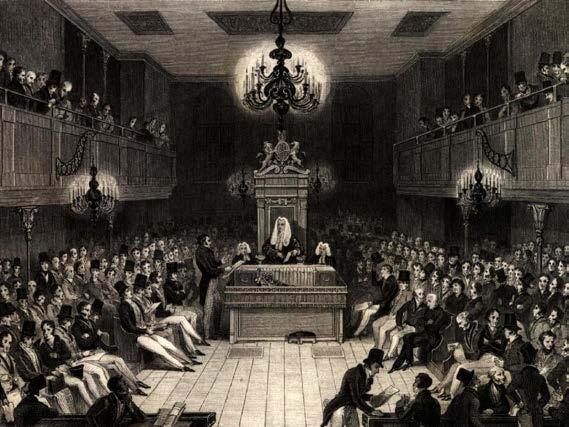
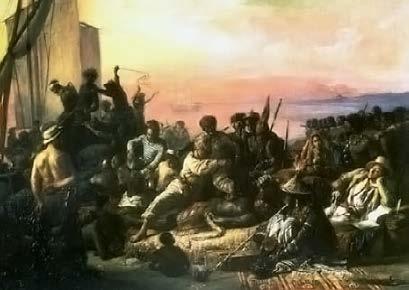
Ogave arguably the greatest speech of his career. He had prepared little for this speech because he had been extremely ill, and he was still weak on that day. Nevertheless, he knew his subject well enough to speak for three hours from a single page of notes. e subject of Wilberforce’s passionate eloquence would largely define his Parliamentary career and later make him famous: the introduction of a bill to abolish the slave trade in the British Empire. As a champion of justice for British slaves, William Wilberforce is an excellent example of a person who followed Christ’s mandate to care for the downtrodden and bring freedom to the oppressed.1
It would be nearly twenty years before his goal was finally reached. For almost two decades, Wilberforce dedicated his time, energy and eloquence to outlawing “ e baseness and iniquity of such a traffic.”2 Despite illness and discouragement, he refused to
allow a practice that he saw as “Contrary to every principle of religion, morality, and sound policy”3 to continue uncontested. In 1791 he wrote “Whatever [Parliament] might do, the people of Great Britain, I am confident, will abolish the slave trade… For myself, I am engaged in a work I will never abandon.”4
Wilberforce did not begin his political career as a dedicated reformer. He was born in 1759 to a prominent and successful family. As a young man, he was “Everywhere invited and caressed”5 by society, and his love for the pleasures of popularity and convivial society led him to pursue a political career upon leaving school.6 In 1780, at the age of twenty one, Wilberforce used his charm, family influence and fortune to secure the position of Member of Parliament for his hometown of Hull.
During his first few years in politics, Wilberforce’s personality was characterized by “vivacity, charm, and gregariousness.”7 After his election, he moved
to London and was quickly welcomed into Society and into political circles. He frequented the theatre, the opera and concerts, as well as joining a gambling club soon after his arrival.8 His voice was good, and he was often called upon to sing at parties. Wilberforce often played host to his friends at his villa at Wimbledon when he was not attending parties in London. His life was filled with pleasurable pursuits, and “His wit, polish and generosity won him many friends.”9 Wilberforce never joined a political party, and his early activity in Parliament was mostly concerned with advancing the needs of his constituency.10 ough his political career and popularity continued to advance, it took several years for Wilberforce to become truly committed to reform.
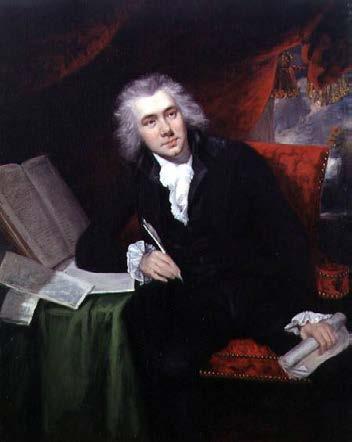
he had considered himself a Christian, but he had never experienced a personal relationship with God. He participated in the outward forms of religion, but his life was not affected by the teachings that he heard. In his diary, Wilberforce wrote “As soon as I reflected seriously upon these subjects the deep guilt and black ingratitude of my past life forced itself upon me in the strongest colours, and I condemned myself for having wasted my precious time, and opportunities, and talents.”13 Upon returning to England, Wilberforce struggled for several months with guilt and depression. He lamented the way he had spent his life in empty amusements and resolved that he would henceforth be “humble and watchful.”14 Having found that his past amusements could not bring him the satisfaction and peace that a true commitment to Christ offered him, Wilberforce made the decision to actively pursue his newfound faith and to make that pursuit the central focus of his life.
In 1784, Wilberforce came into contact with his old schoolteacher Isaac Milner, whom he considered an “intelligent and excellent friend,”11 even though he disagreed with what Milner called “vital Christianity.” He “treat[ed] with flippancy”12 all of Milner’s attempts to talk to him about religion, but eventually Wilberforce agreed to read Rise and Progress of Religion in the Soul by the English theologian Phillip Doddridge. Doddridge’s discussion of sin, the need for repentance and the joy that comes from accepting God’s grace forced Wilberforce to reevaluate the way he lived his life.
Upon reading the New Testament in Greek with Milner, he came to the conclusion that he had been living without God and outside of the realm of true Christianity. As a member of the Anglican Church,
It was at this time that Wilberforce began to ardently pursue political and social reform. In his book A Practical View of the Prevailing Religious System of Professed Christians, in the Higher and Middle Classes, Contrasted with Real Christianity, he urged Britain’s more prosperous citizens to examine the true doctrines of their professed faith and to live by them. He argued “It is a truth which will hardly be contested, that Christianity, whenever it has at all prevailed, has raised the general standard of morals to a height before unknown.“15 Rather than living his life in the pursuit of pleasure, Wilberforce committed himself to using his political career in order to bring about good. In the same book he wrote,
Surely it must be confessed to be a matter of small account to sacrifice a little worldly comfortand prosperity, during the short span of our existence in this life, in order to secure a crown of eternal glory, and the enjoyment of those pleasures which are at God’s right hand evermore!16
Wilberforce believed that he should use the influence of his political position to “Do credit to [his] Christian profession.”17
On November 28, 1785, Wilberforce wrote, True, Lord, I am wretched, and miserable, and blind, and naked. What infinite love, that Christ should die to save such a sinner, and how necessary is it He should save us altogether, that we may appear before God with nothing of our own!18
He acknowledged that he and his supporters, who became known as the abolitionist coalition, could not accomplish reform unless it was God’s plan, and indeed their initial efforts came to nothing.
Despite the acclaim that his first speech for abolition received, Wilberforce’s opponents convinced the House of Commons to delay voting on the bill to abolish the slave trade in order to hear witnesses on the subject. Meanwhile, rebellion was brewing in France, other matters arose and the interviews were put off until Parliament reconvened the next year. As the vote was delayed again and again, the political climate cooled toward abolition and Wilberforce lamented “Alas, alas, how week passes unimproved after week!”19 Nevertheless, he continued to work with his coalition to accumulate evidence in order to push through the bill, writing,
Interested as I might be supposed to be in the final event of the question, I am comparatively indifferent as to the present decision of the House… Never, never will we desist, until we have wiped away this scandal from the Christian name.20
Disappointingly but unsurprisingly, the first bill for abolition was solidly defeated in the House of Commons, and Wilberforce and the other abolitionists continued their campaign through a variety of other methods. Wilberforce introduced a bill that would boycott sugar from the West Indies in hopes of damaging the profitability of the slave trade, but when that bill failed, he and his coalition campaigned throughout the country, provoking petitions and boycotts of sugar on a local level. ey also worked for the creation of a colony for freed slaves in Sierra Leone in order to prove that Africans could have a civilized, Christian community without being enslaved.
Wilberforce meanwhile continued to collect evidence of the mistreatment of slaves. In his 1823 pamphlet, An Appeal to the Religion, Justice, and Humanity of the Inhabitants of the British Empire in Behalf of the Negro Slaves in the West Indies, he wrote “ e proofs of the extreme degradation of the slaves…are innumerable,”21 further declaring all arguments to the contrary “gross falsehoods.”22 Some of his opponents, though admitting to the undesirability of the slave trade, nevertheless argued that its abolition would lead to the collapse of the British economy because it would remove the labor force and allow France to take over a valuable commerce.
Wilberforce parried this argument by saying, “I cannot believe that the same being who forbids rapine and bloodshed, has made rapine and bloodshed necessary to the well-being of any part of his universe.”23 He further argued that the abolition of the slave trade would force slave owners to care for the slaves they already had, thus strengthening the labor force in the colonies rather than destroying it. He dismissed the French threat as well, arguing that Britain should “lead the way”24 toward abolition, rather than incurring “the twofold guilt of knowingly persisting in a wicked trade ourselves, and…of inducing France to do the same.”25 In fact, however, France was to abolish the slave trade many years before Britain did. Furthermore, Wilberforce confronted the claim that the slave trade provided a place to train sailors for the British navy, citing evidence that “More sailors die in one year in the slave trade, than die in two years in all our other trades put together.”26
In the 1790’s, the French Revolution and England’s subsequent war with France distracted Parliament from the issue of abolition, as well as damaging the
cause because of its association with the liberalism of the Revolution. e years went by, and the abolitionists continued to propose bills for abolition in a variety of forms and degrees during each session of Parliament, though their bills were consistently defeated in either the House of Commons or the House of Lords. Finally, nearly twenty years after Wilberforce’s eloquent introduction of the first abolitionist bill, on February 4, 1807, the House of Commons ratified the Slave Trade Act by a vote of 100 for and only thirty-six against.27
Despite his triumph, however, Wilberforce did not relax his ardor for reformation. roughout the years of his struggle for abolition, as well as in the years after his victory, Wilberforce campaigned for causes such as workers’ rights, the abolition of the death penalty for minor crimes, the prevention of cruelty to animals and education for women and the poor. He never gave up his work to further limit the practice of slavery in the British Empire, and his faith was rewarded when Parliament accepted the Bill for the Abolition of Slavery on July 26, 1823, just a few days before his death.
In 1818, Wilberforce wrote in a letter to the King of Haiti,
But, whatever may in some few instances be the effects of natural benevolence or of moral probity, or of professional honor, long and large experience in life has convinced me, that religion alone can be depended upon for enabling men with spirit and perseverance to discharge a course of laborious duties.28
Wilberforce believed that only through God could men find the strength to fight against the injustices in their society. As long as he had the strength, he never stopped working for reform. On the day that the Slave Trade Act was passed, Wilberforce’s first reaction was to ask his friend, “Well…what shall we abolish next?”29 In another letter he wrote,
We are all of us apt to be unreasonable in our expectations of the progress we are to make in the Christian course…but then let not this produce in us…an acquiescence in our present state…we must learn to press forward, humbly depending on God’s help for the success of our labours and resigned in all respects to His sovereign will.30
ough he had been a Christian in name as a member of the Anglican Church, Wilberforce’s whole way of life was changed when he made a personal conversion to Christianity. His perseverance in the fight for freedom and social justice and his faith in God’s ultimate control over its outcome exemplified the way a true Christian is called to live.
1 Holy Bible: Parallel Bible (Grand Rapids, MI: Zondervan, 1995), Luke 4:18.
2 Stephen Tomkins, William Wilberforce: A Biography (Oxford: Lion Hudson plc, 2007), 82.
3 Ibid, 94.
4 Ibid, 95.
5 Ibid, 14.
6 Robin Furneaux, William Wilberforce (London: Hamish Hamilton, 1974), 12.
7 Ibid, 14.
8 Ibid, 16-17.
9 Ibid, 21.
10 Ibid, 19.
11 Ibid, 43.
12 Ibid, 33.
13 Ibid, 35.
14 Ibid, 36.
15 William Wilberforce, A Practical View of the Prevailing Religious System of Professed Christians in the Higher and Middle Classes Contrasted with Real Christianity (Boston: Manning & Loring, 1799), 258.
16 Ibid, 274.
17 Ibid, 275.
18 Furneaux 37.
19 Tomkins 91.
20 Ibid, 95.
21 William Wilberforce, An Appeal to the Religion, Justice, and Humanity of the Inhabitants of the British Empire, In Behalf of the Negro Slaves of the West Indies (London: Ellerton and Henderson, 1823), 9.
22 Ibid, 7.
23 Tomkins 81.
24 Ibid.
25 Ibid.
26 Ibid.
27 Ibid, 167.
28 William Wilberforce, e Correspondence of William Wilberforce, ed. Robert Wilberforce and Samuel Wilberforce (London: John Murray, 1840), Vol. 1, 370.
29 Tomkins 171.
30 Wilberforce, Correspondence 43-44.

Sarah Clark ‘11 was an English major and a Russian minor. She currently works as a journalist in Knoxville, TN.
In this dual interview, prominent atheist philosopher Daniel Dennett and noted Christian biochemist Francis Collins discuss questions of doubt and faith, evidence and belief, and the origins of life and morality. This interview embodies Apologia’s commitment to bring expert voices to the Dartmouth campus in charitable, spirited discussion of life’s biggest questions.
What events or trends impelled you to write your most recent book, Breaking the Spell: Religion as a Natural Phenomenon?
interviewed by Charles Clark
‘11 and Peter Blair ‘12 in Spring 2009
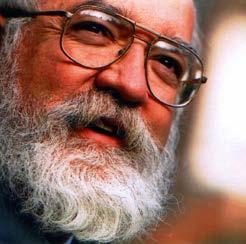
Daniel Dennett, Ph.D., is the Co-Director of the Center for Cognitive Studies and the Austin B. Fletcher Professor of Philosophy at Tufts University. His research centers on the philosophy of the mind, philosophy of science and philosophy of biology, particularly as these fields relate to evolutionary biology and cognitive science. In 2006, Dennett released a scientific examination of religion entitled Breaking the Spell: Religion as a Natural Phenomenon, in which he portrays religion as a cultural phenomenon governed by the evolutionary mechanisms of natural selection and survival of the fittest. On January 20, 2009, Dennett visited Dartmouth College to deliver the Religion Department’s Hardigg Family Fund Lecture, in which he presented his naturalistic explanation for the existence of religion. Just before his lecture, Dr. Dennett graciously granted this publication an interview.
I thought that the religiosity apparent in the government and in the prevailing winds of discussion in the United States was dangerous and oppressive, and I thought I should do something about that. And then at a meeting of young people in Seattle, on the spur of the moment, I just decided to come out of the closet and tell these youngsters that I was a bright [a “bright” is a neologism to describe a person who holds a naturalistic worldview]. All these young people said they never heard an adult say in such a matter of fact way that he was an atheist. It was sort of shocking and amazing to them. And after that, a bunch of people who were speaking there said, “Oh yeah, me too. I’m a bright too.” When I wrote about this in a New York Times op-ed piece, the effect was just electrifying. I had hundreds and hundreds of letters and emails from people who were saying, “Don’t stop there, you’ve got to do something more.” Well I didn’t want to write a book about atheism. But I did want to apply my work on evolutionary theory, especially evolution of culture and consciousness to religion. So I spent a couple of years boning up on the literature, learning more about it and writing that book.
Could you summarize your views on the evolutionary origin of religion and morality and explain their
Everywhere you look in human cultures there’s religion. at can’t be an accident. ere are really just two possibilities: one is just genetic and the other is cultural. It could be that there are genes, that there have been adaptations of some sort which predispose us for religion, which says nothing here nor there about whether it’s good for us. ere are genes that predispose us for myopia too. And the other interesting possibility is once language evolved and human culture began to go explosive maybe religions arose or some aspects of religion arose as what Boyd and Richardson call “rogue cultural variance.”
If we understand that culture evolved, the capacity for cultural transmission evolved and made possible the transmission of lots of acquired knowledge from parents to offspring. at’s a vertical transmission just like genes. You have a dual pathway with cultural
transmission. But once you have that second information highway then it can be piggybacked by all sorts of things which may not themselves be good for people but that can simply exploit the machinery that has evolved for other purposes. ose are the rogue cultural variances or what Richard Dawkins calls memes.
Once you start seeing culture as composed of replicating units or at least in large measure replicating units that are being transmitted and replicated competitively, then three possibilities arise. e things that evolve and then spread, evolve and spread because they’re good for us or because they’re just neutral for us and they’re not worth the trouble to get rid of. Or it may even be that they’re bad for us. ey’re like bad habits, but they’re very infectious bad habits. ese are all possibilities. So that gives us a framework then for looking at in what category do religions fit. I don’t claim to have the answers, I just have the questions.
Do you believe that the biological explanation is suf-
That crimes like murder and rape are only repugnant to us because of our neurochemical conditioning?
Everything we do and everything we think is ultimately due to causal factors in our brain. e denial of that is just frankly preposterous. We know enough now about the brain, that it is just true. ere’s no immaterial mind doing anything. It’s just the brain. But that doesn’t settle anything about why these particular effects occur and why they accumulate and why they survive. Why do some belief sets thrive and others go extinct?
Again, all sorts of reasons. In the case of scientific belief sets—theories—since science has actually evolved sieves or thresholds which select for truth, you actually can put some serious credence in what survives that daunting selection process. Not perfect, far from perfect. But that is one set of institutions which itself has evolved to favor well-grounded true theories. Let’s take for instance finance, the banking system. e data gathering by banks and stockbrokers is significant, tremendous amount of data that are gathered. Why can we rely on it? Because we see it is in the interests of those bankers to get an accurate accounting of markets and prices. ese have been cunningly designed to filter out the false and pass on the true. It’s not quite science but it’s systematic truth gathering.
Leon Wieseltier of The New Republic responded to Breaking the Spell with the following comments: “If reason is a product of natural selection, then how for natural selection…Evolutionary biology cannot invoke the power of reason even as it destroys it.” If we cannot trust our belief-forming faculties to tell
God, why should we trust them to tell us the truth about anything, including evolutionary science?
First of all, the question of why we should have faith in any system of belief generation is a good question, I’ll grant that. But the religious response to that is patently question-begging. God, who is good, makes sure that the system is benign and that’s how we can trust it when it tells us that God is good in the system. It’s like saying that the Bible says so and the Bible is the word of God. e fact that the Bible says it’s true because it’s the word of God is obviously no evidence that it’s the word of God. ere’s no non-circular argument from religion for reliability of belief. But there is for science.
Imagine creatures on another planet, if you like, so as different from us as you like, and they are evolving, and in their competitions they became not just like plants but they become mobile, like locomotors, and you can see immediately that they are going to be able to extract information from their environment in order to guide their locomotion. But that’s to say truth. e ones that extract false information are doomed, they are going to walk off a cliff ere is a built in presumption that any sense organs in any organism that evolves are going to be biased in favor of passing on the truth. But of course that only gets us the kind of truth-tracking that you get in a smart dog or a dolphin. But even there, think about how hard it is to trick a raccoon. If you’ve ever tried to fool a raccoon you know they’re pretty hard to fool. at is, they are pretty robust truth-finders. ey will see through a lot of deceit. So we have that background. Let’s just call that animal wit or the wily intelligence of the fox. What do we add to that? We add human culture and language. Manifestly we have these systems. Cultural evolution permits a refinement of that capacity, and in particular, the refinement of representations. We are the only organism on the planet that represents its reasons, and because we represent our reasons, we can represent the falling short. We can measure how far off we are from perfection and then we can devise ways of correcting it. And that’s how you can get an evolutionary account that shows why we should trust our beliefs if they are science-derived.
What is your opinion of the theory of theistic evolution? Even if all behavior and beliefs are biological in origin and developed through evolution, is there any reason to reject the idea that God exists?
If you are bound and determined to say that you believe that God exists, then you can imagine a God that plays no role. at is the master of ceremonies. When I’m rude I say the God that plays air guitar. Not needed, but if it helps you to imagine an accompanist God of that sort, feel free. But it doesn’t explain anything; it doesn’t play any role.
interviewed by Andrew Schuman ‘10 and Charles Dunn ‘10 in Spring
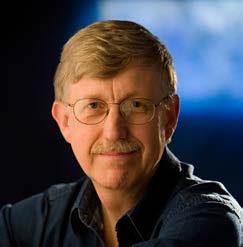
Francis Collins, M.D., Ph.D., is a physician-geneticist and the former director of the National Human Genome Research Institute. During his tenure at the National Institutes of Health (1993-2008), Collins oversaw the Human Genome Project, an international effort to map and sequence the three billion letters in the human DNA. His novel approach to gene hunting, termed “positional cloning,” has led to the isolation of several disease related genes including those responsible for cystic fibrosis, Huntington’s disease and neurofibromatosis. Collins has also been a leader in genetic ethics, advocating the privacy of genetic information and the prohibition of genebased insurance discrimination. In 2006, Collins published a book entitled e Language of God: A Scientist Presents Evidence for Belief, in which he relates his own conversion from agnosticism to Christianity and argues for the complete compatibility of rigorous scientific study and faith in the God of the Bible. Even amidst his intense work with the Obama Health Agency Transition Team, Dr. Collins graciously granted this publication an interview.
What events or trends impelled you to write your recent book, The Language of God?
I was asked to deliver the Noble Lectures on science and faith at Harvard in 2003. It was the most open that I had been about describing my own personal journey, and how I had found harmony in both the truths of science and the truths of faith. For three nights in a row, the Harvard Memorial Church was packed with students and faculty asking probing questions and making it clear that this was a topic of great interest to them. It was also clear from their reaction that while they had heard repeatedly from the voices of Biblical fundamentalism and atheist fundamentalism, the concept that the scientific and spiritual worldviews could be compatible in an intellectually rigorous fashion was new and surprising to many. ough my scientific responsibilities as Director of the Human Genome Project at that time were intense, it seemed that a book on this topic might be helpful to at least a few people. And in a certain way, I had been thinking about writing that book for a quarter century, ever since I became a believer.
In light of your study of evolutionary biology, do you think there is any credence to the theory that religion has arisen via evolution as a purely natural phenomenon?
While interesting arguments have been made about natural human tendencies to postulate an outside agent to explain inexplicable events, they fall short of explaining why 40% of today’s working scientists, who make their professional careers out of explaining natural phenomena, still persist in believing in God. I am one of them. Of course a loving Creator, who planned at the beginning of the universe for big-brained creatures to emerge with the potential for a divine relationship, might well have utilized the process of evolution to make that clarion call more audible, so the presence of an evolutionary argument for our spiritual hunger does not discount the possible truth of the existence of God.
Put another way, and following C.S. Lewis’ argument, we humans seem to have a set of basic universal needs: for food, water, shelter and sex. Yet down through the centuries and right up to now, there seems
to be this other universal need for something that will lift us up beyond the impoverished perspective of pure naturalism and provide a spiritual perspective. If there are ways to fill those other basic needs, might not this one also be intended to find its true object, the God of all the Universe, who knocks on the door of our hearts, if we will but listen?
Do you believe that evolutionary biology is a suf-
does the existence of a moral law provide evidence for a Creator?
One of the most notable characteristics of humanity, across centuries, cultures and geographic locations, is a universal grasp of the concept of right and wrong and an inner voice that calls us to do the right thing. is is often referred to as the Moral Law. We may not always agree on what behaviors are right—and this is heavily influenced by culture—but we generally agree that we should try to do good and avoid evil. When we break the Law—which, if we are honest, is frequently—we make excuses for ourselves, only further demonstrating that we feel obligated to the Law.
Evolutionary arguments, which ultimately must support reproductive fitness as the overarching goal, may explain some parts of this human urge toward altruism, especially if your sacrificial acts are offered to your relatives or to those from whom you might expect some future reciprocal benefits. Martin Nowak has recently extended those models to show that evolution could even favor altruism directed at all members of your own group.
But these evolutionary models all require hostility to outgroups within your species. Somehow we humans didn’t seem to get that memo—in fact, we especially admire examples where individuals act sacrificially for others from outgroups that they don’t even know—think of Mother Teresa or the Good Samaritan. Dismissing these acts of radical altruism as some sort of evolutionary misfiring, which is the usual response from an atheist, ought to at least be viewed skeptically as a bit of a “just so” story. And if these noble acts are frankly a scandal to reproductive fitness, might they instead be a pointer toward a holy, loving and caring God, who instilled this Moral Law into each of us as a sign of our special nature and as a call to relationship with the Almighty?
Don’t get me wrong, I am not arguing that this, or any other scientific argument, is an actual proof for a God who cares about humans. But it might be cause for some reflection.
In your book The Language of God, you explain resulted in belief in the God of the Bible. What were
this journey?
I realized that there were compelling signposts to God in nature: the fact that there is something instead of nothing, the “unreasonable effectiveness of mathematics” (Wigner’s phrase) to explain the behavior of matter and energy, the need to answer the question “what came before the Big Bang?” and the fine-tuning of physical constants in the universe to have just the value they need to make complexity possible. With my eyes opened by the first chapter of C.S. Lewis’s book Mere Christianity, I also realized that there was no simple materialistic explanation for the existence of right and wrong, nor for our universal human calling to be moral beings.
For many people, the current debate between creationism and evolution is a symbol of the inevitable to this debate, you are well known for advocating a view called theistic evolution. Could you tell us principles led you to this view?
eism is the belief in the existence of God. eistic evolution, therefore, is simply the belief that evolution is the way by which God created the marvelous diversity of life as we know it, including human beings. What an elegant plan! I came to that position by a) having come to belief in God through the signposts noted above and b) having access to the scientific evidence about biology, which overwhelmingly supports Darwin’s theory.
A great deal of ink has been spilled by those who try to argue that these worldviews cannot both be true, but in thirty years as a Christian geneticist, I have found no conflict. As an aside, the term theistic evolution confuses many people, and may even suggest that evolution, the noun, is more important than belief in God, the adjective. In e Language of God, I suggest an alternative term, “BioLogos.” is word is taken from the Greek words “Bios” (life) and “Logos” (word), specifically referring to the opening words of the Gospel of John: “In the beginning was the Word, and the Word was with God, and the Word was God” (John 1:1).
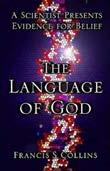
Charles Dunn ‘10 Spring 2009
The
“Imatters.
And if Christ is not risen – nothing else matters.”1 e final aphorism of the late Yale Professor of History, Jaroslav Pelikan (2006), rightly encapsulates the significance of the resurrection of Jesus Christ. If Jesus Christ is risen from the dead, then the ramifications are enormous: Jesus’ claims to divinity, the content of his teaching and his promise to those who believe in him of one day sharing in his resurrection are verified. If he is not risen, however, then there is little reason to give Jesus or his teaching any serious attention, and for that matter, as Leo Tolstoy noted, little reason to believe that there is “Any meaning in life that the inevitable death awaiting [us] does not destroy.”2
Far from a peripheral issue, the resurrection of Jesus stands at the very center of the Christian Gospel. As the Apostle Paul, the most prolific Christian missionary and New Testament writer recognized, “If Christ has not been raised, your faith is futile … If only for this life we have hope in Christ, we are to be pitied more than all men.”3 e entire Christian faith hinges on this question: Did Jesus, after suffering an agonizing and humiliating execution, in fact rise from the dead?
Before proceeding, it is necessary to say something about the burden of proof for such an investigation. Most people assume that it is the responsibility of those who believe in Jesus’ resurrection to provide convincing evidence for its reality. is, however, is not entirely the case. e resurrection of Jesus is a major historical problem, no matter how you look at it. Accordingly, the resurrection puts not only a burden of proof on its believers but on its nonbelievers as well. As Dr. Timothy Keller notes, “It is not enough to simply believe that Jesus did not rise from the dead. You must come up with a historically feasible alternate explanation for the birth of the church. You have to provide some other plausible account for how things began.”4 With this in mind, the weighty evidence for the historical veracity of the resurrection and the implausibility of such alternative explanations will be considered in the following discussion.
Before arguing that Jesus was raised from the dead, it is first necessary to establish that he was in fact dead. ough few scholars accept this theory today, skeptics over the years have proposed that Jesus did not actually die on the cross and that his resurrection was therefore a hoax. is idea can be found in the Koran, written
six hundred years after Jesus’ crucifixion, which claims that Jesus did not die on the cross,5 and particularly among Ahmadiya Muslims who maintain that Jesus actually fled to India where he is buried today.
In the nineteenth century, German theologians Karl Bahrdt and Karl Venturini put forward their own alternative explanation to the resurrection, the “swoon theory,” claiming that Jesus merely fainted on the cross only to be revived later by the cold air of the tomb.6 In popular literature, D.H. Lawrence incorporated the theory into one of his short stories in 1929,7 as did later authors, including Barbara iering in her 1992 book Jesus and the Riddle of the Dead Sea Scrolls 8 ough Emory University scholar Luke Timothy Johnson called it “ e purest poppycock, the product of fevered imagination rather than careful analysis,”9 the swoon theory retains a following even today. Accordingly, it is necessary to lay out the arguments that confirm that Jesus died on the cross. Historians unanimously agree that before Jesus went to the cross, he endured an extremely painful Roman flogging. is flogging consisted of thirty-nine lashes with a whip made of leather tongs interlaid with metal balls and pieces of sharp bone. As the third century historian Eusebius described it, “ e sufferer’s veins were laid bare, and the very muscles, sinews, and bowels of the victim were open to exposure.”10 While Jesus did not die from this beating, as many did, he certainly lost a tremendous amount of blood thereby going
The entire Christian faith hinges on this agonizing and humiliating execution, in fact rise from the dead?
into hypovolemic shock. Without a doubt, Jesus was already in serious to critical condition before he was nailed to the cross.11
Once on the cross, Jesus went through pain so unbearable that a new word had to be invented to describe it – excruciating – meaning “out of the cross.” While on the cross, Jesus died a death of asphyxiation leading to cardiac arrest, having run out of energy to push himself up the cross in order to exhale. Yet as already noted, even before he died, Jesus was suffering from hypovolemic shock, resulting in a pericardial effusion (fluid in the membrane around the heart).12
Consequently, when a Roman soldier came by the cross to confirm that Jesus was in fact dead, he thrust a spear into his side through his lung and into his heart, thus causing blood and a clear, water-like fluid to pour out, just as the Gospel writer John described it.13
It is a fanciful impossibility to assume that Jesus wasn’t really dead when he was taken off the cross. Not only did he suffer severe blood loss before his crucifixion, but during the crucifixion itself he could not have faked the inability to breathe, and the spear through the heart would have left no doubt as to his vitality. After all, Roman executioners were expert killers. If a victim somehow escaped, the soldiers themselves
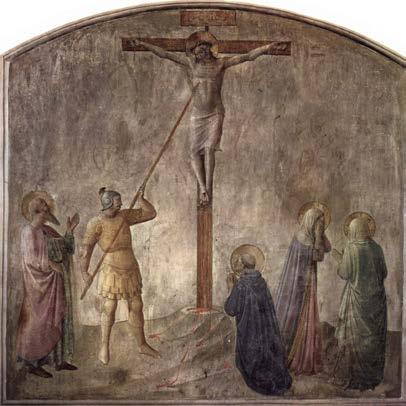
From John 19 (NIV)
31Now it was the day of Preparation, and the next day was to be a special Sabbath. Because the Jews did not want the bodies left on the crosses during the Sabbath, they asked Pilate to have the legs broken and the bodies taken down. 32 e soldiers therefore came and broke the legs of the first man who had been crucified with Jesus, and then those of the other. 33But when they came to Jesus and found that he was already dead, they did not break his legs. 34Instead, one of the soldiers pierced Jesus’ side with a spear, bringing a sudden flow of blood and water. 35 e man who saw it has given testimony, and his testimony is true. He knows that he tells the truth, and he testifies so that you also may believe. 36 ese things happened so that the scripture would be fulfilled: “Not one of his bones will be broken,”[a] 37and, as another scripture says, “ ey will look on the one they have pierced.”[b]
[a] Refers to Exodus 12:46; Num. 9:12; Psalm 34:20
[b] Refers to Zech. 12:10
would be put to death, thus giving them great incentive to make sure their victim was positively dead when removed from the cross.14
Yet even if Jesus somehow survived the cross and was able to roll the huge stone away from his tomb, in what sort of condition would he have been? As German theologian David Strauss argued in 1835, it is preposterous to think that Jesus’ disciples, seeing him in such a condition, would declare him a victorious conqueror over death and “Start a worldwide movement on the hope that someday they might have a resurrection body like his.”15 As Dr. William D. Edwards concluded in 1986 in the Journal of the American Medical Association, “Clearly, the weight of the historical and medical evidence indicates that Jesus was dead before the wound to his side was inflicted … Accordingly, interpretations based on the assumption that Jesus did not die on the cross appear to be at odds with modern medical knowledge.”16 e “swoon theory” is not a plausible alternative to the reality of the resurrection.
body. ey, never denied, however, that the tomb was empty.18
Resurrection scholar Dr. William Lane Craig declares, “ e idea that the empty tomb is the result of some hoax, conspiracy, or theft is simply dismissed.”19 Jesus’ disciples had no motive to steal his body and then later suffer persecution and die for a lie. What skeptics assert today is that the empty tomb was a later legend and by the time it developed in the writing of the Gospels, people were unable to disprove it because the location of the tomb had been forgotten. is alternative explanation, fails, however, on many levels. First of all, the empty tomb is attested in very early sources. Well before the Gospels were written, the empty tomb is a given in the early Christian tradition passed on by Paul in 1 Corinthians 15,20 which many scholars consider to be a creed dating to within two years of the death of Jesus. Moreover, the notion of the empty tomb is at the center of the early preaching of Jesus’ disciples, just weeks after his alleged resurrection. In Acts 2:24, speaking in Jerusalem to a crowd
Jesus’ disciples had no motive to steal his body and then later
Assuming that Jesus did in fact die on the cross, the question about what happened to his body naturally follows. Was Jesus’ body really absent from his tomb? rough excavations of first-century tomb sites, archaeologists have been able to ascertain the security of Jesus’ tomb. A narrow ramp would have led to a low entrance, and a large stone weighing nearly two tons would then be rolled down this ramp and sealed in place across the door. While it would not have been difficult to put the stone into place, it would have required the strength of multiple men to push the stone back up the ramp. In other words, the entrance was quite secure.17 Yet as the earliest Christians proclaimed, on Easter Morning, the tomb was empty! And the tomb site was known to Christian and Jew alike. If the grave had not been empty, it would have been impossible for a movement based on the Resurrection to have come into existence. Skeptics could have easily quelled the movement by producing Jesus’ rotted corpse. Yet even the earliest Jewish polemic against Jesus presupposes that the tomb was indeed empty. No one claimed that the tomb contained Jesus’ body. e question rather, was, “What happened to the body?” e Jews proposed that the Roman guards appointed to guard the tomb had fallen asleep and that Jesus’ disciples had stolen the
of over three thousand Jews, Jesus’ disciple Peter contrasts Israel’s famed patriarch King David, who “Died and was buried, and his tomb is here to this day” with Jesus of whom he says he Was not abandoned to the grave, nor did his body see decay. God has raised this Jesus to life, and we are all witnesses of the fact.21 e notion of the empty tomb did not arise through later mythologizing. As A.N. Sherwin-White, the GrecoRoman classical historian from Oxford University noted, it would have been without precedent anywhere in history for legendary distortion to emerge that quickly.22
Furthermore, the unanimous accounts of the first witnesses of the empty tomb are too problematic to be legendary. All four Gospels assert that the first witnesses of the empty tomb were women. In first century Palestine, the testimony of women was considered to be of no value, such that they were not even allowed to testify in a Jewish court of law. Accordingly, it is shocking that the primary witnesses of the empty tomb recorded in the Gospels were women who were friends of Jesus. A later legendary account would almost certainly have had male disciples of Jesus, like Peter or John, discover the tomb. As resurrection historian Dr. N.T. Wright notes, there must have been enormous pressure on the early church to remove the women from the accounts.23 e only plausible way
to explain the fact that women were recorded as the first witnesses of the empty tomb is if indeed they were. Accordingly, after spending a lifetime sifting through the evidence, Sir Norman Anderson, one of the greatest legal minds of all time, who lectured at Princeton, was offered professorship for life at Harvard and served as Dean of the Faculty of Laws at the University of London concluded, “ e empty tomb, then, forms a veritable rock on which all rationalistic theories of the resurrection dash themselves in vain.”24
ough a key argument for the reality of the resurrection, an empty tomb alone does not prove a resurrection. History contains many missing bodies but few claims of those bodies being resurrected to walk the earth again. If Jesus was indeed resurrected, were there any sightings of him after his alleged resurrection? According to the New Testament documents, the answer is a resounding yes. ough some scholars have sought to discount these appearances as legendary or hallucinations, in light of the historical evidence, such alternative explanations are not easily sustained.
e earliest accounts of eyewitnesses to the resurrection come not from the Gospels but from the letters of the apostle Paul written fifteen to twenty years after the death of Jesus. In Paul’s letter to the Church in Corinth he recounts what many scholars consider to be an early church creed. Even the eminent theologically liberal scholar Joachim Jeremias called it “the earliest tradition of all” as did the German theologian Ulrich Wilkens, who stated that it “indubitably goes back to the oldest phase of all in the history of primitive Christianity.”25 Unable to be the product of legend, the creed affirms that eyewitness testimony regarding the resurrection was at the center of Christianity from the time of its inception. e creed that Paul recounts to the Corinthians reads: “For what I received I passed on to you as of first importance: that Christ died for our sins according to the Scriptures, that he was buried, that he was raised on the third day according to the Scriptures, and that he appeared to Peter, and then to the Twelve. After that, he appeared to more than five hundred of the brothers at the same time, most of whom are still living, though some have died.”26
As stated in the creed, Jesus did not just appear to a few individuals but even to a group as large as five hundred people at once, most of whom Paul says are alive and can therefore be consulted to confirm the truth of the testimony. Like all of Paul’s letters, his letter to the Corinthians was a public letter intended to be read aloud to a large group of people.
Paul was inviting skeptics to verify the truth of his claims themselves, to go and talk with the eyewitnesses who were still living. In light of the pax Romana (Roman peace), which allowed for safe and easy travel in the Mediterranean, his listeners could easily have taken up his challenge. If the witnesses did not exist, Paul could not have issued such a challenge.27
In addition to the testimony from the early church creed, the Gospels report appearances to a large sum of different people in different settings: some individually, some in groups, some outdoors, some indoors, some to softhearted people like John and some to doubting skeptics like omas. Many of the people ate with Jesus and touched Jesus, showing that he was physically present. e appearances were not
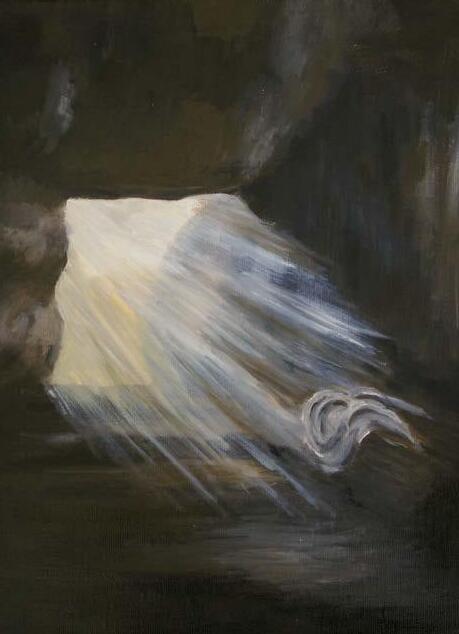
a one-day phenomenon, but occurred over several weeks. e appearances include: to Mary Magdalene, in John 20:10-18 to the other women, in Matthew 28:8-10 to Cleopas and another disciple on the road to Emmaus, in Luke 24:13-32 to eleven disciples and others, in Luke 24:3349 to ten apostles and others, with omas absent, in John 20:19-23 to omas and the other apostles, in John 20:26-30 to seven apostles in John 21:1-14 to the disciples, in Matthew 28:16-20 with the apostles at the Mount of Olives before his ascension, in Luke 24:50-52.28 is is an impressive list of sightings to witnesses who were still alive to be questioned. e resurrection, which was the central proclamation of the early church, was not based on the sightings of one or two people who had seen a fleeting shadowy figure. Rather, there were multiple appearances to many different people. Sir Edward Clark, a British High Court judge, after conducting a thorough analysis of the legal evidence for the resurrection declared: “To me the evidence is conclusive, and over and over again in the High Court I have secured the verdict on evidence not nearly so compelling. As a lawyer I accept the gospel evidence unreservedly as the testimony of truthful men to facts that they were able to substantiate.”29
Some have sought to explain away the resurrection appearances as hallucinations. is theory, however, is very problematic. Psychologist Dr. Gary Collins points out that hallucinations are individual occurrences. ey do not appear to groups of people. ey are subjective, personal and private.30 Yet there are multiple accounts of Jesus appearing to multitudes of people who reported the same thing. Additionally, the disciples were not in a state of mind to trigger hallucinations. ey were afraid, doubting and in despair after Jesus’ crucifixion. Yet people who hallucinate need a fertile mind full of expectancy and anticipation. Further, hallucinations are rare. ey are usually caused by drugs or sleep deprivation. Accordingly, it seems highly implausible that over the course of several weeks people coming from vastly different backgrounds, with different temperaments, in different places, all experienced hallucinations.31
Most significantly, as N.T. Wright argues, the eyewitness accounts and the empty tomb must be taken together. at is, if there was only an empty tomb and no sightings, no one would have concluded that Jesus had been resurrected; the body may have just been stolen. Or if there were only eyewitnesses and no
empty tomb, no one would have concluded that Jesus had been resurrected either; people claim to have seen departed loved ones all the time. e two factors must have occurred in tandem for anyone to have concluded that Jesus was actually raised from the dead.32 e historical evidence speaks clearly: e accounts of the resurrection were not invented after the fact. As the theologian and historian Carl Braaten noted: “Even the more skeptical historians agree that for primitive Christianity...the resurrection of Jesus from the dead was a real event in history, the very foundation of faith, and not a mythical idea arising out of the creative imagination of believers.”33 e tomb of Jesus really was empty and there really were hundreds of witnesses who claimed that they had seen Jesus bodily raised.
If the witnesses did not exist, Paul could not have issued such a challenge.
ough powerful corroboration to the claims of the early church, an empty tomb and resurrection witnesses do not alone prove that Jesus was resurrected. Could not the followers of Jesus have desperately wanted to believe that Jesus was resurrected from the dead? Perhaps someone stole the body to make it look like he was raised, some sincerely thought they saw him, and others bought into the idea in a sort of “groupthink” manner. After all, as the skeptic Michael Martin notes, “A person full of religious zeal may see what he or she wants to see, not what is really there.”34 e problem with this theory, however, is that it employs what C.S. Lewis called “chronological snobbery.”35 at is, it assumes that we superior moderns are skeptical about claims of a bodily resurrection from the dead, while the ancients, credulous and gullible people that they were, readily believed in accounts of the supernatural. is hypothesis is patently false. People in the first century did not believe in individuals coming back from the dead either! e notion of an individual bodily resurrection from the dead was absent from all the dominant worldviews of the time, rendering such a claim inconceivable.36
In his landmark treatise e Resurrection of the Son of God, resurrection scholar N.T. Wright thoroughly examines the non-Jewish thought of the first-century
Mediterranean world, both in the east and the west, and demonstrates that the people of that time did not believe in even the possibility of a bodily resurrection. To the Greco-Roman mindset, the soul or the spiritual realm was good and the physical or material world was weak and corrupted. In death, the soul was saved from the defiled physical world as it was liberated from the body. Based on this view of the world, a bodily resurrection from the dead would not only be impossible but intensely undesirable. Why would a soul, having been freed from its body, want to be imprisoned again? Such a return would be unthinkable and impossible. Even in a reincarnation system, it was understood that when a soul returned to embodied life it was still in prison. e ultimate goal was to be eternally free from the body.37 When the apostle Paul went to the Areopagus in Athens to preach about Jesus, those in the crowd were initially interested. But when they realized that he was talking about an individual being bodily resurrected from the dead, many mocked him and considered his testimony to be absolutely ridiculous!38 Within the Greco-Roman worldview, a bodily resurrection was simply inconceivable.

when God renewed the entire world and put an end to death and suffering.39 is resurrection, however, was only a part of the comprehensive renewal of the physical world. us the notion of an individual being bodily resurrected from the dead in the middle of history, while the rest of the world still suffered from death and sickness and decay would have been unfathomable. If one were to posit to a Jewish person at that time that an individual had been resurrected from the dead, he would be disregarded as foolish or possibly crazy. Did justice and peace reign? Was suffering no more? Had the wolf lain down with the lamb? Were disease and death abolished? Without an accompanying complete renewal of the physical world, an individual resurrection would be ridiculous. To both Jew and Greek the idea of an individual bodily resurrection from the dead would have been deemed impossible.40
e notion of an individual bodily resurrection from the dead was just as inconceivable to Jewish thought. Unlike the Greeks, the Jews believed that the material world was good. us death was not a form of liberation but a tragedy. Many of the Jews of Jesus’ time believed that at the end of time all of the righteous would be resurrected from the dead
In light of this reality, both the hallucination and conspiracy theories fail to convince, for both hypotheses assume that the very idea of a resurrection from the dead was imaginable for Jesus’ Jewish followers. To suggest that Jesus’ followers simply wanted to believe that Jesus was resurrected from the dead and thus had hallucinations of him appearing and talking to them, presupposes that resurrection from the dead was an option in the worldview of Jesus’ disciples, which it was not. Likewise, to suggest that Jesus’ followers stole the body from the tomb and then went about claiming that he was alive, presupposes that other Jews would have been receptive to the idea that an individual could be raised from the dead, which they were not. ough for different reasons, people of Jesus’ day were just as skeptical about a bodily resurrection from the dead as people are today.41
In the first-century Jewish world there were many people who claimed to be the Messiah, started a movement and were executed thereafter. But as N.T. Wright points out:
In not one single case do we hear the slightest mention of the disappointed followers claiming that their hero had been raised from the dead. ey knew better. Resurrection was not a private event. Jewish revolutionaries whose
they themselves had witnessed.43 Only a series of multiple, credible and inexplicable encounters with Jesus could convince a movement of other Jews, to whom an individual bodily resurrection from the dead was unthinkable, to believe in the risen Christ.
Second, not only were over ten thousand Jews following the allegedly resurrected Jesus within five weeks of his crucifixion, but they were also worshipping him as God.44 For Eastern religions, which believe in an
Only a series of multiple, credible and inexplicable encounters with Jesus could convince a movement of other Jews, to whom an individual bodily resurrection from the dead was unthinkable, to believe in the risen Christ.
leader had been executed by the authorities, and who managed to escape arrest themselves, had two options: give up the revolution or find another leader. Claiming that the original leader was alive again was simply not an option. Unless of course he was.42 ough Jesus’ life and career met the same brutal end as the lives and careers of many others who claimed to be the Messiah, his disciples did not view his crucifixion as a defeat but rather as a victory. What possible justification could they have had for this conclusion, unless of course, they had in fact seen Jesus risen from the dead?
Is There Any Supporting Evidence for the Resurrection?
Without a doubt, the direct evidence for the resurrection of Jesus including the certainty of his death, the empty tomb and numerous eyewitness encounters strongly suggest that Jesus was raised from the dead. But if something as extraordinary as the resurrection of Jesus actually took place, then it would be reasonable to assume that the historical record would also be full of indirect evidence supporting the reality of the event. In the case of the resurrection, one should consider at least five undisputed pieces of indirect evidence, which taken individually, and certainly collectively, imply that Jesus was in fact raised from the dead.
First, as already mentioned, after the death of Jesus there was a sudden emergence of a worldview centered around the resurrection of the body, first Jesus’ and later the resurrection of those who believed in him. is unique system of belief did not emerge over a period of time or through discussion and argument, as is typically the case when cultures and worldviews change. It did not arise through process or development. Jesus’ disciples were simply proclaiming what
impersonal God that is present in all things, it is not difficult to accept the idea that certain humans might have more divine consciousness than others. Western religions of the first-century believed that the gods often took on human appearance, so that a human stranger might in fact be Zeus or Hermes. Yet Jews were different. ey confessed a single, transcendent, personal God. It was the epitome of blasphemy, the height of heresy, to worship a human being as God.45 What event could have been so significant as to overcome this ingrained system of belief? Eyewitness encounters with the resurrected Christ.
ird, there were hardened skeptics who did not believe in Jesus prior to his crucifixion but thereafter turned around completely and believed in the Christian faith after Jesus’ death. James, the brother of Jesus, was embarrassed by and did not believe in Jesus during his ministry. Yet the later historian Josephus writes that James became a leader of the Jerusalem church and was stoned to death for his belief in Jesus.46 Why such a turnaround? Paul writes in 1 Corinthians that the resurrected Jesus appeared to James. Saul of Tarsus (later known as Paul) was a leading Pharisee who opposed anything that jeopardized the traditions of the Jewish people. To him, Christianity was the epitome of disobedience to God, thus spurring him to lead the movement to arrest and execute members of the early Church. Yet suddenly he made a 180-degree turn and joined the very Christians he sought to eradicate. He became the leading advocate of the Christian faith preaching throughout the Mediterranean world despite suffering great persecution and ultimately execution for his faith. Paul writes in his letter to the Galatians that this turnaround was prompted when he saw the risen Christ and was appointed by Christ to be one of his followers.47 e only reasonable
explanation for these dramatic turnarounds is if Jesus was in fact raised from the dead.
Fourth, the rapid emergence of the Church and the cultural shift that it brought about requires an explanatory event. Within only twenty years after the death of Jesus, Christianity had spread so quickly that it had even reached the imperial palace in Rome, ultimately prevailing over competing ideologies and eventually overwhelming the Roman Empire. From a human perspective, Christianity had little probability of success. It was a group of people from an obscure part of the Empire, without significant money, power or influence, proclaiming a message about a crucified carpenter who had been resurrected from the dead.48 As the Cambridge New Testament scholar C.F.D. Moule wrote, “If the coming into existence of the Nazarenes [Christians], a phenomenon undeniably attested by the New Testament, rips a great hole in history, a hole the size and shape of the Resurrection, what does the secular historian propose to stop it up with?”49
Fifth and finally, the lives of the disciples were transformed such that they were willing to die for their conviction that Jesus had risen from the dead. After the crucifixion of Jesus, his followers were disheartened and depressed. e one who they had believed to be the Messiah, the promised Savior of the world, had died in the most dishonorable way possible, crucifixion. ey scattered and fell away, but within weeks they were leaving their jobs, gathering together and committing themselves to proclaiming the Gospel that Jesus was the Messiah sent by God, who died on a cross to pay the penalty for sin and then was raised to life seen alive by them. From an earthly perspective, they had little to gain in return. ey were often hungry, ridiculed, beaten and imprisoned. Ultimately, most of them were brutally executed in torturous ways. Why were they willing to proclaim this Gospel to their death? Because they were absolutely convinced that they had seen the resurrected Christ.
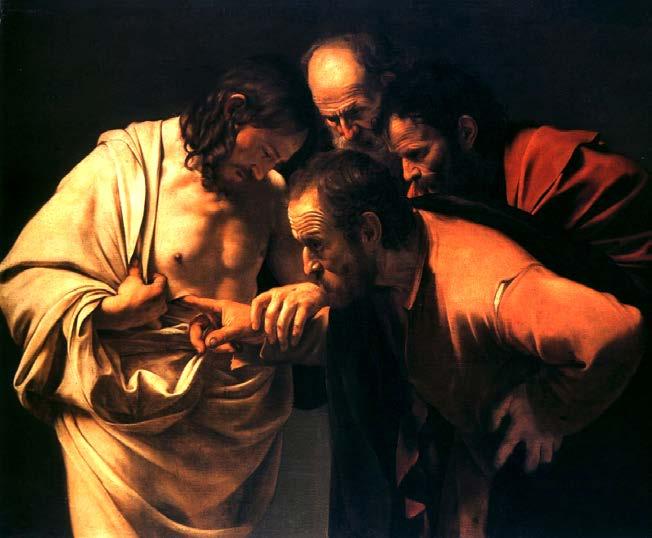
Some might at this point argue that willingness to die for beliefs does not prove veracity but rather fanaticism. Yet the disciples were willing to die for something that they had seen with their own eyes and touched with their own hands. ough they had nothing to gain and everything to lose, they proclaimed not just what they believed but that which they knew, that Jesus was resurrected from the dead. People will die for their religious beliefs if they sincerely believe them to be true, but they will not die for their religious beliefs if they know them to be false.50 As scientist Blaise Pascal put it, “I believe those witnesses that get their throats cut.”51
It is insufficient for the skeptic to simply disregard the resurrection of Jesus as something that couldn’t happen. Rather, the skeptic must confront and explain these historical realities. Why did thousands of people suddenly come to believe that Jesus was raised
People will die for their religious beliefs if they sincerely believe them to be true, but they will not die for their religious beliefs if they know them to be false.
from the dead, even though no existing worldview supported the idea of an individual resurrection from the dead and no other group of messianic disciples claimed that their leader was raised from the dead? Why were thousands of Jews willing to worship a human being as God? What can account for the conversion of ardent skeptics like James and Saul? What can explain the phenomenon of the rapid emergence of the Church? And how can one account for the hundreds of eyewitnesses to the resurrection who were so convinced of what they had seen that they spent the rest of their lives proclaiming the message, ultimately facing execution for their beliefs? No explanation fits the historical evidence better than the resurrection. Sir Lionel Luckhoo, who holds a place in e Guinness Book of World Records as the world’s most successful lawyer, was twice knighted by Queen Elizabeth and served as a British justice and a diplomat, came to the same conclusion. After assessing the historical evidence for the resurrection for many years he finally declared, “I say unequivocally that the evidence for the resurrection of Jesus Christ is so overwhelming that it compels acceptance by proof which leaves absolutely no room for doubt.”52
e historical evidence for the resurrection of Jesus Christ is compelling. Alternative explanations directly oppose all that is known about first-century history and culture. Yet many people, unwilling to engage with the historical evidence and follow it to its logical conclusion, side step the investigation in deference to a prior commitment to the philosophical claim that miracles are impossible. “It just couldn’t happen!” N.T. Wright strongly warns against such a maneuver: e early Christians did not invent the empty tomb and the meetings or sightings of the risen Jesus…Nobody was expecting this kind of thing; no kind of conversion experience would have invented it, no matter how guilty (or how forgiven) they felt, no matter how many hours they pored over the scriptures. To suggest otherwise is to stop doing history and enter into a fantasy world of our own.53
Granted, accepting the reality of the resurrection of Jesus Christ is not an insignificant step for the modern skeptical mind to take. But as Wright points out, it was not an easy step for the people of the first century either. To them, it was just as unfathomable. ey only came to accept it as they allowed the evidence to confront and reshape their understanding of the world, their conception of what was possible. e evidence of the empty tomb, the eyewitness accounts and the dramatically changed lives of Jesus’ disciples were too much to ignore. us those first converts concluded that Jesus really had been resurrected from the dead, and thus truly was the Son of God, deserving of their trust and obedience. As the apostle John, himself an eyewitness to the resurrection wrote, “To all who received him [Jesus], to those who believed in his name, he gave the right to become children of God.”54 ese early converts received the forgiveness of what Jesus had already done for them, paying the death penalty on the cross that they deserved for their rebellion and wrongdoing. What’s more, they received the free gift of eternal life in relationship with the God who made them. ough their conversion often brought about suffering and persecution, they lived with the firm hope that death would not have the last word, or as Leo Tolstoy feared, destroy all of the meaning we assign to this life. As Jesus had been resurrected from the dead, so too would they who trusted in him share in his resurrection and live again, this time eternally with God. For as Jesus himself declared, “I am the resurrection and the life. He who believes in me will live, even though he dies; and whoever lives and believes in me will never die.”55
1 Jaroslav Pelikan, Yale Department of History Newsletter, Spring (2007), 3.
2 Leo Tolstoy, A Confession (Whitefish, MT: Kessinger Publishing, 2004), 16.
3 1 Corinthians 15:17-19.
4 Timothy Keller, e Reason for God (New York: Penguin Group, 2008), 202.
5 Surah IV: 156-157.
6 William Lane Craig, Reasonable Faith, (Westchester, IL: Crossway, 1994), 243.
7 D.H. Lawrence, Love among the Haystacks and Other Stories (New York: Penguin, 1960), 125.
8 Barbara iering, Jesus and the Riddle of the Dead Sea Scrolls (New York: HarperCollins, 1992).
9 Luke Timothy Johnson, e Real Jesus (San Francisco: HarperOne, 1996), 30.
10 Eusebius of Caesarea, cited in Josh McDowell, Evidence that Demands a Verdict (San Bernardino: Campus Crusade for Christ, 1972), 203-204.
11 Dr. Alexander Metherell, in Lee Strobel, e Case for Christ (Grand Rapids, MI: Zondervan, 1998), 196-199.
12 Ibid.
13 John 19:34.
14 Martin Hengel, Crucifixion in the Ancient World (Philadelphia: Fortress, 1977).
15 Lee Strobel, 202.
16 William D. Edwards et al., “On the Physical Death of Jesus Christ,” Journal of the American Medical Association (March 21, 1986), 1455-63.
17 John A.T. Robinson, in Lee Strobel, e Case for Christ, 210.
18 William Lane Craig, “ e Empty Tomb of Jesus,” in In Defense of Miracles, ed. R. Douglas Geivett and Gary R. Habermas (Downers Grove, IL: InterVarsity Press), 258.
19 William Lane Craig, in Lee Strobel, e Case for Christ, 212.
20 1 Corinthians 15:3-8.
21 Acts 2:29-32.
22 Lee Strobel, 220.
23 N.T. Wright, e Resurrection of the Son of God, (Philadelphia: Fortress, 2003), 608.
24 J.N.D. Anderson, e Evidence for the Resurrection (Downers Grove, IL: InterVarsity Press, 1966), 20.
25 Lee Strobel, 230.
26 1 Corinthians 15:3-6
27 Timothy Keller, 204.
28 Lee Strobel, 234.
29 Michael Green, Christ is Risen: So What? (Kent, England: Sovereign World, 1995), 34.
30 Dr. Gary Collins, in Gary Habermas and J.P. Moreland, Immortality: e Other Side of Death (Nashville: Nelson, 1992), 60.
31 Lee Strobel, 239.
32 N.T. Wright, 686, 688.
33 Carl Braaten, History and Hermeneutics, vol. 2 of New Directions in eology Today, ed. William Hordern (Philadelphia: Westminster Press, 1966), 78.
34 Michael Martin, e Case Against Christianity (Philadelphia: Temple University Press, 1991), 75.
35 C.S. Lewis, Surprised By Joy (New York: Houghton Mifflin Harcourt, 1995), 201.
36 Tim Keller, 206.
37 N.T. Wright, 81-84.
38 Acts 17:16-34.
39 N.T. Wright, 200-206.
40 Tim Keller, 207.
41 Ibid.
42 N.T. Wright, Who Was Jesus? (Grand Rapids, MI: Eerdmans, 1993), 63.
43 Tim Keller, 209.
44 Lee Strobel, 250-1.
45 Tim Keller, 209.
46 Flavius Josephus, Antiquities of the Jews, 20.9, in e Complete Works of Flavius Josehpus, Trans. William Whiston (Grand Rapids, MI: Kregel Publications, 1981), 423.
47 Galatians 1:11-24.
48 Lee Strobel, 254.
49 C.F.D. Moule, e Phenomenon of the New Testament (London: SCM Press, 1967), 3.
50 Lee Strobel, 247.
51 Tim Keller, 210.
52 Donald McFarlan, ed., e Guinness Book of World Records (New York: Bantam, 1991), 547.
53 N.T. Wright, e Resurrection of the Son of God, 707.
54 John 1:12.
55 John 11:25-26.

Charles Dunn ‘10 majored in Classical Languages and Literatures with a minor in History. He currently works as a pastor in Dallas, TX.
Nathaniel Schmucker ‘15
Spring 2012
ACaspar David Friedrich emerged as one of Germany’s most promising young artists. is plain man from Dresden had a love for nature and an enthusiasm for the emerging style of Romanticism. He soon became one of the movement’s leaders, stretching the conventional limits of art and developing a style that filled his paintings with emotion. Making frequent use of beautiful landscapes and window motifs to draw a distinction between the present world and an ideal world, he often painted people staring into the distance to create a deep sense of longing for the ideal. is longing characterizes Romanticism and, from a Christian perspective, suggests why that era’s art has a continued popular appeal. Romantic art illustrates the doctrine of general revelation, which teaches that dissatisfaction with the world and a desire for something better are natural human emotions.
In his artwork, Friedrich seeks to create an emotion known as Sehnsucht. Sehnsucht is a German word that combines the verbs sich sehnen (to desire) and suchen (to search) and describes an overwhelming desire for both beauty and the search for it. e English language has no equivalent word of its own, but has adopted the German one. e Oxford English Dictionary, which acknowledges Sehnsucht’s use in English dating back to 1847, defines it as a “yearning, wistful longing.”i is is a longing for a beauty and perfection not found in this world; Sehnsucht recognizes that the present life is painful, unsatisfying, and incomplete, and suggests that some ideal world exists in which people find happiness. In his paintings, Friedrich conveys Sehnsucht by using beautiful landscapes to depict the ideal world, by using a window
motif to contrast it with the present world, and by painting people with their backs to the viewer to create an emotional connection with the work.
Almost without exception, Friedrich paints scenes of nature, which he portrays as beautiful and idyllic. One of his most famous paintings, Wanderer above the Sea of Fog, ii shows a hiker standing on the edge of a precipice, gazing out over a misty valley. ough the wanderer stands in the center of the canvas, the piece focuses on the glorious landscape beyond him. A forest valley filled with rock outcrops stretches into the distance. e green valley turns into rolling hills, which then fade into mountains. A fine white fog fills this beautiful land, blurring the line between the earth and the cloud-filled sky. Even Friedrich’s paintings that portray more mournful scenes—such as the burial in Cloister Cemetery in the Snowiii or the shipwreck in e Sea of Iceiv —still depict nature as a grand and awe-inspiring force. In his works, Friedrich exalts nature as something beautiful and desirable.
rough the use of a window motif, Friedrich contrasts this beauty with the frustrating world in which we live. Consider his 1822 painting, Woman at the Window, v which shows a solitary woman looking out of her house through a large window. Friedrich fills most of the canvas with the inside of the house, which he paints simply and darkly, in shades of deep green and brown. e room is drab and, apart from a few bottles by the window, empty. e window, however, offers a glimpse at the outside world. is world, in contrast to the inside of the house, is sunny and bright with a clear sky and tall trees. Consider also the window motif in Friedrich’s painting, e Dreamer. vi Here, a man sits in a large window in the ruins of
a monastery. e window contrasts the dark, gloomy stone of what was once the inside of the monastery with the pink and yellow sunrise over the mountains. Some of Friedrich’s other paintings have a subtler window motif. For example, in Chalk Cliffs of Rügen, vii two trees and their branches frame the scene in the painting. is frame gives the impression of looking through a window at the ocean and the chalk cliffs. As before, the people remain on the inside of the window in a world that is dark and in shadow, and which contrasts the brilliant white cliffs and blue ocean beyond. In each of these three cases, Friedrich uses the window to distinguish between two opposing worlds: one which is the world of nature’s beauty, and one which is the drab world in which people live.
With this distinction established, Friedrich creates a longing for the beautiful world by painting people facing into the distance so that their backs are to the viewer. Other artists before and after Friedrich occasionally painted figures facing away, but none did it to the same degree as Friedrich. As in Wanderer above the Sea of Fog and Woman at the Window, people play a central role in his paintings. at role, however, is not to draw attention onto themselves, but to focus it onto nature’s beauty. Since these people face away, the viewer’s gaze follows theirs into the background of the paintings. e viewer looks over the misty landscape just as the wanderer does and looks through the window at the trees just as the woman does. us the viewer sympathizes with the wanderer and the woman, and feels the same Sehnsucht—the longing for escape from daily life into the beautiful natural world—that the people do.
e feeling of Sehnsucht in Caspar David Friedrich’s paintings characterizes Romanticism. Friedrich lived from 1774 to 1840 and painted during the height of the Romantic Era. e other Romantic artists “could praise Friedrich’s landscapes as the visual embodiments of their ideas,”viii chief among which were an emphasis on beauty and the creation of the “melancholy, sentimental longing” known as Sehnsucht.ix Although Friedrich emphasized the window motif and the technique of painting people facing away more than other Romantic painters did, he used it to convey the same ideas that they did—the portrayal of beauty and of Sehnsucht. e works of other Romantic artists, from the German Philipp Otto Runge to the artists of the American Hudson River School, share the common theme of desiring the ideal. Friedrich’s clarity at conveying the ideas of Romanticism, however, made him “a quintessentially Romantic painter.”x
is longing for the ideal is not unique to Romanticism’s visual arts, but manifests itself in its
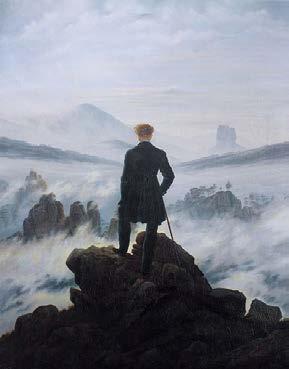
other art forms as well. Consider the Grimm Brothers, whose fairy tales create a mysterious world filled with princes, princesses, magic, and romance, and which provides an escape from the pains of daily life. Consider also the Romantic Era in music. Beethoven was one of this era’s earliest and greatest composers. In e Joy of Music, Leonard Bernstein says that Beethoven created music that provided a glimpse of perfection and true beauty in the midst of a suffering world. He “turned out pieces of breath-taking rightness. Rightness—that’s the word! When you get the feeling that whatever note succeeds the last is the only possible note that can rightly happen at that instant, in that context, then chances are you are listening to Beethoven.”xi Sehnsucht in all its forms—artistic, musical, literary—became a fundamental and defining aspect of Romanticism.
Historians provide an explanation for Sehnsucht’s rise in importance. Romanticism’s emphasis on longing for the ideal developed in part as a response to the Enlightenment. e Enlightenment had stressed rationality and objectivity in all areas of life. is in turn led to the Industrial Revolution and the growth of metropolises. ough the philosophes saw these as progress, the Romantics saw them as dehumanizing,xii for they created great suffering through long hours of unsafe factory labor, cramped and unsanitary housing, and the great squalor of city slums. Romantics saw the Enlightenment as stressing progress and advancement to the detriment of the general well-being of society.
As Friedrich Hölderlin said of the Enlightenment in his book, Hyperion,
[y]ou see artisans, but no men, thinkers, but no men, priests, but no men, masters and servants, but no men, minors and adults, but no men—is this not like a battlefield on which hacked-off hands and arms and every other member are scattered about, while the lifeblood flows from them to vanish in the sand? xiii
us to a degree, the Romantics painted, wrote, and composed in reaction to the Enlightenment’s dehumanizing rationalism. ey sought to portray beauty so that people could find an emotional escape from the painful life of an industrialized society.xiv is then provides an explanation for why Romantic art, literature, and music remain popular. In the two centuries since the Romantic Era, the world has continued to modernize. Cities have grown larger, technology has advanced at an unprecedented rate, and people’s lives have become much busier. e twentieth century world contains the aspects of Enlightenment society that the Romantics feared, and has them to a greater degree. If, then, Romanticism’s appeal lay in its emotional response to industrialization and modernization, that same appeal applies to individuals today and accounts for Romanticism’s continued popularity.
Caspar David Friedrich’s artwork indicates, however, that he believed Sehnsucht’s appeal was not only because it was a response to the dehumanizing aspects of the Enlightenment, but also because of what Christianity calls the general revelation of God. Friedrich saw a tie between Sehnsucht and Christianity, and he filled his artwork with religious symbolism to show that all creation conveys truth about God. He intended one of his earliest landscapes, e Tetschen Altar xv, to hang behind an altar in a church.xvi When Friedrich first revealed it to the public, however, it created such controversy that some called it heretical. xvii e Tetschen Altar received this review not because it portrayed anything that overtly contradicted church teaching—it merely displayed Jesus’ crucifixion on a beautiful mountain at sunset— but because it was the first to use a “secular” landscape in a religious setting.xviii
Friedrich did not see his painting as secular piece, as the outraged church leaders did, but saw it as fully appropriate for a church setting. He did not seek to use the landscape to diminish Christianity but to “create a sense of devotion and mystery”xix and elevate the soul. He believed that landscapes belong in the church because their beauty reflects the glory of God seen in creation. To explain to the public his reasons for painting e Tetschen Altar, Friedrich went to the unusual length of publishing his own interpretation of it. He indicates that his painting is fitting for church
use because it uses aspects of nature as symbols for Christian doctrine.
Jesus Christ, nailed to the cross, turns toward the setting sun, image of the eternal Father, giver of all life. With the teachings of Jesus, an old world died, the time when God the Father walked directly on earth. e sun went down and the earth could no longer grasp the departing light. e Saviour on the cross shines in the gold of the sunset with the purest, noblest metal, and reflects the light onto the earth with a gentler gleam. e cross stands on a rock, as unshakeably firm as our faith in Jesus. Fir trees grow around the cross, evergreen and everlasting, like the hope of men in Him, Christ crucified.xx e doctrine behind Friedrich’s assertion that nature reveals truth about God is the doctrine of general revelation. God reveals truth about himself not only through the Bible (termed special revelation), but also through the general revelation of all of creation. As the Westminster Confession of Faith says, “the light of nature and the works of creation and providence do… manifest the goodness, wisdom, and power of God.”xxi Romans 1:20 also says that, “[God’s] invisible attributes, namely his eternal power and divine nature, have been clearly perceived, ever since the creation of the world, in the things that have been made.”xxii Christians hold that in the case of Romanticism, one of the ways that nature reveals truth about God is through Sehnsucht. Christianity teaches that death, pain, sickness, hard labor, and suffering presently plague “the whole creation,”xxiii and that in the future, God will create a perfect New Heaven and New Earth which are free from pain, suffering, and death, and in which all Christians will live for eternity.xxiv is is the same contrast between the present world and an ideal one that the Romantic artists sought to portray. Moreover, just as the Romantic artists encouraged a longing for the ideal, so the Bible teaches that God causes people to long for the New Heaven and Earth, for he has “set eternity in the hearts of men.”xxv us, Christians see Sehnsucht as a feeling caused by the general revelation to all humanity of God’s goodness and of his plan to create a perfect world in which Christians will live forever. According to Christian doctrine, then, when Friedrich or the other Romantic artists encourage the emotion of Sehnsucht, they appeal to the longing for heaven that God has given to all people. When viewed in the historical context of the Enlightenment, Christians see Sehnsucht’s rise as both a response to the dehumanizing aspects of modernization and a reflection of the longing for heaven that God has given all people.
Caspar David Friedrich’s beloved artwork, as with the work of the other artists, writers, and composers of the Romantic Era, recognizes that true beauty and perfection do not exist in this world and yet longs for the ideal. According to Christianity, this expressed longing is both a natural emotion and a normal human response to the dehumanization of the Enlightenment, for it reflects God’s beauty and perfection and anticipates his future restoration of creation to a perfect state. e Christian understanding of Sehnsucht as a natural feeling provides an explanation for the enduring relevance of the Romantic Era’s paintings, literature, and music. It explains why Friedrich’s Wanderer above a Sea of Fog finds its way onto posters, onto the cover of the May 8, 1995 issue of Der Spiegel, xxvi and onto the covers of books;xxvii It explains why the Grimm Brother’s fairy tales remain popular; and it explains why Beethoven’s Fifth and Ninth Symphonies still stir people’s hearts. Sehnsucht’s appeal is not only that many of the aspects of post-Enlightenment society remain to the present day, but that Sehnsucht is also an emotion common to all people.
i. “Sehnsucht,” Oxford English Dictionary, 2nd ed. (1989).
ii. Caspar David Friedrich, Wanderer above the Sea of Fog, 1818, Kunsthalle, Hamburg.
iii. Caspar David Friedrich, Cloister Cemetery in the Snow, 1817-19, Formerly in Nationalgalerie, Berlin.
iv. Caspar David Friedrich, e Sea of Ice, c. 18235, Kunsthalle, Hamburg.
v. Caspar David Friedrich, Woman at the Window, 1822, Nationalgalerie, Berlin.
vi. Caspar David Friedrich, e Dreamer, c. 1835, State Hermitage Museum, St. Petersburg.
vii. Caspar David Friedrich, Chalk Cliffs on Rügen, 1818-19, Stiftung Oskar Reinhart, Winterthur.
viii. Joseph Leo Koerner, Caspar David Friedrich and the Subject of Landscape, 2nd ed. (London: Reaktion, 2009) 29.
ix. Ibid. 29.
x. Ibid. 29.
xi. Leonard Bernstein, e Joy of Music (Pompton Plains: Amadeus, 2004) 29.
xii. William Vaughan, German Romantic Painting, 2nd ed. (Singapore: C. S. Graphics, 1994) 10.
xiii. Friedrich Hölderlin, Hyperion and Selected Poems, ed. Eric L. Santner (New York: Continuum, 1990) 128.

xiv. Koerner 29.
xv. Caspar David Friedrich, e Tetschen Altar, 1807-8, Gemäldegalerie Neue Meister, Dresden.
xvi. Vaughan 7.v
xvii. Vaughan 7.
xviii. Colin J. Bailey, “Religious Symbolism in Caspar David Friedrich,” Bulletin of the John Rylands Library 71.3 (1989) 7.
xix. Vaughan 8.
xx. Werner Hofmann, Caspar David Friedrich (London: ames & Hudson, 2000) 275.
xxi. Westminster Confession of Faith, I, i.
xxii. Romans 1:20 (ESV).
xxiii. Romans 8:28 (ESV). See also Genesis 3:16-19.
xxiv. See Isaiah 11:6-10; Revelation 21:1-8.
xxv. Ecclesiastes 3:11 (NIV).
xxvi. Der Spiegel 8 May 1995.
xxvii. See Mary Shelley, Frankenstein (Dover rift Editions) (Mineola: Dover, 1994); Steven Lawson, Pillars of Grace (Harrisonburg: Reformation Trust, 2011).

Nathaniel Schmucker ‘15 is from Wayne, PA. He is majoring in Economics modified with Math and History.
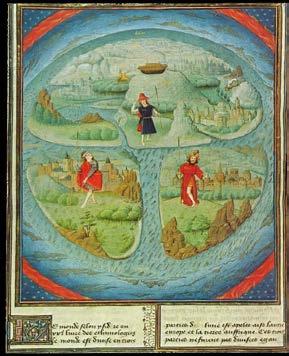
Wexhorted the student of astronomy, “I urge my reader… Let him join with me in praising and celebrating the wisdom and greatness of the Creator, which I disclose to him from the deeper explanations of the form of the universe.”1 e connection Kepler draws between praising God and explaining the universe, that is, between religious practice and scientific inquiry, seems out of place in our contemporary discourse. Nonetheless, in his Astronomia Nova Kepler presented the first scientific proofs of the Copernican cosmological model, while at the same time urging the reader to “recognize the well-being of living things throughout nature, in the firmness and stability of the world so that he reveres God’s handiwork” and to “recognize the wisdom of the Creator in [the universe’s] motion which is as mysterious as it is worthy of all admiration.”2
Four centuries later, the synthesis of religion and science found in Kepler’s work is rare and marginalized. In the mainstream, scientific atheists like Richard Dawkins and Daniel Dennett write polemics against religion, decrying it as obsolete and antiintellectual, while religionists, especially conservative Christians, push back with attacks on many of modern science’s leading theories. Extremists on both sides believe that religion and science are locked in

a battle for the modern mind and that no acceptable compromise exists.
However, this conflict thesis is a relatively recent development. e writings of many whom we retrospectively call scientists, including Kepler, Copernicus, Bacon, Galileo, Descartes, Pascal, Newton, Faraday and many others, themselves believed that theology was relevant to their scientific investigations. Religion was not an external imposition but a key part of the mental landscape of early modern scientists. ey would have reacted with puzzlement to the modern suggestion that they should have kept the science and religion separate.
Where, then, did the notion that religion and science are inherently opposed to one another originate?
In Reconciling Religion and Science, Peter J. Bowler writes, “ e claim that the advance of science necessarily brings it into conflict with established religious beliefs was advanced most energetically in the late nineteenth century by those who believed that science was the vehicle by which a new, secular view of the human situation would be established.”3 us, the idea that religion and science are fundamentally opposed is not a product of scientific discovery, but rather of the naturalist philosophy that began to
influence scientific theory in the early 19th century.
e conflation of science with naturalism, that is, the philosophical outlook that matter is all that exists, resulted in the idea that science was the only way to know truth. e trajectory of history, therefore, began to be caricatured as one in which the theological and philosophical were gradually supplanted by the scientific. Bowler affirms, “ e exponents of scientific naturalism believed the conflict was inevitable be-
Extremists on both sides believe that religion and science are locked in a battle for the modern mind.
cause religion was wedded to traditional dogma while science offered a new route to the truth that inevitably exposed the inadequacies of past ideas. is was a war that science was bound to win because it was the only reliable source of information.”4
Having presented the general philosophical outlook that promoted the conflict thesis, Bowler identifies its two primary representatives. He says, “ e metaphor of a ‘war’ between the two areas was projected
most explicitly by J.W. Draper’s History of the Conflict between Religion and Science (1874) and A. D. White’s History of the Warfare of Science with eology (1896).”5 So, how and why did Draper and White create the perceived dichotomy of religion and science? An examination of their works indicates that they rewrote history, popular izing many myths that persist even today, and in the process, they instigated the struggle that they claimed had begun hundreds of years before.
At the beginning of his History of the Conflict between Religion and Science, Draper sets the tone for the stories he will narrate. He writes,
e history of Science is not a mere record of isolated discoveries; it is a narrative of the conflict of two contending powers, the expansive force of the hu man intellect on one side, and the compression arising from traditionary faith and human interests on the other.
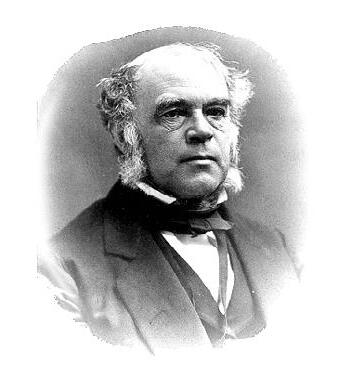
John
Any serious reader of history should immediately be put on guard by these statements. e tidiness with which Draper intends to narrate the complex devel-
Draper and White ignore this evidence entirely and choose to present only those facts that support their claims.
opment of Western science and its interaction with the enormous, intricate fabric of Christian theology and religious practice seems unrealistically simplistic. Such a reductionist perspective must naturally ignore the political, economic, and social aspects of the historical events in question; since it promises that the said events are concerned only with the religious and the scientific. Draper intends to reduce approximately a millennium of human history with all its complexity to a chess game between hastily drawn caricatures of Religion and Science.
Furthermore, Draper admits that his approach is a novel one, as he says, “No one has hitherto treated the subject from this point of view.”7 Why, if the battle lines between science and religion had been drawn as clearly as Draper intends to draw them, had historians failed to notice for almost a millennium? If a
war between religion and science had been raging, it was an invisible war. Christine Garwood recognizes Draper’s reductionist viewpoint. She writes, Draper’s book… reshaped the history of science into a simple plot in which the evils and ignorance of religious dogma sidetracked the march of human knowledge and the natural progress of scientific truth…science had fought religious bigotry, like some David and Goliath, to come out shining in the cause of human knowledge and the final realization of glittering truth.8
Of all of the myths that Draper and White helped to popularize, one of the most persistent is that of medieval belief in the flat earth. According to the myth, after all of the scientific achievements of the classical Greeks and Romans were lost in the Dark Ages, the inhabitants of Europe reverted to the archaic belief that the world was flat. is erroneous belief was supposedly founded upon the church’s insistence on literal interpretations of the Bible. en, according to Draper and White, Christopher Columbus sets out to prove that the world is round by finding a westward passage to the East Indies, but he must first contend with the powerful church authorities who hurl accusations of heresy before his expedition is eventually funded, and he goes on to discover the New World. Some version of this narrative continues to be taught to school children today. Many of us can recite this traditional poem, a staple of elementary primers:
In fourteen hundred and ninety-two, Columbus sailed the ocean blue. He took three ships with him, too, And called aboard his faithful crew. Mighty, strong and brave was he As he sailed upon the open sea. Some people still thought the world was flat! Can you even imagine that?
Draper premises his argument concerning medieval flat-earthism on the claim that “An uncritical observation of the aspect of Nature persuades us that the earth is an extended level surface.”9 He therefore
concludes that the inhabitants of medieval Europe naturally believed that the earth was flat. Draper does not explain why he assumes that all observations of that period were uncritical or how the scientific knowledge of the classical past was so thoroughly obliterated despite the preservation of scientific texts in monasteries throughout Europe. Instead, Draper goes on to credit the Church with the reinforcement of the population’s natural ignorance. He writes, “As to the earth, [the Church Fathers] affirmed that it is a flat surface, over which the sky is spread like a dome, or, as St. Augustine tells us, is stretched like a skin.”10
Unfortunately, this ac count of the Church’s will ful suppression of scientific inquiry and of the medieval belief in the flat earth is al most entirely fictional, a fact of which Draper and White should have been well aware. A comparison of their claims with the facts indicates that they were either particularly incompe tent historians or willful deceivers of their readers. As Garwood makes clear,
All of the most widely renowned and dis tributed authors of the early medieval period were in firm agreement [that the world was spherical]... ey included St. Augustine…who confirmed his belief in a spherical earth in a number of writings…His emphasis on an allegorical rather than literal reading of the scriptures naturally extended to the shape of the earth, and he argued that depictions of a flat earth with the sky spread over it like a tent were simply metaphors or figures of speech.11
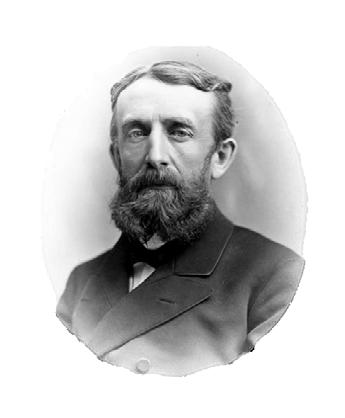
White follows in Draper’s footsteps not only by adopting the conflict thesis but also by committing many of the same factual distortions as his predecessor. Concerning the flat earth myth, he retraces Draper’s argument and commits many of the same historical inaccuracies. However, he does acknowledge that some well educated medieval Christians were aware of the earth’s sphericity. Unfortunately, e conflict model…led him seriously to overstate the extent of flat-earth belief, both in terms of the number of believers and the timescales involved. His set-piece concludes with the ill-judged statement: it is only ‘as we approach the modern period’ that ‘we find [the] truth [of the globular theory] acknowledged by the vast majority of thinking men’, an estimate incorrect by twenty centuries or so.12
Andrew Dickson White
Like Draper, White is guilty of a reductionist historical perspective that prevents him from providing an accurate or comprehensive discussion of his subject. Garwood observes that in White’s work “medieval flat-earth thinking again played a notable role as a prime example of scriptural literalism derailing ‘natural’ progress towards scientific truth.”13
e real inspiration for the flat earth myth as perpetuated by Draper and White, particularly the heroic exploits of Christopher Columbus against the big-
In this case, Draper brazenly abuses his historical source. By taking St. Augustine’s words regarding the shape of the earth out of context, Draper makes him appear to take a position of Biblical literalism which Augustine, an experienced rhetorician, opposed on the grounds that it distracted from Scripture’s intended meaning. e original context of St. Augustine’s words appears in the thirteenth chapter of his Confessions. His argument is concerned with reconciling the teachings of pagan philosophy with their apparent contradictions in Scripture. As he often does, Augustine demonstrates that if read allegorically, the Bible does not necessarily contradict facts attested by secular disciplines. is position is virtually the opposite of that credited to him by Draper.
Pastor Tim Keller, author of e Reason for God
oted religionists, was none other than “beloved storyteller Washington Irving (1783-1859), who loved to write historical fiction under the guise of history.”14
Jeffrey Burton Russell writes that, “No one before the 1830s believed that medieval people thought that the earth was flat,”15 but with the publication of Irving’s Columbus: His Life and Voyages, the flat earth myth
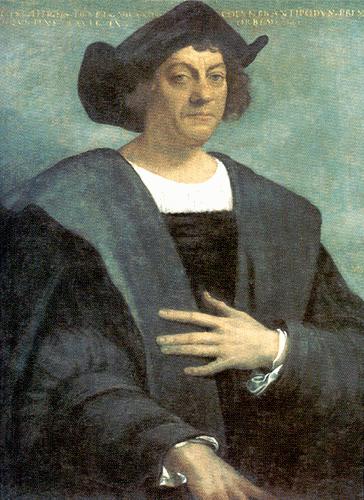
entered the American consciousness, where it persists to the present day. Russell exposes Irving’s counterfeit historical narrative, saying,
It was he who invented the indelible picture of the young Columbus, a “simple mariner,” appearing before a dark crowd of benighted inquisitors and hooded theologians at a council of Salamanca…“Irving, scenting his opportunity for a picturesque and moving scene,” created a fictitious account of this” nonexistent university council” and “let his imagination go completely...the whole story is misleading and mischievous nonsense.”16
Nevertheless, Irving’s myth provided a valuable foundation on which Draper and White built their case for the conflict of religion and science.
According to modern scholars, the case of medieval belief in the flat earth is closed. Garwood writes that in the medieval period, “Culture was suffused with images of terra rotunda to such an extent that serious promulgation of flat-earth belief would become little more than a waste of time.”17 Indeed, one may
readily discover medieval representations of the globular earth preserved in both literary and visual sources. Two such examples are Dante’s Divine Comedy, which narrates a descent into hell and a reemergence on the other side of a spherical world, and the numerous representations of rulers holding globes, which symbolize their power over the earth. However, because it provides an irrefutable objection to their version of history, Draper and White ignore this evidence entirely and choose to present only those facts that support their claims.
Further examples of Draper and White’s distortion of history in order to substantiate the conflict thesis include the myth of Galileo as a martyr for science and the imprisonment of Roger Bacon. In the case of Galileo, his trial concerned his mocking and insulting portrayal of the Pope Urban VIII, his former patron, rather than his scientific discoveries.18 In the case of Roger Bacon, one of the first proponents of the experimental method, he was not, as White alleged, imprisoned on account of his scientific ideas, but rather on account of his criticisms of the opulence of the church. As modern historian of science David Lindberg writes, “[Bacon’s] imprisonment, if it occurred at all (which I doubt) probably resulted with his sympathies for the radical ‘poverty’ wing of the Franciscans (a wholly theological matter) rather than from any scientific novelties which he may have proposed.”19 In regards to his scientific endeavors, the church was generally supportive: it was Pope Clement who commissioned Bacon’s three major works.
Considering its lack of basis in historical fact, the enduring popularity of the conflict thesis is somewhat surprising. Garwood notes, “ e military metaphor employed by Draper and White was propaganda par excellence, and it seized the popular imagination at a time when Western culture was awash with the rhetoric and imagery of war.”20 Moreover, the conflict thesis is appealing for its simplicity, since it makes the complex reality of the historical events it reduces more easily digestible. Finally, it served its purpose as ammunition against the religious worldview well, and secularists have ensured that it remains fixed in the public consciousness.
Draper and White left to the world a legacy of bad history and a fallacious framework for understanding the relationship between science and religion. e internalization of the conflict thesis fomented animosity where cooperation between the two disciplines had once flourished. e long tradition of scientific achievement by thinkers equally interested in spiritual matters has been largely forgotten, leaving the modern student with only half the picture. While Newton’s Principia Mathematica remains the seminal work of

classical mechanics, his biblical commentaries gather dust. Abbot Gregor Mendel’s pea plants flourishing in his monastery’s garden are revered for their contribution to the modern miracle of genetics but stripped of their spiritual setting. Acknowledging the lack of historical evidence for the conflict of science and religion is the first step in recasting the dialogue between the two in a more progressive mode.
1 Johannes Kepler, New Astronomy, Trans. William H. Donahue (Cambridge: Cambridge University Press, 1992) 65.
2 Ibid.
3 Peter J. Bowler, Reconciling Religion and Science: e Debate in Early Twentieth-Century Britain (Chicago : University of Chicago Press, 2001) 10.
4 Ibid.
5 Ibid.
6 John William Draper, History of the Conflict between Religion and Science (New York: D. Appleton and Co., 1881) vi.
7 Ibid. vi-vii.
8 Christine Garwood, Flat Earth: e History of an Infamous Idea (New York: omas Dunn Books, 2008) 11.
Cosmographicum by Kaite Yang ‘09, Commissioned 2009.
9 Draper 152.
10 Ibid. 63.
11 Garwood 24.
12 Ibid. 13.
13 Ibid. 12.
14 Jeffrey Burton Russell, Summary of e Myth of the Flat Earth, <http://www.veritas-ucsb.org/library/ russell/FlatEarth.html>.
15 Ibid.
16 Ibid.
17 Garwood 26.
18 See Apologia issues I & II, for the Galileo Revisited Series.
19 D.C. Lindberg, “Medieval Science and Its Religious Context,” Osiris 10 (10): 60-79.
20 Garwood 13.

Charles Clark ‘11 is from Murfreesboro, Tennessee. He was a Classical Archaeology major and an English minor, and is currently a law student at the University of Tennessee.
thors whose literary masterpieces are known throughout the modern world. However, both men shared much in common beyond literary genius. Both taught at Oxford, both lived through the unprecedented drama of World War II, and both articulated their Christian faith in their writings with unmatched brilliance. Lewis devoted much of his literary career to explicitly sharing and explaining Christianity to the world, and he remains famous to this day as one of the best writers to ever put pen to paper on behalf of the Christian faith. ough less explicitly, Tolkien also incorporated religious truth in his work, often burying profound Christian insights underneath the surface of his stories.
Interestingly, both men were deeply influenced by a single predecessor, another British Christian author who lived just before them: G. K. Chesterton.1 Chesterton similarly brought his faith into his vocation, writing both explicitly and implicitly about Christian themes. Perhaps the most remarkable connection between these three masterly writers was their shared appreciation for and vocal approval of fairy tales and the world of literary fantasy. In an essay titled “On Fairy Stories,” Tolkien suggests that fairy stories give us a lens by which we can recognize the
truly valuable and transcendent aspects of our world and re-imagine the “eucatastrophe” of Christ’s birth and resurrection.2 G. K. Chesterton similarly devoted an entire chapter of his seminal work Orthodoxy to discussing the importance of fairy tales, asserting that fairy tales help us recall an existential wonder for the world, a wonder that drives us towards humility, gratitude, and ultimately praise for the being responsible for everything.
Chesterton’s thoughts on fairy stories begin with the seemingly radical claim that fairy tales are more rational than materialist philosophy. According to Chesterton, fairy tales reflect a true rationality that understands the nature of necessity and contingency, whereas the modern materialist is irrational and nonsensical because he confuses the necessary with the contingent. Chesterton claims that the modern atheist, a person who believes all truth about the world can be discerned empirically and scientifically, in fact makes false causal associations by confusing two categories of phenomena. He argues that on the one hand there are causal sequences that are “mathematical and logical.”3 ese things are truly necessary and truly rational, and fairy tales recognize and incorporate these sequences. On the other hand, he notes that not everything falls
into this category of necessity. He writes, “I observed that learned men in spectacles were talking of actual things that happened, dawn and death and so on—as if they were rational and inevitable. ey talked as if the fact that trees bear fruit were just as necessary as the fact that two and one trees make three.”4 Trees do not necessarily need to bear fruit—they could just as easily bear “golden candlesticks or tigers” as Chesterton fondly notes.5 One plus two, however, must equal three.
Fairy tales, Chesterton believes, help us understand this distinction. He explains that there is a “test of fairyland,” a test of imagination: we can imagine trees bearing “golden candlesticks or tigers,” but we can’t imagine one plus two not equaling three. us, the latter is necessary and inevitable, but the former is miraculous and magical. 6 Chesterton explains the distinction between the two, saying, “We have always in our fairy tales kept this sharp distinction between the science of mental relations, in which there really are laws, and the science of physical facts, in which there are no laws, but only weird repetitions. We believe in
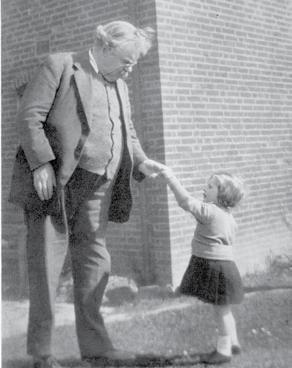
bodily miracles, but not in mental impossibilities.”7 Chesterton then concludes with an example: “We believe that a Beanstalk climbed up to Heaven; but that does not at all confuse our convictions on the philosophical questions of how many beans make five.”8
e “weird repetitions” that Chesterton refers to are in fact the foundation of half the Scientific Method, the half that deals with empirical experimentation and conclusions drawn from inductive reasoning. Inductive reasoning refers to the way in which we draw conclusions about a phenomenon after repeating experiments whose results demonstrate the same
sequence of events. However, many philosophers (David Hume being the classic example) have offered compelling arguments about the potentially fallacious nature of inductive reasoning. Hume offers the following description of the flaws of induction: “When we look about us towards external objects, and consider the operation of causes, we are never able, in a single instance, to discover any power or necessary connection; any quality, which binds the effect to the cause, and renders the one an infallible consequence of the other.”9 e conclusion of his argument is that, “We only find, that the one does actually, in fact, follow the other.”10
Chesterton’s example of the phenomenon of apples falling from trees further illustrates this point:
But the scientific men do muddle their heads, until they imagine a necessary mental connection between an apple leaving the tree and an apple reaching the ground. ey do really talk as if they had found not only a set of marvelous facts, but a truth connecting those facts. ey do talk as if the connection of two strange things physically connected them philosophically. ey feel that because one incomprehensible thing constantly follows another incomprehensible thing the two together somehow make up a comprehensible thing.11
e reality is that the question of why something happens is infinitely differentiable. No matter how many times you answer it, there will always be another question: why that specific answer? ere is an eternity, an infinity, a divinity, to our world because of the infinite nature of this question. We must keep going back and back, further and further, until we reach something that is not contingent.12 us Chesterton concludes that the following ought to be our response to the world: “When we are asked why eggs turn to birds or fruits fall in autumn… we must answer that it is magic. It is not a ‘law,’ for we do not understand its general formula. It is not a necessity, for though we can count on it happening practically, we have no right to say
that it must always happen.”13
With this in mind, Chesterton asserts that fairy tale terminology, words like “charm,” “spell,” “enchantment,” or “magic,” is really more appropriate for describing our world than scientific words like “law,” “necessity,” “order,” or “tendency.” e words of fairy stories capture “the arbitrariness of the fact and its mystery.”14
e problem with materialism is not that it attempts to understand the universe but that it ignores the magical arbitrariness of our world. In trying to capture the scientific nature of our world, materialism forgets contingency, that things need not be the way they are, that trees could just as easily bear “golden candlesticks or tigers” as fruit.

Chesterton argues that, “When we are very young children we do not need fairy tales: we only need tales. Mere life is interesting enough.”17
erefore, the appropriate response to this magical arbitrariness, to the beauty of things that need not be the way they are, is wonder is response of awe is deeply ingrained in our existence, and fairy tales evoke this sense of wonder in readers and listeners, whether children or adults.
ey fill us with an inexplicable joy, a pure, uncontrollable urge to smile and laugh. e source of this wonder, which Chesterton calls “elementary wonder,”15 ultimately is not found within the enchanted world of fairy tales; rather, this wonder is derived from our experience of the real world. As Chesterton puts it, fairy stories “touch the nerve of the ancient instinct of astonishment.”16
In other words, as young children who were new to the world and its magical arbitrariness, we were filled with an overwhelming vitality because we were so struck with wonder for existence. us, in order to respond to the world with the pure wonder that Chesterton suggests, we must return to our childhood perspective of the world. is echoes the numerous passages in Scripture where Jesus urges us to be like children. e book of Matthew reports one instance when, “calling to him a child, [Jesus] put him in the midst of them and said, ‘Truly, I say to you, unless you turn and become like children, you will never enter the kingdom of heaven. Whoever humbles himself like this child is the greatest in the kingdom of heaven.’”18 us, Chesterton characterizes us as people suffering from a sort of amnesia in which we have forgotten our wonder for the world around us. To put it into definitely Christian terms, we have lost the eyes to see God in the world (to, as St. Ignatius put it, “find God in all things”) and appreciate the beauty of his creation. Additionally, Chesterton suggests that we “forget that we have forgotten” and that “all that we call spirit and art and ecstasy only means that for one awful moment we remember that we forget.”19
is is where the power of fairy tales truly lies: they help us to remember what we have forgotten. All the wonder and joy evoked by fairy tales, Chesterton suggests, is a reflection of the existential wonder that we have lost. He writes, “ is proves that even nursery tales only echo an almost prenatal leap of interest and amazement. ese tales say that apples were golden only to refresh the forgotten moment when we found
Furthermore, the world is not just arbitrary. It truly is, as Genesis tells us, good. Fairy tales remind us how wondrous our world is and how lucky we are to have it. Trying to describe the feelings associated with his joyful wonder, Chesterton says the following:
A refusal to trust in something beyond ourselves is not the sign of rationality but of irrationality.
that they were green. ey make rivers run with wine only to make us remember, for one wild moment, that they run with water.”20 is wonder eventually leads to humility and gratitude, for when we grasp the possibility of the world being radically different than it is, we realize how special our world really is. Humility and gratitude in turn lead to praise for someone to whom we are grateful, that is, God. According to Chesterton, this wonder, the natural wonder rediscovered through fairy tales, “has a positive element of praise” to it.21 e world, existence, cannot be described as anything other than a profound and aweinspiring surprise, for it need not necessarily be the way it is.
us I have said that stories of magic alone can express my sense that life is not only a pleasure but a kind of eccentric privilege… And the strongest emotion was that life was as precious as it was puzzling. It was an ecstasy because it was an adventure; it was an adventure because it was an opportunity. e goodness of the fairy tale was not affected by the fact that there might be more dragons than princesses; it was good to be in a fairy tale. e test of all happiness is gratitude; and I felt grateful, though I hardly knew to whom.22
Fairy tales give us more than just a momentary reflection of our innate wonder for existence. ey give us the strength to persevere in the face of the suffering in the world and the humility to appreciate the love of God. Gratitude is intimately connected with wonder, and gratitude is not possible without someone to be grateful towards.
In addition to suggesting that fairy tales rekindle our wonder for the world, Chesterton claims that they also have much to offer us with regard to answering the question of why we should submit to the will of a God whom we cannot really understand and whose commands may not always make sense to us. He points out that in fairy tales, “all the wild and whirling things that are let loose depend upon one thing that is forbidden.”23 e prosperity of the world rests on some seemingly random law, a command that seems to be entirely unrelated to the world’s happiness. If anyone in the fairy world violates this law, terrible tragedies and disruptions fall upon them and their entire world. For example, “an apple is eaten, and the hope of God is gone.”24
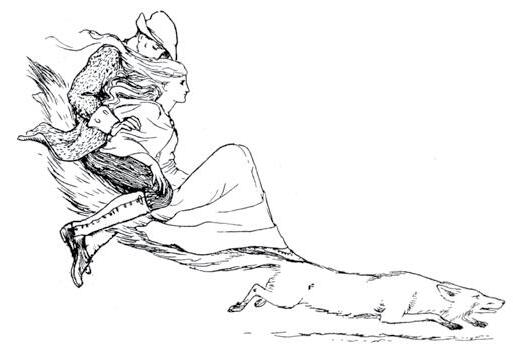
And so Chesterton explains that, “ e true citizen of fairyland is obeying something that he does not understand at all. In the fairy tale an incomprehensible happiness rests upon an incomprehensible condition.”25 Yet, this trust, this uncertainty, is tolerable in
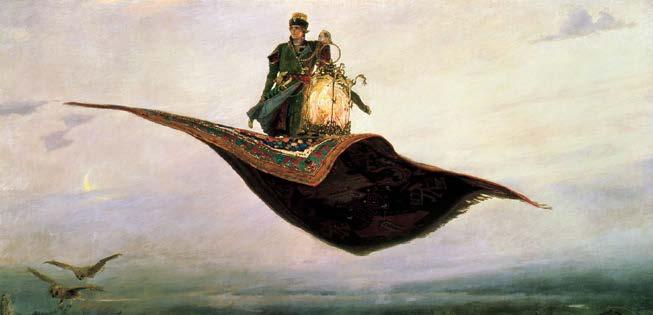
fairy tales, just as it should be tolerable in our world. It does not have to make sense to us. We ought not to not put trust in something just because it is mysterious and inexplicable. A refusal to trust in something beyond ourselves is not the sign of rationality but of irrationality. e wondrous, magical arbitrariness of the world demands that we have faith in something beyond us. As Chesterton puts it, “Estates are sometimes held by foolish terms, the breaking of a stick or the payment of a peppercorn: I was willing to hold the huge estate of earth and heaven by any such feudal fantasy. It could not well be wilder than the fact that I was allowed to hold it at all.”26
us Chesterton suggests that fairy tales invite us to rediscover a deep sense of humility and to experience a profound wonder for the world, a wonder which must necessarily lead us to a profound sense of gratitude and praise. Ultimately then, as in Chesterton’s own case, fairy tales recall to us our existential humility, wonder, and gratitude, and can thereby lead us to God.
1 Richard L. Purtill, Lord of the Elves and Eldils: Fantasy and Philosophy in C. S. Lewis and J. R. R. Tolkien (Ignatius Press: San Fransisco, 2006) 205.
2 See “J. R. R. Tolkien and the Significance of the Fairy Story” by Andrew Schuman in the Spring 2008 issue of the Apologia for more information.
3 G. K. Chesterton, Orthodoxy (Moody Publishers: Chicago, 2009) 77.
4 Ibid. 78.
5 Ibid.
6 Ibid.
7 Ibid. 78-79.
8 Ibid.
9 David Hume, An Enquiry Concerning Human Understanding (Charleston, SC: Forgotten Books, 2008) 46.
10 Ibid.
11 Chesterton 79.
12 e Unmoved Mover or First Cause, according to omas Aquinas. See “A Proof for the Existence of God” by Peter Blair in the Winter 2011 issue of the Apologia
13 Chesterton 80-81.
14 Ibid. 81.
15 Ibid. 82.
16 Ibid.
17 Ibid.
18 Matthew 18: 2-6. See also Mark 10: 13-16 and Luke 18: 15-17.
19 Chesterton 83.
20 Ibid.
21 Ibid.
22 Ibid. 84.
23 Ibid.
24 Ibid. 86.
25 Ibid. 85.
26 Ibid. 88.
Chris Hauser ‘14 is from Barrington, Illinois. He is a Philosophy and History modified with Medieval and Renaissance Studies double major.
Emily
Winter 2011

Dso, how? An atheist might say that if science can explain an event, God is not a necessary explanation for that event’s occurrence, and therefore God neither acts in the physical world nor exists. On the opposite end of the spectrum, a Christian might say that if God is supernatural, he can operate outside of physical means, and therefore his actions in the world will necessarily violate physical laws. e philosophical implications of quantum physics, however, give a different perspective. Quantum mechanics allows for a type of divine action that does not violate the laws of physics and yet accords with scriptural accounts of God’s providence and miracles.
is article concerns itself with how God operates within the laws of nature, or, as Robert Russell refers to it, “noninterventionist divine action.”1 is piece does not seek to prove definitively that such action occurs or that it is the only way in which God operates; rather, it shows that scientifically speaking, the door is open for its possibility. Furthermore, this possibility can be supported by biblical theology. To demonstrate how quantum mechanics makes noninterventionist divine action possible, we begin with the way in which classical physics rules out its possibility. Classical physics, generally speaking, refers to physics formulated prior to the development of theories about relativity and quantum mechanics. It includes the work of Newton, Kepler, and Galileo, among
others. Classical mechanics is founded upon several fundamental principles. e Stanford Encyclopedia of Philosophy identifies these as “the principle of space and time, the principle of causality, the principle of determination, the principle of continuity, and the principle of conservation of energy.”2
Essentially, classical events occur in space and time; the state of a classical system flows continuously from previous states through a chain of causes governed by conservation of energy. Classical physics poses a problem for noninterventionist divine action because it is by nature deterministic. If a system’s state is entirely controlled by previous states and a future state can be precisely predicted based on the forces that influence the current system, then the operation of the physical world is simply a giant, deterministic causal chain.3 In such a system, God could act in a way to alter forces or change patterns of causation, but he would necessarily violate physical laws in tampering with the classical causal chain. is would constitute divine action, but not noninterventionist divine action. e deterministic nature of classical physics supports the notion that God is not a necessary explanation for the occurrence of physical events. Quantum mechanics, however, paints a strikingly different picture.
Today, quantum mechanics centers on the notion of a wave function, a mathematical formulation relating the time and position of an object. is wave function must satisfy Schrodinger’s Equation, a
differential equation regulating the evolution of the system in time. ese mathematical formulations constrain the system; different observable quantities can only take on certain discrete (or quantized) values. e general interpretation of the wave function itself is that it can be used to determine the probability of a particle existing in a certain state. Essentially, the mathematical formulation of quantum mechanics shows the possibilities and probabilities for a particular quantum state but fails to predict, in the deterministic way typical of classical physics, what a scientist will measure if he or she attempts to extract information from the system.4
is limitation suggests a strange relationship between a quantum system and its observer. According to the widely accepted Copenhagen interpretation of quantum mechanics, a system is in an indeterminate state comprised of a superposition of all possible states until a measurement is made upon it, at which point the wave function is “collapsed,” and the system is forced to take on the measured value.5 A common thought experiment to describe this is “Schrodinger’s Cat.” If a cat is placed in a closed box with a quantum device that has a fifty percent chance of releasing cyanide to kill the cat, the cat will be in a strange, superimposed state of both life and death until the box is opened. When the system is plainly observed,
the cat is forced to be either dead or alive, as the wave function is collapsed and the system takes on one of the two possibilities.6 Generally, a quantum system is indeterminate until a measurement is taken, at which point the system takes on the measured value, which is one of several possibilities whose probabilities are determined using the wave function.7 is fundamental indeterminacy at the root of quantum events is scientifically inexplicable. ough the possibilities and probabilities of quantum events can be determined, the choice of which possibility occurs appears to be entirely random. is makes noninterventionist divine action possible. According to Nicholas Saunders, there are four potential ways in which God could intervene in this situation. e first possibility is that God “alters the wave function between measurements” by adding new possibilities to the superposition of potential outcomes. Saunders rejects this explanation on the grounds that for God to introduce new possibilities would be interventionist because between measurements, Schrodinger’s Equation deterministically dictates the progress of the possibilities of the system.8 Saunders next mentions the idea that God could himself “make measurements on a quantum system”; this notion is also dismissed as interventionist because it would require God to somehow set up the physical experiment and laboratory in
the first place.9 A third possibility is that God changes the probability of different event outcomes. Saunders, again, calls this interventionist because to alter the probabilities would require changes to be made to the wave function.10
e final possibility holds the most promise: God may simply “determine the outcome of a measurement,” choosing which possibility is manifested out of those given in the superposition prior to measurement.11 is is a reasonable proposition, since for God to choose the outcome of a measurement would not require him to violate any law of physics, but rather to determine a path from among several natural possibilities. Philosopher Nancey Murphy supports this idea, stating that the timing of a quantum event cannot be “internally or externally determined” without “sufficient reason to act.”12 is means that a quantum event will not occur for no reason; there must be a way to distinguish between possibilities in order to give an event a “sufficient reason” to choose one possibility over another. She concludes that if quantum processes are either entirely random or divinely determined, only divine action could provide sufficient reason for the event to occur. is is because God could externally evaluate and select one of the possibilities, while a random process would have no “reason” to choose one possibility over another and therefore would be incapable of acting.13
Robert Russell also endorses the idea that God determines the result of measurements taken in quantum systems. He defines measurements as “irreversible interactions” with a quantum system that render the Schrodinger Equation incapable of describing the system.14 Russell explains that when no measurement is being taken, the Schrodinger Equation gives the “formal cause,” or arrangement, of the system, and the potential energy provides the “efficient cause,” or source, of the evolution of the system. During a measurement, the equation is no longer relevant, so Russell concludes that there are indeed “material causes,” or physical means by which the measurement is taken, but there are not “efficient causes” of the interaction. From this, he concludes, as does the Copenhagen interpretation, that the quantum event is “ontologically indeterminate.”15 From all of this he concludes that it is possible for God to uphold quantum processes through “direct, noninterventionist action.”16
on the grounds that it is interventionist. Rather, he claims that for God to “ignore the probabilities predicted” and to “control” what happens is to say that the probabilities we obtain from experiment determine, rather than confirm, the probabilities predicted by the wave function.17 Saunders writes, “…the probability laws simply reform around whatever actual measurement results have been obtained… this approach is characterized by an assertion that individual events are ontologically superior to laws.”18 is rejection, however, is a rather unfair evaluation of the fourth quantum possibility for noninterventionist divine action. As omas Tracy writes in his review of Saunders’ book,
A theologian interested in noninterventionist special divine action will not say that God ignores the probability distributions predicted by quantum theory. Rather, the thesis would be that God might act in the world by determining quantum events within the ordinary probability patterns, which do, after all, permit wide variation in particular outcomes from instance to instance.19
It seems Saunders overlooks an important premise of statistics; though certain outcomes have low probabilities, they are still possible. According to statistics, the “law of averages” does not exist, meaning the aggregation of numerous event outcomes does not have to match the predicted probability density, though it will most likely come close. God would not be required to “ignore” probabilities but could choose freely within the possibilities without violating or invalidating
If quantum processes are either entirely random or divinely determined, only divine action could provide
probability distributions offered by the wave function. He could do this in a way that is purposeful, even if it appears random to scientists. For these reasons, Saunders’ critique of noninterventionist divine action at the level of the quantum event measurement is unsuccessful.
Saunders argues against the idea of God determining the outcome of a quantum measurement, but not
is idea that God chooses the outcome of the measurement falls within a “bottom to top” description of how God can interact with the world without violating laws of nature. By altering fundamental quantum events, he is also able to control the macroscopic events they give rise to without breaking the laws of physics.20 Both Russell21 and Murphy support this concept. Murphy goes so far as to say that “top to bottom” models of divine action, where a person
experiences God’s intervention in a macroscopic way or in the form of direct revelation, can also be explained by this “bottom to top” notion. For example, a sudden spiritual realization or remembrance which a person experiences could be a product of a manipulation on the quantum mechanical level that impacts neurons that affect brain function and therefore meaning perceived by the mind. She uses this as an explanatory tool for religious experience and thus extends quantumlevel divine action to human experience and everyday events.22
Scripture teaches that such divine direction can happen through natural causes.
Some may argue that this quantum possibility for divine action is a “God of the gaps” argument, that is to say, an argument where divine action is used to explain unknown gaps in a physical process that one day will be filled in by a scientific explanation. Russell distinguishes strongly between his argument for divine action in quantum mechanics and “God in the gaps.”23 He writes,
An epistemic gaps argument is based on what you don’t know. It invokes God to explain things that we don’t yet understand but that science will eventually explain. Our approach is based upon what we do know about nature, assuming that quantum physics is the correct theory and that it can be interpreted philosophically as telling us that nature is ontologically indeterministic.24
Russell refutes this accusation by emphasizing that his approach is an interpretation of known information, rather than a postulation about a gap in knowledge. Since the Copenhagen interpretation is widely accepted, and it states that quantum systems are “ontologically indeterministic,” Russell can argue that the question of how the wave function collapse “chooses” a particular measured value is not one that can or will be solved scientifically, and it can therefore be approached philosophically.25 Additionally, all these claims about divine action in quantum mechanics are not attempting to be “proofs” for God, but rather, to show the plausibility of a higher power’s influence over such circumstances.
Having established that quantum mechanics provides an opportunity for God to noninterventionally act in the world, we proceed to a few scriptural examples to support how the Christian can accept noninterventionist divine action as one aspect of the way God works. e first such example is described by Wayne Grudem in his Systematic eology as the “concurrence” component of God’s providence. Grudem defines concurrence as God’s “cooperation with” and
“direction of” creation.26 Scripture teaches that such divine direction can happen through natural causes. He cites Psalm :, “You cause the grass to grow for the livestock and plants for man to cultivate.”27 Here it is clearly seen that God often provides for man through natural processes, such as feeding him by causing food to grow. In the “preservation” component of God’s providence, Grudem cites Hebrews :, “he upholds the universe by the word of his power,”28 and Nehemiah :, “You have made… earth and all that is on it, the seas and all that is in them; and you preserve all of them.”29 Again, God is seen as preserving and providing for his creation in an intimately physical way. One means by which God manifests his power is through natural processes.
e idea of miracles as “an exception to a natural law” may cause Christians to question the idea of noninterventionist divine action.30 Nancey Murphy addresses this issue, writing, “I prefer not to use the term ‘miracle’ because it is now so closely associated with the idea of a violation of the laws of nature. I believe it could be shown that the primary reason for current rejection of miracles, in fact, has been this very definition.”31 Murphy contends for a notion of the “miraculous” that includes incredible occurrences that do not violate nature. Noninterventionist divine action in quantum mechanics producing awe-inspiring macroscopic results could, indeed, be explained by natural causes.32 However, the occurrence of such an unlikely event, influenced by divine action, places it in “miracle” category.
Grudem also endorses the classification of such an occurrence as a miracle. He defines a miracle as “a less common kind of God’s activity in which he arouses people’s awe and wonder and bears witness to himself.”33 Grudem defends this definition by pointing to three biblical words associated with God’s “less common activity”—“signs,” “wonders,” and “miracles” or “mighty works.” Grudem says “signs,” biblically, are things that draw attention to “God’s activity or power.”34 In referring to Jesus’ transformation of water into wine, John : supports this definition: “ is, the first of his signs, Jesus did at Cana in Galilee, and manifested his glory.”35 Here, a sign is directly linked to the “manifestation” of Christ’s “glory”; God’s “activity” and “power” are manifested in Christ’s action. Grudem says “wonders” are awe-inspiring acts;36 this is supported by Exodus :, which says, “Who is like you, O LORD, among the gods? Who is like you, majestic in holiness, awesome in glorious deeds,
doing wonders?”37 Here, God’s ability to perform “wonders” elicits the speaker’s awe and praise as he remarks on God’s uniqueness in power and “deed.” Finally, “miracles,” or “mighty works” are occurrences displaying “divine power.”38 is use of “miracles” is seen in Chronicles :-, “Seek the LORD and his strength; seek his presence continually! Remember the wondrous works that he has done, his miracles and the judgments he uttered.”39 Here, God’s “wondrous works” and “miracles” are, indeed, associated with his power (“strength”) and his intercession (“presence”). ese biblically informed definitions of “signs,” “wonders,” and “miracles” certainly do not exclude events with natural explanations. Rather, any unusually amazing action performed by God that elicits praise or awe or thanksgiving towards God may be considered a miracle.40 Grudem says the idea of miracles as only events that violate physical laws is insufficient because it does not require God as the causer of the event, limits the extent to which God can intervene in the physical world, and reduces attention to many “actual miracles” leading to an “increase in skepticism.”41 In general, miracles, biblically defined, do not require a violation of physical laws, so Christians can view noninterventionist divine action as one potential cause of miracles.
e ontological indeterminism that the Copenhagen interpretation ascribes to measurements taken on quantum mechanical systems allows for divine action that does not violate the laws of nature. It provides the opportunity for God to intervene in the physical world and combats the idea that a scientifically explained process can have no supernatural influence. At the same time, this noninterventionist divine action accords with biblical notions of God’s providence and miracles. In essence, the indeterminism at the root of quantum mechanics, the most fundamental description of the physical world, reveals to both non-Christians and believers how God could intimately influence, without being bound or proved false by, the laws of nature.
1 Robert Russell, “Divine Action and Quantum Mechanics,” Philosophy, Science, and Divine Action, ed. F. LeRon Shults, Nancey Murphy, and Robert J. Russell (Boston: Koninklijke Brill NV, 2009) 354.
2 “Copenhagen Interpretation of Quantum Mechanics,” Stanford Encyclopedia of Philosophy, <http://plato.stanford.edu/entries/qmcopenhagen/>.
3 Ibid.
4 David J. Griffiths, Introduction to Quantum Mechanics (Prentice Hall, 2004) 1-5.
5 Ibid. 3-5.
6 Paul Davies, God and the New Physics (New York: Simon and Schuster, 1983) 114.
7 Nicholas Saunders, Divine Action and Modern Science (Cambridge: Cambridge University Press, 2002) 142.
8 Ibid. 149-50.
9 Ibid. 151-52.
10 Ibid. 152-53.
11 Ibid. 156.
12 Nancey Murphy, “Divine Action in the Natural Order,” Philosophy, Science, and Divine Action, ed. F. LeRon Shults, Nancey Murphy, and Robert J. Russell (Boston: Koninklijke Brill NV, 2009) 283.
Russell 369.
13 Ibid.
14 Russell 369.
15 Ibid. 371-72.
16 Ibid. 374-75.
17 Saunders 154-55.
18 Ibid.
19 omas Tracy, “Divine Action and Modern Science (review),” Notre Dame Philosophical Reviews, <http://ndpr.nd.edu/review.cfm?id=1319>.
20 Murphy 285-86.
21 Russell 360-62.
22 Murphy 293- 94.
23 Russell 354.
24 Ibid.
25 Ibid.
26 Wayne Grudem, Systematic eology (Leicester: Inter-Varsity Press, 2001) 317.
27 Psalm 104:14.
28 Hebrews 1:3.
29 Nehemiah 9:6.
30 Grudem 356.
31 Murphy 271.
32 Ibid.
33 Grudem 355.
34 Ibid. 356.
35 John 2:11.
36 Grudem 356.
37 Exodus 15:11.
38 Grudem 356.
39 1 Chronicles 16:11-12.
40 Grudem 358.
41 Ibid. 356.

Emily DeBaun ‘12 was a Physics and English double major. She currently works for a healthcare consulting firm outside of Boston, MA.
Apoetry to modern film, the image of peasants and kings taking up the sword to fight for their religion has become a defining image of the Middle Ages. Saladin and Richard the Lionheart are among the most famous names in history. In recent years, however, the Crusades have acquired a startling immediacy because of comparisons to renewed conflicts between Western and Middle Eastern powers in which religious tension has been exploited to further political and military agendas. Christopher Hitchens, for instance, writes in his book God is Not Great that “the jihadist assault reconjured the blood-stained spectre of the Crusaders.”1 e Crusades have reentered the modern consciousness as a sort of historical fable, a paradigm of Western imperialist aggression and ethno-religious persecution.
Portrayed alongside other choice incidents such as the Spanish Inquisition, the Crusades are used by some to malign Christianity as inherently violent, aggressive, intolerant, and corrupt. Historian Steven Runciman describes the Crusades as “nothing more than a long act of intolerance in the name of God.”2 Bringing up the Crusades as the quintessential Christian atrocity (or series of atrocities) carries with it the
implication that their alleged evils were a natural byproduct of a Christian society. Just as Stalin’s gulags or Hitler’s gas chambers are seen as clear evidence for the corruption of their underlying ideologies, these medieval holy wars are seen as the brutal and natural byproduct of a devoutly religious society. Because of the prevalence of this understanding of the Crusades, it is important that both Christians and non-Christians understand the historical context of the Crusades in order to distinguish fact from the hyperbole and pure fiction that accompanies many interpretations of these events.
In the present day, one of the most common viewpoints on the Crusades is that they were simply wars of aggression provoked by either simple intolerance or the desire of the Christian Church to use its spiritual authority for short-sighted material ends. is attitude sadly remains prominent in no small part due to the proliferation of outdated—or simply poor—scholarship. James Reston, Jr.’s popular history work Warriors of God depressingly encapsulates this common view when his foreword refers to the crusading period as a “frenzy of hate and violence unprecedented before the advent of the technological age and the scourge of Hitler.”3 Christopher Tyerman, author of God’s War,
refers to the “mixture of demotic religious propaganda and material greed” that “combined to create an obscene cocktail of butchery and bigotry.”4 Both of these views are inadequate and incomplete interpretations of complex historical events.
When analyzing any historical event, and particularly one so fraught with misinterpretation and exaggeration, it is crucial to look at both its context and its causes.
e Crusades did not spontaneously appear from a historical vacuum. e people of Europe did not leave their homes and march thousands of miles to wage war for no reason, and it is important to understand their own motivations and justifications before passing judgment on the events of the Crusades. In broad historical terms, the Crusades came in the wake of four centuries of Christian retreat all across the known world. In the seventh and eighth centuries, Muslim armies had poured out of Arabia in great numbers, capturing the Holy Land, Mesopotamia, northern Africa, and even Spain. Of the Christian world’s five patriarchates, or cities of major religious importance, three were captured (Antioch, Alexandria, and Jerusalem), and for the next four centuries, Christendom remained on the defensive. France was attacked by Muslim armies, Sicily was conquered, and even Constantinople, the most important city in Christendom, was repeatedly besieged. By the eleventh century the Christian world had regained its footing, but the fear that Christendom was in a constant battle for its own existence remained a powerful force in the European psyche, and this attitude was directly linked with the beginning of the Crusades.
tury, however, the arrival of the Seljuk Turks from the Asian steppes had them tottering on the brink of collapse. In 1071 at the Battle of Manzikert, the Byzantine Empire suffered a devastating defeat to the Turks, and over the next few years the Empire lost most of its land in Anatolia (modern-day Turkey). As the Turks
When analyzing any historical event, and particularly one so fraught with misinterpretation and exaggeration, it is crucial to look at both its context and its causes. The Crusades did not spontaneously appear from a historical vacuum.
continued to advance, cities of great historical importance to Christianity such as Nicaea and Antioch fell out of Christian hands.
By 1095, the Turks were strong enough that the Byzantine emperor, Alexios I Komnenos, was compelled to write to Pope Urban II in Rome requesting military assistance. Although the Eastern Orthodox Church of the Byzantines had been in schism with
More immediately, the First Crusade was triggered by the weakening of the eastern Byzantine Empire. For centuries, the Empire was the eastern bulwark of Christianity, surviving numerous invasions and occasionally reasserting Christian control over important cities such as the patriarchate of Antioch. By the late eleventh cen-
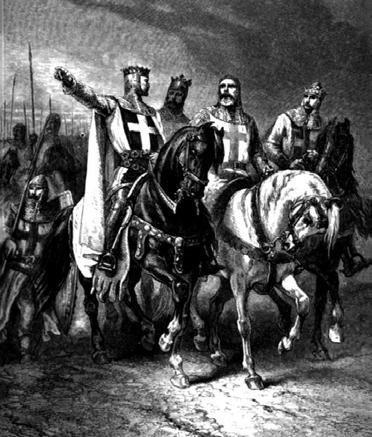

the Roman Church since 1054, the two churches were not complete enemies and still considered each other allies when it came to resisting further Islamic advances. is request for help motivated Pope Urban II to call for the first Crusade at the Council of Clermont in 1095. Urban called upon the knights of Europe to join together to take back the city of Jerusalem. While the sense that Christendom was under
to be increasing. e general circumstances of the First Crusade show that it was not conceived as an aggressive move, but rather as a defensive one, meant to protect the Christian world from what appeared to be an existential threat.
Given the Christian ideals of seeking peace and loving one’s enemies, contrasted with the ubiquity of warfare in human existence, it is unsurprising that Christian thinkers have thought deeply on the circumstances under which a Christian nation or individual may be permitted to take up arms.
siege was likely the greatest concern in Urban’s mind, he was also motivated by a desire to halt attacks on Christian pilgrims to Jerusalem, which were believed
Given the Christian ideals of seeking peace and loving one’s enemies, contrasted with the ubiquity of warfare in human existence, it is unsurprising that Christian thinkers have thought deeply on the circumstances under which a Christian nation or individual may be permitted to take up arms. Indeed, some of the Church’s most important figures have attempted to formulate methods to determine which wars are just and which are not. St. Augustine, who lived in the fourth century A.D., was among the first Christian thinkers to write on how a just war could be defined. In his
most famous work, e City of God, Augustine wrote,
e wise man will wage just wars. As if he would not all the rather lament the necessity of just wars, if he remembers that he is a man; for if they were not just he would not wage them, and would therefore be delivered from all wars. For it is the wrongdoing of the opposing party which compels the wise man to wage just wars; and this wrong-doing, even though it gave rise to no war, would still be matter of grief to man because it is man’s wrong-doing.5
Augustine’s work was continued by St. omas Aquinas, who wrote at the height of the Crusading era. Aquinas asserts in his Summa eologica that three requirements must be met in order for a war to be
considered just: First, a war must be waged by a lawful sovereign. Sovereign rulers bear the duty of protecting their people from harm and injustice, and therefore only they may undertake the action of declaring and waging war. Second, a war must have a just cause. Examples of just causes would be protecting one’s people from the invasion and harm of another state, or intervening to halt some other grave injustice. While a few medieval writers argued that wars of conversion were just, the greater weight of religious scholarship rejected this.6 Finally, a war must be waged with right intention. Aquinas quotes Augustine in saying that, “True religion looks upon as peaceful those wars that are waged not for motives of aggrandizement, or cruelty, but with the object of securing peace, of punishing evildoers, and of uplifting the good.”7

Whether or not the Crusades themselves had a just result, the question of whether they could be seen as just wars when they occurred is worthy of examination. When carried out by feudal lords and authorized by the Pope, they certainly fulfilled the sovereignty condition for a just war. In the mind of Pope Urban, the second condition was fulfilled by the danger presented to Christendom by the aggression of the Turks, as well as the belief that Christian pilgrims to the Holy Land were being attacked. Pope Urban urged his listeners that, “Your brethren who live in the east are in urgent need of your help, and you must hasten to give them the aid which has often been promised them.”8 e third condition laid out by St. Aquinas obviously must have varied in its fulfillment in the heart of each crusader. No doubt some of the leaders and soldiers who embarked on the crusades perceived the potential for temporal gain even in an enterprise as arduous as crusading. However, most evidence suggests that a great many crusaders, even those in the nobility, were motivated by a true conviction that what
they did was right. Knights embarking on a crusade were required to settle their debts, and many had to sell a great deal of land just to finance their journey to the Holy Land. Primary documents reveal that almost all planned to return from the Holy Land after their “pilgrimage,” meaning that for most there was no prospect of winning new lands abroad.
Not all Christian thinkers in Europe, however, were convinced that the Crusades were pursued in such a way as to justify their continuance. Notable as contrarian voices during the Crusades are Peter the Venerable and Roger Bacon. Peter, abbot of an important monastery in Cluny, France, was troubled by the total lack of knowledge most in the Christian world had of Islam and organized the first ever Latin translation of the Quran. Bacon was a contemporary critic of the crusading enterprise, arguing that it hurt the salvation of souls because “those who survive, together with their children, are more and more embittered against the Christian faith.” eir dissent is important for balancing our understanding of Christianity at that time. Clearly, both faith and reason played a role in determining individuals’ and leaders’ responses to aggression and their attitudes toward violence. ere was no univocal endorsement of violence.
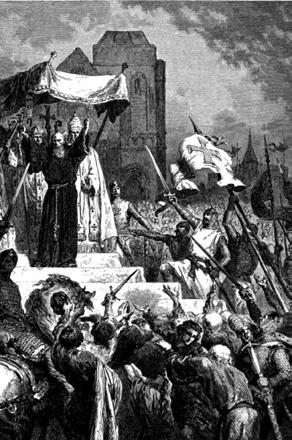
Overall, with a sensitive subject like the Crusades it is exceptionally important that one avoid hyperbole and instead view things from a distant, rational perspective. Before analyzing or making a moral judgment of the past, it is crucial that one has a firm grasp of known facts and be willing to take context into account. Was crusading a net positive for the world or even for Christianity? Likely not. Was it the source of much suffering and outright evil? Beyond all doubt. But do the historical events fit the narrative of Christian aggression motivated by intolerance? No. Much can be learned from the Crusades if one takes an honest and open approach, rather than making assumptions about the beliefs and motivations of historical people. e fact that Pope Urban’s initial orders and intentions led to the tragic violence of the Crusades illustrates the immense problem of unintended consequences in any endeavor, and the great deal of suffering they caused provides a compelling reason for why modern Christians should always attempt to be peacemakers.
1 Christopher Hitchens, God is Not Great (New York: Twelve Books, 2007).
2 Steven Runciman, A History of the Crusades: Volume III (Cambridge: Cambridge University Press, 1951) 480.
3 James Reston Jr., Warriors of God (New York: Doubleday, 2001) xiii.
4 Christopher Tyerman, God’s War: A New History of the Crusades (New York: Penguin, 2006) 104-105.
5 Augustine, “ e City of God,” New Advent <http://www.newadvent.org/fathers/120119.htm>.
6 Jonathan Riley-Smith, What Were the Crusades (Totowa, New Jersey: Rowman and Littlefield, 1977) 20.
7 omas Aquinas, Summa eologica: Volume III (New York: Cosimo, 1912), 1354.
8 Pope Urban II, “Speech at the Council of Clermont,” Medieval Sourcebook <http://www. fordham.edu/halsall/source/urban2-5vers.html>

Blake Neff ‘13 is from Sioux Falls, South Dakota. He majored in History.

We, the members of e Dartmouth Apologia, affirm that the Bible is inspired by God, that faith in Jesus Christ is necessary for salvation, and that God has called us to live by the moral principles of the New Testament. We also affirm the Nicene Creed, with the understanding that views may differ on baptism and the meaning of the word “catholic.”
We [I] believe in one God, the Father, the Almighty, maker of heaven and earth, of all that is, seen and unseen.
We [I] believe in one Lord, Jesus Christ, the only Son of God, eternally begotten of the Father, God from God, Light from Light, true God from true God, begotten, not made, of one Being with the Father. rough him all things were made. For us and for our salvation he came down from heaven: by the power of the Holy Spirit he became incarnate from the Virgin Mary, and was made man. For our sake he was crucified under Pontius Pilate; he suffered death and was buried. On the third day he rose again in accordance with the Scriptures; he ascended into heaven and is seated at the right hand of the Father. He will come again in glory to judge the living and the dead, and his kingdom will have no end.
We [I] believe in the Holy Spirit, the Lord, the giver of life, who proceeds from the Father [and the Son]. With the Father and the Son he is worshiped and glorified. He has spoken through the Prophets. We believe in one holy catholic and apostolic Church. We acknowledge one baptism for the forgiveness of sins. We look for the resurrection of the dead, and the life of the world to come. Amen.
is prayer by professor of religion Lucius Waterman appears on a plaque hanging outside Parkhurst Hall.
O Lord God Almighty, well-spring of wisdom, master of power, guide of all growth, giver of all gain. We make our prayer to thee, this day, for Dartmouth College. Earnestly entreating thy favour for its people. For its work, and for all its life. Let thy hand be upon its officers of administration to make them strong and wise, and let thy word make known to them the hiding-place of power. Give to its teachers the gift of teaching, and make them to be men right-minded and high-hearted. Give to its students the spirit of vision, and fill them with a just ambition to be strong and well-furnished, and to have understanding of the times in which they live. Save the men of Dartmouth from the allurements of self-indulgence, from the assaults of evil foes, from pride of success, from false ambitions, from hardness, from shallowness, from laziness, from heedlessness, from carelessness of opportunity, and from ingratitude for sacrifices out of which their opportunity has grown. Make, we beseech thee, this society of scholars to be a fountain of true knowledge, a temple of sacred service, a fortress for the defense of things just and right, and fill the Dartmouth spirit with thy spirit, to make it a name and a praise that shall not fail, but stand before thee forever. We ask in the name in which alone is salvation, even through Jesus Christ our Lord, amen.
e Reverend Lucius Waterman, D.D.