APRIL/MAY 2026



APRIL/MAY 2026
Hartley Milner tells us about tough new measures on wasteful business practices.
Some innovations are gaining more traction than others. We ask which.
Criterion Publishing Ltd
Castle House, 89 High Street
Berkhamsted HP4 2DF,
T +44 (0)1494 791222
F +44 (0)1494 792223 info@europeancleaningjournal.com
europeancleaningjournal.com
Subscriptions
How
Floor

For 12 decades, Nilfisk has helped people live and work in cleaner, safer, healthier environments.
Come join us at Interclean in Hall 7 as we celebrate the big milestone. There will be birthday treats for all and you can see our latest innovations and talk to our experts about the future of clean.
We’d love to celebrate with you! year anniversary

Find us at Interclean!
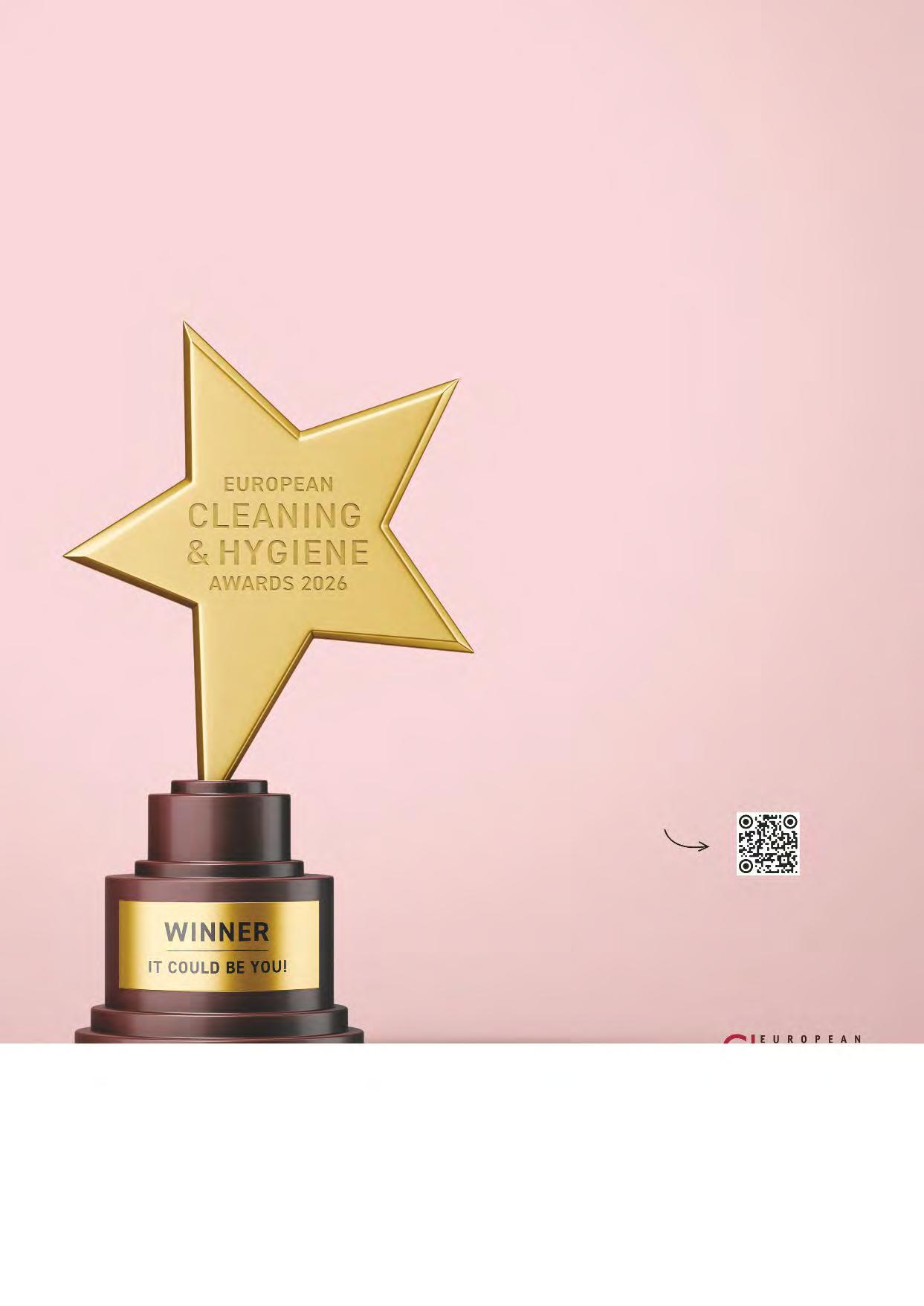
Entries for the European Cleaning & Hygiene Awards 2026 will close on May 1, so now is the time for cleaning professionals to get involved and put forward their achievements for industrywide recognition.
Founded and organised by European Cleaning Journal (ECJ), the awards are now entering their ninth year. They have firmly established themselves as one of the most respected benchmarks of excellence in the European cleaning and hygiene industry. Service providers, manufacturers, distributors and individuals are encouraged to submit nominations celebrating innovation, leadership, sustainability and best practice from the past year.
The European Cleaning & Hygiene Awards 2026 will recognise excellence across the following 11 categories:
• Digital Transformation
• Investment in Training and People Development
• Excellence in Client/ Contractor Partnerships
• Sustainability - Best Practice (Service Provider)
• Sustainability - Best Practice (Manufacturer)
• Commitment to Diversity in the Workforce
• Best Initiative Raising the Profile of the Cleaning Sector
• Technological Innovation of the Year
• Leader of the Year
• Rising Star Award
• Best Company to Work For New partnership
New for 2026, Interclean Amsterdam has been confirmed as as Event Partner. This
collaboration brings together two of the most respected platforms in the global cleaning and hygiene industry, combining reach, expertise and a shared ambition to champion excellence, progress and professionalism across the sector.
The partnership strengthens the awards’ pan-European and international profile, reinforcing their role in recognising the organisations and individuals shaping the future of professional cleaning and hygiene.
ECJ editor Michelle Marshall said: “Each year the European Cleaning & Hygiene Awards showcase the innovation, professionalism and impact of our industry across Europe. We look forward to reading your entries and hearing about your achievements over the coming months.”
How to enter
Companies and individuals are invited to submit their nominations for the awards through the official website at www.echawards.com. The deadline is May 1 2026.
Follow ECJ’s LinkedIn page for updates, tips and more.
Awards ceremony
The European Cleaning & Hygiene Awards 2026 gala dinner will take place on Thursday October 8 this year at Pueblo Español in Palma de Mallorca. Set within an architectural showcase inspired by Spain’s most iconic towns and monuments, the venue provides a striking backdrop for a night of celebration. Visit echawards.com/enter
April 14-17
Interclean Amsterdam Amsterdam, Netherlands www.intercleanshow.com
October 8
European Cleaning & Hygiene Awards Palma de Mallorca, Spain www.echawards.com
October 13-15
Cleantex Africa Johannesburg, South Africa cleantex.co.za
October 28-30
Interclean Shanghai Shanghai, China www.intercleanshow.com/china
November 16-19
ISSA North America Las Vegas, USA www.issa.com
March 16-18 2027
The Cleaning Show London, UK cleaningshow.co.uk/london
March 16-18 2027
Europropre Paris, France www.europropre.com
May 11-13 2027
ISSA Pulire Milan, Italy www.issapulire.com
September 21-24 2027
CMS Berlin Berlin, Germany www.cms-berlin.de
November 8-11 2027
ISSA North America Las Vegas, USA www.issa.com
To have your event included in the Events section, contact ECJ via email at: michelle@europeancleaningjournal.com
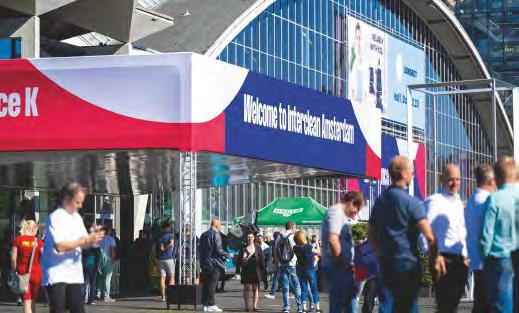
Europe’s largest exhibition for the professional cleaning sector
- Interclean Amsterdam - will take place at RAI Amsterdam from April 14-17. And alongside the exhibition this year will be a host of new knowledge sessions, live demonstrations and experience centres.
Healthcare experience: In collaboration with Clean Hospitals, this area will focus
on infection prevention, hygiene standards and cleaning solutions for healthcare environments.
Hospitality experience: Developed in conjunction with the British Institute of Cleaning Science (BICSc). As well as hospitality cleaning, this area will focus on laundry & textile care, and pest control solutions.
Outdoor cleaning experience: Live outdoor demonstrations,
including window cleaning. Robot experience: A dedicated zone for autonomous cleaning.
Knowledge stages
There will be four dedicated knowledge stages addressing the people, practices and technologies shaping today’s cleaning sector. The Main Stage will, of course, be the setting for the opening ceremony of Interclean Amsterdam and the presentation of the 2026 Amsterdam Innovation Awards.
Then there will be a series of ISSA Knowledge Sessions, which will examine developments across hospitality and leisure, workplace and commercial environments, and healthcare and long-term care.
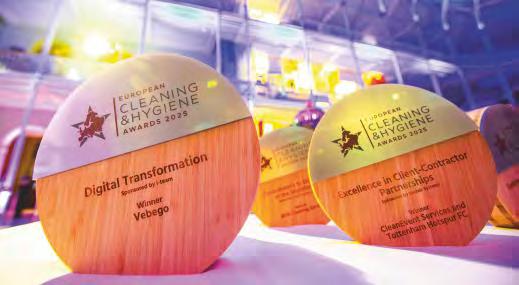
Winners of the 2025 European Cleaning & Hygiene Awards will also be taking part in moderated round table discussions on the main stage from Tuesday
to Thursday. Chaired by Michelle Marshall, editor of ECJ and founder of the awards, the sessions will examine the operational practices and strategic thinking that distinguish these businesses within the sector. Winners will share practical insights from their own organisations, offering relevant takeaways for the audience. Interclean is the official Event Partner for the European Cleaning & Hygiene Awards.
Other stages
Additional stages dedicated to sustainability, health and hygiene, and data and technology will explore emerging trends and practical applications through expertled presentations. www.intercleanshow.com/ amsterdam/register
• Read ECJ’s guide to Interclean Amsterdam from page 43.



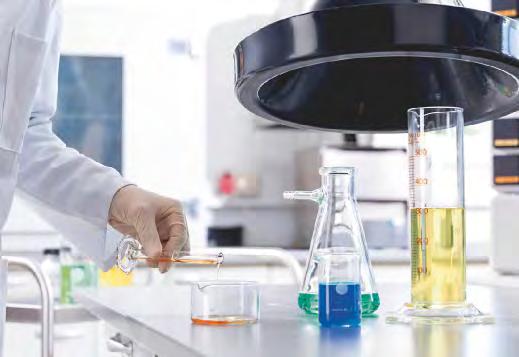
The European Chemicals Agency’s (ECHA) Biocidal Products Committee (BPC) recently issued its opinion recommending the approval of ethanol for use in hand and general disinfectants under the EU Biocidal Products Regulation (BPR).
Brussels-based A.I.S.E. is the body representing the industry supplying detergents, cleaning and maintenance products, disinfectants and biocidal products for cleanliness and hygiene at home and in public spaces. It welcomed the development, saying in a statement: “It demonstrates that Member States recognise ethanol’s indispensable role in infection prevention, along with its substantial socioeconomic value for Europe’s healthcare systems, industries and daily life.
“This decision marks
responsible progress on an issue that directly affects public health, consumer safety and supply chain resilience. Ethanol remains a cornerstone of hygiene across the EU; it is relied upon every day in hospitals, long term care facilities, food production, workplaces and households.
“The BPC’s decision helps secure its continued availability under the BPR and supports the many sectors and professionals who depend on it to protect people’s health.”
The BPC decision is a first step, however. The final decision now rests with the European Commission, which must adopt
an Implementing Act that reflects the scientific findings and confirms ethanol’s approval as an active substance for biocidal uses.
Following this, the broader and more consequential debate on ethanol’s potential reclassification will shift into the EU Classification, Labelling and Packaging (CLP) framework. As a result, ethanol remains exposed to regulatory uncertainty and continued engagement from all affected sectors is critical.
A.I.S.E. says it is still fully committed to working constructively with EU institutions, national authorities and all partners to ensure that decisions concerning ethanol - both under the BPR and the upcoming CLP discussions - reflect science, practical experience and Europe’s public health needs.
aise.eu/handsupforethanol




The value of the cleaning, hygiene and waste industry in the UK continues to grow, reaching almost £72 billion according to latest figures, with the number of staff employed and number of businesses also on the up.
The rise from £67.7 billion in 2022 (the figure has been revised up) to nearly £72 billion in 2023 for the amount the sector contributes to the nation’s wealth maintains its
position as one of the UK‘s top 10 industries, according to the British Cleaning Council’s (BCC) 2026 annual research report.
The report, published earlier this week, says the total number of individuals working in the cleaning, hygiene and waste industry is 1.51 million, approximately five per cent of the UK workforce, and up from 1.49 million the previous year.
The sector continues to grow steadily, with a reported 78,915
businesses operating in 2025, up from 77,535 businesses operating in 2024.Almost 46 per cent of the industry turnover is from facilities management, while waste and resource management contribute 26 per cent, cleaning activities 18 per cent and landscape services almost 10 per cent.
Nearly five out of six companies (83 per cent) are micro businesses, employing less than 10 individuals and more than 99 per cent of businesses are private firms.
Challenges identified in the report include the continued struggle to recruit, an ageing workforce and the lack of Government recognition. Other topics tackled include workforce size and characteristics, working hours and pay, sub-industries and occupations.
Email: compsec@ britishcleaningcouncil.org

Wild crows in Sweden are being trained to pick up discarded cigarette butts in exchange for small food rewards.
Start-up Corvid Cleaning hopes the scheme will allow these highly intelligent birds to shoulder some of the burden of street-cleaning.
Cigarette ends make up approximately 62 per cent of Sweden’s street litter, according to the Keep Sweden Tidy Foundation. The crow-powered system involves a specially-built machine that only dispenses a treat - such as a peanut - when a crow deposits a cigarette butt into a designated slot.
A pilot scheme is taking place in the Stockholm suburb of Södertälje. Corvid Cleaning estimates the cost of cigarette butt collection could be reduced by at least 75 per cent and offer a low-maintenance alternative to traditional methods.















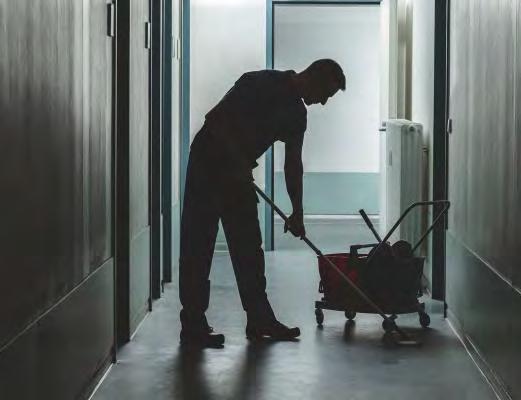
The cleaning sector in Europe must move towards more visible/daytime cleaning. That’s the view of Mark Bergfeld at trade union organisation Uni Europa in Brussels. He explains why in this piece by Martin Schuster from CleanManager.
Daytime cleaning is a triplewin: for companies, clients and workers. You just have to look at companies’ ESG reporting. Companies are facing high labour shortages and labour turnover rates. And the cleaning sector counts some of the highest sickness rates of any sector.
Faced with this scenario, how do we stabilise the sector?
Companies used to have two options: invest in tech to replace workers or enlarge the pool of labour. While the former cuts even more into the already narrow margins, the latter is increasingly difficult as society is ageing and governments are pursuing anti-immigrant policies.
Daytime cleaning is the solution to stabilise the sector, develop the workforce and unleash sustainable growth. Workers have family-friendly hours which means companies can find staff. Once on the job, site, contract and regional managers can address issues in real-time with the worker and the client. Workers can also access the union. All academic evidence points to the fact unions resolve issues. So people stay on the job.
The European Daytime
Cleaning Alliance conference last year was a unique event bringing together more than 50 trade unionists, company representatives, associations, policy-makers, clients and cleaning machine manufacturers. It is rare nowadays to find such broad coalitions. The breadth is of this alliance is something we need to celebrate and nurture. We heard from joint employerunion projects in Norway and Germany, listened to SMEs and MNCs about what they need to make a transition to daytime cleaning a reality.
Breadth of alliance
We are attracting clientsincluding large cities, universities and government ministries - to participate in our discussions on daytime cleaning. The reason is simple. As industry researcher Helge Alt pointed out: one government department spent €40,000 a month on energy costs for keeping the lights and heating on - just for cleaning.
Now we need the private sector clients to come on board as well. We’re going to push forward with this, but we need the help of many people across different parts of the cleaning sector to help us.
Our recent report, No Longer Invisible, highlights real progress in Denmark, Finland, Norway and Sweden. That’s because money talks. The problem the cleaning sector has in many countries is wages have remained so low that workers have become
dependent on overtime pay and night-time premiums to make ends meet. Companies mistake this as a wish for flexibility.
In the Nordic countries, nighttime premiums have been made so expensive that clients and companies opt for daytime cleaning. The lesson is: you need strong collective agreements that disincentivise split shifts and night work.
At the same time, cleaning jobs need to be designed as full-time. This has much to do with how societies view feminised services work. Is cleaning about earning a bit extra cash for the family or a breadwinner’s job?
The Nordic countries also teach us that it is about changing the culture. In Denmark, unions and employers speak about visible cleaning. Visible cleaning is a useful concept because it ensures it’s fully integrated into the production and services process. It also brings cleaning out of the shadows.
If employers are serious about winning better recognition for the sector, it starts with the visibility of cleaners in the workplace, in societies, TV discussions and so forth.
So, what needs to change to ensure visible cleaning becomes standard practice? It’s simple: taxpayers’ money shouldn’t be funding poverty wages and a race to the bottom. Governments have a responsibility to offer decent work, even when they outsource services. They cannot simply hide from their responsibility. After all, poverty-wages are drain on our social systems and lead to old-age poverty, particularly among women. Governments must start implementing socially responsible public procurement systems, which favour collective agreements, fair working conditions and living wages. Changing such laws takes some time but every ministry, local or regional government can take one step and conduct a feasibility study to pave the way for a transition to daytime cleaning. This is possible right here and now. You do not need
a decree or legislative change to do that.
Companies need to move towards really promoting daytime cleaning. I know tens of companies who prefer daytime cleaning but when you go on their websites you won’t find a word about it. In companies’ ESG reports, you still won’t find the percentage of workers on daytime contracts.
The promotion of daytime cleaning isn’t a CSR exercise. It needs to be mainstreamed through the whole organisation. The sales team should be selling daytime cleaning, for example.
Family-centric
Of course, there is a broader social message here. I am a trade unionist. Unions are the only organisation that can bring all workers of different backgrounds, beliefs and identities together to negotiate and bargain collectively with management, in my view. Deindustrialisation, trickle-down economics and the attacks on the public sector have led to union decline however.
This has had severe consequences for our democracies. Employers shouldn’t be worried about their workers joining a union. Being part of a union can create a strong professional identity and contribute to company loyalty. If we want stable democratic societies in which everyone gets a piece of the pie, we need to ensure that cleaning jobs become family-sustaining jobs with union rights.
The trade union slogan ‘respect for cleaners’ or ‘justice for janitors’ needs to be filled with life. Daytime and visible cleaning is not a panacea to fully achieve this but one important puzzle piece. It is a family-centric policy and offers workers the opportunity to be productive members of our societies, engage in democracy, live a fulfilling life outside of work and engage civically, socially, entertain hobbies and activities which contribute to our overall well-being.
Split shifts split lives - night shifts keep us in the dark.






The European Federation of Cleaning Industries (EFCI) has presented a solid and forwardthinking proposal to the European Commission as part of the Skills Portability Initiative. Central to its recommendations is the introduction of a European Cleaning Skills Card - a universal, sector-wide credential designed to ensure that cleaning professionals’ abilities are recognised seamlessly throughout all EU countries.
According to EFCI, the cleaning and facility services sector, which employs millions across the continent, can gain from a coherent system of skills validation. The proposed Skills
Card would verify a set of essential, accredited skillscovering areas such as manual handling, safe use of chemicals and key cleaning techniques - and thus enhancing service standards, improving worker safeguards and facilitating greater workforce mobility.
Collaboration vital
The EFCI stresses that the card would deliver several advantages:
• Unified training standards, helping to bridge gaps between national qualification systems.
• Enhanced professional status, raising the profile of cleaning as a career and opening up better prospects for advancement.
• A fairer marketplace, ensuring that companies which invest in staff training are not disadvantaged compared to those that do not.
• Improved clarity for procurement teams, making it easier to reliably confirm workforce qualifications.
EFCI also highlights the importance of collaborating with social partners, such as Uni Europa, as well as national industry groups, training providers and procurement organisations. Such collaboration is vital to upholding labour standards - encouraging ongoing professional development and supporting the long-term viability and competitiveness of the sector.
In summary, EFCI sees the Skills Card not just as an administrative measure but as a strategic step towards improving quality, increasing mobility and professionalising the cleaning workforce across Europe - in line with the wider aims of EU labour mobility and social policy.
In a time when social sustainability is as important as environmental and economic sustainability, working hours and inclusion are part of how we build good workplaces.
Wioleta Tomaszewska - a BU support planner in cleaning at Coor FM (one of the leading service providers in the Nordics), lecturer in cleaning management and chair of Norsk Forening for Service og Renhold (NFSR), the Norwegian Association for Service and Cleaning - tells us why in this piece for ECJ.
Cleaners often start their workday when others have gone home. They work alone in empty corridors - invisible, yet essential to ensure that everything runs smoothly the next morning. International studies show that evening and night shifts increase psychological strain, harm health, and heighten the risk of social exclusion. Perhaps it is time to ask: why do we still organise cleaning this way?
An international survey from UNI Global Union and UNI Europa (2023) found that nearly 70 per cent of night-shift cleaners report sleep problems and
reduced quality of life. The same study shows that evening and night work negatively affects family life and overall wellbeing, while seven out of 10 say they work these hours because they have no choice.
In the Erasmus+ Ergoclean project, 72 per cent of cleaning supervisors and 46 per cent of cleaning staff reported that their work is mentally demanding. The findings point in the same direction: working time has a major impact on health, wellbeing, and sense of belonging.
Trust through visibility
When cleaning takes place during the day, natural encounters arise - in corridors, during breaks and throughout the workday. Direct contact makes it easier to address small issues immediately without involving several parties. When clients can speak directly to the cleaner, misunderstandings and complaints decrease and managers gain time for other tasks.
This proximity builds trust and cooperation. The cleaner becomes a familiar face, the threshold for dialogue
lowers, and mutual respect grows. When people connect, systems improve.
A healthy social workplace
When cleaning is performed within regular working hours, cleaning staff become a natural part of the workplace community. They are seen, greeted and included on equal footing with others. This fosters belonging, reduces loneliness and strengthens a culture of mutual respect. Daytime cleaning is therefore not only about schedules, but about being part of the workplace - not just a service in the background.
Can cleaning and childcare coexist?
Many assume that cleaning during daytime is impossible in kindergartens or schools. Yet with planning and dialogue, it works remarkably well. It is about communication and mutual understanding.
When staff and cleaners together create a plan for what should be cleaned and when, it provides predictability and comfort for everyone. It is equally important that cleaners feel confident to initiate dialogue - and that employers recruit
people who enjoy interaction and cooperation.
What about the manager?
Supervisors also benefit.
Daytime work reduces stress and dependence on calls and messages outside of working hours. Communication becomes closer and support easier to provide. Clear expectations and boundaries create stability - for both leaders and staff.
Daytime work strengthens language and belonging
For many migrants, cleaning is the first job after arriving in a new country. Many speak limited local language and know little about the labour culture. Working evenings and alone offers few opportunities to learn or participate. Daytime cleaning, on the other hand, creates an arena for language practice, social contact and inclusion in the community.
Daily interaction with colleagues and users provides opportunities for learning and inspiration. It can broaden networks, build confidence and even open doors for further development within working life. We are all clients
Cleaning concerns all of usevery day, in every workplace, in every building. Social sustainability is not only about environment and economy, but about giving people dignity and a sense of community at work. What can we do to increase awareness of the social value of cleaning? How can we get clients on our side - to see cleaning as a valuable and integrated part of the work environment, not just a service to be purchased?
Small actions make a big difference: sharing news from the sector, showcasing good examples and highlighting workplaces where the work culture truly thrives. Recognising clients and partners who lead by example can inspire others.







How can performance be measured when room functions are no longer uniform, asks John Griep.
Modern education buildings often bring together a wide variety of room types and functions. Traditional classrooms coexist with learning plazas, small group rooms, PC study rooms, practice workshops and large lecture theatres. While this diversity supports contemporary teaching methods, it also creates a recurring challenge for cleaning quality management: how can performance be measured consistently when room functions are no longer uniform?
When quality discussions are really classification issues: In many cases, debates about cleaning quality are not primarily about cleaning itself. They stem from uncertainty about how rooms are classified, which cleaning programme applies, and which assessment criteria should be used.
A Dutch guidance document on the application of VSR-KMS in education buildings illustrates this issue. It shows measurable quality does not begin with inspection but with clear room classification, cleaning programmes linked to it, and documented agreements.
Confirm room function and cleaning programme first: The Dutch VSR-KMS guidance for education buildings starts with a fundamental check: do the rooms grouped within one category genuinely share the same function, and are they subject to a comparable cleaning programme? Without this verification, inspection results may appear inconsistent.
In the example described, an entrance hall connected to a lecture theatre had been designated as an education room. In practice however, its use corresponded more closely with that of a circulation area. The guidance stresses room data must be consistent across the room list, room schedules and any facility or space management system, and that a physical site check is often necessary to confirm recorded room functions reflect operational reality.
Result-oriented contracts
increase the importance of correct classification: In the case presented, the cleaning contract was result-oriented, with a daily handover frequency agreed for education areas. This made correct room classification essential: only when the room type and the associated cleaning programme were defined could quality be assessed objectively.
Creating a homogeneous inspection population: Significant size differences between rooms within the same category can directly affect inspection outcomes. In higher education buildings, rooms may range from small PC study rooms to lecture theatres of several hundred square metres. If such variation remains within one inspection category without further differentiation, sampling outcomes can fluctuate considerably between inspections.
To ensure comparability, the guidance proposes proportional inspection rules based on the number of study places and, where necessary, the division of large lecture theatres into clearly defined sub rooms that are recognisable both in documentation and on site. This creates a more homogeneous inspection population and reduces discussion about fluctuating quality.
Defining counting rules to prevent interpretation differences: The guidance further makes clear that correct room classification alone is not sufficient. Even within welldefined categories, inspection outcomes may vary if elements are counted differently. Practical examples include whether the top edge of toilet cubicles should be treated as a separate ledge or as part of the cubicle construction, or whether a wall of lockers should be counted as one element or as multiple units. By defining and documenting counting rules in advance, and by ensuring client, contractor and inspector share the same interpretation, organisations reduce ambiguity and strengthen the objectivity and transparency of measurement.
ECJ’s reporter in Italy, Anna Garbagna, brings news of the recently-launched Italian Alliance for Cleaning Excellence - a certified quality label.
Afidamp has officially presented the Italian Alliance for Cleaning Excellence, the new certified quality label designed to make the value of Italian companies in the professional cleaning sector immediately recognisable on international markets.
The initiative was created with a clear objective: to provide the market with an authoritative and transparent tool to identify companies that represent Italian excellence in an increasingly competitive and globalised industry. In a context marked by strong price pressure, non-EU competition, and growing regulatory complexity, the new label aims to enhance companies that invest concretely in research and development, quality, sustainability and full regulatory compliance.
Italian Alliance for Cleaning Excellence does not certify individual products, but the entire company. This represents a shift from the traditional concept of ‘Made in Italy’: the label introduces an evaluation model based on objective, measurable criteria verified by an accredited third party, with the goal of certifying a company’s structural and organisational excellence.
The system is based on a technical document prepared by Afidamp, which sets out 20 evaluation criteria - industrial, organisational, innovationrelated, and sustainabilityfocused - 17 core criteria and three additional merit-based ones. To obtain certification, companies must achieve a minimum score of 60 per cent. All Italian manufacturers of machines, equipment, detergents, textiles, consumables and systems for professional environments may apply, provided they have their legal, administrative and production headquarters in Italy and generate at least 51 per cent of their cleaning sector turnover from
products manufactured in Italy.
The initiative represents a concrete response to new competitive dynamics in the global market. The professional cleaning sector is increasingly populated by low-cost products that do not always guarantee adequate quality and regulatory standards, with potential negative effects on fair competition and risks in terms of safety and reliability.
“Precisely to counter this trend and to give value to what companies in our sector build every day,” commented Stefania Verrienti, director of Afidamp, “we created this label. With Italian Alliance for Cleaning Excellence, we are not offering a simple visibility tool, but adherence to a certified system that attests to corporate excellence. Authorisation to use the label allows companies to present themselves on international markets as entities compliant with high, verified standardsstrengthening the credibility, reliability and competitiveness of Italian production.”
The project is part of the association’s strategic path aimed at transforming companies’ needs into concrete initiatives supporting competitiveness, internationalisation and the success of Italian products.
The programme goes beyond simply awarding certification: the process includes a structured enhancement plan for participating companies through targeted communication activities, the creation of institutional materials and promotional campaigns, networking events and the launch of a dedicated portal for certified companies.
The objective is clear: to create a recognisable community of virtuous companies capable of representing the best of Italian professional cleaning production worldwide.




An athletic career was a great springboard for one top job in the sector. This from ECJ’s Lotte Printz.
While writing this, dear readers, the world’s leading badminton players are in action at the All England Open Badminton Championships in Birmingham, England. An event where Danes have often excelled. And why is this relevant to this industry, you may well ask. Well, one can never know if professional athletes - in this case badminton players - transition into corporate roles. One ISS top executive did!
In a special series in Børsen (Danish business and financial daily newspaper) revealing which sports Danish business leaders throw themselves into, and why, CEO at ISS Kasper Fangel unfolds how badminton has influenced and even helped him in his executive career.
The series asks whether these executives do sports to clear their heads, to maintain their health or for the community spirit. Kasper Fangel used to play badminton professionally. He was part of the Danish national team in his youth, competed at the highest level and once - in 2004 - played in All England. Without lifting the trophy, though. He reached a careerhigh ranking of world No. 32 before he ended his badminton career in his early twenties to do a Master of Science degree in business economics and auditing at CBS (Copenhagen Business School) and subsequently pursue a business career.
Kasper Fangel has previously disclosed that being a professional athlete gave him more valuable experience than studying for a degree. Badminton taught him never to give up, a result of the long-term training necessary to achieve peak performance. To Børsen he said: “Sport is driven by the pursuit of constant improvement. Small adjustments, fine margins. We need to have the same approach in our business, constantly pursuing those areas where we can improve quality, efficiency and cooperation.”
“To permit constant development, you must devote energy
and leverage resources to something useful. That’s exactly how I think business.”
Kasper Fangel recognises many aspects of his athletic career in his working life: Everything you do on court or in the C-Suite must be with the sole purpose of making you better – as an athlete or organisation. The social aspect and dedication are other similarities between badminton and business that the CEO finds important.
“When people are really enthusiastic and truly dedicated, they perform at a higher level. I’ve seen that in the world of sport, and the same goes for the business world,” Kasper Fangel stressed. Speaking to Børsen, the 46-year-old Danish national also gives credit to Denmark’s unique associational culture that offers a sense of community and is excellent at including recreational and professional athletes alike. Once his own professional career is over and he can offer the total commitment he believes this culture deserves, he would like to become involved in some way. To give something back to the associational culture that ‘shaped’ him.
While Fangel acknowledges that he lacked the appropriate level to compete with the very best in his sport, he has taken his professional career to the very top. A career at ISS that took off with an unsolicited application to the then CEO who invited him for an interview the following day. He has more than 15 years of leadership experience at ISS, most recently as CFO from 2020 and then CEO since 2023.
And his achievements have been noticed elsewhere. At the end of February, LEO Pharma, one of Denmark’s global pharmaceutical companies, welcomed him as a board member and the new chair of the audit committee. It described him as having played a pivotal role in shaping strategy and delivering sustainable performance on a global scale.
Some new research could significantly change how cleanliness is measured, writes Lynn Webster.
This could be one of the most practical breakthroughs that the cleaning and FM industry has seen in many years. It may give cleaning professionals and those involved in infection prevention a simple method to identify when and where reactive hygiene cleaning is required. After all, if you can measure it, you can improve it.
Some new research could significantly change how organisations measure and manage cleanliness in indoor environments. The research has been led by Andrew Kemp JP, PhD, supported by the British Institute of Cleaning Science (BICSc) and the Cleaning & Support Services Association (CSSA), resulting in a clearly identifiable and measurable relationship between airborne particles and surface bacterial contamination. The findings may provide the cleaning and FM sectors with a simple, practical and scalable method to assess hygiene levels more effectively.
The study highlights what researchers describe as an approximate 10:1 relationship between airborne particles and surface contamination. By measuring airborne particles in the 0.5–1 micron range, research found they could estimate the level of bacterial contamination present on nearby surfaces.
In practical terms, the research suggests that a 60-second air sample taken approximately 20 centimetres above a surface can provide an indication of how contaminated that surface may be. If validated further, this approach could offer organisations a faster and more efficient way to monitor hygiene compared with traditional surface sampling techniques, which often require swabs and laboratory analysis.
The research is particularly relevant for professionals responsible for infection prevention, facilities management, cleaning services, health and safety compliance and building performance. For these sectors,
the ability to quickly assess hygiene risks could enable more targeted cleaning strategies and faster responses to potential contamination.
Two technologies were evaluated as part of the study: Advanced Photocatalytic Oxidation (APO), which is designed to improve indoor air quality by breaking down airborne contaminants, and photocatalytic surface coatings - intended to provide long-term antimicrobial protection on frequently touched surfaces.
During practical trials conducted in controlled room environments, spaces using both technologies showed dramatic reductions in detectable contamination, with no cultures identified in post-treatment tests.
Researchers believe these findings could have significant implications for sectors such as healthcare, education, hospitality, leisure facilities and other public environments, where maintaining hygiene standards is critical.
Further study is still needed to determine the contamination thresholds at which surfaces present a genuine cross-infection risk. Future testing methods may also require more detailed identification of microbial species to better understand potential health impacts.
Nevertheless, these findings provide exciting opportunities towards the possibility of datadriven cleaning strategies, faster hygiene monitoring and more effective risk management in indoor environments. If adopted widely, the methodology could represent a significant step forward in how organisations monitor and maintain cleanliness.
The research has now been published in the American Journal of Biomedical Science & Research and can be found at the address below: www.bics.org.uk/newresearch-could-transform-howwe-measure-cleanliness-indoors/
The issue of the electronic sick note has been a hot topic for discussion in Germany, reports Katja Scholz.
After the talks arranged in January regarding an additional special payment for IG-BAU members in association member companies - the so-called “union bonus” – broke down and the associated wage bargaining negotiations were declared a failure, another issue has now become the focus of discussion in the cleaning sector: electronic sick notes.
In the political debate in Germany, cleaning businesses are unequivocally at one with the federal chancellor and the federal minister of health: they would like to see a critical review. In the business survey of last autumn, the Federal Association of Contract Cleaners (BIV) was already pointing to the negative impact of it in its member companies, based on specific data collected by the sector. These results showed that the additional effort required by electronic sick notes was leading to resentment and in the companies’ view, more bureaucracy.
A further issue is also relevant: according to current figures, following removal of the time limit on the telephone sick note, the sickness rate had risen in 71 per cent of the companies questioned by the end of 2023. As evidence, companies quoted the following figures: in 33 per cent, the sickness rate had risen by up to 10 per cent; in almost a quarter by up to 20 per cent; while 7.5 per cent indicated a rise of up to 30 per cent.
As federal guild master Thomas Dietrich explained: “The telephone sick note was useful as a short-term emergency measure during the pandemic to avoid personal contact and infection. Since this crisis has now passed, the removal of this emergency measure is overdue. A third point is that our sector figures show concrete proof that the telephone sicknote also drove up sickness rates. Looking at the issue from both sides - employee and employer
- the removal of the telephone sick note is long overdue. In this respect, we strongly support the federal chancellor and the federal minister of health in putting this issue so high on their political agenda.”
While these employment and socio-political questions dominate discussions in the sector, the BIV is also turning its attention to the future and the structural demands of the market. The end of February saw the go-ahead given in Stuttgart for a series of conferences on public procurement. The background to this was the association’s aim to push, in cooperation with the tendering local authorities, for a change from pure competition to quality-oriented procurement.
Oliver Knedlich, employer and chairman of the BIV working group on public procurement, says: “The knowledge is not always there in the local authorities - this is what our conference will focus on. If we don’t begin the conversation, the tendering mindset will never change. If I tender on the basis of price alone, it should be no surprise to me that I get the cheapest. And the cheapest - quite simplymakes it cheap!”
According to BIV figures, 56 per cent of member companies take part in pubic tendering processes. Almost 40 per cent report tendering is based purely on price and even a good 40 per cent admit that 75 per cent of decisions are based on price. “Other factors besides price should carry at least the same weight, 50:50: sustainability, quality assurance, workforce management,” says Knedlich.
As far as BIV is concerned, one thing is clear: public procurement will remain, along with current employment and socio-political debate, a central future topic for the sector. The goal is to work together with local authorities to put greater emphasis on quality instead of concentrating on price alone.













Despite efforts in prevention, training and improving working conditions through better-adapted tools and more bio-based products, the working conditions of cleaning staff remain difficult.
A recent report by the French National Agency for Food, Environmental and Occupational Health & Safety (ANSES) shows workers in the cleaning sector are exposed to a combination of significant health risks. Furthermore, the study indicates that the growth of subcontracting has led to work intensification, increasing the frequency of accidents.
Cleaning workers are exposed to a range of risks stemming from the very nature of their work, but also largely from how it is organised- particularly subcontracting - warns ANSES. The agency conducted a multidisciplinary study of this sector, which employs between 1.2 and 1.4 million people. The report focuses exclusively on staff working in professional environments.
The staff, 73 per cent of whom
The working conditions for cleaning staff remain difficult, as they are still exposed to significant health risks. Christian Bouzols reports for ECJ.
are female, are “exposed to a combination of occupational risks that weigh heavily on their health, linked to the very nature of the work they perform - physical exertion, exposure to chemical products and biological agents - but also to work organisation, including irregular hours, working alone and high work intensity,” summarises Henri Bastos, scientific director for health and work at ANSES.
Precarious employment
More often of foreign origin than employees in other French sectors, these workers are frequently in precarious employment and are rarely unionised. The sector stands out for the high frequency of workplace accidents, a rate of officially recognised occupational diseases twice the average and dismissals due to
unfitness for work nearly twice as common as for permanent contracts overall, the study notes.
According to the French Health Insurance system, professionals in the cleaning sector are on average off work for 93 days due to workplace accidents, compared to 88 days for all employees. However, this gap is not very large.
“But the severity index in the cleaning sector is 23.5 and the severity rate is 3.1, compared to 12.3 and 1.5 respectively for all employees,” notes the national health and safety agency.
Among the most common illnesses are musculoskeletal disorders (MSDs) as well as respiratory and skin conditions. In addition, workers often have staggered and fragmented schedules, resulting in extended working days involving numerous trips between job sites.
Around 35 per cent of them work for subcontracting companies - a share that has increased significantly in recent years. This trend has led to a reduction in the number of hours allocated to cleaning and to an intensification of work, which in turn increases the risk of MSDs and workplace accidents, the authors of the report point out.
In its conclusions, the report recommends further studying the impact of cleaning activities on certain chronic diseases and on pregnancy. It also calls for expanded prevention training through visual materials tailored to the target population and for changes in work organisation to promote daytime work - an issue that industry representatives have been advocating for many years with contracting authorities, so far with only limited success.





October 8 2026
Pueblo Español
Palma de Mallorca Spain
“We focus on innovation, transparency and raising awareness”

Spain is the host country for this year’s European Cleaning & Hygiene Awards (founded by European Cleaning Journal), with the gala dinner taking place in Palma de Mallorca on October 8. In this special piece for ECJ, president of contract cleaning associations AFELIN and AELMA Jesús Martín tells us more about the country’s cleaning sector.
Tell us some key facts and figures about the Spanish professional cleaning sector.
The cleaning industry accounts for 1.05 per cent of the national GDP and comprises over 40,000 companies, 95 per cent of which are SMEs. It is a highly fragmented industry because it is seen as an alternative form of self-employment for many workers. Most companies, around 36,000 according to the census, are microSMEs, between one and five employees. Only 12 per cent of companies have more than five employees.
In terms of turnover, the latest available data corresponds to the DBK Industry Observatory Report for 2024 and shows that cleaning companies in Spain achieved a turnover of €14.575 billion, representing a growth of 6.3 per cent over the previous year.
What is the profile of the workforce in this industry?
In terms of employment, we are a clear generator of jobs.
In Spain, the cleaning industry employs 540,000 workers, 81.6 per cent of whom are women. The majority are employed in operational tasks, but the percentage of women in middle management (HR, marketing, purchasing, etc), as well as in senior management, is increasing, although it is still far from achieving parity.
This industry clearly generates job opportunities for groups that face difficulties entering the labour market, such as people with low levels of formal education, groups with some type of disability, people at risk of social exclusion and immigrants from up to 100 different countries. This diversity of profiles makes this industry inclusive and diverse in terms of employment.
Which customer segments are currently the main drivers of demand?
Currently, demand is concentrated in all areas where hygiene, image and quality are not only regulatory requirements, but also essential conditions for economic activity and public health.
In addition to the private, the public sector continues to be a key player, as 40 per cent of our industry’s turnover depends directly on the public administration.
What are the prevailing trends affecting cleaning companies in Spain in 2026? Where are the
opportunities for growth and what are the most challenging aspects?
One of the predominant trends we are seeing this year is the consolidation of sustainability as a strategic priority. Environmental requirements are no longer just a matter of reputation, but have become a determining criteria in contracting,especially in the public sector and in large private corporations. Reducing environmental impact, using eco-friendly products, optimising water and energy consumption, and ensuring process traceability are now part of the competitive standard. Adding to this evolution is the accelerated digitisation of services. Companies are incorporating monitoring tools, smart planning, real-time quality control and process automation to offer more efficient and measurable services. Technology - including the progressive implementation of AI-based solutions - does not replace the human component of our industry, but it does complement it, improve organisation and increase productivity. These are all key aspects that help an industry whose profit margins are increasingly slim.
Significant challenges
Alongside these opportunities, the industry faces enormous challenges. The current Economic Deindexation Law continues to cause a gap between actual costs and public contract prices, compromising the viability of many companies, particularly SMEs, which make up the vast majority of the industry’s business landscape. In addition, there is a structural problem that we have been facing for years - namely high absenteeism - which puts pressure on staff, increases costs and makes it difficult to organise a service that depends directly on the effective availability of personnel.
Furthermore, the lack of generation turnover and the difficulties in attracting young talent pose a strategic challenge that we must address urgently
if we want to ensure the future sustainability of the industry. What progress would you like to see AFELIN and AELMA make in Spain - and at the EU level - that would have a positive impact on the cleaning industry? What are the associations’ main objectives for this year?
I consider it a priority to move towards a more balanced and realistic regulatory framework. It is essential to review the Public Sector Contracts Law to introduce mechanisms that allow for automatic price updates when mandatory wage increases occur and to reinforce quality criteria in the face of the almost exclusive predominance of price. Without a public contracting model that guarantees reasonable margins, service quality and business stability are being seriously compromised.
Clear objectives
In addition, the amendment or repeal of the Deindexation Law, as I have already explained, is an important issue, because no labour-intensive industry can withstand years of cost increases without the possibility of contractual review.
At the European level, greater institutional recognition of the cleaning industry as a strategic activity directly linked to public health and economic resilience would be desirable.
Our objectives are clear and aligned with this vision. We want to consolidate institutional dialogue to advance regulatory reforms that provide legal certainty and economic stability, strengthen the unity of the industry throughout the country, promote professionalisation and continuing education, improve the social perception of our activity, and reinforce the tools that facilitate the attraction of talent.
In short, our purpose is to guarantee the viability of companies in order to protect jobs and ensure that the essential services we provide continue to be delivered to the
Continued page 20





























“We focus on innovation, transparency and raising awareness” (continued from page 18)
highest quality standards. How would you describe the level of professionalisation in the industry? Does it have a good reputation in the business world in Spain? And does it receive the recognition it deserves as an essential service, provided by qualified professionals?
If we analyse the evolution of recent years, we can categorically state that the cleaning industry has made significant progress in terms of professionalisation. Today, we are a long way from the simplified perception that reduced our activity to a purely manual task. Nowadays, we are referring to a highly organised industry, with specific training programmes, professional certifications, quality protocols and increasingly demanding risk prevention systems.
In Spain, for example, we have the Professional Cleaning Card, an accredited certification that formally recognises
employees’ qualifications and skills. These types of tools help dignify the industry, raise service standards, and ensure that those who work in this field are adequately trained.
At AFELIN, we have also promoted the Official Register of Cleaning Companies (ROEL), a necessary initiative for regulating the market and differentiating those companies that scrupulously comply with labour, tax, and social regulations. The ROEL is not only a tool for transparency, but also a defence mechanism against unfair competition that has damaged the industry’s image for years.
Essential but undervalued
However, does the cleaning industry enjoy the reputation it deserves? We have undoubtedly made progress, but we are still struggling with decades of perceived low visibility. For many years, cleaning has been an essential but undervalued service, present in all areas
- hospitals, schools, offices, industries, public spacesand yet rarely recognised as strategic. We are taking steps in the right direction, but this cultural transformation will take years of work.
Spain has extraordinary standards of cleanliness, recognised internationally in both the public and private sectors. Our country is a benchmark in industries such as tourism, healthcare and manufacturing, where hygiene standards are crucial. However, for this excellence to be fully recognised, society and the business community need to see cleaning for what it really is: an essential service directly linked to the economy, health and overall productivity.
The pandemic was a turning point. At that critical moment, cleaning was directly associated with public health. Our professionals were on the front line, ensuring safe environments, minimising risks, and
contributing to the continuity of business activity. That period highlighted the real importance of the industry. However, the challenge now is to consolidate that recognition and prevent it from fading over time. Making progress
We are making great efforts to professionalise our activity and convey an image of quality, reliability and commitment. We have made progress, but there is still a long way to go. Full recognition will come when the industry is perceived as strategic for the economy and social wellbeing. And to achieve this, we need to continue to focus on training, innovation, transparency, self-regulation and raising awareness.
There’s still time to enter the European Cleaning & Hygiene Awards 2026 - visit echawards.com/ enter to find out how
Make sure you are part of the biggest industry gathering in the world!
Join the community, expand your network and close deals at Interclean Amsterdam from 14-17 April 2026, your most efficient and enjoyable business trip every two years.
14 – 17 April 2026
RAI Amsterdam, Netherlands Register now →

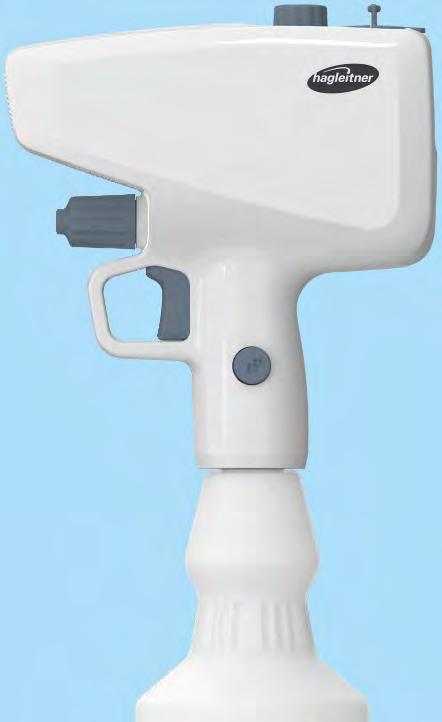
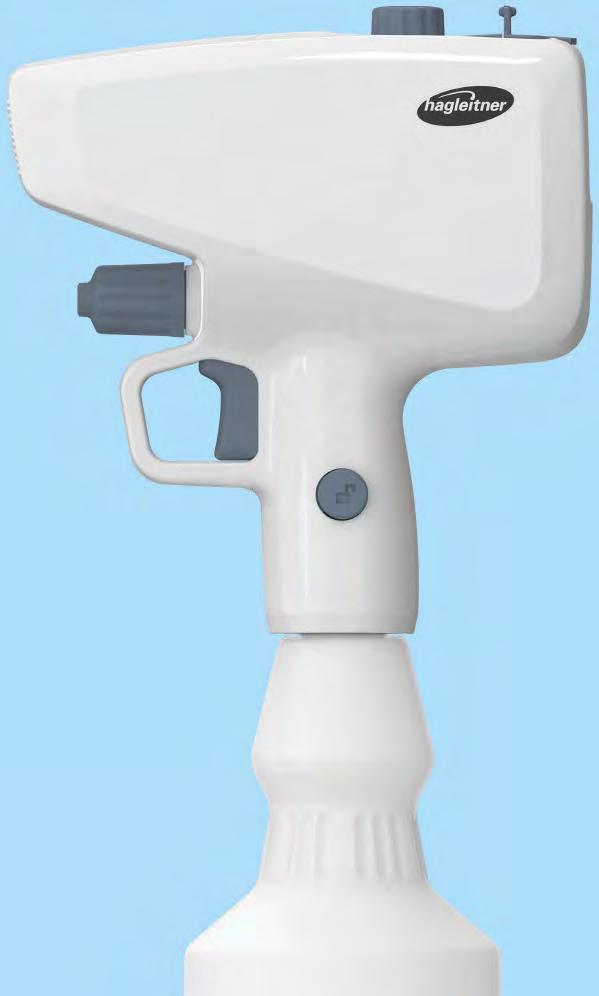
High-performance electric foam gun for ergonomic cleaning
• Reduces strain on hand & wrist: for fatigue-free operation
• Adjustable foam output: superior cleaning results
• Cordless operation: maximum flexibility
• Compatible with standard market bottles, best with Hagleitner high concentrates




















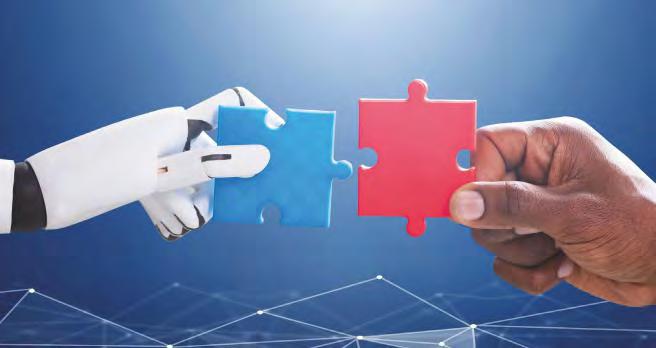
Cleaning technology is evolving rapidly. But some innovations are gaining more traction than others. We ask companies about the most significant technological breakthroughs of the past 25 years and find out how far these have benefited customers and enhanced cleaning efficiencies.
a cost that makes sense, he adds. “Early versions were often more of a gimmick than a help, but now they have been optimised they are reliable and quiet while also providing telemetric data that prove the work has been done.”
THE MARCH OF TECHNOLOGY has been relentless. Artificial intelligence, digital solutions and software have combined to bring about a transformation in cleaning - a discipline that was once a simple process involving little more than a mop, detergent and water.
But the journey has not been without its bumps in the road. Some early solutions such as PDAs and SMS stafftracking systems came and went rapidly after smartphones made them redundant. Other innovations failed to take off due to low levels of staff engagement or a lack of understanding as to how they should work.
So which technological breakthroughs have been the most successful to date? And which were mere flashes in the pan?
Innovations that turn assumptions into hard evidence are the ones to have genuinely transformed cleaning, according to solutions director at Q3 Services Alex Gavrilovic.
”IoT sensors and occupancy data have been game-changers because they allow us to see exactly how spaces are being used,” he said. “These kinds of insights affect everything - from deciding how often an area needs attention to optimising staff schedules and resources. It no longer becomes a matter of guesswork or a decision based on perception but is backed up by hard data.”
Robots have also reached a point where they can consistently deliver results at
The benefits of technology are immediate and tangible for customers, he says. “Data-driven cleaning gives them confidence with no more arguing about whether a space looks clean and no more relying on anecdotal impressions,” said Gavrilovic. “They can see trends, measure performance and understand exactly where resources are being used most effectively. And this often means higher standards are attained without necessarily increasing costs, which is a powerful message for customers.”
Support not replace
Most end-users embrace technology when it is introduced to them in the right way, he adds. “It is about showing people that it’s there to support them and not replace them,” he said. “In my experience, teams quickly see the advantage. They spend less time on guesswork and managers have clear evidence to show that standards are being met. When people realise that technology is helping them to do their job better rather than making it redundant, it is generally welcomed.”
He believes the most successful innovations are not always the “flashiest”. “They are the ones that quietly add real value and stand up to scrutiny every day,” he said. “Think of the impact that sensors have had on our industry: they work in the background but have revolutionised how we complete our checks and receive data. That combination of measurable impact and reliability is what makes them genuinely transformative.”
Some cleaning technology innovations have proved less effective than others, according to Cleanology’s environmental, social and governance director Kate Lovell. “Early systems such as PDAs for on-site reporting, text message–based task management and standalone digital audit
tools often failed to gain traction because they were unreliable or too complicated to use,” she said. “Some organisations also trialled RFID based washroom monitoring and basic ‘first generation’ robotics. But these systems struggled due to their high cost, lack of flexibility or a poor level of integration with existing processes.”
In some cases end users have been resistant to engage with the technology, she adds. “This might be because the systems seem too complex or because they offer limited visible benefits,” she said. “Perhaps they require staff retraining or lead to a disruption to service.
“And some staff members might perceive them as being temporary or trenddriven. However, most end-users learn to understand and embrace new technologies with the aid of clear communication, training and demonstrations.”
Cleanology uses time and attendance solutions designed to eliminate fraud, protect lone workers and provide real time monitoring. “We’ve also developed our own digital platforms that streamline task management and reduce paperwork,” said Lovell.
Digitalisation, IoT and data-led decision-making has brought about a profound shift in the cleaning industry, says Essity communications director Jenny Turner. “What began as basic monitoring tools has evolved into advanced, integrated solutions capable of transforming the efficiency and quality of facility management,” she said. “These allow teams to respond to real needs, optimise staffing and ensure consistently high hygiene standards.”
Fewer complaints
Higher cleaning quality, greater control and fewer complaints are among the advantages of these types of technologies, she says. The company’s Tork Vision Cleaning uses data from connected dispensers, people counters and sensors to predict cleaning needs.
The most successful technologies are those that provide clear, actionable
insights without adding complexity, according to Turner. “Once teams experience the simplicity of these types of tools their engagement levels are high,” she said. “Some initial caution is natural, but resistance typically fades once users see the practical advantages.”
Today’s technological innovations allow for real-time monitoring, more efficient operations and improved accountability, according to ABM business and industry managing director Campbell Murdoch.
“This has fundamentally evolved how services are being delivered and measured,” he said. “The evolution also mirrors broader industrial trends such as IoT deployment, cloud-based fleet management, robotics and predictive maintenance systems which are now embedded in many operators’ platforms.”
Fundamental evolution
Success depends on adoption, a clear return on investment and seamless integration, he says. “Ultimately any technology that makes teams more efficient is a success,” said Murdoch.
“For example, sensor-based washroom monitoring, consumable tracking and occupancy-triggered cleaning models are incredibly effective. Being able to ensure that your operations are aligned with usage and are reducing consumable waste is a huge benefit – particularly in high footfall areas such as airports, offices, entertainment venues and healthcare.”
End-users are generally very receptive to technology, he said. “The benefits are vast: transparency, real-time reporting, proof of service, audit trails, efficiency, reduced waste, labour optimisation and consistency to name but a few,” he said. “But naturally, any change takes some adjustment and it is our job to bring teams on that journey with us.”
The company’s ABM Connect offers data intelligence offering actionable metrics, reporting and KPIs. It has been designed to improve accuracy, meet regulatory requirements and enhance operational efficiency in critical environments such as life sciences and healthcare.
According to Murdoch there are a number of factors that could lead to technology not quite hitting the mark. “If cost savings are unclear or intangible, adoption will stall – and if the technology is too complex or difficult to use it won’t be embraced,” he said.
The most successful technological innovations have been those that directly
address labour shortages and improve operational efficiency, according to Kärcher’s chief technology officer Marco Cardinale.
“There has been a massive leap in robotics from the experimental stages to reliable, autonomous machines that can handle repetitive tasks with consistent quality,” he said.
“Advancements in battery technology, workforce planning and fleet management solutions have also been game-changers. However, the real success lies in the shift towards offering a perfectly harmonised set-up where machines, accessories and cleaning agents work together for the best results.”
Technology should provide maximum efficiency with minimum management effort, he says. “Modern robotic solutions and ergonomic designs reduce physical strain and allow staff members to focus on more complex tasks,” said Cardinale. “These advancements lead to a lower total cost of ownership and support sustainability goals. And end-users embrace these systems because they feel more appreciated through professional, user-friendly and modern equipment that simplifies their daily routine and frees up time for more productive tasks.”
Innovations that fail tend to focus on a technical gimmick without considering the broader practical workflow, he says. “For instance, isolated digital tools of the past that did not form part of an integrated system simply added administrative layers,” he said. “An innovation only takes off if it provides an immediate practical advantage in solving a specific cleaning task - such as making a machine more durable and ergonomic or enhancing it with autonomous capabilities that actually save time.”
Kärcher offers high-performance machinery, advanced battery platforms and tailored cleaning agents supplemented by connected cleaning elements.
Success is a matter of rigorous customer orientation, according to Cardinale. “If a system is too complex or doesn’t solve a specific problem, staff engagement will remain low,” he said. “We have found the highest level of acceptance is reached when we offer a complete, intuitive solution where the machine is perfectly matched with the cleaning agent and the ergonomics. Whether it is a manual machine or a highly-advanced robot, if a tool doesn’t make the job easier or more efficient it won’t be adopted in the long run.”
So, what technological breakthroughs of the future are likely to tick all the right
boxes? Essity’s Jenny Turner believes the industry is moving towards even more intelligent, interconnected and autonomous environments. “We expect developments in predictive cleaning powered by AI that can forecast cleaning and refill needs before they arise,” she said. “We also expect interfaces to become even more intuitive so that they can further bridge language and literacy barriers. And new digital tools that quantify and minimise resource use will help organisations of the future to meet their environmental targets with confidence.”
Q3 Services’ Alex Gavrilovic believes we are moving towards a cleaning environment where technology is far more embedded in day-to-day operations. “I expect to see robotics and mechanised equipment taking on a much larger proportion of those more routine, repetitive tasks - particularly on hard floors and large areas,” he said. “Machines will also become more versatile, quieter and easier to use, while data collection and telemetrics will continue to professionalise the industry.”
ABM’s Campbell Murdoch anticipates further integration of AI into facilities management operations. “We expect to see systems that integrate occupancy, sensor, weather and event data,” he said. “Future platforms will use AI image recognition for cleanliness scoring, automated compliance auditing and continuous verification systems.”
The future lies in demand-driven cleaning systems that act as part of a ‘Smart Building’ ecosystem, says Kärcher’s Marco Cardinale. “We envisage breakthroughs in AI-driven resource management and even more sophisticated ergonomic designs that improve the daily workflow,” he said. Technologies that genuinely enhance quality, sustainability and efficiency will be tomorrow’s biggest breakthroughs, says Cleanology’s Kate Lovell.
“Advancements in autonomous robotics will continue to offer consistent results in busy, high traffic environments while freeing up staff members from taking on the more repetitive tasks,” she said.
“Advanced technology such as sensors, connected equipment and real time data dashboards will deliver a more transparent clean for customers. And developments in nanotechnology and biotechnology will allow companies to clean more effectively with fewer chemicals and a lower environmental impact.”








Fimap’s CB-1 is a collaborative robot designed to take on routine floorcare tasks so staff can focus elsewhere. The machine allows operators to set, store and adjust cleaning paths directly, without the need for prior digital mapping.
CB-1 offers three navigation modes: two automatic options, Learn&Play and Perimeter, plus a manual mode. In Learn&Play, the robot repeats the route pre-
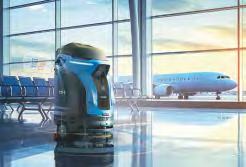
viously driven by the operator. In Perimeter mode, the operator defines only the boundary of the area to be cleaned and the robot then generates route options. Navigation is based on Sensor Data Fusion technology, which combines data from multiple sensors to support accurate space detection, route optimisation and adaptation to obstacles, in line with current safety standards for autonomous cleaning machines. CB-1 is also linked to the Fimap Fleet Management (FFM) system, which collects operational data on performance, consumption and emissions.
At the end of each task, the robot reports whether the operation has followed the planned cleaning programme. Over time, statistics from these reports
provide an overview designed to help identify strengths and areas for improvement. www.fimap.com
FacilityApps is expanding its digital platform, following the integration of M-Bytes’ calculation software and Cleaning Workx’s virtual reality training system in late 2025. The company aims to support a more data-driven approach to managing cleaning operations, combining planning, training, time registration and administration in one environment.
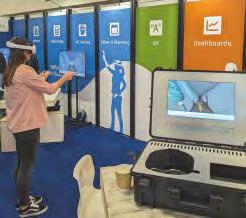
A key development is Live AI Translation within the Cleaning Workx VR training system. Trainers deliver instructions once via the application and the system transcribes, translates and presents these to cleaners in their own language through VR headsets, in audio and text form. This is intended to support multilingual teams and accommodate different learning needs.
Alongside this, FacilityApps is developing AI-supported Business Intelligence, with natural language queries and dashboards designed to generate summaries and insights. Smart
planning tools include collaborative boards and AI route optimisation, while the TimeDNA module focuses on more precise time registration. Further functions include an English-enabled calculation module for crossborder work, electronic invoicing via Peppol, and sensor-based Data-Driven Solutions for usage-based optimisation. www.facilityapps.com
Fewer complaints, higher cleaning standards and happier cleaners – these are some of the benefits of Tork Vision Cleaning, according to Essity.
The data provided by the digital system allows teams to focus effort where it is needed rather than following rigid schedules. Customers using Tork Vision Cleaning report fewer complaints and better washroom standards, says Essity. They also claim their washroom dispensers remain stocked 99 per cent of the time while unnecessary checks are reduced by up to 91 per cent.
Tork Vision Connect allows the software to be integrated into users’ own systems. Facility managers can then access dispenser and footfall data within their own preferred dashboards, eliminating the need for multiple platforms. And an intuitive Tork Vision Cleaning mobile app incorporating icon language and traffic-light cues allows operatives to access the data on the go.
People-counters and connected dispensers provide real-time data on cleaning requirements. Staff can then check remotely via a
computer, tablet or smartphone on which washroom cubicles are particularly busy and which dispensers are running out of essential supplies. This helps them to streamline their cleaning rounds
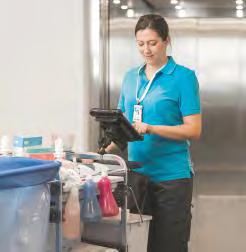
while also avoiding the risk of runouts of soap and paper. And the data collected from the software enables cleaners to anticipate when enhanced cleaning or extra checks might be required.
www.torkglobal.com
LionsBot’s R5 is a compact robotic scrubber designed to operate in confined spaces, using a circular, turn-in-place drive system that allows it to rotate within its own footprint and move through narrow aisles, corridors and dead-end corners. This configuration is intended to reduce reliance on manual intervention to rescue or reposition the machine.
The unit is equipped with an Ultrawide TriBrush system that uses three brushes to clean edge-to-edge across its path, with adjustable brush pressure suitable for routine soiling and more ingrained dirt.
www.lionsbot.com
Kanary Wing is a battery‑pow‑ ered sensor developed by OPHARDT as part of its digital Kanary ecosystem. It is designed to collect data on hygiene infrastructure and support more targeted management of wash‑ room and dispenser operations.
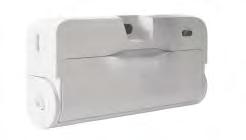
The sensor has two main functions. It can be used with OPHARDT hygiene dispens‑ ers, including those for soap and hand sanitiser, to provide information on fill levels. It also acts as a people counter, record‑ ing visitor numbers in public washrooms in an anonymous way. This data can help opera‑ tors plan cleaning and servicing rounds and manage stocks of paper, soap and other consuma‑ bles more precisely.
In healthcare settings, Kanary Wing can be used alongside smart hand sanitiser dispensers and doorway sensors to track entry and exit movements in patient rooms. By combining this with dispenser usage data, staff can gain a clearer picture of hand hygiene activity in individual rooms or across entire wards. The information is intended to support infection‑prevention planning and ongoing improve‑ ment of hygiene routines.
www.ophardt.com
The Nexaro NR 1700 is an au‑ tonomous robot vacuum cleaner developed for use in commercial environments such as hotels, office complexes, retail spaces and receptions. It uses AI‑based mapping and long‑range laser navigation, together with robust hardware, to carry out system‑ atic cleaning in layouts that include multiple rooms, corridors and changing traffic patterns.
The machine is fully inte‑ grated with the Nexaro HUB, a cloud‑based fleet and process management platform. Through
a central interface, users can de‑ fine and adjust cleaning zones, schedules and no‑go areas in real time. Live dashboards are used to monitor the opera‑ tional status, task progress and performance data of individual robots or entire fleets.
This hardware‑software link is intended to support a data‑driven approach to floor cleaning. Automated reporting functions generate digital clean‑ ing records, which can be used for quality control, compliance checks and transparency with clients. Cellular connectivity is built in, allowing it to operate without depending on local Wi‑Fi.
nexaro.com
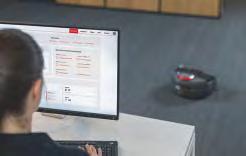
For cleaning businesses operat‑ ing across multiple sites, main‑ taining an accurate overview of staff attendance can be chal‑ lenging when managers are not physically present. To address this, CleanManager offers NFC‑ based site check‑ins. An NFC tag is installed at each location and, on arrival, employees scan the tag using the CleanManager app. The system then records time and place, providing a consistent attendance log.
Because each check‑in is con‑ nected to the planned schedule, work can be linked to the correct site. This allows managers to identify missing check‑ins and unusual patterns, and to provide documentation in response to client enquiries.
CleanManager says this solu‑ tion can reduce the amount of manual checking before payroll, lower the risk of incorrect time entries, give a clearer overview
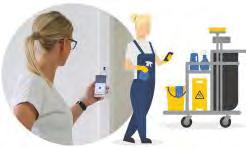
of activity across sites and strengthen documentation and audit trails within its integrated operations platform. cleanmanager.com
Comac offers scrubber dryers that use ReWater, a system designed to reuse cleaning solution and reduce water and detergent consumption. The technology focuses on filtering and recirculating the used solution so that it can be returned to the brushes for further cleaning cycles.
ReWater is available in two configurations: a two‑phase and a four‑phase filtration system, each applied to different machine series. In the two‑ phase version, used solution is collected in the recovery tank. On selected models, it first passes through a basket filter to capture solid particles in the water. The liquid then moves through a mesh filter before being pumped back to the brushes for reuse.
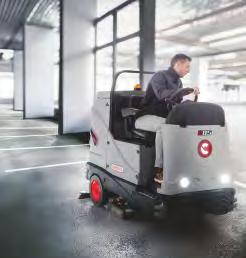
The four‑phase system, currently available on the C85 model, is designed for more detailed filtration. As in the other version, the solution is col‑ lected in the recovery tank and passes through a basket filter to remove solid residues. It then flows through a coalescing filter, where substances with different densities are separated out. The clarified liquid is subsequently treated by a mesh filter and finally collected and recirculated into the scrubbing circuit. comac.it
The Hako Connect app for Android and iOS devices gives users quick and direct access
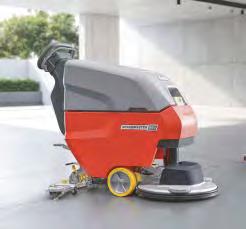
to the operating data of Hako machines. It connects to the machine via Bluetooth, enabling the transfer of operating and status information, including details on usage, charging cycles and any malfunctions. This data is presented in a visual format intended to provide a clear overview.
Users can define custom cleaning profiles that automati‑ cally adjust parameters such as speed and water supply, aiming to support more standardised cleaning processes and fewer operator errors. The system also logs operating times and resource consumption, which can be used to compile performance records for clients and to support environmental, social and governance (ESG) and sustainability reporting.
For maintenance, the app allows users to submit service requests with automatically generated machine and location data. Service engineers can then review error logs, battery status and recent activity before attending site, which is intended to reduce response times and support remote diagnosis. An integrated FAQ and documents section provides offline access to technical information. Hako Connect will initially be avail‑ able for the Scrubmaster B35 and B50 models, with plans to extend functionality and com‑ patibility to further machines in the coming months.
www.hako.com


Richard Sykes, SVP and president of services provider ABM UK & Ireland, explains how the UK-US Tech Prosperity Deal places the cleaning and FM sector at the heart of performance, resilience and compliance in the growing digital economy.
THE UK–US TECH PROSPERITY DEAL announced late last year promises to pour billions into new data-centre infrastructure, strengthening transatlantic collaboration across artificial intelligence. Designed to accelerate breakthroughs in healthcare, cut energy costs and support national security, it will also trigger one of the most intense phases of data-centre construction the UK has ever seen.
For the facilities management (FM) industry - particularly those with specialist cleaning expertise - this represents a defining moment. Every new data centre must operate in an environment of nearsurgical precision, where even microscopic dust or debris can compromise airflow, contaminate equipment and trigger costly downtime. Cleaning, therefore, is not a peripheral service; it is the foundation of performance, resilience and compliance in the digital economy.
This surge in data-driven infrastructure creates both opportunity and complexity. Data centres demand a level of cleanliness, technical understanding, and operational discipline unlike any other built environment. Providers with deep expertise in critical cleaning, combined with capabilities in energy optimisation and predictive maintenance, will be at the forefront of supporting this next wave of digital growth.
At ABM, we already service more than 4.5 million square feet of data-centre space annually across the UK and Ireland, supporting over 600 client facilities. With more than three decades of experience in
critical environments, we know first-hand that without rigorous cleaning standards and skilled FM teams, the UK’s digital ambitions cannot be sustained.
FMs face intense pressure to cut energy usage and shrink their carbon footprint. The scale of the challenge is enormous –worldwide, the built environment (including buildings, infrastructure and construction) is estimated to generate around 42 per cent of annual global CO₂ emissions. Of that total, about 27 per cent is attributed to the operational energy use of buildings (heating, cooling, lighting etc).
Yet cleaning and maintenance routines are fast emerging as one of the most visible measures of progress. From chemical reduction and water management to circular-waste strategies, cleaning practices are now a frontline test of an organisation’s ESG maturity. Every product, process and piece of equipment used by cleaning teams carries an environmental cost – from the embodied carbon in consumables to the energy drawn by vacuums and scrubber dryers. Measured properly, the cleaning operation can provide some of the easiest wins in emission reduction, resource efficiency and waste diversion.
Clients will no longer be satisfied with standard compliance. They will expect suppliers who can strengthen their own reporting and demonstrate tangible progress against climate targets. Cost and efficiency will matter, but the ultimate deciding factor may be how convincingly partners can reduce the environmental footprint of digital expansion - from the way they clean to how they consume energy.
FMs must demonstrate the ability to implement robust systems to measure and monitor energy and resource use –from smart metres and sub-metres to track electricity, gas, and water, to carbonaccounting tools that quantify emissions by source.
Armed with data, FMs can set clear targets for improvement and benchmark
against industry standards or certifications. Quick wins for clients are possible:
• Upgrading lighting to LED
• Optimising HVAC controls
• Re-evaluating waste strategy
• Installing occupancy sensors
But in critical environments, even cleaning innovations can deliver measurable impact - such as the adoption of lowenergy HEPA-filtration vacuums, microfibre systems that reduce water use, or robotics that maintain consistency while minimising energy draw. Chemical-free cleaning and closed-loop water systems are also gaining traction in data-centre settings, cutting both environmental load and the risk of airborne contamination. Beyond efficiency, FMs should also look at cleaner energy sources: coordinating with sustainability and finance teams to invest in on-site renewables (solar panels, biomass boilers) or procuring green energy that drastically lowers a facility’s carbon intensity. Some data-centre operators, for example, are adopting battery storage and AI-driven energy management; notably, Google famously used DeepMind AI to cut its data-centre cooling energy by up to 40 per cent.
With the Tech Prosperity Deal promising to fund many new data centres, involvement during the construction phase is vital. Air contamination is the sworn enemy of data storage. Microscopic dust and debris can compromise performance and lead to unscheduled downtime - and in this environment, even half an hour offline can result in eye-watering costs.
This is why early FM involvement - and particularly, specialist builders’ and postconstruction cleaning - is essential. These cleans go far beyond what meets the eye: targeting subfloors, overhead voids, highlevel ducting and every surface that could harbour contaminants.
Industry accreditations provide a baseline, but what really matters is technical precision and contamination control. Cleanroom standards and data-centre
protocols require both engineering knowledge and cleaning expertise. A meticulous handover clean reduces risk, safeguards equipment and provides the contamination-free foundation on which resilience depends. For operators, that confidence begins on day one.
Workforce must evolve
The supporting workforce must evolve in parallel. The data-centre sector demands both traditional engineering depth - in areas like high-voltage systems and cooling - and cutting-edge expertise in analytics, cyber-aware maintenance and compliance.
But as environments become more complex, technical cleaning specialists must also upskill. Understanding air filtration, static control and environmental monitoring are no longer optional; they are part of what it means to be a highperforming FM partner in a digital age.
Redundancy planning is another nonnegotiable. Back-up systems, failover processes and fault tolerance must be designed, tested and maintained by FM teams with the specialist knowledge to ensure that no single point of failure, mechanical or environmental, can bring
operations to a halt.
Meeting this demand will require longterm commitment to apprenticeships, retraining and collaboration with technical education providers. This is not just about plugging skills gaps; it is about creating a pipeline of high-quality careers that reinforce FM’s role as an enabler of national competitiveness.
There are already voices suggesting that the AI investment cycle could overheat, with capacity expanding faster than demand. Whether that proves true or not, the lesson for FM is clear: resilience depends on adaptability. Plans must anticipate growth but also allow for reconfiguration and repurposing should market conditions shift.
Fortunately, the expertise and processes developed in data centres can be applied elsewhere. The same disciplines that keep servers online, such as contamination control, environmental stability and resilience planning, are increasingly vital in sectors such as life sciences, healthcare and advanced manufacturing. FM providers who design for scalability and sustainability will retain relevance, whatever the
pace of AI adoption.
The Tech Prosperity Deal may be the trigger, but the real test is whether FM seizes this moment to become a genuine strategic enabler of the digital economy. Reliability, sustainability and cleanliness are converging into a single expectation, and FM is the thread that binds them.
Historically, FM has operated in the background, keeping buildings safe, clean and functional. In the era of AI and data, it is stepping decisively into the foreground. Clients no longer want contractors; they want collaborators who align with their ESG strategies, reduce operational risks and unlock long-term efficiency.
At ABM, our nationwide reach and track record of more than 100,000 successfully delivered projects in live and critical environments give us a unique perspective on what it takes to succeed. Our experience demonstrates that FM’s role is far more than maintenance. It is precision, protection and performance in equal measure.
The opportunity for FM is immense. Those who embrace innovation, invest in people and embed sustainability at their core will help shape Europe’s digital future.
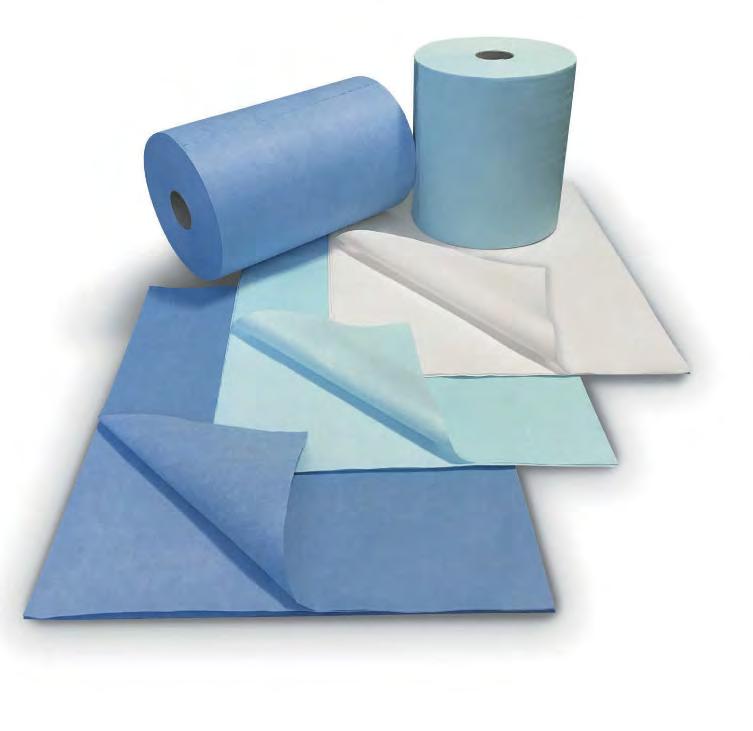
Have a coffee at the bar, take a seat in our cinema, and discover the technology that’s redefining floor cleaning.
Experience how DRYFT enables you toclean 100% of your floor with up to 50% time savings, while our team walks you through the innovation that makes it possible. Join us for live product demonstrations and see the future of cleaning in action.






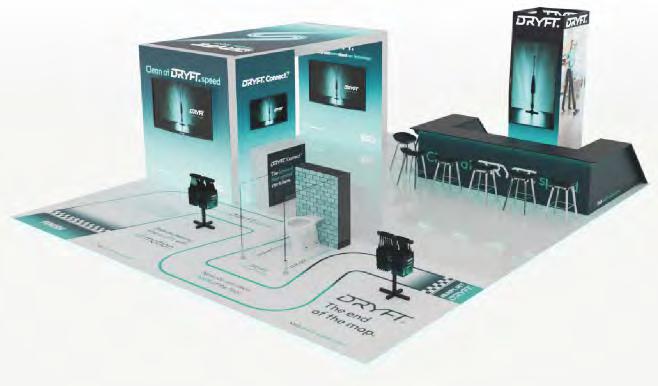
Scan to vote for the world’s first Scrubber Dryer
Scan to the S-Motion
What’s new for at Interclean 2026?






For mobile cleaning teams, keep equipment safe, organised and protected, making transport between sites easier, more efficient and always ready for the next job.
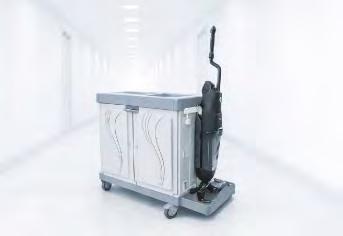
DRYFT Trolley Integration solutions let you securely mount the S-Motion Scrubber Dryer to your cleaning trolley - ready to deploy, easy to access, and built for speed and efficiency.


The future of fleet control starts here. Our powerful, new fleet management platform delivers live tracking,intelligent usage data, and advanced service diagnostics. Make sure you preview the prototype at Interclean 2026.





New Micro-Fibre Cleaning Pads with integrated scrubbing stripsbuilt for healthcare. Designed for high-temperature disinfection, ideal for hospital wards, patient rooms, and prep areas.























Reduce your cleaning time by 50% with 4200rpm and














Weighs only 7.3kg / 16lbs. Transport easily between cleaning areas.

Scrub and dry around toilets in seconds with limitless cleaning ability.


Rapid spill response Powerful suction leaves surfaces clean, dry and safe in seconds.



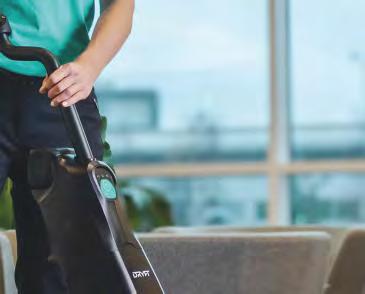


profile
DRYFT effortlessly reaches beneath partitions as low as 5cm.


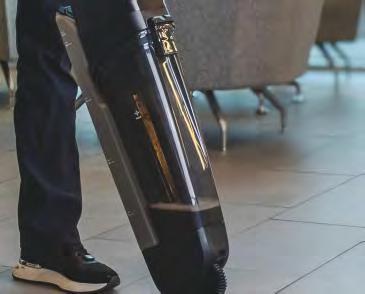
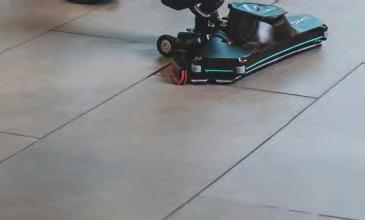
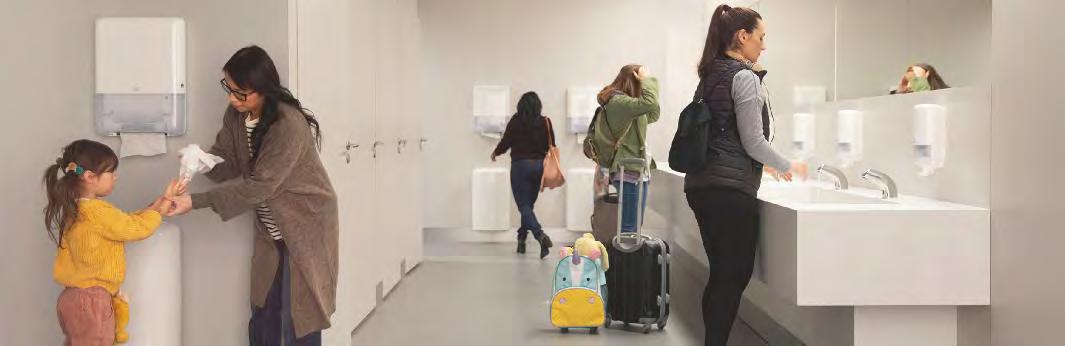
Using the washroom should be a simple and straightforward act for everyone. Yet the latest survey by Tork manufacturer Essity reveals one in two people are likely to face barriers to hygiene in public facilities. Essity corporate communications director Jenny Turner looks at the results of the 2025 Tork Insight Survey and considers how washrooms could be improved to make hygiene more inclusive.
cognitive condition were actually wheelchair-users. This means the majority of conditions that have an impact on washroom accessibility are invisible to others.
A total of 11,500 washroom users from the US, UK, Germany, France, Mexico, Canada, Australia, Spain, Sweden, Netherlands and Poland were questioned about washroom hygiene and cleanliness in the survey. A further 1,000 cleaning staff members were then polled about the difficulties they face at work.
A third of respondents from the general public who reported a physical or cognitive issue had a skin condition such as eczema or an allergy, while 29 per cent suffered from general anxiety. Other issues included visual or hearing impairment and a sensitivity to light, noise or odours.
Meeting expectations
WHEN WE TALK ABOUT ‘washroom accessibility’, many of us assume the term will mainly relate to wheelchair users. However, it is important to recognise the fact that around 95 per cent of people with cognitive or physical conditions do not use a wheelchair. In fact, 54 per cent or respondents to the Tork survey reported experiencing some difficulty when using a public washroom - and many of these challenges are invisible to others.
Issues such as skin conditions, chronic pain and incontinence are among the factors that can make using a washroom difficult or stressful, according to the 2025 Tork Insight Survey. And temporary conditions such as a broken leg, fractured arm, a sprain or pregnancy may limit mobility, balance or reach which could make standard facilities more difficult to navigate.
Other respondents mentioned paruresis, or shy bladder syndrome; having a catheter or an ostomy bag fitted, harbouring general hygiene concerns or simply experiencing a sense of discomfort when using a small, shared space that failed to meet all the user’s needs.
The study also revealed that while three-quarters of us expect the public washrooms we use to deliver at least a moderate level of hygiene and cleanliness, fewer than a third of facilities always meet our expectations.
Top barriers include an unhygienic appearance, an unpleasant smell and runouts of soap, toilet paper or hand towels.
Of importance to businesses and facilities is the fact many of us are prepared to take action when we feel unhappy with our washroom experience. A total of 28 per cent of respondents said they would spend less time in a facility that had a poor washroom while 16 per cent said they would avoid revisiting altogether. And while 11 per cent would warn their friends not to visit and seven per cent would leave a bad review on social media, a mere 17 per cent of us would actually raise our complaint with the facility in question.
This means many washroom concerns are going unreported and people are suffering in silence – or voting with their feet.
tions. However, they are less likely to raise concerns about larger, more systemic problems such as poor ventilation or a lack of privacy. As a result, large numbers of businesses may remain unaware of the bigger issues - and these are the ones most likely to have a negative impact on their bottom line.
Unhappy customers who decide not to return and who leave bad reviews could damage the reputation of a business and lead to a loss of revenue.
The study looked in particular at the workplace and considered the possible impacts on staff when hygiene expectations are not met. A total of 28 per cent of respondents said they would spend less time in a workplace they perceived to be unhygienic while 23 per cent would avoid eating or drinking there. And 15 per cent would be inclined to work from home more frequently while five per cent were prepared to change their job rather than work in an unclean environment. So poor workplace hygiene could lead to a less productive workforce, lower levels of productivity and a higher turnover of staff.
In order to keep washroom users on side it is important for businesses and offices to understand what people actually want from the washrooms they use. What are the factors that they consider to be ‘must-haves’ - for usability, for comfort and for their general wellbeing?
One key ‘must-have’ as far as accessibility was concerned - mentioned by 67 per cent of respondents - was that toilet paper should be housed in a dispenser from which it was easy to extract the tissue. More than 60 per cent wanted to see sufficient space to manoeuvre a wheelchair while 57 per cent called for non-slip flooring.
Paper hand towels topped the list of comfort and hygiene ‘must-haves’, with 57 per cent of respondents calling for them. Touchless technology and hand sanitisers at the entrances and exits of washrooms
In fact, only five per cent of the people who claimed to suffer from a physical or Continued page 36
According to the study, many people are prepared to point out small, easily fixable washroom issues – such as a lack of soap or toilet tissue - because these are immediate inconveniences with obvious solu-

Inclusive hygiene isn’t just the right thing to do for people, it’s the right thing to do for business. That’s why Tork is on a mission to make washroom hygiene more inclusive, from dermatologically tested soaps to dispensers accredited by the Swedish Rheumatism Association. Because everyone benefits when more people can use washrooms with ease.
Discover how Tork can make your washroom hygiene more inclusive. torkglobal.com

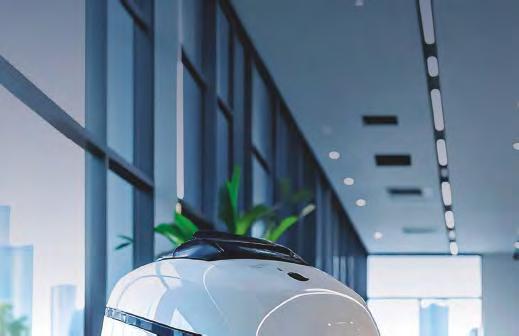

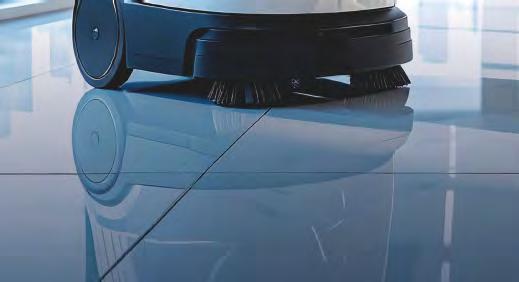

Removing hygiene barriers (continued from page 34)
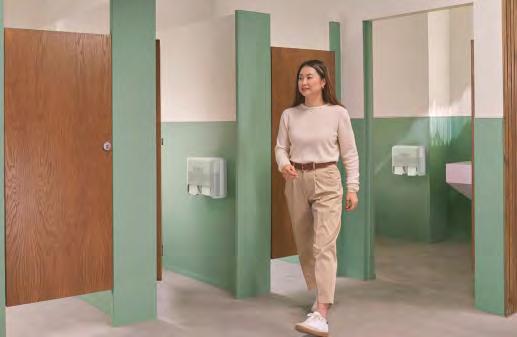
were mentioned by 45 per cent of people while other priorities included spacious and private cubicles with enclosed bins to dispose of sanitary and incontinence pads.
When asked about the impact of improving the washrooms of hospitality venues such as restaurants and bars, 59 per cent of respondents said they would gain a more positive image of the venue in question. A total of 38 per cent said they would be more willing to return, while 37 per cent claimed they would be more likely to recommend it to others - highlighting the importance of providing washrooms that address a wider range of needs.
The second part of the Tork Insight Survey revealed nearly 90 per cent of cleaning operatives experience some form of physical challenge as a result of their work as a cleaner. Back pain was reported by 45 per cent of respondents while 37 per cent mentioned muscle fatigue. And 24 per cent said the physical health challenges they experienced meant they delivered a lower quality of work, with 20 per cent needing time off for sick leave.
Four out of every five cleaners also experienced mental challenges as a result of their job, with 46 per cent saying they felt stressed. One in four said the impact caused through mental health challenges led to a lower quality of work with 24 per cent saying they had considered leaving their job.
Challenges they claim to face in the workplace include a lack of respect or recognition for their role; a lack of training and inadequate personal protective equipment. Others cited language barriers and poorly-placed cleaning supplies and equipment.
And when asked what positive attributes of a workplace environment would enhance their satisfaction levels the top responses were a supportive leadership, a welcoming culture, equal treatment of all employees and cleaning supplies that were properly placed and easily accessible.
According to respondents, the physical health issues they experienced had a number of effects including fatigue, reduced motivation and a difficulty in performing some tasks effectively. Mental health challenges led to lower morale, tensions with colleagues and a tendency to avoid certain tasks.
It is clear from this study that large numbers of us face challenges when using a washroom. And the same applies to the people who service them, because washroom-cleaning makes up a large part of the average cleaner’s work.
However, it appears that many of the issues encountered may be easily addressed to improve the needs of users and cleaning teams in these busy areas. It is therefore crucial that washroom managers encourage feedback on the challenges faced – both by visitors and by cleaners - because this will help them to enhance their facilities, improve their cleaning quality, boost their reputation and retain their staff.
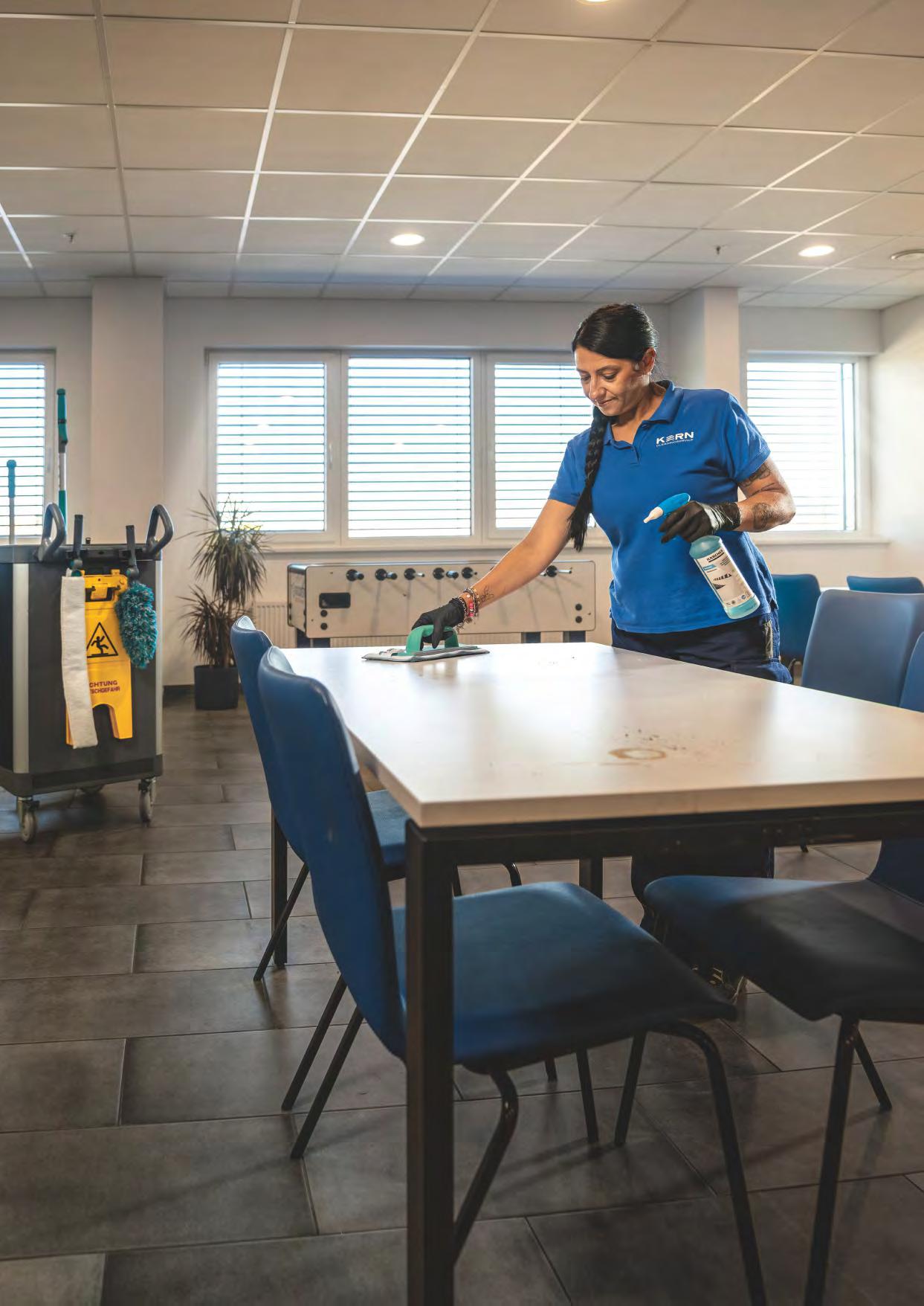









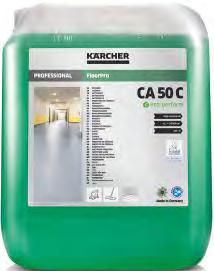



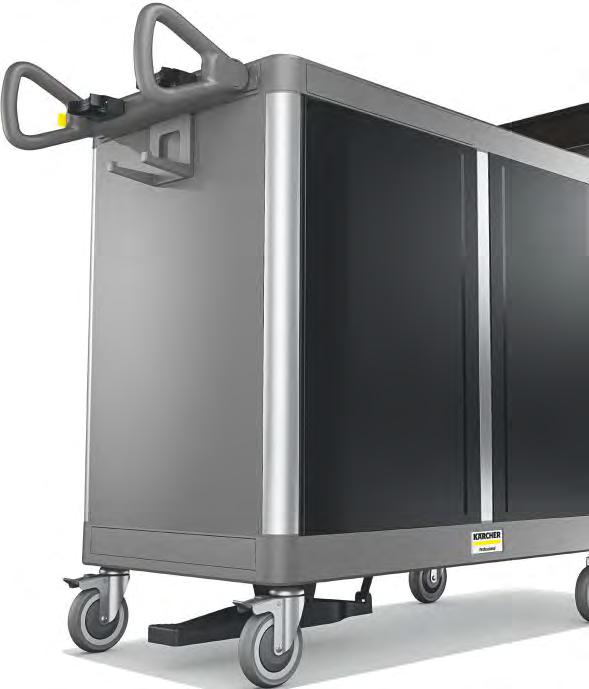

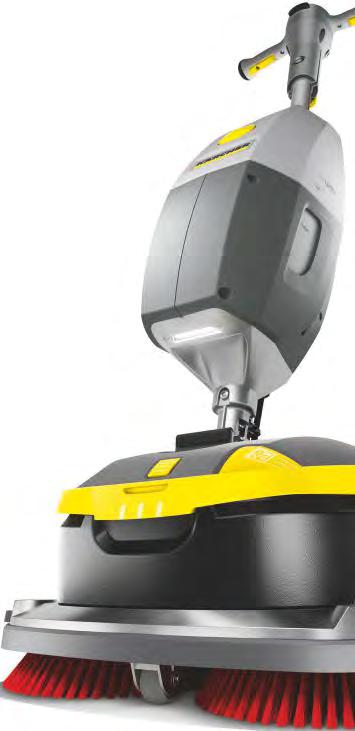


A growing number of companies are adopting chemical-free cleaning systems in a bid to become more sustainable. But are such systems really more sustainable than chemical-based ones? And are there any cases where only a chemical will do, asks Ann Laffeaty?
Chemical solutions are evolving rapidly through green chemistry, says McLeish. “We are increasingly replacing synthetic ingredients with nature-based alternatives and removing harmful substances such as phosphates and microplastics,” she said. “And dosing systems help to prevent any skin contact with concentrates while also eliminating the risk of overdosing, protecting the operator and the environment.”
truly sustainable while many synthetic ingredients can be safe, effective and responsibly produced,” she said.
Low toxicity chemicals that are responsibly sourced and biodegradable can be sustainable - particularly if their life cycle is well managed, she says. And she believes there are definitely some cleaning tasks for which only a chemical will do.
‘CHEMICAL-FREE CLEANING’ has become an industry catchphrase as manufacturers increasingly strive to offer solutions with minimal environmental impact. Systems that involve the use of steam, deionised water or microfibre are being thrust into the spotlight as suppliers and customers embrace more sustainable practices.
But are chemical-free systems always more sustainable? And are there any situations in which only a chemical will do?
Kärcher’s product manager for detergents Verena McLeish believes the trend towards chemical-free cleaning is justified. “It is a core part of our own corporate identity,” she said. “However, while chemical-free solutions are ideal for some applications the negative perception of chemical cleaning is often based on outdated formulations.”
Many of today’s solutions are highly sustainable, according to McLeish. “When a product is designed to be easily separable in wastewater and is based on sustainable raw materials, it becomes an environmentally low-impact component of a cleaning process,” she said.
“Highly concentrated agents can also significantly reduce transport weight and packaging waste compared with readyto-use products. And sustainability can be achieved through the use of nature-based ingredients, too.”
Kärcher offers highly concentrated products as well as biodegradable cleaning agents containing organic ingredients.
There are definitely some instances where only a chemical will do, according to McLeish. “Specialised agents are required in the food industry to reliably break down complex fat and protein structures, for example,” she said. “Certified disinfectants are also essential in healthcare to ensure the reliable inactivation of pathogens.
“And during deep cleaning applications or when removing heavy mineral deposits such as limescale and uric stone in high-traffic sanitary areas, the chemical reaction of a specialised agent is necessary to achieve a hygienic result within an economically feasible timeframe.”
Chemicals ensure that cleaning results are not just visually satisfactory, but also microbiologically safe, she says. “While steam or microfibre are excellent for many tasks, they may not always reach the required depth of disinfection or soil suspension needed in high-risk areas,” says McLeish. “There is also an increased risk of cross-contamination or the development of biofilms when the appropriate cleaning agents are not used. Furthermore, specialised chemicals provide a protective layer that prevents rapid re-soiling - something that water alone cannot provide.”
Kärcher’s eco!perform range is claimed to reduce the time and physical effort required for heavy-duty cleaning while also ensuring a low environmental impact.
Cleanology’s environmental, social and governance director Kate Lovell agrees that the current movement towards low chemical solutions is generally justified. “However, not all natural ingredients are
“Healthcare environments often require disinfectants that meet strict clinical standards for eliminating pathogens,” she said. “The priority here will be to use the safest, most sustainable and lowest impact chemical options available.”
Cleanology mainly uses chemical free cleaning products but opts for biotechnology and bio enzyme products where appropriate. The company also uses pre-portioned biological cleaning sachets which are said to cut down on plastic waste while also preventing overdosing.
Water and microfibre
Chemical solutions are evolving to be safer both for the environment and for the operator, says Lovell. “Lower toxicity, bio based and biodegradable ingredients such as plant derived surfactants and lactic acid are increasingly being used, while manufacturers are also focusing on responsible sourcing and life cycle analysis to reduce environmental impact while maintaining effectiveness,” she said.
Product specialist for Robert Scott Steve Courtney says it is becoming a clear point of differentiation for cleaning contractors to offer chemical-free cleaning services when bidding for work. “We believe this stance to be justified where there are solutions proven to be as effective as traditional chemicals, but without the disadvantages associated with toxic ingredients, harsh pH levels or carbon-intensive manufacturing processes,” he said.
For most general cleaning applications he says there is an argument for using water and microfibre alone. “This method has been shown to remove up to 99.9 per cent of germs,” he said. “However, it requires strict discipline to prevent cross-
contamination and relies on a frequent, well-managed laundry process which is not always in place or consistently followed. This means using a cleaner and sanitiser is often a safer, more effective and more practical solution for many operators.”
He concedes that heavy-duty degreasers or descalers are likely to be needed for deep cleaning applications. “But for daily cleaning or sanitising there are now highly effective alternatives that perform as well as or better than traditional chemicals across most environments including washrooms, healthcare settings and food preparation areas,” he adds.
Examine claims
Any sustainability claims need to be carefully examined, according to Courtney. “It is important to look at the full lifecycle: the ingredients used, how the solution is manufactured, its packaging and containers, how it is transported and stored and what waste is produced,” he said. “Sustainability should be assessed holisticallynot based on a single ‘green’ attribute that represents only part of the picture.”
Robert Scott offers the Toucan Eco biocleaning system which enables users to produce a multi-surface disinfectant cleaner onsite using only water, salt and electrolysis. It is described as safe and environmentally-responsible and is claimed to kill up to 99.999 per cent of germs.
Health and safety manager at SBFM
Ged Sykes says it is important to recognise ‘chemical-free’ as being a marketing term rather than a scientific one. “Even when cleaning relies on a physical action the underlying process - chemistry - is still in effect because every substance is chemical in nature,” he said.
“What clients really seek are lower-hazard, more sustainable formulations that reduce environmental and occupational risk while still delivering effective cleaning performance. So it is less about eliminating chemicals altogether and more about using them intelligently, balancing safety, performance and environmental impact.”
Well-formulated chemical solutions often represent the most practical and effective option, according to Sykes. “Our priority is to substitute or eliminate higher hazard products wherever safer alternatives achieve the same outcome,” he said.
He believes there is no single definition of sustainability in cleaning. “It depends not only on formulation but on how products are packaged, delivered and used,” he said. “Concentrated products have long been part of professional cleaning, traditionally supplied in larger containers and diluted using devices such as pelican
pumps. But many cleaning chemicals now offer super concentrated solutions, often paired with controlled dosing or integrated dilution systems that reduce handling, limit exposure and improve consistency.”
Sachet-based delivery models can also significantly cut plastic packaging waste and transport weight without compromising operational performance, he adds. “They also improve dosing accuracy which results in a reduction in waste and unnecessary exposure.”
SBFM routinely reviews the safety data and regulatory classification of any new product before introducing it. Where higher hazard substances remain necessary, operator exposure is managed through training, safe systems of work and appropriate controls, says Sykes.
Mechanical cleaning methods using microfibre or purified water can be highly effective for many routine hygiene tasks, he said. “However without proper laundering and rotation, there is an increased risk of redistributing microorganisms over time via a cloth rather than consistently reducing them,” he said.
“In clinical environments and other areas where a defined level of disinfection must be demonstrated, chemical disinfectants will deliver measurable microbial control in line with the hygiene requirements.”
And he adds it is important to note that ‘chemical-free’ does not necessarily mean ‘risk-free’. “Occupational dermatitis remains one of the most common issues in cleaning, and frequent wet work alone can damage the skin barrier even in the absence of hazardous substances,” he points out.
Focus on evidence-based
2Pure Products director James Law agrees that the direction of travel towards safer and more sustainable cleaning is a positive one. “However, the industry needs to move beyond simplistic labels and focus on evidence-based outcomes,” he adds. “People should consider the toxicity profile, biodegradability, carbon footprint, in-use performance and total environmental impact of any system they use.”
He believes the term ‘chemical-free’ to be misleading. “From a scientific perspective, everything we use in cleaning is a chemical including water, enzymes and plant extracts,” he said. “Many products positioned as ‘chemical-free’, ‘plant-based’ or ‘bio’ still rely on synthetic or formulated chemicals to deliver performance, stability or shelf life.”
Well-formulated chemical products can be non-hazardous, readily biodegradable and extremely efficient at low concentrations, according to Law. “This helps to
reduce raw material use, packaging, transport emissions and waste,” he said. “And in many cases advanced chemistry allows for better performance, reduced reapplication and a lower overall chemical load entering the environment compared with less effective ‘chemical-free’ alternatives.”
2Pure’s OdorBac Tec4 is said to work more efficiently than traditional formulations even using small quantities of active ingredients. It carries no hazard warnings and is claimed to be biodegradable and capable of removing odours throughout an entire building.
Chemicals are essential in many professional environments, says Law. “Cleaning in healthcare is not just about visual cleanliness but also about infection prevention, and relying solely on mechanical action or non-chemical alternatives in these environments introduces an unacceptable level of risk,” he said.
“Chemicals are also necessary in washrooms where the removal of limescale, uric scale and biofilm requires chemistry that no amount of water, wiping or socalled chemical-free products will reliably achieve. And food preparation areas depend on chemistry for safety and compliance while deep cleaning and restorative applications in commercial buildings become labour-intensive, inconsistent and often ineffective without the use of chemicals.”
Solutions such as water, microfibre and steam rely primarily on physical removal rather than neutralisation or breaking down the contamination, says Law. “They can move soils and microorganisms around but they do not reliably destroy them, prevent regrowth or deal with the underlying causes such as odour or scale,” he adds.
He says the assumption that bio, enzyme and bacteria-based solutions are automatically more sustainable than chemical ones is flawed. “Their sustainability depends on formulation, dose rate, lifecycle assessment, cleaning context and any additives in their formulation,” he said.
“And biological cleaning products are not generally regulated to the same depth as chemical products when it comes to hazard classification, environmental fate and downstream impact.
“If the industry is serious about sustainability and safety, biological and chemical products should be judged by the same standards: transparency, performance, human health impact, environmental fate and real-world outcomes - not by whether the active ingredient happens to be biological or chemical in nature.”

A new, food contact compliant, power-assisted cleaning solution from Vikan designed to reduce manual scrubbing and improve cleaning efficiency. Be among the first to experience HyDrive with a hands-on demo at Interclean. Visit us at stand 07.105





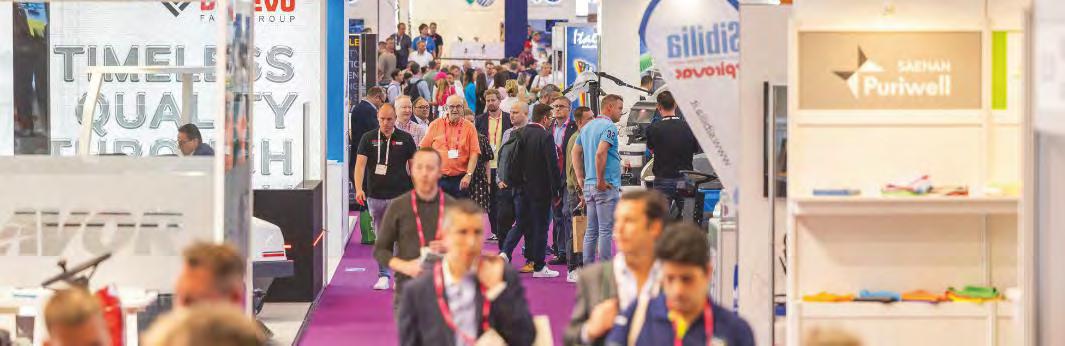
INTERCLEAN AMSTERDAM - Europe’s largest exhibition for the professional cleaning sector - is about to open its doors again. And the organisers are promising a treasure trove of opportunities for cleaning professionals to learn, network and propel their business forward.
Robert Stelling, director for Interclean, is giving visitors a warm welcome. “As we gather once again in the heart of Amsterdam, I’m proud to welcome professionals, innovators, thought leaders and industry experts from all over the world to what has become the leading platform shaping the future of our sector.
“The world around us continues to change rapidly. In 2026, global challenges such as the rapid development of AI and automation technology, workforce shortages, increasing demands for sustainability, evolving requirements for human skills, and the need for resilient public health systems all remain firmly at the top of our collective agenda. Cleaning and hygiene now play a central role in creating safe, healthy, and thriving environments, and our industry has responded with creativity, dedication, and remarkable innovation.
“This year’s Interclean Amsterdam showcases exactly that.
“Walk the full Interclean circle across all halls, where you will discover the latest developments in robotics and automation, advancements in AI-powered facility management, and new standards in sustainable materials, circular solutions, and low-impact processes. You will also see how data-driven cleaning, sensor technologies, and smart dosing systems can bring more efficiency and hygiene for your business operations. As you walk around, keep your eyes open and be surprised by innovators from around the world, and discover the latest products, solutions, and ideas that are driving real change.
“That real change comes to life in our new Experience Centres: designed to provide hands-on learning, live
demonstrations, and direct interaction with the technologies shaping tomorrow. Each Experience Centre has a unique focus: Hospitality in Hall 8, Robotics in Hall 5, Healthcare in Hall 12, and the Outdoor Cleaning Experience outside Hall 1.
“Our programme on four different stages, featuring inspiring keynotes, expert panels, workshops, and futurefocused dialogues to help you navigate the trends influencing your organisation and the wider industry. We are especially proud of our new partnership with the European Cleaning & Hygiene Awards, whose winners will share their practices every afternoon on the Main Stage.
“Above all, Interclean Amsterdam is about connection. It’s about bringing our global community together to collaborate, learn, do business, and celebrate the impact our industry has on people’s lives every day. If you are visiting on Wednesday or Tuesday, be sure to visit the Interclean Social Club at the Main Stage to celebrate the industry together, with live music and drinks!
“As we mark this 30th edition, we honour the progress made and look ahead with optimism to the challenges and opportunities ahead. Thank you for being part of Interclean Amsterdam 2026. I wish you an inspiring and memorable visit.”
The Main Stage: Located in the heart of Interclean in Hall 13, the Main Stage is the central hub for inspiration and connection. It hosts a full daily programme of impactful sessions, including the Show Opening, keynote address, and the Amsterdam Innovation Award Ceremony. Throughout the week, partners such as ISSA, European Cleaning Journal and Clean Hospitals deliver knowledge sessions. Visitors can also experience highlights such as the AI Tournament Finale, Feel Good Friday, the Dutch Cleaner of the Year Election Party, and the Social Club - daily networking moments to close the day.
Continued page 44
Europe’s largest exhibition for the professional cleaning sector - Interclean Amsterdam - takes place from April 14-17 in the Netherlands.
In this comprehensive guide to the event, ECJ looks at what visitors can look forward to at this year’s show. We take a look at the special events, the content programme and the Amsterdam Innovation Award, then there’s a preview of the new products being launched.
ECJ is official media partner of the Interclean Amsterdam exhibition.
Come and be inspired (continued from page 43)
ISSA Knowledge Sessions: (Tuesday–Thursday) A focused programme examining developments across hospitality and leisure, workplace and commercial environments, and healthcare and longterm care, with sessions addressing guest experience, smart facilities and cleaning for health and safety.
ECHA Best Practices: (TuesdayThursday) Award-winning organisations from the European Cleaning & Hygiene Awards share insights through moderated discussions on innovation and sustainability, workforce development, and collaboration across the sector.
Clean Hospitals: (Tuesday) What makes healthcare cleaning so different? Healthcare cleaning isn’t simply cleaning at a higher standard, it is a discipline of its own, operating in an environment where every decision carries risk, every surface matters, and every action directly contributes to patient safety. Through two focused sessions, specialists from Clean Hospitals take you inside the realities of clinical environments, reshaping assumptions and showing why healthcare cleaning is a discipline on its own.
Dedicated stages: Across the halls, you’ll find three dedicated stages, each centred around the future of cleaning: Data & Technology (Hall 5), Sustainability (Hall 7), and Health & Hygiene (Hall 12). These stages are where the industry comes to life, with exhibitors sharing their expertise through real world insights, product presentations, and the latest innovations in their field. If you want to stay ahead of industry trends, these stages are an essential stop during your visit.
Experience Centres
Four experience centres showcasing innovation in action, each designed to provide hands-on insight into the latest products, technologies and solutions. Healthcare experience (Hall 12): Making the Invisible Visible, in collaboration with the British Institute of Cleaning Science (BICSc) and Clean Hospitals. This experience focuses on infection prevention, hygiene standards and cleaning solutions for healthcare and longterm care environments. A patient room is deliberately contaminated, both visibly and invisibly. Using a spray that lights up under blacklight, visitors clean the room themselves before seeing how much contamination remains.
Robot experience (Hall 5): A dedicated zone for autonomous cleaning robots, featuring live demonstrations Hospitality experience (Hall 8): The Hospitality Experience Centre brings cleaning and hygiene to life in a realistic
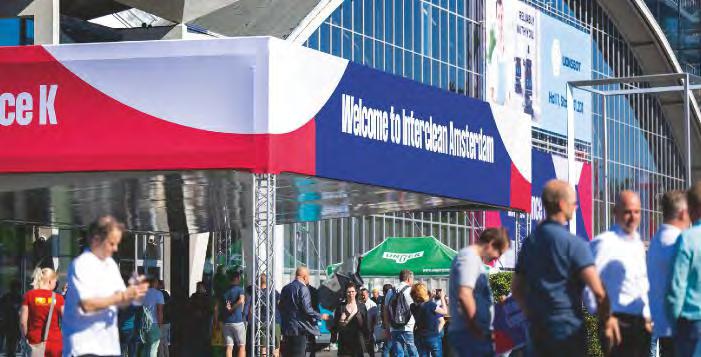
hospitality setting. By recreating multiple hospitality environments, it demonstrates how professional cleaning solutions enhance efficiency, safety, and the guest experience, making hygiene a visible part of hospitality excellence. In collaboration with BICSc, professional cleaning techniques and best-practice methods are demonstrated across a range of settings,including a playground, gym, kitchen, dining room, hotel room and washroom.
Outdoor cleaning experience (Outside Entrance K): Live outdoor demonstrations, including professional (window-cleaning) showcases.
events
Laundry & Textile Care Programme: (Tuesday-Friday) A full four-day GBPA conference in Room E102.
African Cleaning Forum: (Wednesday) Calling all African attendees to join the first African Cleaning Forum, a platform to connect countries, exchange insights, hear Dr. Baagi Mmereki (PhD) on environmental waste management, and network during a reception featuring matchmaking for distributors and manufacturers. Room D203 at 14:00 hrs.
AI Tournament and Finale: (Wednesday) Experience the AI Tournament throughout the day in Hall 8, where student teams tackle everyday cleaning challenges and reimagine how these tasks could be solved using AI in 2030, presenting bold, future focused concepts for smarter cleaning during the Final on the Main Stage from 16.00 - 17.00 hrs.
Chinese Breakfast: (Wednesday) From 08:30–10:00 in Room D201 (Hall 13) come to the Chinese Breakfast, to find out about Interclean Shanghai 2026, from October 28-30.
Global Association Meeting: (Wednesday) Join cleaning and facility management associations from around the world for a meeting on relevance,
collaboration, and impact, on the Main Stage from 10:30-12:00 hrs. Explore how associations can add value.
World Federation of Building Service Contractors (WFBSC): (Thursday) Meet the global WFBSC network, on the Main Stage, and explore perspectives from service providers from around the globe from 10:30 - 11:15 hrs.
Pest Control Panel: (Thursday) In cooperation with Italian National Association of Pest Control Companies. Hear best practices, explore the latest trends, solutions and insights in pest control - one of this year’s expanded focus areas in Hall 8. Panel will be on the Main Stage in Hall 13 from 11:30-12:15 hrs.
Feel Good Friday: (Friday) – A full-day Dutch-language programme celebrating the value of cleaning, ending with a big Vrijmibo in Hall 13.
Zero Waste Foundation: (Friday) 11:0014:00. Get practical inspiration on zerowaste thinking and circularity for cleaning operations. And join presentations from HVA students with their best solutions for future zero waste solutions. You can find them all day in Hall 7 on the Sustainability Stage.
Interclean Amsterdam 2026 features 11 dedicated segments designed to |enable visitors to easily find out where exhibitors can be located. They are: Data & Digital; Detergents & Disinfection; Equipment; Healthcare Cleaning; High Pressure; Laundry & Textile Care; Machines; Pest Control; Steam Cleaning; Washroom; Window Cleaning.
Interclean Amsterdam will take place from April 14-17 at RAI Amsterdam, the Netherlands. To register for your ticket visit the website: www.intercleanshow. com/amsterdam/register
ECJ is the official media partner of Interclean Amsterdam. Come and visit us on stand 01.100 at the show.

Reinigungstechnik
Cleaning Technology
Kommunaltechnik
Municipal Technology
Wasserstrahltechnik
Waterjet Technology
Scrubmaster B20 i & B75 i

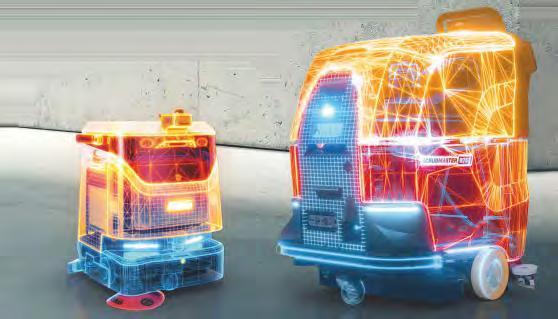


Scrubmaster B35 & B50
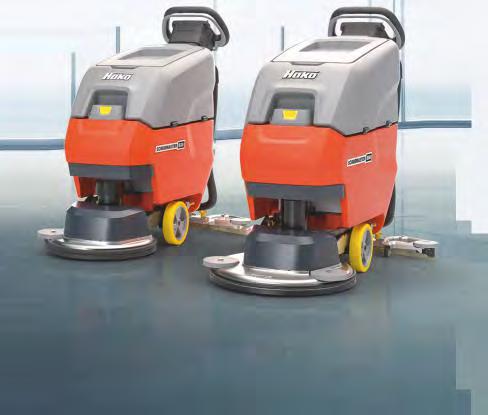
From 14 to 17 April, discover how Robotics x Walk-behind is redefining professional cleaning. Experience the world premiere of our new 20-litre cleaning robot with docking station, live robotics in action and the new generation of walk-behind machines. Meet our experts, try out the latest technologies for yourself and explore smart solutions for greater efficiency and transparency in your cleaning fleet.


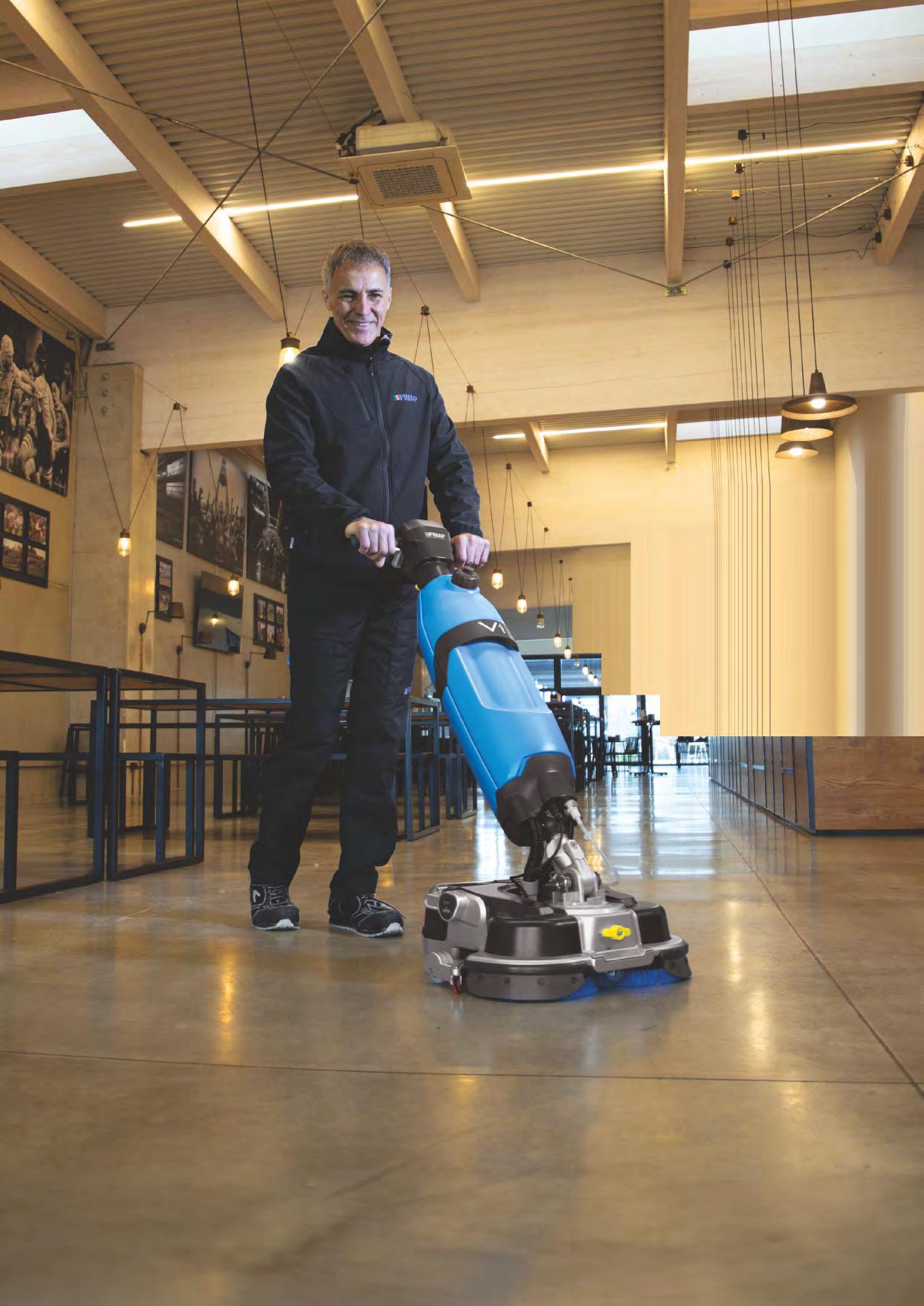
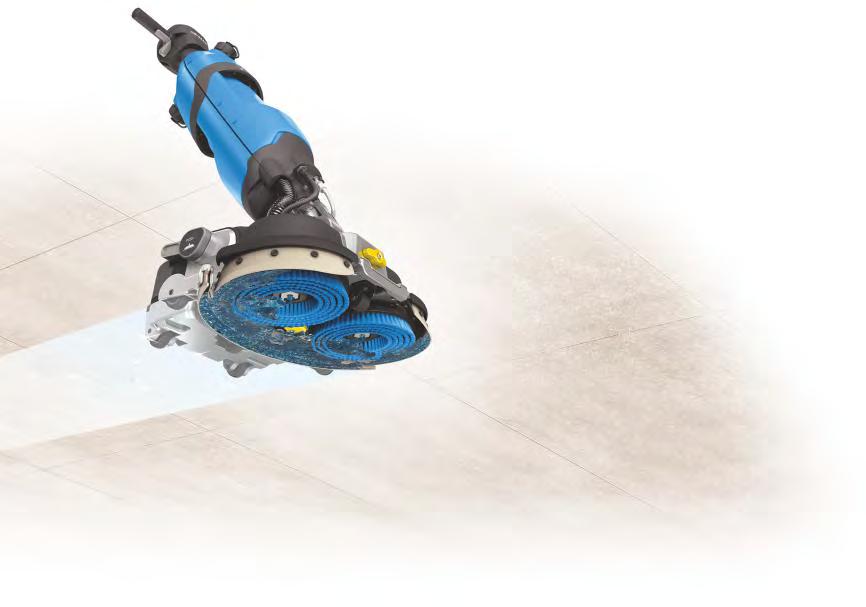
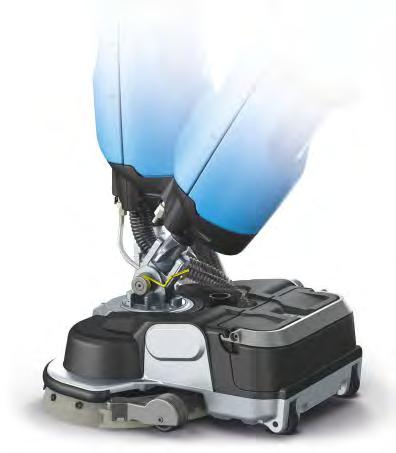
The 2026 Amsterdam Innovation Awards will be presented on the first day of Interclean Amsterdam. In each of the four categories there will be a winner, with one of them then being named the overall winner of the Amsterdam Innovation Award by the professional jury. The winners of the Cleaners’ Choice and the Visitors’ Choice awards will also be announced.
Essity: Tork Hygiene for All
The Tork dispenser development process has earned Design for All EN17161 certification, proving they are accessible for people of all capabilities and life stages. This ensures as many people as possible can use washrooms comfortably. Combined with certifications such as EU Ecolabels, skin-friendly soap formulas and easy to handle packaging.
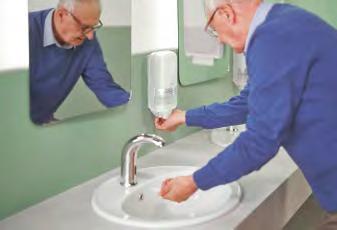
Thanks to a production process that is unique in the sector, Lucart transforms what is no longer needed into a resource, recycling all the components of beverage cartons. Cellulose fibres are used to produce Fiberpack, the raw material from which the EcoNatural complete range of tissue paper is made. The
compound of polyethylene and aluminium is used to produce Al.Pe., which in turn is used to manufacture FLOW dispensers.
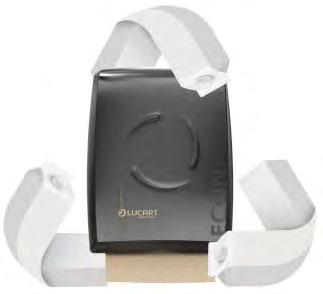
Renova for Renova TextilPapier
Renova TextilPapier is made with a blend of recycled fabrics and other natural fibres, providing a balance between structure and softness, turning everyday shirts and denim into something greater than just paper. The range already embraces both toilet paper and kitchen rolls. Dermatologically and gynecologically tested.
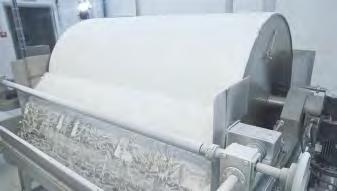
FacilityApps: Virtual Reality Training for Cleaners
This immersive VR training solution replaces time-consuming, location-based classroom training with a realistic, multilingual digital learning environment. Cleaners learn through visual, step-bystep scenarios that support
illiteracy, ADHD and concentration challenges. Delivered as a plugand-play solution, it reduces training time, removes language barriers and standardises quality.
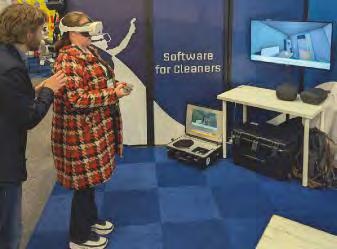
Kärcher: KIRA B
Safety-certified, fully autonomous scrubber dryer for large surfaces, featuring a proprietary OS and IEC 63327 certification for public traffic. With a 200-litre water capacity and high productivity, it addresses labour shortages through highperformance automation. Optional docking station for full autonomy and high IoT compatibility.
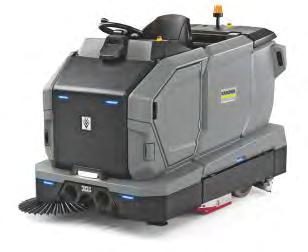
The T1 is an AI toilet cleaning robot that automates washroom hygiene. Utilising smart selfmapping, it navigates layouts to pick up litter and scrub surfaces with dual-arm manipulators. An onboard system sanitises tools after every task to eliminate cross-contamination. Swappable battery shared with the R5 for




ore hygienic, efficient, and sustainable THE
OCS made the switch to Vileda Professional’s r-MicroOne Premium CombiSpeed Pro single-use microfiber mops. This step-change in technology solved multiple challenges at once:






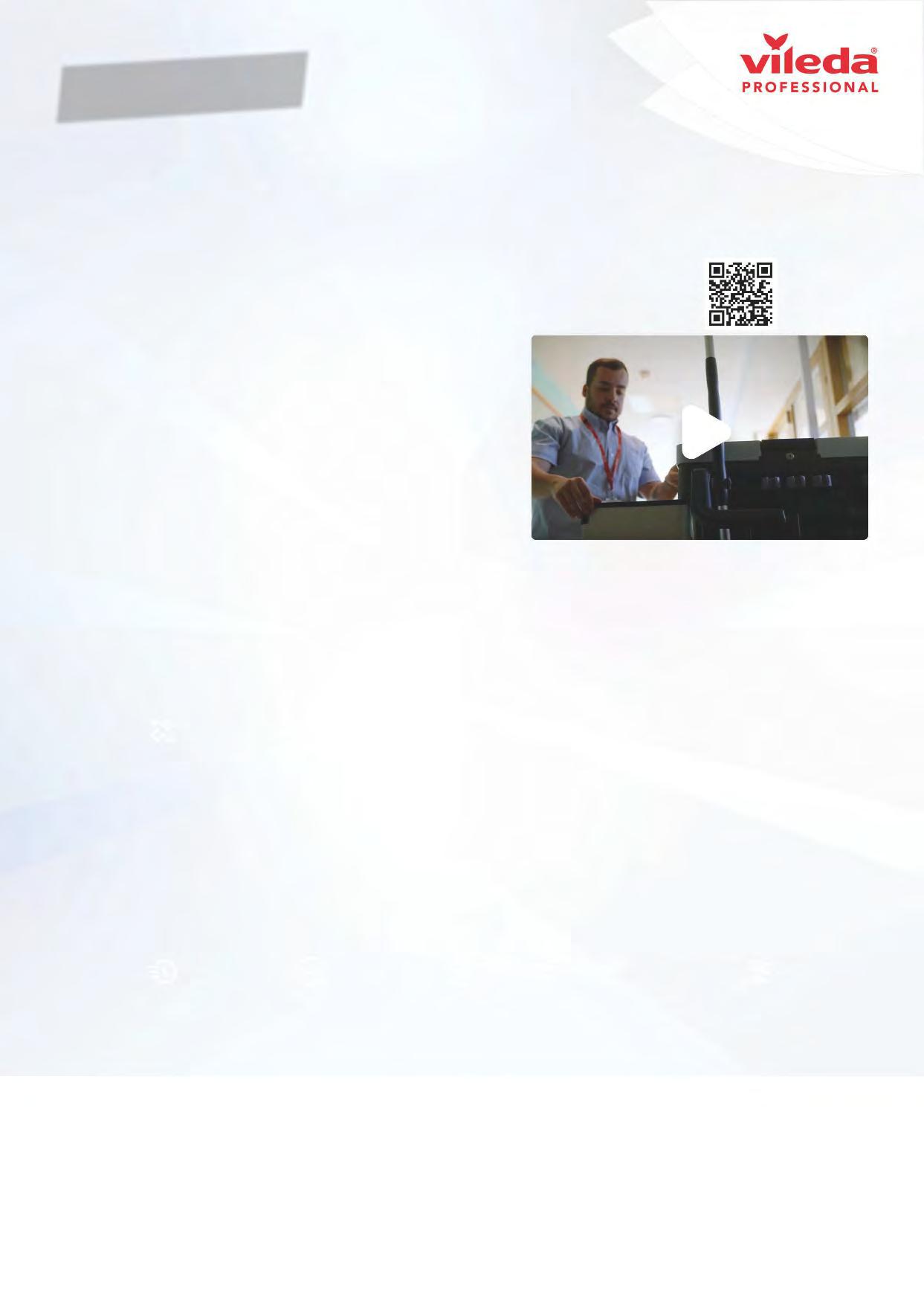








By investing in Vileda Professional, OCS and CNWL achieved: wer plastic and 25% of staff hours reallocated











24/7 operation and there’s also an intuitive app.
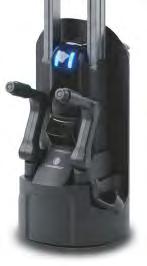
JVD: Novven 3
The Novven 3, a next-generation cabinet for PPE care, combines optimised decontamination and disinfection, accelerated drying, and user-friendly ergonomics. Exposed daily to extreme conditions, your workwear is protected thanks to the patented Smart Air Care technology, which eliminates bacteria, viruses and odours.
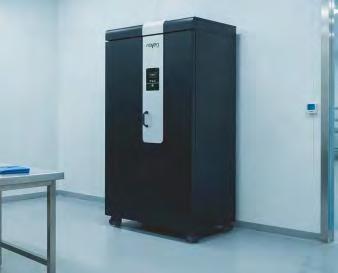
OPHARDT Hygiene: PRAESIDIO
Fuel Cell
The PRAESIDIO is a touchfree disinfectant dispenser with an integrated fuel cell. There is no need to regularly replace the batteries, which saves resources in the long term. A small proportion of the alcohol-based hand sanitiser is used to convert it into electrical energy. The reaction of oxygen from the ambient air and the isopropanol produces the energy required to drive the dispenser.
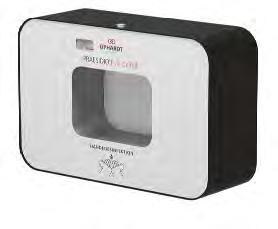
Vileda Professional: TraXero
Wheel Cleaner
Wheels and wheeled equipment are overlooked sources of crosscontamination. Moving from less clean environments to more hygienic spaces, wheels bring contamination with them, and they are difficult to clean. TraXero delivers a reduction in bioburden with a push through the tracks of material transfer equipment.
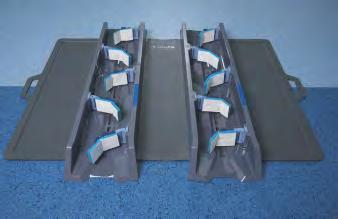
DRYFT World for DRYFT
S-Motion Scrubber Dryer.
Introducing DRYFT, claimed to be a breakthrough in floor cleaning technology. With its patented ultra-low profile head shape and 4200 rpm scrubbing technology, DRYFT delivers 100 per cent floor cleaning coverage. Discover how the super-fast S-Motion of DRYFT can double cleaning productivity.
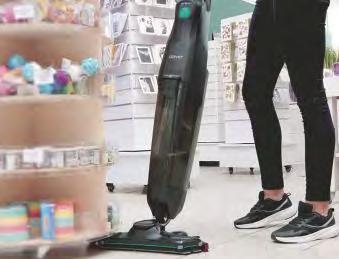
i-Team Global: i-suit Pro i-suit Pro is a new ergonomic support system for professional window cleaners using telescopic poles. It uses a low, front-mounted attachment point near the chest combined with elastic support. This follows the natural cleaning motion, reducing strain on shoulders, arms and lower back. The system is intuitive, requires no extensive training, and transfers load to the torso.
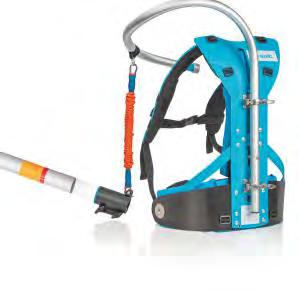
HydroPower Nano is a powerfree pure water filter system for professional window cleaning. It uses advanced nano-membrane technology for 50 per cent higher water output than standard pumpless RO systems, while reducing resin consumption and operating costs. Adjustable water flow and low investment.
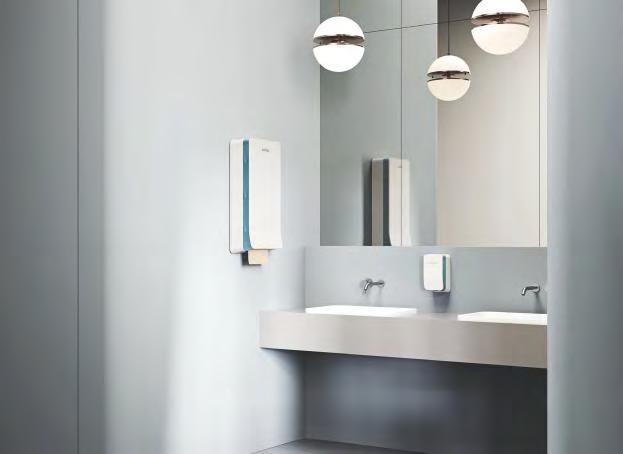

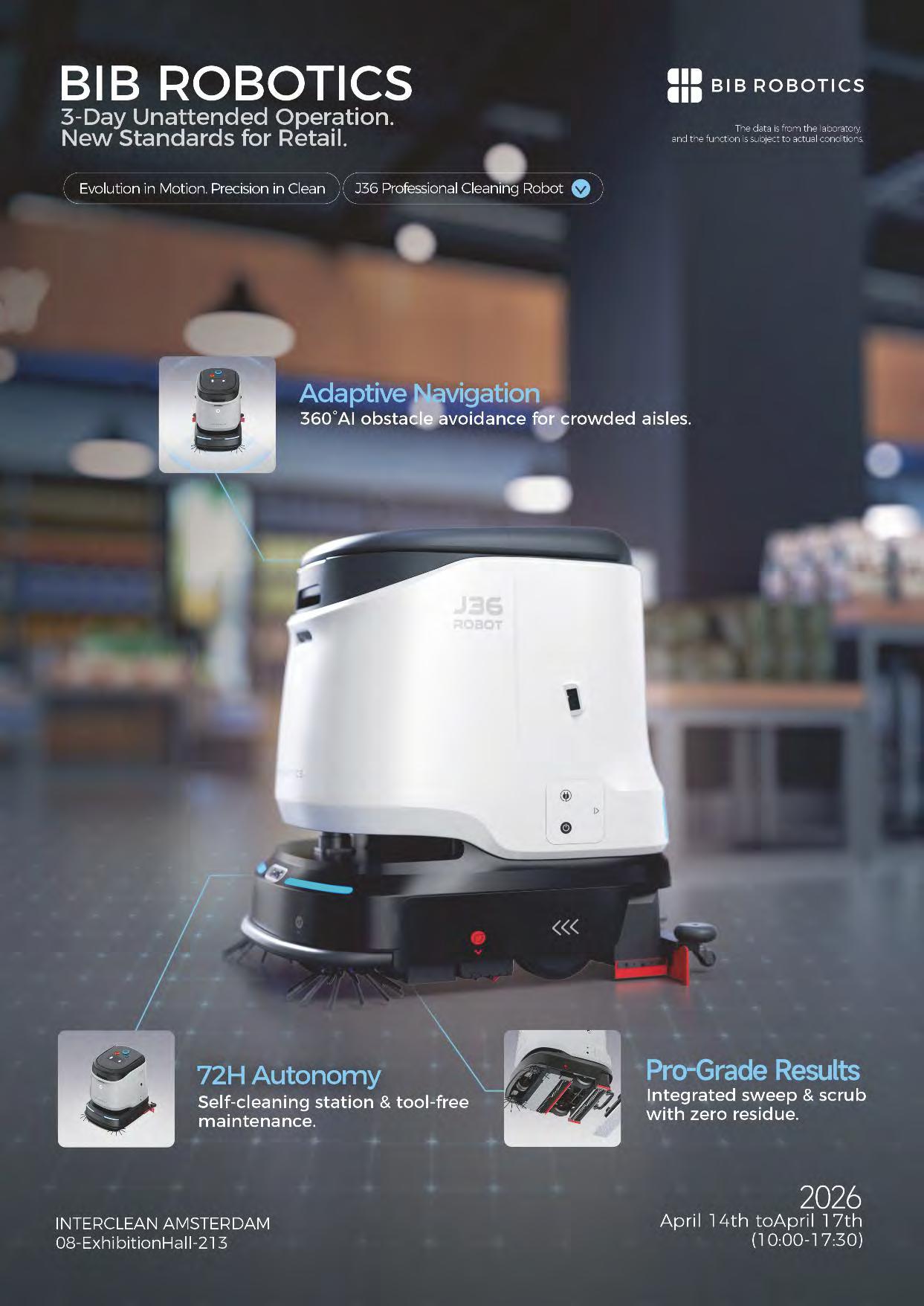
Stand 01.135
Kärcher will be showing its two flagship solutions: the autonomous KIRA BR 200 and the ultra-manoeuvrable K-Mop 46.
The KIRA BR 200 scrubber dryer robot works effectively even on textured and uneven floors. It combines pre-sweeping and scrubbing in a single step using advanced roller brush technology and the 360 degree multi-sensor system ensures safe navigation in complex environments. For maximum autonomy, an optional docking station automates water management and charging. When paired with the new FloorPro Natural Industrial Cleaner RM 69N, the KIRA BR 200 provides an effective solution for industrial environments. Although it operates fully autonomously it can also be used as a manual ride-on machine.
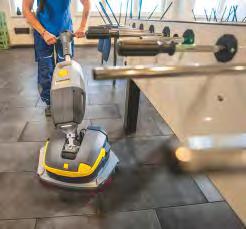
For areas where manual expertise is required the new walk-behind K-Mop 46 is designed for use in cluttered and confined spaces. This features a height-adjustable handle and a brush propulsion system for reduced physical strain. Its compact design requires up to 71 per cent less storage space than conventional scrubber dryers, says Kärcher. It is designed for use with the company’s labelfree floor cleaner CA 50C. Both machines feature Kärcher’s colour-coding for intuitive identification of user tasks and the K-Mop 46 offers a languagefree interface to allow staff to achieve good results with practically no familiarisation period. www.karcher.com
Stand 01.311
Filmop will be celebrating the 20th anniversary of its Alpha trolley line.
Trolleys in the range have just been upgraded to enhance operator wellbeing. All products now feature high-smoothness 250 mm wheels and an ergonomic push handle with pushbutton joints for 180 degree adjustment. This is said to allow for a natural posture and effortless handling.
The handle ensures total control even when the trolley is fully loaded or used in tight spaces, says Filmop. The line is described as being modular, durable, ergonomic and sustainable and can be equipped with 120 litre or 150 litre bag holders.
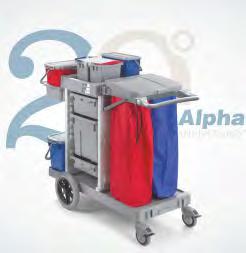
The trolleys feature Plastic Second Life-certified components and the company implements verified carbon offset policies via its Carbon Footprint Systematic Approach. This supports reforestation and climate protection projects to balance residual emissions.
Filmop will also be showcasing its new Shine Line of window cleaning products designed to ensure high performance while also reducing physical strain on the operator. www.filmop.com
Stand 01.511
Headlining on the DRYFT stand is DRYFT Connect, the company’s new telematics fleet management platform.
This uses GPRS tracking, intelligent usage data and advanced service diagnostics to reduce machine downtime and maxim-
ise performance. Visitors will be invited to preview the prototype of DRYFT Connect and influence its final form before its launch later this year.
Also debuting is the DRYFT Case, a rugged, heavy-duty solution for transporting the Dryft S-Motion scrubber dryer, plus a new microfibre cleaning
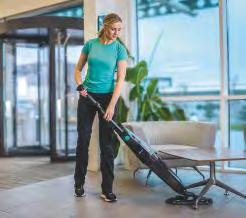
pad for healthcare environments. Designed for use in hospital wards, patient rooms and prep areas, this colour-coded system features integrated scrubbing strips designed for high-temperature disinfection and infection control.
The company will also be showcasing DRYFT Trolley Integration solutions. These incorporate secure mounting to ensure that the machine is always easy to access and ready to deploy.
www.dryft-world.com
Stand 01.123
Numatic will be showing four new cordless cleaning machines.
The company’s range now includes the 220NX 100 NuClean Compact - a super-lightweight backpack - and the Quick Q2 cordless vacuum.
Also on show will be the 440NX Flex which is said to be 25 per cent lighter to handle than other models. This helps to boost productivity and reduce
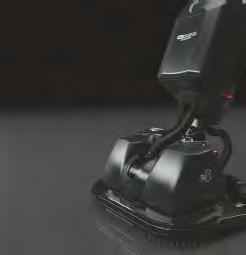
labour costs.
Under the tagline Built For More, the stand will feature The Xtra-Matic janitorial trolley system which offers flexible and customisable storage. Also on show will be mopping solutions with new features including antimicrobial plastics and lightweight soft-close doors. numatic.com
01.507
Riello Cleaning Machines is making its debut at Interclean, a rebranding of the wellestablished Ghibli & Wirbel machine ranges.
Rexa 50 walk-behind scrubber dryers are designed for use in medium-sized environments. Available in four models, the machines can be configured to various cleaning widths and fitted with either gel or lithium batteries. Their productivity ranges from 2,120 to 3,050 square metres per hour.
Rexa 50 has an ergonomic handle and a practical Touch System with integrated double sensor for ease of operation and precise machine control.
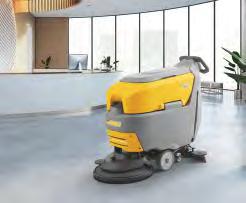
Other features include a Silent Mode function for cleaning in sensitive environments and the ECO System, which optimises consumption without compromising cleaning efficiency. A robust new dry vacuum cleaner will be available in both cable and battery-operated versions. Battery models use the CAS universal system that allows batteries, chargers and machines to be combined quickly and easily for maximum flexibility. An eco-friendly version made with recycled plastic is also available.
www.ghibli.com
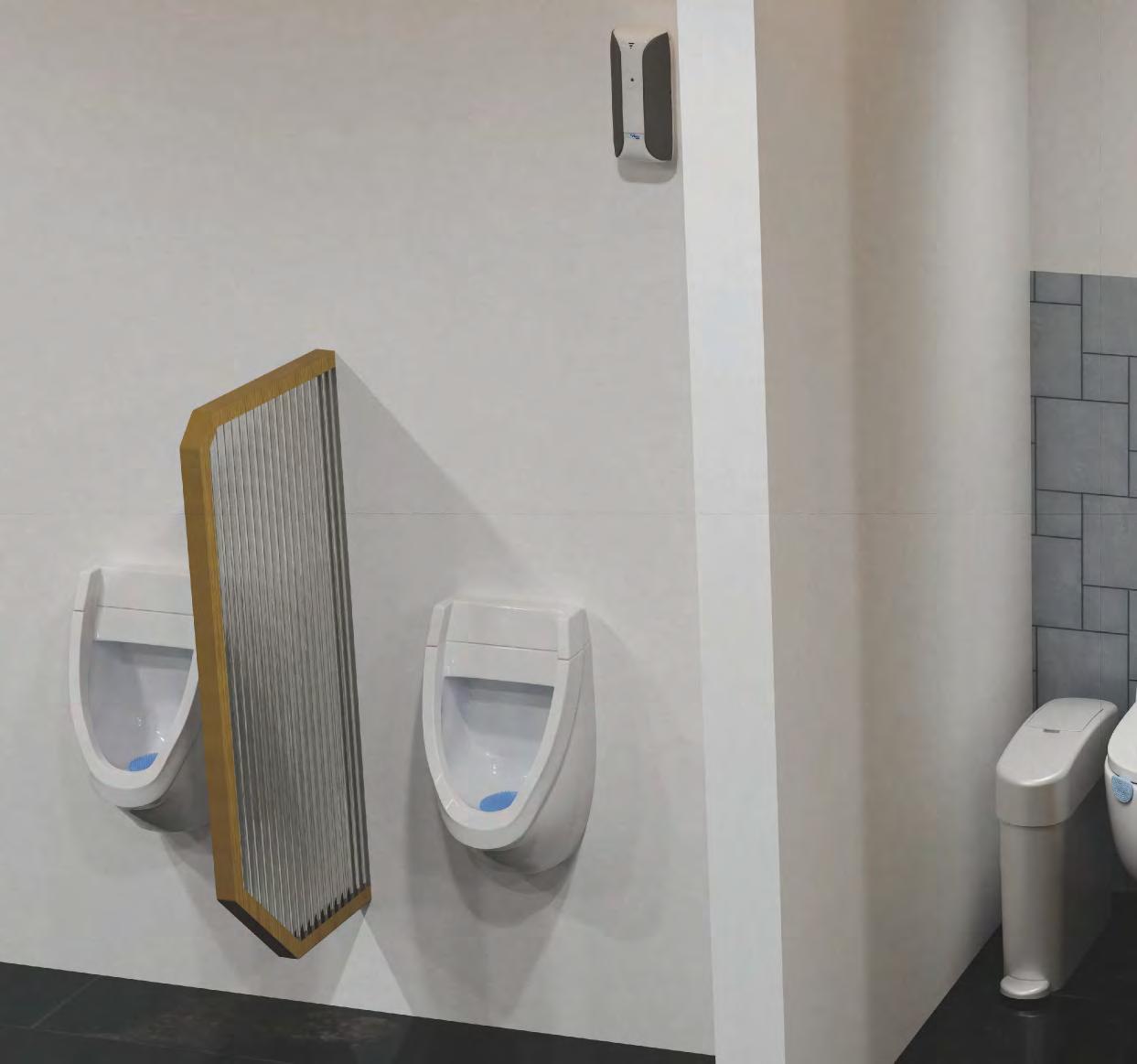

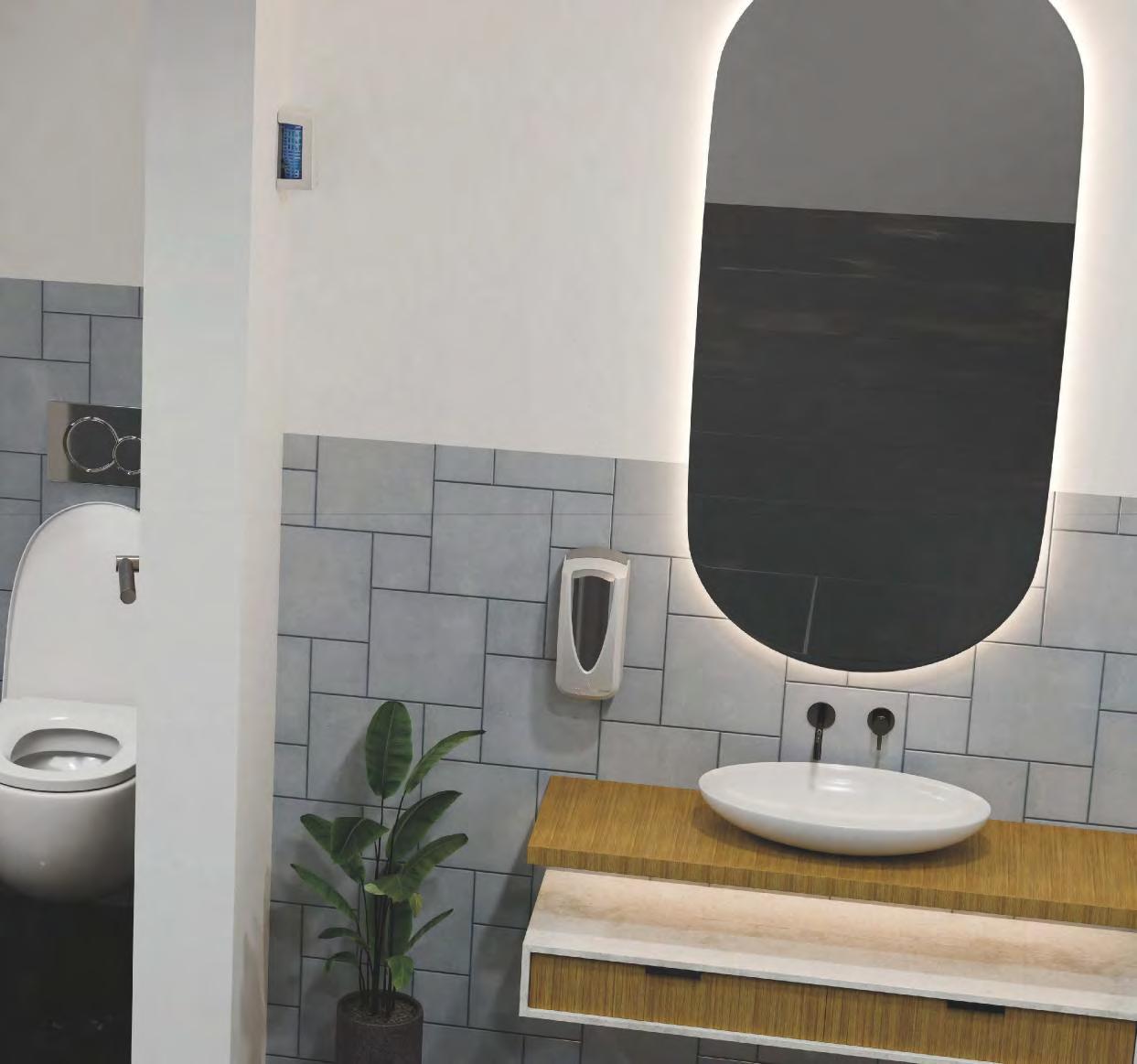
Clean, hygienic washrooms require more than individual products. They require a completely harmonized approach.
Vectair delivers integrated solutions, from aircare and urinal screens to handcare and hygiene products, helping facilities create more welcoming washroom experiences with flexible 30- and 60-day programs.
Stand 07.116
Designed for intelligent floor cleaning in commercial environments is the Nexaro NR 1700 autonomous robot vacuum cleaner. Together with the company’s central software platform the Nexaro HUB, this is designed to make cleaning more efficient, more transparent and ready for the future.
The Nexaro HUB is designed to plan, control and monitor robot vacuum cleaning fleets where a number of robots are
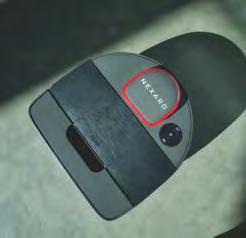
working in different areas. The system provides documentation and transparent reporting for a clear overview with maximum efficiency and minimal administrative effort.
A combination of AI technology and precise laser navigation allow the Nexaro NR 1700 robot to navigate complex and large-scale environments independently. The machine has a robust design and the HEPA filter improves air quality while the machine’s high suction performance ensures good results on both carpets and hard floors, according to Nexaro.
www.nexaro.com
Stand 10.207
The Absolute and Compact paper ranges from Celtex have both been designed to save space. Absolute paper products, which include toilet paper and medical rolls, have been developed to free
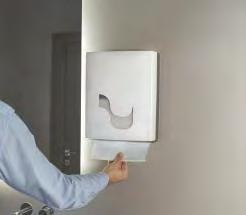
up to 50 per cent of space while maintaining a high performance. Their ultra-compact format translates into fewer refills and a reduced workload for service staff. Associated handling and storage benefits across the logistics chain also generate savings in terms of time and resources.
Up to 120 per cent more Compact hand towels can be accommodated on to a pallet compared with traditional solutions, reducing the number of shipments required and lowering transport costs. This contributes to reduced CO₂ emissions throughout the whole supply chain, says Celtex. The compact format also results
in lower warehouse volumes, more efficient deliveries and easier product handling.
www.celtex.it
Stand 06.101
ASFEL will be coordinating the participation of more than 50 Spanish and Portuguese cleaning companies at the show.
The Spanish Association of Cleaning and Hygiene Manufacturers supports companies throughout their internationalisation process. The body helps them to simplify systems, reduce costs and minimise risks as they expand globally and provides guidance on how to grow and consolidate in new markets. www.asfel.com

Stand 01.323
Sprintus will be displaying the MoviX compact scrubber dryer.
Designed for environments where productivity and cost control are critical, the MoviX is said to clean up to 70 per cent faster than manual mops and up to 30 per cent more efficiently than a conventional scrubber dryer.
Floors are cleaned and dried in a single pass as a result of the 15 kg brush pressure, 350 rpm speed and 200 mbar suction power.
The 360 degree steering joint ensures manoeuvrability in confined areas while noise levels below 60 dB(A) enable daytime
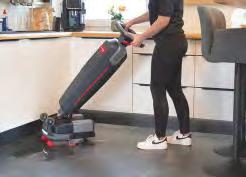

operation. Water consumption is four litres per 400 square metre and runtime is 75 minutes per battery.
www.sprintus.eu
Stand 07.206

Designed to boost productivity is the EZshine Blue #3 Diamond Floor Maintenance Pad. This has been engineered to clean, maintain and restore all types of stone and resilient floors.
Claimed to have a significantly longer lifespan than traditional alternatives, the pad provides a consistent performance while reducing replacement frequency. It removes light scratches and surface imperfections during the routine cleaning of high-traffic facilities, integrating restoration into daily maintenance routines.
This eliminates the need for any extra specialised steps and allows contractors to achieve superior results in less time.
The fact EZshine blue pads can achieve professional-grade results using water alone means their environmental footprint is dramatically reduced, says the company. When surfaces need an extra boost a minimal amount of chemicals may be used to deliver a high-gloss, premium finish. The reduced dependency on detergents is designed to support sustainability goals and enhance cost-efficiency. www.ezshinepad.com
Stand 12.703
Sphere Pro is accelerating its commercial and industrial development across Europe.
Formerly operating under the name Sphere Professional, the company offers waste bags and food packaging products designed to reduce the environmental impact of transport flows.
The company will be introducing its new visual identity and logo at the show.
www.sphere.eu
Visit us on the ECJ stand - 01.100



























































































































































































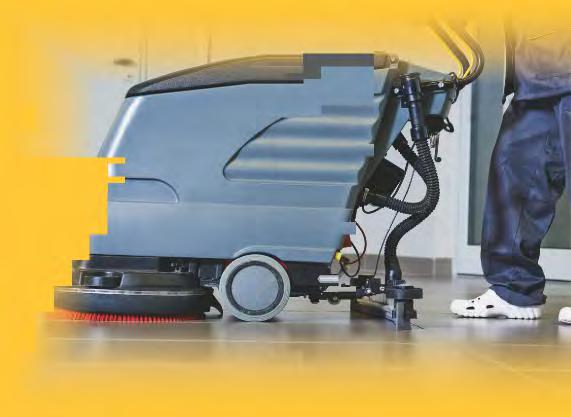





































































Stand 05.212





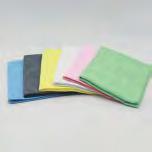

HTS Bio will present its Multiflow And Globalflow probiotic cleaning solutions. Designed to combine performance with environmental responsibility, both formulations contain microorganisms and biosurfactants that are claimed to deliver a higher level of efficiency than conventional petroleum or plant-based surfactants.
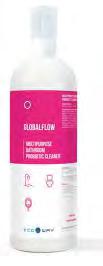
Multiflow is a versatile solution for use on floors and surfaces, making it suitable for daily maintenance routines. Developed for use in sanitary facilities, Globalflow targets organic residues and odour sources.
Ophardt will also be presenting the new SanTRAL Plus feminine hygiene dispenser which features selectable filling options and a lockable stainless steel housing. Three separate compartments for pads and tampons in various sizes provide maximum flexibility.
Also new is the ingo-man go solution for dispensing soap, hand sanitiser and lotion in the Euro bottle format. This has a patented front pump removal system for easy servicing plus a bracket with a height-adjustable drip tray. The face shield is now made from sustainable post-consumer recycled material.
Ophardt will be showing the complete SanTRAL Plus washroom series along with hardware and software innovations.
www.ophardt.com
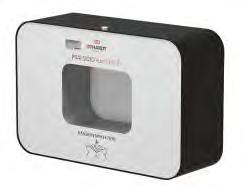

Laboratory tests have demonstrated improvements in cleaning efficiency of 24 per cent after one week of use, claims the company. The beneficial bacteria remain active on treated surfaces for up to eight days, contributing to continuous degradation of organic matter between cleaning cycles.
www.htsbio.com
Stand 10.300
Ophardt Hygiene will be launching what it claims to be the world’s first hand sanitiser dispenser equipped with a fuel cell.
The Praesidio Fuel Cell works by converting a small amount of isopropanol-based disinfectant into electrical energy directly inside the dispenser. This energy powers the touchless mechanism, making the system entirely self-sufficient.
The fact that the product requires no batteries nor any other source of power means maintenance requirements and environmental impact are reduced.
Stand 01.101
Under the tagline ‘Robotics Meets Walk-Behind’ Hako will be showcasing a range of autonomous and manually-operated solutions. New additions to the portfolio are the Scrubmaster B35 and B50 walk-behind scrubber dryers for cleaning medium-sized areas. These are designed to combine an easy operation with a reliable performance while the Scrubmaster B50 offers optional orbital cleaning technology.
Also on show will be a new compact robot plus the autonomous Scrubmaster B75 i which offers fully automated cleaning from its docking station. www.hako.com
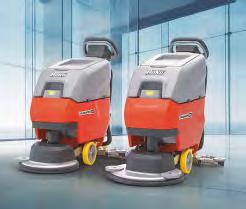
Stand 10. 301

Kimberly-Clark Professional will be showcasing its relaunched WypAll X Series for industrial environments. WypAll X70 cleaning cloths for medium-duty cleaning tasks and WypAll X80 cloths for demanding applications have both been significantly improved, according to the company.
Both products now offer improved absorbency for cleaning up spills more effectively, reducing downtime and minimising hazards. The X80 cloths are almost 10 per cent larger than previous versions and come in both jumbo roll and pop-up box formats.
Kimberly-Clark will also be highlighting updates to its ICON dispenser line. High-capacity dispensers in the range offer controlled dispensing to save time and cut costs while also reducing waste.
The stand will take the theme: Better Care for a Better World and the company’s complete portfolio of washroom and wiping brands will be on display.
www.kcprofessional.co.uk
Stand 02.211
Lindhaus will be launching the new LW35 Flexy scrubber dryer with a flexible washing head.
This allows the machine to clean in areas that are difficult to reach with traditional scrubber dryers such as under furniture, around obstacles and along edges.
The Flexy joint enables the body frame to rotate freely by 90 degrees on both sides for cleaning under tables, chairs and low furniture.
The energy-efficient machine is powered by a 36 V-6 Ah lithiumion battery which has a runtime of up to 45 minutes and can be fully recharged in around 90 minutes.
The single 300 watt motor combined with a patented vacuum system that integrates front and rear squeegee allows the LW35 Flexy to clean and dry in both directions in the same way as a dual-suction scrubber dryer.
The machine’s 150 mm base and low water consumption make it particularly suitable for environments where speed, quietness and hygiene are crucial such as in offices, hotels, wellness centres and schools.
www.lindhaus.com
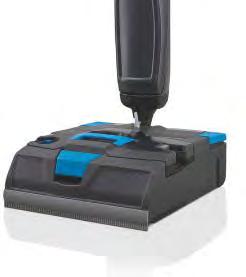
Saier will be demonstrating the MPX Dosing system at the show.
The MPX All-In-One is said to offer high levels of accuracy and full remote process transparency while MPX Multiplexer Technology features ceramic discs for a leak-free, longlasting operation.
New diaphragm pump technology will also be on display. The MPX Titan and Smart Plus systems deliver dosing volumes of up to three litres per minute for large commercial laundries. Remote access with no monthly fees is available via devices.
The low maintenance system has been stress-tested for up to 10 years of operation. Also on display will be MPX Solo, Duo and Smart.
www.saier.eu
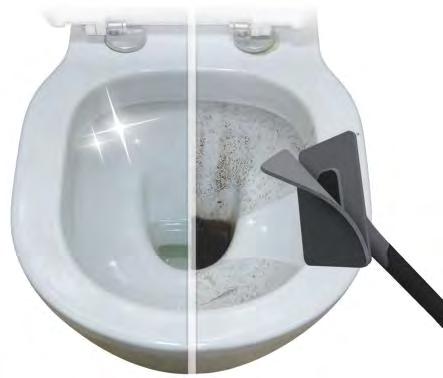








The dishmachine rental programme that adapts to the unique needs of your commercial kitchen.
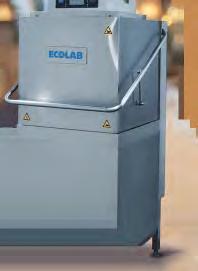


Small but does it all. Our compact 2-in-1 undercounter detergent and rinse solution delivers spotless results - first time, every time.









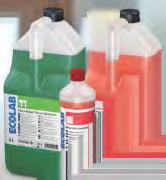
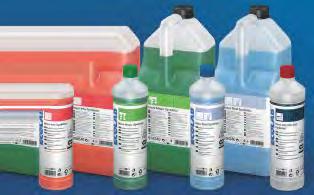


A small tablet cleaning program that delivers a big clean for your guests, and a clear, uncomplicated routine for your staff. Just fill, drop, dissolve and use.



Unleashes 50 billion micro-organisms per litre to fight odours long after cleaning.



Stand 12.201,12.401
New from Rubbermaid is the CirculAir 90 passive air freshening system with a 90-day fragrance output. It uses natural air flow to move fragrance around a room. Engineered for recyclability, the product has a low environmental footprint and is the next evolution of the company’s TCell system.
CirculAir 90 reduces resource usage by 36 per cent compared with TCell and emits 11 per cent fewer greenhouse gases, says Rubbermaid. The fact that both the dispenser and refills are battery-free means the amount of raw materials used during production is reduced.
Every component of the scented refill is made from the same ma-
terial which means it can be put straight into the plastic recycling bin without dismantling it.
Compatible with existing TCell dispensers, refills are available in six scents with varying intensities to match any facility’s needs.
These are: Blue Splash, Citrus Mix, Crystal Breeze, Fruit Crush, Polar Mist and Relaxing Spa.
Also new is a range of bins for smaller spaces and front-ofhouse environments including compact options for discreet placement and higher-capacity, dual-stream bins for segregation.
The pedal-operated containers have been designed to maximise recycling opportunities even in smaller or high-visibility spaces such as offices, front-of-house
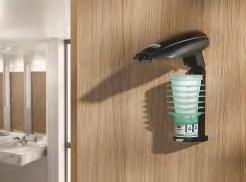
areas and washrooms. The range includes the Stainless Steel Round Pedal Wastebasket, the Premier series made from resin, and the stainless steel Elite Series.
Show visitors will be given a preview of the Sustain range, a new front-of-house recycling system with bespoke labelling options to help promote compliance. Rubbermaid will also be demonstrating its soon-to-be expanded line of trucks and trollies designed to enhance productivity and improve workflow.
www.rubbermaid.eu
Stand 07.210, 07.310
A new range of commercial vacuum cleaners designed to deliver powerful performance, improve ergonomics and offer greater energy efficiency will be launched by Nilfisk, which will be celebrating its 120th anniversary at Interclean.
Visitors can see the company’s
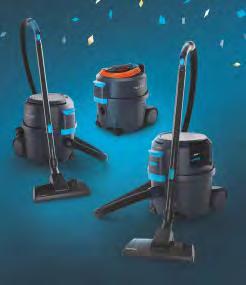
latest floorcare machines, intelligent robotic cleaning solutions, durable pressure washers and high-performance equipment designed for demanding commercial and industrial environments. All Nilfisk products and systems are designed to produce consistent cleaning results while optimising resources such as energy, water and labour.
The company also offers a number of service solutions to keep customers’ equipment running smoothly
www.nilfisk.com
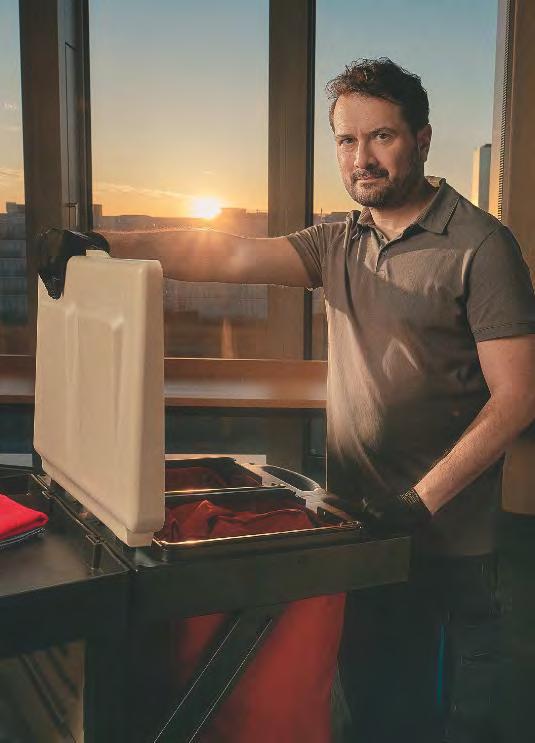








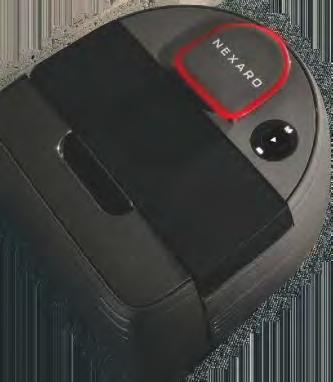


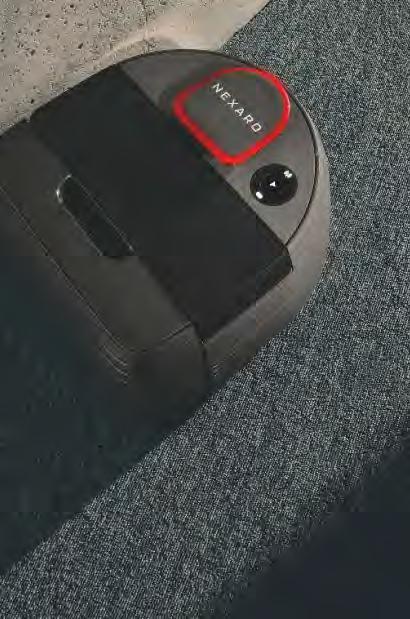


















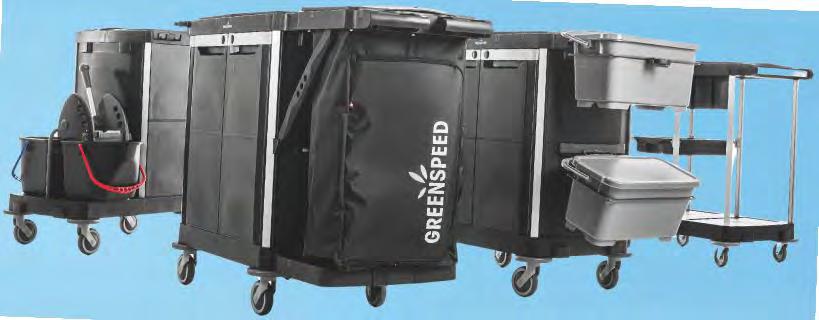


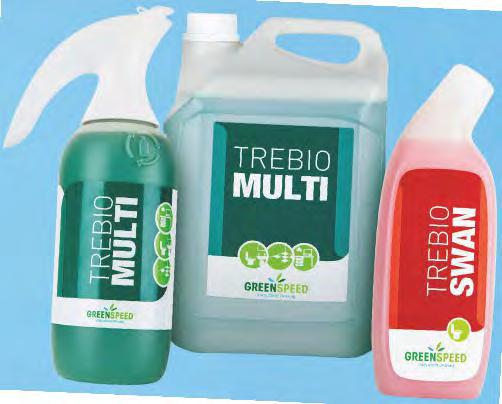





Stand 10.101
Tork will be taking visitors on an interactive journey with the aid of animated motion graphics and 3D visuals.
Tork Xperience tells the Tork brand story through a virtual interface delivered via a transparent OLED touch screen.
Claimed to be a first-of-itskind application in the hygiene industry, Tork Xperience looks at ways of making washrooms more sustainable and efficient. It also highlights opportunities for inclusive hygiene.
The company’s Tork Hygiene for All programme aims to remove barriers and ensure that publicly-used washrooms meet the hygiene needs of as many people as possible.
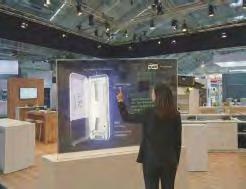
Tork has issued a washroom guide to support the programme. This aims to help businesses enhance user satisfaction and boost performance.
The new Tork PeakServe Automatic Dispenser will also be on display. This incorporates long-lasting batteries and delivers each towel in less than a second. The unit may be topped up at any time to avoid run-outs and a refill indicator and viewing window allow facilities staff to tell at a glance when the unit needs replenishing.
The Tork PaperCircle hand towel recycling service will be another stand highlight. Customers have their used washroom hand towels picked up from their business prem-
ises and taken to local recycling centres where they are turned into other tissue products. The service is designed to support circularity and reduce environmental impact.
Essity will also be presenting Tork Focus4 Sustainability, a platform aimed at promoting transparency and simplifying sustainability claims. www.torkglobal.com
Visitors to the Truvox stand will be able to try out three new floorcare solutions.
Designed for use on medium to large floors in the hospitality, education, retail and FM sectors is the Valet Aqua range of wet and dry vacuums. These combine wet, dry and blower functionality and can handle spills and dry debris in hard-toreach spaces.
The compact and manoeuvrable models eliminate the need for using multiple machines for improved operational efficiency.
The lightweight and comfortable Valet Backpack PRO Battery is designed for cleaning in confined areas in education, retail, leisure and facilities management environments. Weighing just 5.7 kg it features a quick-release lithium-ion battery that delivers up to 40 minutes’ runtime on a one hour 45-minute charge.
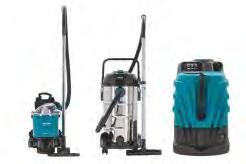
The compact Hydromist 40 range has been designed to deliver high-performance carpet cleaning with efficient water extraction for faster drying in commercial environments.
Other floorcare solutions on display will include the Multiwash PRO Steam and Multiwash PRO Battery. www.truvox.com
Hagleitner will be showcasing the new foamGUN PRO, a highperformance electric foam gun designed to reduce any strain on the operator’s hands and wrists.
Foam output is continuously adjustable and the gun is said to ensure an even surface coverage, improved adhesion on vertical surfaces and extended surface contact time for enhanced cleaning.
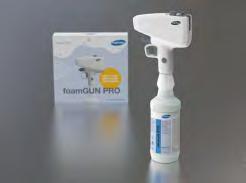
The quickCHANGE adapter means the foamGUN PRO is compatible with all Hagleitner cleaning products as well as other standard bottles for maximum flexibility.
Hagleitner will also be introducing five other products. The company offers hygiene solutions for the washroom, kitchen, laundry, workshop and facility services sectors.
www.hagleitner.com
Stand 01.425
TTS will be showcasing its Glass Line and Lampo integrated systems for faster, safer and more consistent glass-cleaning.
Glass Line covers the complete cleaning cycle from washing and removing stubborn dirt to drying, saving time and effort while also ensuring a smooth workflow.
Glass Line washer supports and sleeves can be used to prepare the surface and collect dirt consistently, even around edges. The squeegee completes the cycle and the scraper copes with stubborn dirt. The process
is said to be easy to teach and replicate to ensure a consistent quality even when teams or shifts change.
Every tool features the Lampo instant locking and release system which allows the operator to switch tools in seconds.
All Glass Line tools connect to handles and poles via the jack-end adapter. This ensures a natural transition from wash-
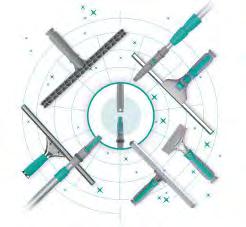
ing to drying, particularly when working at height. The jack angled joint further expands the working range to allow operatives to find the optimal inclination without straining their wrists or shoulders.
The range includes plastic squeegees with heads adjustable by up to 75 degrees and blades that are easy to replace.
The Aquarius holster can be attached to any belt to ensure that all tools are ready to use and stable during movement.
Using a single handle for multiple tools frees up space on the trolley while the Plug device allows for a hands-free frame release for enhanced hygiene and safety.
www.ttsystem.com
3M
Highlights of the 3M stand will include Scotch-Brite and 3M Floor Pads and Scotch-Brite Premium Hand Pads with HACCP certification.
3M solutions are designed to protect a building´s life and enhance the performance and productivity of employees. The company will show its range of Scotch-Brite products for food service applications from griddle cleaning to appliance cleaning. The company will also showcase sustainable cleaning solutions www.3m.com
Stand 07.203
Discover Battery will be presenting its GC2 lithium battery platform with products available from 12 to 48 volts.
This modular system enables up to 20 batteries to be connected in parallel. It is supported by Discover’s advanced battery management system and LYNK communication architecture for intelligent power management and real-time monitoring.
The batteries are designed for use in autonomous cleaning equipment requiring high energy density, fast charging and modularity.
Discover also offers Dry Cell AGM traction batteries for industrial equipment.
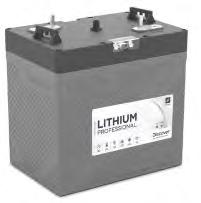
Maintenance-free and leakproof, these can be used in demanding environments such as extreme temperatures, high loads and intensive duty cycles.
The range is aimed at large industrial cleaning equipment where energy requirements and operating conditions are particularly demanding.
Discover offers products for floorcare, materials handling, commercial vehicles, telecom systems and backup power solution applications including Gel batteries.
www.discoverbattery.com
Stand 02.415
A chemical-free solution that removes the need for routine stripping and waxing will be on display on the Malish stand.
Diamond Devil offers a high shine on concrete and terrazzo floors using water alone. Achieving a satin finish involves three steps while an optional tool
elevates the shine to a higher gloss and greater clarity.
The company’s Mastic Demon Coating Removal Tool clears concrete floors of hard-toremove substances such as mastic, glue, thin-set, paint, adhesive and thin mil epoxy.
A new Prep Tool that can be used with most standard floor machines prepares concrete and terrazzo floors for polishing.
Suitable for use on all hard floors is the Flex Scrub which is installed like a pad but cleans
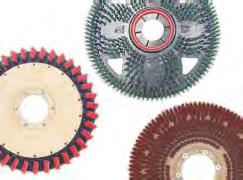
deeply like a brush. Its bristles are designed to penetrate textures and grout lines.
The Flex Scrub can be used with most traditional 175-350 rpm single-disc machines, auto
scrubbers and orbital floor machines. It is self-cleaning and said to last up to 50 times longer than a traditional pad
Rotary Grit Brushes are designed for use on irregular surfaces and grout lines, while Sonic Scrub can be used on rectangular oscillating floor machines. It features self-cleaning bristles which work well on textured surfaces and grout lines and can be used with a cleaning solution or water alone.
www.malisheurope.com





Stand 05.524
FacilityApps will be showcasing its comprehensive digital platform. Key highlights will include the company’s VR Training and Certification for cleaners which features AI Voice-toVR technology.
AI provides real-time translations of the trainer’s voice via virtual reality headsets. The multilingual training is designed to overcome language barriers and support diverse workforces.
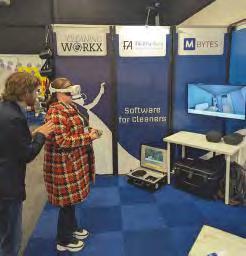
FacilityApps will also be demonstrating its Business Intelligence suite which offers management summaries, natural language querying, dynamic dashboards, smart navigation and multilingual support.
Smart Planning introduces a new collaborative board with AI-driven route optimisation for cleaning and window-washing operations. The company also offers time registration, planning, payroll, calculation and quoting software which is scalable for global teams. www.facilityapps.com
Stand 05.135
New from Birchmeier is a sevenlitre battery-powered foam cleaner. The e-Foam 7 builds up a working pressure of up to 3.5 bar within seconds using the TLK 35 battery compressor. A single 4.0 Ah CAS battery pack provides enough foam to cover around 300-600 square metres. The electronic controls ensure a constant pressure and consistent application with no loss of performance or interruptions due to manual re-pumping,
claims the company.
The e-Foam 7 is part of Birchmeier’s new e-Line of devices using the TLK compressor with interchangeable CAS batteries. The products are designed to simplify foam, spray and powder cleaning applications. All existing three, five and seven-litre Birchmeier plastic devices can be retrofitted with the compressor.
The company will also be showing its patented TelRo lowpressure solution for facade and window cleaning. This incorporates a hand valve and nozzleholder specifically developed for low-pressure applications using telescopic lances. The reduced pressure allows cleaning agents to be applied evenly while protecting facade and window surfaces. And the nozzle is optimised for use with telescopic lances, enabling large areas to be cleaned efficiently.
A central feature of TelRo is the robust hand valve with integrated mounting rails. One mounting rail remains permanently attached to each telescopic lance, allowing the hand valve to be transferred between different lances quickly and without tools.
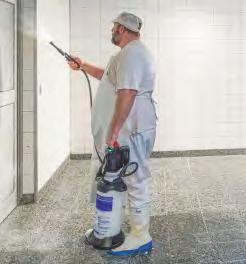
The telescopic lance is connected directly to a batterypowered sprayer that supplies cleaning solution at a maximum pressure of 10 bar. This lowpressure approach reduces material stress, improves handling stability and lowers liquid volumes, says Birchmeier. www.birchmeier.com
Stand 07.115
Sanimaid will be introducing a new cleaning pad designed specifically for toilet bowls.
The Sanimaid Stainremover
pad is aimed at single-day usage and applications in toilets and bathrooms where strict hygiene standards apply. This means a clean pad is used every time, reducing the risk of bacterial spread and maintaining high hygiene standards in environments such as hospitals.
The pad cleans quickly and effectively while also helping to prevent limescale build-up under the rim where dark stains often develop, says Sanimaid.
The company has also developed a holder for storing the tool on cleaning trolleys to ensure it is always within reach but kept separate from other items.
The Stainremover range also includes three types of durable cleaning pads for cleaning and for removing limescale from tiles and ceramic surfaces in wet rooms.
www.sanimaid.com
Stand 05.411
De Witte’s Foodline is a fully woven, professional-grade microfibre cloth made from 80 per cent recycled polyester and 20 per cent polyamide. Said to be strong, highly absorbent and durable it is compliant with European food contact legislation and available in six colours. Cloths are packed in recyclable glassine bags.
De Witte will also be presenting its Microfibres on a Roll and the versatile Boxed Microfibre range. These are said to offer a practical and sustainable solution for environments where organisation, hygiene and
performance are key. Packed in FSC-certified dispenser boxes of 50 cloths, they are available in single colours or in a dual-colour combination for easy task separation. All cloths combine high absorbency with a soft finish to make them suitable for both general and delicate cleaning tasks, and the laser-cut edges are designed to prevent fraying and maintain durability.
www.dewitte.com
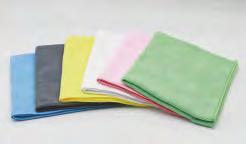
Stand 07.105
Vikan will be introducing the HyDrive power-assisted cleaning solution for faster and more consistent deep cleaning. It is designed to reduce manual scrubbing and improve cleaning efficiency in food manufacturing environments. Operators use a cordless drill to power purposedesigned cleaning tools - transforming manual scrubbing into a more efficient process.
The system includes the HyDrive Round Brush, a hygienically-designed drill brush for removing stubborn residues from flat surfaces.
Vikan will also demonstrate the HyDrive adapter which connects a drill to compatible pipe-cleaning brushes. This configuration facilitates powerassisted cleaning in narrow or complex areas. A range of brush diameters are offered for maximum flexibility when carrying out detailed cleaning tasks.
The HyDrive system can be integrated into existing hygiene programmes. www.vikan.com
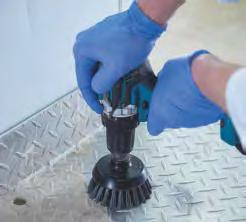
Stand 12.301
The new Identity L1 Single and Identity L1 Double dispensers will be making their debut on the Lucart Professional stand.
Both dispensers offer singlesheet dispensing for a continuous, precise and hygienically-protected service while also helping to reduce waste and simplify maintenance. The L1 Double model has a dual-roll feature for an uninterrupted operation even in high-traffic areas.
Identity dispensers feature clean
lines and transparent surfaces and come in both white and black.
The company will also be showing its biodegradable skincare products which have been dermatologically tested. These include foam, liquid and gel solutions as well as hair and body formulations and antimicrobial products, all of which are compatible with Identity soap dispensers.
www.lucartprofessional.com
Stand 01.220
Trojan Battery Company will be displaying its full range of durable AES batteries designed to meet the evolving needs of today’s cleaning machines. These will include the L16-6V AES, 24-12V AES and the T105-AES. Each model has been designed to deliver extended runtimes and reliable power across a wide range
of floorcare and cleaning sites and applications.
AES technology is said to provide up to three times the cycle life of conventional deep-cycle batteries, allowing operators to reduce the frequency of replacements along with total cost of ownership. This results in longer uptime and an enhanced performance in demanding, heavy-duty environments, according to Trojan.
AES batteries deliver consistent performance even in harsh environments from chilled storage facilities to warm industrial sites. They also support opportunity charging without compromising battery health which makes them particularly suitable for use in fast-paced, multi-shift cleaning operations.
Trojan Battery Company will be showing visitors how advanced technologies can enhance equipment efficiency, reduce downtime and support more sustainable cleaning operations. www.trojanbattery.com
Stand 01.118
KlinMak will be displaying its range of scrubber dryers for the first time at Interclean. These include five double-brush models, three four-brush models and five Microimpulse vibration system machines as well as two ride-on ATEX operator models.
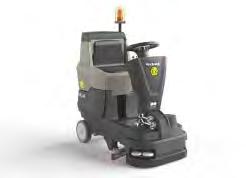
Key features include a lithium battery, H13 HEPA filter, patented simplified brush release and patented toothed brushes. All machines are said to be lightweight, compact and highly manoeuvrable on all floor types in any condition. www.klinmak.com
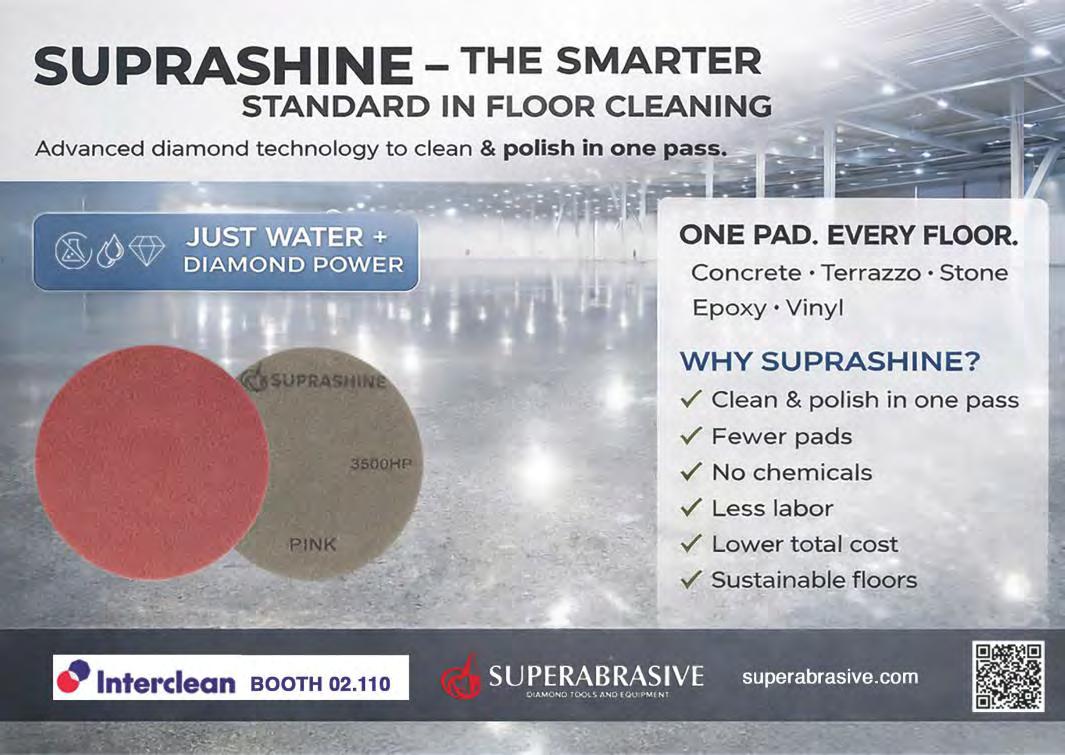

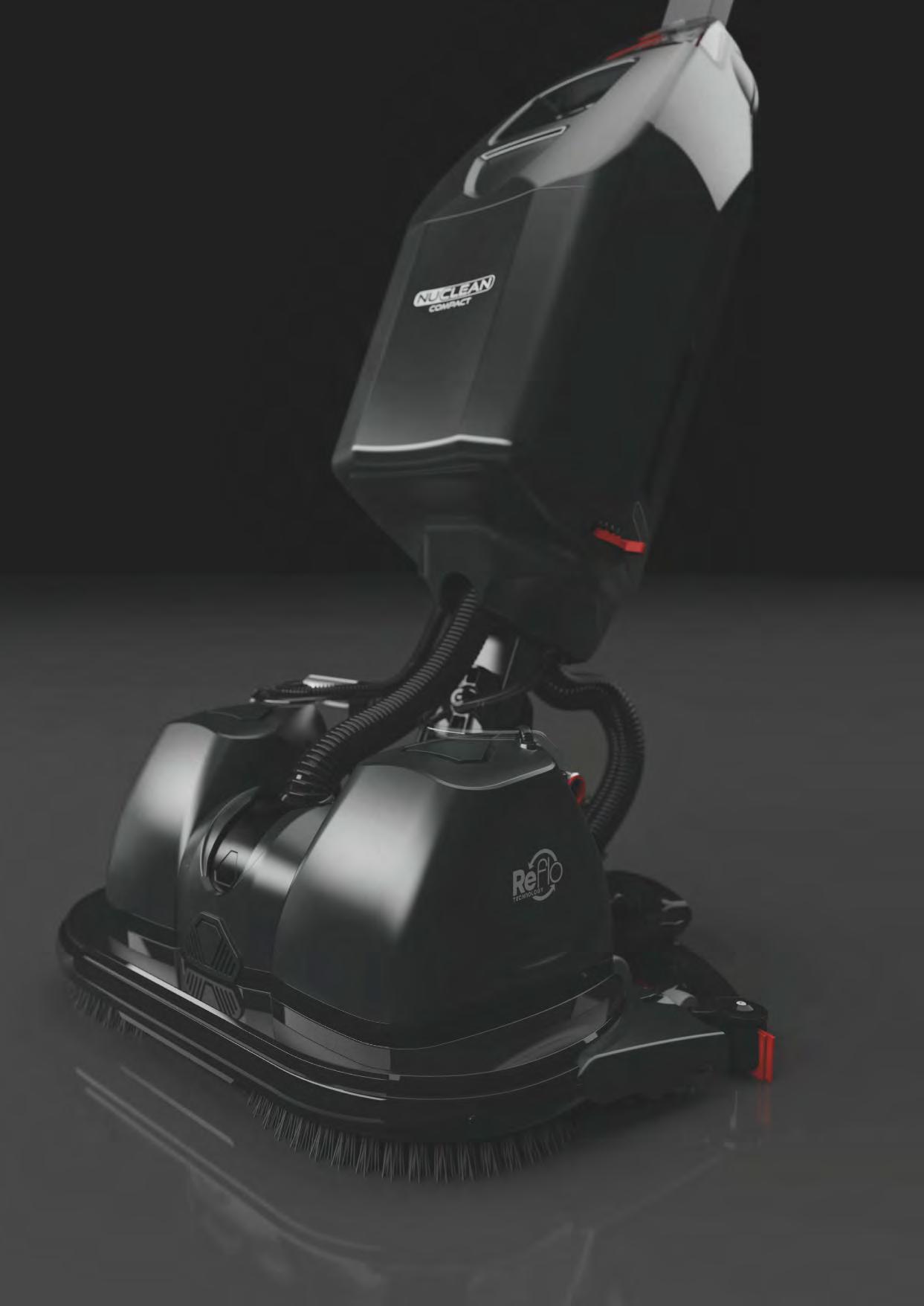
Designed to deliver the performance of an active system with a passive refill is the V-Air Flow aircare system from Vectair.
The dispenser is manufactured from 100 per cent post-consumer recycled plastic and more than 50 per cent of the refills are made from plant-based material to support sustainability efforts.
Vectair will also introduce its new battery-operated SensaMist SM100 diffuser. This provides flexibility when implementing fragrance programmes and complements Vectair’s existing outlet-powered SensaMist line of diffusers.
Another launch will be V-Screen Dual 60, which is made using more than 50 per cent plant-based material. Designed to deliver fragrance for 60 days, this dual-action urinal screen tackles odour and splashback to keep washrooms cleaner, fresher and more inviting. Built for high-traffic washrooms, V-Screen Dual 60 is quick to install and easy to replace.
Visitors will be introduced to Vectair’s new Tropical Punch fragrance collection and the stand will feature two interactive Lift-and-Learn displays showcasing Vectair’s products. A live 3D printer will demonstrate Vectair’s OEM and customisation capabilities while the fragrance portfolio can be experienced at the Fragrance Bar. www.vectairsystems.com
Stand 07.207
Kemaro will be showcasing the K900 Gen II robot, which is designed for floor cleaning in industrial environments without the use of water or chemicals.
The machine has a 90 cm cleaning width and can be used in warehouses, production areas and logistics sites. Its 35 cm height enables it to clean under conveyors, racking and machinery.
Offering a performance of up to 1,000 square metres per hour, the robot’s 36 V lithium-ion battery delivers up to five hours of runtime and up to 5,000 square metres per charge depending on layout and debris load. It can recharge itself in around 90 minutes at the autonomous dock.
The debris container holds 35 litres and the 32 kg robot can handle ramps of up to 12 degrees. The K900 Gen II has an integrated dust extraction system that can filter up to 2.6 cubic metres of air per minute in dust-heavy environments.
Kemaro will also be presenting its Sphere system which offers live robot status, battery monitoring and cleaning data. This provides transparent oversight in multi-robot and multi-site operations.
www.kemaro.ch
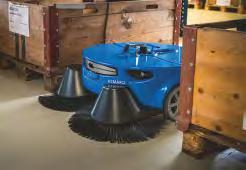
Visitors to the 2Pure Products stand will be able to view the company’s range of certified carbon-neutral products.
These include OdorBac Tec4, which cleans and deodorises in one step, and the OdorBac Air odour control system. The company will also be showing the OdorBac Toilet & Scale which removes limescale and organic residues.
2Pure has committed to
reducing its carbon impact by at least five per cent annually and has partnered with Gold Standard to offset the remaining emissions through environmental and social value projects. All 2Pure products are carbon negative at point of purchase. 2pureproducts.com
Stand 05.615
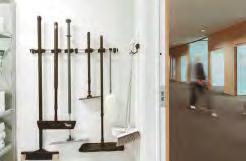
Toolflex will be showing its flexible wall-mounted storage solution for hygiene-critical settings. Valuable time can be lost and hygiene may be compromised when cleaning tools are stored on crowded racks or are propped up against walls, it says.
Toolflex One keeps equipment elevated, separated and instantly accessible. It also ensures all handles stay in place without touching the floor for improved airflow and faster drying.
The holders securely grip handles of any size from 15 to 35 mm, releasing them again promptly with a single pull. The Click ’n Go function allows teams to mount, adjust or reposition holders in seconds.
The system may be installed on the Toolflex One Rail or mounted directly on the wall using the Toolflex One Wall Adapter. All necessary adapters, screws and anchors are included for straightforward installation.
The smooth, wipe-clean surface has been designed to minimise dirt traps and support sanitation routines. Eight colour options are available to fit in with colour-coding systems and reduce the risk of crosscontamination. Toolflex One has a durable construction and is autoclave safe at heats of up to 121 degrees celsius. It is fully recyclable at end of life.
The system can be used in various environments including commercial kitchens and healthcare facilities.
www.toolflex.com
Claimed to be the first wheelcleaning system to achieve a 99.99 per cent bioburden reduction is TraXERO, which will make its world debut on the Vileda Professional stand.
This solution eliminates the labour-intensive manual scrubbing of castors while helping to prevent contamination when moving equipment between hygiene zones. It can be integrated into existing workflows. Also new is r-MicronSafe, an advanced healthcare microfibre cloth for use in high-risk environments. Made from recycled microfibres and featuring builtin antibacterial protection, this is designed to inhibit bacterial growth and reduce the risk of cross-contamination. The product retains a consistent cleaning performance for up to 500 wash cycles while also supporting sustainability goals, says Vileda. New versions of the Shopster, Equipe, Sprint V, Twixter, Glove Mop and Textronic systems will be displayed on the stand, which will take the theme: Together We Clean.
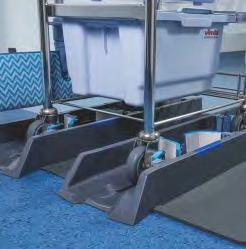
tailored systems for general building cleaning, healthcare, hospitality and controlled environments. www.vileda-professional.com
Stand 01.405
The Toro CAS micro-scrubber - a compact, robust and manoeuvrable machine - will be one of the highlights of the Cleanfix stand. Visitors will also discover the Cordless Alliance System, a single high-performance battery platform that can power more than 500 machines across 45plus brands for added flexibility and efficiency.
Also on show will be a new autonomous scrubber dryer robot designed to handle demanding environments in complex facilities using greater intelligence and reliability. It is equipped with an advanced navigation system and has the ability to integrate with building infrastructure features such as lifts, automatic doors and


fire safety systems.
The result is said to be consistent cleaning performance, optimised workflows and greater transparency in daily operations through modern fleet management and monitoring tools.
www.cleanfix.com
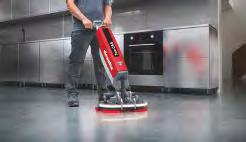
Stand 10.201
A new controlled toilet paper dispenser from Sofidel’s Papernet brand has been developed to optimise hygiene and consumption. The FullOne can hold more than 200 metres of paper, minimising waste and reducing refill times. The compact and hygienic dispenser provides sheet-tosheet dispensing and is made



entirely from antibacterial plastic. It has been created to combine design with functionality and its vertical positioning means it works well in washrooms with limited space.
The dispenser holds two Full Tech mini-rolls - rolls which together offer more than 200 metres of paper, reducing refilling times and optimising storage costs.
www.sofidel.com
Stand 12.104
The Oxygen-Supreme constant air care system will be the focal point of the Fragrance Delivery Technologies stand.
Unlike conventional aerosol air fresheners that rely on propellants to disperse fragrance, Oxygen-Supreme uses FDT’s
patented Oxy-Gen Powered technology to generate a small, continuous amount of oxygen to create the pressure required to release fragrance. This facilitates a consistent scent delivery without aerosols, solvents or compressed gases.
Independent Carbon Life Cycle Assessments have shown there to be zero emissions associated with fragrance release during product use. Raw material emissions are also significantly lower than those of aerosol refills, claims the company.
The system uses recyclable Grande fragrance cartridges which contain 100 per cent fragrance oil with an inbuilt malodour eliminator. It can be programmed to run for 30, 60, or 90 days.
www.oxygenpowered.com.
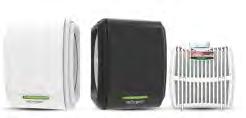

































Stand 08.213
BIB Robotics will unveil the J36, a compact cleaning robot for the retail, hospitality and office building environments.
Powered by advanced AI, the J36 has a modular architecture that allows operators to deploy bespoke scrubbing or vacuuming configurations. It can cover up to 1,600 square metres per hour and cleans up to the edges even in narrow 700 mm aisles. The industrial-grade 19kPa vacuum and dry-wet separation system are said to enable it to handle complex debris with ease.
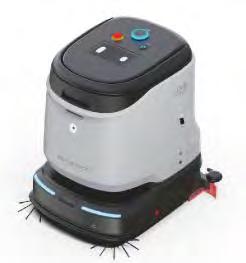
An automated docking station facilitates self-cleaning and thermal drying for up to three days’ of unattended operation. And the integrated cloud platform provides real-time telemetry and performance analytics for enhanced transparency. Components can be changed in 10 seconds without the need for tools. The J36 supports sustainability goals by optimising water and detergent consumption. www.bibrobotics.com
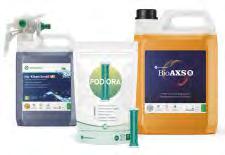
traditional ready-to-use cleaning products, PodOra is said to significantly reduce packaging waste, transport impact and storage requirements while also simplifying daily cleaning operations.
InnuScience will also present RSG 2.0, a closed-loop quickconnect dilution system for environments where wallmounted dilution units cannot be installed. This portable solution is said to deliver the same precision, safety and performance as traditional systems while offering greater flexibility for mobile teams and spacelimited environments.
Another major focus will be BioAXS, a new biotechnology cleaning range created to democratise sustainable cleaning. Designed for organisations with tighter budgets, BioAXS provides the performance benefits of biotech cleaning at a more accessible price point. www.innuscience.com
Stand 11.411
Stand 02.419
InnuScience offers a range of high-performance solutions based on enzymes, biotechnology and environmentallyresponsible formulations.
The company’s mission is to make biotechnological cleaning simpler, more accessible and more sustainable.
Among the key highlights of the company’s stand will be PodOra, described as being the first liquid biotechnology pod system. Designed to replace
highlight the growing relevance of microbial technologies across professional and consumer cleaning applications. www.heiq.com
Stand 05.115
Depureco will be showcasing the new DEX range of industrial vacuums for extracting combustible dust from explosion-risk environments. This range boasts safe and efficient dust removal while reducing ignition risks during cleaning. Dedicated configurations are offered according to the type of material being collected.
Dry Type vacuums are suitable for picking up combustible dusts such as flour, wood, plastic and chemical powders and feature Category 1 internal certification, antistatic components, grounding systems and HEPA filtration.
Wet Type vacuums are engineered to cope with combustible and self-igniting dusts, using an integrated inert liquid bath system to neutralise reactive particles upon entry.
Stand 07.412
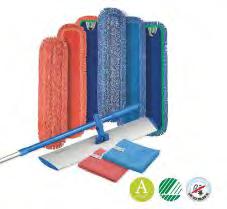
Micro System Duotex will be presenting its latest generation of mops, cloths, shine mops and interior mops made from recycled materials.
These include the MicroSweep Duotex Ergo Mop for daily use. Designed for dry, damp or wet operations the mop is said to clean with minimal friction. Additional fringes around the edge increase cleaning capacity by 35 per cent and capture larger particles of dirt and dust.
Also on show will be the MicroWet Duotex Mop designed for daily dry, damp or wet cleaning. This features long loops over the entire surface which makes it particularly suitable for removing large amounts of dirt and grease in heavy-duty operations.
HeiQ will be demonstrating how microbial cleaning and laundry solutions can be developed, manufactured and commercialised on an industrial scale.
The company offers a complete microbial platform including probiotics, synbiotics and biosurfactants for cleaning and laundry applications. HeiQ helps to bring probiotic and synbiotic products from concept to market, supporting multiple routes depending on customer needs and timelines.
The company’s solutions include white label and private label products, bulk liquids and concentrates.
Ecolab will be joining forces with HeiQ at Interclean to
Depureco DF DEX 1/3D models are wheeled industrial dust collectors certified for the extraction of conductive and volatile combustible dusts including type IIIC in ATEX 22 areas.
Also on show will be the company’s centralised vacuum systems. These are designed to minimise ignition risks through controlled airflow, certified components and integrated safety devices functioning as passive or active protection systems.
New on the stand will be Depureco’s ultra-light ATEX Category 2D certified highlevel cleaning kit which is fully compatible with the DEX range. Designed for safe overhead cleaning in classified ATEX zones, VertiDex reduces reliance on ladders or lifting platforms while improving operator safety. www.depureco.com
The MicroWet Duotex Mop, which can also be used for surface disinfection in healthcare settings, distributes liquid evenly across the cleaned surface. Both mops are available in various sizes and colours.
Duotex mops have been proven to remove up to 99.99 per cent of MRSA bacteria and bovine coronavirus using only tap water. Described as being simple and intuitive to use, they are compatible with velcro, pocket and flap mop holders.
www.duotex.se



















































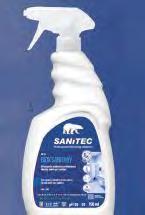

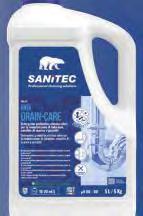


Stand
Pacvac, specialist in commercial backpack vacuum design, will be demonstrating how it continues to evolve the backpack vacuum concept while expanding its presence across global markets.
A highlight at the stand will be the Limited Edition Pink Velo. Built on the existing Velo platform, this launch reflects the company’s belief that cleaning equipment can combine productivity, comfort and durability with design that resonates with the people using it every day.
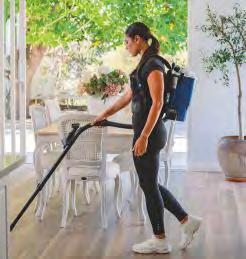
Pacvac will also be demonstrating a new interactive productivity tool designed to help businesses better understand the operational impact of their equipment choices. The tool uses calculations to model productivity improvements, machine suitability and battery planning across different environments.
By visualising potential efficiency gains, the platform supports facility managers and distributors in making more informed equipment decisions, says Pacvac. pacvac.com
cleaning. All relevant application and security information is clearly presented and kept updated and is accessible in various languages. The app supports daily work and contributes to the safety of processes and applications.
KIEHL’s Riva series of surfactant-free products has been designed for automated cleaning solutions. The series has been successfully tested for use with robots.
The smart LiCoDos dosing system controls and monitors washing processes, supporting occupational and hygiene safety along with process control. Pre-prepared cleaning textiles enabled by LiCoDos can be used as part of the ProMop system to reduce errors, save time and cut costs.
www.kiehl-group.com
Visitors to the Evans Vanodine stand will be invited to sample three new skincare formulations and receive best practice hand hygiene guidance.
The new formulations are: Black Pepper and Bergamot, Eucalyptus and Aloe and Orange and Neroli.
The company will also be showcasing its dosing systems and chemicals including new additions to its e:dose super concentrate range EC5 Perfumed Sanitiser and EC10 Toilet.
management markets will be displayed on the dispensing wall. The stand will also feature new experience centres and a microbiologist will be on hand to offer scientific knowledge and insights.
www.evansvanodine.co.uk
Stand 02.403
Reliance will present Leopole, its eco-friendly solution for cleaning hard-to-reach surfaces.
Besides using only six litres of water per hour and offering a full wastewater retrieval system, Leopole now offers improved wastewater suction for a seamless operation indoors or outdoors.
These enhancements facilitate the cleaning of solar panels on building roofs while the selfsufficiency of Leopole makes it easy to use, even in areas where water and power outlets are not readily available.
The motorised cleaning head now offers an expanded selection of rollers. The new ‘P’ roller features an abrasive window renovation pad that allows hardto-reach glass surfaces to be restored from ground level with the addition of chemicals.
www.leopole.cleaning
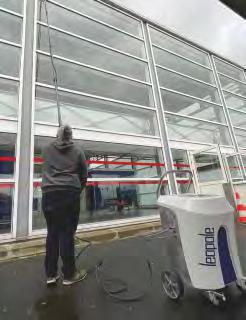
Stand
Dosing units for accurate, simplified and economical chemical dosing in the catering, housekeeping and facilities KIEHL offers a range of solutions to help cleaning teams digitise, simplify and streamline their work processes. A key element of this strategy is the new KIEHL app. Powered by AI, it acts as a digital companion and answers questions about products and
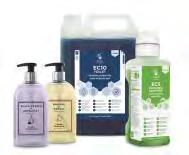
Stand 01.524
V. Brøndum will be launching a cordless version of the RONDA 2600H Dual Power H-class vacuum. This has a wide front nozzle for collecting dry dust from large floor areas. Designed
for integration with a 230 volt Instagrid battery, the RONDA 2600H is equipped with three powerful battery-optimised 230 volt motors with a total maximum power of 2700W. This is said to distinguish it from most battery-powered vacuum cleaners which are usually equipped with 24 or 48 volt motors.
The three motors can be switched on individually and battery operating time under optimal conditions is around 45 minutes with all three motors activated; 70 minutes with two motors and 120 minutes with a single motor.
The collected material is gathered in a plastic bag inside the container which can be easily pulled out from under the machine for emptying.
www.broendum.com
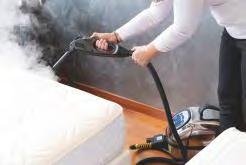
Tecnovap manufactures a range of solutions using high-temperature dry saturated steam. These allow deep cleaning to be carried out using no harmful chemicals, cutting detergent costs and reducing environmental footprint.
Said to reduce both time and effort, Tecnovap systems incorporate an automatic water refilling system for unlimited steam autonomy along with interchangeable heating elements for improved repairability over time.
Steam removes dirt that cannot be reached with traditional cleaning methods, says Tecnovap. This includes healthcare contamination, food residues, grime on industrial machinery gears and stubborn stains on grills and uneven surfaces.
The new Steam-X gun allows operatives to reheat steam to 130 degrees celsius to eradicate adult bed bugs and their eggs. www.tecnovap.it
Tough new measures clamping down on wasteful business practices are being rolled out across Europe. And their first major focus has exposed the throwaway culture driving the region’s €300 billion fashion industry, reports Hartley Milner.
THE CLOTHING SECTOR generates around 12.6 million tonnes of waste material in the EU every year, equal to 16 to 19 kg per person, and less than one per cent is recycled back into new clothing. But the big reveal is the industry’s long-held “dirty secret” … that around four to nine per cent of unsold garments are destroyed before ever being worn.
That said, the exact number of unsold items destroyed annually – comprising both overstocked and returned items – is difficult to quantify due to a lack of industry transparency. However, some experts suggest the actual figure is likely to be way higher than official estimates suggest.
“Getting the full picture on waste is like trying to complete a jigsaw puzzle without
all the pieces,” said Viktoria Fehlbaum of waste action group Material Change. “The fashion and clothing sector is huge for Europe, providing as many as five million jobs and comprising 8.5 per cent of the bloc’s retail and trade sector. This makes it extremely complex and challenging to get a handle on in terms of understanding the impacts.”
Fehlbaum said the vast majority of fashion brands do not publicly declare their annual product volumes or the amounts of inventory they destroy. This reticence has led to accusations they know to do so would expose the oversupply practices that contribute to the waste. “Overproduction is closely tied to fast fashion and mass production cycles, where speed and volume often outweigh sustainability,” she continued.
“Disclosing that fashion houses produce billions of items with a significant percentage going unsold would likely lead to public outrage, if it became widely known. And it would clash with the industry’s public-facing sustainability
marketing, leading to accusations of ‘greenwashing’. Reducing overproduction matters, not just for cutting costs but also for protecting the environment, promoting ethical labour practices and limiting waste.
“For luxury and premium brands, maintaining an aura of product exclusivity is paramount. Destroying unsold inventory prevents high-end clothing from appearing in discount outlets or grey markets, which can degrade brand value and product prestige. If consumers knew that a luxury brand produced thousands of exclusive items which were later sent to be incinerated, their perceived value would plummet.”
In the past, 82 per cent of the EU’s textile waste was end-user generated, with the remainder coming from manufacturing or comprising unsold garments. From 2025, member states have had to separate clothing from household textile waste to improve
Throwaway culture driving fashion (continued from page 77)
recycling rates and reduce waste going to incinerators or landfills, or being exported to less well-regulated sites in the global south.
In February, the European Commission adopted new rules under the Ecodesign for Sustainable Products Regulation (ESPR) compelling companies to disclose information about unsold consumer products they discard as waste. Crucially, the rules brought in a total ban on the destruction of unsold apparel, clothing accessories and footwear. However, some “limited and clearly defined” exemptions are permitted, including:
• Safety and hygiene. Products that pose risks to health, hygiene or safety (such as contaminated items);
• Damage/unfit for purpose. Items that are damaged or have deteriorated or are otherwise unsuitable for their intended purpose;
• Failed donation. Products that were offered as donations to at least three social economy entities within the EU or on a public website for at least eight weeks and were not accepted;
• Legal compliance. Goods that are non-compliant with EU or national laws and for which destruction is the required or proportionate action (including ethical violations like forced labour);
• Intellectual property. Items that infringe upon intellectual property rights or are counterfeit;
• Environmental benefit. Where the destruction of products would result in the lowest negative environmental impact compared to other disposal methods (for example, hazardous materials that cannot be recycled safely).
The ESPR came into force in July 2024 as the EU’s cornerstone measure for promoting more environmentally sustainable and circular products –clothing kept in use via repair, reuse and recycling – within a “strong, wellfunctioning single market”. It applies to not only clothing and textiles but virtually all physical goods placed on the EU market, the few exceptions including food, animal feed, medicinal products and vehicles.
The European Commission says the rules will help cut waste, reduce environmental damage and create a level playing field between brands and retailers already invested in circular business models and those that are not, allowing all to reap the benefits of circularity. Businesses will have to follow a standardised format when disclosing the volumes of unsold consumer goods they throw away. This will apply from February
2027, to give firms time to adapt.
However, instead of discarding products, companies are being encouraged to manage their stock more effectively by finding alternative ways of dealing with online returns, such as resale, reuse, remanufacturing and via charity donations. And AI is increasing playing a crucial role in inventory management, with roughly 48 per cent of EU manufacturers using the technology and other ‘big data’ to optimise stock levels, enhance demand forecasting and reduce waste. Companies have reported reducing stock by 17 per cent, significantly lowering holding costs.
Destruction ban
The destruction ban on unsold clothing and footwear will apply to large businesses from July 19 this year. Medium-sized producers are expected to follow in 2030. The rules on disclosure under the ESPR already apply to large businesses and will be extended to medium-sized companies, also in 2030. Small and microsized enterprises will be exempt from obligations that risk saddling them with a disproportionate compliance burden, such as the ban on destroying unsold goods and public disclosure of discarded unsold products.
To support transparency, the ESPR brings in digital passports for businesses: biometric identity cards storing performance data. The information will be accessible electronically, making it easier for consumers, manufacturers and authorities to make better informed decisions relating to product sustainability, circularity and regulatory compliance.
Member states will be responsible for policing the Ecodesign measures and setting out penalties for non-compliance that are “effective, proportionate and dissuasive”. These could include fines, product recalls and exclusion from public procurement, aside from any indirect consequences of reputational damage.
Welcoming the measures, Jessika Roswall, EU commissioner for environment, water resilience and a competitive circular economy, said: “The textile sector is leading the way in the transition to sustainability, but there are still challenges. The numbers on waste show the need to act. With these new measures, the textile sector will be empowered to move towards sustainable and circular practices, and we can boost our competitiveness and reduce our dependencies.”
“Companies need to better plan the number of products they sell and, if they get it wrong, bear the costs of making unsold goods marketable, including
keeping them until they find a suitable buyer or place to donate them,” said Luca Boniolo, programme manager for textiles at the Brussels-based Environmental Coalition on Standards. “The surreal practice of destroying perfectly functioning products should never have existed – and now it’s time to put an end to it once and for all.”
Europe’s textile industry is broadly on board with the Ecodesign aims, but significant concerns remain, particularly relating to its impact on SMEs and the rapid pace of implementation. The European Fashion Alliance (EFA) said that, with 59 per cent of fashion companies reporting a lack of tools and support meeting the new standards, 2026 will be a “pivotal and challenging year”.
An EFA report released in January noted that only about half of businesses surveyed “felt well-informed” about ESPR, with many struggling to adapt to its complexity. The ban on the destruction of unsold goods applying to large companies from July was forcing immediate changes to inventory management. And while the digital passport was a key tool for circularity, the infrastructure was still being finalised for its 2026/2027 rollout, posing data management challenges.
Global benchmark
“The creative fashion sector can be Europe’s strongest cultural and economic ambassador,” the EFA board asserts. “With the right tools and support, European fashion can become the global benchmark for sustainable, innovative and humancentered creation.”
Aimee Campanella, development director, textiles EPR, at waste and resource management company Reconomy, said of the Ecodesign measures: “This is another important step in tackling the low levels of circularity in textiles, the soaring volumes of waste generated and the sector’s significant contribution to carbon emissions. For brands and retailers, these rules are a clear signal that linear take-make-dispose models are being phased out.
“Circular solutions can be challenging to implement in practice, but this ban, combined with extended producer responsibility for textiles, which makes producers responsible for the full lifecycle of their products, will push the market towards better design, better data and better end-of-life management. Those that move early on resale, reuse, repair and high-quality recycling will be better placed to manage compliance risk and protect their brand reputation in a more circular textiles sector.”

Healthcare environmental hygiene (HEH) is still mostly seen as an aesthetic or ‘cleaning’ issue rather than a clinical one, remaining undervalued and neglected in most hospitals. Paulo Brois, Elleni Rioja, Martina Močenić and Alexandra Peters from Clean Hospitals tell us more about its work to foster international collaboration and raise awareness.
IT IS WELL-KNOWN THAT surfaces in healthcare facilities act as reservoirs for a variety of dangerous pathogens. Over the last 25 years, the scientific community has focused primarily on hand hygiene as the leading method to stop the spread of these agents. Around 50–70 per cent of all healthcare associated infections (HAIs) are transmitted through contaminated hands, and up to 30–50 per cent of the HAIs may be linked to environmental transmission. Despite these numbers, healthcare environmental hygiene (HEH) is still mostly seen as an aesthetic or ‘cleaning’ issue rather than a clinical one - undervalued and neglected in most hospitals. A global pilot survey found that 98 per cent of participating healthcare facilities worldwide were lacking in at least one of the five major components of HEH.
In recent years, several well-designed studies have strengthened the evidence on the role of cleaning and disinfection of surfaces and shared equipment in reducing HAIs. One recent example is the CLEEN study conducted by Brett Mitchell, which showed improving the cleaning and disinfection of shared medical equipment was associated with a 34.5 per cent relative reduction in HAIs, corresponding to an absolute reduction of 5.2 per cent.
In response to the growing body of evidence on the importance of environmental hygiene, the Clean Hospitals initiative was
created to promote HEH as a key component of infection prevention and control. Since its inception in 2018, however, the global context has undergone major changes. The Covid-19 pandemic exposed both the strengths and the vulnerabilities of health systems globally and brought infection prevention and control into spotlight. In the aftermath, it would be expected to see a stronger focus on the investment in healthcare, public health, prevention and preparedness.
However, the years that followed have unfortunately been marked by reconfigurations of the international geopolitical landscape and political decisions, with their well-known direct impact on organisations and on global health governance. With the international health system rocked by spending cuts and the withdrawal of the USA from the WHO, the rest of the world needs to work to fill that major gap in public health. We have witnessed the reorganisation of several institutions to respond to this shifting landscape. So Clean Hospitals has also evolved to foster international collaboration and strengthen its effectiveness. Collective responsibility
Considering the importance of HEH for patient safety, and its complexity in the current context, Clean Hospitals aims to bring together all the relevant actors in environmental hygiene. We aim to reinforce collective responsibility and raising awareness that cleaning is not a low-value activity – it is a profession that requires competence, training and recognition. Recent changes to the organisation include establishing partnerships with institutions such as universities and professional societies, assigning country leads and creating working groups. Establishing country leads reflects the growing need to connect globally with different realities, as they play a key role in bringing the perspective of their country into the Clean Hospitals network, helping to ensure different healthcare systems, cultural contexts and operational constraints are considered.
Another important part of the country lead role is to dynamise the celebration of Clean Hospitals Day, acting as a link between Clean Hospitals and healthcare facilities in their country.
Another recent change is that now healthcare facilities have the opportunity to join Clean Hospitals as participating facilities and have access to our monthly Think Tanks presented by worldwide experts, journal clubs, scientific sessions, participation in working groups, biannual open forums with infection prevention and hygiene experts and the chance to connect with potential industry sponsors for research studies.
This year Clean Hospitals will also be present at Interclean Amsterdam. Innovation and knowledge-sharing are fundamental. There is currently very little knowledge sharing between institutions and between countries, meaning many facility managers end up working in isolation. We see healthcare facilities implementing completely different (and often suboptimal) solutions even within the same regions because of this.
Now more than ever, we are faced with emerging threats to human health through the healthcare environment. It is crucial to increase knowledge sharing and cooperation between facilities and countries. The Interclean Clean Hospitals Symposium will be led by Prof. Brett Mitchell and Prof. Martin Kiernan. They will be delving into what makes cleaning in healthcare so different from other areas. Healthcare cleaning is about interrupting transmission in an environment full of vulnerable people, invisible risk and constant re-contamination - cleaning in the healthcare environment must be adapted in real time. We will also collaborate on an interactive Healthcare Cleaning Experience designed to “make the invisible visible”.
The Clean Hospitals Lounge will be attached to the Healthcare Cleaning Experience in Hall 12 at Interclean Amsterdam. Come and see us there! Or email us at: info@cleanhospitals.com
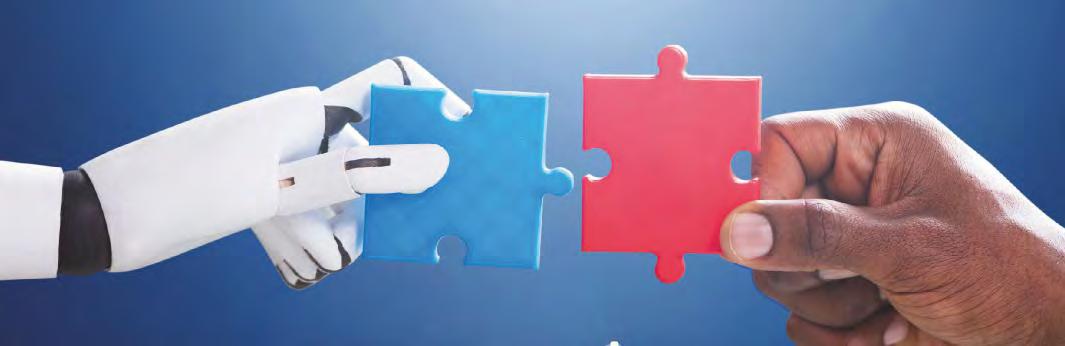
Artificial intelligence is helping the professional cleaning sector move towards predictive working - a fundamental shift in the traditional way of working for many businesses. Here, Mark Kelly - founder of AI Ireland and author of the AI Unleashed series of books - explains how AI can work hand-in-hand with the workforce to achieve a smarter and more streamlined operation.
FOR MANY YEARS, cleaning teams have worked in a state of constant reaction.
The traditional workflow is straightforward: something gets dirty, a bin fills up or a floor needs attention and then someone cleans it. While this method has been the industry standard, it is increasingly recognised as slow, costly and wasteful in the modern facility management landscape. Now, artificial intelligence is helping the industry move toward predictive cleaning, a shift focused on fixing problems before they even happen.
Systems currently in use can lower cleaning costs by 15–20 per cent simply by watching how people use spaces in real time. This evolution is more than just a technological upgrade; it is a fundamental change in how we maintain the environments where we work, shop, spend our leisure time and travel. And for facility managers, operations directors and business leaders responsible for large estates, understanding this shift is no longer optional - it is a strategic imperative.
Traditional reactive cleaning follows rigid, fixed schedules. In this model, staff inspect areas manually and only respond after problems appear. On the surface, it looks organised. In practice, it is anything but. The gap between when a problem occurs and when it is resolved can be significant and during that window, the people
using the building bear the consequences. This ‘old way’ creates several common issues that drain resources and lower standards:
• Cleaning too much in quiet areas: staff waste time and supplies on spaces that have not been used.
• Neglecting busy spaces: high-traffic areas may not receive enough attention between scheduled shifts.
• Missing hygiene risks: hazards may go unnoticed until the next manual inspection.
• High labour spending: budget is spent on ‘patrolling’ rather than active cleaning.
• Lower satisfaction: building users often encounter the mess before the cleaners do, leading to poor feedback. Under the reactive model, problems only show up after they have already affected the people in the building. It is a system of ‘catch-up’ that rarely results in peak efficiency. Beyond the visible inconvenience, there are real financial consequences: overstaffed quiet areas, under-serviced busy ones and a workforce that spends a significant proportion of its time walking between locations rather than cleaning them. AI changes this fundamentally.
Defining predictive cleaning
Predictive cleaning stops the mess before it starts. By using real-time data and AI systems, facilities can determine exactly what needs cleaning, when to clean it, how often to clean and where to send staff. Rather than following a clock, the facility responds to actual usage - a far more intelligent and costeffective approach.
This data-driven approach delivers measurable results:
• 25–30 per cent savings in maintenance costs.
• 70–75 per cent reduction in unexpected downtime.
• 20–30 per cent reduction in labour costs.
• Up to 50 per cent increase in overall productivity.
Buildings that integrate smart cleaning robots achieve consistently high-quality results with less reliance on manual labour. While getting started requires an upfront investment in sensors, software and hardware, the return on investment typically happens within a 12–18 month window - a timeline that is becoming increasingly attractive as technology costs fall and expectations around building hygiene rise.
Artificial intelligence notices patterns that people miss. Instead of following a schedule, the AI studies a variety of inputs to predict where and when cleaning is actually needed. Think of it as a building that learns to understand itself over time.
The key data inputs include:
• Foot traffic sensors: counting exactly how many people enter and exit specific zones.
• Bathroom usage monitors: Tracking how often facilities are actually used rather than cleaning them on an arbitrary hourly basis.
• Smart waste bins: Sensors that alert the system when a bin is approaching capacity.
• Building access systems: Integrating with security data to see which offices or meeting rooms were occupied.
• Maintenance records: using historical data to identify recurring trouble spots and predict when they will next need attention.
• External patterns: analysing how the time of day, day of the week or even weather affects footfall and usage.
For example, an AI system can learn that Monday mornings have little activity on certain floors, but Wednesdays become busy after 11:00 am. It might notice that bathrooms near meeting rooms are heavily used specifically at lunch, or that bins near exits fill faster on rainy days when people carry more bags and packaging indoors. It can detect that a particular corridor becomes a pinch point after large events, or that a specific washroom needs
attention twice as often on Fridays.
AI learns these details and gives teams practical, prioritised guidance on where to go next and which tasks can wait. In one documented case, this approach reduced cleaning cycles by over 30 per cent, without any reduction in hygiene standards. The AI does not just save effort, it applies effort where it will have the greatest impact.
A common concern is that AI will eliminate jobs, but the reality is quite different: it removes wasted effort. There is a meaningful distinction between the two. When AI identifies that a floor has seen no foot traffic since 7:00 am, it frees the team from an unnecessary visit and redirects that time towards areas that genuinely need attention.
This shift does require an adjustment period. Staff need training to interpret and act on AI-generated guidance. Some team members may feel uncomfortable with new technology at first, particularly those who have operated within the same routines for years. Managers must invest time and care in helping them understand that the AI is a tool, not a replacement. It handles the data, while the people handle the actual work.
By removing routine inefficiency, teams can refocus their energy on genuinely high-value work:
• Thorough, detailed cleaning that often gets skipped when teams are racing through a fixed schedule.
• Managing high-risk areas where hygiene is critical, such as clinical spaces or food preparation zones.
• Quality checks to ensure standards remain consistently high across the facility.
• Meaningful interaction with building occupants, providing a human face to the service and building trust.
Instead of rigid schedules (for example, 9:00 am, noon, and 3:00 pm regardless of what has happened in between), buildings use flexible systems that trigger cleaning only when usage reaches defined thresholds. Supervisors can see live updates on all operations and redirect teams in real time as needs change throughout the day. This is a smarter, more dynamic model of work, and staff who embrace it consistently report higher job satisfaction.
Challenges and hurdles
The benefits are real and the evidence is growing, but the journey to a smart cleaning operation is not a ‘magic solution’. Suc-
cess requires careful planning, leadership buy-in and a clear-eyed understanding of the potential roadblocks along the way.
• Upfront costs: the initial investment for sensors, robots and software can be significant, especially for smaller operations or those operating on thin margins.
• Setup time: it takes time to install hardware, integrate systems and adjust internal processes. This is not a plug-andplay solution.
• The transition period: the first few months can be challenging as teams learn new ways of working and old habits are replaced with data-driven routines.
• Data privacy: facilities must ensure they follow relevant privacy regulations and protect information gathered about building usage, particularly in environments such as healthcare or education.
• Technical maintenance: technology is not infallible. Sensors break, software requires updates and connectivity can fail. Robust technical support and contingency plans are essential from day one.
The organisations that navigate these challenges most successfully share a common approach: they treat implementation as a change management project, not just a technology project. The human element, communication, training, and trustbuilding, is as important as the hardware and software.
Predictive cleaning is already being used across Europe in major hospitals, airports, shopping centres and office buildings. The evidence base is growing and the technology is maturing rapidly. However, it is not a one-size-fits-all tool, and it is important to assess fit before committing to implementation.
AI predictive cleaning works best for:
• Large buildings with varying usage patterns across different times and zones.
• Facilities with high traffic and complex cleaning needs.
• Organisations ready to invest in technology, training and the change management required.
• Teams that are willing and supported to change their traditional workflows
It may not be the right fit for:
• Very small facilities with simple, lowvolume cleaning needs.
• Organisations with tight budgets and no capacity for upfront investment.
• Teams without access to reliable technical support or IT infrastructure.
• Locations where traditional
methods are already delivering strong, consistent results.
The honest answer is that most large facilities stand to benefit meaningfully, but only if they approach the process with realistic expectations and a willingness to evolve. Leaders who treat AI as a shortcut are likely to be disappointed. Those who treat it as a long-term operational improvement will see the results the data promises.
For many facility managers, the biggest challenge is not understanding the technology - it is convincing decision-makers within their organisation to approve the investment. Building the internal business case requires more than citing percentage savings. It requires connecting the numbers to outcomes that leaders care about.
Hygiene incidents in hospitals can lead to regulatory scrutiny and reputational damage. A busy airport with poor washroom maintenance generates immediate, visible complaints. An office building where cleaning standards fall below expectations affects staff wellbeing and, by extension, productivity. These are not abstract concerns, they are measurable risks that predictive cleaning directly addresses.
When building your case, focus on three pillars: cost reduction (backed by industry benchmarks), risk mitigation (supported by case studies from comparable facilities) and staff impact (framing the technology as an enabler of better work). Together, these arguments create a compelling narrative that goes well beyond the technology itself.
The future is here
The future of cleaning is summarised by one simple principle: clean what matters, when it matters, with proof to back it up. While the technology is real and the results are proven, success still relies on the human element. Leaders must recognise that technology is a tool to support, not replace, good management and skilled staff.
Predictive cleaning improves hygiene standards, service quality and environmental impact while ensuring contract compliance through accurate, automated documentation. It gives facility managers something they have rarely had before: visibility, control and evidence. If you are ready for the journey of implementation, the data is already waiting to help you make smarter decisions.
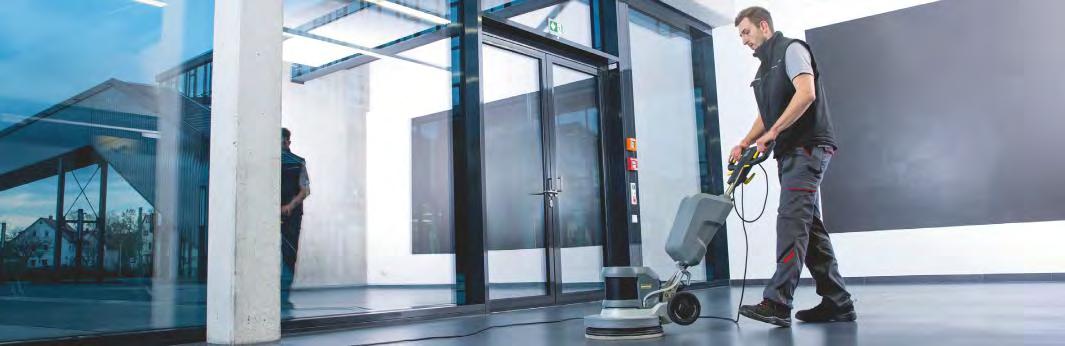
A floor polishing system needs to be ergonomic, safe and userfriendly if the operator is going to be happy using it. Ann Laffeaty talks to manufacturers and contract cleaning companies about the types of floor polishing systems where user-friendliness is placed front and centre.
operator to execute a series of controlled, repetitive movements. “These can lead to muscle strains in the back, shoulders and arms,” said Lovell. “Also, moving or transporting machinery without adherence to proper manual handling protocols can further increase the risk of injury.”
A GOOD FLOOR POLISHING system needs to be able to create a long-lasting shine as quickly and as economically as possible. But it also needs to ensure the health and safety of the operator. Heavy equipment, trailing cables, poorly-positioned handles, chemical-based floor polishes – all of these could represent a risk to the person tasked with working on the floor.
Any system employed should be easy to operate because staff members who are uncomfortable or unhappy using it will inevitably be less productive. And if the machinery supplied is cumbersome or if the controls are non-intuitive they may seek to avoid using it altogether.
So, how do companies ensure their floor polishing systems and products are ergonomic, user-friendly and safe to use for the operator? And how important are ergonomics in the development of a floor polishing system anyway?
The potential health and safety risks involved when polishing a floor need to be carefully managed, according to Cleanology’s environmental, social and governance director Kate Lovell.
“The surface can become extremely slippery during the floor polishing process and this will increase the likelihood of slips and falls,” she said. “Trailing power cables will also create an additional trip hazard and the equipment involved can place a strain on the body.”
She says floor polishing machinery can often be heavy to use and require the
Reducing the risks involved in polishing a commercial floor requires a combination of the right equipment, effective training and safe working practices, she says. “Operators should receive thorough training on how to handle machinery safely and this should include maintaining the correct posture, machine control and manualhandling techniques to minimise strain,” she said. “Using lighter or ergonomicallydesigned equipment can further reduce the risk of injuries.”
Respiratory risks can be controlled by ensuring there is a good level of ventilation in the working area, she adds. “Suitable respiratory protection should be provided where necessary to guard against dust or fumes released during the polishing or preparation stages,” she said. “And operators should use clear signage to warn others of areas that are wet or polished while also ensuring an adequate drying time for floors to prevent slips.”
Floor polishing can be carried out safely by using the appropriate equipment, employing a good technique and ensuring there are well managed working conditions, said Lovell. “Accidents and slips can be prevented by keeping the work area clearly marked and by ensuring that only small sections of the floor are polished at a time so that operators always know which areas are slippery,” she said.
“Adequate drying time should be allowed and good lighting should be maintained to help reduce the risk of slips and falls. And any trailing cables should be routed safely along walls or secured to prevent tripping.”
Injuries can also be avoided by giving operators proper training on how to handle polishing machines, she adds. “Choosing well maintained, ergonomically-de-
signed machines with adjustable handles will reduce the strain on the operative,” she said. “Taking regular breaks can also prevent fatigue.”
All Cleanology operatives receive training on machine handling, safe working postures, chemical use and ways of identifying slip and trip hazards, says Lovell. The company also carries out inspections at each customer site before beginning work. And it emphasises the importance of staff members inspecting their equipment for cable damage, loose components, worn pads or any electrical issues.
Polishing and floor finishing routines can require long and repetitive working cycles, says Filmop’s business development manager Paolo Scapinello.
“If the working pattern is not natural, operators tend to compensate by loading the wrist, shoulder and lower back which increases fatigue and raises the likelihood of musculoskeletal discomfort over time,” he said. “So the main health and safety risks we address at Filmop relate to repetitive movements, operator fatigue and maintaining control during manual floor care tasks in commercial environments.”
The choice of textile can also have an influence on both effort and control, he said. “When a mop drags, saturates quickly or releases moisture unevenly the operator will typically apply extra pressure and need to make repeat passes,” he said. “This will increase the physical load and make the process less consistent.”
Choosing systems that are both efficient and ergonomic to use is important – but is not enough on its own, says Scapinello. “The biggest reduction in risk comes when the equipment and methodology work together, and this relies on training and consistent routines,” he said. Training needs to start with the correct tool set-up, he said. “Operators need to learn how to adjust the handle height of any equipment so that it matches both their body and the task in hand,” he said. “They must also understand how to use
a controlled S-shaped movement rather than forcing the wrist or overreaching with the shoulder.
“These small corrections in their daily technique will make a major difference over the operative’s long, repetitive shifts and becomes one of the most effective ways of preventing musculoskeletal discomfort.”
Filmop’s Ergoswing system may be used for dry polishing and for applying maintenance waxes to floors. It consists of a telescopic handle with turning grip and a mop holder with an ergonomic joint designed for an easier ‘S’ movement. The system is said to enable the operator to maintain the correct posture while working, helping to reduce strain and improve productivity.
Physical strain and environmental factors pose the primary risks to the operator during floor polishing applications, says Kärcher’s vice president of floor care solutions Christian Mrowka.
Mitigate risks
“Operators are frequently exposed to vibrations and prolonged muscle tension due to the torque of high-speed machines,” he said. “Additionally there is a risk of respiratory issues if the dust generated during dry polishing is not effectively contained. And tripping hazards from cables in corded models and slips caused by the improper application of polishing agents represent significant safety concerns in commercial environments.”
A combination of technical equipment and organisational measures can help to mitigate the risks, he says.
“All machines should have low vibration values as well as integrated dust suction systems to protect the operator’s respiratory health,” said Mrowka. “Regular operator training to cover posture and guiding techniques should also be provided along with personal protective equipment such as non-slip footwear. And managers should ensure there is adequate ventilation in confined spaces in order to maintain high safety standards.”
Accidents and slips may be prevented by clearly marking the work area and ensuring that all chemical polishing agents are dosed precisely via integrated dosing systems, he said. This will avoid the issue of any excess residue on the floor surface, he adds. Kärcher offers a range of ergonomic floor polishing machines said to be easy to handle such as the single-disc BDS 43/DUO C and the ultra-high-speed BDP 50/1500 C which has a central auxiliary impeller, an adjustable handle and a rotating guard to prevent dust from swirling around.
New stripping agents, pads, floor
machines and floor finishes are frequently being launched to improve productivity, performance, ergonomics and comfort, according to Mrowka.
“Selecting the correct polishing method whether it is a machine, accessories or chemicals will ensure great results along with a high degree of productivity and comfort,” he said. “There is no need to use big, heavy machinery to achieve the best possible cleaning result: great results can be gained with the aid of light and ergonomic machines by combining them with the correct accessories and chemicals that will deliver a superior result in less time and with higher comfort.”
Kärcher uses ergonomic simulations when designing handles and control elements in a bid to minimise physical load, claims Mrowka. Safety features such as automatic motor-stop functions when the handle is released and adjustable contact pressure are also integrated from the initial design phase. “Our goal is to ensure that the machine adapts to the user - and not vice versa - in order to prevent longterm occupational health issues,” he said.
While operator safety is clearly important, how far is it considered in the development of any floor polishing systems?
Ergonomics and operator safety are major considerations in the design of any
modern floor polishing equipment, says Cleanology’s Kate Lovell.
“Manufacturers focus on features such as adjustable handles, lightweight materials and reduced vibration to minimise strain and improve comfort during use,” she said. “But customers also expect machines to be efficient, durable and cost effective. So the most successful products are those that strike a balance between strong safety credentials, high productivity and long term affordability.”
Ergonomics and operator safety are closely connected with other considerations such as productivity and cost, according to Filmop’s Paolo Scapinello.
“When a cleaning system reduces fatigue it allows operators to maintain a steady pace and work more accurately for longer,” he said. “And that reduces the likelihood of mistakes along with the need for reworking.”
Like Scapinello, Kärcher’s Christian Mrowka says safety and productivity are not mutually exclusive. “In fact, ergonomics is a driver of productivity,” he said. “An operator who experiences less fatigue and works with equipment that is both intuitive and safe is more efficient and less prone to errors or absences due to injury.”
Chemitek Solar has announced the development of a cleaning agent intended for use in drone-based maintenance of agrivoltaic systems. These installations, which combine photovoltaic panels with agricultural activity, face operational challenges including organic soiling, crop residues, dust accumulation and restricted physical access. Conventional cleaning methods are often unsuitable in such environments, prompting the need for alternative approaches compatible with ongoing farming operations.

The Drone AgroPV Cleaning Agent forms part of the company’s wider agrivoltaic product range, which includes biodegradable cleaning and water treatment solutions. The formulation is designed for application via drone spraying systems, with attention to reducing water use and limiting disruption to agricultural land. It is intended to remove organic deposits while remaining compatible with crops and soil.
Development work includes assessments of biodegradability, ecotoxicity and compatibility with plant growth. Independent laboratory testing is also being undertaken to verify suitability for photovoltaic modules and agricultural environments. www.chemitek.pt
Initial Washroom Hygiene has introduced a sanitary waste unit designed for use within toilet cubicles. The Signature Inclusive Sanitary Bin has been developed over a period of more than two years and is intended to support the disposal of both period and incontinence waste across a range of washroom settings. Research conducted in the
UK indicates that some users experience difficulties accessing appropriate disposal facilities, with a proportion reporting reluctance to leave home or carry used items due to limited provision. Other findings suggest that some employees are uncomfortable requesting improved facilities, while a number of workplaces and educational settings lack adequate disposal options.
The unit has been designed for use in female, male, accessible and unisex washrooms. It includes a larger internal tray, a 17.5-litre capacity and a slim profile to accommodate smaller cubicles. Opening options include touch-free, pedal and manual mechanisms, and the unit can be wall-mounted. www.initial.co.uk
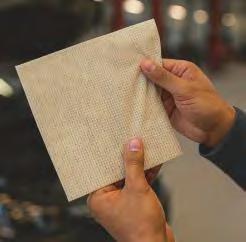
Sontara has announced the introduction of a wipes range manufactured using a combination of recycled and plant-based raw materials, including recycled PET from post-consumer bottles, viscose, lyocell, cotton and natural wood pulp. Production takes place at the company’s site in northern Spain, with the range developed to reduce environmental impact in comparison with standard products and imported alternatives.
The portfolio includes several variants of Sontara EC wipes. Sontara EC Green and EC Green Natural are produced from
fully cellulosic, biodegradable fibres, with the Natural version incorporating wood pulp to reduce processing and provide an alternative finish. Sontara EC Recycled and EC Recycled Natural combine recycled PET fibres with, in the Natural version, wood pulp, and are intended for applications requiring strength and durability.
The range also includes Sontara TriFlo Green, a multilayer wipe manufactured from 100 per cent cellulosic material. This construction is designed to increase thickness and absorption while maintaining low linting. All products are produced without added binders, chemicals or silicones and are available in a range of weights, colours and finishes, with options for customised formats.
sontara.com
Recently launched by CBAi is the AI Marketing Roadmap, a practical course designed specifically for professionals in the cleaning, facilities management and environmental services sectors.
The 10-module on-demand course claims to address a growing frustration among B2B marketers: generic AI training. Too often, the company says, AI fails to account for the realities of working in technical, compliance-driven industries where tender deadlines, regulatory requirements and relationship-based sales cycles demand sector-specific approaches.
The AI Marketing Roadmap is said to be built on real workflows as developed and tested with businesses in the sector.
The course covers subjects including AI foundations and prompt mastery, tender acceleration, content strategy, LinkedIn optimisation and Generative engine optimisation (GEO) for AI discovery. There’s also a dedicated module on tender and proposal acceleration, with techniques said to cut response times by 50 to 70 per cent.
Participants receive ongoing support through monthly live Q&A sessions, ensuring they stay current as AI tools evolve and can troubleshoot challenges in real time.
cbai.co.uk
A 100 per cent recycled washroom essentials collection has been developed by phs Group. The ReVive range comprises paper towel dispensers, soap dispensers, air fresheners, sanitary disposal units, nappy disposal units and hand dryers.
Made from recycled ABS plastic, ReVive products release four times less CO2 emissions than non-recycled products, says phs. All products in the ReVive range are also recyclable at the end of their useful life. Waste collected from the units will also be converted into renewable energy via phs Group’s LifeCycle Strategy.
www.phs.co.uk
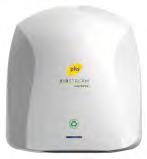
Harrisons has introduced a range of wet wipes manufactured entirely in-house, for the first time in its 135-year history. The UK-based nonwoven wipes manufacturer has expanded its business-to-business offering with products for sectors including food service, facilities management, industrial, aerospace and automotive.
The new range forms part of both the company’s industrial and hygiene product lines and includes plastic-free options.
The portfolio includes surface disinfectant wipes intended for cleaning hard surfaces, with formulations designed to address bacteria and viruses. Probe wipes are developed for the disinfection of temperature probes and small food-contact equipment, with options including alcohol-based and alcohol-free variants. Hand sanitising wipes are for use in environments requiring portable hygiene. Hand and tool wipes are formulated to remove oils, grease, paint and adhesives, and include added aloe vera.
www.harrisonwipes.co.uk
To receive ECJ free of charge (subject to qualification), complete the form below. Name
Please tick just one box in each section.
Your company’s main business activity:
q Factory & industrial premises
q Offices & commercial premises (including banks)
q Contract cleaning/cleaning services
q Distributors/wholesalers
q Health authorities/hospitals/ nursing homes
q Central and local government
q Hotels/catering/recreation (including leisure centres)
q Education establishments (including universities, schools & colleges)
q Other (please specify)
Number of company employees:
Are you personally responsible for purchasing or specifying machinery, materials, products, equipment or support services used in the cleaning and maintenance of non-domestic establishments Yes/No
q None of the above.
Please