The pan-European magazine for the professional cleaning sector
JUNE/JULY 2026


Don’t miss the ECJ washroom special series of features from pages 33 to 40



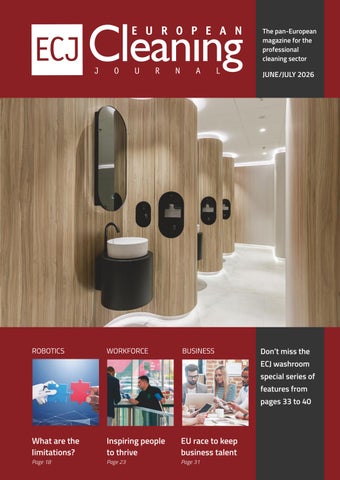
The pan-European magazine for the professional cleaning sector
JUNE/JULY 2026
Don’t miss the ECJ washroom special series of features from pages 33 to 40
35 EU Inc race to keep talent
Hartley Milner on how Europe’s entrepreneurs are leaving because of regulatory barriers.

03 News
12 European reports

Criterion Publishing Ltd
Castle House, 89 High Street
Berkhamsted HP4 2DF, UK
T +44 (0)1494 791222
F +44 (0)1494 792223
info@europeancleaningjournal.com www. europeancleaningjournal.com
Subscriptions
UK - £60 / Continental Europe - £70 /
International - £80
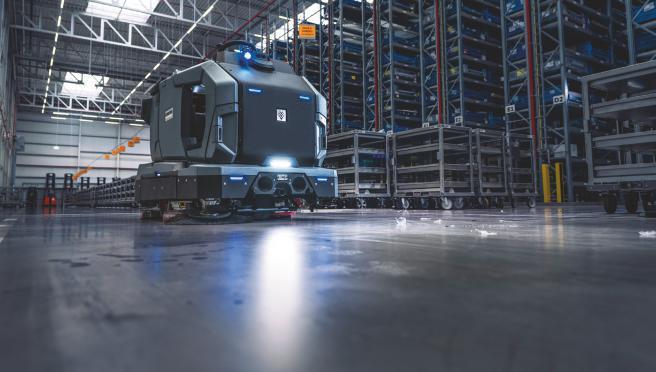
18 Robots have limits
What are the things that autonomous cleaning machines cannot do?
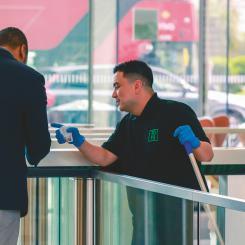
23 Inspiring people to thrive
a great place to work.
28 Kitchens made easy
How to make cleaning in food service easy and ergonomic.
33 Systems approach
Why a systems-based approach is key to a sustainable washroom.
35 Creating value
ONE HUNDRED restrooms is reimagining the public washroom.
39 Good for business
Why a well-presented washroom can no longer be an afterthought.
Editor Michelle Marshall
Features Writer Ann Laffeaty
Advertisement director
Chris Godman
Advertisement sales executive
Laura Bell
Circulation Marie Payne
• Front cover image: ONE HUNDRED restrooms (page35)
Italy, Spain & Switzerland
Fabio Potesta Mediapoint & Communications
Corte Lambruschini, Corso Buenos Aires, 8 V0 Piano, Interno 7 16129 Genova, Italy
T +39 010 570 4948
F +39 010 553 0088 info@mediapointsrl.it www. mediapointsrl.it
Interclean is the world’s leading platform for cleaning and hygiene professionals, and offers a comprehensive overview of products, services, and innovations from the world’s leading companies. Widely recognised for professional networking, knowledge exchange, insightful analysis, and industry trends.
Let’s get you involved, connected, and engaged!
Contact us for personalised advice.
28 - 30 October 2026
Interclean Shanghai 2026
SNIEC Shanghai
4 – 7 April 2028
Interclean Amsterdam 2028
RAI Amsterdam
Tork, an Essity brand, is inviting business leaders, facility managers, cleaners, designers and washroom users to join a movement to improve public washrooms and provide better hygiene for all.
The global Better Hygiene for All initiative now offers expanded resources to help businesses strengthen their brands and increase performance by meeting the washroom needs of as many people as possible.
Inclusive hygiene in the washroom boosts employee experience, customer satisfaction and business reputation and revenue, says Essity global brand manager professional hygiene Jenny Logenius.
“More than half of us face hygiene barriers in the public washroom, yet only one in five of these facilities meet basic cleanliness expectations,” says Logenius. “This creates a critical gap and results in customers spending less, leaving venues early or avoiding the space entirely.”
Inclusive hygiene brings dignity and comfort while also boosting the washroom user’s confidence in themselves and their loved ones, she said. “Across the board we have heard people say they want more - more guidance on best practices, more ways to share feedback and more solutions that support better hygiene for all.”
Tork is offering business leaders, facility managers, cleaners, designers and washroom users various ways of becoming involved in enabling better hygiene for all. The newly-launched Tork Inclusive Hygiene online resource hub provides practical resources, best practices, research and guidance to help companies deliver public washrooms that meet the hygiene needs of as many people as possible. The site also welcomes feedback, ideas and suggestions to inform future solutions.
“We’re grateful for the momentum this movement has created and we’re excited to
welcome even more voices to help drive meaningful change,” said Logenius.
The 2025 Tork Insight Survey revealed that 54 per cent of people experience some form of difficulty when using a public washroom.
Barriers often arise from a mismatch between people’s needs and the environment. When washroom environments are not designed to support a wide range of needs and circumstances they can create experiences that are uncomfortable or difficult, according to the Tork study which polled 11,500 people in 11 countries.
Removing barriers
Limited washroom privacy can be an invisible barrier to those with paruresis, or shy bladder syndrome. And a restricted space or a lack of appropriate disposal options can be challenging for people with a catheter or ostomy bag.
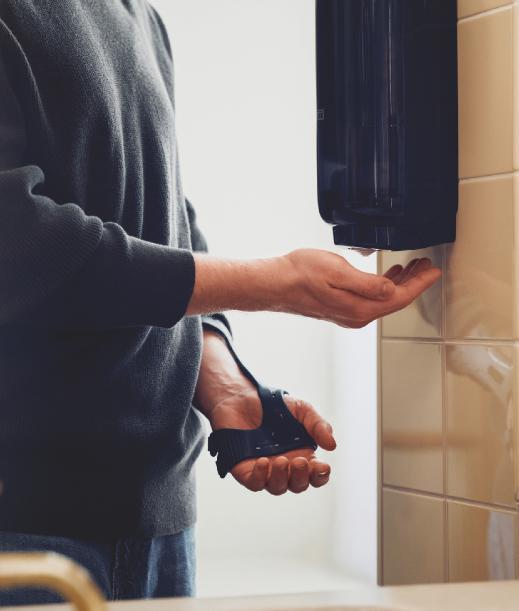
Using dispensers for soap, toilet paper and hand towels can cause difficulties for those with low hand strength or muscular or joint issues. And washroom maintenance, design and layout can present a barrier for people with hygiene concerns or for those who feel uncomfortable in small, shared spaces.
Using the dispensers for soap, toilet paper and hand towels can cause difficulties for those with low hand strength or muscular or joint issues. And washrooms can present a barrier for people with hygiene concerns or for those who feel uncomfortable in small, shared spaces.
Tork aims to identify and address washroom barriers to ensure that publicly facilities meet the hygiene needs of as many people as possible. Essity won an Amsterdam Innovation Award in the Sustainability & Environment category at Interclean Amsterdam recently for its global initiative to make public spaces more welcoming, comfortable and functional.
To learn more: www.torkglobal. com/gb/en/about/inclusivehygiene/join-the-movement
September 15-17
Clean Pro Expo Friedrichshafen, Germany www.cleanpro-expo.com
October 8
European Cleaning & Hygiene Awards Palma de Mallorca, Spain www.echawards.com
October 13-15
Cleantex Africa Johannesburg, South Africa cleantex.co.za
October 28-30
Interclean Shanghai Shanghai, China www.intercleanshow.com/china
November 16-19
ISSA North America Las Vegas, USA www.issa.com
March 16-18 2027
The Cleaning Show London, UK cleaningshow.co.uk/london
March 16-18 2027 Europropre Paris, France www.europropre.com
May 11-13 2027
ISSA Pulire Milan, Italy www.issapulire.com
September 21-24 2027
CMS Berlin Berlin, Germany www.cms-berlin.de
November 8-11 2027
ISSA North America Las Vegas, USA www.issa.com
April 4-7 2028
Interclean Amsterdam Amsterdam, Netherlands www.intercleanshow.com
To have your event included in the Events section, contact ECJ via email at: michelle@europeancleaningjournal.com
The International Association for Soaps, Detergents and Maintenance Products (A.I.S.E.)the European body representing the cleaning and hygiene products industry - has now become Detergents Europe.

This, it says, is a strategic repositioning responding to the need for a clearer, more recognisable identity.
Policymakers are focused on key priorities to which the sector contributes - Detergents
Europe says - including health resilience, strategic autonomy, industrial competitiveness, supply-chain security and regulatory simplification. At the same time, rising consumer expectations for high standards of cleanliness underline the relevance of the sector.
“Our industry enables Europe to pursue and achieve its most pressing strategic priorities: from enhancing health security to fostering competitiveness, improving quality of life to increasing sustainability,” says its president, Florian Vernay.
“Becoming Detergents Europe reflects a vision to make our sector immediately recognisable, visible and approachable to our partners and stakeholders and strategically relevant as a crucial sector to protect public health, people’s wellbeing and many value chains.”
Director general of Detergents
Europe Alexis Van Maercke added: “We want to be clear in all our interactions that we are the voice of the cleaning and hygiene products industry. Detergents, cleaning and maintenance products, disinfectants and biocidal products used to clean and protect our homes and public spaces are essential for a healthy and resilient Europe.
“Detergents Europe will continue to collaborate constructively with authorities and policymakers to ensure balanced legislation across Europe, through innovative, safe and sustainable solutions.”
Detergents Europe leverages scientific expertise to advocate for balanced, science-based legislation that enables companies to invest and innovate to continue delivering safe, effective and sustainable products.
www.detergentseurope.eu

EFCI - the organisation representing the sector at EU level - is re-launching CIRCLE, a dedicated space created to bring together the European cleaning ecosystem and strengthen connections between cleaning businesses across the sector.
Designed for the companies involved in professional cleaning across the countries of Europe, CIRCLE offers a platform for organisations to exchange ideas, learn from one another and build partnerships at European level. It brings together industrial cleaning companies, training bodies, technical and professional study centres, as well as organisations active in health and safety and risk prevention.
Insight on trends
Participants in CIRCLE can expect a mix of insight, connection, and practical
opportunities to engage:
• Intelligence: participants will gain access to insights on EU policy and market developments, along with early signals on the trends shaping the future of the sector.
Meet and connect
• Network: CIRCLE will offer two online knowledge-exchange sessions each year, alongside one in-person opportunity to meet and connect with peers from across Europe.
• Visibility: members will have a presence in the CIRCLE ecosystem through the directory and badge, with additional opportunities to be featured.
• Access: the initiative will also create direct opportunities for engagement with EFCI leadership and other key stakeholders.
Those interested in joining the first wave and helping build critical mass in 2026 are invited to email: secretariat@efci.eu
The World Federation of Building Service Contractors (WFBSC) is to host its Global Executive Congress 2026 from November 17-19 at Mandalay Bay Resort & Casino in Las Vegas, USA. The congress will be hosted in partnership with the Building Service Contractors Association International (BSCAI) as part of its Contracting Success Conference. It’s also taking place at the same time as the ISSA North America exhibition.
The WFBSC event is promising a forward-looking programme centred on global market insights, emerging trends and leadership strategies.
Confirmed keynote speakers include Peter H. Diamandis, MD, founder and executive chairman of the XPRIZE Foundation, and Claire Williams, former deputy team principal of the Williams Formula One racing team. Visit www.wfbsc.org







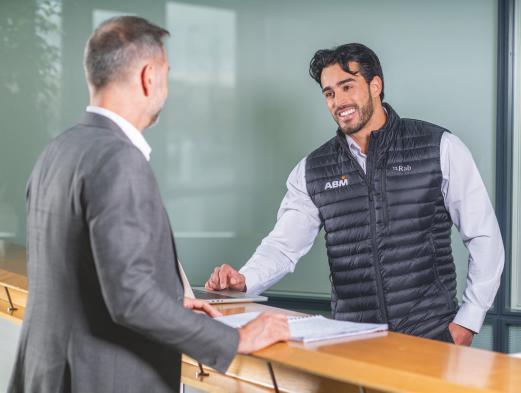
A new study by facilities solutions provider ABM has found that nearly 9 in 10 workers globally would give up a portion of their salary in exchange for a more personalised work experience.
The research, published in ABM’s white paper How Modern Workplaces Win, surveyed more than 500 full-time office workers across the UK, US and Ireland. It finds employees are not opposed to office life - but they are clear about what it needs to offer.
Eighty-five per cent say they would willingly spend more time in the office if the right facilities were in place. More than eight in 10 agree a great office space directly improves culture.
As more and more businesses mandate more days in the office following the work-from-home trend after the pandemic,that gap between the appetite to return and the experience worth returning for is becoming harder to ignore, says ABM. For example, research from King’s
College London tracking over one million UK workers shows compliance with full-time return-to-office requirements has fallen from 54 per cent to 42 per cent in two years.
The research was commissioned to support the launch of ABM’s new workplace experience offer, delivered by its ABM Experience Solutions team.
Simon Barnes, VP sales and marketing explained: “The depth of expertise our team has now underpins ABM’s fully integrated workplace offer. The ABM Experience Solutions team places hospitalitytrained professionals inside client workplaces, supported by bespoke diagnostics which gives clients a tailored service designed to engage. The result is a workplace that does not just look good on a floorplan but one that works measurably and consistently for the people inside it.”
The European Parliament has endorsed the Chemicals Omnibus VI package in plenary, giving a strong mandate to simplify the Classification, Labelling and Packaging (CLP) Regulation while maintaining a high level of protection for human health and the environment.
The European Parliament is now ready to enter
and multilingual markets. Simplification measures are intended to improve label readability for consumers, reduce unnecessary waste, and avoid disproportionate regulatory and economic burdens across the value chain.
Commenting on the vote, Alexis Van Maercke, director general of Detergents Europe (the Brussels-based association

interinstitutional negotiations with the European Commission and the Council of the European Union. The outcome of the Plenary vote confirms broad political support for making EU chemicals legislation clearer, more workable and more predictable for companies and consumers alike.
Cross-party backing
The adopted position follows broad cross-party backing in Parliament and reflects growing recognition that existing CLP implementation and formatting requirements can be impractical in real-life conditions, particularly for small packaging
representing detergents, cleaning and maintenance products, disinfectants and biocidal products manufacturers) said: “Today’s plenary vote sends a strong signal that simplification and protection can go hand in hand.
“The Parliament has recognised that certain CLP rules are no longer fit for purpose and need to be adjusted to remain effective in practice. For the detergents and maintenance products’ sector, clear rules and realistic time lines are essential to ensure compliance, consumer understanding and sustainable product design.”
Global facility services company ISS - headquartered in Denmark - has reached agreement to acquire Tomagruppen, a Norway-based majority family-owned facility services company founded in 1978. It specialises in provision of cleaning, catering, property management and other support services to
both the public and private sectors - and also has business in Denmark.
Kasper Fangel, group CEO of ISS commented: “We are excited to announce this agreement, welcoming more than 4,000 new colleagues - as well as new customers. Beyond expanding
our presence in the Nordic region, this bolt-on acquisition is a strong strategic fit with ISS’ well-performing business in both Norway and Denmark.
“It will drive efficiencies and unlock clear synergies, while enabling us to further scale and enhance our Integrated Facility Services (IFS) offering for customers across the region.”
“For Tomagruppen, this is an exciting milestone,” added Frode Monsen, group CEO of Tomagruppen. “We are very proud of what we have built, and we look forward to becoming part of the ISS Group. Together, we can strengthen our offering to customers and create new opportunities for our employees and partners in the years ahead.”
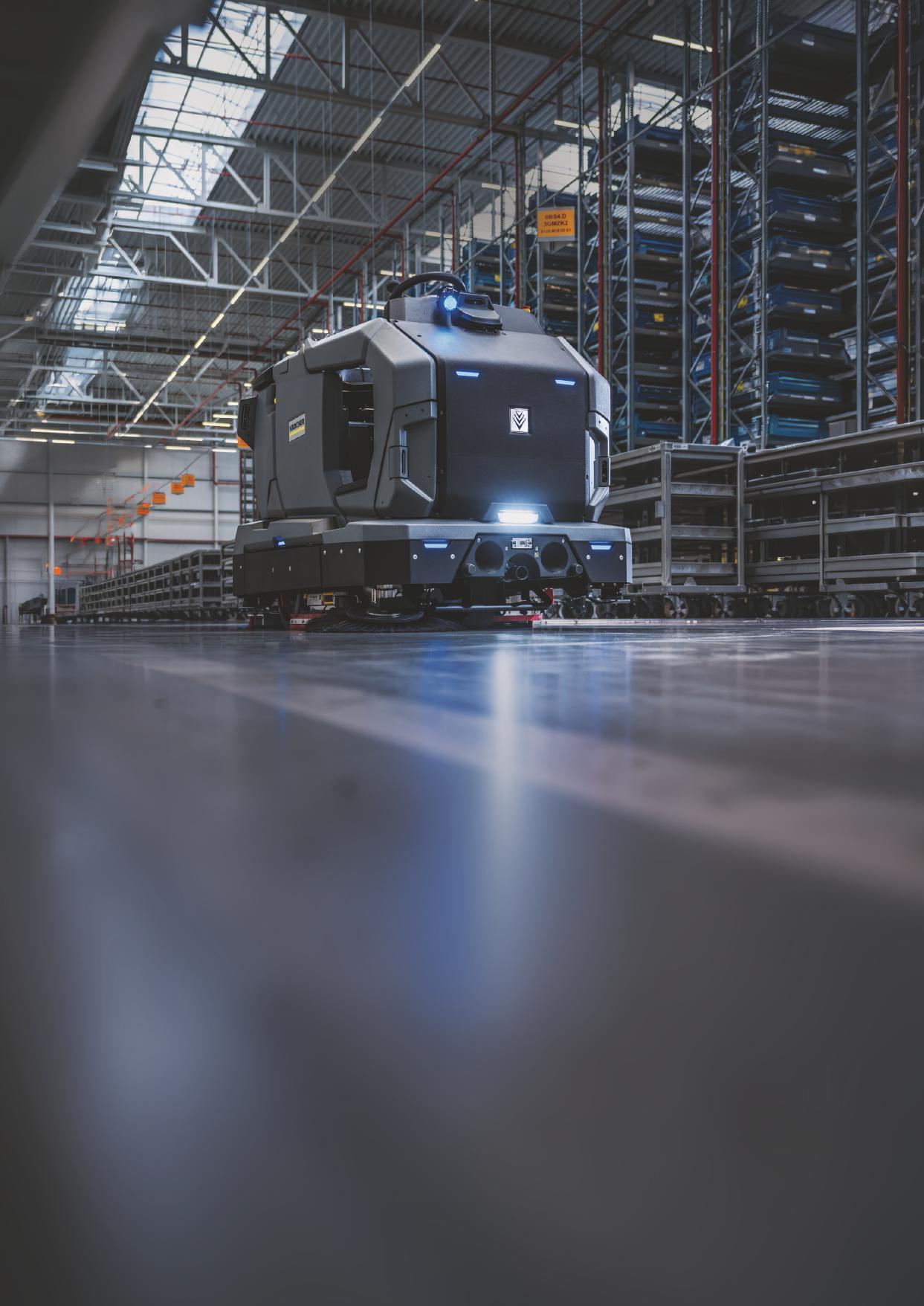
UK-based cleaning solutions
manufacturer Numatic International has commissioned a commercial solar installation at its manufacturing site in Chard, Somerset, using high-efficiency solar technology.
The £1 million project, installed across a five-acre site by SunGift Solar, supplies electricity directly to Numatic’s plastic moulding operations and is intended to reduce energy costs and improve energy security at the site.
According to the company, the solar array generates up to 1.73MWp from 2,672 panels, compared with around 1.6MWp typically achievable from a conventional ground-mounted system of a similar size. Numatic said the installation is expected to meet around 20 per cent of its annual on-site electricity demand, with output rising to full site demand on some days.
Battery integration
The installation uses AIKO All-Back-Contact (ABC) solar cells combined with hybrid inverters. The system has also been designed to support future battery integration.
Stephen George, regulatory affairs and sustainability manager at Numatic International, said: “By investing in cutting-edge solar technology, we’re reducing our environmental footprint at the same time as protecting our manufacturing operations from rapidly rising energy costs.
“Part of our ‘Operation Cleansweep’ sustainability goals, the new micro-solar-park shows what can be achieved when you
reimagine how you approach small spaces. It helps us on our journey as a responsible manufacturer and accelerates our progress towards achieving Net Zero by 2035.”
Numatic estimates the installation will reduce CO2 emissions by approximately 267 tonnes per year.
Steve Whitlock, finance director at Numatic International, said the project formed part of the company’s longer-term approach to energy management.
“In the current environment, every business needs to consider how it’s going to secure its energy requirements in the future,” he said. “This investment represents a step forward in our ability to meet our own energy needs.”
Gabriel Wondrausch, director at SunGift Solar, said the project demonstrated how smaller parcels of land adjacent to industrial facilities could be used for solar generation.
“By using highly efficient commercial versions of solar panels normally only used on domestic properties, we could transform a relatively small parcel of land into a valuable solar asset for Numatic,” he said.
The AIKO panels used in the project place electrical contacts on the rear of the solar cells rather than the front surface, increasing the area available to absorb sunlight. Numatic said the technology also improves performance in partial shading conditions and reduces energy losses during operation.

A UK hospital cleaner had to wait nearly seven months for the all-clear after sustaining a needlestick injury at work.
The unnamed woman was emptying a clinical waste bin when a needle protruding through the bin liner went through her trousers and pierced her leg.
“I saw a bit of blood and I panicked,” she said. “One of my colleagues then sent me across to A&E to get it checked out.” The operative underwent blood tests for HIV, Hepatitis B and Hepatitis C and had to wait for nearly seven months before all the results were returned.
The Health and Safety (Sharp Instruments in Healthcare) Regulations 2013 from the Health and Safety Executive state that used needles should be placed in a secure container such as a sharps bin. These should be clearly marked and placed close to the areas where medical sharps are used.
However in this case, a lapse from a health professional meant the needle was placed straight in a bin liner. The hospital admitted liability and the cleaner secured a fourfigure damages settlement sum through Hudgell Solicitors. Proper disposal
A spokesperson for the firm said the case highlighted the importance of disposing of used needles properly. “The regulations say that training for health professionals must cover the safe use and disposal of medical sharps,” he said. “However, in this case it did not occur and caused our client months of unnecessary stress and fear after her leg was pierced.”
The cleaner has now returned to work at the same hospital. “I’d been there 21 years and this was the first needlestick injury,” she said. “But I’m now nervous and worried when moving bin liners at work in case it happens again.”
DRYFT World has renamed its European business from Motorscrubber BV to DRYFT Europe BV as part of a restructuring of its operations in the region.
Aftersales services
The company said the move is intended to support the expansion of its European distributor network and improve access to products
and aftersales services across the continent.
As part of the changes, DRYFT Europe BV has entered into a partnership with Dutch distributor VAT Cleaning Solutions, based in Oosterhout, the Netherlands. Under the arrangement, VAT Cleaning Solutions will provide warehousing, logistics and repair services for DRYFT products
within Europe.
According to the company, the new logistics operation will reduce delivery times and simplify the ordering process compared with previous arrangements, where products were shipped from the UK.
Local sourcing
DRYFT Europe BV said it now holds stocks of machines, accessories and
spare parts within Europe, allowing distributors to source products locally. The company has also introduced €-based payment options for European partners.
The business said the revised structure is intended to provide a platform for further distributor growth across European markets while improving support for existing partners.






Nanorobots could be used to clean up microscopic environments by collecting bacteria and depositing them at defined locations.
This would enable humans to have direct interaction with the microscopic world for the first time, offering the possibility

of applications in microbiology, biomedical research and targeted manipulation at the microscale.
Around 50 times smaller than the diameter of a human hair, the robots enable the controlled manipulation of objects far too small for human hands.
This allows them to “clean” microscopic environments under controlled laboratory conditions by collecting bacteria and depositing them elsewhere.
Controlled and targeted
Researchers at JuliusMaximilians-Universität Würzburg in Germany claim the robots are sufficiently agile to enable them to perform extremely rapid 90 degree turns. This allows them to systematically and efficiently scan large areas. They can then selectively capture, transport and release significant numbers of bacteria to a new location.
A key challenge for the researchers was how to power and steer such extremely small
machines. They solved this problem by using the recoil of individual photons to move the micrometre-sized devices.
“In essence, we have built a light-driven nanorobot that can track down and collect bacteria,” says Jin Qin, lead experimental scientist of the study.
“By simplifying the design, we reached a size at which these robots can operate directly in the microbial world - almost like microscopic cleaning devices.”
Handling objects such as single cells or bacteria in a controlled and targeted way has been a major challenge in the past. The nanorobots demonstrate that the controlled manipulation, collection and relocation of bacteria is now achievable.
Don’t miss this edition’s special reports on modern washrooms - starts page 33
























































































































































































































































































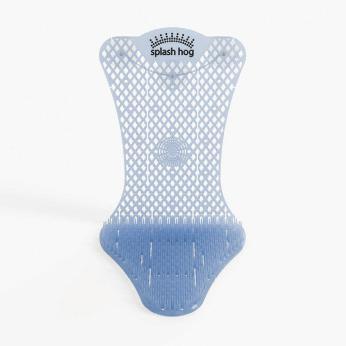




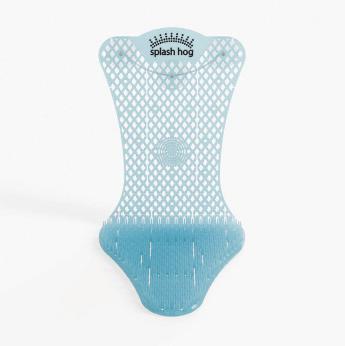
Maintaining standards in school washrooms is a unique task, writes John Griep in the Netherlands.
School washrooms are often one of the most heavily used spaces in an educational building. At the same time, maintaining consistent hygiene standards in these environments remains a challenge for many educational facilities.
Expectations around hygiene, wellbeing and user experience in schools also appear to be increasing. This creates a challenge for cleaning professionals: traditional cleaning routines alone may be insufficient to maintain washrooms conditions throughout the day. Instead, schools and service providers are increasingly recognising the need for a broader and more preventive approach.
School washrooms present several operational challenges that distinguish them from many other public environments. Usage intensity is typically high, particularly during breaks, while cleaning windows can be limited. In addition, younger pupils may use facilities differently from adults, resulting in faster deterioration of cleanliness standards during the day.
Perception may also play an important role in how school washrooms are experienced. Visible cleanliness, odours and the availability of consumables such as soap and paper products can all influence the overall impression of hygiene throughout the day.
For cleaning teams, this means maintaining hygiene in schools is not simply about completing a scheduled task. It increasingly requires attention to appearance, functionality and user experience throughout the day.
Preventive management
In high-traffic sanitary environments, a largely reactive cleaning approach focused mainly outside teaching hours may make it difficult to maintain consistent washroom conditions throughout the school day. A more effective strategy can be preventive hygiene management. This combines cleaning with regular inspection, rapid
replenishment of consumables and closer cooperation between schools, facility teams and cleaning providers.
Practical measures
Relatively small operational adjustments may already make a considerable difference. Examples include:
• Introducing interim inspection rounds during busy periods;
• Ensuring soap, toilet paper and hand-drying facilities remain consistently stocked;
• Using durable, easy-to-clean materials and fixtures;
• Encouraging clearer reporting procedures, for example through systems such as VSR-KMS, for defects or hygiene issues;
• Involving pupils in respectful washroom behaviour initiatives.
Importantly, responsibility should not rest solely with cleaning staff. Better outcomes are often achieved when schools treat sanitary hygiene as a shared operational priority.
Growing hygiene awareness
Across the sector, awareness of school hygiene management appears to be growing. In the Netherlands, VSR (Vereniging Schoonmaak Research) is preparing an inventory initiative examining how hygiene and cleaning are organised within primary schools. The project is currently in its early stages, and no results are yet available.
Nevertheless, the initiative may reflect a broader recognition within both education and the cleaning industry that school washrooms deserve more structured attention than they have traditionally received.
For cleaning professionals, school toilets represent more than a routine sanitation task. They are high-use environments where hygiene, perception, behaviour and facility management intersect. As expectations around health and wellbeing continue to evolve, schools may increasingly benefit from moving beyond reactive cleaning towards a more integrated hygiene strategy.
Christian Bouzols in France reports on a new study of procurement practices in the cleaning market.
The Observatory of Cleaning Markets, published in March 2026, is a report based on 50 interviews conducted by Amnyos in 2025 with public and private sector buyers and managers of cleaning companies. It provides an overview of procurement practices in the cleaning sector and reaches a mixed conclusion: while cleanliness is now recognised as a critical factor for organisational image, health and business continuity, purchasing practices often remain ineffective and can undermine service quality.
The report begins by highlighting the sector’s economic significance, with annual turnover exceeding €21 billion. Yet despite its strategic importance, the authors note that “the purchasing function largely remains in the shadows”. Several factors contribute to this. The diversity of sites involved - including offices, hospitals and warehousescombined with the number of internal stakeholders and the labour-intensive nature of cleaning services, makes it difficult to define requirements clearly. Evaluating bids presents further challenges. According to the report, “the assessment of technical proposals is a central difficulty”, owing to inconsistent terminology, written responses that are difficult to evaluate and technical criteria that are often very similar.
As a result, “in almost all of the cases cited, price remains the determining criterion”. The report illustrates this: “On paper, the weighting may be 60 per cent technical and 40 per cent price. However, in many cases, if you are not among the three lowest-priced bids, you are automatically eliminated.”
The study identifies the quality of dialogue between buyer and supplier as a major lever for improvement. Successful contracts are typically those that include site visits, question-andanswer sessions, presentations and an initial framework for discussion. As one buyer says:
“Without thorough site visits and early dialogue, contracts are built on shaky foundations.”
Service providers share a similar view. One commented: “What makes the difference is when we are able to ask questions, explain our constraints and propose operational solutions. If everything is decided purely on the basis of a spreadsheet and a price, we know it is likely to go wrong.”
The transfer of staff when contracts change hands remains “a key structural issue”. Incomplete employee lists or delays in providing information complicate workforce transfers and the preparation of accurate bids. As one manager explained: “We are sometimes given employee lists with incomplete information. If the data is unreliable, the risks fall on us.”
Another sensitive issue concerns price revision mechanisms. Many respondents believe the absence of effective indexation clauses can turn otherwise sustainable contracts into economic liabilities. Conversely, clear review clauses linked to recognised sector indices help maintain stability.
Environmental considerations, equipment ergonomics, and health and safety issues are receiving greater attention, but they remain insufficiently weighted during the evaluation of bids. Digital tools such as extranets, mobile applications and QR codes can provide a useful framework for contract management, provided they support communication rather than replace it. As one interviewee remarked: “We need monitoring and control, but if the relationship is reduced to that alone, it becomes a process-driven exercise.”
The report concludes by proposing a typology of buyerspragmatic, responsive, orchestrating and structured - and calls for more realistic specifications, greater dialogue during procurement and clear price review mechanisms in order to create more sustainable contracts.
ECJ’s Anna Garbagna with news of a special event for Made in Italy Day at Interclean Amsterdam.
Italy is playing an increasingly prominent role in the industrial cleaning sector. Evidence of this was provided by the celebration of Made in Italy Day at Interclean Amsterdam recently, attended by Italy’s Ambassador to the Netherlands, Augusto Massari.
Italy’s presence at the exhibition became a high-profile showcase for the professional cleaning industry – a sector that may be modest in size compared with other industrial markets, but which has earned a strong reputation for competing successfully on the international stage. The quality, expertise and reliability associated with Made in Italy were highlighted during the ambassador’s visit to the stands of the Italian companies exhibiting at the show.
Accompanied by Francesco Pasquini and Stefania Verrienti, president and director of Afidamp respectively, Ambassador Massari met with business leaders and paid tribute to a supply chain that makes an important contribution to Italy’s reputation as a manufacturing and exporting nation. The visit represented recognition of a sector that forms an important part of Italy’s industrial excellence worldwide.
The panel discussion Technology & Sustainability: The Engines of Made in Italy, moderated by Verrienti, focused on the twin themes of technology and sustainability. The session explored the value of Italian industry through the perspective of international markets. It provided an open discussion with those who work alongside Italian companies every day and are able to assess their competitiveness, reliability and capacity for innovation first-hand.
The panel featured Robert Stelling, director of Interclean; Tamara van Ark, president of Schoonmakend Nederland and former Dutch minister for medical care and sport; Philippe Scemama, CEO of DHYS International Group; and Antonio Kouwenberg, founder of Klien IT. Representing the associa-
tion, business and technology sectors, the speakers offered different perspectives on why the Italian industrial model continues to be recognised and appreciated internationally.
The discussion focused on the factors that make Made in Italy competitive: product quality, manufacturing flexibility and the ability to build strong relationships with partners and distributors, alongside a growing commitment to innovation, digitalisation and sustainability. These latter two drivers are reshaping the future of professional cleaning, transforming processes, products and business strategies.
The speakers highlighted an Italian cleaning sector that is responding pragmatically to change and embracing new opportunities for increasingly international collaboration, particularly between Italy and the Netherlands.
To mark the cultural and industrial significance of the sector, Ambassador Massari was presented with a copy of ‘Della Pulizia Industriale’ by Giulio Guizzi, one of the world’s leading experts on the history of cleaning. The book traces the evolution of the cleaning industry and highlights its global significance, demonstrating how professional cleaning has become a strategic sector built on manufacturing expertise, innovation and business culture.
The celebration of Made in Italy Day at Interclean therefore represented more than a symbolic gesture; it served as recognition of the sector’s industrial and strategic importance. Under the spotlight of the industry’s leading international exhibition, the Italian professional cleaning sector once again demonstrated its ability to engage global markets through its products, expertise and vision. Often operating away from the public eye, the sector is nevertheless becoming increasingly central to global trends in innovation, sustainability and competitiveness.
Lynn Webster in the UK on how funding for apprenticeships in the industry has been withdrawn.
The UK cleaning industry is escalating its pressure on the government following the decision to withdraw funding for the Level 2 Cleaning Hygiene Operative Apprenticeship; a move that may damage workforce development at a critical time for the industry.
The issue has become a major point of concern for the British Cleaning Council (BCC) and the Cleaning & Support Services Association (CSSA), who argue the removal of the apprenticeship pathway risks weakening long-term recruitment, training and professional standards across the cleaning sector, one of the UK’s most essential industries.
In a recent communication to the Department for Education, the BCC expressed “profound concern” over the decision, while also confirming its intention to continue constructive discussions in pursuit of alternative solutions with various government departments, including the Department for Work and Pensions and Skills England. The CSSA also supports this position, reinforcing industry-wide concerns that cleaning businesses will continue contributing heavily to the Growth and Skills Levy while having diminishing access to relevant funded training opportunities for much of their workforce.
The debate continues at a particularly difficult time for the sector. Cleaning service providers are already struggling with the impact of labour shortages, significant rises in wage costs and constant drives to meet sustainability and compliance standards. It is commonly recognised that structured training pathways are essential if the industry is to attract a younger workforce and improve longterm retention.
This was highlighted by the panel presentations in the Cleaning Innovation Hub at The Workplace Event recently, with concern raised of disconnect between training being ‘nice to have’ rather than ‘essential’.
Workforce investment has not kept pace with expectations placed on employers.
Government representatives indicate current policy priorities are heavily focused on youth employment and creating opportunities for younger workers to enter the labour market. For the cleaning sector, that presents both a challenge and an opportunity. Responsibility falls on the industry to make young people more aware. We have the scale and infrastructure to offer meaningful careers to young people entering employment for the first time. But the industry is often highlighted as suffering from an outdated image problem. Many young people, parents, schools and careers advisers still do not view cleaning as a long-term professional career with progression opportunities. Shift needed
So, is the industry its own problem? We may be our own worst enemy!
The cleaning industry has significant potential to provide stable, accessible and meaningful employment opportunities for young people with genuine progression opportunities, transferable skills and stable long-term work, particularly for those who may not pursue traditional academic routes. This perhaps requires a shift from short-term recruitment approaches towards longerterm workforce development with more flexible models, stronger collaboration across education and industry, and greater recognition of cleaning as a skilled profession. This would help employers create sustainable early-career pathways that benefit both businesses and young people.
The central question is no longer simply about access. Instead, it is about having structured, employer-led entry routes into a safety-critical industry that remains essential to the functioning of the UK economy.
Lotte Printz reports for ECJ from Industry Day in Denmark where cleaning professionals were recognised for achievements in driving digitalisation.

No comment!
To be honest, this famous phrase often used by elusive politicians and in television crime stories wasn’t actually said out loud on this occasion where sharing knowledge is key. And it wasn’t out of ill will either that I was left with no comment from the award winner of a new digital prize presented for the first time at Industry Day 2026 in Odense, Denmark.
Halil Ismail, the award winner in the employee category, simply rushed out of the venue to get back to his cleaning job that he had begun in the middle of the night to take some time off in the morning to receive the award –
and there was some unfinished business he had to take care of.
That’s dedication for you!
Pivotal role
Mr Ismail, a cleaner from Forenede Service, has been engaged in the company’s applied digital efforts based on its ‘Service Profit Chain’ approach; the purpose of which is not only to boost efficiency, but also to strengthen the connection between employee well-being, order quality and customer experience. In this case, a robotic floor cleaner was implemented, and Mr Ismail played a pivotal role in turning technology into real value. He himself had a very posi-
tive approach to the change and to getting to know this ‘virtual colleague’ by understanding its strengths and weaknesses. The machine has become an integral part of his job and the tasks he’s fulfilling. Besides, Mr Ismail has been the ‘go-to person’ for his other colleagues by reducing any barriers they may have had in using the machine in their everyday work. Naming it has been another way of demystifying and thus embracing this new virtual colleague.
The implementation of a robot has released time for other tasks, and the clients have experienced higher quality cleaning and more consistent standards. As a result of the reduced physical strain from repetitive floor tasks, the cleaning staff have experienced less fatigue. For Halil Ismail, being so deeply involved in the successful implementation has also been a source of pride.
Speaking to ECJ, the other award winner, in the manager category, was one big smile:
“This is truly great. I hadn’t seen it coming as I feel as if I’m just doing my job, which is basically to make my employees thrive,” Helle Mølholm, owner and CEO at Ren Service Plus ApS, said. “And I’m deeply touched by their fine words in the nomination.”
Mølholm earned the award for introducing transition from a physical folder that the admin
staff at her company handled manually to a full digital solution managing all admin processes, thus facilitating their work.
Even though Mølholm received the award for achievements at managerial level, she was eager to praise her staff:
“In this transition, my principal duty was to make my employees like the idea as much as me. I throw a ball up into the air and –my staff are magnificent – they catch it every time. They have done really well in pulling off this huge task.”
This transition has made operations much more efficient.
“Before it was all in our heads and staff had to ‘locate’ other staff to obtain the right information. Now everybody knows everything because we can look it all up,” Mølholm said.
For a company like hers covering large areas where staff do not necessarily see each other on a daily basis, this is particularly pivotal. In addition, the jury stressed, Helle Mølholm serves as a shining example to other managers who are facing implementation of similar digital solutions that can ease admin procedures for employees, while also ensuring company growth.
One of the cornerstones of this third Industry Day on digital transformation.
“Digitalisation is the backbone of modern cleaning – not an appendix. If you don’t jump on board, you’ll be a thing of the past,” as one of the organisers pointed out in his welcoming speech.
By participating, attendees had taken the first step, though, it was added.
Once again, it is time for the results of the annual spring survey by the Federal Guild Association of the Cleaning Trade (BIV), which has been a key indicator of industry sentiment since 2019.
Compared to previous years, something significant has changed - though not for the better: only 16 per cent of the surveyed companies have a positive outlook for the current financial year. Fifty per cent expect business to remain stable. Meanwhile, 34 per cent have negative expectations for 2026 - making this the most pessimistic overall sentiment since the BIV began its economic surveys.
A clear shift is evident among industrial clients. Nearly half of the companies (49 per cent) report a decline in customer numbers or order volumes. Even more significant is that 65 per cent of businesses observe a reduction in services requested by their clients. The sectors most affected are industry as well as office and administration (each at 26 per cent), followed by retail at
Katja Scholz in Germany reports on the annual spring survey from the contract cleaning association BIV, a key indicator of industry sentiment.
21 per cent.
The assessment of the political situation among surveyed companies is highly critical overall. The federal government under Chancellor Friedrich Merz receives a clearly negative rating after almost one year in office. On a scale from 1 (very dissatisfied) to 10 (very satisfied), the current average score is 3.7.
“The proposals for our healthcare system have been on the table since March, and reform ideas for pensions will follow in June. Then it is up to the federal government to act consistently and swiftly,” explains Federal Guild Master Thomas Dietrich.
“The core lies in structural reform of the social security systems. The success of this will decisively determine the future of our economic location - and, incidentally, the credibility of this federal
government as well.”
Another burden is the sharp rise in mobility costs. Since the cleaning industry operates nationwide and employees travel daily between numerous locations in both urban and rural areas, this development has a particularly strong impact. As a result, 88 per cent of companies report noticeable strain. At the same time, 89 per cent support at least a temporary reduction in taxes or levies, such as energy tax, CO2 charges, or VAT on petrol and diesel. Additionally, 87 per cent back the political approach of placing mineral oil companies under stricter antitrust control. Economic difficulties are also clearly reflected in the labour market. Employment growth in the cleaning sector has slowed noticeably. While a peak of 696,444 employees was reached
in 2023, the number fell to 667,489 by 2025, a decrease of 4.2 per cent. Twenty-nine per cent of companies had to reduce staff for operational reasons between 2025 and 2026. For 2026/2027, 41 per cent of businesses already expect further layoffs.
Despite this trend, overall demand for workers remains high: 74 per cent of companies are still seeking staff. Reasons include high turnover in the industry and the growing shortage of skilled workers due to demographic changes. At the same time, 26 per cent report they are currently not hiring, a figure that has risen significantly compared to 2024 (10.9 per cent).
The outlook for the future remains cautious: for 2027, 20 per cent expect positive business development, while 33 per cent anticipate negative outcomes.


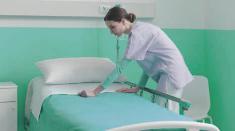
Wioleta Tomaszewska, chair of the Norwegian association NFSR and lecturer in cleaning management, looks at the situation around leadership education.
Across the Nordic region, leadership education for cleaning managers is developing in different ways. New vocational programmes are emerging in Norway, Sweden offers specialised leadership initiatives, Finland continues to value formal education, while Estonia has spent decades building qualification systems linked directly to labour market requirements.
Yet despite these developments, one pattern still appears across parts of the Nordic region: operational experience often continues to outweigh formal leadership education when recruiting cleaning managers.
As newly elected chair of the Norsk Forening for Service og Renhold (NFSR) and part of the Nordic cooperation through NOCC (Nordic Cleaning Cooperation), I became curious about whether this reflected a specifically Norwegian issue, or a broader Nordic and Baltic trend.
The answers reveal a sector in transition. Educational opportunities for cleaning leaders are expanding across the region, but recruitment culture, labour market expectations and procurement systems are not always evolving at the same pace.
Norway: a contradiction
In recent years, new educational opportunities for cleaning leaders have appeared. Tirna offers a twoyear part-time vocational college programme in Cleaning Management worth 60 credits (EQF level 5), while Fagskolen Oslo offers a one-year ‘Middle ManagerCleaning’ programme worth 30 credits (EQF level 5).
At the same time, OsloMet continues to offer individual courses related to facility management (FM), despite the fact Norway’s only dedicated bachelor pathway in Facility Management gradually disappeared after restructuring several years ago.
This development reveals an interesting contradiction. While the sector increasingly discusses competence, sustainability, lead-
ership and professionalisation, Norwegian job advertisements for cleaning management positions still tend to prioritise hands-on experience, industry background and practical leadership over formal leadership education.
A recent review of Norwegian job advertisements for cleaning managers showed that leadership education was rarely mentioned explicitly. Instead, employers typically emphasised experience from cleaning operations, personnel management and knowledge of daily service delivery.
At the same time, the role itself is becoming increasingly complex. Cleaning managers today are expected to handle sustainability requirements, digital resource management, work environment responsibilities, infection prevention, quality systems, customer dialogue and people management - often simultaneously.
The Norwegian case also highlights how fragile educational pathways in the sector can be.
For decades, OsloMet and its predecessor institutions educated leaders for facility management and service-related functions. However, Norway’s dedicated FM bachelor pathway gradually disappeared after restructuring and changes to admissions.
This raises a broader question for the sector: if educational pathways are not actively recognised and supported by employers, industry organisations and public institutions, can they survive in the long term?
Sweden: experience wins
Sweden presents a somewhat broader educational landscape. According to Matthias Lindholm from Städbranschen Sverige, the Swedish sector today offers a wide range of leadership-related education opportunities, including vocational college programmes in Facility Management and Service Management, industry training through Almega Serviceföretagen, internal company leadership programmes and shorter management courses.
Sweden also offers a one-year
‘Leadership License’ programme specifically aimed at leaders within the cleaning industry.
However, Lindholm notes that Sweden does not generally operate with national certifications specifically designed for cleaning managers. Instead, leadership training is often broader and linked to service management, operational leadership or work management rather than exclusively to cleaning.
When Swedish employers recruit cleaning managers, practical experience still tends to carry the greatest weight. “Practical experience generally weighs most heavily, but education strengthens competitiveness,” says Lindholm. However, he also sees signs of change. Employers increasingly ask for a combination of operational experience and formal competence, particularly in areas such as labour law, work environment management, strategic leadership and innovation.
Sweden therefore appears to be moving toward a more hybrid leadership model, where operational credibility remains essential but formal competence is gaining importance. Still, important challenges remain.
According to Lindholm, many managers are still recruited internally based mainly on experience, while smaller companies often lack resources for extensive training initiatives. Financial pressure within the industry can also limit investment in long-term competence development.
Finland: education valued Finland offers yet another perspective on the relationship between education and recruitment culture. According to Sari Mattila from Puhtausala ry, Finland provides formal supervisory and leadership education for cleaning managers through vocational institutions and universities of applied sciences. Puhtausala ry also organises training aimed at supervisors and decision-makers within the sector.
Mattila points out that Finland generally places a high cultural
value on education. “Those with education tend to progress better in their career paths,” she says. Even so, recruitment culture still differs between sectors. In the public sector, both formal education and work experience are often valued in recruitment processes. In the private sector, many managers still “grow into” leadership roles through operational experience.
Like Sweden, Finland also sees changing expectations from employers. Labour shortages are increasingly affecting the sector and pushing companies toward stronger internal competence development and employer-led training initiatives.
Finland has also cooperated extensively with Baltic partners through projects such as ErgoClean and Pandemic Clean, both focusing on competence development, ergonomics, sustainable methods and professionalisation of the sector. According to Mattila, Finland strongly supports continued Nordic–Baltic cooperation through shared projects and competence initiatives.
She also highlights NOCC initiatives such as Cleaners’ Day, daytime cleaning development and common Nordic communication efforts as examples of how regional cooperation can strengthen the sector’s professional identity.
Denmark: fragile pathways
Denmark illustrates another important dimension of the discussion. According to Jytte Hansen, chair of Dansk Rengøringsteknisk Forening, Denmark previously offered an academy-level education in hygiene and cleaning technology. However, the programme was eventually phased out because too few people enrolled.
“We thought that was really a shame and hope the interest could become strong enough for this to return,” Hansen says.
Today, Denmark still offers leadership education for cleaning managers through technical vocational schools, but the structure is built around combinations of shorter courses.
Like in the other Nordic countries, employers continue to place strong emphasis on operational management experience within the industry.
At the same time, Hansen notes that some form of management education is still considered important.
The Danish case suggests specialised leadership education may remain vulnerable if recruitment systems and labour market demand do not clearly reward formal qualifications.
Estonia: closer links
Compared with the Nordic countries, Estonia presents perhaps the clearest example of alignment between formal qualifications and labour market expectations.
According to Helge Alt, founder of Puhastusekspert in Estonia, professional examinations for cleaning personnel have existed for more than 20 years, while cleaning manager qualifications have been established for around 18 years. Certificates linked to EQF qualification levels must also be renewed every seven years.
Most importantly, these qualifications are directly connected to procurement and employer expectations. “In cleaning tenders it is very common to require managers
with EQF level 4 or 5 qualifications, and often also INSTA 800 knowledge,” says Alt.
Compared with the Nordic examples discussed here, Estonia appears to connect qualifications more directly to recruitment and procurement requirements.
Estonia also offers multiple educational pathways. Puhastusekspert provides both longer retraining programmes for newcomers and shorter programmes for experienced managers. The organisation also runs a state-approved micro-qualification programme for Cleaning Managers consisting of eight ECTS credits (208 hours). In addition, Estonia recently introduced a national VET curriculum ‘Cleaning and Facility Services’, aimed at preparing professionals at EQF level 4.
At the same time, Alt strongly emphasises that quality matters more than certificates alone. Based on more than three decades of training experience, she argues that short courses alone are insufficient for developing sustainable
leadership competence. She warns against reducing education to short theoretical courses focused mainly on certification - believing the sector risks underestimating the long-term consequences of weak leadership competence.
Estonia’s approach also extends into broader Baltic cooperation. Through the Erasmus+ CleanSkill project, Latvia piloted structured EQF-based training programmes where participants received level 4 and level 5 certificates. Alt also points to strong cooperation with Latvian industry organisations. Inconsistent
Taken together, the Nordic and Baltic perspectives reveal a sector in transition. Across the region, leadership education opportunities are developing in different ways. More organisations now recognise that cleaning leadership involves far more than operational supervision alone.
Today’s cleaning and FM leaders are expected to understand sustainability, digital systems, work environment legislation, customer relations, quality
management, workforce development and strategic planning.
At the same time, recruitment culture still often rewards operational experience more strongly than formal leadership qualifications.
The Nordic examples also suggest that educational pathways may remain fragile if recruitment systems and labour market structures do not clearly recognise formal competence. Norway and Denmark both illustrate how specialised education initiatives can struggle when long-term support and visibility are limited.
Estonia however, presents a somewhat different model, where qualifications appear more closely connected to procurement requirements and labour market expectations.
In several Nordic countries, operational experience still appears to weigh more heavily than formal qualifications.
The real question is how strongly the sector chooses to recognise, support and reward formal leadership competence in practice.
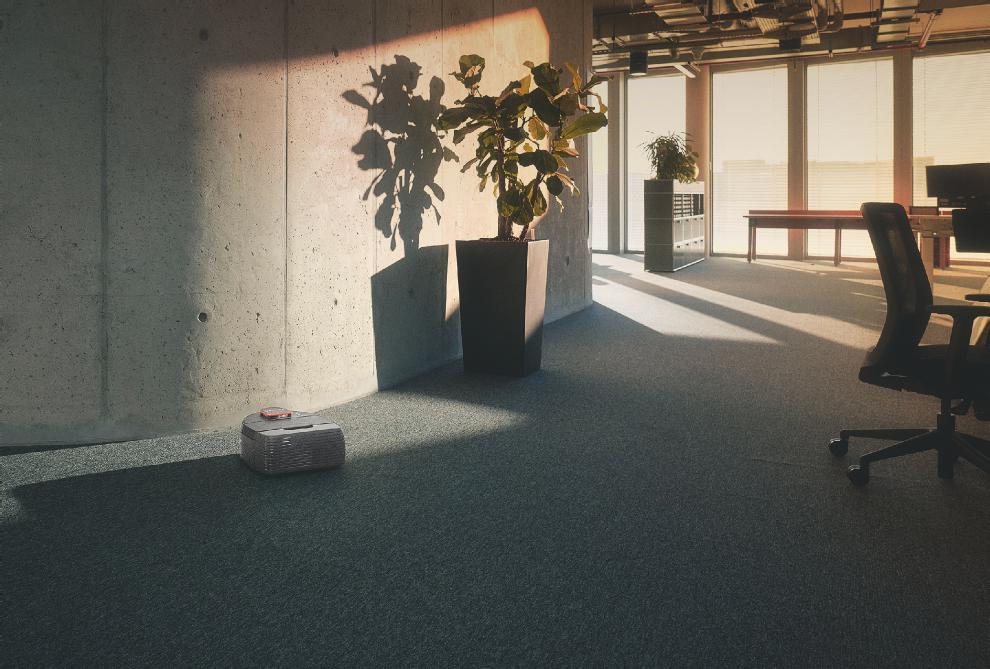
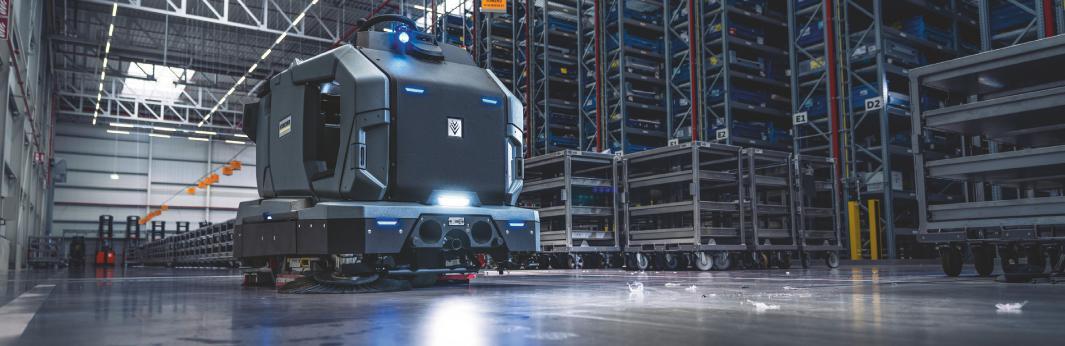
Today’s cleaning robots can map out rooms, detect objects and thoroughly clean all areas. But what are their limitations? And how are manufacturers addressing these? ECJ reports.
ROBOTIC CLEANING MACHINES have changed dramatically since they first hit the market. When autonomous machines appeared in the 1990s they were notorious for becoming stuck in corners, colliding with objects and neglecting to clean edges.
But modern robots have largely overcome their early limitations according to Kärcher’s robotics product manager Alina Seitter. “Basic obstacle avoidance was once a challenge, but today’s professional models can operate reliably even in hightraffic environments such as supermarkets and DIY stores without frequent interruptions,” she said. “High-quality sensors are key to preventing collisions and handling cul-de-sacs. Our robots employ LiDAR laser scanners and 3D cameras to give them a 360-degree view and allow them to anticipate obstacles and dead-ends in advance and plan their paths accordingly.”
The market has been driven by labour shortages and demands for a higher cleaning quality, she says. “The focus has shifted towards robots that are easy to set up and that can handle a wide variety of environments from logistics warehouses to healthcare facilities,” said Seitter. Today’s machines offer high levels of autonomy and building integration. “For example, docking stations allow robots to automatically empty dirty water, rinse their tank, refill with fresh water and charge their own lithium-Ion batteries,” she said. “Our robots can also interact with the building itself - for example,
autonomously triggering high-speed roll-up gates to open. And modern mapping is rapid which means robots can autonomously calculate the most efficient path once a user has manually guided the machine once to capture the floor plan.”
The industry is moving toward a “cobotic” model where humans and machines work hand-in-hand, she said. “Robots take over the monotonous, time-consuming floor cleaning tasks which allows skilled staff to focus on higher-value ones,” she said. “This increases overall productivity and helps to address the current global staff shortages.”
Kärcher offers the KIRA B 50 autonomous scrubber dryer for use in medium to large areas and the KIRA B 200 for high-performance industrial cleaning. The KIRA CV 50 vacuum cleaner is designed for professional carpet and hard floor care.
Robert Scott’s robotics expert Peter Jones agrees that early cleaning robots regularly struggled with navigation. “Limited sensor technology meant that occurrences such as collisions with objects, becoming trapped in tight spaces and missing edges and corners were quite common,” he said.
Significant evolution
“While some entry-level or older models may still encounter these challenges, most modern commercial cleaning robots have evolved significantly.”
Today’s machines use advanced navigation and multiple sensors to map out their environment and recognise obstacles, he said. “They can then adjust their cleaning path dynamically. As a result, issues such as getting stuck or repeatedly missing areas are far less common.”
The most significant improvements have occurred through advances in sensor technology, mapping capability and software intelligence, according to Jones. “Many modern robots combine technologies such as 3D LiDAR, RGBD cameras and ultrasonic sensors to build a detailed map of their surroundings,” he said. “This allows them to plan efficient cleaning
routes, avoid obstacles and operate safely in busy environments.
“And the increased computing power of today’s robots has improved their problem-solving ability, enabling them to re-calculate cleaning paths when faced with obstacles to effectively complete their tasks.”
Robert Scott robots combine intelligent navigation, automated charging and refilling plus remote management tools.
Issues such as getting stuck in corners, colliding with objects and failing to clean up to the edges of rooms were genuine limitations of early robots, admits Keenon marketing director Andy Zhou.
“These issues can still occur with less advanced systems, particularly in cluttered or constantly changing environments,” he said. “Corners and edges have always been a problem because robots need to balance cleaning precision with operational safety.”
Improved sensors, stronger navigation and smarter AI algorithms have made today’s robots better at understanding their surroundings and adjusting in real time, says Zhou. “Commercial users are no longer satisfied with a robot that can simply clean a fixed route - they want machines that work more intelligently, require less manual intervention and that can solve real operational pain points.”
Dry-wet separation has been a major robot breakthrough according to Zhou. “When dry debris and liquid waste are collected together, the tank can develop an unpleasant odour and become harder to clean,” he explained. “We have addressed this by introducing a triple-roller dry-wet separation system which keeps dry and wet waste streams apart while integrating sweeping, scrubbing and fast drying into one workflow.”
Another major development has been the self-cleaning station, he adds. “In the past, once the robot had finished cleaning a human had to empty the wastewater, dispose of debris and clean the machine. Today’s robots can return automatically
to their self-cleaning station and complete these tasks on their own.”
One of Keenon’s key developments is AI Patrol Inspection. “By combining multisensor fusion with AI algorithms, the robot gains the ability to actively identify dirt rather than simply follow a pre-set route,” he said. “Traditional robots usually patrol planned routes and there is no change in their behaviour when conditions alter. AI Patrol Inspection allows the robot to recognise common debris such as coffee spills, standing water or tissues, then automatically switch to the appropriate cleaning mode and calculate the shortest response path.”
Tomorrow’s robots are likely to become more adaptive, more autonomous and more deeply integrated into broader service systems, he believes. “They will not only clean more intelligently, they will also coordinate more effectively with digital platforms, management systems and other robots, creating a much more intelligent operational ecosystem,” he said.
Problems associated with early cleaning robots were typically linked to simplified sensing systems, constraints in edgecleaning design and navigation algorithms that were less advanced than those of today, says BIB Robotics’ global product marketing manager Chris Chao.
“Collision risk is now reduced through a multi-sensor fusion system combining dual LiDAR and dual TOF cameras and supported by AI-based semantic obstacle avoidance,” he said. “This enables full 360-degree environmental awareness and adaptive path planning in dynamic spaces.”
For edge and corner coverage, dedicated cleaning algorithms combined with wallfollowing and right-angle corner modes improve reach in boundary areas, he adds. “Our J series of commercial cleaning robots were developed to address those longstanding industry challenges.”
New from BIB Robotics is the J36 which is designed for use in small-to-medium indoor commercial environments such as retail stores, offices, hotels and healthcare facilities. The machine is said to offer precision mapping, AI-based path-planning and intelligent obstacle avoidance.
Early robots relied on simple collision sensors and used random navigation patterns, says Hako’s cleaning technology project manager Nils Rottmann.
“They struggled in highly dynamic environments and had issues with moving obstacles, glass surfaces and complex layouts,” he explained. “Modern commercial robots use multi-layered sensor systems
along with precise mapping and navigation methods. There are still some cases where user interaction is required, though the frequency of such events has decreased considerably.”
Modern systems detect their surroundings precisely using laser scanners, cameras and ultrasonic or ToF sensors, he said. “This allows them to identify obstacles at an early stage and adjust their route accordingly,” says Rottmann. “They then create a digital map of the area and plan their driving paths systematically instead of moving randomly through the space.”
The brushes and working units of today’s machines are positioned in such a way that edge areas are reached more effectively and fewer ‘dead zones’ occur, he adds. “Overall this combination of improved environmental detection, intelligent navigation and optimised cleaning technology means that collisions, dead ends and uncleaned edges are now far less common.”
Development has gained significant momentum over the past five to seven years, according to Rottmann. “Manufacturers are investing heavily in developing their systems due to cost pressures in facility management and a growing shortage of skilled labour,” he said. “In addition to navigation the main focus today is on software, connectivity and fleet management. Customers expect not only autonomous cleaning but also transparent processes, available operational data and measurable efficiency improvements.”
The latest robot capabilities include autonomous docking and charging; automatic filling and emptying and precise, sitespecific mapping, he said. “Systems with ‘legs’ for climbing stairs exist in research environments, but are currently neither economically nor technically relevant for commercial floor cleaning.”
Manufacturers are continuously working to make robots even more capable, he adds. “This includes coming up with better systems for environmental detection, intelligent adjustment of driving and cleaning routes, more precise edge guidance and automated quality control,” he said. “And a stronger integration with building management systems will make processes more efficient.”
Hako’s Scrubmaster B20 i and Scrubmaster B75 I can automatically charge, refill and empty its water tanks via the docking station. The Scrubmaster B20 i for small to medium-sized spaces uses water and chemicals economically and can be operated manually when required. The Scrubmaster B75 i for larger areas
has a simple operation via touch display and offers fully automatic charging and water-handling.
So, is there anything that a robot is still unable to do?
Narrow and highly complex environments remain an issue for robots, says Rottmann. “They also struggle when carrying out detailed tasks such as cleaning along skirting boards or under low fixtures,” he said. “And they cannot react as flexibly as a human to unexpected issues such as a larger liquid spill.”
Environments that have significantly changed often need re-mapping before the robot can work optimally again, he adds. “A combination approach works well in practice: the robot handles large open areas and recurring cleaning tasks while humans take care of detailed work, unexpected issues and inspections. This allows efficiency and cleaning quality to be combined effectively.”
Robots work less effectively when carrying out highly detailed, irregular or judgment-heavy tasks, says Keenon’s Andy Zhou. “Tight corners, unusual layouts, sudden non-standard messes and deep-cleaning requirements can still require human intervention,” he says.
Kärcher’s Alina Seitter agrees that robots still have limitations as far as specialised tasks are concerned. “They are primarily designed for systematic, largearea floor cleaning rather than ad-hoc crisis response or detailed work on complex surfaces,” she said “Human teams are still enlisted to handle more intricate tasks such as sanitising high-touch points.”
BIB Robotics’ Chris Chao says robots still have reduced accessibility in extremely narrow or irregular spaces. “They also offer limited performance when handling stubborn stains and emergency cleaning situations,” he adds. “Ongoing improvements are required in system robustness under extreme conditions.”
And Robert Scott’s Peter Jones adds that robots are not designed to entirely replace human cleaners despite their growing levels of sophistication. “Challenges can still arise in highly cluttered environments or where detailed cleaning is required such as tight corners, on stairs and vertical surfaces,” he said. “Robots are now sweeping up to the edges of walls but are not yet delivering deep cleans in this area.
“Robotic cleaning is therefore often most successful as part of a hybrid approach, where robots handle routine floor cleaning while staff focus on more detailed or responsive tasks.”
Nexaro has announced that its NR 1700 autonomous robot vacuum cleaner has received the TÜV Trusted IoT Device certification from TÜV TRUST IT, part of TÜV AUSTRIA.
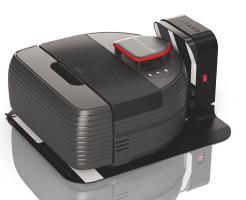
The certification relates to the machine’s IT security and data protection features, including device architecture, communication systems and system interfaces. As part of the assessment process, TÜV TRUST IT reviewed the security concept, device configurations and operational security performance.
According to Nexaro, the certification is intended to support confidence among cleaning contractors, facility managers and operators of offices, hotels and public buildings where connected cleaning technologies are increasingly being used. The company says data protection and secure device communication are becoming more important as autonomous cleaning systems become integrated into digital building management.
The NR 1700 forms part of Nexaro’s cobotics system, which combines autonomous cleaning equipment with the Nexaro HUB digital platform.
nexaro.com
Kärcher’s KIRA B 200 is an autonomous scrubber dryer developed for large-scale floor cleaning in logistics and industrial environments. Designed to reduce manual workload, it operates independently via a docking station that manages battery charging, tank rinsing, refilling and emptying. With 200-litre clean and dirty water tanks and a working width of up to 90 cm, the machine can run for four hours and clean up to
4,800 square metres per hour in empty spaces.
Users can create cleaning routes by manually driving the machine along a path. These routes can be saved, combined and scheduled via a calendar function for fully autonomous operation. Before starting a task, the KIRA B 200 checks water and battery levels to confirm readiness. An intelligent dosing system adjusts detergent output based on speed to optimise chemical use.
The unit uses LiDAR sensors and five cameras for navigation. Data is processed in real time without storage, supporting compliance with data protection regulations such as GDPR. It is safety-certified for use in areas where staff and automated guided vehicles (AGVs) may also be operating.
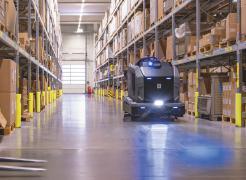
Connectivity options include the VDA 5050 standard for integration into fully automated facilities. For semi-automated settings, an IO Box enables functions such as opening and closing roller shutters. Two brush head variants are available: the KIRA BR 200 with roller brushes and side brush for rough surfaces and coarse debris, and the KIRA BD 200 with disc brushes for smooth surfaces such as PVC or linoleum.
www.karcher.com
LionsBot has introduced the R5 autonomous scrubber, designed for use in facilities including airports, hospitals and commercial buildings. The machine incorporates 360-degree turn-in-place mobility, allowing it to navigate corners, confined spaces and complex floor layouts without reversing or requiring manual intervention. This is designed to support operation in environments with restricted access or changing layouts.
The R5 is equipped with a triple-brush cleaning system, 34 g per square cm brush pressure and up to 29 kg of downward brush force. The scrubber also incorporates AI-based navigation and route management systems. AdaptiveMap technology updates cleaning routes during operation, while NavSense provides obstacle detection and autonomous recovery functions. Multiple machines can be managed by a single operator for fleet-based cleaning operations.
lionsbot.com
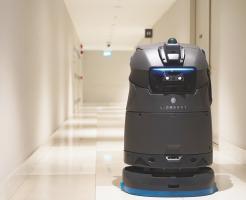
The J36 robot from BIB Robotics has been developed for use in retail and hospitality environments, with hardware and cleaning systems designed specifically for store operations.
This model is designed for continuous operation, with a target mean time between failures of more than 30 days. A selfcleaning docking station enables it to operate for up to three days without manual intervention by handling functions including refilling, emptying, detergent dosing and drying.
The J36 has a sweeping width of 592 mm, a scrubbing width of 400 mm and a cleaning capacity of up to 1,600 square metres per hour. AI-supported navigation incorporates 360-degree sensors, automatic mapping and obstacle avoidance to enable operation during business hours. The robot is also designed to
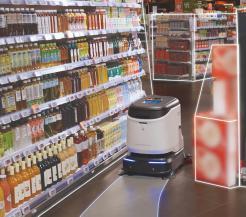
resume cleaning automatically after interruptions.
For deep cleaning applications, the machine combines dry sweeping with wet scrubbing in a staged process.
www.bibrobotics.com
KEENON Robotics’ C40 has been developed for small to mediumsized environments and combines sweeping, scrubbing, vacuuming and drying functions.
The machine incorporates a drywet separation system, 23.5kPa suction and 3D perception technology to support navigation in complex environments.
The KLEENBOT C55 is intended for medium to large facilities. It features dual water tanks and dual batteries to support continuous operation, alongside a triple-roll cleaning system with combined scrubbing and drying. keenon.com
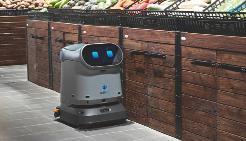
Aventurier has introduced the ARTIST 1 scrubber dryer, designed for confined and hightraffic environments. The company says the machine has been developed as an alternative to larger autonomous systems, with a focus on compact design and operator support.
This model is manufactured using aerospace-grade alloys and heavy-duty solenoid valves in place of conventional pumps. According to Aventurier, this extends machine lifespan and reduces maintenance. The machine is designed to clean close to edges and operate in tight corners and low-clearance spaces where larger robotic systems may be less practical.
The ARTIST 1 also incorporates the company’s Penseur AI platform, which provides operators with access to equipment guidance and maintenance information through QR-code scanning. aventurobot.com
Bennett strives to provide exceptional cleaning equipment for the world.

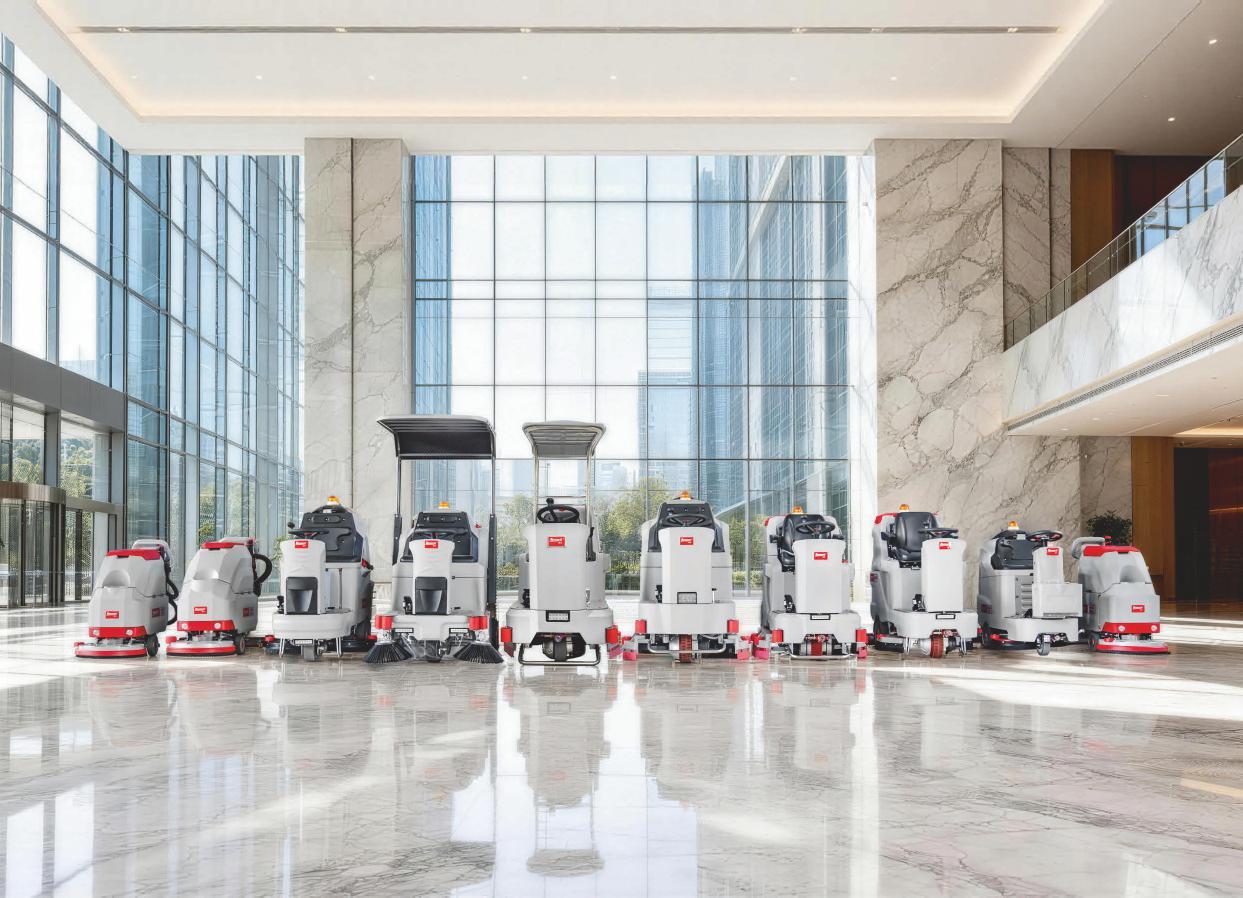
Suzhou Bennett Cleaning Machine Co., Ltd. No.55 Jieguanqiao Road, Shipu, Qiandeng Town, Kunshan City, Jiangsu Province, China
Jiangsu Bennett Cleaning Machine Co., Ltd. No.366, Huanghai Road, Tongzhou Bay, Nantong City, Jiangsu Province,China.
EMAIL: info@bennett.cn
WEBSITE: www.bennett.cn
TEL: +86 0512 57473115
Fimap has updated its CB-1 autonomous scrubbing machine with new sensors and operational features designed to improve navigation, safety and cleaning efficiency.
The company says the revised system enables the machine to adapt more effectively to changing environments and moving obstacles during operation. Enhanced vision technology is intended to improve space detection, route planning and obstacle management while maintaining cleaning productivity. The machine is designed to detect approaching obstacles and reduce speed in order to operate safely without stopping.
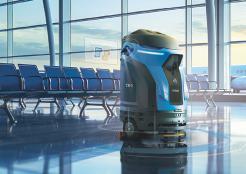
Updates have also been made to the perimeter working mode. While the previous version calculated a single cleaning path, the latest version can generate five alternative routes, allowing operators to select a cleaning pattern suited to staffing and operational requirements.
A new delay start function enables cleaning to begin after a specified period, offering additional scheduling flexibility. End-of-mission reports can also be processed into statistical summaries intended to help operators review cleaning performance and identify operational improvements.
www.fimap.com
Tennant Company has expanded its activity in autonomous cleaning robotics through new product launches and an extended collaboration with Brain Corp. The agreement includes a three-year extension covering next-generation robotic floor cleaning technology.
According to Tennant, the partnership is intended to support the development of new
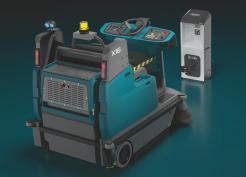
robotic cleaning equipment over the next two years. The company has also outlined plans to expand its robotics business by 2028.
In April, Tennant introduced the X16 SWEEP autonomous sweeper for industrial environments including warehouses and logistics centres. The machine uses BrainOS technology with AI-supported navigation and route planning to support obstacle avoidance and automated sweeping operations.
The company also launched the X2 ROVR SCRUB in May. The compact autonomous scrubber has been developed for use in smaller, high-traffic environments. The compact machine uses BrainOS Clean 2.0 software and is designed to navigate narrow aisles and adjust routes during operation.
The X2 ROVR SCRUB also incorporates an automated docking system that manages battery charging, water refilling and cleaning solution mixing.
tennantrobotics.com
Nilfisk has introduced the SC25, an autonomous scrubber dryer developed for professional cleaning environments. The machine is designed to help organisations address challenges such as labour shortages, productivity requirements, hygiene standards and environmental considerations through the use of automation and connected technologies. Through a connected platform, users can remotely monitor performance, schedule cleaning
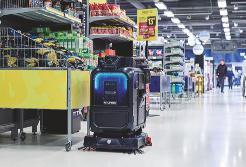
activities by area or time of day and integrate the machine into daily operations. Features include programmable cleaning maps and either fully autonomous mode or customised mode operation. It also returns automatically to its docking station for battery charging, dirty water disposal and clean water replenishment.
The machine combines sweeping, washing, vacuuming and drying functions in a single pass. Equipped with a 22-litre tank and a runtime of up to three hours, it is capable of cleaning more than 1,000 square metres per hour. Its low noise level allows operation in environments such as supermarkets, hospitals and schools during daytime hours.
For navigation and safety, the SC25 uses 3D sensors, depth cameras and sonar technology and has achieved Intertek IEC 63327 certification. And the EcoFlex and SmartFlow systems can reduce water and detergent consumption by up to 50 per cent, says Nilfisk. www.nilfisk.com
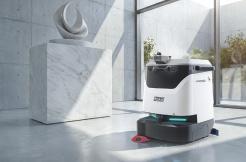
Hako’s Scrubmaster B20 i has been developed for use in environments including retail, healthcare, logistics and public facilities, where autonomous cleaning is required alongside day-to-day operations.
The machine combines LiDARbased navigation with sensor technology designed to support safe movement through complex and changing environments. According to Hako, the compact design enables operation in areas where disruption needs to be minimised.
The Scrubmaster B20 i incorporates a dual-cylinder cleaning system that combines wet cleaning and sweeping in a single pass. The machine is designed to collect coarse debris
while simultaneously carrying out floor cleaning. Water distribution and chemical dosing are automatically controlled to support consistent resource use.
For autonomous operation, the machine can be connected to a docking station that refills fresh water, empties the recovery tank and recharges the battery. This is intended to reduce manual intervention and downtime.
Maintenance components including brushes, filters and tanks are designed for easy access. Operation is managed through a colour display, while a companion app allows operators to monitor machine status, cleaning progress and operating data. The system also supports cleaning schedules and data analysis functions.
www.hako.com
Cleanfix Robotics has introduced the second generation of its RA660 Navi XL autonomous scrubber dryer robot. The latest version focuses on safety, maintenance access and operational efficiency. It incorporates a systematic cleaning algorithm, together with three brushes or pads and adjustable water and chemical dosing systems intended to support consistent cleaning across large facilities.
The robot also features Sonair’s 3D ultrasonic ADAR obstacle detection technology, which identifies small or transparent obstacles in conditions including dust, darkness and strong lighting.
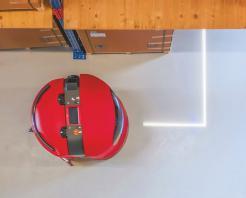
A redesigned user interface and improved service accessibility are intended to support operators and maintenance technicians. An optional app-based remote control system allows cleaning tasks to be monitored and scheduled remotely.
www.cleanfix-robotics.com

Winning the Best Company to Work For title at the European Cleaning & Hygiene Awards in 2025 highlighted an approach to people management that commercial cleaning business JPC by Samsic says has been central to its development over several decades. ECJ editor Michelle Marshall finds out more from its managing director, John Conry Jnr.
ing to lose respect for the job that you’re doing. Ultimately that’s going to translate into service standards.”
The business case for investing in people is therefore straightforward. According to Conry, employees who feel valued are more likely to remain with the organisation, develop their careers and deliver higher standards of service. In turn, clients benefit from greater continuity, stronger relationships and improved performance.
“It’s not rocket science,” he says. “But I think you’ve genuinely got to want to do it.” Growth, of course, does present challenges of its own and one of the questions many businesses face is how to maintain culture as employee numbers increase.
ny’s emphasis on personal relationships. Managers are encouraged to understand employees not simply as workers but as individuals with different ambitions, challenges and aspirations. “The more we know about somebody, the more we can tailor the support they need and the more we can facilitate their career aspirations.”
UK-BASED CLEANING business JPC by Samsic, which employs around 1,200 people serving some of London’s most iconic spaces, has built its reputation on a culture centred on employee development, engagement and long-term career opportunities. According to managing director John Conry Jnr, maintaining those values has been critical to both workforce retention and service delivery as the business has expanded.
At a time when the cleaning sector continues to face recruitment and retention challenges, Conry argues that investing in people remains one of the most effective ways of building a sustainable organisation. “It was always about the people,” he says. “We had a fantastic team and we looked after them because we started as a very small family business.”
That philosophy is one of the reasons JPC was recognised by the European Cleaning & Hygiene Awards judges. While many organisations talk about employee engagement and workplace culture, Conry believes the difference lies in translating those values into actions that employees can see and experience.
For him, it all starts with respect. “You could have the best intentions starting a job,” he says. “But if you’re not shown respect, you’re going to lose respect for the organisation you’re working for. You’re go-
Conry acknowledges that preserving a people-centred approach becomes more difficult as his business has become larger and more complex.
For him, the answer begins with recruitment. The company places significant emphasis on ensuring managers align with its values and culture. Technical skills and industry experience are important, but they are not the sole criteria for selection.
“We’ll go through a very protracted process,” says Conry. “It’s not just about experience, competency and professionalism. Those individuals have to be the right fit for the business.”
He believes the management team plays a critical role in protecting organisational culture because managers are the people who interact most frequently with both clients and frontline teams. “If they haven’t got those values, they won’t be successful.” That philosophy extends throughout the business.
Conry argues that leadership should never become detached from frontline operations. Visibility and accessibility are key components of effective management. “It’s about being visible. It’s about being engaged. It’s never sitting behind a desk in head office and directing. You must lead from the front.”
This approach is reflected in the compa-
And career development has become one of the most important components of JPC’s employee strategy. The business has introduced a range of programmes designed to create progression opportunities for employees at every stage of their careers. Among these is Next Gen, an internal development initiative that supports progression from frontline roles into supervisory and management positions.
Next Gen provides a structured, multistage development pathway designed to identify emerging talent and accelerate leadership capability across operational teams. The programme includes: formal leadership development modules; psychometric profiling and behavioural insight; personalised development plans; structured mentoring and coaching; experiential, scenario-based workshops and clear career progression pathways.
The Next Gen syllabus is delivered across 12 structured modules. Together, these modules provide a comprehensive and practical leadership curriculum designed to equip participants with both the behavioural and operational skills required in modern facilities management. The content has been developed in alignment with the principles and professional standards advocated by the Confederation of British Industry (CBI) and the Institute of Leadership and Management (ILM).
The programme supports internal talent pipelines, leadership readiness and digital and adaptive capability. Participants are prepared for future operational complexity, including evolving client expectations, technology integration and service innovation. By proactively developing supervisors and emerging leaders, JPC by Samsic re-
duces reliance on external recruitment and strengthens organisational resilience. This future-focused model ensures continuity, capability and sustainable growth.
Inclusivity is also central to Next Gen’s design. The programme is open to employees across different roles and seniority levels, diverse backgrounds, various contract types and multiple operational sites.
The programme reflects Conry’s belief that cleaning should be viewed as a career rather than simply a job. “There are two ways of looking at the industry,” he says. “Cleaning can be very mechanical and repetitive. But actually you can have a very successful career and great opportunities for yourself and your family if you want them.”
The objective, he explains, is not simply to provide training. “We don’t just want to develop people. We want to create careerdefining opportunities.” The programme has generated significant interest from employees across the business. Applicants are required to explain why they want to participate, with successful candidates undertaking structured development activities designed to prepare them for future leadership roles. Those who are not selected receive feedback and support to help them prepare for future opportunities.
The emphasis on internal progression is evident throughout the organisation. A high proportion of the company’s management and senior leadership team has progressed through the business rather than being recruited externally. JPC has also introduced a leadership development programme alongside hard FM service providers HDB Service Partners, in a strategic partnership with 11 Archer – an organisation founded and led by veterans of the British Armed Forces which translates decades of elite UK military experience into world class leadership solutions.
Leadership principles
‘Mission Command’ combines high performance leadership principles, behavioural science and real frontline expertise. It equips teams with an advanced and highly practical toolkit for delivering consistently outstanding service, even in complex or high pressure environments to create lasting, measurable impact. The initiative focuses on resilience, teamwork, leadership and performance under pressure, helping managers develop skills that can be applied across operational environments.
For Conry, both programmes demonstrate a broader commitment to investing in people. “We’re looking strategically at all levels of the business,” he explains. And employee support extends beyond career development. Recognising the
pressures many workers face outside the workplace, JPC has introduced a range of wellbeing initiatives designed to provide practical assistance. One example is the company’s adoption of financial wellbeing tools that allow employees to access earned wages before payday and receive budgeting support. This programme has achieved strong uptake among employees.
Conry believes this reflects the importance of understanding what workers actually need. Historically, employee benefits often focused on leisure activities. Today, however, many employees are looking for support with everyday living costs. “It’s about listening,” he says. “It’s about giving people a voice.” The company has also revised its benefits offering to provide discounts on essential purchases including food, clothing and household goods. Language support represents another key area of investment.
Employees can access training at different levels, from beginner through to advanced. Conry says the group-based learning environment has proven particularly effective because it combines language development with social interaction and peer support.
Again, the objective is not simply operational efficiency. Instead, it reflects a wider commitment to helping employees realise their potential. “I want to give people the same opportunities that the industry has given me,” he says.
The benefits of this approach are clearJPC reports strong retention across many of its larger contracts. Some employees have remained with the company for more than a decade, while others have spent 20 years or more within the business.
Conry attributes this to a combination of support, development opportunities and workplace culture. People may occasionally leave for marginally higher rates of pay elsewhere, he acknowledges. However, he believes employees increasingly recognise the value of long-term career opportunities and supportive management.
“If you’ve got time for a relationship with your people, they can come to you and say, ‘I need to earn more. What can I do?’ That conversation may lead to additional responsibilities, further training or progression opportunities.”
The focus is clearly on helping employees build sustainable careers rather than simply filling vacancies. The company’s workplace concierge model provides another example of how it is seeking to elevate the role of frontline cleaning teams. Cleaning operatives are positioned as ambassadors for both the company and
its clients. Training therefore focuses not only on technical competence but also on communication, customer interaction and service delivery.
This approach helps employees understand how their role contributes to the wider workplace experience. It also encourages stronger integration between site teams and client organisations. Longterm relationships
Rather than viewing this as a threat to company identity, Conry sees it as a positive development. If employees feel connected to the buildings and organisations they support, he argues, they are more likely to take ownership of outcomes and contribute positively to customer experience.
This philosophy is reflected in client relationships. Many of JPC’s contracts have been retained for extended periods, with some partnerships spanning decades. And Conry believes there is a direct connection between employee engagement and customer retention. “It translates into loyalty. It translates into a stable workforce. It translates into happy clients and long contract tenures because ultimately the service delivery is better.”
For Conry, longterm relationships demonstrate the importance of continual improvement, innovation and understanding client needs. However, he remains clear that growth should never come at the expense of quality. “There have been opportunities we’ve walked away from because we weren’t ready,” he explains. Although difficult at the time, he believes those decisions have strengthened the company’s credibility and reputation. Integrity, he argues, remains one of the organisation’s defining characteristics.
Looking ahead, maintaining culture while continuing to grow represents the next challenge. The business has ambitious plans for expansion, but Conry is conscious that increasing scale can sometimes dilute the characteristics that made organisations successful in the first place.
His focus therefore remains on protecting the values that have shaped the company throughout its history. “The challenge now is continuing to grow while delivering services to the same level,” he says.
For the business recognised as Best Company to Work For at the European Cleaning & Hygiene Awards, that commitment will remain central to its future direction. The award may recognise current achievements, but for Conry it also serves as validation of a philosophy that has guided the business for decades: respect people, invest in them, support them and create opportunities for them to succeed.


TOTAL SAFETY

Cleaning as a certified preventive measure. We develop our systems in accordance with the German KRINKO/DIN guidelines for hospital sanitation, translating scientific expertise to create practical solutions for infection control.

soaked at the time of use
A clean mop for each area, soaked only at the time of use.

ZERO PROLIFERATION
The cleaning solution is securely protected inside a hermetically sealed tank.
The solution is protected inside a sealed tank
TOTAL CONTROL
Adjustable dosage from 50 to 350 ml to eliminate waste.

ZERO CONTAMINATION

TTS mops (Microblue, Microred, Microsafe, Exon) remove up to 99.99% of microorganisms and up to 99.9% of Coronavirus 229E by mechanical action alone, without the use of disinfectants.



Eliminating hand contact during the critical phase of mop disposal.
hand contact the critical of mop disposal
MAXIMUM HYGIENE
The used mop falls directly into the bucket or into the mesh bag of the trolley.
The used mop falls or mesh of the trolley
HIGHEST FLEXIBILITY

Pockety, Uni System, Blik and Trilogy systems suitable for every surface.
Uni Blik and systems suitable for every surface


CRITICAL AREAS
Clear between the clean area and potentially contaminated areas
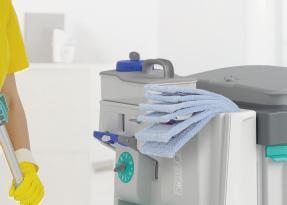
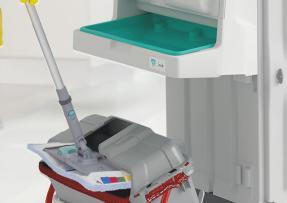

Clear separation between the clean storage area
ABSOLUTE HYGIENE
from 50 to to waste MAGIC

Smooth surfaces and a easy-to-sanitize structure
Smooth surfaces and a closed,




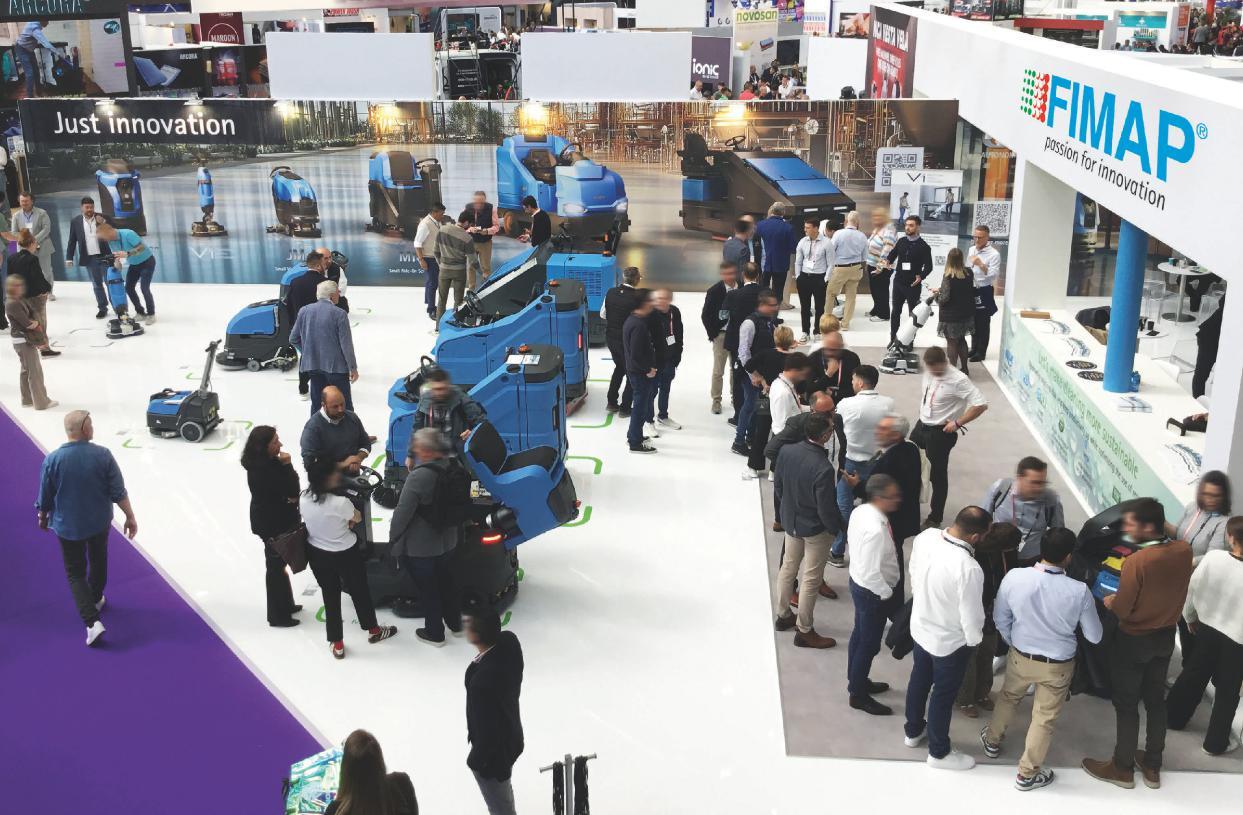
Listening, interpreting, innovating. With this approach Fimap has embraced its customers’ demands and developed a series of new products that marked the success of the latest edition of Interclean Amsterdam.
Each product is the result of a process that combines experience, designing expertise and technical know-how to provide an effective solution to today’s needs, anticipate market’s requirements and provide new operational opportunities.
Visitors were particularly impressed by the manoeuvrability and agility of the V1 vertical autoscrubber, which they had the opportunity to test for themselves in a dedicated area. V1 allows to clean a larger area professionally, reaching where conventional machines cannot, thereby delivering better results in less time. Its strongest feature is the exclusive Weightless technology, which supports the machine’s weight, preventing operator fatigue especially when they need to reach the tightest spaces, making the task much easier.
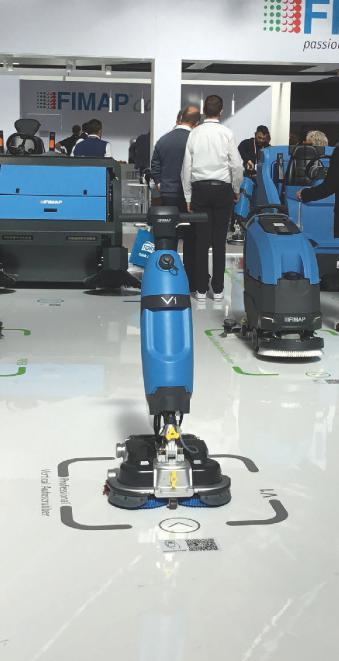
CB-1 has been boosted to level 2.0 by new advanced sensor technology
Fimap’s autonomous scrubbing machine takes things to the next level with new sensors and features that enhance performance and safety. Navigation is now smoother, ensuring dynamic adaptation to the
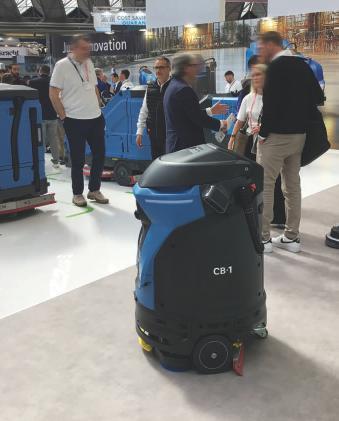
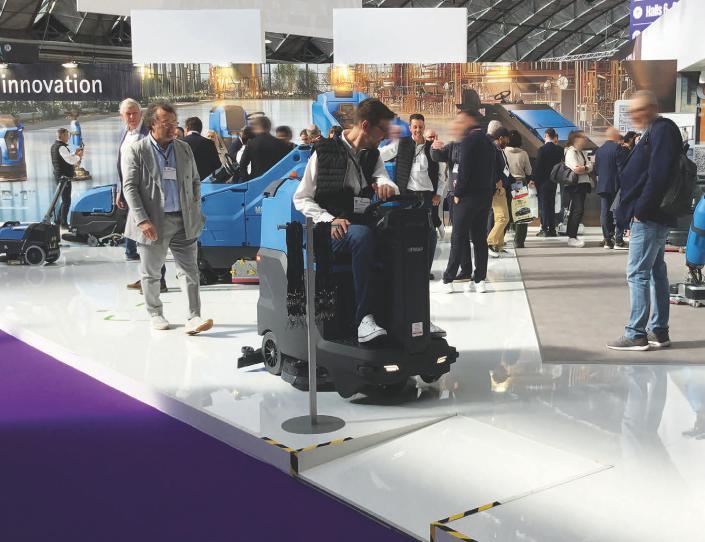
space and moving obstacles, which optimises cleaning operations and makes CB-1 a reliable collaborator capable of integrating seamlessly with your team to boost productivity.
The iconic Fimap’s MR scrubbing machine arrives at Interclean completely redesigned and ready to take on new challenges. Its distinguishing features of COSTEFFECTIVENESS, EFFICIENCY and HIGH PERFORMANCE that have marked its success are still there but enhanced by the latest design expertise. Simple and smart solutions make it more cost-effective by enhancing its quality and value, whilst keeping it competitive and affordable.
Greater efficiency is achieved by leveraging all Fimap technologies for resources management and waste reduction, including the new AQUÆ® system for cleaning without detergents. Greater cleaning power is achieved thanks to a pressure on the floor of up to 60 kg and a brush speed of 240 rpm, which deliver excellent cleaning results in a single pass. MR is available with 65, 75, or 85 cm working widths.
MG, the range has been expanded
The powerful and compact MG industrial scrubbing machine is now available in a range of new models, offering the same high quality to meet different needs across a variety of sectors.
The 85 cm model is joined by the new 100 cm working-width version, expanding the range of options for cleaning large spaces. Both are available in Basic, Pro and Plus configurations, with either disc or cylindrical brushes, and can be customised with a wide array of accessories and optional extras to maximise results according to the specific characteristics of the areas to be cleaned.
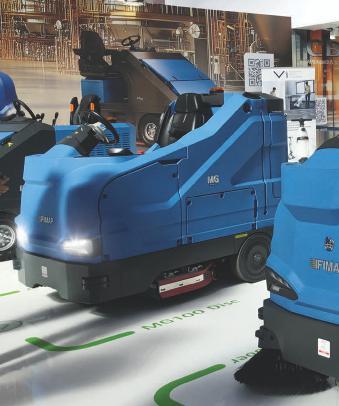
Fimap’s new products also extend to the vacuum cleaner range, with a new selection of 36- and 66-litre models. The 36-litre models are available with either a plastic or steel tank and are suitable for the Ho.re.ca., industrial and automotive sectors, as well as artisan laboratories. They feature an easy hose-based emptying system. The 66-litre models, on the other hand, are available with 2 or 3 two-stage motors, with plastic or steel tanks, and tilting or hose emptying systems. They are recommended for the construction industry, for the collection of scrap metal, stone or concrete, and for car washes and car hire companies.
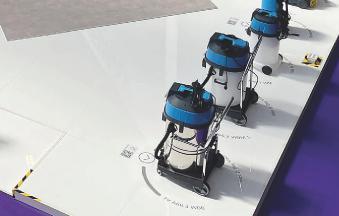
FSR9, the latest addition to the sweeper range
The FSR9 sweeper was a real standout at the booth, thanks to its size and design. Designed to boost productivity in large spaces, its imposing and robust appearance highlights its power and efficiency, making it ideal for demanding applications in the mining and heavy industry sectors, on construction sites, at produce markets, trade fairs, ports and airports. It is available with lithium-ion battery power or with Kubota LPG or diesel internal combustion engines. With a working width ranging from 90 cm to 170 cm, with the two side brushes, and a working speed that for the internal combustion engine models reaches 13 km/h, FSR9 quickly covers large areas, offering unrivalled productivity.
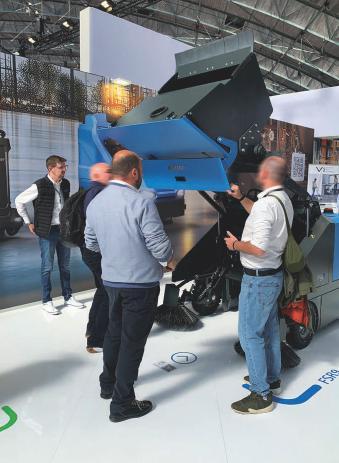
The innovations presented reflect a constant commitment to adapting to constantly evolving needs. These products have been designed specifically to expand the scope of professional cleaning, optimise cleaning tasks, achieve high-quality results quickly, use resources responsibly to do more with less, and document progress.
By never ceasing to innovate, Fimap has developed smart and efficient solutions that enhance the value of the cleaning service whilst reducing costs.
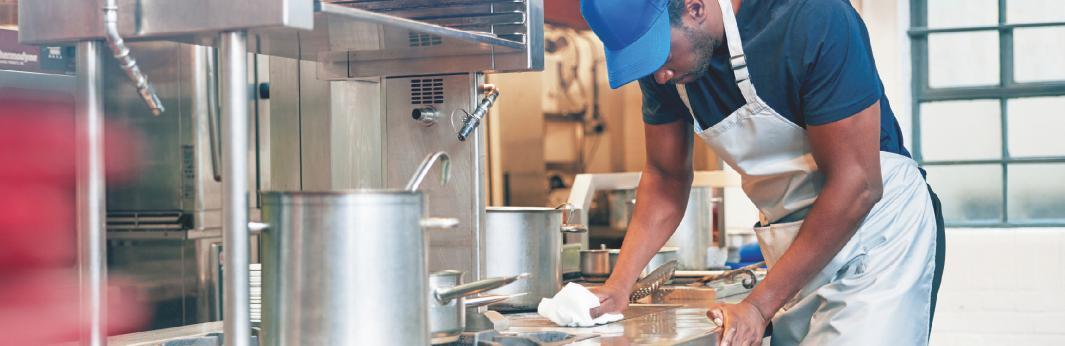
Cleaning needs to be quick and thorough in any food service environment. But cleaning systems must be user-friendly, too, so that all operatives feel motivated to carry out essential sanitisation tasks. Ann Laffeaty asks companies about the systems they offer that are easy to use, ergonomic and kind to the hands.
KITCHENS CAN BE challenging work environments. Space is often restricted which means operatives will be constantly getting in each other’s way as they carry out their high-pressure tasks.
They also need to clean as they go to ensure that all surfaces and equipment – and their hands – are kept free from contamination. And working against the clock makes this difficult to achieve.
These intense time pressures when working in a relatively confined space can be a major issue, says Greenspeed brand marketeer Julie Van Praet. “Such conditions can lead to inefficiencies and increased physical difficulties. Many traditional cleaning products also contain aggressive chemicals which means they are harsh on the hands and the respiratory system. This can cause skin irritation and other long-term health issues. And we see frustration caused by materials that wear out too quickly and by products that are difficult to dose correctly.”
Essential hand hygiene is often hindered by products that irritate the hands, Van Praet added. “Staff may be less inclined to follow hygiene protocols to the letter as a result.”
Poorly-placed dispensers, non-intuitive systems and products that run out unexpectedly can lead to inefficiencies while also increasing the risk of errors, she adds. “Other challenges include the physical
strain from using inefficient tools and the mental stress caused by working with frustrating systems.
“User-friendly alternatives allow staff to focus more on the result rather than on how to clean. And this not only improves effectiveness, it also enhances their job satisfaction.”
Complex or unclear systems often result in incorrect usage which can compromise hygiene standards, she says. “This is why it is important not to overcomplicate kitchen processes.”
Greenspeed’s microfibre systems are designed to offer maximum efficiency with minimal physical effort. The company also offers smart dosing systems and ergonomic tools said to be intuitive to use.
Food hygiene operatives are frequently asked to perform miracles in cramped spaces and within narrow time windows, according to Vikan’s North American hygiene specialist Jack Burnett. “When the equipment supplied for cleaning is heavy, poorly designed or difficult to reach, the immediate result is human fatigue,” he said. “But the hidden result is a missed corner where a bacterial colony could set up a permanent residence. Bacteria will exploit any gaps in the cleaning protocol – and these may be caused by tools that are too frustrating or cumbersome to use correctly.”
Hand hygiene is often the first casualty of a busy kitchen shift, Burnett added. “Beyond the time crunch, operatives often face physical barriers at the sink itself. We often see high rates of infractions where hand-washing sinks are being used for the improper disposal of food waste, the rinsing of wiping cloths or even as temporary storage for dirty pans.
“When the sink is blocked or the necessary tools are missing, the operative is forced to make a choice between hygiene and the clock.”
All tools and systems need to be designed with human behaviour in mind, he believes. “A cleaning regime that is not user friendly is destined to fail over time,”
he said. “If we make the most effective cleaning method also the easiest and most intuitive we will ensure consistency and prevent cross-contamination.”
Non-ergonomic tools force operatives into awkward postures and can lead to musculoskeletal disorders, Burnett explains. “These become a threat to the sanitary integrity of the kitchen. When a wrist is throbbing from an ill-designed scoop or brush, that worker is significantly less likely to perform the rigorous physical scrub required to disrupt stubborn biofilms. So physical exhaustion effectively increases the likelihood of cross-contamination.”
Vikan’s HyGo mobile cleaning station is designed to ensure the right tool is always within reach. The company’s new microfibre mop heads are claimed to require less physical exertion on the part of the operator than other systems. And Vikan buckets have ergonomic handles and a pouring lip that have been designed that prevent the awkward manoeuvres that can lead to wrist strain.
Time pressures, workflow interruptions and a lack of organisation can make it difficult to maintain consistent hygiene in a food preparation environment, says Essity’s communications director Jenny Turner. “The limited space makes movement and cleaning difficult, while poorlyplaced materials can slow down workflow and cause frustration,” she said.
She agrees with other commentators that hand hygiene compliance may be compromised where products are harsh on the skin when used frequently.
“User friendly systems directly support speed, consistency and compliance,” she said. “When products are intuitive, ergonomic and simple to maintain, staff clean more effectively and with fewer errors. This not only improves operational efficiency but also strengthens food safety practices.”
However, poor products could lead to irritation from harsh soaps and increased
physical strain caused by awkward dispenser placement and heavy manual cleaning, Turner says. “Other potential consequences are burnout and fatigue caused by performing tasks inefficiently or repeatedly due to ineffective tools.”
The Tork 2 in 1 Scouring and Cleaning Foodservice Cloth reduces physical strain on the operator and ensures the fast and efficient removal of grease. The company also offers Tork Odour-Control Hand Soap which is gentle, non-perfumed and suitable for frequent use. This has been designed to remove greasy residues and tough food odours from the hands.
The need for high hygiene standards, stubborn dirt and extreme time pressure are among the typical problems facing operatives when carrying out a kitchen cleanup according to Kärcher’s senior cleaning solutions consultant Gundula Braun.
“Intensive cleaning is required for removing burnt-on grease and organic residues, yet the structural layout of a kitchen often features narrow aisles and fixed installations that limit manoeuvrability,” she said.
“Furthermore, the efficiency of the entire process could be compromised if the cleaning technology is too complex to set up or if the necessary resources are not centrally accessible.”
Hand hygiene is a critical component of food safety, says Braun. “However, frequent washing cycles with unsuitable or low-quality soaps can lead to skin irritation and long-term dermatological issues,” she explained. “From an organisational standpoint the placement of dispensers is often not optimised for natural workflows, leading to a disruption in the hygiene chain.
“And a lack of monitored supply levels resulting in empty soap or paper dispensers during peak times can pose a significant risk to compliance.”
User-friendliness is not merely a convenience; it is a prerequisite for process reliability, she said. “In an industry characterised by a high staff turnover and diverse language backgrounds, cleaning systems need to be intuitive and convenient to use. “If a procedure is easy to understand and execute, the likelihood of application errors decreases.”
Kärcher offers a complete range of scrubber dryers, steam cleaners and highpressure cleaners plus manual tools and cleaning trolleys for kitchen hygiene. These include intuitive mops such as the Infinity system as well as scrapers, squeegees, buckets and ergonomic floor and surface scouring pad holder systems.
A lack of space and tight schedules
between shifts are among the most critical problems facing kitchen operatives, says Filmop’s business development manager Paolo Scapinello.
“Often the cleaning equipment is too bulky to be easily moved between preparation benches or is difficult to use and requires excessive physical effort,” he said.
“If sanitisation points are not correctly positioned in the workflow, staff tend to skip these steps. And using bins or dispensers that require manual contact poses a serious risk of cross-contamination where hygiene must be at its highest.”
Another common obstacle is the difficulty in removing greasy dirt and smudges from stainless steel and glass surfaces, says Scapinello. “Staff often have to repeat the process multiple times which generates frustration and wastes time.”
User-friendliness is key to ensuring that cleaning is carried out correctly, he believes. “If a system is light and intuitive, the operator is not tempted to cut corners or skip steps which will dramatically reduce human error. Simple usage guarantees constant hygiene standards, regardless of fatigue or the speed required by the service.”
Non-ergonomic solutions are the main cause of musculoskeletal disorders, leading to frequent sick leave and suffering for workers, according to Scapinello. “For example, traditional wringing requires physical effort which causes strain to the back and the arms.”
Filmop’s Twice double bucket features independent drain-plugs that allow operators to empty the dirty water directly into floor drains without having to lift the heavy bucket. The Brilliant system is designed for streak-free cleaning of stainless
steel and glass surfaces in just one pass. And the company’s Boost is a flat wringer that relieves the operator’s back and arms from the repetitive strain of mop wringing.
So what are the chief benefits of supplying user-friendly and ergonomic products for cleaning and hand hygiene in the kitchen?
It demonstrates a respect for the workers, says Scapinello. “When operators see the company invests in solutions that will not strain their backs or wrists they will feel valued and more motivated to keep their working environment clean,” he said.
Kärcher’s Gundula Braun believes there is a clear correlation between the quality and accessibility of the equipment provided and employee motivation. “When operatives are equipped with ergonomic and effective tools within easy reach it conveys a sense of professional appreciation,” she said.
Evidence shows that kitchen staff feel happier and more motivated when working in a well organised environment with reliable hygiene tools, agrees Essity’s Jenny Turner. “Easy to use solutions reduce stress, minimise time wasted in searching for supplies and empower staff to complete tasks effectively,” she said.
Vikan’s Jack Burnett also feels that the provision of professional, high-quality tools can lead to a psychological boost for staff. “It signals the fact their work is valued and their role in maintaining hygiene is a critical part of the operation rather than a menial chore,” he said.
And solutions that are logical, ergonomic and pleasant to use makes employees feel supported, says Greenspeed’s Julie Van Praet. “Motivation increases when people feel their well-being is taken seriously, and this contributes to a more positive work experience,” she said.
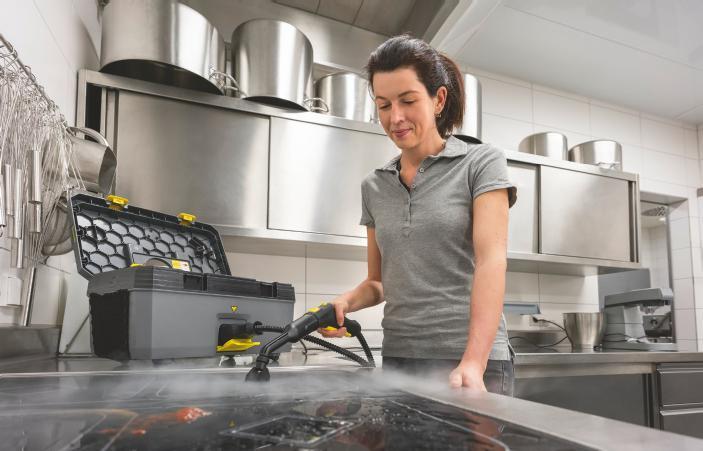
Kärcher has introduced the K-Mop 46, an upright scrubber dryer designed for cleaning floors in confined and cluttered areas. The machine combines a compact design with a 46 cm
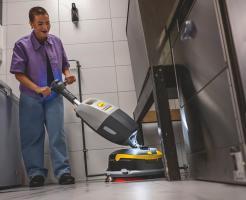
working width and is intended to provide manoeuvrability similar to that of a traditional mop while reducing physical strain.
The scrubber dryer features a height-adjustable handle, allowing users to adapt the working position to their height and stride length. A languageneutral control system includes an on/off switch, water-flow
adjustment and an eco mode function. Machine status information is displayed through a colour-coded LED ring and a compact screen showing water volume and remaining battery.
The K-Mop is equipped with a four-litre fresh water tank mounted on the handle section. As cleaning progresses, water moves into the waste water tank, reducing the weight carried in the upper section of the machine. Both tanks can be removed for emptying and rinsing, while residual-emptying functionality is designed to support drying and hygiene needs. www.karcher.com
De Witte has introduced Foodline, a microfibre cloth range compliant with Regulation (EC) 1935/2004, the European framework governing materials intended to come into contact with food.
The range consists of fully






woven microfibre cloths with a weight of 320 g per square metre. The cloths are manufactured from 80 per cent recycled polyester and 20 per cent polyamide and are designed for cleaning applications within food-related environments.
Available in six colours - blue, green, yellow, white, pink and grey - the range supports commonly used colour-coded cleaning systems.
The cloths are supplied in packs of five and packaged in glassine bags. Glassine is a paper-based material produced from wood pulp and contains no plastic coatings. The packaging is recyclable and biodegradable. www.dewitte.com
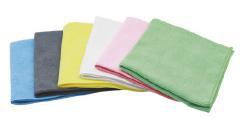
New from Vikan is the HyDrive Round Brush, a cleaning tool designed for use with cordless drills and pneumatic equipment in food manufacturing environments. The product is intended to assist with cleaning tasks during production changeovers and scheduled deep-cleaning.
The brush features a 90 mm round head fitted with very stiff bristles and is designed for cleaning conveyor belts, machinery, walls, tables and other accessible surfaces.
Manufactured from raw materials compliant with EU food-contact requirements, the HyDrive Round Brush is available in six colours to support colour-coded hygiene systems and zoning procedures. The brush incorporates a moulded stainless-steel drill attachment and is designed for repeated use in industrial environments.
www.vikan.com

Tork offers a range of food preparation solutions designed with kitchen operatives in mind. The Tork 2 in 1 Scouring and Cleaning Foodservice Cloth combines strong scouring power with high absorbency for removal of grease and debris. This helps to reduce physical strain while also improving throughput.
Also designed for fast-paced kitchen environments is the Tork Reflex Single Sheet Centrefeed Dispenser. This gives out sheets of wiping paper one at a time to reduce cross contamination.
Tork hand hygiene products are designed to be gentle on the skin while also effectively removing food debris from the hands. For example, Tork OdourControl Hand Soap is nonperfumed for frequent use and will effectively remove greasy residues and tough food odours. www.torkglobal.com
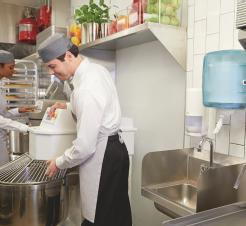
Birchmeier has introduced the e-Foam 7, a seven-litre batterypowered foam device for mobile cleaning and disinfection in professional kitchens and food preparation environments. The unit is equipped with a TLK 35 battery compressor, which generates foam for surface application. The system operates at pressures of up to 3.5 bar to support consistent foam formation, with an output designed to improve the contact time of disinfectants on treated surfaces.
The device uses a 4.0 Ah CAS battery, enabling coverage of approximately 300 to 600 square metres per charge. An electronic control system maintains stable pressure during operation, allowing continuous application without manual repumping.
The e-Foam 7 forms part of Birchmeier’s e-Line range. www.birchmeier.com

Europe’s entrepreneurs are quitting the continent in frustration at the regulatory barriers hampering their ambitions to ‘launch and grow’ across the single market. In response, the European Commission has drawn up more corporate-friendly rules in a bid to halt the exodus, reports Hartley Milner.
FOR TOO LONG, businesses have had to navigate a fragmented corporate legal landscape comprising 27 national legislative systems and more than 60 national company legal forms, the commission acknowledges. This complex bureaucracy, it says, can “delay the setting-up of a company for weeks or even months, slowing growth, raising costs and discouraging scale”.
Startups and scaleups are relocating primarily to the United States and Asia, lured by the promise of easier access to venture capital and talent pools, larger and more unified markets and, crucially,
less stringent regulation. Now the EU is on notice that it needs to close its productivity and competitiveness gap with its rivals or face the “slow agony of decline”.
In his 2024 report on Europe’s future competitiveness, former European Central Bank president Mario Draghi stresses the urgent need to make it easier for creative enterprises to grow. “The ongoing outflow of companies to other economies weakens the European Union’s ability to close the innovation gap with the United States and threatens its long-term competitiveness and technological sovereignty,” he says. Creativity hotspot
Draghi flags that approximately 10 per cent of Europe’s scaleups relocate abroad each year. From 2008 to 2021, nearly a third of its ‘unicorns’ – startups valued at more than $1 billion (€852 million) –moved their headquarters to outside the EU, predominantly across the Atlantic. The talent drain is primarily impacting the
bloc’s digital technology sectors such as AI and biotechnology.
The EU has shown itself to be an entrepreneurial creativity hotspot in recent years. From 2018-2023, the region generated more startups per year than both the US and China. However, by the beginning of 2025, the region had just 110 unicorns compared with 687 for the US and 162 for China.
In response, the European Commission in March unveiled its ‘EU Inc’ proposalalso known as the 28th Regime - as part of a wider agenda to help companies innovate and grow anywhere across the internal market. Rather than having to navigate 27 different national regulatory systems separately as now, entrepreneurs seeking to expand their business would have the option to comply with a single set of corporate rules instead.
Any business would be able to register to become an EU Inc in as little as 48
EU Inc’s race to keep business talent (continued from page 31)
hours at a cost of less than €100. The EU executive foresees around 300,000 firms signing up in the first 10 years.
“We need to incentivise companies to stay in Europe and encourage those who once looked elsewhere to return,” said commissioner for justice and the rule-oflaw Michael McGrath. “We are seeing that all too often bureaucracy drives our best entrepreneurs elsewhere. EU Inc puts an end to this.”
While EU Inc is available to all European businesses, it is primarily targeted at helping fledgling tech innovators scale rapidly and compete with Silicon Valley giants like Google, Amazon and Microsoft. An EU-wide digital platform would link up the business registers of member states so that companies would only have to apply for an EU Inc just once, greatly simplifying the registration process. The commission is also working on a centralised EU Inc corporate register. Signees will likely see significant savings in time and money spent on lawyers, notaries or translation processes.
McGrath continued: “A once-only, fully digital submission process reduces administrative burdens, giving entrepreneurs more time to focus on growing their businesses. Under the new EU corporate legal framework, companies will benefit from simplified governance procedures throughout the lifecycle of the company. This simplicity ensures that talent and ideas stay in Europe, while attracting valuable investments.”
Simplify procedures
The EU Inc proposal in full:
• Faster and cheaper registration: Entrepreneurs, founders and companies will be able to launch an EU Inc company within 48 hours for less than €100 and without having to meet minimum share capital requirements.
• Simpler procedures: EU Inc companies will only need to submit their company information once, via an interface connecting national business registers together. In a further move, the commission is proposing to establish a new central register where companies can obtain their tax ID and VAT numbers without having to resubmit paperwork.
• Fully digital operations: Corporate processes will be digital by default throughout a company’s lifecycle.
• Helping founders restart faster and cheaper: EU Inc companies will have access to fully digital liquidation procedures. Innovative startups will have access to simplified insolvency procedures for the winding down of operations. This will enable founders to continue testing
and trialling innovative ideas towards possibly starting up again.
• Better conditions to attract investment: The EU commission’s proposals will remove in-person formalities, provide digital procedures for financing operations and simplify the transfer of shares. There will be no more mandatory involvement of intermediaries for share transfers and liquidation procedures. The proposal will also allow member states to give EU Inc companies access to the stock exchange.
• Better ways to attract talent: Companies will be able to set up EU-wide employee stock option plans. The stock option will only be taxed on the income generated once the business is sold. This is seen as being crucial for attracting innovative startups.
• Full access to the single market: Businesses will be free to register as an EU Inc in any member state they choose - regardless of where they are physically based - to take advantage of favourable regulations, lower costs or faster digital 48-hour registration. The proposal includes a blacklist of prohibited practices to ensure that Inc businesses are treated the same as other national companies.
• Strong safeguards against abuse: EU Inc companies will be expected to comply with national employment and social laws like any other business operating in the host country. The same applies to safeguards implemented by the member state of registration, including regulations relating to co-determination (where employees have the legal right to take part in high-level company decision-making).
• Flexibility of shares: Companies will have the flexibility to create different classes of shares with varying economic or voting rights. This could, the EU Commission says, help founders protect their business from hostile takeovers.
Member states are being asked to set up special judicial chambers or courts for settling disputes relating to EU Inc company law. The commission is additionally looking at allowing full-time cross-border telework for innovative startups and scaleups. This is where an employee works remotely from their home country for an employer based in a different country, typically using IT to stay connected.
European business groups are generally on board with the commission’s EU Inc proposal. SMEunited welcomes it as a step towards addressing the single market’s fragmentation. President Davide Galli says having to deal with
a myriad of different company laws, complex administrative procedures and legal uncertainties has been especially challenging for smaller businesses.
“These barriers limit growth, increase costs and discourage investment,” Galli told ECJ. “The commission’s initiative provides a solid foundation for addressing some of the structural difficulties in our single market. SMEs must have access to a simple and predictable legal framework to support their ambitions to operate beyond national borders. EU Inc should ensure fewer duplicate registrations, create clearer rules and greater legal certainty when selling goods or providing services in another EU country.”
Galli said ensuring that EU Inc remains optional, simple and accessible is critical for it to remain fully in line with the bloc’s ‘think small first’ principle. He added that he “particularly appreciates” the proposal does not restrict access to any specific category of company, such as traditional and service-oriented SMEs.
Workers group concerns
However, the commission’s regulatory framework proposal was less well received by the European Economic and Social Committee Workers’ Group. The advisory body, which comprises representatives of worker and employer organisations, says it recognises Europe’s competitiveness challenges, including declining investment and outflow of talent and startups. But it highlights a string of concerns relating to EU Inc’s legality, limited scope, lack of minimum safeguards and likely impact on workers’ rights.
The proposal threatens to undermine the bloc’s social market foundations, weaken its checks and balances and risks compromising worker protection without delivering its intended benefits, the group says. And it asserts that strengthening the single market should not mean lowering standards but should reinforce rights and protections at the core of the European social market economy.
Workers’ group president Lucie Studničná said: “EU Inc has the potential to allow companies to evade national codetermination rules. Workers’ participation rights would follow the registered seat, not the location where management decisions are taken or where workers are employed. This creates a clear risk of evasion of existing legal protection and obligation.”
Stressing the importance of EU Inc for the bloc’s future prosperity, the commission has called on the European Parliament and Council of the EU to reach an agreement on its proposal by the end of 2026.

the same time, cleaning teams frequently replace rolls prematurely to prevent outages and complaints.
These behaviours systematically undermine the environmental benefits of recycled and alternative fibre hygiene papers. If dispensing and servicing are not engineered to control use, overconsumption increases, waste volumes are inflated, and environmental gains remain limited.
tions, they are less likely to overuse.
This is where controlled dosage systems are redefining best practice. By delivering regulated portions and extending refill intervals compared with traditional manual dispensers, they reduce waste while easing servicing demands. This contributes directly to environmental performance and strengthens operational reliability.
ESG IS A MAJOR
Europe’s facility management sector, but in the washroom, progress is still too often measured by product swaps rather than performance.
Across Europe, governments and organisations are tightening environmental expectations, placing increased pressure on businesses to reduce energy usage and carbon emissions, minimise waste, and demonstrate measurable ESG progress. Buildings contribute to over one-third of global energy demand, and while much of the focus sits on energy systems and construction materials, the operational choices made inside those buildings carry significant environmental consequences, and the washroom is no exception.
Sustainability in the washroom is often framed around product choice. Recycled paper, eco-labelled dispensers or air jet dryers are frequently presented as the sole solution. These choices are important, but when treated in isolation, they cannot deliver meaningful long-term impact.
Lasting sustainability progress is only achieved when products, infrastructure, and user behaviour are considered together as part of a complete system. A systems-based approach enables organisations to reduce resource consumption in practice while supporting ESG goals. Otherwise, sustainability remains a shortterm procurement exercise rather than sustained operational performance.
Even the most responsibly sourced hygiene paper cannot fulfil its environmental promise if the wider system allows waste to occur. In high-traffic environments, unrestricted dispensing often leads to users taking more paper than necessary. At
A systems-based approach corrects this by aligning infrastructure with real-world user behaviour. When dispensing regulates output and maintenance practices prioritise full product utilisation, waste is reduced at the source rather than corrected retrospectively.
Managing resource use through smarter washroom design
Scale makes this issue significant, national demand in the UK alone equates to 5.7 million trees annually, enough to cover more than 14,000 football pitches. Across large commercial estates, healthcare settings, education facilities and public venues, that demand compounds quickly. At this scale, washroom design is not a minor detail, it becomes a strategic lever for managing both consumption and operational performance. Across large commercial estates, healthcare settings, education facilities and public venues, demand compounds quickly. At this scale, washroom design is not a minor detail, it becomes a strategic lever for managing both consumption and operational performance.
User behaviour in the washroom is shaped far more by design than by intention. Most users are not consciously thinking about environmental impact. Instead, they respond to what is accessible, visible and reliable. If dispensers are unreliable or frequently empty, people naturally compensate by taking more than they need. By contrast, controlled dispensing mechanisms and consistent product availability help to reduce unnecessary consumption. When users trust that paper, soap or towels will be dispensed in controlled por-
Smart monitoring systems further enhance performance through real-time inventory tracking. By ensuring consumables are replenished only when necessary, overuse is minimised, and unnecessary servicing trips are reduced. The shift from reactive restocking to data-led planning embeds efficiency into the system itself rather than relying on individual behaviour.
Importantly, this approach also contributes to the social dimension of ESG goals. Reduced manual handling and fewer emergency call-outs help ease physical strain and time pressure for frontline cleaning teams. With 71per cent of facilities managers citing sustainable procurement as a key operational priority, there is growing demand for solutions that combine environmental responsibility with measurable operational value.
When embedded within a coordinated washroom strategy, dispensing control, smart monitoring and user-centred design operate as a single system. The outcome is measurable improvement across environmental impact, service efficiency and workforce conditions, achieved through integrated system design rather than isolated product substitution.
What a systems-based approach looks like in practice
A true systems-based washroom strategy brings every element together into one coordinated model.
Paper selection and dispensing systems must reflect both environmental credentials and actual traffic demands. Hightraffic environments require high-capacity
Systems approach (continued from page 33)
dispensing formats to reduce refills and prevent waste, while lower-use spaces benefit from right-sized systems that avoid overconsumption. Fibre choice is equally important, with recycled or alternative materials helping to reduce environmental impact without compromising performance. Packaging forms part of the same decision, where reduced plastic and recyclable materials lower overall waste volumes.
Meanwhile, dispensers must regulate consumption and support hygienic use. Controlled, refillable dispensers for paper, soap and sanitiser are central to the approach. These systems regulate consumption at source and support consistent hygiene standards.
A systems-based approach also relies on dependable supplier support. Consistent delivery, practical training and access to accurate reporting enable facilities teams to maintain standards.
Crucially, monitoring and reporting mechanisms must sit alongside these operational decisions. Without measurement, progress cannot be demonstrated. Facilities managers are increasingly required to justify procurement decisions




through data, and isolated product swaps do not provide that evidence. Monitoring consumption, refill rates and waste levels ensures that sustainability is evidenced in day-to-day operations, not just annual reports.
This is why supplier partnership is central. When fibre choice, dispensing, servicing and measurement are aligned, sustainability becomes embedded in performance and delivers measurable ESG outcomes.
As sustainability expectations grow, credibility matters. Seventy-six per cent of procurement leaders say regulatory compliance is now a primary driver for sustainability initiatives in their organisations. To meet these goals, facilities teams must look beyond surface-level claims and prioritise independently verified certifications, from responsible fibre sourcing to broader lifecycle frameworks such as Cradle to Cradle, to assure that environmental commitments are substantiated.
Transparent sustainability reporting is equally important, particularly as ESG frameworks place greater scrutiny on sup-





ply chain transparency and performance data. Data-backed reductions carry far more weight than isolated product swaps ever will, strengthening both compliance and long-term credibility. Facilities managers are being asked to prove that sustainability initiatives are operationally embedded, and a systems-based washroom strategy provides that foundation. Delivering lasting impact through a system-based approach
Sustainable washrooms are more than the products they contain - they are defined by how the entire system functions. True impact comes when product choice, dispensing systems, servicing practices and user behaviour are aligned to reduce waste and lower the environmental footprint.
By shifting focus from individual products to integrated management, organisations can achieve measurable reductions in resource use while supporting operational efficiency and ESG commitments. When designed as systems rather than collections of consumables, washrooms shift from a compliance consideration to a measurable driver of environmental performance.
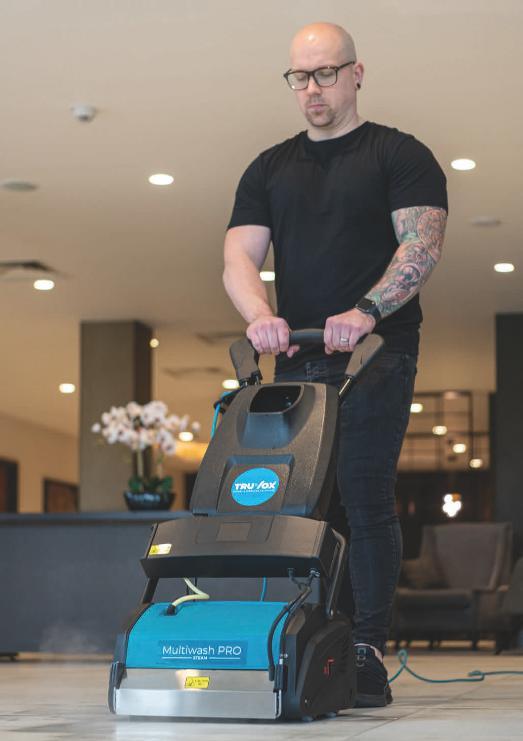
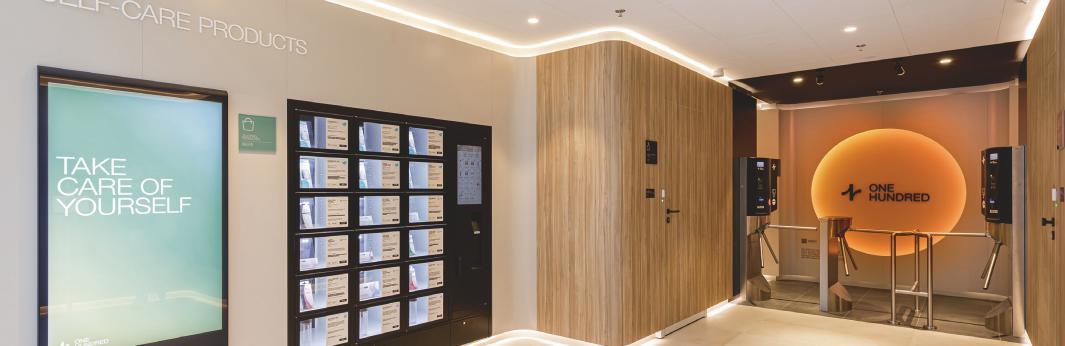
Public washrooms are rarely associated with wellbeing. More often they are viewed as a necessity - functional spaces that attract attention only when something goes wrong. Yet for Dutch operator
ONE HUNDRED restrooms, the washroom represents something quite different: an opportunity to improve customer experience, support wellbeing and demonstrate how design, hospitality, cleaning and technology can work together to create value.
FOUNDED IN 2017, the company has challenged conventional thinking about public washrooms. Its facilities, located in shopping centres, transport hubs and motorway service areas across Europe, are built around a proposition that remains relatively unusual in many markets: that people value clean, comfortable and welcoming washrooms and are willing to pay for them.
The concept extends beyond cleanliness. Lighting, music, scent and materials are carefully selected to create what the company describes as a moment of wellbeing within a busy day. Rather than serving solely as functional facilities, the washrooms are designed to provide a brief pause from the surrounding environment.
“We believe it starts with caring about the washroom,” says co-founder and chief brand officer Marielle Romeijn. “If you think about who is visiting and what they need, and spend a little more time considering how to make the experience comfortable, it changes everything.”
Delivering that experience consistently across more than 80 locations and millions of annual visitors requires more than attractive design. ONE HUNDRED
combines cleaning, hospitality, facility management and technology within a single operating model. According to Romeijn and brand innovation manager Anne Moeskops, this integrated approach has enabled the company to expand internationally while maintaining a recognisable brand and service standard.
The company believes public expectations are changing. Consumers increasingly judge shopping centres, transport hubs and hospitality venues by the quality of the environments they provide. In that context, the washroom has become an important customer touchpoint rather than an afterthought.
“If I go to a restaurant and the washroom is not clean or not pleasant, it affects how I feel about the whole place,” says Moeskops. “I may not come back.”
This relationship between washroom quality and customer perception lies at the heart of the company’s philosophy. While visitors may not choose a destination because of its toilets, a poor experience can negatively influence how they view the venue. Conversely, a clean and welcoming facility can reinforce positive impressions and encourage visitors to return.
The approach reflects wider trends across the built environment. As landlords, retailers and hospitality operators focus increasingly on customer experience, physical spaces are expected to offer more than functionality. ONE HUNDRED argues that public washrooms should be part of this evolution.
Its facilities typically include accessible toilets, baby-changing areas and family facilities, alongside sensory elements intended to create a calmer atmosphere. Music softens the environment, lighting feels less clinical than in traditional public washrooms and materials are chosen for both durability and visitor comfort.
The company’s philosophy also shapes its approach to staffing. Frontline employees are known as members of the ‘Comfort Crew’ - a title intended to reflect
their broad-based role in creating and maintaining the visitor experience. “The fact that we call them Comfort Crew is important,” says Romeijn. “We give them a nice uniform, they work in a pleasant environment and they are part of the visitor experience.”
Rather than treating washroom maintenance as a series of scheduled cleaning tasks, the company operates its locations more like hospitality environments. Staff remain present throughout opening hours - monitoring conditions, maintaining cleanliness, welcoming visitors and responding immediately to any issues.
According to Moeskops, these teams are critical to the operation. “They are the key to maintaining our standards and representing the brand,” she says.
ONE HUNDRED invests heavily in training, communication and employee support. Site managers oversee individual locations and act as a link between operational teams and head office, while field coaches travel between sites, monitoring standards, gathering feedback and helping teams respond to operational challenges.
“We know people by name,” says Romeijn. “We invite them to Christmas parties, we ask for feedback and we really try to build relationships.”
For Romeijn, employee engagement is essential. Consistent service across dozens of sites cannot be achieved through audits and checklists alone. It requires people who understand the purpose behind the concept and feel ownership of the environments they manage.
As the company expands across Europe, maintaining consistency becomes increasingly challenging. Different labour markets, regulatory frameworks and cultural expectations require strong operational systems and effective people management. Technology has therefore become a central part of the business. “Without the technology we would be blind,” says Romeijn.
Behind the customer-facing experience
Across the cleaning, facilities management and environmental sectors, the conversation about artificial intelligence has remained stubbornly narrow.
Ceris Burns, Managing Director of CBAi, argues that the technology with the greatest immediate potential is being consistently overlooked - and that without the right foundations, investment in any AI tool will fail to deliver.
The dominant narrative around AI in our sector concerns operations. Autonomous cleaning machines, sensor-driven building management systems, predictive asset maintenance - technologies that are visible, capital-intensive, and require substantial integration before any return is realised. But they have drawn attention away from a technology that is available now, at low cost, and capable of transforming how every function of a business operates.
Generative AI - the category of tools that includes ChatGPT, Claude, Gemini and Microsoft Copilot - is a different proposition entirely. At business grade, these tools cost in the region of €25-35 per user per month, require no technical infrastructure, and apply directly to the work every team does every day: research, writing, analysis, communication, documentation, and the production of commercial content.
For a sector where tendering is a constant pressure and client reporting consumes significant management time, the case for generative AI is not theoretical. It is demonstrable and measurable and already being realised by businesses that have moved beyond whether to adopt, and into the question of how.
There is, however, a pattern that recurs with troubling consistency. Businesses acquire subscriptions, tools are made available, and the expected transformation does not materialise. Employees experiment in isolation and conclude that the technology is not suited to their workor resort to free versions, uploading commercially sensitive information into platforms that offer no data protection and risking liability for their employers.
This is not a technology problem. It is a governance and training problem. A survey conducted at the Manchester Cleaning Show found that 70% of businesses were not tracking any return on investment from their AI tools.¹ They had made the investment in access, but not in capability.
Research by the RAND Corporation identifies the same failure at scale: 80% of AI projects do not progress beyond initial implementation, and the cause is almost never technical.² It is the absence of leadership literacy, structured training, and governance frameworks that make consistent, safe use possible.
The EU AI Act: a regulatory context that changes the calculation
For businesses operating within the European Union, or whose operations touch EU customers, suppliers or employees, the case for structured AI training has moved from commercially advisable to legally required.
The EU AI Act came into force in February 2025. Article 4, the AI literacy provision, requires organisations that deploy AI systems to ensure an adequate level of AI literacy across their entire workforce - not selectively, and not only among those with a designated technology remit. This means every level of the organisation: senior leaders, professional and officebased teams, and frontline operational staff. Anyone who interacts with an AI tool in any capacity is in scope. Non-compliance with Article 4 from 2nd August 2026 can trigger fines of up to €7.5 million or 1.5% of global

annual turnover, with steeper penalties of up to €35 million or 7% reserved for the most serious prohibited AI practices under Article 99.³
The scope is wider than most businesses realise. If your AI use affects anyone in the EU - as customers, employees, or supply chain partners - you are within scope, and civil liability is already live. An employee who causes harm through unsupervised AI use today creates organisational liability now, not from August.
The parallel with GDPR is instructive. Organisations that treated it as a distant concern found themselves under-prepared and over-reliant on consultants at the last minute. Those that built the required frameworks systematically, with genuine understanding at leadership level, were not. The AI Act presents the same choice, with considerably less time to take action.
The role of industry associations
Speaking to senior representatives of global industry associations at Interclean Amsterdam earlier this year, the picture was consistent: widespread acknowledgement that AI adoption is a strategic imperative, and significant uncertainty about how to approach it in ways that are structured, safe, and measurable. Associations that move to establish clear AI guidance and governance frameworks will be providing their members with something of long-term value.
Building capability that delivers results
The question for senior leaders is not whether generative AI will change the way their business operates. That is no longer in doubt. The question is whether the money being spent on AI tools is matched by investment in the training required to make them work.
The businesses generating measurable outcomes share certain characteristics. Their leadership understands the technology well enough to make informed decisions and shape confident use. Their teams have received structured, role-specific training and are tracking results - time saved, output quality, and commercial impact - in ways that demonstrate value and build the internal case for wider adoption.
Those foundations require deliberate investment. The businesses that establish them now, while first-mover advantage is still available, will carry that advantage into a market where the landscape looks quite different. The window is not permanent.
CBAi provides specialist AI training and strategy for senior leaders and their teams in the cleaning, FM and environmental sectors. Training is delivered in-house and hybrid, combining practical skills development with sectorspecific application and clear governance frameworks. For further information, visit cbai.co.uk or contact ceris@cbai.co.uk.
About the author
Ceris Burns is Managing Director of CBAi and a CPD-accredited AI trainer specialising in AI adoption for the cleaning, facilities management and environmental sectors. She is a Fellow of the Chartered Institute of Marketing and a Chartered Environmental Cleaner with over 20 years’ experience in essential industries. cbai.co.uk
More than 20 years in essential industries
AI training, leadership programmes and strategy
UK-based, working internationally
Book a discovery call with Ceris Burns
Creating value (continued from page 35)
sits a digital infrastructure that monitors performance across the network. Visitor ratings, QR-code feedback, maintenance requests, incidents and service-level performance are collected and analysed through central dashboards, providing managers with real-time visibility across multiple countries.
The data allows cleaning schedules, staffing levels and consumable replenishment to be aligned more closely with actual demand. Understanding visitor flows and usage patterns helps improve efficiency while maintaining service quality. Technology also supports contractual performance by tracking response times and maintenance obligations. However, Romeijn stresses that data alone does not create great customer experiences. Human intervention remains essential.
If an issue with standards arises, the company follows a structured escalation process involving site managers, regional teams and head office. For locations requiring more significant intervention, ONE HUNDRED deploys a specialist ‘flying cleaning team’ responsible for deep cleans and operational resets. Romeijn explains: “We do a deep clean, provide the training again and then work together to improve.”
For the company, cleanliness is not a standalone objective but part of a wider promise to visitors. The challenge is not simply to clean facilities but to maintain environments that consistently feel welcoming, safe and comfortable regardless of location or visitor volume.
The company is also exploring how washrooms can play a broader role in supporting public wellbeing. Alongside toilet facilities, some locations provide additional services including hydration stations offering chilled drinking water and facilities that support basic health monitoring and self-testing. For Moeskops, this reflects an opportunity to think differently about how public washrooms are used. Rather than functioning solely as sanitation facilities, they can become part of a wider wellbeing infrastructure.
The same thinking informs the company’s approach to accessibility and inclusion. While compliance with legislation is a basic requirement, ONE HUNDRED aims to go further by considering how different groups experience the space. Accessible toilets, family facilities, baby-changing areas and unisex options are incorporated wherever possible.
This focus aligns with the company’s broader philosophy of care. Creating a positive experience for every visitor means considering comfort, privacy, safety and
the overall sensory experience as well as physical accessibility.
Sustainability is another important component of the operating model. As a business managing high-traffic facilities, ONE HUNDRED is conscious of the environmental impact associated with water use, energy consumption and consumable products. Water-saving taps and flushing systems have been introduced throughout the network, helping reduce resource consumption without compromising user comfort. The company has also partnered with the Made Blue Foundation, linking water consumption within its facilities to projects that provide access to clean drinking water in communities around the world.
For Romeijn, sustainability must be embedded within daily operations rather than treated as a separate initiative. As landlords, retailers and transport operators place increasing emphasis on environmental performance, measurable outcomes are becoming an important part of the value proposition.
The company’s ability to combine customer experience, operational efficiency and sustainability has attracted growing interest from property owners and operators across Europe. “I think we have now reached a point where we have enough key accounts to show that we are credible,” says Moeskops. “We also get companies approaching us because they have seen the concept and want to talk to us about bringing it to their locations.”
Many of these organisations are reassessing the role of washrooms within the customer journey. Shopping centres, transport operators and motorway service providers increasingly recognise that visitors evaluate destinations based on every aspect of the experience.
Partnerships have therefore become central to ONE HUNDRED’s growth strategy. The company works closely with landlords, retailers and service operators - adapting its concept to different environments while maintaining its core operational principles.
One example is its collaboration with Fastned, the expanding electric vehicle charging operator. As Fastned developed a new generation of charging hubs incorporating hospitality elements, it sought a washroom concept aligned with its brand while benefitting from ONE HUNDRED’s operational expertise.
Rather than applying a standard design, the two companies developed a bespoke concept featuring different colours, finishes and visual elements. The resulting facilities retain ONE HUNDRED’s operating
model while reflecting Fastned’s customer-facing identity.
“They wanted something unique,” says Moeskops. “The collaboration has created a completely new opportunity for us.”
The project illustrates a wider shift within facilities management. Increasingly, clients are seeking partners capable of delivering customer experience alongside operational performance. Cleaning, maintenance, design and brand identity are becoming more closely integrated.
This changing perception is also evident in the debate surrounding paid public toilets. In many countries, charging for access remains controversial. Critics argue that sanitation should be free, while supporters point to the challenges of maintaining high-quality facilities without sustainable funding.
Romeijn believes the debate often overlooks the relationship between investment and quality. “There is often an assumption that visitors don’t want to pay,” she says. “But that assumption is usually wrong.”
Research conducted by the company suggests that consumers across several European markets are willing to pay for facilities that are clean, comfortable and well maintained. The challenge, Romeijn argues, is that many people associate paid toilets with poor experiences.
“If people pay and still have a bad experience, it is a double disappointment,” she says. “That is not good for our business because it creates the idea that paid toilets are not worth it.” For ONE HUNDRED, charging is not an objective in itself but a funding mechanism that supports investment in staffing, maintenance, technology and customer experience.
Looking ahead, Europe remains the company’s primary growth focus. Each market presents different challenges, but Moeskops believes growth often starts with a single successful location. “That is often the beginning of something exciting,” she says.
For cleaning and FM professionals, ONE HUNDRED offers an insight into how public washrooms may evolve in the years ahead. Its combination of dedicated frontline teams, data-driven operations, inclusive design, sustainability initiatives and wellbeing services represents a model that extends beyond traditional perceptions of cleaning and maintenance. Ultimately, Romeijn and Moeskops are working to redefine what a public washroom can be, challenging property owners and facilities managers to think differently about one of the most frequently used spaces within the built environment.
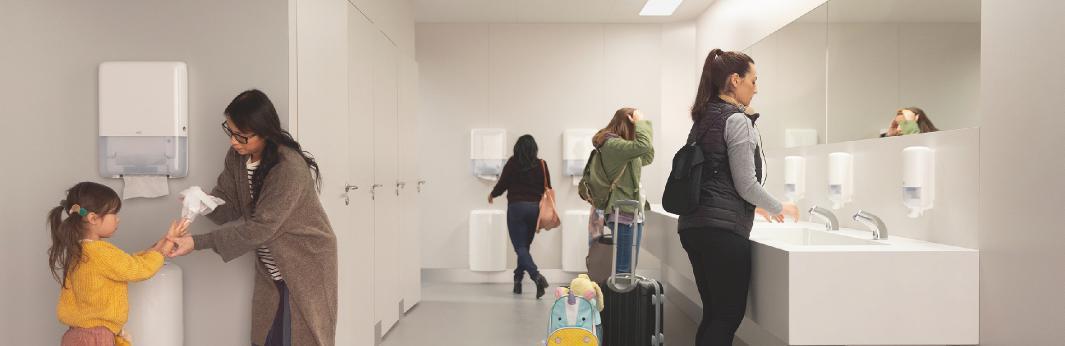
Public washrooms are no longer a ‘back of house’ afterthought. They are a reputational touchpoint, an incentive for customers to return to a building, and a wellbeing issue. The Loo of the Year Awards in the UK campaigns for excellence in washroom provision.
IN BOARDROOMS, council chambers, hotels, shopping centres and office blocks, toilets are rarely a headline agenda item. Yet according to the organisers of The Loo of the Year Awards, they should be.
Each year for the last 39 years, the awards team, based out of Hereford in the UK, inspect and grade thousands of washrooms spanning motorway services, schools, shopping centres, hospitality venues, offices and public facilities.
What they consistently find is simple: washrooms are no longer a ‘back of house’ afterthought. They are a reputational touchpoint, they are an incentive for repeat business, they are a wellbeing issue and they matter to us all. After all, we all need the ‘loo’ and for some that need –and the quality of those washrooms – are a deciding factor in visiting and therefore in spending money.
The Loo Of The Year Awards began almost four decades ago to encourage excellence in washroom facilities from hygiene to ambience to safety to inclusivity. Four years ago the mission was taken on by Becky Wall BEM and her husband Charles Wall, who had themselves entered the awards many times through their former business A Plush Flush. Becky and Charles have always believed that great washrooms mean a great experience for customers, clients, visitors, guests and employees.
“My mum instilled in me that a state of
a premises’ washrooms often indicated the state of the rest of the venue,” Becky said. “As a child, I remember numerous occasions when we left a premises – be it a café or a garden centre – if the washrooms were not clean and in good order. Later, when we started our business A Plush Flush we did it because we’d attended so many events, including farming shows and festivals, where the toilets were beyond disgusting and we knew we could do it better. We did and we were proud of our business and the effort we put into making sure our mobile washrooms were top notch.
“We tested this by entering The Loo Of The Year Awards and when the original founder retired, it was an obvious step for us to take it on and move the mission forward into the 21st Century to inspire excellence in washrooms as well as encourage others to understand how important this area of our lives is - and how taking it seriously can improve any business’s bottom line.”
Why do washrooms matter more than most leaders realise?
Becky and Charles and their team of inspectors argue that the condition of a washroom sends an immediate and powerful message about standards. If a business cannot maintain the most basic hygiene facility, what does that say about other areas of the business such as food preparation, clinical care, safeguarding or operational discipline?
For customers, visitors and employees, washrooms influence comfort, dwell time and likelihood of return to a premises. In hospitality and retail, that directly impacts revenue. In workplaces and schools, it affects wellbeing, dignity and productivity. For local authorities, it shapes civic pride and encourages inclusivity.
In short, the washroom is often the most honest room in the building and that room can create a lasting impression. What is your washroom saying about your organisation today?
Are current standards good enough?
Standards across the UK are mixed yet The Loo Of The Year Awards’ team believes they are improving. Each year they see more companies and organisations embracing the Awards because it’s not just about ‘winning’ – it’s about a commitment to improving. Organisations are nominated by visitors, guests, employees or they can self nominate. They then pay for an inspection which takes place unannounced. That inspector will mark the washrooms against more than 100 criteria and that washroom will be given a grading from bronze up to the highest diamond – about five per cent of entrants achieve the highest status.
“Many entrants pay an extra small fee for feedback about how they can improve,” Becky Wall explained. “That’s where we suggest areas for improvement or those small tweaks which can make people feel far more welcome, and we’ve increasingly seen more entrants asking for that information. Some may not know or may not have ever considered what they can do to achieve excellence beyond some basic work around cleanliness and the law itself and what they have to do just to be compliant.”
Major transport hubs, corporate headquarters and high end leisure venues frequently achieve strong results and also, in recent year, many camping and caravan sites have embraced the awards as they begin to understand that trusting in good washrooms brings customers back again and again. However, inspectors still encounter outdated layouts, poor ventilation, inadequate accessibility provision and inconsistent cleaning regimes in some settings.
From inspection experience, the recurring challenges tend to fall into five categories:
• Maintenance backlogs in ageing building environments
Good for business (continued from page 39)
• Vandalism and misuse in high footfall public sites
• Budget constraints, especially for local authorities and education settings.
• Staffing pressures affecting cleaning frequency
• Inadequate design that makes effective cleaning difficult
• Many operators are now responding with smarter solutions and manufacturers in this space are coming up with those solutions in the first place. These include durable finishes, sensor technology to reduce touchpoints, improved cubicle layouts for privacy, clearer signage and better stock monitoring systems. Some are adopting data led cleaning schedules triggered by usage.
Where leadership takes washrooms seriously, improvement follows quickly and later there will be numerous sales and marketing benefits.
Biggest improvements
The greatest advances in recent years have been seen in:
• Accessibility design, including improved provision for wheelchair users and Changing Places facilities
• Baby changing and more family friendly spaces
• Touch-free technology and infection control awareness following the pandemic
• Inclusion initiatives such as support for period and menopause awareness, for those with sensory issues or for those with hidden disabilities such as visual impairment.
However, the Loo Of The Year Awards team would like to see more focus on:
• Consistent funding for public toilets
• Robust maintenance planning rather than reactive repairs
• Ventilation and odour management
• Staff welfare washrooms, which
are often overlooked compared with customer facilities
Becky Wall said: “Some organisations still treat washrooms as a cost centre rather than a brand asset and we are slowly changing that narrative. Everyone needs to use a ‘loo’ at some point in our daily lives and making that experience a good one is great PR, it marks out those organisations that care not only about their legal obligations - they care beyond that. They realise that taking these basic human needs very seriously can impact productivity, create a feel-good factor and drive growth in any relevant business.”
According to The Loo Of The Year Awards’ framework, the ‘perfect’ facility is about respect for everyone who needs to use a washroom, ie, everybody.
As a minimum, a washroom should be:
• Immaculately clean
• Well ventilated
• Fully stocked at all times
• Accessible and inclusive
• Safe and well lit
• Easy to maintain by design
• Clearly signed and simple to navigate
Importantly, it should feel cared for. Small details such as functioning locks, intact mirrors, dry floors and working hand dryers or paper dispensers means people who visit those washrooms will have a good experience and will not think twice about using the facilities again. For those with additional requirements such as the need for a Changing Place toilet , those customers will come back again and again because they are confident they can be cared for appropriately on a day out, or on a shopping visit. They are not excluded from activities that many take for granted.
The legislative landscape:
In the UK for example, washroom standards sit across multiple frameworks rather than under one single, unified law. Health and safety regulations, workplace regulations, building regulations, accessibility requirements under the Equality Act, and guidance around Changing Places toilets all play a role. It can feel overwhelming and The Loo Of The Year Awards team can help with that through their feedback facility. It firmly believes in a ‘carrot’ approach rather than the ‘stick’.
Recent years have seen increased governmental attention on accessibility, particularly around larger public buildings being required to include Changing Places facilities. However, there remains no comprehensive national strategy guaranteeing consistent provision of high quality public toilets across all communities – at least in the UK.
Internationally, The Loo Of The Year Awards is exploring the possibility of taking the model overseas in the future to help guide other communities, celebrate best practice and take a collaborative and professional approach to improving washroom standards for all.
More than just toilets
The central message from the Loo of the Year Awards is straightforward. Washrooms are not a minor operational detail - they are a reflection of culture, care and competence. Indeed in the UK, some architects are seeing this as a part of wellbeing at work strategy for forward-thinking companies looking to support and retain their staff across all generations.
In an era where reputation is fragile and customer experience defines success, neglecting washrooms is short sighted.
To find out more about The Loo Of The Year Awards visit: www.loo.co.uk
To receive ECJ free of charge (subject to qualification), complete the form below.
Please tick just one box in each section.
Your company’s main business activity:
q Factory & industrial premises
q Offices & commercial premises (including banks)
q Contract cleaning/cleaning services
q Distributors/wholesalers
q Health authorities/hospitals/ nursing homes
q Central and local government
Address
q Hotels/catering/recreation (including leisure centres)
q Education establishments (including universities, schools & colleges)
q Other (please specify)
Number of company employees:
Are you personally responsible for purchasing or specifying machinery, materials, products, equipment or support services used in the cleaning and maintenance of non-domestic establishments Yes/No
q None of the above.
Please