
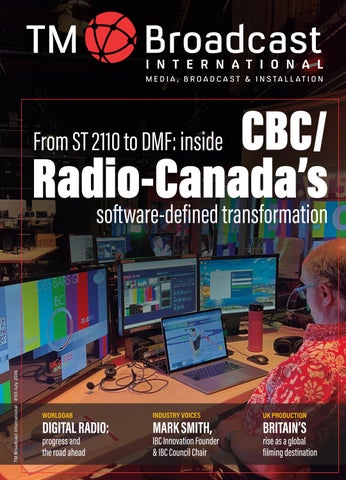
Over the past few years, much of the broadcast industry’s technological conversation has focused on the transition to IP infrastructures and the adoption of standards such as SMPTE ST 2110. Today, however, the market is already beginning to look towards the next stage.
As media infrastructures become increasingly software-defined, concepts such as Dynamic Media Facility (DMF), developed by the European Broadcasting Union (EBU), and the Media Exchange Layer (MXL) are gaining momentum, particularly among the industry’s most advanced organisations. The conversation is gradually shifting beyond signal transport towards a new abstraction layer capable of redefining how production environments are designed, interconnected and operated.
A compelling example of this evolution is the Universal Production Platform (UPP) developed by CBC/Radio-Canada, an architecture closely aligned
with the principles of DMF and explored in depth in this issue. Coincidentally, CBC/Radio-Canada has also recently joined the EBU as a Full Member after 75 years as an Associate Member, adding further relevance and timeliness to this feature.
From a workflow perspective, the transition towards DMF-based architectures is reshaping the way content is created, managed and exchanged. At the heart of this transformation lies a concept that is likely to become increasingly important in the years ahead: the abstraction layer, designed to decouple applications, resources and physical infrastructure while providing production environments with a level of flexibility that was previously difficult to achieve.
It is likely that we will see many more examples of this transformation in the months ahead. Just as we have closely followed the industry’s transition to IP, TM BROADCAST International will continue to track these emerging architectures and their impact on the future of media production.
Editor in chief
Javier de Martín editor@tmbroadcast.com
Director
Daniel Esparza press@tmbroadcast.com
Editorial Staff
Bárbara Ausín
Carlos Serrano
Key account manager
Patricia Pérez ppt@tmbroadcast.com
Graphic Design and Layout
Sorex Media
Ana Guijarro
Administration
Laura de Diego administration@tmbroadcast.com Published in Spain ISSN: 2659-5966
TM Broadcast International #155 JULY 2026
TM Broadcast International is a magazine published by Daró Media Group SL Centro Empresarial Tartessos Calle Pollensa 2, oficina 14 28290 Las Rozas (Madrid), Spain Phone +34 91 640 46 43
From ST 2110 to DMF: inside CBC/Radio-Canada’s move to software-defined production
Mathieu Rochon, Senior Technical Advisor at CBC/Radio-Canada, outlines for TM BROADCAST the principles behind the corporation’s Universal Production Platform and reflects on the transition to IP, software-defined workflows, and the role of MXL in next-generation media infrastructures.
By Simen K. Frostad, Chairman of Bridge Technologies

By Daniel Robinson, Product Manager at


Jacqueline Bierhorst, President of WorldDAB: “Broadcast remains the foundation that keeps radio universally available”
We explore the progress made by DAB+ over the past year, the latest developments in digital radio and the challenges that still lie ahead.

32 INDUSTRY VOICES
Mark Smith, IBC Innovation
Founder & IBC Council Chair:
“Innovation is increasingly judged not just by what is technically possible, but by whether it solves real business and operational problems”.

42 BRITISH FILM COMMISSION
United Kingdoms: from Hogwarts to Gotham, all roads lead to Britain
TM BROADCAST speaks with the British Film Commission to explore how the UK has established itself as one of the world’s leading audiovisual production hubs and the challenges it faces in maintaining that position.

Sky announces that it has agreed terms to acquire ITV Media & Entertainment from ITV plc for a total consideration of up to £1.6 billion (subject to adjustment for cash, debt and net working capital). This comprises £1.2 billion in cash, Love Productions, and up to £0.2 billion in performance-related earn-out, subject to customary conditions and regulatory approvals, as they have claimed in a statement.
Sky and ITV Media & Entertainment will combine free-to-air broadcasting, advertising-funded streaming and subscription television together with Sky’s portfolio of broadband, mobile and business services.
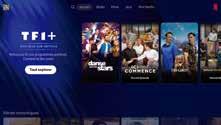
Netflix has announced that TF1+ programs and TF1 live channels are officially available to members in France. This happens after announcing the first-of-its-kind distribution partnership with TF1 Group’s, as the platform has claimed in a statement.
This is a fully integrated model — bringing together the TF1+ content with the Netflix
Following completion, ITV channels and ITVX will remain free-to-air, with its public service broadcasting commitments continuing to be met in full. Audiences will continue to have access to the programmes, alongside national and regional news. Sky will continue to offer entertainment, sport, and market-leading connectivity.
Together, both companies look forward to building a stronger UK media business to protect and strengthen commercially-funded public service broadcasting.
With this objective, Sky and ITV have established their commitments:
› ITV’s channels and ITVX will remain free-to-air.

› ITV’s public service broadcasting commitments will continue in full.
› ITV News and Sky News will remain distinct editorial voices.
› The will invest in more British content, more free-to-air sport and an enhanced streaming experience.
› They will keep supporting the UK’s creative industries for the long term.
experience and its used features like the ‘Continue Watching’ row, ‘My List,’ and ‘Top 10’ rows. Members can watch their favorite TF1+ programming right on Netflix, including:
› Live broadcasts from TF1, TMC, TFX, TF1 Séries Films, and the 24-hour news channel LCI.
› Major live sporting events, including the Rugby Nations Championship and major
French Football team matches (excluding FWC26).
› Daily Dramas & Soaps: From daily favorites like Demain nous appartient and Ici tout commence, as well as hit series like Diplôme, Zodiaque and La Cible.
› Fan-Favorite Entertainment: Massive reality and competition shows, including Koh-Lanta, Secret Story and Dancing with the Stars.
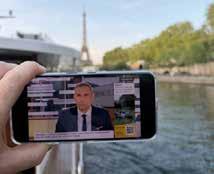
TDF, operator of France’s Digital Terrestrial Television (DTT) network, is entering a new phase of its large-scale 5G Broadcast trial. An initial broadcast area has been activated across several French metropolitan areas, including Paris, Reims, Bourges and Le Havre, as TDH has claimed in a statement.
At an event held in Paris, TDF brought together key representatives from the audiovisual ecosystem to announce the launch of this new phase of 5G Broadcast
in France. Speakers included Karim El Naggar, Chief Executive Officer of TDF, Christopher Baldelli, President of T18, and Jacques Donat-Bouillud, Head of Distribution at France Télévisions.
As video consumption increasingly shifts toward smartphones, a key question is emerging for the future of broadcasting: how can free, open and sovereign access to audiovisual content on mobile devices be guaranteed in the years ahead? For decades, DTT has ensured free, simultaneous
and universal access to audiovisual content. It remains one of the few models capable of delivering the same quality of service to everyone, regardless of connectivity conditions

CBC/Radio-Canada is now a full Member of the European Broadcasting Union (EBU), following a vote earlier at the EBU’s 96th General Assembly in Prague. The move aims to formalise and deepen the long-standing relationship between Canada’s national public broadcaster and the EBU, as the alliance has claimed in a statement.
As an Associate Member of the EBU since 1950, CBC/Radio-Canada has collaborated with European public broadcasters on journalism, standards and technology, and built productive partnerships with leading EBU Members.
During the Assembly, the EBU also announced the appointment of 3Cat as an associate member, a new category that recognizes broadcasting organizations serving large autonomous language communities, and renewed the organization’s leadership for the 2027-2028 period
Now, as a full Member, CBC/Radio-Canada has access to the entire breadth of EBU collaboration, including Member-only networks for investigative journalism, verification, digital news and data, as well as the Eurovision News Exchange and Euroradio Music Exchange services.
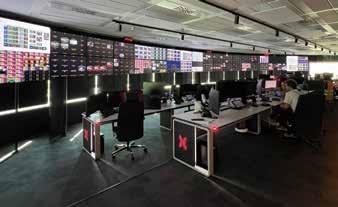
Live broadcasting has never been more demanding. Federations, rights holders, and broadcasters expect real-time delivery across every technology. Behind that expectation sits a remarkable amount of invisible infrastructure. On this context, Eurovision Services has inaugurated a new location with expanded Master Control Room (MCR) in Madrid, one of the largest and most capable broadcast facilities of its kind in Europe, as it has claimed in a statement.
Eurovision Services has operated a broadcast hub in Madrid since 2019 and has been operating at an international level for more than 70 years from Geneva, Washington and Singapore.
Building on recent growth, the Madrid MCR is now a full-scale nerve centre for contribution and distribution, dveleoped with the intention of handling the volume and complexity that today’s most demanding rights holders require. The Madrid MCR completes the recent completion of a full 2110 customer led facility at the same location.
At its core, the new Madrid MCR is a fully IP-based facility. iIt features hybrid contribution and distribution architecture: the platform supports multimodal delivery via Cloud, SRT, fibre, and satellite to service Eurovision Services customers across the globe.

The company also completes the acquisition of Synamedia’s Video Network business, which will operate as Quortex.
Lumine Group has announced the acquisition of Imagine Communications Holdings through one of its subsidiaries. The acquisition
deepens Lumine Group’s presence across the Media supply chain domain, as the company has claimed in a statement.
Headquartered in the U.S., Imagine Communications is a global provider of Video Connectivity Solutions, Channel Origination software and
hardware, and AI-enabled Advertising Management & Monetization solutions.
“Imagine Communications is an important addition to Lumine’s growing Media ecosystem”, notes Tony Garcia, Chief Operating Officer at Lumine Group.
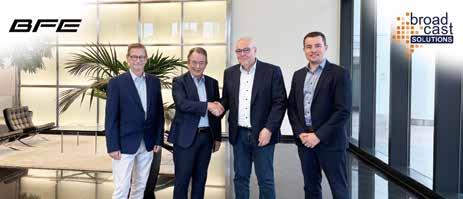
Broadcast Solutions GmbH is acquiring BFE Studio und Medien Systeme GmbH. This transaction looks forward to strengthening Broadcast Solutions’ position and expanding its service portfolio to include in-depth expertise in the areas of studio and production technology, media IT, control centre and control room systems, and customised hardware and software development, as the company has claimed in a statement.
As an independent company and an established brand with offices in Mainz and Vienna, BFE will become part of the Broadcast Solutions Group.
The existing shareholders, Martin Dempf and Sven Hesselbach, will continue to jointly manage the company as managing directors. Peter Dinkel and Doris Hartl will continue to lead BFE in Vienna as managing directors.
Customers and partners will not experience any changes to
their points of contact, ongoing projects or services. Also, the tried-and-tested structures, technological specialisations and close customer support of both companies will be retained.
“With the acquisition of BFE, we are consistently pursuing our strategic growth course. In recent years, there has been only minimal overlap between the two companies’ service portfolios, but today they complement each other perfectly in technological terms. Together, we are creating the conditions to support our clients even more comprehensively in the future with the planning, implementation and further development of sophisticated broadcast, media and communications infrastructures”, explains Stefan Breder, Co-CEO of Broadcast Solutions.
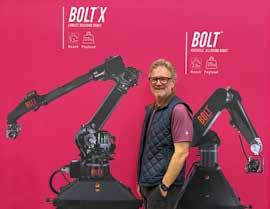
MultiDyne Video & Fiber Optic Systems has announced it’s acquiring the assets of MRMC (Mark Roberts Motion Control). As part of the transaction,
MultiDyne has established MultiDyne Robotics and Motion Control, a new company that will maintain the well-known MRMC brand, as the company has claimed in a statement.
The announcement follows MRMC’s recent confirmation that it had entered liquidation, with Lee Manning and James Thompson of S&W LLP appointed as joint liquidators
Additionally, the move comes during a milestone year for MultiDyne as the company celebrates its 50th anniversary.
The acquisition brings MRMC’s core technologies, intellectual property, manufacturing capabilities and key engineering expertise into the MultiDyne organization. The company looks forward to extending MultiDyne’s reach to the very beginning of the content creation chain.
“MRMC is a world-class brand with an exceptional reputation for innovation, engineering excellence and customer success”, notes Frank Jachetta, CEO of MultiDyne.
InfoComm Latin America 2026 will return to the World Trade Center International Convention and Exhibition Center (CIEC WTC) in Mexico City from October 21 to 23. Industry professionals, buyers, end users, and anyone interested in learning more about the latest technology solutions, trends, products, and services can now register free of charge to secure their place, as the organizers have claimed in a statement.
Produced by AVIXA (the Audiovisual and Integrated
Experience Association), the event aims to showcase the technology behind immersive experiences designed to captivate visitors in museums, sports venues, and major concerts, while also helping people connect in corporate meeting rooms, university classrooms, and houses of worship.
Following a successful inaugural edition that exceeded organizers’ expectations, the second edition of InfoComm Latin America is expected to attract more than 7,000 attendees to a
4,000-square-meter
exhibition floor, where nearly 100 exhibitors will showcase innovations from approximately 120 brands.
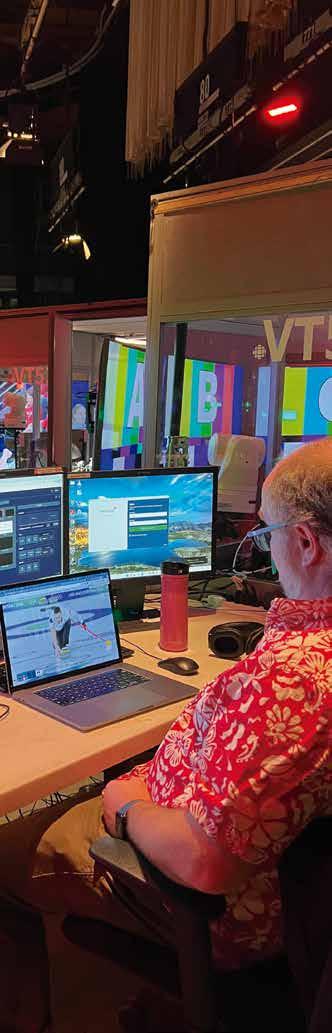
Mathieu Rochon, Senior Technical Advisor at CBC/Radio-Canada, outlines for TM BROADCAST the principles behind the corporation’s Universal Production Platform and reflects on the transition to IP, software-defined workflows, and the role of MXL in next-generation media infrastructures
By Daniel Esparza
The conversation in the broadcast industry is gradually shifting from the adoption of SMPTE ST 2110 towards a new layer of abstraction, represented by concepts such as the so-called media exchange layers. In this context, approaches such as DMF (Dynamic Media Facility), developed by the EBU (European Broadcasting Union), and MXL (Media Exchange Layer) are gaining traction, particularly among the most advanced players in the sector.
To understand how this shift is being addressed in practice, we turn to one of the most advanced cases in this field: CBC/RadioCanada. Together with Mathieu Rochon, Senior Technical Advisor at the corporation, we explore how these concepts are being implemented in a real-world environment, shaped by the rise of streaming, OTT, and the need to rethink production models.
As Mathieu explains, a commitment to
technological innovation is part of the organisation’s DNA: “Since the early 1990 with one of the first large scale SDI production center in Toronto to our recent fully 2110 multi-platform production facility in Montreal, we want to continue to be in a position to influence the future of our industry, and there is no better spot to do so than to be at the forefront of the technological evolution.”
The Universal Production Platform (UPP) developed by CBC/Radio-Canada is closely aligned with the Dynamic Media Facility (DMF) architecture defined by the EBU, where CBC/ Radio-Canada has recently become a Full Member after 75 years as an Associate Member. The platform is structured around a set of principles aimed at redefining how production environments are designed and operated.
At its core, Mathieu explains, the system is built on four fundamental pillars.
› Principle 1: A clear separation between Production Areas, Operator Positions and Shared Production Resources.
• If it’s required to capture or create sound/images, it goes in production areas.
• If it’s required to monitor and control signals/
equipment it goes in operator positions.
• If it alters/modifies/ processes any audio/ video signal it goes into the pool of shared production resources.
• Separation of the back end (media functions) and the front end (user interface)
› Principle2: Common routing infrastructure based on routable IP technologies and a limited number of protocols / formats/ codecs.
• We will no longer be restricted to a fixed size router, literally everything will be routable using the IP network.
• The router becomes agnostic to production formats (resolution, frame rate, aspect ratio, etc.). But support for 1080p59.94 10 bits is mandatory on day 1.
• Using the proper codecs, IP can be extended anywhere, including the public cloud and your own home office.
› Principle 3: Conscious bias towards software based solutions running on COTS hardware.
• A common server infrastructure can run multiple different applications.
• One server can serve as a multiviewer one day and a replay server the next.
• Allows the use of public cloud to temporarily augment processing capacity.
• Ability to rent additional licences to meet extra production needs.
› Principle 4: No fixed and permanently assigned or reserved production resources.
• Dynamic allocation of production resources between multiple facilities.
• Ability to right size infrastructure based on true simultaneous production needs.
• Resources can be reserved through scheduling and management tools.
• Deployment, configuration and updates are facilitated by standard IT automation tools.
The Universal Production Platform (UPP) developed by CBC/Radio-Canada is closely aligned with the Dynamic Media Facility (DMF) architecture defined by the EBU, where CBC/Radio-Canada has recently become a Full Member after 75 years as an Associate Member
“We need to stop thinking in terms of ‘video formats’ (like 4K or HDR) and start thinking in ‘form factors.’ A show, five years from now, is no longer just a linear program; it’s a content ecosystem. It’s a documentary that is also a vertical social series, an interactive community hub, and a searchable archive”
needs does it address?
The Universal Production Platform (UPP) at CBC/ Radio-Canada responds to a clearly defined set of operational and strategic needs, within the context of a large-scale technology renewal process.
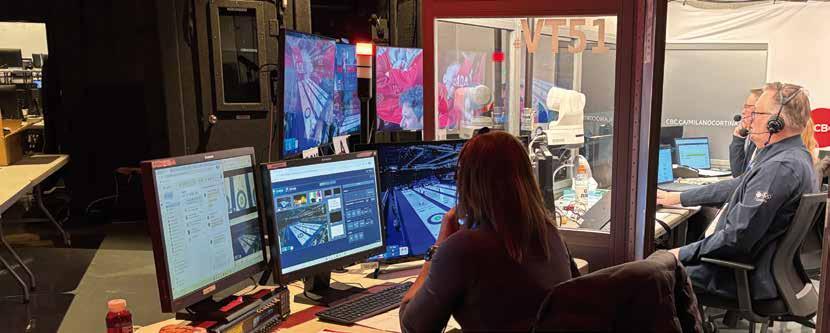
As Mathieu Rochon explains, the starting point was highly pragmatic: “In Toronto, the heart of our UPP project, much of the technology and infrastructure is at the end of life, so we are bound to do something no matter what.”
This necessary renewal became an opportunity to rethink workflows and production models from the ground up. In this context, the project addresses both operational challenges and broader strategic objectives.
From an operational standpoint, one of the key priorities is the simplification of the user experience. “Our project is closely tied
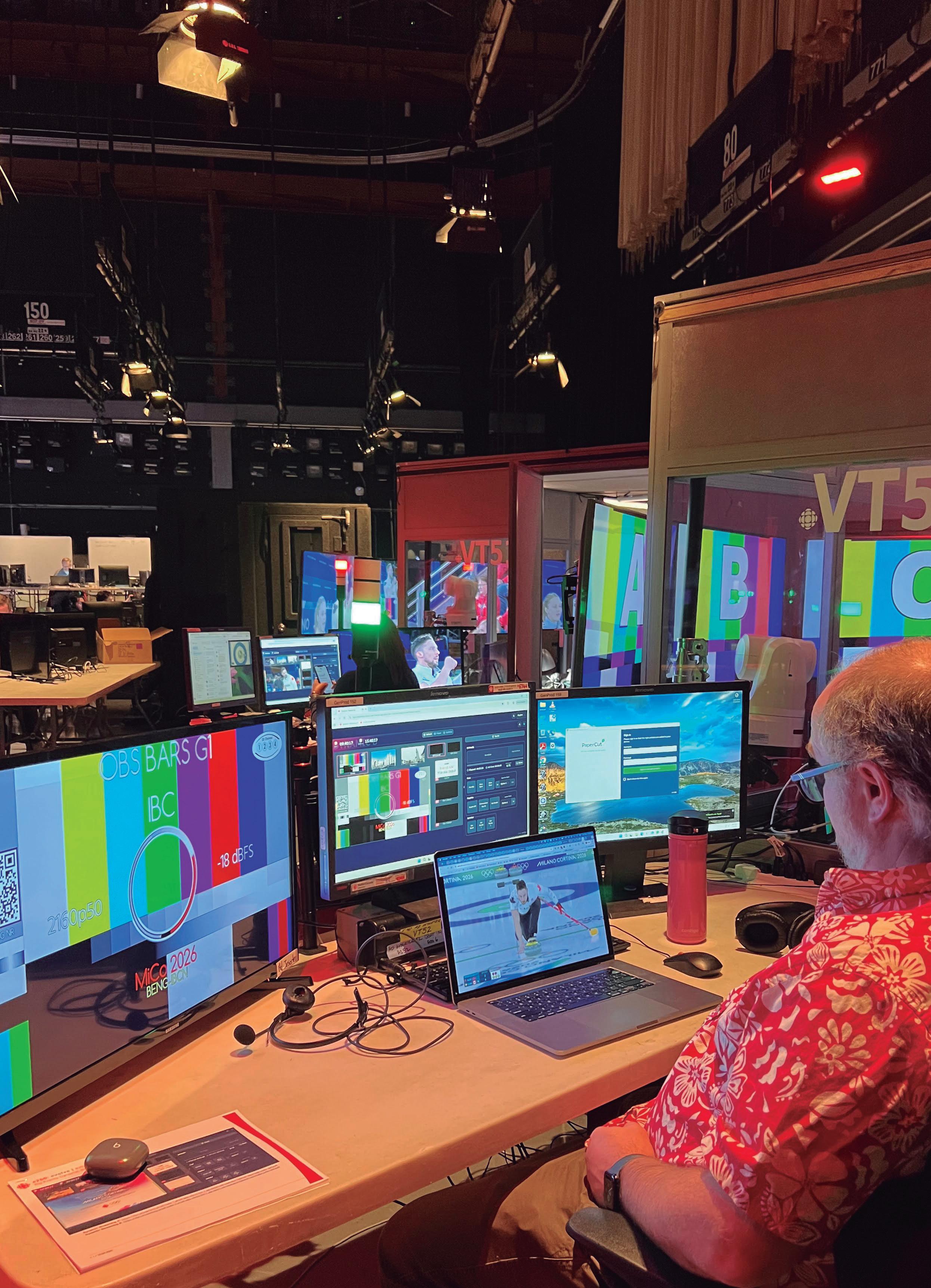
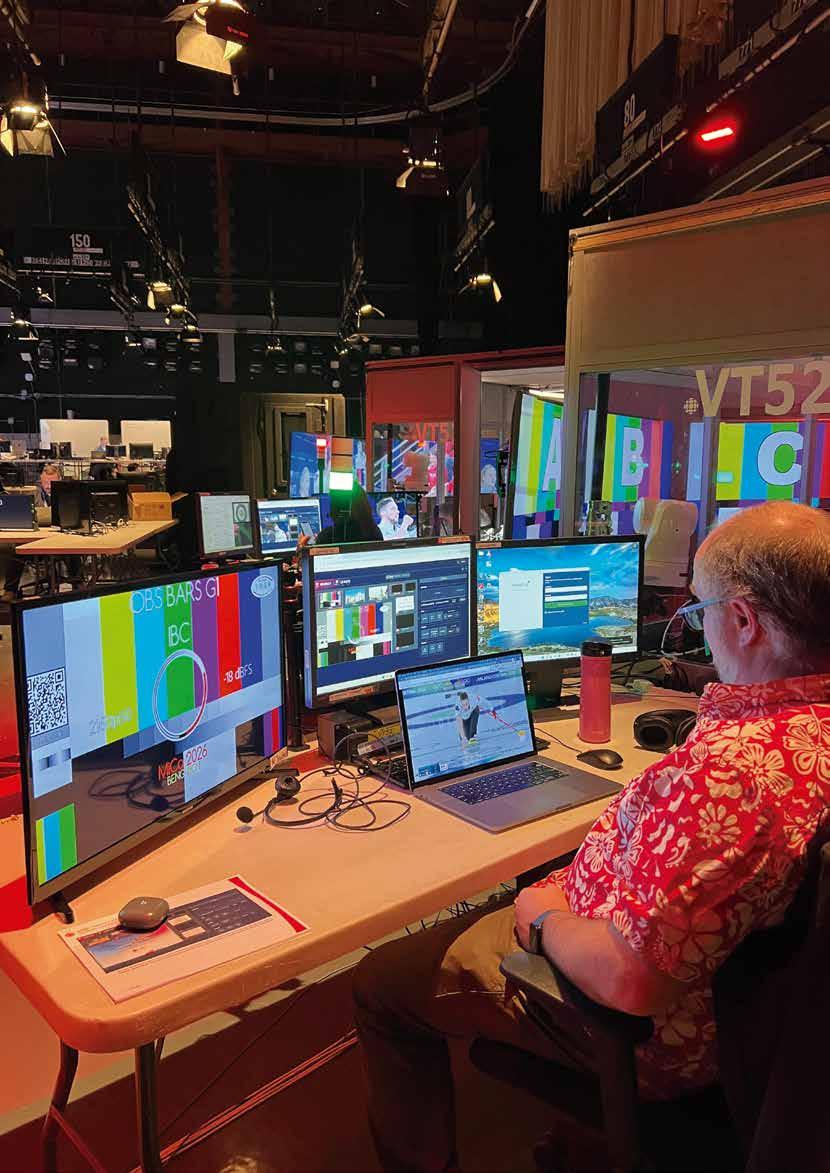
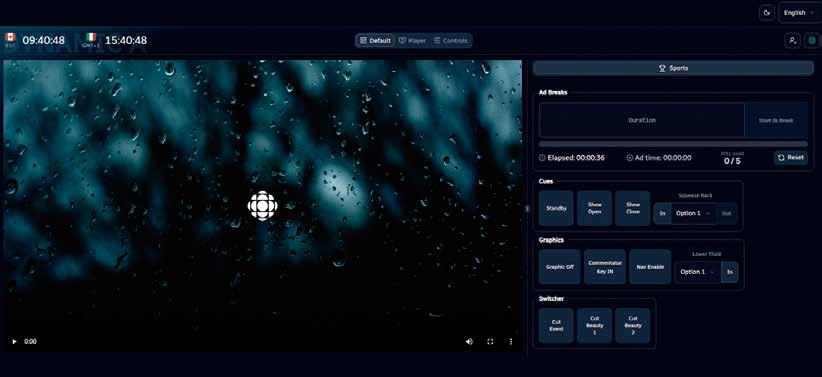
on the EBU Dynamic Media Facility (DMF) reference architecture and a unified user interface independent of the underlying software media function is at the heart of our design. In the early implementation of Universal Production Platform (UPP) that we used for the Olympic Winter Games Milano Cortina 2026, we in-house developed our own user interface that runs in browser on laptop.”
Another key pillar is the enablement of remote workflows. “By choosing the right protocol and codec, webRTC, opus, H.264, VP9 or AV1, we can have a remote user experience with low enough latency that it is not only possible to do linear production workflow but also production workflow where feedback is involved like a double ender.”
At the same time, the platform enables a rethinking of how resources are shared, in direct alignment with the dynamic allocation principles embedded in the UPP architecture.
“By decoupling hardware from specific rooms, we aim to make our studios, control rooms, and edit suites as frictionless to book and deploy as a standard conference room”
At the heart of this transformation lies a key concept: the abstraction layer. “We are investing in internal development to glue diverse software solutions into a unified UI”
“While market forces and shifting consumption habits (like the move to social-first content) are the true disruptors, MXL and DMF provide the unified, reconfigurable backbone needed to respond”
From a strategic perspective, one of the primary objectives is the optimisation of both technological infrastructure and physical spaces. “Embracing the DMF architecture, moving from dedicated hardware to software running on COTS supported by a realtime media IP network (2110), we will reduce equipment room footprint and will enable production usage utilization.”
This approach makes it possible to transform studios and control rooms into dynamically assignable resources. “By decoupling hardware from specific rooms, we aim to make our studios, control rooms, and edit suites as frictionless to book and deploy as a standard conference room.
By centralizing compute power, it allows us to deliver high-end production tools to regional bureaus via Thin UIs. This eliminates on-site infrastructure costs while strengthening the local coverage core to our Canadian audience.”
Another key strategic driver is the ambition to maintain a leading position in the adoption of emerging technologies. As Mathieu notes, “CBC/Radio-Canada has a long history of being at the edge of technology. Since the early 1990 with one of the first large scale SDI production center in Toronto to our recent fully 2110 multi-platform production facility in Montreal, we want to continue to be in a position to influence the future of our industry, and there is no better spot to do so than to be at the forefront of the technological evolution.”

“IN THE EARLY IMPLEMENTATION OF UPP THAT WE USED FOR THE OLYMPIC GAMES, WE INHOUSE DEVELOPED OUR OWN USER INTERFACE THAT RUNS IN BROWSER ON LAPTOP”
Finally, the platform is conceived with a long-term vision aligned with evolving consumption patterns.
“With the media landscape dramatically shifting toward OTT platforms and social media in the last few years and with no sign of slowing down, we need to give CBC/Radio-Canada the most scalable and the most flexible system possible in order to be able to rapidly pivot our production requirements and output formats.”
Software-defined production: towards dynamic orchestration
From a workflow perspective, the transition towards DMF-based architectures is reshaping how content is produced, managed, and exchanged at CBC/Radio-Canada.
“We are shifting from static configurations to dynamic orchestration, utilizing repositories to manage infrastructure state and CI/CD pipelines for resource deployment”, explains Mathieu.
At the heart of this transformation lies a key concept: the abstraction layer. “We are investing in internal development to glue diverse software solutions into a unified UI. Our strategy prioritizes intuitive tool grouping over a ‘one-size-fits-all’ approach. Built on operator feedback, this common layout will enable people to transition between productions with minimal retraining. This allows us to maintain a friendly UX for production staff while the engineering team leverages a modern DevOps stack to manage content exchange and resource allocation.”
MXL: when applications ‘speak’ to each other
Within this broader transformation, the concept of the Media
Exchange Layer (MXL) is emerging as a key enabler of interoperability between systems and applications. Mathieu Rochon describes it as a fundamental shift away from traditional signal-based workflows: “The Media Exchange Layer (MXL) acts as a high-performance common media fabric that allows disparate media applications to ‘speak’ to each other directly in memory.”
In contrast to conventional architectures—where media needs to be packaged into streams for transport—MXL eliminates the need for these intermediate steps: “In traditional setups, software vendors are forced to mimic hardware behavior—packaging media into streams (like ST 2110 or NDI) just to move it from one application to another. MXL replaces these ‘virtual cables’ with a shared memory architecture, allowing multiple media functions to access the same raw data simultaneously without constant re-encoding or streaming overhead.”
This approach delivers several key advantages. First, improved computational efficiency: “By eliminating the need to generate, encode, and buffer streams at every ‘hop,’ CPU and GPU resources are freed up to focus on actual media processing rather than just data transport.”
Second, near-zero latency. “Streaming protocols require buffers and handshakes,” notes Mathieu. “MXL allows for instantaneous handoff between functions (e.g., from a vision mixer to an encoder), which is critical for live, real-time broadcast environments. In our early testing with FFMPEG using MXL to encode video to deliver it to our UI, we were able to reduce the latency from 1800ms down to 250ms. This gain is not solely due to MXL, we were able to reduce the encode time and it also simplified the pipeline, but a good deal of it is due to MXL.”
This is complemented by true multi-vendor interoperability. “It breaks the ‘vendor silo.’ Because MXL provides a standardized way to
access media in memory, broadcasters can build a “best-of-breed” infrastructure where software from different companies works together as if it were a single, unified application.”
Finally, MXL introduces a highly scalable model. “It enables a ‘compute node’ philosophy. You can scale your processing power horizontally across multiple nodes without the added latency that streaming would add.”
In essence, the shift is “from interconnecting separate boxes to integrating a software ecosystem”, as Mathieu summarises: “It trades the inefficiency of internal streaming for the speed of shared memory, delivering latency close to hardware with the flexibility of the cloud.”
In this context, a key question arises: to what extent are initiatives such as MXL and DMF redefining traditional television production models?
For Mathieu, the answer is clear: “MXL and DMF are not the ‘why’ of change—they
are the ‘how.’ While market forces and shifting consumption habits (like the move to social-first content) are the true disruptors, MXL and DMF provide the unified, reconfigurable backbone needed to respond. They don’t redefine the production model themselves; they grant us the strategic flexibility to redefine it whenever the market shifts.”
Alongside these forward-looking initiatives, CBC/Radio-Canada has already undergone a significant transformation with the implementation of a full SMPTE ST 2110 facility. An experience that, as Mathieu points out, went far beyond a purely technical transition. He played a central role in the project: “My specific focus was on broadcast controller integration and workflow development, and it’s from that vantage point that I saw our biggest hurdles.”
From his perspective, the shift to IP is as much cultural as it is technological: “The transition to ST 2110 is as much about a cultural shift as it is a technical one.” On the technical side, one of the main challenges lies in the scale and complexity of deployment: “The sheer scale of configuration is easy to underestimate; you’re looking at a 2x to 5x increase in multidisciplinary manpower compared to traditional baseband.”
In this context, automation becomes essential rather than optional: “To survive that, automation is mandatory. We had to embrace a DevOps toolkit —Arista AVD, Ansible, and Jenkins—to manage our
network infrastructure.” He adds: “Most importantly, we learned that a spreadsheet is not a viable way to manage IPs in a large-scale facility. Investing early in a ‘Single Source of Truth’ like Netbox is critical for long-term stability.”
Beyond the technical layer, however, organisational change proved equally decisive. “The challenge wasn’t just ‘Broadcast vs. Network’ skills”, explains Mathieu. “We found that success doesn’t depend on your background, but on a thirst to learn. To manage the transition, we performed a deep skill-gap analysis across our project and support teams. We focused on training a ‘cohort
“While market forces and shifting consumption habits (like the move to social-first content) are the true disruptors, MXL and DMF provide the unified, reconfigurable backbone needed to respond”
“Ultimately, this software-centric model democratizes access to high-end tools for our creative teams. This will be the next big technology wave”
of champions’ who could then peer-coach the wider group.”
Was it worth the effort?
For Mathieu, there is no doubt: “Absolutely! Our operators have no desire to ever go back to baseband. The need to learn and innovate with 2110 has also put us in a much better position to tackle an implementation of a DMF facility in Toronto with our Universal Production Platform.”
“Moving towards IP has had the biggest tangible impact so far”
Looking at the broader picture, the move towards IP has already had the most tangible impact on the organisation in recent years. “Moving towards IP has had the biggest tangible impact so far. By overcoming the physical constraints of baseband routing, we unlocked the ability to pool and manage resources regardless of proximity to the router”, explains Mathieu.
This shift has also aligned the broadcast sector more closely with the wider IT ecosystem: “This pivot encouraged the broadcast industry to leverage proven IT innovations rather than proprietary hardware. That said, the transition to ST 2110 was the catalyst for the industry’s shift toward software-defined productions. Ultimately, this software-centric model democratizes access to highend tools for our creative teams. This will be the next big technology wave.”
Looking ahead, Mathieu Rochon sees the evolution of public broadcasting as closely tied to the adoption of DMF-based architectures. “It isn’t just about choosing one technology—like AI or Cloud—it’s about creating a unified, containerized environment that can support all of them simultaneously.”
In this context, he identifies three key pillars that will shape the next phase of
development. The first is technical agility (the foundation): “We are moving away from fixed hardware toward a ‘Media-as-a-Service’ approach. By adopting a DMF model, we treat production resources as a fluid pool of compute power. This allows us to scale up for a major event like the Olympics and scale down the next day, regardless of whether that processing happens on-prem, in the cloud, or at the edge.”
The second pillar is editorial distinctiveness (the core). “Public Service Media (PSM) must double down on what we do best: relevance, accuracy, and trust. In an era of ‘AI-generated slop’ and fragmented truth, our value lies in high-quality, human-led journalism and local cultural creativity. Technology’s job is to make it so our creators can focus entirely on the editorial and creative narrative.”
Finally, Mathieu points to a transformation in the very conception of content: the evolution of the ‘show’ (the output). “We need to stop thinking in terms of
‘video formats’ (like 4K or HDR) and start thinking in ‘form factors.’ A show, five years from now, is no longer just a linear program; it’s a content ecosystem. It’s a documentary that is also a vertical social series, an interactive community hub, and a searchable archive.”
Taken together, these elements point towards a fundamental shift in identity: “The DMF model allows us to stop being ‘broadcasters’ in the traditional sense and start being dynamic media platforms that can meet
the audience wherever they are, without reinventing our infrastructure every time a consumer trend emerges.”
Within this broader transformation, Mathieu also highlights the distinctive role that public service media should play within the industry. “Because Public Service Media is sustained by public funding, we are in a unique position to act as an engine for the entire industry’s health. Unlike commercial
players who may seek proprietary advantages, our role is to foster a transparent, interoperable ecosystem. By championing open-source initiatives like MXL, we aren’t just building a tool for ourselves—we are creating a ‘common good’ for the broadcast community. This collaborative approach lowers the barrier to entry for smaller creators and vendors, promotes healthy competition among vendors, and ensures that the future of media remains open, flexible, and sustainable for everyone.

By Simen K. Frostad, Chairman of Bridge Technologies
Broadcast has spent two decades converging. IP is the unifying transport. ST 2110 is the unifying production standard. MXF and CMAF are converging file formats. IPMX is bringing the same thinking to ProAV. On paper, it is a story of simplification: fewer formats, fewer protocols, fewer silos.
And yet, ask anyone who actually operates a broadcast facility whether their infrastructure feels simpler. The answer will be a hollow laugh. Because convergence at the transport layer does not mean simplicity at the operational layer. It means more ways to move signals. More paths to monitor. More variables to track.
Consider a typical live sports production today. The feed arrives via satellite and SRT simultaneously, for redundancy. It enters a facility that is part SDI, part IP. It is processed through encoders that support MPEG-TS and CMAF, because different distribution partners require different containers. It is sent to a CDN for OTT delivery, to a terrestrial transmitter for broadcast, and to a corporate campus for internal distribution. Each path has its own latency, its own failure modes, its own monitoring requirements.
This is not a failure of convergence. It is a natural consequence of a more capable infrastructure. When you can do more things in more ways, you do. And then you have to keep track of all of them.
The paradox is that the tools that enable convergence - IP, open standards, hybrid workflows - also create the conditions for operational fragmentation. The solution to that fragmentation is not fewer standards. It is better visibility.
Bridge's approach is built around this reality. The VB330 monitors compressed distribution across IP, RF, satellite, and OTT, supporting TS, CMAF, HLS, DASH, and MSYNC within a single interface. The VB440 monitors uncompressed production across ST 2110, ST 2022-6, and SDI-encapsulated workflows. The VBC aggregates data from all of them, presenting a unified view of a necessarily fragmented infrastructure. Regardless of how distributed, disconnected or disparate the underlying architecture, Bridge probes can look at every layer and every juncture of a broadcast chain and deliver the needed insight.
The industry will continue to converge on standards and the operational complexity of hybrid, distributed, multi-path workflows will grow.
The winners will be those who build tools that make complexity visible and manageable. Because the paradox is only a paradox if you assume convergence means simplicity. It means capability that needs oversight.

By Daniel Robinson, Product Manager at Matrox Video
The industry has embraced "software-defined production," running broadcast functions (switching, graphics, encoding) as software instead of dedicated hardware. Industry-wide efforts like the EBU's Dynamic Media Facility (DMF) and Media eXchange Layer (MXL) have created an open-source, vendor-neutral library for moving video between software functions. That's real progress, and the right foundation. But moving video is the easy part. The harder problem is keeping everything in sync.
Traditional broadcast hardware runs off a single master clock, so every device agrees on what "now" means. Modern software-based systems give up that shared clock in exchange for flexibility. You can add servers, move workloads between locations, and recover from failures without losing a frame. The tradeoff is that video and the commands controlling it can now travel through the system at different speeds. Without a way to keep them precisely aligned, "flexible and scalable" can turn into "unpredictable." In broadcast, unpredictable means dropped frames and missed cues in front of a live audience.
Current industry standards define how video moves between software functions, but not how to keep the video and the commands controlling it perfectly synchronized when those functions are distributed across different servers and locations. That timing and control problem remains unsolved industry-wide.
This is what Matrox ORIGIN was built to fix. Every piece of video is time-stamped against a shared time reference, so any component always knows where it is in the timeline. The commands that control the video are also handled separately from the video itself, so they can be kept in sync with it instead of racing it. Video processing then runs as flexible, independent jobs that can execute as fast as needed within set timing limits.
Traditionally, handling more video inputs/ outputs meant buying a larger system and taking it offline to install. Because Matrox ORIGIN's components are independent, capacity comes from adding servers, not replacing them, scaling from a handful of video feeds to hundreds without downtime, then scaling back down just as easily. That translates into lower infrastructure cost and less operational risk.
Industry initiatives like MXL deserve continued support. They solve the media movement problem, and that work should continue. The next milestone is synchronized control at scale—a key part of what Matrox ORIGIN solves today. By keeping video and control perfectly aligned under one shared timing model, Matrox ORIGIN is turning "asynchronous and scalable" into "asynchronous, scalable, and reliable" in live production today.
“Broadcast remains the foundation that keeps radio universally available”
We explore the progress made by DAB+ over the past year, the latest developments in digital radio and the challenges that still lie ahead
Exactly one year ago, we used these pages to take stock of the state of digital radio and, more specifically, the DAB+ standard, which has established a significant presence across Europe, Asia-Pacific and other markets. At the time, we noted that, although its level of adoption could not be compared with that of Digital Terrestrial Television (DTT), DAB+ was experiencing a period of acceleration. One year on, what progress has been made? Where do things stand today?
One figure illustrates the strength of the standard: global sales of DAB and DAB+ receivers have now surpassed 166 million units, according to new figures unveiled at WorldDAB Automotive 2026, held in Frankfurt on 11 June. The announcement was accompanied by new international consumer research confirming that radio remains a core part of the in-car experience
and that drivers expect it to remain available, easy to find and simple to use. Against the backdrop of this event, we once again speak with WorldDAB President
Jacqueline Bierhorst to explore the progress made over the past year, the latest developments and the challenges that still lie ahead.
In Europe, Bierhorst highlights several significant developments. In Ireland, the success of the new regional DAB+ multiplex has led to a second trial multiplex covering 85% of the population and carrying nearly 30 stations, including public broadcaster RTÉ. In Spain, the Draft Royal Decree on Digital Radio continues to progress through the legislative process and is expected to enter into force in December, while RTVE is planning six new DAB+ services. At the same time, well-established markets such as France and Germany continue to
expand their coverage with dozens of new transmitters coming on air.
Progress also extends beyond Europe. Saudi Arabia has recently expanded coverage to nine additional cities and the major highways connecting them, while new trials are now on air in Thailand and Kenya.
The hybrid model, radio’s resilience compared with other alternatives, the implications of AI and the major challenges facing the medium are all part of the conversation. One statement from Bierhorst encapsulates much of this landscape: “IP and connected services can add great value, but broadcast remains the foundation that keeps radio universally available.”
The full interview follows below:
Since we last spoke, what would you highlight as the most significant milestone for WorldDAB and the DAB+ ecosystem over the past year?
It’s been a year of strong progress for DAB+ so it’s difficult for me to choose, but I would say our announcements at the recent WorldDAB Automotive event that over 166 million DAB or DAB+ sets have now been sold around the world. And that the new research we commissioned confirmed our belief that broadcast radio is the first choice for car buyers: it is essential, expected and embedded in the in-car experience.
“DAB+ is now present in around 60 countries, representing about one
third of the world’s population, all at various stages of development — from established services to trials, regulation and growing interest”
How would you assess the current state of digital radio worldwide? Where have you seen the greatest momentum over the past year?
Across Europe we’re seeing great growth from markets at different stages of their digital radio journeys. In the last year, the success of Ireland’s new DAB+ regional multiplex has led to a second trial multiplex covering 85% of the population and carrying
nearly 30 stations including the public broadcaster RTÉ. Meanwhile, in Spain the Draft Royal Decree on Digital Radio continues to progress through the legislative process and is expected to enter into force in December, with RTVE planning six new DAB+ services. And the well-established networks in France and Germany continue to expand coverage with dozens of new transmitters on air.
Many European markets have made significant progress with DAB+, while others continue to move at a slower pace.

That growth is not just in Europe though. DAB+ is now present in around 60 countries, representing about one third of the world’s population, all at various stages of development — from established services to trials, regulation and growing interest. For example, Saudi Arabia recently expanded coverage to nine additional cities across the Kingdom, and major highways connecting them, and there are new
trials now on-air in Thailand and Kenya.
WorldDAB’s latest research shows that broadcast radio remains the leading in-car audio source, with 83% of drivers still listening to it. Beyond the headline figures, what do you think is the single most important message broadcasters, car manufacturers and policymakers should take away from this research?
That car buyers believe broadcast radio belongs in cars. Drivers expect it, rely on it and value it — not only for entertainment, but also for trusted information, safety and connection. DAB+ is essential because it brings these strengths into the digital age: free-to-air, reliable, easy to access and designed for universal broadcast delivery.
The automotive industry has indeed long been one of the main drivers
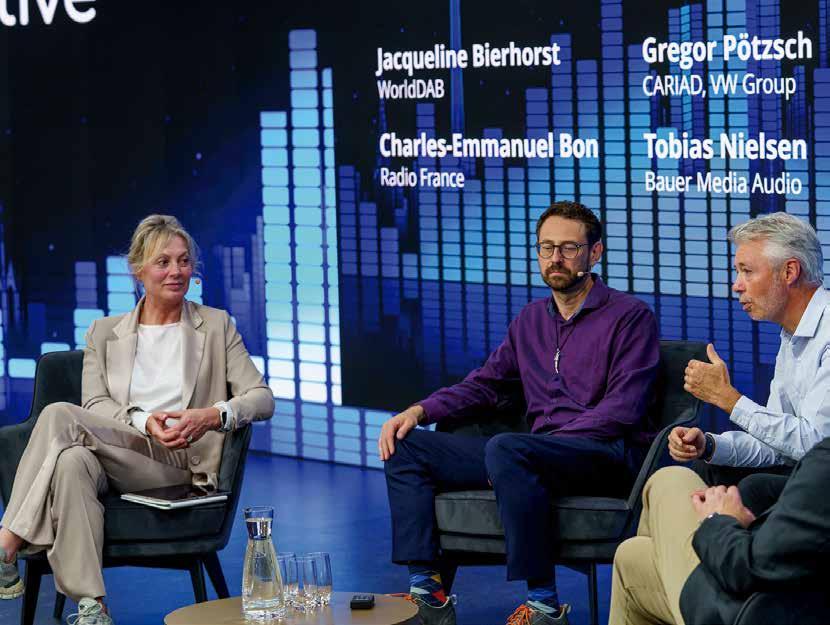
WORLDDAB AUTOMOTIVE 2026 PANEL. FROM LEFT: JACQUELINE BIERHORST, WORLDDAB; GREGOR PÖTZSCH, CARIAD, VOLKSWAGEN GROUP; CHARLES-EMMANUEL BON, RADIO FRANCE; AND TOBIAS NIELSEN, BAUER MEDIA AUDIO.

of DAB+. What progress has been made over the last year, and what challenges remain?
The dashboard is changing fast. I said at our Automotive event that the car is no longer just a vehicle with a radio receiver. It is becoming a connected, software-driven environment shaped by operating systems, apps, platforms, voice assistants, algorithms, subscription models and user-interface decisions.
Now I noted that that brings enormous opportunity. But it also brings risk, because if we are not careful, broadcast radio — one of the most used, trusted and expected services in the car — can become harder to find, harder to use, or less visible than it should be.
I am proud that with our new car buyer’s research, we’ve delivered hard evidence to make our case to the automotive sector. There’s more to be done though and WorldDAB will continue to work with broadcasters, automotive partners and policymakers to ensure broadcast radio remains prominent, easy to access and available for all drivers.
“Broadcast radio is the first choice for car buyers: it is essential, expected and embedded in the in-car experience”
In your opening speech at WorldDAB Automotive, you also said that the future is
not a choice between broadcast and IP, but a hybrid model. What does that hybrid listening experience look like from the user’s perspective, and what role should broadcasters play in making it seamless?
In the car, hybrid radio offers benefits such as service following - the ability to seamlessly switch between broadcast platforms and IP, following the strongest signal; and high-quality visuals such as station logos, artist information, news, weather and commercials. It can also provide the listener with the ability to find out more about the content and offers the potential for greater personalisation.
The in-car user experience depends not only on the receiver or the interface, but also on broadcasters providing accurate, consistent and high-quality metadata: station logos, service labels, programme information, images and other data that make radio visible, findable and attractive in the dashboard.
WorldDAB maintains detailed UX guidelines for automotive manufacturers and broadcasters on how to deliver the best possible digital radio user experience, and I’d urge everyone to make sure their station is following them, and all the resources we make freely available on our website and through the WorldDAB Project Office.
“If we are not careful, broadcast radio — one of the most used, trusted and expected services in the car — can become harder to find, harder to use, or less visible
than it should be”
In recent years, resilience has become a strategic priority for governments and broadcasters alike. Has this renewed focus strengthened the case for terrestrial broadcast radio compared with IP-only delivery?
Yes, for certain - because it is broadcast, it is free-to-air,
and does not require a login, a subscription or a data plan. It can reach everyone at the same time. And it remains resilient when networks are congested or unavailable. IP and connected services can add great value, but broadcast remains the foundation that keeps radio universally available.
DAB+ also now offers our new Automatic Safety Alerts (ASA), which can protect the public during emergencies by delivering reliable safety alerts without requiring an internet connection. ASA operates automatically in the background, can be regionally adjusted for the location, and boasts high resilience thanks to the robust DAB+ radio transmission network.
What opportunities do you see for AI within the digital radio ecosystem?
Many of our innovative member organisations are already using AI in aspects of their work, such as production, translation, workflows, metadata, accessibility and optimisation, alongside
support and training for staff in responsible usage.
“WorldDAB
maintains detailed UX guidelines for automotive manufacturers and broadcasters on how to deliver the best possible digital radio user experience”
I believe AI can be a useful tool to amplify human voices — helping broadcasters work more efficiently, make content

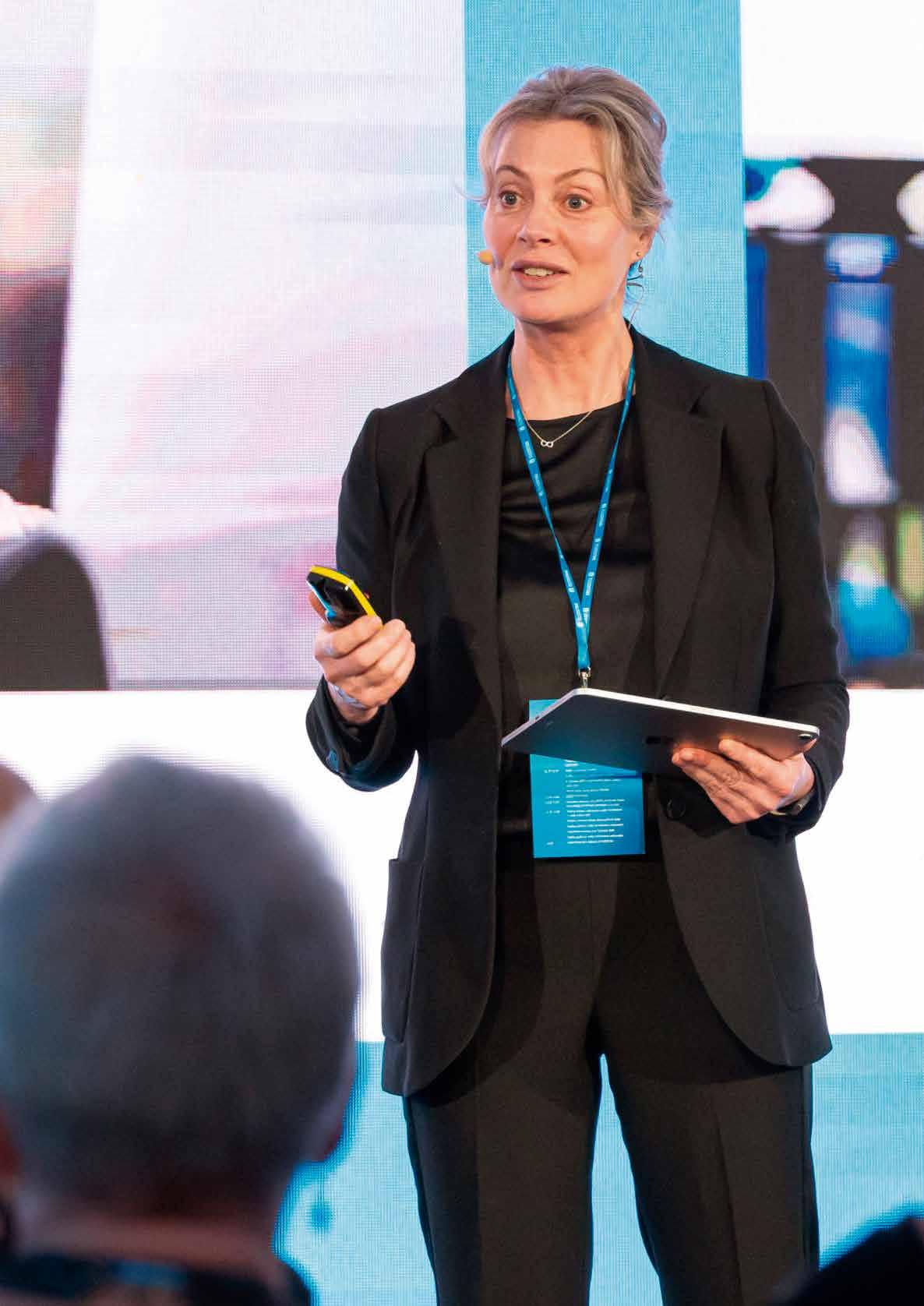
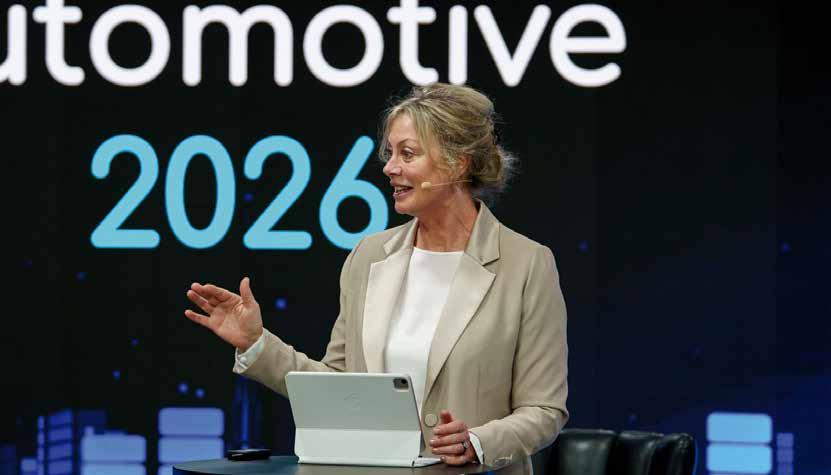
JACQUELINE BIERHORST DURING HER KEYNOTE AT WORLDDAB AUTOMOTIVE 2026.
more accessible, improve metadata and serve audiences better. But it should support, not replace, the human connection, trust and companionship that make radio unique.
Looking ahead five years, what do you expect will be the biggest challenge—and the biggest opportunity— for digital radio?
We undoubtedly live in increasingly unstable and uncertain times, which are a challenge for us all to navigate. I would echo what Sibyle Veil, CEO of Radio France and Chair of
the EBU Radio Committee said at WorldDAB Automotive event that we must make sure there is “easy, universal and reliable access to trusted information.” And broadcast radio and DAB+ matters because of its unique resilience.
Finally, is there any message you would like to share with broadcasters, manufacturers and regulators who are still evaluating the transition to DAB+?
Earlier, this year, I was in Lithuania to speak at a
lovely event celebrating 100 years of terrestrial radio broadcasting in Lithuania. I know that many countries have been, or will soon be, celebrating similar anniversaries. We are right to celebrate that history, but as a radio lover, I want to make sure that radio has a bright future too. I believe that adoption of DAB+ is a key part of securing radio’s future in today’s digital world. When supported by smart regulation, it can be a catalyst for strengthening the entire radio ecosystem and is proven to grow audiences and revenues.
“Innovation is increasingly judged not just by what is technically possible, but by whether it solves real business and operational problems”
If there is one constant that has shaped the media technology industry over the past decades, it is innovation. What has changed, however, is the way innovation happens. The industry has evolved from a landscape defined by isolated developments towards one where broadcasters, manufacturers, technology providers and research
organisations increasingly work together to solve common challenges.
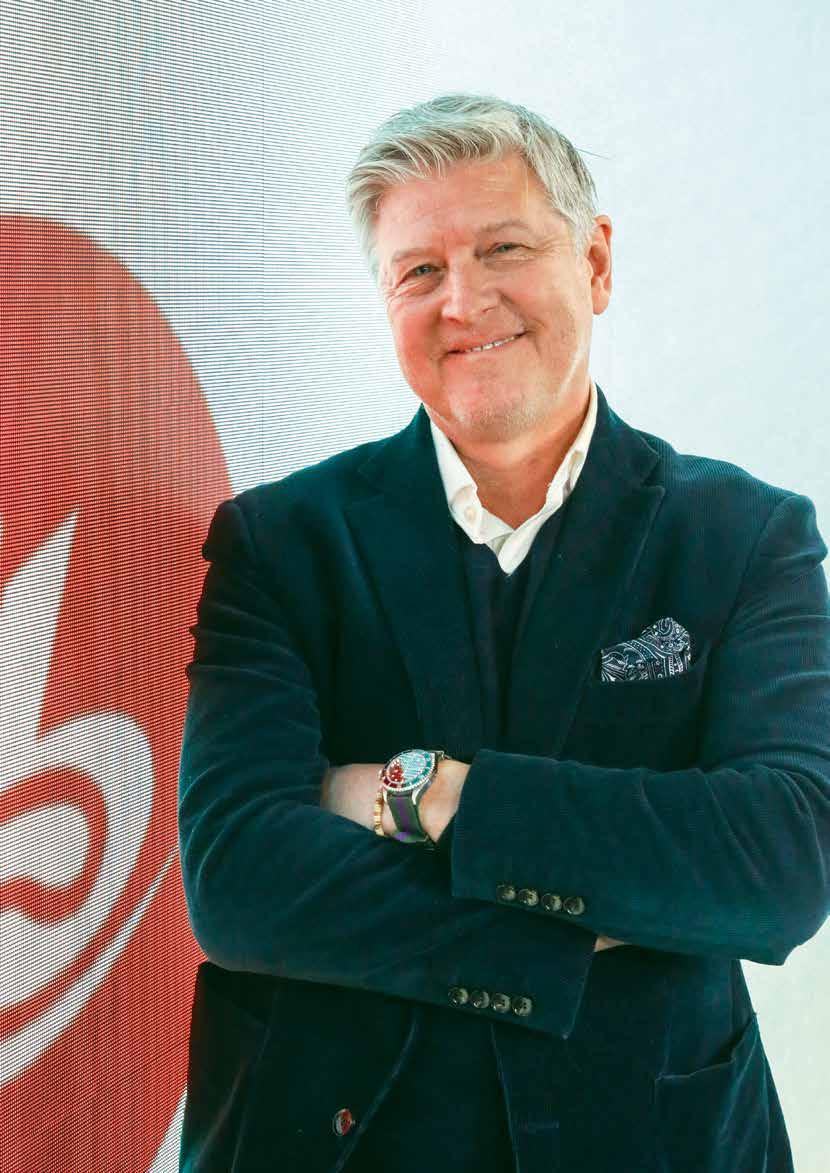
“One of the most significant changes is the growing willingness of organisations to collaborate openly around shared industry challenges”, Mark Smith, IBC Innovation Founder and IBC Council Chair, tells TM BROADCAST as the latest guest in our Industry Voices series.

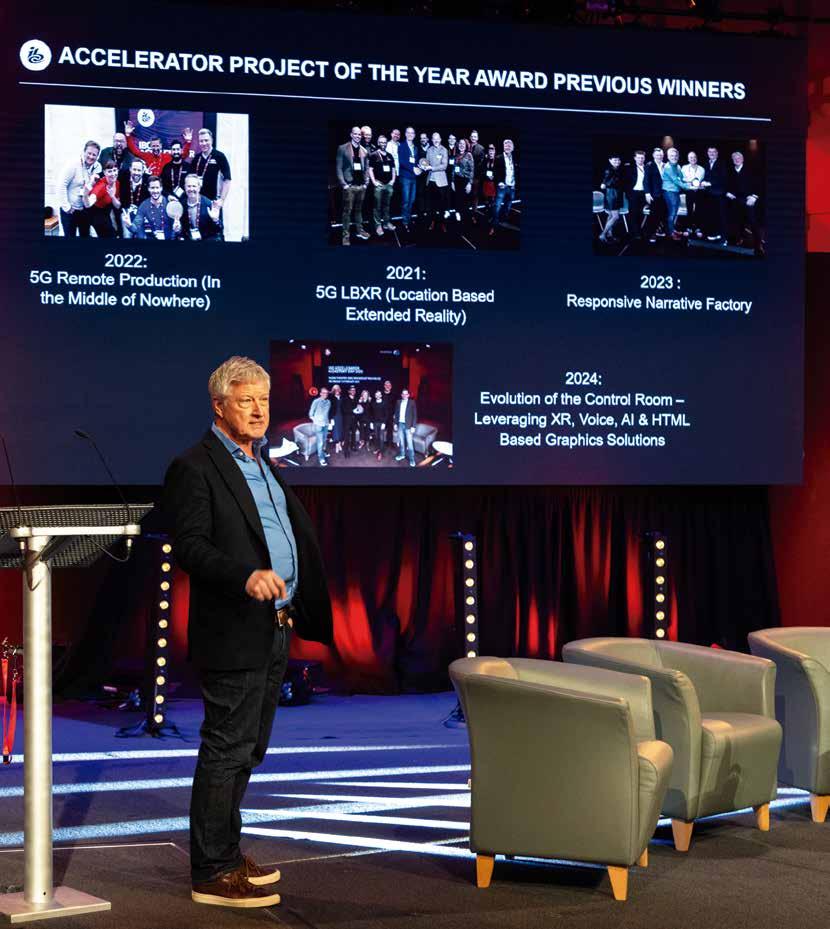
IBC has built a unique framework to foster innovation across the media industry through three complementary initiatives that address different stages of the innovation lifecycle. As Mark Smith explains: “Together, the Technical Papers, Accelerator Programme and Innovation Awards create a natural pathway for innovation – from early ideas and research to proof-of-concept testing, and ultimately, to real-world deployment”.
In this interview, we explore the success factors behind each of these initiatives, the broader trends reshaping the industry, and the collaborative mindset that has become one of the defining characteristics of media innovation. Two ideas, in particular, encapsulate the spirit of the conversation: “Cost, standards, security, skills and workflow change can be just as important as the technology itself” and “Innovation is increasingly judged not just by what is technically possible, but by whether
it solves real business and operational problems”. The conversation that follows translates these principles into concrete technologies, projects and industry trends.
The IBC Innovation Awards focus on real-world, completed projects, while the IBC Accelerator Media Innovation Programme supports early-stage innovation. From your perspective, how do these two initiatives complement each other in shaping the innovation lifecycle in the media industry?
The two initiatives represent different but highly connected stages of the same innovation journey. The Accelerator Media Innovation Programme provides an open and collaborative framework where broadcasters, streaming platforms, studios, publishers and rights owners, along with technology vendors, academia and industry bodies can rapidly test emerging ideas through hands-on proof-of-concept
projects. It creates a rare, trusted environment for experimentation and cross-industry R&D that would be difficult to achieve within normal commercial operations with IBC acting as the convening hub. These projects are designed to solve common, practical media challenges and explore new technologies that can be applied and scaled across the wider industry.
The Innovation Awards often recognise the next stage of that process: real-world commercial implementation. Projects that have transitioned into live operational deployment can then be assessed for their impact across the broadcast and media world. We have seen this pathway many times, with Accelerator projects going on to win Innovation Awards.
In many cases, that journey starts even earlier with IBC’s Technical Papers Programme, where new concepts and research are first shared with the industry. Together, the Technical Papers,
Accelerator Programme and Innovation Awards create a natural pathway for innovation – from early ideas and research to proof-of-concept testing, and ultimately, to real-world deployment.
What are the key factors that distinguish a truly outstanding project in each case?
Within the Accelerator Programme, the strongest projects are those that combine originality with clear industry relevance. Successful initiatives usually address complex challenges that cannot easily be solved by a single organisation working alone – whether around AI (Agentic or Generative), streaming, sustainability, content provenance, connectivity or any other pressing media challenges. Projects also need achievable goals and a practical roadmap that allows meaningful progress within the relatively short and fast development cycle.
For the Innovation Awards, the focus naturally shifts toward operational success and measurable outcomes.
The strongest entries show that innovation has moved beyond experimentation into successful real-world deployment. Judges are looking for projects that deliver tangible operational, commercial or audience benefits while showcasing strong collaboration between media organisations and technology partners.
Based on the projects you are seeing across both initiatives, which technological or operational trends are having the most tangible impact today?
Broadcasters and streaming platforms are investing heavily in
technologies that make production and distribution more flexible, scalable, efficient and personalised, particularly around AI-assisted workflows, next-generation streaming and enhanced audience experiences. Live sport and large-scale events are clearly among the biggest drivers, because they put pressure on every part of the chain: capture, connectivity, latency, personalisation, resilience and scale. There is also growing momentum behind software-defined and IP-based production models that allow organisations to manage increasingly complex live environments more efficiently and creatively.
Media Innovation
“It creates a rare, trusted environment for experimentation and cross-industry R&D that would be difficult to achieve within normal commercial operations with IBC acting as the convening hub”
“Successful initiatives usually address complex challenges that cannot easily be solved by a single organisation working alone”
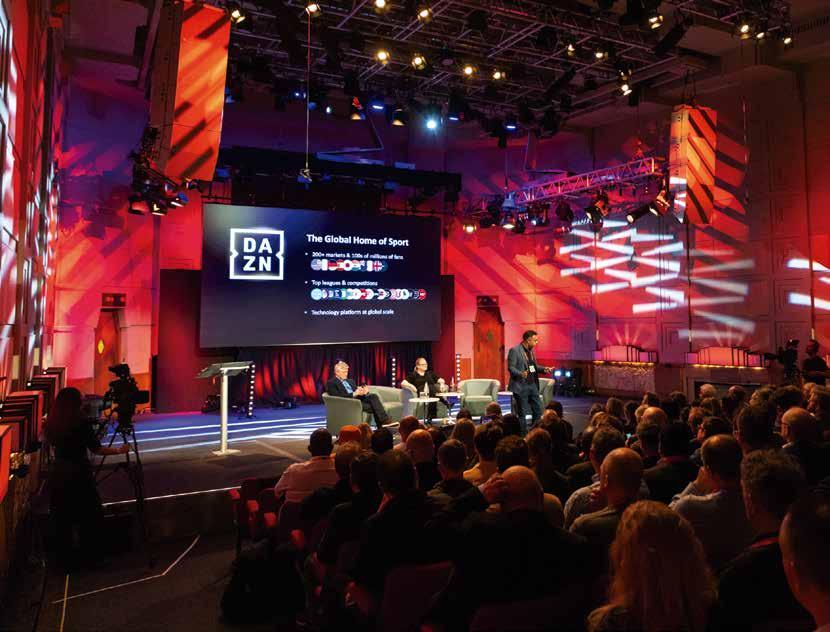
More broadly, the industry is prioritising technologies that improve operational agility while enhancing viewer engagement. AI, cloud-enabled workflows, 5G connectivity and virtualised infrastructure are moving into practical implementation, particularly where speed, scale and reliability are critical. There is also growing interest in Agentic AI, particularly around automating production workflows and accelerating decision-making.
What do these projects reveal about the current priorities of broadcasters and media organisations?
They show a strong demand for simpler workflows, faster production processes and more flexible remote or distributed operations. Trust is also becoming more central, particularly around content authenticity, provenance, rights and verification as AI becomes more
embedded in production. Many organisations are also looking for ways to modernise infrastructure without compromising reliability, which explains the growing focus on software-defined and cloud-enabled workflows.
Audience engagement remains equally important. Personalisation, interactivity and new viewing formats are recurring themes as media companies look for ways to stand out in an increasingly competitive
market. In addition, innovation in accessibility and sustainability are also becoming much more central to strategic thinking.
Many of this year’s Accelerator projects reflect that balance: creating new audience experiences while reducing operational complexity behind the scenes.
This reflects a broader shift: innovation is increasingly judged not just by what is technically possible, but by
whether it solves real business and operational problems. As NBCUniversal noted at the 2026 Accelerator Kickstart Day, “We’re not building a proof of concept or a demo – we’re trying to ship something that’s almost a minimum viable product that could be then adopted.”
There is a lot of discussion around areas such as AI, virtualisation, 5G or cloud. Where are you seeing real-world implementation, and where does the gap between industry narrative and operational reality still persist?
There is real progress in areas such as AI-assisted production workflows, cloud-enabled operations, lower-latency streaming and private 5G contribution networks. Recent Accelerator projects show these technologies being tested against practical production and distribution challenges, rather than remaining at the level of theory.
Two
“They often recognise the next stage of that process: real-world commercial implementation. We have seen this pathway many times, with Accelerator projects going on to win Innovation Awards”
“Judges are looking for projects that deliver tangible operational, commercial or audience benefits while showcasing strong collaboration between media organisations and technology partners”
A standout example came in 2022, when private 5G technology developed through an IBC Accelerator project was used to support
live international broadcast coverage of Queen Elizabeth II’s final departure from Scotland — an environment where traditional RF systems were not practical. This then went on to the coronation of King Charles III covered by multiple wireless cameras in 2024 and eventually on to the Summer Games of 2024 in Paris, Marseille and elsewhere, whereby other forms of connectivity were not feasible, bringing UHD video and audio via smartphones in immersive coverage that had hither too be unseen or unheard in live sports.
That kind of progression is important: the industry is most willing to adopt new technology when it can see a clear operational, commercial or sustainability benefit. A good example is the series of private 5G Accelerator projects, which have explored how private networks can support more flexible, cost-effective and sustainable live production workflows. These projects have evolved over several years, moving from proof-ofconcept testing on land and at sea to more advanced deployments in live
broadcast environments, demonstrating how Accelerator initiatives can mature into proven solutions with real industry impact.
“Live
sport and large-scale events are clearly among the biggest drivers, because they put pressure on every part of the chain: capture, connectivity, latency, personalisation, resilience and scale”
“Trust is also becoming more central, particularly around content authenticity, provenance, rights and verification as AI becomes more embedded in production”
The gap remains where the narrative runs ahead of operational maturity. Fully autonomous AI-driven
production remains relatively early-stage, despite strong interest in agentic workflows –nonetheless, several news organisations are already leaning into deployments ahead of where they might have otherwise been without such a programme to share and experiment together. Of course, many organisations continue to face challenges around cloud economics, interoperability and integrating new technologies into legacy environments.
As you have already mentioned, collaboration is a core element of both the Accelerator Programme and the Innovation Awards. How is the nature of these partnerships evolving across the industry?
One of the most significant changes is the growing willingness of organisations to collaborate openly around shared industry challenges. The Accelerator Programme is particularly valuable because it creates a trusted, neutral
environment where broadcasters, vendors, research institutions and start-ups can work together in ways that are often difficult within normal commercial structures.
Increasingly, these partnerships are being driven by the recognition that many modern media challenges are too complex for any single organisation to solve independently. Broadcasters bring specific operational problems; technology partners contribute expertise across AI, networking, cloud and production workflows. A strong example is the work around misinformation in news, where organisations including the BBC, AP, ITN and Al Jazeera have collaborated (in 2024 and
“The gap remains where the narrative runs ahead of operational maturity. Fully autonomous AI-driven production remains relatively early-stage, despite strong interest in agentic workflows”
“The industry does not need innovation theatre; it needs ideas that tangibly improve how content is made, trusted, delivered and experienced”
2025) on open approaches to content authenticity and verification. These projects show collaboration evolving from transactional vendor relationships into broader ecosystem partnerships focused on long-term industry progress and audience trust.
What are the main challenges in moving from proof of concept to real-world deployment?
Moving from proof of concept to operational deployment is often where the hardest work begins. A PoC may prove that something is technically possible, but broadcasters also need to understand how it behaves at scale, how it integrates with existing systems, how it is supported, and what happens when something fails. Before wider adoption becomes
possible, broadcasters need confidence that new technologies can perform consistently in demanding real-time environments. Cost, standards, security, skills and workflow change can be just as important as the technology itself.
In this regard, how has the nature of innovation in media evolved in recent years, particularly in terms of scale, complexity and integration?
Innovation in media has become far more interconnected, collaborative and operationally complex. The scale of collaboration has also expanded. Many projects now bring together multiple broadcasters, technology providers, industry bodies and academic institutions to tackle challenges that cut across the content chain. For example, the 2026 Accelerator project “Network Control: Your Connection, Your Choice” brings together organisations that include the BBC, France Télévisions, RAI Italy,
the EBU (5G MAG), TV2, the GSMA, Vodafone, the University of Strathclyde and Neutral Wireless to explore how open 5G network APIs can improve the reliability of wireless broadcast workflows.
What stands out most across both programmes is how much the industry values collaboration right now. The biggest breakthroughs are rarely happening in isolation — they come from broadcasters, technology providers and research teams working together to solve shared challenges. The Accelerators create a unique space for that kind of experimentation, while the Innovation Awards highlight the projects that have successfully translated those ideas into real operational impact. Ultimately, the industry does not need innovation theatre; it needs ideas that tangibly improve how content is made, trusted, delivered and experienced.


Gotham,
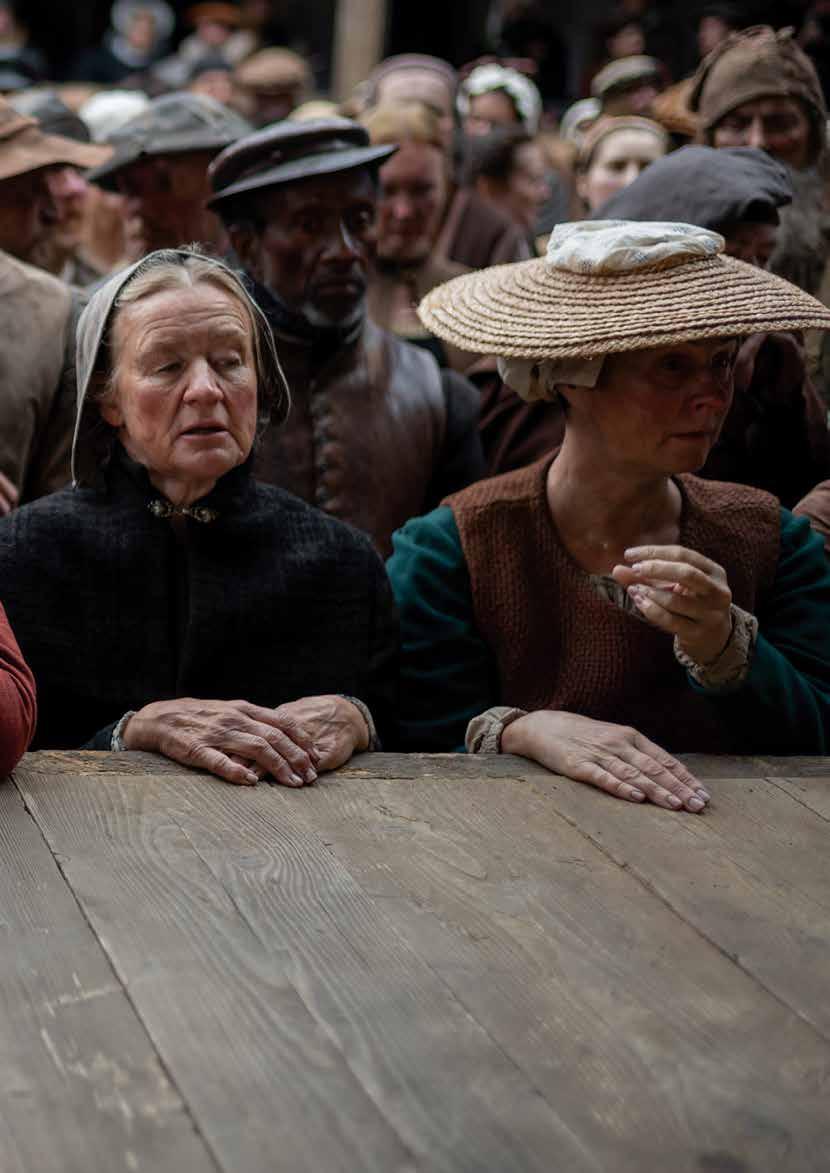
Over the past few decades, many countries have introduced measures to position themselves as attractive destinations for international film and television productions. In this article, TM BROADCAST speaks with the British Film Commission to explore how the UK has established itself as one of the world's leading audiovisual production hubs and the challenges it faces in maintaining that position.
By Bárbara Ausín

There are viewers who have walked the streets of Gotham, studied at Hogwarts or travelled to a galaxy far, far away without ever actually leaving the United Kingdom.
In the early 20th century, it was common for major film productions to be concentrated in Hollywood, favoured by its production conditions and the development of a powerful audiovisual infrastructure. However, the industry has changed, and productions have shifted along with it: tax
incentives, infrastructure and the availability of technical crews have become decisive factors when deciding where to produce a film or series.
“There will always be the element of friendly competition but we also view creative collaborations with new territories as an exciting prospect”
The United Kingdom is one of the most representative examples of this transformation.
In the 1990s, pressure from the industry led successive British governments to introduce tax incentive models that evolved into the current tax credit system. This mechanism has served as a solid foundation for protecting British cinema while at the same time attracting international investment on a scale not seen since the 1960s.
As explained to TM BROADCAST by the British Film Commission (BFC): “This was a catalyst to encourage Warner

Bros. to base the Harry Potter films here and build their permanent base at Leavesden. It has seen Disney, Paramount and Universal (also through its ownership of Working Title) make numerous large-scale productions here in the UK”.
“We currently offer a complete supply chain spanning hardware, software, technology and creative service”
This momentum was also reinforced by the rise of
high-end television (HETV), attracted by the expanded infrastructure, talent development and the additional HETV tax credit introduced in 2013.
As a result of these measures, the United Kingdom has steadily built an environment designed to attract international productions. Alongside tax incentives — including those aimed at visual
effects (VFX), animation and the new 40% tax credit for low-budget films of up to £23.5 million — there is a wide network of studios and facilities spread across the country, a well-established industry of artistic and technical talent, and a great diversity of filming locations. This commitment is also reflected in the international recognition of the visual effects sector: British teams have won the Academy Award for Best Visual Effects in 11 of the last 15 years.
Among all these factors, one of the most notable achievements of the British Film Commission has been the development of production hubs across the country. “We now have seven, soon to be eight, established studio hubs in the UK, from Wales to the West Midlands, Glasgow to Belfast to Bristol to Liverpool. Each has its own unique selling points – and often includes regional funds to support a Production’s financing –as well as an established
crew base with a range of skills and a depth of experience from which the Production can draw”, details the organisation.
These settings can be seen in productions such as “Game of Thrones”, which chose Northern Ireland, “Outlander” in Scotland or “Hamnet”, filmed on the border between Herefordshire and Wales. One landscape they don't offer is ice, tundra or desert, “but we maintain collaboration agreements
with several European film commissions — including Norway, Malta and Austria — that allow productions to film smoothly across multiple European locations”, the organisation adds.
Technology,
collaboration and the future
Even when they can't offer certain ecosystems themselves, they can create them. The “Harry Potter” saga was also

significant for the visual effects sector. Since the 2000s, companies such as DNEG and Framestore, along with smaller studios, have worked alongside these teams during filming to achieve greater realism or to develop emerging technologies such as artificial intelligence, machine learning and graphics engines to support production processes. The organisation has also kept a close eye on the increasingly talked-about
field of virtual production, expanding its capacity with the intention of meeting growing industry demand: “We offer a full-service supply chain to cover hardware, software, technology and creative services”, states the BFC.
In line with this commitment, the British Film Commission has also created a directory bringing together suppliers, companies and studios across the United Kingdom capable of providing this

technology, visualisation and in-camera visual effects services for feature films and high-end television productions. Given this landscape and the industry's constant evolution, the country has fostered new international collaborations, the most recent being with India. This cooperation is complemented by the signing of a Memorandum of Understanding with Film France-CNC and the renewal of the one previously held with the Italy Film Commission, whose earlier agreement had expired after two years.
“We now have seven, soon to be eight, established studio hubs in the UK, from Wales to the West Midlands, Glasgow to Belfast to Bristol to Liverpool”
“There will always be the element of friendly competition but we also view creative collaborations with new territories as an exciting prospect, not least since the UK introduced
our new tax credit for limited budget feature films up to £23.5m, which, we believe, opens up a whole new set of possibilities at a new price point for a range of different production partners”, the commission explains.
“There have been major disruptions to the traditional model and markets, from which we have not yet stabilised… Despite ‘steady as she goes’ growth through 2025 we are still to reach our ‘new normal’”
However, these partnerships are not limited to production development — they also extend to the care of the territory.
“Through our day to day production support, as well as our work on screen tourism alongside partners such as Visit Britain, Visit Scotland and the National Trust, we know that a huge amount of effort and consideration goes into balancing for example the filming needs
of a production with the sustainability challenges that come with bringing a huge production crew to an area”.
Caring for the heritage and the territories where filming takes place aims to ensure these locations continue to host both fictional stories and stories inspired by real events. Demand continues to grow, although consumption habits are also evolving and, with them, so is content.
“I think the industry is in a really interesting space at the moment, with a huge range of opportunities arising”, the British Film Commission continues.
“It’s also fair to say that there have been major disruptions to the traditional model and markets, from which we have not yet stabilised… Despite ‘steady as she goes’ growth through 2025 we are still to reach our ‘new normal’’”, notes.
Despite this context, optimism remains. The British Film Commission believes the United Kingdom continues to hold significant competitive
strengths and keeps reinforcing them through new investment in research, tax incentives and European co-productions.
“We are aware that we cannot become complacent in the face of growing global competition. Audiovisual industries in other countries will continue to mature, adjust their tax incentives and establish themselves as new international players. That is why the United Kingdom continues to invest decisively in research and development”, the BFC concludes.