Live events: broadcast’s great technological driver
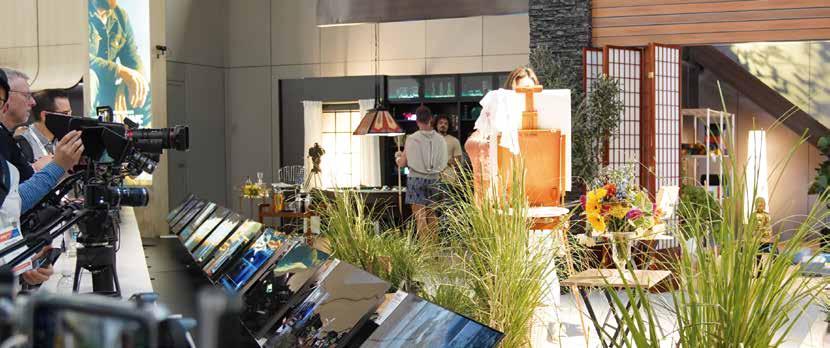
Live events are more alive than ever. The industry is constantly talking about transformation, audience fragmentation and how these changes are reshaping production and distribution workflows. In this context, if there is one area that continues to demonstrate strength while driving technological innovation, it is that of major live events.
Within this ecosystem, sporting events continue to occupy a privileged position. They are the largestscale productions, aimed at global audiences, and the environment in which broadcasters and technology providers deploy their full operational and technological capabilities. And among them all, there is probably no more demanding or representative showcase than the Olympic Games.
For that very reason, in previous issues we provided extensive coverage dedicated to breaking down the main technological innovations behind this year’s Games, both on screen and behind the scenes, as well as the vision of the host broadcaster, in this case RAI. But once the event concluded, at TM BROADCAST we posed a key question: what comes next?
In a new feature included in this issue, we wanted to go one step further by analysing the technological roadmap of Olympic Broadcasting Services (OBS), the host broadcaster of the Olympic Games.
Editor in chief
Javier de Martín editor@tmbroadcast.com
Director Daniel Esparza press@tmbroadcast.com
Editorial Staff
Bárbara Ausín
Carlos Serrano
Key account manager
Patricia Pérez ppt@tmbroadcast.com
Graphic Design and Layout
Sorex Media
Ana Guijarro
Administration
Laura de Diego
The progressive reduction of the IBC, the consolidation of remote production, IP infrastructures and the growing role of artificial intelligence all point towards an increasingly flexible and distributed production model. In addition, this article reveals some exclusive insights into the technological approach planned for the next Dakar event.
But not all major live events are sports-related. In fact, one of the most operationally complex television broadcasts in the broadcast calendar probably is not. We are talking about the Eurovision Song Contest.
With the celebration of its 70th anniversary in Vienna just around the corner, we analyse the key challenges behind an operation capable of coordinating up to 70 simultaneous signals during the voting phase, with extremely limited rehearsal windows. To do so, we spoke with Eurovision Services, responsible for the event’s contribution and distribution, with the aim of understanding how a production of this scale is technically orchestrated.
With this combination of pre-event coverage and post-event analysis, we aim to offer a broader perspective on the direction of major live events. An approach that combines current affairs, exclusive insights and analysis to understand how these largescale operations are structured today, and which technologies and models will define their future.
TM Broadcast International #153 May 2026
administration@tmbroadcast.com
TM Broadcast International is a magazine published by Daró Media Group SL Centro Empresarial Tartessos Calle Pollensa 2, oficina 14 28290 Las Rozas (Madrid), Spain Phone +34 91 640 46 43
SUMMARY
6 News
14
MAJOR EVENTS
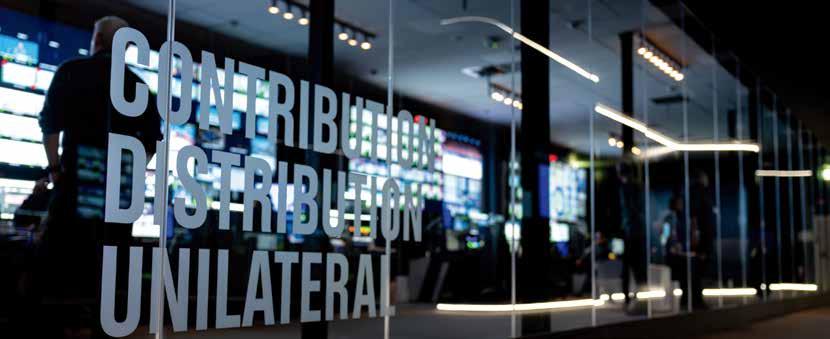
Pressure at scale: how Eurovision Services prepares to power one of the most complex live broadcasts
Mathieu Miraucourt, Project Management Office Team Leader at Eurovision Services, outlines for TM BROADCAST the key elements of the project and the main challenges behind one of the most demanding live productions on the broadcast calendar.
24 OBS roadmap: building a more distributed Olympic production model
We spoke with Isidoro Moreno, Head of Engineering at Olympic Broadcasting Services (OBS), to analyse the technical architecture of the Milan Games and the lines of evolution that will shape future Olympic events.
SHOWS
Ten years of MPTS: an expanded show floor and new content areas for 2026
UK’s meeting place for media, production, and broadcast professionals returns to Olympia London on 13–14 May 2026, with an expanded footprint across both levels of the Grand Hall, new content areas, and a programme reflecting the latest trends in production and technology.
Post-NAB 2026: there’s no single model anymore
The broadcast industry moves from “the next big thing” toward pragmatic implementation and flexible workflows.
INDUSTRY VOICES
Bandy Rayner, CTO at Appear:
“A lot of the decisions made in our industry are based on risk. Some of that is genuine, but some of it is perceived”.
RTL Group announces new management board following the acquisition of Sky Deutschland
RTL Group welcomes the European Commission’s announcement that it has approved the planned acquisition of Sky Deutschland (DACH). RTL Group and Sky Group/Comcast will now finalise the transaction, which is expected to close on 1 June 2026, as the company has claimed in a statement.
With the completion of the transaction, Elke Walthelm and Michael Radelsberger from Sky Deutschland will join the management board of RTL Deutschland.
New appointments
Elke Walthelm (49), currently Chief Operating Officer of Sky Deutschland, will be appointed Chief Human Resources Officer (CHRO) of RTL Deutschland. She will lead the People & Culture
division and play a central role in the integration of both companies.
Michael Radelsberger (42), currently Managing Director of Sky Austria and Sky Media, will become Chief Consumer Officer, taking responsibility for the pay-TV business, which currently serves around 12.3 million paying subscribers across RTL+, Sky, and WOW.
Julia Kloke (46), currently CFO at Bertelsmann financial services provider Riverty, will become the new CFO of RTL Deutschland effective 1 May 2026.
Ingrid Heisserer, currently CFO and CHRO of RTL Deutschland, and Carsten Schwecke, currently Managing Director responsible for Sales, IT, Data and Technology, will leave
the company at their own request and by mutual agreement.
Frank Vogel, Managing Director of RTL Deutschland’s advertising sales unit Ad Alliance, will in future report directly to CEO Stephan Schmitter.
Objectives
The combined business looks forward to offering a broader German-language content portfolio for consumers across the DACH region. Viewers will have access to live sports, entertainment and news across RTL+, Sky, WOW and RTL’s free-to-air channels.
The transaction is expected to generate €250 million in annual synergies within three years after closing, mostly cost synergies across all categories.
France TV partners with YouTube to advance “streaming-first” strategy
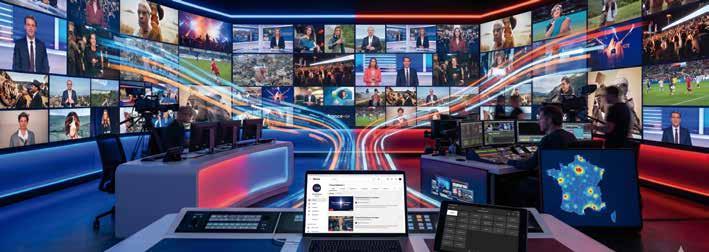
France Télévisions and YouTube have entered into a new partnership with the intention of expanding access to public service content and combating misinformation. In line with France Télévisions’ “streaming-first” strategy, it will focus on offering more hours of news and information programming wherever audiences are and across all screens, as the media group has claimed in a statement.
Against this backdrop, France Télévisions and YouTube are joining forces to try to accelerate the visibility, consumption, and reach of France Télévisions’ news content across all digital environments.
The partnership includes:
› The availability of all national and local news bulletins, as well as major daily and weekly current affairs and investigative programmes that enjoy strong audience success.
› Editorial curation of content by France Télévisions on YouTube, through programme- and topic-based channels, as well as original, platform-native content designed to deliver a more engaging and tailored viewing experience.
› Strengthened protection against misinformation and manipulated content, with YouTube facilitating the adoption of Likeness ID, its tool for detecting AI-generated content that uses a person’s image or identity without consent.
In addition, France TV Publicité will directly commercialise advertising inventory on the platform, with greater flexibility to optimise catalogue value.
This collaboration, they explain, reflects a clear ambition: the future of audiovisual media is built around streaming. Both partners welcome the increased
exposure of high-quality content for all audiences.
Delphine Ernotte Cunci, President and CEO of France Télévisions, shares: “This strategic partnership with YouTube accelerates France Télévisions’ streaming-first strategy. In an ultra-competitive video landscape and in the face of growing exposure to misinformation, it strengthens the reach of our news content to all audiences, including those furthest from traditional media”.
Justine Ryst, Managing Director of YouTube France, concludes: “We are proud of this strategic partnership with France Télévisions and convinced of the strong complementarity between YouTube and public service broadcasting. We are committed to supporting France Télévisions’ ambitions by leveraging our technology to serve news and enhance the visibility of its content”.
AI GENERATED IMAGE
Fox names Amazon Web Services its preferred AI Cloud provider
Fox Corporation has announced a new collaboration with Amazon Web Services (AWS), naming AWS as its preferred AI Cloud provider. The partnership aims to mark a significant step forward in FOX’s commitment to innovation, operational efficiency and next-generation media experiences, as it has claimed in a statement.
FOX is deepening its collaboration with AWS to try to power the FOX One direct-to-consumer platform, combining AWS Elemental MediaLive, MediaPackage, and
MediaTailor with AWS AI/ML services, including AWS Elemental Inference.
Together, these technologies are designed with the intention of enabling scalable live and on-demand streaming while supporting AI-driven innovations such as content enrichment, highlight generation, and personalized discovery across FOX’s news, sports, and entertainment portfolio.
“Partnering with AWS as our preferred AI Cloud provider
allows us to accelerate innovation across every part of our business”, affirms Jeff Dow, EVP, Platform and Media Technology, Fox Corporation. “From enhancing how we deliver content on FOX One to streamlining our media supply chain, AWS provides the scale, reliability and cuttingedge AI capabilities we need to continue redefining the future of media”.
Riedel’s strategic move: acquires ARRI and positions itself across the entire production chain
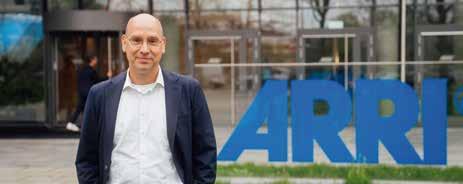
Thomas Riedel, founder and owner of Riedel Communications and the Riedel Group, has acquired the Munich-based manufacturer ARRI. The entrepreneur from Wuppertal was chosen in a competitive international process with his concept for a new home for ARRI, marking the largest acquisition of his career to date, as the company has claimed in a statement.
Through the acquisition of ARRI, Thomas Riedel aims to establish a close strategic alignment between ARRI and the Riedel Group, expanding its expertise across the entire production chain — from camera optics to distribution. ARRI’s ecosystem of camera, lighting, and systems technology complements the Riedel Group’s existing portfolio and looks forward to opening up new technological and strategic market opportunities for both companies.
Founded in 1917, ARRI has been family-owned ever since, having been recognized with 20 scientific and technical awards
from the Academy of Motion Picture Arts and Sciences. “For more than a century, ARRI has stood for engineering excellence, innovation, and the highest quality. This success story will now continue and remain in German ownership”, affirms Dr. Walter Stahl, Managing Director of ARRI GmbH and member of the founding family.
Through close collaboration, ARRI and Riedel have the objective of unlocking new areas of growth, especially in live entertainment and sports. By combining their respective technologies, the companies plan to develop integrated solutions that open new creative and technical possibilities for customers.
As the first joint milestone of this collaboration, ARRI will debut its camera technology at the Eurovision Song Contest, where Riedel serves as the technology provider and NEP oversees production.
Under the new ownership of Thomas Riedel, ARRI’s existing management team will continue
to lead the company and further advance its ongoing transformation. The company will retain independent operations and remain headquartered in Munich.
“Thomas Riedel has built a first-generation family business and stands for entrepreneurial continuity and long-term thinking”, shares Chris Richter, Managing Director of ARRI. “We look forward to working with a successful entrepreneur and to the resulting market opportunities and access — both in existing and new markets”.
“The Riedel Group brings highly complementary technologies and extensive expertise in live production to this partnership”, adds David Bermbach, Managing Director of ARRI. “This strengthens our strategic direction as a ‘Trusted Technology Leader for the Next Generation of Media & Entertainment’”.
“My entrepreneurial path has been closely tied to ARRI for years”, concludes Thomas Riedel. “This acquisition represents the most significant personal milestone of my career so far. I have great respect for this exceptional brand, its outstanding products, and its strong team. At the same time, I see tremendous potential and am confident that, together, we can position ARRI for longterm stability and future success”.
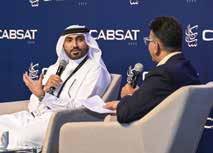
CABSAT 2026 postponed to October 5–7 amid ongoing Middle East tensions
CABSAT, the Middle East’s premier event for content, broadcast, satellite, media, and entertainment, has announced new dates for the 2026 edition. The show will now take place
from October 5–7, 2026, at the Dubai Exhibition Centre, Expo City, as confirmed in an official statement published on LinkedIn.
The 32nd edition was originally scheduled for June 2–4, 2026. However, the organisers have decided to postpone the event. While no official reason has been provided, the decision comes amid ongoing geopolitical tensions in the Middle East. The show will run from 10am to 5pm on Days 1 and 2, and from 10am to 4pm on Day 3.
CABSAT 2026
The 2026 edition will introduce a range of new initiatives and curated experiences. Key features include FLIX On, showcasing curated regional content; the e-Sports Pavilion, offering deeper B2B insights into one of the region’s fastestgrowing sectors; and the Photography Hub, featuring hands-on workshops led by world-renowned professionals.
Eurovision 2026 will become Spectera’s largest testing ground to date
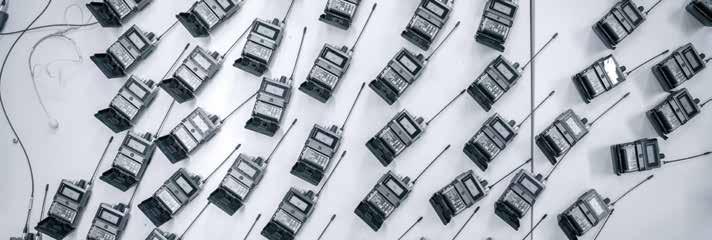
The doors of the spacious project area at Sennheiser’s head office opened, revealing large screens displaying control software, and an impressive set-up of mobile and stationary wireless audio devices under endurance testing. Here, experts from Agorà and Sennheiser met to discuss the audio installation for the upcoming Eurovision Song Contest (ESC). Both Agorà and Sennheiser are official audio suppliers to the ORF for the ESC, with Agorà handling technical production for the event.
This will be the fourth time at the ESC for Italian rental company, Agorà. In Lisbon and Tel Aviv, they supported the local teams for PA, RF, show mixing and network technology. In Turin, they were in charge themselves, and are now bringing the same full service to host broadcaster ORF in Vienna.
Valerio Motta, Agorà’s project manager for the ESC 2026, is excited to see the great advances in technology and
workflow that this megabroadcast brings year after year. “But the best part of the job, ” he says, “is to work with teams from so many nations. The ESC is like a very fast and complex festival – we love it!”
Dr Andreas Sennheiser highlights the technical aspect: “The Eurovision Song Contest is a huge opportunity for companies to put their latest and greatest technology through its paces at the world’s biggest live music broadcast. We’re very pleased to be able to partner with the ORF and very happy to have welcomed Agorà to the Sennheiser offices.”
For the Eurovision Song Contest, Sennheiser will deliver their largest Spectera set-up to date, including manufacturing samples of the yet to be launched handheld transmitter. A firmware variant especially for the event adds functionalities that will be needed on site, such as a level recorder. Volker Schmitt,
Manager Technical Application Engineering and ESC veteran, says: “We’re excited to bring the largest deployment worldwide of Spectera Base Stations, bidirectional bodypacks and handheld mics to the ESC. Artists and crews will benefit from the extraordinary clarity of IEMs over Spectera, and artists using a headset mic will be able to perform with just one belt pack. Like the Agorà team, our wireless experts are very much looking forward to the amazing international teamwork at the ESC.”
After the endurance test at Sennheiser, all Spectera devices were shipped to Agorà for further tests and configuration into racks, followed by a two-day Spectera training at Agorà’s headquarters. The Agorà and Sennheiser teams are all getting ready to support host broadcaster ORF in its task to make the world’s biggest live music contest a reality.
Pressure at scale: how
Eurovision Services
prepares to power one of the most complex live broadcasts
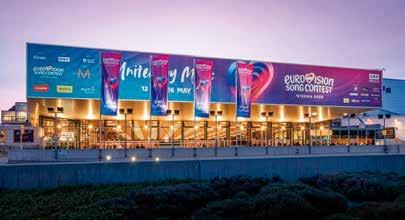
The Eurovision Song Contest celebrates its 70th edition this year in Vienna, with Semi-Finals on Tuesday 12 and Thursday 14 May and the Grand Final set for Saturday 16 May. In this context, Eurovision Services plays a central role in ensuring seamless contribution and distribution. Mathieu Miraucourt, Project Management Office Team Leader at Eurovision Services, outlines for TM BROADCAST the key elements of the project and the main challenges behind one of the most demanding live productions on the broadcast calendar
By Daniel Esparza
Few live productions operate under the pressure that defines the Eurovision Song Contest. Now in its 70th edition, taking place in Vienna, the event reaches its conclusion on Saturday 16 May. With dozens of incoming signals and limited testing windows, the technical operation behind it becomes a high-intensity exercise in coordination and resilience.
In recent years, that complexity has been further amplified by the current geopolitical situation, meaning organisers and technical partners have reinforced security protocols across the entire production chain, from signal contribution to final distribution.
“Redundancy is key. We never rely on a single transmission method”
At the heart of this operation is Eurovision Services, responsible for both the global distribution of the event and one of its
most technically demanding segments: the live voting sequence.
Originally part of the European Broadcasting Union (EBU), Eurovision Services has evolved from the operational backbone of the Eurovision network into a global provider of contribution and distribution services for live events. Established as a standalone company in 2019, it now operates as a private entity delivering large-scale transmissions across sports, news and entertainment, while continuing to support flagship events such as the Eurovision Song Contest.
A dual operation: global distribution and live contribution
Eurovision Services’ role is twofold. On one hand, it manages the worldwide distribution of the signal from the host venue to broadcasters around the globe, still largely relying on satellite. On the other, it handles the contribution layer for the voting segment, a complex
network of live connections linking dozens of countries in real time. “We rehearse twice: once the day before and once just before the show. Two sessions to validate 70 transmissions simultaneously — and we deliver, every time”
“There are participating broadcasters from 35 countries using a spokesperson,” explains Mathieu Miraucourt, Project Management Office Team Leader at Eurovision Services. “It’s a live stand-up from all of them, including Australia. So we establish live duplex connections with those 35 countries when each spokesperson gives the 12 points.”
This means coordinating potentially 70 simultaneous transmissions within a very limited time frame, ensuring that each contributor is technically ready, properly connected and fully synchronised with the live show. “We have to make
sure all spokespersons are ready, that they have picture and sound, that the transmission is stable, and we don’t have much time to rehearse.”
Density as the main challenge
The voting sequence represents one of the most critical and fragile moments of the broadcast. Asked about the main challenges
of this type of production, Mathieu Miraucourt points to one key factor: “The density — the volume of transmissions in a very limited amount of time.”
Unlike other productions, where extensive testing is standard, Eurovision operates under severe time constraints. “We rehearse twice: once the day before and once just before the show,” Miraucourt
explains. “Two sessions to validate 70 transmissions simultaneously — and we deliver, every time.”
The challenge is not only technical, but also operational. Eurovision Services goes beyond its traditional role of signal transmission to ensure that each spokesperson can hear the production team, receive the results and go live without disruption.
ORF
“Usually, Eurovision Services focuses only on transmission, not on content coordination. But here, we ensure each spokesperson can hear us, is properly equipped, and that the transmission works. Then we check that they have the results and send them on air.”
“We need preestablished plans with production to react quickly. Everything is defined in advance”
At the same time, tight coordination with the production team is essential. Any delay or technical issue in a country connection can force last-minute changes to the running order, decisions that must be instantly communicated to the director and even the host on stage.
“If the host announces a country and we’ve had to skip it, it creates a mismatch,” Miraucourt explains. “So we must inform production
immediately, and that information must reach the host in time. It’s a very tight coordination.”
“We start this coordination about one hour before going on air, and again, we only do it twice. It’s a very intense process,” he adds.
All of this is underpinned by carefully pre-defined operational plans designed to keep the sequence running smoothly under pressure. “We need pre-established plans with production to react quickly.
Everything is defined in advance,” Miraucourt explains. “For example, if a spokesperson is not ready, we skip them and move that country to the end of the sequence. It sounds basic, but if it’s not preplanned, it can go wrong.”
“Everyone — from the host to the director and producer — knows these scenarios in advance,” he adds. “As a last resort, if we cannot establish the connection or receive the results, the host announces the points directly from
the stage. These fallback scenarios are clearly defined.”
Redundancy as a core principle
To mitigate these risks, Eurovision Services structures its workflows around redundancy and diversification. “Redundancy is key. We never rely on a single transmission method,” says Miraucourt. “We always mix delivery methods: fiber plus satellite, satellite plus SRT, or SRT plus fiber. We don’t duplicate the same method twice — the idea is to diversify.”
“This activism can target distribution or cybersecurity, and it can impact contribution as well. So we prepare for all scenarios, including physical security”
This approach extends beyond transmission protocols. Reception is also distributed across different sites and
networks, ensuring that failures in one segment do not compromise the entire operation.
“If there is jamming on satellite, we switch to fiber. If there is an issue on fiber, we use SRT. If SRT is impacted, we still have satellite. We also use different reception sites — not everything is on-site or on the same network. It’s a mix. The goal is to disperse risk.”
Security in a politicised environment
In recent years, the technical challenge has been compounded by external factors. As the contest has become increasingly politicised, the risk landscape has evolved accordingly. “There are more protests — sometimes peaceful, sometimes more active,” Miraucourt notes. “This activism can target distribution or cybersecurity, and it can impact contribution as well. So we prepare for all scenarios, including physical security.”
As a result, Eurovision Services conducts extensive risk assessments and deploys multiple layers of protection, including encryption, cybersecurity measures and even physical security considerations. The objective is clear: to anticipate every possible scenario and ensure continuity, regardless of the circumstances.
Satellite vs IP: an evolving balance
While satellite remains a cornerstone of Eurovision’s global distribution — particularly for one-to-many delivery — the broader industry shift towards IP-based workflows is increasingly evident. Protocols such as SRT are becoming more common, especially for contribution and for smaller-scale distribution scenarios. “The industry is moving towards IP-based workflows, and we move with it,” says Miraucourt. “Whether it’s satellite, SRT or a combination of both, we have the experience to reach every corner of the world with the right mix for each scenario.”
“We always mix delivery methods: fiber plus satellite, satellite plus SRT, or SRT plus fiber. We don’t duplicate the same method twice — the idea is to diversify”
However, satellite continues to play a key role where reliability, scale and ecosystem compatibility are critical. “When you have a one-to-many distribution — one origin to many takers — satellite is still very relevant. In terms of quality and cost, it remains efficient when there are many receivers. It’s reliable, well established, and there is still a large ecosystem able to receive satellite transmissions,” he explains.
Content protection also remains a decisive factor, particularly in a context where broadcasters invest heavily in rights. “Broadcasters pay significant amounts for rights, so they need secure delivery. That’s why we implement encryption and
entitlement systems — meaning we control at the origin who is allowed to decode the signal.”
A controlled ecosystem
One factor that simplifies operations, at least partially, is the nature of the Eurovision ecosystem itself. As all participating broadcasters are members of the European Broadcasting Union, technical capabilities are well understood and largely standardised.
“We know their capabilities, and the setup is quite standardised,” says Mathieu Miraucourt. “We work with them all year long, often delivering sports content as well.”
…and a unique production environment
Even so, Eurovision remains a unique production environment, distinct from the sports workflows that dominate much of Eurovision Services’ activity. “We have teams both on-site and at headquarters
supporting the event. Many of the people on-site have worked on the contest up to 15 times,” he notes.
“The Eurovision Song Contest is unlike anything else we do — and that is precisely what makes it special. The scale, the live pressure, the emotional weight of the event: it demands the very best from every part of our operation”
“The Eurovision Song Contest is unlike anything else we do — and that is precisely what makes it special,” Miraucourt concludes. “The scale, the live pressure, the emotional weight of the event: it demands the very best from every part of our operation. And that is exactly what our team delivers, year after year.”
This is How the Next of Virtual Production Looks Like
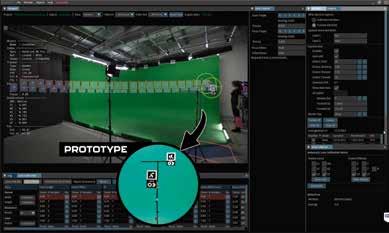
NAB 2026 was a defining moment for Zero Density and the virtual studio production scene. Across 8 specialized demo pods at Booth N2461, Zero Density gave broadcasters a hands-on look at where the broadcast graphics and virtual studio production are heading — and the tools that are already taking it there.
Choose Your Preferred Rendering Technology
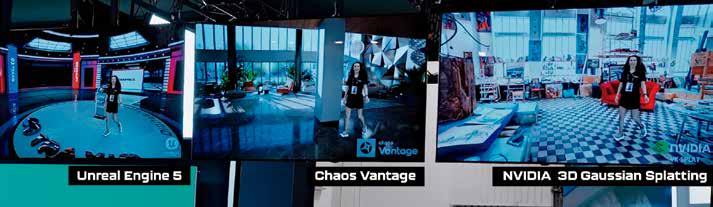
At the Reality 5 Green Screen Stage, visitors saw the technology preview of Reality 5 with upcoming rendering technologies — Chaos Vantage real-time ray-tracing renderer, NVIDIA's Gaussian splatting renderer, in addition to Unreal Engine 5, all at the same time. Talent Tracking data was used to automatically follow the focus of the presenter, correctly place them in a 3D environment, give correct reflections and virtual shadows. Visitors were particularly drawn to the ability to use Chaos Vantage with existing 3D design tools like Blender and 3ds Max to design their virtual studios. Another option showcased on the stage was 3D-scanned environments that were rendered with Gaussian splatting as virtual studios.
At the Reality 5 XR Video Wall Stage with Grass Valley LDX180 camera, any of those renderers was projection-mapped to the video wall. Automatic 3D color profiling of video wall displays around in a minute and automatic color matching in XR productions is demonstrated.
Traxis Hub 3.0 Democratizes Tracking and Lens Profiling
Traxis Hub 3.0 was showcased and will be available soon at zero cost, marking a significant step toward making camera (with lens profiles), object and talent tracking accessible to every production. At the demo, visitors saw how lens profiles could be created by the users within minutes, using the new Automatic Lens Profiler. In legacy tracking technologies, lens "calibration" was almost like a black art as it required expert knowledge and significant manual labor. Traxis Hub 3.0 changes that entirely. With the ability to selfservice their own lens profiles, production teams can now approach tracking confidently and freely. Traxis Hub 3.0 also supports any third-party FreeD camera tracking rig, such as cranes with mechanical tracking, robotics, PTZ cameras, etc. As for hardware requirements, it works on a standard Windows 11 computer with a Blackmagic Decklink SDI I/O card.
Local AI Models for News Workflows
The AI-Assisted Workflows demo pod showcased local AI models without requiring an internet connection, keeping data private on local servers. Journalists and news producers saw AI-assisted proof-reading, summarization, text extraction, image description and translation in 100+ languages. Real-time transcription of live
audio sources with NVIDIA Parakeet ASR and translation of subtitles with Google Gemma 4 Translation models ran live on the demo pod. Dictation in 25 languages using webcam/ microphone in Reality Hub and prompting custom rules for text fields using a locally running LLM rounded out a workflow built for real-world newsroom conditions.
Graphics, Playout, and Newsroom Integration
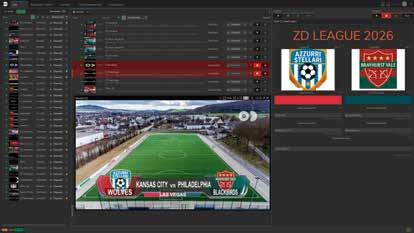
The broadcast graphics demo pods showed what a modern broadcast graphics pipeline looks like in practice: Unreal Engine 3D environment design and motion graphics templates, a template-driven workflow for on-air, video wall, AR and virtual studio, no-code stateaware graphics with built-in logic, and ready for multi-channel use case with flexible look, data, and behavior.
Unified template-driven Lino Playout for on-air, AR, VS, XR, and video wall, multi-channel playout architecture, and flexible Program and Preview for channels, including AR and video wall graphics, brought it all together operationally. MOS integration with leading NRCS platforms with real-time journalist preview via MOS plugin, automation controls via CII, MOS, REST and RossTalk, and a dedicated ticker module and channel branding addressed the full newsroom and MCR workflow.
Vibe Coding Control Interfaces
The vibe coding section of the demo offered the most forward-looking glimpse. Custom control apps were vibe-coded by non-coders with no prior coding experience, with external data connected to graphics templates. Custom modules for Reality Hub were developed for data integration and automation through Reality Hub Module SDK, JavaScript API, REST API, and MCP.
At NAB 2026, we didn't just showcase technologies — we invited our users to Imagine Next.
OBS roadmap: building a more distributed Olympic production model
We spoke with Isidoro Moreno, Head of Engineering at Olympic Broadcasting Services (OBS), to analyse the technical architecture of the Milan Games and the lines of evolution that will shape future Olympic events. The progressive reduction of the IBC, the consolidation of remote workflows, the virtualisation of infrastructures, the deployment of IP networks and the growing role of artificial intelligence outline a roadmap pointing towards an increasingly flexible, efficient and distributed model
By Daniel Esparza
AUTHOR: UBALD RUTAR | INTERNATIONAL OLYMPIC COMMITTEE (IOC)
AUTHOR: UBALD RUTAR | IOC
The scale of the Olympic Games requires meticulous coordination between all the actors involved, a process that begins long before the start of the event. In the case of Olympic Broadcasting Services (OBS), this work is structured in different phases that start practically from the awarding stage and go far beyond mere technical execution.
Before implementation, there is a process of consultancy, guidance and scope definition that is essential to contain
the complexity and cost of an operation of this magnitude. “There are agreements that the International Olympic Committee defines for each organising committee regarding what needs to be delivered and done, but even so, we are usually a team that repeats itself, and that experience helps enormously when it comes to defining and limiting the scope,” explains Isidoro Moreno, Head of Engineering at OBS.
That continuity allows OBS, in Moreno’s words, “to put
things into perspective to avoid requesting solutions that are very costly and, in many cases, unnecessary.” This approach is also aligned with the current agenda of the Olympic movement. “With the IOC’s focus on sustainability and efficiency, this also helps organising committees keep costs under control as much as possible.”
From there, a second phase begins in which the different departments translate that planning into reality. Venues are visited, production plans
are reviewed, camera positions, cabling and infrastructures are assessed. But the moment when the operation takes on a more permanent character comes with the physical deployment of equipment on site. At that point, the first major player is the construction area, responsible for the fit-out of the IBC, the core of the entire operation.
In the last Winter Games, this deployment started well in advance. “In the case of Milan, if we count up to the handover of the space, they were there about six months before the Games. They moved in August 2025 and were the first team to arrive.”
The installations team then takes over, responsible for all technical installation, from equipment to cabling. Once the IBC is completed, the work progressively shifts to the different competition venues.
An increasingly smaller IBC
One of the most visible axes of technological evolution in the Games
is the progressive reduction of the IBC, the nerve centre from which all Olympic signals are produced and distributed. In Milan, this space was approximately 25% smaller than in Beijing. “Broadcasters can do much more with less physical presence,” summarises Moreno.
For years, Olympic coverage required the massive deployment of infrastructure and personnel. Moreno illustrates this with an example: “I remember that in Barcelona, the German broadcaster’s graphics infrastructure alone was larger than the entire setup of Spain’s public broadcaster, RTVE.”
The reason was simple: transmission capacity and remote access tools that make today’s model possible did not yet exist. The comparison with today is revealing. “Nowadays, for example, in Milan, a broadcaster like NBC has transmitted 564 channels to the United States. We are not talking about 564 programmes, but about the ability to send
all the signals needed for remote production. Instead of moving an OB van with cameras and production equipment, you send the signals and produce from your home country.”
Use of drones
“The main problem has been noise. It is difficult to solve because the sound of the drone is not constant: it accelerates, slows down… and that makes it difficult to apply effective filters”
“In general, it has been a success. Negative comments were few and mainly came from radio, where noise is more disturbing because you don’t have a visual reference”
“I think we will have to use them more, but without overdoing it. Because there are things that, with four-point systems such as Spidercam and similar, can achieve a similar effect”
In this context, the IBC loses weight as a major physical production centre and is redefined as a space for work, coordination and control. This does not mean, however, that its role is no longer relevant. “In Milan, for example, there were 12 television studios and another 12 master controls, so there is still significant operation, but the weight shifts towards the venue or even locations within the city.”
In fact, many broadcasters reserve the IBC for planning, management or technical operations, while choosing to locate part of their on-screen presence elsewhere.
The underlying question is clear: how much further can this reduction go? In Los Angeles, studio capacity has already been adjusted to levels comparable to what previously corresponded to a Winter Games. But it is not only about technology enabling operations with less on-site presence. The geopolitical context and the pressure to reduce carbon footprint also play a role. “The trend is
clear: reduction driven by technology and efficiency, but also influenced by the global context. Added to this is the pressure to reduce CO2 emissions: moving large teams has a significant impact, and there is a general trend towards minimising travel.”
The role of the Madrid hub
Although Madrid has established itself as one of OBS’s strategic nodes, its role in Milan has been limited. The reason lies in the very nature of the event and the number of services that, in Games of this scale, still need to be deployed directly on site. “There has been very little remote operation from Madrid in this case,” summarises Isidoro Moreno.
Moreno explains that, in events such as Milan, Paris or Los Angeles, OBS not only provides services to broadcasters, but also to organising committees and federations, which requires maintaining a very strong infrastructure on site. One of the clearest examples is signal distribution for
review and validation systems. “In Milan, we provided copies of approximately 70% of the cameras to the organising committee for review and validation systems: what in football (soccer) would be equivalent to VAR.”
“In the Milan IBC there were 12 television studios and another 12 master controls, but the weight shifted towards the venue or even locations within the city”
Where Madrid does play a stronger role is in experimentation and in operations of a different nature. “What we do remotely are specific tests and developments. For example, we have worked on a virtualised master control.” This line builds on the path OBS began in Beijing 2022 with virtualised OB units and is now moving towards new layers of operation.
In fact, the next major leap already seems to be on the horizon. “For the Youth Olympic Games in Dakar, the master control will be fully virtualised and operated remotely from Madrid. In that case it makes sense, because there is no significant presence of broadcasters on site.” There, remote work will go beyond master control. “It will be a much more intensive remote operation: not only master control, but also part of the production. It is a good example of how technology allows the model to be adapted depending on the type of event.”
Virtualisation: from truck to software
Virtualisation emerges in the conversation as one of the main lines of technical evolution within OBS. The next step is the virtualised master control, still in the proof-of-concept phase, but with real possibilities of beginning partial implementation already in Los Angeles.
For Moreno, the advantage is clear, especially at a
time when logistics and energy costs are becoming increasingly significant in any large international deployment. “Think, for example, about the geopolitical situation or fuel costs. All of that impacts
energy, logistics… If instead of moving complete OB units you can work with servers — which, in a place like the United States, you can easily find — and virtualise the software, it is a huge step forward.”
AUTHOR: UBALD RUTAR | IOC
AUTHOR: FLORENCE PERNET | IOC
Cost reduction is only part of the argument. The other relates to the overall efficiency of the system. “There is debate about data centre consumption, but I think it needs to be put into context. Consumption increases because digital content consumption has also grown massively. Data centres concentrate a lot of energy, yes, but they also concentrate a huge number of functionalities.”
“For Dakar, we want to launch an AI-generated Olympic channel”
Moreno argues that consolidation in centralised infrastructures has a clear logic. “If instead of centralised and virtualised systems you had discrete systems for each function, it would be much more expensive and less efficient. In a data centre you optimise resources: energy, backup systems, etc.”
Assessment of drone usage
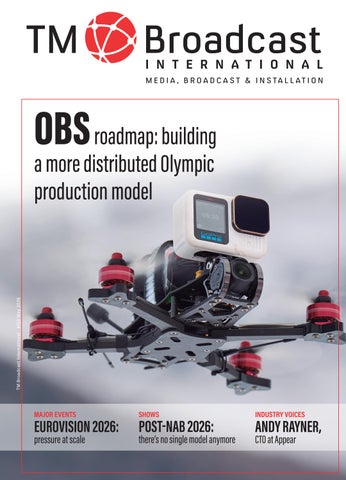
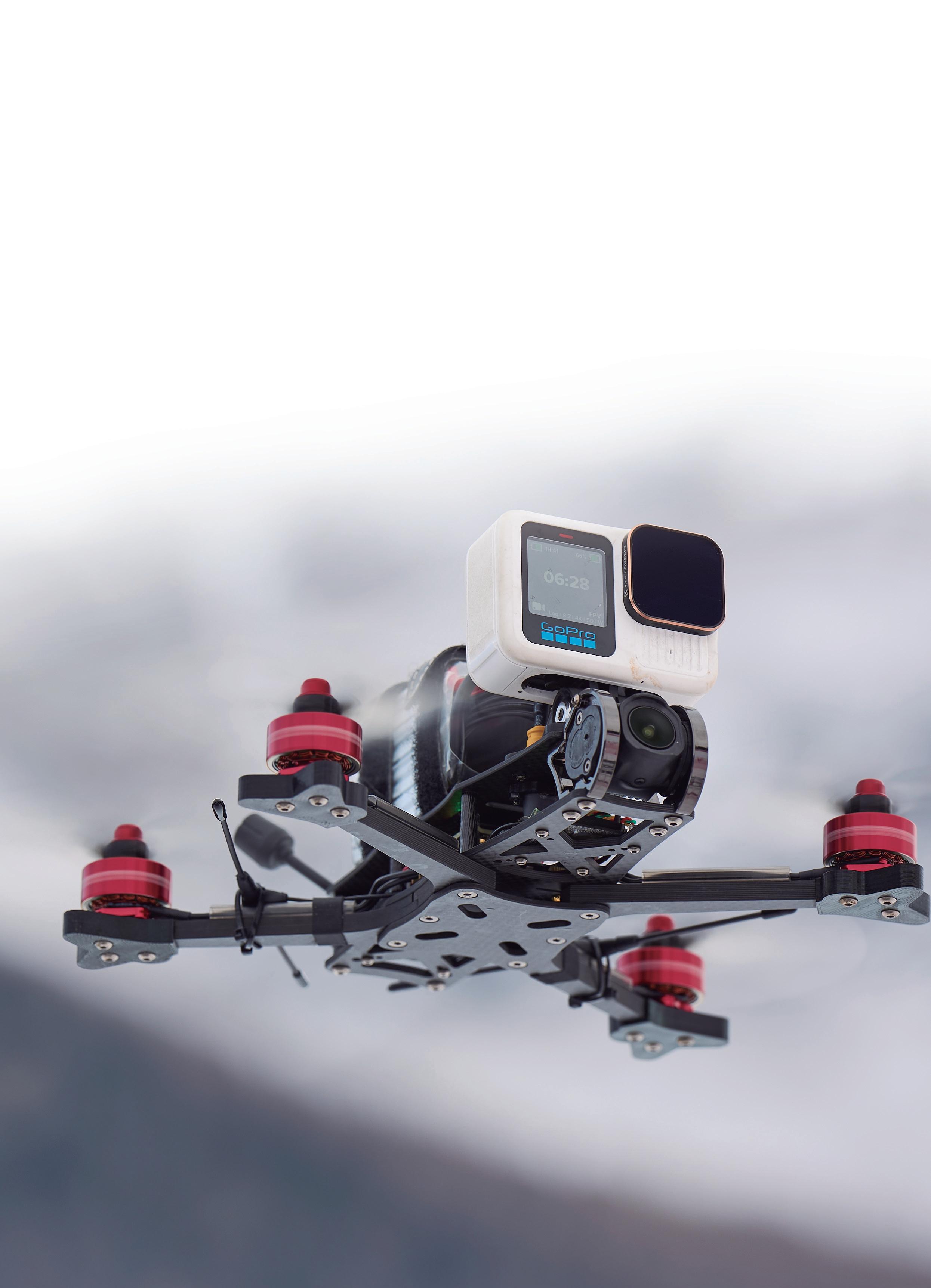
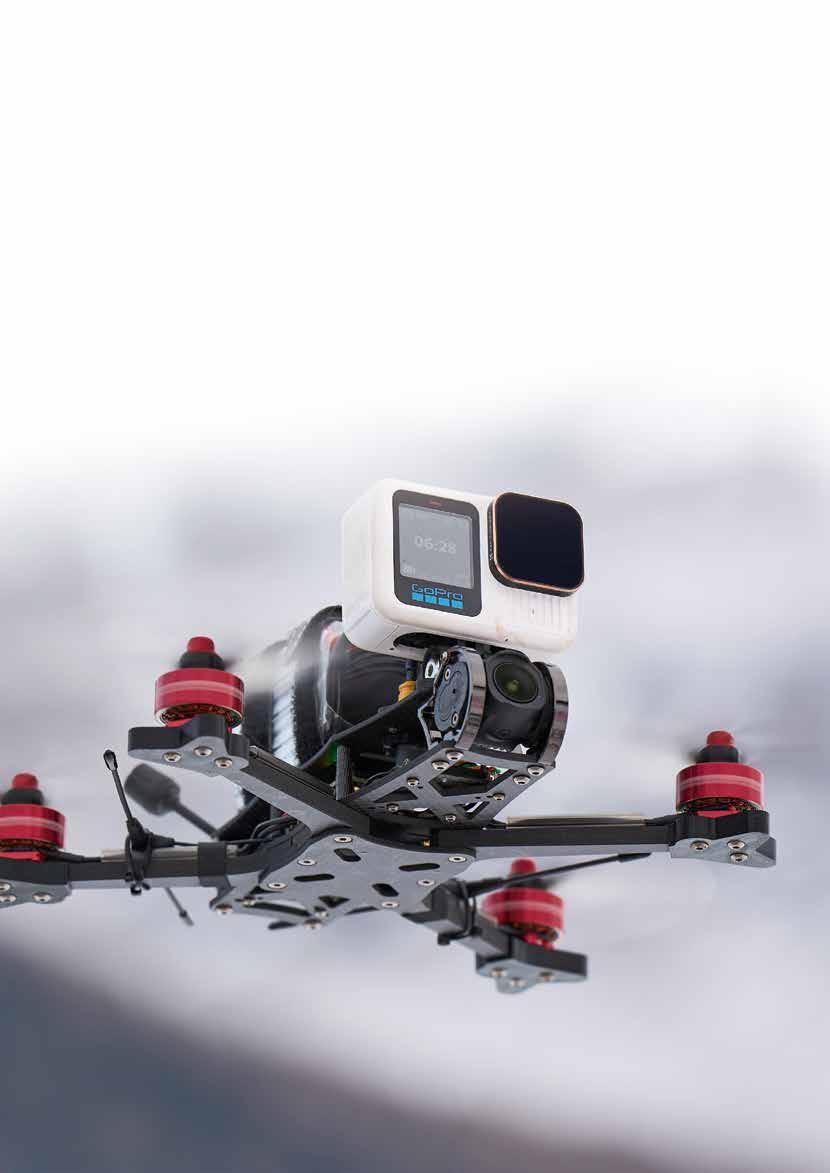
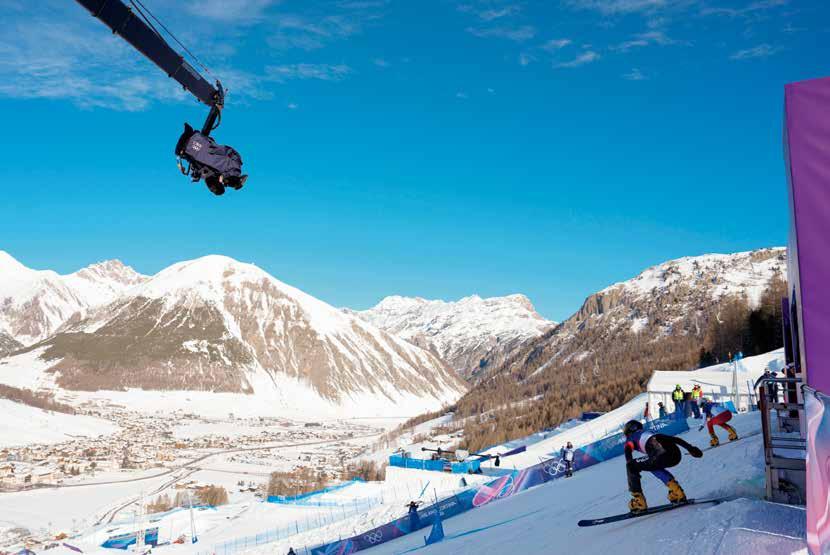
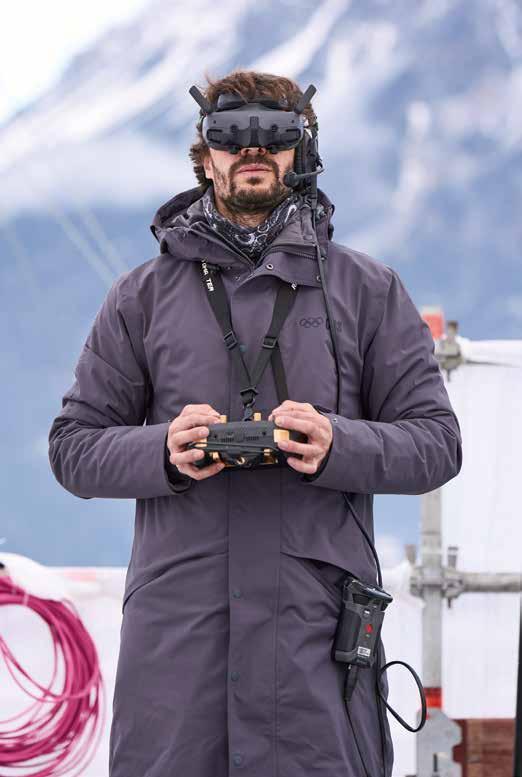
Among the most visible innovations for viewers in Milan, the extensive use of first-person drones has probably been one of the most striking. Although it was not the first time
OBS had used this type of resource, this edition saw a greater presence and wider deployment across more disciplines.
For Moreno, this evolution responds to a very clear logic: technological maturity and a radical improvement in safety conditions. “The key has been the evolution of drones: they have become much smaller and lighter. We have used drones weighing less than 250 grams, which is one of the key thresholds. That significantly reduces risk: they can cause harm, but it is not comparable to drones weighing several kilos.”
“There is debate about data centre consumption, but I think it needs to be put into context. They concentrate a lot of energy, but they also concentrate a huge number of functionalities”
This hardware evolution was accompanied by an extremely careful operational framework. “We established very strict safety protocols. For example, the drone always stayed behind the athlete, so that in the event of an issue it would fall without impacting them. Emergency systems were also incorporated to minimise any risk.” OBS also sought highly specialised operators, with pilots who had an in-depth understanding of the disciplines they were covering. “We also looked for pilots with direct experience in the sport. In many cases, they were former athletes.”
In his view, the result has been particularly powerful from a storytelling perspective. “In bobsleigh, putting a drone inside the track and following the athletes is something impressive.
And in disciplines such as slalom, it allows you to perceive the athlete’s real speed very clearly.”
The main drawback remains sound. “The main problem has been noise. It is difficult to solve because the sound of the drone is not constant: it accelerates, slows down… and that makes it difficult to apply effective filters.” Even so, he notes that the overall assessment has been positive. “In general, it has been a success. Negative comments were few and mainly came from radio, where noise is more disturbing because you don’t have a visual reference. In television there were some comments, but they were not significant. And, most importantly, the athletes did not complain. On the contrary, when they saw the result, they were very happy.”
Moreno believes that the key has been not overusing the resource. And that restraint will be important going forward. “I think we will have to use them more, but without overdoing it. Because there are things that, with four-point systems such as Spidercam and similar, can achieve a similar effect.”
The invisible challenge: monitoring, support and distance
If one looks at the most spectacular side of the technical deployment, it might seem that the main challenge in Milan lay in new technologies or in the geographical dispersion of venues. However, Isidoro Moreno identifies the main challenge of this edition in a much less visible area: the logistical and technical management of an increasingly complex, distributed and automated network.
“The main challenge, without a doubt, has been the distribution of all the venues. Interestingly, from a technological point of view it was not a problem.”
The reference to Paris helps put this into perspective. “Many people told me: ‘This must be incredibly complex.’ And I would reply: ‘Well, in Paris we had surfing in Tahiti, 9,000 kilometres away.’ In other words, today technology allows distance not to be a limitation.”
“For the Youth Olympic Games in Dakar, the master control will be fully virtualised and operated remotely from Madrid”
Where complexity does arise is at the logistical level. “We had to make a very significant effort to decide how to position key personnel and provide support. Technical support was essential, because network complexity increased enormously: an ST 2110 network, everything highly automated, paths that were no longer point-to-point as before, but very complex networks.”
This paradigm shift means that a localised issue can have effects in locations far from its point of origin.
This is compounded by a common reality at the Games: much of the technical staff only joins during the operational phase and has limited time to become fully familiar with the infrastructure. “Even though we provide training, including remote training, you cannot expect someone arriving three or four days before operations begin to have an in-depth knowledge of the system. What you do want is for them to be operational, to detect if there is a problem and alert us so we can provide support.”
OBS’s response was structured around two main fronts. The first was to reinforce remote monitoring of all critical elements. “One of the least visible but most important projects was the development of remote monitoring systems through which we could see network saturation, configuration and all kinds of critical parameters. The key was to have all that monitoring available remotely to detect problems even before they affected the on-air signal.”
Thanks to this system, it was possible to locate issues with a very high level of granularity.
“We could identify, for example, packet loss on the transmission line and determine whether it occurred at reception, in the TOC (Technical Operations Center), or even in the truck.”
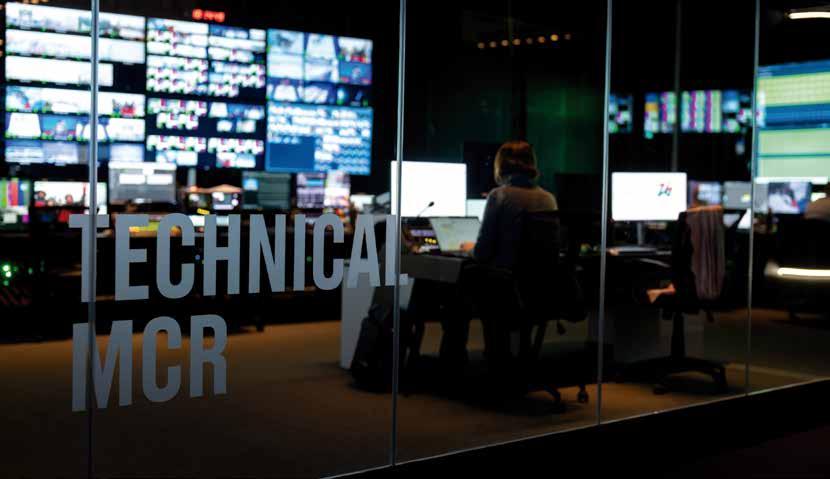
The second pillar was the creation of a centralised support centre. “We maintained an operational master control — for signal switching, audio control, colour, sharpness, etc. — but we also significantly developed a technical master control. This technical master control was not simply waiting for someone to call; it had an active role: it often detected potential issues before they impacted operations.”
“We have further developed a technical master control, which had an active role: it often detected potential issues before they impacted operations”
According to Moreno, this layer of supervision was one of the decisive elements of the system. “That master control was fundamental. We even operated on a 24-hour schedule to continue providing support once the day’s events had ended.” In a scenario where it is no longer enough to “get in a car and arrive in ten minutes,” this centralised monitoring and response capability becomes essential. “I couldn’t set up a mini IBC in each hub, and we had four different centres, in Cortina, Livigno and other locations. That made the operation much more complex.”
The current OBS structure cannot be understood without a historical evolution that has progressively redefined the Olympic production model. For decades, that responsibility fell to national broadcasters or structures created specifically for each edition, but the growing scale of the event ultimately made that approach unviable. “There has been an evolution. The first time an independent host broadcaster was established, separate from the organising committee, was in Barcelona ’92,” recalls Isidoro Moreno.
Barcelona therefore marked a turning point, although still within a temporary logic. The problem remained the lack of real continuity between editions. “Each edition involved a new committee, and although there was always someone from previous Games contributing experience, there was no real continuity.”
This gap was addressed with the creation of OBS as a permanent division of the International Olympic Committee. “In 2001, at an extraordinary session of
the International Olympic Committee in Moscow, the creation of OBS as a permanent division was approved. OBS began operating in 2005, although still in parallel with Torino 2006, which was the last edition produced under the previous model. From Beijing 2008 onwards, OBS fully assumed production as host broadcaster.”
For Moreno, the value of that continuity is twofold. On the one hand, it allows a consistent quality standard across Games. On the other, it provides a much greater capacity to anticipate needs and avoid cost overruns. “I always explain it with an example: when I worked on Barcelona, there were many basic things we did not know because there was no accumulated experience. For example, services for broadcasters such as editing booths: you did not know whether you needed one, two or twenty.”
The results have been clear. “One of OBS’s founding objectives was to reduce broadcasting costs by around 50%, and that was achieved.”
OBS
“One of the least visible but most important projects was the development of remote monitoring systems through which we could see all kinds of critical parameters”
IP, AI and more flexible services for broadcasters
If there is one idea that runs through Moreno’s view of OBS’s evolution, it is flexibility. And much of that capability stems from the deployment of a fully IP-based network, which in Milan has made it possible to respond more agilely to changes, additional needs and complex configurations for broadcasters. “The development of a fully IP network has given us tremendous flexibility when it comes to delivering services to broadcasters.”
This same principle has also extended to other, less obvious areas, such as the work of commentators distributed across venues.
“We started with video, but we have also taken it into the commentator space.” The geographical dispersion of venues
required the creation of new signal paths to meet broadcasters’ editorial needs. “Many broadcasters wanted the same commentator for both events. Also, since the competitions were not held simultaneously but alternately, that same commentator could take part in one venue and then the other. That required us to create signal paths that we did not have before.”
Alongside IP, the other major line of innovation is, naturally, artificial intelligence. OBS has applied it in Milan both to visual support tools for viewers and to content automation workflows.
This was complemented by layers of information that helped contextualise the action from a technical perspective: entry speed, jump height, number of rotations or degree
of difficulty. “All of that helps the viewer enormously. In countries where winter sports are less established, it is essential to help the audience understand what they are watching.”
Automated highlights and an AI-generated Olympic channel
Where OBS appears particularly determined to push forward is in the field of automated content generation. Moreno speaks about it almost as one of the clearest statements of where the organisation aims to evolve in the coming years.
“There is a project we are particularly proud of, which we developed with external support, although a very significant part was done internally at OBS with our own engineers. It is the automated sports highlights generation system.”
The starting point was a fairly obvious limitation in the previous model: the required neutrality of OBS-produced highlights, designed for a potentially global audience and
therefore not very adapted to each country’s editorial priorities. “Our highlights were always very neutral, because our potential viewer can be from any country.” As a result, many broadcasters had limited room for personalisation.
To address this, OBS has developed an architecture that combines visual analysis, contextual metadata, results data and logging layers. “It does not analyse video continuously, but frame by frame, every few seconds.” This analysis is then cross-referenced with data from the organising committee, results and other descriptive elements to generate what they internally call AMD, Automatic Media Description.
“The system could detect tears, but also know who that person was and in what context it was happening.” This level of descriptive depth enables very precise searches and opens the door to semi-automated editing based on prompts. “We developed a plugin
connected to an editing system, so that you could enter a prompt such as: ‘I want a 20-second highlight with the athletes’ entrance, the development of the event, the key moments and the outcome.’ The system would automatically select the content and assemble a first version on the timeline.”
The final layer goes even further: the possibility of generating automated narration. “As we also used the commentators’ narration as an additional layer of information, the system could even generate a voice and a script to tell the story. In one or two minutes, you had a highlight ready for any sport.”
This development directly connects with another, even more ambitious experiment: the idea of an AI-generated Olympic channel for Dakar. “For Dakar, we want to launch an AI-generated Olympic channel.” OBS has already tested a preliminary version of this concept with positive results. The system can prioritise events, decide which
signal should go on air and even insert automatically generated highlights when a competition is extended and alters the planned rundown.
Final
reflections: always listen to the user
In the final part of the conversation, Isidoro Moreno introduces a key reflection. “What I have learned, not just from these Games but from all of them, is that it is extremely important to listen to our users.” For OBS, this is not only a matter of customer relations, but an essential mechanism for deciding which services are worth developing and which are not.
“We held a workshop specifically aimed at asking what people want for the future. We have created a service menu, what we call our service directory, which is huge. But at the same time as we introduce new things, like the ones I mentioned, we also have to review whether some services we provided in the past still make sense.” This review is
also part of sustainability. “Sustainability means having a broad offering, but not an infinite one.”
Moreno particularly highlights the value of feedback gathered during the Games from broadcasters already using tools such as automated highlights. “They gave us very valuable information. We created prompts, prompt templates that we distributed among them, and we saw that some worked very well in certain sports, but not so well in others. That is something you only really discover when you put the tool in the hands of the user.”
The conclusion is straightforward. “I have a
AUTHOR: OWEN HAMMOND | OBS
fantastic team of engineers and we have very good ideas, but sometimes that idea that seems great to us is not useful to the user. And then, what is the point of offering a service that does not add value?”
From there, Moreno brings the entire conversation back to a foundational idea: innovation matters, but it can never be disconnected from the core mission of the host broadcaster. “We must never forget that our fundamental task is to deliver a product that works and helps the broadcaster.”
He concludes: “That has to do with things that are not very glamorous. When we talk about artificial intelligence, IP transmission,
immersive audio and all of this, it sounds wonderful. But we must not forget that behind it there is infrastructure: cables have to be laid, fibre has to be deployed, installers have to complete connections, there is logistics supporting transport, there are support services providing accommodation and mobility… All of that team is fundamental.”
More information
At TM BROADCAST, we have delivered extensive coverage of the Milan Olympic Games. These are some of the most notable reports:
The Olympic Games as a global laboratory: technology, storytelling and OBS’s vision for Milan-Cortina 2026
RAI Milan: the technical heart of Italy’s Olympic coverage https://tmbroadcast. com/rai-milan-italyolympic/
Tenyearsof MPTS: an
expandedshowfloor andnewcontent areasfor 2026
UK’s meeting place for media, production, and broadcast professionals returns to Olympia London on 13–14 May 2026, with an expanded footprint across both levels of the Grand Hall, new content areas, and a programme reflecting the latest trends in production and technology
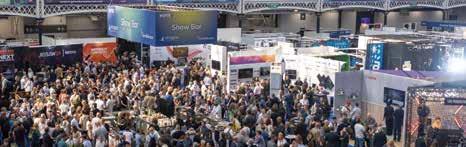
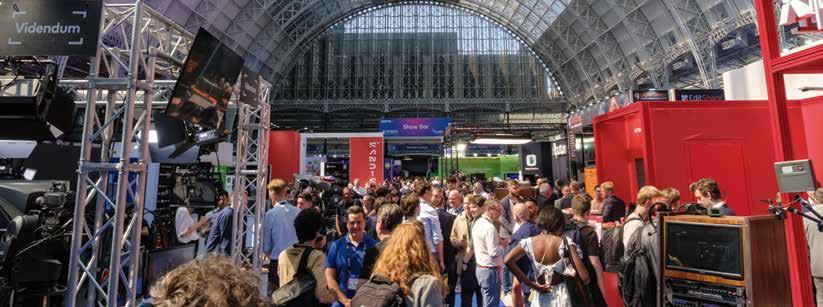
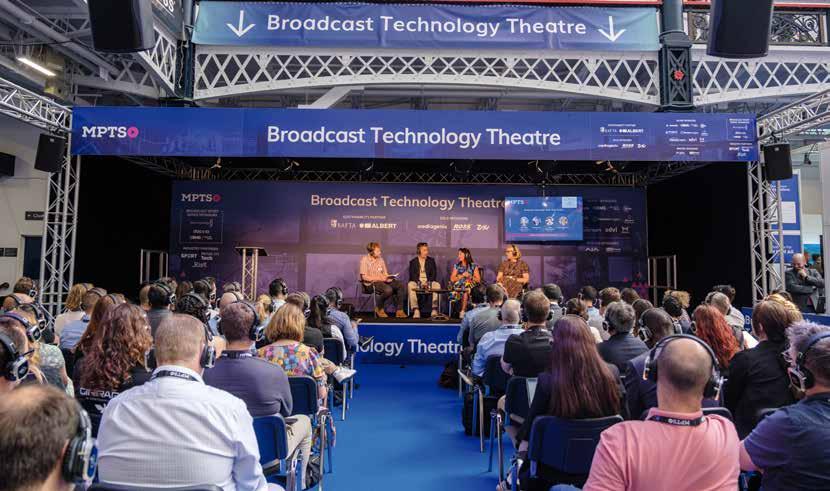
The Media Production & Technology Show (MPTS) is set to celebrate its 10th anniversary, marking a decade of presence in the media and broadcast industries. Once again, MPTS 2026 will take over the Grand Hall at Olympia London on 13–14 May 2026 to explore new technologies, share ideas, and connect with the media, production and technology communities.
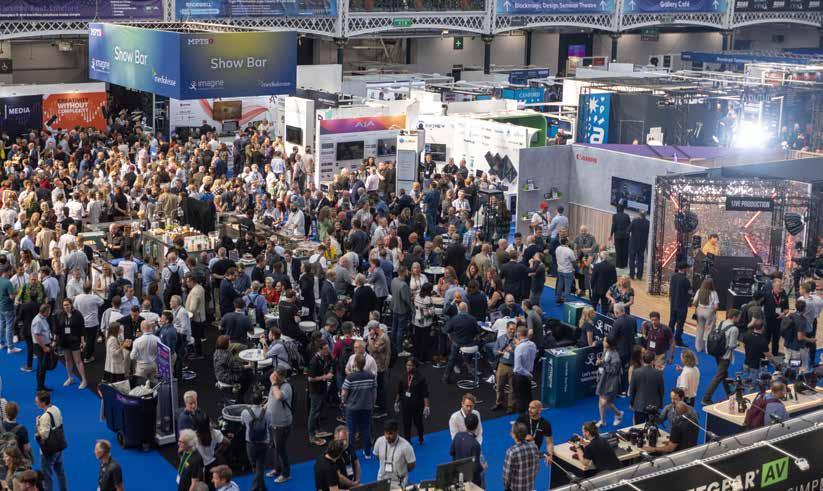
Last year, the event registered more visitors than anticipated, despite the absence of two countries. MPTS 2025
welcomed a record 13,000 attendees from 50 countries. Additionally, the bustling show floor featured more than 300 exhibitors and sponsors.
For 2026, expectations remain similar. With the intention of making this celebration its largest edition yet, it will feature an expanded exhibition, an extensive free seminar programme, and a wide range of new features.
Among the additions, the event will debut a Content Creator Stage, a live podcast studio, and an additional
By Bárbara Ausín
networking bar. It will also welcome the arrival of the Post Production World Conference Europe (PPW Europe), presented by Future Media Conferences (FMC).
What’s New for 2026
The show floor will host more than 300 exhibitors, exhibiting the latest innovations, hands-on technology, and real-world workflows that are shaping the future of production, post-production, and broadcast. MPTS 2026 will bring together a diverse line-up across the media
and broadcast ecosystem, including returning industry leaders and new participants.
To ensure coverage of every trend in the sector, the organisers have introduced dedicated areas focused on the most influential topics.
First, building on the result of last year’s two-level format, the upper area of the Grand Hall will be further expanded to host a dedicated content creator networking zone, a new bar, and additional spaces designed for informal meetings, collaboration, and “work from anywhere” opportunities. As part of this expansion, it will provide new networking spaces, including the MPTS Pub Garden sponsored by Warner Bros. Studios Leavesden, and SensoryCalm Space by EventWell.
In line with the rapid growth of the creator economy, MPTS will also launch a new Creator Hub in partnership with InterTalent. This space will include a Creator Stage and Creator Lounge, designed to spotlight
short-form video, influencer marketing, platform innovation, and creator–brand collaborations. The programme will feature live panels, fireside chats, and practical sessions covering monetisation strategies, creative development, and real-world success stories.
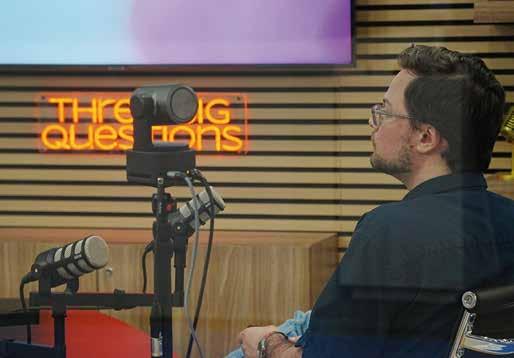
Additionally, the show will introduce the Live Podcast Studio for the first time, offering insight into the latest trends in on-demand audio and providing visitors with a behind-the-scenes look at podcast production in action.
Programme Highlights
Although MPTS spans just two days, the programme has been fully optimised in order to maximise every hour and opportunity, ensuring a structured delivery of content and activities. The 2026 agenda will be delivered across a series of dedicated theatres and stages, each focused on key areas of the media production ecosystem, including keynote sessions, production, post-production, audio, and content creation.
It includes a series of paid workshops offering hands-on sessions led by expert trainers and certified instructors. The Post Production World Conference will take place in Europe for the first time. The first confirmed sponsor is Maxon, and the programme will feature immersive tracks across artificial intelligence, post-production, motion graphics and VFX, content creation, and business and career development for creatives.
Another expansion comes with the SMPTE Media Technology Conference Europe, which will move to a larger ground-floor space this year. This will accommodate senior technical leaders, innovators, and decisionmakers exploring the future of global media technology. Sessions will cover hybrid and cloud-based production, next-generation broadcast systems, and evolving distribution models, offering an expert technical perspective on the future of media and entertainment technology.
Inside the Theatres
The eight-theatre programme will span the full breadth of the modern media landscape, from broadcast technology and post-production to the creator economy and artificial intelligence.
At the heart of MPTS, the Keynote Theatre will include sessions that go behind the scenes of the productions and decisions shaping modern media. The Production Theatre, meanwhile, will tackle the practical realities and future of film and television
production, bringing together producers, studio leaders, and production experts. The seminars will cover lighting and camera techniques, funding models, sustainability, and the evolving demands of the creator industry.
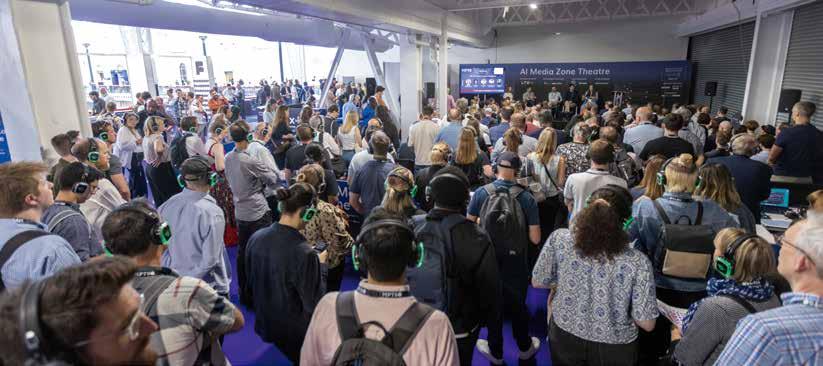
As it could not be any other way, artificial intelligence will take centre stage at MPTS 2026, highlighting its growing influence in content creation. The AI Media Zone will examine how AI is transforming every stage of the content lifecycle, from ideation and production to post and distribution.
The Post Production Theatre will explore evolving workflows, technologies, and the impact of AI on editing, VFX, and collaborative pipelines. On the other hand, the Broadcast Technology Theatre will showcase the tools, infrastructure, and innovations driving next-generation broadcast operations. Lastly, the Audio Theatre will highlight the craft, technology, and creativity shaping sound across film, TV, sport, podcasts, and immersive formats.
NABShow2026: there’snosinglemodel anymore
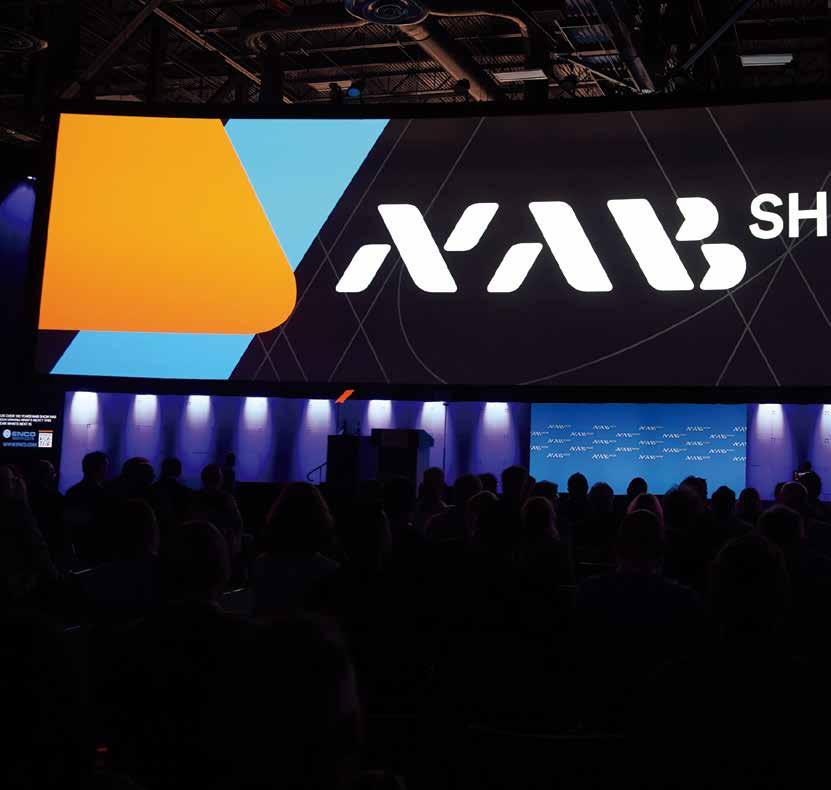
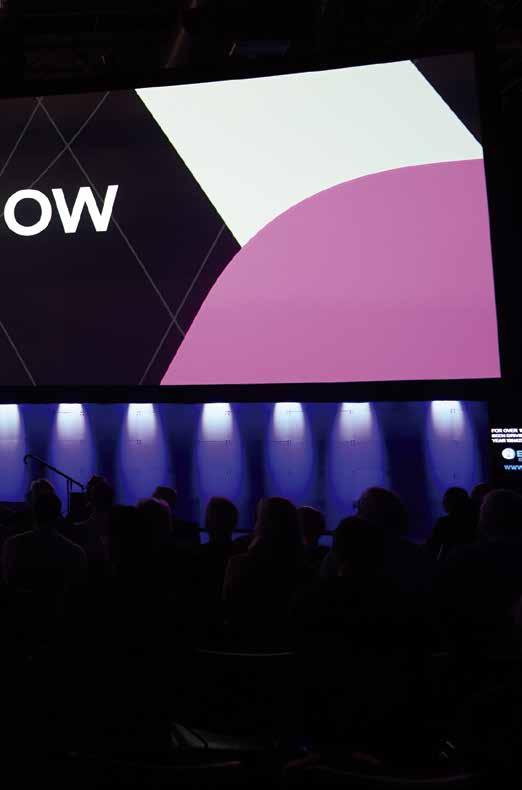
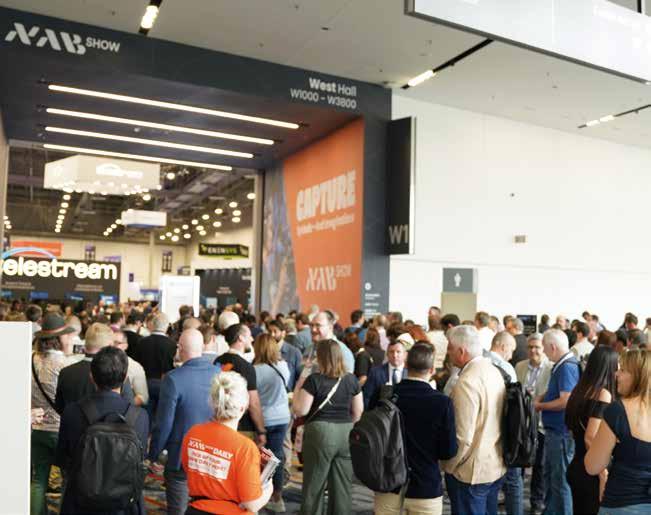
NAB Show 2026 points to a stabilisation after concluding with more than 58,000 registered attendees from 146 countries. Driven by a growing community of creators, enterprise media teams and sports media leaders, the event continues to attract new audiences and foster fresh collaborations. Against this backdrop, TM BROADCAST gathered first-hand insights from a selection of exhibitors to better understand the conversations and trends shaping this year’s show
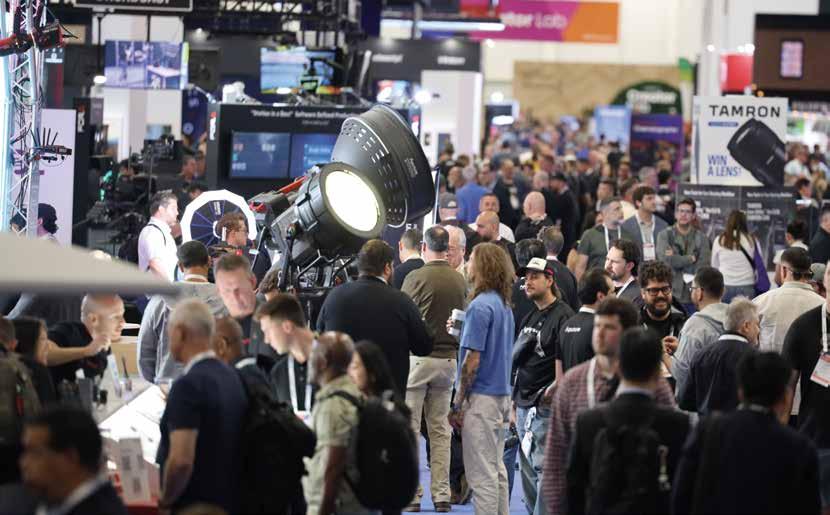
NAB Show 2026 has once again underscored the industry’s shift toward new models of content creation and distribution. The Las Vegas Convention Center said goodbye to more than 58,000 registered attendees from 146 countries, who, over five days, drove the next era of storytelling.
From April 18 to 22, one of the leading global broadcasting events explored new ideas, discovered emerging tools and shaped how stories are created, distributed and monetized. The show floor welcomed more than 1,100 exhibitors from around the world,
including 132 first-time participants showcasing their innovations.
Last year, it closed with 55,000 attendees from 160 countries and 1,050 exhibitors. Following a decline in professional attendance over the past three editions, the 2026 edition points to a stabilisation, although below the levels reached in previous years: after approaching 65,000 attendees, the figure dropped to 61,000 in 2024.
Driven by a growing community of creators, enterprise media teams and sports media leaders, the event has attracted new audiences and sparked fresh collaborations.
Additionally, NAB Show 2026 stood out as the most cross-sector edition to date, featuring expanded focus areas across sports, business, and of course, AI.
This year’s conversations suggested a clear shift: the industry is no longer chasing “the next big thing”, but looking for practical technologies and flexible workflows in a
market where there is no longer a single production model. With this in mind, we set out to gather first-hand insights into the key conversations and trends shaping the show, based on interviews with a selection of exhibitors.
As Christoph Gottert, DHD Audio International Sales Manager, notes, this shift is also being driven by evolving audience behaviours. “The transition from on-air to online audience preferences has created opportunities both for traditional broadcasters
and upcoming specialist networks, many of whom look to trade shows such as NAB as opportunities to talk directly with major technology suppliers”.
In parallel, the unceasing burst of artificial intelligence keeps on going because “broadcasters want to understand how AI can work within their existing infrastructure to optimize and streamline their workflows – enhancing what they already have rather than replacing it”, explains Ronen Artman, VP Marketing at LiveU.
“AI capabilities are getting more and more built into products, particularly in areas such as automation and overall production processes. We believe these technologies will increase performance and decrease latencies by augmenting peoplepowered workflows such as real-time transcribing, translation, summarization, etc.”, explains Kuban Altan, Co-Founder & CTO of Zero Density.
Filip Milovanovic, Technical and Sales Engineer at Elements, agrees:
“This year, the focus shifted toward practical, real-world implementations of these technologies. Users are no longer chasing the next big thing but are instead looking for quality and tangible value”.
Alongside these trends, conversations also revolved around cloud virtualisation, the creator economy and streaming. The show also reflected the continued momentum behind IP adoption and SMPTE ST 2110 workflows. “More system designs are embracing the benefits of
ST-2110 (media over IP) as equipment costs are decreasing to the levels of traditional baseband SDI”, notes Gisbert Hochguertel, Sales & Marketing of Ikegami (Europe) GmbH.
“Broadcasters are increasingly moving past the experimental phase and are now heavily focused on practical, manageable deployments”, notes Erling Hedkvist, Sales & Business Development at Manifold and Arkona technologies.
As Matthew Williams-Neale, Vice President Marketing
at Appear, remarks, professionals are looking for an easier transition, where feeds can be routed dynamically between production hubs and distribution endpoints. “The result is a more adaptable production model that can support a wider range of live events without increasing complexity”.
Another topic that had a strong presence at NAB this year was flexibility. “How can we assist broadcasters to improve their video transportation in their own ecosystems”, says
Lionel Dutilleux, Marketing Manager at Deltacast.
Dave MacKinnon, VP of Product Management at Clear-Com, echoes this view, insisting on the idea that there’s no single model anymore: adaptability is key. “Productions today need the freedom to combine wired, wireless, IP, and remote resources on-prem, in a data center, or in the cloud in whatever way best fits the job. There’s no single model anymore. Customers want systems that can adapt to different production environments while still delivering clear, dependable communication”.
“What’s particularly notable is that this shift is being approached pragmatically. Rather than wholesale cloud adoption, organisations are embracing hybrid models and deploying softwaredefined capabilities where they deliver the most value. This aligns with what we’re seeing across the industry: a move toward more flexible, interoperable systems that can evolve over time, rather than large,
monolithic deployments”, adds Mark Gardner, Senior VP of Sales – EMEA at Grass Valley.
In this same line, Andreas Hilmer, Chief Marketing Officer at Lawo, emphasizes that this move toward software-based, IP-native production platforms is built on Dynamic Media Facility principles. “The clear direction is to decouple media processing from fixed hardware and transform infrastructure into dynamically adaptable services”. In short, “broadcast facilities are evolving into software environments first and physical installations second – a shift that is now directly shaping investment decisions across the industry”, he adds.
Beyond the trends
Exhibitors presented their latest innovations and had time to discuss with clients and delve into current sector developments. Apart from the subjects already mentioned, conversations also explored their worries nowadays around other emerging industry topics.
Key trends and industry conversations
› “This year, the focus shifted toward practical, real-world implementations of these technologies. Users are no longer chasing the next big thing but are instead looking for quality and tangible value”, Filip Milovanovic (Elements)
› “Productions today need the freedom to combine wired, wireless, IP, and remote resources on-prem, in a data center, or in the cloud in whatever way best fits the job. There’s no single model anymore”, Dave MacKinnon (Clear-Com)
› “Rather than wholesale cloud adoption, organisations are embracing hybrid models and deploying software-defined capabilities where they deliver the most value”, Mark Gardner (Grass Valley)
› “The clear direction is to decouple media processing from fixed hardware and transform infrastructure into dynamically adaptable services”, Andreas Hilmer (Lawo)
› “Visitors expressed their concerns over capital expenditures for technology needed to produce live TV programs during the current economic uncertainty”, Gisbert Hochguertel (Ikegami)
› “Clients want solutions that connect every stage of the production chain – from contribution and orchestration to production and distribution”, Ronen Artman (LiveU)
› “There has been a perceived move away from technologies that support over-the-air broadcasters and toward those enabling content distribution via streaming and other delivery mechanisms”, Ray Miklius (Gates Air)
› “The conversations feed directly into how we prioritise product development and evolve our solutions, ensuring that what we develop reflects the operational realities our customers are dealing with today”, Matthew Williams-Neale (Appear)
› “AI capabilities are getting more and more built into products, particularly in areas such as automation and overall production processes”, Kuban Altan (Zero Density)
Some of the most recurrent ones centre on how to scale live production and distribution without increasing complexity, as Matthew Williams-Neale (Appear) points out.
Gisbert Hochguertel (Ikegami) adds: “Visitors expressed their concerns over capital expenditures for technology needed to produce live TV programs during the current economic uncertainty. For example, independent producers are a growing sector with the need to provide high quality video for OTT. We have introduced camera products that leverage the feature licensing options that reduce the initial acquisition costs”.
Mark Gardner (Grass Valley) also notes a common concern among
professionals: how to effectively implement software-defined workflows at scale, particularly leveraging standards such as EBU DMF and MXL. “There’s growing interest in how these frameworks enable better interoperability between systems, simplify content exchange, and reduce operational friction across distributed production environments. Rather than isolated tools, customers are focused on how these standards underpin end-to-end workflows from ingestion through production to distribution”, he answers.
On the other hand, the final product is important, but also the architecture that needs to produce it. “Of utmost importance to our domestic television customers are the payback
opportunities available with ATSC3.0 deployment. All are also very interested to learn if there will be a regulatory requirement relating to sunset of ATSC1 and adoption of it”, highlights Ray Miklius, Vice President of Technology at Gates Air.
Despite all the doubts and possibilities they explored with the different exhibitors, the objective is clear: they are looking for integrated solutions that allow them to produce more content, deliver to more platforms, and reach wider audiences – with less budget. Ronen Artman (LiveU) explains that this is a direct consequence of COVID, which led to a proliferation of technological experimentation and matured into operational transformation – fully remote production and virtualised workflows.
“Clients want solutions that connect every stage of the production chain –from contribution and orchestration to production and distribution”, he notes.
A final topic noted by Kuban Altan (Zero Density) was the impact of “vibe coding with AI models” on the broadcast industry. Visitors also saw 3D Gaussian splatting renderers and real-time path tracing alongside game engine rendering, which sparked discussions on render engine flexibility and the freedom to choose between real-time rendering technologies.
From product exhibition to industry forum
Although NAB Show 2026 expanded its focus on key industry sectors more than ever—AI, sports, and
business—it also created space to spotlight other trends rapidly gaining momentum across the industry. “NAB has evolved itself and its exhibitions over the years to embrace the online sector rather than try to protect the monopoly formerly limited to the USA's major commercial networks. The show is massive to the point where Las Vegas is one of the few US cities with enough resources to accommodate it”, shares Christoph Gottert (DHD Audio).
Despite the fluctuating number of attendees over the years, Gisbert Hochguertel (Ikegami) summarizes it very well: “It is important not to mix up quantity with quality”, he states. Lionel Dutilleux (Deltacast) agrees: “On this edition we could observe a reduction of global attendees, but our partners took part in the show and this edition remains brilliant for us”.
With more than 530 conference sessions and around 900 speakers
from across the global media and entertainment ecosystem, this edition has stood out for both diversity. “Equally important is the shift from showcasing future concepts to highlighting real-world deployment. Technologies such as IP production, cloud integration, and software-based infrastructure are now being implemented at scale, with a clear focus on ease of use and ROI”, notes Andreas Hilmer (Lawo).
Additionally, the show saw a notable expansion in audiences across areas such as Content Creators, Enterprise, and Sports. “It’s a great place to reconnect with industry contacts, build on those relationships, and have meaningful conversations with new leads. We had a strong mix of filmmakers, broadcasters, and creatives coming through the booth, and it really feels like NAB is the show for this industry,” affirms Glenn Rossney, Business Development Manager at Sennheiser.
Ronen Artman (LiveU) also mentions this evolution in the audience: “It’s no longer just broadcasters – you see OTT platforms, sports organizations, tech companies, and even content creators playing a bigger role. This opens doors to conversations that NAB simply would not have facilitated a few years ago, and it shows how the professional video industry is reaching into all business sectors”.
This variety has allowed the event to expand its presence: “NAB continues to evolve from a productcentric exhibition into a more strategic industry forum. This year in particular felt more focused on direction and transformation, with many attendees looking to understand where the industry is heading rather than evaluating individual point solutions”, shares Mark Gardner (Grass Valley).
As a result, he notes that conversations were notably more architectural and business-driven. Filip Milovanovic (Elements) also describes the discussions
as “outstanding”, while Matthew Williams-Neale (Appear) highlights them as one of the key benefits for companies, as they “feed directly into how we prioritise product development and evolve our solutions, ensuring that what we develop reflects the operational realities our customers are dealing with today”.
Dave MacKinnon (Clear-Com) shares this opinion and adds
another point of view: “The conversations today are less about standalone equipment and more about how technologies work together to improve efficiency, collaboration, and overall production quality. That mirrors what’s happening across the industry. Broadcasters and production teams are under pressure to deliver more content in more ways, so they’re looking for smarter, more connected solutions”.
NAB’s evolving identity
› “NAB has evolved itself and its exhibitions over the years to embrace the online sector rather than try to protect the monopoly formerly limited to the USA's major commercial networks”, Christoph Gottert (DHD Audio)
› “On this edition we could observe a reduction of global attendees, but our partners took part in the show and this edition remains brilliant for us”, Lionel Dutilleux (Deltacast)
› “While we now stay in continuous contact throughout the year via platforms like Slack and video calls, in-person encounters remain uniquely valuable”, Erling Hedkvist (Manifold and Arkona Tech)
› “It’s a great place to reconnect with industry contacts, build on those relationships, and have meaningful conversations with new leads”, Glenn Rossney (Sennheiser)
The event brought together the broader media and content production ecosystem, “reflecting how the industry adopts upcoming technologies and platforms”, affirms Kuban Altan (Zero Density). However, Ray Miklius (Gates Air) points to a shift in the show’s focus: “There has been a perceived move away from technologies that support over-the-air broadcasters and toward those enabling content distribution via streaming and other delivery mechanisms”.
“While we now stay in continuous contact throughout the year via platforms like Slack and video calls, in-person encounters remain uniquely valuable. They add a dimension that cannot be replicated remotely, where non-verbal cues, spontaneity and shared context deepen the quality of the connection. In that sense, NAB stands not just as a meeting point, but as a vital moment within a broader, ongoing relationship”, sums up Erling Hedkvist (Manifold and Arkona Tech).
Andy Rayner,
CTO at Appear:
“A
lot of the decisions made in our industry are based on risk. Some of that is genuine, but some of it is perceived”
In a context of industry transformation, the key priority is openness and interoperability. This is the view of Andy Rayner, CTO at Appear, who joins Industry Voices to reflect on both the company’s evolution and the broader changes shaping the broadcast sector.
Appear has positioned its X Platform as a core infrastructure layer
between acquisition and production, and is now expanding beyond that foundation with VX, its recently launched software platform, designed to extend into the live production workflow.
Within this context of transformation, Rayner places particular emphasis on initiatives such as the Digital Media Facility (DMF).
“What we need, and I’m encouraged by the signs I’ve seen in the last six months, is collaboration between end users — broadcasters and content creators — and vendors, to build interoperable and standardized solutions,” he notes. “The biggest focus right now is on how AI is transforming the way we work internally — particularly moving towards what I would call AI-centric development, rather than AI-assisted development.
remote production. On this latter point, and following its acceleration during the pandemic, he adds: “I think the main impediment in previous years has been perceived risk. A lot of the decisions made in our industry, at many levels, are based on risk. And some of that risk is genuine, but some of it is perceived”.
Below, the full interview.
First, as the NAB Show has just concluded a few days ago, what were the main topics of conversation with clients and colleagues?
He also addresses the role of cloud, pointing towards hybrid models that combine on-premise infrastructure with public cloud capacity: “There has been an assumption that everything would move to hyperscaler public cloud, but I don’t think that’s where the industry is heading.”
He further reflects on the growing impact of AI and the continued rise of
First of all, I think it was a great event. It was very positive. We had our stand and the traction we had there was really positive for us. From a business perspective, it was great and we furthered a lot of relationships.
From a technology perspective, there were two or three main strands relevant to us as an organization. One is the continual evolution of centralized, remote or distributed production.
That’s an ever-evolving trend in the market and obviously very relevant for us, as we provide the infrastructure connectivity between acquisition and production. So that was an area of continued interest from many customers globally.
Another key one, which we are significantly involved in, is the Digital Media Facility — DMF — evolution. That sparked a lot of interest. Last year there were some initial conversations around MXL, which is a small component of DMF. What I’m very pleased with now is the focus on the whole evolving live production workflow, rather than just MXL. MXL is a very important component, but it is just another digital connector within the infrastructure.
I’m chairing one of the four DMF strands currently in progress — the one on timing and synchronization. And I think the broader industry focus on the full picture has been very positive. It’s good to see traction with end users, content
creators and vendors working together to make this work.
And then, of course, across the show there were also ongoing conversations about how AI is transforming the industry. For me personally, within Appear, the biggest focus right now is on how AI is transforming the way we work internally — particularly moving towards what I would call AI-centric development, rather than AI-assisted development. At the same time, we’re also looking at how AI can support customers in using our solutions.
“We are seeing a model where baseline workflows run on-premise — either in customer facilities or private data centres — and public cloud is used for additional capacity when needed”
You’ve mentioned that you’re significantly involved in the DMF initiative. What is your specific role in it?
We see this as a vital component for the future of the industry. At the moment, there is the JTDMF — the Joint Task Force for the Digital Media Facility — and I’ve been very involved
in that since its onset. I’m chairing one of the four groups, so I spend a lot of time liaising with people across the industry.
If I go down to the MXL layer for a moment, I have one team member working on the requirements council for MXL, and one of our senior developers is helping to develop the MXL SDK.
APPEAR X PLATFORM
So we are involved across all layers of the DMF. In fact, I was speaking about this yesterday — I was chairing an event at BT Tower in London — and we talked a lot about the DMF work. So it’s something I’m discussing quite a lot across the industry at the moment.
Now I’d like to dive into Appear’s technological roadmap. How do you assess the company’s recent evolution and what strategy have you been following?
As you’re aware, with our X Platform we have become the de facto industry technology choice for infrastructure between acquisition and production. One of our key focuses is to further deepen that capability and make sure we address all of our customers’ requirements in that space. We’re doing a lot of work with customers and we’re continuously evolving the platform together with them to maintain that position in the market.
The second point is product evolution beyond that core.
“With the democratization of production — with low-cost tools and more content being created — many of our customers, typically Tier 1, are looking to increase their production value”
We are expanding into parts of the live production processing workflow, specifically with our new software platform, VX, which was launched last year. VX is not intended to replace the X Platform. The X Platform will maintain its role in infrastructure between acquisition and production. But once you move into production, the software tools we’re developing aim to bring our expertise into those areas and create interoperable
components that can be used across the live production chain.
So, in essence, we are deepening our current strengths and broadening into software tools to cover additional requirements downstream of our traditional space. And, of course, all of this is being developed with an open standards approach — both in X Platform and in the software toolkit.
We were part of the Interop demos at NAB, demonstrating MXL working within our software toolkit.
Looking ahead,
what are the main technological priorities for the company?
We have a firm belief that the future is hybrid — combining hardware and software. Hardware will
continue to play a key role, particularly in long-haul connectivity infrastructure, which is where our X Platform sits. At the same time, there is increasing demand for software tools in the live production environment.
One of the key drivers behind the Digital Media Facility, and what MXL enables as a media exchange connector, is to allow end users to deploy multi-vendor software applications. That means they can choose bestof-breed components, similar to what they have done for decades in the hardware world. So the key priority is openness and interoperability — giving end users that flexibility and choice — and we aim to provide as many of those components as we can.
In the current context of technological and business transformation, which advancements — like IP, cloud or AI — are having the most practical impact on your business today?
I would differentiate between internal impact and product impact. Internally, we are ramping up very aggressively in the use of AI tools. This is primarily within engineering and development, but also in other areas such as finance. It’s not about replacing people, but it significantly increases what we can achieve.
In terms of the product side, cloud is an interesting topic. There is clearly a shift towards software-based production tools, but that doesn’t necessarily mean everything will run on public
cloud infrastructure. There has been an assumption that everything would move to hyperscaler public cloud, but I don’t think that’s where the industry is heading. What we are seeing is a model where baseline workflows run on-premise — either in customer facilities or private data centres — and public cloud is used for additional capacity when needed. So, baseline requirements are handled on owned infrastructure, and burst capacity is handled in the cloud. That seems to be the direction things are moving.
From a customer perspective, how are your clients’ profiles and needs evolving, and how is that influencing your roadmap?
Cost consciousness is always there. At the same time, customers are looking to differentiate themselves in production. With the democratization of production — with low-cost tools and more content being created — many of our customers, typically Tier 1, are looking to increase their production value.
“We
will only
achieve real interoperability if the industry works together. So far, the signs are quite promising”
— everything relied on private leased lines. Now, two things have changed. First, public internet performance has improved significantly. Second, technologies like ARQ, SRT, RTP merge and FEC — which we support in our X Platform — allow customers to use that infrastructure in a reliable way. That’s a very important development.
savings in transport, power and overall efficiency.
More broadly, this industry is about relationships. The partnership we’ve built with FOX Sports — and with other major customers — is critical. We work closely with them, and their feedback helps shape our roadmap.
That can be through video and audio quality, or through personalization, which will likely become more important in the coming years. What we are seeing is a need for increased flexibility — doing more, increasing production value, but within a manageable cost base.
One interesting shift is the use of unmanaged public internet for live production. Ten years ago, that would have been unthinkable
I’d like to ask you about one of those Tier 1 clients, FOX Sports. Regarding your partnership to support the evolution of its live production infrastructure, what does it represent at a strategic level?
First of all, it represents trust — in our current product and in our roadmap. FOX Sports has strong ambitions, particularly around REMI production, and we’ve been instrumental in supporting that. One of the key strengths of our X Platform is its density. In a single 2RU unit, we can backhaul up to 96 full HD video services, with any compression format. That translates into
In this regard, to what extent do you believe REMI will become the standard for live production?
It’s an ongoing and inevitable journey. More and more production will move towards centralized REMI models. I think the main impediment in previous years has been perceived risk. A lot
of the decisions made in our industry, at many levels, are based on risk. And some of that risk is genuine, but some of it is perceived, in my view. COVID forced the industry to take those risks, and once people saw how effective centralized production could be, adoption accelerated. We are also enabling different types of REMI workflows — from high-bandwidth, lightly compressed solutions like JPEG XS, to more efficient HEVC compression, where you can run a production over a single gigabit connection. So all of these factors are coming together. REMI will continue to grow and will become
the norm. There are also environmental benefits, as it reduces the need to move equipment and crews.
To finish, if you had to point to one key challenge that will shape the evolution of the industry in the coming years, what would it be?
I would go back to the Digital Media Facility. What we need, and I’m encouraged by the signs I’ve seen in the last six months, is collaboration between end users — broadcasters and content creators — and vendors, to build interoperable and standardized solutions. This is not just about MXL. It also involves control planes, orchestration, resource
management — a whole set of components.
We will only achieve real interoperability if the industry works together. So far, the signs are quite promising. From what we’ve seen in the first months of 2026, there are encouraging indications.
Would you like to add anything else?
Just to say that I’m immensely proud of the team at Appear. We’ve built a strong capability across engineering, product, sales and technical teams. For me, this industry is about people and relationships. That’s what makes the job enjoyable and what makes it worth doing every day.