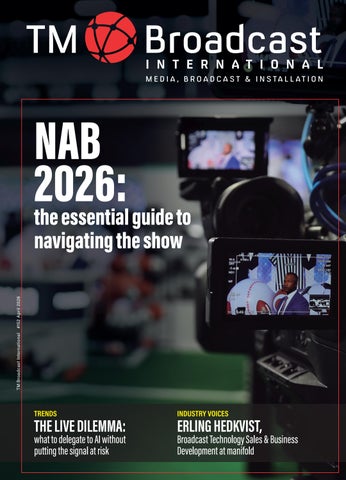
As spring arrives, NAB is once again just around the corner. More broadly, it is essential to frame the event within the current complex geopolitical context. Global uncertainty, currently shaped by the conflict in Iran and its international implications, will undoubtedly be one of the key topics hovering over the show.
Last year’s edition coincided with the imposition of tariffs by the President of the United States, Donald Trump. When asked to assess their potential impact, the organisation noted at the time that it was still too early to draw conclusions, as the event was taking place just as the measures came into effect. Even so, there was a slight decline in figures — 1,050 exhibitors and 55,000 attendees — marking a third consecutive year of decreasing attendance. This decline, however, should not be misinterpreted: NAB’s influence on the industry remains beyond doubt, as evidenced by the fact that 53% of participants were attending for the first time.
This year, the geopolitical landscape remains far from stable. In this context, we recently spoke with
Karen Chupka, EVP of Global Connections and Events at NAB, whose outlook points to a recovery in the show’s figures: “We’re projecting roughly 60,000 attendees from around 160 countries and about 1,100 exhibitors, including roughly 125 companies exhibiting for the first time.”
In terms of trends, artificial intelligence will take centre stage. As a reference point, Chupka shared the following: “This year the Show will feature roughly twice as many AI-focused exhibitors as last year.” The full interview is included in the previous issue.
As always, we will be following the development of NAB closely to bring you all the latest updates. And, as is tradition, this issue also includes our most comprehensive market guide, featuring a curated selection of essential highlights to help visitors navigate the show.
Finally, a brief apology. In these same pages last month, we announced that we would be analysing the technological roadmap of a North American broadcaster. For reasons beyond the editorial team’s control, this content has had to be postponed, but we expect to publish it shortly.
Editor in chief
Javier de Martín editor@tmbroadcast.com
Director Daniel Esparza press@tmbroadcast.com
Editorial Staff
Bárbara Ausín
Carlos Serrano
Key account manager
Patricia Pérez ppt@tmbroadcast.com
Graphic Design and Layout
Sorex Media
Ana Guijarro
Administration
Laura de Diego administration@tmbroadcast.com Published in Spain ISSN: 2659-5966
TM Broadcast International #152 April 2026 TM Broadcast International is a magazine published by Daró Media Group SL Centro Empresarial Tartessos Calle Pollensa 2, oficina 14 28290 Las Rozas (Madrid), Spain Phone +34 91 640 46 43
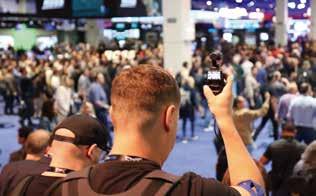
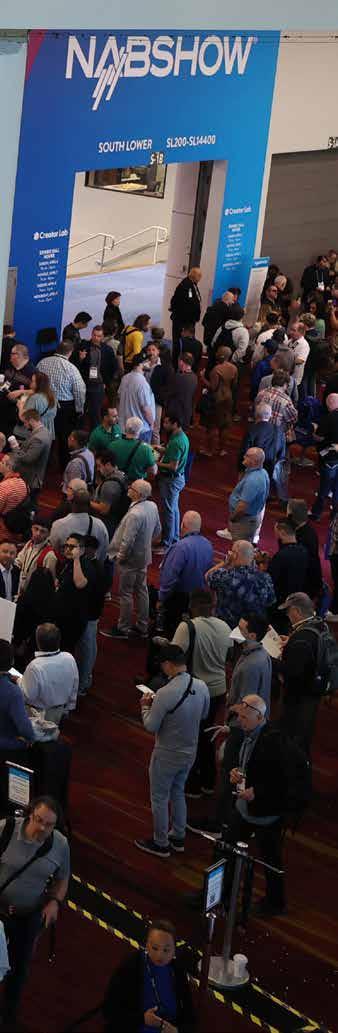
Las Vegas Convention Center will host, from April 18 to 22, one of the leading global broadcasts events, with an expected attendance of 60,000 visitors and 1,100 exhibitors.
Below, we present a selection of main innovations that exhibitors will showcase at the upcoming NAB Show, listed alphabetically by brand for ease of reading.
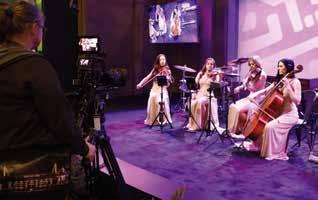

The live dilemma: what to delegate to AI without putting the signal at risk
From safe automation to red lines: an analysis of artificial intelligence applications already working on air—and those that still require human supervision.

Erling Hedkvist, Broadcast Technology
Sales & Business Development at manifold:
“The biggest barrier to IP adoption today is fear”
We speak with him about his professional journey, the context behind the creation of manifold, and key market trends.
The European Broadcasting Union (EBU) has appointed Annsofi Eriksson as its new Chief Technology Officer. She will take up the role on 1 October 2026, succeeding Antonio Arcidiacono, who will leave the EBU after more than seven years leading the Technology & Innovation team, as EBU has claimed in a statement.
Annsofi Eriksson brings over 20 years of international leadership experience across IT, digital transformation and technology strategy in both private and public sector organizations. She joins the EBU from Sveriges Radio, where she works as Chief Information Officer and Director of Technology, and is a member of the executive management team.
In her new role, Annsofi will lead a newly established department bringing together the EBU’s work across technology, artificial intelligence and digital platforms. The department will unify expertise currently spread across multiple teams,with the intention of strengthening collaboration with Members and industry partners, including major technology companies, and ensuring a more coordinated and strategic response to the evolving needs of public service media.
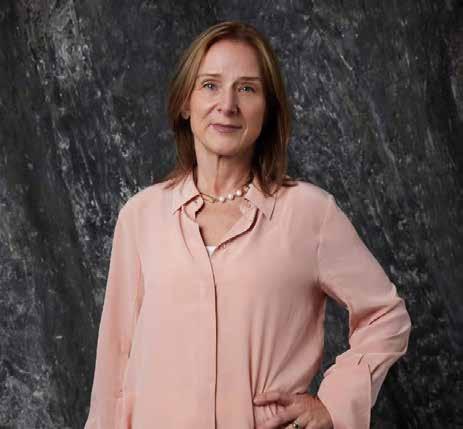
Noel Curran, Director General of the EBU, notes: “Annsofi brings a powerful combination of strategic vision, operational expertise and deep understanding of the role technology plays in modern organizations. As we strengthen our work in AI, platforms and partnerships, her leadership will be critical in ensuring we deliver maximum value to our Members and speak with one strong, collective voice”.
At Sveriges Radio, Annsofi has been responsible for the full IT and technology environment, including strategy, development, operations, cybersecurity and supplier management. Her previous roles include CIO at Sergel Group and Head of IT at Länsförsäkringar Fondliv, as well as senior leadership roles at Telia Company, Tieto, Aditro AB and Alfa Laval.
Across these positions, she has built extensive experience in leading large international teams, driving digitalization, and delivering complex technology transformations.
Annsofi also has strong ties to the EBU community, currently serving as Vice Chair of the EBU Technical Committee and as a Board Member of the Security4Media Association.
Annsofi Eriksson shares: “I am honoured to take on this role at the EBU at such an important time for public service media. Technology and AI are reshaping our industry, and I look forward to working closely with Members and partners to harness these opportunities, strengthen collaboration and ensure public service media continues to thrive in a rapidly changing landscape”.
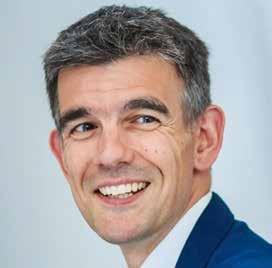
The BBC Board has confirmed the appointment of Matt Brittin as the 18th Director-General of the BBC. Matt, former President Google EMEA, will take over the role on 18 May, as the group has claimed in a statement.
The Director-General of the BBC is the Corporation’s chief executive officer and editorin-chief. They are responsible for the creative, editorial and operational leadership of the BBC within the United Kingdom and around the globe.
As previously announced, Rhodri Talfan Davies will lead the BBC as Interim Director-General following Tim Davie’s departure on 2 April. During this period, Matt Brittin will undergo an onboarding process and begin detailed introductory meetings to get a full understanding of the business. Talfan Davies will have full executive responsibility until 18 May, when the new Director begins his tenure.
Among his other priorities, he intends to appoint a Deputy Director-General.
Samir Shah, Chairman of the BBC Board, shares: “Matt brings to the BBC deep experience of leading a high-profile and highly-complex organisation through transformation. He is an outstanding leader and has the skills needed to navigate the organisation through the many changes taking place in the media market and in audience behaviours”.
“Matt’s passion for the BBC, his understanding of the challenges facing the organisation, his commitment to its independence and his determination to maintain the BBC’s position as one of the country’s greatest national assets were critical factors in the Board’s decision to appoint him as the 18th Director-General”, he continues.
“Matt joins the BBC at a critical time. The Government’s review of the Charter is underway, and it is clear there is need for radical reform of the BBC, its funding model and the framework in which it operates. The stakes for the BBC, and the future of public service broadcasting, have never been higher”.
“The Board and I believe Matt is the right person to lead the BBC as it fights for a sustainable future in an uncertain world, for the benefit of audiences and the UK”, he concludes.
Incoming Director-General, Matt Brittin, remarks: “Now, more than ever, we need a thriving BBC that works for everyone in a complex, uncertain and fast changing world. At its best, it shows us, and the world, who we are. It’s an extraordinary, uniquely British asset, with over 100 years of innovation in storytelling, technology and powering creativity. I’m honoured and excited to be asked to serve as Director-General”.
“Working alongside so many talented journalists, creatives and technicians, across the country and around the world, I join with humility, to listen, to learn, to lead, and to serve the public, working hard to earn their trust every day”.
“This is a moment of real risk, yet also real opportunity. The BBC needs the pace and energy to be both where stories are, and where audiences are. To build on the reach, trust and creative strengths today, confront challenges with courage, and thrive as a public service fit for the future. I can’t wait to start this work”, he states.
Matt Brittin
Brittin joined Google in 2007 to lead the UK business and left in 2025 after heading their EMEA region for ten years. He previously worked in regional and national press and in consulting on media and technology.
Canberra-based radio and online broadcast network ArtSound FM has invested in DHD audio mixing consoles for two new studios at its headquarters in the Manuka district of Australia’s capital city. The project is part-funded by the Community Broadcasting Foundation and being progressed by DHD distribution partner Qvest Australia which is based in New South Wales, as DHD audio has claimed in a statement.
Established in 1983, Artsound is an organisation that covers the full spectrum of performing and visual arts, encompassing literature, theatre, film, exhibitions and concerts. The station’s output includes a wide range of musical content.
“Our modernisation initiative centred on the need to replace three audio mixing consoles which were built in-house back in 2005”, explains Chris Deacon, ArtSound vice president and technology manager.
“After evaluating the available alternatives, we selected two DHD SX2 audio consoles plus a compact TX2. These were chosen both for their high signal quality and ease of control, allowing presenters to broadcast live with full confidence. The consoles’ compact dimensions were a major factor, leaving plenty of desktop space free for ancillaries such as script notes. Robust build quality was essential as we transmit round the clock, every day of the year. The versatile
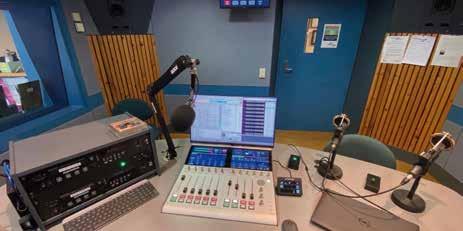
configurability and modular construction of DHD mixers give us the freedom to futureproof the system if required to meet evolving workflow demands”.
“The expansion project is being conducted in two phases to ensure that ArtSound is able to maintain its uninterrupted 24/7 operation”, adds Campbell Swinton, Queensland State manager at Qvest Australia.
“Phase 1 is now complete with the first studio fully equipped and ready to go operational. It includes a 10-fader DHD SX2 studio console connected to a DHD XS3 core. Phase 2 will centre on equipping a second studio with a 10-fader SX2 console and XS3 core. We have also integrated an ultracompact DHD TX2 console plus DHD’s Views and Assist apps. All three consoles are equipped with Dante audio-overIP connectivity”, continues.
“The SX2 and TX2 continue to be among the best-selling consoles in our product range”,
comments Christoph Gottert, DHD international sales manager. “The SX2 is based on a four-fader central module and six-fader expansion modules. All faders are motorised. SX2 systems can be scaled to match the exact needs of practically any broadcastrelated audio production activity, limited only by the capabilities of the core processor. Each module incorporates a 10.1 inch multitouch display showing relevant configuration and operating parameters. Functions such as loudness metering and talkback to other DHD mixers are also supported. The TX2 is the most compact console in the DHD range, just 256 x 58 x 272 mm WHD and also incorporating a 10.1 inch multitouch display. A single network cable up to 100 metres in length delivers all audio and control signals plus power between the TX2 and a DHD IP core or concentrator. Unified ergonomics allow operators to work easily across all consoles in the DHD product family”.
NEP Group has announced the launch of NEP Platform, a new software orchestration system designed to future-proof media companies’ operations. This innovation looks forward to transforming the way the industry manages media infrastructure and hybrid workflows, as the company has claimed in a statement.
NEP Platform unifies the deployment of critical production applications from multiple vendors within a single, secure interface. Currently deployed
in many of NEP’s own facilities worldwide, including new “software first” mobile units recently launched in Australia and Norway, NEP Platform is commercially available for customers who wish to integrate it into their own facilities, backed by the support of NEP’s engineers.
Production functions like vision mixing, audio mixing, replay, infrastructure, multiview, and measurement are available from tech leaders Bridge Technologies, Calrec, Grass Valley, Lawo,
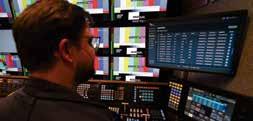
Manifold, Panasonic, Sony and Sony’s Hawk-Eye Innovations, with plans to add more. Operators can configure the right setup for each event and adjust resources on demand.
“The NEP Platform launch marks an important step in NEP’s innovation journey as well as how the industry uses software”, shares Martin Stewart, CEO of NEP Group. “Companies are delivering more content, across more markets, to more audiences than ever before, and that requires great agility ”.


GatesAir has announced the global launch of AirWatch365, its managed service for broadcast transmission monitoring and support, alongside the introduction of the AirWatch365 Edge Gateway. This on-premises site appliance aims to securely connect transmitters and related infrastructure to the AirWatch365 platform, as the company has claimed in a statement.
The combined solution is designed to bring together cloud-based aggregation with site-level data collection with the intention of improving operational visibility, reliability, and support responsiveness.
Available through the company’s broader GatesAir Care program, AirWatch365 is a 24/7 Network Operations Center (NOC)-based service that enables broadcasters to outsource monitoring, diagnostics, and support to a dedicated team of GatesAir RF experts. The service looks forward to collecting telemetry, correlating alarms, and applyinh analytics across multiple sites.
“At GatesAir, our focus is on providing broadcasters with a reliable and scalable approach to monitoring and supporting
increasingly distributed transmission infrastructure”, explains Raymond Miklius, Vice President of Technology, GatesAir. “AirWatch365 brings together centralized visibility, structured analytics, and expert support to help ensure consistent, high-quality on-air operations”.
AirWatch365 uses a cloud-based server layer as the central aggregation point, while the AirWatch365 Edge Gateway collects and normalizes operational data from transmitters, exciters, and environmental systems, including performance indicators such as power levels, temperatures, and signal conditions. That data is transmitted to the AirWatch365 platform, where it is aggregated, analyzed, and presented through configurable dashboards.
This architecture aims to enable broadcasters to manage alarms, performance metrics, and reporting across multiple sites, while maintaining local autonomy and fail-safe operation if a site is temporarily disconnected. It incorporates telemetry, alarm correlation, and analytics across multiple sites.
The system also supports configurations based on each broadcaster’s operational requirements, including customizable dashboards, site groupings, and user-defined alarm thresholds.
AirWatch365 is designed to scale across single stations, regional groups, and multi-market networks, supporting radio and television transmission systems along with associated infrastructure.
The AirWatch365 Edge Gateway establishes outbound connectivity to the cloud platform, looking forward to aligning with modern IT security practices while limiting access strictly to approved monitored equipment. The architecture maintains local system operation during network disruptions.
AirWatch365 is available globally beginning this spring. GatesAir will demonstrate the service and the AirWatch365 Edge Gateway at NAB Show 2026 (Booth C1046), taking place April 19–22 at the Las Vegas Convention Center.
The HbbTV Association has announced the release of version 2026-1 of the HbbTV Conformance Test Suite. Test Suite v2026-1 has been designed with the intention of delivering expanded coverage, improved quality and new functionality, as the association has claimed in a statement.
The update contains 3,439 test cases, of which 2,907 have been approved. This includes 64 newly approved tests introduced for the first time.
In addition, more than 180 test cases have received quality improvements, including updates designed to try to reflect real-world use cases and implementation patterns observed across the industry.
Additionally, this release adds new approved test cases covering the Media Source Extensions (MSE) API from the CTA WAVE project and covering Widevine DRM. The update also integrates test cases previously available only in the UK.
“HbbTV’s ongoing investment in expanding and refining the Test Suite is essential to ensuring the reliability, interoperability and quality of HbbTV-compliant devices and services worldwide”, shares Vincent Grivet, Chair of the HbbTV Association. “With Test Suite v2026-1, we continue to strengthen the foundations for secure, consistent and futureproof TV experiences across all markets”.

IBC has announced the nine projects selected for its 2026 Accelerator Media Innovation Programme. This initiative brings together organisations from across broadcast, streaming, live events and media tech with the intention of exploring emerging innovations that reshape the way content is created, distributed and experienced, as it has claimed in a statement.
Selected from pitches by global media organisations at the 2026 Accelerator Kickstart Day at BBC Broadcasting House, this year’s Accelerator programme sees media organisations, which include BBC, NBCUniversal, DAZN, ITV, Channel 4, Associated Press, Sky and Al Jazeera, collaborating with technology providers on a new generation of projects.
“The Accelerator Programme provides a unique sandbox for collaborative innovation, bringing the industry together to solve complex challenges in an open and trusted environment”, affirms Mark Smith, Lead, IBC Accelerator Media Innovation Programme.
“Each year, we see ideas rapidly evolve into practical solutions, with teams working together in ways that simply aren’t possible in day-to-day operations”.
AMD-HP and Shure have been announced as Associate Sponsors of the Accelerator Programme, while EIT Culture & Creativity, supported by the European Institute of Innovation and Technology (EIT), was unveiled at the Kickstart event as IBC’s Innovation Partner for 2026.
Sandeep Tiku, Chief Technology Officer at DAZN remarks: “The Accelerator Programme is actually becoming the glue that brings hardware, software, and technology experts together to revolutionise, redefine, and reimagine what streaming will look like – It’s only possible because of this programme”.
Alex Bassett, Vice President, Innovation at NBCUniversal, notes that fragmented news workflows are a pressing industry challenge that the incubator project aims to address. “Story centric has been a concept that’s been thrown around specifically in news for a really long time, but it’s been very hard to execute. We’re not building a proof of concept or a demo – we’re trying to ship something that’s almost a minimum viable product that could be then adopted”.
The projects selected for 2026 will now enter a six-month development phase, during which project teams are formed and solutions rapidly developed in a collaborative, cross-industry environment – culminating in live Proof of Concept (PoC) demonstrations in the Accelerator Zone at IBC2026 (11–14 September).
Network Control: Your Connection, Your Choice
Proposed by GSMA Fusion, BBC, EBU (including 5G MAG & 5G EMERGE consortia), France Télévisions, RAI (CRITS), University
of Strathclyde, with supporting Participant Neutral Wireless. This project is using open 5G network APIs to dynamically prioritise broadcast devices, ensuring reliable high-quality wireless video feeds in congested environments.
FRAMES: Federated Retrieval, Agentic Media Environment and Software (Defined Workflows)
Proposed by RAI, EBU, MovieLabs with Co-Champions ITV, ETC (Entertainment Technology Center) USC (University of Southern California), XRBB (Extended Reality Berlin-Brandenburg)` and supporting Participants AMD-HP and Holli: The FRAMES Accelerator challenge aims to connect broadcaster archives, creative teams, and AI agents to accelerate pre-production through intelligent content discovery and multimodal AI collaboration.
Q-Stream: Quantum Secure, Network-Adaptive, Verifiable, Live Media Infrastructure
Proposed by IET, BFBS, with supporting Participants Tesla Technologies: Q-Stream is a proof-of-concept system that uses predictive AI orchestration, semantic video compression, and hybrid quantum-secure authentication to maintain trusted live broadcasts in severely bandwidth-limited or contested network environments.
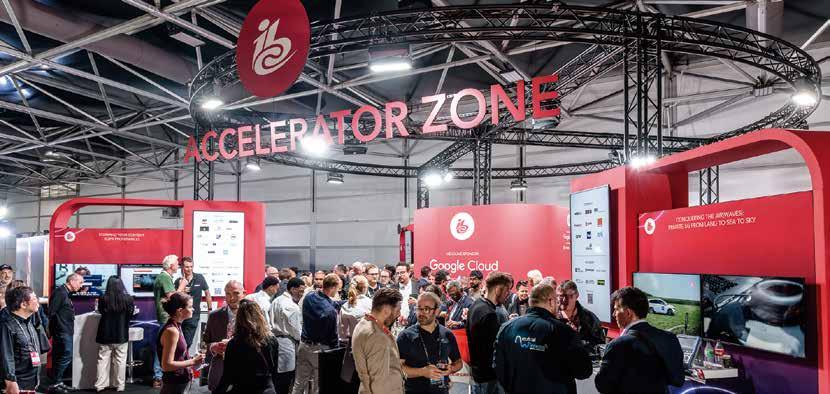
VooPla: The Decision Twin – Decision-Ready Sustainable Digital Twins for Broadcast & Virtual Production Studios
Proposed by Digital Catapult, with supporting Participants Solve Evolve and Heliguy: VooPla explores how productionaccurate digital twins of broadcast and virtual production studios can help commissioners and production teams evaluate technical feasibility, costs, and sustainability impacts earlier in the production process.
From Broadcast to Me-Cast: New Sports Engagement via Agentic Workflows
Proposed by Astro Malaysia, MBC (Middle East Broadcasting Company), with supporting Participants TCS (Tata Consultancy Services): This project explores an AI-native platform that uses agentic AI to automate live media workflows, enabling real-time personalization, content adaptation, and new monetization opportunities for sports and other live broadcasts.
Crystal Clear: Boosting Speech Intelligibility in Media
Proposed by Channel 4 and BBC: This project develops and pilots a metric for measuring dialogue intelligibility in audiovisual content, integrating it into broadcast production workflows to detect accessibility issues and demonstrate its use across real technical environments.
Delta Protocol: Live Media Reinvented
Proposed by DAZN: Delta Protocol transforms live streaming by reinventing the transmission layer of live media. It shifts from frame based delivery to a semantic model that understands which moments matter. Only meaningful event updates are sent, with the rest intelligently reconstructed at the destination. This enables hyper personalised, immersive and adaptive experiences at massive scale. Using AI to shift personalisation from duplication to composition, it unlocks new creative, operational and efficiency gains.
IFeL: Immersive Festival Live – Remote Presence at Scale
Proposed by SMPTE, MIT Reality Hack, with Co-Champions Kings College London, University of Galway, University of Southampton, ITV and supporting Participants Shure, DeoVR, Motion Impossible and Surround Sync: This ambitious project prototypes an end-to-end workflow for immersive live streaming from music festivals, combining multi-perspective video, viewpoint-aware spatial audio, and interactive audience participation.
IBC Incubator 2026:
SMART STORIES: The Agentic Production Ecosystem
Proposed by Associated Press (AP), NBCUniversal, ITN, BBC, with Co-Champions Channel 4, Al Jazeera, Washington Post, Sky and ITV and supporting Participants Shure, EVS, CUEZ and Moments Lab: Inspired by the multiaward-winning success of earlier Accelerators, this new consortium aims to define an open standard for story context interoperability in live production, spanning the full content chain from news gathering through to distribution.
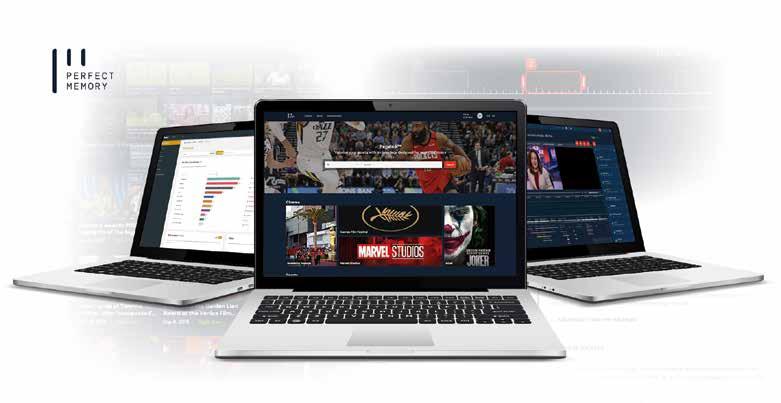
BCE has announced the deployment of Perfect Memory as the Metadata & Asset Management (MAM) solution for its Media-as-a-Service (MaaS) offering. This strategic collaboration looks forward to enhancing content governance, metadata management, and the overall valorisation of media assets, as BCE has claimed in a statement.
Media-as-a-Service (MaaS) is a modular, cloud-based approach that enables media organizations to access, store, manage, process, and distribute content on demand. By decoupling infrastructure from services, MaaS is designed to allow broadcasters, content owners, and media partners to consume production, asset management, processing, and distribution capabilities as services.
This model aims to accelerate time-to-market, optimize
operational efficiency, and enable scalable, agile media workflows tailored to evolving business needs.
As media ecosystems become increasingly complex and data-driven, BCE has chosen Perfect Memory’s advanced MAM technology to structure, manage, and contextualize media content across its MaaS environment.
The solution will focus on enabling improved interoperability, enriched metadata, and seamless access to media assets for all stakeholders within the ecosystem.
“Selecting Perfect Memory aligns perfectly with our vision to deliver a robust, scalable, and value-driven Media-as-a-Service platform”, affirms Sylvain Merle, Chief Technology Officer at BCE. “Their expertise in semantic metadata management and their
ability to transform complex media assets into actionable information are key enablers for the evolution of our MaaS strategy”.
Features
› Advanced structuring and enrichment of media metadata.
› Improved governance and traceability of media assets.
› Contextualized and efficient access to content.
› MAM foundation to support the growth of its MaaS offering.
“We are proud to support BCE in the development of its Media-a- a-Service platform”, remarks Raoul Cospen, Sales Director at Perfect Memory. “This collaboration demonstrates how intelligent data and semantic technologies play a critical role in unlocking the full value of media assets within modern contentcentric environments”.
Blackmagic Design has congratulated the distinguished films and filmmakers that were nominated as part of the 98th Academy Awards. Twenty seven of the nominated films were created using DaVinci Resolve Studio editing, color grading,
visual effects (VFX) and audio post production software, as the company has claim3ed in a statement.
Some of the projects included global blockbusters like “KPop Demon Hunters” and “One Battle

After Another,” and international short films and documentaries such as “Armed Only With a Camera: The Life and Death of Brent Renaud” and “Sirāt”.
› “All the Empty Rooms” graded by Kath Raisch of Company 3.
› “Armed Only With a Camera: The Life and Death of Brent Renaud” graded and DI conform by Keith Jenson of Brainwomb.
› “Avatar Fire and Ash” graded by Tashi Trieu.
› “Ballad of a Small Player” graded by Andrew Daniel at The Look.
› “Bugonia” graded at Company 3 by Greg Fisher.
› “Children No More: Were and Are Gone” graded by Erez Laufer.
› “Come See Me in the Good Light” graded and used for conform by Stephen Derluguian.
› “Cutting Through Rocks” graded by Pamela Valenzuela of Filmo Estudios.
› “F1” graded at Company 3 by Supervising Colorist Stefan Sonnenfeld with Parker Jarvie.
› “Frankenstein” graded at Company 3 by Supervising Colorist Stefan Sonnenfeld with Dave Muscat.
› “If I Had Legs I’d Kick You” graded by Nat Jencks of PostWorks New York.
› “It Was Just an Accident” graded by Christophe Bousquet at M141, with online editorial by Niels Barroin, Pierre Beautrait, Thomas Debauve and Congnan Fan.
› “Jane Austen’s Period Drama” graded by Senior Colorist Andrew Francis, with online editorial also by GABHA Studios.
› “Jurassic World Rebirth” graded by Colorist Paul Ensby at Goldcrest Post, with online editorial by Ellie Clissett, Guilhem Coulibaly, Harry Field, Colin Foulkes and Isabelle Soole.
› “KPop Demon Hunters” graded by Natasha Leonnet of Picture Shop.
› “Little Amélie or the Character of Rain” graded by Grégoire Lesturgie in collaboration with TransPerfect Media.
› “The Lost Bus” graded by Supervising Colorist Stephen Nakamura with Colorist James Slattery of Company 3.
› “One Battle After Another” graded by Gregg Garvin at Roundabout Entertainment.
› “The Perfect Neighbor” graded by Allie Ames of PostWorks New York.
› “The Secret Agent” graded by freelance colorist Dirk Meier BVK CSI at Rotor Film, with online editorial by Omri Peled and Max Göbel.
› “Sentimental Value” graded by Senior Colorist Julien Alary of TMLS.
› “Sirāt” graded by Rafa Marmodoro.
› “Train Dreams” graded by Sergio Pasqualino Jr. of Bleach Color Grading.
› “Two People Exchanging Saliva” written and directed by Natalie Musteata and Alexandre Singh, graded by Nat Jencks of PostWorks New York, with VFX and online by Alexandre Singh, editing by Hanna Park and on set LUTs created by DP Alexandra de Saint Blanquat.
› “The Ugly Stepsister” graded by Axel Rundquist.
› “The Voice of Hind Rajab” graded by Lead Colorist Philipp Orgassa of BASIS BERLIN Postproduktion, with online editorial by Anna-Sophie Voll and Benjamin Meyer.
› “Weapons” graded by Alex Bickel of Color Collective.
Las Vegas Convention Center will host, from April 18 to 22, one of the leading global broadcasts events, with an expected attendance of 60,000 visitors and 1,100 exhibitors
By Bárbara Ausín
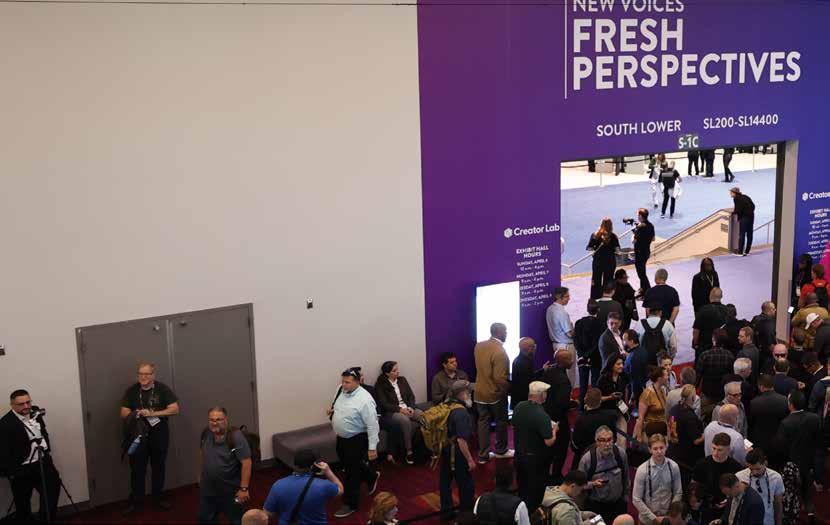
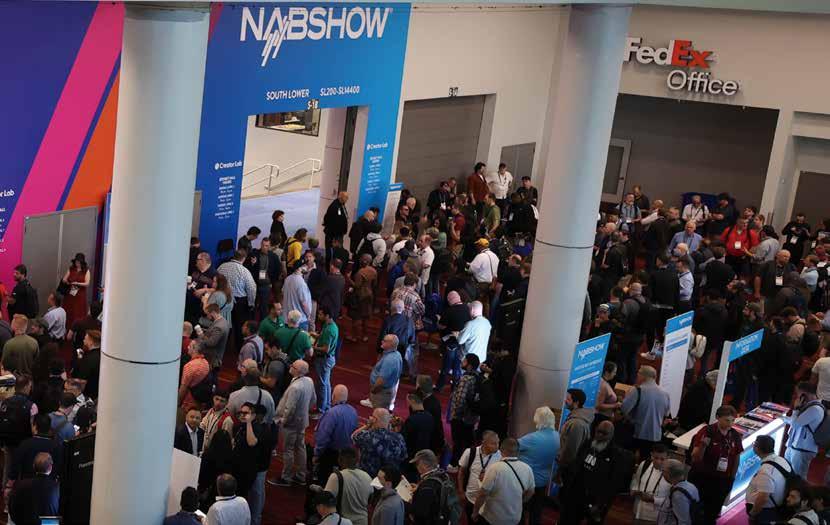
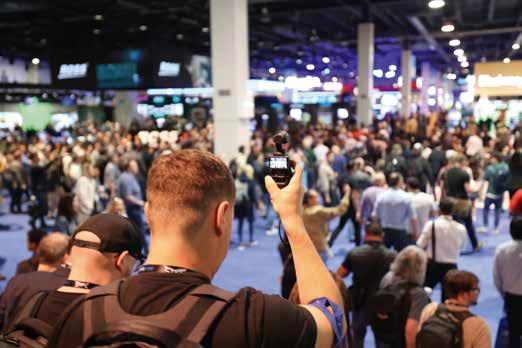
The broadcast industry is meeting again in Las Vegas for NAB Show 2026. Running from April 18 to 22 (exhibits April 19–22), the event will bring together media, entertainment and storytelling professionals at the Convention Centre of the iconic city to explore new ideas, discover emerging tools and shape how stories are created, distributed and monetized.
At its last edition, the event registered more than 55,000 attendees from 160 countries. In a recent interview with
TM BROADCAST, Karen Chupka, EVP of Global Connections and Events at NAB, stated that for 2026 "we're projecting roughly 60,000 attendees and about 1,100 exhibitors, including roughly 125 companies exhibiting for the first time".
With the aim of taking a closer look at the technological future and moving toward it, NAB Show Las Vegas 2026 will focus on five different trends: artificial intelligence, cloud virtualization, creator economy, sports and
streaming. The exhibition floor will be organized into specific, themed pavilions and attractions to highlight these topics, spread across the West, Central, and North Halls.
NAB Show 2026 arrives with several new features designed to enhance the attendees’ experience. To start, the event has launched a new mobile app that helps visitors plan ahead, navigate the show and make connections on site. The app enables
users to build and manage a personalized schedule, bookmark must-see exhibitors and receive tailored recommendations for sessions, exhibitors and connections based on individual interests. It also introduces enhanced networking tools that allow attendees to exchange contact information via QR code while onsite, as well as connect one-to-one with other peers.
On the content side, artificial intelligence remains a central topic — so much so that the event has introduced a second AI Pavilion on the show floor, reflecting the rapid transition of AI from an experimental phase to widespread, practical integration across all aspects of the media workflow.
Sports media also gets expanded attention this year. The Sports Summit, "The Future of Sports Rights and Fan Engagement", returns to examine the rapidly evolving business of sports broadcasting, but with a significant change: the programme will now
run across all four days of the event and will be open for the first time to all attendees with a Show Floor Pass.
Adding to the new spaces on the floor, the VideoNext Theater will offer practical, tactical sessions where attendees can master next-generation video workflows and acquire concrete skills to boost visual impact and production efficiency. A key feature of this new theater is 'Enterprise Video Strategies', which will examine how major organizations are leveraging media and entertainment technologies to enhance their storytelling, communications, and engagement efforts.
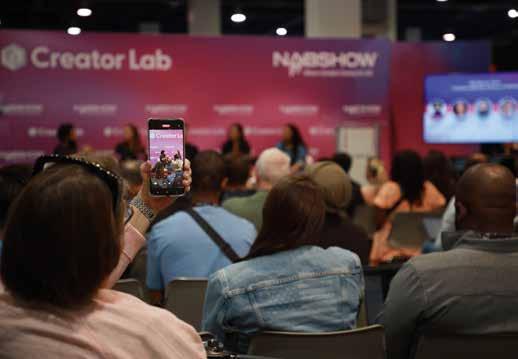
Completing the new offerings is the expansion of the recently completed Central Hall — which will host the Creator Lab — the main destination for creators and studios, broadcasters and brands seeking hands-on learning and storytelling tools. This year's edition will feature a larger theater and classroom for sessions
on AI, creator techniques, business strategy and audience development, a new Networking Lounge designed for one-on-one meetings between creators and brands, and a full slate of brand experiences showcasing the technologies and partnerships propelling the creator economy. Within the Creator Lab, the Creator Lounge will be accessible to all attendees as a space to relax between sessions at the Creator Lab Theaters, which this year seats over 100 people.
The programme kicks off on Friday, April 17 with a full day of workshops and masterclasses, running through to Wednesday the 22nd at midday.
Across those five days, all the major technological trends will be represented, alongside topics such as journalism, broadcast technology and filmmaking. The latter will have its own dedicated space in CineCentral, featuring live demonstrations, expert-led training and immersive, hands-on
learning experiences for cinematographers, directors, camera operators and content creators — covering areas such as AI, blocking and framing for 16×9 and 9×16, cinematic lighting on a budget, and vertical production.
Streaming, one of the show's central themes, will also have its own dedicated summit.
The NAB Show Streaming Summit, held on April 20 and 21 in the West Hall, will bring together new voices and master storytellers, from digital-native creators to cinematographers.
Alongside it, the Media and Entertainment Theater, in partnership with The Ankler, is set to return, gathering the industry's most influential dealmakers, visionary executives and groundbreaking creative leaders.
Rounding out the programme, the 'SMPTE ST 2110 IP Media Roadshow', led by the Society of Motion Picture and Television Engineers (SMPTE), will offer a dedicated training track for media professionals looking to navigate the ongoing shift from SDI to IP-based production.
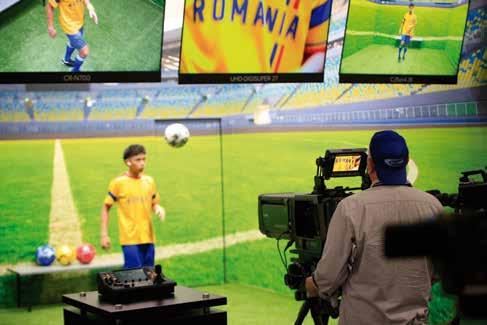
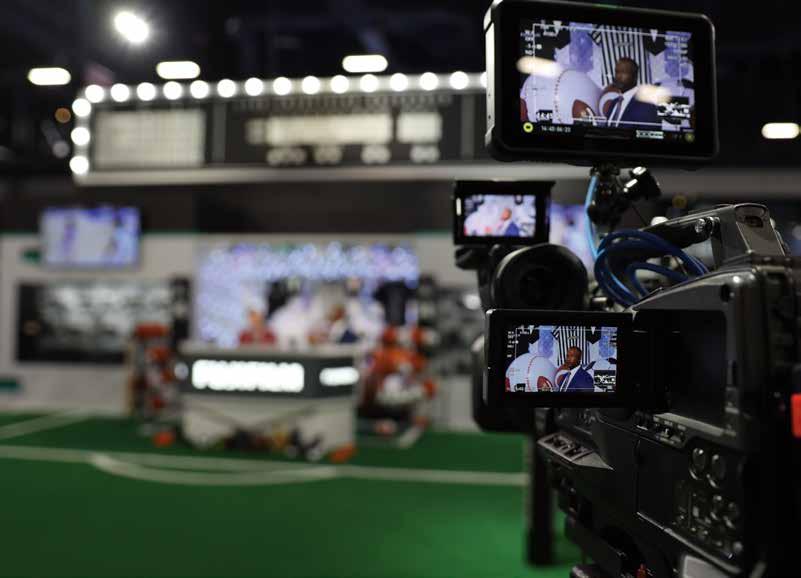
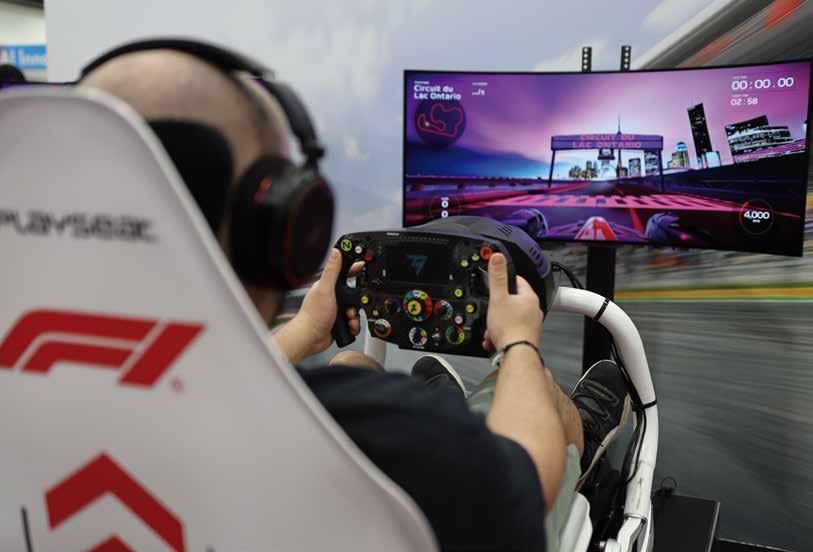
Below, we present a selection of main innovations that exhibitors will showcase at the upcoming NAB Show, listed alphabetically by brand for ease of reading. With the aim of providing a varied list that serves as a useful guide for event attendees, we have included both established companies and smaller firms whose portfolios have sparked the interest of our editorial team
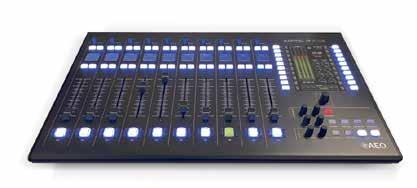
AEQ will exhibit some of its novelties in audio production, processing, and networking. Some of these will include: the Capitol IP Plus, with expanded connectivity, flexibility and a modern design with colour displays on each channel and a 7' touch screen; the AEQ Xplorer MAX, a wireless
intercom beltpack with advanced digital radio, up to 600 m range for any broadcast or live production setup; and the new digital audio console Forum IP Plus, featuring AoIP (Dante / AES67), and intuitive workflow.
Booth: C3106
The Alliance for IP Media Solutions (AIMS), Advanced Media Workflow Association (AMWA), and the Video Services Forum (VSF) will offer the IP Showcase, which will feature the IP Showcase Theater with 12 presentations. Additionally, the company will also debut the IPMX Training Series,
a new educational program developed by AIMS to try to help the industry understand and deploy the IPMX open standard.
On the other hand, in room W317, AIMS will present a series of IPMX training sessions, and in the Tech Chat Theater in the West Hall will
Booths: W1355
Meeting Rooms - Level 3 — W317LMR
Appear ASA will showcase how it is building on business momentum to try to enable media companies to innovate and deliver the most valuable live sports events. Its stand will highlight three use cases: ‘Satelliteto-IP migration: built for resilient distribution and contribution’ with the Appear X Platform, ‘REMI and distributed production at scale’, and ‘One operational workflow from edge to cloud’. The company will also bring VX Media Gateway, a cloud-ready, API-driven software platform designed to complement the X Platform.
Booth: W1531
Arkona technologies GmbH will announce a series of enhancements to its BLADE// runner platform. The updates focus on usability and workflow flexibility and include: BLADE//planner, a graphical configuration; a new Video Switcher soft panel, which
extends operational flexibility through software-based control; AutoMix, for automated microphone management in live production settings; EasyIP upgrades; HBM-based FrameSyncs for SDI inputs; and Video ID insertion, to improve identification and traceability of video flows across large-scale IP systems.
Booth: C1808
Avid will unveil new innovations designed to help media companies win in the media economy. These include: AI-enhanced Avid Content Core, demonstrations of Media Composer, Pro Tools, and Avid NEXIS, demos of new storytelling capabilities across MediaCentral, iNEWS, and Wolftech News, and the latest expanded hybrid and cloud environments. The company will also highlight partner integrations and host industry sessions at its Avid Theatre.
Booth: N2226
Barix will exhibit its latest professional Instreamer and Exstreamer devices for Audio over IP transport across broadcast and media networks, with an emphasis on format diversification to suit myriad scenarios and customer preferences. For the event, the company has added both SRT and RIST support to its MultiCoder M400, an IP encoder that can send audio streams to receive points in four separate formats. The MultiCoder’s SRT and RIST
enhancement follows the addition of an SRT transport option to LX400 codecs, Barix’s transport device built primarily for radio broadcasters.
Booth: Central Hall — C2522
Blackmagic Design will offer live demonstrations of a wide range of its portfolio. These will include: Blackmagic URSA Cine Immersive, the world’s first digital film camera for Apple Immersive Video; Blackmagic PYXIS 12K, featuring a full frame 36 x 24mm 12K sensor with a built-in optical low pass filter; Blackmagic 2110 IP Converters, supporting Ultra HD using low cost 10G Ethernet; and DaVinci Resolve, among others.
Booths: N2502, N2530
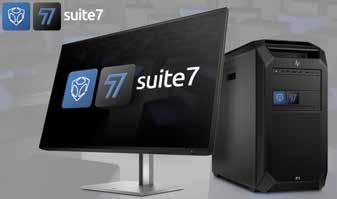
Brainstorm will debut the newest version of its platform, Brainstorm Suite 7. This new version includes enhancements for all of the company’s products: InfinitySet, with 360˚ output per render; Aston, with better interoperability and new video wall management capabilities; and Edison,
with new features like QuickStart and Teleporter and a lite version oriented towards education, Eddie. These applications can run on eStudio, also updated as part of Suite 7.
Booth: N2352
Bridge Technologies will attend to demonstrate how its production probe is designed to analyse and verify IPMX workflows in multi-vendor environments. This includes RGB video, compressed and uncompressed essences, and modern ProAV timing models. These capabilities will be on show alongside demonstrations for the VB440 uncompressed production probe and its suite of compressed distribution probes. Additionally, the company will also participate in the NAB IP Showcase.
Booth: C3019
Canon will be exhibiting new equipment solutions for studio, remote production, shallow-depth-of-field shooting and industry-leading broadcast lens technology. Some of the products presented will be Canon’s Cinema EOS line of cameras and lenses, including its RF Cinema lenses with 8K shooting capability, and the latest PTZ cameras featuring Canon color, control and focus, among others.
Booths: C3825, C201LMR — TV & Radio
Chyron will exhibit its different portfolio designed for modern broadcast, streaming, and FAST environments, including: real-time graphics, virtual sets, newsroom workflows, sports data integration, and scalable cloud-based solutions. Some of these will be NewsTicker, CAMIO, MOS, NewsTicker, ZXY Tracking and Chyron Live, among others.
Booth: N2441
Clear-Com will introduce new solutions and unveil a major product, with the aim to expand its communications ecosystem for modern broadcast and live production workflows. Some of the products at the stand will be: FreeSpeak Icon beltpack, the 4-Channel HelixNet beltpack, updates to Arcadia Central Station, and its virtual intercom solutions, including Gen-IC, Agent-IC mobile app, and Station-IC virtual desktop clients.
Booth: C5807
Cuez will present four additions to its cloudbased newsroom, rundown and automation platform: Cuez Storydesk, a new story-centric newsroom system; Blockz, a new feature designed for journalists to determine studio automations from within any NRCS; Browz, universal media browser; and an open agentic AI framework for live production.
Booth: N1867
Dalet will highlight the showcase of Dalia, its new agentic AI solution to interact with workflows through a media-aware, natural language interface. The stand will also exhibit the Dalet Flex platform, which has recently included a new semantic search experience, native transcription capabilities, and new Adobe Premiere workflows; and Dalet Pyramid solution for modern news, sports, broadcast and corporate media operations. Finally, the company will host its annual Executive Breakfast on Monday, April 20th, at The Wynn Las Vegas.
Booth: W1519
Deltacast will be presenting DELTA-stadium, a solution designed to create and control content displayed on LED screens in arenas, and the latest release of its AR sports production suite, which includes enhanced tracking capabilities and a new AI keyer. In addition, it will showcase DELTA-live, now supporting audio for graphics insertion.
Booth: N1853
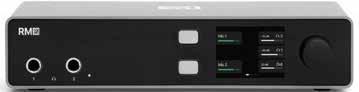
DHD Audio will introduce Firmware 10.4 with three new configuration capabilities: Flex Channels, Mic Preamp Control and DHD
Channel Categories. Additionally, it will introduce four new API-related features, plus the Routing Web App and RM1 Pro broadcast-from-anywhere studio-quality audio production system.
Booth: C3132
Elements will introduce Grid, a softwaredefined, scale-out NAS platform built on Ceph that combines all-NVMe performance with its Automation Engine and Media Library (MAM). They will also be showcasing their cloud production platform with AI integrations and global collaboration, Media Library, and the NVMe Cube.
Booth: N1717
EVS will present for the first time the full T-Motion lineup, developed following the integration of Telemetrics and XD Motion, and its Flexible Control Room solution, featuring Tactiq. It will also introduce: new AI-driven innovations with built-in edge performance, deeper integrations and continued workflow advancements, a range of tools for live sports production, the VIA MAP Media Asset Platform, and the MOVE product line, among others.
Booth: N1841
FOR-A will showcase GoVertical! AiDi, the real-time 9:16 autocropping feature of viztrick AiDi. This new on-device AI solution
was developed by Nippon TV, delivered globally by FOR-A, and powered by NVIDIA AI infrastructure (NVIDIA GeForce RTX 5090 with 24GB GDDR7 Laptop GPU and NVIDIA GeForce RTX 5070 Ti with 16GB GDDR7 desktop GPU). It operates entirely on-device and delivers real-time player tracking, face tagging, object recognition, 2.5D telestration, auto-score graphics, and motion data analytics.
Booths: C4920
Meeting Rooms - Level 1 — N118LMR

GatesAir will debut AirWatch365, a managed service for broadcast transmission monitoring and support. The launch includes the AirWatch365 Edge Gateway, an on-premises appliance that connects transmitters and related infrastructure directly to the platform. At the event, the company will demonstrate how its cloud-based architecture enables proactive monitoring and diagnostics.
Booth: C1046 — TV & Radio
Grass Valley will be demonstrating new capabilities for media organizations, which will feature products from their portfolio, including the LDX 110 Series cameras and Production Switchers, highlighting the latest integrations such as K-Frame with
Daktronics; and Framelight X, which unifies field capture, editing and publishing across linear and digital workflows. Also on display will be Playout X, the AMPP OS suite and the ACE-3901-GRID, which is introduced as the world’s first MXL gateway with MXL connected processing.
Booth: C2408
Haivision will unveil the Makito ONE video transport platform, its latest single-blade video encoding and decoding solution. Makito ONE is available from a compact single blade system to higher density 1RU and 4RU modular chassis that scale up to 18 hot swappable blades to provide up to 36 HD/4K encoding and decoding channels. It combines ultra low latency 4K/HD/HDR video, and multi codec flexibility for transport over any network. In addition, it provides SDI and SMPTE ST 2110 connectivity.
Booth: W2522
Harmonic will introduce significant enhancements to its video appliances and SaaS solutions. The company will unveil: Spectrum X media server, XOS Advanced Media Processor, the first large production deployment of VOS Media Software on Red Hat OpenShift, the first of server-side in-stream advertising, and a new in-house, server-side multiview solution. Additionally, with a focus on streaming powered by AI, the company will introduce a new AI overlay service. Further insights on AI's
transformative impact on broadcast and streaming workflows will be shared at the Broadcast Engineering and IT Conference on Saturday, April 18.
Booth: W2831
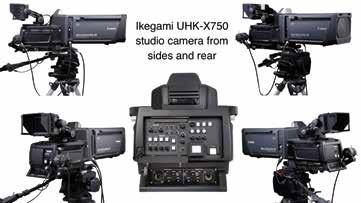
Ikegami will showcase the latest additions to its range of broadcast-quality cameras, controllers and monitors. Among other products, it will exhibit the Unicam XE 3-CMOS 2/3-inch 4K-UHD cameras, the ultra-compact UHL-X40 for robotic applications, the studio/portable UHK-X700 and its UHK-X750 full studio version, plus the studio/portable UHK-X600 and HDK-X500 which are HD models that have upgrade paths to 4K-UHD. Additionally, it will introduce a new feature in an upgraded version of its UNICAM XE models.
Booth: C3819
Interra Systems will showcase its latest advancements in automated QC, real-time monitoring, and captioning.
Among other products, it will bring its ORION monitoring platform, with recent updates and enhanced automation; BATON 9.4, the recent version of its BATON automated QC platform; the latest BATON Captions updates, such as web-based editing experience, Whisper AI integration, and automated workflows; and the VEGA media analyzer, which has added AV1, VVC, built-in chatbot assistance, and expanded cloud compatibility.
Booth: W2243
Kiloview will present its latest broadcast IP solutions, offering demonstrations of its AV-over-IP ecosystem designed to simplify workflows, reduce infrastructure complexity, and enable scalable production across broadcast, sports, and live environments. The company will debut the AVX24-4 MediaHub and the KiloLink Station and will also showcase the Cradle Series RF0, among others.
Booth: N1467
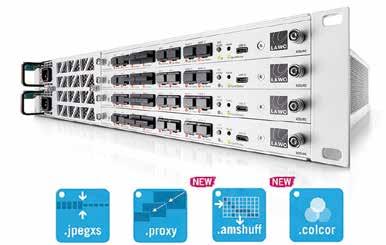
Lawo will announce the introduction of its upcoming solution designed to accelerate system setup and optimize operational efficiency across broadcast, recording, live performance, and corporate AV environments. The company will also display a full suite of IP-native routing, software-based processing technologies, dynamic resource-management tools and HOME Apps such as HOME Multiviewer, a server-based, ultra-low-latency processing app supporting SMPTE ST2110, NDI, SRT, and JPEG XS workflows.
Booth: C2108
LTN will focus on demonstrating how its IP network simplifies satellite-to-IP migration for broadcasters, cable networks, MVPDs and station groups. Some of these demonstrations will be: migrating channels from satellite to IP, open network and partner ecosystem, and satellite replacement for live sports.
Additionally, the company will offer different panels on Sunday, April 19 (‘LTN and Tennis Channel on Navigating the IP Transition and Driving Reach and Revenue – TVNewsCheck Programming Everywhere’ and ‘PMVG: NextGen TV Developments in Public Media – Broadcast Engineering and IT (BEIT) Conference’) and Tuesday, April 21 (‘The Future of Satellite Replacement’ and ‘Expanding Streaming Channel Lineups While Growing Brand and Revenue – Broadcast Engineering and IT (BEIT) Conference’).
Booth: W2100
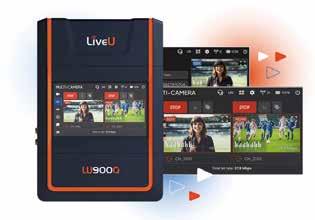
LiveU will showcase its broadest IP-video EcoSystem to date and unveil the latest advancements in Actus Digital’s monitoring platform. Its newest solutions on display will include the LU900Q intelligent production unit, for live broadcasting with native LiveU IQ (LIQ) connectivity. Also featured are LiveU Nexus, a universal gateway for digital and IP workflows, and LiveU Schedule, a centralized scheduling and resource automation tool.
Booth: N1740
Macnica will showcase new capabilities for its MEP100 SmartNIC, introducing support for both 100GbE and 25GbE media flows on a single card, along with expanded support for GPU-based processing, Windows-based applications and real-time metadata. These enhancements aim to offer greater flexibility to scale SMPTE ST 2110 IP workflows based on channel density, infrastructure and application requirements, while integrating more easily into modern software-driven environments.
Booth: N1167
Mediagenix will present new advancements in Semantic Intelligence for Title Management, looking forward to helping studios and networks transform content and rights metadata into actionable intelligence for sales, licensing and programming teams. The capabilities, which will be shown at the event, were built on recommendation and personalization technology from Spideo, and embed advanced semantic modeling across the Mediagenix platform.
Booth: W1857
Net Insight will showcase Nimbra Live Intelligence and the Open Media Platform for Live. Built as one platform with three distinct layers, it is delivered through Nimbra Live Performance and deployed across production, distribution and protection workflows. The Nimbra Live Intelligence aims to enable live media environments to operate as predictable systems without requiring a proprietary stack or rip-and-replace transformation.
Booth: W1653
Nugen Audio will offer a presentation about dialog intelligibility and loudness. Delivered by CEO Dr. Paul Tapper, the presentation “Is Dialog Intelligibility the New Loudness?” will examine the growing industry conversation as broadcasters and streaming platforms face increasing viewer complaints about
unclear speech. The session will provide an overview of emerging measurement approaches, including the Listening Effort Meter developed by Fraunhofer IDMT and incorporated into the NUGEN Audio DialogCheck software.
Room N256, on Tuesday, April 21, from 10:10 – 10:30 a.m.
On-Hertz will introduce Artisto Panels, a no-code way to design and deploy custom control interfaces for live audio production with Artisto, the audio mixer with benefits. It is designed to let teams build role-specific control surfaces (mixing, routing, monitoring, etc.) using a drag-and-drop approach, without development work or hardware constraints. Additionally, it will bring its expanded ecosystem through new collaborations, such as Univr, TVU MediaMesh, and Cuez.
Booth: C4533
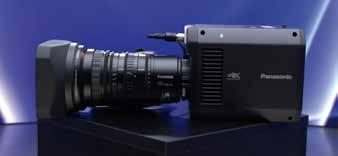
Panasonic will show a preview of its IP-centric box camera, the AK-UBX100 4K Multi-Purpose Camera, which is designed to work within the broader production
ecosystem. IP enables video, audio, and control to move across a single network, with the intention of simplifying system design to support more dynamic production environments. It also works with existing SDI setups or hybrid environments, and it integrates with studio and PTZ cameras.
Booth: C3509
Meeting Rooms - Level 2 — N212LMR
PlayBox Neo will bring the latest innovations across its PlayBox Neo Suite and integrated range of broadcast and media solutions. Some of these updates include: new role-based user management system, the integration with Active Directory via LDAP (Lightweight Directory Access Protocol) with SSL encryption, Multiviewer’s optimization to try to reduce bandwidth usage by up to 30%, the support for EdithShare, physical and virtual GPI, and the AJA Kona IP25 IP converter card, among others.
Booth: N1425
QuickLink will present its latest StudioEdge models. Building on the expansion introduced in 2025, the brand will showcase the full range: StudioEdge-1, StudioEdge-2, the StudioEdge-4 and StudioEdge-2110. Additionally, it will also demonstrate brandnew workflow enhancements, including improvements to the way Zoom callers are introduced and managed within StudioEdge.
Booth: N2761
Riedel will attend with its latest solutions in live video production, audio, intercom, signal distribution, and broadcast control. These include: hi human interface integrated with MediorNet, Bolero Mini, private 5G connectivity, SAME for audio & mixing engine, software-driven live production platform Simple and DSP-1216HL.
Booth: C4908
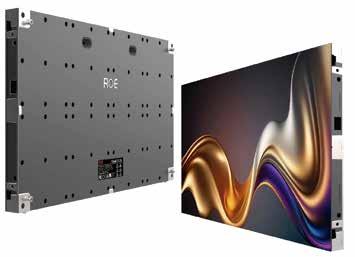
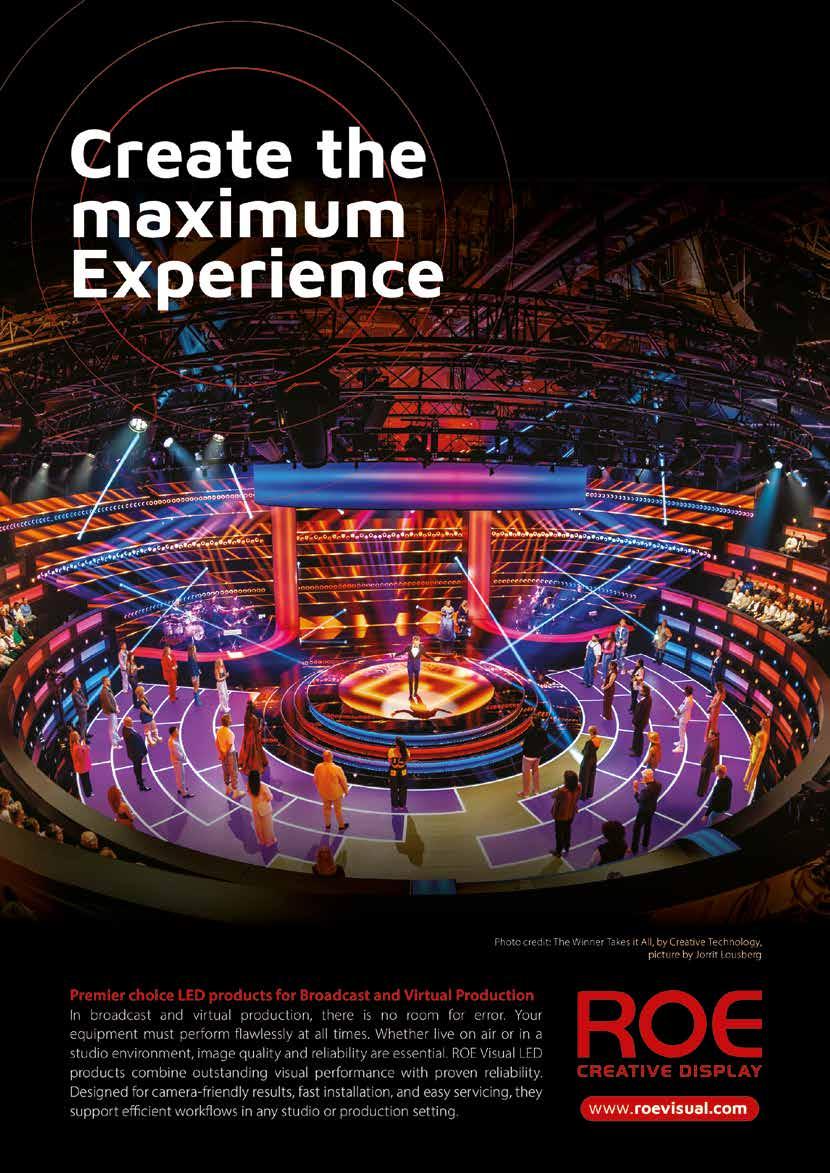
ROE Visual will present its latest LED display technologies, a selection of LED platforms for rental and fixed installation applications, engineered for broadcast studios, virtual production environments, and live production workflows. Throughout the show, the company will highlight some of its projects and technologies that have helped shape modern broadcast, touring, and virtual production environments.
Booth: C4925
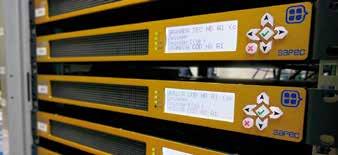
Sapec will showcase its latest novelties such as the Laguna platform, the FPGA-based Sivac-One module, and the AI-powered Video-MOS monitoring tool. In addition, solutions from its Gredos family will be on display, along with the corner flag for football applications featuring two mobile cameras, The CornerCam — this one at their own stand and at the Egripment stand (C7321).
Booth: W1856
SDVI will showcase an expanded Rally Connect distribution network, new integrations with technology partners across AI-powered localization, content processing, and storage management. Some of its new capabilities include native MovieLabs multilocale support for streamlined international deliveries and optimized transcode profiles. Additionally, it will offer an exclusive first look at Rally platform’s new innovations designed to give operations teams new levels of control, simplicity, and intelligence.
Booths: W1553 Meeting Rooms - W2478MR
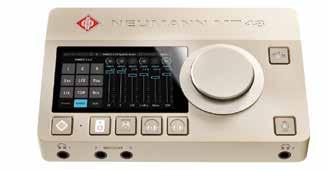
The Sennheiser Group will show its latest immersive audio solutions and wireless technologies segmented into three areas: Reliable Integration, Connection, and Future & Innovation. All these will include products from Sennheiser, Neumann, Merging, and SoundBase, and will showcase Spectera API, the Spectera Rental Finder, Spectera WebUI, the real-time AMBEO 2-Channel Spatial Audio Broadcast Renderer and the Neumann VIS visionOS application, among others. Additionally, Sennheiser’s Joe Ciaudelli invites visitors to its talk “Wireless Microphone Operation for Mega-Events in the 1435 – 1525 MHz Band” on Saturday, April 18, 2:10 – 2:30 p.m. in Room N25.
Booth: 4931
SMPTE will offer an educational program designed to bridge storytelling and engineering, headlined by the debut of its Visual Innovation and Brilliant Engineering (VIBE) Conference and a new SMPTE ST 2110 IP Media Roadshow. Taking place across multiple sessions, VIBE will explore topics ranging from robotic cameras and content
authenticity to open source workflows and live sports production systems, while the hands-on roadshow delivers practical training on IP-based media infrastructure, including system architecture, timing, audio, and network design.
Booth: NL3
Solid State Logic will debut the new Net I/O ST 2110 Bridge, which converts between ST 2110 and Dante in a single standalone unit. It is housed in a compact 1RU chassis and supports NMOS (Networked Media Open Specifications) IS-04 Discovery and Registration and IS-05 Device Connection Management specifications. It's available in either 256 or 512 channel versions.
Booth: C6907
TAG Video Systems will unveil new capabilities across its IP-native Realtime Media Platform. New releases include visual service health diagnostics, native audio monitoring, open SDK integrations, and expanded color analysis tools. The company will bring tools such as Lens, QC Station, Dolby E decoding, Software Development Kits (SDKs) and NVIDIA ConnectX-7 SmartNICs , among others.
Booth: W2323
Tedial will offer demonstrations of how its platform empowers media companies to transform their media asset management and supply chain operations. The company’s platform features: integration of Agentic AI with the Model Context Protocol (MCP), NoCode workflow design capabilities, AI-powered Media Asset Management (MAM) system, NoCode UI designer, IP-based live workflows, adaptability to diverse media sectors, and support for Cloud, Hybrid, and On-Premises deployments.
Booth: W1851
Telos Alliance will unveil Omnia XII, its new FM/HD/DAB audio processor. Built on a 2RU hardware platform, it features a color display and local controls up front, while the rear panel boasts an array of I/O and connectivity options. New algorithms form the processing architecture of a Wideband AGC, 5 bands of multiband AGCs and compressors, and 6 bands of multiband limiting, plus dynamic EQ and bass management tools, all feeding Frank’s “Clemenza” FM clipper.
Booth: C1819
Teradek will present its latest innovations in live production, featuring: Mission Link, mobile bonded internet solutions; RF-X,
zero-delay wireless video switching system for bolt and ranger; Teradek Cloud, tools designed for IP video deployments
Booth: C5816
Vizrt will showcase its solutions designed to create more content with fewer hurdles, both for single operators or running a full enterprise broadcast operation. The Live Production portfolio is designed to try to enable more intuitive workflows with TriCaster, reduced operator load through automation and panel driven control, remote collaboration, and flexible cloud and hybrid production setups, among others. Some of the company’s Live Demos will include: AI Studio, story production hub, intelligent live production, connected storytelling with NDI, or immersive meetings with Zoom.
Booth: N2161
Wheatstone will introduce a new hitless switching option designed to ensure zero downtime for critical components within the WheatNet IP audio network. It features dual mix engines or I/O Blades synchronized in real-time. Additionally, the company will be showing the new DMX 12, the latest addition to Wheatstone’s Audioarts DMX console line, which includes an 8-channel console, a 16-channel console and optional Remote DMX.
Booth: C1051
Zero Density will offer its new virtual studio production and on-air graphics solutions. Its stand will highlight how its offerings look forward to supporting broadcasters and production teams through: fully integrated approach to virtual production and on-air graphics, flexible solutions for studios, AR, video walls, tracking and broadcast graphics, simplified workflows for complex graphics and virtual production, faster creation of high-quality visuals, reduced workload, and more agile productions with tools using Unreal Engine 5.
Artificial Intelligence applied to broadcast
without putting the signal at risk

From safe automation to red lines: an analysis of artificial intelligence applications already working on air— and those that still require human supervision
By Santiago Romero Ruiz
Journalism has a non-negotiable red line: truth. In a live production environment, where every second counts, a generative hallucination can destroy decades of credibility in seconds. The critical question today is what to delegate to AI and what must remain under strict human control.
What already works: low editorial-risk automation
Automatic subtitling leads the adoption of AI in broadcast environments by a wide margin. RTVE simultaneously processes 17 regional news programmes with accuracy rates close to 100% and latencies of just four seconds. CMM (Castilla-La Mancha Media, a Spanish regional public broadcaster) subtitles all of its programming 24/7. BBC uses Whisper to add subtitles to BBC Sounds podcasts. These are mature applications, tested in production for months or years, where occasional errors do not compromise informational integrity:
a wrongly transcribed word can be corrected and, in most cases, understood through context.
Semantic indexing of historical archives is another well-established area with minimal editorial risk. CBS News and ESPN use the Veritone aiWARE platform to process decades of audiovisual content, enabling archivists to locate in seconds a piece of B-roll from 1998 that previously required hours of manual searching across tapes or servers. In October 2025, Veritone expanded
its agreement to include the full catalogue of CBS Media Ventures: more than 30,000 episodes and 55 years of television history. The risk here is virtually zero: if the system fails, it simply does not find the asset—it never fabricates non-existent material.
Multiplatform reformatting is rapidly emerging as a third area of safe adoption. The BBC automatically converts radio commentary into enriched text for its online sports pages. France Télévisions automates the versioning
of news programmes for its OTT channels and digital platforms. These are repetitive, mechanical tasks where AI delivers scale and speed without making any substantive editorial decisions.
Grey areas: automation with mandatory supervision
In a live production environment, where every second counts, a generative hallucination can destroy decades of credibility in seconds
Live augmented reality is already operational, as demonstrated by the Informativos Telecinco studio at Telecinco (a Spanish commercial television channel owned by Mediaset) , but it requires intensive preparation that limits its applicability. Virtual recreations of the Capitol or the Philadelphia Convention were designed weeks in advance; AI synchronises
camera movements with pre-designed environments but does not improvise or generate new content on the fly. Extending these systems to breaking news scenarios, where there is no time for prior preparation, remains uncharted—and potentially dangerous— territory.
Automated editorial summarisation is advancing with extreme caution. The BBC is testing its At a glance feature to condense long-form articles and attract younger audiences, but it maintains mandatory
editorial supervision before any publication. Reuters uses its Fact Genie tool to analyse press releases and suggest which stories to cover, but never to publish directly: a human journalist always validates and rewrites the content before it reaches the audience. Nic Newman explains in the annual digital trends report that the system can process a press release and generate
an initial alert in just six seconds—but that alert is reviewed by humans before becoming a news story.
Fox News, through its partnership with Palantir Technologies announced in November 2025, has developed tools such as Topic Radar for personalised briefings on emerging stories and Article Insights for performance analysis.
These are decision-support systems, not substitutes for editorial judgement.
No leading broadcaster worldwide uses artificial intelligence for automated fact-checking in publishing workflows. The reasons are both technical and editorial
No leading broadcaster worldwide uses artificial intelligence for automated fact-checking in publishing workflows. The reasons are equally technical and editorial. Rob Lang has explained this clearly in industry forums: current systems have significant limitations when it comes to distinguishing reliable web content from disinformation
noise. Reuters builds RAG (Retrieval-Augmented Generation) databases using exclusively its own verified archive as a source of truth—but even then, final verification remains the responsibility of a human journalist with editorial judgement.
of this kind, amplified through social media, can cause irreparable reputational damage.
The broadcast industry is converging towards a clear operational model: artificial intelligence to scale production capabilities and expand reach, human supervision for final editorial control
France Télévisions has adopted a complementary approach: instead of trying to detect falsehoods, it certifies authenticity. Its operational implementation of the C2PA standard, developed in collaboration with Dalet between October 2024 and January 2025, enables the tracking of provenance and modifications for each piece of content through cryptographic signatures. The project received the EBU Technology & Innovation Awards 2025, recognising its potential to establish a new standard for informational integrity in the age of deepfakes.
The generation of original news content remains entirely outside on-air workflows in all serious journalistic organisations. Deepfakes and hallucinations—those moments when language models fabricate plausible but false information— represent risks too great for any newsroom’s reputation. A single error
The hybrid model: the signal is sacred
The broadcast industry is converging towards a clear operational model: artificial intelligence to scale production capabilities and expand reach, human supervision for final editorial control. Rhodri Talfan Davies, Director
of Nations at the BBC, summarises it precisely on the organisation’s corporate blog: “Generative AI tools are impressive, and accuracy levels are constantly improving. Early trials suggest we could generate significantly more value for audiences. But it is also clear that AI can help us do things faster—it does not remove the need for human oversight given the risk of error.”
The output signal remains sacred in the vocabulary of any broadcast professional.
It is the moment when content ceases to be a draft and becomes transmission—information delivered to millions of viewers who trust in its accuracy. And as long as there are no absolute guarantees against generative hallucinations, as long as language models remain probabilistic black boxes capable of confidently inventing information, the finger that presses the transmission button will necessarily remain human.
Sources and References:
BBC. (2025). Generative AI at the BBC. BBC Blog. https://www.bbc.co.uk/mediacentre/articles/2023/ generative-ai-at-the-bbc
Veritone. (2025). Strategic Agreement with CBS Media Ventures. Press Release. https://www.veritone.com/newsroom/press-releases/cbsmedia-ventures/
Reuters Institute. (2025). Digital News Report. https://reutersinstitute.politics.ox.ac.uk/digital-news-report
EBU. (2025). Technology & Innovation Awards: France Télévisions C2PA Project. https://tech.ebu.ch/awards
“The biggest barrier to IP adoption today is fear”
In this new edition of Industry Voices, we speak with Erling Hedkvist about his professional journey, the context behind the creation of manifold, and key market trends such as the transition to IP, the expansion of broadcast-grade infrastructure into enterprise environments, and the key topics shaping industry conversations this year
The transition towards IP and software-defined infrastructures has established itself as one of the industry’s main drivers of innovation. However, as important as technological development is, its ability to adapt to real market needs is equally critical.
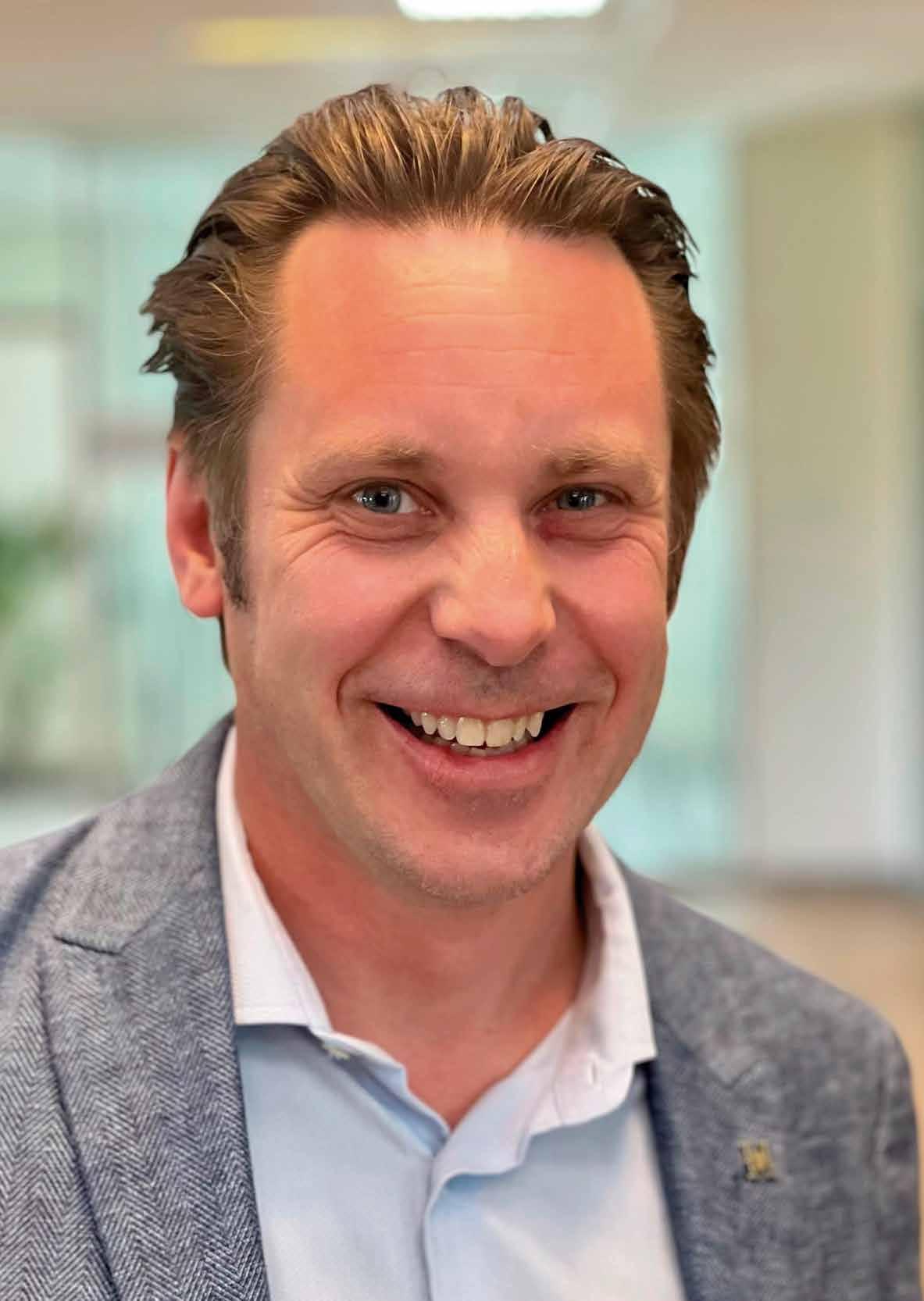
This was one of the central themes of our conversation with Erling Hedkvist, Broadcast Technology Sales & Business Development at both arkona and manifold technologies, and the latest guest in our Industry Voices section.
Thanks to his professional trajectory and position within the industry, Hedkvist offers a valuable perspective on both the evolution of the market over the past decades and the context in which initiatives such as manifold have emerged. The organisation was born from a shared strategic reflection: “If we were starting from scratch today, what would we do differently?”
A brief overview of Hedkvist’s career helps to put the origins of manifold into context. Beyond the purely technical dimension, he quickly identified his core strength: “I realised early on that my strength was bridging the gap between technology and people, understanding requirements and translating them into something practical and meaningful.”
He began his career at Net Insight in 2000, at a time of considerable uncertainty. “At the time, the company had no plans to move into the broadcast industry at all—they were aiming
to compete with Cisco. I joined in February 2000, and within six months the dot-com bubble burst.”
The impact was immediate: “We went from hiring three people a week—at one point people were even sitting in hallways because there weren’t enough offices—to laying off two-thirds of the company within another six months. At that point, the company had to focus on the only segment that was still buying: broadcasters. The IT sector had essentially stopped investing, but broadcasters continued to purchase solutions.”
After more than a decade at Net Insight, Hedkvist moved to Evertz, where he deepened his understanding of the sector: “That was where I deepened my understanding of the
broadcast industry. I had been hired because of my background in video transport, and also my early experience with IP.”
He later joined Lawo at a time when the company was looking to expand its video product portfolio in collaboration with arkona. “Lawo had an OEM agreement with arkona technologies. Arkona was responsible for developing the video products, while Lawo marketed them under its own brand. My role was essentially to define the products—working closely with arkona, explaining what we wanted to build—while they developed them and Lawo brought them to market.” This stage laid the foundations for a relationship that would later shape his professional path.
“Where we see the convergence between ProAV and Tier 1 broadcast is in large-scale ProAV systems. Major enterprise organisations that want to build high-end internal AV infrastructures”
In 2020, a change in Lawo’s leadership marked a turning point: “Philipp Lawo had an accident and was no longer with the company, and the new leadership decided to move away from the OEM model with arkona and develop products in-house.”
After a period working independently, Hedkvist returned to the arkona ecosystem—this time directly: “The idea was to take the products that had previously been OEM
and bring them to market under arkona’s own brand.”
From there, manifold was born.
In Hedkvist’s words, manifold represents “a rethinking of the software-defined infrastructure concept”, built around three core pillars.
The first is its softwareonly nature. “Unlike all the companies I had worked for previously, which developed
both hardware and software, manifold does not manufacture hardware at all.”
The second pillar is virtualisation. “It’s not just software running on standard hardware—it’s a fully virtualised architecture where hardware is abstracted from the user.”
In this model, users define their needs while the system dynamically allocates the required resources. This approach breaks away from the

logic of fixed systems: “It’s no longer about a fixed system—like a PC running Windows and then running applications on top. It’s about a flexible, abstracted infrastructure where resources are dynamically orchestrated.”
“Unlike all the companies I had worked for previously, which developed both hardware and software, manifold does not manufacture hardware at all”
The third pillar is based on the use of standard hardware combined with dedicated acceleration— particularly through FPGA and high-bandwidth memory. This enables a shared-memory architecture that redefines traditional processing workflows. “What this means is that, instead of building traditional broadcast pipelines—where you have inputs going
through sequential stages like colour correction, frame synchronisation, delay, audio embedding and so on—everything is written into memory first. You ingest IP streams, place everything into memory, and because the memory has very high bandwidth, it can handle all incoming data in real time. Processing then happens directly on that memory.”
This approach delivers significant efficiency gains: “Instead of having, for example, eight separate colour correctors, you have a single colour correction function that operates at a much higher speed than the media itself. If your media is running at 3 or 12 gigabits per second, that processing function might run at 400 gigabits. This means you can process multiple streams almost instantaneously.”
“That’s the core of the manifold approach,” Hedkvist concludes, aligned with emerging architectures such as Media Exchange Layer (MXL), which is also based on a shared-memory architecture.
“Many decision-makers have built their careers over 20 or 30 years working with SDI. It’s what they know. So when it comes to investing in a new system, there can be hesitation”
From your perspective, how do arkona and manifold complement each other?
They complement each other well, although they address different stages of the customer’s transition. Arkona Technologies follows a more traditional architecture than manifold technologies. Arkona still builds both hardware and software. Even if the platform is softwaredefined, we manufacture physical units—installed on-site—with long lifecycles and warranties of up to ten years. In that sense, it remains a traditional approach. With manifold, by contrast, there is no hardware. Customers use off-the-shelf infrastructure, so the conversation starts from a completely different point.
They also address different needs. Even though the industry is moving towards
native IP, more than 50% of current requirements still involve SDI. The only practical way to support SDI is to develop dedicated hardware, as there are no truly cost-effective off-the-shelf SDI-to-IP solutions. That’s why arkona continues to play a key role. It provides interfaces for SDI and other legacy signals—Word Clock, Blackburst, tri-level sync— everything traditional broadcast infrastructures still rely on. Manifold, on the other hand, is entirely IT-based and IP-native. Any signal involving SDI, MADI, AES or similar formats is handled by arkona, converting it into IP and back again when needed.
Arkona’s platform is also very mature. Development began around 2015, with the first generation launched in 2017 and the second in 2022. It has proven itself in demanding
environments such as the Olympic Games and FIFA World Cups, as well as in continuous operation with broadcasters worldwide.
Manifold, by contrast, is much newer and focused on high-density IP processing. If your content is already in IP and needs processing— conversion, monitoring, timing adjustment, mixing or compression—then manifold is the right tool. This is largely due to the use of off-the-shelf acceleration cards, similar to GPUs, installed in servers, which are well suited to intensive media processing tasks.
In practice, the solutions we deliver typically combine both arkona and manifold. We focus on what we call core infrastructure— the elements that tie everything together within a broadcast facility: routers, multiviewers, up/ down/cross converters, colour correction and audio routing. We provide these functions in a more compact, modern and flexible way.
Manifold Technologies is a much newer product, so there are still many things that haven’t been developed yet. There’s a much longer to-do list.
Compared with arkona technologies, which is more mature and focused on refinement, manifold is still expanding its capabilities. We have a long list of customer requests that we haven’t yet had time to address.
“Even
though the industry is moving towards native IP, more than 50% of current requirements still involve SDI”
Over the next few years—particularly over the next five—the focus will be on expanding functionality. There are many features we want to introduce that are not yet implemented. In parallel, we will continue refining
the platform: improving the user interface, optimising workflows and increasing efficiency. These are areas where arkona is already in a fine-tuning phase, whereas with manifold we are still, in many cases, building the first version.
In essence, the main objective for manifold over the next five years is to significantly expand its feature set and overall functionality.
If you had to highlight just one additional functionality, what would it be?
I would point to something already on our roadmap for this year. Internally, we refer to these as “product services” in manifold, because that’s how customers purchase them. You don’t buy a product—you buy a service. It can be licensed, even as a perpetual licence, but it still operates as a service because it runs on hardware rather than being tied to a physical device. One of the services we are planning to introduce is called Manifold Bridge.
Manifold Bridge enables the conversion of uncompressed video into compressed formats for distribution—using protocols such as SRT, NDI or RIST—and also the reverse process. For example, you can take multiple 1080p streams, compress them using codecs such as MP4 or HEVC, and distribute them. Equally, you can take compressed streams and convert them back into uncompressed video.
This actually works in both directions: from uncompressed to compressed, and back again.
This is the next major feature we want to introduce. So far, everything we do is uncompressed, which works well, but there is clear value in supporting compressed workflows— especially as modern computing platforms, and particularly GPUs, are highly efficient at compression
and decompression. In practice, this will become our next product—although it is delivered as a service, which is how everything in manifold is structured.
Amid the ongoing convergence between broadcast and ProAV, we asked Hedkvist whether his customer profile has changed—and how the

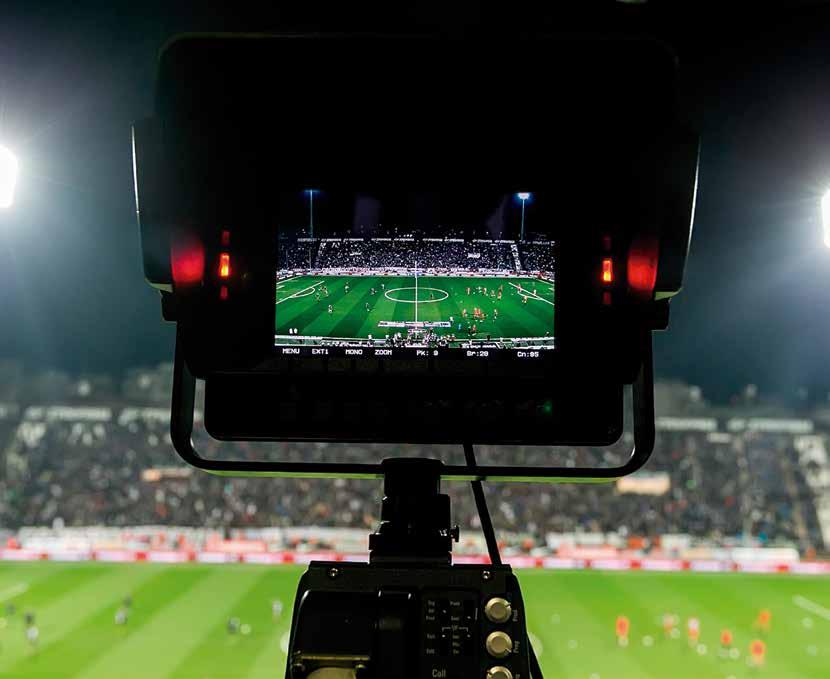
company is navigating this shift. His answer is clear: their focus remains firmly on Tier 1 broadcast.
“I always say that, as a company, you have to work with the capabilities you already have. I can say, ‘we want to build electric cars’ or ‘we want to build space rockets’, but that only makes sense if you actually have the people who know how to do it. And if you look at it the other way
around, we don’t have venture capital backing to suddenly go out and hire rocket scientists. In essence, the real question is: what are the people in the company good at? At both arkona technologies and manifold technologies, our teams are very strong in Tier 1 broadcast. That’s our core expertise. So naturally, the most straightforward thing for us is to build Tier 1 broadcast solutions.”
From this foundation, however, a new opportunity space is emerging. As Hedkvist explains, the convergence between ProAV and broadcast becomes particularly visible in large-scale corporate environments.
“Where we see the convergence between ProAV and Tier 1 broadcast is in largescale ProAV systems.
For example, major enterprise organisations— companies like Apple or Bloomberg—that want to build high-end internal AV infrastructures. They’re not looking for something basic. They want professional distribution, cloud integration, internal access for employees, and often a full studio setup with cameras and lighting. It’s not just someone filming on an iPhone—it’s something designed for executivelevel communication. We’ve worked on a number of these types of projects, and that’s where we see a strong fit.”
What do you see as the main barriers to full adoption of IP today?
I would say this has changed over time. A few years ago, I would have said the main barrier was cost. Today, I don’t think that’s the case anymore. Now, I would say the biggest barrier is—honestly—fear. There is a perception among many buyers that IP is complex. And to be
fair, that perception isn’t entirely unfounded. There is a learning curve. But I do think the fear is somewhat misplaced. In reality, once you understand it, IP is not necessarily more difficult— if anything, it can be simpler. Like anything new, it requires some learning, but the curve is not as steep as many people assume.
What we see is that many broadcasters are very comfortable with what they already know. Moving to something new can feel risky. There is also, to some extent, a generational factor. Many decision-makers have built their careers over 20 or 30 years working with SDI. It’s what they know. So, when it comes to investing in a new system,
there can be hesitation. If you’re not familiar with IT environments, you may feel less confident adopting an IP-based approach.
In practice, this is reflected in most projects today. In around 80% of cases, customers are still comparing SDI and IP when planning a new facility or upgrade. The question always comes up: should we go with SDI or IP? Even when IP is clearly an option, there is often a tendency to lean towards SDI—while recognising it may not be the most future-proof choice. It’s a bit like buying a car you expect to keep for 20 years. Do you go for a combustion engine, or invest in something electric because it represents the future?
“In around 80% of cases, customers are still comparing SDI and IP when planning a new facility or upgrade. The question always comes up: should we go with SDI or IP? Even when IP is clearly an option, there is often a tendency to lean towards SDI—while recognising it may not be the most future-proof choice”
So there is still hesitation around IP, and it requires some effort on our side to guide customers. But once they make the transition, things tend to fall into place. To support this, we have developed a dedicated solution combining arkona technologies and manifold technologies, which we call ECIP, designed to make the transition to IP as straightforward as possible.
“I believe the real discussions inside broadcasters are still centred on SDI versus IP”
What do you think will be the main topic of debate in the industry this year, from your area of activity?
From a forward-looking perspective, many people are already talking about what comes next—namely MXL. That will certainly be a hot topic, but in reality, most broadcasters are still focused on completing the transition to IP. In many
ways, it is the next step beyond ST 2110, while many organisations haven’t fully made that transition yet. So yes, there will be conversations around MXL and similar concepts, particularly among more advanced or specialised segments of the industry. And that’s important—it’s something we should be working towards.
But in practical terms, I believe the real discussions inside broadcasters are still centred on SDI versus IP. When organisations plan new investments, there is often a clear intention to move towards IP—but also hesitation. There are concerns about having the right people or the necessary expertise, and hiring new talent is not always an option.
That means existing teams need to be trained, which can feel like a significant challenge. So, while the industry is talking about future architectures, many organisations are still trying to figure out how to take that first step. Management may say, “we want to modernise,” but from an
operational perspective, the response can be: “we don’t fully understand this yet.” In that situation, the default is often to fall back on what is already known. Therefore I think that tension between ambition and practical readiness is where most of the real conversations will happen this year.
you like to add anything else to be included in the interview?
I would just add that this is a very small industry, and that’s something I really like. Over time, you build relationships that last for decades. You end up working with the same people throughout your career—the business cards change, but the people remain. That creates a strong sense of familiarity and trust, and from that perspective, it’s a very enjoyable industry to be part of.
At the same time, because it’s such a specialised field, much of what we do is consultative. We often guide our customers. It’s very different from buying
a consumer product. If I want to buy a monitor, I might watch a few YouTube videos or read some Reddit posts. No one from Apple is going to call me and ask what I need. In our industry, it’s the opposite. We have direct conversations with customers, and they rely on vendors like us to help them decide what the right approach is.
It’s a small industry—you work with the same people over decades. That builds trust, and that trust really matters.
“It’s a small industry—you work with the same people over decades. That builds trust, and that trust really matters. Ultimately, our role is to guide customers through change. If you get that wrong, they won’t come back. If you get it right, you build relationships that last a career”
Ultimately, our role is to guide customers through change. If you get that wrong, they won’t come back. If you get it right, you build relationships that last a career.
Our hope for this year and the next few is to help guide customers towards IP-based solutions and reduce the fear around them. There’s no reason to be afraid—this is the direction the industry is moving in, and it will enable us to do better things.