
SEASONAL SELECTION SPRING 2026

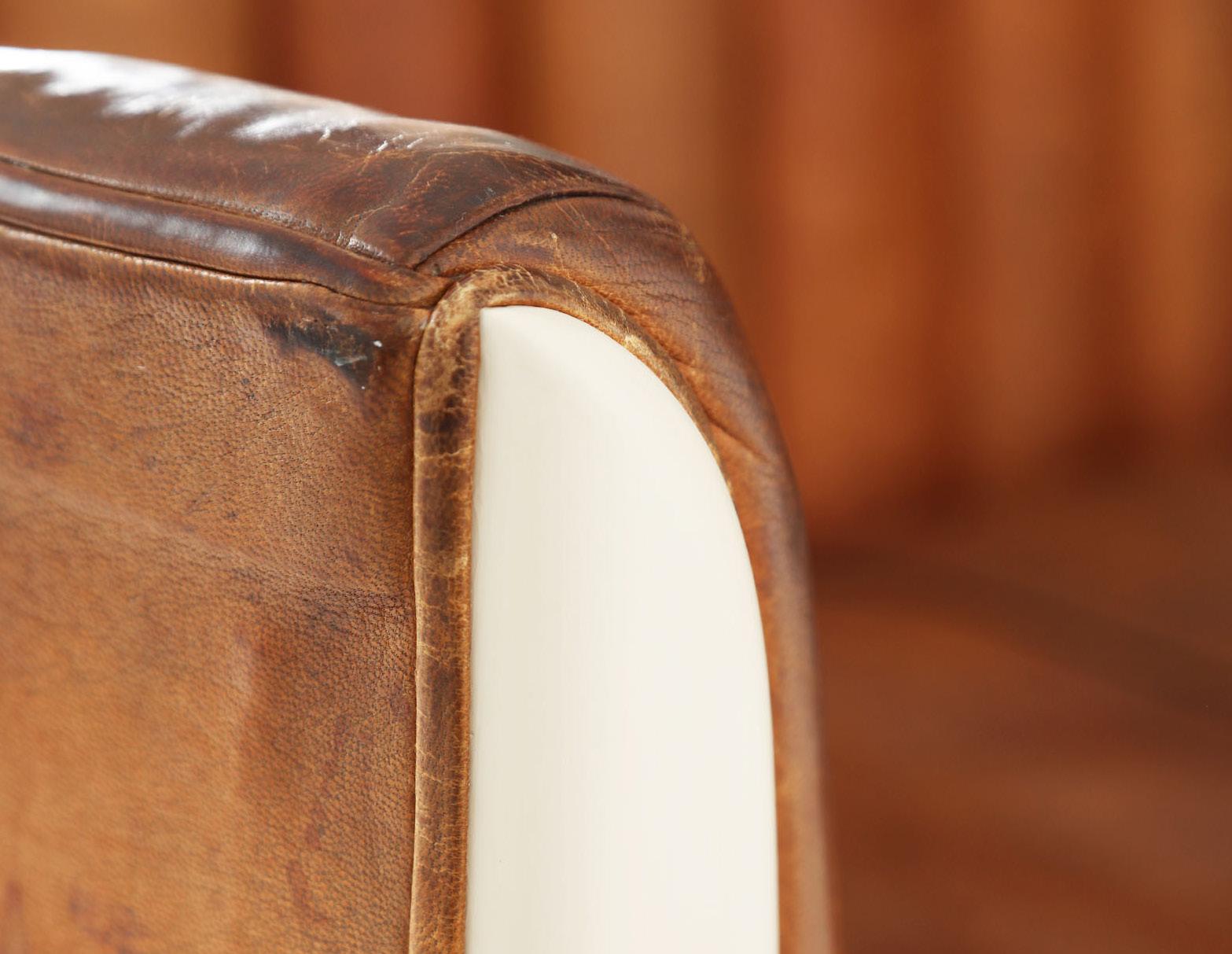
ACTON BJØRN, 1910-1992
Rare two-seater sofa
Designed 1941
Niger leather and painted wood
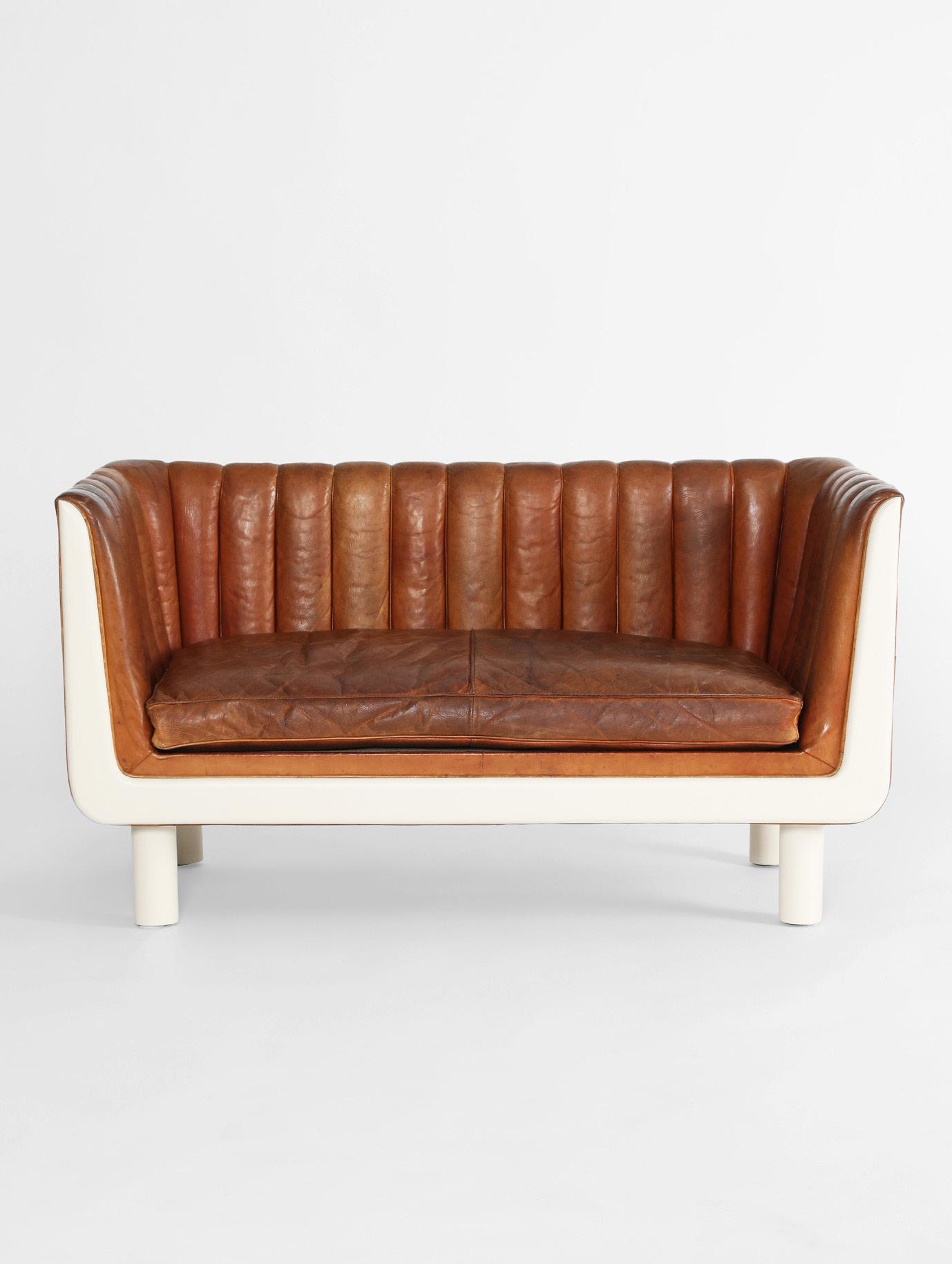
Acton Bjørn (1910–1992) was a Danish architect and designer whose career bridged the transition from traditional craftsmanship to modern industrial design. Trained initially as a carpenter and later as an architect from the Royal Danish Academy of Fine Arts, he brought a rare material sensitivity to his work - combining technical precision with an intuitive understanding of form. His early career included architectural collaborations in the 1930s, but he would later become a pioneer of Scandinavian industrial design, notably co-founding one of the first industrial design studios in the region with Sigvard Bernadotte in 1949. Before this shift, however, Bjørn’s furniture designs of the early 1940s reveal a more intimate, almost sculptural approachobjects conceived for specific interiors rather than mass manufacture.
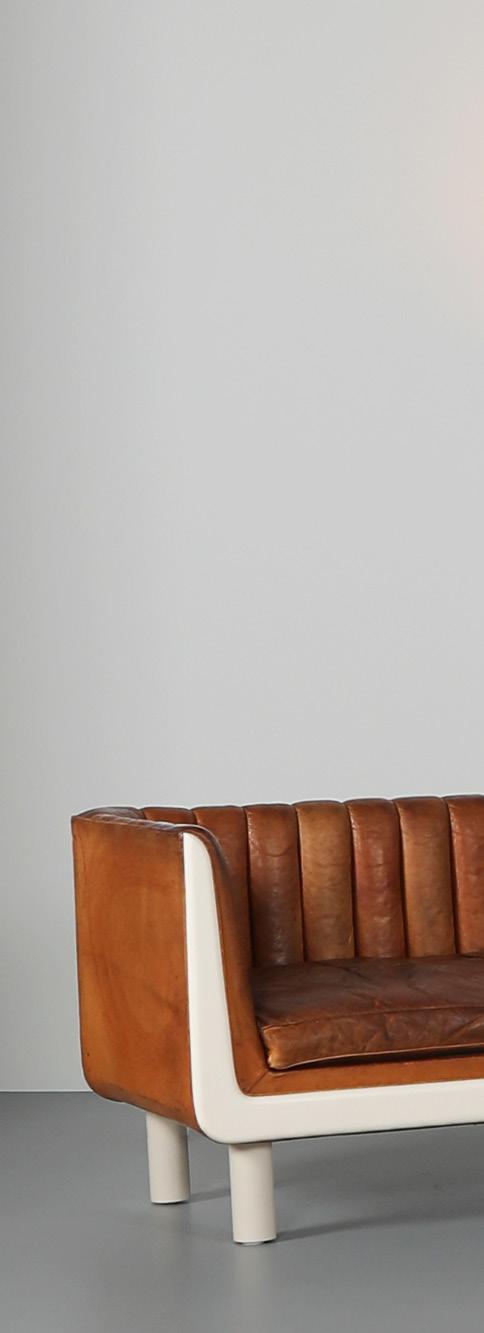
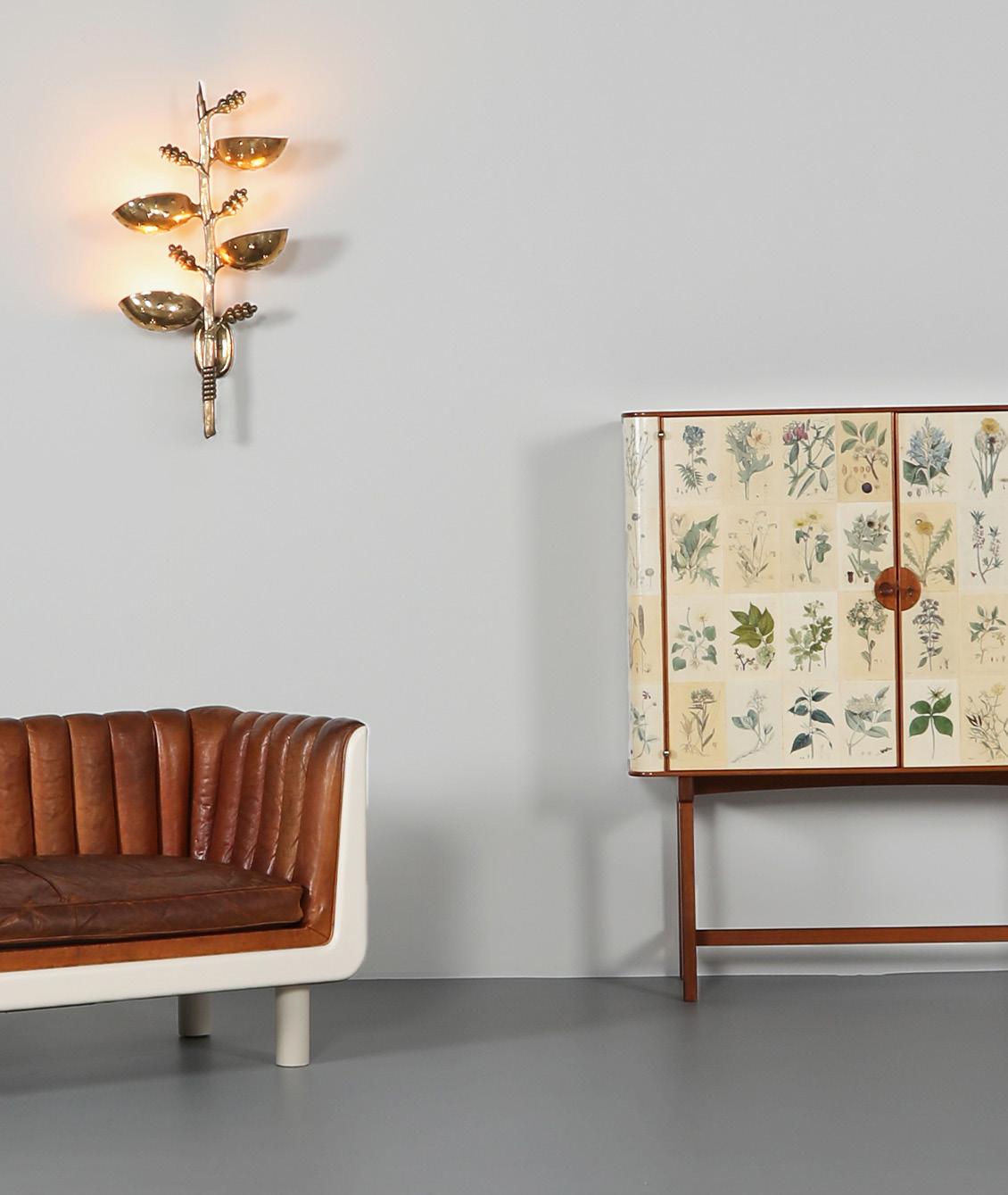
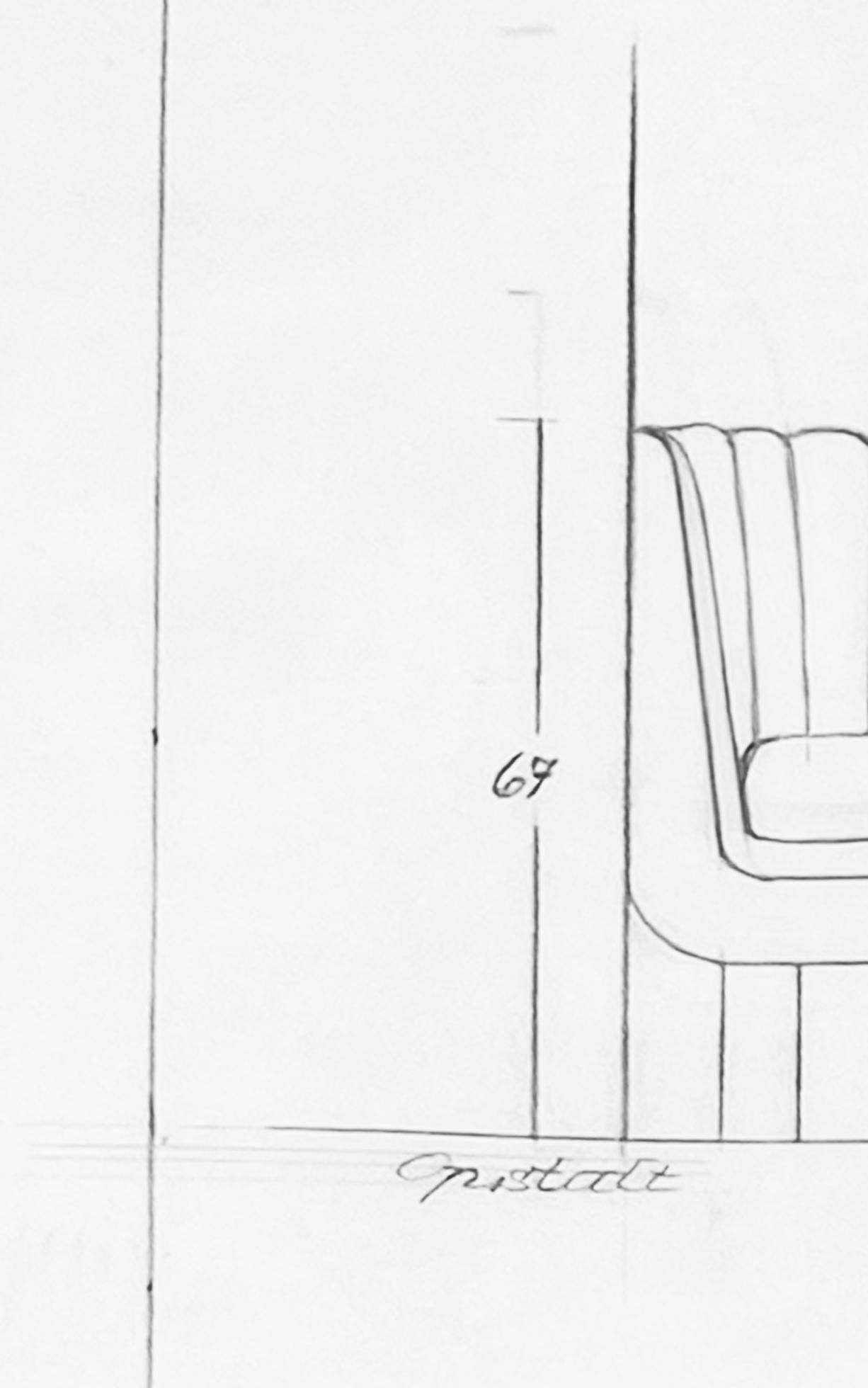
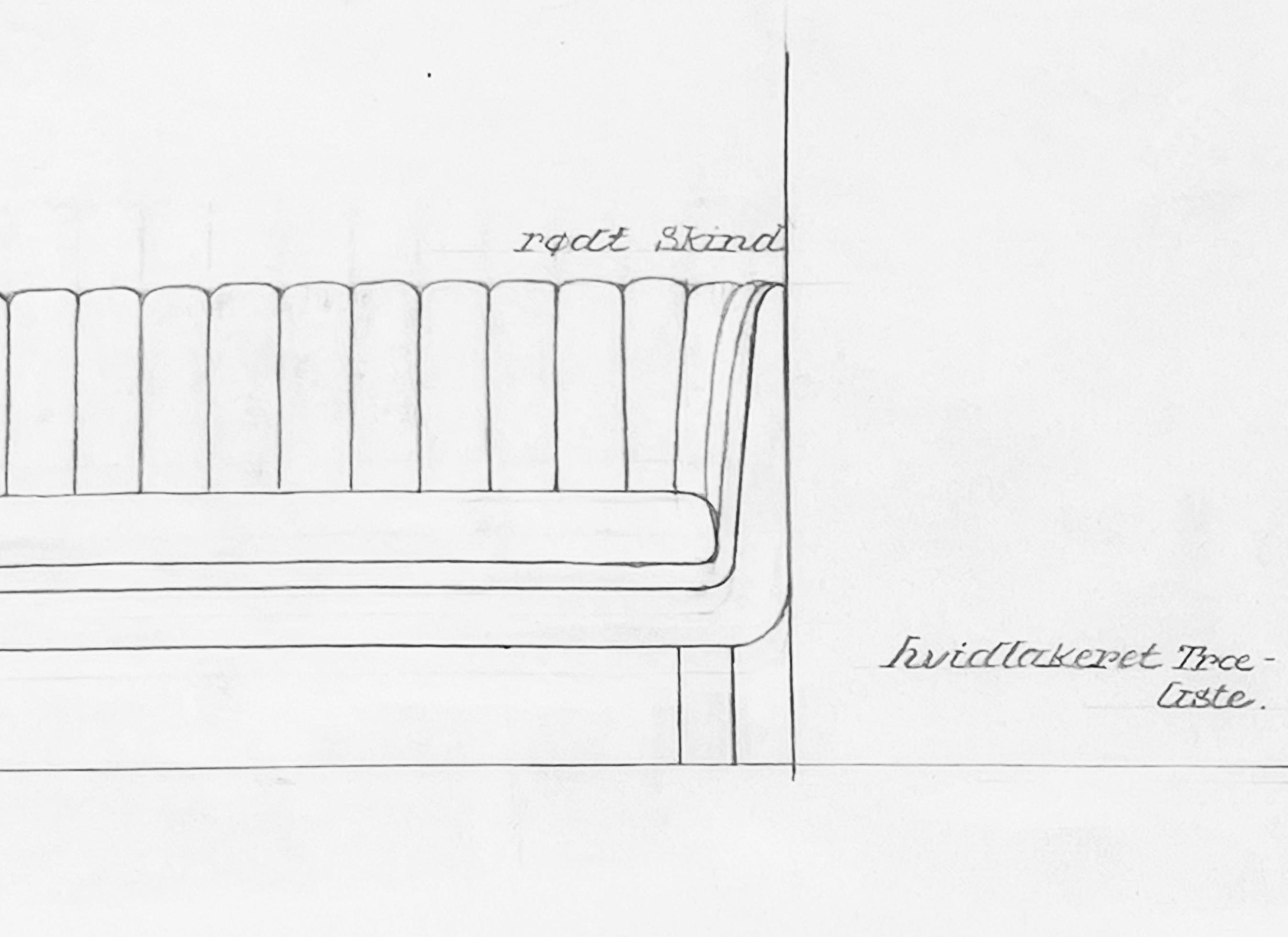
The rare sofa shown here, designed in 1941 for a private villa in Klampenborg, belongs to this formative period. Its modest scale reflects its bespoke origin, suggesting a piece tailored to the proportions of a particular room and client rather than standardized production. The sofa’s design is striking for its synthesis of softness and structure. A gently curved, enveloping backrest is articulated with vertical channel tufting in richly patinated tan leather, giving the piece both rhythm and depth. This tactile upholstery contrasts with the crisp, architectural outer shell - painted in a light tone, which frames the seating volume like a continuous band. The cylindrical legs further emphasize the sofa’s grounded, almost sculptural presence, while maintaining a lightness typical of Danish modern sensibilities. Viewed from different angles, the piece reveals Bjørn’s sensitivity to volume; the rounded corners and seamless transitions between armrests and back create a unified form that appears carved rather than assembled.
This sofa exemplifies Bjørn’s early mastery of proportion, material, and craftsmanship. It stands at the intersection of architecture and furniture, where space, body, and object are conceived as a coherent whole. In this sense, it anticipates his later contributions to industrial design, while remaining rooted in the bespoke, human-centered ideals that define the best of Danish modernism.
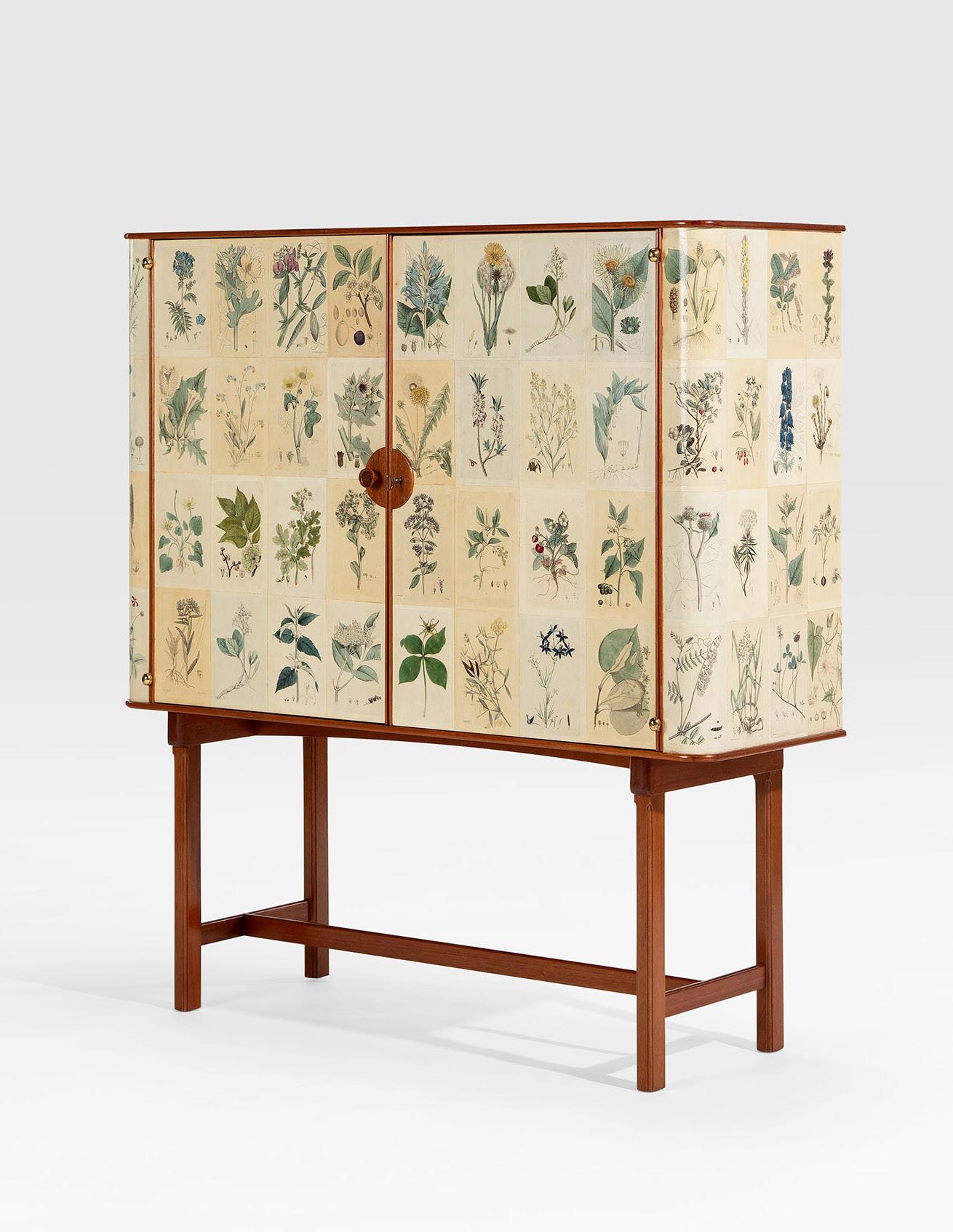
JOSEF FRANK, 1885 - 1967
Designed 1938
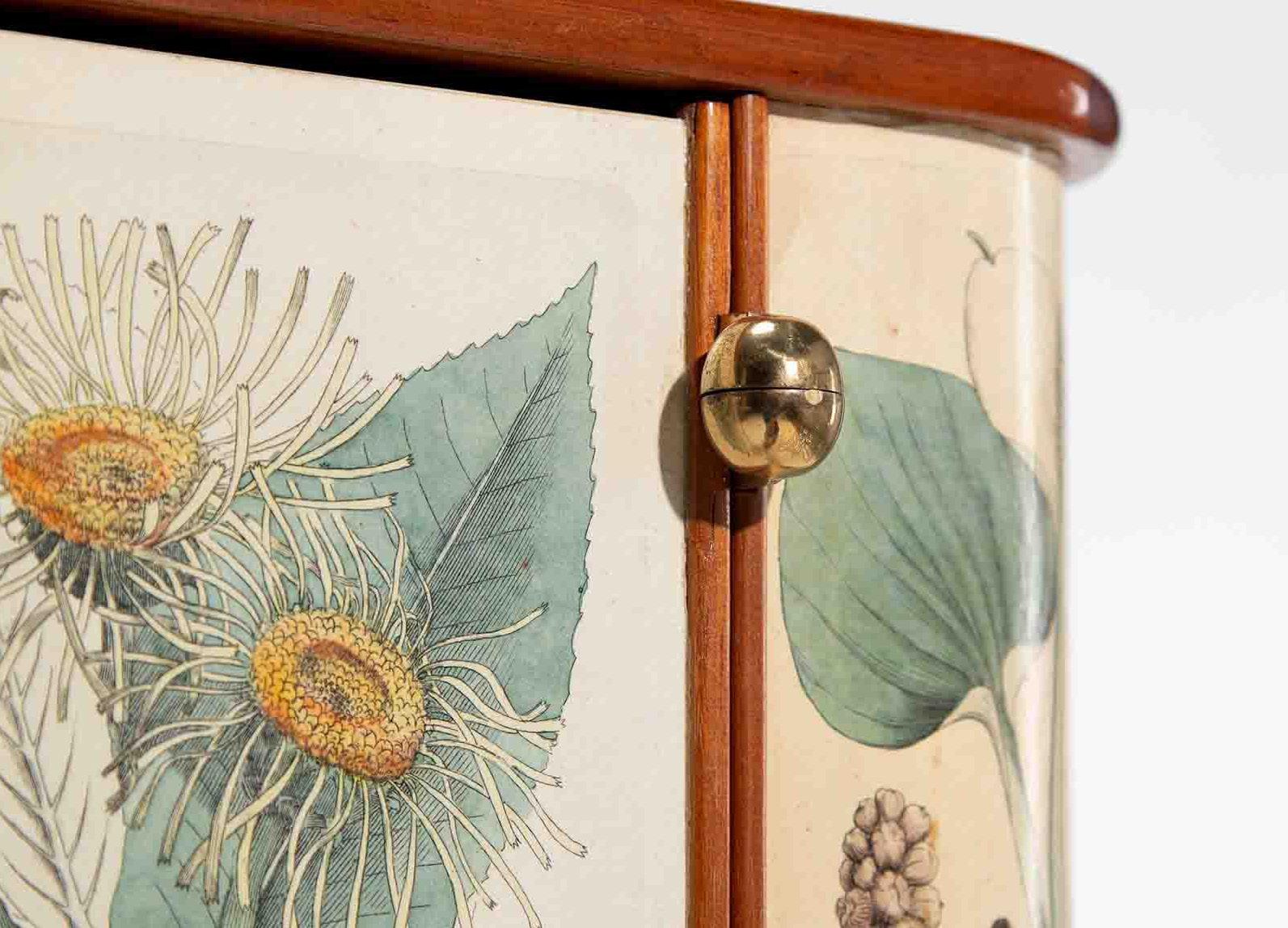
Flora cabinet
Made by Svenskt Tenn Mahogany, paper and brass
PAAVO TYNELL, 1890 - 1973
Rare wall-mounted light fixture
Provenance: Restaurant Wivex, Tivoli Gardens, Copenhagen
Designed c. 1948
Made by Taito Oy Brass, partly painted
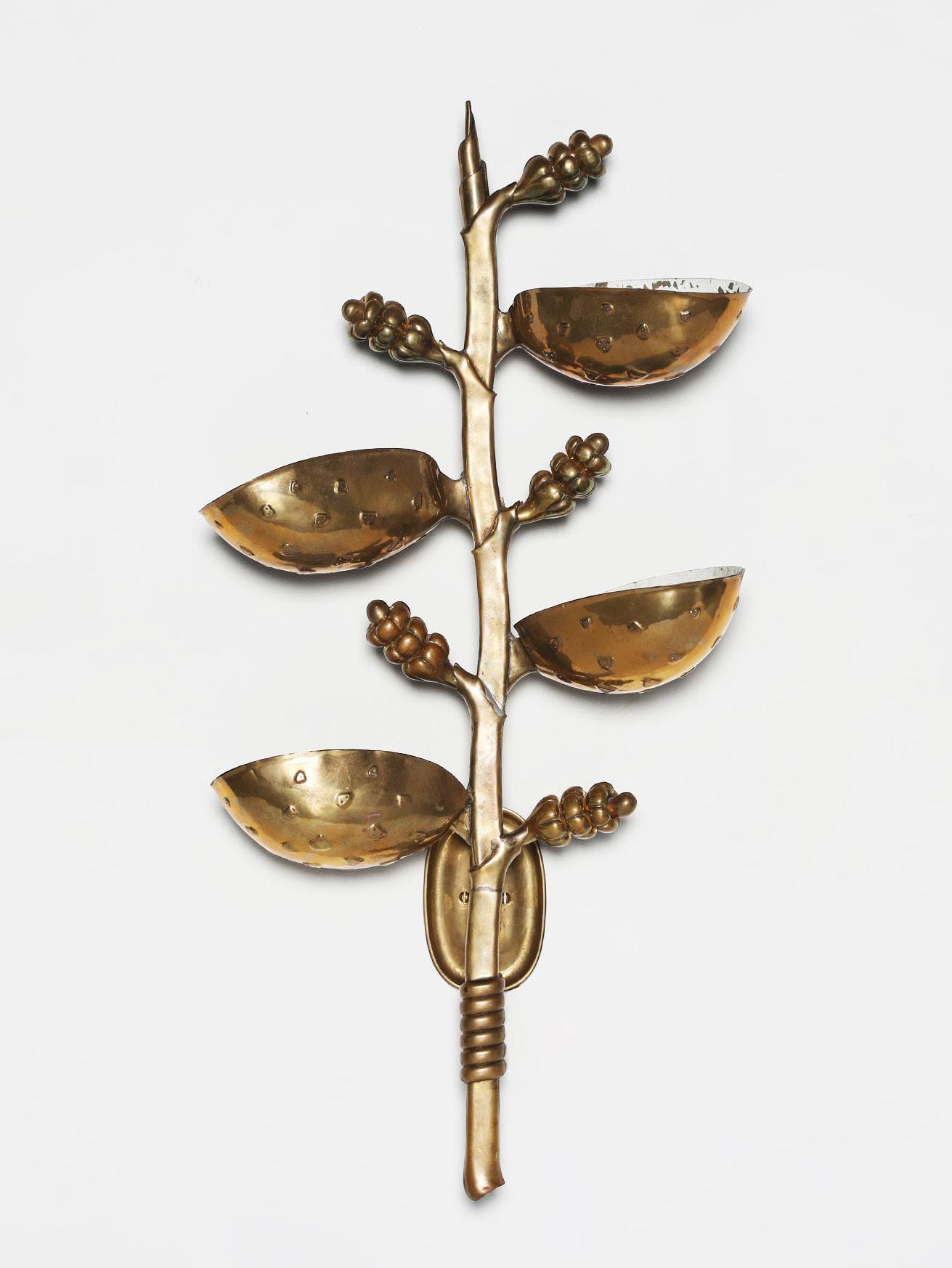
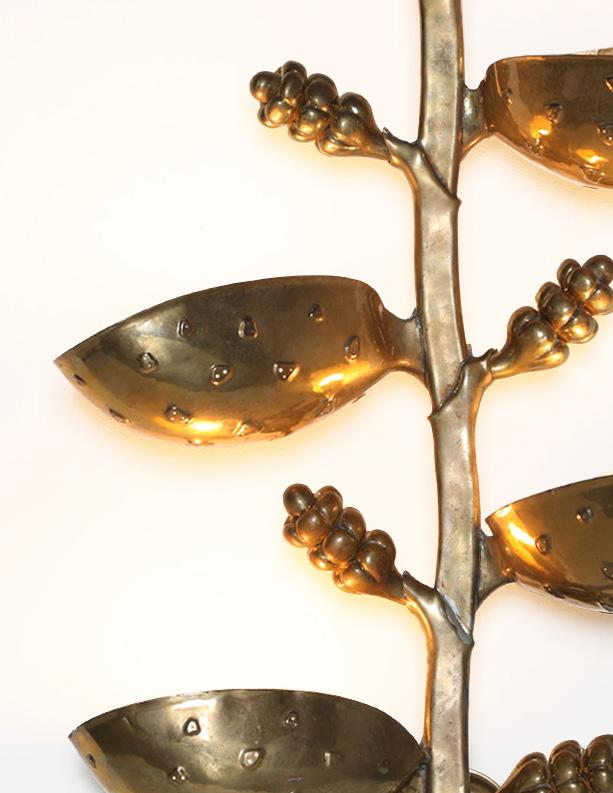
Among Tynell’s most poetic and rare creations is the wall-mounted light fixture designed exclusively for Restaurant Wivex in Tivoli Gardens, Copenhagen, around the late 1940s. The commission came in the aftermath of World War II, when Wivex had to be rebuilt after being destroyed by fire during the Danish occupation.
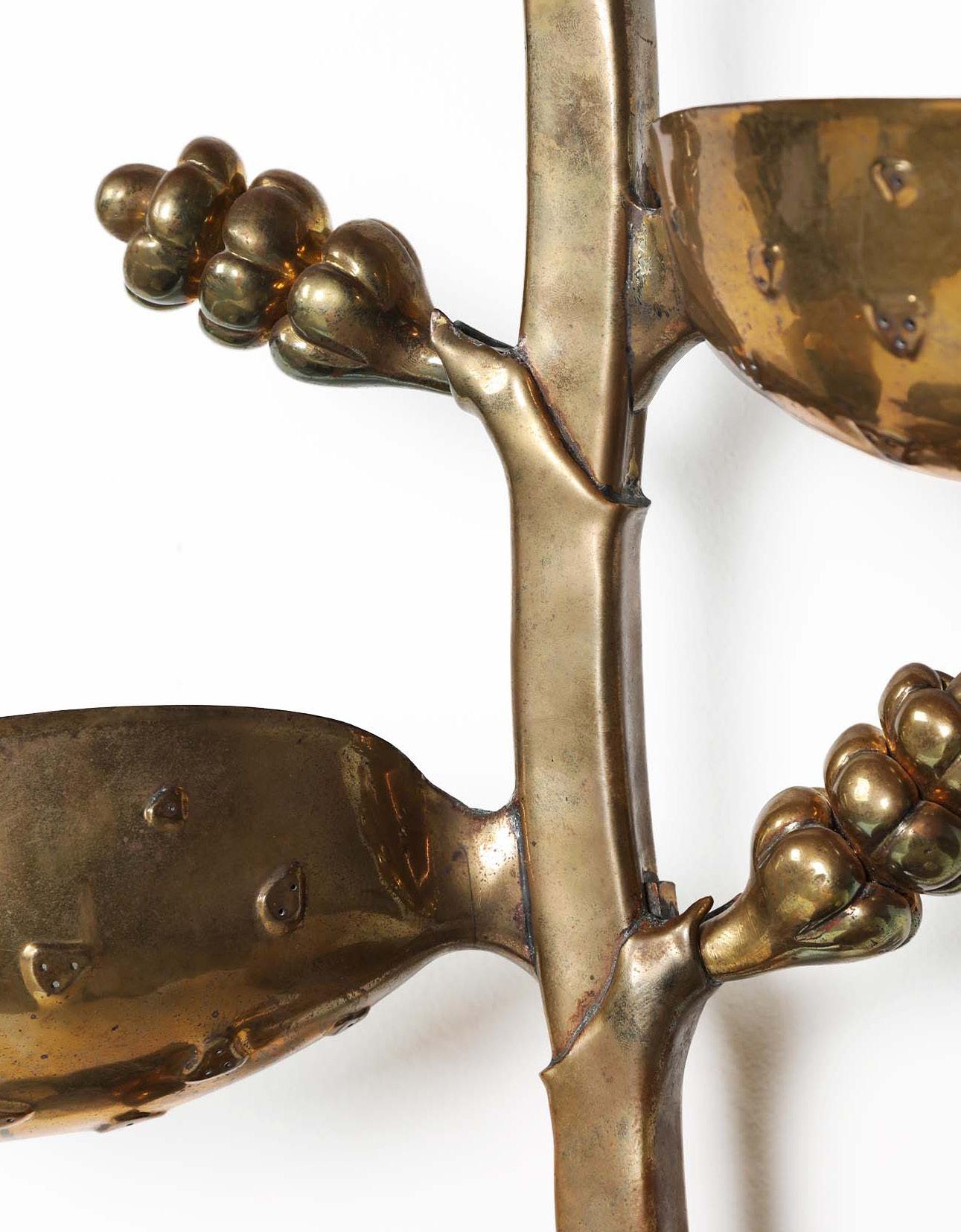
In this context of renewal, Tynell conceived a fixture that embodies both resilience and organic growth. The light takes the form of a stylized vertical branch in brass, from which several small arms extend like budding shoots. Each arm supports a shallow, perforated brass cup - partly painted on the inside to enhance the warmth and diffusion of light - while clusters of rounded forms resemble berries or flower buds. This botanical motif is characteristic of Tynell’s mature style, where metal is transformed into something almost living.
Technically, the fixture demonstrates his mastery of material; hammered and perforated brass surfaces create a dappled, atmospheric glow, while the painted interiors of the cups soften and direct the light. The composition is both sculptural and functional, blurring the boundary between decorative art and lighting design. Installed along the walls of Wivex, these fixtures would have contributed to an intimate, almost theatrical ambiance - light filtering gently through the perforations like candlelight through leaves. Their rarity today reflects their original purpose as site-specific designs, created not for mass production but for a singular architectural setting.
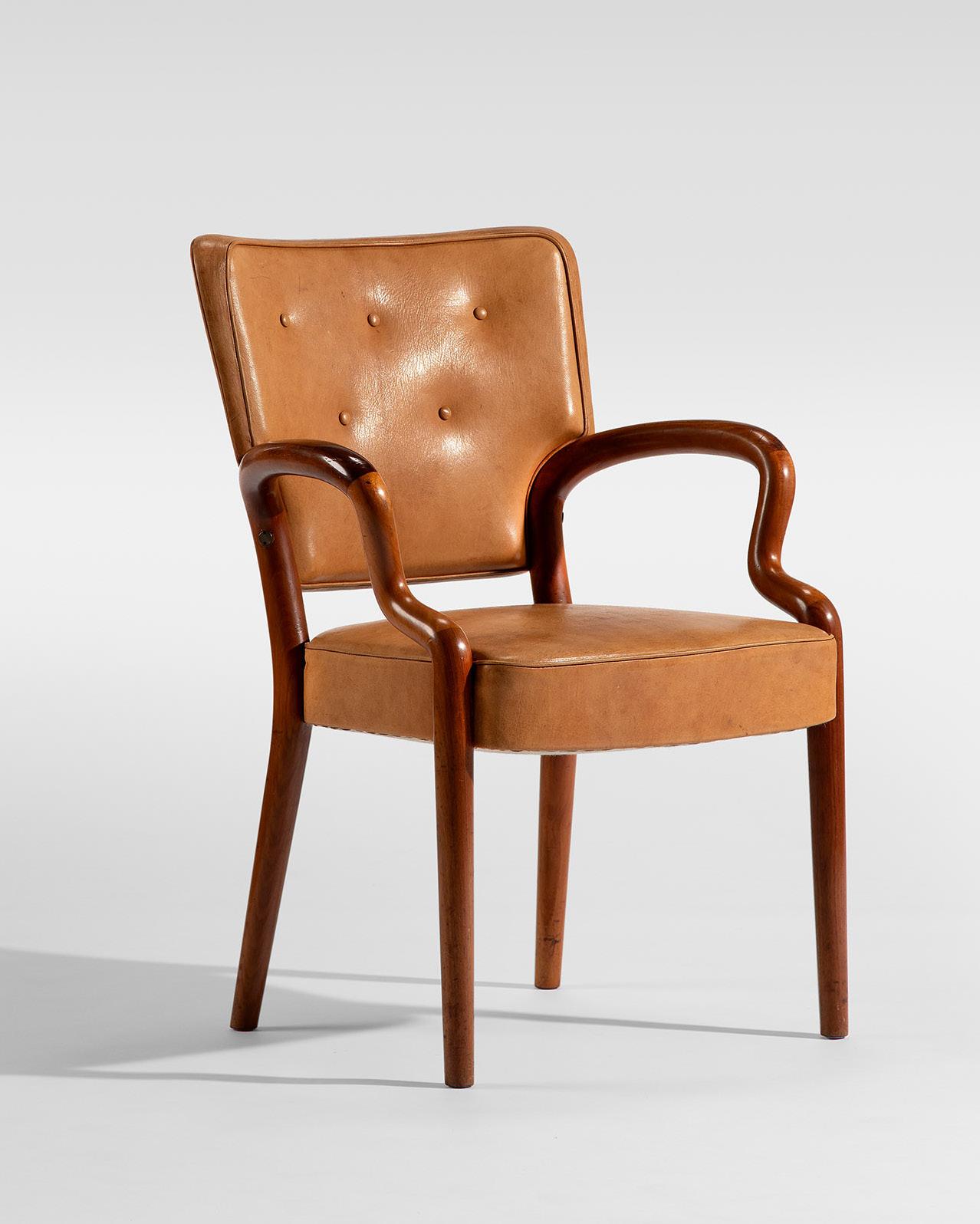
VILHELM LAURITZEN, 1894-1984
Armchair
Designed c. 1940
by Normina
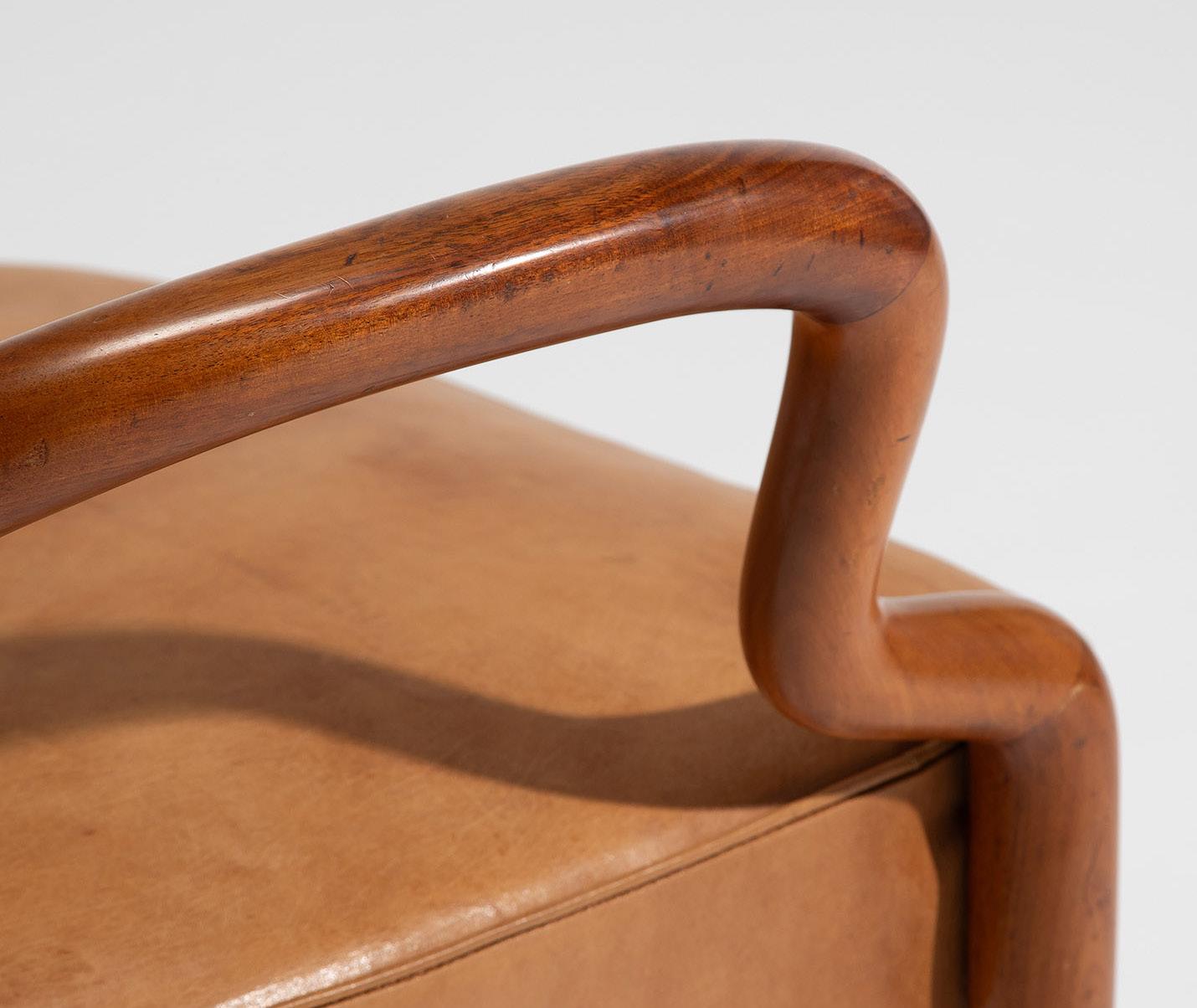
Made
Cuban mahogany, Niger leather and brass
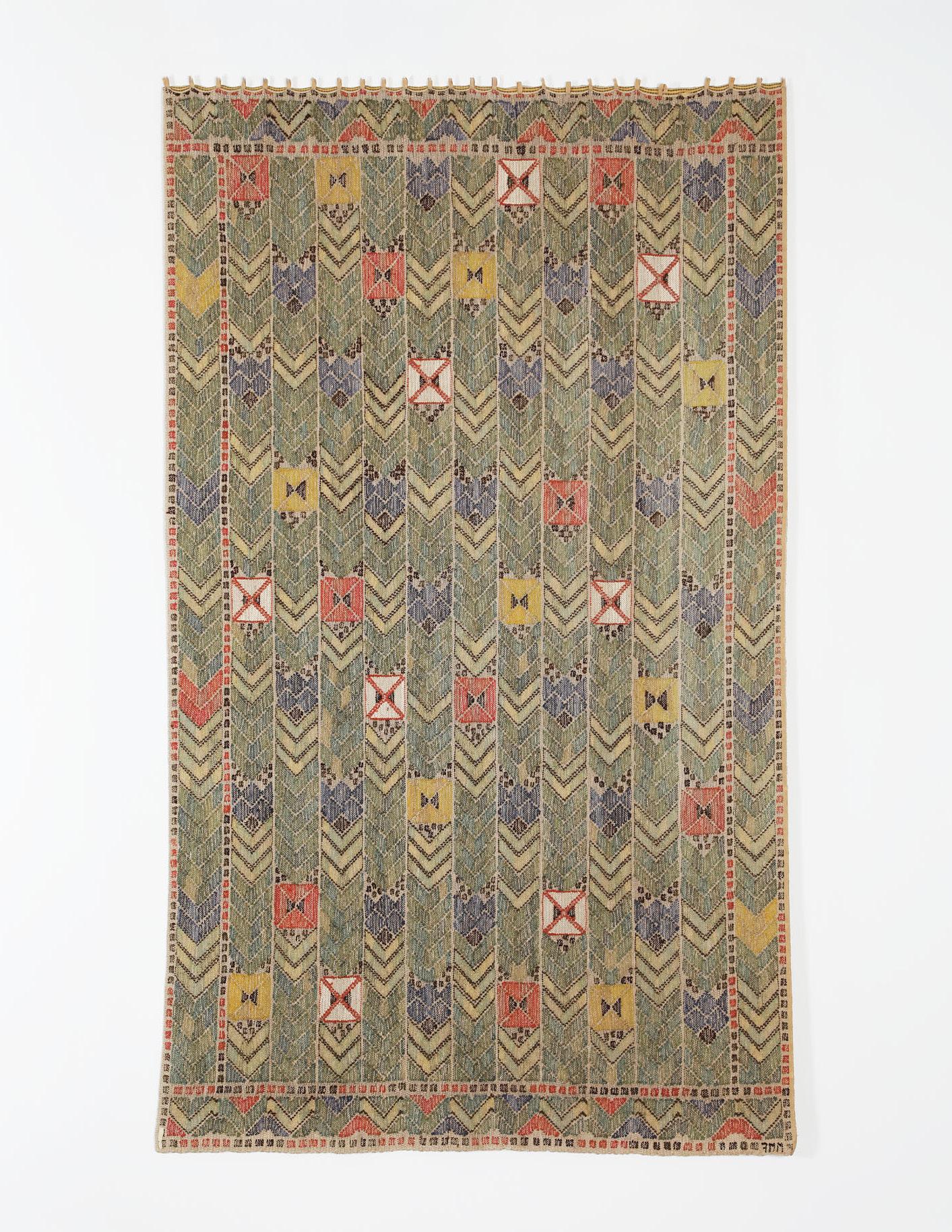
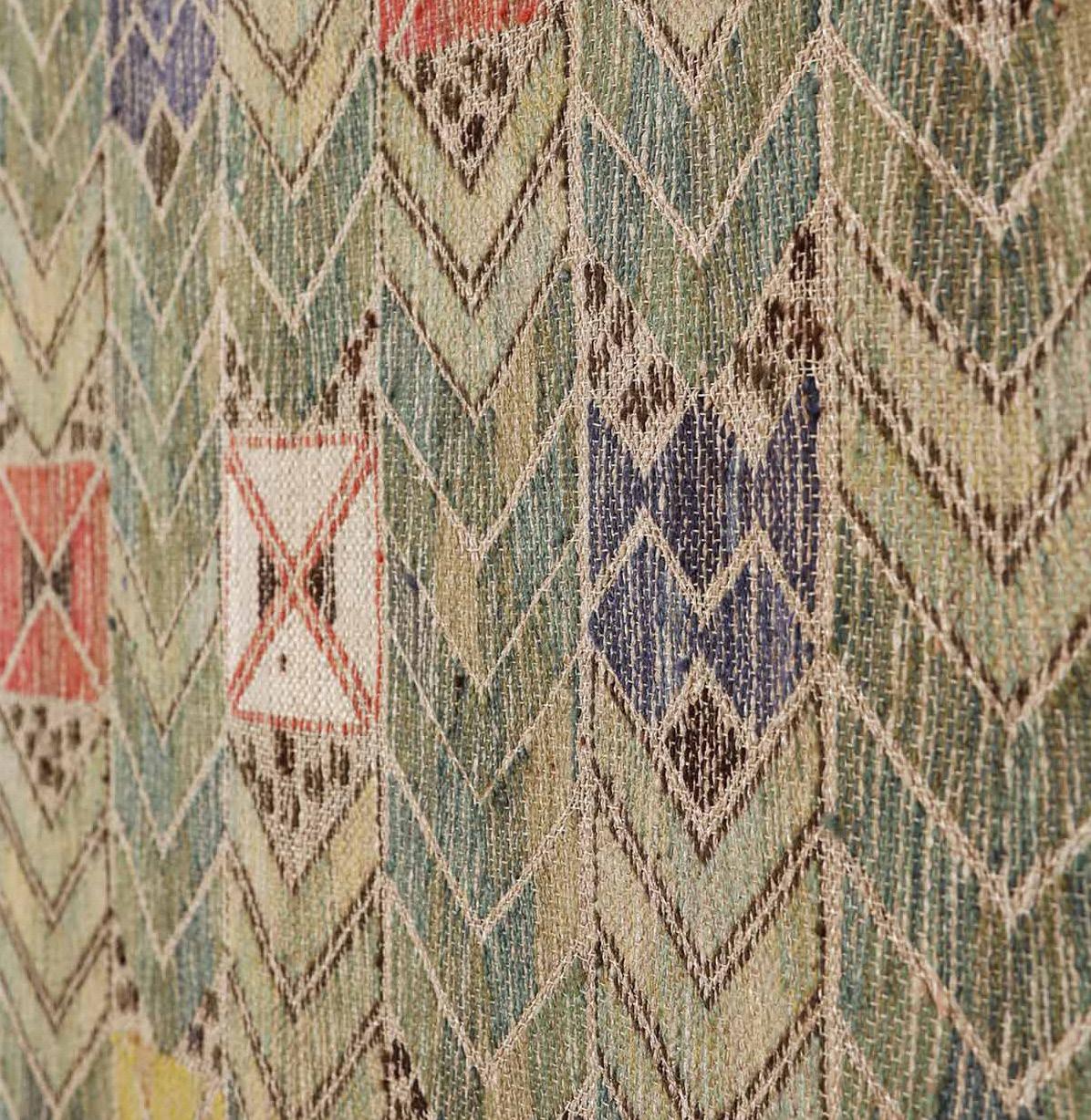
MÄRTA MÅÅS-FJETTERSTRÖM,
1899 - 1983
Tapestry
Designed 1929, woven before 1942
Made by Märta Måås-Fjetterström
Wool and linen on linen warp
246 x 127 cm
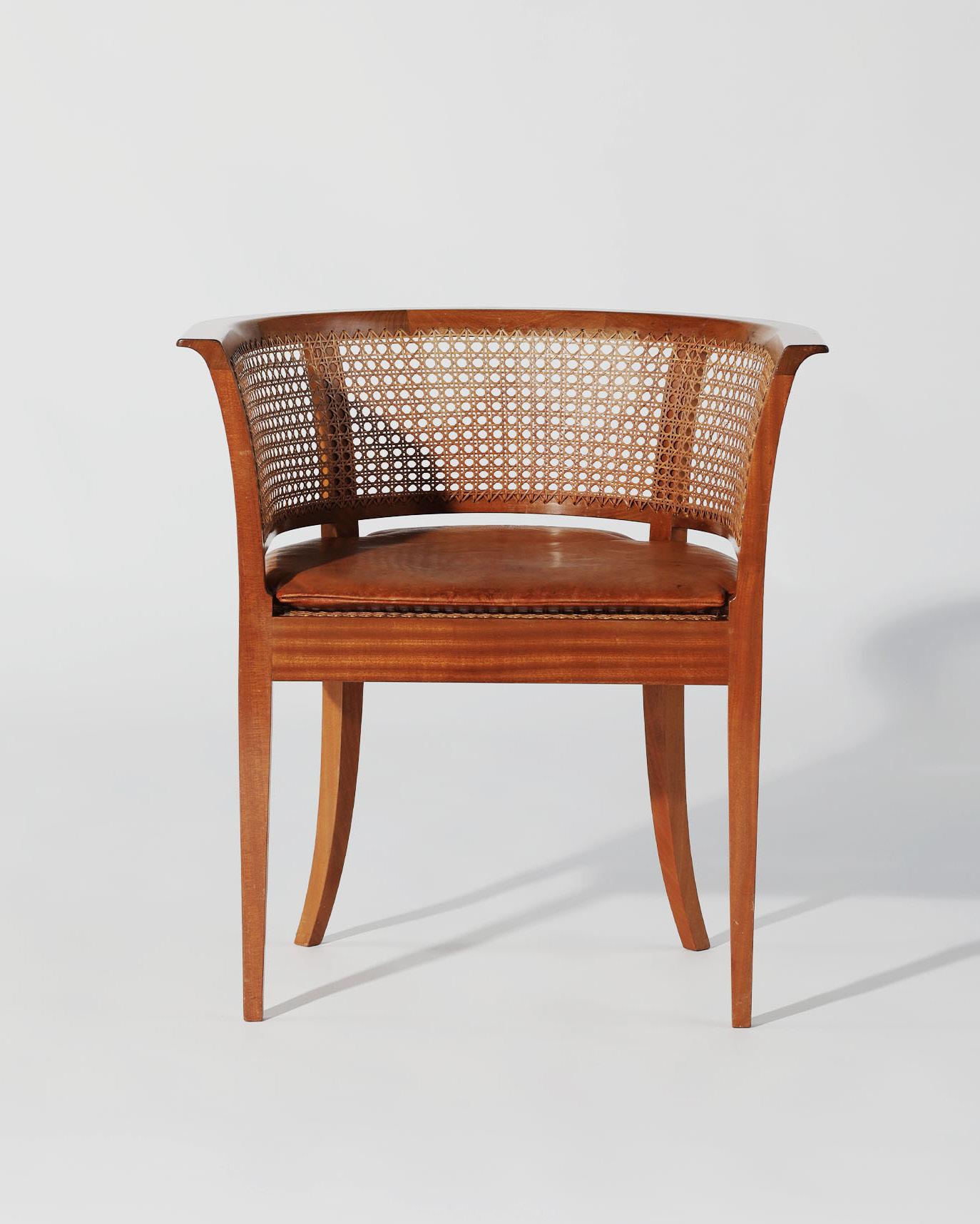
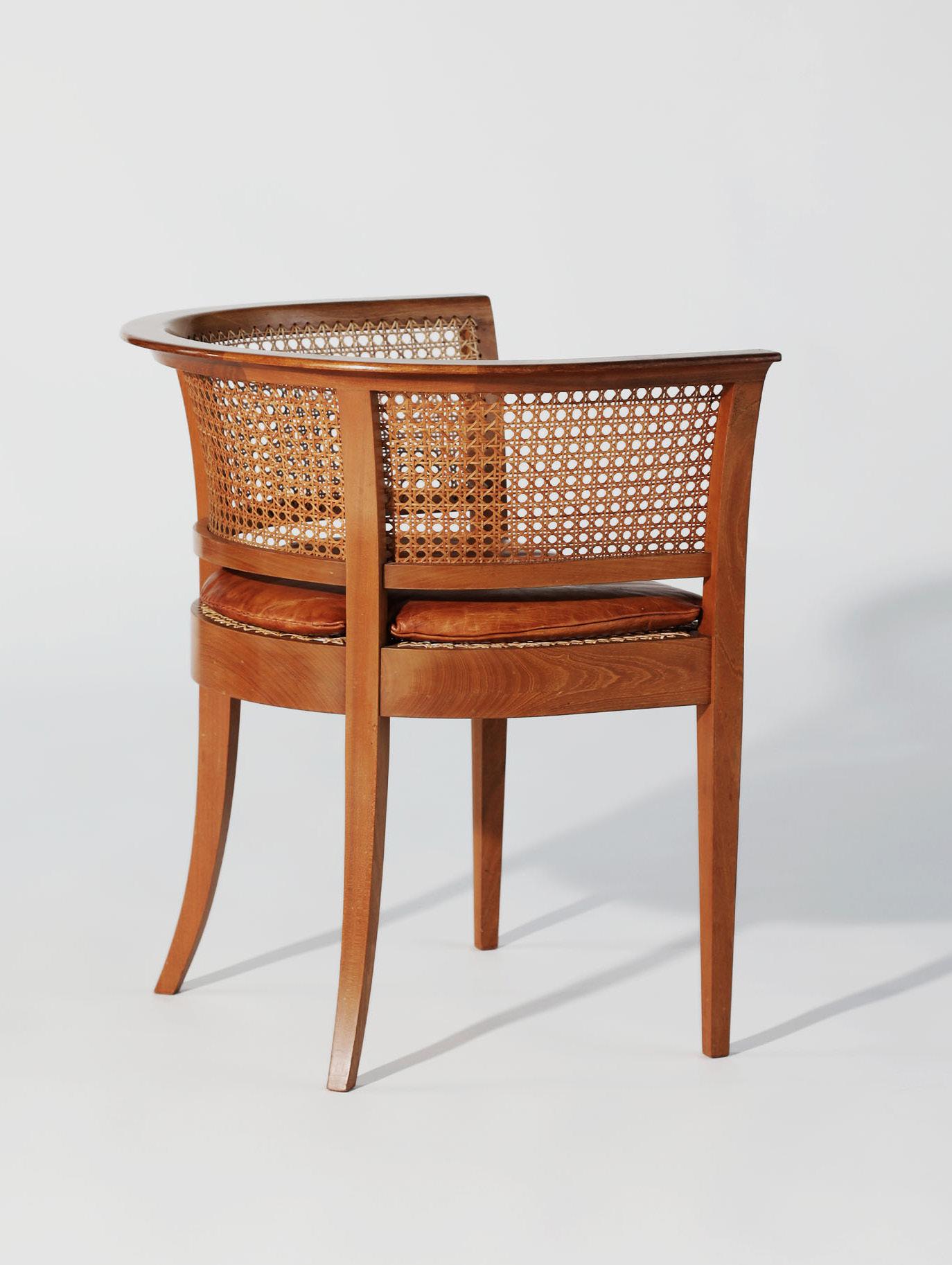
KAARE KLINT, 1888 - 1954
Set of four Faaborg chairs
Designed 1914
by Rud. Rasmussen Mahogany, cane and Niger leather
Made
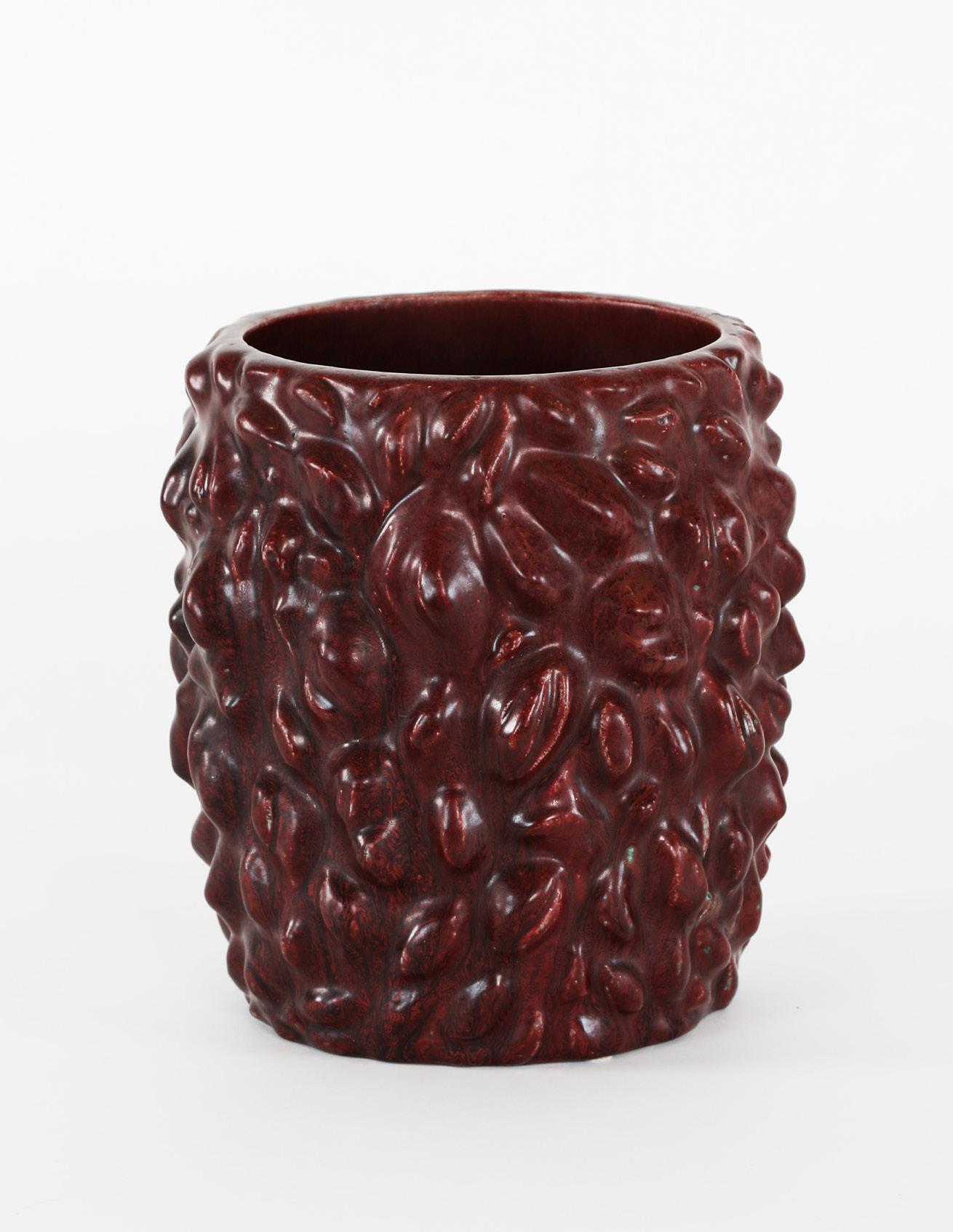
AXEL SALTO, 1889 - 1961 Vase
Designed 1936
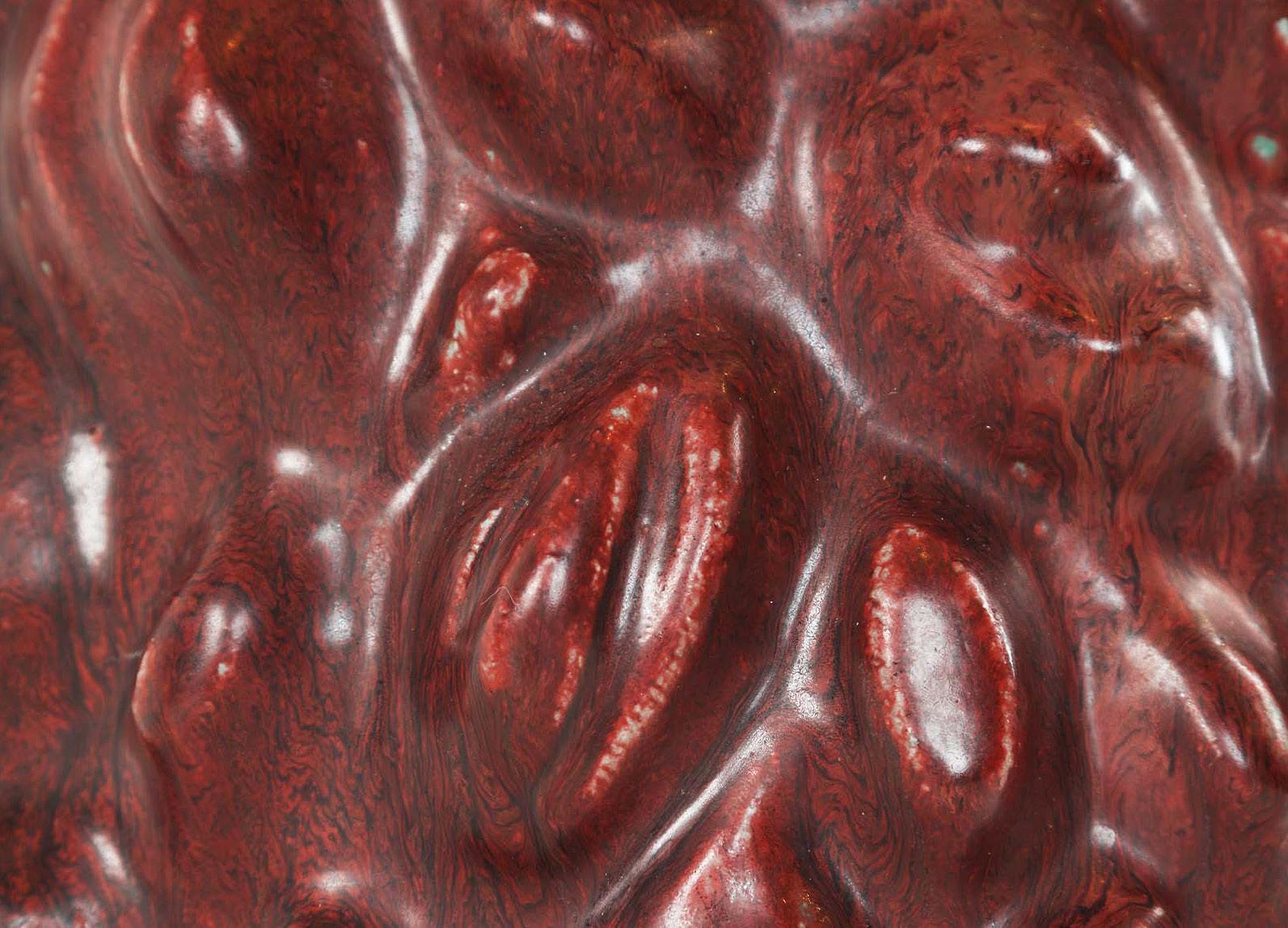
Made by Royal Copenhagen Glazed stoneware
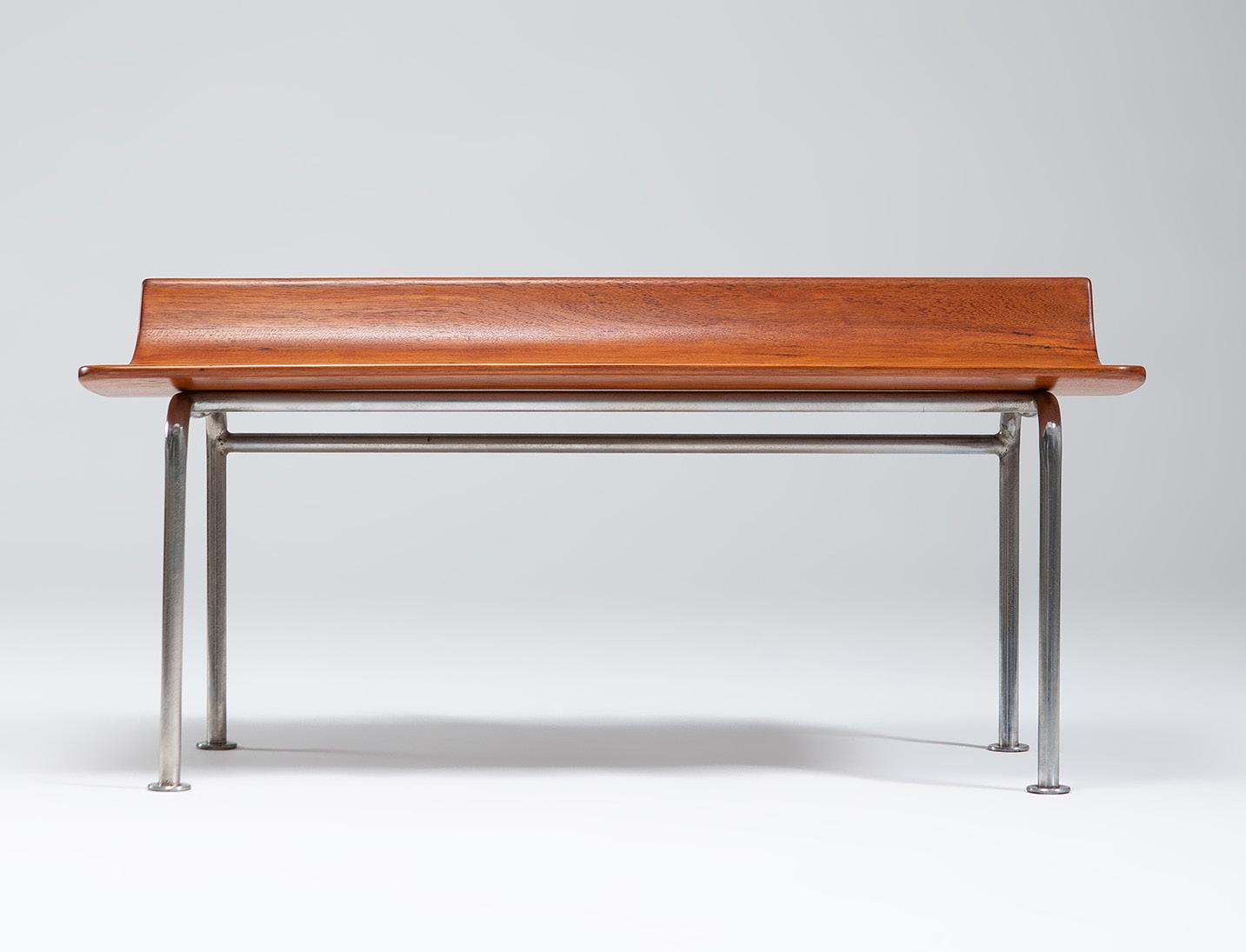
VILHELM LAURITZEN, 1894-1984
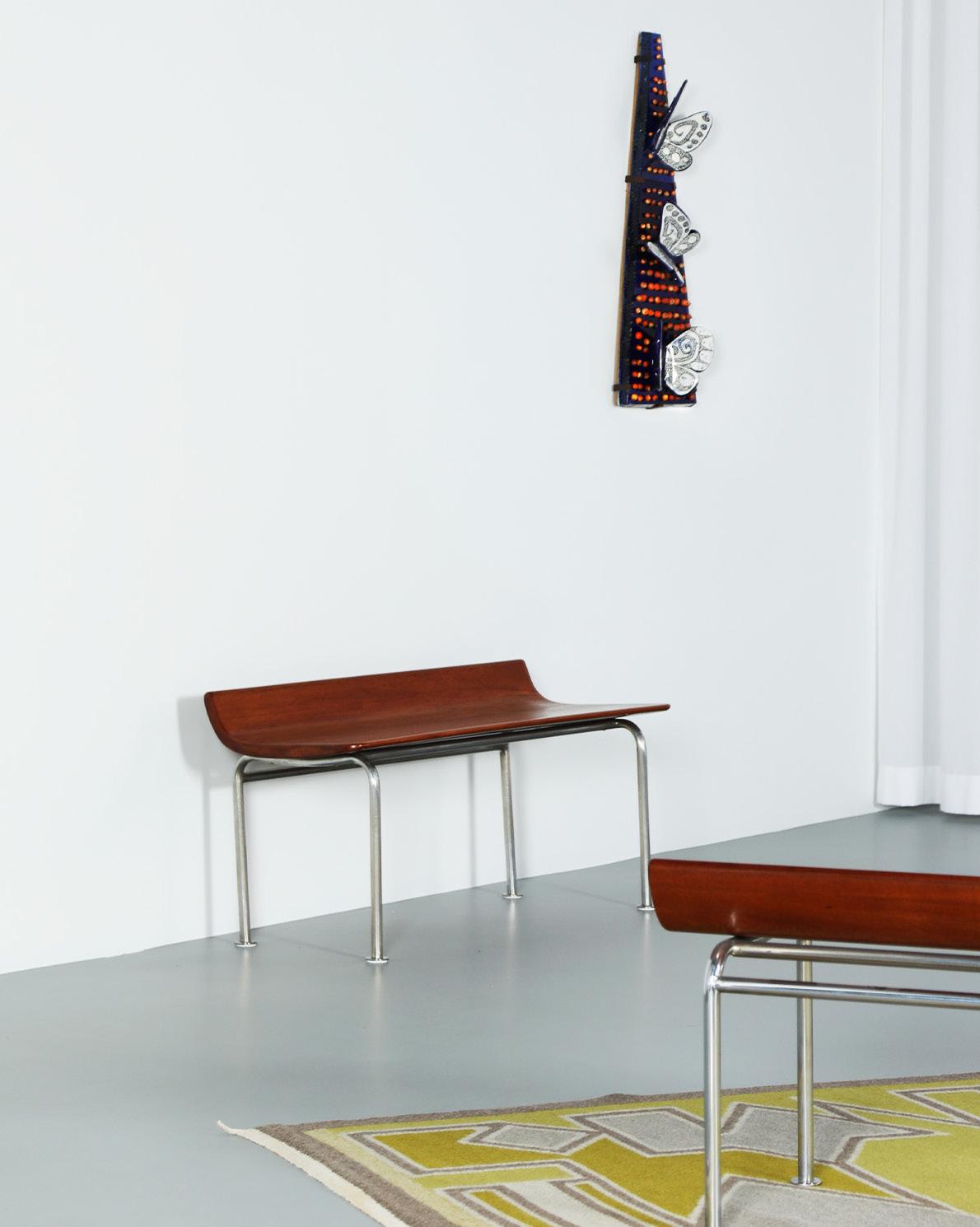
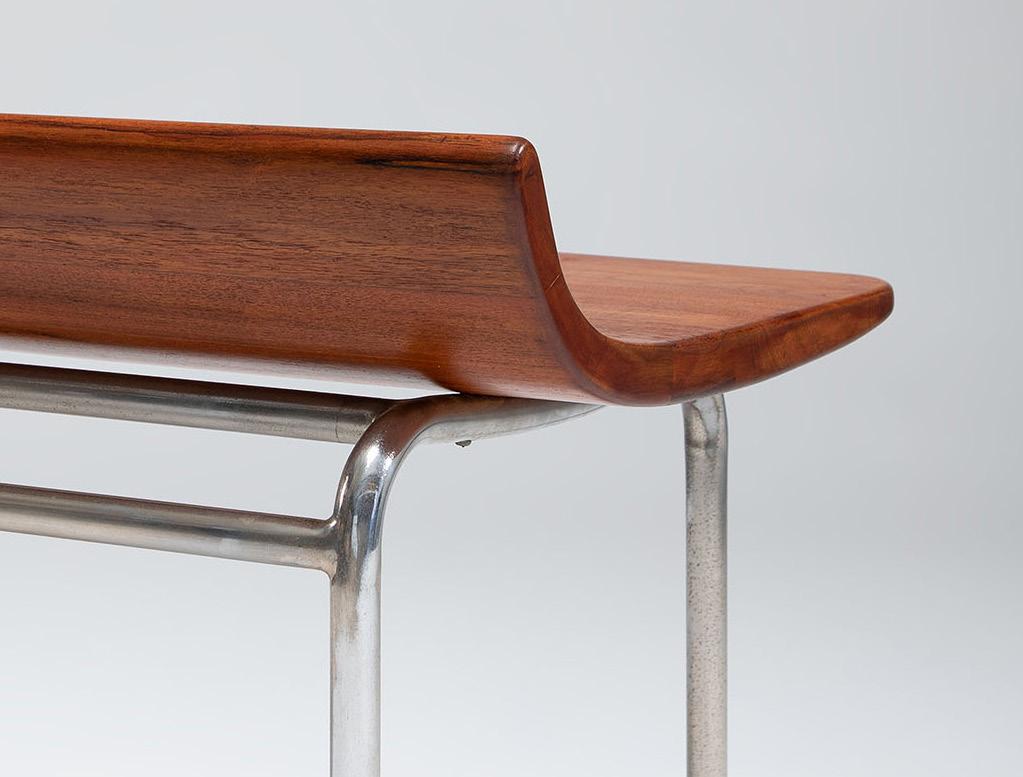
Pair of City Hall benches
Designed c. 1936, for Gladsaxe City Hall
Teak and chrome-plated steel
ALVAR AALTO, 1898-1976
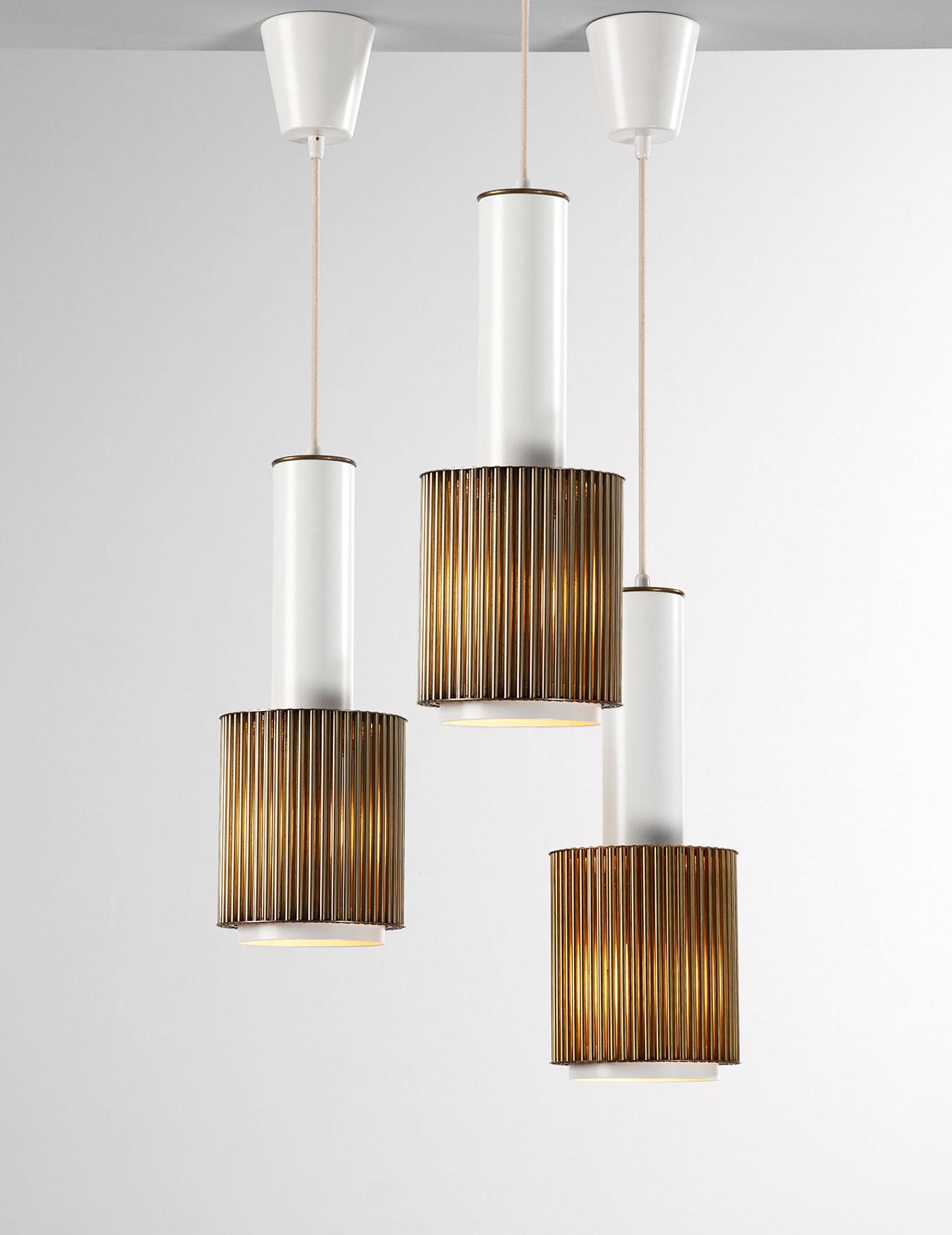
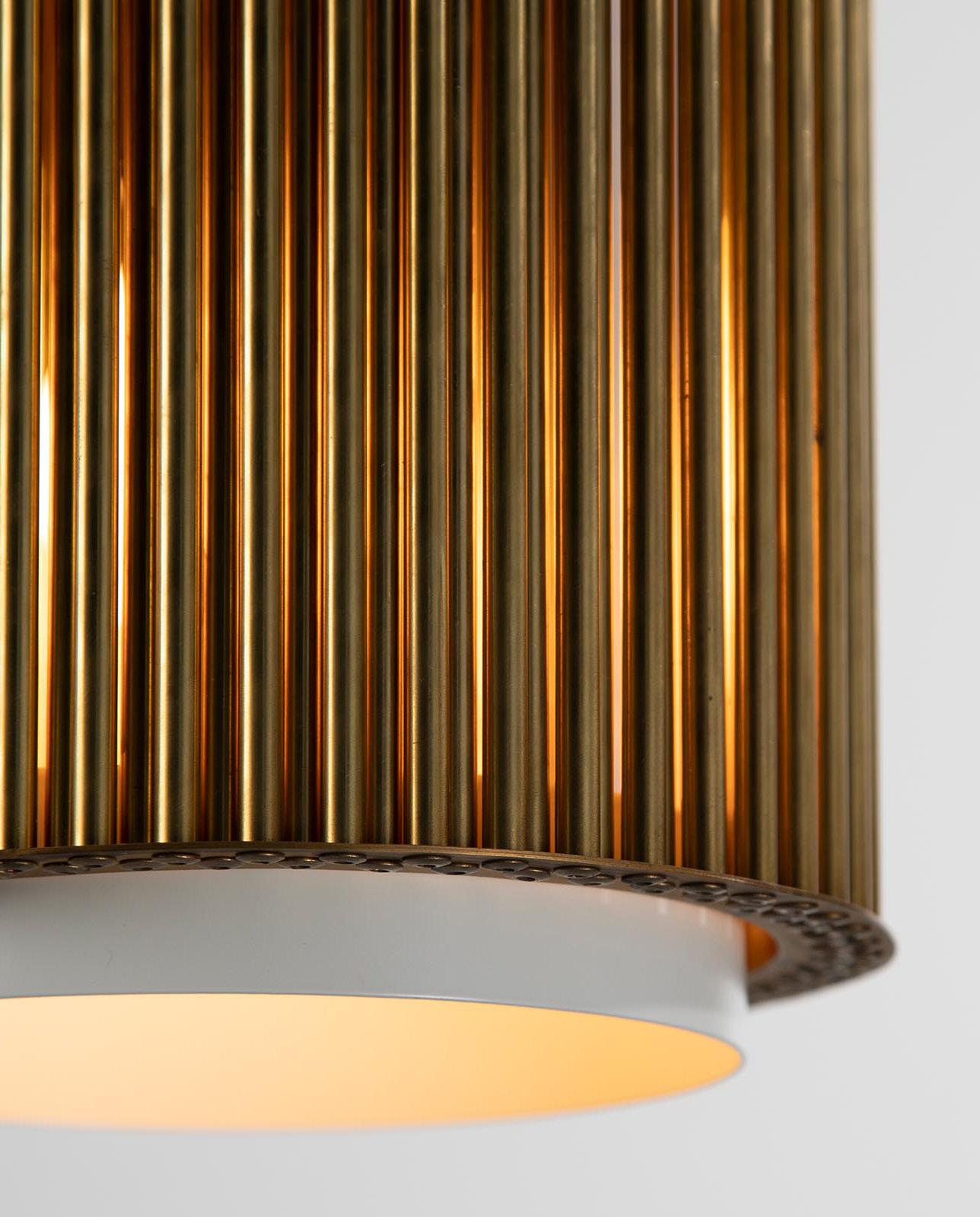
Set of three pendants
Designed c. 1962
Made by Valaistustyö Oy
Brass and painted aluminium
FINN JUHL, 1912 - 1989
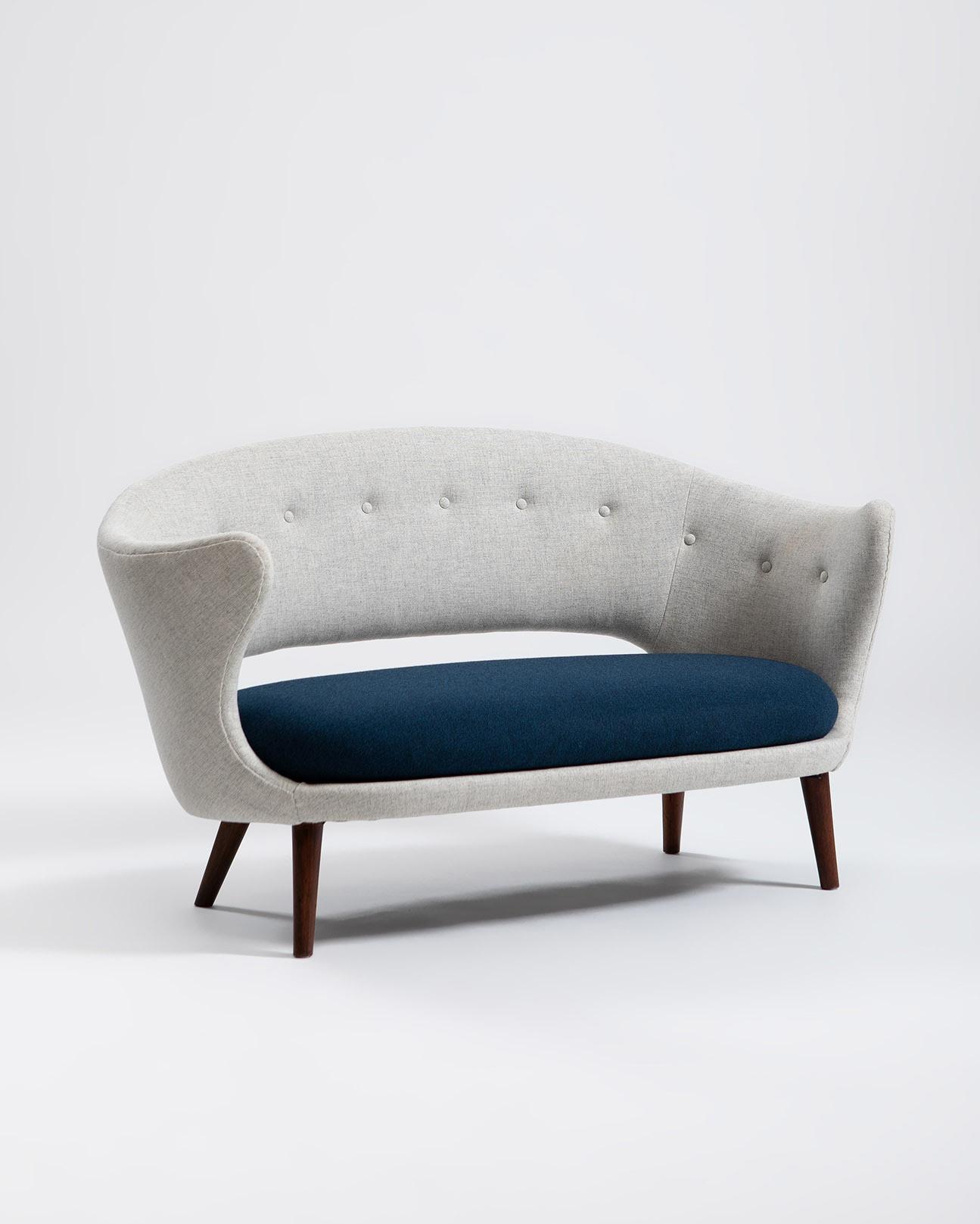
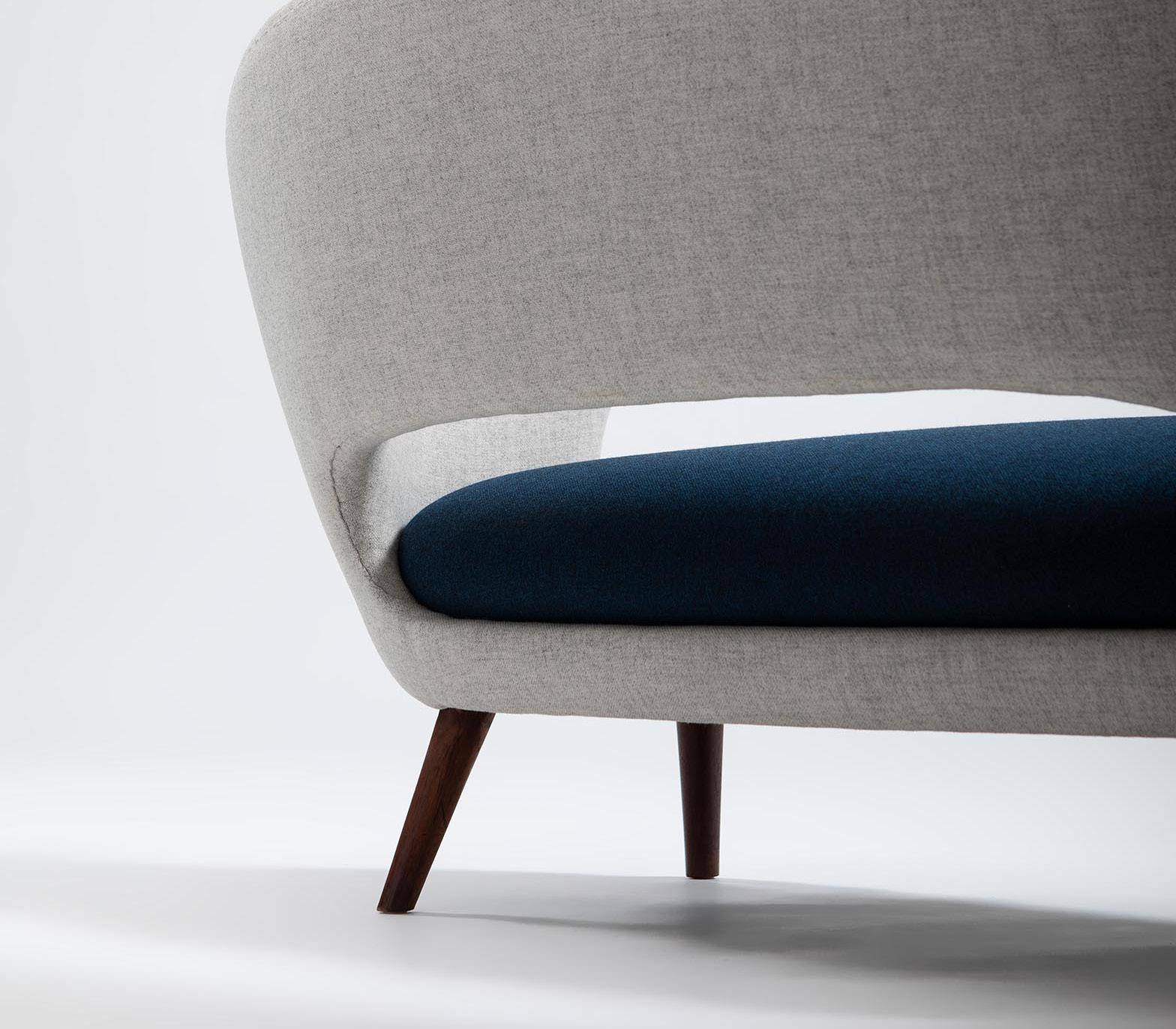
Rare sculptural sofa
Designed 1950
Made by Søren Willadsen Teak and textile
BIRGER KAIPIAINEN,
1915 - 1988
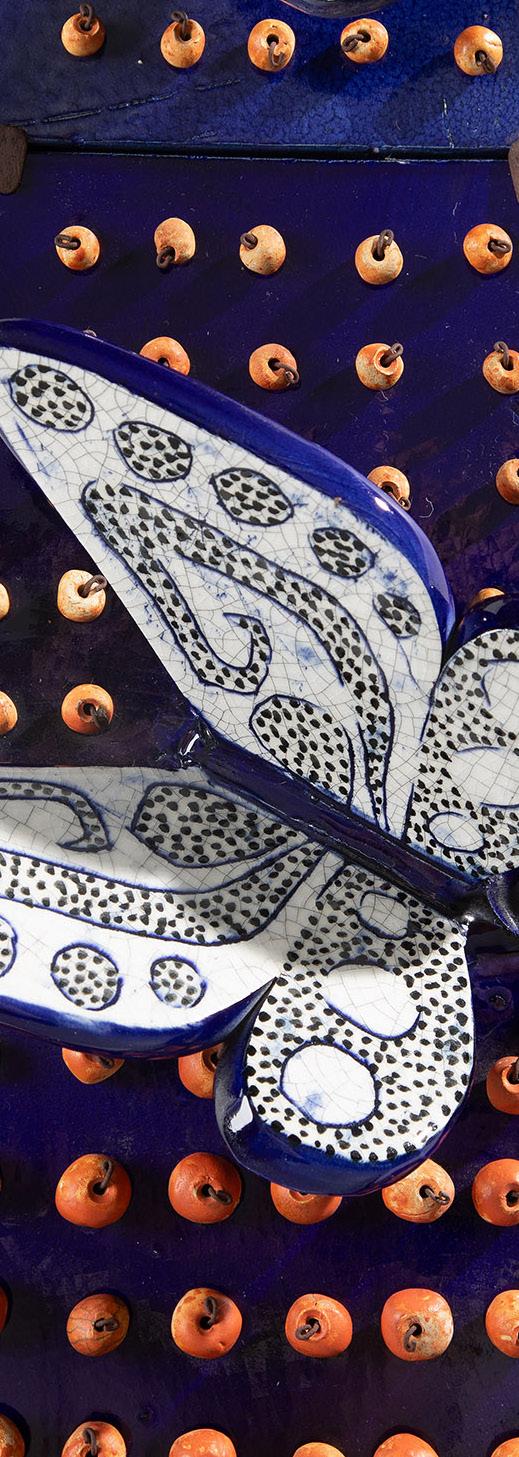
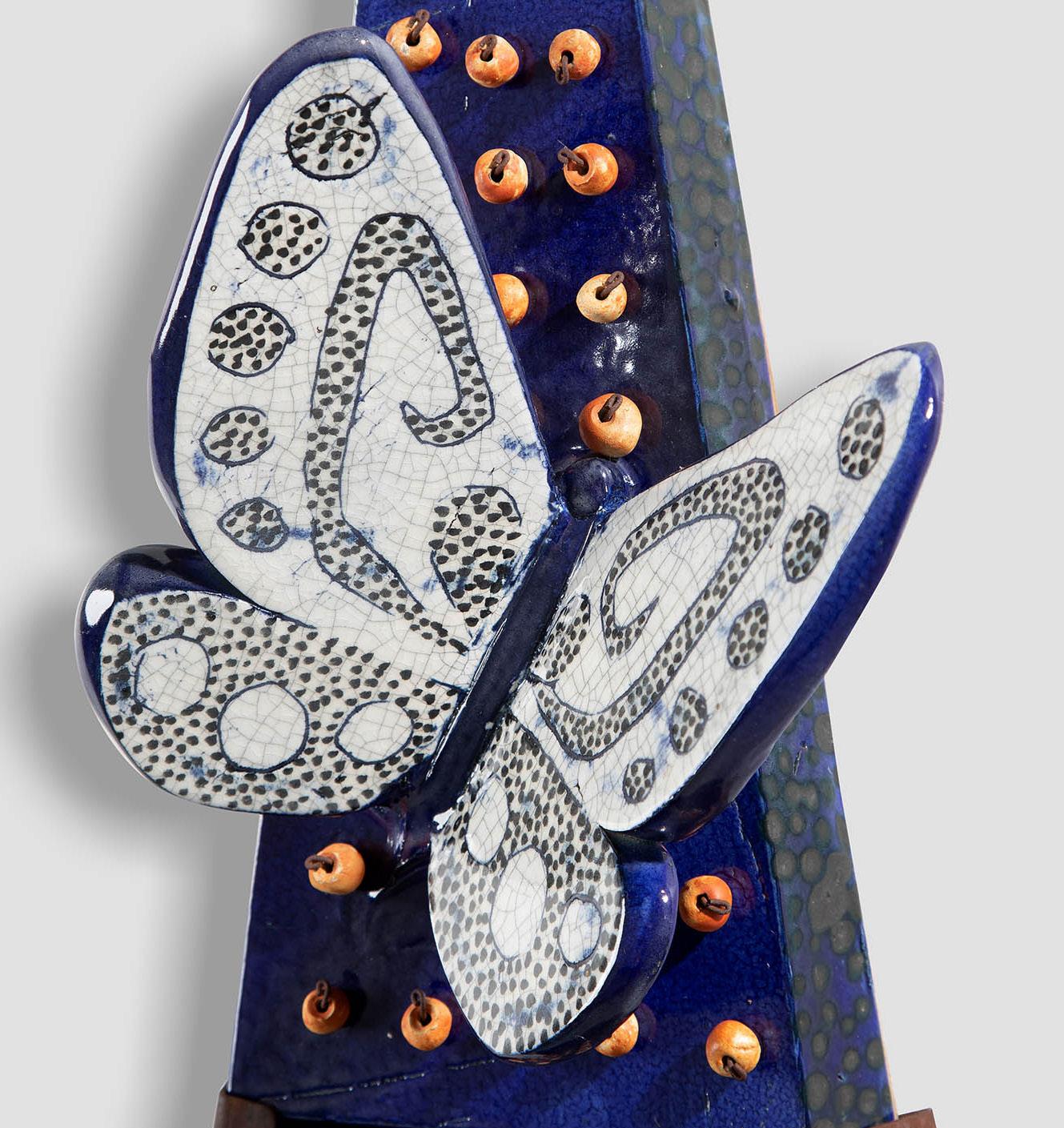
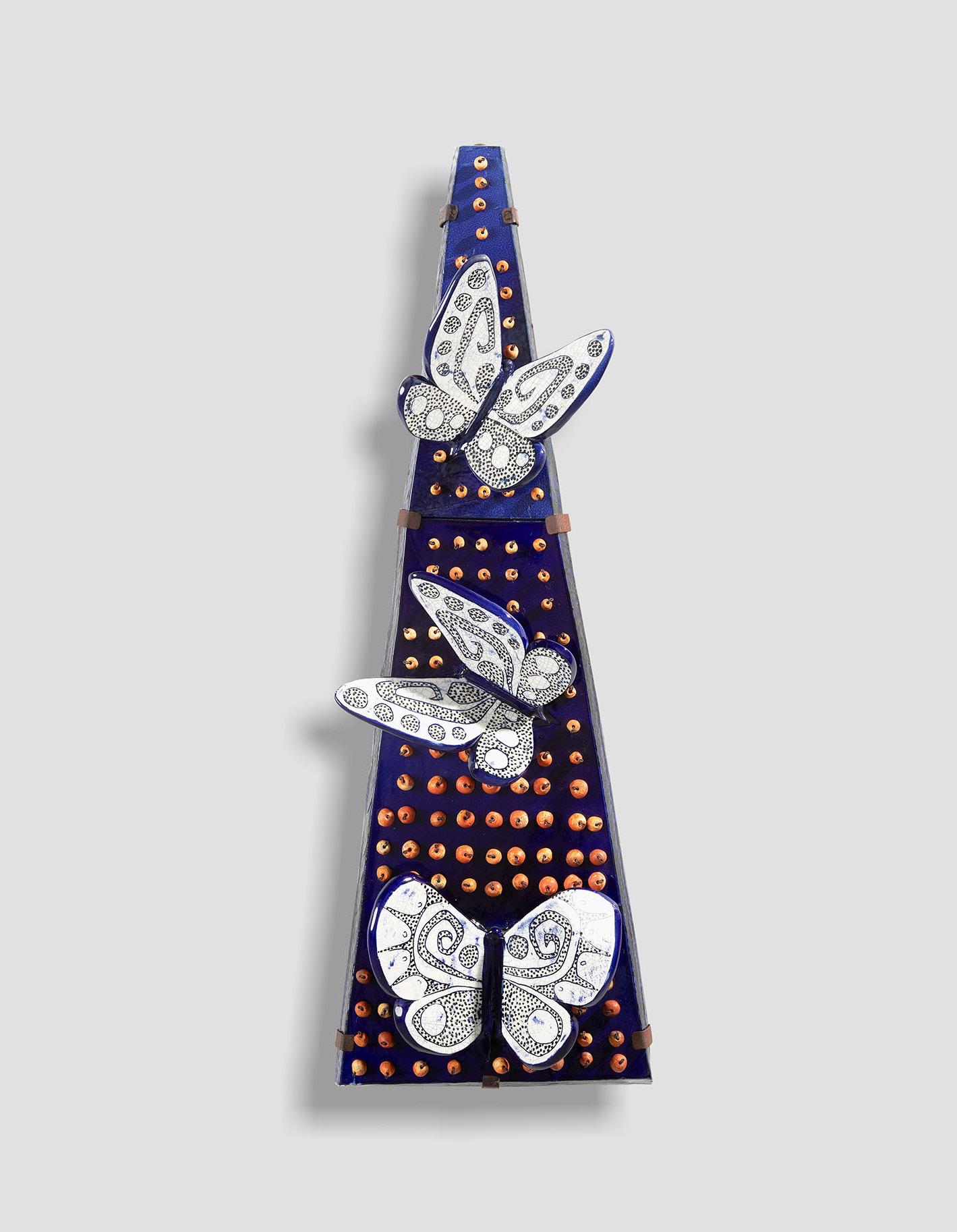
Wall-mounted relief with applied beads and butterflies
Designed and made c. 1957
Made by Arabia
Glazed stoneware with applied beads
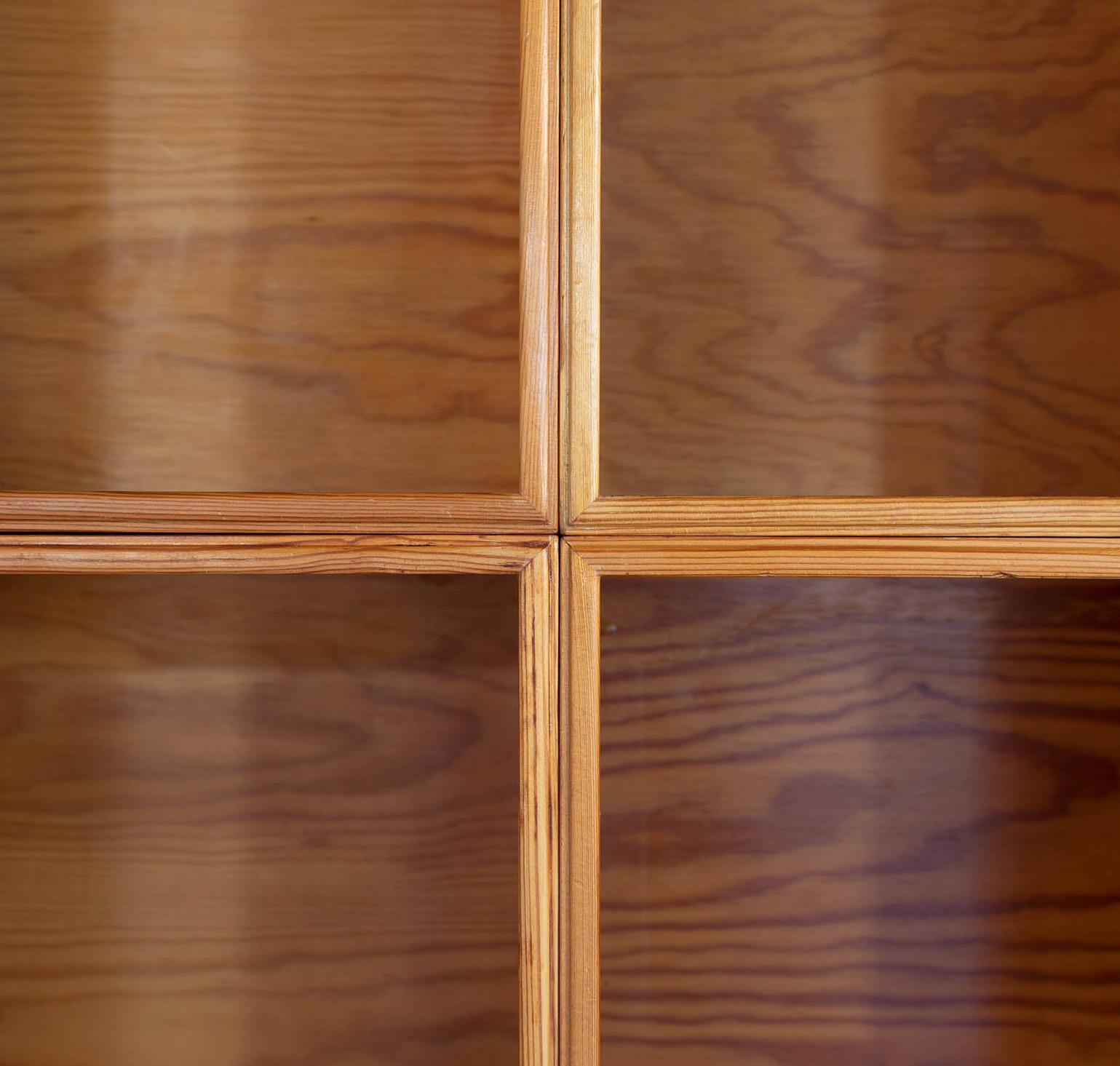
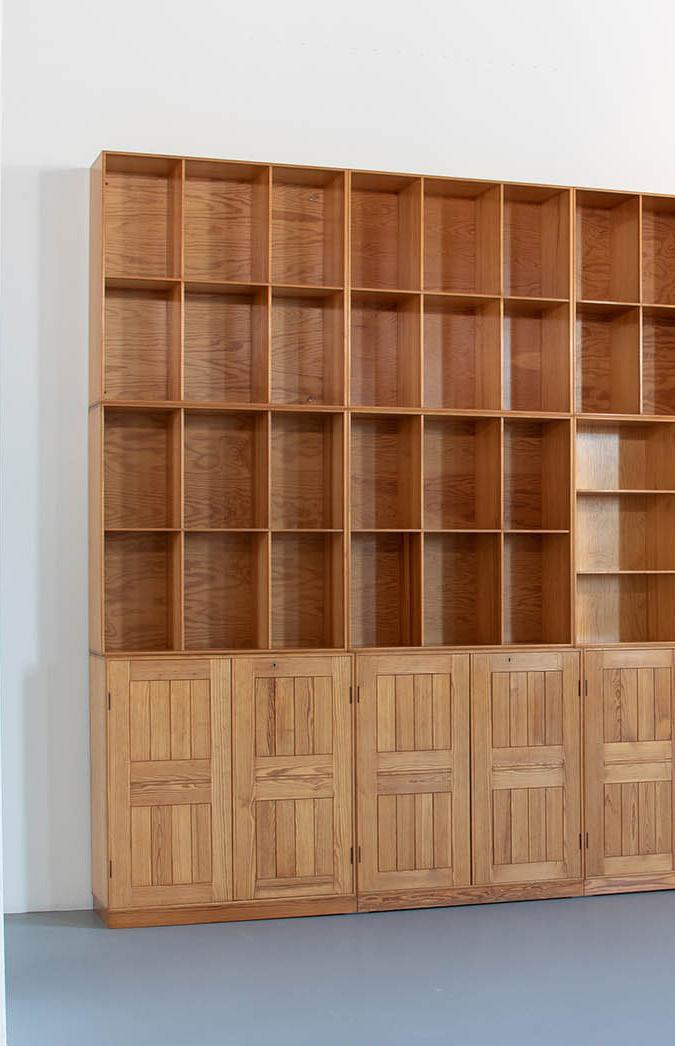
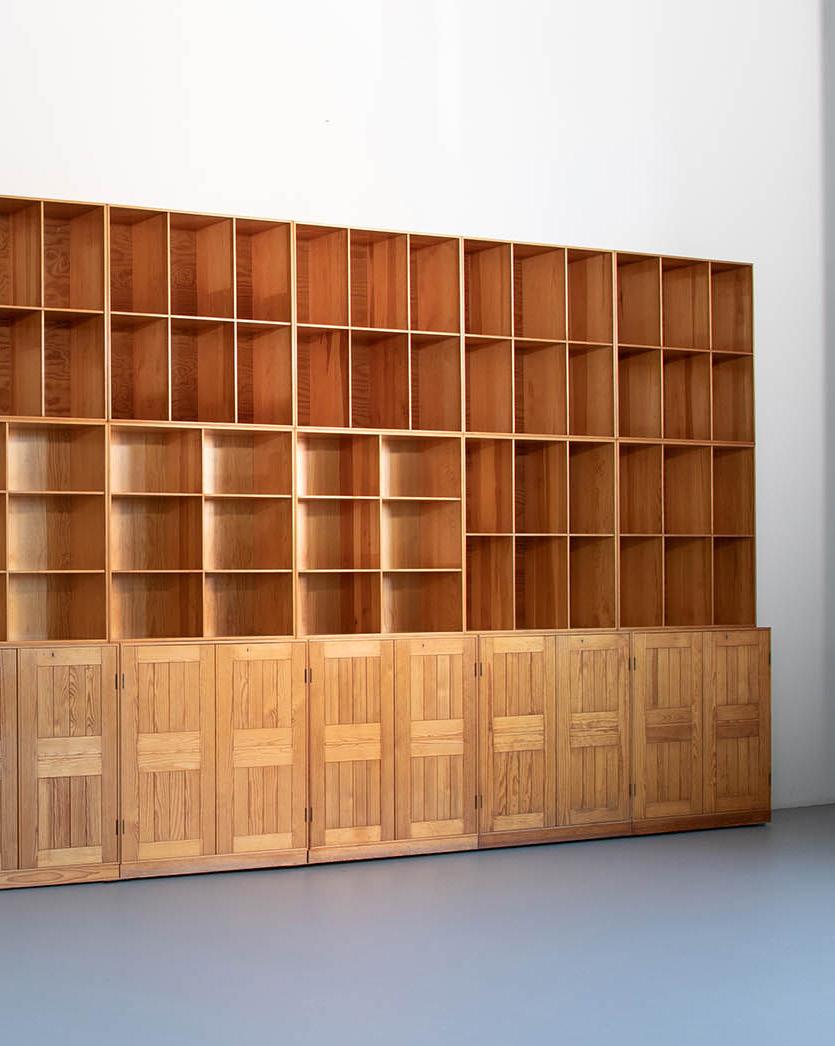
MOGENS KOCH, 1898 - 1992
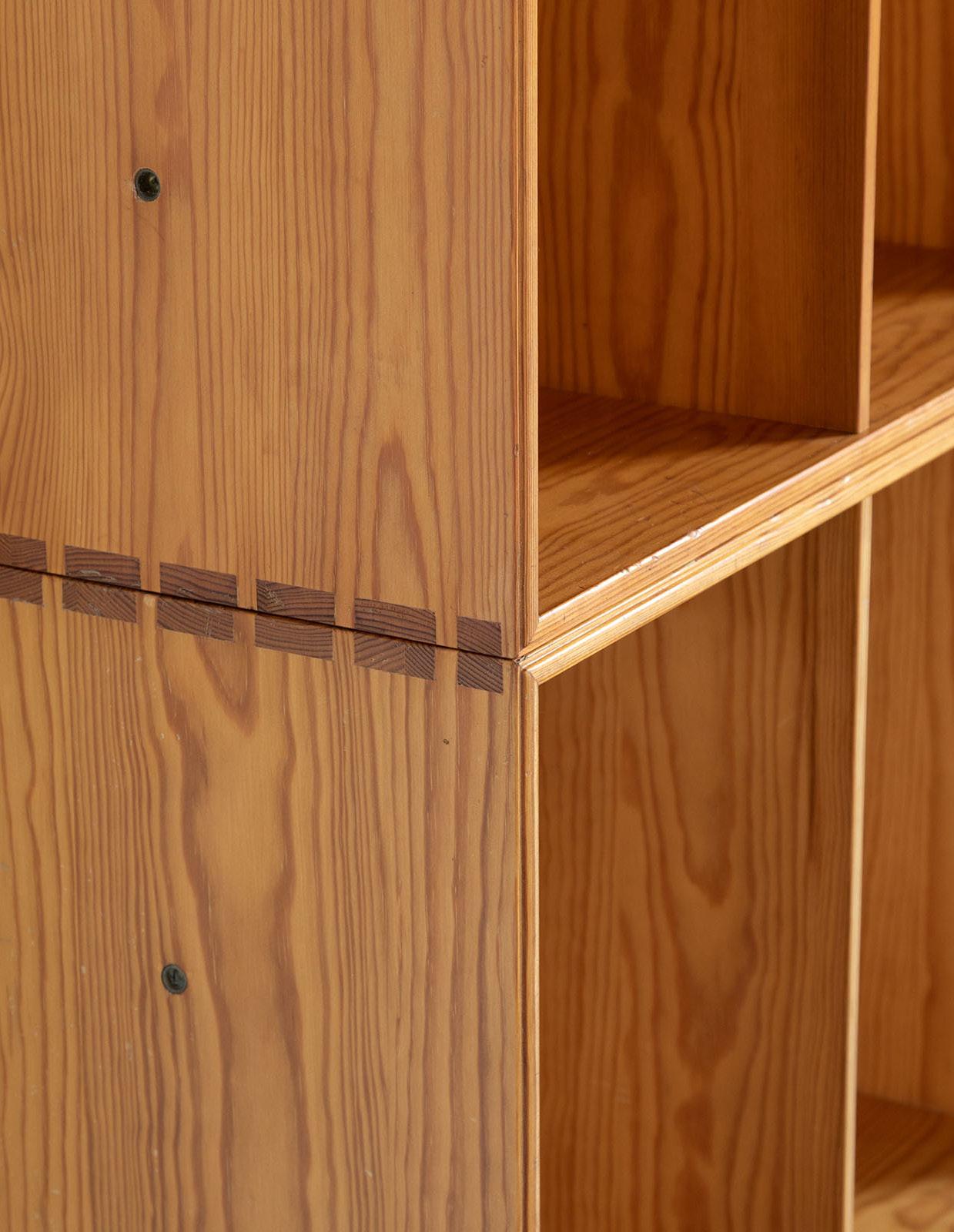
Library Designed 1928 Made by Rud. Rsmussen Solid pine
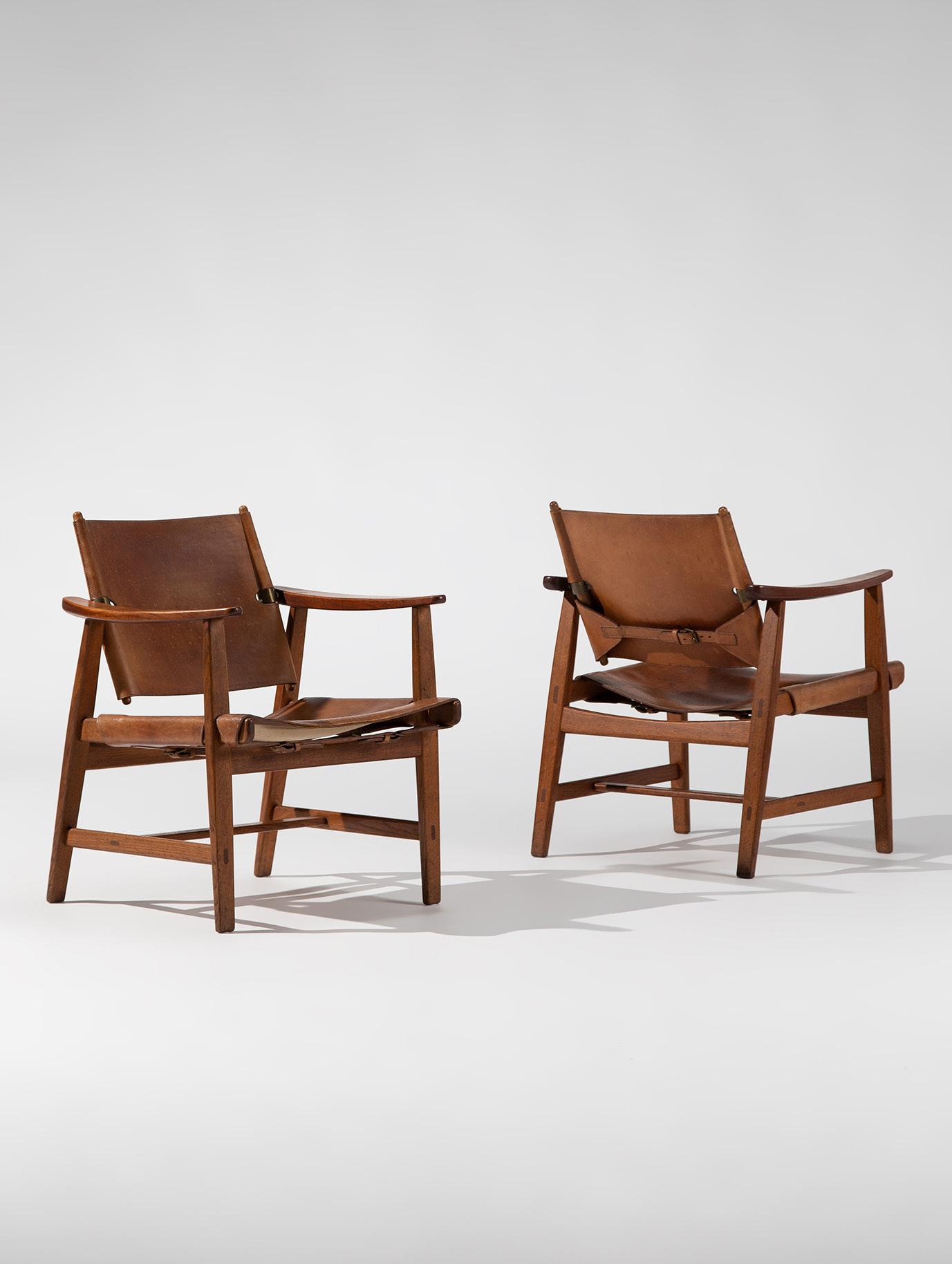
BØRGE MOGENSEN, 1914- 1972
Pair of armchairs
Designed 1950
Made
by
Erhard Rasmussen
Solid oak and teak, leather and brass
PER WEISS, 1953-2023
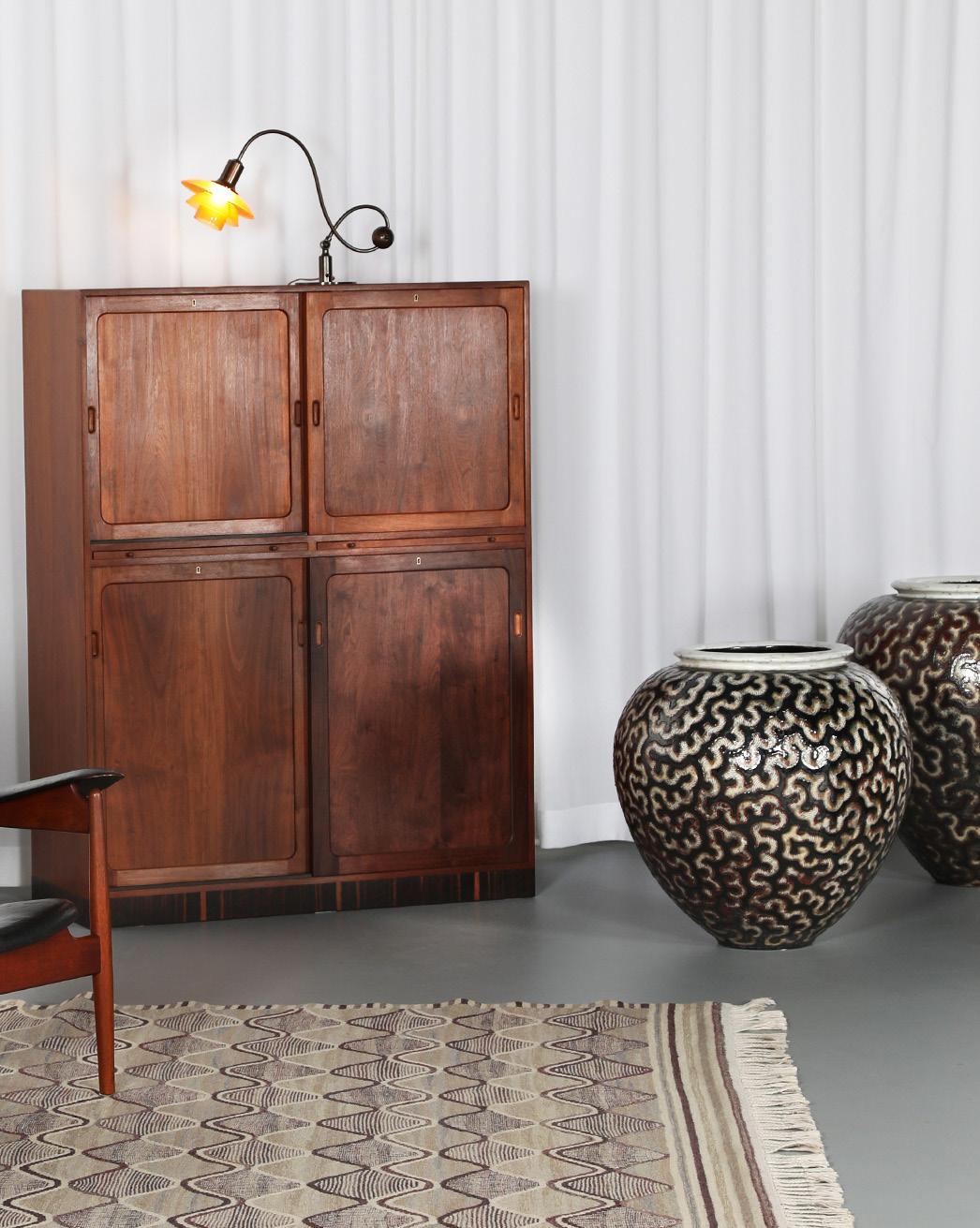
Pair of floor vases
Designed and made 1990s
Glazed stoneware
Height: 69 & 75 cm
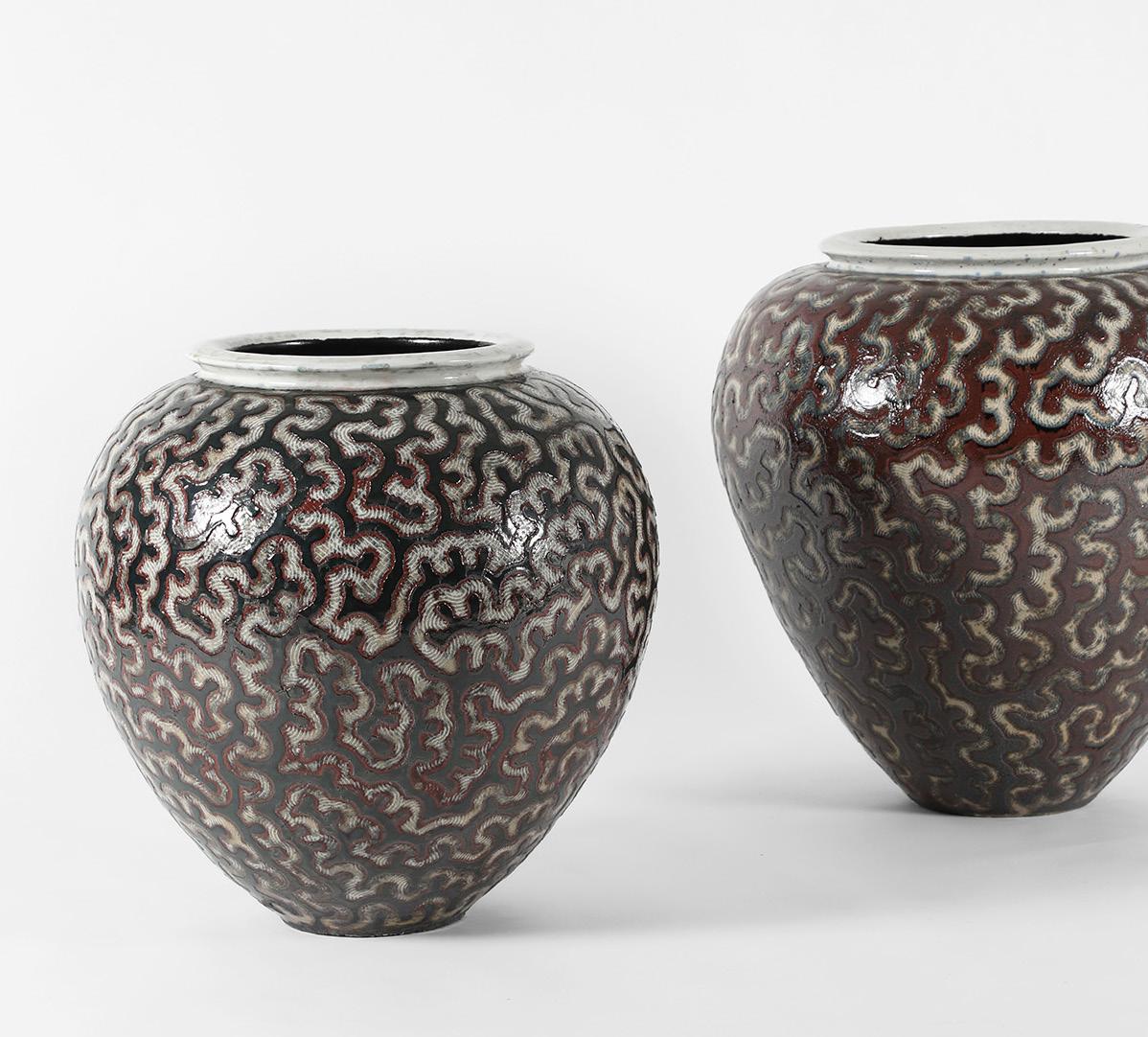

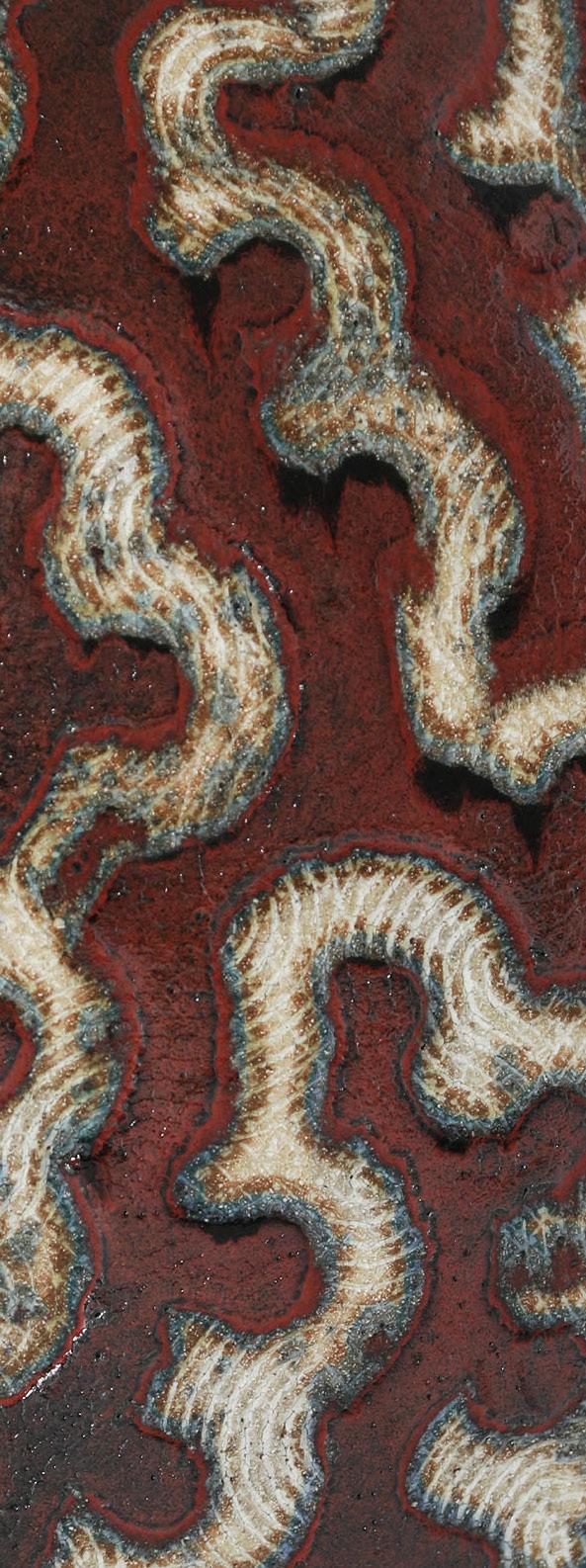
Renowned Danish ceramist Per Weiss (19532023) is widely recognized for his ability to blend the refined sensibilities of Nordic design with the deep-rooted traditions of Japanese craftsmanship. Known for his minimalist yet expressive ceramics, Weiss carved out a unique niche in the international art scene by harmonizing Western and Eastern aesthetics.
Weiss began his artistic training in Denmark at the School of Applied Arts in 1970. During a sabbatical he travelled to Japan to study under master ceramist Yosiga Taibi from 1974-76. He would stay in Japan for 13 years, running his own studio Weiss Gama from 1979-86. Weiss was the first Westerner to be accepted into the Japanese Academy’s annual prestigious exhibition Nitten, an unconditional honour.
Although Weiss was born after the height of Danish modernism, its enduring emphasis on simplicity, functionality, and natural materials formed an important backdrop to his early artistic development in Denmark, subtly informing the foundation of his ceramic practice. It was, however, his time in Japan that would profoundly shape both his artistic voice and technical expertise. Here he immersed himself in traditional Japanese pottery techniques, particularly those rooted in the Mingei (folk craft) movement. Under the guidance of master potters, he learned to value the imperfections of handmade pieces and the spiritual dimension of the ceramic process. His experience with Japanese wood-fired kilns (anagama and noborigama) and natural glazes deeply influenced his practice, prompting a shift from industrial precision to organic, meditative forms.
Returning to Denmark, Weiss integrated these Japanese influences into his own studio practice. In 1993 he travelled to the Greek island of Crete, where he had the opportunity to work with a local potter’s family, who made large turned jars, traditionally used to store water, wine and oil. With these as a departure point, Weiss began creating a series of monumental vases. His works often feature subdued colour palettes, rough textures, and restrained shapes that speak to wabi-sabi - an aesthetic of beauty in imperfection. At the same time, his Nordic roots remain visible in the clarity of form and function that define each piece.
Today, Per Weiss is celebrated not only for his beautiful ceramics but also for his role as a cultural bridge between East and West. His work reflects a life-long dialogue between tradition and innovation, form and philosophy. Through clay, Weiss tells a story of cultural exchange and artistic integrity, earning him a place among the most respected ceramists worldwide.
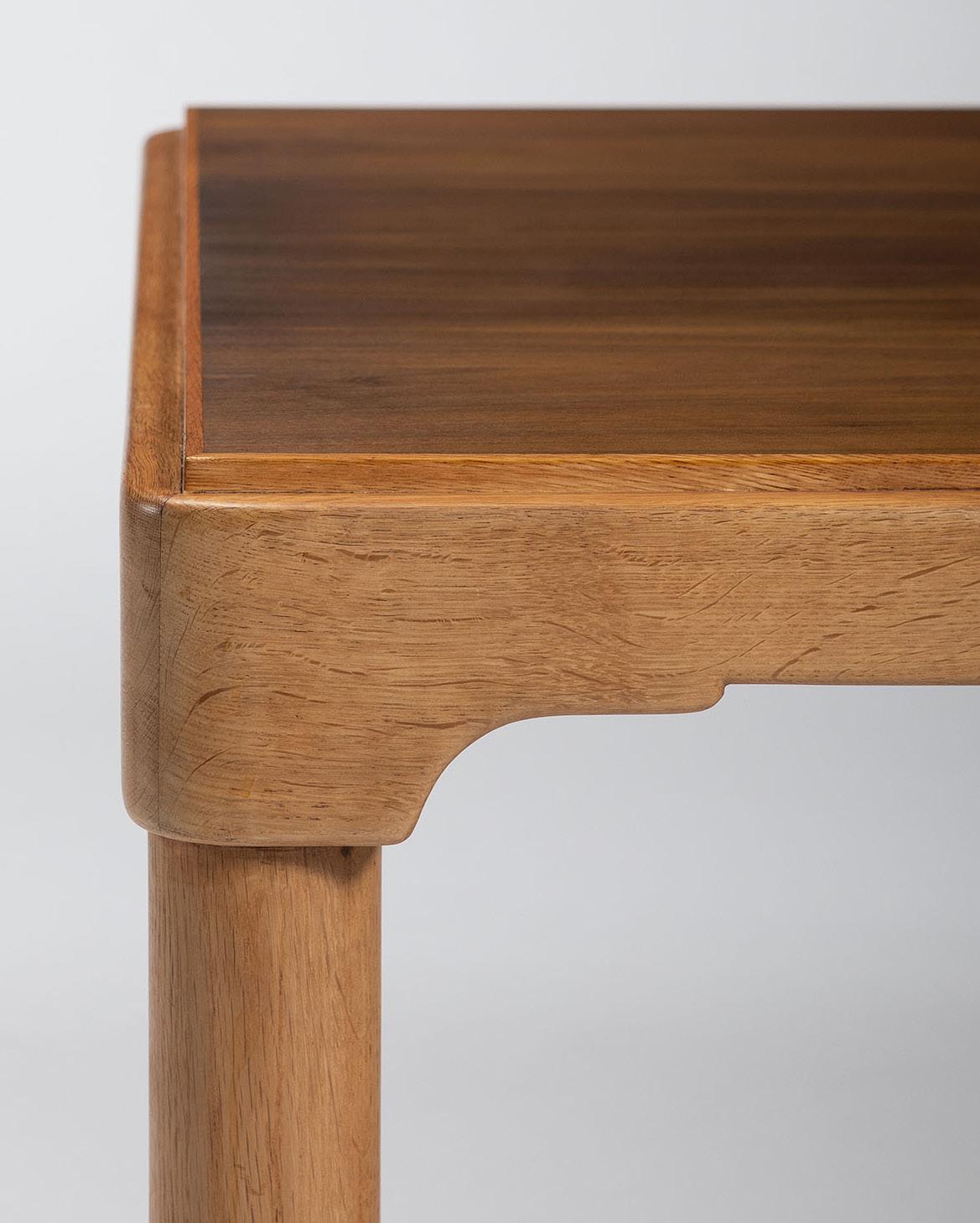
ARNE JACOBSEN, 1902-1971
Unique table
Designed 1937
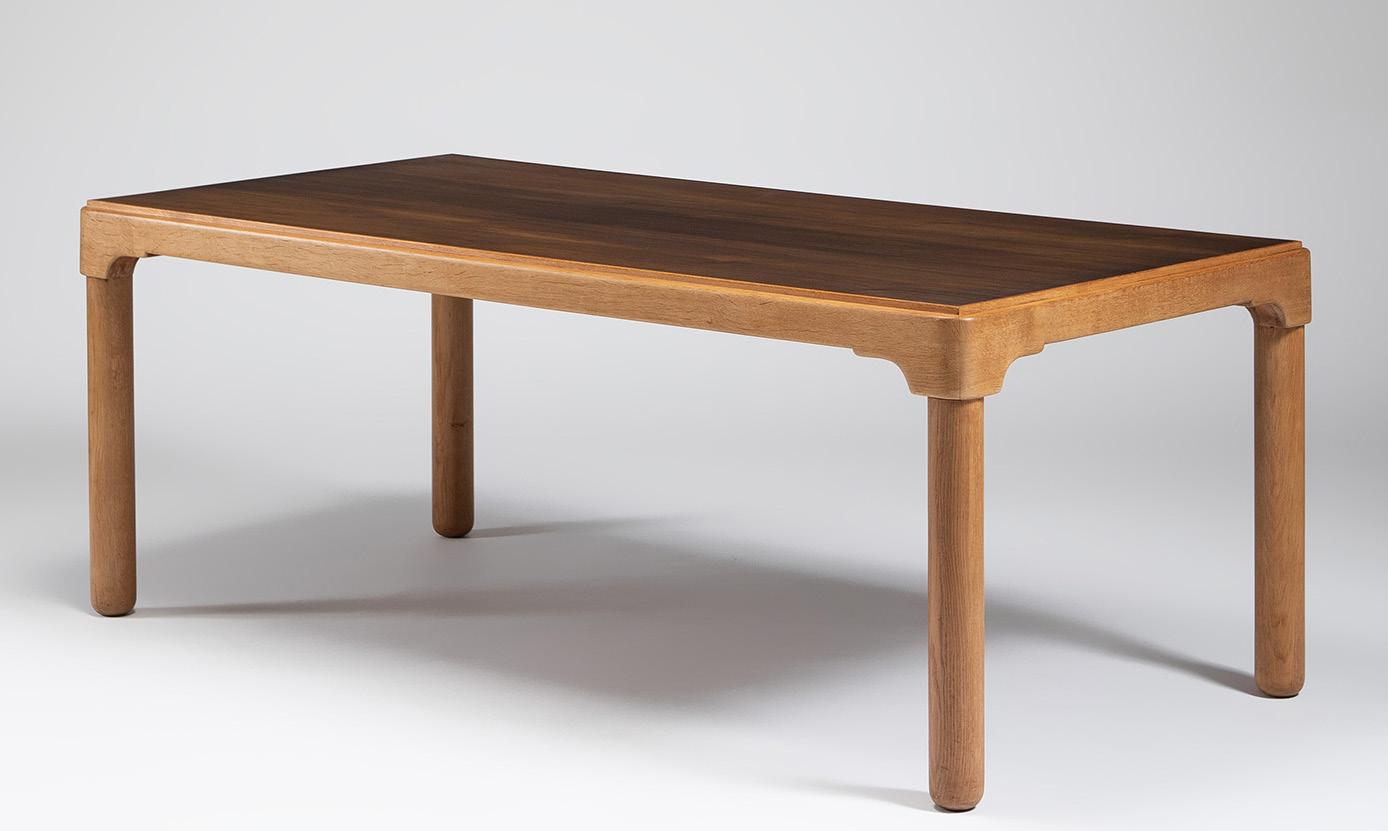
Made by Rud. Rasmussen Oak and Tulip wood
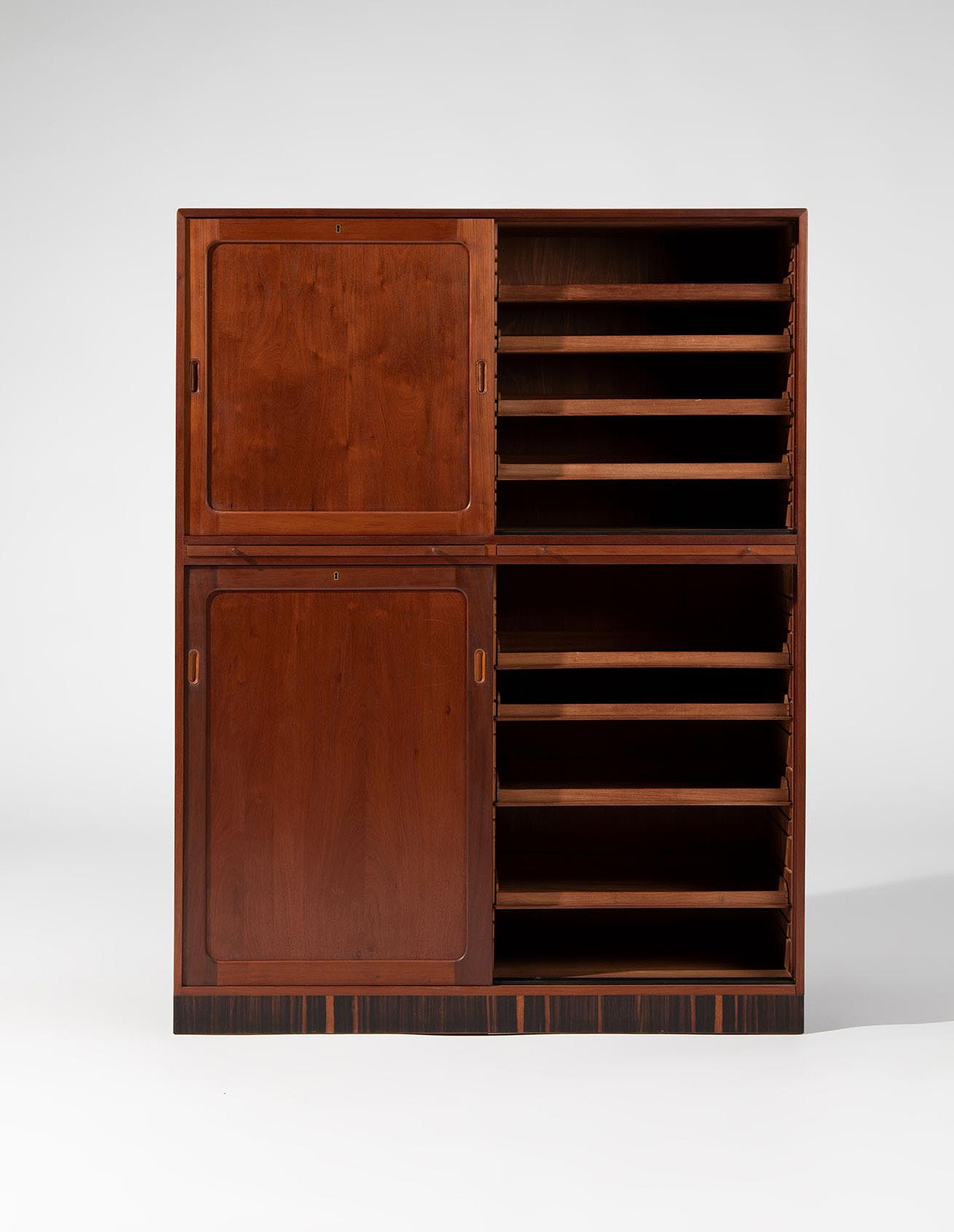
KAARE KLINT, 1888 - 1954
Designed 1933
Made by Rud. Rasmussen
Cuban mahogany and Macassar ebony
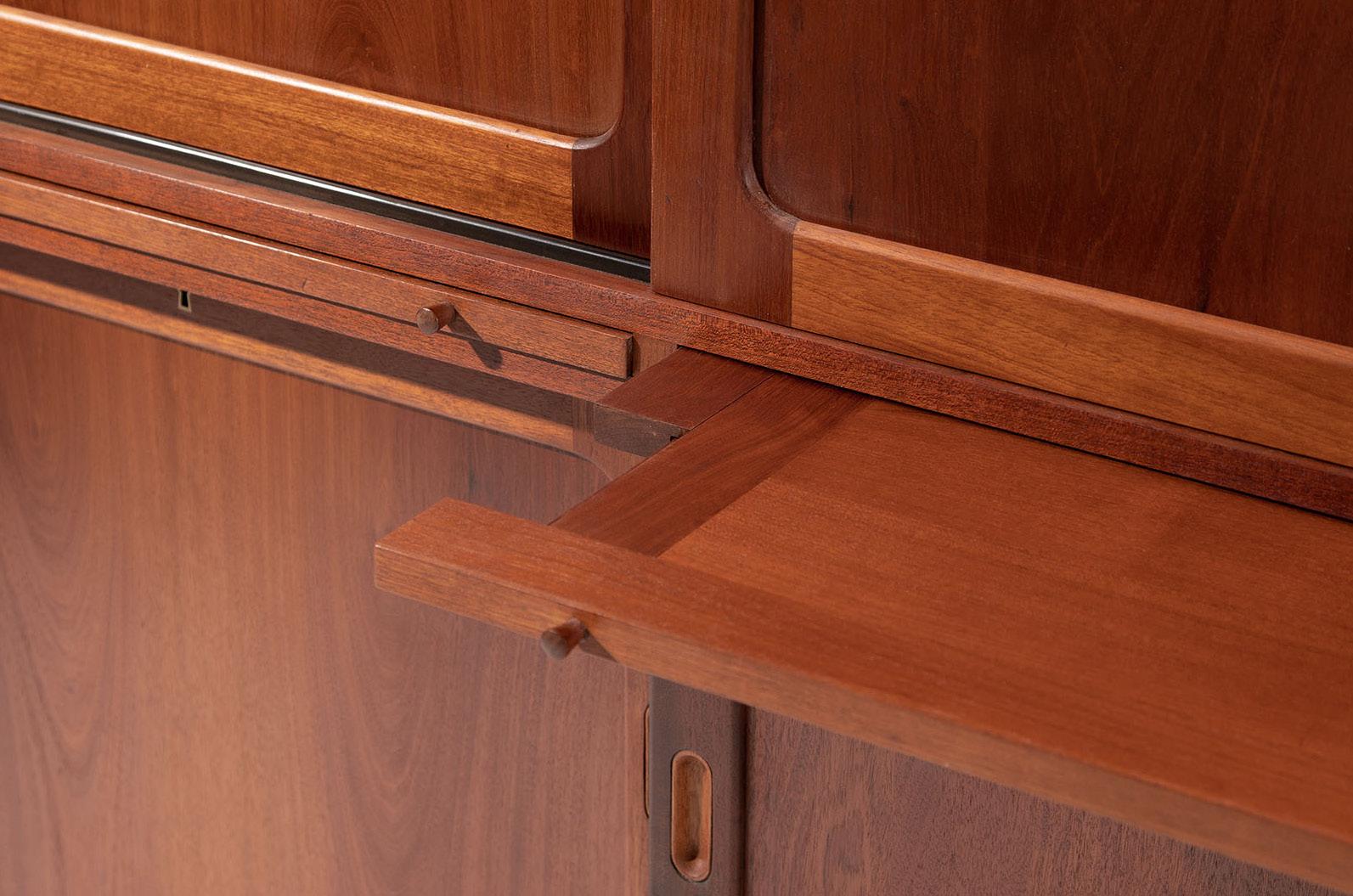
Solid
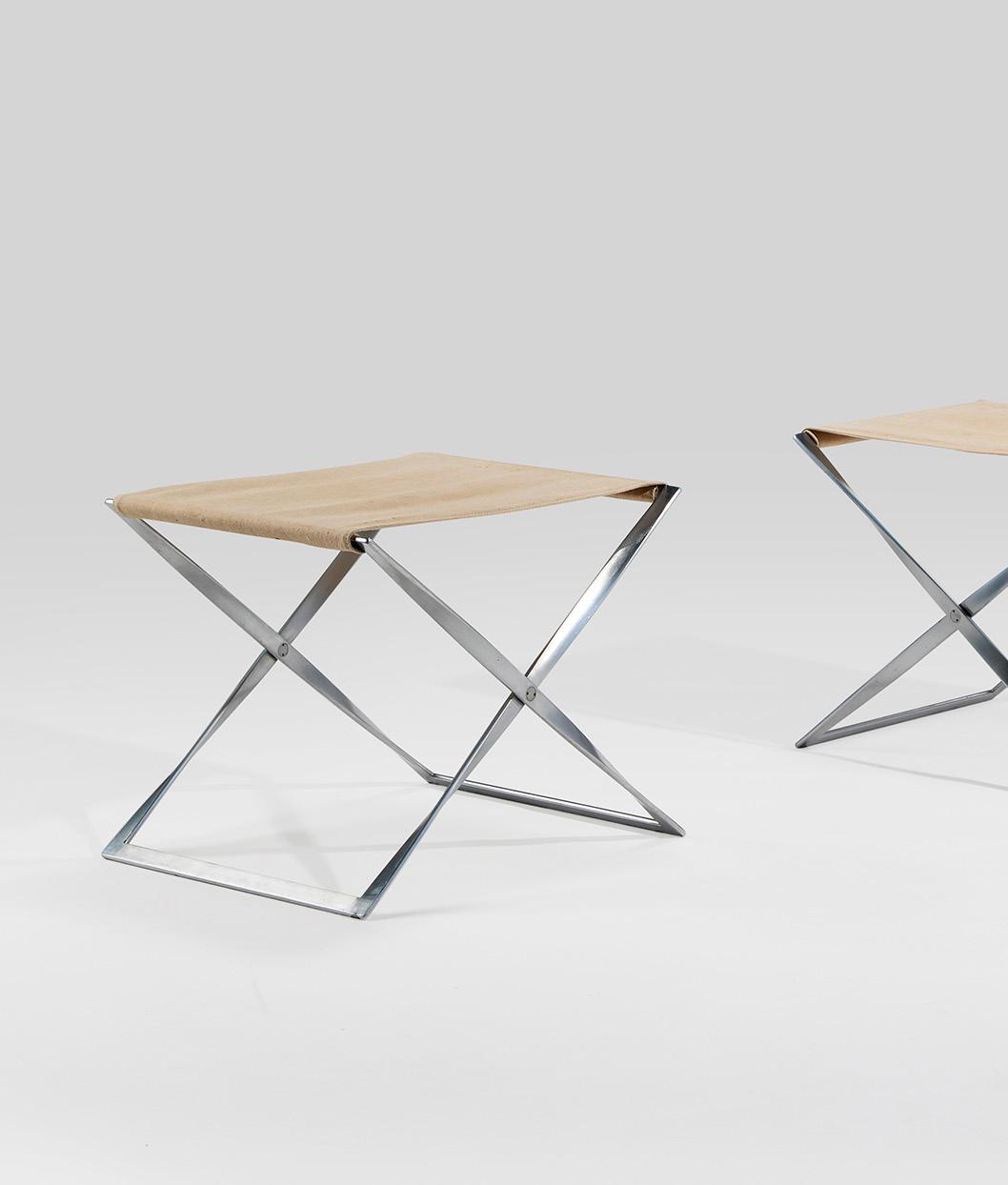

POUL KJÆRHOLM, 1929 - 1980
Pair of folding stools
Designed 1961
Made by E. Kold Christensen Matt, Chrome-plated steel and natural canvas
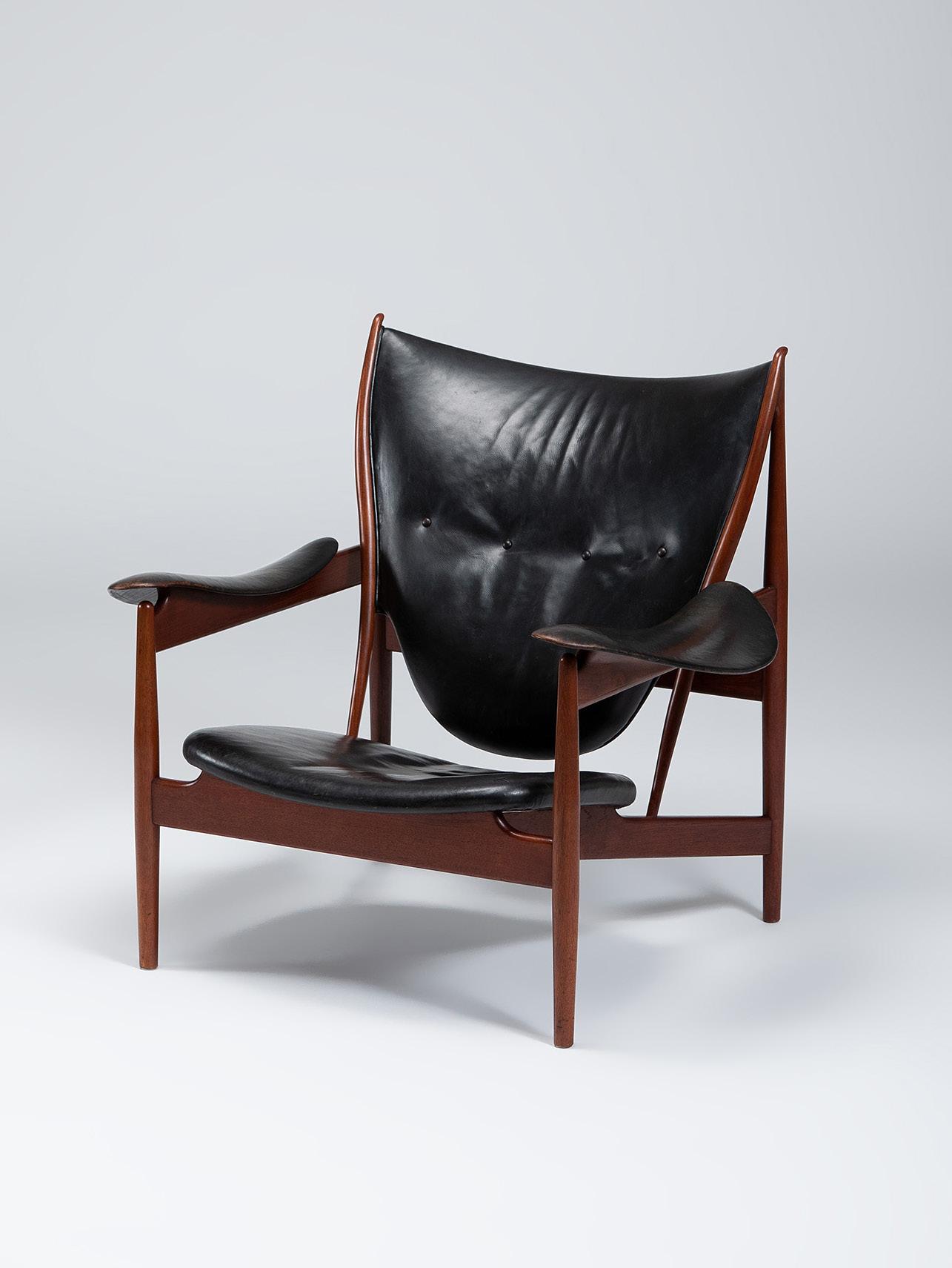
FINN JUHL, 1912-1989
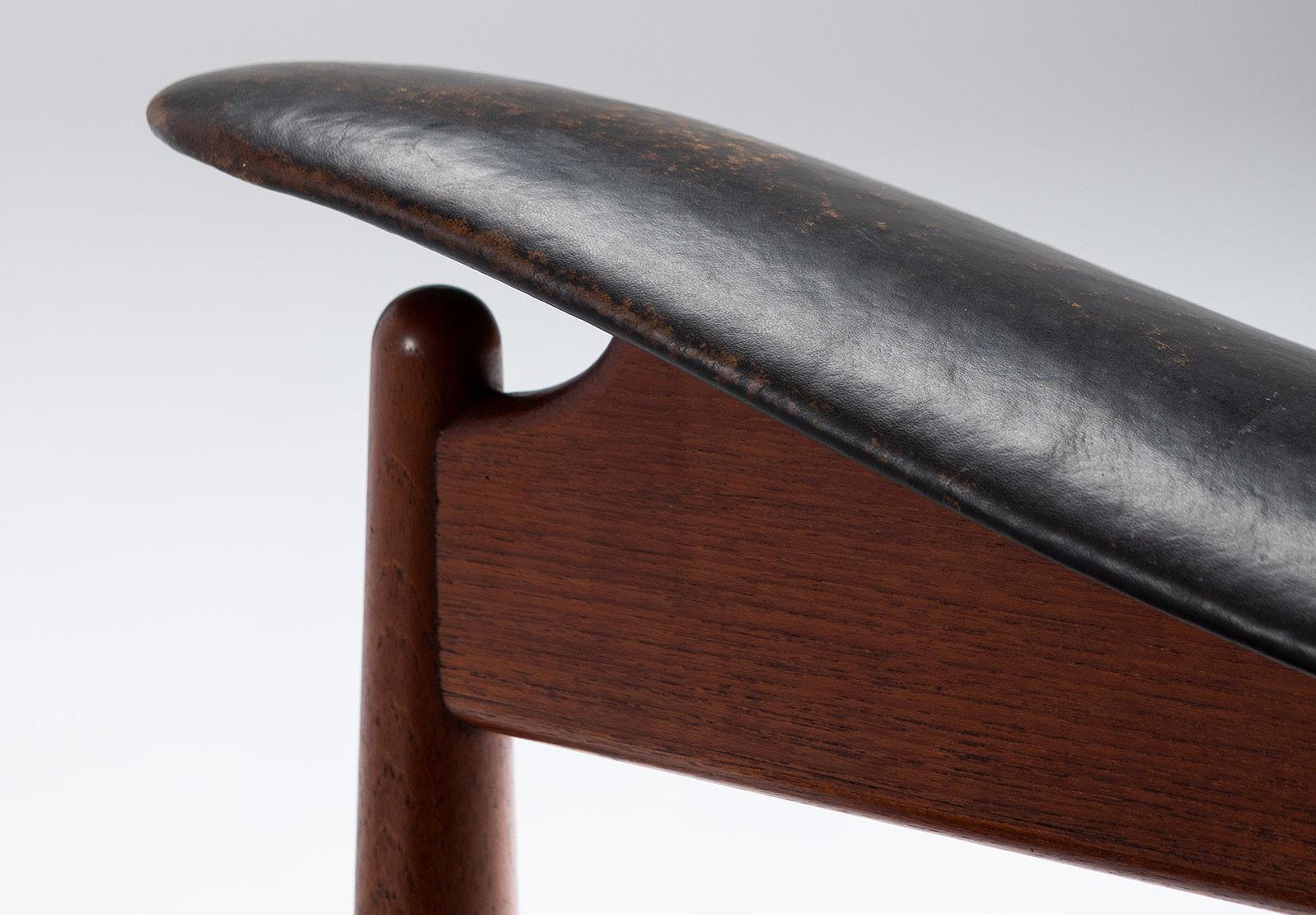
Chieftain chair
Designed 1949
Made by Niels Vodder Teak and leather
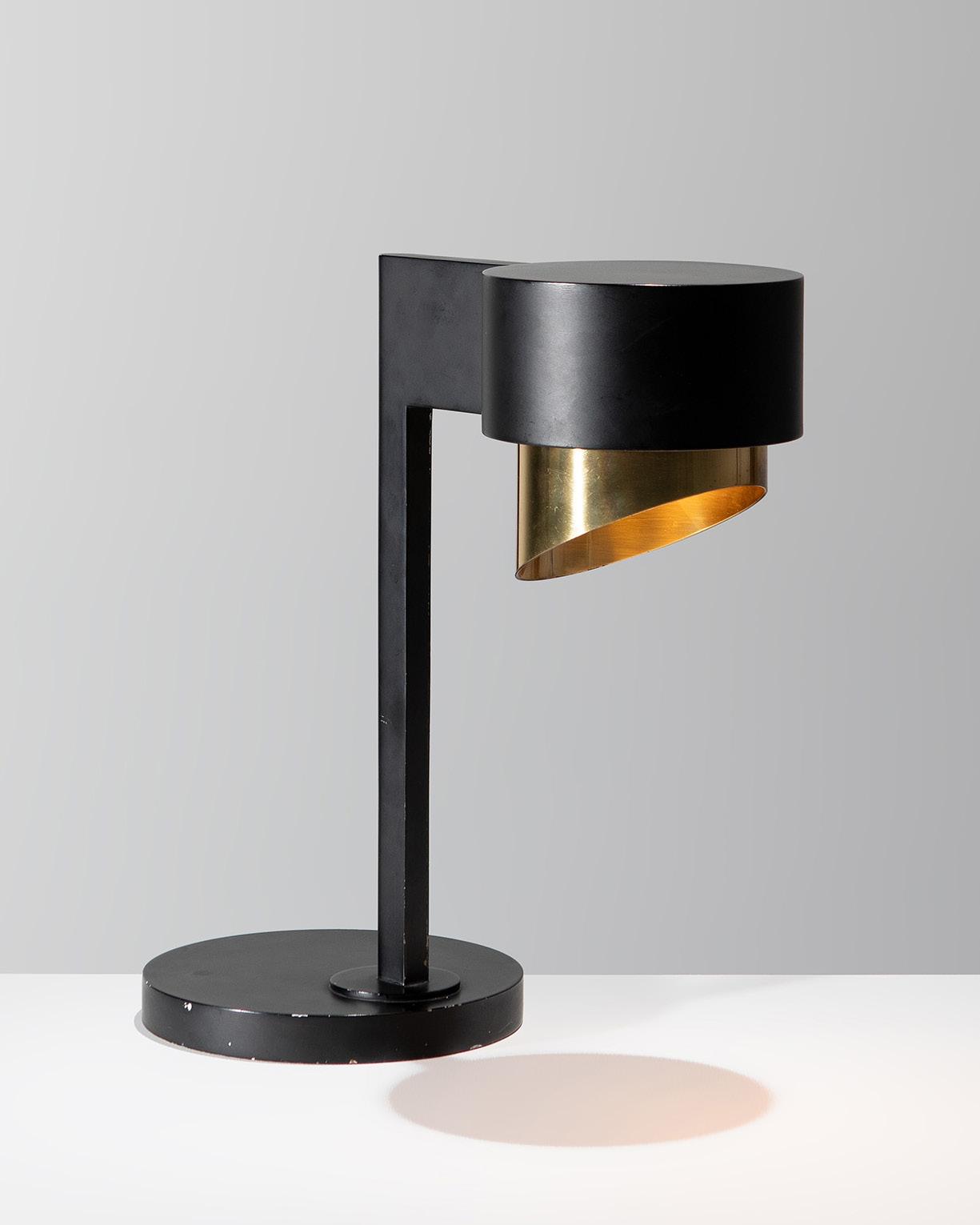
JEAN JACQUES BARUËL, 1923-2010
& ALVAR AALTO, 1898-1976
Unique table lamp
Designed c. 1972
Made by Valaistustyö Oy
Painted metal and brass
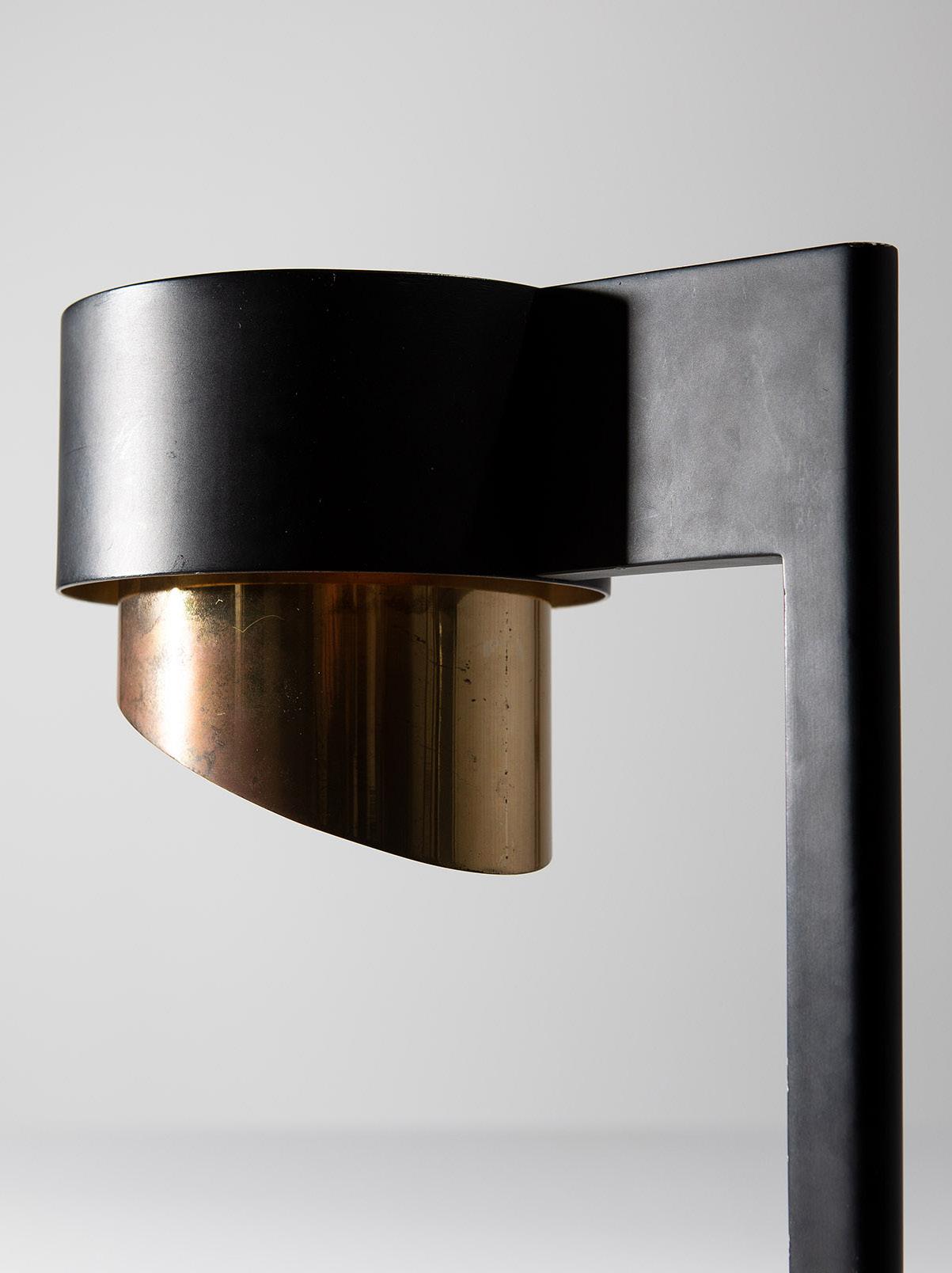
LUDVIG PONTOPPIDAN, 1899-1964
Designed 1958
Made by Ludvig Pontoppidan Brazilian rosewood and brass with mahogany interior
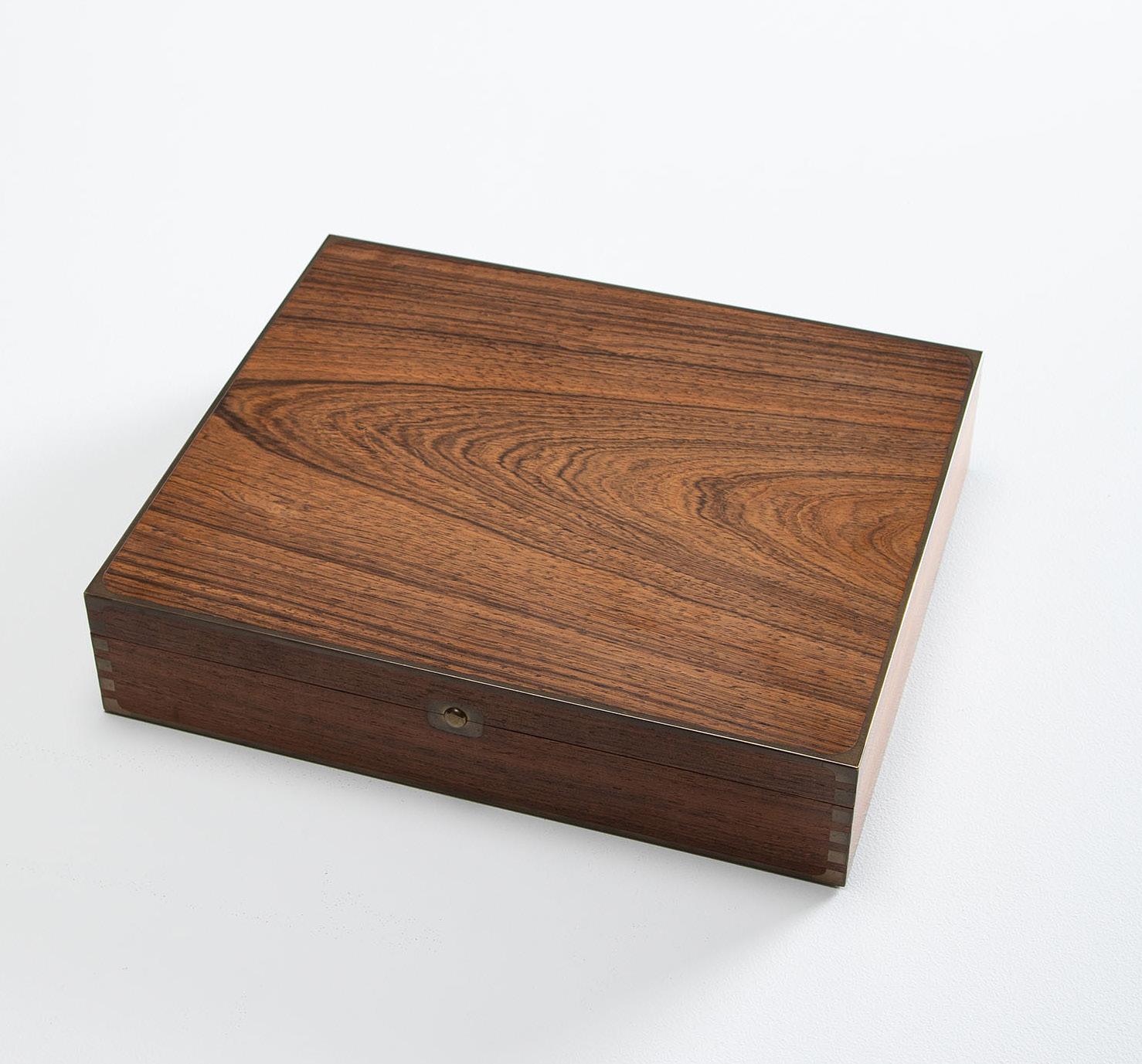
Rosewood box
HANS BERGSTRÖM, 1910-1996
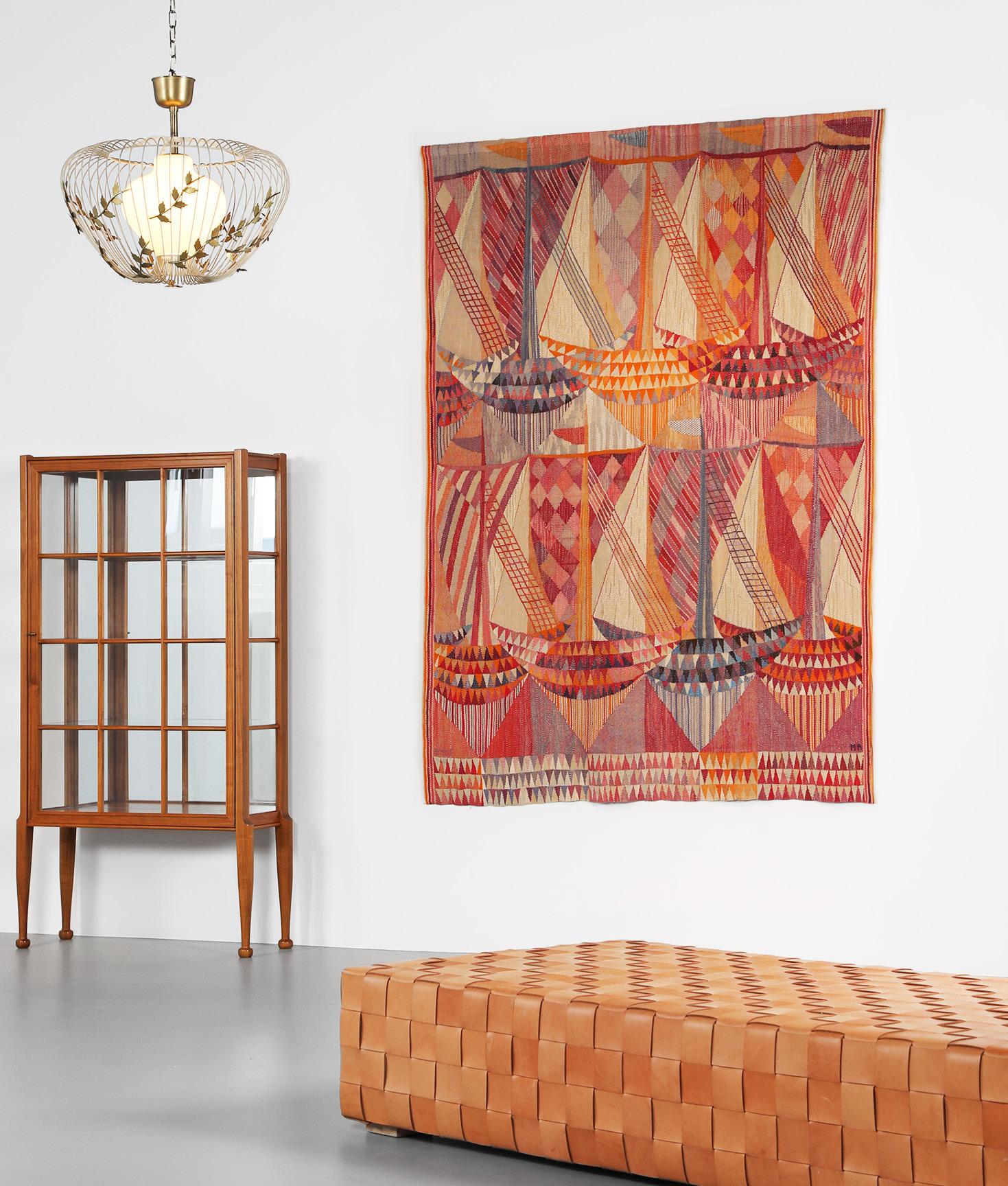
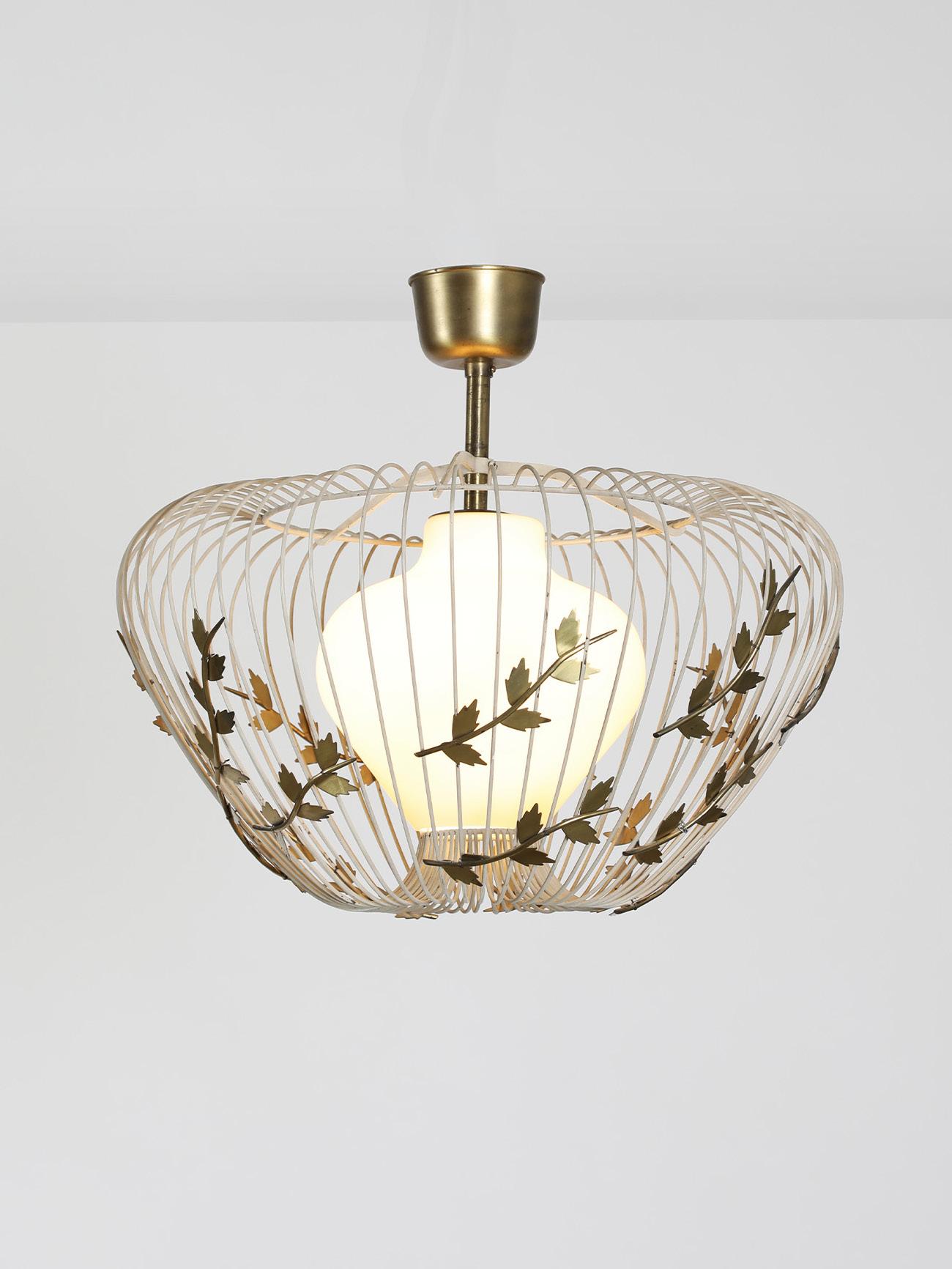
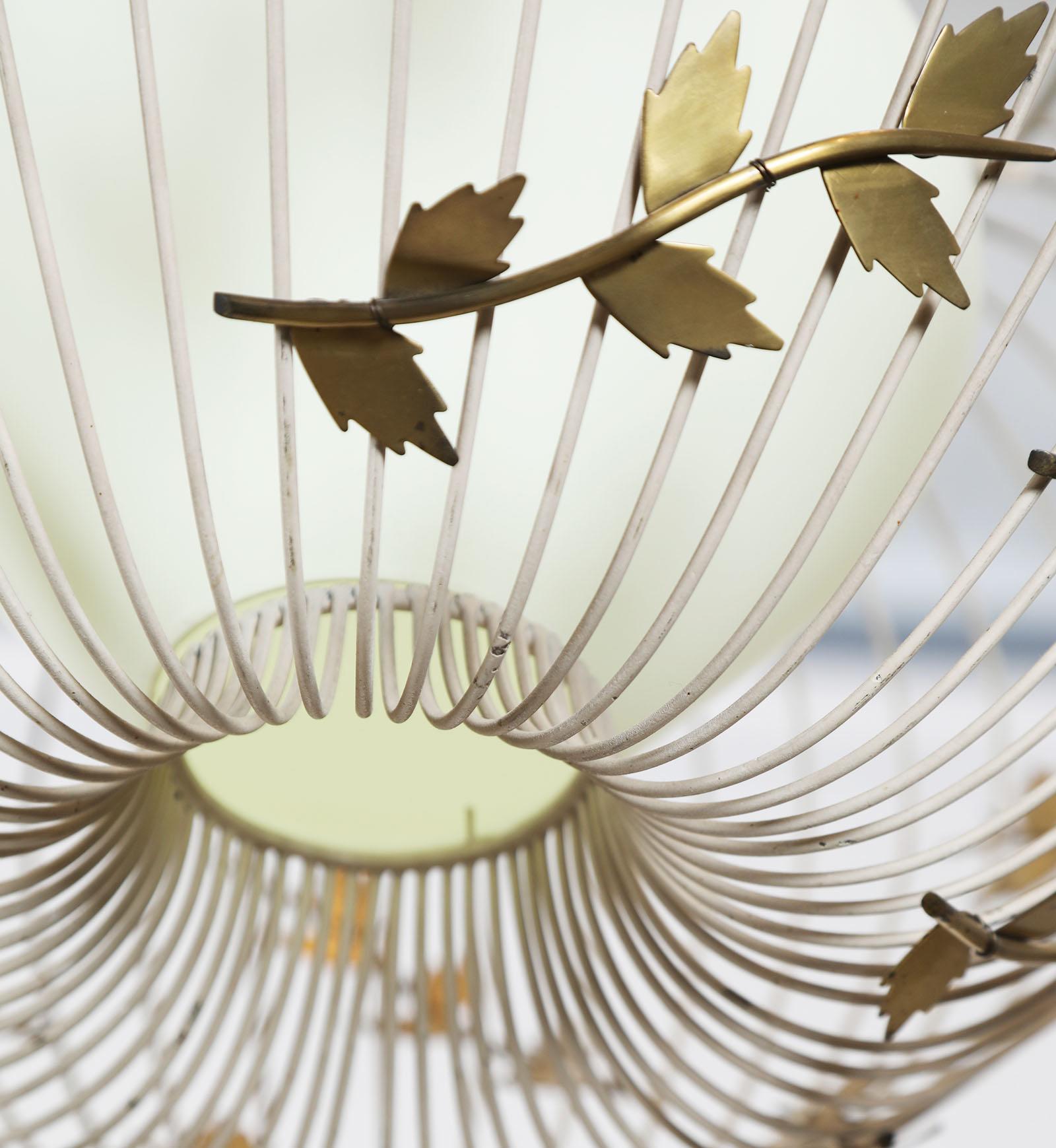
Ceiling lamp
Designed 1940s
Made by Ateljé Lyktan
Painted metal wires with ornaments in brass.
Internal shade in opaline glass
IVAN SCHLECHTER, 1918-2018
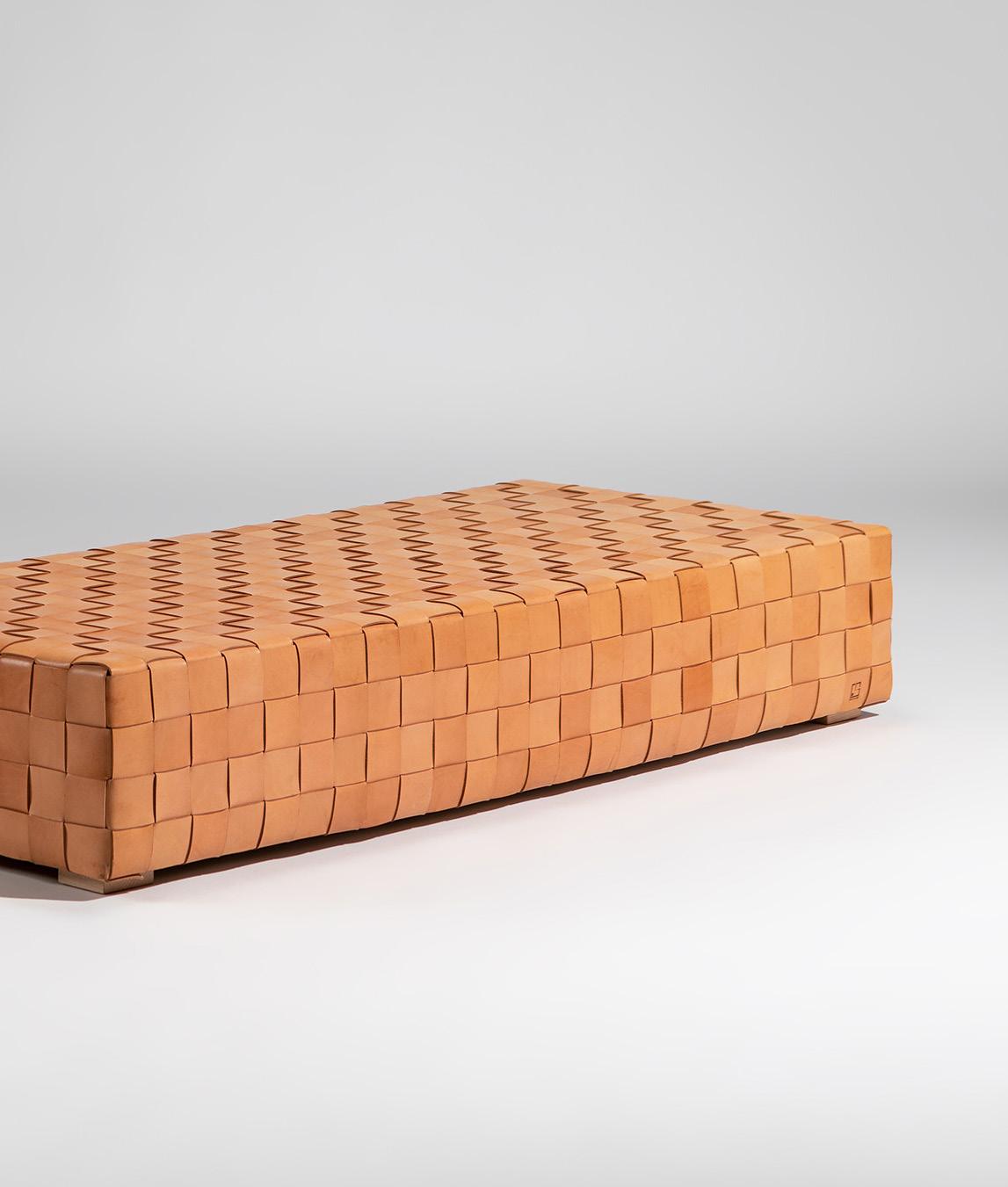
Daybed
by Ivan Schlechter, c. 2010
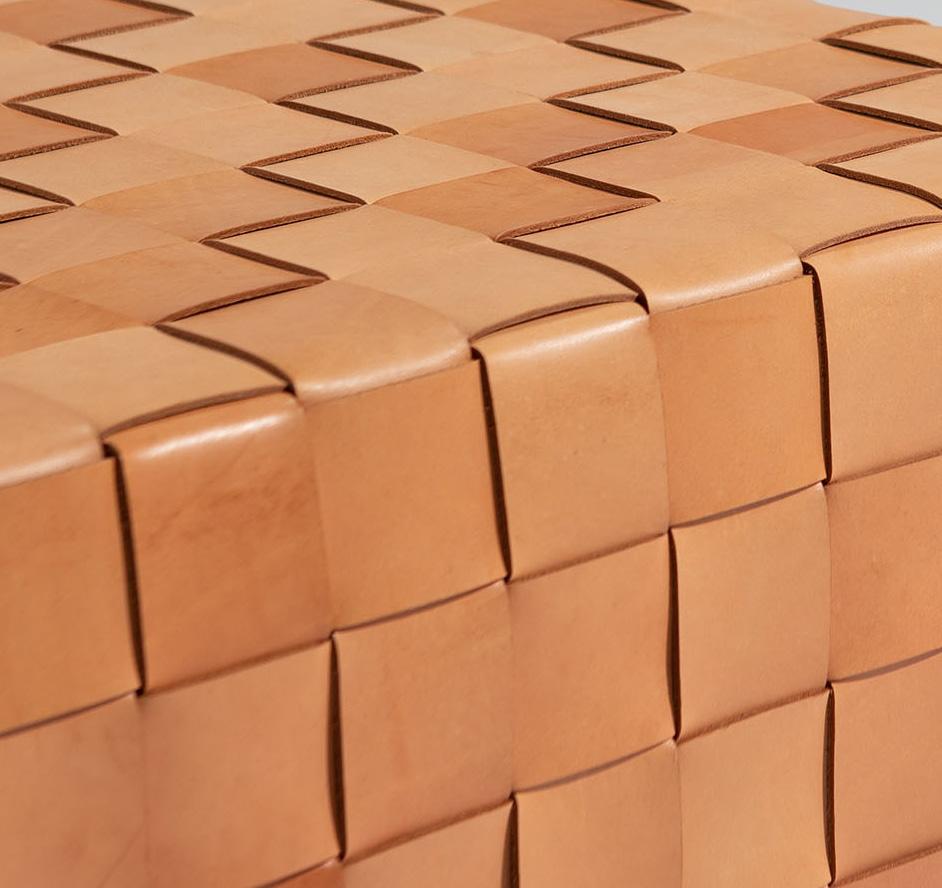

Made
Natural saddle leather
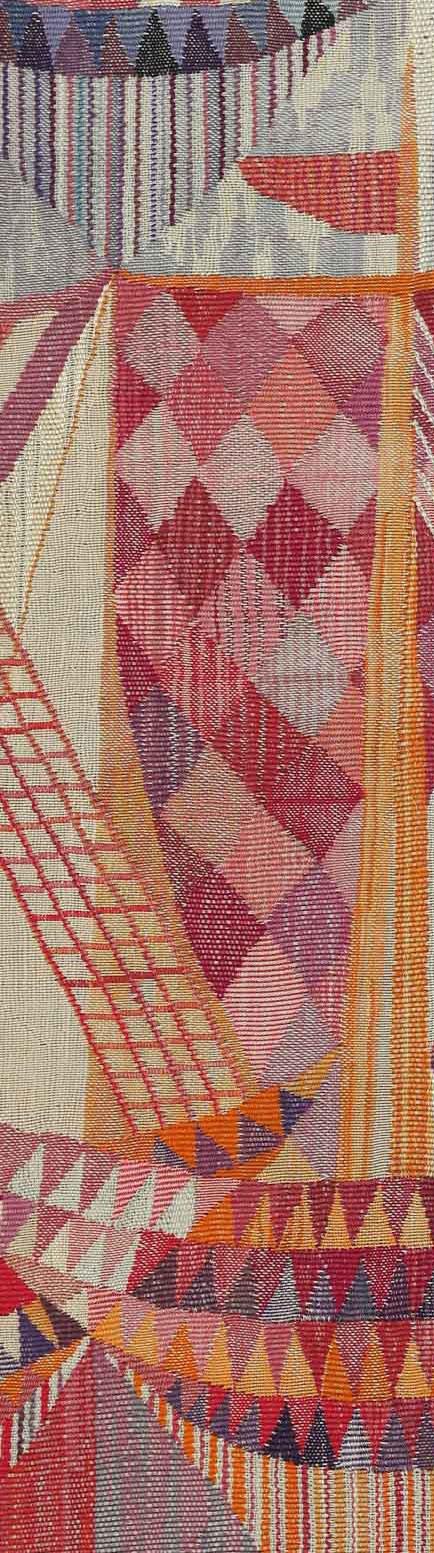
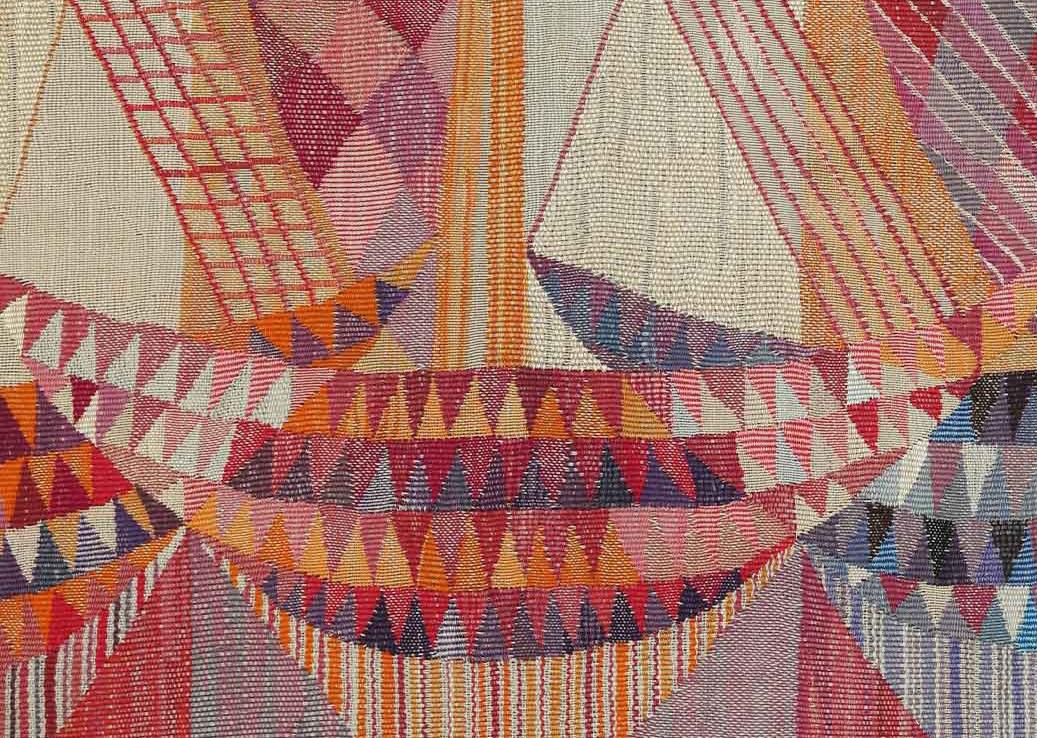
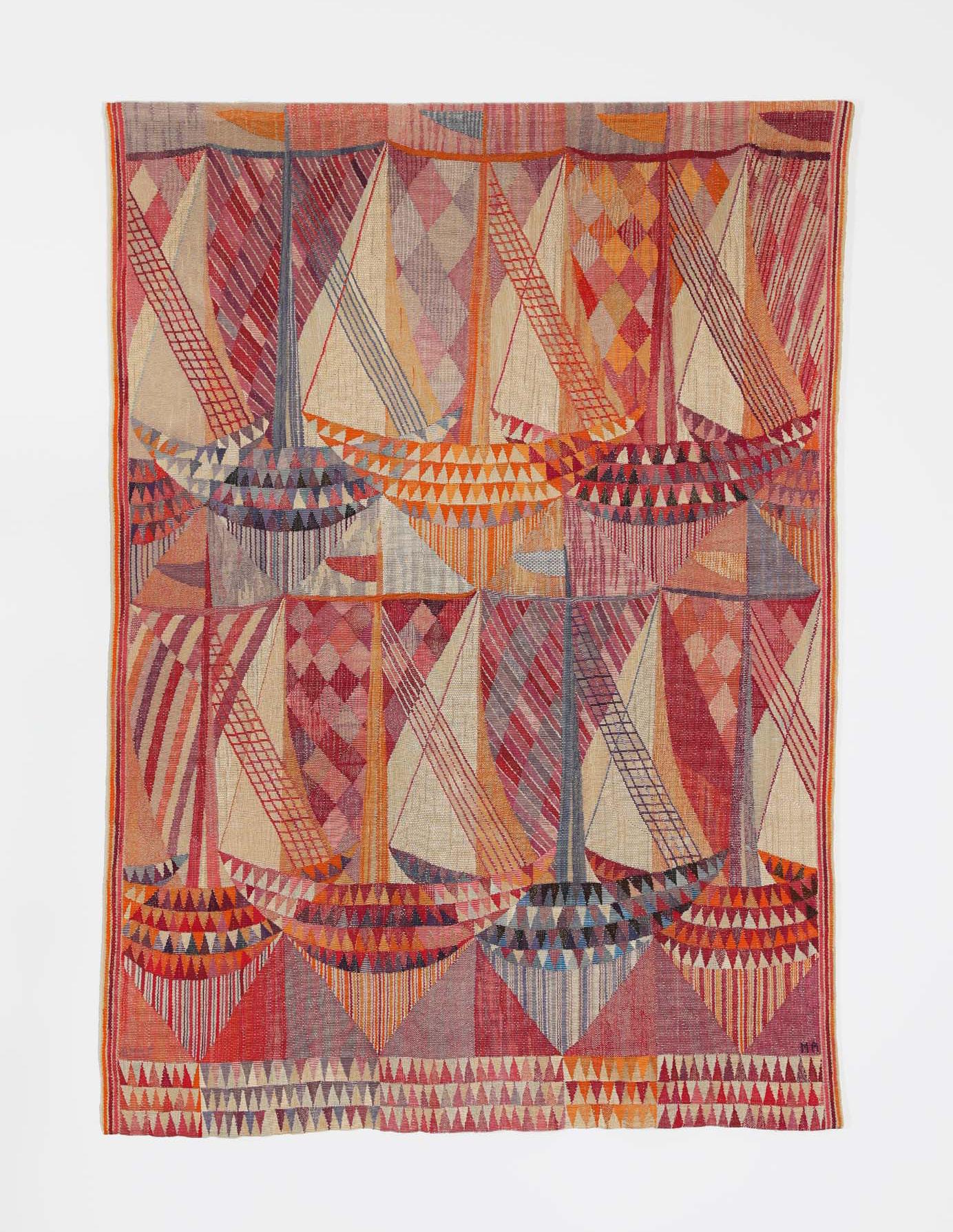
MARIANNE RICHTER, 1916 - 2010
Tapestry
Designed 1955
Made by Märta Måås-Fjetterström AB
Wool and linen on linen warp
214 x 152 cm
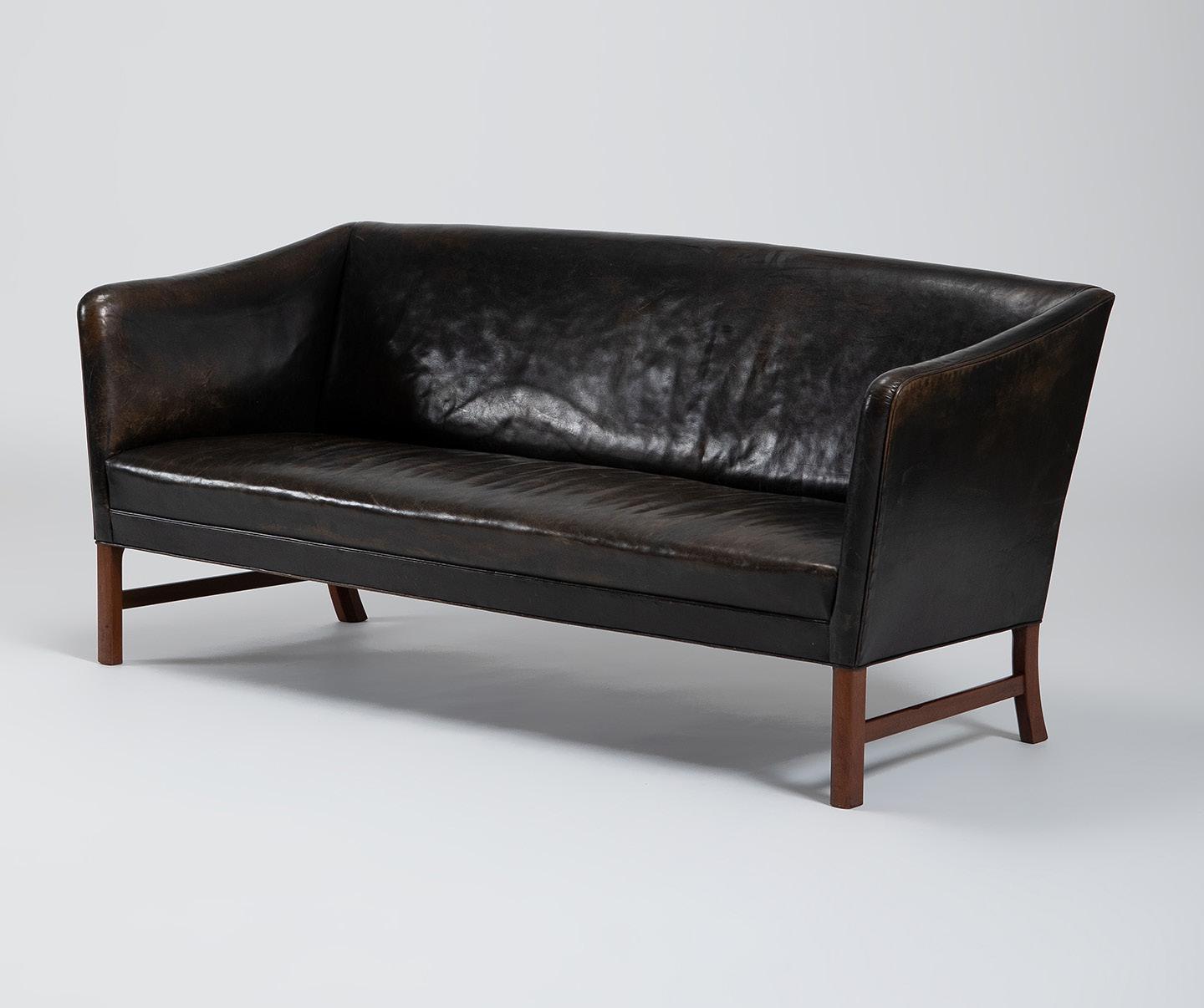
OLE WANSCHER, 1903 - 1985
Designed 1960
by
Three-seater sofa
Made
A. J. Iversen Mahogany and leather
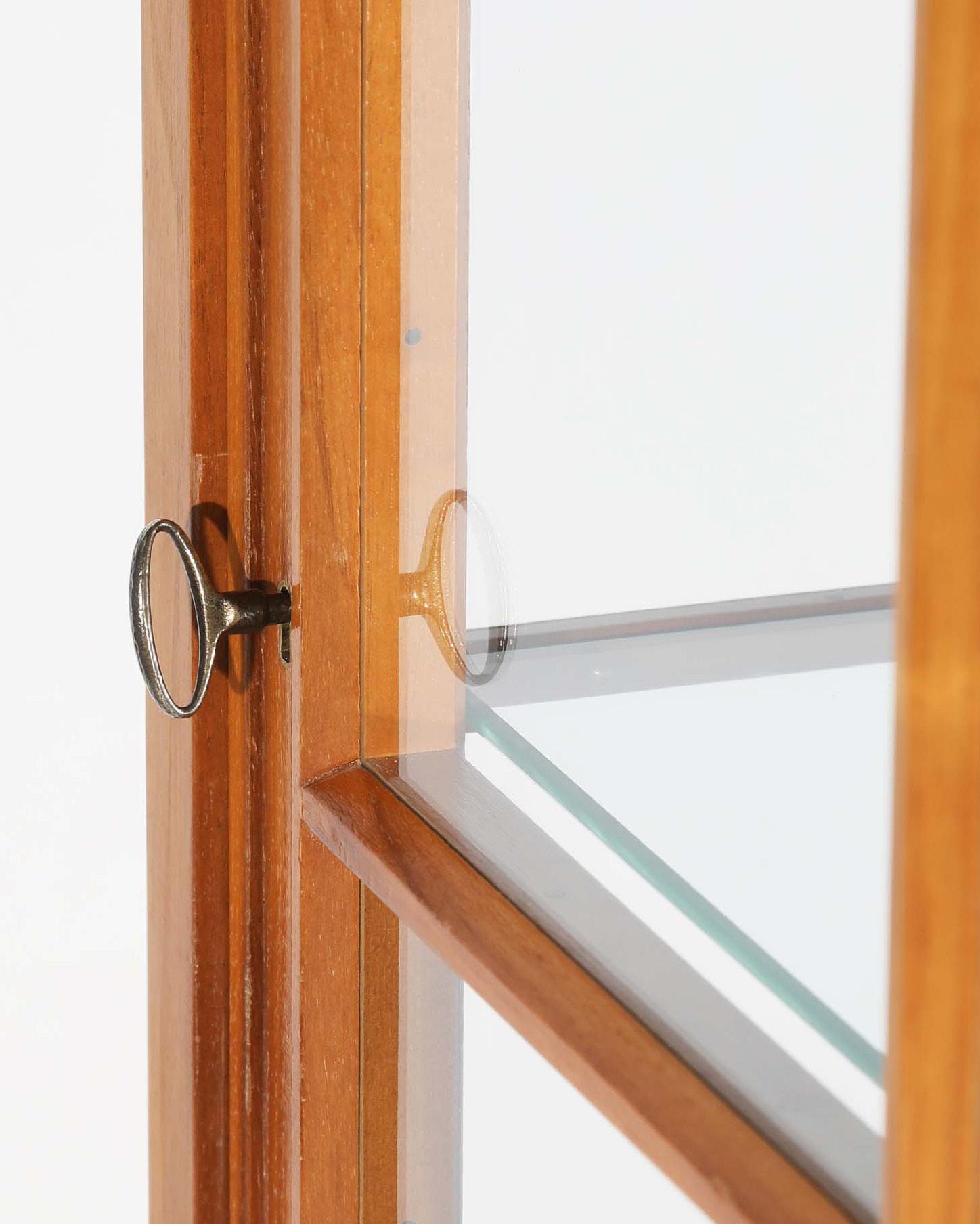
JOSEF FRANK, 1885 - 1967
Display cabinet
Designed 1957
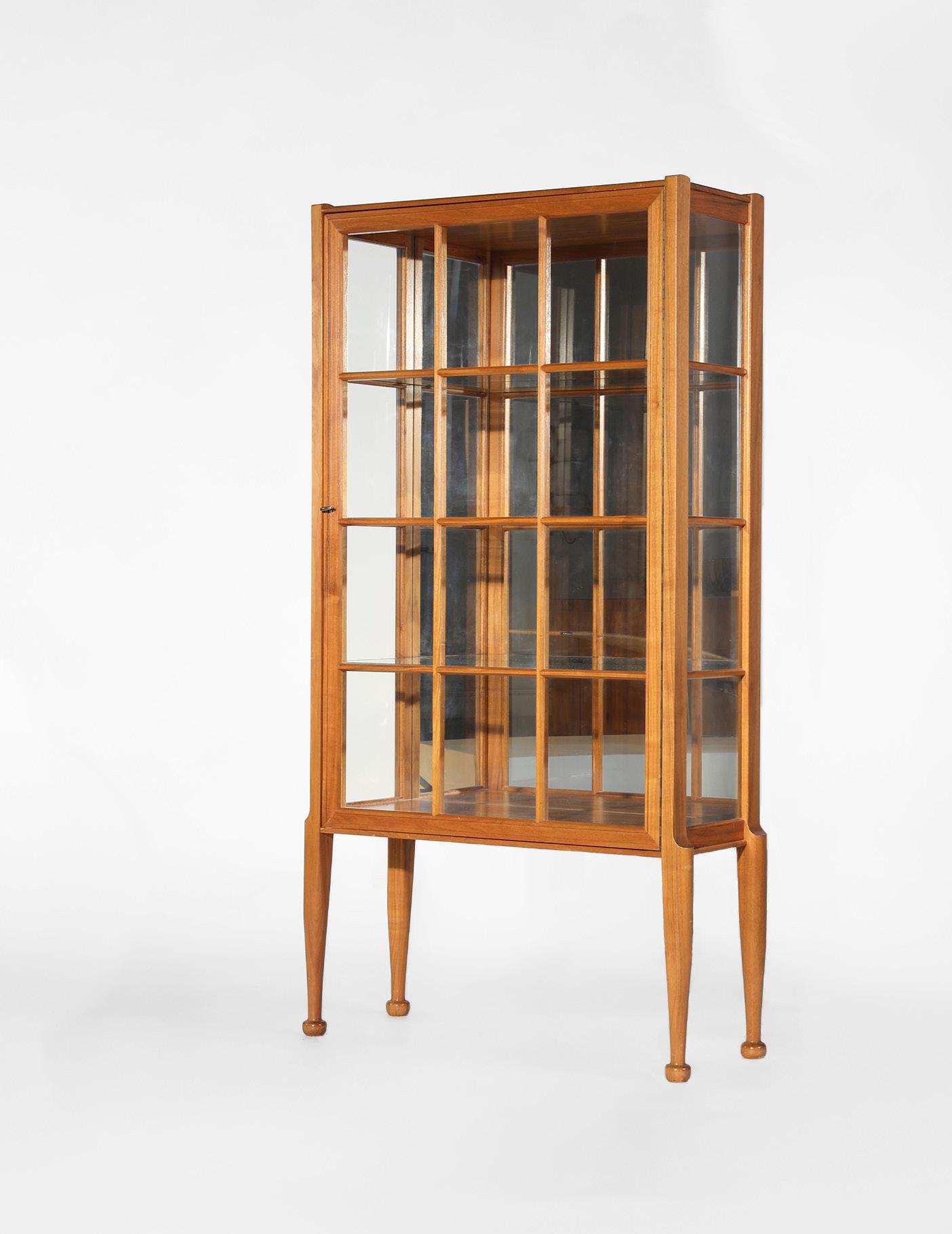
Made by Svenskt Tenn Mahogany, glass, mirror and brass
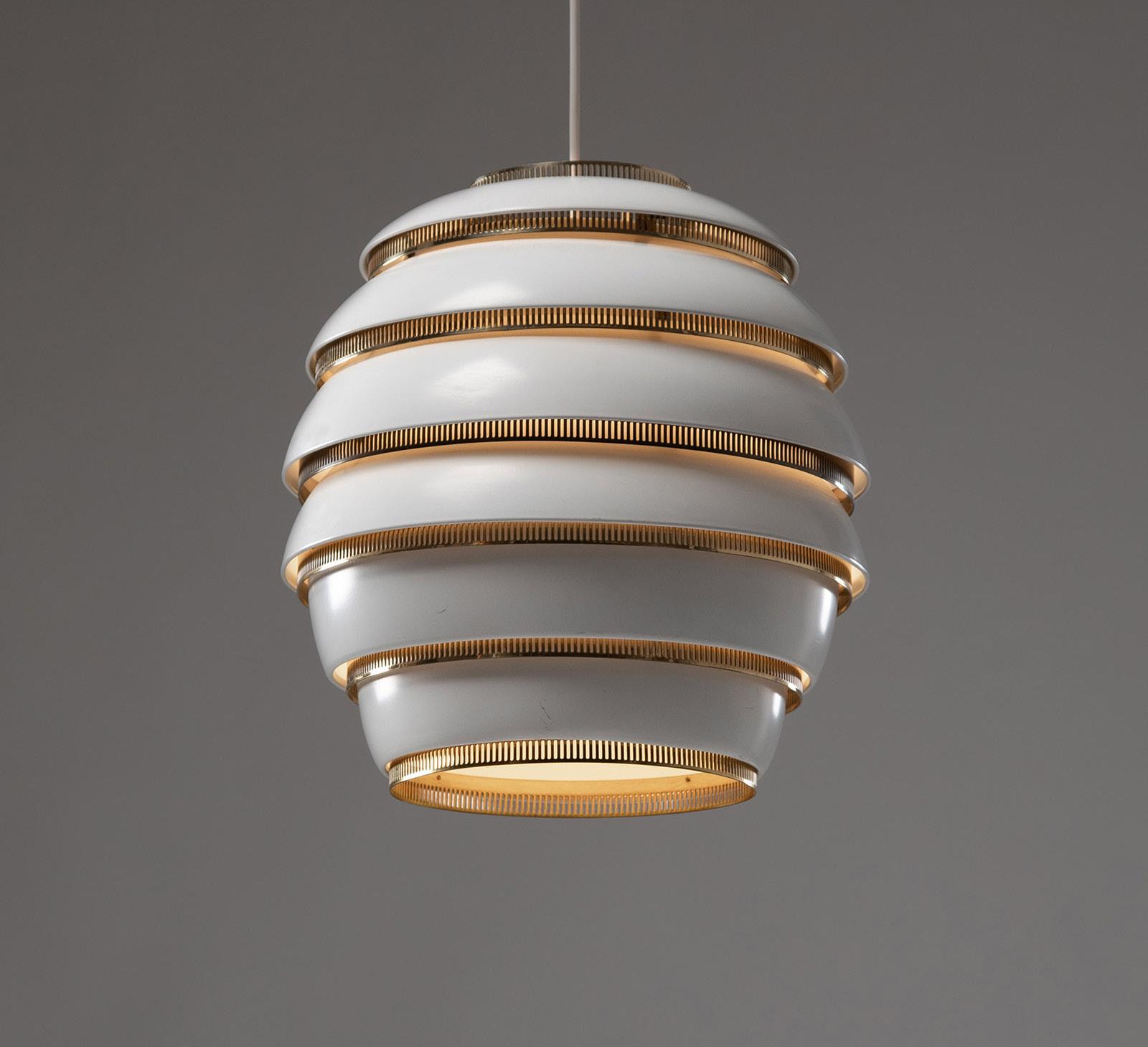
ALVAR AALTO, 1898-1976
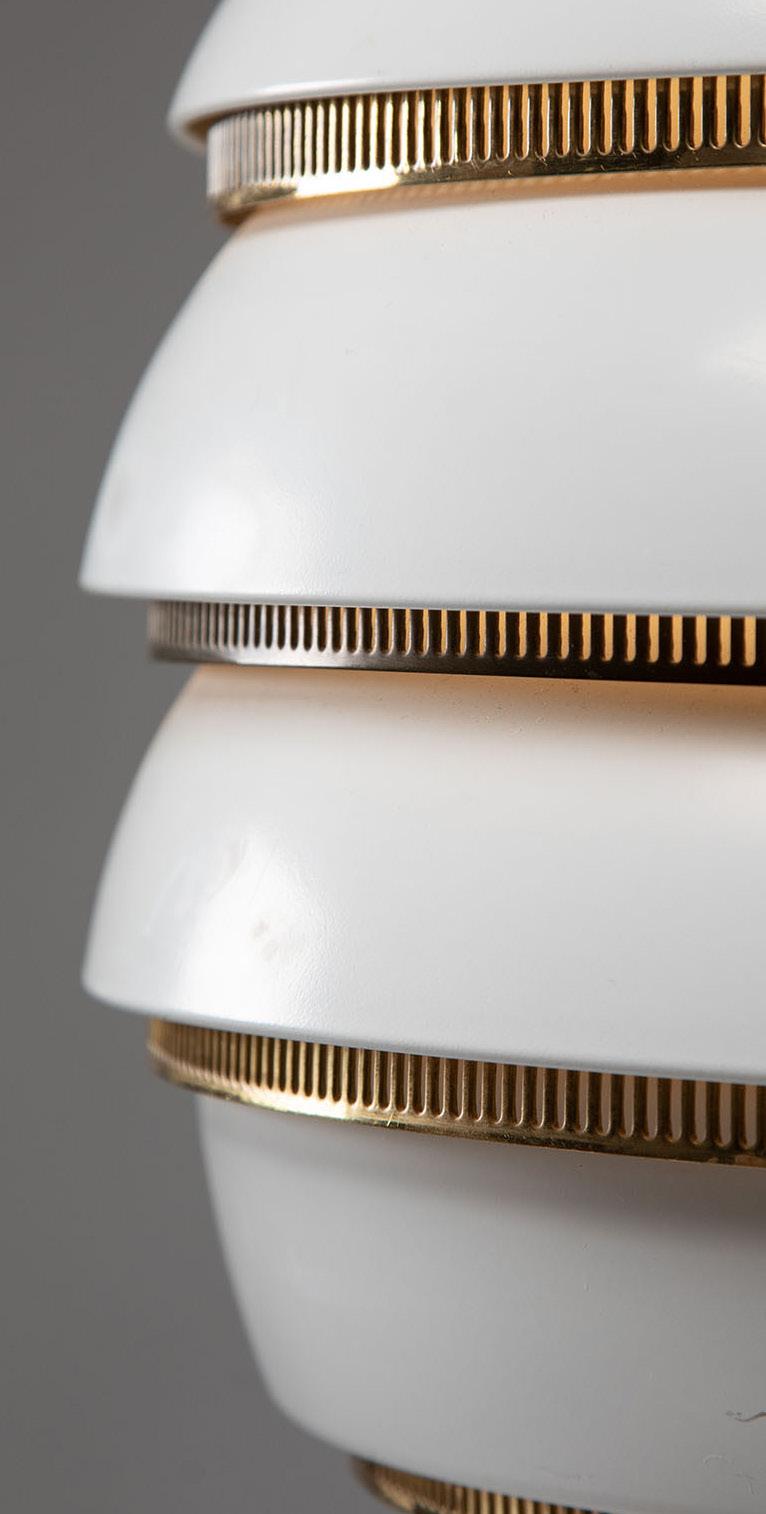
Large Beehive pendant
Designed 1953
Made by Valaistustyö Oy
Painted aluminium and perforated brass
Height 35 cm
BØRGE MOGENSEN, 1914- 1972
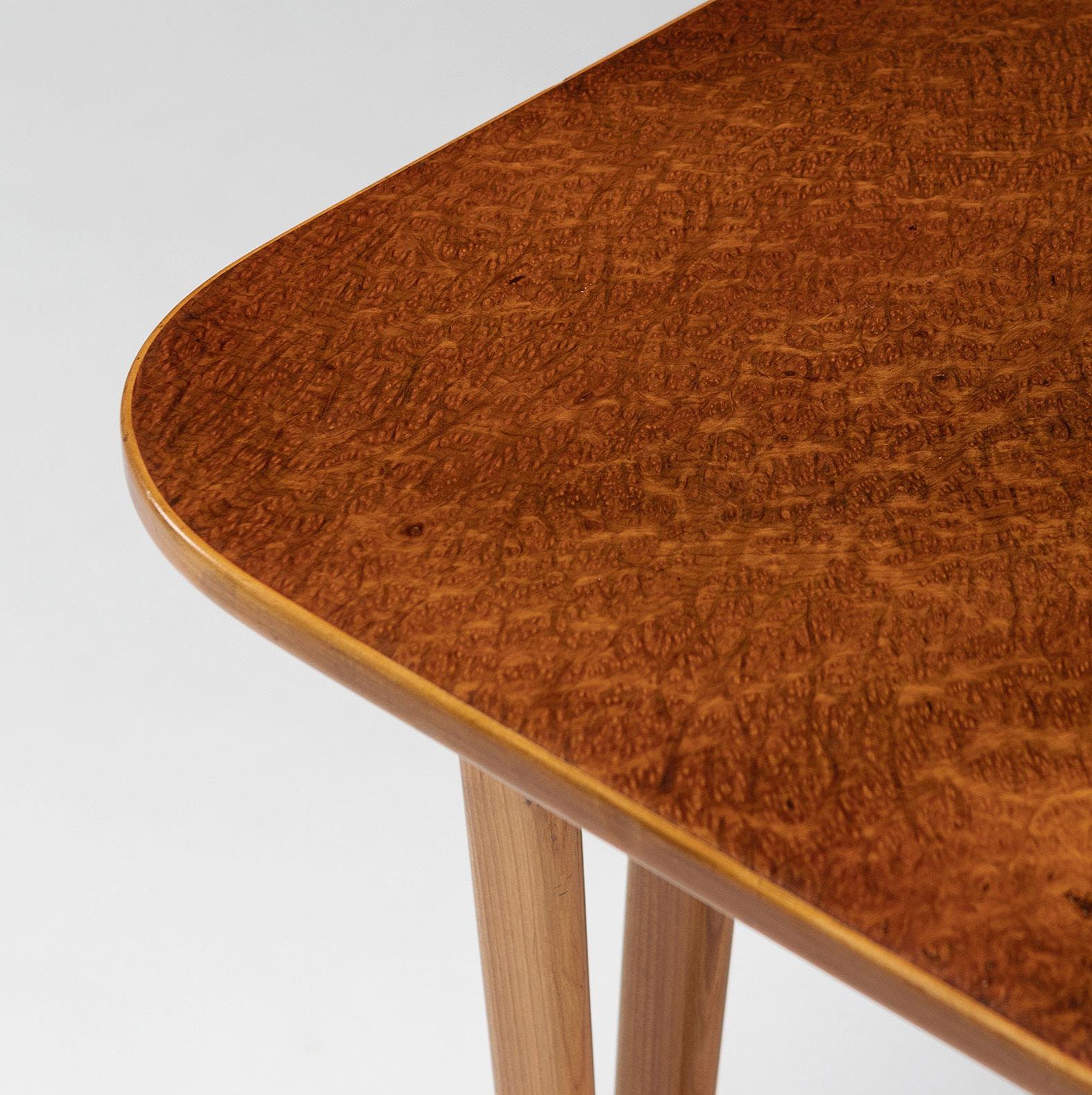
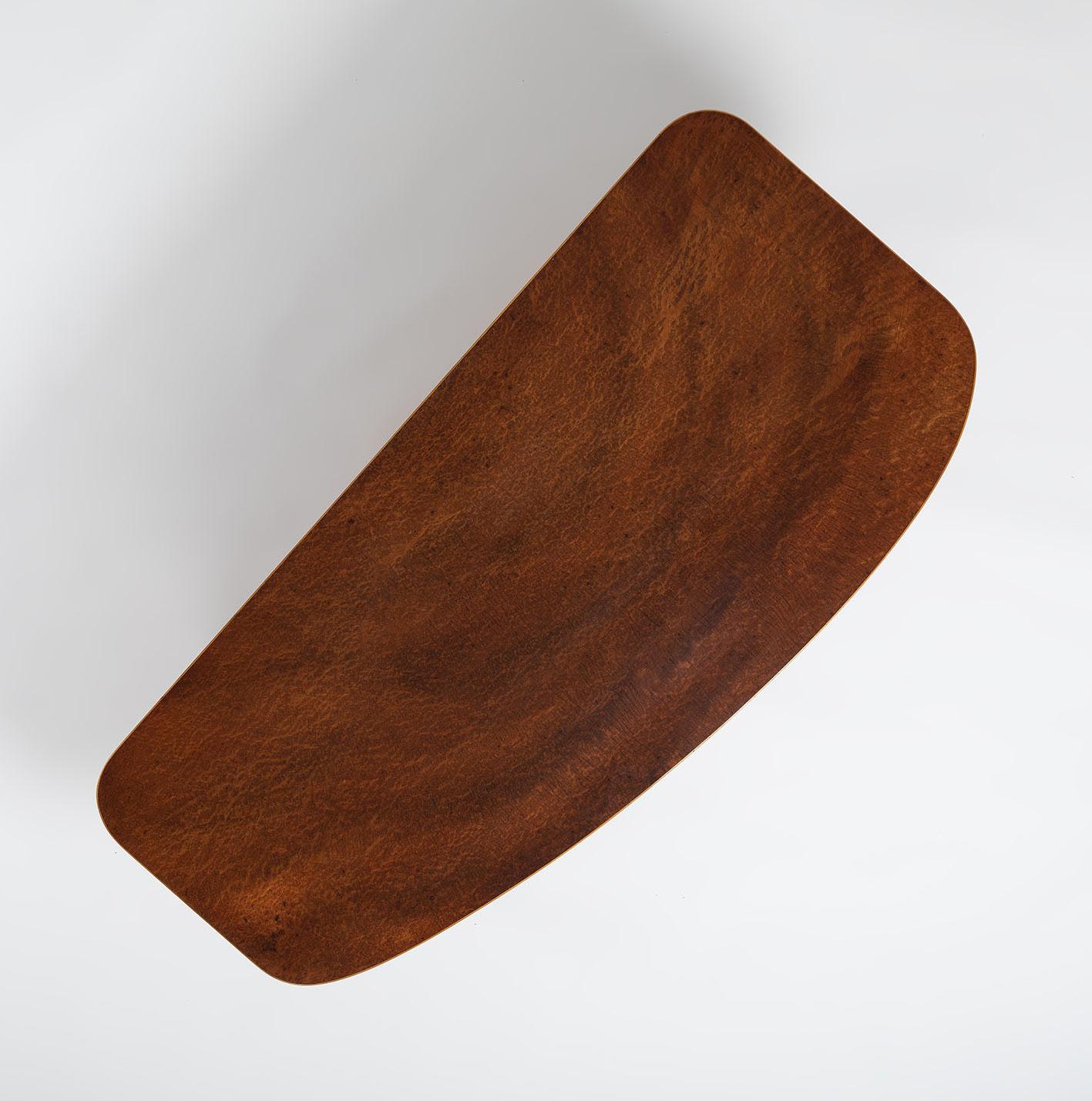
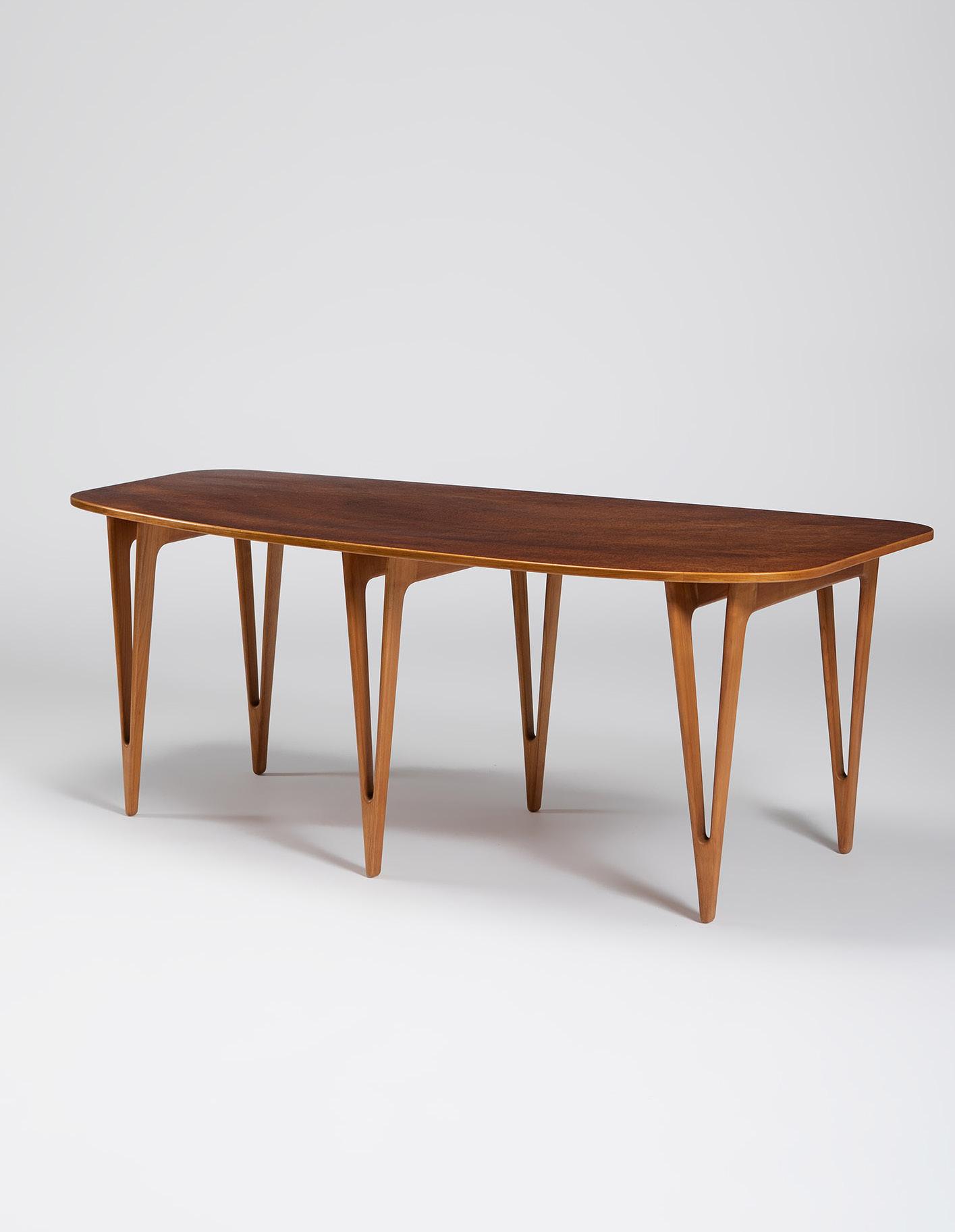
Console table
Designed 1949
Made by Erhard Rasmussen Vavona top and cherry base
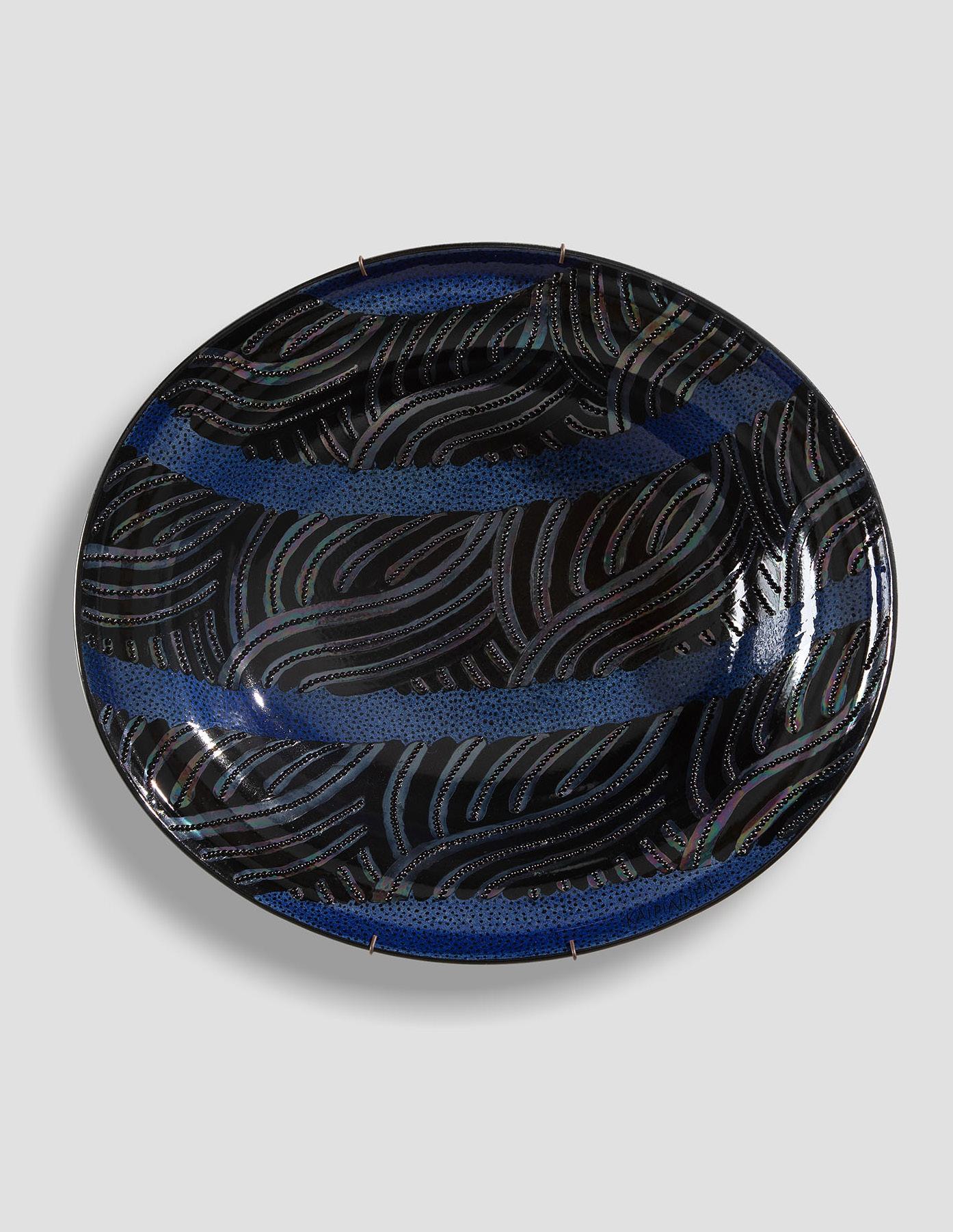
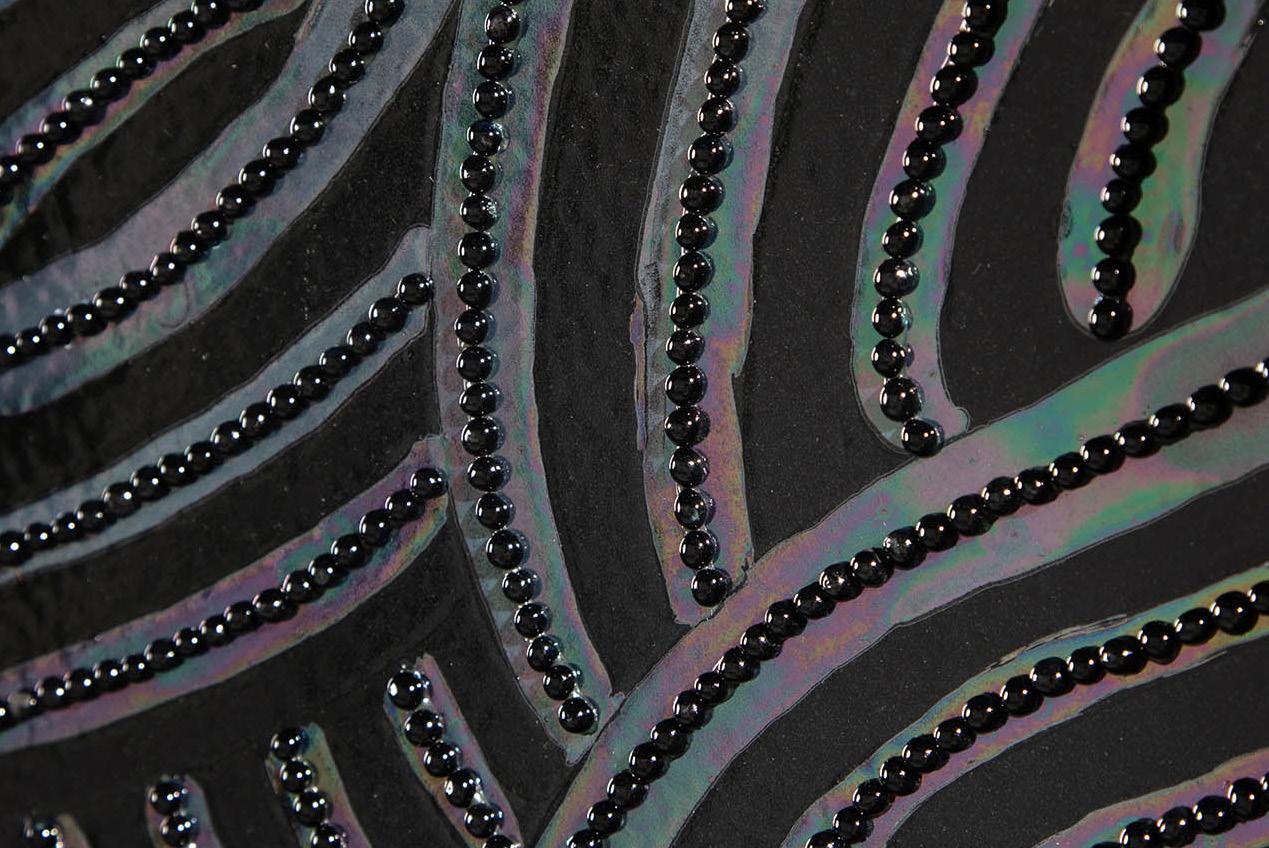
BIRGER KAIPIAINEN,
1915 - 1988
Large wall-mounted dish
Designed 1960s
Made by Arabia
Iridescent glazed stoneware with applied beads
Diameter 66,5 cm
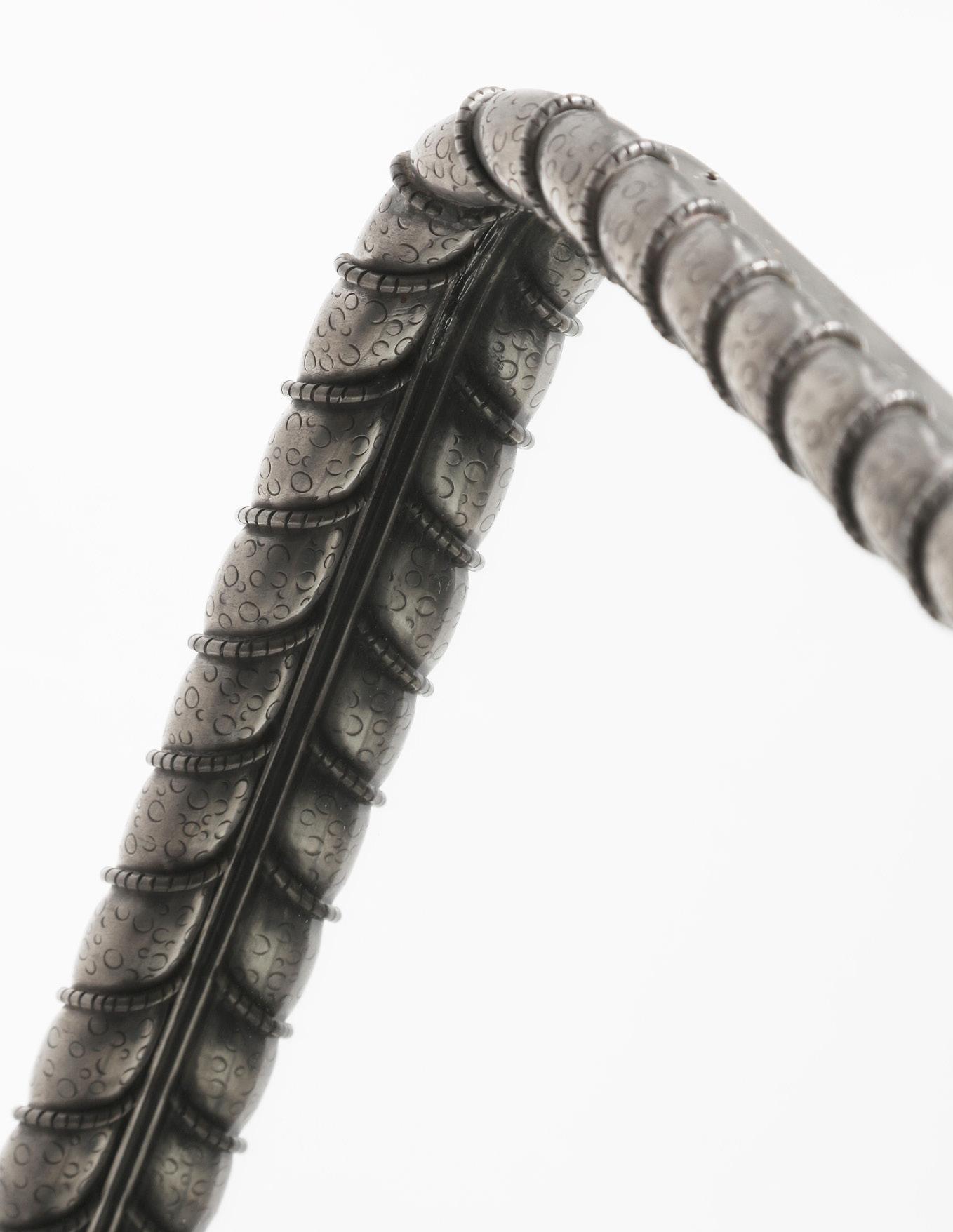
ESTRID
ERICSON, 1894 - 1981 Mirror
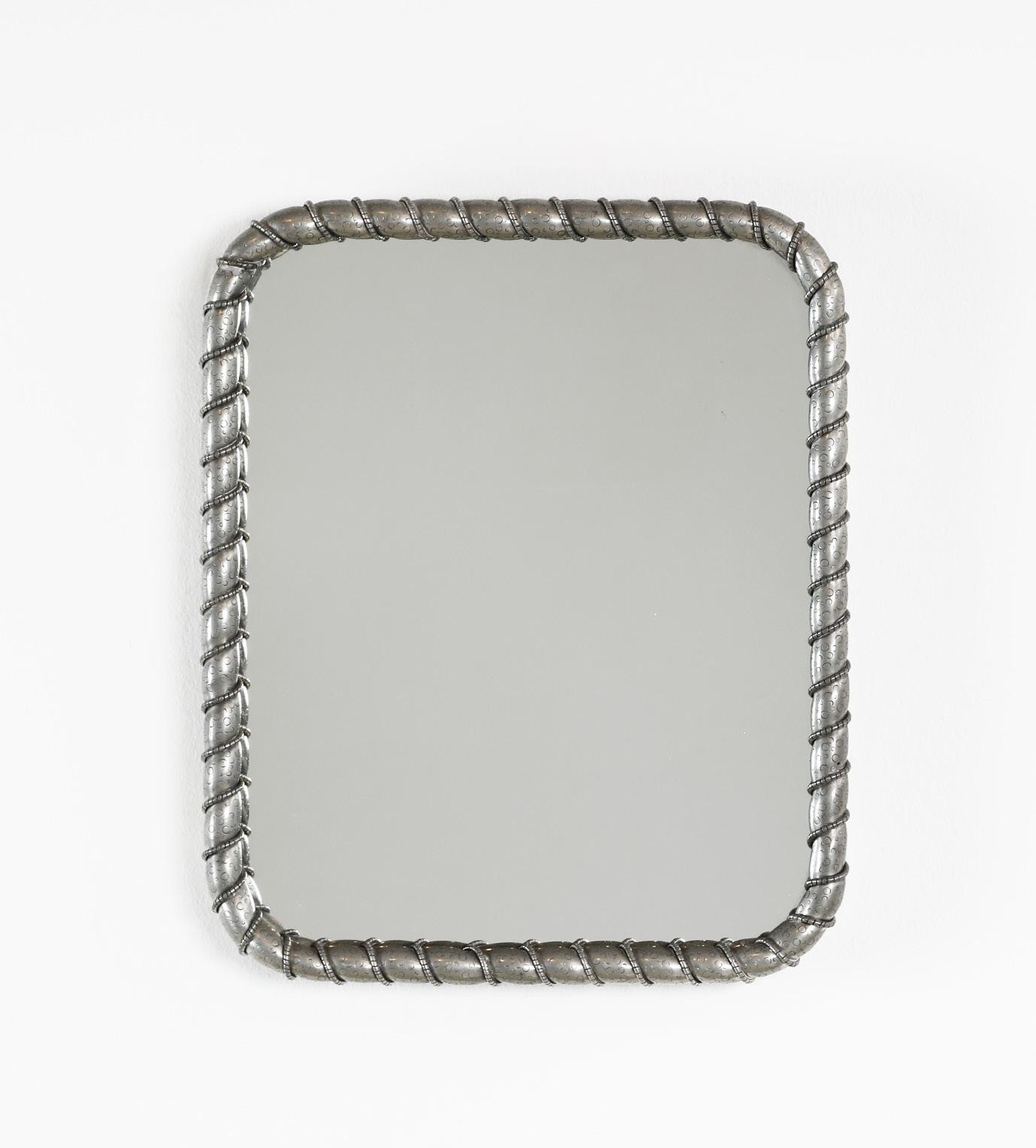
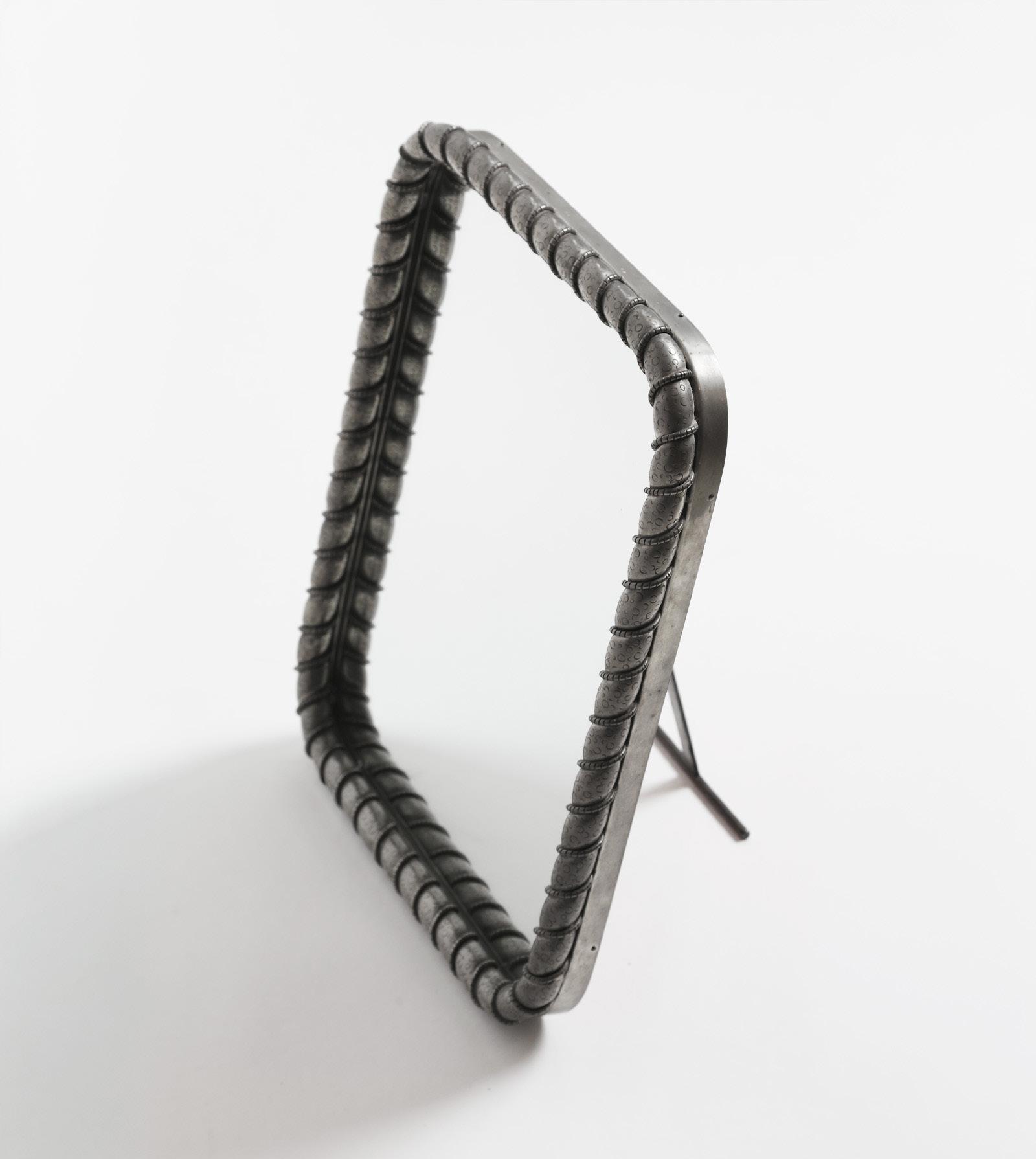
Designed 1945
Made by Svenskt Tenn Pewter, mirror glass, and mahogany

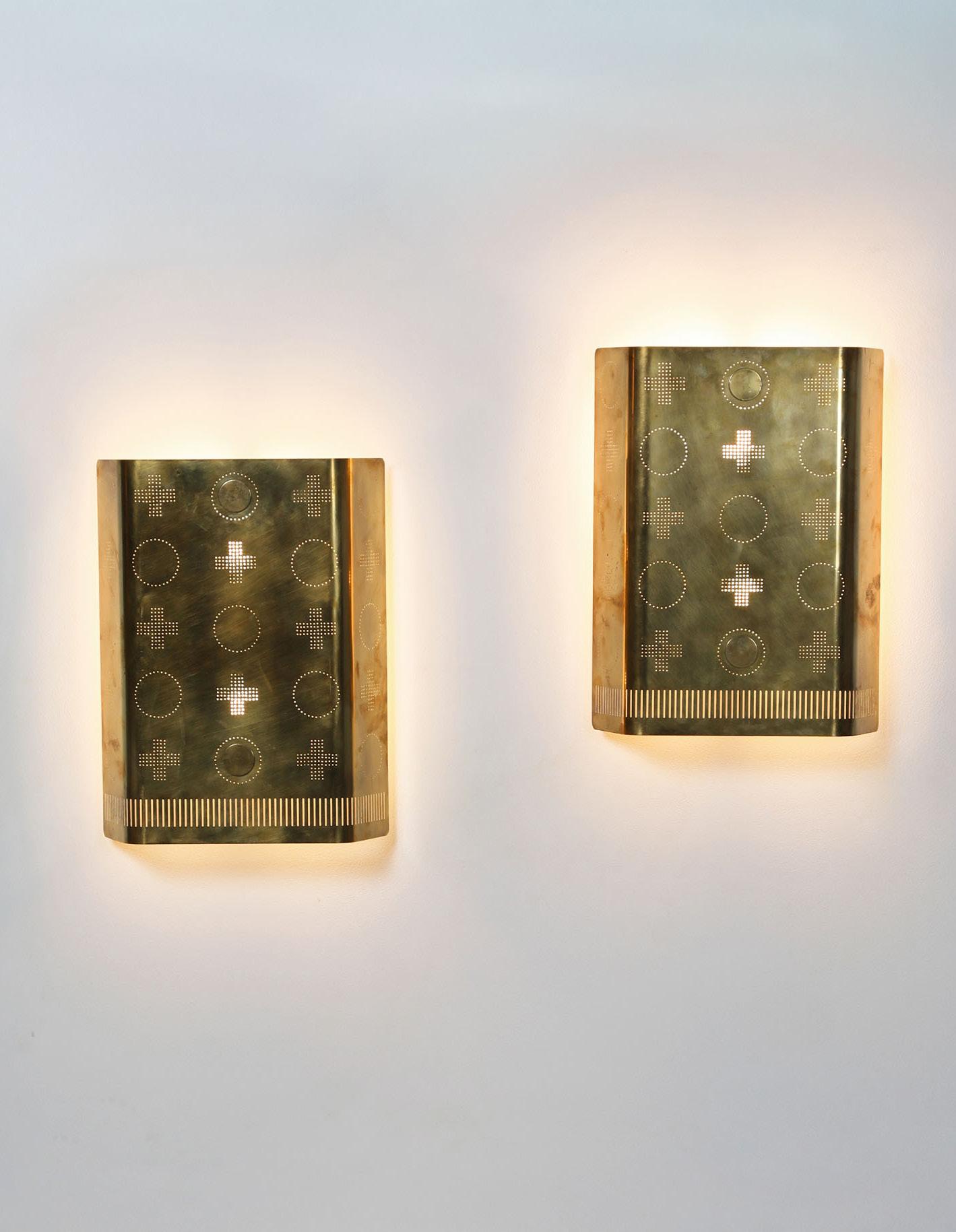
PAAVO TYNELL, 1890 - 1973
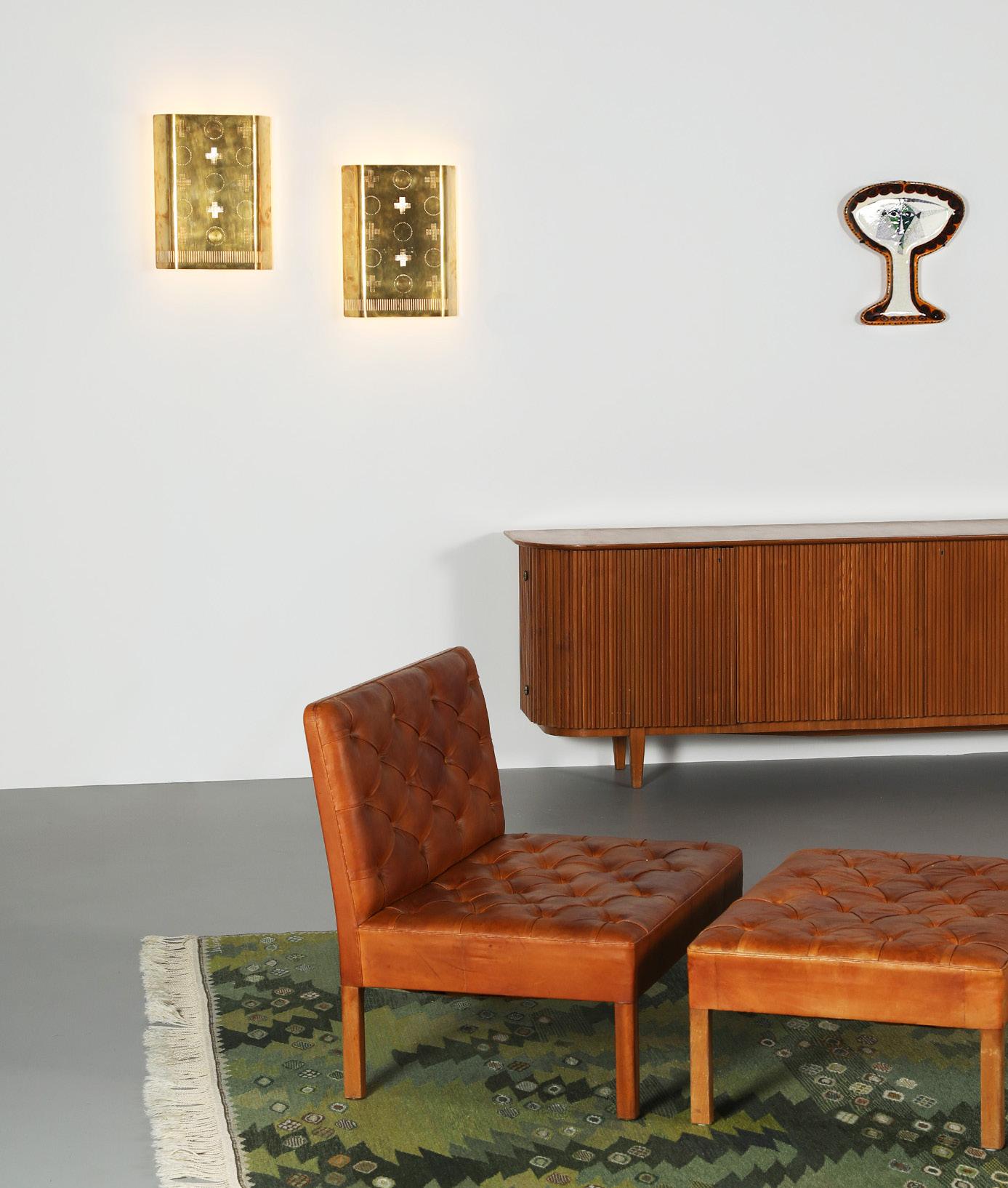
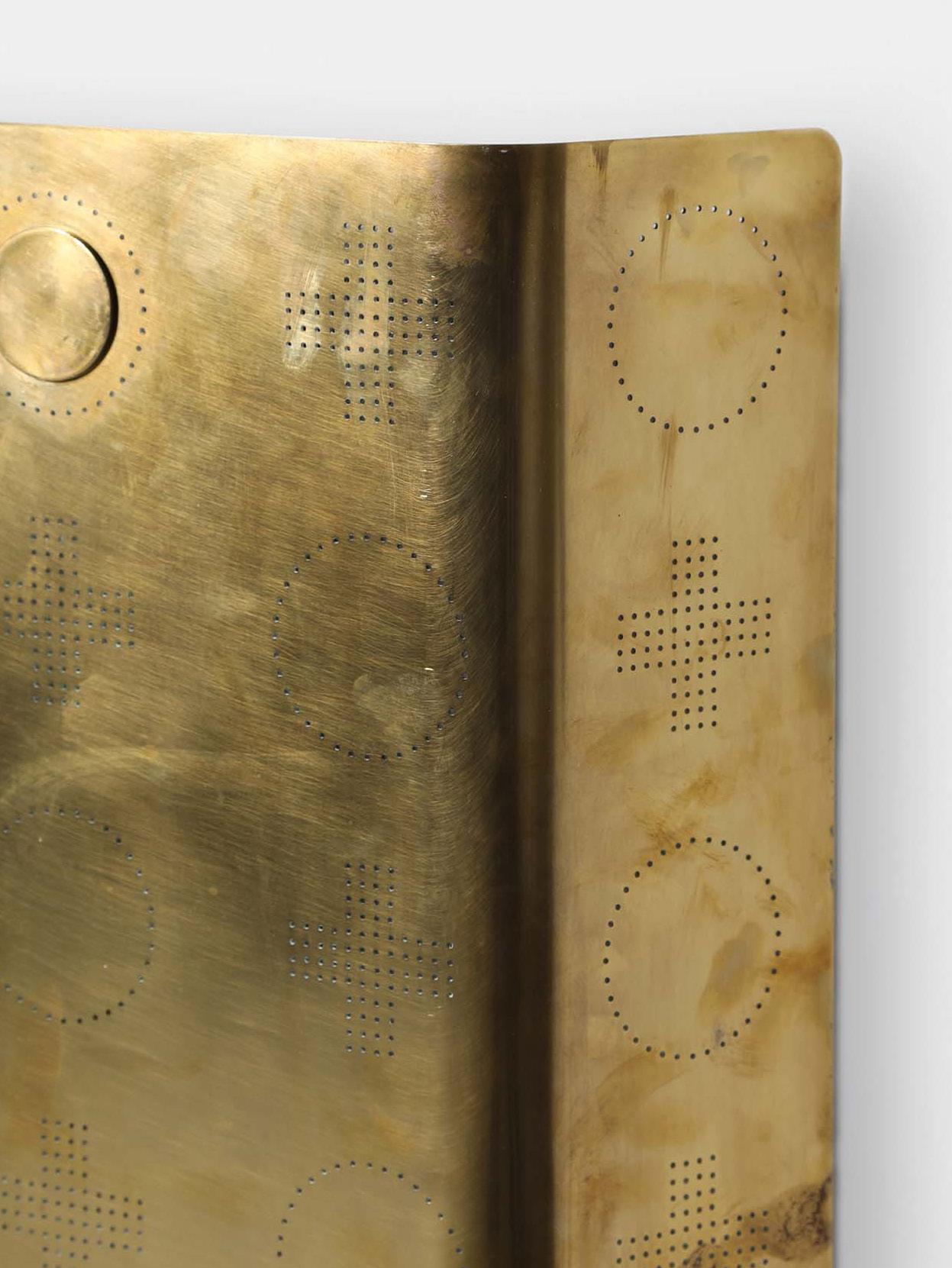
Pair of wall-mounted light fixtures
Designed c. 1950
Made by Taito Oy
Perforated brass, partly painted
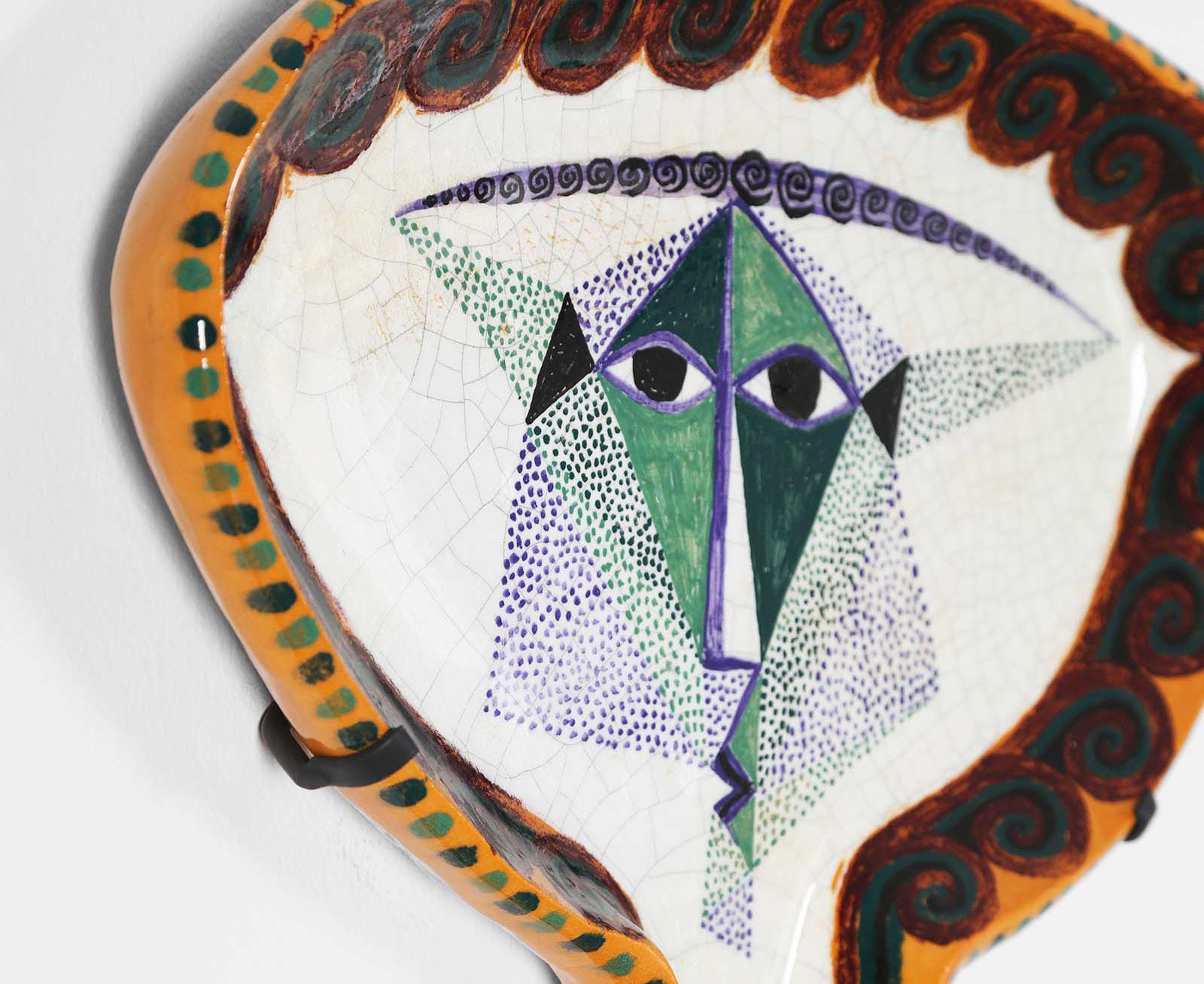
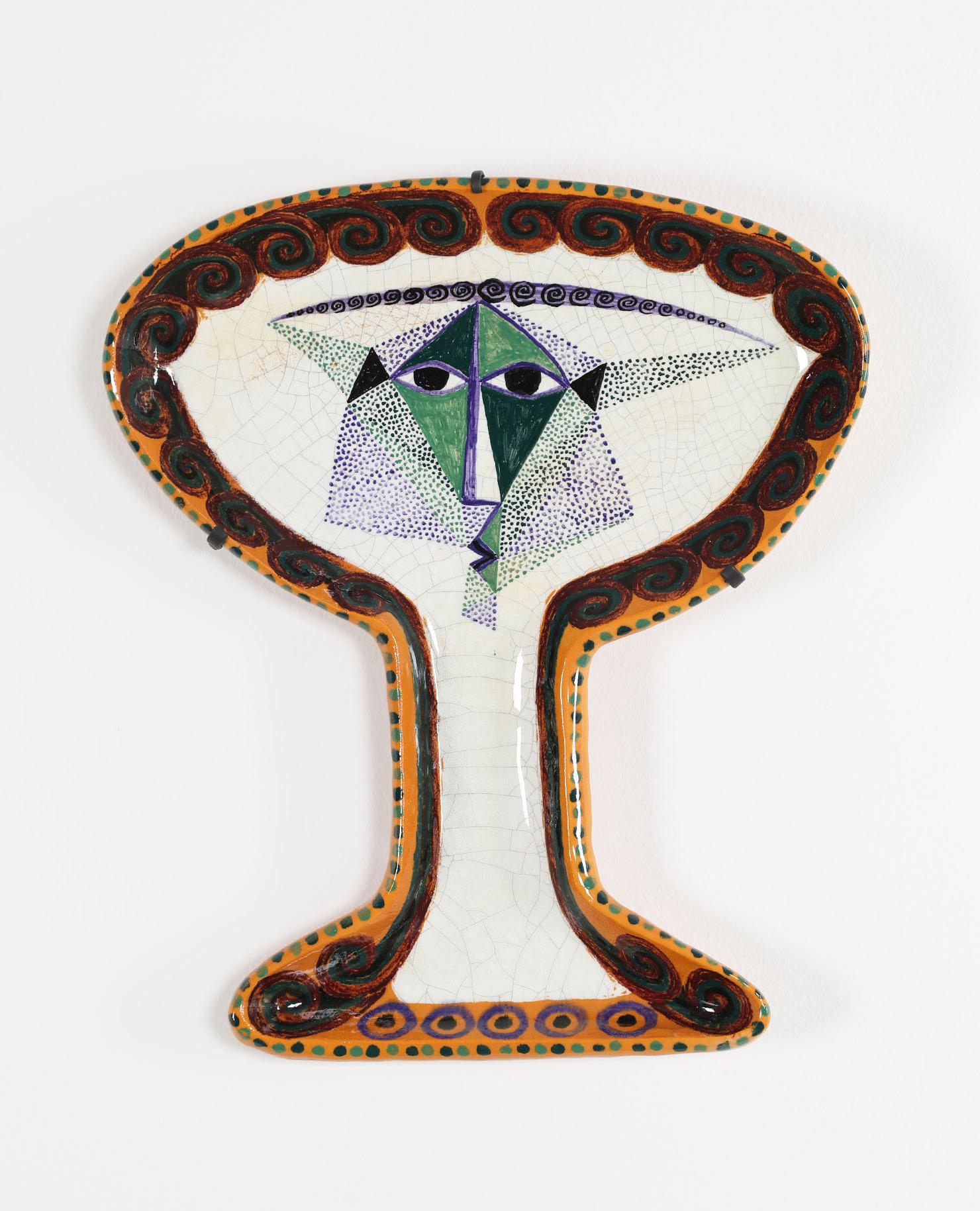
BIRGER KAIPIAINEN, 1915 - 1988
Designed 1960s
Wall mounted sculpture
Made by Arabia
Glazed stoneware
Height 48 cm
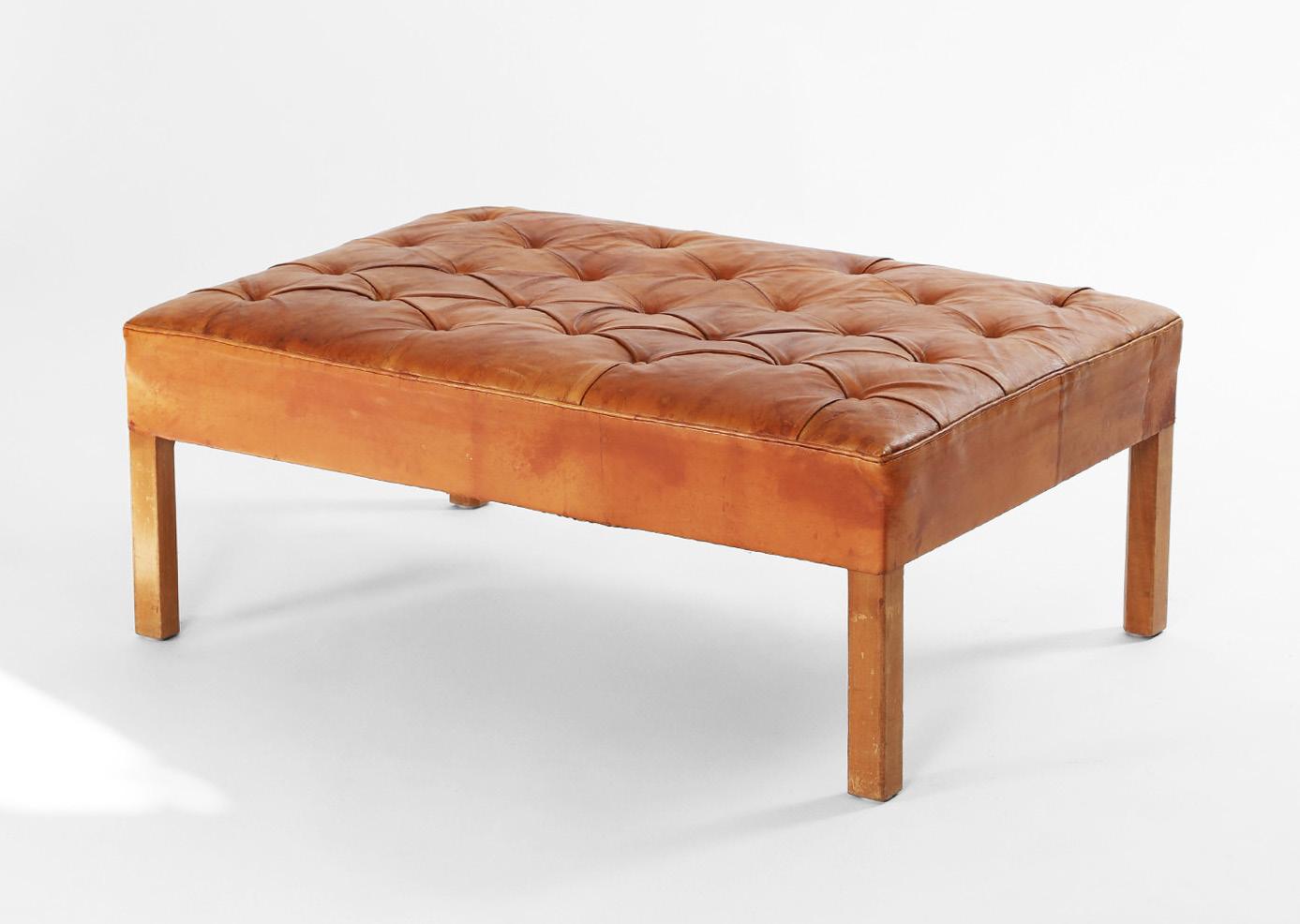
KAARE KLINT, 1888 - 1954
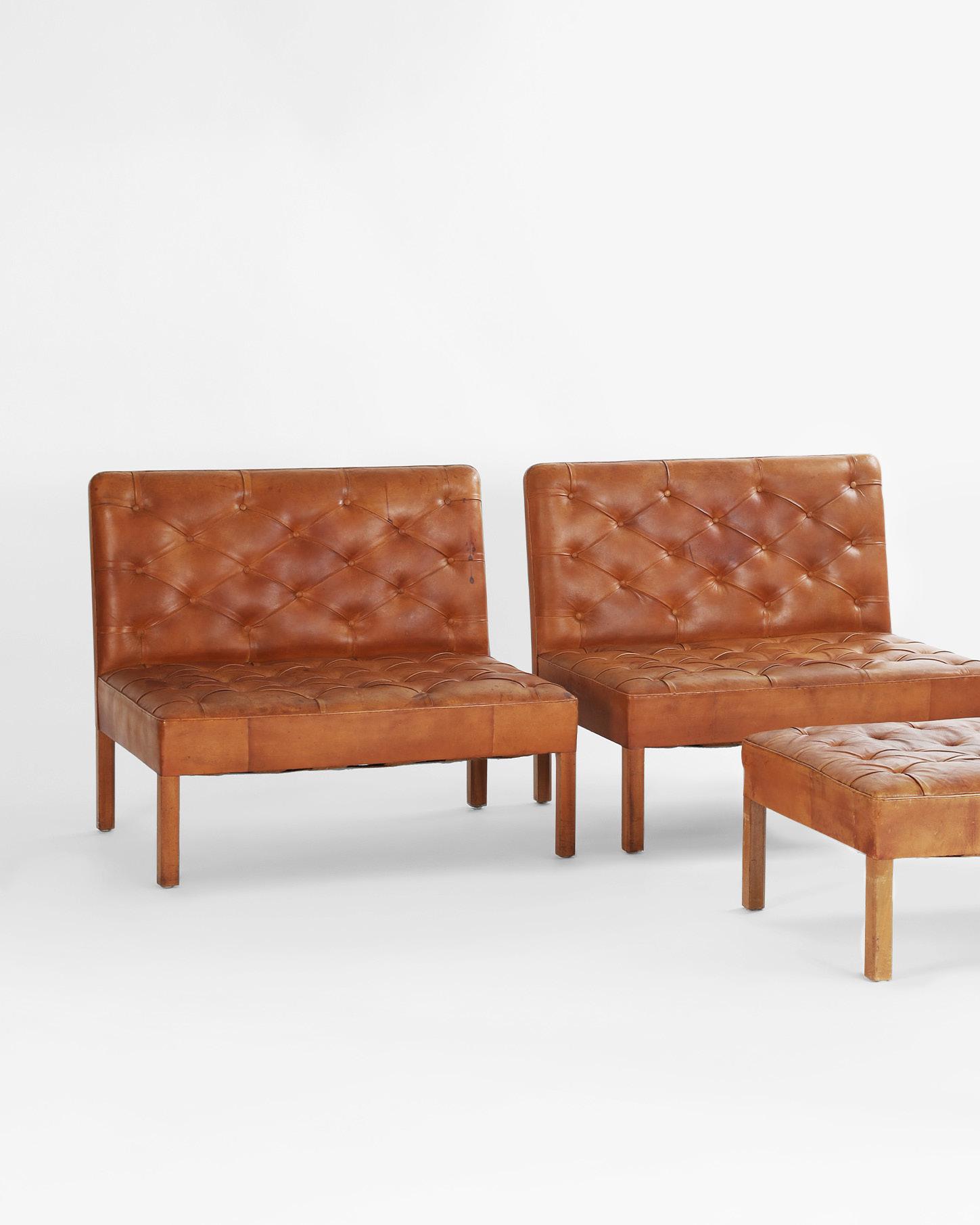
Set of Addition benches
Designed 1933
Made by Rud. Rasmussen
Niger leather and mahogany
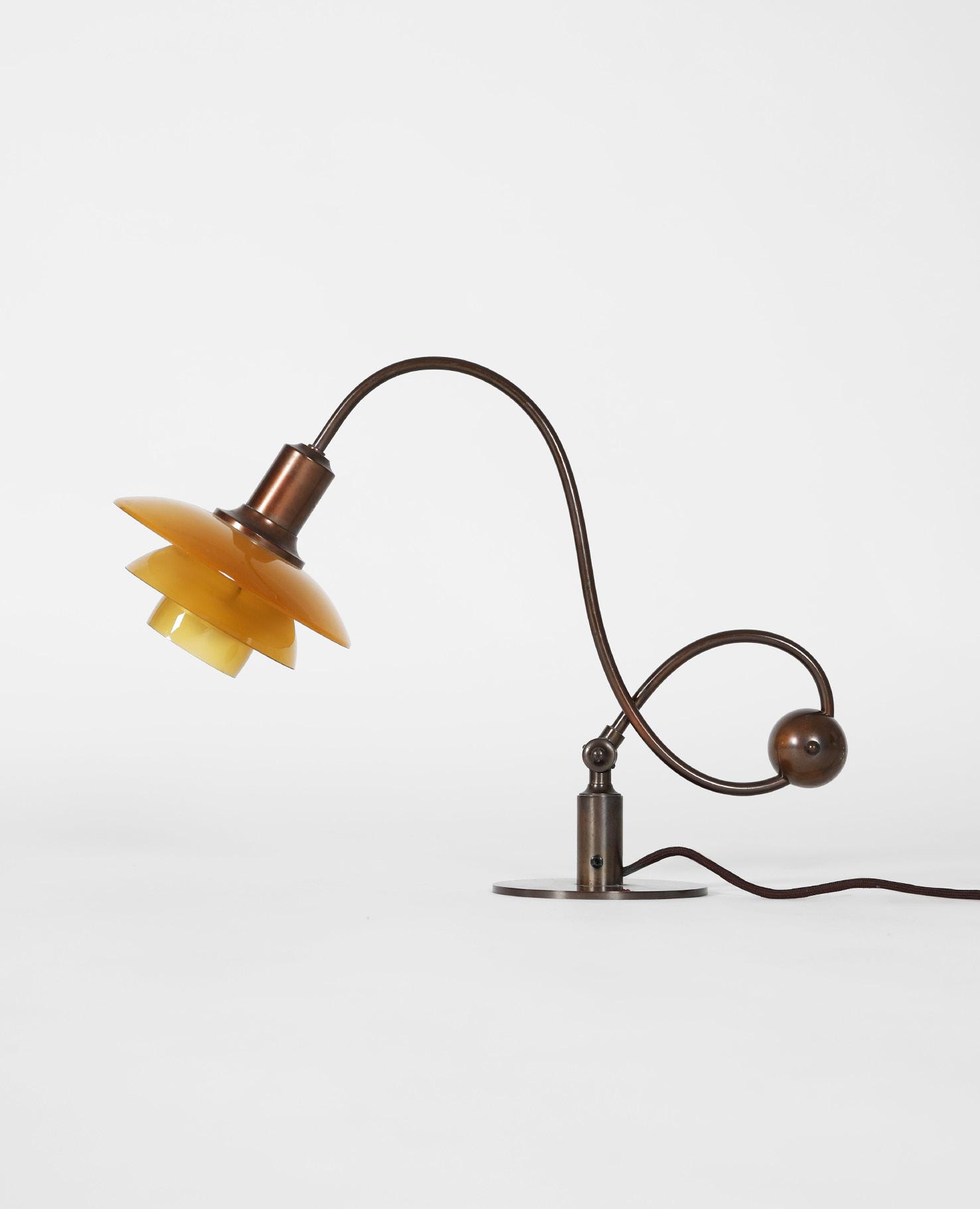
POUL HENNINGSEN, 1864 - 1967
Designed 1931
by Louis Poulsen
Browned brass, amber glass and bakelite
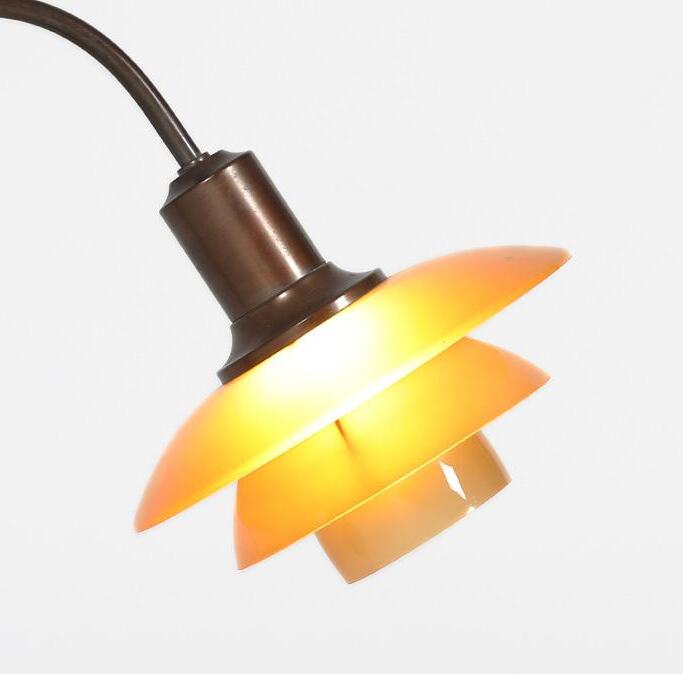
Piano lamp
Made
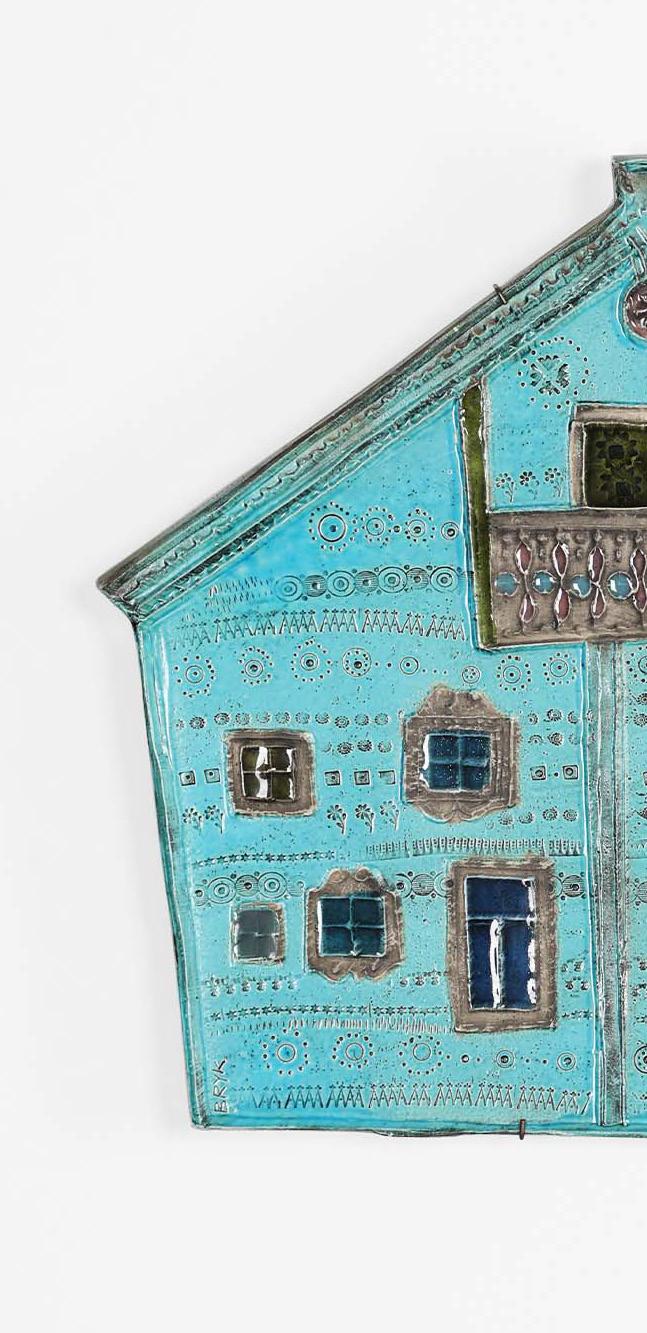
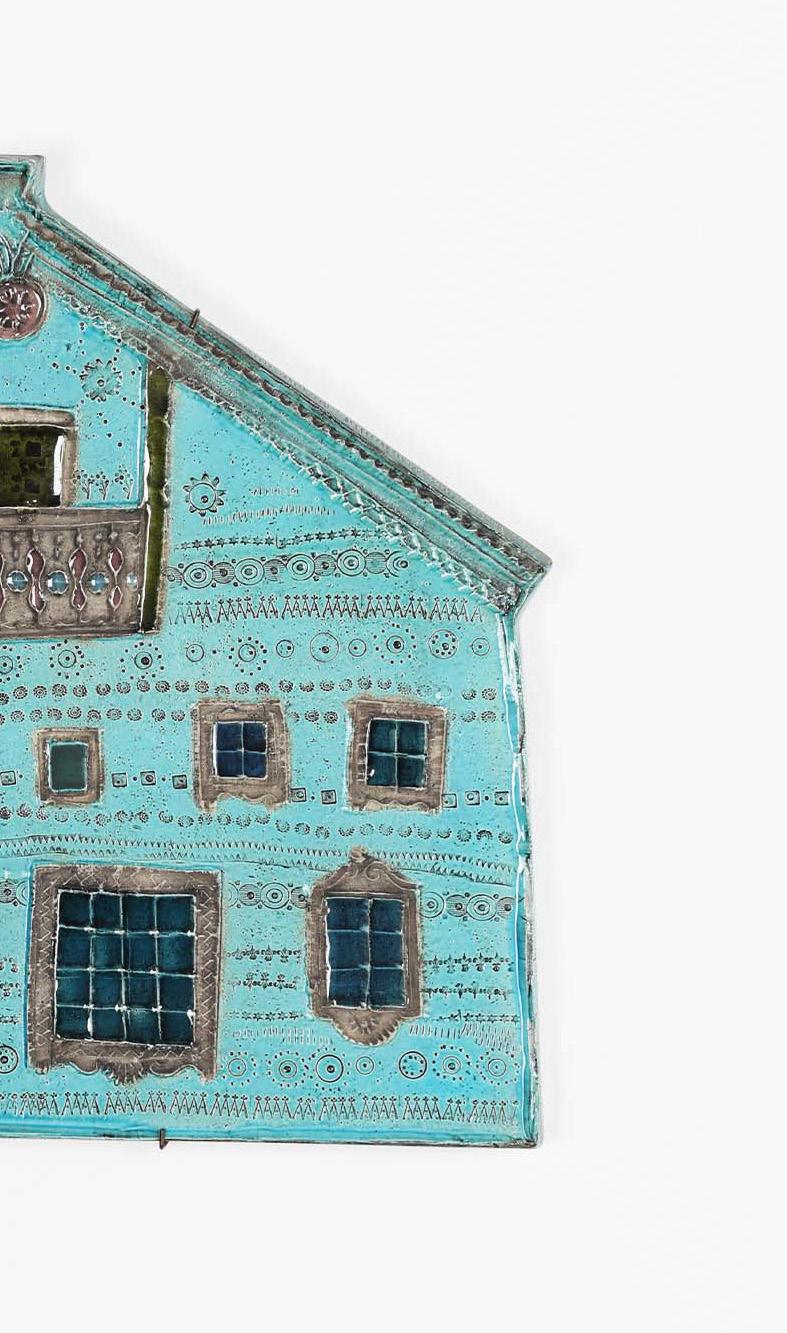
RUT BRYK, 1916-1999
Wall mounted relief
Designed 1950s
Made by Arabia
Faience with blue and silver glaze
Height 41 cm
Dansk Møbelkunst Gallery