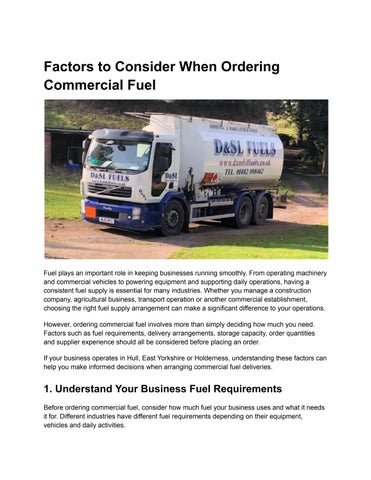
Factors to Consider When Ordering Commercial Fuel
Fuel plays an important role in keeping businesses running smoothly. From operating machinery and commercial vehicles to powering equipment and supporting daily operations, having a consistent fuel supply is essential for many industries. Whether you manage a construction company, agricultural business, transport operation or another commercial establishment, choosing the right fuel supply arrangement can make a significant difference to your operations. However, ordering commercial fuel involves more than simply deciding how much you need. Factors such as fuel requirements, delivery arrangements, storage capacity, order quantities and supplier experience should all be considered before placing an order. If your business operates in Hull, East Yorkshire or Holderness, understanding these factors can help you make informed decisions when arranging commercial fuel deliveries.
1. Understand Your Business Fuel Requirements Before ordering commercial fuel, consider how much fuel your business uses and what it needs it for. Different industries have different fuel requirements depending on their equipment, vehicles and daily activities.
For example, agricultural businesses may need fuel for tractors and farming machinery, while construction companies may require fuel for heavy equipment and site operations. Consider the following questions: ● ● ● ● ●
What equipment or vehicles require fuel? How much fuel does your business typically consume? How frequently do you need to arrange deliveries? Does your fuel consumption change during busy periods? Are there particular fuel specifications your equipment requires?
Understanding your requirements helps you order an appropriate quantity and maintain a suitable fuel supply for your operations.
2. Choose the Right Type of Commercial Fuel Selecting the correct fuel is essential for maintaining equipment performance and supporting business operations. Different vehicles, machinery and equipment may require specific fuel types. Before placing an order, check your equipment manufacturer's recommendations and confirm the fuel specifications required. If your business operates several types of machinery or vehicles, maintaining a clear record of their fuel requirements can help simplify the ordering process. D & SL Fuels & Lubricants distributes domestic, agricultural and commercial fuels, helping customers across East Yorkshire and Holderness arrange fuel supplies according to their requirements.
3. Consider Your Fuel Storage Capacity Storage capacity is another important consideration when ordering commercial fuel. Businesses that purchase fuel in larger quantities need suitable storage facilities to accommodate their orders safely. Before arranging a delivery, check how much space is available in your existing storage tank. Keep the following points in mind: ● ● ● ● ●
Check your tank's total storage capacity. Monitor the current fuel level before ordering. Avoid ordering quantities that exceed available capacity. Ensure storage facilities are suitable for the fuel being supplied. Follow relevant fuel storage and safety requirements.
Having an appropriate storage arrangement can make bulk fuel purchasing more convenient and help businesses maintain an adequate supply.
4. Consider Buying Commercial Fuel in Bulk For businesses with regular or high fuel consumption, purchasing commercial fuel in bulk can be a practical option. Instead of arranging several smaller orders, businesses can organise larger deliveries based on their expected requirements and available storage capacity. Bulk fuel purchasing may offer several advantages: Fewer delivery arrangements: Ordering larger quantities can reduce the frequency of delivery requests. Better fuel planning: Businesses can organise their fuel requirements around operational schedules. Convenient supply management: Having sufficient fuel available can help reduce interruptions caused by unexpected shortages. Flexible ordering: Businesses can choose quantities according to their usage and storage arrangements. Before placing a bulk order, consider your average consumption and ensure that your storage facilities can accommodate the requested quantity.
5. Look for Convenient Fuel Delivery Services Delivery arrangements can have a direct impact on business operations. If your business depends on a regular fuel supply, choosing a supplier that offers convenient delivery services can make ordering easier. Consider whether the supplier can accommodate your required delivery quantities and serve your business location. A convenient delivery service can help businesses plan fuel orders around their operational requirements rather than spending unnecessary time organising repeated collections. D & SL Fuels & Lubricants offers a free daily delivery service across East Yorkshire and Holderness, helping customers arrange fuel supplies directly to their premises.
6. Choose an Experienced Commercial Fuel Supplier The supplier you choose can influence how easily you manage your business fuel requirements. Working with an experienced fuel distributor can make the ordering process more straightforward. When comparing commercial fuel suppliers, consider: ● ● ● ● ● ●
Experience distributing different types of fuel. Knowledge of local delivery areas. Availability of flexible order quantities. Bulk fuel delivery options. Convenient ordering and delivery arrangements. Ability to support your ongoing fuel requirements.
D & SL Fuels & Lubricants is based in the Hull area and has over 25 years of experience handling and distributing domestic, agricultural and commercial fuels. Its experience serving customers throughout East Yorkshire and Holderness makes it a convenient option for businesses looking to arrange commercial fuel deliveries.
7. Plan Your Fuel Orders in Advance
Leaving fuel orders until your supply is nearly empty can create unnecessary pressure, particularly when your business depends on machinery, vehicles or equipment operating throughout the day. Planning ahead allows you to monitor consumption and arrange deliveries before your fuel levels become too low. A few simple practices can help: ● ● ● ● ●
Check your storage tanks regularly. Keep records of previous fuel orders. Estimate your average weekly or monthly consumption. Consider seasonal changes in business activity. Arrange deliveries before reaching critically low fuel levels.
Businesses with changing fuel requirements should review their usage regularly and adjust their ordering quantities accordingly.
Frequently Asked Questions What should I consider before ordering commercial fuel? Consider your business's fuel consumption, equipment requirements, storage capacity, delivery arrangements and the supplier's experience. These factors can help you determine the appropriate fuel quantity and ordering schedule.
Is buying commercial fuel in bulk beneficial for businesses? Bulk fuel purchasing can be convenient for businesses with regular fuel requirements and sufficient storage capacity. It can reduce the frequency of orders and make fuel supply planning easier.
How often should a business order commercial fuel? The ordering frequency depends on fuel consumption, storage capacity and operational requirements. Monitoring fuel levels and keeping records of previous orders can help establish a suitable schedule.
Can commercial fuel be delivered directly to business premises? Yes. Fuel delivery services allow businesses to arrange supplies directly to their premises, reducing the need to organise separate fuel collections.
Does D & SL Fuels & Lubricants deliver commercial fuel in East Yorkshire?
Yes. D & SL Fuels & Lubricants distributes commercial fuels across East Yorkshire and Holderness, offering flexible quantities and a free daily delivery service.
Arrange Your Commercial Fuel Delivery with D & SL Fuels & Lubricants Choosing the right commercial fuel supplier involves understanding your business requirements, planning suitable order quantities and ensuring convenient delivery arrangements. By considering these factors, you can manage your fuel supply more effectively and support your day-to-day operations. Based in Hull, D & SL Fuels & Lubricants has over 25 years of experience distributing domestic, agricultural and commercial fuels across East Yorkshire and Holderness. Whether you require regular commercial fuel supplies or want to purchase fuel in bulk, the company offers flexible quantities and a free daily delivery service for your convenience. Get in touch with D & SL Fuels & Lubricants to discuss your commercial fuel requirements and arrange a delivery directly to your premises.