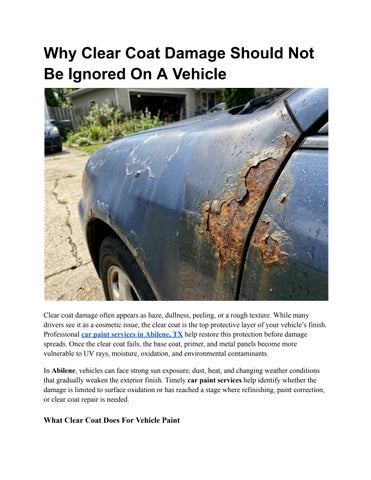
Why Clear Coat Damage Should Not Be Ignored On A Vehicle
Clear coat damage often appears as haze, dullness, peeling, or a rough texture. While many drivers see it as a cosmetic issue, the clear coat is the top protective layer of your vehicle’s finish. Professional car paint services in Abilene, TX help restore this protection before damage spreads. Once the clear coat fails, the base coat, primer, and metal panels become more vulnerable to UV rays, moisture, oxidation, and environmental contaminants. In Abilene, vehicles can face strong sun exposure, dust, heat, and changing weather conditions that gradually weaken the exterior finish. Timely car paint services help identify whether the damage is limited to surface oxidation or has reached a stage where refinishing, paint correction, or clear coat repair is needed.
What Clear Coat Does For Vehicle Paint
Modern automotive paint systems are built in layers. A vehicle panel usually has primer, color base coat, and transparent clear coat. This layer creates gloss and depth, but it also protects the finish from sunlight, road grime, bird droppings, tree sap, minerals, acid rain, and wash chemicals. Healthy clear coat helps water bead, slows paint oxidation, and eases cleaning. When that layer weakens, the paint loses its sealed barrier. This is why professional evaluation through car paint services can matter before minor surface failure turns into deeper refinishing work.
Early Signs Of Clear Coat Failure Clear coat failure does not always appear as heavy peeling at first. Early signs include cloudy patches, faded gloss, chalky residue, white or gray blotches, bubbling, flaking edges, and uneven reflection. The paint may also feel rough after washing because contaminants have bonded to the damaged surface. Damage often appears first on hoods, roofs, trunk lids, and upper panels because these areas receive the most direct sun. A vehicle may look clean after washing but still appear dull because the transparent coating itself has started to break down.
Why Untreated Clear Coat Damage Gets Worse When clear coat thins, cracks, or separates, ultraviolet rays reach the color coat more directly. This exposure breaks down pigments, fades the finish, and creates oxidation. Oxidized paint becomes porous, which makes it less resistant to chemical staining, water spots, and embedded dirt. Moisture also becomes a concern. If chips, scratches, or panel edges are present, water may reach bare metal and start corrosion. Rust commonly develops around seams, roof edges, hood fronts, wheel arches, and areas where paint has already lifted. In Abilene, strong sun, windblown dust, and temperature changes can make weakened paint age faster. Heat expansion and contraction may cause peeling clear coat to spread once the bond between layers has failed.
Why Contaminants Become Harder To Remove A healthy clear coat creates a smoother surface that resists buildup. Damaged clear coat is rougher, so road film, hard water spots, insect residue, bird droppings, and industrial fallout cling more easily. These contaminants may stain or etch the surface if they remain too long.
This is why damaged paint can look worse after frequent washing. The coating has lost smoothness, reflectivity, and chemical resistance, so normal cleaning cannot fully restore the original finish.
Clear Coat Damage Is Not The Same As A Light Scratch Different paint defects require different repair methods. Light swirl marks usually sit on the upper clear coat and may improve with machine polishing. Deeper scratches may cut through the clear coat and expose the color layer. Peeling or delamination means the clear coat has separated from the base coat beneath it. This distinction matters because polishing cannot replace missing clear coat. If the top layer is gone, aggressive buffing may remove more material and worsen the exposed area. A technician must inspect paint thickness, defect depth, panel condition, and surrounding gloss before choosing the repair approach.
How Technicians Assess The Damage A proper assessment begins with washing and surface decontamination so the defect is visible without wax, dust, or grime hiding it. Technicians inspect the panel under controlled lighting to identify peeling edges, oxidation level, old repair marks, sanding scratches, and color coat stability. Paint depth gauges may measure coating thickness. If enough clear coat remains, paint correction may involve controlled polishing or light wet sanding. If the coating is cracked, lifting, or missing, the panel may need spot refinishing or full panel refinishing.
Repair Options Depend On The Damage Stage Early-stage damage may respond to decontamination, compound polishing, finishing polish, and protective sealant. This process removes a controlled amount of oxidized material and restores clarity. It works best when the clear coat is dull but still present. Moderate or severe clear coat failure needs a more involved process. The damaged area may be sanded, cleaned, masked, and refinished with compatible materials. Quality car paint services Abilene TX focus on surface preparation, adhesion, color blending, film build, and curing conditions so the repaired finish lasts.
Why DIY Fixes Often Do Not Last
Spray cans, wipe-on products, and temporary gloss enhancers may improve appearance briefly, but they rarely solve adhesion failure. New clear coat applied over oxidized or contaminated paint can peel again because the surface underneath was never prepared correctly. DIY polishing can also create risk when remaining clear coat is thin. Over-buffing may burn through edges, raised body lines, and curved panels. Once the color coat is exposed, repair becomes more complex than the original clear coat issue.
Preventing Clear Coat Damage After Repair Prevention starts with consistent exterior care. Regular washing removes abrasive dust, road grime, and chemical residue before they bond to paint. Gentle wash methods, pH-balanced shampoo, microfiber drying towels, and proper drying reduce swirl marks and surface abrasion. Wax, paint sealants, and ceramic coatings can provide added protection, but they cannot replace a damaged clear coat. Professional collision repair in Abilene, TX often includes restoring damaged paint surfaces to help protect your vehicle after an accident. Drivers in Abilene may also benefit from regular exterior maintenance, as intense sun exposure and airborne dust can quickly accumulate on horizontal panels and affect the vehicle’s finish over time.
FAQs 1. Can Clear Coat Damage Be Repaired Without Repainting The Whole Vehicle? Yes. Light oxidation, haze, and shallow defects may improve through correction. Peeling, cracking, or missing clear coat usually requires refinishing only the affected section or panel. 2. How Can A Driver Tell If Clear Coat Is Gone? A missing clear coat often leaves a dull, rough, chalky area that does not regain shine after washing. The color may look faded, flat, or uneven. 3. Does Waxing Fix Clear Coat Damage? Waxing does not repair damaged clear coat. It can temporarily improve gloss and protection on healthy or corrected paint, but it cannot rebuild peeling or delaminated coating. 4. Is Clear Coat Peeling More Common On Older Vehicles? Yes. Older vehicles are more likely to peel because years of sun exposure, washing friction, weather changes, and chemical contamination weaken the coating.
5. Can Automatic Car Washes Make Clear Coat Damage Worse? Yes. Harsh brushes, strong chemicals, and repeated friction can scratch weak clear coat or lift loose edges. Damaged paint still needs inspection and proper repair. Choose a professional body shop in Abilene for high-quality vehicle repairs and refinishing services. Dedicated workmanship helps restore your vehicle with care. Call Today to schedule your repair consultation.