Scratches, Fading, or Peeling? A Guide to Car Paint in Abilene
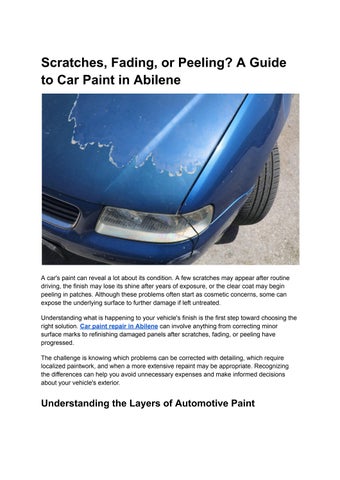
A car's paint can reveal a lot about its condition. A few scratches may appear after routine driving, the finish may lose its shine after years of exposure, or the clear coat may begin peeling in patches. Although these problems often start as cosmetic concerns, some can expose the underlying surface to further damage if left untreated. Understanding what is happening to your vehicle's finish is the first step toward choosing the right solution. Car paint repair in Abilene can involve anything from correcting minor surface marks to refinishing damaged panels after scratches, fading, or peeling have progressed. The challenge is knowing which problems can be corrected with detailing, which require localized paintwork, and when a more extensive repaint may be appropriate. Recognizing the differences can help you avoid unnecessary expenses and make informed decisions about your vehicle's exterior.
Understanding the Layers of Automotive Paint
Modern automotive finishes typically consist of several layers designed to protect the body and create the vehicle's appearance. The exact coating system varies, but many vehicles use a combination of primer, color coat, and clear coat. ● Primer: Provides a suitable foundation for the paint system and helps the coating adhere to the prepared surface. ● Basecoat: Supplies the vehicle's color and may contain metallic or pearl effects. ● Clear coat: Forms the transparent outer layer that contributes to gloss and helps protect the underlying finish. When damage affects only the clear coat, polishing may be sufficient in some cases. If a scratch reaches the color coat or primer, a more involved repair may be necessary. Peeling or widespread coating failure generally requires proper surface preparation and refinishing rather than simply adding another layer of paint. Knowing which layer is affected helps explain why two marks that look similar from a distance may need different treatments.
Car Scratches: When Is Paint Repair Necessary? Scratches can result from tree branches, road debris, keys, parking incidents, improper washing, or contact with another object. Their severity depends largely on how deeply they penetrate the paint system.
Light Surface Scratches Some scratches affect only the clear coat. They may appear as fine lines that become more noticeable under direct sunlight or bright overhead lighting. Depending on their depth and location, professional polishing or paint correction may reduce their appearance. However, polishing removes a small amount of the surrounding clear coat, so it should be performed carefully and only when appropriate. Not every visible scratch can be polished away. Deep marks may remain noticeable even after surface correction.
Deeper Scratches If a scratch reaches the color coat, primer, or bare metal, polishing alone is unlikely to restore the finish fully. A technician may recommend localized touch-up work, refinishing the affected section, or repainting the entire panel. The right approach depends on the scratch's depth, length, location, and the condition of the surrounding paint. When bare metal is exposed, prompt assessment is sensible because corrosion may develop under suitable conditions.
Scratches That Accompany Dents A scratch caused by a collision or impact may be accompanied by a dent, damaged panel edge, or broken trim. Repairing the paint without addressing the underlying body damage may leave an uneven surface. In these situations, the technician should evaluate both the panel shape and the finish before recommending a repair plan.
Why Car Paint Fades Over Time Fading occurs when a vehicle's finish gradually loses its original color intensity, gloss, or uniform appearance. Sunlight and environmental exposure can contribute to this process, although the rate of deterioration varies with the paint system, vehicle care, and storage conditions. Signs of fading may include: ● ● ● ● ●
A dull or chalky-looking finish Uneven color across adjacent panels Reduced gloss compared with less-exposed areas A noticeable difference between older paint and a recently repaired panel Surface oxidation or deterioration of the outer coating
A faded finish does not always mean the vehicle needs repainting. If the problem is limited to surface oxidation and the coating remains in suitable condition, professional paint correction may improve the appearance. When fading is severe or the clear coat has deteriorated, polishing may provide little lasting benefit. Refinishing may be the more appropriate option.
Can Faded Paint Be Restored Without Repainting? Sometimes. The deciding factor is the condition of the existing coating. If the clear coat remains intact, a detailing professional may be able to improve the gloss through careful polishing. If the clear coat is peeling, extensively damaged, or missing, polishing cannot replace the failed coating. Before choosing a service, ask for an assessment of the paint's condition. A realistic recommendation should distinguish between improving the existing finish and restoring it through new paint.
What Causes Car Paint to Peel? Peeling paint often appears as flakes, lifting edges, or patches where the outer finish separates from the underlying surface. It can occur when a coating system loses adhesion or deteriorates.
Potential contributing factors include: ● ● ● ● ● ●
Long-term weather and sunlight exposure Aging or deteriorating clear coat Poor surface preparation during earlier repairs Incompatible or improperly applied coating materials Damage that allows moisture or contaminants to affect the finish Previous paintwork that has not bonded properly
The visible peeling area may not show the full extent of the problem. A technician may need to examine the surrounding coating to determine where stable paint ends and damaged material begins.
Why Polishing Usually Does Not Fix Peeling Paint Polishing is intended to refine an existing surface, not rebuild a failed coating. When a clear coat begins separating, rubbing or buffing the area will not restore its adhesion. The repair generally involves removing unstable material, preparing the surface, and applying an appropriate refinishing system. The amount of work depends on how far the deterioration has spread and whether the underlying color coat is also damaged. Applying touch-up paint over loose or peeling material without proper preparation may produce a poor result. A suitable repair should address the cause and condition of the failed finish.
Choosing the Right Solution for Your Paint Problem Scratches, fading, and peeling may look similar in photographs, but they do not always require the same treatment. A useful starting point is to identify the condition of the coating and the extent of the affected area. Paint condition
Possible approach
Fine surface scratches
Professional polishing or paint correction, if the clear coat is suitable
Deep scratches
Localized repair, touch-up, or panel refinishing
Mild fading or oxidation
Paint correction if the coating remains intact
Severe fading
Repainting or refinishing affected panels
Peeling clear coat
Surface preparation and refinishing
Scratches with dents
Combined body repair and paintwork
Exposed metal or corrosion
Assessment and appropriate surface repair before refinishing
These are general guidelines, not a diagnosis. The best solution depends on the vehicle's paint system, the severity of the damage, and the quality of any previous repairs. An inspection can help prevent two common mistakes: repainting a surface that could be corrected more simply, or relying on polishing when the coating has already failed.
What Happens During Professional Car Paint Repair? A professional paint repair involves several stages, and the process changes according to the damage.
1. Inspecting the Existing Finish The technician examines the scratches, faded areas, peeling sections, and surrounding paint. Lighting and surface inspection help reveal imperfections that may not be obvious in ordinary conditions. If the vehicle has dents, corrosion, or earlier repair work, these factors should also be considered.
2. Preparing the Damaged Area The surface must be clean and suitable for the selected repair method. Depending on the damage, preparation may include cleaning, sanding, removing unstable coating material, or completing bodywork. Proper preparation is essential because new paint cannot reliably compensate for a loose or poorly prepared surface.
3. Selecting and Matching the Paint The technician identifies the appropriate color and coating system. A factory paint code provides a useful reference, but the existing finish may have changed over time. Metallic and pearl colors can be particularly challenging because their appearance varies with lighting and viewing angle. Depending on the repair, blending into adjacent areas may help create a more consistent finish.
4. Applying the Coatings Where refinishing is necessary, the repair may involve primer, basecoat, and clear coat according to the selected system and repair requirements.
The exact materials and application steps depend on the vehicle and the affected surface. A repair plan should account for the condition of the substrate rather than applying paint without addressing the underlying problem.
5. Curing and Final Inspection The coatings must cure according to the manufacturer's specifications. The completed area is then inspected for coverage, color consistency, gloss, and visible imperfections. Before collecting your vehicle, ask what work was completed and whether any restrictions apply to washing, waxing, or other paint care.
How Abilene's Environment Can Affect Your Car's Finish Environmental exposure is an important consideration for drivers across West Texas. Sunlight, heat, dust, and road debris can contribute to wear, while improper cleaning methods may create additional surface scratches. You can reduce avoidable wear through a few practical habits: ● ● ● ● ● ●
Wash the vehicle regularly using products designed for automotive finishes. Use a clean, soft washing mitt rather than abrasive materials. Remove bird droppings and other contaminants promptly. Avoid wiping dry dust from the paint, which may create fine scratches. Park in a garage or shaded area when practical. Inspect damaged paint before the affected area deteriorates further.
These steps can help maintain the finish, but they cannot reverse a coating that has already failed. If you notice peeling a clear coat, deep scratches, or exposed metal, professional evaluation is more useful than repeated polishing. For residents around Abilene, TX regular inspection is particularly worthwhile after severe weather or any incident that may have damaged the exterior.
How Much Does Car Paint Repair Cost? There is no single price for every paint problem. Repair costs depend on the type of damage, the size of the affected area, and the amount of preparation and refinishing required. Several factors can influence the estimate: Damage severity: Fine scratches may need less work than deep marks that reach the primer or bare metal.
Affected area: Repairing one panel differs from refinishing several panels or the entire vehicle. Preparation requirements: Peeling paint, corrosion, dents, and unstable previous coatings can increase labor. Paint type: Metallic, pearl, and specialty finishes may require additional color-matching work. Blending and disassembly: Some repairs require adjacent-panel blending or removing trim and components for a clean finish. Previous repairs: Earlier paintwork may affect how the new coating can be prepared and applied. Ask for a written estimate that explains the proposed work, preparation steps, and materials where applicable. If additional damage may be discovered during preparation, clarify how the shop will discuss changes before proceeding. Comparing estimates is useful, but make sure the providers are proposing comparable work. A lower quote may cover a smaller repair area or less preparation.
When Should You Seek Professional Paint Repair? A professional assessment is worthwhile when a scratch reaches deeper layers of paint, clear coat begins peeling, fading becomes uneven, or corrosion appears around damaged areas. You should also consider an inspection if: ● ● ● ● ●
A previous touch-up looks noticeably different from the surrounding finish. Paint begins lifting after an earlier repair. A collision has damaged both the panel and its coating. Polishing no longer improves the surface. You are unsure whether the damage affects only the clear coat.
The earlier you understand the type of damage, the easier it may be to compare suitable options. That does not mean every imperfection needs immediate repainting, but delaying an assessment of exposed metal or deteriorating coatings may allow the problem to become more extensive.
Choosing a Car Paint Repair Shop in Abilene Selecting a repair provider is an important part of achieving a finish that looks consistent and holds up appropriately. Look for a shop that explains its process rather than promising a perfect result before inspecting the vehicle. Consider asking the following questions:
● Can you explain whether the damage affects the clear coat, color coat, or underlying surface? ● Would polishing, localized repair, or repainting be the most appropriate option? ● How will peeling or unstable paint be removed and prepared? ● Will the new paint need to be blended into adjacent panels? ● What does the written estimate include? ● How long is the repair expected to take? ● Is there a written warranty covering applicable paintwork or workmanship? ● What care instructions should I follow after the repair? A provider should be willing to explain the reasoning behind its recommendation and outline any limitations. If the damage is extensive, ask whether bodywork must be completed before refinishing begins. When comparing car paint services in Abilene, focus on preparation quality, communication, and the suitability of the repair method, not simply on how quickly the shop can apply a new coat of paint.
Frequently Asked Questions Can scratches be removed without repainting? Some fine scratches can be reduced through professional polishing if they affect only the clear coat. Deeper scratches that reach the color coat, primer, or bare metal generally require a different repair method.
Is faded car paint repairable? Mild fading or oxidation may improve with paint correction when the existing coating remains intact. If the clear coat has failed or the paint has deteriorated extensively, refinishing may be necessary.
Can peeling a clear coat be fixed with wax? No. Wax may temporarily change the appearance of a surface, but it does not restore adhesion to a peeling clear coat. Proper preparation and refinishing are generally needed to address the underlying failure.
Does a car need a full repaint if one panel is damaged? Not necessarily. A localized repair or single-panel repaint may be sufficient. The decision depends on the size of the damage, the condition of the surrounding finish, and whether blending is needed to achieve a consistent appearance.
How can I protect newly repaired car paint?
Follow the repair shop's instructions for washing, waxing, and applying protective products. The appropriate waiting period depends on the paint system and curing process used.
Will a new paint job match my vehicle's original color? A professional color-matching process can help achieve a close match, but results depend on the original paint, its age, the coating type, and application technique. Blending may be recommended when necessary.
Give Your Vehicle's Finish the Attention It Needs Scratches, fading, and peeling each tell a different story about the condition of your vehicle's paint. Some surface marks may respond to polishing, while deeper scratches, deteriorating clear coat, and damaged panels may require professional refinishing. Identifying the problem before choosing a service can help you avoid unnecessary work and set realistic expectations. If your vehicle's finish has lost its shine or developed visible damage, arrange an inspection, contact us today and ask for a clear explanation of the available options. A written estimate should outline the necessary preparation, proposed repair method, expected timeline, and any relevant warranty.