OCTOBER 25 – NOVEMBER 12, 2021

OCTOBER 25 – NOVEMBER 12, 2021
LEADERSHIP SUPPORT PROVIDED BY:
UNDERWRITING SUPPORT PROVIDED BY:
ADDITIONAL SUPPORT PROVIDED BY: Ameren Cardinals Care
Edward Jones
Emerson
Laura Kipnis and Sidney Goldstein
Missouri Arts Council
National Endowment for the Arts
Regional Arts Commission
The Shubert Foundation
Mary Strauss
Woodcock Foundation for the Appreciation of the Arts

The 2021 – 2022 Season celebrates Dance St. Louis’ 56th year aimed at setting the highest possible standard for artistic excellence in professional dance in the Midwest as well as in the United States and across the globe.
As one of only a few dance-only presenters, Dance St. Louis curates a season that enriches, engages, educates, and transforms culture life in St. Louis through the experience of dance.
Dance St. Louis education programs are nationwide benchmarks for arts outreach in schools, impacting the lives of thousands of students in the St. Louis area. Each season, in collaboration with partnering schools and with the full support of school superintendents, head of schools and local teachers, Dance St. Louis engages visiting teaching artists from world-class dance companies.
These outreach efforts challenge students and takes learning to new levels as they dream big in dance and in life.
Michael Uthoff was born in Chile to the founders of the Chilean National Ballet, Ernst Uthoff and Lola Botka, who were both members of the original Ballet Jooss. Uthoff arrived in NYC to study dance at The School of American Ballet, The Martha Graham School of Contemporary Dance and The Juilliard School of Music.
Soon after his arrival, he became a soloist with the Jose Limon Dance Company. Uthoff was also an original member of the American Dance Company, which opened the State Theatre at Lincoln Center, in which he danced leading roles in works by Jose Limon, Donald McKayle and Anna Sokolow. He then joined the Joffrey Ballet as a principal dancer and later joined the First Chamber Dance Company of NY touring the USA, Latin America and Eastern Europe.
He was among the first faculty members at SUNY Purchase and founded and developed the Hartford Ballet, taking it to national prominence where it served as a framework for companies around the country to follow. His tenure culminated with tours of China and Latin America.
Uthoff continued his career as the Artistic Director of Ballet Arizona and the Ballet Estable del Teatro Colon in Buenos Aires, Argentina. In 2006, he accepted the post of Artistic and Executive Director of Dance St. Louis and continued the presentation of quality dance performances while developing programs that enhanced the local dance community

and thrilled audiences. Spring to Dance and New Dance Horizons were introduced to its season while an intensive Dance Education program was developed with inner city schools. He held the post until 2017 and later returned to Dance St. Louis as the Artistic Director in 2020.
He has taught at the University Level and in dance schools throughout the country. He guest lectured at UMSL’s dance department and became a member of the faculty at Webster University in 2010.
Uthoff has choreographed at every level and his works have been seen all over the world earning him creative grants. He has received many awards culminating with an Honorary Doctorate in Fine Arts from the University of Missouri in St. Louis as well as the Excellence in the Arts awards by the Arts and Education Council received in 2013.
Kevin Thomas was born in Trinidad and Tobago and grew up in Montreal, Canada. He received his degree in dance from the CEGEP de Vieux Montreal.
Mr. Thomas began his career as a professional dancer in Montreal with Les Grands Ballets Canadiens, one of Canada’s leading ballet companies. At the age of 19, he was the only Black dancer with the company. He later became a soloist with the company then moved on to Cleveland San Jose ballet as a principal dancer and then finally to the Dance Theatre of Harlem in New York as a principal dancer, where he performed internationally for 10 years.
Mr. Thomas’ credits include leading roles in The Prodigal Son, Dialogues, The Four Temperaments, Othello, Adrian (Angel on Earth), A Song for Dead Warriors, Troy Games, Equuis and Dougla. He has performed leading roles in numerous ballets including The Nutcracker, Tarantella, Agon, Who Cares, A Midsummer Night’s Dream, Don Quixote, Consort Lessons, and Aureole.
Mr. Thomas has made guest appearances with the Royal Ballet in London, Complexions Contemporary Ballet in New York and Fleming Flindt and Peter Schaufuss in Denmark. He has also appeared on Broadway in The Phantom of the Opera and on television in Law and Order.
In 2006, Mr. Thomas and Marcellus Harper founded Collage Dance Collective to increase diversity in classical ballet and relocated the company to

Memphis the following year. They established the Collage Ballet Conservatory in 2009. The organization has quickly grown to boast an international touring professional company and nationally recognized conservatory, training more students of color in a classical art form than any other nonprofit in Memphis.
Mr. Thomas has served as Ballet Master for New Ballet Ensemble & School and has choreographed for Opera Memphis, Hattiloo Repertory Theatre, New Ballet Ensemble, Orpheum Theatre, Flint Institute of Music, University of Memphis, University of Utah and Collage Dance Collective. He is a National Visiting Fellow at the School of American Ballet in New York City and has taught at schools and programs around the country including the Dance Theatre of Harlem, Flint Institute of Music, University of Utah, School of American Ballet, Deeply Rooted Dance Theater, the International Association of Blacks in Dance, Tennessee Association of Dance and the University of Memphis.
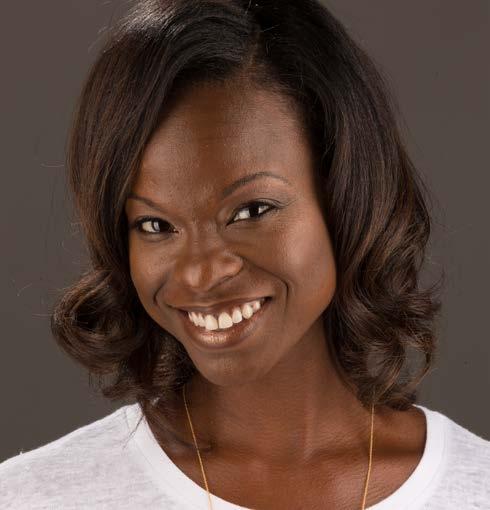
Brandye Lee, from Washington DC, trained as a scholarship student at the JonesHaywood School of Ballet and attended the Sidwell Friends School. She has additionally been awarded scholarships from The Ailey School, Dance Theatre of Harlem school, and the Ecole Supérieure de Danse de Cannes Rosella Hightower. After earning her BA with honors in Afro-American studies and economics at Smith College, Lee danced with Ailey II. In 2011, she joined Collage Dance Collective and has performed as a featured dancer with the touring company of Disney’s The Lion King.
Lee is the recipient of The Woman of Excellence Award from Asbury United Methodist Church (Washington DC) and The Outstanding Emerging Artist Award from Federal City Alumnae Chapter of Delta Sigma Theta Sorority, Inc. She was also a New Memphis Institute Fellow.
Lee enjoys a career in dance instruction and administration—she has taught at AileyCamp, Dance Institute of Washington, Dance Theatre of Lynchburg, DC Capital Stars Gala competition, Fisk University, Flint Institute of Music, George Mason University, Marymount University, and Rhodes College.
For Collage Dance Collective, she has worked as their outreach coordinator and rehearsal director. Lee is a certified yoga instructor and was the co-founder of B2 Movement for Change LLC.
Karen Niceley is an alumnus of the Jones-Haywood School of Ballet. Following her training under the instruction of Doris Jones, she received her BFA in Dance Education at the University of the Arts in Philadelphia along with the Faculty Recognition Award. Karen’s professional credits include work with: Dance Theatre of Harlem, Michael Mao Dance Company, Metropolitan Opera, Victory Dance Project, Cirque Du Soleil and the Broadway National Tour of The Color Purple. Karen is a co-founder of Gritty Cherries, Inc., a non-profit art production and art education foundation in New York City, and recently moved to Memphis, TN to work with Collage Dance Collective as the Community Engagement Manager and Outreach Dance Education Coordinator.
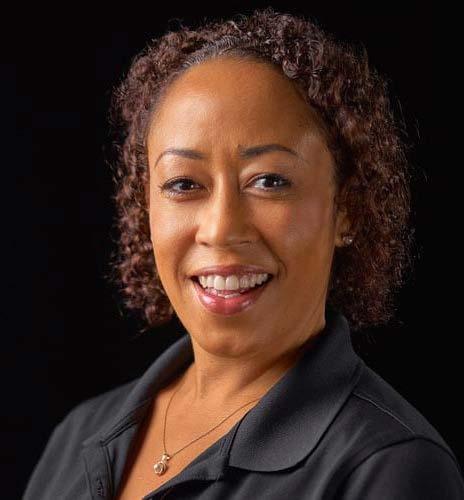
Danielle Jenice Pierce is an award-winning competitive dancer with more than 15 years of training in Ballet, Jazz, Tap, Hip Hop and Modern.

A graduate of The University of Memphis and former Memphis RedBirds Redhots member, Danielle has been a faculty member with the Collage Dance Conservatory since 2017. She teaches Tap through our community-connected Turning Pointe program, in partnership with Memphis area schools, and on-site at the Collage Dance Center where she also teaches Creative Movement for budding dancers ages 2 - 3.
Danielle is an active member of Hot Foot Honeys, a Memphis-based professional Tap Dance company, and the Southern Association for Dance Masters. She’s also currently training with The American Tap Dance Foundation where she will be receiving a teaching certification for tap technique, repertory and performance skills in 2021.
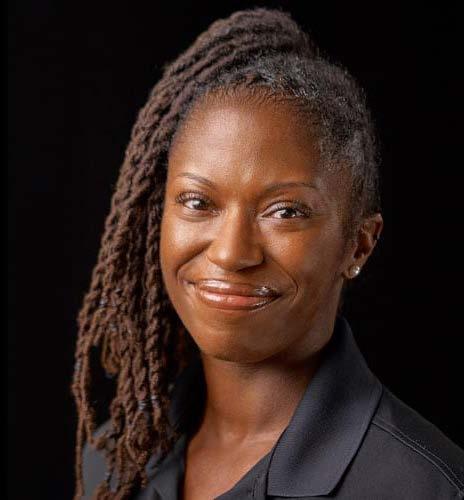
Lisa Alfieri Ballo is a classical ballet dance teacher, who trained on scholarship with the Pennsylvania Ballet, San Francisco Ballet, and the Cleveland Ballet schools. Her career as a professional dancer began with Cleveland Ballet, under Dennis Nahat, where she rose to principal dancer during her 10 year stay. A few of her favorite roles were: Odette/Odile in Swan Lake; Swanilda in Coppelia; the lead in Balanchine’s Square Dance and Terpsichore in Apollo. For one year she also danced with Fort Worth/Dallas Ballet, under Paul Mejia, performing in many of Balachine’s ballets. Then, while being semi retired, she danced with both the Sandra Organ Company and Dominic Walsh Dance Theater in Houston, Texas. She first began teaching for Gilbert Rome and Margo Marshall in Houston, and later Victoria Vittum, High School of Performing and Visual Arts, and at the School of Houston Ballet. Mrs. Ballo now lives in Memphis, where she is a teacher and rehearsal assistant at Collage Dance Collective for both the conservatory and the company.
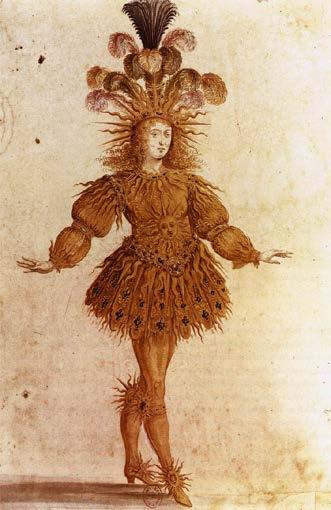
Ballet evolved from the courts of Catherine de Medici in Italy during the 16th century and the courts of King Louis XIVth during the 17th century in France. During elaborate festivals or important social events, men and women of the nobility performed movements that displayed decorum and grace with elegant walking patterns and arm movements. King Louis XIV helped to popularize and standardize the art form. He performed many roles himself, including that of the Sun King in Ballet de la nuit, to help establish his authority as King. With his influence, ballet became a well-respected art form in its own right, requiring professional training and study.
In the first half of the 19th century, ballet entered into what is now referred to as the Romantic Movement. Romantic ballets during this time often featured themes of the supernatural where women were depicted as light, ethereal, and fragile otherworldly beings. Women were also more featured in ballet during this time, as opposed to the previously more male dominated ballets. With the creation of pointe
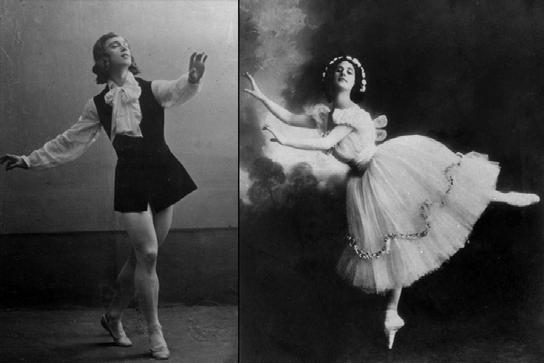
work at this time, female ballet dancers would dance on the tips of their toes. The romantic tutu, a calflength, full skirt made of tulle, was also introduced and added to the airy and ethereal qualities of the Romantic ballets.
By the second half of the 19th century, the popularity of ballet had grown immensely in Russia. Russian choreographers created ballets to display classical technique — pointe work, high extensions, precision of movement and turn-out — to its most extreme. Complicated sequences that show off demanding steps, leaps and turns were choreographed into the story of the ballet. The classical tutu, which is shorter and stiffer than the romantic tutu, was introduced at this time to show a ballerina’s legs and the difficulty of her movements and footwork.
Americans became enthusiastic about ballet in the 1930s when many Russian dancers settled in America. One such immigrant, George Balanchine, began
one of America’s leading companies, New York City Ballet. New York City Ballet soloist Arthur Mitchell became the first African- American principal dancer of a major dance company. In 1968, Mitchell founded a ballet school in Harlem in order to provide classical ballet training to African- American students. By 1970, the school had developed into the Dance Theatre of Harlem, the first black classical ballet company.
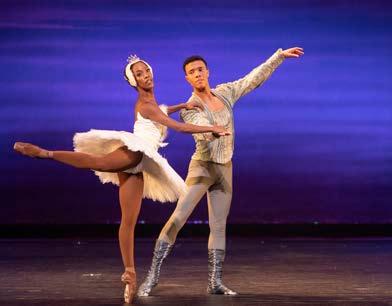

Match the French ballet terms to their definitions. Then check your answers using the glossary on page 17.
A. Jumped or jumping.
B. A leading female dancer of a ballet company. A dancer earns the title through years of hard work and great dancing.
C From the French passer, to pass. A movement in which the pointed foot of the “working” leg passes (but does not touch or rest on) the knee of the supporting leg.
D. From the French plier, to bend. In the classic dance, this is a bending of the knees, with the knees wide open and the feet turned outward.
E. The movement or carriage of the arms.
F. Dancers who appear only in large groups. Thwe backbone of every ballet company.
G Executed by stepping directly on the pointe (tip of the toes) or demipointe (ball of the foot) of the working foot in any desired direction or position with the other foot raised in the air.
H. From the French relever, to raise. To raise the body on one or two feet, either on pointe (on the tips of her toes) or demi-pointe (on the ball of the foot).
I. A dance for two people.
Source: “Ballet and Modern Dance” by Susan Au
TERMS
ballerina (bah-luh-ree’nah)
corps de ballet (core, di, bah-lay’) plie (plee-ay’) releve (ruhl-VAY)
____port de bras (port, duh, brah’) saute (soh-tay’) pique (pee-kay’) passe (pah-sey’) pas de deux (pah-duh-duh’)
Read these excerpts from the New York Times Article “Five Pioneering Black Ballerinas: “We have A Voice” by Karen Valby “
Last May, adrift in a suddenly untethered world, five former ballerinas came together to form the 152nd Street Black Ballet Legacy. Every Tuesday afternoon, they logged onto Zoom from around the country to remember their time together performing with Dance Theater of Harlem, feeling that magical turn in early audiences from skepticism to awe.
Life as a pioneer, life in pandemic: They have been friends for over half a century, and have held each other up through far harder times than this last disorienting year. When people reached for all manners of comfort, something to give purpose or a shape to the days, these five women turned to their shared past.
In their cozy, rambling weekly Zoom meetings, punctuated by peals of laughter and occasional tears, they revisited the fabulousness of their former lives. With the background of George Floyd’s murder and a pandemic disproportionately affecting Black community the women said their sights on tackling another injustice they wanted to re-inscribed the struggles and beats of those early years at Dance Theater of Harlem into a “cultural narrative that seems so often to cast back black excellence aside. There’s been so much of AfricanAmerican history that’s been denied or pushed to the back,” said Karlya Shelton-Benjamin, 64, who first brought the idea of a legacy counsel to the other women. “We have to have a voice.”
Arthur Mitchell was like a lighthouse to the women. Mitchell, the first black principal dancer at the New York City ballet and a protégé of the choreographer George Balanchine, had a mission: to create a home for black dancers to

achieve heights of excellence unencumbered by ignorance or tradition. Ignited by the assassination of Reverend Dr. Martin Luther King Jr., he founded Dance Theater of Harlem in 1969 with Karel Shook. Lydia Abarca-Mitchell, Gayle McKinney-Griffin and Sheila Rohan were founding dancers of his new company with McKinney-Griffith, 71, soon taking on the role of its first ballet mistress. Within the decade, Shelton-Benjamin and Marcia Sells joined as first generation dancers.
At her Harlem audition, Shelton-Benjamin witnessed company members hand-dyeing their shoes and ribbons and tights to match the hues of their skin. Here, no traditional ballet pink would interrupt the beauty of their lines. “I had never seen a black ballerina before, let alone a whole company,” Shelton-Benjamin, 64, said during a February zoom meeting. “All I could think was, where have you guys been?” Finding one another back then, at the height of the civil rights movement, allowed them to have careers while challenging a ballet culture that have been claimed by white people. “We were suddenly ambassadors,” Abarca Mitchell said. “And we were all in it together.”
They traveled to American cities that presented such a hostile environment that Mitchell would
cancel the performance the night of, less his company feel disrespected. But they also danced for kings and queens and presidents. In 1979, a review in the Washington post to Claire they’re dancing to be a “purer realization of the Balanchinean ideal than anyone else’s.”
Cultural memory can be spurious and shortsighted. Abarca-Mitchell was the first Black prima ballerina for a major company, performing works like Balanchine’s “Agon” and “Bugaku” and William Dollar’s “Le Combat” to raves. In an April Zoom session she said she first realized how left out of history she was when her daughter went online to prove to a friend that her mother was the first black prima ballerina but all she found was the name Misty Copeland hailed as the first. ”And my daughter was so mad. She said where is your name? Where is your name? It was a wakeup call.” But they are done swallowing a mythology of firstness that excludes them, along with fellow pioneers like Catherine Dunham, Deborah Austin, Raven Wilkinson, Lauren Anderson and Aesha Ash. It’s true that Misty Copeland is American ballet Theatre’s first black female principal. It is also true that she stands on
the shoulders of the founding and first-generation dancers at Dance Theater. And narrative that suggests otherwise, Sells said, “Simply makes ballet history weak and small.” Worse, it perpetuates the belief that blackness in ballet is a one-off rather than a continuing fact. And it suggests a lonely existence for dancers like Copeland, a world absent of peers.
By the end of May, the five members of the 152nd Street Black Ballet Legacy were fully vaccinated. They traveled from Denver, Atlanta, Connecticut, South Jersey and, in Sells’s case, five blocks north of dance theater of Harlem for a joyful reunion. So much is different now at the building on 152nd St. In studio three, all Shelton-Benjamin had to do was have a few notes of Balanchine “Serenade” and say “and” for the women to grandly sweep their right arms up. “These women help validate my worth”, Abarca-Mitchell said afterwards. I don’t want to take it for granted that people should recognize Lydia Abarca. But when I’m with them I feel like I felt back then. Important.” Even as the world reopens and they grow busy again, they’ll carry on with her Tuesday afternoons. They want to amplify more alumni voices. They dream of launching a scholarship program for young dancers of color.

Now that you have learned a little about the life and careers of these pioneering women, pick one and dive deeper into learning about them!
Part 1- Find and write down:
1. Where are they from?
2. What do they do now?
3. What years did their careers span?
4. What were their favorite roles?
5. Any other interesting facts and information about them that you find.
Part 2 – In small groups, share with each other what you found out about the dancer that you researched.
Mikhail Fokine’s “The Firebird”:
The Fire Bird was first commissioned by Sergei Diaghilev for the Ballets Russes and had its premiere in 1910 at the Paris Opéra with choreography by Mikhail Fokine’s and music score by Igor Stravinsky. In the original ballet that was based off of old Russian folk tales, while hunting in the forest, Prince Ivan strays into the magical realm of the evil Koschei the Immortal, whose immortality is preserved by keeping his soul in a magic egg hidden in a casket. While hunting, Ivan chases and captures the Firebird, and is about to kill her when she begs for her life and offers him an enchanted feather that he can use to summon her should he be in dire need.
Prince Ivan then meets thirteen princesses who are under the spell of Koschei and falls in love with one of them. The next day, Ivan confronts the magician and eventually they begin quarrelling. When Koschei

sends his minions after Ivan, he summons the Firebird. She intervenes and bewitches the monsters.
Exhausted, the creatures and Koschei then fall into a deep sleep. While they sleep, the Firebird directs Ivan to a tree stump where the casket with the egg containing Koschei’s soul is hidden. Ivan destroys the egg, and with the spell broken and Koschei dead, the magical creatures that Koschei held captive are freed.
All of the beings, including the princesses, awaken and with one final hint of the Firebird’s music.
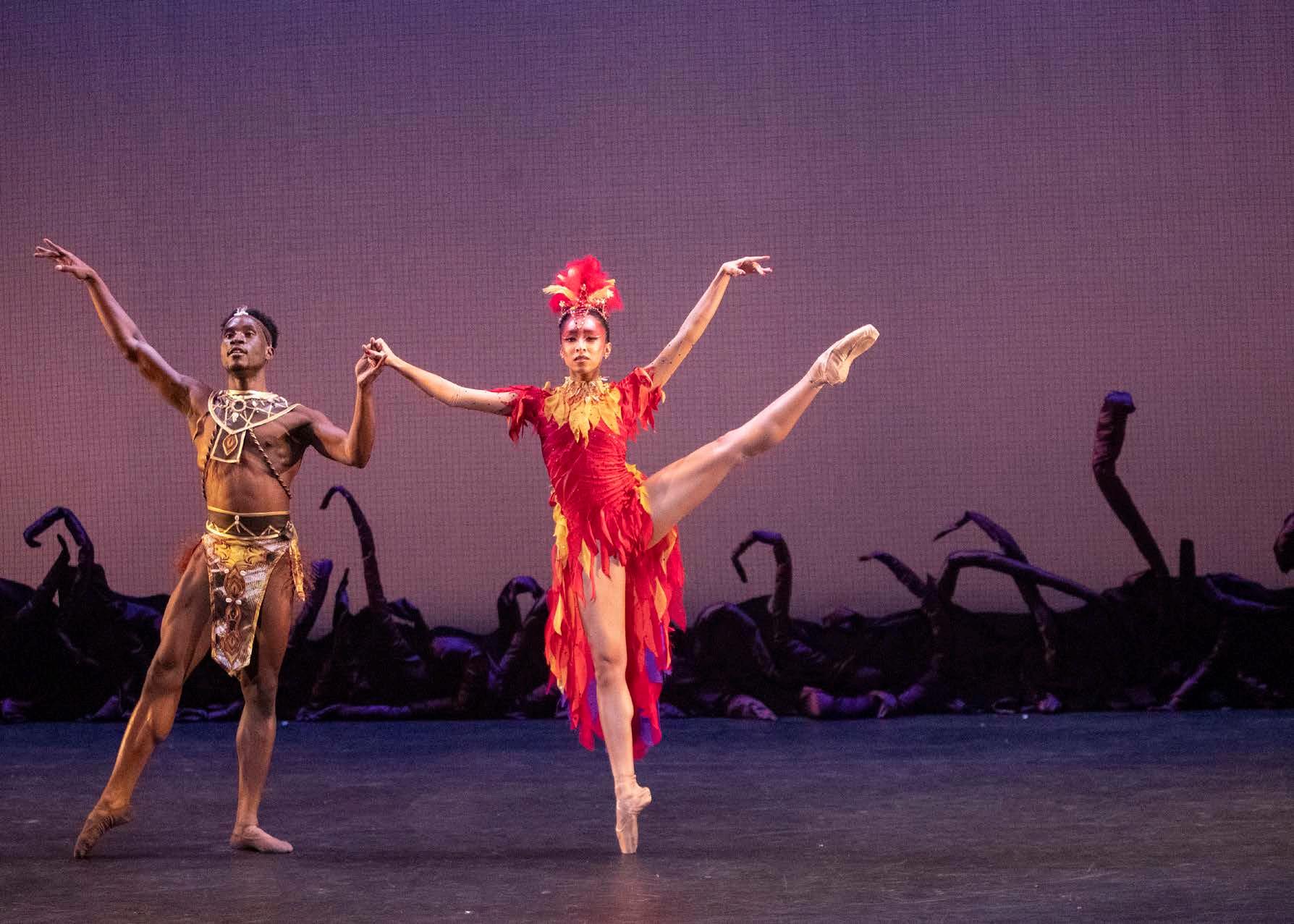
In Collage Dance Collective’s version of The Firebird with choreography by Kevin Thomas, the setting of the ballet takes place in Africa in a mythical forest called Tokoloshe. The word Tokoloshe comes from the Zulu/XhosaI culture in South Africa which means evil.

It was used as inspiration for the set design, costume and movement of the ballet. Alexander Woodard who did the set design was inspired by the artist Mary Sibande who is a South African artist. The costume designer, Gabriella Morros used images of Zulu/XhosaI culture as inspiration for her costume design. Along with the inspiration and design, the storyline and characters of Collage’s version is also different. Kevin Thomas explains, “I wanted to create more lead roles for men in this version so I came up with the four wizards. Wizards of the south, north, east and west and their costumes reflected the elements
of the earth which are Fire, Ice, Water and Wind. This was a chance to create a work that was about our African ancestry where we were Kings, Queens, Princesses and Princes. I also put the maidens in pointe shoes and choreographed a dance for them that was more classical than other versions that I have seen. The monster section of this ballet was inspired by science fiction so the monsters became Creatures of the Underworld that were controlled by the wizards’ powers.” Another major difference that Thomas changed from the original ballet is that instead of the Prince threatening and scaring the Firebird, he tries to befriend her instead.

Create a Venn diagram like the one below to compare the original Firebird ballet choreographed by Mikhail Fokine with the reimagined Firebird choreographed by Kevin Thomas and performed by Collage Dance Collective. Then answer the questions beneath.
Now pretend that you are the choreographer!
1. If you were choreographing your own version of the Firebird Ballet, how would you change the story?
2. What would the setting be?
3. What would the costumes look like?
4. What would the movement look like?
5. How would you make it your own?
Using your answers as inspiration, make a short phrase of movement that embodies how the character of the Firebird from your version of the ballet would dance and move as a motif throughout your ballet.
Collage Dance Collective is very much influenced by the culture and music of their community in Memphis, Tennessee. Memphis is synonymous with names like W. C Handy and Riley B. King who were pioneers of Blues music.
The earliest references to blues date back to the 1890s and early 1900s. In 1912, Black bandleader W.C. Handy’s composition “Memphis Blues” was published and was an instant hit. He wrote the original melody of the song that was originally instrumental. It contained both 16-bar melodies that the audience was used to, and innovative 12-bar sections, and mixed regular two-four time with the Afro-Cuban habanera dance rhythm. As for the melody, it uses “what have since become known as ‘blue notes’,” said Handy, “the

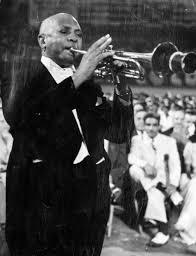
transitional flat thirds and sevenths... by which I was attempting to suggest the typical slurs of the Negro voice”.
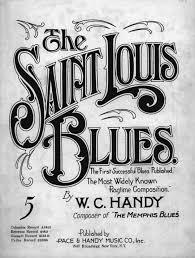
In 1914, Handy followed up Memphis Blues with his next hit, another 12-bar blues piece with a 16-bar habanera section. The song was called St Louis Blues. It was even more popular and influential than its predecessor and it went on to become a jazz standard played by musicians such as Louis Armstrong, Count Basie and, the queen of 1920s blues, Bessie Smith.
While Handy did not invent the blues as a musical style, it had deep roots in AfricanAmerican culture. But the Memphis Blues did start the commercial blues craze. In Handy’s words, the song introduced “the blues form to the general public”, and the American public introduced it to the world. The blues went on to have a major influence on jazz, soul, rock and roll, and heavy metal.
That’s where the people smile, smile on you all the while. Hospitality, they were good to me.
I couldn’t spend a dime, and had the grandest time.
I went out a dancing with a Tennessee dear, They had a fellow there named Handy with a band you should hear
And while the folks gently swayed, all the band folks played Real harmony.
I never will forget the tune that Handy called the Memphis Blues.
Oh yes, them Blues.
They’ve got a fiddler there that always slickens his hair
And folks he sure do pull some bow.
And when the big Bassoon seconds to the Trombones croon. It moans just like a sinner on Revival Day, on Revival Day.
Just like a mountain stream rippling on it seemed.
Then it slowly died, with a gentle sigh
Soft as the breeze that whines high in the summer pines. Hear me people, hear me people, hear I pray,
I’m going to take a million lesson’s ‘til I learn how to play
Because I seem to hear it yet, simply can’t forget
That blue refrain.
There’s nothing like the Handy Band that played the Memphis Blues so grand.
Oh play them Blues.
That melancholy strain, that ever haunting refrain Is like a sweet old sorrow song.
Here comes the very part that wraps a spell around my heart. It sets me wild to hear that loving tune a gain, the Memphis Blues.


STEP 1: Read through the lyrics of “Memphis Blues” and circle 3 to 5 words or images that you find particularly interesting.
STEP 2: For each word or image, create a movement within the ballet vocabulary that portrays that word.
STEP 3: Arrange the movements in an order you like and practice them in that order until they flow together.
STEP 4: Follow the red arrows on the map displaying the movement of blues music in the United States and make your phrase following that same patter on the floor.
Making sure you have good mental health is important for everyone, but it can be especially important for dancers where so much of their focus is on the physical that it is easy to forget to take care of the mental side as well. So how do we support our mental health? Let’s start by asking:
Mental health includes our emotional, psychological, and social well-being. It affects how we think, feel, and act as we cope with life. It also helps determine how we handle stress, relate to others, and make choices.
WHY IS MENTAL HEALTH
Mental health is important because it can help you to
• Cope with the stresses of life
• Be physically healthy
• Have good relationships
• Make meaningful contributions to your community
• Work productively
• Realize your full potential
HOW CAN I IMPROVE MY MENTAL HEALTH?
There are many different things you can do to improve your mental health, including
Practicing gratitude, which means being thankful for the good things in your life. It’s helpful to do this every day, either by thinking about what you are grateful for or writing it down in a journal. These can be big things, such as the support you have from loved ones, or little things, such as enjoying a nice meal. It’s important to allow yourself a moment
to enjoy that you had the positive experience. Practicing gratitude can help you to see your life differently. For example, when you are stressed, you may not notice that there are also moments when you have some positive emotions. Gratitude can help you to recognize them.
Taking care of your physical health, since your physical and mental health are connected. Some ways to take care of your physical health include:
Being physically active. Exercise can reduce feelings of stress and depressionand improve your mood.
Getting enough sleep. Sleep affects your mood. If you don’t get a good sleep, you may become more easily annoyed and angry. Over the long term, a lack of quality sleep can make you more likely to become depressed. So it’s important to make sure that you have a regular sleep schedule and get enough quality sleep every night.
Healthy eating. Good nutrition will help you feel better physically but could also improve your mood and decrease anxiety and stress. Also, not having enough of certain nutrients may contribute to some mental illnesses. For example, there may be a link between low levels of vitamin B12 and depression. Eating a well-balanced diet can help you to get enough of the nutrients you need.
Connecting with others. Humans are social creatures, and it’s important to have strong, healthy relationships with others. Having good social support may help protect you against the harms of stress. It is also good to have different types of connections. Besides connecting with family and friends, you could find ways to get involved with
your community or neighborhood. For example, you could volunteer for a local organization or join a group that is focused on a hobby you enjoy.
Developing coping skills are methods you use to deal with stressful situations. They may help you face a problem, take action, be flexible, and not easily give up in solving it.
Meditation, which is a mind and body practice where you learn to focus your attention and awareness.
• A quiet location with as few distractions as possible

A specific, comfortable posture. This could be sitting, lying down, walking, or another position. A focus of attention, such as a specially chosen word or set of words, an object, or your breathing
• An open attitude, where you try to let distractions come and go naturally without judging them
Source: https://medlineplus.gov/howtoimprovementalhealth.html

Now circle one of your five activities and challenge yourself to do it at least twice a week for three weeks. After three weeks, write down how doing this activity more regularly made you feel.

Collage Dance Collective Executive Director Marcellus Harper and Artistic Director Kevin Thomas were both tasked with answering this question and this is what they had to say:
Marcellus Harper: “The first piece of advice I would give to young dancers is to be prepared. You can never be too prepared! Really take advantage of your formative years to get as much training as possible. Your time is limited so you want to make sure you are using it to really hone your craft.”
“Ballet is a codified technique so it is what it is. But what we try to do as an organization is to impress upon students, especially students of color, that through the training of ballet they can bring their full selves to the practice. They do not have to suppress who they are as people or as artists. We want them to embrace who they are, while showing excellence in the art form at the same time.”
Kevin Thomas: “Really use your discipline. Discipline is so important especially for dance but for other things as well. For dance you really need to start and see it through all the way to the end. Not matter how difficult something is, you have to show up.”
WEBSITES :
https://collagedance.org - This is the official Collage Dance Collective website that gives information on the mission and history of the company, as well as current information about touring shows and education and outreach opportunities.
https://medlineplus.gov/howtoimprovementalhealth.html
BOOKS:
Technical Manual and Dictionary of Classical Ballet by Grant, Gail. Atlantic Provinces Special Education Authority, Library, 2021.
Ballet and Modern Dance, by Susan Au, and Jim Rutter, Thames & Hudson, 2012. Grades 9 - 12
W.C. Handy: Founder of the Blues, by L. S Summer, Child’s World, 2002. Grades 9 -12 Firebird, by Misty Copeland and Christopher Myers. Putnam, 2014. Grades K – 8
ONLINE ARTICLES:
“Five Pioneering Black Ballerinas: ‘We Have A Voice’” by Karen Valby. New York Times, 2021.
“WC Handy’s Memphis Blues: The Song of 1912” by Robin Banerji. BBC World Service, 2012
ballerina (bah-luh-ree’nah) A leading female dancer of a ballet company. A dancer earns the title through years of hard work and great dancing.
corps de ballet (core, di, bah-lay’) Dancers who appear only in large groups. The backbone of every ballet company.
pas de deux (pah-duh-duh’) A dance for two people.
passe (pah-sey’) From the French passer, to pass. A movement in which the pointed foot of the “working” leg passes (but does not touch or rest on) the knee of the supporting leg.
pique (pee-kay’) Executed by stepping directly on the pointe (tip of the toes) or demi-pointe (ball of the foot) of the working foot in any desired direction or position with the other foot raised in the air.
plie (plee-ay’) From the French plier, to bend. In the classic dance, this is a bending of the knees, with the knees wide open and the feet turned outward.
port de bras (port, duh, brah’) the movement or carriage of the arms.
releve (ruhl-VAY) From the French relever, to raise. To raise the body on one or two feet, either on pointe (on the tips of her toes) or demi-pointe (on the ball of the foot).
saute (soh-tay’) Jumped or jumping.
National Core Arts Standards for Dance
(Dance Anchor Standards)
Anchor Standard 1: Generate and conceptualize artistic ideas and work.
Anchor Standard 2: Organize and develop artistic ideas and work.
Anchor Standard 3: Refine and complete artistic work.
Anchor Standard 4: Select, analyze, and interpret artistic work for presentation.
Anchor Standard 5: Develop and refine artistic techniques and work for presentation.
Anchor Standard 6: Convey meaning through the presentation of artistic work.
Anchor Standard 7: Perceive and analyze artistic work
Anchor Standard 8: Interpret intent and meaning in artistic work.
Anchor Standard 9: Apply criteria to evaluate artistic work.
Anchor Standard 10: Synthesize and relate knowledge and personal experiences to make art.
Anchor Standard 11: Relate artistic ideas and works with societal, cultural, and historical context to deepen understandings
Missouri Show-Me Performance Process Standards
(Students in Missouri public schools will acquire the knowledge and skills to):
1.5 comprehend and evaluate written, visual, and oral presentations and works
1.10 apply acquired information, ideas and skills to different contexts as students, workers, citizens, and consumers
2.1 plan and make written, oral, and visual presentations for a variety of purposes and audiences
2.4 present perceptions and ideas regarding works of the arts and humanities
2.5 perform and/or produce works in the fine and practical arts
Missouri Show-Me Knowledge Standards (Communication Arts):
CA4 writing formally (such as reports, narratives, essays) and informally (such as outlines, notes, etc.)
CA6 participating in formal and informal discussions of issues and ideas
(Fine Arts)
FA1 execute original or existing artistic dance movement or works of art using skills of dance
FA2 know the principles and elements of different art forms, applying those principles, structures, and processes of dance
FA3 demonstrate critical and analytical thinking skills in the artistic response to dance, using the correct vocabulary and
terminology to explain perceptions and evaluations of works in dance, music, and theatre
FA4 relate and transfer dance and movement experience to other disciplines and knowledge
FA5 connect and compare dance from different cultures and historical time periods
(Health/Physical Education):
HP2 practice principles of physical and mental health
HP4 practice personal fitness and a healthy active living: including proper diet, sleep, and hygiene
(Social Studies)
SS2 understanding continuity and change in the history of the world and America