While alarmist headlines insist young people aren’t reading, BookTok and crowded bookstores tell a different story.
11
C • Nostalgic closure
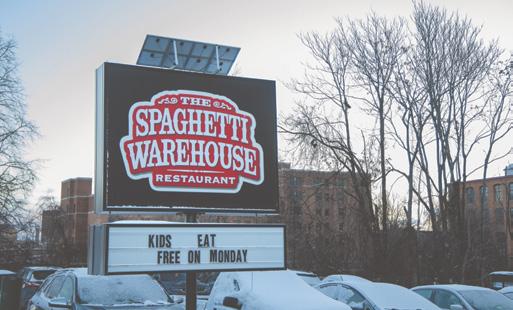
After a 36-year tenure, Spaghetti Warehouse’s Syracuse location closed its doors on Dec. 31.
N • Funding struggles
Registered Student Organization leaders are adjusting to new budget constraints in response to SGA’s funding overallocations.
2-sport star
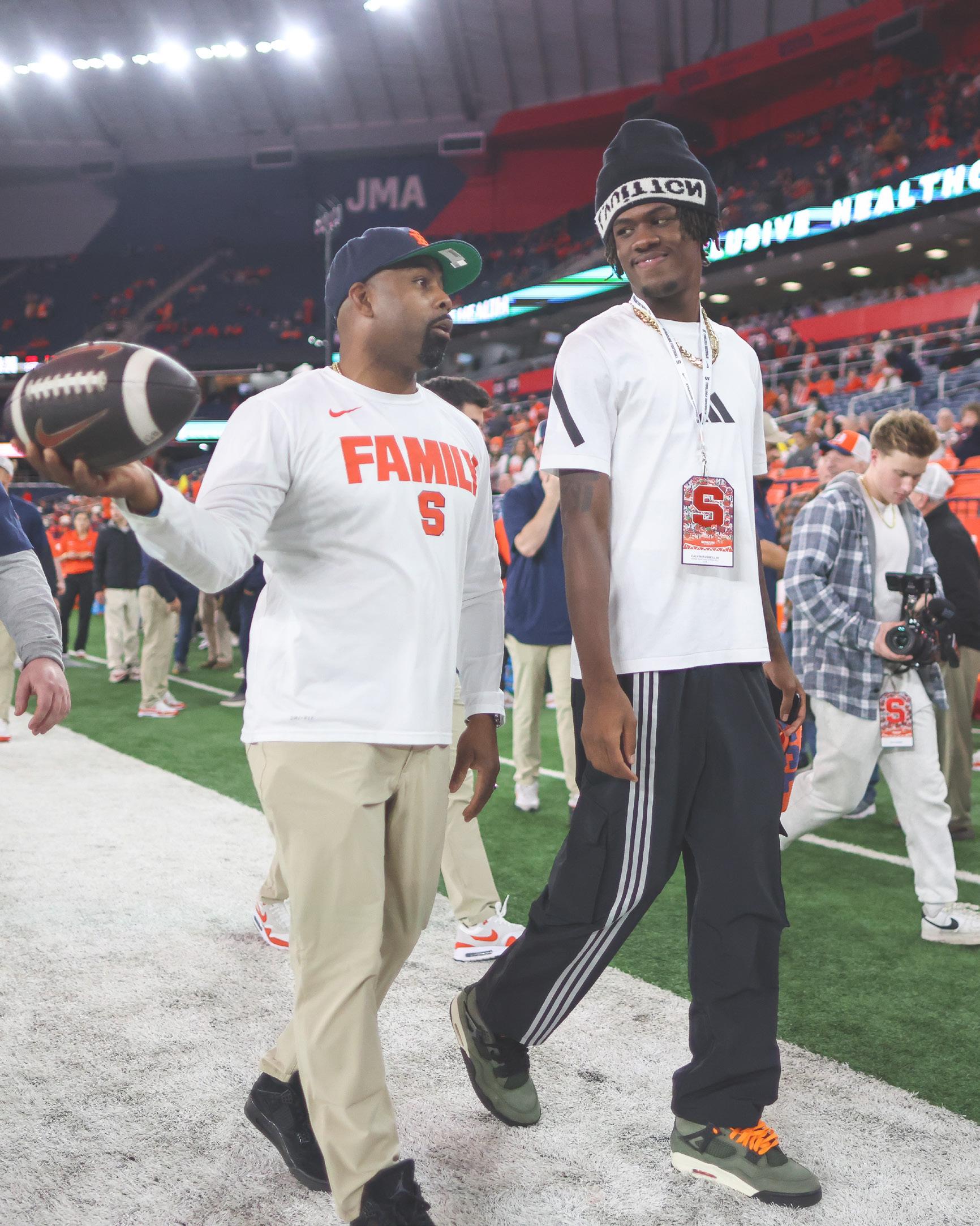
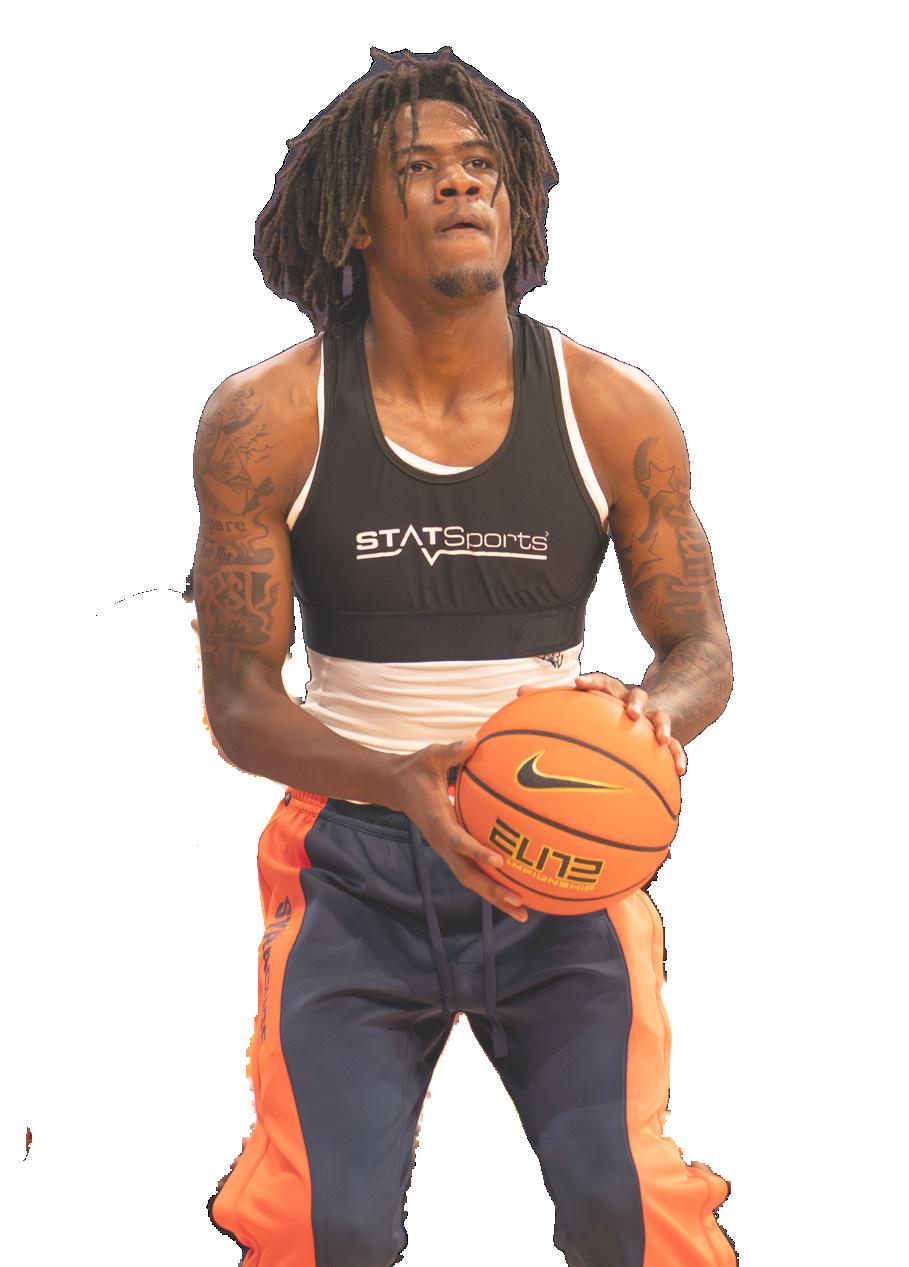
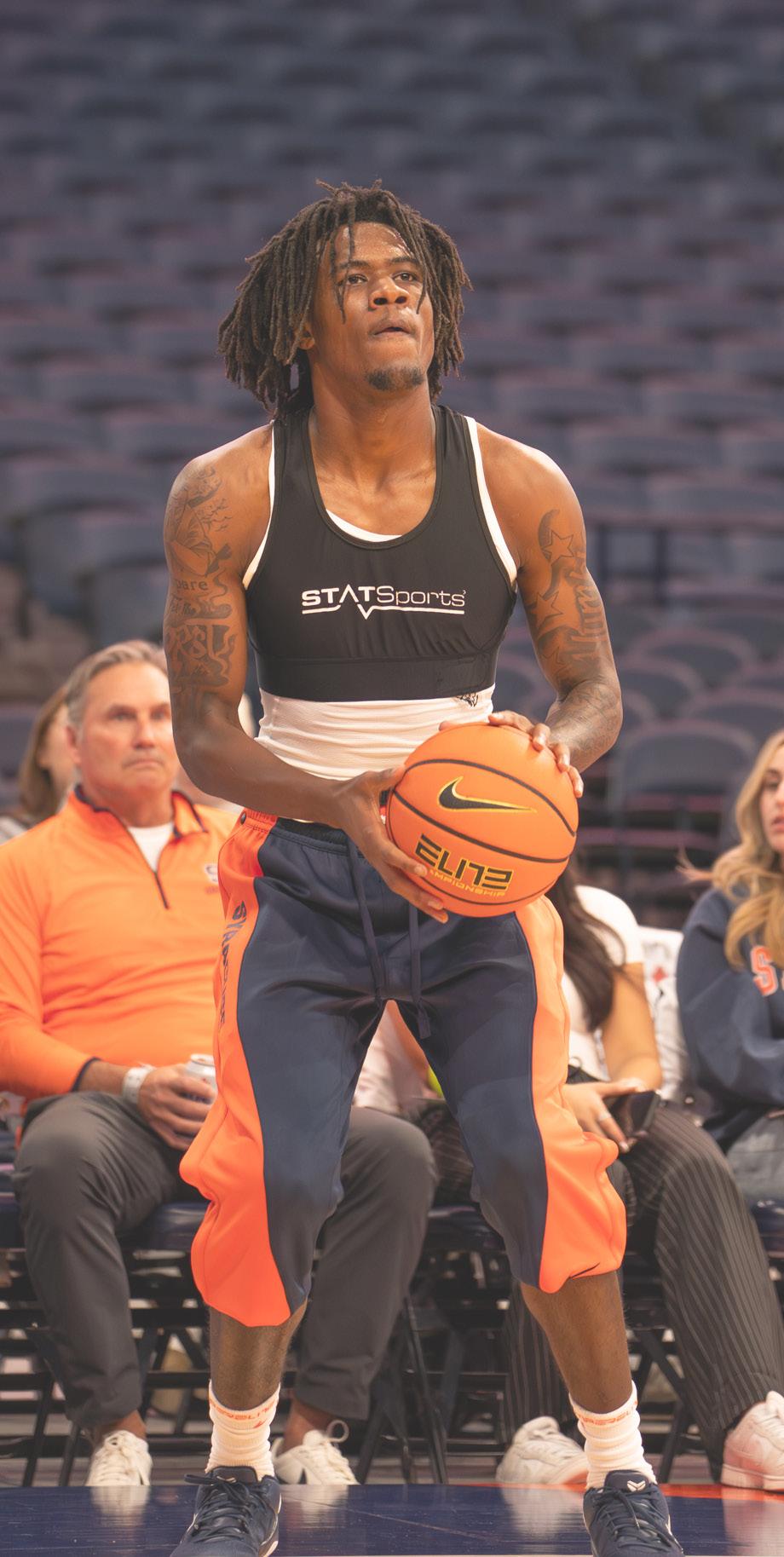
Calvin Russell III is Syracuse’s best football recruit in years. His college career begins with SU men’s basketball.
By Aiden Stepansky senior staff writer
When Fran Brown first saw Calvin Russell III play basketball, the Syracuse football head coach knew Russell needed to explore the sport at the next level. As Chanivia Broussard, Russell’s mother, remembers it, Russell just dropped 39 points and 12 rebounds for Miami Northwestern (Florida) in his junior campaign.
Brown spoke with the family postgame and passionately told Russell to pursue basketball and football in college.
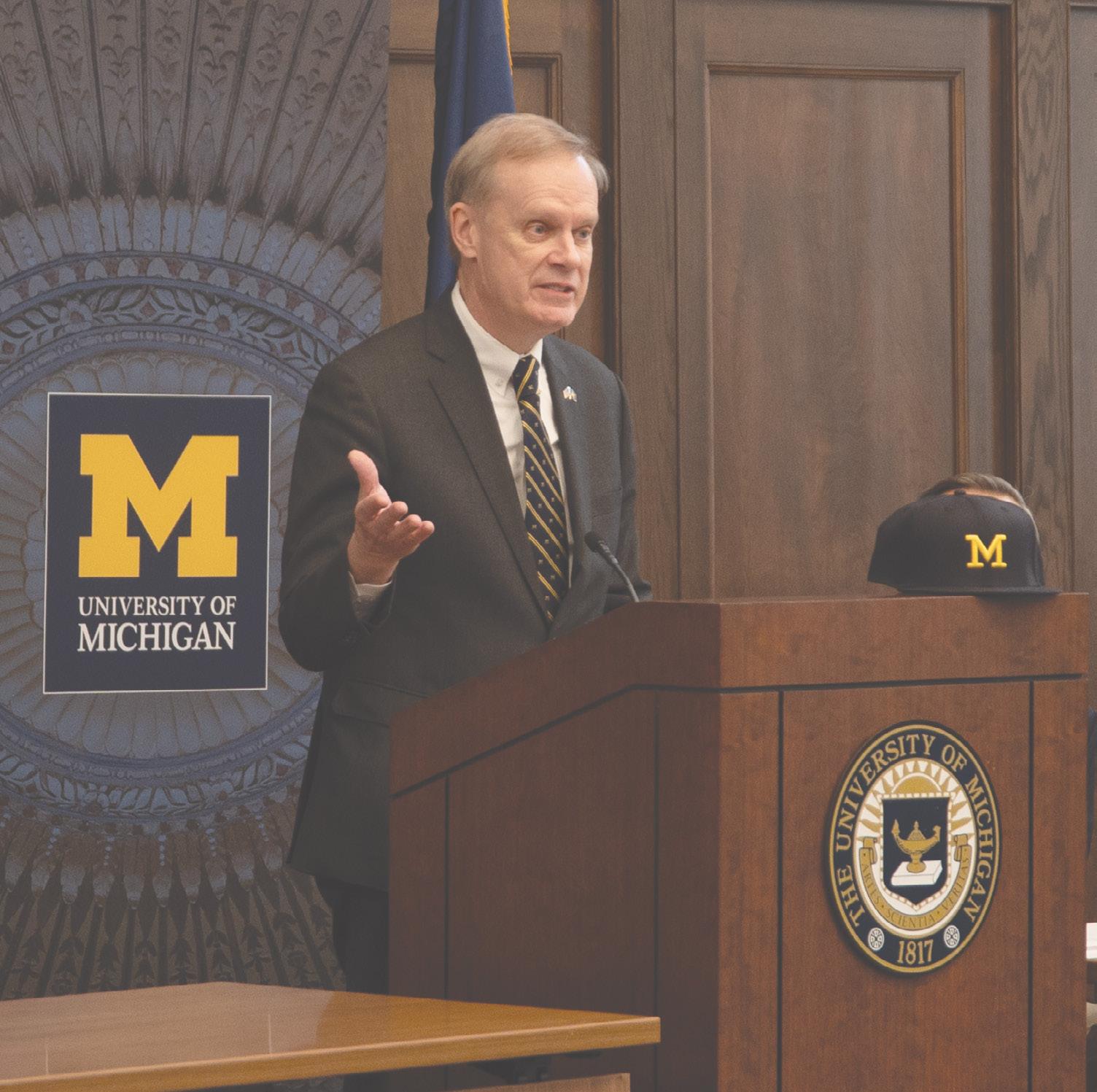
Kent Syverud named next University
UMich in five years and its first alum to hold the role in nearly a century, the Associated Press reported. UMich awarded Syverud a first-year compensation package of nearly $3 million, including his total salary and indi-
Russell was already planning on it. Brown then told him he could participate in both with the Orange, adding he’d call men’s basketball head coach Adrian Autry to set things up. Autry had already traveled to Florida and watched Russell the year prior.
The wheels were then in motion for Russell to become a two-sport athlete at Syracuse.
“Everything aligned perfectly for us,” Broussard said.
As a five-star and the No. 2 wide receiver in the country, Russell is Syracuse’s best football recruit in the modern era. He’s primed to be a key contributor out of the gate on
of Michigan President
benefits, Bridge Michigan reported Wednesday. The package is a $1 million raise from his 2024 compensation at SU, which totaled around $1.76 million, according to a tax report by ProPublica.
part of the package, UMich offered Syverud a $2
salary to serve as its next president, positioning him among the highest-paid leaders of a public university in the nation.
package could set a record for public university presidents, James Finkelstein, a university contract expert, told Bridge. In a statement to Bridge, UMich Director of Public Affairs Kay Jarvis said presidential compensation packages reflect the “vast scale” of the university’s federal research portfolio and healthcare enterprise, designed to support “strong governance” and “effective institutional management.” “Kent Syverud’s total compensation aligns with the market for similar highly
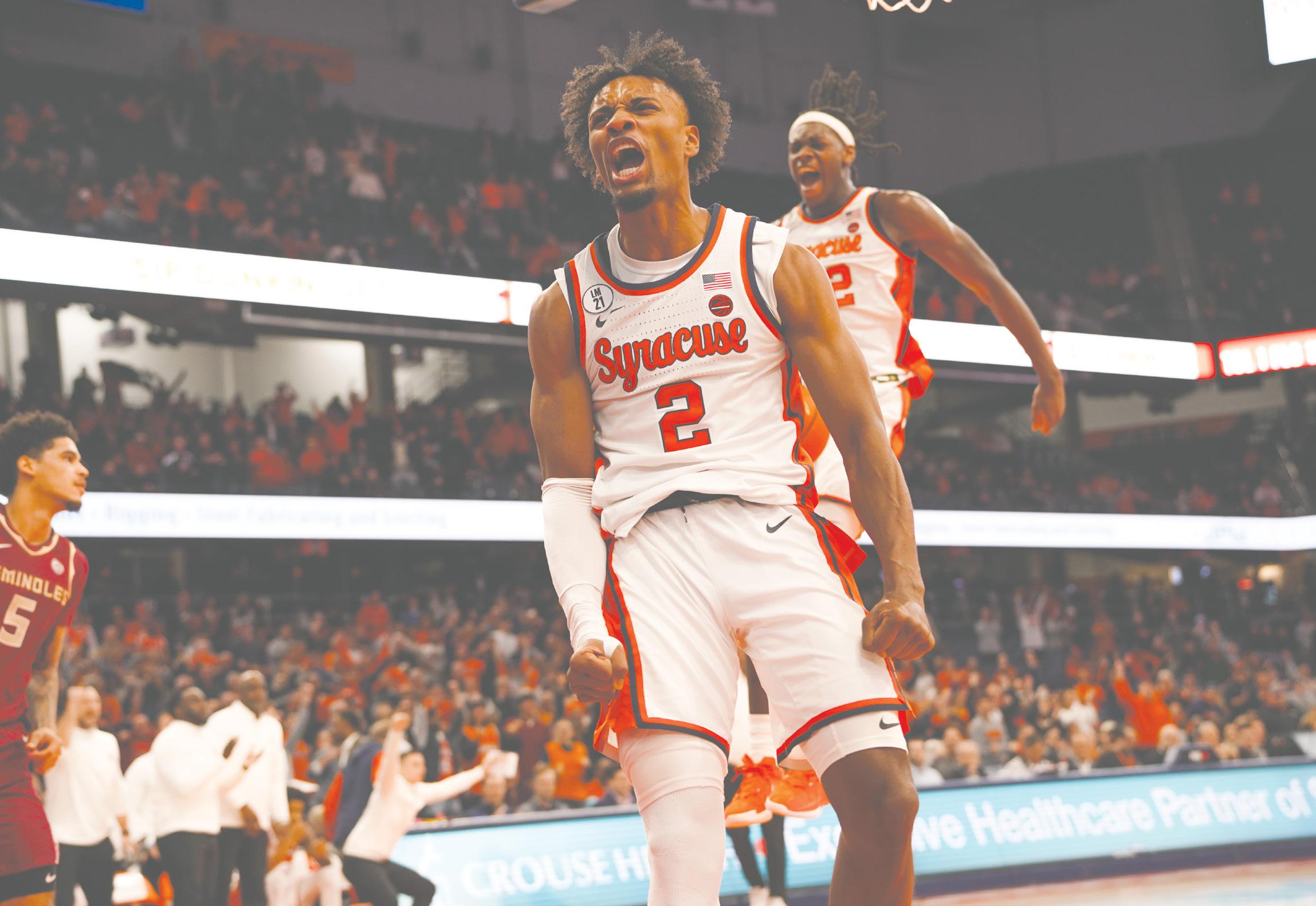
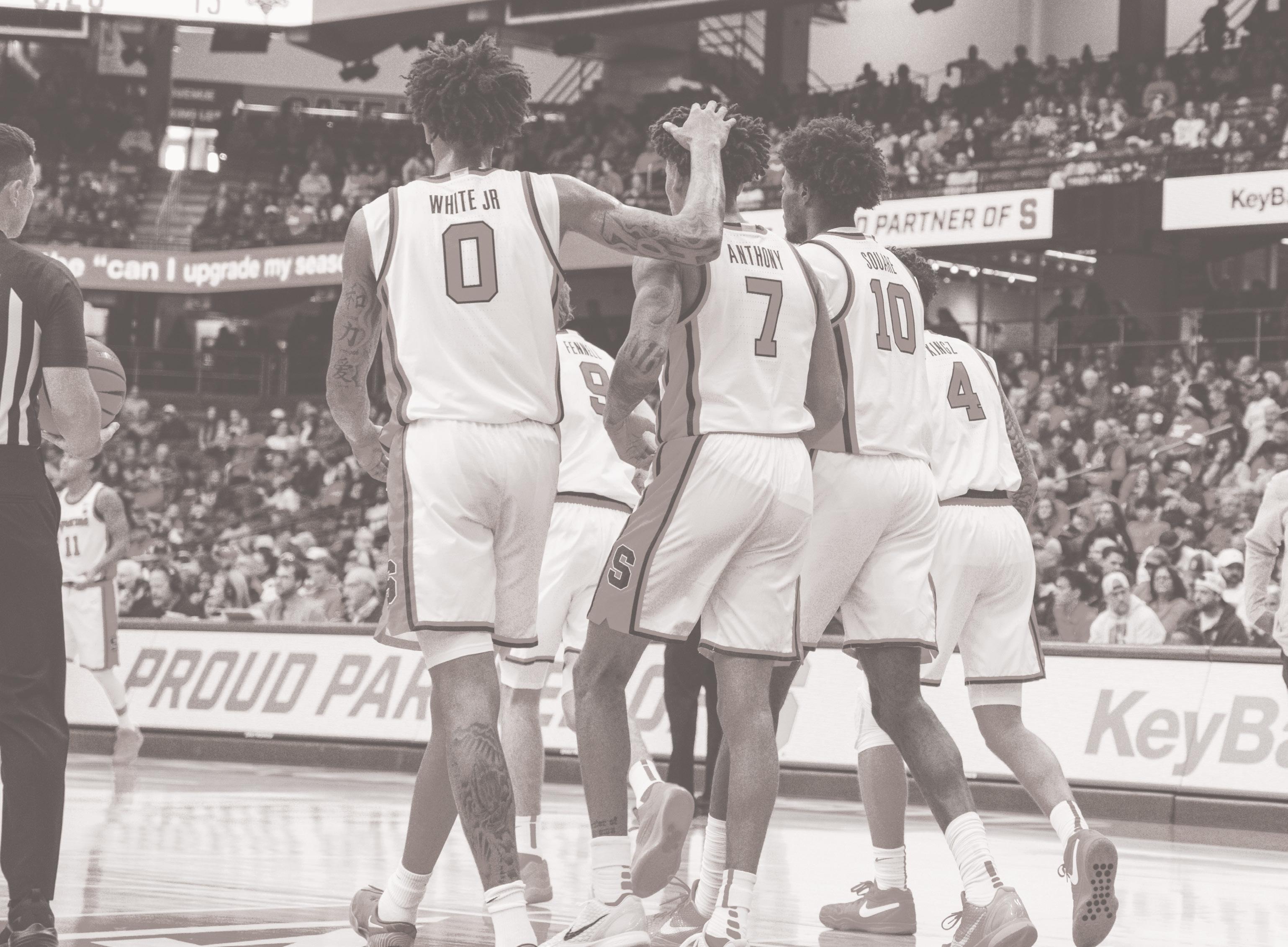
calvin russell iii joined Syracuse men’s basketball team Sunday, pairing with his five-star football recruitment status. He appeared on the bench in its 94-86 win versus Florida State Tuesday night at the JMA Wireless Dome. courtesy of network | zoe xixis asst. photo editor
By Owen Smith and Brenne Sheehan the daily orange
Editor@dailyorange.com
News@dailyorange.com
Opinion@dailyorange.com
Culture@dailyorange.com
Sports@dailyorange.com
Digital@dailyorange.com
Design@dailyorange.com
Photo@dailyorange.com
BUSINESS 315-443-2315
how to join us
The Daily Orange is an independent, nonprofit newspaper published in Syracuse, New York. The editorial content of the paper — which started in 1903 and went independent in 1971 — is entirely run by Syracuse University students.
The D.O., a 501(c)(3) nonprofit, is editorially and financially independent from SU, and the paper receives no funding from the university. Instead, The D.O. relies on advertising revenue and donations to sustain operations.
This fall, the paper will be published Thursday when SU classes are in session.
The D.O.’s online coverage is 24/7, including while SU is on break.
To show your support to The D.O.’s independent journalism, please visit dailyorange.com/donate. Donations are tax deductible.
If you are a Syracuse University or SUNY-ESF student interested in contributing to The D.O. on either its advertising or editorial teams, please email editor@dailyorange.com.
corrections policy
The D.O. strives to be as accurate in our reporting as possible. Please email editor@dailyorange.com to report a correction.
letter to the editor policy
The D.O. prides itself as an outlet for community discussion. To learn more about our submission guidelines, please email opinion@dailyorange.com with your full name and affiliation within the Syracuse community. Please note letters should not include any personal information pertaining to other people unless it is relevant to the topic at hand. All letters will be edited for style and grammar.
Curious about how people actually learn—and how you can make that process smarter, efficient, and more engaging?
Syracuse University School of Education’s one-year residential or online master’s degree program in Instructional Design, Development, and Evaluation can transform your existing skills into a career that shapes how people learn across industries.
In our January 23 information session, you’ll learn how instructional design …
3 Enhances almost any undergraduate degree
3 Transforms your skills and passions, ready for the growing knowledge economy
3 Provides graduates with a high sought-after, well-paid credential
3 Embraces new tech and explores how users adopt them
If you’ve ever thought, “I could teach this better” or if you love making complex ideas click, the IDDE master’s degree program might just be your next move!
BASKETBALL
tuesday, january 13
SYRACUSE 94, FLORIDA STATE 86
up saturday, january 17
SYRACUSE AT BOSTON COLLEGE
sunday, january 11
SYRACUSE 79, VIRGINIA 60
SYRACUSE VS CAL
WEATHER
ONLINE INFORMATION SESSION
One-year residential or online M.S. in Instructional Design, Development, and Evaluation JAN. 23, 2026 | 3:30 PM ET SIGN UP VIA
Kendall Luther EDITOR-IN-CHIEF
Rosina Boehm
Griffin Uribe Brown
RSOs grapple with budget cuts, lack of ‘equal’ distribution
By Julia Boehning enterprise editor
After learning that Syracuse University’s Student Government Association would only fund half of its yearly print issues beginning in the spring 2025 semester, the staff of Jerk Magazine knew they needed to be creative to keep the publication alive.
For the magazine, which current Editor-inChief Sophie Davis said prides itself on publishing four print issues annually, the funding change immediately put its May 2025 edition at risk. Karla Perez, her predecessor, turned to crowdfunding — launching and sharing a GoFundMe via social media that ultimately raised more than double what the magazine needed to go to print.
This year, Davis said maintaining Jerk’s publishing standard, one she described as rooted in campus social issues and alternative content, amid budget cuts has required an “all hands” approach.
“I told them that we were going to have to get scrappy and figure out stuff with fundraising,” Davis said. “And Jerk has always had a little bit of a fight-the-power vibe, at least in the content we produce — we don’t really pull punches … I feel like this has just emboldened us a little bit more to speak for the people.”
Jerk is one of several registered student organizations grappling with funding challenges amid SGA budget cuts and overspending. As the issue stretches into a second academic year, several RSO leaders said they’re increasingly frustrated and worry these tighter budgets aren’t temporary. To navigate these concerns, many are work-
ing to adjust in creative ways, crowdfunding, seeking sponsorships and recycling old materials whenever they can.
Budget struggles began in spring 2025 after SGA allocated $250,000 in rollover funds accumulated during the COVID-19 pandemic to make up for budget cuts to the association.
By the spring, SGA found it overallocated $100,000 in funding and received requests that
were three times greater than the spring budget could accommodate.
Alexis Leach, SGA’s comptroller, said because the association is no longer operating with an inflated budget, the Finance Board has naturally needed to deny more requests. Because a vast majority of SU undergraduates weren’t on campus before the COVID-19 pandemic, she said she under -
stands why organization leaders may not be used to post-surplus decreases.
“Nobody here remembers a time before we lived in a surplus,” Leach said. “So I wouldn’t say that this is as much as a restraint as it is going back to the way things were.”
However, she added the SU Undergraduate Student Activity Fee — the source of funding for all of SU’s over 300 RSOs — has stayed relatively “stagnant” over the last five years when compared to other fees like tuition.
Last year, SGA raised the fee by just $8, which was then approved by SU’s Board of Trustees. This was the first time SU raised the fee in several years, Leach said.
The fee is currently $219 a semester, about an 3.8% increase from 2019-20, before the pandemic.
In contrast, annual undergraduate tuition has increased by 27.5% since 2019-20. The $211 activity fee in 2019 has the same buying power as around $266 today, according to the U.S. Bureau of Labor Statistics’ Inflation Calculator.
“The problem is that inflation is growing, and as the state of the world is going how it is, this money isn’t keeping up with that,” Leach said.
During this transitional period, leaders of several RSOs said they needed to scale back their events.
University Union — SU’s student programming board — posted a statement to Instagram at the start of the fall semester explaining its programming “may look a little different” due to “current economic changes and changes in funding across the university.”
Kate McKenna, UU’s president, said the organization saw lower attendance at the Juice
Whitman School launches Orange Business Angel Network
By Laura Lemgruber asst. copy editor
When Greg Ackerman, chief financial officer and owner of Military Resale Solutions, reflected on his failure as a first-time entrepreneur, he said he lacked the experience and support to succeed.
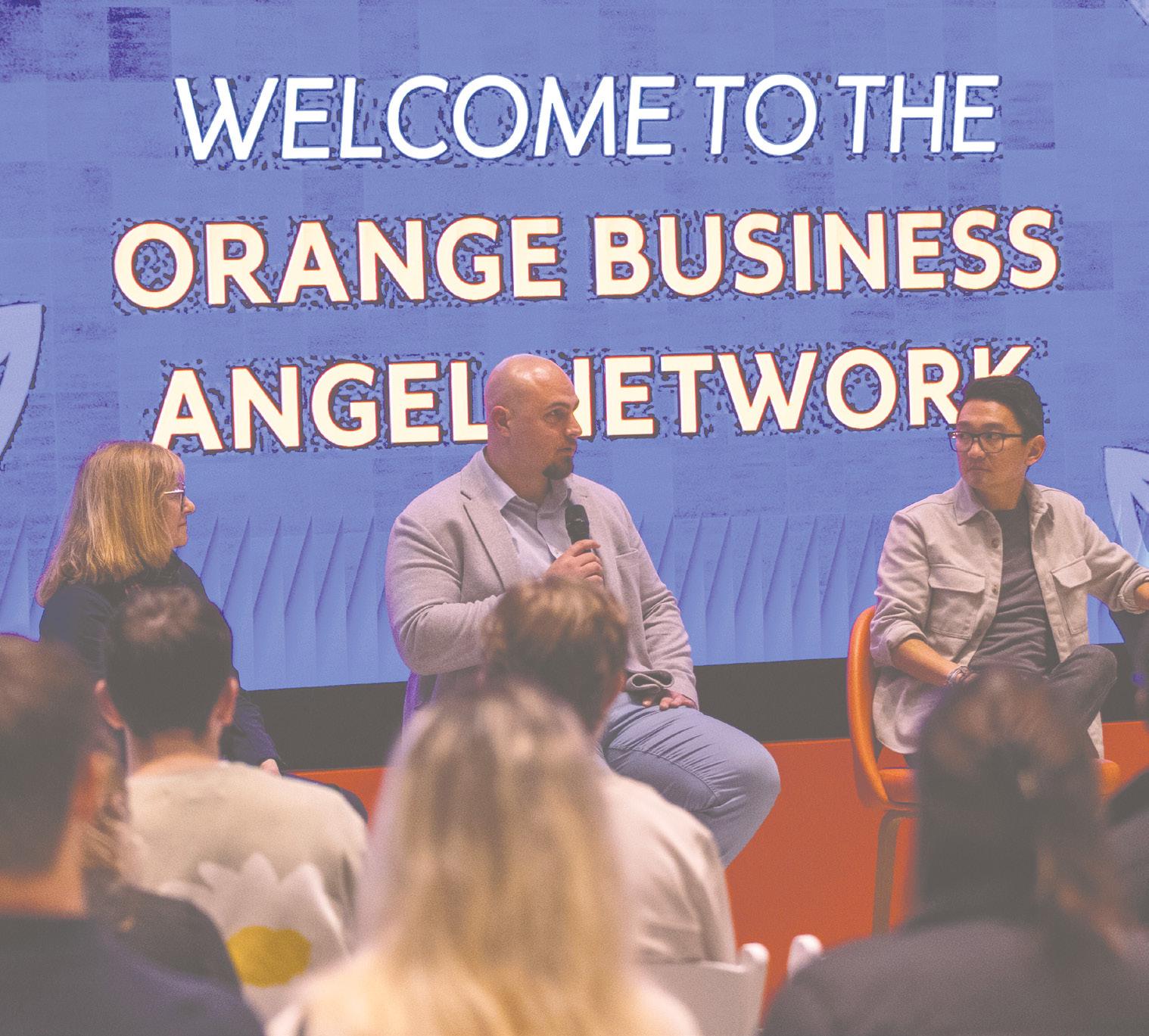
Now, Ackerman has come full circle, returning to his alma mater Wednesday to celebrate the launch of the Syracuse University Whitman School of Management’s new Orange Business Angel Network program.
“I can’t even dream about having the opportunities that these kids have these days,” Ackerman said. “It would be a dream to be part of a network like this.”
Ackerman is the first angel investor — a donor that helps startups and young businesses — to join OBAN, a new experiential learning initiative launched by Whitman that connects students and alumni to prepare students for real-world investing.
The 15 students selected to participate in OBAN will have guidance from the program’s academic director Jeff Gish. The group will complete a class where they will conduct hands-on comprehensive analyses on real startups and help investors assess their risks. Here, students can connect SU-affiliated startups with SU angel investors.
During the semester-long course, OBAN’s first cohort of students will work directly with angels by leading pre-pitch discussions, according to the Whitman website. At the end of the program, which is led by finance experts, students will present the culmination of their work in a pitch deck, Whitman Interim Dean Alex McKelvie said.
While there are other entrepreneurshipfocused university programs like the Couri
Hatchery Student Business Incubator and the Blackstone LaunchPad, McKelvie said OBAN is student-centered.
“Maybe if I did have that and the resources that these students have now, that may have turned out different, the business would have been successful,” Ackerman said.
McKelvie hosted the launch event, which included a panel discussion with angel investors, including Innovation Venture Capital Fund Director Zachary Pecenak and Arcovo AI CEO and Co-founder Jeff Knauss, as well as SU Advisor for Strategic Initiatives Linda Dickerson Hartsock.
Moderated by Gish, the panelists discussed angel investments and gave students and entrepreneurs advice.
When asked how new businesses could get on angels’ radar, Knauss advised the audience to attend more events like the launch.
“Coming to events like this, taking courses like the OBAN, it’s really just being present in the places that people, angels will be,” Knauss said. “And the more that you show up, the more that you put in the work, the more that you do, the more luck you’ll have because you’re just in the right time in the right place.”
Dickerson Hartsock echoed Knauss’ advice and encouraged students to engage with the business community on campus by developing their networks through other entrepreneurship programs.
“The great thing about the land is that you don’t have to have accidental collisions or figure out a complicated formula to get yourself in front of people like this,” Dickerson Hartsock said. “You just need to be part of the ecosystem. You need to be working across campus.”
Will Lewandowski, a junior and member of OBAN’s first cohort, said he first heard about OBAN when he spoke to Dean McKelvie
about starting a venture capital club at SU. Lewandowski knew other schools had similar programs and was excited about bringing that opportunity to Syracuse.
Wednesday also marked the students’ first class with the program, which they headed to
at the end of the event.
“I was super excited when I knew this was on their way,” Lewandowski said. “I think it gave students an opportunity that they really can’t get in many other places.”
lalemgru@syr.edu
Sharon Owens swears in SPD Chief Mark Rusin, new deputy chiefs
By Priya Schmit asst. digital editor
hannah mesa illustration editor
SU’s Whitman School of Management launches Orange Business Angel Network with panelist event. tara deluca asst. photo editor
Ciao ciao!
It was a perfect way to end the night, to go to Spaghetti Warehouse.
Some expected Spaghetti Warehouse’s closure, while others will miss its nostalgia
By Isabel Melendez staff writer
by Eli Schwartz asst. photo editor
Julie Varney was watching the news when she learned that the restaurant where she had her first date with her now-husband was set to close. She told her husband she wanted to visit Spaghetti Warehouse one last time and take a picture at the same table.
“I was shocked, and I was sad,” Varney said. “Our boys were actually sitting there when we found out, we started reminiscing about all the memories that the boys had forgotten.”
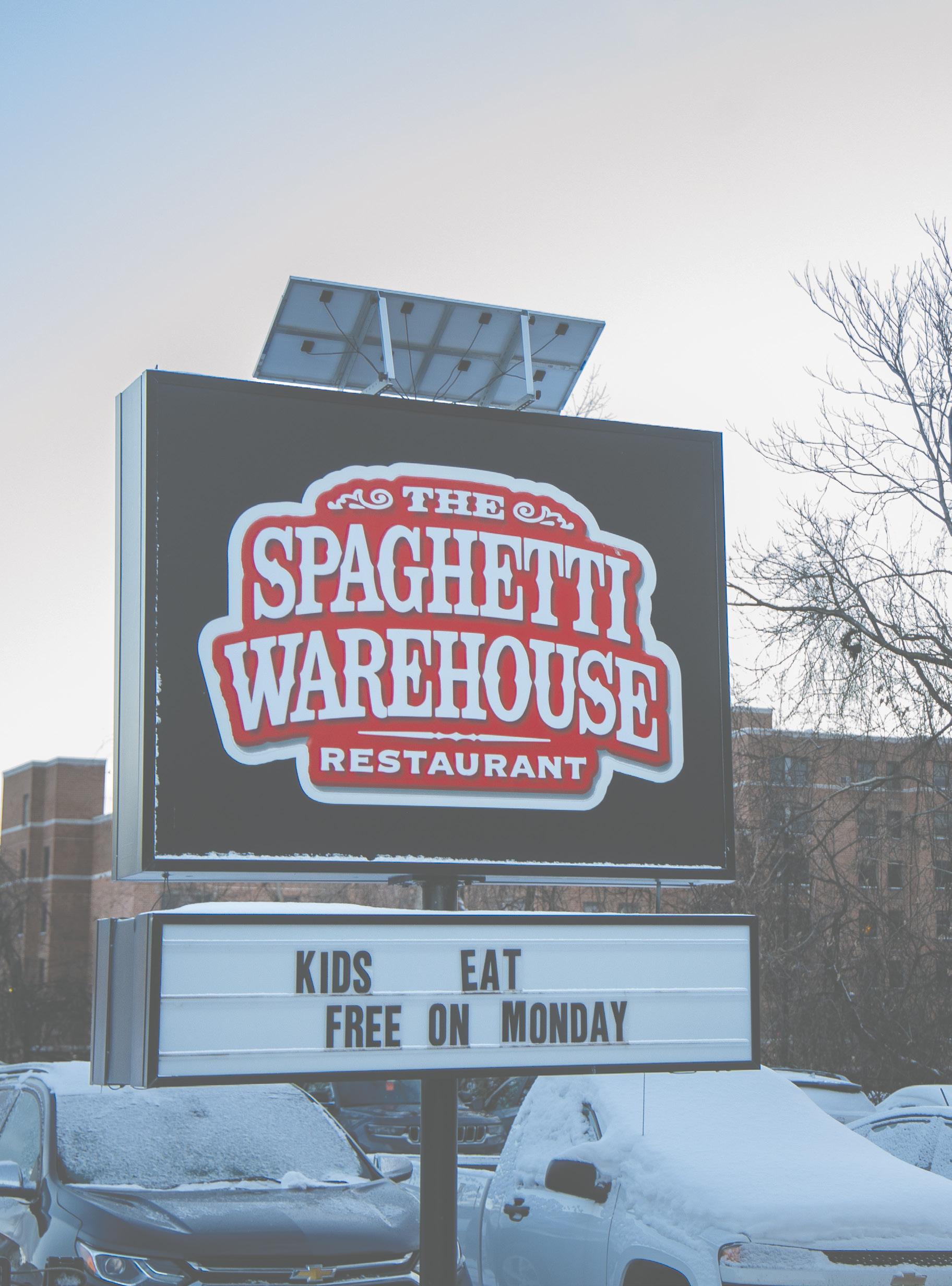
After 36 years of service, chain restaurant Spaghetti Warehouse announced the closure of its Syracuse location. On Dec. 31, the doors of Syracuse’s Spaghetti Warehouse closed after serving one final meal.
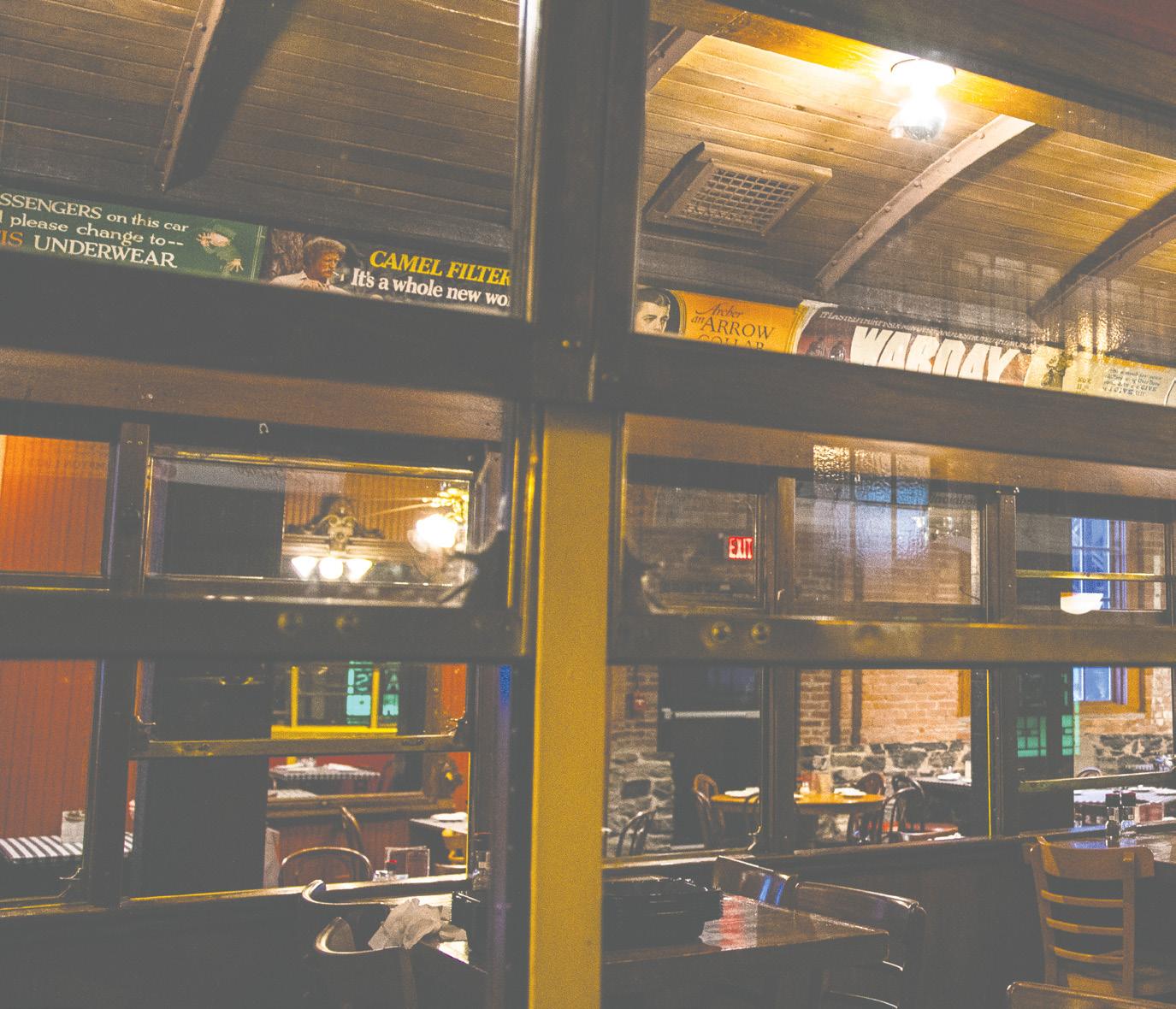
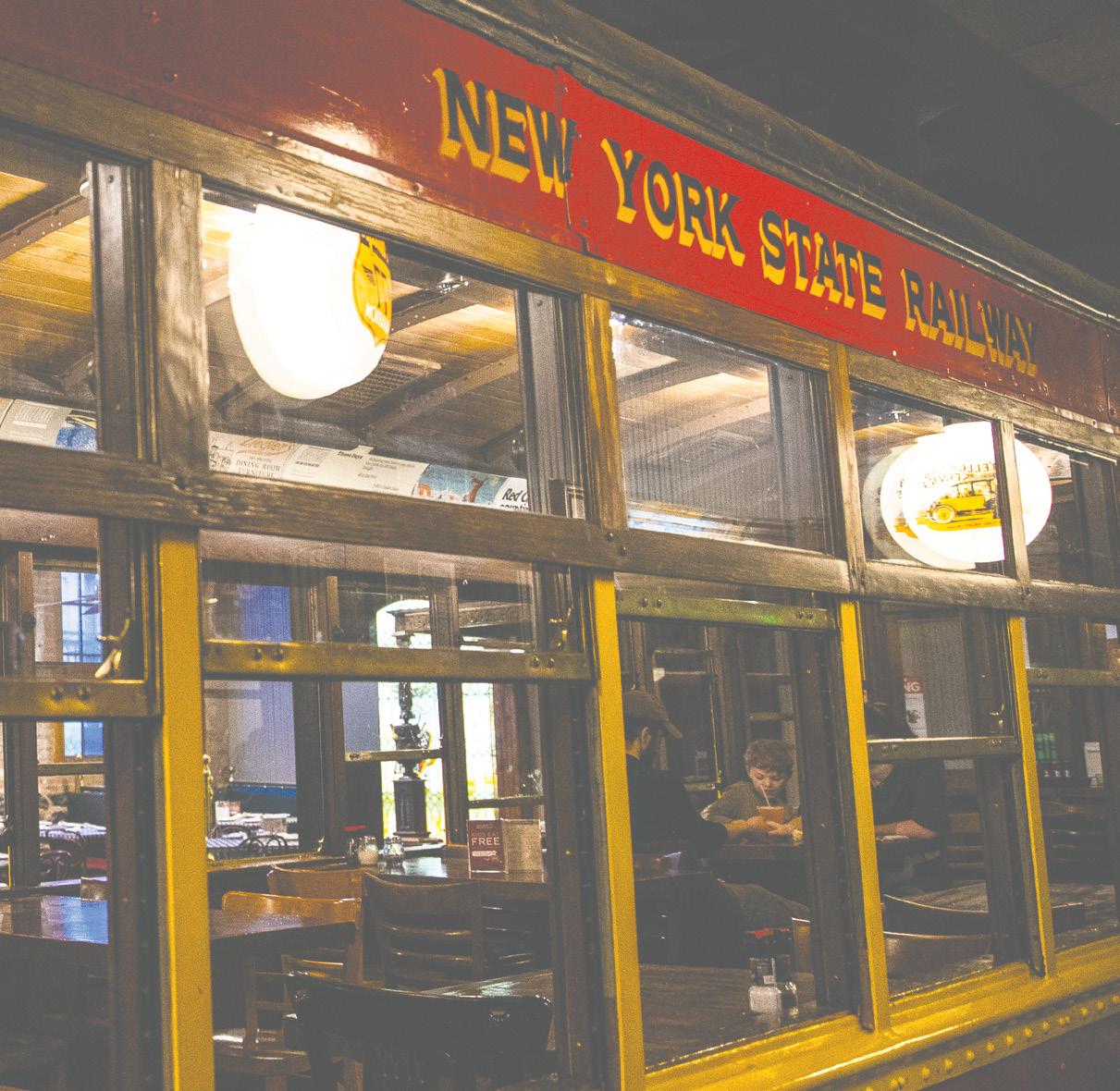
The first Spaghetti Warehouse opened in 1972 in a warehouse district in Dallas, Texas. Nearly two decades later, the Syracuse location was opened in a historic warehouse that once housed a self-playing piano manufacturer, general manager Jay Corless said. At the corner of West Division Street and North Clinton Street, chicken riggies, vintage posters and a full-sized trolley became staples of one of Syracuse’s most recognizable restaurants.
For decades, Spaghetti Warehouse was where people celebrated wedding rehearsals, first dates, tournament wins and fraternity banquets. However, the restaurant faced controversy for the quality of its Italian-American dishes on Google Reviews and Yelp. The restaurant’s closing has generated mixed reactions from patrons and locals.
Molly Jane counts Spaghetti Warehouse among her favorite restaurants in the Syracuse area. She grew up going to the restaurant with her parents, often choosing to sit at a table she said looked like a bed frame or the restaurant’s full-size trolley installed in the dining area while eating her favorite Italian wedding soup.
Over the years, those visits gave her a nostalgic love for Spaghetti Warehouse; she even chose it as the site of her wedding reception.
“I was still in my wedding dress and I didn’t wear my veil at that point,” Jane said. “It was a perfect way to end the night, to go to Spaghetti Warehouse.”
Two months before the closure was announced, Jane said she noticed staffing issues, but hoped Spaghetti Warehouse stayed open; it stands out against the many other Italian-American restaurants in Syracuse, she said.
While Jane became attached to Spaghetti Warehouse for her long-lasting family tradition, Varney started frequenting the restaurant after her first date at 23.
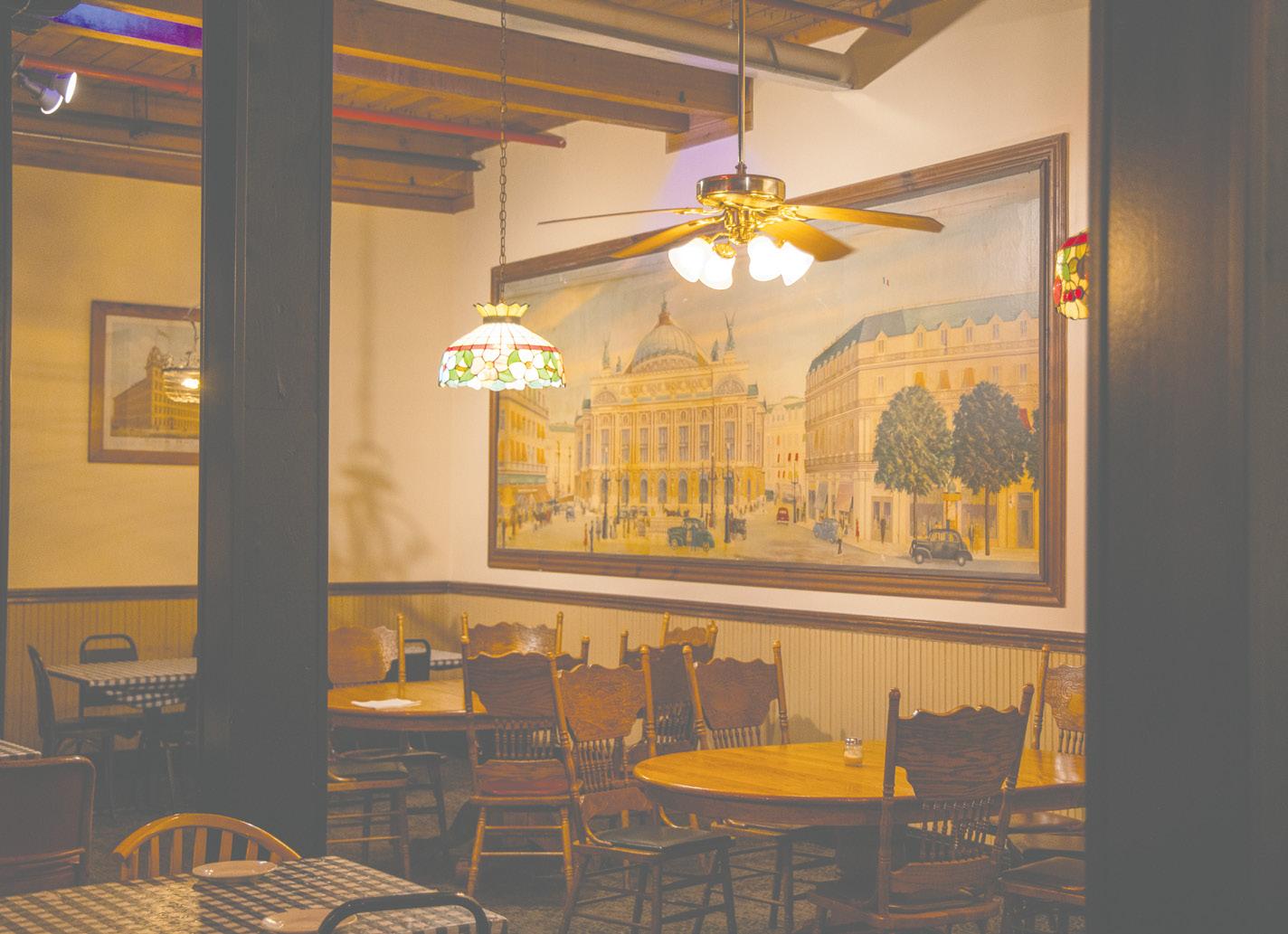
Varney had never visited Spaghetti Warehouse before, so seeing the old woodwork, stained glass, lighted signs and nostalgic posters made Spaghetti Warehouse appear “fancy” and “classy.”
The successful date prompted Varney to share Spaghetti Warehouse with her family, celebrating anniversaries, birthdays and other special occasions at the restaurant.
“You’d go there, and it was still very nostalgic. It had that very comforting staple feel that you loved going there,” she said.
As with Jane and Varney’s long-standing traditions at Spaghetti Warehouse, nostalgia runs deep
Photos
Spaghetti Warehouse first opened in 1972 in Dallas, Texas, before opening
Molly Jane spaghetti warehouse patron
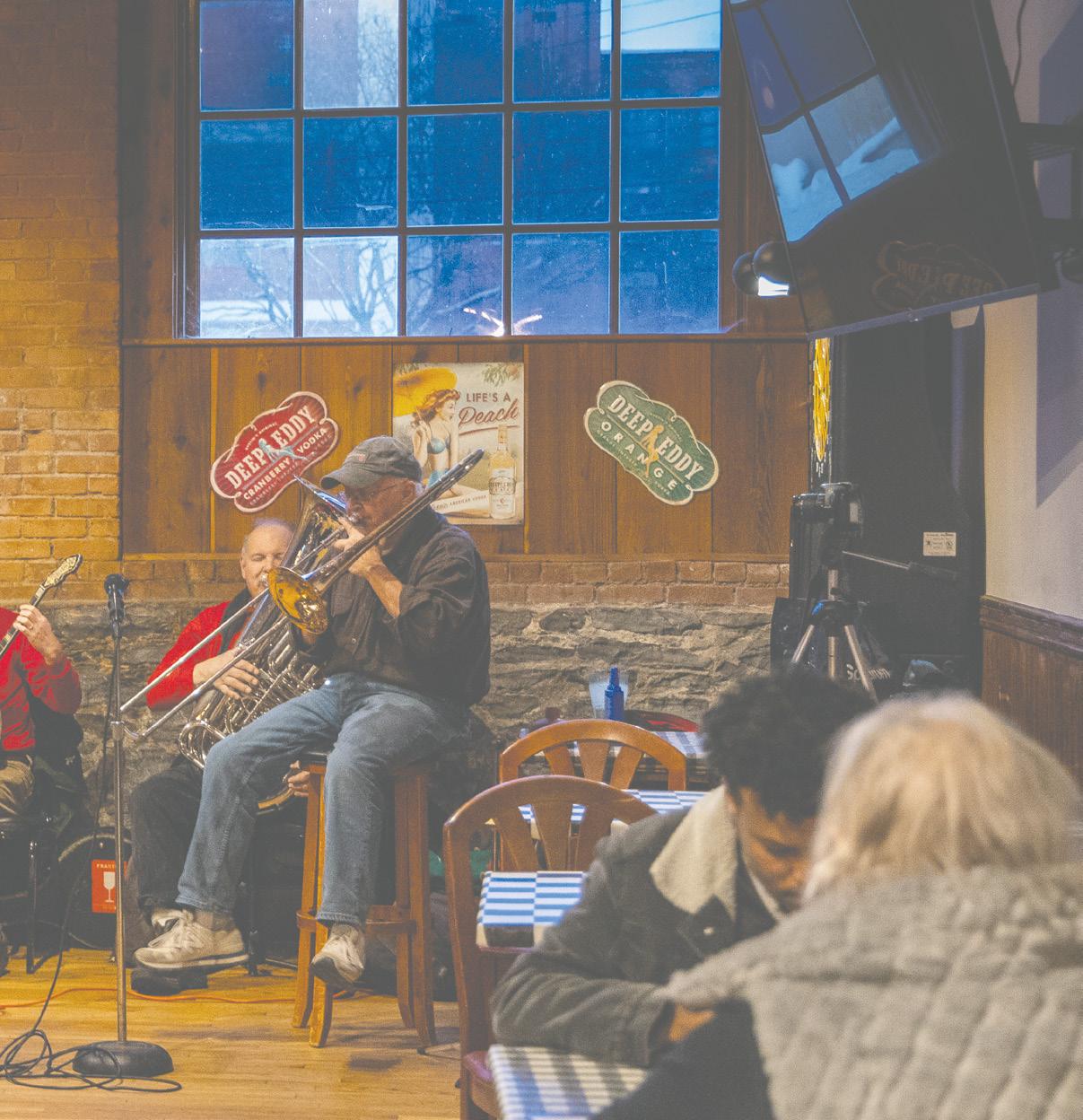
for Corless. In his 15 years working at Spaghetti Warehouse, Corless said he enjoyed listening to customers play the piano, an artifact kept from the warehouse after the piano factory closed down.
Corless’ history as a longtime employee stretches back to his early adulthood. He started as a dishwasher at 18 and eventually became the restaurant’s general manager, a position he held until its final day.
Early in his time, he said he met a prep cook who worked there for 30 years before dying from cancer.
“Everybody called her ‘mom,’ and she was probably the most memorable person who ever worked there,” Corless said. “She’d come in with stories about how she was walking to work and saw a homeless man on the street without shoes, so she walked him to the store and bought him shoes, and she ended up being late because of it.”
While Spaghetti Warehouse holds adoration, some of the former restaurant’s Google Reviews reflect differently. Spaghetti Warehouse holds a mediocre rating of 3.9 stars from over 2,000 reviews, far exceeding the average business, which typically receives around 223. Many of these reviews recount experiences of uncleanliness and poor service, with some users even claiming to have found mold in their dishes. Though others recount nostalgic meals there.
In 2024, Syracuse University alum and local Abigail Greenfield visited Spaghetti Warehouse for a formal with her fraternity Phi Sigma Pi. She said she and some friends felt sick after eating the fettuccine Alfredo, the same dish Varney had loved years earlier on her first date.
“When I was a kid, it was a much more talkedabout place, and then, by the time I was in college, like, when we said, ‘Oh, we’re doing formal at Spaghetti Warehouse,’ I was like, damn, I haven’t thought about that place in years,” Greenfield said.
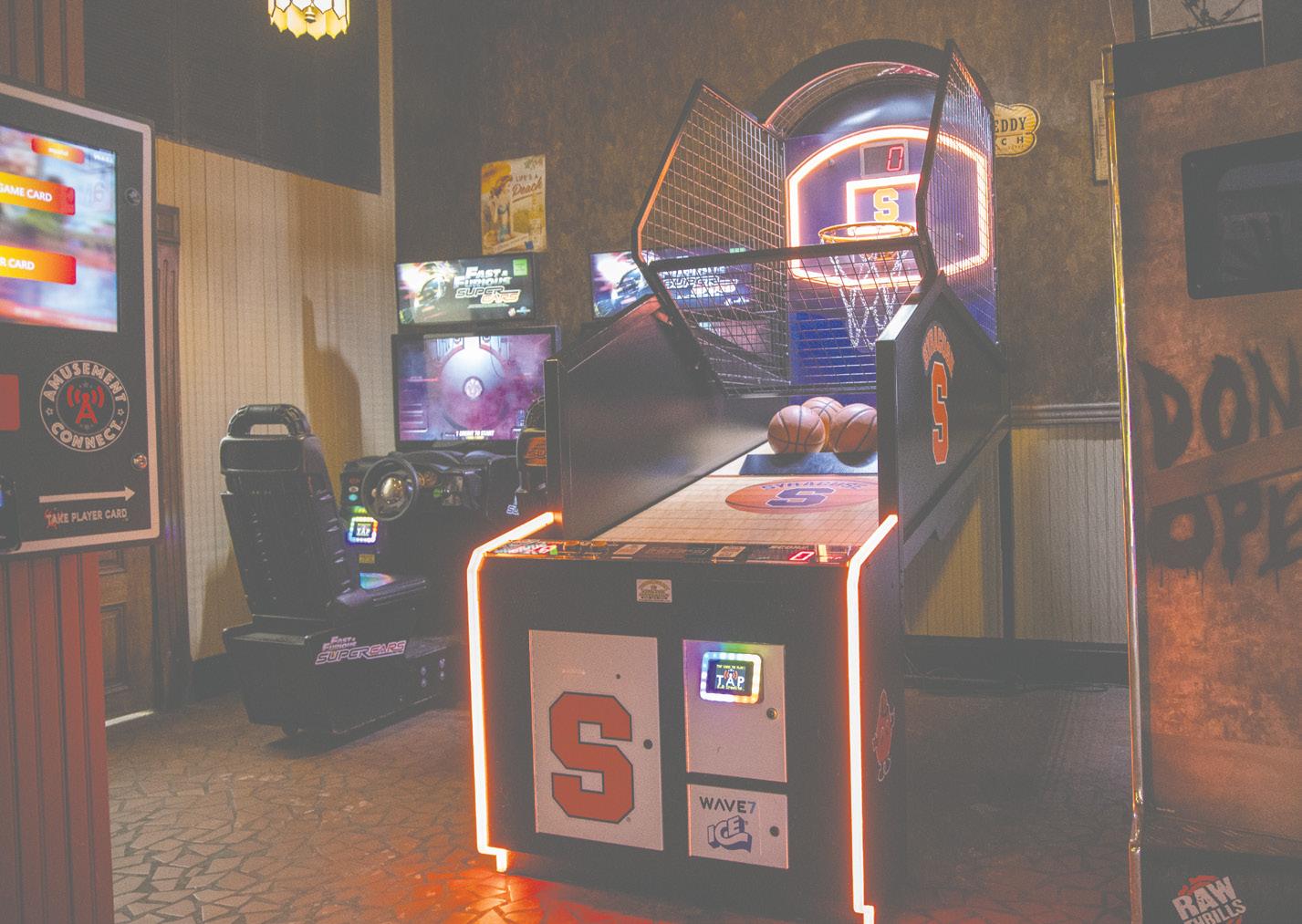
Growing up in Syracuse, Greenfield said she often heard people “rave” about Spaghetti Warehouse, and she remembers playing in the arcade game area near the entrance and going to storytelling and puppet events at the restaurant.
“If Chuck E. Cheese was in a warehouse, this would be it,” Greenfield said.
As engagement advisor for the same fraternity,
SU senior Shawn Sutherland was responsible for planning events, which last semester included a banquet at Spaghetti Warehouse. Sutherland said during the planning process, Spaghetti Warehouse was “easy to reach,” “close” and affordable.
“They were really enthusiastic to help host the event,” he said. “They were really on top of making sure the event went through and making sure everything was okay.”
Now, the restaurant’s closure represents one fewer location option for fraternities like Phi Sigma Pi to host affordable events, he said.
In 2020, the Arlington and San Antonio Spaghetti Warehouse locations were forced to close after several decades of service, shortly following the COVID-19 pandemic.
On Dec. 13, Spaghetti Warehouse released a closing statement thanking friends and family for “letting them be part” of their lives.
On Facebook groups like Where Syracuse Eats and Growing Up in Galleville/Liverpool NY, users reacted to the closure announcement with a mix of emotions. Some said they expected the closure, while others recalled how the restaurant reminded them of summer trips to Green Lakes State Park with their families or how visiting Spaghetti Warehouse after a long time felt like “traveling back to their childhood.”
“The decision to close was not easy, but in today’s challenging economy, continuing to serve the quality food you love at the prices you expect has become impossible,” the statement read. “With heavy hearts, we’ve chosen to close—but not before giving guests the opportunity to join us for a final meal, last toast, or one more memory.”
Spaghetti Warehouse was especially memorable for Sutherland because of its decorations and atmosphere, which reminded him of the old sitcoms and TV shows he watched as a child, he said. When he found out about the closure, Sutherland said he felt surprised.
“The memories of that banquet are definitely going to stick with me for a while, so it was kind of bittersweet,” Sutherland said. “I was like, ‘Wow, we were really the last people who got to do this.’” iamelend@syr.edu
It had that very comforting staple feel that you loved going there.
Julie Varney spaghetti warehouse patron
Provost’s promotion, tenure committee adds 6 members
By Vivian Collins asst. news editor
Syracuse University’s Provost’s Advisory Committee on Promotion and Tenure announced its six newly elected members in a Tuesday release. The committee will assist SU’s Chancellor’s Executive Team in managing faculty tenure and promotion cases.
The following faculty members have been elected to the committee:
• Jaime Banks, School of Information Studies
• Jean-François Bédard, School of Architecture
• Lisa Dolak, College of Law
• Peng Gao, Maxwell School of Citizenship and Public Affairs
• James Hougland, College of Arts and Sciences
• Dawn Johnson, School of Education
Faculty tenure or promotion cases that have “substantial” disagreement between reviewers or cases that will most likely result in a rejection are reviewed by the committee, according to the release.
University Senate’s appointment and promotions and agenda committees conduct the
advisory committee elections. Tenured faculty and those on the tenure track are eligible to vote for advisory committee members, according to the release.
After the faculty vote, the chairperson of the appointment and promotions committee presents SU Vice Chancellor and Provost Lois Agnew with a list of three candidates from each electorate. From there, Agnew chooses the new committee members.
Agnew, Vice Provost for Faculty Affairs Jamie Winders and Vice President for Research Duncan Brown help lead the committee, according to the release. Committee members offer advisory notes to Agnew but do not officially issue reports or review appeals, the release states.
Individual cases are reviewed by seven of the 12 committee members, who are chosen based on their closeness to the petitioning faculty members’ disciplines. However, there will also be members who have not been involved in the cases’ promotion process.
“The Advisory Committee’s advice is intended to balance comparable excellence across the schools and colleges with the need to support the specific excellence of each,” SU’s website states.
vpcollin@syr.edu
complex public and private entities,” Jarvis said.
“He is exactly the right person to lead the university during these difficult times for higher education, and our community is proud to welcome him back.”
800k
At SU, Syverud took over for former chancellor Nancy Cantor in 2013. Last semester, SU commissioned a search committee to select Syverud’s replacement. The committee confirmed last month it narrowed down its candidate pool and conducted some interviews.
During his 12-year tenure at SU, Syverud navigated events such as the #NotAgainSU student protests in reaction to racist incidents on campus, the COVID-19 pandemic and a portfolio review with subsequent admissions pauses.
In a separate Monday campus-wide email, Board of Trustees Chair Jeff Scruggs congratulated Syverud. He added the search committee continues to “make excellent progress” in selecting SU’s new leader. Syverud’s commitment until June ensures the ongoing search “maintains (their) momentum,” he wrote.
“Chancellor Syverud’s appointment to Michigan is a testament to Syracuse’s strength and the caliber of leadership our university cultivates,” Scruggs wrote.
Syverud reaffirmed he would lead Syracuse through the transition, writing his “commitment to Syracuse University remains unwavering” as he serves through the end of the academic year.
Syverud will begin his new position July 1. SU’s chancellor search committee plans to announce its new leader later this semester. news@dailyorange.com
Jam music festival, one of its hallmark events, after it was forced to book smaller, less expensive artists.
UU also hosted the usually ticketed event for free on Shaw Quadrangle, deviating from much larger previous locations at Skytop on South Campus and the JMA Wireless Dome.
“We’ve had a semester to learn and grow how to deal with this budget, so I anticipate that it won’t be as challenging on the end of trying to figure out the logistics, but we’ll still see those changes reflected in the programming,” McKenna said. “We’ll still have all of our events … it just might look a little different than it has in previous years.”
UU, a Tier 4 RSO, is eligible to make funding requests for more than $40,000. SGA determines these tiers based on “programming capital,” referring to its history of holding successful special events or initiatives.
Tier 3 organizations can request up to $40,000, Tier 2s $25,000 and Tier 1s $12,500.
Jesús Tiburcio Zane — the president of Latine Undergaduates Creating History in America, a Tier 3 RSO — believes this system inequitably funds student organizations. While transitioning to a smaller budget, he said he wishes that SGA would’ve been more transparent about how much is in the student activity fund and made efforts to distribute it fairly.
“RSOs don’t know what the big pool we’re able to grab from is. I feel like that’s an issue,” Tiburcio Zane said. “(SU) wants to see a lot of organizations throw events and upscale them, but at the same time, not all organizations are represented equally.”
Leach said while the Student Activity Fee pool fluctuates depending on undergraduate enrollment, it has previously sat at around $3.1 million.
RSO leaders have also raised concerns with how the Finance Board makes its allocations and subsequently communicates its decisions.
Tiburico Zane said, for La L.U.C.H.A., this issue became apparent during its Latine Heri-
tage Month programming. He said that, with balancing fiscal agent training and the start of the semester, getting his budget approved for the month proved difficult, as the process starts in mid-September.
For OttoTHON — a philanthropic organization that hosts an annual dance marathon fundraiser — restricting the amount a Tier 1 can request for catering made it so internal events director, Abby Haffner, felt the group may not be able to feed the hundreds of attendees it expected from previous years.
Haffner described the cut to their catering budget, which decreased from $3,000 to $1,500 for Tier 1s as a result of SGA’s new catering cap, as a “surprise.” Haffner said, after being unable to raise OttoTHON’s funding tier, she needed to contact catering directly and try to find other means for providing food during her midterm exam season.
“This was during one of the busiest times of year, and you’re trying to get in contact with catering,” Haffner said. “You’re trying to get in contact with people … to see what they can do to provide food for a 10-hour-long event they have known about since the beginning of the year.
Haffner said because SU has previously promoted OttoTHON — who donates their money to Upstate Golisano Children’s Hospital — she thought they “wouldn’t have to be concerned” with funding issues.
Davis, of Jerk, and UU’s McKenna also expressed facing communication challenges. Several leaders said they have previously not understood, and occasionally disagreed with, the Finance Board’s rulings.
Leach said she holds office hours for RSOs with funding questions and also communicates with leaders through email, though she acknowledges it can be difficult to keep up with various messages from RSO leaders. As for its decisionmaking criteria, Leach said, the Finance Board determines funding based fully on the rules outlined in its fiscal codes.
RSOs can apply for semester budgets through advanced allocations submitted the semester prior, or special programming requests for events planned at least two weeks in advance.
The Finance Board then makes its decisions based on adherence to its fiscal codes before voting on it in the assembly. If the Finance Board denies a request, an RSO may appeal its decision.
When Davis submitted her funding request for two Jerk issues in the spring, she said the Finance Board explained that they had found several undistributed copies from previous years, indicating that they hadn’t adequately estimated the amount they needed to circulate.
Davis said that, in the case of the magazine, the issues were from back in 2017.
RSOs don’t know what the big pool we’re able to grab from is. I feel like that’s an issue.
Jesús Tiburcio Zane la l.u.c.h.a. president
Leach said that, when SGA went to clean out the Student Engagement office, they found “hundreds of copies” of unused student publications — causing them to establish the two-per-year rule. Davis said she wished the Finance Board would’ve communicated these specific concerns before she filed her requests.
“If I had known October of (2024), when I was filing all those budget requests, that they were just going to keep denying them, no matter how many hours I spent on Canva making my presentation look good, or how many people I had look over it, it would have saved a lot of time and stress,” Davis said.
McKenna said she didn’t understand why the Finance Board chose to cut UU’s performing arts shows, which she said often sell out in years where they’re fully funded. McKenna said SGA also declined its requests for movie screenings, causing the organization to pay for these events with its supplemental funds.
However, McKenna said she understands many limitations are “not completely in (SGA’s) control.” She, and other RSO leaders that spoke to The Daily Orange, said they believe these changes begin at university-leadership level and are spurred on by outstanding economic factors.
“I can confidently say that I don’t think we’re going backwards. I do think we’re moving forward in being able to allot as much as we can to as many organizations as we can, but I can’t say there isn’t going to be nos,” Leach said. “We can’t say yes to everything. That isn’t possible, because there’s never going to be enough money for that.”
SU also hosts a semesterly Student Organization Challenge, a month-long initiative encouraging community donations to RSOs. The organizations with the most unique donors also received an additional monetary award from SU. Though some organizations have instead looked to outside sources to generate funding.
Haffner said OttoTHON is looking into outside brand sponsorships that will work with them to incentivize student donations, as well as using products from old events to save whenever they can. UU has worked on improving its marketing departments, McKenna said, and currently plans to hold its spring music festival, Block Party, back in the Dome.
Tiburcio Zane even took to spending his own money to provide Latin American coffee brands for its Café con Leche event instead of the Dunkin’ products approved by the Finance Board. He said he’s already begun to plan and budget for next year’s events.
Still, the leaders said they wish SU would invest more resources into student-led organizations and publications, something they said the university touts as a draw for admissions.
“If you are taking away money, you’re taking away creativity, you’re taking away passion from your students,” Haffner said. “It’s not going to really look good for the university, and it’s only going to hurt them more than it will help them.”
Asst. Digital Editor Owen Smith contributed reporting to this article.
Chancellor Syverud said he will finish out the school year before he assumes his role as president at UMich. bela fischer the michigan daily
Syracuse University announced six newly elected members to the Provost’s Advisory Committee on Promotion and Tenure. lola jeanne carpio contributing photographer
Raise from Syverud’s pay at Syracuse University to University of Michigan
CULTURE
Timmy twin
Sophomore Valentino Indelicato has gone viral for looking like Timothée Chalamet
By Claire Zhang asst. digital editor
On the Thursday before Thanksgiving break, Syracuse University sophomore Valentino Indelicato had spent the week stressing about final assignments. Then, he saw Druski post a Coulda Been Records audition call with Timothée Chalamet. That night, Valentino drove four hours to
Brooklyn for a chance to perform for the comedian and actor.
“Just the moment I saw it, I was like, ‘Oh my gosh, this is the thing for me,’” Valentino said.
Valentino has been mistaken for Chalamet for years; people often approach him to ask if he is the actor. Last October, Valentino had had enough of the lookalike comments and shaved his head to change up his look. A week later, Chalamet debuted his own buzzcut.
Since then, Valentino has embraced the resemblance. Druski’s video, where Valentino makes a oneminute appearance, now has 9.4 million views. It’s like any of Druski’s other videos for Coulda Been Records, his satirical record label. On the show, people audition to be “signed” by Druski, showcasing various talents, from singing to stand-up comedy.
Valentino went in solely with the talent of being Chalamet’s doppelganger, making jokes tailored to the “Marty Supreme” marketing run. On the car ride there, he studied Chalamet’s recent interviews and bits.
“I’m not even the biggest fan of the guy, but I was just like, ‘I need to know anything about him,’” he said.
When Valentino first saw Druski’s post, he called his sister, Bianca Indelicato, who told him he couldn’t pass up on the opportunity. Being somewhat familiar with Druski’s audience, Bianca thought Valentino’s approach to being a Chalamet lookalike would be distinctive — she was 80% sure his audition would be successful.
Some of Valentino’s close friends, like SU senior Yonni Mathis, were a little more skeptical. When Valentino told Mathis he was going, she was not a fan of him dropping everything for it. But she’s glad he didn’t listen to her and that it worked out in his favor.
“I was like, ‘Don’t we got school tomorrow?’” Mathis said.
Valentino made it to Brooklyn around 3 a.m. the day of the audition. After a short night’s rest, Valentino waited in line with hundreds of other auditioners from
Haraz Coffee House grounds authenticity with Yemeni coffee
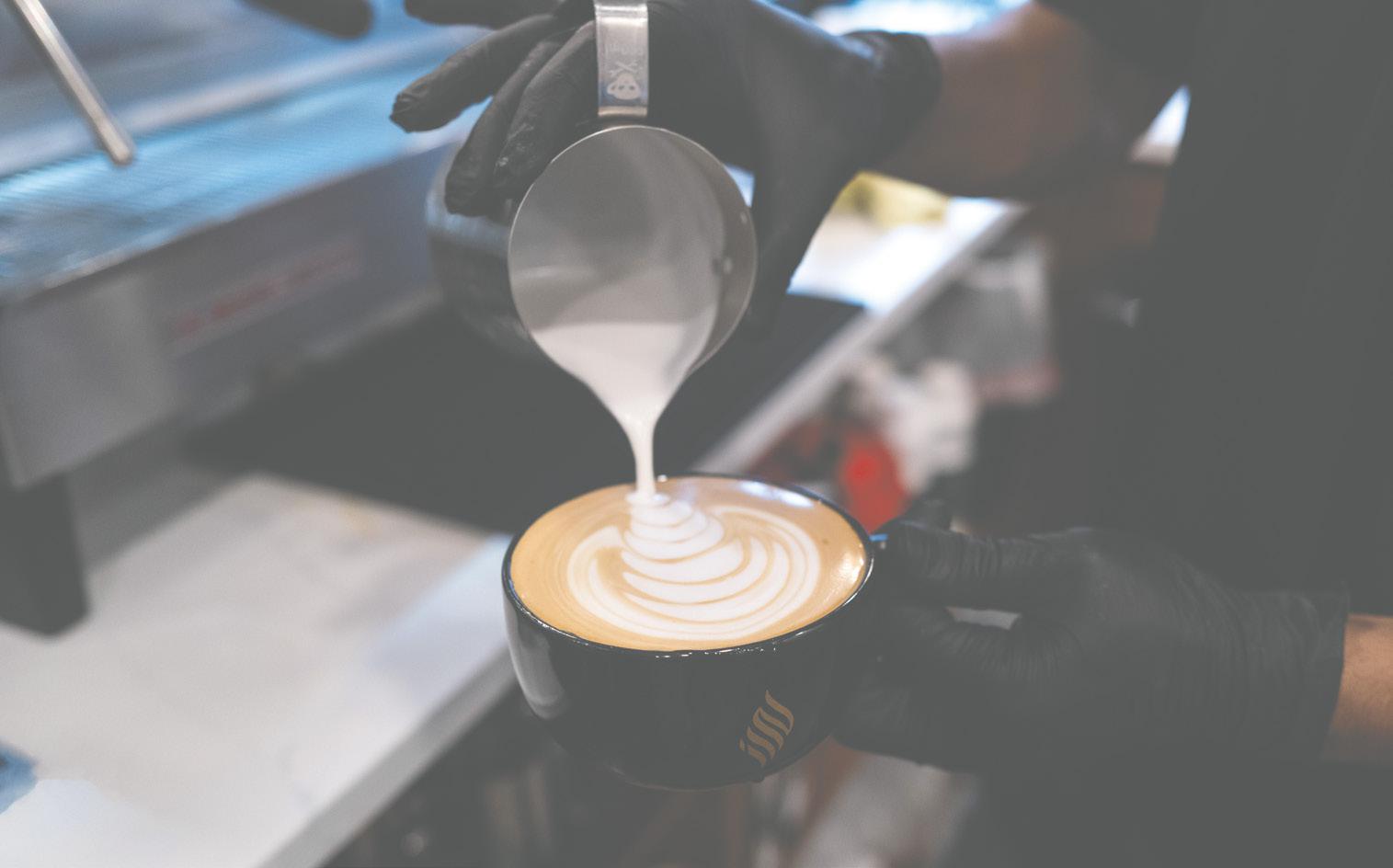
“There are some places that I
Marshall Street in December. The coffee shop offers a mix of traditional Yemeni coffees and teas, consisting of common favorites like lattes and matchas. Starting construction in the formerly owned Shirt World in 2024, Haraz will host its grand opening this Friday.
Opening its Syracuse doors allows SU students and surrounding establishments
By Tara Binte Sharil asst. culture editor
Sienna Tarkian prefers her shaken espresso sweetened. But, the Syracuse University freshman finds that many cafes tend to go overboard on the sweet notes, overshadowing the deep and robust richness of the coffee beans itself.
At Haraz Coffee House, though, coffee flavor comes first.
love, but I sort of feel like I am just drinking sugar. I feel like this one still keeps a piece of coffee,” Tarkian said. Haraz soft opened on
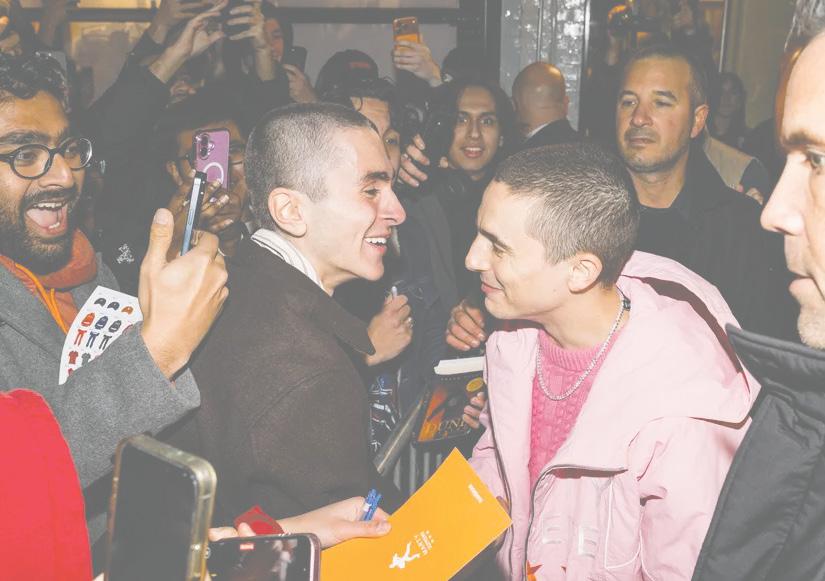
The day after auditioning for a feature on a Coulda Been Records video with Druski and Timothée Chalamet, Valentino Indelicato attended the “Marty Supreme” merch popup, where Chalamet recognized and greeted him. Valentino didn’t know then that his audition would be featured in the Coulda Been Records YouTube video. courtesy of valentino indelicato
‘People We Meet on Vacation’ trivializes romance
By Lily Zuckerman asst. culture editor
After watching BookTok adaptations like “It Ends With Us” and “Regretting You,” I always look forward to my favorite books coming to the big screen and watching the characters come to life. So, when Netflix announced Emily Henry’s “People We Meet on Vacation” adaptation, I was counting down the days. But, the movie felt almost unrecognizable from the book I loved.
Though the movie included basic elements from the book, like a decades-long friends-tolovers story between two college friends and the vacations they take each summer. I plan to rewatch the movie for its relatability. However, it left out key moments and plot points that established the romantic buildup between the two friends, leaning too much on comedy over chemistry.
The novel and movie adaptation follow two protagonists, Poppy Wright (Emily Bader), a travel journalist, and Alex Nilsen (Tom Blyth), a school teacher. In their freshman year of college, the two promise to take vacations with each other every summer, no matter where they are in the world or who they are romantically seeing — because they are just friends (sure).
Despite Netflix’s attempt to play into the romcom sphere and explore whether a relationship between a straight man and woman can ever really be just platonic, the adaptation left out the emotional depth of relationships from the book. It left me craving more substance and less comedy.
Compared to the book, the movie adaptation features fewer trips, different vacation spots and less chemistry between the leads. The movie isn’t as great as the book, but the movie is typical and could happen to anyone.
Akin to “When Harry Met Sally,” the friends (almost lovers) meet at the University of Chicago, a well-known and academically driven school, in the novel. In the film, they met at Boston College. While this didn’t seem like a big difference, it left me wondering whether the film was trying to make Poppy and Alex more approachable for the big screen.
The movie also didn’t have as much romantic suspense between the two friends as the novel. Yes, Alex and Poppy end up together in both, but the pair abruptly falls in love with each other in the film, while their chemistry develops more naturally in the book.
The book and movie both flip from presentday Poppy and Alex’s strained relationship and flashbacks from the worldly vacations on par with the book, which shaped their friendship and ultimately ruined it.
While it’s challenging to adapt a roughly 400page book into an appropriate movie length, the movie should have included fewer comedic anecdotes and more moments of intimacy and emotional depth. The film just didn’t include enough romantic yearning.
In the book, Poppy experiences a pregnancy scare and confides in Alex instead of her boyfriend, the would-be father. The interaction scares Alex, who decides to get a vasectomy.
Alex chooses to get the vasectomy to prevent any possible pregnancy complications in fear of his own childbirth, after his mother died. The decision to get a vasectomy may not seem integral to the storyline, but it reveals Alex’s inner worries and character development. Without this plot point, I felt robbed of Alex’s feelings.
The movie omits Alex’s vasectomy and only briefly mentions that his mother died when she gave birth to Alex, skimming over his fears.
In the book, both Poppy and Alex are undeniably likable: Poppy’s quirky and adventurous, while Alex is sweet and more reserved. The film only depicts Poppy’s quirkiness, leaving out Alex’s mutual romantic admiration for Poppy. I yearned for more of Alex’s kind behaviors; he seemed grumpy half the time.
Like many other rom-coms, I plan to rewatch this movie many more times. I know and love the storyline all too well: platonic friends who eventually fall in love.
If it weren’t for Tom Blyth’s seamless acting, I would’ve hated the movie version of Alex for his lack of attention and empathy for his friend. He didn’t notice Poppy until he was single and had finally ended it with his high school sweetheart.
Whether you’re looking for a friends-to-lovers romance or some laughs, director Brett Haley’s movie adaptation of “People We Meet On Vacation” is a fun watch — complete with beautiful scenery, small laughs and a predictable ending. It’s not groundbreaking, but it is definitely a perfect comfort movie.
lvzucker@syr.edu
Fever Dream brings sincere songs to SU music scene
By Alex Rice asst. copy editor
From the moment Emerson Carracedo committed to Syracuse University, she imagined playing at what she called the iconic Funk ‘n Waffles venue. Her dad even said if she ever booked a show there, he would drive five and a half hours from southern New Hampshire to watch his daughter play.
Two and a half years later, Carracedo and her band, Fever Dream, accomplished just that.
“My dad stayed true to his promise. My parents drove all the way out to come see it,” Carracedo said.
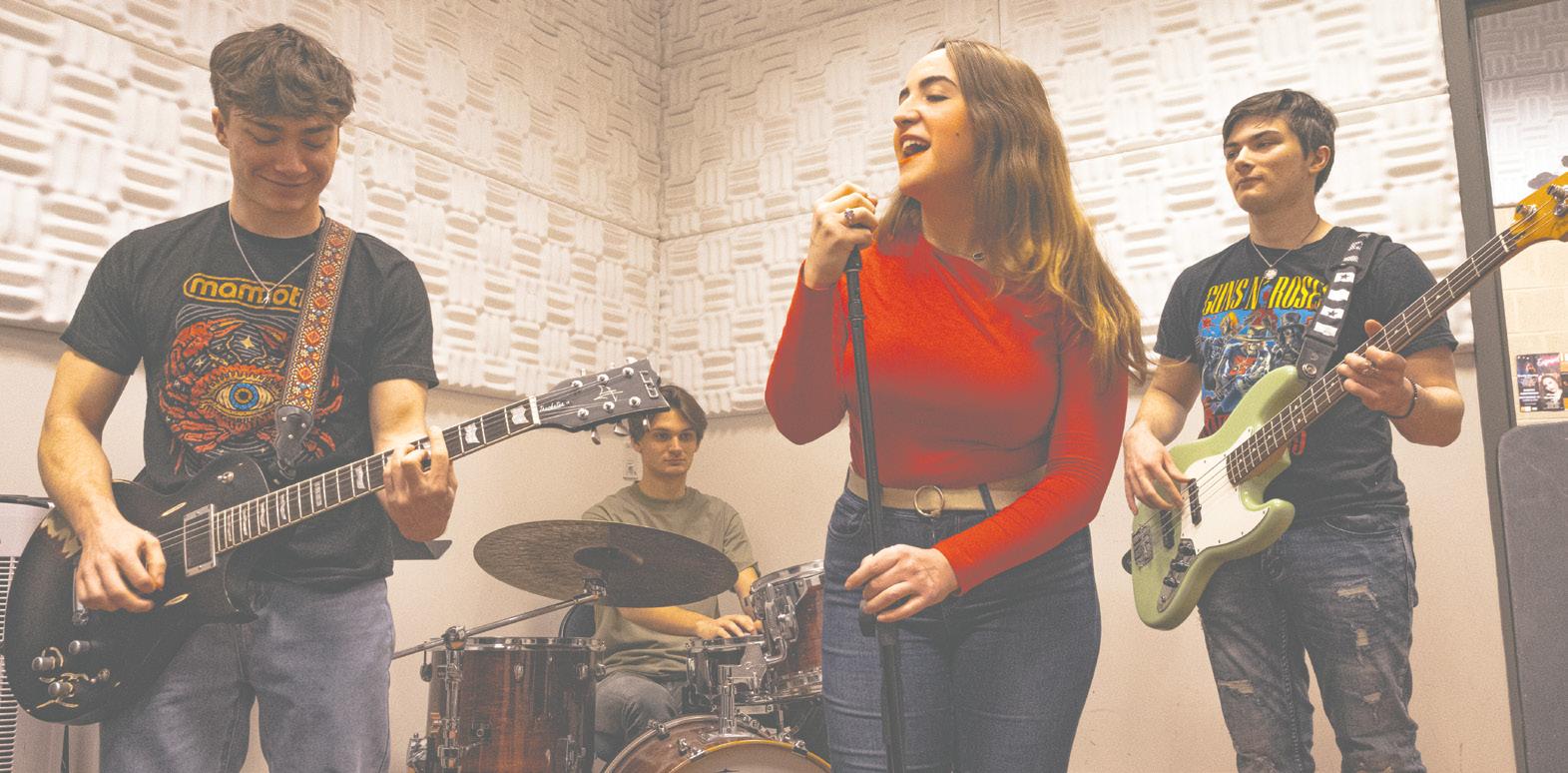
Fever Dream is an alternative indie rock band of four SU juniors: Carracedo, Aidan Norton and twin brothers Zach and Nate Kile. Since the spring of their freshman year, the band has been playing stage shows and local events like SUNY ESF Quadstock and other music festivals. The band also released one single last summer, “Back to Boston.”
As an incoming freshman, Carracedo posted herself on a class Instagram page in hopes of meeting new people. Zach and Nate were on the search for a vocalist for their new band; after seeing a photo of Carracedo performing, the brothers messaged her to see if she was interested in joining.
“It’s always a positive to find someone who has clearly performed before, but in terms of knowing if she would be a good fit, we didn’t,” Nate said. “We ended up being really lucky that it worked out so well.”
The Kile brothers joined First Year Players, a first year student-run theatre organization, in fall 2023.
They met then-freshman Aidan Norton, who played the drums in the pit for “The Addams Family” show. After hearing him play, Nate said the pair thought he could be a good fit for their new band.
In April 2024, the four then-freshmen began officially rehearsing, and the band was born.
Zach and Nate grew up playing instruments in northeastern Pennsylvania; at 3 years old, they began playing the cello, and in second grade, the brothers first picked up the guitar, Zach said.
Both Carracedo and the Kile brothers were also in bands back in their hometowns, so they were eager to get back into performing while at school, Carracedo said.
Nate said the type of shows they play in Syracuse are different, though. At home, Zach and Nate played for older crowds in bars and restaurants. Now, the band members play stage shows for people their own age. The change of pace sparked a great new experience for the members, allowing them to connect with other musicians and bond with audiences, Carracedo said.
“The camaraderie and the people who come to support our music have brought such incredible energy,” Carracedo said.
In October 2024, then-senior Eric Timlin introduced the band to Phoneboy, an alternative and indie rock band from New Jersey, with 41,000 followers. After listening to the band, Fever Dream wanted to achieve a similar vibe with its music, Zach said.
Only two weeks after hearing Phoneboy’s music for the first time, Fever Dream had the
CONCERTS THIS WEEKEND
chance to open for the band. After Fever Dream’s initial show fell through, a promoter looked to find other bands they could open for and suggested they reach out to Phoneboy. Opening for the band at The Song & Dance was all four Fever Dream band member’s biggest show to date.
The experience allowed Fever Dream to learn about Phoneboy’s start; Phoneboy also formed when the band members were all in college.
“Our friend told us we had to cover one of their songs and two weeks later instead of us playing a Phoneboy song, we were opening for them,” Carracedo said.
Last summer, Fever Dream released their debut single “Back to Boston,” which was originally written by Carracedo on a bus ride home for break, she said.
Timlin produced and recorded the song for them as his senior capstone project last spring. Each member added drums, guitar and bass parts onto what Carracedo had formerly written as an acoustic song.
“We got together and wrote the parts together as we went. It was really fun to bring everything in and turn it into more of a rock song,” Nate said.
In summer 2025, Fever Dream hosted its first tour with shows in Pennsylvania, New Hampshire and Massachusetts. It was great exposure for the band to play for people who hadn’t seen them live before, Carracedo said.
Carracedo said she has always had a connection to New England. Through constant visits to Boston for live concerts, Carracedo was inspired to start singing in theater and vocal lessons; she always knew that she would love to perform, she said. She was excited to play there herself.
“Playing ‘Back to Boston’ in the Boston area was so much fun, everyone seemed really excited about it up here,” Carracedo said.
With their debut song released in the books, Fever Dream plans to continue writing and releasing new music in its semesters to entertain the younger SU crowd, Carracedo said. On Feb. 28, Fever Dream is booked at Funk ‘n Waffles to open for another student band, Soberdose.
“Back home we were playing in bars and restaurants and playing for people who were normally my parents’ age,” Nate said. “There’s nothing wrong with that, it’s still a lot of fun. But being able to play for people your own age and to get that new experience getting younger people into it and jumping around.” arice19@syr.edu
Nick Hopping and Zach Russell, two New York-based comedians, are putting on a night of laughter on Thursday, produced by the New York City Flop House Comedy Club. Attendees must be 18 or older.
WHEN : Thursday, 8 to 11 p.m.
PRICE: $23.63
WHERE: Funk ‘n Waffles Flop House Comedy Club
Paega* with Mosaic Mind
Paega*, a local Syracuse progressive rock band, will play from its new album “The Lessons of Abstract Dreaming” this weekend. The band promises “waves of elements from different genres.” Mosaic Mind, a local four-piece alt-rock band, will open for Paega*. Attendees must be 18 and over.
WHEN : Friday, 8 to 11 p.m.
PRICE: $13.07
WHERE: Funk ‘n Waffles
Enjoy an R&B-themed night featuring soulful classics and modern hits.
Three DJs — Bianca, 40theDJ and 6arry — will host the night. Attendees must be 18 and over.
WHEN : Friday, doors open at 9 p.m.
PRICE: $12.05
WHERE: The Song & Dance Lovers & Friends: R&B Night
Dominion: Goth Night
Dominion is coming back to The Song & Dance, featuring DJ sets from Body Electric, LiuLiuLiminal and Vital Essence. The show will include a variety of genres, including industrial, post punk and ‘80s classics. Attendees must be 18 and over.
WHEN : Saturday, 9 p.m.
PRICE: $13.60
WHERE: The Song & Dance
Join The Rollin’ Rust, a central New York folk rock band, for a night of blues and country sounds. The night of blended music will also include folk singer Ric Robertson. This is The Rollin’ Rust’s second and last Syracuse stop as a part of its “Southern Sun Tour.” Attendees must be or older.
WHEN : Saturday, 8 to 11 p.m.
PRICE: $18.22
WHERE: Funk ‘n Waffles
The Rollin’ Rust + Ric Robertson
kendall thompson contributing illustrator
1:30 p.m., the day of, and made it to the doors around 5 p.m.
Because he wasn’t dancing or singing, Valentino was put in the “others” group. Managers picked only 10 people from each talent group, so Valentino called out to one he saw standing around a corner — who he later discovered was Druski’s personal manager.
“I literally go up to him, and I’m talking to him like, ‘Dude, I’m lil’ Timmy Tim, I keep it schwep,’ I’m literally going crazy at this guy, screaming to his face,” Valentino said.
The manager took a photo of just Valentino. Then five minutes later, he moved Valentino to the front of the line for a test interview with Druski. In that first interview, Valentino had complete tunnel vision, keeping up the Chalamet bit.
Valentino’s doppelganger bit allowed him to progress to the next waiting room where he was accompanied by other talents and influencers. From there, Valentino waited four more hours until he, among eight others, was selected to do an interview with Chalamet and Druski.
Throughout the whole day, nobody could have a phone, so Valentino’s friends and family had no updates on how it was going. But this gave him the chance to connect with the other auditioners and talk to influencers he’d looked up to before.
“Everyone in that room just felt so equal in the moment, wanting to talk to each other, get to know each other’s stories,” Valentino said.
Once he was mic’d up and about to face Druski and Chalamet together, the nerves kicked in, he said. Right before his turn, he even went to the bathroom to splash water on his face.
“When the doors opened, I was probably practically shaking, but I walked into those doors, and was like, ‘Alright, go time,’” Valentino said.
In the YouTube video, less than a minute of Valentino’s audition is shown, but he was in the room for around five minutes. Valentino joked with Chalamet about being long lost brothers, told them he wants to be on Broadway (he doesn’t) and said he knew how to rap. He regretted that, as it prompted Valentino to perform four lines of a SoundCloud song he made at age 12 — he was then kicked out by Druski and Chalamet.
Everyone who made it to the final audition with Druski and Chalamet was filmed for content, but they weren’t told if they’d make the final posted YouTube video. Valentino left the audition amped up, and though he couldn’t
uncharted coffee profile Syracuse locals have never experienced, Zokari said.
The blend of the ingredients stood out to Ghazaleh, especially with her American coffee preferences. Since starting at the cafe in December, Ghazaleh said she now can recognize the difference between American and Yemeni coffee immediately; Yemeni coffee has a more concentrated flavor and stronger caffeine impact.
“I did not grow up drinking Yemeni coffee because I’m more of an Americanized latte girl, but to be honest, I like Yemeni coffee now. It’s really good,” Ghazaleh said.
In 2017, Haraz opened its first location in Dearborn, Michigan. Its popularity grew in the state with two more added locations, and in 2021, Haraz branched out to New York City with its first location in SoHo. With a big market in New York City, Haraz’s influence spread around the city and the state, allowing Haraz to open its first Syracuse location soon later, Zokari said.
Now Haraz has 43 locations across the country and 180 in development, with over half soon opening by the middle of this year. By opening its first location in Syracuse, Zokari said he hopes to expand more locations in central New York and build relationships with customers to become a stronger company.
Though the soft opening occurred during finals season when many SU students were leaving campus for winter break, Ghazaleh said Haraz was packed with many doctors and nurses from Crouse Hospital and SU students — even a visit from Shirt World owners.
A year and a half since signing the lease and renovating the space, exciting anticipation filled the cafe; many customers were eager to try Haraz and check out something new in the area.
“We surprised a lot of people,” Zokari said. “I’ll be honest with you, everyone was waiting for that moment to come to see Haraz coffee and that was a big moment for us; we spent almost one and a half years to open the shop.”
During Haraz’s soft opening, drinks like a pistachio latte (Haraz’s speciality), salted caramel latte and pastries like fruit mousses were popular favorites, Ghazaleh said. With the grand opening coming up, Haraz’s soft opening
sophomore Valentino Indelicato is often mistaken for
up the opportunity to show off to
be sure, he had a feeling he’d be included in the final video cut.
Running around the streets of Brooklyn, Valentino returned to his phone and FaceTimed Bianca, freaking out about the interaction, he said. The next morning, Valentino stayed in New York City and attended the “Marty Supreme” merch popup to keep up the energy, he said.
Chalamet arrived at the popup in full “Marty Supreme” mode, not breaking character. But when he spotted Valentino, he did a double take, pointing him out, saying “my guy, my twin.”
For Valentino, his weekend in Brooklyn was more than just auditioning for Druski and Chalamet, he said.
With the influencer connections he made at the audition and popup, Valentino secured further opportunities to create content. A few weeks ago, he went back to New York City to film a video with streamer Tamir Omari, where he acted as Chalamet again.
“Right now, I take every opportunity that comes my way, like I need to do as much as possible,” Valentino said.
Networking at the event is a testament
to Valentino’s personality, Bianca said. He’s always been an outgoing person who’s eager to learn about everything and everybody, Bianca said. Mathis said his spontaneous nature is another reason he was successful at the audition.
While his virality stemmed from being a Chalamet lookalike, going forward Valentino strives to make content that reflects his own interests, from skateboarding to modeling.
Valentino said watching other content creators and being plugged into social media trends is an advantage, as he has a grasp on what people want to see. Part of why Valentino auditioned for Druski was his familiarity with Coulda Been Records.
“There’s content that people are really making right now that works, and whether it’s Timothée Chalamet related or not, I gotta learn off these people,” Valentino said.
However, above all else, Valentino is still a student, and education is his number one priority, he said. As a double major in physics and astronomy, he said school can be overwhelming, but having a degree is “instant security” for the future.
Having grown up in Syracuse to now being a
student at SU, Valentino credits the city and the campus community as an inspiration to him.
“What I loved seeing most of when I first joined (SU) was that there were a lot of people here that genuinely wanted to do something for themselves,” Valentino said.
As his older sister, Bianca has been a constant supporter and influence in Valentino’s life. Bianca, who’s an SU alum and founded Keep Going Market, has prior experience in navigating content creation and social media. She reminds Valentino to stay authentic and take on the right opportunities, as he’ll always have people in his corner.
“Just post it, create it, like, whatever, because there’s going to be a community that backs you regardless,” Bianca said.
Now, nearly a month after the video’s release, Valentino has experienced more eyes on him than ever before, he said. He stays grounded through the support from his friends and family and the mindset that negative thoughts should never enter his consciousness.
“At the end of the day, it’s all fun and games,” Valentino said. “Who cares what people think?” cmzhang@syr.edu
gave time for staff to settle in, while taking a peak into what is to come on Friday, Ghazaleh said.
After returning from winter break, Tarkian and fellow SU freshman Sophia Levin had the chance to try the new cafe. It has already become their go-to coffee spot on campus.
Though Tarkian, a coffee drinker, has easy access to her favorite drinks around campus, Levin, who prefers matcha, said it’s more difficult to find than coffee.
“I feel like coffee places obviously have majority coffee, so when I see matcha, I’m like, ‘Okay, I’m gonna try this,’” Levin said. “I’ve tried so many that I know my favorite, and this one is honestly up there.”
For Zokari, who officially settled in the United States in 2010, Yemeni coffee bridges the gap of 7,100 miles between his native home and the U.S.
“When you drink the same coffee you drink back in the country, you remember a few good reminders about your culture, about your people, about your country,” Zokari said. tabintes@syr.edu
SU
Timothée Chalamet, but embraces his resemblance to the actor. He couldn’t pass
his doppelganger at an audition call with Druski and Chalamet. zoe xixis asst. photo editor
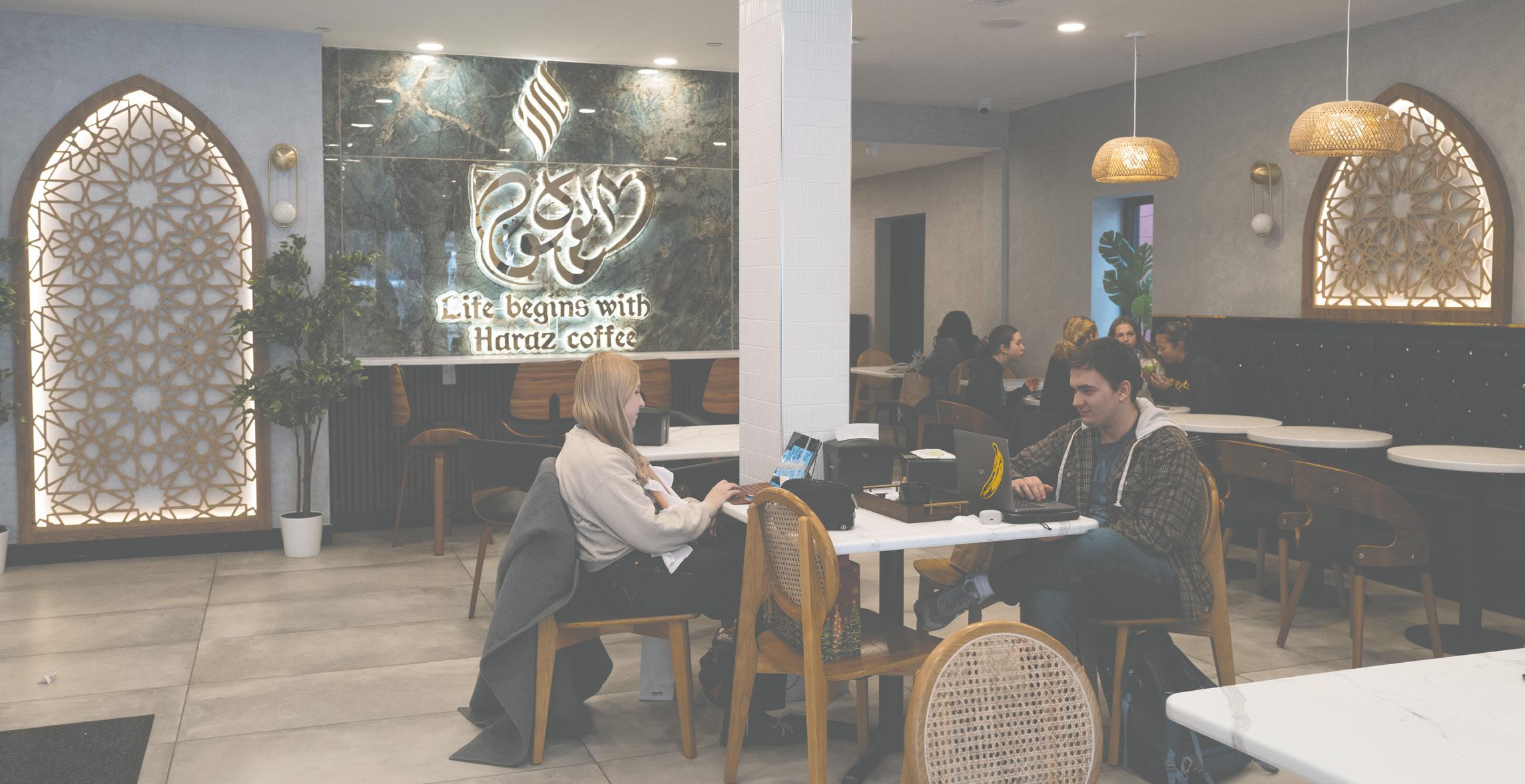
Haraz Coffee House maintains the classic americanized cafe menu, but also features Yemeni and Middle Eastern staples. tara deluca asst. photo editor
OPINION
Literary crisis rhetoric ignores reader surge, online book culture
By Dayna Roberts columnist
In early 2026, Barnes & Noble announced a sizable expansion, with 60 stores scheduled to open nationwide. While this may seem natural given the store’s recent popularity by word of mouth, the corporation has, in truth, been suffering a major decline since the 2010s. With a literary crisis declared throughout the United States, this upcoming development may just be the catalyst we need to instill hope in the nihilistic reading world.
The rise of online book retailers has been nothing short of catastrophic for bookstores, and with Amazon taking up nearly 50% of the book market, Barnes & Noble rapidly lost its footing. In fact, in the past decade, the chain has been forced to close at least 100 stores. To make matters worse, Kindle’s popularity only served to add more pressure on Barnes & Noble, dragging readers away from analog books and toward the digital world of e-reading.
With so much competition and little fight to give, no one would’ve predicted the corporation’s phoenix-like rebirth in the 2020s.
Oddly enough, much of this revival is owed to the internet itself.
Trends are circular, and books seem to be no exception. In recent years, subgenres have been created on platforms like Instagram and TikTok like “bookstagram” and BookTok created. Primarily young girls share, discuss and read novels in these forums. These communities have generated an outpouring of book conversation that proves reading has been revitalized, with the #BookTok already gathering 370 billion views. Substack has taken off as well, celebrating 5 million paid subscriptions.
While traditionalists push back against this modern literature wave, it’s important to adapt to it. Rather than responding to BookTok and
internet literature methods with criticism, we need to embrace them. People are adapting and finding their own ways to connect with books.
In recent years, the rhetoric surrounding the literary crisis has taken over the U.S., with claims that most high schoolers hardly manage to finish even a single novel. This increased disinterest in reading has left teachers and the government alike worried and overwhelmed, unsure how to go about curbing this crisis. However, alarmists have only exasperated the narrative, drawing nearly no attention to the resistance people are putting up.
These online book forums like BookTok are doing just what we want: encouraging younger generations to read and pushing back against the literacy crisis. People are consistently showing up to their Barnes & Noble to resist closures. Readers are not going down without a fight.
It seems we are heading toward a future of young book lovers, despite the fear these past few years have instilled in us. These promising online movements seem to be single-handedly guiding us back towards literacy, yet are belittled or not talked about at all.
The popularity of this online book club, though, is not just about reading – it’s about community. In an increasingly digitized world, people are still finding ways to create their own pockets of community on the vast internet. Friendships are formed, events are planned, and people are realizing screens can’t feed the soul forever.
This fostering of community and popularization of escapism in books has drawn people to Barnes & Noble, and it’s not only books they seek. While customers often leave with a new read in hand, the store has also become a third space.
When you walk into your local Barnes & Noble now, it’s common to see groups of teenage girls sitting in the cafe with stacks of books and melting iced
coffees in hand. Down the aisles, you’ll even spot a “BookTok recommendations” table or shelf, extending the online conversation in the real world.
By transferring this internet craze to their stores, Barnes & Noble has not only revitalized its charm and gained enough attention and profit to expand, but also has created a space for local residents to spend time with their community. In an era of declining literacy, a decrease in human connection, as well as fascist book restrictions, this is an encouraging development. Younger generations are showing up in their own ways, and even if they needed a push from social media to do so, it’s still a promising sign for the future of reading and connection.
While many critique the internet’s choice of books and even its supposed “glamorization” of
reading, the optimist in us says at least people are reading. There is no time for pretension in a literary crisis, but there is room for encouragement. We may not all agree on what to read or who the best author is, but if we can still stop at a bookstore on the way home and notice more than one car in the parking lot, I think we can call this a win.
The news is constantly working on drawing us toward the negative: asserting the literary crisis as fatal, but what they mistakenly ignore is the resistance being put up by readers everywhere. Being a bibliophile is back in 2026.
Maduro’s capture fits long pattern of American imperialism
By Mateo Lopez-Castro columnist
On Jan. 3, United States Special Forces conducted an extrajudicial operation in Caracas, capturing Venezuelan dictator Nicolas Maduro and his wife. What followed was a mixture of relief, celebration, criticism and condemnation.
Florida, home to the largest Venezuelan population in the U.S., saw protests and parties alike. While the joy and relief of many Venezuelans celebrating Maduro’s arrest is rooted in a legacy of suffering under the regime, it’s imperative the Latin American consciousness doesn’t succumb to a definitive ecstasy.
The extrajudicial force by which the U.S. captured Maduro doesn’t mean liberation for the people of Venezuela. Rather, it’s the continuation of more than a century of U.S. intervention in Latin America meant to exploit, coerce and control. It’s the reinforcement of an imperialist leash on the Western Hemisphere, tightly wound around the fist of a volatile U.S.
Since early September, Trump has latched onto a variety of explanations to justify the escalation of U.S. military force in Caribbean and South American waters. According to a PBS report, there have been 35 known strikes against what the administration has alleged to be “narcoterrorists” funneling fentanyl and other illegal narcotics into the US by boat. One hundred and fifteen people have been killed in this process.
Notably, Venezuela is completely absent from the global equation of fentanyl production and distribution. The Drug Enforcement Administration’s 2025 National Drug Threat Assessment instead names Mexico as the main producer of the drug, with China and India as primary suppliers for the chemicals used to produce it. The entry of cocaine into the U.S. has been another justification used for these illegal attacks. And yet, only 5% of Colombian cocaine is estimated to transit through Venezuela, with the large majority being sent to the Caribbean or Europe.
Malcolm Nance, an intelligence and foreign policy analyst, explains this as an interwoven evolution of both the war on drugs and terror, and he’s right. On Jan. 20 of last year, Trump signed an executive order categorizing criminal organizations and drug cartels as foreign terrorist organizations. This move has both allowed the Trump administration enough domestic legal latitude to accelerate plans of brute military force in Venezuela and nurtured a public disinformation campaign used to justify it to supporters at home.
What we must understand is that American imperialist projects have long been enacted under the minimal cover offered by public perceptions toward terrorism and illegal narcotics. But ultimately, imperialism is conducted in the name of economic control and political compliance, in spite of human dignity, self-determination and overall stability.
It’s under the guise of the Monroe Doctrine, now having evolved into the Trump corollary, that Trump has continued to wage an economic, political and military war against the countries of the Western Hemisphere and beyond. In many ways, this administration follows a close parallel of neo-eurasianism.
This war-mongering, imperialist philosophy of far-right political philosopher, Alexander Dugin, is closely followed by Steve Bannon, Dugin’s closest ideological successor in North America and a vital cog in the MAGA machine. While the ideological basis for American and Russian imperialism clash in many ways, they both operate under an enthusiasm for total domination and expansive power, especially over the countries of the Global South.
Russia’s invasion of Ukraine, the Gazan and Sudanese genocides, the civil war in Yemen, the ravaging of the Democratic Republic of Congo, the destabilization of Iran and the fires in Argentina’s Patagonia are all recent examples of
global imperialist powers devastating peoples and land, whether directly or behind the scenes. These crimes have occurred under the demands of control and compliance required to create their respective expansionist, imperialist projects and so the accumulation of their capital can explode from stolen minerals, lands, oil, and life.
The exhaustive legacy of U.S. imperialism in Latin America, specifically, has given us the historical basis so that we may recognize the patterns of behavior used to create the current conditions for further U.S. intervention in the region.
Examples go as far back as October 1928, if not further, when Colombian banana farmers issued a list of demands to the U.S.-based United Fruit Company, now Chiquita Brands International, after having been deprived of proper living and work conditions, fair wages, insurance and adequate work weeks. When denied once more, workers decided to strike in November. The strike reached its climax on Dec. 6, when the UFC, backed by the U.S. government, threatened invasion from U.S. Marine Corps stationed off the shores of Ciénaga, Magdalena, if the Colombian government did not handle the situation to the U.S.’ liking.
The “Masacre de las bananeras” saw more than 1,000 workers and bystanders murdered by the Colombian military as it opened fire on a crowd during a protest.
Since then, the U.S. has conducted military operations in Puerto Rico (1950), Guatemala (1954), Cuba (1961), Brazil (1964), the Dominican Republic (1965), Bolivia (1971), Chile (1973), Nicaragua (1979), El Salvador (1981-82), Grenada (1983) and Panama (1989-90). Independence efforts from colonial rule have been quelled. Democratic leaders have been assassinated and replaced with brutal dictators. Economic sanctions have been leveraged as part of a system of control under the U.S. dollar. Natural resources have been strictly controlled to the economic benefit of the U.S.
These historical patterns of behavior lead us to where Venezuela might go next.
The safety and security of the people aren’t a priority to an administration that allowed for Maduro’s repressive Chavista regime to remain in power in exchange for access to some of the crudest oil fields in the world. The people of Venezuela aren’t truly free if the conditions of their autonomy require that their national exports be sequestered and sold off to ExxonMobil, Chevron, ConocoPhillips and co.
The question we must ask ourselves now is: How can the people of Venezuela command their self-determination? Where does that lie?
In short: without the U.S.
The U.S. has positioned itself to convince many Venezuelans that the U.S. is on their team. Yet, this administration continues its violent campaign of immigration warfare on U.S. soil, and by having removed TPS designations from Venezuela just last year, there is now an even wider avenue of opportunity for many immigrants to be sent back to a similar situation that had forced their escape.
In 1972, Alí Primera, a Venezuelan singersongwriter, wrote “Techos de Cartón,” touching on the exploitation of oil by the U.S. and the cost of mass displacement and poverty that was imposed on his people. I don’t think he would be surprised to learn that the exploration of his present reality became a prophecy for what was to come.
Primera once said that he doesn’t sing to illustrate misery, rather, he sings because there exists the possibility to erase it. I find myself sharing in some of the relief and joy expressed by many of my Venezuelan compatriots today, not because I believe that this is the end, but because I am confident in the victory we will find in the future.
Que viva el pueblo latino, y que viva nuestra lucha contra el imperialismo.
emma sotto contributing illustrator
Dayna Roberts is a junior majoring in creative writing. She can be reached at dbrobert@syr.edu.
Mateo Lopez-Castro is a senior sociology, television, radio and film major. He can be reached at malopezc@syr.edu.
jay cronkrite contributing illustrator
Meanwhile, his 20.4 points per game would be tied for fourth-highest in the conference. SU has a chance to win — no matter the opponent — whenever Freeman is on the court because he can score just as much and just as efficiently as virtually every player in the ACC.
Additionally, according to EvanMiya’s defensive BPR metric, Freeman (2.63, 98th percentile) is SU’s best defender.
In the nine games Freeman was out, SU went 5-4. In the eight he’s played, the Orange are 7-1. So long as Freeman stays on the court, Syracuse will always have a chance.
Improving metrics
Nowadays, metrics mean a great deal come Selection Sunday.
“It’s the way it is now,” head coach Adrian Autry said in October. “The game has changed. That’s why it’s so hard to make the tournament. Because of the numbers and how everything shifts.”
Here’s how the Orange stack so far by three metrics:
• KenPom — No. 60
• EvanMiya — No. 58
• NET Rankings — No. 65
As it stands right now, that’s not good enough to make the NCAA Tournament. However, there has been a vast improvement over the last week.
Following the loss to Clemson, Syracuse was ranked No. 80 by KenPom and No. 90 on the NET Rankings. So seeing where the Orange are now, relative to where they were, is an especially encouraging sign.
Especially when considering what’s to come …
Great opportunities await
Fourteen games are remaining on Syracuse’s regular season schedule. Here’s a look at how they stack by Quad opportunities:
• Quad 1 — 8
• Quad 2 — 3
• Quad 3 — 3
• Quad 4 — 0
For those who don’t know how this works, the NET Rankings split each matchup into one of four buckets (Quad 1, 2, 3 and 4). Quad 1 is the highest-value win, earned by beating a topranked opponent in the NET Rankings, while Quad 4 is the lowest-value victory.
More than half of SU’s remaining games are, at the moment, slated to be Quad 1 opportunities. This presents a double-edged sword.
the gridiron, but his introduction to the college sports world will be as an SU basketball player.
The Daily Orange reported on Jan. 6 that Russell would be joining the Orange’s basketball team this spring while enrolling early with the football team. Syracuse Athletics confirmed the report Sunday, and Russell was available Tuesday against Florida State to kickstart his two-sport college career.
“I think his ceiling for a football player is higher than his ceiling for a basketball player. Right now, he’s probably a more polished basketball player,” Russell’s agent Justin J. Giangrande said. Russell moved into SU on Jan. 8. The Orange football squad’s early enrollees first reported on Jan. 10 and began camp on Jan. 11. He said basketball will be his priority in the present, and expects to participate in spring practice for football when the time comes. Russell sat on the bench in a sweatsuit between fellow freshmen Aaron Womack and Luke Fennell for most of the game.
Broussard joked that Brown was the one who “pushed the issue” when it came to intertwining both sports Russell said the same postgame Tuesday. Broussard added that she moved her Tuesday flight back to Wednesday so she could attend SU basketball’s win over FSU. It would be fitting for Broussard to see her son’s first time on the court in college — she’s familiar with the feeling.
Broussard’s prolific basketball career began in the early 2000s at Miami, where she was inducted into its sports Hall of Fame in 2018. She said Russell doesn’t like to be overshadowed by her success and enjoys choosing his own direction. When comparing their games, Broussard said they similarly attack the ball with aggression. She believes her son is “a little better at basketball than football.”
“With basketball, it comes quite natural to him. It’s like a family, household thing,” Broussard said. Russell is left-handed and played every position through his youth career, per his Mater Academy coach Corey Stephens. Stephens considers Russell a “tweener” at the next level, with an ability to play the 2, 3 or 4
Winning the majority of these games would do wonders for the Orange’s March Madness resume, while a poor record could be one of the first reasons they’re left on the outside of the bubble. So far, Syracuse is 1-4 in Quad 1 games.
That’s not to say the Orange need to be perfect in Quad 1 play — even going .500 the rest of the way would likely be seen as a win. The margin for error in Quad 2 games narrows because wins do little to help, but losses hurt more than they do in Quad 1 situations.
At this point, especially with a Quad 3 loss against Hofstra, it could be difficult for SU to overcome another Quad 3 or 4 game.
There’s still a lot to be desired
So far, it could be argued only three of Syracuse’s players are close to their ceilings: Freeman, William Kyle III and Tyler Betsey. Free -
and shoot from the outside. Russell is listed at 6-foot-5, 195 pounds, according to SU.
For football, Russell received offers from most of the top schools in the country. Giangrande said Russell received approximately 20 offers to play college basketball, and other schools also offered him to immediately jump onto their roster this spring.
Russell didn’t go to the popular recruiting hotbed basketball tournaments once he entered high school because they often interfered with his participation in hurdles and high jump for the Bulls’ track team, Broussard said. His basketball recruiting kickstarted with Dusty May, then the head coach at Florida Atlantic. Before May took over Michigan’s program, Russell caught his eye while recruiting a teammate. When May moved to the Wolverines, he stayed in contact with Russell and offered him again.
Rivals South Florida Recruiting Analyst Marcus Benjamin said a reason why Miami didn’t make his top four — Syracuse, Michigan, Oregon and Florida State — was due to its basketball program not recruiting him heavily. Per Benjamin, Russell considered the Hurricanes near signing day as he watched one of his best friends, Malachi Toney, become a superstar in his freshman year. But Russell signed with the Orange, sticking to the plan.
“When they were looking at schools, football, I would say, is the primary,” Giangrande said. “But then the thought process is that basketball is a close second.”
Excelling at both sports at a Division I level will be a balancing act. However, Russell has already balanced the two for most of his life. With 7-on-7 leagues for football, Russell usually trained for basketball on weekdays and played football on the weekends, Stephens said.
Another one of Russell’s youth coaches, Kolby Brown, added Russell frequently came straight from a summer football practice to basketball camps for Shahbaz Elite AAU, run by Kolby and Russell’s father (Calvin Russell Jr.), known as Yak. Russell wouldn’t have time to warm up but still performed well on the court, Kolby added. Broussard said the biggest struggle between the two sports is getting in “basketball shape” conditioningwise and refinding his shot.
man, of course, is averaging 20.4 points. Kyle is averaging 9.8 points, 7.8 rebounds and 2.9 blocks per game. And Betsey leads the Orange with a 41.1% 3-point percentage while averaging 8.4 points.
Other than that, there’s a lot to be desired, even while there’s been more good than bad. The first starts with J.J. Starling, whose scoring average has dipped from 17.8 last year to 11.3 this year. The good news, though, is his EvanMiya DPR has more than doubled from last year, while he’s also scoring more efficiently. However, if Starling could tap more into his scoring prowess, he and Freeman could be one of the most dominant offensive duos in the conference.
Oregon State transfer Nate Kingz has also fit in well, especially on the defensive end, but he’s failing to do what Syracuse brought him in to do — make 3-pointers. His percentage sits at 31.0%,
Russell found his way to Syracuse through his connection with the football program, but he’s made sacrifices for basketball before.
247Sports Director of Scouting Andrew Ivins said Russell was set to attend the 2025 Navy All-American Bowl as an underclassman but backed out at the last minute due to a conflict with Miami Northwestern’s basketball schedule. The Bulls went on to win the Greater Miami Athletic Conference Championship as Russell averaged over 15 points per game.
While Brown’s relationship with the star recruit was a driving force in his eventual signing, Autry also played a large role. When Russell went on his official visit to Syracuse on Halloween, Broussard said they attended an SU men’s basketball practice.
Autry described Russell as a physical guy who would bring energy to practice and “figure things out” as time went on. Broussard said Autry has called “plenty of times” over the last few weeks in anticipation of Russell joining the roster.
“We met with the Syracuse basketball staff every time we went to Syracuse. Every time we were there, (Autry) made himself present,” Broussard said. “He made sure that we knew Calvin was wanted.”
As a youth player, Russell improved on the court with the Up-Ward Bound Titans and Shahbaz Elite. Once he reached eighth grade, Russell played for Mater Academy’s varsity squad and averaged 12.8 points per game and 8.8 rebounds. By then, he was already tall and skinny with broad shoulders, but played at the level of a 10th grader, Stephens said.
He noted that even back then, Russell presented his desire to play football and basketball in college. Stephens remembers his game evolving from a primary ball handler and scorer to a disruptive rebounder and defender. Years later, when Stephens attended Russell’s games at Miami Northwestern as a spectator, he saw a much-improved Russell. He averaged 21.0 points per game as a sophomore and was a perimeter threat after extensive work with his father, Stephens said.
At this point, Russell’s body caught up to his talent. Stephens saw the aggression of a football player translate to the court.
and if he can get that clip closer to the 44.6% he had last year, the Orange’s offensive ceiling will drastically increase.
The biggest transfer acquisition, Naithan George, has also had his ups and downs. Notably, he’s had 24 assists over SU’s last two wins. However, he’s averaging just under five turnovers per game in ACC play. Additionally, his scoring average has dipped from 12.3 last season at Georgia Tech to 10.3 thus far. Finally, like most freshmen, Kiyan Anthony and Sadiq White Jr. still have room to grow. Currently, Anthony is SU’s worst player by EvanMiya BPR, and his TS% is the second-worst on the team behind Starling. As for White, he’s given SU great energy at times, but he hasn’t really received the minutes to be a key difference maker since Freeman returned from injury. justingirshon@gmail.com @JustinGirshon
“You see how he attacks the ball when he gets rebounds in traffic,” Stephens said. “It’s the same as a jump ball in the red zone.”
When it came to the logistics of balancing two D-I sports at once, Giangrande said Syracuse presented the most detailed plan. Giangrande didn’t provide particulars but credited Brown for adding comfort and structure.
Russell, of course, is not the first player to attempt the feat. Heisman Trophy winner Charlie Ward at Florida State led the Seminoles to a national title in football and then played 11 NBA seasons. Future NFL stars Tony Gonzalez, Julius Peppers and Jimmy Graham all balanced both sports in college. As Syracuse fans remember, Donovan McNabb appeared in 18 basketball games across his freshman and sophomore years while quarterbacking the Orange. However, this is a new era of college sports. With revenue sharing and Name, Image and Likeness in the picture, Russell will have added responsibility and pressure. Giangrande declined to discuss much about SU’s plans for Russell’s compensation, but based on the revenue-sharing model, Russell’s higher recruiting ranking in football, mixed with playing time, will likely result in him making more from his football performance. Before revenue sharing and roster limits, multisport athletes had their scholarship count toward the higher-revenue sport.
He’s not the only modern player attempting to conquer both sports. Florida State 2026 signee Jasen Lopez is a four-star wide receiver and point guard, joining FSU’s roster as a mid-season addition on Jan. 8. LSU’s Trey’Dez Green played tight end for the football squad in 2024 and shifted to basketball season in January 2025.
As a rare in-season addition, Russell will compete for playing time amid SU’s ACC schedule. In Broussard’s eyes, if Russell sticks with both sports, he could have a chance at both the NBA and the NFL one day.
The hype for Russell is evident. Now, starting with basketball, he has his first chance at living up to it.
“I told him, ‘You better go put on. You better go do what you’re supposed to do,’” Broussard said. amstepan@syr.edu @AidenStepansky
Syracuse’s three straight ACC wins against Georgia Tech, Pittsburgh and Florida State leave plenty of reasons to be encouraged looking toward the rest of the season. zoe xixis asst. photo editor
Previewing Syracuse women’s basketball’s matchup vs. Cal
By Mauricio Palmar asst. sports editor
If Syracuse could perform how it did in its second half against UVA every single minute, the Orange might not have a loss on the books yet.
The Cavaliers looked to be in control early, taking a 34-28 lead into the halftime break, but it was as if SU flipped a switch after that 15-minute interlude. The Orange roared back with a dominant second-half effort, outscoring UVA 51-26 to close the game and secure a 79-60 win.
It gave Syracuse a desperately needed Quad 1 win as it attempts to build an NCAA Tournament-worthy resume. The Orange have another chance to add to that resume on Thursday, when they host Cal in the JMA Wireless Dome.
Here’s everything to know about the Golden Bears (10-8, 1-4 Atlantic Coast) before they square off against Syracuse (14-3, 4-2 ACC): All-time series Cal leads 2-0.
Last time they played Twenty-two years elapsed between these two programs’ first two matchups. Because of conference realignment, less than a year has passed since their second and third.
On Feb. 16, 2025, Syracuse trekked to Berkeley for the second time ever and left with a loss for the second time ever. The Orange led 35-34 at the half but ended up suffering a 75-69 defeat at the hands of Kayla Williams, who led the Golden Bears with 21 points and five assists. Georgia Woolley had 23 points of her own, but it wasn’t enough for SU to secure a fifth ACC victory.
The Golden Bears report Cal is in worse shape than it was at this point last year.
The Golden Bears had their best season of head coach Charmin Smith’s seven-year tenure in 2024-25, finishing 25-9 and qualifying for the NCAA Tournament as an eight-seed. Barring a miraculous turnaround, it seems like they’re destined to miss the Tournament this time around.
Four of Cal’s five starters departed in the offseason, either graduating or transferring.
Lulu Laditan-Twidale — the lone starter who remained — currently leads the team with 13.1 points per game. There’s only one other player on Cal’s roster who even averages double digits.
In all fairness to the Golden Bears, their four ACC losses came to Stanford, North Carolina, NC State and Duke. Each of those teams has a Simple Rating System score above 20 points — a threshold the Orange have yet to cross this season.
How Syracuse beats Cal
It’s very, very repetitive at this point, but SU’s easiest path to victory against the Golden Bears seems to be through Uche Izoje.
Laditan-Twidale is going to shoot a lot Thursday, and with a 34.8% field goal percentage, she’ll likely miss a lot as well. Let her. The Orange will only have trouble if Cal can get the ball to Sakima Walker in the paint.
Walker ranks second on the Golden Bears with 11.8 points per game, and she does so with a very efficient 55.6% field-goal percentage. If Izoje can’t limit her, then Cal will be able to get easy buckets in the paint. If she can force Walker to kick the ball out to the perimeter, the Golden Bears will take a lot of tough shots — ones they probably can’t hit.
“One of my best friends on and off the court,” White said about Anthony. “The real conversations we have with each other and to be able to put that jersey on with him night in and night out, it’s a dream come true. We love going to war every day.”
“We’ve been talking about it since day one,” Anthony added of playing alongside White. “That’s my brother.”
The instant stardom they envisioned, however, hasn’t quite materialized. White is averaging 17.9 minutes per game and scoring less than seven points a contest, despite starting 10 games while forward Donnie Freeman recovered from a right foot injury.
Anthony broke out against Delaware State in November, dropping 19 points in his first career start, but he’s now shooting 23.4% from the 3-point line and playing fewer minutes in the ACC.
Anthony said White was growing comfortable in his starting role while Freeman was out. Now, though, White recognizes Freeman has the upper hand as SU’s leading scorer, and the freshman forward has been caught in a
Stat to know: 4.4
Picking a statistic that stands out about Cal is remarkably difficult.
They rank outside the top 50 in most figures yet aren’t so abysmally bad at one facet of the game that it stands out. They’re just mediocre, and mediocrity is incongruent with notability.
But it is interesting to note Cal only concedes 4.4 3-point makes per game, a mark that ranks 15th in the nation. Sophie Burrows cleared that
hard position since his minutes have naturally decreased, Anthony said.
As for the young guard, he’s also seen his minutes decrease since Syracuse’s schedule has gotten tougher, while he hasn’t found his footing as a defender yet.
They’ve tried to seize the moments they do get, though. White threw down a menacing alleyoop jam Tuesday to pump life through the Dome and give the Orange a late lead against Florida State. Earlier in the year, during SU’s trip to Las Vegas, Anthony sent waves through the MGM Grand Garden Arena with a pair of difficult and-1 layups in a matchup versus then-No. 2 Houston, with his dad, Carmelo, watching.
“For the time we’re out there, me and Sadiq, we definitely bring a spark,” Anthony said, injecting confidence into what the two can do for Syracuse now.
They wish they were playing more, sure, but the duo trusts the process. And they rely on each other to get by.
Anthony, Carmelo’s lone son with unlimited resources at his disposal, prefers to be by himself most of his free time. He lives in a single apartment and occasionally sits alone, without any lights on, so he can be uninterrupted and invested in his own thoughts.
number herself against Virginia, with seven triples. The Orange aren’t traditionally a 3-point shooting team, but Cal won’t make it easy for them on the perimeter.
Player to watch: Mjracle Sheppard, guard, No. 1
Mjracle Sheppard’s name stands out on its own — it’s Miracle, but with a j. How intuitive? But her notability doesn’t end at her first name. At her third school in three years,
Visitors aren’t common in Anthony’s living space. Yet he makes an exception for White, a ball of energy whose personality can easily provide a welcome distraction.
When the two need to decompress, they gather at Anthony’s to play video games. The expressive White paired against the mildmannered Anthony makes for some goodnatured competition on the sticks. Sometimes, they simply sit on Anthony’s couch and talk over their hopes and dreams. They’re vulnerable with each other about what they see in their future.
For them, these moments are a safe space. A space away from the talking heads who demand the maximum and their internal pressure to be great immediately. They’re the rare moments where Anthony and White are just hopeful college kids. Not prospects with a label.
Comfortability — a luxury many high-profile student-athletes don’t have.
“It’s bigger than basketball away from the court,” Anthony said of his friendship with White. “Even when we are chilling in the house and playing video games, just laughing it up. He’s somebody you could talk to beyond when the season is over, and before the season. Just
the junior is finally coming into her own as a starter.
She’s one of two Cal starters currently shooting over 40% from the field. Sheppard also ranks third on the Golden Bears with 9.2 points per game, and her 1.6 steals per game lead the team. She spent the past two seasons playing sparingly at Mississippi State and LSU, but she’s thrived in a larger role as a junior.
mjpalmar@syr.edu @mpalmarDO
having him going through some of the stuff I’m going through is definitely helpful.”
“That’s all you can ask for: just someone who listens to you,” White said of Anthony. “He listens to me, I listen to him, for the betterment of the team.”
Their chemistry is clear on the court, too.
In SU’s preseason game against Pace on Oct. 29 — White’s unofficial debut after missing its previous preseason contest versus Buffalo — Anthony hit White with a bounce pass in the lane after a flawless pick and roll. White finished for the easy bucket, an immediate freshman connection minutes after the two stepped out there together.
It might have been preseason, but they waited since high school to deliver that memory.
“That’s my guy. We knew what time it was when we got to (Syracuse),” White said. “Now we’ve just got to put all the pieces together.”
“We’ve got a lot of history together,” Anthony added. “I look for him coming off pick and rolls. I know he’s the most athletic guy on the team. And I just look forward to throwing him a lot of passes.”
It’s a preview of what lies ahead.
ccandrew@syr.edu @cooper_andrews
After riding a dominant second-half effort to its 79-60 road win over Virginia led by Laila Phelia’s 38 points, Syracuse returns to friendly confines to host Cal Thursday. joe zhao daily orange file photo
Former Syracuse WR Darrell Gill Jr. transfers to Ole Miss
By Zak Wolf senior staff writer
Former Syracuse wide receiver Darrell Gill Jr. has transferred to Ole Miss, On3 reported on social media Wednesday. Gill entered the portal on Dec. 29, 2025, after spending three seasons with the Orange, where he recorded 70 catches for 1,136 yards and eight touchdowns.
Gill entering the portal — along with SU’s leading receiver Johntay Cook II — came as somewhat of a surprise, considering he
tennis
would’ve played an important role in Syracuse’s offense in 2026 with Steve Angeli coming back. Instead, Gill chose to go elsewhere and ended up at Ole Miss.
The Rebels are coming off their best season in program history, finishing one drive short of making the National Championship. Despite head coach Lane Kiffin leaving for LSU in November, Ole Miss defeated Tulane in the first round of the College Football Playoff and Georgia in the Sugar Bowl. In the Fiesta Bowl, the Rebels fell 31-27 after Carson Beck orchestrated a game-winning drive in the fourth quarter.
Under new head coach Pete Golding, Gill has the chance to make a large impact in Oxford. Ole Miss’ top receivers from 2025, Harrison Wallace III and De’Zhaun Stribling, are out of eligibility, meaning Gill can try to fill those vacancies.
Gill showed he could be a consistent deep threat during his time with Syracuse. He played sparingly as a freshman and was quiet for most of his sophomore season, until he recorded 335 yards across SU’s final three games. Through four games in 2025, the receiver totaled 310 yards and three touchdowns, one of which came during SU’s win in Death Valley over Clemson.
Once Angeli went down, Gill’s production waned. He finished with 32 catches for 506 yards this season. With Gill and other receivers gone, Syracuse is forced to rebuild the unit. Five-star freshman Calvin Russell III and four-star recruit Amare Gough could get plenty of snaps. Syracuse also brought in transfers Cole Weaver (Miami University of Ohio), Elijah Moore (Florida State) and Matt Outten (Penn State) to create a strong air attack with Angeli at the helm in 2026.
zakwolf784254@gmail.com
@ZakWolf22
What to know about Syracuse tennis before its 2026 season
By Ben Lofy contributing writer
Syracuse tennis begins the 2026 season looking to post its first winning season since 2023. After going 11-11 overall and 2-10 in conference play last year, SU finished 16th out of 17 teams in the Atlantic Coast Conference.
Despite their ugly showing against conference opponents, the Orange made a surprising run in the ACC Tournament. They handled 17th-seeded Boston College and upset No. 9 seed Clemson before falling to No. 8 seed Georgia Tech in the third round.
Now, after the departures of last season’s veterans, Shiori Ito and Miyuka Kimoto, Syracuse looks to find a way out of the basement of the ACC and build off its late-season conference tournament run.
Here’s what to know ahead of the Orange’s 2026 season, which begins versus Cornell on Saturday.
Maintain early momentum
Syracuse and head coach Younes Limam are no strangers to hot starts. In the past three seasons, the Orange have combined for 20-1 over their first seven matches. However, these strong starts have not translated to consistent success.
In 2022-23, the Orange held an remarkable 11-1 record into the first three matches of conference play, before ending the season by losing nine straight. A year later, they notched an impressive win at Clemson in their second ACC contest, but struggled the rest of the way with a 3-10 record in their final 13 contests.
Last spring, the Orange opened their season in a familiar fashion as the prior two, starting the season with a seven-game win streak to open the season before losing three straight matches against ACC opponents. This skid continued, as they went a disappointing 4-8 to round out the season.
This season, Syracuse will aim to match its recent nonconference success and carry that momentum into their ACC matchups. Otherwise, it risks facing a result it knows all too well.
Fall summary
In the fall, SU put together a solid campaign through its four tournaments. At the Villanova/
men’s basketball
UD Invitational and the UB Indoor Invitational, Syracuse totaled 13 combined singles wins and six combined doubles wins, with all six players notching at least one singles win.
At the ITA New England Regionals, SU caught fire and claimed two runner-up titles. As the top seed in the tournament, Serafima Shastova followed up her 2024 tournament win with a third straight finals appearance. Doubles pair Nelly Knezkova and Anastasia Sysoeva also made it to a finals match before falling in a tiebreak to Yale.
In the last tournament of the fall season, the ITA New England Sectionals, the duo of Knezkova and Sysoeva finished in fourth place after losing in the semifinals. Sysoeva also dominated the consolation bracket, winning the final round after her opponent retired.
Shastova built on her solid fall tournament play with a selection to the NCAA Championship Singles Bracket. She lost in the first round against Washington’s Erika Matsuda in a tiebreak.
Roster rebuild Syracuse’s 2025-26 roster is composed of a familiar cast of characters. All six of SU’s current rostered players have returned from last season. The only players who didn’t return are Shiori Ito and Miyuka Kimoto, who both graduated. Despite the majority of last year’s team coming
back, the losses of Ito and Kimoto are significant. Ito and Kimoto were bulk contributors on the court. They played in eight different doubles pairings last season between the two of them, contributing to more than half of the pairings throughout the season. They played a combined 71 matches across singles and doubles play, and won 32 of them.
Despite the sub-.500 winning mark, the volume of matches played by Ito and Kimoto will be difficult to replace. In their absence, head coach Younes Limam and the Orange will rely on players like Shastova and Monika Wojcik to carry their success from last season into 2026. Shastova and Wojcik were reliable last year and are primed to see even better results this year with more playing time.
Additionally, sophomore Haram Kim and senior Constance Levivier are both poised to have bigger roles.
Kim played in just two singles matches last season against Drexel and Fordham, but won each handedly. She’ll likely play in some doubles matches this season as well. In 2022, she won an ITF junior doubles title in her native South Korea. If she can become an effective doubles contributor she could help to alleviate some of the Orange’s recent woes in doubles play.
Levivier will also benefit from more playing opportunities. She won four of the five singles
matches in 2025. However, she only played in early season nonconference matches and didn’t play higher than No. 4 singles. This season, she will likely fill a similar spot, and if she can adjust well to ACC opponents, it’ll boost the squad overall. She struggled last season in doubles, especially when paired with Sysoeva.
Schedule breakdown
Syracuse has a chance to build early momentum with two home matches against Cornell and Fordham before hitting the road to play two tough opponents in Florida Atlantic and Florida International. They will round out nonconference play with home matches against UMass, Boston University and University at Buffalo. Then, the Orange will face two difficult road tests to kick off ACC play. They play at UNC and Duke, both of whom ranked top 5 in last season’s final ITA National Rankings. SU will take another trip to play Boston College before facing a conference home stand against SMU, Stanford and Cal. Syracuse will then have four straight road matches against N.C. State, Wake Forest, UMiami and Florida State. SU will end the season at home, facing Georgia Tech and Clemson before the ACC Tournament is held April 14-19.
bglofy@syr.edu
Everything to know about Syracuse’s battle at Boston College
By Cooper Andrews senior staff writer
The lone program standing in Syracuse’s way of a four-game winning streak is Boston College: KenPom’s lowest-rated team among Atlantic Coast Conference schools.
After the Orange emerged victorious in their third straight game, defeating Florida State 94-86 Tuesday, Adrian Autry’s squad treks east to face the Eagles, who’ve lost four in a row. It’s a matchup of two programs that have dipped into irrelevancy in the 2020s, but only one is trending upward thus far in 2025-26 — and that’s SU.
Here’s everything to know about Syracuse’s (12-5, 3-1 ACC) conference bout against Boston College (7-10, 0-4 ACC) Saturday in Chestnut Hill:
All-time series Syracuse leads 60-27.
Last time they played …
The Orange defeated the Eagles 95-86 on Feb. 8, 2025, in a triple-overtime thriller. It was SU’s second of two straight wins over BC last season. The rematch of Syracuse’s Jan. 11 win over Boston College was a wild affair. But J.J. Starling’s 28-point effort and the Orange’s dominant third overtime period — where they outscored the Eagles 10-1 —
was enough to salvage a victory at the Dome and sweep BC for the 2024-25 campaign.
Boston College guard Donald Hand Jr., who the Orange will face again Saturday, dropped 28 points on 5-for-14 3-point shooting.
KenPom odds
Syracuse has a 69% chance of winning, with a projected score of 70-65.
The Eagles report
In the ACC’s annual preseason poll, Boston College was projected to finish in last place this year. Thus far, the Eagles have not proven the expectations wrong, wearing an 0-4 record to begin ACC play.
BC is regarded as one of the worst Power Four teams for many reasons, but most of them are concerning the offense. Its effective field goal percentage (46.3%) ranks 41st-worst in the country, per KenPom. BC’s 29.3% 3-point conversion rate is among the bottom 35 teams in Division I. Nearly 12 of its shots per game get blocked, one of the highest totals in D-I. And it shoots 66.1% from the free-throw line.
Hand (14.4 points per game) and fellow guard Fred Payne (14.1 points per game) are two of the few bright spots for the Eagles on offense. However, Boston College boasts the 65th-best adjusted defensive efficiency (102.4) in college
hoops, according to KenPom. Opponents don’t shoot very well against BC, averaging a 46.5% field-goal rate per game (31st-lowest versus any opponent in the country).
Its top forwards, Jayden Hastings and Aidan Shaw, anchor the defense. Hastings has rejected 28 shots this season and, per EvanMiya, has a defensive performance rating of 2.92, a wellabove-average figure. Shaw has 25 blocks and a team-high 6.9 rebounds per game.
How Syracuse beats Boston College
If SU can keep delivering 80-plus points a game, which it did in its last three contests, it should have no trouble handling a BC team that struggles to put the ball through the basket. The Orange pride themselves on defense and have been among the nation’s most-imposing teams on that side of the ball — led by William Kyle III and Donnie Freeman’s frontcourt presence.
This should be a get-back game of sorts for Syracuse’s defense after allowing Pitt guard Brandin Cummings to pour on 29 points last week and Florida State to score 86. Defense should win the day for the Orange against a team without efficient shooting.
Hand’s shot-creation ability is the only concern. But if Starling — a much-improved defender in his senior season — can stave him off, it’ll be tough to see how BC could properly adjust.
Especially with SU’s paint stalwarts, Kyle and Freeman, looming down low.
Stat to know: 7.1%
Though Boston College has done well at forcing ill-advised shots, it hasn’t been successful at taking the ball away. The Eagles steal the ball on 7.1% of defensive possessions, which is the 25thlowest rate in the country, per KenPom.
For an Orange team that tends to cough the ball up late in contests, BC’s steal deficiencies are music to their ears. One could only imagine the power of SU’s offense when point guard Naithan George (over three turnovers per game) can consistently keep possession of the ball.
Player to watch: Fred Payne, guard, No. 5
Payne is arguably Boston College’s most complete player on offense. The 6-foot-1 redshirt sophomore point guard leads the team with 2.76 assists per game, is second in scoring and knocks down 35.2% of his 3-pointers (108 attempts).
Considering Syracuse is likely to focus its backcourt energy toward stopping Hand from going off, Payne is a candidate to have a gaudy performance if the Orange don’t contest him.
ccandrew@syr.edu @cooper_andrews
In 2026, Syracuse is hoping to build upon its successful late-season ACC Tournament Third Round run to secure its first winning season since 2023. leonardo eriman senior staff photographer
inseparable bond
‘My brother’: Kiyan Anthony, Sadiq White joined SU as package deal
By Cooper Andrews senior staff writer
Kiyan Anthony and Sadiq White desperately wanted to play together. That’s why they’re at Syracuse. Not because of Name, Image and Likeness money or family history. It was all about forming their dream duo and forging their own path together. While competing in a Nike EYBL Circuit as high school sophomores, they laid the groundwork for joining forces one day.
Anthony, out of Long Island Lutheran, admired the Charlotte, North Carolina, native White’s explosiveness from afar, jealous of how high he could jump. White was impressed by Anthony’s
craftiness. Together, they knew they could be special. And in the back of their minds, both knew the other had an offer from SU on the table — which sparked conversations.
Through talks about life and basketball, they bonded “instantly,” Anthony said. White and Anthony stayed in touch throughout the recruiting process. Without hesitation, they decided to embrace the challenge of headlining Syracuse’s most-hyped freshman class in years.
“We made the decision early to come here together,” Anthony said of him and White. “It’s only the beginning for us. We’ve become close friends, we hang out every day. Him being a dog, me being a dog, we just have those common interests.”
Anthony and White have leaned on each other through a pressure-filled freshman campaign.
Natural expectations rose for both, with Anthony’s father’s No. 15 jersey hanging in the JMA Wireless Dome rafters and White’s IMG Academy stint skyrocketing him as a top prospect. Thus far, with each playing a bench role, they haven’t taken the program by storm just yet.
But away from the noise, the two are inseparable. They bond over their shared struggles of assimilating to a new environment and their determination to lead Syracuse to a new stratosphere.
The future is bright with Anthony and White, two players head coach Adrian Autry said he’s “blessed” to have on his side. They wouldn’t be in Syracuse, though, without their prior history — one that’s blossomed into an unbreakable friendship.
see brothers page 13
By Justin Girshon senior staff writer
Heading into Atlantic Coast Conference play, Syracuse was in a precarious spot. The Orange finished 9-4 in nonconference play but didn’t play their best basketball.
SU had three chances in the Players Era Festival to secure a marquee win, yet it went 0-3 in a crucial missed opportunity. Naturally, Syracuse responded with a massive Quad 1 win over Tennessee in its ensuing game.
The Orange’s final five games before ACC play were, on paper, supposed to be easy, but they were upset by Hofstra, while three of their four wins were fairly unconvincing. Of course, a key reason for those shortcomings was Donnie Freeman’s nine-game absence due to a right foot injury.
In his return in the ACC opener against Clemson, the star sophomore nearly willed Syracuse to a win, but it fell just short. Since the loss, the Orange have rattled off three straight victories over Georgia Tech, Pitts-
burgh and Florida State. They’re now one of seven teams in the ACC to have a record above .500 in conference play.
Here are four reasons to be encouraged with Syracuse (12-5, 3-1 Atlantic Coast) four games into ACC play:
Donnie Freeman In the words of Florida State head coach Luke Loucks, the Freeman kid is pretty good. Here’s a look at his numbers in his four games since returning from injury
Donnie Freeman has starred since returning from his nine-game
absence. He recorded 18 points, nine rebounds in 28 minutes in Syracuse’s loss versus then-No. 22 Clemson.
The sophomore then exploded for 27 points, nine rebounds and three blocks in 34 minutes to guide the Orange over Georgia Tech. Freeman registered 22 points and five rebounds in 30 minutes in SU’s victory at Pittsburgh. He logged 25 points, eight rebounds and three steals in 34 minutes versus Florida State.
Yeah, he’s pretty good.
Though the Orange have other talented offensive players, they
struggled when Freeman was injured because they lacked an alpha scorer. So long as Freeman is healthy, that won’t be a concern. Even with Freeman leading the Orange in %shots (28.5%) — a KenPom metric that measures a percentage of a team’s shots taken while a player is on the court — he’s also the team leader in true shooting percentage (65.8%). That means Freeman is taking a lot of shots and scoring extremely efficiently.
If Freeman were qualified, his TS% would be the fifth-best in the ACC.
see 4 reasons page
After Kiyan Anthony and Sadiq White joined forces, the highly-touted freshmen lean on each other during a pressure-filled first year.