
alumni newsletter winter 2013 | the independent student newspaper of syracuse, n.y.

alumni newsletter winter 2013 | the independent student newspaper of syracuse, n.y.
For more than a century, The Daily Orange has been a model of strong college journalism, publishing stories that have stood the test of time and are still discussed in the office.
We strive to tell equally poignant stories today, but we now must tell them in more mediums than ever.

and the funky bunch
The story behind “Fait Accompli” Page 3
My name is Mark Cooper, and I am the editor in chief for the 2012-13 academic year. This summer, The D.O. took a step forward with a website redesign, which debuted on the first day of fall classes. Design firm Upstatement, established by D.O. alumni, made the redesign a reality and our entire staff holds a tremendous amount of gratitude. Alumni Mike Swartz and Tito Bottitta and colleague John Boilard visited Syracuse in October to talk about the site with the staff and further discuss The D.O.’s presence in print and online. (For more on the website, see Page 2.)
Alumni news beyond the Hill Pages 5 and 11
Decades of paper’s archives to be digitized Page 10
enterprise and alternative story formats.
I have spent most of my semester at 744 Ostrom Ave., but when I am not at the D.O. office I am finishing up my senior year as a newspaper journalism major. I spent the last two years in the sports department, working my way up to sports editor in the spring as well as covering football and men’s basketball.
I share the management office with my managing editor, senior Laurence Léveillé, a former copy chief and assistant copy editor.
I see an eclectic group of students come together to share the sleepless nights, the fifth cups of coffee, and the persistence it takes to work as a team and put out a daily paper. I see the potential for what this paper can be and, on some days, is. And I see no limits to where we can go.
The Daily Orange’s annual alumni gathering will take place on the SU campus, and we’d like you to join us! D.O. Palooza offers workshops for student and professional journalists and a chance to catch up and network with fellow alumni.
Meet-and-greet at The Daily Orange Friday, Feb. 22, 7 p.m. 744 Ostrom Ave. Catch up with your friends and former colleagues and meet the current staff members. Refreshments will be served.
Alumni workshops and seminars Saturday, Feb. 23, 10 a.m. to 3 p.m., Newhouse
The redesign and other steps we are taking to be more web-savvy are necessary to remain at the forefront of college media. The website received a nod from Editor and Publisher this fall with an EPPY award, and website views are up 25 to 30 percent compared with last fall.
The primary focus of the paper remains print, where other changes are taking place. We push design forward and try to go bigger with each edition — testing new ideas and concepts that are unconventional but worth a shot. I would rather see us try to go big than remain conservative — creativity is needed to make sure the paper is picked up. That also means finding a balance between longform
• The paper was named best all-around daily student newspaper by the Society of Professional Journalists for 2011, won a Pacemaker Award from the Associated Collegiate Press for the second straight year and tied for Editor and Publisher’s award for best college/ university newspaper website.
• As always, there has been plenty of news to keep the staff busy. In October, the Dalai Lama visited campus and Chancellor Nancy Cantor announced plans to step down in 2014 (see Page 3). Over winter break, we utilized the website to commemorate a few sports
See our list of panels and workshops on Page 8
Syracuse vs. Georgetown Saturday, 4 p.m., Carrier Dome
This year marks the last game against Georgetown before SU goes to the ACC. The D.O. will reserve a select number of first-come, first-served group tickets for alumni. If interested in attending, please email editor@dailyorange.com.
Goodbye brunch Sunday, Feb. 24, 11 a.m., Rachel’s Restaurant at the Sheraton Please contact us if you plan to attend so we know how many to expect.
By Chelsea DeBaise Fe ATUR e eDITOR
In the eyes of Upstatement, college newspapers are no less valued than professional publications.
“The way we see it is we’re trying to bring really high-quality services to small publications,” said Jared Novack, development director of Upstatement and former editor in chief of The Daily Orange. “We don’t look at student newspapers as being any differ ent.”
Upstatement is a design firm based in Boston, where Novack has teamed up with Tito Bottitta and Mike Swartz, former editor in chief and presentation direc tor of The D.O., respectively. The three alumni work with designers John Boilard and Jeff Vlahos to bring premier editorial design to the Internet.
The firm has worked with highprofile clients such as the United Nations and The Boston Globe. Last summer, its staff worked with The D.O., running point on a full redesign of dailyorange.com through extensive collaboration with the paper’s web committee.
“I think that in 2012, the idea that The D.O. is just a print paper that happens to publish online is old,” Novack said. “That’s a 2003 methodol ogy.”


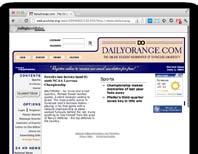
Though not a Syracuse alum nus, Boilard was the point person for the project — “the guy that was really in the trenches,” Novack said.
The new website is hosted on WordPress, which allows the editorial staff to have complete control over its design. The web -
site’s former platform, College Publisher, was not conducive to integrating new ideas students might have, Novack said.
Former managing editor and 2012 alumna Amrita Mainthia, one of the people most involved with the initial collaboration, said working with the design team she had heard about at The D.O. was a dream come true.
“They are living legends in the house,” Mainthia said. “The idea that I had to bring them in to help us revamp and redesign the website, it just started off as ‘Hey, maybe I’ll have the honor of picking their brains.’ We didn’t decide that they would actually take on that challenge until we were far into it, and that was more than any of us could ever ask for.”


The end product, one that Novack said he and his team were “really excited about,” tied for Editor & Publisher’s 2012 award for best college/ university newspaper website with the University of Georgia’s student newspaper, The Red and Black.
The D.O.’s redesign sparked an interest in Upstatement from other student publications as well.
“The number of other calls we’ve had from other student newspapers really speaks to the fact that people have taken notice and they really like what they see,” Novack said.
Novack said the firm is looking into building a platform where small publishers could create their own interactive websites in an affordable fashion.
cedebais@syr.edu
By Marwa Eltagouri De SIG n eDITOR
Referred to as one of the most important reporting projects The Daily Orange has published in recent years, “Fait Accompli” grabbed the attention of campus and the higher-ed community last spring with an in-depth look at Syracuse University Chancellor Nancy Cantor’s leadership and academic mission.
Published as two articles on April 26, the package was based off six months of reporting and caught the eye of media blogger Jim Romenesko, Syracuse.com and other outlets.
Kathleen Ronayne (’12, former managing editor) and Beckie Strum (’12, former news editor and editorial editor) reported as a team, eventually choosing to each write one article. To describe what sources cited as Cantor’s leadership style, the package was headlined “Fait Accompli,” meaning “something already done or in effect, making opposition or argument useless.”
They interviewed dozens of faculty members, many of whom asked to stay anonymous, focusing on those whose voices weren’t often heard. One of the final interviews was with Cantor herself, in which the chancellor had the opportunity to respond to every point of criticism.
The stories ran a week before the end of Ronayne and Strum’s senior year. They have

The front page of The Daily Orange on April 26. The series “Fait Accompli” garnered attention on campus, in the Syracuse community and even nationwide. Kathleen Ronayne placed sixth in the 2012 Hearst enterprise Reporting contest for her piece.
since gone on to reporting positions at The Concord Monitor and The Daily Star in Lebanon, respectively.
The goal wasn’t to gin up controversy, Ronayne said, but to shed light on concerns related to Cantor’s leadership style. The reporters wanted to inform faculty and students of those concerns and let them decide whether that was how they wanted the public face of the university to act.
Strum and Ronayne began covering the administration as sophomores, when they worked as assistant news editors. This gave them their first introduction to Cantor’s presence and demeanor, Ronayne said.
Over time, their observations and reporting led them to realize there was a larger story about Cantor’s leadership, which they began planning during the fall semester of their senior year.
Ronayne’s article explored the atmosphere Cantor had created in her seven years as chancellor. Interviews consistently revealed three feelings of faculty and staff members toward the Cantor administration: fear, futility and distrust.
Strum’s story focused on the effect of that sense of fear and marginalization of voices across campus, most notably the influence on academic affairs.
After covering the administration for about two years, Ronayne and Strum had a collection of sources they could turn to. But they strived to reach beyond the cluster of voices that are frequently, and loudly, critical of Cantor.
“We wanted to show that this was a more widespread problem than just five or 10 angry people,” Ronayne said.
When attempting to discuss personal anecdotes and interactions professors had with the chancellor, Ronayne said many sources wanted to remain anonymous. As a result, several anecdotes were left out because they were so specific that even anonymity would not have protected the source.
Dara McBride, editor in chief of the paper from fall 2011 to spring 2012, called “Fait Accompli” “the biggest news story The D.O. has done in a while.” She served as main
can T or page 10
The Daily Orange dealt with breaking news when Chancellor n ancy Cantor announced in October that she would leave Syracuse University when her contract expires in 2014.
Although the past year included public challenges for the university, such as sexual abuse allegations against former assistant men’s basketball coach Bernie Fine, Cantor said her decision was based on the amount of time she will serve SU.
“Ten years is a substantial amount of time to lead an institution,” she said in an interview with The D.O. the day she announced her departure.
Cantor became SU’s 11th chancellor in 2004 and has led the university with a focus on expanding the university’s name worldwide and strengthening ties to the city through programs such as the Connective Corridor, Say Yes to education and the near Westside Initiative. In September, she announced the completion of the Cam -
paign for Syracuse University, which aimed to raise $1 billion by Dec. 31, 2012.
During her time at SU, Cantor dealt with university lows, such as the Bernie Fine allegations and the controversial decision to shut down the student-run television station Hill TV. She was sometimes criticized by the higher ed and campus communities for her emphasis on community engagement rather than traditional scholarship.
The search for SU’s 12th chancellor is expected to take a year to a year and a half.
— The Daily Orange staff
Thanks for reading! Now, get involved with
Giving a gift is now as easy as making an online purchase (www.dailyorange.com/donate). Or, send to 744 Ostrom Ave., Syracuse, nY 13210.


c
Join our email listserv for more updates. Send your email address to alumni@dailyorange.com. Follow on Twitter @DOalumni.
m
We’re looking for a few alumni to mentor this semester’s new staffers in every department (photo, design, advertising, etc.). Please email alumni@dailyorange.com.
Thanks to Sean Branagan ('80), David Dwiggins ('98) and IT Director Mike Escalante ('14), the alumni website has an updated look and feel. new features include message boards for reconnecting with old friends and posting job openings, historical information and alumni news. Visit the site today to set up or update your account. Please send any feedback or suggestions for what you'd like to see on the site to Brittney at alUMni@DailyOrangE.cOM.
Then: City editor of The Daily Orange and editor of The Promethean, which merged with The D.O. and an SU weekly in 1971 to form the independent D.O.
Now: President and publisher of USA Today
After 40 years in the media business, Larry Kramer was happily retired. But when USA Today came knocking, he jumped at the opportunity to return to a newsroom.
“You miss the camaraderie, you miss the fact that so much great journalism is done by groups of people,” said Kramer, a 1972 graduate of Syracuse University.
After being approached by parent company Gannett, Kramer became president and publisher of USA Today in the fall. The newspaper celebrated its 30th anniversary in September and launched a new

design for print and online.
“I think it’s a golden age,” he said. “It’s scary because so much is changing, the world of journalism is changing, but I think more people are consuming more content than ever.”
Readers felt passionately enough about USA Today to send comments about the redesign. Kramer said the feedback led to a typeface change and reminded him how engaged readers can be.
Journalism shakeups are rooted in the start of Kramer’s media career. He was editor in
kramer page 9
Then: editor in chief, managing editor
Now: Senior reporter at the Center for Public Integrity after covering the presidential election for Politico
As the nation held its collective breath waiting for the 2000 Election Day results, Editor in Chief Dave Levinthal and The Daily Orange’s news staff were poised in Tennessee, Florida and Washington, D.C., ready to report.
For Levinthal, the experience shaped his career in political reporting.
“Every presidential election that I cover going forward, whether it was 2004, 2008 or, of course, this one, I always have to, on election night, harken back to what was going on during the year 2000, which I suspect if I cover another 10

or 15 presidential elections, there may not be one quite like that one,” Levinthal said. Before being named a senior reporter at the Center for Public Integrity in December, Levinthal was a reporter for Politico, specializing in campaign finance and lobbying. He covered the 2012 elections and said October proved to be the most interesting time to report on the race between President Barack Obama and Mitt Romney, beginning after the first debate and what he called Romney’s “second lease on life.”
“The best and most exciting elements of
levin TH al page 9
Then: Asst. sports copy editor, asst. sports editor
Now: Head of the U.S. records management team at Guinness World Records
Between 45,000 and 50,000 world records are attempted each year. Approximately 2 to 3 percent — about 1,000 attempts — meet the official requirements and succeed.
It is Mike Janela’s job to decide if the attempts pass.
“It’s overwhelmingly unsuccessful,” he said.
As the head of the U.S. records management
team at Guinness World Records, Janela oversees the company’s New York office. He spends his time either in an office in Manhattan — checking records he doesn’t need to see — or flying across the country and around the globe to adjudicate attempts.

A few months ago, he was counting signatures on a greeting card for SpiderMan at Comic Con. The record attempt was successful, with 2,707 signatures. It was broken again eight days later by a United Kingdom insurance firm, which garnered 4,347 signatures for the birthday of its mascot, the Churchill Dog.
Before that, he was in California, where a group attempted to break the record for number of dogs on a surfboard. The pups couldn’t stay on the board long enough to be officially counted. Janela has been to Tokyo and Puerto Rico to
janela page 9
By Jon Harris S TAFF WRIT
R
Chester Hansen used to wake up early, jump in his Ford Model A and deliver The Syracuse Daily Orange to the dorms and fraternity houses across campus.
Just hours earlier, he was working to produce the paper. Hansen was The D.O.’s editor during the 1938-39 school year, after a twosemester stint as a junior editor.
Hansen died Oct. 17 at age 95 in a nursing home in Raleigh, N.C., following a stroke.
Back in the late ’30s, The D.O. was four to six pages and sold for 3 cents. Syracuse football, greek life and the events leading up to World War II dominated its content.
Hansen graduated from Syracuse University in 1939 with a journalism degree, but his writing career began as a high school student in Elizabeth, N.J., when he won a journalism award and covered the Lindbergh kidnapping trial. In 1941, after college, he was drafted into the Army, where he flourished as the writer of a diary that keeps his memories alive and serves as a document of World War II history.
Hansen was born May 17, 1917, in Elizabeth, N.J., to Marie and Harold Hansen, Norwegian immigrants.
His wife, Marjorie, died in 2008. The couple lived in New Canaan, Conn., for 45 years. They moved to
the Raleigh, N.C., area in 2001.
In the Army, Hansen was assigned as an aide to Gen. Omar N. Bradley, the nation’s last fivestar general. He accompanied Bradley in the North Africa campaign, in the invasion of Sicily and as Bradley commanded the American ground forces on D-Day, during which he sent Hansen ashore twice to report.
All the while, Hansen faithfully kept his detailed personal diary. It eventually added up to 300,000 words detailing battles and scenes of carnage and, more commonly, entries about military people of the time, including Bradley and Gen. Dwight Eisenhower.
Hansen used any piece of paper he could find and then wrote the entry on his typewriter. It was the same machine he used to write love letters home to his wife Marjorie, whom Hansen met on a blind date and went on to marry in November 1942.
Volumes of his diary and his typewriter sit at the Army Heritage and Education Center in Carlisle, Pa., as part of the Chester B. Hansen Collection. It includes drafts, speeches, photographs and notecards Hansen used in interviews with Bradley.
The diary is one of the collection’s most important document because of its rich details and insights, which have served as a gold mine for World War II historians and authors. Keeping a diary was prohibited during World War
II, for fear that it could end up in enemy hands.
Hansen was a fluid writer who had a good eye for detail and an impressive ear for dialogue, said scholar Rick Atkinson, who used Hansen’s diary in his Pulitzer Prize-winning book “An Army at Dawn,” which covered the Allied invasion of North Africa.
The one fallback of the diary, he said, is that the entries rarely cast Bradley in anything other than a favorable light.
After the war, Hansen remained an aide to Bradley and followed him through posts as the head of the Veterans Administration, Army chief of staff and first chairman of the Joint Chiefs of Staff in 1949. Hansen became a lieutenant colonel in July 1945.
Hansen also recorded hundreds of hours with Bradley and used them when he ghostwrote Bradley’s best-selling war memoir, “A Soldier’s Story,” published in 1951. The memoir mentions Hansen occasionally, including a moment when he, Gen. George Patton, Eisenhower and Bradley laid their eyes on the horrors at the Dachau concentration camp.
“Eisenhower’s face whitened into a mask. Patton walked over to a corner and sickened. I was too revolted to speak,” the memoir reads.
The memoir also has its softer moments, though the strength of
detail never wavers.
In 1951, Hansen transferred to the U.S. Air Force and was assigned to the CIA. Four years later, he left active duty and joined the Reserves. He later worked in public relations for IBM, where he was Thomas Watson Jr.’s speechwriter and editor of the company magazine until he retired in 1986.
New Canaan, where Hansen and his wife lived for decades, was heavily Republican when they lived there. But Hansen, a Democrat, won a seat on the town’s governing body. John Wood, Hansen’s son-in-law, said the Republicans respected Hansen.
“When he would talk in schools, a kid would ask him, “What’s the bravest thing you ever did, Col. Hansen?” Wood recalled.
Hansen would reply, “When I moved to New Canaan, I registered as a Democrat.”
Hansen was also a longtime New Canaan Library board member. The library has a section named after him, the Chester B. Hansen Collection of American History and Art. Every year, he would lead the town’s Veterans Day parade.
“He was a colonel all the way to the end,” Wood said.
He is survived by a son, Jeffrey Hansen; two daughters, Randi Leigh Wood and Tracy Kimball Hansen; two grandchildren; and a sister, Gladys Caprario.
jdharr04@syr.edu

By Laurence Léveillé
wA n AGI n G e DITOR
ith his feet propped up on his desk, arms behind his head and a smile on his face, Bob Heisler would welcome Daily Orange staff members into his office to talk about anything.
This is the image Robert Tembeckjian, editorial director from 1971-72, has of Heisler. Through the connected door between their offices, Tembeckjian would watch Heisler engage anyone walking by in conversation.
Whenever Heisler and Tembeckjian met for lunch at their favorite Mexican restaurant in Manhattan years later, Heisler would always wait for him with a margarita, chips and guacamole, and a smile on his face.
“He always had that same smile on his face that was his hallmark 40 years ago,” Tembeckjian said.
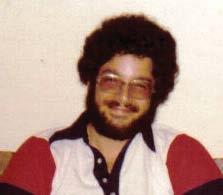
Heisler died May 5 at age 60, after a long struggle with cancer. He was diagnosed in February 2011. He will be remembered as a legacy at The D.O., as a respected leader, and as an inspiration to young journalists.
“There’s an entire generation of people in journalism who have been calling and saying how he is responsible for their being journalists,” Sarah Heisler, his daughter, said in May.
From 1971-73, Heisler served as The D.O.’s editor in chief. It was during this time the student-run newspaper became independent of Syracuse University. Less than 1 percent of college newspapers across the United States were independent.
‘‘
He made me believe that being a newspaper reporter was close to God’s work and that there wasn’t any job out there or anything we could do that could be better than that.”
Barbara Beck
D.O. MA n AGI n G e DITOR , 1971-73
After Heisler graduated from SU, he continued his journalism career at several publications, including the Philadelphia Daily News, Newsday, the Stamford Advocate, the Providence Journal, the New York Post and the Journal News. His most
recent position was managing editor for features at the New York Daily News.
Heisler had a quiet passion for journalism, said Bruce Apar, The D.O.’s features editor from 1971-73. Although he was soft-spoken, it was clear to those who met Heisler that he was passionate about his life, family and profession, Apar said.
Heisler stored wingtip shoes and a suit at The D.O. and was sometimes seen wearing one shoe while the other rested on a filing cabinet in his office. The shoe would remain there for decades after Heisler left The D.O., with incoming editors in chief using it for a traditional beer chug at the start of their term.
“I didn’t know too many 20-year-olds that wore wingtips in 1971,” said Barbara Beck, managing editor of The D.O. from 1971-73. “I thought that was really weird.”
Beck said Heisler inspired people to become better reporters, writers and editors. He also taught
her the importance of journalism.
“He made me believe that being a newspaper reporter was close to God’s work and that there wasn’t any job out there or anything we could do that could be better than that,” Beck said.
Heisler had a vision for the paper and a strong sense of what it meant to be a journalist. He believed the newspaper was not only a place for campus news, but also for city and national news. He once sent Tembeckjian to Chicago to cover a convention for student leaders who were engaged in antiwar activity, Tembeckjian said.
“He had a vision of what the newspaper ought to be and how it ought to operate freely from editorial influences like the faculty and administration,” Tembeckjian said.
Heisler also emphasized the responsibility of the paper in terms of reporting fairly and aggressively. When student journalists covered antiwar protests on campus, Heisler made sure stories were reported from an objective point of view, Apar said.
His maturity and ability to manage people were his strengths as a leader. Apar said the best phrase that applies to Heisler is “wise beyond his years.”
“Even as the Daily Orange student editor, he was like the old man of The Daily Orange in terms of his innate wisdom,” he said.
His wisdom showed in his managing style. Heisler had an instinct for knowing what worked, what people responded to and how to manage them, Apar said. Beck said Heisler knew how to match reporters’ skills with the right jobs.
“There are people who have
see Heisler page 9
By Evan Bianchi STAFF WRIT e R
Helen Straus, a former associate editor at The Daily Orange, died Aug. 3 at age 96. She was a female pioneer of journalism.
At The D.O., Straus served as an associate editor from 1933 to 1934 and was the editorial writer during the 1935-36 academic year. She graduated from Syracuse University’s School of Journalism at a time when men dominated the profession.
Straus’ passion for writing began when she was young. Her
son Hugh Straus said the first item in her scrapbook is a letter to the editor of the Glens Falls Post-Star, about how the Mufti of Jerusalem was treating Jews.
“What amazed me was that she was the child of non-Englishspeaking immigrants,” Hugh Straus said, “yet this letter written by a child was lucid.”
Straus achieved syndication in 55 papers across the nation. She became a reporter for the Knickerbocker News in Albany, N.Y., and was a feature writer for the
New York Herald Tribune after she moved to New York City, Hugh Straus said.
In addition to being a female pioneer in the journalism field, Straus contributed to medical journals and was among the first to write about contraception, her son said.
At the City College of New York, Straus taught opinion writing. She also worked for the Edward L. Bernays public relations firm, Hugh Straus said. Her work in public relations involved the American
from page 1
milestones and big stories. We created a “special edition” homepage the night Jim Boeheim won his 900th game and incorporated the fan experience into our content for the Pinstripe Bowl. The website was also our primary outlet when football coach Doug Marrone left Syracuse for the NFL earlier this month, and our coverage brought in so much traffic that it gave our server issues.
• The D.O.’s various Twitter handles have continued to grow, with the @dailyorange account reaching more than 7,000 followers recently. We use Storify to gauge crowd reactions in realtime, and the paper has its own Instagram account. All of this has been catalyzed by the creation of a social media producer position last spring and the addition of a web developer during the summer. We also recently hired a video editor to work on postgame interview videos for sports and standalone multimedia stories.
• In order to continue working toward the future, the paper’s
Building your toolbox | Between the web, print, social media, video, photography and more, aspiring journalists must be multifaceted. Panelists will discuss how to learn those tools while at The D.O. The panel will discuss the best practices in order to make oneself a marquee candidate for a job opening as they leave SU.
Producing in-depth news in a frenzied media cycle | Media outlets work 24 hours a day looking for the latest scoops and breaking news. How can journalists remain committed to producing quality work while dealing with an around-theclock news cycle that demands speed, accuracy and detail?
Transitioning to non-newspaper jobs | Many students will move on to a career outside of journalism. How can the skills learned at The D.O. translate elsewhere?
The new new media | Chances are, many students will not be at a traditional newspaper by the time they graduate. There’s a lot to prepare for, including photo essays, interactive graphics, HTML5 storytelling and different segments of original content.
board of directors formed a focus group of non-readers to help us gauge what the community needs and wants in a campus newspaper.
Financially, things looked up in the spring. Due to the strength of our board of directors, the pragmatic measures the editorial staff
Museum of Natural History and the League for the Hard of Hearing.
As a member of Americans for Democratic Action, Straus befriended Eleanor Roosevelt. The two founded the American Association for the United Nations, Hugh Straus said. As Straus’ guest, Roosevelt spoke at the Park Avenue Synagogue as a Friday night speaker.
Straus died in her home in Kingston, N.Y. She is survived by sons Hugh and Leone Straus. ebianchi@syr.edu
The best practices for beat reporting | Much of the best enterprise writing comes from beat writing. D.O. staffers will likely have a beat if they remain in journalism. What are some of the best ways to cover your beat? How do you build and maintain relationships with sources, and how do you immerse yourself in the team or topic you’re covering?
Print design in the digital age | Often, we see newspapers trying things they would not have done a few years ago. As fewer people pick up papers and more view news from their smartphone, there needs to be something great in the paper every day. In order for a newspaper to stand out, it needs great visuals and great design. This panel tackles how print design has evolved recently and how The D.O. could improve.
Media and the law | This panel will discuss some of the biggest issues and controversies that could lead to libel lawsuits or other legal issues.
Social media overload | Journalists are required to tweet. Take photos. Provide blog updates. Utilize live chats and Facebook. How can journalists and publications best make use of social media? What are the best practices for promoting one’s work? How do you increase engagement and interaction with readers?
made to cut costs, an increase in ad sales and alumni contributions, we finished the year making a profit.
We obviously cannot rest on that news, for the print industry is much in flux, but it is a positive sign that I hope will continue.
Mark Cooper (’13) is the editor in chief and former sports editor of The Daily Orange. He also serves as president of the paper’s board of directors. He is always open to coffee donations, so if you would like to send some or to contact him with comments or ideas, you can reach him at editor@dailyorange.com and on Twitter @mark_cooperjr.
A former Daily Orange editor in chief served as co-editor of The Philadelphia Inquirer’s Pulitzer Prize-winning investigation into violence in local schools.
Rose Ciotta, the Inquirer’s senior projects editor, was instrumental in the project that was awarded a gold medal in public service in April.
In a seven-part series, the Inquirer presented “Assault on Learning,” which revealed violence in the city schools was widespread and underreported. The report’s findings were later confirmed by a Philadelphia School District blue-ribbon panel on safety and prompted more incident reporting in the district and the hiring of a state-funded safeschools advocate.
Ciotta graduated with
from page 5
adjudicate attempts as well.
Janela joined Guinness three years ago, beginning in the sports record department. Before that, he was a sports journalist, gaining skills and knowledge at The Daily Orange and Syracuse University. While people do not immediately see a link between sports journalism and adjudicating records, there definitely is one, he says.
“Being able to dial up a football player’s father that I’ve never spo-
levin TH al
from page 5
what was really a long and protracted election process were saved for the final couple of weeks, and I don’t know if a whole lot of people really expected that prior to that first presidential debate,” he said. Going forward, Levinthal said, news organizations and political reporters in particular will have to do a better job preparing for unexpected occurrences, such as
degrees in newspaper journalism and political science in 1975 and was The D.O.’s editor in chief during the 1974-75 school year. She began working at the Inquirer in 1998.
She played an extensive role in the project, organizing the team of five reporters, three photographers and the investigations editor and coordinating reporting plans.
Working at The D.O. greatly contributed to her successes in journalism, Ciotta said.
“The D.O. taught me everything,” she said. “It was instrumental in gaining experience needed for reporting.”
By Rachael Barillari (’14),
editorial editor. She can be reached at rebarill@syr.edu. A version of this article appeared in The Daily Orange in April.
ken to before and interview him about his son helps prepare you for when you’re talking to a pastor in Minnesota who’s trying to organize the largest tower of cookies or something,” Janela said.
The attention to detail and analytic thinking required for sports journalism carries over, too.
“If you sit at the baseline of the Carrier Dome watching Gerry McNamara hit 3-pointers for a game,” he said, “you’ll be able to sit with someone at a gym for an hour trying to count those as well.”
By Meghin
Delaney (Dec ’12), a former editorial editor. She can be reached at medelane@syr.edu.
a sudden shift in momentum for a candidate, as well as providing up-to-date coverage and results.
To stay relevant and to retain readership, he said, news organizations must offer immediate reports on platforms such as social media.
Said Levinthal: “I suspect that you’re going to see an increasing movement among news organizations to a ‘Tweet first, provide context later’ mentality.”
By Avery Hartmans
(‘14), asst. feature copy editor. She can be reached at avhartma@syr.edu.
from page 7
been managers for 20 years who could learn from Bob Heisler, the student editor when he was 19, 20 years old,” Apar said.
When Apar worked at The D.O., Heisler let him put out an artsy weekly magazine that contained fiction stories. The paper thrived because Heisler gave people freedom to do what they wanted while maintaining a standard of excellence in the quality of coverage and editing, Apar said.
Heisler’s friends also remember him for his sense of humor and wit. While Heisler was working at The D.O., Tembeckjian told him not to let his position as editor in chief get to his head. Heisler said, “Don’t worry, I already know this is the most important job I’ll ever have in journalism.”
In another instance, the publishing company that printed The D.O. switched from hot typesetters to cold typesetters. Heisler made sure everyone learned how to use the cold typesetters and joked that if journalists learned how to set type, they would always have a job in the newspaper business, Tembeckjian said.
That sense of humor stayed intact while he was fighting cancer.
When Tembeckjian told Heisler a friend would be visiting from Costa Rica, Heisler said, “Good. I’ll try to stick around to see her.”
“He fought his cancer aggressively for the better part of two years,” Tembeckjian said. “But in the end, he accepted the inevitable with grace and class and humor.”
Heisler was able to find common ground with people he met and make them laugh within five minutes, Sarah Heisler said. Her father was the funniest man she ever knew, she said, but she did not realize his significance in journalism until she was in high school and college.
In February 2011, Heisler visited Syracuse to celebrate the 40th anniversary of The D.O.’s independence. He told staff members and writers about the newspaper’s history, including the Shoe.
“It’s very humbling to think about what an influence he had, apparently,” Sarah Heisler said. “Obviously he’s responsible for everything that is good about me, but it’s nice to know that he influenced everyone else, too.”
lgleveil@syr.edu
This story originally appeared in The Daily Orange in May.
from page 5
chief of a former campus newspaper, The Promethean, in 1971.
The publication merged with the Dialog, an SU weekly, and The Daily Orange that year to form the independent D.O.
Kramer is also the founder of MarketWatch, a website for business and financial news, and a former reporter for The Washington Post and San Francisco Examiner.
Kramer said he remembers how politically charged students — and The D.O. — were during his time on campus. The experience
taught him about activist journalism, and left him with the belief that the role of a newspaper should be to inform, not advise.
During the 2012 presidential election, USA Today did not endorse candidates. The paper’s coverage of swing states and issues on the local and national level gave readers what they needed to choose the candidate right for them, Kramer said.
Kramer said: “Our goal is to inform the public and give the public the best tools to make the decision for themselves.”
By
Dara McBride (’13), development editor and former editor in chief and news editor. She can be reached at dara.mcbride@gmail.com.
Alumni have the opportunity to preserve their work; one donation of $200 can pay for an academic year’s worth of newspapers
By Erik van Rheenen STAFF WRIT e R
Dara McBride, former editor in chief of The Daily Orange, has spent hours digging through the paper’s archives, looking through book after book of back copies, taking in Syracuse University history and planning future stories.
The paper’s archives committee, for which McBride (’13) serves as chair, wants to make those issues available to a wider audience and easier to use — by digitizing them.
“We started talking about it last year,” McBride said. “It’s finally coming together now.”
McBride, who said she has been interested in the archives for a long time, took over as the committee’s chairperson when Kathleen Ronayne (’12) graduated. McBride said the committee’s two biggest goals were to fix the bound books in The D.O.’s attic and to focus on digitizing the archives.
The committee digitized a few issues from 1903, the paper’s founding year, and 1971, the year it gained independence, as examples when it announced the project in the fall.
The committee is asking alumni to help fund the process. With a donation of $200, an alumnus or a group of alumni can sponsor an academic year of their choice. Each donor will be credited for the year he or she donates toward. For example, a line would read “1982 digitization brought to you by John Smith.” The goal is to have every year that receives
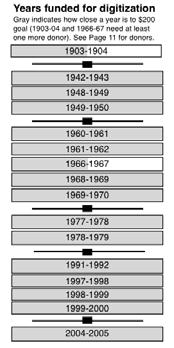
funding by May to be digitized within a year. The software the committee chose will
allow the text of the archives to be searchable.
More accessible archives will be helpful for reporters and the campus community and a chance for alumni to wax nostalgic about stories they wrote or pages they designed, McBride said.
“It’s a great experience to see alumni look through the archives,” said McBride, who recalled showing alumni around The D.O.’s morgue to reminisce over old issues.
Mike Escalante (’14), The D.O.’s IT director, said the projected cost is significantly less than what the committee expected.
“About a decade ago, the price point was a bit much,” Escalante said. “But now it’s much more realistic.”
SU’s library has created microfilm copies of every newspaper, and sending that microfilm to an imaging center is more cost effective than sending individual newspapers to be scanned.
But one snag in the fundraising process, Escalante said, will be finding alumni to donate for some of the paper’s earliest years. If alumni make donations to years that are already funded, committee members will ask if the donation can be directed to an earlier year that has fewer or no living alumni.
The response to the digitization campaign so far has been positive. To generate greater interest among the SU and Daily Orange communities, the committee was considering starting a Kickstarter campaign, as suggested by D.O. alumnus Mike Swartz (’06).
“The response from alumni has been great so far,” Escalante said. “We’re ushering in a new era of access to the archive information. It’s going to be a whole new world for us.”
ervanrhe@syr.edu
from page 3
editor on the project because it was spread out over the terms of two news editors.
Though the article has been called controversial, McBride refers to it as “hard-hitting.”
Ronayne and Strum did not aim to write a critical story, but wanted to cover what individuals thought of the administration and were prepared to receive mixed feedback from readers, McBride said.
Ronayne said she was expecting to hear positive and negative opinions, but the one source of feedback that was especially
rewarding came from an unexpected audience: students.
Students who weren’t frequent D.O. readers told Ronayne they read the story and so did all of their classmates. Professors across campus were encouraging students to pick up a copy.
“The feedback we got really showed we struck a nerve,” Ronayne said. “If there was no truth to it, I think people would’ve just blown it off.”
meltagou@syr.edu
Following publication, The D.O. received 10 letters to the editor in response to the stories and a firestorm of responses on social media. Both avenues produced negative and positive feedback.
1947
edith Handleman Lank is still writing a weekly column distributed nationally through Creators Syndicate.
Years ago, when she first proposed the column to her local paper, the Rochester, n.Y., Democrat and Chronicle, one of the editor’s questions was “Will you be able to keep it up?” She was able to answer that she’d written a three-times-a-week column in The Daily Orange. That did it — and since then she’s had 11 books published, including one translated into Spanish.
She was a junior editor at The D.O., just before the men came back from the war in 1946 and took everything over. And she wishes she’d thrown herself in front of the bulldozers that tore down Yates Castle.
At 86 years old, she has no need to stop — the best thing about being a writer is that you can do it sitting down. 86andholding.blogspot.com
Judith M. Backover, who has lived in California since graduating from Syracuse University, retired in June 2012 from careers in newspaper journalism and education. She was on the Daily Orange staff from her first day at SU and was the newspaper’s features editor.
John G. Clemons, ABC, APR, was named an International Association of Business Communicators Fellow, the highest honor of the global network of communication professionals. Selection criteria include service to IABC and the profession, career accomplishments and other factors. Clemons was The D.O.’s 1975-76 features editor.
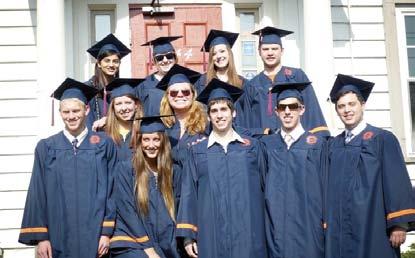
Former staffers gather at 744 Ostrom for the traditional senior photo before commencement in May.
The Class of 2012 is represented at, among other places, Gannett, The Concord Monitor, The Orange County Register, Business Insider, Chuck’s, Details magazine, The Daily Star (Lebanon), ComiXology, The (Utica) Observer-Dispatch and the Indianapolis Star.
S P eCIAL THA n KS TO OUR ALUM nI A n D FRIen DS, WHOS e FIn A n CIAL SUPPORT IS In VALUABL e.
Bruce Alpert
Budd Bailey
Anthony Barcellos
David Bauder
Michael Becker
William J. Breisky
Wendy W. Bridgeo
Greg Caren
Christopher M. Covello
George Criticos
Dave Curtis
Brittney Davies
Beverly B. Dominy
Katherine Drouin-Keith
Alice J. Drucker
Steven H. Dunne
Mel elfin
Marsha evans
Raf Frankel
Karen M. Franz
Scot French
ethel D. Fritts
David Gaewski
Bette D. Glickman
Sondra L. Gordon
Jonathan Halitsky
Jean Havens
Jack R. Henks Jr.
Debra Gersh
Hernandez
Stacy Hofmann
Michael Janela
Carl Johnson
Andrew Jokelson
Larry Kramer
emily Kulkus
Janet Langsam
Dave Levinthal
Howard Mansfield
Marilyn Marks
Peter V. Mc n ally
Joyce Meltzer
Susan Miller
The Drs. Millmoss
Sy Montgomery
Jared A. novack
Peter Parrish
Lewis A. Prombain
Lawrence Rakowski
Lila Roberts
Jacqueline L. Salmon
Justin Silverman
Chris Snow
Brad Spry
Chuck Stevens
Mike Swartz & elyse
Andrews
Chris Viviano
Robert Ward
Donald Weill
Craig Weinstein
Judith Ann Whitehouse

In november 1932, Franklin D. Roosevelt won the presidential election over Herbert Hoover, without the support of most Syracuse University students. Instead, students voted for Hoover in four of five districts. In 1960, John F. Kennedy was four electoral votes shy of winning the presidency at press time (after 4 a.m.). Both he and Republican candidate Richard nixon went to bed without an official announcement, The D.O. reported.
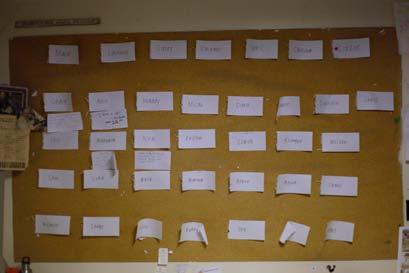
People tend to say their best — or worst — late at night. When sleep deprivation hits, the ability to filter words can be nonexistent. And there’s no better place to catch those slipups than at The Daily Orange. Since at least the early 1970s, staff members have found their most memorable quotes hanging on the newsroom wall.
Known as the quote board, the wall is filled with comments from any and all staff members who have said something that could be taken out of context. each quote is awarded a superlative.
“He reads my body like braille,” for example, got the “It’s-always-better-with-thelights-perpetually-off” award last semester. When a new staff takes over, the previous semester’s quotes go into a drawer of the newsroom.
But that doesn’t mean they’re forgotten. Budd Bailey (‘77) remembers this one from his days at The D.O.: “What’s Gerald Ford’s greatest accomplishment?” “Pardon?”
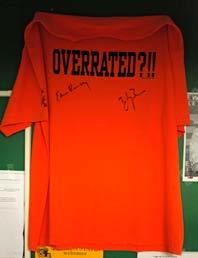
The story is told to every incoming sports writer. Dueling columns by ethan Ramsey (’08) and Zach Berman (’08) sparked one of the most famous Jim Boeheim diatribes — and a popular T-shirt.
Late in Syracuse guard Gerry Mc n amara’s senior season in 2006, Ramsey and Berman published columns debating Mc n amara’s worth. Ramsey said he was overrated; Berman said he wasn’t.
After Syracuse defeated Cincinnati in a tight game in the Big east tournament, Boeheim sounded off in response to the paper, saying Syracuse would not have won “10 f**king games” without Mc n amara.
The shirt is now pinned prominently to the wall in the sports office, with Ramsey and Berman’s signatures.
This newsletter was edited by l aurence léveillé, Mark cooper, Brittney Davies, Dara McBride and Kathleen ronayne. it was designed by Katie Mcinerney. Send feedback to ALuMNi@DAiLyORANGe.cOM.