
Voter forums host candidates
By JACK BAKER and EMILY DISSANAYAKE the daily northwestern @jdowb2005
Candidates running to represent Illinois’ 9th Congressional District tackled issues ranging from rising healthcare costs to Israel’s military actions in Gaza and federal immigration enforcement across two Saturday forums.
In May, incumbent U.S. Rep. Jan Schakowsky (D-Evanston) announced her retirement, sparking the first competitive race to represent Evanston in Congress in a generation. There are 19 active candidates, who collectively raised more than $11 million last year.
FBI negotiator Phil Andrew and economist Jeff Cohen attended a forum hosted by the Pan-Asian Voter Empowerment Coalition at the Holiday Inn & Suites Chicago North Shore hotel in Skokie.
About 15% of people living in the district are Asian, according to 2024 American Community Survey data. Over 50 audience members representing various local advocacy groups attended the event.
The PAVE forum required participants to have raised at least $500,000.
Later, Biss, Fine, Amiwala, Huynh and Andrew gathered at the Levy Senior Center for a separate forum co-hosted by the Evanston/North Shore Branch of the National Association for the Advancement of Colored People. Democrats State Sen. Mike Simmons (D-Chicago), Justin Ford and Patricia Brown, along with Republican John Elleson, also participated.
About 75 community members filled the Levy Senior Center’s meeting room, prompting organizers to set
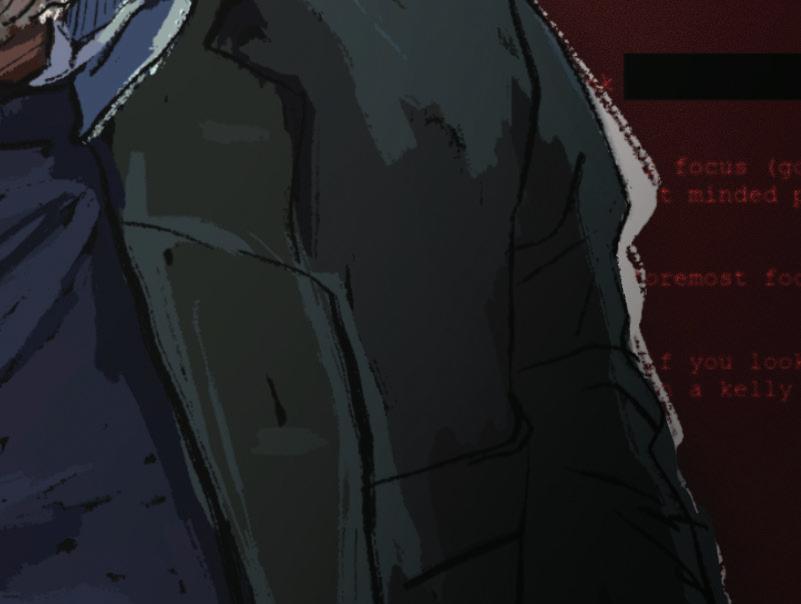
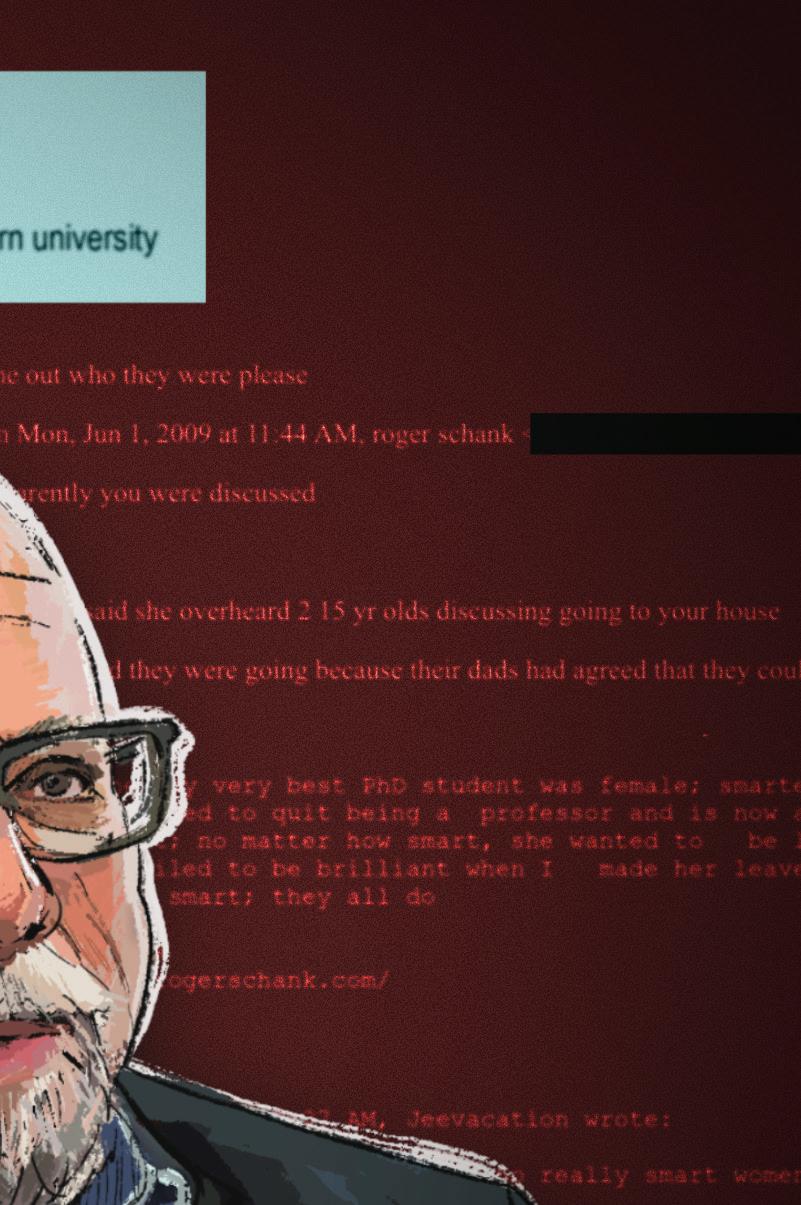
name appears over 1,500 times in the Department of Justice’s library of files related to convicted sex o ender
In the morning, Mayor Daniel Biss, progressive content creator Kat Abughazaleh, State Sen. Laura Fine (D-Glenview), Skokie school board member Bushra Amiwala, State Rep. Hoan Huynh (D-Chicago), former
Roger Schank
maintained long-term relationship, released government les say
NU professor close to Epstein Prof.
Content warning: is story contains mentions of sexual misconduct with minors.
Congressional contenders tackle healthcare, ICE » See SCHANK , page 15 » See FORUM, page 14
By SOPHIE BAKER amd LEXI NEWSOM daily senior staffers @ak_newsom
Late McCormick Prof. Roger
Lion dance marks Lunar New Year
Student organizations host cultural games, performance in Norris
By RUIXIN ZHANG the daily northwestern @ruixinzhang_
A red and gold-pa erned lion puppet, manipulated by two dancers underneath, maneuvered across the Norris University Center Louis Room to the sounds of clinging cymbals and thumping drums. Ending at the center, it “ate” the le uce prepared beforehand on the oor, and “spat it out” towards a watching crowd.
e Cantonese word for lettuce sounds like “prosperity,” so the act of “eating” and “spitting out” the le uce symbolized the showering of blessings and good fortune, according to Jason Yu, one of the performers and owner of Yu’s Lion Dance Sports Association.
e lion dance was one of the highlights of the Lunar New Year event on Saturday evening co-hosted by Northwestern’s Chinese Students Association, Korean-American Student Association and Hong Kong Student Association.
“When you’re at college and you’re on your own, it’s hard to participate in events like these unless you seek it out on your own,” said former Daily sta er Brian Han, CSA Cultural Chair and Weinberg sophomore. “Our

clubs hope to make it more accessible and bring a part of people’s heritage to Northwestern.”
Lunar New Year is a festival traditionally celebrated in China, Taiwan, Korea and other Asian countries, beginning on the rst new moon of the lunar calendar. e horse is the Chinese Zodiac of the 2026 lunar year, which is set to begin Feb. 17.
The student organizations brought together activities that represented their respective cultures. SA, for instance, organized a simpli ed version of “Gonggi,” a Korean game featured in Squid Game Season 2.
KASA Cultural Chair and Weinberg senior Joanna Jung said the player wins by throwing two Gonggi stones and landing them on the back of their hand, then throwing the stones again and catching them.
HKSA provided sweets like traditional Chinese White Rabbit Candy for participants to put in red envelopes and give to friends. Red envelopes are usually lled with money and are given out during Lunar New Year from older to younger generations to signify wealth and prosperity for the year ahead, according to HKSA Co-President and Weinberg junior Fiorelli Wong. McCormick rst-year Jason Ta grew up celebrating the Lunar New Year in Vietnam and

appreciated the opportunity to try new things, like CSA’s Chinese calligraphy station.
Participants wet their brushes with water to trace Chinese character strokes on a special water calligraphy paper.
“I never really did calligraphy before — I suck at stroke order — but it was fun learning how to do that,” Ta said.
Students earned ra e tickets for participating in the activities, which could be used to exchange for a wide variety of Asian snacks.
SA President and Weinberg senior Caleb Shim said the Lunar New Year event is a long-standing tradition at NU and represents a community for those that might miss home.
“Home represents a lot of di erent things, including cultural holidays and celebrations,” Shim said. “To have a space to celebrate your holiday in a place that’s far from home is a great opportunity for students who might feel homesick.”
r.zhang@dailynorthwestern.edu
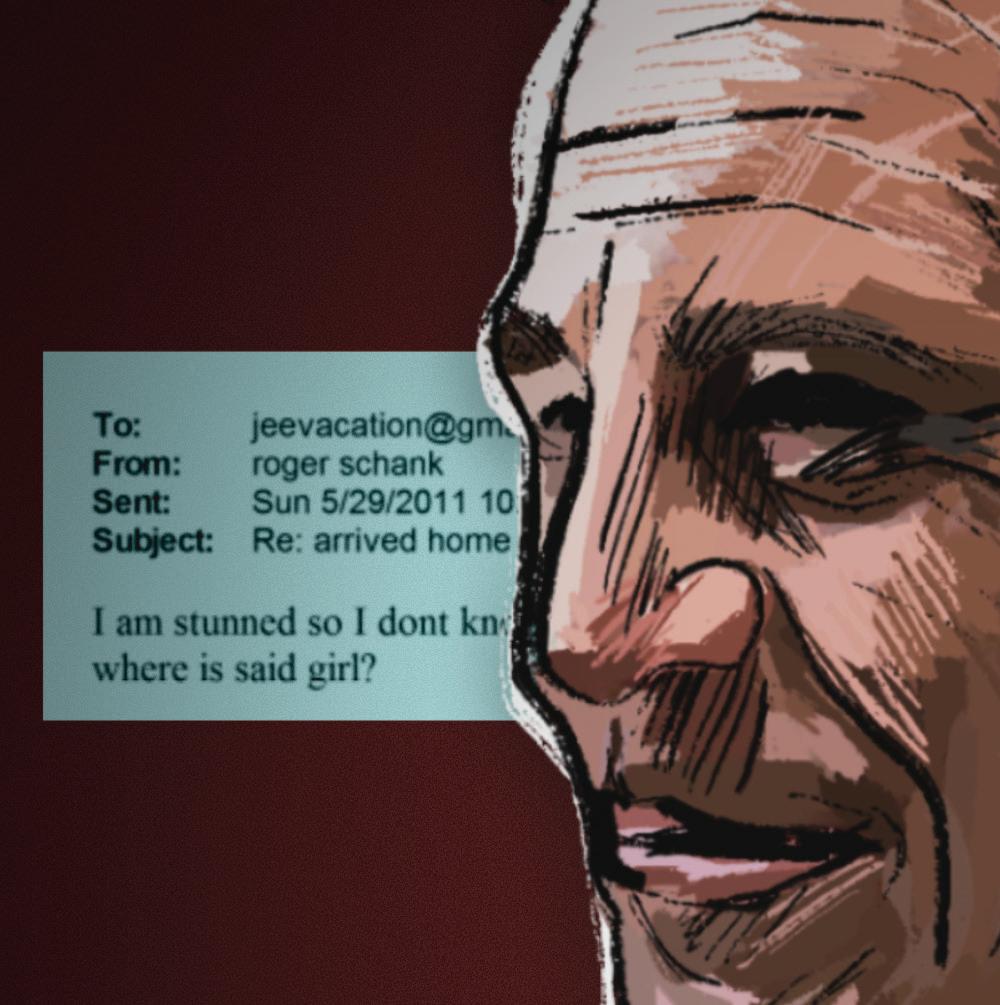
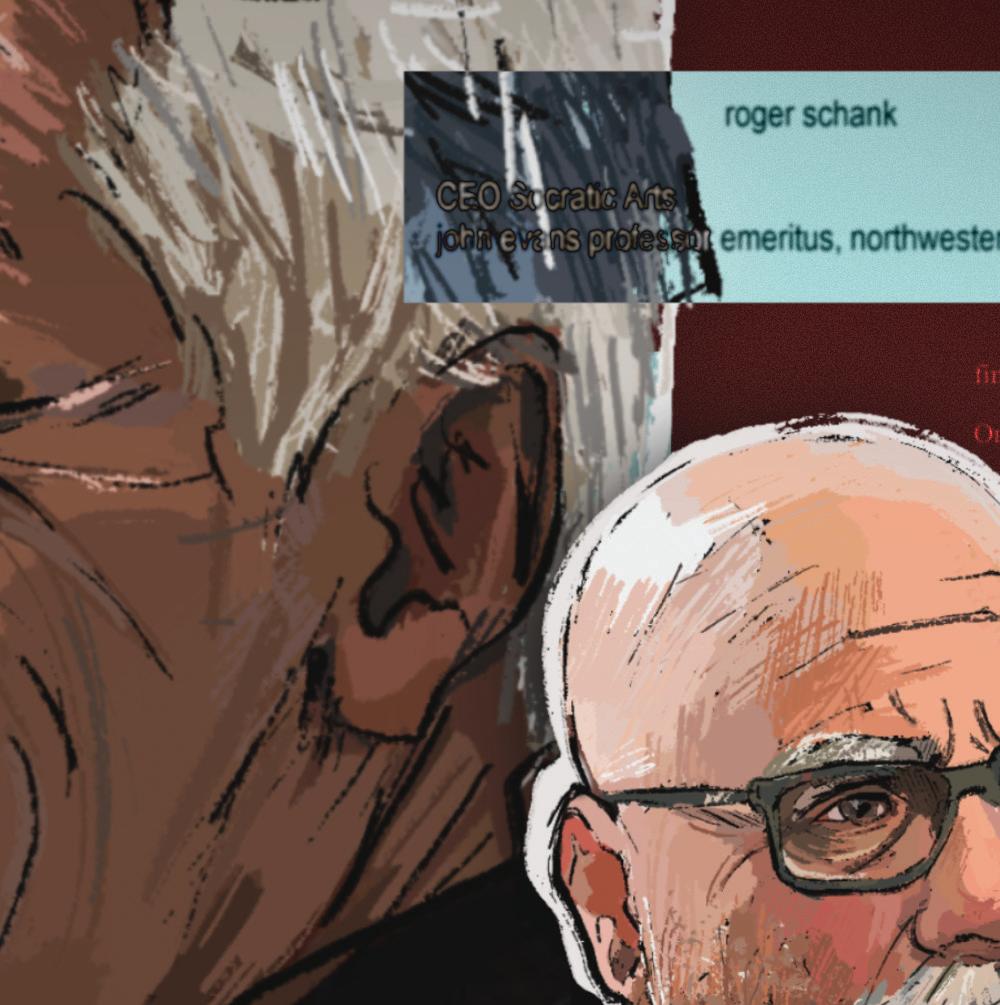
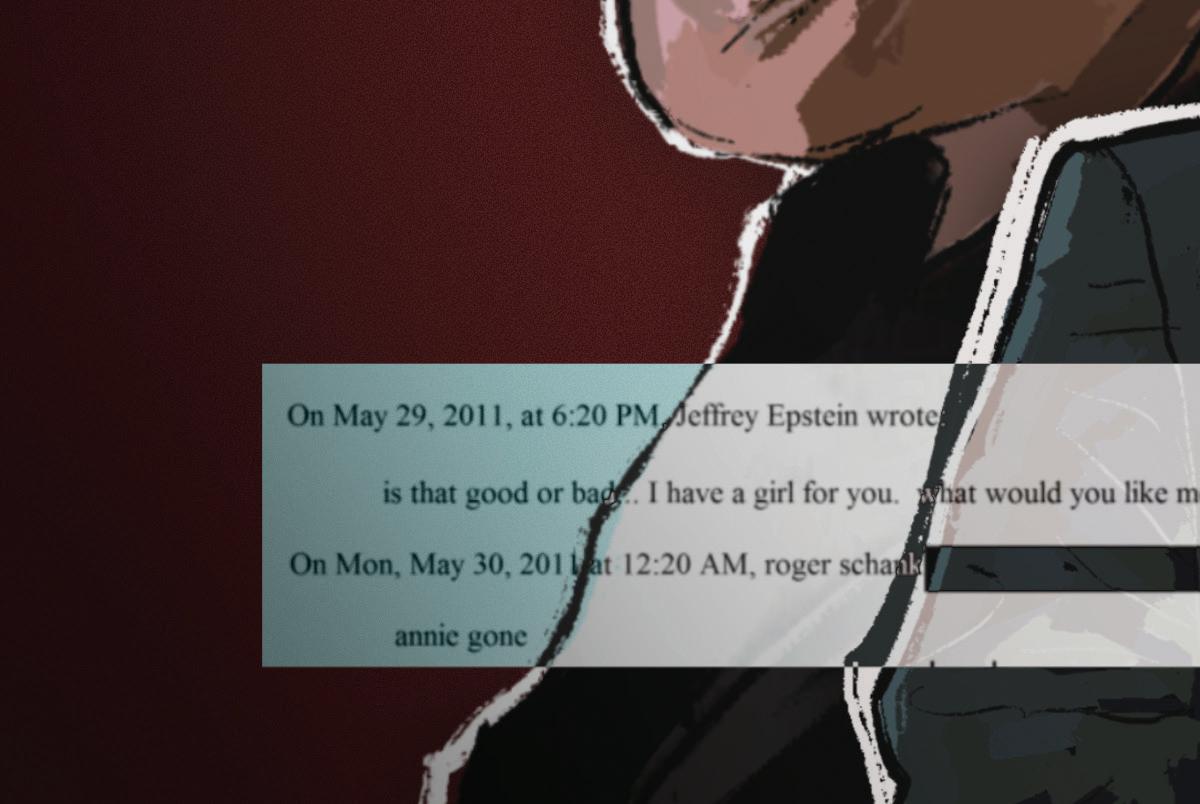
Schank maintained close contact with convicted sex o ender Je rey Epstein and was o ered access to “a girl,” according to
$400k
newly released les from the Department of Justice.
Black churches
Funds allocated following input om community
By MAX TURETZKY the daily northwestern @maxturetzky
Five years after the Reparations Stakeholder Authority of Evanston announced it would create its own privately funded reparations program, the organization is now set to distribute $400,000 to Evanston’s Black churches.
The project has been years in the making. In February 2021, RSAE announced it would raise funds to directly benefit Black community members, complementing the city’s tax-funded reparations initiative. In June 2022, leaders from 16 congregations in Evanston’s interfaith community pledged to contribute to RSAE.
The organization finished raising its goal of roughly $1 million by Martin Luther King Jr. Day in 2025. Since then, RSAE has consulted with community members about how best to distribute the funds.
In January, Rev. Dr.
Michael Nabors, a pastor at Evanston’s Second Baptist Church who helped establish RSAE, announced the fund would begin distributing a portion of the money to historically Black churches around the city.
Nabors told The Daily the funds would be distributed as grants to individual congregations. Through interviews with various members of Evanston’s Black community, Nabors said he identified three key priorities: housing, economic development and education. However, the city’s reparations program, financed through a 3% tax on cannabis, is already providing direct cash payments to Black residents to repair their homes.
“We thought we would get away from housing because that’s where the money has been going from Evanston reparations,” Nabors said. Instead, Nabors envisions local churches using RSAE funds to support Black entrepreneurs, help Black residents pay their bills and fund soup kitchens and workforce development initiatives. According to data from
Illustration by Nicole Cheah
Late McCormick Prof. Roger Schank’s
Ruixin Zhang/The Daily Northwestern Students interacted with the lion puppet as it weaved across the room.
AROUND TOWN
Commission documents alleged violence by ICE
By ISABELLA JACOB daily senior staffer @isabellaj313
On Jan. 30, the Illinois Accountability Commission released its initial report documenting alleged violence and misconduct commi ed by federal agents throughout the Trump administration’s Operation Midway Blitz.
Governor JB Pritzker created the commission through Executive Order 2025-06, which he signed in October. e commission’s goal is to create a public record of the impact of federal agents and their “military-style operations throughout the Chicagoland area” during Operation Midway Blitz, according to the executive order.
Former Federal Judge Rubén Castillo (Pritzker ’79), chair of the commission, pioneered its report and oversaw the commission’s two public hearings.
“It’s important to show that we’re just not going to accept this,” Castillo told e Daily. “We just refuse to do that, and ultimately, we’re gonna put together reports and evidence to turn over to people who are interested in prosecuting these cases and making changes in the law.”
He said the commission is documenting history so “this doesn’t ever get repeated.”
e initial report stated it aims to answer “How did we get here?” and lay the groundwork for the commission’s conclusions, which are scheduled to be released no later than April 30.
e commission has collected videotapes, interviewed witnesses and heard testimony in December, according to the report. e group is still searching for eyewitnesses of federal immigration enforcement and has launched an online portal to gather additional testimony and videos for investigators.
e report argued the Trump administration has targeted Illinois and Chicago because of their “long history of welcoming and supporting immigrant communities” and accused the administration of intentionally misleading the public.
“ e Commissioners, whose members include former federal prosecutors and judges, acknowledge that these are grave accusations to level against the federal government. ey do not make them lightly,” the initial report reads. “American
democracy, however, hangs in the balance.”
e report mentions Evanston multiple times, including when describing the commission’s Dec. 18 hearing, during which investigators showed videos of protesters being teargassed to Dr. Rohini Haar, an adjunct professor of epidemiology at the University of California, Berkeley.
Testifying to the commission, Haar reportedly criticized federal agents’ decision to deploy “chemical irritants” in Evanston on Oct. 31, nding their use “unjusti ed and inconsistent with safe practices.”
Castillo added that commissioners have interviewed witnesses from Evanston who were teargassed for the group’s nal report.
Northbrook resident Lee Goodman has been intermi ently protesting near the Immigration and Customs Enforcement detention facility in Broadview, Illinois, since July 2025.
In September, Goodman said he was teargassed by ICE. Federal agents allegedly deployed teargas and chemical irritants from the facility’s roof toward a fence behind which Goodman and other protesters stood. He said the protesters were peaceful, not trying to storm the gates or climb the fence, and that he consistently witnessed aggressive tactics among federal agents at Broadview.
“ ere’s no reason to treat us the way that the feds were treating us,” Goodman said. “It was counterproductive. All it was doing was antagonizing and infuriating people and making them feel upset and sometimes afraid.”
Goodman said the commission has the potential to hold agents accountable and is “vitally important.”
But Executive Director of Evanston Latinos Ricardo Villalobos said his community isn’t looking for a report. Instead, it’s looking for action.
“ e idea of forming an accountability committee, I think, for folks, doesn’t really resonate deeply because we haven’t seen any action thus far in reaction to the violence,” Villalobos said.
He said the report might not positively impact the community because trust in the government is low, and those that have been a ected by ICE feel like they’ve been “diminished by all administrations.”
Villalobos said he hopes the government will focus on supporting communities negatively

impacted by Operation Midway Blitz and rebuilding trust in government.
“If all it is is identifying what we already know is against the law and cruel and inhumane, we already know that — we’ve seen it,” Villalobos said.
Castillo argued the commission will go further than just documenting injustice, adding that the evidence it gathers will be turned over to those interested in building legal cases. e commi ee will also propose state legislation empowering community members to take legal action against federal agents, he said.
e initial report was released six days a er the fatal shooting of protester Alex Pre i by Customs and Border Protection agents in Minneapolis.
Castillo said he’s been contacted by authorities from Minneapolis who want to create a similar initiative to document the actions of federal agents in their community.
e commission will continue to investigate and hold public hearings leading up to the release of its nal report. Castillo said that document will include more testimony and outline the economic and mental health impacts of Operation Midway Blitz. Ultimately, Villalobos considers the commission’s work insu cient.
“I think that the damage is so deep,” he said. “ ere is so much more that needs to happen.”
i.jacob@dailynorthwestern.com
HEADLINES








































































Illustration by Leyton Jackson
Former Federal Judge Rubén Castillo (Pritzker ’79), chair of the commission, pioneered its report and oversaw the commission’s two public hearings.
Civic Sunday teaches community rights
By XUAN DAY TRAN
daily northwestern
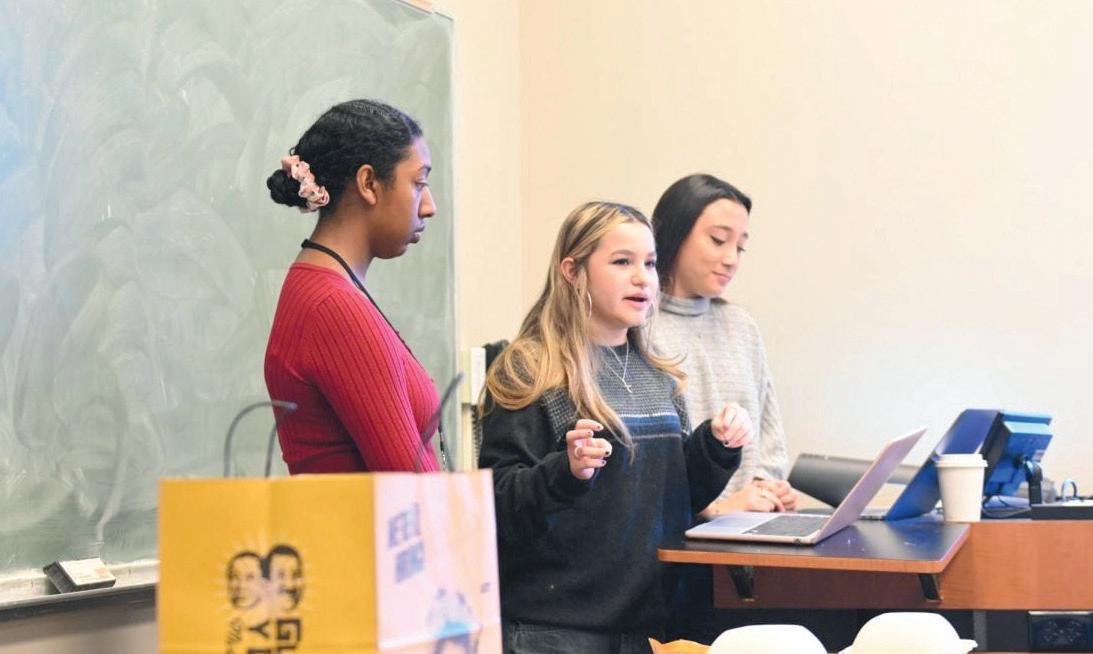
Northwestern students and Evanston community members joined Open Democracy Undergraduate at its first Civic Sunday of Winter Quarter to learn more about safety amid increased Immigration and Customs Enforcement activity, civic advocacy and individual and community rights.
Open Democracy Undergraduate, alongside Open Democracy Evanston, said that calling members of Congress and helping draft a policy proposal for NU administration to protect international, immigrant and undocumented students from ICE activity could help students channel their passion for social justice into concrete change.
Co-president of ODU and Weinberg sophomore Jovana Luna said she hopes the event can act as a call to action for students who are angered by ICE in their communities.
“Despite there obviously being a lot of passion, I think sometimes it’s hard to know what to do with those strong feelings,” Luna said. “Our goal is to continue the momentum that was begun by the protest last Friday by another student organization called startswiththis.”
Luna added that she believes the key to making change is collective action rather than individual pressure.
The event kicked off with a presentation about ICE and immigrant rights advocacy for community members.
ODU member and SESP sophomore Diamond Jamal said the event was meant to serve as a space for NU community members to express their feelings towards ICE and channel their anger and fear into advocacy that caused concrete change.
“Recent actions by ICE have raised fear, anger and a lot of unanswered questions, especially for students and community members who feel directly impacted,” Jamal said. “Part of why we want to hold this Civic Sunday is to create a space where people can talk honestly about what’s happening, process those feelings together and learn how to respond in ways that are thoughtful and effective.”
Attendees learned about the history of ICE and its funding during both the Trump and Obama
administrations.
Trump’s One Big Beautiful Bill Act has given ICE $85 billion, making it the highest-funded U.S. law enforcement agency. Under the Obama administration ten years ago, ICE’s annual budget was less than a tenth of what it is now, at just under $6 billion.
ODU Vice President of Membership and SESP junior Savannah Hsu explored how public pressure can directly affect legislative decisions related to anti-ICE action.
“Outreach and calling specifically is what we’re talking about here that can move the focus from the data and metrics to the actual, like, human impacts that these decisions are having on safety, dignity and values that we’re talking about,” Hsu said.
Hsu highlighted their script for calling Congress, emphasizing that it is important to mention specific changes and reforms students supported.
The presentation continued with a call to action on NU’s lack of formal, written policy related to
ICE safety.
“We have very vague statements, which kind of tells us that our campus is not necessarily prioritizing the safety of our international community or undocumented community and our immigrant community,” Luna said.
Luna said they hope to draft a formal, written policy for the University that would require a judge’s warrant for access to private campus spaces and limit the sharing of student information to ICE agents.
Atteandees were asked to think about how they’d like to be part of supporting the group’s advocacy efforts. Gayle Kemp, an Open Democracy Evanston board member attending the event, encouraged students to continue organizing and working together to make change.
“The students of Northwestern University have all the power in the world if they unite and they stand up against the powers that be,” Kemp said. xuantran2028@u.northwestern.edu

POSTMASTER: Send address changes to The Daily Northwestern, 1999 Campus Drive, Evanston, IL 60208. Subscriptions are $100 for the academic year. The Daily Northwestern is not responsible for more than one incorrect ad insertion.
for breaking










Xuan Day Tran/The Daily Northwestern
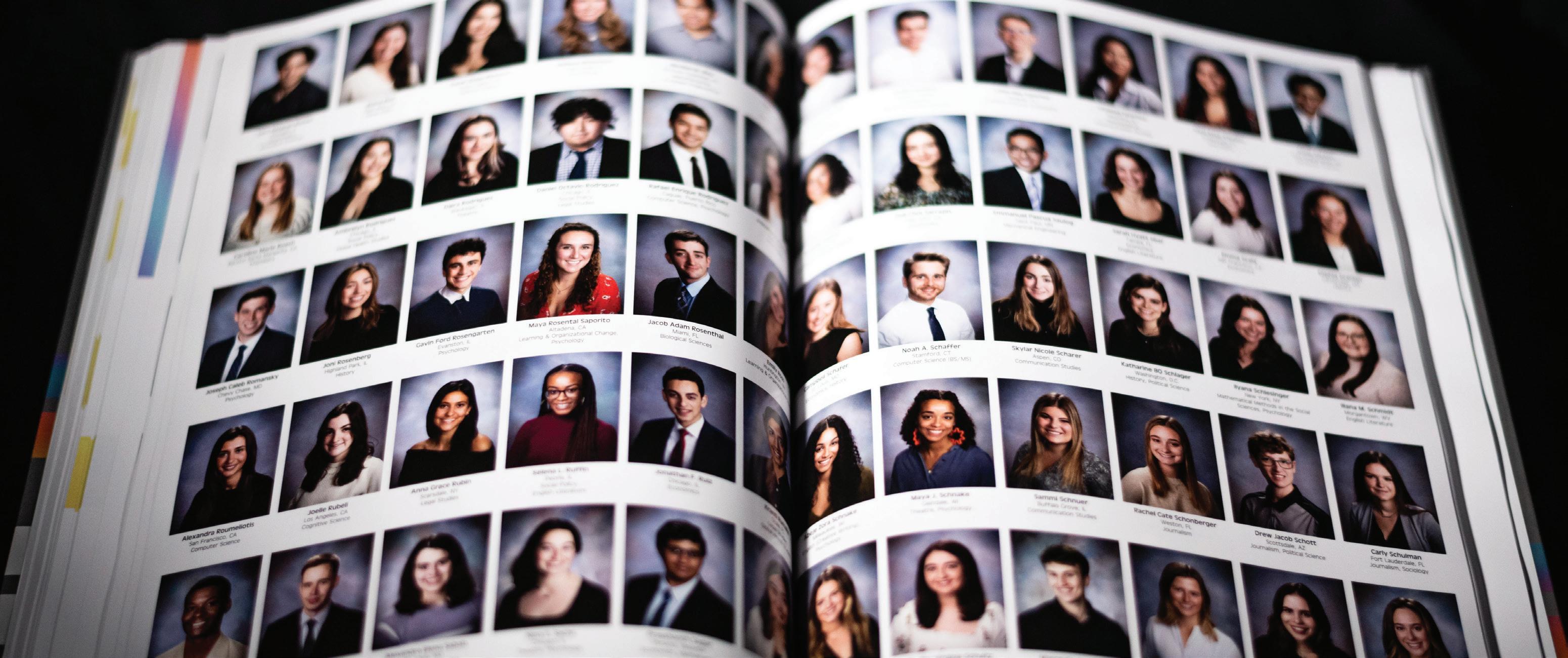
Open Democracy Undergraduate members educated attendees on civic advocacy at Northwestern and in Evanston.


E A&E & A&E A&E ARTS
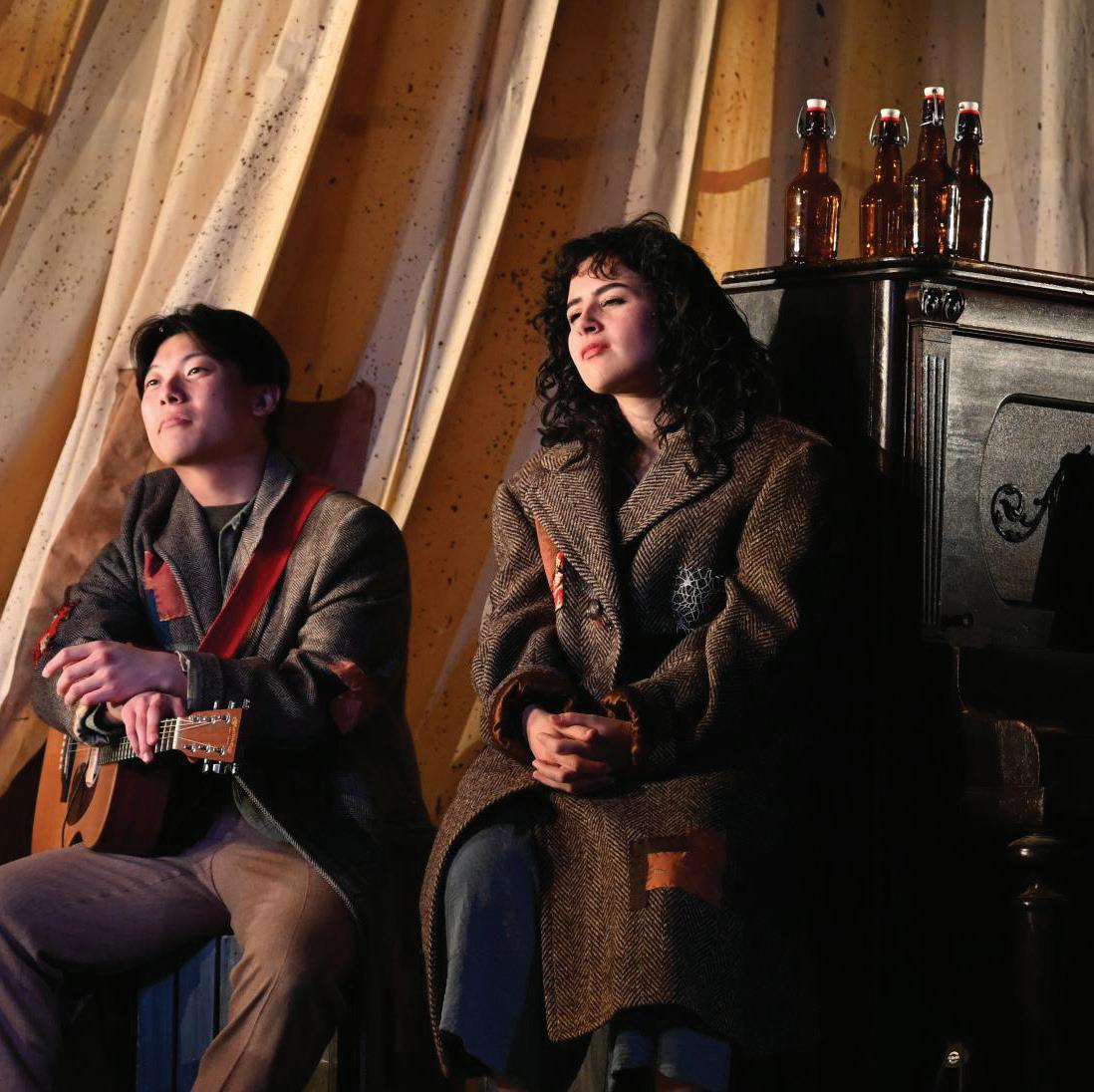
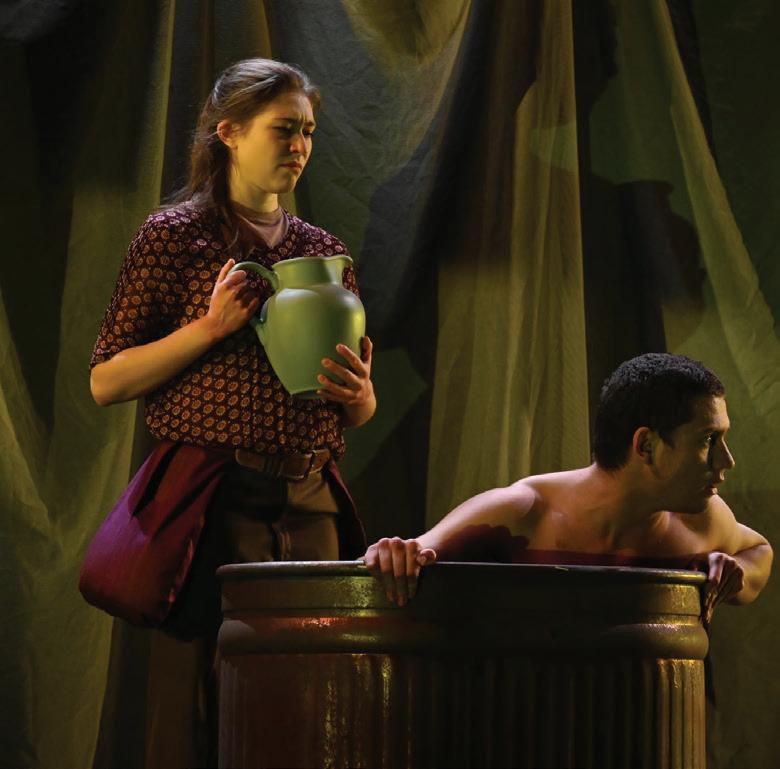
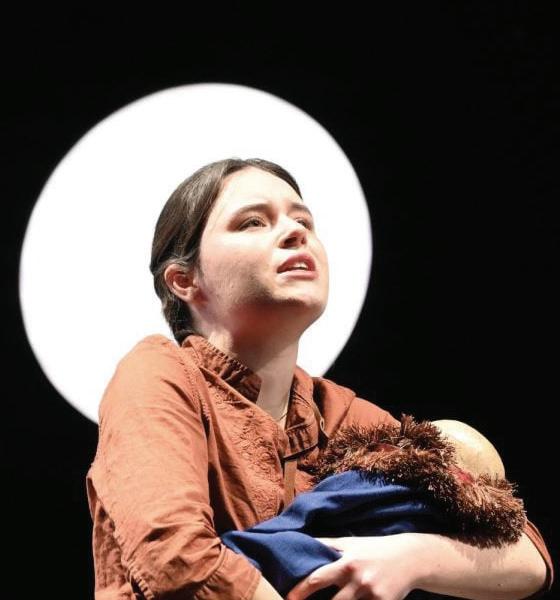
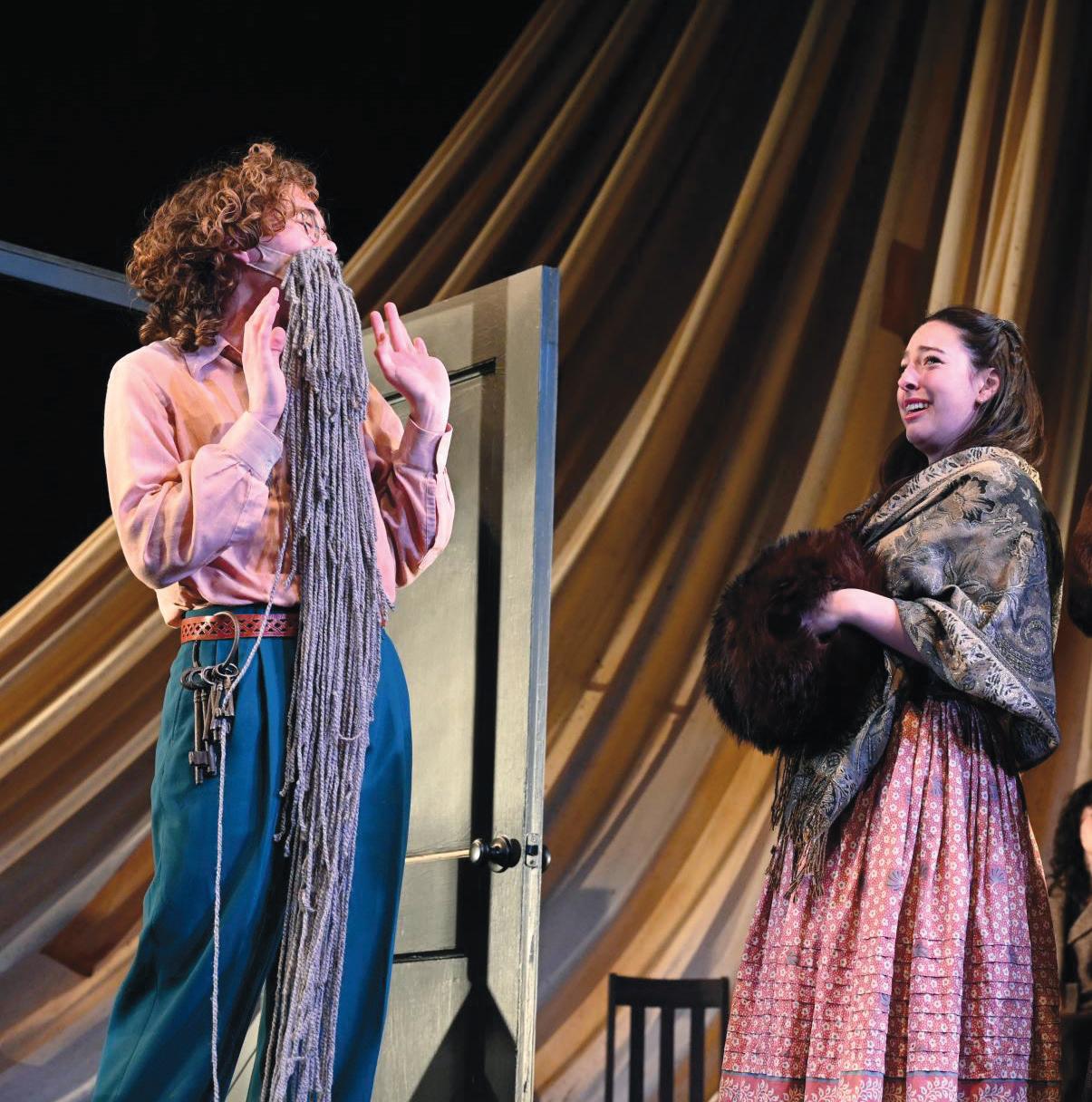
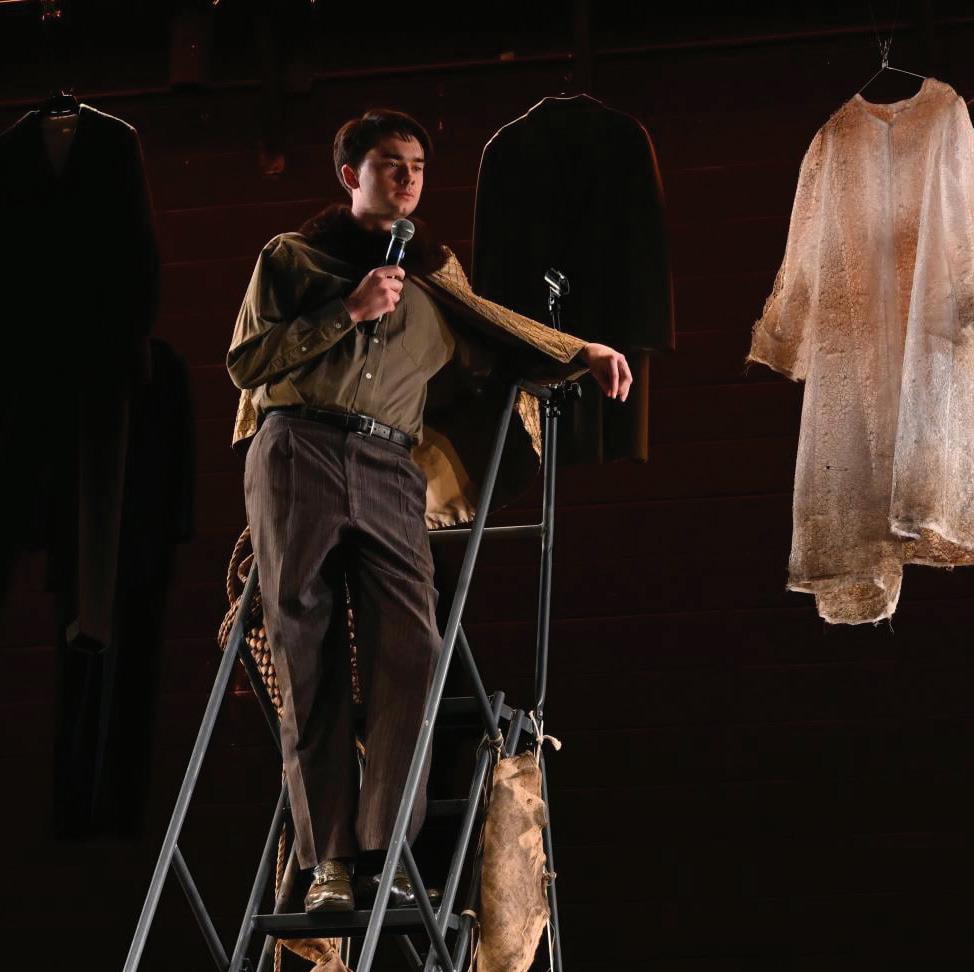
New director steps in to lead ‘Caucasian Chalk Circle’
By THOMAS HURLEY the daily northwestern
After Thanksgiving Break, “The Caucasian Chalk Circle” was missing a key piece: a director. Since then, the Wirtz Center team found a new director and completed blocking and staging on an expedited schedule.
Director Hamid Dehghani initially developed the cast and creative vision, but had to leave the production due to family obligations. Before Fall Quarter ended, the Wirtz Center announced a new director, Kathryn Walsh, to lead the play.
Walsh and the cast have prepared a play that includes everything from an abandoned baby and a drunken monk to a melodica-playing judge for its performances Feb. 5-8.
“The Caucasian Chalk Circle” tells the story of a maid named Grusha who rescues a baby of a wealthy family following an uprising in the Soviet Caucasus region at the end of World War II.
Entangled in political violence and custody debates, Grusha grows to love the baby and makes continuous sacrifices to protect him.
Communication senior Lucy Honor Lewis, who plays the judge (Azdak) and one of the narrational
singers, said the team was “very sad” about Dehghani leaving, but had positive expectations for Walsh.
“Everyone I talked to, I just heard nothing but great things and I was like, ‘Okay, we’re gonna be fine,’” Honor Lewis said. “Things are gonna be a little bit weird, it’s gonna be a little bit crazy, but I have a feeling that I might be in good hands.”
Because Walsh joined at the start of Winter Quarter, there were two weeks of rehearsal without a director. Cast members spent most of that time working with Music Director Justin Cavazos, who composed original music for the performance.
Honor Lewis said Cavazos presented the cast with a box of instruments in an early rehearsal and asked them to pick one. She said these instruments ended up being played by cast members, including her on the melodica — which she had never played before.
“I don’t play it a ton in the show, but when I do, it’s like, ‘Oh, she’s playing that,” Honor Lewis said.
Cast members said the first few weeks of rehearsal without a director helped them bond into a tight-knit group because it forced them to depend on each other’s leadership.
Communication sophomore Finn Callander, who plays Grusha’s fiancé, Simon, said Cavazos and older cast members made those weeks productive and fun.
“We had to really rely on ourselves,” Callander said.
When Walsh arrived in January, she said the cast developed a shared vision for the play, a conversation which would usually take place during early tabling.
Unusually, they did this while beginning the staging process in the Josephine Louis Theater.
“We talked about the big picture ‘why’ and then we keep coming back to it over the course of the rehearsal process, when we are sharpening a storytelling moment or when we’re talking about, particularly in this production, the moments where we are sort of engaged as an ensemble,” Walsh said.
She said emphasizing the show’s purpose propelled the cast to their high performance quality.
Cast members shared that they discussed both historical context and current politics to better understand the show’s themes.
“It’s unfortunately easy to relate a lot of things from history to what’s happening now,” said Communication first-year Molly Coogan, who plays Grusha. “It’s easy to connect these themes of ownership and social responsibility to what’s happening in our country today.”
“The Caucasian Chalk Circle” was written in 1944 by Bertolt Brecht, a German playwright who fled to the U.S. when his works were burned. Cast
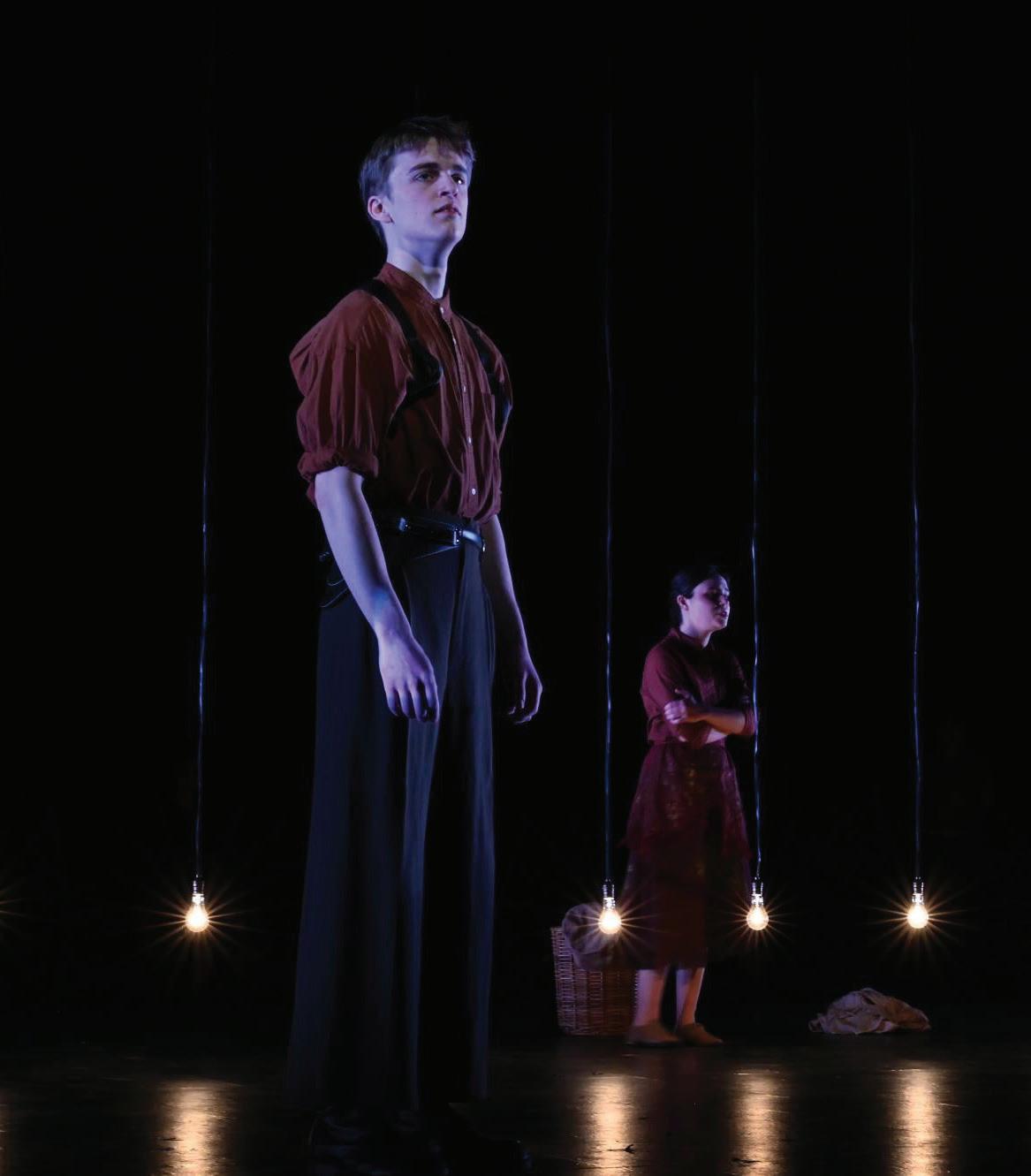
members described Brecht’s plays as very theatrical and self-aware.
“Once we started working with Katy, that’s when we kind of realized (Brecht’s) style of reminding the audience that they’re watching the show,” Callander said. He said one of the ways the cast accomplished Brecht’s style was by presenting “Caucasian Chalk Circle” as a “show within a show,” beginning with a prologue that makes the entire performance appear “impromptu.”
Another staple of Brecht plays is “stock characters,” where many actors play multiple characters who fit into an archetype, according to Communication junior Alex Arinkin.
Both cast members and stage design elements are used in a way that Walsh said creates a “complicated piece” that is “quite deceptively simple.”
After an abnormal production process and an “incredible ensemble undertaking,” Walsh said she cherished the experience.
“I think we’ve had a little less time to get to know one another, and so I’ve just been really grateful that everyone welcomed me with such open arms and generosity,” Walsh said.
thomashurley2029@u.northwestern.edu
A24’s ‘The Moment’ spotlights the impacts of fame
By BIANCA DISHMON AND ALEXANDER HERNANDEZ GONZALEZ daily senior staffers @alexbespeakin
This review contains spoilers.
After 2024’s wildly successful “brat summer,” Charli XCX is ready to leave the impactful album and its subsequent hype — namely its world tour — behind. Yet, as a well-known cinephile, there was only one right way to depart from this chapter: a mockumentary.
Released Jan. 30 in New York City and Los Angeles, A24’s “The Moment” explores what “Brat” could’ve been if XCX took a different route with the album. In his directorial debut, Aidan Zamiri captures a fictionalized version of the artist as she figures out how to keep her name relevant ahead of a massive tour.
The film opens up with a flash warning that goes straight into a montage of XCX dancing to her hit track “365 featuring shygirl” under strobe lights. Red, blue, green, white and black flashed in textboxes and even logos such as Aperol Spritz, Starface and SAG-AFTRA.
The film heavily relied on its party girl energy and transferred us back to XCX’s real-life “Brat” arena tour after the summer of 2024.
The fictionalized XCX and her team continue to promote “Brat,” even though they find it to be “cringe.” Notably, a special partnership with failing bank Howard Stirling results in a “Brat” credit card, which allows fans to get a free ticket to her upcoming tour.
Despite the deal being highly unfavored by XCX, she has to feed into the machine of cultural relevance spearheaded by her record label, Atlantic Records. A montage of chaotic moments amongst her manager Tim Potts (Jamie Demetriou), young fans and a limousine driver demonstrate the tumultuous interactions artists go through with fame.
After a meeting with A&R’s Jamie Singh (Rish Shah) and Josh Campbell (Michael Workéyè), Atlantic executive Tammy Pitman (Rosanna Arquette) agrees to an Amazon Music film deal between XCX and acclaimed director Johannes Godwin (Alexander Skarsgård).
Godwin joins XCX and her creative director, Celeste Moreau Collins (Hailey Benton Gates), in rehearsals. Arguments over creative control of the tour, vast “Brat” promotion and disrespect from Godwin spreads XCX thin amidst gearing up for the moment she and many have been waiting for: the tour.
The movie starts light-hearted and leans into humor, but XCX’s spur-of-the-moment trip to an Ibizan spa allows the audience to get a peek behind the curtain of her true feelings. Surprisingly enough, the straw that breaks the camel’s back is a chance encounter with Kylie Jenner.
Jenner professes her jealousy, masked by false admiration, at XCX’s opportunity to work with Godwin, whom she wanted to work with. Despite initially doubting Jenner, she was great in her cameo, and we were pleasantly surprised. She represented the falseness
of the entertainment industry and the underlying feelings of bitter competition that accompany it well.
Hearing the praise Godwin receives from others, XCX makes a rash decision to call one of the heads at her record label and express her excitement to work with him. Inadvertently, she makes the negotiating power of Collins moot, and the “Brat” tour of Charli’s dreams becomes a pop nightmare, fueled by glittery cigarettes and green hair clip-ins reminiscent of the slime from the Nickelodeon Kids’ Choice Awards.
As attendees of XCX’s tour, it was frightening to see what the tour could have become, but we enjoyed how dedicated to the development of a fictional, nightmarefueled tour the director and writers were.
Dismayed by what the tour has become, Collins tries to appeal to XCX about how there is still time to fix things. But with the tour starting in less than two weeks, XCX bites back that too much time and money have been spent and, begrudgingly, she must proceed with the tour as is.
While this is one of the movie’s heavier moments, the mood lightens again when a mannequin of XCX drops down from the rafters, which garnered some laughter from us and the movie theater audience.
XCX jumps headfirst into rehearsing with the new stage setup, but in the middle of her rehearsal, the representatives from Atlantic storm in furious about the artist’s misunderstanding of the “Brat” credit card, voiding the contract with the bank and putting the onus on Atlantic to pay for all the tickets advertised
as free.
This incident leads XCX to go on the lam for six days, sparking fear that she died. At the same moment, Godwin storms a meeting at Atlantic Records and stakes his claim to the already-shot concert footage. With the aforementioned shots of the tour thus far, Godwin makes a trailer for the “Brat Live!” concert, which has less of the grungy feel that is associated with XCX and more of a sanitized and saturated appearance evocative of 2000s Katy Perry.
Of all the ridiculous moments the director has had throughout the film, from the stage setup to his outfits, the trailer was by far the most ridiculous. The balance of humor with sincerity, as this scene in particular highlights, made the film more enjoyable and created a fun rhythm within it.
The film ends with XCX apologizing to Collins via voice memo, expressing her frustration about being stuck in the “Brat” era and wanting to grow out of it. She hopes that because the tour is not the one she dreamed of, nor what her fans are expecting, the “Brat” era will die out at the tour’s end.
Despite being a mockumentary, “The Moment” depicts the real-life trials and tribulations of massive success and the box it puts artists in. XCX is so much more than “Brat,” and this film conveys that marvelously.
b.dishmon@dailynorthwestern.com a.hernandez.gonzalez@dailynorthwestern.com
Thomas Hurley/The Daily Northwestern
Bad Bunny’s halftime show celebrates Latino heritage


By MADELYN MACHARE the daily northwestern
delivered.
For 13 minutes and 41 seconds, I forgot about the Evanston cold and was transported to the streets of Puerto Rico. The performance was a fierce fusion of dance and spirit filled with cultural symbolism.
Bad Bunny spotlighted various professional industries influenced by the Latino community, highlighting field workers, nail technicians and construction workers, among other professions. Most notable, though, was the fact that every one of these people, despite their career, gender or race, found their groove within the music.
I had to watch it at least five times over because I was too busy dancing during my first watch.
who took to the stage, singing a salsa version of her 2024 hit single “Die With a Smile.”
While she initially came as an odd surprise, Gaga gagged me. Though the song choice was jarring at first, the single was also incredibly fitting as a declaration of love when hope is at its lowest. I doubted her rhythm, but she was able to keep up with Bad Bunny during a short salsa break to “BAILE INoLVIDABLE.”
However, the most memorable surprise was the reveal of Puerto Rican icon Ricky Martin in the two white plastic chairs of the “DeBÍ TiRAR MàS FOToS” album cover. Martin delivered a stunningly emotional performance of “LO QUE LE PASÓ A HAWAii” that likely drew tears from tías around the world.
As the “King of Latin Pop,” revered for his hit single “Livin’ la Vida Loca,” Martin reminded viewers of how far the Latin music industry has come while singing a track centered on the threat of gentrification in his home, Puerto Rico.
The initial announcement of Bad Bunny’s performance came with extreme criticism from the Trump administration and high expectations from Latin Americans and U.S. Latinos, who were ecstatic to see their culture represented onscreen. By bringing perreo to the national stage, Bad Bunny
¡Acho, el Benito Bowl es otra cosa! On Sunday night, Puerto Rican reggaeton sensation Bad Bunny took the stage at the Apple Music Super Bowl LX halftime show with class and rhythm, showing you do not need to know Spanish to party with Latinos. Just one week after taking the Album of the Year award at the 2026 Grammys for “DeBÍ TiRAR MàS FOToS,” Bad Bunny headlined the Super Bowl as the first halftime show artist to perform almost entirely in Spanish.
The show opened within a set of Dominican Republic sugar cane fields before it brought us to the notorious pink “casita” from the “DeBÍ TiRAR MàS FOToS” world tour. Bad Bunny filled the house with what can only be referred to as the Latino Avengers: Chilean American actor Pedro Pascal, Puerto Rican reggaeton artist Young Miko, Mexican American actress Jessica Alba, Colombian singer Karol G, Dominican and Trinidadian American rapper Cardi B… and Alix Earle.
Earle’s presence as a social media influencer was mildly confusing when compared to big Latino names of the television and music industries. It ultimately added nothing. I would have preferred to see Lin-Manuel Miranda with a piragua cart.
Many fans speculated if Latino artists would join Bad Bunny on the field. I was praying Cardi B would grab a microphone, yet it was Lady Gaga
From the set of a classic Washington Heights bodega during “NUEVAYoL” to the kid sleeping on a set of chairs at the never-ending family function, any Nuyorican watching could feel right at home. In addition to tracks from his latest album, Bad Bunny also brought us some of his Latin trap and reggaeton throwbacks. He may have held back on a particular sexually suggestive line of “Safaera,” but the dancers certainly did not.
madelynmachare2028@u.northwestern.edu
Sophomore Vani Bansal creates shoe charm company
By ALEX INGVOLDSTAD
Communication and Weinberg sophomore Vani Bansal and her mother, Twinkle Bansal, co-founded shoe charm business Glimmr in their home country of India after seeing the accessory become popular in American fashion.
The almost 3-month-old business now has around 16 designs of stainless steel shoe charms, with the newest addition being 15 limited-edition sets of three Northwestern-inspired charms set to drop this week.
“A lot of people right now, as clothing becomes more basic and neutral, are relying a lot on accessories and add-ons to showcase their personality,” Vani Bansal said. “And I was thinking, in India, what usually happens is that while things become popular in the U.S., they take about two years-ish to actually travel to India in terms of popularity and trends. So I was like, ‘Why don’t I just bring it over?’”
When initially brainstorming the brand, Vani Bansal said she and her mom went through 3,000 elements and combinations to develop eye-catching color schemes and accessory themes for their products that include pins adorned with charms and the individual charms themselves.
From designing their own packaging to talking to vendors and posting product photos to the @ shopglimmr Instagram, the mother-daughter duo work together, even with an 11-and-a-half-hour time difference.
“I definitely think my mom running the actual operations and assembly back home has made it a
lot better for me because I mainly work on creating the content for the page and ideating new stuff,” Vani Bansal said. “So, it’s a lot more intangible, but it’s contributing to the greater vision.”
The idea began in Evanston and made its way to Bangalore, India when Vani Bansal brought it up to her mother in the summer.
Twinkle Bansal left her job before the start of Glimmr, and wanted something to fill her newfound free time. So, when her daughter asked her to be a co-founder, she said yes.
“One fine day (Vani Bansal) came up with this idea,” Twinkle Bansal said. “And I was like, ‘Okay, let’s get this going.’”
Twinkle Bansal said that while she and her daughter sometimes have disagreements in the process of co-owning, it helps them talk and spend more time together.
With each Glimmr co-founder being in their own generation, their individual perspectives allow for an all-inclusive market.
“It’s lovely to work with her,” Twinkle Bansal said. “She’s a Gen Z person. Their ideas are different. It’s interesting to get to know what the current people think. And plus, you don’t have to think twice before saying anything.”
During a speaker event at The Garage at Northwestern, a space for NU student entrepreneurs, The Garage’s executive director, Mike Raab, said he has witnessed the growth of Glimmr from its founding stages.
“(Vani Bansal) showed up very early her freshman year, and that’s always a signal that a student is very interested in entrepreneurship and innovation,” Raab said. “And then I think she started to explore other
By REGAN HUIZENGA daily senior staffer @reganmichele215
ideas that could bring her own venture to life and landed on Glimmr.”
Raab said Vani Bansal is someone who is “receptive to guidance and feedback.”
He also said that it’s fulfilling to see students gain confidence in their agency and ambition at The Garage.
“I’m excited to see her grow into the role of a CEO with a company that’s selling products and learning, how do I scale?” Raab said. “How do I close partnerships? How do I get into retail?”
With the support from The Garage and NU students, Glimmr looks to expand to Amazon and
beyond as the Bansals market to both their American and Indian audiences.
As for her upcoming NU collection, Vani Bansal said she hopes to see Glimmr’s potential with a student audience grow.
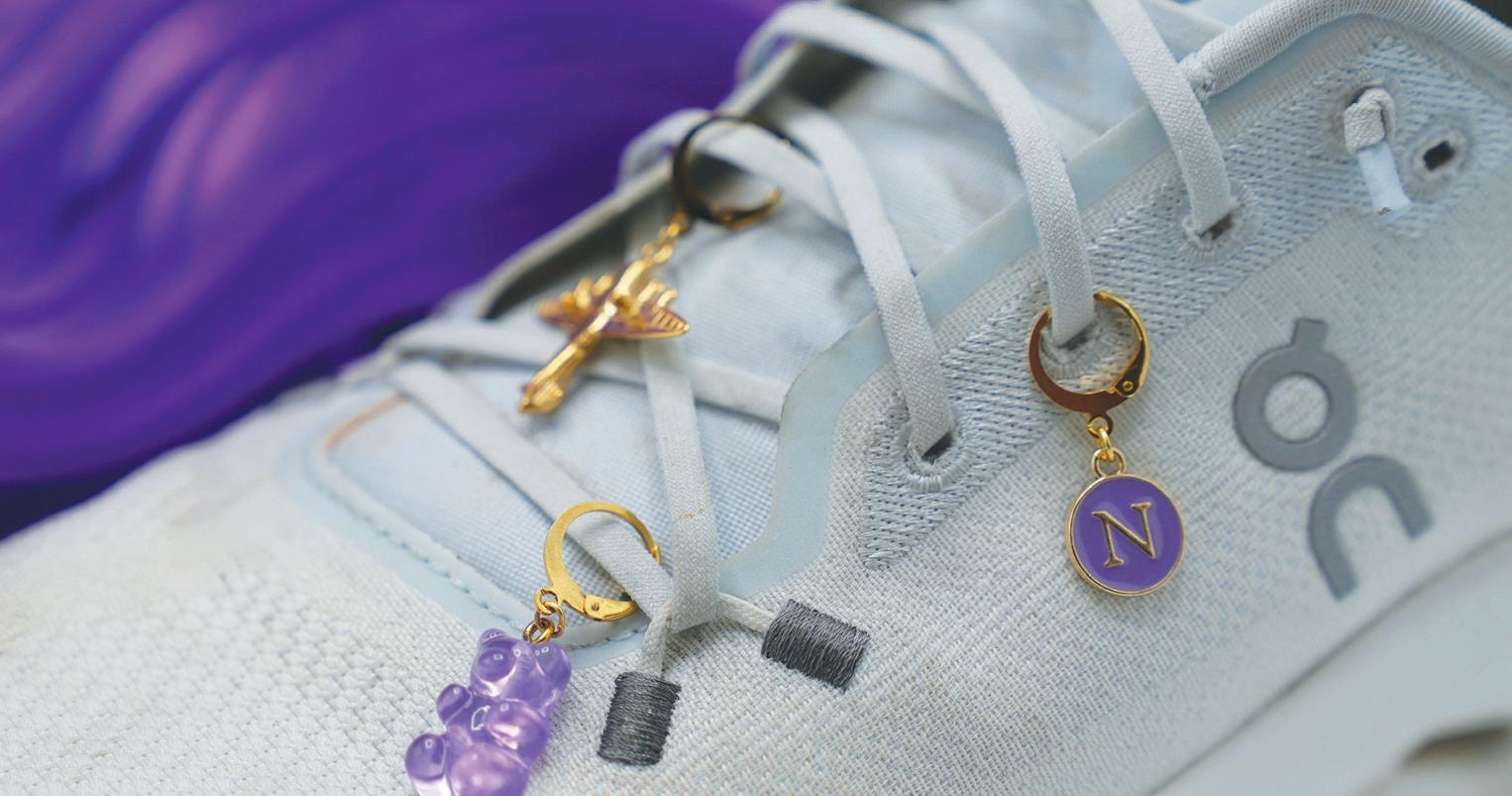
“I’m planning on doing an exclusive drop of 15 units, and it features a purple teddy bear, a golden plane, and a Northwestern ‘N’ that’s golden and purple and it’s going to be priced at $12,” Vani Bansal said. “I just plan on testing it as a limited edition drop situation and just having fun.”
a.ingvoldstad@dailynorthwestern.com
sophomore year when she submitted photographs she had taken in her grandmother’s garden. One of these photos was used in the cover art for the zine’s issue that year, she said.
Since then, Bhat has become more involved with the logistical work behind “Unfolded Zine,” she said. Yet, she continues to submit her work for publication, including a poem last year.
The zine is different from other publications on campus, since it focuses on creative and visual work rather than traditional journalism. Sheen said the zine allows for more freedom in its design, as well as its creative vision.
Submissions often come in the form of drawings, paintings, poetry and photography, she added.
For Bhat, “Unfolded Zine’s” importance lies in bringing people together “under the name of creativity to generate something that’s new and that’s ours,” she said.
interesting” to see the different types of work submitted. Feng is a designer on the zine’s core team and designs spreads for other artists’ work in a way that will enhance their pieces.
Feng added that she collaborates with artists to discuss creative direction before designing the spreads by creating moodboards to serve as design inspiration.
“What makes our zine different from most other magazines on campus is that it’s very heavily visualfocused,” Feng said.
This year, Feng submitted an essay that she had written in high school, which she said represented her personal growth.
Her essay was inspired by a nonfiction book she read and details the way she “realized how society works.” For her, the choice not to revise the essay and submit it as it was was meaningful.
Some artists pull from their existing work for the zine, while others create new pieces based on the theme, Bhat said.
With a collection including photographs, poems, drawings, essays and other forms of art, the publication is a space where APIDA students can come into conversation with one another through their art, Sheen said. SESP senior Kiran Bhat said she joined the zine her
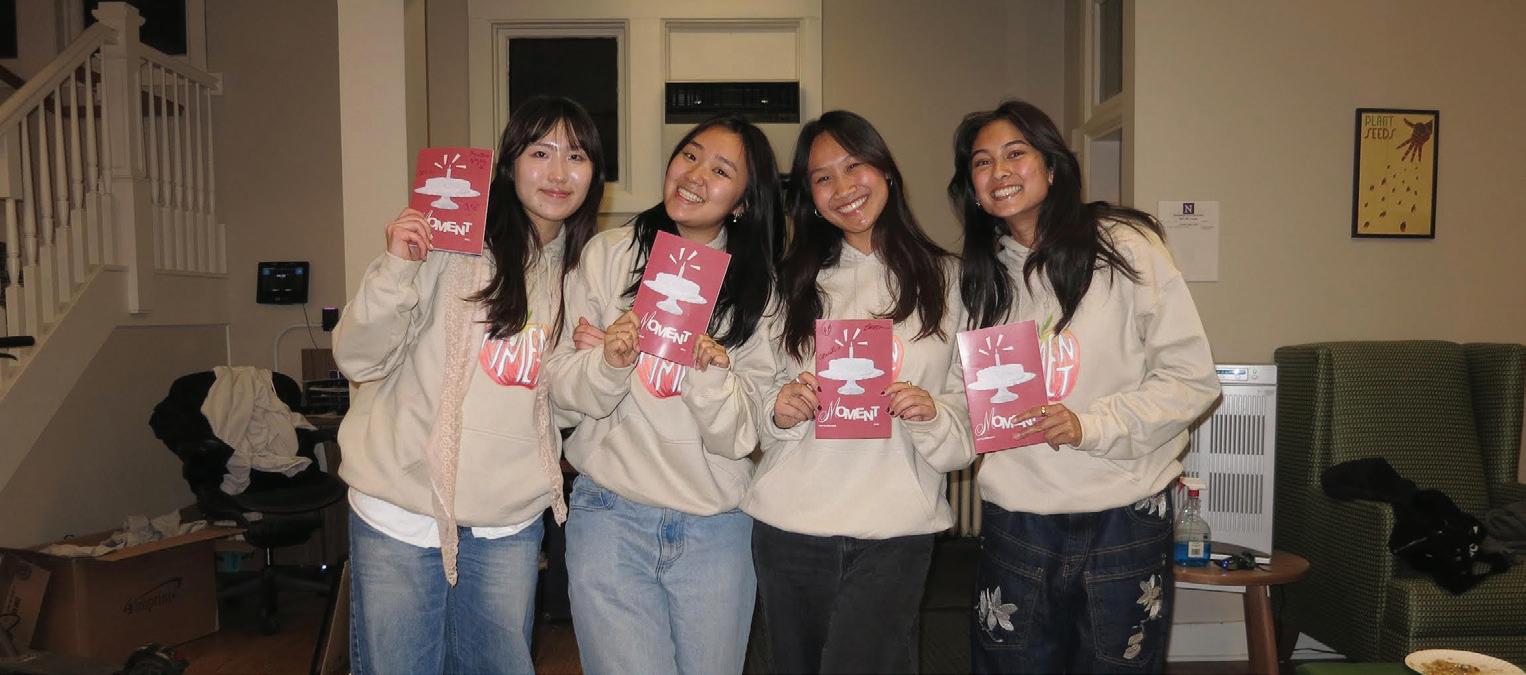
As the core team behind “Unfolded Zine” discussed the theme for their annual issue, Medill senior and former Daily staffer Michelle Sheen said the team wanted it to engage with the arts in a way that could be “rebellious.” The team eventually settled on “Outrageous” as the theme. Created by Northwestern’s Asian Pacific American Coalition in 2022, “Unfolded Zine” features visual art and writing by Asian Pacific Islander Desi American students.
Bhat said the team welcomes all types of submissions, and they are very intentional about making sure that everyone who submits gets at least a part of their work featured.
Choosing the theme is one way the team hopes to draw more submissions, Bhat added.
“We’re really intentional about creating a theme that we feel like people will relate to and produce important work about,” Bhat said. “We try to be as inclusive as possible.”
For Weinberg junior Christina Feng, it’s “really
Bhat said she appreciates that the zine creates a space for students to build community and create.
Sheen echoed Bhat’s sentiment, adding that “Unfolded Zine” focuses on bringing into conversation “everything that’s going on right now” in the world. It was particularly important to the zine’s core team that it used art as a way to be more political in its conversations, Sheen said.
r.huizenga@dailynorthwestern.com
Photo courtesy of Vani Bansal
Glimmr adds style to shoes with various curated collections, including an NU inspired set of charms.
Illustration by Nicole Cheah
Bad Bunny headlines the Super Bowl LX halftime show on Feb. 8 as the first solo Latino artist to perform.
Photo courtesy of Michelle Sheen
The “Unfolded Zine” core team will finish putting together the zine by the end of the winter, and its new issue will be launched and distributed this spring.
D65 welcomes Van Nostrand, talks transportation
By EMILY DISSANAYAKE
the daily northwestern
The Evanston/Skokie School District 65 Board of Education swore in its newest board member, advanced changes to transportation policies and reviewed several district-wide updates at its Monday night meeting.
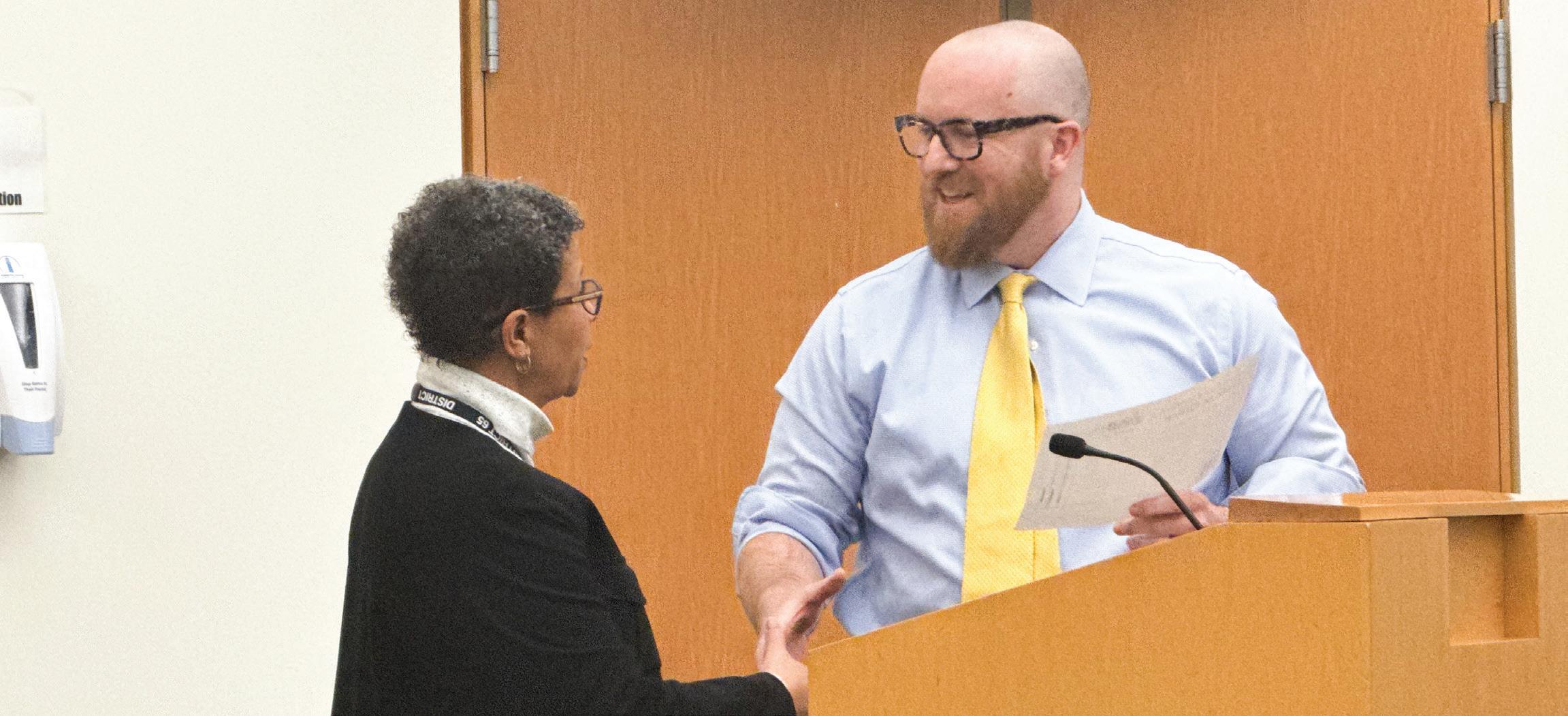
Following public comment, Board President Patricia S. Anderson officially swore in Chris Van Nostrand, filling the seat of former board member Omar Salem, who resigned in November.
Van Nostrand’s appointment to the board was announced in an email to families last week. He will serve for the remainder of Salem’s term, until April 2027.
Board agrees to change transportation policy, approves Foster construction projects
The board moved forward with standardizing transportation policy across the district, which currently operates under two transportation plans. The district is considering rescinding a board policy that sets different criteria for magnet school and neighborhood school students. Eliminating this policy would establish a uniform transportation policy, reducing the district’s transportation fee revenue by about $30,000, according to Data Management Specialist Chris Koutavas.
Under the uniform policy, K-5 students will have access to free transportation if they reside more than 1.5 miles from their designated school or if there is a “serious safety hazard” on their route to school. English learners enrolled in bilingual programs at schools beyond their assigned attendance boundary will also receive free transportation.
Koutavas and District 65 Transportation Coordinator Lou Gatta also presented the board with four different approaches to determine hazard roads. The options could cut the district’s transportation costs, which currently stand at $4.2 million, by amounts ranging from $200,000 to $1.1 million.
Two of the options also proposed changing school start times for elementary schools from 9:05 a.m. to 8 a.m. and middle and magnet schools from 9 a.m. to 8 a.m.
Afterward, Gatta and Koutavas said they will return to the board’s next meeting on Feb. 23 with evaluations on several roads not currently designated
hazardous under Illinois Department of Transportation guidelines.
The board also unanimously approved an agreement between the city and the district regarding several pedestrian safety projects near the Foster School. The city is now responsible for overseeing the construction of a new crosswalk at Dodge Avenue and Foster Street, as well as upgrading flashing LED signage at the Emerson Street crossings at Dewey Avenue and Hartrey Avenue. The district will pay an estimated $200,000 to the city for these projects.
Kirby Callam, director of strategic project management at the district, also updated the board on Foster’s construction progress. According to Callam, the project has totaled $10,540,807 so far, representing 28.7% of the total estimated cost of construction.
Board talks current student performance, future academic goals
Donna Cross, the district’s executive director of research, assessment, accountability and
data, presented a quarterly progress update which included data on student performance, attendance rates and other metrics across grade levels.
Cross reviewed data related to the district’s i-Ready curriculum, an online instructional program offering personalized math lessons. According to Cross, all grade levels saw an increased percentage of students performing “Early, Mid or Above Grade Level Placements” from the fall to winter.
In terms of College Readiness Benchmarks, 74% of grade 5-8 students met the Language Arts benchmark, consistent with last year’s percentage. The percent of grade 5-8 students meeting the CRB Math benchmark, however, was 45%, marking a dip from last year’s 49%.
Van Nostrand raised concerns over the district’s use of “internal benchmarks,” asking whether the district should continue measuring student progress based on previous performance rates or whether benchmark goals should instead aim for perfection.
Cross responded by emphasizing the importance of running “strategic goals” that are “attainable” and “relevant to the current state we’re in.” Van Nostrand
later said he thinks focusing on the “realistic part” can sometimes represent “a little bit of an unnecessary constraint.”
The presentation also included data on behavioral incidents and out-of-school suspension rates. Black students were disproportionately disciplined, prompting Board Vice President Nichole Pinkard and member Mya Wilkins to question the district’s current disciplinary strategies.
An interactive data dashboard will soon be available on the district’s website, providing school-level and district-level metrics, including enrollment, attendance and assessment data, Cross said.
Superintendent Angel Turner said she was “really excited” the board discussed student performance instead of the district’s Structural Deficit Reduction Plan. She credited district staff members and educators for “working extremely hard to bring this along.”
“When we see the data start to move, I just really want to celebrate them publicly because we don’t get a chance to do that enough,” Turner said. emilydissanayake2029@u.northwestern.edu










Emily Dissanayake/The Daily Northwestern
Monday’s meeting marked Chris Van Nostrand’s first, completing a board that had six members for about three months.
is time of year can be special for Northwestern. Just last season, then-junior Dianna Lee was st-pumping on the 18th green of the North Course at the Omni La Costa Resort & Spa and running






























































SPRING SPORTS SPRING SPORTS SPRING SPORTS 2026


























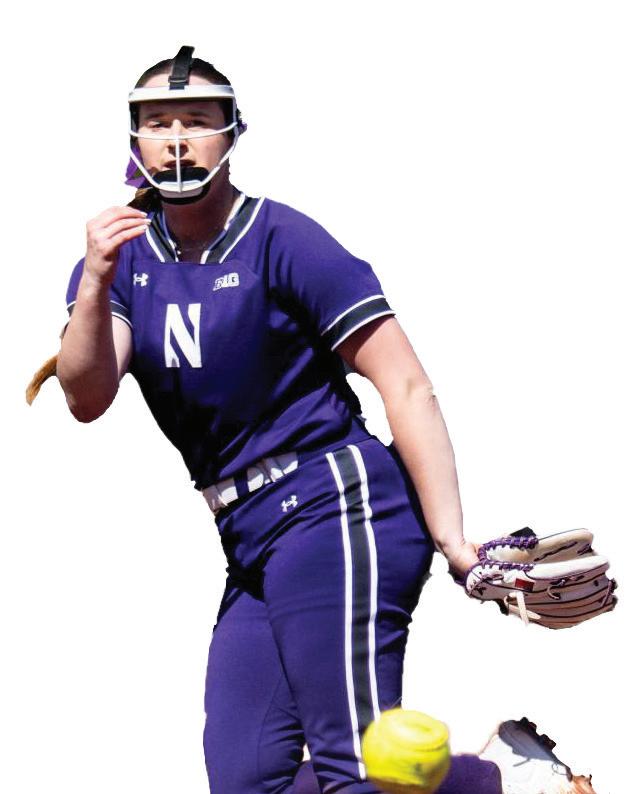






to her teammates a er sinking a National Championship-winning pu against No. 1 Stanford. Around the same time, lacrosse was pu ing the nishing touches on a thrilling 12-11 comeback victory against Boston College to make the National Championship game before it ultimately lost to No. 1 North Carolina. e spring sports season has produced noteworthy moments for the Wildcats, and this year is shaping up to be no di erent. Women’s golf is defending its national title, lacrosse is looking to avenge its championship loss and track is back. All of NU’s teams have exciting stories, and I’m excited to share some of them in our Spring Sports Spotlight. Our wonderful team worked hard to connect with numerous coaches, players and alumni to bring these stories to life. I also have to give a special shoutout to my assistants, Sid Sivaraman, Yoni Zacks and Charlie Perlman, for their tremendous e ort. We hope you enjoy!










































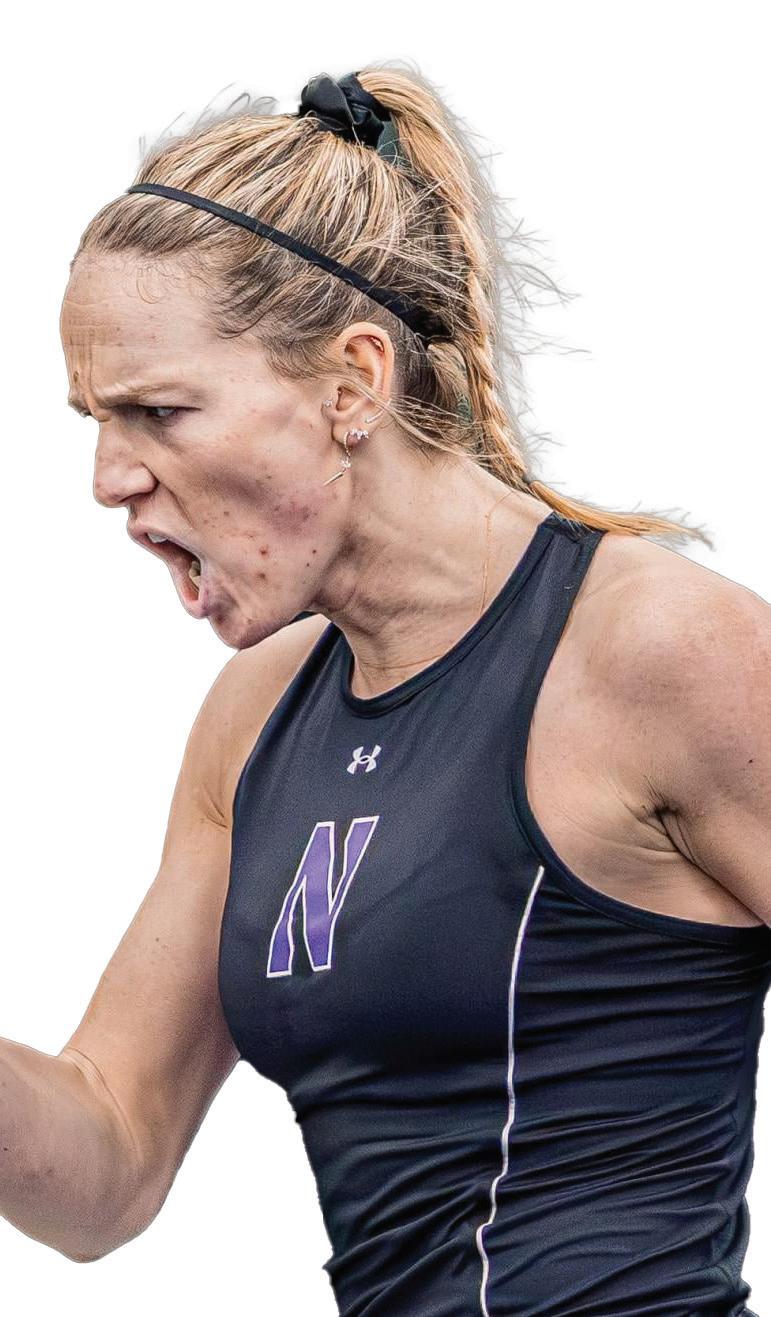

SIDDARTH SIVARAMAN



@sidvaraman
BACK O N TRACK
Women’s
Track Returns After 38-Year Hiatus With Alumni Support


Content warning: is story contains mentions of eating disorders
It was the summer of 1987. Carol Boyd Earls, then a rising junior on Northwestern’s women’s cross country and track teams, was about to receive a call
she would never forget.
Her father, a Michigan track alum, who spurred her love for running from a young age, told her someone was on the phone. It was Cynthia Pa erson,
NU’s assistant director of athletics.
“I was si ing at my kitchen table, and she said, ‘I’m sorry, the program is being cut,’” Boyd Earls recalled. “‘We’ll pay your scholarships if you want to stay. If you want to leave, we’ll give you immediate release, so you don’t have to redshirt.’ at was the conversation. She just hung up.”
On July 30, 1987, then-University President Arnold Weber announced that six NU varsity sports — men’s and women’s cross country, indoor and outdoor track — would shu er at the end of the 1988 spring season.
e women’s cross country and track team, which had already faced signicant adversity under two coaches, was about to go through even more hardship.



e ’Cats come ‘full circle’ in return to the circui
In its last season, in 1987, the team dropped to h in cross country and matched the previous year’s ninth-place nish at the conference indoor track championships. Earls scored NU’s only point in the outdoor conference championships with a sixth-place e ort in the 5,000-meter run, and in their nal hurrah, the ’Cats nished at the bo om of the team standings.
Earls transferred to Michigan for her senior year. Her longtime teammate, McNa , drove up to one of her indoor track meets from Lake Forest Hospital, where she was learning physical therapy. en, the team dri ed apart and moved on with their lives, McNa said, and old memories were put aside.
Women’s cross country returned eleven years later. Now under coach Miller, its 18th-place team nish at the NCAA Championships this fall was its best since the eld was expanded to 32 teams in the program’s rst year back.
A er taking charge in the summer of 2019, Miller started a newsle er in her third month on the job, writing to recent alumni and donors with meeting recaps and inside scoops on team news. Old coaches started to reach out with alumni to add to her email list, she said, and word spread rapidly about
the team’s ascendance.
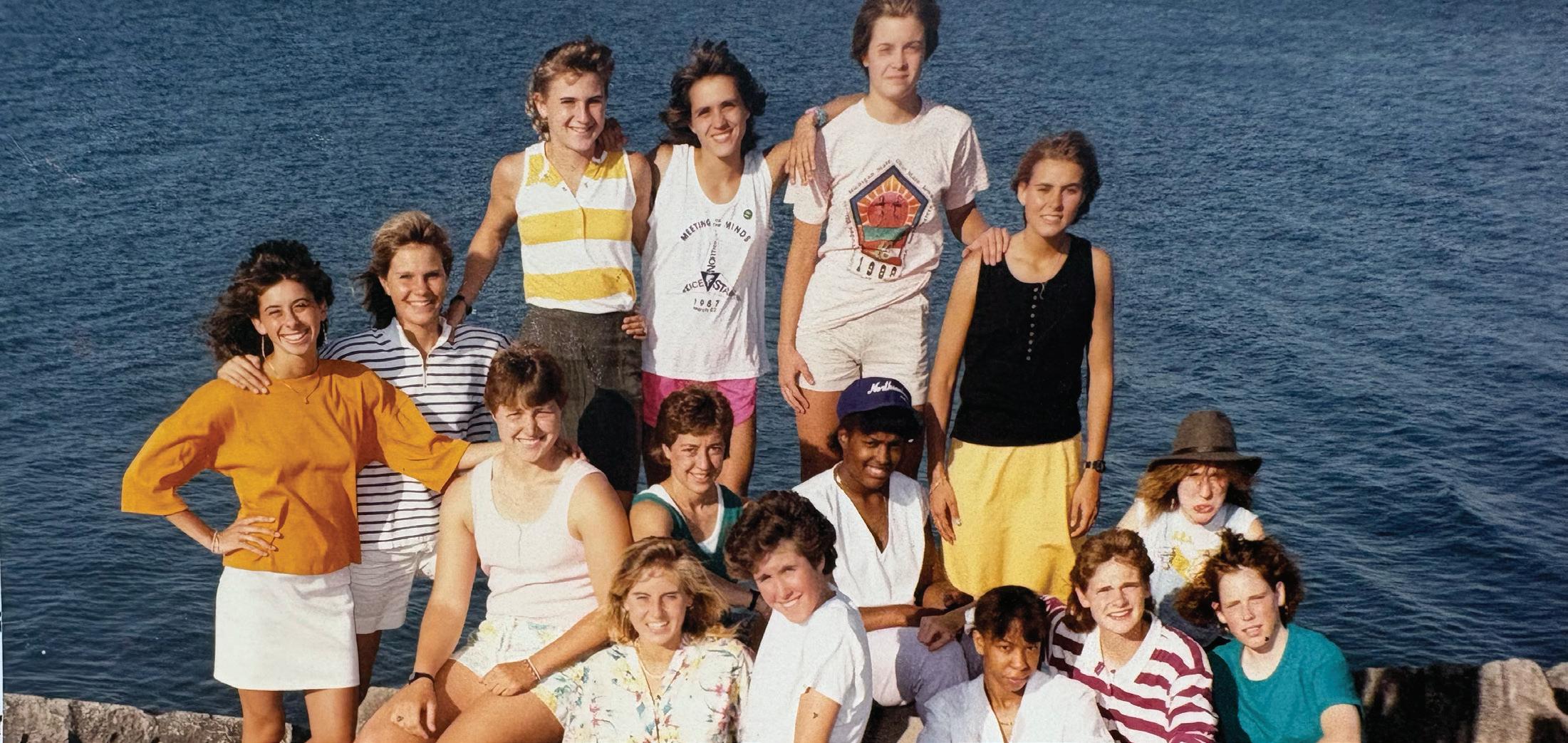

But an interim coach reset the culture in the team’s swan song, giving team leaders new love for the sport as it was about to disappear.
Fast-forward 38 years to2026, and NU has o cially returned to Division I women’s indoor and outdoor track for the rst time since Earls’ junior year. Now under the leadership of seventh-year cross country coach Jill Miller, the ’Cats are preparing for a comeback to postseason indoor track this winter and outdoor this spring — and reuniting a long-forgo en alumni base in the process.
“Northwestern is really back on the map,” cross country and track alumna Sue Keeney McNa (Weinberg ’88) said. “ ey’ve surpassed what we were

able to do.”
How NU got back on the blocks
A er women’s cross country was brought back in 1997, NU coaches began sending cross country runners to track meets to keep them in shape during the winter and spring, starting a years-long e ort to bring the ’Cats back to ocially competing in NCAA track. Former coach April Likhite secured NCAA sponsorship for the team in 2015, allowing the team to travel farther for meets.

It would be another 11 years before NU track cleared the nal hurdle and became an entirely school-sponsored sport. e 2025 House se lement, which put restrictions on the number of scholarships an individual program can provide, was what made the di erence, Miller explained. eprogram’s success on the cross country course helped garner support from the athletic department, which didn’t want to lose around 30 to 40 percent of the team because of the House se lement’s new roster restrictions, Miller said. A fully edged track team provides enough scholarships to keep distance runners who can swing between all three sports while helping Miller recruit track specialists, she added.
Senior distance runner Mia Mraz said the team had “lo y” long-term goals when she rst joined the team, and their patience over the years has now paid o . “ at commitment to slow progress and the focus on the long term lets us achieve results that people never would have


She also teamed up with NU’s communications sta to put together a record book that accounted for the old team’s run times. Even a er realizing a ood had destroyed team records stored in the athletic department’s o ces, Miller said they si ed through old records in the University archives, and a reborn alumni network continues to dig mementos out of worn scrapbooks. e team plans to publicly release the record book at the end of this season.
Meanwhile, the 1987-88 women’s cross country and track team began to reconnect as prominent female runners publicly recounted their experiences navigating a toxic environment under Nike Track and Field. McNa said she didn’t tell her parents about her experiences until they read national championship-winning distance runner Lauren Fleshman’s 2023 memoir, “Good For A Girl: A Woman Running in a Man’s World,” and realized the full extent of who John Caprio i, her former assistant coach at Northwestern and eventual Nike executive, had become.
It had felt like Caprio i had paid special a ention to her weight, but as she exchanged stories with her former teammates over Facebook, McNa
realized she wasn’t the only one.
“When we all started talking about it, it’s like, ‘Oh, man, I didn’t realize that you were also going through it’ … and how we didn’t talk about it, but
yet we wish we had,” she said.


Now a high school track coach in Massachuse s, McNa said she can proudly tell her runners that NU supports all three sports, not just cross country. She also uses her postgraduate training in physical therapy to make sure her athletes know the long-term dangers of disordered eating.
For former distance runner Jackie Arnold Wiegand (Medill ’88), a walk-on who rose to become a team captain by her senior year, the ght she put in to wear the NU singlet has nally been reciprocated

“It was kind of a transformative experience for me just to be part of a team, to work hard every day and sacri ce a lot just to represent the team and school well,” Wiegand said. “So, to have track and eld come back to Northwestern

feels really full-circle.”

expected,” she said.
com

Illustration by Nicole Cheah
Photo courtesy of Sue Keeney McNatt
UP-AND-DOWN OPENING WEEKEND SPARKS WILDCATS’ NEED FOR SYNERGY
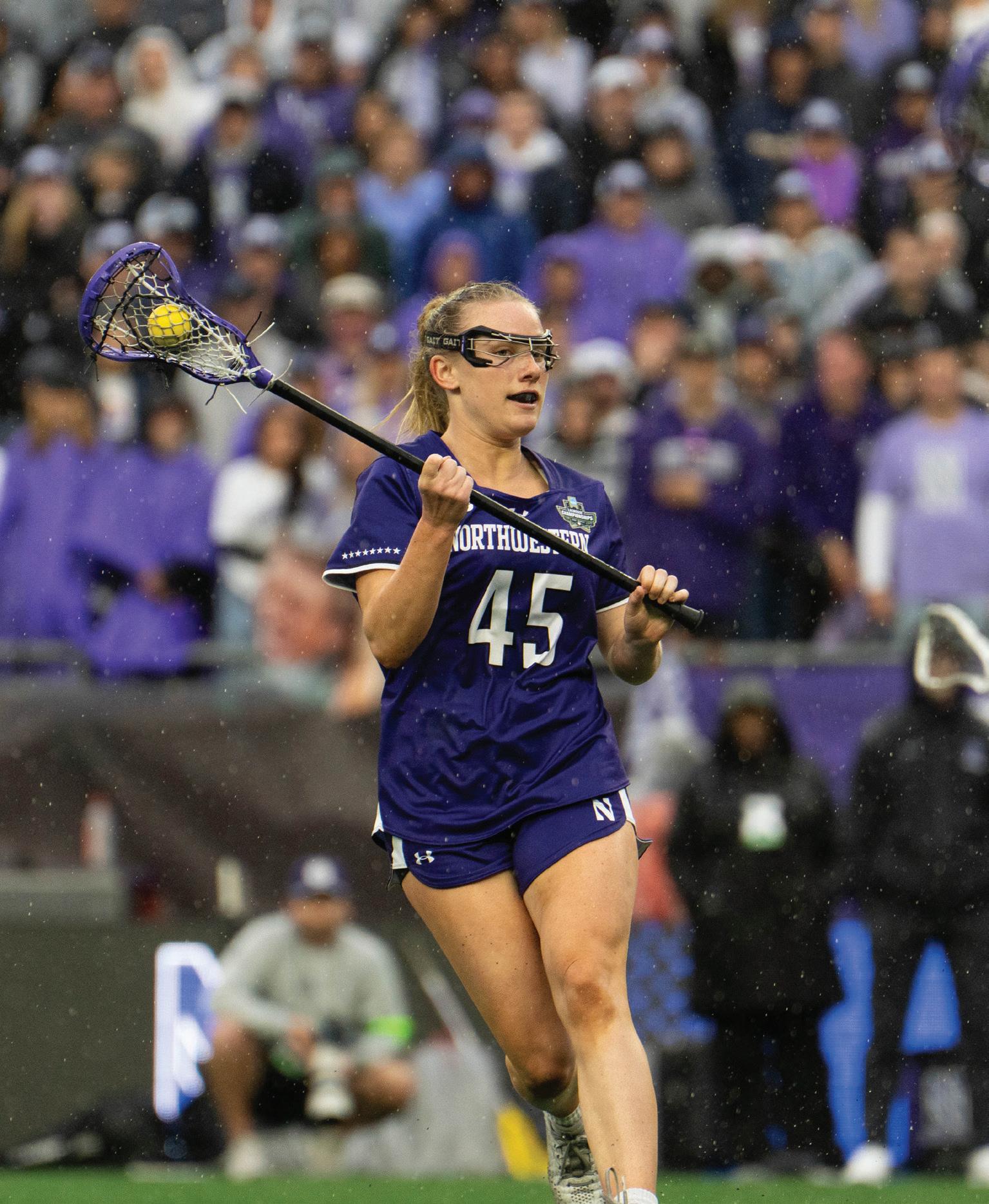
By JONAH MCCLURE daily senior staffer @jemccl125
No. 2 Northwestern entered this season with high expectations after falling in the national title game. It seemed well on its way back to the Final Four after a strong win over No. 3 Boston College on Friday.
But any and all momentum was halted after Monday’s upset 10-9 loss to Colorado.
The game marked the Wildcats’ (1-1, 0-0 Big Ten) first home loss to an unranked team since 2002. The Buffaloes (1-0, 0-0 Big 12) stifled an NU offense that scored 20 goals just three days prior.
Coach Kelly Amonte Hiller said the team looked so different on the other end of the weekend because of the effort it displayed on the field.
“It’s really about going and competing as hard as you can from wire to wire, and I’m not sure we did that today,” Amonte Hiller said postgame Monday.
Between the contests on Monday and Friday, the ’Cats’ offense scored 11 fewer goals, attempted 10 fewer shots and committed eight more turnovers.
NU also lacked a hot start on Monday, scoring its first and only goal of the first quarter after 10 minutes of play. On Friday, the ’Cats nabbed two goals in the first five minutes and won the first quarter 7-2.
The offensive unit, as expected, has been run by senior attacker Madison Taylor, but Amonte Hiller may be looking for more from Taylor’s supporting cast.
During Friday’s win, Taylor scored a team-high five goals, emblematic of performances from her record-breaking 109-goal season last year. Her passing and off-ball play were key for the offense to roll even when she couldn’t find scoring opportunities. She tallied four assists and sophomore attacker Aditi Foster and junior midfielder Taylor Lapointe stepped up as secondary options, scoring four and three goals, respectively. Freshman
attacker Kate Ratanaproeksa has also made an impact, controlling at least two draws in each game.
Though Taylor posted another strong performance on Monday, she received little help from her teammates. She scored or assisted on eight of NU’s nine goals and almost singlehandedly won her team the game with a four-goal third quarter. Taylor caused two turnovers and corralled five draw controls.
In the game’s final minutes, the veteran attacker found herself contributing on defense, looking to swing the momentum rather than coming off the bench with the rest of the attackers.
Taylor wasn’t perfect against the Buffaloes, committing five turnovers for just the sixth time in her career. But she scored six goals on nine shots, while the rest of the ’Cats scored three goals on 21 attempts. It has only been two games, and while the attacking group is full of newcomers, NU will need to find some consistency alongside Taylor.
The defense is also headlined by a number of new players, specifically graduate student defender Annabel Child, freshman defender Mckenzie Brown and graduate student goalkeeper Jenika Cuocco. Cuocco has made 11 and 16 saves in the two games, while conceding 12 and 10 goals, respectively. The unit will likely mesh and progress throughout the season, but after the first two games, it will likely look to force more turnovers.
After the departure of midfielder Sam Smith, the draw was an unknown for the ’Cats. But Smith’s sister, redshirt sophomore midfielder Madison Smith, has stepped up, grabbing seven draw controls in each of the first two games. Through two games, NU has mostly looked like the national championship contender it was expected to be. The ’Cats have until Saturday, when they face Army, to begin improving on its struggles.
“They all have to look in the mirror and figure out what changes they can make,” Amonte Hiller said.
jonahmcclure2028@u.northwestern.edu
WOMEN’S LACROSSE
MADISON TAYLOR IS CHASING
SOMETHING BEYOND ANOTHER RECORD, BRINGING POSITIVITY TO FIELD
By JOSH SINGER daily senior staffer
The NCAA record for most goals in a season is 109. The second-highest single-season point total in NCAA history with 158. But to senior attacker Madison Taylor, who set both records last season, the accolades mean next to nothing.
As Taylor’s Northwestern career comes to an end following this season, her focus is on bringing a positive, “contagious” energy and doing whatever it takes to lead the team to victory after losing back-to-back national championship games by a combined five goals.
“I’ll do whatever the team really needs me to do to be successful,” Taylor said. “I’m willing to do anything for the team to win.”
The two-time Tewaaraton Award finalist and her fellow seniors have won 59 games thus far in their careers, including a national championship in 2023.
Taylor said that she is looking forward to the “best part of the year” and making memories with her teammates.
Coach Kelly Amonte Hiller said that it’s “rare to have an elite player” with such a team-first mentality.
“Any day you have Maddie Taylor on your team is a good day,” Amonte Hiller said. “She is just an elite competitor. She pours her heart and soul into this game, and it’s pretty fun to be around her ... I think she’s really developed into a leader.”
The Wildcats (1-1 0-0 Big Ten) have had an intriguing start to their season, crushing No. 3 Boston College 20-12 on the road Friday before losing to Colorado 10-9, their first home game against an unranked opponent since 2002. Taylor did not record a shot in the final five minutes of
the game.
Last season, Taylor led an attack that scored fewer than 10 goals just three times in 22 games. Through two games this season, Taylor has 11 goals and six assists, both higher than her pergame averages last season.
Taylor comes from a long line of prolific ’Cats scorers, the most recent being NCAA all-time leading scorer Izzy Scane. During the offseason, Taylor and other returners created team chemistry with the four incoming transfers and nine freshmen.
With 2025 AAC Attack Player of the Year Maddie Epke and 2024 All-ACC First Teamer Olivia Adamson joining the offense, NU’s attack should be equally strong if not stronger than last season.
“I think our whole attack unit has just really worked on developing chemistry and just applying some of the concepts that coach has been talking about, and it’s been so fun just to learn from them,” Adamson said.
Taylor and this year’s senior class will be the first with an opportunity to bid adieu to college lacrosse at home if the ’Cats are able to advance to the national semifinals. NU hosting the semifinals and championship marks the first time the women’s college lacrosse championship has been held in the Midwest.
Taylor said she is going to enjoy every last moment of the season with her teammates while still keeping her competitive spirit.
“It’s been like the best experience of my life, and I’ve just met my best friends throughout these past four years, and I’ve learned so much as a person and as a player,” Taylor said. “I’ve learned so much from the people above me and below me, and my coaches and it’s just been the best experience of my life.”
j.singer@dailynorthwestern.com
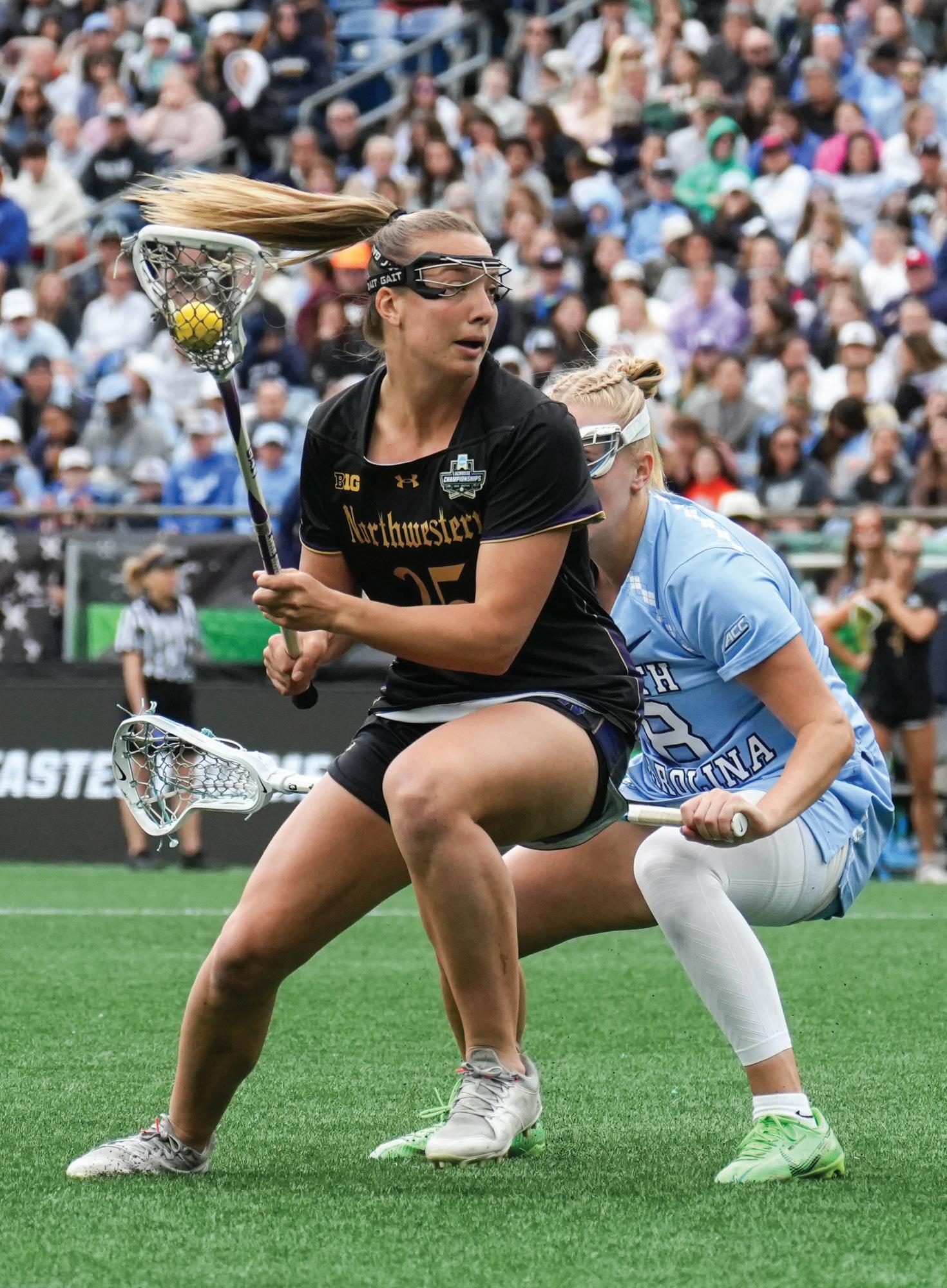
Daily file photo by Jonah McClure
Daily file photo by Anna Watson
REIGNING NATIONAL CHAMPION TEES OFF SEASON LOOKING FOR NATIONAL
By AVANTIKA SINGH daily senior staffer
Last year, Northwestern wrote itself into history, upsetting then-No. 1 Stanford to claim the program’s first-ever national championship. The team finished the regular season ranked outside the top ten but competed its way to the third seed in match play before taking home the trophy in the final round. The team’s 2026 spring season is now in full swing, signaling the start of its quest for a repeat national title.
The ’Cats entered spring play ranked 20th nationally. After finishing seventh out of 18 teams at the Purdue Puerto Rico Classic from Feb. 1 to 3, they slipped to No. 25. The rest of their schedule pits them against the best programs in the country. The ’Cats will be the second-highest-ranked team at their next tournament, the Spartan Suncoast Invitational in Sarasota, Florida from Feb. 15 to 16. They’ll face ten programs ranked above them, including five in the top ten nationally, at the Darius Rucker Intercollegiate in Hilton Head Island, S.C.the first week of March.

After the Darius Rucker Intercollegiate, the ’Cats will compete at the PING/ASU Invitational in Phoenix, Arizona and the Therese Hession Buckeye Invitational in Columbus, Ohio before going out west to the Big Ten Championships in Glendale, California.
If invited, they’ll move on to the NCAA Regionals, then to the NCAA Nationals.
NU lost two golfers from last year’s championshipwinning roster, graduating senior Lauryn Nguyen and sophomore Elise Lee, who transferred to USC after playing for the ’Cats her freshman year.
This season, NU gained freshman Lauren Lee, who made her debut at the Windy City Collegiate Classic in September. Arianna Lau also made her collegiate debut for the ’Cats before leaving school with the intent to go professional in January.
Still the squad has retained key pieces from its 2025 championship run.
Senior Dianna Lee, who made the putt that clinched the NU national title win over Stanford, captured her second career victory at the East Lake Cup in October, while the team made it to the final round before losing to then-No. 3 Oregon. Her performance awarded her Big Ten Golfer of the Week. At the Windy City Collegiate Classic earlier that month, she tied for sixth place, and the ’Cats finished tied for team champions. She opened spring play in a threeway tie for fifth at the Purdue Puerto Rico Classic.
An All-Big Ten First Team honoree and All-American Honorable Mention, junior Ashley Yun finished 19th at the NCAA Championships and will be looking to bring NU back to nationals. She matched her career-low score and tied for tenth at the ANNIKA Intercollegiate and won her semifinal match at the
SOFTBALL
East Lake Cup before losing in the championship. Although sophomore Megan Meng didn’t compete in match play at the NCAA Championships last year, she started this season strong, scoring a careerlow four-under-par at the ANNIKA Intercollegiate. She won her semifinal match at the East Lake Cup and lost to the No. 1 amateur in the world, Oregon’s Kiara Romero, by just one hole in the championship match.
Last season, sophomore Hsin Tai Lin saw six top25 finishes and received the Big Ten Sportsmanship Award. She earned her best result of the fall season, a 16th-place finish, at the East Lake Cup.
Senior Jiayi Wang made one appearance in the fall, finishing 28th at the Windy City Collegiate.
The squad’s sole freshman, Lauren Lee, may be new to the team, but she’s certainly not new to winning. A four-time MVP at Mater Dei High School and four-time First Team All-Trinity League selection, she placed second at the AJGA Brandon Wu Championship and was a California Interscholastic Federation state finalist in high school.
The road to nationals will not be an easy drive. If the ’Cats want to two-peat, they must pull off another upset. Stanford, NU’s rival from last year’s final round, has once again carved out a place for itself at the top of the NCAA rankings.
Last February, the ’Cats were ranked ninth in the nation. This February, they sit at No. 25, creating a much larger leap to national champions in May compared to last year. NU has three months to prove they can do it.
avantikasingh2028@u.northwestern.edu
CULTURAL CONTINUITY TO STADIUM ADVOCACY: SENIORS READY FOR 2026 SEASON
By AUDREY PACHUTA daily senior staffer @audreypachuta
There are certain things someone couldn’t possibly know about Northwestern’s softball program unless they are a part of it.
Coach Kate Drohan finds that it’s the cultural continuity, the idea that the same things that defined the team decades ago are still true today, which she attributes to the extensive and committed team alumni network.
Senior infielder Kansas Robinson, a player who’s carried one of the team’s hottest bats for three seasons, thinks it’s about how individual personalities work toward a collective purpose. To her, the Wildcats wouldn’t be the same without graduate student infielder Grace Nieto’s understated sense of humor or the fact that senior infielder Bridget Donahey “loves the rain” because she never saw enough of it growing up in Arizona.
And for senior infielder Kelsey Nader, the program’s secret ingredient is simple: striking the balance between enjoying child-like fun and working hard when it matters most. If you ask her, it’s a skill she believes NU has artfully mastered.
“The ‘six-seven’ jokes never stop with us, and neither (do) the ‘your mom’ jokes,” Nader said. “Any opportunity to find a crack and laugh is a really good opportunity for us.”
Quips aside, the four players embarking on their final seasons after spending their entire collegiate careers in Evanston have been integral to the team’s success. Robinson, Nader, Donahey and Nieto have a combined 480 hits, 284 RBIs and 65 home runs in a
little more than three seasons.
Since 2023, they have helped NU rack up 110 wins, along with an NCAA Tournament appearance each year.
Nieto, who missed the entire 2024 season with an injury, is the only remaining player from the ’Cats 2022 Women’s College World Series team, something Drohan said is “impactful,” particularly for the freshman who look up to her.
Despite their already illustrious accomplishments on the field, the veteran group knew they still had a lot to work on and wanted to do whatever it took to make the 2026 season their best yet.
Over the summer, the four players — along with fifth-year transfer Abby Harvey, who joined the team in July —- participated in 10 weeks of Zoom calls with the coaching staff to hone their leadership skills. Together, they read “The Team Captain’s Leadership Manual” by Jeff Janssen and discussed their own strengths and weaknesses as leaders.
Robinson said spending intentional time with players she already knew intimately as friends helped them connect in a new way.
“We were already very close, but sometimes being that close prevents you from being vulnerable,” Robinson said. “So I think we were just able to connect on a deeper level.”
Drohan mentioned these types of calls have been rare during her 24 years as head coach, but after seeing how productive they were, she plans to host them every offseason moving forward. She added this group of seniors was uniquely poised to take on the extra summer commitment because “their investment is really high” in the program’s success both before and after they graduate.
For the seniors, ensuring NU’s continued growth
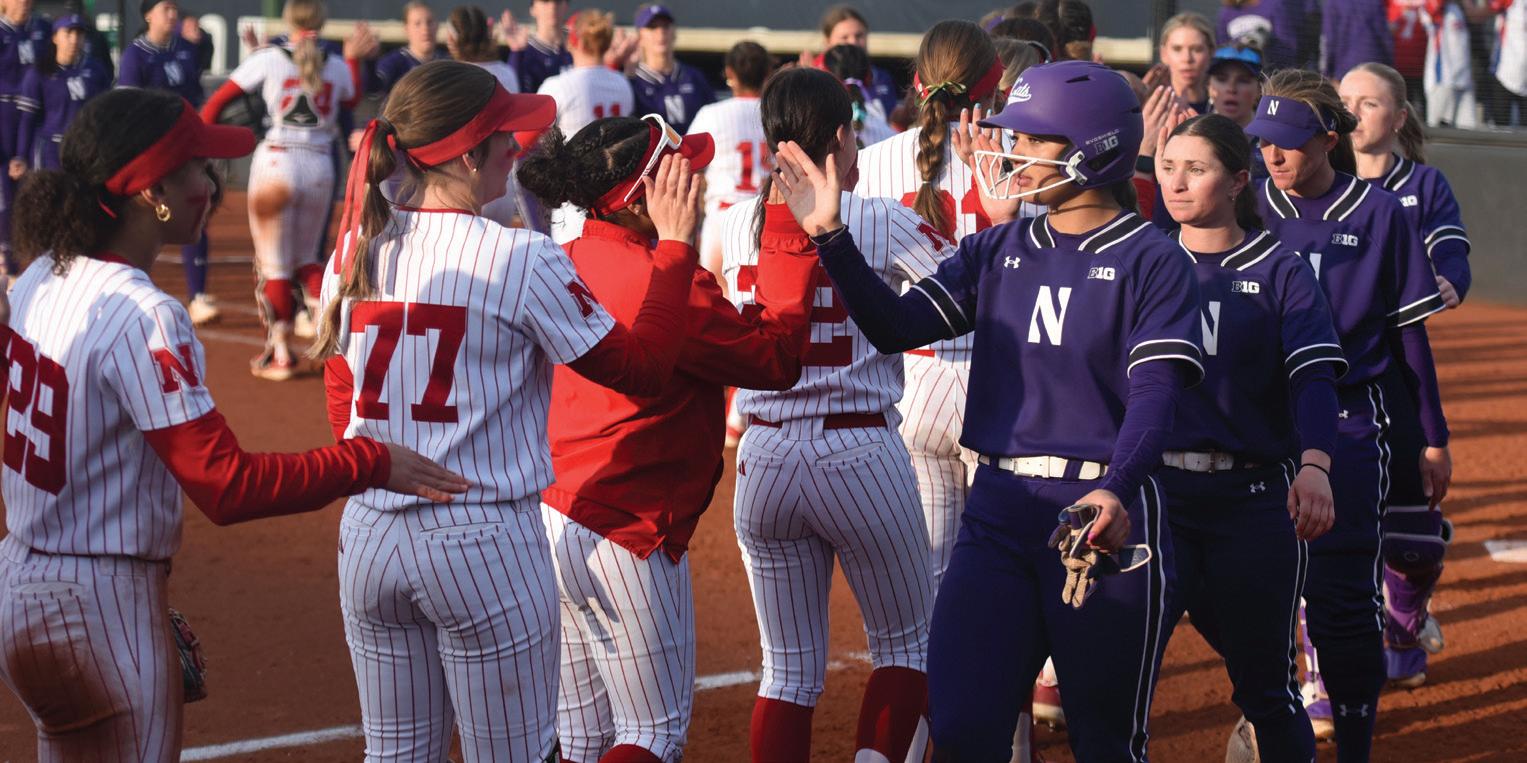
also meant advocating for the construction of a new field, which is now underway but will not be complete until next season.
In September, most of the team gathered at Lorraine H. Morton City Hall for a City Council meeting that considered plans for the new stadium. During the public comment session, Robinson offered an impassioned plea for the importance of uplifting women’s sports on behalf of the athletes.
“I would give that speech 100 times over,” Robinson said. I think it’s just really important for not only Northwestern softball, but obviously, women’s sports in general, for us to get the facilities we deserve.”
Drohan said Robinson was the perfect person to
MEN’S GOLF
advocate on behalf of the program because she is “so much more than a ball player,” adding that she — like many of her other veteran teammates — “has strong ideas and is willing to fight for them.”
Both Robinson and Nader admitted that it will be weird to play their final home games at The Ballpark at Rosemont instead of their own stadium, but said they are glad their legacy will outlast them after they graduate.
“Northwestern Softball has been a top program for some time now, so we deserve that field,” Robinson said. “The girls coming in deserve that field.”
audreypachuta2027@u.northwestern.edu
NEWCOMERS CONNECT WITH TEAM DURING ARIZONA TRIP, SHARE HOPES FOR SPRING
By YONI ZACKS the daily northwestern @yonizacks
Freshman Isaac Lee grew up playing golf with plastic clubs, following his father around the course. Now, he’s traveling across the country to play collegiate golf at Northwestern.
The Hong Kong native is one of three newcomers to the Wildcat family, along with fellow freshman Monty Holcombe and Vanderbilt transfer redshirt sophomore Rowan Sullivan.
Despite it being their first year on the course together, the trio already feels close to their teammates.
One reason for that closeness was the team’s outing to Scottsdale, Arizona, from Jan. 24 to 25. The training trip allowed the team to get some swings in during the harsh Evanston winter.
“We made some really good memories,” Lee
said. “I had a lot of fun.”
Another trip the team took was to Lake Wales, Florida for the Gantner Cup against Michigan State. The windy conditions and cold weather prepared the team for the inconsistent weather the spring season brings, Lee said.
The Evanston weather was one of the first changes Sullivan felt. NU spends its winter season training in Patten Gymnasium, he said, with a few practices held in Ryan Fieldhouse.
Having limited opportunities to train on an actual course has made Sullivan appreciate the chances he gets.
“Being able to get a little bit of competitive juice flowing while we’ve been sitting inside for a long time is really important,” he said.
The trip also showed Sullivan the team’s fun side, with a highlight for him being the moments they spent together off the course.
Sullivan said the team hopes to replicate the community built under former players Luke
Donald and Matt Fitzpatrick. He emphasized Donald’s impact as a two-time Ryder Cup-winning captain and the community he built in the Ryder Cup.
At the Ryder Cup in September, Donald reiterated his belief that community is the key connector of his team.
While the moments off the course focused on bonding, the team also spent some time competing. Their time on the course was used for their qualifiers, which determined the players who would be playing at The Prestige, NU’s next tournament.
Despite the competitive aspect, the ’Cats still supported each other. One of the lessons that Sullivan takes to heart is putting the team over oneself.
“What drives me in this team environment is being able to make my teammates happy because I played well,” he said. “Being able to, at the end of the day, say ‘I played well, and we’re positioned well in this tournament because we all played well,’ I draw a lot of enjoyment from that.”
For Lee, one player who embodied that mentality is senior Daniel Svärd, his partner for the morning foursomes match at the Gantner Cup. Svärd, who was named to the Ben Hogan Award watch list in January, helped Lee build his confidence throughout their match as the duo dominated the Spartans, leading by six holes with five holes left.
“We played off each other,” Lee said. “We had great energy.”
Lee felt their playing styles meshed well together, with Svärd setting him up early in the hole and Lee returning the favor so Svärd could make the putts needed to clinch the victory early. Sullivan hopes to follow in Svärd’s footsteps while replicating the women’s team’s success from last year, where NU won a national championship. “I want to put a ring on my finger,” he said. “I want to be like them.”
y.zacks@dailynorthwestern.com
Daily file photo by Dov Elul
Northwestern returns to action at the Spartan Suncoast Invitational in Sarasota, Florida on Feb. 15 to 16.
Daily file photo by Jonah McClure
With seniors Kansas Robinson and Kelsey Nader leading the way, Northwestern high-fives its opponents after a game last season.
NU alum Alice Evelyn Yang launches debut novel
By SYDNEY GAW daily senior staffer
The world of Alice Evelyn Yang (Weinberg ’20) is full of mystery and intrigue, but it was among the folds of family history and folklore that the author found her narrative voice.
Yang’s debut novel, “A Beast Slinks Towards Beijing,” hit shelves Jan. 27. The book is a multigenerational family saga steeped in magical realism, tracing one family’s survival through the Japanese occupation of Manchuria, the Cultural Revolution in China and immigration to the United States.
Building her writing confidence at Northwestern
When Yang began her time at NU, she planned to major in environmental science, she said. But, after taking several English classes, Yang said she couldn’t ignore her love for literature.
She recalled taking Reading and Writing Creative Nonfiction with then English Prof. Megan Stielstra. Stielstra was the first professor who gave her the confidence to be a writer, Yang said.
“That was all the encouragement I needed,” Yang said.
Stielstra, who is currently an acquiring editor at NU Press and creative writing teacher in Chicago, said she knew early on that Yang had great potential. During Yang’s freshman year and Stielstra’s last year as a faculty member, Stielstra emailed another professor about Yang to “make sure that her talent was known.”
“The last line of my email was, ‘Please save this email for when she wins the National Book Award,’” Stielstra said. “That is something that I felt and saw when she was just a freshman.”
Stielstra still remembers an essay Yang wrote for her class, titled “The American Dream Wrapped in Tissue Paper.” In it, Yang wrote about her experience finding out she was confirmed as an American citizen while in a children’s museum.
The essay delves into Yang’s perspective as the daughter of first-generation immigrants, Stielstra said.
Stielstra said she was deeply moved by Yang’s essay. She said its subject matter is “deeply vital”

in the “current cultural and political dialogue.” “In addition to being just a beautiful writer, Alice is a very brave one as well,” Stielstra said.
































After graduating from NU with a B.A. in Creative Writing and a minor in Environmental Policy and Culture, Yang enrolled in Columbia
University’s MFA program in fiction writing,
Illustration by Leyton Jackson
Author Alice Evelyn Yang’s (Weinberg ’20) debut novel hit shelves Jan. 27.
» See YANG , page 14
OPINION
Harrison: Do we have too many ‘ands’ in our DNA?

Spend just ve minutes on Northwestern’s campus, and I guarantee you’ll hear someone say they’re “busy.” We all expected that coming here, so nobody bats an eye. A er all, we all knew the NU slogan “And is in our DNA,” when we applied here. e di culty though, is what to do when too many of those “ands” stack up on one another. It begs the question: Is it OK to not be busy at NU? Or, if you’re not busy, are you falling behind? On a campus where a packed schedule is a status symbol for many, these questions are at the forefront of Wildcats’ minds and demand answers. At NU, I’ve experienced some of the busiest periods of my entire life, but I’ve also had moments of solitude and stagnation where I wondered if I was doing enough. I vividly recall freshman fall when I arrived on campus and saw people joining business frats and a cappella groups, and as I watched NFL RedZone on my rst Sunday here, I
wondered if I was doing enough.
What freshman fall me didn’t understand was that it wasn’t about “doing enough.” Instead, it was about ge ing out there and meeting new people on a campus where all freshmen were just as unfamiliar with everyone and everything as I was.
I didn’t realize that trying out for clubs and taking as many eclectic classes as possible would’ve been the best way for me to make the most of my status as one of the newest Wildcats on campus. Because, at the end of the day, does a li le bit of rejection therapy or a few awkward conversations hurt anyone?
So yes, it’s de nitely important to be involved, but that doesn’t mean it’s important to always be busy. As NU students continue their academic journeys past freshman fall, they’re faced with the question of how to manage their time. You now have the choice of how you will distribute your time between activities, courses, internship searching, partying and more.
It all depends on what you value most. Maybe your major is easy for you, and you want to let your classes serve as background noise as you scour LinkedIn for an internship. Or, perhaps, you
prefer an education primarily focused on stimulating academic discussions, and you think sacri cing that time for clubs, partying or internshipsearching feels wrong.
No ma er what the reasoning may be, it’s up to you to decide how much time you should dedicate to each of your commitments. If you don’t make that decision early, time will pass by, and before you know, you’ll just be a misaligned, confused upperclassman who either spread themself too thin or didn’t do enough.
One NU phenomenon I must address is the superiority culture around constantly being busy. It’s an undeniable fact that NU students take pride in their hectic schedules. And while there’s nothing wrong with having so much to do, it can come at the cost of true connection and valuable experience. If you have to leave every club meeting early or you can’t spend just 30 minutes talking to a friend with no phone or computer, you must remove something from your bo omless stack of tasks.
e cost of overcommi ing cannot be overstated. Some of my loneliest moments at NU were in conversations and meals my peers treated like boxes to be checked on their daily schedule.
If our time went past what Google Calendar had allo ed, then the conversation had to end, even if it was nowhere near nished. Living this way is so draining and is the exact reason why so many people at NU experience burnout.
We all have the same 24 hours. You get to decide what to ll that time with. I think you should use it to follow whatever feeds you. Whether it’s the new friends you just made, a club you joined that just feels right or a really engaging class, whatever gives you purpose in life and keeps waking you up in the morning is what you should dedicate the most energy to.
With a campus culture of “And is in our DNA”, my nal warning is to be wary of overcommitment. Embrace the true reason why you’re at NU in the rst place: to learn and grow.
DJ Harrison is a Medill sophomore and author of “‘Cat Commentary.” He can be contacted at djharrison2028@u.northwestern.edu. If you would like to respond publicly to this op-ed, send a Le er to the Editor to opinion@dailynorthwestern.com. e views expressed in this piece do not necessarily re ect the views of all sta members of e Daily Northwestern.
Sextou: Learning a language is my new love language
ALEXIA SEXTOU COLUMNIST

I grew up bilingual. is means that among the roughly 7,159 languages in the world, I have mastered two.
ough I spent most of my childhood in Greece, my parents and I moved frequently between there and the United Kingdom throughout middle and high school. As a result, my brain learned to live in the in-between, adopting a convoluted mix of English and Greek. While my class notes and diary entries were wri en in one language, the notes on our fridge were in another. I told jokes to my friends in half-translations; I paused mid-sentence to explain English slang phrases to my mom. Eventually, I even started dreaming in both English and Greek. But I won’t pretend I was ever good at learning languages.
By the time I turned 16, English had se led so deeply into my daily life that every new language
I tried to learn never quite stuck. e task of adding a third language to my repertoire seemed daunting.
My dad always worried that if we weren’t careful, English — let alone a third language — would crowd Greek out entirely. At home, he insisted we speak “only Greek,” afraid that losing the language would mean losing something much greater: culture, memory, belonging. So, even as I learned to move uently between the two, Greek was always treated as my rst world.
I was determined that connection, then, was contingent on this lingual similarity. If I were to get truly close with someone, I thought, it can only be if they dream in a language I can understand.
“Does that mean you’d only ever want to marry someone who speaks Greek?” a friend asked me once. Well, I gured, yes. How else are they supposed to understand, “S’agapó” (“I love you”)?
I couldn’t have been more wrong.
When I came to college, connection began to ourish through translation: I met classmates who shared music in Portuguese, taught me introductory words in Russian and explained the weight of
cultural phrases in Tamil. Even my old high school debate coach would slip in a Hebrew word or two mid-conversation — mid-exclamation, rather — when English wasn’t enough.
Soon enough, I realized that insisting on having the same rst language as a condition for true connection was irrational.
at’s when I knew I had to change my a itude about languages. Besides, it only seemed fair: I had to meet people halfway to prove I truly wanted to know them.
So began my new language learning journey. And Duolingo — no, this is not an ad — became my best friend.
Li le by li le, I tried my best to pick up the tiniest phrases in languages my friends spoke by asking them to teach me. More o en than not, it was a language I could never fully grasp — but one I knew was the doorway to a friend’s entire world.
In turn, my friends started learning phrases in Greek. ey even learned how to place the emphasis in my name on the correct syllable. In Greek, it’s “Alexía,” I said, not Aléxia. Love doesn’t come from similarity at all. It
comes from welcoming di erence. And while it is terrifying to realize there is an entire world living inside the mind of someone you love — one you may never fully access — it is always worth trying to get in.
Learning a language is an act of devotion. In fact, learning a language may be the most heartfelt love language of all. It takes time, curiosity, intentionality, persistence — all acts necessary to facilitate true a ection between people. It goes beyond wanting to simply know someone and seeps into truly trying to understand them.
Well, now, I understand. With the roughly 7,159 languages in the world, there are just as many ways to know someone. And if that’s true, there is no way I am stopping at just two.
Alexia Sextou is a Medill sophomore and author of “Margin Notes.” She can be contacted at alexiasextou2028@u.northwestern.edu. If you would like to respond publicly to this op-ed, send a Le er to the Editor to opinion@dailynorthwestern.com. e views expressed in this piece do not necessarily re ect the views of all sta members of e Daily Northwestern.
Slotkin: I’m a catch, but what happened to professionalism?
SYLVIE SLOTKIN COLUMNIST

I had an assignment during my senior year of high school to write an open le er, so I chose to write a short story and title it: “An Open Le er to a John Doe.”
It was about a journalist who had a thing for a source she interviewed. e source reciprocated a lot of interest romantically for a few weeks before completely ghosting her. It was inspired by a guy in my class, whom I had a thing for and who had done the same thing to me.
I bring up this piece because of an experience I had the other day. I had just go en home from a Northwestern News Network meeting and was si ing on my sofa, pu ing on the Grammys, when it occurred to me to text a source for a class assignment to set up a time to talk.
I didn’t expect him to reply so quickly. I also didn’t expect him to say we should speak right then and there. Considering he had almost 500,000 followers on Instagram, and I really needed to conduct this interview, I couldn’t say
no. I asked him if he could give me 15 minutes, did some last-minute research, and put a few questions together.
When he answered, I immediately felt like something was wrong. I swear I heard a woman’s voice on the other end. She wasn’t speaking, though. All was going okay when I began asking him my questions. His answers weren’t particularly special, but nothing felt o about the call itself. en, towards the end of the interview, the subject of his salary came up. I don’t remember how, but it isn’t important. He asked me if anyone was on the phone, which I thought was weird since he knew I was recording. I said no. en, a er telling me some personal life details that didn’t have to do with his salary and would not make it into my story, he asked if I had FaceTime. Seriously, what was going on? I should have hung up, but instead I asked why he asked: “Do you have any memorabilia to show?” He said no, so I continued, at this point trying to wrap up the call. But, just as I thought I was in the clear — good to get o the phone — he brought up the fact that I go to Northwestern. “I live super close to Evanston,” he said. “We should meet up sometime. Talk about some real shit.”
I wish I were making this up. I have never been
more uncomfortable on the phone in my life. It felt like this man, who is older than 30, I might add, was in the room with me.
I awkwardly laughed and said, “Okay… alright…” And then, to make ma ers worse, he asked what that meant. A er another very awkward pause, I started to thank him for his time, and he hung up before I could process what just happened.
A week later, I have actually sent him a couple of follow-up texts. He has neglected to reply — annoying but unsurprising. I guess he won’t be connecting me to other sources a er all. Reading that back, this isn’t really a case of life imitating art. Maybe I just wanted to get this story o my chest. Because seriously, how absurd? I know I’m a catch, but yeesh, what happened to professionalism? Not cool.
Sylvie Slotkin is a Medill junior and author of “Communal Shower oughts.” She can be contacted at sylvieslotkin2027@u.northwestern.edu or by fax. If you would like to respond publicly to this op-ed, send a Le er to the Editor to opinion@ dailynorthwestern.com. e views expressed in this piece do not necessarily re ect the views of all sta members of e Daily Northwestern.





The Daily Northwestern Volume 146, Issue 15
Editor in Chief Emily Lichty
Managing Editors
Marisa Guerra Echeverria Nineth Kanieski Koso Betsy Lecy Anavi Prakash
Multimedia Managing Editors Femi Horrall Yong-Yu Huang Jonah McClure
Creative Directors
Christina Lin
Matt Wasilewski
Opinion Editor Aidan Klineman
Assistant Opinion Editors
DJ Harrison George Koutrouvelis
LETTERS TO THE
Evanston Township High School, around a quarter of graduates do not attend college. Nabors said he hopes RSAE will help graduates pursue apprenticeships for careers as electricians or plumbers. The organization is also partnering with National Louis University to find trade jobs for non-college graduates, he added.
Nabors said he hopes reparations can reverse the outmigration of Evanston’s Black residents, which he attributes to rising housing costs. The number of Black Evanston residents fell from 16,449 in 2000 to just 12,329 in 2020, according to census data.
Nabors added that the loss of Evanston’s Black residents reminds him of the decline of the Black population in the Witherspoon-Jackson neighborhood of Princeton, New Jersey, where he served as a pastor until 1992.
“What I saw 30 years ago, I am beginning to see here,” Nabors said. “When Blacks are selling their home, other Blacks are not buying
the home.”
Former Ald. Robin Rue Simmons (5th), who spearheaded the city’s reparations program and advises RSAE, said the organization’s approach to distribution allows the Black community to outline the terms of redress.
“It was important that the RSAE find an infrastructure that is already engaged with the Black community and trusted by the Black community,” Rue Simmons said. “And our Black church serves the community at large — not just its membership, but its immediate neighbors as well — and it is an efficient and accurate way to advance reparations.”
The city and RSAE have become models for cities across the country, including Princeton, that are interested in establishing reparations programs for Black Americans, Nabors said.
He pointed to the success of Evanston’s annual reparations symposium as an example. In December, around 250 people from at least 76 different communities attended the fifth annual reparations symposium, according to reporting from the Evanston RoundTable.
The symposium is hosted by the reparations
nonprofit FirstRepair, which was founded by Rue Simmons.
“This work is intergenerational,” Rue Simmons said. “We are talking about centuries of harm and near-immeasurable impact, but the beauty of Evanston is that our community together is taking a first step toward repair in a tangible way.”
There are at least 100 reparations groups in the U.S., many of which have sent representatives to the event, according to Nabors.
Attendees have included activists seeking compensation for the 1921 Tulsa Race Massacre and advocates for former residents of Section 14, a historically Black and Hispanic neighborhood in Palm Springs, California, that was razed by local officials in the 1950s and ’60s. In both cases, city governments approved historic reparations packages within the past two years.
“We’ve worked with all of these groups,” Nabors said. “And they have learned fortitude, they’ve learned to talk to each other, they’ve learned how to deal with elected officials and they have not stopped.”
Nabors has traveled across the country to speak about reparations, visiting activist groups in cities as far as Palm Springs; Roanoke, Virginia; and Dayton, Ohio. Rev. Eileen Wiviott, senior minister at the Unitarian Church of Evanston, said her congregation raised nearly $50,000 for RSAE.
But Wiviott emphasized neither she nor any members of Evanston Interfaith Clergy and Leaders, which represents mostly white congregations, should determine how Evanston’s Black churches use the funds.
Wiviott said reparations are particularly important at this point in the history of the U.S., which she described as an “empire” in collapse.
“I fully believe that we are where we are right now because we have never reckoned with the original sins of this country: the stolen land and the enslavement of human beings,” Wiviott said. “Without really reckoning with that on a spiritual, physical, financial, emotional, mental level, we will never be able to build something out of the wreckage of what we’re in right now.”
maxturetzky2029@u.northwestern.edu
Ducks Dan and Dave: Last Minute Gift
Nathaniel Foster is a student at the School of Professional Studies and writer of Ducks Dan and Dave. He can be contacted at nathanielfoster2027@u.northwestern.edu or @duckscomics. Lia Kim is the illustrator for Ducks Dan and Dave and is not associated with Northwestern. The views expressed in this piece do not necessarily reflect the views of all staff members of The Daily Northwestern.
The Daily Northwestern Weekly Crossword
Crossword
Dynamic Duos
By Kate Pollot
crossword & games
Editor Kate Pollot
Assistant Editor
Tanat Johnny Tungsubutra
up additional chairs and box fans to accommodate the crowd.
Candidates talk immigration reform, anti-AAPI racism at PAVE forum
When discussing immigration at the PAVE forum, Biss, Abughazaleh and Amiwala called for abolishing Immigration and Customs Enforcement. Huynh, however, who identified himself as the “only refugee in this race,” said he wants to “dismantle” the agency. All candidates criticized ICE activity and supported some kind of immigration reform.
Amiwala listed several legislative priorities, including a five-year cap on the immigration process “altogether,” investing in more immigration judges and protecting Deferred Action for Childhood Arrivals recipients.
Fine referenced her recent proposal to prohibit Illinois police departments from hiring anyone who has served as an ICE agent since the start of Trump’s second administration, which she called a “reign of terror.”
Several candidates also voiced support for holding ICE accountable, with Abughazaleh adding “trials” should be held for federal agents and Trump administration officials.
On Thursday, a May trial date was set for Abughazaleh and five others charged with allegedly conspiring to “interrupt, hinder or impede” the activities of a federal law enforcement officer during a September protest near the ICE detention facility in Broadview, Illinois.
Chitra Iyer represented the South Asian American Policy and Research Institute at the PAVE forum. Speaking in a personal capacity, she said candidates who “walk the walk” made a stronger impression on her.
“The candidates that stood out to me have been doing that work over the course of their career, and I’ve kind of tracked that,” Iyer said. “That gives them a little bit more clout, in my opinion.”
The forum also tackled issues related to
YANG
From page 11
where she earned a fellowship from the Felipe De Alba Fund for excellence in first-year writing and a nomination for the Henfield Prize, one of the most prestigious awards available for graduate students, during her second year.
Early inspirations
Yang developed a love for reading and writing at an early age, and by fifth grade, she had written her first novel.
Though her parents initially discouraged her from pursuing a career in writing, support from Stielstra and other English professors solidified Yang’s commitment to the work.
Yang recalled reading a book of craft essays by Anne Lamott in high school. The book, “Bird by Bird,” begins with advice from the author’s father to her brother: “Bird by bird, buddy. Just take it bird by bird.” Lamott expands on this adage, urging her audience of writers to tackle storytelling one part at a time.
Yang referred to this advice frequently while drafting “A Beast Slinks Towards Beijing” — taking it “bird by bird” has been a key approach in all of her novel writing, she said.
When it came to writing her family saga, Yang found inspiration from “East of Eden” by John Steinbeck and “Pachinko” by Min Jin Lee. These works prompted her curiosity about her own family history, which became the foundational idea for her novel.
“For me, it was just trying to imagine what a familial history with my background looked like, and also how that history would impact me on a day-to-day basis,” Yang said. “Like if I had any inherited trauma responses, if I was wrestling with any ‘demons’ of my own that had just been passed on to me through history.”
Charting history, plot and personal experiences
At 23 years old, Yang began her first draft of “A Beast Slinks Towards Beijing.” She kicked off the process with deep historical research into 20th century China, charting the historical timeline of the Japanese invasion of Manchuria and the Cultural Revolution.
Though she was encountering much of this history for the first time, Yang knew she wanted the novel to explore key moments like Red August, which captured the country’s intense struggle with political violence and class tension.
A complex story of one family’s perseverance through these continuous cycles of violence starts to unravel throughout the novel. Jumping between the perspectives of main characters Qianze, her father Weihong and her grandmother Ming, Yang interrogates the legacies of colonial violence that are perpetuated through generational trauma, familial abandonment and haunting figures of mythology.
anti-AAPI discrimination and racism, as well as issues related to language access. All candidates voiced support for increased protections for the Asian community against hate crimes.
Biss specifically referenced Evanston’s Welcoming City Ordinance, and Huynh and Amiwala expressed support for the Teaching Equitable Asian American Community History Act, which requires Asian American history education in Illinois public schools.
Towards the end of her response, Amiwala called for solidarity across minority communities, garnering applause from the audience.
“I’m going to acknowledge something that’s going to be uncomfortable for a lot of us, and it’s the anti-Blackness that the Asian community subconsciously upholds,” Amiwala said. “Separating the two is important for all our communities to stand up for one another, not just when it’s 2021, and it’s anti-Asian hate.”
Candidates debate racial inequality, Israel at NAACP forum
When discussing racial inequality throughout the NAACP forum, Simmons invoked his personal experience as the race’s leading Black candidate. In 2021, he became the first Black person to represent his Chicago-based district and the first openly gay member of the Illinois Senate.
“I don’t read about these struggles. I don’t hear about these struggles,” he said. “These are struggles that me and my communities have survived.”
Several candidates, including Elleson, criticized a video posted by Trump on Truth Social on Thursday that depicted former President Barack Obama and Michelle Obama as apes.
But Elleson, an Arlington Heights pastor, diverged from his Democratic opponents, arguing “there’s no race in God’s kingdom” and suggesting “we all should try to love one another and get along.”
Biss cited his work promoting racial justice in Evanston, adding that community members “trust their government more now because we were willing to take on a hard problem.”
In 2021, the city launched the nation’s first government-funded reparations program.
“I had this loose idea of a Scheherazadeframe tale that goes back into history, but what I wanted was this Russian nesting doll structure where each generation that comes after is carrying the debris of the past,” Yang said.
Drawing inspiration from the Scheherazade narrative framework of the “One Thousand and One Nights” folktale, Yang bounces between character points-of-view and time periods, fueling interest through cliffhangers and mystery.
Yang also drew heavily from her family’s history, as well as other archives documenting the Second Sino-Japanese War and the Cultural Revolution. Through multiple rounds of interviews with her parents and the help of her father in translating materials from Chinese, she constructed a detailed timeline that would later inform each of the novel’s distinct time periods.
When fleshing out the family dynamics, Yang wanted to focus on the impact of lived experiences and trauma passed down from Ming to Weihong to Qianze. The protagonist also acts as a lens through which to better understand Ming’s and Weihong’s pasts, while unknowingly grappling with the trauma she inherited from both of them.
Yang said she envisioned her characters within a “three-tier structure in which each subsequent generation inherits something.”
Yang maintained a physical diagram of her story’s trajectory, according to her friend Clara Yan. The two met eight years ago while interning at the Modern Language Association of America in New York together.
Yan described the diagram as Yang’s “Conspiracy Wall,” dubbed after the “It’s Always Sunny in Philadelphia” meme. The diagram included a collage of Yang’s research materials, character arcs and historical notes. Throughout the entire process, Yang has always paid precise attention to the small details, Yan added.
“She’ll really sit with a single word or a phrase, or she’ll come back to it over and over again,” Yan said. “She’ll really weigh not only its meaning, but its texture — like the emotional residue it leaves behind it in the passage itself and think about how that word sits in the larger context of the chapter and the novel.”
Pulling the family dynamics together, “A Beast Slinks Towards Beijing” opens in presentday New York but calls back several times to the main character Qianze’s childhood home in Norfolk, Virginia, mirroring Yang’s own background.
Growing up on one of the southernmost edges of the state, Yang said she was no stranger to the racial hostility that shaped her predominantly white community. Qianze’s sense of alienation in her childhood home strongly echoes her own, Yang added.
“I definitely wanted to draw on my own experience growing up in the South,” Yang
“I cannot wait to go to Congress as the mayor who implemented reparations — to tell my colleagues in Congress, not only was this the right thing to do, not only was this an important step toward repairing the harm that our city caused, but our community supports it across races,” Biss said.
Following the forum, the group’s president, Rev. Michael Nabors of Evanston’s Second Baptist Church, told The Daily that Black residents are optimistic ahead of the March 17 primary election.
“I think the Black community is feeling good about the race, primarily because Jan Schakowsky was a friend to the Black community, and she held down the fort for 30 years,” Nabors said. “We assume that whoever comes in after her will do the same thing, and if they decide to try to go another way, we’ll steer them in the right direction.”
Later, when asked about Israel’s military actions in Gaza, Biss and Fine affirmed their support for a two-state solution.
Fine argued that a “strong Israel is strong for the national security” interests of the United States. Meanwhile, Biss, Simmons and Amiwala said they’d co-sponsor the Block the Bombs Act, which would end the transfer of offensive weapons to Israel until the country adheres to international human rights laws. Amiwala and Simmons called Israel’s actions in Gaza a genocide during Saturday’s forum.
Criticizing Israel, Simmons invoked the experience of his father, an Ethiopian refugee who fled the country with “a genocide happening right next door in Sudan,” one he said “continues to happen today with no members of Congress talking about it.”
“We need the next member of Congress from this district to see what the people of the 9th district see, which is a genocide that is happening on our watch,” Simmons said of the humanitarian crisis in Gaza.
Healthcare represents top concern at both forums
Biss, Fine, Simmons, Huynh, Amiwala and
said. “Having Qianze as this frame narrative and having her as a grounding character for the reader before you’re dumped into the history, I did want to make her narrative and her voice feel grounded in our reality.”
The novel’s magical realist elements were inspired by Latin American literary traditions, Yang said. She spent her junior year at NU studying abroad at the University of Oxford, where she took a tutorial in magical realism.
Yang said she learned that much of Latin American magical realism is about reclaiming traditional folklore and utilizing folklore to discuss colonialism, occupation and oppression.
“I just was really interested in this kind of slight diversion from reality to illustrate a point about oppression,” Yang said. “I wanted to use magical realism and folklore as a device to talk about intergenerational trauma, talk about inherited trauma, and how the consequences of that — if the background and history isn’t told — could be devastating.”
For Yang, the book was also an exploration of folklore and how understanding transcends generations.
Rather than follow Chinese mythology, Yang chose to engage with Japanese folklore. Her decision to do so echoes one of the main themes of the novel.
“I wanted to pose this question of what happens when the oppressor or the colonizer’s folklore basically colonizes,” Yang said. “(It’s) this idea of Japanese folklore leeching into the land and then into the lineage as sort of an inheritance of that post-colonial trauma.”
When it came to incorporating all her research into the book, Yan said Yang was especially concerned with portraying an accurate representation of the events she wrote about.
Often flipping between dog-eared books and annotated research papers, Yang would consult the “Conspiracy Wall” before mapping out her writing for the day, Yan added.
“She wanted to make sure it (the story) was told right,” Yan said. “This is a novel that’s dealing with incredibly heavy history — generations of trauma, the legacy of Comfort Women, inherited silence — and it never feels careless and sensationalized for the exact reason … she took a really deep responsibility in telling the story.”
Stephanie Cuepo Wobby, a fellow writer and friend from Yang’s MFA cohort, attributed the quality of Yang’s work to her consistency and dedication.
Cuepo Wobby added that even in the midst of drafting her novel, Yang has also been a source of support to fellow writers.
“She’s always been such a steady person, a very dependable person,” she said. “(It’s) hard to find a person like that who stays consistent, doesn’t let (the challenges) get to their head.”
Yang completed her first draft in 2023 and
Ford expressed support for Medicare for All when asked how they’d protect or expand the Affordable Care Act at the NAACP forum. Several candidates across both events also criticized the recent expiration of ACA subsidies designed to lower healthcare premiums.
During her opening statement Saturday afternoon, Fine recalled a car accident 15 years ago in which her husband lost a limb. When he needed healthcare, she explained, her insurance attempted to cancel the family’s policy.
“Because of that, I have made my life’s goal to protect other families from going through what my family went through,” Fine said, citing her work in the Illinois General Assembly.
Saturday morning, Andrew said he supports an option where Medicare “is available for everyone” within the “marketplace,” while Abughazaleh went further and endorsed a single-payer healthcare system that would provide care regardless of citizenship status. Cohen said he disagreed with Medicare for All, eliciting some boos from the crowd.
For Zainab Zahid, who asked a question on behalf of the Muslim Civic Coalition at the PAVE forum, healthcare access is a major concern, especially for the district’s Asian American community.
“I think the Asian American population suffers the most in terms of healthcare or health issues generally,” Zahid said. “Things, unfortunately, in the medical world are too expensive, and at times, insurance doesn’t even cover something as benign as a doctor’s visit.”
She added she leaned more towards candidates who were more specific in their responses to policy questions.
“I was most impressed by the candidates that gave targeted, policy-oriented answers and specific, actionable steps,” Zahid said. “I would like to see the winner of this election represent the district that they’re coming from. That’s really important to me.”
To read full versions of stories covering the PAVE and NAACP forums, visit dailynorthwestern.com.
j.baker@dailynorthwestern.com
soon after connected with an agent. In the weeks leading up to the book’s publication, roughly three years later, Yang reflected on the impact she hopes her writing will have on readers.
The book honors both the national tragedies that take place within it and Yang’s own family history. In dedicating the book to her parents, Yang said she hopes her writing will preserve their memories.
“I wanted it to feel real, and I wanted it to be an act of empathy and understanding what my parents went through, what my grandparents might have gone through,” Yang said. “I was just trying to understand them, and I feel like the book has brought us closer.”
A critical moment in history
Amid the celebration of her book launch, Yang remains deeply cognizant of the political and social environment that her book is entering. Given the recent rise in violence towards immigrants in the United States, Yang acknowledged the role of writers and artists in holding those in power accountable by acting as historical witnesses.
Stielstra commended Yang for being unafraid to write about the immigrant experience.
“I think those stories are of the greatest value right now in this world,” Stielstra said. “It’s a really radical and profound act to tell the truth of human beings, and I am just so proud of Alice for telling that truth.”
Yang also addressed her concerns about the declining value of creative work in society.
“I know that right now, there feels like there’s less value in art — especially with (artificial intelligence) art coming out, AI books coming out — but I think more than ever now our society needs human-written stories in order to understand this moment in history,” Yang added.
Looking to the future
Yang, whose work has been published in several literary journals and magazines, said she is currently drafting her second novel. Additionally, Yang has been working on a series of essays to accompany the launch of her debut — in particular, she said she is hoping to publish an essay titled “Bad Diaspora Daughter,” exploring how her perspective on immigrant narratives has changed since she first drafted the book. The author will also be visiting the Northwestern campus on Feb. 16 for a reading event.
Addressing fellow writers, Yang said she wants to encourage others in the same way that her professors supported her.
“In a time of fascism, art is so necessary,” Yang said. “Reading and books (are) how we empathize with others and how we can also imagine alternative futures.”
s.gaw@dailynorthwestern.com
SCHANK
From page 1
roughout his life, Schank issued public statements in support of Epstein, who was convicted by a Florida state court of soliciting a minor for prostitution and of soliciting a prostitute in 2008. Epstein was later arrested on federal sex tra cking charges in 2019 before dying in jail.
Schank’s name appears over 1,500 times in the newest batch of les related to Epstein, released by the DOJ on Jan. 30.
e former Northwestern faculty member, who passed away in 2023, joined the University in 1989 as a professor of computer science, education and psychology with a grant from Andersen Consulting to establish the Institute for the Learning Sciences. Most of the pair’s correspondence dates from April 2009 to April 2017. e released les document several meetings throughout that time
is guy was actually not a bad guy. I mean, put the 14-year-olds out of the picture. ose even make me think he was a bad guy. But to my knowledge, he was not a bad guy. He was a good guy.
- ROGER SCHANK, late mccormick prof.
period, including in October 2011, June 2012 and April 2014.
In many emails, Schank either signs o with his formal NU title or includes a link to his personal website, which has been taken down.
Schank also connected at least three other current NU professors to Epstein, particularly from elds related to computer science and arti cial intelligence.
When asked about Schank’s employment and relations with the convicted sex o ender, a University spokesperson wrote in a Feb. 9 statement to e Daily that “we are aware of the documents involving this individual” and did not o er further comment.
Schank’s relationship with Epstein has been documented in past media coverage. A 2023 obituary
in e New York Times said Schank had a “brush with controversy” due to his connection to Epstein.
e obituary noted he a ended a 2002 conference for scientists at Epstein’s private island. Schank told Slate Magazine in 2019 that at that conference, Epstein walked in “with two girls on his arm.” While the scientists spoke, Schank said Epstein was “in the back, on a couch, hugging and kissing these girls.”
Still, Schank repeatedly demonstrated public support for Epstein. In a 2009 email, Schank said that Epstein had “su ered injustice.”
“ is guy was actually not a bad guy,” Schank told Slate. “I mean, put the 14-year-olds out of the picture. ose even make me think he was a bad guy. But to my knowledge, he was not a bad guy. He was a good guy.”
‘I have a girl for you’: Epstein wrote to Schank
In emails, Schank appeared to help protect Epstein’s interests regarding his sexual activity, and Epstein later o ered Schank access to “a girl.”
In an email in June 2009, Schank appeared to tip o Epstein that two 15-year-olds were considering action that would give them legal grounds to sue the sex o ender. Epstein then tells Schank to “( nd) out who they were.”
e involvement continued, particularly when Schank seemed to brie y separate from his wife, Annie, in 2011. at April, he reached out to Epstein to ask for a “favor,” requesting he “connect me with whomever and wherever.”
He emailed Epstein again on May 29 of that year, writing “Annie gone.” Epstein then replied, “I have a girl for you. what would you like me to do. ?” Schank then asked, “where is said girl?”
e next day, Schank forwarded an email he received from a “girl” who Epstein said had “just broke up with her boyfriend” and whom Epstein described as “twenty something cute.”
Schank, Epstein used derogatory language toward women throughout messages
Many of the pair’s comments used derogatory language toward women.
In January 2010, Schank pens an email with the subject line, “there is a simpler explanation about women and intelligence.” He claimed that intelligence “comes about in part from real focus” which he wrote women can’t have.
“(I)t is a rare woman who is not rst and foremost focussed on what others are thinking and
(I)t is a rare woman who is not rst and foremost focussed on what others are thinking and feeling about her. (H)ard to be brilliant if you are worrying if you look fat or why another woman hates you or why you dont own a kelly bag.
- ROGER SCHANK, late mccormick prof.
feeling about her,” Schank wrote. “(H)ard to be brilliant if you are worrying if you look fat or why another woman hates you or why you dont own a kelly bag.”
Epstein replied that there are “no really smart women ---none.”
In a di erent email chain that same month, Schank referred to a business associate as “very smart (for a girl); not a ractive.”
In July 2010, Schank and Epstein discussed how to avoid “atrophy” when “growing old.” Schank said it was important to “pick something very hard, or nearly impossible and a empt to accomplish it.” He then writes, “this is why I lost interest in pussy; I knew I could have any girl I wanted on my terms; done.”
Schank also spoke ippantly about Epstein’s sexual pursuits. In December 2009, he sent an email with the subject line, “I want one of your girls,” writing that he wanted to get Epstein’s a ention. e pair also regularly disparaged the intelligence of other experts in their correspondence, and Schank repeatedly used a racial slur when referring to Black experts.
Schank stood by Epstein a er conviction
The late NU professor maintained communication with Epstein while the convicted sex offender was in jail in 2009 and visited him once, according to a newspaper clipping of The Palm Beach Post included in the files.
The day before Epstein’s release, Schank wrote, “happy last day.” Upon his release, Epstein emailed Schank that he was “free and home.” Schank replied, “hallellujah.”
Schank started to express concern as more
information became public about Epstein’s relations with minors. In 2013, Bray Entertainment reached out to Schank regarding Epstein’s criminal investigation. Schank forwarded the message to Epstein and asked, “what the f—k is this?”
A Spanish newspaper, La Vanguardia, wrote an article in 2015 connecting the Duke of York with the convicted sex offender’s escapades. Schank emailed to ask if “something serious” was happening, or if Epstein was worried about the situation.
e pair advised each other on academic, personal ma ers
Throughout their correspondence, Schank frequently turned to Epstein for advice about his work, finances and health.
Schank, who often criticized traditional educational curriculum and was a prolific writer, repeatedly shared chapters of his book and links to blog posts on his website, Education Outrage.
Epstein also emailed Schank with numerous inquiries relating to AI. According to the released DOJ documents, Epstein maintained an interest in AI, funding AI research and cultivating relationships with scientists in the field, like Schank.
Schank frequently forwarded emails to Epstein from wealth management associates. In July of 2015, he wrote, “the geniuses who manage my money seem only to know how to lose it any advice on where it should be?”
He also requested to use Epstein’s apartments at least twice. In December 2009, Schank asked if Epstein had a New York apartment he could rent to Schank’s daughter. Later, when he and his wife briefly separated in 2011, Schank asked if Epstein had an empty apartment in New York City he could use.
The advice extended to Schank’s health and that of his wife. In 2015, he sought advice for managing his congestion after he stopped taking the medication Cialis. Epstein also outsourced information about Schank’s wife’s medical condition and forwarded it to Schank. Schank seemed to require frequent assurances that Epstein was paying attention to his messages. In September of 2009, he wrote, “not like you to totally ignore me.”
s.baker@dailynorthwestern.com
l.newsom@dailynorthwestern.com
The Daily Northwestern
Winter 2026 | An independent voice since 1923 | Evanston, Illinois
DESIGN EDITORS
EDITOR IN CHIEF
Emily Lichty
PRINT MANAGING EDITORS
Marisa Guerra Echeverria, Nineth Kanieski Koso, Betsy Lecy, Anavi Prakash
MULTIMEDIA MANAGING EDITORS
Femi Horrall, Yong-Yu Huang, Jonah McClure
CREATIVE DIRECTORS
Christina Lin, Matt Wasilewski
CAMPUS EDITOR
Lexi Newsom
ASSISTANT CAMPUS EDITORS
Riq Ahmed, Sophia Bateman, Lucas Kubovchik
CITY EDITOR
Jack Baker
ASSISTANT CITY EDITORS
Claire Coffey, Wallis Rogin, Emily Dissanayake
SPORTS EDITOR
Kamran Nia
ASSISTANT SPORTS EDITORS
Sid Sivaraman, Yoni Zacks, Charlie Perlman
ARTS & ENTERTAINMENT EDITOR
Alexander Hernandez Gonzalez
ASSISTANT ARTS & ENTERTAINMENT EDITORS
Gabe Hawkins, Rainee Li
OPINION EDITOR
Aidan Klineman
ASSISTANT OPINION EDITORS
DJ Harrison, George Koutrouvelis
FEATURES EDITOR
Regan Huizenga
ASSISTANT FEATURES EDITOR
Lizzie Perry
IN FOCUS EDITORS
Sarah Serota, Hannah Webster
SOLUTIONS EDITOR
Naomi Taxay
ASSISTANT SOLUTIONS EDITORS
Kate Moores, Caroline Altschul
SOLUTIONS GRANT COORDINATOR
Lily Ogburn
AUDIO EDITOR
Ruby Dowling
ASSISTANT AUDIO EDITORS
Eliza Martin, Allegra Lief
PHOTO EDITOR
Liam Barrett
ASSISTANT PHOTO EDITORS
Drayson Jaffee, Luke Meinhardt
VIDEO EDITOR
Yana Johnson
ASSISTANT VIDEO EDITORS
Chris Kim, Miguel Tsang
ILLUSTRATIONS EDITOR
Nicole Cheah
ASSISTANT ILLUSTRATIONS EDITORS
Charlotte Nagel, Chelsea Lim
DATA VISUALIZATION EDITOR
Ryan Ottignon
ASSISTANT DATA VISUALIZATION EDITOR
Navya Singh
POLLING EDITOR
Diya Raj
ASSISTANT POLLING EDITORS
Isabella Kunc, Graciela Zhang
CROSSWORD & GAMES EDITOR
Kate Pollot
ASSISTANT CROSSWORD & GAMES EDITOR
Tanat Johnny Tungsubutra
WEB DEVELOPER
Devon Lai
Clare Kirwan, Sami McKenney
ASSISTANT DESIGN EDITORS
Connor Tang, Ruixin Zhang
AUDIENCE ENGAGEMENT EDITOR
Edward Simon Cruz
NEWSLETTER EDITORS
Dalton Hanna, Maya Wong
ASSISTANT NEWSLETTER EDITORS
Maya Heyman, Hannah Mehler
SOCIAL MEDIA EDITOR
Ashley Dong, Avantika Singh
ASSISTANT SOCIAL MEDIA EDITOR
Sarah Park
COPY CHIEFS
Bianca Dishmon, Joshua Singer
COPY EDITORS
Clara Freeth, Jordan Balousek, Ina Choe
DIVERSITY & INCLUSION CHAIRS
Izzie Jacob, Teresa Ayala Leon
DEVELOPMENT AND RECRUITMENT EDITORS
Sophie Baker, Caroline Killilea, Ashley Wei
STAFF EDITOR
Siri Reddy
GENERAL MANAGER
Stacia Campbell
SHOP MANAGER
Chris Widman
BUSINESS OFFICE STAFF
Tia Bethke, Branden Chen, Edward Simon Cruz, Allie Epstein, Ken Trakulyingyong, Jen Walsh
ADVERTISING PRODUCTION STAFF
Lori Cui, Christina Feng
WOMEN’S TENNIS
Coaches tackle eligibility at ITA Indoor Championships
By ELI KRONENBERG daily senior staffer @elikronenberg
On Friday morning, No. 5 LSU and No. 14 Tennessee took to Northwestern’s Combe Tennis Center for the opening match of the ITA Women’s National Team Indoor Championships, one of the premier events of the college tennis season.
But, for two of the teams’ most high-profile players, the radiant sun of Orlando beckoned instead.
That afternoon, LSU sophomore Kayla Cross and Tennessee freshman Katrina Scott both competed for professional ranking points in quarterfinal matches at a W50 tournament held over a thousand miles from their teammates, leaving their respective college rosters shorthanded.
For some coaches and college tennis fans watching on from Evanston, Cross and Scott’s absences marked a watershed moment in the sport’s drift toward professionalism.
“There’s no football players who are saying, ‘Yeah, I’m going to go and play two Canadian Football League games,’” North Carolina State coach Simon Earnshaw said after his squad fell in a Saturday quarterfinal to Auburn. “There’s nobody that’s going to play Triple A baseball for a couple of weeks during the baseball season.”
The start of ITA Indoors came at the culmination of a hectic month for college tennis, and for college sports more broadly. With name, image and likeness payments more widespread than ever and universities now paying athletes directly through the revenuesharing arrangement outlined in the recently concluded House v. NCAA settlement, players who previously earned money playing professional sports have begun to test the limits of the NCAA’s eligibility rules.
Contested cases in men’s basketball have attracted substantial attention, including that of Alabama’s Charles Bediako, who on Monday was ruled ineligible after playing five games under a temporary restraining order. College tennis has encountered similar situations, yet its eligibility landscape is further complicated by the fluid and internationally integrated nature of professional competition.
While several of the nation’s top women’s programs were in Evanston for ITA Indoors, The Daily spoke to five coaches about their views on the state of eligibility regulations and the balancing act of players furthering their professional careers while on a college roster.
Opinions among the coaches varied significantly, but they each agreed on one item: Nobody knows the rules.
“I’m just rolling with it,” said Tennessee coach Alison Ojeda after the Volunteers were ultimately ousted by LSU on Friday. “I’m gonna trust that they know what they’re doing, and I’m not somebody to challenge a system.”
“If you’re willing to threaten them”
Unlike some American sports, college tennis is not the primary stepping stone to the very highest levels of the professional game. At this year’s Australian Open,
just nine of the 128 players in the women’s singles draw came from the U.S. college tennis system.
But, for some young players who fail to crack the pro tour, the suddenly lucrative world of collegiate athletics has become preferable to the mentally exhausting and financially burdensome globe-hopping of ITF tennis.
“(In) tennis, if you want to play at a really high level, then you’re gonna spend a lot of money,” Ojeda said.
Players who do not initially enroll in college within six months of their high school graduation or their 20th birthday, whichever comes first, begin losing eligibility each year they compete in organized tennis.
However, some players can skirt this rule through a process known as a federation exemption, according to John Parsons, host of the college tennis podcast No-Ad, No Problem. If a player’s national federation writes a letter explaining that they have been playing on tour with the goal of qualifying for national team competitions like the Davis Cup or Billie Jean King Cup, the NCAA often grants special dispensation for the player to maintain eligibility.
“Anecdotally, this feels like a pretty straightforward process that a lot of schools and coaches are leveraging,” Parsons said. “And it feels like a fairly non-stringent approval process.”
The college tennis dual season kicks off in January, with schools competing head-to-head after individual competition in the fall. Yet, even as dual play got underway last month, top teams across the nation continued to bolster their rosters with new, and mostly older, talent.
At ITA Kickoff Weekend, the qualifying event for the Indoor Championships, 26-year-old Emily Seibold of Germany made her debut for Florida, notching a win over then-ITA No. 29 Gabriella Broadfoot of NC State. She abruptly left the team roughly a week later for reasons Parsons speculated were unrelated to eligibility.
On January 31, SMU added two Europeans to the top of its lineup: 23-year-old Gina Feistel of Poland, who played the 2022 season in college at Belmont, and 21-year-old Amelie Van Impe of Belgium.
Even in the week leading up to ITA Indoors, Texas A&M announced the addition of Ilinca Amariei, a 23-year-old from Romania.
Perhaps the most eye-catching signing of the month was Scott, the 21-year-old who once rose as high as No. 149 in the WTA Rankings before committing to Tennessee on January 20. She is yet to suit up for the Vols.
On the matter of how exactly each of these players gained eligibility, the coaches who spoke to The Daily were unclear.
Asked after the Tennessee match if he understood the state of eligibility rules, LSU coach Taylor Fogleman said, “I think my simple answer, not being in the compliance department, is probably no.”
NU coach Claire Pollard was even more succinct in her answer to that question on Thursday, responding: “I don’t. I don’t.”
Auburn coach Jordan Szabo echoed that sentiment, saying that even as an avid recruiter, he didn’t know where to start with outreach.
“I’ve actually got a meeting set with my compliance when I get back,” Szabo said Saturday. “It’s like, how old is too old? Because I want to know, do I need to be messaging kids 24 or (2)5 years old?”
Earnshaw, meanwhile, saw a direct correlation between the tactics of each school’s compliance department and their success rate in eligibility cases.
“It’s almost like you’re guessing sometimes,” Earnshaw said. “It’s definitely if you have a very wellinformed compliance, or you have very aggressive compliance, or, unfortunately, these days, it seems, if you’re willing to threaten them.”
Earnshaw added that he thought schools with more cautious approaches were naive about their competitors’ attitudes.
“I don’t think that the more progressive schools are really thinking that way — I think they think we all work together,” he said. “It seems to be the SEC in particular. They’re very conservative in their nature, so they just kind of draw a line in the sand. And I think they just say, ‘Fine, we’re just going to do this and come and get us if you want to, but we got more money in the bank than you, so therefore we’re going to win.’”
College tennis at a Crossroads
By the time it became apparent that Cross and Scott would not be pulling out of their Orlando event in time for ITA Indoors, the college tennis world was on high alert.
Parsons posted on X, calling the incident “a stunning and embarrassing development for college tennis.”
Former Georgia men’s tennis coach Manuel Diaz chimed in, “Either you’re ALL in or ALL out. Some programs are making a joke out of this situation, and it hurts college tennis.”
For Fogleman and Ojeda, Friday’s match was business as usual, even as both acknowledged the inconvenience of the situation.
“There are situations where points and everything else need to get made to qualify for grand slams and stuff like that,” Fogleman said. “It’s certainly not the easiest situation to navigate. Certainly support Kayla very, very much, and hopefully she does incredibly well today.”
Asked if there was a chance Cross would rejoin the team later in the event, Fogleman answered in the affirmative but said he hoped not, as a successful week for Cross would likely allow her to achieve her ranking goals for the rest of the semester.
“We have a wonderful travel agency,” Fogleman added on the scenario of a Cross defeat. “I’m sure she’ll be on the next flight up here.”
Sure enough, after Cross succumbed in her Saturday semifinal, she arrived in Evanston in time for LSU’s Sunday consolation match, winning at the No. 2 singles spot.
Scott went one step further, reaching the Orlando final before falling in straight sets. It was her second professional event in two weeks since signing for Tennessee, and she never made it to Combe for ITA Indoors.
“Luckily, we work for an athletic director who’s eager to just give things a try,” Ojeda said of Scott’s recruiting process. “And as long as he’s good with us doing that, that’s exactly what we did, and it worked out. She’s got a year of eligibility, and so yeah, we’ll roll with it.”
Asked about the Scott and Cross no-shows, Szabo drew a distinction between allowing players to compete
professionally in the fall and spring seasons.
“In the spring, we’re all about Auburn,” Szabo said. “The fall is individuals. You can represent yourself, and I’m all about that. I want every girl to be a pro player.”
Scott’s case also raised complex questions about the last vestiges of amateurism rules in college tennis. Players who enroll in college after previously earning money on the professional tour are allowed to keep their winnings up to the point of their demonstrated expenses, plus an additional $10,000. Expenses include spending related to travel, coaching and lodging, and the NCAA can force players to donate excess profit above the $10,000 to charity.
Actively enrolled players may earn a maximum of $10,000 per year in post-expense prize money.
Scott arrives at Tennessee with an unusual level of WTA success, having previously reached the world’s top 150 and earned $471,781 in career prize money, according to the WTA website. Yet, Ojeda said Scott’s expenses lined up to allow her to gain eligibility.
“Even though she’s made as much prize money as she has, it’s cost all that money as well,” Ojeda said. “At that level, when you get to 150 in the world, you’re traveling with a full-time coach, you’re traveling with a fitness person, you’ve got a team around you. So there’s loads of expenses.”
In March 2024, North Carolina’s Reese Brantmeier filed a class-action lawsuit against the NCAA seeking to overturn the $10,000 post-expense limit on prize money, pointing to the proliferation of name, image and likeness deals, which have rendered amateurism regulations hollow.
Pollard said she would accept the lifting of prizemoney restrictions, but was far more concerned about older players taking away scholarship opportunities from college-aged players interested in an education.
“I’d like to just see an age restriction,” Pollard said. “I don’t really mind how much money they’ve earned, how much experience they have. I’d like to see people have to come to school within a year of graduation, and then if they don’t, I’d like them to sit on the front end and not on the back end. And I think then if someone’s willing to sit on the front end, then they’re really serious about playing.”
The Wildcats came into the weekend with a young squad relative to the field, starting two freshmen and two sophomores in their singles lineup. Both freshmen arrived from Europe: French 18-year-old Margot Phanthala and British 19-year-old Marelie Raath were each thrown straight into the fire.
NU went 0-3 on the weekend, earning just two points in the process. The gap between the ’Cats and the sport’s elite programs was on full display, demonstrating the potential pitfalls of Pollard’s emphasis on long-term development.
But for NU’s 28th-year boss, only time will tell as to whether the influx of players dropping down from the WTA Tour will make a serious dent in the college game.
“Let’s see how much those players enjoy college,” Pollard said. “Maybe they love it. Maybe they’re so grateful to get off the tour and come and play. Or maybe they won’t be as up for a dual match in the Combe Tennis Center, because I know we certainly will be.” elikronenberg2027@u.northwestern.edu
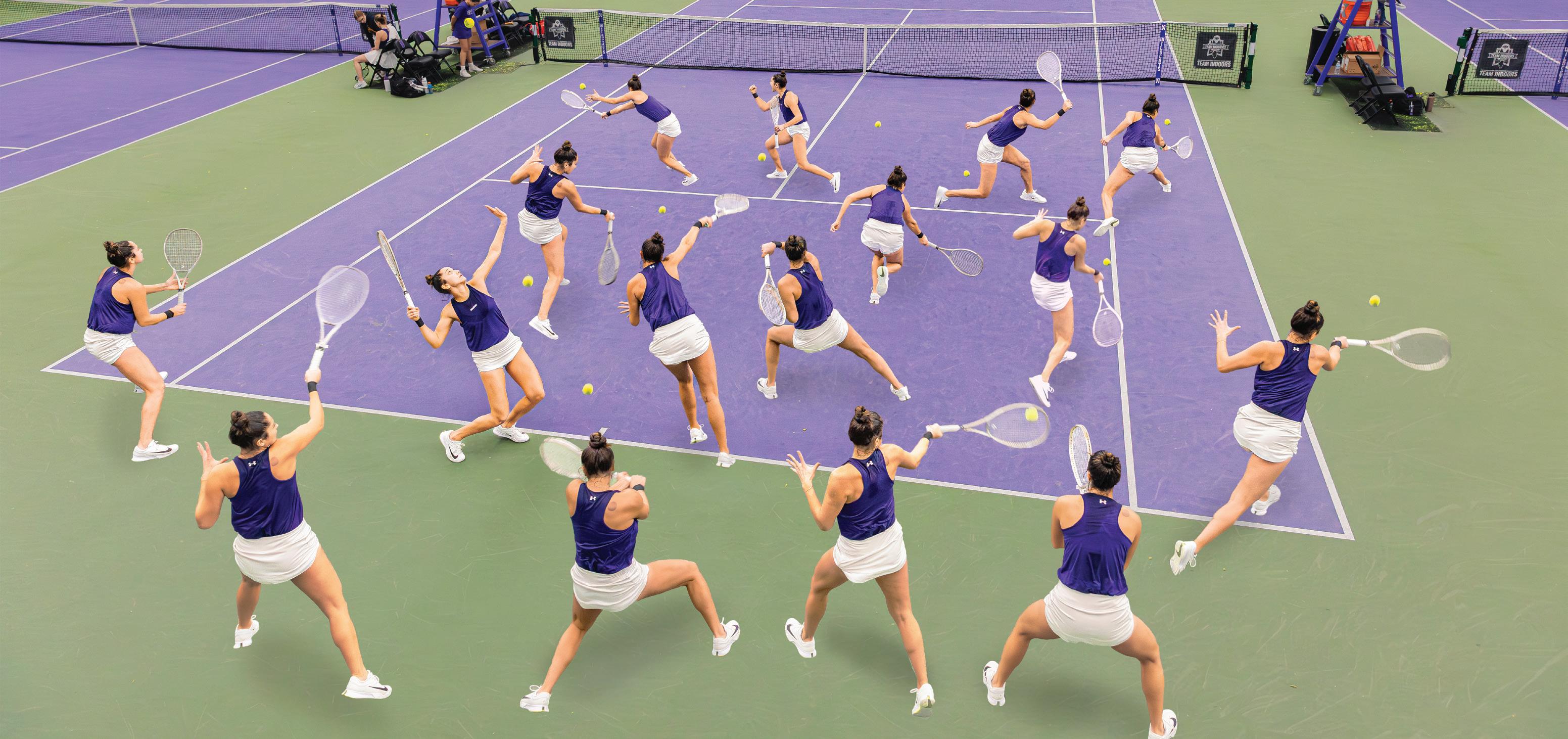
Photo illustration by Luke Meinhardt
For some coaches and college tennis fans, absences at the ITA Women’s National Team Indoor Championships marked a watershed moment in the sport’s drift toward professionalism.