




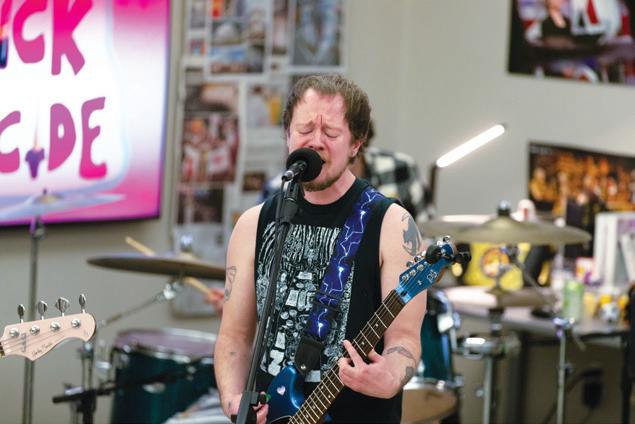



The format of personal performances popularized by NPR has made its way to Iowa City in the form of The Daily Iowan Headliners.
Hailey Shaffer Arts Reporter arts@dailyiowan.com
In stark contrast to the typical world of concert-going, packed with flashy stage productions, sold-out stadiums, and finely tuned vocals, captivating performances are being executed via a singer squeezed between a simple bookshelf and a desk.
These performances, called NPR Tiny Desk Concerts, are intimate, stripped-down live music performances recorded at a humble desk in the Washington, D.C., office of NPR. These informal productions quickly grew an online presence on sites like YouTube, drawing in audiences with its raw, personal vibe.
According to NPR, the concept originated as a joke in 2008, rising like a phoenix from the ashes after a smart remark made by NPR’s Stephen Thompson. He and NPR’s Bob Boilen had been attending a concert, where they could hardly hear folk singer Laura Gibson during the quiet set.
Frustrated, Thompson joked that Gibson would sound better playing behind his desk at the NPR office. Shortly after her surprising acceptance of the idea, the first Tiny Desk concert was held. With no special effects, little in the way of a stage and equipment, and surrounded by books in a cramped office space, this simplicity became the very core.
From major stars like Taylor Swift and Alicia Keys to lesserknown musicians, Tiny Desk has hosted hundreds of artists across genres, showcasing the bare bones of their music and further establishing the fanbase behind a new, authentic music genre.
Tiny Desk brings in performers of all backgrounds and genres, allowing them 15-20 minutes, the option to bring a band or instrument of their choosing, and one big rule: all sounds and music must be created live to showcase their extraordinary, raw
musical talent.
The Science Survey dug into the nitty-gritty behind the fast accumulation of these audiences, finding that the average person was drawn to this type of performance mainly because of the relatability aspect it provides. During a set like the ones at Tiny Desk, performances become more sincere and emotional, building a connection between artist and fan.
The research highlighted how effectively this format breaks down social barriers, allowing the artist to be placed in unscripted, humorous, and intimate settings. They become humanized and reimagined, allowing them to shine in ways people haven’t seen before.
This overall trend of raw vocals and instrumentals took off, travelling around the world as a cultural phenomenon. A prong of this performance genre even made its way to Iowa City, taking the form of Headliners.
The Daily Iowan Headliners
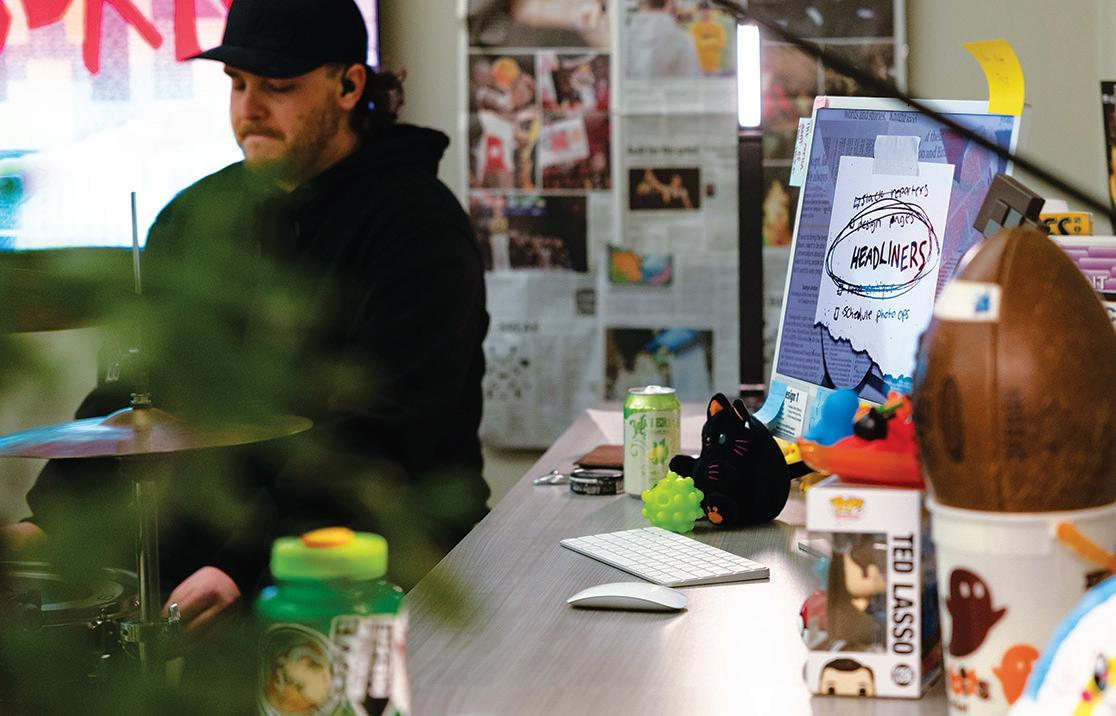
is a live concert series hosted in the newspaper’s newsroom, featuring local bands as an effort to showcase Iowa City’s raw musical talent.
With the first-ever DI Headliners taking place in 2023, the events have evolved from featuring artists like Worst Impressions and ALYX RUSH in the series’ earlier years to this year’s bands, which focused more on the vibrancy that IC’s music scene has to offer. Though they’re all local artists, the series has expanded over time to highlight a variety of different genres around the area.
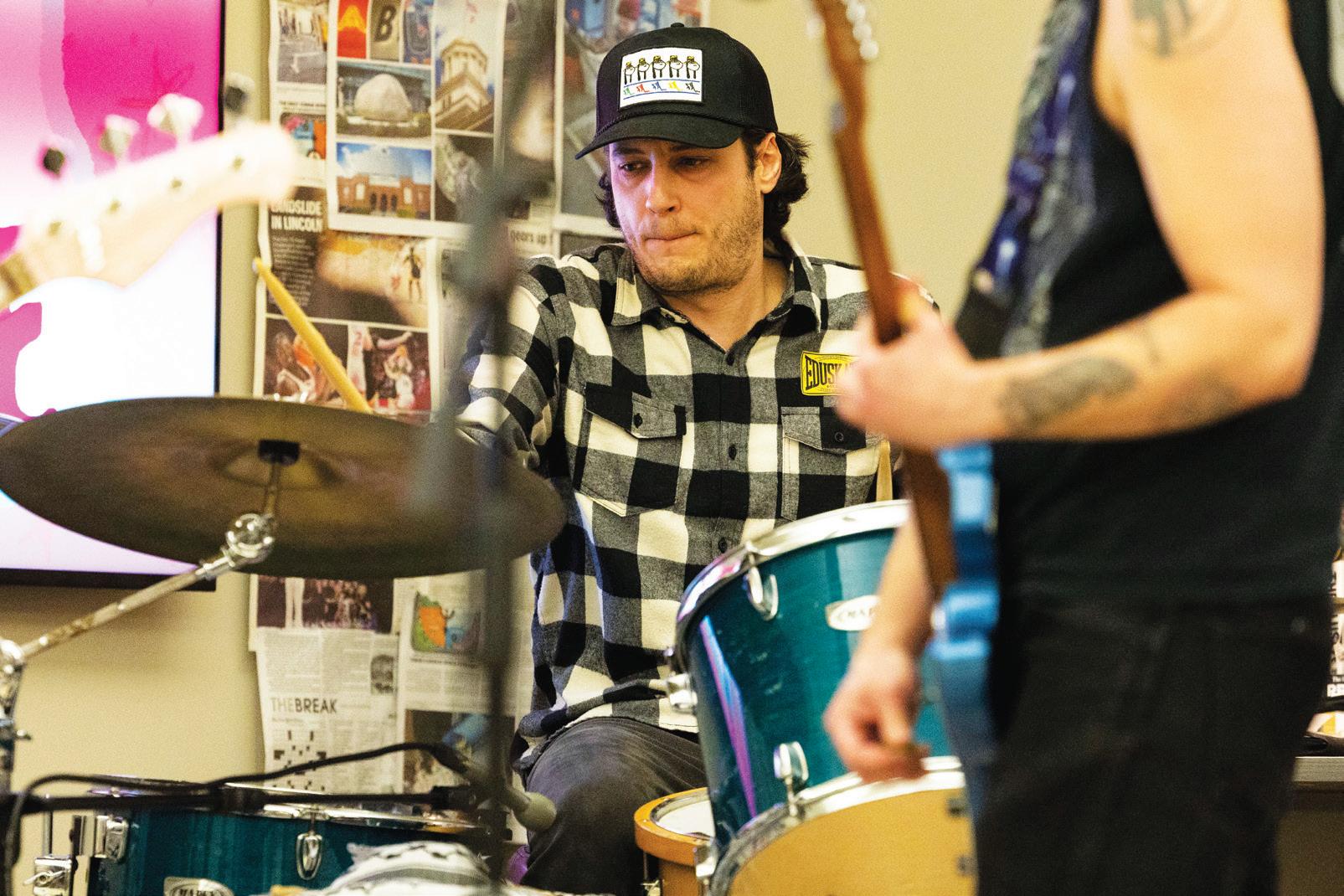
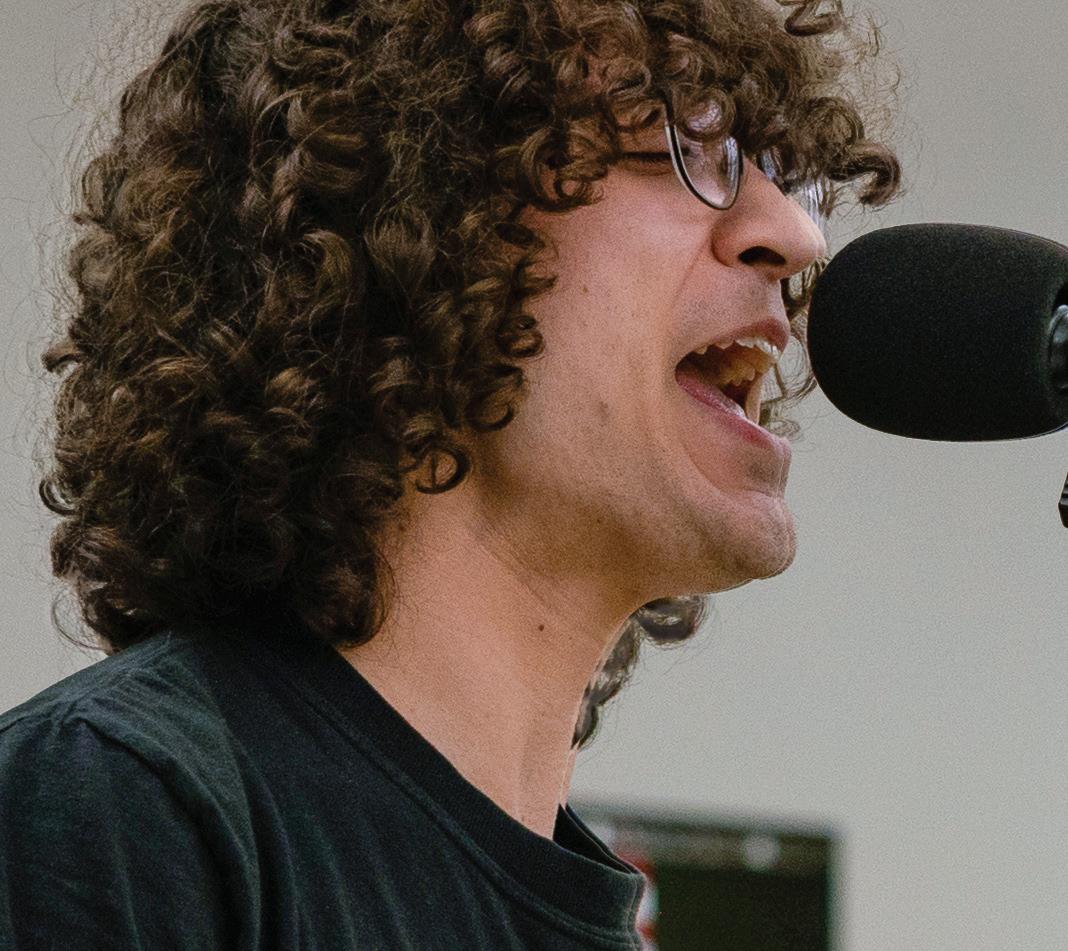
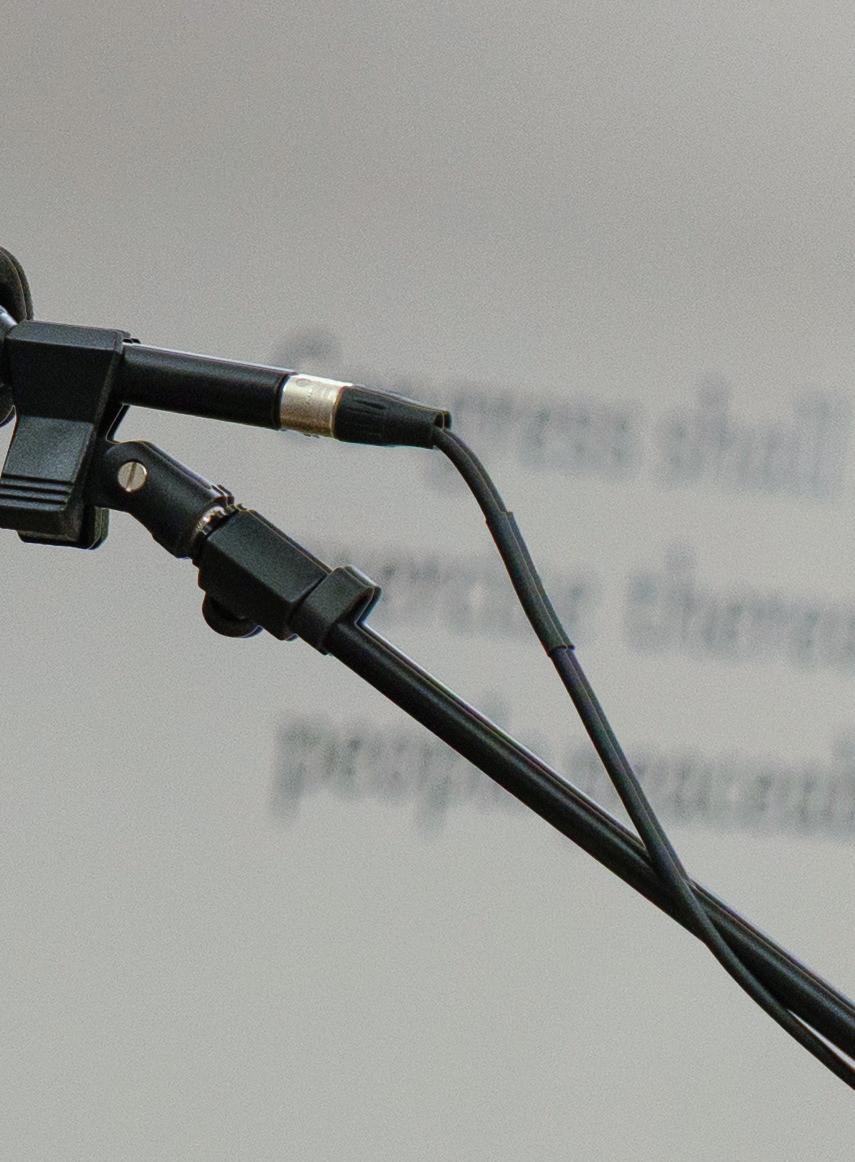
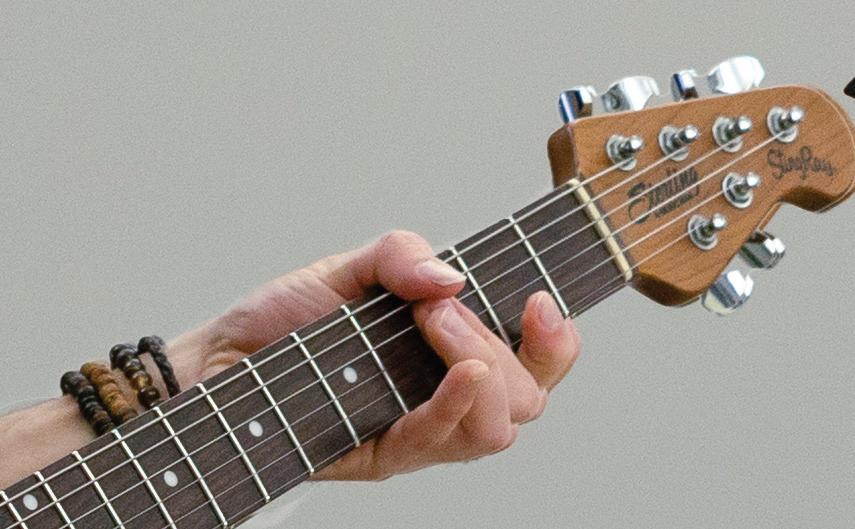
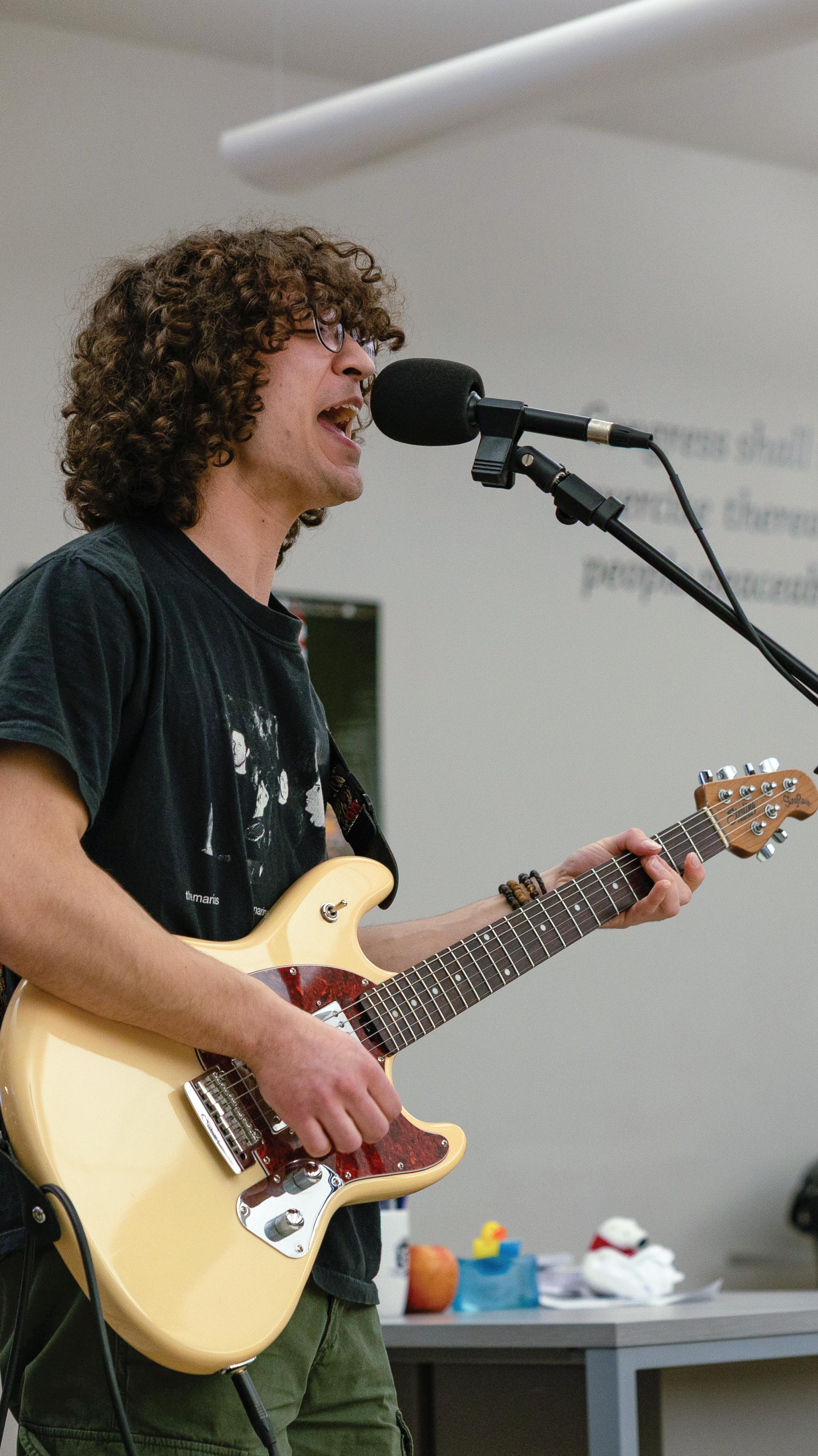
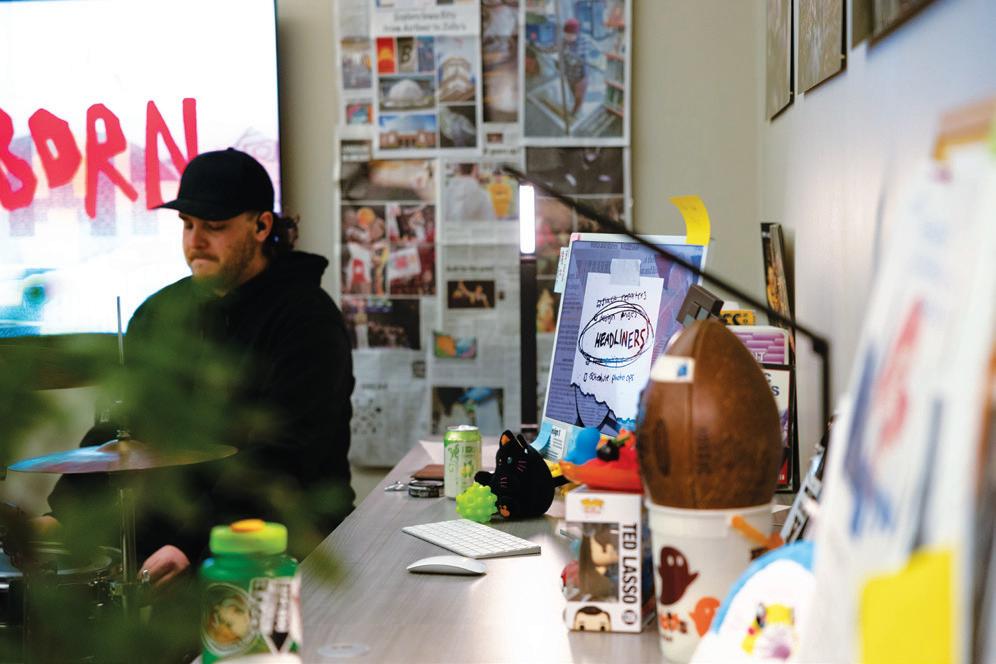
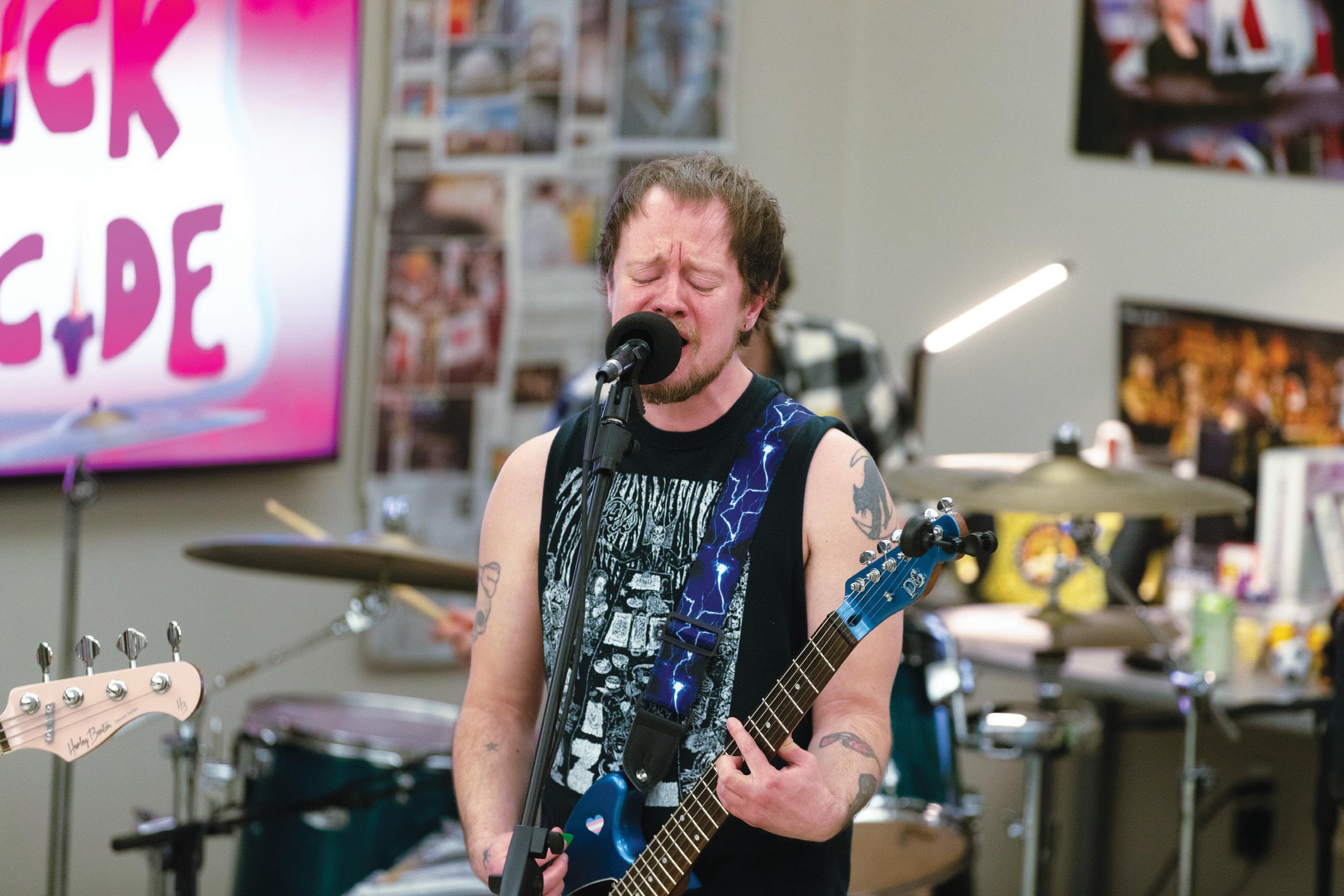
The DI hosted its third Headliners performance on Feb. 27 and featured live performances from Spirit Awake, Dead Level Set, and Lipstick Homicide. In a similar fashion to NPR’s Tiny Desk, the bands performed their sets live, bareboned and completely authentic. After their successful 2026 Headliners showcases, these local Iowa bands are still actively
recording and performing. Dead Level Set, an indie rock band, has been spotted playing at venues like Gabe’s and Trumpet Blossom Cafe. Spirit Awake, honing in on a more indie jazz genre, is currently producing their third album. What had originally begun as a simple, offhand joke has grown into an adored reminder that music, at its very core, is not meant to be a spectacle. NPR’s Tiny Desk popularized the idea that power can be found through pure authenticity, talent, and emotional connection between artist and listener. This sentiment has traveled, beginning to live more frequently in places like The Daily Iowan newsroom, where local artists can be heard as they truly are and given a platform through Headliners. In an era like this one, where performances are often overpowered by production, the format displays that the biggest impact has the ability to be made by the smallest stage.
Cole Ritter Arts Reporter
arts@dailyiowan.com
Lily Kopp Arts Reporter
arts@dailyiowan.com
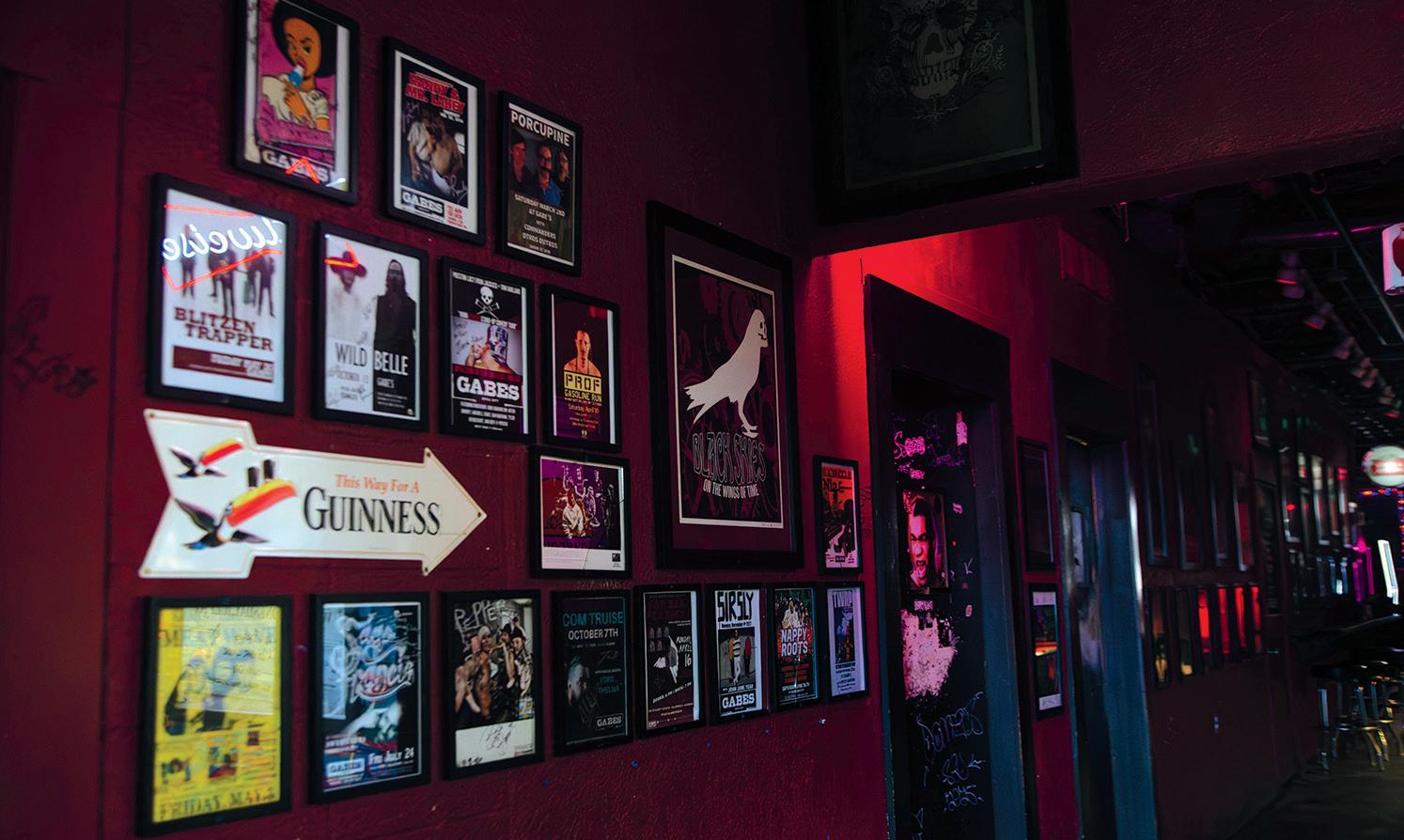
Throughout all the bars and restaurants in Iowa City, one thing stays constant – the music. Whether playing from a loudspeaker in the corner or having a live punk band play, throttling the audience, Iowa City is chock full of new musical experiences. Focusing on the live aspect, there are many opportunities for various bands and artists to play inside the town’s limits. Gabe’s is one venue that hosts several of these bands, including those featured in The Daily Iowan’s third edition of Headliners. Owner Pete McCarthy reflects on Iowa City’s vibrant music scene and Gabe’s place in it. This interview has been edited for length and clarity.
The Daily Iowan: What do you look for most when having a band play at Gabe’s?
McCarthy : In a market the size of Iowa City, which is very small, the most important part about booking big bands is their routing. By that I’m talking about their tour schedule. Because IC is such a small market we rely a lot on bands passing by on Interstate 80 traveling from one larger market to another. Omaha or Des Moines to Chicago or vice versa is a common route that we are able to get bands to stop and play Gabe’s, usually on a weekday. We can also get
bands playing in Minneapolis traveling to Kansas City. That is primarily how we get the large national acts. This takes a lot of work. You have to be persistent to the point of annoying these booking agents to get the band to add another show but hopefully that pays off with a busy show and then maybe you will be included on the next tour instead of an added stop. Being a college town makes it interesting to book by style and genre because what’s popular changes so frequently. Some genres have remained strong and some have faded to some extent. A good booker needs to stay in touch with what is popular amongst the college crowd which dominates the scene 6-7 months of the year.
With places like The Daily Iowan hosting musicians vs. a place like Gabe’s, how do you think Iowa City has been able to promote such a diverse music scene with so many artists?
Iowa City has been an oasis for music and art in the state of Iowa for years. This can be attributed to the presence of the university and the overall thinking of its residents. When I first got into the live music business Iowa City was often referred to as the Austin of the midwest. A great compliment for our little town. There has always been a vibrant music scene here. Popular genres have fluctuated but the overall support for live music and the arts has never slowed. And that is what’s most important to sustaining a music and art scene like ours. Over the years, what have musicians done in your eyes to be the most successful/imprint themselves in this community? Giving back to the community that supported you is huge. That can be done in many ways. Benefit concerts, participating in fundraisers for local institutions and returning to town and playing the venues that supported you while you were coming up is huge too. Often artists will be forced by agents to play the biggest venue with the highest payout once they are signed but the ones that are remembered in the best light often try to play the venues that supported them when not many knew them.
The Cedar Rapids band dives into their in-progress third album and the recording process.
Hannah Childers Arts Reporter arts@dailyiowan.com
There is more to music than what is played through headphones. Music also includes the process it takes to become a song: brainstorming, writing, recording, mixing, and endless retakes until it feels perfect. Cedar Rapids band Spirit Awake delved into that in-depth process as they worked on their third album.
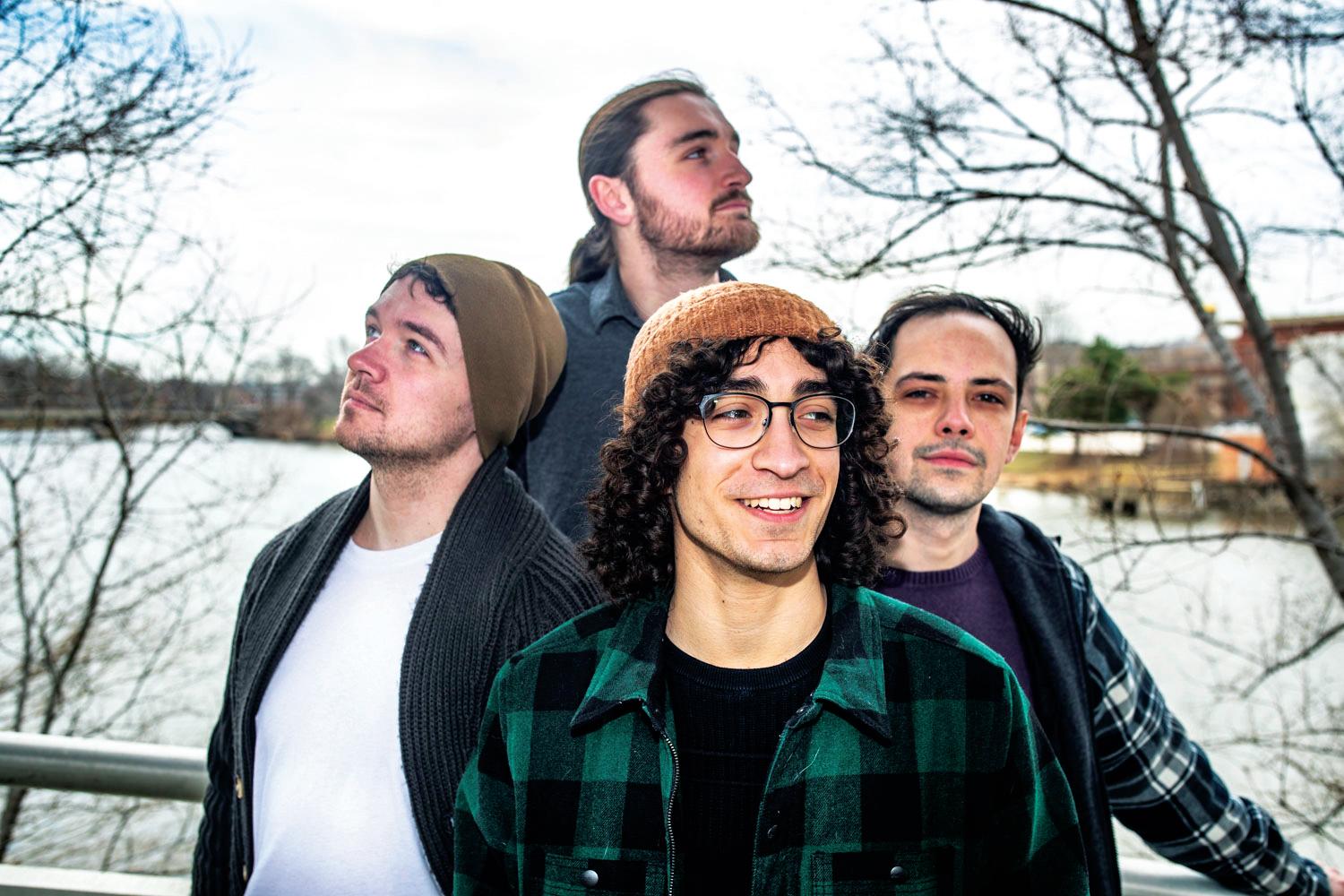
Spirit Awake recently performed as part of the DI 2026 Headliners. The band consists of four members: guitarist Ian Landuyt, bass player Patrick Seaton, drummer Zacary Heinzerling, and keyboardist Jacob Cacioppo.
Landuyt shared that he had come up with the idea shortly after Cacioppo joined the band. As the bandleader, he wanted to create an album that everyone in the band would enjoy working on. The final idea is an album that documents a person going through the stages of life, with an estimated 10 songs.
“The first song is going to be a kind of representation of being born, and then the second or third song is literally about being a toddler and not having object permanence, and it kind of goes on to teenage years and stuff like that,” Landuyt said.
The album is in its production stage. At the time of talking with The Daily Iowan, the band had written all the songs, but had not yet recorded them. The band delved into the songwriting and recording processes.
“I mean, I will say the most collaboration we’ve ever done as writers has been this third album, which feels really good, because, obviously like I said, I want everyone to feel satisfied and
connected to it,” Landuyt said.
Now that the songs are written, the band will begin recording the scratch tracks. As the drummer, Heinzerling explained that these scratch tracks would help him determine where the drums should be recorded. After the drums are recorded, Heinzerling will then edit and mix them.
He shared that the past two records differed when it came to mixing. Record one, called “I Know,” took months to mix due to the drums being recorded in a notideal basement. Whereas, record two, titled “Change” mixed itself, Heinzerling said.
“So with record three, I’m hoping to have kind of the same easy record somewhere where it’ll practically mix itself,” Heinzerling said.
After the drums are recorded and edited, Heinzerling then moves on to recording the bass.
Heinzerling noted that there are bands who prefer recording the guitars next, but he prefers this way as it helps establish a foundation for the record. He noted that this does not take too long as Seaton is quick at getting the bass recorded.
Once the bass is recorded, guitars are next, and this process takes around a week, mainly due to the guitar solos. For record one, the band shared that there was a song where they spent three to four
hours on guitar solos, before ultimately moving on. For record two, they had a similar experience with one song, and invested a lot of time in the song before realizing that they were content with it as is.
“That’s just essentially what the recording process is,” Cacioppo said. “You don’t quite know how you’re going to navigate it or what all the answers are for whatever song it is. Sometimes, it just depends on the rhythm of each part, but Zac has a very good way of navigating that and giving us a template for it.”
Once the guitars are recorded, then the band will record vocals. Heinzerling shared that this is the process that takes the longest because there are multiple factors that can influence the recording including the weather, the emotions of the song, and if the band chooses to record layers or not.
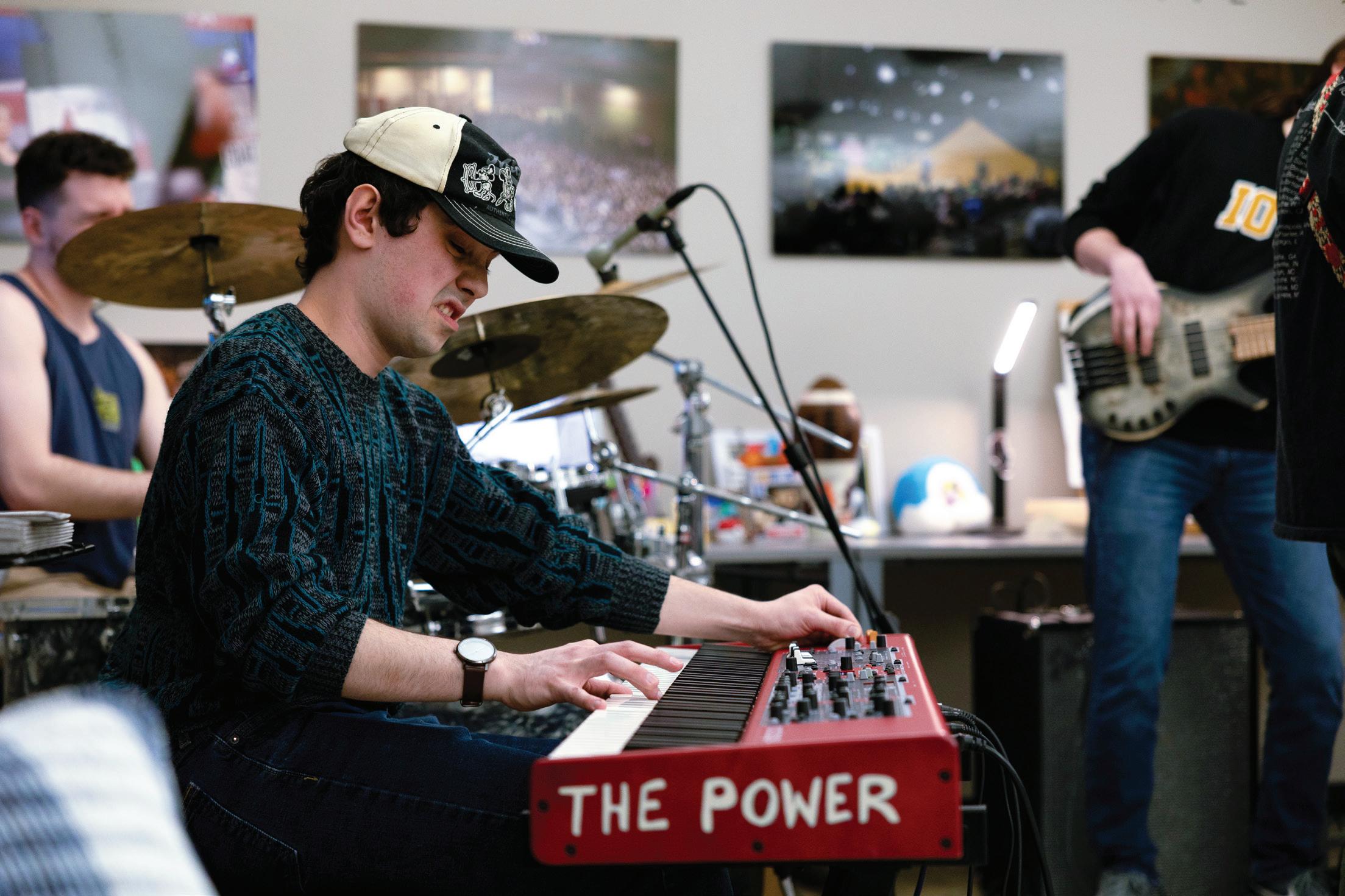
The band will record the keyboard last. Cacioppo now owns a Nord keyboard, and shared that he was looking forward to using it on this album.
“The cool thing about it, too, is that it’s a lot more versatile live,” Cacioppo said.” So, a lot of the bold choices we make with synth or things that we would kind of layer in, attract later, sometimes we can end up doing it in a live show, which makes it really cool and we can kind of bring what our intention is to an actual live setting.”
In anticipation of recording the album, the band shared what their favorite aspects of making an album were.
For Heinzerling, he enjoyed collaborating with other artists. Seaton said that he liked seeing all the elements come together.
“For me, it’s like building a puzzle,” Seaton said. “Kind of seeing how the songs sound without certain instruments, and then when we add the instruments as we go, seeing how the song really just transforms.”
Cacioppo said that the recording process both encouraged and limited the perfectionist in him.
He illustrated that while recording, the band has to make a final decision on how they want the song to sound, even though it could be played in numerous different ways. Cacciopo said that final decision is very satisfying for him.
For Landuyt, his favorite part was building a soundscape — how the sounds can resonate with the listeners.
He said that the reason he writes and records music was because of the space it puts the listener in, and hoped that the album would resonate with them.
“I guess the takeaway would be that people resonate with all of those different stages, and have like, ‘Oh, yeah, this song is definitely exactly how I felt as a teenager or now or something like that,’” Landuyt said.
A relatively new band, Spirit Awake was founded in 2022.
Hannah Childers Arts Reporter arts@dailyiowan.com
Spirit Awake is a band based in Cedar Rapids. Formed in 2022, the band consists of guitarist Ian Landuyt, bass player Patrick Seaton, drummer Zacary Heinzerling, and keyboardist Jacob Cacioppo.
The band sat down with The Daily Iowan after their performance on Feb. 26. They performed in the DI newsroom as part of the 2026 Headliners. This interview has been edited for length and clarity.
The Daily Iowan : What made you want to start a band?
Landuyt: Patrick and I had played, well, we just kind of played music together in high school. We didn’t really form like an official band or anything, but we did record some music. And then, Zac — all three of us were in the jazz band [at Kirkwood] and Zac and I were playing jazz guitar for that. I had no idea that Zac played the drums at that time, but at some point or another, we just kind of started interacting more and jamming together.
Seaton: We were a three piece originally to start for about a year and a half to two years, and we were looking for a fourth member for a while and we did.
Heinzerling: So, we added — we had Chloe Weidl of Two Canes cover down on drums for me so I could go to guitar. Chloe being probably the busiest person we know — we tried different avenues as well. And then, these two guys [Seaton and Landuyt] had mentioned that they were friends with Jacob, and I think we jammed with him once, and we just kind of knew.
Cacioppo: It was kind of nice for me, too. I just got married right before I joined the band, too. And I think finalizing those aspects of my life was kind of a jump forward into that. Now, I feel really fulfilled that I can kind of output my musical skills.
How did you determine your music style? How would you describe it?
Heinzerling: When I met Ian and
Patrick, throughout college, I was coming back to college after being active duty Air Force for many years. So I had been in many bands throughout my teens, and the one trap that I felt like every band I was in fell into was this subgenre of music, and we restricted ourselves to that and it was very limiting in every band I’d ever been in I remember when we were talking about, what kind of music do we want to write? And I was just like, don’t think about it, just write what comes to you and the rest will speak for itself. And that’s just the way it’s been just ever since.
If you had to kind of like, put us into a category, it’s very reminiscent of ‘90s grunge, just alternative indie/ independent. But I’m proud to say that we’ve done a really, really good job at not being this. We’ve just written and what came happened, and that’s the way it’s been and it’s been fun ever since.
Cacioppo: Wae are very good at being open to the influences that have inspired us to write music, but not allowing them to be who we are.
When I compare our stuff to Radiohead or American Football or something like that, I tend to just go, no our stuff is kind of its own thing, and it’s humble. There’s a humble sound to us which makes us sound way more authentic.
Who influenced your band?
Landuyt: For me, I would say indie and jazz.
Seaton: For me, it’s a lot of jazz and honestly, a lot of R&B funk as well.
Heinzerling: I am the progressive metal guy of the group. Anything from like that ‘80s British invasion stuff all the way to just the new Prague sound of Sumerian records. Love that.
Cacioppo: I have a lot of folk derivative. I kind of drifted away from Elton John, who’s a great player, but I think he kind of made me one-ended what I wanted to produce and make. I would say, Don McLean, a recent one.
Jeff Buckley is just a crazy, crazy good musician. I’m just thinking about him, and he’s so recent that it’s just like, I have so many more things to digest and listen to. And Ian actually got me on a Rufus Wainwright kick, which I knew about him a long time ago, but didn’t really listen to him as a kid, and he’s got
a great musicianship about him, too.
What’s your favorite part of making music?
Heinzerling: I love the recording part. That is like, my favorite, to finally print the idea and flesh it out the way it needs to. My very detail-oriented mind just thrives on that. That’s the part I look forward to the most.
Seaton: My favorite part is kind of not really, necessarily — it is the music part — but it’s also the brothership we’ve created. We’re all really close and it makes it easier, way easier. We all get along, so not a lot of arguments in Spirit Awake.
Landuyt: I really enjoy writing, specifically words, because they’re often the words that I can’t say to somebody
in a conversation or the feelings I can’t express to them. So, I have to write it in a song and be secretive.
Cacioppo: Just simply having the time to play with each other is something that I didn’t have.
Being in a group just fulfills that missing part of being a musician where you just need good people to surround yourself with and people that are going to listen to you, maybe not in your musical ideas, which that doesn’t even happen in this group.
Sometimes, you just work with many different people in the live music scene, and not all of them are great, and not all of them are bad, but to have a familiar group of three friends that you can just reliably go and play with every week, it makes you feel very fulfilled and happy for sure.
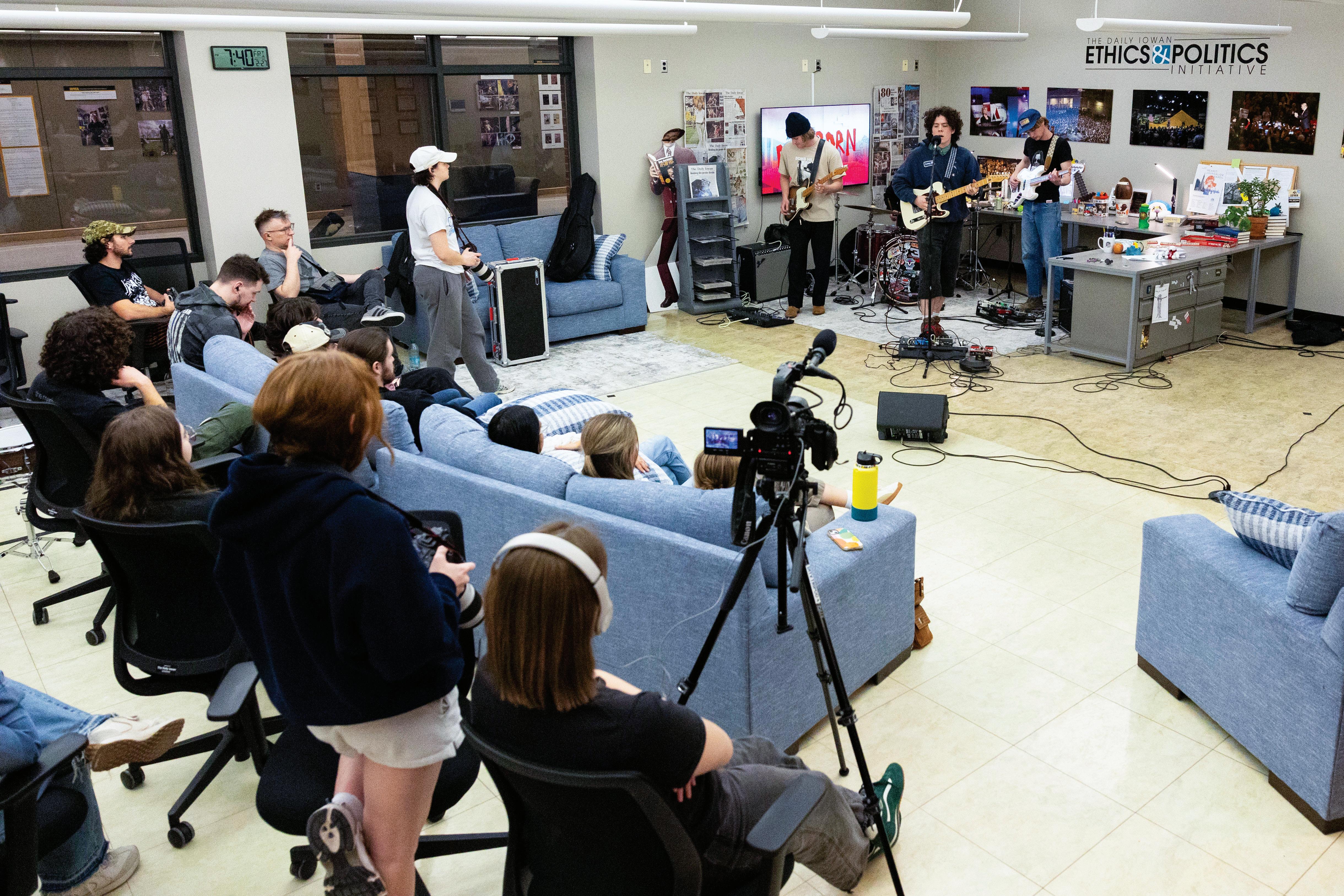
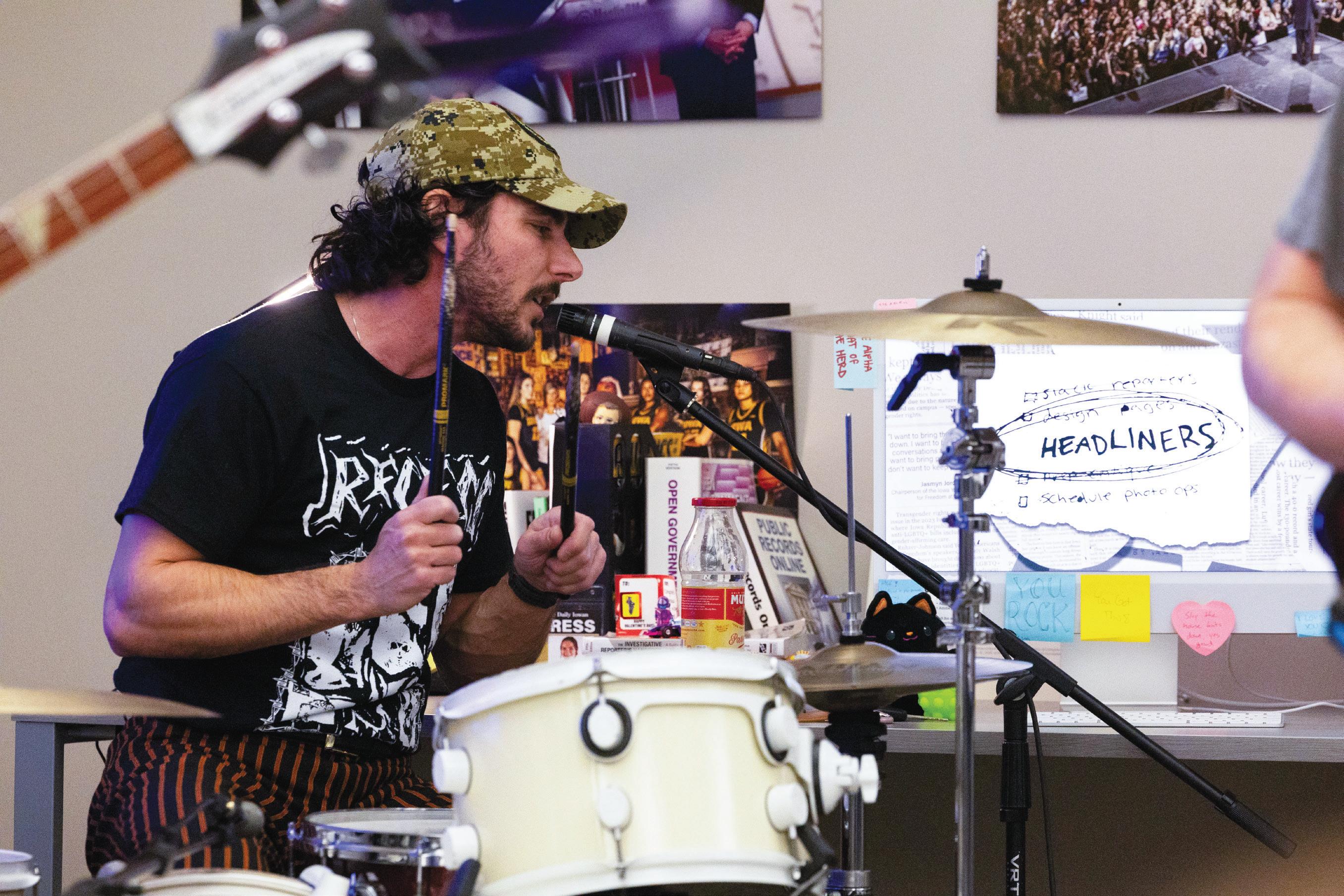
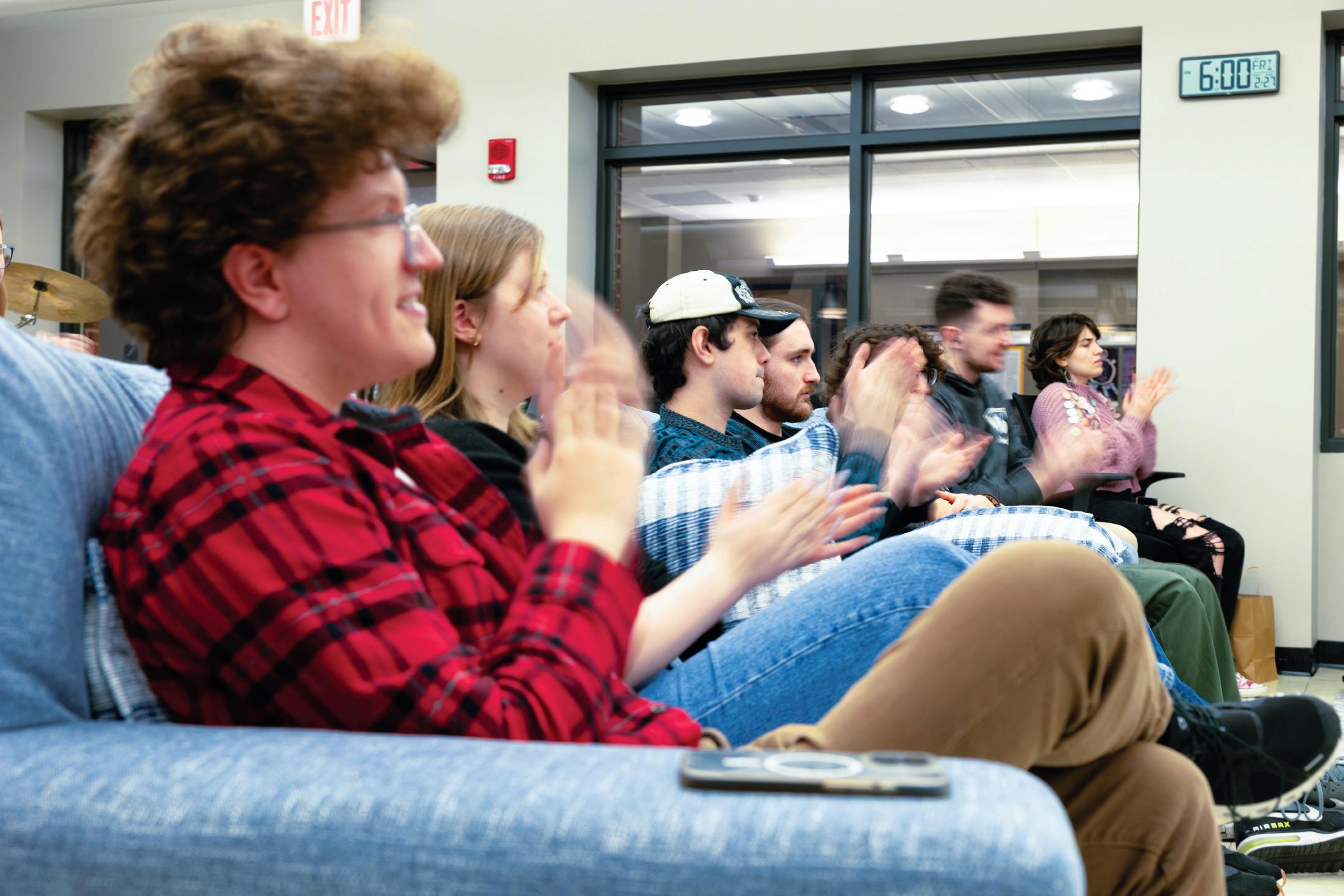
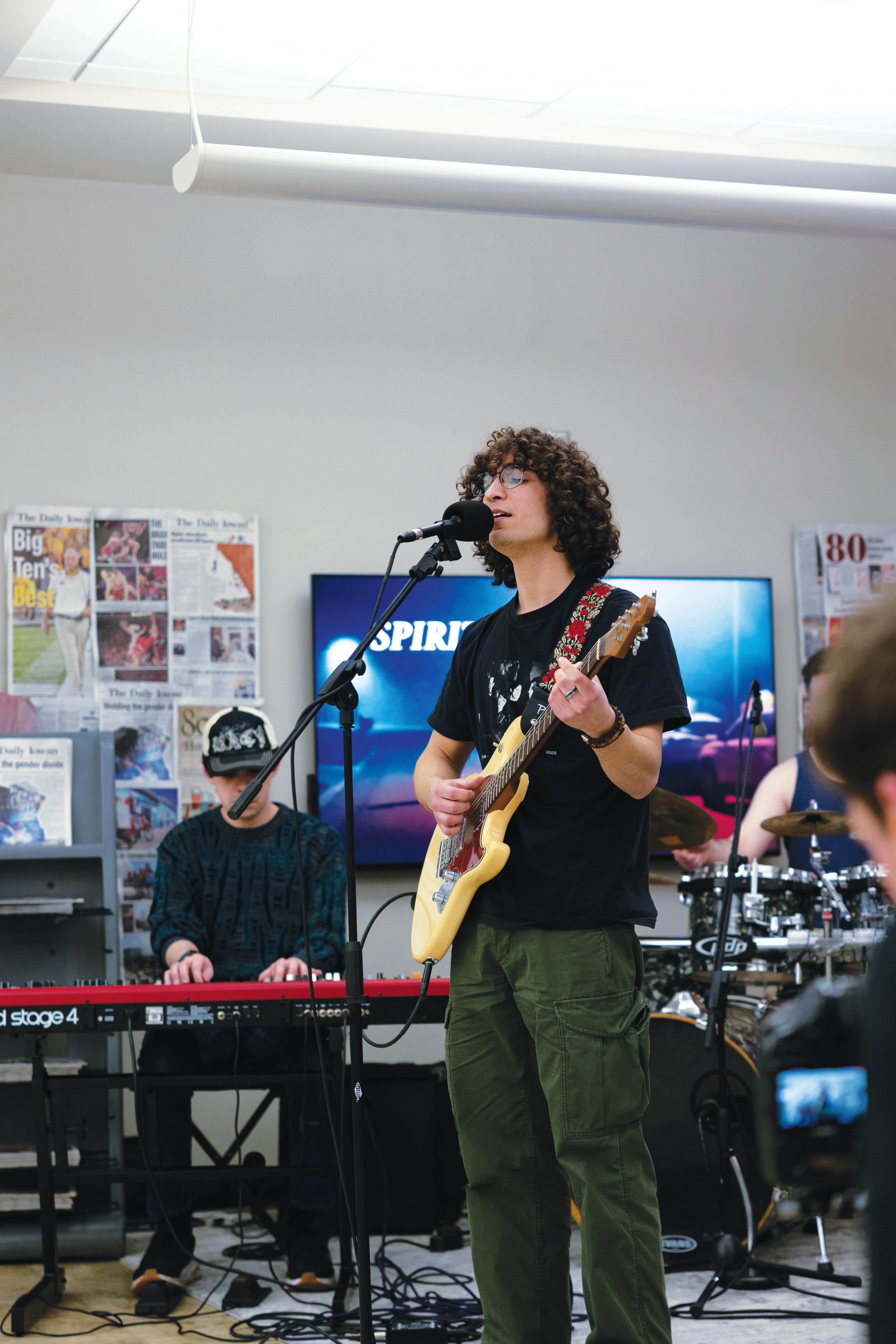
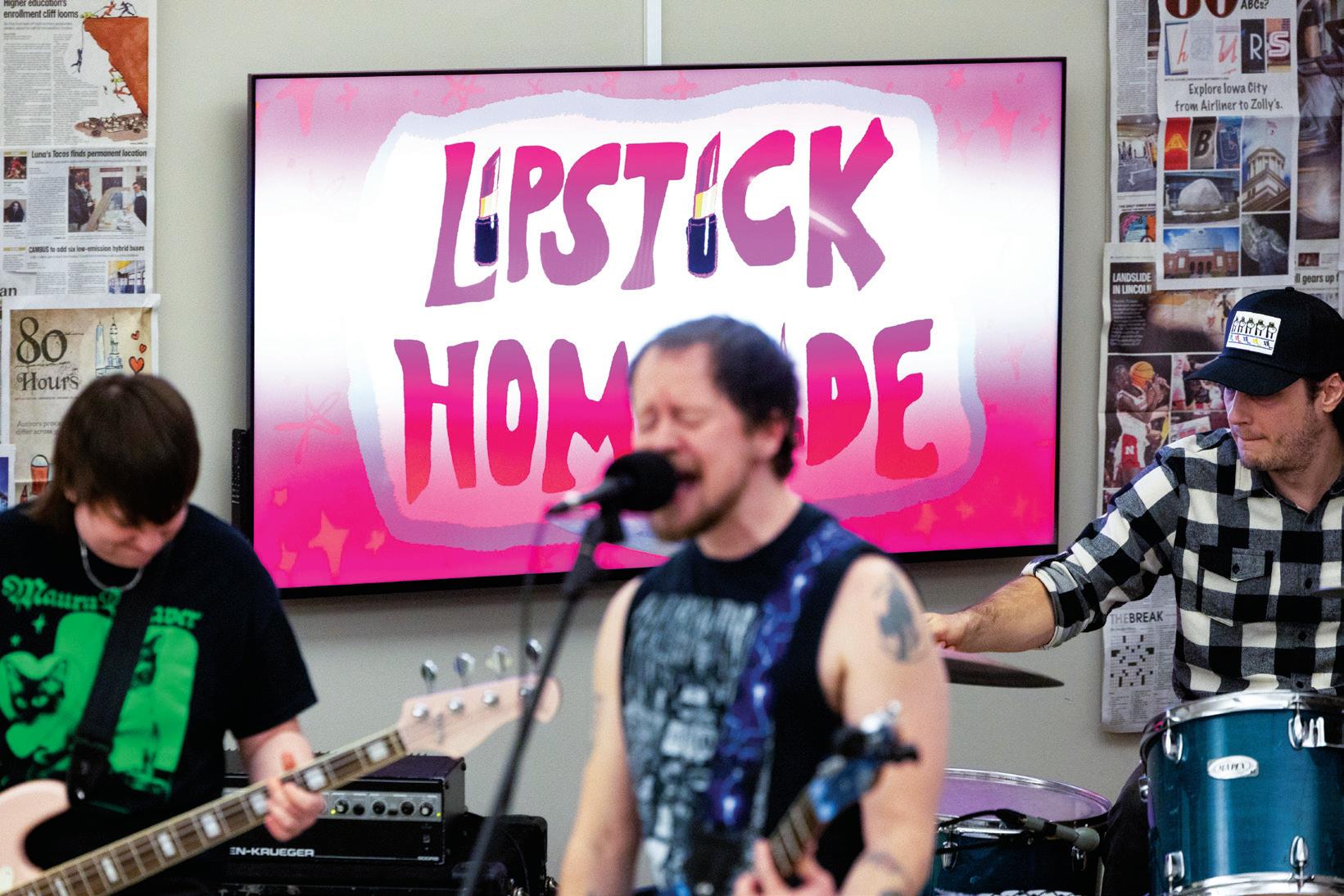
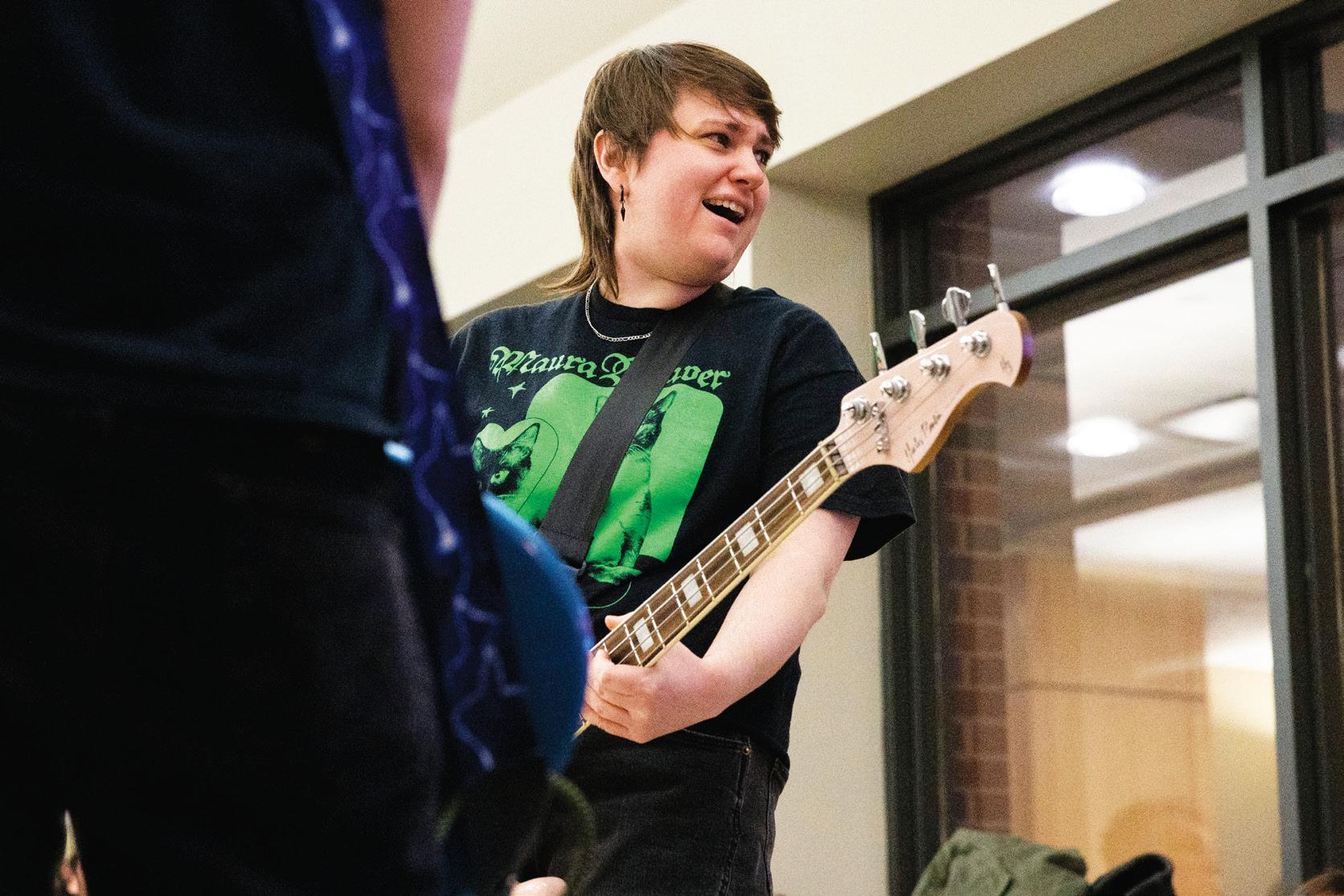
The Daily Iowan newsroom hosted its third headliners in Iowa City on Saturday, Feb. 27, 2026, with live performances from Spirit Awake, Dead Level Set, and Lipstick Homicide.
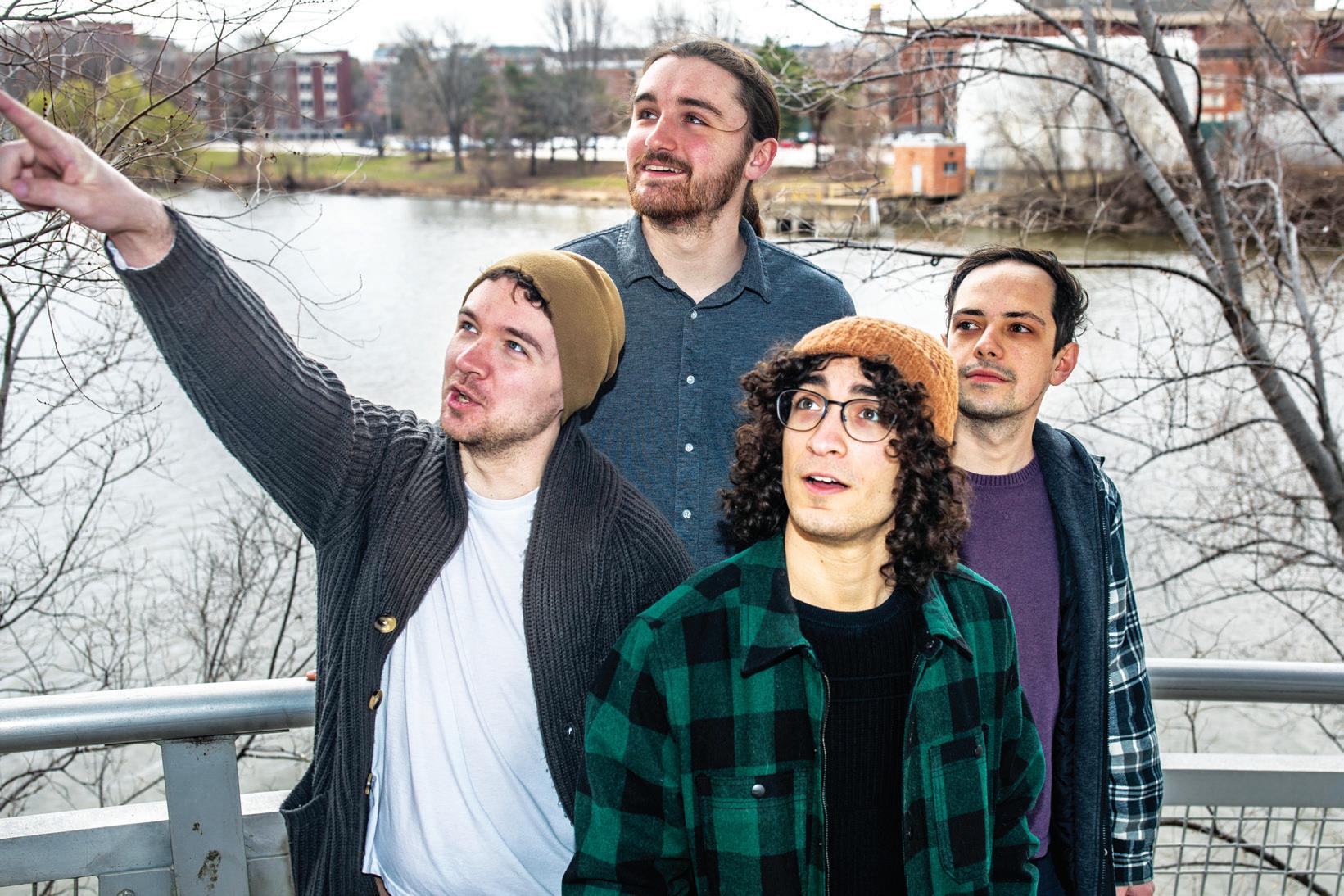
The local band formed recently and have already experienced a wave of support from the community’s rock music scene.
Hannah Childers Arts Reporter arts@dailyiowan.com
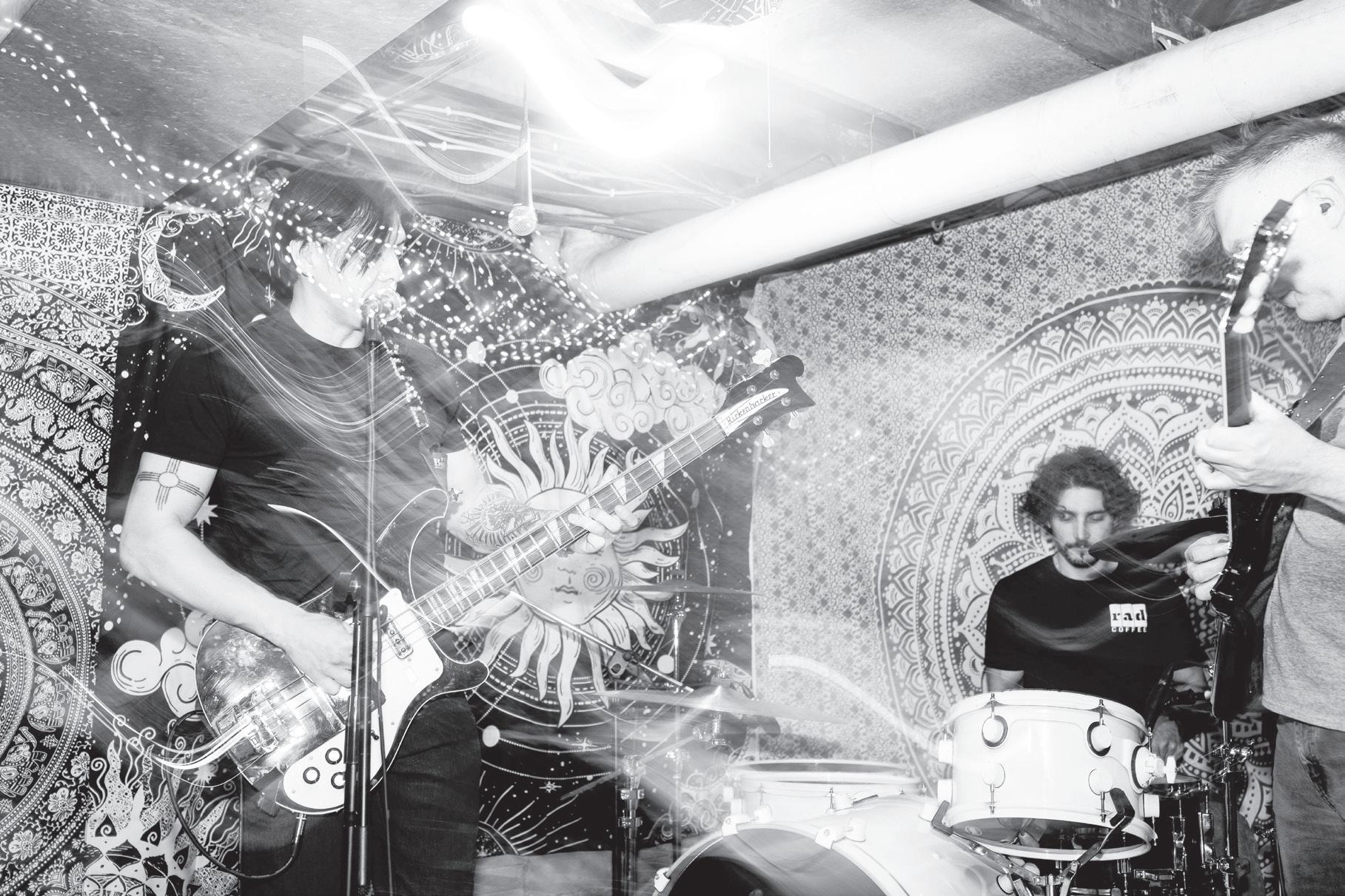
The echo of stomping feet down wooden basement stairs rang out through the concrete basement practice space Dead Level Set used to prepare for upcoming shows. Acoustically, the room is ideal for the thumping, fast-paced sound the band deploys; even a footstep sounds good in the space.
Adorned floor-to-ceiling in beautiful tapestries and dotted with multicolored skulls atop the band’s amps, the space feels fitting to the showy, electrifying performance style Dead Level Set emanates when playing.
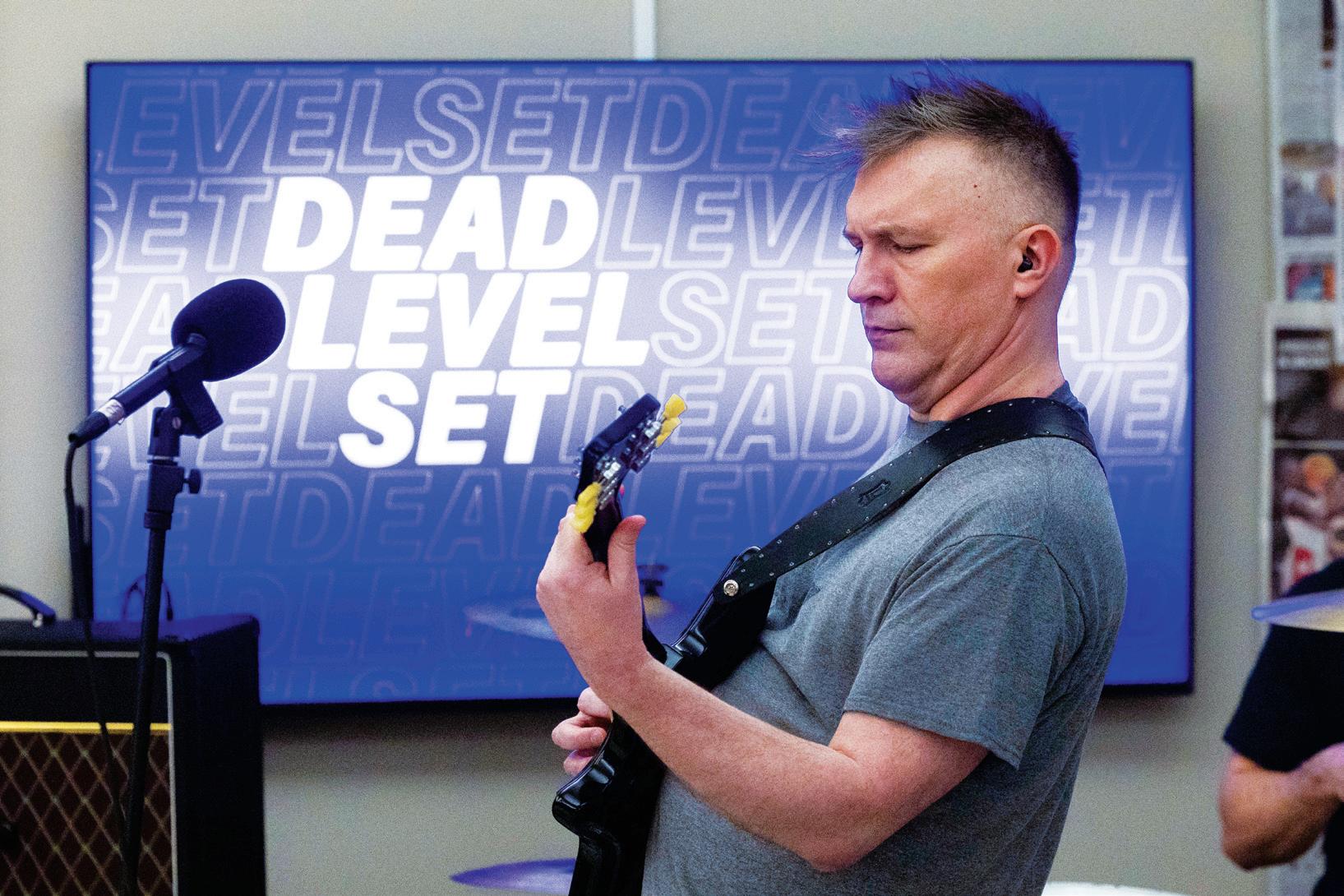
Consisting of three Iowa City locals, Clayton Schuneman, Jon Hansen, and Anthony Capozzi, Dead Level Set was formed in September 2025. Schuneman and Hansen have been playing separately in Iowa City for years, but it wasn’t until last year when the timing lined up and they decided to start combining their individual songwriting work and jam together.
With Schuneman on bass and Hansen on guitar and vocals, they had to scout for a drummer before booking any shows. Luckily, through the local music pipeline, they heard about Capozzi, a drummer from Pittsburgh who recently moved to Iowa City.
From there, rehearsals began.
“Practices have evolved so much and so quickly since we started. The first practices were me learning two songs at a time,” Capozzi said. “But that added up and it came together rather quickly.”
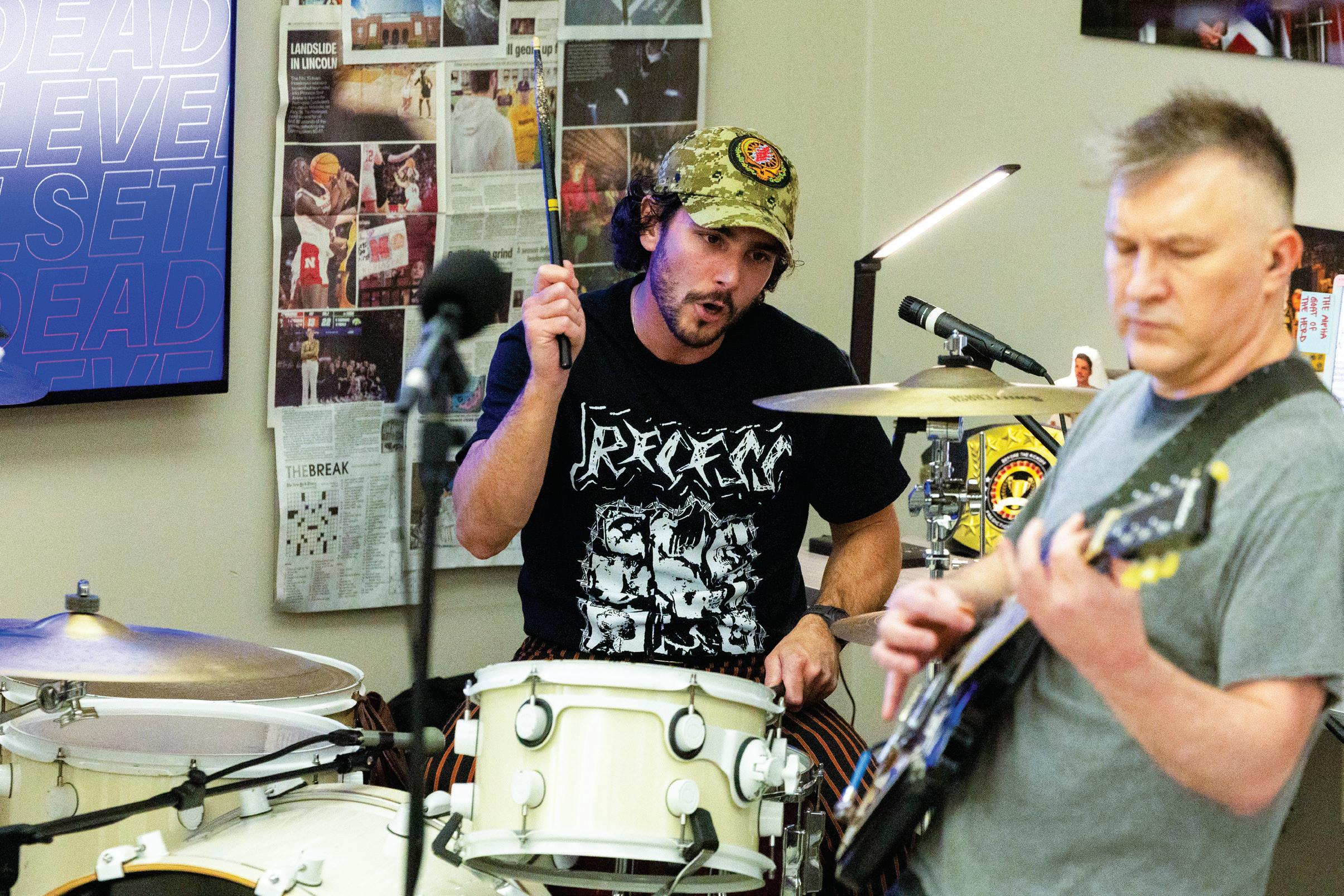
Alternating between basements, the guys practice regularly before shows. They decide on a setlist based on the length of the set and atmosphere of the venue, but performance is considered thoroughly as well.
“We change around what we make the opener and closer a lot. I think about what song would catch people’s attention and which one seems like a big ending,
Schuneman said there has been a conscious effort to play as many different kinds of venues as possible.
“Being that we’re so new, we want to hear what we sound like in different settings and on different stages. The sound changes no matter where you’re at, it’s dictated by the layout of the room and size of the room,” Schuneman said.
“Being that we’re so new, we want to hear what we sound like in different settings and on different stages. The sound changes no matter where you’re at, it’s dictated by the layout of the room and the size of the room.”
Clayton Schuneman Dead Level Set band member
that’s important,” Schuneman said.
“I think about starting and the finish first, then build the stuff in the middle after that.”
The audiences Dead Level Set have played for have been varied so far, as they have played at Trumpet Blossom Cafe, Gabe’s, Alleycat, Frat House, and at The Daily Iowan in their career so far.
As the band earns its sea legs by adding more shows to its repertoire,
The concrete, tapestry laden rehearsal space the band is using for recording purposes provided optimal acoustics for the heavy, melodic rock and roll sound the band is becoming increasingly well known for.
This sound is a result of myriad influences, mostly consisting of alternative rock bands. Fugazi, Sonic Youth, and Dinosaur Jr. are a few of the bands that inspired the sound of Dead
Dead Level Set has only been playing shows for five months but have already learned a lot about the Iowa City music scene.
Dead Level Set is an Iowa City based indie rock band that got its start in late 2025 and has only played a handful of shows. Despite their relatively recent arrival in the Iowa City music scene, they’ve already become well known at music venues like Gabe’s and Trumpet Blossom Cafe. Clayton Schuneman, the bass player, Jon Hansen, the lead guitarist and vocalist, and Anthony Capozzi, the trio that makes up Dead Level Set, performed in The Daily Iowan’s Headliners concert series. This interview has been edited for length and clarity.
The Daily Iowan: What does an average rehearsal look like for you guys?
Clayton Schuneman: We kind of jump between people's houses, honestly. Yeah, so we have played at all three of our basements at this point. But we're set up for a recording project that we're doing right now. So we're doing that in one location because of the set up.
Jon Hansen: Usually we’ll run a full set. We got our first set worked up when we started and then we’ve just been adding another song to it every show or so. We try to add at least one more song whenever we run a set.
Schuneman: The length of that set
depends on the time slot, right. So if we’ve got a 30 minute time slot or 40 minutes or an hour, that will dictate a lot of how the set gets constructed. We curtail it to whatever audience we’re playing for as well. There are songs that are great openers and there are songs that make great closers.
Level Set but their inspiration impacted more than just the music.
“Usker Doo is influential to me in terms of songwriting and because of what they were as a band. They’re a classic power trio and played kind of as a DIY project,” Hansen said. “They’re from Minneapolis and booked their own shows around the Midwest. The way the music sounds influenced me but also the way they structured the band and went around booking their own shows.”
The DIY nature of the band’s influences translate to the way they operate. Practices flow like a jam session among friends and the songs are mostly original compositions with a few covers thrown in to keep a crowd’s energy high.
Each of the three artists have been playing instruments their whole lives, so the permeable practice spaces and quick turn around from formation to booking didn’t pose much of a challenge.
“I teach drums and I was showing a student recently an old book I had learned out of. I was like, ‘See that date there? 2001. That was my first lesson.’ So it puts things in perspective,” Capozzi said.
In their short time performing together, the guys have felt embraced by the broader Iowa City music scene. They’ve been invited back to Gabe’s a couple times and even have a show
coming up there on April 11.
“As an outsider coming in, it’s been a really positive experience,” Capozzi said. “Everyone’s so supportive. I’ll go see a show and see people I recognize from different bands, like Jon jumped on stage to play with a band we played with a few weeks ago. It’s supportive and doesn’t seem cliquey.”
Hansen and Schuneman have previous experience playing music in Iowa City but noticed a shift after the COVID-19 pandemic. No shows were booked during the pandemic, Hansen said, and the scene came to a sudden halt.
“Since then, the scene has come back super strong. There’s a really healthy biodiversity in local bands right now,” Hansen said.
Dead Level Set is committed to the Iowa City scene but with an upcoming show in Des Moines have begun broadening their scope to the local region. Besides a bit of geographical expansion and recording their first record, the band is mostly focussed on the dynamics of the band.
“Continuing to build a rapport with each other has been awesome so far and that’s the goal,” Capozzi said. “I’ve really enjoyed playing with these guys and want to continue building that chemistry.”
What venues are your favorite to play?
Anthony Capozzi: It’s been kind of limited so far since we’ve only had four shows, but I like our Gabe’s shows. Those have been a lot of fun. We haven’t really had the house show experience yet. Hansen: We’re going to be playing a house show in a couple weeks. A good music club is great but house shows are fun. Being on the same level as the audience is great.
Schuneman: We’ve been intentionally playing a lot of different venues, too. We’re only four shows in, five including the DI, so we’re still putting together an idea of what we sound like in different spaces.
What response have you felt from the audience at these shows?
Capozzi: Overall pretty engaging. We played at Trumpet Blossom for our first show and Gabe’s after that. Everyone was engaging and dancing.
Hansen: Alleycat, too.
Capozzi: That was a really fun show. We’ve had a ton of fun doing this so far. What brought you guys together and made you decide to start playing shows?
Hansen: Clayton and I went to a show about a year ago and thought it was really great. We came out of it and thought, ‘We should play some music like this.’ So Clayton and I started working on some stuff we’d be working on separately, we had both been writing songs. We had a set already put together, so once we started working with Anthony we had maybe four or five rehearsals and started booking shows.
Capozzi: It was a relatively fast timeline, it added up. Then around November [2025] I was like, ‘If you can get us the show before Christmas or the New Year that would be
cool.’ And these guys got it. How long was that interval between forming and playing the first show together?
Schuneman: It was like a month, maybe month and a half. We start practicing in early October or something and the first show was in early December.
Have you guys had experiences in bands in the past?
Hansen: Oh yeah, I’ve been playing music my whole life.
Schuneman: John and I have known each other for a while. We’ve played in adjacent bands that have played some shows together for a long, long time. We never really decided to work together directly, but now it worked out. Capozzi: This is the first band I’ve ever been in. No, I’m just joking.
The Cedar Rapids band dives into their in-progress third album and the recording process.
Three friends formed Lipstick Homicide while in high school together in 2006.
Allyson McGowan Arts Reporter arts@dailyiowan.com
Riley Dunn Arts Editor riley.dunn@dailyiowan.com
Riley Dunn Arts Editor riley.dunn@dailyiowan.com
Allyson McGowan Arts Reporter arts@dailyiowan.com
There is more to music than what is played through headphones. Music also includes the process it takes to become a song: brainstorming, writing, recording, mixing, and endless retakes until it feels perfect. Cedar Rapids band Spirit Awake delved into that in-depth process as they worked on their third album.
Spirit Awake recently performed as part of the DI 2026 Headliners. The band consists of four members: guitarist Ian Landuyt, bass player Patrick Seaton, drummer Zacary Heinzerling, and keyboardist Jacob Cacioppo.
Landuyt shared that he had come up with the idea shortly after Cacioppo joined the band. As the bandleader, he wanted to create an album that everyone in the band would enjoy working on. The final idea is an album that documents a person going through the stages of life, with an estimated 10 songs.
“The first song is going to be a kind of representation of being born, and then the second or third song is literally about being a toddler and not having object permanence, and it kind of goes on to teenage years and stuff like that,” Landuyt said.
this does not take too long as Seaton is quick at getting the bass recorded.
Once the bass is recorded, guitars are next, and this process takes around a week, mainly due to the guitar solos. For record one, the band shared that there was a song where they spent three to four hours on guitar solos, before ultimately moving on. For record two, they had a similar experience with one song, and invested a lot of time in the song before realizing that they were content with it as is.
“That’s just essentially what the recording process is,” Cacioppo said.
“You don’t quite know how you’re going to navigate it or what all the answers are for whatever song it is. Sometimes, it just depends on the rhythm of each part, but Zac has a very good way of navigating that and giving us a template for it.”
Once the guitars are recorded, then the band will record vocals. Heinzerling shared that this is the process that takes the longest because there are multiple factors that can influence the recording including the weather, the emotions of the song, and if the band chooses to record layers or not.
The band will record the keyboard last. Cacioppo now owns a Nord keyboard, and shared that he was looking forward to using it on this album.
“The cool thing about it, too, is that it’s a lot more versatile live,” Cacioppo said.” So, a lot of the bold choices we make with synth or things that we would kind of layer in, attract later, sometimes we can end
“For me, it’s like building a puzzle. Kind of seeing how the songs sound without certain instruments, and then when we add the instruments as we go, seeing how the song really just transforms.”
Patrick Seaton Lipstick Homicide bass player
The album is in its production stage. At the time of talking with The Daily Iowan, the band had written all the songs, but had not yet recorded them. The band delved into the songwriting and recording processes.
“I mean, I will say the most collaboration we’ve ever done as writers has been this third album, which feels really good, because, obviously like I said, I want everyone to feel satisfied and connected to it,” Landuyt said. Now that the songs are written, the band will begin recording the scratch tracks. As the drummer, Heinzerling explained that these scratch tracks would help him determine where the drums should be recorded. After the drums are recorded, Heinzerling will then edit and mix them.
He shared that the past two records differed when it came to mixing. Record one, called “I Know,” took months to mix due to the drums being recorded in a not-ideal basement. Whereas, record two, titled “Change” mixed itself, Heinzerling said.
“So with record three, I’m hoping to have kind of the same easy record somewhere where it’ll practically mix itself,” Heinzerling said. After the drums are recorded and edited, Heinzerling then moves on to recording the bass.
Heinzerling noted that there are bands who prefer recording the guitars next, but he prefers this way as it helps establish a foundation for the record. He noted that
up doing it in a live show, which makes it really cool and we can kind of bring what our intention is to an actual live setting.”
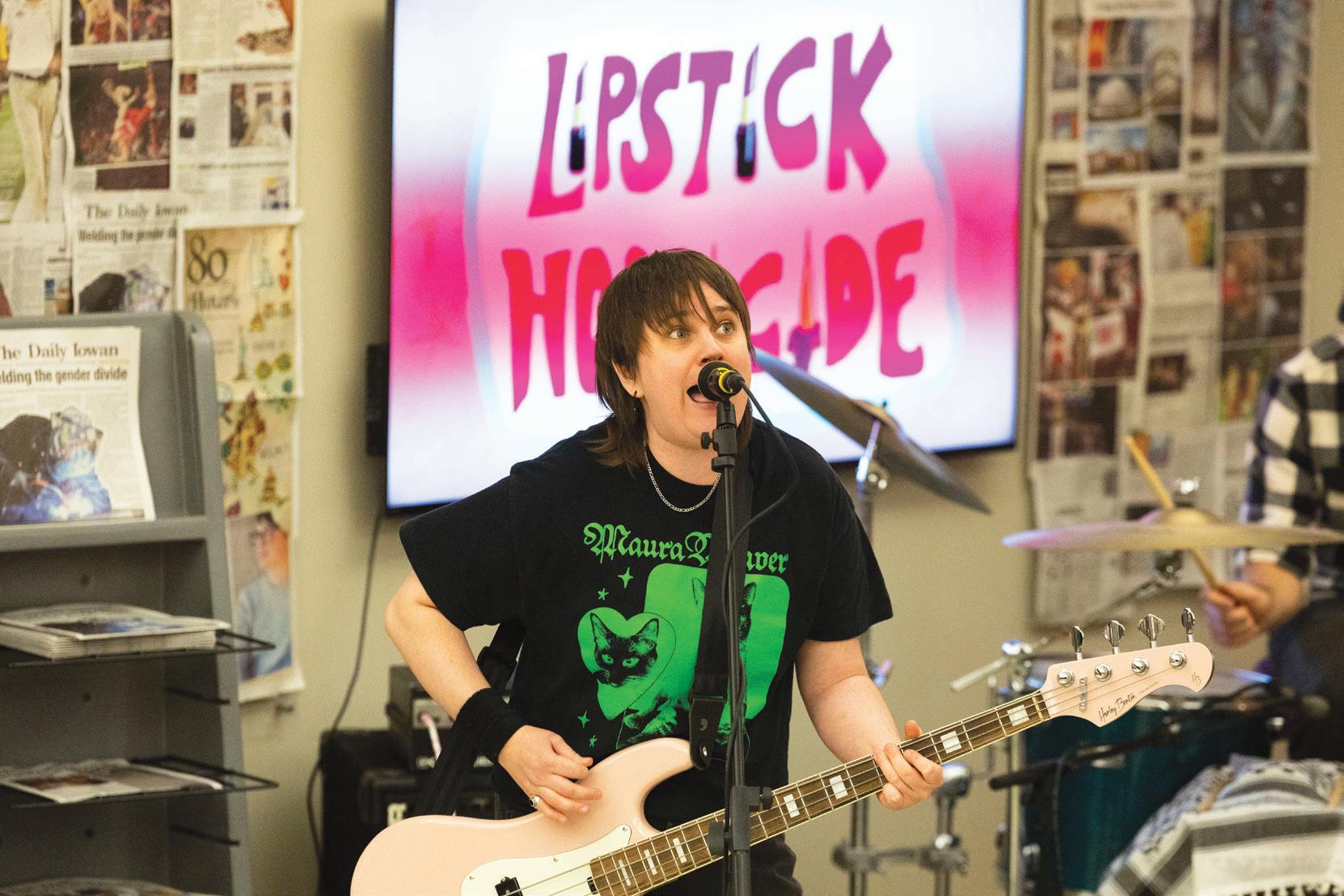
Lipstick Homicide is a pop punk band based in Iowa City, composed of three friends who started the band while attending West High School in 2006. Members of the band include singer and bassist Rachel Feldmann, singer and guitarist Kane Edwards, and drummer Luke Ferguson. The band sat down with The Daily Iowan after their performance in the DI newsroom on Feb. 27, as part of the 2026 Headliners series.
This interview has been edited for length and clarity.
The Daily Iowan: What inspired the formation of your band?
Rachel Feldmann: We started the band when we were in high school, almost 20 years ago, and we were all in different bands.
We all played the talent show, and Kane was like, ‘We’ve got to start a band,’ and I didn’t even know Kane. But we did, and then we had other members, and Luke was in a different band, but kinda in the same friend group.So, we started jamming with Luke, and then we started writing a lot of songs, and we would record at the United Action for Youth Center. It’s pretty awesome. They let kids record for free there. We just had all these resources, and it just all kind of happened, and we kept going.
Luke Ferguson: That was 2006 at West High here in town, so like, exactly 20 years ago.
Has it always been just the three of you?
Feldmann: Once we got Luke, it stayed the three of us, and it has all been the same lineup.
Kane Edwards: We tried out a couple of other, like, fourth members, second guitar players, that just didn’t fit right. A three-piece worked for us.
Ferguson: And we realized we fit in a van better. We used to go around in a little tiny minivan, and we’re all crammed in there with all our stuff and the merch; the drums were like Russian Dolls inside of each other just to make room.
How would you describe your music?
Feldmann: A lot of our recorded music
is pop punk. We’ve always been pretty melodic, with vocal melodies, power chords, and poppy chords. We get a little grungy sometimes. We have a little Riot Girl influence, but a lot of people have called us pop punk.
What’s your favorite part of performing?
Feldmann: I just like playing my bass really loud, and feeling the bass frequencies and getting to sing really hard and jump around and hear the drums and rock out.
Edwards: It feels good to get on stage and just be loud and sing loud and just sing the lyrics. I feel like I’m a big social anxiety person, so just kind of making myself do it, and then just being like, sometimes I’m super anxious on stage, but then I’m so happy I did it, and it felt really good.
Ferguson: I think music is fun, so it’s fun to play. Getting to meet different people in the community, and see other bands and all the venues and all the people that work at the venues, you get to see so many ins and outs of the cities. When traveling, it’s really fun too, because instead of being a tourist and just going to a hotel and not knowing what to do, you’re instead just thrown into the counterculture of whatever city you’re in, because you’re just hanging out with other artists. It’s an amazing way to connect with people.
Is there a particular venue in Iowa City that stands out as the most memorable, or the most interesting?
Feldmann: We used to play at The Mill a lot before that got torn down, but we’ve played at Gabe’s so many times since we were little, so that’s where we feel really comfortable. I really like Alley Cat, too. That space sounds awesome, and we have a lot of memories there.
Ferguson: Trumpet Blossom is still around. Public Space One has that cool building now; they’re definitely a favorite.
What do you have planned next for Lipstick Homicide?
Ferguson: There’s new stuff on the way; we’ve got recordings. Feldmann: Yeah, we have a new EP coming out, it’s called ‘Lipstick Homicide in the Stone of Opportunity.’ We recorded some songs for that, and then we’re going to play some fun shows this summer.
In anticipation of recording the album, the band shared what their favorite aspects of making an album were.
For Heinzerling, he enjoyed collaborating with other artists. Seaton said that he liked seeing all the elements come together.
“For me, it’s like building a puzzle,” Seaton said. “Kind of seeing how the songs sound without certain instruments, and then when we add the instruments as we go, seeing how the song really just transforms.”
Cacioppo said that the recording process both encouraged and limited the perfectionist in him.
He illustrated that while recording, the band has to make a final decision on how they want the song to sound, even though it could be played in numerous different ways. Cacciopo said that final decision is very satisfying for him.
For Landuyt, his favorite part was building a soundscape — how the sounds can resonate with the listeners.
He said that the reason he writes and records music was because of the space it puts the listener in, and hoped that the album would resonate with them.
“I guess the takeaway would be that people resonate with all of those different stages, and have like, ‘Oh, yeah, this song is definitely exactly how I felt as a teenager or now or something like that,’” Landuyt said.