








Goodbye to the people and the place that gave me so much.
This goodbye comes a year sooner than I had marked in my color-coded calendar. Yet, I feel that is very fitting as this year, this role, this time at The Daily Iowan has been nothing like what I planned for.
I joined this newsroom the second I stepped foot on campus, anticipating to get a byline or two and puff up my portfolio. The DI quickly became my favorite place filled with my favorite people.
I am beyong honored to have served this paper as executive editor in my third year at the University of Iowa. While I am excited to spend part of my last year abroad, I’ll miss this
newsroom so much.
I have more love and respect for this newsroom than I can hold, and the idea of leaving is something I have yet to come to terms with. This place has become so much of who I am.
I became a journalist at 15 years old, courtesy of my guidance counselor’s ingenuity, my hometown paper’s eagerness, and my desire to write something, anything. I didn’t know I would find my sense of self in other people’s stories.
Starting at such a young age shaped who I am. I came of age as a journalist, and reporting taught me how to move through the world. Observe, ask questions, connect. Edit, revise, try again.
The DI is where I learned how to turn a love for asking questions into a professional career. Through setbacks and stumbles, breakthroughs and triumphs, I owe it all to the DI and the group of talented, ambitious young journalists who make our paper what it is.
From interviewing presidential candidates my freshman year, covering the Iowa Caucuses,
Wow, I’m old
I’ve loved every moment at the DI.
At the end of my freshman year at the University of Iowa, I read all of the senior columns from all the dearly departed seniors at The Daily Iowan. Because I was but a lowly freshman city council reporter, I did not really know any of those people at all. Still, though, it made me emotional to see just how big of an impact the DI had on them, regardless of their posi-
driving through a swing state for the 2024 election, reporting from Capitol Hill, the DI gave me so many opportunities and deserves complete credit for my successes.
I’m walking away from this position misty eyed, of course, but also filled with so much gratitude.
First, I want to thank anyone who takes time out of their day to read what I write. My biggest thank you goes to any community member, student, elected official, anyone who ever spoke with me for an article. Thank you for every question answered and every call picked up.
President and publisher Jason Brummond provided invaluable guidance, support, and patience. Thank you for always letting me bug you. Whether we were talking about baseball or going over an ethical dilemma, I enjoyed every chance I had to sit in your office. I hope to always hear your voice of wisdom when I’m faced with obstacles.
Heidi and Juli, thank you for always taking time to chat with me, even if it was about the silliest things like passports or electric blankets. Your knowledge and laughter made this year so much easier and enjoyable.
My asskicking mentor, Marissa Payne, who taught me the most important lessons. And my partner in politics, Liam Halawith, I hope that one day we share a byline again. Working with you both was a highlight of my career.
Politics Coach Ty Rushing, who was there on the doc whenever I needed him. We poured over public records together, and you taught me how to apply pressure to government entities to guarantee transparency. Thank you
are already over. And, man, I feel old. I have way too many people to thank and only about 500 words to work with — and I’ve never been known to be short on word count, ask my editors — so I want to thank all of the editors, reporters, coaches, and sources that have worked alongside me to help keep this community informed. Local news is so important in today’s world, and being a part of such an exceptional news organization has been the proudest accomplishment of my young career.
for pushing me.
Coaches Jen Wagner, Leah Latella, and John Richard, thank you for your words of wisdom.
To my managing team, Emma, Shreya, Isabelle, Charlie and Grace, I would not have survived this year without you. I admire you all and will miss working beside you into the late hours of the night.
Emma, no we weren’t being punked. That was the job, and we did the damn thing. Maybe we can stop looking for cameras. I can’t thank you enough for seeing it through with me. I hope to work with you again one day.
Shreya, this year we grew closer and I am more than grateful to have you in my life. I’m going to miss looking across my desk to you. Most of all, I’m going to miss you playing frat music in the newsroom.
Isabelle, we accomplished so much together and I know you’ll improve every newsroom you are a part of.
Charlie, thank you for making me laugh so hard I fell out of my chair. You are the calmest, most collected person, and I’m honored to have gotten to know your silly side.
Grace, I can’t wait to see what you do. Make this newsroom your own.
An extra special thank you to my roommates, who I would often go weeks without seeing. Thank you for your support, for listening to my crash outs, and for understanding why I couldn’t be around as much this year.
To my family, you can stop worrying, I’ll start sleeping regular hours now that the job is done.
Time to count the wins and take a nap.
Goodbye, for now.
I am today without the DI.
tion or how long they worked there.
I remember feeling so excited to work at this organization for all four years of college and wondering what I would be writing about in my own senior column. Well, now I’m here, and this is one of the few times in my life that I’ve found myself at a loss for words.
That’s not for lack of amazing experiences, though. The DI has had me covering presidential elections, traveling to our nation’s capital during a time of great political unrest, winning national awards, and, most importantly, making lifelong connections.
No, the reason why I’m at a loss for words is because I can’t believe my four years here
I want to extend a special thank you to those that I’ve worked with the closest this past school year (you know who you are) for being not just the best coworkers I could ask for, but also my closest friends.
College is often full of its fair share of rough times for everyone, and God knows I had my fill. Even ata my lowest, though, I always had one constant in my life that I knew would bring me happiness, and that was the DI . Even given the sleepless nights and deadline stress, I knew I could always count on my friends at the DI to raise my spirits despite whatever else was going on in my life.
It’s because of those friends that I grew into a better and more confident reporter, editor, and, above all, person. I am not who
I would be remiss to not also thank my friends and family for all their support throughout my college career as I chase my dreams of becoming a journalist. Thanks especially to my lovely mom who has always been quick to repost my articles on Facebook no matter how mundane the topic, and to my amazingly patient girlfriend for understanding that I never knew when I would be leaving the newsroom each night. So if you find yourself like me as a freshman scrolling through the DI’ s senior columns, know that this place is run by such a dedicated, hardworking group of individuals who care greatly for the community whose stories they tell.
As a journalist, I recognize my bias when I say this, but I genuinely think the DI is one of the greatest local news organizations out there, and it’s because of the people who pour hours of themselves into the words they put on the page. I am so lucky to have been able to contribute to such a great paper every single day that I’ve been in college. Anyways, enough with the sappy stuff from me — time for me to go be a real adult and do things like have a bad back and complain about the weather we’ve been having lately.
in Iowa City, but not before submitting over 60 job applications in what she called a “disheartening process.”
When searching for her first postgraduation job, University of Iowa fourthyear student Isabelle Hudnut was repeatedly told she did not have enough work experience for the entry-level positions she applied for.
Over the span of her college career, Hudnut had a three-year-long internship position and two summer internships. One of the summer roles even turned into a parttime position for the duration of her final school year.
“Some of the feedback I would hear most frequently was just that it was not enough,” she said. “Even internships were not making the cut as real experience anymore.”
With a major in communications, a minor in media management, and a certificate in entrepreneurial management, Hudnut did not know what else she was supposed to do to set herself up for success post-graduation.
Hudnut isn’t alone, as college graduates are facing the toughest job market in years. According to the Federal Reserve Bank of New York, the unemployment rate for graduates ages 22 to 27 jumped to 5.6 percent at the end of 2025 — marking a sharp hike over the past three years.
UI economics professor Anne Villamil said the expectation mismatch is complicating the hiring process for new college graduates. She said employers are seeking people with years of experience for entrylevel roles when by definition, new entrants do not have that background yet.
“This is key,” Villamil said. “Entry-level jobs are compressed [because] companies want experience.”
Hudnut eventually signed an offer letter in April to be a full-time creative and social media manager at a small company
Hudnut started her job search in January, as she had heard the job market was arduous. But, she said most companies wanted to fill roles immediately, which complicated her search, as she does not graduate until May.
Even with her extensive internship experience, Hudnut said it was difficult to convey to employers that she had professional expertise, in part because she struggled to get in contact with actual recruiters throughout the process. She felt like many of her resumes were given a quick glance before being passed on.
Emily Campion, UI associate professor in management and entrepreneurship, said resume scanners have been increasingly used by employers to read applications more efficiently. The computerized method makes some applicants, such as Hudnut, feel as though their resumes are not being given a chance.
Campion understands the frustration but pointed out that when being read manually, recruiters only spend an average of six to eight seconds per application, according to the Tufts University Career Center. She said scanners look for specific information on resumes the same way recruiters do, only scanners can go much faster.
Still, Hudnut said it was discouraging to be approaching graduation feeling like her solid experience was not enough to get through an automated interview process. These challenges represent a sliver of the quickly-evolving and increasingly complicated job market. The labor market appears stable on paper, but as hiring practices shift, the economy remains unstable, and AI booms, getting a job as a new college graduate seems convoluted.
As of March, Iowa’s unemployment rate sat at 3.3 percent, according to the U.S. Bureau of Labor Statistics. The number falls significantly below the national unemployment rate of 4.3 percent from March.
The labor force participation rate, or the percentage of the work-eligible population that is employed or actively seeking employment, is at 67.9 percent in Iowa as of April. Iowa’s rate is in the top 10 nationwide, which implies a strong labor demand and robust state economy.
But many graduates, including Hudnut, feel like the market is unsteady — not strong.
is indeterminate.
She said employers are turning to temporary contracts as a result because they are cheaper, and eliminating positions when necessary is easier. The Beige Book report said several regional banking districts nationwide noted increased demand for temporary workers, as “firms remained cautious about committing to permanent hires.”
National job growth increased by 178,000 in March, according to the U.S. Bureau of Labor Statistics. While the increase is modest, Villamil said it has been concentrated in high demand areas such as healthcare, construction, and transportation. She said other sectors, such as federal positions, have continued to lose jobs.
Joe Murphy, president of the Iowa Busi ness Council, said while hiring is slower, the job market in Iowa is “healthy.” He said many companies overhired during the
Murphy said. He said the sheer number of college educated individuals leaving the state post-graduation will have long-term financial implications.
Iowa has the seventh highest cumulative net outmigration in the country, according to a 2025 study by the Common Sense Institute. It estimated that local and state governments forgo nearly $400,000 in tax revenue per outgoing graduate as well as a $6.1 billion loss in GDP by 2060 due to these departures.
Talent attraction and retention is the number one problem over half of the business council’s members are contending with, Murphy said, according to a quarterly survey done by the organization.
To combat this, Murphy said employers should prioritize facilitating internships. He said the business council’s 22 members have a goal of hitting 20,000 combined internship opportunities over the next five years as a way to show that there are quality work and career opportunities in the state.
Villamil said this view is not unfounded because there are important distinctions between hiring and unemployment rates. She said while unemployment in Iowa remains low, hiring is stagnant.
“This is a real fact,” Villamil said. “It’s not just students’ perceptions that there are less job openings out there. There are less job openings out there.”
According to the Job Openings and Labor Turnover Survey, a monthly report from the U.S. Bureau of Labor Statistics, total national job openings are near pandemic-level lows. Openings peaked following COVID-19 in May 2022 at 12,301,000. As of February, the number had decreased to 6,882,000.
Villamil attributed the decline to various factors, all of which had one thing in common — uncertainty.
She said uncertainty in interest rates, geopolitical shock from the Iran war, the economy, and the AI industry are all contributing to sluggish hiring.
The most recent report from The Beige Book, a publication on economic conditions from the Federal Reserve System, released in April, cited the conflict in the Middle East as a “major source of uncertainty that complicated decision-making around hiring.”
Villamil said spiking oil prices, supply chain problems, and inflation from the Iran war are all impacting hiring practices. She said the impacts are exacerbated because the end of the war in the Middle East
COVID-19 pandemic, so the labor market is still normalizing six years later.
“It is taking more time, I think we would all agree, to land a job than before,” Murphy said. “Because companies are, I do not want to say pulling back on hiring, but they’re just not hiring at the same accelerated clip as they probably did four and five years ago.”
The business council is a nonprofit, non partisan organization of 22 CEOs from Iowa’s largest employers, focusing on work force and economic development.
According to the council’s first quarter Economic Outlook Survey released in April, 30 percent of members expect their compa ny’s employment to increase in the next six months, while only 10 percent anticipate a decrease.
Looking to the future, Murphy said stag nating population growth and “brain drain” present a bleak outlook for workforce devel opment in Iowa.
Iowa’s population growth has been slug gish in recent years, as a report from the Common Sense Institute, a nonpartisan research organization, found growth fell below the 35-year average and the five-year average in 2026, with an increase of 7,900.
The increase lags behind the population growth of 15,803 in 2024, meaning the state could face decreasing economic output in the coming years.
“Brain drain,” or the outward migration of young people from the state, is making a detrimental impact on the workforce,
Cindy Meis, director of the UI Tippie Career Services team at the Tippie College of Business, said job placement for UI graduates has
stayed relatively stable in recent years, despite a tumultuous and uncertain national labor market.
According to hiring reports from the UI Pomerantz Career Center, 96 percent of graduates are “employed, continuing education, or not seeking at six months post-graduation.” Of those who are employed, 60 percent received ob offers prior to graduation, and percent received offers within the ne t three months. These datapoints are part of aggregated statistics from the , , and academic years.
A six month delay in reporting up-to-date statistics complicates the ability of Tippie Career Services to evaluate whether graduates’ outcomes have been impacted by the labor market, said Dana Powers, assistant director of careers and engagement at Tippie.
Meis said even though hiring numbers have not changed dramatically, the process has shifted in recent years. She said for example, employers want repeated interactions with job candidates, stretching the duration
without the famed internship. Study abroad e perience, nonprofit work, or academic proects such as research are all paths students can take to make their applications stand out, Meis said.
Powers said students should be intentional about getting involved in student organizations, holding executive positions, or working on projects to bolster their resumes. She said these experiences help build versatile skills that look promising to prospective employers.
“It’s really important to think through transferable skills that students may have directly related to positions, and understand how [students] can leverage themselves in the best way in that hiring process,” Dana said.
Murphy said the business council emphasizes the importance of applicants who showcase cross-occupational skills, like critical thinking, adaptability, and organization.
“Those sorts of skill sets can be applied whether you’re a financial analyst, a manufacturer on the line, a chemist or biologist,” Murphy said. “All of those things are so critically important across every industry, in every occupation in Iowa.”
Campion encourages students to communicate AI literacy to prospective employers as another way to set themselves apart from other candidates. She said AI is being used to increase workplace efficiency, so proficiency in the tool is a promising trait.
foresee it being a “job killer.”
“I do believe it will alter jobs. I do think some jobs will probably go away, as we’ve seen, but I do not believe the majority of jobs are going to be killed by AI,” Campion said.
Meis said she reminds students that there will always be an essential human component to most roles, AI just might make extraneous work easier.
“We are reacting to AI,” Meis said. “We do not know what we are reacting to yet, so it makes people a bit more conservative in their hiring.”
Ryan Wilson, UI professor and Tippie chair in accounting, said I’s in uence is unclear, but he thinks many companies, such as tech firms, overhired during the pandemic and are using AI as a cover to scale back hiring as a result.
ilson, who is also the e ecutive officer of the accounting department at the university, said the in uence of I has contributed to a ourishing ob market for accountants.
Accounting positions were initially thought to be risked by the new technology, but Wilson said that is not the case anymore. He said the job’s most mundane tasks will be made more efficient with I, making the field more appealing.
Licensure requirement changes, increased pay, and a shortage of accountants in the workforce are also contributing to the attractiveness of the profession for new graduates, Wilson said.
son behind the resume, so they want you to stop at their table,” Meis said. “They will want to visit with you at the career fair. They want you to tune into a webinar, and then be part of that interview process, maybe network with someone within the company.”
She said meeting these needs can be challenging, especially for students who do not know what career path they want to take and are not ready to commit to a single organization.
Meis said students feel an additional pressure to obtain internship experience before graduation, as it is proven to lead to better career outcomes.
study released ay by the ational Association of Colleges and Employers found that career satisfaction, career progression, and salaries are all higher among Gen Z professionals who took part in an internship or experiential learning opportunity in college.
But, Meis said some industries facilitate more internships than others, and having the experience will not make or break a students’ post-graduation success.
Powers said resume building and networking are good ways to make an impression even
Villamil said AI is potentially impacting entry-level work roles, as the positions are the easiest to replace for some industries, but she said the impact thus far is indeterminate.
The AI industry is a “double-edged sword” for people on the job search, Villamil said, because the resulting job growth will be temporary. She attributed the growth to the boom of data center infrastructure, used to house AI technology.
Villamil said while it is too soon to determine how much AI will impact jobs, she does not think it will eliminate large swaths of positions without replacement.
“We know from technological innovations, the Industrial Revolution, that when some jobs are destroyed, other jobs are created,” she said.
This indeterminate effect on obs is causing employers to preemptively shift hiring practices, which is making an impact on the labor market, according to Villamil and other experts.
Campion said employers are more hesitant to hire due to the uncertain in uence of AI, though disruption to the labor market cannot solely be attributed to the emerging technology.
Jobs have adapted to many technological advancements over time, Campion said. She thinks AI has the potential to make a bigger impact than other advances, but she does not
He said a human still needs to be involved in the accounting process, so AI is increasing the value of an accounting degree because employees will be able to get work done more efficiently with the tool.
Accounting firms had previously been outsourcing large amounts of low-level managerial work to India, and while AI can do much of that work, the rest will be brought back to the U.S, according to Wilson, who said this will raise the expectations for what entry-level accountants are expected to do.
Villamil said new graduates should seek opportunities in high demand sectors, such as accounting, as a way to mitigate the impact of the uctuating ob market.
Murphy reassured that entry-level positions still exist in this labor market, but candidates should remember their first post graduation role is unlikely to be the “perfect job.”
“The objective is to gain employment and then to gain experience,” he said. “That’s really an important aspect. You can wait along forever for something perfect to come up, and it just never will.”
Villamil said graduates should prepare to pivot and use their degree in a different way than intended while the market stabilizes. She also encouraged students to take advantage of their personal networks for increased opportunity.
“This too shall pass,” Villamil said. “The macroeconomy uctuates, and it will get better over time. I am fully confident of that.
Clara Reynen advocated against social injustices on campus and on the city council throughout her academic career.
Preparing to graduate with a master’s degree in Library and Information Science, as well as Fine Arts and Book Arts, University of Iowa student Clara Reynen has been a driving force of advocacy in the Iowa City area.
From negotiating graduate student wages to gaining over 3,600 votes during her 2025 Iowa City council campaign on issues such as AI regulations, housing, reproductive freedom, immigrant safety, and protecting transgender rights. Reynen, throughout all of it, has fused art and passion to fight for social ustice both locally and internationally.
hate speech, and I’ll re-pulp it to make new sheets of paper, and then print what I’ve written, she said. n top of that, it’s ust such a fulfilling pro cess because you’re really in it from start to finish, and I ust think that’s so incredible.
Reynen is also the unity chair of the I’s ampaign to rgani e ra duate tudents, or , a member of Iowa City Action for Palestine, and has made interactive visuals as a form of protest against Israel’s attacks in a a.
Her book, “Home is Where the ater Is, has been published in the environmentalist pen ivers our nal, which features a paper art display explaining how agriculture in Iowa impacts the ulf of e ico.
While she acknowledges the privi-

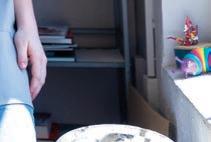


It’s been eight years since Reynen discovered the art of handmade paper, a process of recycling used paper by turning it into pulp, pressing, drying, and, for Reynen, giving it a newfound meaning.
“When I was in undergrad here, I took an Introduction to Book Art seminar, and that’s where I made my first piece of paper. ven tho ugh I didn’t study art in undergrad, I ust never forgot about making it, she said. “Without that, I probably wouldn’t have ended up in Book Arts, but I can’t imagine doing anything else now.
Reynen said the biggest highlight throughout her time at the UI has been using her artwork to turn hate speech into something friendly.
“I take paper from propaganda or
leges she’s been given, she said her biggest obstacle has been the backlash she’s received for her advocacy.
Reynen believes there is substantial pressure from people in positions of power to not discuss controversial topics on campus, and that certain individuals have asked her why she remains at the university despite disapproving pro ects such as the Center for Intellectual Freedom.
The Center for Intellectual Freedom is a state-mandated public university initiative for students to understand the importance of free speech. However, critics argue that it imposes conservative values on campus.
“We want to push the things that we love to become better, she said. “And I think I would not have
invested so much time in this university as I did, four years of undergrad and four years of graduate school here, and like I would not have spent that much time trying to make this a better place if I didn’t really believe that it could be.
Her motivations come from a plethora of people; she said her parents have played a significant role in shaping who she is. Reynen said it’s due to their caring nature.
“I really admire the way that they wanted to take care of people, even when they weren’t necessarily sure how to do so, and that’s always been a big, big inspiration for me, she said.
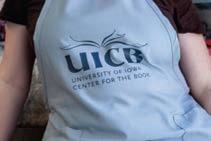
Reynen appreciates her professors and faculty at the UI’s Center for the Book, an academic and research program for Book Arts, who have been patient, kind, and challenged her when needed.
Center for Book professor Karen arcia said eynen is a source of oy, kindness, and enthusiasm, and has watched her overcome obstacles by learning from her experiences. Carcia said Reynen also inspires her students, who have en oyed her as a teaching assistant.
“Whether she is helping a friend get ready for a test or show, or standing up for our community, she shows up with 100 percent of herself and approaches the activity with love, arcia said. “They speak so highly of how she creates an open, safe space that engenders learning and allows students to stretch their skills, and their critical and conceptual thinking.
As Reynen moves forward with her career, Carcia hopes that Reynen remembers and is encouraged by her accomplishments and the community she’s made at the UI Center for
the Book.
Iowa City City Councilor and friend of Reynen, Laura Bergus, said she met Reynen when she spoke at Iowa City council meetings.
“I was immediately impressed by the way she was willing to speak truth to power on challenging political topics, ergus said. Bergus also helped Reynen with her city council campaign and said they aligned well on many local issues. Bergus described Reynen as someone who in uenced her and whose perspectives she found insightful.
lara is very brave, ergus said. “I learned after I met her that she was someone who’d been arrested during a demonstration urging an end to violence in Palestine. She’s also a compelling speaker and a good, attentive listener.
Knowing your community is the most fulfilling feeling out there.
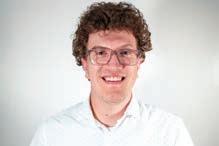
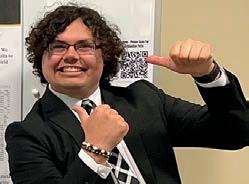
I can’t remember why I scanned a QR code on the first floor of the Adler Journalism Building to join The Daily Iowan arts section in March 2023, but it feels like something I was always meant to do in retrospect.
Before I started working at the DI, I was an antisocial first-year who preferred catching a movie at FilmScene to going out and felt unfulfilled socially and professionally. I felt like I wasn’t getting the most out of the special community around me or of the busy campus I was supposed to call home.
Reporting for the DI arts section, a small but mighty crew of four reporters under my editor Parker Jones when I began, drew me deeper into the Iowa City community and brought me the fulfillment I was searching for.
Not only did being thrown into the deep end of covering local events and interviewing community leaders shatter the shell I had developed between graduating high school and attending the University of Iowa, it also guided me professionally.
Working with my fellow editors, and especially under the guidance of Stella Shipman, Avi Lapchick, Jami MartinTrainor, and Roxy Ekberg, I feel like I’ve developed my storytelling skills, syntactic awareness, and ability to thrive under pressure. Journalism is a high pressure gig, but throughout my three years at the DI I’ve learned to accept the things I can’t control. A majority of my time in the newsroom was spent as an editor, and having the opportunity to lead the creative section of the paper, grow it from the handful of reporters we had to start, and develop a reliable team has been an absolute joy; one I feel like I can tangibly see the impact of and feel proud of.
It took me a while to come out of that shell, though, so I want to thank everyone I’ve worked with for being patient with me as I developed into the editor I am today. The people I’ve worked with are the real reason I never quit, even though
there have been some dark nights of the soul in which a frustrated call to my parents said otherwise.
Whenever something falls apart, I think about the best memories I’ve had in the newsroom, like the movie nights or evenings spent huddled around the TV watching an important political event together.
I think about the countless times Isabelle or Evan referenced some brainrot thing that made me cry laughing and choke on my Chipotle bowl, or when Shreya and I shout terrible headline ideas at each other at 11:45 p.m. on Monday nights, trying to wrap up print edits before our brains give out.
How
I am
My time at The Daily Iowan gave me opportunity, but more importantly, belief.
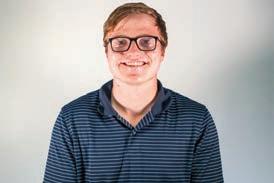
Telling other people’s stories is difficult enough. Where do I even start with my own?
I think about the word of congratulations that fill my inbo the morning after a big feature story of mine runs, or the texts I’ve received from reporters at the end of the year thanking me for helping out on a particularly messy story or lengthy editing process.
Those are the times it makes the tough moments worth it.
I’ve always said I write better than I talk, and in terms of sports, the two I’m best at are bowling and disc golf (and that’s being generous with the definition). So there was sports journalism, an endeavor I succeeded in, failed at, and accomplished everything in-between these last four years with The Daily Iowan.
My time at the DI was an absolute privilege. Traveling across the country, from College Park to Pasadena, to cover football and basketball games are opportunities that not enough professionals have these days. It’s astonishing to list off all the stadiums I’ve reported from. I don’t have an exact sports fan bucket list, but I’ll have plenty of items checked off before I begin.
The reporting aspect of journalism is certainly social, but the writing aspect definitely isn’t. I would love to say I love writing, but it’s lonely. I throw my phone on Do Not Disturb, lock myself in the library, and listen to past conversations that the other person probably forgot about. Traveling to cover football sounds glamorous until you’re staring at a blank screen and blinking cursor alone in a hotel room well past midnight. At those tiring, frustrating moments, you wonder if it’s worth it. ntil you find reason to keep going. I still remember Logan Jones’ mom thanking me for the profile I wrote on her son. To her and everyone who appreciated my work, it means so much knowing what I do makes a difference.
If you told me when I first moved here and was likely sitting in my room alone playing Resident Evil games and eating hot Cheetos I would have leadership positions, at the DI and The Bijou Film Board, I would have laughed in your face and said “what are those?”
Getting to know your community is one of the most important things you can do in the tumultuous political climate we exist in, and I’ll forever to be indebted to the DI for making me feel like a part of Iowa City, shaping my professional prospects, and introducing me to friends who have always supported my work.
And thank you to whoever put out those DI flyers in 2023, I couldn’t have done it without you.
Covering a white-out game at Penn State, a football Big Ten Championship at Lucas Oil Stadium, a March Madness game from the sidelines — despite all the datelines, it doesn’t seem real. Yet in the moment, I always try to act like I’ve been there before. There’s no cheering in the press box, after all. But beneath the suppressed emotion is pressure. Not the same one athletes and coaches feel — they’re trying to win.
The result doesn’t matter to me, even if it involves the team I’ll cheer on forever.
I’m more concerned with telling the best story possible, accurately and compellingly explaining what happened, who someone is, or why such a thing exists. This aspiration scares me at times. People give me the time and trust to speak for them, and while I’m grateful, I’ll question how I can live up to that responsibility.
I’ve felt out of my league interviewing future professional athletes and legendary coaches, but what pushes me past my doubts is humanity. No one is out of reach, and with enough time, everyone can be understood. I want every story I write to be a human one.
I don’t tend to remember actually writing a story, but that makes sense because memories aren’t made alone. My time at the DI is only special because of who I shared it with. From road trips where I subjected too many to classic rock, Star Wars, and questionable driving skills, to countless unproductive hours of conversation and jokes in the newsroom, I couldn’t have done this job without my coworkers, many of whom I’m happy to call my friends. The DI was a place I always felt welcome. If I was looking for a laugh or searching for a smile, I always could find one with y’all.
There’s too many people to thank, but to those who came before me, I learned so much. And for those who are sticking around after me, I hope I taught you something. I’m so lucky to have people who believe in me, especially my parents. Mom, I’m not sure if I’ll ever write a book. Dad, I don’t think I could ever be a lawyer. But with the kindness and work ethic you instilled in me, I know I’ll be alright wherever my future leads me.
As the timeless Tom Brands once told me, “Print that.”
Campbell Wood looks back on her rise through Dance Marathon leadership and impact as executive director.
becoming a captain her first year.
Campbell Wood was brainwashed into being a Hawkeye — or that’s at least what her mom would say.
Growing up, Wood’s dad would take her to football games. is birthday cakes, office, and clothes all had the same Hawkeye theme, but even beyond the black and gold, he showed her the traditions.
“One thing he did was sit me down and show me videos of the Wave and the Dance Marathon Big Event,” Wood said. “He told me, ‘I think this is you,it’s dancing, giving back, and spending time with kids. You would love this.’ And I think I knew he was right.”
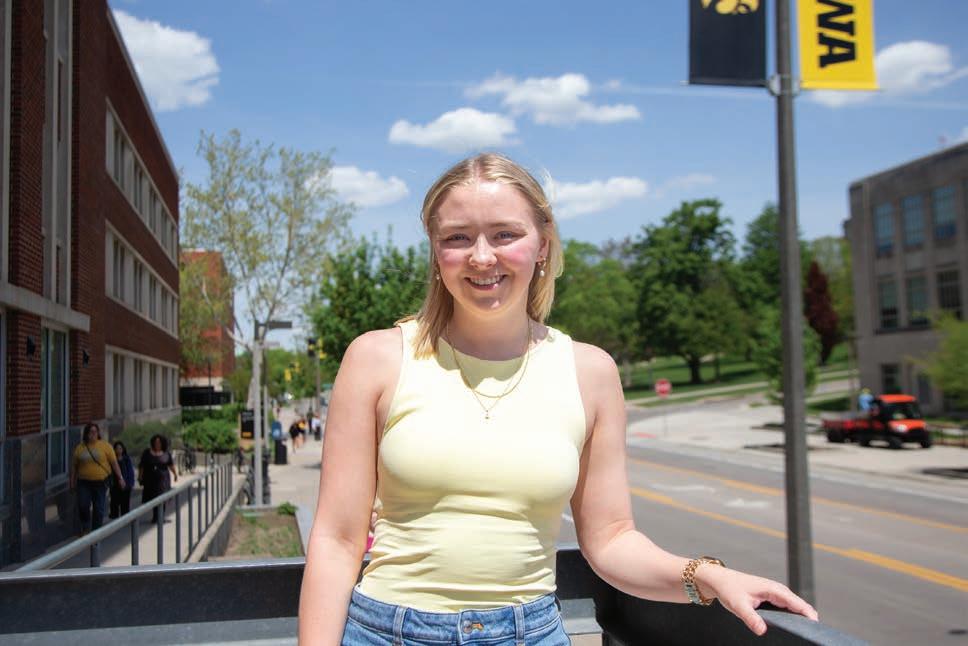
Dance Marathon is the largest student-led philanthropy and student organi ation on cam pus, with over 200 leadership members and more than 1,300 dancers. Over the course of the year, members raise money for the UI Stead amily hildren’s ospital to support its fight against pediatric cancer.
The Big Event is a 24-hour Dance Marathon where students come together to celebrate the children who have survived and remember those who have passed away. Over the years, UI’s Dance Marathon has raised over $39 million.
For Wood, however, the impact of Dance Marathon went far beyond the numbers — it gave her a sense of belonging on an unfamiliar campus.
I didn’t really know anyone. It was a big oke for me, and I’m such a homebody. I wanted to be
and leadership in this organi ation.’ I think having her believe in me meant the world. And that was where it kind of started,” Wood said.
Over the years, Wood climbed the ranks of Dance Marathon leadership, becoming a committee chair her second year, recruitment and retention director her third, and then executive director her fourth year.
Dance Marathon Assistant Director Jessie unningham recogni ed the difficulty of the executive director position and said it goes beyond ust organi ational skills.
“The executive director is someone who leads by example, inspires people to do more than they thought they could, and brings a lot of people together behind one mission.They also have to communicate to a wide audience and adapt constantly,” Cunningham said.
Those who worked closely with Wood say her leadership stood out for its positivity and drive.
“When Campbell spoke, the room went silent,” Cunningham said. “She had so much heart for Dance Marathon that you could feel it every time she spoke.”
Early on, the leadership team was already seeing signs of growth. undraising efforts were starting to build momentum, even as they were cautioned not to overextend before the organiation’s largest fundraising push in ovember.
Wood attributes a culture shift that played a ma or role in that momentum. The focus moved toward celebrating every contribution, no matter the si e, and making fundraising feel energi ing rather than transactional.
Wood’s leadership experience fundamentally changed how she saw herself and the decisions she made within the organi ation.
Traditions, alongside strong school spirit, downtown Iowa City, and Iowa being the number one writing school, led Wood to choose pursuing a degree in Journalism and Mass Communication on the strategic communication track with a certificate in creative writing at the UI.
Coming to campus, Dance Marathon was the first student organi ation ood oined,
here, but it was also intimidating, and this gave me a community, and it was weekly meetings, and they were ust the most fun people you could ever imagine,” Wood said. “Everyone in that organi ation ust has such a est for life.
ollowing ood’s first ig vent with ance Marathon, she remembers the note the executive director gave her that kept her coming back.
“She said, ‘I see a strong future for you
“Campbell is someone that always pushes for more, and she leads by example. Those are two things I’ve taken from her, knowing we can do more and we will do more, because that’s what this organi ation is about,” Aubrey Colemean, executive director of Dance Marathon 33, said.
Cunningham said Wood stood out as an executive director for the way she spoke.
“From a leadership perspective, I’ve grown in confidence, she said. I was such a shy person. I didn’t really go up to people, and I was always scared of what they thought of me. I’m still somewhat indecisive, but in this role I learned to make decisions.”
Looking ahead, Wood plans to continue pursuing opportunities that build on that experience, attending the Disney College Program in June.
“I love Disney, it’s so magical, but for me, Dance Marathon will always be the most magical place on earth.”
But the memories I have from The Daily Iowan will stick with me forever.
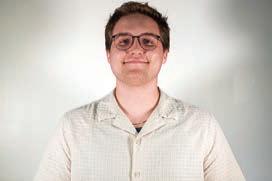
In my brief time at The Daily Iowan, I know that things will never be the same as they were before I became a photojournalist.
Embarrassingly, one of the first memories of being a photojournalist for the DI was last summer, when I took an assignment to cover a drivethru furniture donation event. I showed up 30 minutes early. I spoke with event organizers and donators alike. And when I came back to the newsroom to file my photos, they all looked bright white.
As it turned out, I was not as knowledgeable on camera settings as I had thought, and my ISO — a brightness setting — was cranked up high, thus the
white screen. I felt horrible, but luckily another photojournalist had photos that were usable, unlike my own.
I tell this story not just for comedic effect, but also as a reminder of how I was, versus how I am now. At this point, I have spent the past five months as an Assistant Photo Editor for the DI, and in such a short time, I have learned more about the journalistic newsroom than I could ever learn in a textbook or lecture hall.
But here’s the rub: Nothing is ever going to be the same as it was.
The one-way street of time keeps moving forward, and my time at the DI comes to a close soon.
Although these experiences in my life are ending, there are memories and moments that I will cherish for the rest of my life.
Pizza is never going to taste as good as it did after scrambling around for photos on Election Day.
Photojournalism was never easy, but that wasn’t the point.

The uplifting environment of Wednesday night critiques is something I won’t be able to experience again.
The camera is never going to have the same opportunity as it does in my hands these days.
These experiences at the DI have been some of the best of my life, and that is thanks in no small part to the rest of the DI Visuals team and our leadership: our coach Leah Latella and our Visuals editors Emma Calabro, Samantha DeFily and Gabby Drees.
And especially to my Visuals editors: thank you for letting me be a part of something so fantastic. The phrase “thank you” can only do so much, and it’s not nearly enough to express my gratitude towards you three.
Overall, I often regret not joining the DI earlier. But in only a year, I have been granted the opportunity of a lifetime: one year with the incredible people that work so hard, day-in and day-out, to produce the best news that a few broke college kids can make.
I started at The Daily Iowan in the spring of 2024 as a second-year cinema student that just wanted to get a job that put a camera in my hands. I had no expectations of what photojournalism, or even photography had to offer, but I knew if there was a job that gave me the opportunity to be a part of the action. It would be at the DI.
I learned quickly just how fast this job moved and did everything I could to keep up with assignments. I was lucky enough to start at the DI during a time with such amazing talent. Attending critiques seeing work from Grace Smith and Ayrton Breckenridge showed me I could do so much more than building mugs and city council meetings.
I started taking on sports slideshows and the pace got even faster. While I was too much of a rookie to work on “More Than a Moment,” I took any track, tennis, men’s basketball, softball, or baseball assignment I could.
The DI isn’t all shooting buzzer beaters. I learned a lot about patience and communication. From staking outside in the cold
for a photo of an ambulance, to riding along in one, to talking to local business owners, students, and artists, to even photographing the president, I learned that photojournalism operates at
feeling of knowing I had made something that I was proud of made all of the harsh, honest critiques worth it.
One of the best things about working at the DI was knowing that the visuals team all had each other’s back. While I loved the feeling of knowing I was getting better, it felt just as great to know my peers were progressing right alongside me. Especially Emma Calabro and John Charlson, who started at the DI the same semester as me. It has been the
many different paces. ut really, I learned that I didn’t just want to make well-composed visuals, but that I loved learning about people’s stories and becoming closer to the city I live in.
The DI was never an easy job, but it helped me figure out that putting in work led to some of the greatest feelings of fulfillment that I have experienced in my young professional career. I will never forget the pride I was able to feel on long car rides home from away games in Nebraska, or wrestling duals in Tulsa, or Penn State. The
greatest pleasure to navigate the challenges of the DI together and to see you both become so skilled. The DI has helped me learn so much about myself, my aspirations, and my potential. This job helped me focus my very broad interest and give me a clear idea of how I want to tell stories. I’m thankful for all the leadership and coaching I have had over my two years. I’m thankful for the late nights and the early mornings. And I will always be grateful to the DI for putting a camera in my hands.
The Daily Iowan taught me that writing can and should be my career.
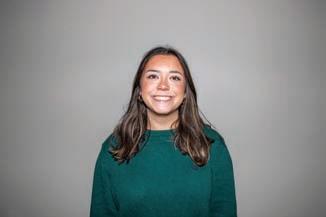
I remember the exact moment I decided I wanted to write for a living. My sixth-grade English teacher, Mrs. Dunscomb, wrote on one of my assignments: “You should be a writer.”
But it was more than that. From the time I was , I was filling up whatever notebooks and journals I could. It was poetry, short stories, cringy diary entries about middle school crushes, etc. I always knew my future needed writing.
By the time I was applying to colleges six years later, I decided it was a silly dream, and I should think logically.
So, I took a gap semester. I was in that awkward spot where my dreams often felt unattainable, but everything else was utterly uninteresting. I didn’t know what to do.
I took a few community college classes in January 2023. I took a few courses I liked and didn’t like. It was my public speaking class that changed how I thought about my future.
I loved giving speeches. I could use my love of words, but I could translate it into conversations. I had never tried anything like it before. I learned quickly that if I wasn’t writing, I wasn’t really living.
I immediately transferred to the University of Iowa for the journalism program. y first semester was rough. I was taking introductory courses that I both hated and loved. It wasn’t enough, though. I’ve always been someone who needed to hyperfocus on one big thing. I didn’t have that yet.
But there it was, right there in my inbox, an email from Sabine Martin with the subject line “The Daily Iowan is HIRING for the spring semester!” I had no idea that reading that email would change my life.
A few weeks later, I was in the newsroom,
ready to start as a DITV reporter. It was a dream I never had, but I think it was the future I was destined for.
I remember feeling scared during orientation. I was a writer for fun, not for publication. It felt like everyone there knew what they were doing, and I didn’t.
A gentle smile from one editor put me at ease. One small gesture taught me this was a place for everyone.
From there, everything fell into place. I found my home in the DITV studio. I found my community. I found a love for myself.
I’ve grown so much at DITV, not only as a reporter but as a person, too. uring my first semester, I was so shy. I think it took everyone the entire semester to learn my name.
Somehow, I’m the news director now, talking to everyone all the time.
It was unexpected, but it’s been the best experience of my life. I’ve loved cheering on “baby reporters” and watching my closest friends win awards for their work. I’ve loved sitting through weekly meetings and scheduling. I’ve loved getting into the nittygritty of it all.
I’ve done a lot in my time here, like interviewing legislators or traveling and covering stories from Washington, D.C. to Iowa City. It all pales in comparison to the e perience of watching my staff put their all into every show, every story, every moment.
To my staff, thank you for letting me be your director. Through the missteps and the wins, you supported me as I supported you. You all taught me lessons and brought me a million laughs.
To my team of directors, my best friends, thank you. If it weren’t for you, I wouldn’t have been able to do this job. As a news director, you’re only as good as the people around you. I think it’s safe to say I’ve had the best.
To my 12-year-old self, thank you for writing. Thank you for picking up the pen and never allowing me to put it down, even a decade later.
And to Mrs. Dunscomb, thank you for teaching me that writing really can be a career.
My time at DITV taught me so much.

My name is Jasper Cain Juguilon Murphy, I am 22, getting two majors in Psychology and French with a minor in Linguistics, and I am the Tech Director of DITV. I have been working at DITV for the past 3.5 years.
I grew up in Ames, Iowa, the rival to the Hawkeyes. My family has never really cared about sports, so there really wasn’t any loyalty to Iowa State University. I chose Iowa since it had a much better foreign language program than ISU. I never would have guessed that I would have this job.
I originally applied for DITV to be a video editor as that was a skill I wanted to improve, but Ashley Weil, the DITV News Director at the time, told me that the journalists were taught to edit all of the videos themselves. However, she did need more people to work tech.
I told myself I would just stay one week and if I didn’t end up liking it, then I could step down and find another job on campus. But that first week really left an impact on me, so I told myself that I would stay one more week to see if I truly liked it. After that I was here to stay.
Madison Johnson, last year’s Tech Director, and I would always joke about how similar our situations were at DITV. We’d say, “We both applied to be video editors, ended up working tech, and now we’re too qualified to quit.”
Both her and I were trained under Carson Ramirez, the Tech Director before Madison. Everyone who worked at DITV during his time called him a Tech God, and currently there is only one other senior in tech who was there to witness his magic.
I like to think Carson, Madison, and I, each provided what DITV needed from their Tech Directors at the time. For Carson, he knew the tech board like the back of his hand and was able to implement just about anything onto the digital set. For Madison, she worked with the other
directors to improve upon what Carson had left for us and came up with some very innovative ideas.
She was also there when we were transitioning from the digital set to a physical one; she helped set up a baseline for me and the other seniors to work off of.
And as for me, I have heavily improved upon how we utilize the physical set, setting very cool shots that weren’t possible with a digital set, doing dramatic live camera movements, and working with how we can utilize graphics in the different monitors to enhance our storytelling.
There have been so many people that have come through DITV, and there are so many of them that I cannot thank enough. First, Carson and Madison, those two were the best teachers I could have asked for. Without them, I don’t think I would have done as good a job as Tech Director.
Next, I wanted to thank my other directors, but especially Kayla. She has really pushed me to grow in my role as Tech Director.
We have almost always been on the same page about things, and I really couldn’t have asked for a more supportive boss than Kayla.
But most of all I wanted to thank all of my tech employees. They all have really helped me grow, not only as a leader, but also as a person. I know that DITV will be in good hands next with Amy Lynch as its future Tech Director.
DITV has truly helped me grow in so many different facets and has taught me so much. Even though I am not planning on working in broadcast journalism, I can say my time here taught me clear and effective communication, which I will be sure to use as I start my Master of Social Work next year here at Iowa.



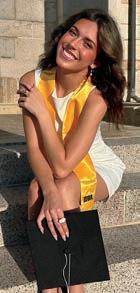
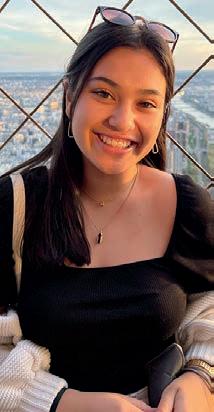
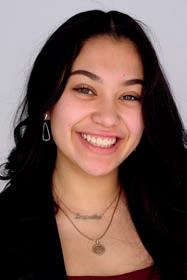
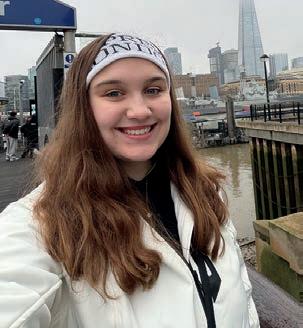
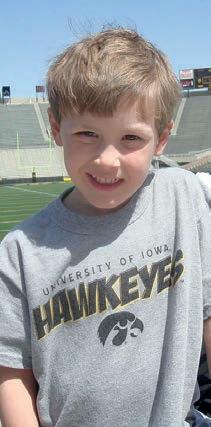
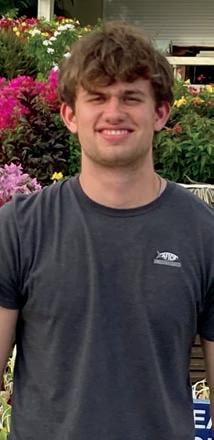



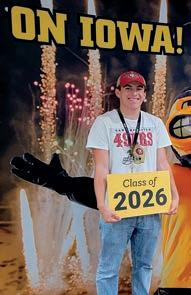
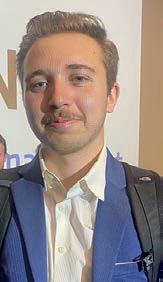
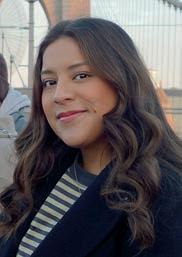
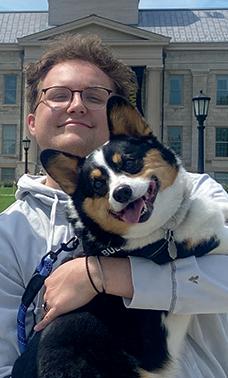



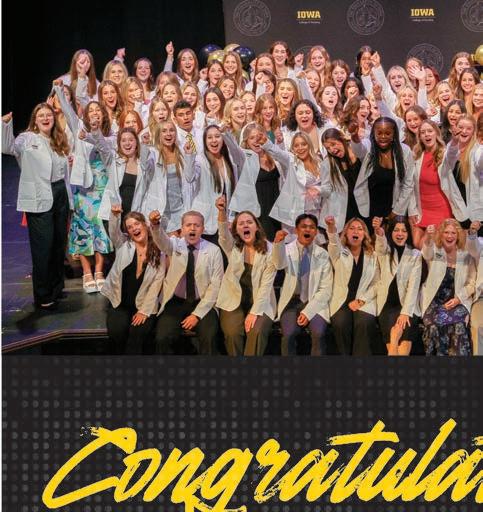
Congratulations to all the 2026 graduates from your friends at The
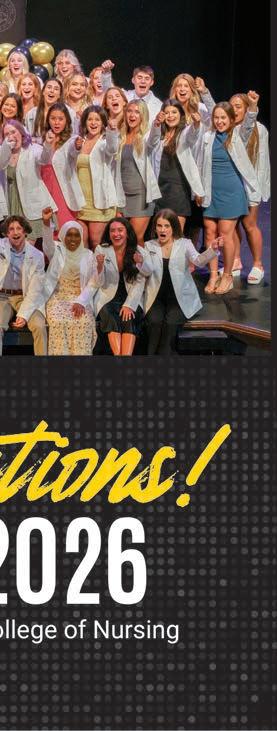
The Daily Iowan would like to congratulate our graduating students:
Best wishes for a successful future!

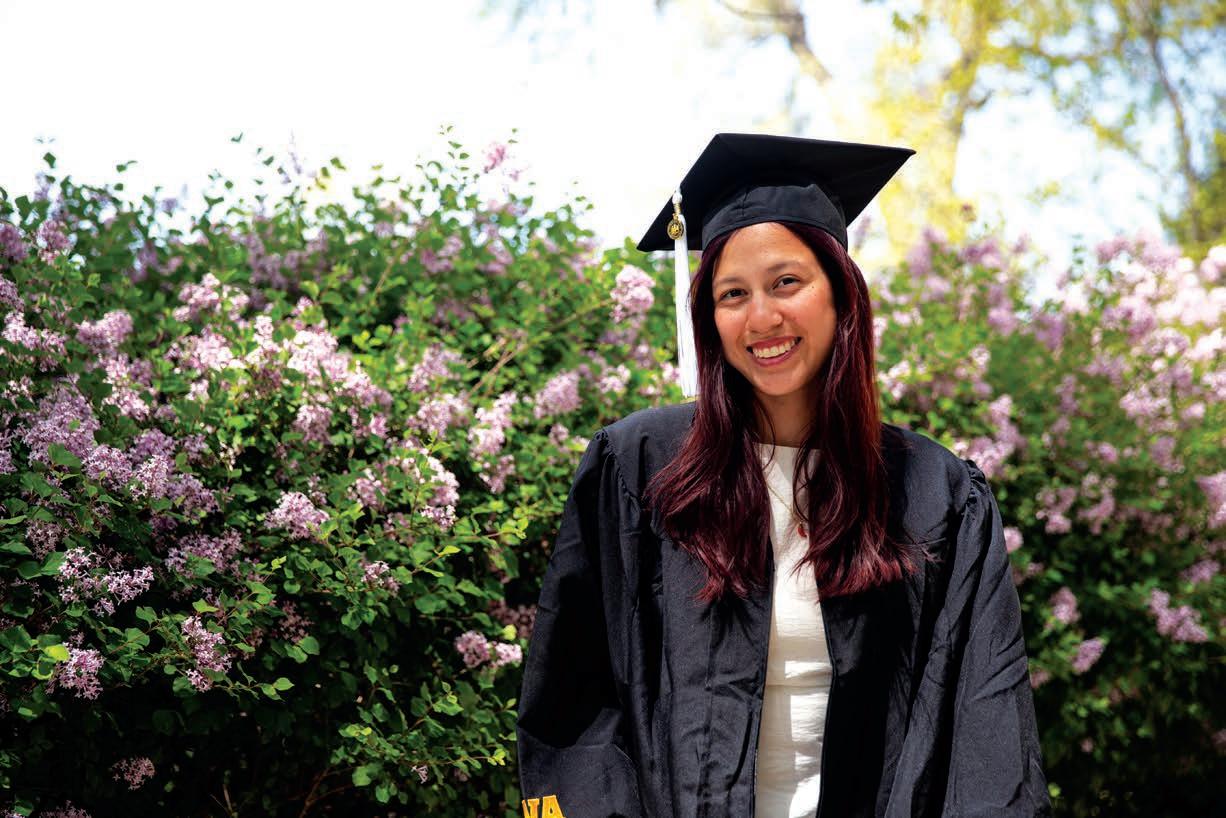
Transfer student Kaili Decker worked to be as involved as possible during her time at the UI.
There’s a stigma surrounding change and starting over; people often find it scary or depressing. or Kaili Decker, change is embraced and welcomed with open arms.
ecker, a niversity of Iowa fourth year student ma oring in e ercise science on the pre physical therapy track, transferred to the I ust before her third year. eeling two years behind her new peers and eager to make the most of her time, she immediately started brainstorming ways to get involved.
I got here, got to work on my classes, and was trying to figure out what I’m going to do while I’m here. ecause obviously I’m here to meet people too. o I oined ultimate frisbee on a whim, and it was probably one of the best decisions I’ve ever made, ecker said.
The aucy ancy’s, the I’s ltimate risbee Team, acted as a gateway to meeting some of her
closest friends.
The club sport has three prac tices a week and three to four tournaments per semester, and ecker fully immersed herself in the e perience. y her fourth year, she was the team’s fundraising chair. ot only did she take on the position with excitement, but she also managed to raise around eight grand this year in acknowledgement of the e penses that come with oining a club sport.
Though she said the aucy an cy’s provided her with a multitude of amazing memories and experi ences, her last tournament held a special place in her heart.
It was our regional tournament and my last tournament on this team, so it was really sentimental for all of us. e played against the people we’ve been playing for the past two years and ended our last game against Iowa tate with a win,
noted it was always fun playing them because the girls on that team are genuinely so sweet. ne of the things she loved so much about ultimate frisbee was the spirit that lives at the very core.
If time permits, spirit circles often formed at the end of each game, allowing the girls from each team to mingle and chat while tipping their metaphorical hats in a salute to a good game. Complete with spirit captains and prizes, the sport channels into an incredibly wholesome and genuine environment.
and it was ust such a good way to end things off, ecker said.
lthough Iowa tate is a long lasting rival for the I, ecker
During her time on the team, ecker grew close to ky offman, a aucy ancy captain.
aili spreads oy wherever she goes. eople are drawn to her by her fun loving energy and passion
for everything she does, but they stay because of her compassion, kindness, and fierce love for her friends. he’s genuinely so cool I admittedly copy her style whenever possible, and her music taste and well-rounded interests give her something to talk about with everyone, offman said.
Though frisbee was a foundational aspect of her time at the I, ecker found other ways to take advantage of what the university had to offer.
At the end of her 2025 fall semester, Decker uncovered the opportunity for an internship through the ommunity ealth Collaborative, a campus program under the epartment of ealth and uman hysiology. The program, referred to informally as
the , aims to improve community well being by offering evidence-based preventive health services while providing experiential learning and hands-on training for university students.
Through her internship, Decker helps to run a variety of health tests and conducts research studies. fter building her e perience for a full semester, she confidently acknowledged her skill growth and gratitude for the opportunity.
ollowing the end of her senior year, ecker plans to take a gap year and then apply to T school, saying that she would love to come back to Iowa as it has been an e cellent place for her to grow and expand on her knowledge.
The I has definitely changed me for the better, ecker said.
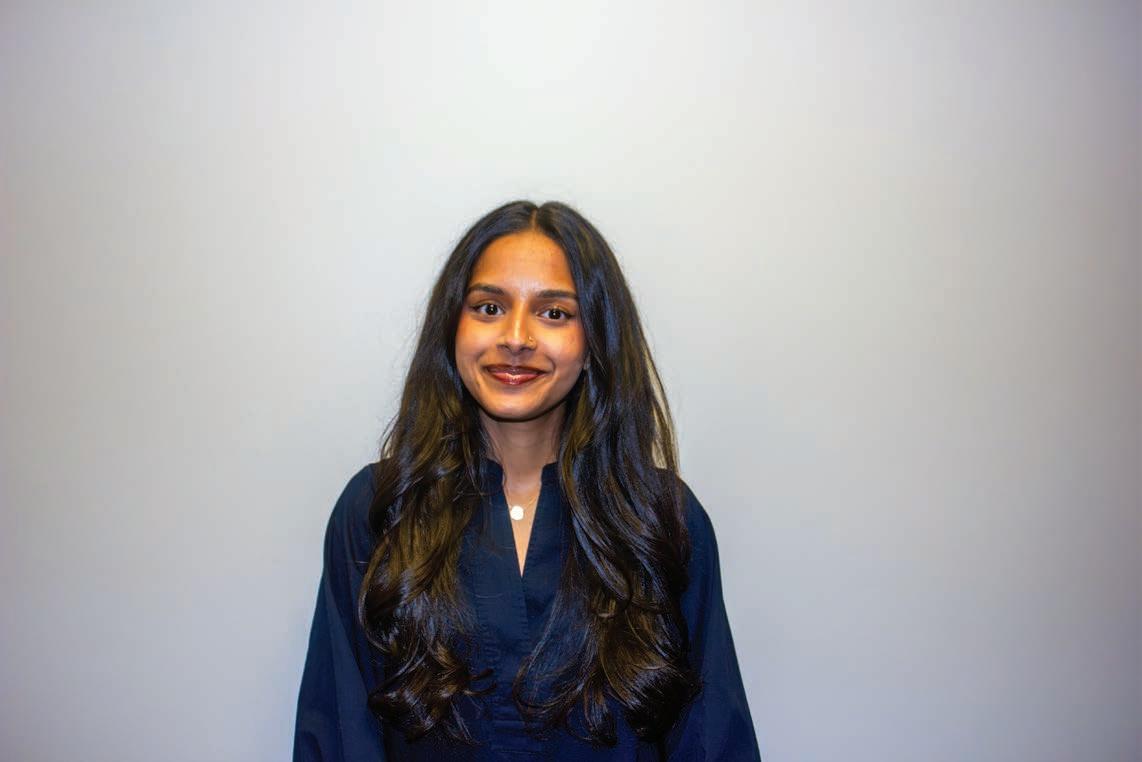
Allisa Pandit helped host the organization’s first national case competition.
Though she’s only moving to the west side of the Iowa River, Allisa Pandit, the outgoing president of the University of Iowa’s Tippie Senate, feels a great deal of sentimentality leaving the university’s business college behind.
Pandit served as Tippie Senate president for the 2025-26 academic year, her final year at the I. The spring semester marked her last as an undergraduate, as she plans to enter the UI’s law program in the fall.
Pandit has been involved with Tippie enate since her first year, immediately developing an interest in the organization from her student leadership roles, such as student council in high school.
The UI’s Tippie Senate is the undergraduate student government for the Tippie College of Business, serving to represent Tippie students and advocate for their needs while managing funds for student organizations.
“Every single year, Tippie Senate has been my number one priority,” she said. “Traditionally, seniors don’t like to run for leadership positions, but Tippie Senate is something that I love to do, and it feels like I love to do it in my free time. So, it never felt like I was overexerting myself.”
Pandit said through the help of her executive board and the other senators, Tippie Senate has strengthened its emphasis on student leadership and experimental learning during her time as president.
Pandit pointed to the senate’s
case competitions, learning events where students work in teams to analyze real business problems and present solutions to judges, as emblematic of the senate’s strengthened student leadership and experimental learning.
Tippie hosted its first ational Case Competition in October 2025 under Pandit’s administration, where schools from across the country came to compete for a weekend. Pandit said the event was a success.
Paige Reynolds, Tippie Senate’s senior vice president, was impressed to see Pandit in action during the case competition.
“She ended up volunteering from 6 a.m. to basically 10 p.m.,” she said. “It was on Halloween weekend, and she was working almost 12-hour days for it, which is just so impressive.”
Reynolds said Pandit excelled at leading Tippie Senate with a quiet grace.
“She lets everybody else have their own opinions, which is really nice,” she said. “I’ve had a lot of different leaders where you feel like you can’t disagree with them or like they’ll just say their opinion first. I think she is really great at getting other people’s feedback with different issues.
The senate launched a presidential summit on May 4 at the Hilton Garden Inn, celebrating Pandit and other Tippie student organization leaders.
Pandit helped launch the first presidential summit at the end of her third year, after she finished studying abroad. The event sparked her interest in running for president in her senior year.
“The presidential summit has
truly been a great opportunity to celebrate Tippie leadership and student leadership in general, which I feel like is the number one reason I was drawn to Tippie Senate in the first place, she said. o it’s really full circle for me.”
Pandit said she is most proud of making Tippie Senate a more visible presence on campus during her time in the organization.
“It’s been amazing to see our progression throughout my college career,” she said. “As a freshman, people would be like, ‘What’s Tippie Senate?’ versus now, I hear people saying, ‘Are you going to that
Tippie Senate event?’ Seeing that progression has been amazing.”
Pandit said she faces several new unknowns in law school, but her desire to take on leadership roles will remain unchanged.
Second-year student at the UI and incoming president, Vismitha Vuppala, said Pandit was excellent in being a communicative leader.
One of Vuppala’s favorite changes under Pandit’s presidency was her moving committee work into regular Senate meetings, allowing updates and task assignments to occur during scheduled time instead of requiring separate meetings,
saving members additional time.
“Her impact on me has just been very profound,” Vuppala said. “She really showed me what great leadership looks like in executive meetings and also general meetings.”
Vuppala said she hopes to continue Pandit’s ability to voice the entire student body’s opinion without inserting her own opinions.
“She’s very well aware of the entirety of the Senate’s opinions and the student body’s opinions, and she really communicates that to staff and faculty, which is something that I want to carry on,” she said.
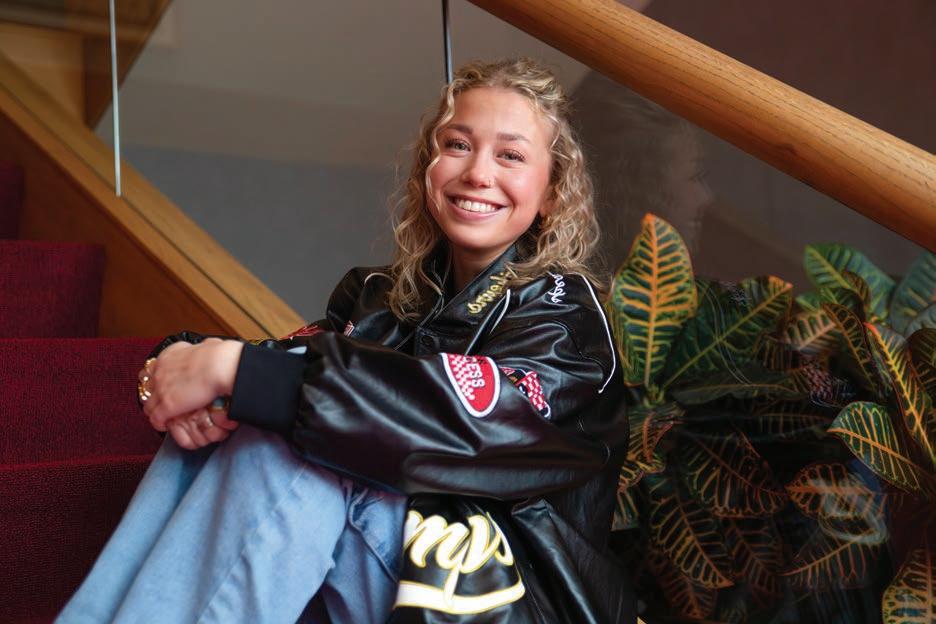
After spending her collegiate career at the UI, Schwab reflects on her time on stage.
While at North Scott High School in Iowa’s Quad Cities, Chloe Schwab committed to the University of Iowa because of its reputation in journalism and mass communication, with aspirations of becoming a broadcast TV news anchor. Slowly, she realized that wasn’t her true calling; musical theater was.
During the summer after her senior year of high school, with the support of her friends and family, she changed her major to theater, where she would soon thrive at the UI.
“It was refreshing because it’s a whole different world when you do it in high school versus when you do it in college because everybody here is so dedicated to it,” Schwab said. “This is what everybody wants to do. It goes from doing it for fun and doing it for, you know, something I enjoy to, ‘Oh, I can actually get better at this type of thing.’”
And get better she did. She began her collegiate theater career participating in workshops written and directed by students.
But she didn’t start as a performer. She didn’t even join her school’s theater program until her junior year of high school. Beforehand, her main focus was dancing and choreography, which made her feel as though she was trailing.
Aside from dance, Schwab
already knew she could sing from her numerous years in choir. However, she felt the need to lock in on her acting classes. She believed that once she became a triple threat, she would go much farther. By her graduating year, her hard work paid off. he held lead roles in two of the five mainstage shows put on by the university; “Argonautika,” in which she portrayed Athena the goddess of wisdom, warfare, and crafts, and “Head Over Heels,” the Go-Gos jukebox musical in which she portrayed Mopsa, the princess’ handmaiden.
Although she held higher roles during her high school career, college was another beast. With “Argonautika,” she discussed the weight the show held for her.
“I remember I was just super emotional about it because I had never seen myself as an actor. I’d only seen myself as a dancer or maybe a singer,” Schwab said.
time, I think it’s so fulfilling.
Cristina Goyeneche, assistant professor of acting in the UI theater department, has believed in Schwab since the beginning. Over the course of the two classes Schwab has taken under Goyeneche, Schwab has remained grounded and grown both on stage and off.
“It’s really nice to see her blossom into her own and just truly feel confident that what she can do as an actress is enough,” Goyeneche said. “It’s been really lovely to see her just break out of that shell and
mer, she is going to be bouncing around the Midwest, choreographing and assistant choreographing two musicals while working at her current dance studio choreographing and acting as an ensemble member in her local theater’s “The Wizard of Oz.”
Afterward, she’s moving to Chicago to pursue her theatrical dreams, where she’s going to start auditioning for shows. But the connections she made while at the UI won’t fade as quickly.
Raimundo San Martin, a thirdyear UI student, still remembers the first class he had with chwab, History of Theater and Drama, where they were in the same discussion section.
From there, they worked on several projects together, including the Musical Theater Ambassadors club and the musical “Sideshow,” effectively establishing themselves as besties.
how she treats people.”
Through all of the connections and the memories, from nights at eadwood to her final show at the university, she has learned so much about herself and how she should move through the world, especially in not dimming her sparkle.
“I came from a small town, and I feel like in that small town, you were put in a box,” Schwab said. “You have to do what you want to do, and you have to be true to yourself, or else you’re never gonna really be happy. I think that’s my biggest takeaway, like, letting myself expand without being afraid of expanding or shamed for doing the things that I wanted to do.”
“Having somebody give that to you and trust you and tell them that they trust you and that they wanted you in this role is, like, for the first
see her own herself on that stage.”
Although her acting is superb, she’s still putting her choreography skills to good use. Over the sum -
“[Chloe is] so talented, she’s good at everything, but I think what really makes people want to work with Chloe and be with Chloe is who she is as a person,” San Martin said. “Like her little attitude and also just like how she is and
This aligns with the biggest advice from Goyeneche: she should just trust herself. Even if she’s scared of what’s to come, she can trust the choices that she makes. If she keeps doing that, she’s going to be ust fine.
“She’s one of the people that I’m not worried about when it comes to what the future will hold because I know that wherever she plants herself, she’ll make a life for herself,” Goyeneche said.
Despite writing hundreds of stories in the last three years, the best story I could ever tell is my own.
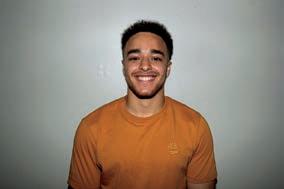
For the last three years, I’ve written hundreds of stories about other people — their journey, their highlights, and their triumphs. I’m extremely proud of the work I’ve done throughout my college career. But the best story I could ever tell is my own.
I grew up in Addison, Illinois, a suburb 30 minutes west of Chicago. My grandmother,
Alba, raised me and my older brother, Josh, on her own throughout our childhood, while our mother was inconsistently present due to a drug addiction and several jail stints. We moved homes six times as a family. By the time Josh and I were in high school, we were basically taking care of Alba. She was so ill, she struggled to walk 20 steps from her bedroom to the kitchen to get food. When Josh left to attend Illinois State University in 2019, it was just me, a 16-year-old high school junior, and my grandma at home.
I spent most of that school year living by myself while Alba was frequently in the hospital. She refused to move out of the apartment because she didn’t want to leave me stranded. But Pina, my aunt who was paying our bills, decided it was time to put
It’s hard for me to do a lot of things, but time after time I find myself doing them anyway.
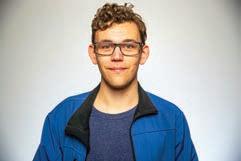
There exists within me a great contradiction.
I’m a student journalist, but I’m deeply uncomfortable inconveniencing others. I’m reserved and introverted by nature, but over the past three years I’ve reached out to countless sources over email, phone, social media, and — my personal favorite — cold turkey in public spaces. It’s hard for me to do a lot of things, but time after time I find myself doing them anyway.
I knew upfront that a job at The Daily
her in a nursing home.
So on the leap year day of 2020, two weeks before the COVID-19 pandemic shut the world down, I moved in with one of my childhood best friends, Nick, for nearly two years.
I did whatever I could to see my grandma, whether that be through a glass door through the first year of the pandemic or paying for $50 Uber trips to the hospital she was at and staying with her for six hours at a time.
Alba hoped I’d get into Illinois State University, the only college I applied to coming out of high school, and be with Josh again. But in January 2021, I got the letter saying I was denied. It was a pain I haven’t felt before, and having to tell my grandma only sharpened it.
On May 15, 2021, I told her I’d rebound from this and make her proud. She passed away two days later, and I graduated from Addison Trail High School six days after her passing.
y first year of college in was spent at College of DuPage in Illinois. I moved around three times that year in the span of two months, including a five week stint with my mom at a hotel. I ended up staying with another childhood best friend, Mia, for nine months.
Early that school year, I found out about the then-Sport Studies major, now called
got the position.
I wouldn’t call it low-stakes, but I got the sense that arts reporter was likely one of the least stressful roles the DI offered. It wasn’t the minefield of politics, the perpetual onslaught of news, or the intense grind of sports. Better still, I would be writing about something I liked: art.
Sport Media and Culture, at the University of Iowa and felt a calling.
I couldn’t afford the out of state tuition, however, my mom’s high school best friend, Maria, had a daughter, DeAnna, who was going to Kirkwood Community College in Cedar Rapids to complete an in-state tuition plan for Iowa as well.
I took a leap of faith and followed her there for the 2022-23 school year and completed the process. Because of that, I saved about $24,000 annually with in-state tuition at Iowa the last three years.
While at Iowa, I worked a near-full-time server gig to pay over $1,200 a month in bills, enrolled in school full-time, covered over a do en different sports between the high school and college levels, and landed three summer internships. I’ve traveled to nine different states covering events and saw my byline in five different publishers.
I’ve covered historic events, from Caitlin Clark and the Crossover at Kinnick game, to the men’s and women’s NCAA wrestling championships, to the deepest NCAA Tournament run for Iowa men’s basketball in 40 years.
I didn’t do all this for me, but for my grandma who never gave up on me. I last saw her on May 16, 2021, and now I’m set to graduate five years to the day I last saw her. Anything is possible.
think I’ve ever not felt at least a little anxious before interviewing a source, but centering myself on this fact always helped.
Iowan was going to be a leap of faith. I had the rare privilege of knowing that writing was what I wanted to do for as long as I could
Throughout the application process, I tried not to think about that other shoe — the fact that I was signing up for a job that required more talking to strangers than any position I had previously held. I remember feeling overwhelmed during those first few pitch meetings, wondering why exactly I had voluntarily chosen to put myself up to this.
My level of excursion outside the comfort one ebbed and owed throughout my time at The Daily Iowan. I found solace in reviews, not just for their editorial nature but because of my deep passion for film, but other times I took that leap of faith once more and really tried to challenge myself. Last year, I even got away with writing a real news story.
I wish that I could streamline my experience into a clear thesis about rejecting comfort zones entirely. I wish that I didn’t struggle to face unease and uncertainty, even still. Even as I write this there remains a sinking feeling in my stomach as I realize that my life post-graduation is yet another massive question mark.
All I can do is hope I’ve collected enough evidence that I’ll be okay. I’ve taken leaps, made mistakes, learned, and moved on. Even if it remains difficult to take those leaps, I’ve proven that I can and that, more importantly, I must continue to do so.
remember, but rarer still is the ability to turn that passion into sustainable employment. I applied sophomore year, not knowing exactly what my life might look like if I
Slowly but surely, things got better. Whenever I managed to look past my anxiety, I realized that my job — meeting artists and telling their stories — was really cool. I don’t
I’m grateful for my time at The Daily Iowan, and not just for these reasons. I’m grateful for my colleagues, for the direct line to the Iowa City arts scene I’ve enjoyed, and for all the cool and scary things I’ve seen and learned.
Excuse me while I go take another leap of faith.
Late nights,
early mornings,
and saying yes to every opportunity led me to my dream job.
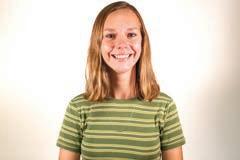
DITV is more than I could have ever asked for in a college experience. It is what led me to my dream job. I still remember walking into orientation unsure of what DITV would be for me. I did not know where I fit or what I would gain from joining. What I did not realize then was that saying yes to DITV would shape my college career and lead me to becoming a ultimedia ournalist at T in edar apids.
DITV gave me opportunities I never would have experienced otherwise. Over the past two years, I have covered breaking news, elections, entertainment, the President’s visit to Iowa, and everyday stories that matter to the community. Each assignment pushed me to grow as a reporter and as a person. I learned how to think quickly, ask better questions, and tell stories that matter. Some of my most defining moments did not happen in front of the camera, but behind the scenes. I spent countless nights in the studio until 2 or 3 in the morning, making sure shows and my news packages came together. I showed up to nearly every production night and almost every show during the fall semester. It was not always easy, but it was always worth it. Those long nights taught me commitment and showed me how much I truly love this work.
I also pushed myself to try every role I could. I stepped into positions I never thought I would, like tech directing and producing. I learned news judgment and what it takes to produce a live show from behind the scenes. I did countless live shots for the morning shows, getting
up at 6 a.m. for an 8:30 a.m. show to be ready and on air. Those early mornings and new challenges pushed me out of my comfort zone, but I would not trade those experiences for anything.
alancing IT , school, and a part time ob at challenged me in ways I did not expect. There were times when it felt overwhelming, but those experiences taught me discipline and time management. This past year, I had the honor of winning three IBNA awards. That recognition means so much to me, and I couldn’t have done it without everyone in DITV.
DITV didn’t hold me back — it waited for me to grow into it.
The first time I walked into Adler Journalism Building, the name The Daily Iowan itself both scared me and excited me. I came in as a writing major, later changing into theatre and cinema, but journalism somehow stayed with me through both, even when I wasn’t actively pursuing it.
The next semester, I came back, thinking maybe reporting wasn’t for me, but tech might be. Around the same time, I was taking cinema classes, and I found myself drawn to the booth. It felt like home. The only challenge? a.m. shows. Traveling from ay ower to Adler was a lot, and it took a toll, but still, I kept coming back. The people made it worth it. They made me feel like I belonged. But distance and timing caught up with me. I couldn’t show up the way I wanted to. I missed too much, and eventually, I had to step away again.
And suddenly I was a senior.
One of the most rewarding parts of my time at DITV was mentoring new reporters. Watching them gain confidence and improve each week reminded me of my own journey. It showed me how important it is to support others and give back to the program that gave me so much.
What makes DITV truly special is the people. It is the friendships built during late nights, the laughter before a live show, and the support system that helps you through stressful moments. While not every show is perfect, I’ve been taught it’s a learning lab and it’s the experiences that matter.
I would also like to thank all the DITV coaches. ngie, harles, and andy, I can’t thank you enough for believing in me and always pushing me to achieve greatness. Without you, I would not be where I am today as a journalist. If there is one thing DITV taught me, it is to always say yes. Say yes to challenges, even when you are unsure. For me, saying yes and jumping at every opportunity led to everything.
The first ob I ever applied for and got was DITV. I couldn’t believe it. Ashley took my interview, and I remember sitting in the ournalism building, terrified but also feeling strangely at home. y first interview went well, and for the first time, I felt like I truly wanted to be part of something.
But I didn’t start right away. I felt nervous behind everyone else. fter my first
I promised myself I would do everything I could to be part of the DI, no matter what. During one of my last shows, someone else was stressed and instead of panicking about my own mistakes, I comforted them. That moment made me realize how far I had come. It felt like such a long journey, but also like it had ust begun yesterday when ayla told me, “It’s okay if you don’t know everything. Just try.”
And I did.
I asked questions, so many questions. I covered stories that scared me as an international student. I cried with these people. I grew with them.
And I will always choose the booth over anything else in the studio because those are my people.
They supported me in ways that went far beyond DITV. So did so many others in the newsroom, especially Randy and Angie, who have been like guardians more times than I can count.
Saying goodbye to a place that always welcomed me with open arms is not easy. It’s heartbreaking.
day, I cried. I went back a week later, still anxious, still unsure, and again I left feeling out of place. Even though I had access, encouragement, and support, something held me back and I stopped going.
I missed the DI. I knew I was letting go of something special.
But here we are.
Years later, I can proudly say I was part of DITV.
I leave with a resume full of packages and short films and a heart full of memories.
Goodbye, one last time.
3… 2… 1…
Cielo Herrera remembers her four years at Iowa as a time when she kept an open mind.
As her time at the University of Iowa comes to an end, fourth-year communication studies student Cielo Herrera, a native of New York City, remembers coming to Iowa looking for change.
“I’d lived in New York for quite some time, and while I love the city, I wanted a different e perience for college,” Herrera said. “I wanted an institution that had a variety of options in terms of ma ors, student organizations, faculty. I really wanted a big school.”
At the beginning of her first year, she arrived as an open ma or, but after taking a communication studies general education course, she pursued the field as her ma or.
This path led errera to internships with the edar apids Metro Economic Alliance and Iowa , working primarily as a communications and engagement intern.
“I thought it was beautiful having several of those e periences interacting with people and communities and bringing people together, that inspired me to keep studying how government, how private businesses all interact with each other, and how we create communities,” Herrera said.
errera started the I’s chapter of BridgeUSA at the end of her second year after conducting communication research with communication studies professor avid upp ontgomerie. errera was researching civic dialogue, political polari ation, and ways to get students more involved in civil discourse.
Through her research, she stumbled upon ridge, a multi partisan student led nationwide movement that welcomes viewpoint diversity and encourages civil discourse.
he contacted the national group’s recruitment team and received training and dialogue facilitation certification before founding Bridge Iowa.
ith the viewpoint diversity among the group, errera said there would often be intense debates, but an opportunity to establish common ground on issues would always materialize.
“I’ve never been to an event where common ground wasn’t found,” Herrera said. “There’s always something that people can agree on, even if it’s a small, tiny detail.”
To continue growing the group, Herrera said she reached out and formed connections with other political groups on campus, such as the evolutionary ommunists of America and Turning Point USA. errera stepped down as president at the start of the spring semester. UI third-year economics student Kasey Ludlow was elected president of the organi ation.
He said Herrera noticed quickly how well he fit into the debates and conversations they had at their biweekly meetings and wanted him to take on a larger role at Bridge Iowa.
e said errera has helped him not only with learning all rules and regulations that student organizations have to follow, but also by leaving him an organization that is in good standing.
“She’s given a really great starting block,” Ludlow said. “When you start a new group on campus, it’s
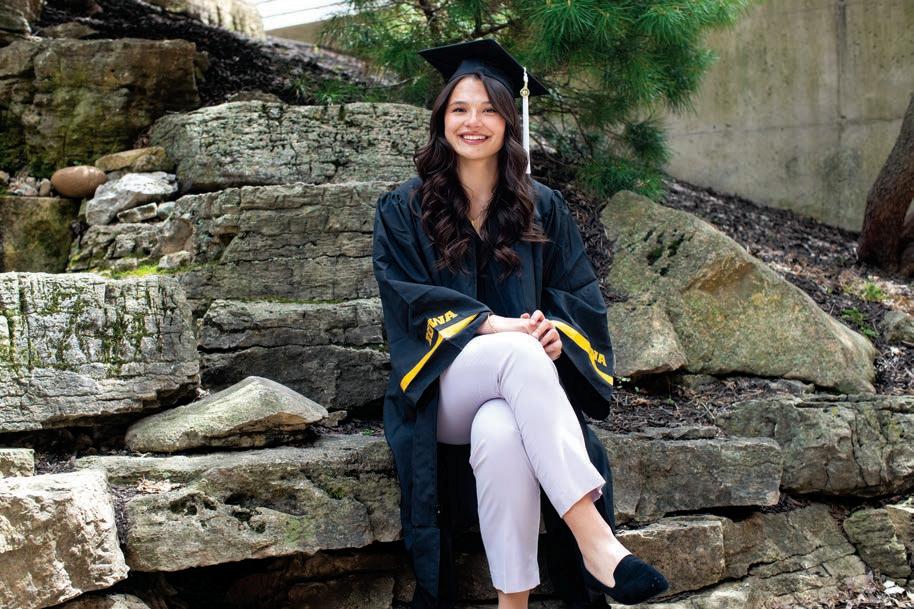
incredibly difficult ust to get people in the room.”
errera oined alk It ut, the largest multicultural student organization at the UI, in her second year of college after watching the organi ation’s performance.
In her first year with the organization, Herrera was a marketing director and treasurer in her second year. She was also a dancer and model for the hip hop and atin dance groups.
Heading into her third year with alk It ut and her fourth year of college, Herrera decided she wanted a larger role with the organization, so she applied and became president of the multicultural organization.
errera said she felt so much pride from being president.
s president, errera said she loved getting to interact with Walk It ut members from all different backgrounds.
errera said there were over people at the event and that the organi ation reached fire capacity and had to turn people away.
She said she remembers the moment Chris Gantt, the assistant director of the Iowa Memorial Union, told her, “You did this.”
“I didn’t even do this,” Herrera said. ur community did this, and to see how powerful alk It ut is, and continues to be, it makes me so proud.
After graduation, Herrera will move to Washington, D.C., and plans to start graduate school at American University in the fall and pursue a master’s degree in public administration.
As she looks back on her time as an undergraduate student at the UI, Herrera said her advice for incoming students is to keep an open mind when approaching opportunities in college and life.
e open to everything, errera said. “Even if you think that the opportunity wouldn’t suit you, I was surprised so many times, countless amounts of times, at how much I en oyed something that I didn’t think I would.”
In his past four years, the UI fourth-year transformed the campus’s YDSA chapter.
For Dave Cacho, politics was never meant to stay inside a classroom.
Over his past four years at the University of Iowa, the fourth-year has become one of the defining figures behind the growth of the university’s chapter of Young Democratic Socialists of America, or YDSA.
Serving as co-chair for the organization, Cacho helped transform what members once described as a small discussion-based club into a more active campus organizing group.
Friends and fellow organizers describe Cacho not only as a political leader, but as someone who built community through humor, creativity, and an ability to make people feel welcome.
“Dave stepped up,” said Nate Royer, incoming co-chair of YDSAand third-year UI student.
“He was really the person to realize that things needed to get done.”
Cacho, a political science and ethics and public policy major from Elkton, South Dakota, said he came to Iowa looking for new experiences while remaining relatively close to home.
Alongside politics, he spent his college years pursuing photography, videography, music, and DJing — interests friends say reflected the same creativity he brought into organizing.
His political beliefs, he said, developed more fully during his first year at the I after oining YDSA through his friend and roommate at the time.
While he already considered himself progressive, he said he began moving further left after becoming frustrated with mainstream Democratic politics and looking for ways to turn political beliefs into action.
“I thought it was a foot in the door for me to be able to practice
my politics,” Cacho said. At the time, YDSA was much smaller than it is now.
Royer said when he and other members first joined the organization, meetings often consisted of only a few students and rarely extended beyond planning conversations.
Over time, he said, Cacho became one of the driving forces behind rebuilding the organization into a more visible presence on campus.
“Dave is really the person who helped coordinate with all the other members and figure out what we needed to do,” Royer said.
Now, members estimate the organization has grown to more than 30 active participants. Grey Parfenoff, the other incoming co-chair and third-year UI student, described acho as a stabili ing fig ure during that transition.
“In a lot of ways, Dave is a rock for the organization, providing continuity from what was a very much collapsing outdated polit ical discussion club to what it is now, which is a pretty committed student activism organization,” arfenoff said.
Parfenoff said Cacho handled logistics, coordinated with the uni versity, and helped organize events while also remaining approachable to new members.
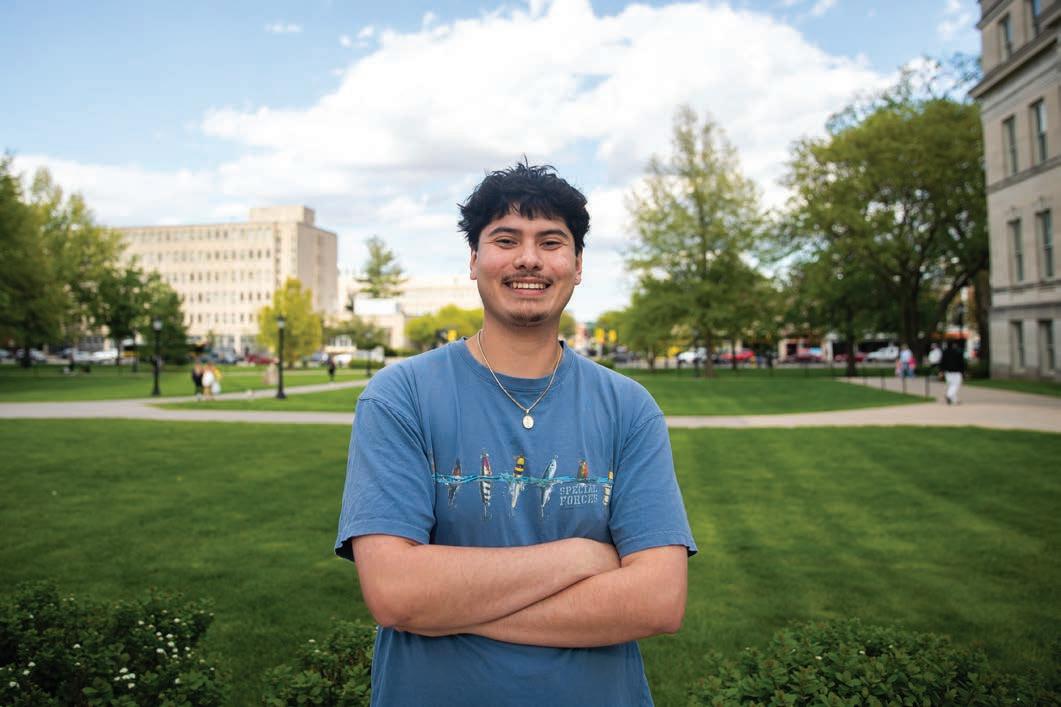
“It would be easy for a co-chair in a position of power to be intimidating, arfenoff said. ave was never that.”
Outside of organizing, friends described Cacho as energetic and deeply thoughtful.
Kylen Phillips, who roomed with Cacho during his second year, said some of his favorite memories came from listening to Cacho make music late at night.
“He would always have all these ideas and really cool thoughts about what he wanted the song to make people feel,” Phillips said. “He really cared about making people feel good.”
Phillips described Cacho as high energy, kind, and passionate about
helping others. He said that sense of care carried into both friendships and political work.
This emphasis on community also shaped Cacho’s politics.
“I value a lot of community and friendship,” Cacho said. “That’s also one of my guiding beliefs toward why I practice socialism.”
Fellow organizers said those values became central to the culture of YDSA itself.
Royer said that consistency between Cacho’s politics and his personal behavior are what made his leadership style stand out.
“His leadership just applies to his actions,” Royer said. “He truly lives what he believes. He is consis-
tently thinking of ways to improve the community.”
Royer also credited Cacho with helping expand the organization’s activism beyond campus meetings.
e pointed to organi ing efforts surrounding Oliver Weilein’s campaign as one of the first ma or projects that helped rally members around a shared goal.
He believes the younger generation has a responsibility to think critically about the information they consume online and to remain engaged with politics in meaningful ways. He has concerns about misinformation spreading through social media and said political engagement requires people to actively
question and research what they see online. After graduation, Cacho plans to pursue graduate school in political science or public policy, with hopes of eventually working at a nonprofit organi ation or public policy institute.
As Cacho prepares to graduate, the incoming co-chairs of YDSA said his influence will continue long after graduation — not only through the organization’s growth, but through the sense of community he helped create.
“The org would not be what it is today, both in capacities of membership, but also in the strength of the dedication without Dave,” arfenoff said.
Steady, loyal, and relentless have defined Jackson’s four years as Iowa’s strong senior infielder.
always motivating to look up to the stands and see all the little girls that look up to us.
The Iowa softball team graduated five seniors this season, but with saying goodbye comes the opportunity to highlight and remember those unforgettable seniors. Third baseman very ackson is one of the awkeyes’ most impactful infielders, not ust this season but over the past four years.
It meant a lot to be here for four years, I love the culture from all the sports and even the college atmosphere, ackson said. ur fans are ust so supportive of us, and it’s
The ankakee, Illinois, native started 143 of the 173 games she has played in, racking up hits, doubles, two triples, and seven total home runs. ackson has also scored runs over her career in addition to her Is, having only struck out times in her at bats. ou can know what you are capable of, but if you don’t have the confidence that is not going to be shown throughout your play, ackson said. I have had a few hitting coaches over my career, but still deep down I knew I had that confidence
inside me.
efensively, ackson has remained consistent over her four seasons, earning putouts, assists, and recording ust errors. This consistency has allowed her to have a . fielding percentage over her career, something she notes is because of how she prepares in practice for games.
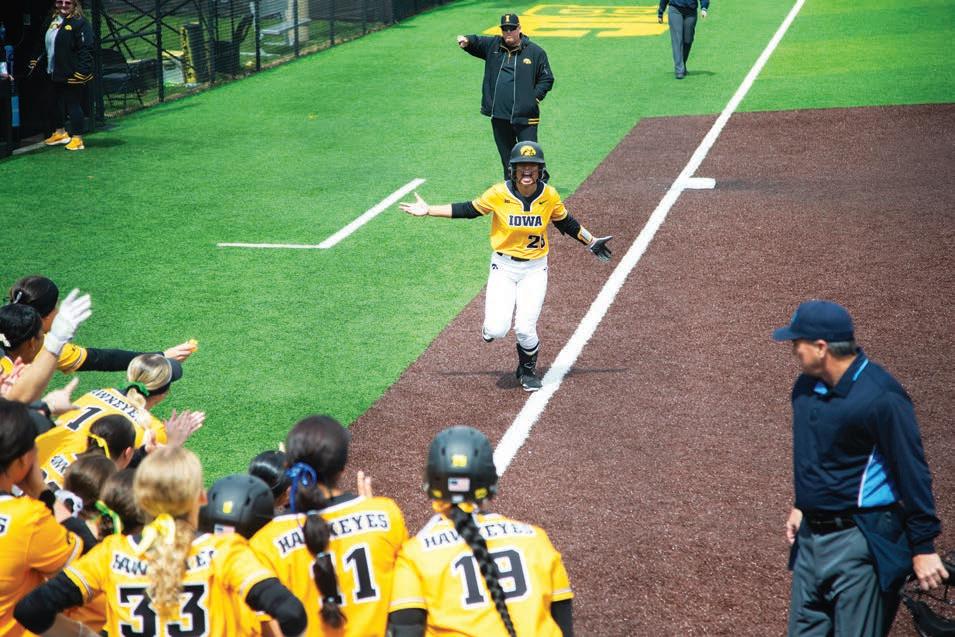
It always comes to effort and attitude, you will not make every play, and you’re going to make a mistake here and there, ackson said. ou ust have to keep a positive attitude and give your best effort, especially charging a ball as hard as you can every single time.
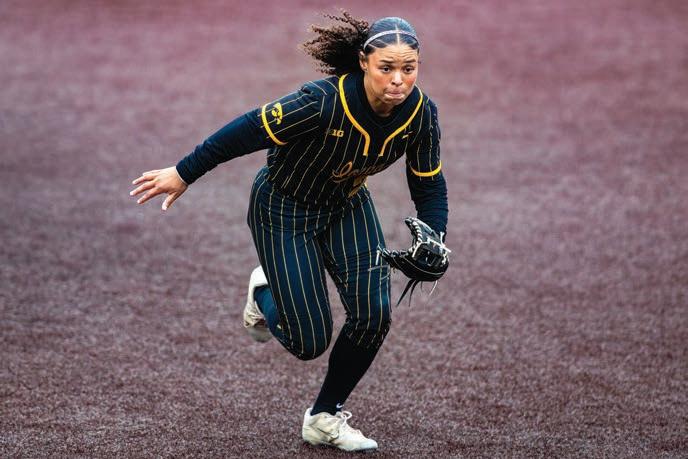
t third base, ackson continually needs to be ready not only for the slow and easy grounders or sky high pop ups, but also those hard and fast grounders and line drives that some batters may hit her way. etting these outs and making these plays is something ackson continues to pride herself on.
ackson credited her high effort to attempt to make a play on every ball hit her way, even if it’s in foul territory.
Through all the ups and downs, changes both in roster and in coaching staff, ackson has remained at Iowa, something rare in today’s ever changing college transfer world.
It’s easy to get up and walk away to somewhere else, but I think it would have been hard for me to leave my girls, ackson said. I have spent so much time with all of them, and I wouldn’t have been able to get through all the adversity without them in my life.
er coaches continue to praise
her focus in practice and in games. eading to her consistent putouts and fielding, always being ready to help her team win, whether at the plate or at third base. ny time she is on the base path, she is a weapon, head coach tacy ay ohnson said. he is so aggressive and instinctual out there, including how she performs at third base.
er fellow seniors praise her open and warm heartedness in addition to her competitive side that can be seen in both practice and in games.
eing a transfer senior, I didn’t know how they all would react, but
they all, including very, were so open and welcoming and made me feel like I was part of their family, making this e perience that much more e citing and special, fellow senior erayah eiss said.
ven her underclassmen note her drive for being the best she can be every single day, regardless of what happened in the game, play, or series before, something not ust her but the entire senior class continued to do.
They all are genuinely my best friends, and I have en oyed every single win and moment with her and the other seniors, unior evin imon said.
Though ackson and her team ended their season at home against urdue, she is e cited for the future as she will graduate with a ma or in port and ecreation anagement with a specified area in edia and ublic elations.
ll the seniors have done right by this program and are leaving it better than when they arrived, and that is something we are truly proud of, and they have put this program in great shape for the future, ay ohnson said.
Iowa baseball’s Gable Mitchell reflects on career with his hometown program.
Born into Iowa royalty, Gable Mitchell has embodied what it means to represent the University of Iowa and Iowa City.
Before Mitchell even set foot on campus, he had seven different family connections to Iowa athletics. Mitchell’s father, Brian, played baseball for the Hawkeyes, and his grandfather, Bob Mitchell, along with three of his uncles, played football at Iowa. His aunt, Molly Oltsza, also swam for the Hawkeyes.
The athletic family tree doesn’t end at Iowa, as Mitchell’s aunt and uncle, Mackenzie and Justin McCord, both played soccer at Loras, and his uncle Mike Gavin played baseball at Butler.
His most famous relative, however, is his namesake, Dan Gable. Gable wrestled at Iowa State from 1967 to 1970, where he was a two-time national champion. He then took over as head coach at Iowa and won 15 national titles from 1976 to 1997.
Even with all of that family history, Mitchell has lived up to the challenge. In his four seasons with the Hawkeyes, Mitchell has improved his batting average, on-base percentage, slugging percentage, and OPS year over year.
Mitchell earned third-team Midseason All-American honors from Perfect Game on April 1, and is likely to earn his first career All-Big Ten team selection.
Mitchell has also developed as a leader for Iowa, being named the team captain for
2026. Head coach Rick Heller said he has noticed the change in Mitchell’s leadership during his time with the Hawkeyes.
“He was a really quiet leader when he first got here. It was more of a lead by example, and he just goes about his business the right way every single day,” Heller said. “He brings the right energy and effort every single day.”
“And then each year, he grew with his confidence to be more voal and to communicate more,” Heller added. “And to see where he started and where he’s at now, with how he can communicate not only with the team, but with the coaches. He’s like having a coach on the team.”
For Mitchell, the feeling of his final season nearing its end hasn’t fully settled in yet, as he focuses on finishing out the full season the best he can.
“I try not to let it emotionally affect me too much,” Mitchell said. “Just because I’ve had a lot of great memories here. I want to keep it going, but we’ve got a lot of work to do this season, so I’m not too focused on that too much.”
Having grown up in Iowa City and being around Iowa athletics his whole life, Mitchell has only strengthened his bond with the program and the university.
“I’ve had a connection here my entire life,” Mitchell said. “A lot of my teammates I’ve played with since like 7U, and others I’ve played with along the way in high school, there’s such a connection that we’ve had. For the guys I didn’t play with, they feel like brothers to me still so it’s been great here.”
Through 50 games in Mitchell’s senior season, he’s posted a .388 average with 40 RBIs and five home runs. His four triples ranks first in the Big Ten and he ranks third in the conference with 73 hits.
When asked about what Mitchell has meant to the Iowa baseball program over the past four years, Heller’s response was simple — “everything.”
“He’s a Hawkeye,” Heller said. “I was thinking about how weird it’s going to feel next year when Gable’s not there, especially with me coaching the infielders every single day… he was a good player when he got here, and he’s turned himself into a great player.”