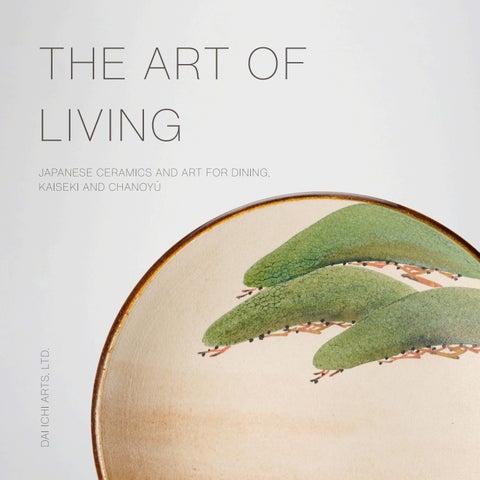
THE ART OF LIVING
DAI ICHI ARTS, LTD.
JAPANESE CERAMICS AND ART FOR DINING, KAISEKI AND CHANOYŪ
Dai Ichi Arts, Ltd. is a fine art gallery based in New York, exclusively dedicated to presenting modern and contemporary works of ceramic art from Japan. Since 1989, the gallery been introducing Japanese ceramics and art to the international contemporary art scene. The gallery has introduced pieces to the permanent collections of several major museums, including The Metropolitan Museum of Art, The Art Institute of Chicago, the Minneapolis Institute of Art, the Indianapolis Museum of Art, the Princeton University Art Museum, and many more. We are deeply committed to providing authoritative expertise to collectors, liaising with artists, and showcasing unique and important exhibitions and artworks. We welcome you to contact us for more information.
The Art of Living Japanese ceramics and art for dining, kaiseki, and chanoyū October 29 - December 17, 2026 Exhibition catalogue 18 East 64th Street, Ste. 1F New York, NY, 10065, USA www.daiichiarts.com
INTRODUCTION
Japanese cuisine has long been admired not only for its flavors, but for the way with which food is presented. At the Japanese table, a meal is an expression of beauty comprised of an exchange between all its elements: food, season, vessel, and host. This sensitivity has deep roots: During the Edo period, growing urban prosperity and merchant culture expanded the pleasures of dining. Potters across Japan created an extraordinary range of accoutrement: bowls, plates, cups, and serving vessels shaped by diverse forms, glazes, patterns, and regional traditions. Western dining customs and matching dinnerware sets arrived during the Meiji period and were popularized by important companies such as Noritake, Wedgewood, and more, but Japan’s affection for individual vessels endured. It remains central to Japanese food culture, especially in kaiseki, where each ingredient and vessel is considered in relation to the season and its stories. The importance of this tradition has been especially visible in 2026: Significant exhibitions have been presented internationally on the subject. The Seikado Bunko Art Museum in Tokyo presented “Where Beauty is Being Served: Kaiseki Vessels and Spirit of Tea Ceremony,” while the Suntory Museum of Art explored historical tableware in “A Feast for the Eyes: Tableware.” In New York, The Metropolitan Museum of Art’s “The Infinite Artistry of Japanese Ceramics” brings together centuries of Japanese ceramic culture, with many works drawn from the important Harry G. C. Packard Collection. The special 2026 issue of Impressions, produced by the Japanese art society of America, devoted to Packard and Japanese ceramics, further deepens this conversation. Monika Bincsik’s “Choko: The Versatile Japanese Cup” illuminates these intimate vessels through the eye of a scholar and curator, while Eric C. Rath’s wonderfully titled “It’s Beautiful, but Can I Eat Off It? Ceramics in the Packard Collection” restores another dimension that can easily be forgotten when ceramics enter museums: these objects once participated in meals, gatherings, hospitality, and embodied life. That idea lies at the heart of this project. Few of us have the time to prepare formal kaiseki. But its spirit can still be part of daily life: we can notice the season, choose a dish thoughtfully, and give even a modest meal our attention. Rather than recreate formal kaiseki, this catalogue pairs historical and contemporary Japanese ceramics with simple things: chestnuts and persimmons, vegetables and sweets, a flower, a cup of tea, or something warm on a cold evening. Important tea ceremony objects appear, too, as beautiful companions to daily life.
Autumn and winter naturally invite this kind of looking. Autumn’s abundance invokes restraint; colors deepen, light shifts, and leaves fall. A rough wood-fired bowl that feels austere in summer may comfort us in November. Shino glaze can suggest snow and fire at once. Even an empty vessel may evoke the landscape outside.
日々是好日
There is a Zen expression I have long loved: Nichinichi kore kōjitsu , or “Every day is a good day.” It asks us to receive each day as it is and attend to the life before us. A meal offers the same opportunity: to pause, acknowledge the season, and find beauty in what we might otherwise overlook. This project has brought me tremendous joy, and more than a few sleepless nights. From the first idea to the final photographs, I thought constantly about the relationship between ceramics and daily life. Studio visits, conversations with artists, and the photographs we arranged reaffirmed what decades of working with Japanese ceramics have taught me: these objects ask to be touched. I have been fortunate to place important Japanese ceramics in museums and distinguished private collections, and I remain deeply proud when a work is preserved and studied for generations. Yet I have also come to believe that the natural home of a vessel is not only on a pedestal or behind glass. It also belongs to our private, domestic, and interior lives: on the table, where a hand can lift it, where food can transform it, and where it becomes part of the rhythms of someone’s life.
用の美
This is — yō no bi, the beauty of use, an idea closely associated with Yanagi Sōetsu and the Mingei movement. Use does not diminish beauty; it can reveal what looking alone cannot. I therefore invite you to read this catalogue as a celebration of everyday life. My deepest gratitude goes to Ayako Takahashi-sensei and Christina, whose creativity challenged us to move beyond the expected. I also thank my talented team: Yoriko Kuzumi for her sensitive photography; Kristie Lui for her strategic research and elegant design; Haruka Miyazaki for detailed cataloging and organization; and Naomi Saito for insightful research and invaluable assistance. Together, they made a long-held idea visible. May these pages encourage you to return to your kitchen and look again at the dishes around you. Use them, touch them, arrange them differently, and serve something deliciously simple. Around your own table, you may discover that beauty was there all along. Beatrice Chang, October 2026
市野 雅彦 層
Ichino Masahiko (b. 1961) Vessel, Sou , 2026 With signed wood box; stoneware 5 7/8 × 6 1/4 × 6 1/2 in. (14.9 × 15.9 × 16.5 cm)
島岡 達三
Shimaoka Tatsuzo (Living National Treasure, 1919–2007) Kakeai-glazed inlaid Jōmon Mukōzuke Set With signed wood box, signed artist mark "Ta " at base; stoneware; 3 × 4 7/8 in. (7.6 × 12.5 cm)
タ
1 UTSUWA
器
若尾 利貞
Wakao Toshisada (b. 1933) Nezumi Shino small plates, set of 6 With signed wood box, signed artist's mark on the base Stoneware; 5/8 × 4 3/4 in. (1.5 × 12 cm)
This chapter introduces the dining table as a setting for Japanese ceramics. In Japan, vessels are rarely considered apart from the food they hold. A ceramic bowl, porcelain plate, lacquered vessel, or small sake cup helps shape how a meal is seen and remembered. Together, these objects are known as utsuwa . They bring food, season, craftsmanship, and hospitality into the dining experience.
器
Kitaōji Rosanjin famously called tableware “cuisine’s kimono.” A vessel frames and complements its contents, enhancing the food without competing with it. Its color, shape, texture, and decoration can make a dish seem more vivid, delicate, or inviting. Many Japanese dishes are served in vessels small enough to hold, making this relationship especially intimate: diners handle the object as they eat. This attentiveness is particularly visible in Japanese dining, kaiseki and the tea ceremony, where a succession of bowls, plates, trays, cups, and containers shapes the rhythm of hospitality. Choosing a vessel is a way of acknowledging the season and the person being served. Japanese tables often bring together different materials, forms, and colors: porcelain plates beside stoneware ceramic bowls, glass beside lacquerware, each diner with an individual rice bowl and chopsticks. The vessels need not match; their variety can create harmony. This embrace of difference has long been part of Japan’s ceramic tradition. Hand-shaped vessels naturally vary in form, thickness, color, and surface, and those variations came to be valued as signs of individuality. The choko, a small cup often used for soba dipping sauce, offers one example. As Monika Bincsik notes in an article on the vessel, the 1751 Soba zensho (“Complete Book of Soba”) records choko as a container for dipping sauce. By the late Edo period, thousands of soba vendors served noodles with regionally varied sauces. This growing food culture, alongside expanding ceramic production, helps explain the diversity of surviving cups. She states: “By the late Edo period, there were several thousand soba vendors in Japan. This proliferation of businesses. Along with regional variations in dipping sauces and the expansion of ceramic production, accounts for the large number of surviving cups and their remarkable diversity.” – Monika Bincsik, Impressions, March 2026
Ko-Imari Kinrande blue-and-white Soba cup with rabbit designs Mid-Edo period (Late 18th–early 19th century) Provenance: From the estate of a historian who served as director of libraries and museums in Hyogo Prefecture Porcelain; 2 1/2 × 3 1/8 in. (6.5 × 7.8 cm)
Set of Five Soba Cups (Soba Choko) with Swirl Patterns Mid-Edo period (Late 18th–early 19th century); Porcelain with cobalt blue under transparent glaze (Hizen ware, Arita type); 5.7 x 6.7 cm The Harry G. C. Packard Collection of Asian Art, The Metropolitan Museum of Art; Image courtesy of the museum
猪口
The vessel’s name and uses are varied, too: The character for choko have been linked to the Korean chongku, a small vessel for drink, while other explanations remain uncertain. In earlier records, choku—an alternate reading of the same characters—could refer to small dishes for dressed or salty foods served at tea gatherings. The choko belongs to a wider world of small vessels that includes kobachi bowls and mukōzuke dishes, each chosen to suit the food and occasion. By the eighteenth century, choko was also used for drinking sake. Its history shows how a modest cup could move between uses and acquire a wealth of regional forms and decoration. The choko is just one example of how a vessel used at the Japanese table belongs to a broader, expansive history of material culture and artistic expression. The development of dining ceramics includes the rise of porcelain in the early seventeenth century, when Korean potters pioneered its production in Hizen Province, present-day Saga Prefecture, following the discovery of kaolin clay near Arita. Arita and Imari wares became known for blue-andwhite sometsuke designs and multicolored overglaze enamels. Made for domestic use and export, they found an audience in Europe as trade expanded through the port of Imari. Wood-firing climbing kilns, or noborigama, helped potters increase production and techniques while also offering new firing techniques for works that align with the expression of aesthetic irregularity and unadorned natural materials for the tea room, and for informal contexts. The present exhibition brings this history to the table through a range of forms, including choko, mukozuke, kobachi, cups, teaware, and more. Together, they show how Japanese ceramics have served daily meals while offering potters rich possibilities for artistic expression.
A note on blue and white porcelain (sometsuke): “Nabeshima porcelain intentionally differed from both imported Jingdezhen porcelain and domestic arita wares. Underglaze blue is a key feature of nabeshima ware, and craftsmen devised several techniques to create fine lines and graduation or shading…. (the fine) is a resist technique using ink (sumihajiki, or “ink repellence”) to outline the design or to create fine lines, such as wave or geometric patterns.” – Monika Bincsik, Impressions, March 2026
Blue-and-white Namasu bowls with peony, pine, bamboo, and plum design, Mid-Edo period (1700–1750) With wooden storage box, porcelain 1 3/8 × 5 1/2 in. (3.5 × 14 cm)
5 small leaf shaped Sometsuke dishes with design of perched birds, Early Edo period (c. 1650-1660) With unsigned wooden storage box Seto porcelain; 1 × 5 3/4 × 4 1/2 in. (2.5 × 14.6 × 11.4 cm)
近藤 悠三
Kondo Yuzo (Living National Treasure, 1902–1985) 5 Sometsuke square plates with moutain landscape designs With signed wood box; porcelain 1 3/16 × 6 1/2 × 6 11/16 in. (3 × 16.5 × 17 cm)
As the New Year approaches, the choice of utsuwa is made with care, reflecting hopes for prosperity in the year ahead. Gold and yellow— colors associated with celebration, success, power, and enlightenment —feature in works by both Ito Tozan II and his predecessor, Ito Tozan I. In the Meiji period artist Tozan II’s sweets container, a green-and-blue mountain rises against a golden ground, bringing the landscape to life. Tozan I’s fan-shaped bowl offers another seasonal scene: an expressive panorama of autumn grasses carved into its exterior, set against a gilded interior. In both works, gold illuminates the beauty of autumn and winter and evokes prayers for a prosperous New Year.
二代 伊東 陶⼭
Ito Tozan II (1871–1937) Gold-ground landscape sweets container With signed wood box, artist mark impressed at base Stoneware; 1 1/8 × 7 1/2 in. (3.0 × 19.0 cm)
初代 伊東陶山
(left) Ito Tozan I (1846-1920) Square confectionery vessel with gold interior With signed wood box, Artist's mark "Tozan 4 × 6 5/8 × 5 1/2 in. (10.2 × 16.8 × 14.0 cm)
陶山" impressed at base; stoneware;
坂田 甚内
(middle) Sakata Jinnai (b. 1943) Oxidized Jomon Smoke-Style sake cup with gold interior, c. 2000's With signed wood box; stoneware 4 × 2 7/8 in. (10.1 × 7.3 cm)
初代 伊東陶山 陶山
(right) Ito Tozan I (1846-1920) Gold-interior fan-shaped confectionery dish With signed wood box, Artist's mark "Tozan " impressed at base; stoneware, gold 3 1/2 × 10 1/4 × 5 1/4 in. (9 × 26 × 13.5 cm)
加守田 貞三
Kamoda Taizo (1933–1983) Bowl; with signed wood box, signed artist mark at base; stoneware 2 9/16 × 9 3/16 × 5 13/16 in. (6.5 × 23.4 × 14.8 cm)
2 KAISEKI
懐石
小み 夜よ ふし けの ての ふ⼭ るの さ秋 とか 寒ぜ く 衣 う つ な り the autumn wind blows f r o m t h e m o u n t a i n s o f Yo s h i n o deep into the night— as the ancient capital grows colder the villagers beat fabric into softness
若尾 利貞
Wakao Toshisada (b. 1933) Nezumi Shino round plate with half moon motif, 2008 With signed wood box, signed at the back Shino glazed stoneware 1 3/4 × 3 7/8 in. (4.45 × 10 cm)
瀧口 喜兵爾
Takiguchi Kiheiji (b. 1937) 6 Kiseto Mukōzuke Dishes With signed wood box Stoneware; 1 1/8 x 6 3/4 x 5 3/8 in. (2.9 x 17.1 x 13.8 cm)
瀧口 喜兵爾
Takiguchi Kiheiji (b. 1937) 6 Kiseto chrysanthemum plates With signed wood box, signed artist's mark "Ki " at base; Stoneware 5/8 × 6 1/4 in. (1.5 × 15.8 cm)
キ
BRINGING THE SEASONS TO THE TABLE: KAISEKI
懐石
懐石
The seasons are central to the art of the Japanese table. Kaiseki ( ), or kaiseki-ryōri ( ), is a formal Japanese meal served as a carefully sequenced progression of seasonal courses. Few dining traditions express seasonality so vividly: ingredients and vessels are chosen together to reflect the moment in the year. A plate, bowl, or sweet container can evoke the landscape and its associations, bringing them to the table. This chapter explores how Japanese ceramics make seasonal change a natural and important part of the meal.
料理
Traditional calendars mark the year through 24 solar terms and 72 micro-seasons, encouraging close attention to subtle changes in nature. Autumn motifs include maple leaves, ginkgo, and the harvest moon; winter brings snow, bamboo, and cranes. In kaiseki, such imagery does more than decorate a vessel: it helps set the mood of a course and connects the diner to the season. A round plate depicting a rising half-moon, for example, may evoke Otsukimi, the custom of viewing the autumn harvest moon. A Nezumi Shino plate by Wakao Toshisada shows a large moon above river reeds, recalling the quiet days before the autumn equinox. Chrysanthemums also mark this season. Celebrated on September 9 during Chōyō no Sekku, the flower carries wishes for health and long life. On Takeguchi Kiheji’s warm, earthy kiseto plates, chrysanthemum imagery suggests both autumn’s abundance and the approaching winter.
隠崎 隆一
Kakurezaki Ryuichi (b. 1950) Bizen leaf-shaped plate With signed wood box; signed artist mark on the base stoneware; 2 1/4 × 13 7/8 in. (5.8 × 35.2 cm)
Workshop of Ogata Kenzan (1663–1743) Set of mukōzuke dishes with a design of the Tatsuta River in overglaze enamels
尾形乾山
乾山⾊絵⻯⽥川図向付
Permanent collections of The Miho Museum, Japan Image courtesy of the Museum
Poetry and painting offer another way to read seasonal ceramics. In episode 106 of The Tales of Ise, a poet marvels at the Tatsuta River dyed red by autumn leaves:
「ちはやぶる神代も聞かず竜⽥川 からくれなゐに水くくるとは」 “Even in the age of the gods, who had heard of the Tatsuta River dyeing its waters deep red?”
The Kokinshū headnote explains that the poem was composed in response to a screen painting of maple leaves flowing along the river. It captures the interplay of subject and word that also animates the seasonal table. Kakurezaki Ryūichi’s elongated Bizen plate (pictured left), with its tapered form, exposed clay, and ash glaze, suggests a fallen leaf and lets the character of the material itself evoke the autumn landscape. Fallen leaves have long offered artists a vivid way to evoke the season. An Edo-period example is a set of ten mukōzuke (pictured above) from the The Miho Museum in Japan depicting the Tatsuta River, bears the mark of the famed potter Ogata Kenzan (1663–1743). Flowing water is painted beneath overlapping maple leaves, outlined in gold and finished in red, yellow, and green enamels. Variations in the brushwork and glaze suggest the vessels were made by several hands in a workshop; their precise date and kiln remain uncertain. They bring the celebrated image of autumn leaves on the Tatsuta River to the kaiseki table.
辻 清明
Tsuji Seimei (1927–2008) Karatsu turnip-shaped bowl With signed wood box Stoneware; 2 3/4 × 3 7/8 × 3 1/2 in. (7 × 10 × 9 cm)
辻 清明
Tsuji Seimei (1927–2008) Wari-Sanshō mukōzuke dishes (Japanese pepper-shaped dishes), set of 6 With signed wood box Stoneware 3 3/8 × 4 1/8 in. (8.5 × 10.3 cm)
真・行・草
真
In Japanese aesthetics, shin, gyō, sō ( ) describes a spectrum of formality: shin ( ) is formal, sō ( ) informal, and gyō ( ) lies between them. In calligraphy, for instance, shin favors precision and disciplined strokes, while sō allows a freer, more natural flow.
草
行
In ceramics, sō can be expressed through raw, natural, and spontaneous forms, as in Tsuji Seimei’s Wari-Sansho Mukōzuke. Shaped in reference to sansho peppers, each dish is distinct, underscoring the individuality of the pieces. The clay’s warm, earthy texture shows through the thin white-gray glaze, evoking parched earth in late autumn and the first snow settling on the winter landscape. Here, the sō aesthetic emerges in the work’s irregularity, recalling natural terrain and suggesting the gradual shift into winter. The Tsuji family’s celebrated and beloved tastes for food and ceramics are also represented in this exhibition through Seimei’s Turnip Mukōzuke. Turnips, or kabu, thrive in cold winter soil and grow sweeter as the season advances. Their persistence beneath the winter earth suggests strength and resilience. Rather than decorating the dish with an image, Tsuji uses its rounded form to evoke the shape of a turnip, lending the vessel a playful, hearty character suited to the cuisine it holds.
In this set of Tsuji Seimei’s plates, a series of sensitively calligraphed cranes adorns the stoneware. The crane, or tsuru, migrates from Siberia to Japan every winter, becoming an auspicious sign of the season’s arrival. As cranes endure the harsh cold and make the journey to Japan, they have come to symbolize endurance and perseverance. Tsuji’s series of cranes thus becomes a landscape of the crisp winter: cranes gathering together to rest after their successful migration.
辻 清明
Tsuji Seimei (1927–2008) Small plates, set of 5 With signed wood box Stoneware; 1 1/4 × 10 1/8 in. (3 × 25.7 cm)
三代 伊東 陶山
Ito Tozan III (1900–1970) Plate with pine tree motif With signed wood box, signed artist mark on the bottom Stoneware; 2 × 9 7/8 in. (5.1 × 25.2 cm)
Utagawa Kunisada (1786-1865) Triptych "KODAI KANJINCHO," 1849 Woodblock print on paper 36.8 x 24.8 cm Permanent collections, Victoria and Albert Museum London, United Kingdom Image courtesy of the museum
Kaiseki vessels also mark the year’s celebrations and hopes for what lies ahead. Gold, a festive color associated with prosperity and good fortune, illuminates the landscapes on Itō Tōzan II’s sweet container and Itō Tōzan I’s fan-shaped bowl represented in the prior chapter of this catalogue. The latter pairs a gilded interior with carved autumn grasses on the exterior, joining the beauty of the season to the promise of the new year. That promise is expressed in shōchikubai: pine, bamboo, and plum, an auspicious motif conventionally represented as a trio in Japanese material culture. This triology is associated with endurance, renewal, and good fortune. On Itō Tōzan’s pine plate, the branches spread around the rim like a stage. The image recalls the pine screens used in Noh and Kyōgen, as well as the tree’s association with the divine in Shinto tradition. Evergreen through winter, the pine welcomes the new year with wishes for longevity and prosperity. Together, these works show how kaiseki tableware does more than accompany seasonal food. Through form, glaze, image, and reference, each vessel offers a way to notice the season—and to bring its beauty, poetry, and hopes to the table.
若尾 利貞
Wakao Toshisada (b. 1933) Nezumi Shino small plates, set of 6 With signed wood box, signed artist's mark on the base Stoneware; 5/8 × 4 3/4 in. (1.5 × 12 cm)
Ito Tozan III
三代 伊東 陶山 (1900–1970)
Plate with pine tree motif With signed wood box, signed artist mark on the bottom Stoneware; 2 × 9 7/8 in. (5.1 × 25.2 cm)
谷本 景
Tanimoto Kei (1948–2024) Set of 5 Iga plates With signed wood box; stoneware 1 3/4 × 8 1/2 in. (4.5 × 21.5 cm)
蓮 善隆
Hasu Yoshitaka (b. 1949) Set of 5 ash glazed plates With signed wood box, artist mark signed on the base; stoneware 1 7/8 × 10 7/8 × 4 3/8 in. (4.8 × 27.5 × 11.2 cm)
金重 愫
Kaneshige Makoto (b. 1945) Set of 5 Bizen mukōzuke bowls With signed wood box, signed artist mark at base Stoneware; 2 1/2 × 5 3/4 × 5 in. (6.3 × 14.6 × 12.7 cm)
Group of Shino glazed vessels (tea cups and mukōzuke) Ikebana design by Kristina Bajunaishvili, Ikebana Sōgetsu-ryū
Set of 5 antique Mishima mukōzuke bowls with floral inlaid designs Early Edo period (c. 1650–1700) Seto stoneware; 1 15/16 × 4 3/4 × 4 15/16 in. (5 × 12 × 12.5 cm)
3 SADŌ | CHANOYŪ
茶道 | 茶の湯
霧む たら ちさ のめ ぼの る 露 秋も のま ゆだ ふひ ぐぬ れ 真 ⽊ の 葉 に
Ve i l i n g t h e p i n e n e e d l e s , still wet with dew from passing showers, the fog rises high this autumn twilight
伊藤 東彦
Ito Motohiko (b. 1973) Nuno-me vase with pine design With signed wood box; stoneware 20 7/8 × 12 1/4 × 3 1/2 in. (53 × 31 × 9 cm)
鯉江 良二
Koie Ryoji (1938–2020) Tea bowl With signed wood box; stoneware 3 5/8 × 5 1/2 in.(9.3 × 13.9 cm)
茶の湯
From the seasonal table, this final chapter turns to Chanoyu ( ), the Japanese practice of preparing and sharing matcha. Taking shape around 650 years ago and developing in part within samurai culture, chanoyu offered a disciplined pause for focus and composure. Its name, often translated as “hot water for tea,” evokes a simple sequence: boil water, prepare tea, and drink with attention. Over time, this act developed into a refined practice shaped by dedicated rooms, selected utensils, and deliberate procedures. Across its many schools, Chanoyu remains a living tradition in Japan and around the world, rooted in the country’s material, cultural, and artistic histories. At the heart of the gathering is the tea bowl: both a working vessel and a focus for attention. Its character lies not only in its appearance, but in its weight, balance, texture, and temperature in the hands. The bowl creates a tactile connection, letting beauty be experienced through the body as well as the eye. Even its parts: aptly coined the body, foot, and mouth, suggest its intimate relationship to the human form. Within this archetypal shape, artists continue to explore a wide range of expressions.
鯉江 良二
Take, for example, the tea bowl by Koie Ryoji (1938–2020) pictured left. Its body is coated in an iron-rich glaze that brings out the mineral-rich Seto clay beneath. Minerals have subtly burst through the surface, inviting appreciation of the material in its natural state. Across the bowl, Koie incised an abstract character from his name, “Ryo ,” adding a contemporary flourish that carries the work into the tea room. The bowl brings together the kiln’s fleeting explosions and the swift movement of Koie’s hand, inviting us to appreciate the impermanent.
良
This beauty is also represented in this exhibition through the art of ash glazing. Two sublime Bizen tea bowls by Yokoyama Naoki (b. 1970). The textures of these bowls are the result of Nerikomi, a method where mixed clay is pulled and twisted out of shape, inherited from a master of Bizen, his teacher Kawabata Fumio (b. 1948). Though the bowls themselves are fired and solid, one can sense the plasticity of the clay through these incredible, tactile surfaces.
横山 直樹 川端 文男
Tea caddies offer another example of how form and material express the character of a gathering. Historic Chinese ceramic wares, known as Karamono, inspired Japanese caddy forms. A lacquered natsume typically holds usucha (thin tea), while a ceramic chaire holds koicha (thick tea) and is used on more formal occasions. The famed Hatsuhana and Nitta caddies became treasured objects of aesthetic judgment and cultural inheritance. Three Bizen tea caddies represented in this exhibition by Fujiwara Yu (1932–2001), Kimura Tōhō (b. 1928), and Motoyama Izumi (b. 1938) echo these treasured objects.
藤原 雄
木村 陶峰
本山 和泉
Ceramics unite qualities often treated separately: use and beauty, nature and craftsmanship, individuality and harmony, tradition and daily life. A vessel can carry tea while also bearing the maker’s choices, the traces of its history, the season, and the host’s intention. Through chanoyu, this chapter considers Japanese ceramics as objects whose relational and artistic meaning emerges through encounter.
吉田 喜彦
Yoshida Yoshihiko (b. 1936) Black-glazed tea bowl with combed pattern, 1977 With signed wood box Stoneware; 3 1/2 x 5 in. (8.9 x 12.7 cm)
鈴木 五郎
Suzuki Goro (b. 1941) Narumi oribe tea bowl, 2015 With signed wood box; stoneware 3 1/2 x 5 5/8 x 4 3/4 in. (8.9 x 14.2 x 12 cm)
杉本 貞光
Sugimoto Sadamitsu (b. 1935) Shigaraki flower vase With signed wood box, artist mark signed "sa" ( ) at base Stoneware; 9 1/2 × 5 1/8 × 5 1/8 in. (24 × 13 × 13 cm)
サ
小⼭ 智徳
Koyama Tomonori (b. 1953) Narumi Oribe Kutsu tea bowl, 2024 With signed wood box Stoneware; 2 7/8 x 5 1/4 x 4 in. (7.2 x 13.3 x 10.2 cm)
藤原 雄
Fujiwara Yu (Living National Treasure, 1932–2001) Bizen tokkuri With signed wood box, signed artist mark Stoneware; 4 13/16 × 2 1/2 in. (12.2 × 6.4 cm)
Kakurezaki Ryuichi
隠崎 隆一 (b. 1950)
Bizen tea caddy With signed wood box, signed artist mark Stoneware; 4 3/8 × 2 7/8 in. (11 × 7.3 cm)
Group of Bizen tea caddies and one lacuqered tea caddy Various sizes; accompanied by signed wooden boxes and Shifuku
横山 直樹
Yokoyama Naoki (b. 1970) Bizen natural black Nerikomi teabowl With signed wood box; stoneware 3 3/4 × 4 1/2 in. (9.5 × 11.5 cm)
横山 直樹
Yokoyama Naoki (b. 1970) Bizen natural Nerikomi tea bowl With signed wood box; stoneware 3 3/8 × 4 1/2 in. (8.5 × 11.5 cm)
安食 ひろ 義郎
Ajiki Hiro ( , b. 1948) (left) Gold glazed Jomon totem tea bowl With signed wood box; stoneware 3 1/8 × 4 1/2 in. (8 × 11.5 cm) (middle) Salt-glazed tea bowl with incised decoration and gold Kozu no Kaze (“Ancient Wind”) With signed wood box Stoneware; 3 3/8 × 4 3/8 in. (8.6 × 11 cm)
近藤 悠三
Kondo Yuzo (Living National Treasure, 1902–1985) Porcelain jar with blue and white pomegranate design over gold With signed wood box, signed with the artist's mark “Yū” ( ) on the base; Porcelain; 7 7/8 × 8 3/8 in. (20 × 21.2 cm)
悠
鯉江 良二
Koie Ryoji (1938–2020) Ash-glazed tea bowl With signed wood box; stoneware 3 3/8 × 5 3/4 × 4 1/2 in. (8.5 × 14.7 × 11.3 cm)
山⽥ 和 カ
Yamada Kazu (b. 1954) Kakuyū Oribe tea bowl With signed wood box, signed artist mark "ka" ( ) at base Stoneware; 3 3/8 × 4 3/4 × 4 3/4 in. (8.6 × 12.2 × 12.2 cm)
NOTES ON A TEA BOWL This Old Karatsu tea bowl, decorated with white-inlaid Mishima ornamentation, is known as a rice-barrel-shaped tawarade chawan ( ). It belongs to the Mishima type, whose decoration was adapted from Korean Buncheong ceramics, and to the category of Japanese antiques known as Koraimono ( )—historical Korean wares and tea utensils used in the Japanese tea ceremony. Crosses and rice barrels repeat across the bowl’s surface.
俵手茶碗
高麗物
The accompanying box indicates that the bowl was made especially for the Mōri clan. It is titled Ohime-sama Chawan, or “Princess Chawan.” Although hime ( ) literally means “princess,” here it refers more broadly to a woman of distinction or high regard.
姫
Slightly smaller in size, the bowl was made to suit a woman’s smaller hands. Its repeating rice-barrel motif symbolizes agricultural wealth and prosperity, while its autumnal imagery resonates with the wabi-cha aesthetic. The purple chirimen silk shifuku, finished with gold himo cords, further reflects the bowl’s cherished status.
Old-Karatsu tea bowl with Tawara and cross motifs Accompanied with an inscribed wooden box and silk Shifuku Provenance: From the estate of a historian who served as director of libraries and museums in Hyogo Prefecture Stoneware; 3 1/4 × 4 7/8 × 4 1/2 in. (8.2 × 12.5 × 11.3 cm)
NOTES ON KAISEKI ORDERS OF SERVICE
席入り 賽は茶室の前室にあたる寄付に集まり、亭主の迎え付け、睡での手水を経て席入りし、 初座の懐石に臨みます。 ※ の季節( 1 1 月~ 4 月)の場合は、懐石の前に初手前が行われま す 1 E n t e r i n g t h e t e a r o o m ( 席入り / s e k i i r i ) T h e g u e s t s g a t h e r a t t h e y o r i t s u k i ( 寄付 ) , a w a i t i n g a r e a t h a t s e r v e s a s t h e a n t e r o o m o f t h e t e a r o o m . A f t e r b e i n g w e l c o m e d b y t h e h o s t ( t e i s h u / 亭主 ) a n d p e r f o r m i n g t e m i z u ( 手水 ) — t h e r i t u a l p u r i f i c a t i o n o f t h e h a n d s a n d m o u t h w i t h w a t e r — t h e y e n t e r t h e t e a r o o m a n d t a k e p a r t i n t h e k a i s e k i m e a l ( 懐石 ) o f t h e f i r s t s e a t i n g ( s h o z a n / 初座 ) . In the winter season (November–April), the first tea preparation (sho-temae / 初 手前 ) i s p e r f o r m e d b e f o r e t h e k a i s e k i m e a l
折敷 飯椀・汁椀・向付 飯椀と汁椀、向付を載せた折敷(膳)が運ばれます。「ー汁三菜」の一つ目 の菜にあたる 向付には、お造りやなます料理などが盛られます。 2 O s h i k i ( 折敷 ) — T h e r i c e b o w l , s o u p b o w l , a n d m u k ō z u k e ( 向付 ) D u r i n g o s h i k i ( 折敷 ) , a t r a y h o l d i n g t h e r i c e b o w l ( 飯椀 ) , s o u p b o w l ( 汁椀 ) , a n d m u k ō z u k e ( 向付 ) — i s b r o u g h t o u t . The mukōzuke, which is the first side dish of the traditional “one soup, three dishes” ( ) kaiseki arrangement, is typically served with dishes such as sashimi ( ) or namasu ( ), a preparation of finely sliced ingredients d re s s e d w i t h v i n e g a r.
一汁三菜 お造り
なます
酒器(一献⽬) 客が飯と汁をい ただくと、亭主は燗鍋と盃台に載せた盃を持ち、客に酒をすすめます。 客は、酒が持ち出されてから向付に箸を付けます。 3 S a k e v e s s e l s ( F i r s t s e r v i n g o f s a k e / 一献⽬ ) After the guests have eaten the rice and soup, the host (teishu) brings out a kannabe ( ), a sake-warming vessel, along with cups placed on a sake cup stand ( ), and offers sake to the guests.
盃台
燗鍋
向付
The guests begin eating the mukōzuke ( ) only after the sake has been brought out. This third component is an opportunity to introduce drinking vessels into the service.
飯器と汁替え 亭主が飯器を持ち出して給仕を申し出ますが、客は飯器を席中に預かり、各自で順番に 飯をよそいます。あわせて汁のお替りが出されます。 4 R i c e c o n t a i n e r a n d s e c o n d s e r v i n g o f s o u p ( 飯器と汁替え ) T h e h o s t ( t e i s h u ) b r i n g s o u t t h e r i c e c o n t a i n e r ( 飯器 ) a n d o f f e r s t o s e r v e t h e g u e s t s . H o w e v e r, t h e g u e s t s re c e i v e t h e r i c e c o n t a i n e r a n d ke e p i t w i t h i n t h e seating area , then each person takes turns ser ving themselves rice. At the same time, a second serving of soup is offered.
煮物椀 「一汁三菜」の二つ目 の菜にあたる、温かい出汁の張られた煮物が、椀に入れて出され ます。 5 S i m m e r e d d i s h b o w l ( 煮物椀 ) T h e n i m o n o ( 煮物 ) , t h e s e c o n d d i s h o f t h e t r a d i t i o n a l “ o n e s o u p , t h r e e d i s h e s ” ( 一 汁三菜 ) a r r a n g e m e n t , i s s e r v e d i n a b o w l f i l l e d w i t h a w a r m b r o t h .
酒器(二献⽬) 煮物椀をいただく中で、ふ たたび客に酒がすすめられます。 6 S a k e v e s s e l s ( S e c o n d s e r v i n g o f s a k e / 二献⽬ ) W h i l e t h e g u e s t s a r e e n j o y i n g t h e n i m o n o - w a n ( 煮物椀 ) , s a k e i s o f f e r e d t o t h e m once again.
焼物鉢 「一汁三菜」の三つ目の菜が焼物です。焼きたての魚などが鉢や大皿に盛られて出さ れ 、客は席中に預かって、順に取り回します。 7 G r i l l e d d i s h p l a t t e r ( 焼物鉢 ) T h e y a k i m o n o ( 焼物 ) , t h e t h i r d d i s h o f t h e t r a d i t i o n a l “ o n e s o u p , t h r e e d i s h e s ” ( 一 汁三菜 ) a r r a n g e m e n t , i s a g r i l l e d d i s h . Fre s h l y g r i l l e d f i s h a n d o t h e r i t e m s a re s e r v e d o n a b o w l o r l a rg e p l a t t e r. T h e guests receive the dish within the seating area and pass it around in turn.
飯器(二回⽬) ふ たたび飯器が出され 、客は同様に取り回します 8 R i c e c o n t a i n e r ( S e c o n d s e r v i n g / 飯器(二回⽬) T h e r i c e c o n t a i n e r ( 飯器 ) i s b r o u g h t o u t o n c e a g a i n , a n d t h e g u e s t s p a s s i t around in the same manner as before.
頂鉢、預け徳利など 流儀や趣向によって、預鉢(強肴、進者とも)など追加の料理が出される場合や、徳利 と陶磁器の盃(石益、席査)を席中 に預ける場合などがあります(預け徳利)。 9 Additional dishes such as it adakibachi and azuke-tokkuri Depending on the school (tradition) and the host's preferences, extra dishes may be ser ved, such as an azukebachi (also c alled shiizakana or shinja). In some c ases, a sake flask (tokkuri) and ceramic sake cups (ishimasu or sekisa) are left with the guests during the gathering; this practice is known as azuke-tokkuri ("entrusted sake flask").
小吸物椀 この後につづく八寸と盃事に向けて、日中と気分を一新する ために、ほのかな味をつけ た吸物(箸洗いとも)が出されます。 1 0 S m a l l S o u p B ow l ( Ko - s u i m o n o -wa n ) B e fo re t h e h a s s u n c o u r s e a n d t h e s a ke - s h a r i n g c e re m o n y t h at fo l l ow, a l i g h t l y s e a s o n e d c l e a r s o u p ( a l s o c a l l e d h a s h i a ra i , l i te ra l l y " c h o p st i c k- r i n s i n g s o u p" ) i s served to refresh the palate and create a sense of transition in the meal.
八⼨・酒器(三献⽬) 亭主は、海と山の珍味を盛っ た八寸を酒器とともに持ち出し、酒と肴をすすめます。そ の後主容が交互に酒をいただく事(千鳥の⾦)が続きます 11 Hassun and Sake Ser vice (Third Offering of Sake) The host brings out the hassun—a tray featuring seasonal delicacies from both the sea and the mountains—together with the sake vessels, and offers sake and accompanying dishes to the guests. This is followed by chidori no sakazuki, a custom in which the host and guests take turns sharing and drinking sake from the same cup.
湯斗と⾹物鉢 湯に入った「湯の子」(釜底のおこげや煎り米など)と湯を、飯を一口残した椀と空いた 汁椀とに注ぎ、漬物を主とする香の物とともにいただきます。 ※ 風炉の季節( 5 月~ 1 0 月)では、こののち、初炭⼿前が⾏われます 1 2 Yu t ō a n d P i c k l e s B o w l ( Kō n o m o n o - b a c h i ) The guests are ser ved yunoko—toasted rice or lightly scorched rice taken from t h e b o t t o m o f t h e ke t t l e — t o g e t h e r w i t h h o t wa t e r. T h e s e a re p o u re d i n t o t h e r i c e bowl, with a small portion of rice left in it, and into the now-empty soup bowl. They are then enjoyed along with kōnomono (Japanese pickles), which form the main accompaniment to this course. *During the furo season (May–October), the first charcoal procedure (shozumi temae or hatsuzumi temae, depending on the tradition) is performed after this course.
菓子器 緑筒と呼ばれる漆器や菓子録・東子金などに載せて、練り切りや釜前などのしっ とりと した甘い菓⼦(菓⼦)が出されます。 13 Sweets Container (Kashiki) Moist Japanese confections (omogashi), such as nerikiri and other soft seasonal sweets, are served on lacquerware known as a fuchidaka or on other traditional sweets trays and containers. These sweets are presented before the tea is served and are intended to complement the flavor of the tea that follows.
中立ち 後座へ客は菓子をいただいたら茶席からいったん退出します(中立ち)。豪素は茶室の礼 を改めても食図をすると、客は再び席入りし、濃茶点前、後炭手前、薄茶点前からなる 後座へと移ります。 14 Intermission (Nakadachi) After the guests have eaten the sweets, they temporarily leave the tea room. This departure is called nakadachi ("intermission"). During this time, the host prepares the tea room for the next stage of the gathering. Once the preparations are complete and the guests are invited back, they re-enter the tea room and proceed to the second half of the ceremony (goza), which consists of the preparation and ser ving of thick tea (koicha), the later charcoal procedure (gozumi temae), and the preparation and serving of thin tea (usucha). 15 Chanoy ū
茶の湯 f o l l o w s a n d c o n c l u d e s t h e K a i s e k i m e a l .
The Art of Living Japanese ceramics and art for dining, Kaiseki, and Chanoyu October 29 – December 17, 2026
Curator and director: Beatrice Chang Exhibition research and development: Kristie Lui, Naomi Saito Exhibition co-ordinator: Haruka Miyazaki Photography: Yoriko Kuzumi Ikebana design: Ayako Shida, Kristina Bajunaishvili The gallery is deeply grateful to Monika Bincsik and Julia Meech for the inclusion of excerpts from Harry Packard: The Infinite Artistry of Japanese Ceramics (Impressions Special Issue, 2026) in this exhibition catalogue Additional gratitude goes to Ayako and Kristina. We warmly invite readers to learn more about Kristina’s Ikebana Sogetsu practice at: www.pine.flowers Finally, our sincere gratitude goes to the artists of this catalogue, whose work and lifelong practices offer us and the world endless beauty and inspiration. Exhibition catalogue © Dai Ichi Arts, Ltd. 2026
DAI ICHI ARTS, LTD. 18 EAST 64TH STREET, STE. 1F NEW YORK, NY, 10065, USA WWW.DAIICHIARTS.COM