CERAMIC MODERNISMS
Perspectives on 20th-Century Japanese Ceramics
CERAMIC MODERNISMS
Perspectives on 20th-Century Japanese Ceramics

CONTENTS
Foreword Beatrice Chang
List of Works Contributors 7 15 27
Ceramic Modernisms: Tokyo, Kyoto, and In Between Joe Earle
Yasuhara Kimei (1906–1980)
Miyanohara Ken (1898–1977)
Kusube Yaichi (1897–1984)
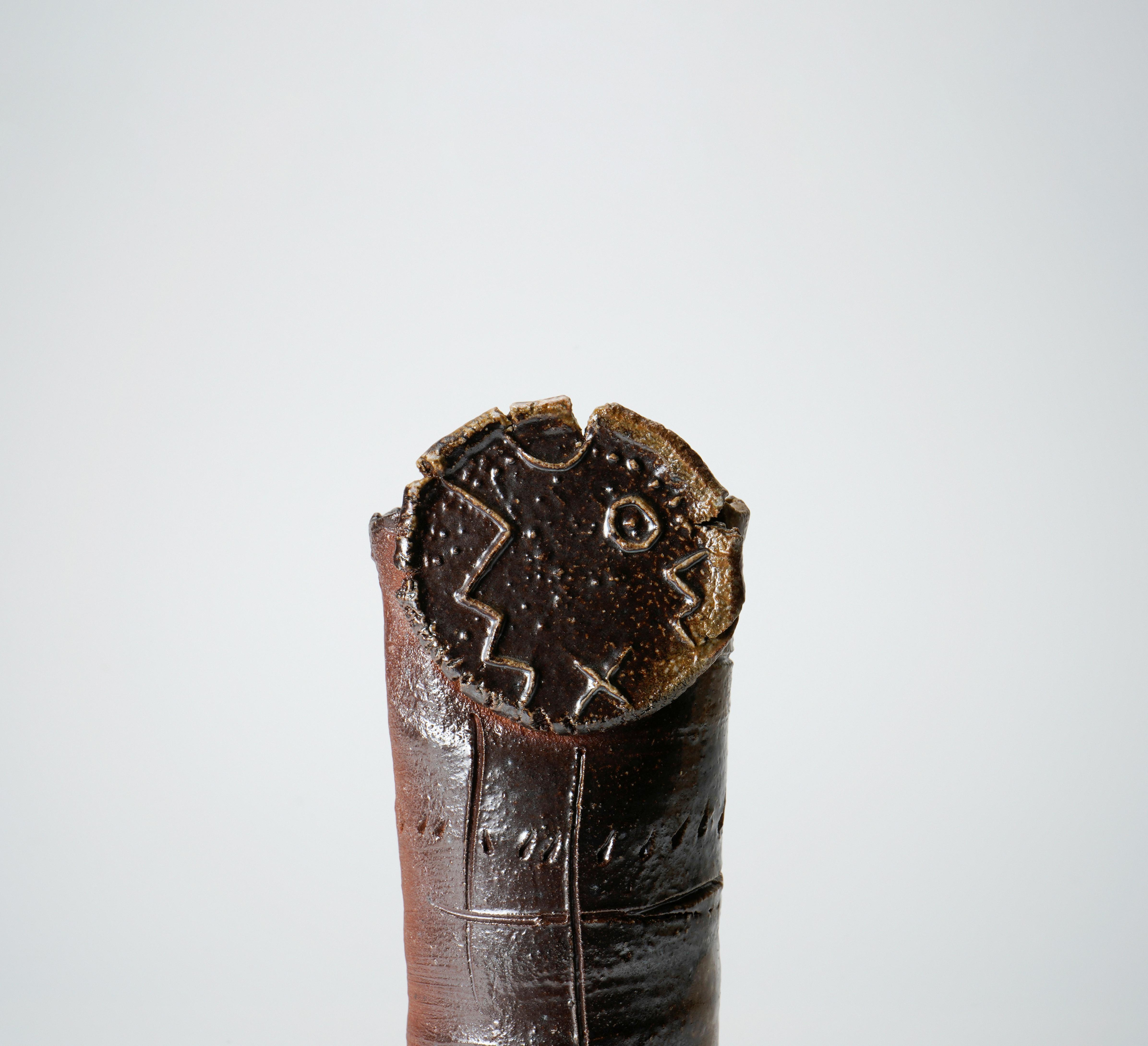
Katō Kiyoyuki (1931–2025)
FOREWORD
Beatrice Chang
How did the landscape of Japanese ceramics arrive at its current state, and what lies behind the avant-garde expressions of modern and contemporary Japanese potters today? Any attempt to trace the trajectory of contemporary Japanese ceramics particularly vessel‐based work can begin with these questions This exhibition explores how artistic expression within vessel art evolved over the course of twentieth‐century Japan
Before we examine these perspectives, we must briefly offer some historical context to Japanese ceramics prior to the modern period Bizen, Shigaraki, Tanba, Echizen, Seto, and Tokoname are known collectively as the Six Ancient Kilns of Japan. Dating back to the medieval period, these sites form the bedrock of Japanese ceramic history and are revered for their uninterrupted centuries of production. This legacy continues to resonate in contemporary studio practice, as examined in some of our past exhibitions such as “Soil to Splendor” (February 2024).
During the Edo period (1603–1868), prolonged peace under the Tokugawa shogunate allowed regional industries, including ceramics, to flourish During this period, apart from the porcelain sites found in Arita and Kyushu, Seto also became a key area of production for ceramics made for daily use A dynamic balance between utility and beauty remains central to Japanese ceramic culture and several historical objects were examined in our past exhibition “Tales of Seto” (August 2024)
The Meiji Restoration of 1868 marked Japan’s decisive turn toward modernity After centuries of relative isolation, Japan opened to global exchange, embracing new technologies and artistic ideas while actively preserving its cultural identity Crafts entered international expositions, and dialogue with Western aesthetics reshaped traditional practices. Meiji-era makers positioned Japan as a global cultural presence by balancing heritage with experimentation, laying the groundwork for twentieth-century artistic developments. This transformative period was eloquently documented in “Meiji Modern: Fifty Years of New Japan,” curated by Chelsea Foxwell and Bradley M. Bailey and presented at Asia Society, New York, in 2023.
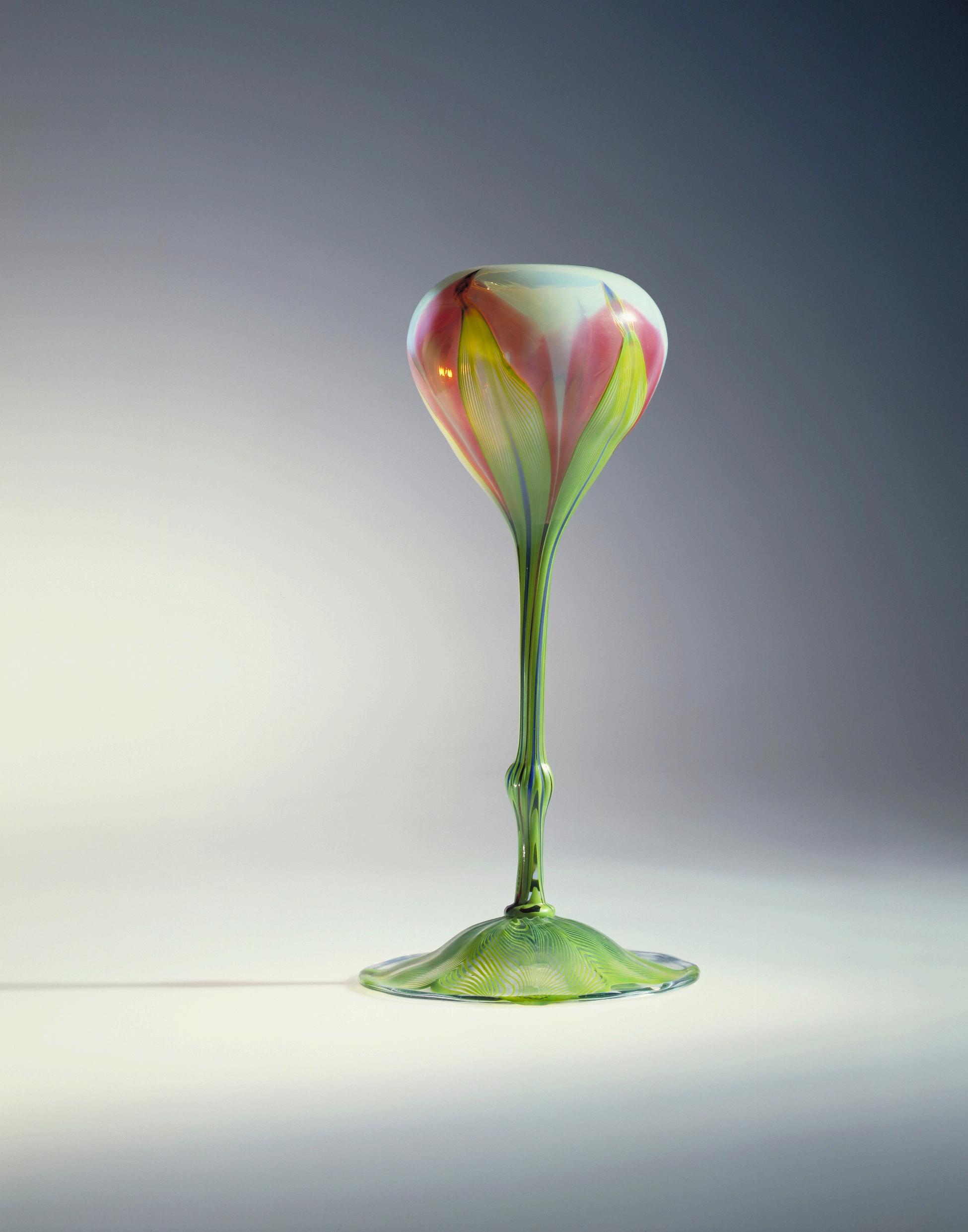
Vase, designed by Louis Comfort Tiffany for the Tiffany Glass & Decorating Co and Stourbridge Glass
Co Corona Glassworks, New York
Circa 1893-1900
Glass, 12 ¼ in (31 cm) high
Victoria and Albert Museum, London
Accession number: C 58-1972
Image © V&A
ower Vase with Yōhen
Glass, 18 × 10 ¾ in (47 0 × 27 2 cm)
Victoria and Albert Museum, London, accession number: 1622-1900
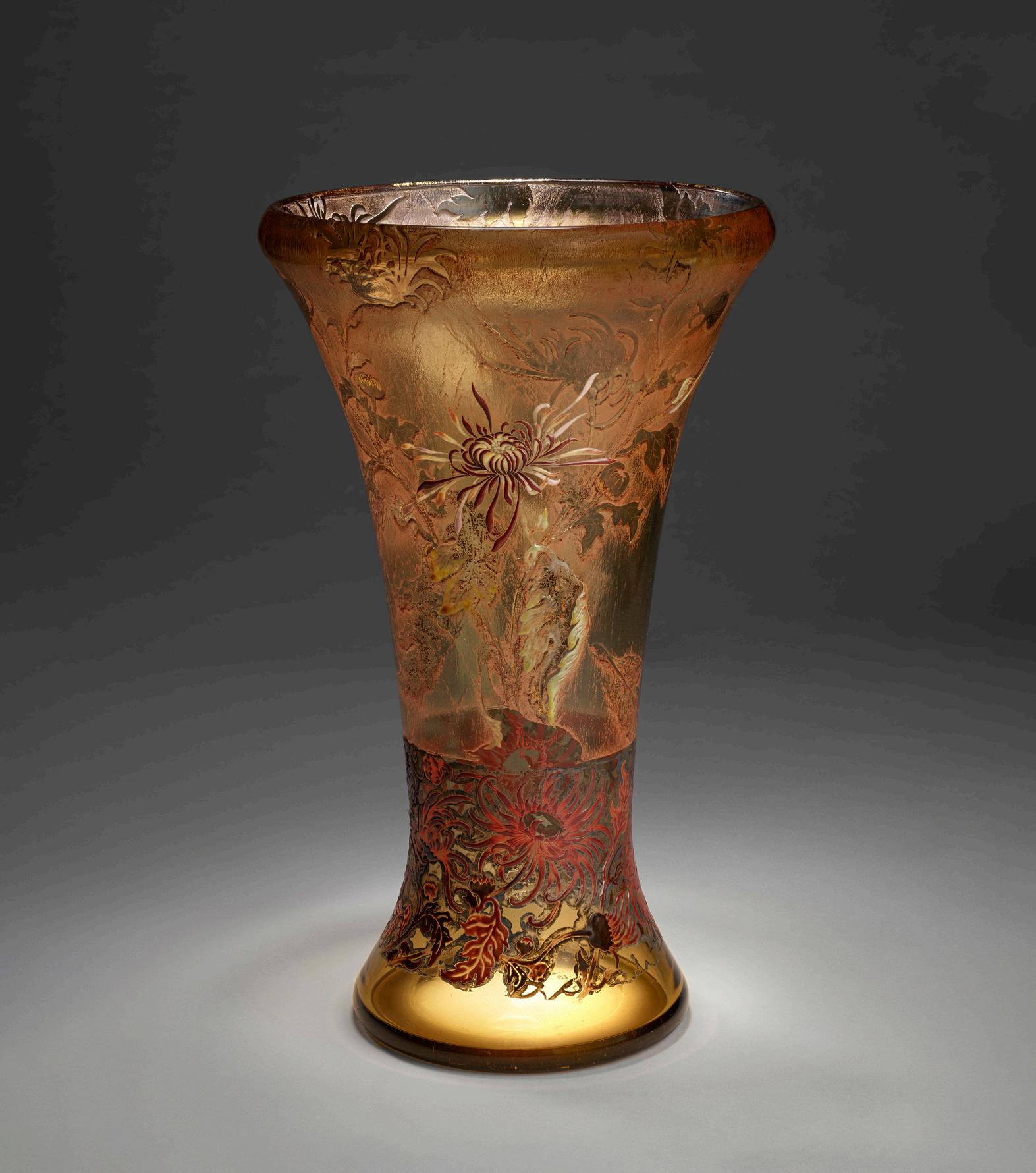
Building on Meiji-era exchange, interaction between Japan and Europe intensified during the Taisho era (1912–1926), a period of rapid modernization Ceramics alongside lacquer, textiles, and metalwork reflected international modernist sensibilities Earlier European designers associated with art nouveau had drawn inspiration from Japanese aesthetics. In turn, Japanese ceramists now engaged with European glass and decorative arts, at times incorporating archaeological East Asian references, as seen in the geometric vessels of Kusube Yaichi (1897–1984). The result was an ongoing exchange of forms and surface vocabularies. This created a sustained feedback loop: a back-and-forth of visual vocabularies that resulted in a fascinating cross-cultural hybridity.
By this point, Japanese aesthetics were no longer unfamiliar in the West Styles such as Japonisme and Chinoiserie, for example, had already been widely absorbed and interpreted for decades, if not centuries Within this context, the ceramic vessel arts of Japan invite closer examination Artists trained in regional techniques grounded in tradition, natural materials, and a deep-seated reverence for the natural world found new avenues for individual expression as cultural currents converged Ceramic studios emer-ged throughout Japan as makers negotiated the tensions between tradition and modernity in increasingly inventive ways While this exhibition focuses on the nuanced stylistic dialogue between the cosmopolitan centers of Tokyo and Kyoto, important production sites were also developing elsewhere, contributing to the broader landscape of modern Japanese ceramics
To promote artistic excellence in craft, in 1890 the Japanese government established the Teishitsu Gigeiin (Imperial Household Artist) system, formally recognizing artists whose technical mastery and achievement were considered of national significance. This marked an important institutional milestone in the modernization of ceramic vessel art.
Vase, designed by Emile Gallé for the Gallé glassworks
Lorraine (Nancy), France, circa 1900
Image © V&A
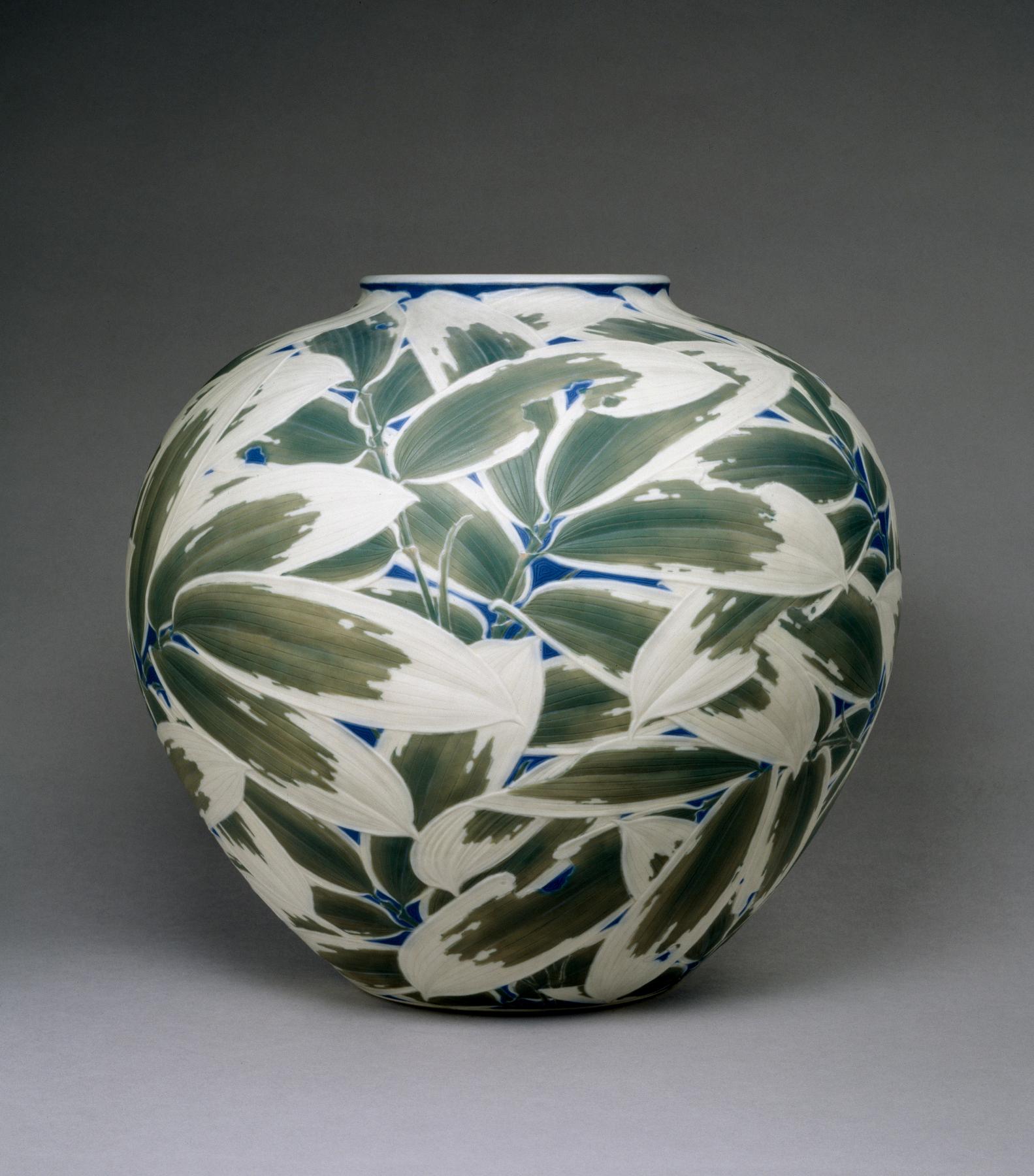
Itaya Hazan (1872-1963)
Vase with Low-Relief decoration of Bamboo Leaves, circa 1915
Porcelain with colored slip and overglaze enamel, 14 ¾ ×16 ⅛ in (37 5 × 40 9 cm)
Acquired by Henry Walters in 1915
Image courtesy of The Walters Art Museum, accession number: 49 2281
eras was Itaya Hazan (1872–1963), whose pioneering vision helped define modern Japanese ceramics Rigorous in technique yet boldly experimental, Hazan was appointed an Imperial Household Artist and later received the Order of Cultural Merit Through his leadership of the Tōkōkai (Eastern Ceramic Society), he advanced the recognition of vessel-making as a legitimate modern art form. His contemporary, Miyagawa Kōzan I (1842–1916), exhibited extensively in Japan and abroad, earning major awards before also attaining the title of Imperial Household Artist. Their achievements and the artistic lineages they established created vital pathways for the generations that followed. As their careers bridged into the early Showa era, the Shinkō Kōgei (New Craft) movement emerged, prompting artists to explore new stylistic vocabularies while reinterpreting inherited techniques for a rapidly changing age
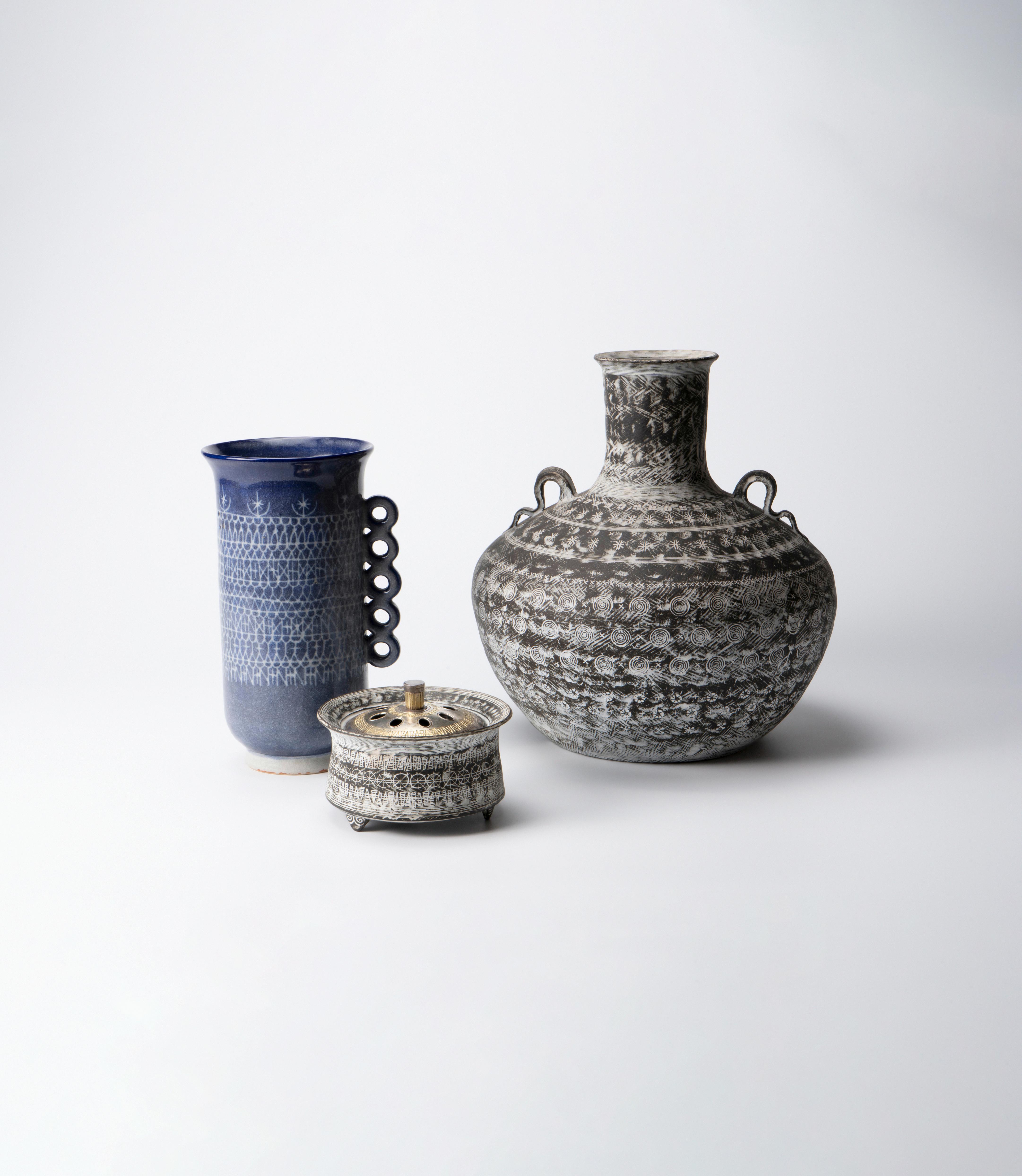
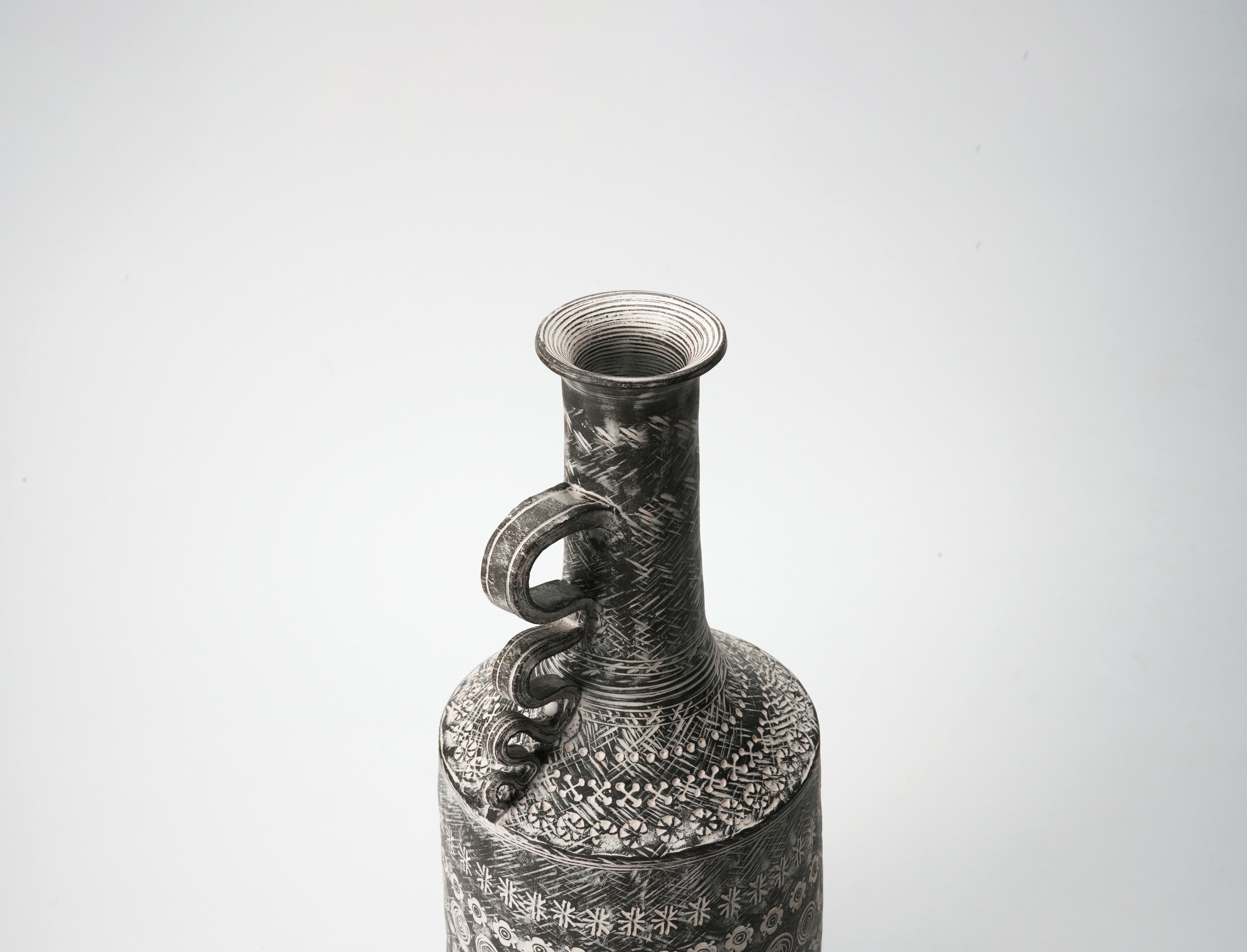
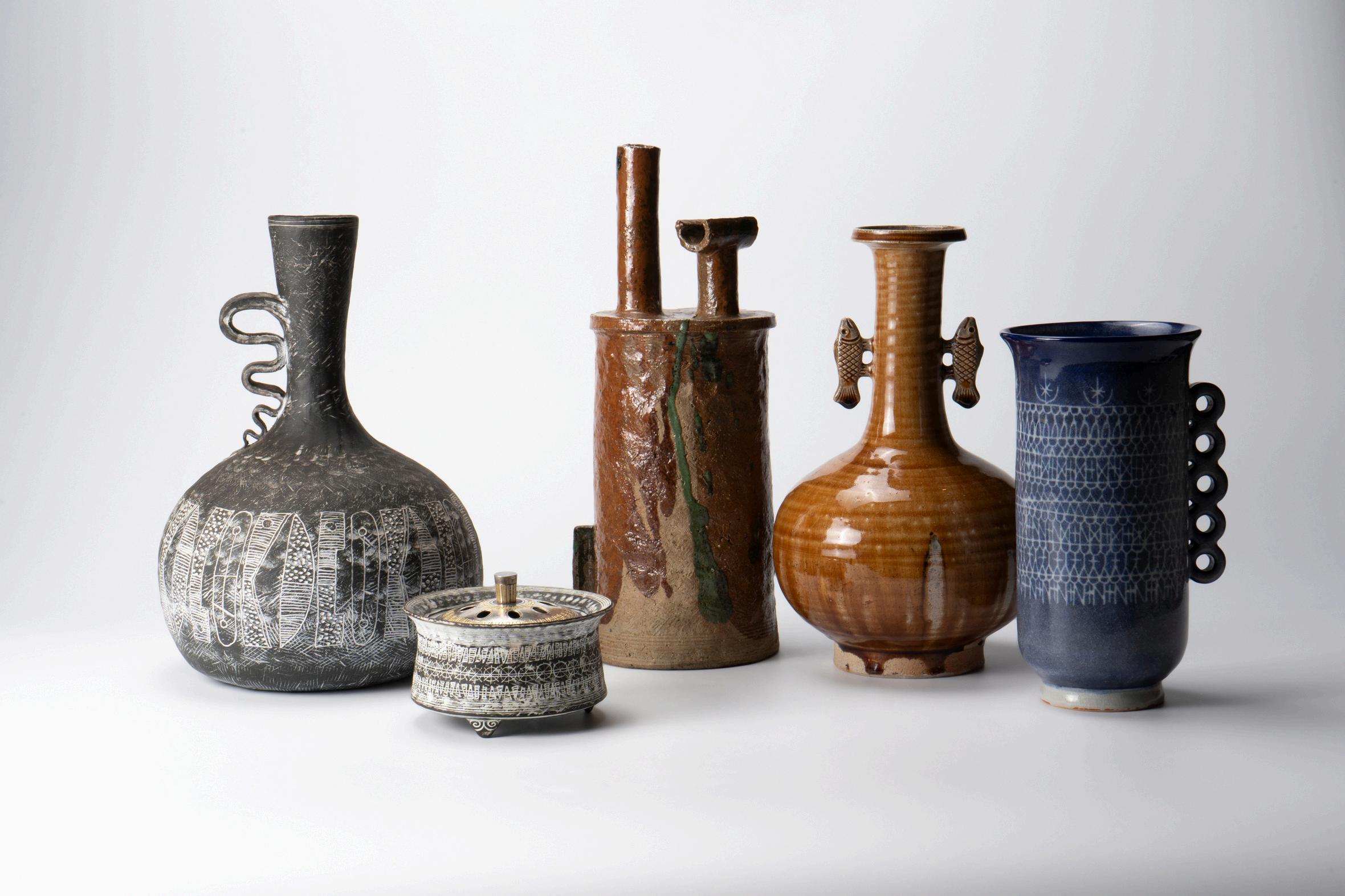
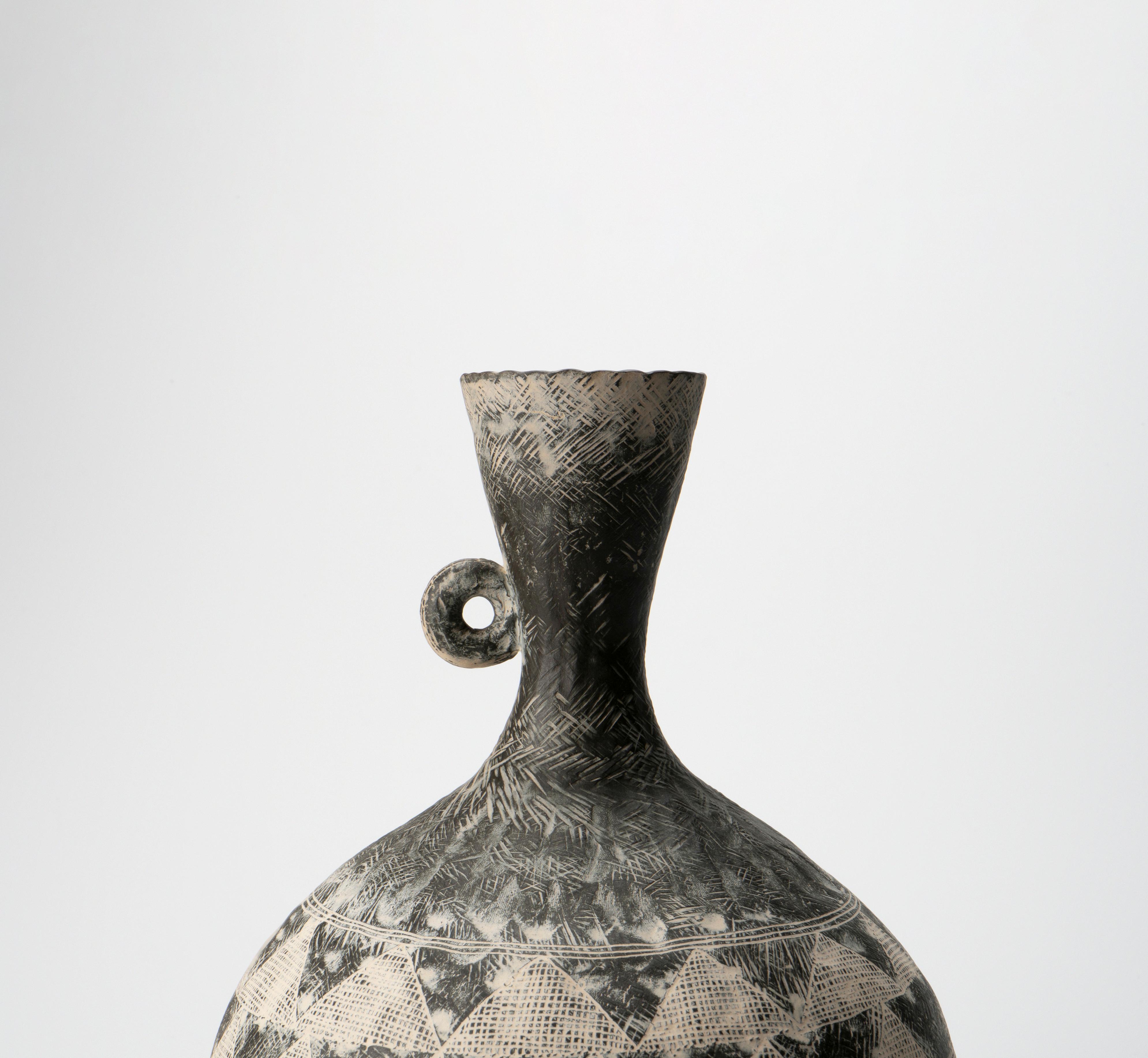
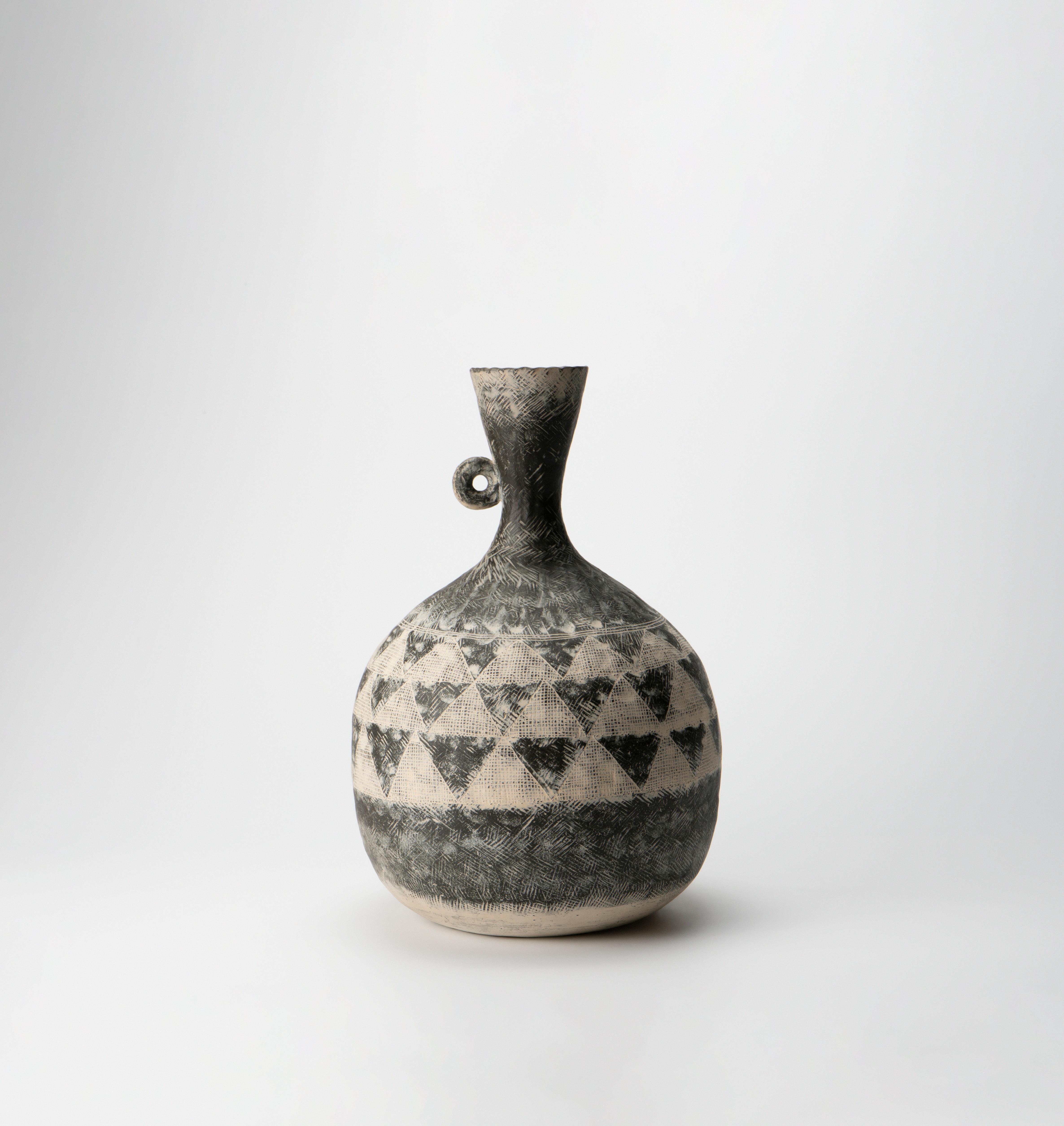
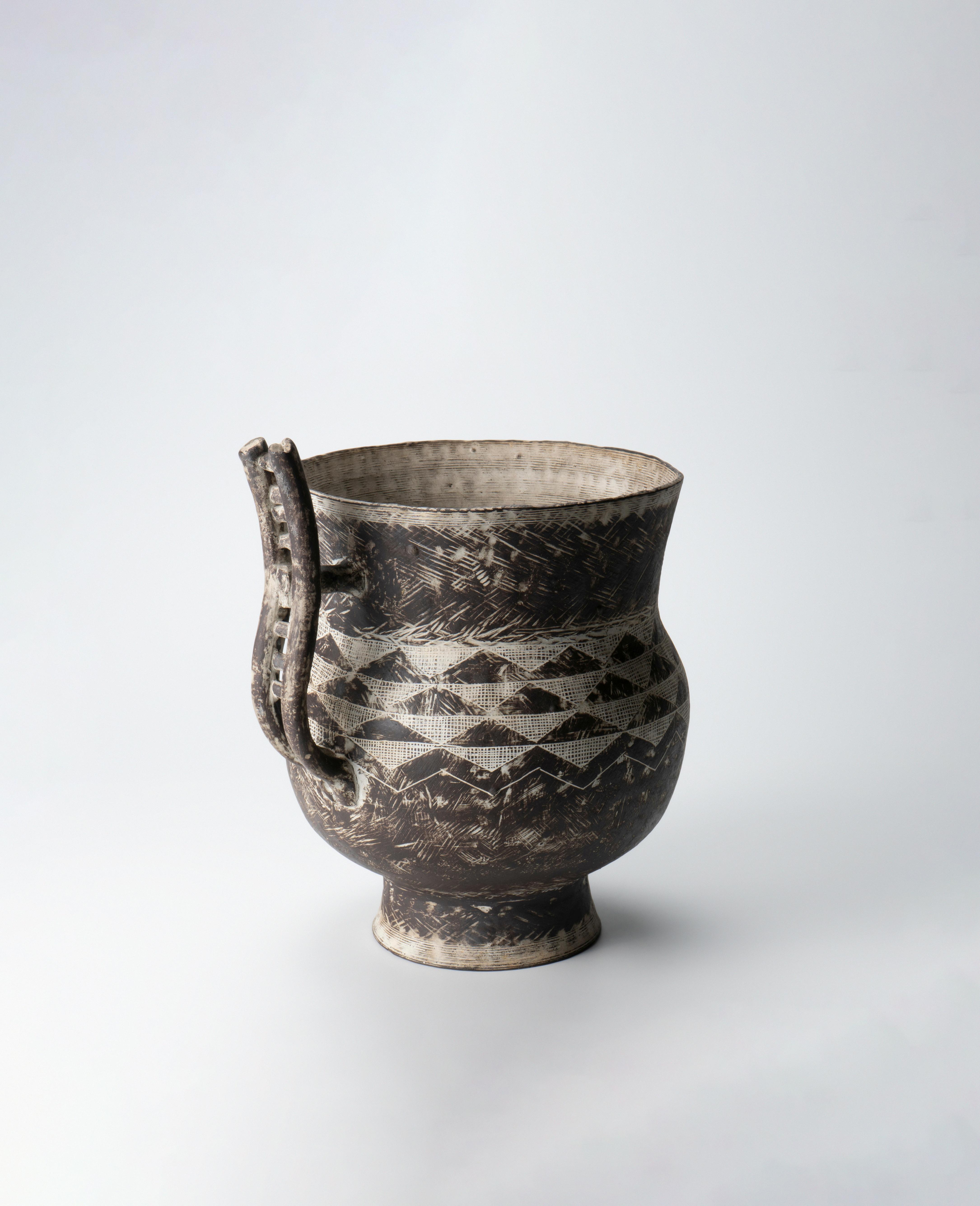
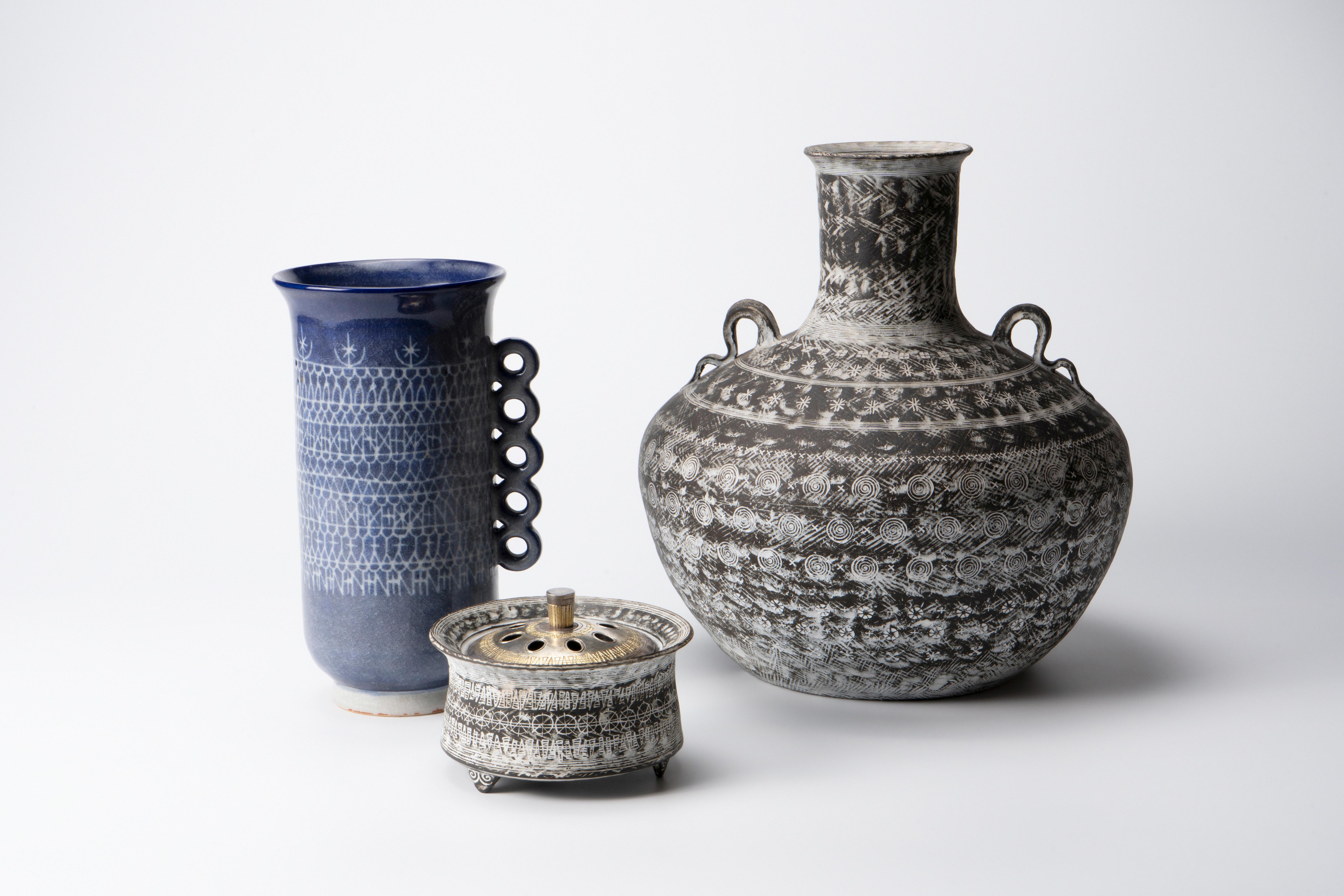
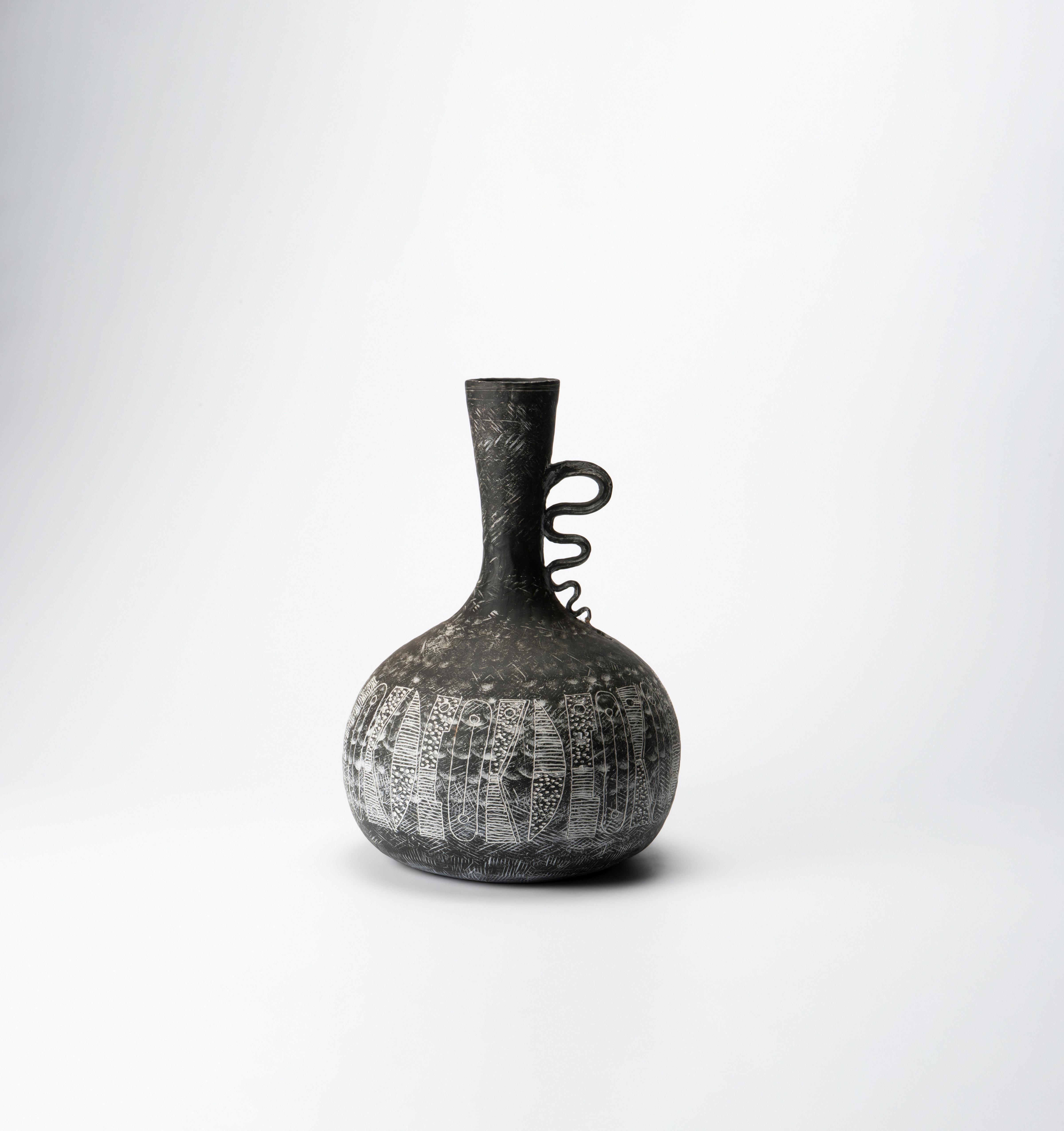
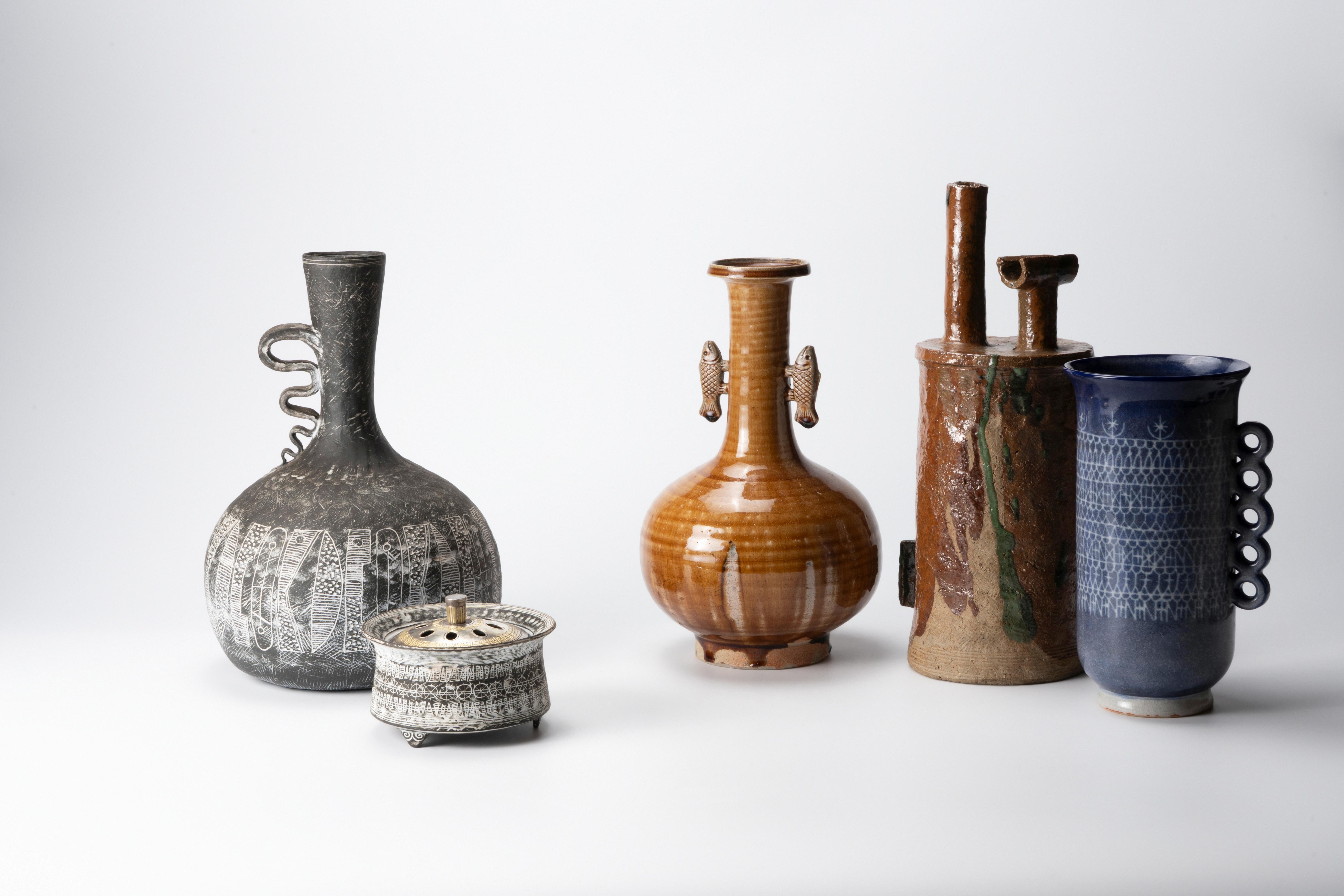
It was within this transformed landscape that the second generation of the Itaya and Miyagawa circles helped spark an outpouring of creativity and avant‐garde thinking in vessel art the context for the works featured in this exhibition Among the artists shaped by this moment was Yasuhara Kimei (Yoshiaki, 1906–1980) Born in Tokyo and trained under Miyagawa Kōzan, Yasuhara was an active participant in the Tōtōkai, Teiten, and Nitten exhibitions, and later received the Japan Art Academy Prize His vessels, often formed from ash‐black stoneware clay he termed sekki, are distinguished by dot‐and‐line inlay, controlled asymmetry, abstracted planar compositions, and surfaces that subtly echo European modernist aesthetics translated through local ceramic traditions. His archaic‐evoking jugs and vases at times reminiscent of Paleolithic Greek amphora forms extend this dialogue between past and present. Our exhibition of Yasuhara Kimei’s works “Object, Vessel” (September 2023) further examined his collaborations with the avant‐garde flower art school Ikebana Sogetsu, highlighting the breadth of his modernist approach.
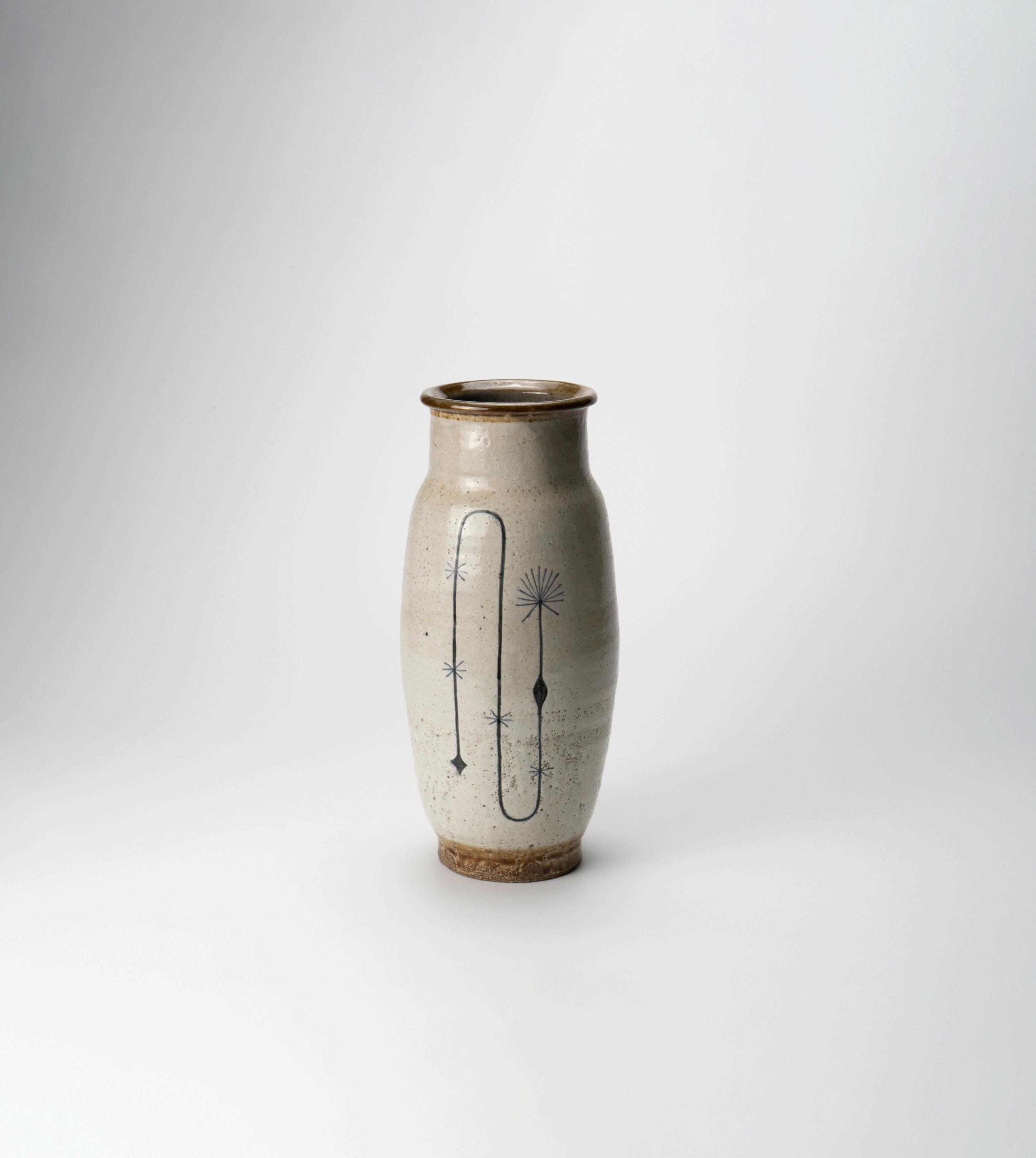
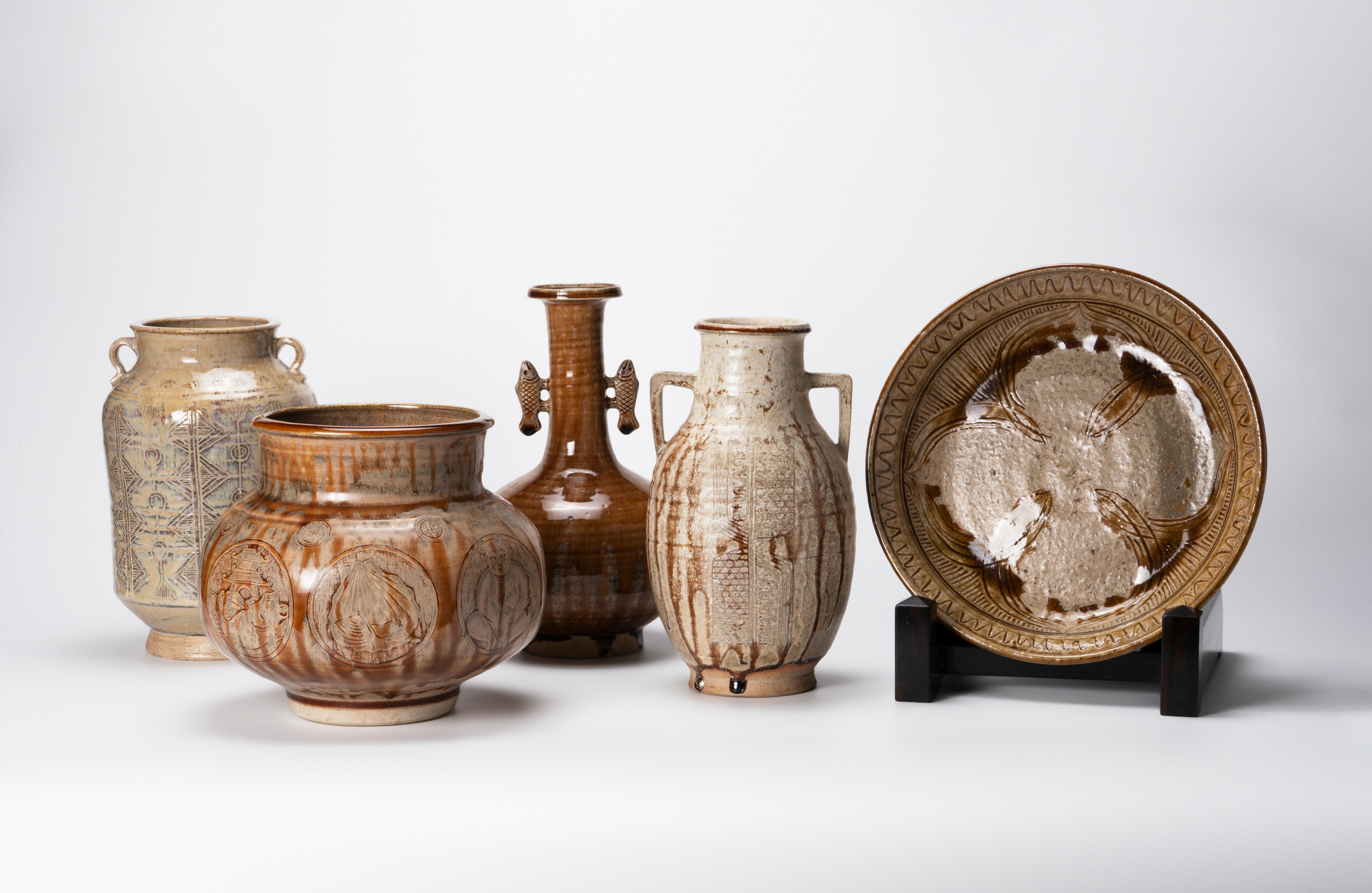
A group of works by Yasuhara Kimei
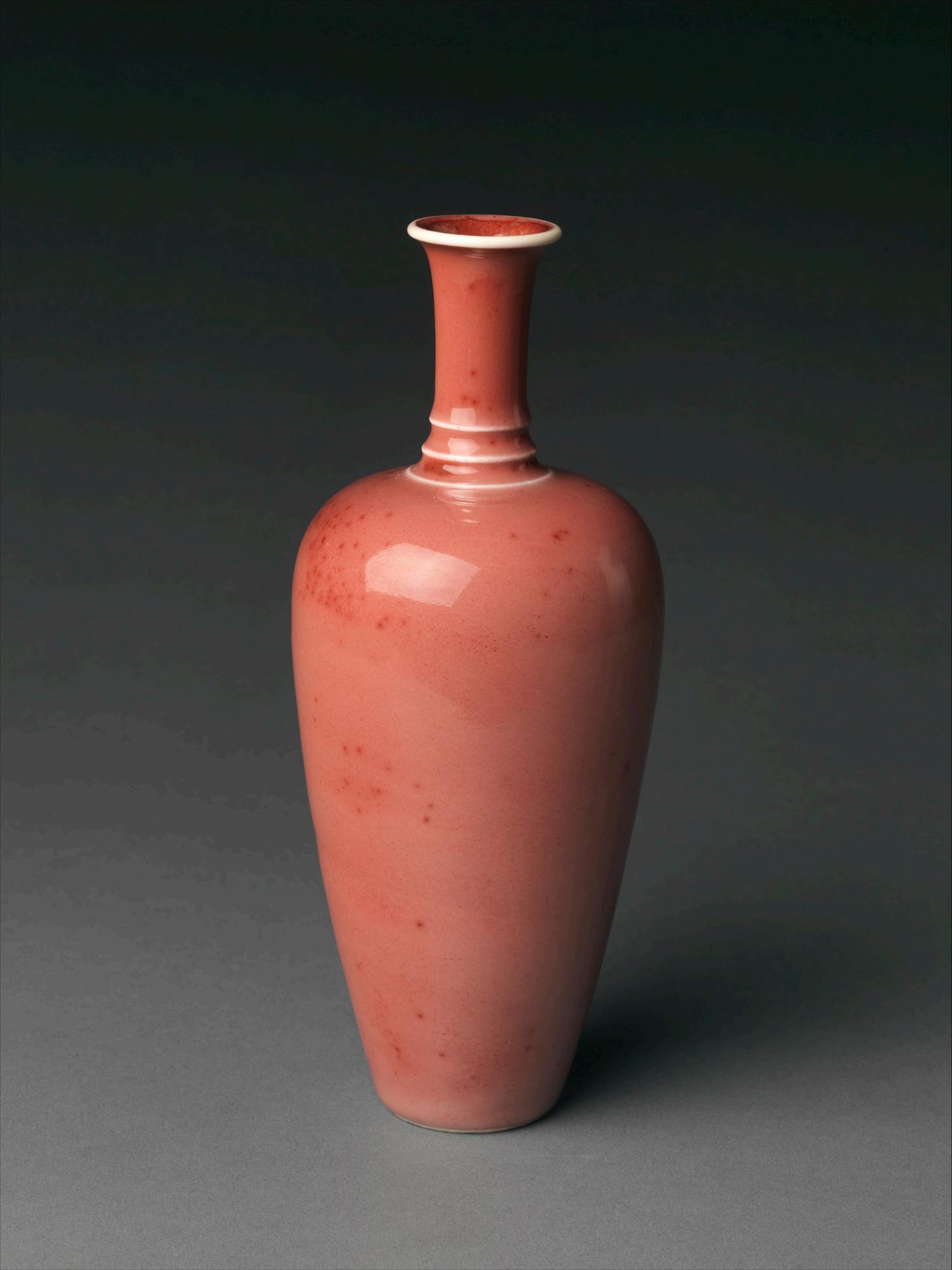
Vase, Jingdezhen ware Qing dynasty (1644–1911), Kangxi mark and period (1662–1722), China, circa 1713–22
Porcelain with peach-bloom glaze, 8 in (20 3 cm) high The Metropolitan Museum of Art, Bequest of Mary Stillman Harkness, 1950, accession number: 50 145 286 Image courtesy of The Metropolitan Museum of Art
Miyanohara Ken
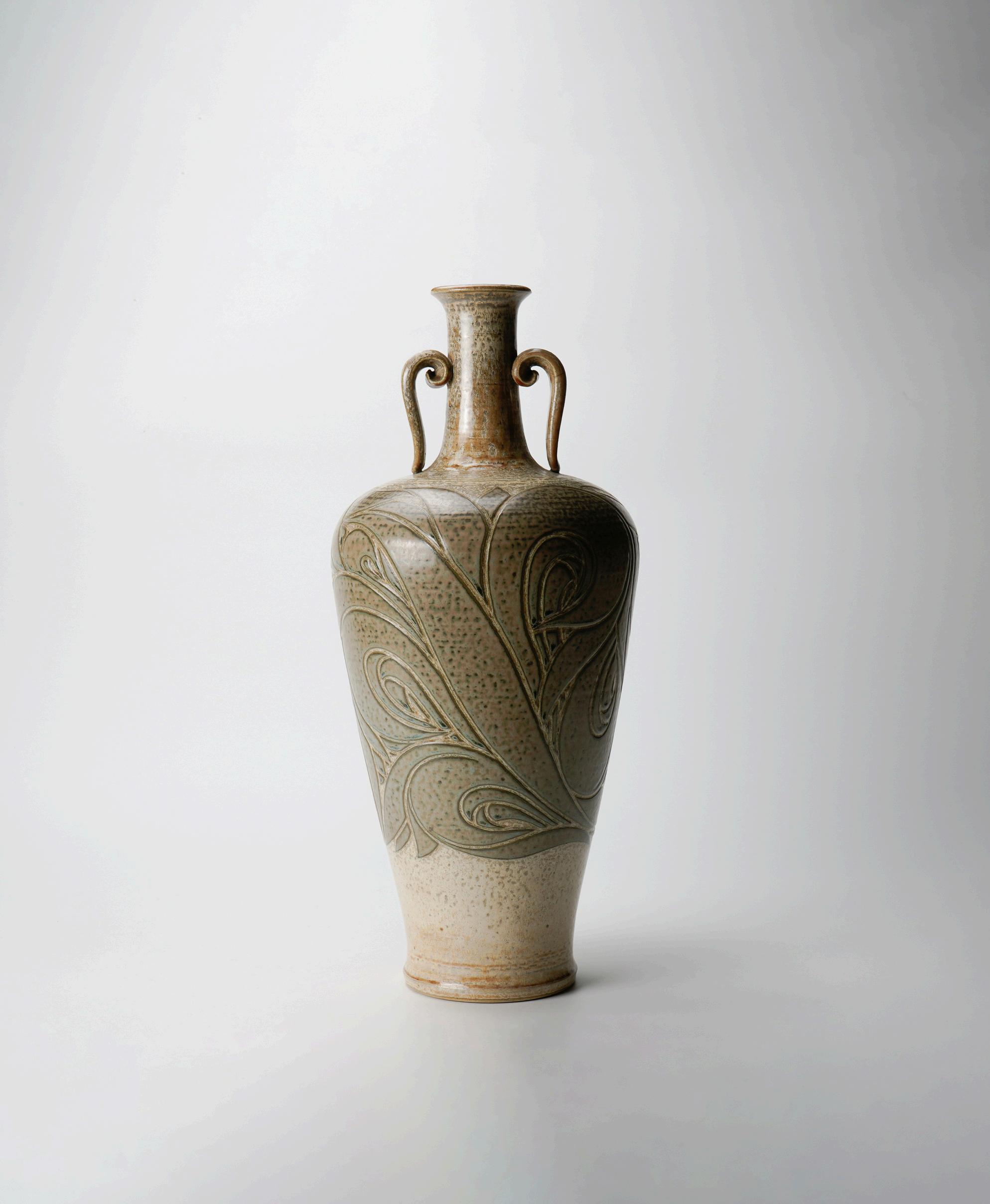
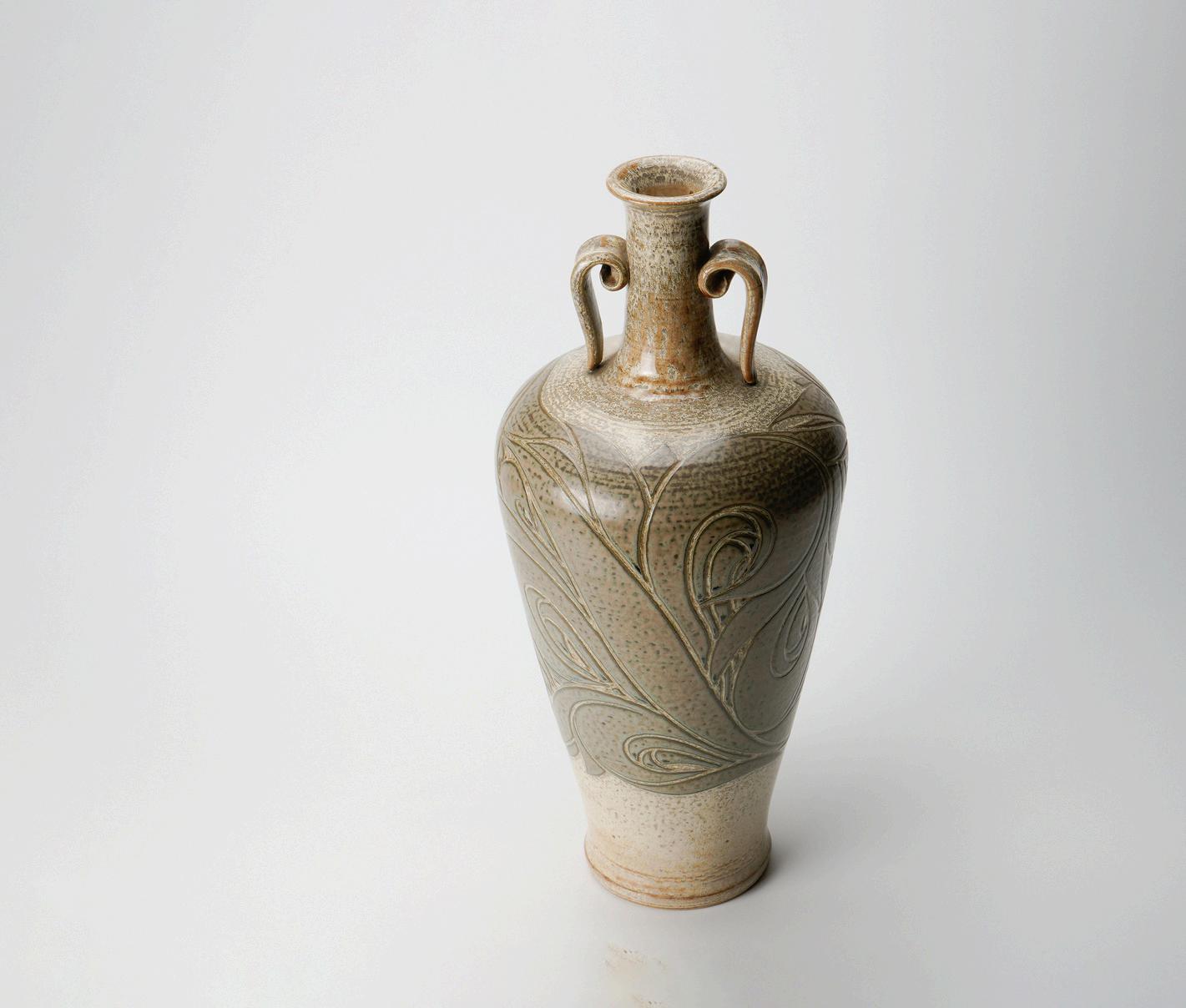
Jar with Crystalline Glaze and Grass Design
Stoneware, circa 1950s–1960s
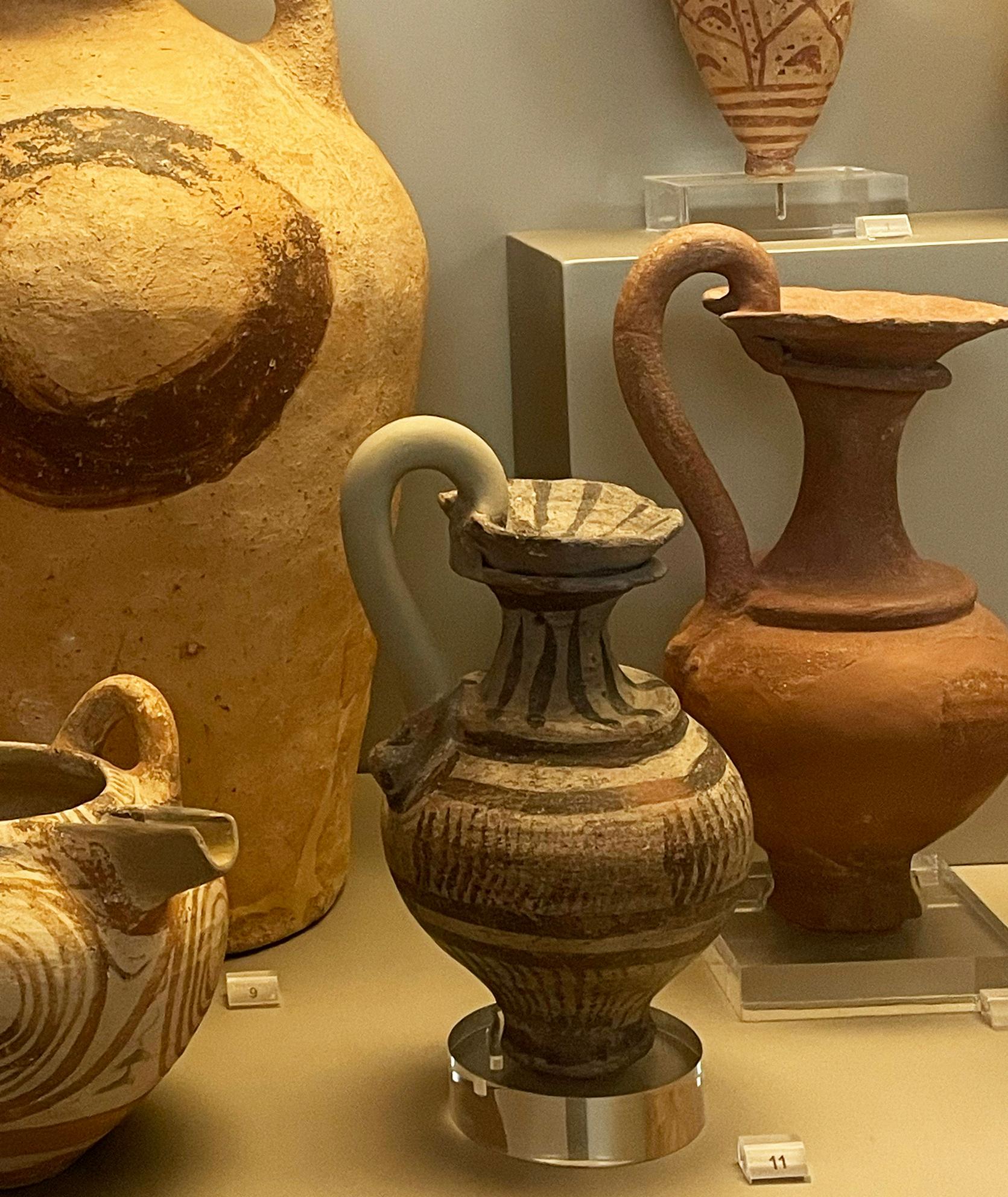
Detail of two vessels from the “Kastri Group,” circa 2500 BC, Greece
Photographed at the National Archaeological Museum, Athens, 2024
Kastri fortified settlements are sites where numerous pottery vessels have been excavated, including cups and pouring vessels used for drinking and serving liquids These ceramics are characteristic of Early Bronze Age cultures in the northeastern Aegean and Asia Minor (circa 2500–2200 BC) They are typically dark-polished and sometimes decorated with incised patterns filled with white paste to create a striking contrast against the dark surface This decorative technique was later adapted by Yasuhara Kimei for his own ceramic practice
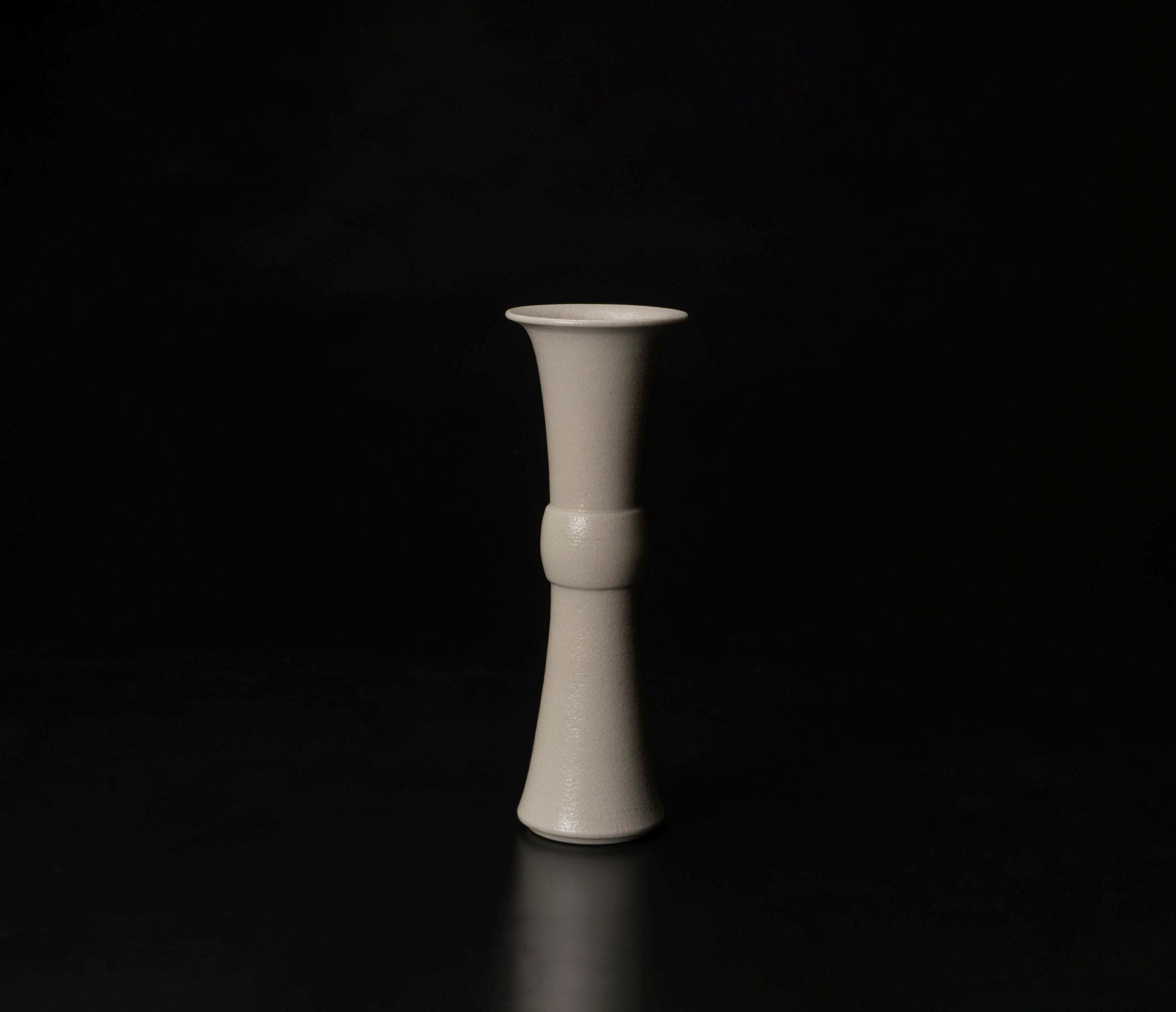
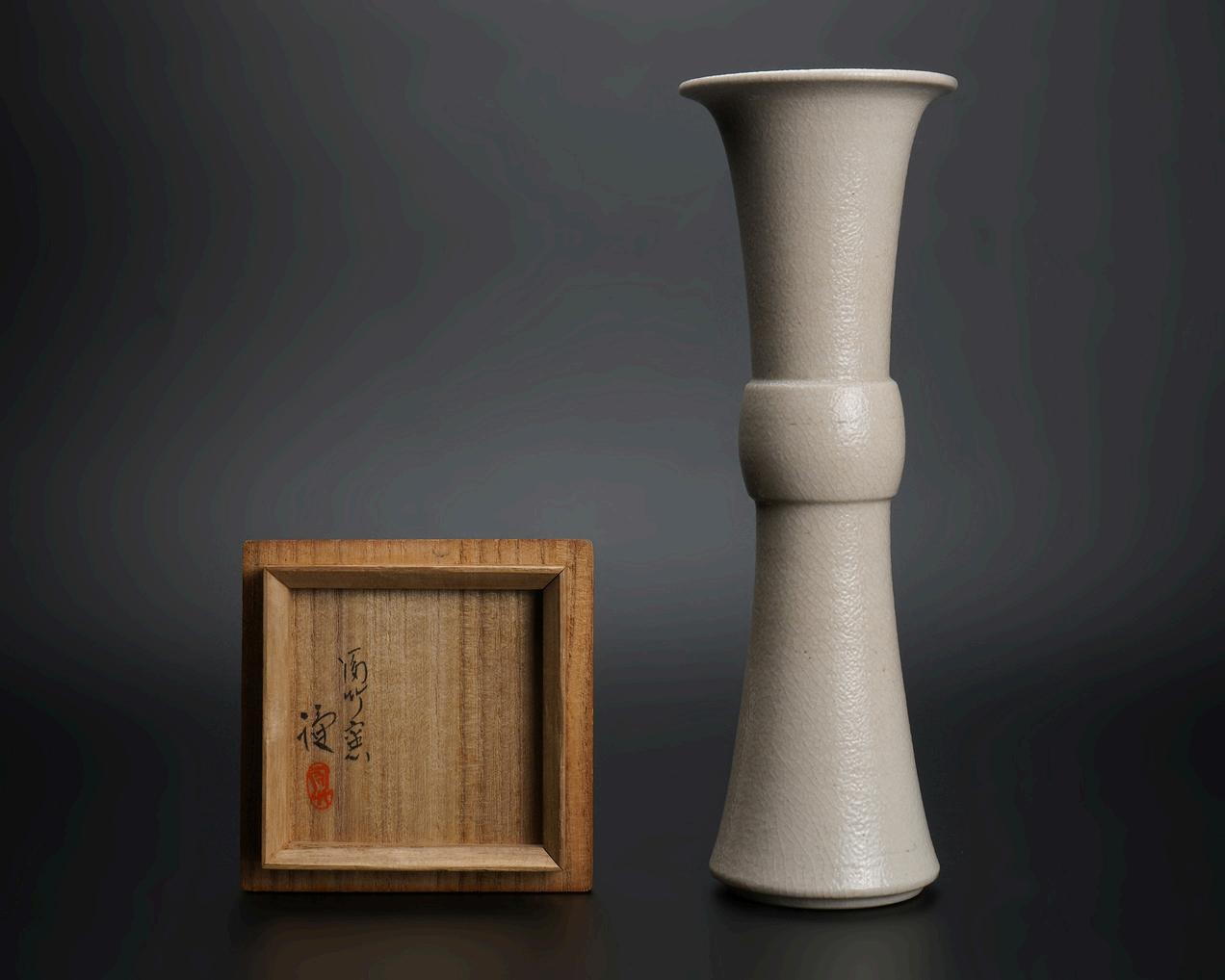
Miyanohara Ken White Flower Vase in the Form of an Archaic Ritual Bronze Vessel Circa 1960s–1970s
Pair of Gu Wine Vessels, China, circa 13th–12th century BC Bronze, 7 ⅜ × 4 ½ in (18 7 × 11 6 cm) Minneapolis Institute of Art, Gift of Ruth and Bruce Dayton Accession Number 96.97.2.1
Image courtesy of the Minneapolis Institute of Art
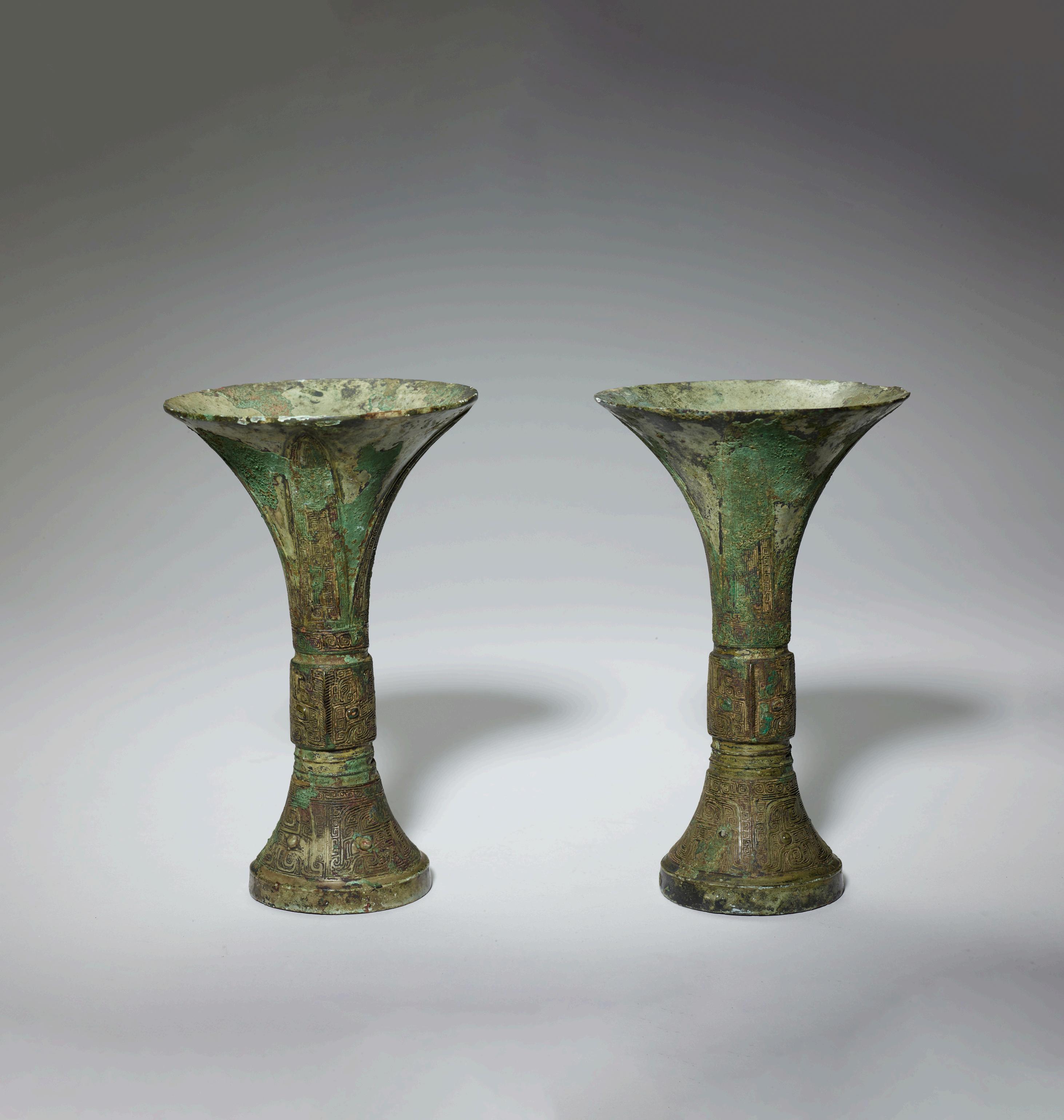
Another figure active within Tokyo’s emerging salon culture of ceramic artists was Miyanohara Ken (1898–1977). His career parallels Yasuhara’s in notable ways. Trained by both Miyagawa Kōzan and Itaya Hazan, and possessing a strong grounding in mathematics, physics, and architectural study at Waseda University, Miyanohara developed ceramic forms shaped by an engagement with several mediums within art and art history from classical Chinese and Japanese prototypes, broader international antiquities, and architecture In conversation with the leading designer Sugiura Kōhei, Miyanohara once also offered thoughts that revealed more of his intellectual approach to ceramics:
Hazan-sensei’s polychrome porcelain came from his origins as a wood sculptor He could not separate himself from carving It is the same for me I cannot separate myself from architecture My works inevitably become exactly the forms I first planned Mine are architectural ceramics
From this generation emerged a distinctly Japanese form of modernism, in which ceramic artists synthesized a wide range of international influences European art nouveau, abstraction, and the prototypical forms of Greek archaeology alongside artistic lineages rooted in Japan and China. My aim with this exhibition is to trace the major schools of ceramic modernism that took shape in the early twentieth century between Tokyo and Kyoto Their works, characterized by refined surface treatments, deliberate restraint, and an engagement with materiality, are neither modernist in the Bauhaus sense nor fully aligned with the ethos of Mingei, but occupy a compelling space between the two, offering a language of vessel art that paved the way for contemporary ceramic artists to express themselves through form
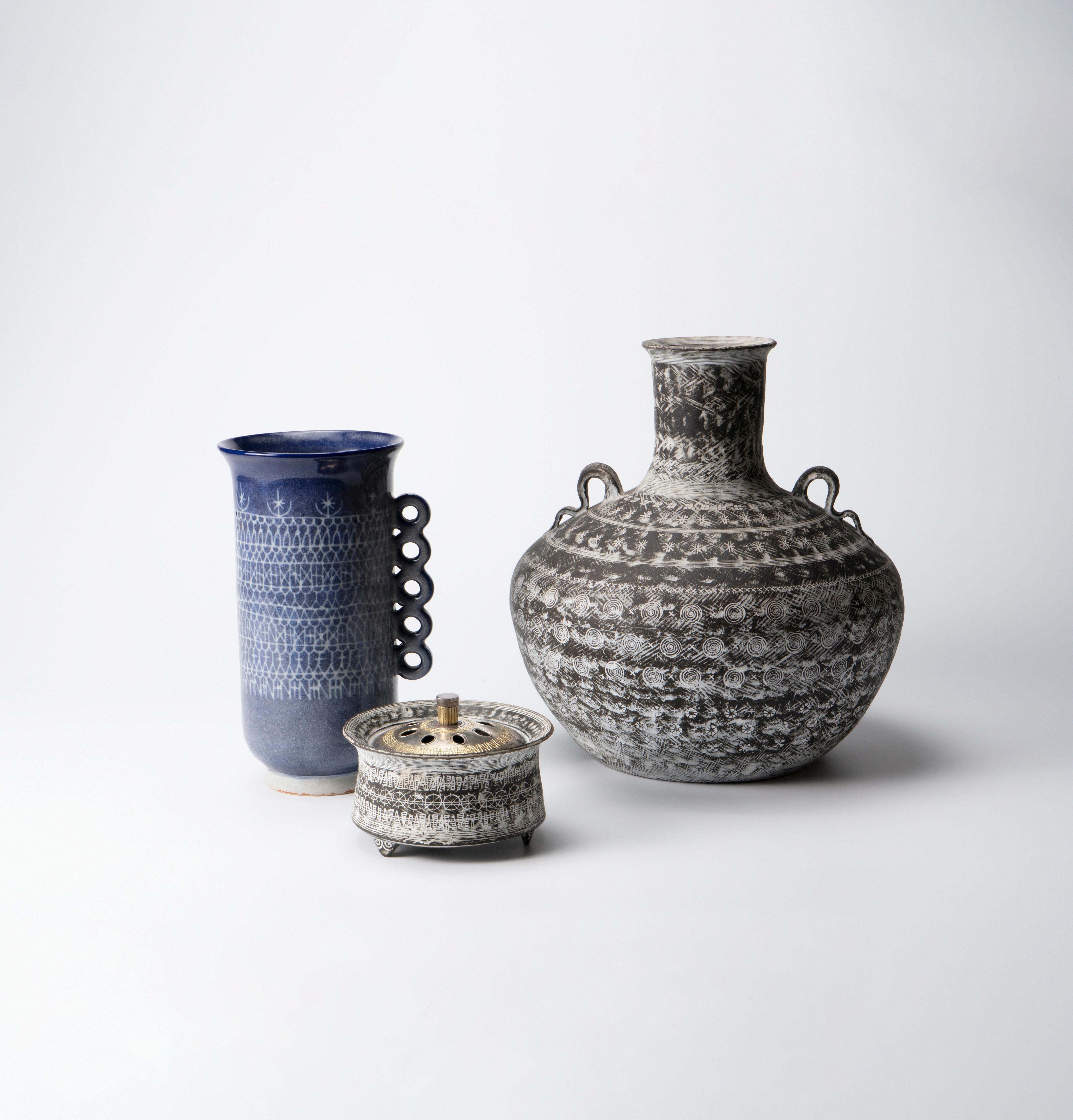
A group of works by Yasuhara Kimei
CERAMIC MODERNISMS
Tokyo, Kyoto, and In Between
Joe Earle
In our efforts to create things of truth and beauty, we must never allow ourselves to be bound by established concepts or forms We should renounce all ties with nostalgia and envelop our innermost selves in a pure consciousness of life as it is lived at the present time If we can sustain this effort, we will surely find within our own souls the image of something beautiful and precious 1
At just 24 years old, Yasuhara Kimei (1906–1980; also known as Yasuhara Yoshiaki) published this bold statement of intent in the June 1930 inaugural issue of Tōtō (Tokyo Ceramics), the journal of the Tōtōkai a newly formed association of ceramicists active in and around Japan’s capital Unlike many artistic collectives of the time, the Tōtōkai pursued practical aims rather than ideological ones Situated far from the traditional ceramic centers of central and western Honshu, its members faced significant challenges: poor access to high-quality clay, limited water and fuel supplies, and the absence of a dense network of studios and kilns Their gatherings focused on sharing technical knowledge, building professional connections, and organizing exhibitions not on issuing grand artistic manifestos That Yasuhara seized this moment to articulate a personal credo speaks volumes about his ambition and creative resolve, a commitment he would uphold throughout his long career.
The early 1930s were both exhilarating and challenging for Yasuhara Kimei and his colleague Miyanohara Ken (1898–1977), who had relocated to Tokyo as a child After brief studies in painting and calligraphy, both apprenticed under Miyagawa Kōzan II (1859–1940), director of a major Yokohama factory producing “Makuzu Ware” luxurious porcelain vases inspired by Chinese models and highly prized by Western buyers for decades Kōzan later urged Miyanohara to expand his horizons under Itaya Hazan (1872–1963), a giant of modern Japanese ceramics, and Yasuhara soon followed Reflecting on those formative years, Yasuhara remarked:
From Miyagawa I received guidance in the classical beauty of ceramics, while from Itaya I learned about modern ceramics. ²
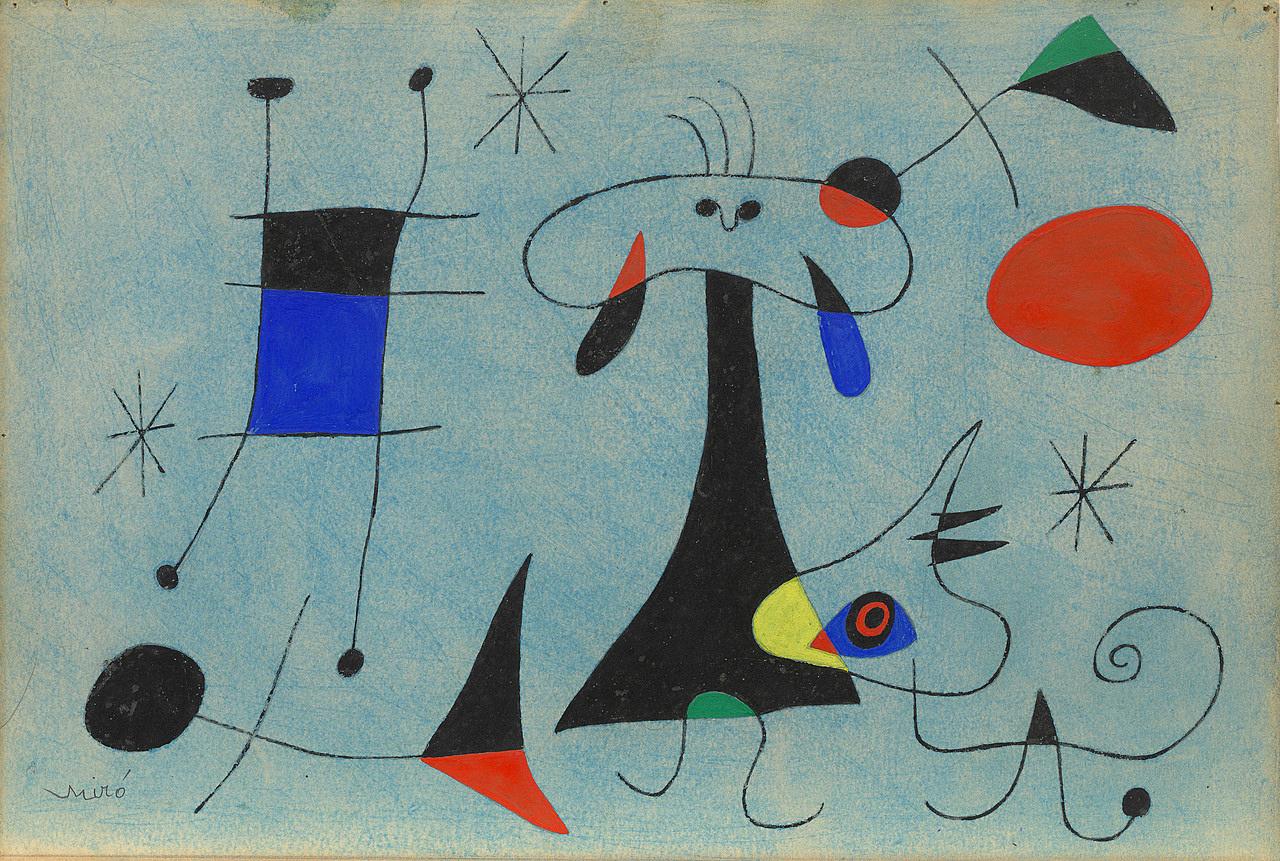
Gouache and watercolor on paper, 8 ¼ × 12 ¼ in (21 × 31 1 cm)
Gift of The Andrew Powie Fuller and Geraldine Spreckels Fuller Collection, 1999 to the Solomon R Guggenheim Museum, New York
Accession number 2009 14
© 2023 Successió Miró/Artists Rights Society (ARS), New York/ADAGP, Paris
Joan Miró (1893-1983)
Figure, Dog, Birds (Personnage, Chien, Oiseaux), 1946
Yasuhara Kimei Flower Vase Circa 1970
Th m de wh as Mi an aw rep (1897 1984), whose
The Tōtōkai emerged during a watershed moment in Japan’s art administrations: the government-sponsored national art exhibition, launched in 1907 as the Bunten (later Teiten, Shinbunten, and postwar Nitten), introduced an “art crafts” section in 1927. Yet Tokyo remained a peripheral player. In 1930 the first year that both Yasuhara and Miyanohara showed at Teiten 41 ceramic artists were featured: 28 from Kyoto, but only seven from Tokyo and six from other regions Yasuhara continued exhibiting at Teiten and Tōtōkai throughout the decade, the latter’s first group show held at Mitsukoshi Department Store Greater creative latitude, however, came from alternative venues, notably a gallery operated by the Shiseidō cosmetic company, where in 1934 he staged a solo exhibition of about 60 unconventional works Surviving photographs show Shiro no kaiten (White Rotation), a cylindrical white porcelain vessel pierced with three round holes linked by linear motifs a harbinger of Yasuhara’s later poetic approach to form Though functional, these pieces exuded freedom: flower vases with fluid, intentional shapes that broke from rigid tradition, occasionally absorbing influences from global modernism, especially Joan Miró.
ten (Yasuhara Kimei Exhibition), To Shinb
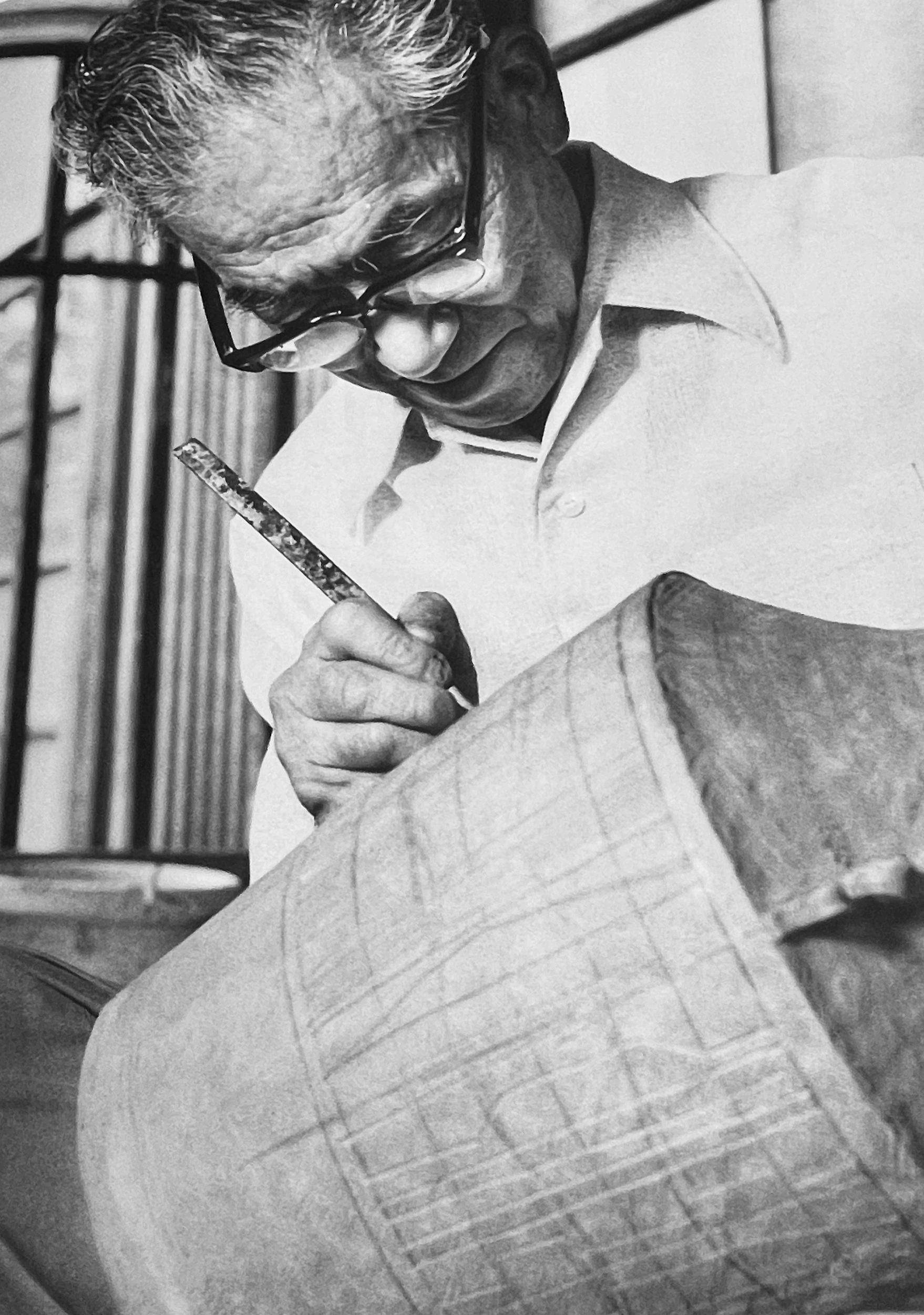
Yasuhara Kimei
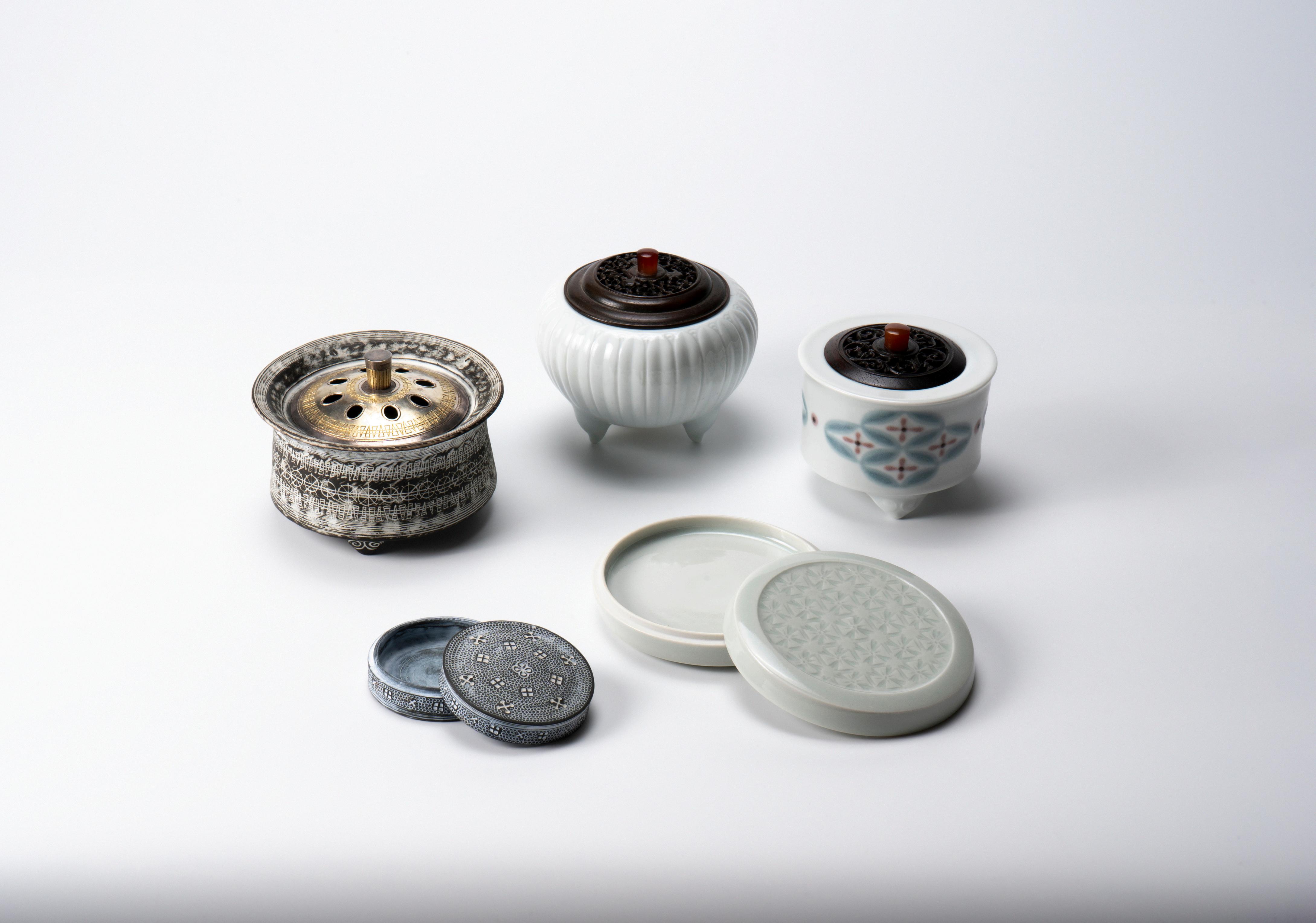
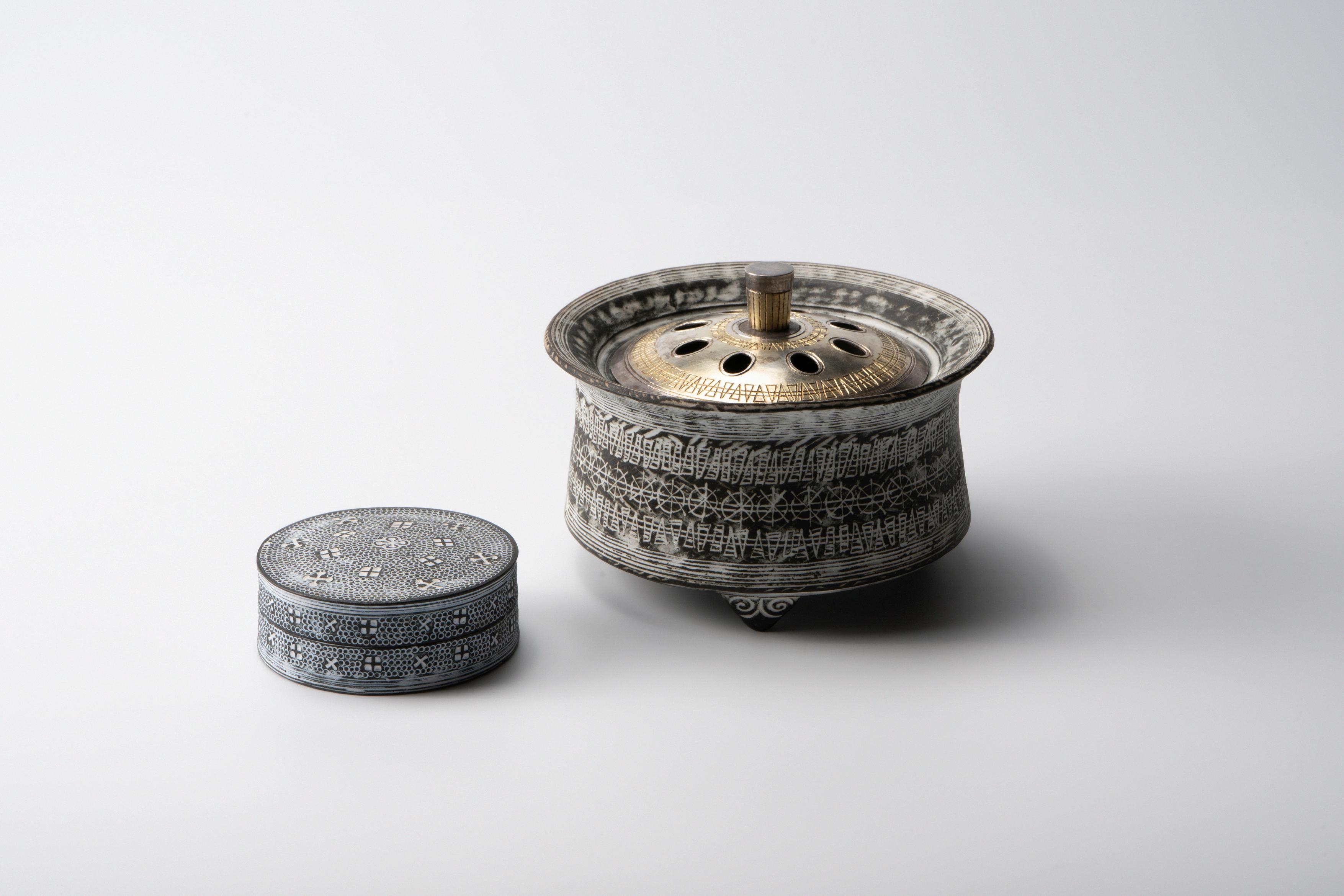
A turning point came in 1937 when Yasuhara met avant-garde ikebana master Teshigahara Sōfū (1900–1979), whose Surrealist- and Dada-inspired philosophy championed personal expression over convention Their affinity led to a joint exhibition in 1938, deepened Yasuhara’s embrace of abstraction, and initiated a long-term collaboration. Around this time, he adopted stoneware as his primary medium, titling many works with the recently coined Japanese term for high-fired, non-porcelaneous clay, sekki An early example was Sekki gōsu (Stoneware Incense Box), engraved with linear patterns filled with white slip in the Korean-derived Mishima style Despite its modest scale, it earned Tokusen (Special Selection) status at the Third Shinbunten Exhibition in 1939, with critics praising its effortless technique, lustrous glaze, and evocation of Han-dynasty elegance; it likely served as the prototype for no 13 in this catalogue ³
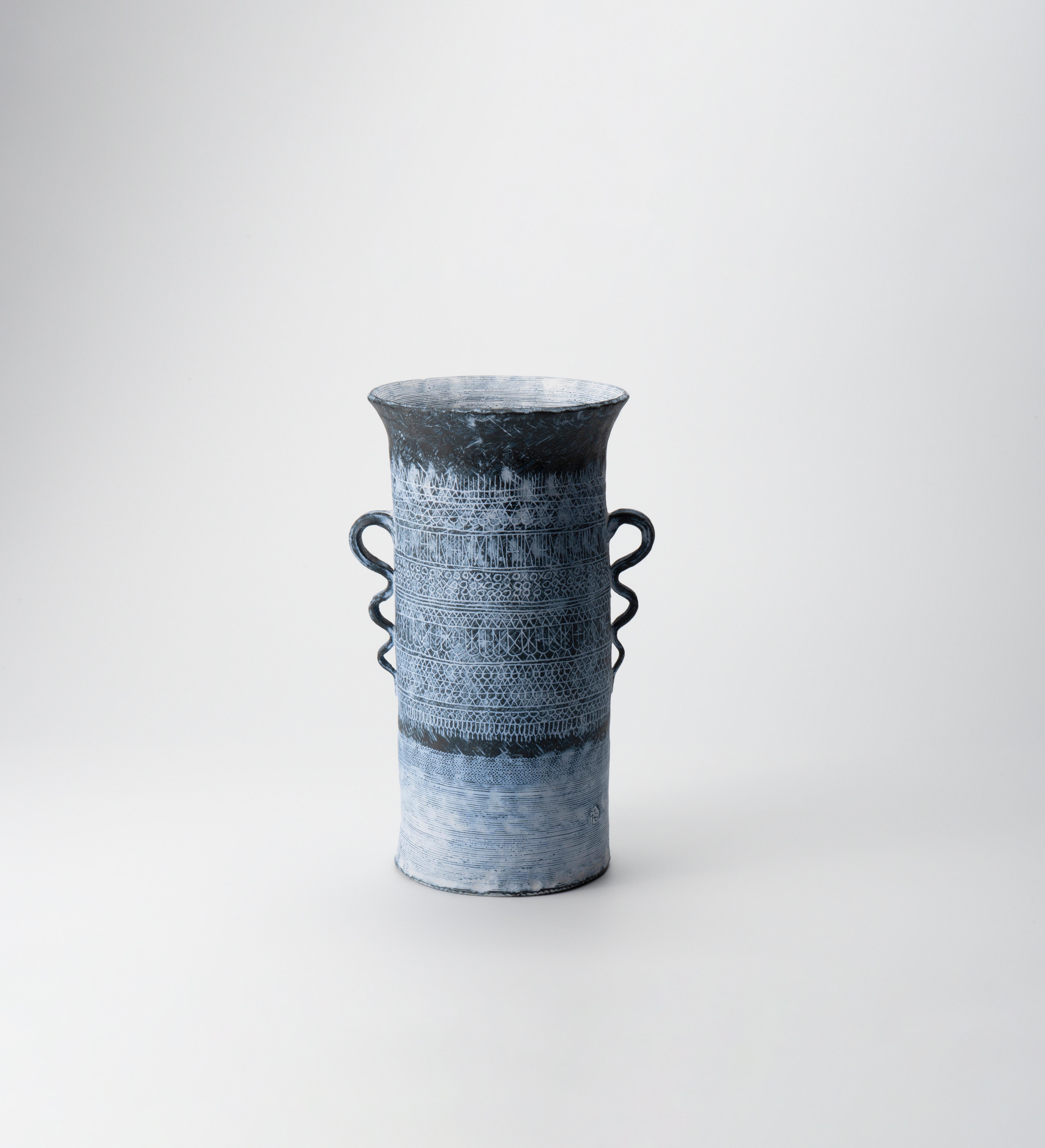
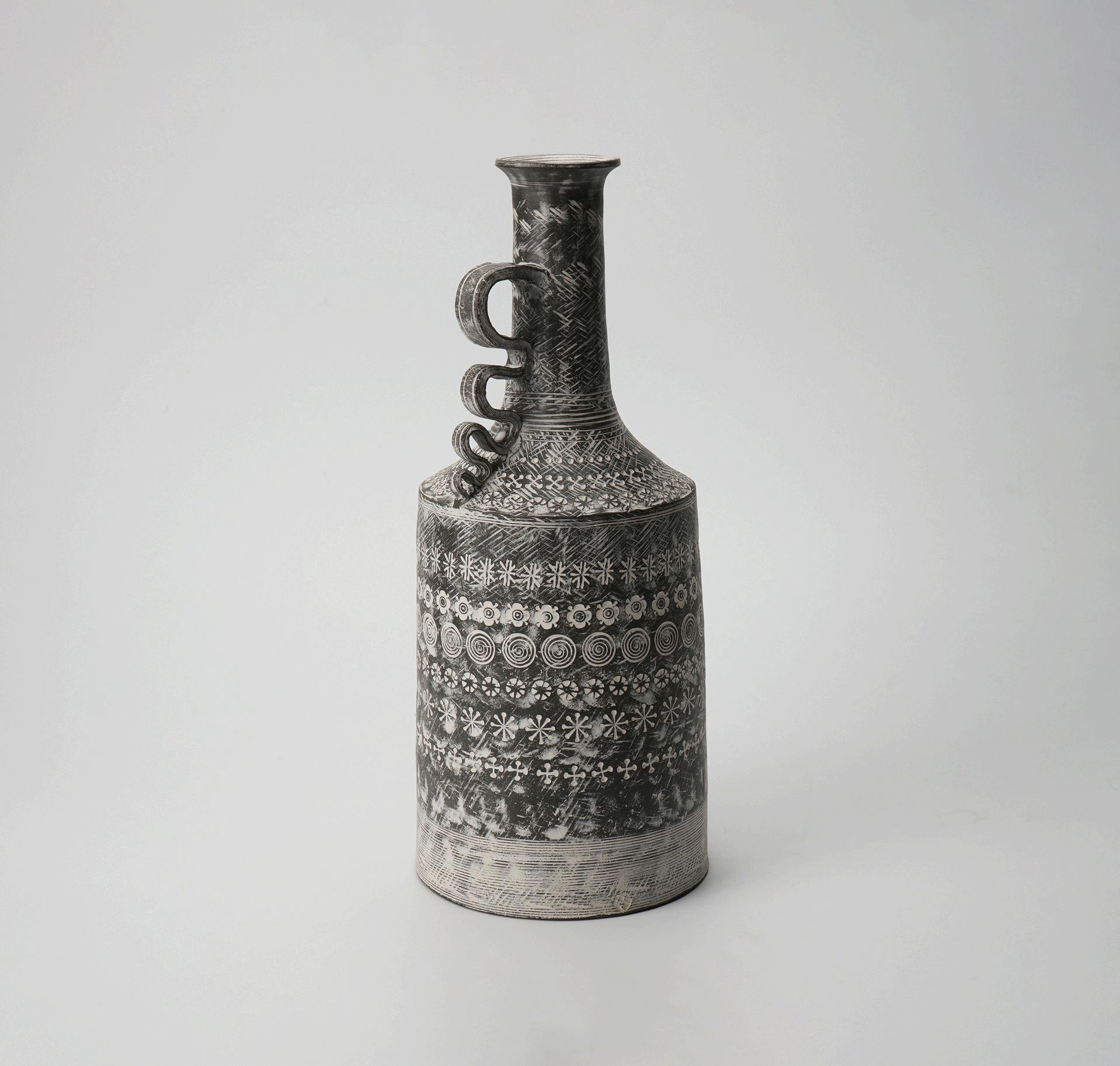
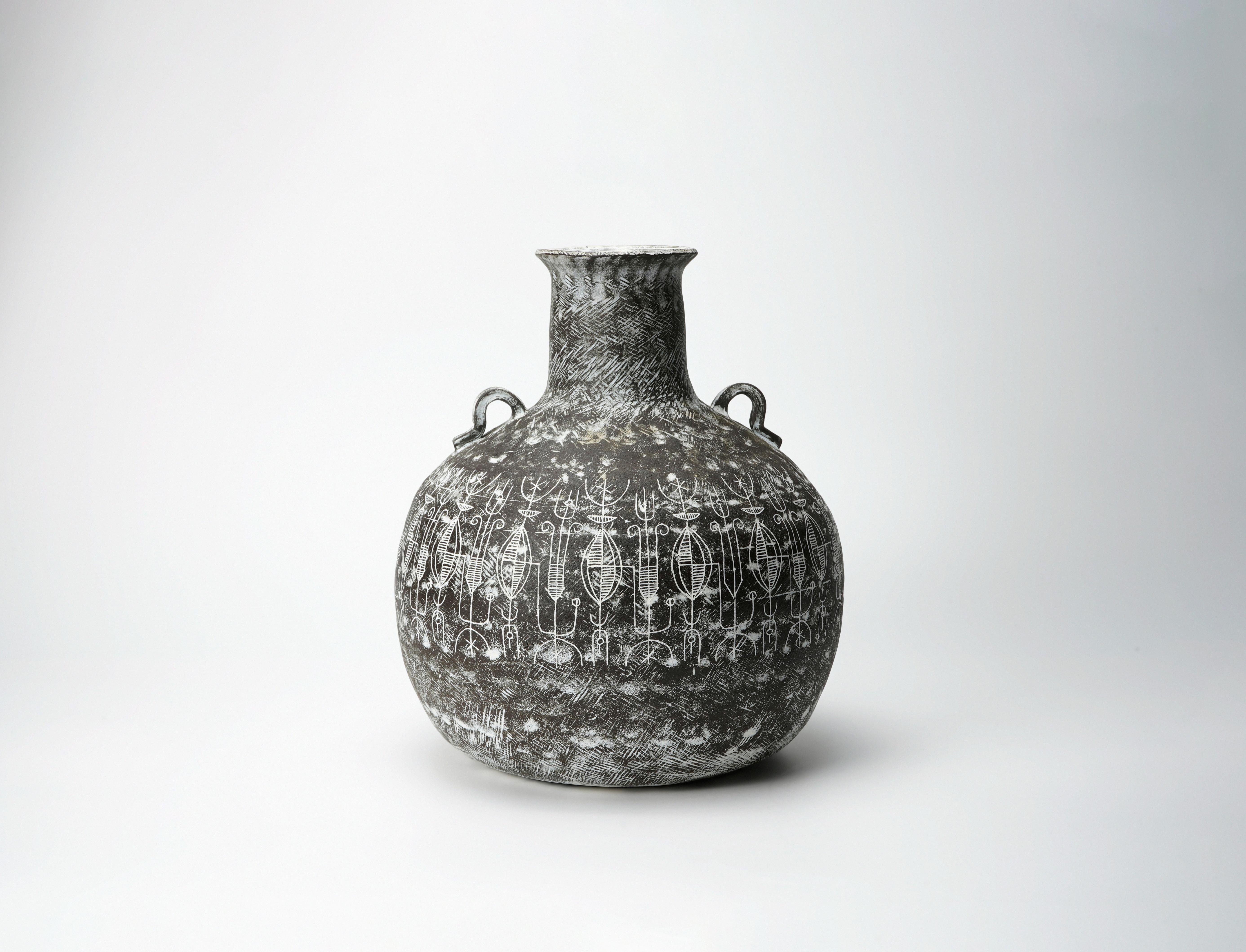
Yasuhara was gaining recognition, but the dissolution of Tōtōkai in 1939 and Japan’s escalating war effort ended an era Drafted in 1943 to a munitions factory, he returned to find his home destroyed in the 1945 Tokyo air raids, with only his workshop intact. Postwar, his work evolved through several phases: vessels echoing continental prototypes or Itaya’s influence (nos. 2, 3, 7); tubular and sculptural forms, some closely inspired by JapaneseAmerican sculptor Isamu Noguchi’s landmark 1950 Mitsukoshi exhibition (no 6 is a later example); and colored-glaze pieces with slip inlay (no 8) From the late 1950s onward, however, Yasuhara focused on flower vases crafted from Seto and Shigaraki clays blended with feldspar, iron oxide, and cobalt for a dark matte finish, sometimes formed on the potter’s wheel, which he seems to have used infrequently earlier in his career This aspect of his practice, characterized by vessels with incised motifs that evoke ancient artifacts yet radiate modernity and playful invention, makes up the bulk of the works by Yasuhara in the current exhibition
It has been suggested that Yasuhara, who encouraged the radical fiber artist Takagi Toshiko (1924–1987) to participate in the Nitten exhibition, was likely acquainted with her husband Yagi Kazuo (1918–1979), the pioneering avant-garde Kyoto ceramist Yasuhara thus might have influenced Yagi’s celebrated shift toward abstract form a speculation that upends the established critical narrative whereby Kyoto is seen as the heartland of all things revolutionary in postwar Japanese clay Yet, unlike Yagi and other members of the Sōdeisha group steeped in philosophical discourse and intent on liberating themselves from the potter’s wheel and the tyranny of vessel form Yasuhara, rooted in Tokyo, perhaps enjoyed a more instinctive freedom from tradition His postwar works, varying greatly in form but always imbued with playful whimsy, exude a gentle atmosphere each vessel a meditation in clay, an intimate dialogue between material and spirit. This serenity does not diminish the significance of his work; rather, it underscores the power of his alternative take on ceramic modernism.
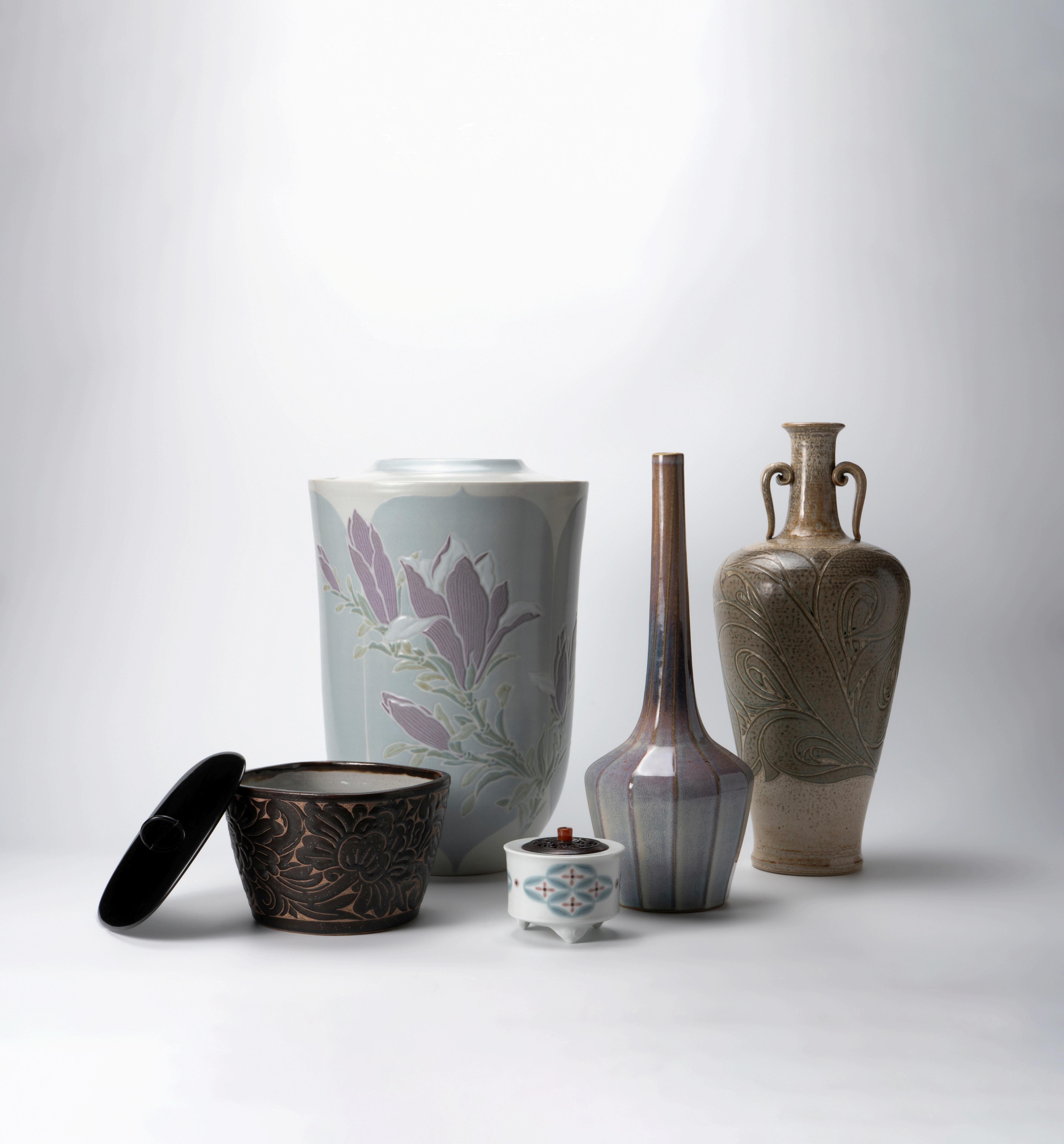
A group of works by Miyanohara Ken
Amid the evolving landscape of postwar Japanese ceramics, Yasuhara emerges as a subtle yet transformative presence By the late 1960s, he stood at the center of Nitten’s craft division, earning its top honors, shaping its direction as a leading voice, and shunning the conservatism of the alternative Dentō Kōgei Ten (Traditional Crafts Exhibition). His later works ripple with wave-like handles and delicate traces of slip, occasionally introducing figurative elements fish, seaweed, even cityscapes incorporated into rhythmic print-like textures In these pieces, the lyricism of Yasuhara’s early vision converges with a virtuosic and technical mastery that secures his place as a defining force in the development of modern Japanese ceramic art history.
To return to Yasuhara’s colleague, Miyanohara Ken didn’t allow his relatively late introduction to ceramics, at age 29, to hold back his career He first participated in the Teiten exhibition in 1929 only a year before Yasuhara, eight years his junior submitting Tesshayū takemon tōsei kaki (Iron SandGlazed Ceramic Flower Vessel with Bamboo Motif) at the prompting of his first teacher Miyagawa Kōzan II, who urged him to show it to Itaya Hazan, soon to be a mentor to both Miyanohara and Yasuhara. As chairman of the Teiten jury, Itaya praised works submitted by ceramic artists admitted for the first time only two years earlier and reportedly even considered Miyanohara’s vase for Tokusen status, indicating its high quality Over the next decade, Miyanohara won many awards at the Teiten, Shinbunten, and other government-sponsored shows, as well as (like Yasuhara) the annual Tōtōkai show, creating not only vases but also fashionable, high-quality domestic items such as electric light fittings and ornaments for gramophones In 1937 he achieved juror status at the first iteration of the Shinbunten and his submission to the second, in 1938, was purchased by Tokyo National Museum 4 5
Beyond his successful exhibition work, like several other craft leaders at the time Miyanohara also contributed to regional development, notably founding a ceramic studio in Niigata Prefecture to promote local production He made annual visits to Niigata (on the northwest coast of Honshu) for over a decade, teaching pottery techniques and fostering community engagement, but his career, like Yasuhara’s, was inevitably disrupted by the war His home and kiln in Tokyo were destroyed in the 1945 bombings, forcing him to relocate to Tsukuba, where he improvised a kiln from scattered bricks In 1948, he settled in Matsudo, Chiba Prefecture, rebuilding his kiln and exhibiting regularly at the Nitten (the successor to Shinbunten), culminating in a landmark achievement in 1956 at the twelfth Nitten where his Zōganchi kokuyū kabin: Sora (Black-Glazed Vase with Inlay: “Sky”), with an abstract bird motif in relief, won the Nihon Geijutsuin (Japan Art Academy) Award in recognition of its refined inlay technique and modern design sensibility.⁶
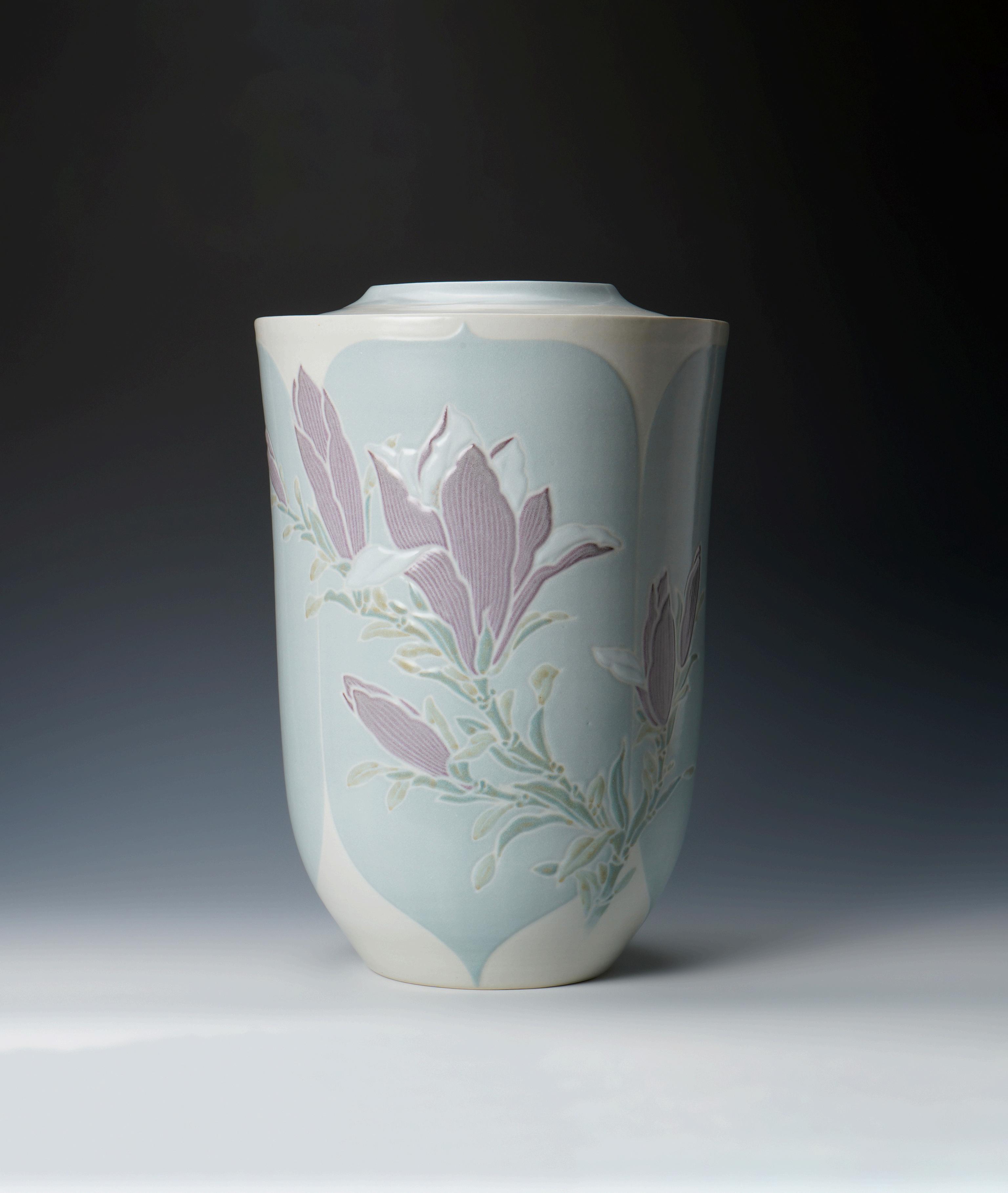
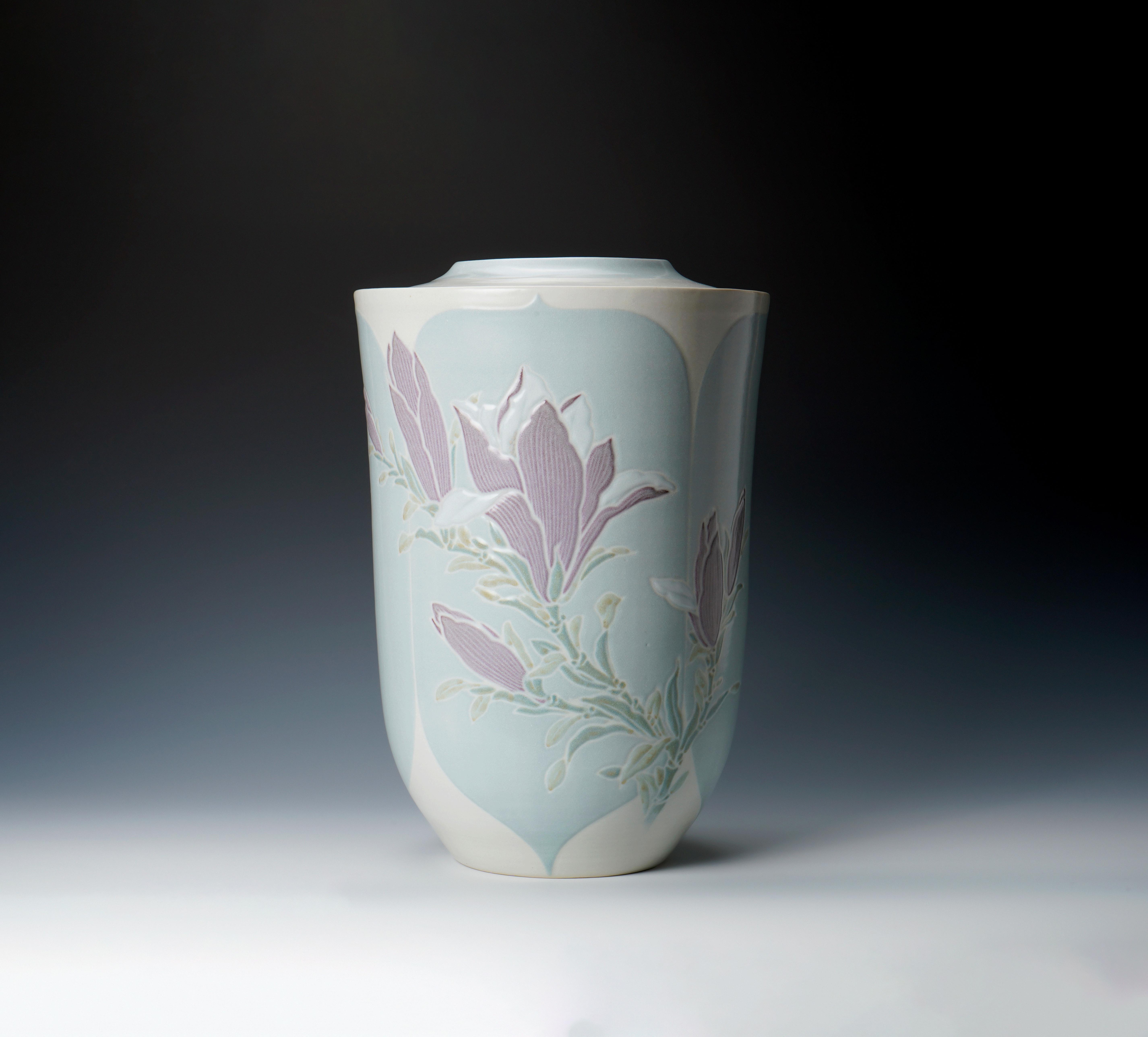
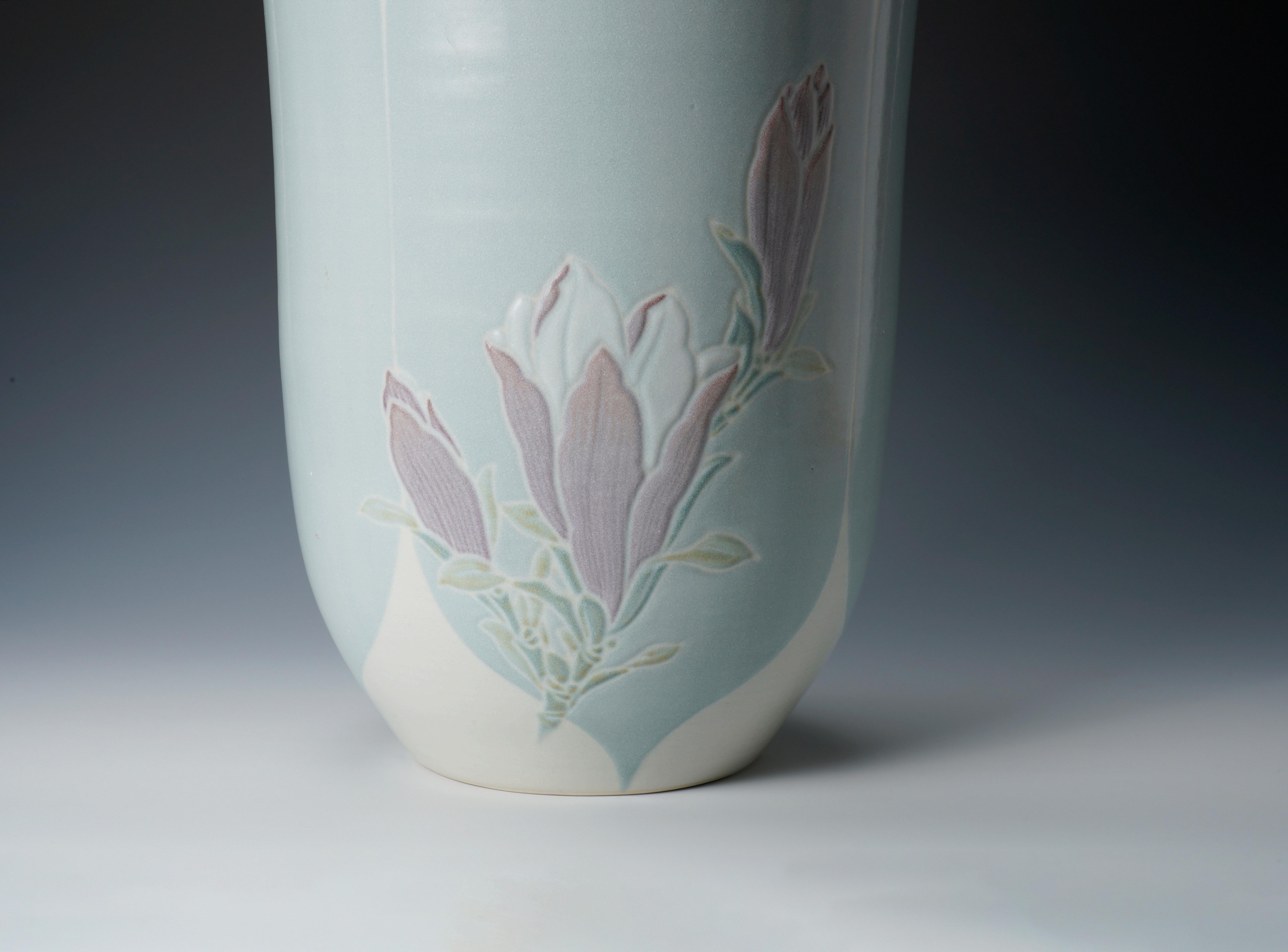
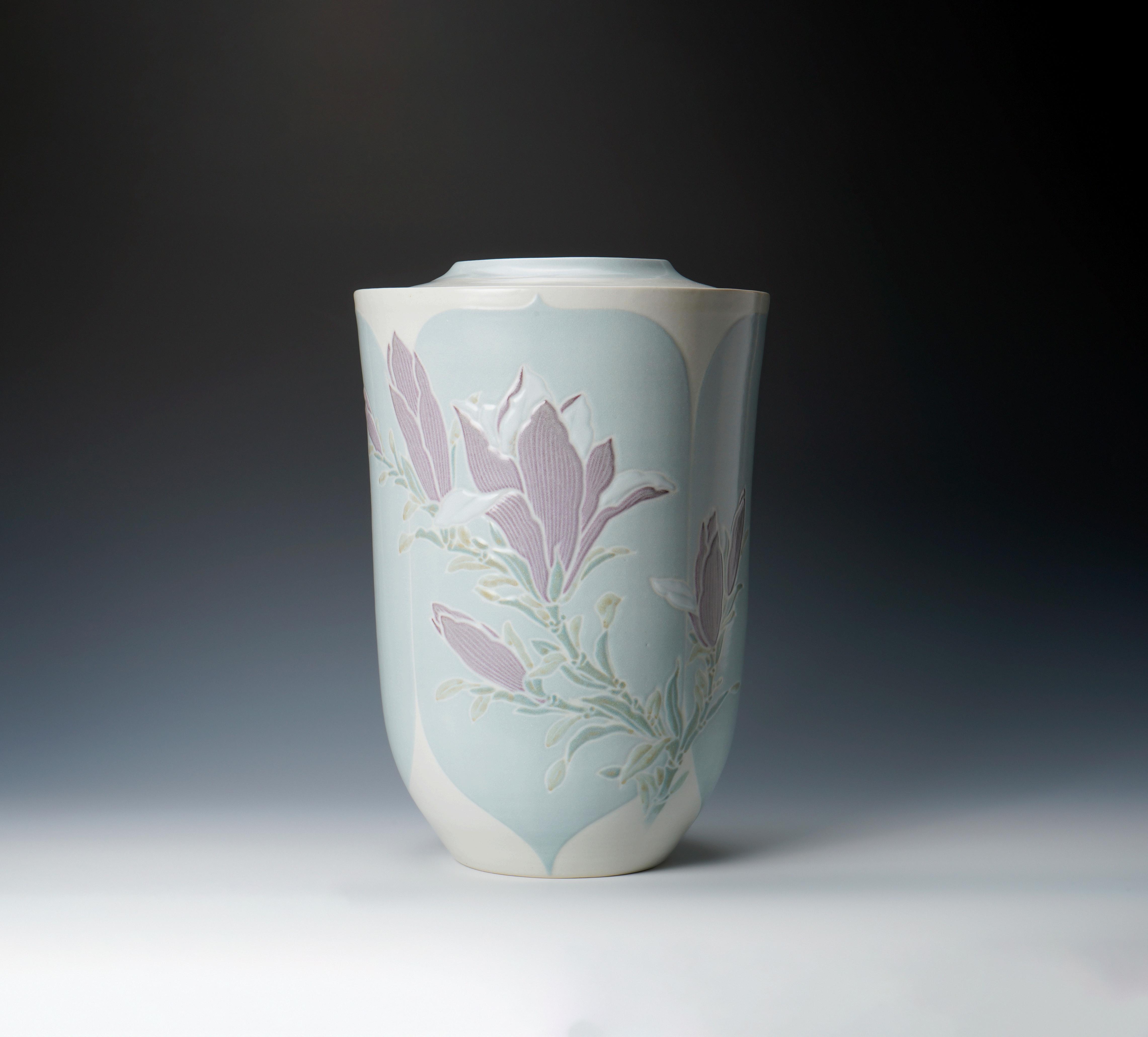
Miyanohara Ken Jar with Polychrome Magnolia Design Circa 1970s
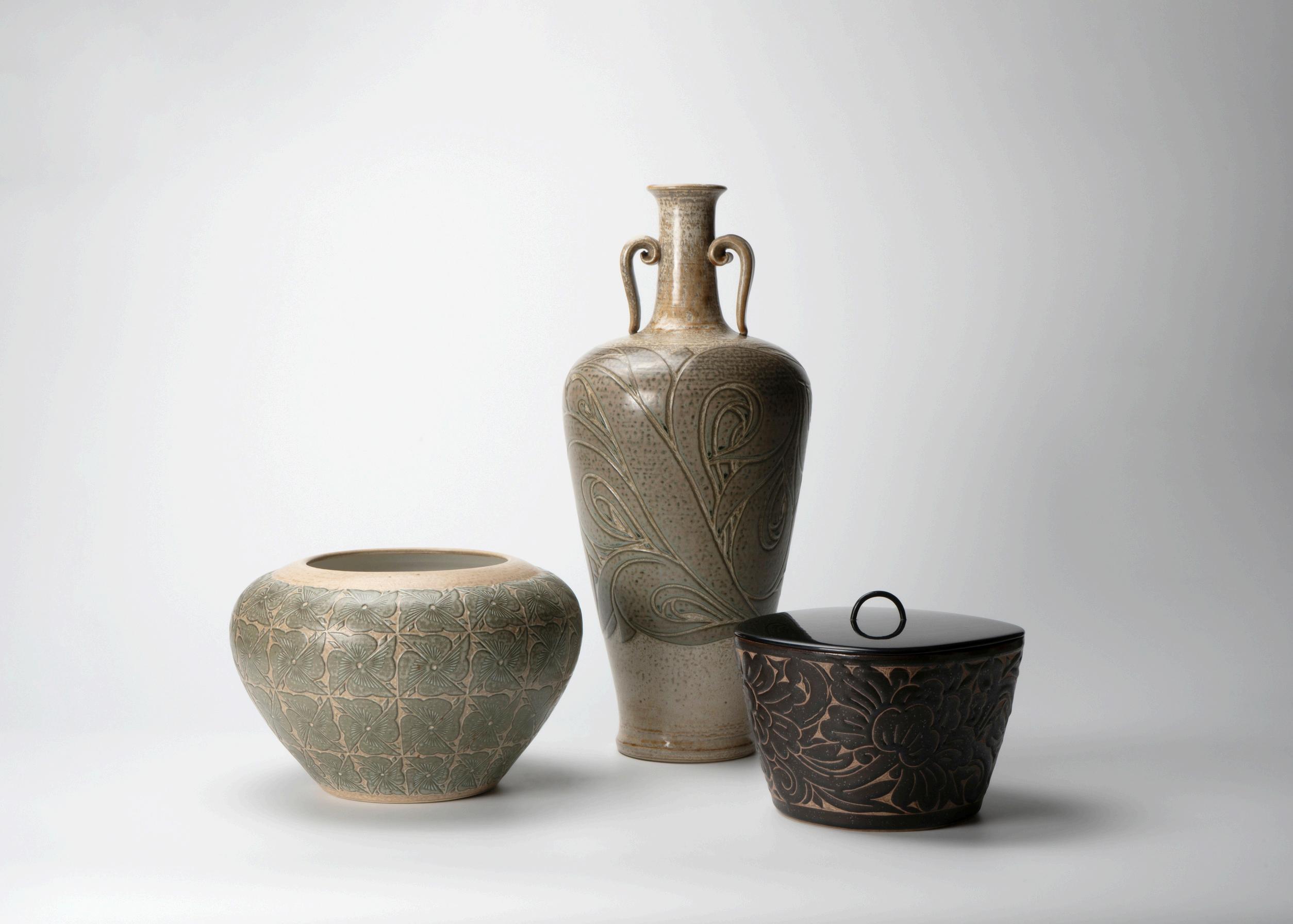
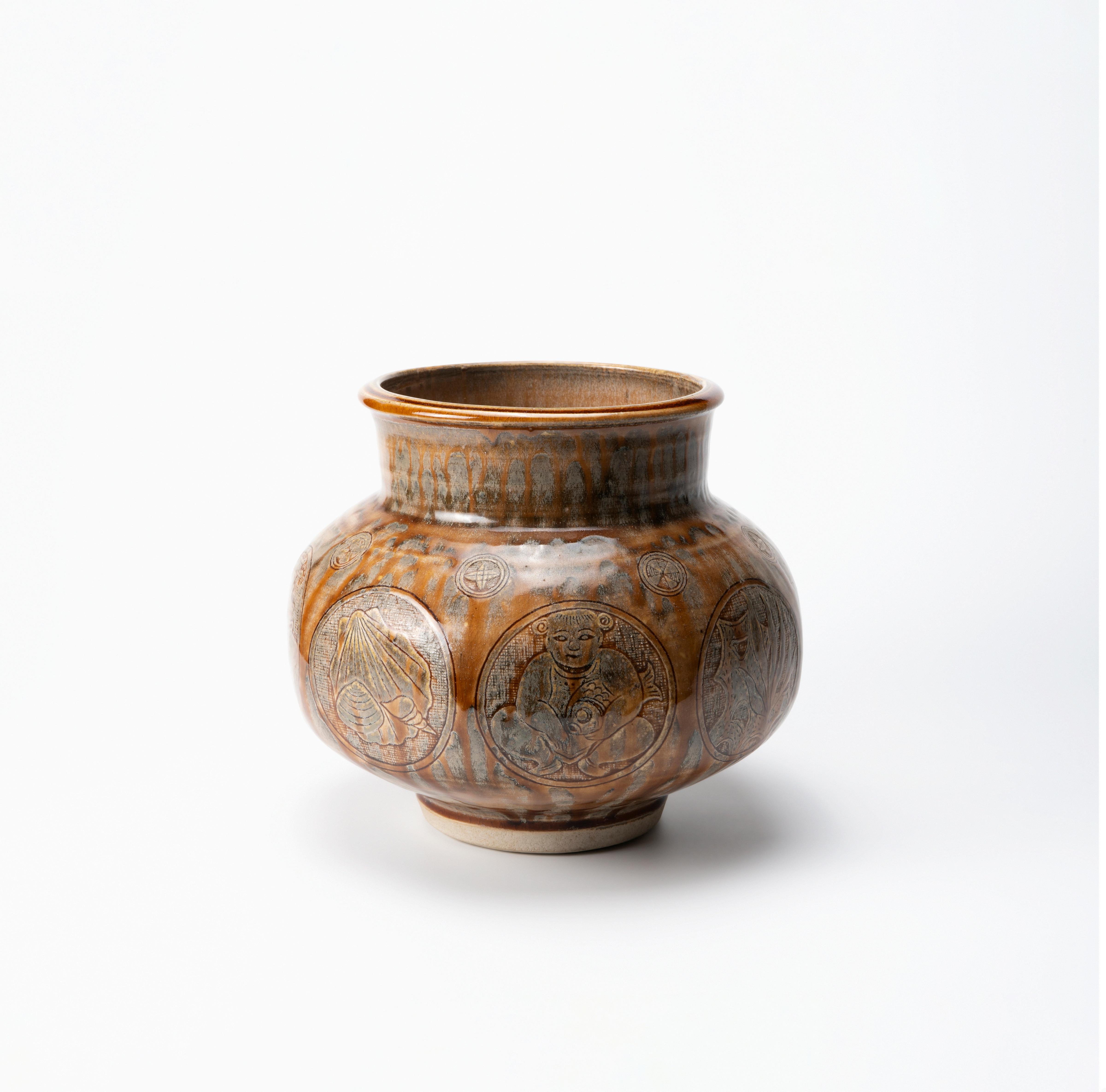
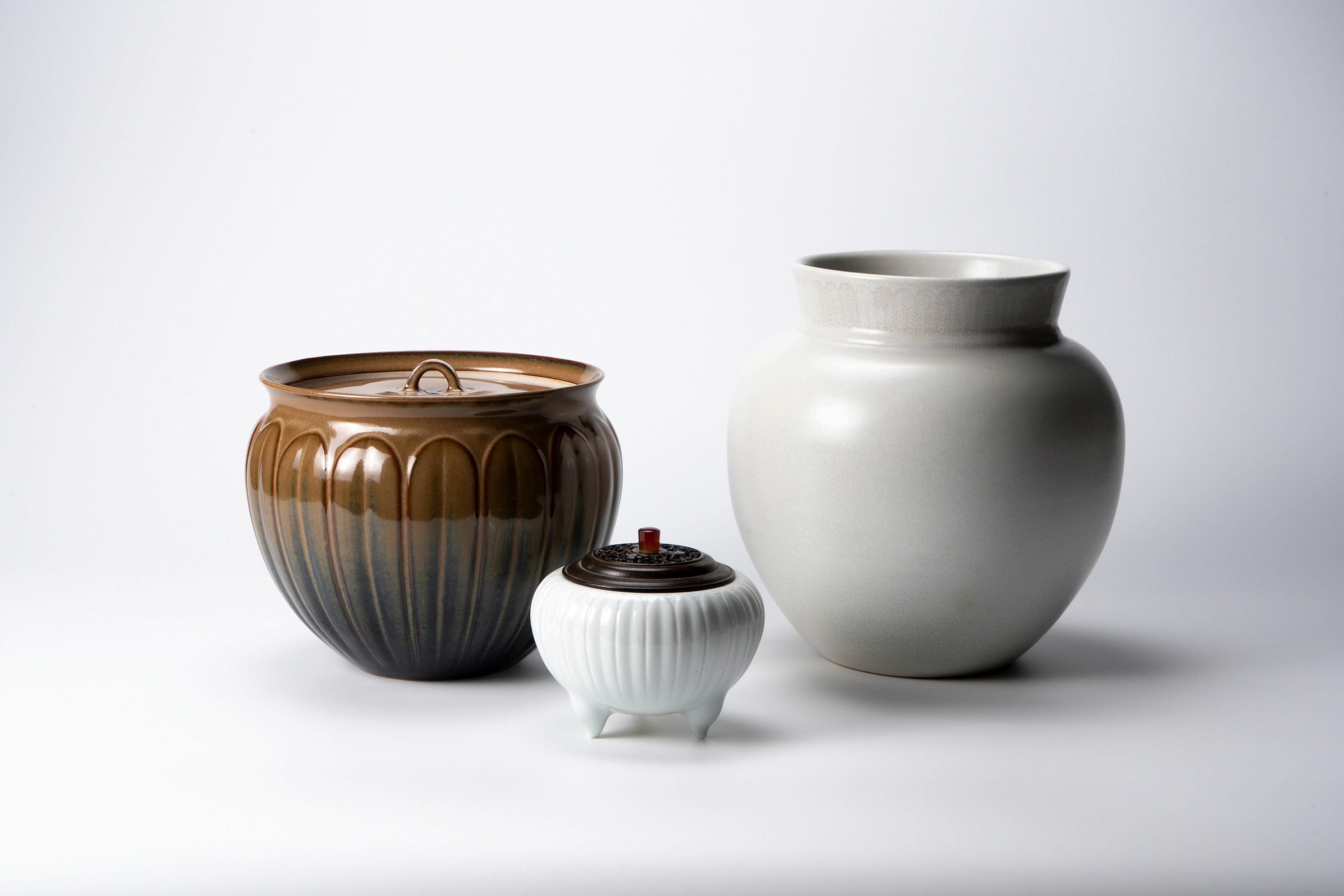
Technically, Miyanohara was a pioneer, his ceramics combining artistic innovation with structural precision that perhaps reflected his youthful aspiration to become an architect For example, to create an elaborate work such as the Jar with Polychrome Magnolia Design, an outstanding example of his mature postwar style (see opposite page and no 18 in this catalogue), he started with a porcelain body to which he applied multiple thin layers of saiji (liquid clay mixed with pigments), each carefully dried before the next was added to prevent blending and maintain crisp boundaries, sometimes carving the dried slip to create a relief effect Other vases (nos 22, 24, 29) are decorated more simply with extremely delicate carving and no inlay, while the bolder large Jar with Crystalline Glaze and Grass Design (no 23), one of the earlier works by Miyanohara in this exhibition, clearly shows the influence of similar engraving seen on classical Chinese greenwares. Some of his monochrome vessels (nos 24, 25, 26) rely for their aesthetic impact solely on purity of form, again taking their cue from continental models but, like all of Miyanohara’s ceramics, crucially enhanced by one or other of his specialist glazes or glaze effects, including bokashi (gradation), kesshō (crystallization), tessha (iron sand), yōhen (kiln transformation), and tenmoku (“oil spot”), all imparting a tranquil sense of unity that allows the underlying colors to glow through for maximum impact.
While Itaya Hazan had explored similar methods, Miyanohara developed and perfected them, drawn to techniques that demanded extraordinary persistence and could be mastered only through patient effort He experimented tirelessly with vibrant, elegant, and continually evolving designs that range from naturalistic floral motifs to abstract and structural patterns exuding modernity and sophistication Bridging the gap between Itaya Hazan’s foundational efforts and contemporary creative ceramics, Miyanohara achieved a harmonious balance between tradition and contemporary expression that affirms his status as a transformative figure in the story of vessel art in Japan, whose work still resonates nearly half a century after his passing.
A group of works by Miyanohara Ken
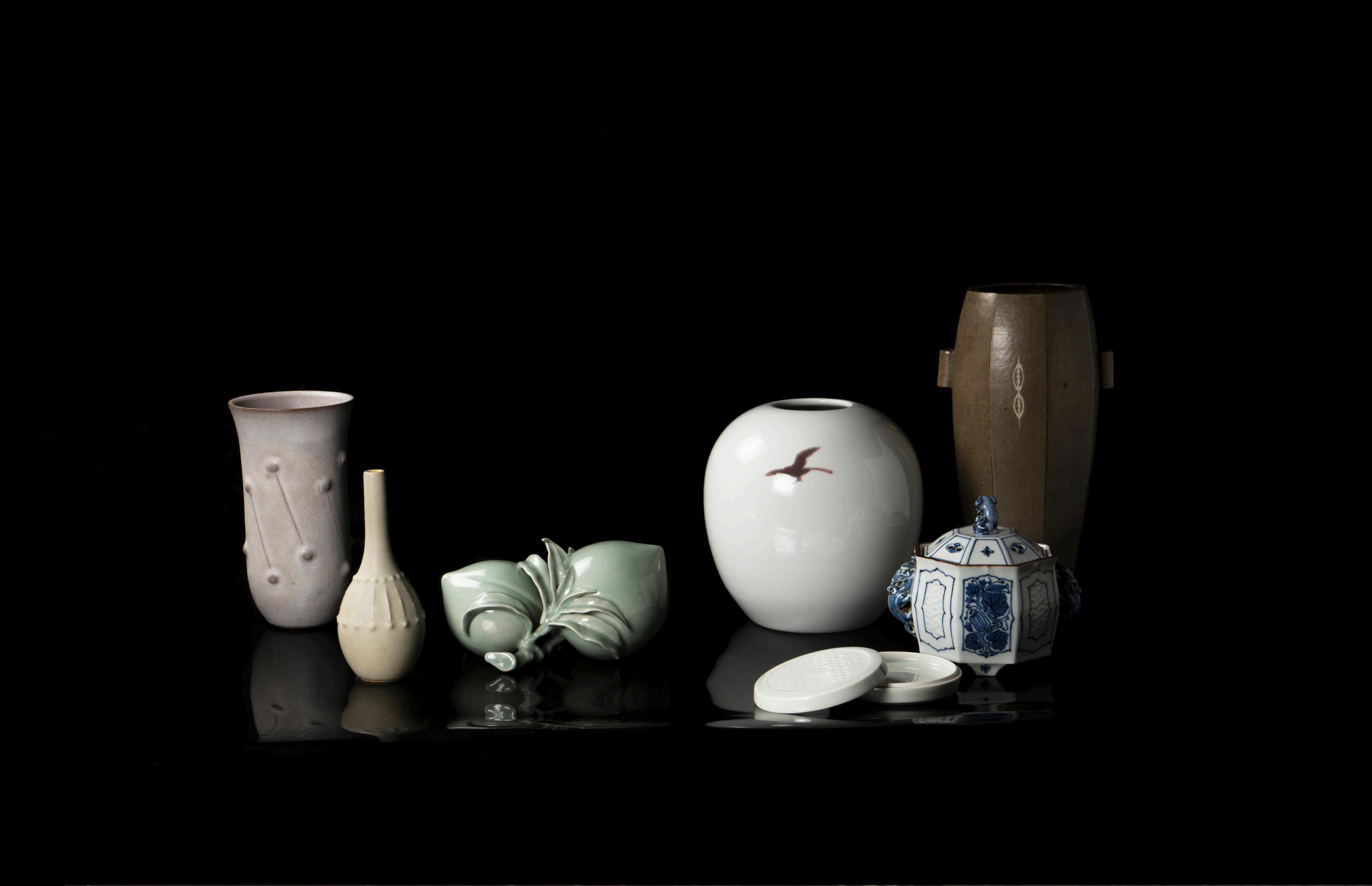
Wake from the slumber of convention, break free from rigid styles.⁷
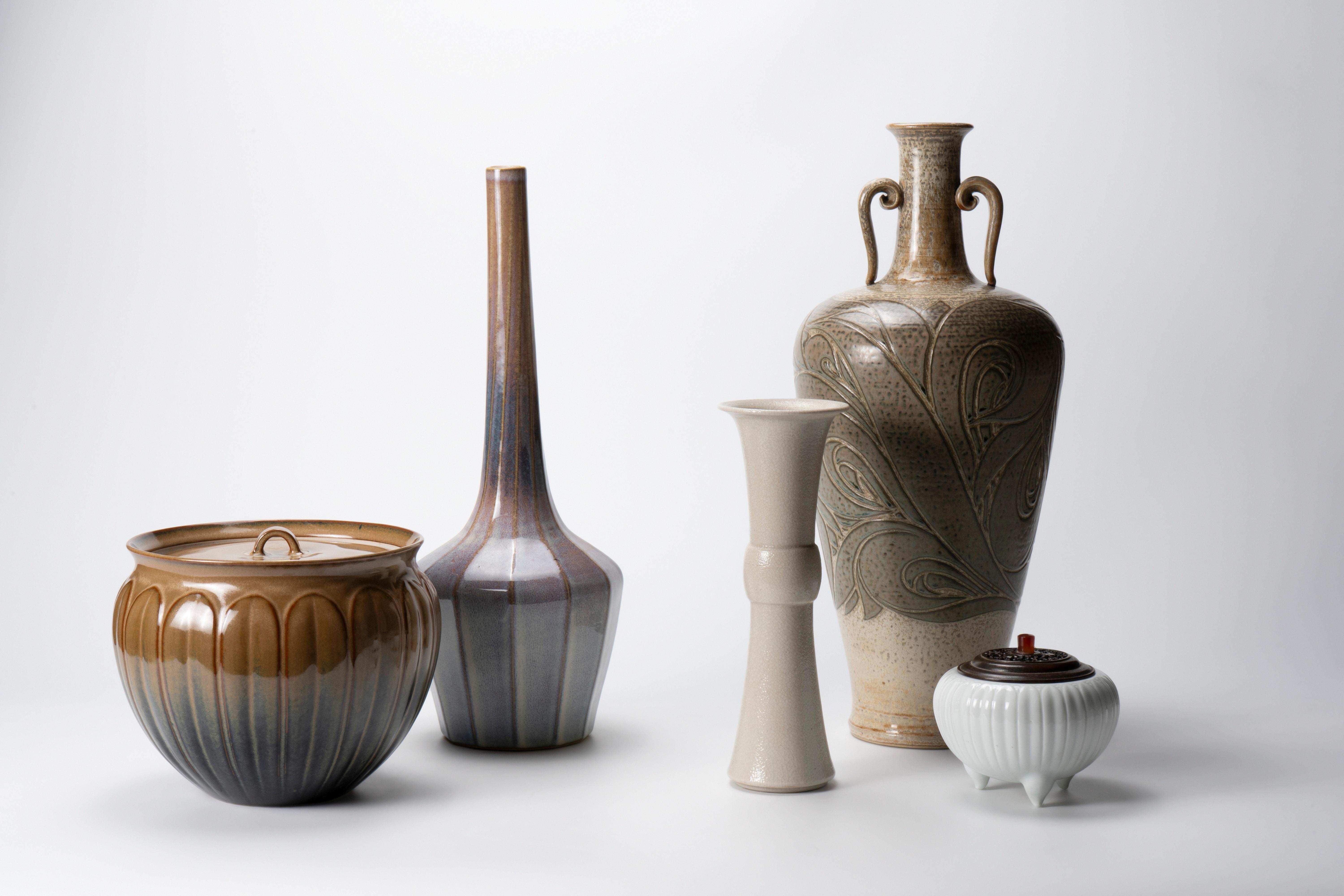
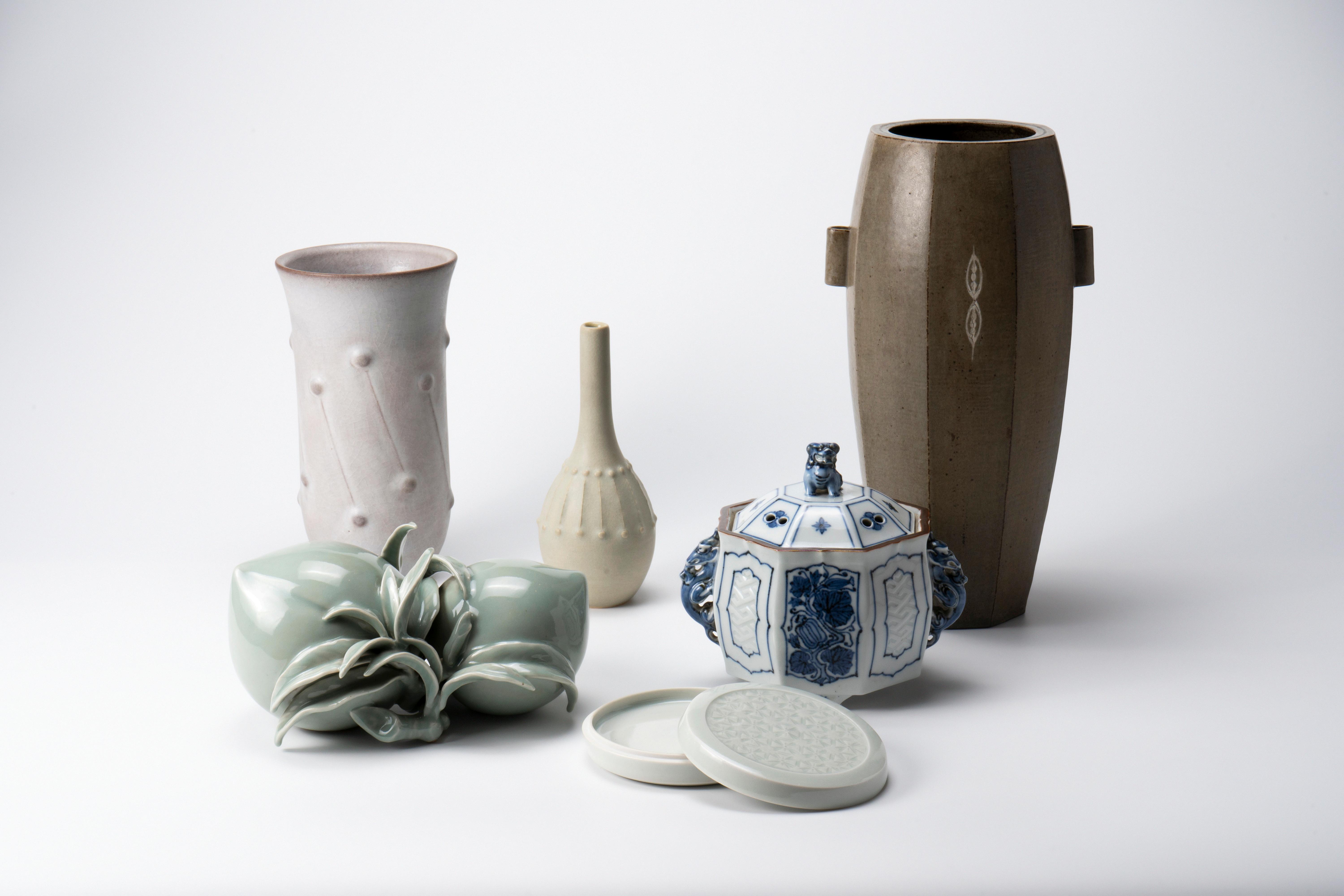
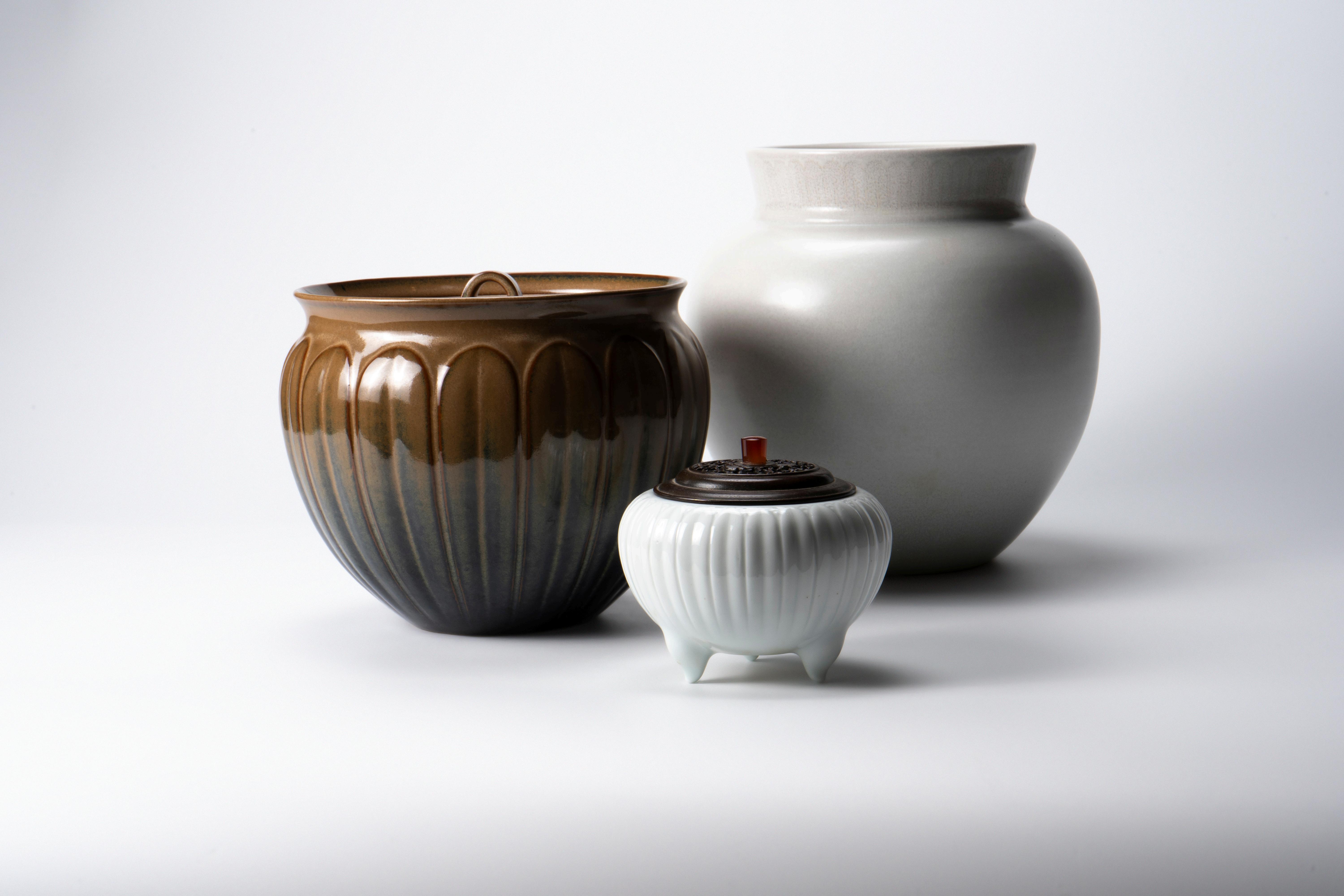
Look at any selection of work by Kusube Yaichi a titan of twentiethcentury Kyoto ceramic art and what stands out is its astonishing breadth From whitewares and celadons to underglaze blue, overglaze enamels, tea wares, and medieval stonewares, he explored almost every style and method of Chinese and Japanese ceramics with an enthusiasm bordering on obsession, transforming each into something uniquely his own.
Kusube loved painting from childhood but, following his father’s advice, entered the Kyoto City Ceramic Research Institute in 1912 There he underwent rigorous training, throwing hundreds of identical pieces, mastering glazing and decoration, and deepening his knowledge of Chinese ceramics. His father hoped he would take over the family’s export business, but Kusube was determined to become an artist He began working in a small studio where friends gathered to discuss art and culture, leading to the founding in 1920 of the Sekido (Red Earth, also called Akatsuchi) group
At that time, Kyoto boasted many talented ceramic artisans, but most were devoted to reproducing old Chinese styles with little concern for personal expression Meanwhile, writers and artists were introducing modern Western ideas, inspiring young creators to break from tradition Kusube’s career unfolded amid this ferment, shaping his lifelong commitment to originality and independence From the late 1920s, the Teiten became his main showcase
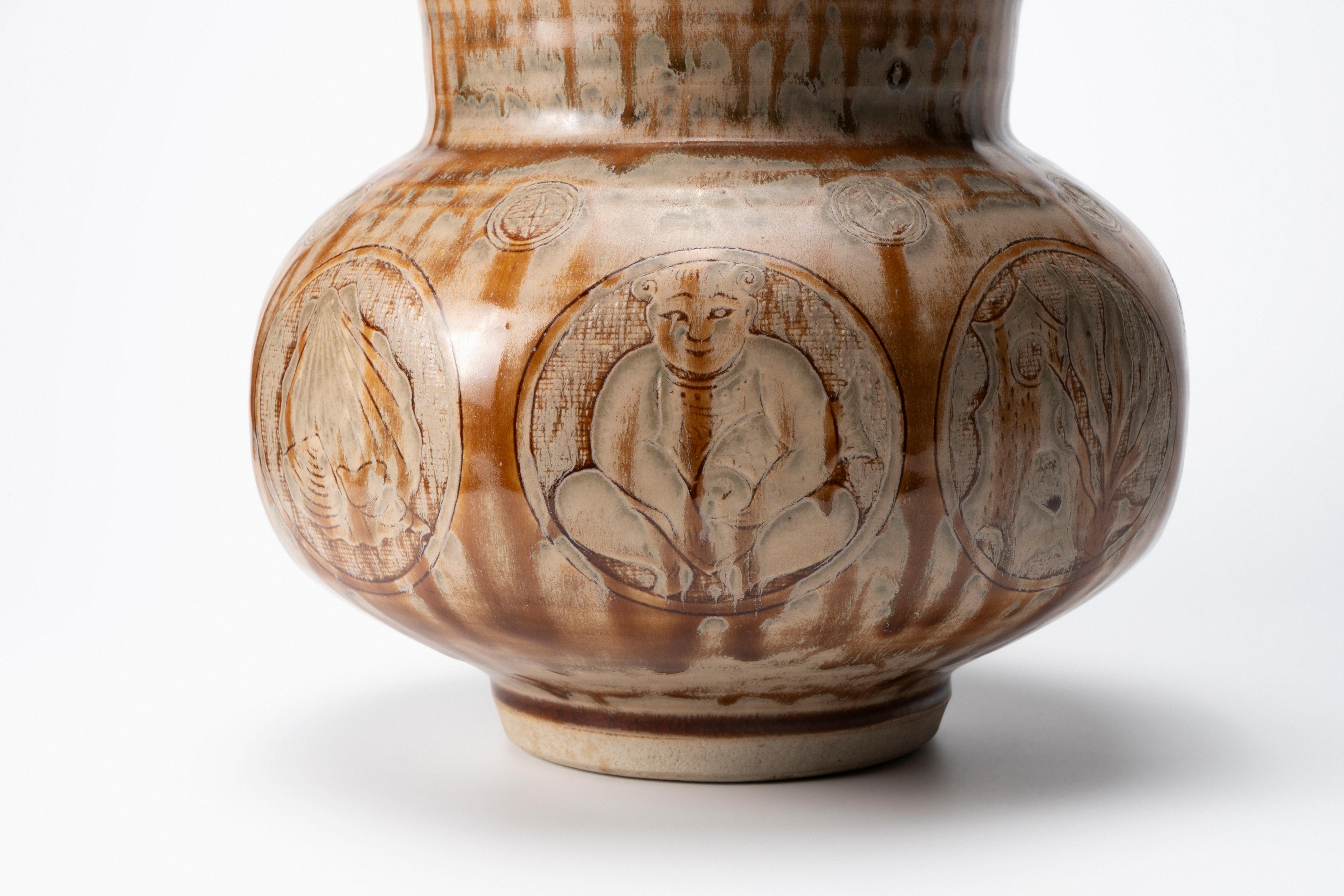
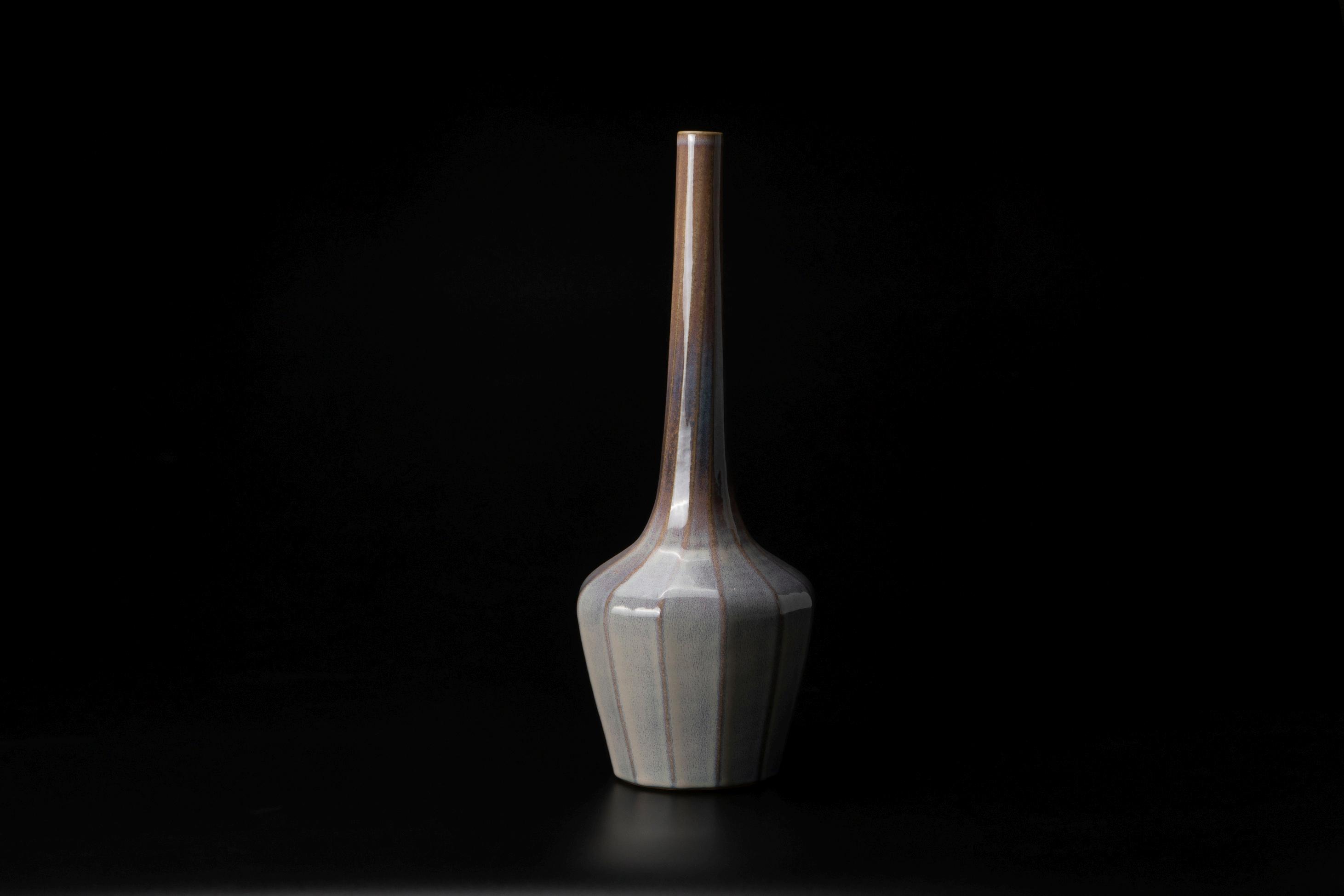
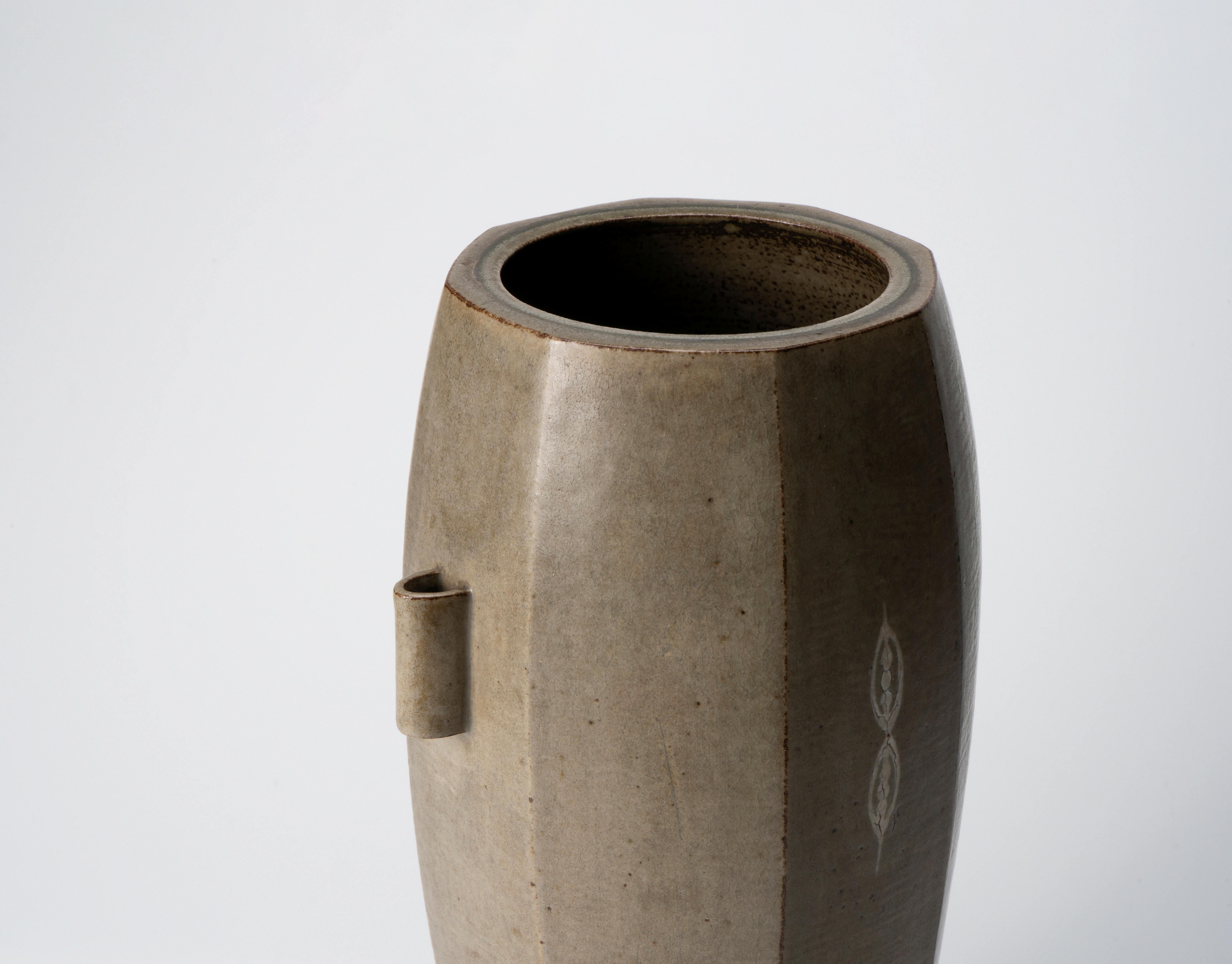
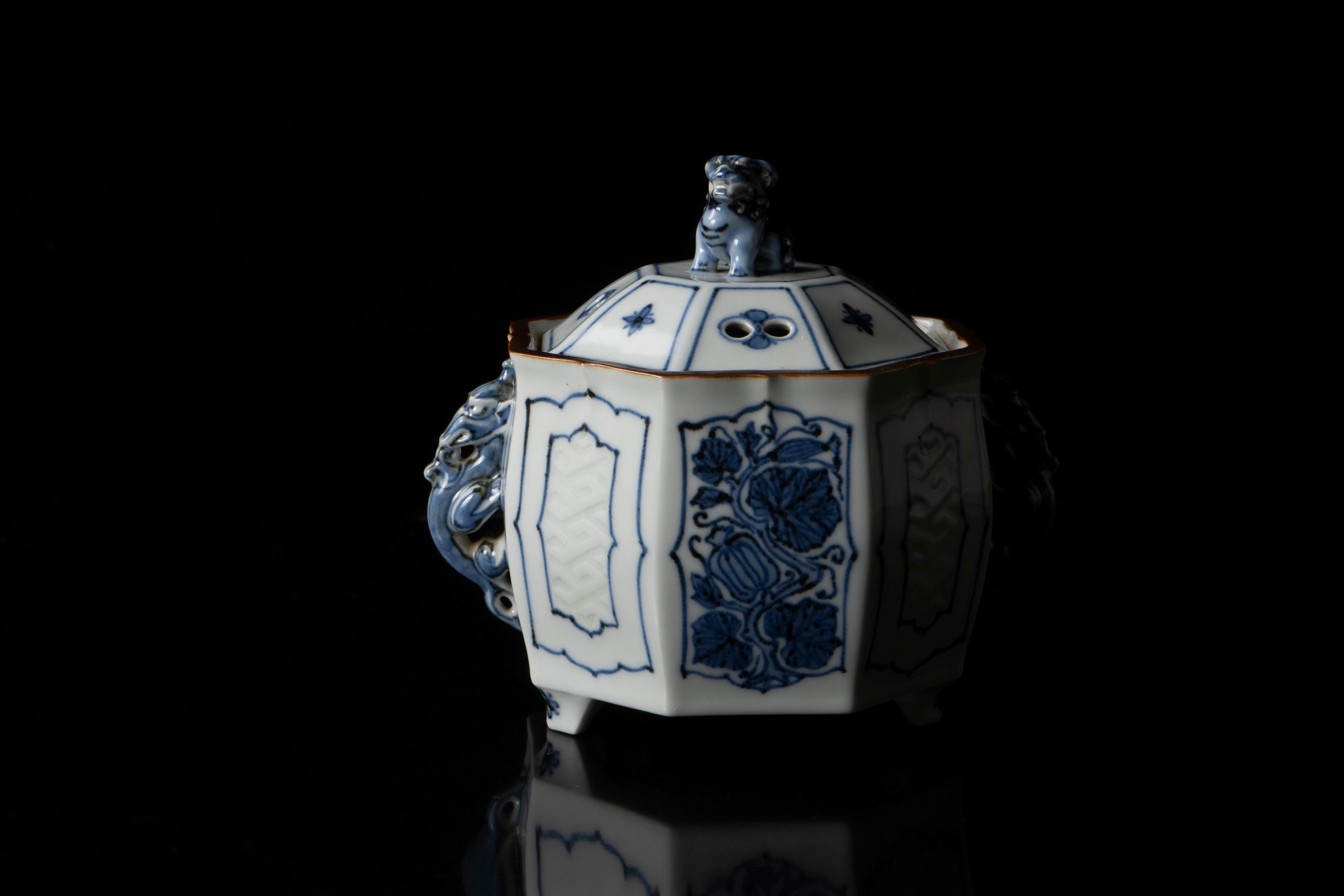
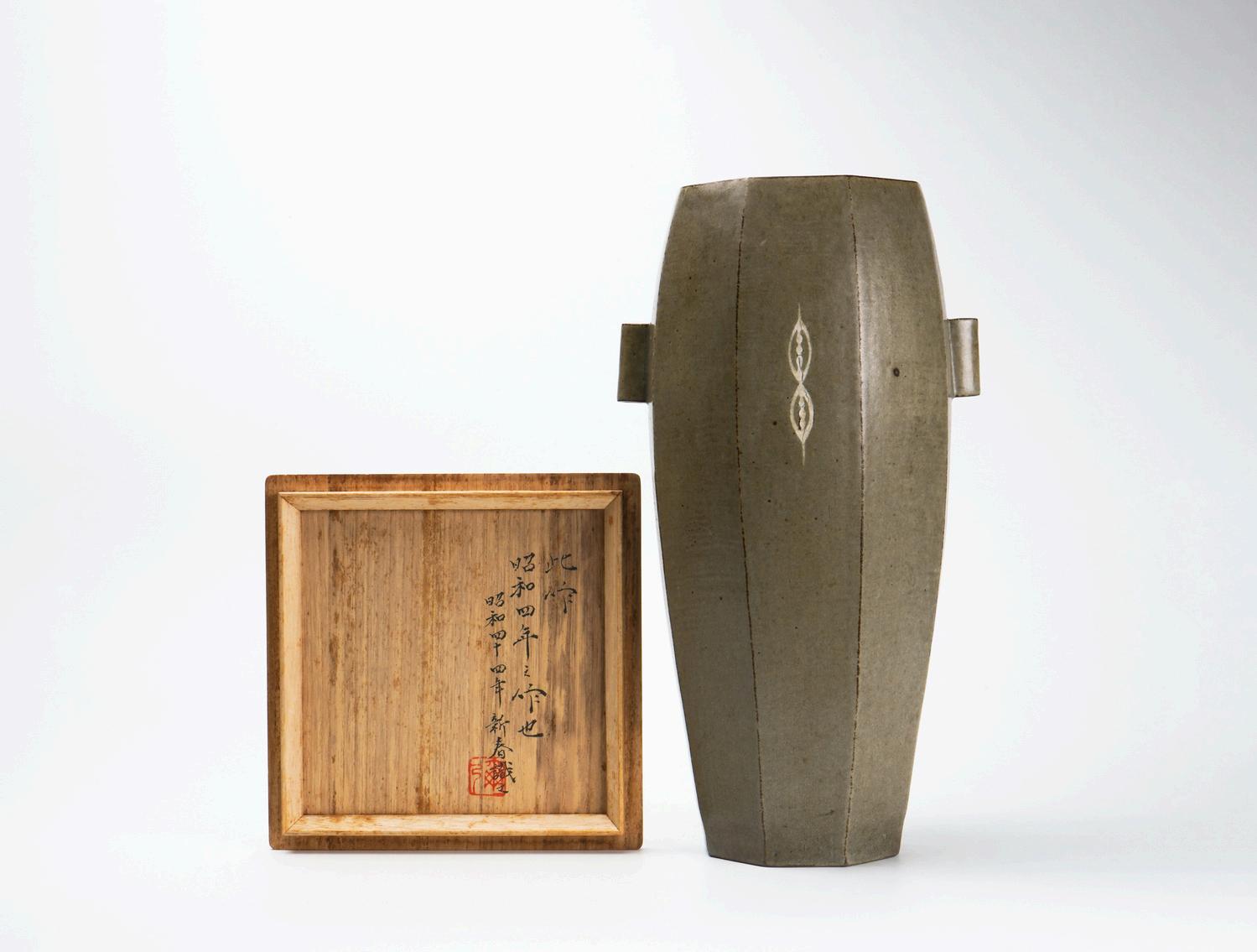
Octagonal Flower Vase with Handles (cat no 33), made in 1929 and authenticated by the artist decades later, exemplifies Kusube’s early mature style With its unusual dark olive-green glaze and deco-influenced faceted form features likely inspired by metalwork the vase proclaims his commitment to innovation ⁸ Soon after, Kusube turned to classical Chinese ceramics, as seen in Incense Burner with Underglaze-Blue Dragon Motif (cat. no. 35), an important work paralleling his 1933 Teiten submission.
A group of works by Kusube Yaichi
These pieces, with crisp design and intricate patterns, appear Chinese at first glance but go beyond imitation by introducing a note of freshness and informality
Kusube’s later ceramics embody a dynamic tension between two principles individual creativity and natural beauty achieving harmony without extremes Ultimately, his art reflects a pursuit of clarity and balance, shaped by intellectual will yet grounded in nature: a synthesis of Western modernism and Eastern sensibility, polished to a level achievable only as he might well have claimed by an artist born and raised in Kyoto
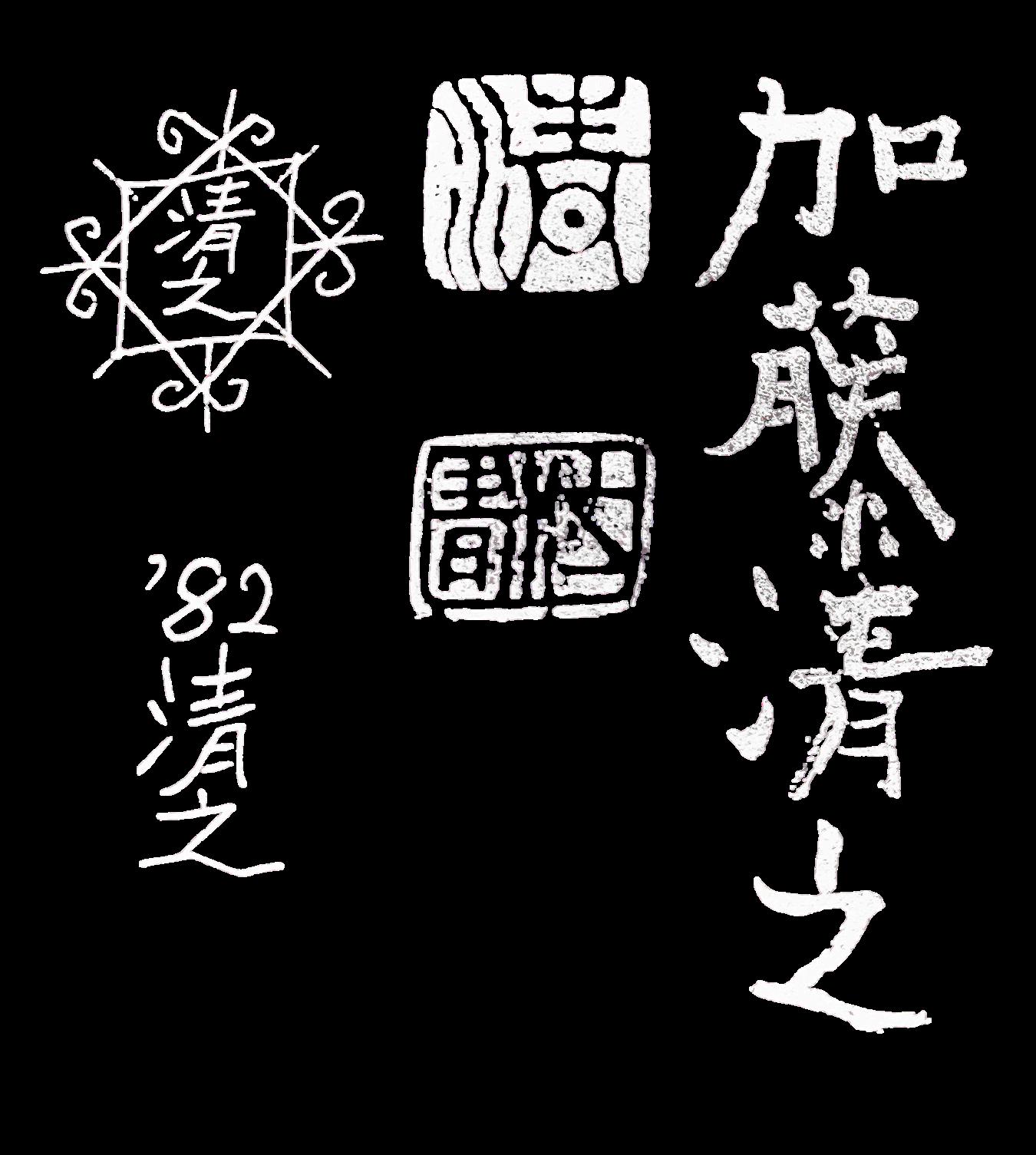
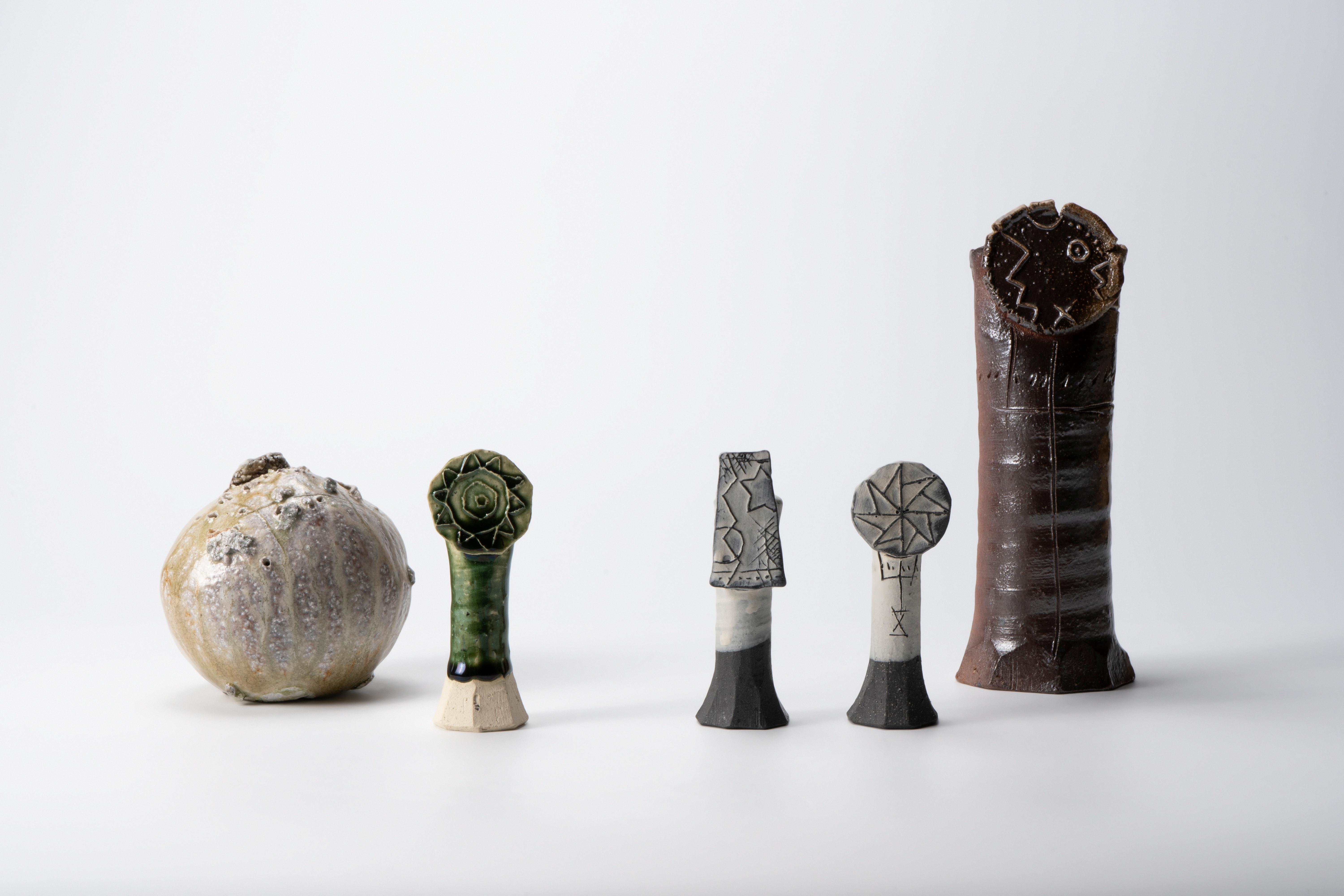
We conclude with Katō Kiyoyuki (1931–2025), heir to a long-established tilemaking business in the Seto region northeast of Nagoya, central Honshu a center of ceramic production since medieval times, and the “in between” of this essay’s title Like the other artists here, Katō started out more drawn to painting than pots and only in his late twenties turned to ceramics, submitting his first work to Nitten in 1958: a well-mannered vase incised with abstract designs. He soon embraced sculptural ceramics, encouraged like Yasuhara by his friendship with Teshigahara Sōfū, who urged him to explore sculptural ambition in vessel and non-vessel formats The five works gathered here offer a lively summary of his creative journey (cat nos 40–43)
Note 1: Yasuhara Kimei 安原 喜明, “Hitotsu no kimochi つの気持ち (A Certain Feeling),” Tōtō 東陶 1 (August 1929), quoted in Hasebe Mitsuhiko ⻑⾕部満彦, “Yasuhara Kimei no tōgei 安原喜明の陶芸 (The Ceramic Art of Yasuhara Kimei),” Meguro-ku Bijutsukan ⽬黒区美術館 (Meguro Museum of Art), Yasuhara Kimei ten 安原喜明展 (Yasuhara Kimei Exhibition), Tokyo, Nihon Keizai Shinbunsha, 1993, p 7 (author’s translation)
Note 2: Hasebe Mitsuhiko, “Yasuhara Kimei no tōgei,” p 6
Note 3: Nittenshi Hensan Iinkai ⽇展史編纂委員会 (Nittenshi Editorial Committee), Nittenshi 13 ⽇展史 13 (History of the National Salon 13), Shinbunten hen 1 新⽂展編 (The New Bunten Exhibition 1), Tokyo, Nitten ⽇展, 1984, pp 539 (no 161) and 612 (critiques)
Note 4: Sugiura Sumiko 杉浦澄⼦, Tōgeika to no taiwa 陶芸家との対話 (Dialogues with Ceramic Artists), vol 2, Tokyo, Yūzankaku 雄⼭閣, 1975, quoted in Nakagawa Sensaku 中川千咲, “Miyanohara Ken ron 宮之原謙論 (On Miyanohara Ken),” in Nakagawa Sensaku ed., Gendai no tōgei 現代の陶芸 (Contemporary Ceramics), vol. 8, Tokyo, Kōdansha 講談社, 1976, p 142–143 (Nakagawa incorrectly states that this event took place in connection with the Eleventh Teiten in 1930).
Note 5: Nakagawa Sensaku, “Miyanohara Ken ron,” p 144
Note 6: Nakagawa Sensaku, “Miyanohara Ken ron,” Chronology, p 146
Note 7: From the manifesto of the Sekido group: see Inui Yoshiaki 乾由明, “Hitosuji no michi ひとすじの道 (A Single-Minded Path),” in Inui Yoshiaki ed, Kusube Yaichi 楠部彌弌, Gendai Nihon tōgei zenshū 現代⽇本陶芸全集 (Survey of Contemporary Japanese Ceramics), vol 10, Tokyo, Shūeisha 集英社, 1981, p 87
Note 8: Meghen Jones and Louise Allison Cort, Ceramics and Modernity in Japan, Oxford, Routledge, 2020, fig 42 (p 74); for a similar example of Kusube’s work from this period, see fig 49 (p 84)
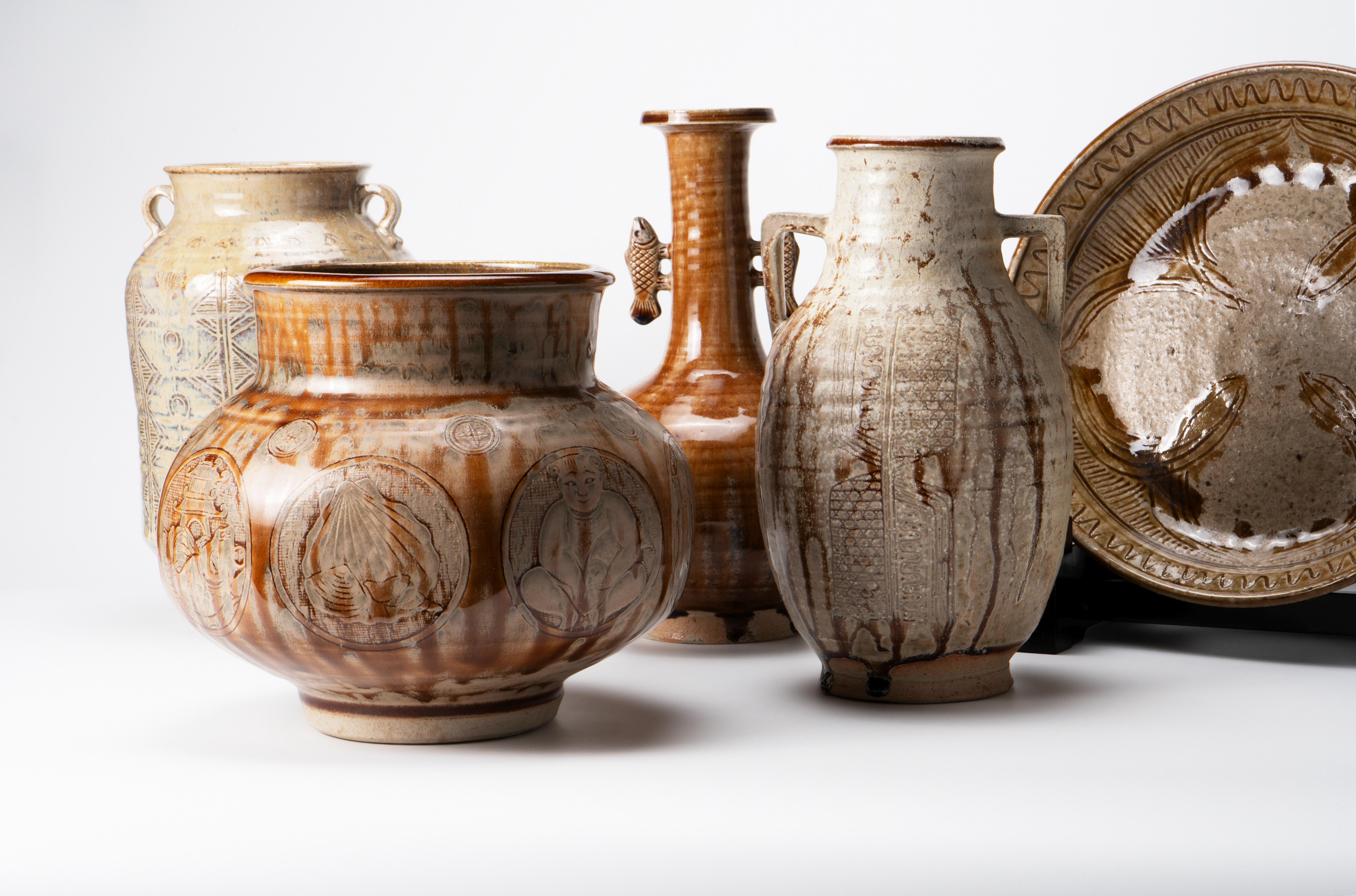
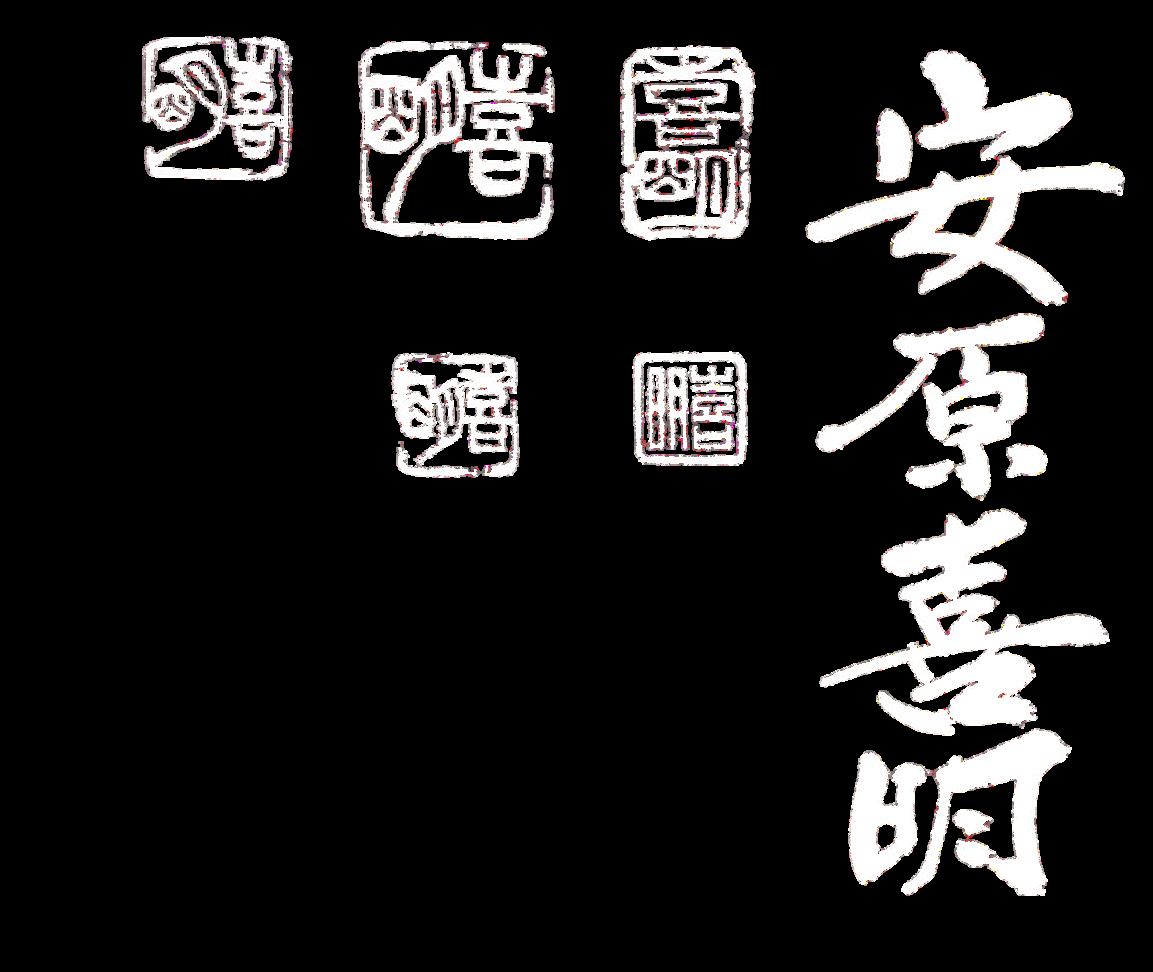
YASUHARA KIMEI (1906–1980)
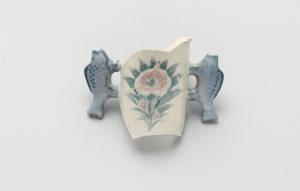
Fragment of a ceramic vessel by Itaya Hazan from an exhibition "Autumn at Hazan,” held at the Itaya Hazan Memorial Museum Collection in 2023, showcasing pieces that were broken or destroyed during production by Itaya, revealing traces of his techniques and working methods
Image © Itaya Hazan Memorial Museum
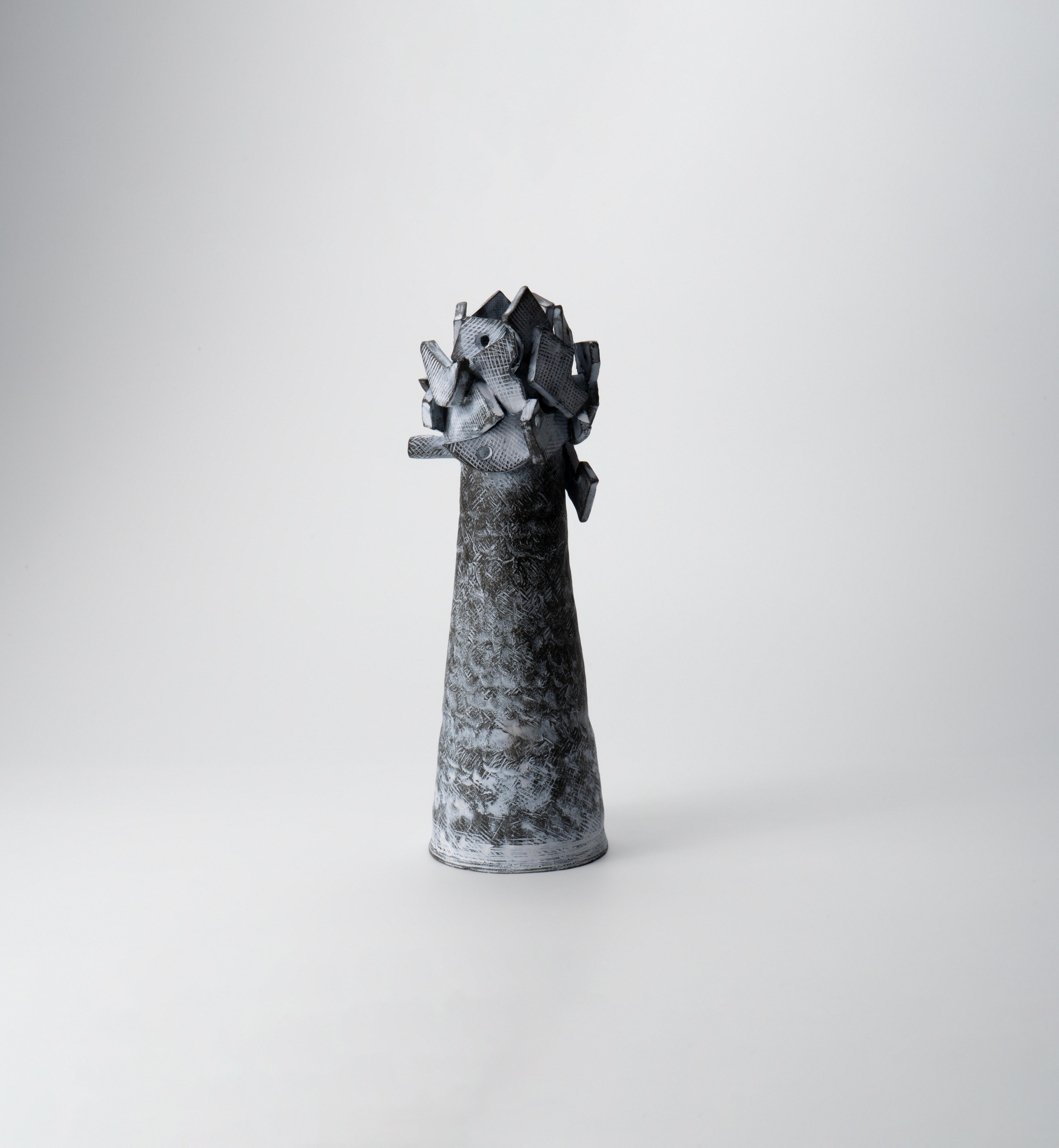
Yasuhara Kimei
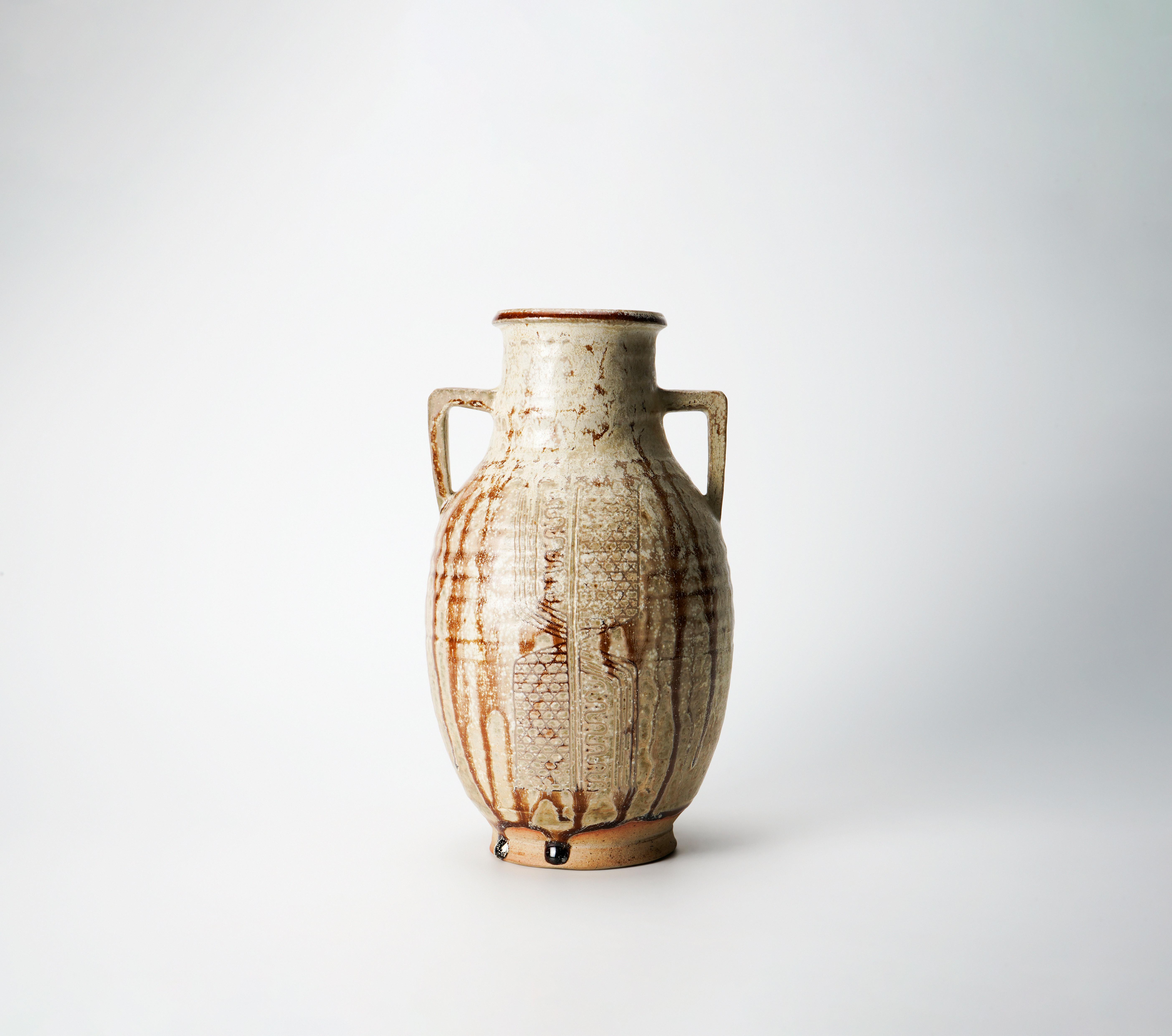
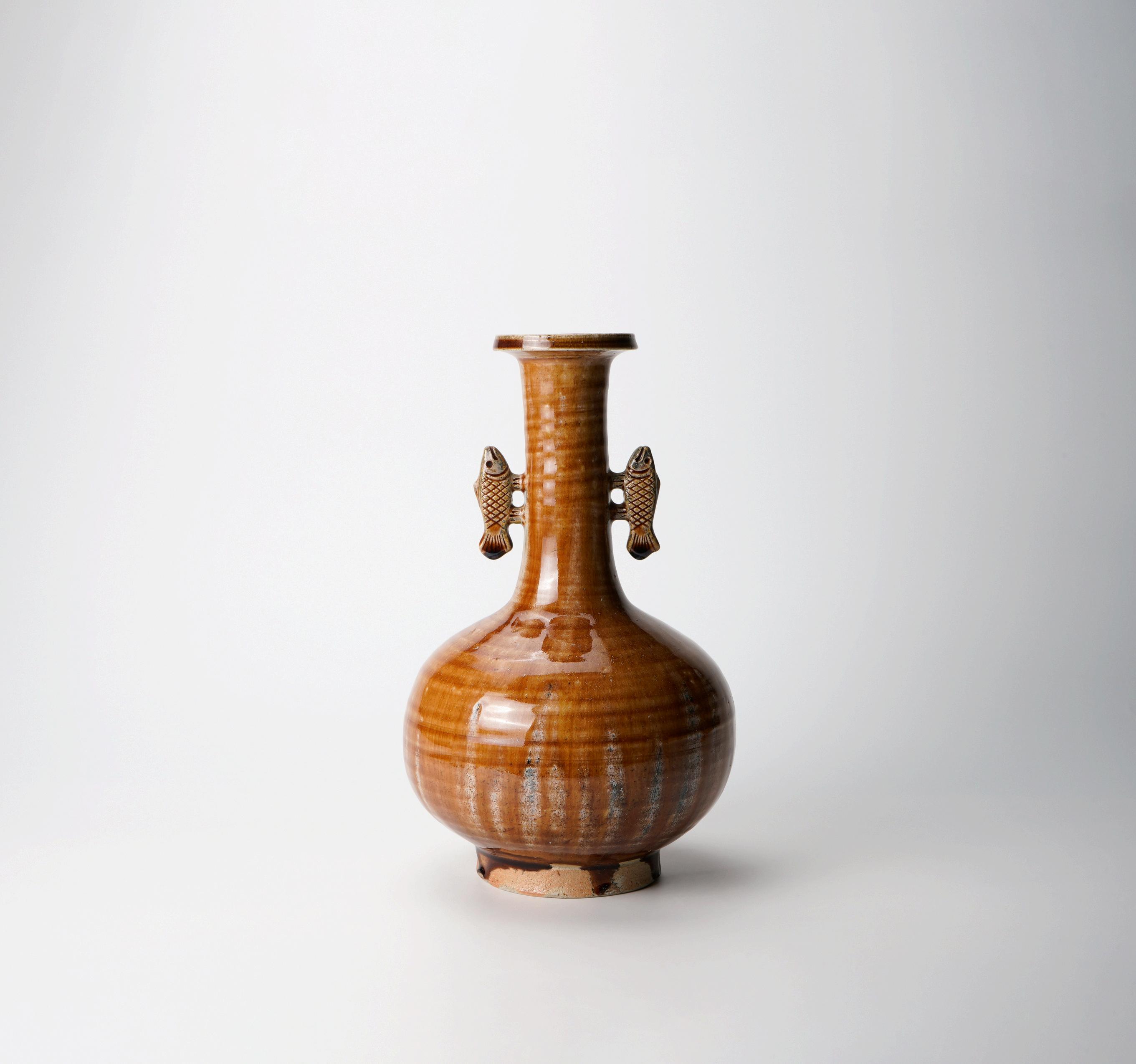
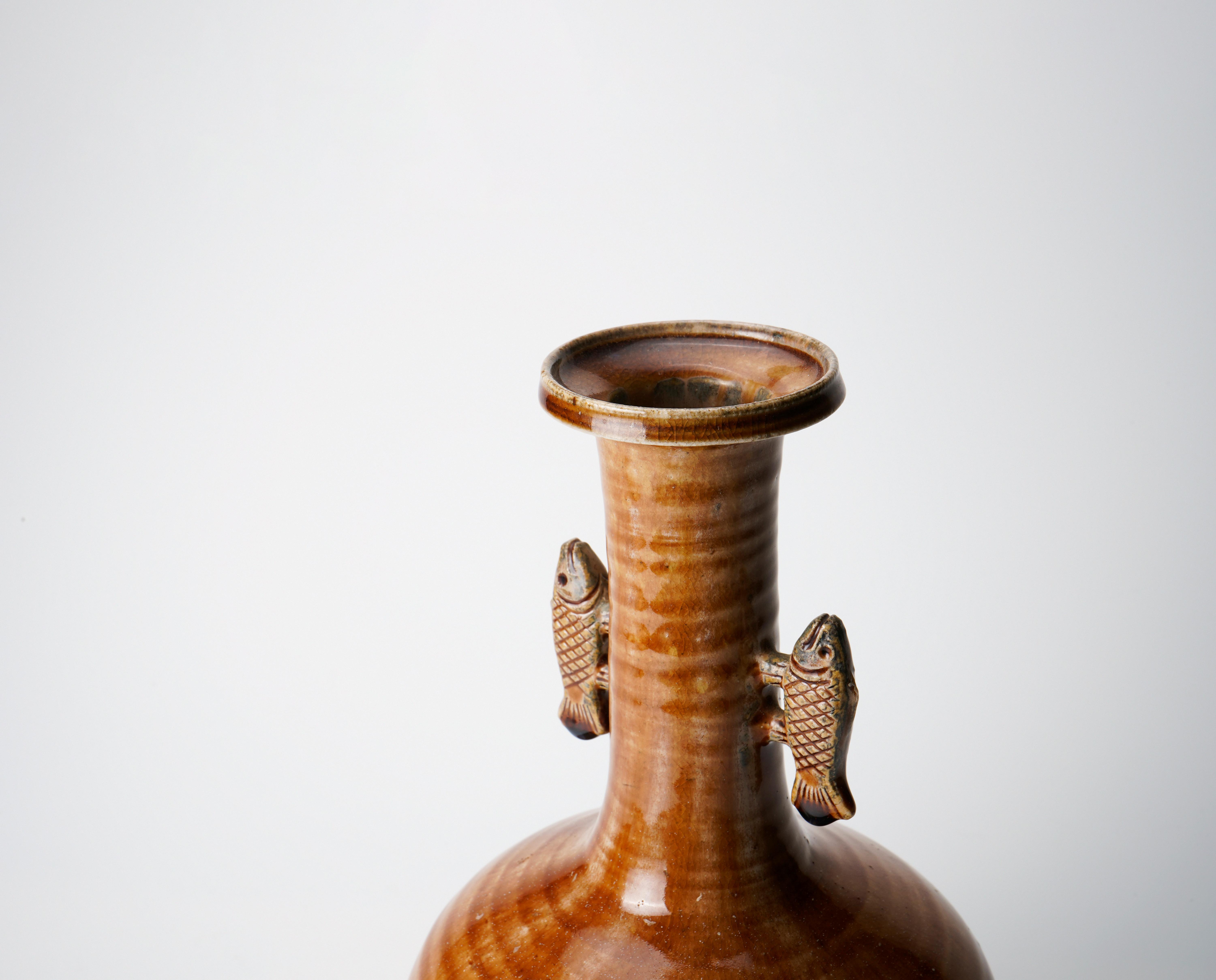
Brown-Glazed Flower Vase with Fish-Shaped Side Handles
Cat no 3
Circa late 1940s
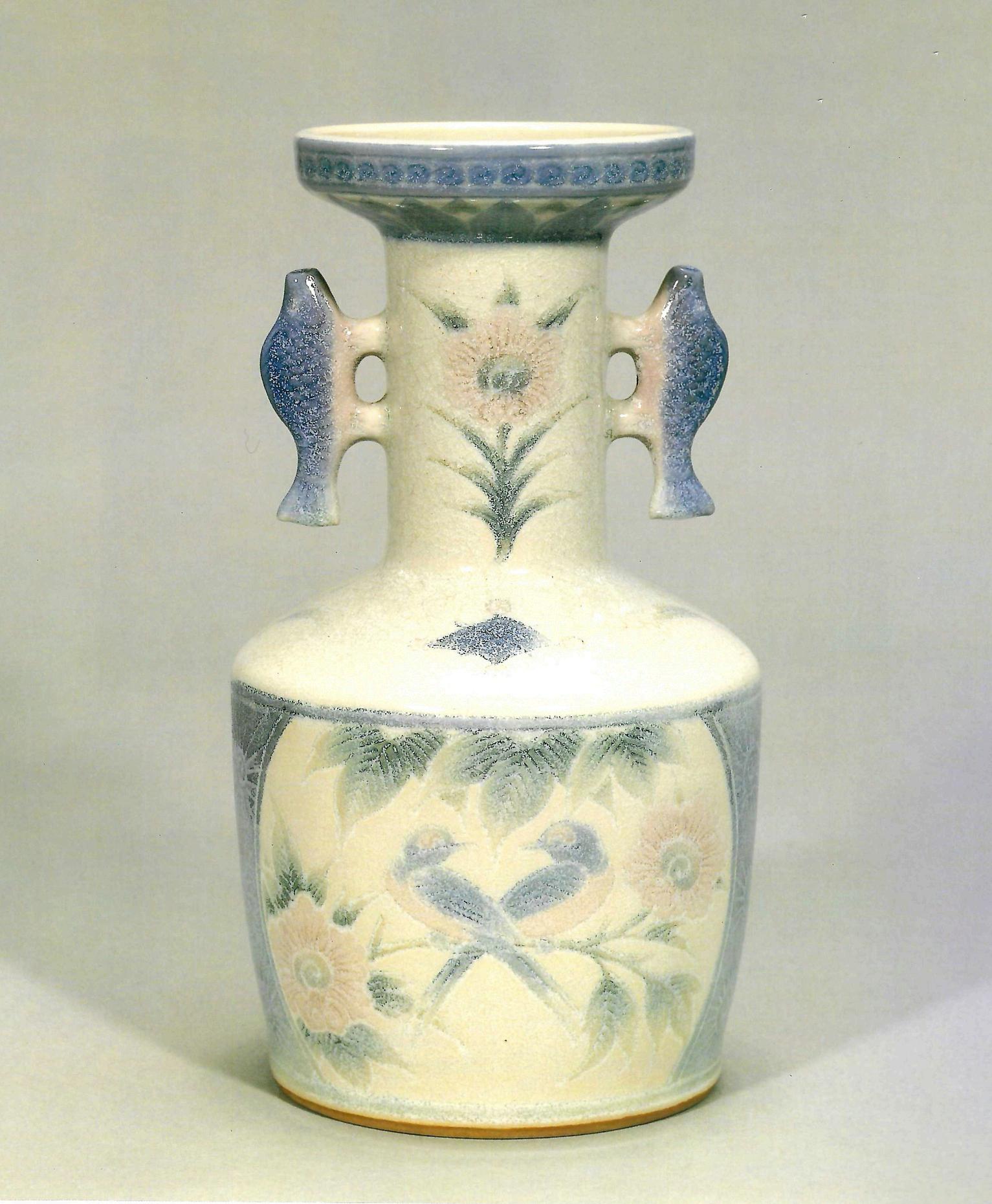
Itaya Hazan (1872-1963)
Flower Vase with Carp-Shaped Ears and Underglaze Design of Birds and Hares
1952
Idemitsu Museum of Art
Image courtesy of the Idemitsu Museum of Art
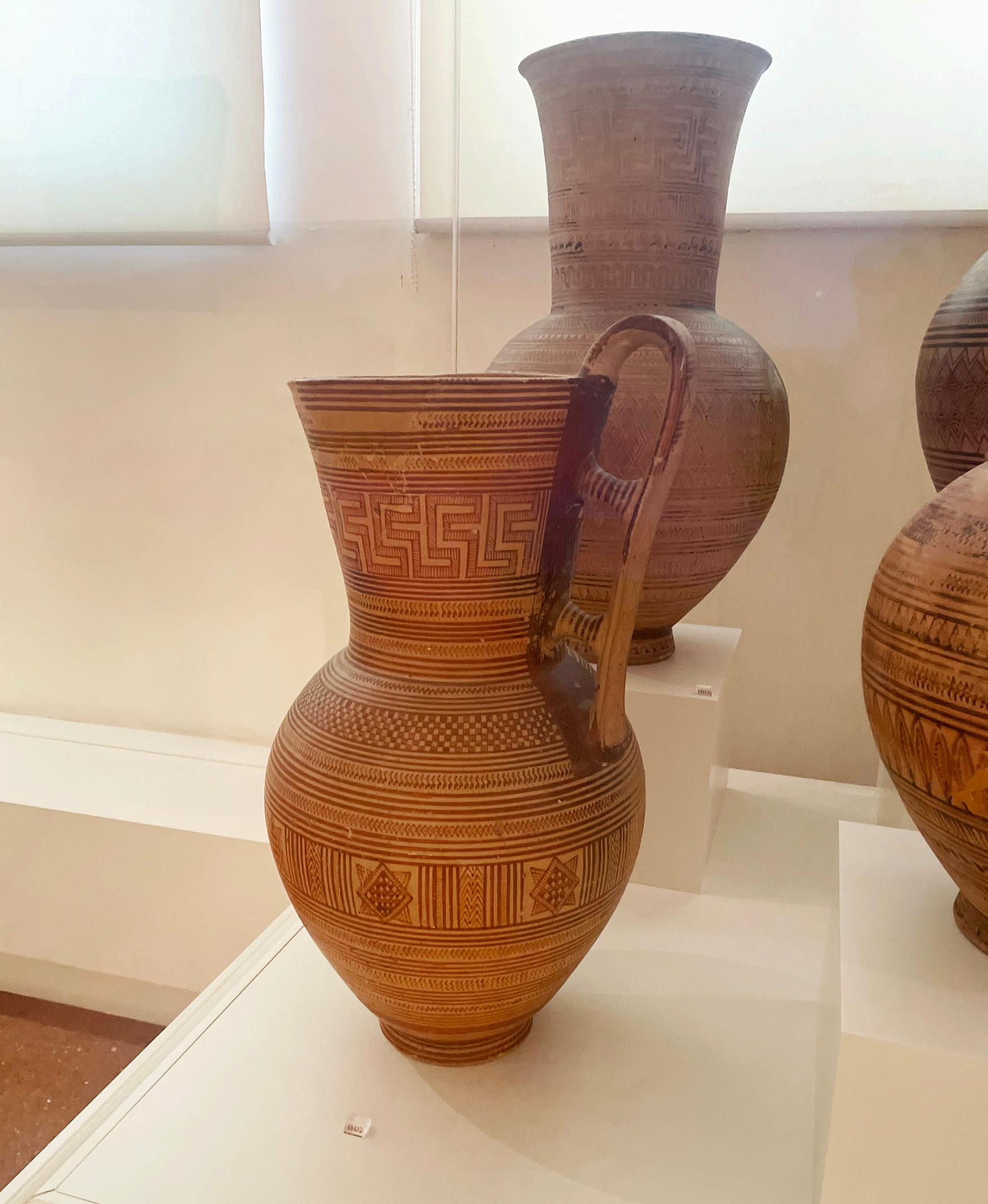
her, Late Geometric Period, Greece, circa 720 BC
National Archaeological Museum, Athens ographed in 2024
n we look at the sides of vessels like these, ften see decorative undulating shapes een the “ears” and the “handles ” The same ue sense of form can be found in the works suhara Kimei
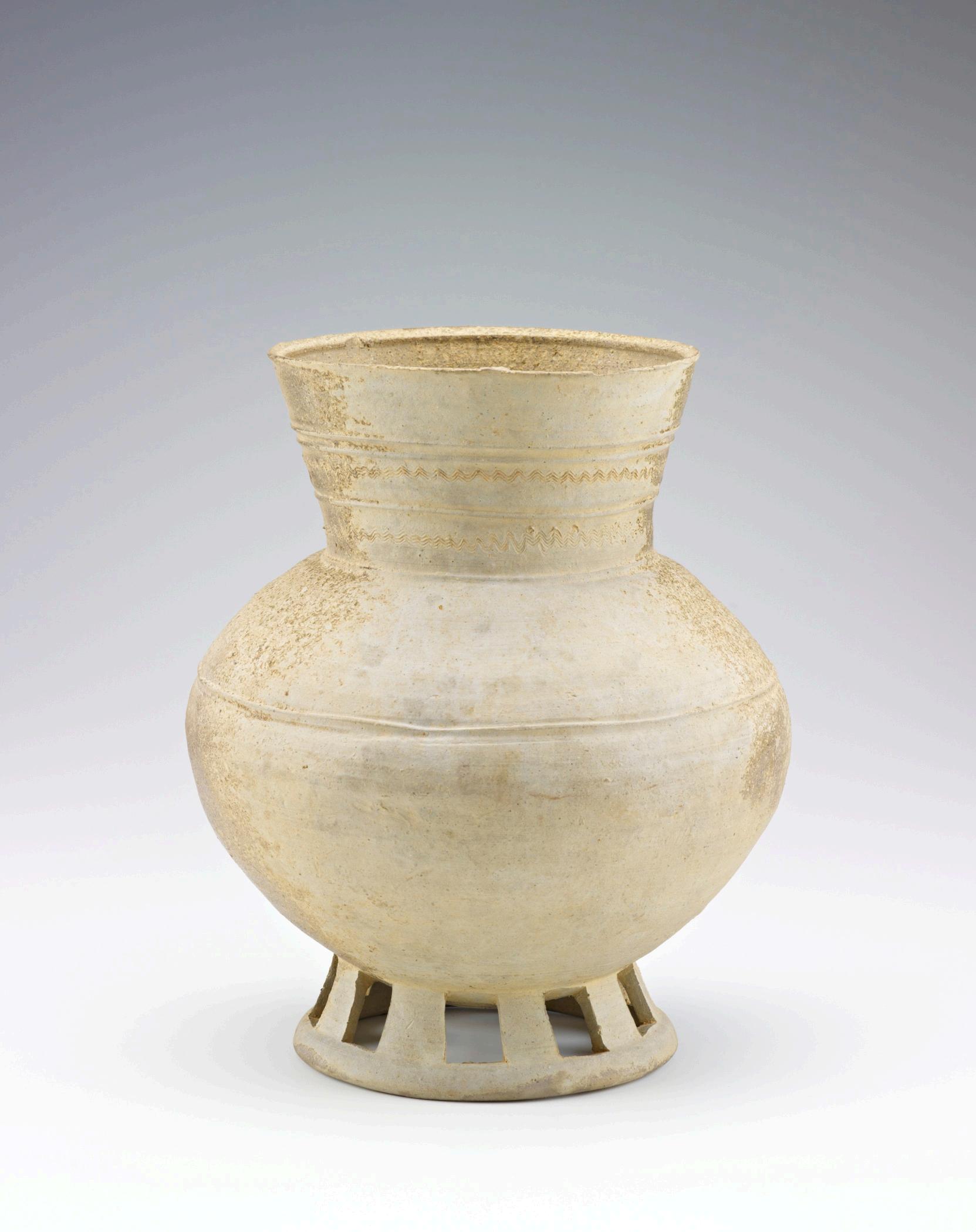
Jar, circa 5 century, Korea th Stoneware with natural ash glaze
11 ½ × 9 ¾ in (29 5 × 24 8 cm)
National Museum of Asian Art, Smithsonian Institution, Freer Gallery of Art Collection
Purchase: Charles Lang Freer Endowment and partial gift of Lt General William Cassidy
Accession number: F1972 13
Image © The National Museum of Asian Art
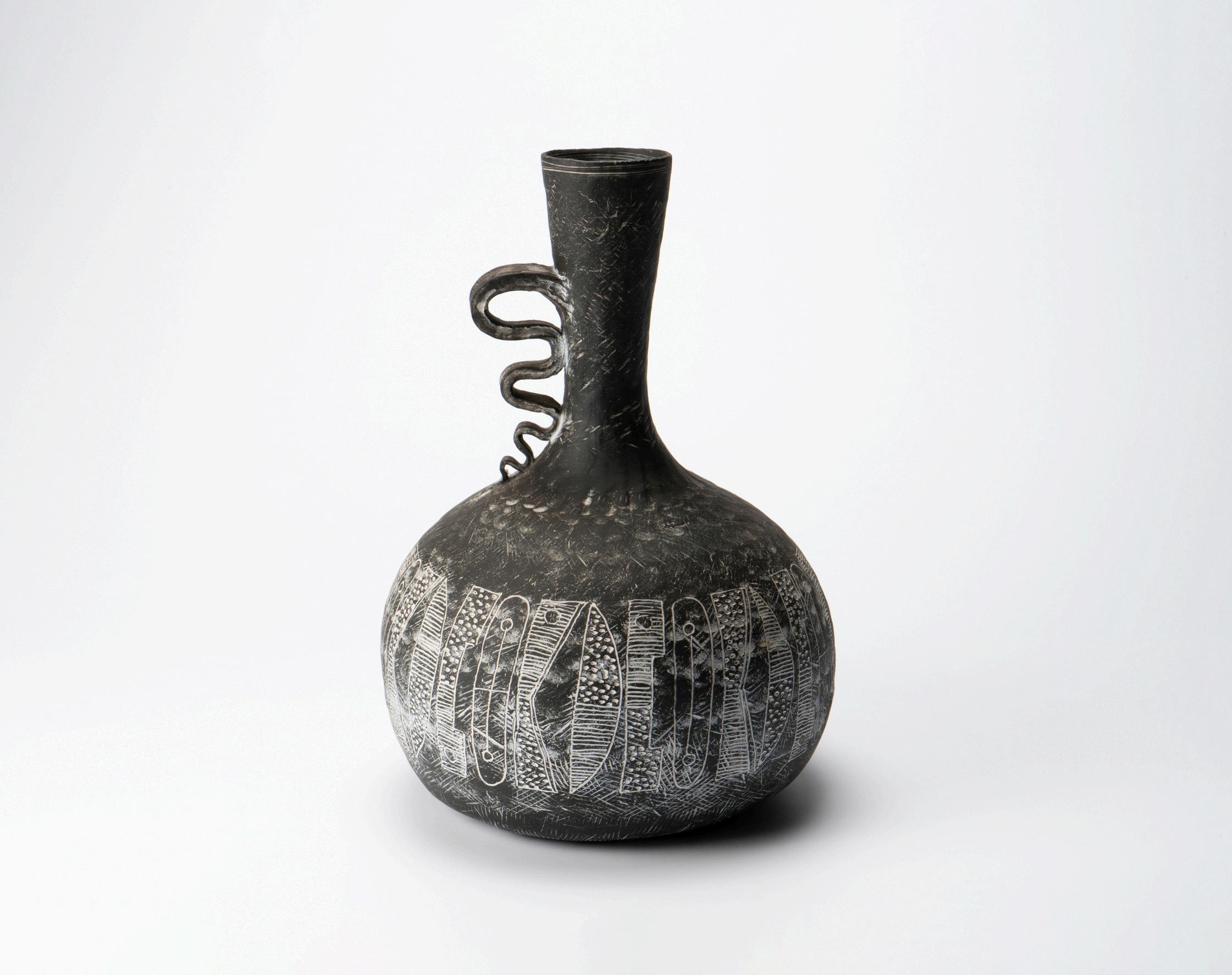
Yasuhara Kimei
Flower Vase with Matte Black Glaze and Linear Engraved Patterns
Cat no 14 Circa late 1960s–1980s
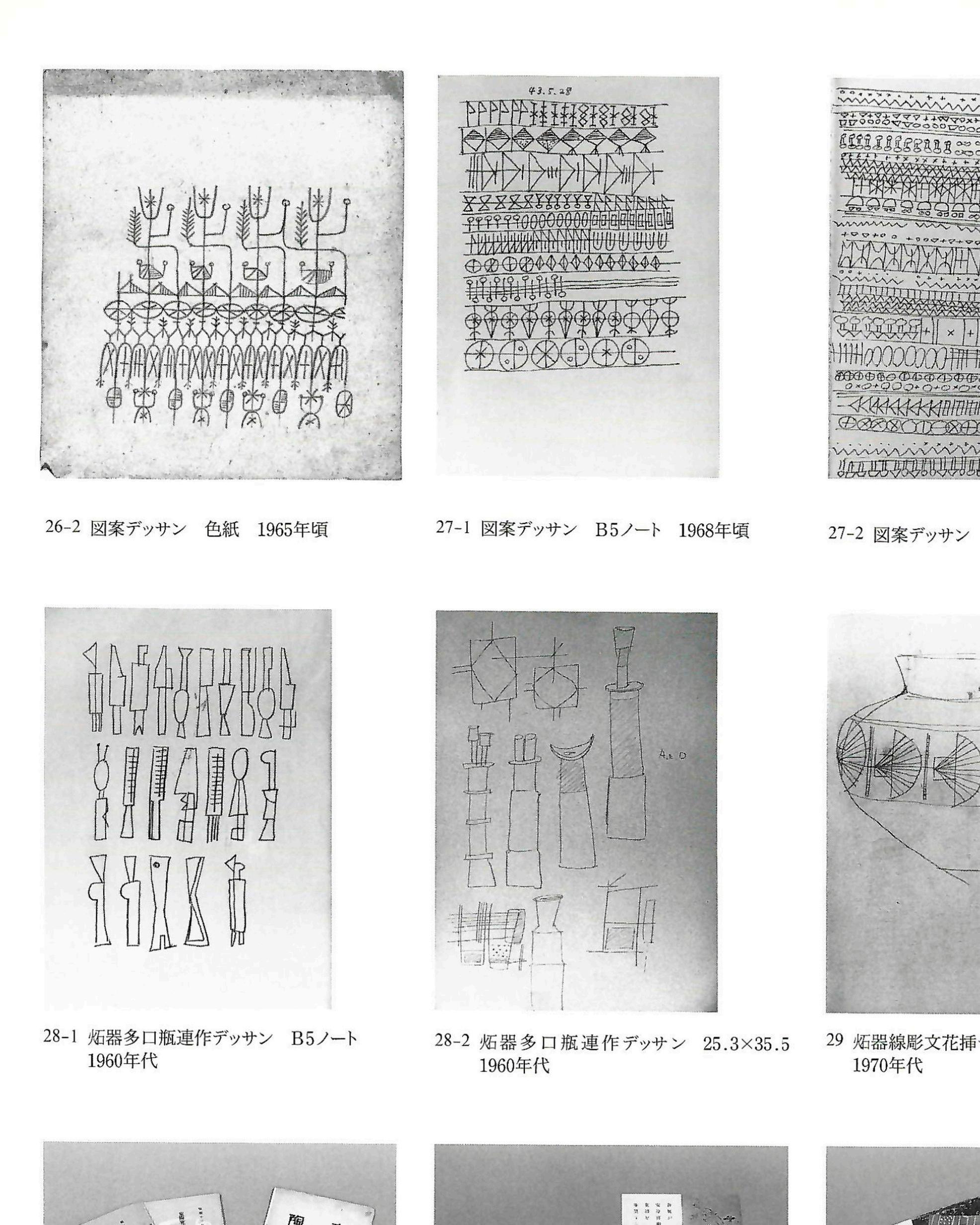
Yasuhara Kimei
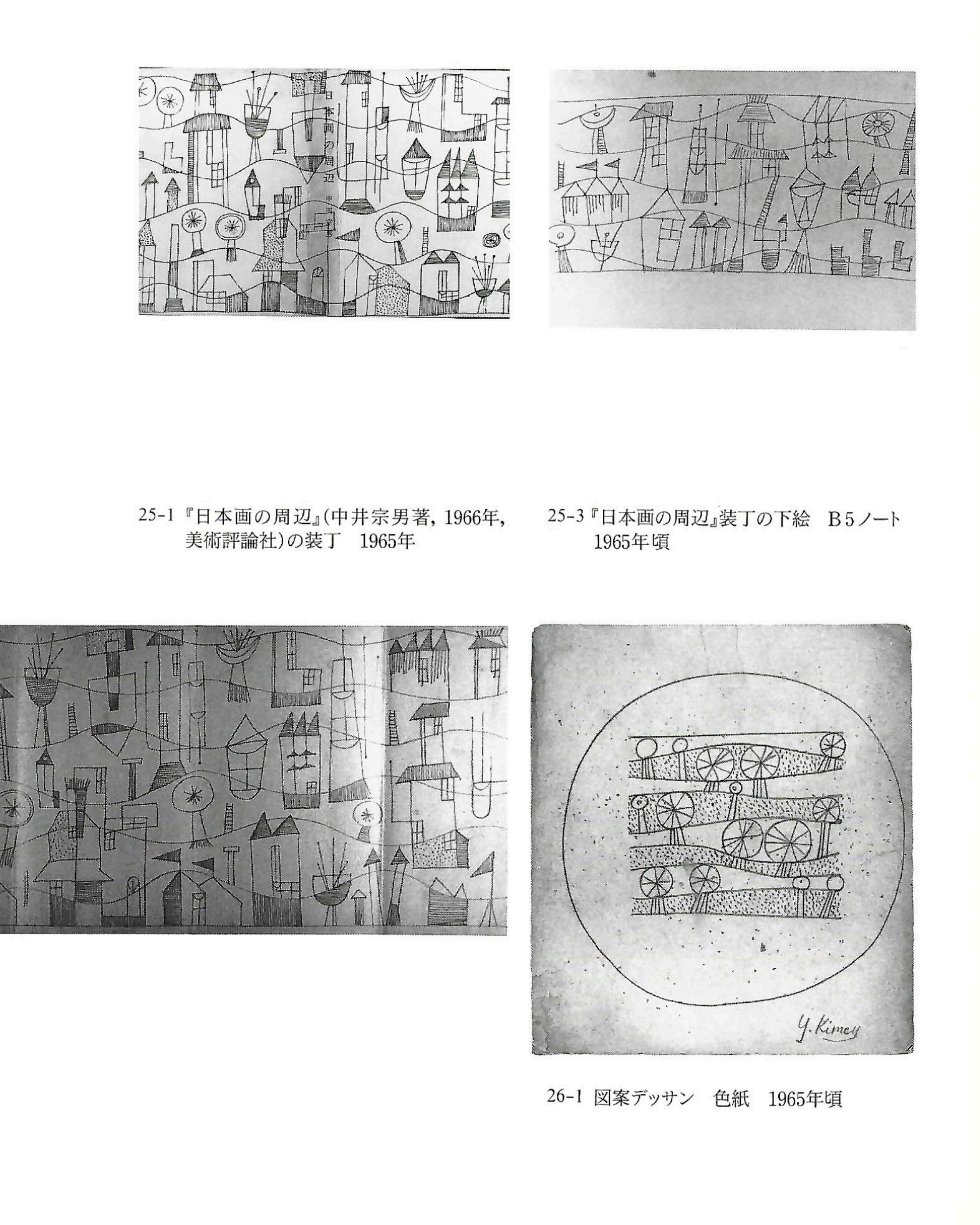
Designs for surfaces, 1965 and 1960s Meguro-ku Bijutsukan (Meguro Museum of Art), Yasuhara Kimei ten (Yasuhara Kimei Exhibition), Tokyo, Nihon Keizai Shinbunsha, 1993, p 94
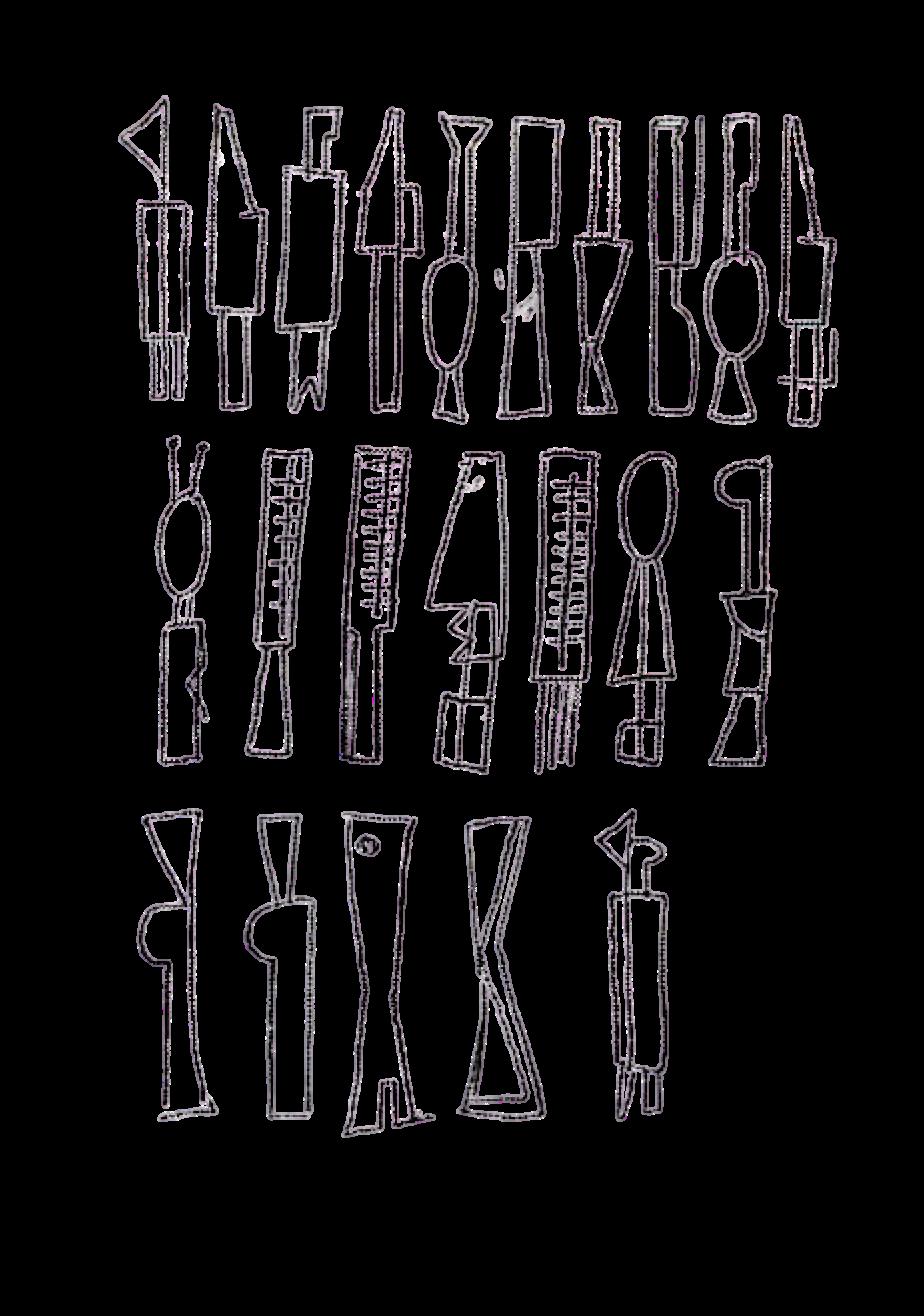
Yasuhara Kimei
Designs for Surfaces, 1960s
Meguro-ku Bijutsukan (Meguro Museum of Art), Yasuhara Kimei ten (Yasuhara Kimei Exhibition), Tokyo, Nihon Keizai Shinbunsha, 1993, p 94
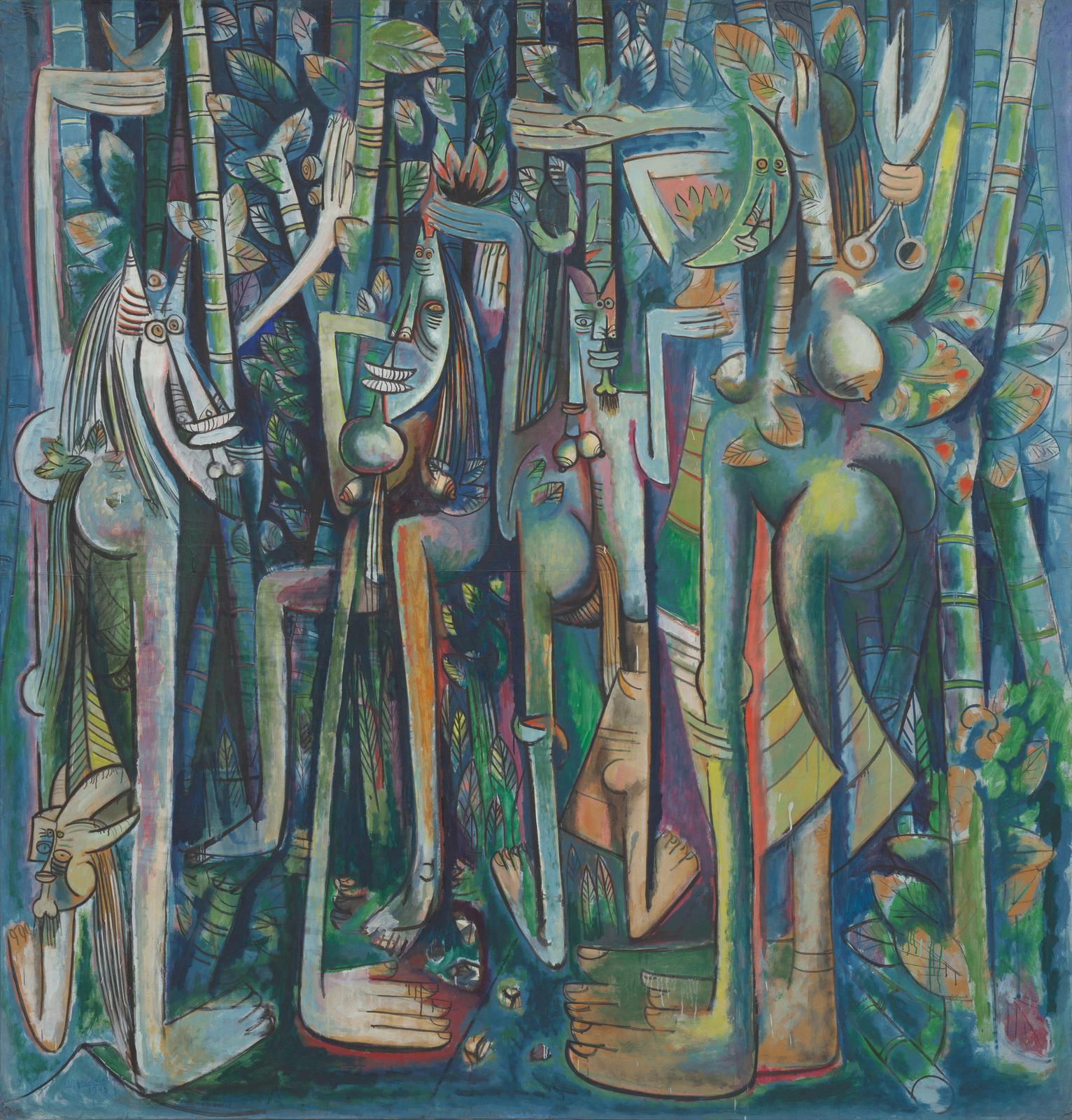
Wifredo Lam (1902–1982)
La jungla (The Jungle), 1942–1943 Oil on canvas, 94 ¼ × 90 ½ in (239 4 × 229 9 cm)
Inter-American Fund, image courtesy of the Museum of Modern Art, New York, accession number: 140 1945 © 2026 Artists Rights Society (ARS), New York / ADAGP, Paris
MIYANOHARA KEN
(1898–1977)
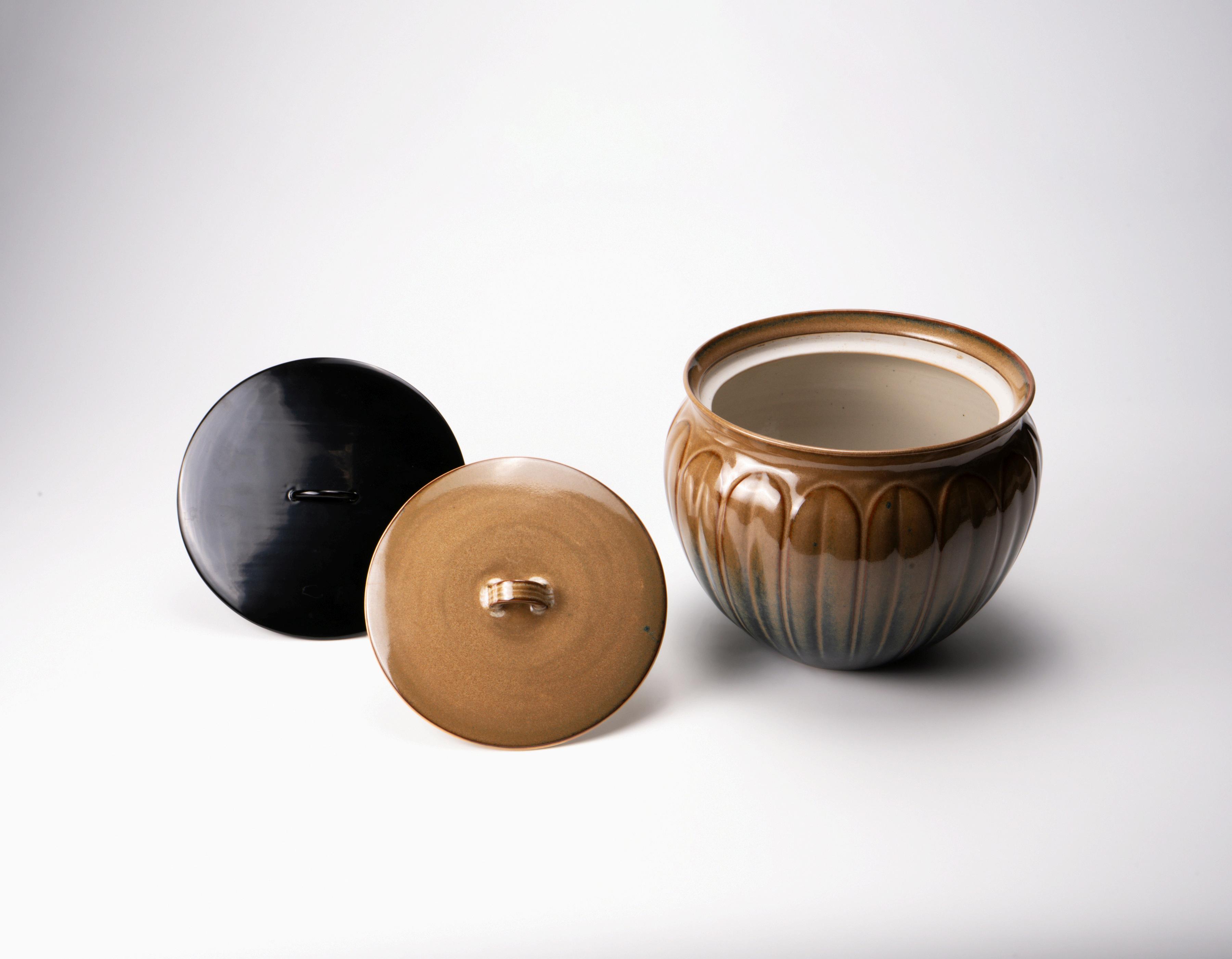
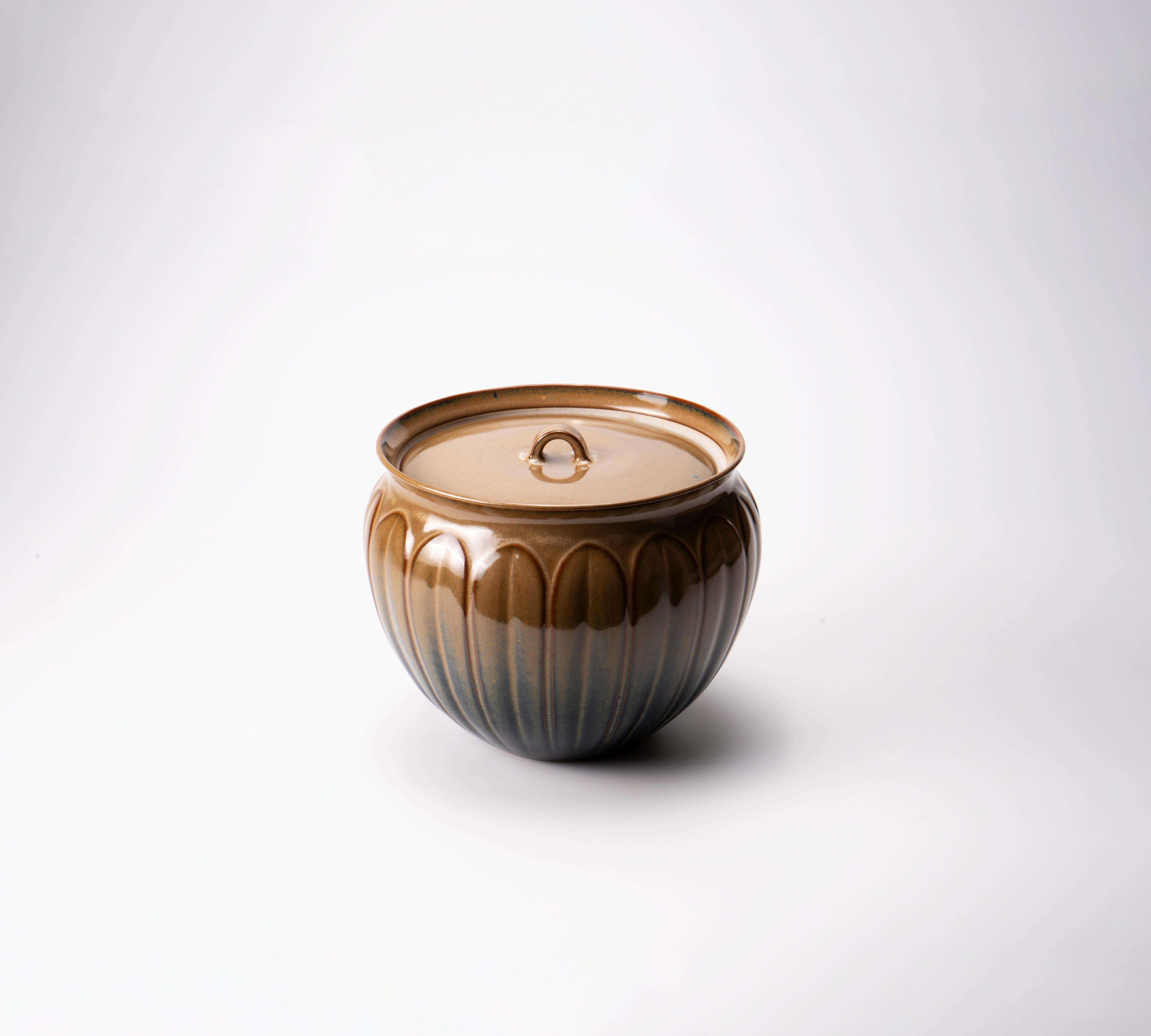
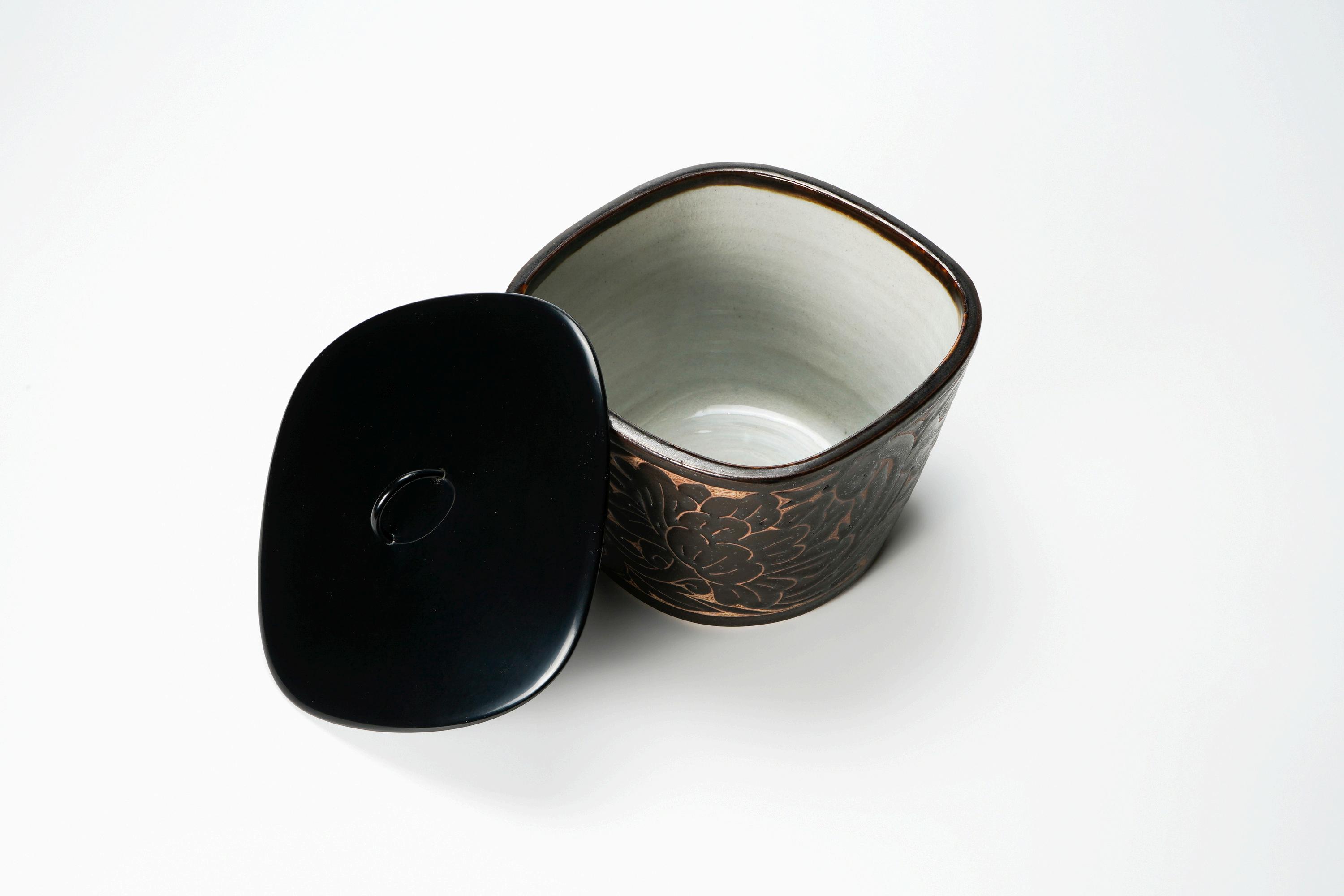
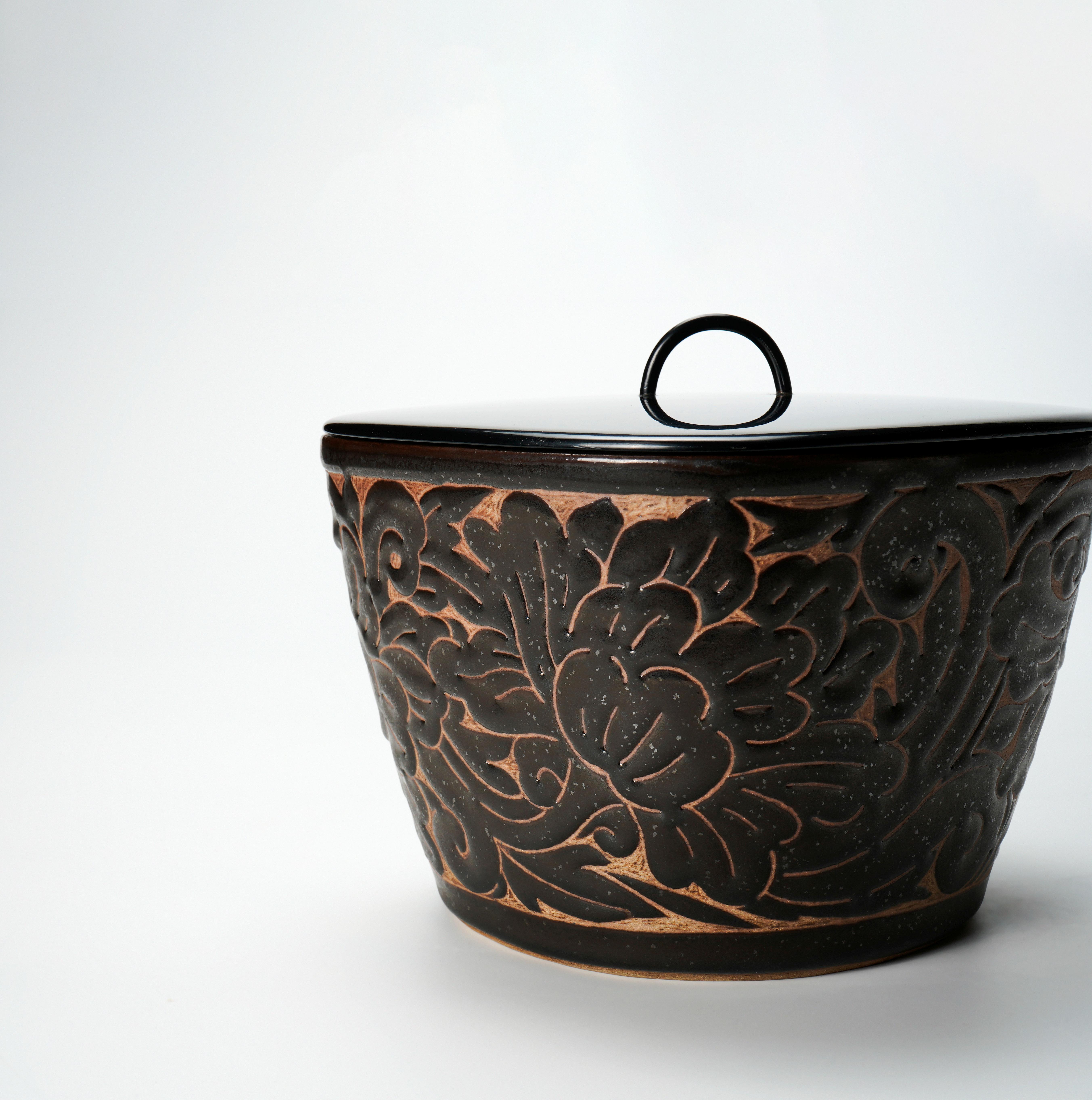
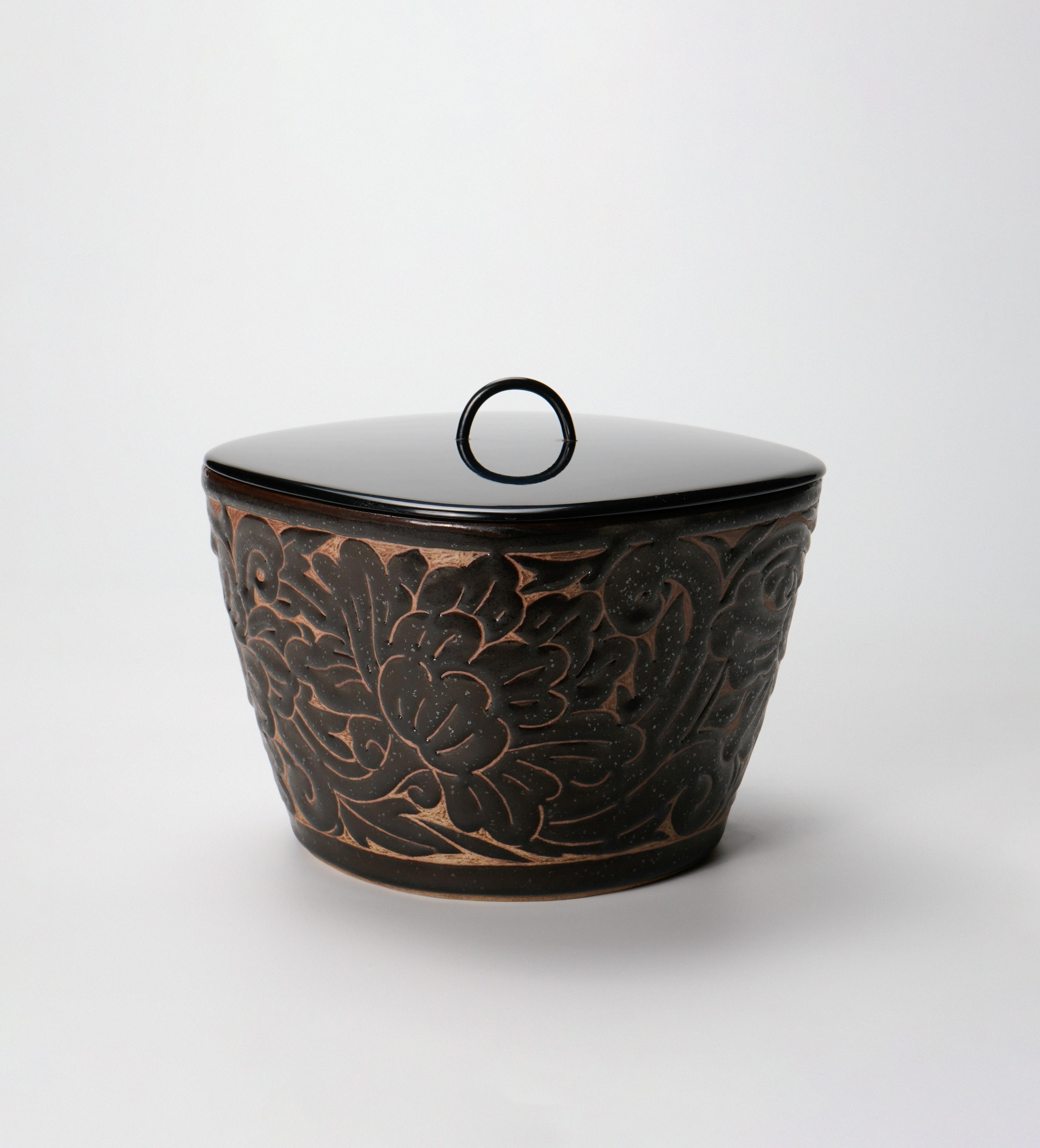
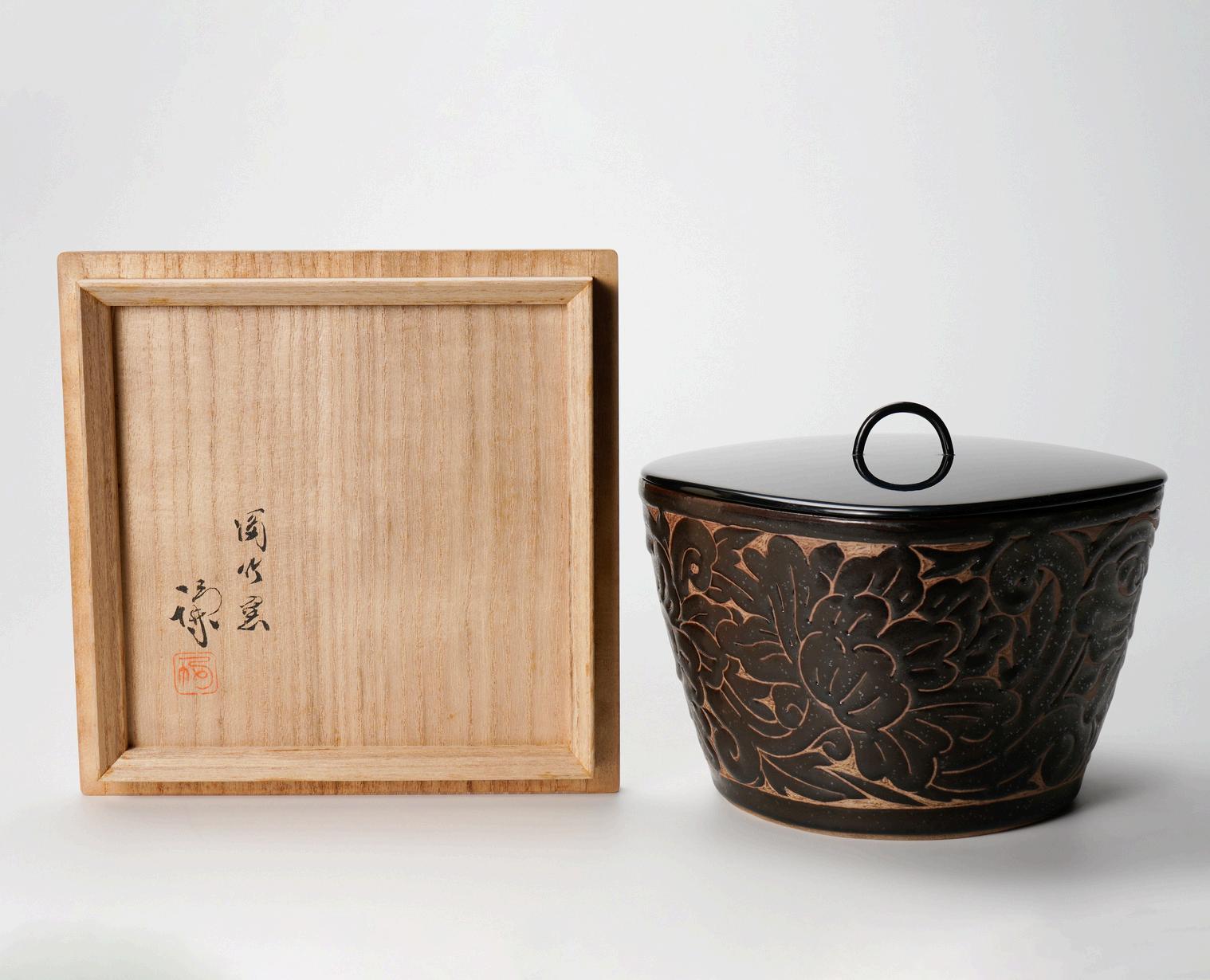
Miyanohara Ken Water Jar with Engraved Peony Patterns
Cat no 20 1965
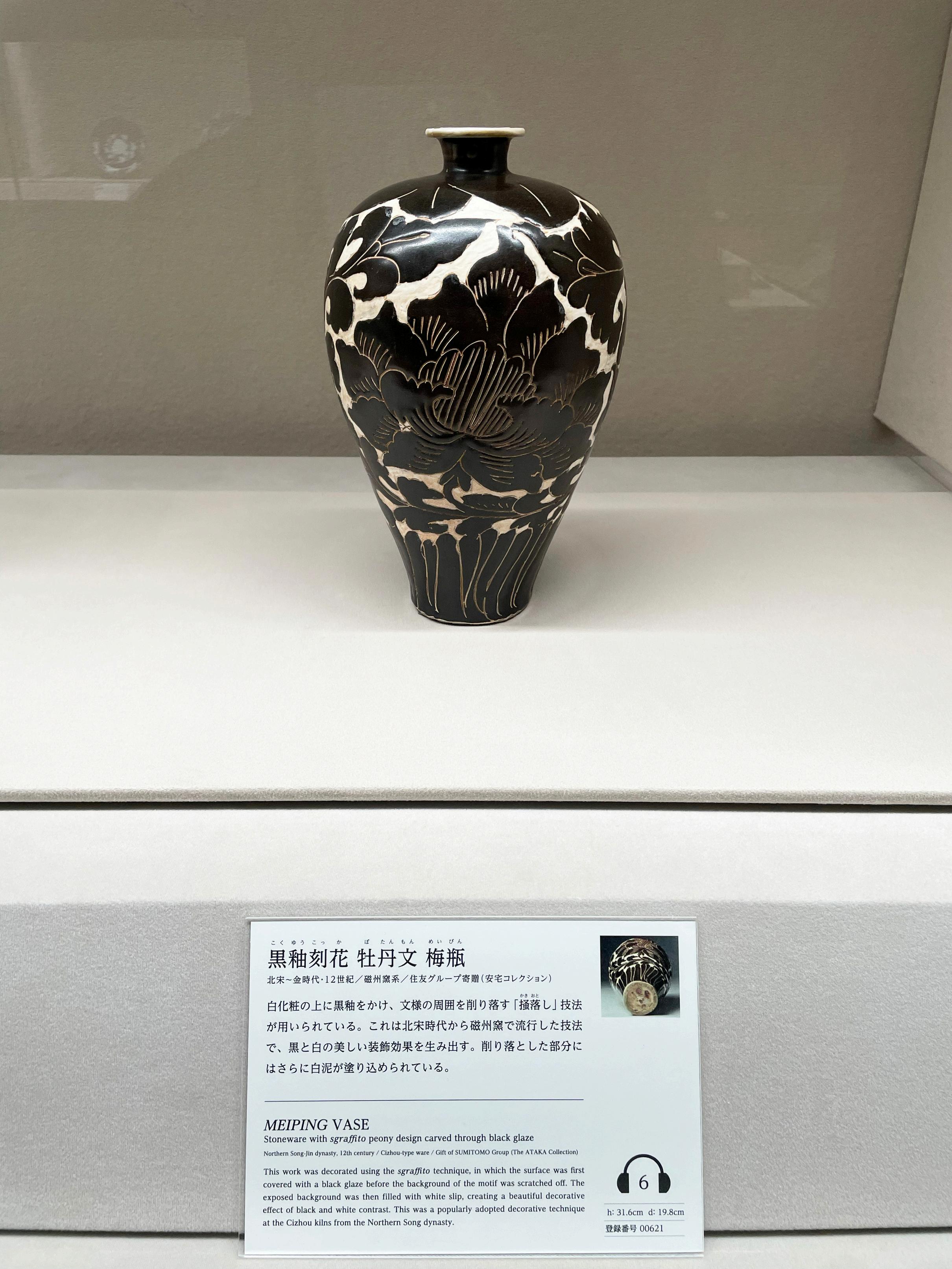
Meiping Vase with Sgraffito Peony Design
Carved Through Black Glaze
Southern Song–Jin dynasty, Cizhou-type stoneware, circa 12th century
Ataka Collection, gift of the Sumitomo Group to the Museum of Oriental Ceramics, Osaka
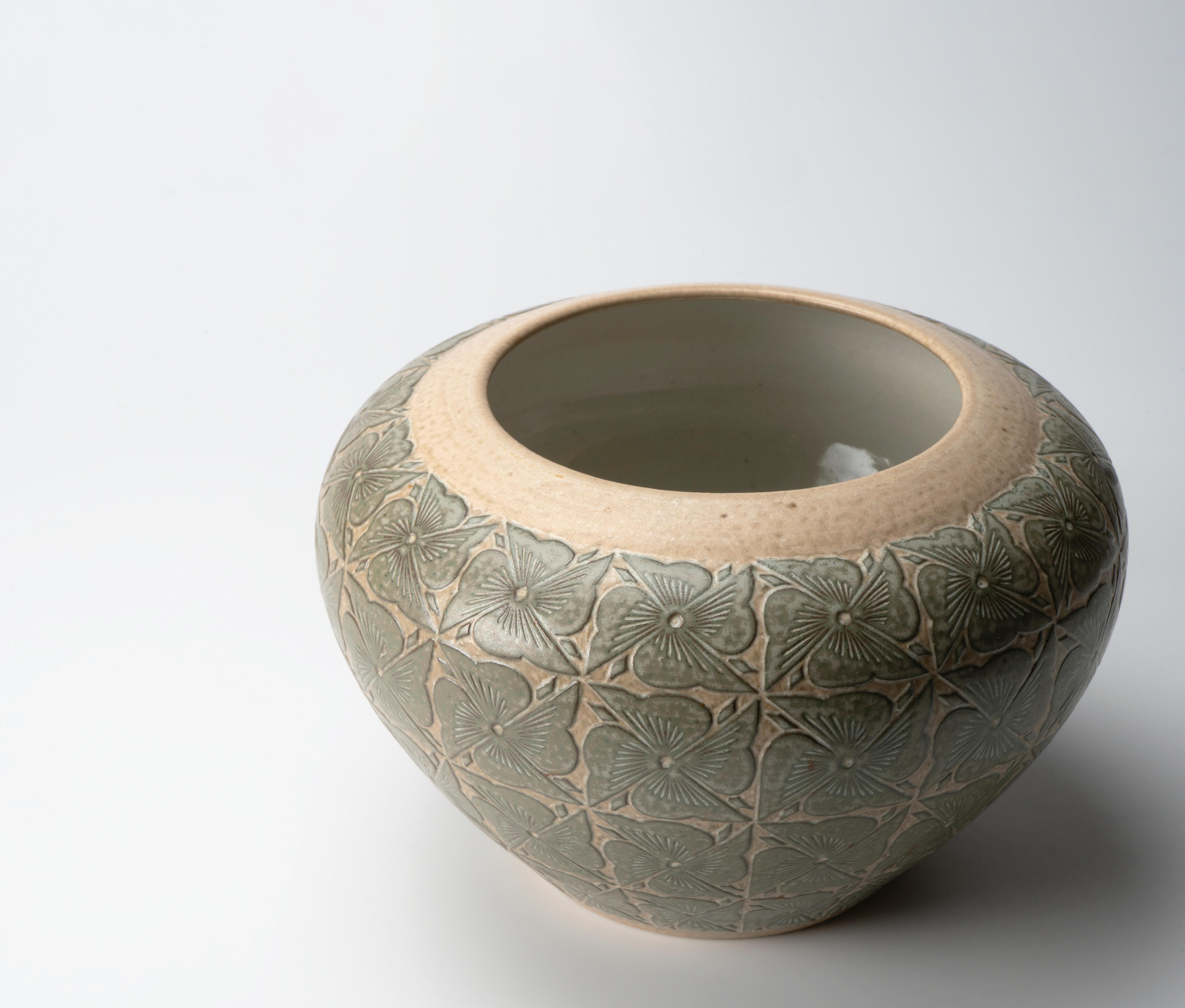
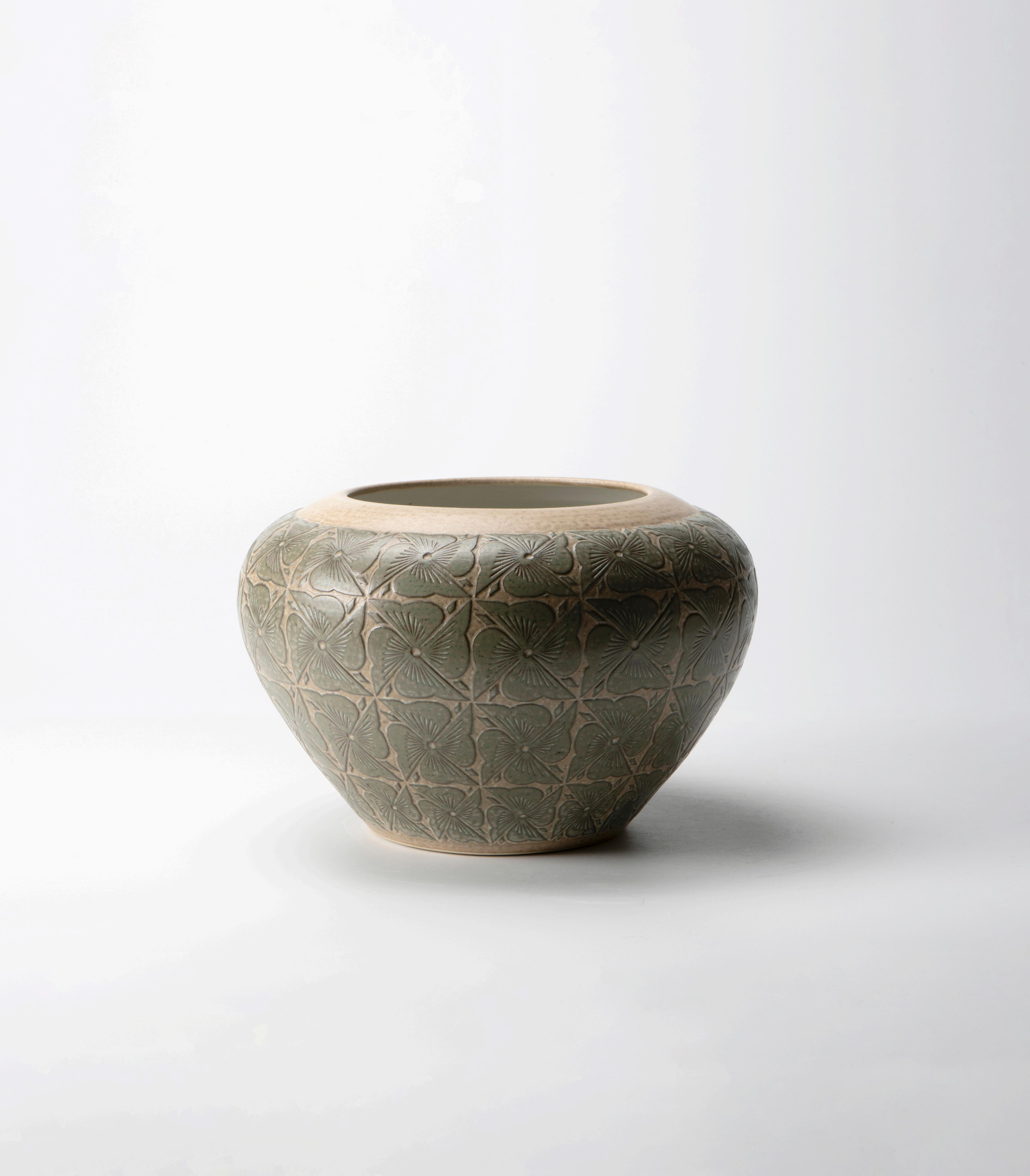
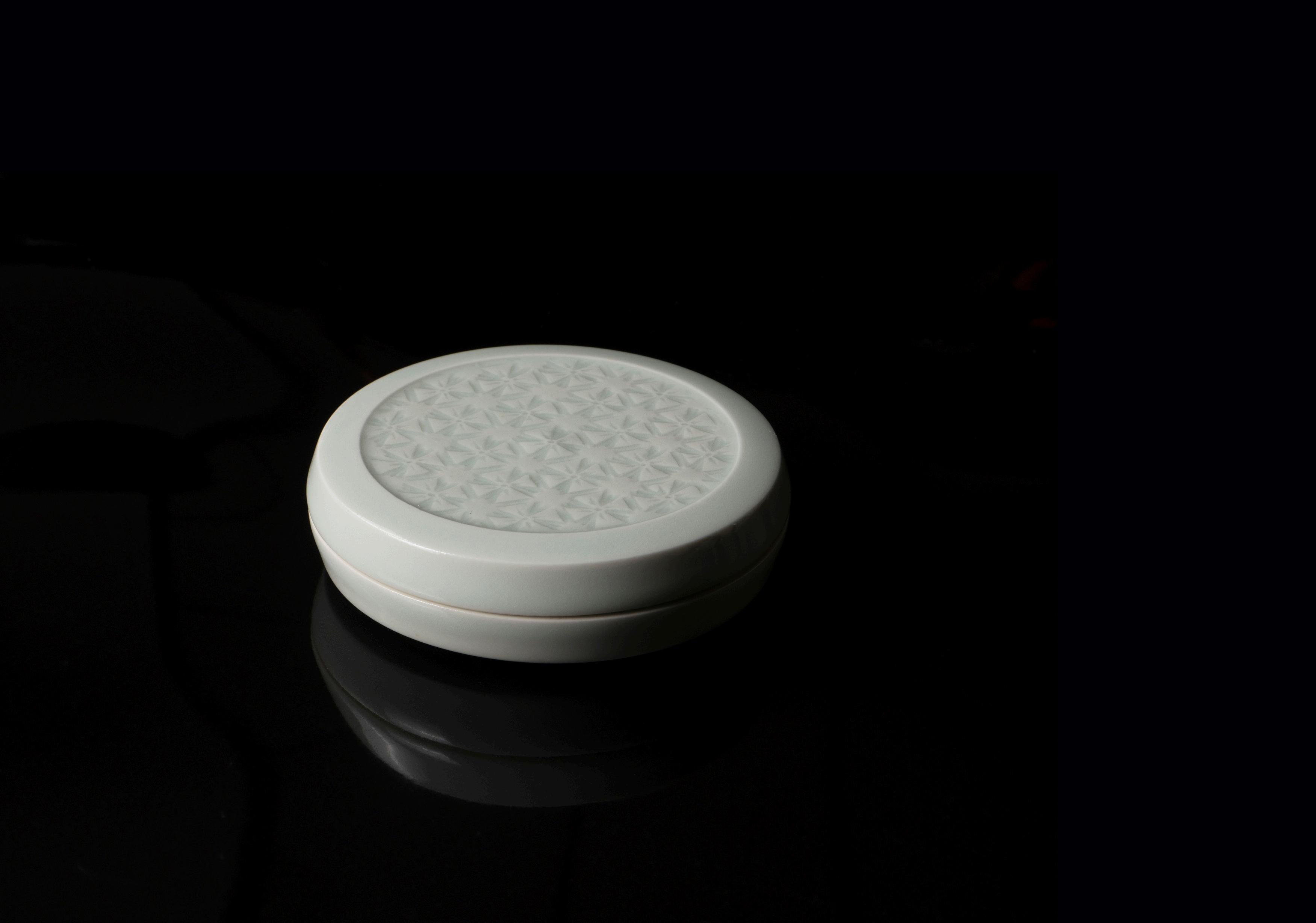
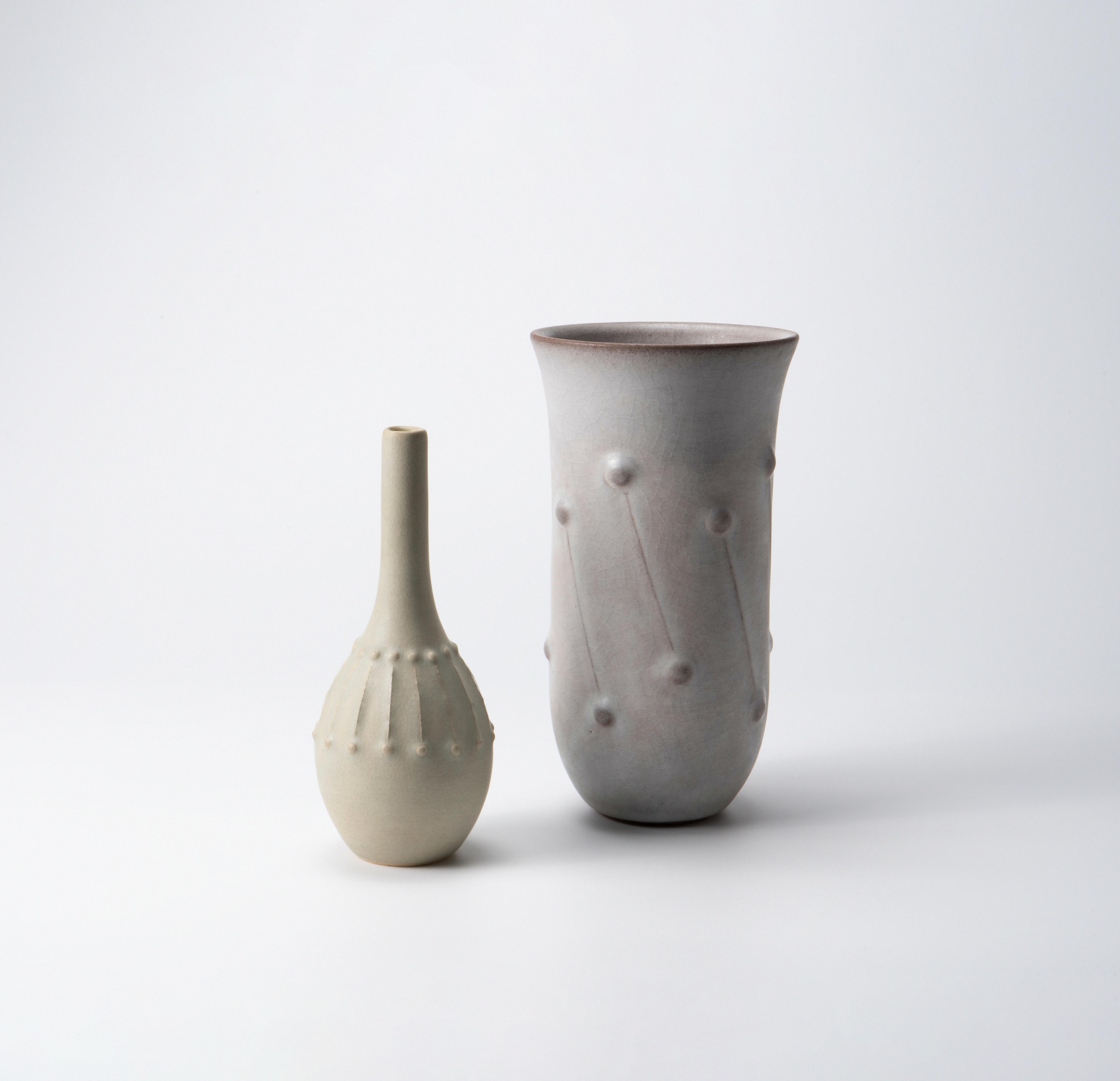
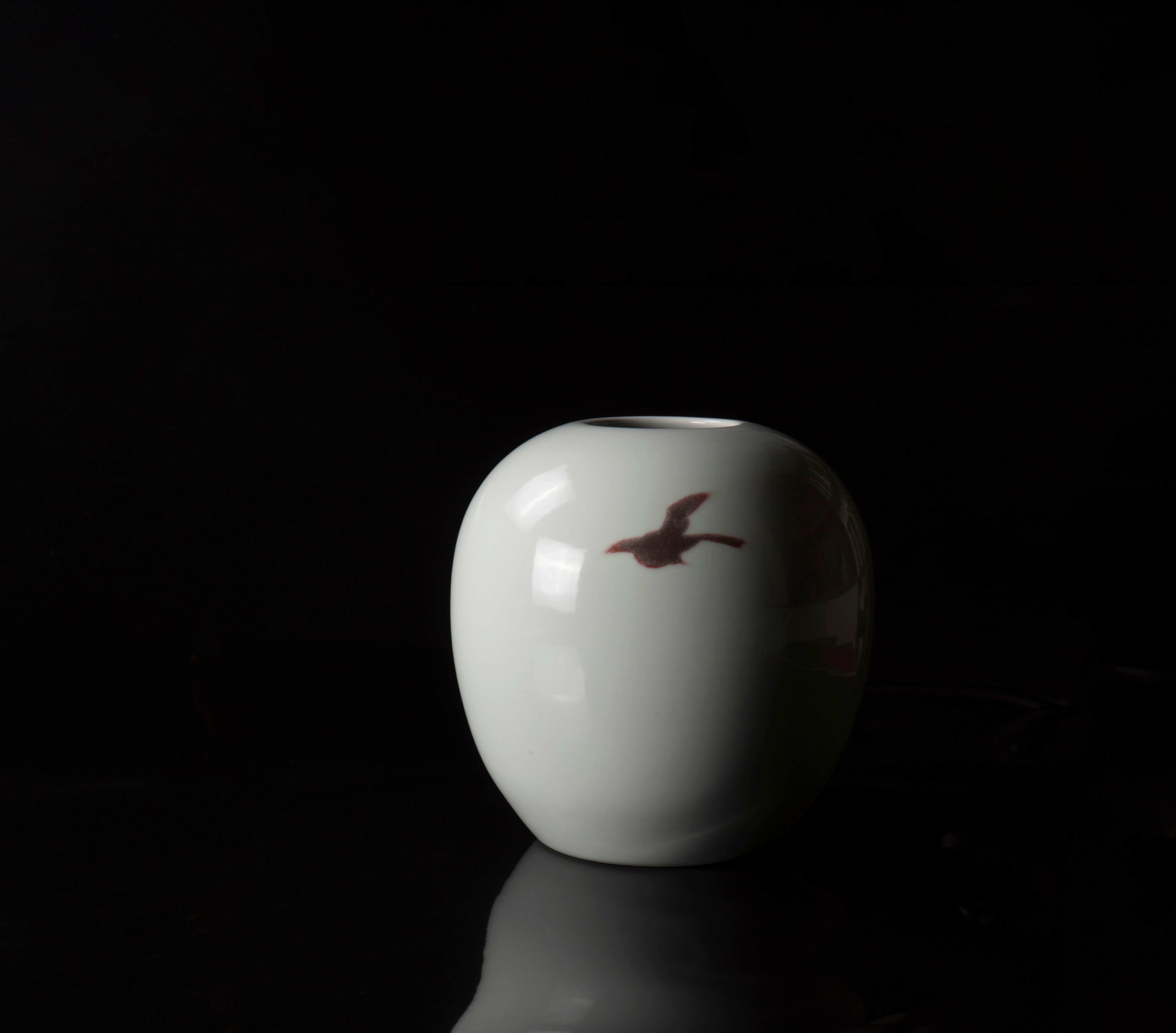
KUSUBE YAICHI (1897–1984)
LIST OF WORKS
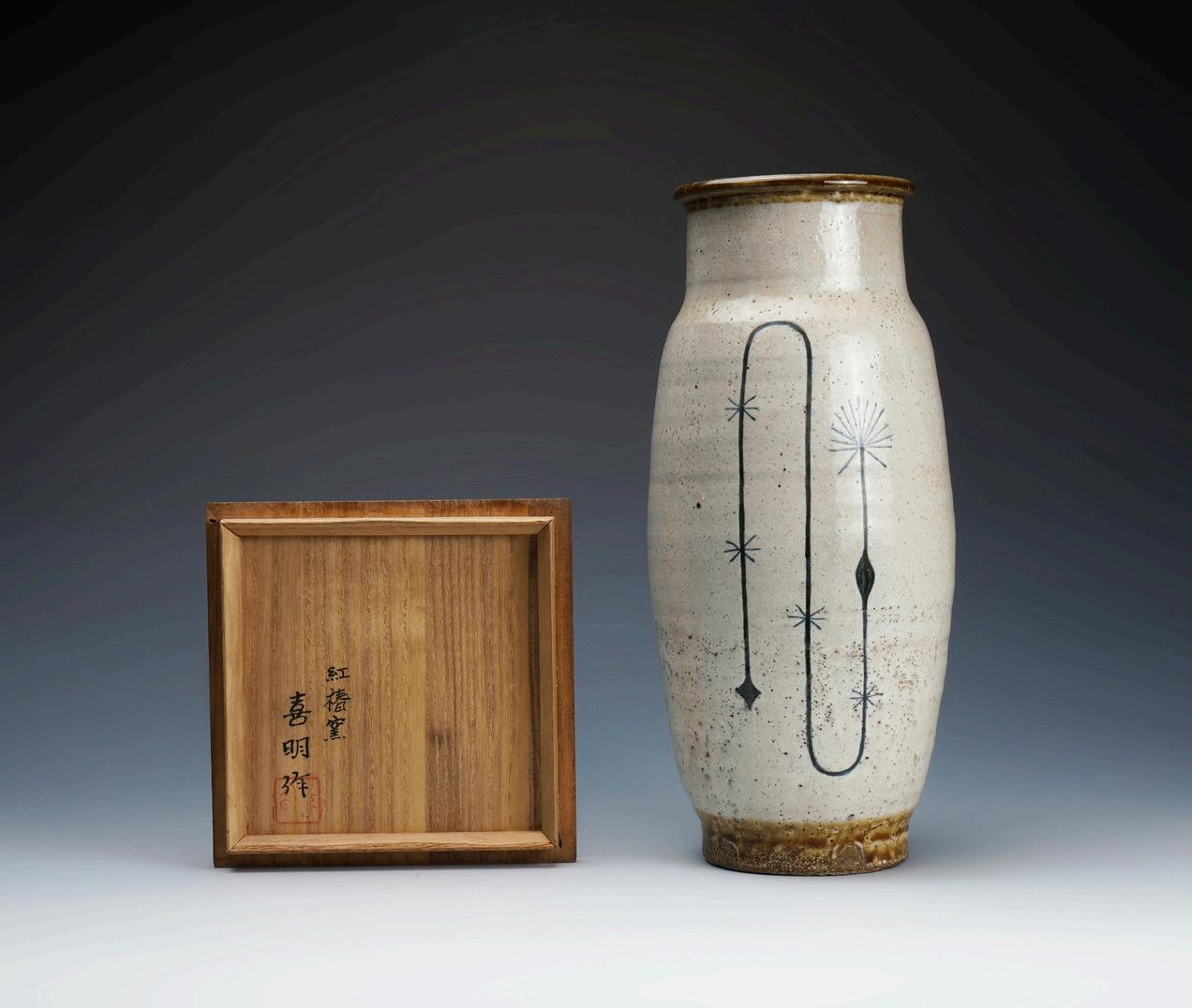
1 Yasuhara Kimei 安原 喜明 (1906-1980)
Flower Vase with Design of Grasses 草⽂花挿
Stoneware
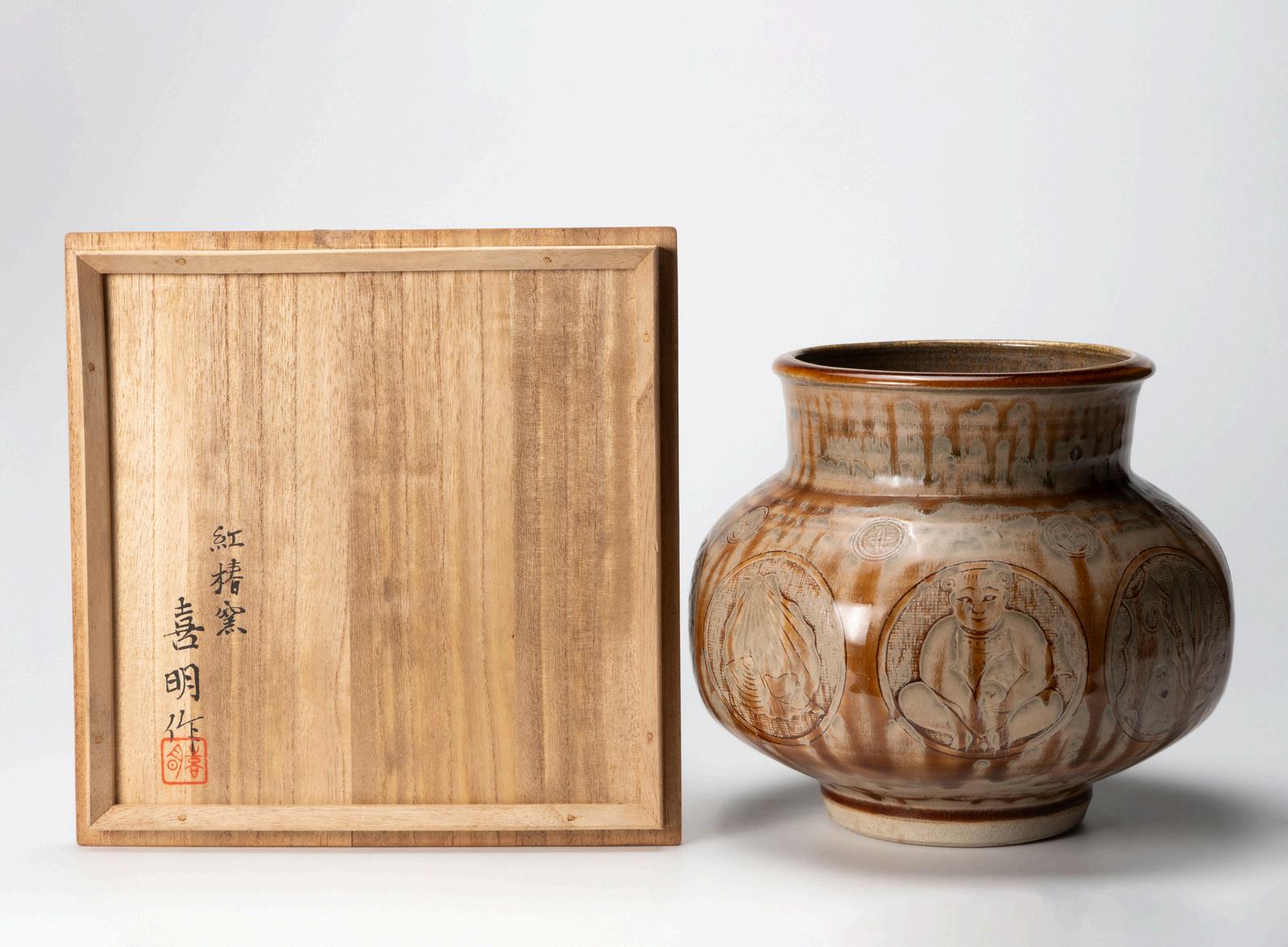
Circa 1940s–early 1950s
10 ¾ × 5 in. (27.3 × 12.7 cm)
Artist’s mark impressed on base
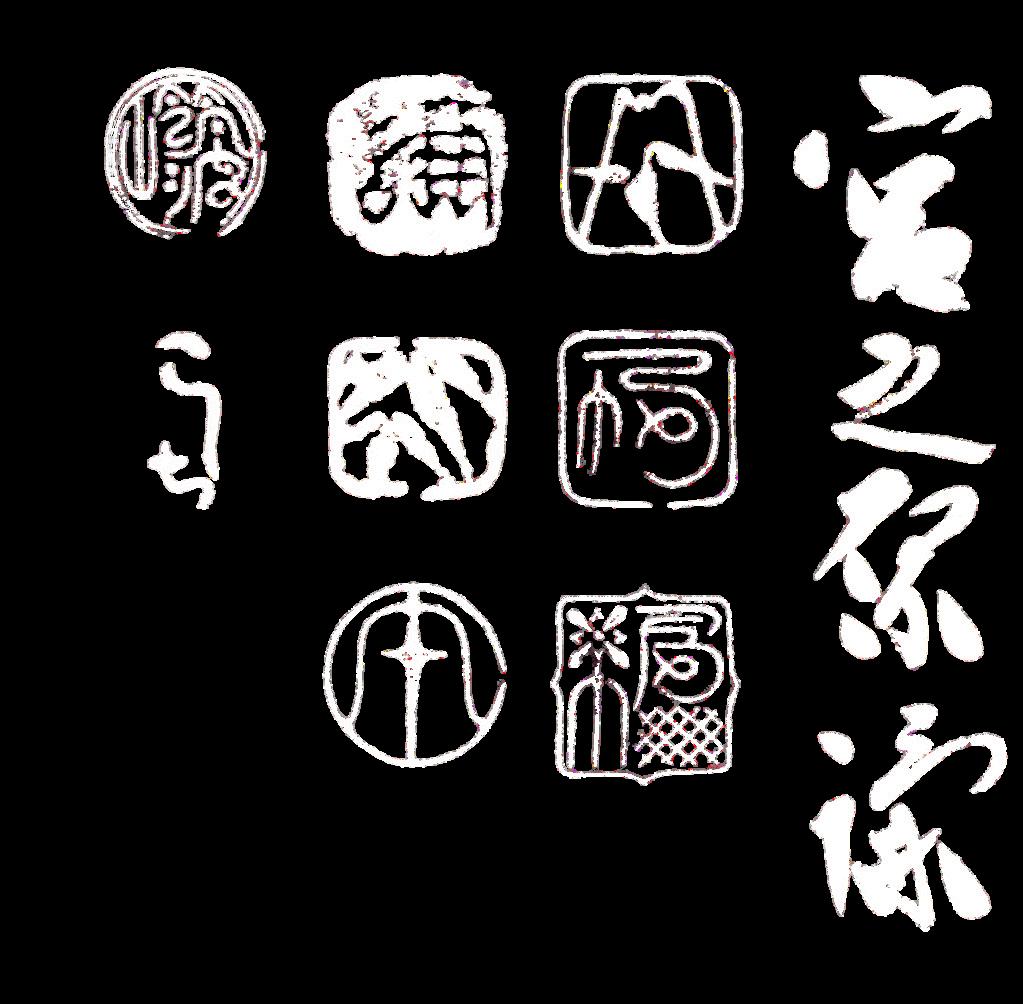
Wood storage box inscribed: Hanasashi 花挿 (Flower vase); signed Kōchin’yō Kimei saku 紅椿窯喜明作 (Made by Kimei [at the] Kōchin Kiln); sealed: Kimei 喜明
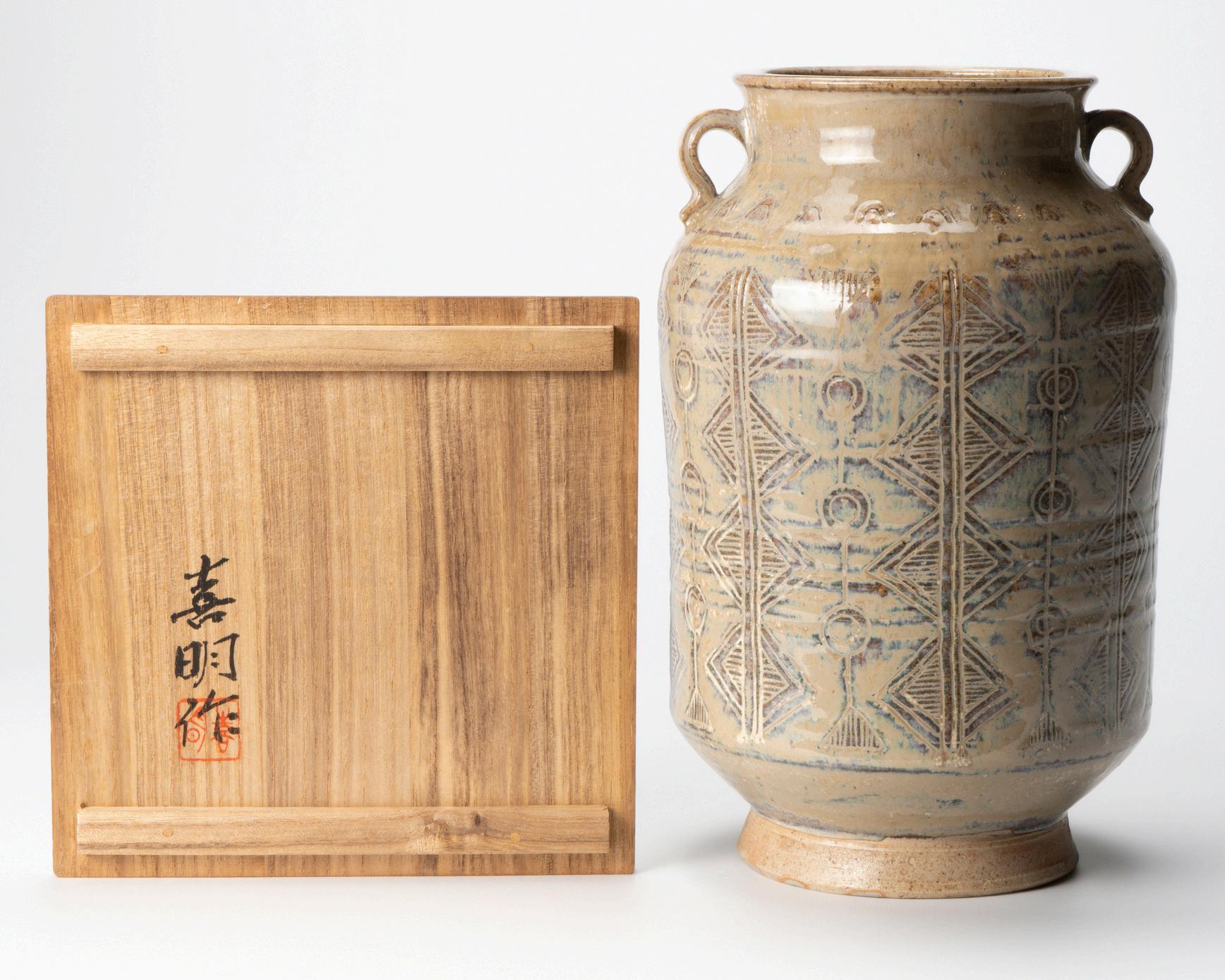
2
Yasuhara Kimei 安原 喜明 (1906-1980)
Flower Vase with Linear Engraving and Ring Handles
炻器線彫⽂双⽿花⽣
Stoneware
9 ⅛ × 6 in. (23.2× 15.2 cm)
Artist’s mark impressed on base Wood storage box inscribed: Kabin, senbori mon 花瓶 線彫⽂ (Flower vase, linear engraving); signed: Kimei saku 喜明作 (Made by Kimei); sealed: Kimei 喜明
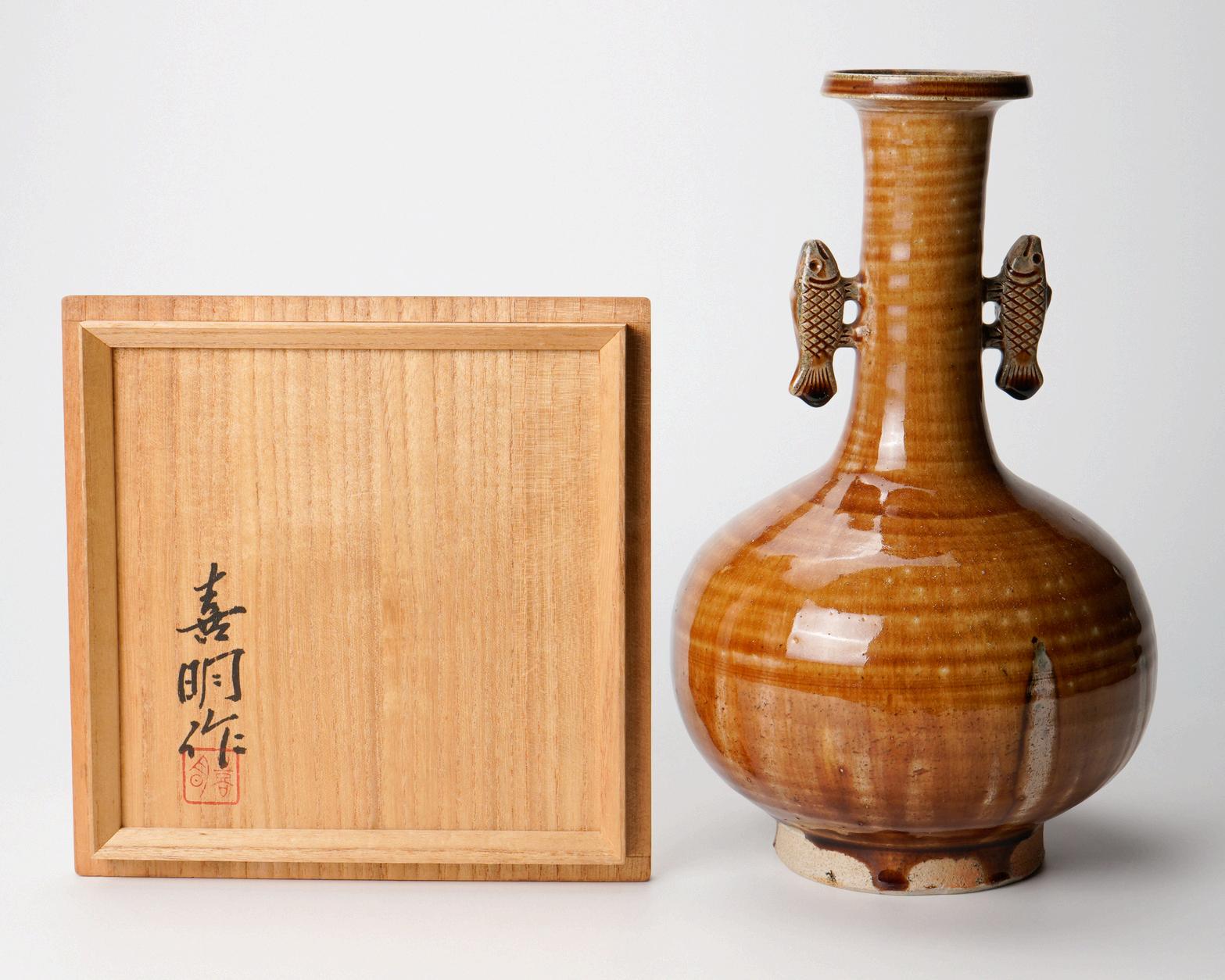
3. Yasuhara Kimei 安原 喜明 (1906-1980)
Brown-Glazed Flower Vase with Fish-Shaped Side Handles
⿂⽂⽿飴釉花⽣
Stoneware
Circa late 1940s
11 × 5 ⅞ in (28 × 15 cm)
Artist’s mark impressed on base Wood storage box inscribed: Hanaike, uomon-mimi 花⽣ ⿂⽂⽿ (Flower vase, fish-motif side handles); signed: Kimei saku 喜明 (Made by Kimei); sealed: Kimei 喜明
Related work: Nittenshi Hensan Iinkai ⽇展史編纂委員会 (Nittenshi Editorial Committee), Nittenshi 16 ⽇展史 16 (History of the National Salon 16), Nitten hen 1 ⽇展編 (The Nitten Exhibition 1), Tokyo, Nitten ⽇展, 1987, p 270 (no 31), a flower vase with fish-shaped side handles shown by Yasuhara’s mentor Itaya Hazan at the third Nitten exhibition, Tokyo, 1947
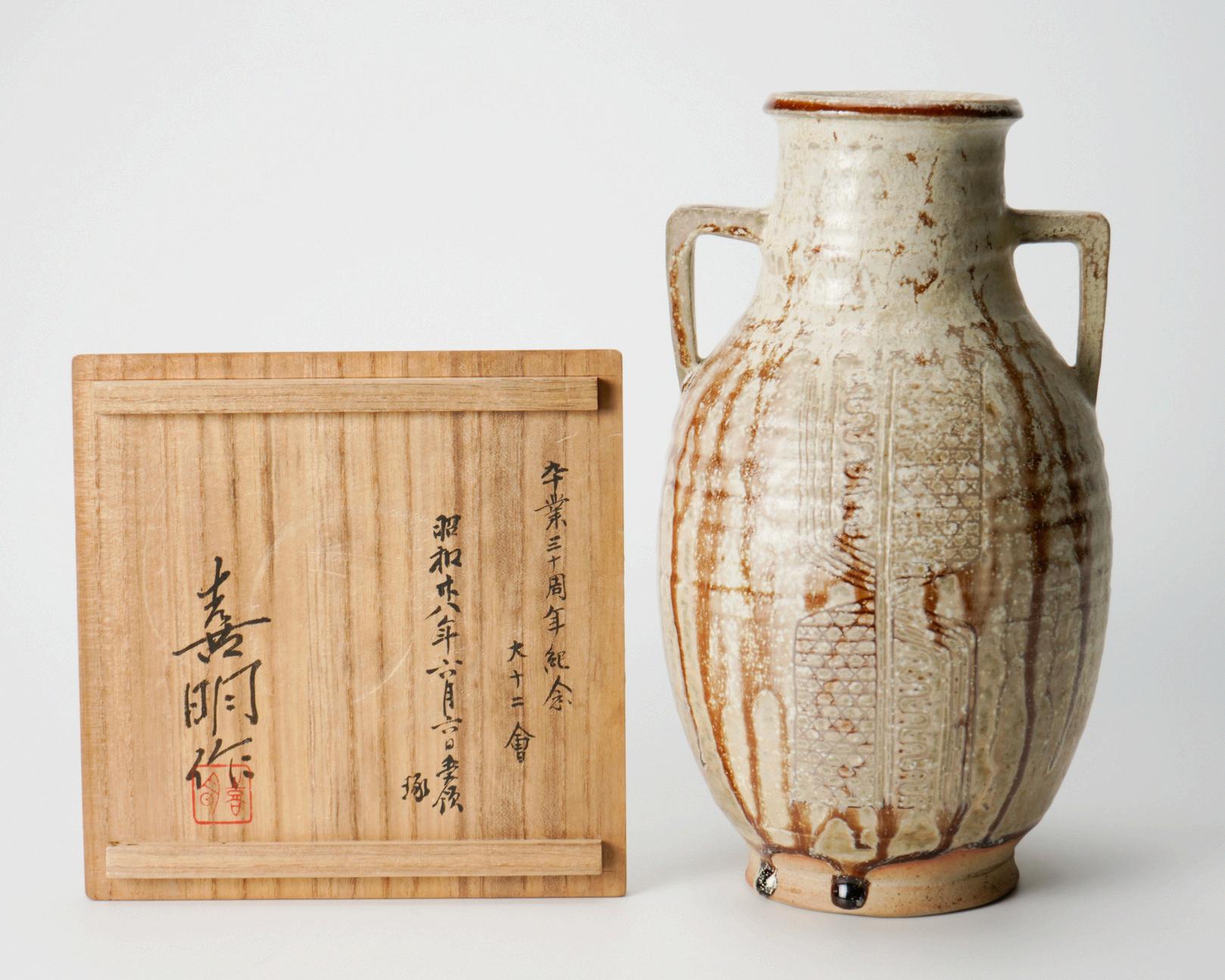
4. Yasuhara Kimei 安原 喜明 (1906-1980)
Side-Handled Flower Vase with Linear Engraved Patterns
線彫⽂⽿付花⽣
Stoneware Circa 1940s–early 1950s
9 ¾ × 5 ⅜ in (24 7 × 13 8 cm)
Artist’s mark impressed on base
Wood storage box inscribed: Hanaike senborimon 花⽣ 線彫⽂ (Flower vase, linear engraved patterns); Sōgyō sanjūnen kinen dai jūnikai Shōwa nijūhachinen rokugatsu muika 創業三⼗周年記念⼤ ⼗⼆会昭和廿⼋年六⽉六⽇ (recording an event on June 6, 1953); signed: Kimei saku 喜明 (Made by Kimei); sealed: Kimei 喜明
Related work: Meguro-ku Bijutsukan ⽬黒区美術館 (Meguro Museum of Art), Yasuhara Kimei ten 安原喜明展 (Yasuhara Kimei Exhibition), Tokyo, Nihon Keizai Shinbunsha, 1993, cat no 45 (dated circa 1946)
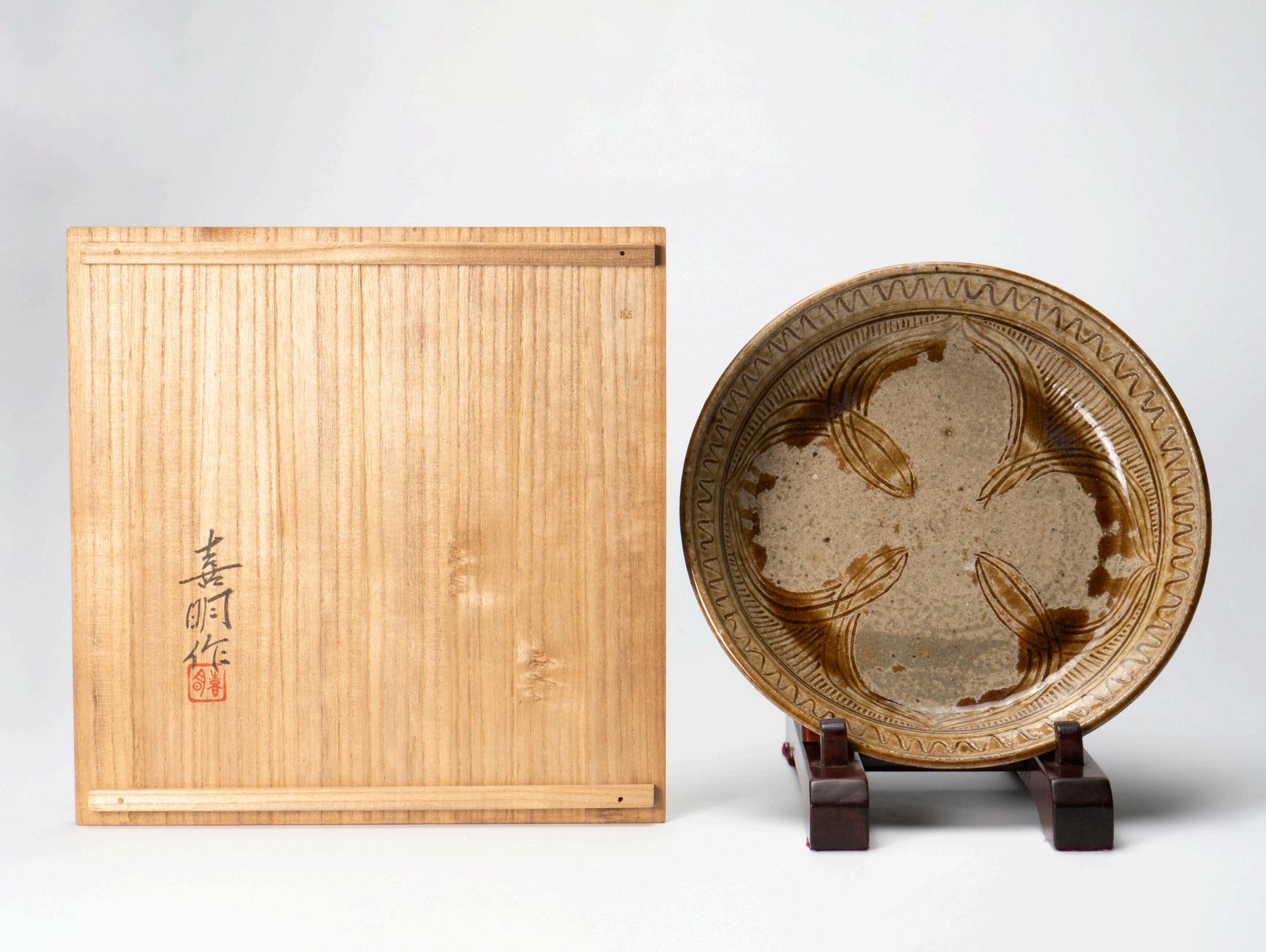
5 Yasuhara Kimei 安原 喜明 (1906-1980)
Plate with Spatula Drawing ヘラ描⽂⽫
Stoneware
Circa 1940s–early 1950s
1 ⅞ × 10 ½ in (4 8 × 26 6 cm)
Wood storage box inscribed: Sara, Hera-byō mon ⽫ ヘラ描⽂ (Plate, spatula-drawn designs); signed Kimei saku 喜明作 (Made by Kimei); sealed: Kimei 喜明
With a wood display stand
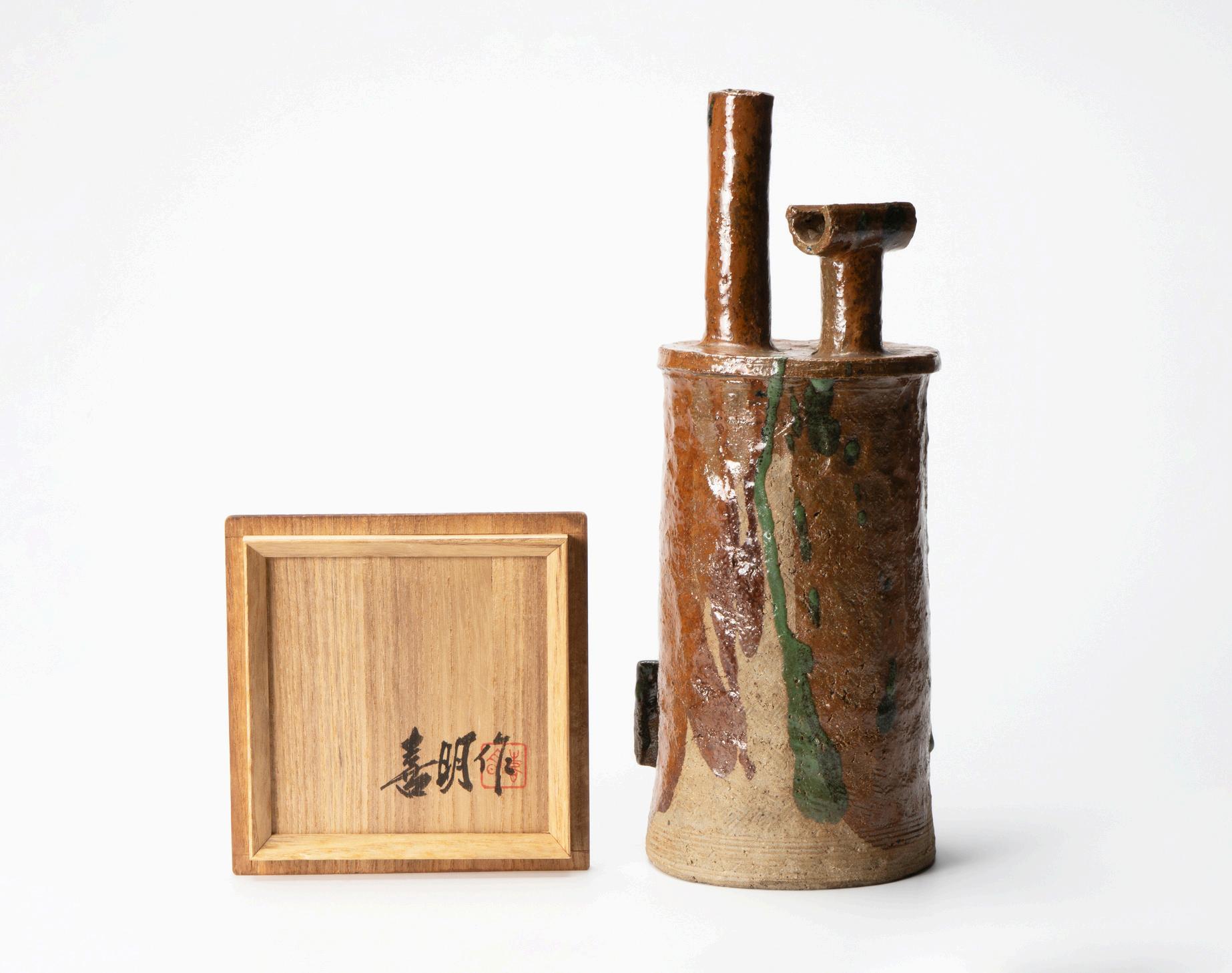
6 Yasuhara Kimei 安原 喜明 (1906-1980)
Flower Vase 花挿
Glazed stoneware
Circa 1970
12 ¼ × 5 ¼ × 4 ⅝ in (31 × 13 5 × 11 6 cm)
Artist’s mark impressed on base
Wood storage box inscribed: Hanasashi 花挿 (Flower vase); signed Kimei saku 喜明作 (Made by Kimei); sealed: Kimei 喜明
7 Yasuhara Kimei 安原 喜明 (1906-1980)
Flower Vase with Yōhen Glaze and “Eight Directions and Southern Seas” Design 窯変釉⽂⼋⽅南海図花瓶
Stoneware
Circa 1940s
7 ⅝ × 9 in (19 5 × 22 7 cm)
Artist’s mark impressed on base
Wood storage box inscribed: Kabin, Yōhen’yū senkokumon Happō Nankai zu 窯変 釉線刻⽂⼋⽅南海図 (Yōhen glaze, incised with the “Eight Directions and Southern Seas” design); signed Kimei saku 喜明作 (Made by Kimei); sealed: Kimei 喜明
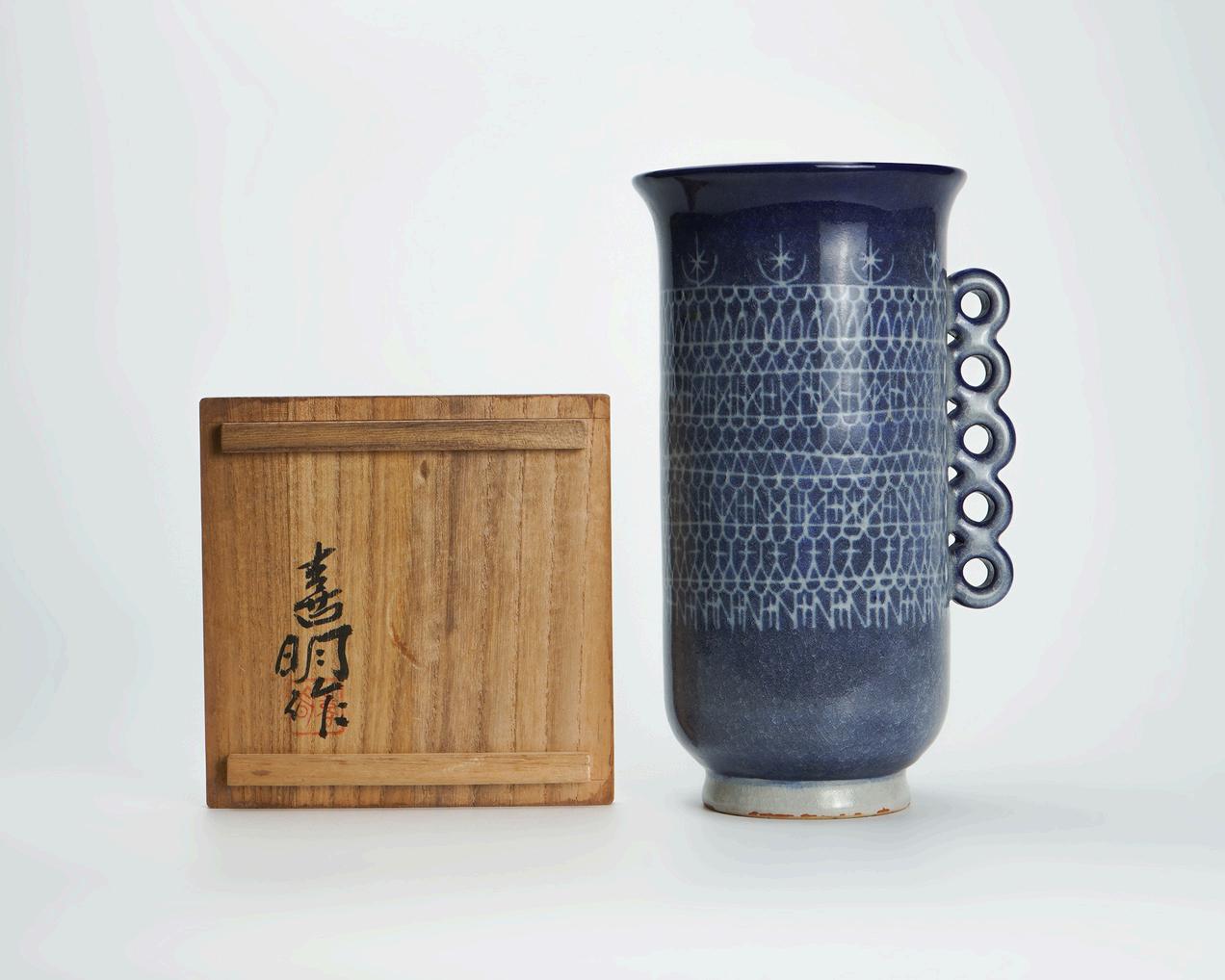
8 Yasuhara Kimei 安原 喜明 (1906-1980)
Flower Vase with Dark Blue Glaze and Linear Engraved Patterns
炻器線彫⽂紺泥花⽣
Stoneware
Circa mid-1950s
8 ¼ × 4 ⅞ in (21 × 12 5 cm)
Artist’s mark impressed on base
Wood storage box inscribed: Hanaike, senborimon 花⽣ 線彫⽂ (Flower vase, linear engraved patterns); signed: Kimei saku 喜明 (Made by Kimei); sealed: Kimei 喜明
Similar works: Meguro-ku Bijutsukan ⽬黒区美術館 (Meguro Museum of Art), Yasuhara Kimei ten 安原喜明展 (Yasuhara Kimei Exhibition), Tokyo, Nihon Keizai Shinbunsha, 1993, cat nos 74 and 75 (both dated 1955; cat no 75 in the collection of the Sōgetsu Bijutsukan 草⽉美術館 [Sogetsu Museum of Art], Tokyo)
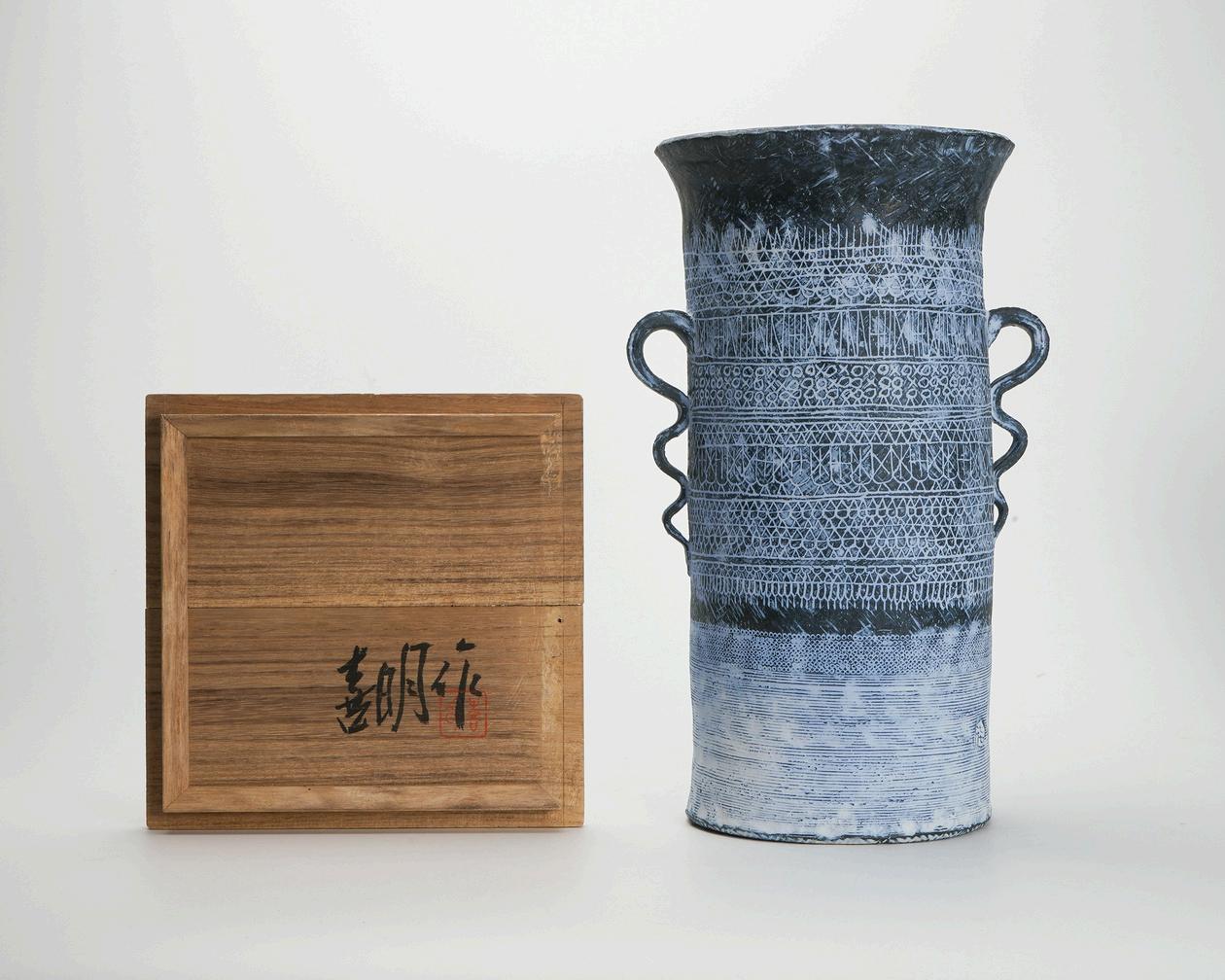
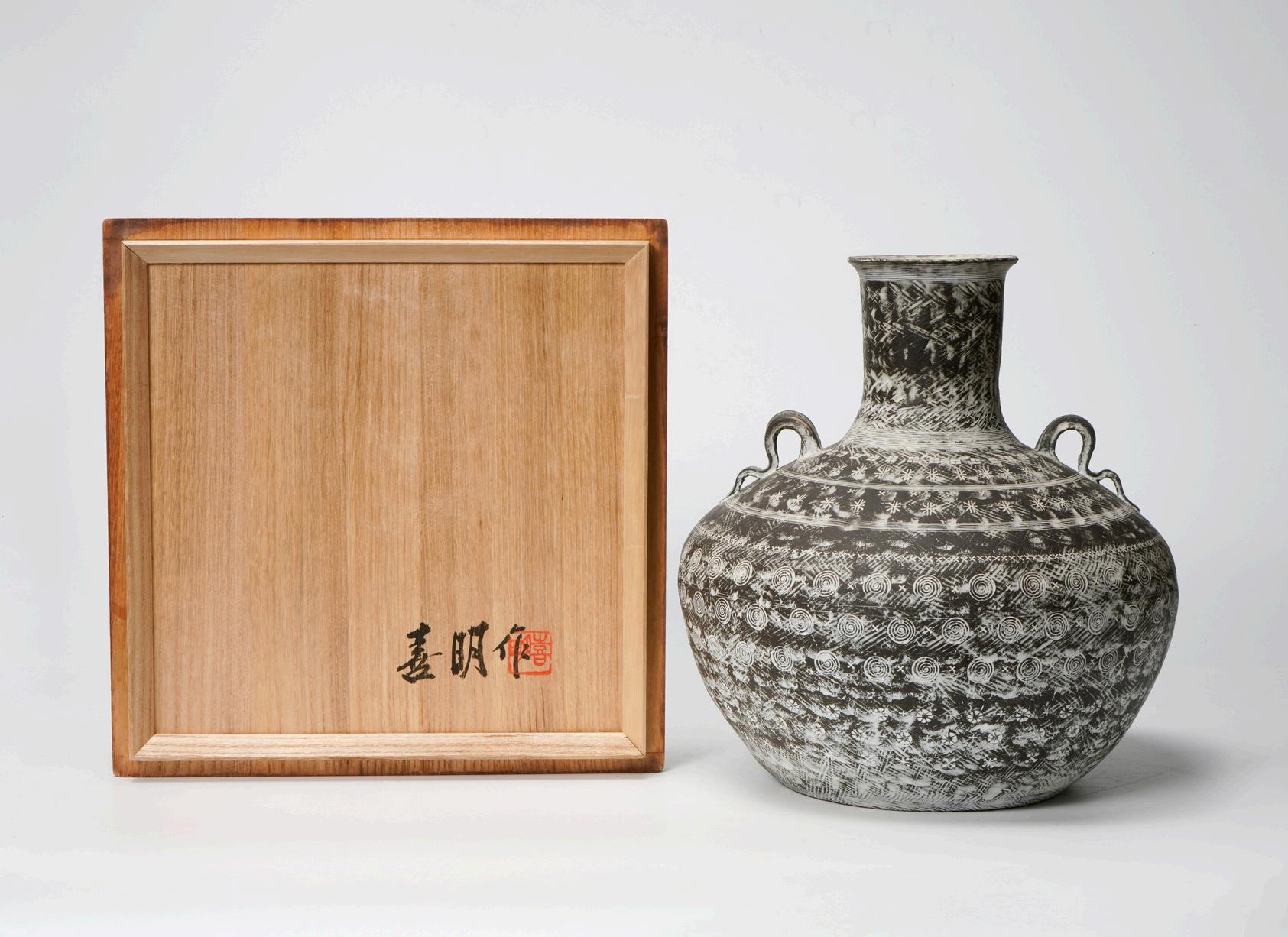
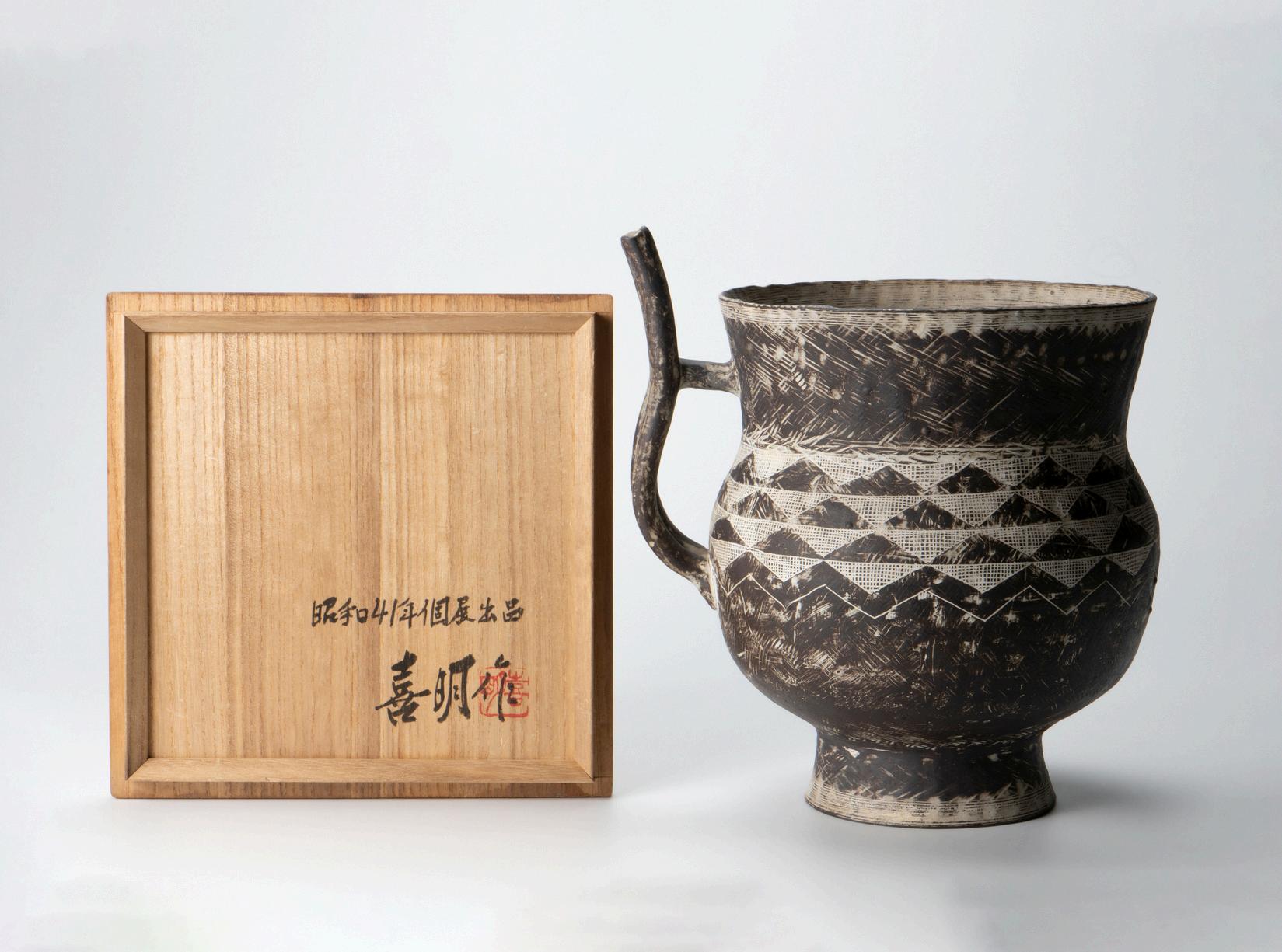
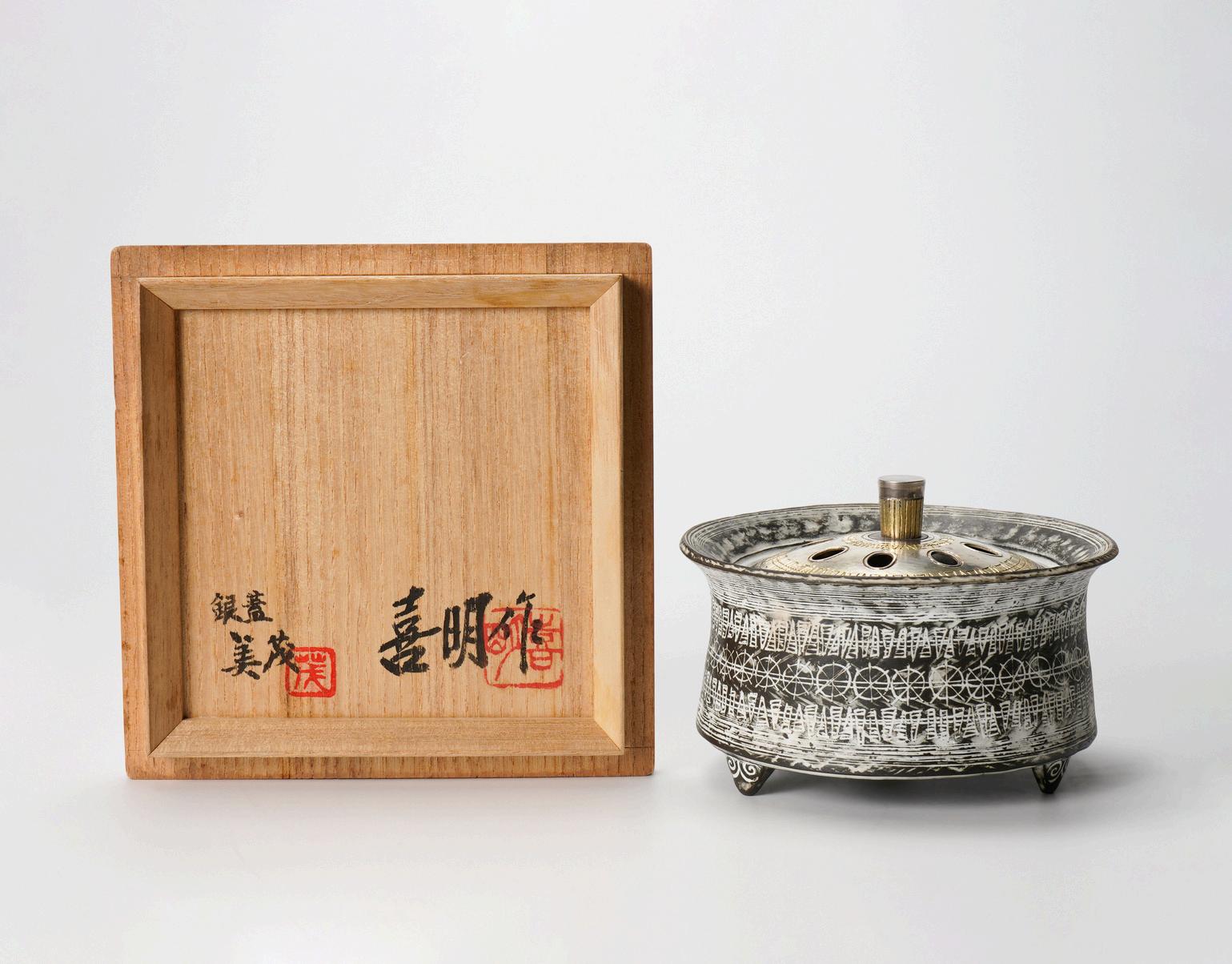
9 Yasuhara Kimei 安原 喜明 (1906-1980)
Flower Vase with Linear Engraving in White Slip Inlay
炻器線彫⽂⽩泥象嵌花挿
Stoneware
Circa 1970s
10 ⅝ × 5½ in (27 × 14 cm)
Wood storage box inscribed: Hanasashi, sekki senbori hakudei zōgan 花挿 炻器線彫⽩泥象嵌 (Flower vase, stoneware, linear engraving, white slip inlay); signed: Kimei saku 喜明 (Made by Kimei); sealed: Kimei 喜明
10 Yasuhara Kimei 安原 喜明 (1906-1980)
Flower Vase with Matte Black Glaze and Linear Engraving
炻器線彫黒釉花⽣
Stoneware
Circa 1970s
10 ⅛ × 9 ½ in (25 9 × 24 1 cm)
Artist’s mark impressed on base
Wood storage box inscribed: Hanaike, sekki 花⽣ 炻器 (Flower vase, stoneware); signed: Kimei saku 喜明作 (Made by Kimei); sealed: Kimei 喜明
11 Yasuhara Kimei 安原 喜明 (1906-1980)
Handled Flower Vase with Yakishime Glaze and Linear Engraving 焼〆⼿付花挿
Stoneware
1966
10 × 9 × 7 in (lip diameter) (25 4 × 22 9 × 17 8 cm)
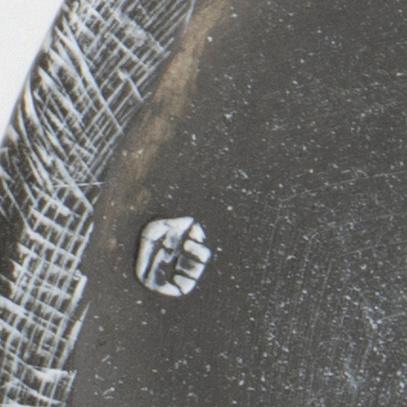
Artist’s mark on base in roman script: Kimey
Wood storage box inscribed: Yakishime tetsuki hanasashi 焼〆⼿付花
挿 (High-fired unglazed handled flower vase); dated and signed: Shōwa 41 nen koten shuppin Kimei saku 昭和41年個展出品 喜明作 (Made by Kimei, exhibited in my 1966 one-man show)
Exhibited: “Yasuhara Kimei sakutōten 安原喜明作陶展 (Exhibition of Ceramics by Yasuhara Kimei),” Tokyo, Mitsukoshi Nihonbashi, April 12–17, 1966
Minor professional restoration to the rim
12 Yasuhara Kimei 安原 喜明 (1906-1980)
Incense Burner with Matte Black Glaze and Engraved Geometric Patterns 炻器線彫⽂幾何⽂黒釉⾹炉
Stoneware; silver and gilt lid by Teramoto Yoshishige 寺本美茂 (1916–1992)
Circa 1960s
3 ⅛ × 4 ⅝ in (8 × 11 8 cm)
Artist’s mark impressed in center of base
Wood storage box inscribed: Kōro, sekki ⾹炉 炻器 (Incense burner, stoneware); signed: Kimei saku 喜明作 (Made by Kimei); Ginbuta Yoshishige 銀蓋美茂 (Silver lid by Yoshishige); sealed: Kimei 喜明 and Yoshishige 美茂
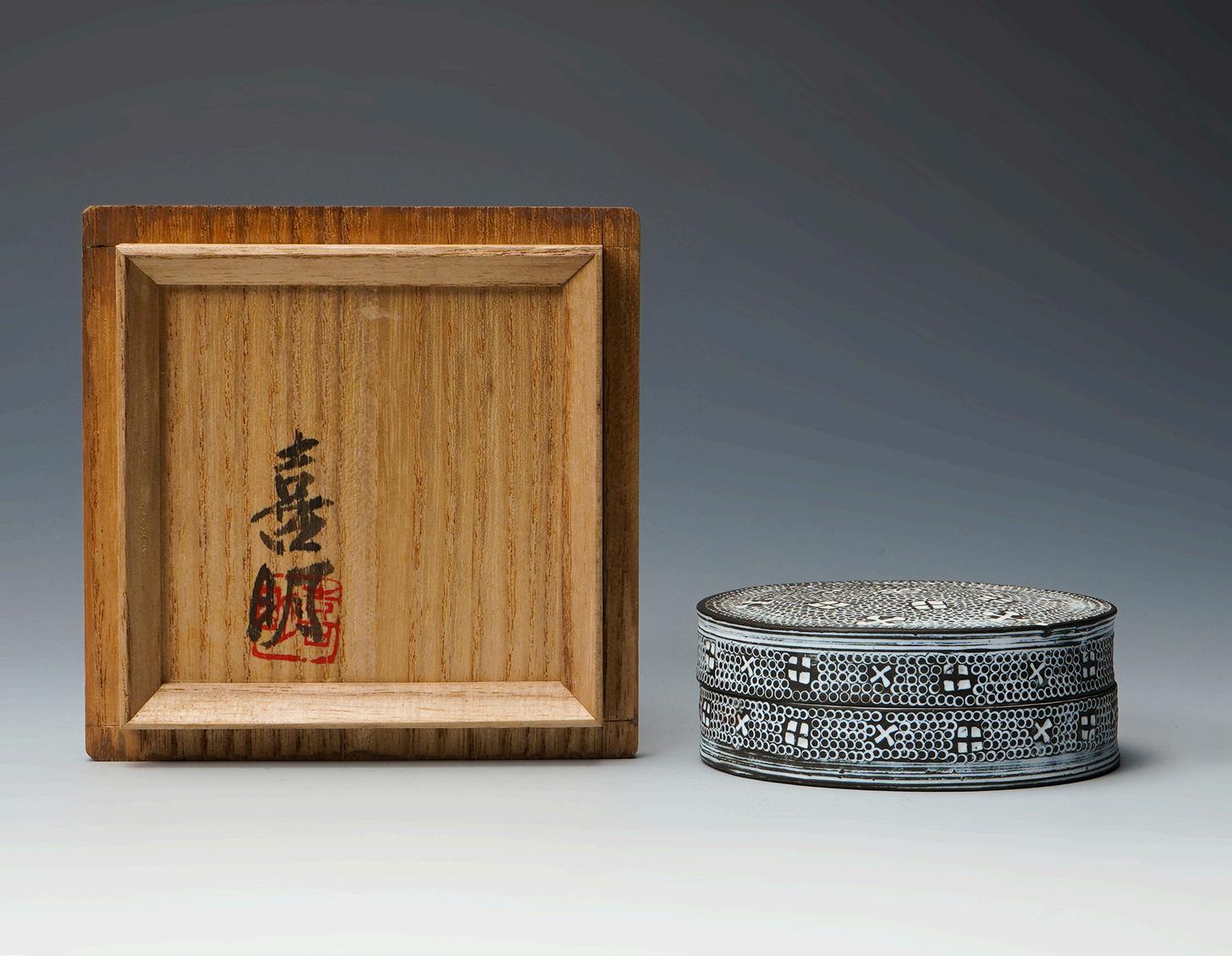
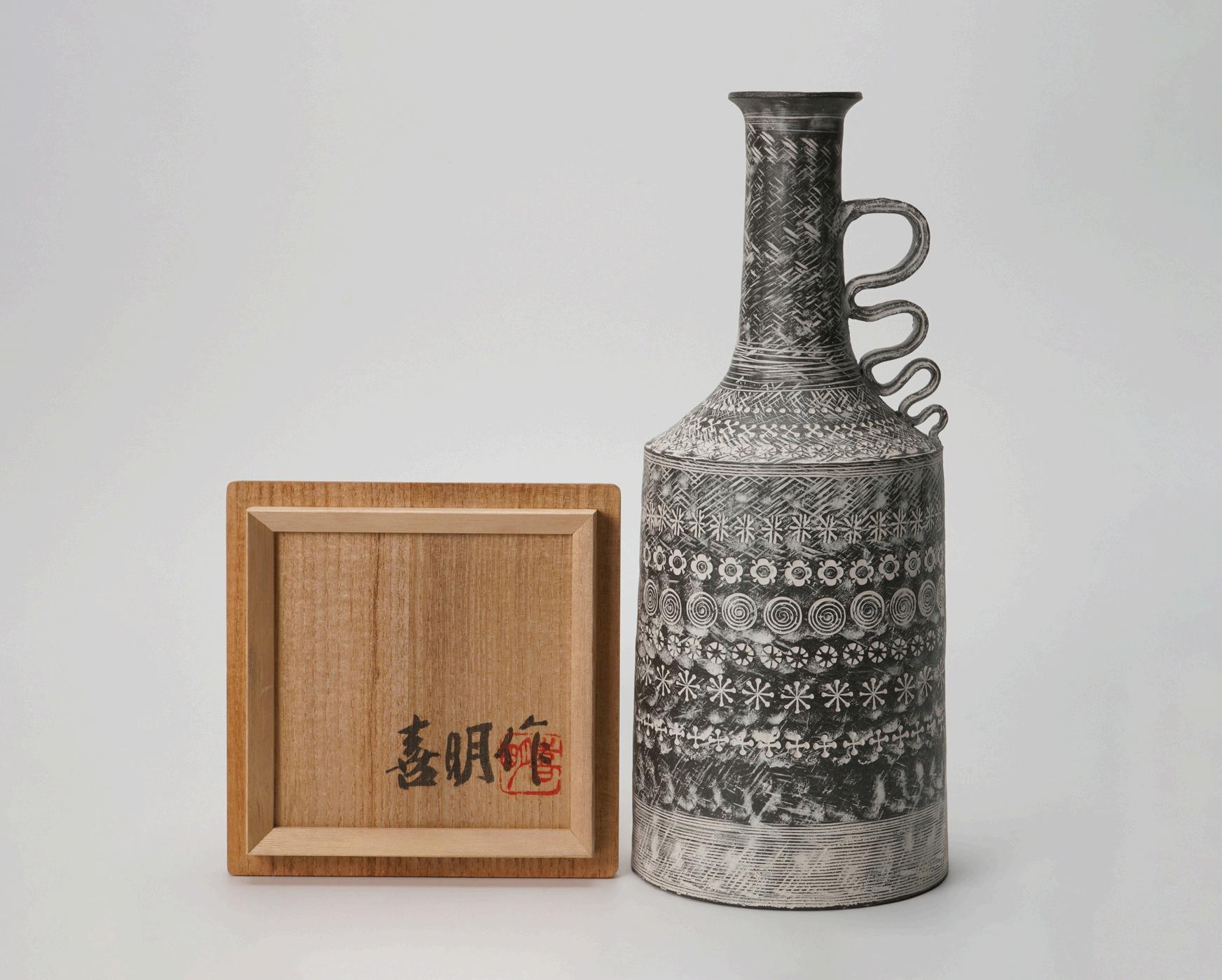
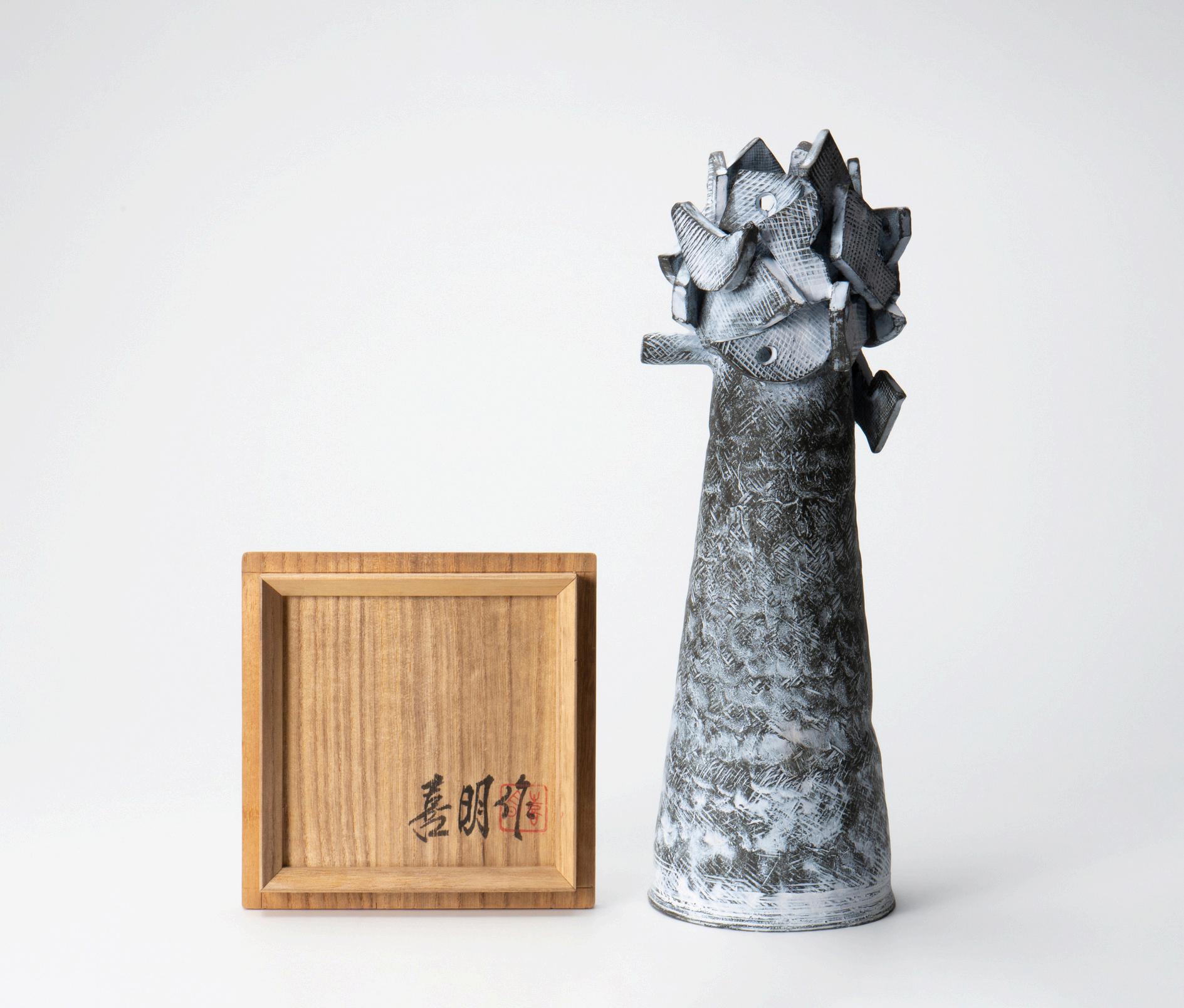
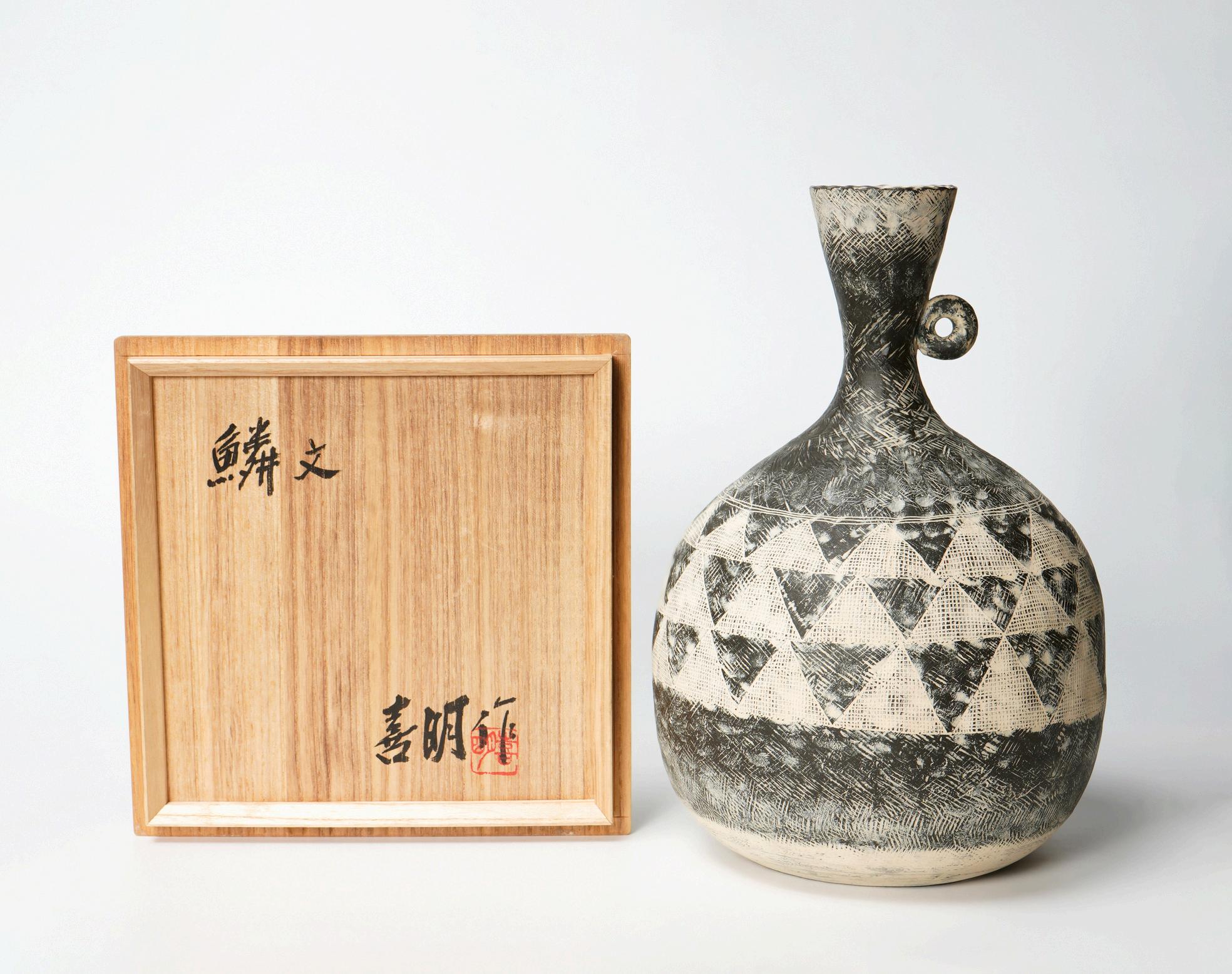
13 Yasuhara Kimei 安原 喜明 (1906-1980)
Incense Box with Matte Black Glaze and Linear Engraved Patterns
炻器線彫⽂黒釉⾹合
Stoneware
Circa late 1930s
1 × 2 ½ in (2 5 × 6 5 cm)
Artist’s mark impressed in center of base
Wood storage box inscribed: Kōgō, sekki ⾹合 炻器 (Incense box, stoneware); signed and sealed: Kimei 喜明
Similar works: Meguro-ku Bijutsukan ⽬黒区美術館 (Meguro Museum of Art), Yasuhara Kimei ten 安原喜明展 (Yasuhara Kimei Exhibition), Tokyo, Nihon Keizai Shinbunsha, 1993, cat nos 32 and 36 (made in 1936 and 1939)
14 Yasuhara Kimei 安原 喜明 (1906-1980)
Flower Vase with Matte Black Glaze and Linear Engraved Patterns
炻器線彫⽂黒釉花器
Stoneware
Circa late 1960s–1980s
10 ¼ × 4 ⅜ in (26 × 11 cm)
Wood storage box inscribed: Sekki kaki 炻器花器 (Stoneware flower vessel); signed Kimei saku 喜明作 (Made by Kimei); sealed: Kimei 喜明
Similar work: Meguro-ku Bijutsukan ⽬黒区美術館 (Meguro Museum of Art), Yasuhara Kimei ten 安原喜明展 (Yasuhara Kimei Exhibition), Tokyo, Nihon Keizai Shinbunsha, 1993, cat no 116 (made in 1969)
15 Yasuhara Kimei 安原 喜明 (1906-1980)
Flower Vase with Matte Black Glaze and Linear Engraving
炻器線彫⽂花挿
Stoneware
Circa 1961
12 × 4 in (30 4 × 10 1 cm)
Artist’s mark impressed on base
Wood storage box inscribed: Hanasashi, sekki shokubutsu
花挿 炻器植物 (Flower vase, stoneware plant form); signed Kimei saku 喜明作 (Made by Kimei); sealed: Kimei 喜明
Similar works: Meguro-ku Bijutsukan ⽬黒区美術館 (Meguro Museum of Art), Yasuhara Kimei ten 安原喜明展 (Yasuhara Kimei Exhibition), Tokyo, Nihon Keizai Shinbunsha, 1993, cat no 86 (dated 1961)
Minor professional restoration to the rim
16 Yasuhara Kimei 安原 喜明 (1906-1980)
Flower Vase with Matte Black Glaze and Linear Engraving
炻器線彫黒釉花挿
Stoneware
Circa 1970s
12 × 7 ½ in (30 4 × 19 cm)
Artist’s mark impressed on base
Wood storage box inscribed: Hanasashi, sekki senborimon
花挿 炻器線彫⽂ (Flower vase, stoneware, linear engraved patterns); signed Kimei saku 喜明作 (Made by Kimei); sealed: Kimei 喜明
Example with similar patterning: Meguro-ku Bijutsukan ⽬黒区美術館 (Meguro Museum of Art), Yasuhara Kimei ten 安原喜明展 (Yasuhara Kimei Exhibition), Tokyo, Nihon Keizai Shinbunsha, 1993, cat no 136 (dated 1978)
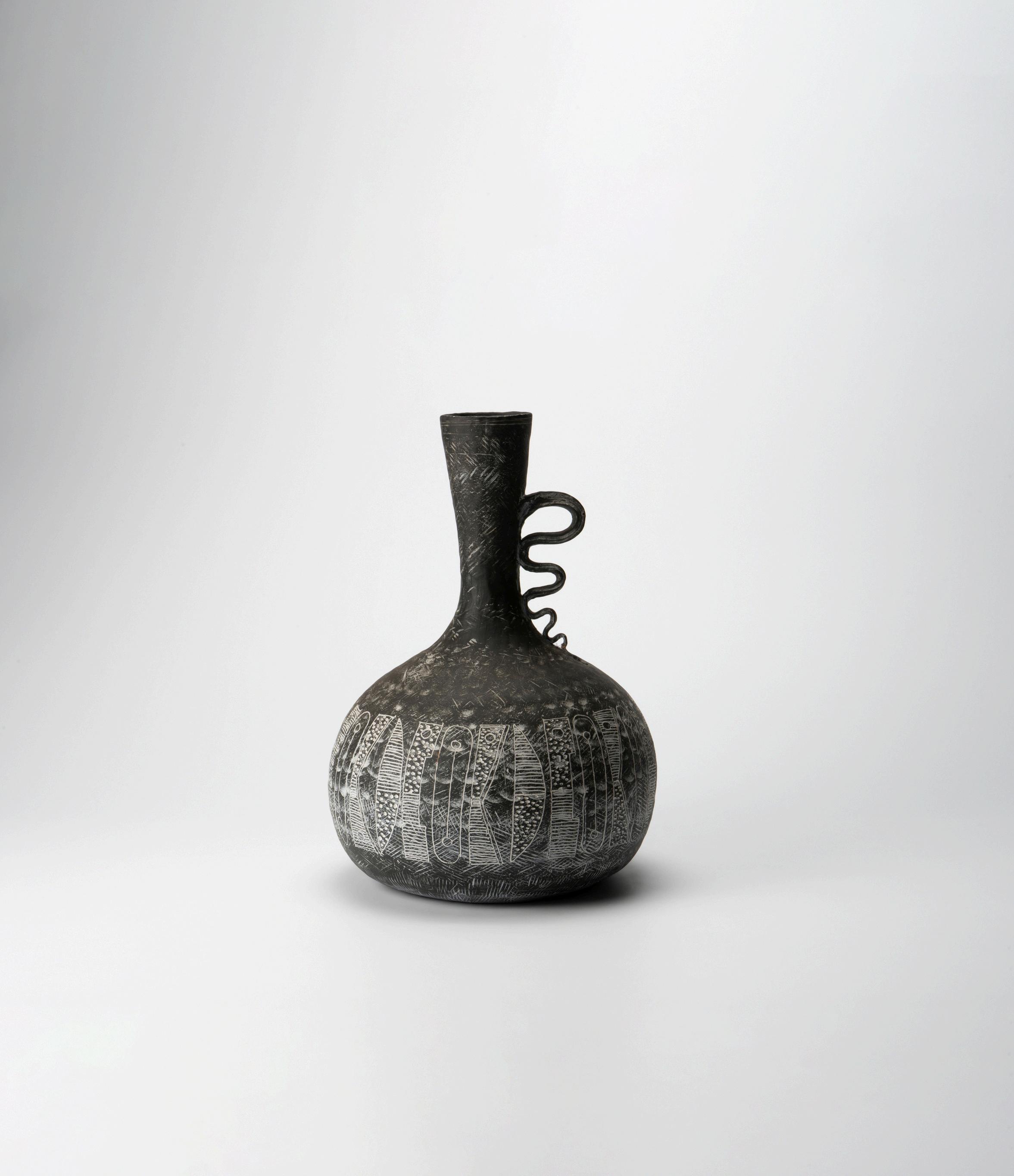
17. Yasuhara Kimei 安原 喜明 (1906-1980)
Flower Vase with Matte Black Glaze and Linear Engraving
炻器線彫⽂黒釉花⽣
Stoneware
Circa late 1960s–1970s
10 ⅞ × 7 ½ in (27 7 × 19 cm)
Artist’s mark impressed on base
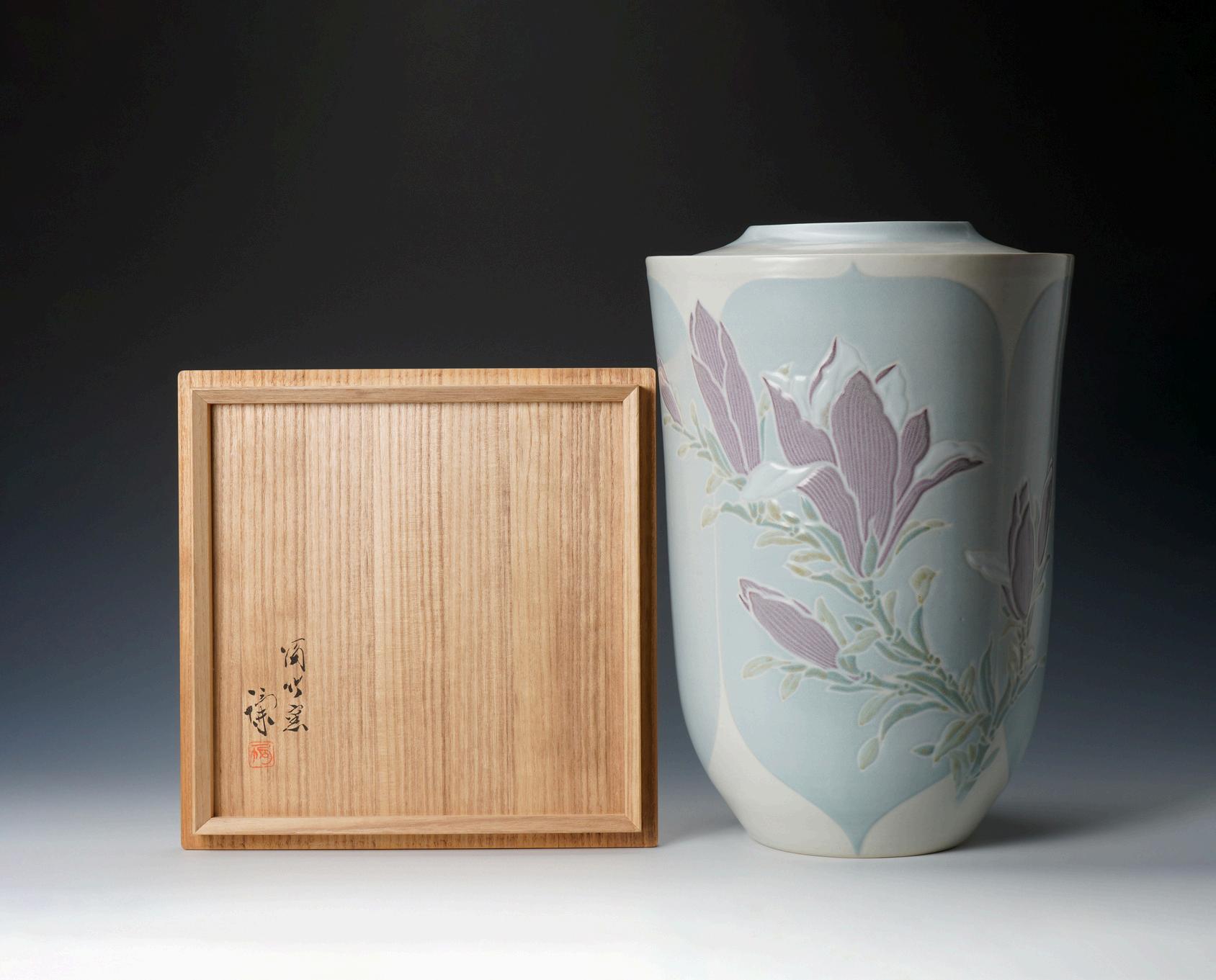
18 Miyanohara Ken 宮之原 謙 (1898-1977)
Jar with Polychrome Magnolia Design 彩磁⽊蓮⽂壺
Porcelain
1970s
14 ⅝ × 10 in (37 × 25 4 cm)
Sealed on the base: Ken 謙
Wood storage box inscribed: Saiji mokurenmon tsubo 彩磁⽊蓮⽂壺 (Jar with polychrome magnolia design); signed: Fuchikuyō 富⽵窯 (Fuchiku Kiln), Ken 謙; sealed: Ken 謙
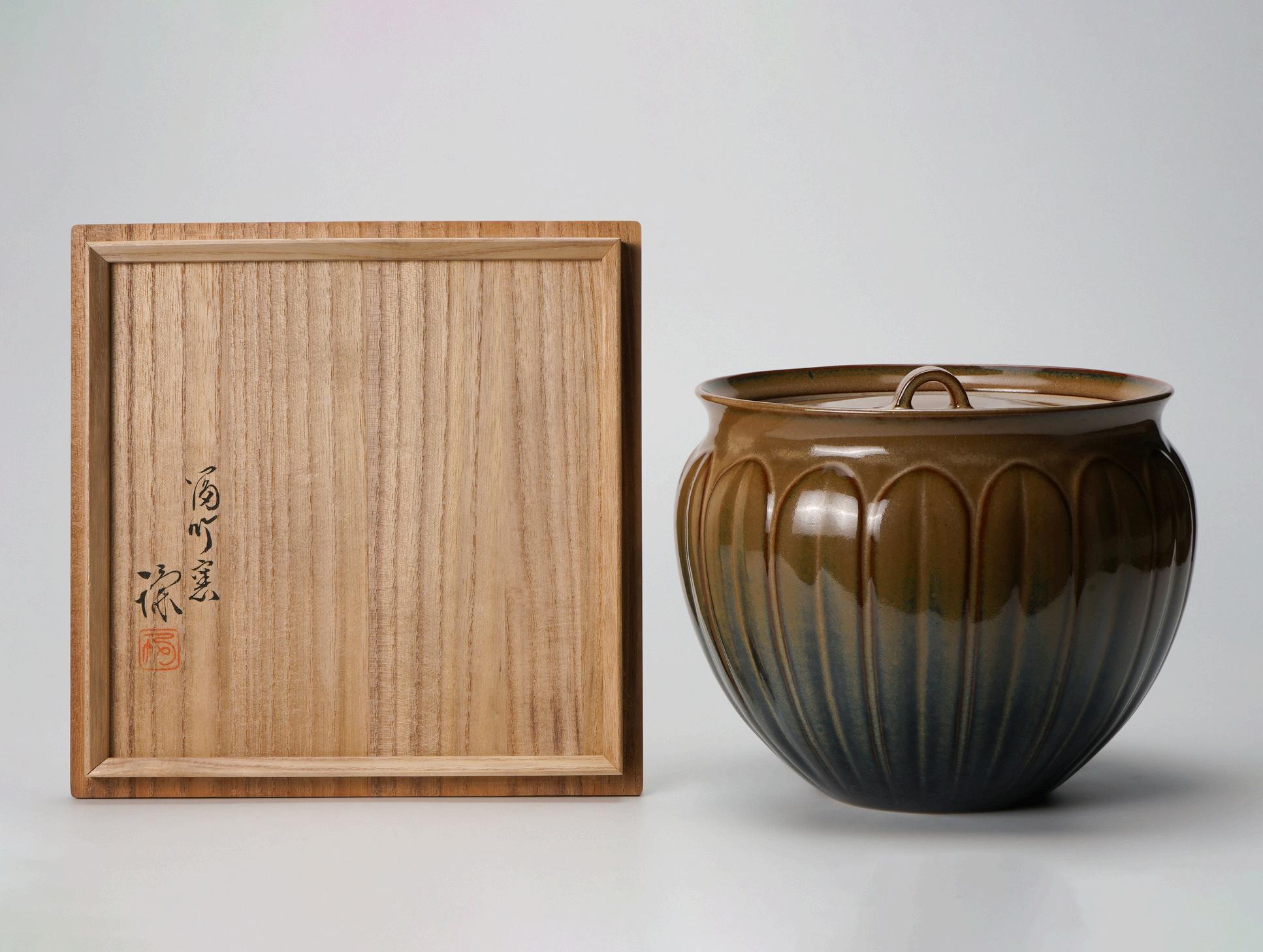
19 Miyanohara Ken 宮之原 謙 (1898-1977)
Chrysanthemum-Shaped Water Jar with Gradated Glaze
菊形暈釉⽔指
Stoneware Circa 1970s
6 ¼ × 7 ⅞ in (16 × 20 cm)
Sealed on the base: Ken 謙
Wood storage box inscribed: Kikugata bokashi-yū mizusashi 菊形暈釉 ⽔指 (Chrysanthemum-shaped water jar with gradated glaze); signed: Fuchikuyō 富⽵窯 (Fuchiku Kiln), Ken 謙; sealed: Ken 謙
20 Miyanohara Ken 宮之原 謙 (1898-1977)
Water Jar with Engraved Peony Patterns 牡丹⽂刻釉⽔指
Stoneware; lacquer lid
Circa 1965
5 ½ × 6 ⅝ in. (14 × 16.8 cm)
Sealed on the base: Ken 謙
Wood storage box inscribed: Botan-mon kokuyū mizusashi 牡丹⽂刻 釉⽔指 (Water jar with engraved peony patterns); signed: Fuchikuyō 富⽵窯 (Fuchiku Kiln), Ken 謙; sealed: Ken 謙
Similar work: Philadelphia Museum of Art, a mizusashi with grape vines in the same technique, exhibited at the 15th Gotō Ten exhibition, 1965
21 Miyanohara Ken 宮之原 謙 (1898-1977)
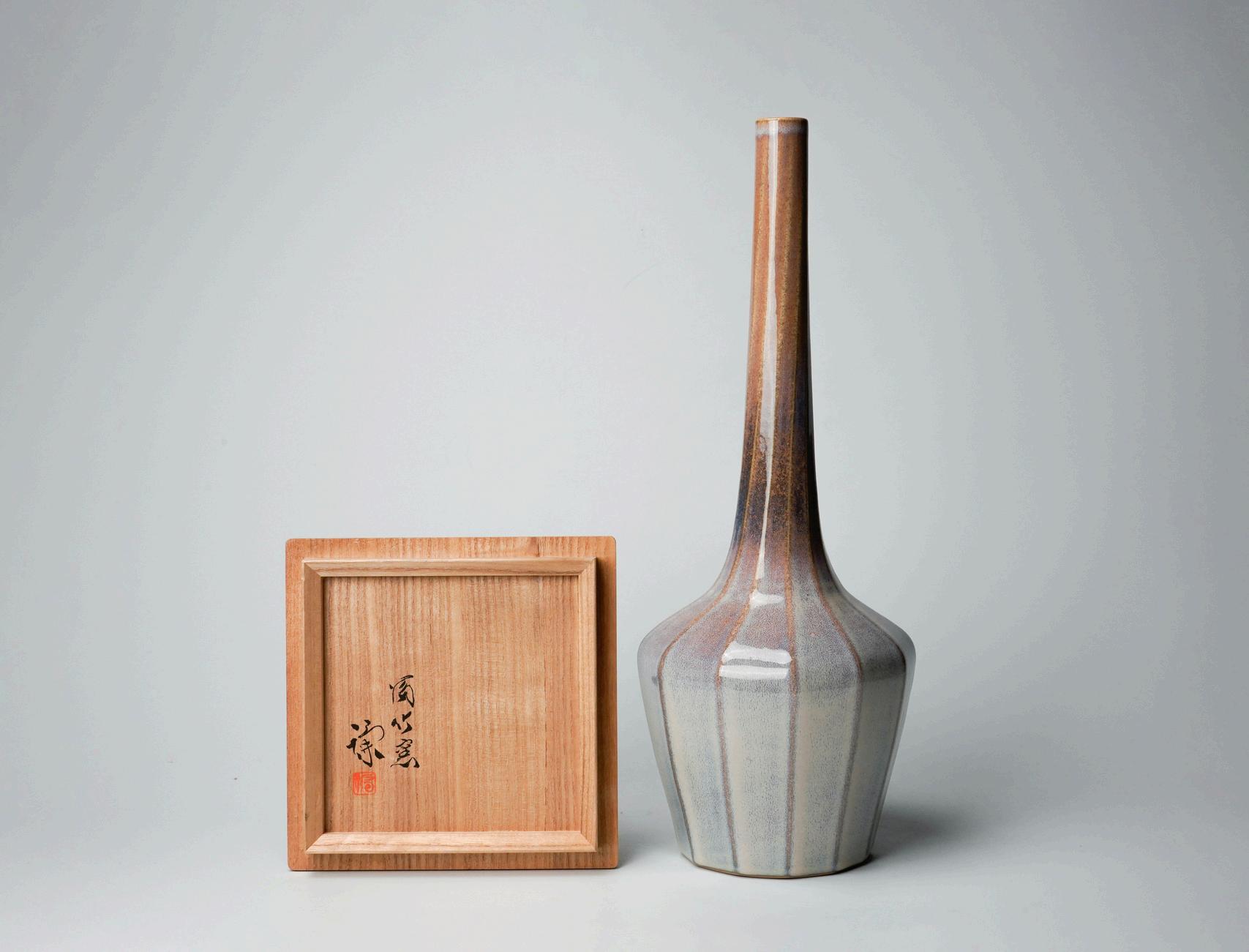
Narrow-Necked Flower Vase with Yōhen Glaze 窯変捻⼝花挿
Stoneware
Circa 1960s–1970s
15 × 5 ⅝ in (38 1 × 14 2 cm)
Sealed on the base: Ken 謙
Wood storage box inscribed: Yōhen nejikuchi hanasashi 窯変捻⼝花挿 (Narrow-necked flower vase with yōhen glaze); signed: Fuchikuyō 富 ⽵窯 (Fuchiku Kiln), Ken 謙; sealed: Ken 謙
22 Miyanohara Ken 宮之原 謙 (1898-1977)
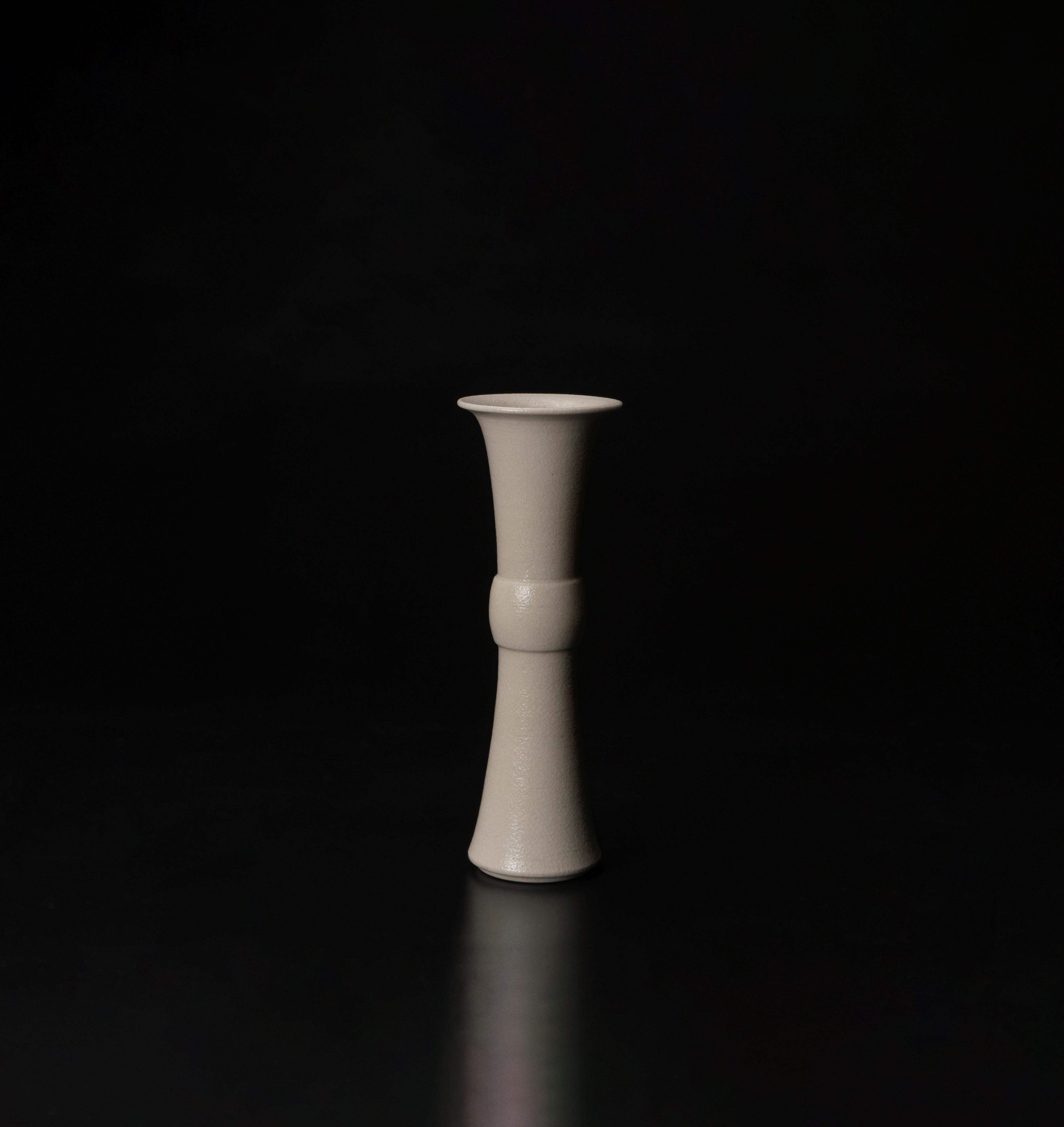
White Flower Vase in the Form of an Archaic Ritual Bronze Vessel
⽩磁尊式花瓶
Porcelain
Circa 1960s–1970s
9 ¼ × 3 ⅛ in (23 4 × 7 8 cm)
Sealed on the base: Ken 謙
Wood storage box signed: Fuchikuyō 富⽵窯 (Fuchiku Kiln), Ken 謙; sealed: Ken 謙
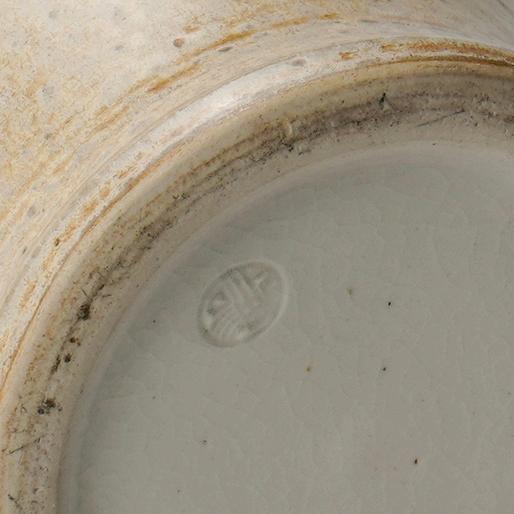
23 Miyanohara Ken 宮之原 謙 (1898-1977)
Jar with Crystalline Glaze and Grass Design 結晶品釉草⽂壺
Stoneware
Circa 1950s–1960s
16 × 7 ⅛ in (40 5 × 18 cm)
Sealed on the base: Ken 謙
Minor professional restoration to one handle
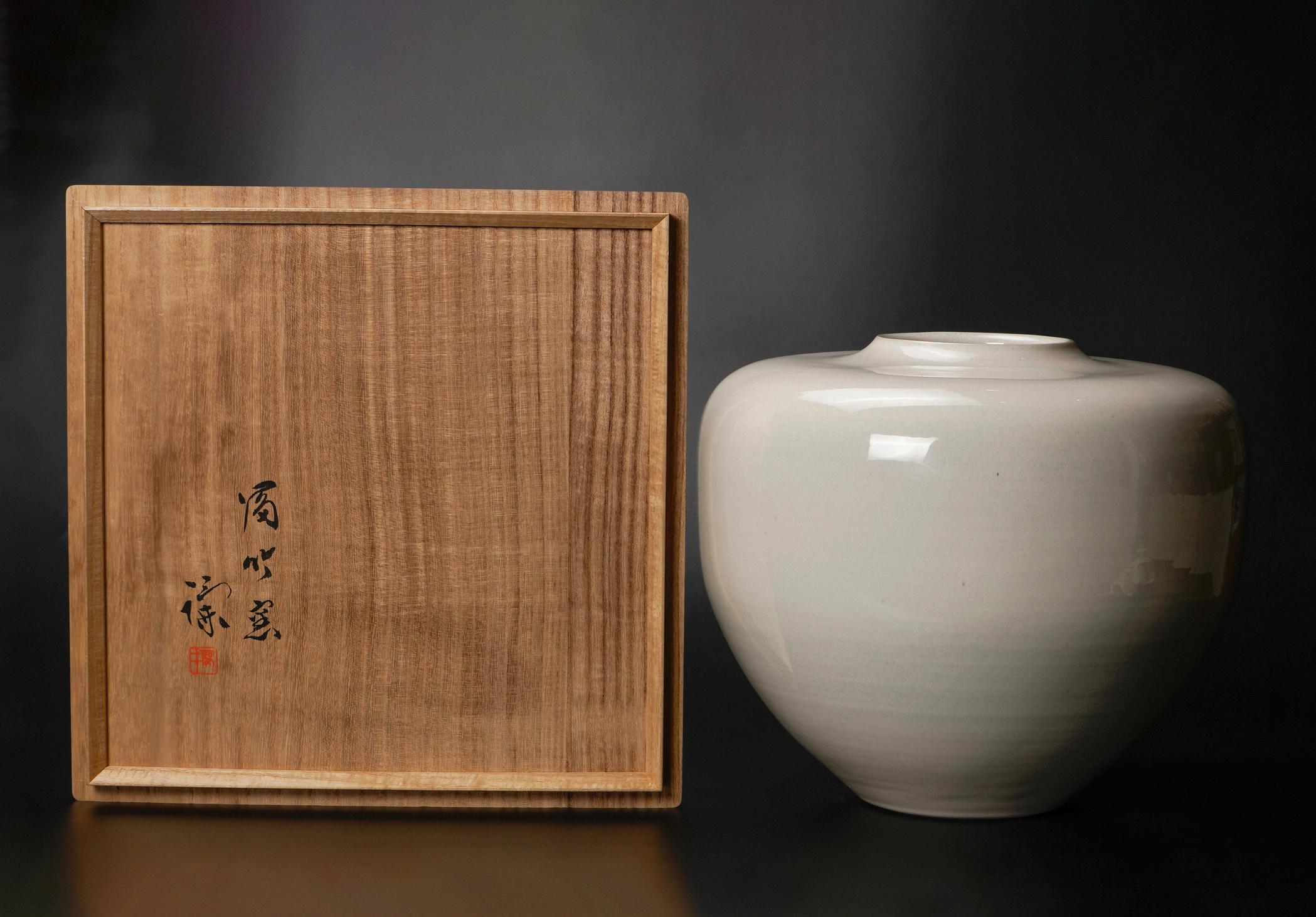
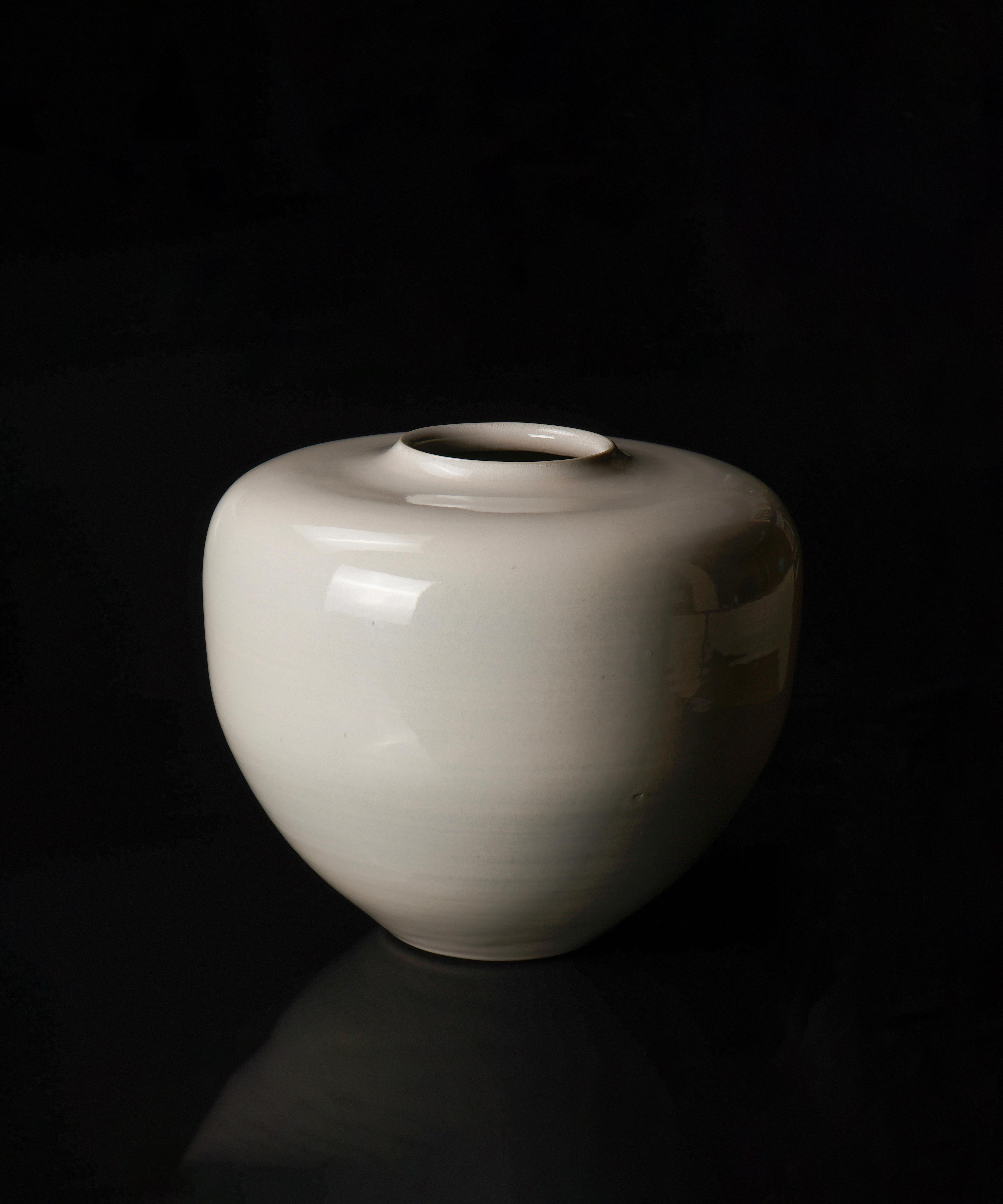
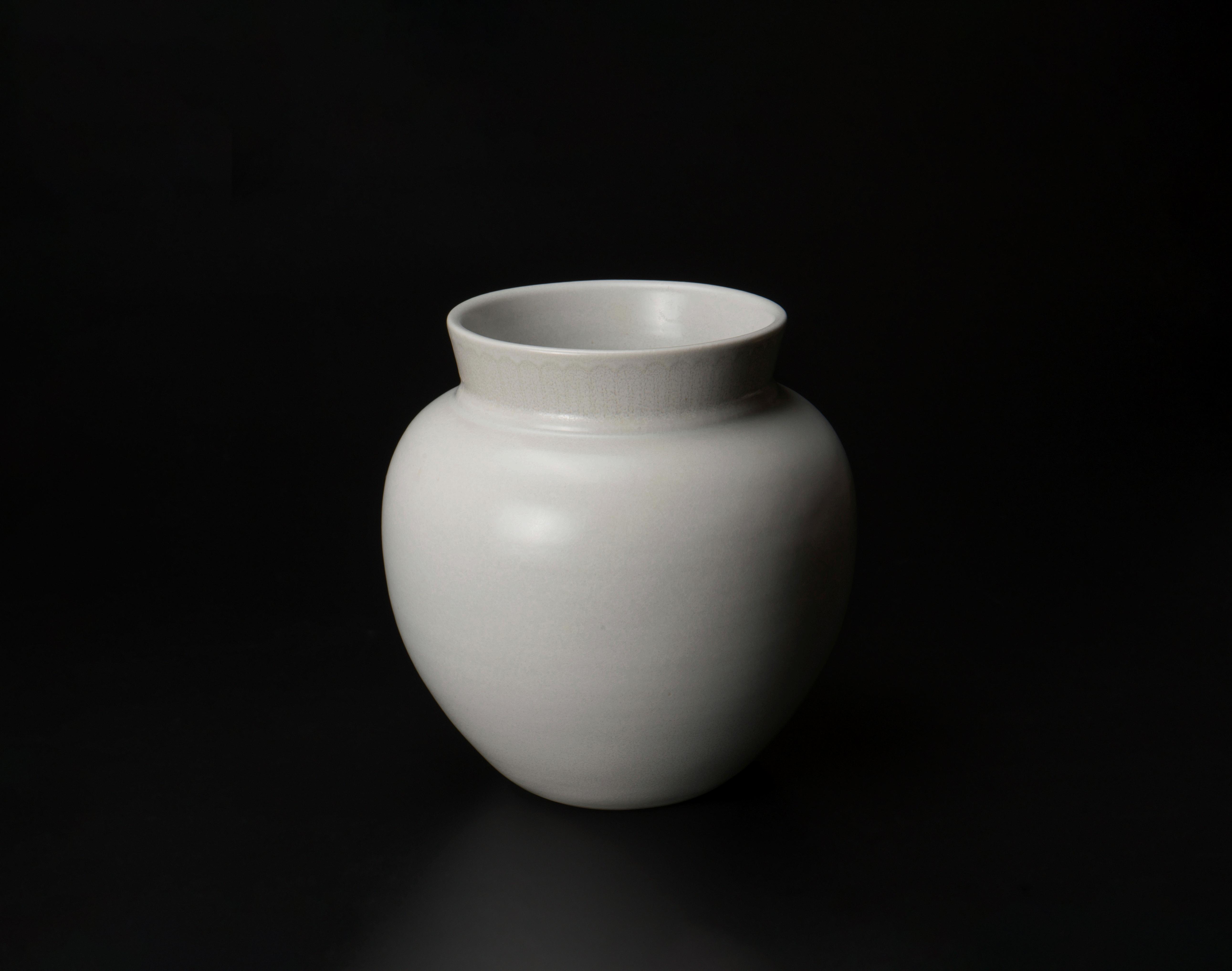
24 Miyanohara Ken 宮之原 謙 (1898-1977)
Large Jar with Radiant White Glaze ⽩燿磁⼤壺
Porcelain
Circa 1960s–1970s
10 ¼ × 11 ⅜ in (26 × 29 cm)
Sealed on the base: Ken 謙
Wood storage box inscribed: Hakuyōji tsubo ⽩燿磁壺 (Jar with radiant white glaze); signed: Fuchikuyō 富⽵窯 (Fuchiku Kiln), Ken 謙; sealed: Ken 謙
Published: Sugiura Sumiko 杉浦澄⼦, “Seichō, jiryū o koete: Tokushū: Miyanohara Ken no me 清澄、時流を超えて 特集 : 宮之原 謙の眼 (Clear and Serene, Transcending the Passage of Time: A Special Feature on Ken Miyanohara),” Menome ⽬の眼, November 1979
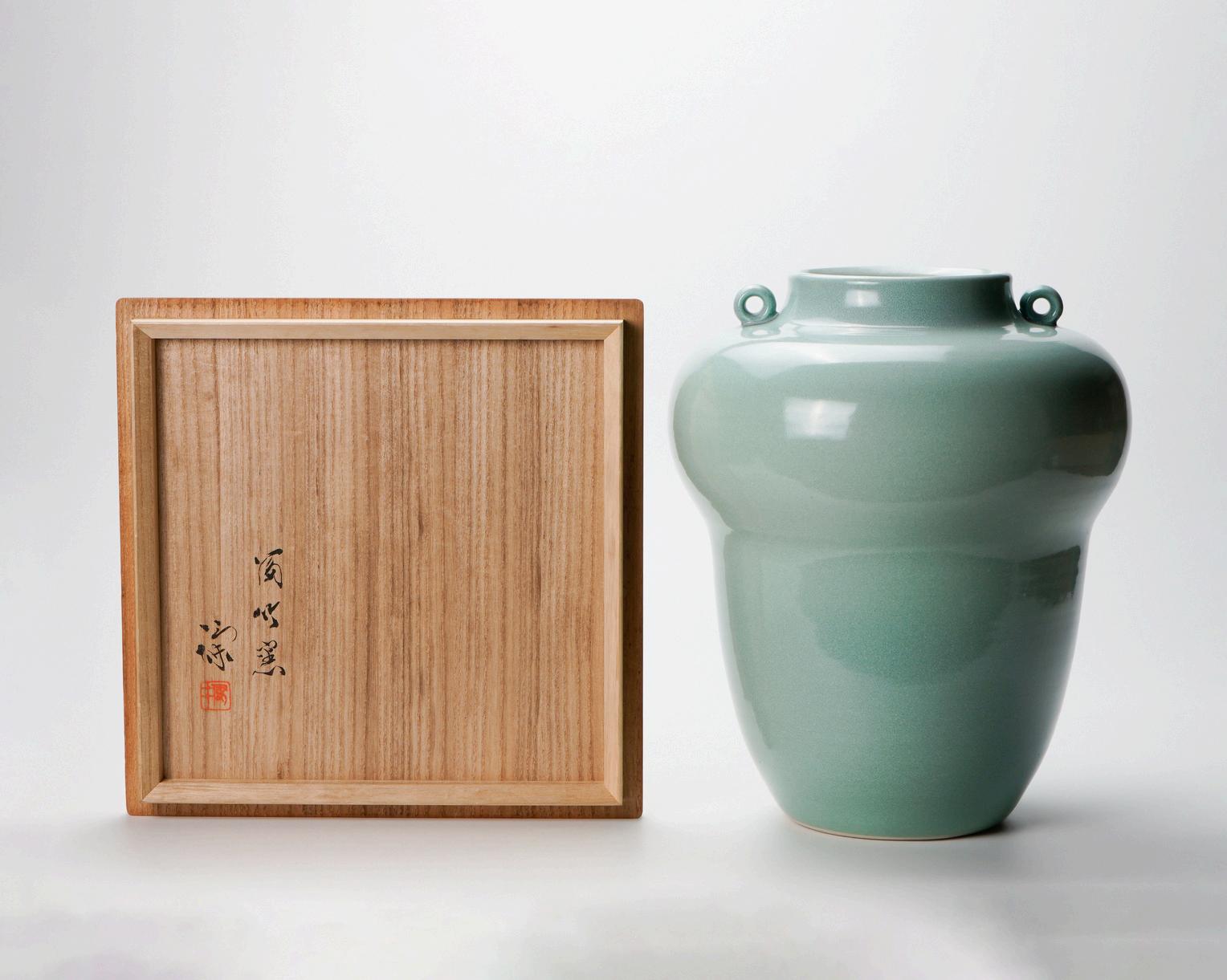
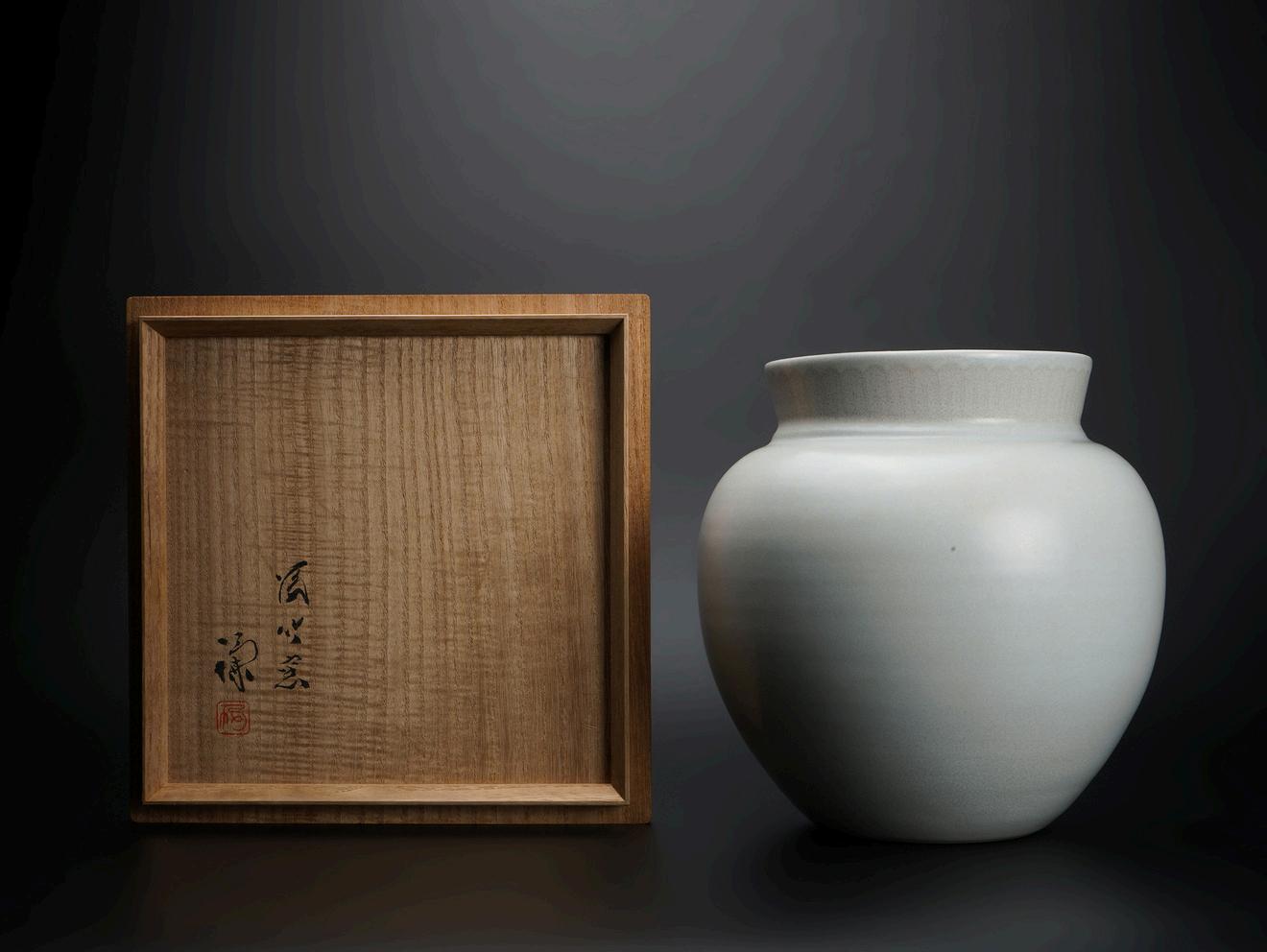
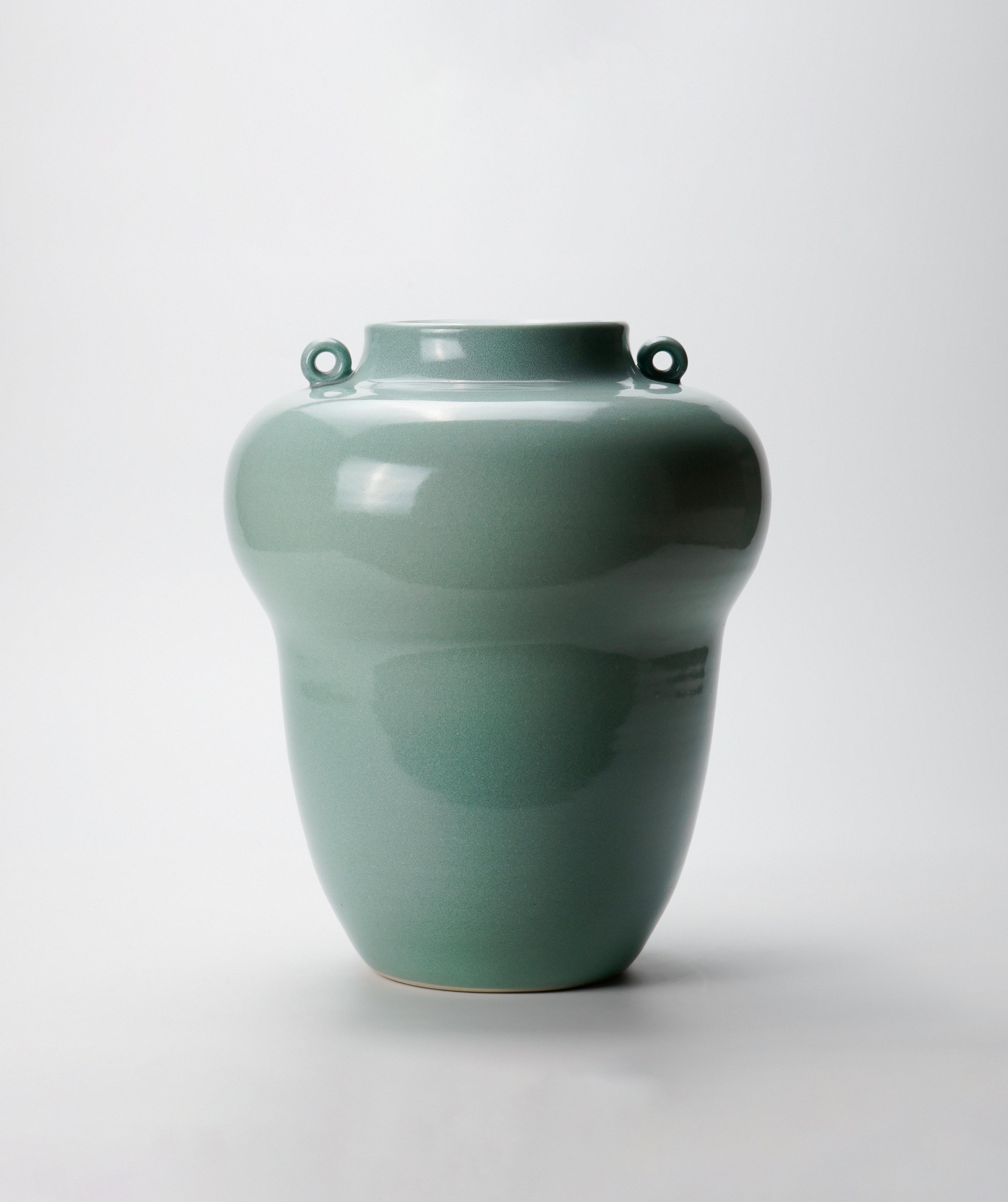
25 Miyanohara Ken 宮之原 謙 (1898-1977)
Celadon Flower Vase with Ring Handles ⽿付⻘磁花挿
Celadon glazed stoneware
Circa 1960s
11 × 9 in (28 × 23 cm)
Sealed on the base: Ken 謙
Wood storage box inscribed: Seiji hanasashi ⻘磁花挿 (Celadon flower vase); signed: Fuchikuyō 富⽵窯 (Fuchiku Kiln), Ken 謙; sealed: Ken 謙
26 Miyanohara Ken 宮之原 謙 (1898-1977)
Jar ⽩磁壺
Porcelain
Circa 1960s–1970s
8 ½ × 8 ½ in (21 6 × 21 6 cm)
Sealed on the base: Ken 謙
Wood storage box inscribed: Hakuji tsubo ⽩磁壺 (White porcelain jar); signed: Fuchikuyō 富⽵窯 (Fuchiku Kiln), Ken 謙; sealed: Ken 謙
27 Miyanohara Ken 宮之原 謙 (1898-1977)
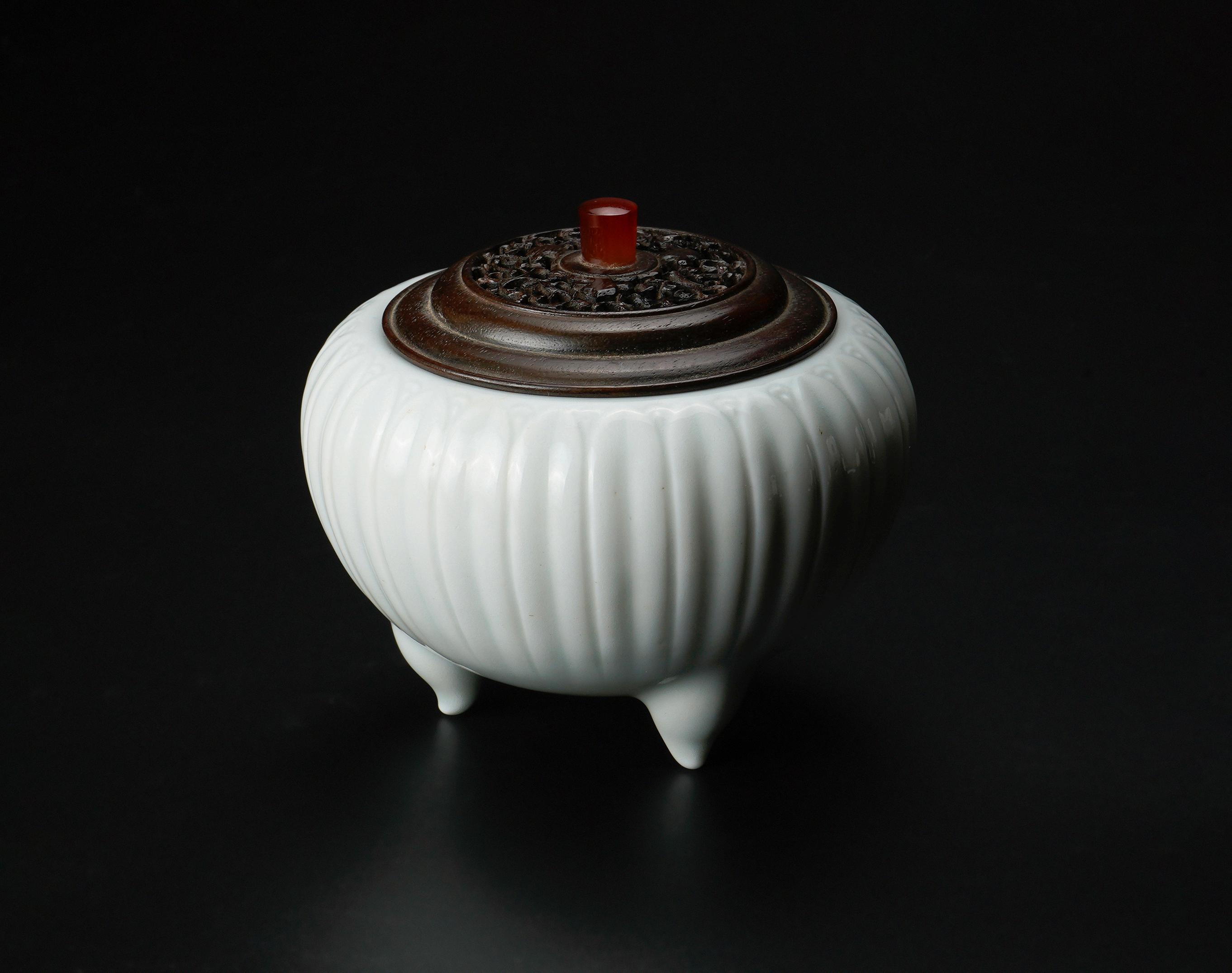
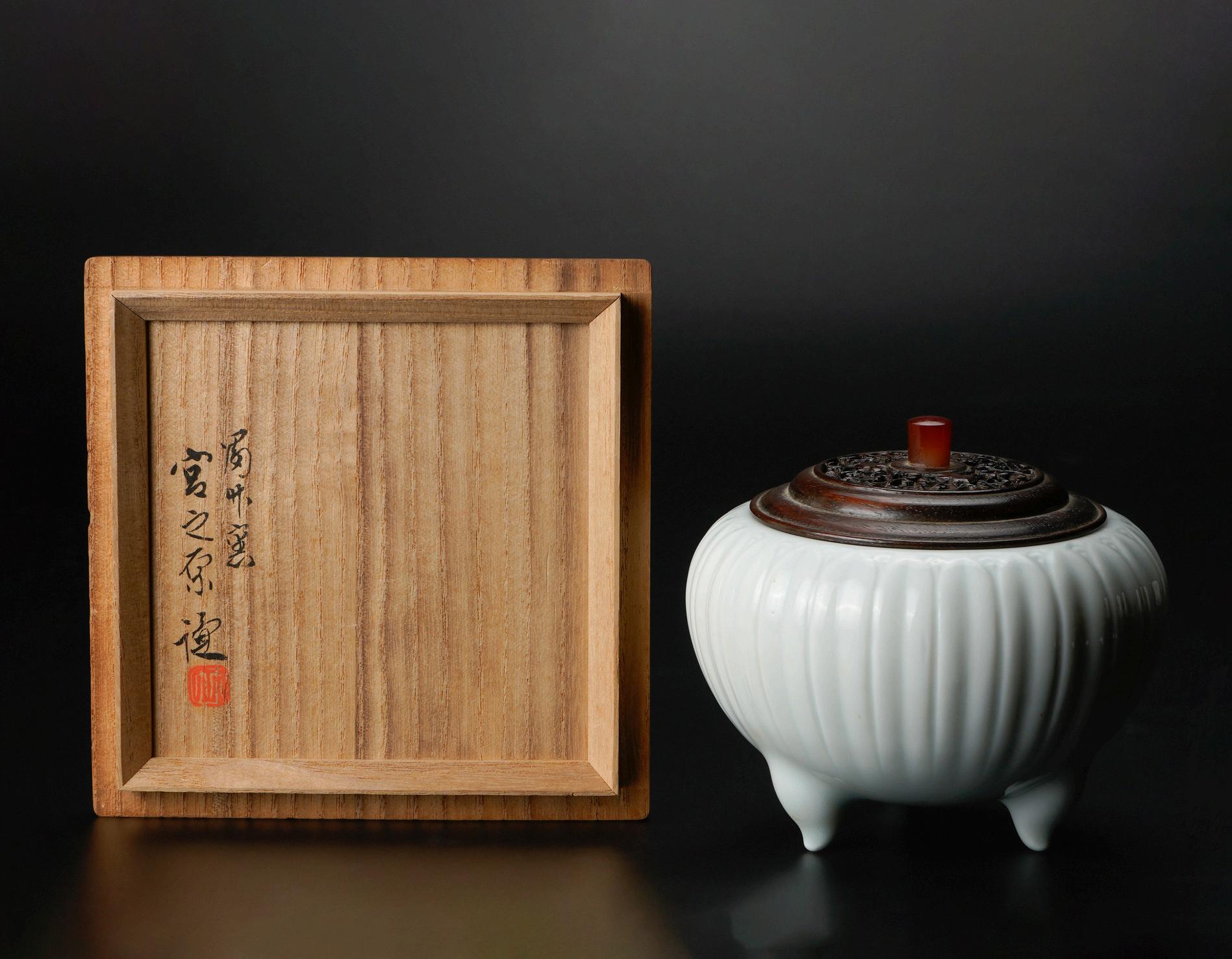
Chrysanthemum-Shaped Incense Burner 菊形⾹炉
Porcelain; wooden lid with stone knob
Circa 1960s–1970s
4 × 4 ⅜ in (10 × 11 cm)
Sealed on the base: Ken 謙
Wood storage box inscribed: Hakuji kikugata kōro ⽩磁菊形⾹炉 (Porcelain chrysanthemum-shaped incense burner); signed: Fuchikuyō 富⽵窯 (Fuchiku Kiln), Miyanohara Ken 宮之原謙; sealed: Ken 謙
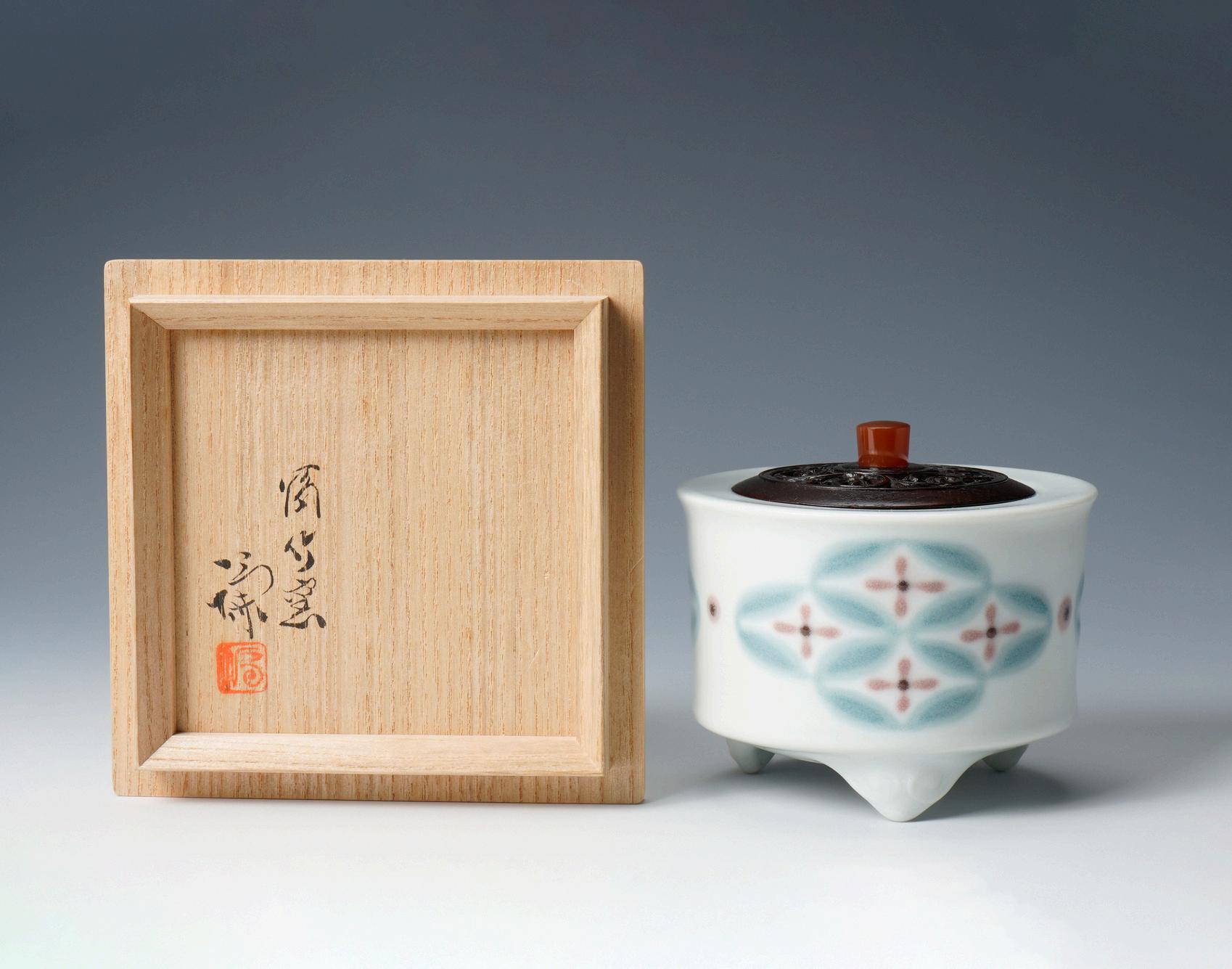
28 Miyanohara Ken 宮之原 謙 (1898-1977)
Incense Burner with Polychrome Shippō Pattern 彩盛七宝⾹炉
Porcelain; wooden lid with stone knop
Circa 1960s–1970s
2 ¾ × 3 ⅞ in. (7 × 9.7 cm)
Sealed on the base: Ken 謙
Wood storage box inscribed: Saimori shippō kōro 彩盛七宝⾹炉 (Incense burner with polychrome shippō pattern); signed: Fuchikuyō 富⽵窯 (Fuchiku Kiln), Ken 謙; sealed: Ken 謙
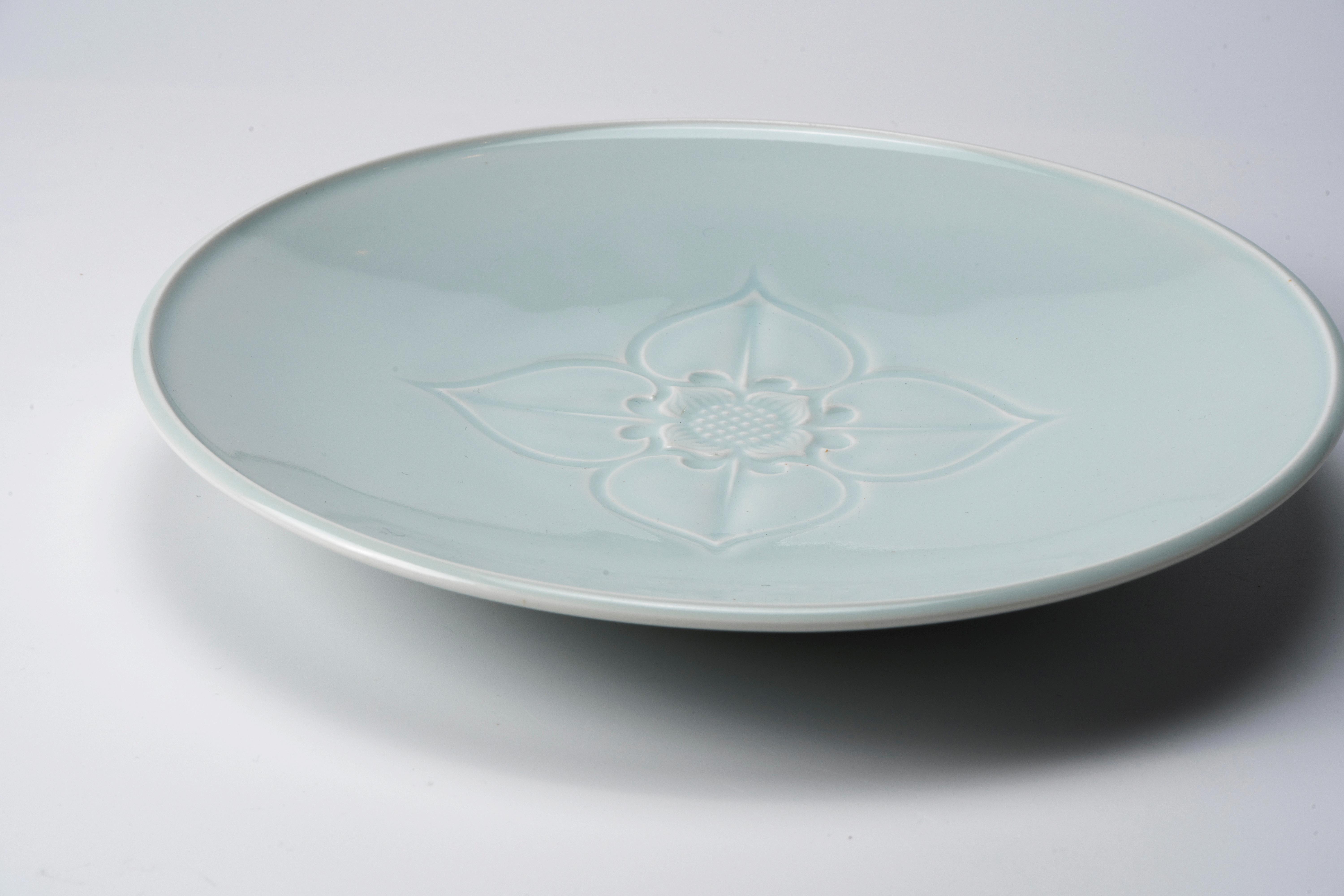
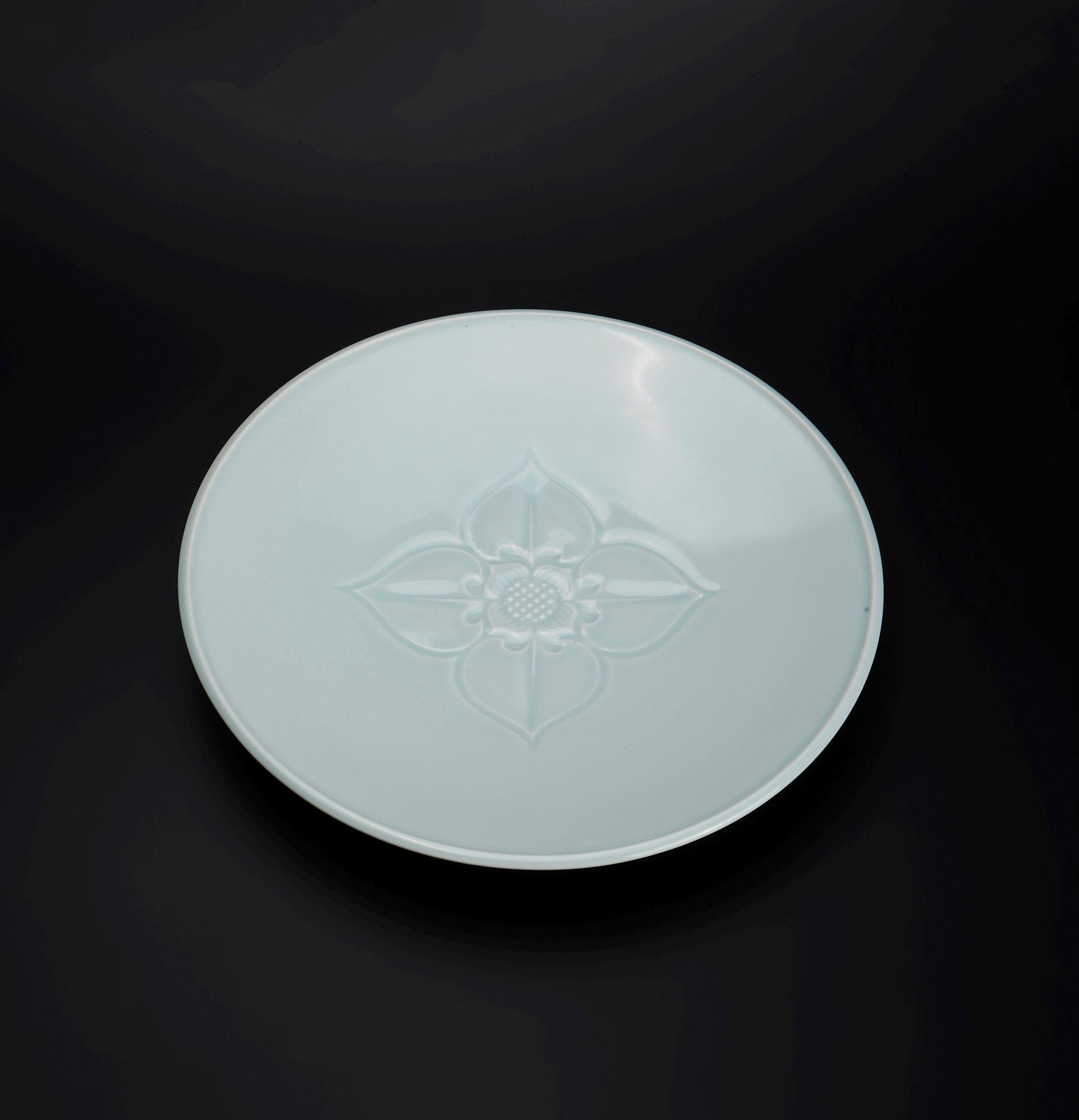
29 Miyanohara Ken 宮之原 謙 (1898-1977)
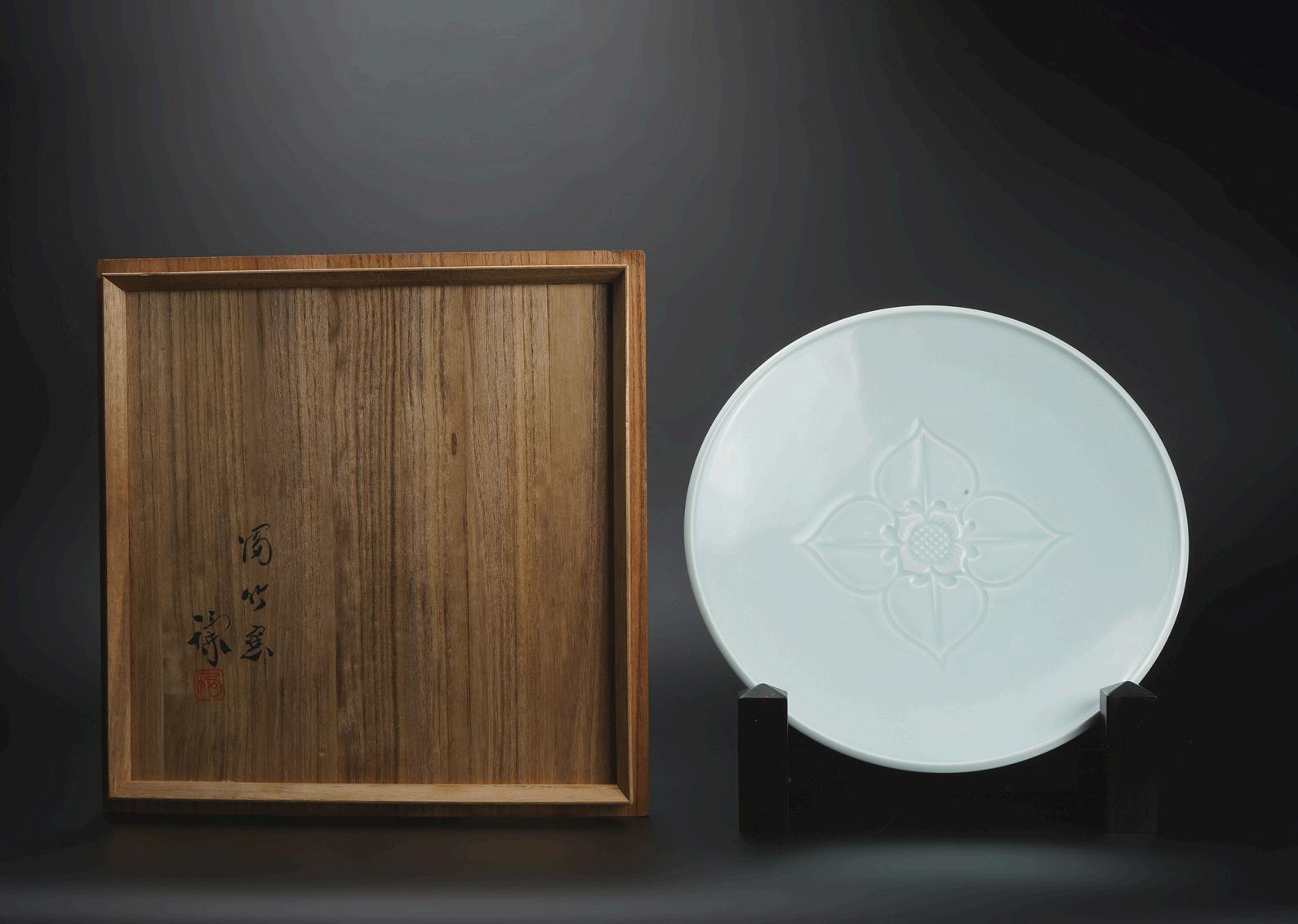
Plate with Flower Design ⽩磁芳花⽫
Porcelain
Circa 1960s–1970s
1 ½ × 8 ⅛ in (3 7 × 20 5 cm)
Sealed on the base: Ken 謙
Wood storage box inscribed: Hakuji hōka sara ⽩磁芳花⽫ (Porcelain plate with flower design); signed: Fuchikuyō 富⽵窯 (Fuchiku Kiln), Ken 宮之原謙; sealed: Ken 謙
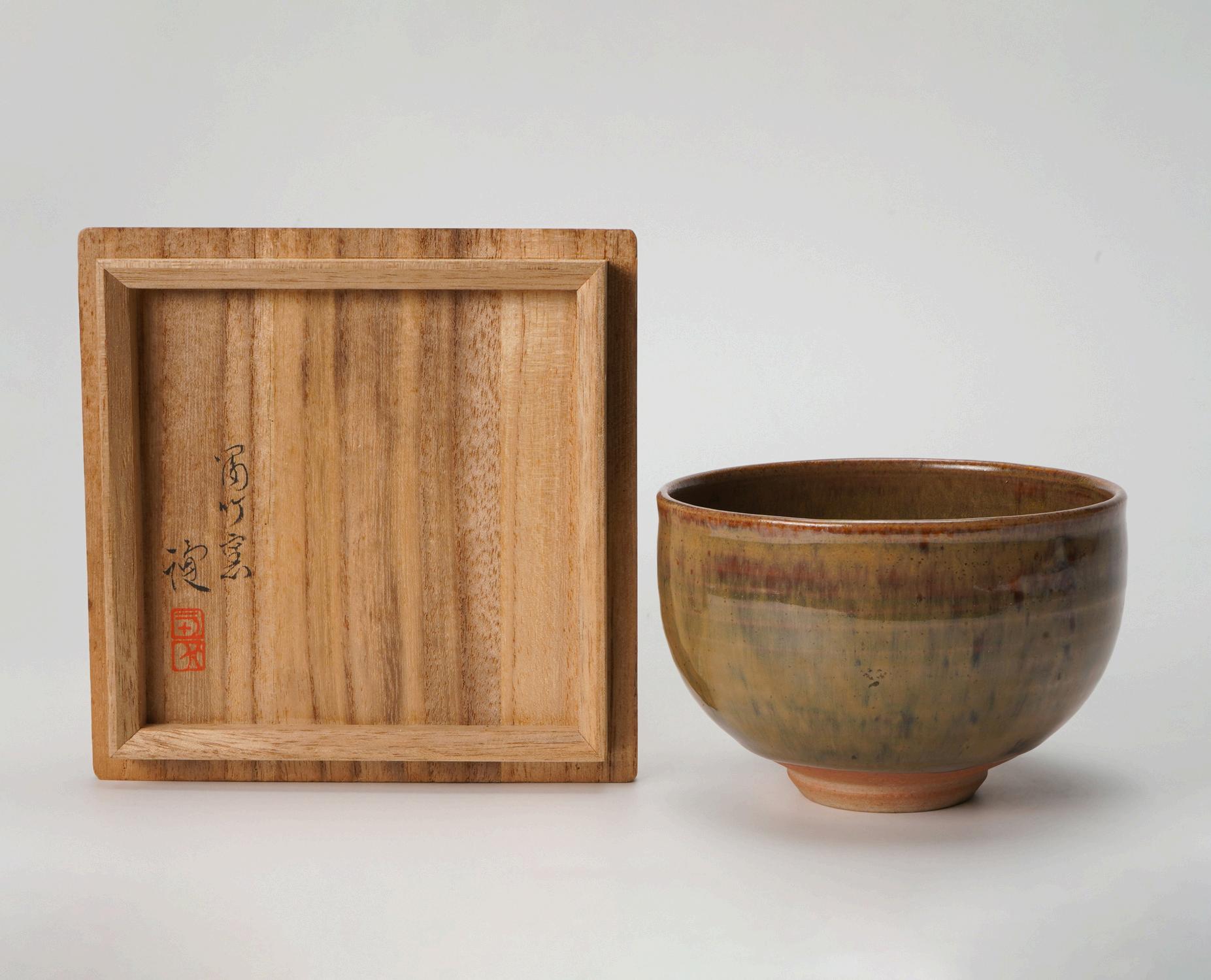
30 Miyanohara Ken 宮之原 謙 (1898-1977)
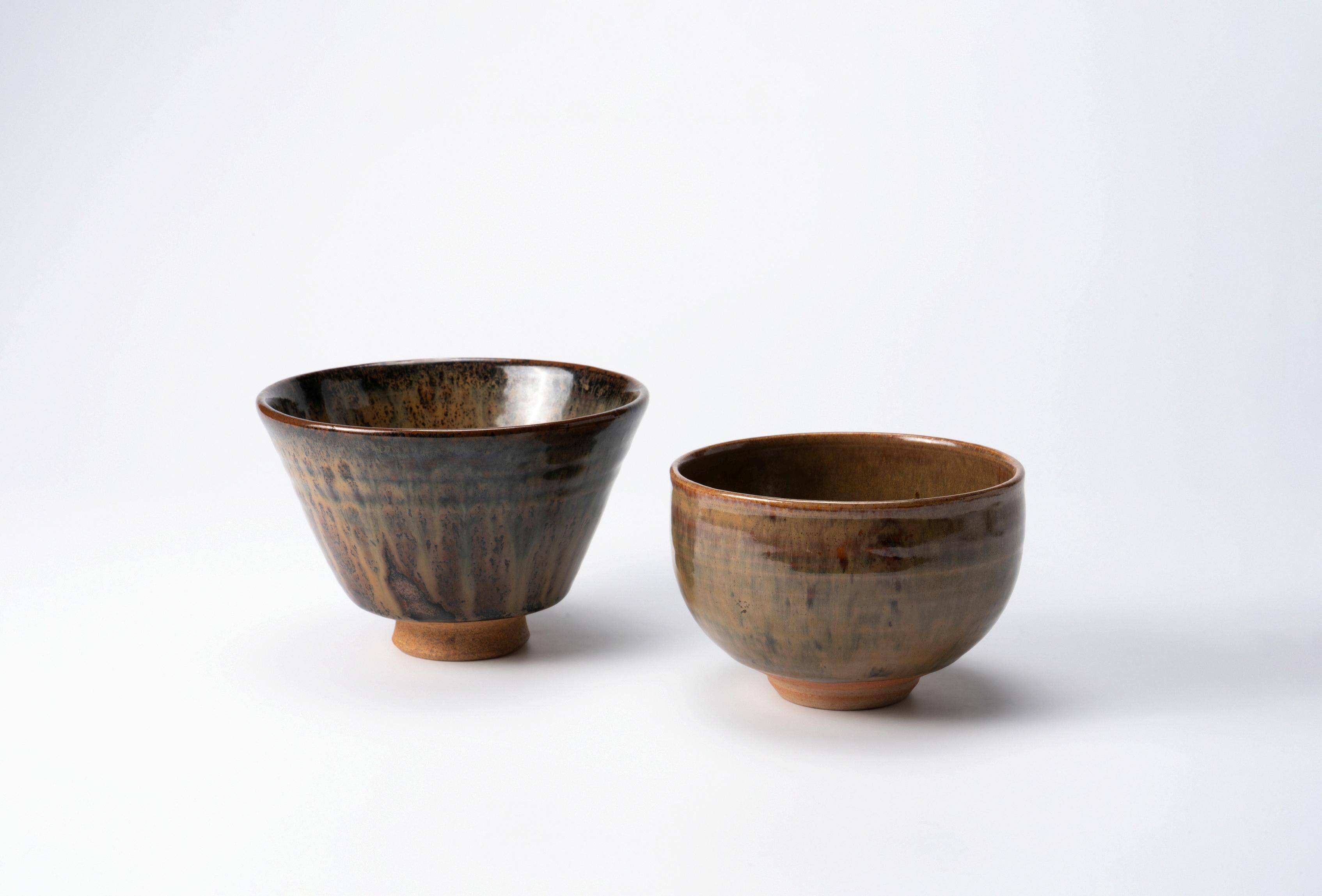
Tea Bowl 茶碗
Stoneware
3 ¼ × 5 in (8 3 × 12 8 cm)
Sealed outside the foot ring: Ken 謙
Wood storage box inscribed: Chawan 茶盌 (Tea bowl); signed: Fuchikuyō 富⽵窯 (Fuchiku Kiln), Ken 謙; sealed: Ken 謙
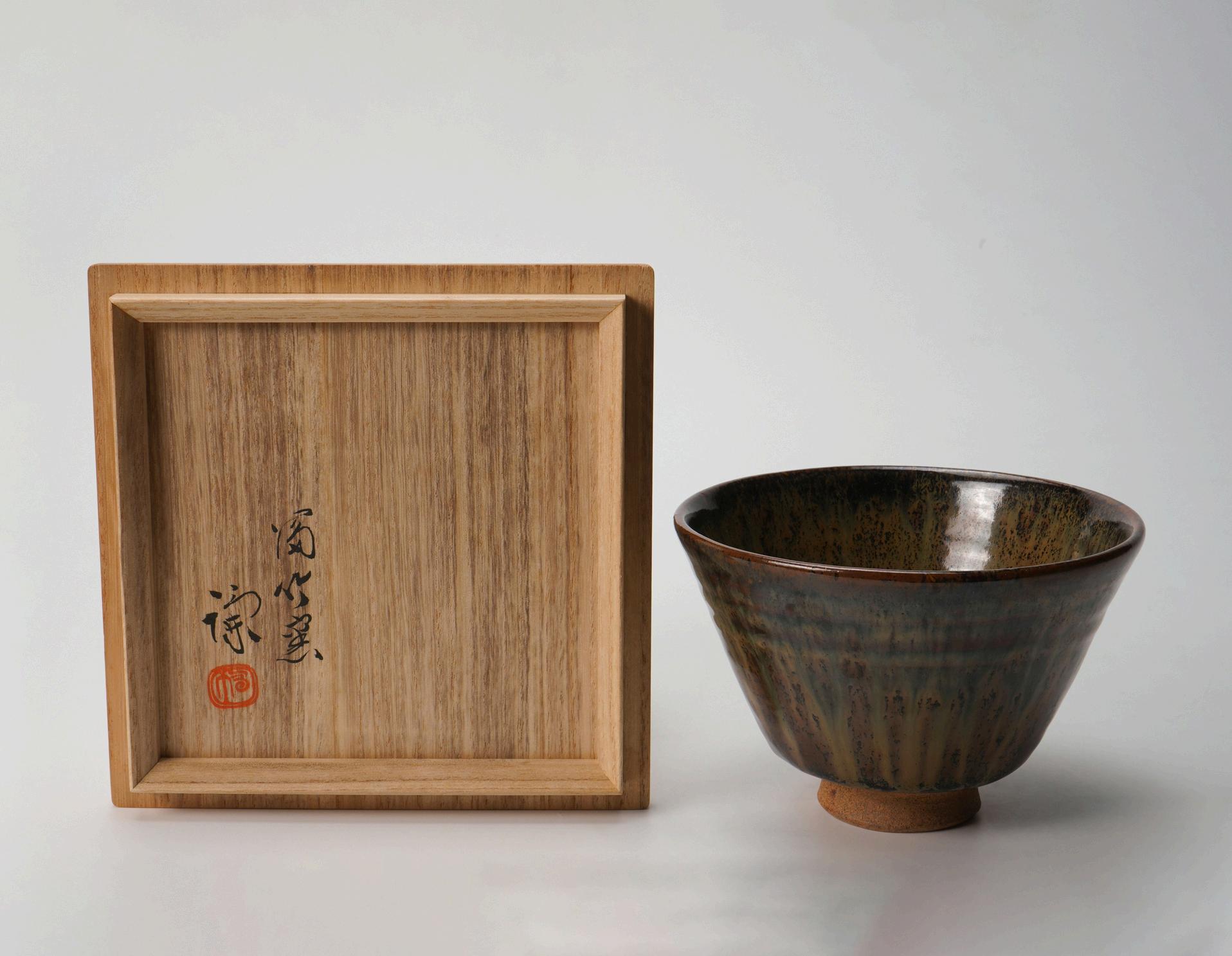
31 Miyanohara Ken 宮之原 謙 (1898-1977)
Tea Bowl with Yōhen Glaze 窯変釉茶碗
Stoneware
2 ⅞ × 4 ⅛ in (7 2 × 10 5 cm)
Sealed outside the foot ring: Ken 謙
Wood storage box inscribed: Yōhen’yū chawan 窯変釉茶盌 (Tea bowl with yōhen glaze); signed: Fuchikuyō 富⽵窯 (Fuchiku Kiln), Ken 謙; sealed: Ken 謙
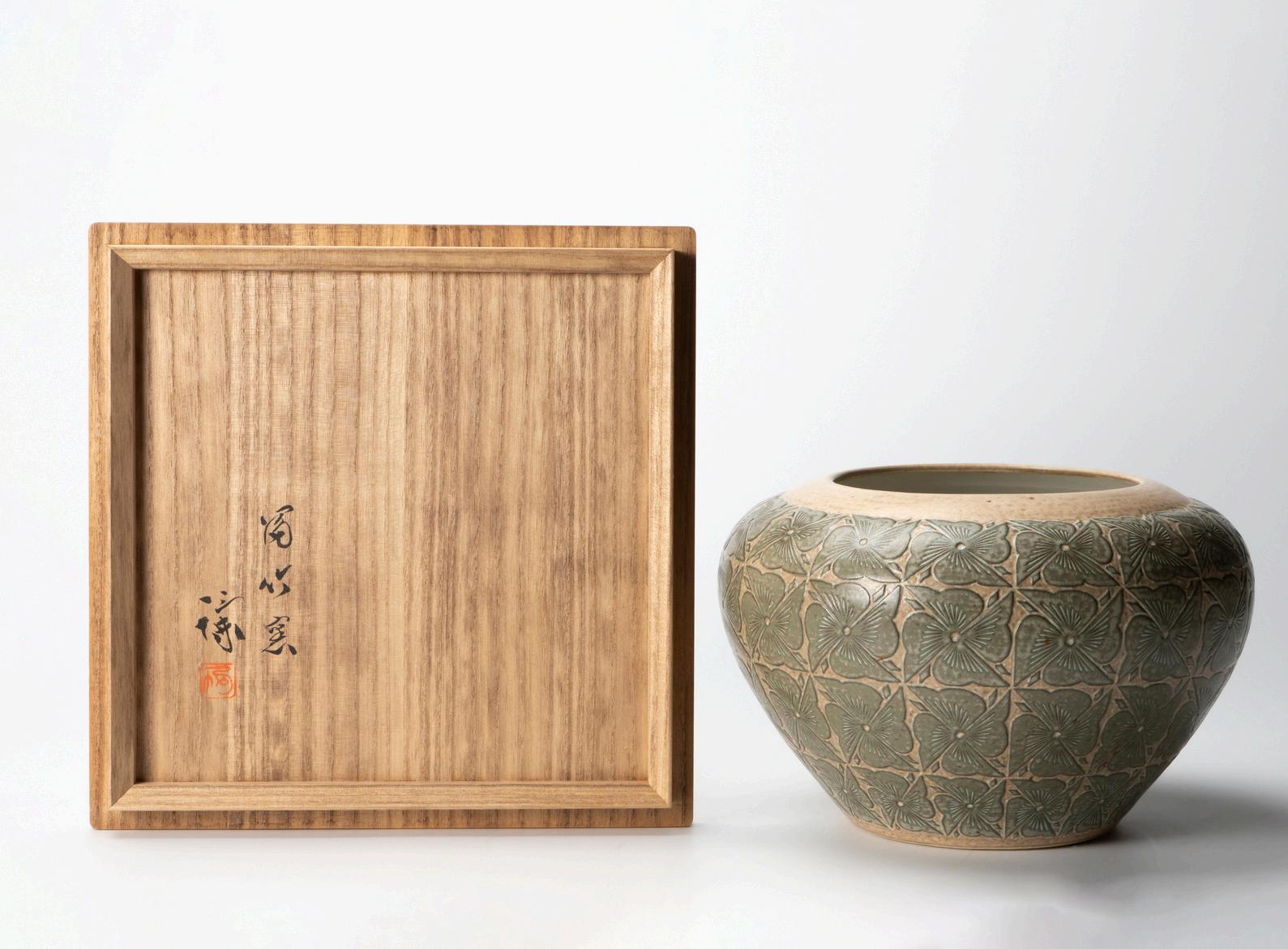
32 Miyanohara Ken 宮之原 謙 (1898-1977)
Carved Celadon Porcelain Brush Pot 緑磁彫萬筆壺 Circa 1950s–1960s Porcelain
5 ⅞ × 9 ¼ in (15 × 23 5 cm)
Sealed on the base: Ken 謙
Wood storage box inscribed: Ryokujibori manpitsu tsubo 緑磁彫萬筆 壺 (Carved celadon porcelain brush pot); signed: Fuchikuyō 富⽵窯 (Fuchiku Kiln), Ken 謙; sealed: Ken 謙
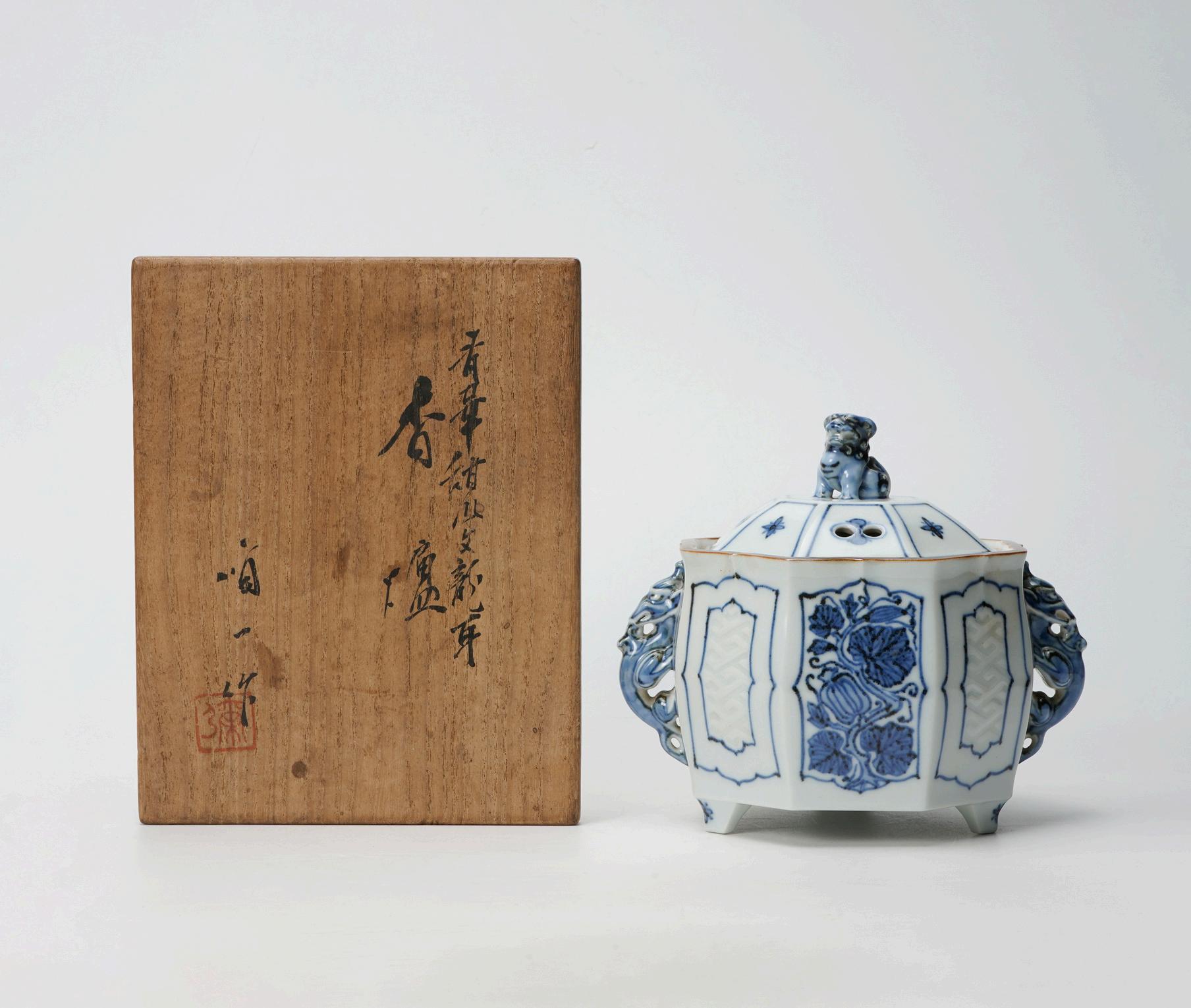
33 Kusube Yaichi 楠部 彌弌 (1897-1984)
Octagonal Flower Vase with Handles 澱彩抽⼋⽅双⽿花瓶
Stoneware 1929
11 ¾ × 6 ½ × 5 ⅜ in (30 × 16 4 × 13 7 cm)
Artist’s mark impressed on base
Double wood storage box, the inner box inscribed: Densaiyū happō futamimi kabin 澱彩釉⼋⽅双⽿花瓶 (Octagonal textured-glazed flower vase with two handles); signed: Yaichi saku 彌弌作 (Made by Yaichi); sealed: Senzan saku 僊⼭作 (Made by Senzan); the outer box inscribed: Kono saku Shōwa yonen no saku nari Shõwa yonjūyonnen shinshun kore o shirusu 此作昭和四年之作也昭和四⼗四年新春識之 (This is a work made in 1929; recorded in spring 1969); sealed: Yaichi 彌弌
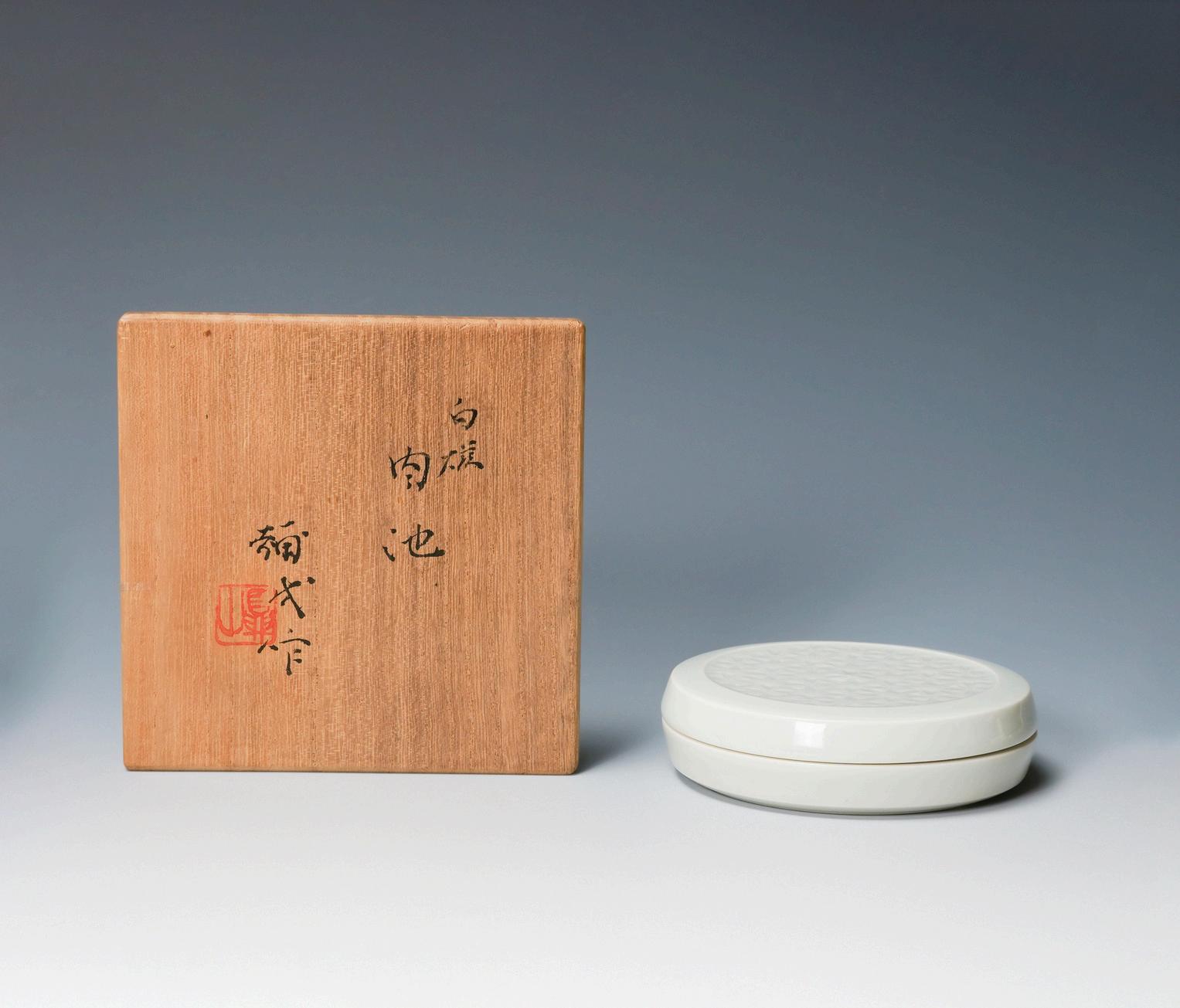
34 Kusube Yaichi 楠部 彌弌 (1897-1984)
Stamp-Pad Holder ⽩磁⾁池
Porcelain
1 ⅛ × 4 ½ in (3 × 10 9 cm)
Wood storage box inscribed: Hakuji nikuchi ⽩磁⾁池 (White porcelain stamp-pad holder); signed: Yaichi saku 彌 作 (Made by Yaichi); sealed: Senzan 僊⼭
35. Kusube Yaichi 楠部 彌弌 (1897-1984)
Incense Burner with Underglaze-Blue Dragon Motif ⿓⽂染付⾹炉
Porcelain
Early 1930s
6 × 6 ¾ × 4 ½ in (15 2 × 17 0 × 11 4 cm)
Signed underneath: Yaichi saku 彌 作 (Made by Yaichi)
Wood storage box inscribed: Seika tenkamon ryūmimi kōro ⻘華甜⽠⽂⿓ ⽿ ⾹炉 (Incense burner with blue-and white melon design and dragon handles); signed: Yaichi saku 彌 作 Made by Yaichi); sealed: Sen 僊
Related work: Inui Yoshiaki 乾由明, Kusube Yaichi 楠部彌弌, Gendai Nihon tōgei zenshū 現代⽇本陶芸全集 (Survey of Contemporary Japanese Ceramics), vol 10, Tokyo, Shūeisha 集英社, 1981, cat no 3, a hexagonal flower vase with the same motifs exhibited at the 14th Teiten Exhibition, Tokyo, 1933; for other examples of underglaze blue decoration on similar forms, see also cat nos 12–13 (1932) and 14 (1931)
36 Kusube Yaichi 楠部 彌弌 (1897-1984)
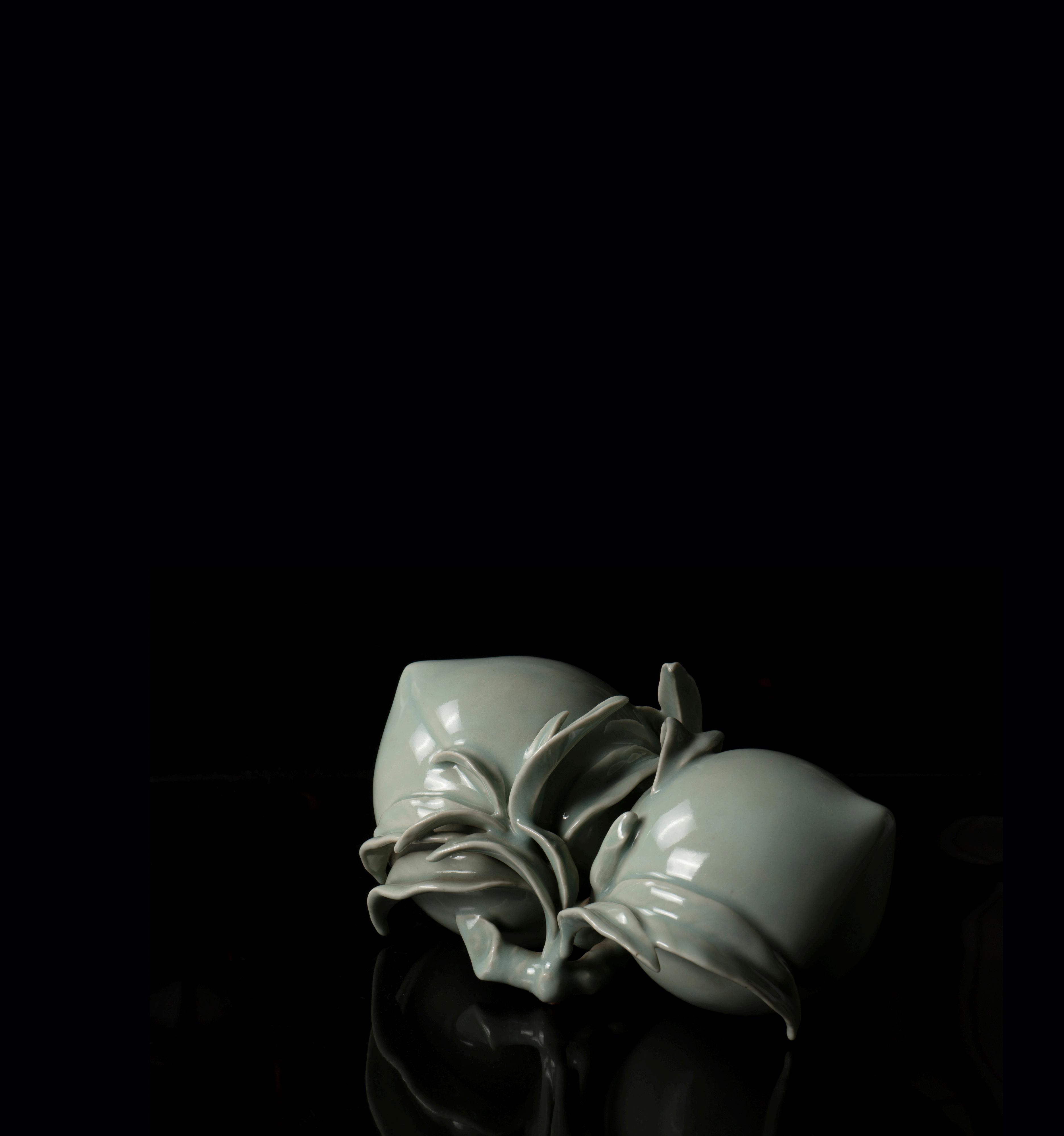
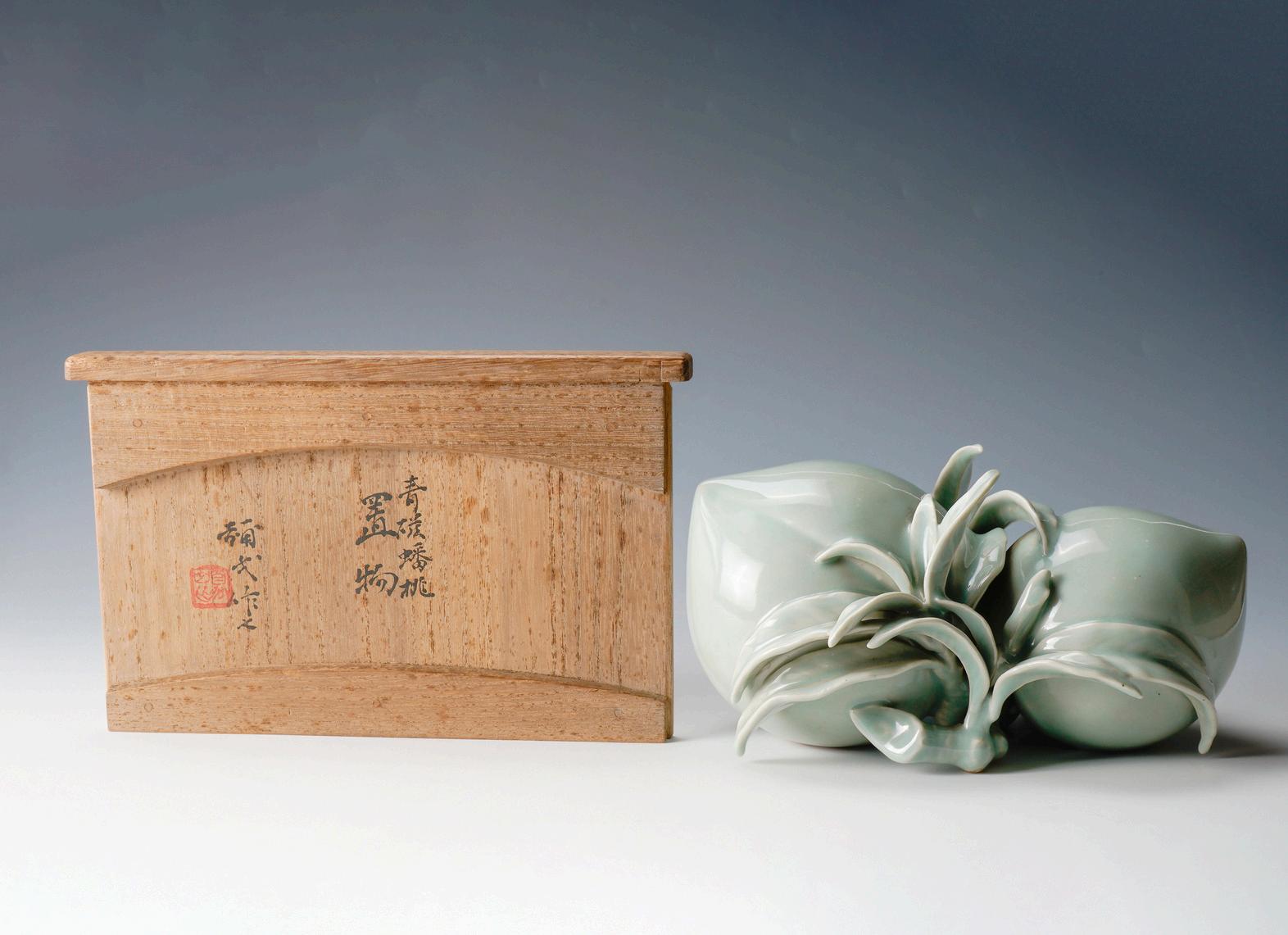
Peach-Shaped Celadon Ornament 桃形⻘磁置物
Stoneware
Circa 1960s–1970s
3 ⅞ × 7 ¾ × 5 ⅜ in (9 8 × 19 7 × 13 7 cm)
Artist’s mark impressed on base
Wood storage box inscribed: Seiji bantō okimono⻘磁蟠桃置物 (Peach-shaped celadon ornament); signed: Yaichi kore o saku 彌弌 作之 (Yaichi made this); sealed: Senzan saku 僊⼭作 (Made by Senzan)
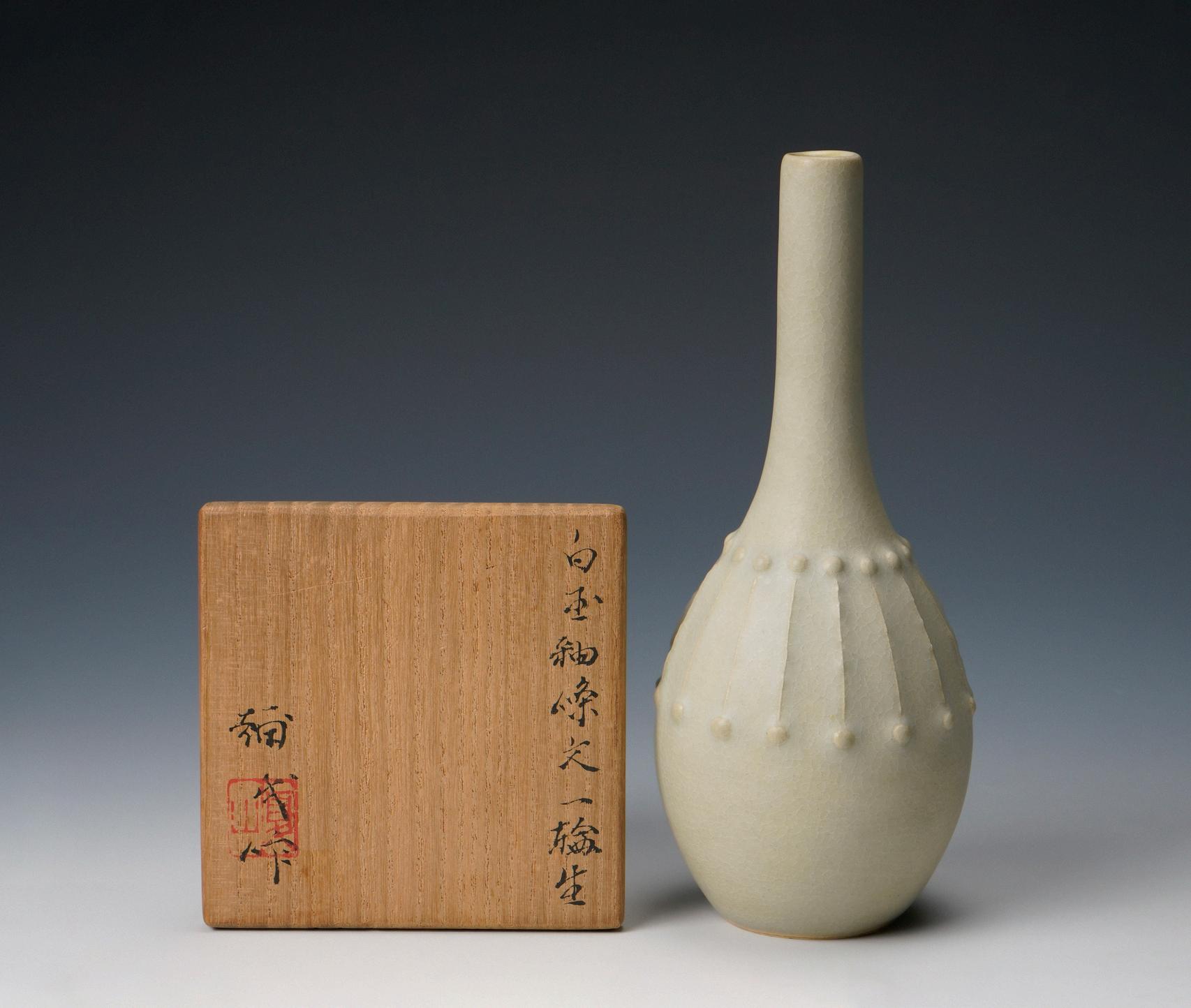
37. Kusube Yaichi 楠部 彌弌 (1897-1984)
Vase for a Single Flower with White Glaze and Striated Pattern
⽩⽟釉條⽂ 輪⽣
Stoneware
Circa 1950s
7 ⅛ × 3 ⅛ in (18 × 8 cm)
Artist’s mark impressed on base Wood storage box inscribed: Hakugyokuyū jōmon ichirin’ike ⽩⽟釉條 ⽂ 輪⽣ (Vase for a single flower with white glaze and striated pattern); signed: Yaichi saku 彌弌作 (Made by Yaichi); sealed Related work: Nittenshi Hensan Iinkai ⽇展史編纂委員会 (Nittenshi Editorial Committee), Nittenshi 17 ⽇展史 17 (History of the National Salon 17), Nitten hen 2 ⽇展編⼆ (The Nitten Exhibition 2), Tokyo, Nitten ⽇展, 1987, pp 94, 271 (no 174), a white-glazed jar with lowrelief designs exhibited at the Seventh Nitten (1951)
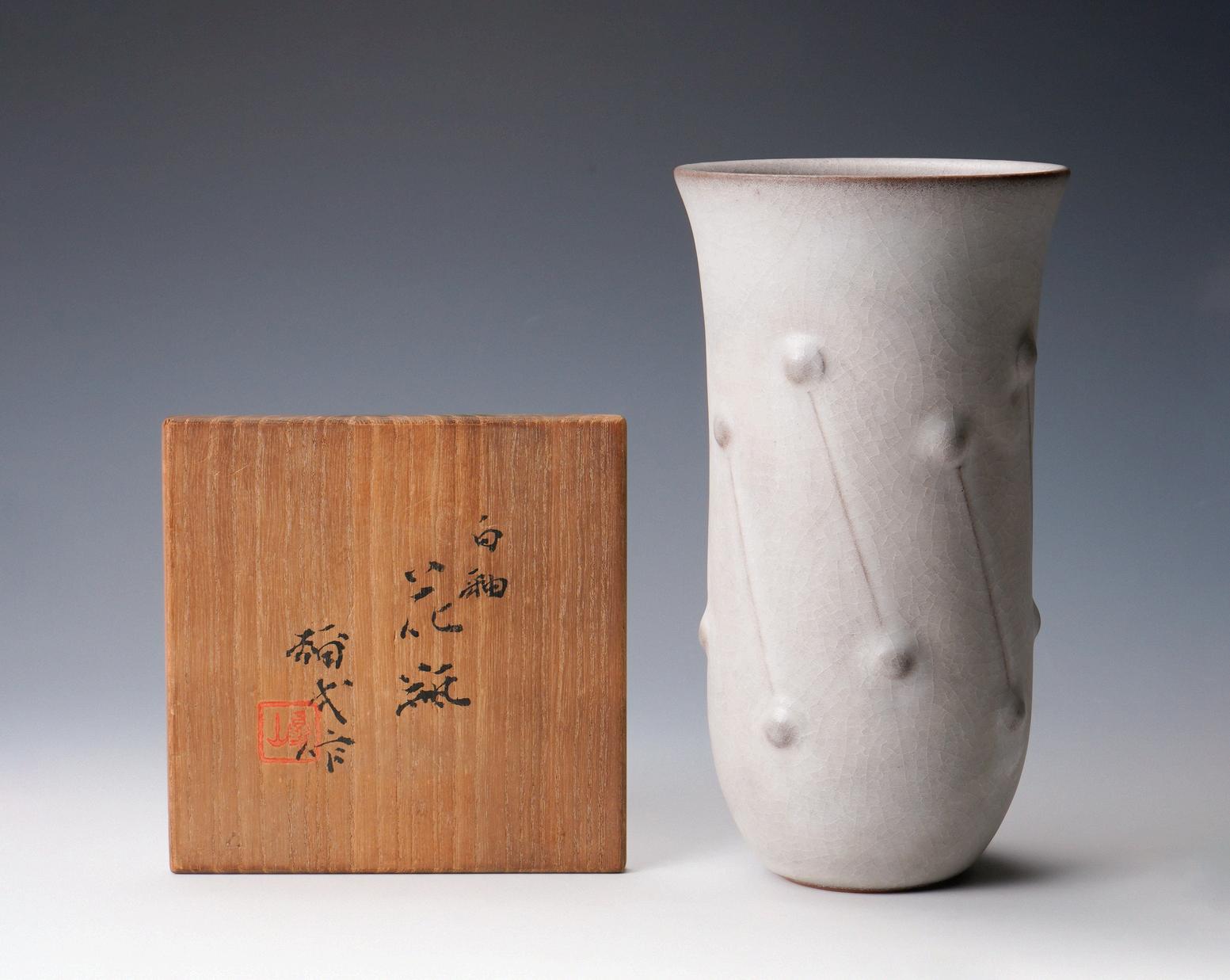
38 Kusube Yaichi 楠部 彌弌 (1897-1984)
Flower Vase with White Glaze ⽩釉花瓶
Stoneware
Circa 1950s
8 ⅜ × 4 ½ in (21 3 × 11 5 cm)
Artist’s mark impressed on base Wood storage box inscribed: Hakuyū kabin ⽩釉花瓶 (White-glazed flower vase); signed Yaichi saku 楠部彌弌 (Made by Yaichi); sealed: Senzan 僊⼭
Related work: Nittenshi Hensan Iinkai ⽇展史編纂委員会 (Nittenshi Editorial Committee), Nittenshi 17 ⽇展史 17 (History of the National Salon 17), Nitten hen 2 ⽇展編⼆ (The Nitten Exhibition 2), Tokyo, Nitten ⽇展, 1987, pp. 94, 271 (no. 174), a white-glazed jar with lowrelief designs exhibited at the Seventh Nitten (1951)
39 Kusube Yaichi 楠部 彌弌 (1897-1984)
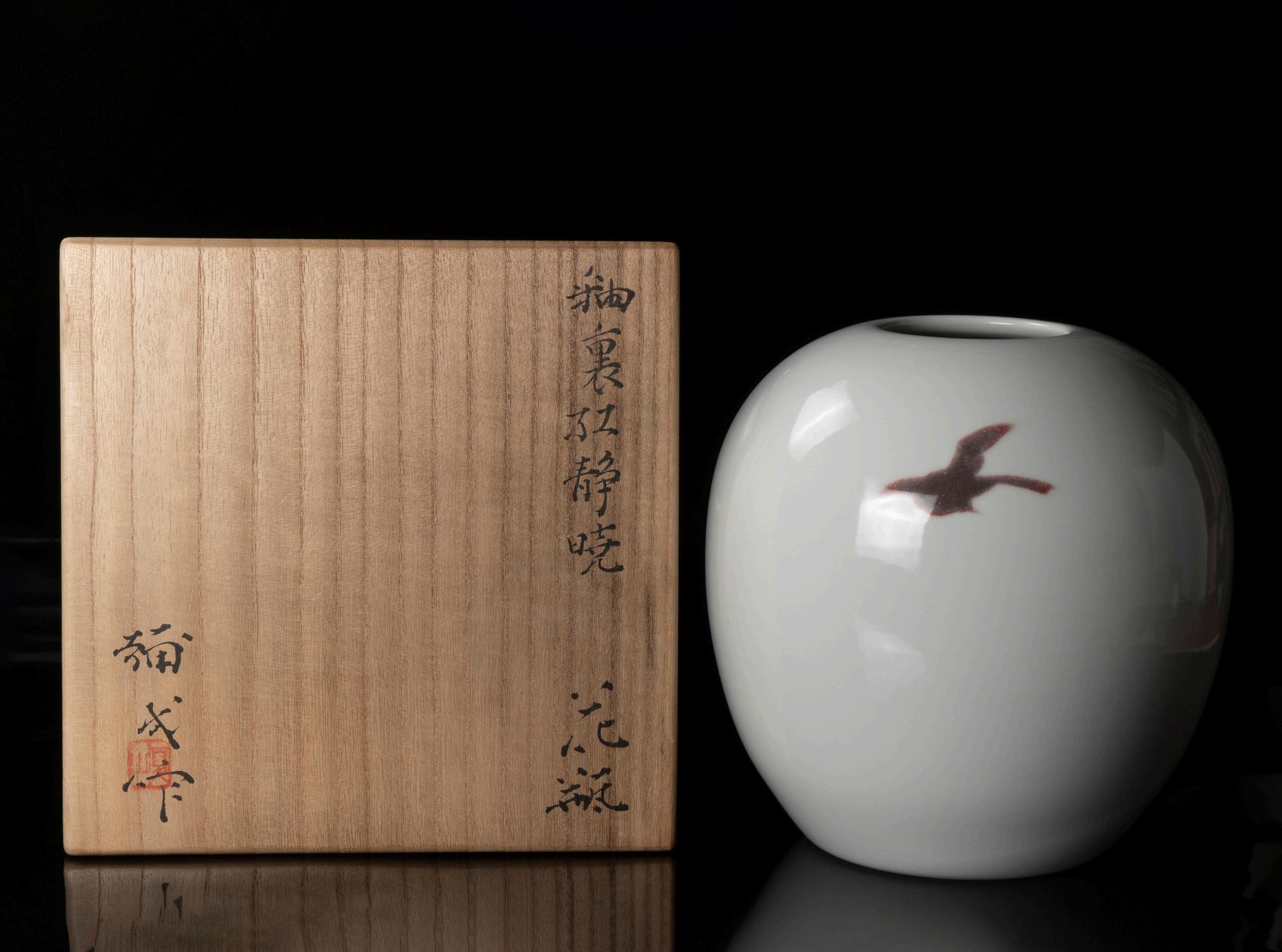
Flower Vase with Design of Birds in Underglaze Copper 釉裏紅静暁花瓶
Porcelain
Circa 1972-1975
7 ⅞ × 7 ⅞ in (20 1 × 20 1 cm)
Artist’s mark impressed on base
Wood storage box inscribed: Yūrikō seigyō kabin 釉裏紅静暁花瓶 ("Calm Morning" flower vase with underglaze red decoration); together with a copy of the exhibition catalogue cited below
Related work: Kusube Yaichi ten: Tōka 70nen no kirameki: Seitan 100 nen 楠部彌弌展 : 陶華70年のきらめき : ⽣誕100年 (Kusube Yaichi: A Retrospective: Ceramic Works of Kusube Yaichi: The Seventy Years of Brilliance 1997-1998), Osaka, Mainichi Shinbunsha, 1997, cat. no. 116 (1974)
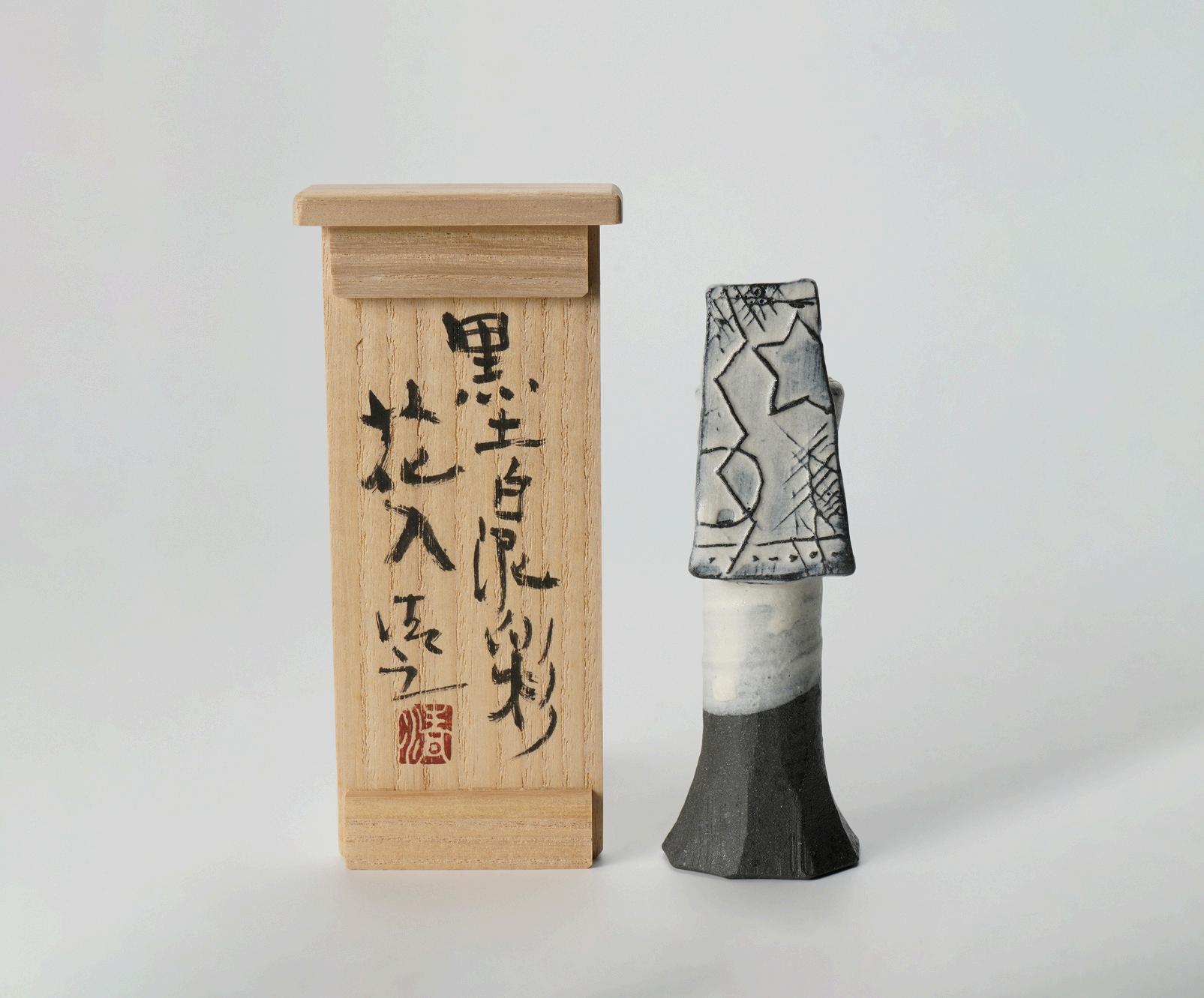
40 Katō Kiyoyuki 加藤 清之 (1931-2025)
Flower Vessel No 3 with White Glaze on Black Clay 黒⼟⽩泥彩花⼊
Stoneware
4 ⅜ × 1 ⅝ in (11 2 × 4 cm)
Wood storage box inscribed: Kokudo hakudeisai hanaire 黒⼟⽩泥彩花⼊ (Flower vessel with white glaze on black clay); signed: Kiyoyuki 清之; sealed: Kiyo 清
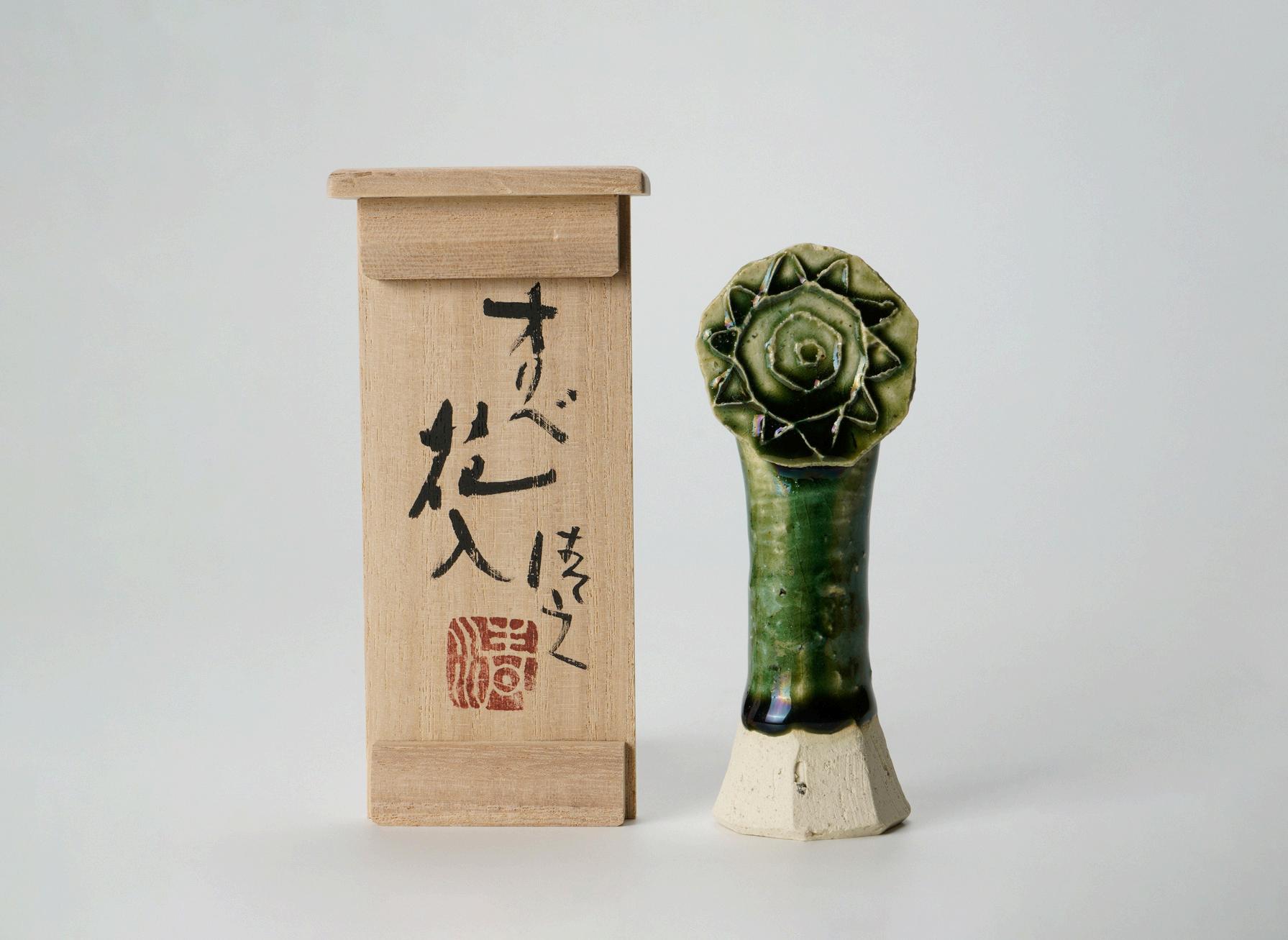
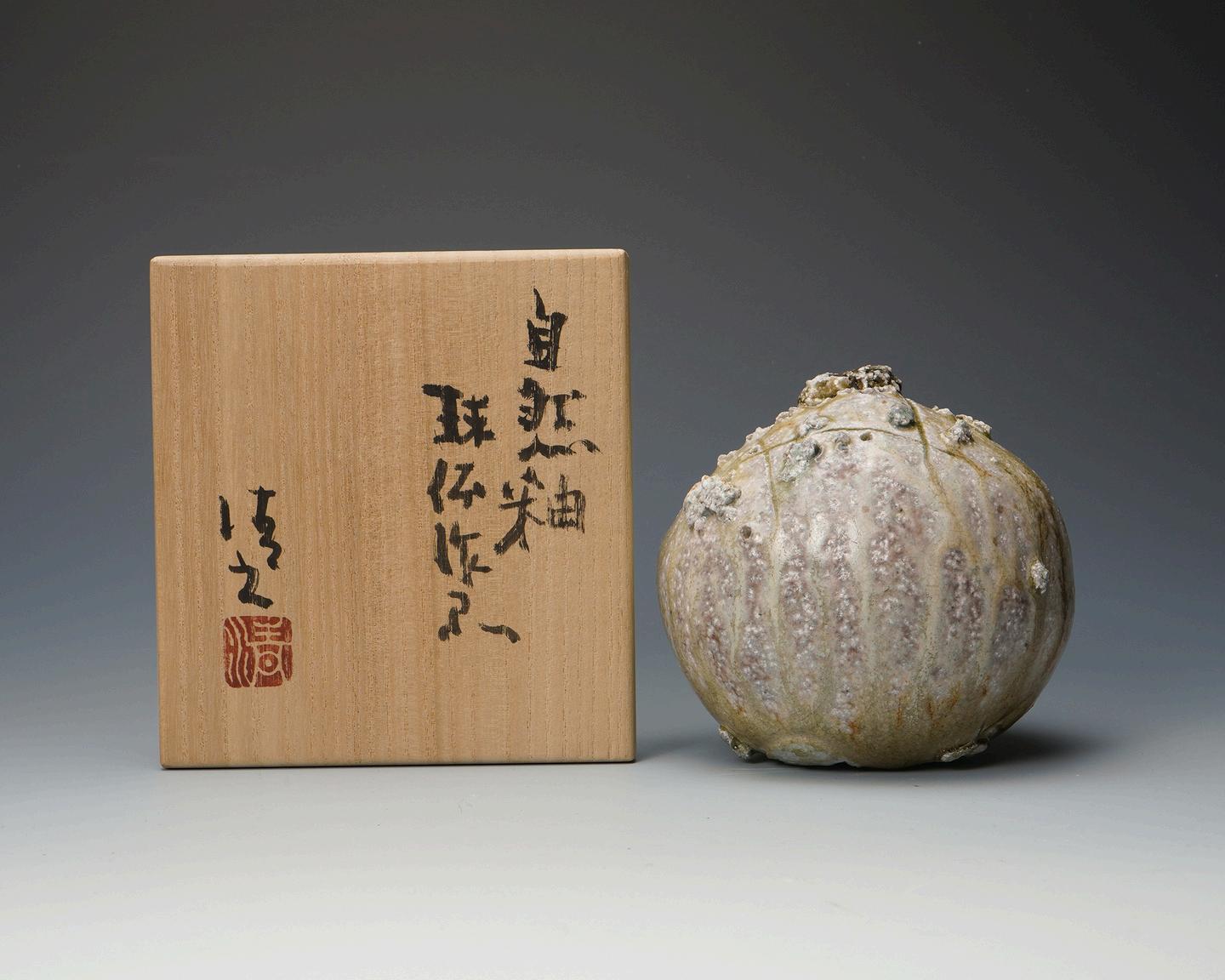
41 Katō Kiyoyuki 加藤 清之 (1931-2025)
Flower No 4 with Oribe-Style Glaze 織部釉花⽣
Stoneware
4 ⅝ × 1 ¾ in (11 8 × 4 5 cm)
Wood storage box inscribed: Oribe hanaire オリベ花⼊ (Oribe flower vase); signed: Kiyoyuki 清之; sealed: Kiyo 清
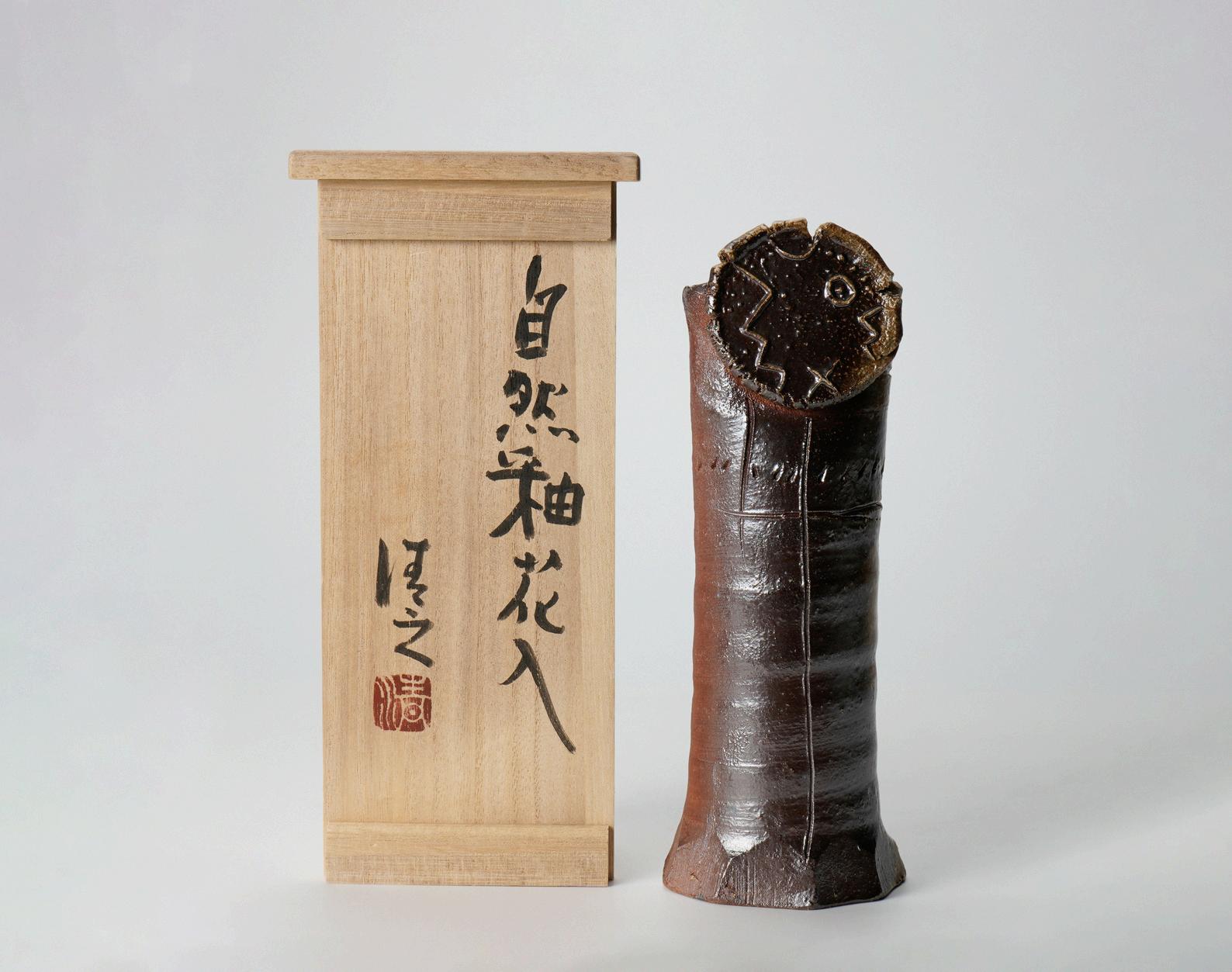
42 Katō Kiyoyuki 加藤 清之 (1931-2025)
Flower Vessel No 2 with Natural Glaze⾃然釉花⽣
Stoneware
8 ¼ × 3 ⅛ in (21 × 8 cm)
Wood storage box inscribed: Shizen’yū hanaire ⾃然釉花⼊ (Flower vase with natural glaze); signed: Kiyoyuki 清之; sealed: Kiyo 清
43. Katō Kiyoyuki 加藤 清之 (1931-2025)
Spherical Objet with Natural Glaze ⾃然釉球体作品
Stoneware
4 ⅛ × 4 ¼ × 3 ¾ in (10 6 × 10 8 × 9 6 cm)
Wood storage box inscribed: Shizenyū kyūtai sakuhin ⾃然釉球体作品 (Spherical objet with natural glaze); signed: Kiyoyuki 清之; sealed: Kiyo 清
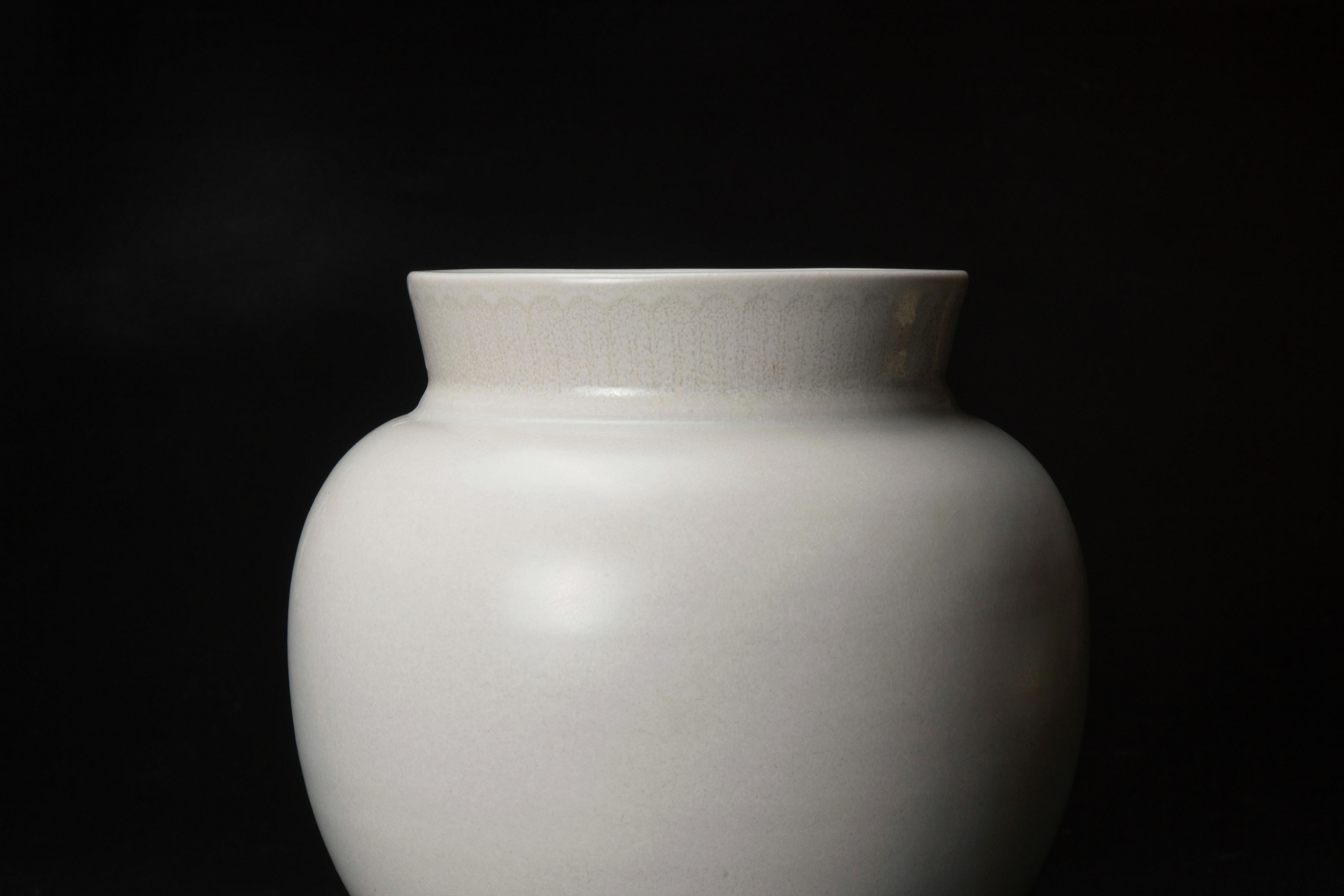
CONTRIBUTORS
Beatrice Chang is founder and director of Dai Ichi Arts, LTD Since founding the gallery in 1989, she has introduced important works of Japanese ceramics to major institutions including the Metropolitan Museum of Art, the Art Institute of Chicago, the Minneapolis Institute of Art, the Portland Art Museum, the San Diego Museum of Art and more. Chang is an expert and specialist of Japanese and Chinese ceramics and advises museums and private collectors on building significant contemporary ceramic collections. She is the author of “Fired with Passion: Contemporary Japanese Ceramics” (2006).
Joe Earle held leadership positions in Asian art departments at the Victoria and Albert Museum, London, and the Museum of Fine Arts, Boston, and was Director of Japan Society Gallery in New York from 2007 to 2012. He has organized more than two dozen exhibitions in Britain, Japan, Europe, and the United States and written, translated, or edited books and catalogs on aspects of Japanese culture ranging from contemporary art and design through to samurai sword-fittings, netsuke, flower-arrangement bronzes, lacquer, and the art of the Meiji era. His latest project can be found at naejartcollection.com.
Ceramic Modernisms: Perspectives on 20th-Century Japanese Ceramics
Exhibition dates: March 19 – 27, 2026 | Asia Week New York 2026
Authors: Beatrice Chang, Joe Earle
Editor: Joe Earle
Catalogue production: Haruka Miyazaki, Kristie Lui, Yoriko Kuzumi, Ichiho Nishiki
Photography: Yoriko Kuzumi
All museum photographs courtesy of institutions unless otherwise stated
Published by Dai Ichi Arts, Ltd 2025 © All rights reserved
ISBN 979-8-9985525-4-0