d-mars.com
September 2026 | 1
FREE
REAL ESTATE
September 2026
|
Inspire, Inform & Educate
|
82nd Edition
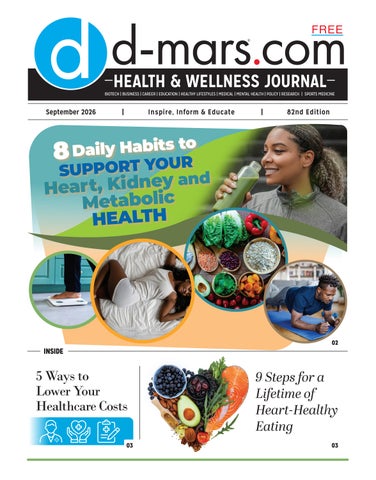
o t s t i b a H y l 8 Dai T YOUR SUPPOR d n a y e n d i ar t, K
He
Metabolic HEALTH
02
INSIDE
5 Ways to Lower Your Healthcare Costs
9 Steps for a Lifetime of Heart-Healthy Eating
03 Experience Our World of Advertising, Marketing, Media and Communication
03
2 | September 2026
HEALTH AND WELLNESS
o t s t i b a H y l i 8 Da T YOUR SUPPOR d n a y e n d i K ar t,
He
Metabolic HEALTH By d-mars.com
2. STAY PHYSICALLY ACTIVE
News Provider
- Exercise doesn't have to feel like a chore - in fact, some of your favorite hobbies may already count. The American Heart Association recommends aiming for 150 minutes per week of moderate physical activity like dancing, gardening or walking, moving quickly enough to elevate your heart rate and break a light sweat. Alternatively, choose 75 weekly minutes of vigorous exercise that gets you breathing hard and fast; think running, swimming, playing tennis or riding your bike on hilly terrain.
hen it comes to protecting your heart, supporting your kidney function and improving your metabolic health, you'll find the advice for each one looks similar. That's because your body's systems are deeply interconnected: what affects one will have ripple effects across the others.
W
Cardiovascular-kidney-metabolic health, or CKM health, is a perfect example. When any one of these systems is compromised, it can lead to problems with the others. Therefore, it's not uncommon for health problems like heart disease, stroke, diabetes and kidney disease to develop or worsen simultaneously - a condition collectively known as CKM syndrome.
3. AVOID NICOTINE - Tobacco and other nicotine
The reverse is also true, so habits that are healthy for your heart will have a positive effect on your kidneys and metabolic system and vice versa. Consider these simple strategies that align with the American Heart Association's Life's Essential 8, a list of healthy steps that can improve overall health. Learn more about how these habits and health measures affect your CKM health at Heart.org.
products can raise your blood pressure, damage blood vessels and increase your risk of heart attack and stroke, which are all bad news for your CKM health. If you're currently trying to quit, you aren't alone, so don't be afraid to seek out support groups and resources to help.
4. PRIORITIZE HEALTHY SLEEP - Sleep gives your body a chance to rest and recover from the day, but it's often one of the first things people sacrifice when life gets busy. Poor sleep can increase your risk for heart disease, weight gain and other issues. Aim for a solid 7-9 hours a night. Keep your bedroom cool, dark and comfortable, and do your best to limit distractions like late-night smartphone scrolling.
1. CHOOSE HEALTHY FOODS - Food is your body's fuel, so fill
your tank wisely. Certain types of foods can help your blood pressure, cholesterol, blood glucose and triglycerides stay within healthy ranges, while poor nutrition can push those numbers into more dangerous territory. Focus on vegetables, fruits, whole grains, plant-based proteins (e.g. beans, legumes and nuts) and lean animal proteins (e.g. seafood, skinless poultry and low-fat dairy). Drink plenty of water throughout the day and limit added sugar and salty or fatty foods.
5. WATCH YOUR BLOOD PRESSURE - When your blood pressure is high,
it forces your heart to work harder to pump blood through the body, which can weaken it over time. It can also damage the delicate arteries in and around the kidneys, putting CKM health further at risk. Information is power, so check your blood pressure frequently to know whether further action is needed to keep it under control.
6. MANAGE YOUR BLOOD SUGAR - High blood sugar can damage the kidneys, eyes, blood vessels and more, thereby increasing your chance of developing harmful CKM conditions. Controlling blood sugar is particularly important for people with diabetes. If you don't have diabetes and still experience frequent blood sugar spikes and crashes, talk to your doctor. 7. CONTROL YOUR CHOLESTEROL - Cholesterol comes in both "bad" (LDL) and "good" (HDL)
forms, requiring a balancing act to keep your levels within a healthy range. If LDL is high and HDL is low, your risk of clogged blood vessels, heart attack and stroke are higher. Healthy levels keep blood flowing to your heart and kidneys, supporting your metabolic health in the process. See your doctor for regular bloodwork so you can monitor cholesterol changes.
8. MAINTAIN A HEALTHY WEIGHT - Since excess body weight puts pressure on the heart, kidneys and other organs, a healthy body weight helps lower your risk of CKM syndrome. Whether you're hoping to maintain or reduce your weight, regular exercise, healthy eating and quality sleep are all great ways to achieve your goals. Source: American Heart Association
Experience Our World of Advertising, Marketing, Media and Communication
September 2026 | 3
HEALTH AND WELLNESS
5 Ways to Lower Your Healthcare Costs Also ask where a medical test or procedure will cost the least. Sometimes the same scan, blood test, or treatment costs more at a hospital than at a clinic, imaging center, or outpatient office. A call to your health insurance plan may save you big bucks.
By d-mars.com News Provider
H
ealthcare is expensive. Families feel it every time they pay an insurance premium, pick up a prescription, open a medical bill, or put off care because of worries about the cost.
For many people, it’s getting even harder. Changes to Medicaid, healthcare tax credits, and new program rules will make it more difficult for some families to keep their insurance or afford care. Advocates say that people should not have to fight this hard to see a doctor or pay for medicine and that healthcare should be about helping people live healthy lives, not about confusing bills, paperwork, high costs, and record profits.
3. Ask for help. Don’t ignore bills you cannot afford. Call the billing office and ask for help. You can ask: “Do you offer financial assistance?” “Do you have charity care?” “Can I get a payment plan?” “Can this bill be lowered?” Many hospitals and clinics have programs that can reduce bills for people who qualify. You can also ask them to check for mistakes. Medical bills are confusing, and errors happen. 4. Take care of your health. No one can control everything about their health, and many people face barriers that make it harder to stay healthy. But small steps can help prevent bigger health problems and bigger bills.
BIG CHANGES ARE NEEDED TO MAKE HEALTHCARE MORE AFFORDABLE. BUT THERE ARE PRACTICAL STEPS YOU CAN TAKE NOW TO HELP AVOID EXTRA COSTS.
If you are able, take your medicine as directed. Keep up with care for conditions like diabetes, asthma, high blood pressure, or heart disease. Try to move your body, eat nourishing foods, and get help when something feels wrong.
1. Use what you’ve got. If you have health insurance, federal law says most health plans must cover preventive care at no cost to you. This includes annual check-ups, vaccines, blood pressure checks, cancer screenings, and other basic care to keep you healthy. These visits matter. Detecting a health problem early can help you avoid a bigger, more expensive problem later.
5. Speak up and take action. One person cannot fix America’s healthcare affordability crisis alone.
When you schedule your next doctor’s appointment, ask two simple questions: “Is this preventive care?” and “Will I have to pay anything for this visit?” Researching this ahead of time can help you avoid a surprise bill. 2. Shop around. Not every doctor, hospital, or pharmacy costs the same. Your insurance plan usually has a list of “in-network” doctors and facilities where care costs less. Before you make an appointment, check whether the doctor or clinic is in your network. If you go out of network, you could pay much more. If you don’t have insurance, many communities support occasional access to free health screenings and care.
One Nation, Overcharged is a grassroots movement that is bringing people together to demand better. That means speaking up, sharing your story, and calling for a system that puts people over profits. The grassroots effort is powered by voices like yours. Whether you have thousands of dollars in medical debt, are fed up with high healthcare costs, or simply believe that we all deserve better, you can visit OneNationOvercharged.org to learn more, sign up, and add your voice. Medical costs are on the rise, but people can take steps to reduce their own bills, as well as join efforts to change the status quo. SOURCE: StatePoint
9 Steps for a Lifetime of Heart-Healthy Eating and lentils, along with nuts and seeds; regularly consume fish and seafood; select low-fat or fat-free dairy products; and, if red meat is desired, choose lean cuts, avoid processed forms and limit portion size.
By d-mars.com News Provider ore than half of adults and about 60% of children in the United States have unhealthy diets, which can contribute to higher rates of health factors such as high blood pressure and obesity, and lead directly to poor health outcomes including death from chronic conditions such as cardiovascular disease. These findings come from the American Heart Association, a global force changing the future of health for all, which published its "2026 Dietary Guidance to Improve Cardiovascular Health" in its peer-reviewed, flagship journal "Circulation" recommending Americans follow a lifelong healthy eating pattern that may reduce cardiovascular disease risk and improve quality of life based on the latest in evidence-based science.The statement outlines nine key features of a heart-healthy dietary pattern:
M
5. Choose sources of unsaturated fats: Replace saturated fats with healthy unsaturated fats, including those from nuts, seeds, avocados and nontropical plant oils. 6.
1. Adjust energy intake and expenditure to achieve and maintain a healthy body weight: Try to balance how much you eat with how active you are to reach and maintain a healthy body weight. 2. Eat a variety of vegetables and fruits: Include different colors, textures and types of produce. Remember, even canned and frozen can be nutritious and affordable.
Choose minimally processed foods: Go with foods close to their natural state, with minimal added commercial ingredients, rather than those that are highly processed with additives.
3. Choose foods made mostly with whole grains: Foods such as whole wheat bread, brown rice and oatmeal are typically better choices than refined grains including white bread or rice.
7. Minimize intake of added sugars: Limit the sugar-sweetened beverages you drink and the foods with added sugar you eat.
4.Choose healthy sources of protein: Shift from meat to plant-based sources such as legumes, including beans, peas
8. Choose foods low in sodium and prepare foods with minimal or no salt: Be aware of hidden sources of sodium
in prepared and packaged foods, and season food with healthier options such as herbs, spices or lemon instead of salt. 9. If alcohol is not consumed, do not start: if alcohol is consumed, limit intake: Alcohol can increase your risk for high blood pressure and other health conditions, so if you don't drink, don't start. "For healthy eating to be more attainable and sustainable, we recommend people focus on their overall eating pattern rather than specific nutrients or foods," said Alice H. Lichtenstein, D.Sc., FAHA, volunteer chair of the scientific statement writing committee and senior scientist and leader of the Diet and Chronic Disease Prevention Directive at the Jean Mayer USDA Human Nutrition Research Center on Aging at Tufts University. "Every time you choose to make a swap for a healthier alternative, you're making a step toward a healthier life." While the updated guidance is specifically designed to improve cardiovascular health, it's generally consistent with dietary recommendations for other conditions like Type 2 diabetes, kidney disease, some cancers and brain health as well due to shared risk factors, including high blood pressure, high cholesterol, high blood sugar, excess weight and reduced kidney function. "A healthy dietary pattern can support lifelong health and well-being beyond cardiovascular health," Lichtenstein said. To learn more about eating for heart and brain health, visit heart.org/healthydiet and talk to your health care provider about what will work best for you. Source: American Heart Association
Experience Our World of Advertising, Marketing, Media and Communication
4 | September 2026
EXPLORE YOUR HEALTH MARKETPLACE COVERAGE OPTIONS
Borris L. Miles Independent Insurance Agency
Need health insurance? Have questions about your options?
Auto • Home • Life • Health • Disability • Annuity • Commercial
We’re here to help at no cost to you!
Supporting Our Community A good person to know for all your insurance needs.
FREE ACA NAVIGATOR ASSISTANCE Our certified ACA Navigators can help you: Enroll in Marketplace health insurance Understand your coverage options Check if you qualify for financial assistance
SCHEDULE YOUR APPOINTMENT TODAY
Renew or update your current plan Get answers to your health insurance questions
HEALTHCARE.GOV
SE HABLA ESPAÑOL
713.374.1282 CIVICHEART.ORG
Disclaimer: This Cooperative Agreement to Support Navigators in Federally facilitated and State Partnership Marketplaces is supported by the Centers for Medicare & Medicaid Services (CMS) of the U.S. Department of
Health and Human Services (HHS) as part of a financial assistance award totaling $310,000 with 100 percent funded by CMS/HHS. The contents are those of the author(s) and do not necessarily represent the official views
Gets you back where you belong 5302 Almeda Unit A | Houston, Texas 77004 Office: 713.665.8322 | Fax: 713.665.0009 | Email: borris.miles@bmilesinsurance.com
of, nor an endorsement, by CMS/HHS, or the U.S. Government.
Experience Our World of Advertising, Marketing, Media and Communication
CELEBRATE BLACK HISTORY MONTH
2027
NOMINATIONS
Top 50 Black Professionals & Entrepreneurs of Texas
DIRECTORY & AWARDS GALA
SATURDAY, FEBRUARY 20, 2027
In the following categories:
All nominations should include name, emails and/or phone number and the reason for the nomination.
Submit to contact@d-mars.com
Bayou City Events Center
9401 Knight Rd • Houston, TX 77045 6pm-7pm Business Connections • 7pm-9pm Awards Ceremony 10pm-12pm Black Excellence Celebration
UP & COMING: Under 5 years experience TOP P&E: 5–20 years experience SUPER P&E: 20+ years experience TRAILBLAZER: P&E who is a pioneer/
SCAN THE QR CODE TO SEND A NOMINATION
first in their field/industry
COMMUNITY HERO: P&E who makes
extraordinary contributions to the community
LIVING LEGEND: P&E selected by their
peers for showing significant achievement in their field
FORMAL ATTIRE
If you are a business or a corporation and would like to advertise in our directory or become a sponsor of the event, please contact us by phone at 281.748.8111 or email contact@d-mars.com. Serious inquiries only please. For general questions about the directory or the event, please call 713.373.5577.