
















FOCUS & DECISION MAKING
Plans, prioritizes, solves problems and controls attention.
MEMORY & LEARNING
Forms new memories and helps retain important information.
LANGUAGE & ADAPTABILITY
Supports communication, comprehension and lifelong learning.


By d-mars.com News Provider
mericans overwhelmingly say brain health matters deeply as they age, ranking it on par with — or even above — physical health. Yet despite this concern, most adults acknowledge they do not know how to protect or maintain their cognitive health, according to the 2026 “Alzheimer’s Disease Facts and Figures” report and a new nationwide survey released by the Alzheimer’s Association.
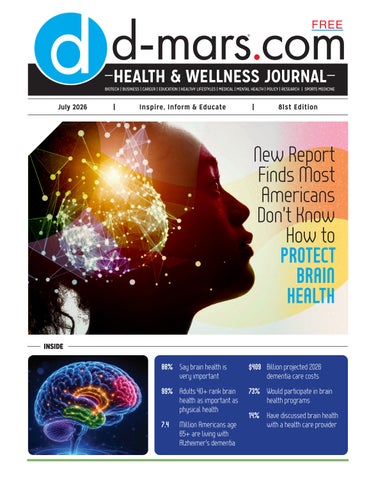
Eighty-eight percent of U.S. adults say maintaining brain health is very important, and almost all adults ages 40 and older surveyed (99%) say it is at least as important as physical health. However, only 9% say they know “a lot” about how to maintain their brain health. More than two-thirds say they worry about their brain health and about developing Alzheimer’s disease or other forms of dementia.
“Americans care deeply about their brain health and say that midlife is the key time to start taking steps to support it,” said Heather M. Snyder, Ph.D., senior vice president of Medical and Scientific Relations for the Alzheimer’s Association. “But many don’t know where to start and are looking for clear guidance on actions they can take.”
The report comes as the impact of Alzheimer’s disease continues to expand nationwide. An estimated 7.4 million Americans age 65 and older are currently living with clinical Alzheimer’s dementia. Total annual costs of caring for people living with dementia nationwide — excluding unpaid care — are projected to reach $409 billion this year, an increase of $25 billion from 2025. Since 2000, deaths from Alzheimer’s disease in the United States have increased 134%.
HEALTHY HABITS CAN SUPPORT COGNITIVE FUNCTION
Researchers emphasize that while age and genetics remain significant risk factors, growing evidence shows that many aspects of brain health are influenced by everyday lifestyle choices. Scientists estimate that addressing modifiable risk factors throughout life may help delay or reduce the likelihood of developing dementia for some individuals. Although no single habit can prevent Alzheimer's disease, maintaining overall health appears to play
PROTECTION & HEALTH
Health habits can help protect the entire brain and lower dementia risk.
EMOTIONS & STRESS
Regulates emotional responses and stress Management.
COORDINATION & BALANCE

Controls movement, posture and physical coordination.

88% Say brain health is very important

99% Adults 40+ rank brain health as important as physical health

7.4 Million Americans age 65+ are living with Alzheimer’s dementia
$409 Billion projected 2026 dementia care costs
73% Would participate in brain health programs
14% Have discussed brain health with a health care provider








an important role in preserving cognitive function.
Heart health and brain health are also closely connected. Conditions such as high blood pressure, diabetes, obesity and high cholesterol can damage blood vessels that supply the brain with oxygen and nutrients. Managing these conditions through regular medical care, healthy eating, exercise and prescribed medications may lower the risk of cognitive decline while also reducing the risk of heart attack and stroke.

Experts also point to the importance of staying mentally and socially engaged. Activities such as reading, learning new skills, volunteering, playing musical instruments, participating in community organizations and maintaining strong friendships challenge the brain and help build what researchers call "cognitive reserve." This reserve may allow the brain to better compensate for age-related changes over time.
Emerging research has also identified hearing health as an important factor. Untreated hearing loss has been associated with an increased risk of cognitive decline, in part because it can contribute to social isolation and reduce the brain's stimulation. Regular hearing evaluations and the use of hearing aids when appropriate may help older adults remain engaged with family, friends and their communities.
Despite broad awareness that lifestyle behaviors influence brain health, the survey reveals a significant disconnect between belief and action — and between brain health and dementia risk. While 75% of respondents say lifestyle behaviors such as diet, physical activity and sleep are very important for maintaining brain health, only 46% say those same behaviors are very important for reducing the risk of Alzheimer’s disease and other dementias.
Only 50% report getting at least seven hours of sleep daily or most days, 39% say they eat a healthy, balanced diet regularly, 42% engage in mentally stimulating activities such as reading or puzzles, and just 34% report regular physical activity. Nearly one-third say they exercise less than weekly or not at all.
Health experts note that quality sleep allows the brain to consolidate memories and clear away waste products that naturally accumulate during the day. Likewise, regular physical activity improves blood flow to the brain and has been linked to better memory, mood and executive function. Diets emphasizing fruits, vegetables, whole grains, fish, nuts and healthy fats — such as the Mediterranean and MIND diets — have also been associated with healthier cognitive aging in numerous studies.


Healthy habits support every part of the brain throughout life.
+ EAT WELL

+




At the same time, Americans express strong interest in programs designed to support brain health. Seventy-three percent say they would consider participating in such programs, particularly those focused on cognitive exercises (57%), health monitoring (46%), nutrition (36%) and physical activity (26%).

Many adults view midlife — ages 35 to 64 — as a critical window for protecting brain health. Nearly two in five (38%) believe people should begin taking steps during midlife, and 46% say formal brain health programs are most appropriate during this stage. At the same time, about one-third view brain health as a lifelong priority.
Medical experts increasingly encourage adults to pay attention to changes in memory, problem-solving or thinking skills rather than dismissing them as simply part of getting older. Early evaluation can help identify treatable medical conditions, provide access to therapies and support services, and allow families to plan for the future if necessary.
Health care providers are seen as trusted sources of guidance, but conversations about brain health rarely occur. Eighty-six percent of adults would welcome these discussions during routine visits. Yet only 14% report ever discussing how to maintain brain health with their provider, and just 11% say they have talked about reducing dementia risk.
“These findings highlight an opportunity to better integrate brain health into routine health care,” Snyder said. “People are motivated to protect their brain health, and actionable guidance can support those efforts.”
To address these gaps, the Alzheimer’s Association is working with partners across communities, workplaces and health care systems to deliver research-backed resources and programs. These efforts are informed by the landmark U.S. POINTER study, which found that combining multiple healthy lifestyle habits can help protect cognitive function.
“The takeaway from this report is clear: brain health is a lifelong priority, not an issue limited to older age,” Snyder said. “By connecting individuals, communities, workplaces and health care, we can build a more equitable framework to support cognitive health and help reduce dementia risk for everyone.”
Learn more at alz.org/facts.
Source: StatePoint, edited by d-mars.com