“Success is to be measured not so much by the position that one has reached in life as by the obstacles which he has overcome.” ” – Booker T. Washington
At d-mars.com, we remain committed to sharing stories that reflect resilience, leadership and the power of persistence in building successful businesses. This month, we highlight a company whose journey underscores the importance of consistency, relationships and vision in today’s competitive landscape.
Our cover story features Nathaniel Curvey, CEO of Accurate Security Inc., a Houston-based company that has steadily built its reputation through dedication and strategic growth. What began as a transition from a career in law enforcement has evolved into a thriving enterprise now playing a critical role in one of the region’s most significant infrastructure projects — the George Bush Intercontinental Airport Terminal Expansion.
Curvey’s journey reflects a disciplined approach to entrepreneurship. Rather than pursuing rapid expansion, he focused on building a solid foundation, developing relationships and remaining consistent in showing up — even when immediate results were not guaranteed. That commitment has positioned Accurate Security to capitalize on opportunities when they arise, proving that success
CONTENTS
is often the result of preparation meeting persistence.
The company’s growth also highlights the value of strategic partnerships. With the addition of Marian LeDoux as vice president of operations, Accurate Security strengthened its ability to execute its vision, combining operational expertise with leadership and foresight. Together, they have demonstrated how collaboration and adaptability can drive meaningful progress.
As we share this story, we are reminded that business success is rarely immediate. It is built over time through discipline, patience and a willingness to remain committed to the process. Accurate Security’s journey serves as a powerful example for entrepreneurs navigating their own paths, reinforcing the idea that consistency and preparation are key drivers of long-term success.
Thank you for your continued support of d-mars.com as we continue to inspire, inform and educate through stories that reflect the strength and innovation of our business community.
OUR SERVICES
FINANCE
YOU CAN TRUST SECURITY
ACCURATE SECURITY’S VITAL ROLE IN THE NEW IAH TERMINAL 12-13
04 How Business Owners Balance Business and Personal Finance
04 Reclaiming Credit as a Wealth-Building Tool
BUSINESS
05 The Quiet Skills That Determine Professional Success
05 LLC vs. Sole Proprietor: What’s Best for You?
EDUCATION AND CAREER
07 The Power of Networking (And How to Do It Authentically)
07 AI and Career Adaptation: Redefining Professional Relevance
TECHNOLOGY
08 Reduce, Reuse and Recycle Your Tech
COMMUNITY
08 Houston dedicates Sheila Jackson Lee Terminal E at IAH
09 The Debut of Wreckshop Records Family Reunion Celebrated Houston’s Culture!
REAL ESTATE
11 Should You Sell As-Is?
HEALTH AND WELLNESS
15 6 Tips From Doctors to Keep Your Kids Safe at Summer Camp
15 May is Save Your Tooth Month. What Endodontists Want You to Know
16 Burnout vs. Balance: Knowing the Difference
17 The Great Disconnect: Why Your Brain Craves a Digital Detox
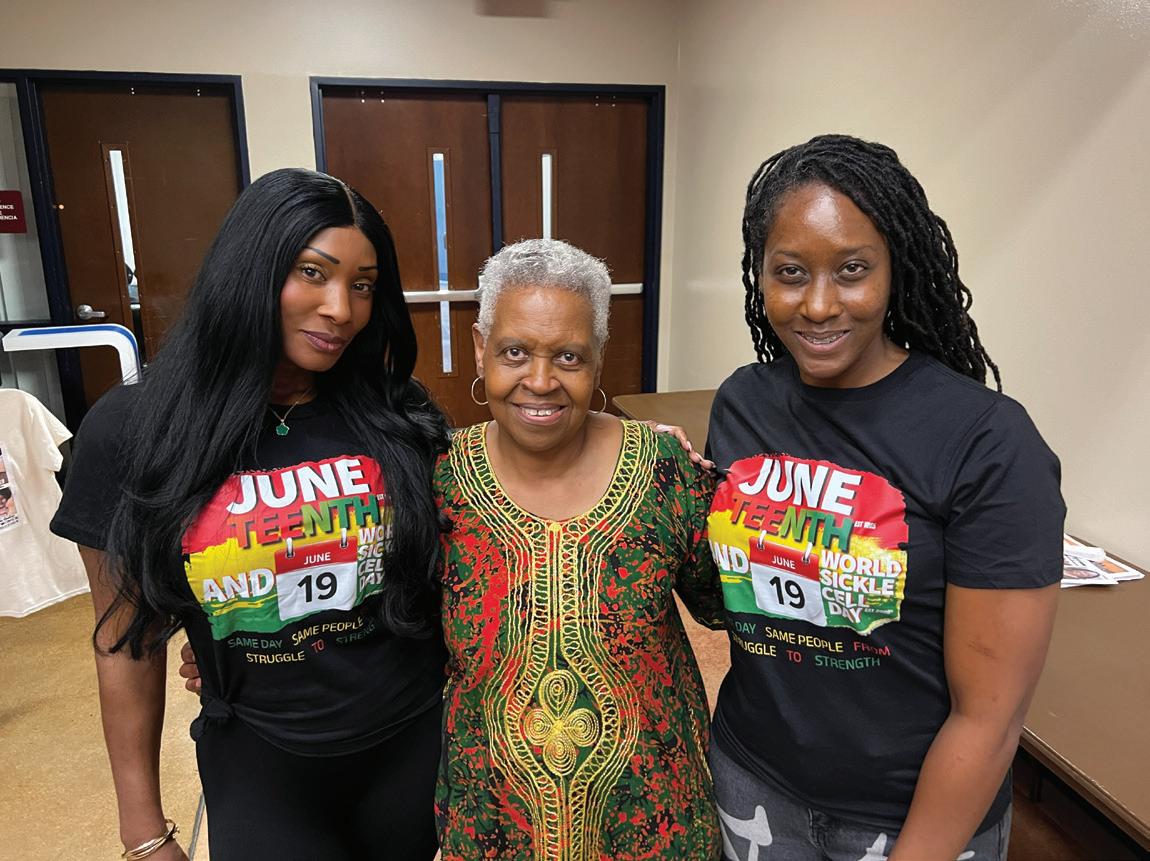
18 Free Food, Family Fun, Door Prizes & Real Resources: Why This Juneteenth Jubilee Is a “Can’t Miss” for Sickle Cell Families and the Entire Community
20 Mental Health and Wellness: A Business Imperative in Today’s Workplace
TRAVEL
21 Stories, Sites and Legacy: Kentucky's African American Heritage Trail
OLD-FOLKS SAYING
27 “Let’s get down to brass tacks”
DID YOU KNOW
27 Ursula Burns Became the First Black Woman CEO of a Fortune 500 Company
RECIPE OF THE MONTH
28 Southern Pecan Pie
ADVERTISING | MARKETING MEDIA | COMMUNICATION
• Business Journal
• Health & Wellness Journal
• Community Weekly Report
• Online Expert Directory
• Top 50 Black Professionals & Entrepreneurs
• Top 30 Influential Women of Houston
• Business Connection
• Business Development
• Business Consulting
• Graphic Design
• Photography
• Printing • Web Design
• Online & Email Marketing
• Public Relations
• Social Media
Advertising
Writing
• Promotional Marketing
FBy StatePoint News Provider
or successful business owners, managing wealth extends far beyond balance sheets — it requires carefully orchestrating growth, balancing business and personal financial priorities, and thoughtfully considering business succession planning and legacy.
PNC’s “Business Owner Wealth Insights Report” is the product of a partnership with leading market research firm, Ipsos, on a nationwide survey of business owners. Its findings center on four themes: connectivity between business and private banking, balancing business and personal growth, family dynamics and governance, and philanthropy and legacy.
“As business owners juggle growth, personal financial priorities, succession planning and legacy, the need for a truly integrated approach has never been clearer,” said Don Heberle, head of PNC Private Bank. “This report shines a light on how prepared business owners are for navigating the complex intersections of business and personal wealth and the keys for unlocking stronger outcomes for families, businesses and communities.”
CONNECTIVITY BETWEEN BUSINESS AND PRIVATE BANKING
For most business owners surveyed (67%), business and personal finances are managed separately. Respondents believe there are potential risks associated with combining business and personal finances, with 83% saying that separating the two reduces the potential for conflicts of interest. Still, 89% say they are interested in receiving advice that considers both their business and personal needs, and 88% of respondents say they value having a dedicated advisor who understands both.
Business and personal goals are reviewed at similar intervals, with the majority saying they revisit their business goals (80%) and personal finance goals (75%) at least quarterly.
RECLAIMING CREDIT AS A WEALTHBUILDING TOOL
By D-MARS
News Provider
n today’s fast-moving economy, credit functions as a financial double-edged sword - it can either be your greatest ally or a persistent enemy. For many in Houston’s Black community, the word "credit" often conjures images of high-interest stress, systemic rejection, or predatory traps. However, financial experts argue it is time to reclaim the narrative. When harnessed with intention, credit is the key that unlocks homeownership, higher education, business expansion, and generational wealth.
THE BALANCE BETWEEN BUSINESS AND PERSONAL GROWTH
There is importance among business owners in finding the right balance between growing the business and achieving personal financial goals.
Most owners (91%) agree that achieving both personal and professional growth is equally important, but that success does not come without barriers, which include:
• Personal time and resources (53%)
• Financial constraints or market conditions (44%)
• Choosing between business reinvestment and personal use of the business’ profits (35%)
FAMILY DYNAMICS AND BUSINESS GOVERNANCE
Most survey respondents (92%) agreed that it is important to have a formal governance structure for their business. Separately, 84% said succession and exit planning is critical to the continuity of their business. Yet, only 63% said they have a formal exit or succession plan.
Among those without a formal plan, top barriers identified include lack of a clear successor (25%), family conflict in succession (15%), and lack of time (19%).
PHILANTHROPY AND LEGACY
Philanthropy plays a meaningful role in legacy planning. Two-thirds of respondents view philanthropy as part of their legacy, and 81% structure investment strategies to support charitable goals. Nearly 80% donate financially, and many involve family members — either actively (43%) or in future plans (26%).
“Today’s business owners are shaping legacy across generations,” Heberle said. “When business and personal strategies are aligned, they are better positioned to create lasting impact.”
Source: StatePoint
“Credit is not just about borrowing; it’s about building,” says Adrienne Taylor, a Houston-based financial coach and owner of Taylor Wealthsaver. “It’s a tool that, when managed correctly, can completely change your financial trajectory.”
THE HIGH COST OF THE CREDIT GAP
The urgency of mastering credit is underscored by stark national data. According to the Federal Reserve, the racial wealth gap remains significant: the median wealth for White families is approximately $285,000, compared to roughly $44,900 for Black families. Credit access plays a central role in this disparity.
A report by LendingTree found that Black borrowers are denied mortgages at a rate of 16.1%, compared to just 5.9% for white borrowers. When Black Americans do secure credit, they often face higher costs. Urban Institute data shows that 54% of white households have "very good" or "exceptional" credit scores (above 720), while only 21% of Black households fall into those categories, often due to historical lack of access to traditional banking.
“With strong credit, you’re not just more likely to be approved for loans or credit cards, you get them at better interest rates,” Taylor explains. “That can mean thousands saved over a lifetime.”
For instance, on a $30,000 car loan, a borrower with a prime score might pay 4% interest, while someone with a subprime score could be charged 18% or more. Over a fiveyear loan, that difference results in over $12,000 in extra interest payments.
5 STRATEGIES TO MAKE CREDIT WORK FOR YOU
To shift from being "used" by credit to using it as a tool, Taylor and other experts recommend five core habits:
1) Impeccable Timing: Pay every bill on time. Late payments are the fastest way to tank a score.
2) The 30% Rule: Keep your credit utilization low. If your limit is $1,000, never carry a balance exceeding $300.
3) Respect Your Elders: Don’t close old accounts. The length of your credit history accounts for 15% of your score.
4) Practice Restraint: Limit new applications to avoid "hard inquiries" that dip your rating.
5) Audit Your Record: Check your free annual report at AnnualCreditReport.com to dispute errors.
“Think of credit like a relationship,” Taylor adds. “Nurture it. Check in on it regularly. Don’t ghost it for years and then be surprised when it’s no longer working in your favor.”
BREAKING HISTORICAL BARRIERS
The struggle for credit equity is rooted in a history of "redlining" and exclusion. Even today, a Consumer Financial Protection Bureau (CFPB) report notes that 15% of Black adults are "credit invisible," meaning they have no credit record at all, compared to just 9% of White adults.
Financial advocates emphasize that empowerment starts with education. By mastering these systems, the community can begin to bypass historical roadblocks.
“We can’t let historical barriers stop us from building the future we deserve,” says Taylor. “Learning how to make credit work for you, instead of against you, is one of the smartest moves you can make for yourself and your family.”
Whether you are starting from scratch or recovering from past mistakes, the path forward involves small, consistent steps: setting up autopay, reducing balances, and seeking guidance from community workshops.
The Quiet Skills That Determine Professional Success
By d-mars News Provider
n discussions about professional success, attention is often placed on visible skills, technical expertise, certifications, performance metrics, or measurable output. These are important, but they are not the only factors that shape long-term career outcomes.
There is another category of skills that operates more quietly. These are not always listed in job descriptions, but they often determine how far someone can move within an organization or industry.
One of these skills is timing. Not just punctuality, but judgment around when to speak, when to wait, when to propose an idea, and when to observe. Timing influences how contributions are received, regardless of quality.
Another is emotional awareness. This includes the ability to read a room, recognize shifts in tone, and adjust communication accordingly. It is not about changing identity, but about understanding context.
Reliability is another quiet skill that carries significant weight. Consistency in small actions, meeting deadlines, following through on commitments, and maintain ing clarity in communication builds trust over time in ways that are often more influential than single high-impact moments.
There is also the skill of recovery. In any professional environment, mistakes and misunderstandings occur. The ability to respond without defensiveness, to clarify without escalation, and to reset without prolonged disruption is often what determines long-term perception.
Listening is another underestimated capability. Not passive hearing, but active interpretation. People who listen effectively often have access to more information than those who speak frequently, because they understand nuance rather than
What makes these skills “quiet” is that they are rarely formally measured. They do not always appear in evaluations, yet they consistently influence opportunities, collaboration, and leadership potential.
In many cases, professionals who are technically strong but lack these skills may find themselves plateauing. Meanwhile, those who develop them often progress in ways that seem less directly tied to visible achievement.
This does not mean technical skills are secondary. Rather, it highlights that professional success is multidimensional. Execution alone is not enough to sustain long-term growth in environments that rely heavily on collaboration and trust.
Quiet skills are often developed through experience rather than instruction. They are shaped by observation, reflection, and repeated interaction rather than formal training.
Recognizing their importance does not diminish technical ability. It simply expands the definition of what it means to be effective in professional environments.
LLC vs. Sole Proprietor: What’s Best for You?
tarting a business is exciting, but choosing the right structure can feel like stepping into unfamiliar territory. For many new entrepreneurs, the decision often comes down to two common options: A sole proprietorship or a Limited Liability Company (LLC). Both have their advantages, but the right choice depends on your goals, your risk tolerance and how you plan to grow.
A sole proprietorship is the simplest and most common way to start a business. In fact, if you’ve already started selling products or offering services without formally registering your business, you’re likely operating as one. There’s no legal separation between you and your business, which means you report income and expenses on your personal tax return. It’s easy to set up, requires minimal paperwork and is typically the least expensive option.
That simplicity is appealing, especially for freelancers, consultants and side hustlers who want to get up and running quickly. But it comes with a tradeoff: liability. Because there’s no legal distinction between you and your business,
you are personally responsible for any debts, lawsuits or financial obligations. If something goes wrong, your personal assets - like your savings, home or car - could be at risk.
An LLC (Limited Liability Company), on the other hand, offers a layer of protection. It creates a legal separation between you and your business, meaning your personal assets are generally shielded from business liabilities. If your company faces a lawsuit or debt, your personal finances are less likely to be impacted.
Beyond protection, an LLC can also enhance credibility. Clients, partners and lenders often view LLCs as more established and professional than sole proprietors. That perception can open doors, especially if you’re looking to scale, secure contracts or build long-term relationships.
However, that added protection and credibility come with more responsibility. Forming an LLC requires filing paperwork with your state, paying registration fees and maintaining compliance through annual reports or renewals. Depending on where you live, those costs can range from modest to significant. You may also need to keep separate financial records and, in some cases, file additional tax forms.
When it comes to taxes, both structures offer flexibility, but they differ in how income is treated. Sole proprietors report
business income directly on their personal taxes and pay self-employment taxes on all profits. LLCs, by default, are taxed the same way, but they have the option to elect different tax classifications, which can sometimes provide savings depending on your income level and business structure.
SO, WHICH IS BEST FOR YOU?
If you’re just starting out, testing a business idea or running a low-risk operation, a sole proprietorship may be the easiest way to begin. It allows you to focus on building your business without getting bogged down in paperwork.
But if you’re earning consistent income, taking on clients, hiring employees or operating in a field where risk is higher, forming an LLC may be the smarter move. The added protection and credibility can provide peace of mind - and position your business for growth.
Ultimately, the choice isn’t just about where you are today, it’s about where you’re headed. Many entrepreneurs start as sole proprietors and transition to an LLC as their business evolves. The key is to understand your needs, assess your risks and choose a structure that supports both your present and your future.
Because building a business isn’t just about making money, it’s about protecting what you’re building along the way.
By
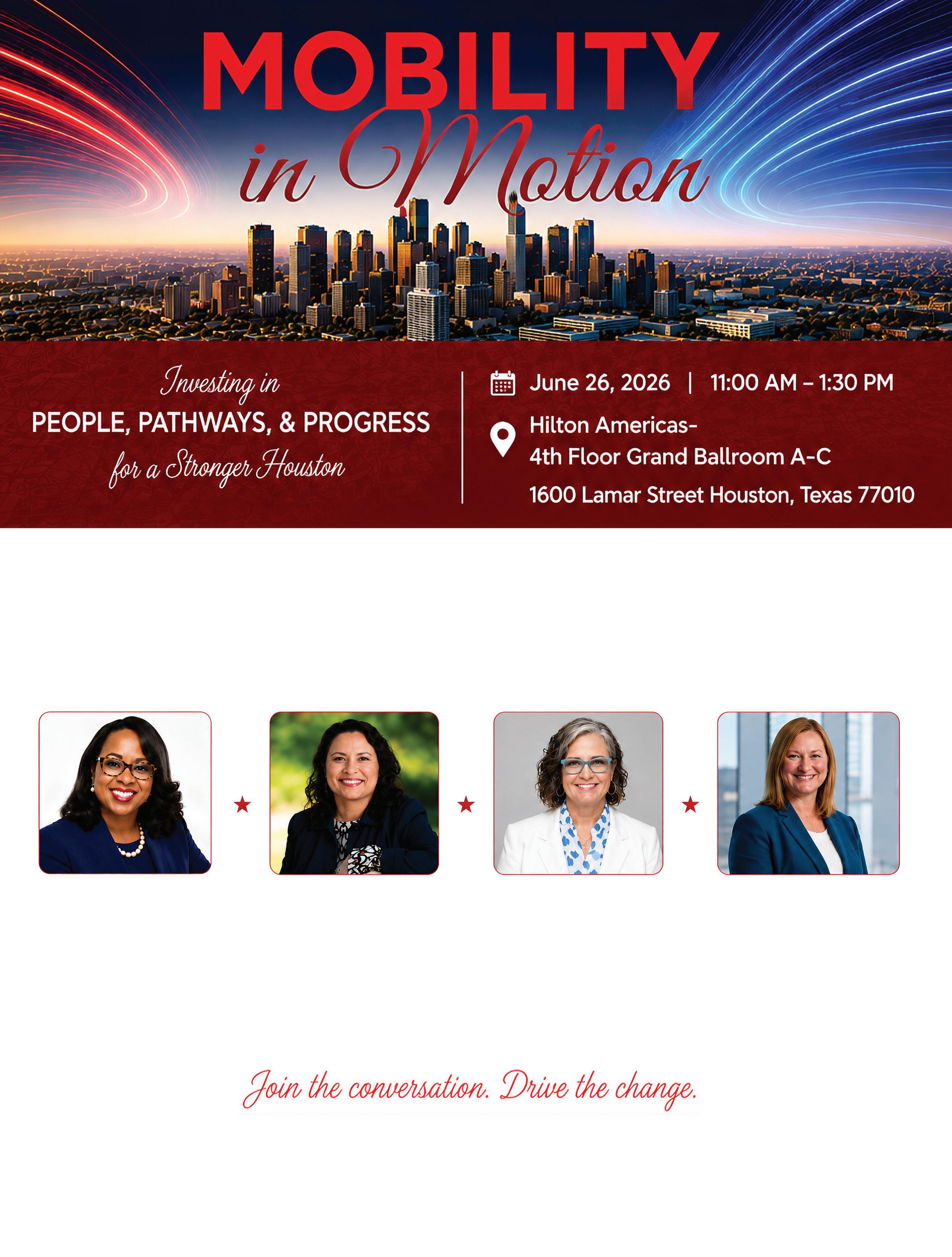
Join us for an inspiring afternoon dedicated to advancing opportunity, fostering collaboration, and strengthening our community.
Harris County Clerk
County Clerk and Chief Election Official of Harris County, the third-largest county in the nation and the largest in Texas. She is the first African American woman elected to serve in this role.
Kinder Institute for Urban Research
Dr. Ruth N. Lopez Turley directs the Kinder Institute for Urban Research at Rice University, advancing data, research, engagement and action to improve lives and strengthen communities.
Melissa Hensley
Senior Director, Corporate Philanthropy & Community Engagement, NRG Energy
Leads corporate philanthropy and community engagement at NRG Energy, investing in people and communities across four giving pillars to support economic opportunity and long-term regional progress.
President & CEO, Houston Methodist Global Health Care Services Senior Vice President, Community Development
Leads global operations, corporate strategy, business development, and community engagement for Houston Methodist, expanding its global footprint and advancing initiatives that improve access to care and strengthen communities.
The Honorable Teneshia Hudspeth
Dr. Ruth N. Lopez Turley Director,
Cathy Easter
AI and Career Adaptation: REDEFINING PROFESSIONAL RELEVANCE
By d-mars.com News Provider
rtificial intelligence is no longer a future concept; it is a present reality embedded in daily professional workflows. From automated writing tools to predictive analytics and creative generation systems, AI is reshaping how work is produced, evaluated, and distributed.
This shift has created both opportunity and uncertainty. For many professionals, the
central question is no longer whether AI will impact their industry, but how they will remain relevant within it.
Career adaptation in this context does not mean resisting technological change. Instead, it involves understanding how human roles are being redefined alongside it.
One of the most significant changes AI introduces is efficiency. Tasks that once required hours of manual effort can now be completed in minutes. This has shifted the value of labor away from repetition and toward interpretation, strategy, and oversight.
In other words, the role of the professional is moving from execution to decision-making.
However, adaptation is not purely technical. It is also cognitive and emotional. Many individuals experience anxiety around replacement or obsolescence, especially in industries undergoing rapid automation. This emotional response is a normal part of technological transition and should not be dismissed.
A key aspect of remaining relevant is developing complementary skills, abilities that AI enhances rather than replaces. These include critical thinking, communication, ethical judgment, and cross-disciplinary understanding.
Another important factor is adaptability itself. The ability to learn continuously has become more valuable than mastery of a single static skill set. Industries evolve quickly, and professionals who can shift alongside them maintain long-term stability.
At the same time, it is important to recognize that AI is not neutral in its impact. It changes workflows, expectations, and even definitions of productivity. This requires individuals to become more intentional about how they structure their work and attention.
Organizations are also adapting by redefining roles. Many positions are becoming hybrid, combining technical fluency with human-centered responsibilities such as collaboration and client engagement.
In this environment, relevance is not about competing with AI. It is about understanding where human contribution remains essential.
That includes areas where ambiguity exists, where emotional nuance matters, and where decisions require ethical consideration rather than pure computation.
A The Power of Networking
(And
By d-mars.com
The internet is constantly expanding language to include new terms developed by younger generations, like “look-maxxing” and “grind-maxxing.”
“Look-maxxing” ally optimizing your appearance, style, and presentation to increase perceived attrac tiveness or confidence.
“Grind-maxxing” to maximizing produc tivity, effort, and output to achieve success or financial gain.
While these terms may sound informal, they reflect something deeper: A cultur al shift in how people think about self-im provement, identity, and opportunity.
Whether you
Ultimately, AI is not eliminating careers as much as it is reorganizing them. The professionals who thrive will be those who see technology not as a replacement, but as a tool that shifts the nature of their contribution.
How to Do It Authentically)
are 18 or 50, the underlying question remains the same: What can I do to move forward, grow professionally, and create stability in my life?
That question is where networking enters the conversation.
Traditionally, networking has been framed as a formal exchange: Business attire, polished resumes, elevator pitches, and carefully rehearsed introductions. For many people, it has felt transactional, something you “perform” rather than
But in the current digital and AI-driven landscape, that version of networking is Authenticity is becoming the
Authentic networking does not begin with what you want from someone else. It begins with curiosity. It begins with showing up in spaces that naturally align with your interests, values, and goals, not forcing yourself into environments that feel disconnected from who you are.
This shift matters because modern connection is no longer limited to physical rooms or structured events. It exists in online communities, creative spaces, shared learning environments, and even casual digital interactions.
THE BARRIER TO ENTRY IS LOWER, BUT THE NEED FOR SINCERITY IS HIGHER.
Here are five ways to approach networking more authentically in today’s world:
• 1. Focus on shared interest, not status. Conversations are more sustainable when they begin from mutual curiosity rather than hierarchy.
• 2. Prioritize consistency over intensity. One meaningful interaction repeated over time builds more trust than one highly polished introduction.
• 3. Listen more than you speak. Active listening signals respect and creates space for real connection.
• 4. Follow up without expectation. A simple message or check-in maintains relationships without pressure or agenda.
• 5. Show up as yourself, not a version of yourself you think is “acceptable” in professional settings. People respond more strongly to clarity and honesty than perfection.
Networking today is less about collecting contacts and more about building relational ecosystems. It is not about who you impress in a moment, but who remembers you over time and why they remember you.
Authenticity does not eliminate strategy: It refines it. In a world increasingly shaped by digital profiles, algorithms, and artificial intelligence, being recognizably human is not a weakness. It is a differentiator.
REDUCE, REUSE AND RECYCLE YOUR TECH
By
Phones are essential to everyday life, but they also come with an environmental footprint.
New survey data from Allstate Protection Plans shows that Americans are thinking more seriously about that impact. The challenge is that habits around recycling, trade-ins, and refurbished devices are still lagging behind awareness.
Allstate Protection Plans’ latest mobile survey shows that 52% of Americans say the environmental impact of smartphones is extremely or very important. That is a strong signal that sustainability is no longer a niche issue in consumer tech. People are paying attention not just to what their phones do, but to what happens to them over time.
That shift is also showing up in how people think about refurbished devices. Nearly twothirds of consumers, 65%, say refurbished electronics are both economical and sustainable. People increasingly understand that extending the life of a device can reduce waste and deliver real value.
But there is still a gap between what consumers believe and what they do. While many people see the benefits of refurbished devices, only 18% say they have ever bought a refurbished phone. The same disconnect shows up in recycling. Only 20% of consumers say they recycle their old phones, while 8% still throw them in the trash. Another 26% say they are not confident they know how to recycle a phone properly.
That uncertainty helps explain why so many devices never make it back into the circular economy. Instead, they sit unused at home. In fact, the average household has 1.8 unused smartphones tucked away in drawers. One forgotten phone may not seem like much, but across millions of households, those unused devices represent a major missed opportunity for reuse, refurbishment, or responsible recycling.
At the same time, ownership habits are changing in ways that could support a more sustainable future. Consumers are keeping their phones longer. Twenty-three percent say they keep their phones for three to four years, and 21% say they only upgrade when their phone breaks. Battery life now ranks ahead of price as the top factor influencing purchase decisions.
These shifting priorities are good for consumers, and good for sustainability. Holding onto devices longer, protecting them from damage, repairing them when possible, and making smarter end-of-life decisions all help reduce unnecessary waste.
The takeaway is that more responsible electronics ownership doesn’t have to be complicated. Small actions can make a real difference. Consumers can trade in old devices instead of letting them collect dust. They can use certified electronics recycling programs instead of throwing phones away. They can donate working phones so someone else can keep using them. And when it is time for a replacement, they can consider refurbished models as a practical, lower-waste option.
A few simple steps can also make phone recycling feel easier and more secure. Backing up data, signing out of personal accounts, performing a factory reset, and removing SIM or memory cards can help people feel more confident about passing a device on for reuse or recycling.
The good news? Consumers already care. Now the opportunity is to turn that awareness into action. One traded-in phone, one recycled device, one refurbished purchase at a time, consumers can help cut e-waste and move personal tech in a more sustainable direction.
Source: StatePoint
Houston dedicates Sheila Jackson Lee Terminal E at IAH
n an historic moment for the City of Houston, Mayor John Whitmire and invited guests joined Houston Airports, and the family of the late U.S. Rep. Sheila Jackson Lee gathered Monday to officially dedicate the Sheila Jackson Lee Terminal E at George Bush Intercontinental Airport (IAH).
The dedication permanently connects Jackson Lee’s legacy to one of the nation’s busiest international airports, where roughly 35,000 international passengers travel through Terminal E each day.
Jackson Lee represented Texas’ 18th Congressional District for more than three decades, a district that includes IAH. Throughout her time in Congress, she advocated for aviation security, federal transportation investment and infrastructure improvements that helped strengthen Houston’s airports and international reach.
public service, opportunity and an unwavering belief in this community,” said Houston Mayor John Whitmire. “For decades, she fought for the neighborhoods, families and future of Houston, and there could not be a more fitting tribute than having her name welcome millions of travelers from around the world to this great city.”
life to connection, opportunity and the people of Houston.”
Terminal E became fully operational in April following the relocation of foreign flag air carriers from Terminal D, marking the completion of the construction project.
During the ceremony, the family unveiled a 500-pound memorial plaque crafted from cast bronze and black granite, featuring a bas-relief portrait of the late congresswoman.
According to the City Council resolution approving the renaming, Jackson Lee helped secure more than $125 million for Houston’s airports during her tenure in Congress.
“Sheila Jackson Lee dedicated her life to the people of Houston, and today our city honors a legacy built on
“Terminal E is where Houston welcomes the world,” said Jim Szczesniak, director of aviation for Houston Airports. “Millions of travelers from around the world will now encounter the story of Sheila Jackson Lee here at one of America’s great international gateways. There could not be a more fitting tribute to a public servant who dedicated her
In the coming weeks, the plaque will be permanently installed inside Terminal E’s international concourse beyond the TSA security checkpoint.
“Thank you to the City of Houston and our beloved community for acknowledging Sheila Jackson Lee by naming Terminal E in her honor,” the Jackson Lee family said in a statement. “Additional thanks to the Department of Homeland Security and the Harris County Congressional Delegation. We are thrilled that the gateway to the world and our great city reflects her leadership and legacy. Houston is the city that allowed Congresswoman Jackson Lee to soar to heights we could not have imagined. This day reflects not just what she meant to us, but what she means to each of you as a central figure in our community. It is our wish that this continues to inspire visitors for years to come.”
Jackson Lee died July 19, 2024, at the age of 74. Houston City Council unanimously approved the renaming of Terminal E on April 16, 2025.
Source: Fly2Houston.com
StatePoint News Provider
By d-mars.com
ay 17th, 2026, the inaugural Wreckshop Family Reunion was a major success and a true celebration of Houston’s music culture, media, and community. Presented by Wreckshop Records and Lemon-Lime Light Media, the event brought together artists, DJs, house name media personalities, vendors, community leaders, and supporters for an unforgettable day of entertainment, unity, and family-style fun!
Guests filled Discovery Green to enjoy performances and appearances from an incredible lineup including DJ XO, Propain, DeLo, Yung Martez, Yung Al, Bumpy Johnson, Lil Flip, Killa Kyleon, Quiet Money Dot, and the Wreckshop Family. In true family reunion fashion, guests also experienced special moments throughout the day including musical chairs on stage, cornhole, dominoes, DJ tribute sets, prizes and unforgettable Houston energy.
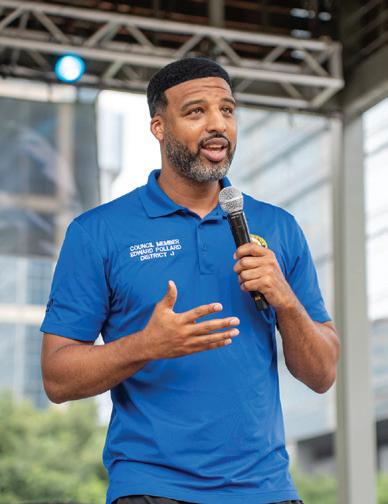
The Wreckshop Family Reunion was hosted by MC Kane and Terry Grossman, with sounds provided by DJ D-Wreck and Lil Zac The DJ, keeping the crowd energized from start to finish. Community leaders also took part in the experience, including remarks from Council Member Edward Pollard and Derrick “D-Wreck” Dixon and Wreckshop Records receiving proclamations from Chief Financial Officer, Controller Hollins.
Beyond the performances, the Wreckshop Family Reunion fostered and celebrated vital connections between DJs, media, and supporters of Houston’s musical legacy. From the opening walkthrough to the final contest giveaways, the Wreckshop Family Reunion embodied unity, celebration, and appreciation for the city and the people who continue to shape its sound and enhance its atmosphere.
Attorney Rodney Jones of RJ Law Group partnered with LLC Cigars to give away $2,500 to an attendee who is overcoming cancer.
Gas God's presented the DJs with a customized gift box in honor of the hard work they put into making sure Houston music is heard worldwide.
Source: Lemon-Lime Light Media
Credit: David Settle
Photo
News Provider
Should You Sell As-Is?
By HAR.com News Provider
f you’re thinking about selling your home, you’ve probably asked yourself one big question: should you fix it up first, or sell it as-is? Selling a home is more than just a transaction — it’s often the beginning of an exciting new chapter. Whether you’re upsizing, downsizing, relocating, investing in a new opportunity, or simply ready for a fresh start, putting your home on the market can open the door to the next phase of life. For many homeowners, there’s a mix of anticipation, possibility, and motivation that comes with taking that first step.
IAt the same time, deciding how to sell your home is one of the biggest factors in determining how smooth and profitable the process will be. For homeowners looking for a quicker or simpler sale, listing a home “as-is” can feel like the easiest route.
But while selling as-is can save time and effort upfront, it also comes with trade-offs that are important to understand before making a decision. In today’s market, the path you choose can directly impact not only how quickly your home sells, but also who your buyers are and how much they’re willing to pay.
WHAT DOES “SELLING AS-IS” REALLY MEAN?
Selling a home as-is means you’re offering the property in its current condition without agreeing to make repairs or improvements before closing.
However, there’s a common misconception here:
• You are still required to disclose known issues
• Buyers can still request inspections
• Buyers can still negotiate based on what they find
In other words, “as-is” doesn’t eliminate negotiations. It simply signals that you’re not planning to fix anything ahead of time.
WHY SOME SELLERS CHOOSE TO SELL AS-IS
For many homeowners, convenience is the biggest factor. Selling as-is can make sense in certain situations, especially when time, budget, or circumstances are limited.
Common Reasons Include:
• You Need to Sell Quickly: Whether you’re relocating, dealing with a life change, or managing a property you no longer want, speed can outweigh maximizing profit.
• The Home Needs Significant Repairs: Major issues such as foundation problems, roof damage, or outdated systems can be costly to repair.
• You Don’t Have the Budget for Updates: Not every seller has the cash to invest in repairs before listing.
• You Want a Simpler Process: Skipping renovations means fewer decisions, less stress, and faster preparation.
SELLING AS-IS OFTEN ATTRACTS A VERY SPECIFIC TYPE OF BUY -
ER:
investors, flippers, or cash buyers looking for opportunity. These buyers are typically focused on purchasing below market value so they can renovate, rent, or resell the proper-
ty for profit. While that can lead to a fast closing and fewer contingencies, it also usually means accepting a lower purchase price in exchange for convenience and speed.
THE TRADE-OFFS YOU SHOULD EXPECT
While selling as-is can be appealing, it’s important to go in with realistic expectations.
Potential Downsides:
• Lower Sale Price: Buyers typically expect a discount in exchange for taking on repairs.
• Smaller Buyer Pool: Many traditional buyers prefer move-in-ready homes, especially first-time buyers.
• More Investor Interest: Investors and flippers are more likely to pursue as-is properties, often with lower offers.
• Negotiation Still Happens: Even with an as-is listing, inspection results can lead to price reductions or concessions.
WHEN MAKING REPAIRS MIGHT BE WORTH IT
Not all updates require a full renovation. In many cases, small improvements can significantly increase your home’s appeal and final sale price. Even modest repairs can reposition your home from an investor-focused property to one that appeals to everyday buyers searching for a move-in-ready home.
Move-in-ready homes often generate more interest, stronger emotional connection during showings, and more competitive offers. Buyers are frequently willing to pay a premium for a home that feels clean, updated, and ready for immediate occupancy because it removes uncertainty and upfront expense.
Consider Fixing:
• Cosmetic issues like paint, flooring, or landscaping
• Minor repairs, such as leaky faucets or broken fixtures
• Curb appeal enhancements to improve first impressions
These relatively low-cost updates can help your home stand out and attract more competitive offers.
HOW TO DECIDE WHAT’S RIGHT FOR YOU
Choosing whether to sell as-is depends on your priorities. Ask yourself:
• Do I need to sell quickly, or can I wait for a higher price?
• Do I have the budget or time to make improvements?
• What condition is my home really in compared to others nearby?
A local real estate professional can help you evaluate your home and estimate how repairs might impact your sale price.
Selling your home as-is can be a smart strategy in the right situation, especially if your goal is speed and simplicity. But it’s not always the most profitable path. Understanding the trade-offs between attracting investors with a lower-priced, quick-sale opportunity versus appealing to traditional buyers with a move-in-ready home can help you make a more confident decision. The best approach is the one that aligns with your timeline, budget, and overall goals.
SOURCE: HAR.COM
YOU CAN TRUST SECURITY
THE SKIES SECURING
ACCURATE SECURITY’S VITAL ROLE IN THE NEW IAH TERMINAL
By d-mars.com
News Provider
or more than a decade, Accurate Security, Inc. quietly built its reputation the old-fashioned way - through persistence, relationships and a commitment to showing up.
or more than a decade, Accurate Security, Inc. quietly built its reputation the old-fashioned way - through persistence, relationships and a commitment to showing up.
Now, that steady determination has positioned the Houston-based company for one of the region’s most significant construction projects: Providing security services for the George Bush Intercontinental Airport Terminal Expansion Project.
Now, that steady determination has positioned the Houston-based company for one of the region’s most significant construction projects: Providing security services for the George Bush Intercontinental Airport Terminal Expansion Project.
For CEO Nathaniel Curvey, the milestone is proof that patience and perseverance pay off.
For CEO Nathaniel Curvey, the milestone is proof that patience and perseverance pay off.
“It’s a great contract,” Curvey said. “But we don’t see it as the pinnacle. We see it as the beginning.”
“It’s a great contract,” Curvey said. “But we don’t see it as the pinnacle. We see it as the beginning.”
FROM LAW ENFORCEMENT TO ENTREPRENEURSHIP
FROM LAW ENFORCEMENT TO ENTREPRENEURSHIP
Curvey founded Accurate Security in 2011 after leaving a career in law enforcement. While the work carried some similarities, he quickly learned that running a security company required a completely different mindset.
Curvey founded Accurate Security in 2011 after leaving a career in law enforcement. While the work carried some similarities, he quickly learned that running a security company required a completely different mindset.
“Having a security company is really running a business,” Curvey said. “It’s not just security.”
“Having a security company is really running a business,” Curvey said. “It’s not just security.”
In the early days, Curvey handled many of the contracts himself, putting in long hours and building the company piece by piece. The challenges were real, from landing contracts to finding reliable talent, but they were challenges he expected.
In the early days, Curvey handled many of the contracts himself, putting in long hours and building the company piece by piece. The challenges were real, from landing contracts to finding reliable talent, but they were challenges he expected.
“I didn’t think it was going to be easy,” he said. “Whatever challenge came up, I was ready for it.”
His determination was shaped by his upbringing and background in athletics.
“I played sports, basketball,” Curvey said. “It was always a never-give-up attitude. It had to work.”
A STRATEGIC PARTNERSHIP
In 2019, Accurate Security gained a new level of momentum when Marian LeDoux joined the company as vice president of operations.
LeDoux spent more than two decades working in healthcare as a nurse before transitioning into the business. Curvey quickly recognized her organizational skills and business instincts, qualities that would prove invaluable as the company pursued larger opportunities.
“He (Curvey) had a solid vision for growth,” LeDoux said. “I think he needed the right person to help execute that vision.”
For LeDoux, the shift from healthcare to security was both professional and personal. After years in nursing, she was looking for a new challenge.
“I had been in healthcare for over 20 years and was hitting burnout,” she said. “This gave me an opportunity to pivot and maximize my skill set.”
THE POWER OF SHOWING UP
While talent and vision played a role in Accurate Security’s growth, LeDoux said one of the biggest factors was simple consistency.
For years, the pair attended procurement forums, industry events and networking opportunities throughout Houston, sometimes without immediate results.
“We consistently went to D-MARS events, Subcontractor USA Summits and Expos, Greater Houston Business Procurement Forum meetings and other business expos,” We just kept showing up.”
Those appearances allowed them to build relationships and learn the construction industry while increasing the visibility of their company.
Eventually, those relationships paid off.
“A need came up, and someone passed along our card,” LeDoux said. “Our name came up, and the rest is history.”
Over the past 18 months, the company’s growth has accelerated significantly, with the airport expansion project serving as a major turning point.
MEETING A GROWING NEED
At Bush Intercontinental Airport, Accurate Security provides specialized services that support the complex operations of a major construction site.
The company’s work includes vehicle escorts, flagging operations and monitoring vehicles entering and exiting secure construction zones.
“There’s a real need for what we offer,” Curvey said. “Escorts, flaggers, people who can search vehicles coming on and off the site. We see how valuable that is.”
And the airport contract is only the beginning.
Curvey hopes to expand the company’s services to other major airports across Texas and beyond, including Dallas–Fort Worth, San Antonio and Atlanta.
“We want to spread this thing,” he said. “This is just the start.”
LESSONS FOR OTHER ENTREPRENEURS
Both Curvey and LeDoux say Accurate Security’s success story carries lessons for other small business owners.
For LeDoux, the key is consistency.
“You may not land anything right away,” she said. “It may take a year or even longer. But if you stay consistent and keep building relationships, opportunities will come.”
Curvey offers a simpler but equally powerful philosophy.
“Stay small until it’s your turn,” said. too fast. Just stay in it until it’s your time.”
After more than a decade of per sistence, Accurate Security’s time ap pears to have arrived, with a runway that may extend far beyond Houston.
“If you stay in it long enough,” Curvey said,
A6 TIPS FROM DOCTORS TO KEEP YOUR KIDS SAFE AT SUMMER CAMP
By StatePoint News Provider
s you get ready to send kids to summer camp, the American Medical Association (AMA) is encouraging you to follow these tips to make sure your child is prepared for a safe and healthy experience:
1) Be Sun Aware: Kids will spend a good portion of their day outside. Protect your child from damaging UV rays by applying a broad-spectrum sunscreen of at least SPF 30 before camp each day. Send a bottle with them so they can reapply every 2-3 hours. Also consider UV protective clothes and hats.
2) Avoid Bug Bites: The summer months bring out the bugs, and your kids will likely encounter them at summer camp. To keep your kids safe from insect bites and insect-borne diseases, have them wear loose-fitting, light-weight long sleeves and pants when possible and avoid clothes with bright colors and floral prints, which often attract bugs. Using an EPA-registered insect repellent is an effective way to protect your child from mosquito and tick bites, particularly in the early morning and at dusk. Avoid choosing products that combine bug spray and sunscreen, because they are most effective when applied separately. Always check your child’s skin for ticks after being outdoors as insect repellent doesn’t kill ticks, and they can remain on clothes and skin long after the camp day is done. Ticks are most likely to attach to areas where clothing is tight to the skin, like the waistband of pants, as well as the hairline and behind the ears. More information about bug safety from JAMA Pediatrics can be found at https://jamanetwork.com.
3) Prepare for Allergies: Seasonal and food-related allergies can spoil your child’s fun. Be sure to pack your child’s EpiPen or other allergy medication. If your child comes in contact with a food or environmental allergen that has been known to cause an allergic reaction, ensure they and camp supervisors know to act quickly.
By StatePoint News Provider
hen a tooth is infected or giving you pain, having it pulled may seem like the easiest option, but dental specialists called endodontists say that saving natural teeth whenever possible is better for your oral health, your overall health and your confidence.
WThat’s why during Save Your Tooth Month this May, the American Association of Endodontists (AAE) is sharing information about recognizing tooth pain, understanding treatment options like root canal treatment, and seeking care from an endodontist to save natural teeth. As part of
4) Pack Healthy Lunches and Snacks: If you are packing your child’s lunch and snacks, include fruits, vegetables, lean proteins and whole grains. Try to pack at least two-thirds of their meal with plant-based foods. Strive to include lean protein or plant-based protein and avoid processed meats and sugar-sweetened drinks such as soda and juice. Hydration is also important in the summer sun since kids, especially when physically active, are at a higher risk for heat-related illnesses. Make sure they have plenty of water in reusable containers.
5) Get Up-to-Date on MMR Vaccination: Be aware that the United States is seeing the highest number of measles cases in more than 30 years, and measles spreads very easily, often before you realize you’re sick. Measles is more than a rash. It is an extremely contagious, airborne virus that can cause severe health complications, particularly for babies and young children—including pneumonia, brain swelling, blindness and even death. The MMR vaccine is the best way to avoid spreading measles, mumps and rubella and prevent children from getting sick. There is no treatment for these infections, so vaccination is the best defense. Nearly everyone who doesn’t get the MMR vaccine will get sick if exposed to measles, mumps or rubella. Be sure to get your child vaccinated to protect against severe complications. Doing so will help keep them from missing out on summer camp and help parents and families from missing work to care for a sick child.
6) Arrange Medications in Advance: If your child needs to take a prescription medication while at camp, talk with camp organizers and counselors before camp begins to make sure there’s a plan in place for safely storing and administering the medication.
For more health tips and resources visit ama-assn.org.
“From campfires to making new friends, summer camp is packed with fun and adventure for kids. With a bit of thoughtful preparation, kids can have fun while staying safe along the way,” says AMA President Bobby Mukkamala, MD.
Source: StatePoint
May is Save Your Tooth Month. What Endodontists Want You to Know:
the campaign, AAE is sharing these important tips:
Don’t ignore tooth pain. If you’re like many Americans, anxieties around dental visits or financial concerns may lead you to delay or avoid care altogether. In fact, in an AAE survey, 60% of Americans admit they’ve put off going to the dentist when they suspected something was wrong. When you have tooth pain, don’t ignore it. It could be a sign of infection or damage that requires prompt care.
Save your natural tooth! Not only is saving your natural tooth usually the best option for your long-term oral health, it’s desired by most Americans. About 78% of those surveyed agree they would do almost anything to avoid losing one of their natural teeth. Fortunately, root canal treatment is a safe, effective, and virtually pain-free procedure that can relieve discomfort and restore function. So, any time you’re experiencing lingering sensitivity, swelling or severe pain, ask your dentist for a referral to an endodontist. Endodontists are the specialists uniquely trained to relieve tooth pain
and preserve natural teeth and are also the go-to practitioner to see if you’ve experienced a knocked-out tooth.
Maintain your oral health. Regular dental visits and good oral hygiene at home can help prevent issues that could lead to tooth loss. Be sure to keep up with both for a healthier smile.
At a time when there is a glut of medical misinformation circulating on social media, getting reliable information is critical. More than a third of Americans surveyed say they’ve seen conflicting or confusing information online about dental procedures such as root canals. To get trusted facts from endodontists about tooth pain and care, visit https://www.aae.org/sytm.
“Natural teeth are both irreplaceable and central to your overall well being,” says Dr. Craig Noblett, president, AAE. “Be sure to get timely, proper dental care from an endodontist whenever you experience pain, discomfort or a dental injury.”
Source: StatePoint
HEALTH & WELLNESS
BURNOUT VS. BALANCE KNOWING THE DIFFERENCE /
By Shonda Caradine News Provider
A
rtificial intelligence is rapidly reshaping careers, education, and entire industries. This shift is not something to fear, but something to understand. It is changing not only how we work, but how we are required to show up in workplaces, communities, and creative spaces.
Technological advancement has made it increasingly difficult to distinguish between what is human-made and what is machine-generated. From digital art to written content to online engagement patterns, the lines continue to blur. Even basic metrics like “likes” or “views” are no longer always reliable indicators of human interaction.
In this complexity, something distinctly human becomes more valuable: EMOTIONAL INTELLIGENCE.
Emotional intelligence refers to the ability to recognize, understand, and regulate emotions, both in yourself and in others. It includes awareness, empathy, communication, and the ability to respond thoughtfully rather than react impulsively.
Unlike technical skills, emotional intelligence cannot be fully replicated by machines. It can be simulated, but not authentically experienced.
This becomes especially important in professional environments where collaboration, leadership, and communication are essential. Many people today are experiencing career disruption due to automation, restructuring, or shifting industry demands. This has created widespread stress across local communities and broader economic systems.
AS A RESULT, BURNOUT HAS BECOME INCREASINGLY COMMON.
Burnout is often misunderstood as simple exhaustion. In reality, it is a deeper state of emotional and cognitive depletion caused by prolonged stress without recovery. It affects motivation, focus, creativity, and even physical health.
Balance, on the other hand, is not the absence of stress, it is the presence of regulation. It is the ability to move between intensity and rest without losing stability.
One of the contributing factors to burnout in modern society is constant digital stimulation. Screens have altered attention spans, with increased reports of difficulty sustaining long focus. While conversations around mental health are important, this is not solely a clinical issue, it is also a technological and environmental one.
The way we consume information has changed the way we process it. The brain adapts to speed, fragmentation, and constant input. Over time, this can affect emotional regulation and cognitive endurance.
THIS IS WHERE EMOTIONAL INTELLIGENCE BECOMES ESSENTIAL.
Developing emotional intelligence can help individuals navigate not only workplace challenges but also internal stress responses. It allows people to identify when they are approaching burnout and adjust accordingly before reaching a breaking point.
Simple practices can support this development: Pausing before responding in conflict, recognizing emotional triggers, practicing reflective communication, and building awareness of personal limits.
It is also important to recognize that individuals are operating within different “timelines,” not just social media timelines, but life timelines shaped by experience, access, and circumstance. Understanding this reduces comparison-based stress and increases empathy in professional environments.
Ultimately, emotional intelligence is not just a soft skill. It is a form of adaptability. And in a rapidly changing technological world, adaptability is becoming one of the most valuable forms of intelligence.
BALANCE IS NOT A FIXED STATE.IT IS A CONTINUOUS PRACTICE.
The Great Disconnect:
Why Your Brain Craves a Digital Detox
tonin, the hormone that regulates sleep. Simply put: scrolling at midnight is costing you real rest.
INSIGHTS FROM THE EXPERTS
he digital age has revolutionized how we live, work, and connect, but it has also left many of us tethered to our devices in ways that feel increasingly overwhelming. We don’t just use our devices anymore; we live on them. From the moment we wake up to the late-night "just five more minutes" scroll, our lives are tethered to screens that keep us informed but quietly drain our reserves.
According to the Nielsen Total Audience Report, the average American now spends more than 11 hours daily on screens, with nearly three hours of that time dedicated solely to social media.
THE HIDDEN COSTS OF STAYING PLUGGED IN
The consequences of this tech overload extend far beyond simple distraction. Research from the American Psychological Association (APA) indicates that over 86% of U.S. adults regularly check their emails, texts, and social accounts, a habit directly linked to higher stress levels.
This constant connectivity comes with a heavy price tag:
Mental Fatigue: Our brains weren't designed to process a relentless stream of news alerts and social feeds.
The Comparison Trap: Social media presents a "highlight reel" of others' lives, which can chip away at our self-esteem.
Physical Toll: Excessive screen time is linked to eye strain, reduced physical activity, and severe sleep disturbances.
The blue light emitted from devices interferes with the body’s ability to produce mela-
“If it’s a true addiction, then other things are going to suffer in your life,” says Jason Drake, a licensed clinical social worker and owner of Katy Teen & Family Counseling. He notes that the impact is particularly sharp among the younger generation.
“Young people are dealing with anxiety and depression that comes from constant doom-scrolling and the unrealistic expectations and lifestyle pressure on these platforms,” Drake explains.
For teenagers, the path to improvement involves reducing the noise of notifications and the weight of online comparison. Drake emphasizes that while setting boundaries is crucial, professional help is sometimes necessary for those facing significant mental health hurdles.
RECLAIMING YOUR SPACE
A digital detox isn’t about abandoning technology altogether; it’s about creating intentional space to reset your mind and restore focus. It’s about reconnecting with a reality that doesn't require a Wi-Fi signal.
HOW TO START SMALL:
The 30-Minute Rule: No phones for the first 30 minutes of your day.
Notification Culling: Turn off everything that isn't essential.
Offline Enrichment: Engage in sports, hobbies, or creative pursuits.
Physical Boundaries: Create "no-screen" zones in your home, like the dining table or the bedroom.
As Drake suggests, "Balancing technology and sports can help develop discipline and focus." Whether through therapy or simple lifestyle shifts, taking a break from the digital world allows us to reconnect with what truly matters.
Join Our Juneteenth Jubilee: Saturday June 20th!
Free Food, Family Fun, Door Prizes & Real Resources: Why This Juneteenth Jubilee Is a “Can t Miss for Sickle Cell Families and the Entire Community
By As One Foundation News Provider
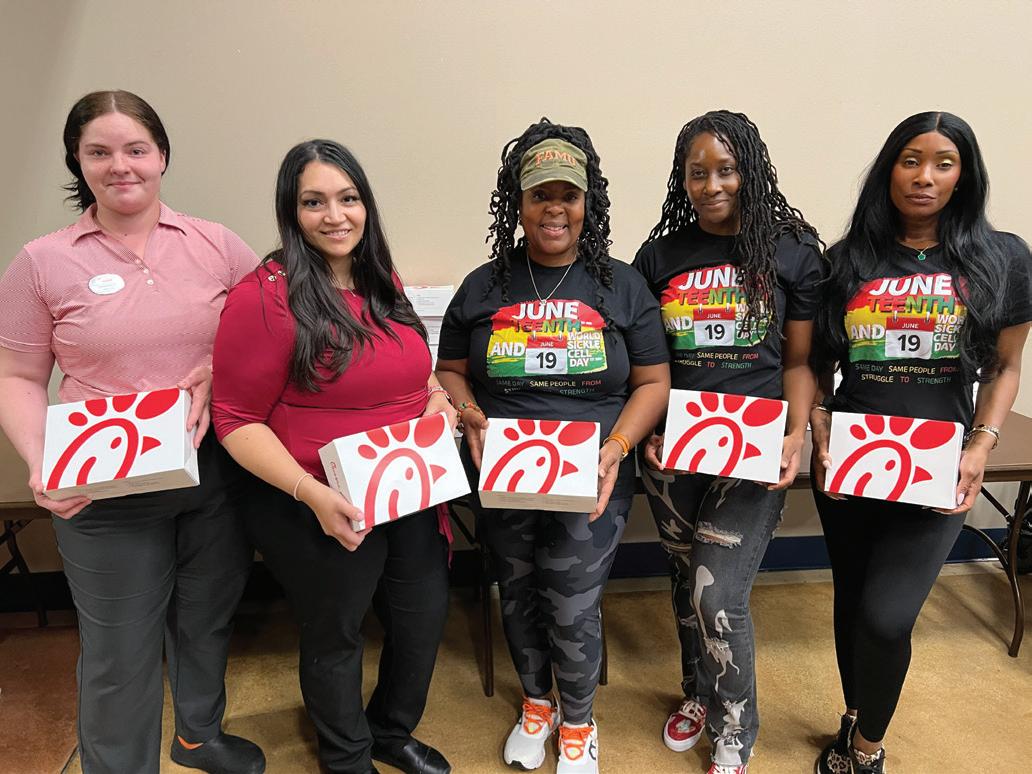
very June 19th, two powerful observances converge: Juneteenth and World Sickle Cell Day. One celebrates freedom. The other calls for awareness, advocacy, and action around a disease that disproportionately impacts Black communities. Together, they create more than a meaningful date. They create a moment that deserves to be experienced, not just acknowledged.
At the As One Foundation, we bring that moment to life through something bigger, bolder, and more joyful: a Jubilee. Because let’s be honest, a typical blood drive may not feel like a place for families to gather, celebrate, and connect. But this is not just a blood drive.
For Devard Darling, President and Founder of the As One Foundation and identical twin of the late Devaughn Darling, the mission is both personal and urgent.
“My brother’s story is why we do this work every single day,” said Darling. “Twenty-five years later, we are still fighting to make sure families have the knowledge, resources, and support they need. This is about honoring his legacy, but it is also about saving lives right now.”
This is a World Sickle Cell Day Juneteenth Jubilee Health Fair & Blood Drive, where free food, music, culture, door prizes, giveaways, and real, tangible resources come together in one powerful, family-centered experience. It is intentionally designed to welcome sickle cell families, caregivers, and the broader community into a space that feels as good as it is impactful.
EVENT DETAILS:
Juneteenth Jubilee
Date: Saturday, June 20, 2026
Time: 1:30pm to 5:30pm
Location: Acres Home Mult-Service Center 6719 Montgomery Rd. Houston, TX 77091
More Than an Event… A Family-Centered Experience
FROM THE MOMENT YOU ARRIVE, THE ENERGY WILL BE DIFFERENT.
You’ll hear music.
You’ll see families laughing.
You’ll smell great food.
You’ll feel community.
Children will enjoy a Kid Zone filled with games and activities, while parents and caregivers explore resources designed specifically with their needs in mind. Throughout the day, attendees will have opportunities to win door prizes and giveaways, adding excitement and engagement at every turn.
And one of the most meaningful highlights? Our Family of the Day recognition, where we celebrate a sickle cell family, honoring their journey, resilience, and strength in front of a community that truly understands. Because this event was built with them in mind.
REAL SUPPORT, REAL RESOURCES, RIGHT THERE
Beyond the celebration, the Jubilee is about access.
Families will be able to connect with trusted resource vendors and community partners offering:
• Sickle cell trait and disease education and management support
• Health screenings and wellness checks
• Information on emerging therapies and care options
across Texas. But its success depends on the voices of the very people it is meant to serve.
THIS SESSION CREATES SPACE TO:
• Transportation resources, including opportunities like ride assistance and vouchers through programs such as Houston Health Rides
• Connections to local clinics, advocacy groups, and support networks
Too often, families have to search for these resources separately. At the Jubilee, they are all in one place, accessible, welcoming, and ready to serve. Because support shouldn’t be hard to find. It should meet you where you are.
WHY BLOOD DONATION STILL MATTERS
While the atmosphere is celebratory, the mission remains urgent.
Sickle cell disease often requires ongoing blood transfusions to manage pain crises, prevent stroke, and sustain life. Yet there continues to be a critical shortage of blood donors from communities of color, especially Black donors. That shortage directly impacts the care and outcomes of individuals living with sickle cell disease. What many don’t realize is that the best blood matches often come from donors of similar ethnic backgrounds. Without those matches, patients face increased complications and limited treatment options. So yes, there will be a blood drive. But it’s not positioned as a standalone ask.
“Blood donation is one of the most immediate and impactful ways our community can show up for one another,” said Dr. Tomia Austin, Executive Director of the As One Foundation “We are not just raising awareness, we are creating pathways to action that directly save lives, especially for individuals living with sickle cell disease who rely on consistent access to compatible blood.”
It’s part of something bigger. It’s an opportunity for the community to show up for one another in a joyful, affirming environment, where giving back feels natural, not clinical.
ROOTED IN LEGACY, BUILT FOR COMMUNITY
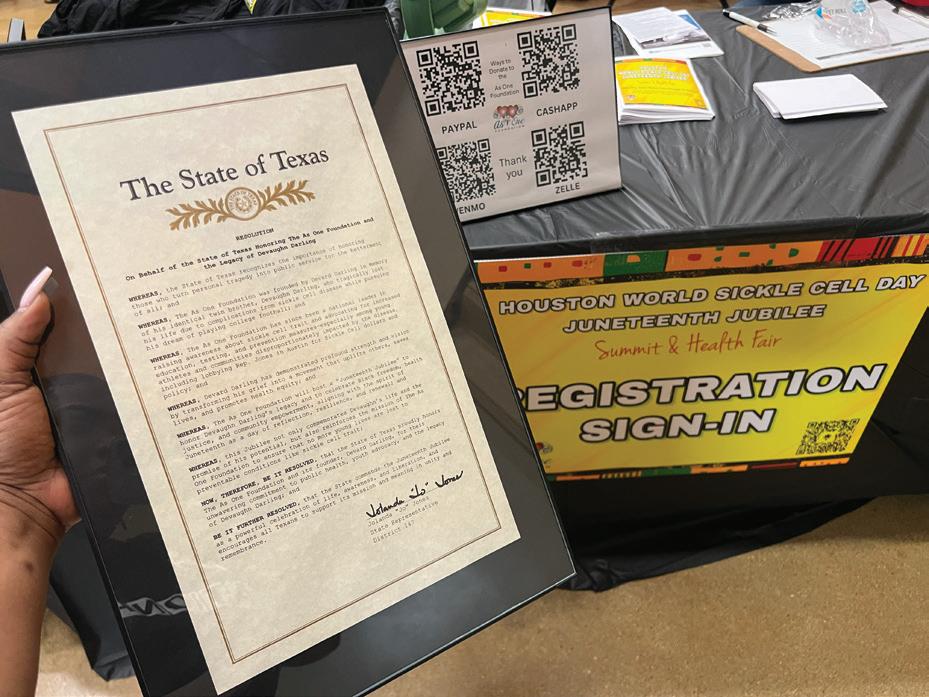
This work is deeply personal. The As One Foundation was established in honor of Devaughn Darling, who passed away on February 26, 2001, due to complications related to sickle cell trait during a collegiate football workout. In 2026, the foundation continues to recognize the 25th anniversary of Devaughn becoming our angel, carrying his legacy forward with intention all year long. Our early work focused on sickle cell trait awareness, hydration, and prevention. Today, that mission has expanded, but the heart remains the same: to ensure families are informed, supported, and empowered.
This Jubilee reflects that evolution. It is where education meets celebration, and where legacy meets action.
A SPACE FOR LEARNING, SHARING, AND BEING HEARD
In addition to the festivities, the Jubilee will host an important community listening session on HB 107, the legislation establishing the Texas Sickle Cell Registry. For sickle cell families, this matters.
This registry has the potential to improve how the disease is understood, tracked, and treated
• Learn what the registry means for your family
• Ask real questions
• Share your experiences
• Help shape how it is implemented
This is about more than policy. It is about trust, transparency, and community voice. “This is not just another event,” Dr. Austin added. “It is a space where voices are heard, lives are impacted, and solutions are built together. If you care about health equity, this is where you need to be.”
THIS IS YOUR INVITATION: COME FOR THE FUN, STAY FOR THE IMPACT
If you’ve ever thought, “A blood drive isn’t really for us,” this is your moment to think again.
• Come for the free food.
• Come for the music and culture.
• Come for the door prizes and giveaways.
• Come for the resources your family actually needs.
• Come for the kids, the laughter, and the community.
• And while you’re there, consider giving blood.
• Ask questions.
• Get connected.
• Feel supported.
Because this space was created with intention.
Juneteenth reminds us that freedom requires action. World Sickle Cell Day reminds us that equity still does. And the Jubilee?It reminds us that we can care for our community while celebrating it at the same time.
So bring your family. Invite your friends. Show up ready to experience something different.
Because when we gather like this, we don’t just host events.
• We create moments.
• We create access.
• We create impact.
And most importantly…we show up for each other in ways that truly matter.
VENDORS AND SPONSORS ARE WANTED, EMAIL: info@asonefoundation.org.
Mental Health and Wellness: A Business Imperative in Today’s Workplace
By d-mars.com News Provider
ental health and wellness have moved from being personal concerns to critical business priorities. As organizations continue to navigate evolving workplace dynamics, economic pressures and increased demands on employees, the conversation around mental well-being is no longer optional — it is essential.
In today’s fast-paced environment, employees are balancing professional responsibilities with personal challenges at an unprecedented level. The result is a workforce that is often stretched thin, leading to burnout, reduced productivity and higher turnover rates. Businesses that recognize and address these challenges are better positioned to build resilient teams and sustain long-term success.
MENTAL HEALTH IS MORE THAN THE ABSENCE OF ILLNESS.
It includes emotional, psychological and social well-being, all of which influence how individuals think, feel and perform. When employees feel supported, they are more engaged, collaborative and motivated. Conversely, when mental health needs go unmet, it can negatively impact morale, workplace culture and overall performance.
One of the most significant shifts in recent years is the growing recognition of mental health as a leadership responsibility. Forward-thinking companies are embedding wellness into their organizational strategies rather than treating it as a standalone initiative. This includes offering employee assistance programs, providing access to counseling services and promoting flexible work arrangements that allow employees to better manage their time and responsibilities.
However, resources alone are not enough. Workplace culture plays a critical role in shaping how mental health is perceived and addressed. Employees must feel safe discussing their challenges without fear of stigma or professional consequences. Leaders who model transparency and empathy set the tone for an environment where mental well-being is prioritized.
COMMUNICATION IS A KEY FACTOR IN THIS PROCESS.
Regular check-ins, open dialogue and clear expectations can help reduce stress and prevent misunderstandings. Managers who take the time to listen and respond thoughtfully can identify potential issues early and provide support before they escalate.
ANOTHER IMPORTANT ASPECT OF MENTAL WELLNESS IS WORK-LIFE BALANCE.
While technology has made it easier to stay connected, it has also blurred the boundaries between work and personal life. Encouraging employees to disconnect after hours, take breaks and use their vacation time is essential for maintaining both mental and physical health.
The benefits of prioritizing mental health extend beyond individual employees. Organizations that invest in wellness initiatives often see improved performance, stronger retention and enhanced reputation. In a competitive talent market, companies that demonstrate a commitment to employee well-being are more likely to attract and retain top talent.
Additionally, mental health awareness contributes to diversity, equity and inclusion efforts. Individuals from different backgrounds may experience unique stressors and challenges. By fostering an inclusive environment that acknowledges and addresses these differences, organizations can create a more equitable workplace where all employees have the opportunity to thrive.
Small businesses, in particular, may face challenges in implementing comprehensive wellness programs due to limited resources. However, meaningful impact does not always require large investments. Simple actions such as offering flexible schedules, creating peer support systems and providing access to educational resources can make a significant difference.
Employees also play a role in maintaining their own well-being. Practicing self-care, setting boundaries and seeking support when needed are important steps in managing stress. Employers can support these efforts by providing tools and resources that empower individuals to take control of their mental health.
As the business landscape continues to evolve, the importance of mental health and wellness will only grow. Organizations that prioritize well-being are not only supporting their employees but also strengthening their foundation for future success.
Ultimately, mental health is a shared responsibility. By fostering a culture of awareness, compassion and support, businesses can create environments where employees are able to perform at their best while maintaining a healthy and balanced life.
Stories, Sites and Legacy: Kentucky's African American Heritage Trail
By d-mars.com
News
Provider
hen it comes to learning history, there is something about the act of walking around a historical site that will drive a lesson home in a way that is nearly impossible to replicate with films, books and other media.
For instance, there are thousands of pages written on the historical importance of places like Camp Nelson in Nicholasville, Kentucky, where the Union Army used the installation as a vital supply depot, forward operating base, and safe haven for enslaved people escaping bondage in the south. Entire books have been written on how Camp Nelson was responsible for recruiting and training regiments of United States Colored Troops, which helped hasten the end of the nation’s bloodiest war. All of this can be read and understood without leaving one’s house or classroom.
However, there is a certain perspective that can only be gained while standing on the same ground that turned people who had once been referred to as property, into soldiers fighting for the freedom of all Americans. And a feeling of heaviness that can only be experienced during a quiet walk amongst the pristine rows of Civil War headstones in the Camp Nelson National Cemetery; each marker a reminder of the ultimate price someone had to pay for that freedom.
This emphasis on experiencing history firsthand is what lead to the creation of the Kentucky African American Heritage Trail. This trail includes more than 50 sites located across Kentucky that collectively tell the story of how African Americans overcame, innovated
and thrived, while playing an essential role in forming the commonwealth and the nation as a whole.
The trail is a collaboration between the Kentucky Department of Tourism, Kentucky Historical Society and the Kentucky Heritage Council, and was formed with the purpose of teaching accurate and culturally significant lessons to all visitors. By working together, the sites on the trail are able to further amplify marginalized voices and contributions while supporting local economies through tourism.
One such site is the Muhammad Ali Center in Louisville, which not only celebrates the life and personal achievements of one of the world’s greatest boxers, but also calls attention to Ali’s contributions to global humanitarianism and social justice. Visitors learn about the society Ali was born into and what he overcame to become a champion boxer and a champion for people. Another is the SEEK Museum in Russellville, which shines a spotlight on Kentucky’s “Struggles for Emancipation and Equality” by telling the story of five buildings in a National Register Historic District. These buildings take visitors on a journey through centuries of enslavement, emancipation, Jim Crow segregation and the Civil Rights Movement, all within a few city blocks.
The Kentucky African American Heritage Trail serves as a way of teaching visitors about Black Kentuckians, their achievements and related narratives in specific places, while helping to connect those stories to the vast and vibrant tapestry that is Kentucky’s story.
The trail can be found on Apple Maps as well as www.kentuckytourism.com.
Plan your journey through Kentucky history today.
SOURCE: STATEPOINT
MUHAMMAD ALI CENTER
KENTUCKY CENTER FOR AFRICAN AMERICAN HERITAGE
CAMP NELSON NATIONAL CEMETERY
CAMP NELSON OLIVER PERRY HOUSE
ED HAMILTON SCULPTURE - ABRAHAM LINCOLN AT LINCOLN MEMORIAL WATERFRONT PARK
CAMP NELSON OLIVER PERRY HOUSE
Durable Medical Equipment: Rollators, Canes, Wheelchairs, Shower Chairs
Medical Supplies: First Aid Kits, Wound Care, Safety Gear, AED’s & so much more!
Medicare & Medicaid Accepted
Old Folks Saying:
“LET’S GET DOWN TO BRASS TACKS”
In essence, they’re telling you to get to the point. “Let’s get down to brass tacks” is a call to move past surface-level conversation and focus on what truly matters. Historically tied to craftsmanship—measuring fabric precisely to the brass tacks—it reflects accuracy, clarity and getting to the core of a task. In today’s business environment, where time is limited and decisions move quickly, this mindset is especially relevant. Leaders and teams are expected to cut through noise, align on priorities and execute efficiently. Whether in meetings, negotiations or strategy sessions, getting down to brass tacks means focusing on results, accountability and the details that ultimately drive success.
Did You Know?
Ursula Burns
Became the First Black Woman CEO of a Fortune 500 Company
In 2009, Burns was named CEO of Xerox, a global technology company, after starting her career there as a summer intern in 1980. She later became chairwoman, making her the first Black woman to hold both titles at a Fortune 500 company.
Burns, who was raised in a New York City housing project by a single mother, built her career through engineering and leadership roles within Xerox. Her rise is often cited as a powerful example of internal career advancement and corporate mentorship.
During her tenure, she led the company’s transition from a traditional printing business to a broader business services model, including major acquisitions that reshaped Xerox’s future.
Beyond her corporate achievements, Burns has been a strong advocate for diversity in leadership and STEM education. She has served on multiple corporate boards and was appointed to lead national initiatives focused on workforce development.
Her story underscores the importance of opportunity, mentorship and perseverance—and continues to inspire the next generation of leaders in business and technology.
Southern Pecan Pie
By d-mars.com
Sweet, nutty and irresistibly rich—pecan pie is a true Southern classic. Made with a flaky, buttery crust and a decadent filling of pecans, eggs, sugar and butter, this dessert bakes into a smooth, caramel-like center that’s both comforting and indulgent. Often associated with holidays, its timeless flavor makes it perfect year-round. Whether you’re hosting a gathering or simply craving something special, here’s how to create this standout dessert that’s sure to impress.
INGREDIENTS
• 1 refrigerated piecrust (from 14.1-oz. package)
• 1 Tbsp. powdered sugar (optional, for dusting crust)
• 1 1/2 tsp. vanilla extract (or bourbon for depth)
• 1/4 tsp. salt
• 2 cups pecans (halves or mix of chopped + halves)
DIRECTIONS
1. Prepare the crust
Preheat oven to 350°F. Fit piecrust into a 9- or 10-inch pie plate or cast-iron skillet. Lightly prick the bottom if desired. Sprinkle with powdered sugar (optional).
2. Prepare the filling
In a large bowl, whisk eggs until smooth. Add:
• corn syrup
• brown sugar
• melted butter
• milk
• vanilla (or bourbon)
• salt
Whisk until fully combined and smooth.
Stir in chopped pecans (if using), then pour filling into crust. Arrange pecan halves on top.
3. Bake the pie
Bake at 350°F for 50–60 minutes, or until:
• center is set but slightly jiggly
• edges are firm
If crust browns too quickly, cover edges with foil.
4. Cool
Let pie cool completely at room temperature for at least 2–3 hours before slicing. This allows the filling to fully set.