www.
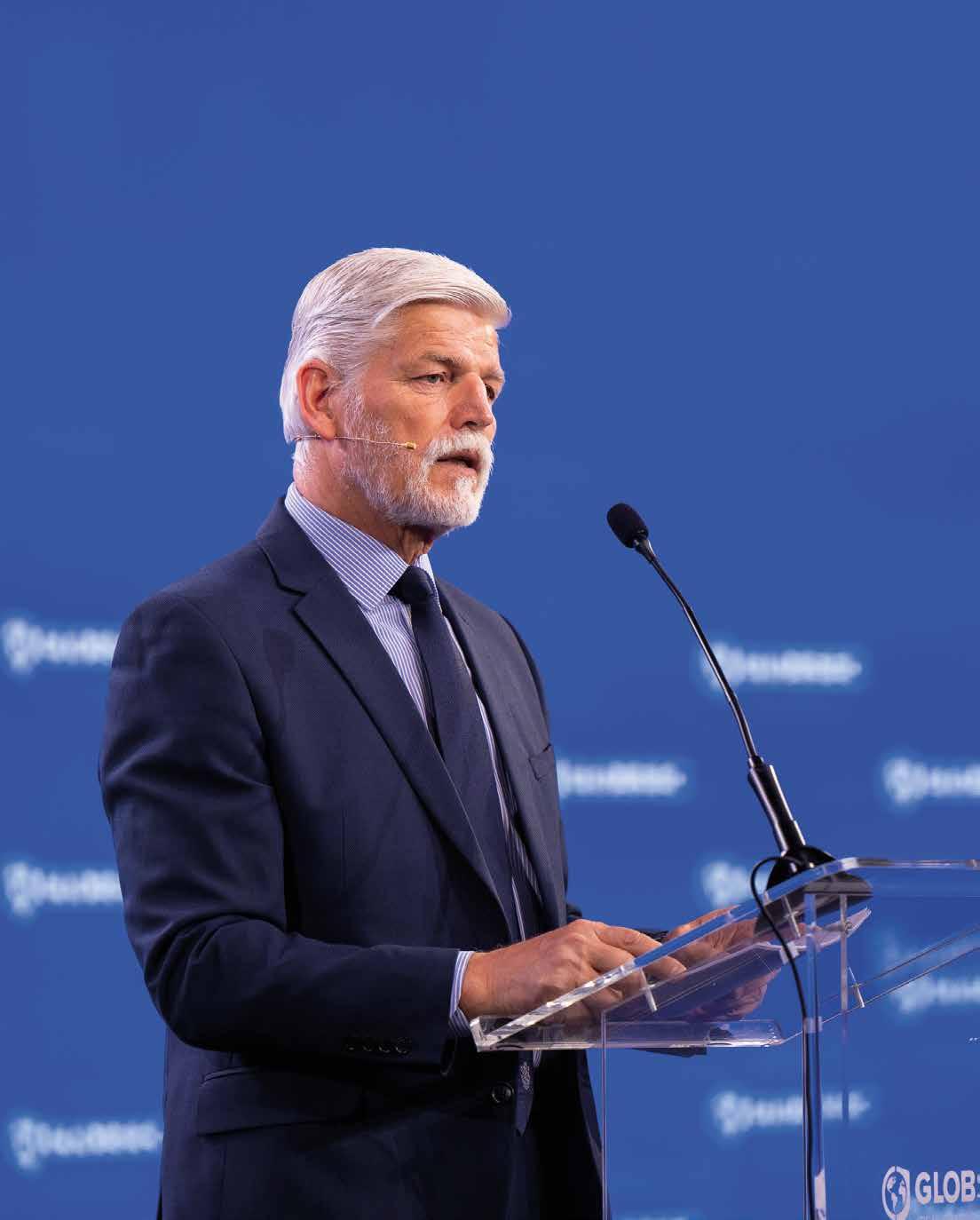
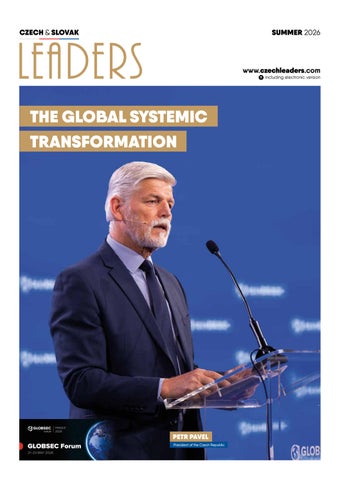
PETR PAVEL President of the Czech Republic
www.
By H.E. Mr. Vasyl Zvarych, Ambassador of Ukraine to the Czech Republic
THE LESSONS OF CHORNOBYL MUST SHAPE
A meeting point for residents is back REVIVING JIŘÁK FOR EVERYDAY LIFE
How Canadian Medical creates a truly welcoming patient experience THE DOCTOR IS HERE FOR THE CLIENT, NOT THE OTHER WAY AROUND
By Elisa Selmi, Co-founder of We
Are
Food
By Václav Pavlas and M. Zisso
A farewell message from Archbishop Jude Thaddeus Okolo, Apostolic Nuncio to the Czech Republic A PART OF
Interview with H.E. Ms. Snøfrid Byrløkken Emterud, Ambassador of Norway IT IS IMPORTANT TO CHERISH WHAT KEEPS US UNITED
Interview with H.E. Mr. Alessandro Gaudiano, Ambassador of Italy IN EUROPE WE NEED EACH OTHER
Interview with Ms. Barbara Krystyna Tuge-Erecińska, Chargé d’affaires of Poland THE MOST IMPORTANT THING IS NOT TO LOSE YOUR VALUES
Interview with H.E. Mr. Hakan Jevrell, Ambassador of Sweden THE SOCIAL ASPECT OF DIPLOMACY IS BECOMING MORE IMPORTANT
Interview with Radka Wildová, Vice Rector for Research and Academic Excellence at UNYP DIFFERENTIATION WILL BE BUILT ON DEPTH AND INTEGRITY
Interview with Alexandra Janečková, Crisis Manager and Philanthropist WITH PURPOSE AND PASSION, YOU CAN DO GREAT THINGS – ANYWHERE
Interview with Marie Boltenstern, Founder of FABNORA, 3D printed jewellery brand OUR PIECES COME TO LIFE THROUGH MOVEMENT By
Filip Nerad, Director
Benke Aikell – Founder | Eva Anderová & Meshulam Zisso – Owners & Executive
Editors | Petra Kubernátová – Webmaster | Martina Hošková – Editing & Translation | Martin Mikeš – Graphic Design | Printing house – Tiskárna H.R.G. Litomyšl | Publisher PRIME (1998) s.r.o., Olgy Havlové 2914\52, 130 00 Žižkov - Prague 3, IČ: 25682784, DIČ: CZ25682784, e-mail: info@czechleaders.com, www.czechleaders.com | Czech & Slovak Leaders, Olgy Havlové 2914\52, 130 00 Žižkov - Prague 3, email: info@czechleaders.com, www.czechleaders.com | Licence: MK ČR E 13147 | No reproduction is permitted in whole or part without the express consent of Czech & Slovak Leaders | The advertiser is responsible for the advertising contents | Opinions expressed in this publication are those of the authors or persons interviewed and do not necessarily reflect the views of the editors or Czech & Slovak Leaders | All editorial material and photos in Czech & Slovak Leaders Magazine is digitally stored and may be republished by Czech & Slovak Leaders either in printed form or in various digital media | All correspondence to Czech & Slovak Leaders Magazine may be published.
By H.E. Mr. Vasyl Zvarych, Ambassador of Ukraine to the Czech Republic
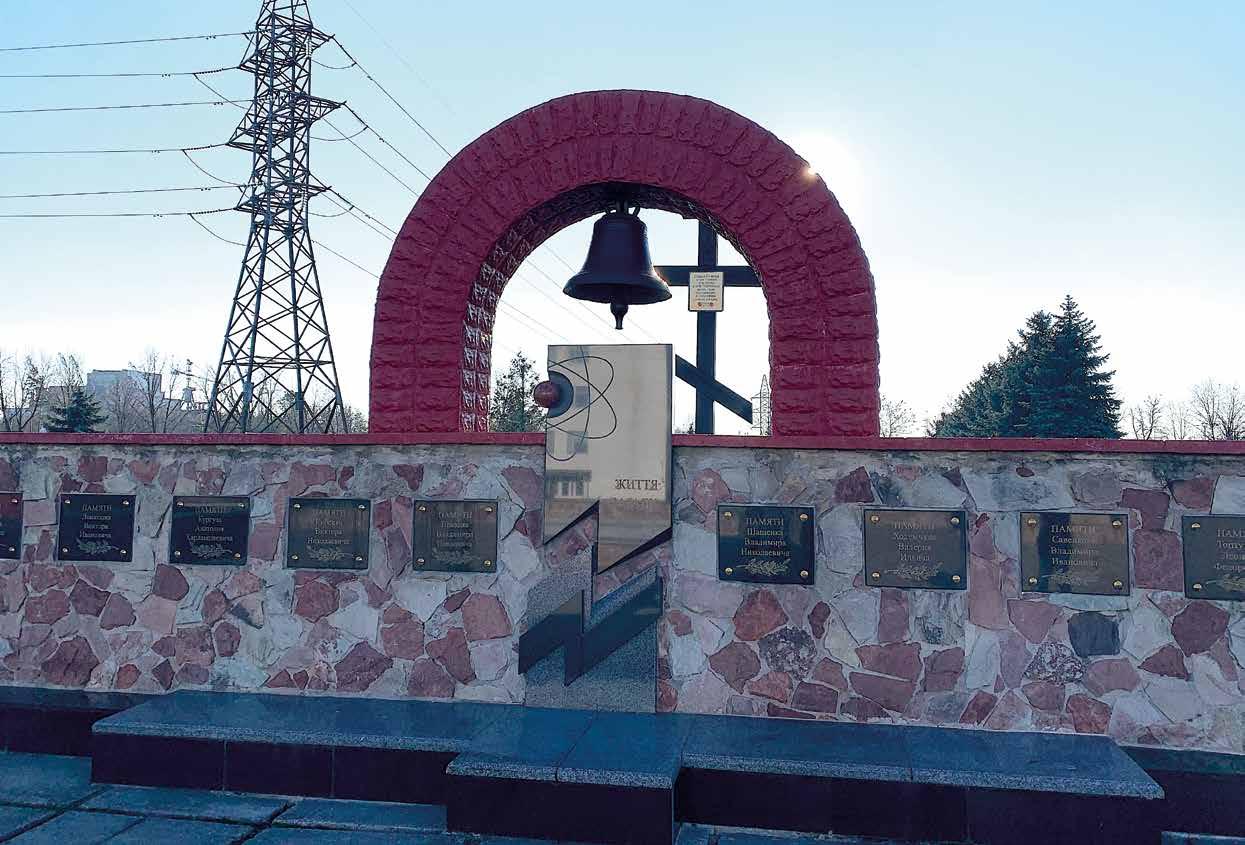
On April 26th, 2026, the world marks the 40th anniversary of one of the most devastating manmade disasters in human history – the accident at the Chornobyl Nuclear Power Plant. Four decades later, Chornobyl remains not only a symbol of nuclear catastrophe, but also a defining lesson in transparency, accountability, and the catastrophic consequences of state secrecy.
As Ukraine and the international community commemorate this tragedy, particular importance is attached to the UNESCO Executive Board decision “40 years of the Chornobyl disaster: remembrance and lessons learned”, initiated by Ukraine. In this decision, UNESCO emphasized the importance of preserving the memory of Chornobyl, and of
applying its lessons to strengthen global resilience and mitigate risks across all areas of its mandate. The lessons of Chornobyl must shape modern approaches to preparedness, resilience, and response to global challenges and threats.
The Chornobyl disaster was the result of a reactor experiment
conducted under Moscow’s orders, in blatant violation of fundamental safety protocols. It was not an unforeseeable accident, but a consequence of systemic negligence embedded in a political system that disregarded human life and suppressed critical information.
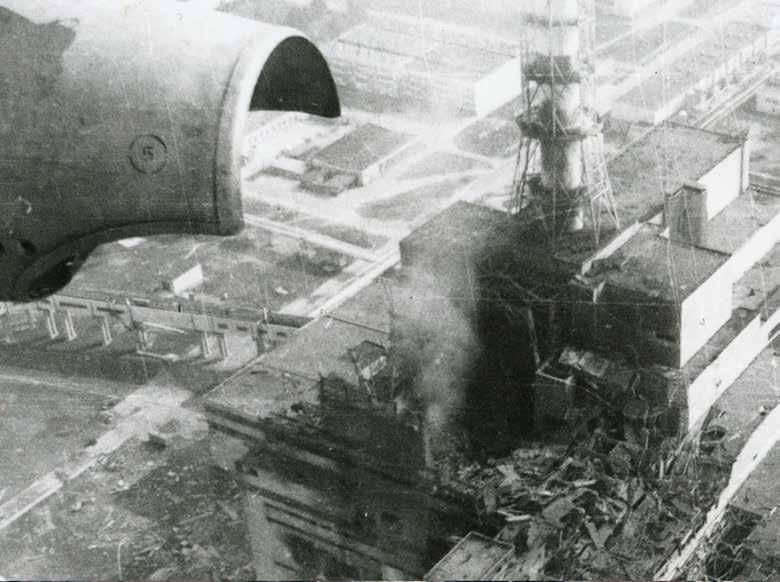
In the immediate aftermath of the explosion, Soviet authorities attempted to conceal the scale of the catastrophe. The world remained unaware of the disaster for at least two days, while Soviet citizens were deliberately kept uninformed for weeks.
The radioactive release did not remain confined to the region. Within ten days, contamination spread across Europe, with traces detected in Sweden, Norway, Poland, Austria, Switzerland, Germany, Finland, and the United Kingdom.
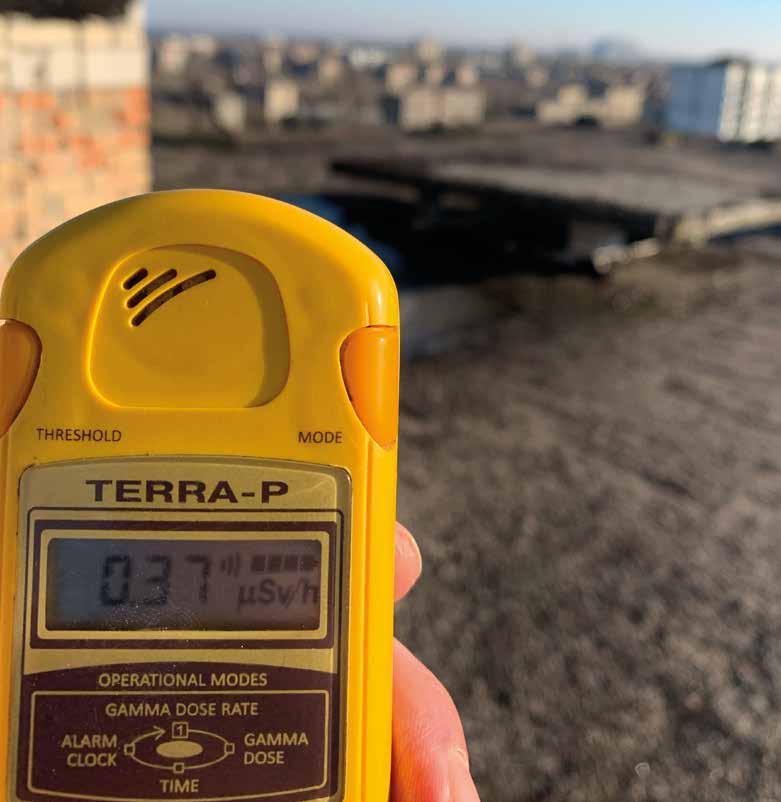
Inside the destroyed reactor, radiation levels reached approximately 20,000 roentgens – a level vastly exceeding lethal thresholds, where exposure to just 500 roentgens over five hours is fatal.
The Soviet authorities concealed the full extent of the disaster, falsified medical diagnoses related to radiation exposure, and classified contamination data until 1989.
In total, the disaster released radiation approximately 30 times greater than the atomic bomb dropped on Hiroshima. Over 145,000 square kilometres of territory were contaminated, and around 8.5 million people were exposed to radiation. Over 300,000 people were permanently displaced.
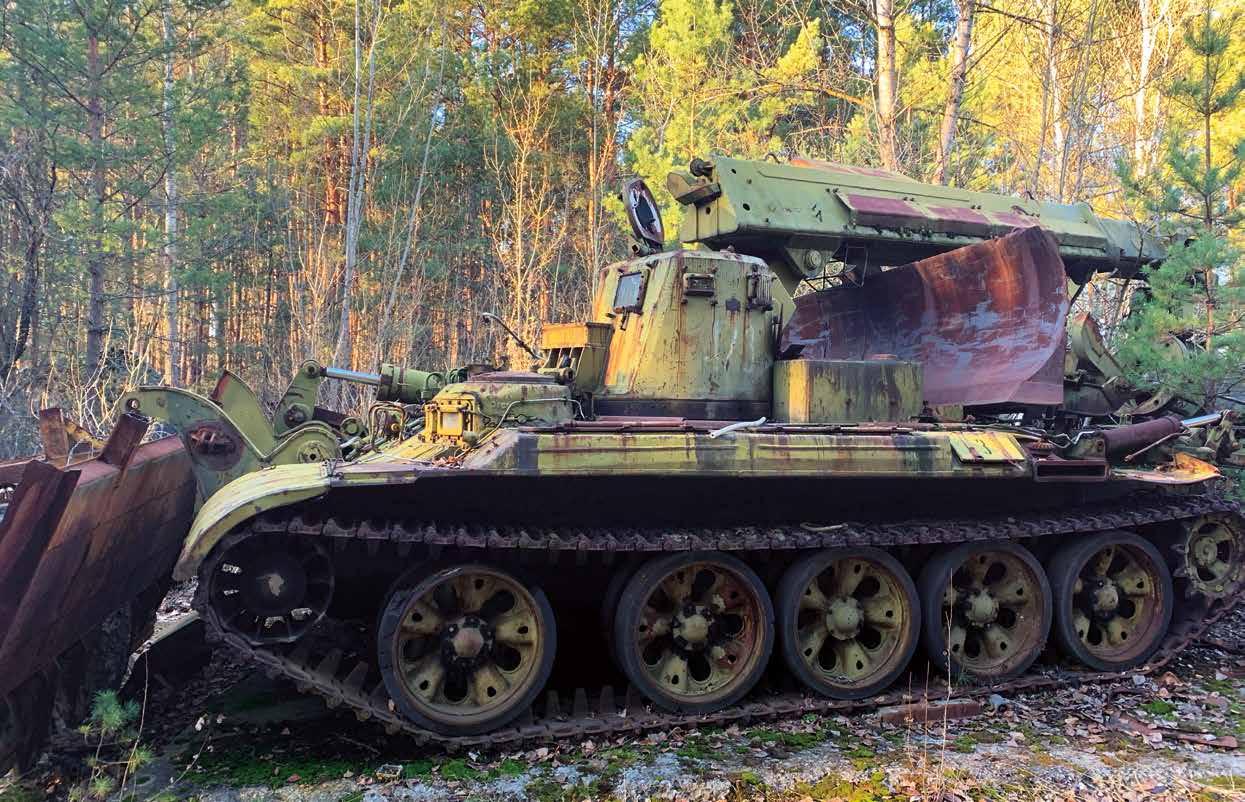
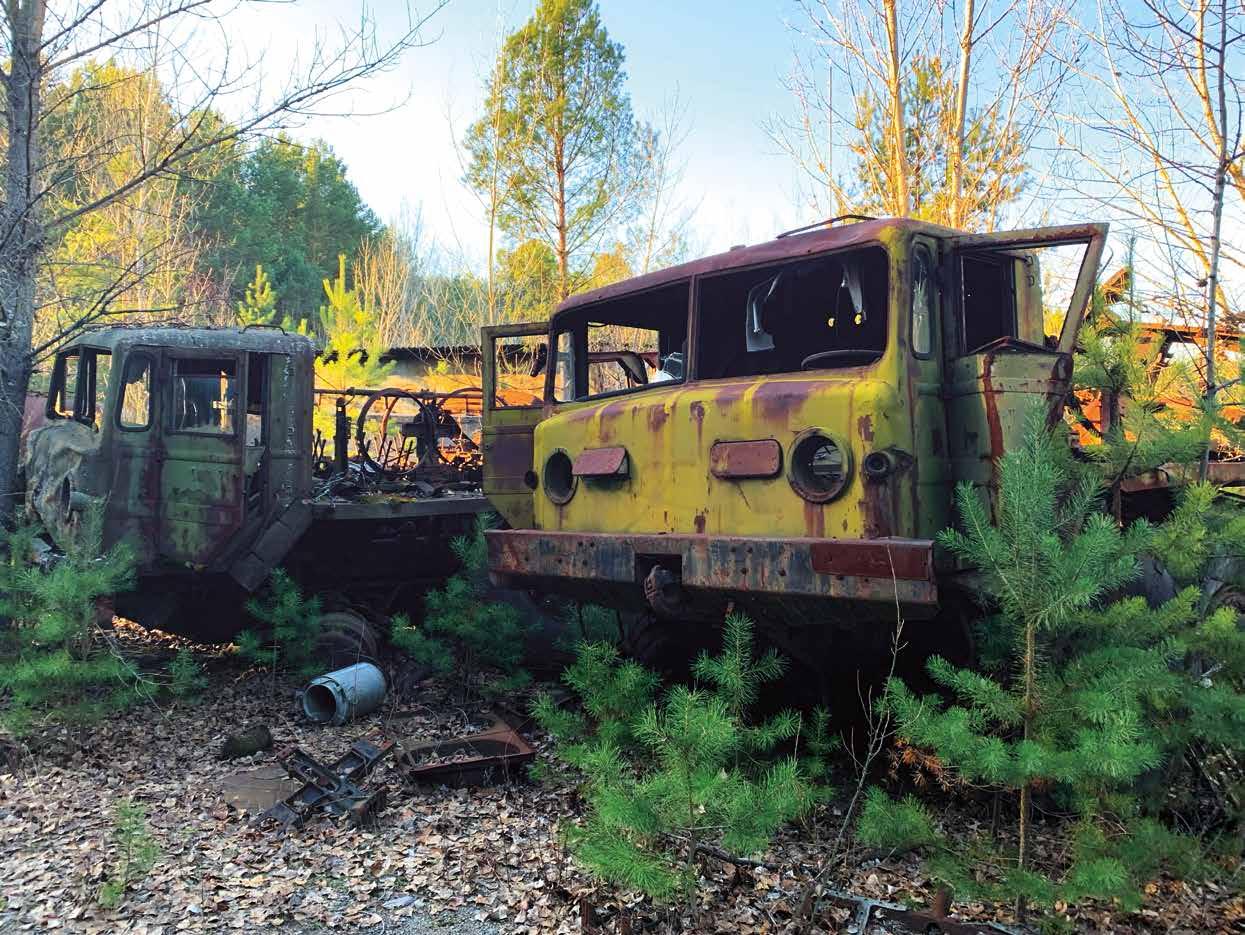
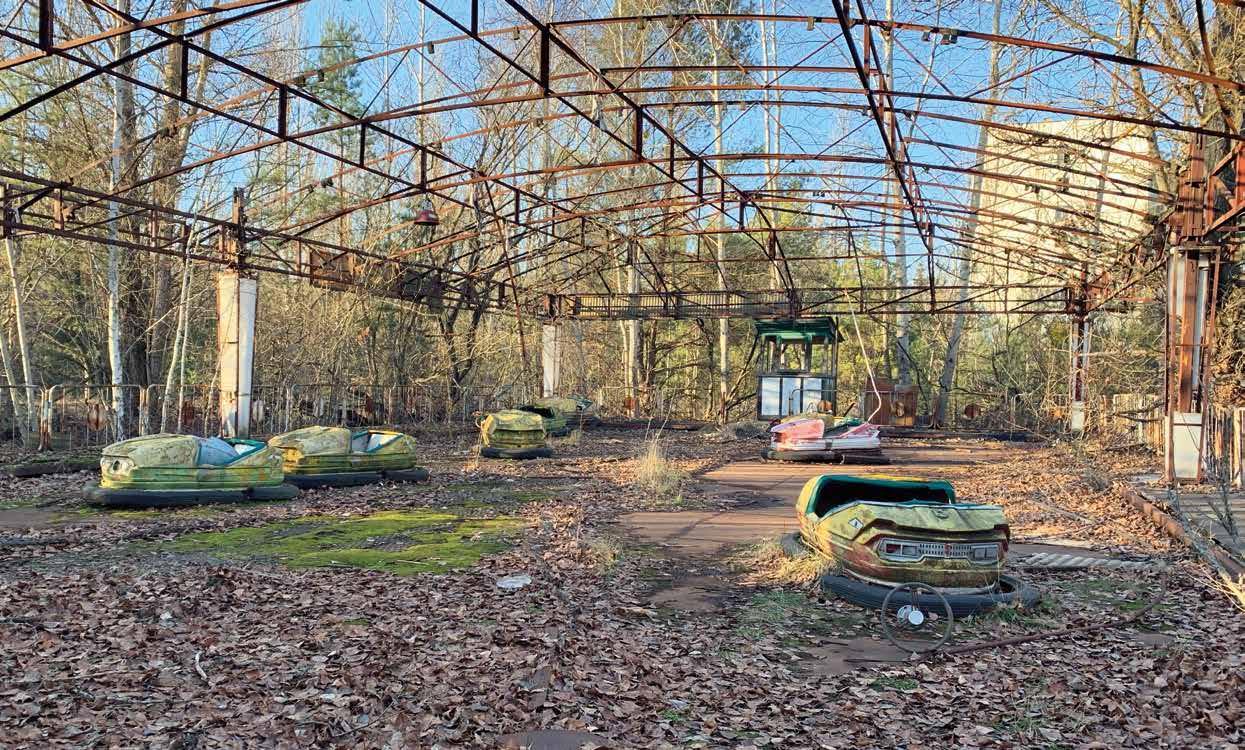
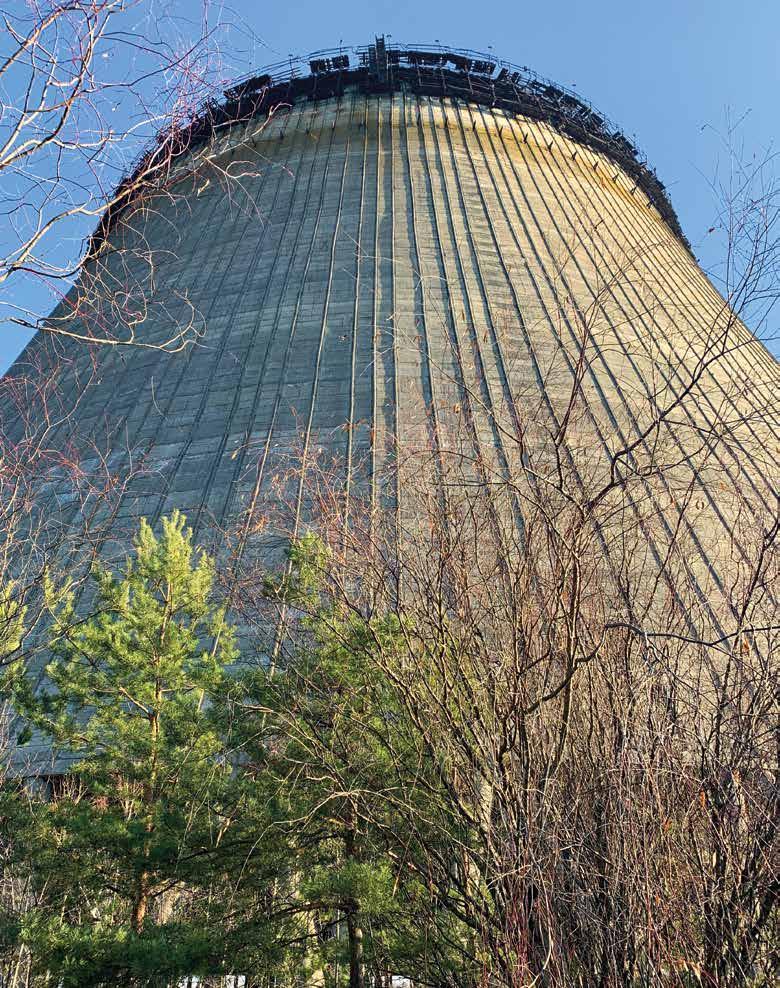
The Chornobyl Exclusion Zone still exists today, comparable in size to Luxembourg, and parts of it will remain uninhabitable for tens of thousands of years.
The long-term consequences of the disaster also contributed to the collapse of the USSR, yet, even nearly 40 years later, its legacy continues to shape global nuclear safety policy.
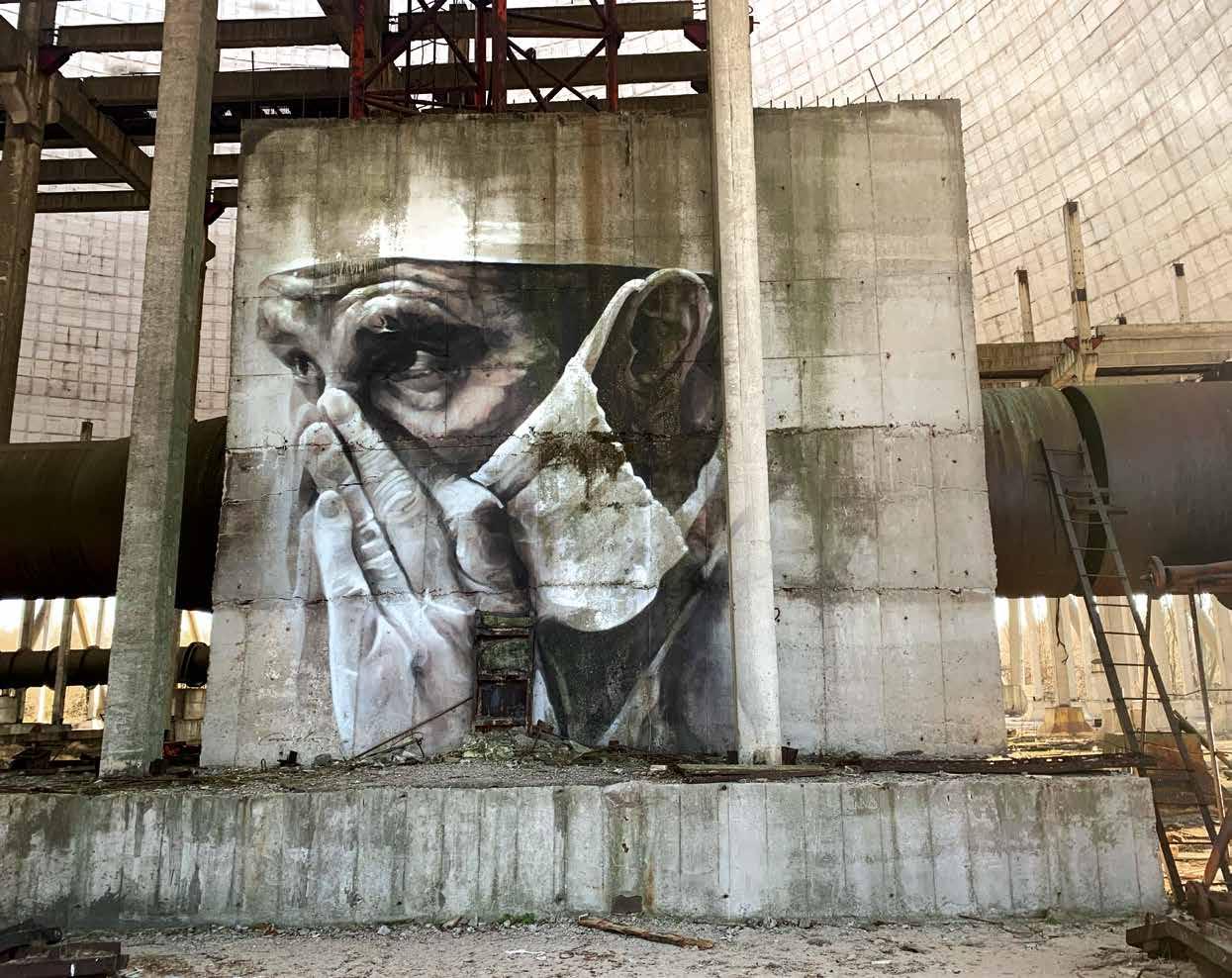
On this day of remembrance, we honour more than 600,000 liquidators – men and women who risked and sacrificed their health and lives to contain the consequences of the disaster, and protect the world from further catastrophe.
Their courage stands as one of the most extraordinary acts of collective sacrifice in modern history. Chornobyl is not only a story of tragedy and systemic failure; it is also a story of heroism – the heroism of ordinary people. Today, that legacy continues through a new generation of energy workers, who safeguard nuclear infrastructure under equally demanding conditions.
At its core, Chornobyl exposed
the inhumane nature of a system built on secrecy, coercion, and disregard for human life. It was a verdict on the Soviet system –its lies, its structural irresponsibility, and its suppression of truth.
The lessons of Chornobyl remain urgently relevant.
On February 24th, 2022, with the beginning of Russia’s full-scale invasion of Ukraine, the world once again faced a nuclear-related threat – this time as an instrument of warfare.
The Chornobyl Exclusion Zone was among the first territories seized by Russian forces. Only through the dedication of Ukrainian personnel, who continued operating under occupation in extreme conditions, was another nuclear disaster prevented. The estimated damage caused by the occupation amounts to approximately €100 million.
On March 31st, Ukrainian forces regained control of the site.
However, 169 members of the Ukrainian National Guard – who had been guarding the facility – were forcibly taken to Belarus, and later to Russia.
It is evident that Russia has not learned from the history of Chornobyl. Instead, its actions reflect patterns reminiscent of the same disregard for nuclear safety that led to the 1986 catastrophe.
For the first time in history, an aggressor state has forcibly seized nuclear power plants. Russia’s occupation of the Chornobyl site was followed by the seizure of the Zaporizhzhia Nuclear Power Plant, both of which were subsequently militarized and used for political and military leverage.
This represents a fundamental violation of international law, as well as of the principles of nuclear safety established by the International Atomic Energy Agency (IAEA).
Serious incidents have repeatedly highlighted the risks. On the night
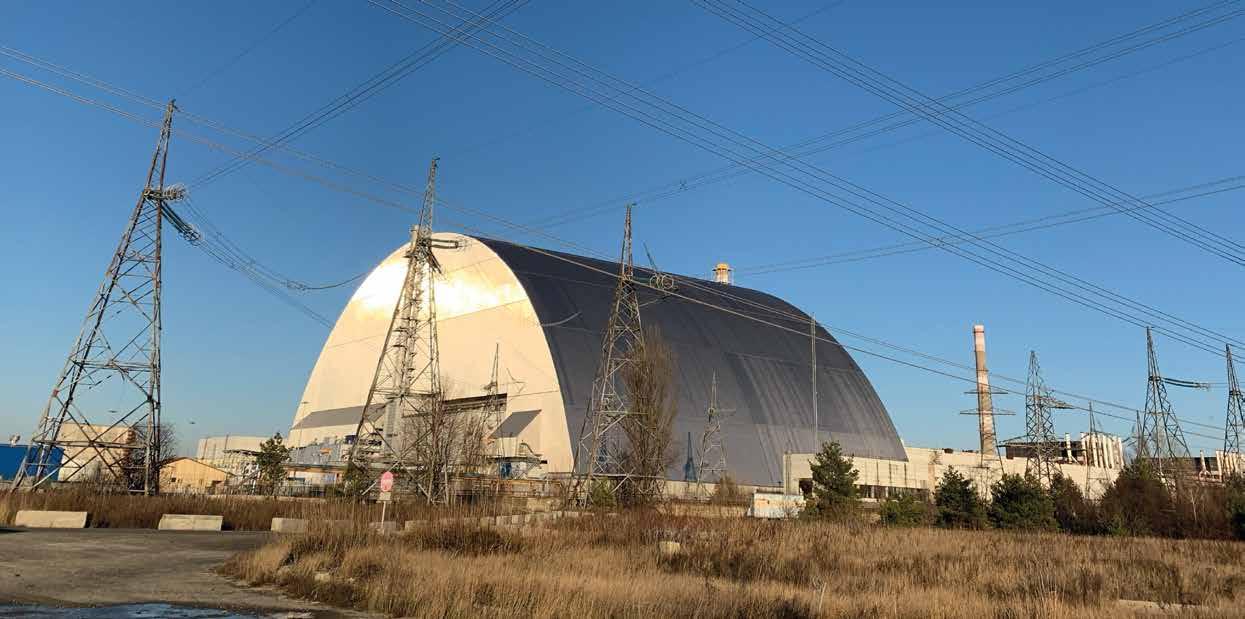
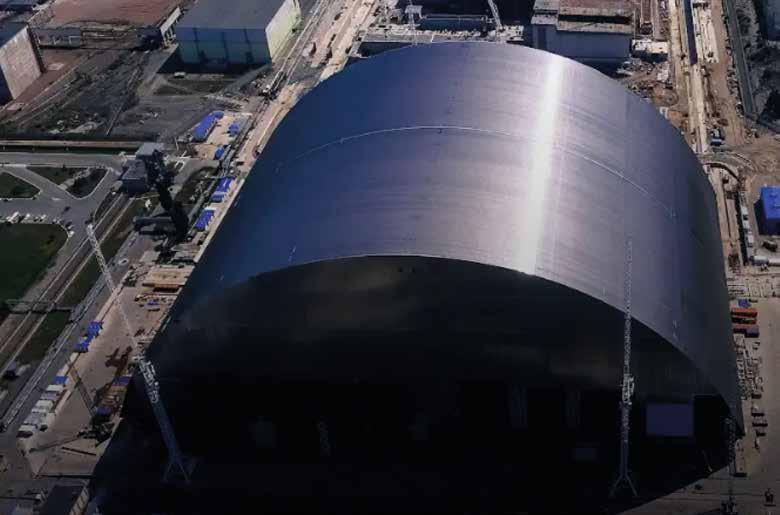
of 13–14th February 2025, a Russian “Geran-2” combat drone struck the New Safe Confinement (NSC) at Chornobyl, damaging critical protective structures designed to contain the destroyed Unit 4 reactor. The strike affected both external and internal layers of the confinement and disabled key crane systems.
At the Zaporizhzhia Nuclear Power Plant, multiple incidents have been reported, including explosions and damage to emergency power systems. In March 2025, the IAEA confirmed damage to a diesel fuel tank essential for backup generators – a consequence of replacing licensed Ukrainian personnel with unqualified operators under occupation. Across Ukraine’s operational
nuclear power plants, Russian drone overflights and strikes on critical substations have repeatedly forced emergency reactor shutdowns. At several points, Europe stood uncomfortably close to a potential nuclear disaster.
The fact that such crises were prevented is due to the professionalism and resilience of Ukrainian nuclear engineers and operators, whose work continues to safeguard not only Ukraine but also the entire European continent.
The systematic escalation of nuclearrelated risks in the context of Russia’s war against Ukraine has reached a level that poses a global security concern. Russia’s strategy of nuclear intimidation echoes similar patterns
observed in other authoritarian regimes, including Iran, demonstrating a dangerous convergence in tactics of nuclear coercion.
By seizing the Chornobyl and Zaporizhzhia nuclear power plants, Russia has violated every fundamental principle of nuclear safety and security. No state has the right to use nuclear infrastructure as a tool of blackmail.
Restoring global nuclear safety is impossible without the return of full sovereign control over Zaporizhzhia Nuclear Power Plant to Ukraine.
Due to Russia’s systematic use of nuclear facilities as instruments of warfare, and the threat it poses to global security, we call for
stronger sanctions against Rosatom, restrictions on Russia’s participation in the International Atomic Energy Agency, and a firm international response to nuclear blackmail and terrorism committed by Russia. Impunity in matters of nuclear safety endangers the entire world.
The international community must act decisively to ensure political, legal, and economic consequences for violations that endanger global security.
Protecting Ukraine’s nuclear infrastructure is not a regional issue – it is a global responsibility. Every system that secures a Ukrainian nuclear power plant is, in effect, a guarantee that European cities can live in safety.
We must ensure that the principle of “Never Again” is not merely a historical slogan, but a lived reality enforced by international action.
And, above all, the world must not wait for a new Chornobyl.
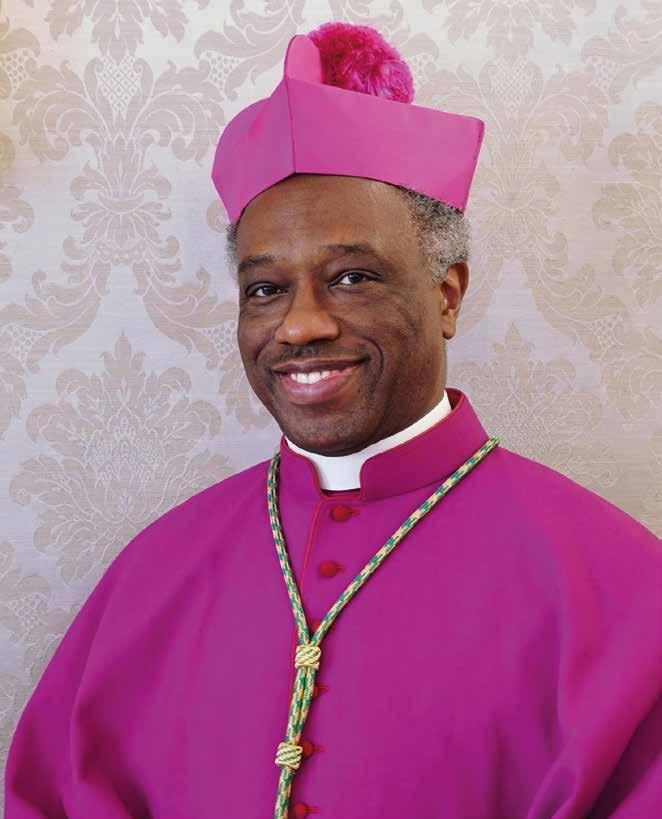
A farewell message from Archbishop Jude Thaddeus Okolo, Apostolic Nuncio to the Czech Republic
Dear Friends, There comes a time when we have to move further afield. And so it is with me!
My turn comes to bid farewell; I find myself reflecting with deep gratitude on the time I have spent among you all, here in the Czech Republic. From the very beginning, the cordiality was evident, the hospitality was unmistakable: cooperation and cohesion among the colleagues of the Diplomatic Corps, warm welcomes, official courtesy calls, youth social outings and camping projects, constant cordial invitations from the Dioceses and the Parishes, and the kindness and sincere friendly attention that revealed itself in both grand gestures and small, in everyday moments.
I was deeply moved by the goodness I encountered everywhere: at the Parliament, at the Prague Castle, during parish pilgrimages, at shared tables, in families, during thoughtful conversations, and even through the gentle attentiveness that made me feel at home. The local communities possess a peculiar manner of embracing newcomers, and I am grateful to have been welcomed into that embrace. At first contact, it is not always obvious; one has to break the ice, and discover the contexts of common interest and concern.
The landscapes of this country have left their own imprint on me: the winding roads through the villages, the rolling hills, the majesty of the Giant Mountains and the Beskydy, the quiet strength of the Šumava forests, the stunning landscapes which decorate the highways.
These places will remain vivid in my memory.
Naturally, there were challenges, as there are in every human reality. At times, I encountered reserve or hesitation, surprise or scare. Yet even then, I found openness, support, and a willingness to bridge gaps and differences and find fitting solutions. These moments taught me patience, understanding, and the quiet courage of connection and respect.
I leave with a heart full of nice memories: of satisfaction, of appreciation, of joy, of discovery.
I am deeply grateful for the sincere kindness, the honest attention, and the sense of belonging which was offered so freely.
Though a great distance may now separate us, a part of me will remain here, carried in the honest friendships and true experiences that have shaped my time with you all.
With sincere appreciation,
Archbishop Jude Thaddeus Okolo
Apostolic Nuncio to the Czech Republic (2022 – 2026) 24th April 2026
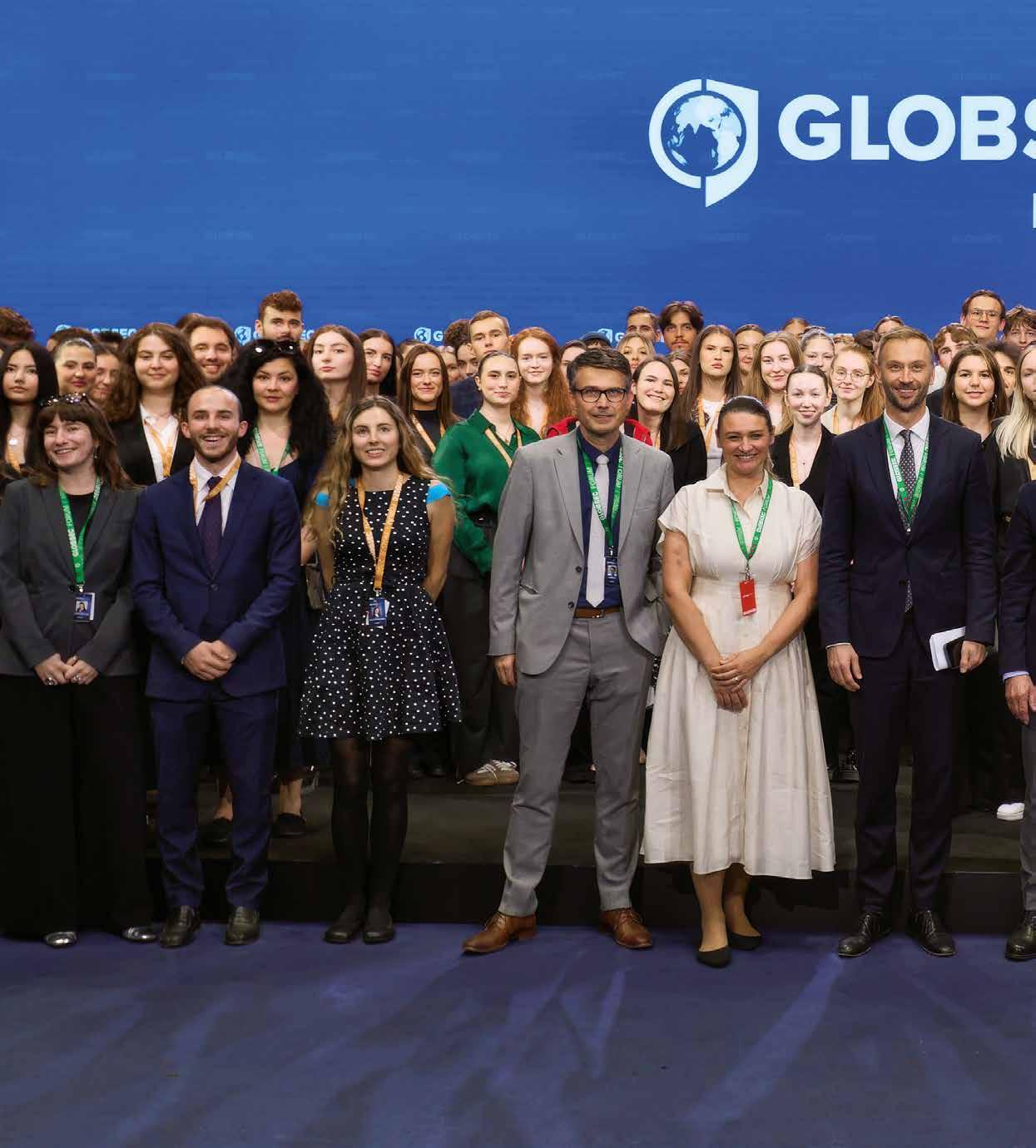
The post-Cold War model that shaped global stability for three decades has fundamentally changed. The comfortable era of relying on cheap Russian energy, open global markets, and unconditional American security guarantees is gone for good. This harsh reality resonated through the halls of the 21st edition of the GLOBSEC Forum, which took place in Prague at the end of May.
By Filip Nerad, Director of Communications at GLOBSEC
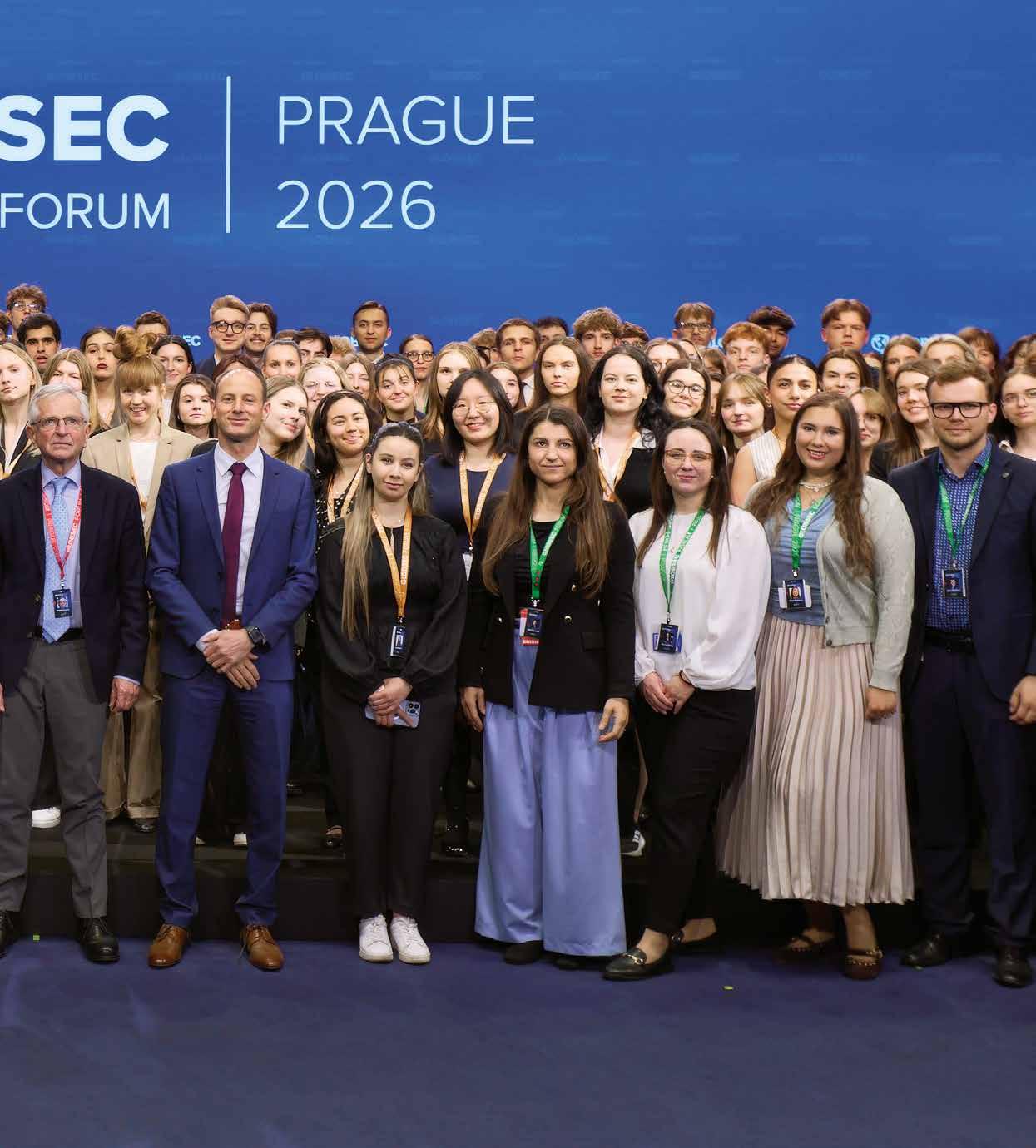
The GLOBSEC Forum has firmly established itself as the premier international strategic conference in Central and Eastern Europe. This year’s event marked its third successful consecutive edition in the Czech capital, permanently
cementing Prague’s role as a vital European hub for strategic dialogue. The Forum convened over 2,400 participants from a record-breaking 86 countries, including more than 50 political delegations and nearly 300 speakers.
Driving this prestigious platform is GLOBSEC – a global, nongovernmental think tank with a wide network of offices spanning Brussels, Prague, Washington, Bratislava, Vienna, and Kyiv. GLOBSEC is dedicated
to delivering world-class scientific research and analysis in the fields of security, economics, and geopolitics. In addition to its flagship annual conferences, the organization regularly hosts closed-door roundtables and specialized expert briefings, bridging the gap between key stakeholders in both the public and private sectors.
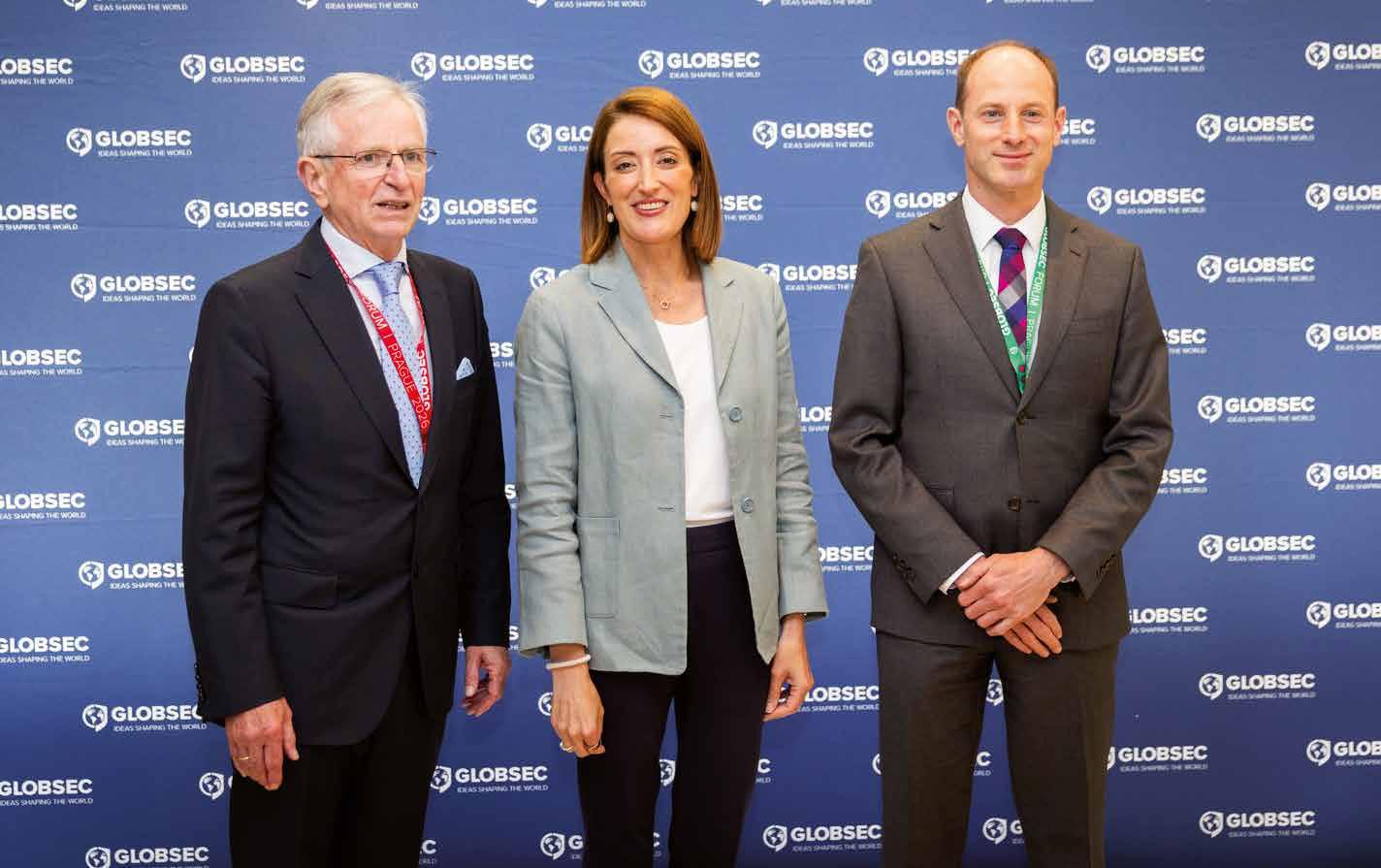
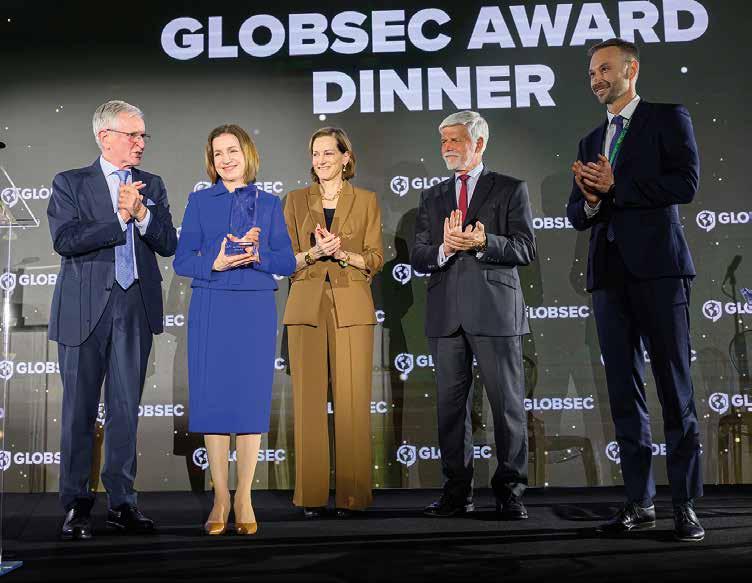
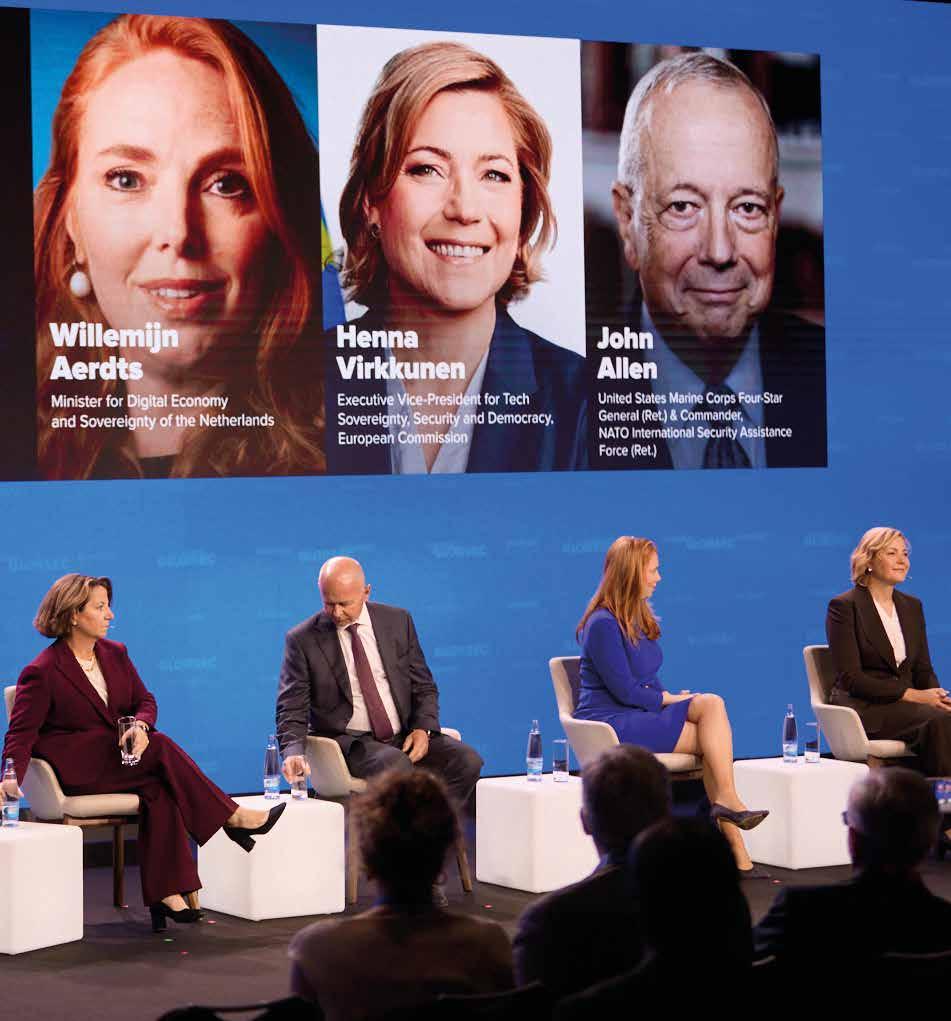
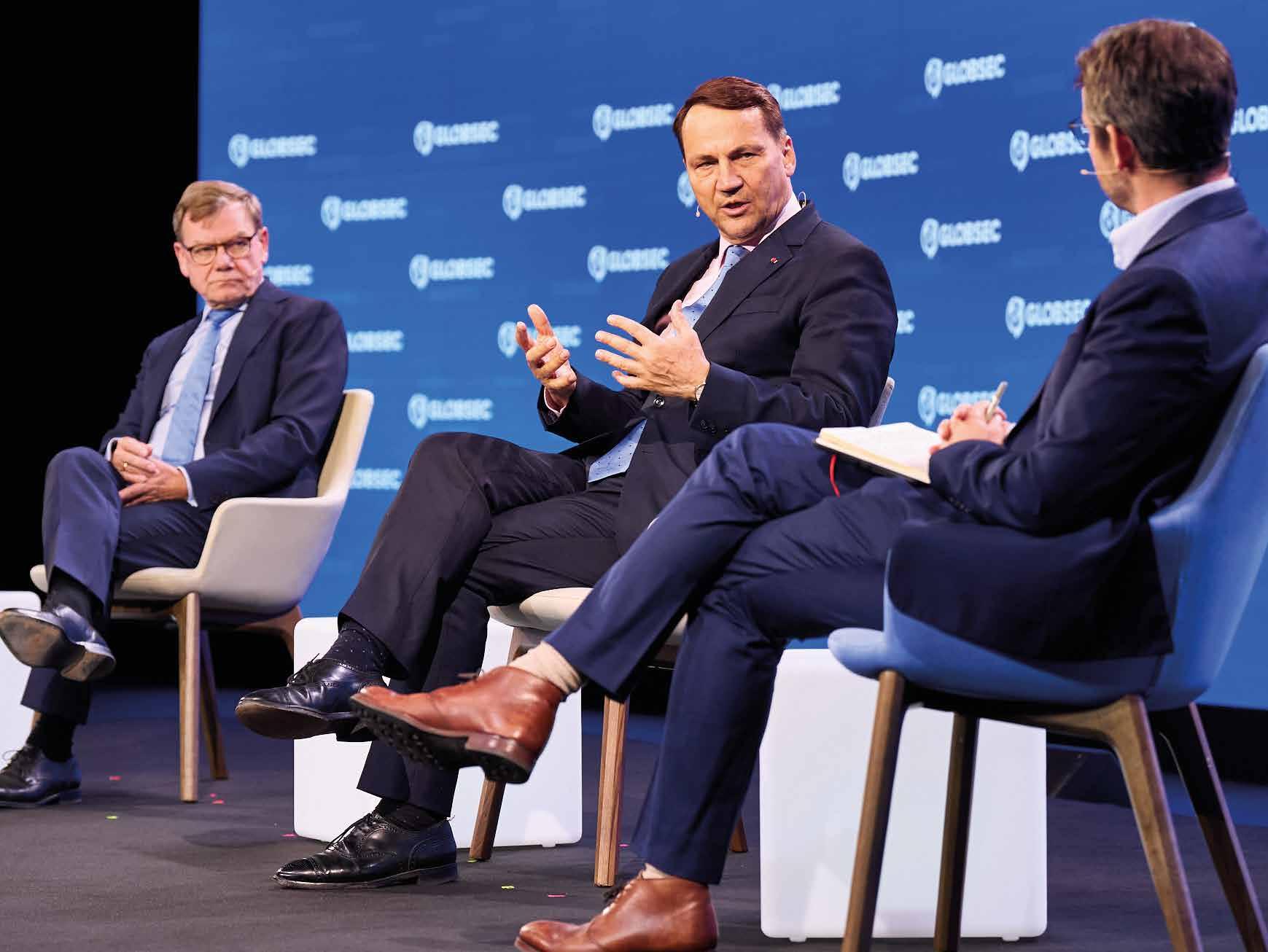
This year’s Forum was not about mourning the old world, but about navigating a massive, systemic transformation with a strong bias toward action. The mood among leaders has shifted from anxiety to a pragmatic realization: Europe must take the driver’s seat and shape its own future. Among the prominent global figures driving these discussions were Europe’s foremost statesmen, diplomats, global CEOs, and business leaders. A major social highlight of the event was the prestigious GLOBSEC Awards ceremony held at Prague Castle, where the organization honored this year’s keynote speakers Roberta Metsola, President
of the European Parliament, and Maia Sandu, President of Moldova, for their extraordinary contributions to strengthening European unity, democracy, and resilience.
The new security matrix: Ukraine as a provider of strength
One of the most profound shifts documented at the Forum is the completely redefined narrative surrounding Ukraine. The country is no longer viewed merely as a consumer of Western security. Instead, through its rapid adaptation of battlefield technology and artificial intelligence, Ukraine has become a crucial security provider and an industrial blueprint for the rest of Europe. The message from military leaders and policymakers was unyielding: integrating Ukraine into the European security architecture is no longer a gesture of charity, but a prerequisite for European strength. With Russia engaged in a protracted confrontation and allocating roughly 8.5% of its
GDP to the war effort, European defence investments must be urgently calibrated to deter future conflicts, not just manage the current crisis.
A central pillar of the 2026 conclusions is that defence is no longer strictly a military matter – it is an industrial and financial challenge. While political will and funding are finally flowing into defence, significant structural bottlenecks prevent these finances from being transformed into actual industrial output. The Forum stressed that Europe can no longer rely solely on public spending to bridge its massive investment gaps. Mobilizing private capital at scale has become a matter of geopolitical survival. To achieve true sovereignty, European policymakers and the private sector must collaborate from the very beginning to build robust supply chains, secure semiconductors, and foster deep-tech scale-ups.
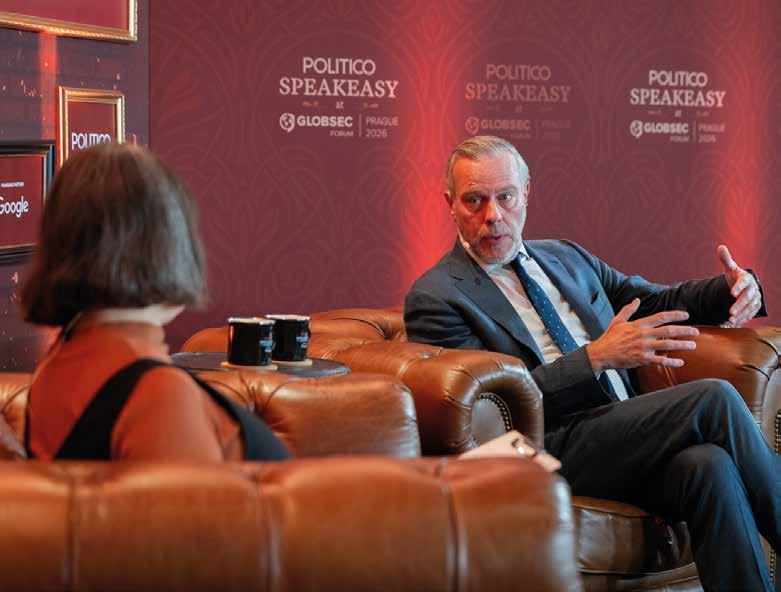
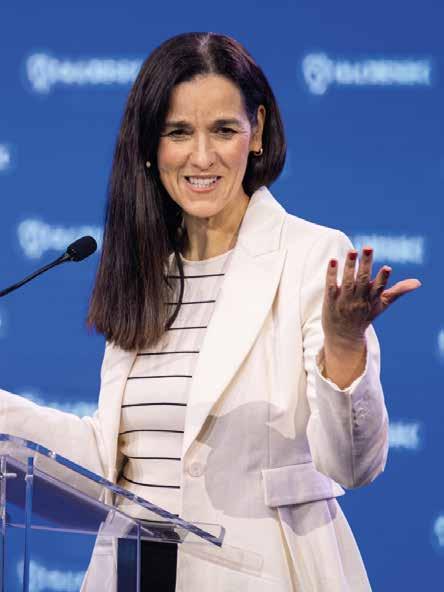
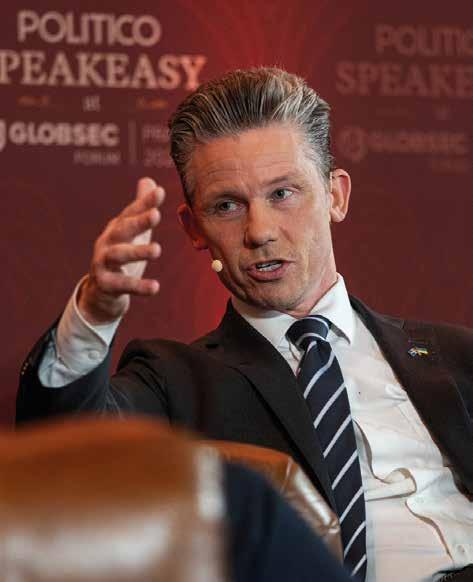
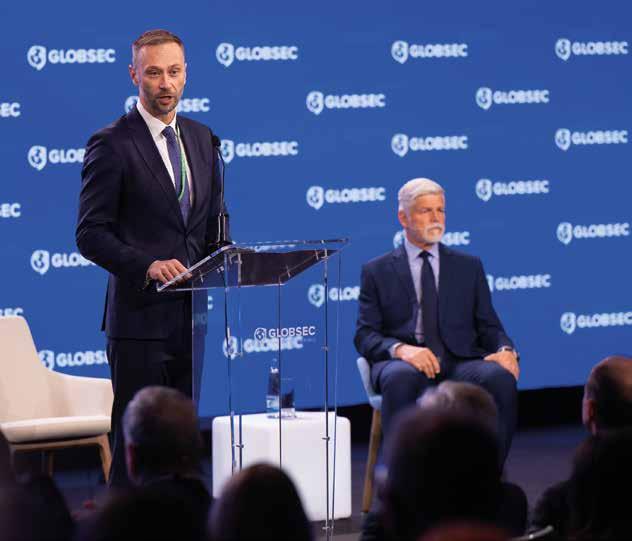
Furthermore, the rise of nextgeneration artificial intelligence models is transforming cyber warfare. Participants at the Prague GeoTech Summit, headed by Czech President Petr Pavel who opened the conference with his speech, warned that AI must be treated as a core issue of national sovereignty.
The interconnected nature of today’s conflicts was heavily underscored by the presence of a record number of almost
20 foreign ministers from around the globe. Particular attention was paid to the volatile situation in the Middle East, specifically the crisis in the Strait of Hormuz. Discussions revealed deep concerns over the global economic fallout, as prolonged disruptions threaten energy supply chains, aggravate inflation, and risk triggering a severe fertilizer and food security crisis. The consensus in Prague indicated that an international coalition of the willing – potentially led by European powers – might soon be required to ensure freedom of navigation in the region.
The ultimate takeaway is clear: the era of comfortable assumptions has vanished. If Europe wants to remain a relevant global actor, it must back its democratic values with industrial scale, technological speed, and an unyielding execution of strategy. The choices made by leaders in the weeks following this Prague summit will determine the continent’s place in the emerging world order.
is the Director of Communications and Marketing, Head of the Prague Office, and an analyst at the international think tank GLOBSEC. He spent 20 years in the Czech public media sector (Czech News Agency and Czech Radio) as a reporter, a correspondent in Germany, Brussels, and the Benelux countries, and later as a foreign policy analyst and head of the foreign news department. He received a Belgian beer knighthood for raising awareness of Belgian beer culture.
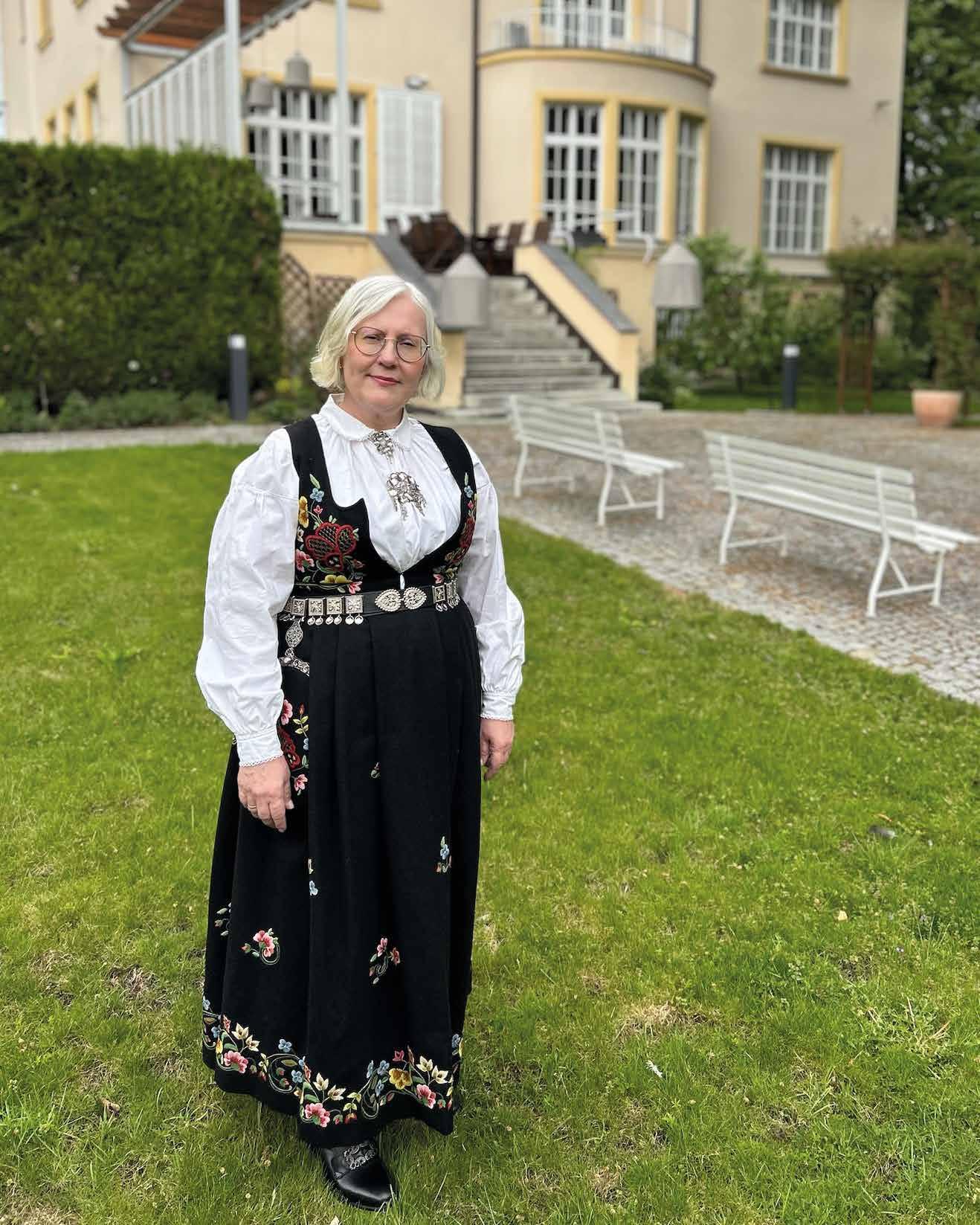
After 25 years of experience in the Foreign Service, H.E. Ms. Snøfrid Byrløkken Emterud went a step further and arrived in Prague as the Ambassador of Norway. “Norwegians and Czechs think similarly about many issues. It is evident that we share many common values, such as a commitment to freedom of speech, rule of law, transparency, and the inclusion of minorities,” she says. “Our relations are excellent. And at a time when the world’s turmoil reaches its way into our lives, it is important to cherish what keeps us united.”
You have been in the Czech Republic for about a year now. How has the experience been for you so far? Can you share some highlights?
It has been an absolute treat to come to the Czech Republic. Not only is it a beautiful country in the very heart of Europe, but I also find the Czechs and Norwegians to be quite alike. I have met with many Czechs with a profound love of nature and the outdoors. I also have a feeling that we are a bit similar in the sense that we might both seem a bit reserved and non-flashy.
Despite the short time I have been here, there have already been many highlights. However, let me pick one, which was the signing last autumn of the Memorandum of Understanding (MoU) between the Czech Republic and Norway, Iceland,
and Liechtenstein for the fourth programming period of the EEA and Norway Grants (2021–2028). I have been impressed with the partnership that has developed between Czech and Norwegian programme partners, institutions, and NGOs.
How many countries have you served in before now?
This is my fifth country to serve in, but the first as an ambassador. I have previously been posted to Kyiv, Hanoi, Tokyo, and Moscow.
What inspired you to become an ambassador?
After 25 years in the Foreign Service, with numerous postings abroad, I wanted to further utilize the experience and expertise I had gained and take the next step up in leadership.
Can you single out the part of the ambassador’s job you find most challenging?
I find the job very rewarding and inspiring. The most difficult part is to find the time to meet all the interesting partners, as well as to participate in the many exciting events I am invited to.
I spend my free time with my family. I like to go for walks, read, and discover Prague. I also enjoy playing videogames with my children.
Could you tell us about your country?
Norway is a country known for its dramatic nature with fjords, mountains, and long coastline. It is a constitutional monarchy with a deeply rooted democracy
and rule of law, and high levels of trust in public institutions. Norway has a highly developed economy, combining a strong welfare state with open markets. It is especially recognized for its energy sector (oil, gas, and renewables), maritime industries, fisheries, and advanced technology. Profits from natural resources have been carefully managed through the world’s largest sovereign wealth fund, contributing to high living standards and economic stability.
Culturally, Norway values equality, independence, and work–life balance. Its society is relatively informal, with a flat hierarchy and an emphasis on cooperation and consensus. Outdoor life plays
a central role among many, reflecting a deep respect for nature and sustainability.
Norway is not part of the EU. Why is that?
After a long and heated debate, we held a referendum about accession to the then European Community in 1972. The result reflected clearly how divided the population was, as 53.5% rejected membership while 46.5% supported it. Broadly speaking, farmers, fishermen, and a radical part of the labour movement feared that membership in the European Community equalled unrestrained and massive competition from abroad, which they could not match. Here, we have to bear in
mind that Norway – since the introduction of the welfare state after WWII – has quite generously subsidised farmers and fishermen in order to secure their livelihood in harsh and remote regions of the country. A new referendum in 1994 confirmed that the polarization was almost unchanged – 52.2% of the electorate opposed EU membership. However, during the last three decades, both Europe and the EU, as well as global geopolitics, have changed fundamentally. A third EU referendum is still not on the horizon, but our neighbours in Iceland recently decided to hold a referendum – not about EU membership, but to restart negotiations with the EU about a possible membership.
Many Norwegians think this
two-step approach would be suitable for us too.
On a per-capita basis, Norway is the world’s largest producer of oil and natural gas outside of the Middle East. How does your country manage the income generated by this wealth?
Norway discovered oil in the North Sea in the late 1960s, creating enormous national wealth in a relatively short time. To manage these resources, the State established the oil company Equinor (formerly Statoil) in 1972, based on the principle that at least 50% of every oil license should be state-owned. Today, the Norwegian government owns 67% of Equinor, ensuring that the profits
from oil and gas production benefit the public. The returns from the fund help finance Norway’s welfare model, supporting universal healthcare, free education, pensions, and unemployment benefits.
What sets Norway apart from many other oil and gas producing nations is how we handle our petroleum income. Instead of spending the revenue directly, Norway created the Government Pension Fund Global in the 1990s in order to invest surplus from oil and gas earnings and secure long-term financial stability. To avoid inflation, it was decided that the fund should only be invested abroad. The aim of the fund is to ensure that we use this money responsibly, think longterm, and therefore safeguard the future of the Norwegian economy. The fund operates transparently and under ethical guidelines. Today, the Government Pension Fund Global is one of the world’s largest funds, owning approximately 1.5% of all publicly listed companies globally.
A unique feature is “the Norwegian Fiscal Rule”. It stipulates that, rather than using the oil revenue itself, the government must spend only the expected real return from the fund, estimated at around 3% annually. This approach creates long-term stability in the economy, prevents overspending, and ensures that wealth is preserved for future generations.
Norway has long been seen as a progressive country with strong commitments to equality and inclusion. Could you tell us more about that, especially from your perspective as a female ambassador?
Norway has a long tradition of promoting women’s rights, minority rights, and LGBTQ rights. Norwegian women gained the
right to vote in 1913, and today women hold 44.4% of seats in our parliament, reflecting decades of commitment to political equality.
A key part of Norway’s success lies in the measures that support real-life gender equality. For decades, policies such as generous parental leave, including father’s parental quota, the right to childcare, and family-friendly workplace structures have enabled women to participate fully in the labour market and advance into leadership roles.
Norway was a pioneer in introducing a 40% gender quota for public limited company boards in the early 2000s, with the law being passed in 2003 and fully implemented by 2008. In 2023, this requirement was significantly expanded to include medium sized and large companies across multiple corporate forms, a change that came into force in 2024 and will be gradually applied to around 20,000 companies by 2028.
Despite major progress, Norway still faces economic gender gaps, including a persistent pay gap and gender-segregated career paths. Ensuring equal pay, reducing gender segregated sectors, and increasing women’s access to top leadership roles remain key steps toward full equality.
On LGBTQ rights, Norway is considered one of the world’s most progressive nations. Anti-discrimination protections date back to 1981, same-sex marriage and full adoption rights have been legal since 2009, transgender people gained self-determination rights in 2016, and conversion therapy was banned in 2024.
As a female ambassador, I see daily how these policies translate into real opportunities. In the Norwegian diplomatic service, we have a nearly 50/50 gender
balance, with 48% of ambassadors being women. Representation matters, and Norway shows that when societies invest in equality, women and minorities participate fully and naturally rise to leadership.
I would also like to add that equality and inclusion in Norway are not viewed as merely abstract ideals, but as necessary conditions for a well-functioning society as
it supports economic strength, creates trust and social stability, and strengthens democracy.
What is the current status of Czech–Norwegian relations?
Perhaps it will sound like a cliché when coming from an ambassador, but I can’t truthfully answer in any other way than that our relations are excellent. In short – Norwegians
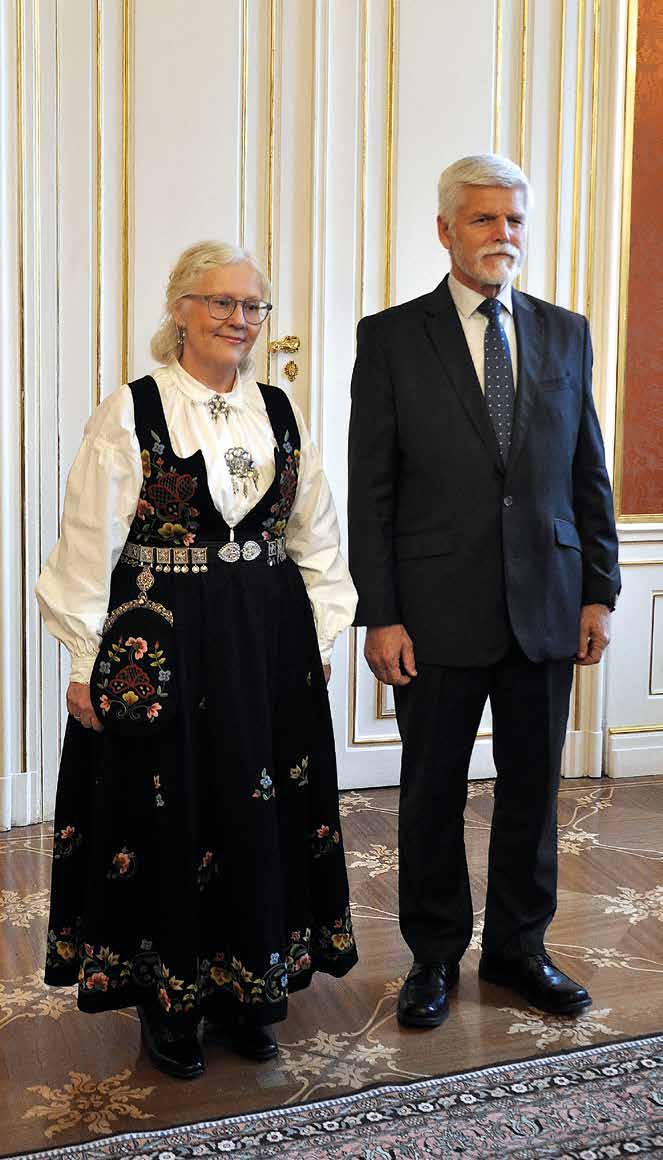
and Czechs think similarly about many issues, maybe because we both are smaller nations with a certain sense of egalitarianism and a down-to-earth attitude towards life. We enjoy sports and outdoor activities, and many of us react spontaneously against injustice, which explains why Norway and the Czech Republic, as NATO allies, have so strongly supported Ukraine from the very beginning of Russia’s aggression. And finally, through our Norway Grants cooperations, it is evident that we share many common values, such as a commitment to freedom of speech, rule of law, transparency, and the inclusion of minorities.
This interview is taking place on the occasion of Norway’s Constitution Day. What are your wishes for your country – and for the Czech Republic?
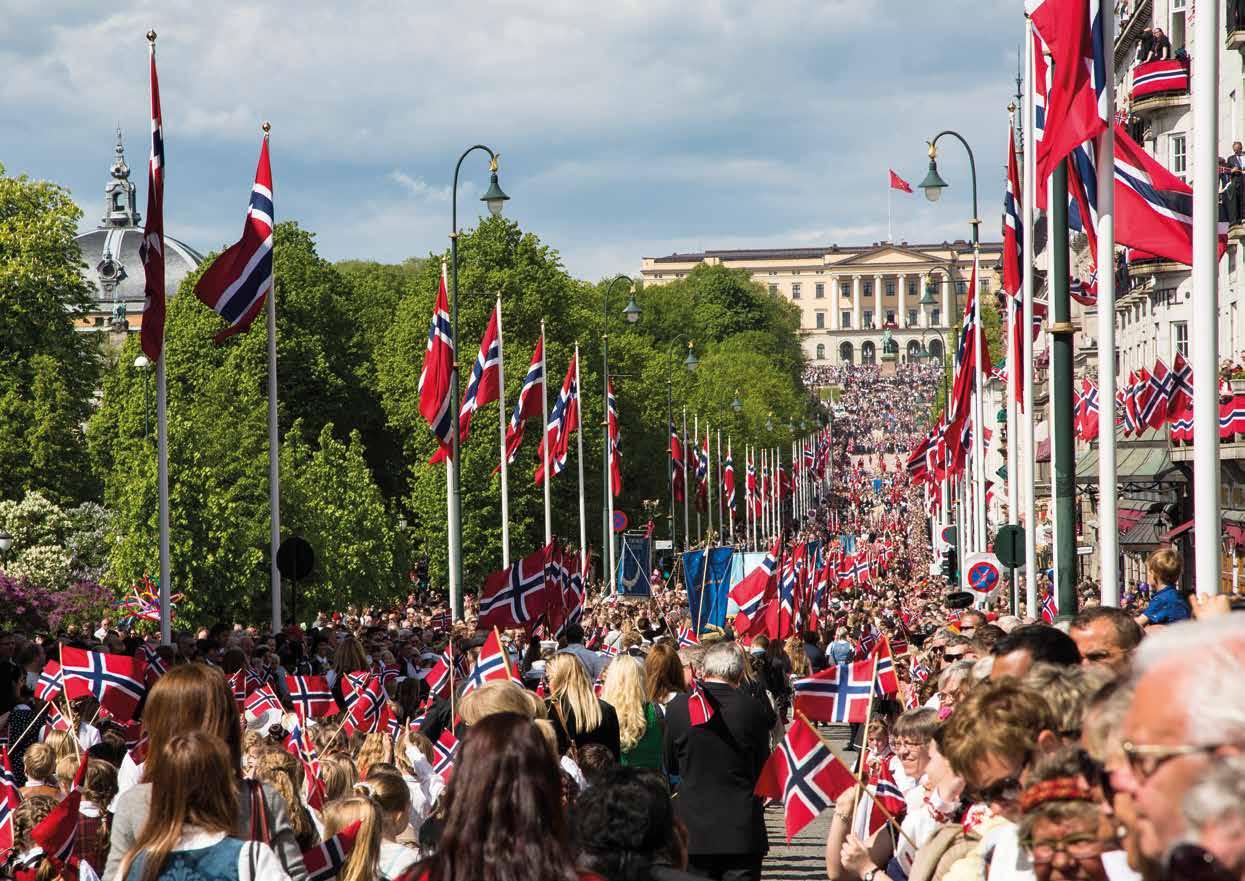
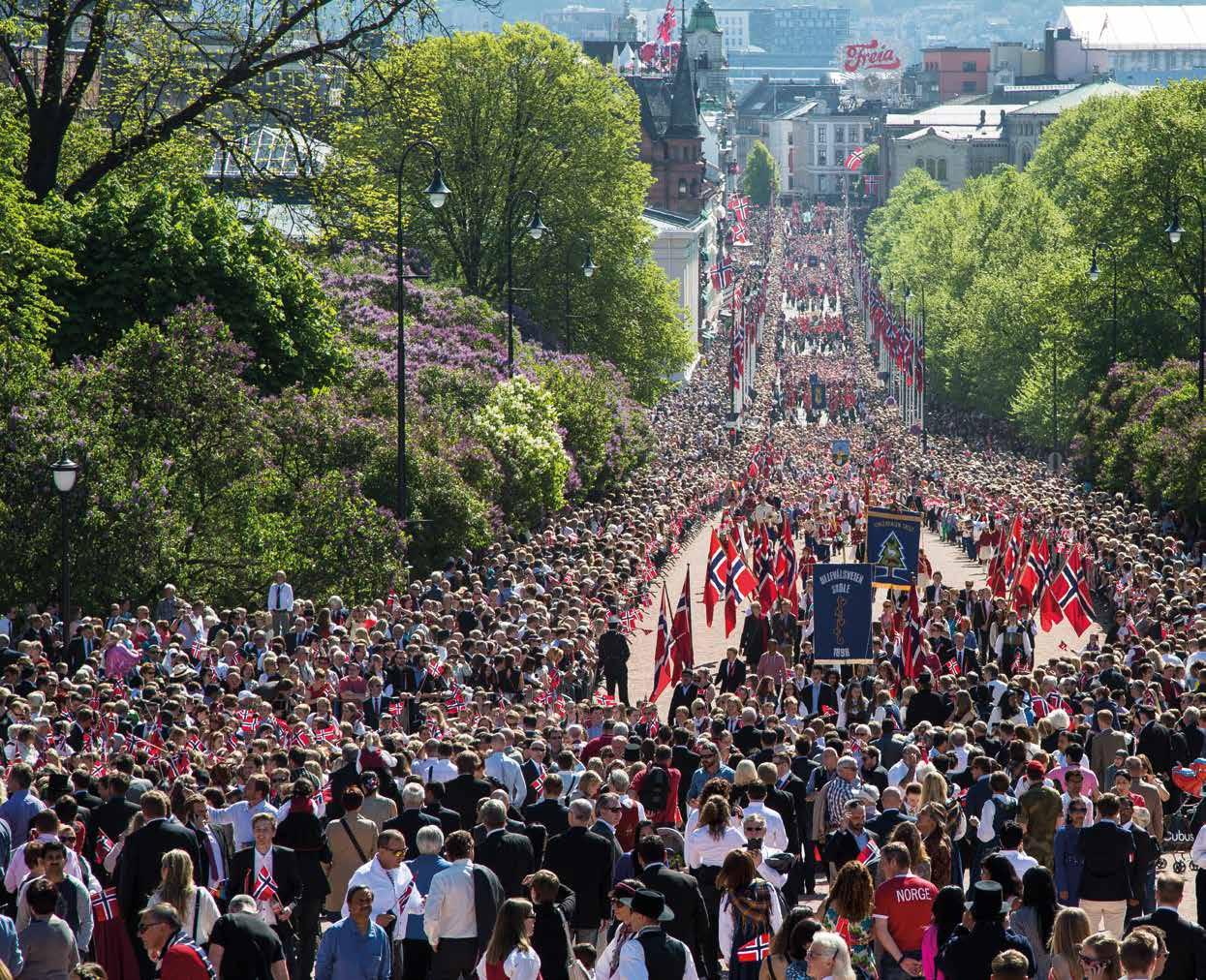
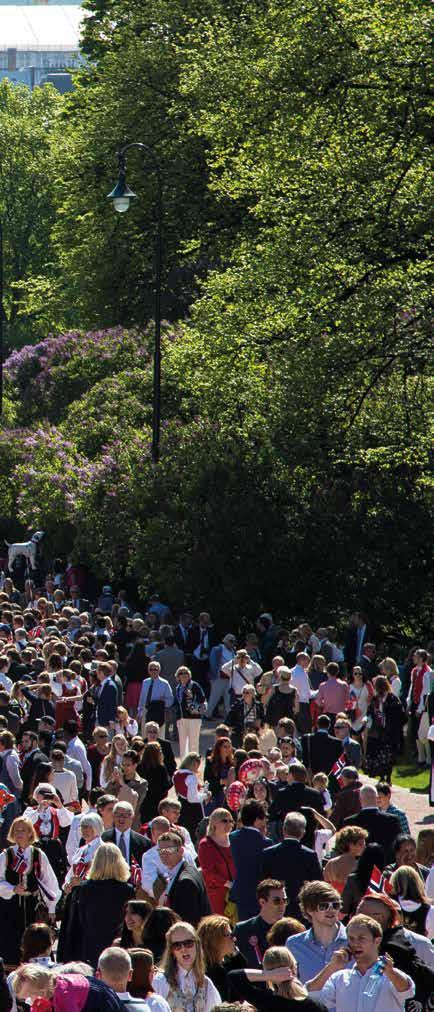
Norwegians celebrate on 17th May because it marks the day in 1814 when Norway adopted its constitution, laying the foundation for the country as an independent and democratic nation. At the very heart of the 17th May celebration are the children –symbolizing our future. At a time when Russia’s brutal warfare against Ukraine continues and devastates the life of so many fellow Ukrainian civilians; at a time when the world’s turmoil reaches its way into our lives, it is so important to cherish what keeps us united. The most important thing we can all do is to participate in and care for the community around us. It strengthens trust. It strengthens democracy. And it strengthens our resilience.
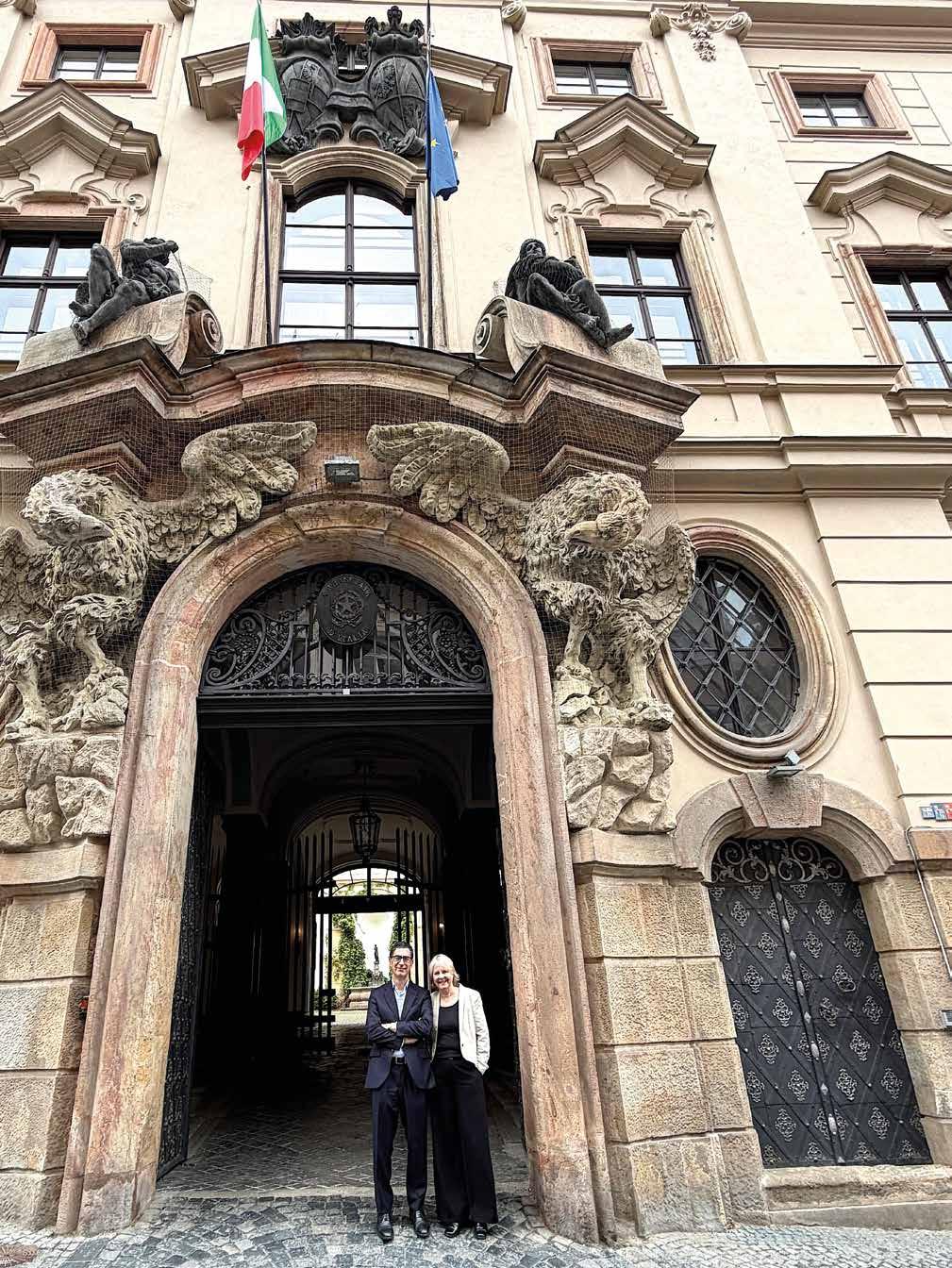
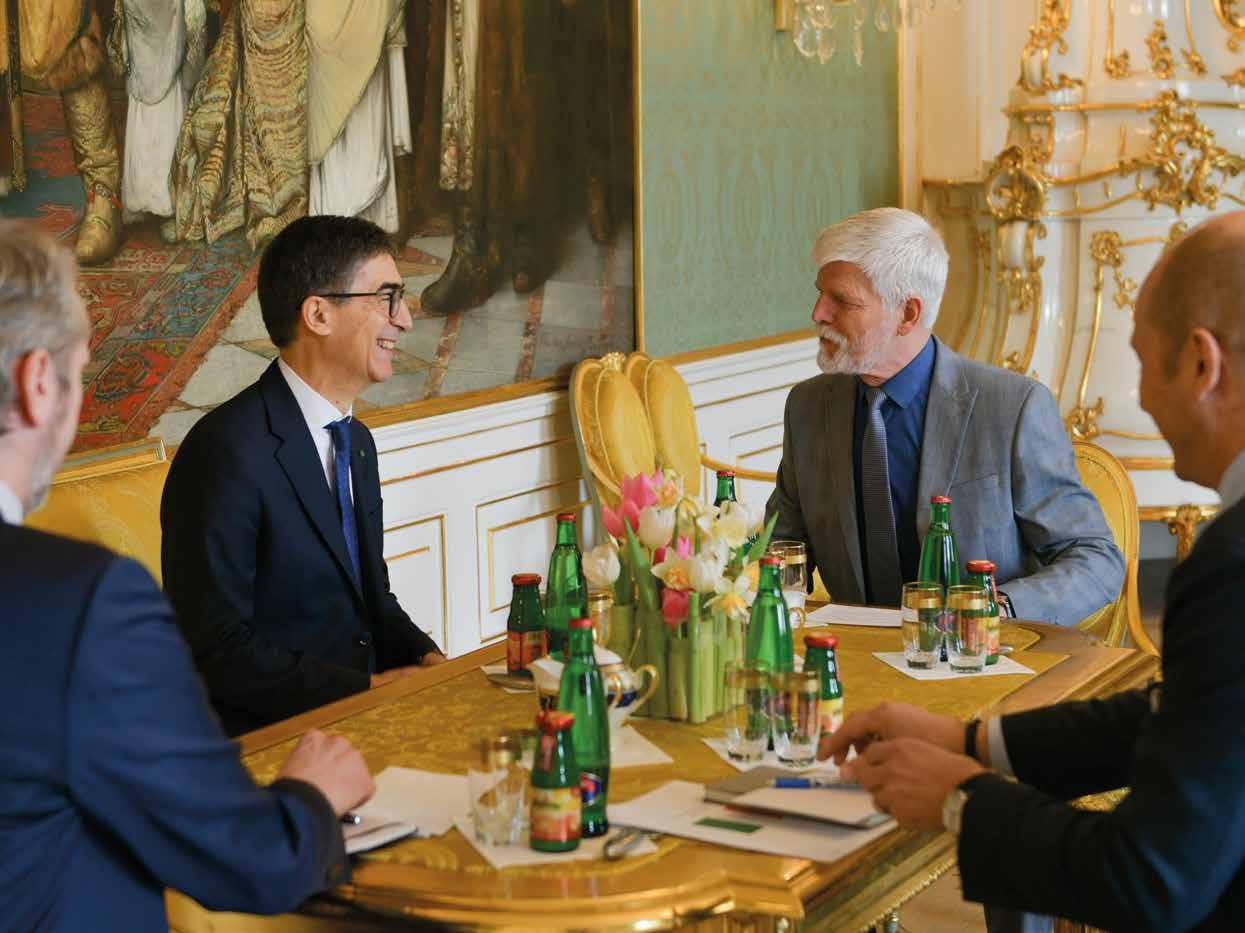
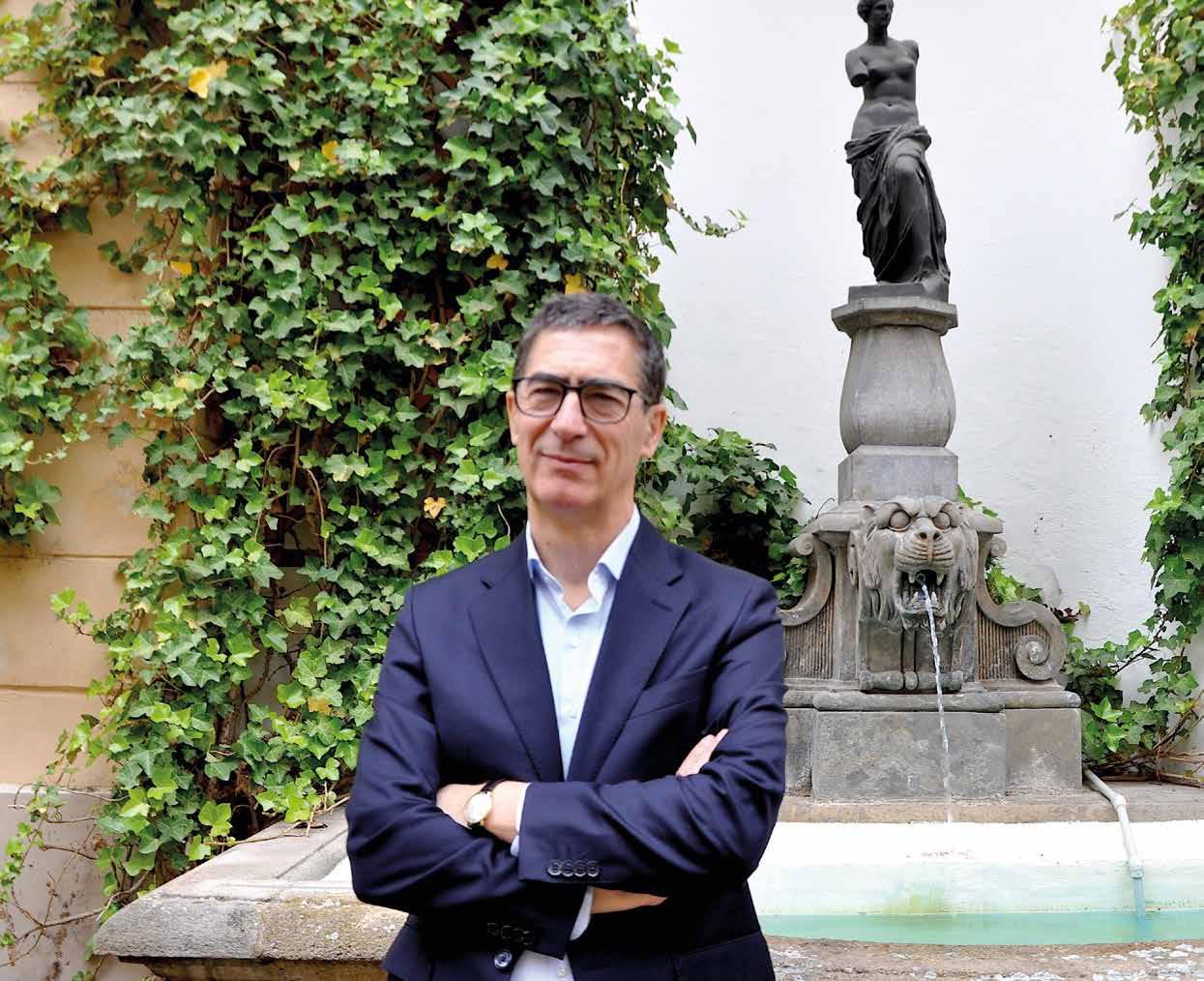
“We should always remember that, as civil servants, we are there to serve,” reminds us H.E. Mr. Alessandro Gaudiano, Ambassador of Italy, capturing the purpose at the heart of his profession as he offers a piece of wisdom to the next generation of diplomats. Only three months into his posting, he admits to “developing a personal fondness for the Czech Republic” – to the point of already beginning to learn the Czech language.
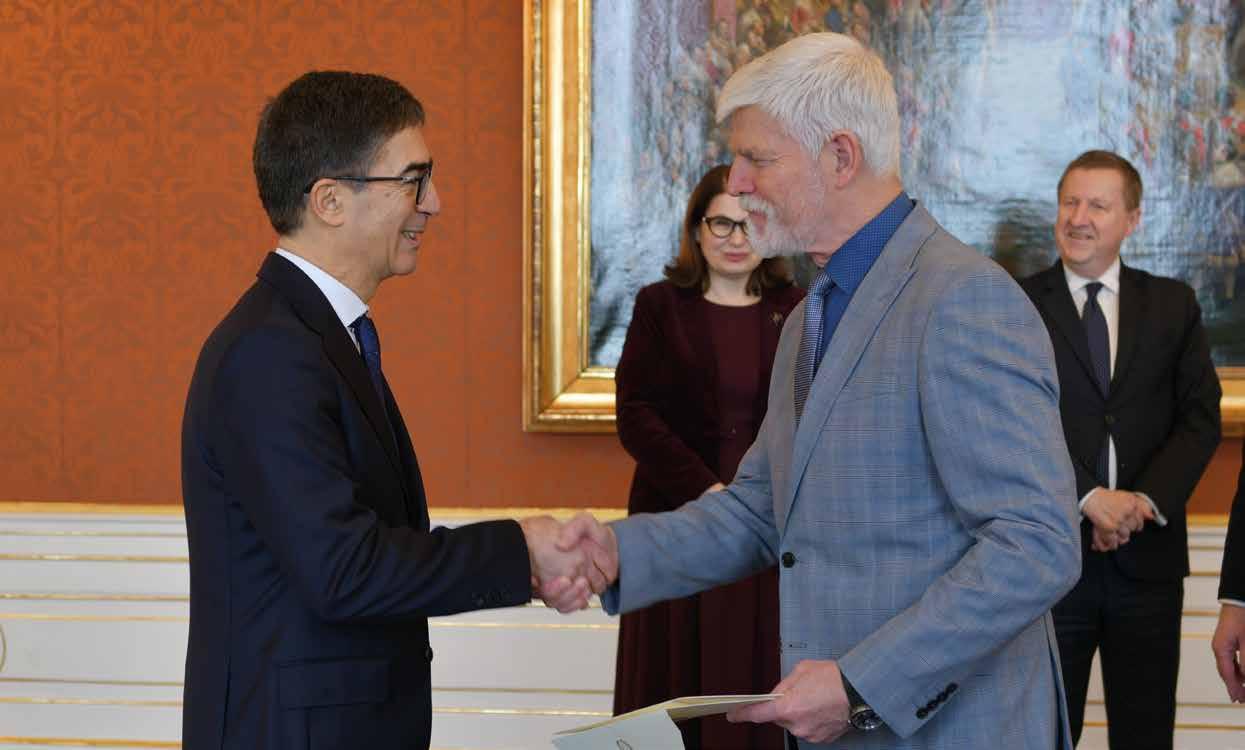
Can you tell us a bit about how you became an ambassador?
When you are in the diplomatic service, you are usually expected to become an ambassador sooner or later, wherever in the world that may be. But for me, it was also a matter of choosing where I wished to serve, and having the right opportunity.
I made the deliberate choice to apply for the position of Ambassador of Italy to Prague –the capital of a country that has always fascinated me. I consider myself extremely fortunate to have been given this chance. I am deeply grateful to my Minister and to the Italian government for making this dream come true.
It hasn’t been long since you assumed your post. What is your impression so far?
I have been in the Czech Republic for about three months, but I have already gathered a number of impressions that I am glad to share.
The first is the incredible beauty of your country and your capital. It made me reflect on how much two peoples, Czechs and Italians, may share in their love and quest for beauty. A second impression is the importance of history for your nation – and the need to know it well in order to better grasp how Czech people think and respond to contemporary events and challenges. In this respect, too, I see parallels between our countries.
Measured over the span of centuries, both of us achieved national independence relatively late, after long struggles, painful setbacks, and periods of dictatorship. Of course, every national history is unique, which is why I believe it is essential to understand what it means in each country.
How many countries have you served in before?
Only two. I had a rather unusual career path, serving three different periods in Germany – all in Berlin – and one posting in Canada, in Ottawa. This was largely a matter
of personal choice, and I was fortunate that my ministry gave me the possibility to pursue this less conventional trajectory. I also had the opportunity to undertake short missions in more distant countries – from Afghanistan to Colombia, from Myanmar to Bolivia, and from Pakistan to Cuba and the Philippines – during the years I worked in Rome in our Directorate General for Development Aid, a field I grew very fond of.
Does being an ambassador fit well into your daily life?
Being an ambassador engages you for many hours of the day –and often well into the evening. My first impression was that I was constantly running against time, and on top of that feeling sorry for having to decline so many interesting activities simply because they do not fit into a 24 hour day. The challenge is to find a reasonable balance and to not succumb to the fear of missing out; always remembering that missing out is better than burning out.
At the same time, I feel very well supported – both within the embassy and in my interactions with Czech institutions – enjoying, so to say, special attention. The challenge here is to not allow yourself to get spoiled, to not change your habits, and to continue doing the ordinary things everyone else does. It is important to keep in mind that this special attention is given to us because we are pro tempore entrusted with representing our country – the permanent entity that truly matters.
What is the best adventure you have had?
The life-long one with my wife would be my instinctive answer. But I suppose your question refers
more to a professional or “exotic” adventure. Among these I would count entering the ancient King’s Palace in Kabul at night in early December 2001, to meet the new Afghan leadership while fighting with the Taliban was still ongoing. That small “adventure” has a special place in my memory: it was a moment of hope. But not all hopes come true, and our engagement in Afghanistan did not have a happy ending. It still hurts me when I think that we were not really able to help the Afghan people in the long run.
What do you see as the most difficult part of being an ambassador?
I think the greatest challenge is striking the right balance between being very straightforward in
pursuing the concrete results that are in your government’s interest, and being mindful of the interests and sensitivities of your partners – even when these may represent an obstacle or cause delays in achieving what you wish for.
This balance is essential for safeguarding a long term relationship with a partner, which in turn creates the environment in which concrete objectives can be achieved more effectively.
How do you like to spend your free time?
I enjoy walking through this wonderful city, keeping in touch with family and friends, and reading. Learning Czech is also a kind of “halfway” free time activity – even
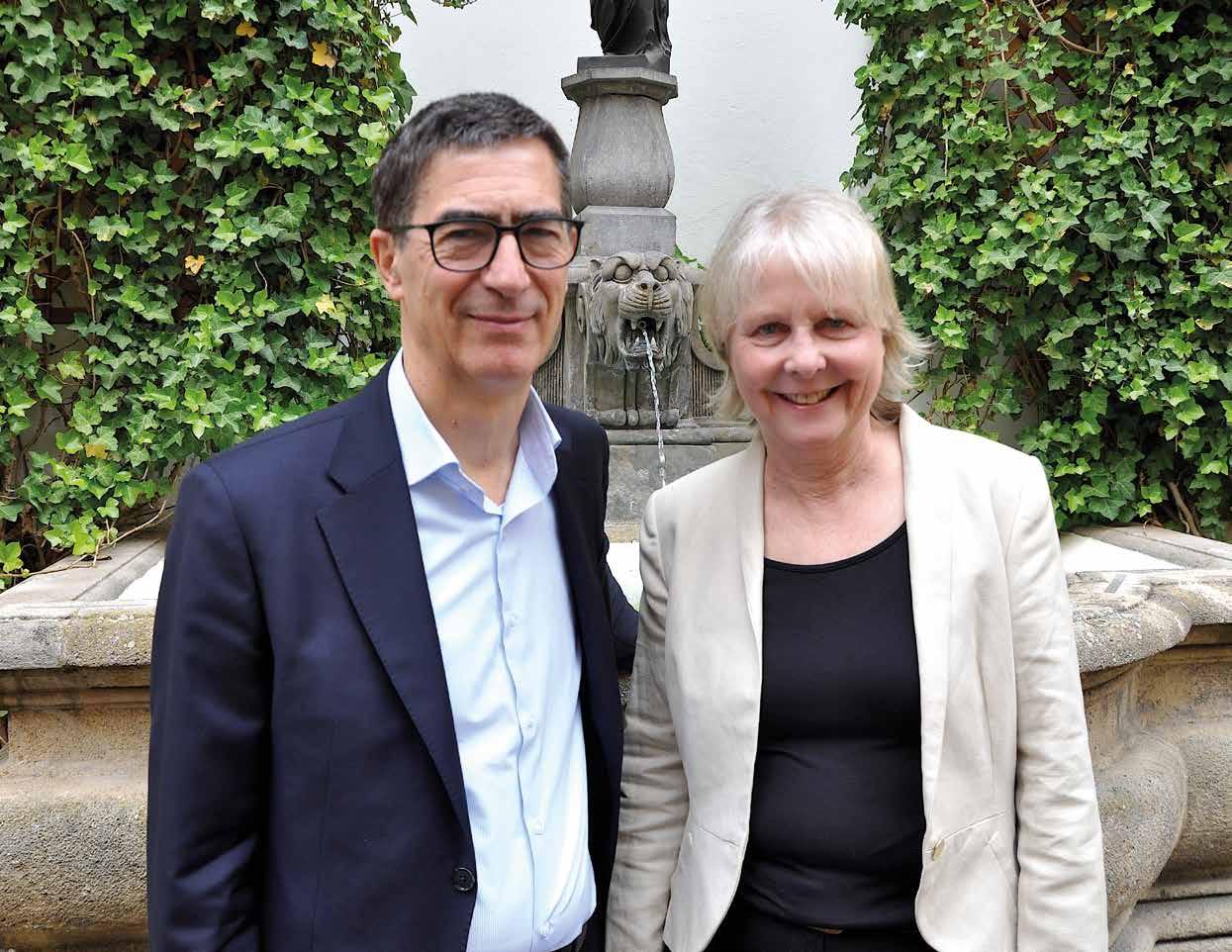
though it is more demanding than walking, talking, or reading.
Can you give a piece of advice to the next generation of ambassadors?
Take our job seriously, without taking ourselves too seriously. We should always remember that, as civil servants, we are there to serve. We carry a great responsibility – for our own country as well as for its partners around the world – which ultimately means responsibility for many people.
Many Czech people love spending their holidays in Italy. Do you promote your country here in this sense?
I am very happy about the fondness Czech people have for Italy as a holiday destination.
I think that, to a large extent, they discovered it on their own, but we are of course keen to help them deepen this discovery by presenting lesser known destinations, with the invaluable support of many exceptional partners. By exceptional partners I mean not only travel partners, but also all of the actors, with the Italian Cultural Institute at the forefront, who contribute to making Italy known and appreciated in the Czech Republic.
This year we also had the opportunity to host the Olympic and Paralympic Games in Milano Cortina, which helped us highlight Italy on the world stage and generated a special wave of sympathy among Czech people. In general, I believe we Italians are fortunate to have a national brand in which many elements
reinforce one another: history and art, natural landscapes, cuisine, fashion, industrial design – all blended into a lifestyle you can experience during a holiday in Italy, but also bring back home.
By the way, Prague itself offers many elements of the Italian lifestyle, which our dynamic Italian community helps spread throughout the city.
What is the current status of Czech-Italian relations?
Readers may think ambassadors tend to exaggerate, but my honest answer is: more than excellent! They have always been very good, but I believe we are experiencing a truly magical moment in our relationship.
The visit of President Mattarella,
at the invitation of President Pavel on April 9-10th, was a highlight at the highest institutional level, confirming our shared vision of the need to face together the huge challenges ahead for Europe. Prime Minister Babiš met Prime Minister Meloni in Rome at the very beginning of his mandate, and they agreed to work on an Italian-Czech Action Plan for 2026–2030, including a joint cultural year. An Action Plan is something we have with only a limited number of countries, and it shows how strongly we feel about our cooperation.
As two industrial countries, we share a number of priorities in Europe – energy and competitiveness, to name just two – and of course
we see enormous potential in our bilateral economic cooperation. I will mention only four areas among others: defence, energy, space, and transport infrastructure. These are fields in which we have first class industrial actors eager to work together, and governments ready to facilitate that cooperation.
This interview is done on the occasion of your national day. What are you wishing for your country?
My wish for the Italian Republic – born eighty years ago out of the ashes of the Second World War – is that, together with our EU partners, allies and friends around the world, we may be resilient in
the face of the huge challenges Europe is facing.
To the Czech Republic I extend the same wishes as to my own country – not only out of the personal fondness I am developing for it, but also because in Europe we truly need each other. We need to be resilient and act together to support our security and prosperity. This is the only way to preserve the very uniqueness we cherish in each of our countries. Together we stand; divided, we would all decline very rapidly.
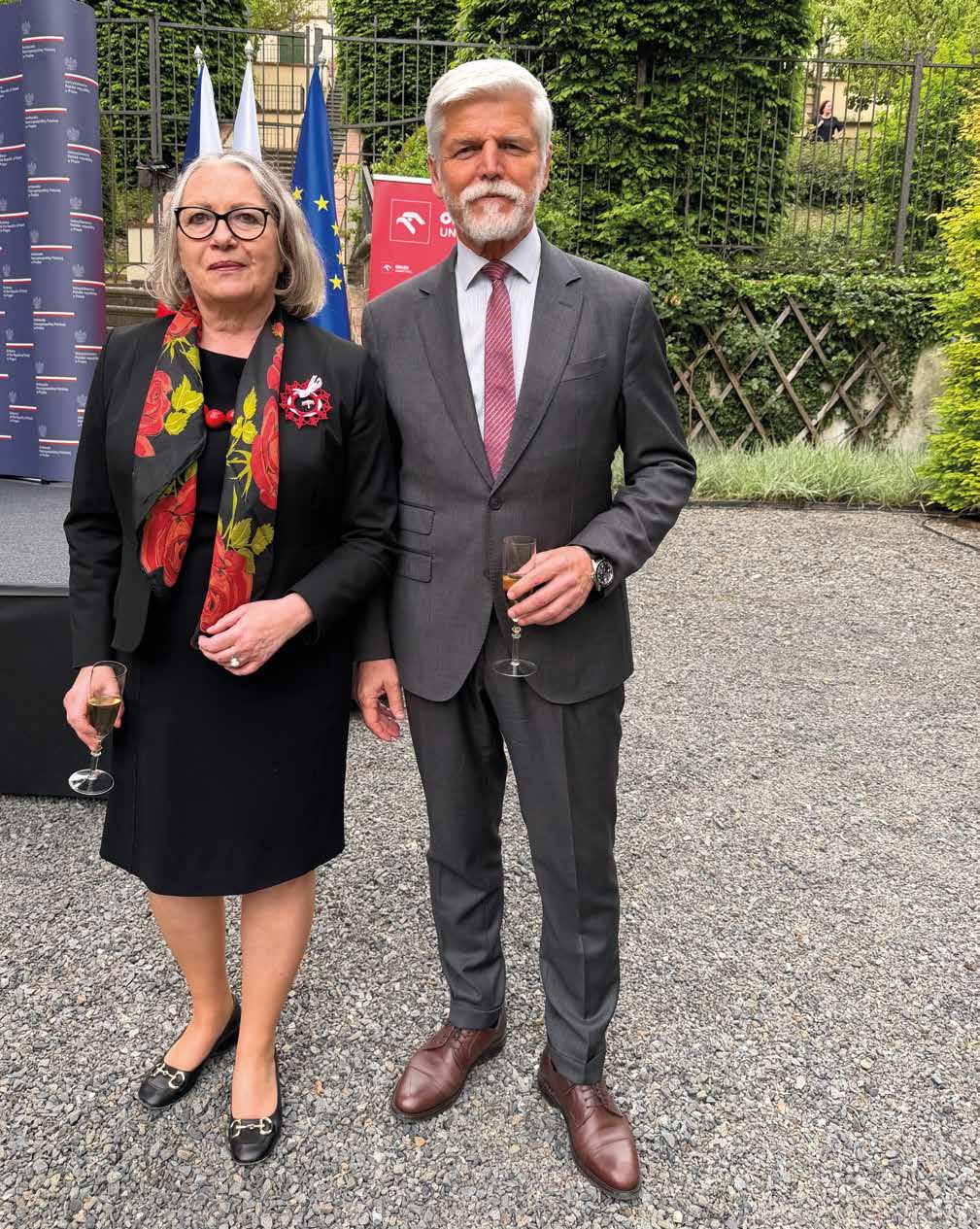
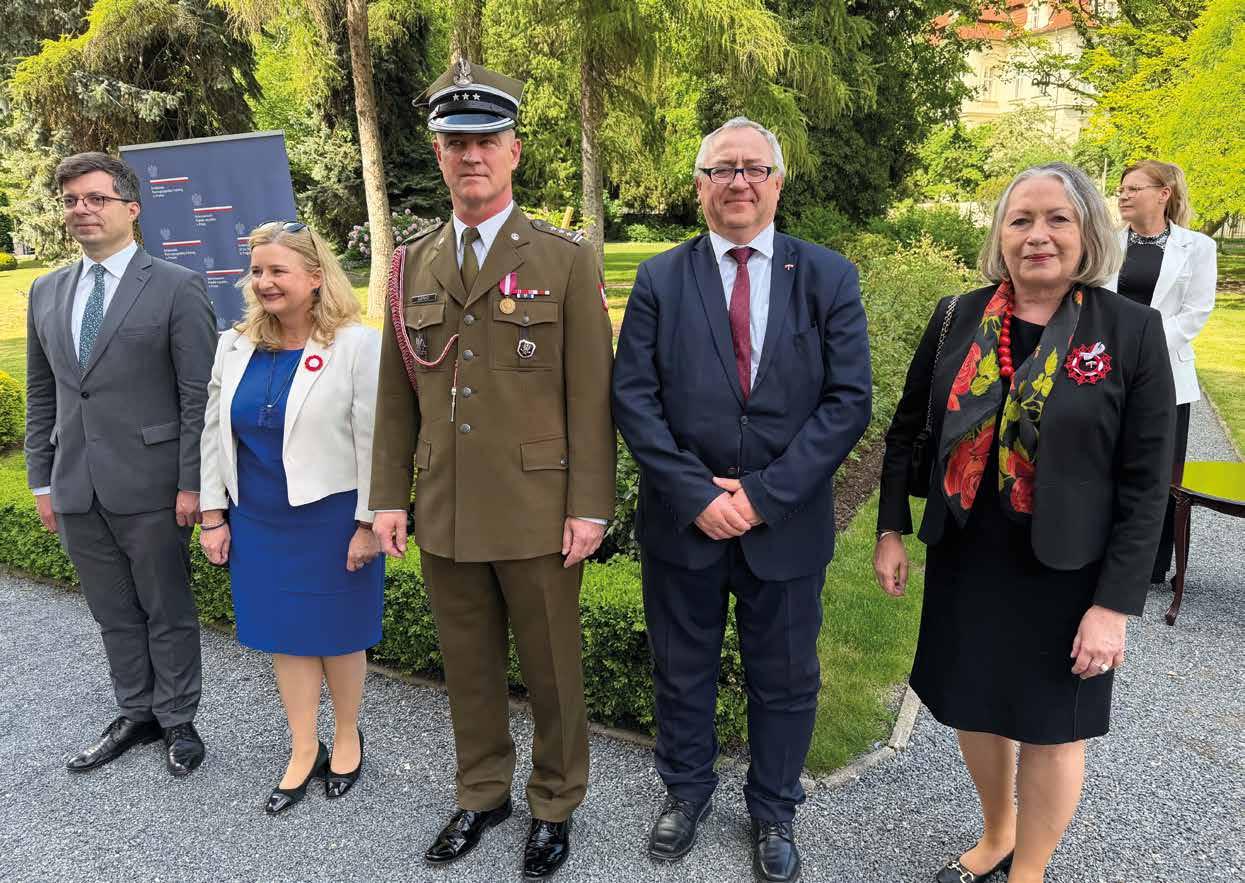
About a year ago, the Embassy of Poland in Prague welcomed a new addition to its team:
Ms. Barbara Krystyna Tuge-Erecińska, appointed as Chargé d’affaires of Poland.
“The Czech Republic is the fifth country in which I have served as a diplomat,” she says. “Looking back, my experience with Solidarity and witnessing the breakthrough of the 1989 free elections played a decisive role in shaping my professional path. Each of my postings has offered distinct experiences and perspectives, enriching my understanding of both bilateral relations and the broader international context.”
Can you tell us a bit about yourself and about the politically turbulent years in Poland during your youth?
I was born in Gdańsk, where I also went to school and later studied Nordic languages and culture at the university. At the time when I graduated from the University of Gdańsk in 1980, mass protests against communist rule began in the Gdańsk Shipyard, quickly spreading to other parts of Poland. As a result, the independent trade union Solidarity (Solidarność) was created. Following my graduation, I started working for Solidarity’s international department. In December 1981, the communist authorities imposed martial law in Poland, and Solidarity was declared illegal. I spent the rest of the 1980s in the underground opposition, helping political prisoners and their families. During that time, I worked closely with
Lech Wałęsa, the recipient of the Nobel Peace Prize in 1983. However, the most important event of that decade was the birth of my son, Łukasz. Thanks to him, I now have a wonderful granddaughter, Klara.
How did you go from being an underground dissident to becoming an ambassador in 1991?
In many ways, my path into diplomacy was shaped by a combination of circumstances and personal interests. After the fall of the communist system, my country needed to rebuild and recreate many institutions. Such a profound change in foreign policy required reliable people –those who genuinely supported the transformation – to serve as diplomats. At the same time, there were not many people from the anti-communist opposition
who spoke foreign languages and had knowledge of international relations. This is how I was asked to represent Poland in Sweden, a country I knew very well, whose language I spoke, and where I had many friends from different walks of life. Looking back, my experience with Solidarity and witnessing the breakthrough of the 1989 free elections played a decisive role in shaping my professional path. In many respects, it was also a matter of historical timing – had Poland not regained its freedom, such opportunities would simply not have been possible.
How has your experience of serving in Czechia been so far?
The Czech Republic is the fifth country in which I have served as a diplomat. I greatly appreciate its rich history, which is visible in many places, as well as its beautiful
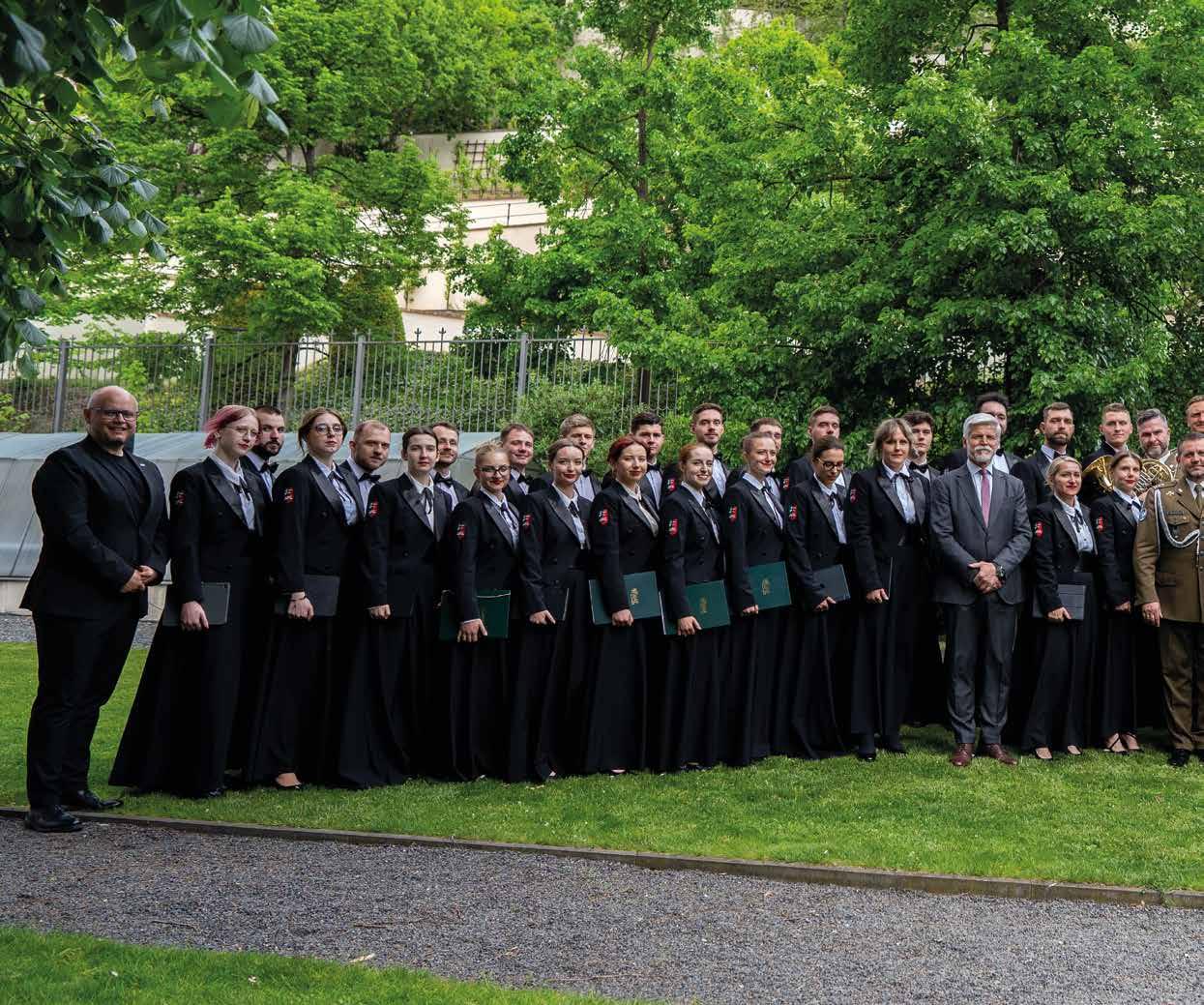
and highly diverse natural landscapes. I am also very impressed by its vibrant cultural and intellectual life.
What were your previous postings?
Throughout my diplomatic career, I have had the honour of serving as Ambassador of Poland in four countries: Sweden (1991–1997), Denmark (2001–2005), the United Kingdom (2006–2012), and Cyprus (2014–2018). In addition, I have worked in various senior roles within the Ministry of Foreign Affairs, and now I continue my service in the Czech Republic. Each of these postings has offered distinct experiences
and perspectives, enriching my understanding of both bilateral relations and the broader international context.
What does being a diplomat mean for your everyday life?
I have been a diplomat for over 30 years, including 20 years spent abroad as head of mission, so being an ambassador has effectively become my lifestyle. It has many exciting aspects, but it also comes with quite a few challenges. One of them is that you are always on duty, at any time. Your priorities must always concern your country and its interests, even when you have personal matters that require your attention. That
said, it is such a great honour and privilege to represent your country abroad. Undoubtedly, one can only be grateful for such an opportunity.
Which part of the diplomatic role challenges you the most?
Interestingly, the most challenging aspects of diplomatic work are also what make it so fulfilling. The role requires operating in a highly dynamic environment, where situations can evolve rapidly and often unpredictably, demanding prompt and wellconsidered responses. At the same time, this constant change is precisely what makes the work so engaging. Staying closely
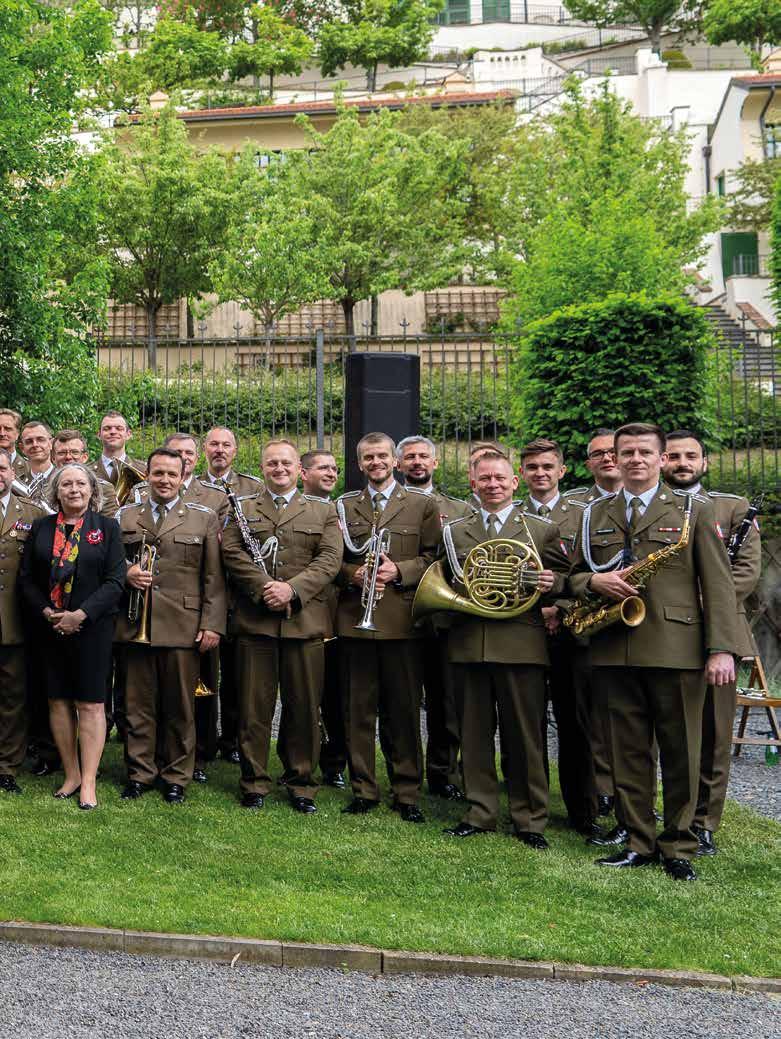
informed about global developments is not only a professional necessity but also something I find genuinely stimulating. Life at an embassy is intensive and demanding – it requires resilience, commitment, and energy – but it also offers a deep sense of purpose and satisfaction that makes the effort worthwhile.
Is there an adventure from your years of service that stands out to you?
When I was in Sweden, the Chief of the Army offered me a parachute jump. I jumped in tandem with the commander of the special forces. It was an unforgettable and wonderful experience,
and the view of the Stockholm archipelago from above will stay with me forever.
How do you like to spend your free time?
In my free time, I most enjoy not having to hurry or check my watch. I like slow mornings with a cup of coffee and a book in bed, with no plans for the day. Most of all, however, I cherish every moment spent with my granddaughter, although time with her is never lazy.
After all these years, what advice would you give to the next generation of ambassadors?
In the age of the internet and AI, remember that personal contact remains the most important tool in a diplomat’s work.
You were appointed as ambassador to Sweden at just 35, as the only woman at the embassy and the youngest member of staff. What advice would you give to young women in the diplomatic field?
From the perspective of 30 years in the Foreign Service, I believe that the most important thing is not to lose your values. Governments change, and so do political directions, and we must be ready to adapt. However, it is equally important to remember that we are paid by taxpayers, and pleasing those in power is not part of our job description. To young women diplomats, I would say: do your best, believe in yourself, and do not be overly self-critical.
More and more Czechs seem to be choosing Poland for their holidays. Do you have any travel tips for them?
We are delighted to see that Poland is becoming an increasingly attractive destination for Czech travellers. In recent years, the number of visitors from the Czech Republic has grown significantly, with estimates for 2025 suggesting it may have reached around one million arrivals. This positive trend has been supported, among other factors, by improved road and rail connections, including the Baltic Express train service.
While the Baltic coast continues to enjoy great popularity, I would also encourage Czech visitors to discover other exceptional regions of Poland. Lower Silesia, located close to the Czech border and known for its impressive and often mysterious castles, is certainly worth highlighting. The Warmia and Masuria region offers unique opportunities to
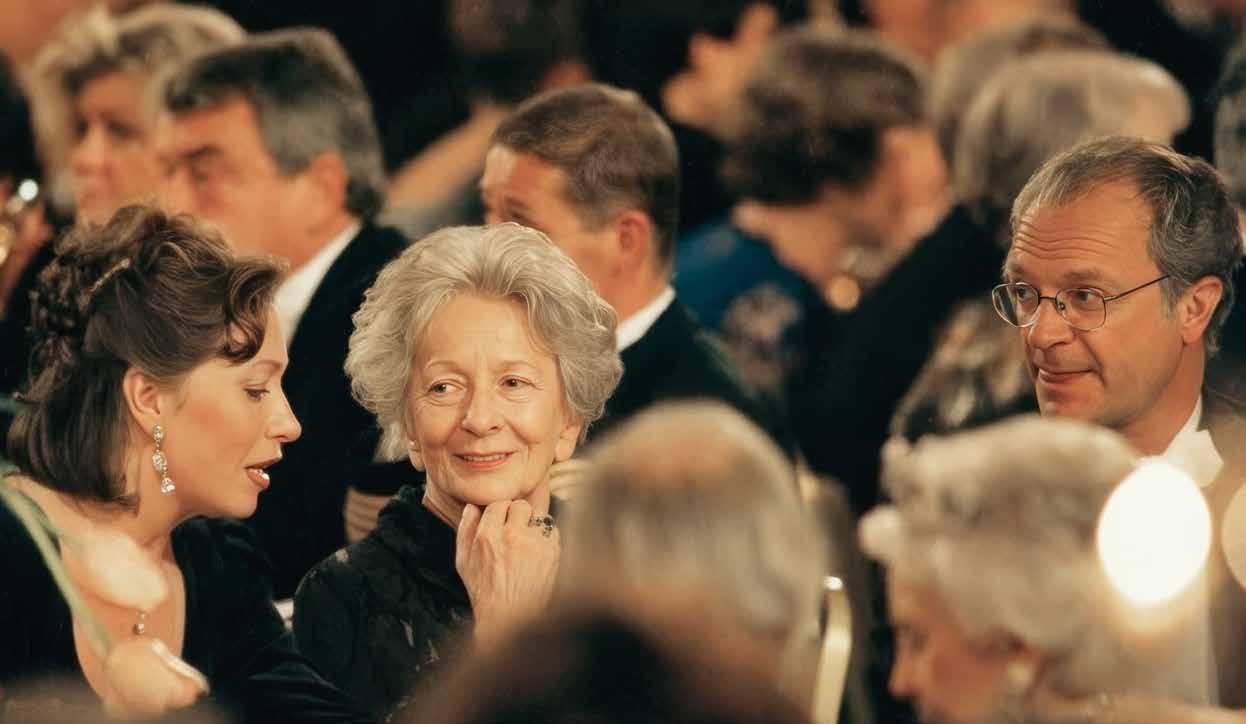
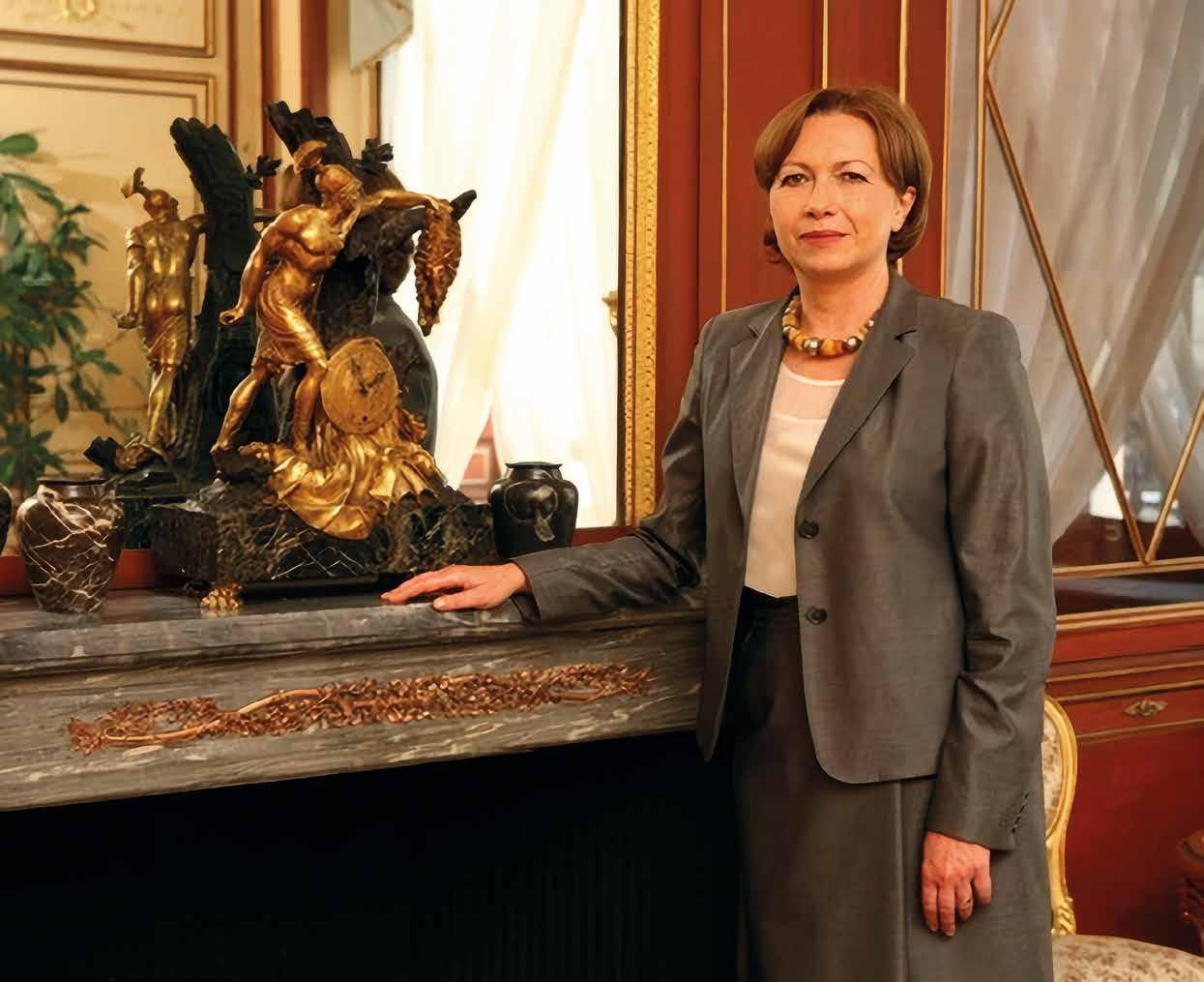
experience vast lake landscapes and a wide range of outdoor activities in unspoiled natural surroundings. For those interested in untouched nature, rich cultural heritage, and well-developed cycling routes, the Białowieża Forest and the Podlasie region are also highly recommended.
What is the current status of Czech-Polish relations?
Poland and the Czech Republic have been neighbours and close partners for a long time, and over the years, we have built a very solid relationship in many areas. As members of NATO and the EU, we work closely together on regional security and military cooperation. In that context, we are deeply grateful to the Czech army for sending the so-called HeliUnit to protect Poland’s eastern border. On the EU forum, we also work hand in hand, and often speak with a common voice on key issues as partners
from Central and Eastern Europe. Given today’s volatile geopolitical situation, we also cooperate closely on energy security, thanks to the presence of Orlen Unipetrol on the Czech market, and cross-border infrastructure.
Today, the relations between Poland and the Czech Republic are very positive, and issues that were once considered sensitive have largely been resolved through dialogue and cooperation. Besides, we are strong economic partners, with growing trade and investment on both sides. But just as important is our cooperation between people – especially in culture and education. For instance, there is the Czech Centre in Warsaw and the Polish Institute in Prague. These exchanges help us understand each other better and bring our societies closer together. We truly value our Czech friends, and, of course, look forward to continuing this cooperation in a variety of aspects.
This interview takes place on the occasion of your national day. What wishes do you have for your country – and for the Czech Republic?
On the occasion of our national day, I wish Poland stability, prosperity, and unity, as well as the ability to meet future challenges with confidence and resilience. For the Czech Republic and its citizens, I extend my sincere wishes for continued success, well-being, and further development. At the same time, I hope that the strong partnership between our two countries will continue to deepen – for the benefit of our citizens and for the stability and progress of our region as a whole.
Interview with H.E. Mr. Hakan Jevrell, Ambassador of Sweden
Can you share a bit about your background, please?
Born in Stockholm in the late sixties, I began my professional life in the Royal Swedish Navy before going on to study law and eventually serve as a prosecutor. I joined the Government Offices in 2006, and the following year I had the privilege of being appointed State Secretary for Defence (Deputy Minister). After that, I was honoured to serve as Sweden’s
ambassador to Singapore and Brunei, and later as the Swedish representative in Taiwan.
Since last August, I have had the great privilege of serving as Sweden’s ambassador to the Czech Republic.
On a personal note, I am the father of Edward and Beatrice, who are currently studying in Paris, and I have been married to my wonderful wife, Catharina, for almost 30 years.
“I’ve always been drawn to international affairs and to understanding how different societies function... and my wife’s curiosity has strengthened my own,” explains H.E. Mr. Hakan Jevrell, Ambassador of Sweden. “And now, I’m blessed to be posted to a country very similar to my home in many ways, and with which Sweden has excellent relations. Together, we will be able to deliver a future for the generations to come.”
What made you become an ambassador?
Marrying a diplomat’s daughter certainly comes with certain expectations – or so I like to joke. In reality, I’ve always been drawn to international affairs and to understanding how different societies function. My wife studied political science and had already lived abroad for many years, so her experience and curiosity about the world strengthened my own.
When the opportunity to serve abroad arose, it felt like a natural step. We discussed it as a family, and everybody agreed to take the chance. Looking back, none of us has ever regretted that decision.
It will soon be a year since you arrived in the Czech Republic.
What has been your impression?
Beautiful Prague and beautiful Czech Republic! It is truly a privilege to serve here. We have been very well received, and people have been very kind – both in professional settings and in the many everyday encounters you have when you are new to a country.
I personally feel that the Czech Republic is something of a hidden gem in Europe: a well educated workforce, advanced manufacturing, high-level universities, an impressive cultural sector, and of course a very accomplished hockey nation.
I have also been impressed by how the Czech Republic continues to support Ukraine – not only by
receiving many refugees, but also through concrete actions such as the ammunition initiative.
Continued European support for Ukraine is a top priority for the Swedish Government.
How many countries have you served in up until now?
I have served in Singapore, Brunei, and Taiwan. I’ve greatly appreciated the opportunity to serve in Asia, where things move very fast and innovation and new technological solutions emerge almost daily.
How does being an ambassador fit into your lifestyle?
Both my wife and I are very curious about other people and cultures, which I believe is essential in this line of work. It also means taking
part in events during evenings and weekends, so a flexible schedule is important – and most of the time it works very well, even though our two dogs occasionally find us a bit boring.
That flexibility also gives us a lot of freedom to plan our own activities, such as travelling to Paris to visit our children.
Which responsibilities tend to be the most difficult to manage?
The embassy has a responsibility to support Swedish citizens in need, which can at times be challenging, depending on the situation – for example, when Swedes run into trouble abroad or in the event of a large scale accident or terrorist attack involving Swedish citizens. Besides being deeply sad and painful, such an incident and crisis management would almost certainly place significant strain on our resources.
You also served as Ambassador, Special Envoy on Organized Crime. Can you please tell us more about this important issue.
It is clear that organized crime is far more efficient in its cross border activities than the governments of Europe. In the criminal world, they operate as if there were a single European market. By contrast, most EU Member States have at least two different police forces and different legal systems, which makes information sharing too slow and creates too many obstacles for us to keep pace with criminal networks.
Organized crime functions much like any other business: it seeks environments with low risk and high return – and unfortunately, Europe currently provides exactly that. Unless our crime fighting agencies become more effective at working together internationally, we will continue to face challenges in combating the criminal elements that harm our societies.
Can you give a piece of advice to the next generation of ambassadors?
In an era of digitalization, with new AI tools emerging almost by the hour, the social aspect of diplomacy is becoming even more important. Being open to
people and to new cultures will play an increasingly central role. At the same time, none of this is possible without a solid knowledge base and an understanding of how to use the tools of tomorrow.
Last but not least, if a new opportunity arises, jump and take on the challenge. Don’t hesitate –the world won’t wait for you.
What do you do in your free time?
Since I’m from Sweden, I love spending time on the ice, and I’m happy to have found a good hockey team to play with here in Prague. My wife and I also spend a lot of time on the golf course. Beyond that, we enjoy travelling with our children and spending time with friends and loved ones.
How do you promote your country as a holiday destination?
I’m privileged to have been born and raised in Sweden, which makes it easy to promote my country. Besides being an obvious destination for people who love nature, mushroom picking, and
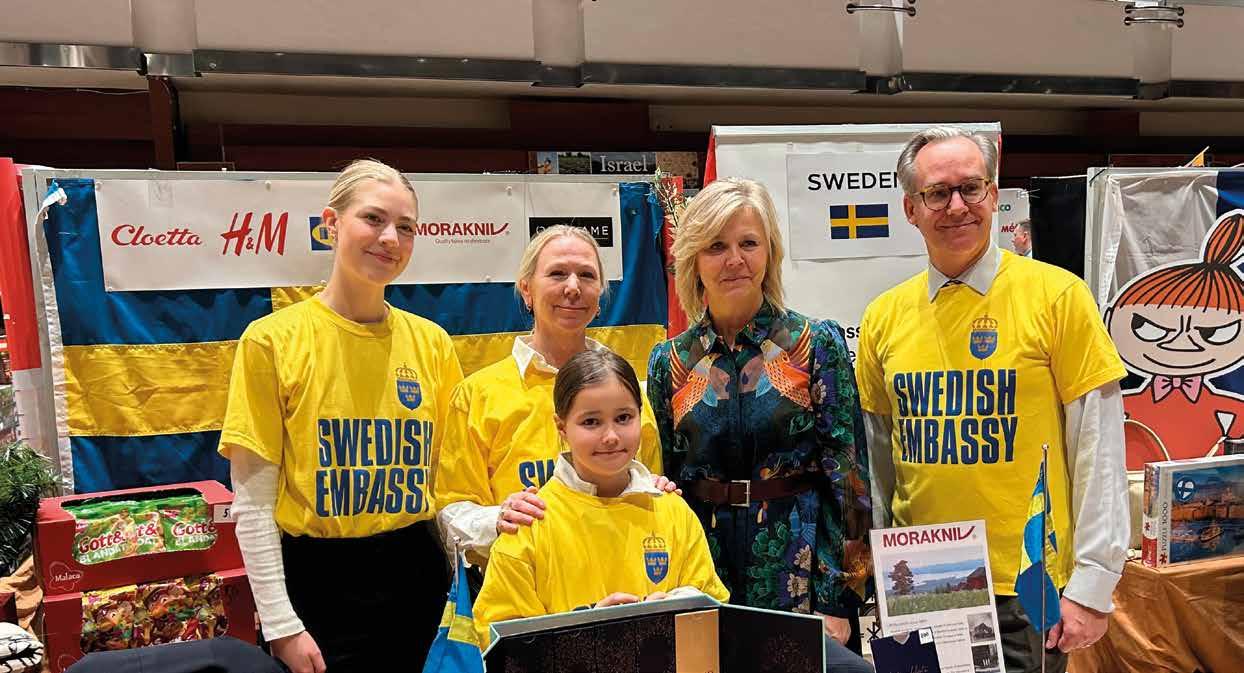
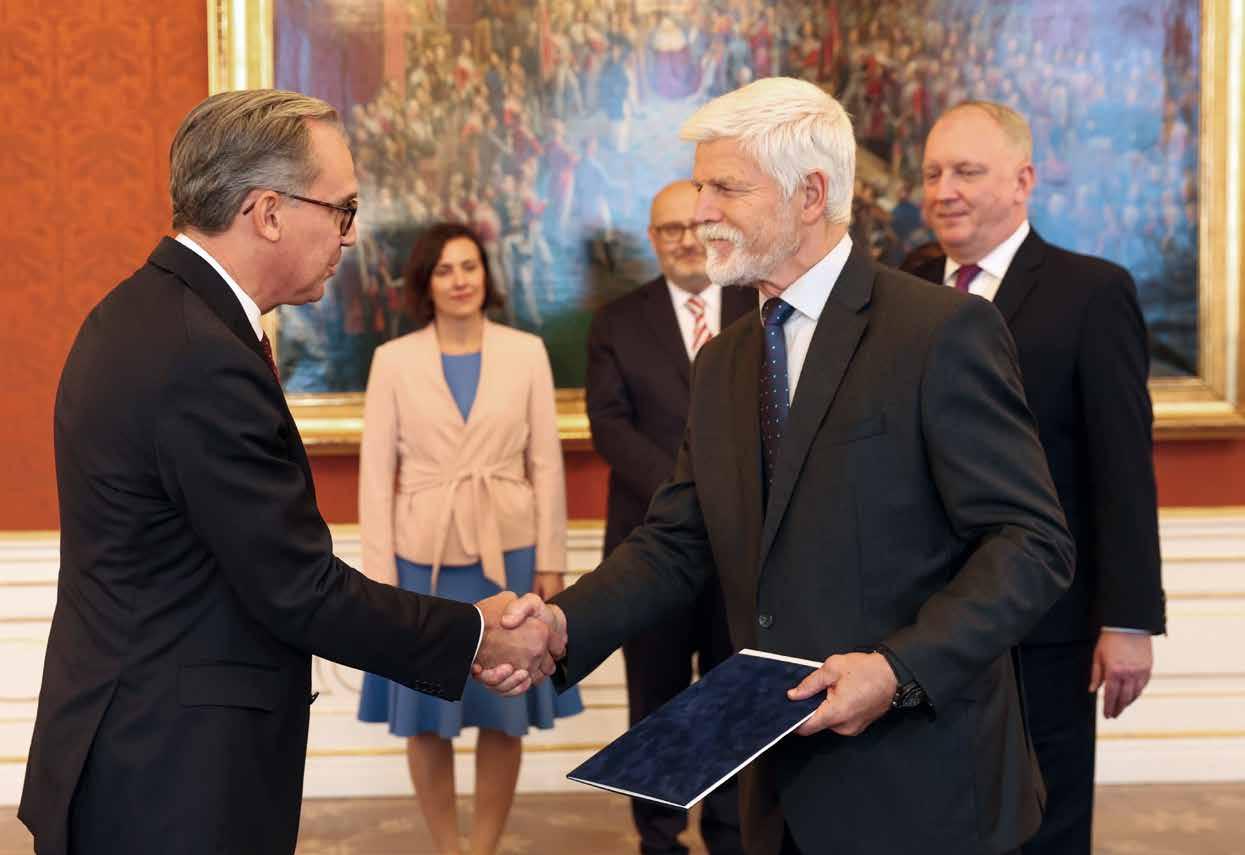
other outdoor activities, Swedes are open, curious, and innovative. And very much like the Czechs, we love spending our weekends in the countryside.
From high- end tech – like Lovable and Minecraft – to music such as ABBA, Avicii, and Roxette, or even being streamed on Swedish Spotify, we also offer Pippi Longstocking and the world of Astrid Lindgren.
And for beer-loving Czechs, we have microbreweries that are slowly learning how to make a proper beer. We know we’re lagging behind the breweries here in the Czech Republic, but it’s worth a try.
What is the current status of Czech-Swedish relations?
I’m fortunate to be posted to a country with which Sweden has excellent relations. Our two
countries are very similar in many ways: we are mid-sized European economies with strong industrial bases and future oriented youth ready to take on the opportunities of tomorrow. We also share membership in the EU, and, in recent years, in NATO.
Sweden is very much engaged in the ongoing development of Czech defence capabilities – for example, through the combat vehicle programme with the Swedish CV90, as well as the long standing partnership built around the Czech Republic’s operation of the JAS 39 Gripen. We also share a strong tradition in glass and crystal production. And with Škoda on your side and Volvo and Scania on ours, our supply chains are highly integrated.
Now, I’m looking forward to expanding our relationship into more areas, including the capital market. Sweden and the Czech
Republic are both investing heavily in future nuclear power which also gives excellent opportunities for integrated supply chains.
And of course, our relationship remains robust despite our national hockey teams going head-to-head in various tournaments. Let the best team win.
This interview is done on the occasion of your national day. What are you wishing for your country – and for the Czech Republic?
Prosperity and peace in a very challenging world. And together, we will be able to deliver a future for the generations to come.
Interview with Radka Wildová, Vice Rector for Research and Academic Excellence at UNYP
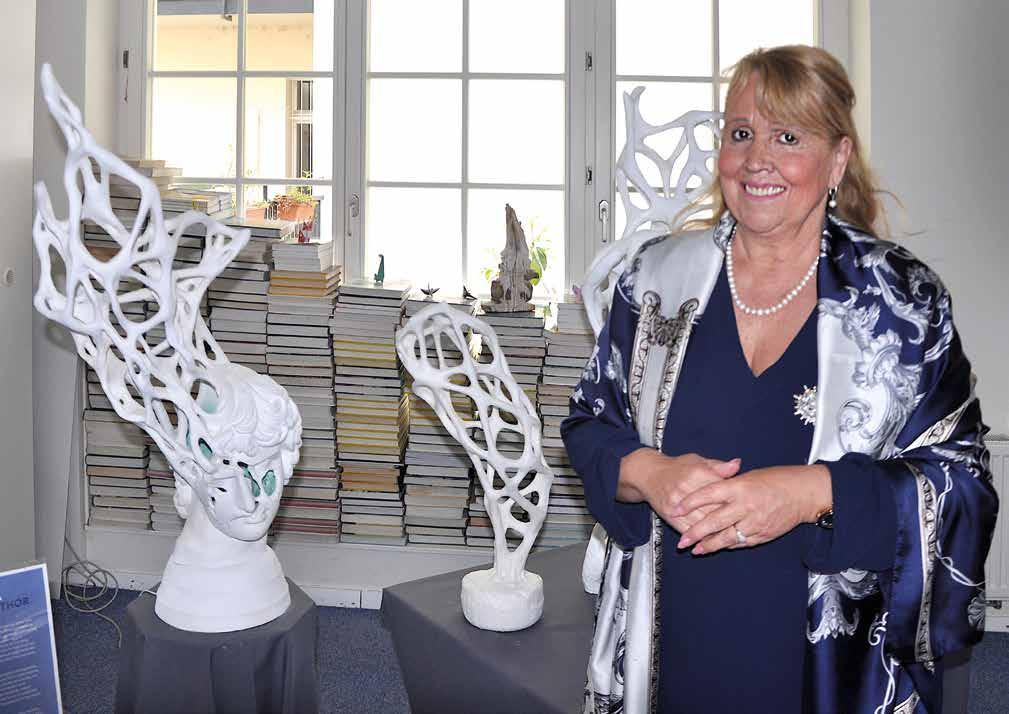
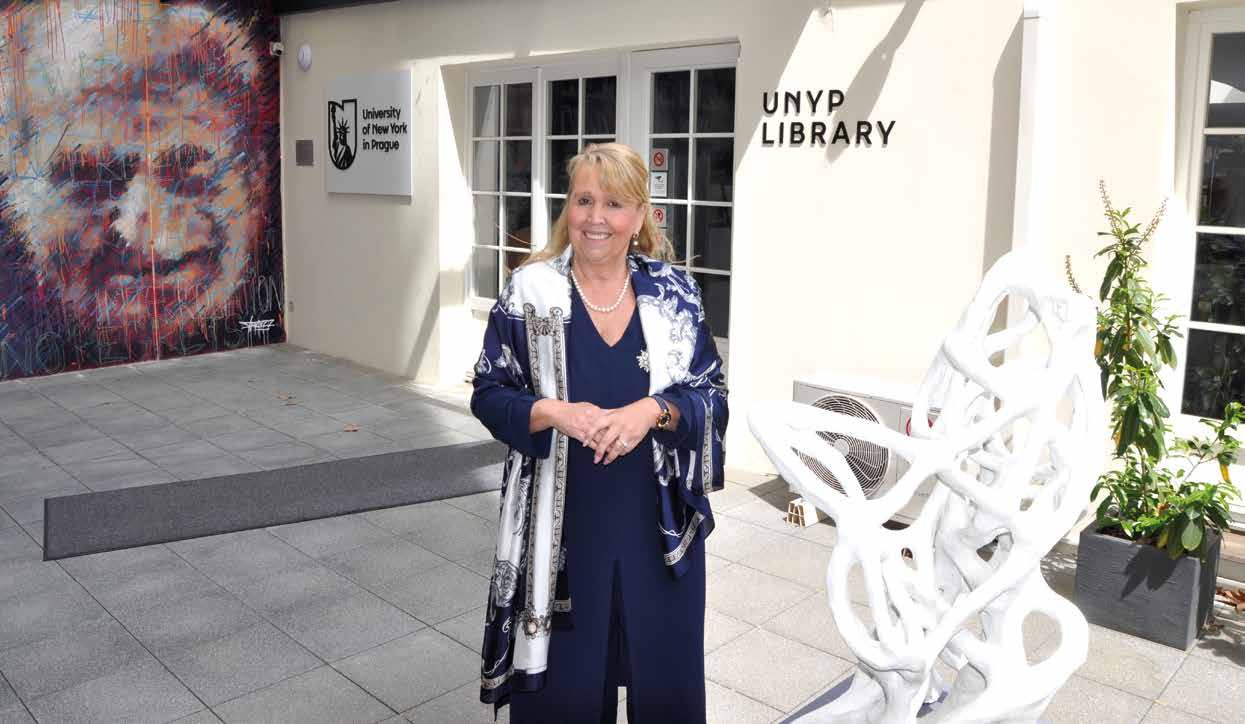
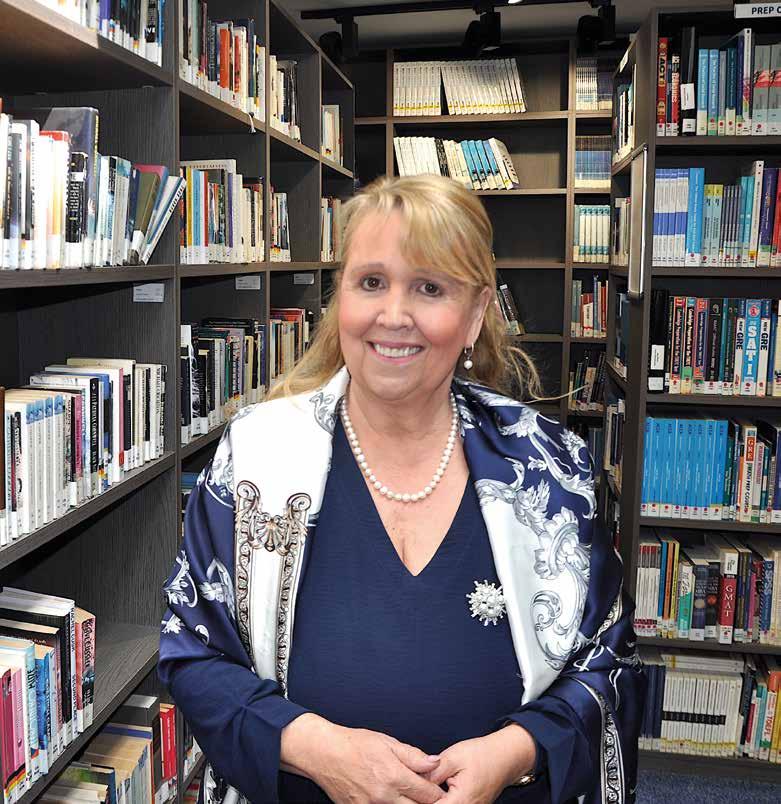
When we interviewed Radka Wildová a few years ago, she held a top-level position at the Ministry of Education, Youth, and Sports and we spoke about matters related to the Czech Republic’s EU presidency at that time. Education and learning have been her lifelong focus and passion, which she continues to pursue as Vice Rector at one of the country’s leading private universities, the University of New York in Prague. “After years of thinking about what higher education should be, this feels like an opportunity to help build it,” she shared.
How did your path lead you to where you are today?
I’ve spent most of my career thinking about one fundamental question: ‘What does it actually mean to learn?’ That curiosity led me to pedagogy, and it never really let me go.
I began at Charles University in Prague, where I’ve been working since 1989, focusing on the development of initial reading literacy – how children first make sense of written language. Over time, that work expanded into teacher education, comparative education, and broader questions about how
educational systems are designed and for whom. I served as Dean of the Faculty of Education at Charles University, and later as Vice-Rector for the Conception and Quality of Educational Activities.
From there, my path took me into policy. I served as Deputy Minister for Higher Education, Research, and Innovation at the Czech Ministry of Education, Youth, and Sports, a role that gave me a different vantage point on the same questions I’d been asking in the classroom. I also had the privilege of working closely with international bodies, including
the Council of Europe and the European Commission, which deepened my conviction that education is always both a local and global endeavour.
Now I’m at UNYP as Vice Rector for Research and Academic Excellence, and I find that genuinely exciting. After years of thinking about what higher education should be, this feels like an opportunity to help build it, in an environment that is international by design, and where the questions I care about most are taken seriously every day.
In recent years, there’s been a noticeable shift in how students and parents view university education, with less of a focus on personal exploration and more on getting a job. Do you think universities are striking the right balance, and should they?
The shift is real, and, to a degree, it makes sense. Students and families are making significant investments and want to know that those investments will pay off. But framing “personal growth” and “career readiness” as opposites is, I’d argue, a false choice.
The skills we associate with personal exploration, critical thinking, navigating complexity, self-awareness, and cross-cultural communication are precisely the skills that make someone employable over the long term. They’re not soft extras; they’re the foundation.
The real work of a university is to weave these goals together thoughtfully. That means combining rigorous academic grounding with real-world experience, developing skills that transfer across contexts, and giving students the space to figure out who they are and what they stand for. That space isn’t a luxury. In a world changing
as fast as ours, it’s what makes adaptability possible.
UNYP puts individual exploration and self-discovery at the heart of what it does. How do you make that philosophy feel relevant to students and families who are increasingly focused on concrete career outcomes?
“Explore You” isn’t a retreat from career outcomes; it’s actually the most practical path toward them.
The job market is shifting so quickly that specific career paths can become obsolete, and many of the roles today’s students will hold don’t yet exist. In that environment, knowing your strengths, understanding your motivations, and being clear about your values isn’t a “nice-to-have”; it’s the foundation for making career decisions that are both informed and sustainable.
Students who actively explore different fields, work on real projects, and reflect on their experiences tend to graduate with something rare: genuine self-knowledge. They can articulate what they want and why. That clarity doesn’t make them less career-focused; it makes them more so. “Explore You” isn’t about uncertainty; it’s a structured process of discovery that leads to better, more grounded choices.
AI is changing how students access and process knowledge faster than most institutions can keep up. What do you see as the most profound impact on higher education over the next decade, and what should universities be doing right now?
The most profound shift AI brings to higher education isn’t about tools or efficiency; it’s about what learning is fundamentally for.
When knowledge is instantly accessible, memorizing and reproducing facts loses its value. What rises in importance is the ability to ask the right questions, evaluate sources critically, recognize the limits of algorithmic outputs, and take responsibility for how you use them. AI will also transform how teaching and assessment work, from personalized learning pathways to a complete rethinking of what “student work” even means.
Universities shouldn’t treat this as a threat but manage it instead. It’s a structural shift to embrace. That means integrating AI meaningfully into curricula across disciplines, building digital and data literacy, and doubling down on critical thinking and ethical reasoning. It also means redesigning how we teach and evaluate, so that we’re cultivating deep understanding and creative thinking rather than the kind of surface-level reproduction that any model can now do in seconds. Institutions that move proactively on this will come out significantly stronger.
With online degrees, hybrid programs, and micro-credentials all competing for attention, what will actually make a high-quality university stand out in the future?
As online learning, hybrid formats, and micro-credentials become the norm, the content a university offers will matter less and less as a differentiator. What will set institutions apart is something harder to replicate: the quality of the learning experience itself.
That means excellent teaching in dialogue with real research, genuinely individualized attention, a rich international environment, and meaningful connections to professional practice. It also means institutional integrity,
transparent standards, consistent quality, and outcomes that can actually be demonstrated.
Technology and flexible formats will become table stakes, not competitive advantages. The universities that stand out will be those that can genuinely engage students, challenge their thinking, and create environments that foster collaboration, innovation, and real growth. Differentiation will be built on depth and integrity, not on delivery format.
Most people associate research with academic careers. Why should it matter to a student who wants to go into business, diplomacy, or the private sector?
Research isn’t something that only matters if you’re heading into academia. It’s a way of thinking, and it’s one of the most transferable skills a student can develop.
The ability to ask sharp questions, evaluate sources rigorously, work with data, and reach well-supported conclusions is genuinely valuable
in business, public policy, and diplomacy. In a world saturated with information and misinformation, that kind of disciplined thinking is a real competitive edge.
Engaging with research during your studies also builds something harder to teach directly: analytical precision, systematic habits of mind, comfort with uncertainty, and the instinct to base decisions on evidence rather than impression. These aren’t academic niceties; they’re qualities that allow someone to navigate complex, fast-moving situations with confidence and credibility.
Europe is facing a real demographic decline, which will inevitably mean fewer students. How do you see that reshaping` the sector, and is there an opportunity in it for institutions that are ready?
Europe’s demographic decline will intensify competition for students and likely drive some consolidation across the sector.
Institutions will need to be much clearer about their value, raise the quality of what they offer, and use their resources more strategically. In a way, this is healthy pressure; smaller student cohorts can actually create space for more individualized teaching, deeper engagement, and genuine innovation.
For institutions willing to adapt, there’s a real opportunity here. Internationalization becomes more important, not less. So does lifelong learning – flexible programs designed for working professionals, career changers, and those returning to education at different life stages. The institutions that will thrive are those that can serve a broader, more diverse population over a lifetime, not just traditional students in their early twenties.
For internationally-minded families weighing their options, what is the real long-term value of studying in a genuinely international environment like UNYP, beyond the obvious?
The lasting value of an international education isn’t primarily
about language skills or a prestigious-sounding degree; it’s about how it shapes the way you think.
When you spend formative years in genuine daily contact with people from different cultural and academic backgrounds, you develop something that’s very hard to acquire any other way: the ability to see situations from multiple perspectives, to adapt fluidly, and to communicate effectively across differences. These aren’t soft skills; they’re increasingly the core skills of a globally connected professional life.
An international environment also naturally opens doors. Graduates carry with them not just a credential, but a network, a lived experience of diversity, and a higher degree of professional flexibility. That combination – the mindset, the relationships, the breadth of exposure – compounds over a career in ways that are difficult to measure right after graduation but become very clear over time.
If you had to name the competencies that will genuinely matter for graduates entering the workforce over the next five to ten years, what would be at the top of your list?
Over the next five to ten years, the graduates who thrive will be those who invested in transferable competencies, the kind that travel across roles, industries, and disruptions.
At the top of that list: critical thinking, the ability to work with information and data, solving complex problems, and communicating clearly across disciplines and cultures. Digital literacy will be essential too – not just using AI tools but understanding how they work and where they fall short.
What you might call meta-skills will be equally important: the ability to keep learning, to reflect honestly on your own performance, and to adapt as circumstances change. The graduates
who will genuinely stand out are those who can combine deep expertise with flexibility, judgment, and a sense of personal responsibility. That combination doesn’t just help you respond to change; it positions you to help shape it.
Many of our readers are parents in the middle of this decision right now. What should they actually be looking for, and what mistakes do you see families make most often?
When helping a child choose a university, the instinct is often to focus on name recognition or rankings. That’s understandable, but it’s not the most important thing.
What really matters is the quality of the learning experience itself: Does the institution support active, engaged learning? Does it challenge students to think critically, work on real problems, and develop genuine independence? Look closely at graduate outcomes, the academic environment, international exposure, and opportunities for practical experience alongside study.
One of the most common mistakes is chasing whichever fields seem attractive right now, without honest consideration of the student’s actual interests and strengths, or defaulting to a choice based on tradition or social expectation rather than fit. In a world changing as rapidly as ours, the goal isn’t just to acquire specific knowledge, it’s to build the capacity to keep growing and adapting throughout a career. The best choice lives at the intersection of a quality institution and a student’s genuine curiosity and potential. Help your child find that intersection, and the rest tends to follow.
Interview with Alexandra Janečková, Crisis Manager and Philanthropist
Alexandra Janečková has been a part of Slovak diplomacy for over seven years. Her work takes place primarily where most people hope to never find themselves – in war zones and humanitarian crises. “I simply try to be productive, to create a positive impact, to help people in need, and thus leave something meaningful behind,” she says humbly, describing her life philosophy.
How would you describe yourself to someone meeting you for the first time?
I am a diplomat and crisis manager, and for nearly three years I have been leading the Crisis Management Department at the Slovak Ministry of Foreign and European Affairs. I hold a master’s degree in international relations and diplomacy, as well as a doctorate in security studies.
I would also describe myself as a philanthropist, travel enthusiast, and dog lover. I am engaged in several charitable initiatives that support people in need and animals in shelters. In everything I do, I try to be proactive, useful, and to contribute to positive change.
Can you tell us more about your work at the Ministry of Foreign and European Affairs of the Slovak Republic?
I began my diplomatic career at the Ministry in 2018, initially as a diplomatic protocol officer.
Two years later, I moved to the Department for Development Cooperation and Humanitarian Aid, where I supervised and coordinated all forms of humanitarian aid provided by Slovakia, as well as development projects implemented in the Middle East, Afghanistan, and Ukraine.
During the COVID -19 pandemic, I volunteered for the Ministry’s repatriation team, which organized flights for Slovak nationals stranded abroad. It was an extremely challenging experience, yet also deeply constructive and formative. This was the first time I truly discovered the practical side of diplomacy, crisis management, and how immediate and direct its impact can be on people’s lives.
At the end of 2023, I became the Head of the Crisis Management Department – the first woman ever in this position – at a time marked by a rising number of conflicts and crises. Crisis management and preparedness is a vast and never-ending agenda, but it also gives you space to be
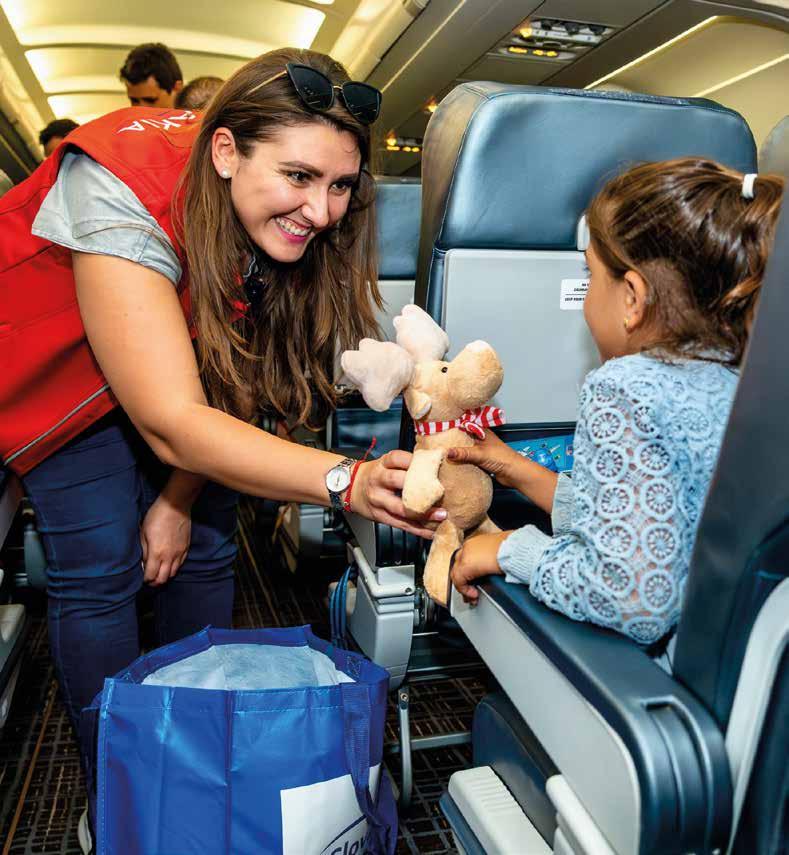
creative and to bring forward your own initiatives. The most visible part of our work is undoubtedly the evacuation of civilians affected by crises: not only Slovak nationals stranded abroad, but also foreign citizens and even oncologically ill children from Gaza.
When did you realize that diplomacy was the right path for you?
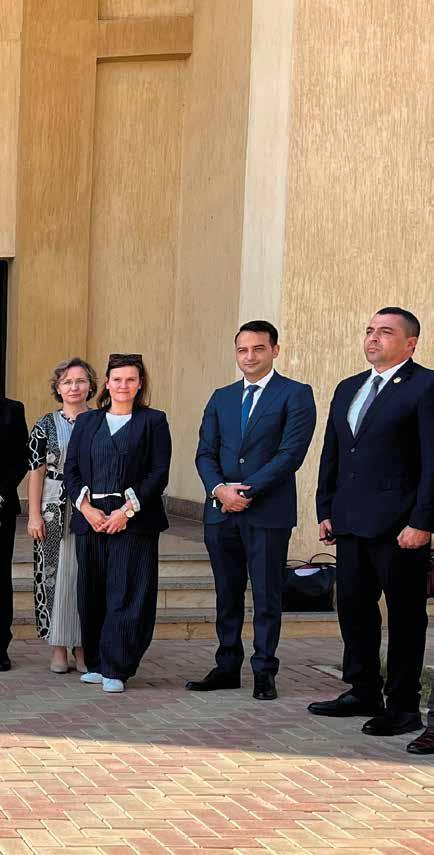
I have always been drawn to international relations and foreign affairs. I studied this field at university, and throughout my studies I proactively sought out internships abroad. I gained experience at the European Parliament in Brussels, the Seimas Ombudsman’s Office in Lithuania, the OSCE and the United Nations in Vienna, as well as at the Spanish humanitarian NGO Pazy Cooperación in Madrid. After my internship in Spain, I was offered the opportunity to represent the organization at the UN in Vienna, as it holds special consultative status with ECOSOC.
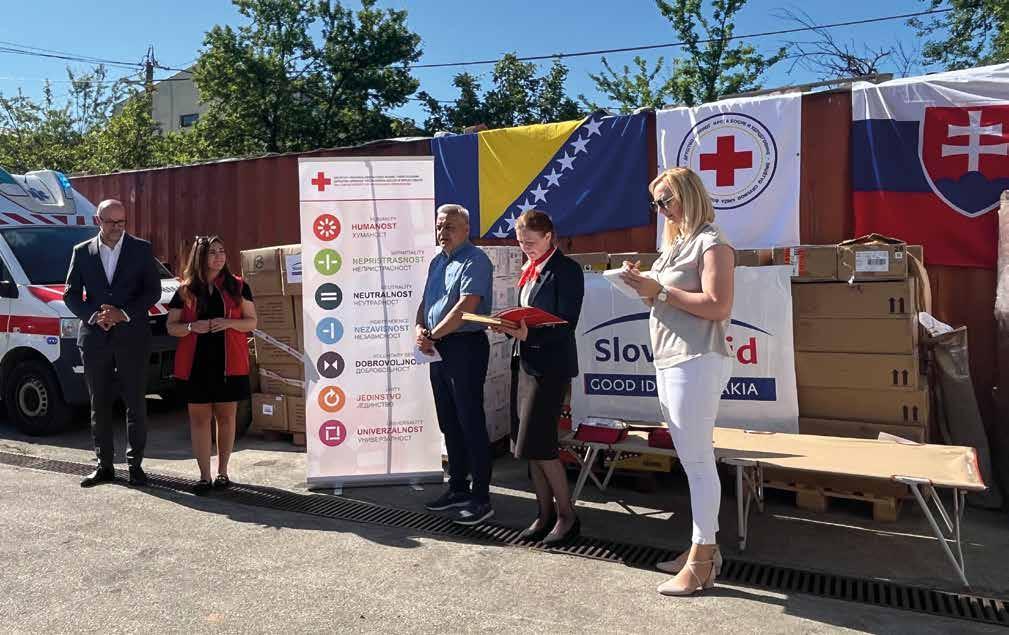
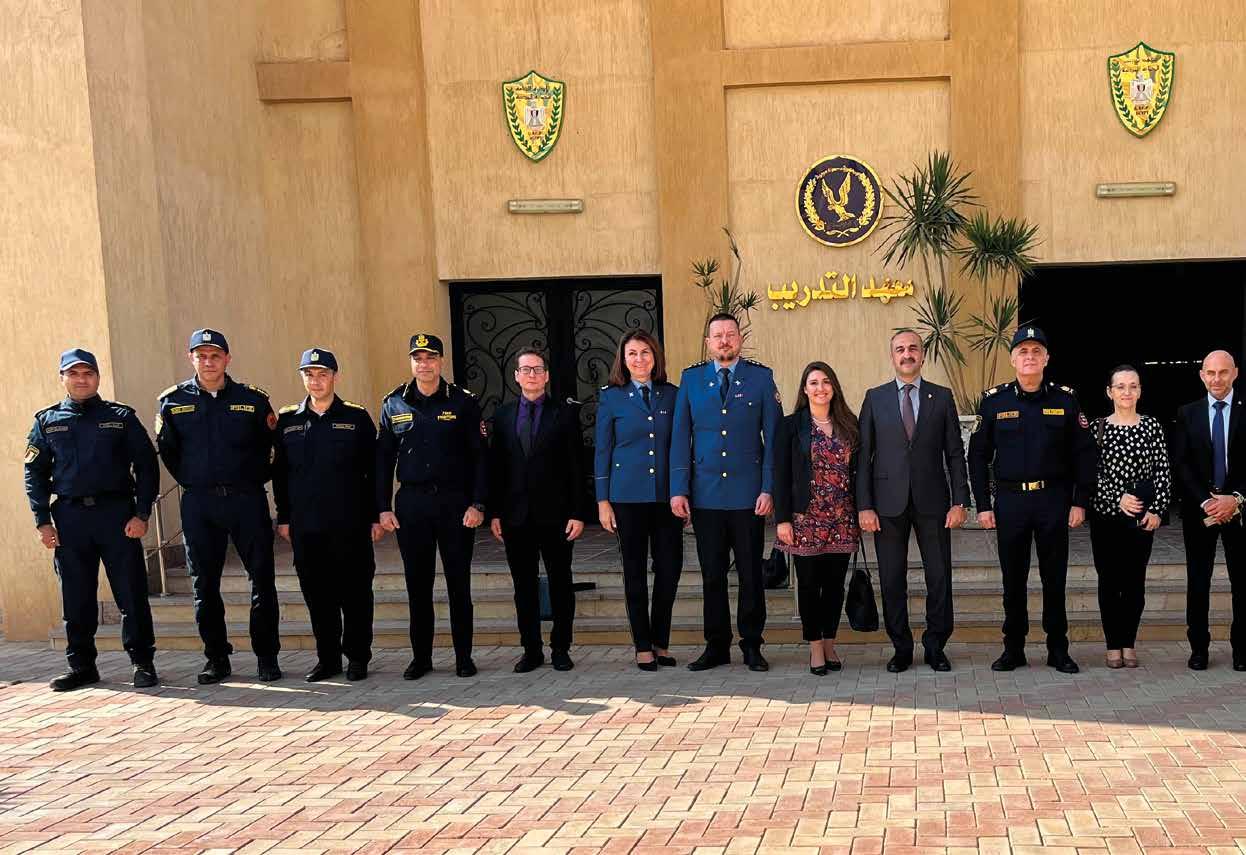
None of these opportunities came by chance – I had to actively search for them. I wanted to make the most of every experience so that, one day, I would be a strong candidate for the Ministry of Foreign Affairs: someone who not only holds a university degree but also brings practical international experience and relevant skills.
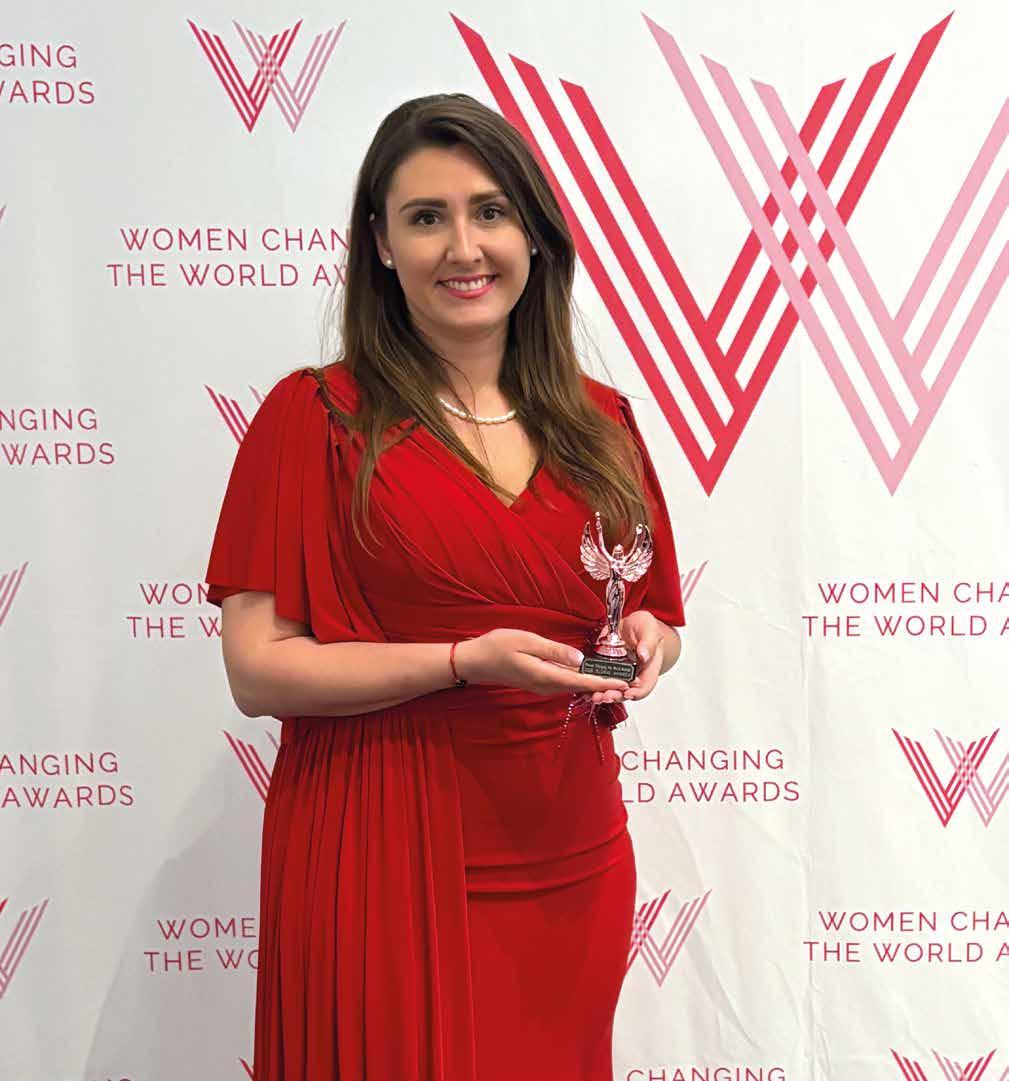
You were awarded first place at the Women Changing the World Awards – Czech & Slovak 2025. What motivated you to participate?
I was nominated for my work in crisis management and humanitarian aid, and for its global impact. As a civil servant working for a national institution, I honestly did not expect that my work would attract such wide attention. I was surprised by the nomination itself, and even more so when I became a finalist in two categories – Public Sector, and the main
category of Woman of the Year. Winning the regional WCWA was a deeply moving and emotional experience, especially when the winner was announced and the entire hall stood up, applauded, and congratulated me.
My job is not just a job for me. I see it as a mission, and I naturally follow the purpose I feel in this field. I truly found myself in this work. Receiving such a prestigious award and international recognition was something I never expected.
There were so many remarkable and inspiring women across all categories – from the public sector, law, finance, healthcare, science, the non profit sector, investments, academia, business, innovation, the energy sector, etc. Thanks to WCWA, I had the chance to meet them and become part of an amazing community of women who support each other.
Do you believe women can change the world into a better place?
Of course. It does not matter in which field it happens, as long as you have a purpose and a meaning to follow, an inner voice that guides you, and the passion that fuels your motivation, you can do great things in any area and create positive change in the world. I also believe that women supporting women is essential for better and safer work environments, as well as for professional and personal growth.
How did you become the strong woman you are today?
I think I simply try to be productive, to create a positive impact, to help people in need, and thus leave something meaningful behind. When I look back one day, thirty years from now, I want to be able to say that my life had
a purpose, that I did something that mattered, and that I contributed to something greater than myself.
At the international WCWA in Paris, you were awarded third place. How did it feel?
The event in Paris was truly special and full of emotions. I felt proud and deeply honoured to represent both Slovakia and Czechia at such a prestigious international event. The summit and award ceremony brought together dozens of extraordinary women from around the world, highlighting many inspiring stories and important, challenging topics. More than 2,500 women from 97 countries were nominated. I am extremely proud to have won the global award, third place in the main category of Woman of the Year. It is a great international success not only for me, but also for Slovakia and Czechia, our two
nations. It proves that anyone can create impact and positive change, regardless how old we are or where we come from.
The event created a space for celebrating achievements, sharing insights, and building connections for future cooperation. We heard many powerful stories, all united by one common thread: the courage and determination of women to overcome obstacles and transform challenges into something positive, not only for themselves, but also for others.
I was accompanied by Kamila Paličková, to whom I would like to express my gratitude for her mentorship and support throughout this journey, as well as for bringing the WCWA to Czechia and Slovakia.
How can women stand in solidarity with one another?
I believe women should stand together, inspire each other, and choose support over competition or comparison. It means listening with empathy, offering a helping hand when it is needed – especially to younger colleagues – and speaking up when someone is treated unfairly.
What do you do in your free time?
I enjoy travelling, especially to the Middle East, and spending time in nature. I love animals and I also enjoy gardening. I have fallen in love with scuba diving, which provides real relaxation for me. Under the sea, I have to focus on a series of technical steps, which allows me to clear my mind and shift my attention away from work and daily responsibilities.
Which part of your work is the most difficult?
Working with people – especially in crisis situations – is the most
difficult part of my job. I am not only dealing with the crisis itself, or the detailed logistics of bringing civilians home safely when conditions on the ground change from minute to minute, but I am also dealing with people, their emotions, and their reactions to distress. The situation can shift every moment, and we must be ready to adapt instantly, find solutions quickly, and navigate people accordingly. As a crisis manager, I have to be fully prepared not only for operational planning, but also for direct communication with those affected. The responsibility and pressure are immense.
What is the weirdest thing you have dealt with?
Throughout my career in crisis management, I have encountered
many unusual situations. Perhaps the most specific ones came during the COVID -19 pandemic, when we were dealing daily with Slovak nationals stranded abroad. People in crisis often come with unconventional requests. One of the most challenging moments is when we have to repeatedly explain to evacuees that our priority is to save their lives, not necessarily all their belongings, especially when space on a rescue flight is limited.
Which experience has influenced you the most as a humanitarian and crisis manager?
Looking back, I would say it was my mission to Sudan with the United Nations. As a national humanitarian expert, and as
someone who has always actively sought practical field experience, I had the opportunity to join a UN monitoring mission to South Darfur. The mission took place in December 2022, at a time when the combined effects of war, armed conflicts over land and resources, extreme weather, and poor harvests had left more than 15 million people in Sudan facing food poverty and hunger.
It was a deeply moving and eye opening experience. We saw the cruel reality on the ground: people, including children, suffering from severe food insecurity and years of conflict. During the mission, we visited various refugee and internally displaced persons camps across South Darfur, as well as sites where humanitarian and development projects
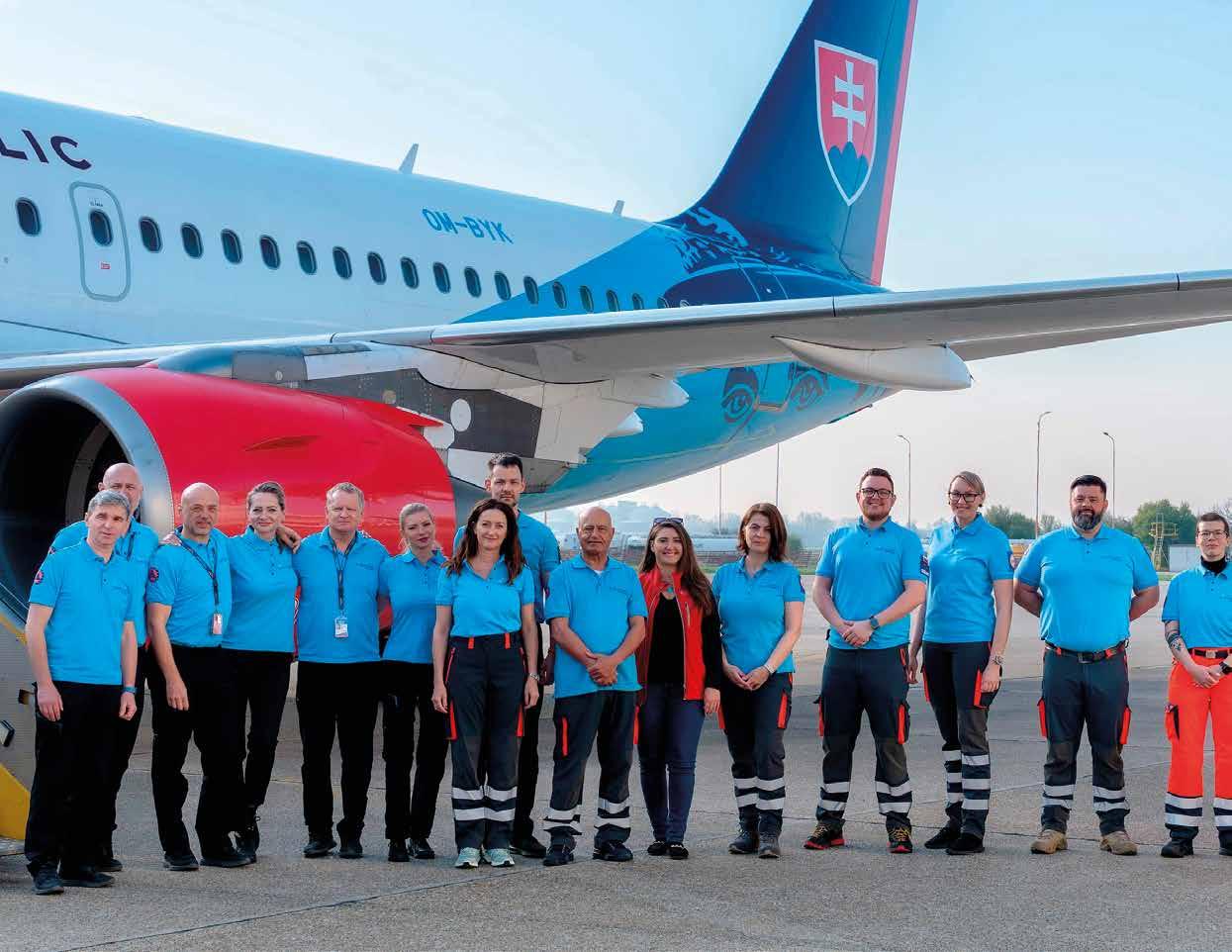
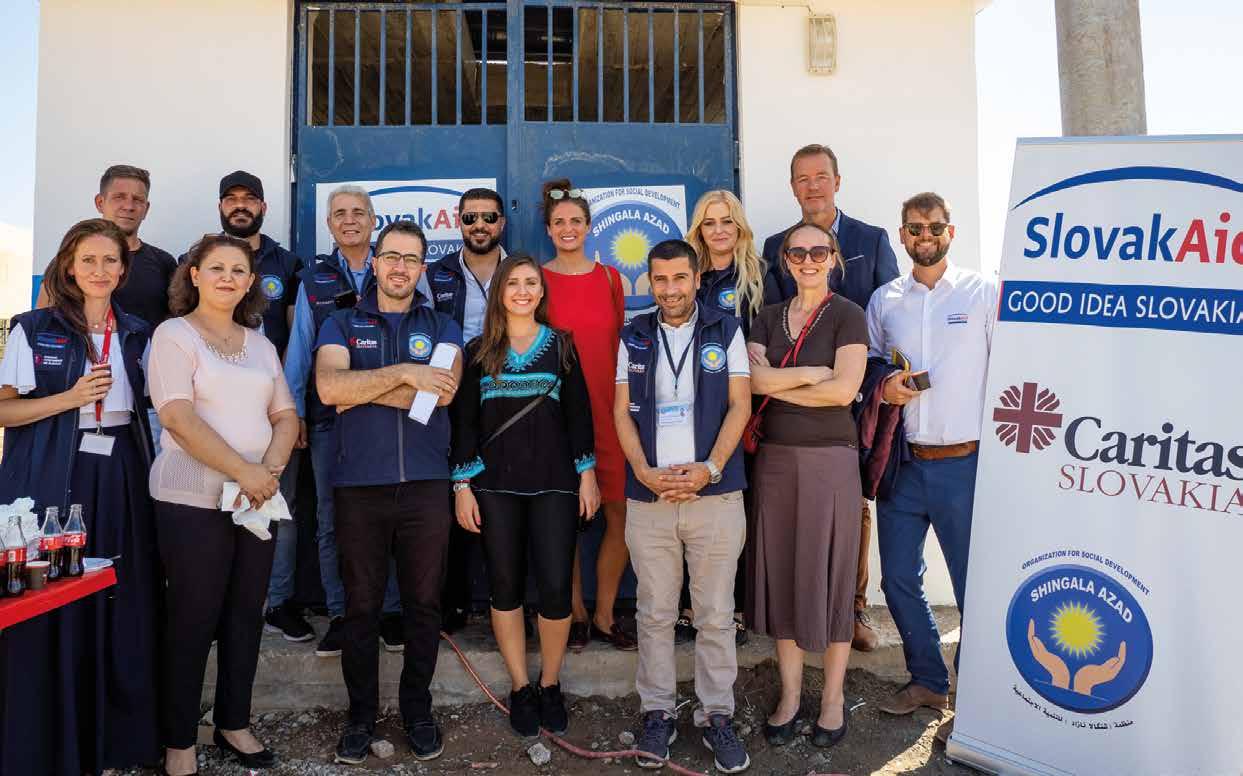
of the World Food Programme, UNHCR, and the EU were being implemented. What I saw there will stay with me forever. Malnourished and ill children, people living on the streets with no shelter, and lack of even the most basic necessities such as food and water – that was the daily reality we saw.
Among your achievements, which one are you most proud of?
I am very proud of every successful evacuation operation I have been part of, and of every human life I have helped to save during the seven years I have worked in this field. From navigating people in Afghanistan and contributing to their safe departure when the Taliban seized power in August 2021, to helping ill and injured children and students from Gaza get a chance for a better life.
Besides the evacuations I helped plan, organize, and coordinate,
I am also very proud of the international partnerships I have helped build and the practical agreements in crisis management and civilian evacuations that I have negotiated, and which will serve people for years to come.
Where do you see yourself in five or ten years?
I would certainly like to stay in crisis management, emergency response, and humanitarian aid, but ideally working even more in the field, directly with people in need. My dream is to one day work for the United Nations, an international humanitarian organisation under its umbrella, or a DG ECHO field office, preferably in the Middle East. As I have been actively involved in various charitable activities, I have also been considering establishing my own charity organisation. In addition, I would like to share my knowledge and practical experience by educating future crisis managers and security experts.
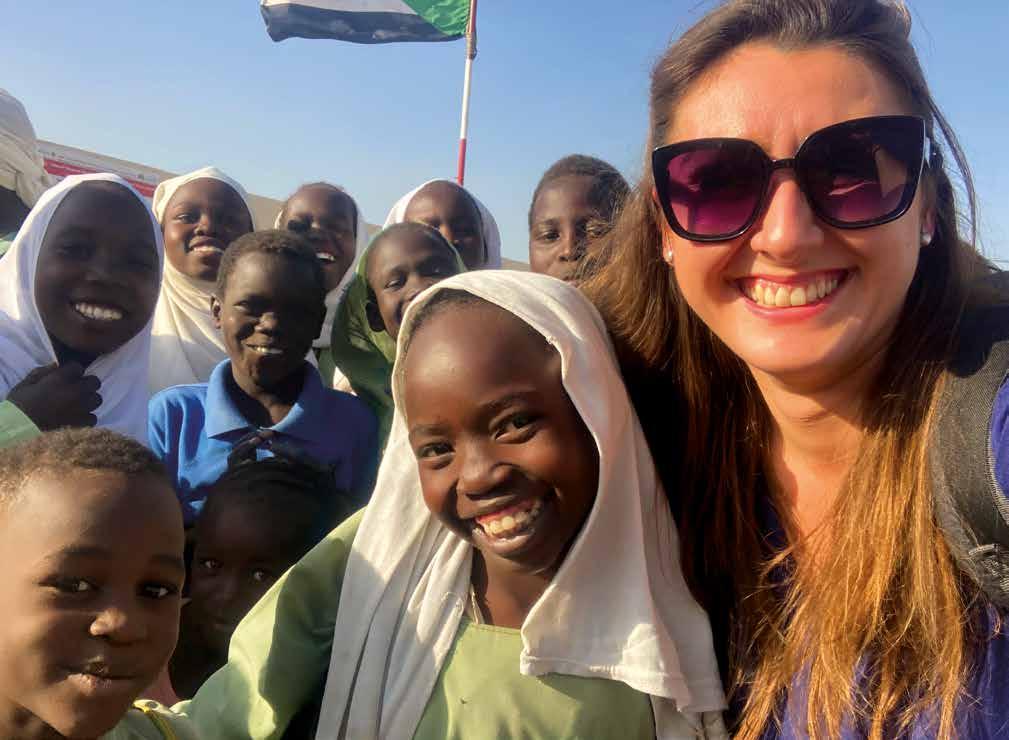
What piece of advice would you give to your future colleagues, and to the next generation as a whole?
Be authentic, be kind to others, and share when you have enough. Try to live sustainably and in accordance with your moral values and beliefs. Do not close your eyes to injustice, and do not remain silent when you see it. And above all, follow your dreams and your inner voice, especially when it shows you which path to take. There is nothing worse than the absence of satisfaction and fulfilment in life.
Scan the QR code to read our earlier article
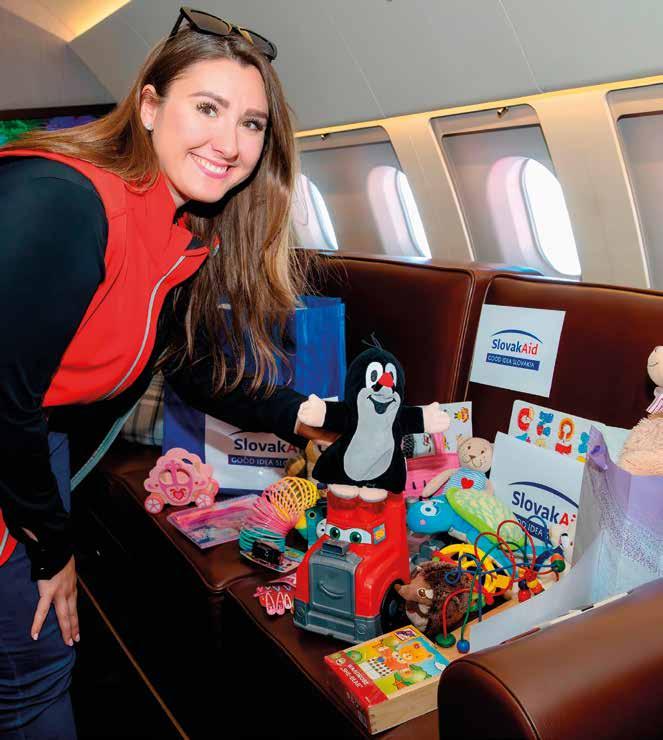
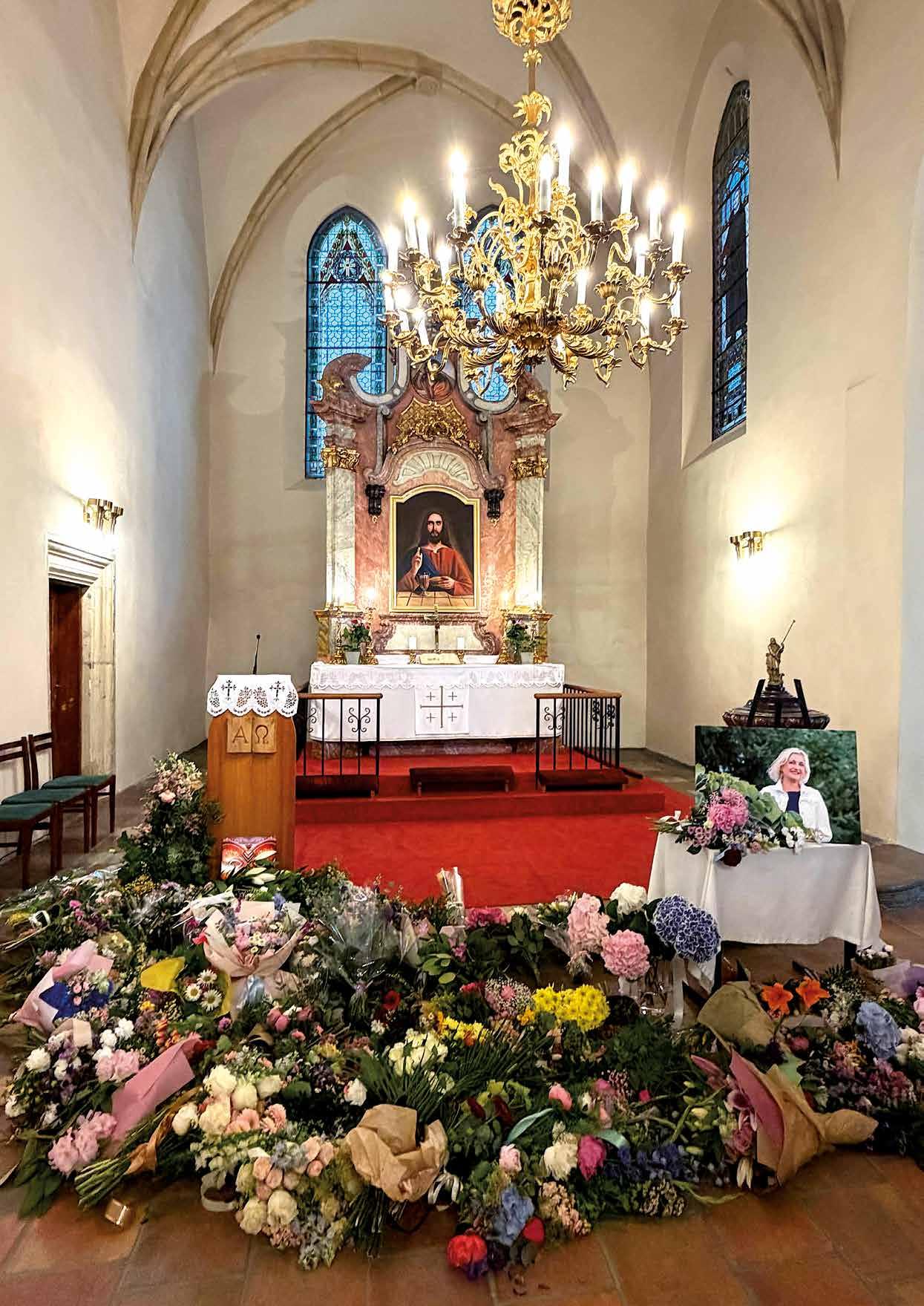
It was during the weekend that we were saddened by the news – Helena is not with us anymore. We lost a friend, an artist, a political person with a soul. Her family lost a loving wife and a proud mother.
I’ve known Helena – I simply can’t speak about her in the past tense – for a few years. A very talented and unique artist, with a lot of friends around her. Always with a big smile on her face, even when in pain from this damn disease. ( M. Zisso)
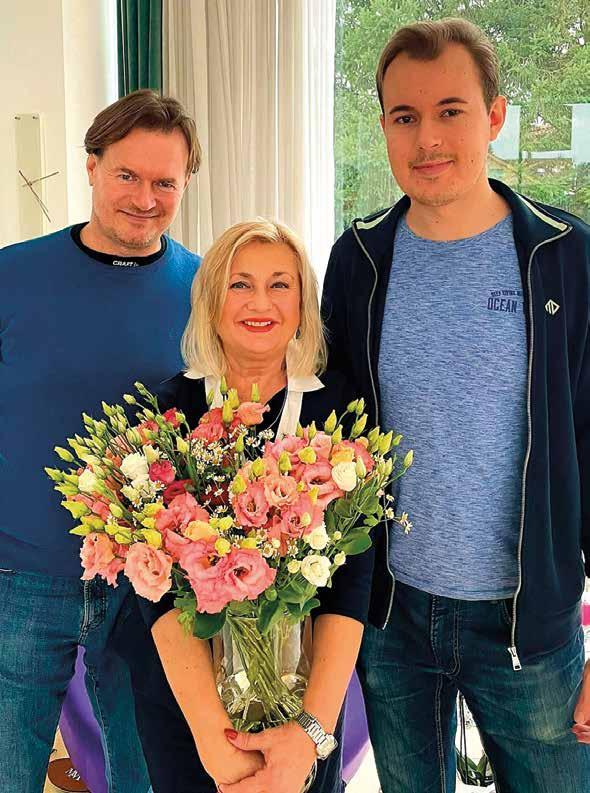
Ronald, Helena’s husband and my friend, wrote a few words:
Dear friends, acquaintances, and strangers, This will be longer and more personal. I apologize in advance.
Many unanswered questions – I will slightly violate our principles, beloved Helenka, sorry.
I am not doing this for myself, or us, but for you. What happened, supposedly happens to one in three of us.
29 years ago, I felt a lump in you, I immediately rushed you to Mrs. Skovajsová. Unfortunately, the diagnosis was clear. The doctors gave us five years together. Uncle Vladyka, the founder of Gamma Leksell at Homolka, took Helenka in. Four times ‘Mrcha’ returned, and we always disappeared for the worst 3-6 months. Helenka was amazing, strong, and optimistic.
A phoenix.
Since October, everything has worsened, and on Friday night, at home in her sleep, ‘Mrcha’ won.
She always said it was the secret between the two of us. Often, when I was sad, she’d say ‘Horseshoe’ and pull me into a smile. I am revealing this only because each of you should believe in yourself – and you will often overcome all medical prognoses.
Thank you to everyone from the Prague General University Hospital, the Central Military Hospital, Homolka, and Motol for all their wonderful help in the fight, with one piece of advice: if you think it is necessary, immediately try to use the harshest treatment possible – again, I know it is often a difficult dilemma.
I would like, and I believe I have the right to, express a clear opinion: everyone fights according to their own decision. Whether you share it with everyone or keep everything to yourself, it is always the right decision, yours and unique. A message for you, for the first and second ones: speak, ask, do not be shy, support.
Farewell?
Helenka explicitly forbade me, she hated: any mourning ceremony, black, ‘we remember’, condolences, coffin, wreaths, heavy music. Us being here is enough. She always said, don’t you dare, I will come back and haunt you at night! We shared the same opinions on that.
A silent memorial meeting – an hour-long event with mass. Please, no black, dark, or grey clothes. On the contrary: white, blue, or colourful summer clothes, and only spring flowers for church and remembrance. Helenka was always clear about it – company, smile, energy, elegance, passion, and Latino. Everyone grieves differently –tradition and otherness – everything is right and a holy right of choice.
One morning, a year ago in the spring, my love whispered: I would like another wedding in the church. In this church. The priest is a friend, an exceptional person, he will arrange everything, what do you say? Love, anytime with pleasure, a wonderful idea. But you have Lyme disease, you take strong antibiotics, you have many activities, ‘Mrcha’ is bothering us again, more strong drugs, treatment, twice an ambulance, twice an emergency admission, hospital, you are weaker, it will be too much for you. When everything improves a little, we will do it right away, we will invite friends, it will be beautiful.
Love, sorry, I will not keep my promise this time.
In conclusion, with the consent of my son Roland, I will add two short last excerpts from my beloved Helenka from our family chat.
“That’s completely normal, Bubisku, beware of all stress, because for me health is the foundation, full stop. ‘Alberto Moravia: life is just a theatre.’ Rolinku, life has its ups and downs, you can see that for yourself. Let go of all the negativity and keep your positivity, I lasted this long because I always cared about you immensely. I had to raise you and you are a great guy and you always will be. Now take life as it comes and never regret anything, everything is fate, suddenly I feel like I will make it again, harder, but I will make it, I am Capricorn...”
Roland
David Bodeček, who worked with Helena in Prague 1 City Hall wrote:
Helenka is gone.
I am writing down this sentence, and I still don’t believe it. I still feel like questioning it, as if it were just a failed April Fool’s joke. After all, it is April. I wish it were April Fool’s Day. I wish it were.
I started writing these lines at night. I heard the news of her passing at the theatre. At first, it was just information shared in a whisper, unconfirmed. When I got home, I laid down in bed and started going through my phone.
I was looking for photos of Helenka. I kept stopping by them, returning to them.
I wanted to write to her.
On Messenger.
Send an SMS to her number. I didn’t have the courage.
And so, I started writing these lines.
I told myself that if it wasn’t true, I would tell her that she would be here with us for a long time. That this text would never be created. That I would never publish it. After all, they say that if we ‘bury’ a person with words during their lifetime, they will live for a very, very long time.
Too bad.
I am publishing it.
Helenka Leisztner Kroftová, born on January 8th, 1956, lived here with us, in our Stínadla, in Kozí ulice. Just a street away from me. So close that it seemed she would always be here. She was a part of everyday life that one takes for granted. And then suddenly she is not.
We last saw each other last Friday at the Prague 1 ball, and before that, last Wednesday, at Kozí plácek. At an April Fool’s rendezvous. How symbolic. How cruelly symbolic. I wish the news of her passing was just April Fool’s Day.
For me, Helenka was a personality with incredible charm. A distinctive, charming woman with a refined style. A fashion icon not only of Prague 1. But most importantly, a person.
An artist in the truest sense of the word. Painter, photographer, fashion designer. Her work carried motifs of Prague 1, Žofín, Hradčany... she worked with silk, with 3D effects, created paintings for gardens, for authors’ works with international reach. She was appreciated in the Czech Republic, but also abroad. She invited personalities, organized exhibitions, created a space for meetings.
But above all, Helenka lived by aesthetics.
And she wanted more.
She wanted a lot. And she tried.
She used to tell me: “I would like to connect aesthetics with politics. To give it a different dimension.” She wanted bad human relationships to give way in politics. So that there would be more culture, more emotion, more humanity in it.
We have been united in this for a long time.
She told me that on the one hand I was ideal for politics. And on the other hand, she was amazed at me. She said that I was different. And she rejected my own label that I had been ‘weird’ all my life. She would rather say that I was different.
And she knew how to accept this difference, and perhaps that is why she was a natural part of moments that were not obvious to others.
I remember August 2023, when she came to our City Hall for the ceremonial raising of the rainbow flag. It was not the first time. And it was not the last. But that day was different. More solemn. Stronger. Exceptional. She was there with us. Naturally. Without ostentation. And yet firmly. Just like in her attitudes towards people.
And she relied on details. Among other things, on shoes.
How many times have I found myself admiring her shoes. And she easily explained how important they were. Not only practically, but aesthetically. That the whole thing is based on them.
And now I will allow myself one memory that I believe she would accept with a smile. Helenka Leisztner Kroftová... let’s face it, not all of us could spell her last name correctly. And she absolutely hated it. There were a lot of us.
But maybe that’s why it had a simple solution between us. All we had to do was say: Helenka. And everyone knew.
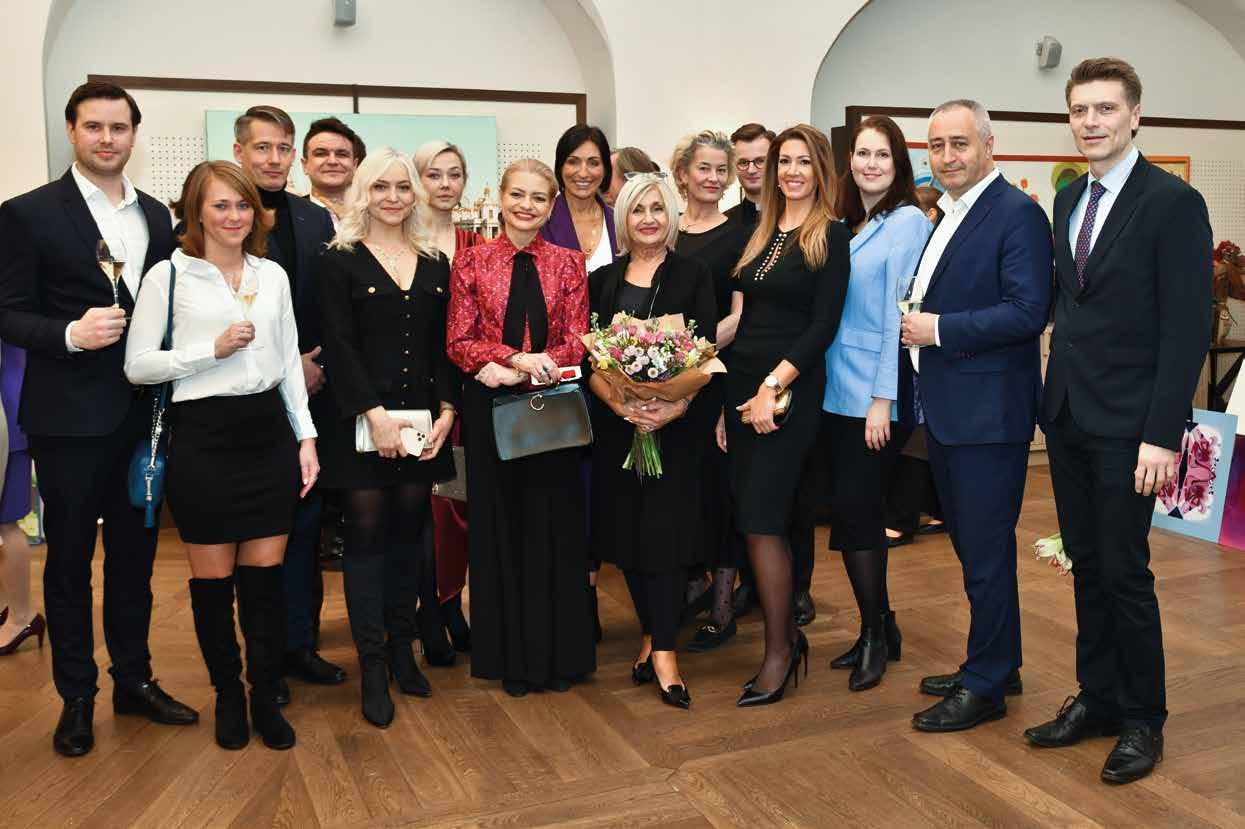
To avoid just being pathetic, I often met her on the 7th floor of our Town Hall. She stood in the area behind the elevators, in the illuminated part of the corridor, in front of the ‘alley of fame’, where the Honorary Citizens of Prague 1 and the holders of the Prague 1 Awards hang. That place belonged to her.
First, as an ordinary member of the Prague 1 Municipal Council Commission for the awarding of Honorary Citizenships. Subsequently, in the last four years, as its chairwoman for the Our Prague 1 group, and consequently the ANO 2011 movement.
She gave that role a personal dimension. Sense. Taste. Dignity.
“Helenka, I kind of love your madness,” I used to tell her.
“Maybe more precisely, your chaos.”
“That strange, human, disarming chaos in organizational matters, which was in direct contrast to your precision in aesthetics and art.”
She laughed.
She looked over her glasses, with that unmistakable look of hers. With a smile accentuated by lipstick, always perfectly matched to what she was wearing.
Sometimes she said: “Advise me of what to do.”
And yet she had a gift that I don’t have.
She was able to suppress her emotions. When she wasn’t sure, she wasn’t ‘steady on her feet.’ She would wave it off lightly. With grace. And then, almost imperceptibly, she would praise the other person. So that you forgot that she was the one solving something.
I can’t do that. And I loved that about her.
I was one of those who looked forward to every meeting with her.
And then there is her inner circle.
Her husband, Roland Leisztner. A charismatic man, kind, gallant, always present by her side.
Not just a husband. A true partner and friend.
And their son. Quiet, less noticeable, but firmly present in her life.
I saw him the day before yesterday, on Friday morning. He was running through Kozí plácek. He was moving, with a strange expression. I wanted to call him.
I didn’t. Today I am reliving that moment.
I have had a strange feeling over the last few days. As if a wave of departures has suddenly begun. That’s exactly how I’ve felt in recent days, and unfortunately, even in recent weeks. And, amid all that, there is suddenly an empty place. A space where she used to be – Helenka.
Helenka… we will not forget.
My sincere and great condolences to her two men, family, friends, colleagues, and all of us who will miss her so much.
RIP Helena Leisztner.
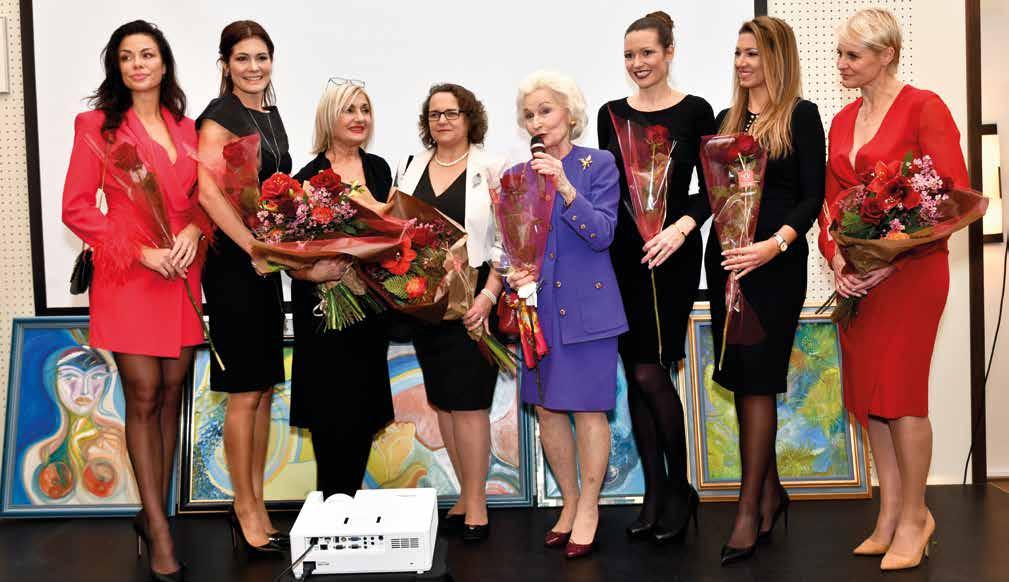
Helena’s art and her soul will stay with us forever.
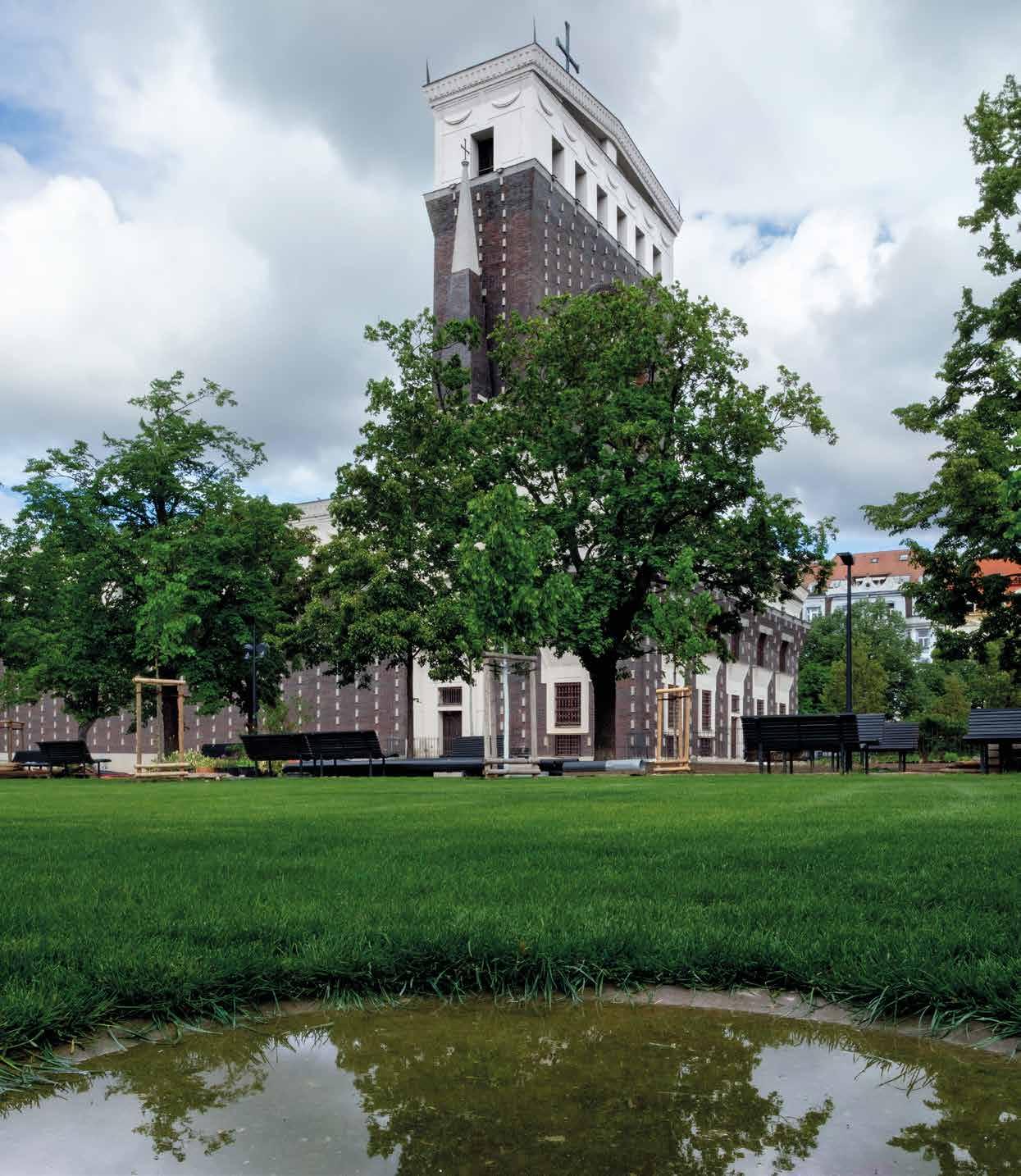
I’ve been a Žižkov guy for the past few years. Before that, I lived in Vinohrady, right on the border of Prague 2, 3, and 10, just a short walk from Jiřího z Poděbrad Square. Jiřák was the heart of the neighbourhood – a place with a great farmers’ market, a beautiful church, and an easy rhythm of everyday life. Now, as a Žižkov resident, I’m genuinely glad to see how Prague 3, its mayor, and the Prague City Hall have helped make this place more beautiful and welcoming. It started with the renovation of the metro station, and now the entire area has been transformed.
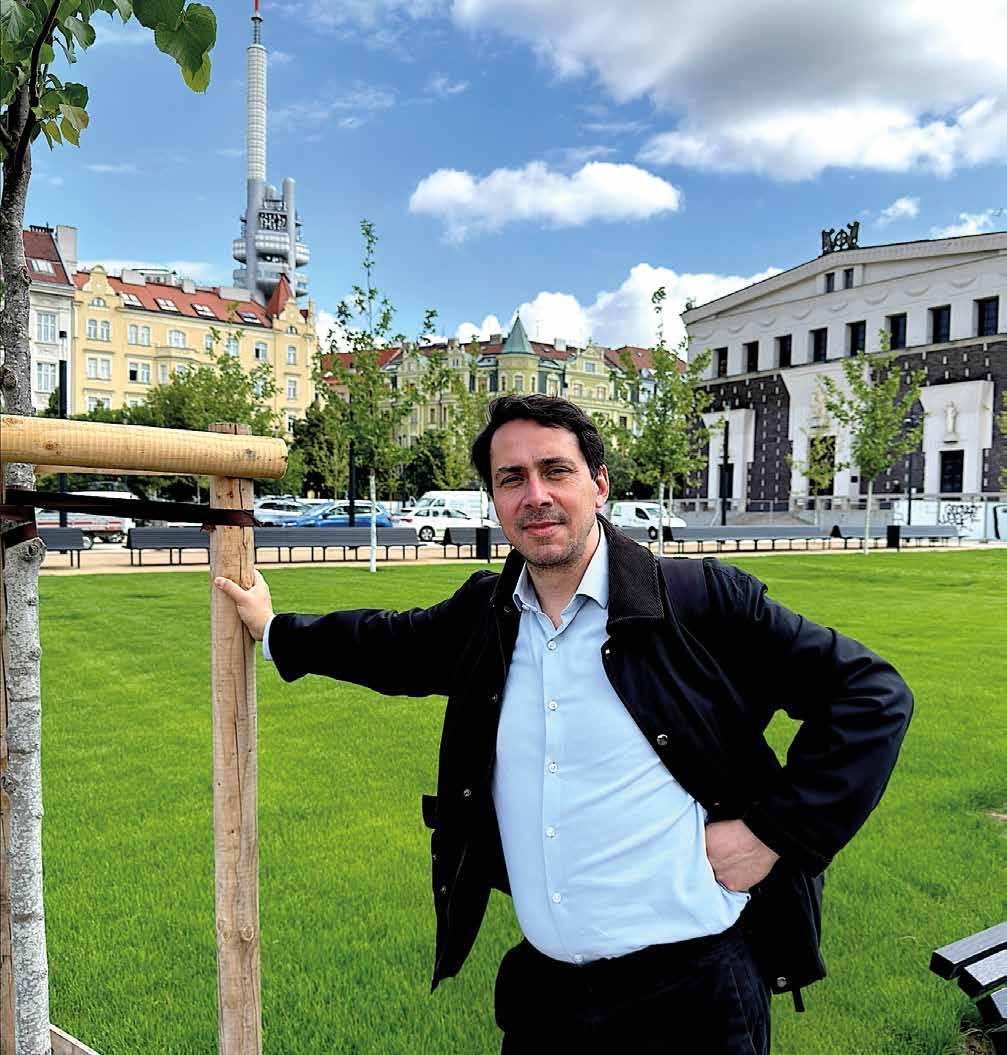
The revitalization of Jiřího z Poděbrad Square, or Jiřák as the locals call it, will add 120 new trees, modern street furniture, water features, and technology hidden beneath the surface. This symbolic gateway to Prague 3 has been given a new look, transforming into a greener space prepared for daily use, large public events, and the challenges of climate change.
The project introduces new technological solutions while returning to the original urban ideas associated with the Church
of the Most Sacred Heart of Our Lord and the legacy of its architect, Josip Plečnik. One of the most significant changes is the transformation of the square into a space where almost every corner is accessible for relaxation or picnics. This more open layout is complemented by a new playground, drinking fountains, misting nozzles, and new furniture. New lawns, which are expected to last the entire season thanks to special seeds, irrigation, and care, will make the stay more pleasant. While the ratio of grassy areas to
paved surfaces is approximately 30 percent smaller, shading from tree canopies will increase significantly. The main paved area will provide an extraordinary space for cultural events and markets, where vendors will now have utility connections in multiple locations.
The goal of the revitalization was to create a friendlier and more vibrant environment. “The space must be able to offer more opportunities – from an individual visit with a dog to social events,”
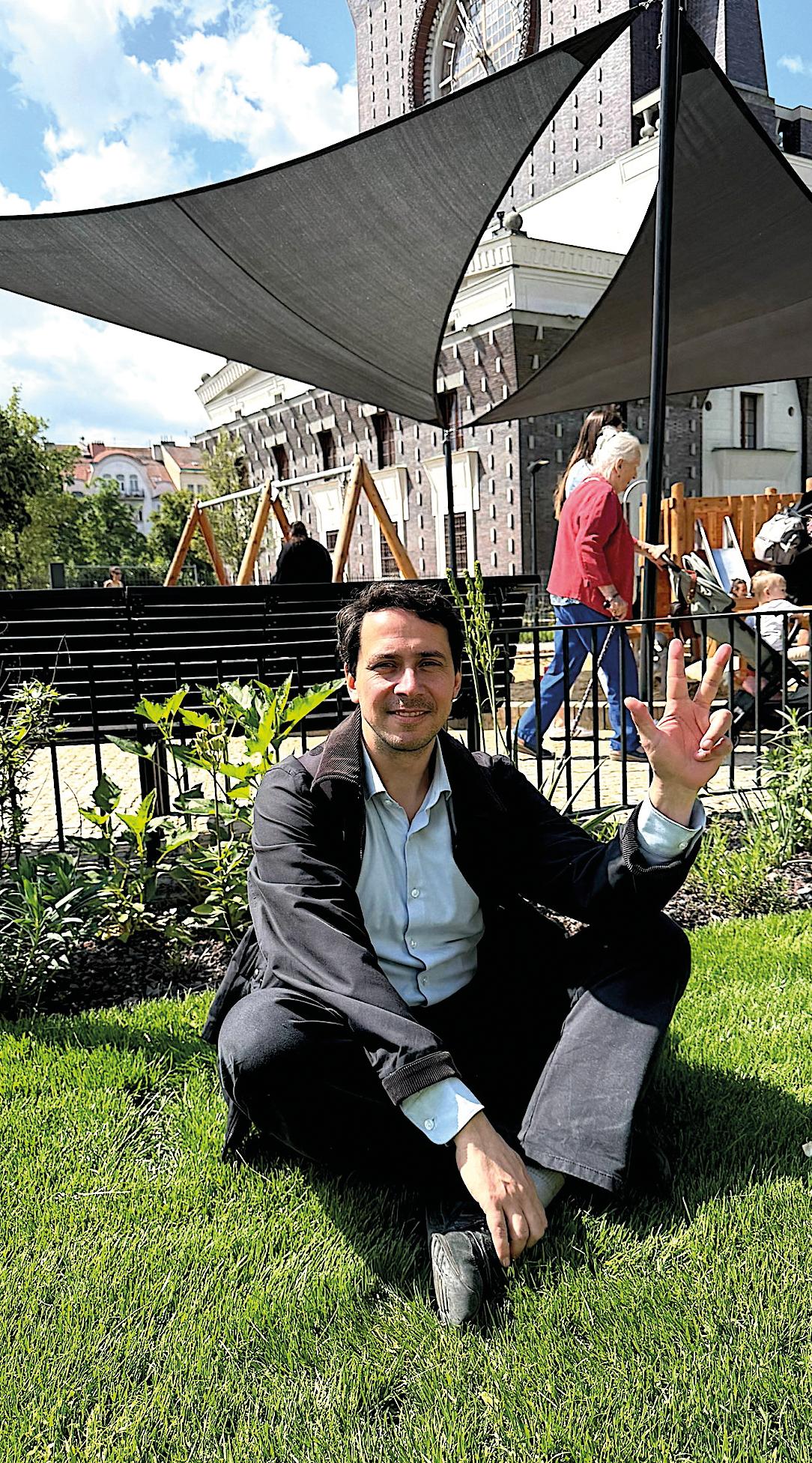
says architect Miroslav Cikán, who designed the new look with architect Pavla Melková at MCA Atelier. The aim is to allow everyone to find an opportunity for “pleasant habitation” under the shade of trees, in a café, or on the lawn,
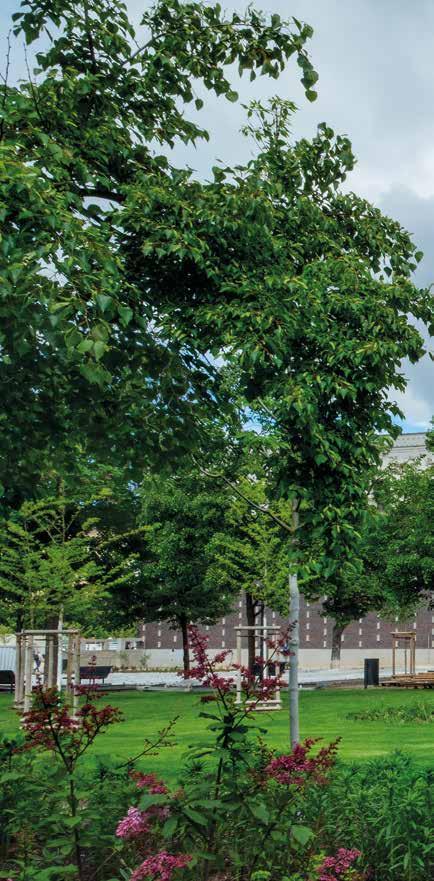
a school, a market, shops... it is unique among other large Prague squares for its neighbourhood character,” says Mayor Michal Vronský, emphasizing that the space should primarily serve as a place for people to spend their time.
effectively slowing visitors down and encouraging them to stay.
The leadership of the Prague 3 District has similar expectations. “For me, Jiřák is the archetype of a square – there is a church,
During the reconstruction, the square remained closed to protect the newly established greenery and lawns. “If we opened only a part, all the pressure would be concentrated there, and there was a risk we would soon have to repair the lawns again,” explains Roman Janda from the Prague City Hall. The total cost of the revitalization reaches approximately 570 million crowns (including VAT), a figure significantly affected by inflation and necessary interventions in the metro structures beneath the square, such as a special concrete slab protecting an old ventilation shaft.
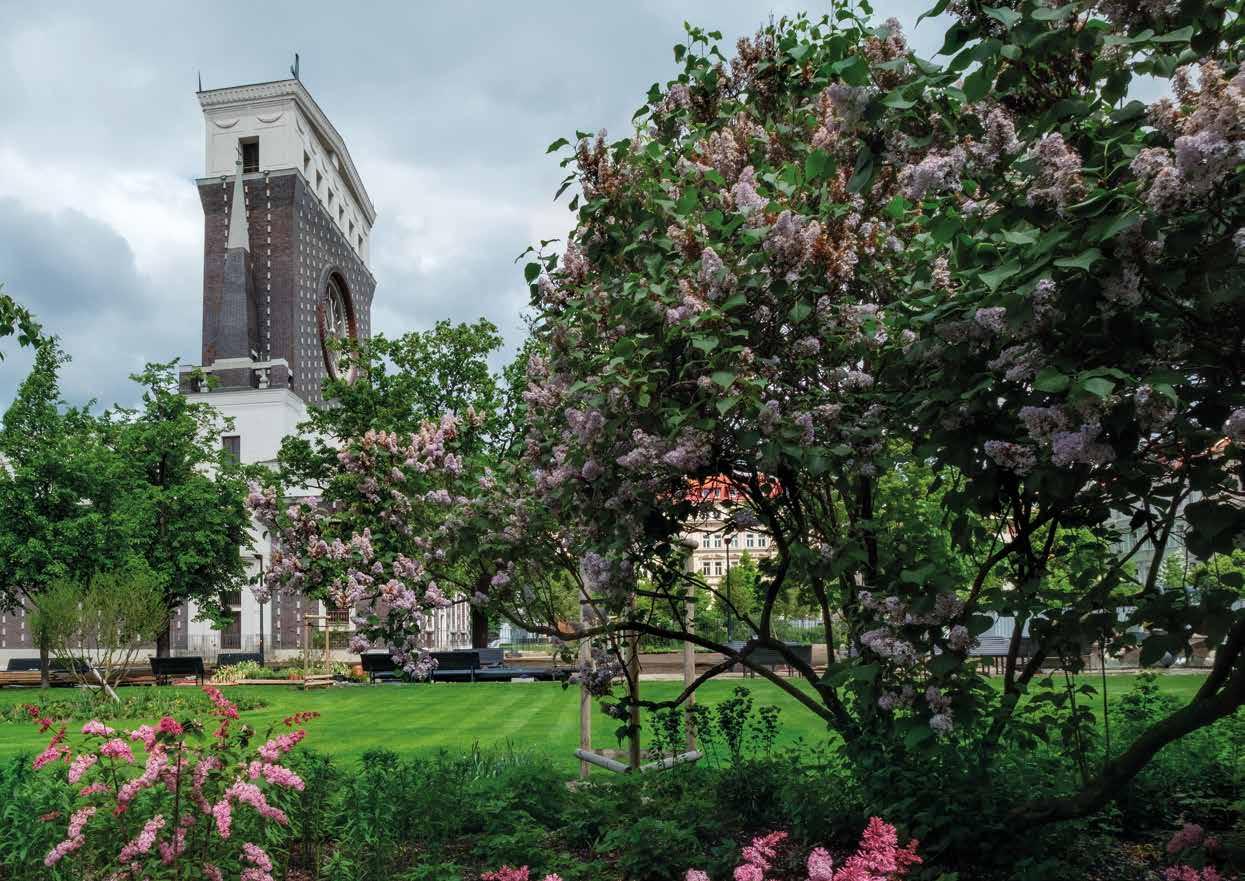
While Prague 3 managed the preparation and design, the Prague City Hall financed the actual construction. Councillor Jiří Ptáček noted that they successfully convinced the city leadership that the square is a significant space for the entire capital. Although the invested sum is high, the cost per square meter is roughly half compared to the revitalization of the lower part of Wenceslas Square.
Architects Melková and Cikán drew inspiration from the historical layers of the site and from Plečnik’s work, specifically his paving designs for Prague Castle. The square’s version consists of large-format granite tiles set into a special permeable substrate that allows water to soak in and later evaporate, preventing the square from becoming an undesirable heat island.
A newly renovated fountain by sculptor Petr Šedivý, which now includes a wading pool, is set to become a symbol of the space. It offers the first “cool step” to the residents of Prague 2, 3, and 10 as they enter the square. Greenery plays a vital role; there are now exactly 120 more trees than before. Although 51 trees were removed at the start, they were all replaced, bringing the total number of newly planted trees to 171, including lindens, maples, and plane trees across 15 different species.
Arborist David Hora explains that this diversity helps protect the greenery from pests and climate fluctuations. The project also features blue-green infrastructure, which directs rainwater to tree roots through special underground layers of substrate containing gravel, compost, and biochar. This helps trees grow
better and reduces runoff into the sewers.
Other hidden features include a 17-meter-long retention tank to manage heavy rain, as well as an accumulation tank that collects water from the church roof for irrigation. Visitors will find new drinking fountains, misting systems, and even “puddle basins” – shallow artificial reservoirs to keep water on the lawns. The street furniture has also been transformed, including atypical furniture similar to that in Vienna’s MuseumsQuartier, along with new lighting and a playground that has been in operation since April. All of this is intended to turn Jiřák into a place that primarily serves as a meeting point for residents.
Modern life moves fast. Work meetings alternate with travel, free time is scarce, and planning often happens weeks in advance. To avoid getting lost in all of it,
we need a system that can handle many decisions and timeconsuming processes for us. The same principle applies to healthcare: it’s not just about
It’s often said that you recognize a true friend in times of need. And when illness strikes, high-quality medical care becomes invaluable. One of the places you can turn to in such moments is Canadian Medical, the largest network of premium private clinics in the Czech Republic. It brings together a wide range of specialists, who actively communicate and share information with one another. As a result, the patient isn’t shuttled from one isolated office to another but instead moves through coordinated care that makes sense as a whole. “Real quality of care doesn’t arise in isolation but through connection. That’s why we offer cooperation among specialists, which saves clients time and increases both the accuracy and speed of decision-making,” explains Vítězslav Havliš, Sales and Marketing Director at Canadian Medical.
having access to a doctor, but about having a functioning system. As Vítězslav Havliš, Sales and Marketing Director at Canadian Medical, puts it: “Healthcare today
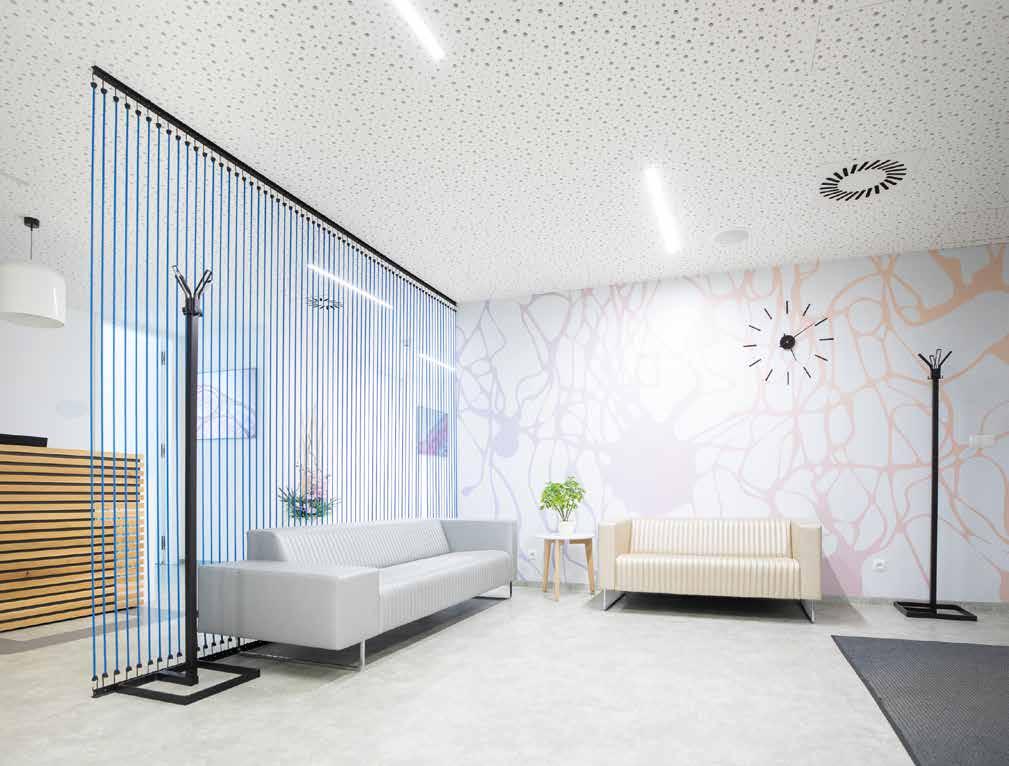
should work as reliably and predictably as any other premium service. The client must not adapt their life to the system – the system must adapt to them.”
There is only one thing in life that constantly decreases and cannot be replenished or replaced: time. And no one wants to waste their precious time endlessly calling medical offices or sitting in waiting rooms. An ideal doctor’s visit should look like this: when you arrive, you know what to expect, it actually happens, and you leave with a clear result and a sense of what the next steps are. So how does it work at Canadian Medical? “We treat time as a key value. Every step of care is designed to be smooth, precise, and free of unnecessary delays,” says Havliš. “You can book an appointment easily online in just a few minutes.
A doctor’s visit is simply a well-functioning service that exists for you.”
To offer this level of comfort, you need a strong professional foundation you can rely on. At Canadian Medical, this means a wide spectrum of specialists who actively communicate and share information with one another. Thanks to this, the client isn’t “passed around” between isolated offices, but instead receives coordinated care that makes sense as a whole.
The right technologies don’t need to be visible
Digitalization now touches every part of life. The days when technologies – including AI – were fascinating toys for a small group of enthusiasts are long gone. We’ve moved from adventurous pioneering to widespread
practical use, where helpful technologies run quietly in the background and we barely notice them.
Healthcare is no exception. “Technology should be invisible in the best sense of the word – the client should only notice it when it genuinely makes life easier,” says Havliš. A concrete example is the myCANADIAN app, which allows clients to book appointments easily, access their medical records, lab results, and e -prescriptions at any time, and handle common health issues without visiting the clinic. All information is in one place, including health data for the entire family.
Technology helps not only patients but also doctors. One AI-based tool used at Canadian Medical is Dr. Noon, which assists physicians with the initial assessment of patient’s issues
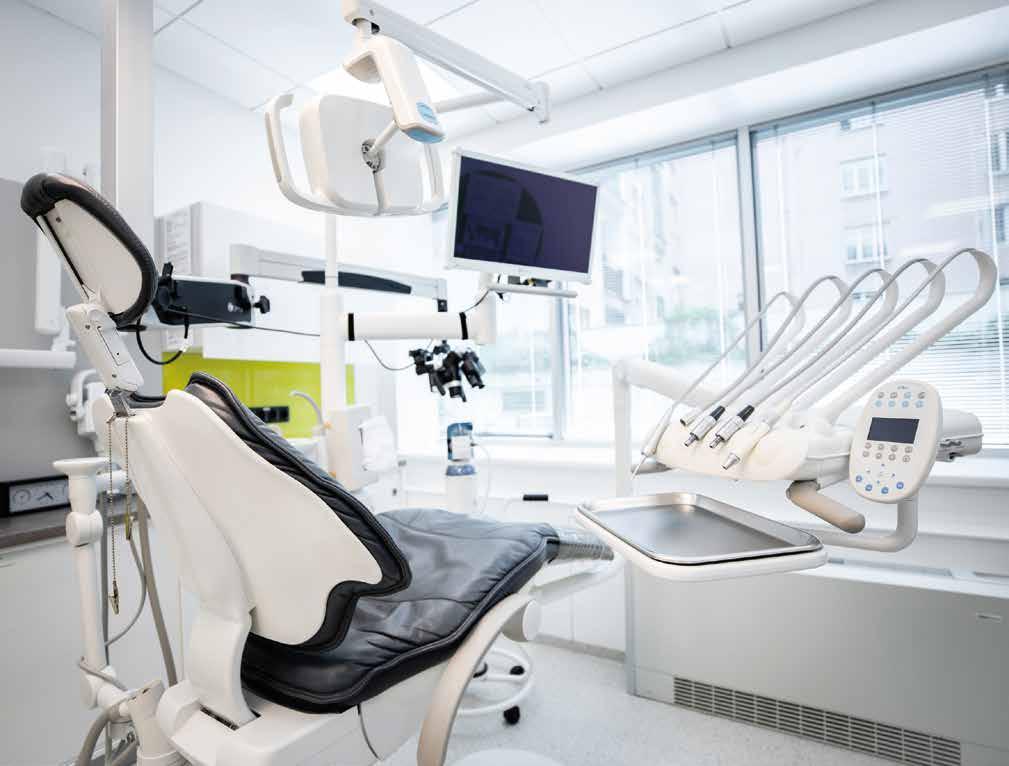
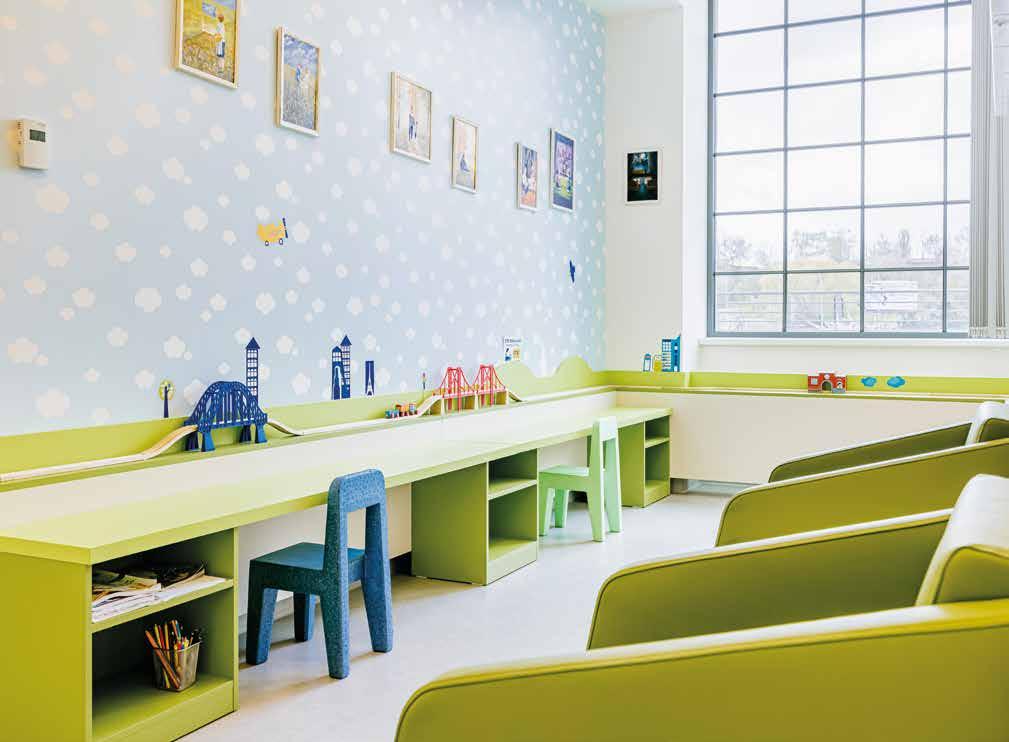
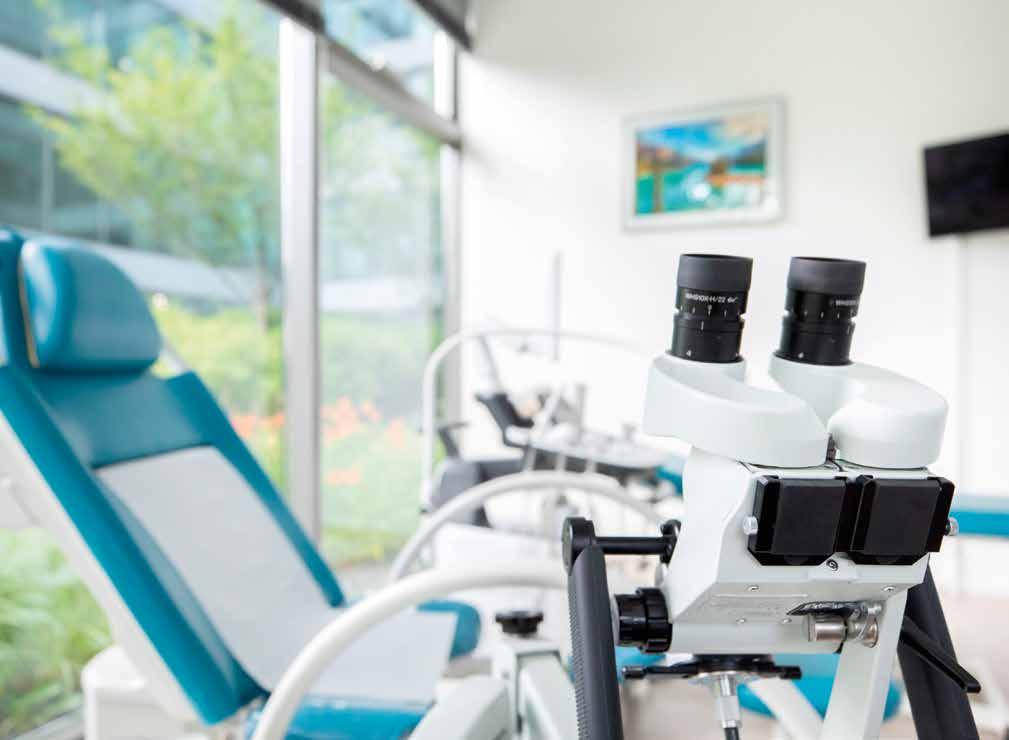
and helps determine what type of care is appropriate. “We use artificial intelligence where it brings real added value,” Havliš explains.
Children use the same system as their parents
Again, it all comes back to the idea that the entire system works as a unified whole. Parents don’t have to deal with logistics or complicated booking. “For families, details matter. The environment is adapted to children, and the communication approach respects their needs. The result is less stress and greater trust, which is crucial, especially for the youngest patients,” says Havliš.
Paediatrics at Canadian Medical is not isolated from other specialties, but instead forms the centre of a broader care system. Families have access not only to a general
paediatrician but also to various paediatric specialties such as cardiology, dentistry, and gastroenterology. All these fields share a single medical record and work closely together, enabling even complex health issues to be resolved quickly and without unnecessary transfers between facilities.
In addition to preventive check-ups and treatment of acute illnesses, here you’ll also find premium services such as newborn consultations, individualized vaccination plans, rapid diagnostics directly in the office, and the option of phone consultations with a doctor outside of regular hours.
Healthcare and medicine have reached a point where many surgical procedures can be performed without long hospital
stays – often within a single day. Canadian Medical’s one - day surgery offering covers the most common fields, from general surgery, orthopaedics, urology, and gynaecology to venous and paediatric surgery. Emphasis on calm, clear communication and continuity of care helps turn what is often a stressful situation into a manageable experience. A specialty of the Waltrovka clinic in Prague is the treatment of varicose veins. Modern, minimally invasive methods – from laser procedures to vein gluing and gentle surgical techniques – allow for a quick return to everyday life. “Modern medicine should be not only top -tier but also maximally efficient from the client’s perspective. One - day surgery is a natural proof of that,” concludes Havliš.
Interview with Marie Boltenstern, Founder of FABNORA, 3D printed jewellery brand
I have always been inspired by women who challenge me to grow, and I believe we all need people who expand our vision and remind us of what is possible. Marie Boltenstern is one of those women, someone who transforms passion into something both meaningful and sustainable. Through FABNORA, her brand, vision expands into a playful and accessible universe, one that has already reached 300 stores across Europe and received international recognition, including the prestigious Inhorgenta Award.
You grew up close to your father, Sven Boltenstern, and the world of jewellery. What is one piece of advice or lesson from him that has stayed with you and still guides you today?
Through him, I learned to believe that anything is possible. He had an unstoppable combination of motivation, courage, and consistency, balanced with a sense of calm that is essential when turning ideas into reality. That mindset continues to guide me.
When did you realize you didn’t just want to continue your family’s legacy but redefine it?
It actually happened the other way around. I studied architecture and specialized in 3D technology. When I discovered a gold 3D printer that was new to the market at the time, I saw an opportunity to merge my passion with my family’s heritage. That’s when I decided to take over the business, with a clear vision to introduce something entirely new and evolve the brand.
You describe jewellery as “the smallest form of architecture.” Where does emotion enter such a structured, system-based process?
For both of our brands, the soft movement of the pieces is the
core of their character – our pieces are designed to feel light and fluid on the body. What starts as a strictly mathematical code is transformed into something soft and expressive. This contrast between precision and unpredictability is what fascinates me most: while the 3D model is rigid and exact, I never fully know how the piece will move until it exists physically. This unique touch is what evokes the emotion in our clients.
With FABNORA expanding to over 300 stores and receiving international recognition, what were the key steps that allowed you to scale successfully? And how challenging was it to adapt to this pace of growth?
Building the right team was fundamental. In Austria, we commissioned strong sales professionals who created the foundation for our growth and established confidence in the sell-through of our products. At the same time, a highly efficient internal team ensures smooth operations – from orders to delivery and customer service. A major milestone was when my husband, Raoul Boltenstern, joined as Managing Director three years ago, significantly strengthening our leadership and accelerating growth.
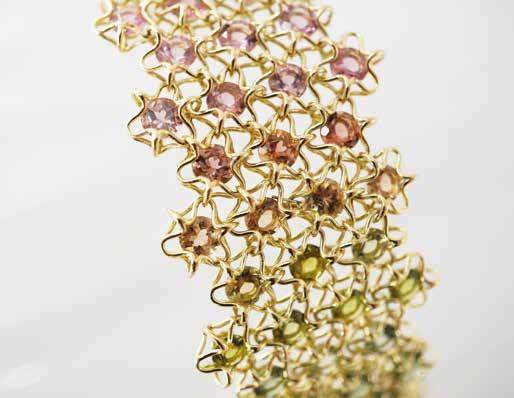
Today, your pieces can be discovered both in curated physical spaces and online. How do you see the relationship between these two worlds? Can digital ever replace the emotional and sensory experience of a physical space?
Our pieces truly come to life through movement, lightness, and touch, so physical spaces are essential for experiencing them fully. At the same time, the digital world acts as today’s business card – it introduces the brand and builds awareness. For us, the two complement each other and grow together.
You are pioneering 3D printing in fine jewellery. What did you see in this technology that others didn’t?
I’ve been deeply engaged in computational design and digital fabrication for nearly two decades. 3D-printed jewellery must be conceived in a way that cannot be achieved through traditional techniques – otherwise, the process wouldn’t make sense, as printing in gold is complex, time-consuming, and costly. We also developed a specialized finishing process tailored to this technology. In order to achieve true high-end results it requires deep expertise in a niche field, as well as a significant investment in research.
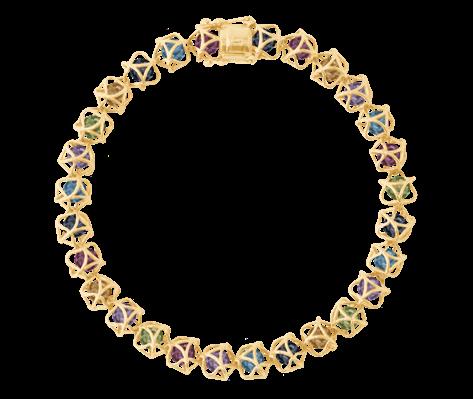
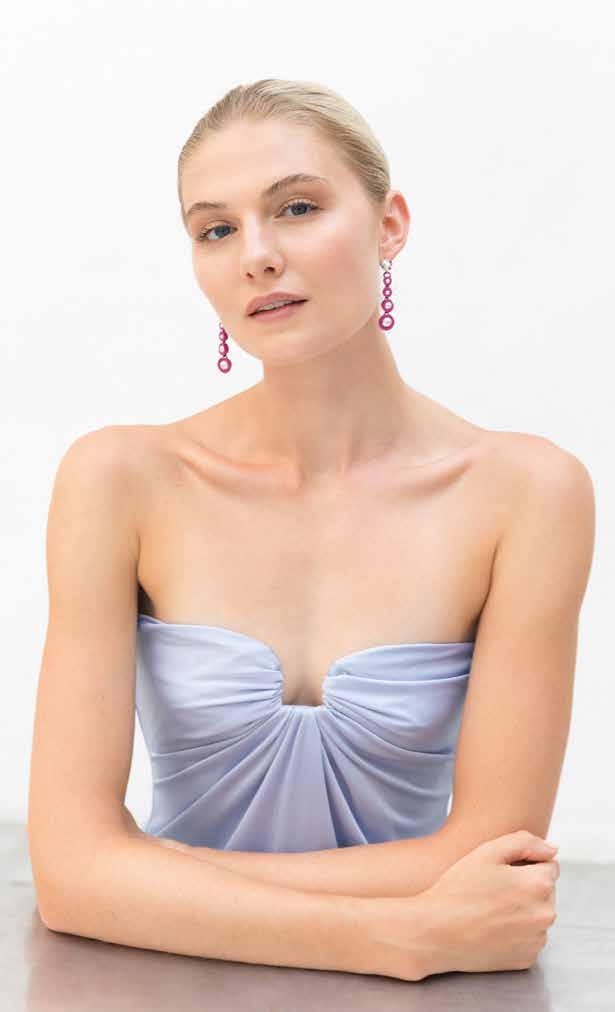
Sustainability is part of your approach. What does “responsible creation” mean to you today?
Across all our brands, we collaborate with manufacturers certified by the Responsible Jewellery Council. With BOLTENSTERN, we create timeless pieces meant to last for generations. With FABNORA, we focus on long-lasting, adaptable designs – the mix-and-match system allows pieces to evolve with personal style over time. Beyond products, we actively support women through mentoring initiatives and charity collections.
You operate between technology, design, and business. How do you stay creatively grounded?
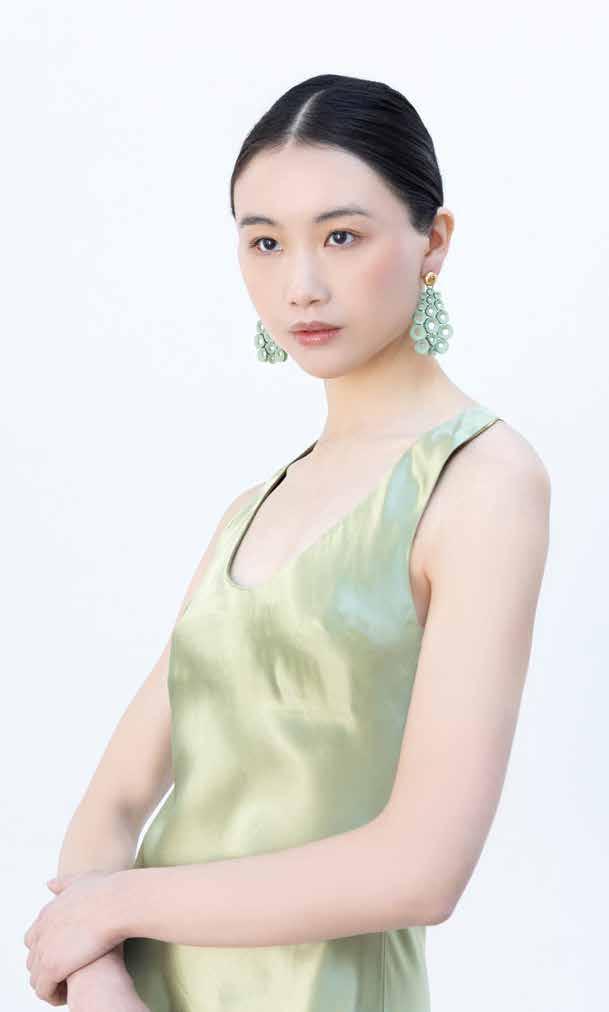
Building a strong team was key; it allows me the space to focus on creativity. My husband and business partner complements the management with expertise in sales and finance. I’ve always enjoyed surrounding myself with inspiring people and building meaningful relationships, which fuels my creativity. Of course, balancing everything can be challenging, especially with our two daughters, who are one and two years old.
Behind this growth, there are always challenges. What has been one of the most difficult moments in building FABNORA?
Working with unconventional materials and designs naturally
brings both enthusiasm and scepticism. As a new brand, building trust takes time. However, this uniqueness has ultimately become our strength, as well as a clear differentiator in the market.
Today, your pieces can also be discovered in Prague, in a curated boutique environment. How important is physical space and curation for your brand?
It’s extremely important. FABNORA is demi-fine jewellery that often requires a certain openness and confidence to wear. Presenting it in a curated, high-end environment helps meet customer expectations and enhances the overall experience. Many clients
see FABNORA as a playful, modern complement to fine jewellery –perfect for styling and travel.
Are there books that have influenced the way you think or create?
Yes – The Craftsman by Richard Sennett deeply resonated with me in how it explores the evolution of craftsmanship through digital tools. For visual inspiration, I love the work of Ernst Haeckel. And for generative design, Endless Forms
Most Beautiful by Sean B. Carroll
is a constant source of inspiration, especially in how it connects natural structures with design processes.
And on a personal level, what has challenged you the most as a leader?
Learning to trust my intuition and not be overly influenced by others’ opinions. With experience, you realize there are many paths to achieving your goals – the key is maintaining focus and consistency.
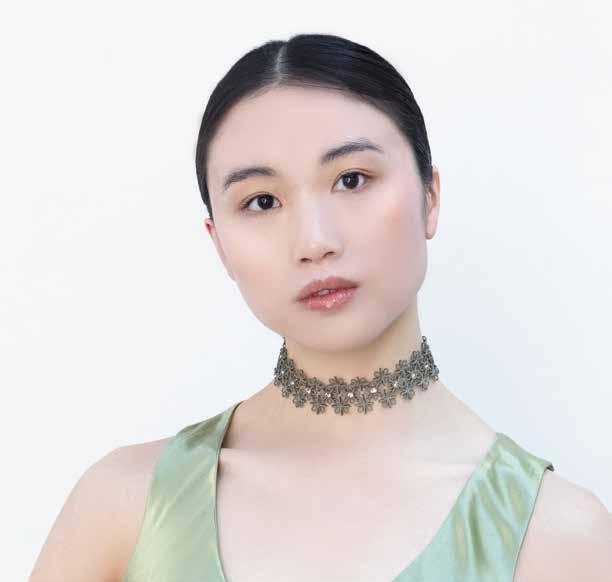
As a woman leading in both design and innovation, how do you give back to other women?
I strongly believe in the idea that “you rise by lifting others.” Mentorship has been an important part of my journey, and I’ve been actively mentoring for several years. It’s not only about supporting others, it’s also an opportunity to reflect, share experiences, and continue learning myself.
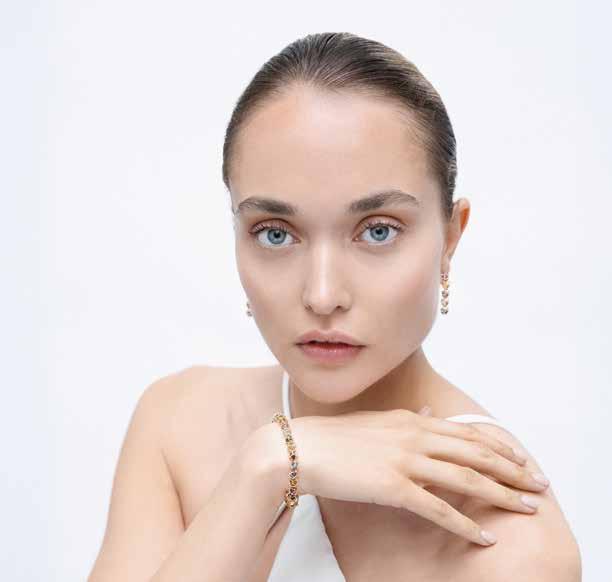
by Alice Botnarenco,
a serial entrepreneur with over 20 years of experience who has built businesses across industries, from automotive to fashion, and launched initiatives dedicated to women’s empowerment. In 2009, she founded Women in Business NGO, a community supporting female entrepreneurs through education, mentorship, and networking. Today, she continues her creative journey through ALISIA ENCO, her brand where art, culture, and storytelling come together as wearable expressions. Based in Prague, her work brings together creation and curation giving voice to women across art, design, and culture.
By Elisa Selmi, Co-founder of We Are Food
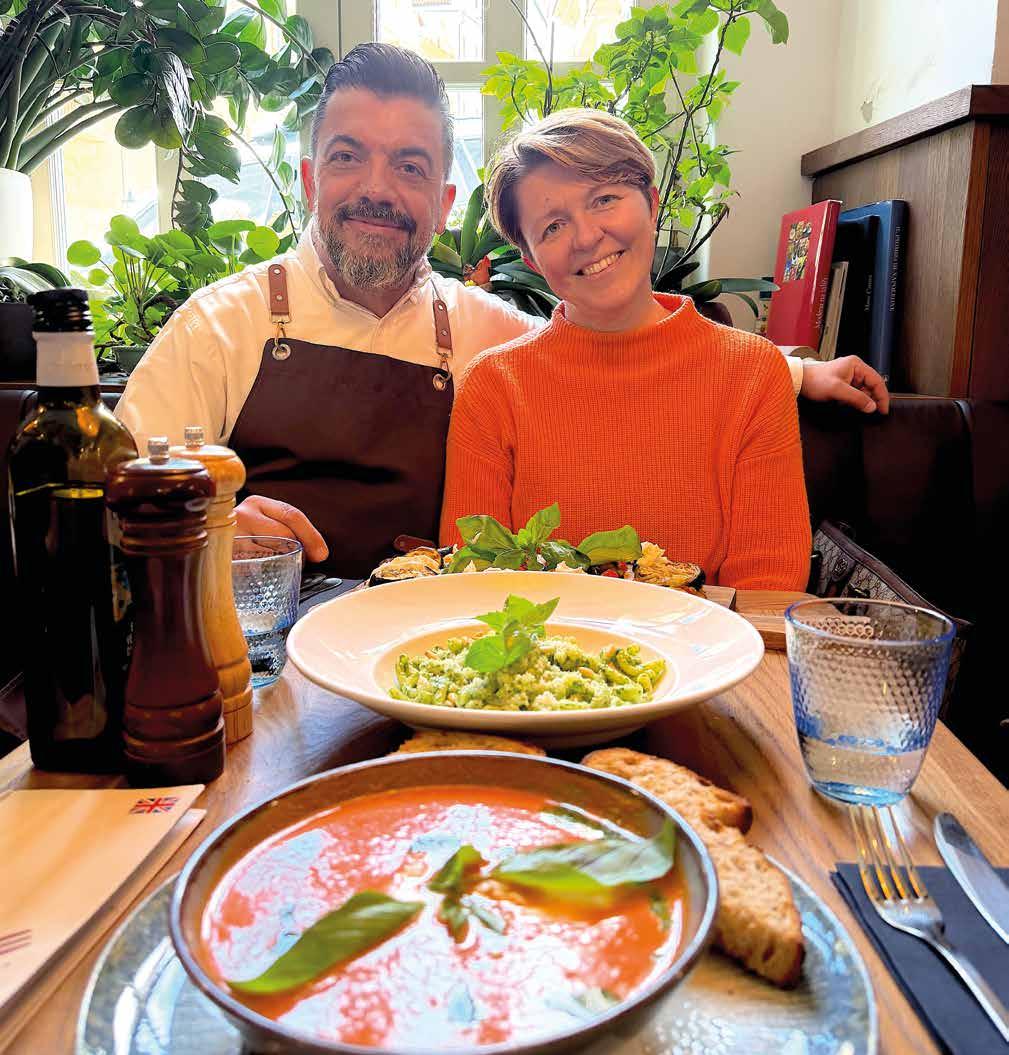
Our first article about hidden food places in Prague was very successful. As promised, this will be a permanent part of our magazine. This time we’ve chosen a hidden Italian restaurant, in the heart of Prague, along the cobbled street of Thunovská and only moments from the Italian, Romanian, and British Embassies – a small, unassuming Italian Trattoria that offers something increasingly rare: a sense of home.
Tucked into the historic fabric of Malá Strana, an area whose narrow alleys and steady flow of visitors often recall the atmosphere of Florence, Lore Malastrana stands out not for spectacle, but for authenticity.
For many expatriates, food is more than nourishment – it is memory, identity, and comfort. It is often the first thing one misses when living abroad. Lore understands this quietly and instinctively. Its menu does not attempt to reinterpret Italian cuisine or follow passing trends. Instead, it returns to the essentials: traditional recipes, few well-selected ingredients, and an unwavering focus on quality.
Dishes like ‘cappelletti in brodo’ embody this philosophy. A clear, delicate broth, enriched by small, hand-filled pasta pockets, delivers a kind of understated depth that is difficult to replicate without patience and experience. Equally telling are the ravioli with butter and sage – arguably one of the simplest combinations in Italian cooking, yet also one of the most unforgiving. Here, the balance is key: the pasta is rolled thin, the filling is savoury and well-judged, and the Parmigiano adds a richness that ties everything together without overwhelming it.
Nothing is excessive, yet nothing is lacking. That’s the magic of Italian cuisine!
The influence of the owner’s origins in Massa Carrara, on the Tuscan coast, runs throughout the menu. Seafood plays a central role, handled with restraint and respect. Even in less expected dishes, such as fish-filled tordelli, there is a clear connection to a culinary tradition shaped by proximity to the sea. The result is a menu that feels both personal and grounded, rather than curated for effect.
We had lunch there, starting with a very delicious tomato cream with buffalo mozzarella strips.
Then, a special pizza, big enough for two, with grilled vegetables and mozzarella.
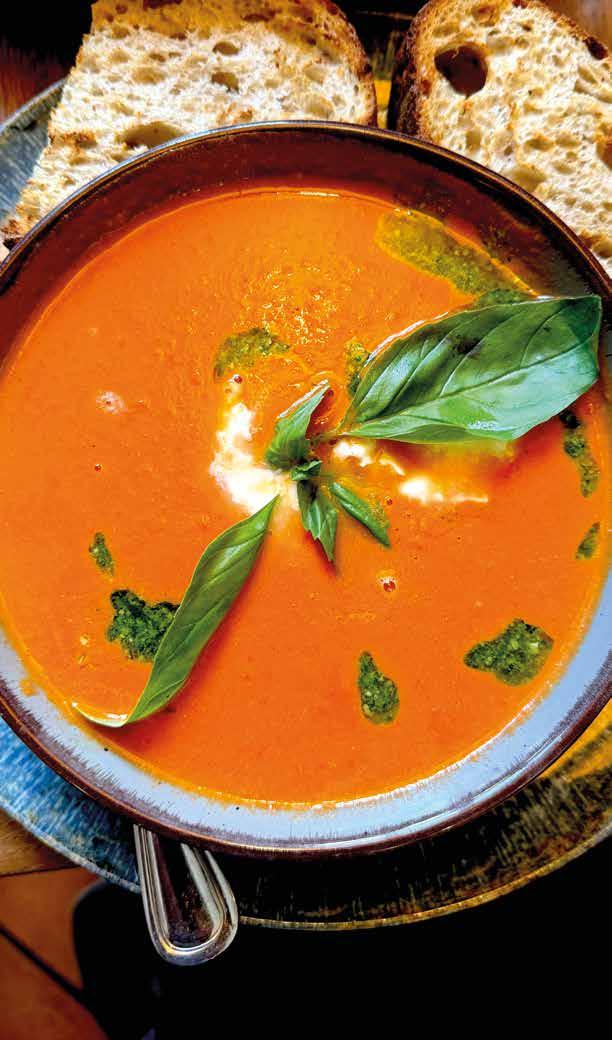
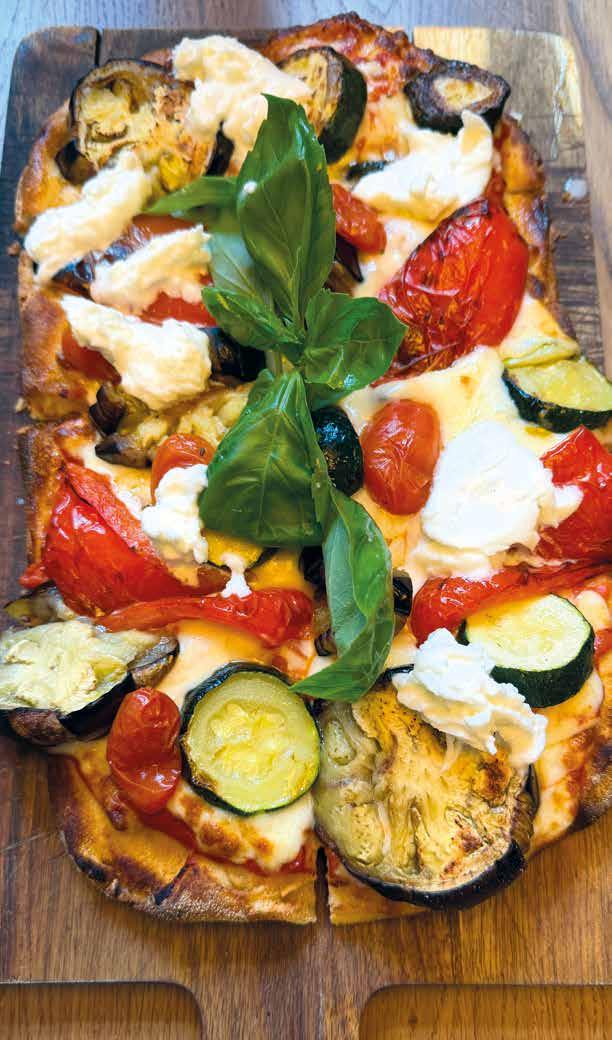
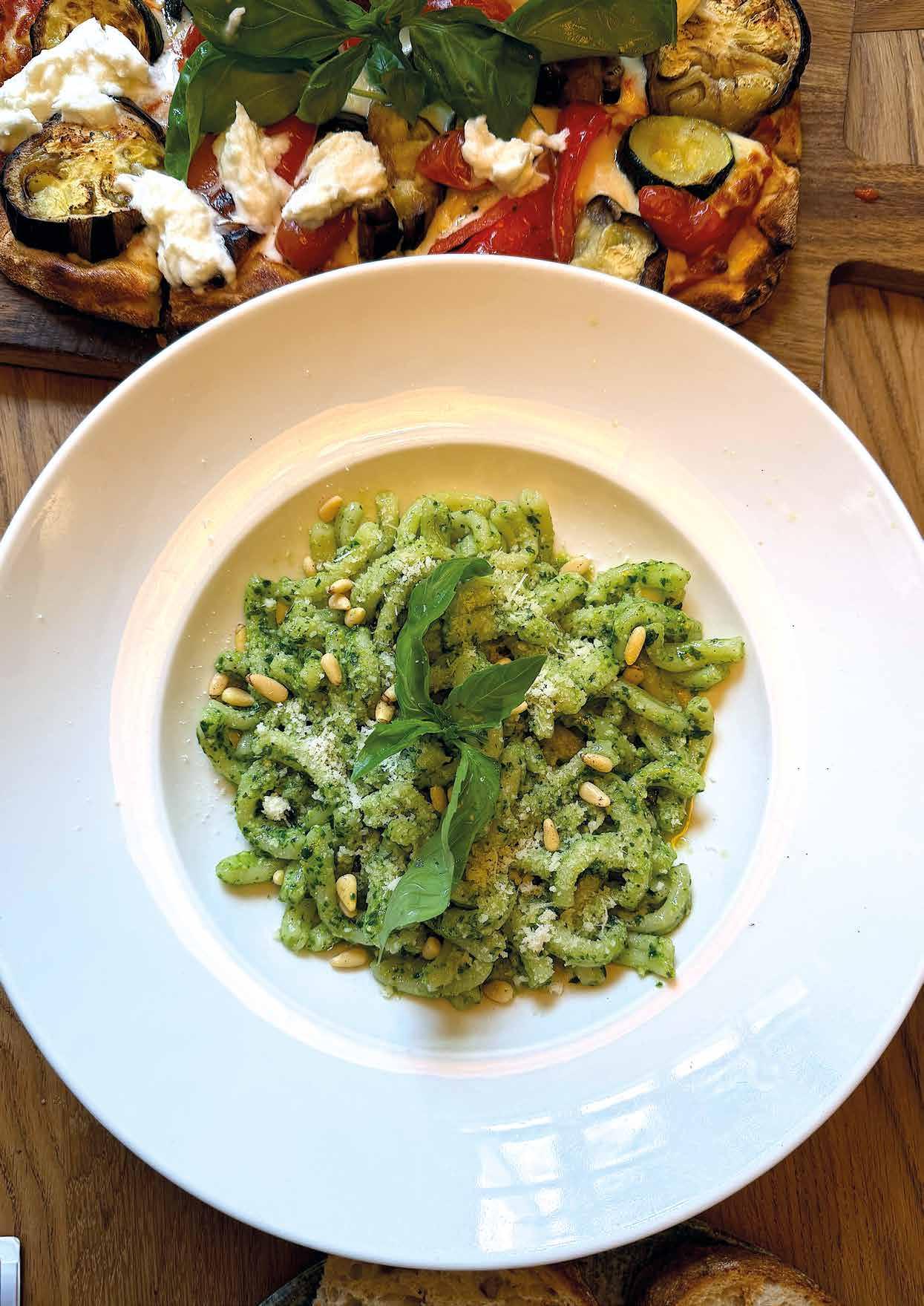
We couldn’t end our lunch without “Dolce” – a very tasty and beautiful crème brûlée.
The space itself reinforces this impression. With only a few tables, Lore Malastrana creates an intimate environment where the line between restaurant and home becomes almost indistinguishable. Service is warm, informal, and genuine – more akin to being welcomed by a host than attended to by staff. In a city where dining can often feel transactional, this approach is quietly distinctive.
What makes Lore particularly meaningful is not innovation, but recognition. For those who have grown up with this cuisine, it offers a direct connection to familiar flavours and rituals. For others, it provides an opportunity to experience Italian food as it is lived, rather than as it is often presented abroad.
When nostalgia for home sets in, places like Lore take on an even deeper meaning. A plate of ‘trofie al pesto’, a tasty carbonara, or a homemade tiramisù can do more than satisfy appetite – they can restore a sense of familiarity. Paired with a friendly conversation with the staff, these moments become heart-warming. They remind us that sometimes, comfort is not found in complexity, but in the quiet reassurance of things done well.
Looking forward to our next hidden restaurant.
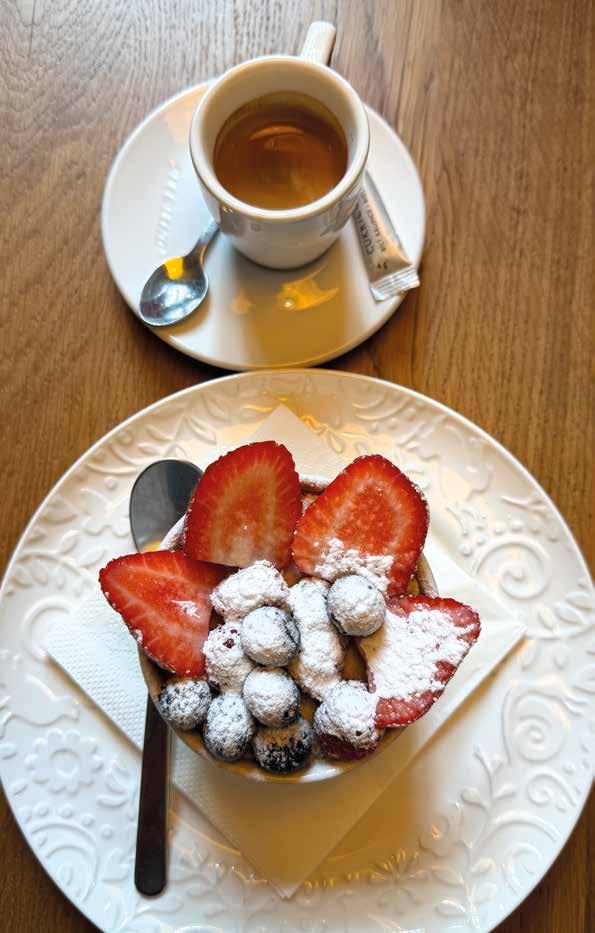
LORE MALASTRANA
Thunovská 181/16, 118 00 Malá Strana, Praha 1
+420 730 542 040
E-mail: info@loremalastrana.com
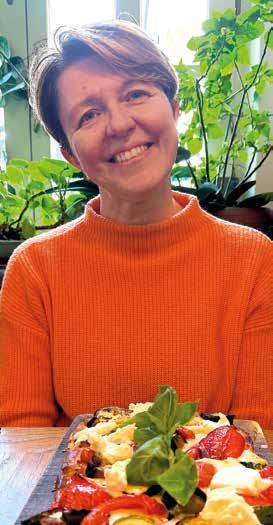
is the co-founder of We Are Food, a marketing and communication agency specializing in restaurants, hospitality, and gastronomy brands. With an international background and projects across Europe and the Middle East, she supports clients in building strong brand identities, increasing visibility, and driving measurable growth.
Her work spans strategic positioning, digital marketing, content creation, events, and business development tailored to the food and hospitality sector. Passionate about authentic culinary storytelling, Elisa combines creativity with data-driven strategy to connect brands with the right audiences.
A true food marketing enthusiast, she believes that great concepts deserve equally powerful communication.
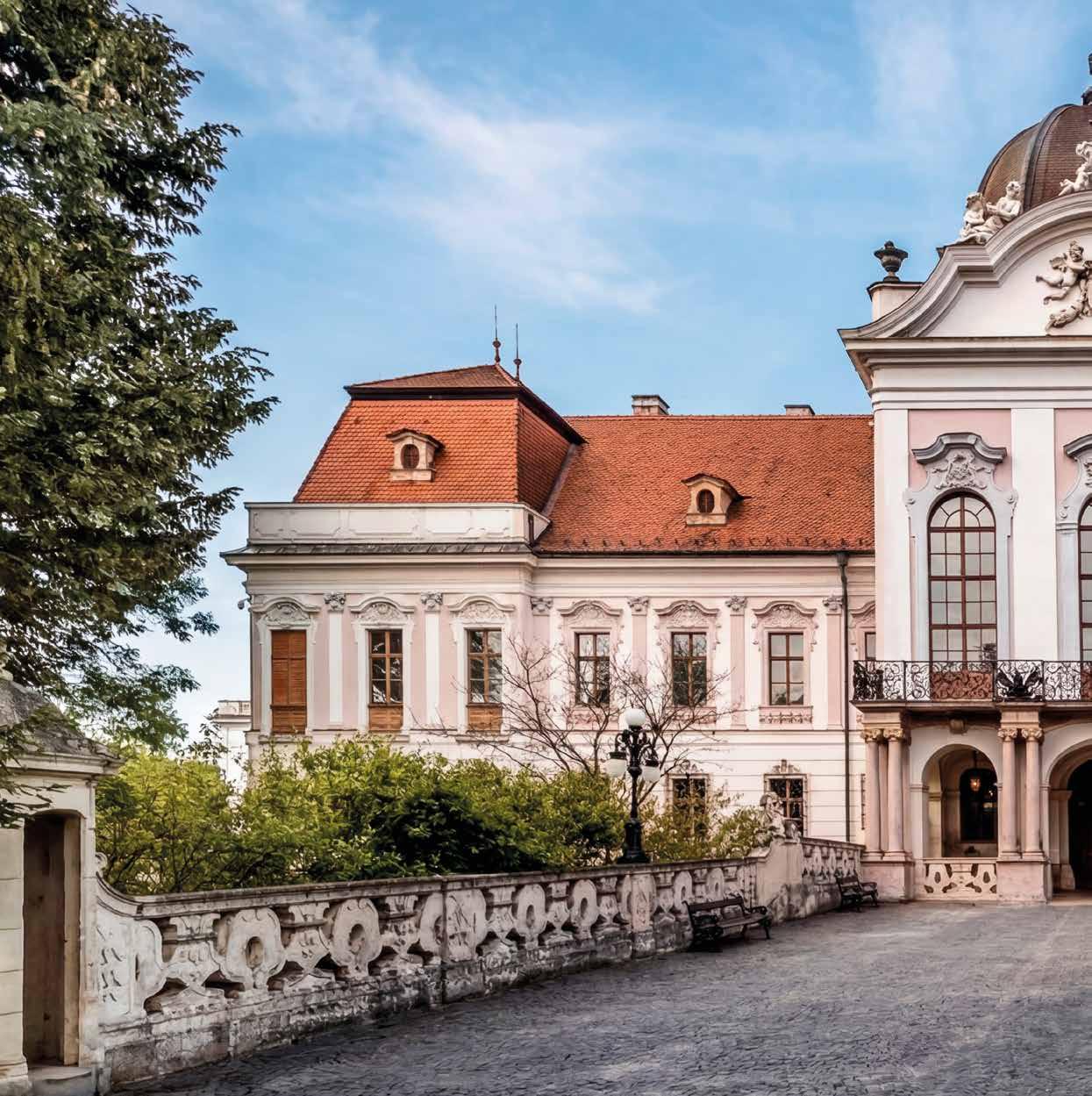
We travel all over the world – Africa, Asia, North America, and of course Europe. Living in the Czech Republic is a privilege: from the heart of Central Europe, so many destinations are just a short drive away. Traveling by car within the Schengen Area is wonderfully easy, even if rising fuel prices make it a little less cheap than it used to be.
Our friends often ask us to write a travel article about countries close to the Czech Republic, somewhere we can visit with children and dogs, by car, over a single weekend. We waited for the right occasion, and then it arrived: a special exhibition at the Royal Castle of Gödöllő, “A. E. Köchert – Jeweller to Emperor and Crown”.
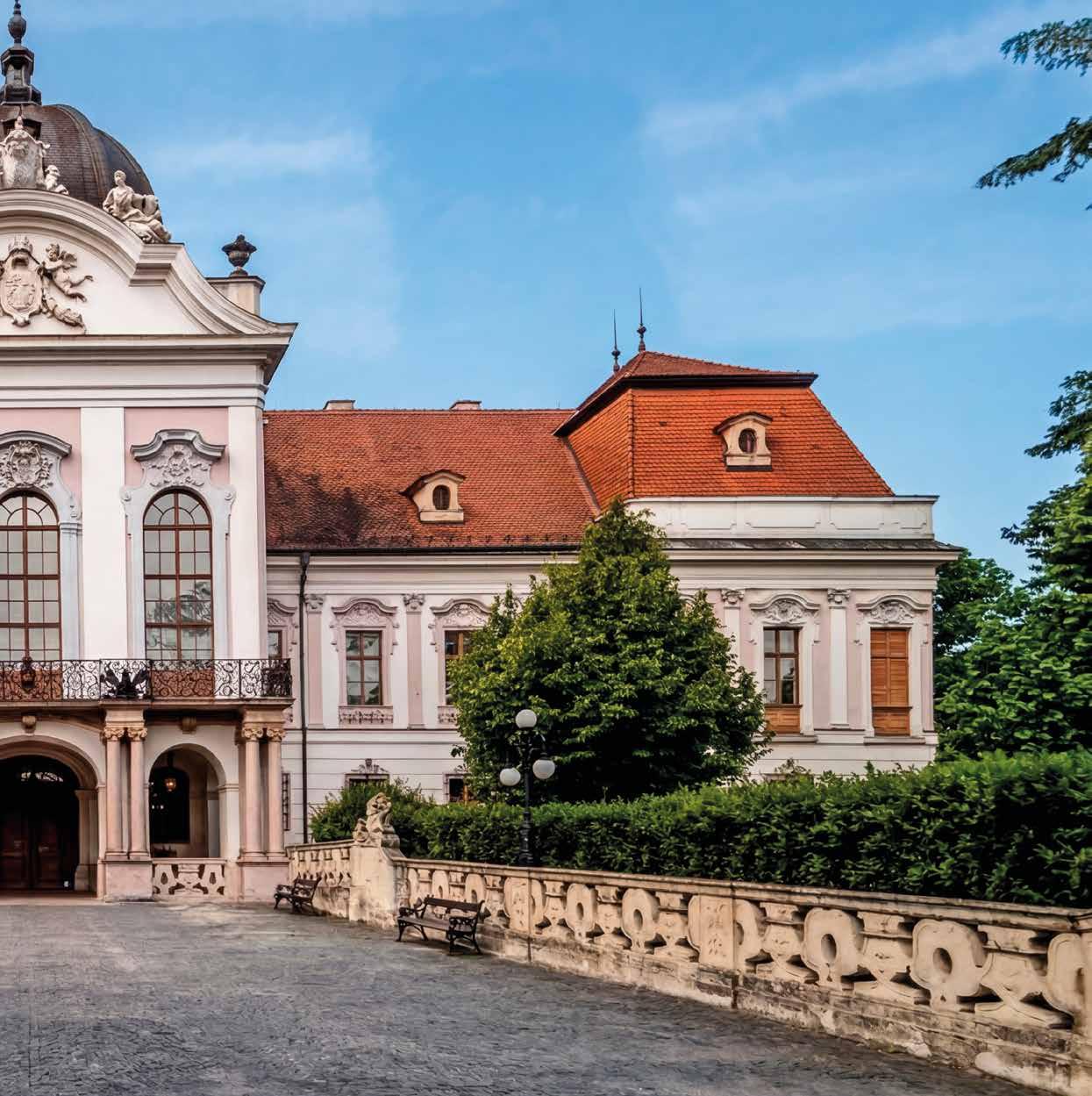
Heading south to Gödöllő
Before driving to our neighbouring country, you need to buy both a Slovak and a Hungarian vignette. You can purchase them online through the official Czech site (https://edalnice.cz/#/validation).
We set off early in the morning for the long drive. The distance from Prague to Gödöllő is 580 km, and according to Google Maps it should take just over six hours. Heavy traffic and roadworks in Hungary –combined with Google’s suggested shortcuts – stretched our journey a little. We arrived at the Royal Castle of Gödöllő around 1 p.m., greeted by a beautiful estate and a generously sized parking area.
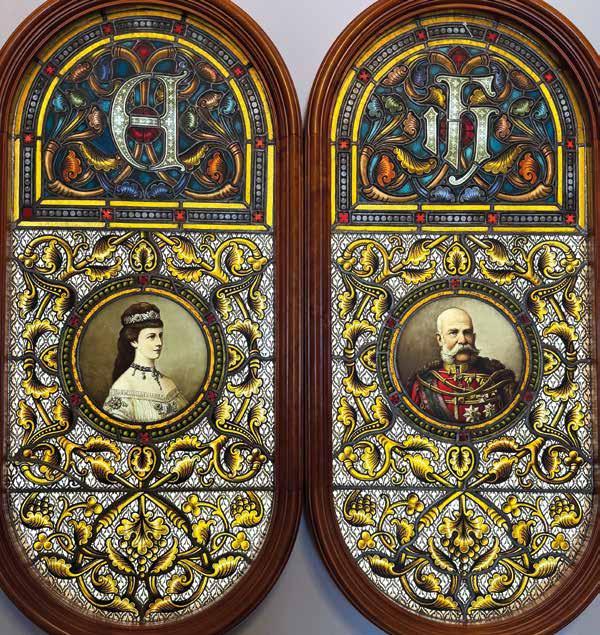
Gödöllő Castle: a bit of history before you go
The Royal Castle of Gödöllő was founded by one of the most prominent Hungarian aristocrats of the 18th century, Count Antal I Grassalkovich (1694-1771). Construction began after 1735, and by 1745 the first U-shaped wing surrounding the inner courtyard – including the ballroom and the lord’s apartments – was completed, based on the designs of András Mayerhoffer.
Between 1746 and 1749, two additional wings were added: the southern wing housed stables and a hayloft, while the northern wing included the Roman Catholic church that still operates today. Queen Maria Theresa saw the castle in this form during her visit in 1751.
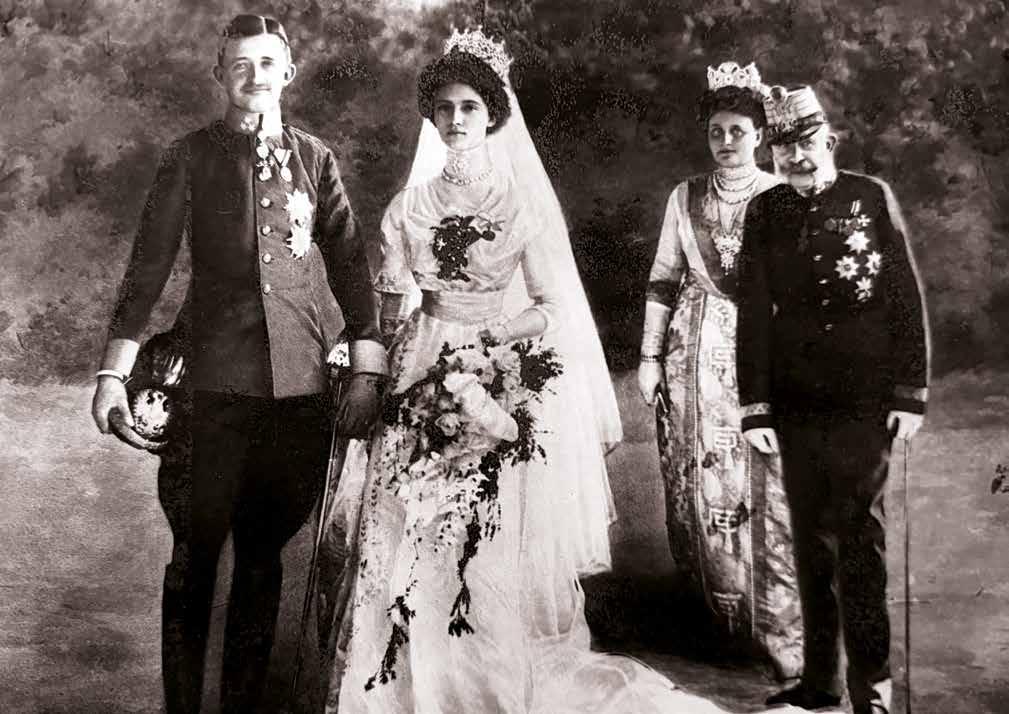
Grassalkovich continued expanding the estate throughout his life. His son, Antal II (1734-1794), added a Baroque stone theatre, and his grandson, Antal III (1771-1841), built the final northern wing, a new orangery, and transformed the French garden into a landscape garden. The castle’s architectural solutions later served as models for Hungarian Baroque residences.
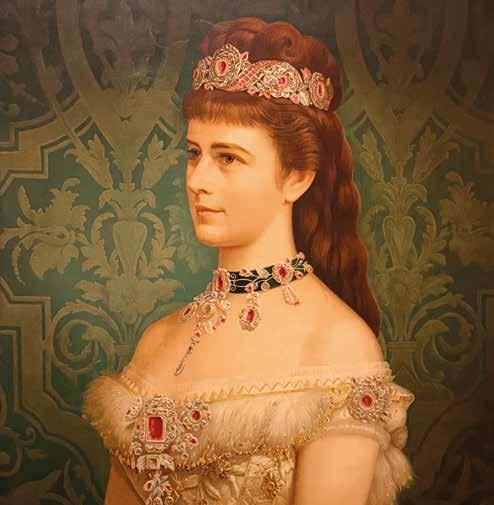
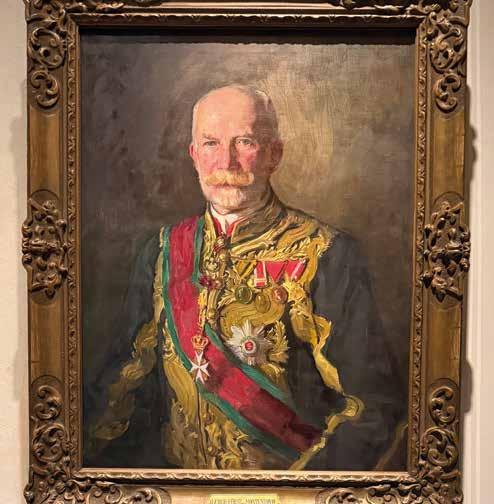
The castle’s second golden age began in 1867, when the Hungarian state purchased and renovated it as a coronation gift for Emperor Franz Joseph I and Queen Elisabeth (“Sisi”). The royal couple used Gödöllő mainly in spring and autumn. After Queen Elisabeth’s assassination in 1898, Franz Joseph visited less frequently, with his last stay in 1911. The monarchy’s collapse in October 1918 ended the royal period.
Although the building survived the Second World War structurally intact, German and later Soviet troops removed or destroyed most of its furnishings. From 1950, Soviet units occupied the farm buildings, while the main building – despite being declared a monument – was used as a social home. These decades of neglect led to the slow deterioration of the castle over time.
Conservation work began in 1985. Once the building was emptied, large scale restoration could finally start. The Gödöllő Royal Castle Public Benefit Nonprofit Company has coordinated the renovation ever since. The first permanent exhibition opened in the main facade wing in 1996, presenting the state rooms and royal suites, faithfully reconstructed from historical sources and telling the story of the monarchy’s Hungary and the personalities of Franz Joseph I and Queen Elisabeth.
Further restorations followed. New rooms in the royal suites were completed in 1997, followed a year later by the Queen Elisabeth memorial exhibition. On August 10th, 2001 – the 250th anniversary of Maria Theresa’s visit to Gödöllő – the permanent exhibition was expanded, with rooms evoking the Grassalkovich family and the castle’s Baroque period. The Baroque Theatre was renovated in 2003, and the Királydombi Pavilion opened in 2004. In 2010, the Rudolf and Gizella wings, the riding stables, the Baroque stables, and the bunker of Governor Miklós Horthy were fully renovated.
Stepping into the exhibition
Mr János Papházi, the Hungarian curator of the exhibition, welcomed us at the entrance of the Royal Castle and guided us through this remarkable display.
Inside, visitors can admire numerous pieces of jewellery of imperial and noble provenance, illustrating the 200-year history of the House of Köchert – distinguished jewellers whose most famous creations include Empress Sisi’s iconic diamond stars and a magnificent Neo-Renaissance brooch designed by Theophil von Hansen. Once owned by Empress Elisabeth, this brooch was shown to the public for the very first time.
Jewellery adorned with imperial cyphers has been cherished for centuries. Such pieces not only expressed and deepened the bond between giver and recipient, but also signified the importance of the wearer, who had been honoured with a personal gift from the monarch.
One particularly beautiful example is a ring commissioned by Empress Marie Louise of France and crafted by the Austrian Court Jeweller A. E. Köchert. It was intended for the abbot of Kremsmünster Abbey in Austria, a place to which the Empress had felt a close connection since her youth.
Inside the Köchert exhibition
The exhibition begins with an introduction to the history of A. E. Köchert and opens with two remarkable pieces: a ring from Empress Marie Louise of France, gifted to the abbot of Kremsmünster Abbey, and a striking necklace presented by Emperor Franz Joseph to Karolina Winkler in recognition of her rescue of Crown Prince Rudolf in 1871.
We then continue into a room dedicated to Empress Elisabeth of Austria (or “Sisi”), Köchert’s most famous client and a frequent resident of the Royal Palace of Gödöllő. Among the highlights is a Neo Renaissance brooch made for the Empress after a design by Theophil von Hansen (ca. 1865-1875). The brooch was given to a courtier and later buried for decades when the family fled the Soviet advance, only to be rediscovered relatively recently.
Another centrepiece is the recreation of 27 diamond stars, created by Köchert for Empress Elisabeth and famously worn in her Winterhalter portrait.
The highlight of the exhibition is the room devoted to tiaras, which includes Archduchess Marie Valerie’s Köchert Tiara. She acquired it in 1913, the year after the wedding of her daughter, Archduchess Elisabeth Franziska, to Count Georg von Waldburg Zeil Hohenems. The tiara remained in the family until it was auctioned in 2005, and now belongs to the Qatar Museums Authority.
In the final room, we can see contemporary jewellery created by Köchert, including a bow shaped diamond tiara and brooch from 2011, the Mountain Pine Tiara made for Princess Caroline of Monaco and Hanover in 2007, a pair of Champagne Bracelets from 2009, and the Darling & Lolita Ring created for Princess Caroline in 2013.
We also visited the other parts of the Royal Castle of Gödöllő, including the permanent exhibitions. The Köchert exhibition was open until mid-April 2026, and I truly hope it will return so that more visitors can experience this beautiful display of historic jewellery. After a small lunch at a lovely restaurant near the castle, we left Gödöllő and continued to Budapest, arriving in the late afternoon.
Founded in 1814 by the French goldsmith Emanuel Pioté, the House of Köchert began as a small goldsmith’ workshop in Vienna. In 1819, Jakob Heinrich Köchert – originally from Riga – joined the atelier, later marrying Pioté’s sister in law and becoming a partner in the business. Trained in St. Petersburg, Köchert brought with him the refined art of mounting large gemstones, a skill that helped define the firm’s early reputation.
In 2014, the company celebrated its 200th anniversary with a special “Anniversary Collection” created in collaboration with leading Austrian artists. By 2022, after operating for three years amid extensive construction works, Köchert’s historic location on Neuer Markt emerged renewed and restored. Today, it once again stands as one of the most beautiful corners of central Vienna – a fitting home for a jeweller with more than two centuries of history.
Sources:
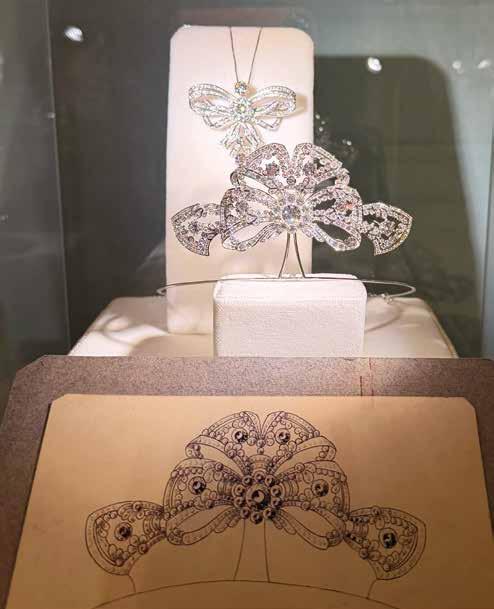
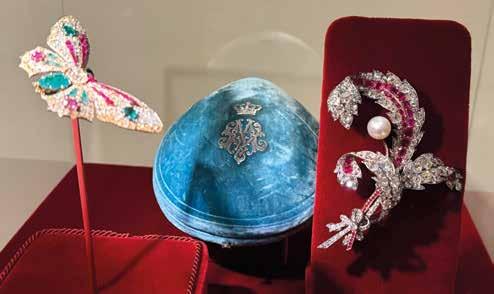
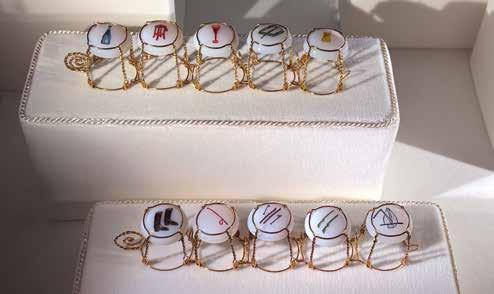
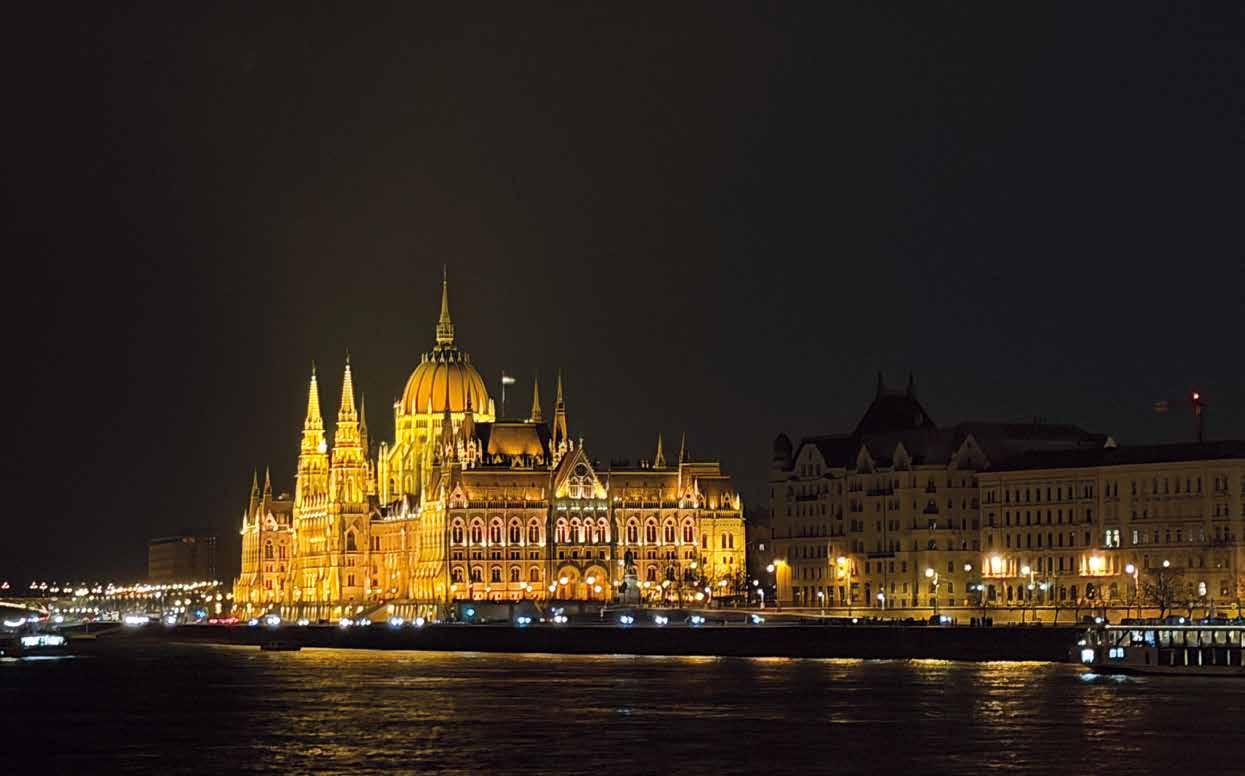
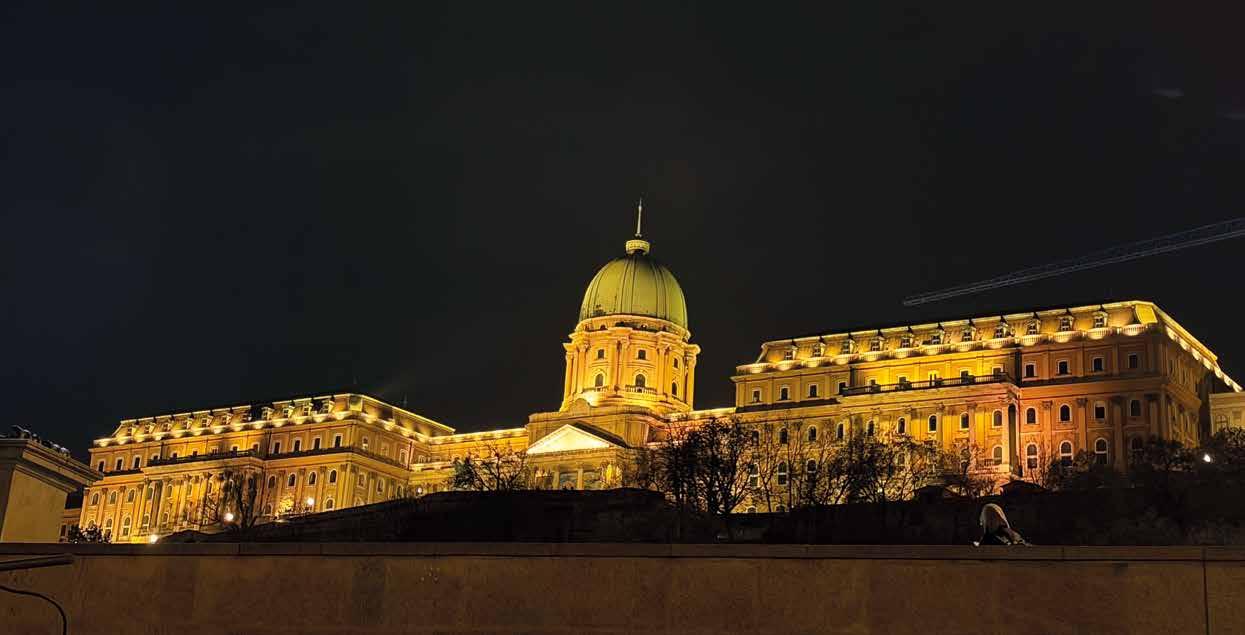
Budapest is a big beautiful city. We’ve visited it several times in recent years, and have already seen most of the main tourist attractions. This time, however, the weather greeted us with cold rain – and in Hungary, that kind of weather practically calls for a visit to the spa.
As tourists, we chose the most famous option: the Rudas Thermal Bath and Swimming Pool (https://www.rudasfurdo.hu/en).
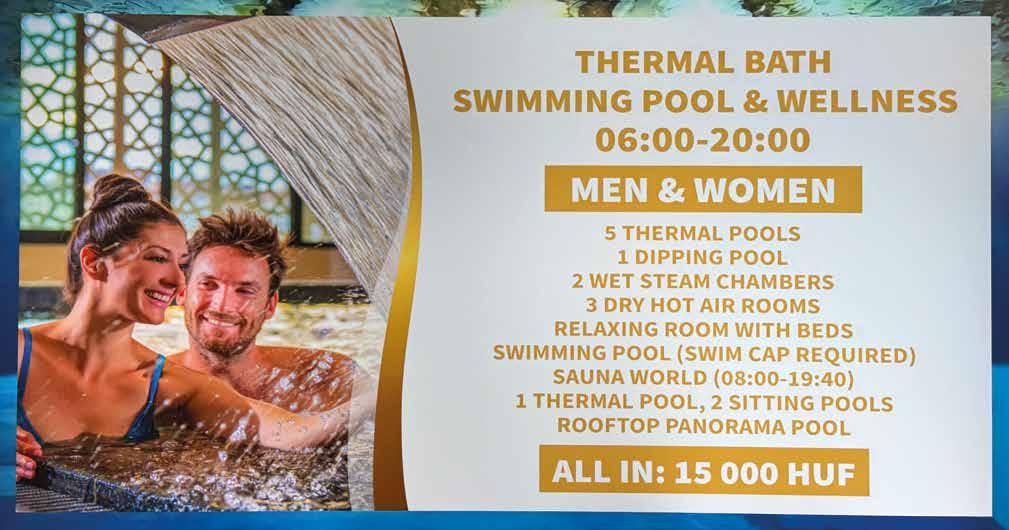
The centrepiece of the complex is the Turkish bath, built in the 16th century during the period of Ottoman rule. Beneath its ten metre wide dome, supported by eight pillars, lies an octagonal pool that still forms the heart of the experience. The swimming pool, which operates as a therapeutic facility and includes a sauna, was added in 1896. From 1936 onward, the thermal bath was visited exclusively by men. In the drinking hall, guests can taste the waters of the Hungária, Attila, and Juventus springs, traditionally consumed for their healing properties.
Rudas is open daily from 6 a.m. to 8 p.m., with night bathing on Fridays and Saturdays from 10 p.m. to 3 a.m. During the week, the Turkish bath is separated for men and women, while weekends are co - ed, with bathing suits required.
We visited on a Saturday – a mixed day. It was very crowded, but the complex is large enough that you can still enjoy most of the facilities. Two things, however, did not match what was promised. At the bar, payment was only possible by credit card rather than with the electronic bracelet, which meant having to return to the locker room to retrieve our card. And, more importantly, there were no massage services available. Although all the massage rooms were empty, the reception insisted they were “fully booked”.
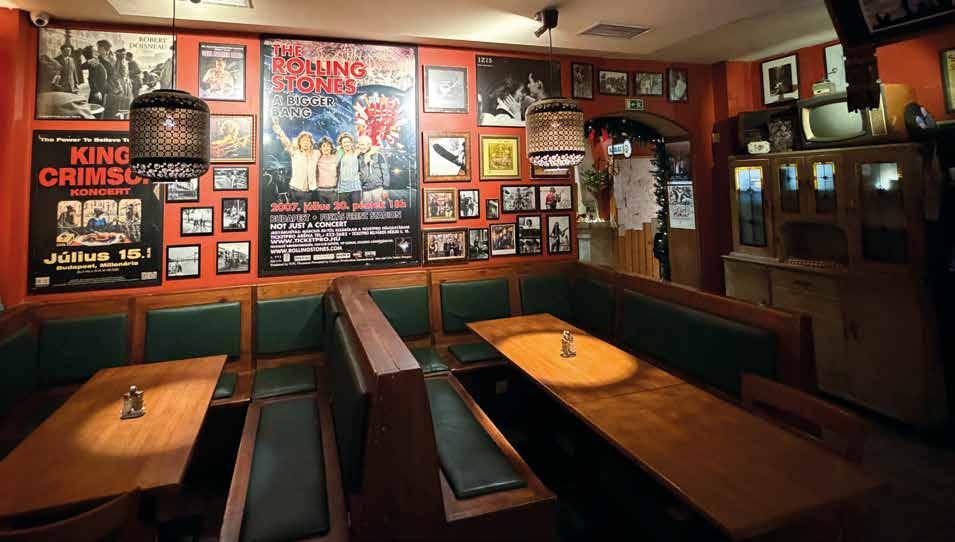
For dinner, we chose a very nice restaurant, Lánchíd Söröző. It offered a nice atmosphere, great design, good food and service – and, importantly, it didn’t feel like a tourist trap.
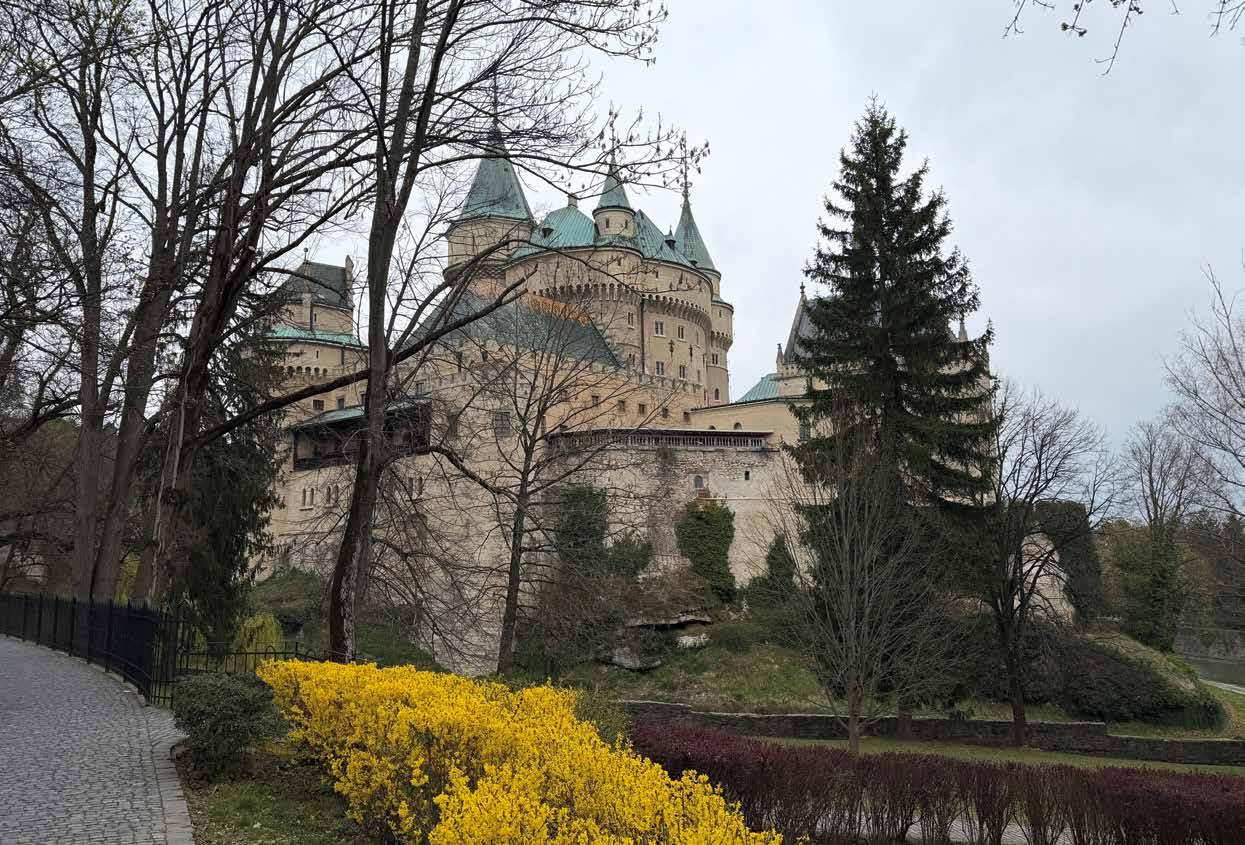
After a pleasant breakfast at the hotel, we left Budapest and began our journey home, with one very important stop along the way – Bojnice Castle in Slovakia. Its distance from Budapest is roughly 220 kilometres, and the drive (through a beautifully green landscape) took about three and a half hours.
Bojnice Castle is one of Slovakia’s oldest and most significant monuments. It stands on a travertine mound above the town, and the first written mention of it appears in 1113 in the deed of the Zobor Abbey. The original structure was a wooden fortification, an evolution of an earlier hillfort, but during the 13th century the Poznań family rebuilt it in stone. At the end of that same century, the castle was seized by the powerful Hungarian nobleman Matthew III Csák.
In 1489, King Matthias Corvinus donated Bojnice Castle and its estate to his illegitimate son, Jan Corvinus. Later, in 1527, King Ferdinand I granted the castle to Alexey Thurzó, whose family transformed it into a comfortable Renaissance residence. In 1637, Emperor Ferdinand III gave the estate to Pavol Pálffy as a deposit in exchange for 200,000 guilders, and by 1645 the Pálffy family had become its rightful owners.
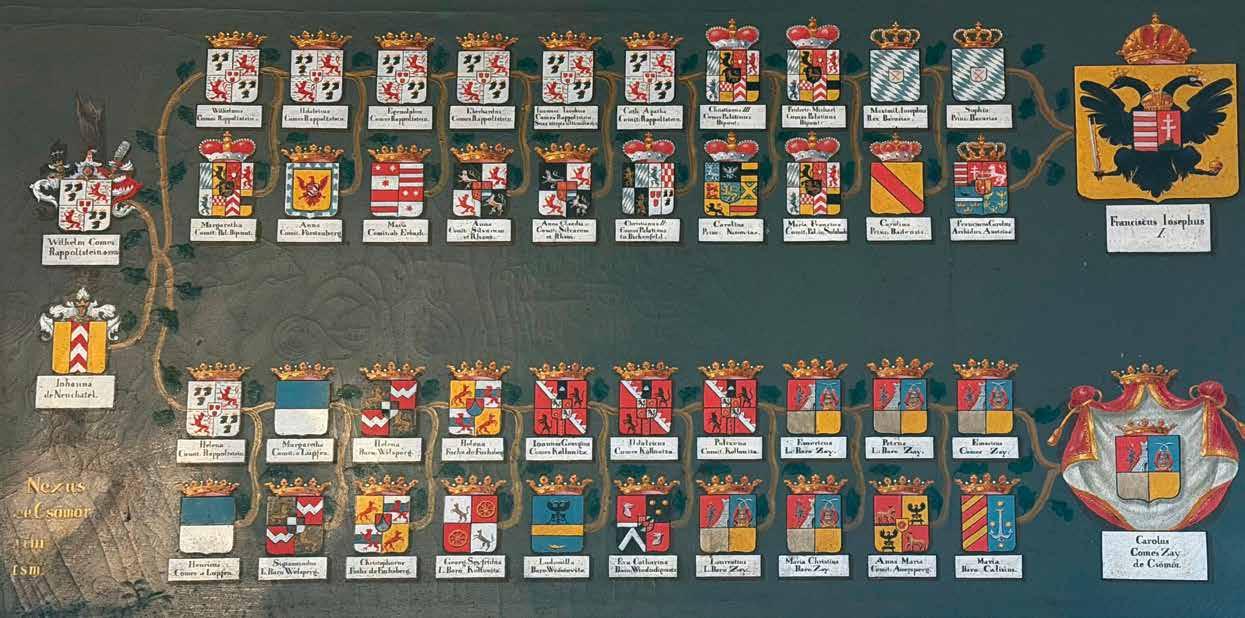
The last noble owner, Count Ján Pálffy, acquired the estate in 1852 and undertook a complete romantic reconstruction of the castle. He drew inspiration from the French Gothic châteaux of the Loire Valley, the papal palace in Avignon, Tyrolean Gothic castles, and early Renaissance Italian architecture. Although the renowned architect Jozef Hubert oversaw the works, he later admitted that he was essentially a tool in the hands of the wealthy count, who personally sketched, designed, and directed every detail. The Neo Gothic transformation took 22 years to complete, from 1889 to 1910.
In 1939, the castle and its surrounding lands were purchased by the Baťa company. After the war, following the Beneš decrees, the property passed into state ownership. A museum – now part of the Slovak National Museum – was established in the castle in 1950.
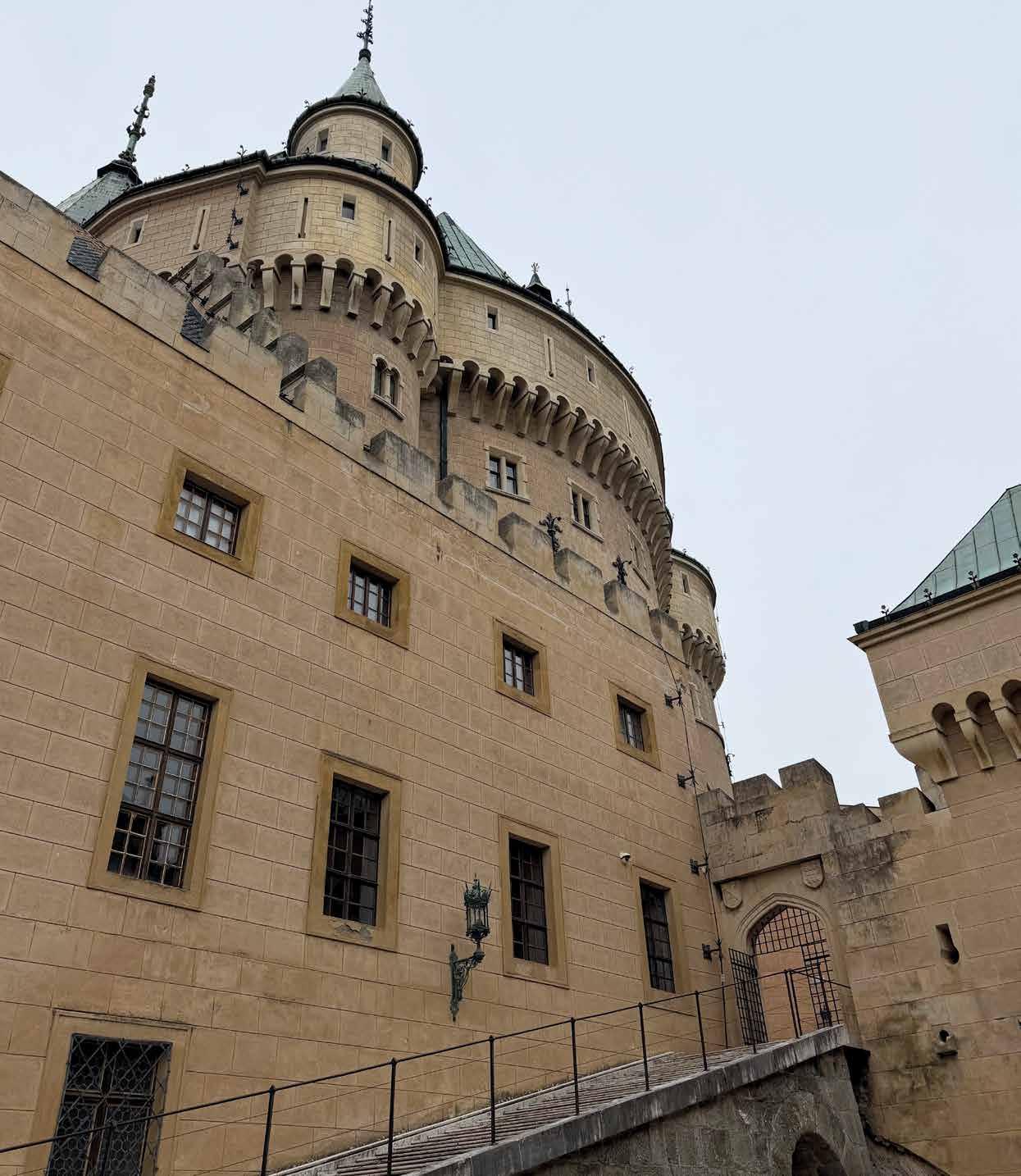
Bojnice Castle also hides a natural travertine cave beneath its courtyards. With a diameter of 22 metres and a height of 6 metres, it lies 26 metres below the fourth courtyard. The cave was formed by water seeping through fissures in the travertine mound, gradually washing away the stone and creating a circular chamber decorated with natural formations. It was first opened to the public in 1967.
More information and opening hours are available at: https://bojnicecastle.sk/en/.
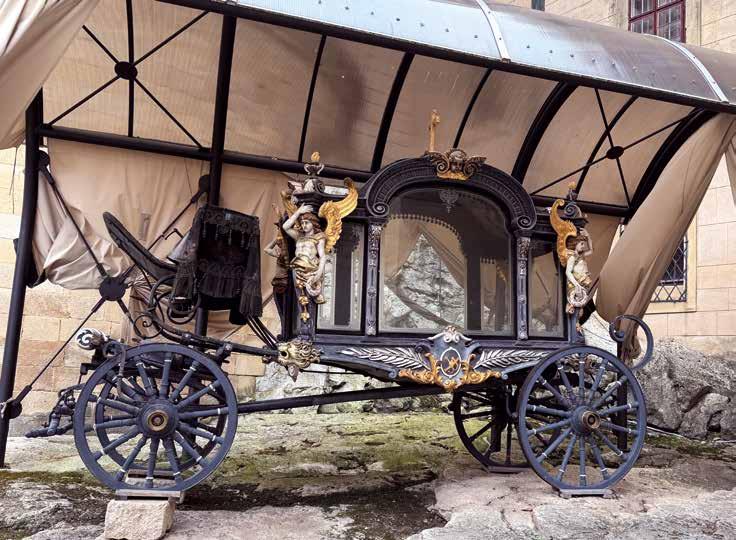
The castle can only be visited with a guided tour, offered in Slovak or English, so it is worth checking the schedule in advance. Our guide, Daniela, was highly experienced and led us through the castle’s beautiful rooms while sharing the stories behind them. The tour lasted about two hours, though you can easily spend more time on the grounds, especially if visiting with children. There is a botanical garden, and even a small theme park nearby.
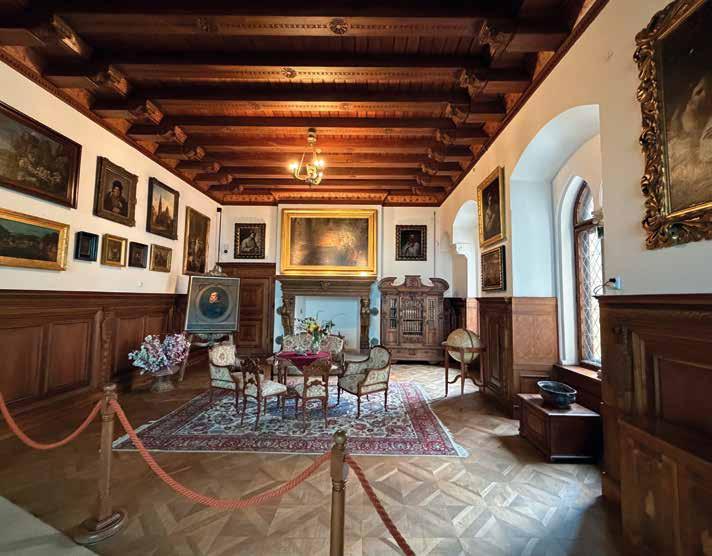
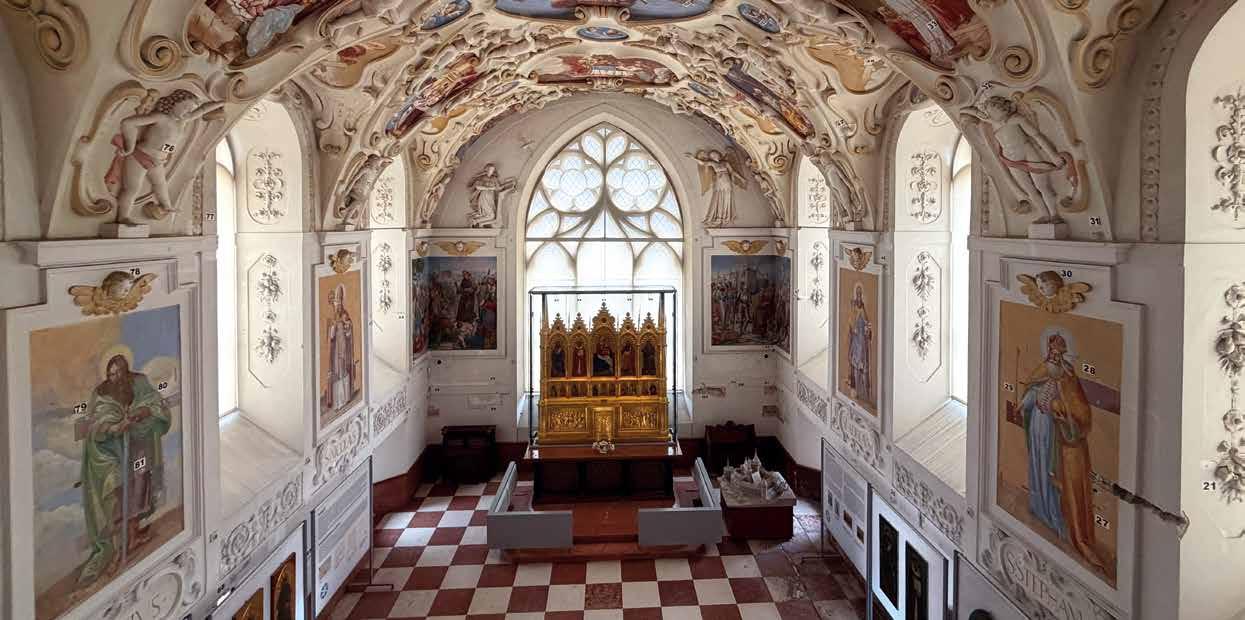
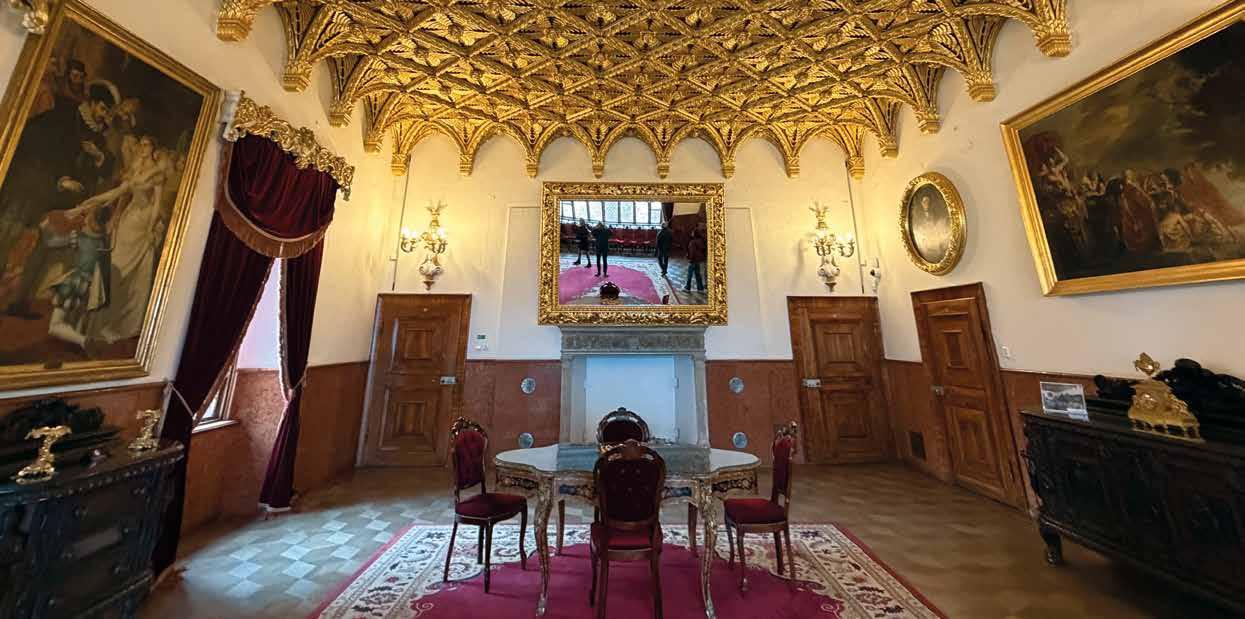
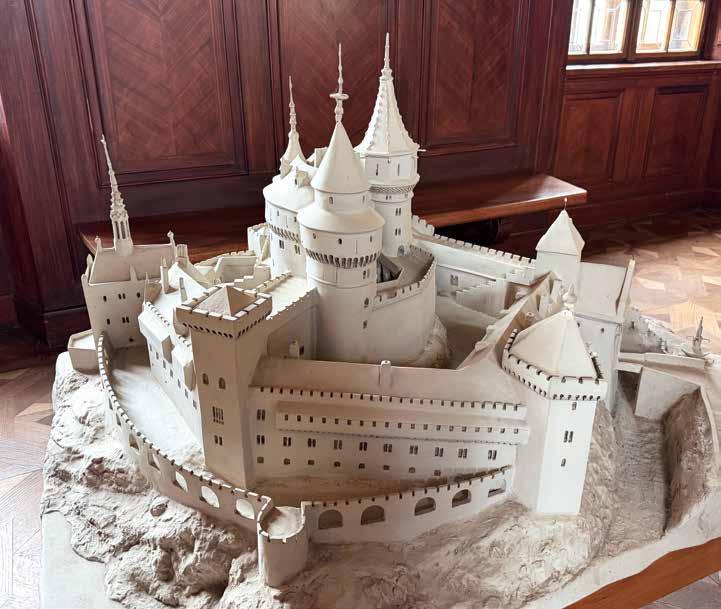
The drive back home to Prague took us about five hours, bringing our journey to a close.
For more photos, visit our online version.
We had a great year online
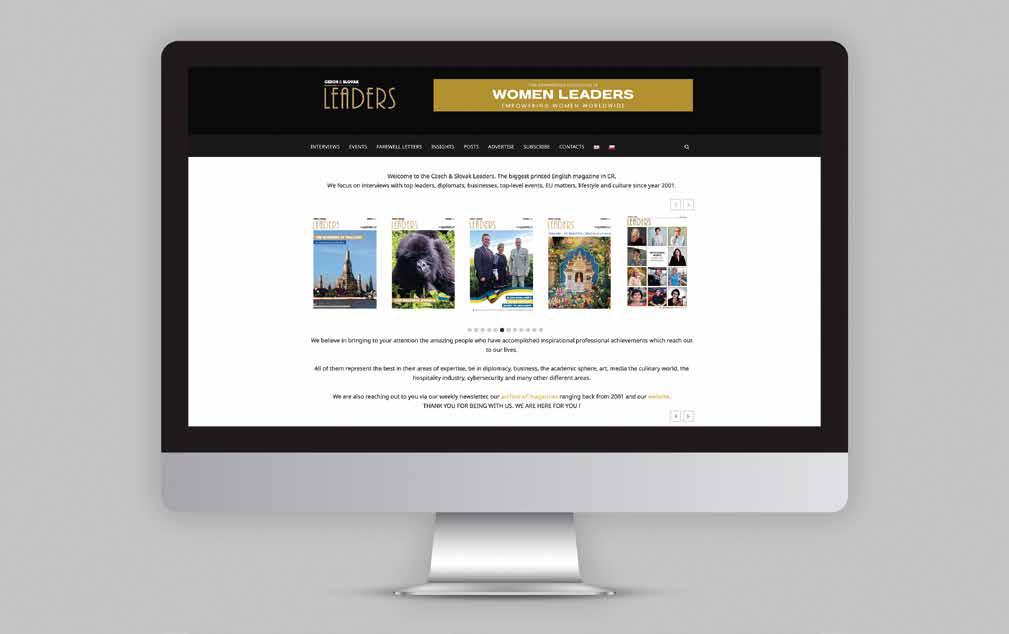
Our magazine offers a wide range of advertising options. Whether in our print magazine, our newsletter, on our website, or across our social media channels, we always make sure your content reaches your audience. Scan the QR code to request our pricelist and learn about our special offers. We look forward to hearing from you!
2025 IN NUMBERS
• 2,854,000 unique IP visitors in 2025 (avg. 237,833/month)
• 14,624,000 pages read in 2025 (avg. 1,218,667/month)
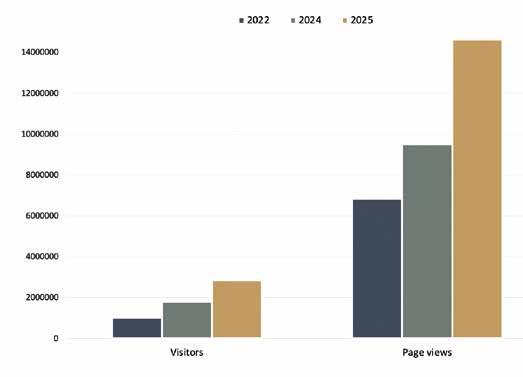
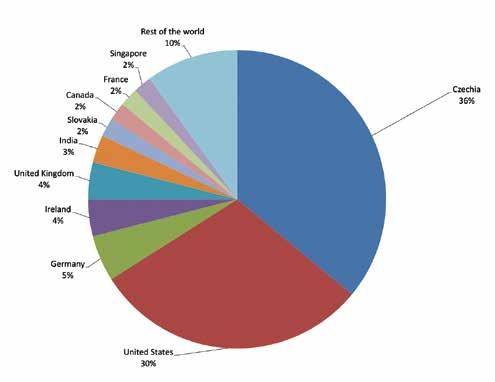

Your Partner beyond Real Es
Sales • Leasing • Property Management Relocation • Investments & Much More!

Buyer’s Agent & Property Management For Expats & International Clients For Expats & International Clients
Real Estate Services Tailored to Your Life in the Czech Republic Relocation, Rental & Sales
Buyer’s Agent & Property Management Whether you’re moving to Prague or already part of the local expat community, we help you find the right home - for rent or for purchase.
www.reallocate.cz www.artofsharing.cz
Buyer’s Agent & Property Management
As your Buyer’s Agent, we represent your interests from search to signing, ensuring transparency and peace of mind. Our Property Management service handles everything - tenants, maintenance, marketing and leasing - so your investment works for you, we guarantee higher yields.