PULSE
SPOTLIGHT: ELLENSBURG FARMERS MARKET pg. 23
SPOTLIGHT: SUN-KISSED pg. 28

WHAT’S THE DEAL WITH KALSHI? pg. 50 PUCKER UP! pg. 50

SPOTLIGHT: ELLENSBURG FARMERS MARKET pg. 23
SPOTLIGHT: SUN-KISSED pg. 28
WHAT’S THE DEAL WITH KALSHI? pg. 50 PUCKER UP! pg. 50
photo by Laura Allen and Zelby Gloria






WRITER • SOCIALMEDIA



WRITER




WRITER
WRITER
PHOTOGRAPHER DESIGNER
DESIGNER WRITER COPY
PHOTOGRAPHER

DESIGNER WRITER


WRITER






story by Tyler Dilts
This school year is nearly under-wraps and summer is coming up fast, if you are unsure about your plans for this summer it might be time to see what PULSE Magazine’s Spring 2026 issue has in store for you.
For those who have been loyal supporters of student media, thank you once again for being here for us. And for those who are new, feel free to stick around for a while — we appreciate you as well. Over my six quarters with PULSE, I have noticed a huge increase in support across campus and online — you all rock! Our staff inherited a wonderful magazine, and during our time as leadership we have worked hard to maintain that fun, creative, exciting and informative magazine that we love. So for those who are in for the ride, we hope that this magazine piques your interest. Let’s get right into it because this edition has a little bit of something for everyone.
Summer is full of vacationing, but as a student you might not be able to afford to travel. Well, in that case it might be time for you to read this next story. “Beyond the ‘Burg” on page six offers insight to CWU’s study abroad program. All students from any major can find opportunities to study abroad, possibly even curated for your specific studies.
If you are not going beyond the ‘Burg this summer, then you will want to look into the Ellensburg Farmer’s Market which brings the streets to life each Saturday morning. On page 23, you can hear from multiple vendors about what the market has to offer — from produce and flowers to culinary creations and art. As part of our spotlight spring into summer spotlight, “SUN-KISSED” is up next. On page 28, this photo spread might burn itself into your retinas with this hot new trend. This article also has some fun facts about sunscreen and those harmful UV rays.
Make sure to get enough to drink this summer, plenty of water is necessary. That being said, who doesn’t want to splurge a little on some fun drinks?
Get ready to “Pucker Up” on page 44 with these trending drinks. The PULSE staff has put together some fun dirty soda recipes for you to try while out in the sun.
Lastly, to top things off — you might have noticed a cultural shift over the last couple of years. Sports are open to everyone and women athletes are proving to us that “Girls Get It Done”. On page 62, this article dives into what this cultural shift looks like from athletes to fans. Once you finish reading this story, it might be time to have a girls game night this summer and mark it off your bingo book on page 21.
I hope you enjoy reading this edition as much as I have, and once again, thank you for supporting student media.



story by Meisner Dunlap and Owen Schuettpelz design by Alex Littman
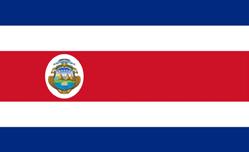
When Mahmoud Alkhazraji, an Iraqi-born CWU student who goes by “Moe,” was in Costa Rica as an exchange student in the fall of 2025, he was surprised by how much Costa Rica felt like home to him.
“It’s a very unique country. It’s me,” Moe says. “It was all green, lush forest, Spanish-speaking, but everything else, the way the streets looked, the way people looked, just everything, the restaurants, the cuisine, ... a lot of the things reminded me of Iraq.”
Moe is one of several dozens of CWU students who study abroad annually.
CWU’s Education Abroad department offers students with various opportunities to study abroad. The organization oversees multiple programs, including third-party programs, exchanges, international internships, facultydirected programs and research abroad opportunities.
Education Abroad works with students who want to study abroad as well as international students coming to CWU.
Over time, Education Abroad has added new options to its organization. “We don’t limit


opportunities for students,”
Education Abroad Associate Director Steve Cook says. “I can’t give you a round number [of how many programs we can offer each year] because, to a certain degree, they’re infinite outside of certain things, mostly related to safety.”
The time duration of each program type varies. Some international students study at CWU for a quarter, others for only a few weeks or for a year. Cook would tell you, as CWU students, that you can do the same in other countries.
Spreading your wings and leaving the nest is something that all college students can relate to. Taking the leap and leaving home for what might be your first time can be challenging, but it is also an exciting adventure. For exchange students, the adventure is naturally amplified.
Studying abroad allows students to go beyond their immediate surroundings and cultural norms, and learn about rich cultures and peoples that they might not have had interaction with otherwise. You might find that in learning about others, you’ll learn about yourself, too.
“I’ve lived in Scotland my whole life, I’ve lived in the same house all my life,” says Emily Hughes, a second-
year sports management major, “but I felt like I wanted to love myself for a bit and spread my wings.”
“[I wanted to] see what real life is like in a different country, how you actually live in the US.” Hughes says, “It’s a lot more different than I thought it was going to be, but I’ve loved it.” Taking the plunge seems hard at first, but once students take that first step, they never regret it.
Studying abroad offers the unique experience of being able to immerse yourself in different cultures, learning much more than you ever would have been able to otherwise. Not only are you able to learn about other cultures, but you’re also given the unique opportunity to learn about your own cultural identity as well.
“I’ve always been Asian American, but I feel like after living in Japan, I’ve been focusing a little bit more on the Asian in my identity,” says EllaBeth Crawford, a fourth-year Japanese language student. “I’ve picked up the daily mannerisms of Japanese people, and I incorporate that into my own life.”
Of course, there can be challenges as well. The biggest struggle for international students is the distance between them and home. Having your friends and family thousands of miles and a few time zones away is not always easy to handle. “Trying to stay in contact with my family back







home, that’s probably been the biggest difference, especially being quite homesick at the start,” says Hughes.
However, Hughes adds, “Luckily, I’ve met some great people here and they’ve become a good support system for me.”
When asked for any advice they’d give to students considering studying abroad, resoundingly, the answer from exchange students is to give it a try.
“It’s genuinely the best decision I’ve ever made. I would do it over and over and over if I could,” says Hughes.
Crawford says, “You can always get that money, the thousands of dollars it takes, but you’ll never be able to say, I studied abroad when I was young.”







A third-party program sponsor is an external institution that operates programs specifically for college students looking to study overseas. In Cook’s words, they “provide students a wider variety of programs they can participate in, both in terms of geographic location, academic areas and even program duration.”
CWU Education Abroad works with about 11 or 12 exchange partners across about five countries. “A lot of the students who go abroad on those programs, or programs in general, are drawn to East Asia, Japan and South Korea in particular,” Senior Study Abroad Advisor Hauck says. But students who are not accepted to exchanges can still apply to thirdparty programs at universities CWU partners with directly.

If you want a hands-on, practical experience in a foreign country, then study abroad internships are right for you. “The sponsors find employers who can accommodate the students’ academic and professional goals. Most students do internships in the summer,” Hauck says.
Faculty-directed programs are CWU classes with an embedded component consisting of overseas travel. For example, Josh NelsonIchido, an assistant professor for the Department of Communication, takes his students to Japan for about two weeks for part of his Intercultural Communication class.
“This program offers students a taste of what’s possible,” NelsonIchido says. “Many students assume Education Abroad is only for language students, but the reality is everyone can benefit from an experience abroad and joining a faculty-directed program like this one is a great way to ignite one’s passion to explore more. Every year, we have students come back from this trip and immediately start seeking more opportunities



Cook understands that many students are cost-sensitive. If you yearn to study abroad, but you are worried about costs, know that Ed Abroad partners with the CWU financial aid office to make sure as much of your financial aid as possible will apply to studying abroad.
Cook encourages students to think about the Gilman Scholarship more often if “they meet certain other criteria, like studying what’s called a Critical Need Language, which on this campus would be Japanese, Korean and Russian.”
Moe had no problem finding the money he needed when he studied in Costa Rica. He originally wanted to go to Australia, but could not afford that specific program. Despite lacking the money needed to study abroad in Australia, he says he ended up really enjoying his time in Costa Rica.
“I was lucky enough that my host mom, she had connections within the assembly of [Costa Rica’s] Congress,” Moe says. “She got me connected with this lawyer who I met up with. He toured me around the Capitol campus in Costa Rica.”
If you have questions regarding Education Abroad, go to Hebeler Hall 102 and ask to meet with either Education Abroad Associate Director Steve Cook or Senior Study Abroad Advisor Matthew Hauck.

CENTRAL WASHINGTON UNIVERSITY
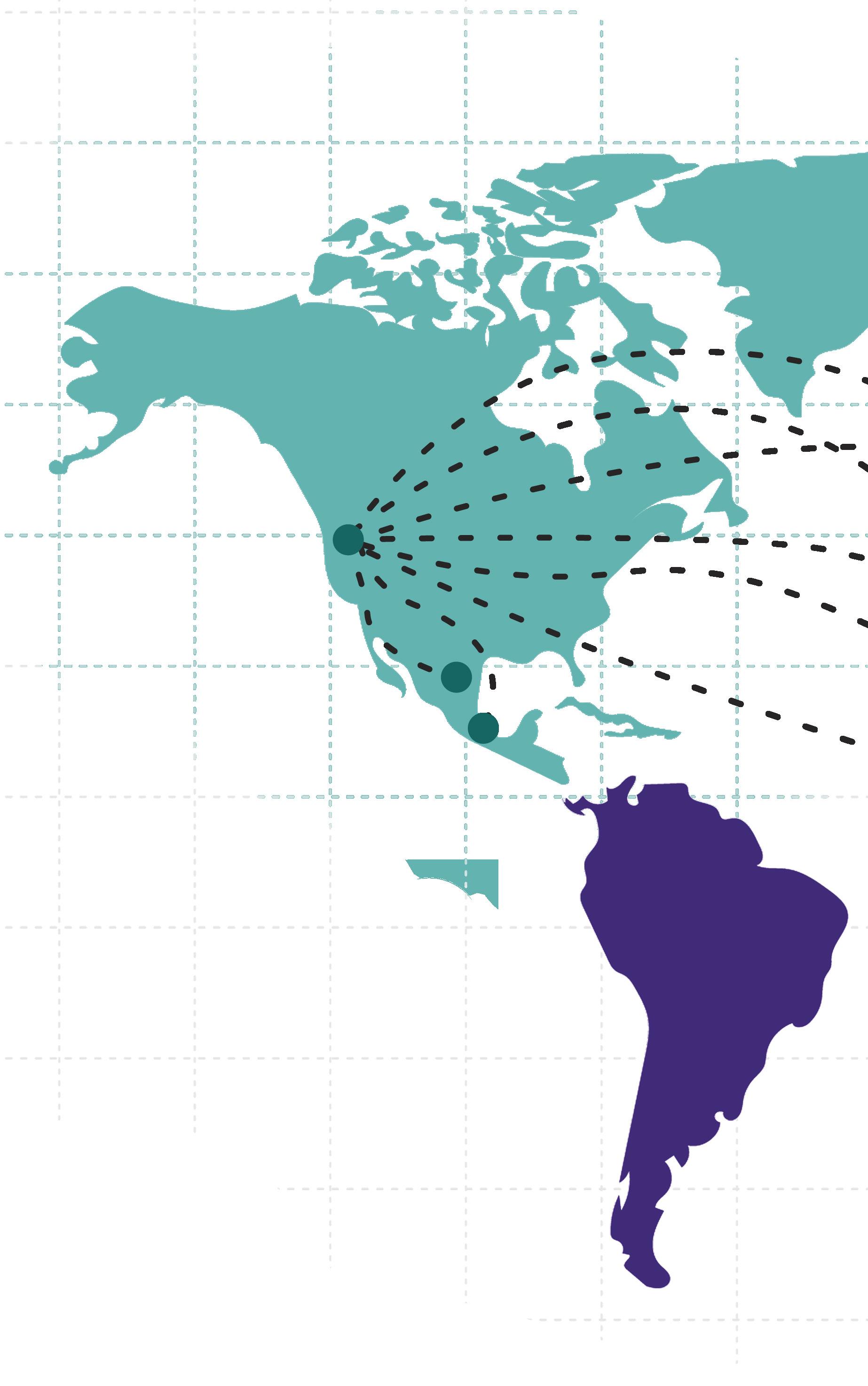
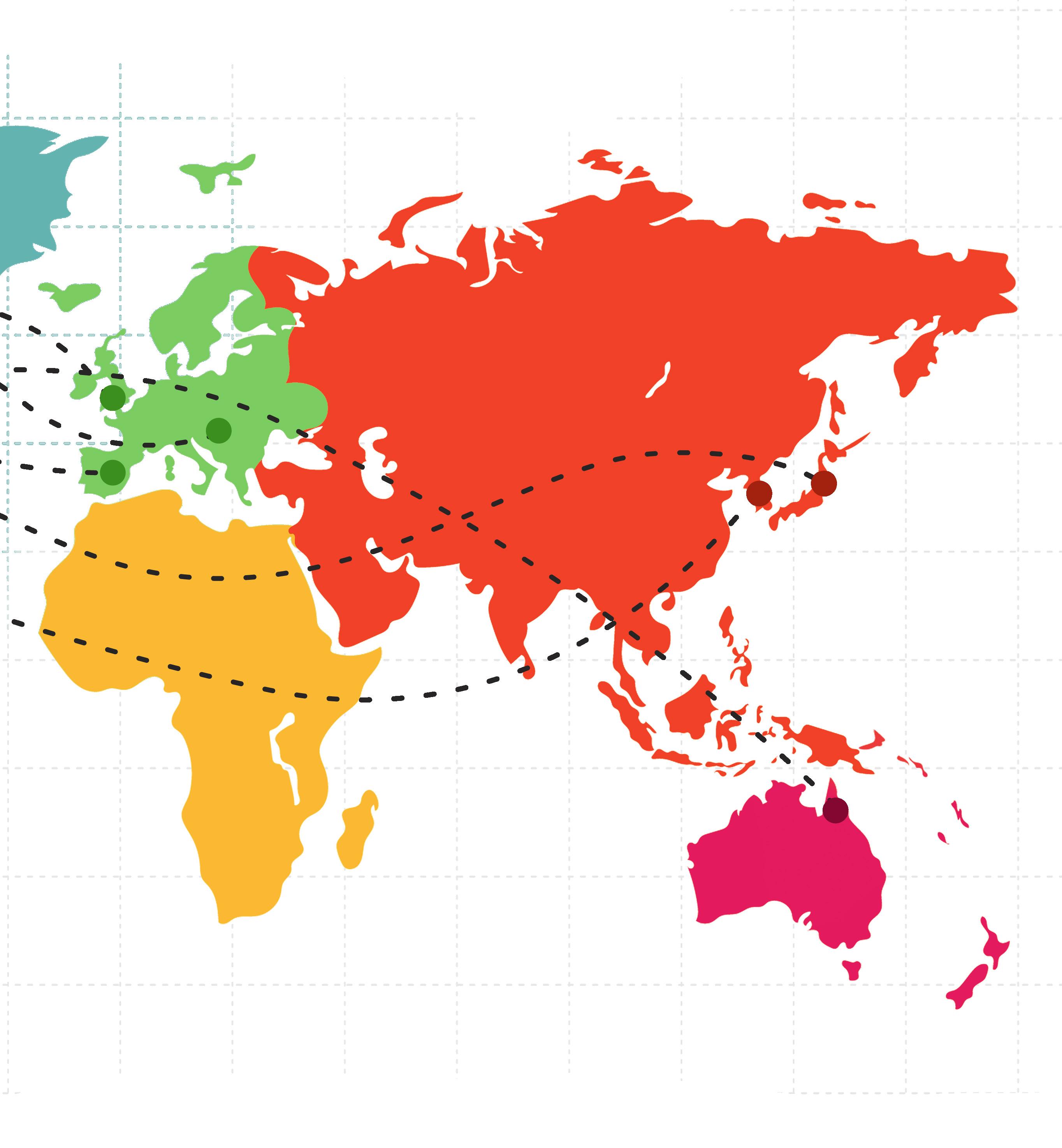
*These flight pathways are greatly exaggerated and not an accurate depiction of real flight pathways




Fairbanks, Alaska
October - November
Mallards enter their mate selection phase and begin their migration south for the winter.
July - September
Post breeding season, mallards undergo a molting phase and enter a brief flightless period.
March - June
Spring is mallard breeding season, and the time of year we see the most mallard activity in Ellensburg, so be on the lookout for ducklings! They pass through Central Washington on their journey North.
December - February
The mallards reside in more southern locations during the cold season, where the weather is less extreme.
Smithers, Canada
Ellensburg, Washington
Tulsa, Oklahoma
Every spring, the CWU campus is graced with the return of everyone’s favorite web–footed friends, the mallard ducks! We see them, we know them and we love them, but they’re only around here for a small portion of the year. They prance and play around the waterways on campus in the sunny, warm weather, but once the sun stops shining and the Ellensburg ground has frozen over, do you ever find yourself wondering…
story and design by
Thea Batch

story by Hope Cox
photo by Laura Allen design by Alex Littman
It can be overwhelming to start a garden. Questions creep up like vines.
What do I need to begin? What plants should I grow? How expensive will it be? How much maintenance is needed? Why are my crops not doing well?
This guide will help you start your first dream garden and watch it blossom.
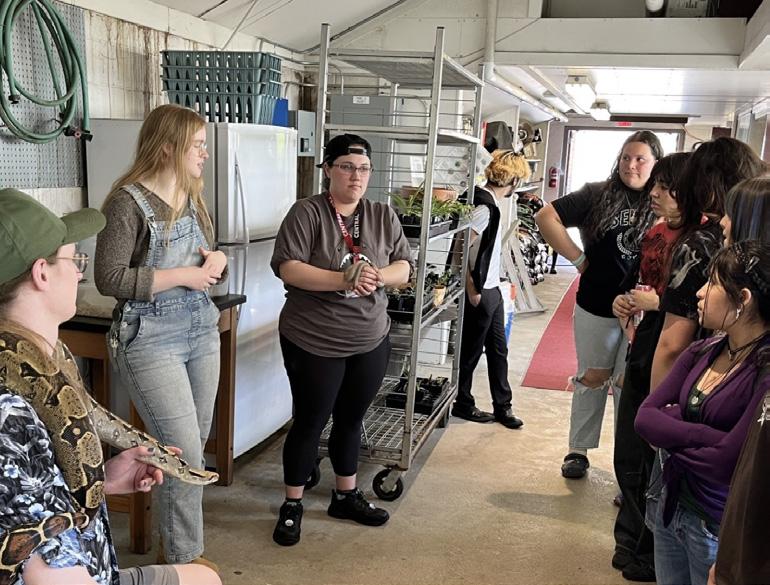
Plants offer a variety of benefits beyond food and aesthetics. CWU Greenhouse and Vivarium Manager Linnea Stavney notes the mental health, human connection to living organisms and environmental benefits of plants. “I think it helps people to connect with plants. It lets them get to know other living things… I think it’s important for humans to be able to connect with other living things,” Stavney says.
“It can bring you joy,” Stavney adds. “It can give you food, plants can filter our air; they make our spaces beautiful.” Plants can improve many aspects of your life, including your mental health. As Stavney notes, many studies show the positive impacts plants can have on people. “There’s been a lot of studies that have come out that have shown that people who live in greener areas with more plants around them tend to be happier.”
Not only can plants improve your health, but they can also have benefits to your finances. Nora Jacobs, an interim farm manager at the Wildcat Farm, emphasizes the affordability of raising crops. “There are so many benefits – so many awesome health benefits and benefits to the environment, but a big one is that you can grow produce very, very affordably,” Jacobs says. “I would say it’s very affordable, especially if you take advantage of something like our community garden.”
Stavney advises beginners to research before they start gardening. This can help prevent disappointment and avoid harm to plants. “I definitely recommend researching what’s best for your area. If you’re trying to grow something outside, you want to know what zone you’re in, so you know what time of year is best to grow certain crops,” Stavney advises. “If you’re growing something inside, it’s less important, but you still want to take into consideration your environment. How much sun do you get in your house? How often will you remember to water your plants?”
Knowing where to acquire your plant knowledge can seem daunting at first. Stavney and Jacobs share their tips to find reliable sources.
Stavney recommends gathering your research from reputable sources such as colleges, master gardeners, museums, well-established plant nurseries and botany stores. Plant forums and social media are places where you can get information; however, it is important to doublecheck your information if you are not getting it from reliable sources.
Jacobs recommends two great sources for beginners: looking at the back of seed packets and interacting with gardeners in your community. “I think the back of seed packets really are very helpful, and I think we forget about that oftentimes, but they know best about what to expect from specific plants or the specific varieties of what you’ve just planted.”
“Other great resources, coming out somewhere like this [Wildcat Farm] and being around gardeners and people who are practicing gardening and learning about it and asking questions. I think like getting people’s, getting knowledge from other people, I think is part of the fun of gardening,” Jacobs adds. Stavney suggests staying away from AI as a research tool. “Do not trust AI. It is not a reliable source of information.” AI may seem like a good place to get a crash course in plants, but it can give misinformation or misidentify plants, so it is important to doublecheck any information you get from that source.
Stavney notes that gardening can range from being very cheap to expensive, depending on how you source your materials. Stavney suggests ways to acquire inexpensive materials. “You can use old containers, like a cottage cheese container. I recommend getting a pot that can drain those.
So you would want to take your container, poke some holes in the bottom, and then put it into a dish that can catch the water; that way, the roots don’t get super soaked. You can put it on your windowsill.”
Stavney adds, “You can get grow lights pretty cheaply, too. If there’s not enough light in your dorm, which I know sometimes happens.” You don’t always have to go out to purchase new materials for your garden. Sometimes, you can reuse old material lying around your home to save money.
With so many plant options to choose from, it can be hard to know which plant to grow. Stavney and Jacobs give their plant recommendations.
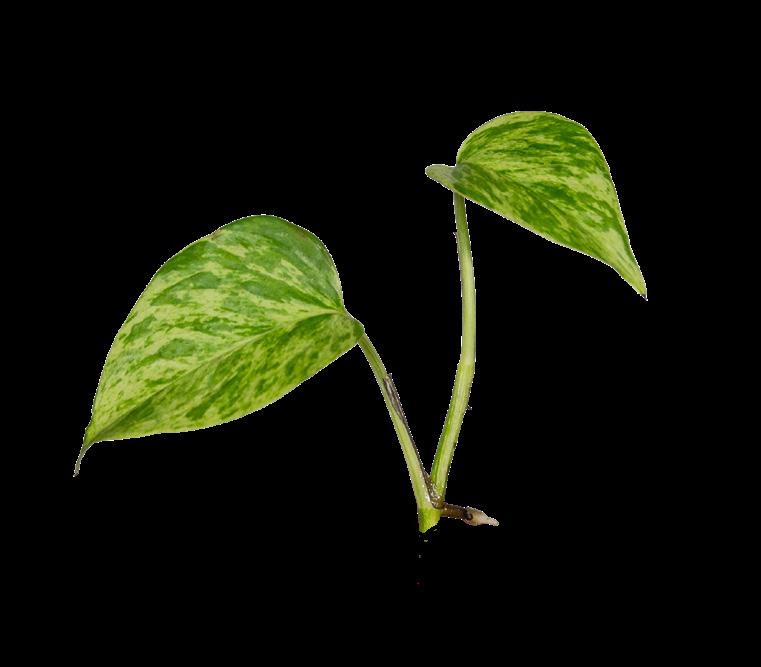
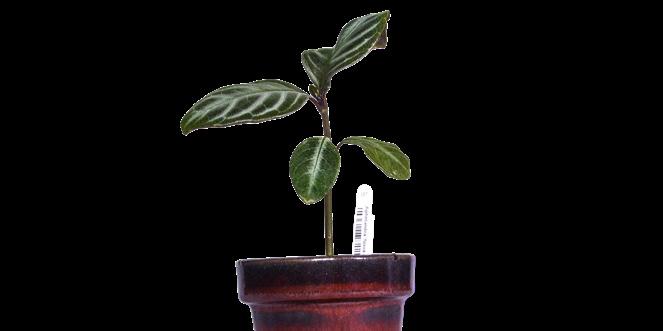
If you are looking for beginnerfriendly or low-maintenance options for aesthetics, Stavney recommends starting with succulents, pothos and cacti. However, if you are planning to start a garden for food, Jacobs and Stavney both highly recommend planting herbs, green onions, carrots,
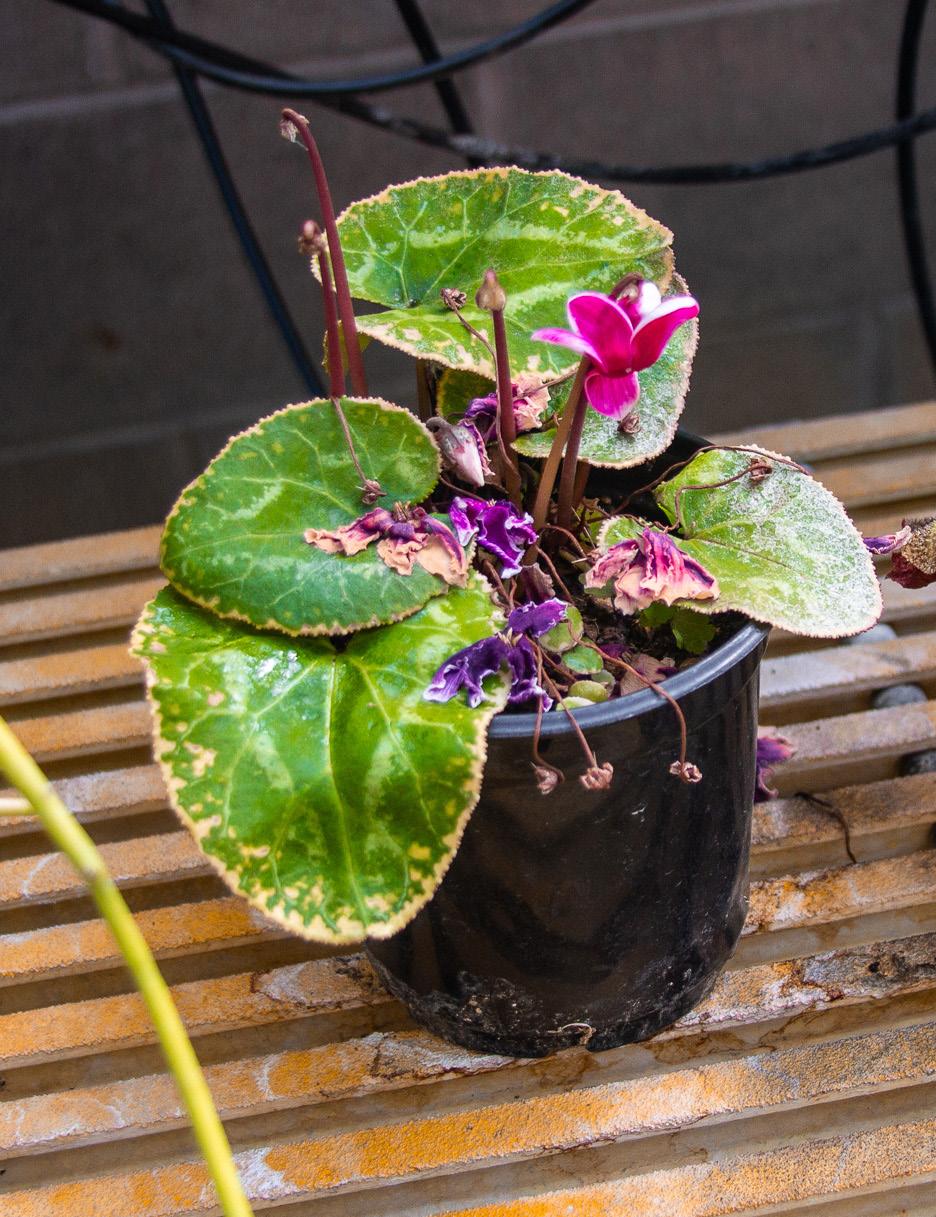
Some plants considered pet-friendly include spider plants, baby tears, African violets, catnip, bird nest ferns, lipstick plants and Boston ferns.
Dorms and apartments are often small spaces, which can limit your ability to start an indoor garden. Gamache and Stavney both suggest starting small with one or two small plants and working your way up. “But if you wanted to do it like in your apartment, maybe just get an easy, one easy plant to start with, and don’t spend a ton of money on it and just see how you do with it first. See if it’s for you, and if it is, then you can get another one. Do a lot of research too. I think that’s important,” says Alex Gamache, a third-year biology major at CWU.
Gamache also recommends that students look into campus resources for gardening before they dive headfirst into their mini garden.“First, see is there something like the resource we have, the Wildcat Farm, because you can really have somebody teaching you about it. You have all the tools provided, and everything provided to you through a resource like that, or

Gathering Your Seeds:
Choose high-quality seeds from reputable sources, such as botany stores, farm supply stores or local gardening centers. You may also harvest seeds from other plants in your garden or store-bought vegetables and fruits.
Preparing the Seeds:
Review the planting instructions on the back of the seed packet or conduct online research before planting. Some seeds have hard coatings and require light scratching (scarification). On the other hand, some seeds will need a cold treatment (stratification) to germinate.
According to PennState Extension, garden soil and compost may not always be the best materials to use because they could contain weed seeds or pathogens, and are not able to aerate as well as needed for successful propagation. Other materials that can be used during propagation are water (for leaves, stem tips, branch tips, and stem sections), sand, vermiculite, perlite and bark.
It is crucial to start with a healthy plant.Make sure to stay away from
Check the back of the packet for the planting depth. If there are no instructions for seed depth, then plant it twice the seed’s width. Plant the seed in a sterile seed-starting mixture that drains well. You should be able to find this at most stores that sell plants for around $5.00 to $15.00 per small to medium-sized bag.
It is important to maintain a consistent moist environment and provide indirect light (window sill).
A warm environment is important; however, it is crucial to ensure the seeds do not dry out. If the seeds dry, their coats may harden, preventing them from germinating.
After the seedlings’ true leaves (the second set of leaves) sprout, they are ready to be transplanted into larger containers or into the garden.
stems that are soft yellow, black and mushy areas, which can be signs of an unhealthy plant. Cut a 2 to 6 inch portion depending on the stem wood type, ensuring there are at least two nodes (where the leaves attach).
Remove the lower leaves that may come in contact with the rooting hormone. You can buy the rooting hormone online or at a nursery, and it typically comes in a liquid or powder form. Dip the cut end of the stem into rooting hormone, then take a pencil or small stick, inserting it in your growing media before placing the stem in.
Make sure to keep the medium moist to prevent it from dying out. You can use plastic wrapping (a bag) to loosely cover the stem cutting to ensure a moist environment. Place
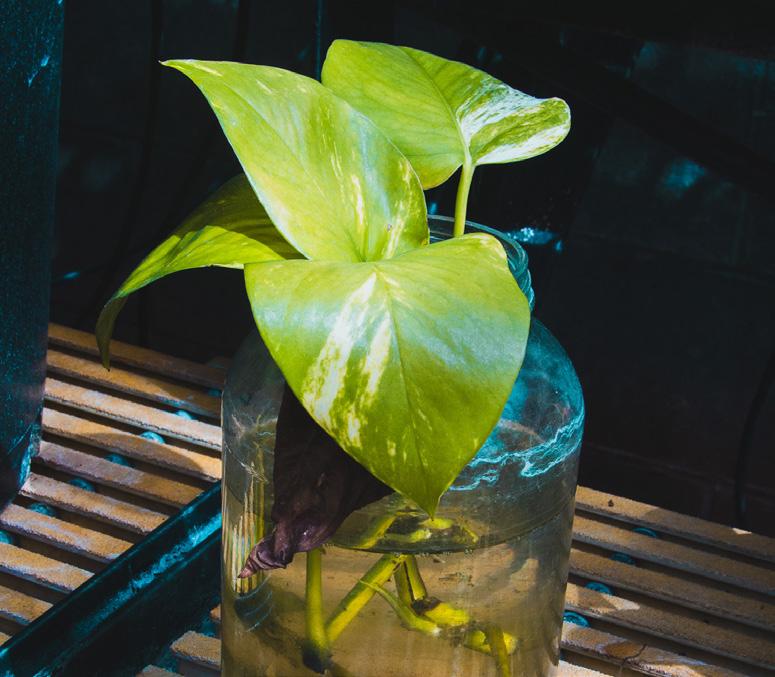
the cutting in indirect light, such as a windowsill.
Cut a healthy leaf from a plant, leaving a small stem that is strong enough to support itself. Dip the tip of the stem in a small amount of rooting hormone before placing it in water or another type of growing media. Ensure a moist, warm environment similar to the stem cuttings.
Sometimes plants do not do well, and it is important to know the signs before it’s too late. Stavney offers some advice on how to tell if your plant friends are unwell.
Pests are one of the many aspects you need to watch out for when caring for your plants.“If you see little insects, the little white fluffs, little webs, spots or browning parts, you might have a pest. It’s natural for some leaves to kind of brown and die off, but if you see a lot of that happening to your plant, or a new leaf grows, and then it immediately starts looking off, then you might have pests,” says Stavney.
Watering your plant is one of the tricky aspects of plant health. Oftentimes, you might overwater it or underwater it. These are some signs Stavney suggests to keep an eye on. “As far as watering, it might get droopy, kind of crispy, sometimes a little bit yellow, but yellowing can also be a sign that the plant isn’t getting enough nutrients from the soil,” says Stavney.
Sometimes plants can get sunburned if they get too much light. You may think your plant needs a lot of sunlight; however, you might be giving it too much. “And then also, if the leaves turn darker, like a reddish color, sometimes it means it’s getting too much sunlight, plants can get
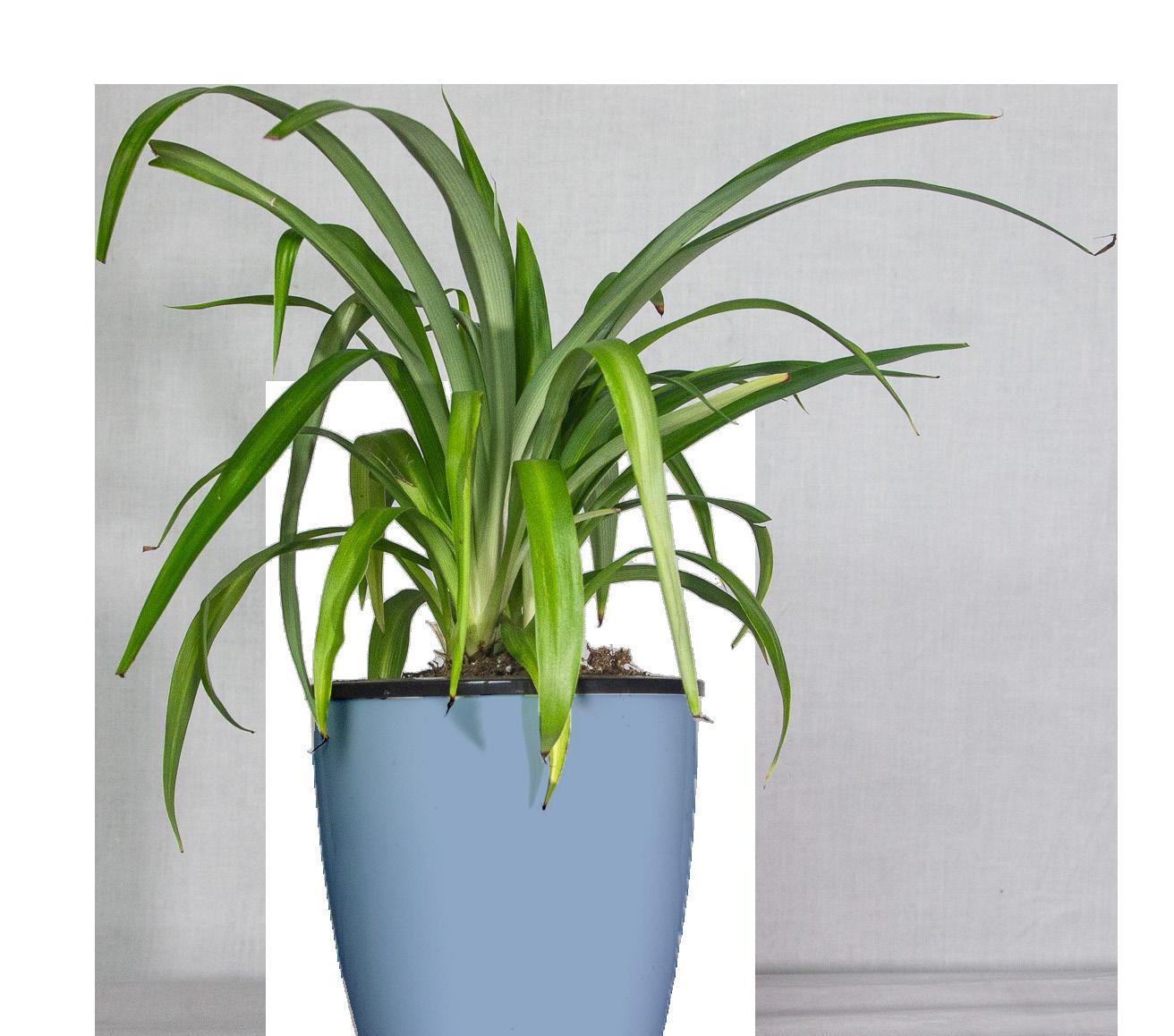
like people can,” Stavney says. “But plants can get burnt, and if they are producing a lot of red pigments, usually that means that they’re getting too much sun, and you need to cool down the line a little bit.”
There are many options for students and community members to get involved with plants on campus, especially for beginners who want to try gardening as a hobby. The Wildcat Farm offers volunteer opportunities for the community, especially during the fall and spring. The farm also loans out small patches of land to students and community members, which they can reserve to start their own mini garden.
The Biology Greenhouse is open to the community every Friday from 1 to 3 pm., including during the summer and preview days. The Biology Greenhouse offers the community expert advice from staff, tours and some free plants. “I really recommend coming to look at the plants we have. … We also collaborate every year to do an indoor gardening workshop in the springtime. So you can come learn how to plant seeds, how to propagate plants, and do it hands-on, instead of just listening to me talk. You can come learn from us,” Stavney says.
Plants can be tricky to get a sense for, but don’t let that stop you from trying to start your dream mini garden. “A lot of growing plants is trial and error, so just go for it, see what works, and kind of learn from your own mistakes,”



story by Amyah Amezcua
photo by Amal Dahi design by Roselyn Sanchez
The door closes and the ceiling dissolves into stars, constellations drift slow and wide across a domed ceiling while soft music fills the air. Your seat reclines and the outside world disappears, immersing you in the sky above. Most students have never even thought to open the door. This is the Lydig Planetarium.
The Lydig Planetarium is not the only secret CWU has been keeping. These spaces have been here the whole time — hiding in plain sight while most students keep circling the same overcrowded spaces. These are just a few of the best study spots available to all students, regardless of major or year. PULSE asked students where they go when they need to focus, reset or simply escape for a while. These are some locations you might just want to check out.
Nestled away in Black Hall, the brand new Multicultural Center (MCC) is an underrated study spot that most students walk right past.
The MCC offers a wide variety of spaces, including study rooms that are reservable and private enough to make you feel like you have the entire space to yourself. This location also has a Resource Library and shared organization spaces. For something quieter, there’s also a Prayer and Reflection Room — a space that Mariah Gilmore, a second-year biology and STEM teaching major who works in the MCC swears by.
“It is entirely insulated, so you can’t hear anything when you’re in there,” Gilmore says, “it is so quiet, you can hear yourself breathing.” Gilmore uses the room to decompress and refocus between classes. Whether you need a private space to study, a quiet room to gather your thoughts or a place to simply exist without the noise of campus humming in, the MCC offers something for everyone.
In a low-traffic area of a bustling building, there is a bright, open and quiet nook to study. Plants soften the space, moveable whiteboards and dry-erase markers sit ready and the floor-to-ceiling windows frame a great view of campus. This study spot is located on the second floor of the Health Sciences building.
Lupita Silva, a first-year nutrition graduate student who stumbled onto the spot during her freshman year, describes the vibe as refreshing.
“There’s a lot of plants, there’s the big windows — during the later times of the day, the sun will hit and it’s relaxing,” Silva says. “It just sets you in a mood to really stay productive.”
Hidden inside Discovery Hall, the planetarium is a domed, dimly lit room, with theater-style reclining seats that provide a perfect view of the stars and planets on the ceiling. It is typically empty, completely free and one of the most unique places on campus to sit down and unwind.
“It is calming, seeing stars and planets above you in a large dome,” says Moises Rodriguez, a second-year transfer family and consumer science education major who first discovered the space through a campus club. “You don’t usually get to sit in a spot with stars, music, and dim lighting and have it open just to sit and decompress,” says Rodriguez. The planetarium has varying hours, but is open regularly for visitation.
Shaw-Smyser Hall carries a reputation that keeps most students out before they ever step in. It is the College of Business building and if your major lives somewhere else on campus, it probably never crossed your mind to wander inside.
When studying gets to be too much, a ping pong table and mini basketball hoop sit ready for a quick reset. Comfortable couches, desk space and a view of Barge Hall that borders on cinematic, makes it one of the most comfortable spots on campus. The lounge is open to both students and faculty. It is quiet, cozy and almost always empty.
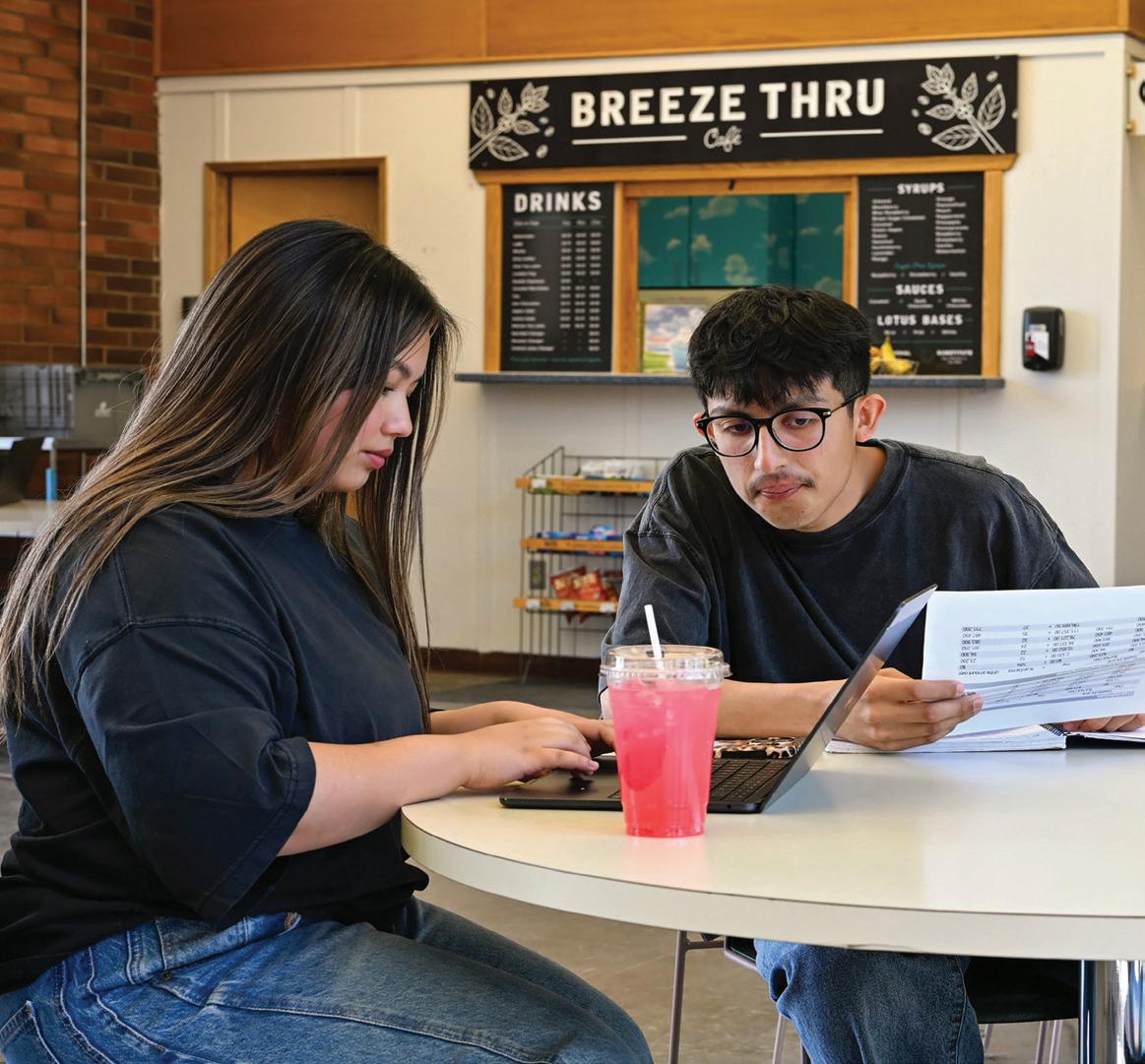
You have likely passed under this location and didn’t even know. Perched on the elevated walkway connecting Michaelson and Randall Hall, the Breeze Thru Cafe hovers above the daily rush of campus life below.
Alex Sanchez, a third-year senior accounting student, found the spot while looking for a new cafe to try. Now it is one of his go-to spots on campus. “You’re able to get a lot of natural lighting and it’s usually not too loud,” Sanchez says. “Even at busy hours, it’s pretty easy to find a seat.”
Inside, the space is open with a variety of seating, lots of natural light and a noise level that sits comfortably between lively and calm. The space also has a printer on site, which means you can wrap up without having to pack up and move, making it practical and comfortable. The Breeze Thru Cafe also has a variety of coffee, energy, tea and food options to keep you fueled through even the longest study sessions.
These five spaces are just a starting point. CWU’s campus is full of places that most students never think to explore — lounges tucked into upper floors, quiet rooms behind unmarked doors, spots that reveal themselves only to the curious. The best study and quiet spaces are not always the most obvious ones. So the next time the SURC feels too loud or your usual spot in the library is taken, try a different building, floor or corner.
Push open a door you have never opened before. You might be surprised by what this campus has been quietly holding for you all along.


Students struggling with overwhelming emotions and self-harm are not alone, and counselors say support and healthier coping strategies are available.
story by Ace Larkin and Grace Thompson design by Taylor Downard
Fall quarter brings the transition to college. Winter can intensify feelings of isolation and seasonal depression. By spring, students are often balancing burnout, financial stress and uncertainty about the future. While the pressures may shift throughout the academic year, one thing stays the same: college can be stressful.
Stress can sometimes lead students toward harmful coping mechanisms, including self-harm. According to Sara Stubbs, a mental health therapist at CWU Counseling Center, self-harm can take many forms and is not always visible. While some behaviors may include cutting or burning, other forms are less recognizable. “For some people that could be depriving myself of food,” Stubbs says. “It could be depriving myself of a community that

feels essential for my well-being.” She also emphasizes that not everyone who self-harms is suicidal.
Michele Gurtler, director of CWU’s Community Counseling Clinic, which offers free mental health services to Kittitas County youth, says younger people often turn to self-harm while trying to cope with emotions they do not yet know how to regulate. “They’re trying to make themselves feel better, and self-harming, non-suicidal, self-injurious behaviors is a way that kids have found to try and navigate some of those things that make them stressed out.”
Gurtler says self-harm can feel “readily available” to students experiencing distress. Unlike calling a friend who

may not answer or turning to a parent who may not be available, self-harm can be an immediate coping mechanism.
Gurtler encourages students to reach out to trusted adults, counselors or support systems when they are struggling.
“If anybody has questions about how self-harming works, how to help with it, how to have skills on board so that they can do something else instead, ask somebody, ask a trusted adult, ask the school counselor, ask somebody that will help you. Let’s figure out something different.”
CWU’s Counseling Center, located in Black Hall Suite 225-230, stays busy year-round, Stubbs says. The center offers individual counseling, group services, behavioral therapy, coping skills workshops and self-care resources for students.
Counselors emphasize that the stressors that contribute to self-harm are often tied to academics, relationships, identity and major like transitions.
Michelle Gurtler, director of CWU’s Community Counseling Clinic, said young people today face constant pressure from school, peers and social media. Students may be balancing assignments and tests while also navigating friendship conflicts, bullying and family stress.
“Bullying, kids saying mean things, being different,” Gurtler said, are all stressors students try to manage daily. She added that social media can intensify those feelings because of the amount of content and influence students are exposed to online.
For college students, stress is often heightened by the transition into a new environment. Sara Stubbs, a mental health therapist at CWU Student Counseling Services, said many students arrive on campus while adjusting to living away from home, managing their own responsibilities and building new support systems.
“Whether home is a really safe, welcoming environment, or maybe home was really not a safe space for them,” Stubbs said, students can struggle with suddenly having to navigate their own well-being and safety.
Stubbs said roommate conflicts, financial concerns and academic pressure are some of the most common stressors college students experience. She also noted that some students face additional challenges related to identity and belonging. Students of color or LGBTQ+ students may feel isolated in unfamiliar environments where they do not immediately see community or support.
“I don’t necessarily feel welcome. I don’t know where my community or my people are,” Stubbs says.
Counselors say learning healthier coping mechanisms is one of the most important ways students can manage overwhelming emotions without turning to self-harm. Gurtler says emotional regulation and distress tolerance skills can help students interrupt harmful thought patterns before acting on them. Intentionally removing items used for self-harm can also be helpful.
One strategy counselors use is encouraging “pleasant activities,” or simple actions that redirect attention and improve emotional well-being. “It might be riding a bike, it might be doing their makeup, it might be taking a shower, it might be baking or cooking something for somebody else,” Gurtler says. She also encourages students to act opposite to negative emotions by choosing activities that shift their mood toward a healthier direction. For example, students experiencing sadness or anger may benefit from spending time outside, talking with a friend or engaging in mindfulness exercise instead of isolating themselves.
“Relaxing and breathing, mindfulness — all of those kinds of skills can be helpful,” Gutler says, adding that many young people who struggle with self-harm experience those urges late at night when they are alone with stressful thoughts. Because of this, counselors often encourage students to create lists of alternative coping strategies they can turn to during difficult moments.
“One of the best things we can do is just start talking about it,” Gurtler says. “There are alternatives. We can help you with this.”

story by Owen Schuettpelz
When was the last time you sat down with a pen and paper to write something — an essay, homework or even just some notes? Chances are it’s been quite a while.
The use of handwriting has declined since the adoption of digital media. Most schools no longer emphasize penmanship, instead switching to typed assignments. While digital writing has many benefits, including efficiency and spell checking, the switch from handwritten to digital has not all been positive.
Missing crucial information because you were too busy writing something said five minutes ago can be frustrating and typing notes practically eliminates that. Having your notes in a digital format, ready to be edited, reviewed or shared with others is simply too good to pass up on for most students.
But the many benefits of typing notes might give you the impression of a fix-all tool. Beneath the surface, this surge in typing and decline in handwriting might have some unforeseen consequences.
CWU Senior lecturer in the English Department, Reka Britschgi says, “When you write by hand, you really have to think about what you’re
writing down because you want to be efficient.” This extra effort put towards thinking, when writing by hand, is a very practical way to comprehend the information you are writing down.
“When you’re writing on paper sometimes your handwriting changes,” says Ali Ünal, CWU assistant professor in the English department. “It actually creates… another neural pathway in your brain that makes you remember what you wrote.”
In 2025, The Guardian published an article addressing the importance of the declining nature of handwriting, “We are far more likely to use our hands to type or swipe. We communicate more but with less physical effort, forgetting the vast evolutionary history that fitted us for physical movement and expression as a means of understanding our world.” As time progresses, sometimes we forget that handwriting was a luxury and a skill that not everyone had. For those who could master the art, more opportunities were readily available for them.
If memory recall and literacy aren’t important enough, “The students who complete my courses with the best results are the people who take notes by hand in class and outside of class,” Britschgi says.
design by Roselyn Sanchez
The use of handwriting is not the only thing declining, but literacy as well. According to the National Assessment Governing Board, which measures student achievement in various subjects nationally, “The 2024 average reading score is the lowest ever reported for 12th grade.”
But this isn’t the death knell of handwriting or literacy. Interestingly, as of March 2026, “Twenty-seven states now have laws mandating or encouraging cursive instruction in public schools,” according to an article published by the National Education Association.
Given the many benefits of handwriting in terms of memory recall and its positive influence on literacy, this is not to say that digitally written notes are useless. What matters when taking notes is the notes themselves.
Understanding the benefits and disadvantages of these two vastly different styles of writing, will allow you to enhance your own note taking abilities, while also not losing touch with the literacy and comprehension factors. The convenience and efficiency of virtual formats leave little to be missed and having notes this way is an amenity in and of itself.
With all this in mind, how will you be taking notes?




story by Grace Thompson design by Taylor Downard
Summer is calling! There are so many fun adventures to try — let’s make a game of it. How many will you check off your list this summer?
The smell of fresh produce flows across 4th Avenue under the warm sun. The smell of food travels through the air, following the paths of people meandering from vendor to vendor. The sound of various instruments and buskers’ voices around the corner gives the street a warm, welcoming atmosphere that draws people in.
Welcome to a typical Saturday at the Ellensburg Farmers’ Market.
Formerly known as the Kittitas County Farmers’ Market, this bustling market is rich in tradition and known for its fresh produce from local farms, baked goods and handcrafted products. It contains a total of over 90 local Washington vendors.
Each year, the Ellensburg Farmers’ Market opens during the first weekend of May and closes during the last weekend of October. During that period, the market is available to the public every Saturday from 9 a.m. to 1 p.m. The following guide will highlight the details of the Ellensburg Farmers’ Market, mostly from the perspectives of various vendors.
Farmers who work at the market grow and sell all kinds of fresh fruits and vegetables you wouldn’t find at any grocery store.
For instance, Hazel Gray Farms and Fernandez are the two Certified Organic vendors at the Ellensburg Farmers’ Market, meaning that they sell exclusively organic vegetables. Hazel Gray Farms’ delicata squash is small and easy to carry. Unlike with pumpkins, you can eat the skin of the delicata squash.
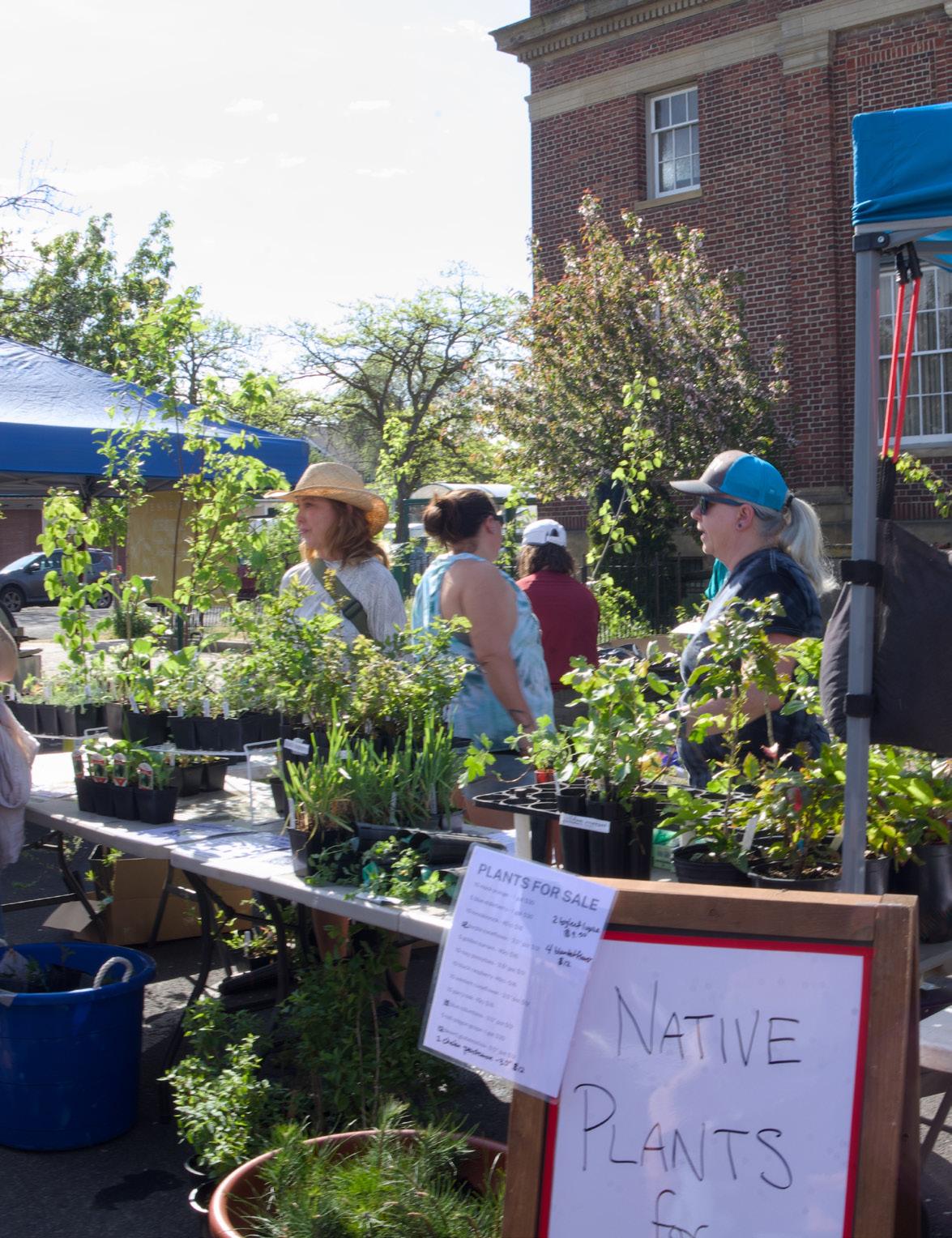
Ahtanum Berry Patch has various types of raspberries and strawberries that taste fresher than those found in the store. In addition, Wild Craft makes huckleberry jam made from fresh huckleberries. Those berries feel firm and look ripe, with their characteristic bright red colors.
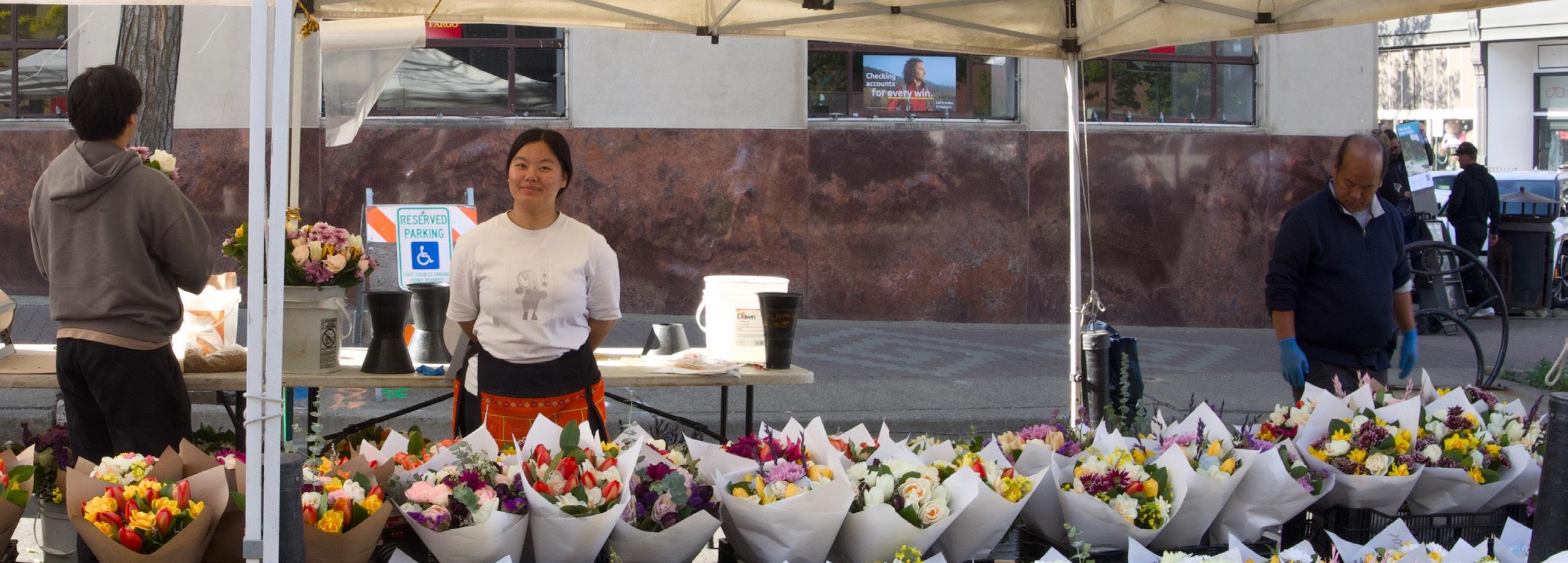
Some of the most popular booths at the Farmers’ Market are the ones that sell flowers. The Flower Frog creates handmade bouquets that you can give to someone special. Vang Garden, which is especially popular among Ellensburgians, is another vendor that does the same. Farm products make up about half of the items sold at this lively market. The other half of the vendors includes processed foods, hot foods, artisans and charities.
Take a look at the hot food and artisan vendors that Pulse interviewed to get a feel of the artsy aspect of the Farmers’ Market, but keep in mind that they are not the only people at the market who sell these types of products. Also, remember that this diverse market would not be
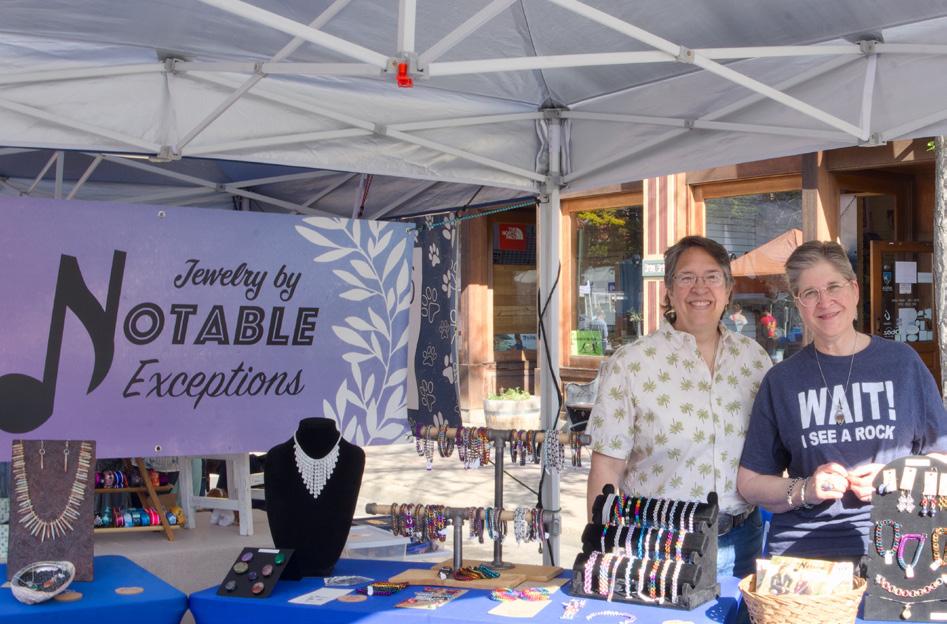
Jennifer Epps and Judy Coder are the co-owners for Notable Exceptions. “We’re doing things that are bright and shiny and fun, but they’re not made out of actual silver and actual gold,” Epps says. “Students who don’t have a lot of money can still afford the stuff that we have. We’re not high-end jewelers or things like that.”
Epps and Coder have each established their own preferred style of jewelry making. “I open them up with pliers and weave them through in different patterns,” Epps says. “[I’m] learning how to create different chainmail bracelets and things like that, bracelets and necklaces.” Epps makes her jewelry out of chainmail, which is made of small aluminum rings.
“I inherited my grandfather’s lapidary shop. He used to cut and polish stones. When we started messing around with jewelry, I was just hoping that I could wrap some of the stones that he had polished so I could give them to my mom and my sisters,” Coder says. “And I kind of got hooked and now we take trips to Arizona in the wintertime and buy more stones and I wrap them in either copper wire or stainless steel.”
Epps says that she can make the same patterns many times, but change the colors and sizes of each bracelet and necklace so each can look different in at least one way. Similarly, Coder wraps each of her stones slightly differently.
Notable Exceptions frequently sees a long line of people at their booth, eagerly but patiently waiting to talk to them about geology. Epps and Coder identify themselves as “Nick Zentner geeks,” referring to the well-known geology professor at CWU. During the coronavirus pandemic, he began sharing lectures from his backyard, discussing the geology of Washington. “His fan base has literally grown to cover the globe,” Coder says.
However, since Coder and Epps stick to using inexpensive
materials for their products, they always tell their customers to save their questions about Ellensburg blue agates for Goldsmith Willie Toth from the Gypsy Wagon Jewelry Company, one of several other vendors that sell handmade jewelry at the Market.
Toth has been a goldsmith for 50 years. When he and his wife, Glass Artist Sunna Kraushaar, who shares the Gypsy Wagon Jewelry Company booth with him, first moved to Ellensburg five years ago, locals began telling him about the Ellensburg Blues Community. These conversations inspired him to start creating jewelry for Ellensburg Blues. The company named itself after the Ellensburg blue agate, which you can only find in Ellensburg.
“We’re pretty well-known in this area for what we do,” Toth says. “One thing is that nobody doing this market has the experience I do, basically two or three years, maybe a little bit more, building jewelry. Probably their experience is primarily silver, whereas I’m coming from traditional jewelry, setting diamonds, building those types of mountings. Then, I’m taking those skills and bringing them over to Ellensburg Blue.”
Toth and Kraushaar have a unique story regarding how they first came across the Ellensburg blue agates. “When we moved here, Willie, as he said, was working for Fred Meyer,” Krushaar says. “But now he gets to really be creative.”
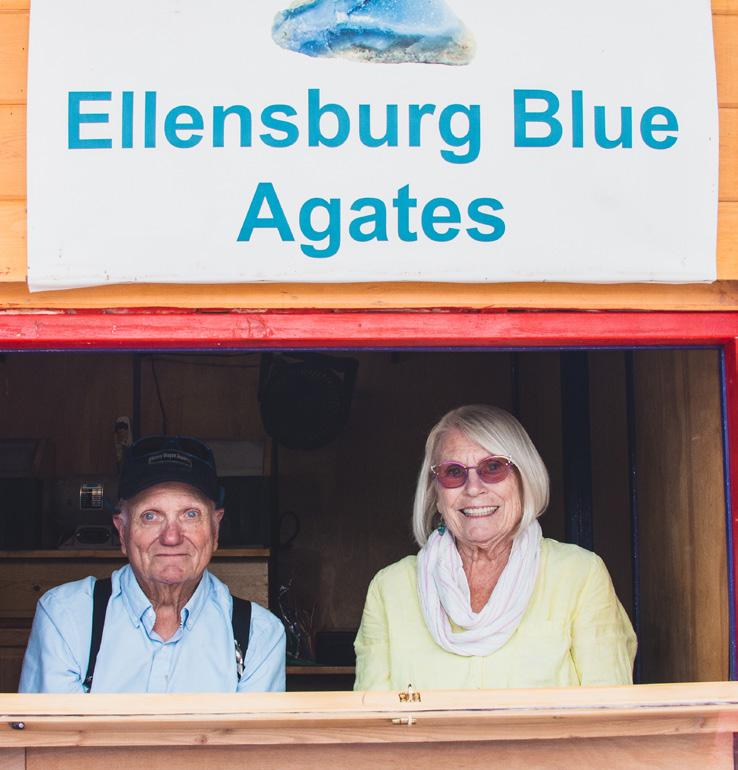
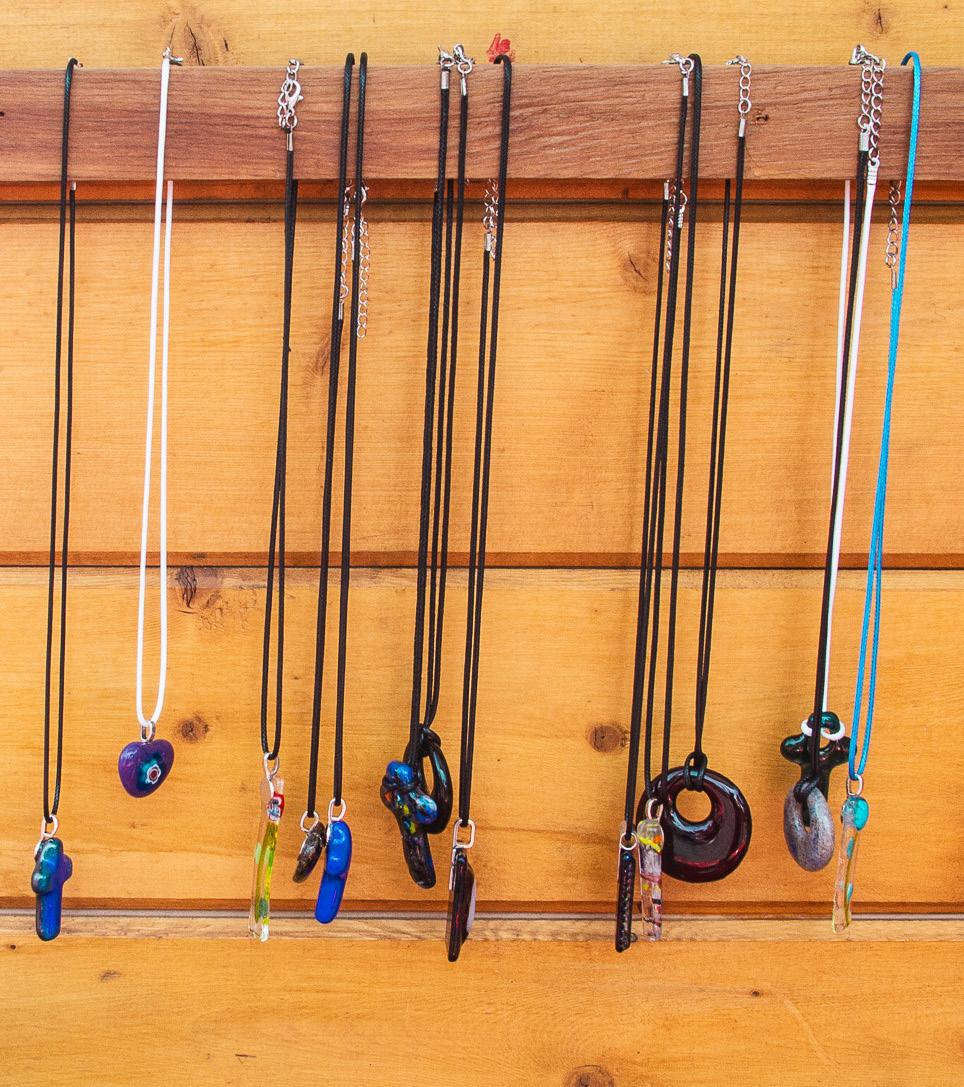
The art aspects of the Farmers’ Market expand to much more than just jewelry. For instance, several musicians, such as Steppe Sisters, regularly visit the Farmers’ Market just to share their songs.
“[The Market is] such a positive experience for people in Kittitas County and we want to add to that. That’s certainly why I want to do it,” says Sue Hammond, the guitarist and percussionist for Steppe Sisters. “We get to see a lot of people we know. We’ve both been in this community a long time and so we get to see our friends and neighbors.”
“People are there to be part of the community. They’ve been there to buy from local vendors and they’re usually in a pretty good mood,” says Candace Hooper, the violinist and mandolinist of Steppe Sisters. It’s in the summer, so it’s usually pretty good weather. It’s a perfect time to bring some music to people.”
The Steppe Sisters play two types of music: old-time and Celtic. “There are a bunch of people who got together to play jam sessions once a month at the Iron Horse Brewery Pub and that was once a month on the last Sunday of the month and a fairly sizable number of people will come to that,” Hooper says. The Steppe Sisters formed out of those jams, which all five band members regularly attended.
But the Steppe Sisters are not the only performers who share their talents on the street corners of the Farmers’ Market. These performers do not busk for the money; they do so just to have fun and give their audience joy. Although the art scene that covers 4th Avenue between Pearl Street and Pine Street on warm Saturday mornings captures the overall culture of Ellensburg, the event cannot be called a farmers’ market without the food.
One popular food vendor at the Ellensburg Farmers’ Market is VVs Cocina, owned by Laura Valle. Valle runs the business with her husband, Valerio Vargas, and their 16-year-old daughter, Jocelyn Vargas. Their business name, VVs Cocina, means Valle and Vargas’ kitchen. VVs Cocina lives up to its name because “we treat everyone as they are part of our families,” Valle says.
“We’re very family-oriented and so we really wanted our name to be inspired by how much we enjoy our family time and being in the Farmers’ Market,” Jocelyn Vargas says. “I love the family time that we spend together.” She adds that “when we also make our recipes and the food,
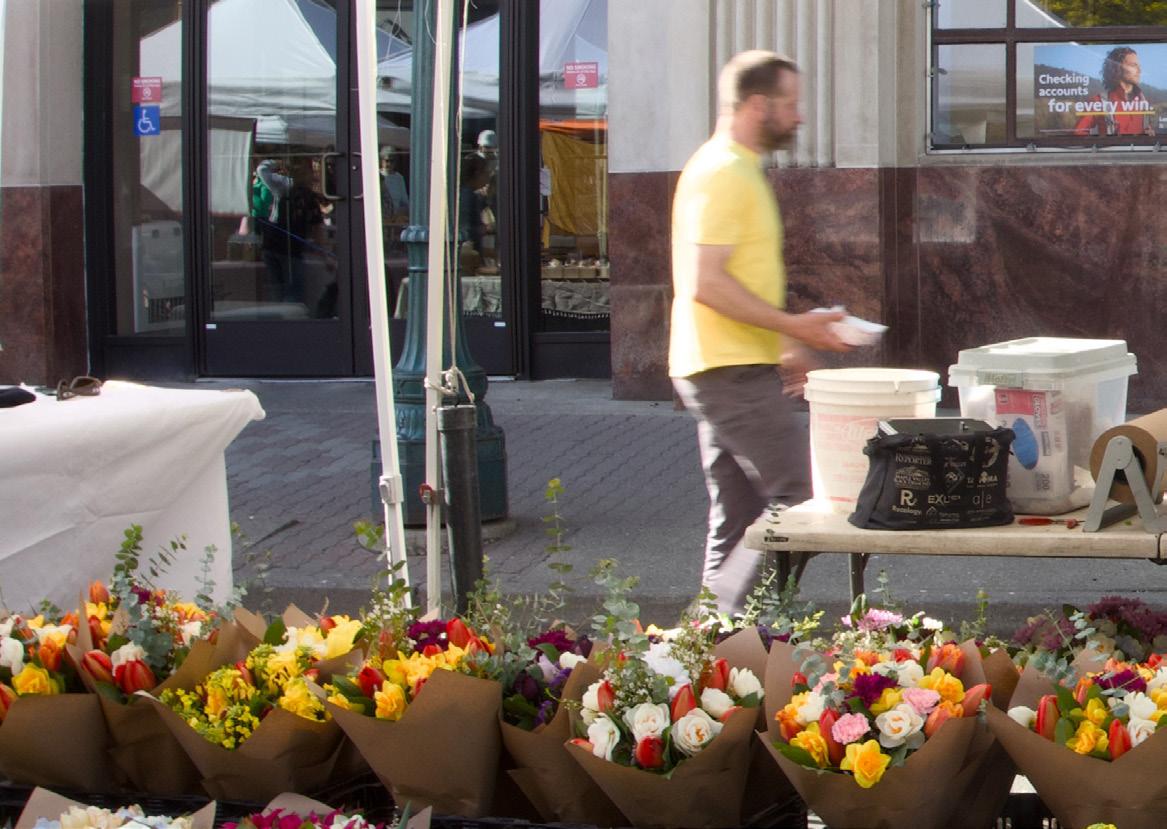
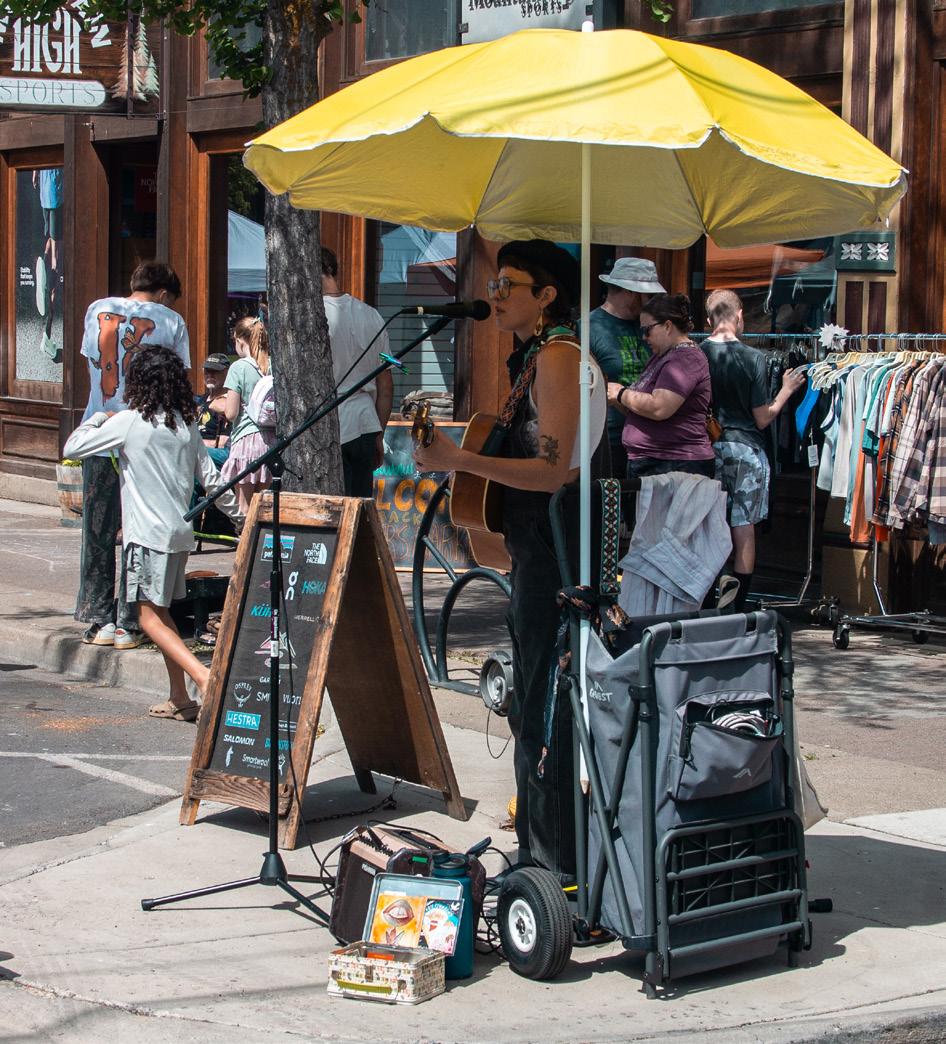
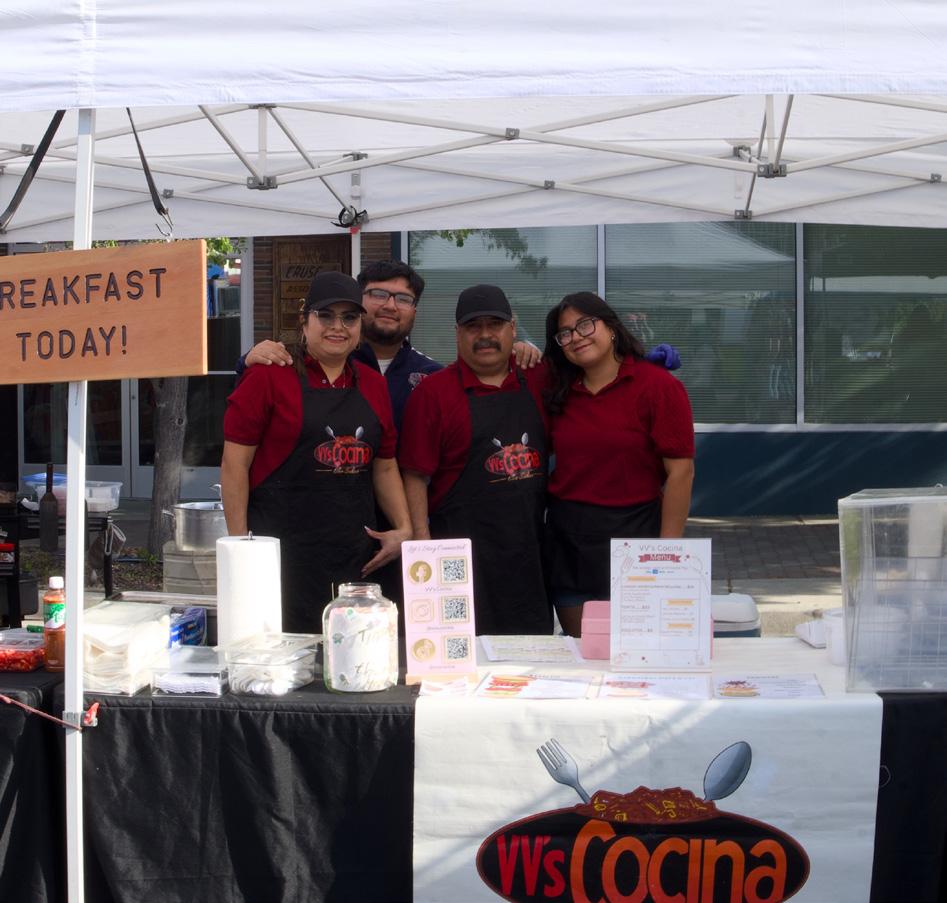
we also have those recipes from passed-down ancestors and so I think that can remind us a lot about our family and the time that we’re spending together and having them in our thoughts.”
They say their most popular dishes are esquites and loaded potatoes. The Valle-Vargas family makes their esquitos out of corn in a bowl with optional hot Cheetos. Their tres leches, which Jocelyn Vargas says is her family’s special dessert, is also quite popular among customers. We make it all fresh and like a homemade recipe, especially for the salsas and how we marinate the meat,” Valle says. “[We’re] bringing some Mexican food to this community.”
The Valle-Vargas family is only one of several Farmers’ Market booths that sell hot food related to their culture.
Another cultural hot food option is Bangkok omg Thai, which the Farmers’ Market is just adding for the first time this spring. But those are not the only two booths where you can find breakfast or lunch.
When it comes to fresh produce, Alana Jacobs, the marketing manager of the Ellensburg Farmers’ Market, recommends the mushrooms. One of the two vendors selling them “specializes in morel mushrooms, which are super seasonal and kind of difficult to find, but he also has some of the best,” Jacobs says.
The other mushroom vendor creates mushroom powders. “They do packaged whole mushrooms and have a lot of different varieties in mushroom seasoning. They have all this different kind of stuff,” Jacobs says.
Jacobs says she loves her mushroom vendors because “they’re all very beautiful and you’ll be able to pick out your own mushrooms right at the market and take them home. And you’re not going to get anything like that at the grocery store.”

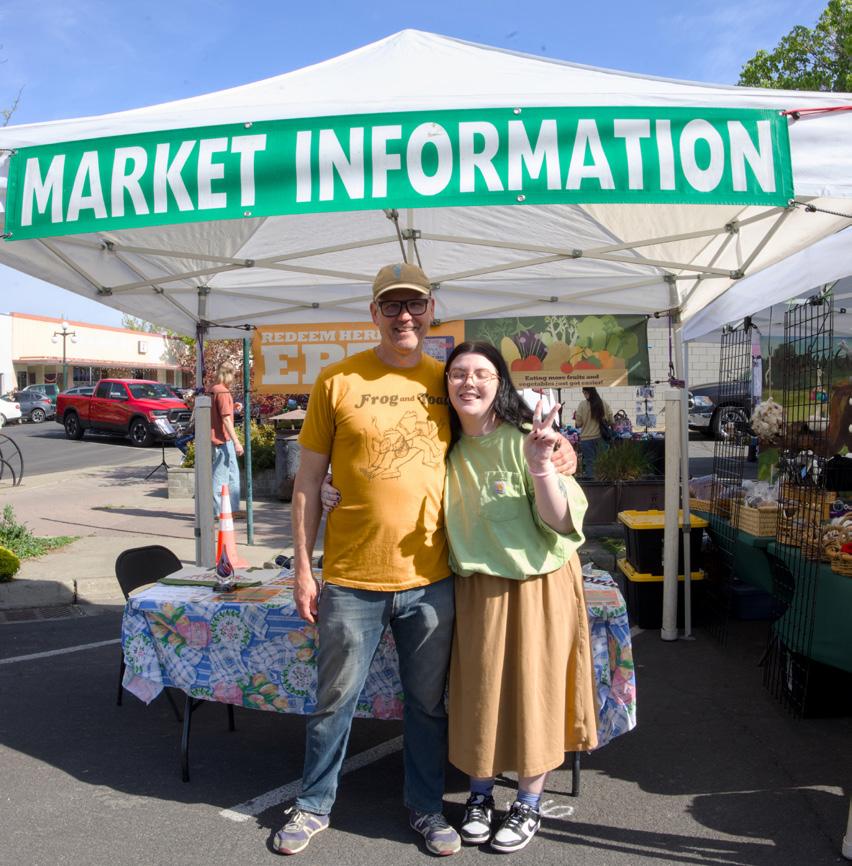
ABOVE (top to bottom): Vang Xiong and daughter Nou Xiong operate the Vang’s Garden stall, selling floral arrangements. | Fernandez sells exclusively organic fresh vegetables. | Ryan Steele and Alana Jacobs, Assistant Marketing Manager and Marketing Manager of the Ellensburg Farmers Market.
Although these vendors exemplify the unique possibilities you might experience at the Ellensburg Farmers’ Market, they are just a few of the many options out there. As the event’s marketing manager, Jacobs says she feels excited about this year’s farmers’ market season because she predicts that the weather will be sunny and pleasant during the late spring and summer.
“Usually, the first day of the market, it rains. That’s typically in my years I’ve been here. This is my third year. That’s usually what happens,” Jacobs says. “If the weather is mild like it was last year, it’s gonna be a very easy season. And I’m very excited to be out on Saturday and to engage with the community like I do and that’s my favorite part of the job.”
The Notable Exceptions’ owners also share their excitement to start working for the market again. “I cannot wait. I am very excited,” Epps says. “It’d be fun to see all the people again and watch as the parade of people goes past our booth. It’s very fun to know that we’re in town and everything’s happening.”
What aspect of the Ellensburg Farmers’ Market are you most looking forward to this spring?
ABOVE: Climate
BELOW:


Do you apply sunscreen every day? Whether it is 70° degrees and sunny or a windy and overcast Ellensburg day, UV radiation can affect your skin.
Most people think of sunscreen as a summer accessory— something to use while on vacation or floating down a stream in a heatwave. But according to the Centers for Disease Control and Prevention (CDC), most skin cancers are caused by longterm exposure to ultraviolet (UV) light from the sun, not just the occasional red sunburn.

The common habit of skipping sunscreen is exactly what health experts warn against. With sunscreen available in every form from lotions to sprays and growing confusion about what really works, PULSE explored how students use (or don’t use) sunscreen and what science says about effectiveness and protection.
When asked how often they apply, Caidence Meadors, a first-year chemistry major, says, “I used to apply sunscreen every day, because of my makeup routine… it helped with my skin.”
Meadors isn’t alone. For a lot of students sunscreen isn’t about science — it’s about habit. If it’s already sitting on the bathroom counter, it gets used. If not, it’s easy to forget. Many people use sunscreen for specific moments, like hiking or going to the lake, instead of the everyday walk to class. But UV exposure doesn’t follow the academic calendar. Even mild, cloudy days contribute to long-term skin changes, which is why experts stress steady, daily protection rather than reacting only when the sun feels strong.

BELOW: (left to right) Jada Madrid (she/her) second year musical theater major, Vlad Bulhar (he/him) business analytics and economics business forecasting major, and Liv Satake (she/her) photo by Keaton Weyers

When surveyed outside of the SURC, many students reported not understanding the importance of sunscreen. Many students said they do not apply sunscreen daily, let alone when the UV is high. “I would apply sometimes,” says Luka Webber, a first-year history education major, “but I had no idea that everyday sunscreen made any difference.” Health experts say consistency

matters more than anything. UV radiation contributes to gradual skin damage over time, even in small doses. This doesn’t always show immediate effects, which may be why it is easy to ignore. But over weeks, months and years, that exposure adds up. Most of the time, it shows up years later as wrinkles, dark spots or more serious skin conditions.
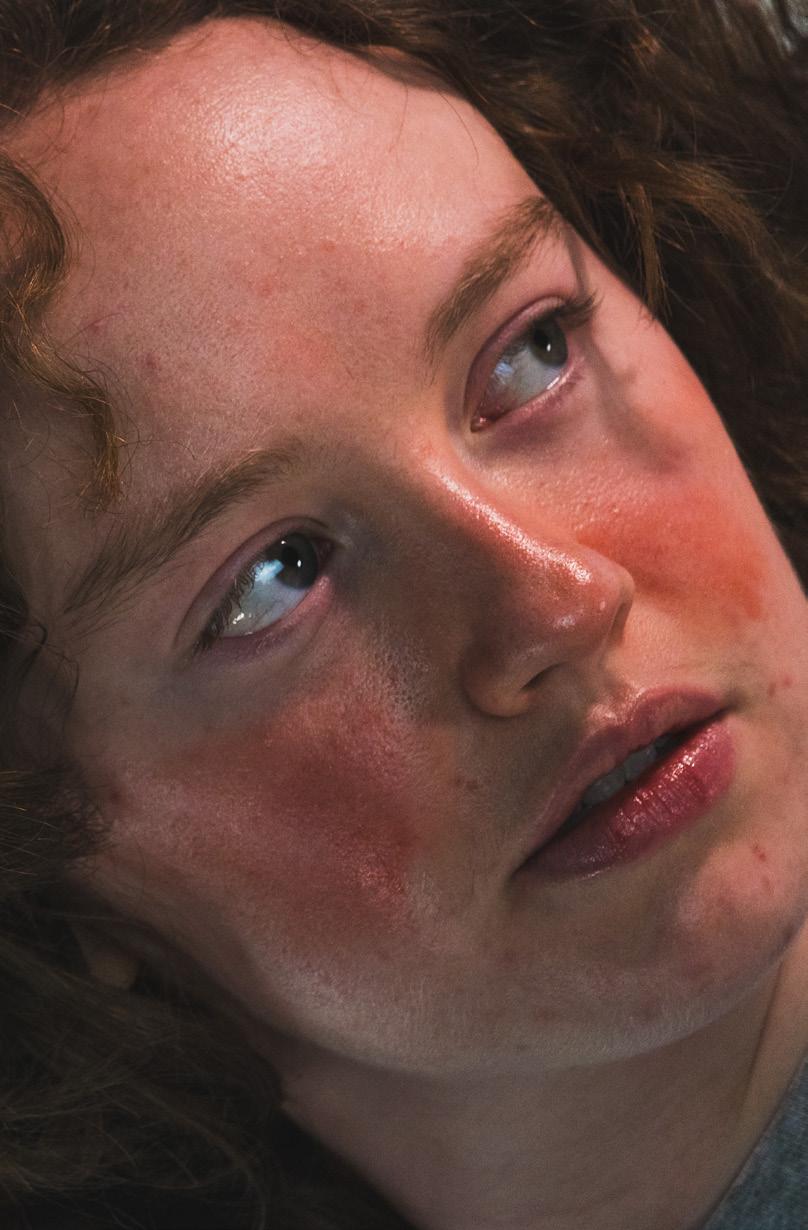


To most people, the UV index doesn’t mean much to them other than a scale of how sunny it may be that day. The UV index is used to indicate the amount of skin-damaging UV rays reaching us from the sun. The daily UV forecast covers the number of ultraviolet rays reaching your area by noon, when the sun is typically at its highest. The index ranges from 1 to 11+, with anything 8 and above considered very high to extreme. Even

a UV index of 3 can cause skin damage with enough time outside.
If you are ever curious about what the UV is in your area, The Environmental Protection Agency (EPA) offers UVI forecasts by ZIP code on their UV Index
The good news is that sunscreen is more accessible than ever. As lotions, gels, sticks and sprays, there’s
something for every skin type and routine. Dermatologists generally emphasize two important things — broad-spectrum protection and consistent use. Whether you prefer a lightweight gel or a moisturizer with SPF, the best sunscreen is the one






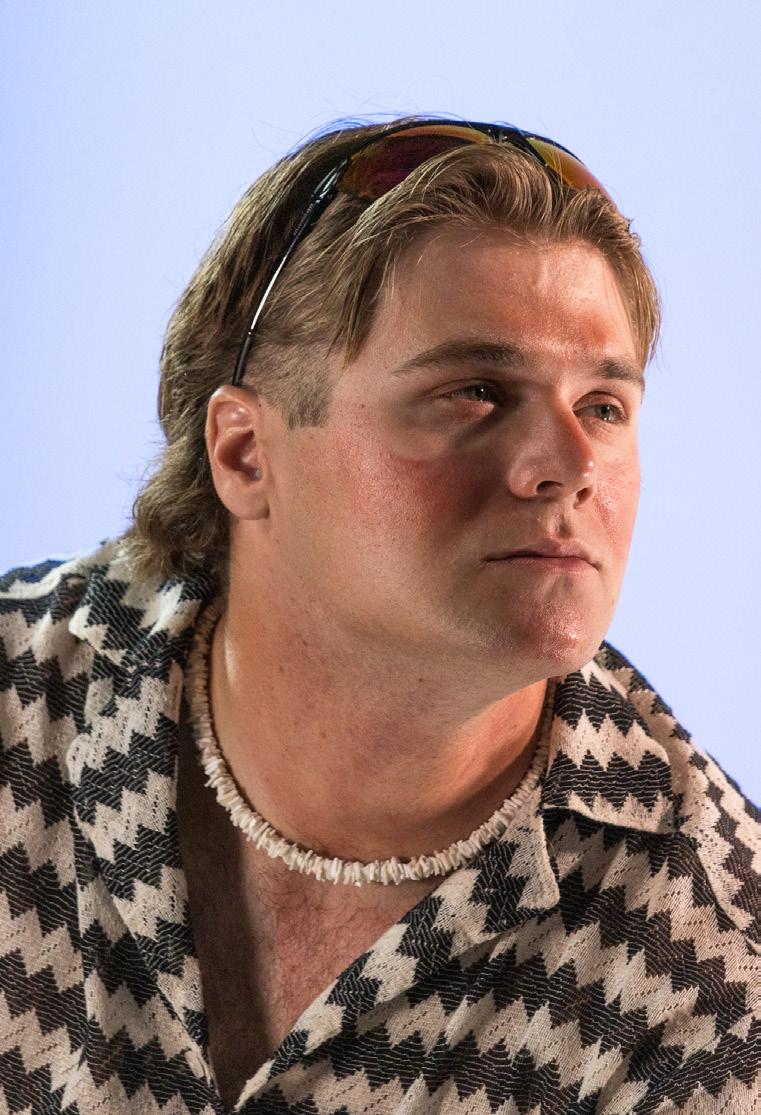




you’ll actually wear. “I used the CeraVe invisible mineral sunscreen. It has a very nice clear coat and doesn’t white cast for me,” says Meadors.
For students trying to build the habit, keeping sunscreen somewhere visible can be a subtle reminder to apply. Next to your toothbrush, on your desk or in your backpack — reapplying doesn’t have to be complicated. Stick sunscreens and sprays make it easy to refresh protection between classes. Small changes like these can make sunscreen feel less like a chore and more like a normal part of getting ready.
According to Meghanne Barbara, program coordinator of the Office of Health Promotion, the biggest key to sunscreen is simply making it part of
your routine. “Individuals should liberally apply sunscreen at least every two hours to maintain consistent protection,” she says, noting that reapplication should happen even sooner.“If you’re swimming, sweating heavily, or toweling off,” Barbara says, she also recommends choosing a broad‑spectrum sunscreen with “an SPF of at least 15” and giving it about 15 minutes to settle into your skin before heading outside. Sunscreen isn’t just a summer thing, Barbara says that, “UV rays can reach you on cloudy, cool days and they reflect off surfaces like water, cement, sand and snow.” That means Ellensburg’s windy, overcast
days aren’t giving anyone a free pass. To make the habit easier, she suggests carrying a spray or stick sunscreen, setting reminders during long outdoor days and even making reapplication a group effort. “Keep your friends accountable and make re‑applying a group activity,” she says. And for anyone who thinks sunscreen is only for lighter skin tones, Barbara is clear, “Sunscreen is for everyone, regardless of skin tone … melanin isn’t enough on its own to protect from skin damage.”
Now, as it may be clear as day for some, but using sunscreen is not limited to only hot days. It is one of the quickest and simplest ways to protect your skin — through clouds and snow. Applying sunscreen is a quick tool to help prevent all sorts of skin damage and cancers. So, even on days when the sun feels far away it might be a good time to think about applying sunscreen, or laying down a towel and getting that tan.







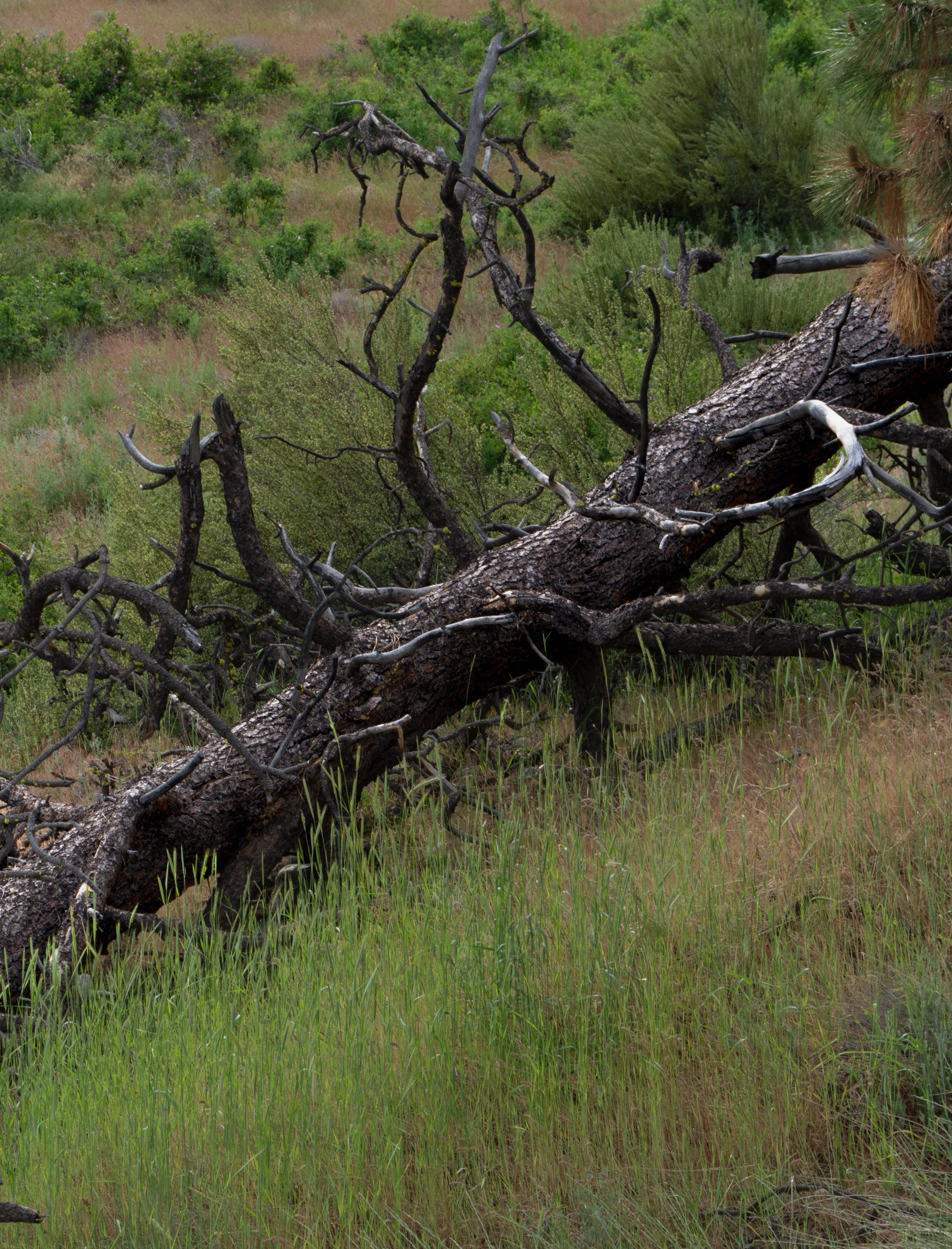
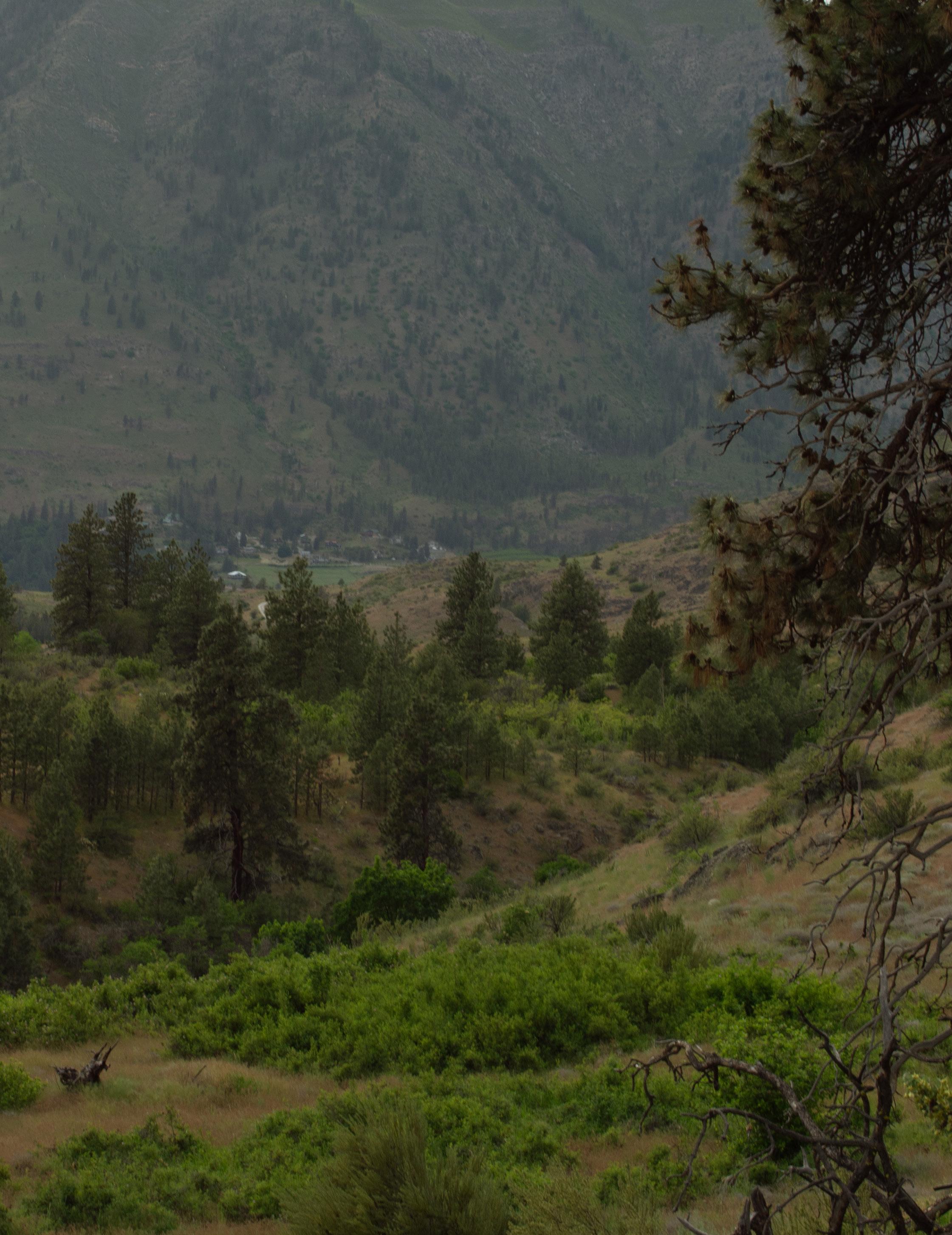
It’s a scorching hot day in August, the warm air is ferociously blowing and the humidity quickly dries up Ellensburg. You taste the aroma of what may be a campfire and look out into the hills to see plumes of dark gray smoke filling the light blue skies. What happened?
This scenario has become increasingly common during the warmer months in Kittitas County, as wildland fires have become more prevalent. “Science is saying we’re getting hotter and drier,” says Kittitas County Fire District (KVFR) 7 Community Risk Reduction Specialist, Savannah Davies. Knowing and understanding the risks and prevention techniques can save not only your life, but lives and properties around you as well.
According to KVFRs, wildland fires are when “Hills, canyons, grasslands, and forests burn periodically as part of a healthy ecosystem.” Any area is susceptible to these occurrences, especially in a region like Kittitas County, which includes warm and dry weather, vegetation and strong winds. All it takes is one small ember to create devastating damage.
Although wildland fires can feel like a negative thing, considering the damage they can cause, understanding that it is a natural occurrence needed for nature is important. Davies says, “Wildfires are a neutral way of mother nature’s way of keeping ecosystems in check.”
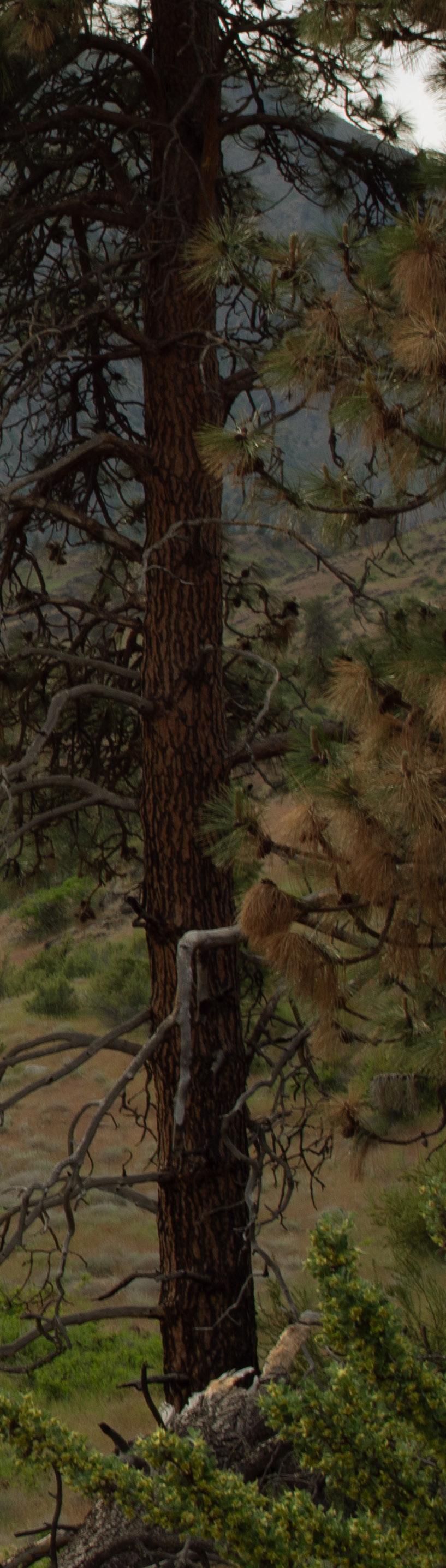
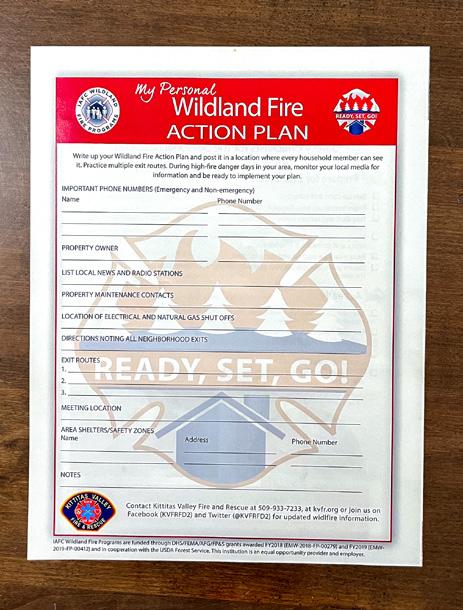
With fire season upon Kittitas County, Jeremy Haberman, fire inspector for KVFR, offers advice for preventing wildfires, particularly during the burn bans which typically run from early July through September-October. He suggests keeping fires in firepits, being observant of the codes and maintaining a “defensible space,” which is a “buffer zone around the home or structure created by the removal of weeds, brush and other overgrown natural vegetation,” according to KVFRs Action Guide.
Creating a defensible space can mitigate the risks of a wildland fire overwhelming your home or property. Defensible spaces are categorized in three zones: zone one or the ‘immediate zone,’ is anywhere within 0-5 feet of a property. Davies says, “This is ideally a noncombustable zone. You want to make sure that you don’t have beauty bark, flammable material, dry dead grass, flowers, shrubs, [or] wood stack there. Anything can be fuel for a fire.”
Zone two, or the ‘intermediate zone,’ is anywhere between 5-30 feet from a structure. According to KVFRs Action Guide, structures within zone two should “create vegetation groups or islands to break up continuous fuels around your home.” You should also “remove leaf and needle debris” and “keep lawns, native grasses, and wildflowers less than four inches in height.”
Zone three, or the ‘extended zone,’ ranges from 30-200 feet from a property. The Action Guide explains that property owners should “store firewood in this area,” “create and maintain a minimum of 10 feet between the tops of trees” and “create space between shrubs and trees to
eliminate a continuous fuel bed at the ground level.”
While this may seem like an overwhelming amount of rules; trust the experts. “It’s not like you need to live in a barren landscape,” Davies says. “You want to make sure you’re spacing out those trees and shrubs, so that you’re slowing down the intensity of the fire as it approaches the house.”
The ‘Wildland Urban Interface Code’ is critical to keep in mind, according to Haberman. “Certain areas are identified as [a] wildland urban interface… If you built a new home in those spaces, you would be required to build it to a standard.” For example, Haberman says, “You wouldn’t be allowed to have wood siding… decks with overhangs that were enclosed [and] your decks would have to be made of fire retardant material.”
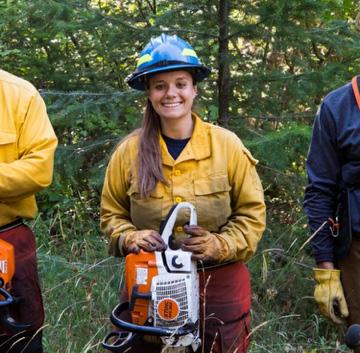
ABOVE: Kittitas County Fire District (KVFR) 7 Community Risk Reduction Specialist, Savannah Davies.
In addition to maintaining defensible spaces and adhering to the Wildland Urban Interface Code, the concept of ‘home hardening’ is also important to implement as a wildland fire preventionary method. “We are really trying to push noncombustible siding,” Davies says, pointing to hardy board siding, any sort of fiber cement and metal
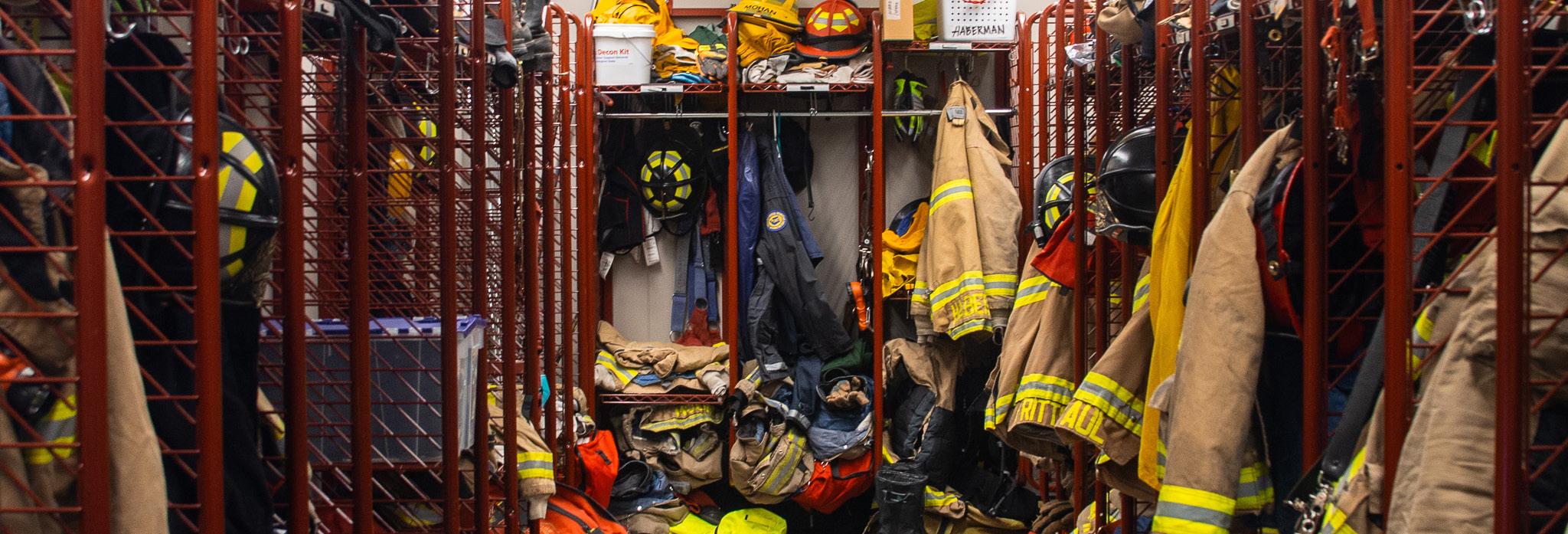
siding. “If you are building a new home, you already have to have a class A roof, which means it is fire tested or fire rated.” Davies also makes it very clear that, “The roof is the most exposed part of your home.” Ensuring that your roof can withstand mother nature’s elements is critical to maintaining a fire free property.
One of the largest contributors to wildland fires are embers. “Eighty percent of the homes that are lost in the event of a wildfire [are] actually due to embers or fire brands landing on the house itself,” Davies says. Although embers are just tiny pieces of burning wood or coal, their impact can create a long-lasting impact. Embers can make their way into properties through any opening, including a door, window, or even a small vent, “Ideally, you have 1/8
of an inch of stainless steel mesh there to prevent those embers from entering,” Davies says.
If responding to wildland fires seems like an easy job, you’d be wrong. It is not simply firefighters pulling up to the scene and extinguishing flames. There is a lot that goes into how they respond. “One of the first things we do is determine if that’s [fire] in our district,” Haberman says, adding that residents within the district “pay taxes and support this department and have a reasonable expectation that we’re going to respond to their problem.” At times, locations outside of KVFRs district need assistance. Although KVFR isn’t legally obligated to help, Haberman says, “We do sort of a neighborly thing… but it’s basically at the discretion of our administration.”
Roy Palmer, the fire chief of KVFR says, “We also have operational agreements from Douglas [County]... A lot of times you get their units as well as our units, all at the same time.” With the help of Douglas County, one of the most important responsibilities a firefighter has can then be fulfilled. “The thing about wildland fires is you need to get them early on,” Palmer notes. From there, the KVFR
team jumps into action and takes on the challenges that await them at their destination.
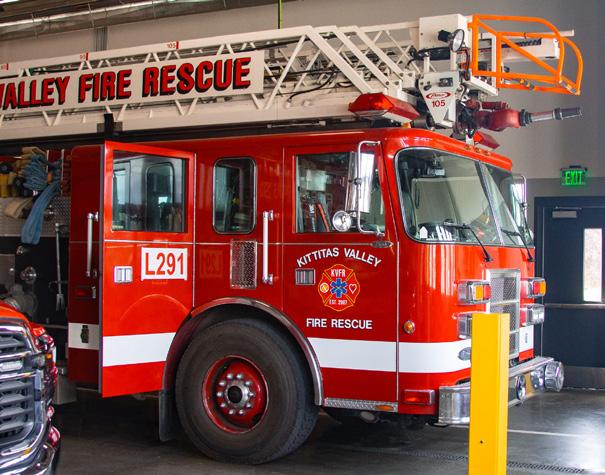
For firefighters, answering wildland fire calls is always challenging. Haberman lists some of the biggest obstacles he and the team face, including being outside their water systems, “mile-long driveways” and muddy, steep or impassable conditions. “We are sometimes reluctant to commit to a driveway because if we go down it and then we get in the flamefront, what confidence do I have that I can take my big piece of apparatus and get it turned around and get out of there?”
Haberman also cites “ownership not wanting people on their property, even though… we came here to help you,” as a challenge for the KVFR team. It is important that property
owners remain open to the idea of help, even if that means needing someone to step on your property. Without this, a minor wildland fire could evolve into something far worse than what it could have been.
While these are all difficult issues, taking care of personnel is also key. If Ellensburg’s August’s are not already hot enough, imagine how 100 degrees feels in an extra three to four layers of clothing. As Haberman puts it, “110 degrees in August is a physically limiting environment. It’s hard on our people.”
As a Kittitas County native who attended high school in Ellensburg, Haberman says that wildland fires “are getting more prevalent,” but why is that? Although there is no way to pinpoint one exact cause, humans have a direct impact on the development of wildland fires.
reduce some of the fuels on [your] property,” according to Davies. Managing large acres of land can be difficult, especially if you do not have the equipment to do so.
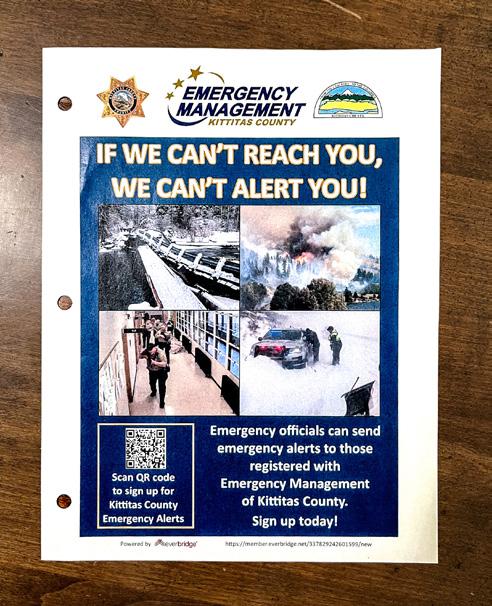
In case of an emergency, Kittitas County has partnered with the ‘Everbridge’ app, allowing residents
reduce ladder fuels,” which are live or dead vegetation like small trees, hanging branches or shrubs.
The importance of keeping fires on the ground is a critical factor for firefighters. As Davies puts it, “Fire on the ground is much easier to manage, it’s at a lower intensity and we can really keep those flame links at bay.”
Davies cites “the amount of people recreating,” as well as “people dragging axles, people throwing cigarettes [and] dragging chains. That’s more opportunity for those roadside sparks.” She adds, “If we got the wind that aligns, that just blows it up into the wind, the fuel, the topography, those align.” Being aware and cautious of your actions can prevent instances of starting unnecessary wildland fires. All it takes is one ill-conceived act to create an impact that can put others’ lives in danger, as well as surrounding properties, so be cautious and think before you act.
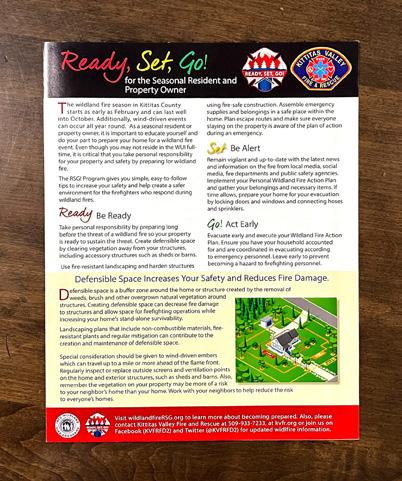
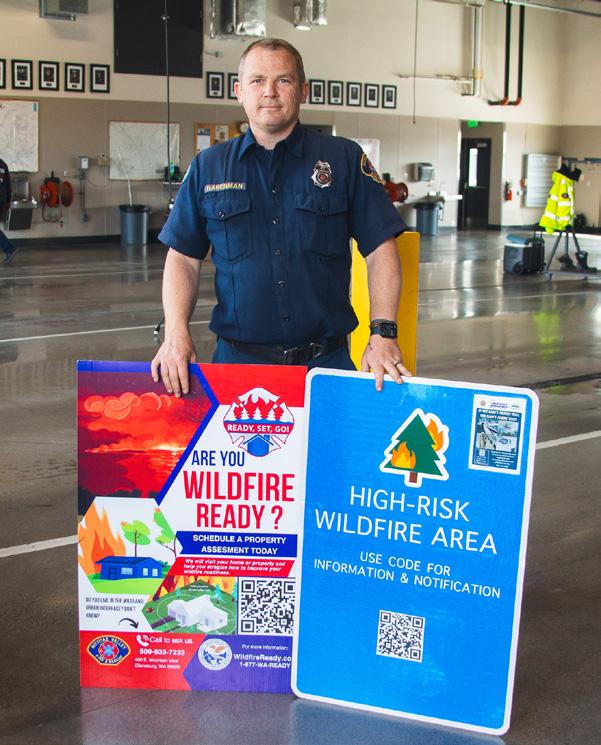
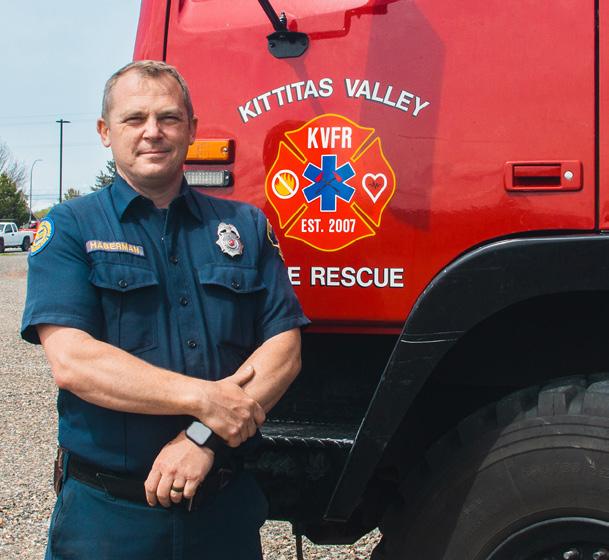
ABOVE: Fire Inspector Jeremy Haberman and several Kittitas County Fire Safety Resources
to be alerted of emergencies around the area. Registering by providing your email and phone number, allows the County to alert you directly through your cell phone, if any crisis arises.
While wildland fires create a plethora of challenges in not only Kittitas County, but all around the U.S, it is important to remember that they play a critical role in the balance of ecosystems. By understanding the natural processes of wildland fires and implementing fire safety practices inside and outside of your property, communities and nature can coexist together to create a safer environment. Being proactive and prepared for instances of wildland fires can save your life and the lives around you, while also allowing these fires to serve their ecological functions, without causing unnecessary devastation.
If you are a non-industrial forestland owner needing assistance managing your land for optimal forest growth, the Department of Natural Resources (DNR) offers “a great cost-share program to help
In addition to these two wonderful resources, Davies says, “The Kittitas County Conservation District usually offers Spring chipping” to landowners. “The goal for that is to
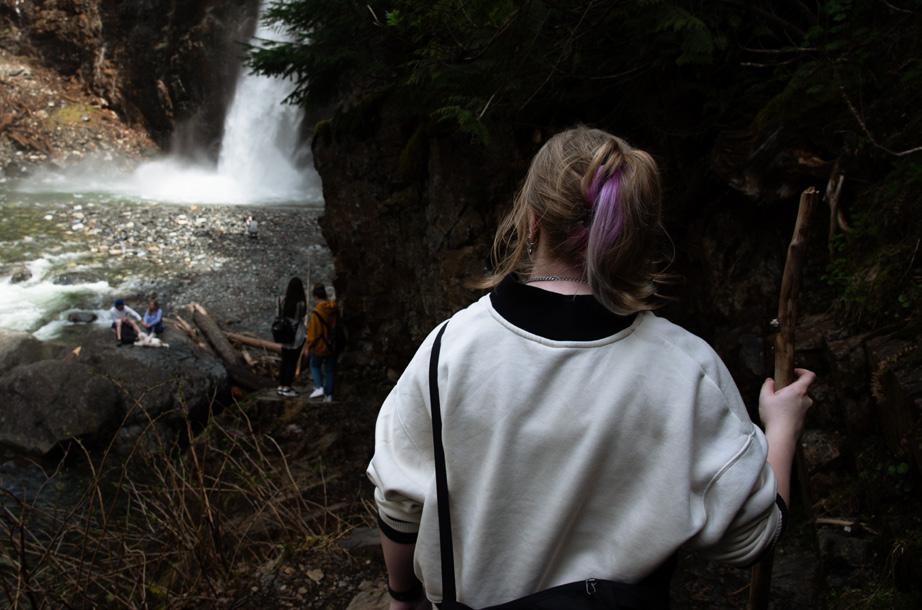

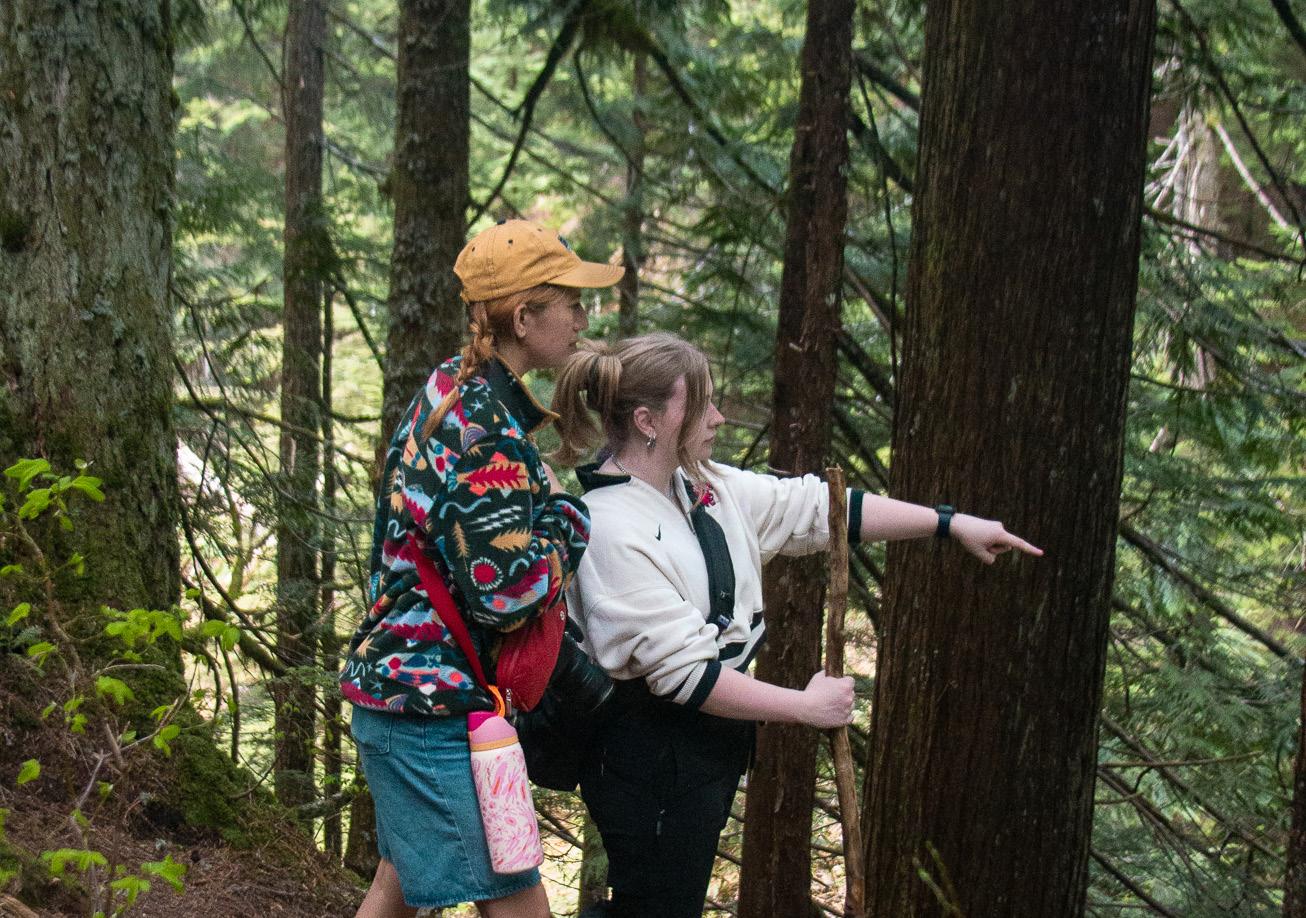
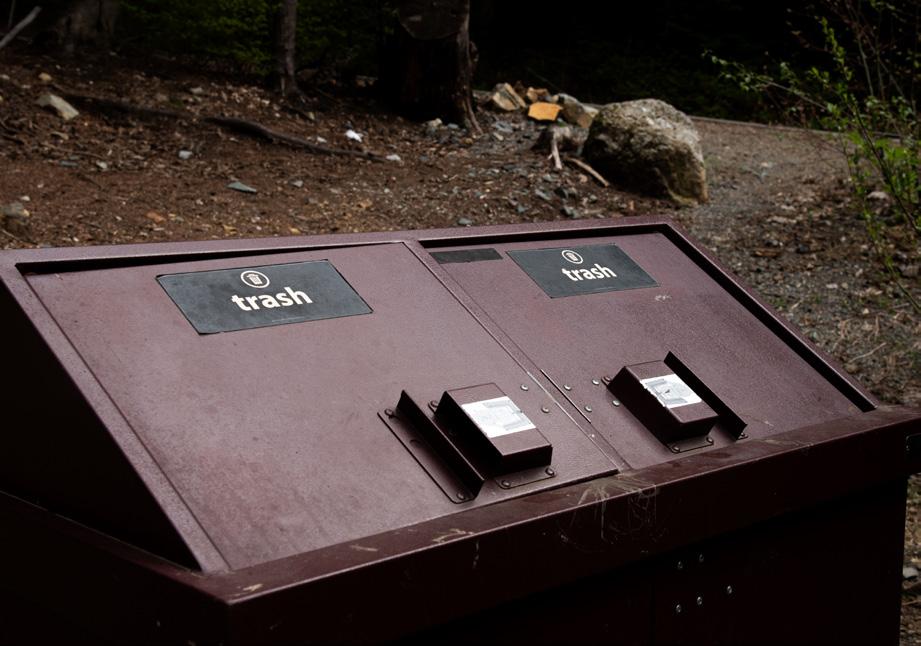

Did you know that Washington State has nearly 7,000 miles of trails in state parks? Considering the United States is roughly 2,800 miles long from East to West, Washington State’s trails alone are over twice as long as the entire country. Given the incredible size of these beautiful trails, there’s a certain amount of responsibility for those who recreate and indulge in the wonders Washington’s trails offer.
With over 8 million people residing in Washington and millions visiting the trails from all across the world, it is critical that hikers and campers adhere to the rules and regulations needed to take care of the land.
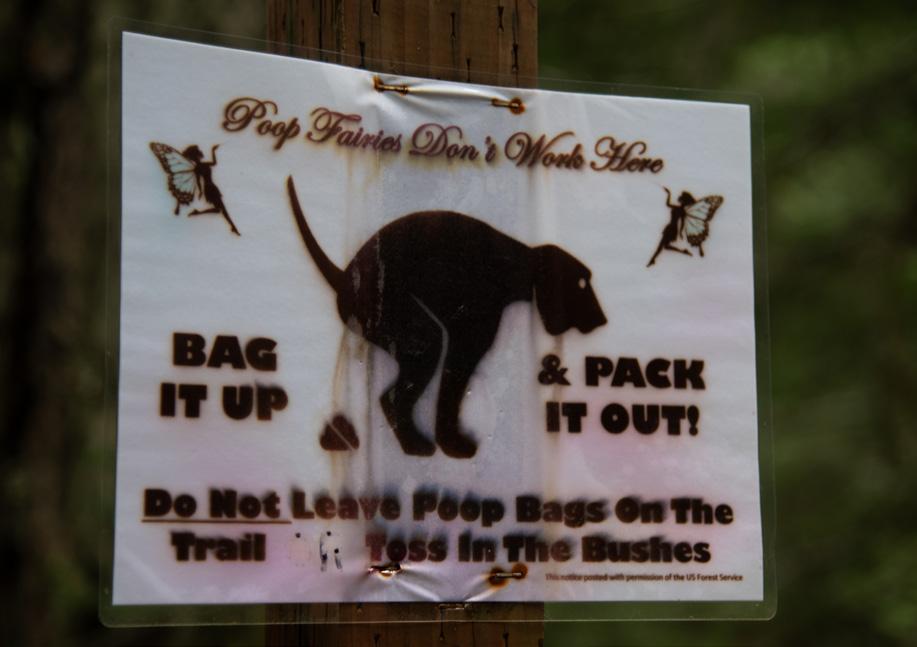
Washington Trails Association’s (WTA) website includes seven ‘Leave No Trace’ (LNT) practices that hikers and campers should commit to when exploring Washington’s trails. These include: Plan Ahead and Prepare, Travel and Camp on Durable Surfaces, Dispose of Waste Properly, Leave What You Find, Minimize Campfire Impacts, Respect Wildlife and Be Considerate of Others.
While this may seem like a lot to keep up with, Senior Communications and Marketing Coordinator for WTA, Joseph Gonzalez, says “The main thing when it comes to hiking etiquette is putting yourself in a place to succeed… Developing a plan, knowing when to turn around, having a backup trail option in mind and telling somebody where you are.” Take it from Gonzalez, it all starts with LNT practice number one: ‘Plan Ahead and Prepare.’ Another LNT principle that tends to get overlooked lands under practice number seven, ‘Be Considerate of Others,’ specifically respecting noise levels. WTA’s LNT website says it
best: “Let nature’s sounds prevail. Avoid loud voices and noises.” For many, listening to music while hiking can be a therapeutic practice and can enhance your connection with nature. While playing music on a speaker is known for getting a party started, maybe save that for the club.
“Music on trail can be really lovely. I like to listen to music on trail too, but if you want to play it, I recommend you keep it to earphones,” Gonzalez says. While it is important that you get the most out of your hiking experience, you also want to make sure you are fully aware of your surroundings. “One earphone in and one earphone out is pretty good because you still want to be aware of what’s going on around you.”
If you are planning on camping in the Washington wilderness, or anywhere around the U.S, there are a couple key pieces of information that all campers must follow. First and
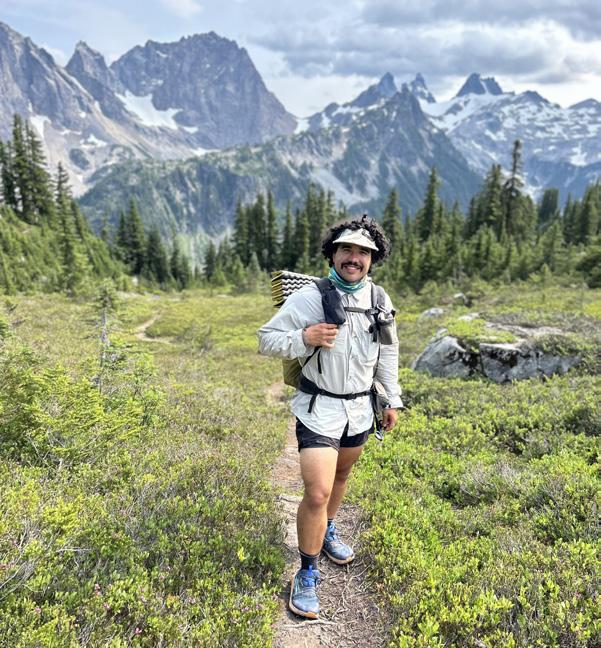
ABOVE: Washington Trails Association (WTA) Senior Communications and Marketing Coordinator, Joseph Gonzalez
foremost, “only hike and camp on durable surfaces” and “follow fire laws and fire restrictions at
all times,” in Gonzalez’s words. If you are unsure about the fire laws and restrictions in the area you are camping in, “Check in with the land manager directly. If you’re unsure what that looks like or who manages the land, go over to wta.org [and] check out our hiking guide,” Gonzalez advises.
Having a campfire feels like a necessity when you are camping, but what takes precedence over this is ensuring that you are able to manage the fire and properly extinguish it when the time comes. Before you start the fire, you want to make sure that fires are allowed at that time; stay alert of burn bans! If you are unsure if the area you are camping in has a burn ban, visit the ‘Washington State Department of Natural Resources’ website and use the search bar to locate potential burn bans in your camping area.
From there, Gonzalez says, “Always use existing firing… never build a fire ring.” He also advises to “make sure there’s no overhanging trees or branches [and]... never leave the campfire unattended.” Once you are ready to leave the area, he says, “You should drown the campfire with water and usually some sort of dirt or sand… all the charred material should be stirred and overturned. If it’s warm to the touch, then it’s too hot to leave.”
Given the breathtaking beauty but also the natural vulnerability of Washington State’s trails, it is your responsibility to maintain and respect everything the land has to offer. By following the ‘Leave No Trace Principles,’ and honoring proper trail etiquette, hikers and campers alike can enjoy the breathtaking scenery from across the region.
Forget coffee, a new kind of drink order is bubbling up, and it’s anything but ordinary!
The line forms before noon, a mix of college students, families and first timers scanning a menu filled with names like “Tropical Fizz” and “Berry Bliss”. Behind the counter, a worker mixes soda, syrups, and cream into a layered drink that looks more like a dessert than something from a soda fountain.
Dirty soda, a daily staple if you live in Utah, has quietly made its way into online platforms, creators on Tiktok, and Instagram, implementing the fun trend into their lives. Local small towns now adopt the trend and start incorporating them into their menus. Now you can ask for your soda to be “dirty” anywhere, not just Utah.
Dirty soda traces its roots to Utah in the early 2010s, where it emerged from the cultural practices of members of the Mormon religion. The religion’s guidelines discouraged
alcohol, coffee, and tea, leaving soda as an indulgence.
Entrepreneurs leaned into that gap. Businesses like Swig, founded in 2010, began mixing sodas with coconut syrup, lime and half n half, creating what became known as the “dirty soda”.
“A dirty soda is a soft drink that’s been “dirtied up” by adding flavored syrups, cream, and sometimes fruit or candy toppings.” wrote Kendal Smith, a junior at Central Washington University and employee at Pop Off Mix & Sip. “Instead of drinking plain soda, it’s customized with extras to make it richer and dessert-like.”
The drinks quickly became more than a substitute. They became a ritual.
In Utah, soda shops function much like coffee shops elsewhere, gathering places where customization is key and regulars know their orders by heart.
The appeal is simple: a base soda, a splash of cream, flavored syrups and endless combinations. It’s indulgent, customizable and importantly, social.
For many, like Kendal Smith, a junior at Central Washington University and an employee at the Pop Of Mix and Sip soda truck, the appeal started young.
“I lived pretty close to Maverik gas station.” Smith wrote. “So my friends and I would walk there in middle school and go make fun drinks.”
These early experiences reflect how the culture around dirty soda often begins informally through experimentation, creativity, and social connection.
For years, dirty soda remained largely confined to Utah and surrounding states. That changed with the rise of social media.
In the early 2020s, Tiktok videos showcasing colorful drinks and creative recipes pushed the trend into the national spotlight. The hashtag dirty soda exploded, turning a local favorite into a viral phenomenon. From endless flavor combos to fun lime and cream add in’s, the possibilities are endless.
story by Grace Thompson
“So the first time I heard about it was definitely through social media.”
Addi Bomberger said, an employee at The Burg Coffee and Kitchen.
“I would say, Utah was the one with their popularity, like chain restaurants over there that have them, like Swig.”
Pop culture took on this trend even on reality TV, more specifically The Secret lives of Mormon Wives. Dirty Soda took off after the reality TV stars shared their drink orders from Swig making influencers on many platforms try their orders and come up with their staple concoctions.
National chains began experimenting with their own versions, further cementing dirty soda’s place in mainstream food culture. The dirty soda growth reflects a broader shift toward nonalcoholic, customizable beverages especially among younger consumers looking for alternatives to coffee and alcohol.
“A dirty soda is a soft drink that’s been “dirtied up” by adding flavored syrups, cream, and sometimes fruit or candy toppings,” Smith said. “Instead of drinking plain soda, it’s customized with extras to make it richer and dessert- like.”
by Zelby Gloria design by Alex Littman
While trends often target specific audiences, dirty soda is out for its broad appeal.
“From working the past couple of weeks, I wouldn’t say these are really typical customers,” Smith said. “I’ve made drinks for people as young as 10 and as old as 60, so it’s honestly a pretty wide range.”
Still, certain communities have embraced it more visibly, especially college students.
“College students play a big role in our target audience,” Smith said. “Even with a limited schedule, many students consistently show up.”
At Pop Off Mix & Sip, a mobile soda truck, that audience is evident. The business rotates locations, including regular stops near student housing and campus adjacent areas, making it easy for students to grab a drink between classes or on their way home. The mobility reaches far beyond campus.
“Pop Off also works local baseball tournaments, which helps us gain more customers,” Smith explained. “I’ve met a lot of people from out of town who were just driving through and found us.”
Because of the dirty soda’s popularity, the trend has been taken to a local level. Together, these businesses show how this Utah born trend has grown and reshaped in the Central Washington community.

Lemonade
Strawberry Syrup, 2 tbsp
Lemon Wedge

Sprite
Peach & Vanilla, 1 tbsp each (total 2)
Cream, 1 tbsp
Optional: Whipped Cream

Sprite
Mango, 1 tsp
Strawberry, 1 tsp
Sprite
Lemon


Lemonade, 1/2
Sprite, 1/2
Lime Wedge
*Add any amount to your liking!
Dr Pepper Cream
Cherry Syrup, 2 tbsp
Blood Orange Wedge

Strawberry, 2 tbsp
Lime Juice, 1 tbsp
Lime
Optional: Whipped Cream

Lemonade
Mango, 2 tbsp
Coco Cream, 1 tbsp
Lemon wedge

Dr Pepper Vanilla, 2 tbsp
Coco cream

story by Owen Schuettpelz
After a long day, you come home starving. Your fridge has a few ingredients that you bought when you promised yourself you were going to start eating healthier, yet nothing that screams out to you as tasty. Your phone lays on the countertop, seductively on the doordash home screen. The scene is tense and the only thing to break the silence is the growl of your stomach.
This may be a little dramatic, but you or your friends have likely felt this way at some point. Having to

photo by Amal Dahi
choose between making something yourself or getting it sent straight to your doorway, isn’t always a tough decision — quick is generally an easy option.
As summer nears closer, the more active many of you will become. With those summer activities, having the proper nutrition can help you stay energized and fit. The difficult part is filling the plate. PULSE has gathered together some common ingredients and quick recipes to meet your dietary needs.
Some staple foods you’ll need to look out for are your fruits, vegetables, grains and dairy. You’ve already heard it before, but these are going to be some of the best building blocks for
design by Taylor Downard
crafting your quick meals. Luckily, some of these ingredients can be eaten by themselves. You can grab yourself some fruits and vegetables that are ready to go. There’s also the options for yogurt or toast (preferably whole wheat or nine grain) with butter. The exciting part is what you can do with only these simple ingredients.
Some of the quickest meals are recipes where you throw all of your ingredients into a dish and hope for success. That’s what you might call a salad. Salads are simple, but don’t discredit them when incorporating new foods into your diet. Vegetables have lots of minerals and vitamins that’ll keep you lively enough to get through the long summer days.

GaRDEN SaLaD
(4 servings)
• 1 head of lettuce
• 1 sliced cucumber
• 1 cup of cherry tomatoes
• 1 peeled and grated carrot
GREEN GODDESS SaLaD (4 servings)
• ½ head of shredded lettuce
• 1 diced cucumber
• 1 cup of thawed frozen peas Dressing (blended)
• 1 cup of plain greek yogurt
• 3 tbsp of lemon juice
• 1 tsp of mustard
• 1 cup of chopped parsley or basil
TOmaTO SaLaD (4 servings)
• 4 cups of quartered cherry tomatoes
• 1 cup of mozzarella balls
• ¼ cup of sliced red onion
• ¼ cup of olive oil
• 1 ½ tbsp of of red wine vinegar
Even if you don’t have much of a sweet tooth, eating some sugary fruits is an important part of your diet. This food group can also be incorporated into some quick recipes. Along with some yogurt, you will be able to discard that insatiable hunger for a heartier snack.
FRUIT SaLaD (12 servings)
• 1 pound of chopped strawberries
• 1 pint of blueberries
• 2 cups of halved grapes
• 3 peeled mandarin oranges
• Juice of 1 mandarin orange
• 1 tbsp of honey
YOGURT BOWL (4 servings)
• 3 cups of vanilla yogurt
• 1 cup of diced strawberries
• 1 cup of blackberries
• 1 cup of granola
With just a few ingredients, it’s easy to cover multiple food groups and still satisfy your appetite.
What recipes will you be trying this summer?
story by Quin Ford design by Thea Batch
“What will the top AI model be next month?”
“When will the U.S. reach a nuclear deal with Iran?”
“What will the announcers say during the Lakers versus Thunder game?”
These are just some of the many real-world events users can wager on through Kalshi. Over the past year, this so-called “prediction market” (PM) has taken the betting world by storm; even if that has meant turning a blind eye to the law. The platform’s blatant neglect of Washington’s sports wagering laws has given state officials no choice but to file a lawsuit against it.
Kalshi, founded in 2018 by current CEO Tarek Mansour and fellow MIT graduate Luana Lopes Lora, is a web-based prediction market that can be downloaded on mobile devices. Once you deposit money into the app, you can then bet on ‘event contracts,’ which include wagers on sports, politics, wars and even the weather.
The year after Kalshi launched, a premier startup accelerator called the ‘Y Combinator’ (YC), took a chance and invested in the company, saying
on their website, “We built Kalshi because we believe that people should be able to capitalize on what they know and have opinions on.”
With the help of the YC, in 2020, Kalshi became the first federally managed exchange where people can trade on events.
After four years of even more investors buying in and gaining major media coverage from organizations such as The Wall Street Journal and The Boston Globe, Kalshi became the first fully governed platform in over 100 years to offer legal election trading in the United States.
Unfortunately for Kalshi, ‘legal trading’ translates to ‘illegal gambling’ under the eyes of Washington State’s Gambling Act and Consumer Protection Act.
On March 27, Washington State Attorney General Nick Brown decided enough was enough and filed a lawsuit against Kalshi. According to his office’s website, “The lawsuit argues Kalshi violates the Washington state Gambling Act and Consumer Protection Act, and seeks to halt these unlawful activities, recover money lost by Washingtonians, and assess civil penalties.”
Even Kalshi users recognize the validity of the lawsuit. “It’s not really anything that anyone needs,” says third year Computer Science major Jorge Leos. “It’s probably going to benefit everyone in Washington once it’s gone.” Despite some fun times and a few wins, including on a bet predicting a rise in Bitcoin’s value, Leos admits he’s lost anywhere from $800 to $900 wagering on Kalshi. That doesn’t mean he’ll stop betting if Kalshi goes away. He’s already looking into a site called PolyMarket which he says uses “the same strategy, the same platform and algorithm” as Kalshi.
Washington State’s Gambling Commission website is clear: “Gambling in Washington state is illegal unless the activity is specifically authorized by state law. Gambling involves three elements: prize, chance, and consideration (wager or anything of value).” For over a year, Kalshi was able to sidestep state regulations by branding their platform as a prediction market. Although the jig did not last long, the effects of the platform continue to be detrimental in more ways than one.
Democratic Integrity: What’s That? One of those negative effects, analysts say, is on democracy itself. The risks associated with allowing users to place bets on elections
poses extreme threats to democratic integrity. Say you are using Kalshi and notice that one political figure is favored to win over another, simply because of other users’ wagers. This can alter your perception when you go to vote, just by witnessing the probabilities featured on Kalshi. Fourth year Communications Major Cooper Maxey, also a Kalshi user, explains it this way: “Because you can see the live odds and you can see what people have bet on and how much, I think that could potentially sway people to vote or act in a certain way.”
Forbes Magazine feature and Professor at City University of New York, Nizan Packin, wrote in Science.com in April about how PMs are becoming a public health threat. “Concentrated actors can cheaply shift probabilities, potentially influencing voter perceptions, expectations, campaign donations, and media coverage in self-reinforcing cycles.” Shifting probabilities is a key concern when it comes to PMs and the amount of money users wager on certain events has the power to persuade others to do the same thing.
In an interview with PULSE, Packin clarified, “If it’s the SuperBowl, you need more people and much more money. But if it’s a much more narrow, less exciting, frequented contract, it’s much easier… [to] manipulate, or change, or modify the final number that you’re seeing and that can be potential for manipulation.”
If shifting and manipulating political probabilities isn’t already bad enough, on April 26, U.S. Army Master Sgt. Gannon Ken Van Dyke, used his insider information to bet on former Venezuelan President Nicolas Maduro’s arrest, using the PM platform PolyMarket. CBS News reported that “Van Dyke
was charged with unlawful use of confidential government information for personal gain, theft of nonpublic government information, commodities fraud, wire fraud and engaging in monetary transactions from unlawful activity.” The website also mentioned that Van Dyke had direct involvement in planning Maduro’s capture. On April 28, Van Dyke pled not guilty to the charges filed against him. A verdict has yet to be determined.
Kalshi markets to cash-strapped college students. Paired with the convenience of being able to place bets on your smart phone, Kalshi and other PMs make it easy to develop a dependency on their platforms. “The user dimension encompasses psychological vulnerabilities (stress-coping deficits, sensation seeking, overconfidence, mental health conditions) that increase addiction susceptibility,” Packin wrote.
From Leos’ experience, PMs like Kalshi make college students and other vulnerable populations susceptible to developing gambling addictions. “It’s a gateway into gambling [addiction] because of how easily accessible it is to the public,” he says.
While opportunities to develop gambling addictions appear to coincide with PMs, Packin says she believes that the idea of introducing guardrails may limit the vulnerabilities seen in these platforms. “Certain guardrails and certain clearer rules and regulatory frameworks should be put in place so that we can maximize the benefits without really suffering from the
risks as much,” she says. “Maybe less addictive design, maximum or minimum amounts like thresholds are based on your levels of experience. Or, for example, certain things we can borrow also from the gambling ecosystem. For example, casinos are not able to lend you money to bet more.”
Given these defensive approaches, there are areas of growth for PMs to explore. The big question is: will they?
While Kalshi may offer convenience and innovative features, let’s not forget the reason the platform is getting sued. Although a verdict has not been reached, we can expect to see increased litigation in the upcoming months. As college students like Leos and Maxey explore the capabilities of the platform, it is important to remember that gambling can be addictive, which can result in financial and personal harm. If you or someone you know is battling with a gambling addiction, there are resources to help for yourself and those around you.

Washington State has long been on the forefront of women’s sports. With Seattle Reign FC having boasted top names in soccer such as Megan Rapinoe, Hope Solo and Lauren Barnes and the Seattle Storm being widely considered one of, if not the best team in WNBA history, it is easy to see that the girls in the Pacific Northwest get it done. But beyond star players and great stats, what does it mean to be a woman athlete? Beyond that, what
does it mean to be a female fan? Is it the same old story of kicking back with a beer, a barbecue and your bros for Sunday night football? Or is it grabbing some margs with your girls and waiting for the first pitch?
Prior to the passing of Title IX in 1972, women athletes were almost
guaranteed to be picked last, if at all. Even after the passing of the article, which prohibits sexbased discrimination in education (including athletics), many schools utilized the six year grace period to its fullest extent, neglecting to implement women’s programs until 1978.
Title IX made it possible for universities such as CWU to foster a more robust athletics community
and open doors for many students and athletes that wouldn’t have had the chance to explore those avenues otherwise.
This new autonomy for women brought about a cultural shift. In a little more than a century women had gone from tentatively being allowed in schools, to just barely skirting their way into recreational college athletics, to being some of the most nationally and globally recognized professional athletes, with the Women’s World Cup now being one of the most highly viewed tournaments in the world.
However, female sports fans still face scrutiny from their male counterparts. According to Abbie Grossaint, a sports management major at CWU, it is hard not to notice a change in tone when she tries to talk sports.
“Growing up, my dad was a big sports fan, so I grew up watching NASCAR and all that, but what really stuck was football,” says Grossaint. “I’m a big football fan, that is something I want to work with in the future.”
Claiming the Chicago Bears as her NFL team, Groissaint is no stranger to disappointment in the sporting world. “People are always surprised when you know just a little bit about sports,” Grossaint explains, “and I think that will never change, honestly.”
Grossaint speaks of her experience interning in equipment management at CWU and how she has had to work significantly harder and put in more effort than her male counterparts for the same positions.
“I’ve experienced it at Central,” she says, “being looked down on because I wanted to do something, but they don’t see a woman wanting to do it. But I’ve been able to get my spot and kind of out work the person that they wanted to have that spot.”
“Women are becoming fans more and more every year of sports. But I think there always will be a thing of like, ‘this is a man’s world,’” worries Grossaint.
According to fan Indigo Detry, female sports fans will create spaces for themselves whether men want to help them or not.
“Almost all sports are male dominated, and more often than not, when men dominate spaces, they tend to push women out, or we weren’t allowed in to begin with,” Detry says, “A lot of men don’t know how to create spaces that are open and inviting, which is why so many women end up creating spaces for themselves.”
Despite the uphill battle that faces them, a common thread between women in all aspects of athletics is the drive to subvert expectations and get what they have worked for, regardless of someone’s willingness to give it up.
Carmen Stanfield is a UW alum with a BA in political economy and a longstanding history with athletics. Having played softball for most of her youth and having performed at various sporting events for both her high school and the Georgetown
University pep band, Stanfield was not ready to leave her love of athletics behind when she transferred to the University of Washington. If anything, being back in her hometown and sports mecca of Seattle only accelerated her interest in sporting culture.
After transferring to UW, Stanfield began a job in broadcasting as a Big Ten Plus Student U broadcast production assistant. For her, the stories are everything in athletics. “I love an emotional postgame interview, a powerful backstory or just a good old-fashioned comeback,” she says, “The gameplay can be fun to watch, but the human element is what makes me want to watch and work in sports.”
One of the women whose story and career have had a profound impact on Stanfield’s love of sports is UW softball coach Heather Tarr. “As a softball player, I really resonated


LEFT: Indigo Detry (she/they), photo courtesy of @IndigoDetry | Keychains are a great and subtle way to show off your favorite sports team or player. This one is for Fraser Minten (#93, Boston Bruins, NHL).

Women will support things enthusiastically, loyally and in droves. It’s absolutely not a fad and it absolutely is the future.”
- Indigo Detry (she/they) , k-pop and f1 based content creator IG, youtube, Tiktok : @indigodetry
“Despite being overlooked or undervalued, Coach Tarr always manages to put together a standout team that can rival anyone in the country and consistently makes deep postseason runs.”
This idea of storytelling through sports is something that is echoed across many female fans, and is even being posited as a way to encourage more fan participation from women. If you can get to the heart of the story in a game, it really isn’t all that different from The Real Housewives or Dancing With The Stars or whatever equally as stereotypical piece of media you would like to compare it to.
“I think one of the places you can directly pinpoint as to why women’s sports has risen in popularity is because of Caitlin Clark and Angel Reese,” according to Detry. “They were, and still are, two basketball
players that so many people follow, and their rivalry was something that was very entertaining and interesting to a lot of people.”
“It’s no secret that they have absolutely contributed to the rise and viewership in the WNBA and because of that, women fans have spilled over into other sports as well.”
Often, the specific sports and teams you support are heavily influenced by where you’re from. For Grossaint, she had to seek out her passion herself.
“I am from Oregon, so there’s not a big culture around sports as it would be like in Las Vegas or Chicago,” she says. Without many major professional teams, except for the Portland Blazers, Grossaint has had to outsource her favorite teams, because, as she says, “No one cares about the Blazers.”
But at professional games, the stands are alive with the sounds of fans, and it is irresistible. “I went to Chicago for a Chicago Bears game,” says Grossaint, “and the environment on game days is just something else,”
“Like going to a Major League Mariners game, just the environment around it I think is what really intrigues people.”
Stanfield also places a heavy emphasis on the support and community brought about by sports organizations. The onus for building up women’s athletics doesn’t fall solely on the female players, coaches and teams, but their male counterparts as well, who often have larger fanbases and more sway in the community.
Stanfield credits the Seattle Sounders as an organization that uses their influence to give back.
“[The Sounders] are one of the oldest and most consistent [organizations] in the MLS and are one of the best at youth development,” she explains.
“The Sounders have a reputation among players as a fantastic place to play in the prime of their career because the organization is so warm, the fans are so supportive and the city is a great place for families.”
“While other teams in the MLS have focused on spending lots of money to bring big name players like Messi and Son over from Europe, the Sounders draw people in by being an inviting and supportive organization.”
Even while working in sports broadcasting, Stanfield has made sure her political economy degree does not go to waste. In the world of athletics, money is most certainly an object.
Unfortunately for both female athletes and their fans, no viewers tuning in to a game means no ad
revenue and no way for the sports organization to pay their way to the air, let alone to pay their athletes.
For women’s sports, this means that fans need to start tuning in in a big way if the athletes hope to be paid anywhere close to their male counterparts.
“I think, obviously women’s sports, sports in general, they want to make money,” says Grossaint, “and men’s sports is always going to be something that is going to be making more money.”
“I think athletes should be getting paid what they deserve, but like with the WNBA for example, they just don’t bring in the profit that the NBA brings in, so obviously you can’t pay them these ridiculous salaries.”
It is unlikely that these sports organizations hate their women’s leagues and don’t want them to be paid. Instead, viewers are having to choose between either watching the men’s sports and being able to keep up on their coworker’s watercooler chats or watching the women’s sports and being able to say they’re supporting undervalued athletics.
With the increase of eyes on women’s athletics, an increase of money can also be anticipated. While this potential pay raise itself could be enough to draw a lot of people in, Stanfield believes this will also bring about a change in lifestyle among players that may help garner more interest for young women with an interest in sports.
“I think a big change in what the next generation will be looking at is

male college athletes.” With big brand partnerships hopefully on the way, viewers can look forward to seeing more and more female athletes on their screens, both on the court and off, and you can expect them to look more tailored and sharp than ever before.
So what now? The door is now open for women’s sports, but no one is reaching to hold it for them.
Stanfield believes that as technological advancements and broader cultural dynamics continue to shift, they will shift in a way that affords women more space in the realm of athletics, as both players and fans.
“Viewership for women’s sports has definitely increased and part of that is just that some sports are being broadcast or streamed for the first time,” Stanfield explains, “Streaming services have definitely increased networks’ ability to produce women’s sports shows while not taking air time from their precious men’s sports.”
Stanfield also believes that, at the least, we will begin to see a shift in the amount of women we see behind the scenes.
“I think the future is bright for women’s sports as they continue to gain visibility. Many broadcast companies (ESPN and Fox, that I know of) are making conscious efforts to increase the amount of women involved in broadcasts, from engineers to producers and talent,” Stanfield says.
Stanfield continues, “Having more women behind the scenes will significantly affect how the stories in women’s sports are told and what is highlighted.”
According to Detry, the only direction to go from here is up. “It’s 2026 and, although we have a long way to go, we’re no longer at a point where blatant sexism against women can just be accepted,” Detry says. “The more we progress as a society, the more women being included in things will be treated as normal and on an equal level to everyone else.”
Detry continues, “Women will support things enthusiastically, loyally and in droves. It’s absolutely not a fad and it absolutely is the future.”
Story by Hope Cox Design by Jonnie Rosser
Over the last decade, there has been a rise in popularity for indie games, with some outperforming games from AAA studios. You may wonder why these games are performing better in the gaming community. Is it simply because of affordability and creativity, or is there more to the story? Gamers and industry experts are trying to understand this shift in the gaming community.
As indie studios continue to improve their game design and quality, it is getting harder to tell the difference between games from an indie studio versus the AAA studios, as the major video game companies with larger teams and bigger budgets, are known.
When choosing the next video game to play, consumers often look for affordability, creativity and authenticity. Hardy LeBel, a game design and production teacher at the Academy of Interactive Entertainment in Seattle, highlights these sentiments for the rise of indie games.
“I would argue that the large, big commercial game companies that are out there have really overemphasized the commercial part of this art form… and have really separated themselves from the art part of it,” LeBel says. AAA studios tend to focus on appealing to larger audiences in order to return a profit on their major investments. This can lead some AAA studios to prioritize optimization to appeal to a global market instead of the artistic side of the medium. LeBel notes indie games are freer to embrace.
LeBel says people are often drawn to indie games for their creativity. “They can really be personal, they can really be expressive and explore interesting themes or unexpected ideas. That kind of creativity is very appealing in a world that’s full of cookie-cutter products and commercialization everywhere you look,” says LeBel. It’s this authenticity on an artistic level that LeBel believes is crucial to the success of many indie games, rather than the marketing component.
But marketing is one way that indie and AAA studios differ, mostly as a result of differing budgets and shifts in market demands. Assistant Professor of Games, Interactive and Immersive Technology at Washington State University, Diamond Beverly-Porter, defines the differences in marketing in relation to the amount of money the studios invest. “The marketing difference between indie and AAA games really is just the amount of money that you can pour into it, because that initial first step definitely dictates the ways that you go about making your marketing campaigns.”
Bubby Darkstar, indie developer and artist best known for “Subway Midnight,” gives insight into his experience with marketing. Darkstar released “Subway Midnight” in 2021 and notes how quickly the demands shift. “The thing about marketing is that it is basically non-stop changing. It’s the stuff that used to work really well, but just doesn’t work at all. And I think day to day it’s completely different.”
Chris Onorati, Lab Manager and one of the Assistant Instructors of DigiPen’s Game Department, and also Co-Founder of The Rat Zone, suggests that gamers can recommend games to their friends. “Word-ofmouth advertising is really how indies live and die,” Onorati says, adding that if you have the finances to purchase an indie game at full price, it can help the developer. “If you feel so inclined and you have the money, but it’s never expected, if you buy indie games not on sale, then that just gives a little bit more of the money to the creator.”
Many gamers consider the cost of a game before purchasing and playing it. Indie games tend to be cheaper and average from $1 to $25, while the cost to purchase a AAA game can range from $50 to over $80. The high prices of AAA games can create a barrier for gamers wanting to invest.
Darkstar considers indie to have a smaller barrier for entry, which makes it easier for both gamers and developers to have access. “I think affordability on both sides is probably the number one reason why there is such a rise in indie these days,” says Darkstar.
However, LeBel does not see price as a barrier when he considers playing a game.“I, as a gamer, have always sort of found that if I love a game and I really feel like it’s giving me
incredible entertainment value, price is not really a barrier. I’m willing to put money into the games that I love and the products that really entertain me,” he says. For some gamers, price will not be a barrier when considering an indie or AAA game purchase. Others may find it more difficult to afford AAA games, causing them to opt out and choose indie for affordability.
Given the increased price of AAA games, this categorizes them as high-budget productions. With the rise of indie games, a question arises — do highbudget productions matter? Carly Sax, a fourth-year professional and Creative Writing major at CWU, does not consider high-budget production a major factor when deciding to play a game. “A game that’s a little rough around the edges is not a bad thing. Unless we’re talking about an unfinished game. I’m talking like a game that’s got a stupid glitch — those are some of the funniest moments you’re gonna ever have,” Sax says.
High-budget games do not always matter to the gamer. Sometimes, a small glitch can make the game more enjoyable. Ryland Rider, a gamer and former CWU student, has similar sentiments. “Some games have millions of dollars poured into them that aren’t worth playing and are really shallow, and all of the game plays over in a couple of hours
… Then you have the multiplayer that you can totally sink hundreds of hours into. But if you’re not into that, you’d be better off buying a smaller, lower-budget story game. Or finding one of the really good bigbudget story games,” says Rider.
It’s easy to pit indie and AAA studios against each other, but Beverly-Porter and Onorati take a more welcoming approach to both sides of the industry. “To any reader or people interested in the topic, I would say that gaming, like all entertainment, is fueled by your passion and your personal interests,” Onorati says. “But if you’re also interested in the AAA space, there are huge fans for Zelda, Minecraft and Mario. So at the end of the day… you might not like how the games are being made. I don’t think that invalidates your preferences and what you find personally interesting.” Beverly-Porter agrees. “It’s less about replacing AAA games, more about expanding what games can be… It’s not a competition, though some people frame it like that.” Instead, she says, there is a place in the industry where both sides can be embraced.





cutesycaregiver 10 hours ago
Am I The Asshole for wanting to embarrass my client’s grandkids?
TW/Gross (pee) For context, I’m 24 F and I work as both an at home and an assisted living facility caregiver. When I work at the assisted living facility, I’m used to dealing with bodily functions and cleaning any accidents that present themselves. It’s not my favorite, but it’s part of the job. When I work with my homecare clients, I rarely have to help with toileting or cleaning up accidents. This brings me to my story. One of my homecare clients has two grandchildren that she takes care of, one girl and one boy (roughly middle school age) and they never flush the toilet. Now, I’ve been with this client for over two years and this behavior from her grandkids is relatively new, I first started noticing it a few months ago. At the start, my client would notice me flushing the toilet when I wouldn’t go, and yell out to her grandkids to remember to flush the toilet. Now, she never says anything about it when I’m here. I already clean her toilet for her, but it’s extremely evident that her grandson does not care about the cleanliness of the toilet. When I go to clean it, it is always disgusting. Dried pee is everywhere... underneath and behind the seat, down the sides, sometimes even by the caulk line of the toilet. I’ve tried talking to my client about it, but I don’t know if she hasn’t talked to her grandkids, or if they don’t care or remember. It’s gotten to a point where I will just finish cleaning the toilet, and one of the kids will go to use it, but not flush the toilet. I don’t want to be an asshole and embarrass them since they’re significantly younger than me, but I don’t know if they would actually listen or remember if I say something about it. Any advice? Should I stoop to asshole level? If I do, what should I say?

charchar_binks 5 hours ago
NTA. I think a good portion of what I learned about life at that age was learned from being “embarrassed” by people older than me, particularly strangers and acquaintances. When you’re a kid, it can be easy to dismiss your parents’ and grandparents’ grievances and say, “It’s always something with my grandma, she just loves to complain.” When an almost stranger, let alone someone who gets paid to be nice and non-intrusive, is honest and maybe a little harsh– that memory is going to stick around a lot longer. Of course, you don’t need to stoop to a level that you are not comfortable with or that doesn’t feel in your character, but I think there is very little harm to be done in politely and respectfully asking them to clean up after themselves directly. If I had to guess, I would say that a lot of the flippant, self-important attitude that they might have had while they were peeing all over the bathroom will disappear. If you’re lucky, it might even be replaced by a core memory of the poor caretaker that they subjected to cleaning up their urine. Regardless, I’m sure this situation will wake them up with a start in 10 years, and at least then they will realize that they were in fact The Asshole.







joby56 4 hours ago
NTA. super gross for their age, they should know better! It sounds like if they were spoken to they don’t care and if your client hasn't spoken to them, she never will. Maybe not stoop to asshole level but make it known that you’re not tolerating this!

minionluvr867 3 hours ago
NTA. Middle school age??? Come on that’s just gross bruh

Agreed, NTA. It’s gross and the kid should know better. Also it’s not your responsiblity to take care of these kids. You are there to take care of the grandmother and do your job. While yes, they are there as well, you are not a babysitter. Especially considering they are middle school aged. It also seems somewhat purposeful, you clean the bathroom and he immediately goes in and ruins it? Yeah, the kid either needs his grandmother to tell him or you need to do something to address the issue. You don’t have to embaress them exactly, but maybe something that can get it through the kids heads that they can NOT do that.


A safe space for the frustrated ethicist in all of us and a place to finally figure out if you were in the wrong in an argument that’s been weighing on you. Tell us about a nonviolent conflict you’ve had to experience. Give us both sides of the story and let’s uncover if you’re right , or if you’re the asshole.
8K
10k
Potential Assholes Judging you right now