



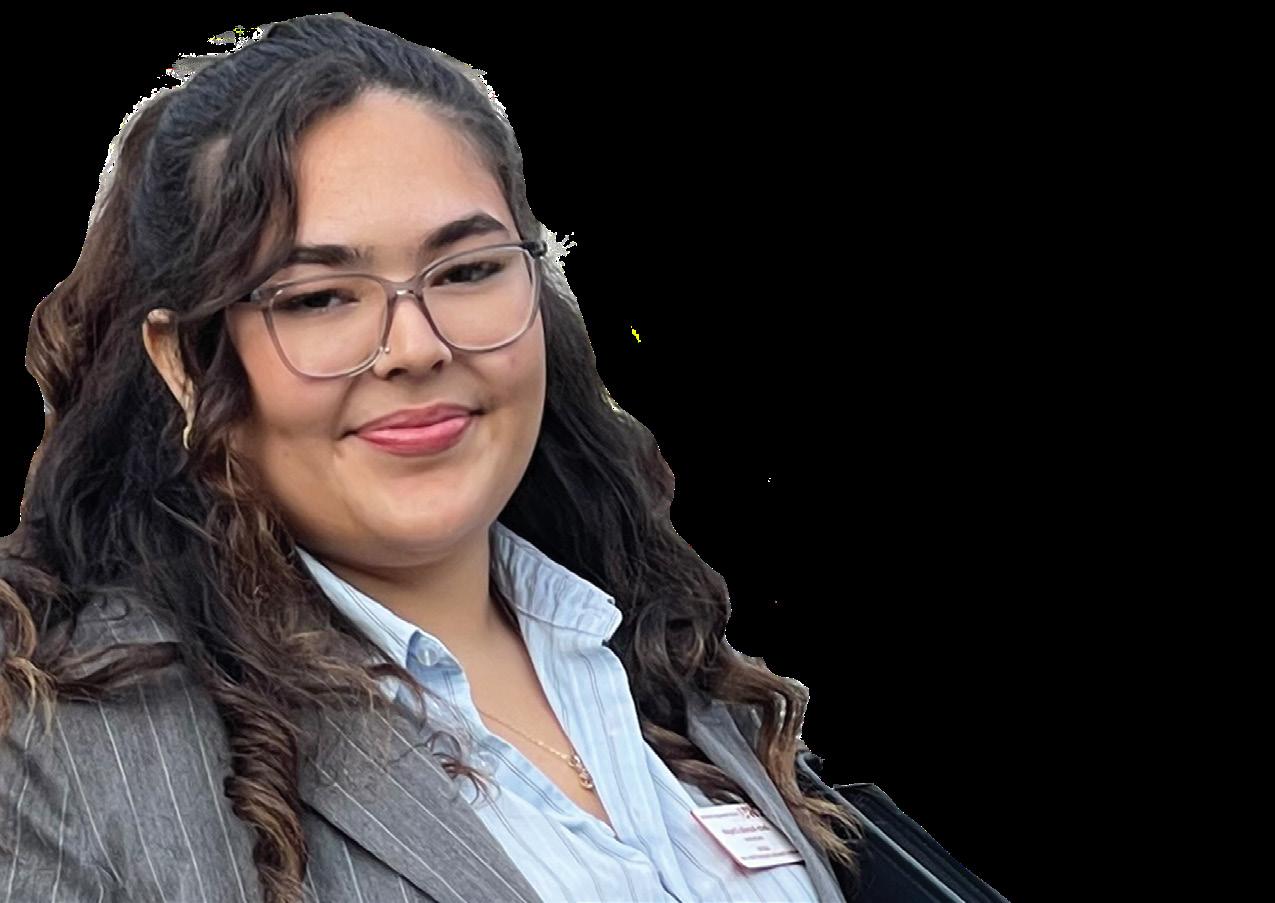
Staff Reporter

Staff Reporter
Q: What is the main mission of your campaign?
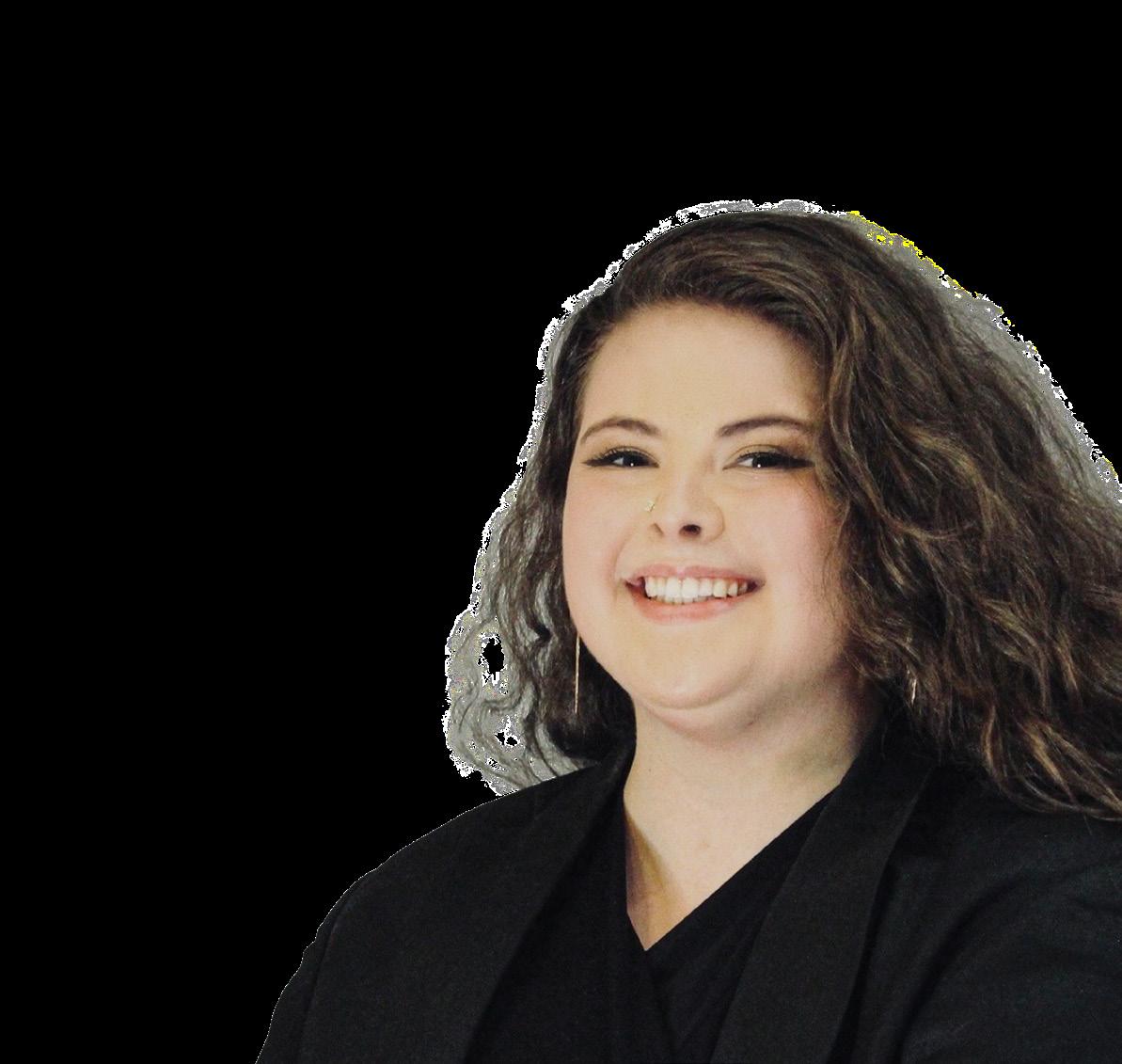
achel Haley and Jada Aurellia Chaplin are officially moving forward as the final two presidential candidates in the ASCWU General Election following voting results from the Primary Election hosted last week. Voting for the General Election opens on Suitable on Monday, May 11, at 8 a.m. and will close Friday, May 15, at 5 p.m.
The Observer interviewed Haley, a Public Policy major, and Aurellia Chaplin, a Nutrition major, and presented both with the same five questions regarding their campaign, inspirations and goals as president. The following are their responses, edited for clarity:
Q: What inspired you to take on this role in ASCWU?
Aurellia Chaplin : What really inspired me is being here my first year and dealing with a lot of issues, since I’m independent. I really didn’t feel like I had the advocacy that I do now. I made sure I went out into my community, if that’s local or even ASCWU, to make sure that I can advocate for myself and others, because I understand the struggle of being alone here on campus.
Haley : So the first thing is, I have a lot of connections with the student government, and I’ve been able to look at the positions through an outside lens. I’m currently a resident assistant, and I facilitate and help assist freshmen, and the general consensus that I’ve found is that a lot of people don’t know that ASCWU even exists.
I felt like we needed, since Hondo (Acosta-Vega) is stepping down, a body of government that is more focused on educating the people and making sure that they know that they have representatives in the first place.
I’m a public policy major so on my end, this would be a great way to kind of exercise some of my leadership capabilities in a more professional capacity that could help benefit me in the future, but also leave my mark on the campus before I graduate next year. Vol. 133 NO. 3
Aurellia Chaplin : My main mission is to make a healthy, loving campus. I really want to make sure that we have trauma-informed policies, the mental and physical well-being and support of administration, student body and all the areas that students need love and support.
Haley : The main thing for me is again, making sure that students know exactly where they can go to find help or talk with officials, letting them know that officials are here in the first place, as well as communicating with students more about things that are going on in campus.
The Observer has covered a lot of things that have happened on campus, and I think your work is very important, but I think the student government should also be taking stances on these kind of issues and communicating with the students; just in case they don’t read the Observer or they don’t know what’s going on on campus, their student government’s keeping them well informed and they know that we have their back.
Q: What does it mean to you to be president of ASCWU?
Aurellia Chaplin : What it means to me is honestly just being able to be an advocate and support system for my students. I really want to love everyone and pour my heart out into the student body and everywhere else here on campus. Being here for the last two years, I got to see the areas that we need to support, and being present just means that I can be that shoulder that people can cry on. If that’s administrative, professional, even personal; I just really want to be able to be an empowering advocate that loves everyone.
Haley : For me, the President’s position is definitely one that’s more of a figurehead in a capacity. A lot of people think that the President has a lot of power, but in reality, it’s very limited. It’s more of a supporting role than anything. When I picture myself as President, I’m picturing myself helping the Directors and the Senate and the Equity and Services Council (ESC) all coming together and communicating with each other. One of my cam -
paign slogans is bridge the gap, and originally that was for bridging the gap between the student government and the students themselves. Now I’m realizing that there’s communication issues even within the student government branches, and so I would be emailing a lot, meeting a lot, but also making sure that the areas of government feel like they can connect with each other, and then also that the students can connect with those areas.
Q: What is an example of leadership that has influenced your leadership style?
Aurellia Chaplin : Honestly, I think just watching my fellow leaders here at ASCWU, my predecessors, really seeing how they work, especially Hondo, he’s very fiery. I appreciate the passion and the drive and the love that he has, and also Malik (Cantu), I’ve been able to see both of them, and it showed me that I can do the same thing they did, but hopefully better. I know their flaws and I know their successes, and I see mine too. I want to be able to be successful. I want to be able to be an empowering student leader, just like they were, to make sure that their legacy goes on.
Haley : One thing that I think kind of steered my goal into being into public policy, which is another reason why I’m doing this, was in my high school senior year. I was the student body president of that and we had to deal with a bunch of budget cuts and an administration that didn’t talk to us or didn’t really communicate with their staff or their students.
I had taken the initiative as just a student rep to communicate with that administration and try to bring the community together in those tough times. There I felt like I had that passion and that drive to do that. Now I’ve based my entire career goals around being a leader and fighting for people that have a lot of grievances or are not being treated fairly, and making sure that I can talk with those people that could change that.
Brandon Mattesich Editor-In-Chief
In an era where national polarization is at an all time high, it is important for us to all look at the roles we play in that division. This applies to journalists at the highest level, and is something I often reflect on.
The CWU community is currently facing the results of lower funding, political pressure, staffing attrition and more. At the same time, CWU students, and the broader town, are engaging in meaningful work and projects, creating and supporting flourishing communities and continuing a legacy of work that far predates most of our time at the university.
Both of these realities exist simultaneously at our university, and as Editor-In-Chief, one of the values I try to encourage is that our coverage should reflect them. Every week we report on a variety of stories at CWU, ranging from ongoing coverage, like that of the continuing process of dealing with the results of the vote of no confidence, to pieces highlighting student success, (see our stories this week on FASA and MEChA.)
Something I also prioritize in our coverage is non-polarizing reporting. What this means to me is coverage that accurately reports on events in the best way we can. It means reaching out to sources from every angle of the story, and including as much of those perspectives as we can. This is not only what we aim to do, but what we are taught to do at a foundational level as aspiring collegiate journalists.
A great example of this is how we have approached our coverage following the vote of no confidence. Every story that we did following the vote, that wasn’t just simply event coverage, we always made sure to reach out to every “side” or angle of the story.
This meant reaching out to President Wohlpart, the Board of Trustees and CWU Strategic Communications at every step in our
coverage, never publishing stories without giving everyone involved a chance to respond. Whenever people choose to respond to requests for comment, we have always made sure to include their responses and to follow up on any questions they’ve posed about our coverage while giving those different perspectives equal footing or space where appropriate. This best practice is the approach we take to every story.
Our paper at its core has one main goal: to reflect, uplift and showcase the student voice. These values are what we base our coverage on and will always take priority in determining what gets covered in our student paper. After all, our motto is “by the students, for the students.”
What this really means at the end of the day is that whatever the students are talking about or saying they want to read more on, that’s what we cover. When we think about what stories to pitch, we look at what students would be most interested in reading, and what would have the most direct impact on their day-to-day lives. This has always been our approach to coverage, and will be as we continue to look at what stories we are spotlighting.
Every week, we publish a variety of stories to showcase the breadth of experience here at CWU. This week, we have continued coverage of the Board of Trustees, Q&A’s with ASCWU’s Presidential Candidates, Turning Point USA’s presence on campus, student dance with Orchesis, theatre with Urinetown, cultural events from FASA and MEChA and more that spotlight a variety of the slices of life at this university.
We try our hardest to have our coverage best reflect the student experience at this university, and we are always open to tips, ideas, comments or letters to the editor from anyone who reads this product. You can always reach us at cwuobserver@gmail.com.



Brandon Mattesich, Ethan Kennedy, Gunner Stuns Editor-In-Chief, Scene Editor, News Editor
Faculty, staff and one student shared feelings of disappointment and frustration alongside expressions of pride and realism at three public listening sessions hosted by the CWU Board of Trustees (BoT) between Thursday and Monday.
In an email announcing the sessions, the BoT stated they were to “help inform the trust-building process for members of the university community and support continued progress as we move through this difficult work together.” The difficult work refers to fallout from the faculty vote of no confidence in President Jim Wohlpart on Feb. 18. The hour-long sessions, two of which went over time, were held on April 30, May 1 and May 4, in person and over Zoom.
At the sessions, a variety of concerns were brought to the BoT’s attention, including the process of rebuilding trust, class scheduling, advising turnover, staffing attrition, not listening to faculty voices and more. In contrast, a few community members shared stories of how the university and Wohlpart have helped them.
The BoT maintained that its plan for rebuilding trust is moving forward, a sentiment Gladys Gillis, a member of the board, echoed at the April 30 session. “If you haven't seen the plan that we released, I want to brag about it because I'm frankly excited about it, because I think it goes to trust building, and it also goes to trying to pull the wet blanket off of anyone who's losing their sparkle.”
The April 30 meeting returned multiple times to the idea of a sparkle. Faculty shared that they felt there were members of the university who had a “sparkle” that they thought could never be dimmed. This year, they said, they have started to see the sparkle being dimmed.
R. Shaffer Claridge, senior lecturer in the Law and Justice Department, talked about the process of rebuilding trust and stated that trust needs to be reciprocal. “I think the Board has expressed that the next year-ish will be about rebuilding trust,” Claridge said. “I think that's important, and I think that is possible, and on a fundamental level, I trust that everybody who works at CWU is invested in its success.”
“I think that being able to work through difficult things requires trust, and I hope that we'll be able to do that from a faculty perspective,” Claridge continued. “It's important to recognize that trust has to be reciprocal, otherwise it's just obedience.”
Gillis responded to Claridge by re-sharing what some of the rebuilding process will look like. “There'll be a standing spot (at BoT meetings) for students, there'll be a standing spot for the Faculty Senate, there'll be a standing spot for staff,” Gillis said. “We plan to do some work around the Shared Governance, because it seems to be at the heart of many of the issues. So we're bringing in an expert on that, and also trust building so that we put these things in place, because we see that this is an important issue, and we want to hear and we're so glad again that you're here today.”
Associate Professor in Sociology Griff Tester said that one of the reasons he feels faculty isn't being heard is because listening is not a priority at university meetings. “Most of us know at this point that when we're in a meeting that's being led by the President or the Provost, that often they already have their mind made up. They already have ideas about what will happen, and that we are simply sitting in that room because they need to say that they called us together and they listened.”
“At this point, it feels like a complete waste of time to show up to those meetings, although I still do because it's important and I want to be there,” Tester said.
This sentiment was reiterated by Gretchen Lohse, an administrative assistant for the Communication Department (and Business Manager for student media, including The Observer), who went on to discuss high turnover rates for academic advisors at the university, citing overwork and underpay as a stress being put on their positions.
“We had our advisor quit recently because of burnout,” Lohse said. “While they're going to rehire for that position, there's nothing to stop that from happening again, because that's happened with the last two advisors that
The Board of Trustees hosted three listening sessions this past week, during which faculty, staff and a student shared a variety of concerns and some praise with the representatives.
The main concerns raised surrounded fears about communication from administration, the process of rebuilding trust and staffing attrition at the university.
we've had. I've worked here for just over three years, and I will now be on my third advisor once someone has been hired.”
One staff member took the listening session as a chance to share a perspective on the university, connecting it to her own story and the many opportunities that have been provided to her. “I owe my career, and I owe who I am right now to this institution, to the administrators that have been here, to the faculty that have been here, to the staff that has been here,” said Christina Denison, executive director for the Douglas Honors College and McNair Scholars Program. From “Temporary Office Assistant to Executive Director, this institution has provided opportunity after opportunity, and at no point have I ever felt that I've been left behind or that I’ve been unheard or unseen.”
“I just want to put out there that, yes, there's this pall, but there's so many great things happening here, and I would like us all to have some balance when we're having these conversations,” Denison continued. “I don't want to discount anyone. I don't want to be accused of being a Pollyanna. I don't want to. I'm not blind to what's happening. [But] there's so many good things, and I feel like my experience is one of those good things.”
Many of the May 1 session attendees had a common goal of wanting to establish a stronger connection between students and staff, while improving the communication between faculty and higher-ups. Over 30 people attended the session, many staying until the end. Staff and Faculty also shared concerns over lack of community.
Senior Lecturer of Information Technology & Administrative Management David Douglas spoke about the importance of voices being heard. Douglas brought up the idea of creating strong communication networks between staff, the BoT and Wohlpart.
“The vote of no confidence has taken place. The President acknowledged missteps. Mediation is in process to move forward. Those are meaningful steps. So the question now is not what happened, in my view, the question is, how do we move forward,” asked Douglas. “Moving forward does not mean forgetting, moving forward does not mean ignoring concerns. It means engaging in a way that creates a path toward stability, trust and progress for the people that depend on us the most, which is our students.”
Professor of Literacy Sharryn Walker touched on the importance of family at Central, highlighting the bonds she had with previous CWU presidents.
“I met President Nelson at athletic events and alumni meetings and functions. President McIntyre was one of the first people to seek me out when I came here on a tenure-track position, and greeted me by name when she met me elsewhere. President Gaudino greeted me by name at different receptions he held here on campus and also at farmers' markets. I felt seen and valued by those connections, by the people who make up Central's culture,” Walker said.
CONTINUED ON PAGE 4


“My two encounters with the current president, both of which I initiated, led me to feel unseen and voiceless,” Walker continued. “The suggestion that we should be more like another university came, to me suggests that inroads to him becoming part of our culture was ignored.”
Kara Gabriel, the President of the Faculty Union and professor of Psychology, addressed the abundance of uncertainty across campus clubs and organizations about the limiting of free speech. Gabriel also spoke about open communication and promoting transparency between faculty and students.
“One of the things the trustees have focused on, as we introduced this session, was that this is supposed to be a safe space where individuals express their concerns, and one of the roles of the union is to try to get voices heard when individuals do not feel comfortable expressing their voice,” Gabriel said.
“Yesterday, the Union Vice President expressed the fact that The Observer (see Feb. 12, 2026 issue) has documented a culture of fear and retaliation on campus, and expressed that it would be very nice if, for example, the executive leadership team members would realize there is power differential, and perhaps recuse themselves from these sessions or not,” Gabriel continued.
The May 4 meeting focused on the topics of retention and the professional relationship between administration and the faculty body. A few of the same faculty from the May 1 meeting elected to speak again, with most attendees staying until the end.
At the meeting, grievances were raised regarding CWU’s ability to maintain its numbers of staff and students as well as the way both administration and Wohlpart interact with faculty.
Kara Gabriel opened the session with a metaphor regarding the relationship between faculty and administration in the face of low student retention and finding solutions to that problem. “Imagine running a luxury bus company. If ridership drops, you might change pricing, but you wouldn't immediately change the routes, the bus types and the scheduling all at once. You would pause, assess whether the price change worked, and then decide what to adjust next. That's the core of what we're asking for when faculty and staff talk about change fatigue,” Gabriel said.
“We're not resisting necessary change. We understand that higher education must evolve to attract and support students,” Gabriel continued. “Faculty and staff are ready to engage in meaningful change, but for that change to succeed, it must be evaluated, and the people closest to the work must be part of that evaluation. That's how you build not just better outcomes, but trust.”
Junior Anthropology Major, Maddy Reynolds, brought a student’s perspective to the impact that staffing attrition has on the qualifications of a CWU graduate. Reynolds spoke about the job market graduates will be facing, citing that based on the data she collected, “only 30% of 2025 graduates secured fulltime employment related to their field, which significantly decreased from 41% in 2024.” She added that 42.5% are "underemployed," which means that they work jobs which don’t require a university degree.
“The board should focus their attention not on program length, but on the matter that is [impacting] students across disciplines, which is faculty attrition, which is defined as the gradual reduction of staff due to voluntary or involuntary resignations, retirements or deaths, often without immediate replacement, which is a plight Central has suffered long before my time here,” Reynolds said.
“What has Central's administration done to rectify this? They have shunted this responsibility onto the backs of our deans with the explicit message that only positions in critical condition should be filled,” Reynolds continued. “That leaves gaps within the faculty, and ultimately causes current faculty to increase their workload and even [go] so far as to work in areas that are not their specialties. This reduces the quality of education that Central offers.”
Tim Englund, interim chair of the Computer Science department, and Kate Mastruserio Reynolds, literacy professor, expressed concerns surrounding the administration’s allocation of budget towards marketing and rebranding rather than admissions and recruiters.
Other speakers focused on Wohlpart, his relationship with staff and the role he plays in CWU’s broader community. Bob Hickey, a now-retired professor of 24 years and former faculty union president, spoke about Wohlpart’s leadership.
“After President Wohlpart had been here for a few months, I reached out and said, ‘Hey, I’d like to talk to you. I might have a little bit of insight. I've been here for just 20 years,’ Then, the response I got back was, ‘I do not meet with
individual faculty,’” said Hickey. “That told me two things. It told me that he did not want to deal with faculty any more than he absolutely had to, and it told me he had no interest in current or historical traditions.”
Hickey went on to say that he felt Wohlpart and his administration hadn’t done anything significant to improve “either the quality or quantity of our students’ education.”
Likewise, Teresa Divine, a Law and Justice professor, said that the current administration has lost her trust and had, in her opinion, done more harm than good, particularly in terms of how diversity has been handled. “This president lies, outright, blatantly lies, and I really don't know how to show it or prove it, but this has been a really awful time, and to a point where we have been turned against each other, like faculty of color against each other,” Divine said. “Then for the President to say that this is the most diverse administration ever, it's not true. This is the worst time. This institution is so anti-black.”
“I think if we voted [on the no confidence] today, that vote wouldn't be 80%, I think it would be 90% because nothing's been done to prove trust, nothing's been done to do anything to not to be disrespectful,” Divine continued.
However, not everyone was critical of Wohlpart. Alexandra Collyer, assistant director of mental health, called for faculty and administration to move towards “solution-oriented thinking,” rather than just speaking about concerns, complaints and accusations. She was also critical of the idea of removing Wohlpart from the position of president, believing it to not be a viable solution.
“I do not truly believe this would actually address any of the issues individuals are sharing. I have heard many people state that they do not feel that the President is relational, or that the listening and relationship they have experienced feels performative,” Collyer said. “While this has not been my experience with President Wohlpart, I'd also like to say that a University President's job is not to be our best friend-in-chief. Their job is to keep the doors open and raise the profile of the university in the eyes of the public, therefore securing both funding and enrollment for the future with an eye to guiding internal structures for current students, staff and faculty.”
Collyer shared insight on what she felt an actual solution to many issues would be. “What is needed is an internal structure that aids us in our ability to do better, and does so in a way that supports smaller numbers of individuals with greater connection points and consistent communication streams,” Collyer continued. “The only way to make those things happen is by setting aside intentional time to be together and work together. The more we partner, the more we address internal communication structures, the more we see ourselves in everyone's work instead of just our own, the more capable we are to do better, even with less.”
Collyer was also critical of The Observer’s own coverage, believing that it has engaged in “gotcha journalism” and that it should instead be “creating a tone in the campus paper of kindness, good, reliable information and celebrating CWU.”
The session concluded with a final word from Hope Amason, associate professor in the Department of Anthropology and Museum Studies, who expressed appreciation towards the BoT for holding these listening sessions.
“I've never met a faculty who didn't want to see students and staff involved in shared governance with us, that sounds amazing, and this is what that might look like, actually,” Amason said. “This is what that actually might look like. This could be the grounds for building something like that.”
“My two encounters with the current president, both of which I initiated, led me to feel unseen and voiceless.”
-Sharryn Walker, CWU Literacy Professor
Kyley Glenn Lead Reporter
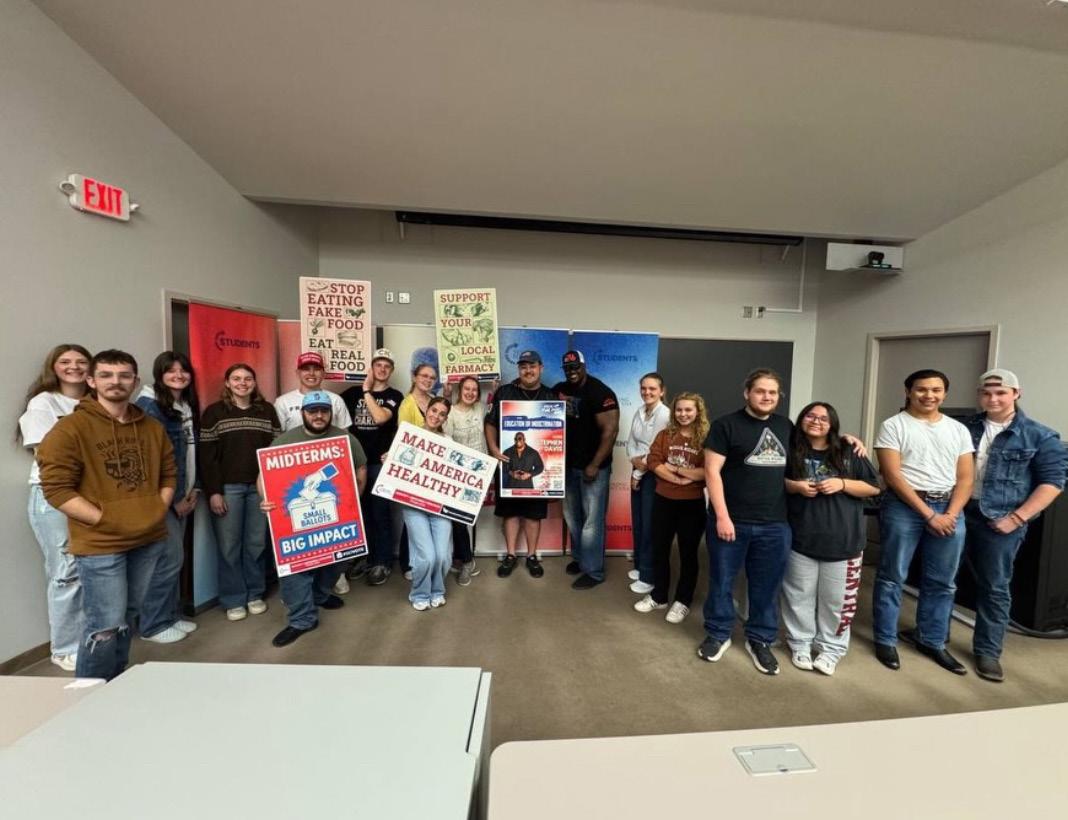
Guest speaker and Turning Point USA (TPUSA) conservative activist Stephen Davis, also known as MAGA HULK, gave a presentation titled ‘Education or Indoctrination’ in Shaw-Smyser Hall. A total of 27 attendees were present, including the newly founded club’s members.
TPUSA, an organization created by Charlie Kirk and Bill Montgomery and known for its controversially outspoken political stance and debates with students on college campuses, hosted their first event with the Central chapter on April 21. Turning Point USA officially became a sanctioned club at CWU during the 20252026 school year.
Davis is a conservative political activist and writer for Turning Point USA. He is the co-host of the TPUSA series ‘Campus Crashers,’ which focuses on visiting schools on the West Coast, such as in California, Oregon, Washington, Nevada, Utah and Arizona.
This presentation was part of the ‘Pick up the Mic’ initiative with college students. “I’m more at home with y’all [College students]. Y’all are more my vibe. More spirited,” Davis said.
The powerpoint that Davis presented at the event focused on critical race theory and its use in higher education. Most slides quoted figures such as Martin Luther King JR., Ibraham X. Kendi, Abraham Lincoln, Joe Biden and many others throughout history’s perspective on ‘racial ideologies.’
Using visual elements, there were clips of professors and students at colleges throughout America discussing what they believe is the solution to racism. One clip alleged a professor calling for a holocaust against white people.
In response to the videos, Davis said, “If that’s the case, then why is it okay to say it towards white people, but not okay for anyone to say it towards black [people]?”
“It’s incumbent of us, as men, to stand for our kids, to stand for our babies, to stand for those who are the most vulnerable,” Davis said while discussing critical race theory in connection to critical gender theory. “What kind of men are we? What kind of men are we calling ourselves when we can’t even protect the most vulnerable? We’re taking an easy way out.”
Before he participated in right-wing activism, Davis was an active leftist. He revealed this during a TPUSA interview posted to YouTube in 2022. He cited inspiration from figures like The Young Turks, Ben Shapiro, Charlie Kirk, Stephen Crowder and the ‘word of God.’
Davis said in his 2017 YouTube video, “It was the end of 2017 and the beginning of 2018 and I still had my racist worldview. I was looking at the situation and I was like, you know what, I am so doggone sick of these doggone Trump supporters standing rah rah for this guy. Clearly, he’s overtly racist. Clearly. I mean, the news said so. He said he’s literally Hitler. Well, let me do some research into this guy.”
Davis continued, “As I delve into this, I’m going to get all of the facts, all of the daggone information I can possibly contain and I’m gonna go after these Trump supporters and beat them down with facts. [I] end up red piling myself doing the research. That just goes to show that when you do your research and you actually educate yourself, you better believe you end up on the right side of history.”
The TPUSA activist said he was also present at the Jan. 6 Capitol protest, which appears in the film produced by TPUSA, “Capitol Punishment.”
Davis grew up in Arizona. Before his career at TPUSA, he went to college at La Sierra University to become a dentist. After a year, he dropped out. He then spent fourteen years as a bodyguard.
“Don’t be the type of person that gets a degree that works at McDonald’s,” Davis said. “Please don’t. There’s no point in that if you want to, if you want to go in debt, buy a huge stereo system in a nice car and go crash it or something, right?”
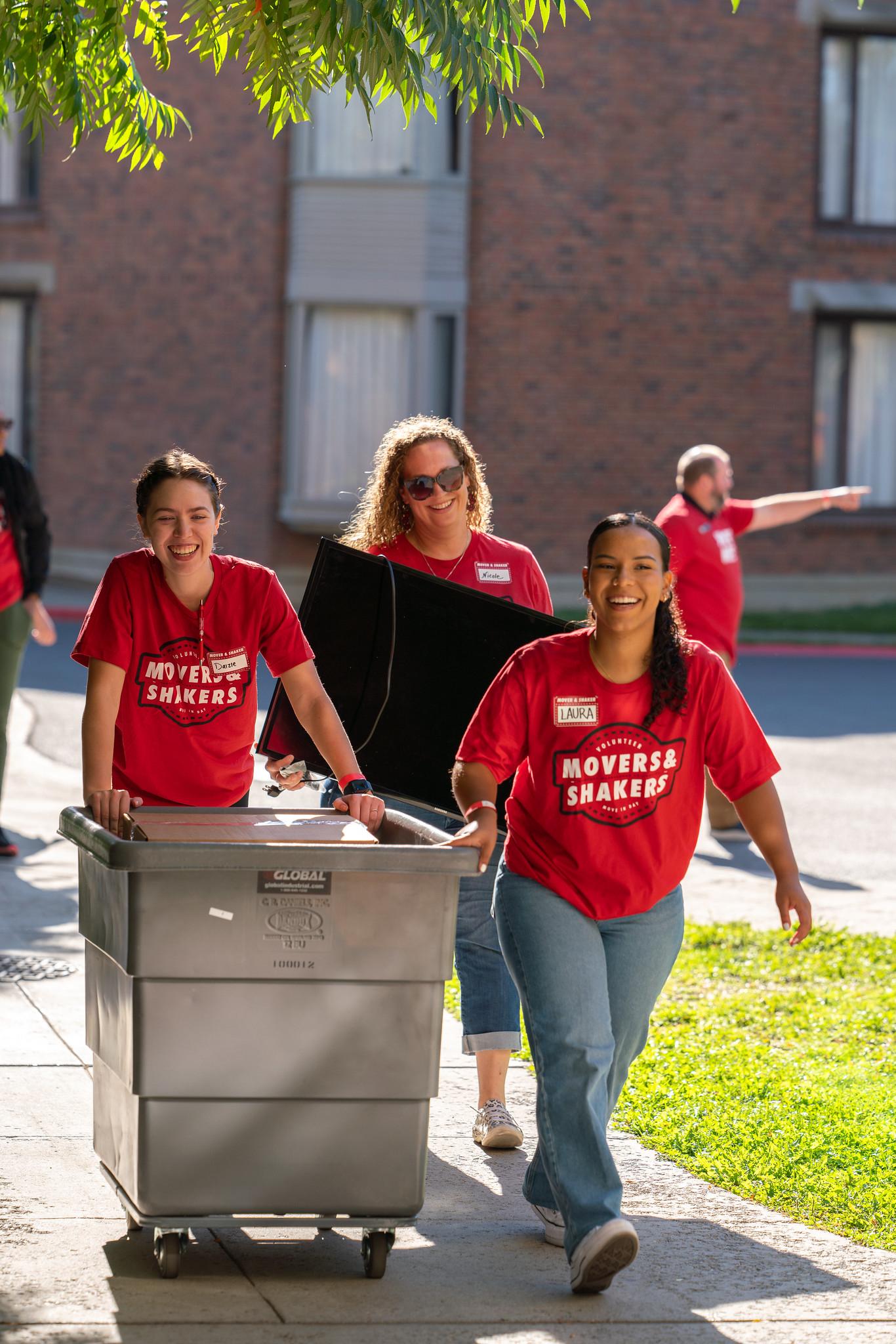
BECOME A MOVERS & SHAKERS VOLUNTEER TO HELP NEW STUDENTS MOVE-IN
THURSDAY, SEPTEMBER 17 AND FRIDAY, SEPTEMBER 18, 2026
2-HOUR VOLUNTEER
FROM 8:00 A.M.

Meisner Dunlap
Copy Editor
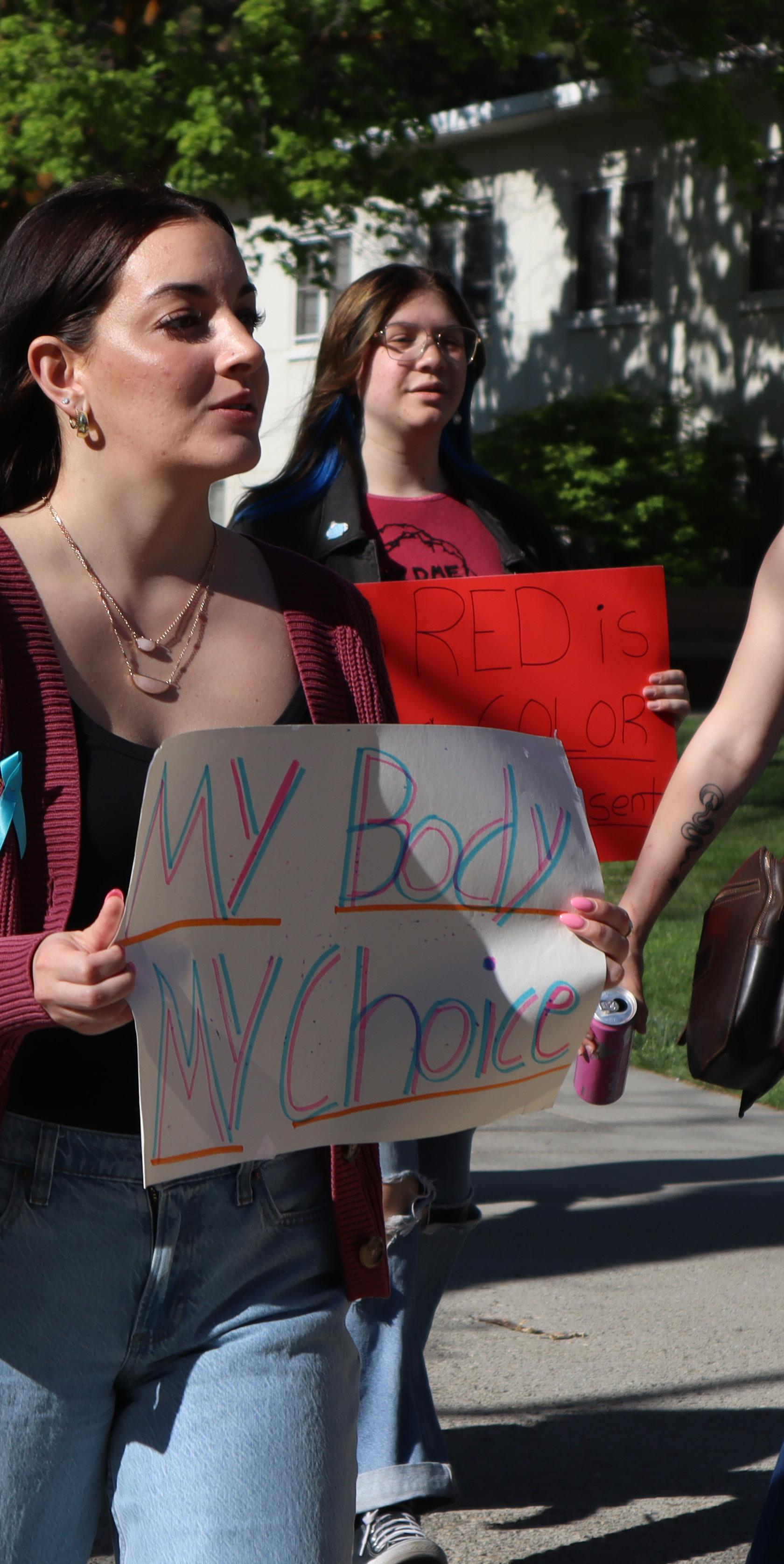
Nutrition major Jada Aurellia Chaplin, along with Ryan Harman, the Associated Students of Central Washington University (ASCWU) director for governmental affairs, led a protest to fight against sexual assault and rape culture. The march, led by Aurellia Chaplin, started with the following words:
Aurellia Chaplin (AC): “My body!”
Crowd (C): “My choice!”
AC: “What do we want?”
C: “Safe streets.”
AC: “When do we want them?”
C: “Now!”
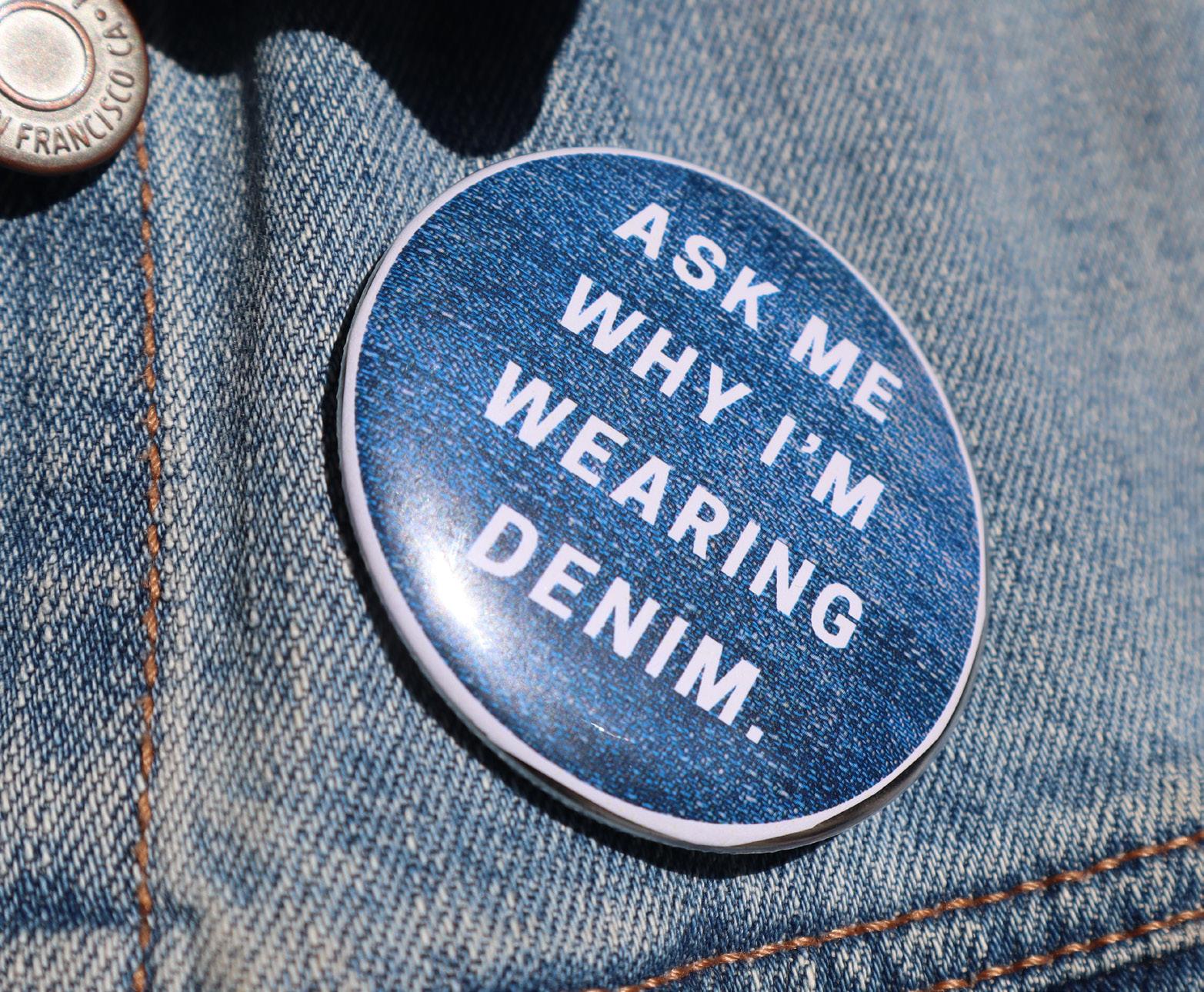
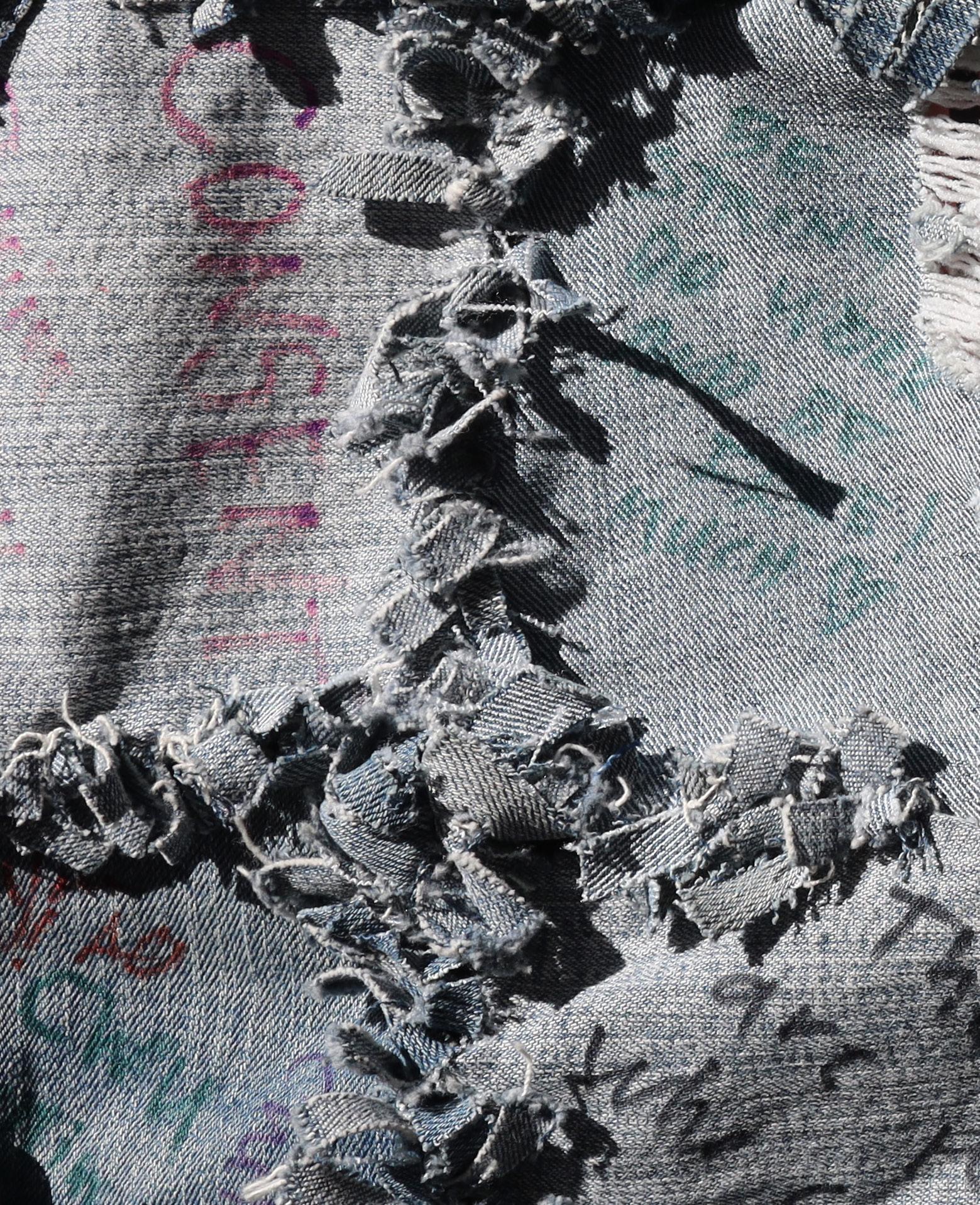
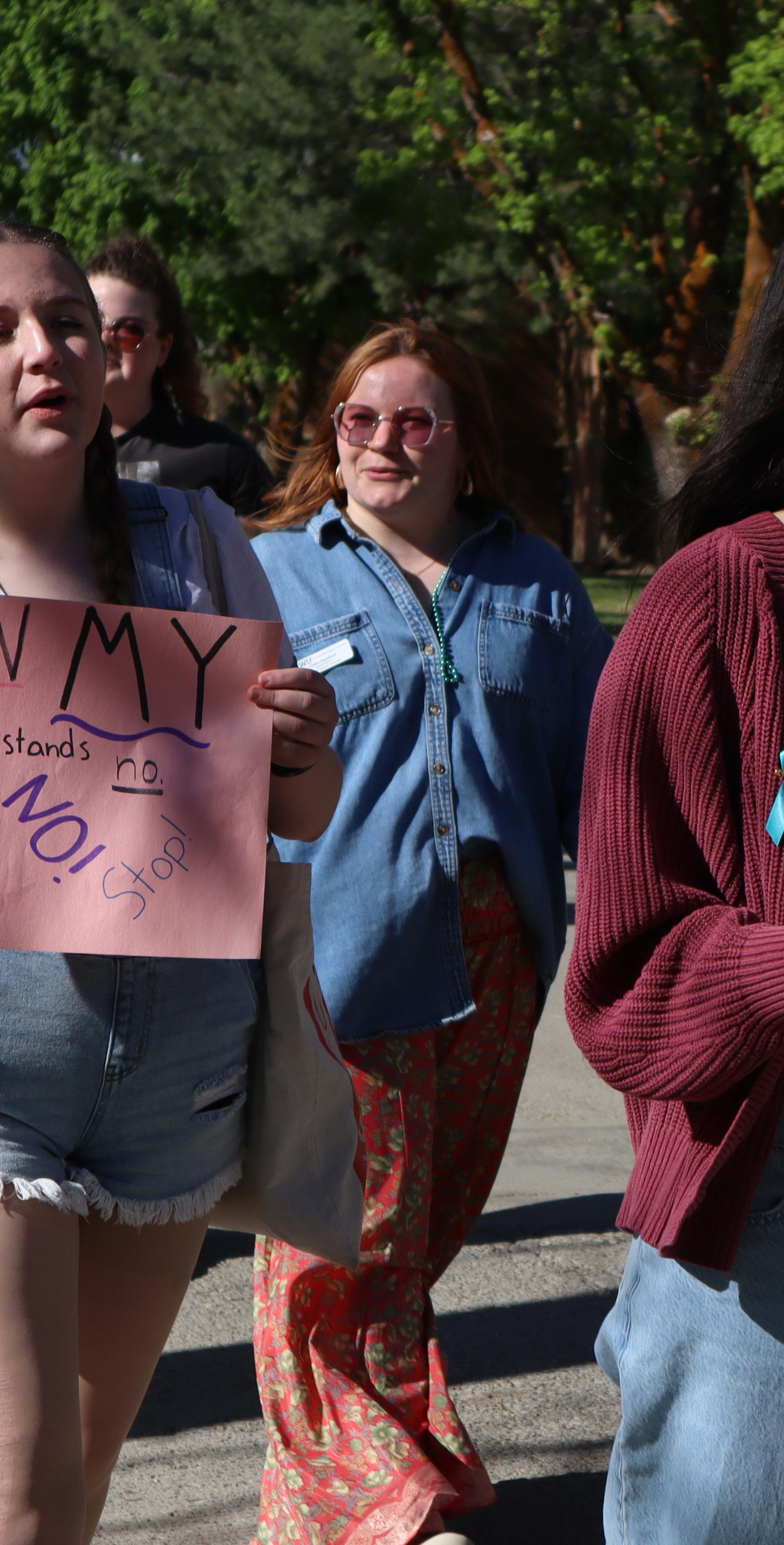
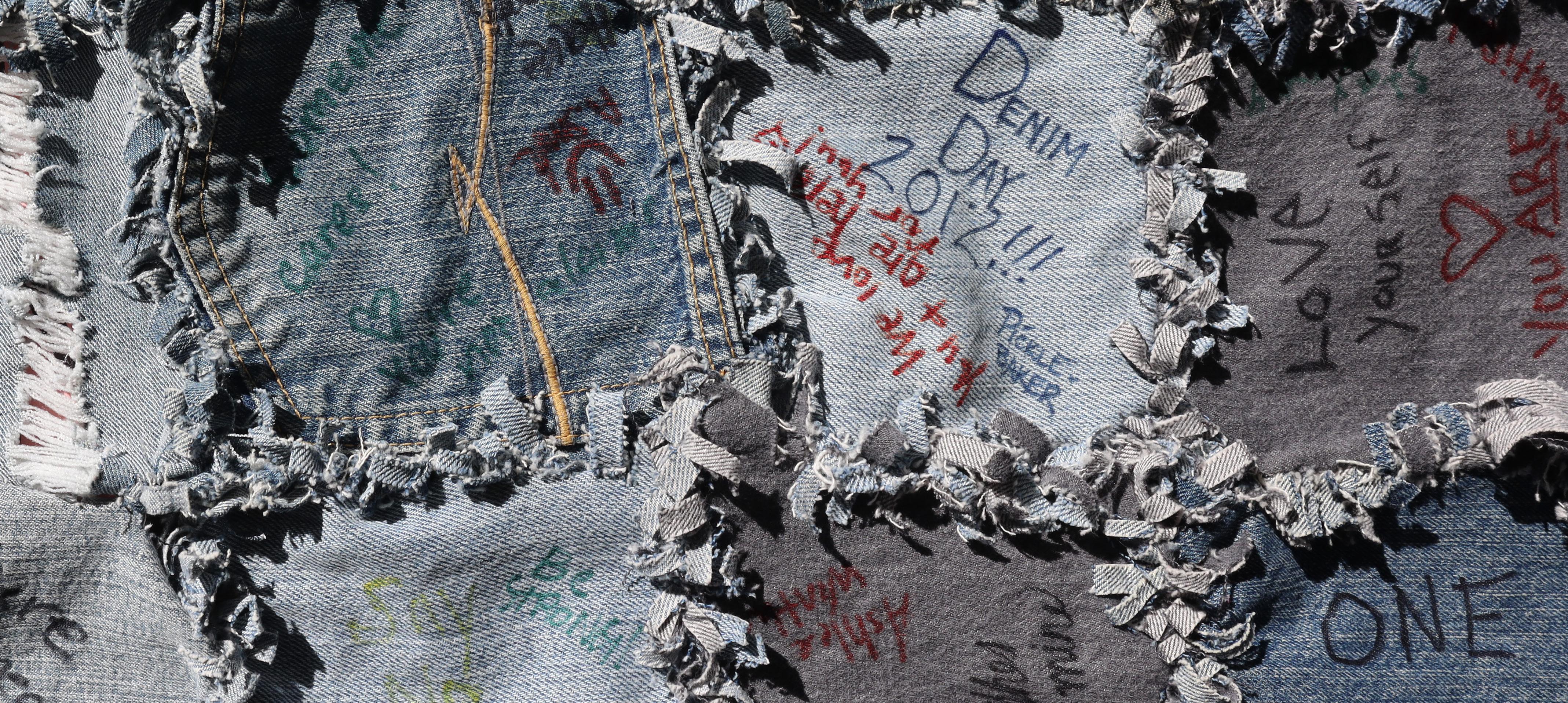
Students identifying as survivors of sexual harassment spoke about their experiences at the protest on campus on April 29, also known as International Denim Day, where people wear jeans in protest and to support survivors of sexual violence. The protest was begun on the SURC West Patio. The protest, titled Show Up, Speak Out, was timed with the end of Sexual Assault Awareness Month.
“When I first moved here, I stepped into the unknown, being a first-year, first-generation independent student, simply adapting to the campus environ-
ment,” Aurellia Chaplin said in her speech. “But this difficult transition became more and more terrifying, from my close brother’s death to being assaulted in my first quarter of college.”
“This happened here on campus, in a place where I and everyone else should al ways be and feel safe. The aftermath of the as sault was incredibly isolating,” Aurellia Chaplin continued. “Instead of finding support, I faced bul lying online and in person, as to what happened to me in the situation.”
Aurellia Chaplin was one of three keynote speak ers at the protest, which was hosted by the Office of Health Promotion (OHP). OHP Assistant Director Katie Parks and Confidential Advocate Claire Stan ford were the other two keynote speakers.
“Survivors deserve better”
Parks began the opening remarks by sharing her thoughts about how the world has treated sexual assault victims over the last few months.
“Our frustration with systems that are supposed to deliver justice is valid. Survivors deserve better,” Parks said. “Survivors deserve justice. Survivors deserve support. Survivors deserve love. Survivors deserve peace. Survivors deserve healing. We thank you for adding your voice to the chorus of those demanding change together. We are a powerful force.”
As a Prevention, Advocacy, Training and Healing (PATH) advocate, Stanford works with students to
PATH is a confidential resource that allows students to talk about their experiences and receive help with potential next steps.
“Today is not about putting pressure on anyone to share their stories, but it’s about standing together visibly and collectively to say that violence and harm are not acceptable in our community or on campus,” Stanford said in her speech.
Protest attendance
The purpose of the protest was to let survivors of sexual assault know that they have allies who care and want to help them.
ees as an opportunity for her department to better focus on creating a network of survivors.
“Nobody, of course, has to self-identify themselves as a survivor. Nobody has to wear a sign that identifies them in that way,” Parks said. “Leaning on the network of people who care about this issue and who are impacted by this issue, I think that will continue to grow this event in the future.”
Although few people showed up, those who did shouted as loudly as possible while marching, as noted by Public Policy major Rachel Haley.
“There’s always power in numbers, but I think the people that did show up really expressed a certain
amount of care and appreciation and honoring of the people that they were standing up for,” Haley said. “I’m glad that this is a tradition and I’m looking forward to next year’s.”
March around campus
After the keynote speeches ended, the protesters marched around campus, starting at the SURC West Patio, then walking down University Way to Wildcat Way. Next, they made a loop around the construction of the new university building and headed back to the
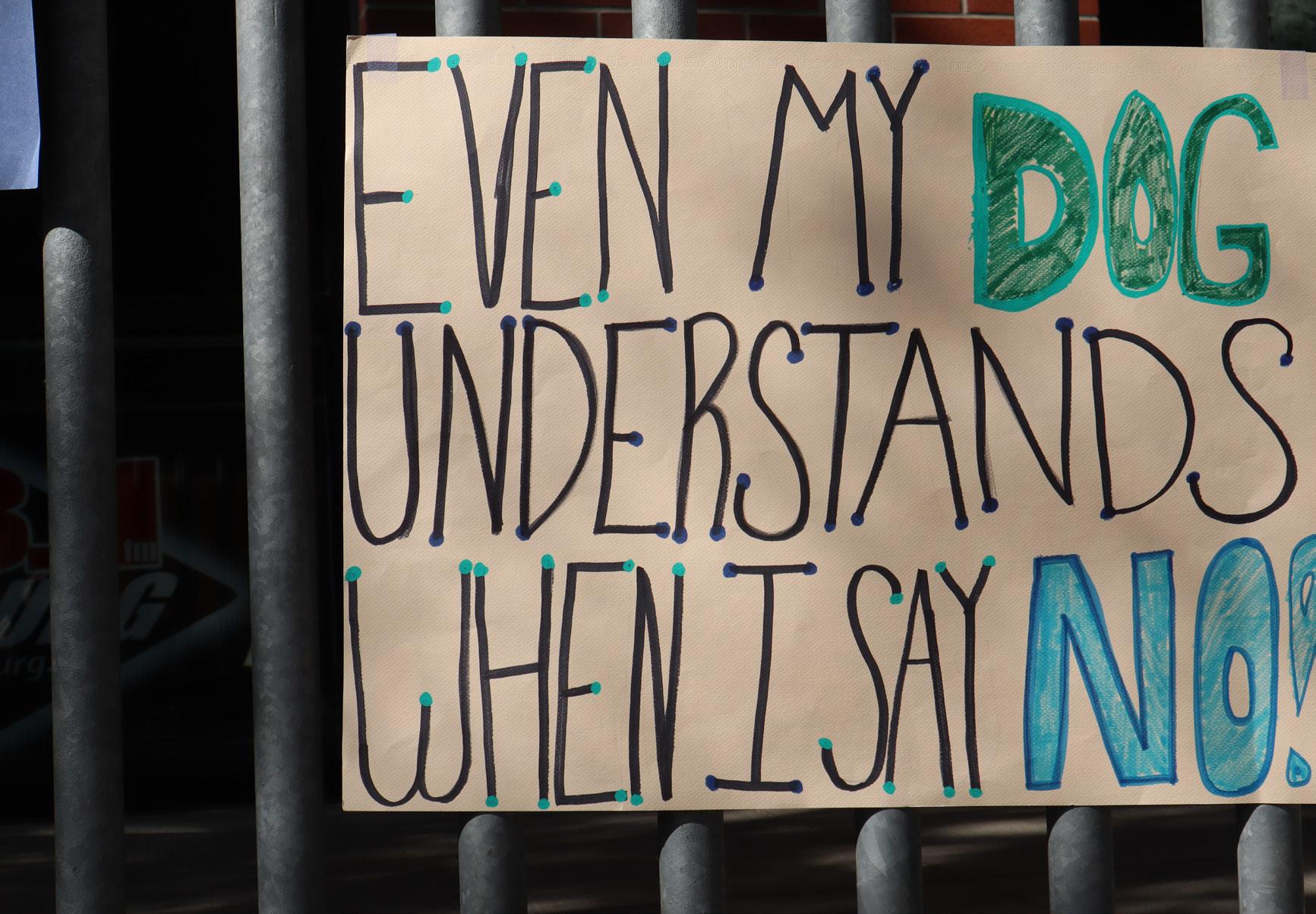
Here are the quotes that Aurellia Chaplin and the crowd of protesters used as their chants
C: “Sexual violence has to go!”
AC: “Combat and resist!”
C: “Sexist Violence!”
AC: “Survivors’ voices are here to stay!”
C: “Listen to what we have to say!”
AC: “Administration, you can’t hide!”
C: “We can see your sexist side!”
AC: “Whatever we wear, wherever we go!”
C: “Yes means yes, and no means no!”
AC: “Hey hey, ho ho, the patriarchy has got to go!”
C: “Hey hey, ho ho, rape culture has got to go!”
AC: “Stop the violence, no more silence!”
C: “We fight back!”
AC: “However we dress–wherever we go!”
C: “Yes means yes and no means no!”
The event concluded with the attendees gathering together to enjoy free light refreshments on the tables by the Central Marketplace on the first floor of the SURC.
CWU is a Title IX institution. Any accommodation requests can go to Disability Services at DS@ cwu.edu. Survivors of sexual assault can also visit the OHP at SURC Room 256 or email them at HealthPromotion@cwu.edu.
However, the OHP staff are mandatory reporters, so if students seek a truly confidential resource, they can contact PATH at 509-963-1745 or PATH@cwu. edu, or they can visit the PATH office at Bouillon Hall Room 203.
Jackson Lawler Staff Reporter
CWU student dancers and choreographers celebrated over 50 years of dance at CWU with this year's Orchesis performance, highlighting student passion and creativity on campus. The annual dance concert ran from April 23 to 25 in McConnell Hall’s Milo Smith Tower Theatre.
This year's show was choreographed by Dance faculty and students, as well as two local guest artists, Jimmy Shields and Emily Schoen Branch.
Orchesis also had two Co-Directors this year: McKenzie Baird, senior lecturer in Dance, and Gabrielle McNellie, associate professor and Dance Program director.
“This season’s production focuses on dreams. What they mean to us, how we interpret them, how they impact our lives,” Baird said. “Each choreographer’s usage of dreams is unique and one of our challenges as CoDirectors was to shape the overall show into a journey for the audience. Over the course of the production, audience members get to experience a wide range of stories and while many are left up to interpretation, we weave subtle clues in our piece titles, quotes, pre-performance music and more to help guide their experiences.”
“The planning phase of this performance began in spring of 2025 with our initial discussions of potential show themes, and how to best highlight the wide array of talent within the company,” Baird continued. “[Student] choreographers audition at the beginning of the season [in fall quarter] with their concept for a piece. They’re required to bring in a sample of the movement, the music, costume concepts, then pitch their piece to the audition committee. Student pieces with a strong concept and clear movement choices are selected to cast and create their pieces. [Then,] we add pieces from our faculty and guest artist pieces.”
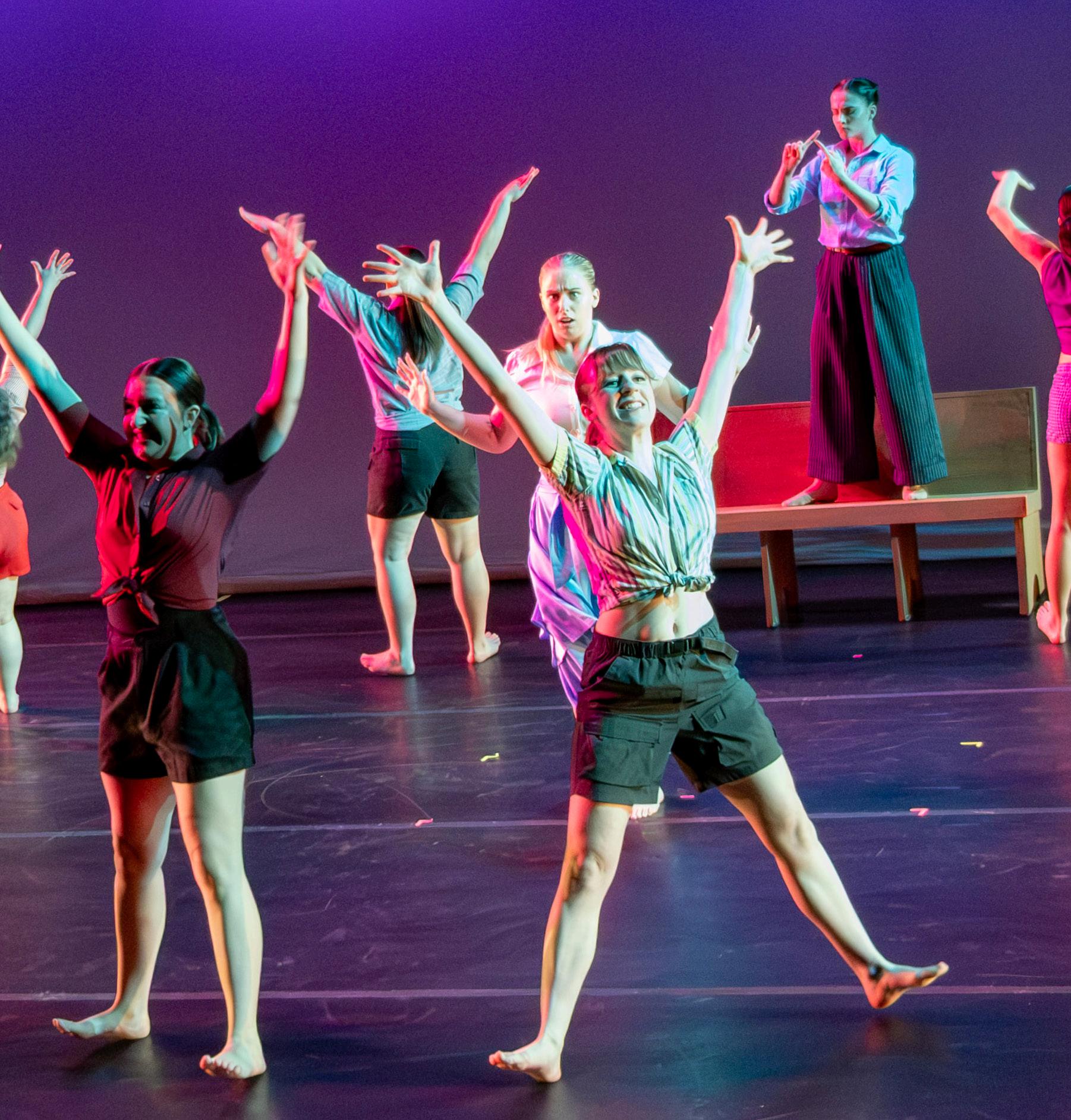
The show featured 16 dance pieces with different choreographers, dancers and meanings behind them. Throughout the two-hour show, performers demonstrated moves from various dance styles, featuring numerous genres of music. Contemporary dance techniques were used heavily throughout the show, with a few other styles sprinkled in, such as jazz, ballet, tap and more.
Lady Gaga’s “Abracadabra,” choreographed by Shields, was used to open the show with modern dance, followed by a nautical, ballet-inspired performance of “Wriggle” by Cosmo Sheldrake, choreographed and performed by Emma Tolmich.
Orchesis even paid homage to musical theatre in its piece “What’s Already Yours,” performing “Lullaby of Broadway” from the musical “42nd Street” with classic moves associated with Broadway shows, such as a kick line. Kennedy Hale, a second-year Dance major, performed in five pieces throughout the night, each with a different choreographer. When discussing one of those pieces, “Madness At Hand,” choreographed by Branch, Hale described the challenges she faced while working on it, “every section feels like a puzzle coming together — fast, detailed, and full of unexpected transitions. The choreography challenges you to stay sharp and fully engaged, because every gesture and every shift matters.”
The lighting design for the show was done with the help of the Theatre Department, where lighting students could use techniques they’d learned in class to enhance the appearance of the dance moves and the costumes onstage. Within “Madness At Hand,” there was even a moment when the characters onstage were laughing at each other, before the lights shone onto the audience, and the characters laughed at them too.
In Baird’s piece, titled “Groovin’,” dancers donned cowboy hats, flannels, jeans and most notably, tap shoes, as they performed “Hey Cowboy” by Devon Cole. Regarding her piece, Baird said, “I knew that I wanted to create a tap piece, and include everyone in the company that taps. From there, this piece grew out of a desire to have fun and do something a little escapist and silly.”
Throughout the show, dancers received cheers and verbal exclamations of awe. During intermission and after the performance was over, several audience members could be overheard talking about how much the show made them cry from the emotional elements of the pieces.
For dance students, Orchesis was not only a showcase of their skills, but also a one to three credit class. When describing what she learned from her experience as a performer in Orchesis, Audree Munson, a third-year Professional and Creative writing major, said, “Sometimes the experiences that scare you the most can end up being the most meaningful and lifechanging. This experience pushed me to trust myself and rely on my support system, and once I got past that first step, it really helped me grow.”
Gabriel Genzel Staff Reporter
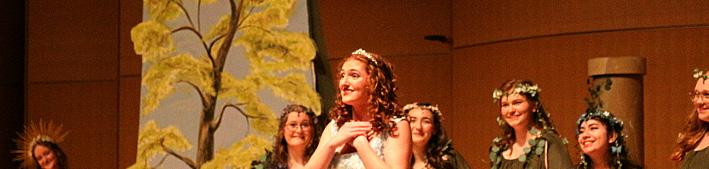
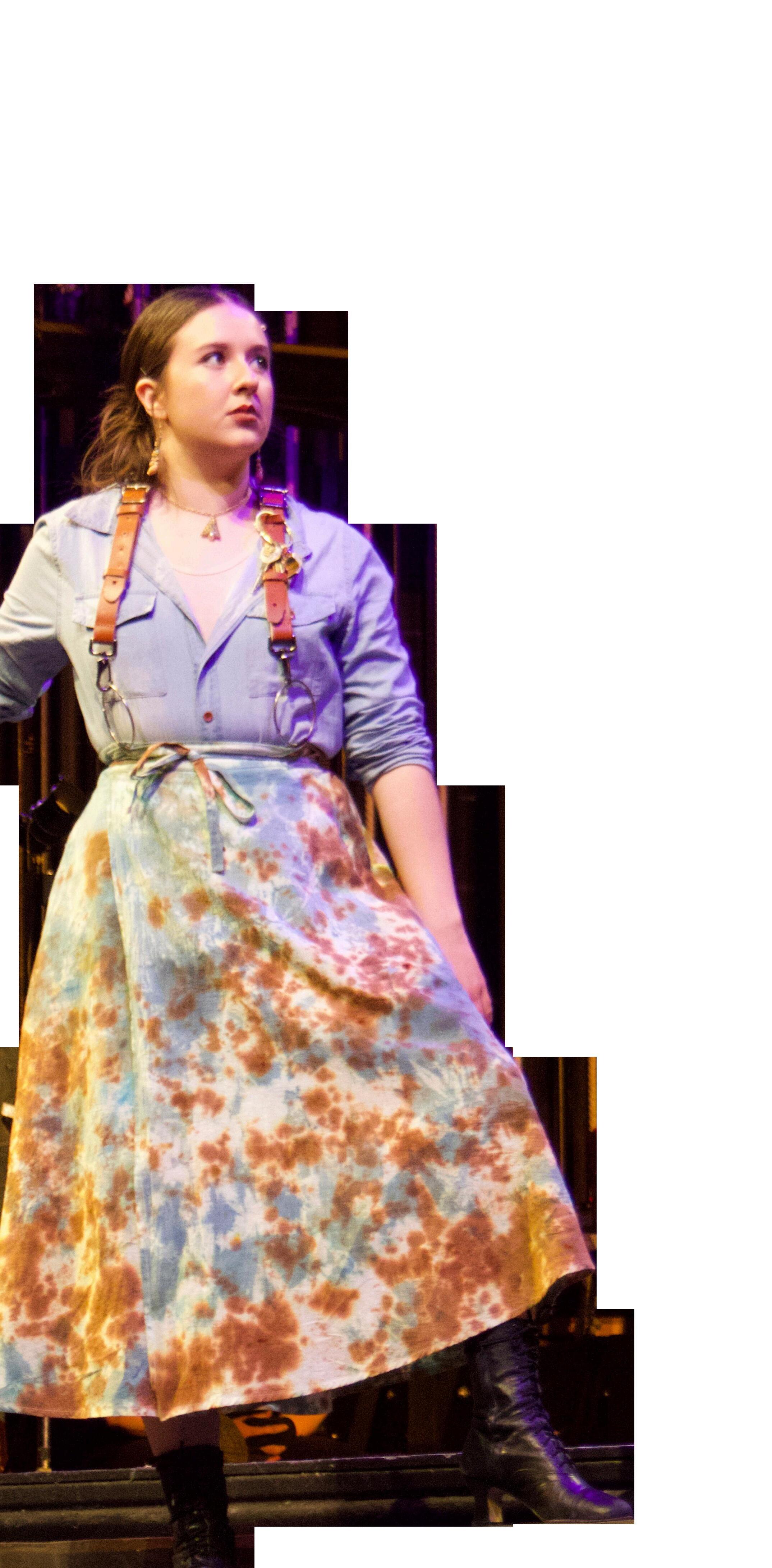
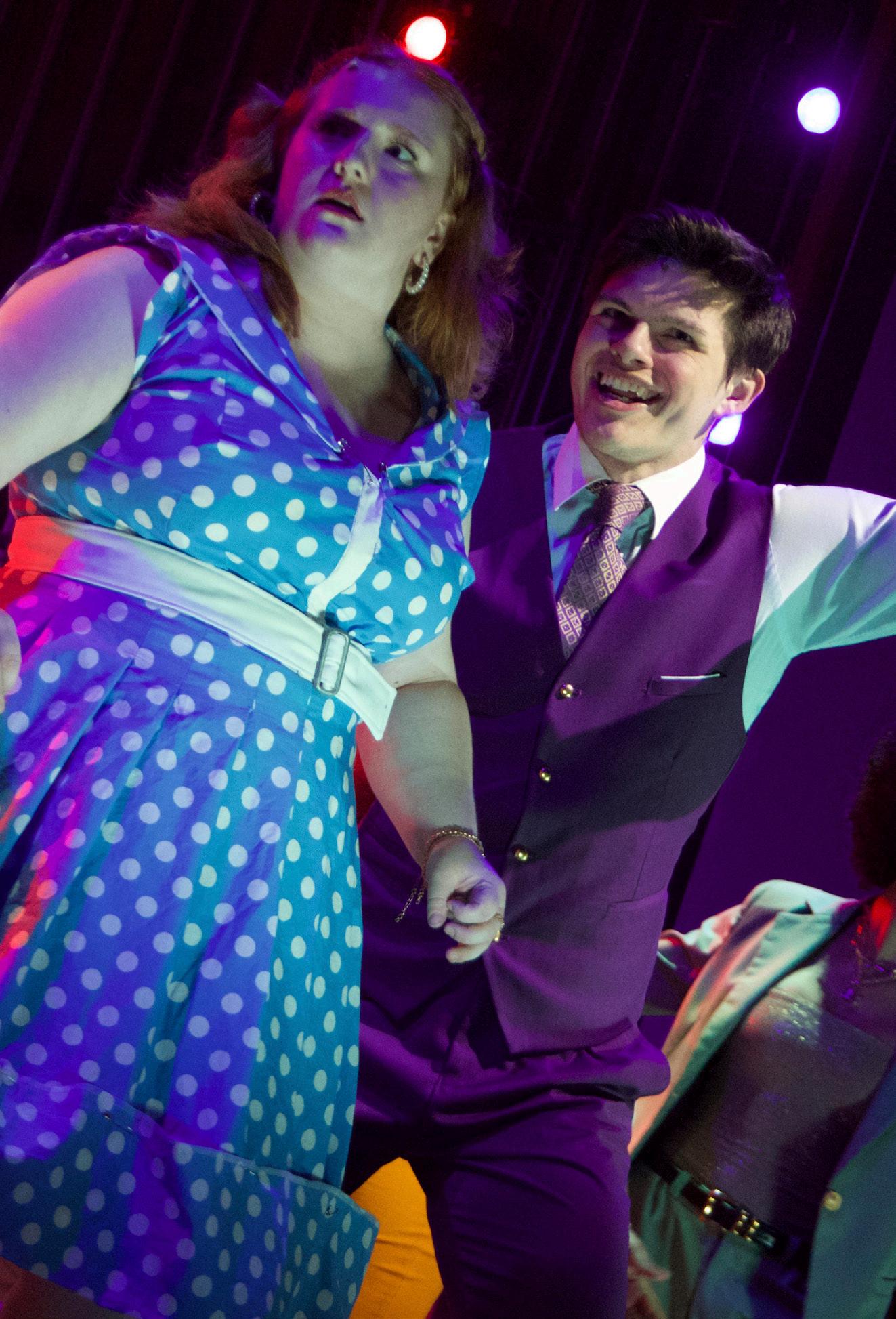
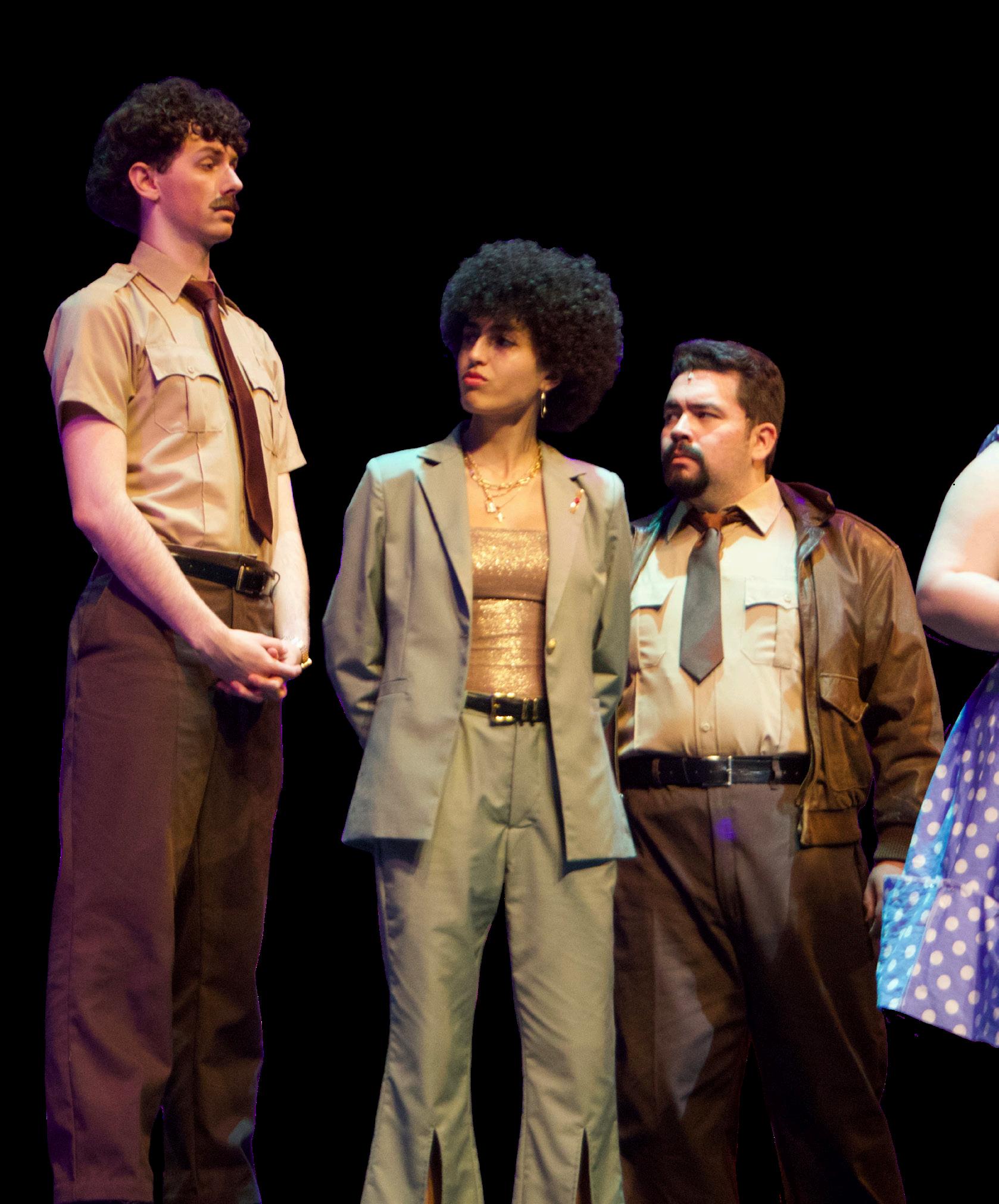
The lights dimmed, and the once-skeletal stage jumped to life in front of the audience with visible enthusiasm. Once the actors entered the stage, laughter filled the air. No matter the moment, every actor was full of creativity. This was The Observer’s experience at Urinetown’s rehearsal, and they open this Friday.
The satire-centric musical Urinetown, penned by Greg Kotis, debuted in Sept. of 2001, boasting an absurd plot about water shortages that lead to bathroom charges. Kathryn Stahl will direct the latest iteration here at CWU.
Jackson Lawler, a fourth-year Musical Theater BFA, Journalism Minor, actor and Observer Reporter, feels the show commands current relevancy, a sentiment shared by much of the Urinetown Crew.
“This show is a big commentary on everything, the fact [that] the show is 25 years old, and it predicts a lot of what's going on today,” Lawler said. “There are things that the writers wrote they could not possibly [have] predicted being relevant.” Lawler will take the stage as Robby the Stockfish, a hotheaded member of the town.
As the title suggests, the initial humor is highly accessible. “Trust me, we got potty talk in this show,” Senior Musical Theater student, Moriah Josephson said.
Josephson will round out her time in the theater program by playing Little Becky Two Shoes in Urinetown. “It's a satirical musical. So yes, it has all those downer aspects, but they make fun of it … It's hilarious and it's really enjoyable for all ages, because children love the pee jokes.”
Aside from the satire, the other aspect that the cast said drew them into the production was its Brechtian approach, a style that rejects the usual tenets of a stage performance.
Sophomore Andy Ashley, a Theater Arts BA and prospective Chemistry BA, plays three roles in the production and commented on the unique qualities of the style. “You can see everything in the background to make you feel slightly uncomfortable in the audience, where you're like, this show's not hiding anything.”
Playing Old Man Strong, Dr. Billeaux and Cop, Ashley has his work cut out for him on stage. “With the quick changes and changing of character … finding the differences in how each character carries himself, like Old Man Strong being part of the poor in the beginning … how does that desperation of needing to pee live,” Ashley questioned.
“Urinetown has been just really a beast of its own,” Luca Fox,
assistant of lighting design said. The Junior Theater Design and Production Major reflected on how production has challenged him. “As all theater positions, the title doesn't necessarily reflect what your job ends up being. So for me, it's been a lot of projection work … that's definitely been a new one for me.”
Urinetown hits the main stage of McConnell Hall this Friday, May 8, at 7:30 p.m., with other 7:30 p.m. showtime dates including May 9, 14, 15, 16. The 2 p.m. showtime dates are May 10 & 17.
Tickets are available at the
Meisner Dunlap Staff Reporter
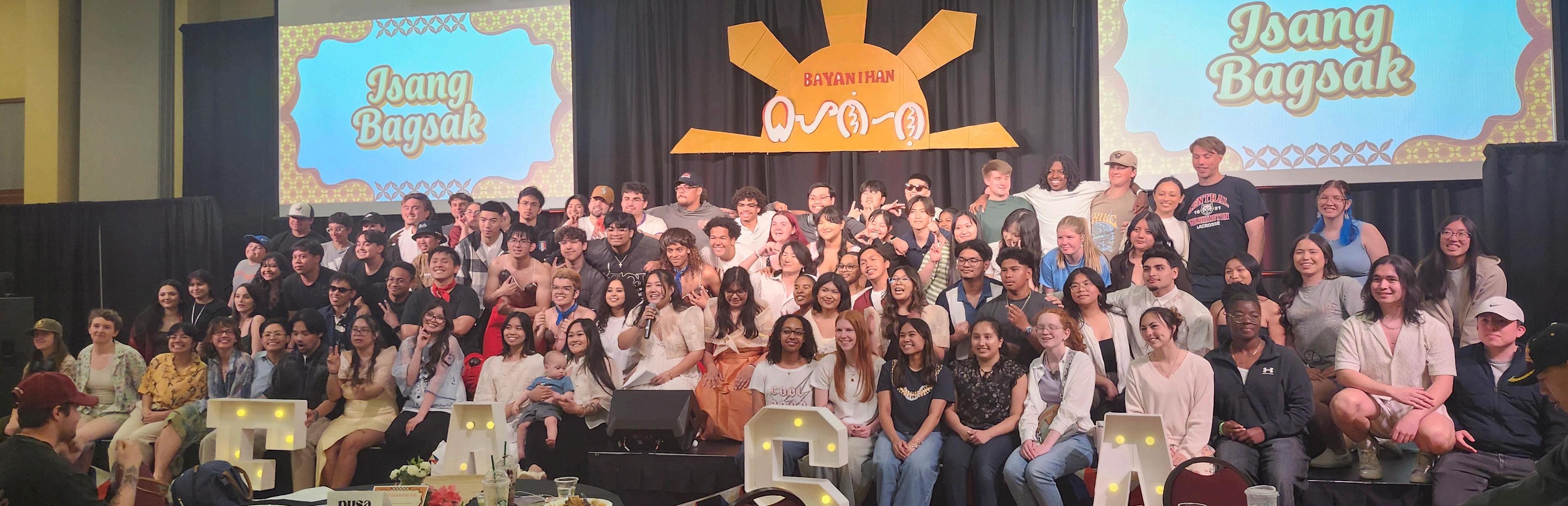
The Filipino American Student Association (FASA)’s second annual Pilipino Cultural Night (PCN) featured a Miracle Minute, in which participants donated to help people in the Philippines recover from recent military bombings.
As part of the Miracle Minute, FASA hired Malay Tacoma Chairperson Clauds Cabellon and Northwest Filipino American Student Alliance (NWFASA) East Region Advisor Emma Cavin to speak about the recent traumatic event in the Philippines.
“Negros Island is known as the Sugar Bowl of the Philippines. It is so incredibly rich in resources, while the poor peasants tilled the land across the sugar cane plantations owned by the wealthy elite,” Cabellon said. “The Armed Forces of the Philippines conducted indiscriminate bombings, ... displacing over 650 people and massacring 19 individuals, nine civilians, one of which was our beloved friend Kai [Sorem].”
“Kai left the US to return home in a noble act of finding bayanihan to truly serve the people until her very last breath,” Cabellon continued. “As I envision her last moments on this earth, I see her protecting peasant youth and women, helping them find shelter as bullets rained upon Negros Islands.”
The guest speaker and donation period of PCN were called Miracle Minute because the event hosts set a timer for one minute, trying to collect as much cash as possible.
When explaining the importance and purpose of Miracle Minute, Cavin said in her speech, “Back home in the Philippines, communities are constantly facing typhoons and flooding and now we have communities facing bonding. Families are displaced. They are losing their homes and they’re losing everything and they have to start over.”
Despite the tragic times people in the Philippines have recently faced, a total of 176 attendees filled the SURC ballroom on the evening of Friday, May 1, with their energy and support at PCN. Equity Services Council Advisor Justin Santoli counted attendees by having each guest scan a QR code.
Bayanihan: uniting as a community
Bayanihan was the main theme of this year’s PCN. It is a Tagalog word with a definition similar to that of the English word, unity. Electrical Engineering Technology Major and FASA General Member
Chavez, along with FASA President Jaden Joy Rosabia, served as the PCN emcees. Rosabia asked five FASA general members and alumni to share what bayanihan looks like within their club and across the CWU campus.
One of the five people whom Rosabia interviewed onstage was Ralph Ramier, who was last year’s FASA president.
“Here at CWU with FASA, we’re able to reflect not only bayanihan, but one of the customs of bayanihan, which is kapit-bisig, meaning linked arms, in order to literally link arms, do great things tonight here at PCN, put on a crazy event,” Ramier said.
“But also I see bayanihan…in the smaller things that maybe not everybody sees,” Ramier continued. “I see these guys at lunch hanging out together and they are one. And I think that’s pretty beautiful. It’s awesome. When I think of these guys, I think FASA. I think Filipino. I think bayanihan.”
FASA incorporated bayanihan into their event in several ways. For instance, CWU Catering made and served free Filipino food for everyone in the SURC Ballroom to enjoy. The menu items included adobo, pancit, buko pandan and white rice.
The Ballroom was so crowded that Rosabia had to call out groups of people by table to get their food. FASA marked the tables with images of objects that symbolized Filipino culture. Despite eagerness for free food around the room, Rosabia noticed how patiently everyone in the last group waited for her to call out their table image.
Rosabia and Chavez also hosted and provided the commentary for several traditional Filipino games. “Games are always a great way to interact with the spectators and people watching,” Washington State University (WSU) FASA Co-Advisor Donavyn
her. She was one of 20 attendees who volunteered to play In and Out.
“That game was really fun for something so simple, when the movements get so quick and then the new rule where you flinch, then you’re out,” Cavin said. “They originally asked for 15 people and they ended up with 20 people onstage. It was really great. Shout out to the girl from Tacoma who got this smiski.”
The smiski, a mini-figurine, was one of several prizes that participants earned by winning each of the games. Other prizes included gift cards and various mystery boxes.
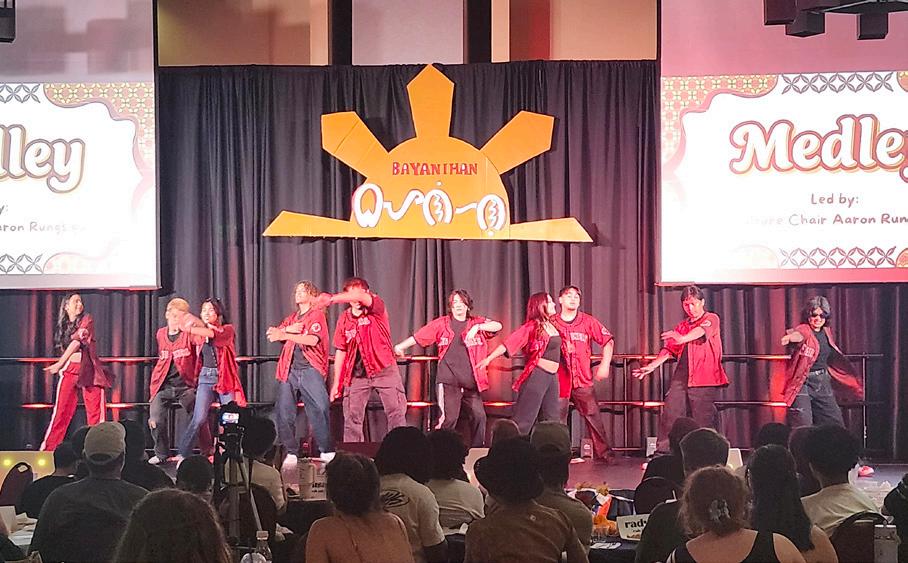
The celebration also included five dances, four of which are part of traditional Filipino culture. The dance performances went in the following order: Sayaw Sa Bangko, Medley, Tinikling, Eskrima and Maglalatik.
The dancers have practiced their PCN routines every Wednesday from 6-8 p.m. ever since late January.
Sayaw Sa Bangko is also called the “Bench Dance” because it involves dancing on narrow benches. “What better way to demonstrate bayanihan than the unity of two dancers performing on top of this narrow bench,” Rosabia said.
The Bench Dance, choreographed by Rosabia, is a performance that originated in Pakistan. It “tests the balance between partners, traditionally performed as a celebratory for newlyweds,” Chavez said. “Dancers have their agility tested to their limits through hops, spins and even stacking of the benches, which rise higher and higher.”
Velez-Fucaf and Cavin, both of whom visited Ellensburg from Spokane, especially loved the Medley dance. “The footwork went crazy. Their stamina was crazy for a 10-minute dance,” Cavin said.
Sonia Lanuza, a General Business student who performed the Medley dance, described her performance as “a modern hip-hop dance.” During the Medley performance, the disc jockeys (DJs) played songs such as “24K Magic” by Bruno Mars. Alicia Yala, an Elementary Education student who was also in the Medley group, added that, in her dance routine, “guys have their part, girls have their part. Then, we all dance together.”
FASA will host its Year-End Celebration on Saturday, May 30 at 6 p.m. in SURC Room 137. General FASA members who are graduating in June can register to secure a free custom stole to
Meisner Dunlap Staff Reporter
Following this past year’s political movements and policies against the Latin American population of the United States, leaders of the Movimiento Estudiantil Chicano de Aztlán (MEChA) originally did not want to have a signature event this year, according to MEChA Co-Chair Paola Anguiano. However, as Anguiano said, the MEChA board members quickly changed their minds and put on their annual Corazon de Cultura event on Saturday, May 2, in the SURC Ballroom.
“We wanted to definitely highlight immigrants, for example, in the video that we showed and why we stand with immigrants,” Anguiano said. “It was definitely hard to even start planning for this. But as the planning process went, we started rolling ideas based on decorations, colors, vibes.”
The video that Anguiano mentioned was a short project that highlighted the community, families and heart of culture, which was the main theme of the event.
Anguiano also served as the emcee of the event. She said in her introductory speech, “We acknowledge all immigrant laborers, including voluntary, involuntary, trafficked, forced and undocumented people, who contribute to the building of this country and continue to serve with our labor force. We acknowledge all the unpaid caregivers to the people who continue to do this immeasurable work and their descendants. We also acknowledge their indelible mark on the space in which we gather today.”
Corazon de Cultura featured several traditional dances, including Inga Toro Mata, Folklorico and Cumbia Texicana. For more information about the Folklorico and Cumbia Texicana dances, see The Observer’s coverage on earlier events this school year that featured those dances, including Dia de los Muertos and Parade of Nations.
MEChA Coordinator Cris Veloz, one of the Inga and Toro Mata dancers, said he first learned about the dance from Daniela Rojas, last year’s gender identity and sexuality chair for MEChA.
“[Daniela Rojas] was one of the main reasons I joined MEChA and she showed us the excitement and joy of Peruvian dances known as Festejo,” Veloz said. “We performed two, one new this year, which is called Toro Mata. I wanted to pay tribute to her and also the Peruvian culture by showcasing one of those performances as well as one that we did last year, Inga. They’re meant to capture the joy of the abolition of slavery in 1854 in Peru.”
The MEChA board members, who organized Corazon de Cultura, recognized the importance of dancing in Latin American culture. So, they chose 10 volunteers to play a game that involved a famous Mexican dance called Clown of the Rodeo. The emcees eliminated people from the game whenever they made a mistake.
“It’s really simple to learn,” Veloz said. “The steps are right, left, back, straight, two steps to the right, two steps to the left, two steps back, two steps forward and turn. It’s a little bit complicated to explain, but a lot easier to demonstrate. It’s very fun. It tests your conditioning and tests your stamina and it’s really fun to see how long you can last in these dances.”
The Clown of the Rodeo contest was just one of several traditional Latin American games that attendees played at Corazon de Cultura.
MEChA Co-Chair Lesly Portugal said her favorite game that her guests played was Musical Chairs. “I think that’s a very important game that we played for tonight. It’s fighting for the chair and rhythm and music,” Portugal said. “I’m glad that people enjoyed it.”
As shown via the dances and games featured in Corazon de Cultura, Portugal, Veloz and Equity Services Council (ESC) Representative Jose Milanes stated that music is an essential part of all cultures, not just that of Latin America.
“Music is the way we go through things,” Portugal said. “In Folklorico, those are stories being told. There was one that they did with the cow. Music is a way to tell stories, celebrate and just be there with the people.”
Veloz added that music breaks language barriers between different cultures. “You don’t have to speak Spanish to understand what it feels like to really immerse yourself in a song. You got to feel the rhythm. You got to feel the beat and really be present,” Veloz said. “It really sparks a feeling within yourself and also the people around you that you can really relate to. That’s why, in this event, nostalgia was one of the themes.”
“We included a lot of the songs that all of us heard growing up,” Veloz continued. “I thought it was really important to include those songs because it really brings back old memories that we all relate to ... kickbacks that we all remember very, very well.”
The music at Corazon de Cultura reminded Milanes of a Spanish saying that translates to, “A Mexican is born whatever they want to be,” according to Milanes.
Another cultural element featured at MEChA’s signature event was the light refreshments, prepared by CWU Dining. David Saucedo, the father of one of the Folklorico dancers, said the mangoes at the event surprised and delighted him.
“I was like, ‘Oh my God, there’s mango and melon water. Oh my god, I’m a sucker for those things,” Saucedo said. “It reminded me of Mexico, my culture, the food that they serve over there.”
Saucedo added that he also loved the nostalgia he felt from eating the pineapple and jicama at the event.
The MEChA board also hosted an Equal Opportunity Draw, during which if the emcee drew an attendee’s name out of a hat, that attendee won a Lego set. Saucedo said his favorite part of the event was winning the
Equal Opportunity Draw.
“I like to collect stuff. Lego sets are one of my collections for my house,” Saucedo said. “I didn’t know it was going to be a car. Normally, it’s basically about stuff that you find at Walmart just to pass the time and use your imagination. But this is a car.”
MEChA Historian Emily Gonzalez said she felt proud of how well her team planned and executed their signature event this year.
“The whole planning process was really fun and I feel like it really made us closer to each other because we got to spend a lot of time, mostly this past month,” Gonzalez said. “Almost every single day, we see each other in one way or another, but I think that’s what really brought us more together.”











Designed by Z Morris Divined by Ethan Kennedy
Aries (March 21 - April 19): It feels like a party every day. Please say hi to Uncle Bertram for me. Your Disney Show: Jessie.
Taurus (April 20 - May 20): Stronger, faster and smarter. That’s right baby we are the next generation of the human race and… we are living in a basement. Your Disney Show: Lab Rats
Gemini (May 21 - June 20): All these new missions and superpowers, if I didn’t have to work I’d be here for hours. Also fair warning, we don’t get paid for this… and they say doctors make bank. Your Disney Show: Mighty Med.
Cancer (June 21 - July 22): Never realized how much there is to do in a hotel until now. Yall said something about a cruise ship? We don’t talk about Mr. Moseby though. Your Disney Sitcom: The Suite Life of Zack & Cody
Leo (July 23 - Aug. 22): Leo Howard plays the man himself, Jack. Did you know Jack’s grandpa taught THE Bobby Wasabi. We swear by the light of the dragon’s eye to be loyal and honest and never say die, Wasabi! Your Disney Show: Kickin’ It.
Virgo (Aug. 23 - Sep. 22): I know what we’re gonna do today! Hey where’s Perry? Oh, there you are Perry! Your Disney Show: Phineas and Ferb.
Libra (Sep. 23 - Oct. 22): Hot take… Justin should have been the family wizard. Alex didn’t deserve it. The movie is still fire though. Your Disney Show: Wizards of Waverly Place.
Scorpio (Oct. 23 - Nov. 21): Find your buddy, y’all are royalty now. You now have your very own island! Your Disney Show: Pair of Kings.
Sagittarius (Nov. 22 - Dec. 21): What are you, some kinda spy kid? Aye but Ron though, he’s the man. Your Disney Show: Kim Possible.
Capricorn (Dec. 22 - Jan.19): Yo is that Kaz? Nah it’s just Gabe. Wait… oh my gosh, it’s frickin Bob mother fricken Duncan! Anyways, gotta go! Your Disney Show: Good Luck Charlie.
Aquarius (Jan. 20 - Feb.18): Is your name Hannah or Miley… make up yo mind. Also, how is your whole family famous musicians? Your Disney Show: Hannah Montana.
Pisces (Feb. 19 - March 20): It’s like an off brand version of “The Parent Trap,” but say hi to Parker Rooney, shout out Parker. Your Disney Show: Liv and Maddie.
8 a.m. to 2 p.m. - Mothers Day Brunch | Holmes
1 p.m. to 6 p.m. - Industry Day - Virtual Resume Drop-ins | Zoom

2 p.m. to 4 p.m. - Spring Gather and Grow |
12 p.m. to 1 p.m. - My Brain: The Best and The Worst Part of Me | Register Online