OCTOBER 2026 | CIT Y VIEWNC.COM
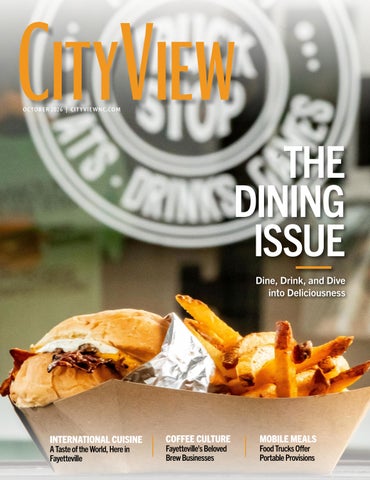
THE DINING ISSUE Dine, Drink, and Dive into Deliciousness
INTERNATIONAL CUISINE A Taste of the World, Here in Fayetteville
COFFEE CULTURE Fayetteville's Beloved Brew Businesses
MOBILE MEALS Food Trucks Offer Portable Provisions
Where Your Children Come First
www.kidsfirstpedsraeford.com Kids First Pediatrics of Raeford and Fayetteville has created a professional and caring medical environment for infants, children, adolescents and their families. We provide complete pediatric and adolescent care.
Pediatric Services We Provide
Check Ups, Sick Child Visits & More in Raeford and Fayetteville
Jose Buenaseda, MD, FAAP Leamor Buenaseda, MD, FAAP Sreelekha Sashidhar, MD, FAAP Christine Arnold, CPNP-PC Melanie Pitts, DNP, NP-C Beverly de La Rosa, CPNP-PC Danielle Trigg, CPNP-PC Rachelle Olson, FNPC Ashley Monroe, PA-C Sarah Lewis, PA-C Marlena Syvertsen, CPNP-PC Brooke Phelps, PA-C
• Well Child Visits
• Autism Spectrum Disorder
• Urinalysis
• Sick Child Visits
• Vaccines & Immunizations
• Strep and Mono Screen
• Vaccine & Immunization Schedule
• ADHD Testing & Treatment
• Vision and Hearing Tests
• 2026-2207 Guide to the Flu
• Asthma Symptoms & Treatment
• School, Sports, & Camp Physicals
• Breastfeeding Support
4005 Fayetteville Road Raeford, NC 28376 Mon. to Fri., 8 a.m. to 5 p.m.
2035 Valleygate Dr., Ste. 101 Fayetteville, NC 28304 Mon. to Fri., 8 a.m. to 5 p.m.
6415 Brookstone Lane, Ste. 101 Fayetteville, NC 28314 Mon. to Fri., 8 a.m. to 5 p.m.
2694 NC 24-87 Cameron, NC 28326 Mon. to Fri., 8 a.m. to 5 p.m.
910.848.KIDS (5437)
910.677.0007
910.306.KIDS (5437)
910.500.KIDS (5437)
Brookstone office only 8 a.m. – 12 p.m. Saturdays for sick/urgent appointments, established patients only.
O CTO B ER 2026 Publisher Kyle Villemain PHOTO BY MATTHEW WONDERLY
Help Keep Local News Rooted Here.
Editor-in-Chief Matt Hennie Magazine Editor Jason Beck Director of Operation & Sales Talmadge Rogers Operations Coordinator Caitlin Malson Distribution Jennifer Baker Wayne Robinson
Photographers Tony Wooten Matthew Wonderly Dasia Williams Contributing Writers Claire Mullen Diane Parfitt Dasia Williams Ryan Medlin Sunny Hubler Teri Saylor Tim White Claudia Zamora Caitlin Malson Graphic Designer Ellie Bruno
Sales Team Leader Dawn Denham
Supporting the News Foundation of Greater Fayetteville directly funds local news at CityView.
For advertising inquiries please contact dawn@theassemblync.com.
PUBLISHED IN PARTNERSHIP WITH
faynews.org TheAssemblyNC.com CityView is published 12 times annually by CityView Media, LLC. Mailing Address: 2919 Breezewood Ave., Ste 300, Fayetteville, NC 28303 Phone: 910.423.6500 | Fax: 910.423.0096 Postage paid at Fayetteville, NC
A 501(C)(3) COMMITTED TO LOCAL NEWS COVERAGE
CONTACT US talk@cityviewnc.com
cityiewnc.com
No part of this magazine may be reproduced without written permission from CityView Media, LLC. Publication of an advertisement in CityView does not constitute an endorsement of the product or service by CityView or CityView Media, LLC.
/cityviewnc
@cityviewnc
@cityviewnc
O C TO B E R 2 02 6
TABLE OF
CONTENTS
The Cumberland County Fair on September 20, 2026. Photo by Matthew Wonderly
F E ATURES
COLUM NS
10
A Taste of the World, Here at Home
4
Editor’s Take | Jason Beck
Fayetteville's dining scene offers a culturally diverse array of restaurants, cafes, food trucks, and family kitchens that create a notable food scene.
6
The View From Here | Tim White
8
Family Matters | Claire Mullen
32
Oye, ¿Cómo Va? | Claudia Zamora
34
Good Reads | Diane Parfitt
36
The To-Do List Your go-to spot for local events
38
Seen @ the Scene Photos from the Cumberland County Fair
40
Dish of the Day Four-Cheese Baked Penne Mac 'n' Cheese
16
Coffee Culture
20
Turning Research into Hope
24 29
Spilling the beans on Fayetteville's rapidly expanding brewed beverage landscape.
Cape Fear Valley Health is expanding access to cutting-edge clinical trials, giving people new treatment options and for one patient, a procedure that proved lifesaving.
Cooking Up Something Savory At Douglas Byrd High School, culinary arts and green technology students are learning how food is prepared, served, and turned into skills they can carry beyond high school.
A Truckload of Flavor The area's food truck scene continues to expand.
ON TH E COVE R R Burger's signature dish is one of many delicious options regularly available at Haymont Truck Stop. Photo by Matthew Wonderly
E D ITO R ’ S TA K E
Something Special Cooking in Fayetteville BY JA SON BECK
If there’s one thing everyone in Fayetteville agrees on, it’s a love of food and drink. Our dining issue reflects that. The ongoing inside joke in our family—whenever we’ve had a long day or can’t generate the energy to cook at home—is the proclamation: “Let’s eat something delicious.” That’s code for, “Tonight, let’s explore some of our city’s diverse and ideally unhealthy restaurant options.” And Fayetteville always delivers. With more than 400 dining establishments in the area, you could dine for an entire year without repeating an order. In this issue, we focus on the plethora of international establishments here. Undoubtedly driven by our community’s ever-traveling military population and other factors that make us a melting pot, it’s possible to eat authentic ethnic dishes from around the globe. For those who prefer to sip rather than sup, Fayetteville’s coffee culture continues to thrive. Not only can you find expertly prepared java at a handful of intimate downtown shops, coffee purveyors offer many themed hangouts. These include places to play board games, fantastic garden views, and an opportunity to hang out with furry friends. Readers who prefer meals on wheels should check out the growing food truck scene in the area. In addition to one popular hot spot expanding to a new county, mobile kitchen parking areas are popping up around the community. It’s proof some of the most delectable dishes are created in the smallest spaces. For those who love a home-cooked meal, the future
4 | OCTOBER 2026
is bright. Douglas Byrd High School’s culinary arts program teaches the next generation of chefs. Not only do they learn about food prep, safety, and kitchen equipment, they create menu items from produce grown at a greenhouse on campus. We also feature Cape Fear Valley Health System’s clinical trial program, which directly and indirectly saves the lives of those facing serious illness. Our columnists this month share their experiences with food and the importance of gathering around the table together. One columnist shares her favorite books about chow, while another discusses confronting her greatest fear. Speaking of spooky, our To-Do List provides a host of fun October events, many of them with a Halloween flare. You’ll also enjoy photos from the Cumberland County Fair in this month’s Seen @ the Scene section. Bon Appetit!
Jason Beck is CityView’s magazine editor. For comments, questions, feedback, or to submit story ideas, email jbeck@cityviewnc.com.
Photo by Matthew Wonderly
CITYVIEWNC.COM | 5
TH E V I E W F R O M H E R E
Starting Early BY TIM WHITE
I was four years old when my mom put me on the road to a lifetime of good eating. I was a little young for cooking lessons, but she saw me riveted by the process—especially when she was making pies. So she let me start rolling out some pie dough and making little tarts filled with berry preserves that she and my dad had made from the wild strawberries I’d picked on the hillside field behind our house. The little tarts weren’t pretty—a disjointed patchwork of crust scraps—but oh were they good! And Mom had instantly created a child who would never starve, but instead would always be ready to make a good meal. That led eventually to dozens of cookbooks and more hours than I can count watching Julia Child and some of the other cooking gurus of an earlier day. And, of course, thousands of hours playing in kitchens. Even after my busiest days at work, I loved winding down by playing with food and creating something interesting for dinner. And weekends? Time for even bigger adventures. To this day, I believe fine dining begins at home. Enjoying a great chef’s work is enhanced immeasurably by understanding what he or she did to create some culinary joy. I expect that much from anyone who works in the food industry—how can you sell and promote great stuff if you’re clueless about how it’s produced? Which reminds me of my shock, a few years ago, when I heard the manager of a busy, popular local grocery store tell another worker that he can’t cook—that he knows absolutely nothing about how to build a meal. I’m sure it’s not all that unusual, but it still left me shaking my head and wondering how the guy got as far as he did in the food business. I also believe the dining is infinitely better when most of the ingredients come from my own garden, or from someone else’s garden nearby—which is why I’m a regular at several local farmers markets and why I love the farmto-table movement among good restaurants. I believe in supporting local agriculture, especially small family farms. But that philosophy takes a back seat to an even stronger instinct: Fresh, locally grown food tastes infinitely better than packaged stuff, or food that’s grown and harvested thousands of miles away. Meals, as much as possible, should be celebrations of deliciousness. A short trip from garden to kitchen makes that a lot more likely. I reinforced those beliefs this year with my best-ever
6 | OCTOBER 2026
gardening effort. I added more raised-bed gardens to my backyard and filled them with plants, most of which surprisingly survived, despite my legendary ungreen thumb. Not all of them, though. Some subterranean critters decided they liked—no, loved—the roots of bean and pea plants. Despite multiple plantings, I struck out and had to rely on the farmers market for them. But five varieties of tomatoes filled my kitchen, some going to salsas and stewed tomatoes that will make me smile on cold winter days. Two varieties of cucumbers led to all sorts of interesting meals (they pair beautifully with peaches, cantaloupe and cherry tomatoes in a salad with a citrus vinaigrette) and dozens of jars of pickles. Four kinds of peppers are likely to keep producing (maybe the better word is “inundating”) until the first frost. We’ll still have plenty of winter squash around for Thanksgiving, even if the summer squash was a bit of a bust (better, I thought, than a zucchini deluge that’s even more life-altering than the cucumber barrage). And that’s not even touching on the winter veggies and greens I started in early September. After the initial build of the garden beds, none of this was all that labor intensive. Watering, weeding, and picking have taken up just a few hours a week—not much more time than I spend hanging out at farmers markets. It’s not rocket science, although there is a bit of science involved, which is handy to know. The great joy, for me anyway, is in the cooking—which is happening as I write this column. My typing is alternating with short walks to the kitchen counter, where I’m slicing cucumbers, peaches and some cooked chicken from a recent grilling, tossing them with a good handful of crumbled feta cheese and another of fresh shredded basil from my herb garden, then topping it all with a generous pour of a gochujang vinaigrette I just whisked up. Report from one day later: It was a splendid dinner salad that will be repeated a few times before the growing season is over. So, get yourself to a farmers market, and then into the kitchen, and prepare to have fun. And as Julia told us at the end of every show, bon appetit!
Tim White is the former editorial page editor of The Fayetteville Observer.
Tanaphong Toochinda/Unsplash
CITYVIEWNC.COM | 7
FA M I LY M AT TE R S
Things that Go Hop in the Night BY CL AIRE MULLEN
When my 12-year-old daughter came to me recently and asked if, in the spirit of Halloween, I would allow her to watch the first installment of the horror movie franchise, Scream, my answer was not “no”, but rather, a resounding “OH HECK TO THE NAW!” She argued that many of her friends had already seen all seven of the Screams, and said they were “honestly not that bad.” I reminded my child that she has never seen a movie that scary and still sleeps with a light on in her bathroom, checks behind her dad every night to make sure the alarm is set and doors are locked, and did not sleep through the night for a solid year after seeing the snippet of the Thriller music video in which M.J. transforms into a werewolf. She countered with, “Moooom, that was, like, six years ago and I’m older now!” I replied, “Well, I’m older now too. Too old and too tired to have to wake up twice a night to trudge upstairs and check for werewolves under your bed. Besides, I’ve seen Scream, and it’s terrifying.” My daughter pondered this for a minute and took her final stand, “Ok, but just because you’re scared of it doesn’t mean I will be scared of it. People aren’t all scared of the same things. You’re scared of cute little 8 | OCTOBER 2026
FROGS!” And, well, she’s not wrong. I am scared of frogs. Terrified, actually. Phobic, even. I am afflicted with a very grave condition known as ranidaphobia. The Cleveland Clinic defines ranidaphobia as “an intense and irrational fear of frogs or toads.” Whichever fancy pants at the Cleveland Clinic decided to call this fear “irrational” has clearly never had a bug-eyed green tree frog leap from its hiding spot amongst the leaves of a potted plant to latch its moist, sticky little feet onto the cheek of its unassuming victim—an innocent woman just trying to water her fern. Never experienced the sheer terror of strolling down their own driveway in the dark on a warm summer night to retrieve mail from the mailbox only to have their bare foot meet the pulsating flesh of a fat, warty toad. Never lay in bed unable to sleep after a spring rain because they have themselves convinced that the increasingly loud chorus of frogs outside their window is saying “Claire. Claire. Claire. Claire.” I have also had trouble convincing my own family and friends that my fear of these awful amphibians is absolutely not irrational and should be taken with utmost seriousness. My kids love to torment me by coming in
from outside and chasing me around the house with cupped hands that are not revealed as empty until I have barricaded myself behind a locked door. My husband loves to rewatch a video he recorded on his iPhone in our backyard of our two children, at ages 3 and 6, working together to catch a tree frog in a watering can. In the video, my toddler son says, “I’m going to go inside and show Mommy my froggy,” to which my older daughter replies, “This is not going to end well.” Smart girl. The phone camera then pans to the open back door, from which bloodcurdling screams are emanating. Rather than a happy scene of my husband dropping the phone and running to my rescue, the video shows my spouse betray me by proceeding into the house, still filming, as he zeros in on the source of the screams: his petrified wife standing on top of the dining room table as the frog hops along the kitchen floor. Even my best friends’ attempt at extreme exposure therapy, by showing up together to my 41st birthday party dressed in adult-sized green frog onesies has not cured me of my lifelong phobia. People have tried to tell me they are cute. Harmless. Helpful, even, in our war against
Because when it comes to fears, everyone's are valid, no matter how ‘irrational’ they may seem.
Photo by Jason Beck
arguably more offensive critters like mosquitos and flies. I choose to retort with a profound quote from the classic song, “Old Town Road,” by esteemed artist Lil’ Nas X: “Can’t nobody tell me nothin.’” Because when it comes to fears, everyone's are valid, no matter how “irrational” they may seem. Whether it’s heights, small spaces or large crowds, public speaking, needles, snakes or spiders, creepy clowns, or even loafer-wearing werewolves and tiny frogs, just about anything has the
potential to be scary to someone. So, no, this spooky season, my child will not have my permission to watch a rated-R slasher movie, because no matter how brave and unbothered she thinks she will be, I know in my heart of hearts that if I allow this, I will be awoken at midnight for months on end by a shaky little voice asking me to come upstairs to check for Ghostface under her bed, which will, in turn, lead to me having to check for a frog under mine.
Claire Mullen can be reached at clairejlmullen@gmail.com.
CITYVIEWNC.COM | 9
CU LT U R E
A Taste of the World, Here at Home FAYET TE VILLE’ S DINING SCENE OFFERS A CULTUR ALLY DIVERSE ARR AY OF RESTAUR ANTS , CAFES , FOOD TRUCKS , AND FAMILY KITCHENS THAT CRE ATE A NOTABLE FOOD SCENE . STORY BY SUNNY HUBLER I PHOTOGRPAHY BY TONY WOOTEN
The ramen at Ichi Kaku Ramen Japanese Restaurant is prepared with flavors, aromas and temperatures to carry emotion, said the chef—it is also visually appealing.
F
From Afghan kabobs and West African fare to Japanese ramen, Filipino favorites, and Southern barbecue, Fayetteville’s dining scene offers a rich history of reflecting the many cultures that have long called the city home. It’s a cultural diversity that is beautifully on display in the breadth of restaurants, cafes, food trucks, and family kitchens scattered throughout Cumberland County. That diversity has helped create a notable food scene: Today, more than 600 restaurants are listed across the Fayetteville area. It has largely eschewed trendy, upscale spots in favor of affordable, hyper-authentic strip mall joints and small family-owned eateries that were designed to give back to homesick soldiers, military spouses, and veterans who have lived, and eaten, all over the world.
10 | OCTOBER 2026
A Culinary Passport Food is often the first entry point into connection, crossing divides that otherwise might seem insurmountable. With food, we get family recipes, intimate traditions, surprising commonalities and, above all, a true generosity of spirit. Cooking and eating is service in its most human form, a labor-infused gift from the chef to those who are hungry. On any given day in the city, your meal could be Afghan kabobs and rice as easily as it could be Japanese ramen, Vietnamese pho, or Thai curry. There is Filipino lumpia, West African fufu and stews, Puerto Rican specialties, rich Mediterranean and Middle Eastern dishes, Indian curries, and tandoori cooking. In areas like Cliffdale Square, you can find a German bakery, an Indian restaurant, a Puerto Rican diner, and a Japanese hibachi spot sharing the same parking lot.
Chef Yohei Kamiya serves ramen at Ichi Kaku Ramen Japanese Restaurant.
At Germène's Home Kitchen & Bakery on Robeson Street, which opened just this year, owner and operations manager Eddy Claude shares food rooted in his upbringing. Born and raised in Haiti, where he owned his first restaurant, Claude spent nearly 21 years in the U.S. Army. His Fayetteville restaurant grew from simple roots: weekend gatherings where Claude cooked traditional food for family and friends. Eventually, encouragement from those around him helped turn those gatherings into a permanent restaurant, and the name itself is a tribute to Claude's late grandmother, Germène. “She was a loving and generous woman who believed that everyone who came to her home should be welcomed and fed, whether or not they had money,” Claude said. “I wanted the restaurant to continue her legacy of feeding people and caring for them. That is
also the meaning behind our motto: ‘Cooking with love.’” Every one of Fayetteville’s international restaurants, from the most modest grab-and-go to the priciest sitdown spot, tells the story of one family’s foodway. On Person Street, diners can find Taste of West Africa, a Ghana-focused restaurant serving traditional West African soups, fufu, rice dishes, and stews. Mai's Kitchen brings Thai cooking to the downtown area. There’s delicious Vietnamese food at places like Vietnam Kitchen or Saigon Bistro. Afghan Kabob serves grilled kabobs, rice plates and other Afghan and Middle Eastern fare on Raeford Road, and the much-loved Pharaohs Village serves traditional Egyptian fava bean falafel, shish taouk, and halal platters. There is rich Indian food, too, along with boldly flavored Caribbean, Puerto Rican, Filipino, Japanese, Chinese, Korean, Mexican, and Italian restaurants. For diners, the city's food scene is something of a culinary passport.
CITYVIEWNC.COM | 11
A grilled family platter is one example of the generous portions at Kusinera.
12 | OCTOBER 2026
At Ichi-Kaku Japanese Restaurant, owner and executive chef Yohei Kamiya thinks of his restaurant as a small doorway connecting Japan and Fayetteville—an idea that speaks to the larger role international restaurants can play in a city like this one. Kamiya grew up in Nagoya, Japan, and worked in Japanese restaurants in New York and North Carolina before opening Ichi-Kaku in 2022. Kamiya wanted his restaurant to do more than simply reproduce familiar Japanese dishes. He wanted the flavors, aromas, and temperatures of the food to carry some of the emotion and memory associated with his home country. When Ichi-Kaku first opened, Kamiya cooked, prepped, served, washed dishes, and closed the restaurant himself, seven days a week. About six months later, the restaurant had grown to a staff of
roughly 15. Today, the menu includes IchiKaku Signature Ramen, built around a tonkotsu-based pork and chicken broth with dashi made from ingredients including shiitake, kombu, bonito, and mackerel. Chicken katsu curry and crispy Wagyu gyoza are among the other popular dishes. That same sense of familiarity is at the heart of Kusinera Filipino Cuisine on Legion Road, owned by Esperanza “Nanette” Thomas and her husband, David. Nanette's interest in Filipino cooking began with the dishes she grew up eating, and the restaurant grew from her passion for sharing those foods with others. For her, Filipino food is closely tied to family, gathering, sharing, and belonging. At Kusinera, diners can indulge in a platter filled with steamed rice, pancit, lumpia, fried pork belly,
grilled pork belly, and chicken and pork skewers. Shanghai lumpia, pancit and sisig are among the other Filipino favorites on the menu. The Thomases say Fayetteville has welcomed them, providing a place where they know Filipino families can find familiar flavors and where diners who have never experienced Filipino cooking can discover something new to love. More Than What's on the Menu That dual purpose—dishing up a taste of home and providing a humble introduction to something new—is part of what makes food so communal. Across Fayetteville, diners are afforded the gift of flavors from countries and cultures that perhaps aren't primarily associated with North Carolinian cuisine.
CITYVIEWNC.COM | 13
A family of four is served lunch at Kusinera Filipino Cuisine.
There is, certainly, barbecue, fried chicken, and sweet tea here. Chefs at eateries like Circa 1800 do thoughtful work around using local farms and seasonal ingredients that pay homage to the area. There are burgers, pizza, brunch, and bakeries. Longtime local institutions exist alongside newer restaurants and food trucks. But here, as much as anywhere in the state, global fare thrives alongside Southern favorites. And the dining options only continue to grow. Fayetteville’s current landscape gives diners an
14 | OCTOBER 2026
ever-expanding number of ways to experience their community through food. According to The Fayetteville Observer, last year alone another 50 restaurants joined the city. The scene is a reflection of the people who live here—a melting pot in the truest sense. Each restaurant, from Ohana International to Desde Mi Balcón Restaurant and SimLo's Island Cafe, lets diners see where each individual restaurateur has come from, what they grew up eating, what they chose to bring with them
and what they've integrated when they arrived. Either way, the invitation is essentially the same: Pull up a seat, try something new, bring someone you love with you. There are plenty of tables waiting for us all.
ABOUT THE AUTHOR Sunny Hubler is a Charlottebased editor, writer, and journalism instructor.
STAY CONNECTED CityView Magazine is Fayetteville and Cumberland County’s premier lifestyle and local news magazine. Choose between our two convenient and affordable subscription options.
PRINT & DIGITAL $12 PER YEAR
DIGITAL ONLY FREE!
SIGN UP TODAY!
LIFE, UNINTERRUPTED. Visit The New Online Account Manager or Download The New Mobile App.
CITYVIEWNC.COM | 15
Each cup of coffee from Blanc Coffee Roasters looks like a work of art and is served with a handwritten note.
16 | OCTOBER 2026
FO O D
Coffee Culture SPILLING THE BE ANS ON FAYET TE VILLE’ S R APIDLY BREWED BE VER AGE L ANDSCAPE , FROM DOWNTOWN SPOTS CAPTURING THE ST YLE OF THEIR OWNERS TO GAMES , SPEC TACUL AR SCENERY, AND E VEN CATS . STORY AND PHOTOGR APHY BY JA SON BECK
T
The first hint of fall in the air, damp pavers beneath feet, and five quaint java houses within walking distance. It’s not a scene from Seattle; it’s a quiet morning in downtown Fayetteville. With more than 50 shops in the region—from corporate stores to mom-and-pops—there’s a cup of Joe for everyone. Few beverages are as versatile. At 8:30 on a weekday morning, a group of senior citizens sip $1 McDonald’s coffee from foam cups while playing bingo. During the hectic commute, soldiers, office staff, and blue-collar workers snake their cars around popular national establishments like Starbucks, Dutch Bros, and 7 Brew for a fix. Then there are the connoisseurs who speak of flavor profiles and fruity notes, willing to shell out $8 for exotic concoctions. Molly Arnold, owner of Rude Awakening on Hay Street, said there’s plenty of room for all drinkers at the longest-standing independent coffeehouse in Fayetteville. “When I was growing up, almost every man just drank black coffee,” Arnold said. “Men didn't add cream or sugar—that certainly has changed over time. Generations, tastes, and lifestyles always dictate the direction of coffee and a lot of other things. “There's not a one-size-fits-all in coffee. It is a lot like cheese or wine. It's such a varied flavor profile; there's probably one
for everybody. It just may not be the one that other people approve of. But who needs approval?” Every independent shop also has its own style and clientele. Arnold said Rude Awakening’s quirky design is a glimpse into her personality. The sitting area is cluttered, colorful, and intimate. “Independent coffee shops are true reflections of their owners,” she said. “Rude reflects who I am. Not that I’m artistic, but I appreciate art, music, and culture. Once I had a space with walls, I took advantage of it. “The vibe I’m trying to go for is community.” ‘I Come Here for the Experience’ Blanc Coffee Roaster’s decor is minimalist compared to its competitor further up Hay, but the shop likewise captures the soul of its owner, Annette Blanc. Colorful paintings from her native Panama lend a distinct Latin vibe. Though the artwork dates back to the 1960s, the rest of the seating area is well-lit and modern. Blanc knows coffee. Her family in Central America grows it. The baristas take great care in the appearance of each cup, even including a handwritten note to the customer. Blanc takes just as much care in the selection of beans. “All of our coffees are single-origin,” she said proudly.
CITYVIEWNC.COM | 17
Comfy Gonzalez, a barista at Blanc Coffee Roasters, shows the care and attention taken to preparing high-end coffee and matcha.
Nancy Ramos, owner of Vagabond Cafe, works hard to pair the right notes and flavors in every cup.
18 | OCTOBER 2026
Ashley Swaby enjoys the atmosphere at Blanc Coffee Roasters, where she enjoys sitting in the courtyard and reading with her favorite drink.
Customer Ashley Swaby visits Blanc at least twice a week. While she appreciates the drink-making expertise, she mainly just enjoys sitting at a table in the alley courtyard reading a novel. “I love coffee, but I come here for the experience,” Swaby said. “Sometimes it is busy, crowded, or loud, but it gives me the whole white noise vibe.” Susanne Harris, a cardiac surgical nurse, relies on corporate caffeine to get through long shifts. On her day off, she takes time to enjoy coffee as an art instead. “Everyone has their vice, and mine is coffee,” Harris said, standing in line at Vagabond Cafe on Hay Street, hoping the shop still carries the seasonal banana bread matcha drink. It doesn’t, but she’s equally pleased with the complex drink she ends up with. “There aren’t a lot of places that do matcha well,” she said. “I am looking for quality over quantity, and I’d rather support a small business. If I’m off work and have the time, I go somewhere where people put the effort in. I try to slow down and be more mindful.” Nancy Ramos, who owns Vagabond, speaks of coffee the way a Michelin-starred chef converses about cuisine. “We are called Vagabond for a reason—I curate a worldwide menu,” said Ramos, an East Los Angeles native who launched her business with a food truck in 2019. “Consumers are interested in seeing different flavors, and unlike a restaurant, it’s not a full menu, so it’s fun. Some items cater to purists who like black coffee and espresso, and some are for those who like specialty drinks.” Ramos said there’s a place in the coffee world for high-end brews since there’s more concern over how food is handled, grown, and procured. Her beans are purchased in Carthage from Buggy Town Coffee—a small-batch roaster. Chocolate and cinnamon are sourced directly from Mexico. Ramos’ Frida Latte—a signature Mexican-inspired espresso drink featuring mole syrup topped with crushed rose petals—was featured in a 2023 issue of Barista Magazine. “I’m passionate,” Ramos said. “I even collect coffee from overseas. I have a Swedish coffee with blueberry cheesecake notes. That is just for us to drink, though. “I try to have these conversations with my purist dad. He’s from an era where you drink Taster’s Choice, so he doesn’t get it.”
Key Ingredients? Service and Product Quality When it feels like a new gas station or fastfood option is opening on every corner, the independent coffee sellers must set themselves apart. For Rude Awakening, Vagabond, Blanc, and others, the ingredients are service and product quality. “I send my baristas to Little Waves in Durham, the 2022 Roast Magazine coffee roaster of the year,” Ramos said. Others take the remix a step further. Game On! Cards and Coffee and Thirsty Gamers Cafe each encourage customers to engage with card or board games. Lucia's offers spectacular scenery at the Cape Fear Botanical Garden. Miller’s Brew, on Morganton Road, offers vocational training to prepare young adults with developmental delays for life beyond high school. The Farmer’s Cat Cafe showcases live felines. Coffee drinkers pay $13.50 to sip in a room occupied by seven adoptable cats—all fostered for the Bail for Tails Rescue. “The cats are the star of the show; customers book the cat room in advance,” said Casey Shouldis, a barista there. “But they always get coffee while they are here.” Are there too many coffee options in Fayetteville? Not according to those benefitting most from the growing popularity. Blanc welcomes the competition. Arnold said, “There’s room for all of us.” Ramos wants even more options for consumers. “The trend is even more businesses when it comes to coffee, because it is becoming a lot more attainable,” she said. “For those with carts or mobile sales, the menu is easy to curate. For those with brick-and-mortar shops, manufacturers have developed smaller and easier-to-use machines. “You find coffee like this [all over] in a major city. I say, why not here?”
Jason Beck is CityView’s magazine editor. For comments, questions, feedback, or to submit story ideas, email jbeck@cityviewnc.com. CITYVIEWNC.COM | 19
Patient Wesley Singletary (seated) is joined by John Bigger, Cape Fear Valley's corporate director of behavioral health, sleep medicine, and clinical research, and administrative assistant Gabrielle Garza.
H E A LTH
Turning Research Into Hope Cape Fear Valley Health is expanding access to cutting-edge clinical trials, giving people new treatment options and for one patient, a procedure that proved lifesaving.
W
BY TERI SAYLOR I PHOTOGR APHY BY TONY WOOTEN
When Wesley Singletary signed up for participation in a clinical trial at Cape Fear Valley Health, he had no way of knowing it would save his life. A former information technology professional living in Fayetteville, Singletary applied for a heart study in March and on August 1, received a computed tomography (CT) scan to see how his heart was functioning. That’s when doctors discovered an
20 | OCTOBER 2026
artery with a 90% blockage. The Centers for Disease Control and Prevention defines CT scans as medical imaging tests that use radiation to picture inside the body from different angles, showing internal organs, blood vessels, soft tissues, and bones. Doctors use CT scans to check for tumors, infections, blood clots, internal bleeding and other conditions and abnormalities.
Singletary’s CT scan revealed a dangerous arterial blockage. After the discovery, he moved so quickly into treatment, he says his memory of the details is fuzzy. Singletary, 57, says he didn’t necessarily feel bad last winter, but he had been tired, so his doctor suggested he apply for a cardiology study at Cape Fear Valley Health. He was feeling great the day of his CT scan and was shocked when
S P O N S O R ED C O N T EN T
Cape Fear Valley Health’s partnership with Javara Research, a leading integrated research organization, allows pharmaceutical companies to perform clinical trials and patients to be a part of advances in medicine.
his doctors called him after the procedure to tell him about the blockage and to order him back to the hospital. “I have some other medical problems, and whenever they said they would do a CT scan of my heart, I was all in on that,” he said. “And when they discovered that I had a blockage, they called me that same day, probably within the hour, and told me to go to the emergency room immediately.” He had a stent to open his clogged artery and stayed in the hospital for four days. Two months have gone by and Singletary’s feeling much better these days. He’s looking forward to pursuing his favorite activities like kayaking on the Cape Fear River and surf fishing at Carolina Beach where he tests his skills catching drum, flounder, spot, or anything else that bites the hook, Singletary said.
S P O N S O R ED C O N T EN T
Cape Fear Expands Access to Clinical Trials Clinical trials are a type of research that studies new tests and treatments on humans and evaluates their health outcomes. The trials depend on volunteers to test drugs, cell therapy, and other products; surgical procedures; radiological procedures; devices; behavioral treatments; and preventive care. Many clinical trials provide compensation for participating. There are four phases in clinical trials: Phase one involves testing new drugs for the first time on a small cohort to evaluate safe dosages and side effects. Phase two tests treatments that were found to be safe in phase one but need a larger group of people for further testing. Phase three testing is conducted on larger, more diverse populations and are often the final
step before the Food and Drug Administration (FDA) approves the treatments. Phase four takes place after FDA approval when there is a need for further testing in a wider population over a longer time frame, according to the World Health Organization Cape Fear Valley Health, which has offered clinical trials since 2020, primarily participates in phase two and three clinical trials, according to John Bigger, the health system's corporate director of behavioral health, sleep medicine, and clinical research. Last year, the health system began a partnership with Javara Research, a leading integrated research organization based in WinstonSalem that partners with large healthcare organizations to deliver access to clinical trials. Bigger said Cape Fear Valley Health has forged a good relationship with Javara.
CITYVIEWNC.COM | 21
“The Javara team works with many pharmaceutical companies that are seeking places that can implement studies on their products,” he said. “That means Javara finds the types of studies that are a good fit for Cape Fear Valley and when they find a match, we partner with them to do the trial implementation.” Leveraging Javara’s integrated teams and infrastructure, Cape Fear Valley Health is a multi-specialty health system and an emerging medical school in partnership with Methodist University. With more than 1,000 physicians, Cape Fear Valley Health serves eight counties in the southeastern quadrant of the state. Javara employs and embeds experienced clinical research staff at Cape Fear Valley Health to work alongside physicians and medical teams to scale trial operations and care for participants. Fayetteville’s Diverse Population Plays Critical Role Fayetteville is an ideal environment for clinical trials because of its diverse population, Bigger said. “Our residents range from those living in our urban centers to those in rural areas,” he said. “Our population includes minority groups, and of course the military brings diversity, so we can ensure that clinical trials are conducted across various populations.” Bigger had high praise for the hospital staff working with clinical trials, especially the nursing team that administers pharmaceuticals and monitors the patents. “Our nurses deserve a huge round of applause for how they've jumped in to be supportive,” he said. Cape Fear Valley Health currently manages seven clinical trials and hopes to reach 10 by the end of the year. The health system wants to increase the number of trials over time, Bigger said, adding that 22 | OCTOBER 2026
John Bigger, Cape Fear’s corporate director of behavioral health, sleep medicine, and clinical research, said clinical trials are available to people of all ages, from children through senior citizens. The health system plans on holding 10 clinical trials by the end of the year.
it’s essential to grow the program carefully. “Every patient participating in a trial goes through a screening process and the risks and benefits of any trial are clearly identified before somebody participates,” he said. “The potential benefit must always outweigh the risks, otherwise we wouldn’t do that trial.” Bigger has his own personal experience testing pharmaceuticals, dating back to coronavirus when the new vaccines were coming to market and said it was an inspiring experience. “I was one of the first people in line for the Moderna trial vaccine,
to help prevent the spread of the pandemic and help people recover,” he said. “It was such a warm feeling to not only benefit from it myself, but also to know that other people are benefiting, too.” Clinical trials are available to people of all ages, from children through senior citizens. Some trials, like vaccine testing, are short while others require a long-term commitment. “When you're looking at an oncology or a cancer drug trial, that is measured in terms of length of survival,” Bigger said. “So it could be monitored for 10 years or even longer.” S P O N S O R ED C O N T EN T
Wesley Singletary’s decision to sign up for a heart study at Cape Fear Valley may have saved his life. During part of the trial process, he received a CT scan that revealed a significant artery blockage.
If others get the chance to be involved in clinical trials, they should, ... it could be a lifesaver for others, just like it was for me. - Wesley Singletary
S P O N S O R ED C O N T EN T
Helping Others Through Clinical Trials Singletary is aware that participating in clinical trials has a broad reach. It’s also an important learning experience for him. “I’ve always been pro-education, so whenever they asked me to participate in a trial, I did it because I don’t mind trying to advance medical science,”he said. “That's how I got involved with it.” He’s grateful for the experience and encourages others to participate in clinical trials. “I do feel like my experience possibly helped some people, and not just myself,” he said. “And I'd like to say that if others get the
chance to be involved in clinical trials, they should, not just because it advances technology and helps the population, but it could be a lifesaver for others, just like it was for me.” For more details on clinical trials at Cape Fear Valley Health, visit capefearvalley.com/clinical-trials
ABOUT THE AUTHOR Teri Saylor is a freelance writer based in Raleigh.
CITYVIEWNC.COM | 23
E D U C ATI O N
From Garden to Kitchen, Douglas Byrd High Is Cooking Up Something Savory The school’s culinary arts and green technology students are learning how food is grown, prepared, served, and turned into skills they can carry beyond high school. STORY AND PHOTOGR APHY BY DA SIA WILLIAMS
The Green Technology program teaches students to cook using herbs and vegetables grown on campus.
24 | OCTOBER 2026
I
Inside Kimberly Gibson’s culinary arts kitchen at Douglas Byrd High School, nearly every corner looks ready for a meal to take shape. Whisks, ladles, graters, and fryer baskets hang above rows of stainless-steel worktables. Mixing bowls and pots are stacked on shelves, while stand mixers, ovens, refrigerators, and other commercial kitchen equipment line the room. Nearby, printed recipes spell out the measurements and steps students are expected to follow. It is a classroom, but it is also a working kitchen—one where students learn that preparing a meal begins long before anything reaches a plate. A greenhouse on the school grounds serves as another classroom for students in the Academy of Green Technology, where they learn about sustainability, agriculture, and growing food. Herbs, lettuce, greens, cucumbers, and other produce grown by Green Technology students have made their way into Gibson’s culinary program. There, students put their cooking skills to work beyond their regular classroom assignments. They prepare food for teacher cafés, feed football players and crews working Friday night games, serve visiting teams, and help with larger school events. In the spring, Gibson said, the program gets especially busy as students prepare food for events including prom and the military ball. Culinary students also cater the Green Academy’s end-of-year senior banquet, with some staying after school and changing into chef coats and hats to work the event. The connection brings together two of Douglas Byrd’s career and technical education programs, allowing students to experience different parts of the food process— from understanding how food is grown to learning how it is prepared, served, and managed in a professional kitchen. “Our kids crossover,” Gibson said.
Students enjoy the cooking process, but they also learn the theory behind it. - Kimberly Gibson “And fortunately, some of the things I do are really enhanced by what they do in green technologies.” Inside the culinary kitchen, Gibson calls one of the exercises the “test kitchen experience.” Students develop a complete menu, then divide the work, with pairs taking responsibility for different components of the meal. One menu featured petite garden salad, barbecue chicken, baked macaroni and cheese, Southernstyle green beans, fresh-baked yeast rolls, candy bar cake, and a drink the students dubbed “Mango Magic Lemonade.” Pitchers of the students’ drinks chilled in the refrigerator until Gibson pulled them out for a taste. Students gathered around one of the stainless-steel worktables as the drinks were poured into small clear cups, sampling what had come out of the kitchen. It was a small taste of what Gibson has spent years teaching students at Douglas Byrd: Cooking is only one part of learning how to work with food. Wash, Cut, Slice, and Dice Before students ever begin preparing a meal, Gibson said, they have to understand what happens behind the
scenes. “Students enjoy the cooking process, but they also learn the theory behind it,” Gibson said. That theory starts with sanitation and safety and moves into the fundamentals: knife cuts, measurements, table service, and the business side of operating a kitchen. Students also learn cost control and how seemingly simple decisions about ingredients can affect what it costs to prepare a meal. Gibson uses lettuce as an example. A restaurant could purchase bags of lettuce that have already been washed and cut, but that convenience comes at a price. “Is it worth it for me to buy the lettuce already cut up?” Gibson said. “No, if I have somebody that is skilled with a knife, it’s more practical for me to buy the case of lettuce than it is for me to buy the bags already cut up.” Before students can cook, Gibson has to purchase the ingredients, while students handle much of the preparation. One day is devoted to what she calls “pre-preparation,” when students wash, cut, slice, dice, and otherwise ready ingredients so they can move efficiently when it is time to cook and plate the meal. For the garden salad featured on one test kitchen menu, that meant washing the lettuce, shredding carrots, and slicing cucumbers in advance. Gibson divides students into pairs, assigning different teams to the salad, chicken, rolls, and other components so the finished meal comes together as a group effort. But before anyone reaches for a knife or turns on a piece of equipment, students have to learn one of the less glamorous realities of working with food: A professional kitchen has rules. “One of the hardest lessons can be safety,” Gibson said, “My students are often ready to jump in here and do what they want to do,” Gibson said. “Nobody wants or thinks about restraining their hair or putting on an apron.” Experience levels vary with some students entering Gibson’s classroom already accustomed to cooking at home CITYVIEWNC.COM | 25
and bring those skills with them. For others, she said, culinary class may be their first real experience in a kitchen. Throughout the semester, students build digital portfolios containing recipes, eight artifacts, 10 journal entries, projects, research, and presentations they deliver in front of guests at the school. Gibson said students can earn a food-safety credential and a pre-professional cook certification, which can give them a head start if they choose to continue studying culinary arts after high school. By the time students leave Gibson’s kitchen, the goal is not simply that they know how to make a salad, bake a cake, or prepare an entrée. They have practiced the less visible work behind the plate, too—planning a menu, pricing ingredients, safely handling food, dividing responsibilities, and understanding what it takes to turn ingredients into a meal. Byrd’s Blooms Greenhouse A short walk from the culinary classroom takes students to the other side of the food equation. Inside Douglas Byrd’s greenhouse, weathered wooden tables are lined with rows of pots waiting for another growing season. Handwritten plant markers and seed packets identify what is planned for the soil: spinach, radishes, parsnips, celery, cabbage, scallion onions, arugula, collards, and more. Outside, long metal garden beds filled with freshly worked soil stretch alongside a chain-link fence, including one already marked for Imperator carrots. Here, before vegetables can ever be washed, sliced, or carried into a kitchen, students learn what it takes to grow them. The greenhouse, known as “Byrd’s Blooms,” was made possible through a grant from the Youth Growth Stock Trust of Cumberland County United Way. It serves as a working classroom for students in Douglas Byrd’s Academy of Green Technology, led by Amy Elliott. The academy’s work extends well beyond gardening. Elliott said students study sustainability, green energy, green living, and ways people can become more self-sufficient, with growing food serving as one practical application of those larger lessons. “Our focus is about being self-sufficient and doing what’s good for the environment,” Elliott said. “So we focus on organic gardening, and then growing food for sustainability.” The importance of that lesson became especially tangible during the COVID-19 pandemic, Elliott said, when supply chain disruptions offered students a real-world example of what can happen when communities depend on food and other necessities traveling long distances to reach them. The greenhouse changes with the growing seasons. After sitting largely unused through the summer, students clear the space, work the soil, prepare the outdoor beds, and begin planning what will take root next. The labeled pots lining the greenhouse tables offer a 26 | OCTOBER 2026
preview of what is to come, while the mostly bare beds outside show another part of gardening that students learn firsthand: before there is anything to harvest, there is plenty of preparation. “The kids have cleaned the greenhouse out,” Elliott said. “We’ve gotten the beds ready, gotten the soil ready.” Eventually, some of what grows there can make the short trip back to Gibson’s kitchen. Elliott said Green Technology students have supplied the culinary program with herbs, lettuces, and greens. Gibson said her students have also benefited from cucumbers and other vegetables grown through the academy, incorporating available produce into food prepared for teacher cafés, football-related events, visiting teams, and other activities around the school. Even a rosemary bush growing outside has found its way into Gibson’s kitchen. Students also learn that growing food does not require acres of farmland. The programs have experimented with smaller growing projects, including using old pallets for crops such as radishes, showing students how a relatively small patch of space can still produce something edible. “You can have a little small garden on top of your roof or in your backyard,” Gibson said. “It just teaches them how to grow some of their own food.” Senior Nina Brown has watched those beds change with the seasons. A school-choice student from the Westover attendance area, Brown said gardening is one of the things she enjoys about Green Technology. “I love Green Tech,” Brown said. “I love being here and learning about all the different types of energy, gardening, and I have especially enjoyed growing things like strawberries.” And sometimes, what students grew did not have to travel very far before somebody ate it. “We even had lettuce growing a few times, and we would often just take a hike out there and just start eating the lettuce,” Brown said. Where Food Meets Technology The Academy of Green Technology reaches far beyond what students plant in the greenhouse. Students study sustainability, conservation, and energy alongside technologies increasingly used in agriculture, including drones. Elliott said that connection is intentional: Drones can be used in agriculture, and students in the academy can work toward a license that allows them to eventually fly commercially. For senior Alex Davis, that has helped turn lessons about land and sustainability into skills he can envision using beyond Douglas Byrd. Before joining Green Technology, Davis said he had little experience with subjects such as gardening. Through the academy, he has since earned a drone license and begun considering how the technology could translate into work,
Amy Elliott leads Douglas Byrd High School’s Academy of Green Technology, where students explore sustainability, renewable energy, gardening, drones, and other technologies connected to a changing green economy.
We’re here to help the military community and their families make the most of their money. Our members could earn and save $461* per year by banking with us.
We’ve got your bases covered
Visit navyfederal.org to join.
Navy Federal is insured by NCUA. *Dollar value shown represents the results of the 2024 Navy Federal Member Giveback Study. The Member Giveback Study takes into consideration internal market analyses comparing Navy Federal products with industry national averages, as well as member discounts, incentives, and other savings. Image used for representational purposes only; does not imply government endorsement. © 2026 Navy Federal NFCU 14233-E (2-26)
CITYVIEWNC.COM | 27
Douglas Byrd High School culinary arts students gather around a worktable to sample drinks prepared through Kimberly Gibson’s culinary program. Students recently developed a test-kitchen menu that included a drink they called “Mango Magic Lemonade.”
including using drones to survey land. “That honestly just gives me a lot more to work with when it comes to a career,” Davis said. “I can do drones, and I can fly for companies and just inspect our land, see what they need to do.” Even if drones do not become his primary career, Davis said the credential gives him another option. Elliott said students work through problems that ask them to determine what it would actually take to operate a greenhouse using solar energy. They calculate how many solar cells would be needed and how much voltage it would take to power lighting, heating, or cooling. Other exercises ask students to imagine supplying energy in a rural community or small village, calculating how much solar power would be necessary to operate something as small as a cellphone or fan or as essential to growing food as a water pump. Rather than discussing sustainability only as a concept, students have to work through the technology and numbers behind making it possible. For Elliott and Gibson, those connections are part of what brings the two programs together. At Douglas Byrd, the path from garden to kitchen involves more than planting a seed and preparing what grows. Students are also learning about the energy, technology, and equipment that can help food grow in the first place. A Program Open to Students Across the District Students do not have to live in Douglas Byrd’s attendance area to take part in the Academy of Green Technology. The academy is one of Cumberland County Schools’ Choice Programs, meaning students from anywhere in the county can apply to attend Douglas Byrd specifically for the program. The school also offers the Academy of Finance. For Elliott, part of the value of career and technical 28 | OCTOBER 2026
education is the way hands-on learning can engage students who may struggle in more traditional academic classes. “Because they become very involved, and they do a lot of hands-on activities it just gives them something to look forward to,” Elliot said. “We’ve seen it time and time again where kids do well in our classes, and they’re not doing well in English.” Admission comes with academic and program expectations. The academy lists minimum GPA requirements, faculty recommendations, and an interview as part of its admissions criteria. Once enrolled, students are expected to maintain their academic standing while completing an electronic portfolio, work-based learning and volunteer service hours, academy coursework, and participation in one of the program’s student teams. Students also complete college-level coursework through Fayetteville Technical Community College, and the academy lists opportunities to pursue industry certifications related to solar energy and energy auditing. Elliott said the district’s school-choice application period opens in November. Students who live outside Douglas Byrd’s attendance area must complete the district’s Choice application in addition to the academy’s application process. Families interested in applying or learning more about admission requirements can visit Academy of Green Technology.
ABOUT THE AUTHOR Dasia Williams is CityView's K-12 education reporter. Before joining CityView, she worked as a digital content producer at the Chattanooga Times Free Press and also wrote for Open Campus Media and The Charlotte Observer.
FO O D
Truckloads of Flavor THE ARE A’ S FOOD TRUCK SCENE CONTINUES TO E XPAND. STORY BY RYAN MEDLIN I PHOTOGRPAHY BY MAT THEW WONDERLY
A
A major player in the Cumberland County food truck scene, Haymount Truck Stop, plans to open a second location in neighboring Hoke County next year. In addition to the expansion, other food truck spaces are popping up around Cumberland County’s major corridors. In 2026, the county saw a new food truck space open, and another is expected in the fall. With each opening, the mobile kitchen scene in Cumberland County becomes more like community gathering spaces for residents, according to business owners. Haymount Truck Stop’s Second Location Haymount Truck Stop, a food truck event space located at 100 Broadfoot Ave, has operated in the historic Haymount neighborhood since November 2023. The space hosts live music, BBQ competitions, and holiday themed nights, and plans on extending its footprint to another county, according to the owner. Jordan Sherrod, owner of Haymount Truck Stop, plans to open a second location between Fayetteville and Raeford, on U.S. Highway 401 in Hoke County. The new location at Gridley
Lane will be around 14 miles from its current Haymount neighborhood location in Fayetteville, with plans detailing a 2027 opening date. Sherrod and the team decided on Raeford after noticing the growing demand in the area. “There are a lot of people in the Raeford area that have to drive quite a bit to go to something that they want, somewhere they want to be,” Sherrod said. “There’s not a lot out there that’s serving them, especially in our market…so I wanted to go out to that community to provide that for them.” The new location will operate in a bigger space, occupying four acres versus the original location’s half-acre. Due to the larger space, the team is looking to offer more amenities, Sherrod said. Planned additions include a 21+ only section, a golf simulator, a dedicated arcade room and a green space, Sherrod said. The new location will continue to host four food trucks at a time while including more parking spaces for visitors and vendors. Sherrod said the new location will maintain the original’s aesthetic while it experiments with more offerings.
CITYVIEWNC.COM | 29
Abigail, who owns the Little Thai Kitchen, serves a Haymont Truck Stop customer.
Fayetteville’s Haymont Truck Stop regularly hosts four mobile eateries, with indoor and outdoor dining, beverages, and a community atmosphere for patrons.
The original Truck Stop’s interior is designed for both eating and imbibing. Owner Jordan Sherrod says the new Raeford location will be more expansive.
“The theme will remain the same, it will still be retro futurism,” Sherrod said. “Across all of our locations it's always going to be Haymount Truck Stop; we don’t want people to have to try and figure out what the name is when we expand.” The original location will operate as normal while the Raeford location is being constructed, Sherrod said. “We are excited to get out and serve Raeford, and give people a place to come together,” he said. “Hopefully the Raeford community wants to come and hang out like the Haymount community does.” Other Food Truck Locations in Cumberland County Cumberland County had 45 food trucks per 100,000 residents in 2025, which outperformed cities like Austin, Texas and Los Angeles, California, according to Visit Fayetteville NC. As the market grows, recent additions of food truck spaces can be seen throughout the county. The Shoe at Fayetteville State University FSU students and city residents will soon be introduced to a new food truck space off the Murchison Road corridor called The Shoe. The name and design of the space is a homage to 30 | OCTOBER 2026
the university’s mascot, the Bronco, and is planned to be in the form of a horseshoe. According to the university, The Shoe is slated to open in the fall beside the new College of Education building and will feature space for six trucks at a time. The location will be open to the public, but details on parking for visitors have not been announced at this time. For students, the space will also act as a community gathering hub. FSU student and foodie DeMaya Wright shared her excitement for the upcoming addition, seeing it as positive for the campus social life. “I’m excited that there are new food options for us,” she said. “It’ll be a good place to hangout and meet new people on campus for those who don’t go out much.” Students can use their funds allocated by on-campus dining meal plans to purchase food, or use their own personal funds, according to the university. The project adds to an ongoing list of new food options for FSU students in recent years. The Hive of Hope Mills In April, The Hive of Hope Mills opened at 3414 Bullard St., off North Main Street. The location also functions as a community event space and has hosted events including live
music and farmers markets in its first five months of operation. Seven food trucks can be hosted simultaneously at The Hive of Hope Mills, which makes it the biggest food truck space in Cumberland County by capacity. Amenities at the space include indoor seating, a front and back outside patio,and an onsite bar. Adjacent to the location is Hope Mills Municipal Park, which features a revamped basketball court and other sports fields. Owner Kevin Grant opened The Hive of Hope Mills with the intention of creating a community gathering space with a focus on youth. “Our teenagers, they’re getting left out,” Grant said. “There’s no place for the youth, and so I saw this piece of land here beside the park and decided…to bring the community together and bring young folks together.” Grant stressed inclusivity as a goal of his for The Hive of Hope Mills, emphasizing the community aspect of the space. “It’s got to be a safe space,” Grant said. “Our partnership with Kwirkz, which is our 501(c)(3) nonprofit, allows us to also provide a space for special needs and children.” The event space has hosted car shows, business luncheons, DJ trivia, and bingo nights. Grant said that as time goes on, he wants to keep adding events to go along with the food trucks. “We’re trying to open the space up to any ethnic race, any culture, any group to come over and be a part of this, he said. “The main thing is community; we want to bring the community together.”
FALL
OCTOBER 31, 2026
FREE COMMUNITY EVENT! TRUNK OR TREAT FACE PAINTING FREE FOOD SCAVENGER HUNT COMMUNITY PRAYER FALL PHOTO OPS BOUNCY HOUSES FUN FOR EVERYONE!
6 - 8 PM
FESTIVAL
LIGHT THE NIGHT E ST
1990
at
T H E V I L L AG E B C . C H U R C H / FA L L F E S T I VA L
SERVING FAYETTEVILLE FOR 50+ YEARS
FAITH. HOPE. LOVE.SECURITY.
88 YOUTH
OF EVERY DOLLAR DONATED GOES TO DIRECT SERVICES.
ADULT EDUCATION
EMERGENCY ASSISTANCE
HOME REPAIRS
HELPING NEIGHBORS IN NEED. Learn more at fayurbmin.org
QR CODE
ABOUT THE AUTHOR Ryan Medlin is a communications and media studies major at Fayetteville State University and the arts and entertainment editor for FSU's The Voice newspaper.
CITYVIEWNC.COM | 31
OY E , ¿CÓ M O VA?
Sobremesa WHAT HAPPENS WHEN WE CHOOSE TO STAY A LIT TLE LONGER . BY CL AUDIA Z AMOR A
When I think about “sobremesa,” I don’t think about a definition. I think about Sundays. The asado was already finished, plates were still scattered across the table, dessert and coffee had appeared, and nobody seemed particularly interested in knowing what time it was. In a good Argentine family, politics would eventually make its way into the conversation. Opinions were offered freely; voices probably rose a little more than necessary and, as far as I can remember, nobody ever succeeded in changing anyone else’s mind. Yet somehow, the following Sunday, we were all willing to try again. At one end of the table, there was often a chessboard. My uncles would begin games that seemed incapable of ending. One would move a piece and return to the conversation; someone else would interrupt to comment on the move. Eventually, somebody would remember that, technically, they were still playing. I don’t remember who won. Looking back, I’m not even sure it mattered. Maybe those games never needed to end because nobody was in much of a hurry for Sunday to end either. And there were the mandarins. After dessert, their peels would collect on the table, filling the room with that unmistakable citrus scent, mixing with coffee, the lingering traces of the asado, and the sound of our voices. Even today, I can peel a mandarin and, for an instant, find myself back at that table. Some smells seem capable of holding entire places inside them. For me, that was the smell of Sunday. It smelled like home. Nobody ever announced, “Now the sobremesa begins.” We simply didn’t get up. The meal was over, but we weren’t. Much later, after living in the United States, I discovered
32 | OCTOBER 2026
something I found beautiful: sobremesa has no exact oneword translation in English. Lingering around a table after a meal is hardly an Argentine invention. What fascinated me was that somewhere along the way, we had decided to give a name to that stretch of time that seemed to serve no particular purpose and, somehow, served so many. The asado brought my family to the table, but perhaps it was never the true protagonist. What stayed with me was everything that happened around it: arguments we never settled, stories we heard more than once, unfinished moves on a chessboard, coffee that seemed to replenish itself, and mandarin peels still perfuming the table long after nobody was hungry anymore. With time, I learned that you can change countries without leaving all your tables behind. Fayetteville stopped being simply the place where I live a long time ago. Somewhere between raising a family, working, meeting people, losing people, beginning again, and watching years quietly accumulate, it became part of my own story. Argentina is where I learned what home smelled like. Fayetteville is where I learned that home can happen more than once. Maybe that is why I have always been drawn to something particular about this city. Fayetteville is full of people whose stories began somewhere else. Some families have been here for generations; others arrived because the military brought them here, because of work, love, circumstance, or a turn in life they never anticipated. Our African American history runs deep through the identity of this region, while Latino, Asian, European, and many other cultures have added their own voices. On any ordinary day, you can hear different accents in a grocery store line, discover a family recipe from another continent, or meet someone who has lived in three countries
before finding their way to Cumberland County. Perhaps people who have traveled understand something about tables. We bring things with us. Language, recipes, songs, expressions our children have heard a thousand times, a particular way of making coffee. Sometimes we don’t even realize we are carrying them until something in our new home makes us recognize them again. As I was writing this column and wondering where I find something of that old feeling of sobremesa today, I realized that one answer was right in the heart of Downtown Fayetteville. Pierro’s Italian Bistro opened in 2002, founded by Daniel Fair and Michael Laurenceau, friends since high school. Daniel brought family recipes rooted in his Italian heritage; even the restaurant’s name carries that history. Pierro was the surname of his grandfather Leo, who came to the United States from Italy in 1917. Michael, with his Puerto Rican roots, brought another story into a friendship and a project that ultimately put down roots here. Perhaps that is why Pierro’s feels like such a natural place to talk about sobremesa. Not because Italy, Puerto Rico, and Argentina share identical traditions. They don’t. What interests me is simpler: each story arrived carrying something of its own and found room in Fayetteville. In many ways, that is a very Fayetteville story. There is also something about Pierro’s you feel before analyzing it. The lighting is soft, the room invites you to slow down, and conversations seem to have their own space. You hear other voices, silverware, a burst of laughter from another table, the movement of a restaurant filled with little stories you know nothing about. It is social without being intrusive, intimate without being isolated, and when a place creates that feeling, you want to stay. Maybe that is the real luxury of a good sobremesa: the feeling that nobody is pushing the clock forward. We can finish the meal without finishing the conversation. Order coffee, share dessert, return to an old story, stay a little longer. I think about Daniel and the Italian recipes carried through his family, Michael and his Puerto Rican roots, this Spanish word I carried from Argentina, and all of it somehow meeting on Hay Street. The more I think about it, the less Pierro’s feels like an example for this column and the more it feels like a small portrait of Fayetteville itself: people arriving at the same table by very different roads. Argentina is still in my voice, my memories, certain flavors, and, apparently, even in the smell of a mandarin. But Fayetteville is in me too: Hay Street and downtown evenings, familiar faces, people whose stories I have come to know, and all these years of my own life that have unfolded here. One identity did not have to evict the other. They learned to sit at the same table. Maybe good cities work that way too. We each arrive carrying something: a recipe that survived generations, an accent, a memory, a family tradition, a political opinion that no one is likely to change over dessert. We put it beside what was already here, and over time something new begins to belong to all of us. What concerns me is how easily today we end an encounter
the moment its function is complete. We ate, so we leave. We finish our coffee, so we check the phone. We ask, “How are you?” hear “Fine,” and move on. But people don’t always reveal what matters in the first five minutes. We all know that moment when we have already talked about work, the kids, the weather, and how expensive everything has become. It seems there is nothing left to say. Then somebody pours another cup of coffee, nobody gets up, and after a brief silence comes the sentence: “Well… actually…” Suddenly, the conversation we may have needed from the beginning finally starts. There is a simple expression in Spanish I have always thought of as a declaration of love disguised as a question: “¿Comiste?”—“Did you eat?” Those of us who grew up hearing it know that it is rarely only about food. It can mean “Are you okay?” “Do you need anything?” or simply “I was thinking about you.” After all these years, I have discovered that Fayetteville speaks that language too, even when it uses different words. It is the neighbor who arrives with food when someone is sick, the church that organizes meals when a family is struggling, the extra plate prepared to take home, the chair pulled up because someone arrived who wasn’t part of the original plan. Different stories, different flavors, the same invitation: There is room for you here. So, for this Dining Issue, I am not going to tell you what to order. My suggestion is much simpler. The next time you share a meal and reach that moment when you would normally grab your keys or look at your phone, try staying a little longer. Please don’t turn dinner into therapy. Don’t prepare profound questions or manufacture a meaningful moment. That would ruin the whole idea. Order another coffee. Share dessert. Talk politics if you dare. Start a chess game you may never finish. Peel a mandarin. Maybe absolutely nothing extraordinary will happen. Or maybe the person across from you will suddenly say, “Now that we’re talking… there’s something I’ve been meaning to tell you.” I learned to call that extra stretch of time sobremesa. After so many years of calling Fayetteville home, I don’t think I need to translate it anymore. I only need to recognize it: in a Sunday table in Argentina that I can still smell when I close my eyes, in a restaurant on Hay Street born from family stories that traveled here from somewhere else, and in kitchens, porches, cafés, and dining rooms all across this city where someone still understands that finishing a meal does not necessarily mean it is time to leave. Perhaps some of the best things we offer around a Fayetteville table were never on the menu: a little of where we came from, a little of who we have become, our attention, and, if we are lucky, a little more time.
Claudia Zamora is an Argentinian author, mental health and wellness coach, and passionate community advocate. Since 2011, she has made Fayetteville her home, uplifting the Hispanic community. CITYVIEWNC.COM | 33
GO O D R E A D S
Delicious Dining and Reading BY DIANE PARFIT T
2
3
5
6
1
4
One cannot think well, love well, sleep well, if one has not dined well. - Virginia Woolf, A Room of One’s Own
34 | OCTOBER 2026
Whether you enjoy dining out or prefer the comforts of home-cooked meals, the options available for both experiences are nearly endless. Many of us like to explore new restaurants a few times a month, and Fayetteville boasts a wealth of choices featuring a multitude of cuisines. With so many options at your fingertips, you could spend an entire month trying to sample them all. Or, if cooking at home is more your style, there are numerous cookbooks filled with delicious recipes to guide you through your culinary efforts. For those who value the dining experience, there are many food-related books to enjoy. Beyond mere cookbooks, these are wonderfully entertaining stories written about food and its preparation, celebrating dining and sharing a table with others. Each of the following is a fun read sure to enhance your next dining experience. 1. The Art of Dining by Sara Paston-Williams Williams carefully researched Britain’s National Trust homes and records to introduce us to an era of dining that is like nothing we have experienced. From the cavernous kitchens and great halls of early medieval homes through the Victorian and Edwardian eras, we see the scale and grandeur of food production in these homes. Each chapter includes historical recipes and modern adaptations so you can try some yourself. There are also images of period paintings, photographs, and historical pictures. The result is beauty for the eye, stories about the art of dining, and delicious recipes for your culinary delight.
2. Every Restaurant Tells A Story: Tales of Film, Food, and Fabulous Misadventures by Dianne Reeves Angel Described as “autofiction” (a type of book that includes real parts of the author’s life with fictional events and characters), this collection of short stories follows protagonist Sally Trent as she attempts to build her film career through the maze of movie stars, directors, producers, and other dreamers. Like the author herself, Sally finds that many of the careerchanging moments in her life occur in restaurants, whether she is in Hollywood, London, Europe, or South Africa. With similarities to the author’s own life, these delightful stories may inspire you, make you laugh, or send you out on an adventure at a new restaurant. 3. Dining with Divers: Tales from the Kitchen Table by Simon Pridmore and David Strike In a nod to my husband (and my favorite scuba diver), I must highlight this book about divers and the wonderful treats from the sea they often bring home. For these explorers, nothing compares to the thrill of diving and later gathering at the dinner table to relive their latest experiences while enjoying meals prepared from their fresh catch. Stories of underwater adventures by well-known divers are paired with some of their favorite recipes. Whether you keep this book in the kitchen to help prepare a new recipe or place it by your bedside to read the incredible tales from diving around the world, you can experience some of the joys and camaraderie that divers share. 4. Comfort Me with Apples: Love, Adventure and a Passion for Cooking by Ruth Reichl Ruth Reichl is an American chef, food writer, and editor. In this book, she shares her growth from being a chef to a food writer, and along the way, we follow her to restaurants around the world. During these adventures she learns lessons of life, love, and food. We laugh with her along the way from New York to China, then France, and back to Los Angeles. She shares some of her most famous recipes and a few stories of her personal life. As readers, we begin to feel like we are sharing an intimate dinner with a new friend.
5. Delicious!: A Novel by Ruth Reichl Reichl expands her writing by bringing us this novel about a woman from California who moves to New York to work at Delicious!, one of the city’s best-known food magazines. Billie feels out of place at first, but this changes when she meets the publication’s cheerful and welcoming staff and becomes enchanted with the vibrant restaurant scene in the city. Then, an exciting discovery in a hidden room in the company’s library leads Billie to a group of letters from World War II by a spunky twelve-year-old girl to the famous chef James Beard. Through these letters, Billie is able to confront her own insecurities and open her heart to love. 6. Miss Eliza's English Kitchen: A Novel of Victorian Cookery and Friendship by Annabel Abbs Before James Beard and Julia Child, there was Eliza Acton in her 1835 English kitchen. Already a writer of poetry, Eliza is encouraged by her publisher to write a cookery book. At first she refuses, but when her father is forced to leave the country because of bankruptcy, she changes her mind. Since she has never even been in a kitchen before, she begins reading recipes and teaching herself to cook. She works with exciting new ingredients, including rare spices and exotic fruits, learning to use them before anyone else does. She realizes she has a talent and a passion for the culinary arts. Eliza hires penniless Ann Kirby to assist her, and they develop a wonderful friendship that crosses class lines as they work together. As each develops a voice of her own, they learn more about each other and share secrets that in the end may challenge their friendship.
Diane Parfitt owns City Center Gallery & Books in downtown Fayetteville. She can be reached at citycentergallerybooks@gmail.com.
CITYVIEWNC.COM | 35
O C TO B E R 2 02 6
THE TO-DO LIST Here are just some of the things happening in and around Fayetteville this month. Scan the code with your phone for more events, additional information, and to post your event on our website. Events are subject to change. Check before attending.
October 1-4
October 4
USTA North Carolina Singles State Championships Various tennis facilities in Cumberland and Moore counties Fayetteville and surrounding area nctennis.com
First Friday on Main Main Street, Spring Lake townofspringlake.com
October 1-11 Macbeth 1897 Poe House at the Museum of the Cape Fear 801 Arsenal Ave. sweetteashakespeare.com
October 3 Fayetteville Freedom Run: Money Box 5K Fayetteville Technical Community College 2201 Hull Road moneyboxacademy.org
October 3 Meat Masters: Award-Winning BBQ Ribs with Bobby Brinson Lori’s Ace Home & Hardware 2800 Raeford Road loris-ace.com
October 4 Healthy Kids Running Series— Week 1 E. Melvin Honeycutt Elementary School 4665 Lakewood Drive runsignup.com
36 | OCTOBER 2026
October 7 They’re Here! Poltergeist Interactive Movie Experience Spring Lake Community Library 101 Laketree Blvd., Spring Lake cumberland.librarycalendar.com
October 10 Friends of the Cumberland County Public Library, Inc. 50th Anniversary Renaissance Faire North Regional Library 855 McArthur Road, Fayetteville cumberland.librarycalendar.com
October 10 Dogwood Nights: Street Dance Series Octoberfest Street Party Downtown Fayetteville thedogwoodfestival.com
October 10 Bombshell Bash Halloween Variety Show North South Brewing Company 304 Williams St. eventbrite.com
October 11 Healthy Kids Running Series— Week 2 E. Melvin Honeycutt Elementary School 4665 Lakewood Drive runsignup.com
October 13 Candidates Forum FTCC 2201 Hull Road, Fayetteville faybiz.com
October 16 Daniel Tosh: My First Farewell Tour Crown Theatre 1960 Coliseum Drive crowncomplexnc.com
October 16-17 Methodist University Homecoming 2026 Methodist University 5400 Ramsey St. methodist.edu
October 17 FSU vs. Elizabeth City State (Homecoming) Luther “Nick” Jeralds Stadium 1200 Murchison Road fsubroncos.com
October 17 Deerfly Trail Race Carvers Creek State Park—Sandhills Access 995 McCloskey Road runsignup.com
October 17 The Fall Showcase 2026 Segra Stadium 460 Hay St. fallshowcase.live
October 17
October 23
October 31
Fayetteville Marksmen Opening Night Crown Coliseum 1960 Coliseum Drive marksmenhockey.com
October 4th Friday: District Fall Fest Cool Spring Downtown District Downtown Fayetteville visitdowntownfayetteville.com
Fayetteville Fan Fest: FanQuest Day SkyView on Hay 121 Hay St. distinctlyfayettevillenc.com
October 17
October 23
October 31
Haunted Trail Beckwith Lodge 1500 Howell St., Fort Bragg bragg.armymwr.com
Facets: Rotating Exhibition Opening Reception Fayetteville Regional Airport 400 Airport Road wearethearts.com
Bookish Speed Friending: Horror Edition Throckmorton Library R. Miller St., Fort Bragg bragg.armymwr.com
October 24
October 31
Nosferatu: A Symphony of Horror Cameo Art House Theatre 225 Hay St. fayettevillesymphony.org
Fayetteville Pride Murder Mystery Gala The Arts Council 214 Burgess Street, Fayetteville fayettevillepride.org
October 18 Healthy Kids Running Series– Week 3 E. Melvin Honeycutt Elementary School 4665 Lakewood Drive runsignup.com
October 20
October 25
Future Fair: Free College Application Week Cumberland County Public Library Specific branch/address to be verified cumberland.librarycalendar.com
Healthy Kids Running Series – Week 4 E. Melvin Honeycutt Elementary School 4665 Lakewood Drive runsignup.com
October 31
October 21
October 29
October 31
S.T.E.A.M. at Throckmorton Library Throckmorton Library R. Miller St., Fort Bragg bragg.armymwr.com
Fayetteville Marksmen: Haunted Hockey Crown Coliseum 1960 Coliseum Drive marksmenhockey.com
October 22
October 29
Methodist University vs. Belhaven University Monarch Stadium, Methodist University 5400 Ramsey St. mumonarchs.com
Greater Carolina Oyster Roast Segra Stadium 460 Hay St., Fayetteville faybiz.com
October 22-25 Halloween at the BOOtanical Garden 2026 Cape Fear Botanical Garden 536 N. Eastern Blvd. capefearbg.org
Fayetteville Marksmen: Haunted Hockey Crown Coliseum 1960 Coliseum Drive marksmenhockey.com
FSU vs. Bowie State (Senior Day) Luther “Nick” Jeralds Stadium 1200 Murchison Road fsubroncos.com
October 31 Halloween in the District: Trick or Treat & Costume Contest Downtown Fayetteville visitdowntownfayetteville.com
October 30
October 31
The Vampire Ball of NC Cameo Art House Theatre 225 Hay St. cameoarthouse.com
The Vendor Loft: Halloween Event Hope Mills 5270 Trade St.
October 30 Halloween Spooktacular Headquarters Library 300 Maiden Lane cumberland.librarycalendar.com CITYVIEWNC.COM | 37
SEEN @ THE SCENE Fun at the Cumberland County Fair Families enjoy the sights, smells, sounds, and thrills of the annual carnival at the Crown Complex on September 6, 2026. Photography by Matthew Wonderly Want CityView at your event for Seen @ the Scene? Email us talk@cityviewnc.com.
38 | OCTOBER 2026
CITYVIEWNC.COM | 39
Directions: 1. Cook the pasta. Bring a pot of well-salted water to a boil. Add the penne and cook according to package directions until al dente. Before draining, reserve about ½ cup of the pasta water. 2. Start the cheese sauce. Return the empty pot to the stove over low heat. Add the butter, followed by the milk and a small splash of reserved pasta water. Gradually add one cup of shredded cheddar and the three-cheese blend, stirring continuously until melted and smooth.
FOUR-CHEESE BAKED PENNE MAC 'N' CHEESE Being asked to bring the mac 'n' cheese to a family gathering is both an honor and a great responsibility. Frozen and boxed options are easy, but they won’t earn you any respect at the Thanksgiving table. This 45-minute recipe will ensure you’re invited back next year. Prep time: 5 minutes
Cook time: 40 minutes
Ingredients: 16 oz. penne pasta 2 cups freshly shredded sharp cheddar cheese 8 oz. bag of shredded Mexican three-cheese blend ½ cup milk 1 large egg 6 tablespoons butter 1/4 teaspoon ground mustard 1/2 teaspoon paprika Salt, to taste Freshly ground black pepper, to taste Reserved pasta water, as needed 40 | OCTOBER 2026
3. Season. Stir in the ground mustard, paprika, black pepper, and salt to taste. 4. Add the pasta. Return the drained penne to the pot and stir until thoroughly coated with the cheese sauce. If the sauce is too thick, add a little more milk or reserved pasta water. 5. Finish with the egg. In a small bowl, thoroughly whisk the egg with a splash of milk. Remove the pasta completely from the heat. Slowly pour in the egg mixture while stirring the pasta continuously so the egg incorporates smoothly rather than scrambling. For additional food-safety assurance, return the pot to very low heat while stirring continuously and use an instant-read thermometer to verify the egg-containing mixture reaches 160°F. Pour into a buttered baking dish and sprinkle remaining cheddar cheese over the top. 6. Bake. Bake uncovered at 350°F for about 20 minutes, until bubbling around the edges and set through the middle.
I want to thank the folks at the Cancer Center...they were awesome! – Laura, Breast Cancer Survivor
When Laura Candler discovered a lump that turned out to be breast cancer, she chose to focus on what she could learn from the experience. Through a double mastectomy, radiation and reconstructive surgery, Laura stayed grounded in gratitude, joy and a commitment to living life fully. Her story is a reminder that while we can’t always control what happens to us, we can choose how we approach it. From mammograms and biopsies to surgery and treatment, the breast care team is here to guide you through every step. Early detection is your best tool. Stay up-to-date with your yearly mammograms and contact your doctor if you notice any changes. Learn more at capefearvalley.com/mammogram.