THE SUMMER ISSUE







• Well Child Visits
• Sick Child Visits
• Vaccine & Immunization Schedule
• 2026-2207 Guide to the Flu
• School, Sports, & Camp Physicals
• Autism Spectrum Disorder
• Vaccines & Immunizations
• ADHD Testing & Treatment
• Asthma Symptoms & Treatment
• Breastfeeding Support
• Urinalysis
• Strep and Mono Screen
• Vision and Hearing Tests
Jose Buenaseda, MD, FAAP
Leamor Buenaseda, MD, FAAP
Sreelekha Sashidhar, MD, FAAP
Christine Arnold, CPNP-PC
Melanie Pitts, DNP, NP-C
Beverly de La Rosa, CPNP-PC
Danielle Trigg, CPNP-PC
Rachelle Olson, FNPC
Ashley Monroe, PA-C
Sarah Lewis, PA-C
Marlena Syvertsen, CPNP-PC
Brooke Phelps, PA-C






2026
Publisher Kyle Villemain
Editor-in-Chief Matt Hennie
Magazine Editor Valeria Cloës
Contributing Editor Katie Kosma
Director of Operation & Sales Talmadge Rogers
Operations Coordinator Caitlin Malson
Social Media Manager Grace McFadden
Photographers
Madeline Gray
Rachael Santillan
Sharilyn Wells
Matthew Wonderly Tony Wooten
Contributing
Writers
Claire Mullen
Sarah Munsch
Diane Parfitt
Jonathan Pattishall
Teri Saylor
Tim White
Claudia Zamora
Graphic Designer
Annette Winter
Distribution
Jennifer Baker
Wayne Robinson
Sales Team Leader Dawn Denham
For advertising inquiries please contact dawn@theassemblync.com












Photo by Matthew Wonderly

Dive into summer with this guide to Fayetteville-Cumberland Parks & Recreation’s aquatic facilities and programs.
Methodist University Cape Fear Valley Health School of Medicine builds a physician pipeline rooted in North Carolina communities.
Two arborists’ uncommon hobby takes them deep into the woods to look for the state’s leafy giants.

BY TIM WHITE

It doesn’t matter when the solstice occurs; it’s an arbitrary starting gun of summer, tied to the position of our planet and the sun. Truth is, summer climate arrives here sometime in May and is well ensconced by the beginning of June.
No matter what the calendar says, it’s time to make the most of it.
Now, the classic song may or may not have it right about summertime: The livin’ isn’t necessarily easy. It can be downright hard, even when the warm, balmy breezes blow, and the sun is kissing your face. These are challenging times.
Thanks to our noisy political divides, we Americans aren’t feeling all that mellow lately, and in this already raucous political year, a lot of folks are regularly boiling over.
Hence my prescription for summer: Slow down, chill out, and give yourself a heaping helping of peace and contentment. Yeah, I know—that’s not easy. But we need to try. We’re getting too belligerent for our own good, which you’ve probably noticed in the past year or two—or maybe for the past quarter-century. Politics has gone beyond nasty, way past the art of compromise and making government work.
Instead, we’ve stalled in an endless bloodbath that too often reminds me of the sort of hooliganism that once plagued high-level soccer matches in Europe. Partisanship is so extreme that we’re always on the brink of violence, and sometimes well past that point. It’s not pretty and it shouldn’t make anyone proud.
I find it especially jarring that the political divide has reached down to the local level, to places where it doesn’t even make sense—county commissioners and judgeships, to name just two. Local government should be about efficiently meeting the needs of the people—all of them, regardless of their political affiliations or other beliefs. But now, everything from the presidency to local court seats is too often poisoned by political ill-feeling instead of what we really need: a government that’s here to meet our needs, run efficiently, and serve the greatest number of people possible. (And Cumberland County’s current board of commissioners appears to be doing just that, despite the burden of party labels.)
I think a lot of political combativeness is an aberration, that most people don’t act this way about anything except their politics. I’ve been a journalist for more than half a century, and I spend a lot of time talking to people. Even though I’m mostly retired, I can’t break that habit. So when I’m in the grocery store, in a restaurant, at a gas station, or walking on a beach, I usually end up in a conversation with people I meet—random strangers with whom I may have nothing in common but humanity. I don’t talk politics with them (or religion, or any other topics that can easily lead to confrontation). I talk about what’s around us. About food. Or the birds in the nearest tree. Or the weather system headed our way. It almost always leads to an easy, comfortable chat that leaves me, and my new friend, smiling—and
reinforces my belief that most people are good, decent folks who are doing their best to lead happy lives and take care of their families.
If they do bring up politics, I’m truthful: I long ago left political partisanship behind—a pox on both their houses! I’ve been a political independent, an unenrolled voter, since sometime late in the last century, and I’ll go to my grave that way. I’ve voted for Republicans in that time, and Democrats, and maybe one or two Libertarians. I vote for people whose positions make sense, not noise. I highly recommend the strategy.
And now that it’s summer, please join me in a bit of disengagement. Really: just let go. The politics will still be there in September, and you should be refreshed and ready to seek common sense, not reflexively choosing a party label instead of a good person who could do the best job for the greatest number of people. Make yourself a bucket list. Choose a foray to the beach or the mountains—or both. Turn off the propaganda machines that are poorly disguised as news purveyors. Fire up your grill and invite some friends and neighbors. Feed them well, as long as they promise not to talk politics. Go to a baseball game. Grow some magnificent flowers. Take your dog for a long walk on a new trail. Take up bird watching. Ride a horse. Talk with strangers about what’s right in the world, not what’s wrong. Smile relentlessly. And remind yourself that we’re all in this together, so it’s better to make friends than enemies.
Happy summertime!

BY CLAIRE MULLEN
Although our daughter is only 12, she has been dreaming about her first summer job for years. She’s told us that she can’t wait for the day that she’s old enough to be able to carry out all the big ideas she has for earning some extra pocket money.
There’s been talk of lifeguarding, camp counselor-ing, dog-walking, babysitting, waiting tables, or becoming a barista. Working at sweetFrog, Texas Roadhouse, or Chickfil-A, where I can only assume the chief motivating factors are complimentary soft serve frozen yogurt, butter rolls, and chicken nuggets. She’s asked me if she starts saving now, whether I think she’ll have enough cash to buy a brand new Jeep Wrangler by the time she’s 16.
I gently reminded her that she blew through all her birthday money in less than 24 hours on mall kiosk squishies, a bedazzling kit from Amazon, and a snack tab at her brother’s Little League ball field concession stand that probably equated to the down payment on that Jeep Wrangler.
When our career-curious tween asked her dad and me about our earliest forays into the summertime workforce, what she probably wasn’t expecting was a full-fledged family storytime centered around the nostalgia of being a teenage babysitter in the late ’90s/early 2000s, and one young man’s foray into joining the waitstaff at an exclusive country club, and the misadventures that ensued.
I explained to my daughter that while presently, on most days it seems as though I am fighting for my life to feed, nurture, and guide my own two 9- and 12-year-old children as a 40-something woman, there was once a time when I was the newly-16-year-old babysitter to four children under the age of 7 for whom I could care as if I were Mary Poppins herself.
There were no shortcuts back then. No DoorDash delivery for dinner, no iPads or Netflix to keep little ones occupied, and no cell phone on which I could easily reach their parents in the event of uncertainty or emergency. We had Kid Cuisines and frozen chicken nuggets that I
could pop in the microwave and pull from the oven while balancing a baby on my hip and simultaneously playing a game of Twister with the other three.
And after I got all four kiddos to bed without a single tablet of melatonin, white noise machine, vibrating swivel bassinet, or heart- and oxygen-rate detecting infant sock, it was MTV (with commercials) until the parents got home. And they paid me the going rate of $5 an hour, which went straight to gas for my hand-me-down-frommy-dad 1991 Mazda 626.
After my trip down memory lane, my daughter had two questions: “What’s a Kid Cuisine? That sounds fancy,” and, “Did they pay you on Venmo?”
And then it was my husband’s turn to recount some highlights from his summer break job as a black-tie-attireclad waiter at a quite prestigious country club that counts notable politicians, coaches, former athletes, physicians, and business professionals among their members. As I listened to him recount what amounts to a hilarious comedy of errors, it became clear to me that they really must have hired him (and kept him) because of how good he looks in a tuxedo, certainly not because of his prowess as a waiter.
For starters, he once served a large table of elderly women who had just come off the golf course and ordered a round of sweet tea. As my husband balanced the heavy tray of drinks on one hand and attempted to pass a glass down to the table, the tray began to tilt. He froze and watched as one glass slowly slid down the tray and rested ever so slightly on the back edge of one of the lady’s big straw hats. A trickle of tea began to collect in the brim.
My husband waited for a few seconds to see if the brown liquid would start to leak through her hat and onto her white golf shirt. When he realized that the tea was staying put and that the ladies were too caught up in their conversation to notice what had happened, in an effort to salvage his dignity (and maybe his tip), he made the snap decision not to disclose the moat full of sweet tea this poor woman now wore on her head.
Give my daughter a couple more years, and she will make a great employee, whether it’s slinging mocha lattes, watching over swimmers in the local pool, ringing up your fro-yo, or saying, ‘My pleasure!’ after she takes a drive-through order.

I have heard that story a million times and still cringe at the mental image of that lady flinging her sun hat into the walk-in closet of her fancy mansion, a trail of sweet tea splattering the pristine walls.
And there was the time my husband waited on a family of four generations at a birthday dinner and fumbled the great-grandmother’s beverage order tremendously. When he brought her son the bill at the end of the evening, her son said, “I’m sorry, but no one here ordered a vodka soda.”
My husband pointed at the octogenarian at the head of the table and replied, “She did, sir.”
Luckily, the table erupted in laughter rather than outrage. “What? She said club soda, not vodka soda! She hasn’t had a drink in 40 years! We were all wondering why she was acting so fun!”
In a notably less jovial encounter with a wealthy club member who was hosting a business dinner for colleagues, my husband was tasked, for the first time in his life, with presenting and opening a bottle of wine for the table. But it was not just any bottle of wine—it came from the man’s personal home cellar, its vintage older than my husband and pricetag more than he had in his entire bank account. He struggled so badly with the corkscrew and very old cork that, no matter how hard he tried, crumbled back down into the bottle. The red-faced dinner host finally grabbed the bottle out of my husband’s shaky hands and shouted, “Oh, for God’s sake, I’ll do it myself!”
My daughter posed exactly one question to my husband: “How did you not get fired after all that?”
Twenty-something years later, I still make a mean microwave dinner, and I’m happy to report that my husband has to use none of his table-waiting skills in his career as a dentist. We both had a menagerie of jobs throughout our high school and college summers that provided us with the life skills that I’m sure our parents were hoping that joining the workforce at a young age would develop. Truthfully, I was just thrilled to have my very own spending money that was earned and not given.
Give my daughter a couple more years, and she will make a great employee, whether it’s slinging mocha lattes, watching over swimmers in the local pool, ringing up your fro-yo, or saying, “My pleasure!” after she takes a drivethrough order.
And I’m just as excited as she is for her summertime side hustle. She already owes me for a set of press-on nails she bought on my credit card with the promise, “I will pay you back with my own money! As soon as I have some…”
Claire Mullen can be reached at clairejlmullen@gmail.com.
Dive into summer with this guide to Fayetteville-Cumberland Parks & Recreation’s aquatic facilities and programs.
BY SARAH MUNSCH
WWith many students on summer break and the North Carolina heat in full swing, community members may be looking for easy ways to be entertained while staying cool. Luckily, all across Cumberland County, pools and splash pads offer affordable, aquatic fun for the entire family.
The Fayetteville-Cumberland Parks & Recreation’s 14 splash pads and 4 pools have proven to be a popular spot for summer fun— 57,000 guests visited during the 2025 season. Most importantly, they are now open for the 2026 season.
Beyond those options, the parks and recreation department offers special programs, such as High School Swim Clinics, Swim Camps, lifeguard certification courses, and a new sensory program, among others.
The pool locations opened on Memorial Day, May 25, and will close on Labor Day, September 7. Standard operating hours are 10 a.m to 6 p.m. Tuesday through Saturday and 1 to 6 p.m. on Sunday.
Pools are closed on Mondays, except opening and closing days, and will operate on adjusted schedules when school is in session.
The cost to get into the pools for Cumberland County residents is $3 for ages 12 and under and $4 for ages 13 and up. For nonresidents, it is $6 for ages 12 and under and $8 for ages 13 and up.
For families seeking fun, free ways to cool off, splash pads are wonderful destinations. Splash pads opened for the season on May 1 and will close on September 30. Standard operating hours are 10 a.m. to 7 p.m. Monday through Saturday and 2 to 7 p.m. on Sunday, though certain sites have different hours when school is in session.

Fayetteville-Cumberland
Parks & Recreation’s splash pads and pools hosted
57,000 guests during the 2025 season.


If you get to the splash pad and there is no water flowing, there is no need for concern! Just find and press the activator button, which will be located on a pole or on the ground. If you press the activator button and the splash pad does not turn on, be sure to check that you are there during operating hours. If you are still having issues, call FayettevilleCumberland Parks & Recreation Maintenance at 910-433-1164.
To ensure safety, all pool locations will have six to eight lifeguards on duty during operating hours. If you are interested in becoming a lifeguard, you must be certified.
According to the FayettevilleCumberland Parks & Recreation website, there are lifeguard certification courses available throughout the year. They consist of a blended learning format requiring both online and in-person sessions. Individuals interested in becoming a lifeguard must be at least 15 years old by their final training day.
All applicants must pass an American Red Cross shallow water lifeguard pre-qualification assessment. The test consists of swimming 300 yards smoothly, treading water without using your hands for 2 minutes, and recovering, in a set amount of time, a 10-pound weight from the pool.
The Parks and Recreation Department wants to ensure everyone has fun and stays safe. A little preparation can go a long way in ensuring a smooth day at any of the Aquatics Centers.


One key tip is to check the weather forecast before your visit. Summer storms are common and require a minimum 30-minute shutdown of water-based attractions, or they will remain closed until conditions are clear. Closures may also occur due to capacity limits or accidents.
Children under the age of 12 must be accompanied and actively



CityView Magazine is Fayetteville and Cumberland County’s premier lifestyle and local news magazine. Choose between our two convenient and affordable subscription options. subscribe today! cityviewnc.com/magazine/subscribe DIGITAL ONLY FREE! PRINT & DIGITAL $12 PER YEAR


supervised by an adult at all times. Also, proper swim attire is required: no everyday clothing; infants must be wearing swim diapers; goggles may not cover your nose; and no float rings or water wings. Lifejackets are not required, but if they are used, they must be U.S. Coast Guard-approved. Guests are also encouraged to reapply sun protection throughout their visit.
To maintain a safe and uncluttered environment, some items are prohibited. Toys such as pool noodles, squirt guns, action figures, dive sticks, beach balls, and more need to be left at home. Tents are also not allowed. There are concession stands, but if you are planning on bringing outside food or drinks, they must fit in a cooler no larger than 48 quarts. Alcohol, pizza boxes, sheet cakes, and food and party trays are not permitted.
For those eager to try the water slides, riders must be at least 4 feet tall. Only one person is allowed on the slide at a time, and all riders must go feet first. Items such as hats, goggles, sunglasses, and flotation devices must be removed before riding, and parents are not allowed to catch children at the bottom of the slide.
Instructor-Based Swim Camps are a great resource for community members ages 5–17 who are learning to swim. No prior swim experience is required. The camps focus on water safety, skill development, and building confidence in a fun, supportive environment.



Splash pads opened for the season on May 1 and will close on September 30.
Swim Camps will take place from 8 to 10 a.m. Monday through Thursday. The cost is $120 per week, and registration is required.
For more advanced swimmers, High School Swim Clinics will be offered once a month during the summer for teenagers aged 14–17. These clinics will help participants grow competitive-level skills and improve their technique.
High School Swim Clinics will take place from 8 to 10 a.m. on June 13, July 11, and August 8. The cost is $100 per session, and registration is required.
You may register for swim camps or swim clinics online or at any Fayetteville-Cumberland Parks & Recreation center. For more information, call 910-433-1395 or visit fcpr.us.
Fayetteville Cumberland Parks and Recreation is offering a new program this year to accommodate individuals with different sensory needs. This swim program requires registration and will run after the pool closes two days a week. It will be quieter than during standard hours, and lifeguards won’t use whistles.
To register for the sensory program, visit the Dorothy D. Gilmore Therapeutic Recreation Center or email katiesmart@fayettevillenc.gov.
These aquatic amenities continue to be a cornerstone of seasonal fun for residents and visitors, with options for all ages and abilities, along with a focus on safety and accessibility.
Whether you’re stopping by for a quick afternoon dip or planning regular visits, there’s no better way to dive into summer.
Sarah Munsch is a freelance writer for CityView. She was born and raised in southeast Texas and moved to Cumberland County in November 2024.










Methodist University Cape Fear Valley Health School of Medicine builds a physician pipeline rooted in North Carolina communities.
BY TERI SAYLOR
FFor Hershey Bell, MD, leading the Methodist University Cape Fear Valley Health School of Medicine is the capstone of his 42-year career.
Vice president and chief academic officer at Cape Fear Valley Health, Dr. Bell was named founding dean of the state’s newest medical school in 2023.
“It’s an absolute blessing,” Dr. Bell said. “I knew I wanted to be in education before I knew I wanted to be a physician, and when I went to medical school, I had my eye on what
an academic career might look like.”
Last October, the medical school received its full accreditation from the Liaison Committee on Medical Education (LCME)—the accrediting body for all U.S. MD-granting medical schools. This July, the school will welcome its first class of 64 students.
The new medical school was the vision of retired Cape Fear Valley Health CEO Michael Nagowski, who was instrumental in establishing the healthcare system’s graduate medical
education programs, resulting in residency programs across several disciplines with approximately 330 physicians currently in training. Nagowski also played a key role in forming a landmark partnership with Methodist University to establish the Methodist University Cape Fear Valley Health School of Medicine and position the school as only the fifth institution offering the Doctor of Medicine (MD) degree in North Carolina.
Dr. Bell says the partnership between Cape Fear Valley Health and Methodist University is a natural fit.
“The university is right here in Fayetteville,” Dr. Bell said, “and it already has a strong footprint in a variety of health professions, including physical therapy, occupational therapy, physician’s assistant, nursing, psychology, and healthcare administration.”
Housed on Cape Fear Valley Medical Center’s campus, the medical school is an integrated academic health system that includes a university, a medical school, and hospital facilities.
“Our physicians serve as our faculty, and we educate all health professions,” Dr. Bell said. “This interprofessional education is an important part of our relationship with Methodist University, where the medical students will be learning alongside the nursing students, the PA students, and other healthcare professions.”
The new medical school, which aims to help fill a critical physician deficit, anticipates steady growth. Starting with its inaugural class of 64 students, it will expand to a total enrollment of 480 students and graduate 120 per year by 2034.
According to new projections published in 2024 by the Cicero Institute, the United States will face a shortage of as many as 120,000 physicians by 2030. North Carolina alone is facing a shortage of over 7,700 doctors, mostly concentrated in the rural pockets of the state, in places like southeastern North Carolina.
“The trouble is, when you don’t have physicians, you don’t have access to healthcare, and healthy outcomes decline,” Dr. Bell said. “I say this to every student applying to this medical school, because I think it is the defining reason for it to be here.”
Admission to the new school was competitive, logging 1,500 applications, Dr. Bell says.
“We had applications from nearly every state in the country, and we’re excited that 31% of them came from North Carolina,” he said. “Three

applications were from students who have Fayetteville addresses, and one applicant was born at Cape Fear Valley Medical Center.”
Alyssa Soltren, who was born and raised in Fayetteville, will be among the new medical school’s inaugural class, and she can’t wait to get started.
“When I heard that Methodist and Cape Fear Valley Health were developing their own school, I was excited about this opportunity,” Soltren said. “I'm so happy that I am able to invest in this medical school, and that the school has expressed a desire to invest in local students like me.”
Soltren graduated from Wake Forest University in 2024 with a Bachelor of Arts in psychology and minors in chemistry and neuroscience. She was a technician at Cape Fear Eye Associates before being accepted to medical school. She recently toured the new campus and was impressed with what she saw.
“I noticed a lot of thought had gone into the details of our learning environment, and the staff were all enthusiastic about having us there,” she said. “So that gave me confidence that this program can really help us succeed.”
The school’s construction and startup costs are being funded primarily by Cape Fear Valley Health, with supporting contributions from the Golden LEAF Foundation, The Duke Endowment, the Cumberland County Foundation, the Anonymous Trust, and a variety of private donors and philanthropists. The Cumberland County Board of Commissioners approved up to $40 million in tax-exempt bonds for construction and equipment. The school will lease its building from Cape Fear Valley Health.
Since 2015, Cape Fear Valley Medical Center has established a successful graduate medical education program numbering almost 400 today. It’s part of the health system’s goal of serving the needs in its service region.
Statistics show that physicians tend to make their homes in the states where they completed their residency. The American Board of Family Medicine reported on a survey of 20,233 family physicians from 560 residency programs


This place is very important to me, and I would love to give back to the community that raised me.
— Alyssa Soltren, Inaugural Class Member
who graduated between 2007 and 2018 and found that by 2024, over 60% were still practicing in the same state where they completed residency in 2024.
Soltren is far from determining her medical career path, but she would love to stay close to home after earning her degree.
“This place is very important to me, and I would love to give back to the community that raised me,” Soltren said. “I can't predict where exactly these next four years will lead me, but if I'm able to practice my skills here, that would be an honor for me.”
Cape Fear Valley Health serves southeastern North Carolina, with facilities in Cumberland, Harnett, Bladen, Sampson, Robeson, Moore, Columbus, and Hoke counties. The health system offers over 90 primary care and specialty offices, a comprehensive multispecialty outpatient facility at Health Pavilion North, and mobile
integrated health care through its EMS system and LifeLink specialty care transport services.
“Our mission is to provide healthcare for people where they live,” says Cape Fear Valley Health CEO Daniel Weatherly, “and we do this by working with the smaller hospitals and providers across our region, so residents don’t have to travel to get primary and specialized care.”
Weatherly adds that adherence to this mission is paying off, and the evidence lies in the number of patients Cape Fear Valley Health serves.
A private, not-for-profit organization with more than 1 million patient visits annually, Cape Fear Valley Health has eight hospitals with 9,500 employees and over 1,000 physicians.
A $110 million expansion in 2024 added 100 beds.
“This has really been a time of explosive growth for us,” Weatherly said.
Alyssa Soltren shares her excitement over her acceptance to the Methodist University Cape Fear Valley Health School of Medicine on Friday, May 15, 2026. Photo by Tony Wooten
In addition to bolstering the state’s medical profession, Cape Fear Valley Health reports the new medical school is expected to boost the region’s economy by adding an estimated $750 million to the region over its first 10 years and creating over 800 permanent jobs.
Weatherly says the new opportunity for workforce development is a bonus for the region and the whole state, but it’s also a challenge to fill the new jobs that will come with the medical school. He anticipates the need for more nurses, physicians’ assistants, technicians, and administrative and support staff.
To fill those jobs, Cape Fear Valley Health is already working with area colleges and universities and has made a major contribution to nursing education.
“Last year, we gave $2 million to Fayetteville State University for their nursing school,” Weatherly said. “This will enable them to almost double the size of their program.”
While Cape Fear Valley Health has been forging pathways that elevate healthy outcomes in southeastern North Carolina, the new medical school represents a giant step towards achieving those goals.
“Just think about comprehensive care, and that is the vision for Cape Fear Valley Health,” Dr. Bell said. “Our goal is to serve as the major provider of a full range of services to our region and beyond.”
Teri Saylor is a freelance writer based in Raleigh.
Two arborists’ uncommon hobby takes them deep into the woods to look for the state’s leafy giants.

BY JONATHAN PATTISHALL | PHOTOGRAPHY BY MADELINE GRAY FOR THE ASSEMBLY
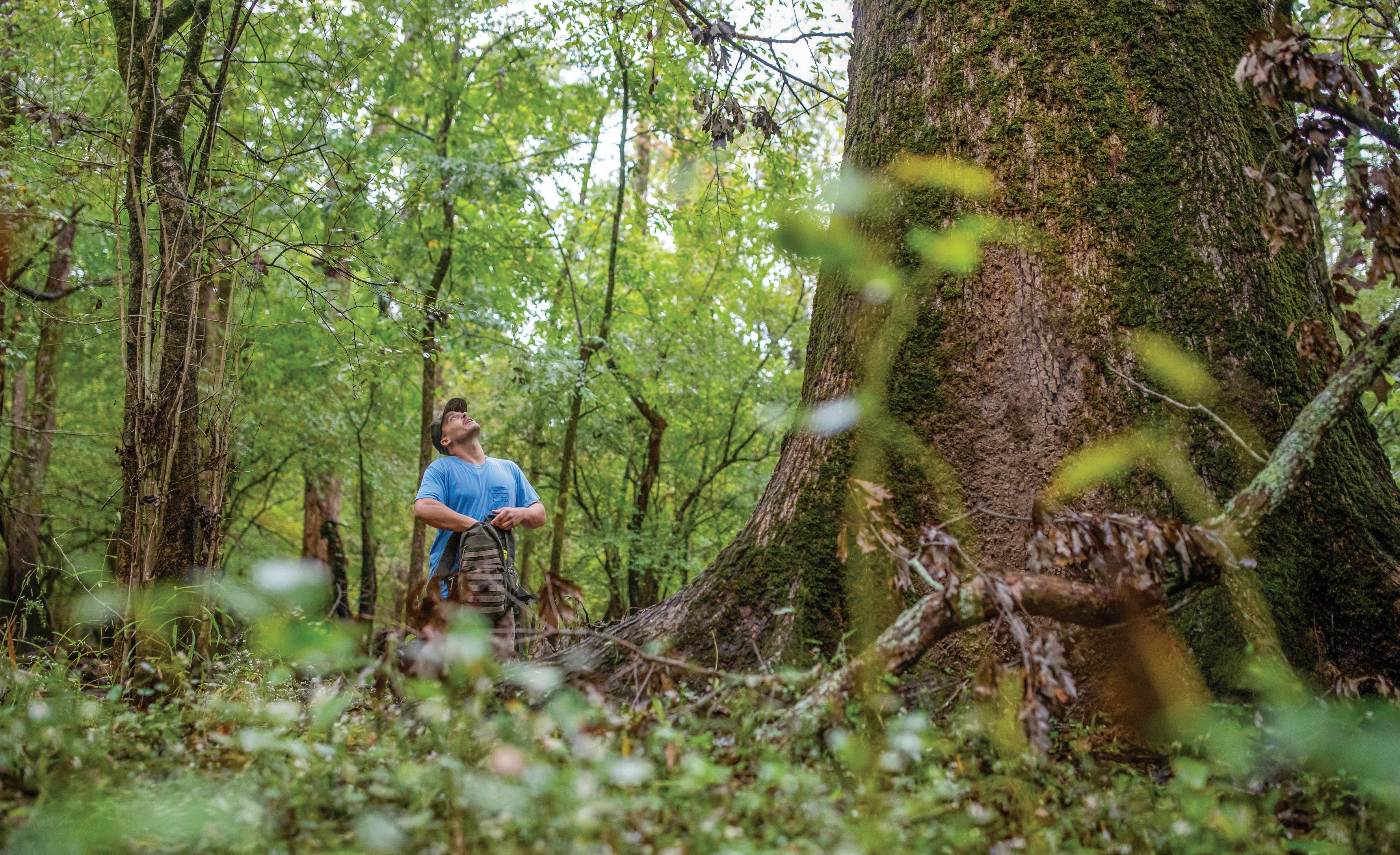
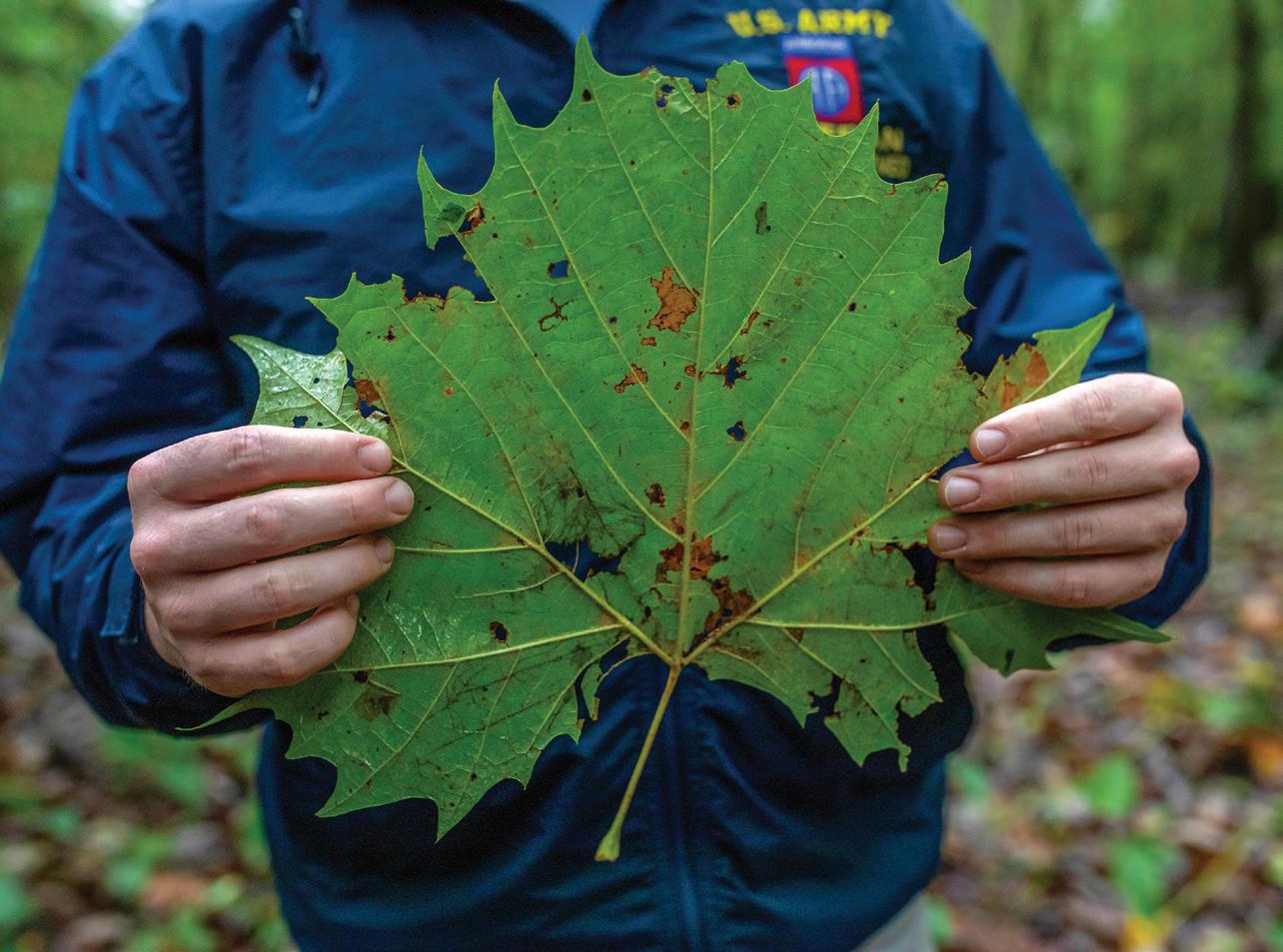
More than two dozen species of oak are native to North Carolina. But with a quick glance and some context clues, Luke Ferreira and Spencer Cain can identify pretty much all of them. Not to mention most trees in every other native genus as well.
On a johnboat cutting up Turkey Quarter Creek in the eastern part of the state, Ferreira has been instructing me about the differences between water oaks and laurel oaks.
“Water oaks have a leaf shaped like a teardrop, and laurel oaks have an almost diamond-shaped leaf,” he says. “And believe it or not, laurel oaks like water more than water oaks do.”
Ferreira takes his trees seriously, but he also allows himself a moment of amusement at the water oak’s ironic name. Then it’s right back to swamp ecology. “Water oaks still like water,” he tells me. “They just don’t necessarily like standing water.”
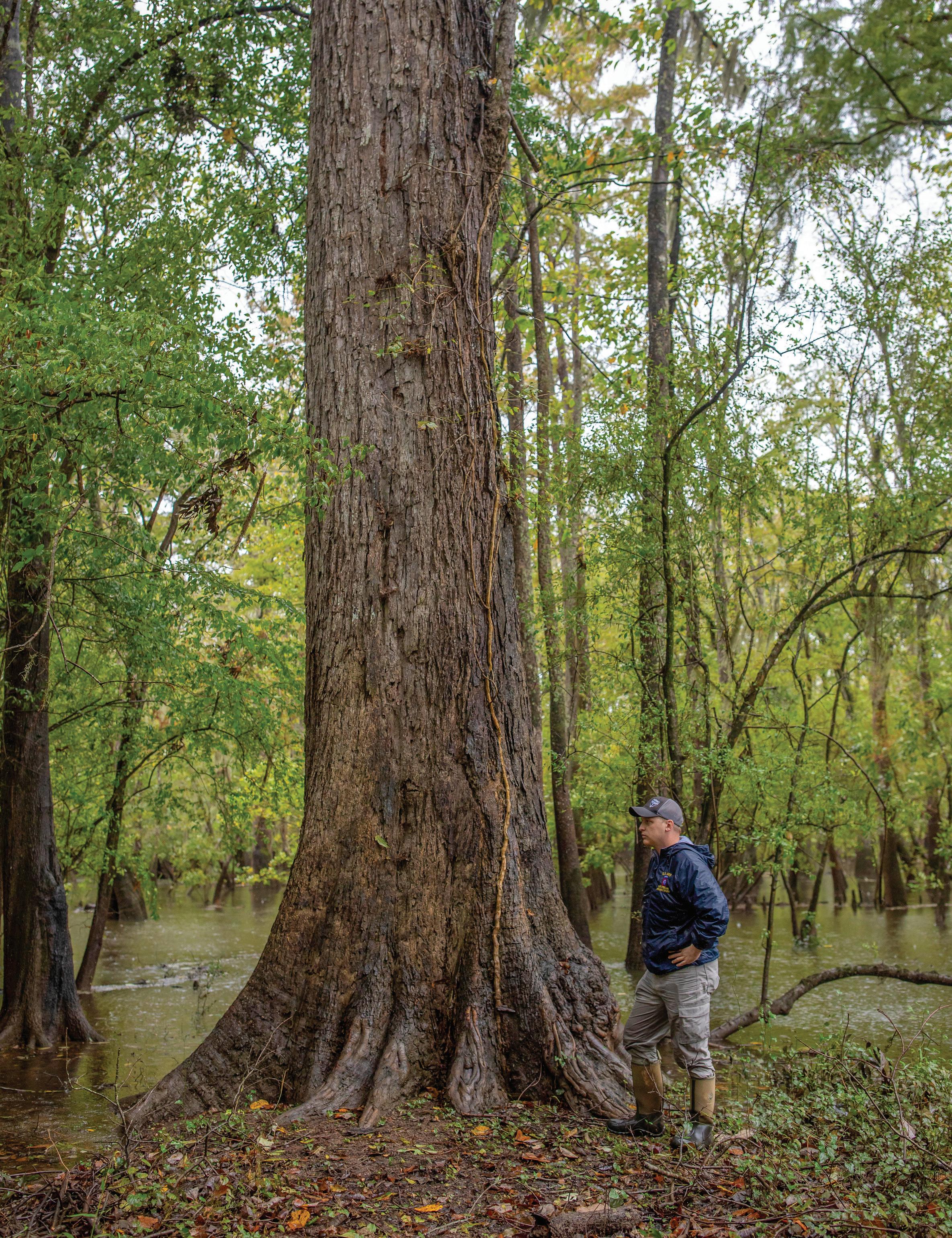
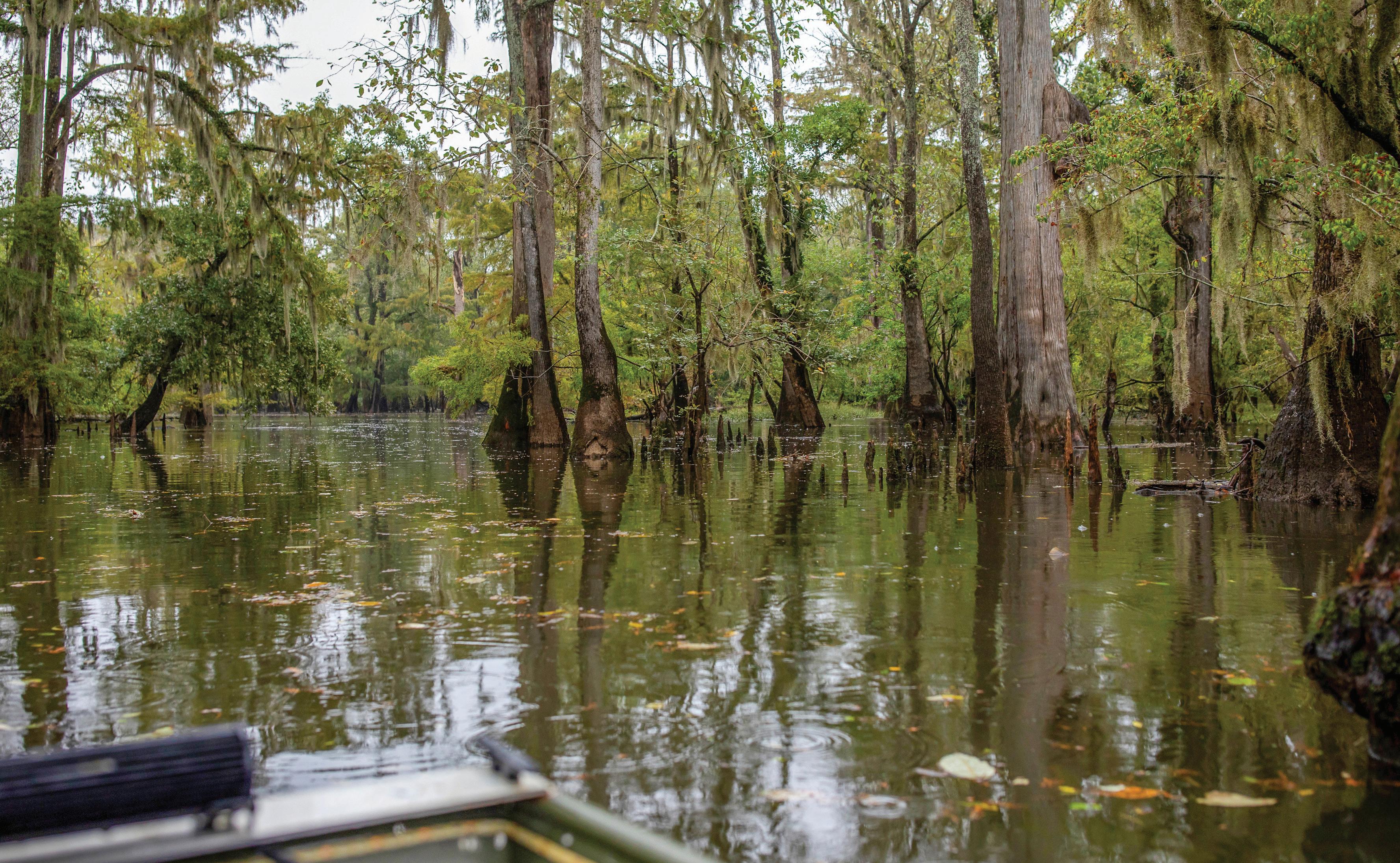
Turkey Quarter Island, which lies between the creek on one side and the Neuse River on the other, is flooded from a nor’easter that recently passed over Craven County, home to nearby Vanceboro. There’s water almost everywhere.
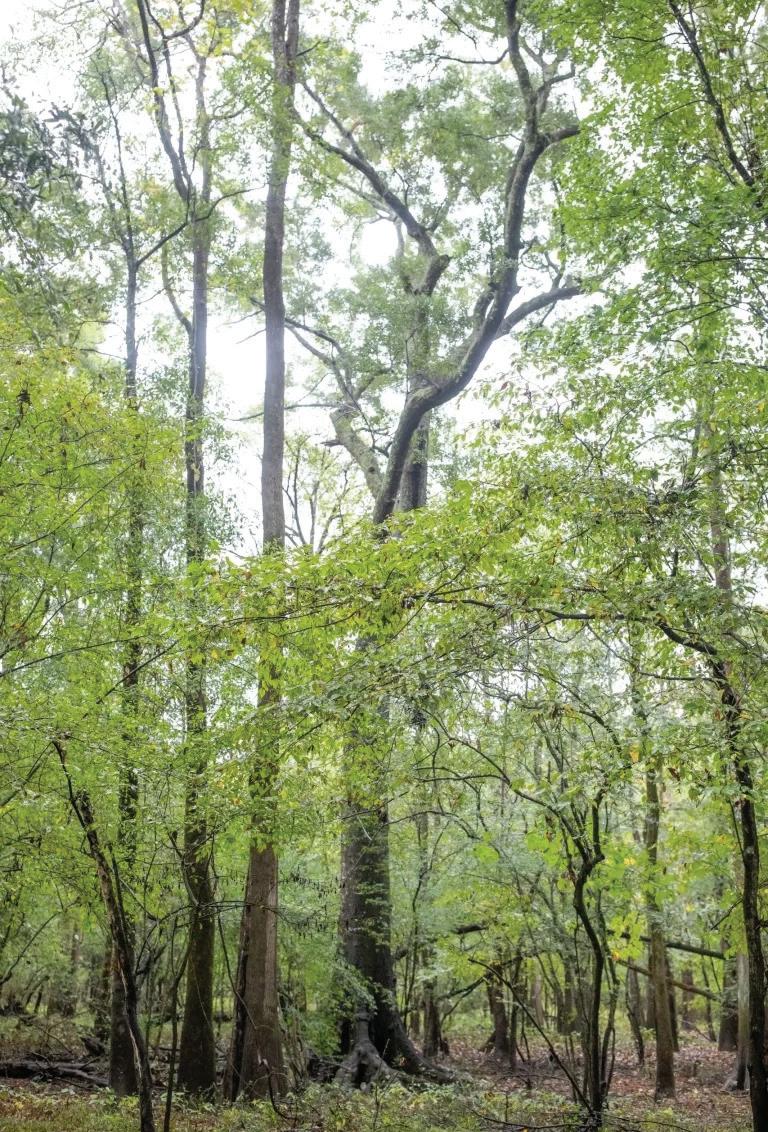
That’s okay, though. The specific tree we’re looking for right now doesn’t mind getting its roots wet. It thrives in the swamp. It’s grown so big out here, it has earned itself a title.
“When we found this one, it was in the most perfect health we’ve seen,” Cain says.
He and Ferreira are hoping the tree’s good health helped it through the storm. Big trees are generally big because they’ve been growing a long time. In other words, because they’re old. And like many older things, old trees are liable to blow over in a nor’easter. It’s not guaranteed we’ll find this one upright.
But as Ferreira throttles the motor and we glide around a bend in the creek, an enormous mass emerges from the subtropical thicket and immediately commands our view. There it is, the largest known water hickory in North Carolina.
“I’ll be danged,” Cain says with relief. “Look at that.”
“Still standing,” Ferreira confirms.
Ferreira and Cain began hunting for champion trees five years ago. This uncommon hobby takes them deep
into the woods to look for the biggest trees they can find in any given species—both the biggest of the big and the biggest of the small.
Though they keep their eyes open for superlative trees everywhere they go, they hunt for them predominantly in central and eastern North Carolina. Their big finds reflect the tree species native to those regions.
The North Carolina Forest Service, which is part of the state Department of Agriculture & Consumer Services, maintains a list of the largest known tree for each species in the state, and the University of Tennessee maintains the National Register of Champion Trees for the biggest ones in the country. Ferreira and Cain seek out giant trees mostly for fun, but if they discover a clear contender, they’ll nominate it to the relevant organization to see if they’ve found a new state or national champion.
Such was the case two years ago, when they first came across this particular water hickory. They thought it must be bigger than the current state champion, so they measured it and sent their numbers to the N.C. Forest Service, along with the tree’s coordinates.
In keeping with its protocols, the agency sent out a county ranger, who checked their measurements and confirmed that their tree was indeed larger than the previous champion. Ferreira and Cain haven’t seen the hickory since it was crowned champ and added to the state list, so they
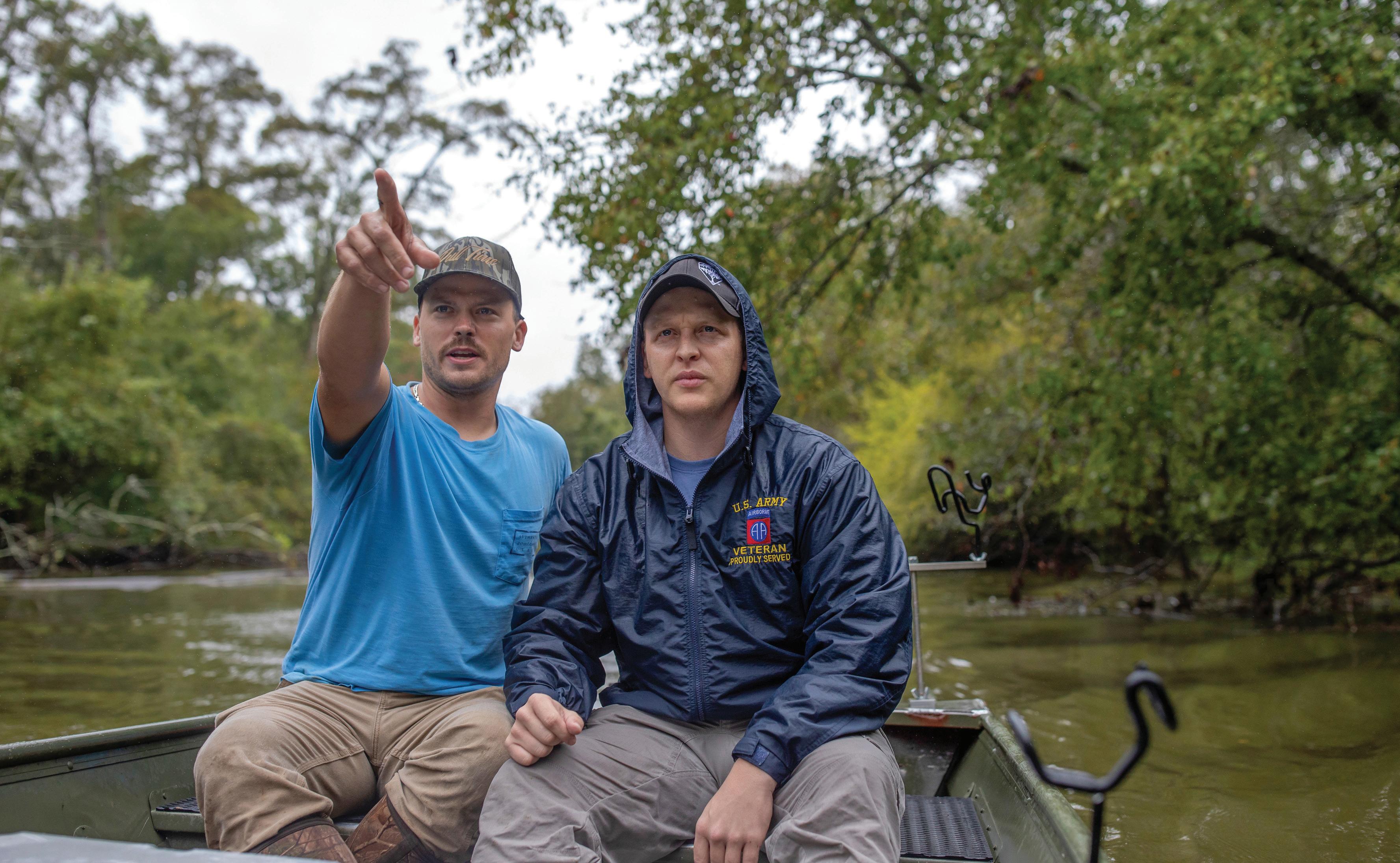
wanted to drop in for a wellness check.
“We’ll throw a tape measure on it, see if it’s grown any,” Ferreira says.
While they work, they talk me through the mechanics of measuring trees. Even within the same species, trees can vary so widely in their dimensions that it’s not always clear how to evaluate differences in size. Over the years, foresters and tree hunters have developed a more or less standardized approach for these comparisons, which is used today by both the National Champion Tree Program and the N.C. Forest Service.
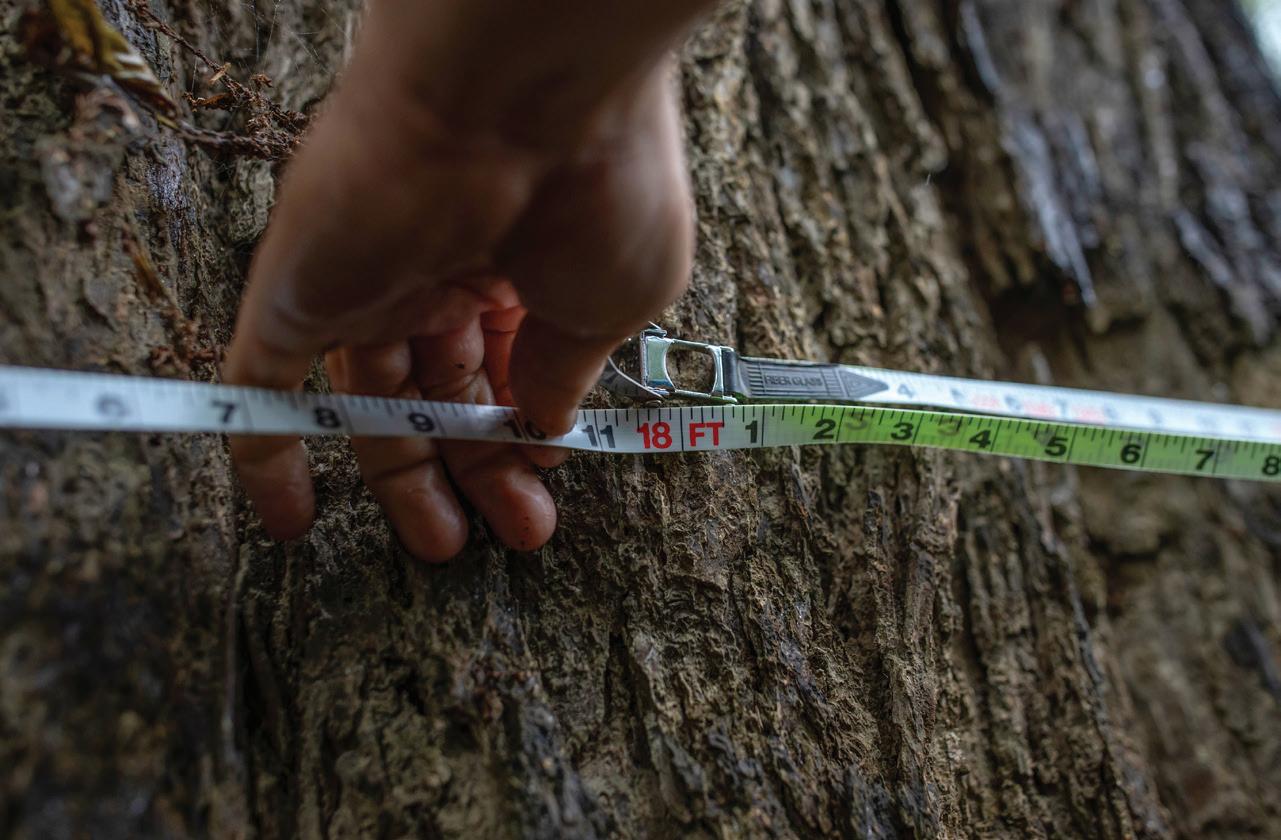
Trees are given scores on three criteria: one point for each inch of trunk circumference and a quarter-point for each foot of average crown spread (both measured with a simple tape measure), as well as one point for each foot of height (measured with a laser rangefinder or a clinometer). When tallied, these points allow for comparisons between different tree shapes.
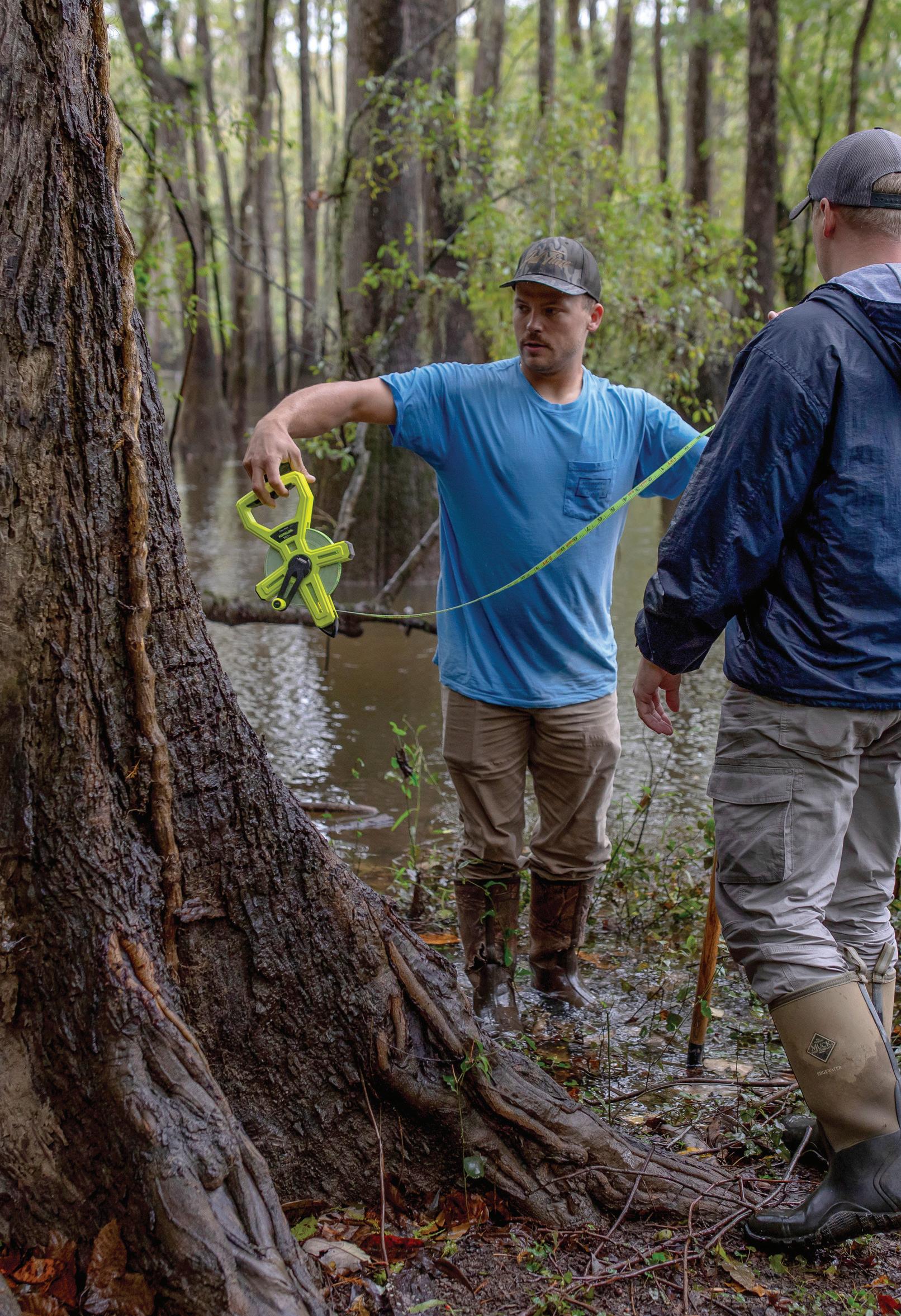
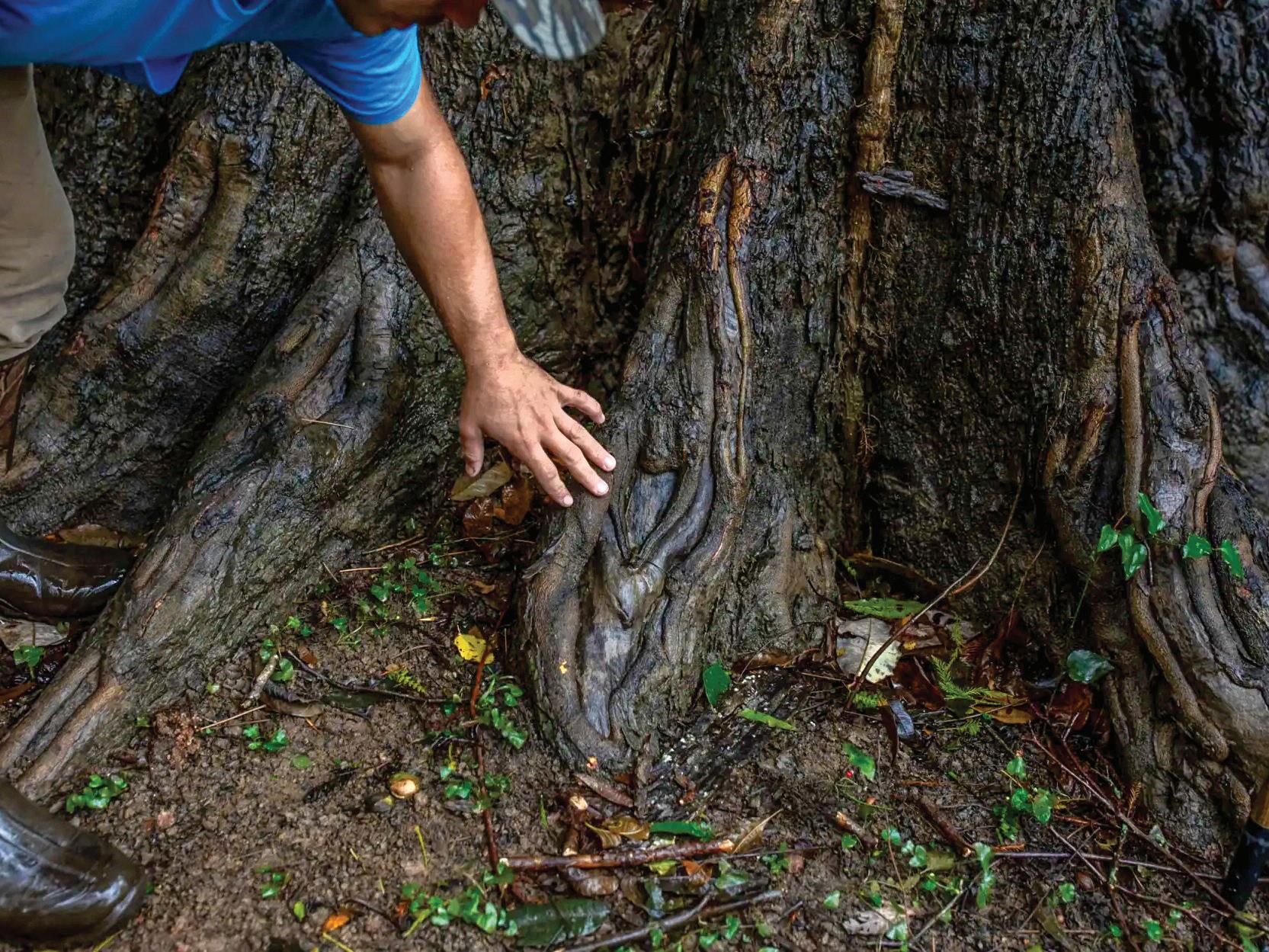
It takes Ferreira and Cain working together to string the tape measure around the behemoth water hickory. When they reconnect the ends of the tape, it reads 216 inches, or 18 feet on the dot.
“It gained six inches in circumference, so it’s still growing pretty vigorously,” Ferreira says. “When something reaches the end of its life, its growth slows way down, almost to the point of not growing at all. Six
inches in two years is promising.”
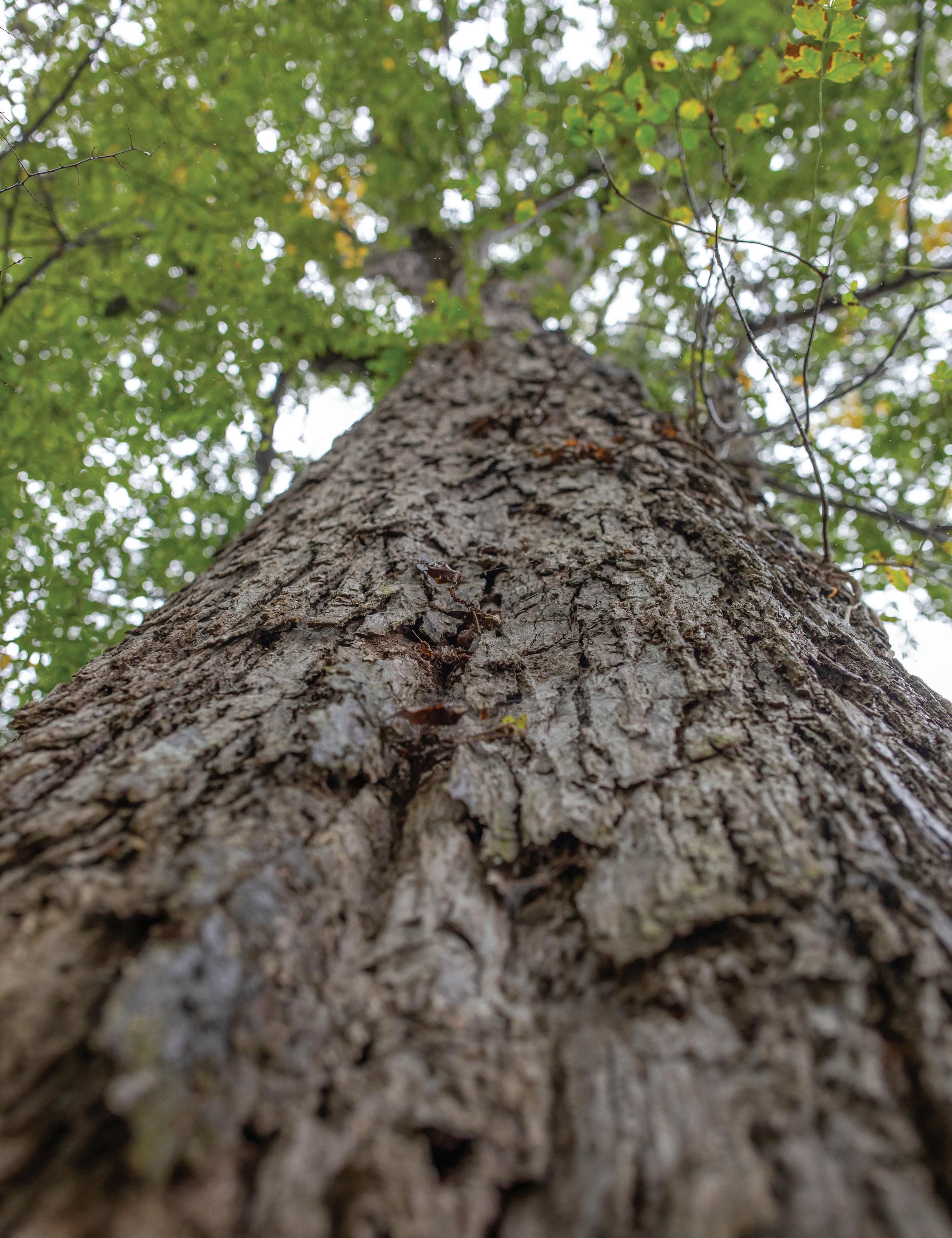
Standing at the hickory’s base and looking up, I’m awestruck by its presence. Its topmost twigs and leaves reach out high above the forest canopy, and its larger branches don’t even begin emerging from the trunk until 40 or 50 feet above the ground. To think that this tree is still growing vigorously is inspiring, and almost unbelievable.
“We keep this as a hobby,” Ferreira tells me as we trudge through the semi-aquatic underbrush at our next stop. “We don’t want it to feel like a job.”
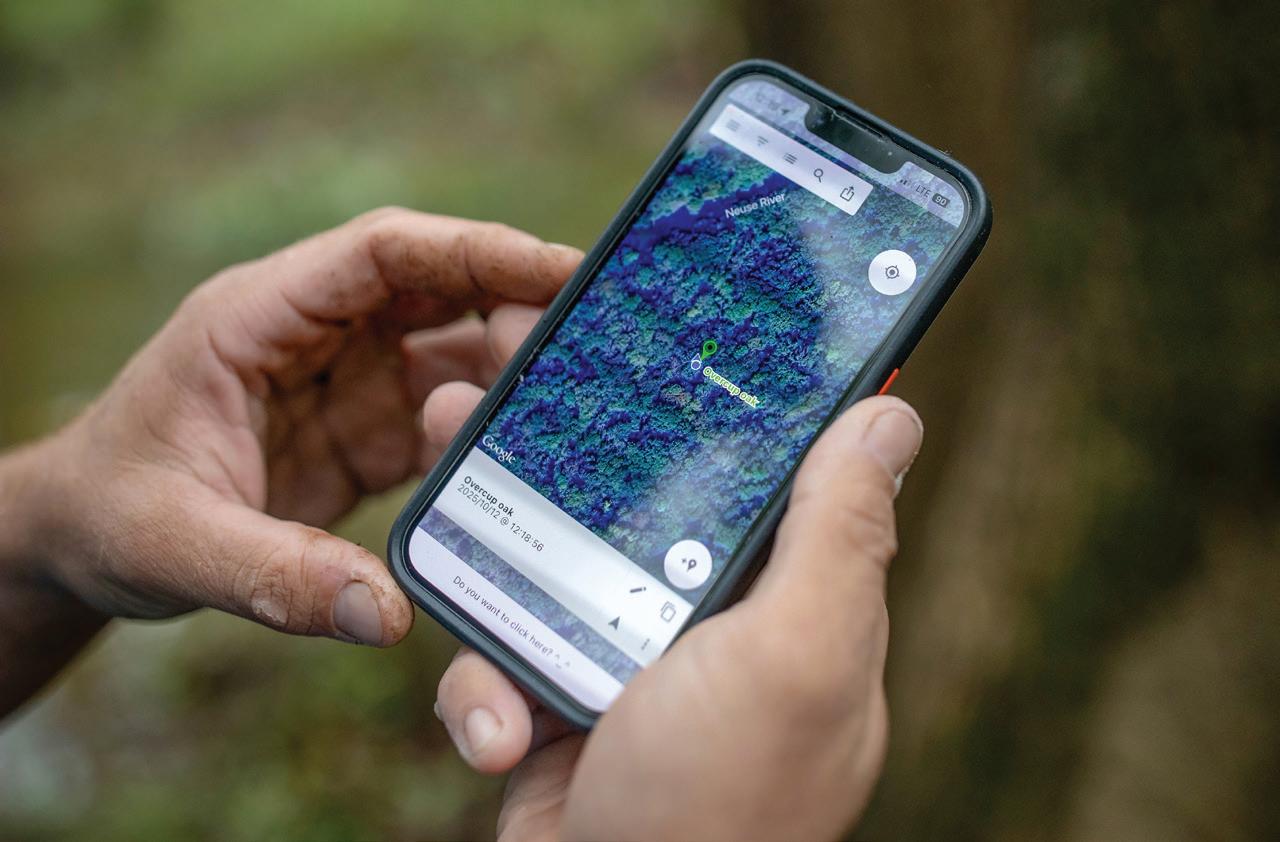
We’re searching now for an overcup oak, a particularly stout one that Ferreira and Cain know they’ve seen out here somewhere. They haven’t had a chance to measure it before, but they think it might give the current state champion overcup oak a run for its acorns.
I know what Ferreira means about hobbies and jobs, but I still find his statement a little curious. Both men work in the Raleigh office of Bartlett Tree Experts, one of America’s largest tree care companies. Ferreira is a safety coordinator, Cain a sales representative. Both are certified arborists. Working with trees is their job.
The two became fast friends at Bartlett. After Cain discovered the North Carolina big tree list online, he and Ferreira realized that their specialized knowledge would
give them an advantage when looking for champions.
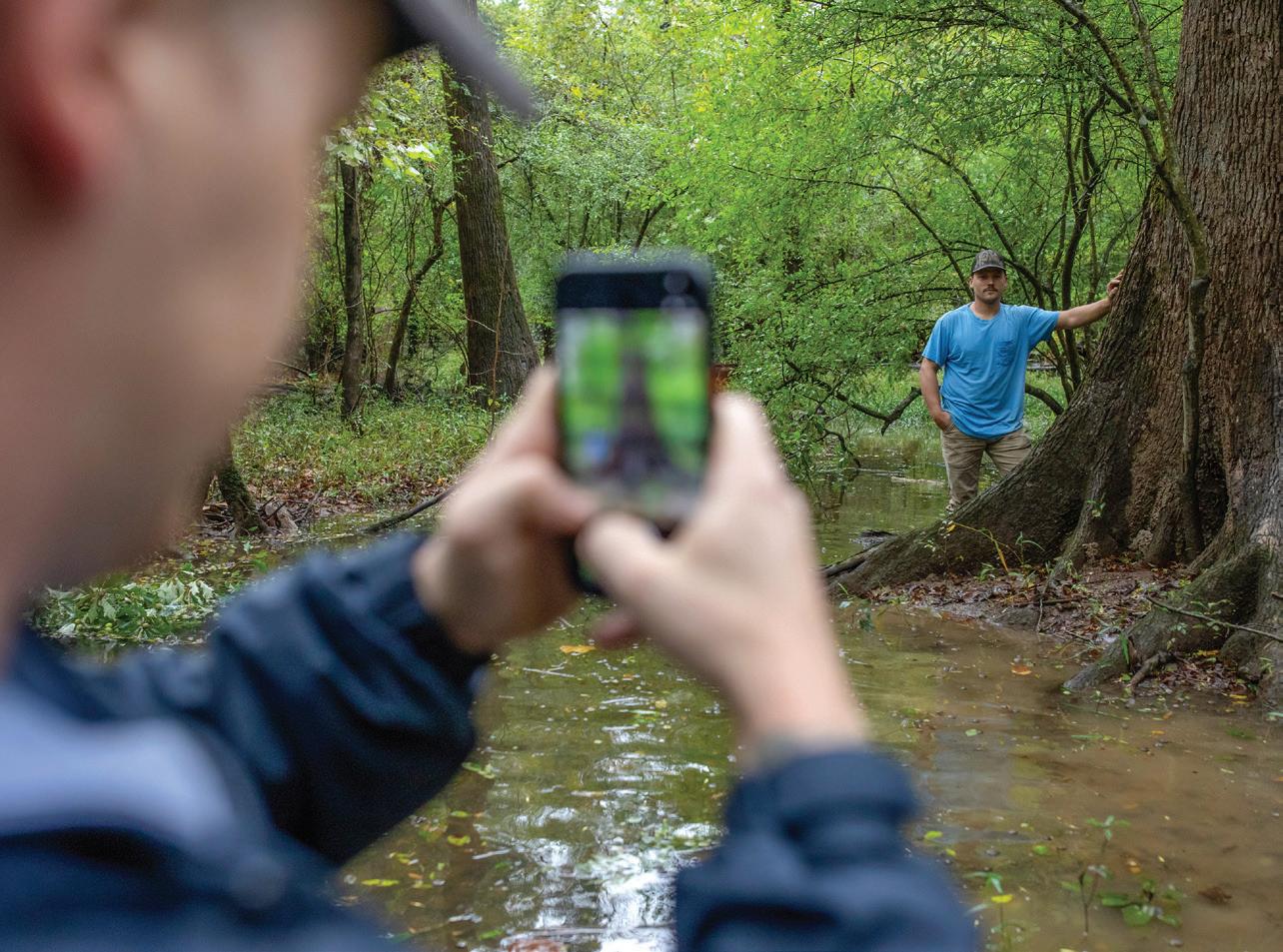
In the woods, Cain and Ferreira are literally hugging trees to get the tape measure around massive trunks, but neither is anything like popular ideas of the metaphorical tree hugger.
A country boy who grew up in New Bern, Ferreira, 26, tells me with his easy Southern drawl about all the different hunting seasons—actual animal hunting, not tree hunting—he enjoys. “Deer, bear, rabbits, squirrels, ducks, doves,” he says. “Pretty much everything.”
His favorite place to get barbecue is Skylight Inn in Ayden, the mark of a true eastern North Carolinian.
Cain, 29, is an Army veteran from Apex. He joined Bartlett after spending four years as a paratrooper and 50-caliber machine gunner with the 82nd Airborne at Fort Bragg. He’s more reserved than Ferreira, but he opens up to direct questions.
“Feels like five decades ago,” he says when I ask him about his Army service. “I forget I was in a lot. Just like, ‘Oh, yeah, I did that, right.’”
Though they still get out on tree hunting excursions when they can, the frequency dropped about three years ago, when both became fathers within six months of each other. Ferreira and his girlfriend had their daughter first; Cain and his fiancée welcomed a baby girl shortly thereafter.
Before I can ask them more about fatherhood, something interesting catches Ferreira’s eye.
“Oh, I thought that was a Carolina ash,” he says, inspecting the leaves and bark on a slender tree more closely. “That would have been a huge one.”
It turns out it’s just a relatively small green ash, but the mix-up reveals one of the quirks of champion tree hunting. Two trees of the same size that look identical to the untrained eye might actually be different species, making one a runaway champion and the other a middling wannabe.
Ferreira and Cain’s dendrological expertise gives them a leg up, both in tree hunting and in the outdoors more generally. They see and appreciate things in the woods that most people take for granted, or miss entirely.
The mere presence of the green ash here also transmits some meaningful information.
“I don’t know if you’ve heard of the emerald ash borer,” Ferreira says, referring to an invasive beetle from Asia that has been ravaging North American ash species for the last two decades. “As far as I’ve seen, this island hasn’t been affected by the borer yet at all.”
This feels like good tidings, or at least like temporary relief in an era where each day seems to bear worse environmental news than the one before. Mature ash trees are particularly beautiful inhabitants of our forests, with branches that sweep elegantly away from their trunks and furrowed bark that looks like something out of a storybook. They are old inhabitants as well—ashes have been growing in the southeastern United States for more than 30 million years.
It will be a great pity if the North American varieties are all wiped out by the emerald ash borer, which is a very real possibility. For today, at least, they are alive and seemingly healthy on this remote swamp island.
For some perspective on champion trees, I reached out to Gary Williamson, one of the most prominent big tree hunters in America. The 81-year-old Williamson and his friend Byron Carmean, both of Virginia, have found hundreds of state and national champions in their four decades of searching. In the latest National Register of Champion Trees, they are noted as the most prolific nominators in the country—of the 548 trees on the national list, Williamson and Carmean tracked down 62 of them.
A few years ago, Ferreira contacted Williamson online. Ferreira and Cain had started finding potential champions of their own, and he was eager to compare notes with the two experts north of the state line. A kind of intergenerational friendship ensued, one centered around giant trees.
“We have a good national program at the University of Tennessee, and from what I understand, North Carolina’s big tree program is rolling,” Williamson said. “It’s in good shape with two young hunters like Lucas and Spencer. Those two are the future of the North Carolina big tree program.”
But what about tree hunting itself? I asked Williamson. Do champion trees have any role to play in our lives—in forest management, for example, or in conservation? Do they do anything other than just stand around, being big?
“They can play a big part, and I’ll use the Congaree as an example,” he said.
The Congaree floodplain spans thousands of acres in Richland County, South Carolina. It’s a special kind of ecosystem, an old-growth bottomland hardwood forest, one of the best preserved and largest remaining of its kind.
“When it was just Congaree Swamp, and it was under private ownership, they called it ‘Congaree, Forest of Champions,’ because it had so many big, impressive champion trees,” Williamson said.
The landowners, however, were from a logging family, and they harvested timber from the property off and on from the 1880s into the 1970s. The logging eventually threatened the last remnants of the old-growth forest, producing a public backlash and a popular movement for the federal government to buy the property and preserve it.
Congress acquired the land and turned it into a national monument in 1976 and then a national park in 2003. The number and sheer size of the champion trees in the area was central to the push for protection.
“It became a national park,” Williamson said. “Because those trees were so impressive, the Congaree was saved.”
Cain and Ferreira eventually locate the overcup oak right where they left it two years ago—a few hundred feet inland from Turkey Quarter Creek, next to a mucky slough. It’s the perfect place for an overcup oak, a swampdwelling species that loves to cast shade over standing water with its lustrous, deeply lobed leaves.
The tree is huge, especially around the trunk. But Ferreira, estimating the height at close to 100 feet, determines that it’s probably too short to challenge the 124-foot specimen in Martin County that currently holds the state title, even if its trunk circumference and crown spread turn out to be larger.
At best, it might be named a co-champion, a designation given to trees that score within a few points of the current state or national champion but aren’t large enough to supplant it outright. However, Cain and Ferreira aren’t interested in nominating co-champions. If they were, they would have nominated a half-dozen other specimens they’ve found—including a hackberry, an American bladdernut, a Washington hawthorn, and others—that are big, but probably not big enough to become undisputed state champions.
Still, Cain and Ferreira mark the coordinates of this overcup oak. Seasoned tree hunters keep running lists of their notable finds, even if they aren’t yet clear contenders. No one knows which trees will keep growing and which will fall. Should the current champ die, it’s good to have potential replacements at the ready and to
know exactly where they are.
I ask Ferreira and Cain if the trees we’ve seen today have any commercial value.
“Yeah, a lot of these trees out here do,” Ferreira says. “Laurel oaks, not so much. But the overcups do. And on a bit higher ground than this, cherrybark oaks, they’re one of the most commercially valuable oaks. They grow fast, really tall, and straight.”
That species name awakens a memory in Cain. “We found a huge cherrybark oak on the north end of Jordan Lake, near Durham,” he says. “And right at the base of it was a bobcat and its babies. That was the first time I’d ever seen a bobcat.”
I’ve never run into a bobcat before, and I’m not sure I would want to in a forest wilderness, especially if it was with its babies. But Cain’s story is a welcome reminder that commercial value isn’t the only kind of value these trees hold. Oaks, in particular, nourish and shelter countless species.
Back in the boat and cruising down a cut-through to the Neuse River, we pass a section of Turkey Quarter Island we haven’t seen yet. Ferreira, one hand on the tiller of the outboard motor, lets his gaze run across the canopy overhanging the creek and sighs with disappointment. He points to a few sickly trees next to the bank, their outermost twigs and branches bare of leaves.
“I was talking about how the emerald ash borer hadn’t made it out here,” he says. “I think it’s made it now.”
Treatments exist for ash trees infested with the borer, but they are too expensive and impractical to be used in forest settings. Within 20 years, this section of the river likely won’t have a single mature ash left alive—whether green, Carolina, or any other kind. Saplings might continue sprouting up here and there for a while, but no ash will ever live long enough to resemble anything close to a champion.
Out on the flooded banks of the Neuse River, Ferreira and Cain have brought me to the last tree of the day, a very big deciduous holly. This one is so big, they’re thinking of bypassing the state big tree list entirely and nominating it directly to the national list.
Though when I say big, I mean big for a deciduous holly. These are naturally smaller trees, and when we find the specimen partly submerged in the floodwaters, I’m struck by the possibility of a champ that’s so modest in size, at least relative to the other trees we’ve seen today.
Ferreira points out, though, that the champion trees of smaller species are often the most impressive. They don’t get the kind of attention that huge oaks and pines do— most people walk or boat right by them, oblivious to their existence—but they’ve survived a long time to get where they are.
“They grow pretty slow, especially being in the understory here,” Ferreira says, “but this one’s probably about 100 years old.”
Due to the flooding, it’s impossible to get exact metrics on the tree for a nomination, so they take some approximate measurements instead for a quick check on its chances of making the national list.
“I think the national champion is what, 80 points, Spencer?” Ferreira asks.
“Oh, close,” Cain confirms.
“Forty-one inch circumference,” Ferreira says, inspecting the tree, “and then probably, oh, I read it at 30 feet tall. So that’d be 71 points right there.”
And that’s not even including crown spread, which would add more points to its score.
“It’d probably be right around 80 points,” he says. “And it might be taller than 30 feet. Definitely the biggest deciduous holly I’ve ever found.”
Ferreira and Cain determine that it’s worth coming back in drier conditions to get numbers for an official nomination. If a certified tree measurer from the National Register of
Champion Trees comes out and validates those numbers, and this tree does score 80 points or more, it will easily replace the current national champion, which sits at 76 points.
In other words, if this big holly on the Neuse River keeps doing what trees do, putting one ring on top of the other, it stands a good chance of becoming a champion some day. And if it can defy the forces arrayed against it—floods, storms, pests, and others surely to come—it might even remain champion, at least for a while.
Jonathan Pattishall is an editor and translator from Durham. He currently lives in Brunswick County.









BY CLAUDIA ZAMORA
Covered in mud, climbing obstacles, crawling across unforgiving terrain, and pushing her body through exhaustion while protecting the life growing inside her, Yeniz Parton was not simply participating in a Spartan Race. Without necessarily intending to, she was quietly challenging many of the traditional ideas surrounding age, illness, pregnancy, and what wellness means for women today.
At 44 years old, navigating a high-risk pregnancy complicated by lupus—an autoimmune disease—Parton’s story has become more than an athletic accomplishment. It opens a deeper conversation about resilience, body awareness, emotional health, and the intimate relationship between movement and healing during some of life’s most vulnerable moments.
Originally from Colombia and a resident of Cumberland County since 2008, Parton is the founder of I-F.I.T. Ideal Functional Integrative Training—a space she created in 2019 from a vision of wellness rooted in something deeper than physical appearance. More than a gym, I-F.I.T. Ideal Functional Integrative Training has become a place where physical training intertwines with emotional resilience, discipline, confidence, mental strength, and personal growth. Through her work, Parton has inspired many people in the community to understand movement not simply as exercise, but as a way of reconnecting with themselves in the middle of stress, uncertainty, and the emotional demands of everyday life.
It was through that philosophy that she became involved in Spartan Races, internationally recognized
endurance competitions that combine long-distance running with extreme physical obstacles: walls to climb, mud, ropes, weighted carries, and unpredictable terrain. Over time, this style of training also became part of the culture at I-F.I.T. Ideal Functional Integrative Training, where many members train to become physically stronger and develop discipline, emotional endurance, self-trust, and a deeper connection with themselves.
This year, the challenge became even more personal. When Parton discovered she was facing a high-risk pregnancy complicated by lupus, her first reaction was uncertainty. Like many women confronting complex medical circumstances during pregnancy, she assumed she would likely have to stop training. She began questioning the limits of her body. She felt fear. Fear of pushing too hard. Fear of not fully knowing what was safe for herself and for her baby.
Parton’s experience reminds us of something far more human: Wellness is not simply about how the body looks, but about how we inhabit life within it.
True wellness is not built in the perfect moments. It is created through small daily decisions that help us remain connected to ourselves, especially during difficult seasons.
For Parton, lupus, pregnancy, and physical demands became reasons to care for herself with greater intention. And her story also challenges deeply rooted ideas about women and aging. For years, society has subtly suggested that after a certain age, the female body inevitably becomes more fragile, more limited, or more distant from vitality— especially when illness or complicated pregnancies are involved. Many women were raised believing that strength meant enduring everything silently, placing everyone else’s well-being before their own, and accepting exhaustion as a normal part of daily life.
Wellness is the daily practice of learning to care for ourselves.
But the medical guidance she received shifted her perspective. Instead of recommending complete rest, her doctors encouraged her to remain active, continue carefully supervised exercise, and maintain healthy movement throughout her pregnancy. Little by little, Parton began to understand that this new chapter was not asking her to disconnect from her body, but to listen to it more deeply than ever before.
“Today I speak not only as a coach with more than 25 years of experience, a university background in physical culture, and certifications from Harvard University in wellness, nutrition, and lifestyle, but also as a woman experiencing pregnancy firsthand,” Parton said. “We are not fragile, but we are not invincible either. We are capable of far more than we have been led to believe … when we move with knowledge, respect, and precaution.”
Somewhere between the mud, the exhaustion, the discipline, and the quiet awareness of the life growing inside her body, movement stopped being about performance and began transforming into a form of care. And that distinction matters today. We live in a time where exhaustion has become so normalized that many people barely notice it. Stress has become permanent background noise. Anxiety feels expected, rest feels unfamiliar.
At the same time, wellness itself has become distorted. Too often, it is reduced to aesthetics, diets, supplements, trends, or performance designed for social media. But
Perhaps that is why endurance races resonate deeply with many people. The Spartan Race becomes symbolic of modern life: difficult terrain, unexpected obstacles, fear, fatigue, and the constant need to adapt while continuing to move forward. The race isn’t just physical; every obstacle confronts people with their thoughts, their fears, and the way they move through life when things become difficult.
And this is where Parton’s story touches something profoundly human. It represents coherence, not perfection. In the middle of pregnancy, illness, fear, and uncertainty, she chose not to disconnect from herself. She chose to listen to her body instead of punishing it. To understand it rather than demand more from it than it could give.
In a world that constantly pushes people toward disconnection, stories like hers remind us of something essential: Wellness is not a luxury reserved for certain bodies, certain ages, or perfect moments in life. It is the daily practice of learning to care for ourselves with greater awareness, greater humanity, greater resilience, and perhaps above all, with greater love.

Claudia Zamora is an Argentinian author, mental health and wellness coach, and passionate community advocate. Since 2011, she has made Fayetteville, North Carolina, her home, uplifting the Hispanic community.
BY DIANE PARFITT





Many of us have things we have to read for work or other activities or even helping the kids with homework. Summer can be that time for you to just have some fun reading.
What’s not to like about summer? You have a chance for a vacation, time to spend with family and friends, or just time to relax and read a book. You can catch up on all those books you wanted to read all year long. Chisel down your to-be-read stack of books by your bedside or even tackle that really long book that you were putting off until you had more time. Best of all, you have a chance to read for pleasure. Many of us have things we have to read for work or other activities or even helping the kids with homework. Summer can be that time for you to just have some fun reading. Here are some books that just might help you recharge your battery and bring a smile to your face.
1. American Fantasy by Emma Straub
What could be more of a fantasy than to vacation on a cruise ship and find yourself in an on-board relationship with one of the members of a famous ’90s-era boy band? The women on the ship are living their dream, but Annie feels out of place at first and is only there to appease her sister. Yet when the music begins, something happens, and Annie finds herself opening up to feelings she thought she had lost. As she begins to ponder her awakening feelings, she meets one of the band members who seems to need a friend. Can Annie allow herself to be that friend and in the process find herself? Filled with humor and nostalgia, this is just the book for summer reading.
2. Yesteryear by Caro Claire Burke
“My name was Natalie Heller Mills, and I was perfect at being alive.” Natalie is considered the perfect “tradwife” influencer who creates an online life for herself and her family on social media. Then one day she wakes up to find herself in 1855 and questions whether this is a hoax, a reality show, or something else. The harsh realities of this 19th-century life make her question
her own “trad life.” Not only humorous and satirical, but this book also explores themes of tradition, fame, faith, and womanhood through the eyes of the antiheroine, who must grapple with her role in creating the drama she is now living.
3. Hope Rises by David Baldacci
Summer reading must always include a mystery book, and David Baldacci is one of the best at writing those that keep us up all night reading. This sequel to Nash Falls finds Walter Nash seeking revenge by taking down Victoria Steers, head of the global criminal operation he exposed while working as an informant for the FBI. Will he be able to use the lethal skills he gained during his training to bring down Steers? Will her skills at protecting herself and her trusted inner circle put Nash in greater danger? He must work his way in by crossing those enemy lines to destroy this criminal empire. In the process, he discovers truths that turn his world upside down!
4. Cherry Baby by Rainbow Rowell
How would you feel if your spouse goes out of town for his job, but may never come back? And, you are not sure you even want him back. Cherry is grappling with this when her husband Tom goes to Hollywood to make a movie—a semi-autobiographical show that includes a character called “Baby” who is based on Cherry. It could be fun to have a movie character about you—except Cherry doesn’t want to be caricatured. So, while Tom gets rich in Los Angeles, Cherry decides to see her favorite band in concert on her own. While there, someone from her past recognizes her across the room, not as “Baby” but as Cherry. Russ Sutton remembers her as a young art student, has never heard of Tom’s show, and has always liked Cherry for who she is. Could this be the perfect combination that makes Tom Cherry’s ex-husband ?
5. The Charmed Library by Jennifer Moorman
Many of my favorite elements are in this book: a library with lots of books, set in North Carolina, and a magical story we can all fall in love with. The librarian at the Blue Sky Valley library, Stella Parker, feels stuck in her job with no idea about what she really wants to do. After the loss of her father, her grief causes her to burn the journal where she had written many of her thoughts and concerns. Prior to this, she had a special gift—she could see words physically emanating from people and objects. After burning her journal, fictional characters in the library’s books start stepping off the page into real life, though they can only stay for a limited time. One is Jack Mathis, a soldier from World War II and a character in her favorite book. This fictional hero is Stella’s first crush, and then

chaos ensues. After a villain from another book joins them, the words she sees seem to be trying to tell her something. Will Stella be able to protect the library’s secret and figure out what she is going to do next?
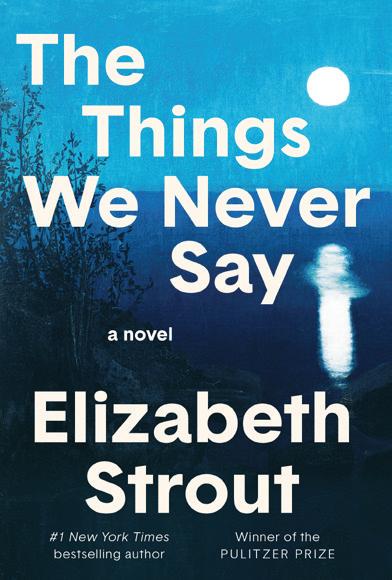
Beloved author of Olive Kitteridge and My Name Is Lucy Barton, Elizabeth Strout has written a new book that will ask us to consider the effects of loneliness, friendship, parenthood, and the necessity of truth in our challenged world. During the day, Artie Dam teaches history to high school students, tending to their intellectual needs, managing some behavioral issues, and always lending a kind word to anyone who needs it. At home, he shares time with his wife, interacts with neighbors, and spends time on his sailboat during the weekend. Outwardly, he seems alive and connected with others, but inside, he feels isolated. He looks out at the world around him and sees the insanity of it all as he ponders a question over and over in his mind: Do we really know each other—not just our friends, but our family too? “How is it that we know so little about one another, even those closest to us?” is the book’s ultimate question.
Diane Parfitt owns City Center Gallery & Books in downtown Fayetteville. She can be reached at citycentergallerybooks@gmail.com.
Here are just some of the things happening in and around Fayetteville this month. Scan the code with your phone for more events, additional information, and to post your event on our website. Events are subject to change. Check before attending.
June 5, 19, 26
Pink Floyd’s Dark Side of the Moon
Fayetteville State University
Planetarium 1200 Murchison Road uncfsu.edu
June 6
Grown-Up Book Fair
Dirtbag Ales Brewery & Taproom 5435 Corporation Drive, Hope Mills distinctlyfayettevillenc.com
rd Annual Gun Violence
Awareness Walk
Hosted by Zeta Phi Beta Sorority, Incorporated — Tau Epsilon Zeta Chapter Hope Mills Municipal Park
Walking Track 5766 Rockfish Road, Hope Mills facebook.com
Pondamania Family
Art & Play Day
Cape Fear Botanical Garden 536 N. Eastern Blvd. capefearbg.org
Fayetteville Woodpeckers vs. Columbia Fireflies: Margaritaville at the Ballpark Segra Stadium
11-21
The Three Musketeers Sweet Tea Shakespeare ARTS XLerator 314 Burgess St. sweetteashakespeare.com
United Way Classic Crown Coliseum 1960 Coliseum Drive crowncomplexnc.com
June 12
Scents & Sensibility:
Exploring Aromatic Plants
Cape Fear Botanical Garden 536 N. Eastern Blvd. capefearbg.org
June 13
POKEKON-FEST
Crown Expo
Crown Coliseum
1960 Coliseum Drive crowncomplexnc.com
June 13
2026 Fin-Tastic Fishing Festival
John E. Pechmann Fishing Education Center 7489 Raeford Road distinctlyfayettevillenc.com
June 15
Park Chats at Lake Rim Park: Juneteenth Lake Rim Park 2214 Tar Kiln Drive fayettevillenc.gov
June 16
Carolina Crew FC vs. Rush United FC
Terry Sanford High School 2301 Fort Bragg Road carolinacrewfc.com
June 18
Fayetteville Woodpeckers vs. Kannapolis Cannon Ballers: Night OUT
Segra Stadium
460 Hay St. milb.com
June 19
2026 Juneteenth Jubilee
Cool Spring Downtown District Festival Park
335 Ray Ave. distinctlyfayettevillenc.com
June 19
Rock’n On The River:
Mostley Crue with Fear State
Deep Creek Grill
1122 Person St. distinctlyfayettevillenc.com

June 20
Juneteenth Celebration 5k
301 N. Cool Spring St. runsignup.com
June 20
Presented by Fayetteville PRIDE
Crown Expo, Crown Coliseum
1960 Coliseum Drive fayettevillepride.org

June 25
Garden Match Game Night
Cape Fear Botanical Garden
536 N. Eastern Blvd. capefearbg.org
Seasonal Art Series: Father’s Day
Cape Fear Botanical Garden 536 N. Eastern Blvd. capefearbg.org
June 20
Juneteenth Liberty & Legacy Celebration
The Hive of Hope Mills 3414 Bullard St., Hope Mills townofhopemills.com
June 20
Carolina Crew FC vs. Fox Soccer Academy Carolinas
Terry Sanford High School 2301 Fort Bragg Road carolinacrewfc.com
June 20
Cruise-In at Paradise Acres
1965 John McMillan Road, Hope Mills distinctlyfayettevillenc.com
June 21
Fayetteville Woodpeckers vs. Kannapolis Cannon Ballers: Father’s Day
Segra Stadium
460 Hay St. milb.com
June 23
Fayetteville Woodpeckers vs. Delmarva Shorebirds:
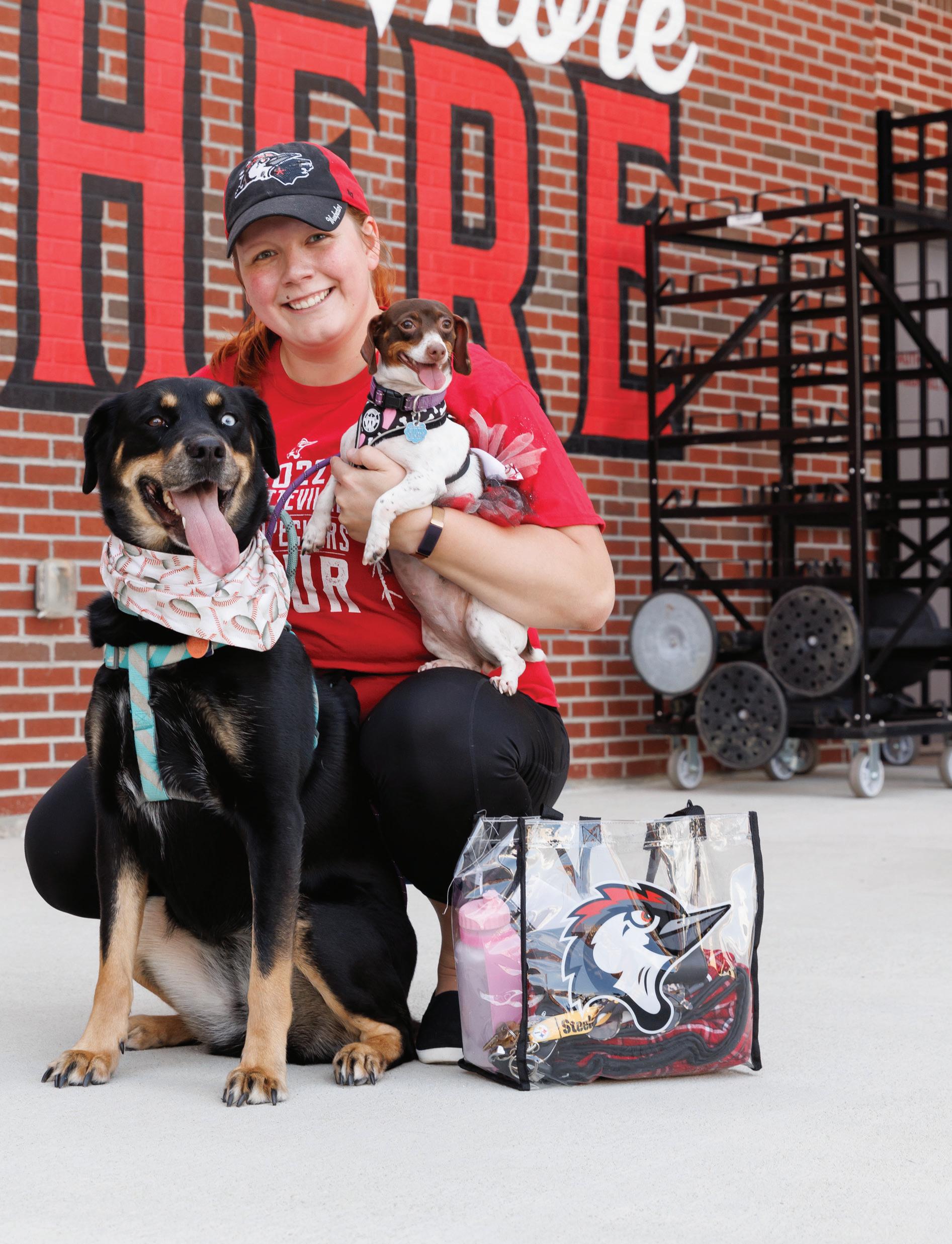
Tail Waggin’ Tuesday
Segra Stadium
460 Hay St. milb.com
June 25
Fayetteville Woodpeckers vs. Delmarva Shorebirds:
Healthcare Appreciation Night
Segra Stadium
460 Hay St. milb.com
June 26
Advanced Propagation Techniques
Cape Fear Botanical Garden
536 N. Eastern Blvd. capefearbg.org
June 27
Red, White, and Boom Fest! Fort Bragg — U.S. Army Family and Morale Welfare and Recreation
Main Post Parade Field
25 Capron St., Fort Bragg bragg.armymwr.com
June 27
Independence Day Celebration
Hope Mills Municipal Park 5766 Rockfish Road, Hope Mills townofhopemills.com
June 28
Fayetteville Woodpeckers vs. Delmarva Shorebirds: Sesame Street Family Day
Segra Stadium
460 Hay St. milb.com

Thousands of people flocked to downtown Fayetteville for live music, vendors, food, a car show, and fun during the 44th annual Fayetteville Dogwood Festival held April 24–26. The theme was a throwback to the 1990s and early 2000s.
Photography by Tony Wooten
Want CityView at your event for Seen @ the Scene? Email us at talk@cityviewnc.com.










Cape Fear Valley Health is bringing expert dermatology care closer to home with the opening of our new dermatology clinic.
Whether you need a routine skin check, treatment for a skin condition, cosmetic dermatology services, or advanced skin cancer care, our experienced team is here to help you look and feel your best. The clinic will be led by Mariah Owusu-Agyei, MD, and Emily Townsend, PA-C, offering compassionate, personalized care for patients of all ages.

Services include:
· Skin cancer screenings and treatment
· Mohs surgery for precise skin cancer removal
· Acne and acne scarring
· Eczema, psoriasis and rashes
· Moles and suspicious skin lesions
· Hair and nail disorders
· Wart and cyst removal