Big benefits are on hand, but beware of the drawbacks too
STAFF SHORTAGES
Youngsters want transport jobs –but they need persuasion to apply
TALKING TYRES
Transport firms must raise their game or risk disaster KEEPING YOUR FLEET SAFE,
STANDARDS & COMPLIANCE
16 Forward thinking Transport firms should aim to look ahead and predict what their problems will be in the future. That way, they can be solved more easily
32 Digital delight
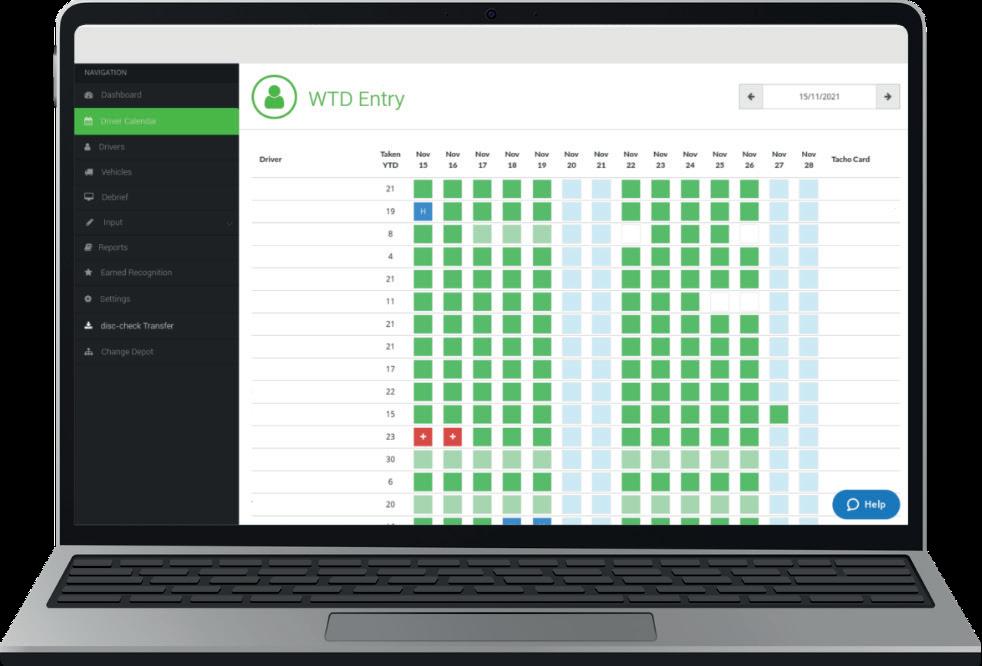
Hauliers are fast ditching their old paper-based systems as they discover how much more efficient they operate by using digital platforms
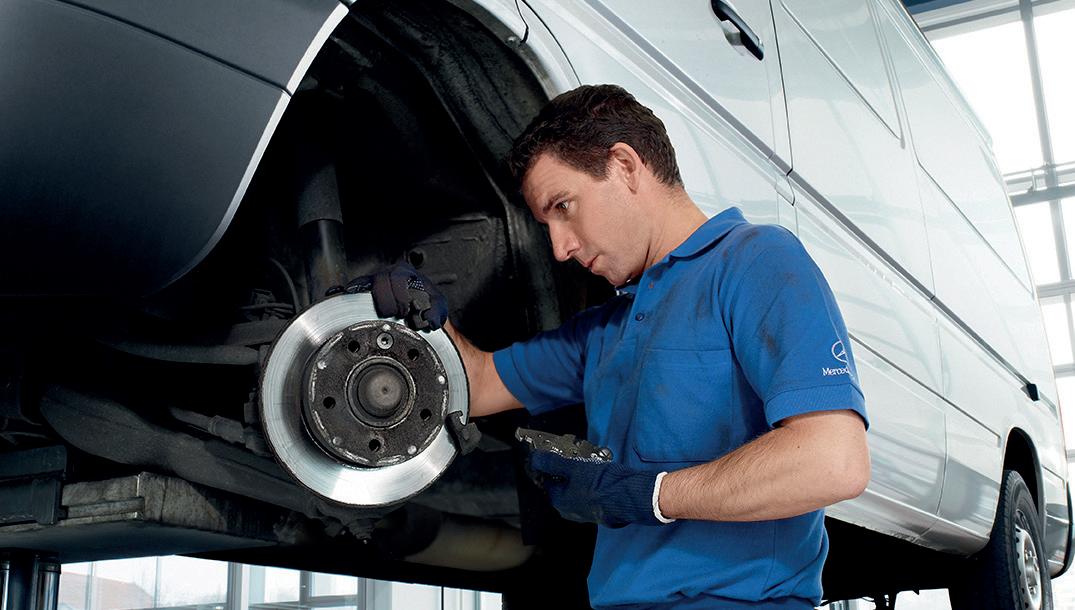
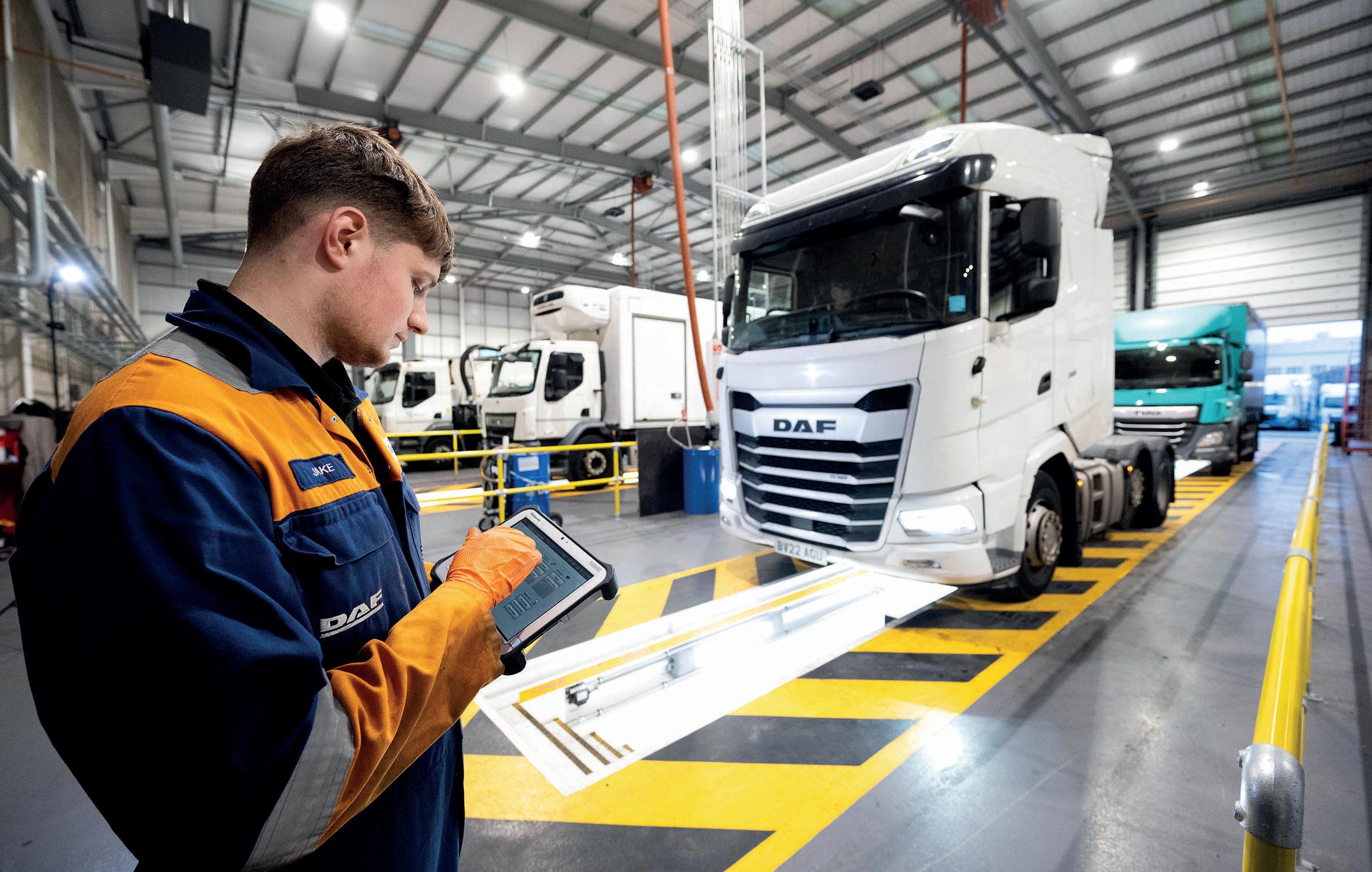
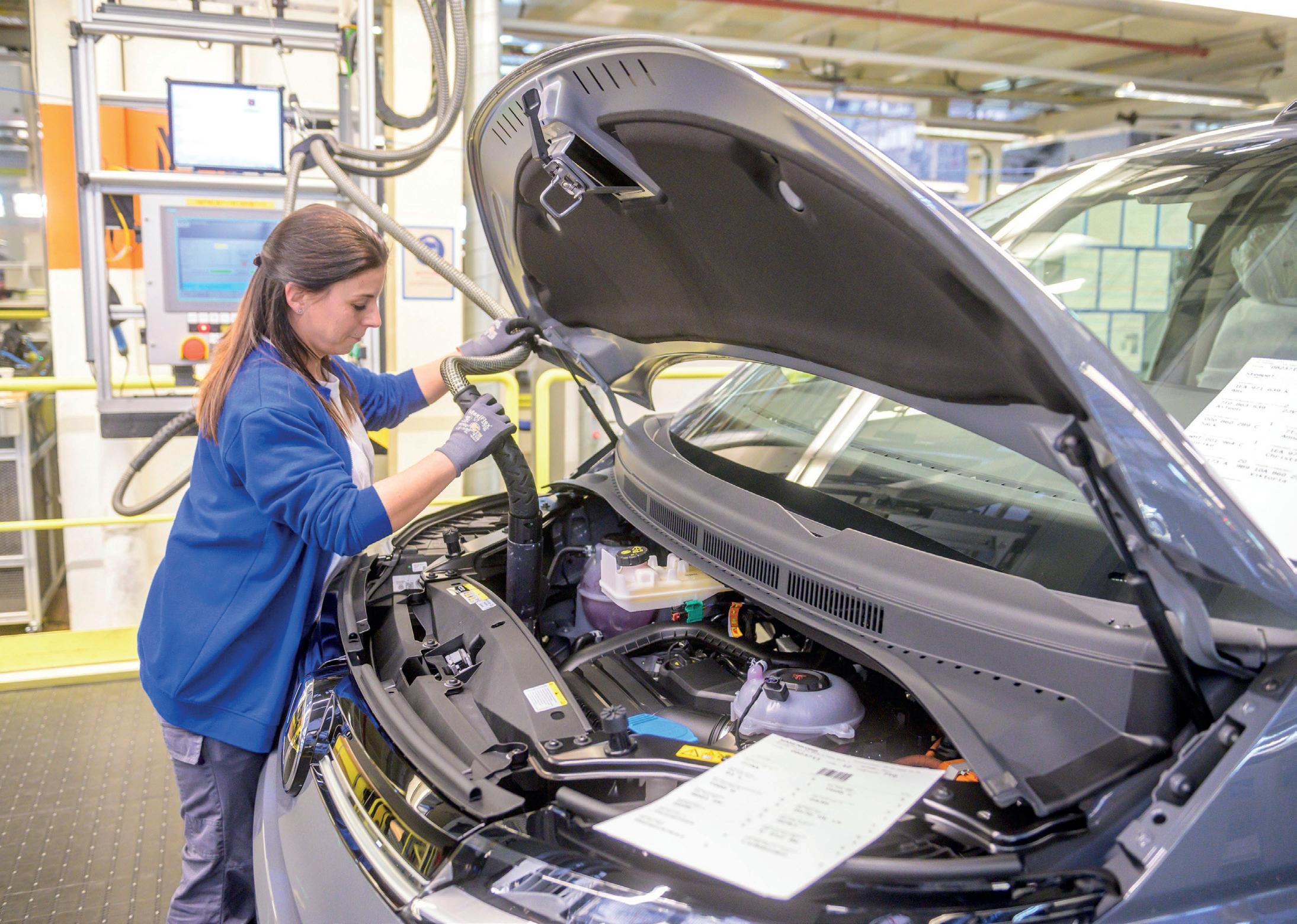
40 Maintenance matters
As trucks and vans become ever more technologically advanced, fewer and fewer mechanics know how to fix them when they go wrong
STANDARDS & COMPLIANCE
Publisher: Matthew Eisenegger
Editorial: John Charles
Art Editor: Leo Gehlcken
Email: design@cvdriver.com
Contributors Steve Banner, Richard Simpson
Advertising Sales: David Johns Mobile: 07590 547343
Note: The publisher makes every effort to ensure the magazine’s contents are correct. All material published in The Standards & Compliance Magazine is copyright and unauthorised reproduction is forbidden. The Editor and publisher of this magazine give no warranties, guarantees or assurances and make no representations regarding any goods or services advertised in this edition. The Standards & Compliance Magazine is published under a licence from Commercial Vehicle Media & Publishing Ltd. All rights in the licensed material belong to Matthew Eisenegger or Commercial Vehicle Media and Publishing Ltd and may not be reproduced whether in whole or in part, without their prior written consent.
The Standards & Compliance Magazine is a registered trademark. If you are not going to keep this magazine for future reference please pass it on or recycle it.
WELCOME
The road still runs: why you must not quit
Ian Jones Editor at Large
The numbers are brutal. Five haulage companies a day ceased trading in 2025. Not five a month. Not five a quarter. Five. Every single day, someone who bought the trucks, hired the drivers, learned the regulations, absorbed the costs and kept the wheels turning finally ran out of road.
Now, as if the industry had not already been ground down by rising insurance premiums, driver shortages and relentless cost pressures, the conflict in Iran sent diesel prices climbing again. Every fill of a 400-litre tank had become a test of resilience. Margins that were already razor-thin were thinner still. Many operators are quietly asking themselves: “Is this still worth it?”
In my role with restructuring expert PKF Littlejohn Advisory, I am seeing good operators
facing real difficulties. That is why I want to make a simple case for perseverance.
Think about Frank Sinatra. Over his career, he recorded more than 1,200 songs, but only 209 became hits. For every My Way there were several songs that disappeared without trace. Nobody remembers those. Everyone remembers the man who kept singing.
Cristiano Ronaldo has scored 183 penalties and missed 36. Even one of the greatest footballers of all time fails regularly. He understood something we sometimes forget –you do not score without missing. The two are inseparable.
Then there is Thomas Edison. More than 10,000 experiments led to the lightbulb. Thousands of attempts that looked like failure. One result that changed the world.
Success is not about the hit rate. Success is about surviving the attempts.
The haulage industry has never been easy, but it has always been essential. The goods on supermarket shelves, the materials on building sites and the parcels on doorsteps all move because operators like you keep going.
If you need practical or financial advice, do not suffer in silence. Reach out. There are experts who can help keep the wheels turning and the lights on.
Backhouse Jones Solicitors
New research reveals true cost of vans off the road Five hundred sign up to new fleet advice library
New research by Opinium has shocked many commercial vehicle operators by revealing the true cost of having a van off the road for a day – £1,172.20.
Research conducted by Opinium among 500 senior decision makers at UK businesses that rely on vans found that companies experienced an average of six-and-a-half days of disruption over the past 12 months.
continuously monitors vehicle technical condition and alerts operators to potential issues before faults develop.
The system connects vehicles with Mercedes-Benz workshops, allowing fleets to identify maintenance requirements early and reduce unplanned downtime.
Fleet managers and transport chiefs have a new source of independent advice. FleetInsights, created by fleet management software specialist FleetCheck, provides resources on critical industry topics. So far 500 people have signed up.
For many UK businesses, a van isn’t just a van
The research found downtime affects more than revenue, with 41% of businesses saying vehicle issues cause staff stress, while 33% reported workflow disruption and 29% said employees were forced to work longer hours.
Customer service impacts were also significant, with 24% of businesses reporting customer complaints and missed performance targets, while 18% worried about losing contracts.
Mercedes-Benz Vans is working with fleet customers using its Van Uptime Monitor system, which
The manufacturer also supports van fleets with its 24/7 Europe-wide MobiloVan roadside assistance service, which it said resolves around 82% of call-outs at the roadside.
Simon Neill, operations director at Mercedes-Benz Vans UK, said:
“For many UK businesses, a van isn’t just a van. It’s the business showing up. Our new research lays bare what happens when vans – which are often at the heart of our communities – go off the road. Vehicle uptime isn’t something you can park in the operations folder and forget about. It shapes productivity, customer relationships, and it lands on people first.” ❚
BELOW: A van off the road costs its business owner dear
The UK head of Ford has called for a rethink in the rollout of electric vans after claiming that many of its commercial vehicle customers did not currently see EVs working for them.
Lisa Brankin, chair and
managing director of Ford of Britain, said research by the manufacturer showed the need to charge electric vans created potential productivity issues for businesses. She told the Society of Motor Manufacturers and Traders
Popular areas of interest for members include strategic fuel efficiency for fleets, proactive van maintenance and best practice for work-related vehicle incidents.
Latest additions to its armoury of advice include how to manage vehicle offroad issues, why daily walkaround inspections are vital to fleet operations and strategic insights into total cost of ownership.
The work is backed by National Highways’ Driving for Better Business project, which helps employers in both the private and public sectors reduce work-related road risk, control associated costs and improve compliance with current legislation and guidance.
Peter Golding, CEO at the fleet software specialist, said the initial strength of response to the project showed the demand for advice that existed among fleets.
He said: “In recent years, fleet managers have been faced with a wide range of pressures, from electrification to high levels of downtime and, most recently, rapidly rising fuel costs. There are many people involved in operating fleets of all sizes looking for information and guidance enabling them to formulate strategies that meet these challenges. With FleetInsights, we are helping to meet that demand.”
The new fleet library is built on FleetCheck’s work to position itself as not just a provider of technology but also a trusted source of advice for users and others across the industry.
There are many people involved in operating fleets looking for and guidance
Golding added: “While it’s pleasing that so many people have signed up – both from within and outside our software user base –it’s also no surprise. We were aware this need existed and expect to see more people come onboard as our library of features grows.” ❚
(SMMT) ‘Electrified’ summit that many of Ford’s commercial vehicle customers did not currently see EVs working for them.
She said: “All our commercial vehicles are connected and we’ve been working with a number of our customer businesses to take their data and to profile the use
case of what that looks like for them.
“Around 16% of those customers can drive their vans without having to stop and charge during the day. The rest of those customers at some point in a day, during a week, will have to charge. ❚
Ford chief calls for rethink on electric van rollout
Parts thieves turn their eyes to fuel as prices rise RHA calls for payload increase for eHGVS
Criminal gangs who strip vehicles of parts are now turning to stealing fuel as prices rocket, transport managers are being warned.
The Association of Fleet Professionals (AFP) said tanks of commercial vehicles parked in secure depots have been drilled and drained overnight.
A meeting of the industry body’s Mega Fleets Committee, representing its largest vehicle operators, heard the fleet managers experiencing these issues suspect the same criminals are responsible.
Paul Hollick, chair at the AFP, said: “Following the recent oil price spikes, some fleets are reporting a few instances of what appear to be professional fuel thefts where the tanks of commercial vehicles parked in secure depots are drilled
and drained overnight. This is often affecting operators in the same places where vehicles are stripped for parts.”
Stealing diesel is potentially a more rewarding crime
The AFP leader said the gangs undertaking this kind of activity are clearly expert and organised at stripping parts quickly and efficiently and, from this handful of instances, it seems some are turning their attention to fuel “with similar proficiency”.
“Stealing diesel is potentially a more rewarding crime while prices at the pumps remain high.” ❚
BELOW: Thieves are turning from parts to fuel theft
AI set to help wipe out fatigue dangers
The next-generation of AI-powered distraction and fatigue detection cameras for commercial vehicles is being planned with a new linkup between Microlise and video telematics provider Streamax. Designed to tackle one of the biggest causes of road incidents, the new camera system combines AI-driven distraction and fatigue detection with advanced-driver assistance systems (ADAS) to help operators reduce risk. With
80% of road incidents involving distraction and fatigue remaining a significant contributor to collisions, the solution focuses on prevention rather than reaction.
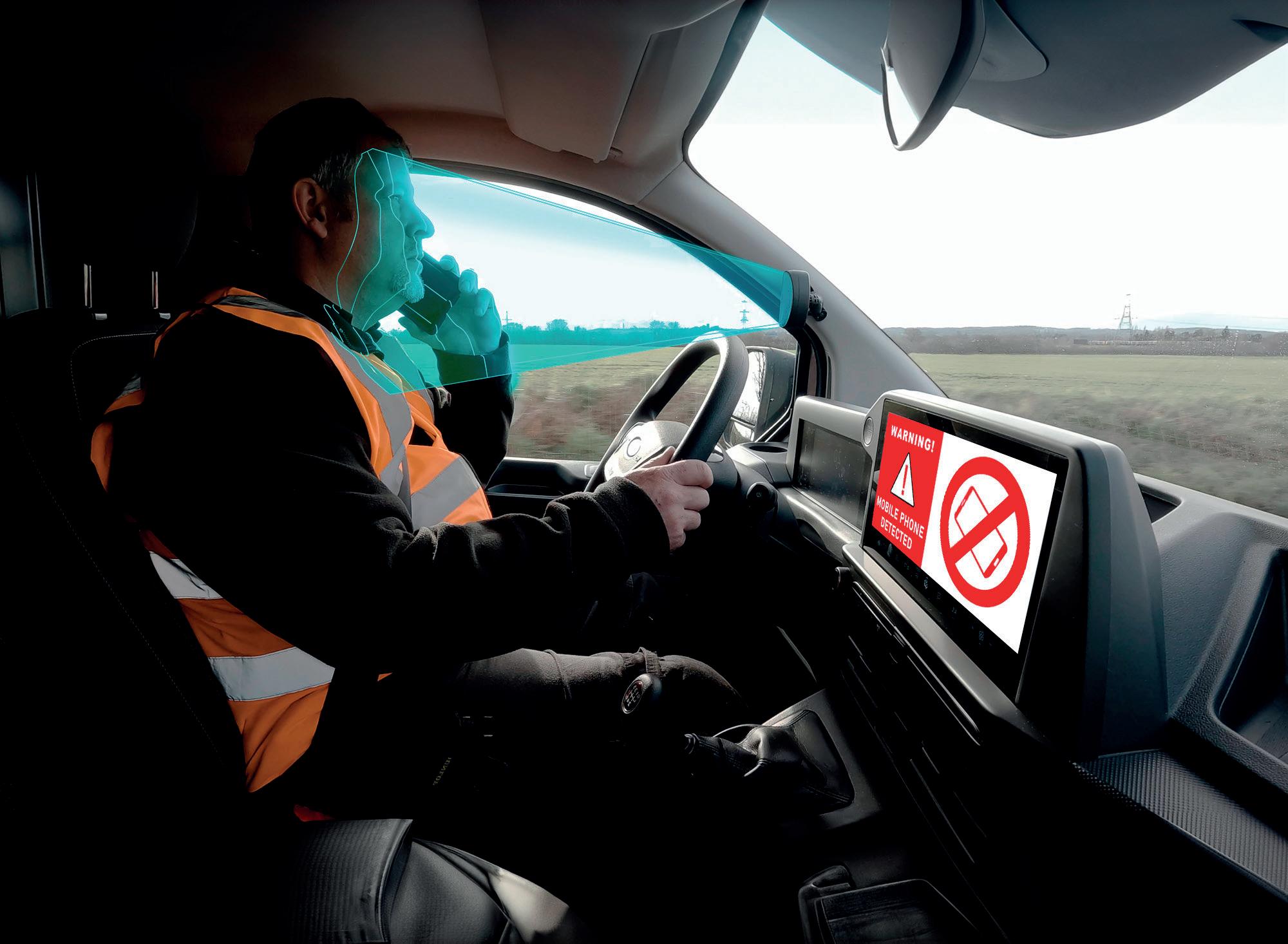
The inward-facing camera uses artificial intelligence to detect high-risk distracted behaviours to alert drivers in real-time and support safer driving habits. Simultaneously, ADAS technology monitors the road ahead, warning drivers of potential hazards. ❚
Businesses running electric heavy trucks are losing up to 11.8% of payload capacity compared to equivalent diesel vehicles, according to the ‘Electric HGV Payload Loss Report,’ published by the Road Haulage Association (RHA).
Based on evidence from operators and vehicle dealers from across the UK, it finds that current regulations are forcing hauliers to run more vehicles to carry the same freight, pushing up costs by more than £28,000 per vehicle.
Meanwhile, it says, inadequate charging infrastructure enhances this problem further.
RHA managing director Richard Smith said: “Our industry is committed to decarbonisation, but it must be commercially viable. Our research shows that current regulations are creating a structural barrier. Without change, operators face higher costs, more vehicles on the road and reduced efficiency.
“If we want to accelerate the netzero transition, we need the right regulatory framework in place. As things stand, it doesn’t exist.”
ABOVE: Industry is calling for a change in payloads for eHGVs
The RHA is calling on Government to raise the maximum weight limit for electric HGVs to 46 tonnes, increase drive axle weight limits to 12.5 tonnes and establish a dedicated technical working group to take these issues forward.
It comes after the Association of Fleet Professionals (AFP) urged the Government to learn lessons from
If we want to accelerate the net-zero transition, we need the right regulatory framework
infrastructure issues impacting electric van adoption when considering the rollout of electric trucks.
In response to a consultation on developing a roadmap to phase out sales of new diesel HGVs by 2040, the AFP says any new supply or demand-side regulatory frameworks will only succeed if infrastructure delivery keeps pace with vehicle supply. ❚
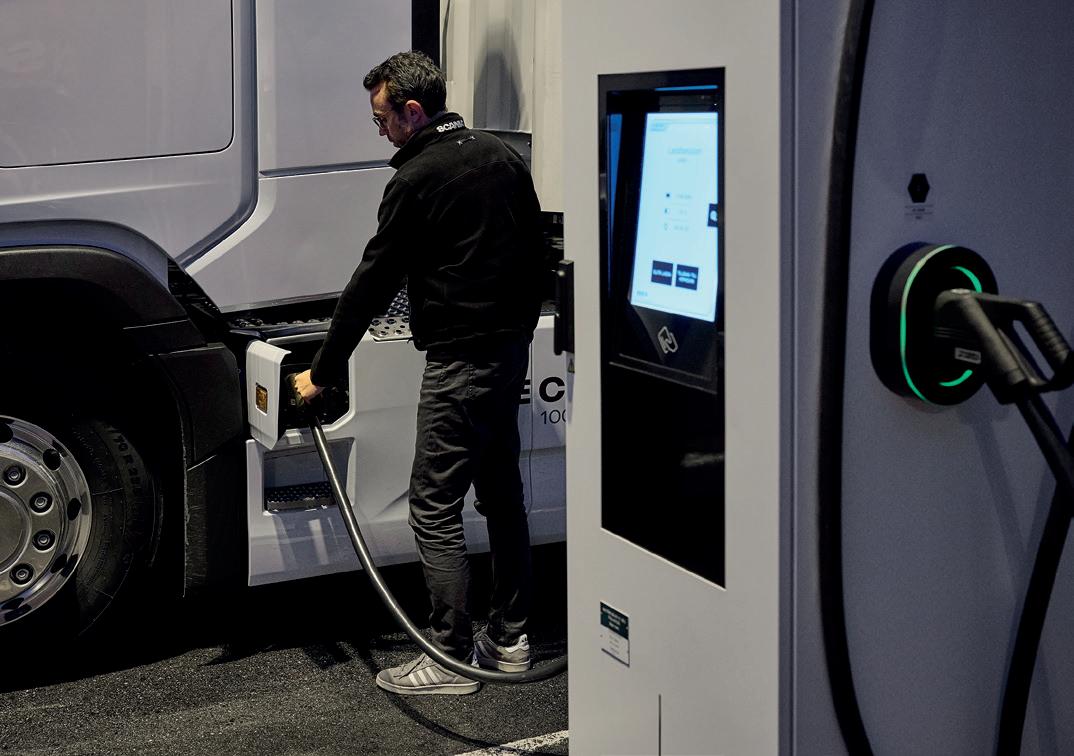
The Government and the UK’s freight industry appear to be in deadlock at present over plans to electrify the heavy truck sector. Fleets and manufacturers are reluctant to transition to EVs without adequate charging infrastructure in place, while charge point operators are reluctant to invest in building it without vehicles to charge.
Now ChargeUK says the two sides must come together to solve this ‘chicken and egg’ dilemma
The EV charging sector association has published a new paper – Electrifying Freight: A roadmap for electric HGV charging – which outlines problem.
HGV charging.
“We know what has and hasn’t worked for cars so can apply those lessons. A dedicated HGV infrastructure fund and clarity in regulation would be positive steps forwards.
“Addressing the existing challenges in costs of public charging and speeding up grid connections are more acutely required for freight.”
ChargeUK has made three recommendations to Government:
Despite industry efforts, women make up only 20% of the UK automotive workforce, with even lower representation at senior levels. But this could be about to change thanks to a new initiative.
‘Empowering Auto UK’ has been launched, to support women in automotive careers with help from Solera Cap HPI.
Originating in Canada and now a wider global movement, Empowering Auto brings together senior leaders and emerging talent to address enduring structural issues in recruitment, retention and progression.
As a founding member, Solera Cap HPI will play a part in shaping the UK chapter. ❚ Call for urgent talks over plans to electrify
Currently there are around 1,000 electric HGVs registered in the UK, only around 0.2% of the UK’s HGV parc, and growth remains far behind the trajectory required to meet the Government’s 2040 cut-off for the sale of new diesel HGVs.
Jarrod Birch, head of policy and public affairs at ChargeUK, said: “It is understandable that critical logistics providers are unwilling to transition before the business case stacks up. And just as it has done for passenger vehicle electrification, the charging sector is willing to build ahead of demand.
“However, we must have some certainty that demand will grow with strong commercial and policy signals that the UK is investible for
• Unlock infrastructure investment by creating a dedicated HGV infrastructure fund, fasttracking grid connections for HGV charging sites and including renewable electricity in the Renewable Transport Fuels Obligation.
• Provide market certainty through regulation through a clear regulatory framework which guarantees electrification and aligning regulatory and technical approaches with the European market.
• Close the cost gap for fleets by enabling electricity crediting for depot charging, addressing the high cost of electricity and enhancing upfront cost support to address total cost of ownership. ❚
BELOW: Hopes of encouraging fleets to buy electric trucks are not going according to plan at present
Stacey Ward, senior director of data products and operations at Solera Cap HPI, said: “The decision to back the initiative shows both the scale of the challenge and the call for a more coordinated response across the sector. We are supporting Empowering Auto UK to tackle the main issues, under-
representation, weak retention, slow progression into leadership, workplace culture and inconsistent senior commitment across the sector.”
Empowering Auto UK is focusing on reshaping career pathways and creating more accessible routes into leadership. Alongside recruitment, the initiative is expected to address mid-career drop-off, often linked to family pressures, as well as cultural barriers that continue to deter longterm participation.
There is also a commercial benefit as broadening the talent pool will address the ongoing skills shortages across multiple parts of the automotive sector. A more balanced workforce is widely linked to stronger performance, improved innovation and better alignment with a diverse customer base.
• 96% advance for your invoices
• 4% gives your customers 60 days credit
• Improve your cash flow in 3 working days
• No minimum term contract
• Selective factoring
• Highly experienced credit control team
• Family run, independent of the banks
• Experienced in the skip, waste and haulage sector
• Cater for all sizes of businesses
• Minimum turnover £50,000
TAKE CONTROL OF YOUR LOSS RATIO
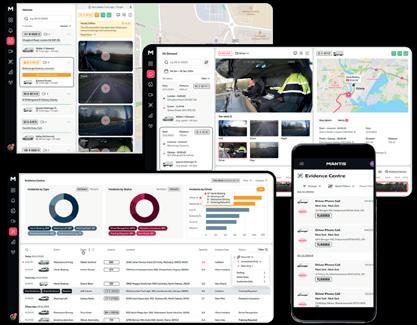
Rising claims, high premiums and fraud are eating into your bottom line. MANTIS gives you the visibility and evidence you need to reduce risk and lower costs.
Access clear video evidence instantly to resolve claims faster and defend against non-fault and fraudulent claims.
Identify risk, coach effectively and build a safer, more responsible driving culture.
Reduce risk exposure, demonstrate performance and negotiate from a position of strength.
Monitor camera health, driver activity and fleet performance in real time with RECON.
New electric Iveco Daily charged up by coils under the road
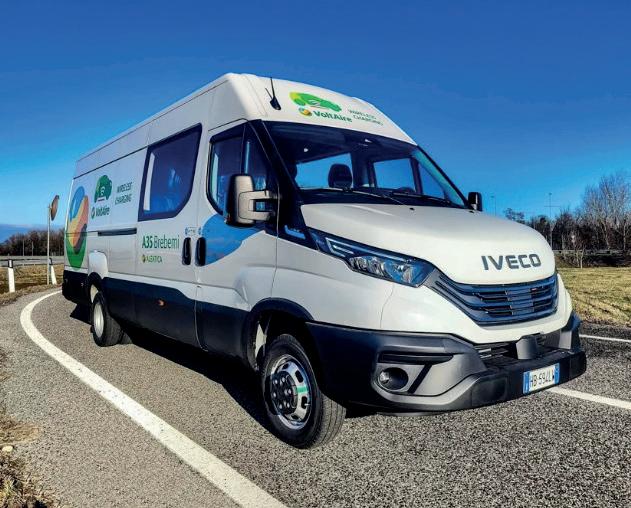
Iveco has unveiled the first road - ready eDaily that charges itself up remotely as it drives. The electric van will be deployed by A35 Brebemi, an Italian toll road connecting Brescia and Milan, part of Aleatica group.
The inductive charging system was developed to work with Brebemi’s infrastructure, a network of coils beneath the road surface to transfer energy directly to electric vehicles (EVs) above them.
It is an important milestone in
Our ambitious goal is to extend static charging
a journey that Brebemi began several years ago with Arena del Futuro, continued through the
start-up VoltAtire, attracting the interest of manufacturers.
Marco Aimo-Boot, vehicle electrification transmission and distribution innovation and advanced engineering at Iveco Group, said: “After nearly a year of testing wireless charging in both static and dynamic modes on the equipped ring at the A35 Brebemi ‘Arena del Futuro’ sitewith highly positive results - we seized the opportunity to prepare a new eDaily equipped with the DWPT (dynamic wireless power transfer) system.
“Our ambitious goal is to extend static charging functionality to compatible public sites.”
BELOW: A remotely-charged electric Iveco Daily is on test
Ben aims to treble its help for needy people
Automotive industry charity Ben is aiming to treble its charitable impact by 2030 after reporting a rising demand for health, wellbeing and financial support services.
The charity said it had supported 3,421 individuals during the year through tailored services covering mental health, financial hardship, bereavement, stress and work-life
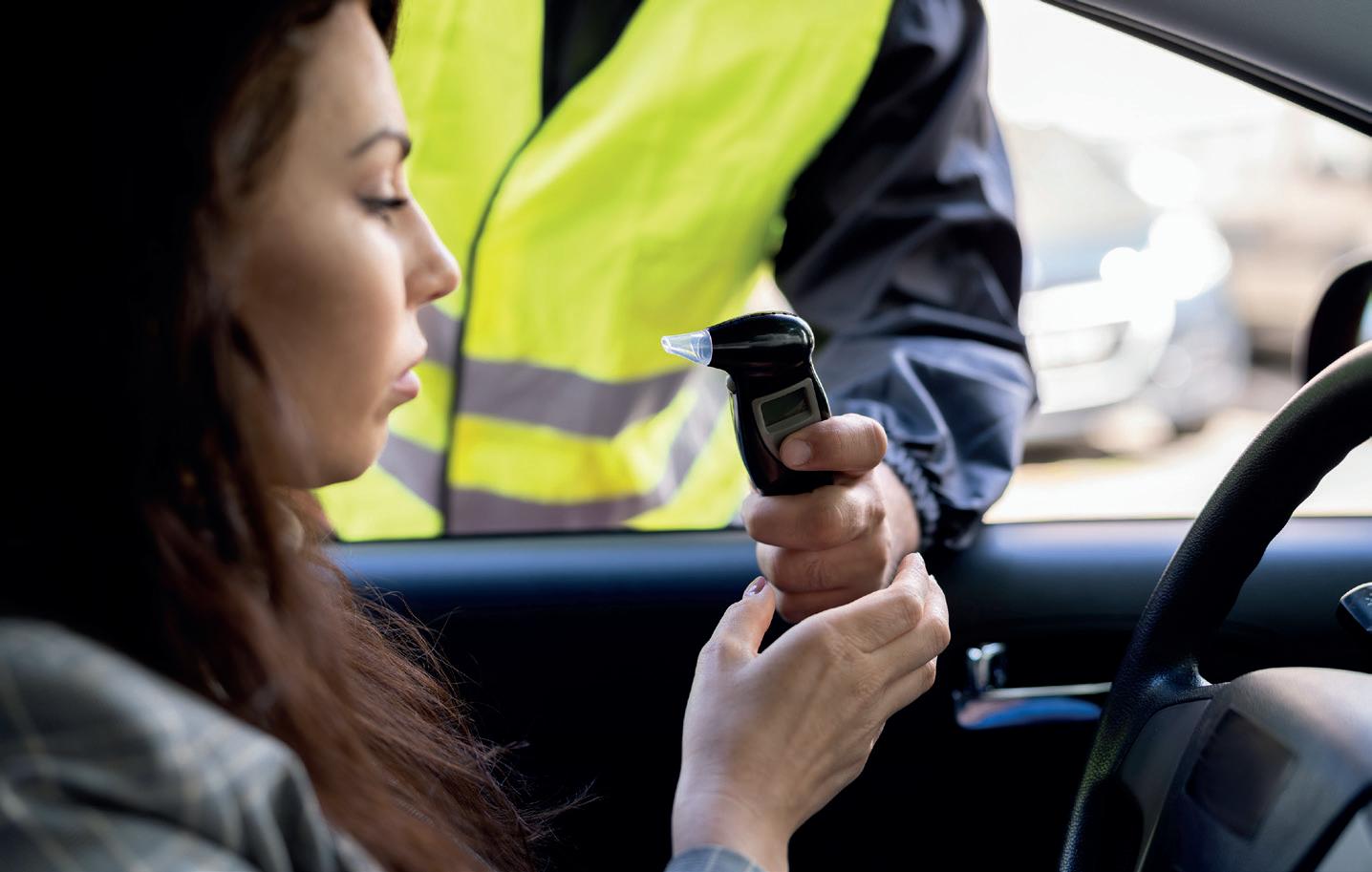
Shock analysis reveals full scale of drug-driving reoffending
New analysis has revealed that drivers caught operating a vehicle under the influence of drugs are five times more likely to repeat the offence than drink-drivers.
More than 12,300 drivers were caught drug-driving on at least three separate occasions in the 11 years to July 2025, according to new RAC analysis of DVLA figures. That compares with a figure of 2,553 drink-drive convictions over the same period.
Overall, 41,422 licence holders were convicted of drug-driving more
Drug-driving reoffending rates dwarf those of drink-driving
than once in the last 11 years.
And the analysis highlights some stark examples of reoffending. One driver racked up 18 separate ‘DG10’ drugdriving convictions, while another has 17. Several others have between 12 and 14 convictions, and 94 motorists currently have eight drug - driving offences on their record. In total, 32 drivers have 10 separate drug-driving convictions, while 38 have nine.
According to the DVLA data, 72,662 motorists held at least one drug-driving conviction on their licence. Shockingly, this total includes 4,131 learner drivers who committed the offence on a provisional licence
before even passing their driving test.
DG10 endorsements are given to motorists caught driving, or attempting to drive, with a controlled drug level above the legal limit. This can include specified limits of prescription medicines such as morphine or diazepam or having certain levels of illegal drugs in your blood.
Since 2015, tougher traffic laws have made it much easier to prosecute motorists driving under the influence of drugs.
Current penalties include driving bans, fines, a criminal record and potential prison time, but the RAC said its analysis demonstrates the challenge of effectively preventing reoffending.
Rod Dennis, senior policy officer at the motoring organisation, said that while drink-driving dominates UK headlines, the new data exposes the rapidly growing, hidden crisis of drug-driving.
“Drug-driving reoffending rates dwarf those of drink-driving, which suggests that current penalties aren’t effective in preventing some drug-drivers from repeating their crimes and putting everyone at risk. Introducing a national drugdriving rehabilitation scheme – similar to what is in place for drink-driving – could also help to drive down reoffending.” ❚
pressures. Across the year, Ben delivered 7,048 direct support interventions to people working in the automotive sector.
The charity provided benefits advice and financial guidance to 1,605 individuals, while 573 financial grants were awarded to people experiencing hardship. Ben Therapy supported 468 individuals, with a further 263 people receiving life coaching support.
Demand for digital services also remained high, with Ben recording more than 52,000 website visitors and 77,000 support page views during the year. Mental health support, redundancy advice and digital wellbeing tools were among the most frequently accessed resources.
Rachel Clift, chief executive officer at Ben, said: “While we’re
proud of the impact we’re having, we also know the need across the industry is far greater than the number of people currently accessing our services. Too many people still don’t know Ben is here for them. That’s why increasing awareness is such a major priority for us. We want everyone in automotive to know where they can turn for support, whatever they’re facing.” ❚
Renewed focus needed on risk management Hydrogen and electric refuse trucks go head to head
New figures suggest improvements in road safety are losing momentum, prompting Webfleet to call for renewed focus on fleet risk management.
Data from the Office of Rail and Road shows that 1,931 people were killed or seriously injured on England’s strategic road network in 2024, up from 1,908 in 2023, while the casualty rate remained unchanged at 19.9 per billion vehicle miles travelled.
Department for Transport figures for the year to June 2025 put the number of people killed or seriously injured across Great Britain at 29,896, with little change on the previous 12 months.
These figures should prompt fleets to take a more proactive approach to risk, according to Webfleet, Bridgestone’s fleet management solution.
“Any sign that road safety progress is slowing should be a prompt for organisations to take stock of how they are managing risk,” said Alex Crane-Robinson, regional director, UK and Ireland at Webfleet. “Road safety cannot be treated as a one-off initiative or something that is reviewed once a year.”
Crane-Robinson points out that fleets need to manage safety
continuously, using fleet data to build a better understanding of incidents and their causes. This may include making better use of data already available through fleet management systems to spot patterns earlier and respond before problems escalate.
Patterns such as speeding, harsh braking, fatigue, recurring issues on certain routes and incidents at
Road safety cannot be treated as a one-off initiative
particular times of day can help fleets spot where risk is developing.
This kind of insight, he says, can support a more preventative approach, from tailored driver training and changes to schedules through to closer scrutiny of whether particular vehicles or routes are linked to repeated problems.
“Practical steps, backed by a clearer view of driver and vehicle risk, can make a real difference,” he said. “When fleets have a strong understanding of day-to-day risk, they are better placed to intervene early and help prevent repeat problems.” ❚
BELOW: Transport firms are being warned to renew their focus on safety
A new trial is taking place in Wales, comparing the performance of hydrogen and battery electric refuse trucks.
It has been designed to provide real-world operational data, allowing the performance of the vehicles to be compared to provide a basis for future decisions on zero-emission fleet technology.
Factors to be examined by engineers and fleet managers include the trucks’ energy usage, range, operational performance and suitability for different terrains and routes.
The trial is being run by the Cardiff Capital Region (CCR), a city region comprising ten local authorities in South East Wales, in partnership with its member councils Caerphilly County Borough Council
and Rhondda Cynon Taf County Borough Council, as well as Ricardo and Hyppo. More than £420,000 of funding is being provided by the Welsh Government.
Mike Brough, strategic director for regional growth for CCR, said: “This trial is exactly the kind of innovation CCR exists to champion. Heavy-duty fleets are one of the hardest sectors to decarbonise and by bringing hydrogen and electric technologies together in a real-world environment, we’re helping local authorities make informed, future proof decisions.
“It’s exciting, genuinely groundbreaking work and a fantastic example of regional collaboration driving practical climate action.” ❚
BELOW: Refuse test pits electric against hydrogen
Calculator reveals true cost of speeding offences
Transport chiefs are being warned of the true cost of speeding fines for van and truck drivers, which can be significantly higher than the fine itself.
When costs such as insurance implications, admin burden, downtime and indirect productivity losses are added, the financial burden can be a heavy one.
Now a new Fleet Fine Calculator has been designed to give fleet operators a powerful new way to understand the true financial and operational impact of speeding.
The tool is designed specifically for commercial transport and logistics businesses.
Launched by Ooono, the road safety tech firm behind the Co-Driver alert system, the solution
goes beyond simple penalty values to quantify the full cost of speeding incidents, including fines, insurance implications, admin burden, downtime and indirect productivity losses. It also gives details of potential savings that can be made if fleets use Ooono’s Co-Driver No2.
A typical UK speeding offence may result in a £100 fine and penalty points, but Ooono’s analysis shows the real cost to fleets is significantly higher once operational disruption and risk exposure are factored in. The Fleet Fine Calculator allows operators to input fleet size, driver behaviour assumptions and incident frequency to generate a tailored risk profile for their business. ❚
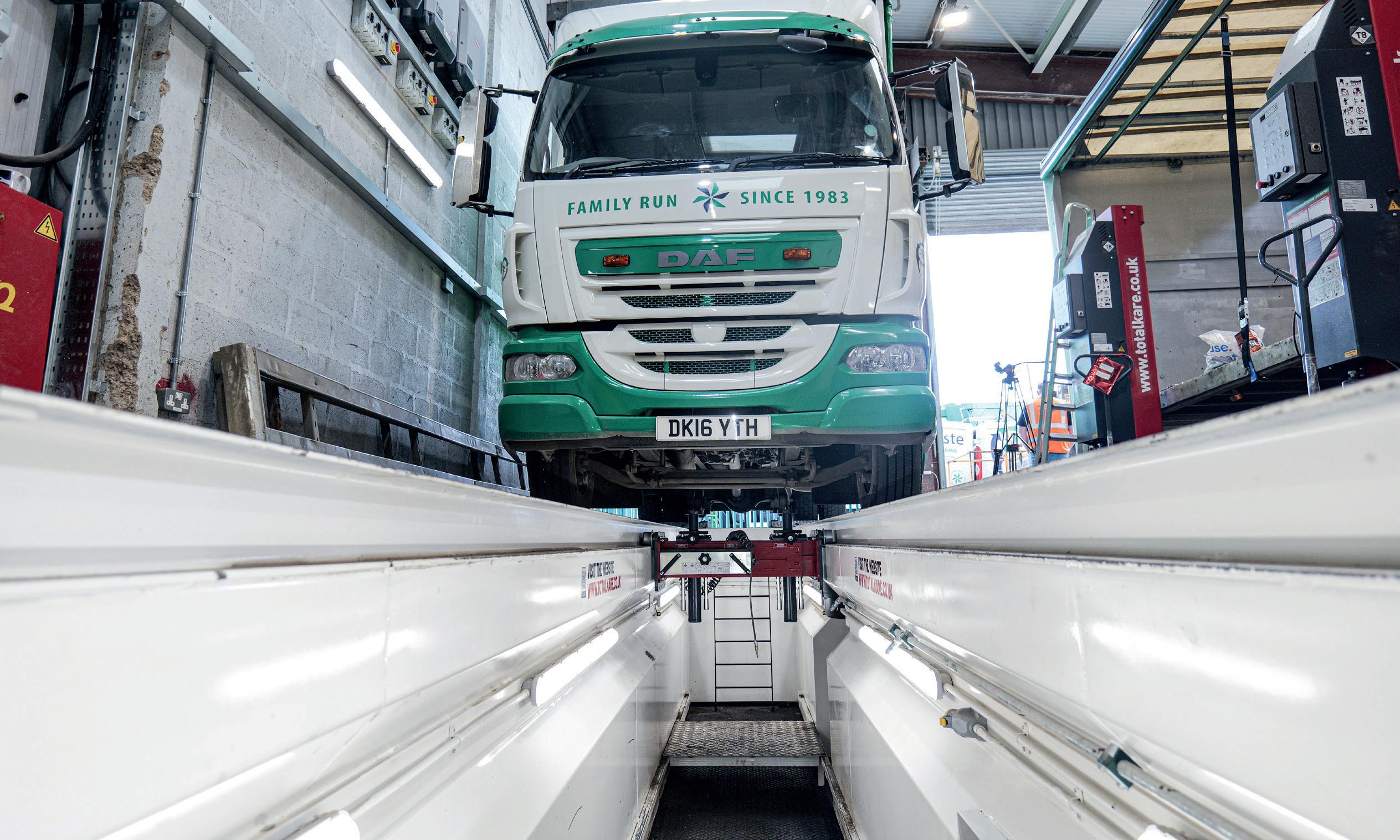
TOTALKARE – THE MAIN NAME IN KEEPING VEHICLES SAFE AND EFFICIENT
Products are designed with workshop productivity and technician safety in mind
Totalkare has been at the forefront of heavy-duty vehicle lifting and testing solutions for more than 40 years, supporting workshops across the UK and around the world with innovative, reliable equipment.
Specialising in mobile column lifts, brake testers and workshop equipment for commercial vehicles, buses and coaches, Totalkare has built a strong reputation for engineering excellence, safety and customer support. The company works closely with fleet operators, local authorities, service centres and OEMs to help keep vehicles maintained efficiently and safely.
Totalkare’s products are designed with workshop productivity and technician safety in mind. Its market leading mobile column lifts are widely recognised for their durability, ease of use and advanced safety features, allowing workshops greater flexibility while maximising available space.
Beyond supplying equipment, Totalkare provides a complete aftersales service including installation, servicing, LOLER inspections, calibration, training and technical support.
Totalkare invests in product development to meet the evolving needs of modern workshops, particularly as the commercial vehicle sector adapts to new technologies and changing environmental requirements.
Totalkare also offers flexible finance options across its product range, helping workshops invest in essential equipment while managing cash flow effectively. By providing tailored finance solutions, businesses can access high quality lifting and testing equipment without the need for significant upfront capital expenditure.
This enables operators to upgrade facilities, improve workshop efficiency and maintain compliance with industry standards through manageable monthly payments.
What people ask us
The following frequently asked questions provide a clear overview of Totalkare’s capabilities, from equipment selection and installation through to compliance, servicing and finance options.
Q: Which customers do you work with?
A: We work with a range of customers ranging from small family businesses through to multi-national transport operators, logistics companies and rail manufacturers.
Q: How can I contact Totalkare?
A: You can contact us on 0121 585 2724 or email us at sales@totalkare.co.uk. You can also get in touch via Facebook, Linkedin, Instagram and Tiktok.
Q: Which lifting or handling solution is right for my fleet?
A: The right solution depends on vehicle type, load weights, delivery environment and frequency of manual handling. Our team can assess your operation and recommend the most suitable equipment.
Q: Can your equipment be fitted to different vehicle types?
A: Yes. Our solutions can be installed on a wide range of vehicles, including vans, rigid trucks, buses/coaches, trains and specialist bodies.
Q: Do your products support compliance with UK transport regulations?
A: Yes. Our solutions help transport operators meet obligations under legislation such as LOLER and PUWER, where applicable.
Q: Do you handle installation?
A: Yes. We offer professional installation, ensuring equipment is fitted correctly and ready for use.
Q: What happens if the equipment needs repair?
A: Our service team can arrange prompt repairs to reduce disruption to your fleet.
Q: What finance options does Totalkare offer?
A: Totalkare provides a range of flexible finance solutions including lease hire, lease purchase and short-term hire, designed to spread the cost of equipment over time and suit different business needs.
Q: Do you supply equipment nationwide?
A: Yes. We support workshops and businesses across the UK.
Q: What types of service contracts are offered by Totalkare?
A: Totalkare offers three main types of service contracts: Standard, Extra, and Fixed Rate (all-inclusive), each providing different levels of servicing, support, and cover for workshop equipment. ●
BELOW: Totalkare has built a strong reputation for engineering excellence, safety and customer support
KUMHO’S MULTI-PERFORMERS
• Outstanding mileage
• Even wear
• Excellent all-season performance
PLAN TODAY TO COMBAT TOMORROW’S PROBLEMS
Many logistics operations are in danger without even realising it
Businesses must strengthen how their operations perform under pressure
Operations may seem to be running smoothly: routes are getting completed, goods are getting delivered and service levels are on track. But what happens when a crisis or disruption hits?
Just because something appears to be OK today doesn’t mean it will be tomorrow. And with the current geopolitical landscape looking uncertain, rising fuel costs, basic road infrastructure in the UK declining and the constant threat of driver shortages, unexpected issues can quickly derail a logistics business’s bottom line. Andrew Tavener, head of marketing at Descartes, believes that an OK performance for logistics businesses isn’t a sign of strength – it’s often a sign that problems have yet to be exposed.
Disruptions ahead in 2026 Operations rarely fail under normal conditions. It’s when pressure is applied that weaknesses
become visible. However, with fleets operating on tighter margins, typically around 2–3%, according to industry data from the Road Haulage Association, there’s little room for error.
With fuel prices expected to continue rising due to the Iran/US conflict, the knock-on effect is higher operating costs, especially fleets running large last-mile delivery networks where fuel remains one of the biggest expenses. These fluctuating prices are likely to keep the fuel market unpredictable over the coming months.
The UK’s road network is also under increasing strain. There are now thought to be more than one million potholes across the country. This problem shows little sign of easing as demonstrated by the Asphalt Industry Alliance’s latest ALARM Survey, which estimates the UK’s road maintenance backlog has reached a record £18.62 billion, signalling that infrastructure will only continue to deteriorate.
Therefore, businesses should expect
increasing wear and tear on vehicles and rising maintenance costs. On top of all this, the recent warning from Insite about a looming HGV driver shortage, following the loss of driver training funding, highlights an urgent need for logistics operators to reduce pressure on existing drivers or expect to lose them altogether.
It is when these kinds of pressures eventually affect a logistics business that is operating OK that the cracks show. These challenges don’t always cause immediate failure. Instead, they gradually erode profitability. Operators need to ensure they are getting ahead of the curve and ensuring their hidden inefficiencies don’t compound quickly, impacting both cost and service.
Ever-rising customer expectations
The landscape in logistics is never truly stable. This is also the case for customer expectations. Descartes’ latest Ecommerce and Home Delivery Consumer Sentiment Study found that 66% of
consumers experienced delivery issues, rising to 79% among under-35s, highlighting a clear gap between what businesses deliver and what customers expect.
At the same time, satisfaction remains low, with only 11% of under-35s saying they are consistently satisfied with delivery experiences. These problems are exacerbated when demand increases over seasonal peaks. The combination of high customer expectations and the lack of tolerance for errors means that even the smallest issue in the logistics pipeline will lead to a negative customer review and ruin any longterm loyalty.
Moving from reactive to active planning
While conditions are undoubtedly challenging for logistics operators, there is a light at the end of the tunnel. The operators leading the way have already taken a new approach to planning. These businesses are looking beyond their current fleet performance and are stress testing
their businesses. This type of scenario-based planning exposes weaknesses early, which allows them to act before issues begin to impact cost or service performance.
One of the best ways to move towards scenario-based planning is to enlist a system that allows access to real operational data. Organisations can test network configurations, refine routes based on actual constraints and balance cost, capacity and service more effectively.
With this kind of technology, previous timeconsuming decisions can be made far more efficiently. When visibility or data is limited, routes aren’t as effective and ETAs become unreliable. Therefore, operational inefficiencies increase, driving up costs and reducing service consistency.
However, with real-time execution data, businesses can continuously refine routes, respond to issues as they arise and build operations that reflect how deliveries actually
Conclusion
OK performance can hold when conditions are good. But logistics operations rarely operate in predictable conditions for long. As cost pressures increase, networks become more complex and customer expectations continue to rise, the margin for error continues to shrink. In this environment, performance that is simply OK won’t remain viable.
Businesses must strengthen how their operations perform under pressure. That means improving planning accuracy, increasing visibility across execution and using data to make more informed decisions. Those that take steps to address these areas will be better positioned to control costs, maintain service levels and adapt as conditions change. Those who don’t risk being exposed when disruption inevitably occurs. ●
perform on the road, helping to deliver a more cost-effective and resilient delivery operation.
One of the best ways to move towards scenario-based planning is to enlist a system that allows access to real operational data
INSURANCE: GET IT WRONG AND RISK DISASTER
We sit down for a question and answer session with Ian Pitt at CompareHGV
Q. Tell us a bit about Compare HGV and what you do
A. We’re an independent insurance broker dedicated to the haulage and transportation industry. I’ve personally dedicated over 30 years to the industry and have established a wide network of clients and insurer partners, who together we’ve built a business based on trust and reputation. Our clients are at the heart of everything we do.
Q. I run a small fleet of trucks. What can you offer me that a standard insurance firm does not offer?
A. If, by standard firm, you mean a general insurance brokerage rather than a specialist then the answer is knowledge and expertise. We all too often have prospective clients come to us to ‘fix their insurance’ who have perhaps been with a general broker, who doesn’t focus on any particular sector. They have sometimes received bad (or simply incorrect) advice or are not insured correctly. They may have saved a couple of pounds at the start but have often lost thousands when something went wrong.
Q. My fleet has a chequered history of insurance claims in the past. Will you be able to give me some expert advice about future fleet safety along with an insurance quote?
A. Absolutely. The industry has come a long way in my time with tech and AI focused telematics data driven pricing being very much the future. However, before we get all sci-fi, there are some basics that every haulier must have. Firstly cameras. Even if it’s just a basic dashcam, something is better than nothing. Defending liability (and therefore your future premiums) is much easier if there is video evidence of what actually happened.
Finally, don’t try and hide your history. It will come back and bite you if you do and the last thing you want is a cancelled or voided policy on your record too. Be open and honest and work with us to get things back on track.
Q. My present policy covers our trucks but we do not have cover for the cargo we carry. Is this something you can help with?
A. You’re referring to ‘Goods in Transit’ insurance, a sometimes-complex product over simplified by non-specialist brokers. We can absolutely help with this, along with other risks such as Employers & Public Liability, HGV Breakdown, Property and Legal Expenses to name but a few.
Q. If one of my drivers is hurt in an accident that was his fault, what kind of cover can you offer if he is off work with his injuries?
A. Group personal accident and sickness policies would be the best solution for this.
Q. OK you have persuaded me. How do I go
about getting a quote?
A. Either put your details on our website comparehgvinsurance.co.uk and we’ll call you back, or call us on 01952570030 ●
BELOW: Ian Pitt – 30 years experience in the insurance industry
Don’t try and hide your history, it will come and bite you if you do
The challenge of moving large vehicles through busy city streets requires compliant vehicles and highly trained drivers
DRIVING THE STANDARDS EVER HIGHER
FORS and CLOCS continue to raise the bar protecting vulnerable road users
Efforts to improve road safety for vulnerable road users are gaining renewed urgency as the latest government figures highlight the ongoing risks posed by heavy goods vehicles operating in urban environments. Industry bodies Fleet Operator Recognition Scheme (FORS) and Construction Logistics and Community Safety (CLOCS) are continuing to raise standards across the transport sector, helping operators reduce collisions and improve safety outcomes for cyclists, pedestrians and other road users.
According to Department for Transport data for 2024, 1,602 people lost their lives on roads in Great Britain, with pedestrians accounting for more than a quarter of all fatalities. The figures also reveal that, over the five years to 2024,
single-vehicle collisions involving a heavy goods vehicle (HGV) resulted in the highest proportion of fatal pedestrian casualties of any vehicle type, at 16.4%.
For operators working in construction logistics, waste management and urban distribution, these statistics underscore the importance of robust safety measures. The challenge of moving large vehicles through busy city streets requires not only compliant vehicles but also highly trained drivers who understand the risks faced by vulnerable road users.
Over the past decade, both FORS and CLOCS have played a pivotal role in transforming industry expectations around road safety. Originally established to address safety concerns linked to construction traffic in London, CLOCS has evolved into a nationally-
recognised framework that promotes safer vehicle design, improved driver training and greater collaboration between operators, clients and local communities.
Similarly, FORS has become one of the UK’s leading accreditation schemes for fleet operators, setting standards that extend beyond legal compliance. Through its Bronze, Silver and Gold accreditation levels, FORS encourages continuous improvement in safety, efficiency and environmental performance. Many public-sector contracts and major infrastructure projects now require operators to hold FORS accreditation, reflecting the scheme’s influence across the industry.
A key area of focus for both organisations is the protection of cyclists and pedestrians. Modern accreditation requirements increasingly
Human behaviour remains a critical factor in collision prevention, particularly in complex urban settings
emphasise practical safety measures such as direct vision vehicle design, blind-spot reduction technology, camera systems, audible warning devices and comprehensive driver training.
However, industry experts argue that technology alone cannot eliminate risk.
Human behaviour remains a critical factor in collision prevention, particularly in complex urban settings where drivers must constantly anticipate the actions of cyclists, pedestrians and other road users.
As a result, both FORS and CLOCS have progressively strengthened their requirements around driver competence and behavioural awareness. Accreditation standards now place greater emphasis on demonstrable training outcomes rather than simply confirming that training has been completed. Operators are expected to show that drivers understand the challenges faced by vulnerable road users and can apply that knowledge effectively on the road.
This shift reflects a broader recognition that
meaningful engagement is essential if training is to influence behaviour. Traditional classroombased approaches are increasingly being supplemented by interactive learning methods designed to improve retention and encourage drivers to view road safety from the perspective of cyclists and pedestrians.
Industry leaders say that this evolution presents an important challenge for fleet operators. While many organisations have invested heavily in vehicle safety systems and compliance programmes, they must also ensure that their training provision delivers the depth of understanding required by modern accreditation standards.
BELOW: Over the past decade, FORS and CLOCS have played a pivotal role in transforming industry expectations around road safety
With major infrastructure projects, urban development schemes and growing freight demand continuing to increase vehicle movements in towns and cities, the role of FORS and CLOCS remains as important as ever. By driving higher standards across vehicle safety, driver training and operational management, both organisations are helping operators create safer environments for everyone who shares the road.
As the transport industry strives towards Vision Zero ambitions and seeks to reduce preventable deaths and serious injuries, the continued collaboration between operators, clients and accreditation bodies will be critical. For many, the message is clear: protecting vulnerable road users is no longer simply a compliance requirement—it is a fundamental measure of professional fleet operation. ●
WHEN DRIVERS SEE THE RISK, THEY DRIVE DIFFERENTLY
FORS and CLOCS have progressively raised the standard expected of operators in managing risk to vulnerable road users but the question facing operators is whether their current training programmes are delivering the depth of engagement that those standards demand.
Michelle Scott, director of nationwide transport consultancy Total Compliance, believes there is a structural limitation in conventional classroom delivery.
She said: “Classroom and remote training delivers the regulatory knowledge effectively. Drivers leave with a sound understanding of the theory. But the evidence from our own training programmes – and from wider research – is that knowledge transfer alone does not reliably translate into changed behaviour at the
point of risk – at a junction, during a reversing manoeuvre, in a kerbside delivery with cyclists present.”
Total Compliance is one of a limited number of FORS-approved providers delivering immersive virtual reality as an integrated component of its compliance training. The technology places drivers within high-fidelity urban scenarios – blind spot conflicts, junction hazards, vulnerable road user interactions – requiring real-time decision-making in conditions that replicate operational pressure without operational consequence.
“The behavioural response is measurably different from classroom learning. Drivers engage physically – checking mirrors unprompted, adjusting position, responding
to hazards they would typically underestimate in a theoretical exercise. The learning persists because the experience is visceral, not conceptual.”
A 2024 systematic review and meta-analysis of 52 VR safety training studies confirmed that VR training consistently outperformed traditional methods for both knowledge acquisition and long-term retention. Scott sees that finding reflected in operational outcomes.
Scott said: “VR does not replace the regulatory and procedural content that FORS and CLOCS require. It strengthens it. If the objective is behavioural change on the road rather than competence demonstrated in an assessment, then immersive training closes a gap that classroom delivery alone cannot.” ●
TARMAC FLEET ON THE ROAD TO BETTER SAFETY AND EFFICIENCY
Partnership with Motormax and Geotab leads to immediate benefits – fewer crashes
and better fuel economy
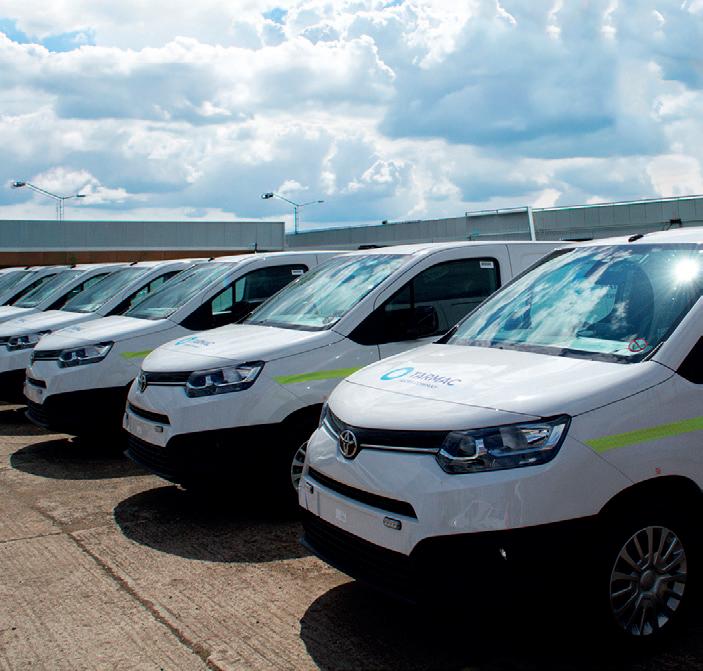
Tarmac has reduced fleet collisions by 30% and significantly improved driver safety and fuel efficiency following the deployment of an integrated multi-camera and video telematics solution delivered in partnership with Motormax and Geotab.
Within 12 months of implementation, Tarmac achieved:
• High and medium-risk drivers reduced from 40% to 6.5%
• Fuel economy improved by 25% across the van fleet
• 30% reduction in driver-fault collisions
• 50% reduction in ‘pulling out’ incidents
• 30% year-on-year saving in collision repair costs
We install cameras on every new vehicle because the return is proven
Speeding incidents per 1,000 miles halved since implementation in May 2023
These data-driven results are helping Tarmac build a safer, more sustainable and efficient fleet, while delivering proven return on investment across safety, insurance and operating costs.
Tarmac operates a mixed fleet of over 2,000 vehicles, including trucks, vans, pickups and plant equipment. Managing such a large and diverse fleet across seven regions and multiple business units required improved visibility, control and consistency in fleet operations.
The Motormax multi-camera system integrates with the MyGeotab platform via API, leveraging Geotab’s rules engine and reporting capabilities to deliver a ‘single pane of glass’
view for transport teams.
When predefined events are triggered, managers can instantly access and download video footage through a single platform. This provides crucial evidence to support driver protection, targeted training and accurate incident reporting.
Tarmac fleet risk and compliance manager Jonathan Meddings said: “The integration allows managers to view telematics data and highquality camera footage in a single platform, accelerating decision-making and streamlining fleet operations. As a result, we have already seen significant cost savings.
“Our insurance company has provided Tarmac with a bursary, which we are now investing in multi-camera technology. We install cameras on every new vehicle because the return is proven – they reduce claims, avoid unnecessary costs, save management time and resource and protect drivers who are not at fault.
“The solution enables us to design training for specific issues. As a result, we have seen a reduction in speeding: 10% over the limit and 20% over the limit have halved. The data also empowers our managers to have the right conversations with drivers who are not following procedure, for example, seatbelt usage now we
have the data required to take relevant action.”
Fleet safety data is now embedded within Tarmac’s governance structure, with monthly MI Fleet Safety Packs reviewed in management meetings to track performance, reward success, and identify further improvements.
This has elevated fleet safety from a compliance requirement to a core operational discipline with clear accountability and measurable outcomes. ●
BELOW: Tarmac operates a fleet of over 2,000 vehicles, including trucks, vans, pickups and plant equipment
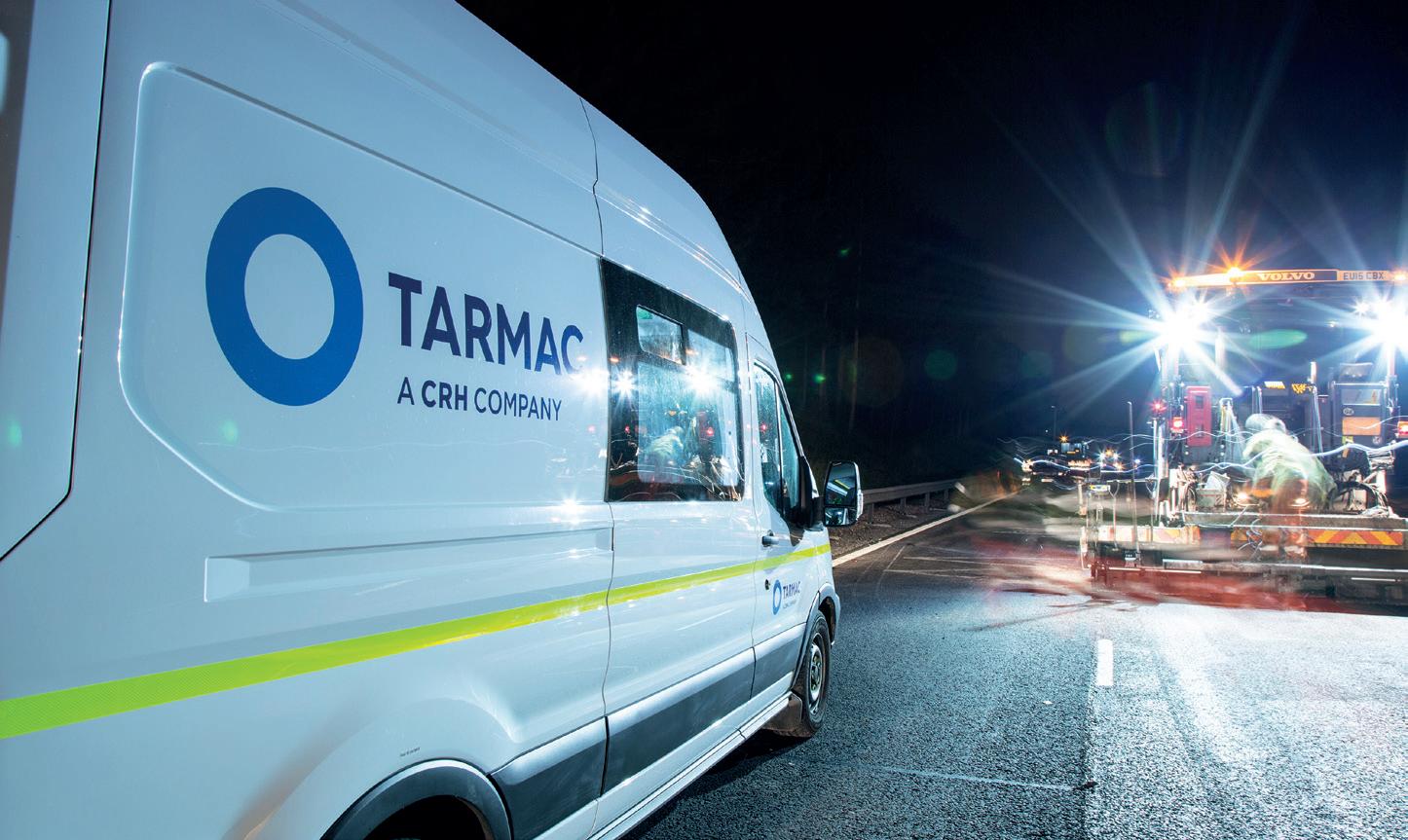
RIGHT: The Tarmac fleet is now safer and more efficient
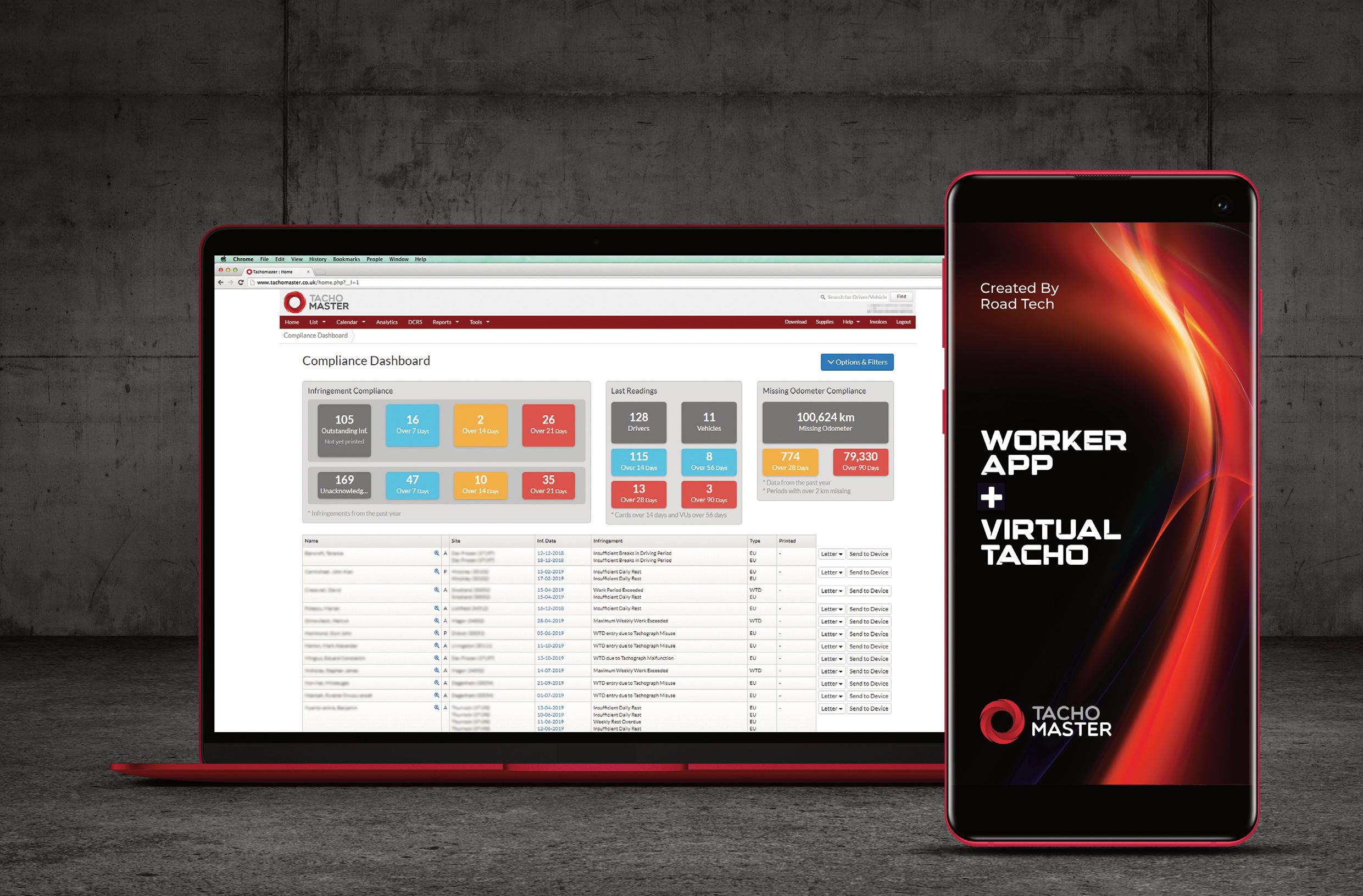
Since its launch in 2006, Tachomaster has analysed over 350 million driver cards, charts, and vehicle downloads, truly revolutionising the way tachograph analysis is conducted. Providing instant analysis and unparalleled management reporting, it sets the bar high for its competitors.
Plus, the new Virtual tachograph is built into the Tachomaster Worker App, extending full tachograph compliance to vans, minibuses, and sub-3.5-tonne vehicles.
Our powerful modules enable you to reduce risk, improve driver behaviour, manage training and keep your tachograph records watertight.
With no joining fee or long-term contract to sign, why not try the 28-day FREE Tachomaster trial?
From tech experts and software developers to the head of Google, leaders across the industry have repeatedly warned about the dangers of AI and the scale of its capabilities. While it continues to amaze us and many organisations are racing to adopt and work alongside it, in 2026, we remain both hopeful and cautious. Its sub-optimal, yet increasingly humanlike intelligence, along with its power to transform traditionally linear technologies into limitless opportunities raises an important question: how far can it go before it slips beyond our control?
Rapid adoption across every sector
In business, AI is now being developed and deployed across virtually every sector. Organisations across manufacturing, finance, med-tech, automotive and more are leveraging everything from customer service chatbots to automation tools and analytics models to streamline processes, open new revenue avenues and gain competitive advantage.
Despite this rapid uptake, recent research shows that while nearly 93% of UK organisations now use AI in some form, just 7% have fully embedded governance frameworks to manage its risks. This means the vast majority
may already be operating without the controls regulators are soon to demand.
Where ISOQAR stands
At ISOQAR, a leader in AI management and certification, we want to clarify what ungoverned AI can look like in a business context. Here, Kirsty Wakefield, information security sector manager at ISOQAR uncovers how effective regulation and oversight can ensure AI is developed and deployed safely, ethically and in line with business priorities and wider societal values.
AI exacerbates existing issues
Although AI can create new problems, it is more likely to amplify existing weaknesses. Issues like inconsistent data management, gaps in compliance and regulation, or operational weaknesses such as discrepant workflows can quickly amplify and become systematic issues that are much harder to resolve.
With proper governance in place, businesses can conduct regular audits as part of an AI compliance process to help identify potential risks early and address them.
Who controls the AI tool?
Rarely before have organisations turned to a
software or tool that prompts us to question who really controls who. AI and Machine Learning tools possess boundless capabilities that require a deep understanding of their intended purpose, abilities and functions. Machine Learning (ML) tools in particular continue to adapt and learn automatically without direct programming and without the need for direct human intervention.
In the absence of a clear understanding of how these systems operate, AI tools can become unpredictable and even with well-intended use, businesses risk deploying tools that can lead to errors, bias, data breaches, or even ethical violations.
Misinformation and disinformation
Unlike humans, AI tools lack context and awareness of both truth and ethics. And as non-sentient systems, they lack the ability to distinguish between right and wrong and accurate and inaccurate information. In particular, generative AI models (such as chatbots or text/ image generators) can produce content based on hallucinated facts, incorrect reports, or misleading statements that appear credible.
Concerns about these risks have already influenced regulatory responses including provisions within the EU Artificial Intelligence
UNGOVERNED AI POSES A DIRE THREAT TO TRANSPORT FIRMS
What companies should be doing now to prepare for August’s EU AI Act
Act that restrict certain high-risk AI systems.
Privacy and data protection
Ungoverned AI can pose significant risks to privacy, especially when dealing with sensitive data. AI technology can process, infer and categorise sensitive personal data at a scale and depth that traditional systems cannot. This includes the ability to infer sensitive attributes or store and analyse biometric information.
Without clear governance, large datasets may be collected, processed or retained without a clear legal basis. Worse yet, when managed incorrectly, this data could be unintentionally shared across departments, or to vendors and third parties.
Possessing critically sensitive information without the right governance and safeguards in place could quickly lead to catastrophic data breaches, data leaks, or cybersecurity incidents which can become irreversible if they ever take place.
Bias and unethical categorisation
When collecting sensitive information and data, another widely discussed risk of AI is algorithmic bias. As AI systems learn patterns from the data they are trained on, if that data reflects inequalities, incomplete information, or
societal bias, AI models can replicate this and even amplify those patterns.
Even when protected characteristics such as gender or ethnicity are removed, these can still be interpreted through proxy indicators such as postcode, education history, language patterns or purchasing behaviour. Biased outcomes can quickly affect various systems used in recruitment, lending, or risk assessment and could unintentionally disadvantage certain groups.
Over-dependence and deskilling
AI has introduced an increased risk of overdependence on the tools. While throughout history technology has regularly replaced skills and job roles, AI tools can lead to reduced critical thinking, decision-making capability and professional judgement within the workforce.
To mitigate this risk, organisations may consider introducing clear AI usage policies dependent on team functions which will ensure that AI tools are used to support human capability rather than replacing it entirely.
IP and copyright
Generative AI tools are capable of generating new content such as text, images, audio and video, computer code and more. Much of this
ABOVE: Firms are threading their way through a minefield when using artificial intelligence
material is copyright-protected or privately owned data. AI may produce content that is considered a derivative of copyrighted material, leading to lawsuits, fines, or takedowns. Businesses therefore need clear policies, oversight and legal review processes to avoid becoming liable for accidental infringement.
Conclusion
As AI adoption grows, the potential benefits are immense. However, these are partly offset by the risks associated with poorly governed AI systems. Ungoverned AI carries significant and multi-faceted risks where the consequences of deploying it without robust governance are real, tangible and potentially severe.
The correct tools, oversight and standards are needed to implement AI responsibly and ethically.
Driven by structured frameworks like ISO 42001, organisations must focus on identifying risks before they escalate and ensure compliance with legal, ethical and moral obligations for its successful deployment in business. ●
MAJOR INCENTIVES NEEDED FOR SUCCESSFUL EMISSION-FREE ROLLOUT
Fleet chiefs warn that the government’s plans to ban the internal combustion engine will fail without a better recharging infrastructure
The government’s plan to phase out the sale of diesel heavy goods vehicles by 2040 will only be achieved if there are some major moves over providing a proper recharging infrastructure in the near future.
That’s according to the Association of Fleet Professionals (AFP), which is urging the Government to learn lessons from infrastructure issues impacting electric van adoption when considering the rollout of electric trucks. While the take-up of electric vans is slowly increasing, many LCV fleets which travel long distances are eschewing the use of them as there is no proper infrastructure in the UK at present to recharge them quickly and efficiently.
This problem is evident at any motorway service stop, where EV charging points are only large enough for cars to park. One motoring journalist told us recently: “I saw a long wheelbase electric Sprinter at a service stop the other day parked across three bays while charging up. How on earth does the government expect van operators to choose electric vehicles under these circumstances?”
If this is a problem for van drivers, it’s an even bigger one for electric heavy goods vehicles. While plans are in the pipeline for a new network of new electric truck charging superhubs across the country, there’s a long way to go before hauliers can buy eHGVS safe in the knowledge that they won’t be left stranded in the roadside after running out of charge.
The AFP fully supports ending the sale of new
26-tonne diesel trucks by 2035 and vehicles over that weight by 2040.
Credible delivery plan
However, Paul Hollick, AFP chair, said: “Government ambition should be accompanied by a credible eHGV infrastructure delivery plan, with particular attention to distribution network operator capacity and connection timescales.
“We need to learn lessons from the way infrastructure issues have played a part in the slow uptake of larger electric vans.”
The AFP has also highlighted the value of shared depot charging, which it has been promoting on a practical level. Hollick believes it’s an area where supportive policy, particularly around planning, access rights and metering arrangements, would accelerate infrastructure deployment for the smaller operators that make up the bulk of this sector.
The AFP also believes there is limited understanding of UK operations when it comes to triple-shifted fleets where 24-hour operations make charging more challenging, high volume distribution operators, oil terminals where EVs are not allowed, transport of dangerous goods and local authorities applying differing rules for operations involving HGVs.
Hollick said: “We urge the Government to engage more deeply with HGV fleet operators to better understand how workflows impact on vehicle selection and are managed in practice, how UK policy design can affect fleet operations, and how greater recognition of specific complexities such as cranes and gritters can impact the electrification journey.”
ABOVE: Transport operators are facing a complex mix of cost pressure, regulatory change and decarbonisation demands
Sustained pressure
The British Vehicle Rental and Leasing Association (BVRLA) has recently published its ‘HGV Outlook 2026’ report, highlighting a sector under sustained pressure as it balances rising costs, cautious confidence and the realities of decarbonisation.
It shows a stable UK HGV parc of just over 520,000 vehicles, but an operating environment where more than 71% of fleets describe conditions as challenging.
Persistent inflation in vehicle maintenance and labour costs, combined with regulatory uncertainty, is reshaping how operators invest and manage their fleets, it says. At the same time, the transition to zero emission trucks is moving from long-term ambition to immediate operational concern.
Just 9% of HGV operators surveyed are confident in the business case for zero-emission trucks. While there is broad acceptance of the direction of travel, the report identifies a host of key barriers to adoption.
Toby Poston, BVRLA chief executive, said: “Road freight sits at the heart of the UK economy, but the sector is now navigating a period of profound structural change. We are just about on track with cars, vans are already way behind, while the decarbonisation outlook for trucks is daunting.
“Operators are not questioning the long-term need to reduce emissions, but they are facing a complex mix of cost pressure, regulatory change and decarbonisation demands.” ●
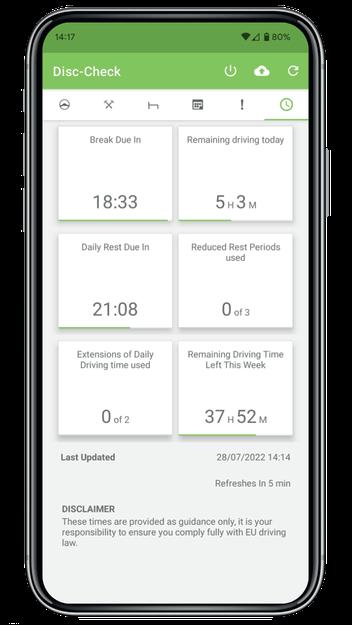
disc-check
Simplify
Manage working time
Improve compliance
Boost efficiency across your fleet
Compliance software solutions to keep your head out of the clouds
AVMWL1
• Available with yellow or Black housing
• Ideal for refuse vehicles or where operators are behind the vehicle
• Red lens enables sign to be seen when light is off
AVMWL2
• Flashing version
• Dual voltage
• EMC tested 10R
• Sign is completely potted to withstand vibration and moisture ingress
AVMWL1
AVMWL2
RAISING THE BAR ON COMPLIANCE
How telematics and 24/7 connectivity are transforming fleet standards
In an increasingly regulated transport environment, compliance is no longer a backoffice function – it is a real-time operational priority. From driver hours legislation and vehicle safety standards to emissions monitoring and uptime obligations, fleet operators face growing pressure to remain compliant while maintaining efficiency.
For many operators, information is spread across systems, paperwork and calls. A missed warning, delayed repair, or unclear vehicle status can quickly become an expensive issue. Against this backdrop, connected services are becoming essential tools, with Mercedes-Benz Trucks’ digital services supporting this shift.
These connected services form part of Mercedes-Benz Trucks’ Digital Service World – a joined-up ecosystem that brings together vehicle
data, service support and fleet insight to help operators stay compliant, plan effectively and avoid costly disruption.
Together, these services create a continuous loop of visibility, action and improvement, helping operators move from reacting to issues to managing them proactively.
For drivers, connected services reduce uncertainty on the road. Clear vehicle status, faster support and fewer unexpected disruptions help make day-to-day operations more predictable and less stressful.
Telematics has evolved significantly beyond simple vehicle tracking. Today’s systems provide ongoing, data-driven insights into vehicle condition, driver behaviour and operational performance. For compliance managers, this means greater visibility and control over key
ABOVE: Systems enable operators to identify behaviour that may compromise safety or efficiency
As the regulatory landscape continues to evolve, the role of telematics will only become more central
risk areas - from maintenance adherence to fuel efficiency and safety metrics.
At the core of this transformation is proactive maintenance. TruckLive Maintenance Management monitors key vehicle systems, identifying developing issues early before they escalate. This predictive capability not only reduces unplanned downtime but also helps operators meet their legal obligations for vehicle roadworthiness. In an environment where noncompliance can lead to significant penalties - or worse, safety incidents- early intervention is invaluable.
Significant step
Building on this foundation, the introduction of Service24h Connected represents a significant step forward in compliance support. Fully integrated within the telematics ecosystem, the service provides automatic, real-time breakdown reporting and direct communication with the Mercedes-Benz Service24h network. When a fault occurs, relevant vehicle data is transmitted instantly, supporting faster diagnostics and a more efficient response.
For operators, this has clear operational and compliance implications. Faster resolution times help operators manage the return of vehicles to a roadworthy condition more efficiently, reducing the risk of operating outside regulatory limits. Additionally, the digital record of incidents, responses and repairs supports robust audit trails – an increasingly important requirement in demonstrating due diligence to regulators and clients alike.
or efficiency. This data can then inform targeted training programmes, helping to align driver conduct with both company policies and legal standards.
Green focus
Environmental compliance is also firmly in focus. With tightening emissions regulations across the UK and Europe, operators must demonstrate measurable progress in reducing their environmental impact. Telematics data provides the transparency needed to track fuel usage, optimise routes, and support the transition to lower-emission operations - key factors in meeting sustainability targets and regulatory requirements.
Importantly, solutions from Mercedes-Benz Trucks are designed with integration in mind. By connecting vehicles, service networks and fleet management systems, they create a unified platform where compliance is embedded into daily operations rather than treated as a separate function.
As the regulatory landscape continues to evolve, the role of telematics will only become more central. Operators who embrace connected technologies such as Service24h Connected are not only improving efficiency, but they are also strengthening their compliance frameworks, reducing risk, and building more resilient operations.
In a more complex and regulated operating environment, the ability to see clearly, act early, and stay connected is becoming essential.
BELOW: Compliance is no longer a back-office function – it is a real-time operational priority
Another critical area where telematics supports compliance is driver performance. By capturing data on driving style, braking patterns, and fuel consumption, systems enable operators to identify behaviours that may compromise safety
Connected services are no longer an add-on. They are becoming part of how modern fleets stay compliant, in control and ready for what’s next. ●
• To find out more visit Digital services | Mercedes-Benz Trucks UK
TRUCK AND VAN DRIVERS URGED TO HELP SAVE LIVES
National Highways online course shows what drivers can do to help at an accident scene
National Highways is asking commercial vehicle fleet operators to use its free online training for their drivers to help save lives on the motorways and major A roads.
The online training takes less than an hour to complete and has been developed with medical trauma specialists and aims to help commercial drivers act in the critical moments following a vehicle collision.
National Highways says commercial fleet drivers are often some of the first people at the scene of a collision.
Mark Cartwright, head of commercial vehicle incident prevention at National Highways, said: “Motorways and major A roads carry around two thirds of all freight traffic in England, so we potentially have millions of commercial drivers who are often among the first people at the scene following a collision.
“This training is not about pressuring anyone to do anything they’re uncomfortable with, it’s about being collaborative and realistic and providing information that might help save lives.”
The post-collision response training is designed to help commercial drivers take potentially life-saving steps before the arrival of emergency services.
It covers three 20-minute modules based around making the perfect 999 call, dealing with danger and protecting yourself and the scene, and providing basic first aid.
The modules have been designed to provide practical advice on how to stay safe, reduce risk and avoid making the situation worse.
In 2024, 1,931 people were killed or seriously injured on England’s motorways and major A roads.
Evidence has suggested that around 50% more lives could be saved if bystanders delivered first aid at the scene of an acccident while waiting for the emergency services.
Professor Tim Nutbeam, a consultant in emergency and prehospital emergency medicine based at Plymouth Hospitals NHS
Trust and Devon Air Ambulance, provided clinical input for the training.
He said: “What happens in the first few minutes following a collision can make a real difference and I believe this type of project can help improve safety on the road network.
“This isn’t about turning commercial drivers into paramedics, it’s about empowering and equipping people with basic knowledge so they understand what they can help with, while always putting their own safety first.”
National Highways is now inviting organisations that operate commercial vehicle fleets to integrate the modules into their driver training, helping their drivers become a part of a community prepared to make a difference when it matters most. ●
ABOVE: Around 50% more lives could be saved if bystanders delivered first aid at the scene of an accident
This training is not about pressuring anyone to do anything they’re uncomfortable with
TRANSPORT FIRMS EMBRACE THE NEW DIGITAL AGE
It’s goodbye to all the old paper-based systems as increased compliance regulations and customer expectations require a smarter way to work
Across the haulage sector, firms are increasingly recognising the value of digital transport management systems (TMS) as they look to cut down on paperwork, reduce waste, improve compliance, and deliver consistent service.
Such systems provide excellent transparency of daily transport operations, helping managers eliminate recurring defects, look into individual vehicle performance, control parts and labour costs, as well as make time savings.
Rising fuel costs, tighter regulations and increasing customer expectations are also driving the need for smarter, more agile operations.
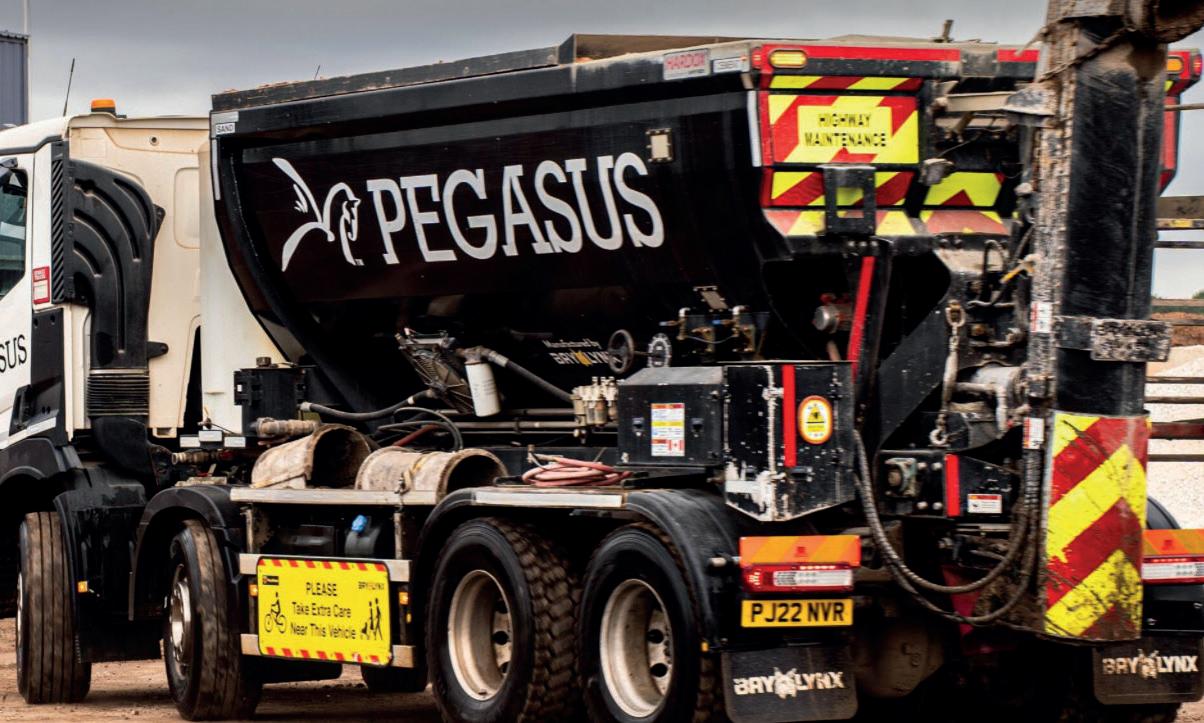
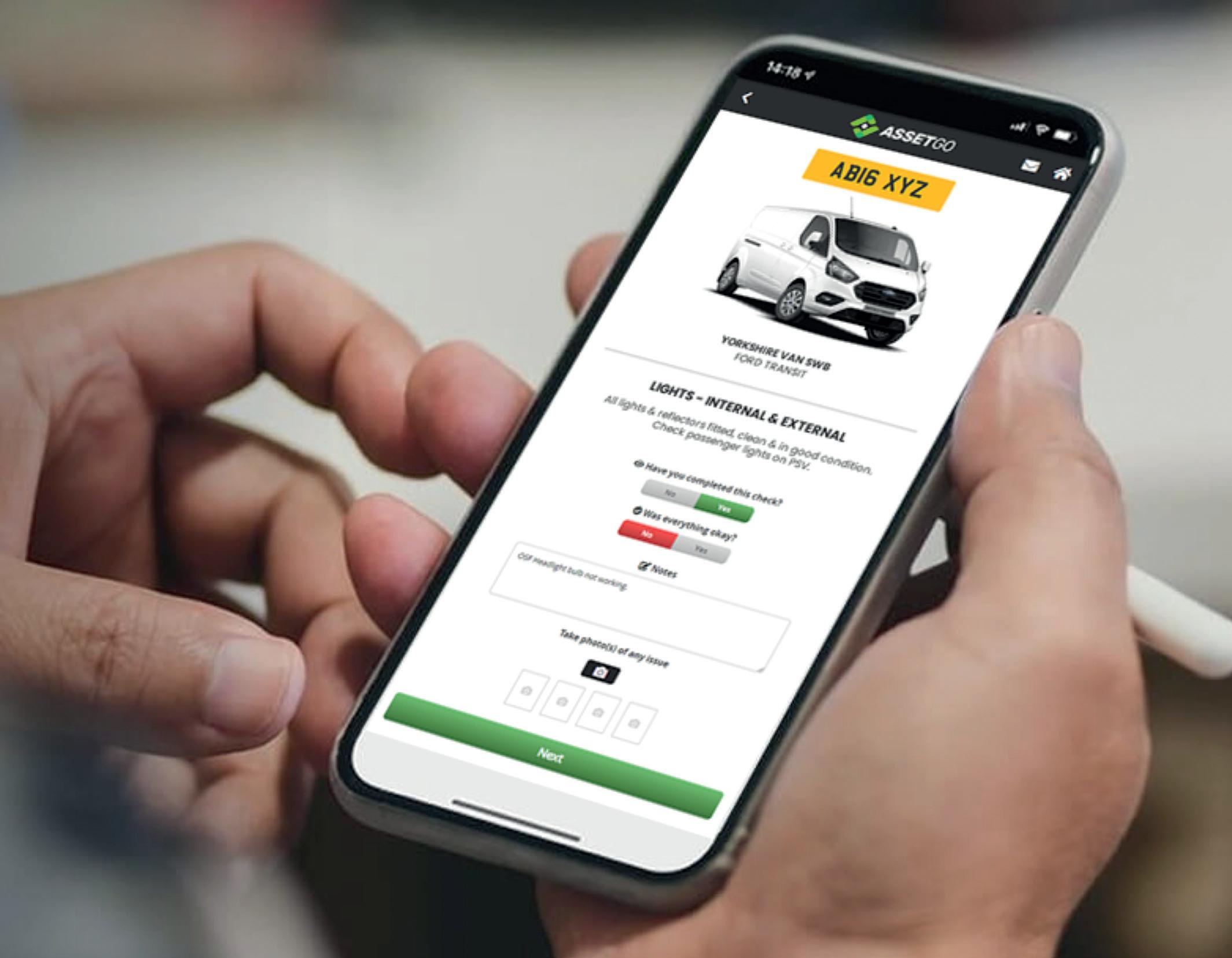
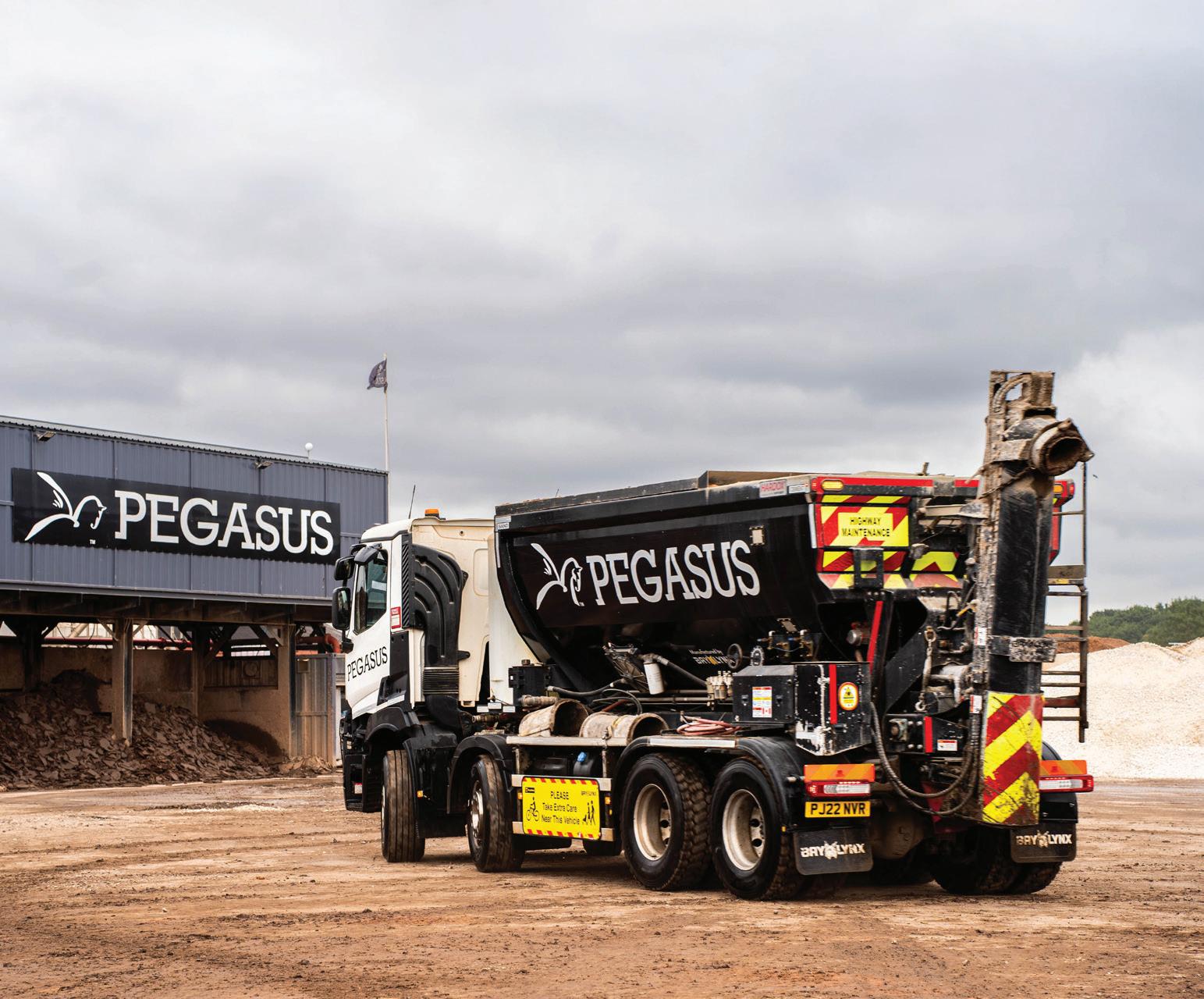
For example, Stourbridge-based materials and logistics specialist Pegasus Grab Hire, which provides grab hire, muckaway, aggregate and material supply, as well as volumetric concrete services, has been using AssetGo for several years.
maintenance management.
This ensures that checks, maintenance schedules and defect management are applied consistently, with full auditability, giving Pegasus real-time oversight and the ability to maintain compliance control.
From a workshop perspective, AssetGo gives end-to-end visibility of fleet condition, with defects logged, tracked and retained in the asset history.
It supports daily driver walk round checks, real-time defect reporting, rectification tracking, planned maintenance inspections, lifting equipment examinations, MoTs, vehicle excise duty monitoring and the secure storage of all statutory and compliance-related documentation.
Daniel Joyner, commercial manager and head of transport at Pegasus said: “As the fleet and number of sites have expanded, the system has
allowed us to maintain a standardised approach to inspections, maintenance intervals, and defect management.
“Walkround checks are completed digitally, time-stamped and linked to each asset, with defects escalated immediately, making compliance monitoring straightforward across the business.
“For our customers, that means greater reliability, reduced disruption and confidence that Pegasus operates a well-controlled, compliant fleet.”
Scottish streamline
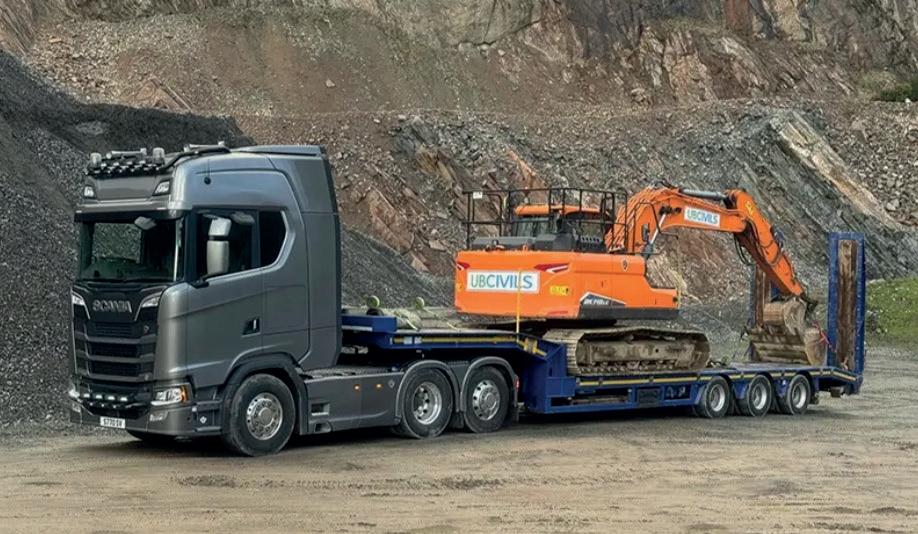
Meanwhile, Inverness-based UBCivils has implemented Podfather software in an effort to streamline the management of its
BELOW: Firms are increasingly recognising the value of digital transport management systems
Transport operators will increasingly switch to ever more sophisticated digital systems
The platform now supports the management of a fleet of more than 100 assets across several sites and has been fully embedded as Pegasus’s single, standardised central system for fleet compliance, daily driver checks, and workshop
haulage operations.
Supporting infrastructure, energy and construction projects, UBCivils completes about 100 movements a day using Podfather for route planning and optimisation, real-time tracking, and electronic proof of delivery evidence. Using the system, the firm has been able to vastly reduce its reliance on paper documents while improving the accuracy and currency of its record-keeping.
Real-time tracking and digitally captured date, time and location stamped photographs and signatures means UBCivils can see every vehicle movement and authorised users can access delivery information at the touch of a button.
Iain Peteranna, contract manager said:
BELOW: AssetGo gives end-to-end visibility of fleet condition for Pegasus
“Before Podfather, we were purely paper-based. We were duplicating delivery tickets numerous times and, due to the remoteness of some of the sites, this added extra delays in completing paper dockets and receiving them back to head office for processing.
“Any system that saves work hours is a great tool and will have a noticeable impact on the business.”
Cashflow boost
Also, a new bespoke TMS from HaulTech has boosted cash flow for Bolton-based aggregates and asphalt specialist A&F Haulage. The haulier operates 230 vehicles from 15 depots across the UK, supporting key infrastructure projects such as Hinckley Point and HS2.
HaulTech’s dedicated bulk haulage platform has reduced administration processes by up to 80% and, along with helping to create, assign
ABOVE: Checks, maintenance schedules and defect management are applied consistently
and schedule jobs, it has made invoicing faster and more accurate.
The firm’s cloud-based TMS offers features from job booking and scheduling through to electronic proof of delivery and invoicing. It is compatible with all pallet network platforms and can work with compliance systems such as Hazchem.
A&F Haulage said it now has far better productivity because it is using one integrated system, which also gives it greater visibility across the entire business.
Hammad Majeed, managing director said: “HaulTech has been great as it links together all aspects of our business from transport planning and management to invoicing.
“One of the biggest ways it has impacted our business is that we can process invoices much faster. Getting those invoices out quickly and in the right format can affect cash flow massively.”
Broader functionality
According to trailer repair specialist BP Commercials, its decision to migrate to a workshop platform from Freeway Fleet Systems, was driven by the need for broader functionality and greater visibility across the business.
The firm, an authorised Schmitz Cargobull service partner, operates a facility in Belfast, servicing and repairing trailers for transport operators in Northern Ireland and those arriving via the ferry from Great Britain.
Initially, BP Commercials needed a change in software after it became a Schmitz partner, prompting the need for more advanced parts
Customers have full visibility and know what they are being invoiced for
stock management.
The Freeway mobile app is now used at both of BP Commercials’ workshop locations to capture all labour activity, helping managers monitor productivity and efficiency.
Data from the mobile devices is synchronised with the central asset management platform, giving the business round-the-clock oversight of ongoing work.
Digital sheets
Operators can now access digital inspection sheets, live job cards, invoices and detailed fleet information, including tyre tread measurements and damage reports, complete with photographic documentation.
Another key feature for BP Commercials is the software’s ability to analyse parts usage in detail.
This insight helps the business identify recurring faults and understand purchasing patterns, crucial information for a workshop that also acts as a parts supplier and must balance operational costs with customer pricing.
Freeway’s platform is designed to handle complex pricing structures, including fixed and variable labour rates, discounts, and seasonal or promotional pricing.
Roger Lundy, depot manager at BP Commercials said: “We do between 12 and 19 services a day and, with defects, we typically raise 30-40 job cards and send out up to 50 invoices. We needed a flexible system to track costs and manage all of the billing complexities.
“With Freeway, it’s very easy to create a job card, and by recording time and providing photographs, customers have full visibility and know what they are being invoiced for.
“For us, the system means we can raise an invoice quickly, knowing we’ve covered all our costs.”
What is apparent is that over the next few years, transport operators looking to improve efficiency and reduce costs will increasingly switch to ever more sophisticated digital fleet management systems.
• Article first published in the Society of Motor Manufacturers and Traders’ Transport Newsbrief
Walkround checks can now be completed digitally, time-stamped and linked to each asset
ABOVE: UBCivils completes about 100 movements a day using Podfather
ABOVE: Tighter regulations and increasing customer expectations drive the need for smarter operations
BAD CAR DRIVERS ARE CAUSING MAYHEM FOR TRANSPORT FIRMS
While responsible haulage companies tackle road safety successfully, more and more motorists are simply getting worse at driving
Transport firms are taking major steps to ensure that both their drivers and vehicles are safe on the roads. But nothing can be done to stop accidents being caused by other people either driving too fast or without due care and attention.
So, the latest Home Office figures will do nothing to allay the fears of Britain’s fleet managers. They show that motoring offences committed by drivers across England and Wales have hit a new high, with sharp increases in speeding and careless driving.
Speeding dominated offences in 2024, accounting for 86% of the total. Newly published Home Office statistics reveal 2.9 million motoring offences were recorded in 2024 – up 9% on the figure of 2.7 million in 2023 and the highest level since 2011.
The data also shows a steep increase in careless driving offences, which rose by 27% from 2023, alongside an 11% rise in drivers using a hand-held mobile phone and a 4% increase in the number of infractions for people not wearing their seat belt.
The AA said the continued annual increase
in offences was of great concern and highlights why the recently announced Road Safety Strategy is so important.
Jack Cousens, head of roads policy at the motoring organisation, also called for more traffic officers to provide a visible deterrent.
He said: “AA members say they regularly see examples of poor driving standards but rarely see traffic officers on patrol. While speed cameras, including new AI cameras which can detect mobile phone and seat belt offences, are important, they cannot stop someone in the act and immediately intervene. We need 1,000
The AA said the continued annual increase in offences was of great concern
RIGHT: England and Wales currently has the highest drink-drive limit in Europe
more cops in cars to help police the roads, but their presence will also act as a deterrent and help improve road safety. At the moment, too many people think they can get away with it.”
Dangerous trend
William Porter, policy & public affairs manager at IAM RoadSmart, added: “With speeding offences now at the highest level since 2011, it’s clear we need renewed thinking to help reverse this dangerous trend. On average, these statistics show that more than 6,800 people are caught speeding every day which reflects widespread disregard for limits and puts lives at risk. We need a renewed focus on enforcement, education and driver behaviour. Without
We need 1,000 more cops in cars to help police the roads
decisive intervention, we risk normalising dangerous driving habits that have devastating consequences for individuals, families, and communities.”
The Home Office statistics also reveal declining numbers of drink-drink tests, prompting fresh concerns for enforcement levels. Police across 26 forces carried out 167,095 roadside breath tests in England and Wales during 2024.
That compares with 167,384 tests in 2023 – a slight decrease of 0.2% on the previous year, according to the Police Powers and Procedures: Roads Policing, to December 2024 report. Road safety advocates argue these figures highlight a dangerous lack of enforcement as drink-driving fatalities remain high.
Terrible cost
Separate Department for Transport data shows that drink-drive collisions claimed 260 lives in 2023, while 6,310 people were injured or killed by motorists over the legal alcohol limit.
The Home Office figures also reveal that nearly 25,000 motorists either failed a breath test or refused to provide a sample in 2024 –around 15% of all drivers tested.
Hunter Abbott, managing director of breathalyser firm AlcoSense, said the level of
testing was worrying given the scale of drinkdrive harm on Britain’s roads.
“A reduction in breath tests, however slight, sends exactly the wrong message to motorists,” he said.
“Drink driving continues to kill far too many people every year, yet police are carrying out considerably fewer tests than they did in the past.”
Fifteen years ago, police conducted nearly 650,000 breath tests annually. However, the new figures are not directly comparable, as they exclude 17 of the 43 forces in England and Wales due to changes in data recording.
Abbott said the drop in traffic police numbers was a key factor, with dedicated officers falling from 5,005 in 2015 to just 3,889 in 2025 – a 22% reduction.
Testing levels in England and Wales also lag far behind many European countries, with just five breath tests per 1,000 inhabitants compared with 18 per 1,000 in Ireland and 109
in France.
AlcoSense said the figures need to be viewed in the context of the Government’s consultation on potential changes to drink-drive laws.
“England and Wales currently has the highest drink-drive limit in Europe, but lowering it will achieve little unless enforcement is strengthened,” Abbott said. “Police need wider powers such as random breath testing – already used in countries including Ireland, France and Germany – along with the ability to confiscate vehicles or licences immediately when drivers are caught over the limit.
“Breath testing after an accident should also be mandatory – just 37% of drivers involved in collisions are currently breathalysed.” ●
ABOVE: Careless driving offences rose by 27% from 2023
YOUNGSTERS WARM TO DRIVING AS A CAREER
So why are haulage firms struggling to recruit the new staff members they require?
Technology isn’t just making fleets safer, more efficient and more sustainable. It’s now being seen as key to helping recruit the next generation of drivers who are attracted to a life on the road – but with the tools, connectivity and career progression they expect from any modern workplace.
It’s one of the themes explored in a new series of blogs published by Samsara based on recent research and interviews with fleet leaders across the UK. Together, they paint a picture of an industry where digital transformation is not only improving safety and productivity but reshaping what it means to be a driver.
This is good news for any fleet struggling to recruit new employees. According to our survey of 1,000 young people aged 16-25, 62% said they have a positive view of drivingbased careers and 58% described them as an attractive option. If nothing else, it suggests that young people are interested in a drivingbased career.
So, if that interest is there, why is it still so difficult to recruit the next generation of drivers? And why the continuing narrative of a driver shortage? The answer, in part – according to the fleet leaders who were interviewed for our research – lies in the perception of the industry. Too often, driving is still seen as old-fashioned and at odds with the digital, connected world younger workers have grown up in. Yet for those working in the industry, that image is fast becoming outdated.
Job is evolving
From AI-enabled safety systems and digital workflows to in-cab video coaching, the job is evolving into something far more technical and data-driven than many realise. Increasingly, digital tools are embedded across the business – from vehicle checks and safety reporting to wellbeing forms and training workflows – all routed through the same connected platform.
Does that sound like an industry stuck in the past?
That’s why it’s up to all of us to help get that message out there. We need to change perceptions and show that physical operations is a modern industry that can offer a great career regardless of whether you stay behind the wheel or take a seat behind a desk.
Changing perceptions is key
We need to let people know that forwardthinking companies aren’t just using tech to make them safer or more efficient. They’re also using it to build a culture of recognition, support and continuous improvement, making drivers feel valued.
So, if I may, I’d like to replace my prediction for the year ahead with an ambition. No, a request. I want the industry to continue to use technology not only to make fleets safer and more efficient, but to make driving itself a more attractive, modern and rewarding career.
I want the industry to keep showing that a career in driving or logistics means being part
ABOVE: Our survey found 62% of young people aged 16-25 have a positive view of drivingbased careers
of a modern, connected, data-driven industry where driving is regarded as a highly skilled role that underpins the entire economy. If we can get that message out there, I am sure that we will be able to connect with the next fleet generation. ●
Too often, driving is still seen as old-fashioned and at odds with the digital, connected world younger workers have grown up in
Words: Ryan Yu, product, EMEA, Samsara
NEW TECHNOLOGY CAUSES
Safety systems and electric motors are changing the face of transport – but at present there are not enough people to fix them when they go wrong
The latest driver assistance systems on trucks and vans are helping to save lives, while the increasing use of zero emission vehicles is helping to clean up the planet.
But both advances come at a financial cost, as transport firms are discovering. Apart from the fact that zero emission vehicles cost more to buy than diesel-engined variants, another major costly problem is beginning to become clear –there’s a huge shortage of technicians who can work on electric vehicles and advanced safety systems, either when they go wrong or when they are involved in a crash. And that shortage is driving up insurance costs, extending collision repair times and undermining consumer confidence, according to Thatcham Research.
Over 70% of repair and salvage professionals say the sector is facing a skills shortage
More than 70% of repair and salvage professionals surveyed by Thatcham identified
the widening skills gap as a growing challenge requiring industry-wide action.
The study, conducted in partnership with the Centre for Economics and Business Research (CEBR), also reveals that evolving vehicle technologies, including electric vehicles and advanced driverassistance systems (ADAS), have compounded the issue due to increased repair complexities.
Thatcham Research data illustrates the scale of the challenge: repair costs increased by 50% between 2019 and 2024, primarily by technological advancement and the specialist skills required to repair modern vehicles safely and effectively.
Survey respondents said other factors influencing the skills gap include an ageing workforce and talent migration to other industries offering better opportunities.
Massive shortage
The survey follows latest data from the Institute
ABOVE: An industry-wide commitment to invest in training is needed to fill the gap
of the Motor Industry (IMI) warning that only a quarter of UK technicians are qualified to work on electric vehicles and that the shortfall could reach 44,000 technicians by 2035.
Dean Lander, head of repair sector services at Thatcham Research, warned that the automotive repair sector stands at a crossroads.
“As vehicles become more sophisticated, the gap between the skills our industry needs and the talent available is widening. This directly impacts insurance premiums, repair times and customer satisfaction across the UK.”
Thatcham Research says industry-wide action is a must.
The organisation’s own Automotive Academy has trained more than 5,000 technicians over the past five years, equipping them with the cutting-edge skills needed to handle today’s
MASSIVE SKILLS SHORTAGE
increasingly complex vehicles.
Lander continued: “We need industry-wide commitment to invest in training, creating and promoting sustainable careers to attract the next generation of talent into this vital sector.”
The survey also highlighted clear ways to address the current skills gap. A significant majority of respondents (61%) pointed to the need for greater visibility and promotion of apprenticeships within the education sector, underscoring the importance of inspiring the next generation to pursue automotive careers. This was followed by 48% who called for increased investment in technical training, reinforcing the need to equip the workforce with the specialised skills required to meet the industry’s evolving demands.
Measurable benefits
Thatcham Research said that closing the
skills gap can deliver measurable benefits across the automotive industry that include reduced insurance costs, improved customer experience and increased trust in the repair process, and sustainable career pathways in a sector vital to the UK economy.
Following the Government’s recent Motor Insurance Taskforce Report, Thatcham Research is calling on insurers, repairers, vehicle manufacturers and policymakers to collectively invest in training infrastructure and actively promote automotive repair as a rewarding, technology-driven career choice.
More recognition needed Jonathan Hewett, CEO of Thatcham Research, said: “Skilled technical roles in collision repair should be more widely recognised as a great career choice that will never be re-placed by AI or automation.
“We welcome the Government’s
ABOVE: The Automotive Academy has trained more than 5,000 technicians over the past five years
commitment to improving skills and training across the automotive sector outlined in the Motor Insurance Taskforce report. The engineering skills package, which will provide £100m investment over three years to support engineering skills in England, working with Skills England, represents a significant step forward in increasing the pipeline of talent our industry needs.
“Thatcham Research’s Automotive Academy is poised to support and fill this future pipeline of talent with our diverse range of courses, ensuring the next generation of technicians has the skills and expertise required for the evolving automotive repair landscape.” ●
ASSETGO LOOKS AT A FUTURE OF FLEET CONTROL WITHOUT THE PAPER
Traditional processes often create unnecessary work and problems
AssetGo, the UK-based fleet and driver compliance software specialist, is highlighting the growing shift away from paperbased fleet administration, as operators increasingly look to digital systems to improve visibility, reduce risk and gain greater control over day-to-day operations.
While paper records, manual forms and spreadsheets remain common in many transport operations, AssetGo says these traditional processes often create unnecessary administration, increase the likelihood of errors and make compliance management more difficult to oversee across vehicles, drivers and workshops.
With growing pressure on operators to demonstrate compliance, maintain audit trails and improve efficiency, the company believes fully digital fleet management is rapidly becoming the preferred approach.
When information sits on paper forms, visibility becomes difficult
“Fleet operations generate a huge amount of information every day, from walkaround checks and maintenance records to driver documentation and compliance reporting,” explained Matt Abrams, commercial director at AssetGo. “When that information sits on paper forms or across disconnected systems, visibility becomes difficult and the risk of something being missed increases significantly.”
AssetGo’s fleet and driver compliance management platform has been developed to replace manual administration processes with a single, centralised digital environment. Through mobile applications and integrated management modules, operators can monitor and control key fleet activities in real time.
Daily walkaround inspections and defect reporting can be completed electronically through customisable checklists, with defects tracked through to rectification and time-stamped records automatically creating an audit trail.
Vehicle planners and driver scheduling tools also help operators manage resources from one location, while digital document management keeps critical records such as MOTs, licences and vehicle documentation organised and accessible.
Meanwhile, driver management functions support operators in tracking licence checks, certifications and training requirements, with automated reminders helping ensure renewals and expiry dates are not overlooked.
“Removing paper is not simply about reducing administration,” says Matt. “It changes how fleets operate because managers gain immediate access to accurate information instead of waiting for forms to come back to the office. That allows quicker decisions, reduced errors, better planning and stronger compliance control.”
AssetGo also supports tachograph and
ABOVE: AssetGo’s fleet and driver compliance management platform has been developed to replace manual administration processes
drivers’ hours management through automated downloading and analysis of driver card and vehicle unit data. Digital monitoring of rest periods, infringements and drivers’ hours compliance helps fleet operators identify potential issues earlier and maintain stronger oversight of driver activity.
Within workshops and maintenance operations, bespoke inspection templates for activities such as preventative maintenance inspections, brake testing and MOT preparation can replace traditional paper forms entirely. Scheduling tools help reduce vehicle downtime while maintaining complete digital maintenance histories.
According to AssetGo, moving away from paper-based processes can also deliver wider operational benefits through improved reporting, lower administration costs and greater accountability across the business. ● assetgo.co.uk
▪
▪
▪
▪
▪
▪
NEW FIGURES PUT TRUCK DRIVER SHORTAGE INTO PERSPECTIVE
Despite the UK’s high jobless numbers, transport firms have difficulty filling driver
vacancies
According to new analysis by the Road Haulage Association (RHA), some 60,000 new HGV drivers must be trained in the UK each year for the next five years to meet growing demand and replace those leaving the industry.
Figures show that 100,000 drivers have allowed their Driver Qualification Card (DQC) to lapse in the past year, representing one in six of all working-age HGV drivers.
Many of those leaving the profession are in their 30s and 40s, raising concerns about the long-term sustainability of the UK’s driver workforce.
RHA managing director Richard Smith said: “To future-proof businesses and the supply chain for the long term, driver recruitment, training and retention must be an urgent priority for Government. With an ageing workforce and significant numbers of experienced drivers leaving, attracting people into HGV driving has become increasingly urgent.”
Smith called for the reinstatement of the national HGV driver bootcamp programme, which helped new drivers qualify quickly, and for reforms to the Growth and Skills Levy to fund permanent training schemes.
“A lack of roadside facilities and secure parking remains a chronic issue too. We are making headway, but there is a long way to go,” he said.
The driver shortage problem is not unique to the UK. Across Europe, more than 426,000 truck driver positions are currently unfilled, with the International Road Transport Union (IRU) expecting this figure to double by 2028.
Girteka Transport chief executive Mindaugas
Paulauskas, warned that tightening visa rules, an ageing workforce and low appeal among younger people are fuelling a continent-wide crisis. Paulauskas said the main barriers to solving the problem are regulatory rather than motivational.
Stricter rules
He said: “Visa and work permit rules have become significantly stricter. Without meaningful policy action across the EU, the situation will most likely worsen.”
European logistics operators such as Girteka are investing heavily in driver training and wellbeing.
The company plans to spend €300,000 (£265,000) on training centres in Poland and Lithuania by 2026 and is upgrading its fleet with 8,000 new Volvo trucks to improve safety and working conditions.
Both the RHA and Girteka are advocating for long-term investment in skills, better roadside
infrastructure and modern working conditions to stabilise the driver workforce and safeguard supply chains across the UK and Europe.
While companies like Tesla and Waymo are focussed on replacing drivers entirely with artificially intelligence (AI) powered systems, Paulauskas is confident that human drivers still remain the key to the future of transport.
He added: “Without investing in drivers’ skills, working conditions, well-being, and development prospects, the industry will not sustain itself. The companies that recognise this today will be the ones still operating successfully a decade from now.” ●
BELOW: More than 426,000 truck driver positions are currently unfilled across Europe
Without investing in drivers’ skills, the industry will not sustain itself
Driver recruitment, training and retention must be an urgent priority for Government
Transport firms are struggling to fill vacancies
AI BRINGS NEW SAFETY PROBLEMS TO THE FORE
Artificial intelligence is making huge safety gains, but fleets get a warning about exactly how to use it
Artificial intelligence (AI) is set to make a huge improvement in road safety as more and more haulage firms introduce both forward and rearward facing cameras to predict dangerous situations.
But British fleets taking on this technology for the first time have been issued with a warning after experts studied its more advanced use in the USA.
Suppliers say fleets should avoid the temptation to lower camera sensitivity to reduce the number of alerts, as this can increase the risk of missing genuine safety events. False positives, where camera systems incorrectly flag driver behaviour or incidents, remain a challenge for fleets using dashcams. But it’s better being safe than sorry.
Issues have already emerged in markets such as the United States where inward facing cameras are more widely deployed and could
become a challenge for UK fleets if adoption of in-cab video monitoring increases as driver get fed up with false red flags.
Fleets will be familiar with this concept in cars when thinking about an over-sensitive lane departure warning system or forward collision alert. These advanced safety systems can sometimes trigger incorrectly when driving.
The equivalent for dashcams could be something like flagging mobile phone use when actually, drivers was just scratching their ears.
Safety teams back at base can face large volumes of triggered events that require review. In some cases, this leads operators to reduce system sensitivity so fewer alerts are generated.
Missed events
Mark Miller, founder and chief executive of InsureVision, said that approach risks undermining the value of camera programmes. He said: “Lowering sensitivity can mean
ABOVE: Fleets are being advised not to adjust the sensitivity of AI safety systems
the system misses events, including lower speed impacts that can still have serious consequences.”
Instead, he recommends truck firms to maintain higher sensitivity settings and rely on improved AI video analysis to filter incidents more accurately.
And Jaime Lox, senior product marketing manager for data platforms at Geotab, said false alerts can also undermine driver confidence in the technology. He said: “One of the biggest challenges is false positives. Once you lose the driver’s trust, the technology isn’t very useful.”
The problem often stems from how earlier generations of dashcam systems analyse footage. Miller said some camera systems rely on computer vision techniques that analyse a single frame of video rather than how a
situation develops over time.
These systems typically detect objects such as vehicles or phones and apply rules to trigger alerts based on distance or positioning.
However, road risk is dynamic and constantly evolving. Miller explained: “Risks in the road evolve over time. Systems that do not account for changes between frames can produce frequent alerts that do not reflect genuine danger.”
Improved accuracy
Claude Hochreutiner, principal video programme manager at Geotab, said improving accuracy has become a priority because inaccurate alerts waste time and reduce confidence in safety programmes.
“False positives can destroy confidence,” he said. Hochreutiner explained how AI models used in video telematics are continuously retrained as new driving scenarios appear, allowing systems to improve accuracy over time.
“We see new situations every day. The only way to maintain accuracy is to retrain models and update them frequently,” he said.
Both Geotab and InsureVision believe improved AI analysis means fleets should capture more potential events rather than fewer. Miller said one fleet with around 5,000 vehicles increased camera sensitivity and saw the number of daily event clips rise from around 300 to as many as 7,000.
Fleet managers typically want systems that automatically highlight the most important incidents rather than forcing them to review long periods of footage.
AI is increasingly used to prioritise events
by severity so fleet managers can focus on the highest risk behaviours first.
InsureVision’s platform, for example, reprocesses clips and assigns severity scores to help identify which incidents require attention.
Inaccurate alerts waste time and reduce confidence in safety programmes
“If fleet managers can trust the scoring, they can run higher sensitivity settings with their dashcam without adding significant manual workload,” Miller said.
Paul Hollick, chair of the Association of Fleet Professionals (AFP) and chief executive of Lightfoot, said UK fleets, particularly those running commercial vehicles, are increasingly using forward facing cameras rather than inward facing systems.
Forward-facing dashcams are used to capture footage of road traffic collisions (RTC) and help defend drivers against fraudulent claims. In-cab cameras that monitor driver behaviour remain far less common.
He said: “Most fleets have adopted forward facing cameras because they help with exoneration after a road traffic collision. In-cab cameras are still not widely deployed across most sectors.
“A lot of fleet managers would like the insight they provide, but culturally many organisations are not ready for that level of monitoring yet.”
Hollick said fleets also need to consider the wider technology environment inside modern vehicles when introducing additional monitoring systems. Drivers are already dealing with increasing numbers of alerts from advanced driver assistance systems (ADAS) and digital infotainment platforms.
He said: “There are already a lot of beeps and warnings coming from vehicles. Modern cars and vans have lane departure warnings, infotainment systems and mobile connectivity that drivers are interacting with.
“Fleets need to think carefully about how additional technology is introduced so that it genuinely improves safety rather than adding more distraction.” ●
LEFT: False positives, where camera systems incorrectly flag driver behaviour, remain a challenge for fleets using dashcams
RIGHT: Safety teams back at base can face large volumes of triggered events that require review
A lack of policy leads to mismatching of tread depths or load ratings and an overall reduction in handling capability
Relying on a quick visual check is a high-stakes gamble
TYRES – UP YOUR GAME OR RISK DISASTER
New survey reveals a lax attitude to this all-important area
There is a need for better systematic fleet management across all HGV operators, following the publication of roadside data collected by TyreSafe and partners at UK motorway service areas.
The study revealed a divide in tyre compliance, with a low adoption rate of proactive technology and knowledge gaps among truckers.
The data was gathered from tyre checks conducted by International Tyres and Trading, with assistance from Truck Tyre Solutions and BTMA members Goodyear, and Michelin, at Exeter and Lymm motorway service areas. The research covered 186 vehicles and trailers and collected more than 1,320 individual tyre readings.
TyreSafe said the targeted checks exposed a contrast between policy-driven national fleets and smaller, owner-operated businesses. Only
11% of the 66 drivers surveyed confirmed they use an in-cab TPMS monitoring solution. Some 21% of drivers admitted to relying solely on visual checks to monitor tyre pressures.
The data showed a high level of training among drivers from large fleets, who quoted their total operating cost-driven (TOC) replacement policy rather than the 1mm legal minimum. While 100% of drivers were aware of their daily legal obligation to check their vehicle, that 38% were unaware of their fleet’s formal tyre fitment policy.
A further 38% of drivers did not know the legal minimum tread depth for an HGV tyre in the UK (1mm).
Visible proof
Rich Allen, commercial director at International Tyres and Trading, said: “What we saw on the ground at Lymm provided immediate, visible proof of the risk disparity. Where we saw policy
in action, we saw quality fitment and trained drivers.
“But among the smaller fleets and owneroperators, we found a high degree of technical complacency – mixed brands, cheaper rubber and errors like using steer tyres on trailers.
“For these operators, their lack of policy is likely to lead to mismatching of tread depths or load ratings and an overall reduction in handling capability. It is likely that tyres are being purchased directly on price for immediate savings. However there is a growing correlation between that trend and an increase in Total Cost of Ownership with higher rolling resistance (increased fuel consumption) during a reduced lifespan (lower mileage capability).”
Darren Lindsey, CEO of the British Tyre Manufacturers Association (BTMA), added: “The data confirms that the industry is divided. Where strong policies exist – often driven by the need to preserve the valuable tyre casing for
retreading – compliance is excellent, running to standards well above the law.
Throwing money away
“We urge smaller operators to understand that without a robust retreading policy in place means these fleets are effectively throwing money away, sacrificing future cost savings, and compromising safety by running rubber down to the limit.”
Stuart Lovatt, chair of TyreSafe, said: “The 11% TPMS adoption rate is a significant red flag. For smaller, regional fleets operating in hazardous urban or construction environments, tyre damage is a daily reality, yet these operators are the least equipped to detect it early.
“Relying on a quick visual check is a high-stakes gamble. By the time a tyre looks under-inflated, the internal structure is often already compromised beyond repair. This is the definition of a false economy. We urge operators to move beyond the ‘bare minimum’ mindset.
“Whether through digital tools or enhanced driver training, the goal must be to identify damage – like cuts to cords or incorrect load applications – before they become fatal failures or costly roadside prohibitions.”
Lisa Scott, regional road safety programme manager for the North West at National Highways, said: “Safety is our top priority. While it’s encouraging to see high average tread depths on vehicles on our roads, the knowledge gaps and the low adoption of in-cab monitoring are concerning.
“A vehicle that is prohibited at the roadside due to a defective tyre is not only a danger but
is causing avoidable disruption to the network.
“Road safety is a shared responsibility, and we fully support TyreSafe’s call for all operators to treat tyre maintenance as a critical, nonnegotiable part of their operational safety culture.”
TyreSafe and its partners urge all operators –particularly owner-drivers and smaller regional fleets – to move beyond a ‘pass or fail’ mind-set.
To improve safety and reduce operating costs, they recommended moving beyond just a “quick look”, ensuring fitness for purpose, prioritising damage prevention over replacement, bridging the knowledge gap, and evaluating monitoring solutions.
ABOVE: All drivers surveyed were aware of their daily legal obligation to check their vehicle
Moving beyond a quick look entails drivers being trained to specifically look for cuts to cords and sidewall bulges.
Correct match
Ensuring fitness for purpose means operators must ensure tyres are correctly matched for the vehicle’s specific load requirements and operating speeds to prevent premature fatigue and heat-related failure.
TyreSafe said drivers need to be aware that tyres marked ‘FRT’ are designed specifically for trailer or non-steering axles. Prioritising damage prevention over replacement means drivers understanding the difference between a minor repairable puncture and a major internal failure.
Bridging the knowledge gap ensures every driver understands that the 1mm legal limit is a minimum, not a safety target.
TyeSafe and its partners are urging operators to adopt a safety margin, replacing at a higher threshold than the legal minimum, to maintain handling and braking performance, particularly in wet or urban conditions.
Evaluating monitoring solutions encourages operators to explore how monitoring technology (like TPMS) can provide a “safety net” against slow punctures and overheating. ●
LEFT: The data showed a high level of training among drivers from large fleets
SCANIA’S SERVICES 360 PROGRAMME HAS JUST GOT BETTER…
…with the introduction of two new repair and maintenance (R&M) options
These are designed for operators running electric or vehicles older than five years old.
First introduced in 2024, Services 360 is based on smart flexible maintenance planning supported by a suite of digital tools and services, which gives customers a range of different servicing packages that are tailored to their needs.
The expansion of this servicing programme comes as Scania continues to give as many of its customers as possible valuable peace of mind. And that’s true of the introduction of Scania Classic, an advanced service offering for Scania vehicles over five years old.
Acknowledging this price-sensitive segment, used vehicle customers can choose from four different packages – Core, Plus, Full and Pro – which offer varying levels of service and maintenance: from the basic fleet maintenance and digital monitoring in Core through to the additional proactive and powertrain repairs that come with the Pro package.
Lars Gustavsson, senior vice-president and head of trucks at Scania CV AB, said: “We pride ourselves in being close to our customers’ pain points and extending Services 360 is a way to reach even more transport operators and cover the full ecosystem of needs around their business.
“No matter the type of powertrain, operation or business sector, the underlying goal of Services 360 is to support the customer and make them more profitable and sustainable for the long term.”
For the first time, BEV operators will be able to use Scania Services 360 programme, thanks to the addition of a new comprehensive R&M package that provides added peace of mind. By purchasing this service package, Scania will take care of all the BEV’s repair and maintenance needs, including anything related to the vehicle’s batteries. Lars added: “We want our
battery electric truck customers to only focus on maximising the use of their vehicles.
“By offering a single service level we ensure that every repair, every interaction between systems and every unexpected issue is handled and covered by Scania, giving our electric truck
customers all the support they need.”
These two new Scania Services 360 R&M offerings will be available to UK customers.
Scania Classic is available to today, while Services 360 BEV package will be available to customers later in 2026. ●
Two new Scania Services 360 R&M offerings will be available to UK customers
CHECKEDSAFE OFFERS A UNIFIED APPROACH TO FLEET COMPLIANCE
Digital solutions make paper-based processes history
CheckedSafe is a Burnley based SaaS provider specialising in digital fleet compliance solutions designed to replace outdated paper-based processes. The system helps organisations manage essential compliance tasks more efficiently, improving visibility, accuracy and safety.
Our core product is our vehicle checking app, which enables organisations to carry out vehicle walkaround checks using a mobile device. This ensures vehicles remain safe, roadworthy and compliant, while giving managers real-time oversight of inspections and maintenance activity. By digitising these processes, businesses can reduce paperwork, minimise errors and ensure important checks are consistently completed.
Driving Licence Checking is another key service, allowing employers to quickly and securely check licences. The system displays licence entitlements, endorsements and penalty points alongside an automated risk score, enabling organisations to schedule rechecks at a frequency appropriate for each driver’s risk level.
CheckedSafe is also the first company in the UK to digitise GB Domestic Hours recording. This innovation replaced error-prone paper logbooks with a fully digital solution, allowing drivers to record their hours accurately and in real time. Managers benefit from instant access to records, improved reporting capabilities and a more reliable audit trail, making compliance far easier to manage.
By bringing Vehicle Checking, Driving
Licence Checking and GB Domestic Hours together in one system, CheckedSafe provides a unified approach to fleet compliance. The result is a more efficient, transparent and reliable way for organisations to meet regulatory requirements while reducing administrative burden and improving safety standards across their operations. ●
There’s no need to fret about outstanding invoices
GET YOUR FINANCES BACK ON TRACK!
The team at Silverburn Finance explain how they can help
Silverburn Finance is an independent factoring company based in Horwich near Bolton in the northwest. We are the longest established factoring company in the UK. We are proud to be a family run firm and also pride ourselves on providing excellent service to our customers.
Factoring allows you to raise finance based on the value of your outstanding invoices. Where you may be accustomed to waiting 30-60 days for payment, when you factor your invoices, we will pay you up to 96% upfront within 48 hours – the remainder is our fee.
Faster payment is a clear advantage to all
businesses, but this faster payment increases the flow of your business in that it also gives increased predictability and ability to plan more effectively. We can also save you a lot of time as we run your ledger for you, allowing you to get on with running your business.
We offer a unique simple factoring system that offers businesses 96% of their invoiced amount and allow them to submit as few or as many invoices as they wish. There are absolutely no other fees or tie-ins involved.
If you’re looking for good service and want to increase your cash flow, then give us a try! ● silverburnfinance.com
Faster payment is a clear advantage to all businesses
TRANSPORT FIRMS MOVE TO OUTSOURCING VEHICLE MAINTENANCE UNITS
Sapphire Vehicle Services leads the way as the ideal provider
As the logistics and transport industry faces a perfect storm of rising operational costs, tightening environmental regulations and a shortage of skilled technicians, a growing number of fleet operators who have traditionally maintained their own assets in-house, are moving towards outsourcing their own VMUs (Vehicle Maintenance Units) to external organisations who can manage the maintenance operation for them while maintaining an on-site solution.
At the forefront of this industry shift is Sapphire Vehicle Services, a company that has strategically positioned itself as the ideal provider for businesses looking to outsource their fleet management and maintenance, while maintaining the benefits of an on-site solution.
Sapphire Vehicle Services has built a
reputation on providing a quality, bespoke service which is both cost efficient, and performance driven. Unlike manufacturer-owned dealerships, Sapphire’s approach to outsourced VMU management is built around the specific KPIs of the client, rather than the priorities of a single vehicle brand.
“Our goal is to keep wheels turning,” said a spokesperson. “We understand that every hour a vehicle spends in a bay is an hour it isn’t earning revenue. By taking over a client’s VMU, we bring a level of efficiency and technical expertise that is hard to replicate using a dealer managed maintenance model”
Sapphire is uniquely positioned to handle the demands of modern logistics for several key reasons:
Nationwide Infrastructure: Sapphire provides a seamless transition for companies with
regional or national footprints.
24/7 Capability: Sapphire’s model is built on around-the-clock service, ensuring that preventative maintenance and inspections happen during vehicle downtime.
Futureproofing for EVs: The transition to alternative fuels requires significant investment in new tools and technician training. Sapphire is already investing in the infrastructure needed to maintain the next generation of HGV and LCV fleets.
Data-Driven Compliance: Sapphire provides real-time transparency. Clients can monitor MOT pass rates, service intervals and repair costs at the touch of a button.
For more information on how Sapphire can transform your fleet maintenance. ●
sapphirevs.com
HZ LOGISTICS INVESTS IN DURITE DRIVER MONITORING SYSTEM
Part of firm’s ongoing commitment to enhance driver safety and wellbeing
HZ Logistics has invested in a driver monitoring system (DMS) from Durite as part of its ongoing commitment to enhancing driver safety and wellbeing, equipping its fleet with advanced AI-powered in-cab technology designed to detect and help prevent driver fatigue and distraction.
Durite, a leader in vehicle safety and compliance solutions, is supplying the system to support HZ Logistics in strengthening its safety and operational performance.
The deployment marks a significant step in HZ Logistics’ wider safety and operational strategy. HZ Logistics is an international road transport and logistics provider, specialising in time-sensitive deliveries across the UK and Europe, operating a round-the-clock fleet to support a diverse customer base.
With long-distance routes and tight delivery schedules forming part of its core operations, the company is focused on maintaining the highest standards of driver welfare, compliance and efficiency.
“We expect the Durite DMS to play a key role in proactively identifying early signs of driver fatigue and distraction,” said Ronald Livermore, driver trainer at HZ Logistics. “Rather than relying on reactive measures after an incident, the system allows us to intervene in real time, helping drivers correct behaviour before it becomes a risk. This ultimately supports a safer working environment for both our drivers and other road users.”
AI usage
Durite DMS uses artificial intelligence to monitor indicators such as eye closure, inattentiveness and mobile phone use. These behaviours are among the highest risk factors within HZ Logistics’ operation, particularly given the long hours and varied driving conditions experienced across its international routes.
When ‘risky’ behaviour is detected, real-time visual and audible alerts prompt the driver to
refocus immediately, helping to reduce the likelihood of incidents before they occur.
“Real-time alerts act as an immediate reminder for drivers to refocus, which we believe will help reduce problematic behaviour in the moment,” added Ronald. “Over time, this is also designed to support stronger driving habits, as drivers become more aware of their actions and
seamlessly into existing operations and supported by clear communication throughout. Plus, compliance with industry safety standards such as DVS, FORS, and CLOCS was another key factor in HZ Logistics’ decision.
“Compliance is a key driver for us,” said Ronald. “Systems like the Durite DMS support our commitment to meeting and exceeding industry standards. Beyond compliance, it’s about creating a genuinely safer operation rather than simply ticking boxes.”
Proud to act
The system allows us to intervene, helping drivers correct behaviour before it becomes a risk
how they impact safety.”
HZ Logistics expects the technology to support operational improvements, including reduced vehicle downtime, fewer route disruptions and improved fleet utilisation, by helping to prevent incidents before they escalate. The company also anticipates that the system will contribute to lower collision rates and may support insurance cost reduction over time.
The system also forms part of HZ Logistics’ broader strategy to combine technology with driver engagement, ensuring drivers feel supported rather than monitored. It complements ongoing initiatives in driver training, performance management, and operational efficiency, helping to build a positive safety culture across the business.
Smooth implementation
The implementation process, says Ronald, has been smooth, with the system integrating
John Nobbs, sales director at Durite, commented: “We’re proud to support HZ Logistics in taking a proactive approach to driver safety and wellbeing. Our DMS is designed not only to help fleets meet compliance requirements, but to make a real difference in day-to-day operations by giving drivers the tools and awareness they need to stay safe on the road.”
The collaboration, explained John, reflects a shared focus on using technology to deliver meaningful improvements in driver wellbeing and fleet safety performance.
“We see this as part of a long-term investment in both safety and driver wellbeing,” Ronald says. “Technology like this is most effective when combined with strong communication and training, and we’re committed to ensuring it delivers real, measurable benefits across the business.”
Ronald goes on to explain that the investment underscores HZ Logistics’ ongoing commitment to putting driver safety and wellbeing at the heart of its operations. By proactively adopting advanced in-cab technology and embedding it within a wider culture of training, engagement and continuous improvement, the company is not only enhancing safety standards across its fleet but also reinforcing its position as a forward-thinking operator dedicated to supporting its drivers and delivering reliable, responsible transport. ●
ELECTRIC DREAMS? MORE LIKE ELECTRIC NIGHTMARES
Richard Drinkwater of SVTech relates a tale of woe after being given an electric courtesy van
My everyday van, a T32 LWB Transporter, (also a camper conversion) suffered some issues last month with the flywheel and EGR Valve (not cheap) and had to be worked on over a week or so.
JCT600 gave me a replacement van for the initial diagnosis day, though once in it, I realised it was an electric VW Transporter and suddenly for the first time in my life I was in a state of ‘range panic’. I had been told that it had nearly a full charge and would be good for 100+ miles. My destination was 64 miles away. Easy? No!
Within five miles and a number of steep Pennine hills later, my range was down to 78 miles and my blood pressure was going other way. Yet, even with the long downhill towards Manchester and a lighter right foot, the range seemed to be dropping far too quickly.
I turned off the air-conditioning, which seemed to help a little bit, but that was soon negated by start-stop traffic around the M60 and the range carried on dropping even though I only moved a mile or so in 20 minutes. Once back up to speed on the M61, my destination was 21 miles and my range 25. Any excessive acceleration diminished the range considerably and I was forced to ‘pootle’ the last five miles. Even so, I had to stop one mile away from my destination, for 45 minute ‘swift’ charge. This set me back over £45 and only got the range to 97 miles.
The van remained parked up overnight. It was a cold one, but I was staggered to turn the van on in the morning to find the range had dropped to 83 miles. And I had 64 miles to go back to the garage in rush hour traffic. It was not a happy trip. My apologies to any lipreaders on the M62 that morning.
What can I take from this? I don’t know how anyone could think a fully-loaded electric van would make any sense when an empty one so
totally underperforms and underwhelms. I don’t know how people cope with the range anxiety and the wasted working hours sitting at a charging station. And I am staggered at the cost of charging. Replacement parts are also very expensive and the batteries themselves have a limited shelf-life.
Unfortunately, we are being forced into accepting this as the norm for the future, yet I don’t believe that this is our only route forward. We have to invest time, money and resources into pushing our transport fleets towards hydrogen, as well as using existing petrol and diesel engines.
Yes, we have many obstacles to overcome, not least from a storage perspective, but surely the electric bubble isn’t sustainable and it will burst at some point soon, most likely when we have no other choice of power left.
Our transport leaders must have a commonsense approach, not one led by politics. Self-sustainability has to be integral to a progressive and future-proofed transport policy. ●
We have to invest time, money and resources into pushing our transport fleets towards hydrogen
BELOW: Richard Drinkwater’s experience with an electric Volkswagen Transporter was not a happy one
“Digital driver daily checks have significantly improved visibility and evidencing compared with paper-based processes. All walkround checks are completed digitally, time-stamped and linked to specific assets, with defects escalated immediately. The system also enables consistent internal compliance monitoring across drivers, administration and management.”
- Daniel Joyner. Commercial Manager and Head of Transport, Pegasus.
LOW BRIDGE DETECTION SYSTEM
Protect your fleet from costly bridge strikes
Powered by AI, GPS precision, and the UK Low Bridge Database, it gives drivers instant, accurate alerts — because knowing the road ahead means knowing every bridge in your path.
checking height — can result in fines, legal action, or loss of an operator’s licence.
BRIDGE STRIKES ARE PREVENTABLE. BRIDGE STRIKES CAN SERIOUSLY IMPACT FLEET SAFETY, OPERATIONS, AND COSTS.