



Recent tensions in the Middle East and concerns over disruption to shipping through the Strait of Hormuz have once again highlighted the transport sector’s exposure to global energy markets. While there are encouraging signs that the situation is easing and oil supplies are stabilising, the events of recent months have served as a timely reminder that fuel costs remain vulnerable to geopolitical uncertainty.
For fleet operators, this is about more than short-term price fluctuations. It is prompting a broader reassessment of energy strategy and a renewed focus on what practical alternatives exist today.
Battery-electric vehicles continue to gather momentum, particularly in urban and regional operations where charging infrastructure and duty cycles are increasingly aligned. Meanwhile, compressed natural gas (CNG) and
liquefied natural gas (LNG) remain attractive options for some operators seeking immediate reductions in emissions and fuel costs, especially in heavy-duty applications. Hydrogen, while still at an earlier stage of market development, continues to hold promise for long-distance and high-utilisation operations where rapid refuelling and operational flexibility are critical.
The reality is that there is no single technology that will suit every fleet. The transition to net zero will be delivered through a mix of solutions, shaped by geography, infrastructure, vehicle application and operational requirements. What matters is that operators are now asking increasingly sophisticated questions—not simply which fuel is cheapest today, but which energy pathway offers the greatest resilience, efficiency and long-term value.
Alongside these technology decisions sits an opportunity available to every fleet, regardless of fuel choice: using less energy. Better route planning, improved driver behaviour, telematics, aerodynamic enhancements and more efficient vehicle utilisation can all reduce consumption immediately.
That is why the most powerful decarbonisation strategy may also be the simplest. Whether the vehicle is powered by diesel, electricity, gas or hydrogen, every litre, kilogram or kilowatt-hour saved improves both environmental performance and the bottom line.
As the industry navigates an uncertain energy landscape, one principle remains constant: burn less, save more.
Ian Jones


INFORMATION
EDITORIAL
Publisher: Matthew Eisenegger
Editor at large: Ian Jones
Designer: Harold Francis Callahan
Editorial Address: Commercial Vehicle
Media & Publishing Ltd, 4th Floor 19 Capesthorne Drive, Eaves Green, Chorley, Lancashire. PR7 3QQ
Telephone: 01257 231521
Email: matthew@cvdriver.com
ADVERTISING
Advertising Sales: David Johns
Telephone: 01388 517906
Mobile: 07590 547343
Email: sales@cvdriver.com
DESIGN
Art Editor: Harold Francis Callahan
Telephone: 01257 231521
Email: design@cvdriver.com
CONTRIBUTORS
Steve Banner
Julia Crowe
Ian Jones
Jack Sunderland
PUBLISHED BY
Commercial Vehicle Media & Publishing Ltd, 4th Floor, 19 Capesthorne Drive, Eaves Green, Chorley, Lancashire. PR7 3QQ Telephone: 01257 231521
NOTE
The publisher makes every effort to ensure the magazine’s contents are correct. All material published in Destination Net Zero magazine is copyright and unauthorised reproduction is forbidden. The Editors and Publisher of this magazine give no warranties, guarantees or assurances and make no representations regarding any goods or services advertised in this edition. Destination Net Zero magazine is published under a licence from Commercial Vehicle Media & Publishing Ltd. All rights in the licensed material belong to Matthew Eisenegger or Commercial Vehicle Media and Publishing Ltd and may not be reproduced whether in whole or in part, without their prior written consent.
Destination Net Zero Magazine is a registered trademark. © 2026

If

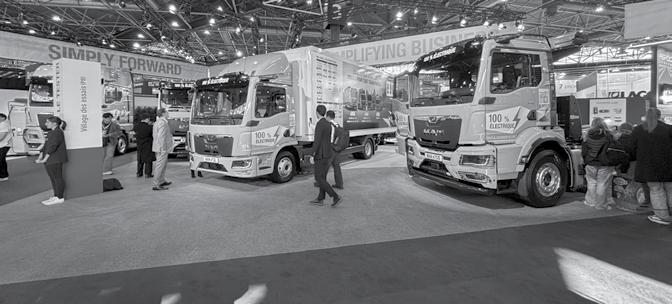


Scania plans to invest EUR 70 million in its production site in Angers, France, strengthening the company’s capacity to support the transition to electrified transport in Europe. The investment is part of Scania’s commitment to driving the shift towards a sustainable transport system. The investment includes an extension of the existing facility and the adaptation of assembly lines for electric truck production. It will strengthen Scania’s industrial footprint in France and further develop the company’s capability to support the transition towards more sustainable transport solutions.
Angers has been part of Scania’s industrial system for more than three decades and plays an important role in serving customers in France and across Europe. The site has consistently demonstrated strong industrial performance and adaptability, making it a recognised and reliable contributor within Scania’s production network. The planned investment builds on the site’s existing capabilities and supports Scania’s longterm strategy to develop the technologies, industrial capabilities and partnerships needed for the future of transport.
“This investment reflects our ambition to secure the long-term future of the Angers
site while increasing its flexibility. We are preparing for the future, but we must remain able to adapt to changing volumes and market dynamics. The site will be capable of assembling both combustion engine and electric trucks, ensuring we can respond to evolving customer demand,” says Petrus Sundvall, President of Scania Production Angers.
“The transition to electrified transport is not only about vehicles. It is about creating the conditions that enable transport operators to invest with confidence. Access to charging infrastructure, renewable electricity and predictable policy frameworks will be critical to accelerating the shift. Scania is investing to support this transition, but lasting progress will depend on how quickly the entire transport ecosystem can move forward together,” says Christian Levin, President and CEO of Scania.
The transition of heavy transport is an important part of Europe’s climate ambitions. Reducing emissions from road transport will require action across the entire value chain, from vehicle manufacturers and transport operators to energy providers, infrastructure developers and policymakers.
Scania continues to invest across its value chain to help enable this transition, including vehicle technology, battery systems, industrial capabilities and charging solutions. The investment in Angers is a concrete example of how Scania is building the capacity needed to support the future transport system.
“Europe has set ambitious targets for reducing emissions from transport. Achieving those ambitions will require coordinated action across the entire value chain. Transport operators need the confidence to invest, infrastructure needs to be deployed at scale, and regulatory frameworks must support long-term planning. This investment demonstrates Scania’s commitment to contributing to that transition and helping create the conditions for a more sustainable transport system,” says Christian Levin.
The investment in Angers represents another step in Scania’s broader commitment to driving the shift towards a sustainable transport system. By strengthening its production capacity for electric trucks, Scania contends it is helping create the conditions for a transport system that is both more sustainable and more competitive.
The UK government has reaffirmed its commitment to decarbonising road freight, maintaining plans to end sales of new non-zeroemission trucks under 26 tonnes by 2035 and all new HGVs by 2040. Industry leaders welcomed the policy certainty, but continue to call for greater investment in charging infrastructure and grid connections to support fleet operators transitioning to battery-electric vehicles.
Battery-electric van registrations continue to rise across the UK, driven by lower operating costs and expanding charging networks. Fleet operators are increasingly adopting electric light commercial vehicles for urban deliveries, with manufacturers introducing longer-range models designed to meet growing demand from logistics and service sectors.
Investment in dedicated charging infrastructure for electric trucks is gathering pace, with several motorway service operators announcing plans for high-capacity charging hubs. Industry groups say a nationwide charging network will be critical to enabling longhaul freight operators to meet decarbonisation targets while maintaining operational efficiency.
Liquefied natural gas (LNG) continues to play a role in reducing emissions from longdistance freight transport. Although battery-electric technology is expected to dominate future vehicle sales, LNG vehicles are helping operators lower carbon emissions today while supporting compliance with increasingly stringent environmental requirements.

You did not plan for complexity. You planned for the best deal. Fifty vans from one OEM, a hundred pickups from another OEM, and a dozen coaches or lorries from yet another. Each purchase made perfect sense at the time. But somewhere along the way, you ended up managing vehicles from several different makers, each with its own sub-systems, its own characteristics, and its own format or protocol of sharing vehicle data – or not (unsurprisingly!)
Now you are trying to make sense of data that arrives in completely different formats from completely different systems, with no commonality between them. One OEM reports battery health one way, another uses a different protocol entirely, and a third barely shares anything useful at all. The result is not one fleet. It is several siloed fleets that happen to share the same depot. And the question that keeps surfacing is not just operational. It becomes something more personal: Am I actually in charge of this fleet, or am I just the last person to find out when something goes wrong?
That uncertainty carries a real cost. Not just in downtime, warranty headaches, and a rising total cost of ownership, but in the quiet exhaustion of running a fleet where the picture is never quite complete.
Here is the thing, though. The various brands in your fleet do not have to be the blocker.
Datakrew was built precisely for this situation. Our ITUS Max device connects to any electric vehicle, regardless of make or model, and delivers the same depth of battery intelligence whether you are running a hundred vehicles or ten thousand. No complicated integrations. No dependency on any single manufacturer. One platform for all your assets, with genuine visibility.
Our OXRED MyFleet platform turns raw vehicle data into something your team can actually use: real-time battery health, charging optimisation, predictive maintenance, and resale value insight, all in one place, across every vehicle in your fleet.
Today, fleets using Datakrew are reducing their total cost of ownership (TCO) by up to 15 percent and extending battery life by 20 percent. More than that, they are getting back the one thing a mixed fleet so easily takes away: the confidence of actually knowing what is going on.
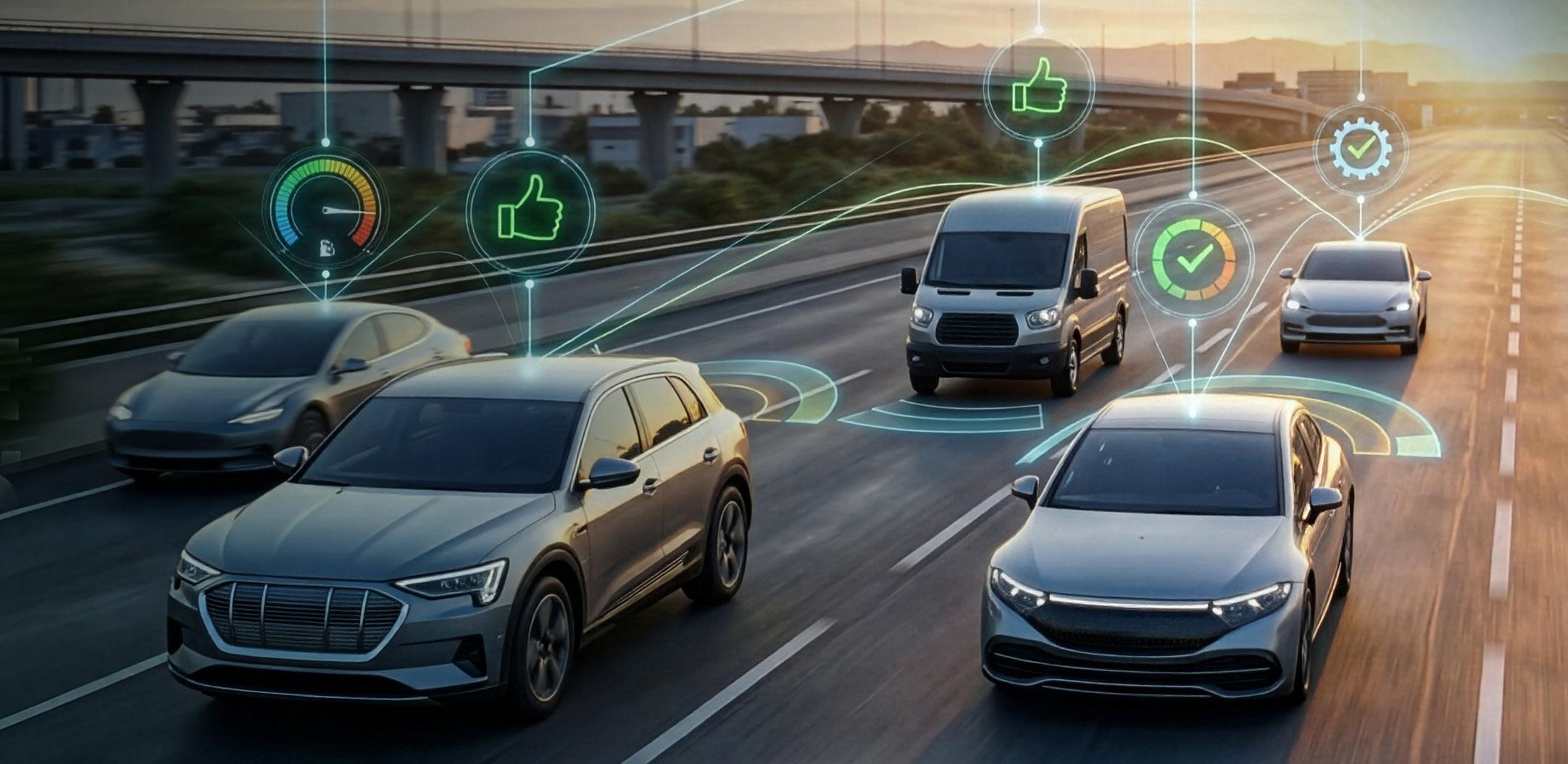
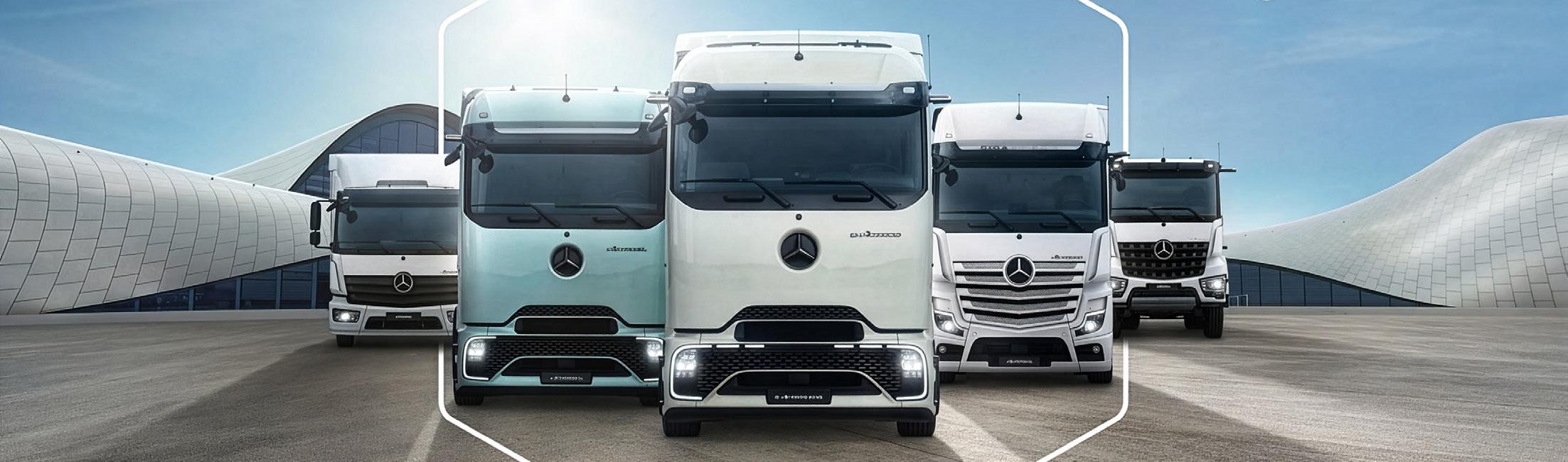
In an increasingly regulated transport environment, compliance is no longer a back-office function - it is a real-time operational priority. From driver hours legislation and vehicle safety standards to emissions monitoring and uptime obligations, fleet operators face growing pressure to remain compliant while maintaining efficiency.
For many operators, information is spread across systems, paperwork, and calls. A missed warning, delayed repair, or unclear vehicle status can quickly become an expensive issue.
Against this backdrop, connected services are becoming essential tools, with MercedesBenz Trucks’ digital services supporting this shift.
These connected services form part of Mercedes-Benz Trucks’ Digital Service World – a joined-up ecosystem that brings together vehicle data, service support, and fleet insight to help operators stay compliant, plan effectively, and avoid costly disruption.
Together, these services create a continuous loop of visibility, action, and improvement, helping operators move from reacting to issues to managing them proactively.
For drivers, connected services reduce uncertainty on the road. Clear vehicle status, faster support, and fewer unexpected disruptions help make day-to-day operations more predictable and less stressful.
Telematics has evolved significantly beyond simple vehicle tracking. Today’s systems provide ongoing, data-driven insights into vehicle condition, driver behaviour, and operational performance. For compliance managers, this means greater visibility and control over key risk areas - from maintenance adherence to fuel efficiency and safety metrics.
At the core of this transformation is proactive maintenance. TruckLive Maintenance Management monitors key vehicle systems, identifying developing issues early before they escalate. This predictive capability not only reduces unplanned downtime but also helps operators meet their legal obligations for vehicle roadworthiness. In an environment where non-compliance can lead to significant penalties - or worse, safety incidents- early intervention is invaluable.
Building on this foundation, the introduction of Service24h Connected represents a significant step forward in compliance support. Fully integrated within the telematics
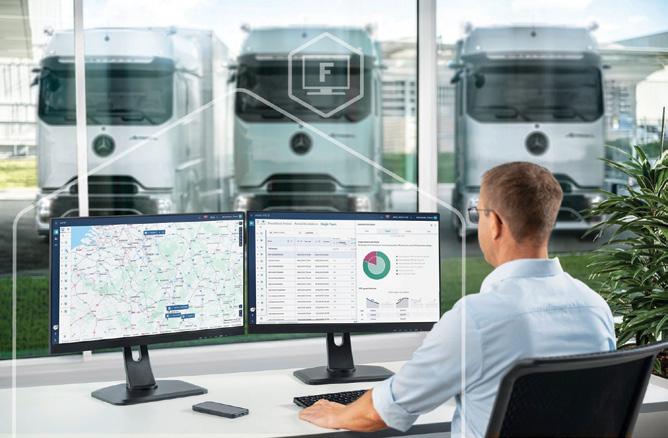
ecosystem, the service provides automatic, real-time breakdown reporting and direct communication with the Mercedes-Benz Service24h network. When a fault occurs, relevant vehicle data is transmitted instantly, supporting faster diagnostics and a more efficient response.
For operators, this has clear operational and compliance implications. Faster resolution times help operators manage the return of vehicles to a roadworthy condition more efficiently, reducing the risk of operating outside regulatory limits. Additionally, the digital record of incidents, responses, and repairs supports robust audit trails - an increasingly important requirement in demonstrating due diligence to regulators and clients alike.
Another critical area where telematics supports compliance is driver performance. By capturing data on driving style, braking patterns, and fuel consumption, systems enable operators to identify behaviours that may compromise safety or efficiency. This data can then inform targeted training programmes, helping to align driver conduct with both company policies and legal standards.
Environmental compliance is also firmly in focus. With tightening emissions regulations across the UK and Europe, operators must demonstrate measurable progress in reducing their environmental impact. Telematics data provides the transparency needed to track fuel usage, optimise routes, and support the transition to lower-emission operations - key factors in meeting sustainability targets and regulatory requirements.
Importantly, solutions from Mercedes-Benz Trucks are designed with integration in mind. By connecting vehicles, service networks, and fleet management systems, they create a unified platform where compliance is embedded into daily operations rather than treated as a separate function.
As the regulatory landscape continues to evolve, the role of telematics will only become more central. Operators who embrace connected technologies such as Service24h Connected are not only improving efficiency, but they are also strengthening their compliance frameworks, reducing risk, and building more resilient operations.
In a more complex and regulated operating environment, the ability to see clearly, act early, and stay connected is becoming essential.
Connected services are no longer an add-on. They are becoming part of how modern fleets stay compliant, in control, and ready for what’s next.

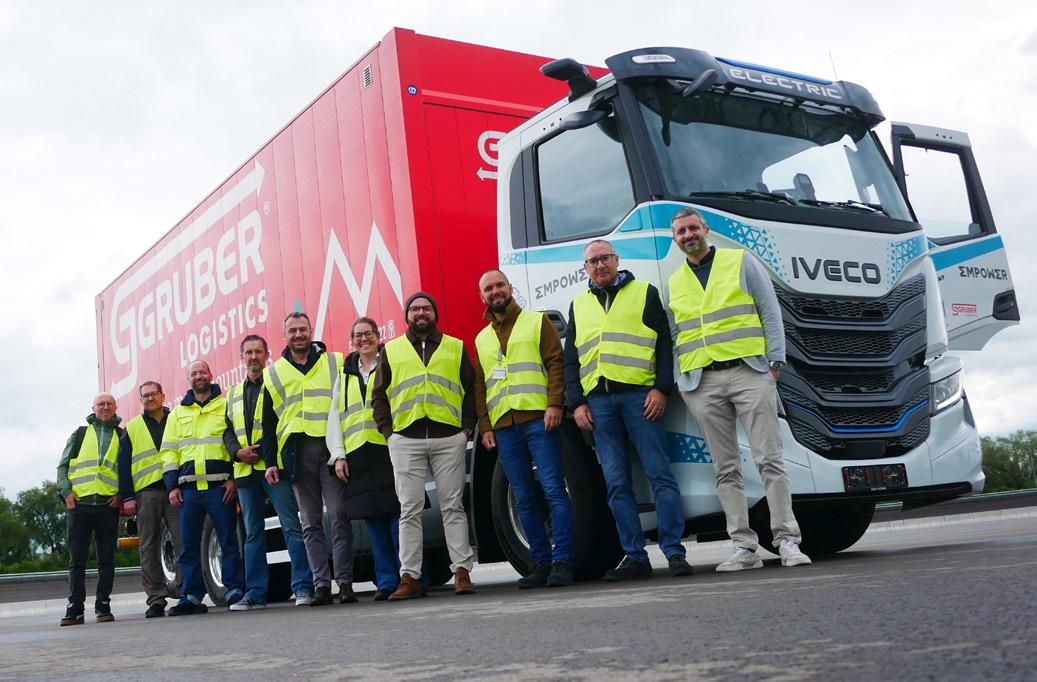
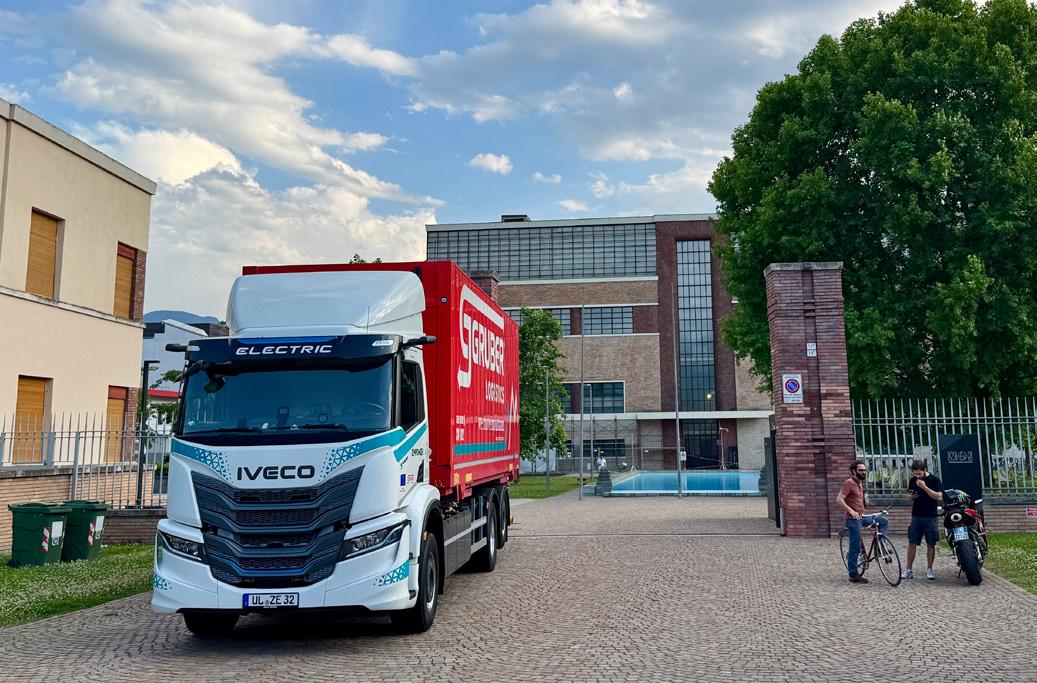
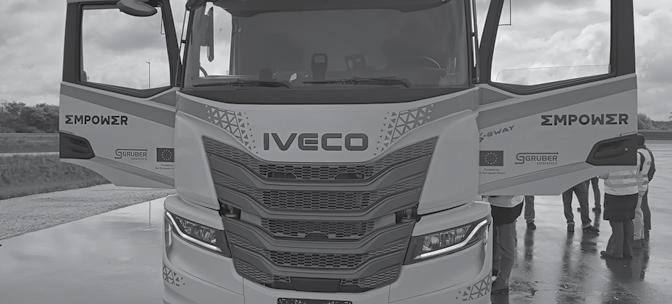
A major European trial aimed at accelerating zero-emission freight transport is underway as Gruber Logistics, IVECO and the Austrian Institute of Technology (AIT) begin real-world testing of a new batteryelectric heavy truck under the EMPOWER project.
The six-month demonstration, which started in June, will see an IVECO battery-electric prototype operating from Gruber Logistics’ northeastern Italy base, serving less-than-truckload (LTL) and groupage freight operations. Based on the production-ready IVECO S-eWay platform, the vehicle has a range of up to 400km and will be deployed on medium- and long-haul routes through the end of 2026.
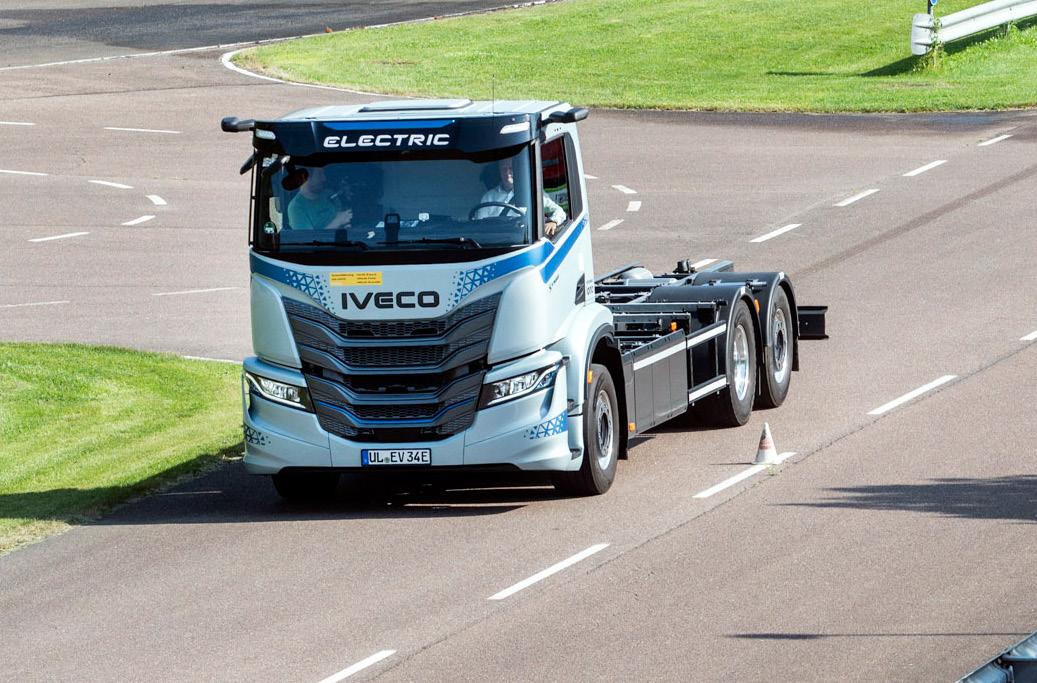
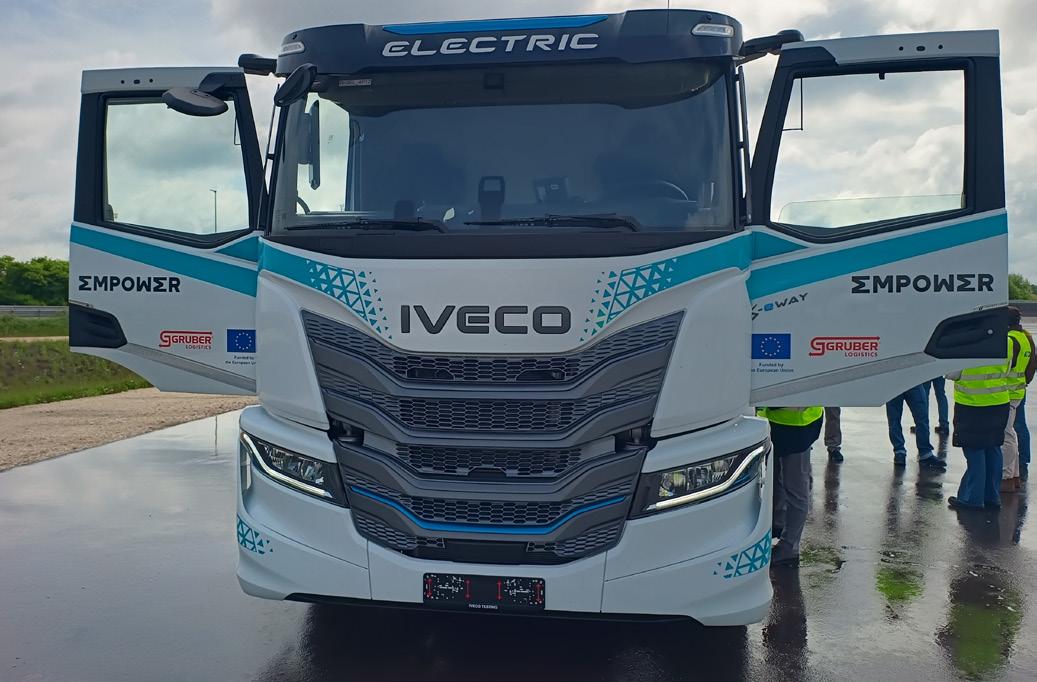
The truck incorporates a range of innovations developed through the European Commission-funded Horizon Europe programme. These include enhanced cab insulation, energymanagement systems designed to optimise route planning and electricity consumption, and a specially configured chassis tailored for use on swap-body freight operations.
Unlike many electric truck demonstrators focused on semi-trailer applications, the EMPOWER vehicle has been designed specifically for longdistance groupage transport. Additional rear cameras and an extended frame support operational requirements that were indentified by Gruber Logistics during development.
The project aims to gather valuable data on vehicle performance, battery efficiency, energy consumption and charging operations under real logistics conditions. The truck’s five-battery system delivers 300kWh of usable energy through an FPT eAxle rated at 480kW. All operational data will be monitored from Gruber’s Bologna site, where the vehicle will be recharged using a mobile charging unit.
Project partners believe the trial will help bridge the gap between prototype development and large-scale commercial deployment. A hydrogen fuel-cell truck demonstration is scheduled for 2027, with the consortium aiming to expand future trials across European freight corridors as the industry moves towards zero-emission heavy transport.

Everything you need to know from the last two months
Ministers are being urged not to dilute the UK’s Zero Emission Vehicle (ZEV) Mandate after a new report found the policy has helped unlock more than £41 billion in automotive investment, accelerated electric vehicle adoption and positioned Britain as a leader in the global transition to clean transport.
The report, A-ZEV: The Road to Electric AutoMotive with contributions from industry groups including Octopus Electric Vehicles, Electric Vehicles UK, ChargeUK and Transport & Environment UK, argues that the ZEV Mandate is one of Britain’s most successful market-based industrial policies.
Since its introduction, the policy has helped drive competition between manufacturers, expand consumer choice and attract private investment without relying heavily on public subsidy. The report highlights that the mandate has supported an emerging UK battery supply chain worth more than £8.5 billion, contributed to the rapid expansion of the charging network to over 120,000 public charge points, and accelerated the growth of the EV market to two million electric vehicles on UK roads.
The economic potential is substantial. By 2035, the UK EV sector is forecast to contribute £385 billion to the economy and support 334,000 jobs.
The benefits are already being felt by drivers. With the average household spending £4,681 a year on transport, switching to an electric vehicle can save around £900 annually through lower fuel and running costs. EV drivers are also protected from the oil price volatility that continues to affect motorists reliant on petrol and diesel.


Industry leaders warn that weakening the ZEV Mandate would undermine investor confidence at a critical moment. As the United States experiences slower EV growth amid policy uncertainty and Chinese manufacturers continue to expand globally, they argue that stable, long-term policy is essential to securing investment, supporting UK manufacturing and maintaining competitiveness.

Ben Nelmes, CEO of New AutoMotive, said: “The ZEV Mandate has helped deliver two million electric cars and supported more than £41 billion of investment commitments. The worst signal the government could send to investors now is uncertainty.”
The report concludes that maintaining policy certainty is vital if Britain is to secure the economic, industrial and consumer benefits of the EV transition.





As customers demand cleaner transport, hydrogen is becoming a serious alternative to diesel — especially for fleet operators who need reliability, long range, and minimal downtime.
At GreenPower Hydrogen, we are focused on delivering practical hydrogen solutions for commercial vehicle fleets. We are not just supplying fuel; we are building long-term partnerships with operators who rely on dependable performance every day.
Fleet operators need more than ambitious targets. They need fast refuelling, consistent supply, and energy solutions that fit demanding operational schedules.
Whether you operate regional delivery vehicles, heavy-duty transport fleets, or specialist commercial vehicles, we want to work with you to develop hydrogen supply strategies tailored to your business.
While battery-electric vehicles play an important role in decarbonisation, hydrogen offers key advantages for many commercial applications — including rapid refuelling, extended driving range, and less impact on payload.
For heavy-duty transport, those benefits can make a significant operational difference.

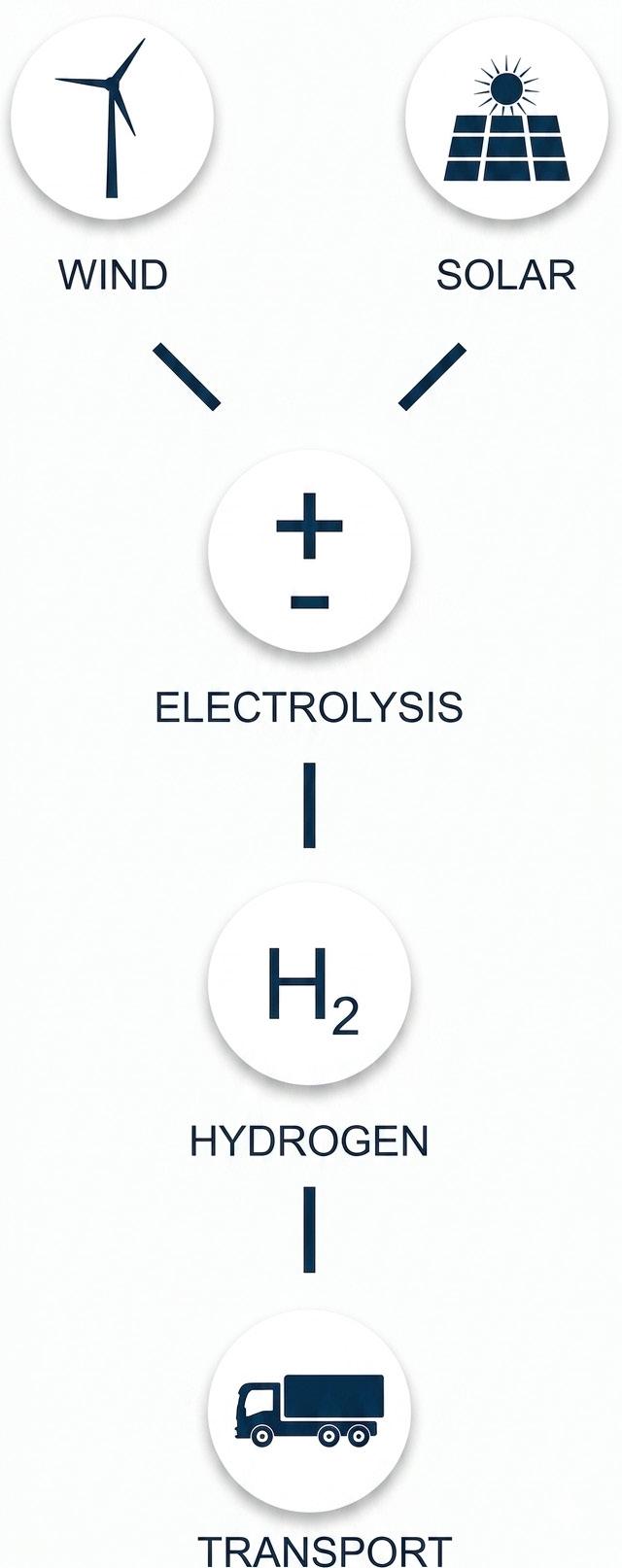
Hydrogen vehicles
Hydrogen-powered transport is no longer a future concept — it is here today. Leading manufacturers including MercedesBenz, MAN, Volvo, and Scania are now offering hydrogen heavy goods vehicles designed for the demands of modern logistics.
Combined with a reliable GreenPower Hydrogen fuel supply, these vehicles deliver low lifetime operating costs, high reliability, and a practical pathway to cleaner transport operations.

Our vision extends far beyond fuel supply. We are actively developing a growing network of hydrogen refuelling sites, strategically located closer to our customers and their operations.
We work in partnership with businesses to support the transition to sustainable transport — helping you meet customer expectations, reduce emissions, and future-proof your fleet.
Contact us today to discuss how we can work together to make clean transport a commercial reality.
In short, asset finance is an alternative form of funding used by businesses to obtain the equipment they need to grow or access much-needed cash. Asset finance makes the otherwise unaffordable affordable because it gives businesses access to the equipment they need without incurring the cash flow disadvantage of an outright purchase.
• Hire Purchase (HP) allows you to buy the equipment on credit. The finance company purchases the asset on your behalf and owns the asset until the final instalment is paid, at which point you are given the option to buy it.
• Finance lease: The full value of the equipment is repaid to the finance company, plus interest, over the lease period. At the end of the term, you can choose to:
o continue to use the asset by entering a secondary rental period
o sell the asset and keep a portion of the income from the sale
o return it
• Operating lease: Similar to a Finance Lease, an Operating Lease allows you to rent the asset from the asset funder while you need it. The key difference between the two is that an Operating Lease is only for part of the asset’s useful life. This means you pay a reduced rental because the cost is based on the difference between the asset’s original purchase price and its residual value at the end of the agreement.


• Refinance: Refinancing or capital release, as it’s also known, is a proven way to make your assets work for you and release cash back into the business. It works by the finance company purchasing the asset and financing it back to you, with repayments calculated in line with the income the asset is expected to generate; at the end of the refinance term, you own the asset. This offers several benefits to a business that just needs a cash injection, whether it’s for investment in additional business-critical assets or to use in other areas of the business, including unexpected bills and invoices, salaries, VAT payments, diversification - the uses are almost endless. Funders can also look to take over a finance agreement with another provider and extend the term, ultimately reducing monthly payments and easing the pressure on cash flow.
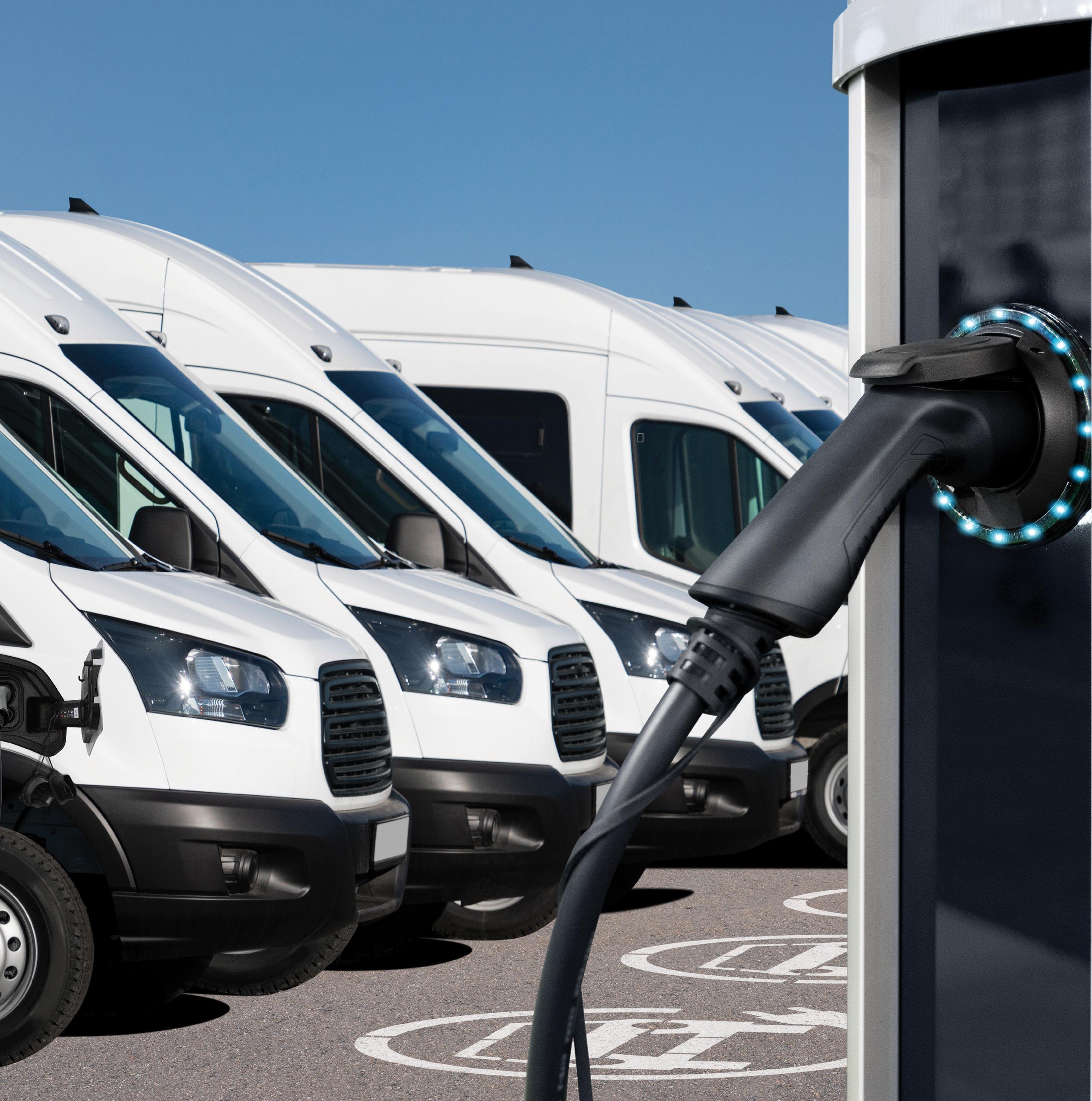
Electric light commercials dominated this year’s Commercial Vehicle Show – and it was Chinese manufacturers who were making the running.
Names not previously encountered in the UK van market popped up all over the place at this year’s CV Show, including BYD, Foton and Chery. With marginally more of a track record in the sector – it exhibited last year – Farizon was present too.
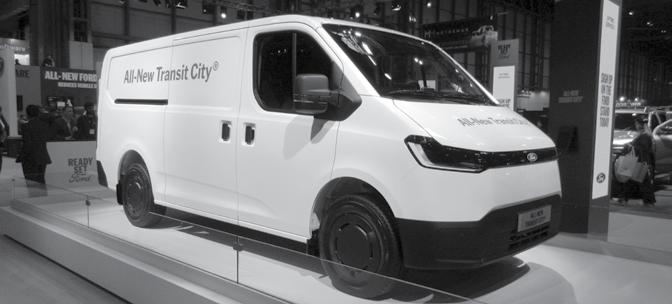
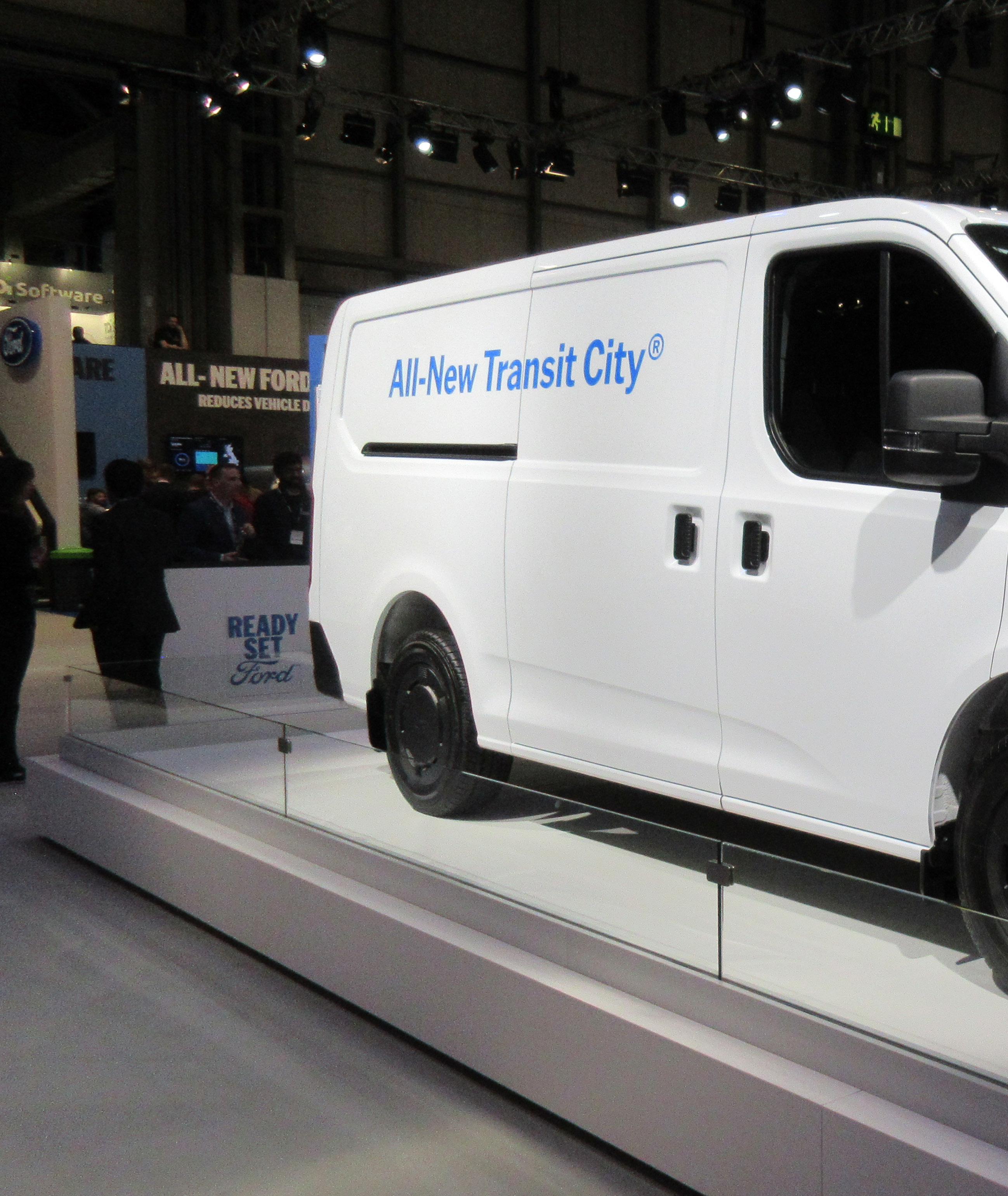
Presumably working on the basis that if you can’t beat them, join them, Ford was displaying the new, Chinese-made, purpose-built electric Transit City. It has arrived thanks to Ford’s connection with China’s Jiangling Motors Corporation (JMC).
Ford and JMC have links that go back three decades, with JMC having assembled Transits for the Chinese domestic market.
An addition to Ford’s current line-up, and scheduled to arrive in dealerships towards the end of the year, Transit City sits alongside E-Transit Custom, which will remain available.
Not that the Chinese were having it all their own way at the annual event, held as usual at Birmingham’s National Exhibition Centre.
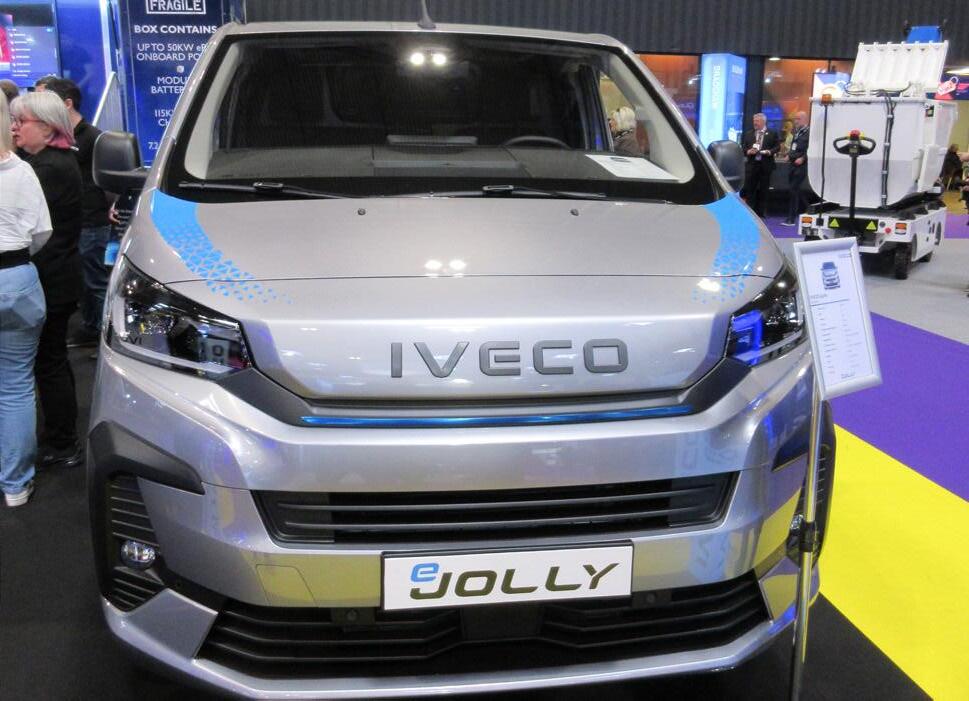
South Korea’s Kia was reinforcing its growing presence in the electric sector, while Iveco chose the show for the UK launch of the quirkily-named electric
eJolly and eSuperJolly light commercials. Last year saw Italy’s Iveco acquired by India’s Tata Motors.
Electric van sales were increasing at the time of writing. The bad news for vehicle manufacturers is that they were taking a market share of just over 11% according to figures compiled by the Society of Motor Manufacturers and Traders (SMMT) – less than half of the 24% mandated by government for 2026 if they are to avoid eyewateringly steep fines.
More than half of light commercials offered for sale in the UK are available with an electric option, the SMMT points out, backed by substantial manufacturer discounts and the government’s Plug-in Van Grant – but still-high upfront costs and infrastructure challenges remain barriers to greater uptake. On the face of it the dramatic increase in diesel costs in the wake of the Middle East crisis ought to prompt more operators to go electric – but electricity in this country is notoriously expensive too when compared with the prices charged in other Western countries.
Not surprisingly, the SMMT wants the government to revisit the mandate as a matter of urgency – and ensure that it reflects marketplace realities.

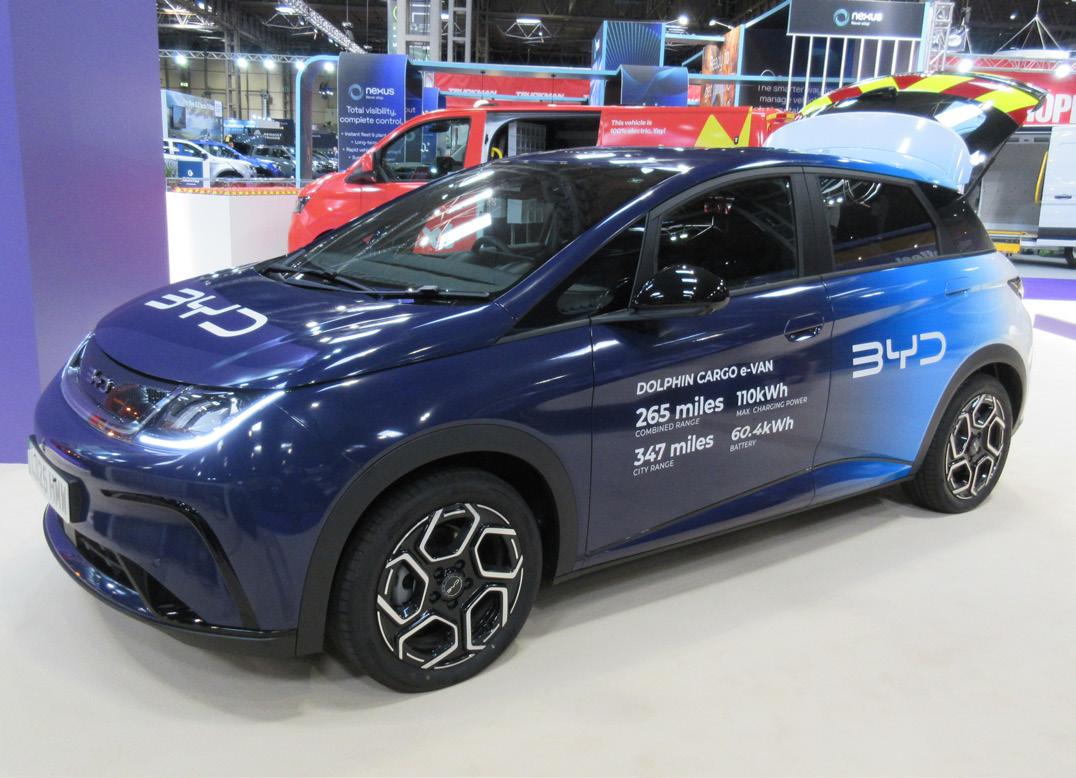
“Derived from the Dolphin hatchback car, the Dolphin Cargo e-Van features a 1.0m3-plus cargo area, a purpose-built load bed, and a bulkhead positioned behind the front seats”
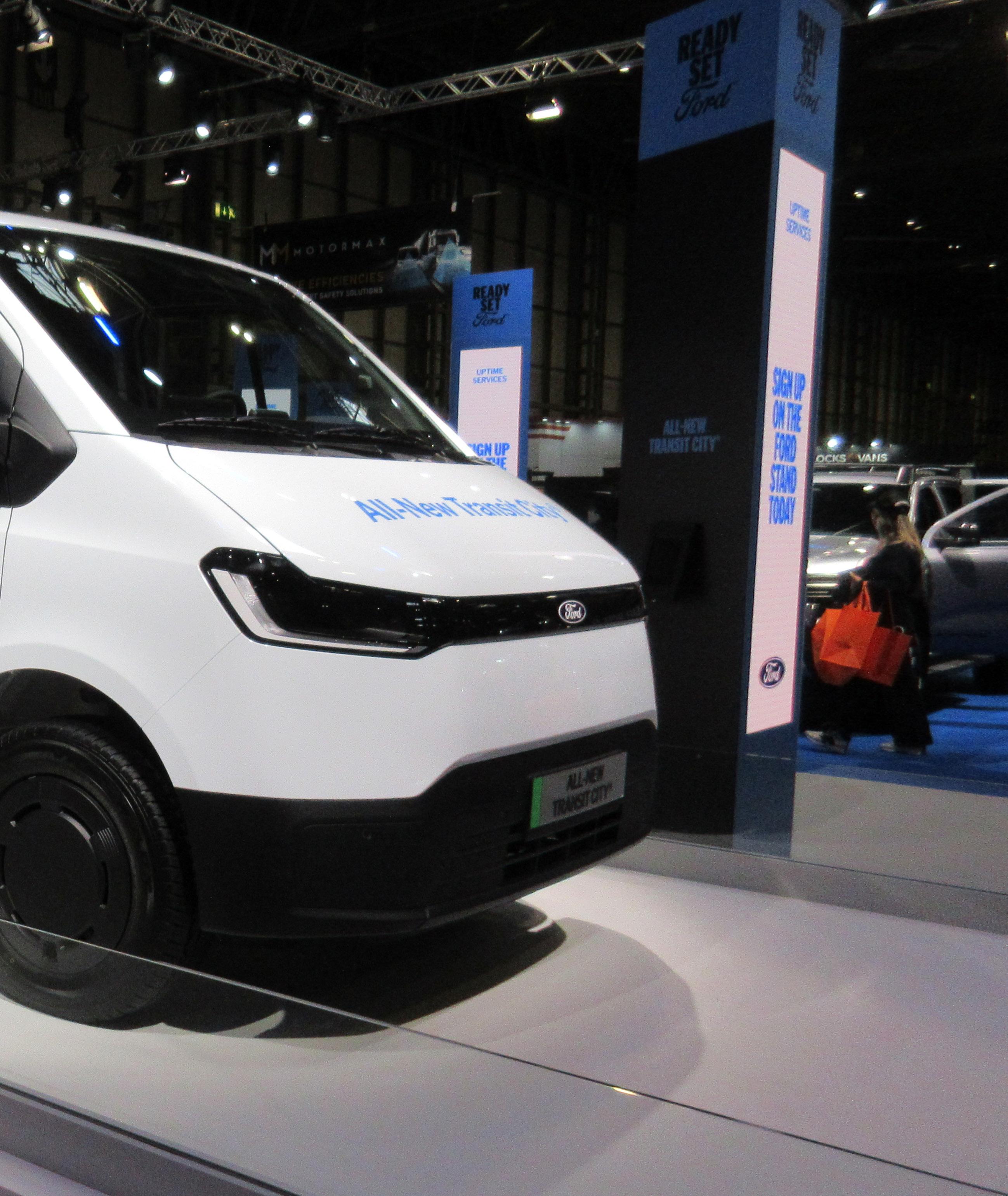
Ford’s new, front-wheel-drive, Chinese-built Transit City van is available in L1H1 and L2H2 van guise. The former can handle a payload of up to 1,085kg with a 6.4m3 load bay-while the latter can haul up to 1,275kg and offers 8.5m3 of cargo space. Transit City is also produced as a chassis cab.
A 56kWh lithium-iron-phosphate battery and a 110kW electric motor are standard on all models. Anticipated range between recharges is almost 160 miles.
Using a DC fast-charger should enable the battery to be replenished from 10% to 80% of its capacity in just over 30 minutes, says Ford. Plug it in for 10 minutes and you will boost the range by just over 30 miles, it adds.
China’s Farizon chose the 2026 show to give its medium-sized electric V7E van its UK debut. Slotting in below the larger SV, which appeared at the 2025 exhibition, it comes with a 6.95cu m load area and a 1,338kg payload capacity.
Customers can choose between two batteries – 50kWh or 67kWh – with a quoted potential range of 295 miles.
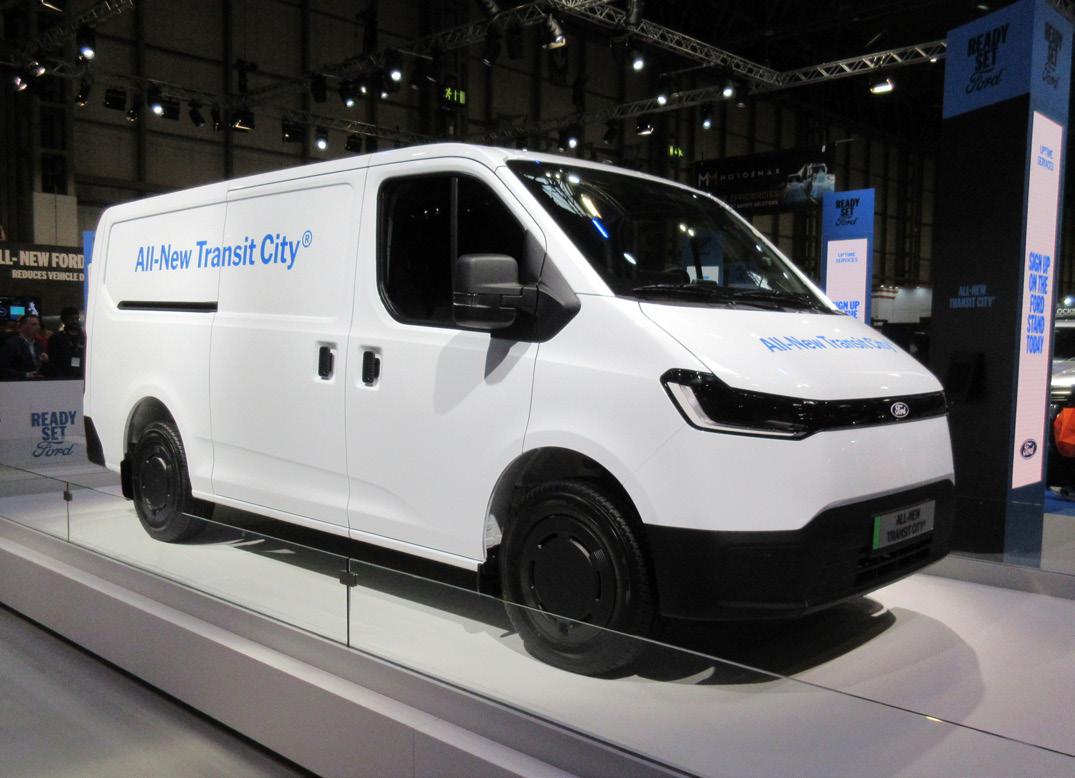
Changes have been made to SV in the light of customer feedback. They include the introduction of Android Auto as well as Apple CarPlay, a steering wheel alterable for reach and rake, a six-way-adjustable driver’s seat and security improvements – greatly needed in the UK given the high level of theft from light commercials.
Based in China, BYD was exhibiting buses at the show, but its Dolphin Cargo e-Van was on the Mediafleet stand.
Derived from the Dolphin hatchback car, it features a 1.0m3-plus cargo area, a purpose-built load bed, and a bulkhead positioned behind the front seats. Quoted range between recharges is a healthy 347 miles.
Chinese manufacturer Chery Commercial Vehicle rolled out its electric Delivan brand for the first time at the show.
Details of its precise plans for the UK market were somewhat sketchy, with a lot of talk about concepts but very little revealed about practicalities such as load cube, payload capability, ranges or charging times. It is setting up a base in Liverpool however and aims to have a line-up of medium to large vans on sale in here during the first quarter of 2026.
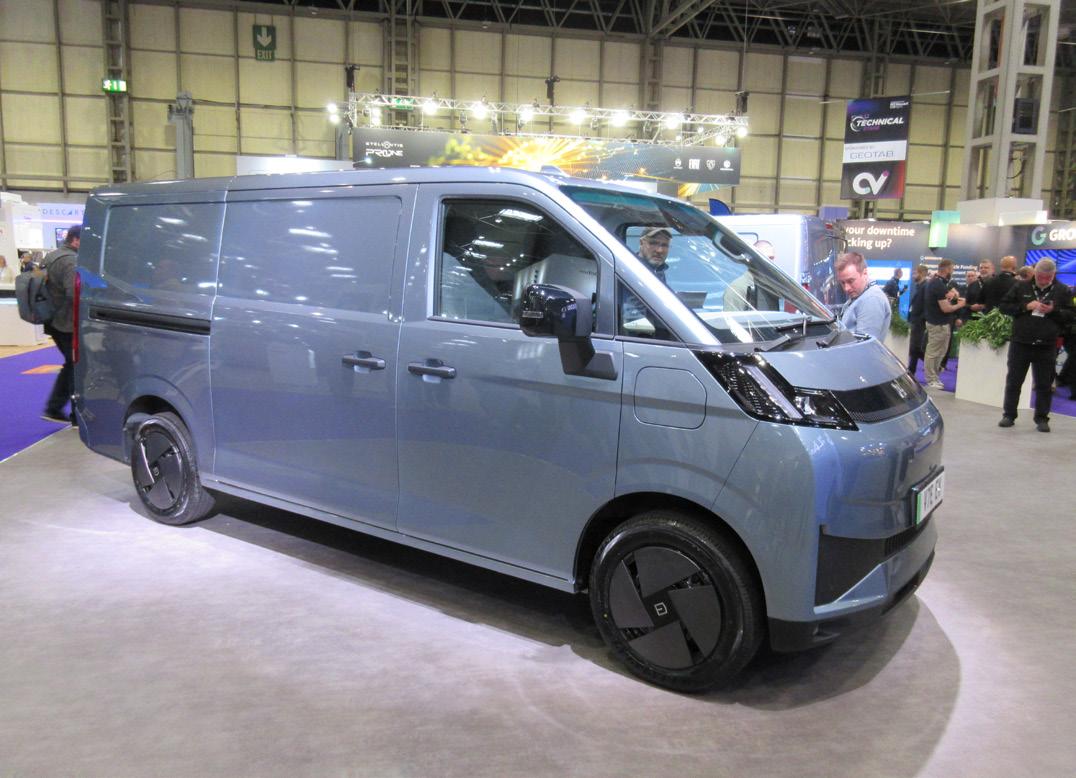
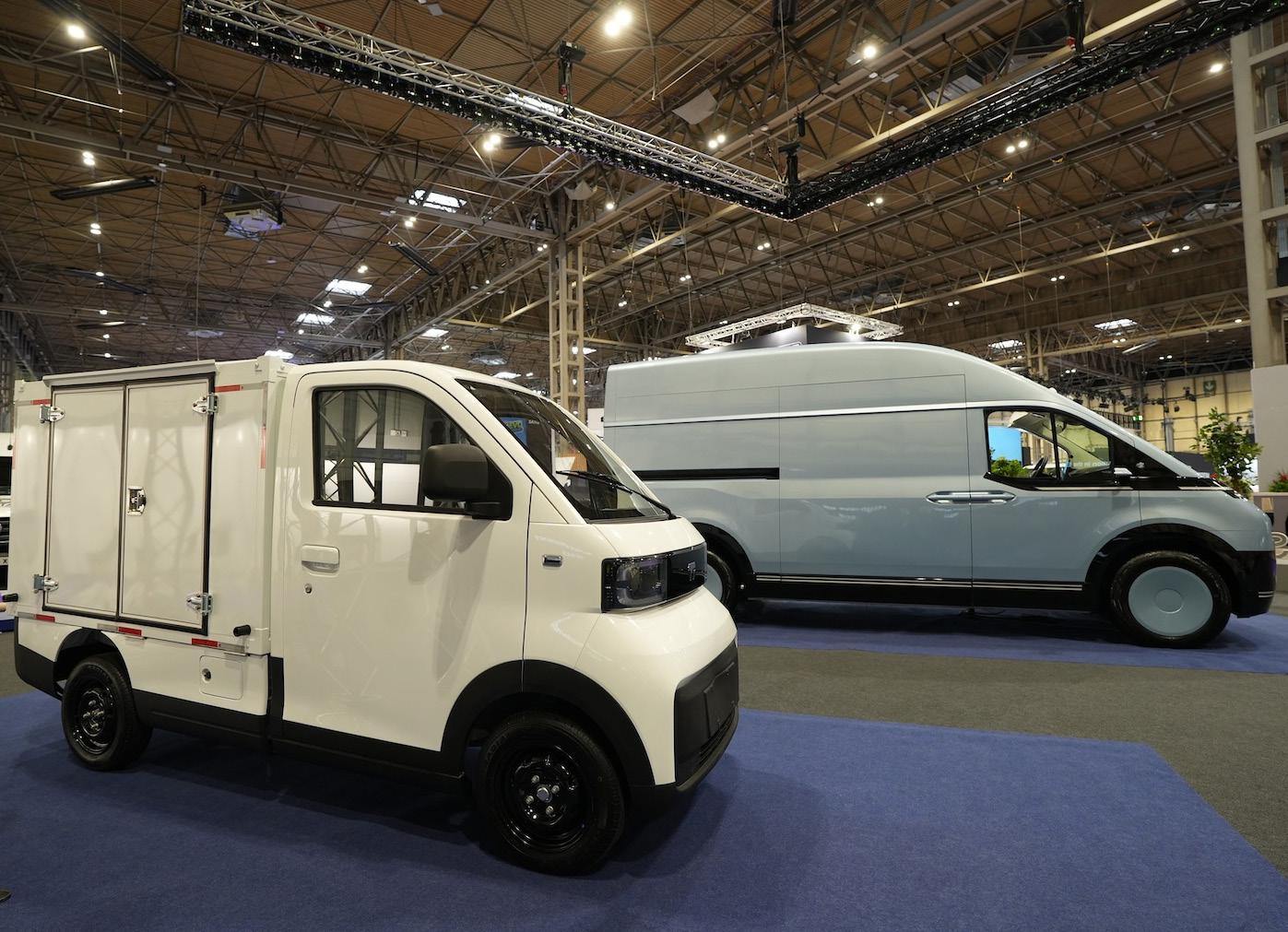

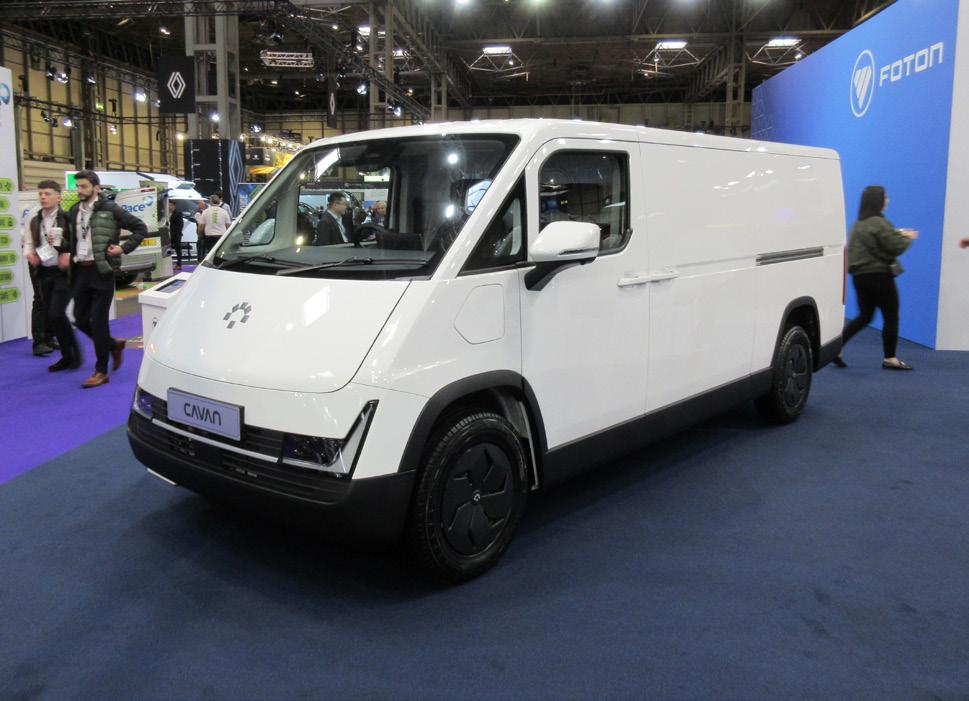
A line-up of made-in-China electric Foton Cavan vans was on display courtesy of importer International Motors, which also distributes light commercials – pickups especially – made by Isuzu, GWM and Mitsubishi.
Cavans come with a load cube of from 6.7m3 to 8.4m3 to 8.4cu m depending on the version with a choice of two batteries: 50.2kWh or 66.7kWh. Quoted range is 200 miles and the newcomers could go on sale later in the year.
Iveco eJolly/eSuperJolly
Iveco used the show to herald its arrival in the electric medium van market with the eJolly.
Grossing at 2.8 to 3.2 tonnes, it offers a load cube of up to 6.6m3 and a payload capacity of up to 1,175kg. Claimed range is up to 271 miles.
Its larger eSuperJolly electric stable-mate boasts a load area of up to 17m3, can move cargo weighing up to 1.4 tonnes, and has an anticipated 260-mile range.
If they both look vaguely familiar then that is because they have been brought in from the Stellantis stable and are marketed under a variety of other brand names. Iveco justifies the use of the ‘Jolly’ and ‘Super Jolly’ names by pointing out that they were borne by Lancia light commercials sold in Italy in the 1950s and 1960s.
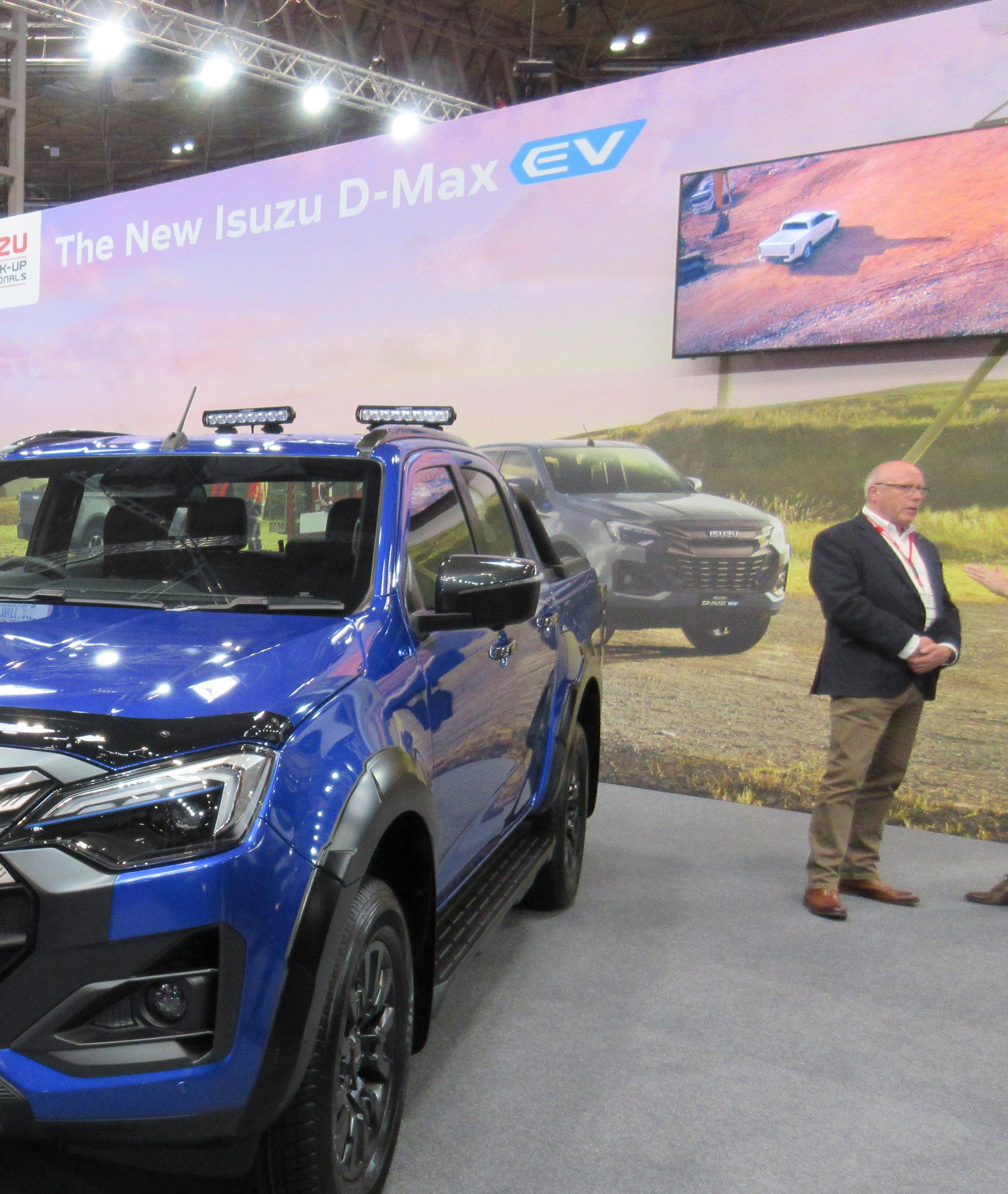
Isuzu D-Max Electric
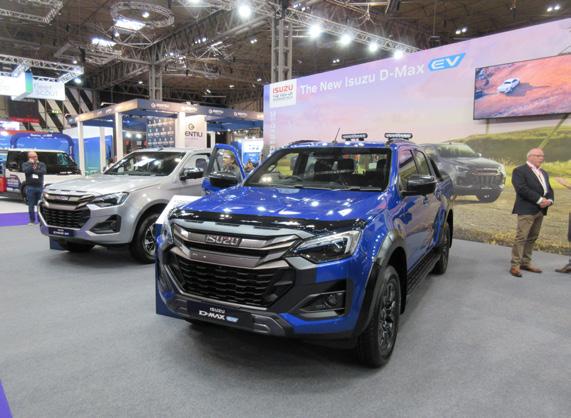
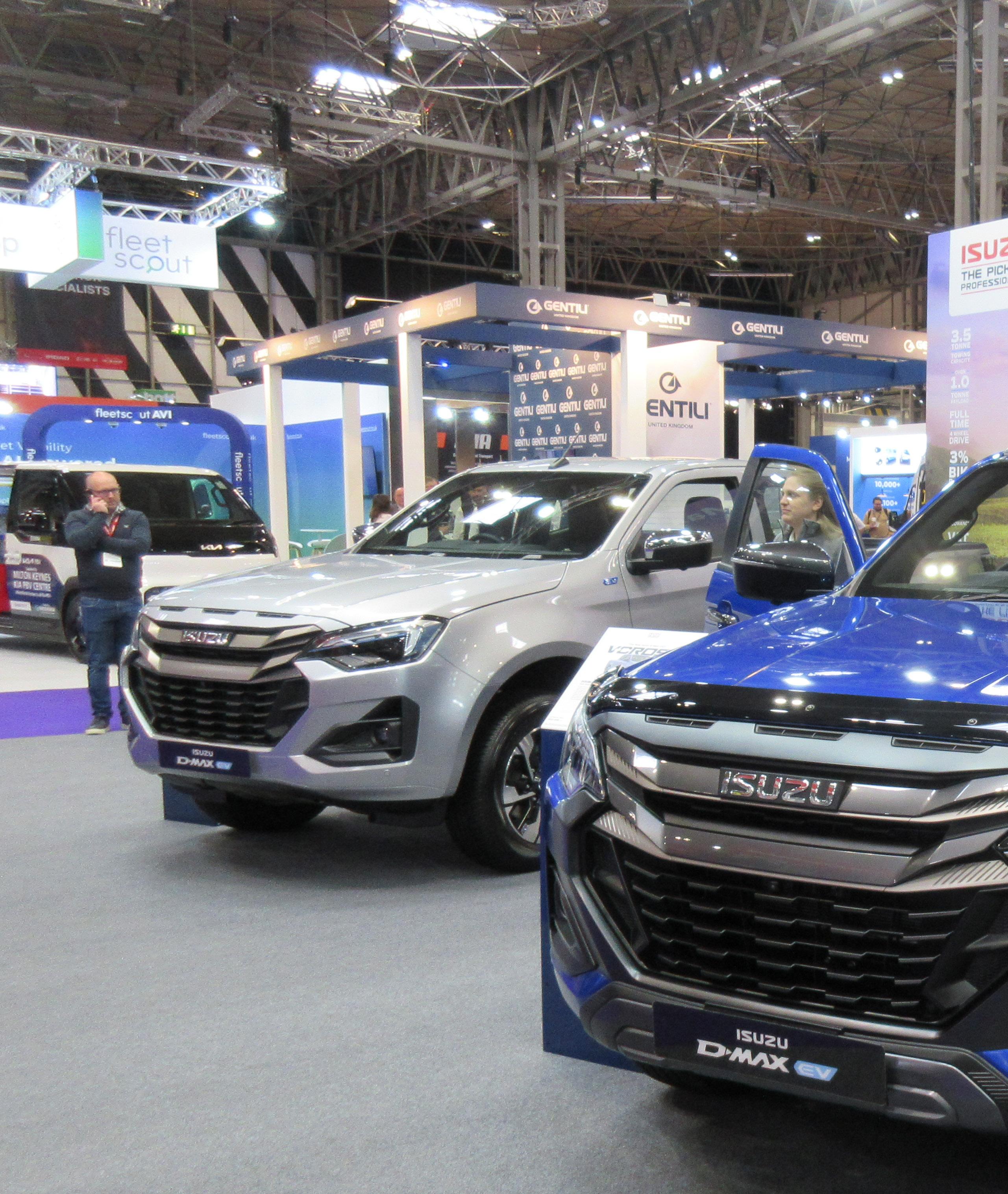
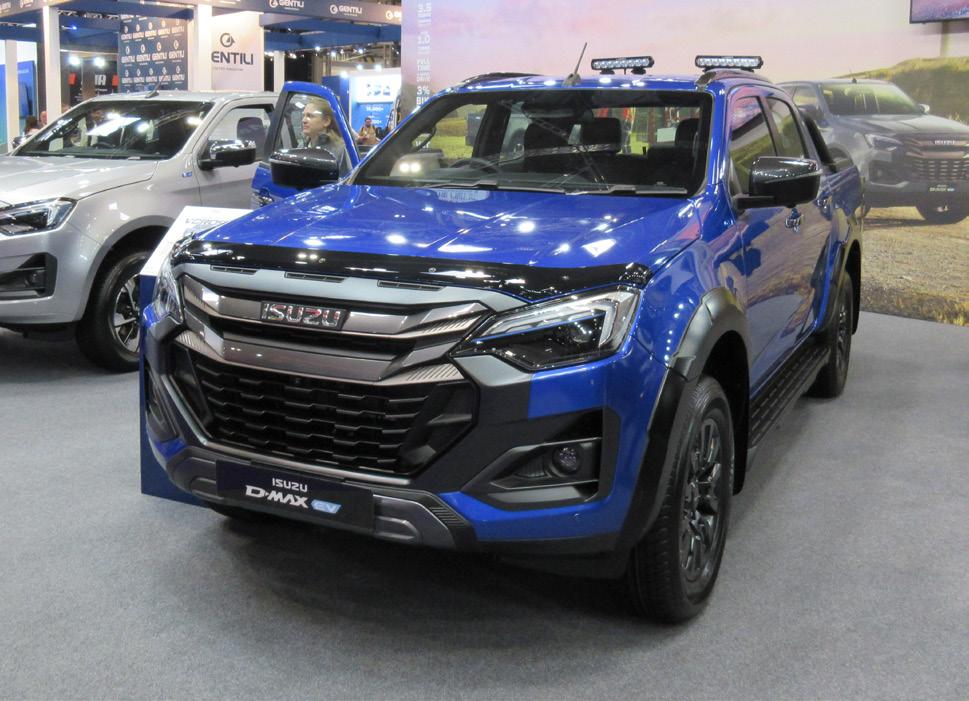
Last year saw Isuzu UK exhibit an electric D-Max 4x4 pickup. This year the right-hand drive version made its show debut – UK deliveries have just started.
The battery-powered 4x4 D-Max EV is up for grabs with either a four-door double-cab or a two-door extended cab. Payload capability is in excess of a tonne and it can tow a 3.5-tonne trailer.
A 66.9kWh battery is fitted with an expected 164-mile range between recharges. Plug it into a rapid DC charger and you should be able to increase the charge in the battery from 20% to 80% of its capacity in an hour, says Isuzu.
Visitors who went onto the KGM stand last year expecting to see an electric pick-up were doomed to disappointment. It failed to arrive.
The lack was remedied this year however by the appearance of the South Korean manufacturer’s batterypowered Musso EV double-cab 4x4 with an expected range of up to 240 miles.
At a modest 690kg, the payload capacity is too low to enable businesses to reclaim VAT. Opt for one as your company transport however and your commercial vehicle Benefit-In-Kind liability will start at a mere £30, says the importer.

Kia is continuing to extend its electric light commercial line-up, and the latest arrivals were highlighted on its stand. Two new PV5 Cargo variants – L1/H1 and L2/ H2 – were making their European debuts.
The former comes with a 4.0m3 cargo bay and can transport up to around 800kg. The latter boasts a 5.2m3 load space and the ability to shift approximately 630kg. Estimated ranges are up to 250 miles and over 230 miles respectively.
One exhibit that caught the eye was a compact tipper based on a PV5 chassis cab. Kia now has a number of UK conversion partners including CoolKit, TGS, ModulSystem and GM Coachwork.
Fiat Professional TRIS
Light commercials don’t have to have four wheels.
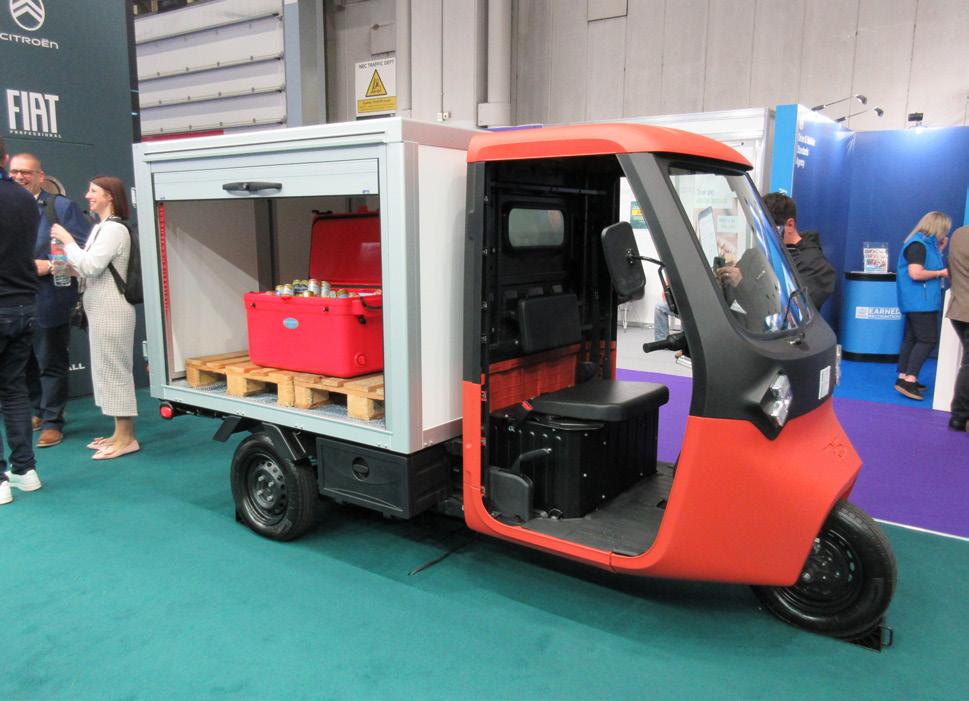
Perched on the Stellantis Pro One stand was a batterypowered Fiat Professional TRIS three-wheeler with an anticipated 56-mile range – not enormous, agreed, but probably all you really need if you spend your entire day delivering packages and parcels around a city centre.
As indicated elsewhere, Stellantis encompasses a number of light commercial brands, including Vauxhall, Citroen and Peugeot as well as Fiat Professional. Each one of them boasts a range of
electric vans, and Stellantis supplies battery models to Toyota and more recently to Iveco too.
Not to be outdone by TRIS, South Africa’s MellowVans was exhibiting an electric three-wheeler also designed for last-mile delivery work. With a claimed range of around 70 miles it can carry up to 380kg in a 2.0m3-plus cargo area.
In a return to the car-derived van market, Ford was exhibiting a commercialised version of the electric five-door Explorer. With an anticipated range of over 370 miles, and a 1.3m3 cargo area accessed by doors on each side and a rear hatch, Explorer Van can handle a 650kg payload.
About to go into series production, the Chinese-built Maxus battery-powered eDeliver 75 7.5-tonner was displayed on the Harris Maxus stand. The electric eTerron 9 four-wheel drive pick-up was present too, on an unusual indoor off-road demonstration course.
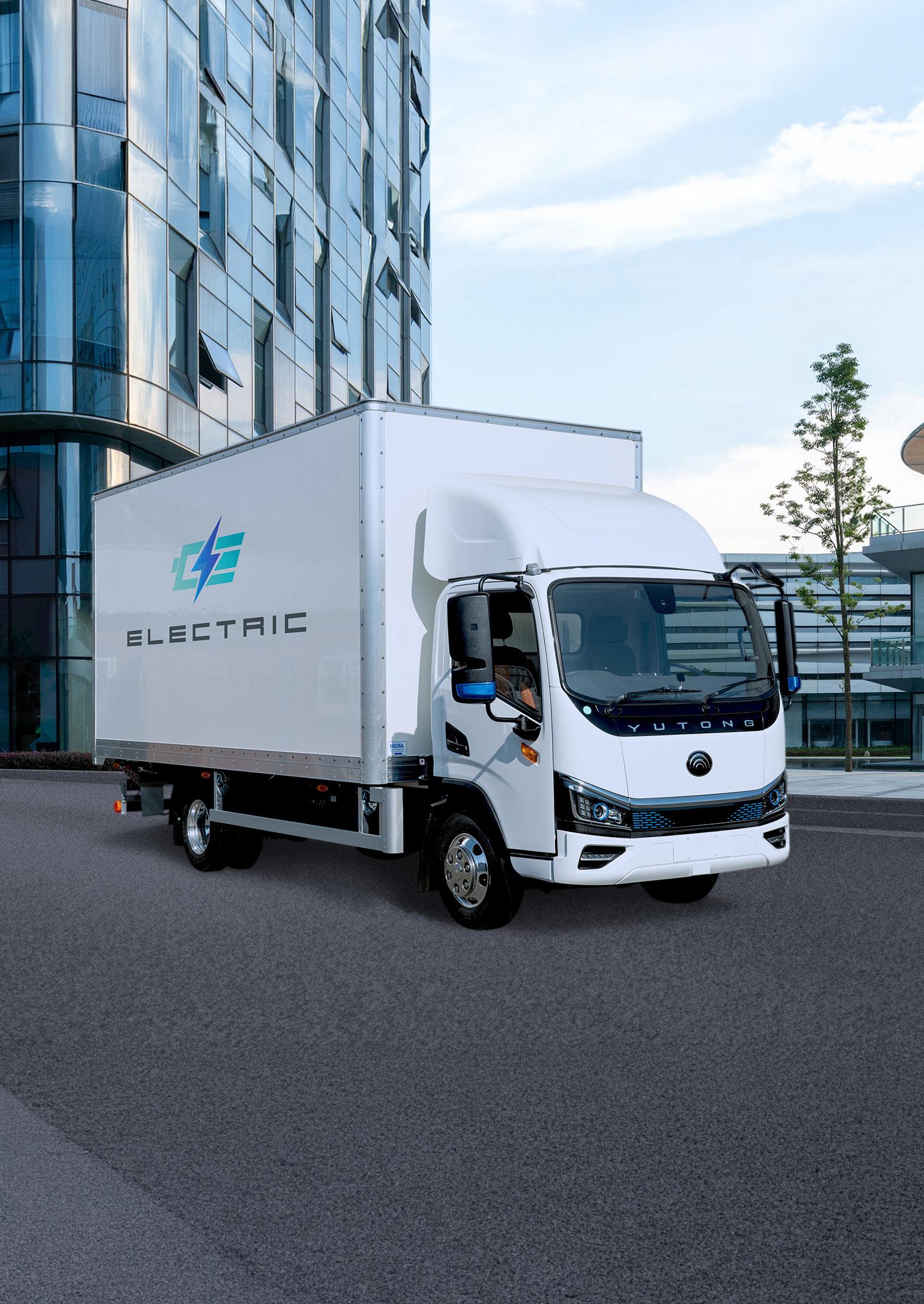
Yutong distributor Pelican decided not to exhibit in its own right at the show, but the Chinese electric Yutong TE7 7.5-tonner was there nevertheless. Unladen chassis cab weight is under 3.0 tonnes, maximum range is an expected 180-miles-plus, and customers can choose either a 100kWh or a 132kWh battery.
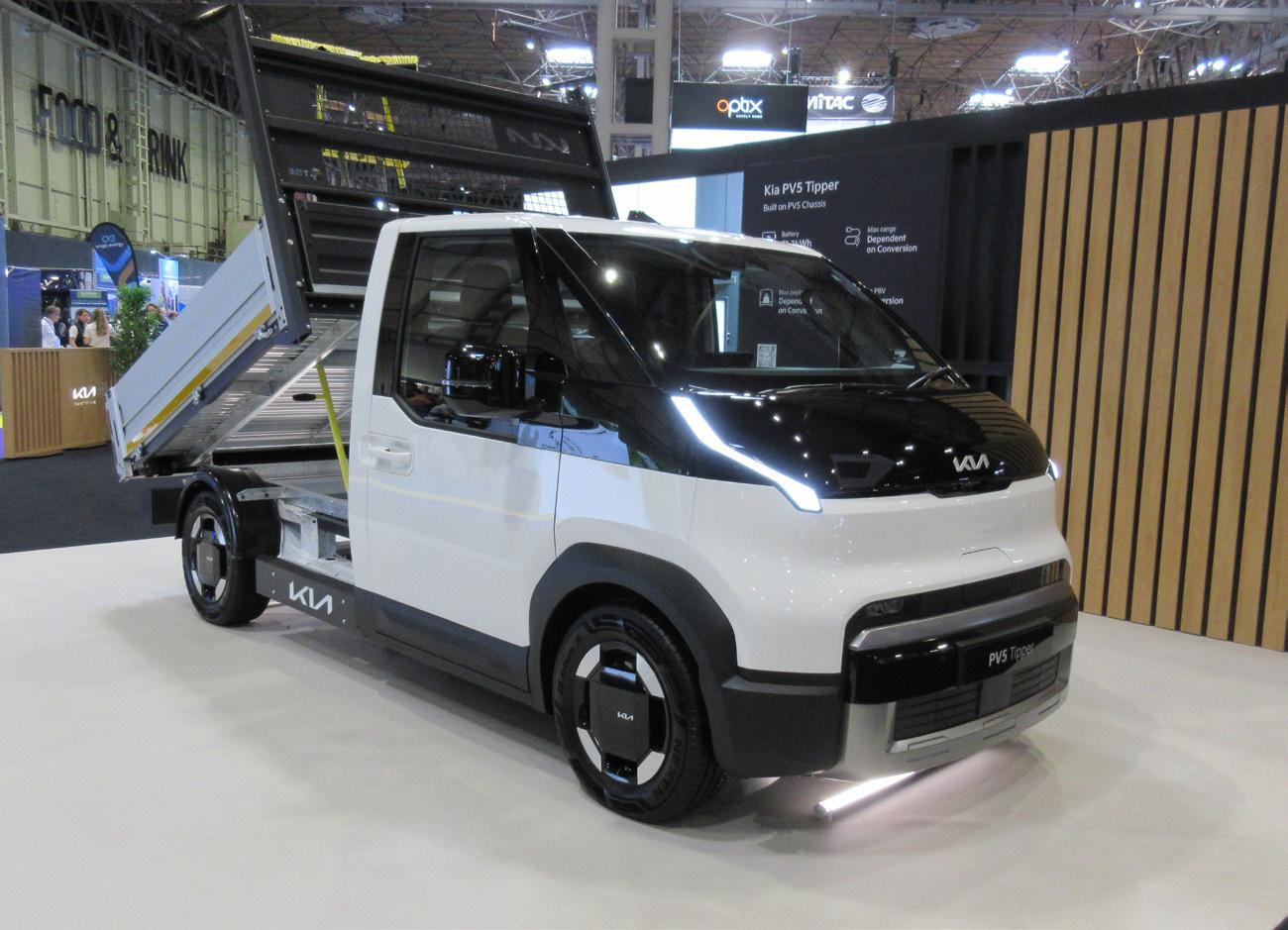

“Kia now has a number of UK conversion partners including CoolKit, TGS, Modul-System and GM Coachwork”
A practical alternative to diesel
Diesel is no longer the only realistic answer for long-haul transport. While battery-electric trucks attract much of the industry attention, compressed natural gas — particularly when fuelled by biomethane — is emerging as a serious lowcarbon solution for operators who need cleaner transport without sacrificing range, payload capability or operational flexibility.
For many fleets, CNG offers something increasingly valuable: a transition technology that already works in real-world haulage.
Turning waste into transport fuel
Biomethane is produced through anaerobic digestion, where organic waste such as food waste, livestock manure, sewage sludge and brewery by-products are broken down in oxygenfree conditions to create methane-rich gas.
Rather than allowing waste to decompose naturally and release methane directly into the atmosphere, the gas is captured, refined and upgraded into transport-grade fuel. The process effectively converts waste into usable energy while reducing landfill demand and agricultural emissions.
That circular energy process gives biomethane one of its strongest environmental advantages. When sourced from renewable feedstocks, biomethane can reduce CO2 emissions by around 80% compared with conventional diesel.
Where manure-based feedstocks are used, the environmental gains become even greater. Capturing methane from agricultural waste prevents a potent greenhouse gas from escaping into the atmosphere, meaning some biomethane pathways can potentially achieve net-negative lifecycle emissions.
For the freight industry, that represents a significant opportunity to reduce carbon intensity immediately rather than waiting for future technologies to mature.
Why the market Is growing rapidly
The UK biomethane sector has developed rapidly over the past few years. Platts’ introduction of a dedicated UK waste biomethane price index signalled that renewable gas has moved beyond niche status and into the mainstream energy market.
At the same time, local authorities across the UK continue expanding food waste collection schemes, creating larger volumes of feedstock for anaerobic digestion plants. Brewery waste, agricultural residues and commercial food processing waste are also increasingly entering the renewable gas supply chain.
As production volumes rise, operators are gaining greater confidence in long-term fuel availability and infrastructure investment.
Understanding CNG and LNG:
Two methane fuels, two different approaches
Both CNG and LNG use methane as their primary fuel source, but they differ significantly in terms of storage and application.

“The revised arrangement increases gas storage by 144 litres over the previous design and helps deliver a claimed operating range of up to 460 miles”
LNG: Maximum Range Capability
Liquefied natural gas is cooled to approximately -160°C, reducing its volume dramatically and increasing energy density. This makes LNG highly suitable for ultra-longdistance operations where maximum range between fills is essential.
However, LNG systems are technically more complex:
• Cryogenic storage tanks
• Specialist refuelling procedures
• Protective equipment requirements
• Potential fuel boil-off losses
CNG: Simpler, more practical operation
Compressed natural gas is stored at pressures typically between 200 and 250 bar. Although less energy dense than LNG, CNG systems are mechanically simpler and easier to manage.
For many UK trunking operations, particularly depot-based fleets, CNG now offers a highly workable balance between range, operating simplicity and emissions reduction.
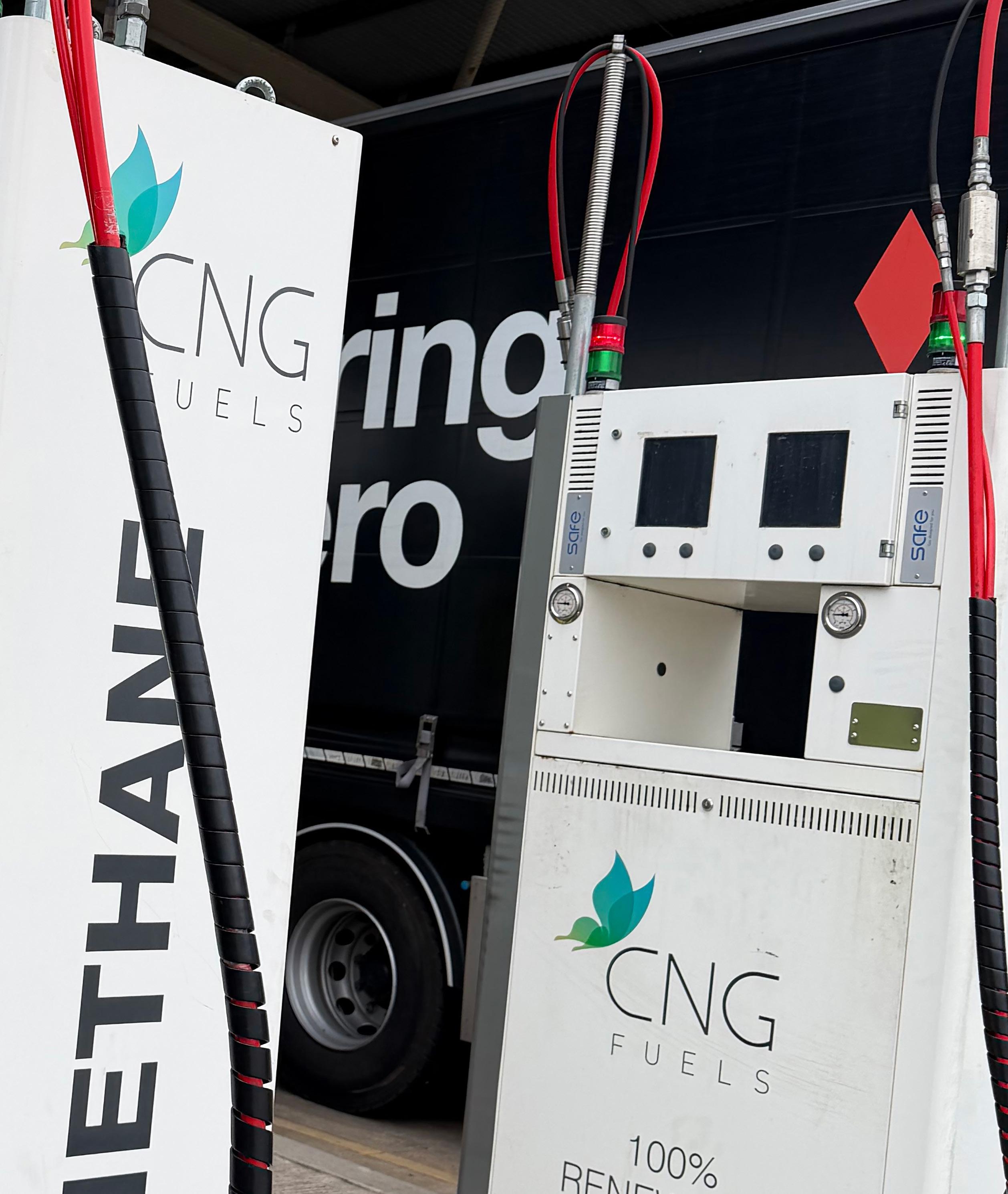
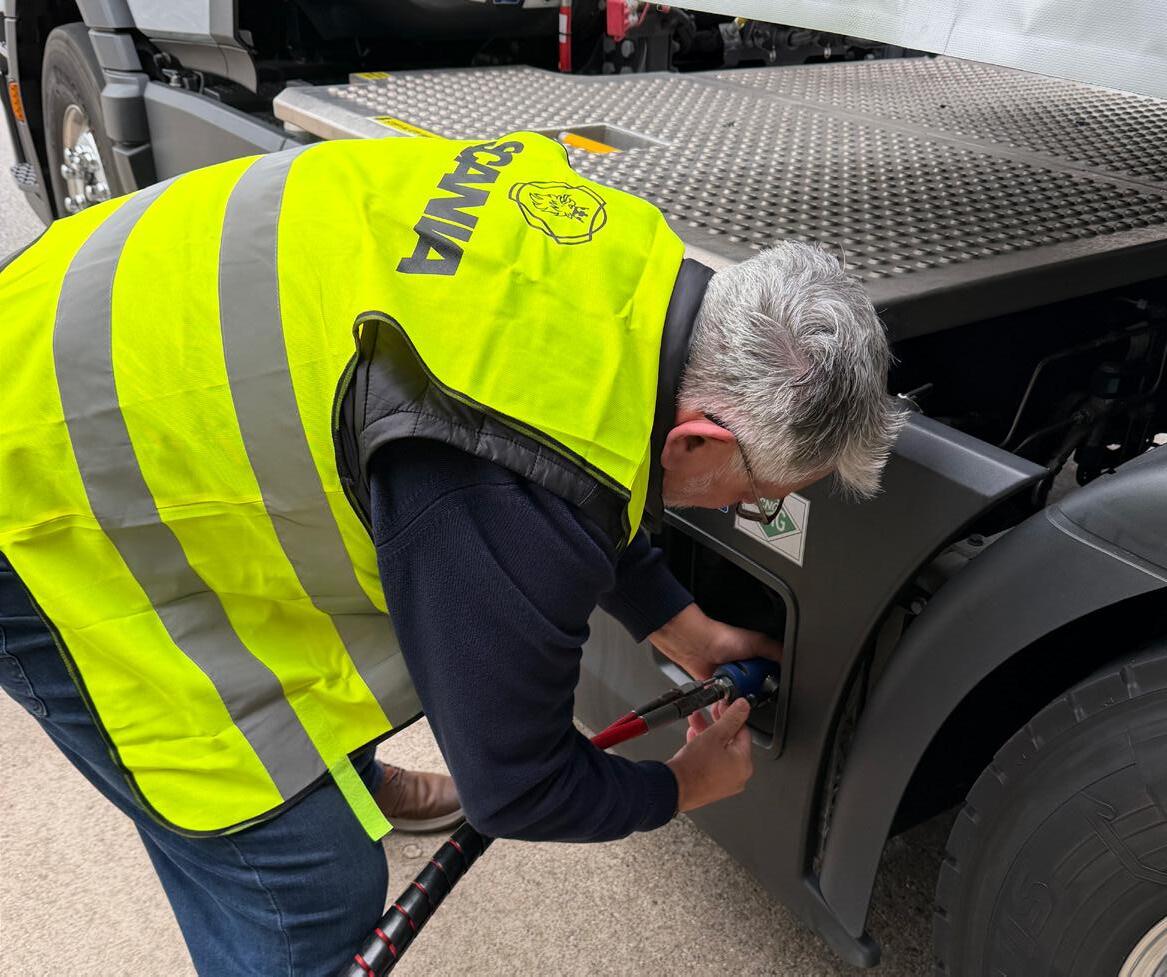
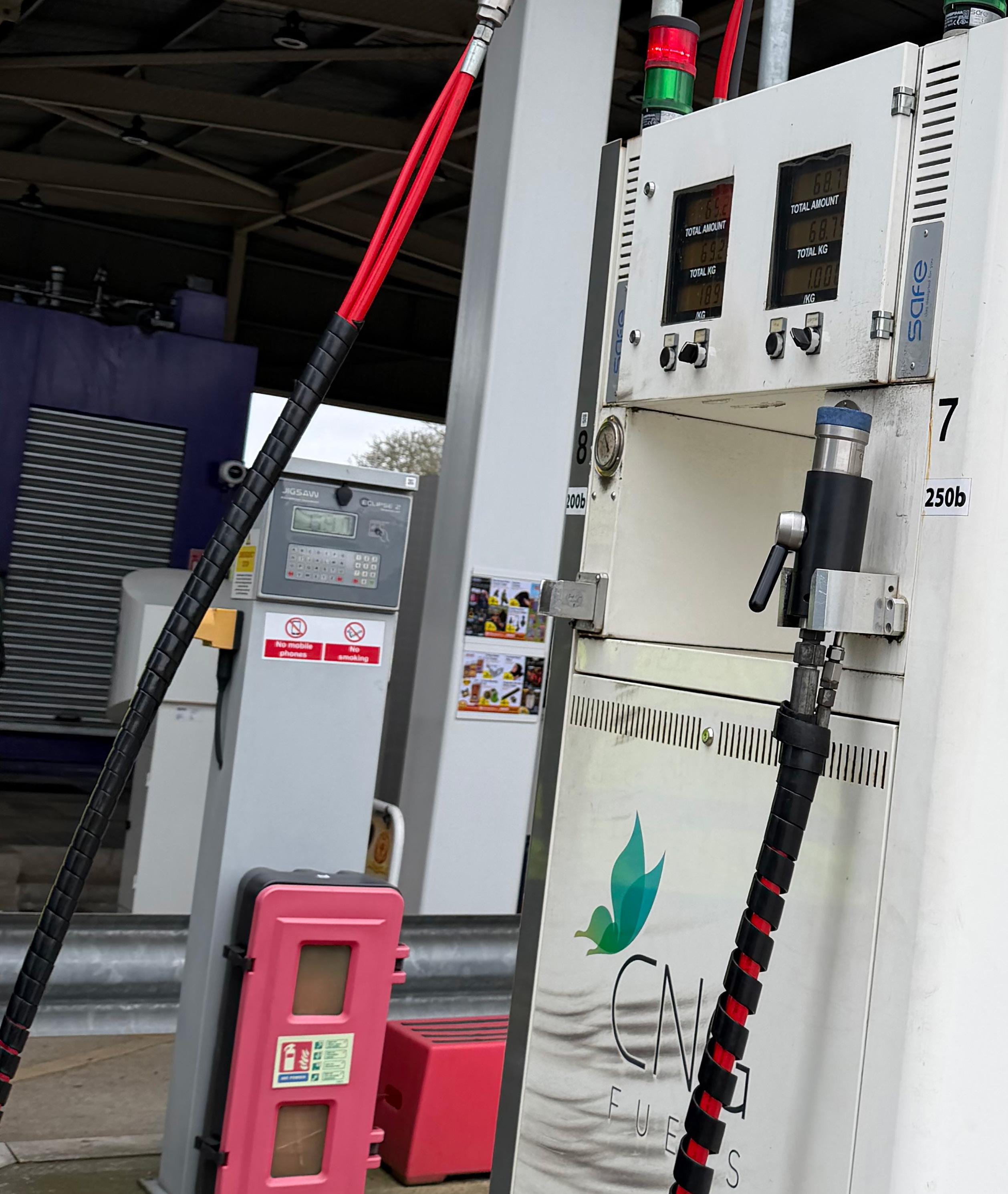
• Driver is not required to wear special PPE when filling with CNG
Scania’s R460 CNG:
Engineering a gas truck that feels like diesel
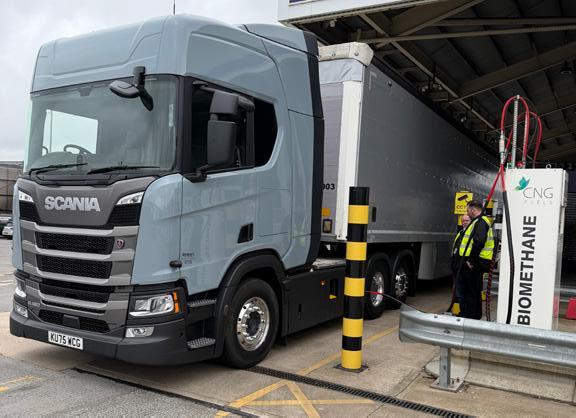
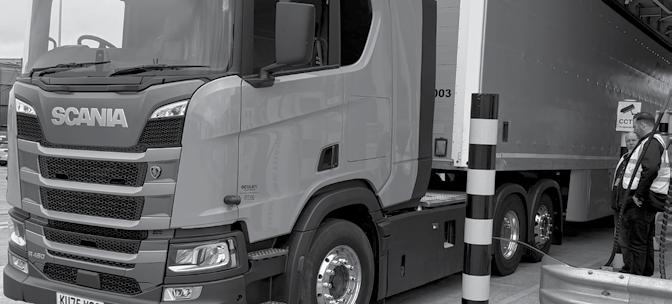
That balance is exactly what Scania has targeted with its latest R460 6x2 CNG tractor.
Power comes from the updated 13-litre OC13 sparkignition gas engine, available in both 420hp and 460hp outputs. The flagship 460 produces:
• 2,300Nm of torque
• Maximum torque from 1,000rpm
• Strong low-speed pull beginning at 900rpm
• Approximately 5% better fuel economy than the previous 410hp unit
The engineering goal was straightforward: create a gaspowered truck that behaves like a diesel.
Earlier gas engines often struggled with drivability under load, particularly at lower engine speeds. The revised OC13 addresses this through a broader torque plateau and improved calibration, allowing the truck to hold gears more effectively under heavy haulage conditions.

Paired with Scania’s latest Super driveline and Opticruise transmission, the result is a remarkably familiar driving experience.
Solving the 6x2 packaging Challenge: More fuel capacity without losing manoeuvrability
Designing a long-range 6x2 CNG tractor presents major engineering challenges because gas cylinders occupy considerably more space than conventional diesel tanks. Scania’s solution combines:
• Chassis-mounted fuel cylinders
• Additional cab-back gas storage
• Rear-steer tag axle configuration
• Aerodynamic front extensions permitted under revised EU length regulations
The revised arrangement increases gas storage by 144 litres over the previous design and helps deliver a claimed operating range of up to 460 miles.
The trade-off is additional vehicle weight. Compared with an equivalent diesel tractor, the CNG version carries an approximate 800kg payload penalty due largely to the fuel storage system.
For many long-haul operations, however, the compromise remains commercially acceptable given the substantial reduction in greenhouse gas emissions.
On the road at 44 tonnes:
Quiet, refined and surprisingly familiar
Fully freighted at 44 tonnes, the R460 CNG immediately challenges outdated assumptions about the driving characteristics of gas-powered heavy trucks.
Pull-away performance is smooth and progressive, while the latest Opticruise gearbox responds quickly and intuitively during junction approaches and roundabout work. Earlier automated gearboxes could feel hesitant or overly reactive, but the current system delivers far more natural behaviour.
Once on the motorway, the truck settles comfortably into long-haul operation. At 56mph, the engine turns at roughly 950rpm with minimal drivetrain intrusion into the cab.
Under acceleration, the gas engine feels composed rather than strained, maintaining steady torque delivery even under heavy load. Hill-climbing performance is particularly impressive given the vehicle’s weight and fuel type.
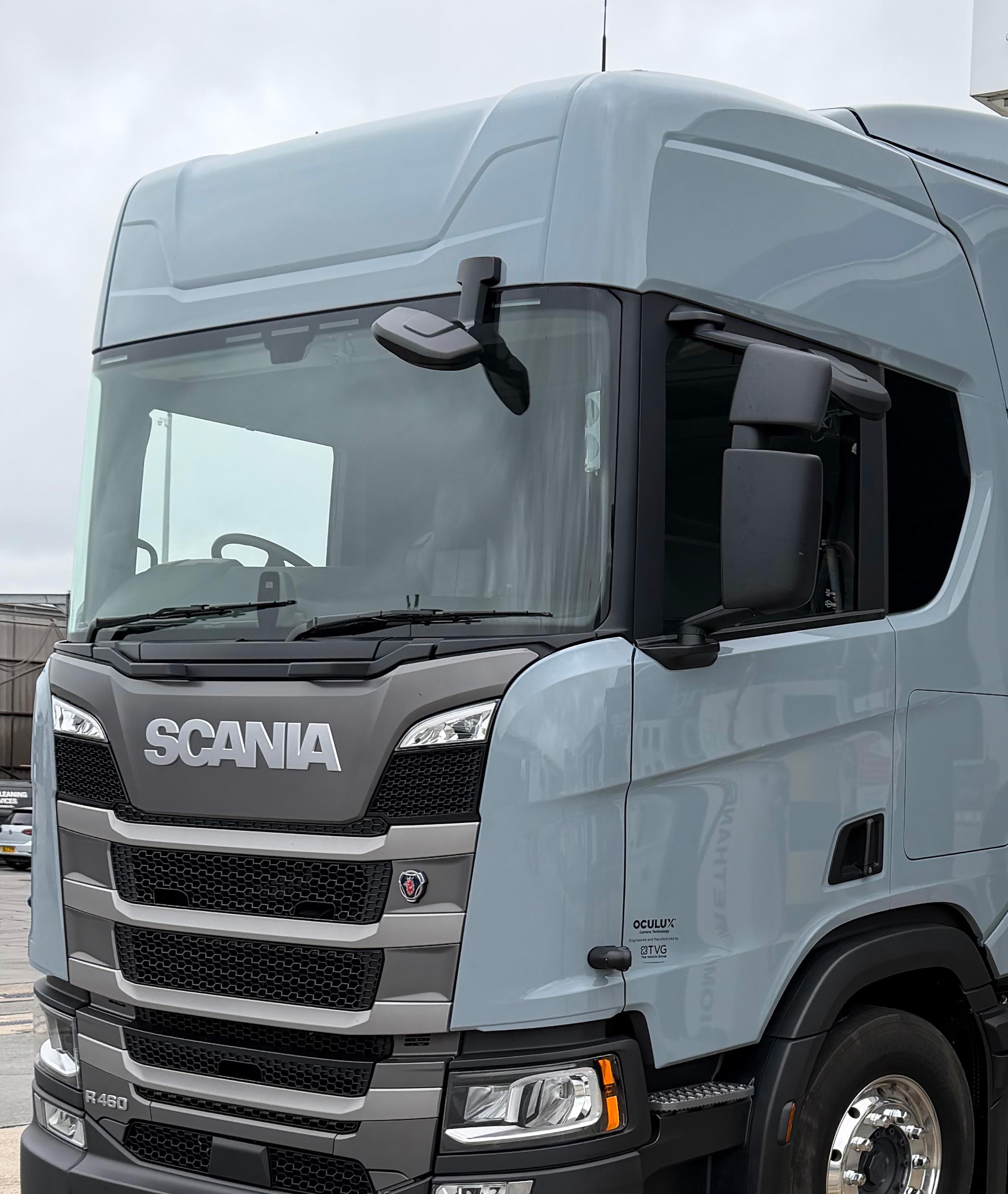
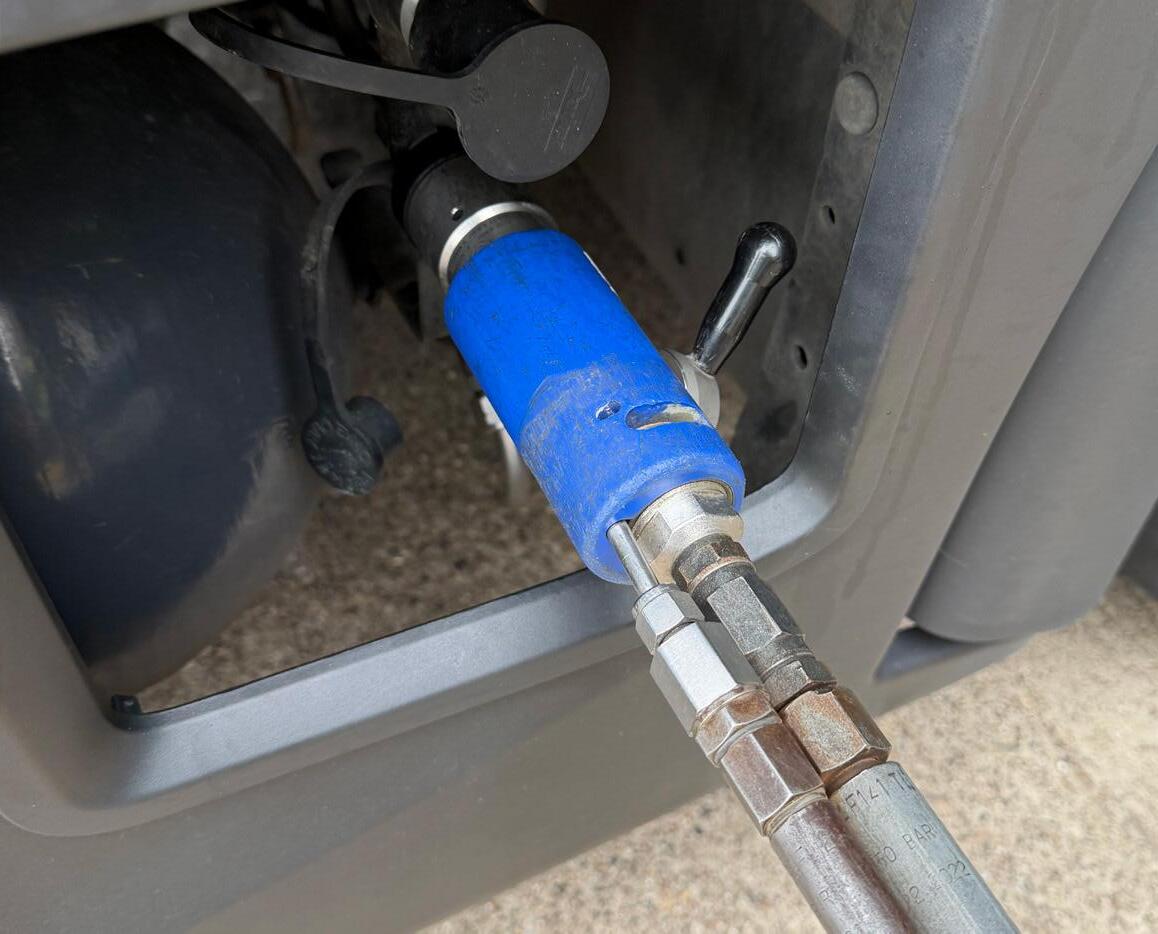
• CNG can now support longer-range haulage operations

The biggest operational difference appears on downhill sections. Unlike diesel engines, spark-ignition gas engines generate less natural engine braking, meaning the hydraulic retarder plays a more important role in speed control.
Otherwise, the similarities to diesel are striking.
Back-to-back against diesel:
The difference is smaller than expected
The real test came during direct comparison with Scania’s diesel-powered R460 Super.
On motorway gradients and slower A-road climbs, both vehicles performed almost identically. The diesel operated at slightly lower revs and retained marginally stronger braking characteristics, but acceleration, speed recovery and gear holding were remarkably close.
In practical terms, the gas-powered tractor never felt compromised.
That matters because operators will not adopt lowcarbon technology if it disrupts productivity, and drivers will not embrace vehicles that feel dramatically different from the trucks they already know.
Scania’s latest CNG tractor succeeds because it demands very little adaptation from either.
The realistic route to lower-carbon freight: Why biomethane may arrive before full electrification
Battery-electric trucks will continue growing in urban and regional distribution roles, while hydrogen remains a longer-term prospect for heavy transport.
But biomethane-powered CNG already works today.
• It supports long-range operation.
• It refuels quickly.
• It integrates into existing logistics patterns.
• It delivers major emissions reductions using fuel created largely from waste streams.
For fleets seeking immediate carbon savings without sacrificing operational capability, CNG is no longer a fringe alternative. It is becoming one of the most practical and commercially viable pathways toward lower-carbon freight transport.
And in the latest generation of trucks, the most impressive thing may simply be this: from behind the wheel, it barely feels any different from diesel at all.
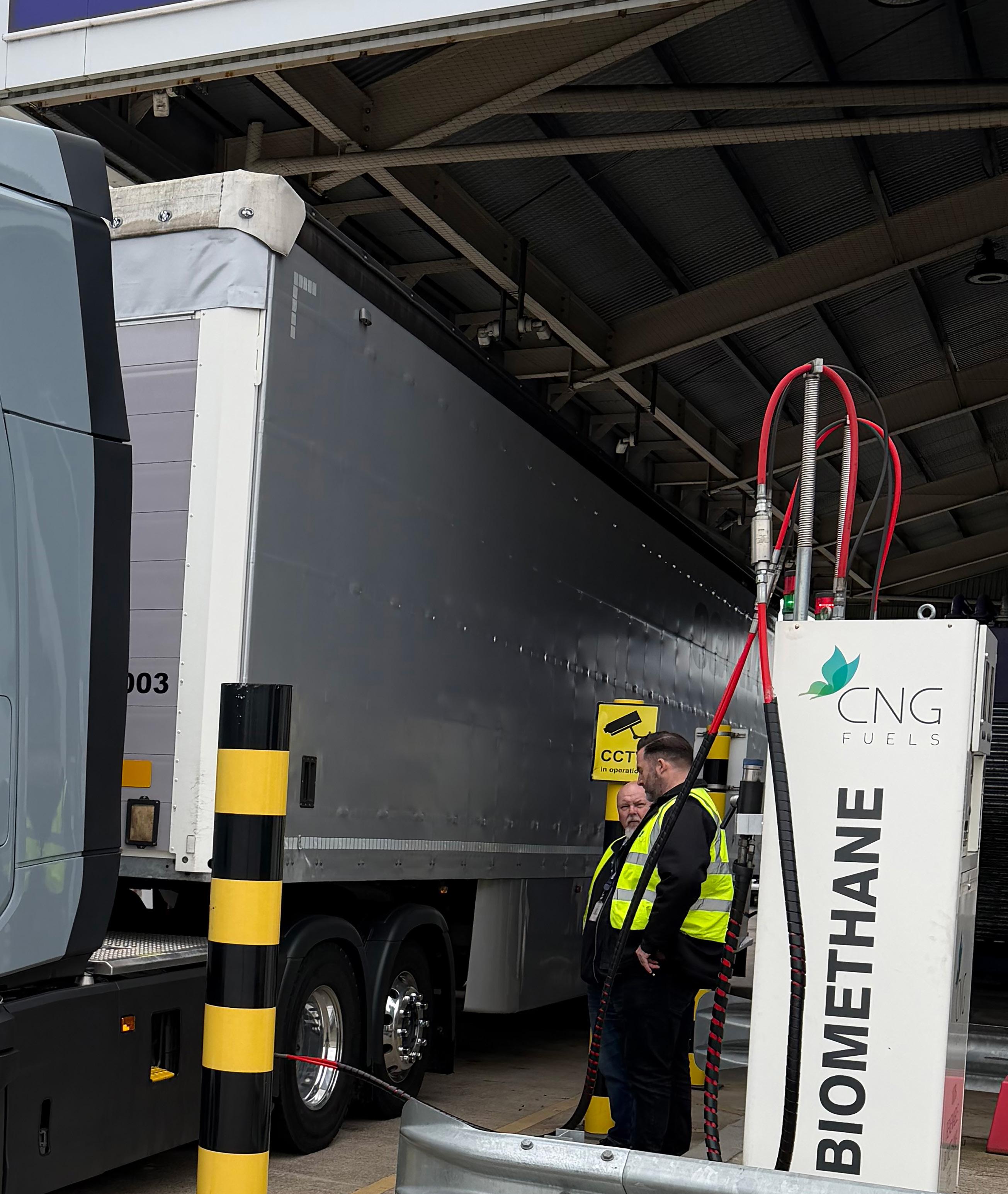

“For fleets seeking immediate carbon savings without sacrificing operational capability, CNG is no longer a fringe alternative”
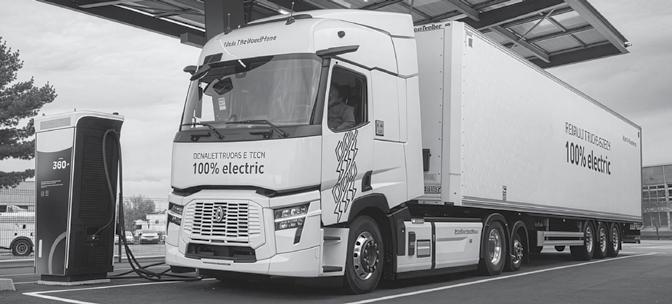
The UK’s 6x2 articulated tractor dominates long-haul freight – and the industry’s emissions. In 2024, articulated trucks lifted 998 million tonnes of goods in Great Britain, 63% of the total. Now Renault Trucks is extending its E-Tech range into this core segment with new 6x2 e-axle models offering up to 600km of range and megawatt charging capability. We spoke to Roger Clarke, Renault Trucks’ Head of Electromobility and Advanced Customer Solutions, about what this means for rea-world operations.
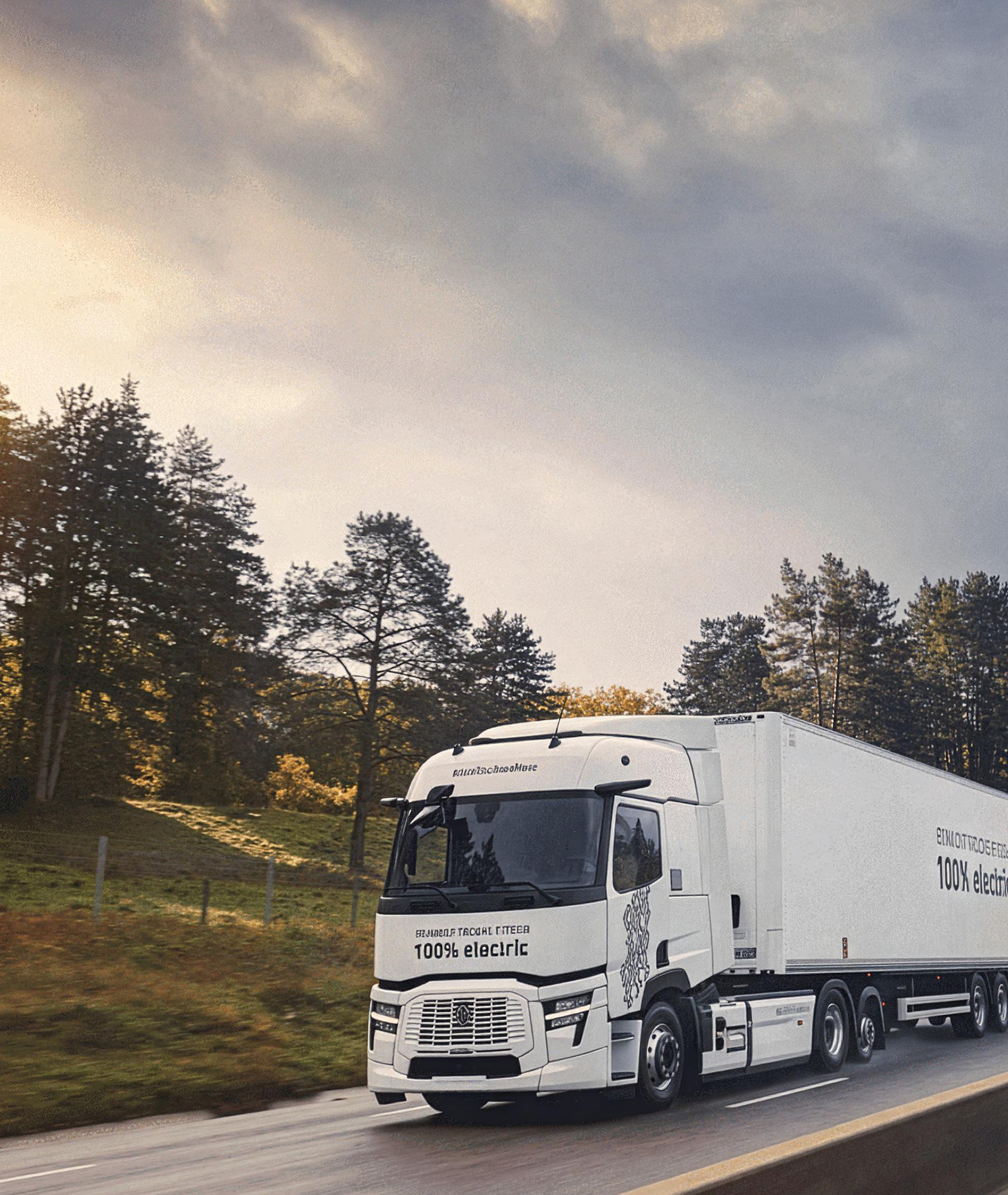

“According to the latest SMMT figures, battery-electric HGV sales in 2025 rose by 171% year-on-year.”
The segment that carries the weight If policy targets are to translate into measurable carbon reduction, attention must focus on the vehicles doing the heaviest work.
Government data shows articulated trucks moved 63% of all goods lifted in Great Britain last year – 998 million tonnes. Within that, articulated HGVs over 26 tonnes, most commonly in 6x2 configuration, account for approximately 60% of CO2 emissions from the road freight sector.
This is the mainstream of UK logistics: supermarket trunking, container haulage, pallet networks and long-distance general haulage. It is also where diesel remains embedded.
According to the latest SMMT figures, batteryelectric HGV sales in 2025 rose by 171% yearon-year. While that still represents just 1.4% of the market, demand is beginning to grow. Faster infrastructure rollout, grid connections and planning approvals will be needed to support wider adoption, while capital cost and payload sensitivity remain key concerns for operators.
Continued advances in truck technology will also play an important role in enabling the transition.
Renault Trucks’ decision to expand its long-haul electric offer – introducing significantly increased range in a 6x2 tractor configuration – is a notable example of that progress.
At Solutrans in November last year, Renault Trucks introduced three additions to its electric tractor line-up:
• E-Tech T780 6x2, up to 600km range
• E-Tech T585 6x2, up to 460km range
• E-Tech T540 4x2, up to 450km range
The two new 6x2 tractors are built around an integrated e-axle. Electric motors and transmission are positioned at the rear axle, enabling battery capacity to be distributed efficiently along the chassis.
Battery capacities stand at 585kWh for the T585 and 780kWh for the T780. Both use NCA battery systems covered by an eight-year or onemillion-kilometre guarantee.
The objective is clear: align electric capability with the operational profile of UK’s 6x2 trunking fleets.
E-Tech T585:
The likely UK 6x2 volume model
Renault Trucks expects the E-Tech T585 to see the strongest uptake in the UK for the 6x2 models. It offers a stated 23-tonne payload alongside up to 460km of range and provides 80% of the payload capacity of a comparable 6x2 Renault Trucks diesel.

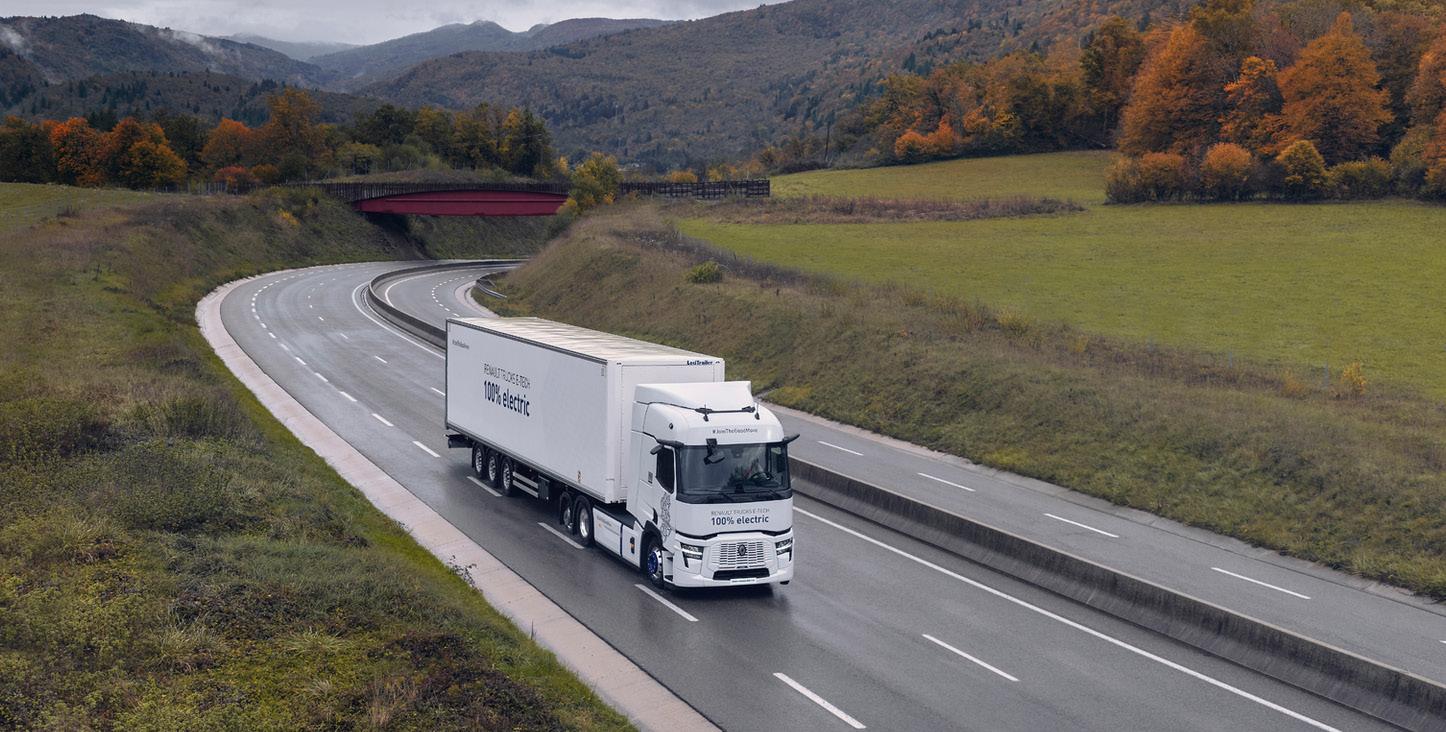

Clarke says. “Our assessment is that most operators do not operate at maximum GCW on 6x2 diesel units. Based on the offering today in the market, we believe this is simply the most productive BEV in the industry in the UK.”
The commercial argument rests on real-world loading patterns rather than theoretical maximum weights. Fleets consistently operating at full gross combination weight will need to evaluate carefully. Others may find the differential less significant than anticipated.
The E-Tech T780 increases battery capacity to 780kWh, extending range up to 600km.
The additional range provides greater flexibility for longer trunking operations or routes with limited charging access.
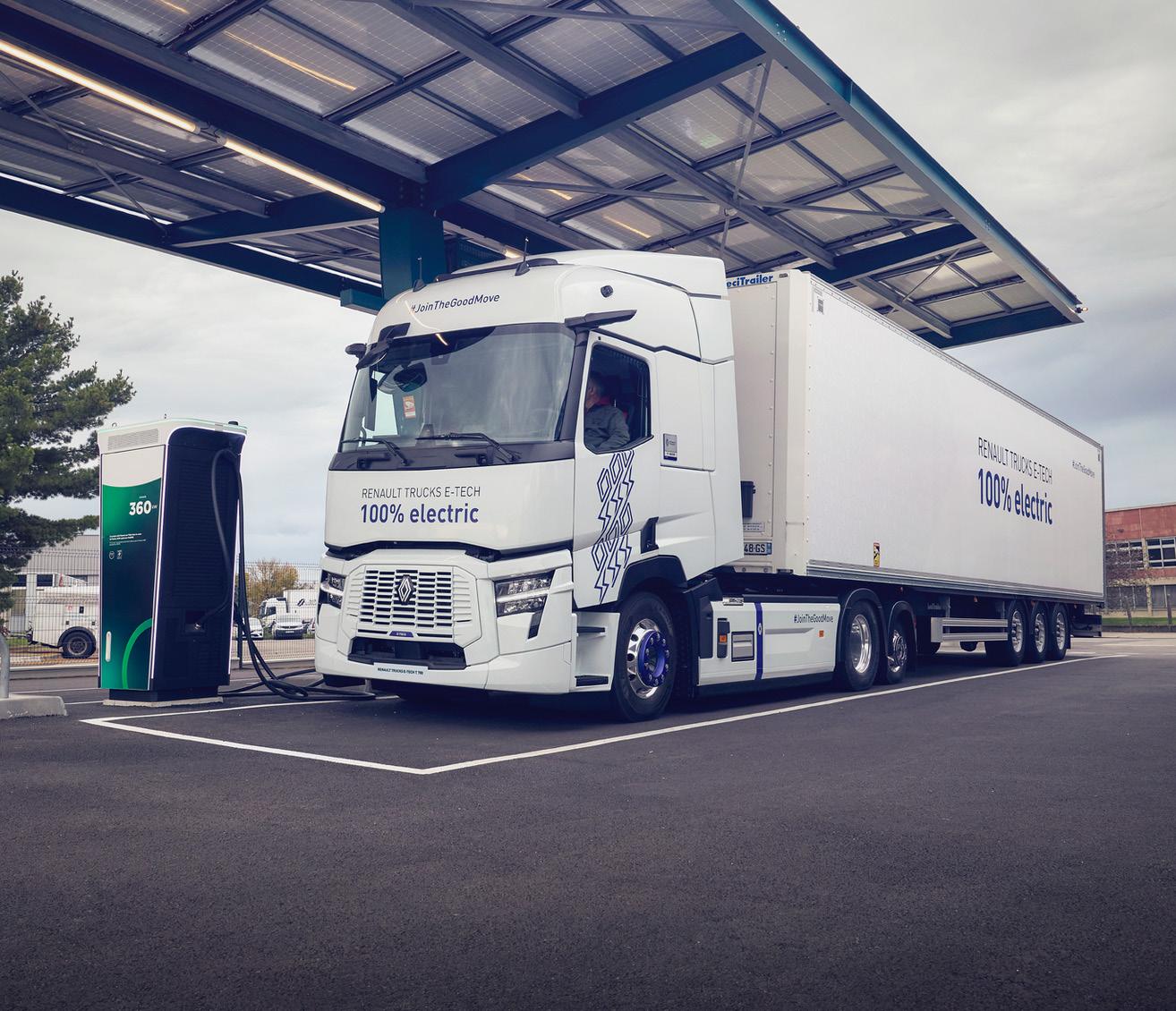
Both long-haul E-Tech T models are equipped for Megawatt Charging System (MCS) capability of up to 720kW. Renault Trucks states this can add approximately 350km of range during a 45-minute statutory driver break. CCS charging is possible up to 350kW.
“Customers that are buying trucks today may be using those vehicles for the next 10 years, and they need to start thinking MCS,” says Clarke. “It will be commonplace in the next few years. For some operators, the next buying cycle may be the point where diesel is no longer the default choice.”
While MCS infrastructure deployment across the UK is just starting to roll out, commercial vehicle readiness is increasingly regarded as a necessary hedge against future network expansion.
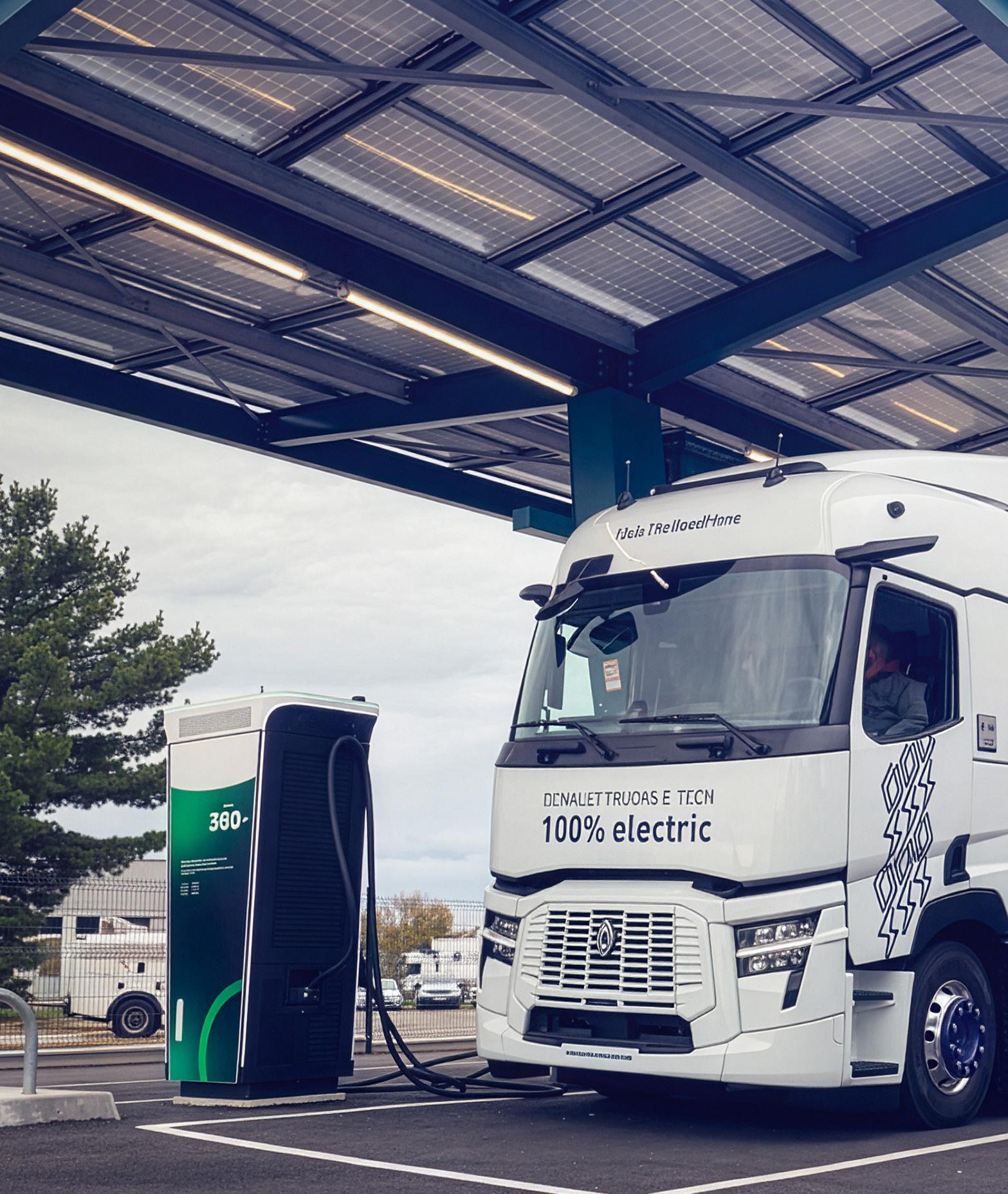

The E-Tech T540 becomes the new 4x2 offer with up to 450km on a single charge for regional and urban distribution work.
For many operators, regional trunking represents the most immediate electrification opportunity. Predictable routes and depot returns simplify charging integration. “It’s about specifying the right truck for the job,” notes Clarke.
Aftersales and operational continuity
Alongside the vehicles themselves, Renault Trucks supports the range with Optifleet, it’s ‘turnkey fleet management solution’ for planning and monitoring.
“Thanks to our years of experience in electromobility, we’ve developed a range of support services to help operators transition to electric with real confidence,” Clarke adds.
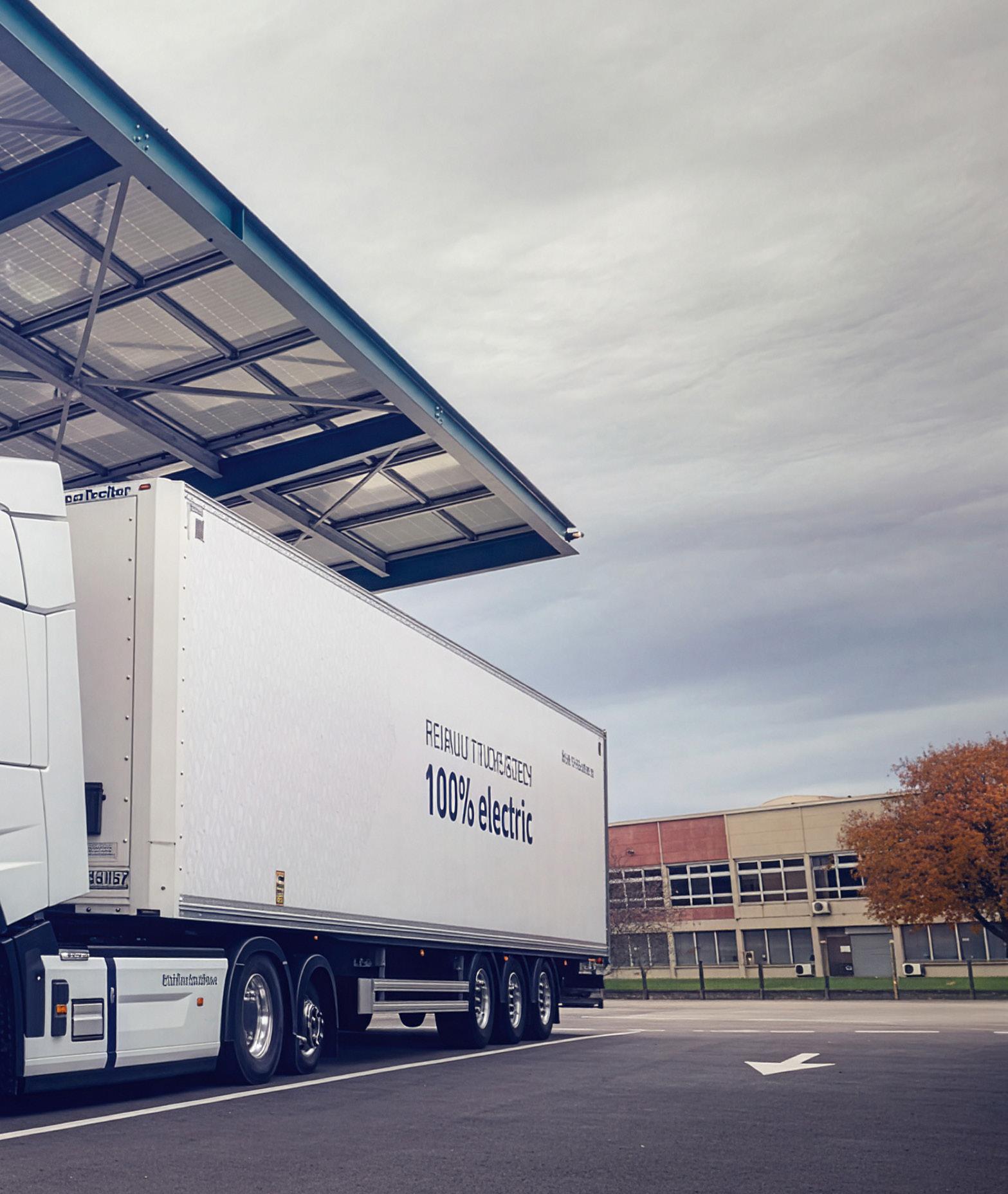
“These include our Driver App, which allows drivers to check charging status and remotely prepare the vehicle; as well as our Serenity Pack, which provides full contract coverage including wear, repair and maintenance; together with a traction battery performance commitment and active monitoring of the energy storage system. Our Serenity Pack also provides data support and user-friendly dashboards to ensure operators maximise the performance of their electric vehicles.
“Maintaining uptime remains fundamental. Predictive maintenance and remote diagnostics are designed to reduce unplanned downtime, which is critical for operators evaluating the move to electric,” he adds.
The 6x2 articulated tractor is the backbone of UK freight and one of its largest emissions sources. Electrifying this segment is central to any credible net zero pathway.
With its latest E-Tech additions, Renault Trucks is putting long-haul 6x2 electric tractors onto the agenda for UK fleet planning.

“Customers that are buying trucks today may be using those vehicles for the next 10 years”
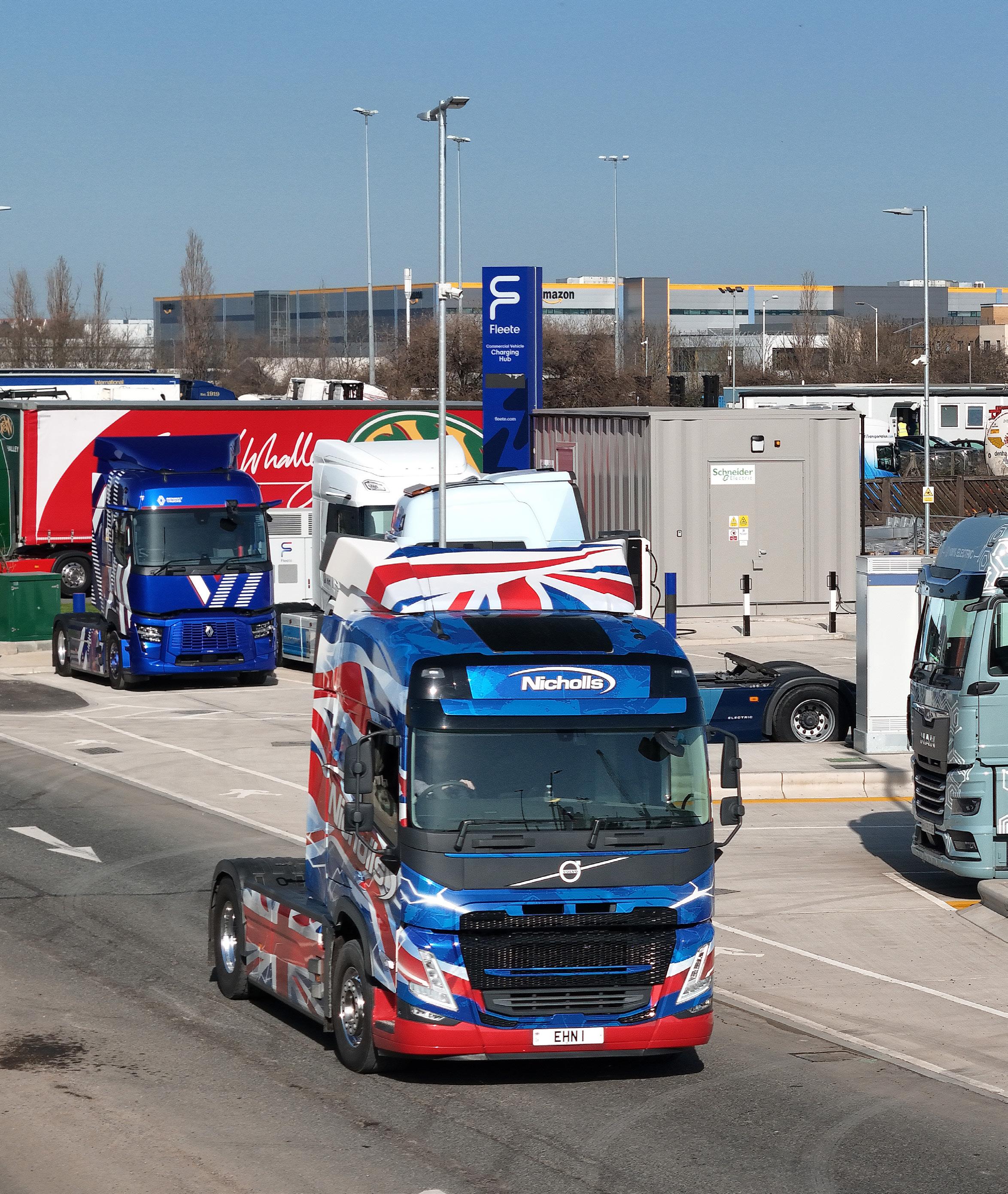

“The charging hub will support the increasing number of electric HGVs operating through the port and along the A13 corridor into London.”
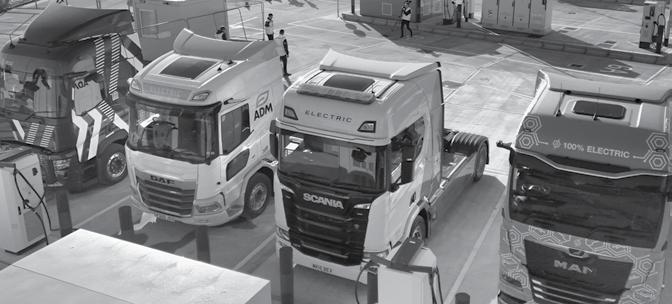
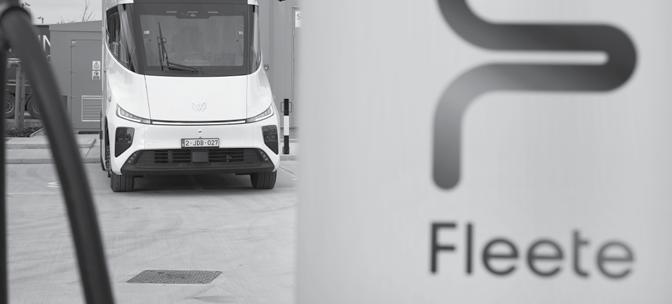
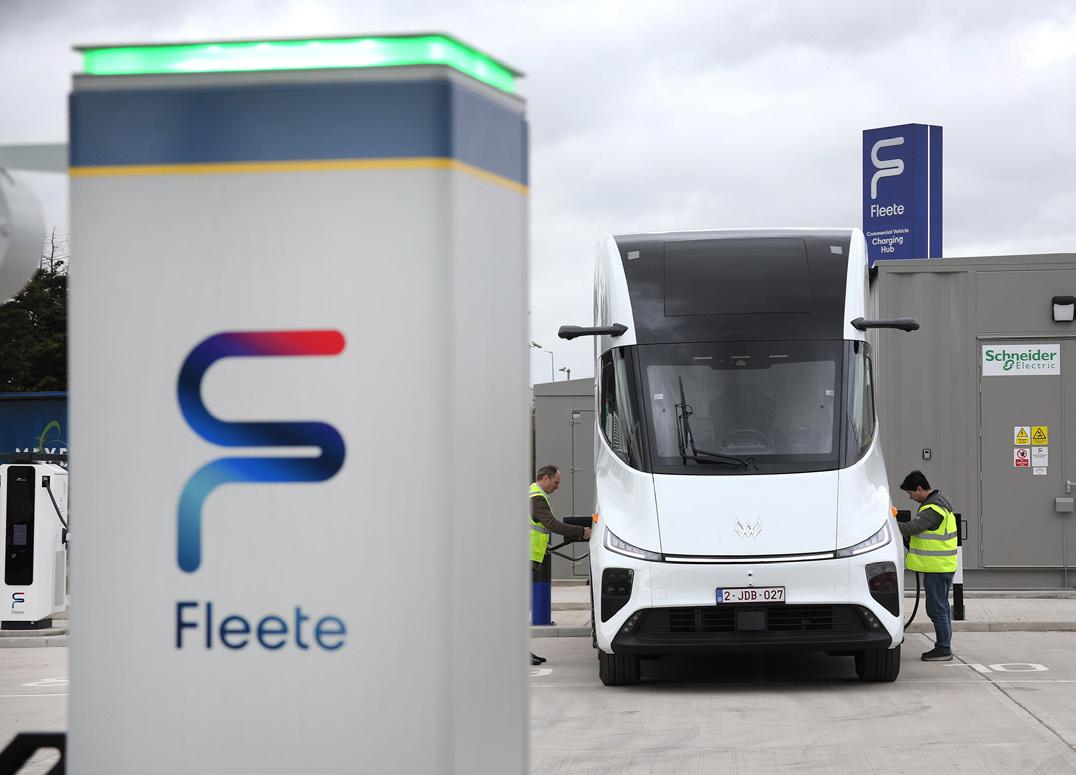
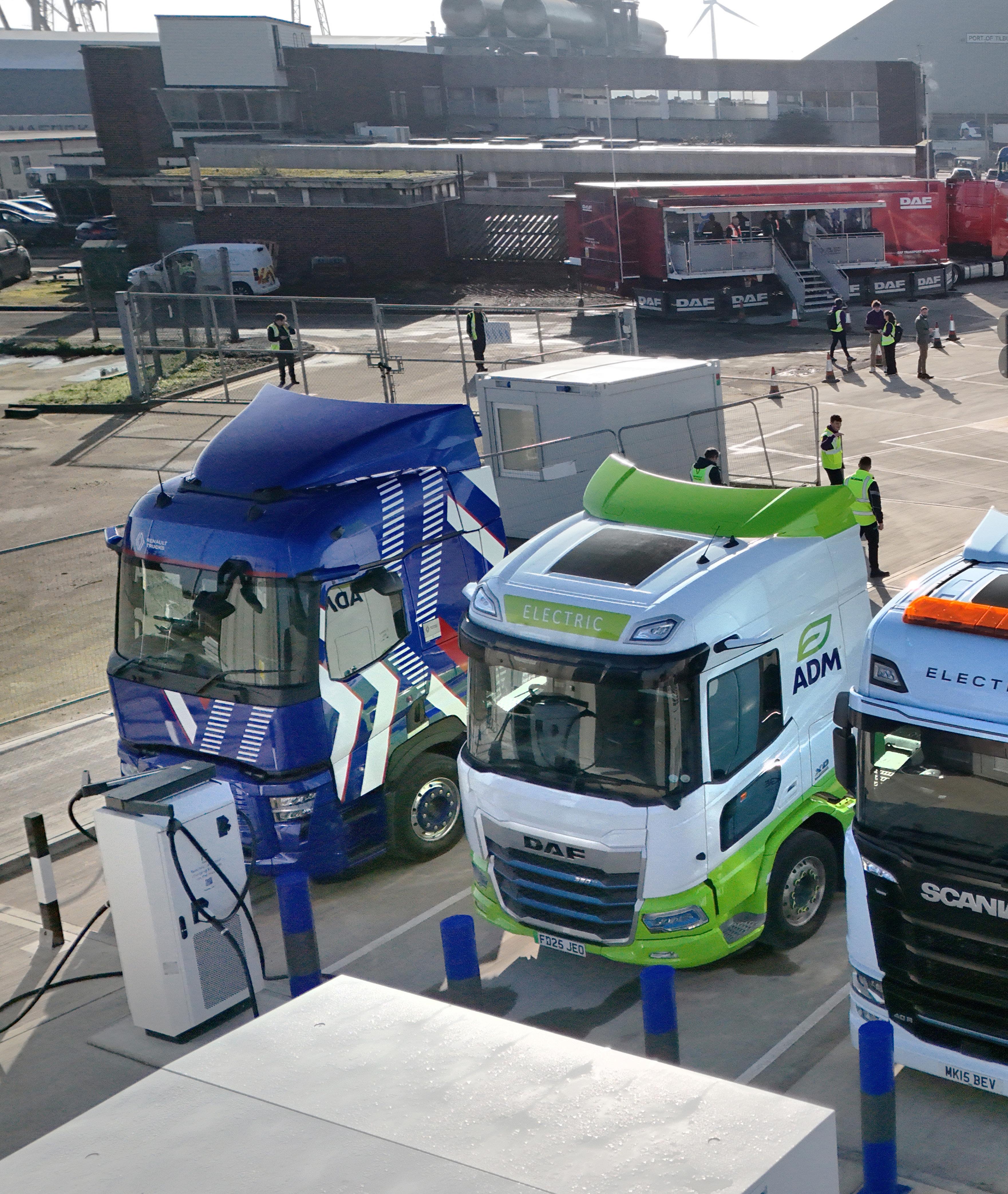
Fleete has opened the UK’s largest dedicated electric charging hub for commercial vehicles at the Port of Tilbury, marking a major step forward in the decarbonisation of Britain’s freight and logistics industry.
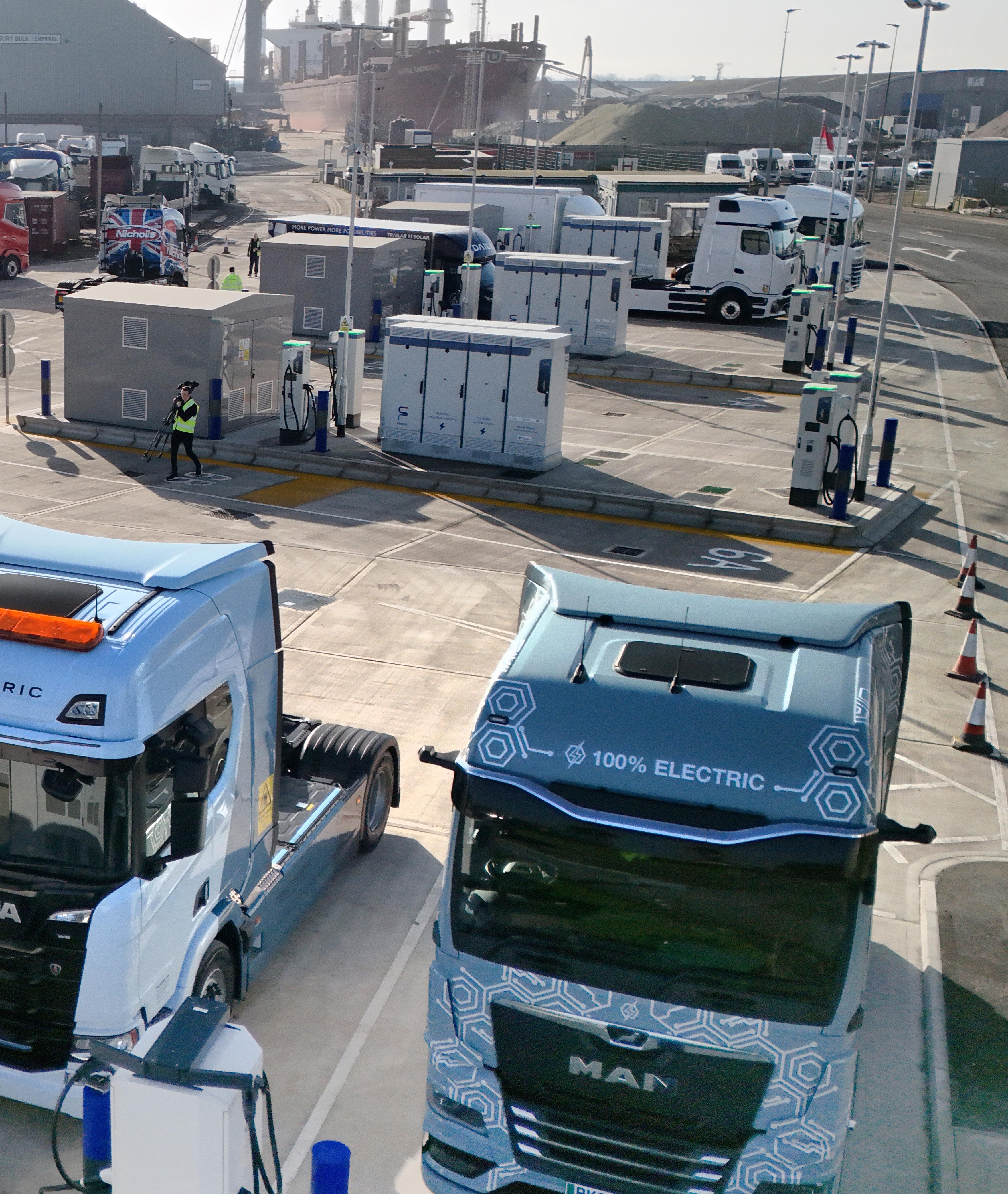
The new 5MW facility, officially unveiled on Friday, is equipped with 16 ultra-rapid chargers capable of powering up to 16 electric heavy goods vehicles simultaneously. It is the first in a planned nationwide network of shared charging hubs aimed at helping fleet operators transition to zero-emission transport without the need for costly depot upgrades.
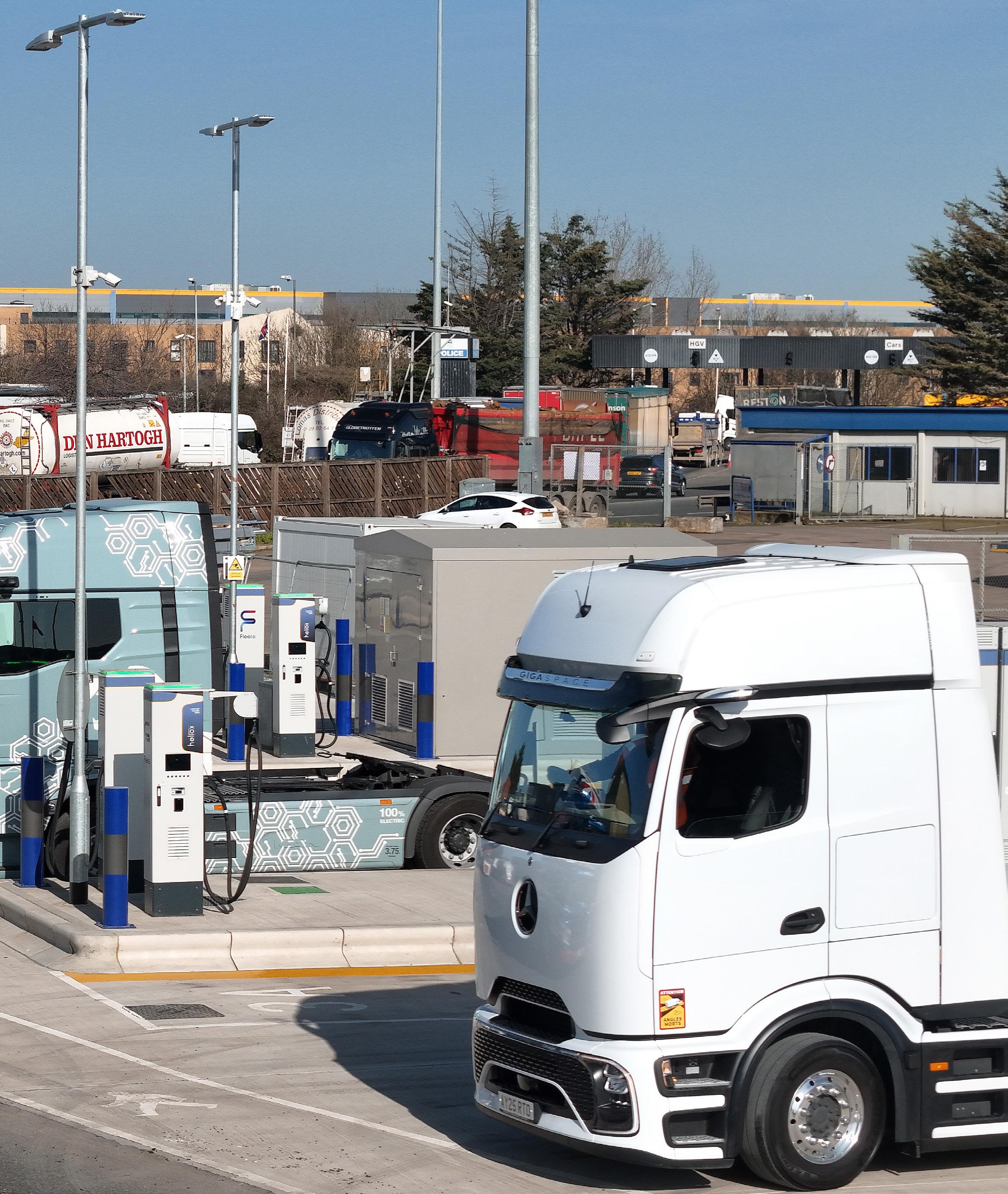
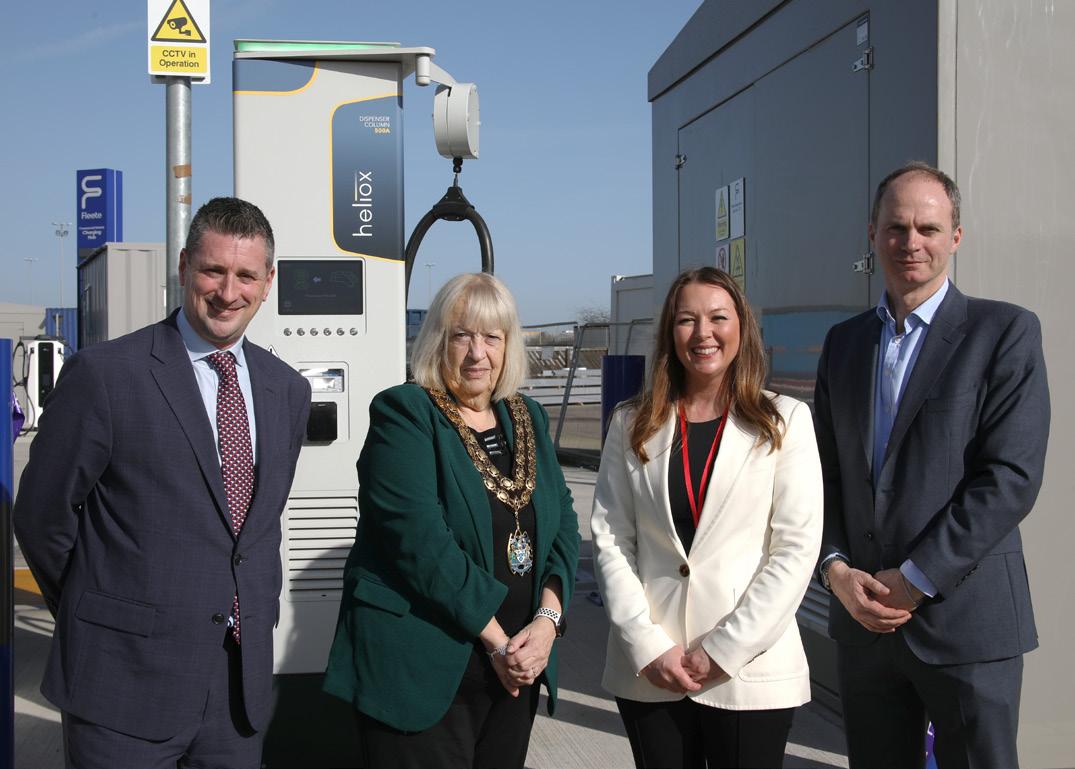
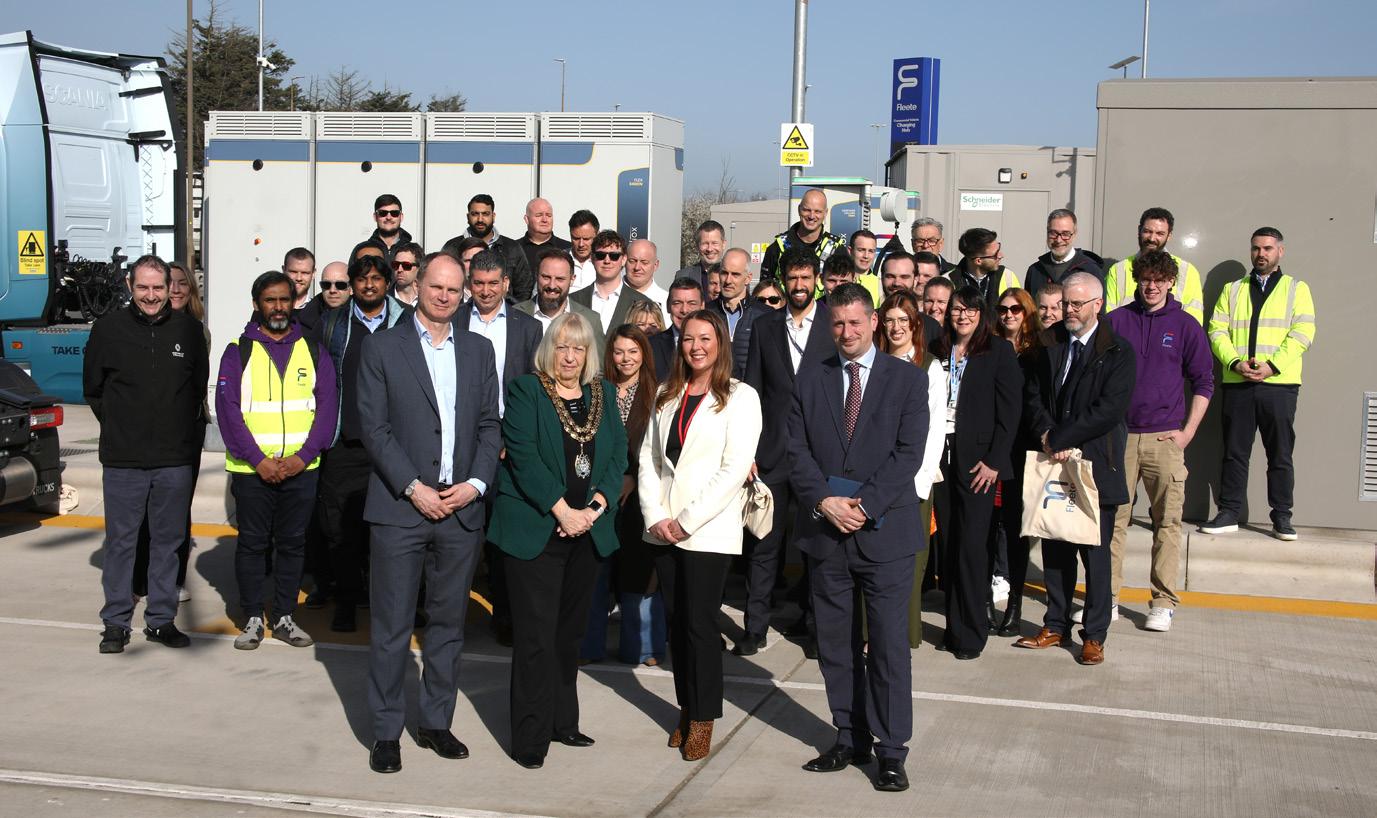
• Mayor Shinnick was present to cut the ribbon at the charging hub’s opening ceremony
Developed by Fleete in partnership with the Port of Tilbury and Thames Freeport, the project received £1 million in government support through the Thames Freeport Seed Capital Programme, alongside additional funding from the Department for Transport-backed Zero Emission HGV and Infrastructure Demonstrator programme.
The charging hub sits at one of the country’s busiest multimodal freight gateways and is expected to support the increasing number of electric HGVs operating through the port and along the A13 corridor into London. It will also provide infrastructure for major construction schemes including the Lower Thames Crossing project, where contractors are beginning to switch to electric fleets to cut emissions.
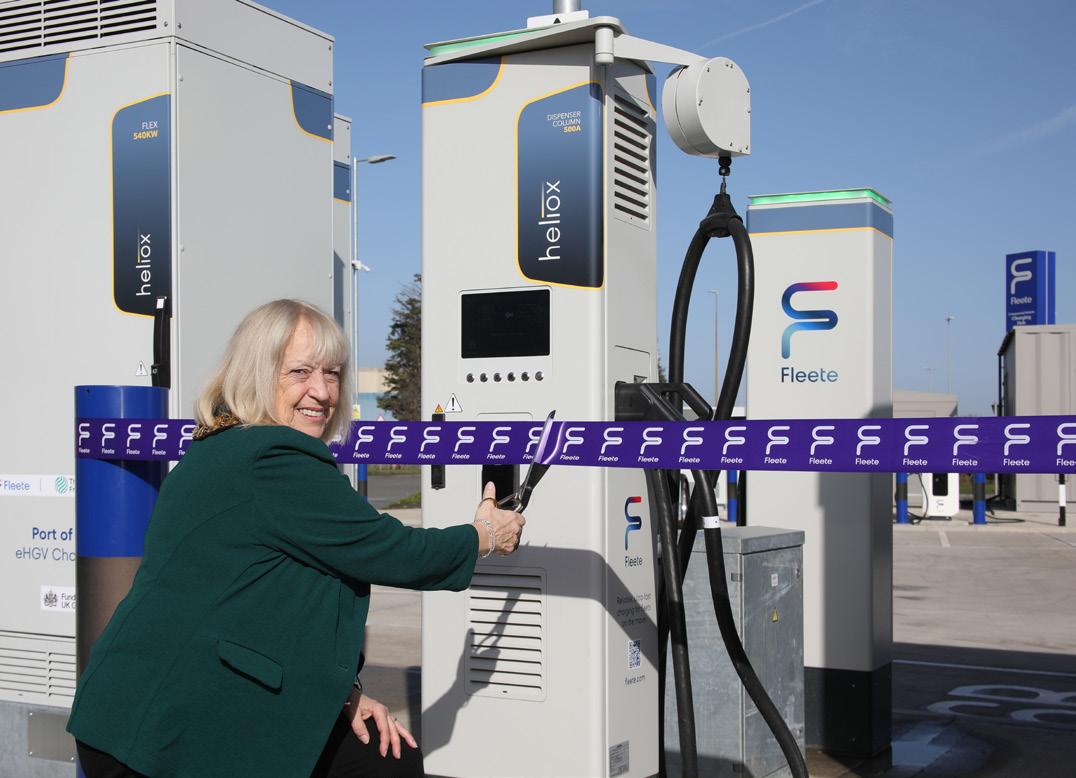
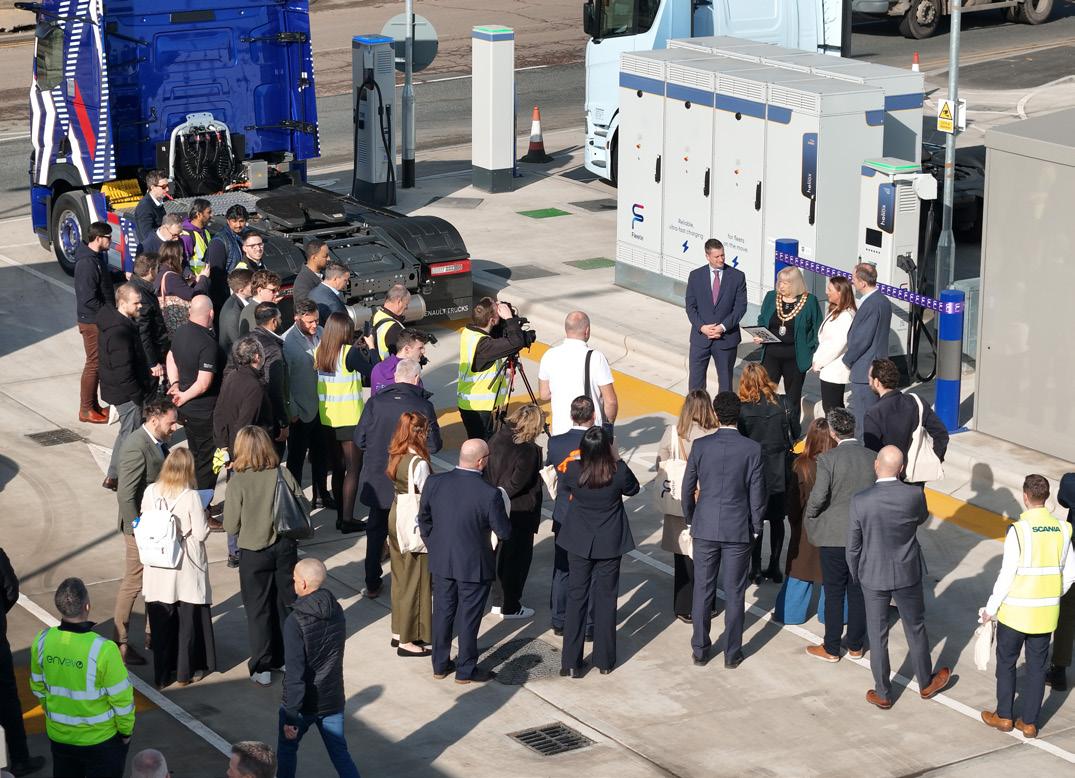

The site was formally opened by Sue Shinnick during a ribbon-cutting ceremony attended by industry representatives, project partners and fleet operators.
Speaking at the launch, Mayor Shinnick said the development demonstrated the impact of collaboration between industry, local government and Thames Freeport in driving cleaner transport solutions.
“This investment supports cleaner transport, improves air quality for our communities, and reinforces Thurrock’s role in adopting practical, forward-looking low-carbon solutions,” she said.
The facility uses a shared-user charging model, allowing multiple fleet operators to access high-capacity charging infrastructure without building dedicated facilities of their own. Industry leaders say the approach could help overcome key barriers to fleet electrification, including limited grid capacity, land availability and upfront infrastructure costs.
The hub includes six Siemens Flex 540kW chargers and 12 dispensers spread across three charging islands, each capable of future upgrades to Megawatt Charging System standard. An additional four charging points supplied by Power Electronics can currently deliver up to 270kW per vehicle, with capacity to increase to 360kW.
• Charging hub will benefit operators using the port and working along the A13 corridor into London

Chris Morrison described the opening as a landmark moment for both the company and the logistics sector as a whole.
“The Port of Tilbury hub shows what’s possible when industry and government work together to deliver infrastructure at scale,” he said. “We’re helping accelerate the transition to zero-emission commercial transport where it’s needed most.”
Transport minister Keir Mather said the investment formed part of the government’s wider efforts to decarbonise road freight while supporting economic growth.
“Road freight is the backbone of our economy, keeping goods moving and businesses growing,” he said.
“By supporting the sector to go electric, we’re cutting emissions and backing the industry to thrive long into the future.”
Port officials and business groups welcomed the development, describing it as a critical piece of infrastructure for the future of UK logistics.
David Webster said the site would help operators reduce emissions while maintaining efficient freight operations, while Ben Fletcher called the project “precisely what is needed” to encourage more operators — particularly smaller firms — to switch to electric fleets.
The project is also expected to support jobs and attract further investment into the Thames Freeport region as demand for sustainable freight infrastructure grows.

“Road freight is the backbone of our economy, keeping goods moving and businesses growing”
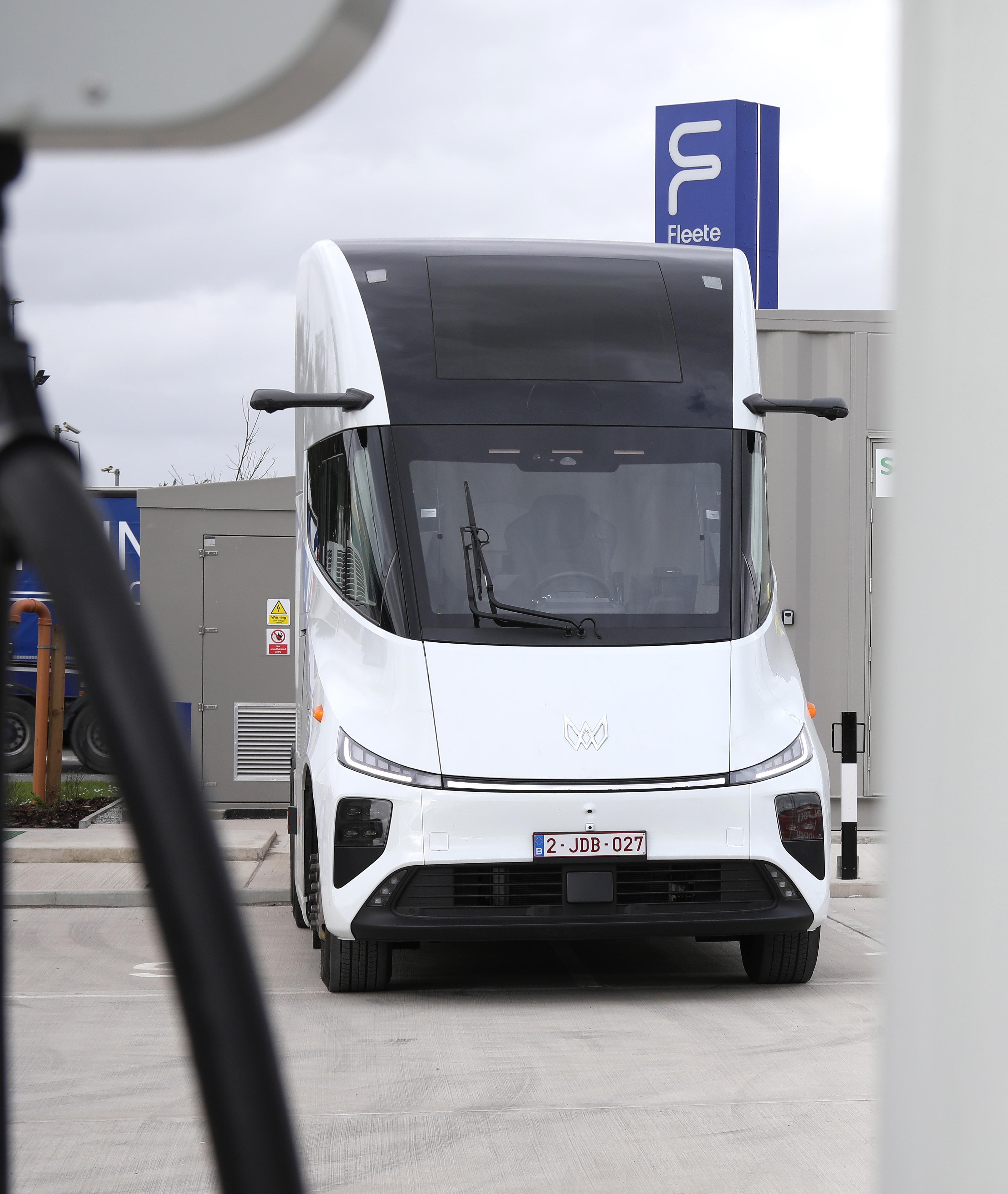

“Equipped with a battery capacity exceeding 700kWh, the Global E700 uses a flexible four-battery pack”
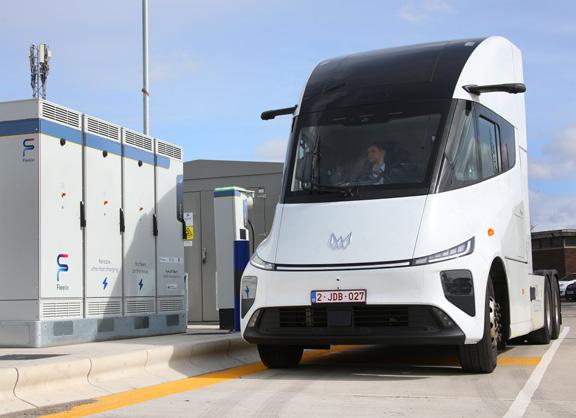
Belgium-based electric truck manufacturer Windrose Technology has marked its UK debut with the first domestic charge of its flagship Global E700 commercial vehilcle at at the Port of Tilbury.
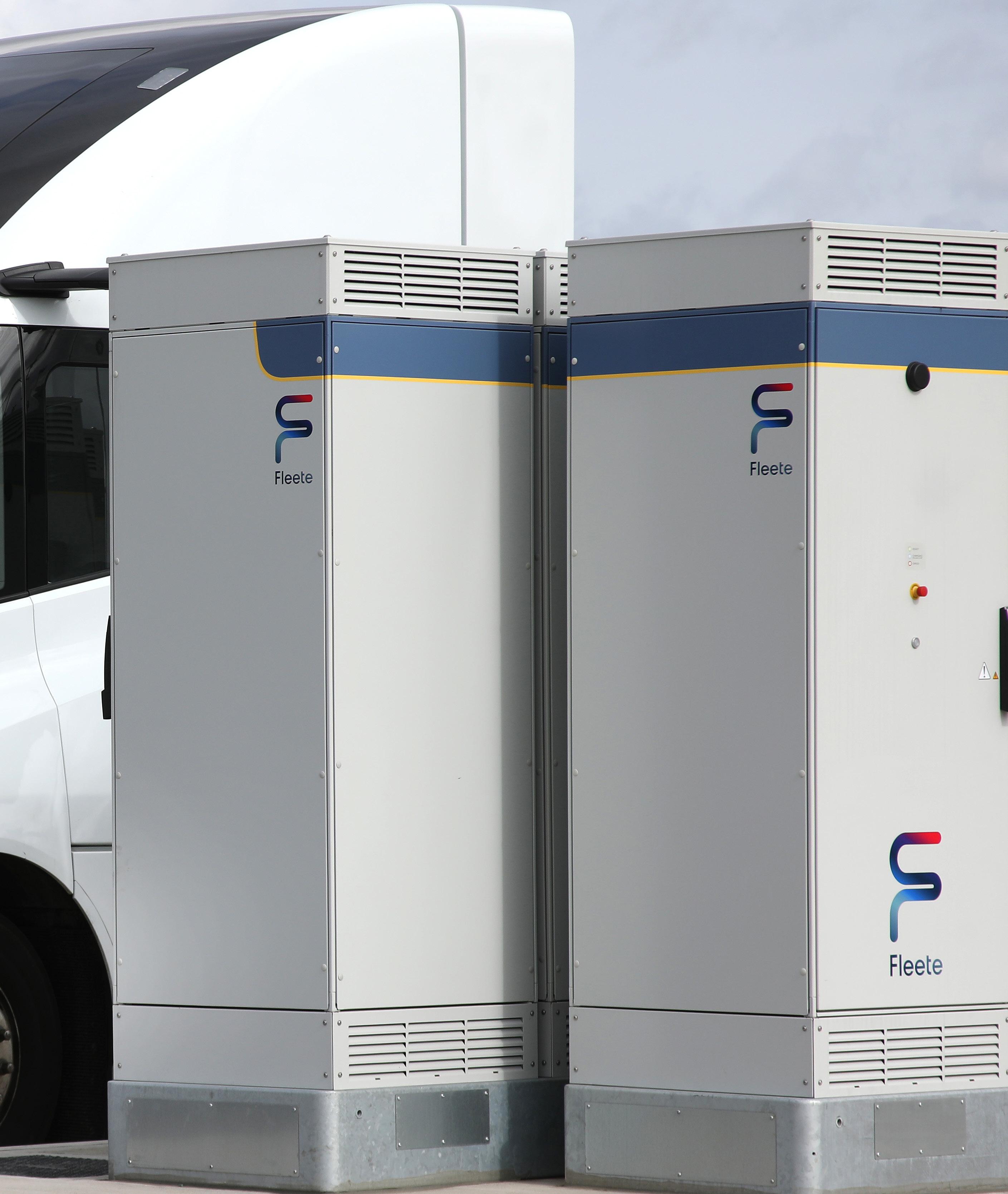
The Windrose Global E700 6x4 tractor unit arrived in the UK in March and headed directly to Fleete’s new 5MW charging facility, where it successfully completed its inaugural UK charging session.
The vehicle, which features a distinctive centre-driver cab layout, was preparing to begin a nationwide demonstration tour of logistics depots and truck charging sites across the country. The tour was intended to showcase how long-range electric heavy goods vehicles (eHGVs) can operate on UK freight routes using next-generation highpower charging infrastructure.
Equipped with a battery capacity exceeding 700kWh, the Global E700 uses a flexible four-battery pack configuration designed for demanding freight operations.
According to Windrose, the truck is capable of travelling more than 700km on a single charge, even when fully laden and operating at motorway speeds.
The truck comes ready for both Megawatt Charging System (MCS) and CCS2 charging standards, enabling compatibility with high-power charging hubs such as Fleete Tilbury.
Fleete’s Tilbury hub is capable of charging up to 16 electric trucks simultaneously and includes six Siemens Flex 540kW chargers and 12 Flex 500A dispensers arranged across three charging islands. Each island has been designed with future MCS upgrades in mind.
The site also features four charging points powered by Power Electronics technology, incorporating two NB cooled dispensers and one NB Station system capable of delivering up to 270kW per charging point, with expansion potential to 360kW.

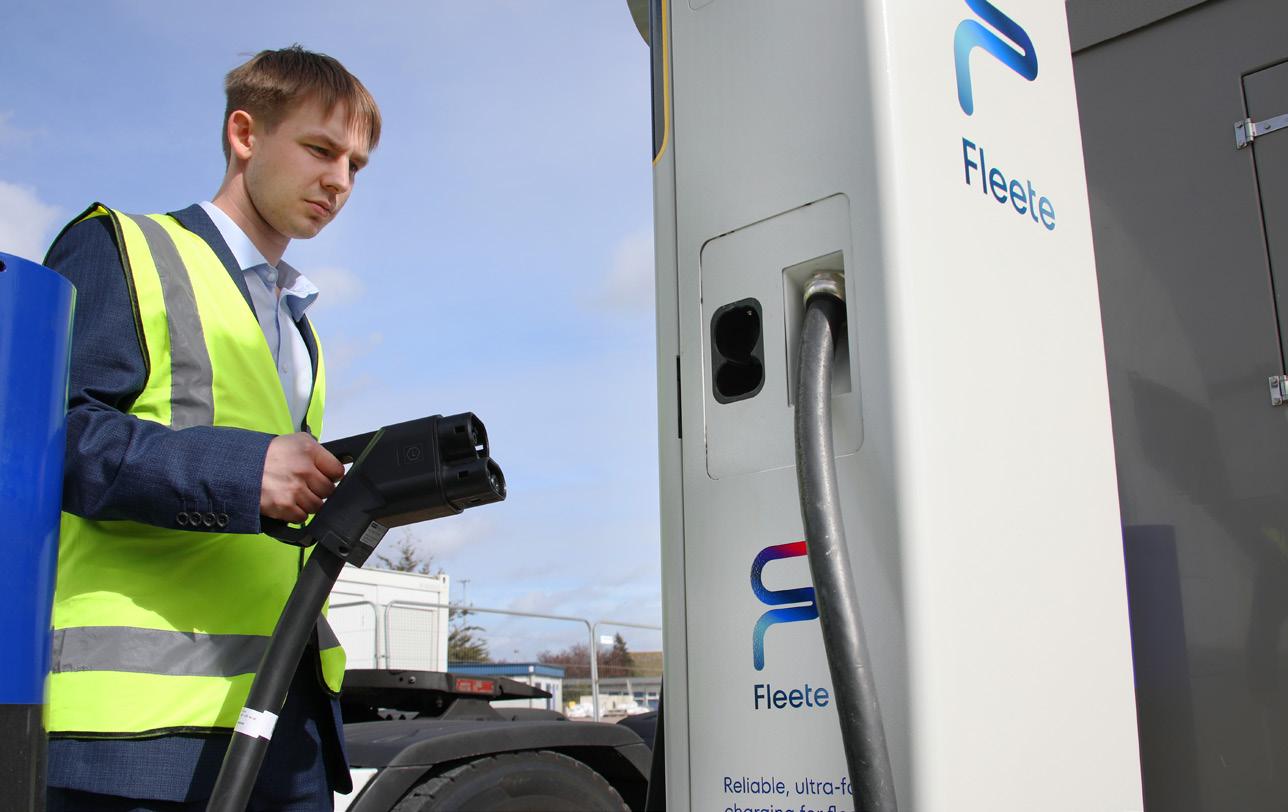


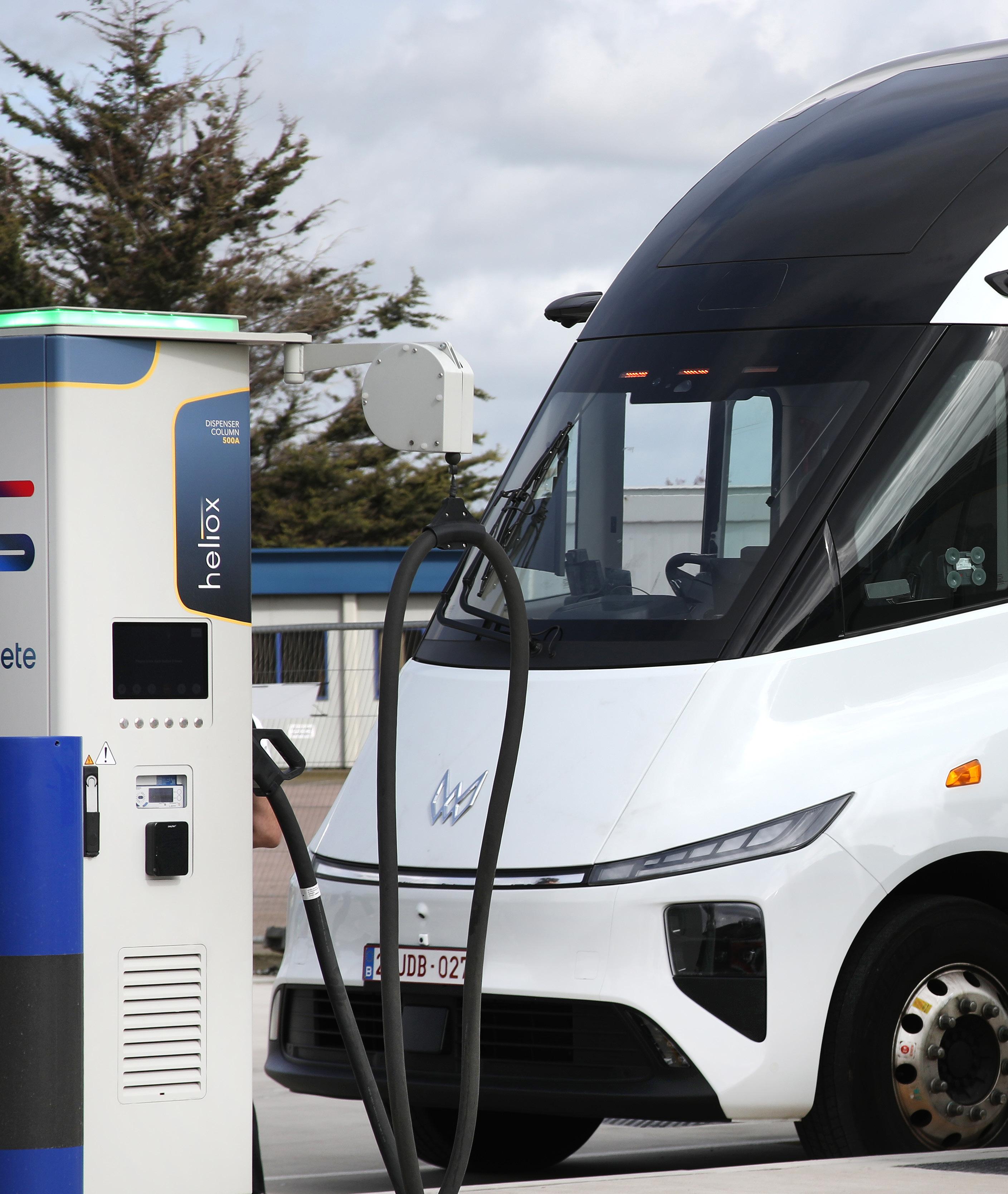
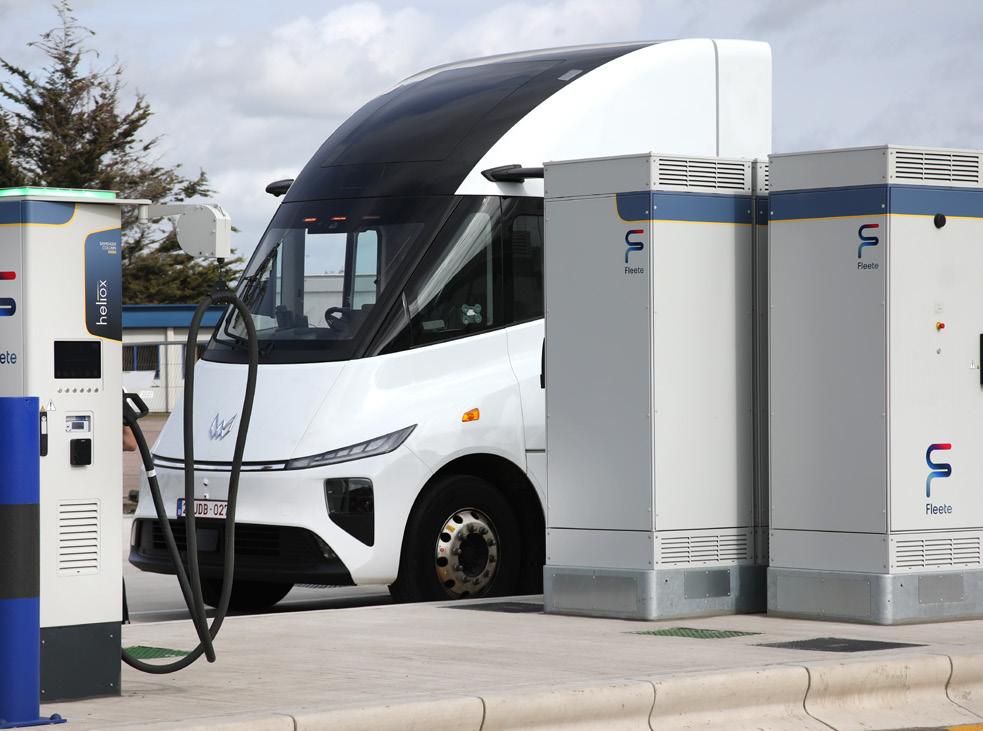
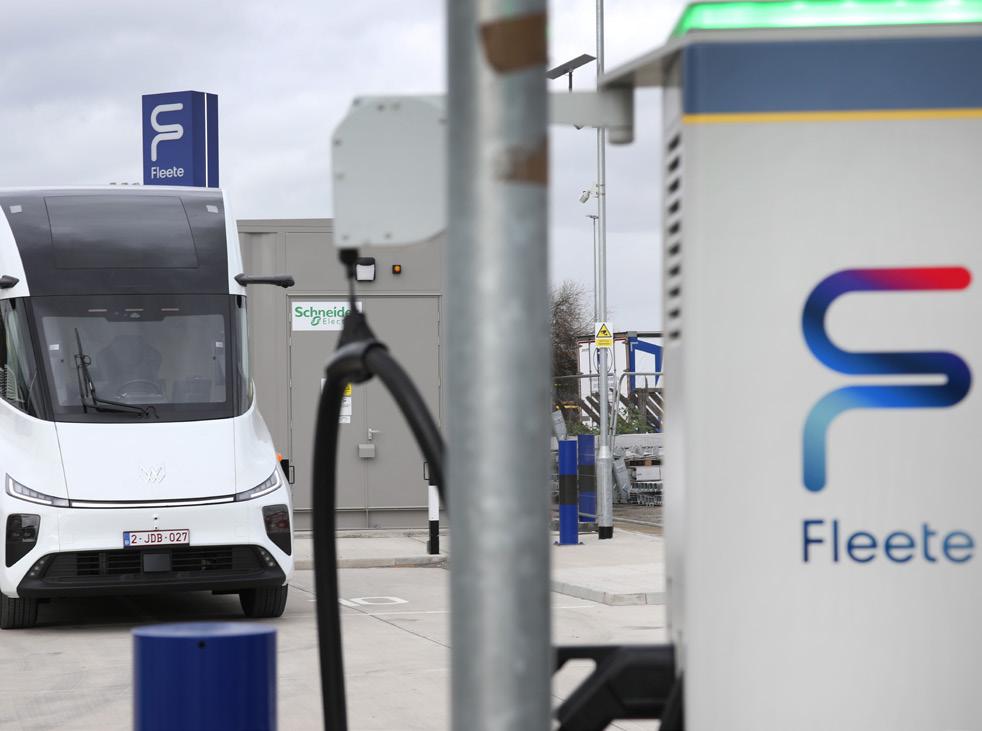

Chris Morrison, chief executive of Fleete, said the arrival of the Windrose truck underlined the increasing importance of high-capacity charging infrastructure for electric heavy vehicles.
“Hosting the first UK charge for the Windrose truck is a strong demonstration of what highpower infrastructure for heavy vehicles can deliver,”
Morrison said. “Vehicles with battery capacity of this scale need high-power infrastructure that can deliver energy quickly and reliably. Shared charging hubs like Fleete Tilbury are designed to provide exactly that as more fleets begin deploying electric trucks on longer routes.”
Justin Yu, head of Northern Europe at Windrose Technology, described the successful charging session as an important milestone for the company’s UK ambitions.
“Completing our first charge in the UK at Fleete’s Port of Tilbury hub is an important milestone for
Windrose and a fitting place to begin the truck’s UK tour,” Yu said. “Our aim is to demonstrate how the next generation of electric heavy trucks can work with high-power charging infrastructure across the UK, and the ultra-rapid capability here at Tilbury is exactly the kind of quality charging network operators will need.”
He added that strategically located shared charging hubs would play a vital role in accelerating fleet electrification across the UK’s logistics sector.
Fleete’s shared-user charging model is designed to provide operators with access to high-power charging infrastructure without the need to invest in dedicated depot installations. The approach aims to address key barriers to electric truck adoption, including grid limitations, land availability and the high upfront cost of charging infrastructure. The Tilbury site has also been designed to support additional fleet operators as demand for electric truck charging grows. end
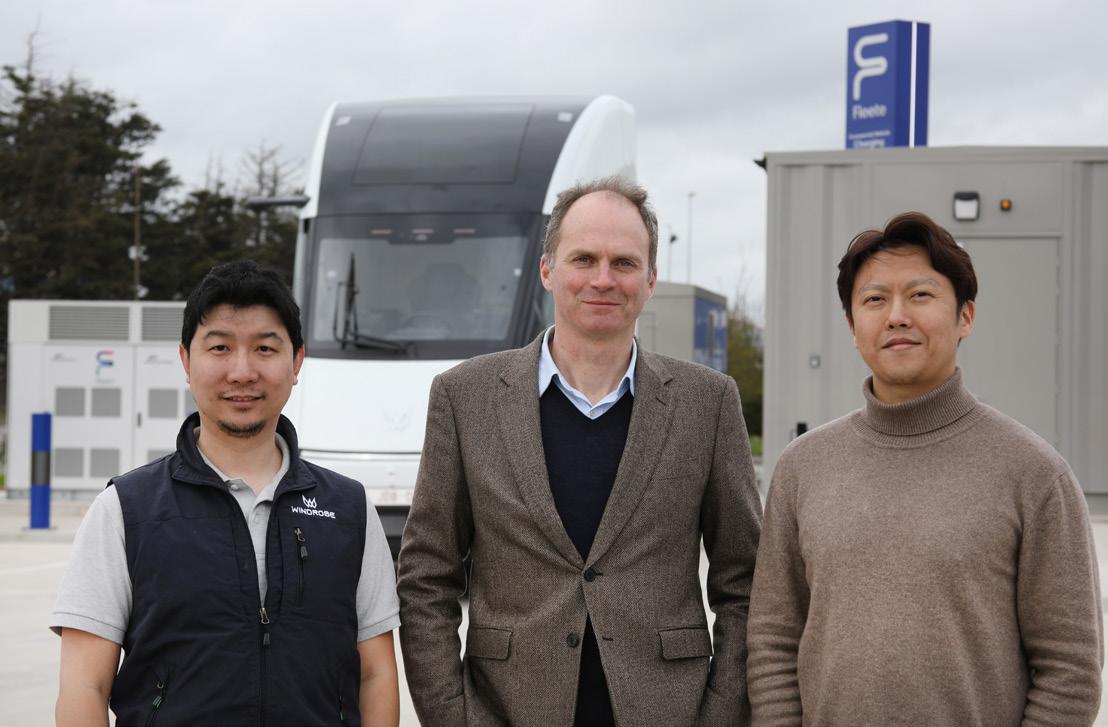

“Fleete’s shared-user charging model is designed to provide operators with access to high-power charging infrastructure”
Shared charging’s next chapter: from concept to commercial rollout
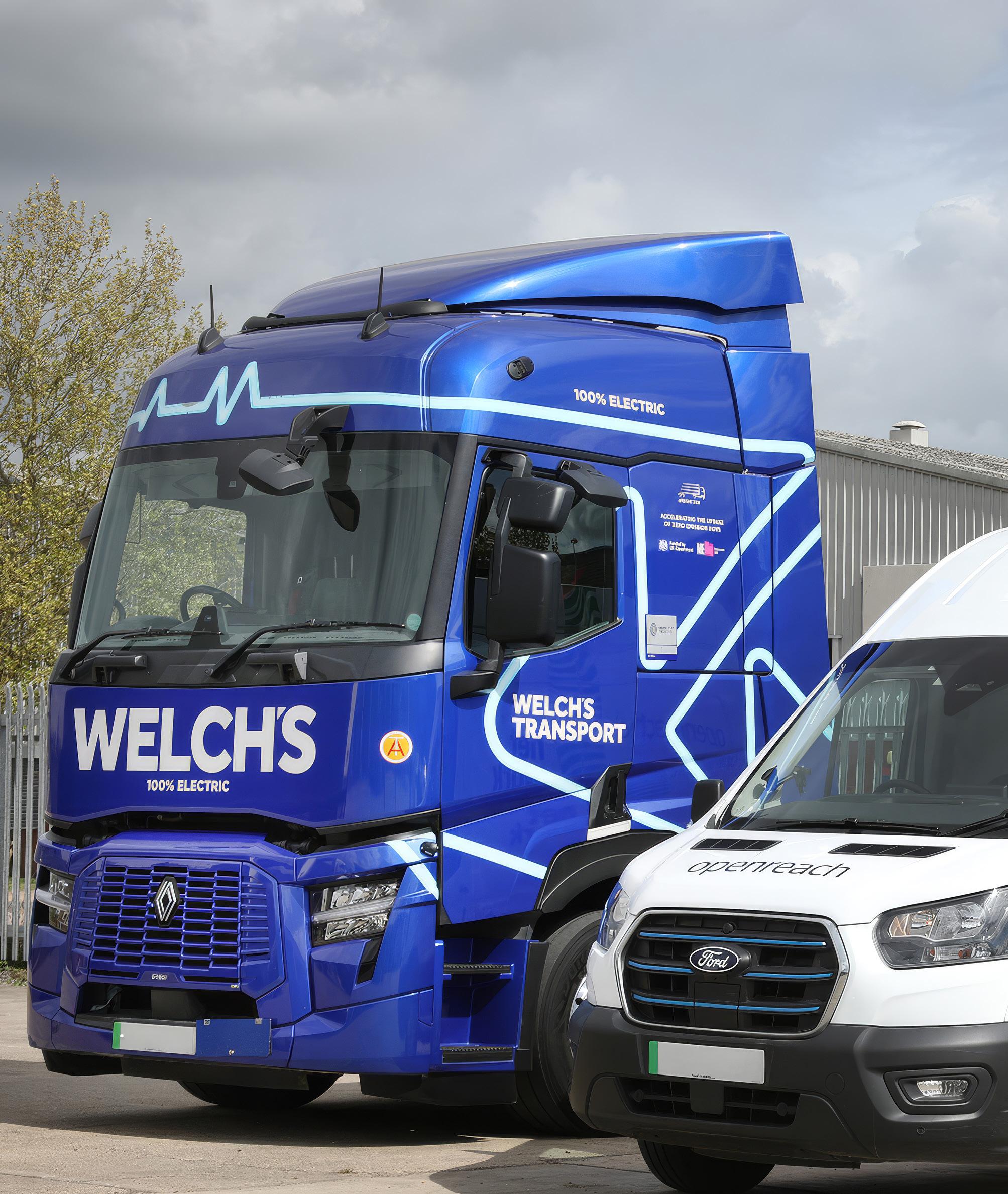
For all the momentum behind fleet electrification, a stubborn challenge remains: how do operators scale charging infrastructure affordably, reliably and at pace?
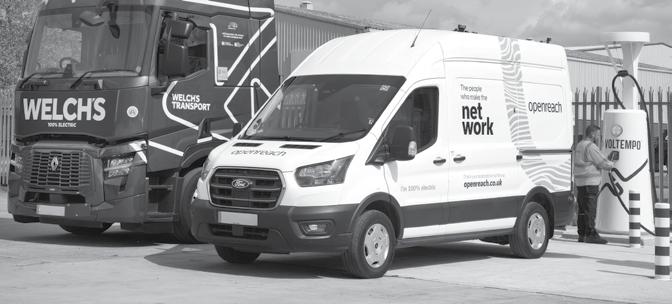
A new live deployment involving Voltempo, Corpay, Welch Group and Openreach may point towards a compelling answer.
Voltempo and Corpay have moved from announcing their landmark partnership in early April to delivering the first live rollout of a fully integrated shared depot charging model, combining infrastructure, energy procurement and
fleet payments in what could prove a significant blueprint for UK fleet decarbonisation.
Now operational at Welch Group’s East of England depots, the system combines Voltempo’s Depot Charging as a Service (D-CaaS) model, and US listed payments group Corpay’s global fleet payment platform, giving Openreach engineers secure, bookable access to charging infrastructure. For an industry often constrained by fragmented charging access, capital costs and energy uncertainty, the significance lies not simply in another charging installation, but in the commercial model behind it.

“Openreach operates the UK’s second-largest commercial fleet, with nearly 7,000 electric vehicles already deployed”
Turning depots into strategic assets
The principle is straightforward, but potentially transformative: unlock underused private depot charging and make it accessible to third-party fleets, while allowing site owners to retain operational control, improve utilisation and generate revenue from existing assets.
For Welch Group, it demonstrates how SMEs can move beyond being electrification participants to becoming enablers of it.
“The biggest brake on fleet electrification isn’t appetite,” says Chris Welch, Managing Director, Welch Group. “It’s the trifecta of infrastructure cost, energy complexity and cashflow uncertainty that keeps stopping them.
“We’ve been living that reality ourselves, so when Voltempo came to us with a model that tackles all three and actually generates revenue from our existing depot footprint, it was a straightforward decision. Now we can point to two of our depots and say: there’s your proof.”
That revenue opportunity is reinforced by integrated energy procurement plans being developed through Corpay, using a bunkering-style approach aimed at improving cost certainty and resilience while supporting lower total cost of ownership. Access to renewable, traceable energy also strengthens sustainability
reporting, supported at Welch by on-site solar generation.
For many operators wrestling with the economics of electrification, that combination of infrastructure monetisation and energy optimisation could be where the model gains real traction.
Validation at scale
However, the strongest endorsement may actually come from Openreach.
Operating the UK’s second-largest commercial fleet, with nearly 7,000 electric vehicles already deployed, the company brings significant scale validation to the concept. The model complements Openreach’s existing mix of home, public and operational charging, adding another layer of practical charging access for engineers unable to charge at home.
“Partnerships like this are essential as we build the UK’s Full Fibre network, and scale up our electric fleet to support that work,” says Judy O’Keefe, Director of Fleet, Openreach.
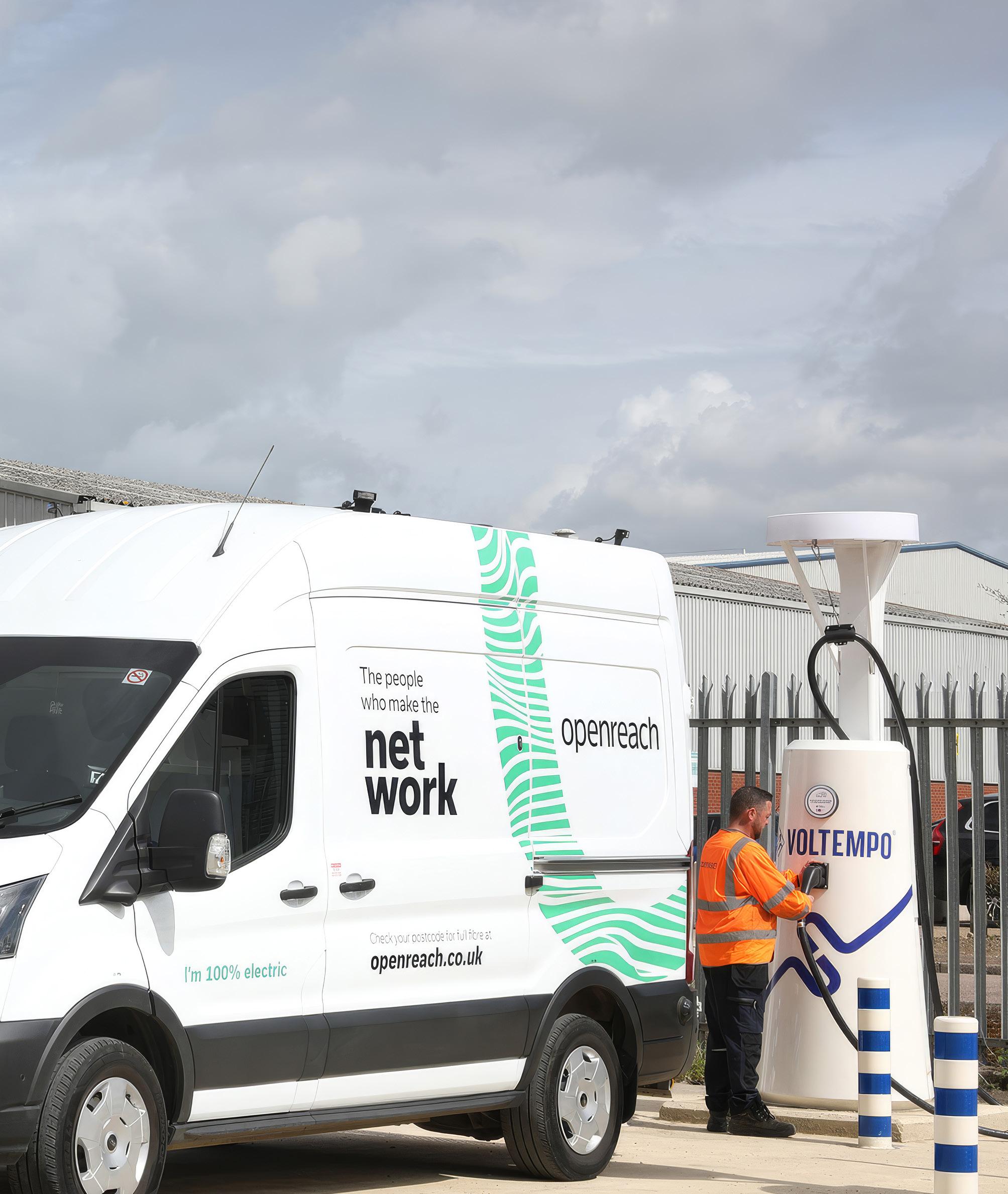
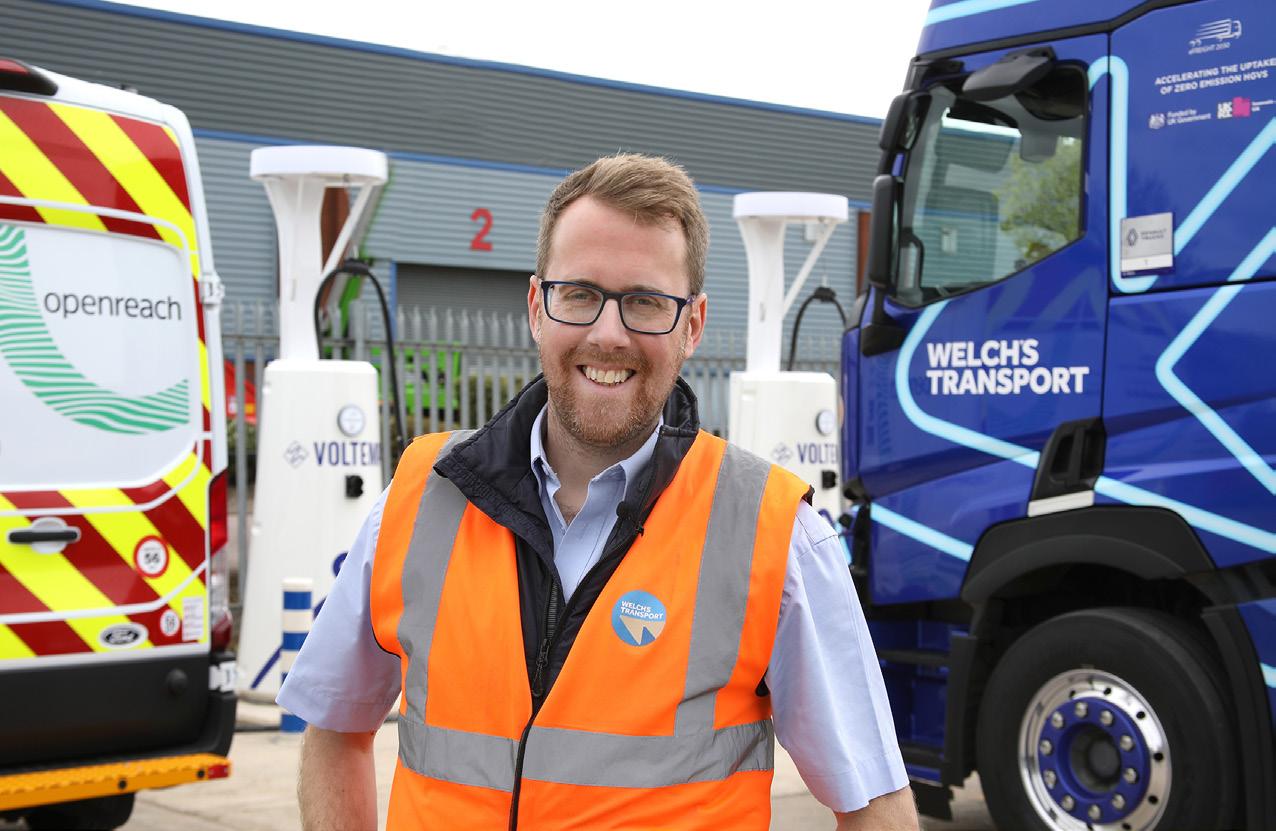

“Moving a fleet of our size to electric is a big job, and it only works if charging is simple, safe and reliable for our engineers.
“We’ve already installed more than 4,000 EV chargers at engineers’ homes and across our operational sites, but we know home charging isn’t an option for everyone. That’s why working closely with trusted charging and technology partners matters.”
Engineers can access charging through existing EV charge cards, including Allstar Chargepass, via Corpay’s payment platform, helping simplify administration through a single billing relationship.
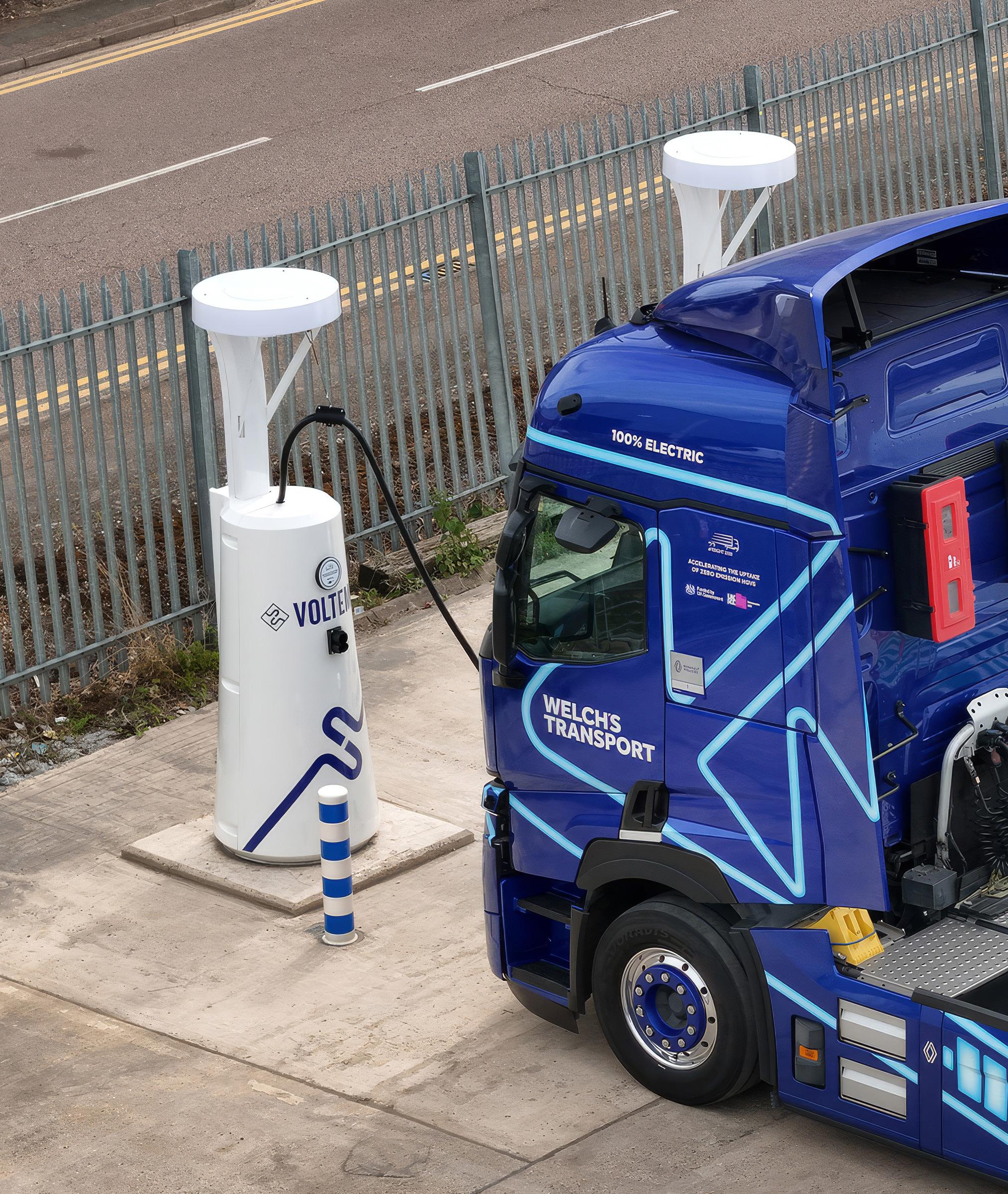
It is that integration of infrastructure, energy and payments operating as one that partners argue differentiates the proposition from traditional charging deployments.
“This is a pivotal moment for the industry,” says Simon Smith, CEO of Voltempo. “We’ve moved from talking about the challenges of electrification to actively solving them at scale.
“By integrating infrastructure, energy and payments into a single solution, we are removing the biggest barriers to adoption; cost, complexity and access. What’s critical is that this model works for everyone, from innovative SME operators like Welch Group to major fleets like Openreach.”

“We’ve already installed more than 4,000 EV chargers at engineers’ homes and across our operational sites”
The bigger opportunity may lie in what this signals for the wider industry.
Shared depot charging has long been discussed as a route to accelerate electrification, particularly for operators unable to justify dedicated infrastructure investment. What has been less proven is whether it can work commercially and operationally at scale.
This deployment begins to answer that. For SMEs, it offers a route to extract greater value from depot assets. For larger fleets, it creates access to reliable charging without significant upfront infrastructure investment. And for the wider sector, it suggests collaboration, rather than standalone infrastructure buildout, could help accelerate the path to zero-emission freight.
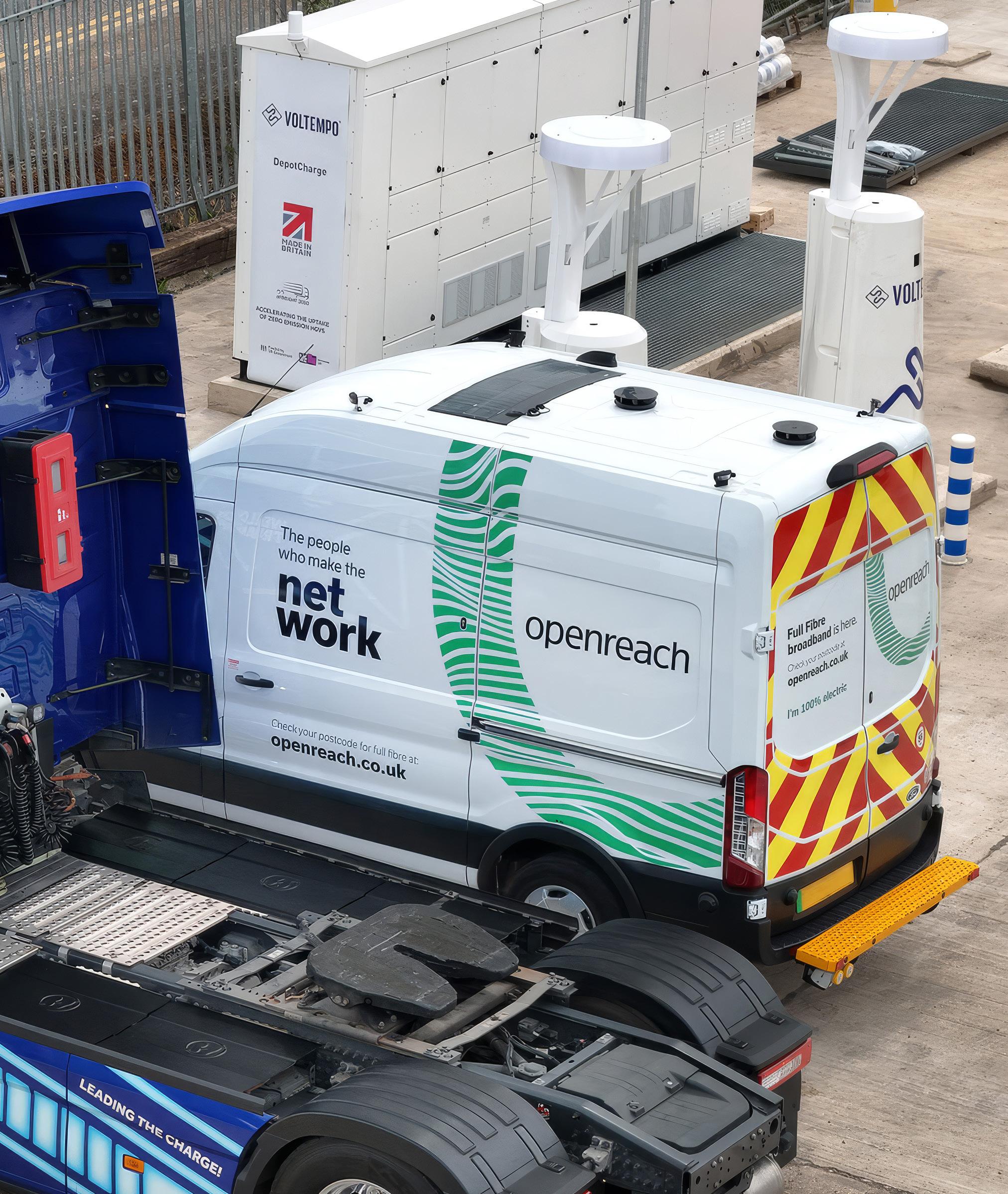
Tom Rowlands, Managing Director, Global EV Solutions at Corpay, including Allstar, sees partnership as central to that shift.
“Collaboration and partnerships like this are key to accelerating fleet electrification,” he says.
“By combining Voltempo’s high-quality charging infrastructure with Welch’s strategically located depots, we’re enabling forward-thinking fleets like Openreach to access reliable, cost-effective charging at scale, whilst helping depot operators generate returns from their infrastructure investments.”
With broader rollout of Voltempo DepotCharge sites planned across the UK, the model has now moved from pilot to potential platform.
And in a sector searching for scalable, commercially credible routes to net zero, that may be the bigger story. voltempo.co.uk
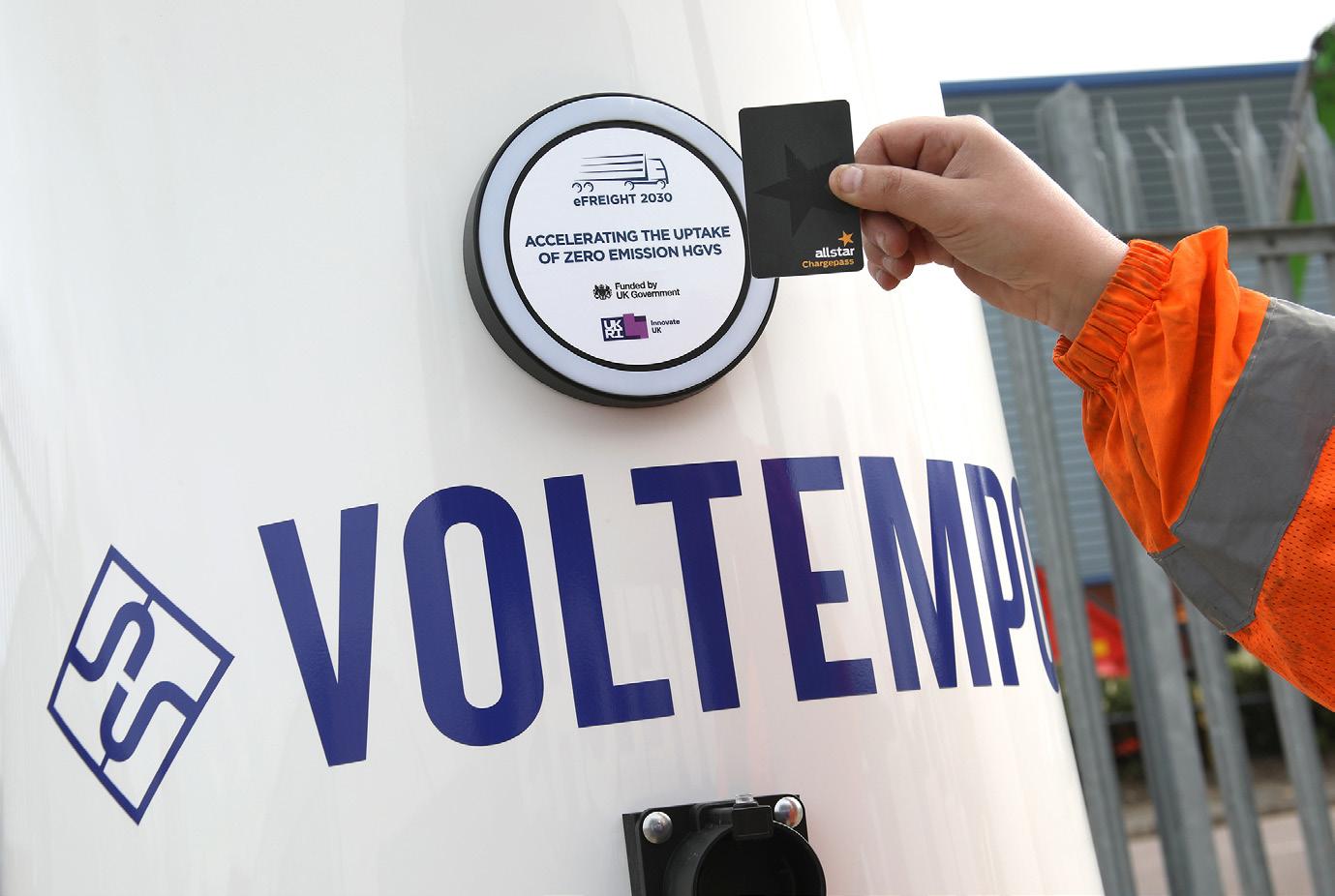
• Engineers can access charging through existing EV charge cards

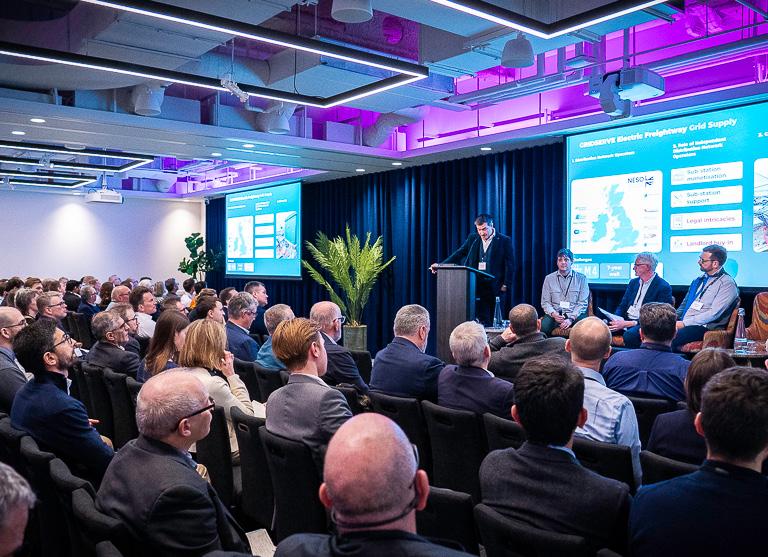
Consortium members from the Zero Emission HGV and Infrastructure Demonstrator (ZEHID) programme share early lessons on electric truck charging, infrastructure deployment and operational savings.

The ZEHID programme is now entering its five-year demonstration phase, during which time eFREIGHT 2030, Electric Freightway and ZENFreight consortium members will show the capabilities of eHGVs, hydrogen trucks and supporting infrastructure. Most of the trucks are now on the road and a large proportion of planned infrastructure is operational.
To share insights from the programme so far and to address potential challenges that still lie ahead, Innovate UK held a summit in mid-March. Alistair Barnes, Senior Programme Manager – Land and Maritime Transport at Innovate UK said: “It’s really important to share the learning, and that’s one of the things I want to encourage today.
“I also want to remind everyone that anecdotes do count here. So let’s share our successes, from operator to operator, or from infrastructure provider to other infrastructure providers. If the ZEHID programme is generating the evidence, today’s sessions are where we turn that evidence into practical pathways and how to scale and how to solve these challenges together.”
How are ZEHID members approaching eHGV charging? A number of operators were very open about the individual challenges and opportunities of their infrastructure projects. For example, Russell Logistics is installing megawatt charging at one of its depots. Stephen Madden, group fleet engineer at Russell Logistics explained: “We were very fortunate that at the end of our site, there was infrastructure from an old mining site which we didn’t know about.
“Initially, we thought we had to channel it in from outside. We were quoted somewhere in the region of £800,000 to £900,000, but we luckily found a connection. We believe megawatt charging is a way forward for us to reduce vehicle downtime.”
In scenarios where vehicles are charging for extended periods of time, smart charging solutions are being used to optimise energy costs. Tom Williams, deputy CEO at Maritime Transport said: “In the eight weeks that

“We believe megawatt charging is a way forward for us to reduce vehicle downtime”
we’ve been charging in Wakefield, we’ve reduced our kWh price by 15%.
“Now that might only be a couple of pence in reality, but when we put that across a whole fleet, it can be a significant saving. Since starting, our fuel cost is down 10% on the diesel equivalent, which is brilliant. When you look at what’s going on in other parts of the world and oil price volatility, this is going to have a really big impact on our business.”
For Voltloader’s eHGV-only fleet, the strategy has been to install charging at customer sites. Dave Rose, CEO at Voltloader said: “Part of our model is to go and look for capacity that’s already out there. There’s a lot of unused allocation already that we can use in the short to medium term. It might not solve the long-term problem, but it shouldn’t be a blocker for getting started now and doing something meaningful.”

Electric Freightway has also opened two Gridserve eHGV charging hubs at Baldock and Exeter with another seven sites due to be live this year, eventually ramping up to a total of 11 public eHGV charging hubs.
Explaining how distribution network operators (DNOs) hope to engage with fleets, Ben Cattermole, head of transport decarbonisation at National Grid Electricity Distribution (NGED) said: “We can plan for your demand and strategically invest in the network and make sure that there is sufficient capacity on the network.”
While grid connections are often described as being a queue for power, Cattermole said: “That really only applies to really big connections. It doesn’t mean your connection for a smaller demand is always going to be quick and easy, because it might take some time to build your connection. But it doesn’t mean you’re in a queue behind other people.”
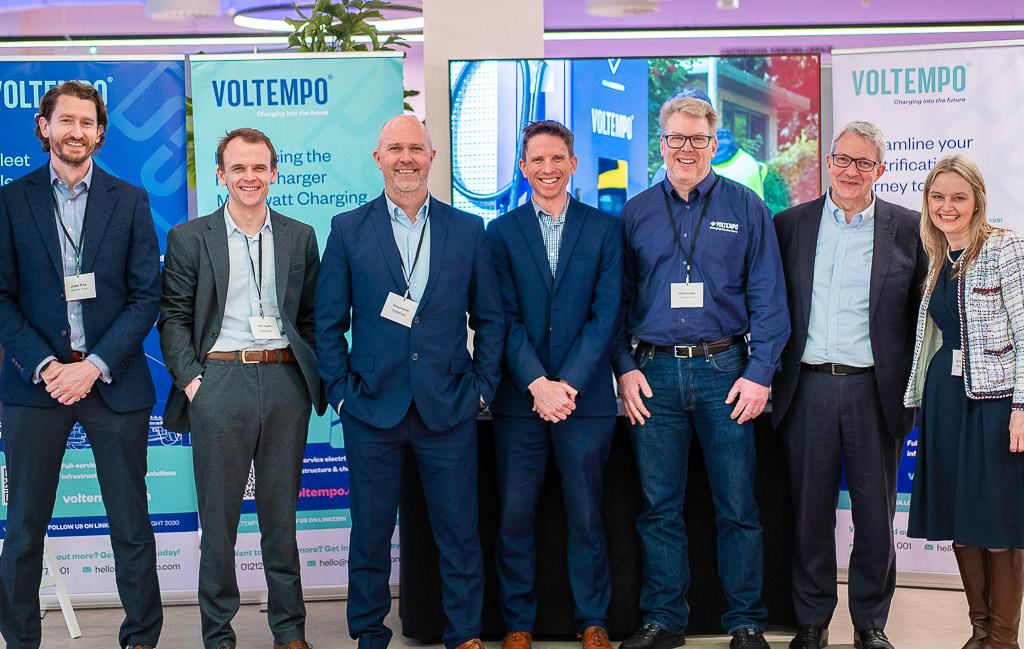

• Key speakers shared insightful comments on eHGV operation

Even when grid connections have been secured, unforeseen delays are impacting infrastructure installations. From surveys for badgers, bats and newts to legal delays, additional complexities are adding another layer of cost and undetermined timelines to projects.
Williams added: “Our Tilbury site has been built since April last year but it’s still not energised. We can’t get the right permissions, so that’s a massive barrier. Also, the cost is huge. Thankfully, we’ve got some support from government which is really great, but we need more support.
“The OEMs are building fantastic vehicles but they’re very expensive, more than double what we’re paying now for a diesel truck and in the cold light of day, they can’t do what a diesel truck can do now. I’m not saying they need to completely replicate it. But we’re speaking very honestly and there’s a massive cost pressure on what we’re doing.”
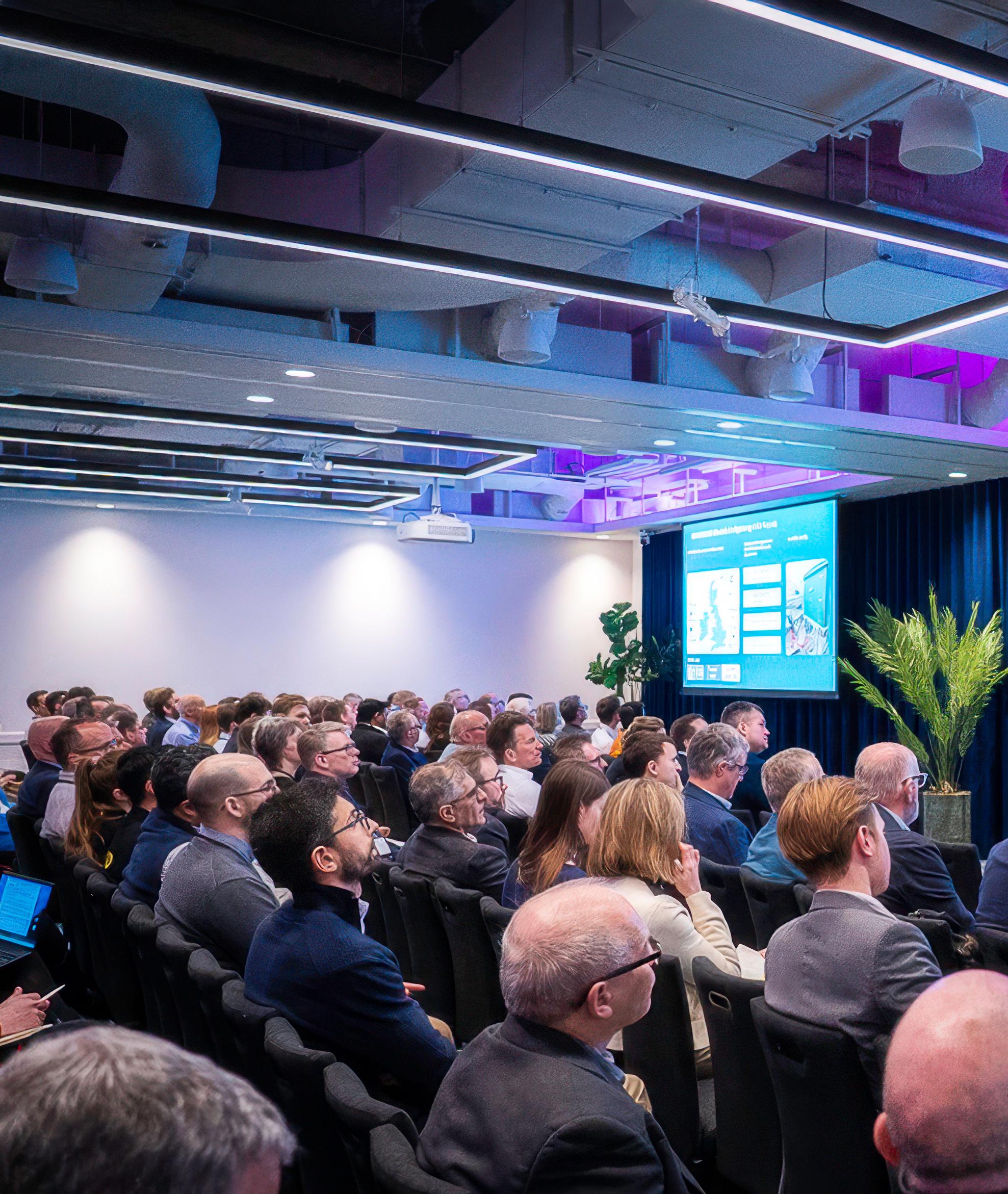
What do fleets want from the government?
To overcome some of the issues highlighted, operators are calling on the government to provide more support. Madden urged the government to have the same enthusiasm for electrification as the Chinese government, which is addressing infrastructure as well as vehicle deployments.
Madden said: “It’s a slow process. We’re a familyowned company, so if the government pulled the plug on funding, I can see us pulling the plug on investment on electric and certainly scaling it back”
Beyond additional funding opportunities, Madden also argued payload limitations should be addressed. “It’s a major issue for us because when you go to 6x2 and you’re looking at 12.6 tonnes for the vehicle, it’s not justifiable. We just cannot justify putting a 6x2 on the road operating at 44-tonnes. We’re losing too much money, too much payload, so we’re limiting the customer base that we can use these vehicles with. I think we have to look at increasing the 44 tonne limit to 46 tonnes, which would help enormously.”
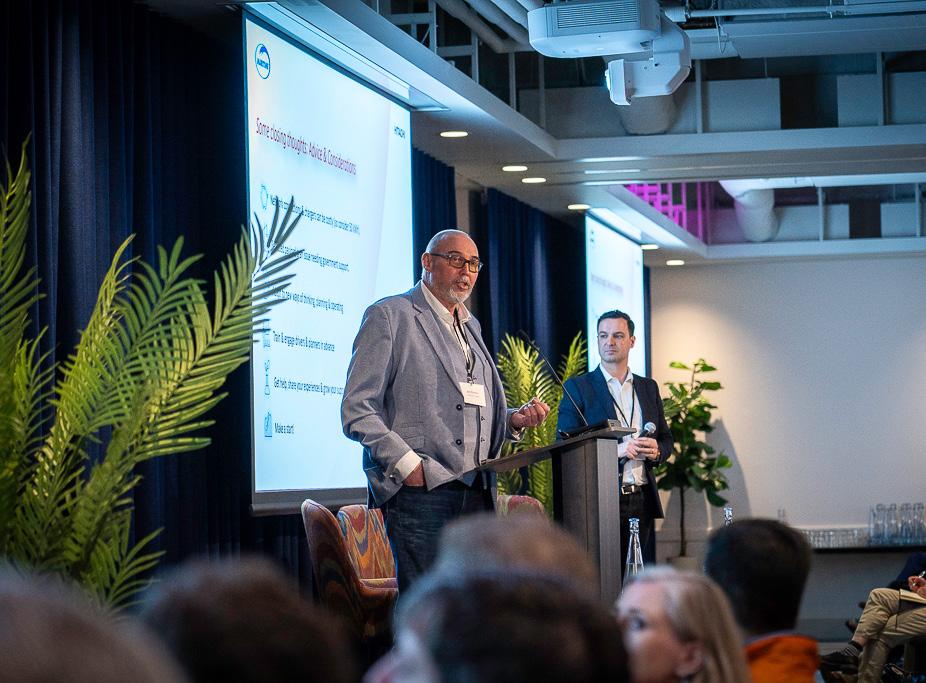

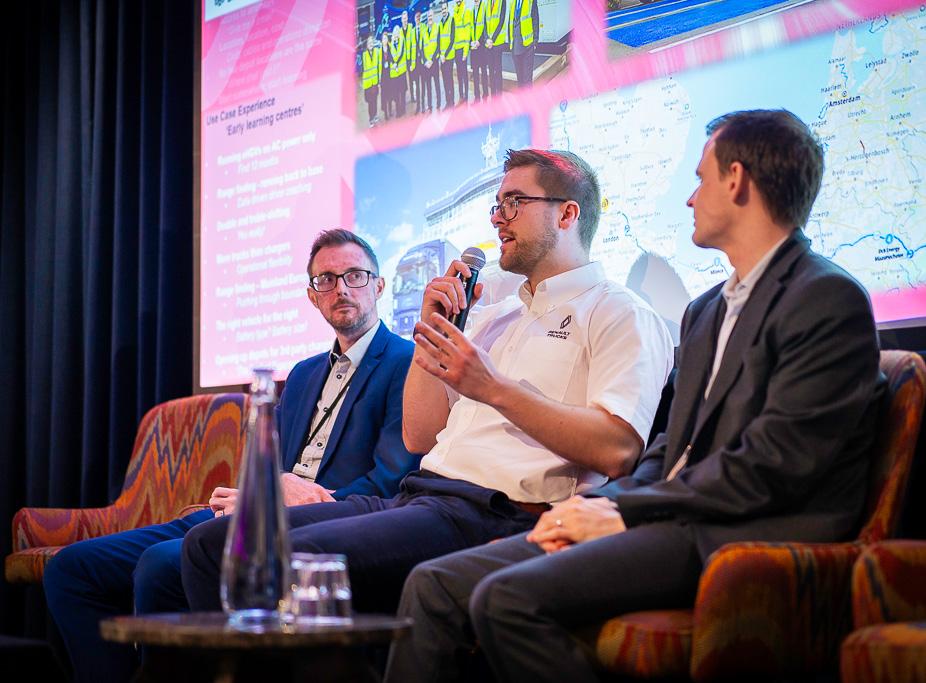

While Keir Mather MP, Parliamentary Under-Secretary of State (Department for Transport) wasn’t able to offer any new information on weights and dimensions or funding, he said: “I know that global headwinds have made energy markets increasingly volatile, and this has only been compounded with the recent escalations that we’ve seen in the Middle East.
“I believe eHGVs offer a direct route to greater energy security, they reduce our exposure to unpredictable fossil-fuel prices and maintain that steady, reliable flow of goods that Britain depends on. For businesses, the business case is just as compelling; in some cases, these vehicles are cheaper to run and to maintain, offering relief from the cost pressures, which I am very alive to, and which I know haulage is facing.”
Mather confirmed that details about the future of the plug-in truck grant and depot charging scheme will be announced soon. He also signaled that the upcoming zeroemission HGV and coach infrastructure strategy will offer long-term clarity.

What is the impact on
Despite the challenges associated with deploying eHGVs and infrastructure, the initial human impact has been hugely positive. As a result of surveys conducted before and after eHGV deployments, Electric Freightway found drivers that spent more time driving eHGVs were the most positive towards them.
Jim Connor, Electric Freightway project manager at Hitachi ZeroCarbon said: “If you want to get drivers on board – and it’s really important to get drivers on board – get them behind the wheel. You want people to be advocates for them, and the best way to do that is to get them behind the wheel. The data really supports that.”
Daniela Paddeu, Associate Professor of Sustainable Freight Futures at the Centre for Transport and Society (CTS) at the University of the West of England, also emphasised how important it is to prepare the necessary skills for eHGVs. This includes upskilling technicians, building a positive culture around sustainability and familiarising operators with the intricacies of the transition.
Chris Ashley, Head of Policy – Environment and Regulation at the RHA commented: “Daniela Paddeu’s point about preparation: frankly, anybody can start that now. Some people, especially smaller operators, might not see it as a big priority right now, but there’s nothing to stop just tiny bits of that journey now. It’s that education piece.”
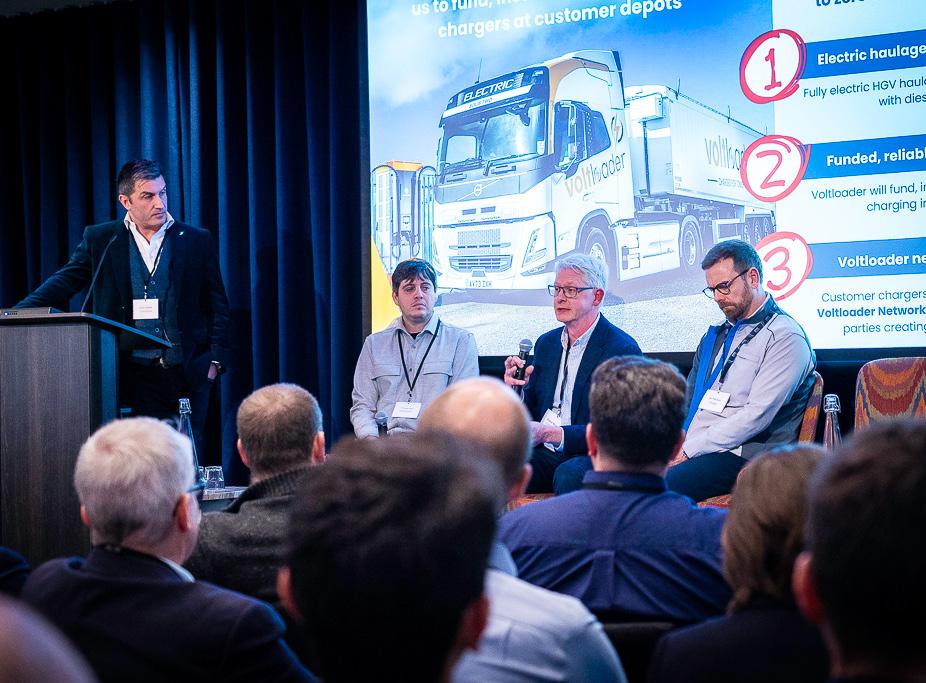
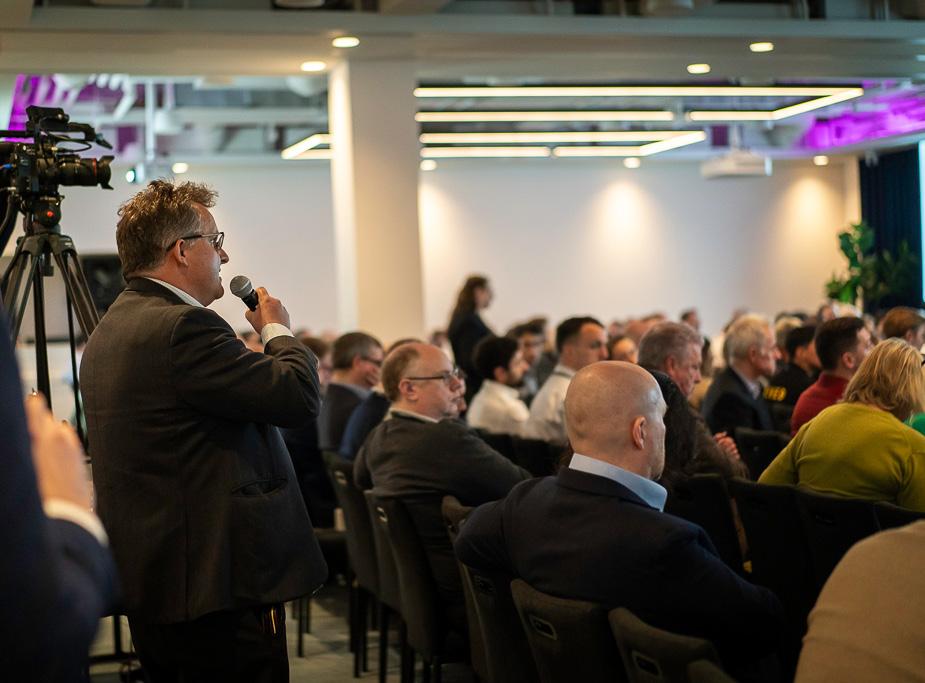
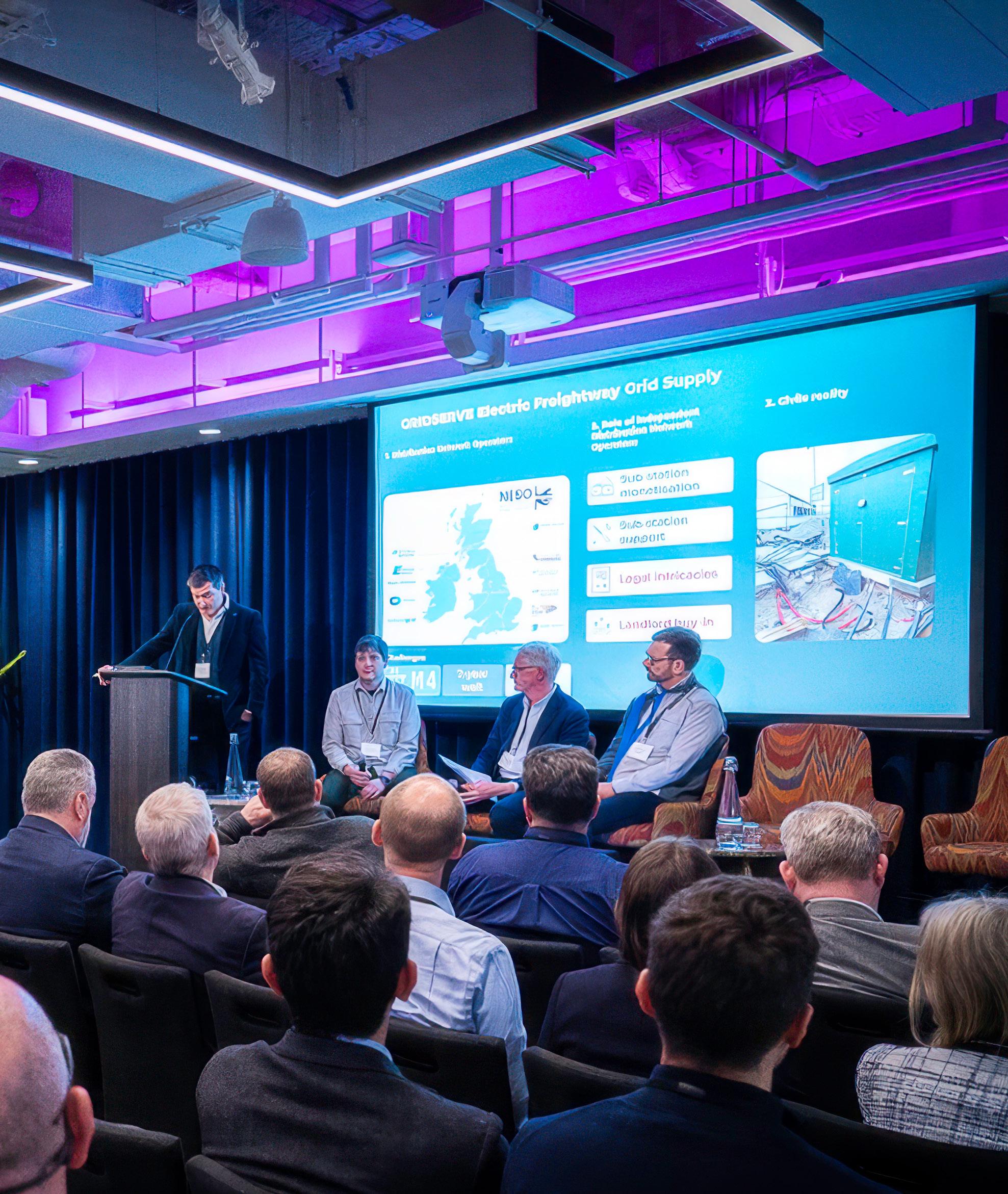
• Much was learned from sharing real-world eHGV experiences

“I believe eHGVs offer a direct route to greater energy security. They reduce our exposure to unpredictable fossil fuel prices”
MAN chief executive Alexander Vlaskamp says stronger incentives are needed to accelerate electric truck adoption.
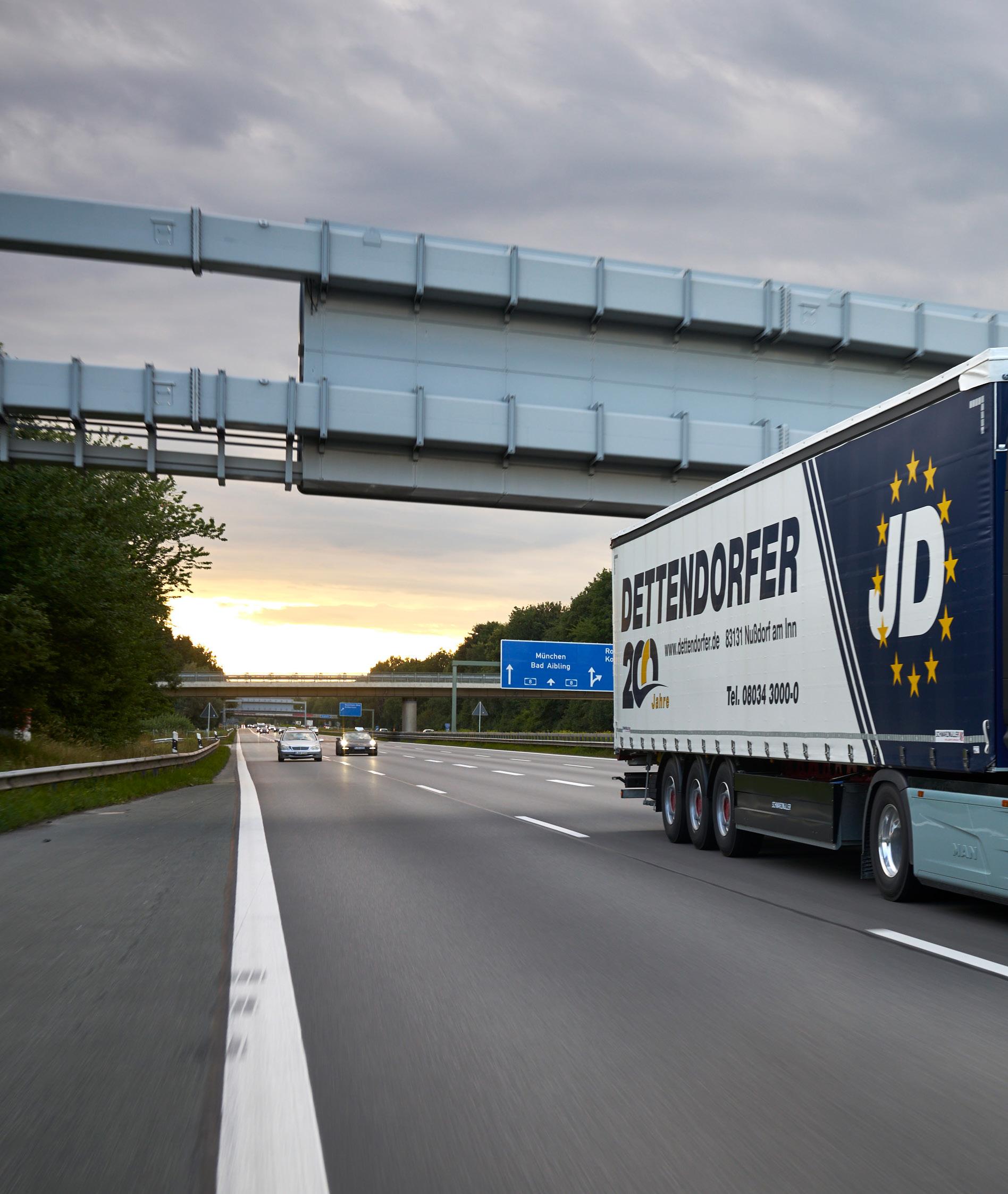
Extra taxes should be levied on diesel trucks to make switching to electric models more appealing, says MAN Truck & Bus Global Chief Executive Officer, Alexander Vlaskamp. Germany is increasing road taxes on diesels in a bid to reduce CO2 emissions, and Vlaskamp would like to see other European markets, including the UK, follow suit.
“At the same time, we’re seeing some European cities banning older diesel trucks,” he says – an approach he applauds.
The stick needs to be accompanied by the carrot, however, and one that goes beyond government grants to cover the price gap between diesel and electric vehicles. Germany and Austria are exempting electric trucks from highway tolls, he points out, and that is a policy other countries should emulate.
He wants to see regulators adopt an even-more flexible approach to gross weights with an eye to ensuring that the burden of heavy battery packs does not impose payload penalties, and put firms willing to go electric at a disadvantage compared with competitors who are sticking with diesels.
“Things are moving too slowly, with electric trucks accounting for just 2.1% of the total European market,” he told transport journalists at a recent conference in London. “That’s far below where it needs to be given that some fleets can electrify 80% of their transport operations.”
A lack of investment in electricity grids doesn’t help, he says.
“Unfortunately we’re seeing what I would describe as grid congestion in many European

“Unfortunately we’re seeing what I would describe as grid congestion in many European markets at present”
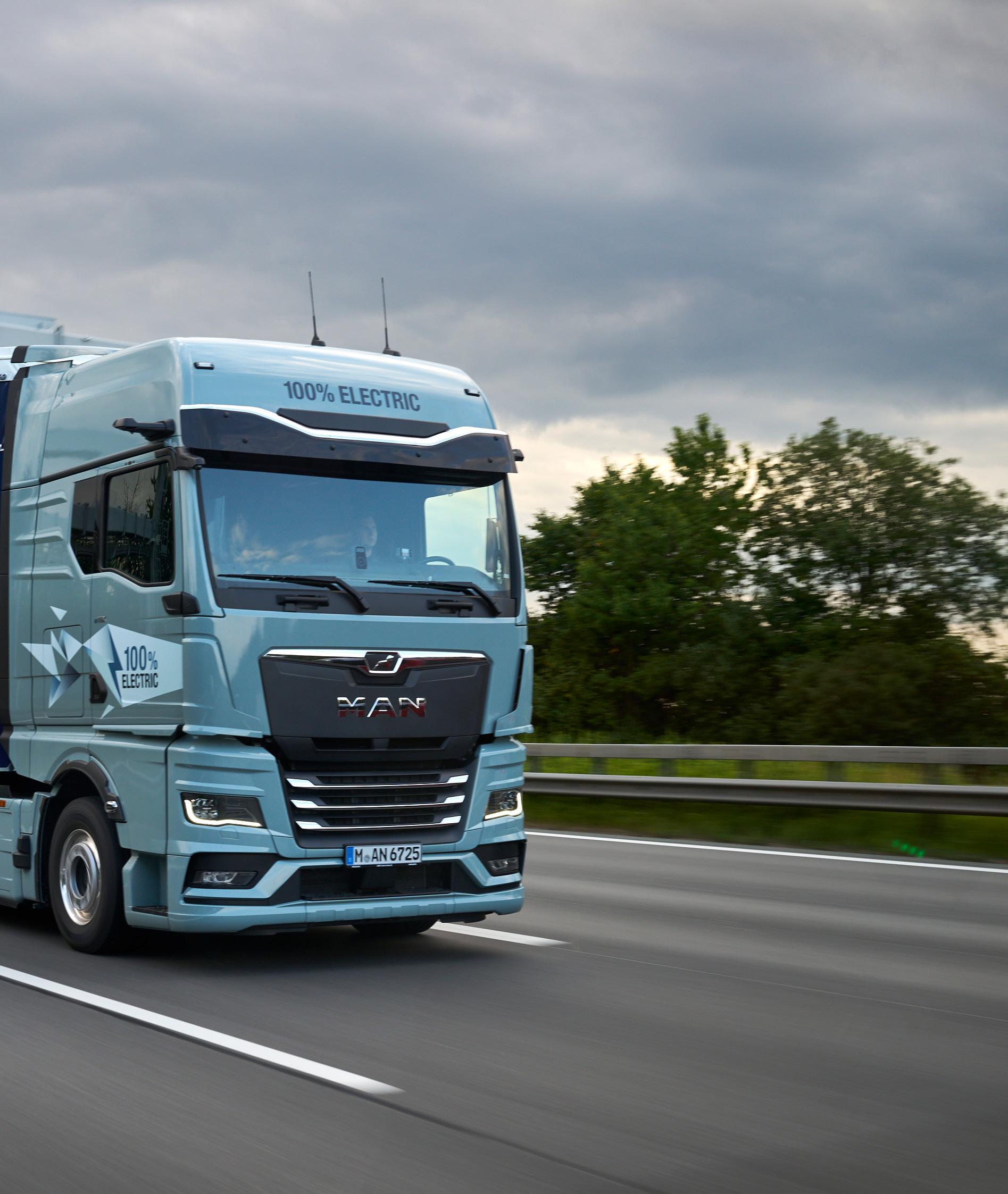
markets at present and there needs to be a stepchange,” he observes. More capacity and wider coverage will be needed as the number of electric commercial vehicles rises.
Why aren’t the truck manufacturers encouraging sales by slashing the eye-wateringly steep frontend prices of electric models? Unfortunately that is unlikely to happen any time soon, Vlaskamp admits.
“The price is dictated by the cost of the raw materials that go into the batteries, and that’s quite steep, so we will not see a significant fall,” he comments.
In the meantime, steps are being taken by truck builders to make the day-to-day use of their battery models less of a headache.
MAN is part of the Traton Group, which also embraces Scania. The group has been cooperating with Daimler Truck and Volvo to set up truck charging stations along core routes around Europe. The joint venture is called Milence, and its first UK site is in Immingham.
The move is welcome, given that the inability to recharge electric trucks when they are away from base is a significant barrier to their adoption so far as inter-city haulage fleets are concerned.
In addition, MAN is encouraging the use of its electric trucks as flexible energy storage systems. Technology developed under the SPIRIT-E banner enables them to feed power into an operator’s premises, or into the grid.
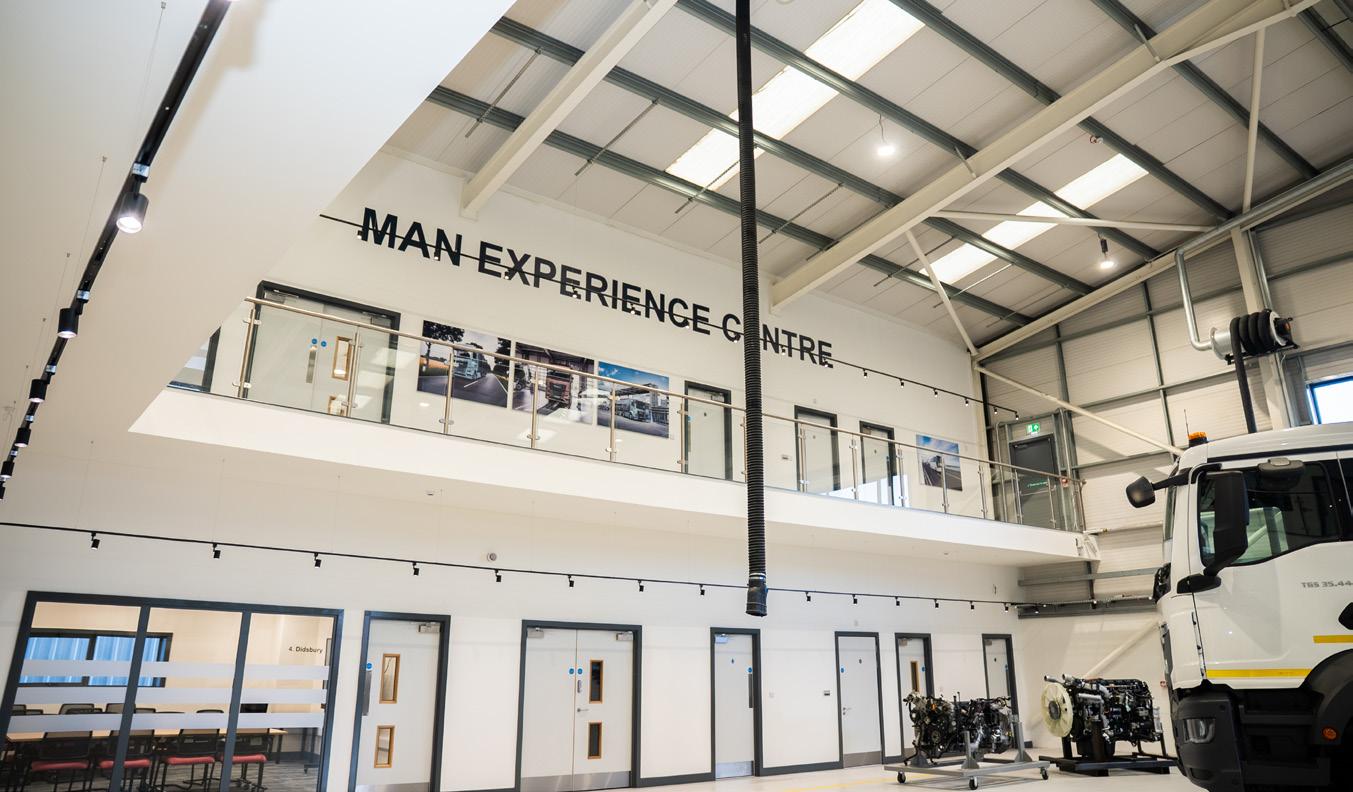
• MAN Experience Centre is part of a £2m-plus training initiative

Transport fleets that pursue this approach could cut their electricity bills by as much as 20%, reckons the German manufacturer.
Not that diesel engines are finished quite yet – far from it – and attempts are being made to mitigate their environmental impact while highway transport switches to zero-emission vehicles.
Vlaskamp says that all MAN truck diesel engines can run on HVO – Hydrotreated Vegetable Oil – made from waste materials that can offer a well-to-wheel cut in CO2 emissions of up to 90%.
Nor is MAN ignoring hydrogen fuel cells or the use of hydrogen as a combustion fuel. The price of hydrogen remains a concern, however, as does its availability –especially so far as green hydrogen made from sustainable resources is concerned.
“It is worth noting that a hydrogen fuel cell truck is 1.5 times the cost of an electric truck,” he remarks.
Despite all the hurdles they face, hauliers who have gone electric are in some cases seeing a return on their investment in vehicles and charging facilities in as little as two or three years, he contends.
MAN saw its European truck registrations suffer a modest decline of getting on for 1% last year compared with the previous year’s figure, from 63,655 to 63,296, he reports. However, the total European truck market dropped by 8% in 2025 to 336,224, he points out.
Overall sales this year should total around 330,000, he predicts, and MAN’s order intake is up by 35% when compared with 2025’s level.
Sales of MAN’s TGE van, a rebadged version of Volkswagen’s Crafter, rose from 27,672 in 2024 to 31,344 in 2025 in a European market that declined by 9.6%, he adds. The company’s light commercial order intake has risen by 28%.
Vlaskamp’s broadly positive sales outlook is tempered by understandable concern over the impact the current Middle East crisis is having on the global economy. “We are happy with the steady growth we’ve been seeing, but we’ve witnessed something of a slowdown in recent weeks,” he says.
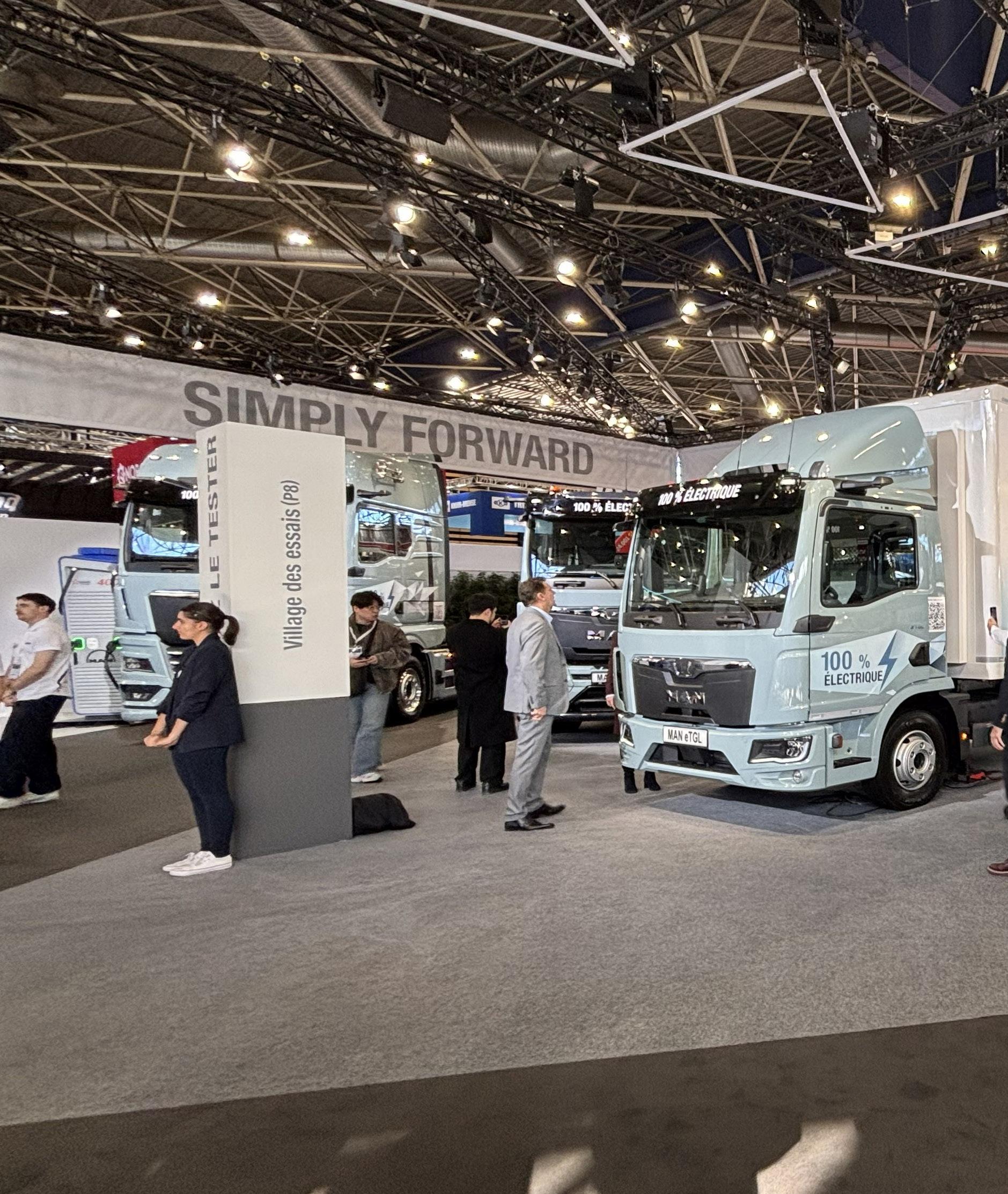
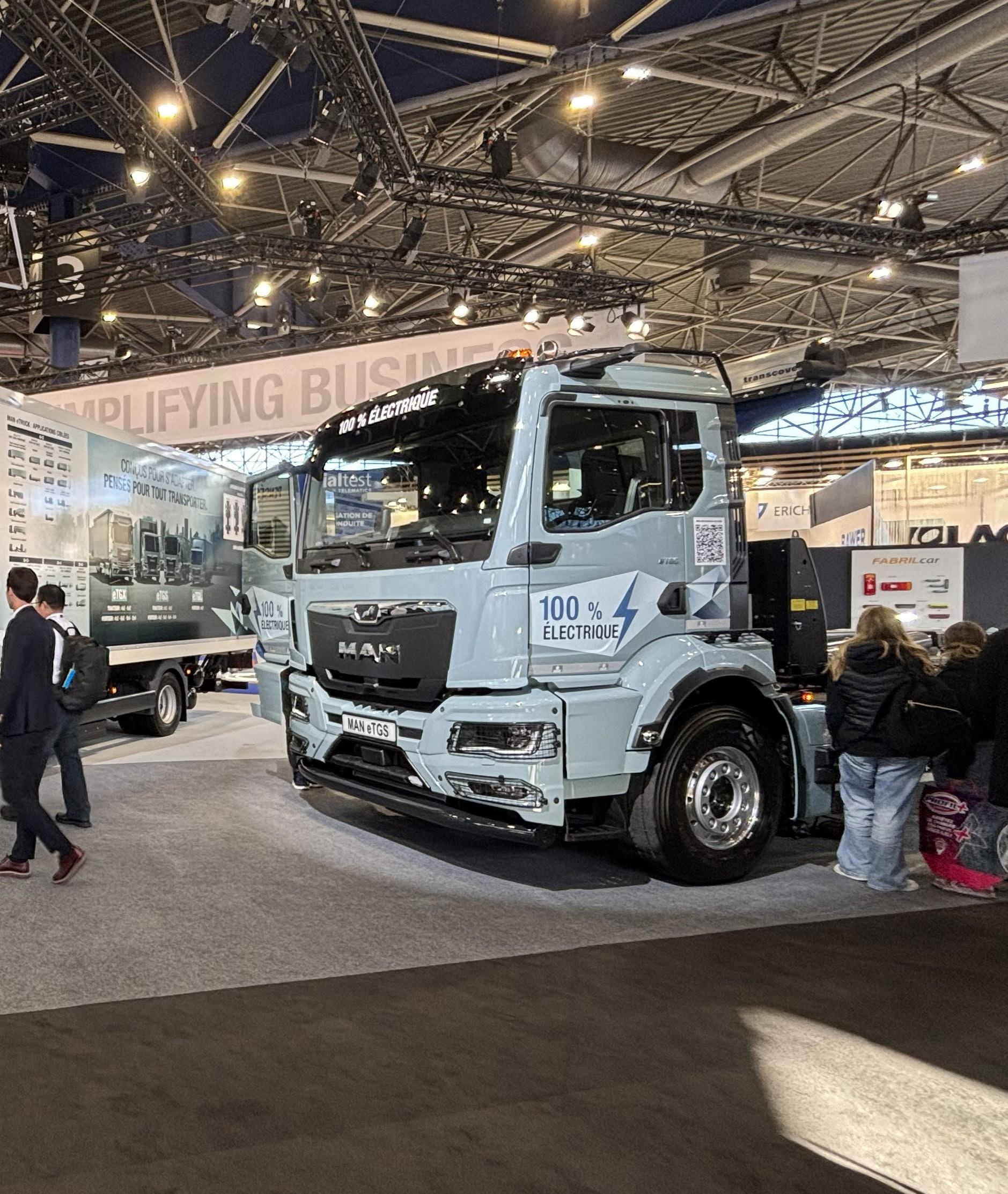
The first of MAN’s latest electric eTGL 12-tonners are now arriving on this side of the Channel. This means the company will have a battery-powered range extending up to the maximum permissible gross weight, including 4x2 and 6x2 tractor units alongside rigids.
What MAN has to offer is being well received by customers, contends UK Managing Director, Jan Kohlmeier. “We should have 100 electric models on the road by the end of the year,” he says.

“It is worth noting that a hydrogen fuel cell truck is 1.5 times the cost of an electric truck”
Recognising that while the salesperson sells the first truck, it is the performance of the aftersales department that secures subsequent sales, MAN plans to boost service and repair back-up on this side of the Channel. “The UK is one of the markets we’re focusing on, and we aim to increase total sales of our vehicles there by 30% by 2030,” says Senior Vice-President, Head of Area Europe, Roman Sitte.
Eight service locations are being added to the dealer network, which will see a total aftersales investment of around £35m.
Last September MAN re-opened MAN Truck & Bus Avonmouth, just outside Bristol, after extensive refurbishment. More recent initiatives include the announcement of a new wholly-owned dealership in Aberdeen.
Further developments include the opening of the MAN Experience Centre, at the heart of a £2m-plus training initiative.
Based at the company’s Trafford Park dealership in Manchester, it delivers a broad assortment of courses for salespeople, parts department personnel, technicians and apprentices. MAN will have 180 apprentices on its UK training scheme by the end of the year, says Kohlmeier.
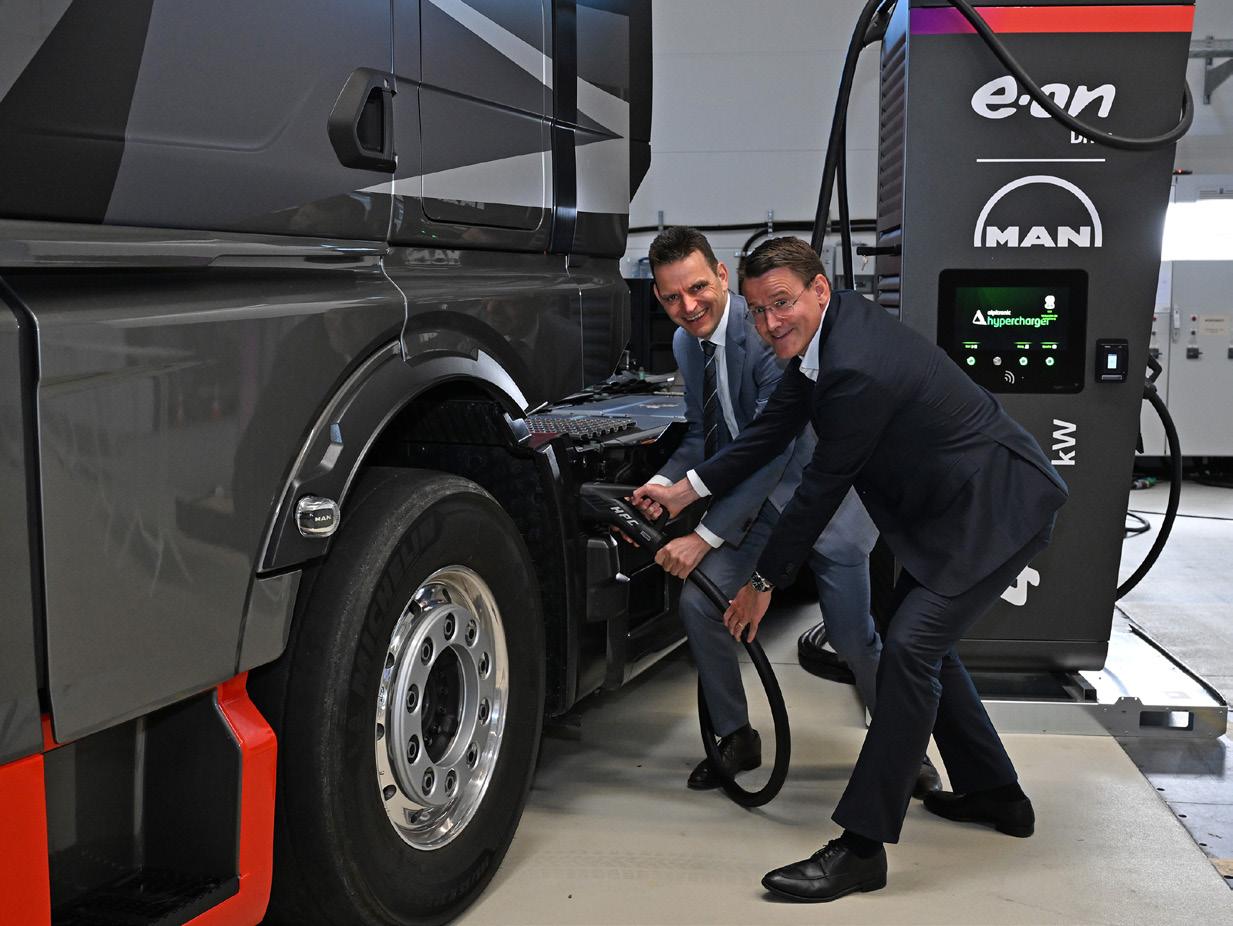
• It’s full charge ahead for the German truck maker




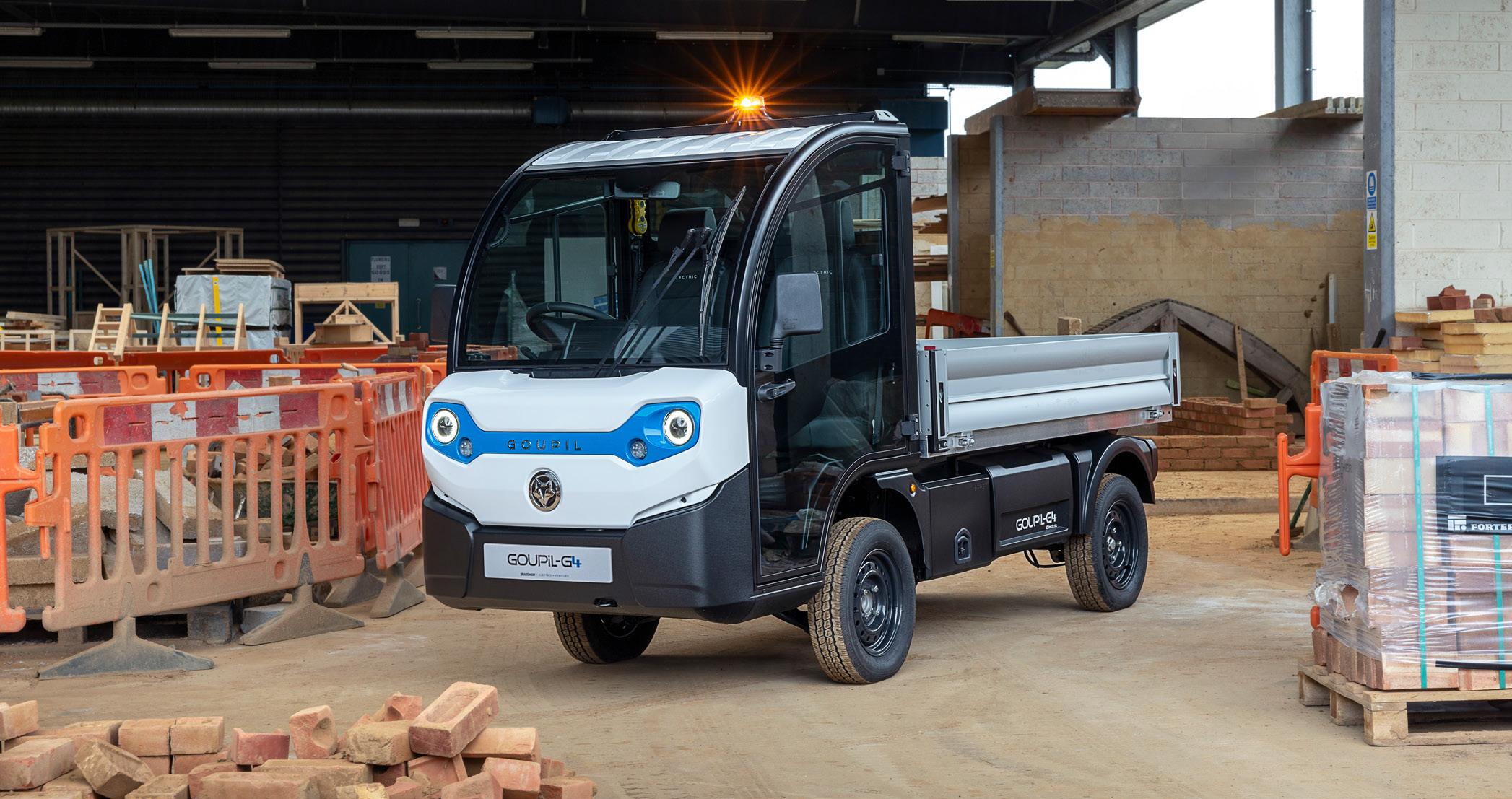
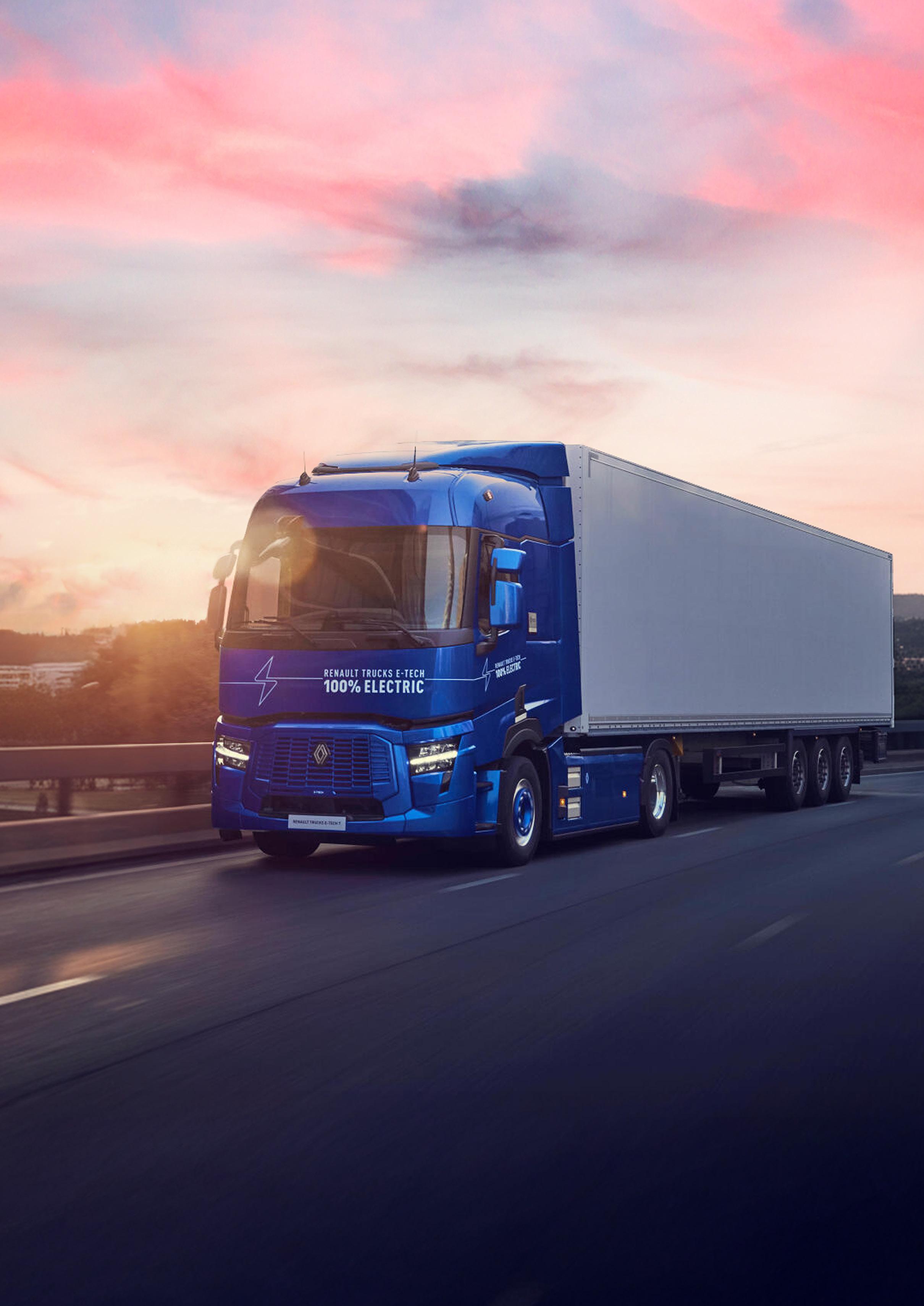
We’re proving electric trucks work in the real world. With millions of electric miles already covered, we have the proof to back our promises. Experience you can rely on. Expertise you can trust.
renault-trucks.co.uk
Scan the QR code to watch our Zeroing In electromobility series