Advertising Sales: David Johns Mobile: 07590 547343
Editorial Address: Commercial Vehicle Media & Publishing Ltd,
INSIDE THIS NEW ISSUE
ON THE BRINK
Road haulage experts warn that many UK firms are struggling as prices continue rising
DAF
We show how some firms are cutting their emissions by using what others chuck away
CRASH SCAMS
Truckers get some new advice about where in the UK they are most likely to become targets
Email: sales@cvdriver.com
4th Floor 19 Capesthorne
Drive, Eaves Green, Chorley, Lancashire. PR7 3QQ
LONG RIDER
EDITORIAL
Telephone: 01257 231521
Email: matthew@cvdriver.com
Editor: John Threadgold
Art Editor: Leo Gehlcken
Advertising
Advertising Sales: David Johns
Telephone: 01257 231521
Telephone: 01388 517906
Email: design@cvdriver.com
Meet the stylish new Scania variant that offers more cab length and height
Two prizes are up for grabs this month in our easy-to-enter competitions
Mobile: 07590 547343
Email: sales@cvdriver.com
NOTE
Editorial
Editor: Trevor Gehlcken
Art Editor: Leo Gehlcken
Telephone: 01257 231521
Email: design@cvdriver.com
The publisher makes every effort to ensure the magazines contents are correct. All material published in CV Driver Magazine is copyright and unauthorised reproduction if forbidden. The Editors and publisher of this magazine give no warranties, guarantees or assurances and make no representations regarding any goods or services advertised in this edition.
CV Driver Magazine is published under a licence from Commercial Vehicle Media & Publishing Ltd. All rights in the licensed material belong to Matthew Eisenegger or Commercial Vehicle Media and Publishing Ltd and may not be reproduced whether in whole or in part, without their prior written consent. CV Driver Magazine is a registered trademark.
If you are not going to keep this magazine for future reference please pass it on or recycle it.
MAN TALK
How
We sit down for a chat with the truck insurance experts at CompareHGV
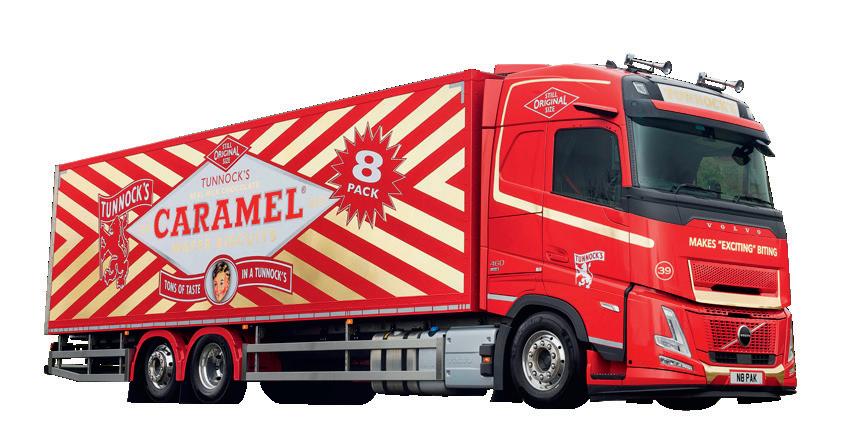
VOLVO HITS THE SWEET SPOT
TUNNOCK’S HAS ADDED ITS FIRST-EVER VOLVO TRUCK TO ITS DELIVERY FLEET
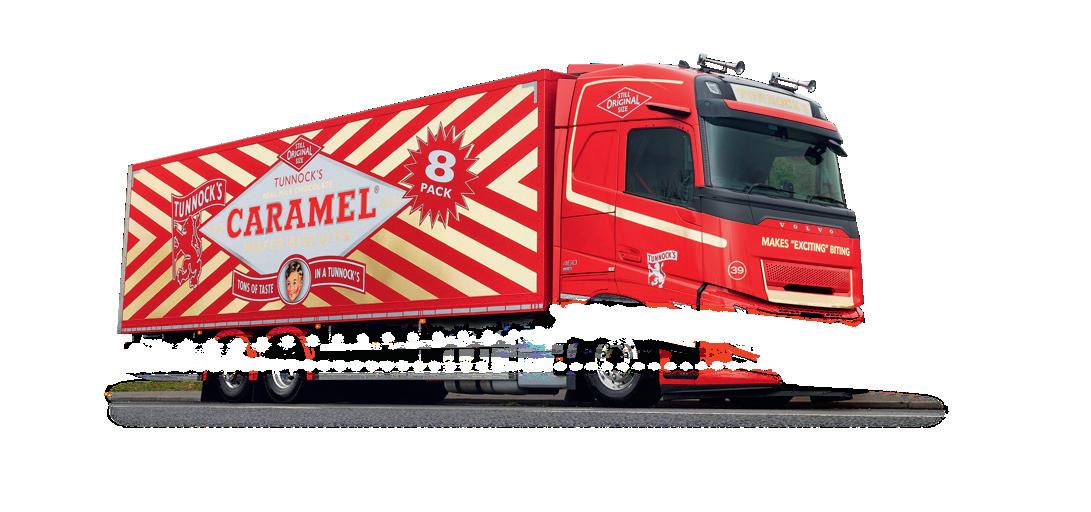
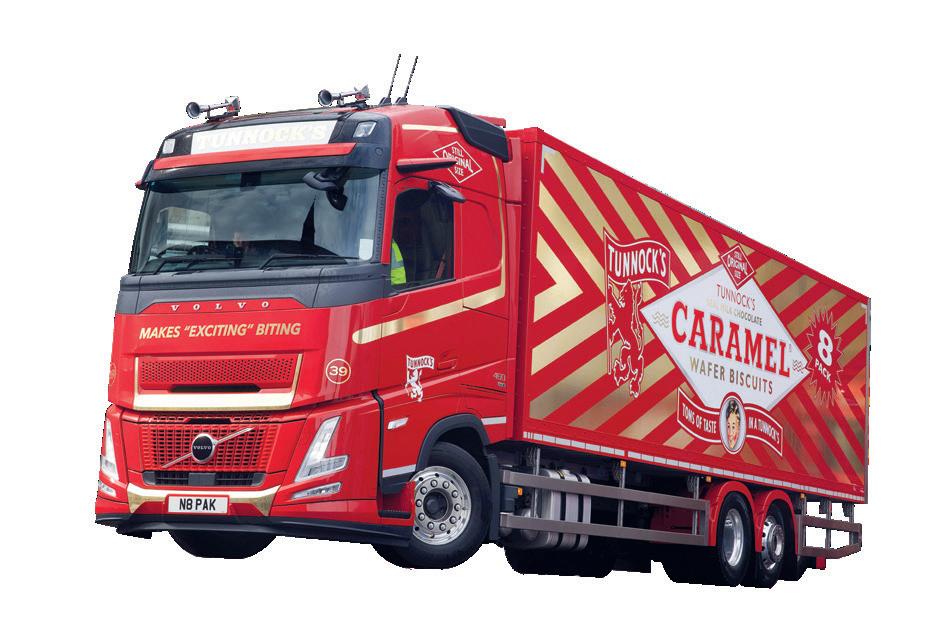
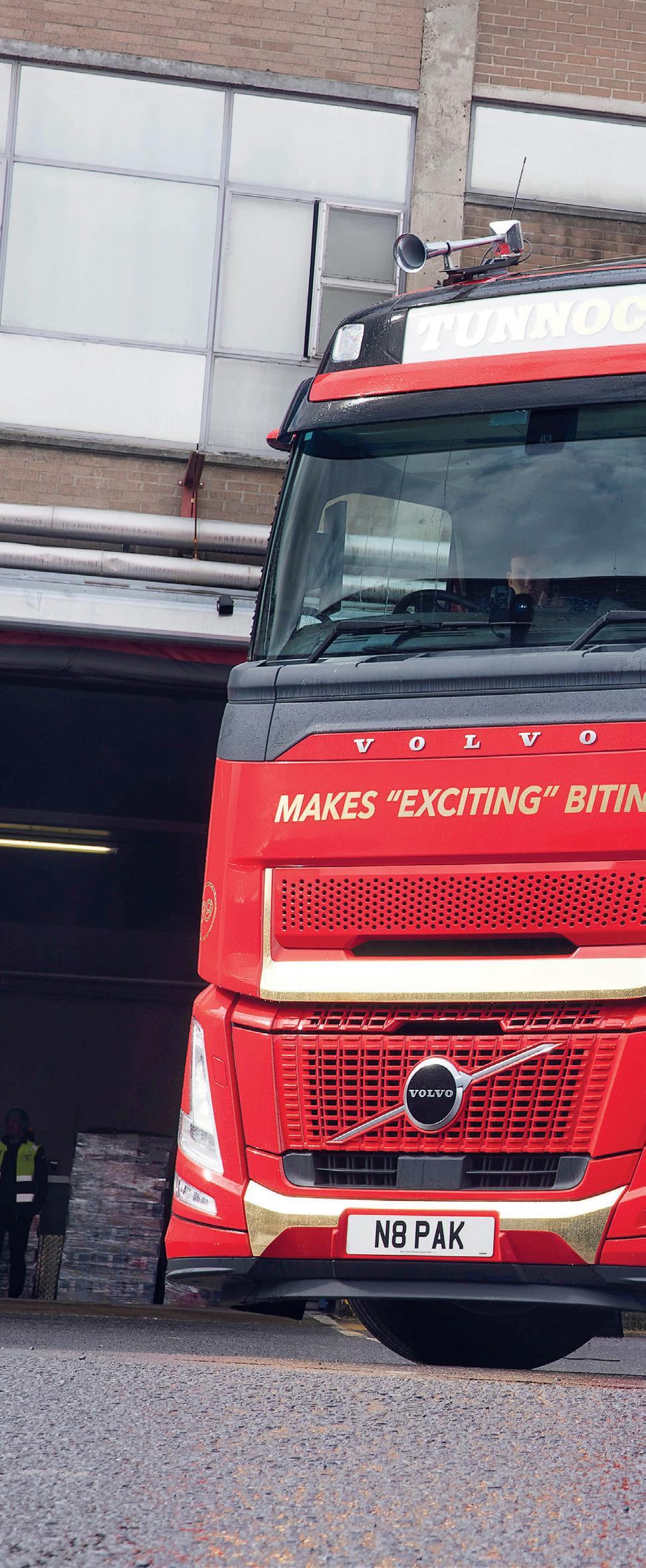
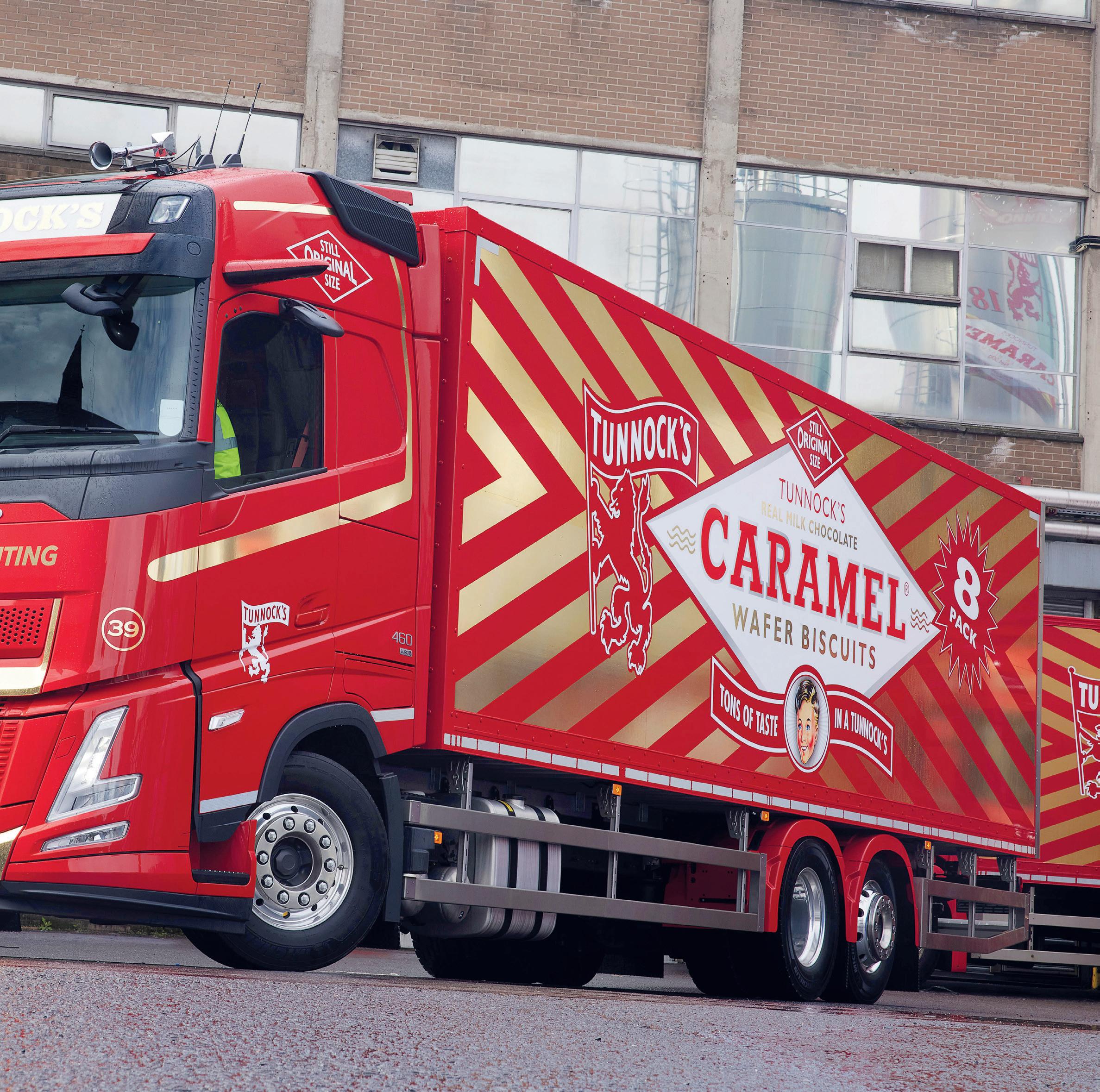
The truck is a new FH Aero 6x2 rigid, sporting a full livery wrap design to mirror the confectionary specialist’s popular caramel wafer biscuits.
The family-run baker, that has been manufacturing some of the UK’s favourite sweet treats since 1890, has previously used vehicles from a rival manufacturer but opted to go with Volvo Trucks for its latest acquisition.
Stuart Loudon, engineering and transport manager, said: “We were keen to try something different and had heard good things about the Volvo FH Aero in terms of driveability and fuel efficiency. The feedback from our driver after a trial with a demonstrator was excellent, and the early signs since we’ve had the new truck on the road are very positive.”
The FH Aero is powered by a Euro VI-compliant D13 Step E engine producing up to 460hp and a peak torque of 2,600Nm. This is paired with a 12-speed I-Shift automated gearbox – enabling perfectly timed gear-changes for an easier, safer and more comfortable drive – and I-See predictive cruise control to yield further sustainability benefits.
The new arrival – which joins a six-strong commercial vehicle fleet – will be used to deliver Tunnock’s Teacakes and Caramel Wafers
nationwide, clocking up in the region of 100,000 km each year. It’s backed by a Volvo Gold Contract, which includes preventive maintenance and repairs to guarantee the most comprehensive and personal service, offering total peace of mind.
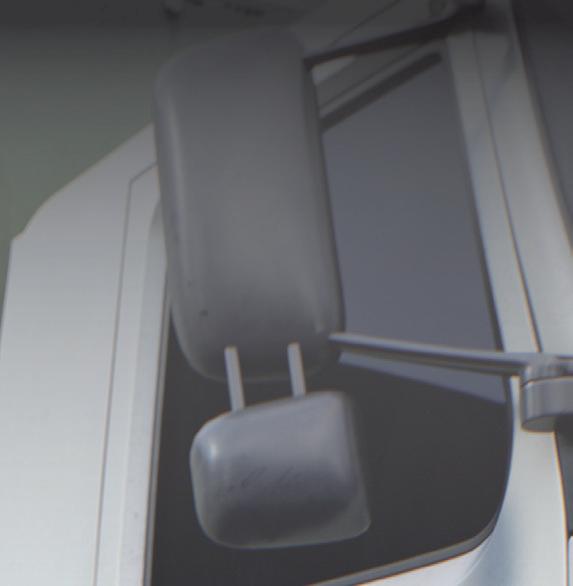
Built on a 6,000mm wheelbase, the rigid is equipped with full air suspension and bodywork from PMH Coachbuilders. It features Volvo’s Camera Monitoring System (CMS), which replaces the traditional exterior mirrors. The solution increases the driver’s field of view and performs strongly in rainy and dark conditions, direct sunlight and even when driving in tunnels.
With its eye-catching livery, the new FH Aero features a high-end specification. Inside the Globetrotter cab, the full black leather exterior is complemented with a host of creature comforts for long days out on the road. These include a microwave oven, full media package and navigation, plus Volvo’s I-Park Cool. This intelligent overnight air conditioning system helps to keep the cab at a perfect temperature, whatever the weather.
The exterior is equally impressive, with Alcoa Dura-Bright alloy wheels, an enhanced paint finish, air horns, LED spotlights and nameboard, as well as premium Michelin tyres. ■
WE WERE KEEN TO TRY SOMETHING DIFFERENT AND HAD HEARD GOOD THINGS ABOUT THE VOLVO FH AERO IN TERMS OF DRIVEABILITY AND FUEL EFFICIENCY
DISTRESS SIGNAL GOES OUT OVER HAULAGE INDUSTRY WORN TYRES ‘MORE DEADLY THAN ILLEGAL PHONE USE’
A NUMBER OF TRANSPORT FIRMS ARE RUNNING ON EMPTY AS CURRENT FUEL CRISIS DEEPENS
The Road Haulage Association (RHA) has sent out a distress signal distress signal for the industry, saying that UK haulage companies are struggling to stay afloat and dropping into administration due to unsustainable price rises recorded in 2026.
The RHA said most freight businesses generated lowmargins, meaning increased running costs were having a major impact.
Its experts stressed that haulage and freight companies had already been battling a stagnant economy and rising costs for up to a year. However, when asked why a series of haulage companies have fallen into difficulty this spring, the experts pointed at rising petrol and diesel costs for inflicting a fatal blow, with fuel running costs becoming simply unsustainable.
RHA external affairs director David Boot explained that fuel costs can make up as much as
one-third of total expenses.
He said: “Road freight is a low-margin industry, predominantly made up of small and medium-sized family businesses. Margins are typically 2%, which leaves very little room to absorb shocks. With a stagnant economy and further cost considerations, operators have spent the last twelve months delaying investment, consolidating operations, and prioritising survival.
“Take fuel costs alone, which account for a third of overall expenses in road transport. UK diesel prices remain much higher than most European nations, putting businesses here at a competitive disadvantage.
“Recent global events have added further pressures. Since the start of the conflict in the Middle East, average UK diesel prices have risen from around 142p per litre in February to over 190p by late April. For a typical HGV that translates to roughly £300 a week extra, per vehicle. ◼
HALFORDS GIVES WARNING TO TAKE A PROACTIVE APPROACH OVER TYRE MAINTENANCE
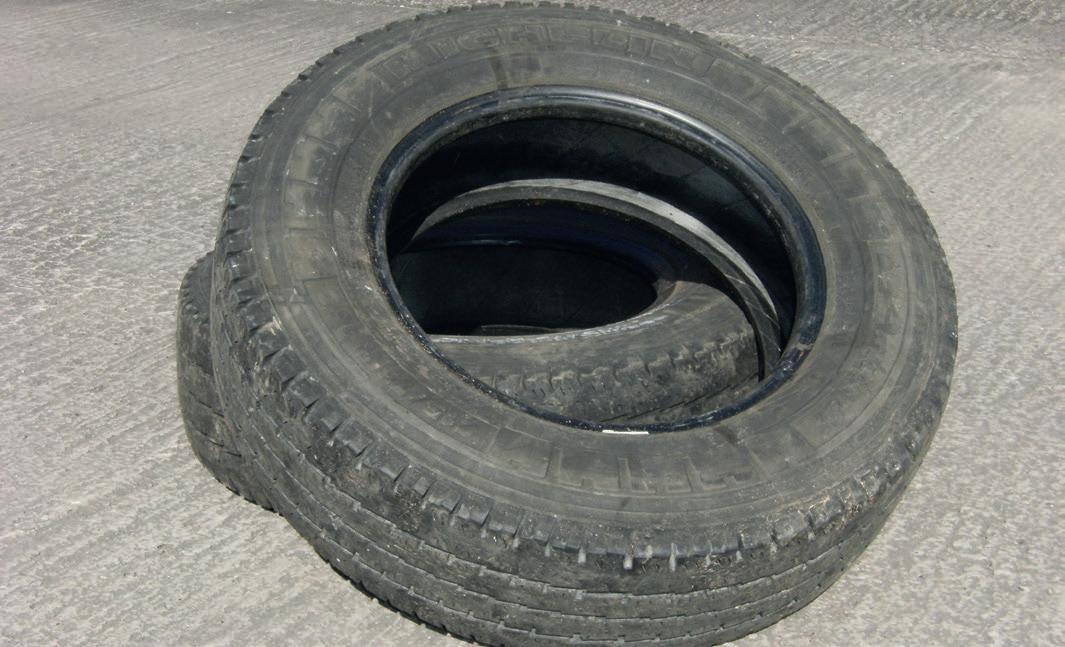
Worn tyres can be more dangerous than driving while on a mobile phone, a new study by Halfords has claimed.
At 70mph, worn-but-legal car tyres add 27m to stopping distance – around six car lengths – compared to around 15m on average for a driver using a mobile phone
THE FINDINGS OFFER A STRONG GUIDELINE AS TO THE DANGERS
The analysis, conducted by Professor Peter Wells, director of the Centre for Automotive Industry Research at Cardiff University, is the first study to directly compare the two. And the researchers, backed by campaigners including TyreSafe, are now calling for changes as they warn that the current legal limit may be too low.
Professor Wells said: “The impact of phone usage and worn
tyres have never been compared before and the study suggests that purely from a stopping distance perspective, the impact of worn tyres is generally worse. The impact of phone usage will be variable, but the findings offer a strong guideline as to the dangers.”
Government data shows an increase in the number of deaths or serious injuries on our roads as a result of dangerous tyres rising from 147 in 2022 to 172 in 2024, which is the most recent data available.
Adam Pay, managing director of autocentres and mobile network at Halfords, added: “The legal minimum shouldn’t be mistaken for a safety benchmark. When tyres reach that point, their performance is already significantly reduced, which raises an important question about whether the current limit is where it should be.” ◼
Below: Driving on worn tyres is more dangerous than illegal mobile phone use
PRODUCTION OF XG ELECTRIC AND XG+ ELECTRIC STARTS MOTO TO QUADRUPLE ITS TRUCK CHARGING BAYS IN BRITAIN
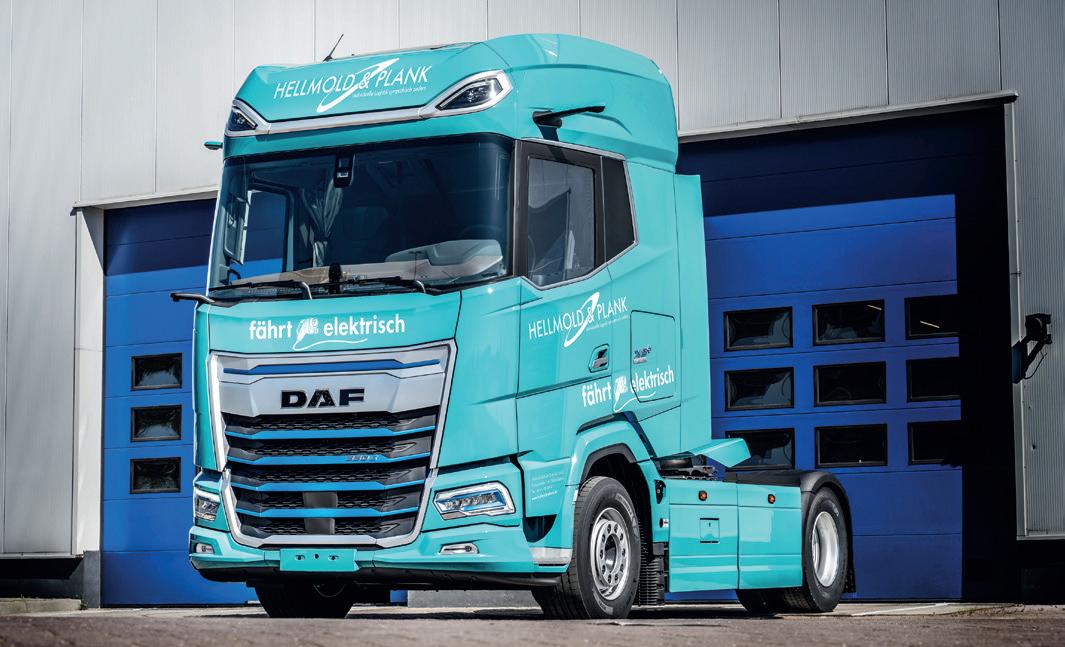
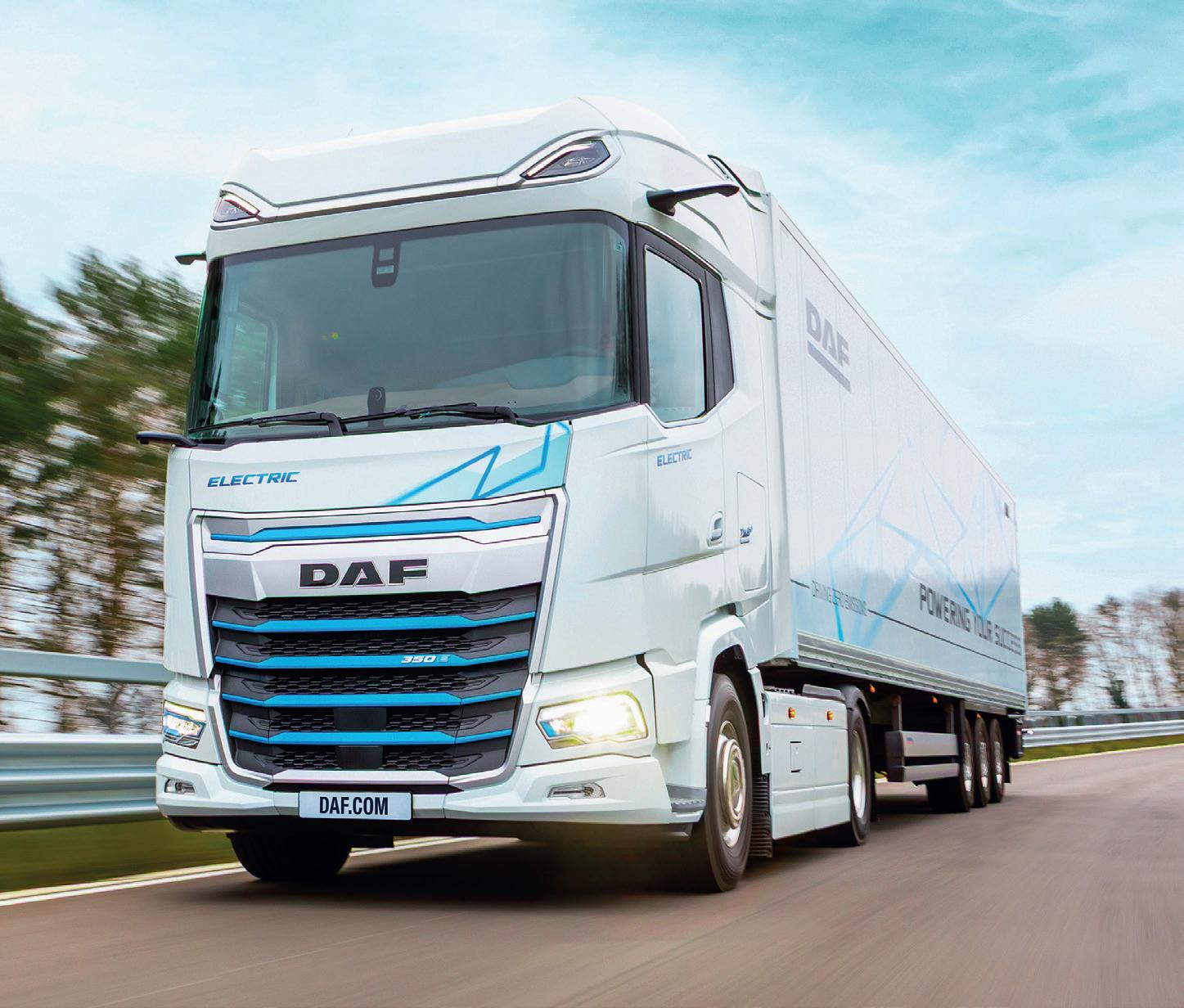
DAF VEHICLES COMBINE ELECTRIC POWERTRAIN
TECHNOLOGY WITH SUPERIOR DRIVER COMFORT
DAF offers a complete series of EV-trucks, which ranges up from a 12-tonne XB Electric for city distribution up to the XG and XG+ Electric for longer haul applications. The XG Electric and XG+ Electric share their DNA with the XD and XF Electric trucks, jointly voted ‘International Truck of the Year 2026’ for their high efficiency, smooth drivelines and excellent driver comfort.
The XG and XG+ Electric are designed for longer-distance
THE
START OF PRODUCTION UNDERLINES OUR COMMITMENT TO OFFERING ZEROEMISSION SOLUTIONS
transport and bring driver comfort to the next level. The vehicles feature an exceptionally spacious cab with volumes up to 12.5 cu metres, representing the industry benchmark and
offering the best possible working, relaxing and sleeping environment. The aerodynamic cab design contributes to optimal vehicle efficiency.
The XG Electric and XG+ Electric are available in multiple chassis configurations and feature the highly-efficient PACCAR EX-D2 electric powertrain, delivering outputs from 270 to 350kW (370 to 480hp) and a maximum torque of 2,400Nm. The driveline is powered by up to five lithiumiron-phosphate (LFP) battery packs, mounted modularly on the chassis. Depending on the application, ‘zero-emission ranges’ of over 500 kilometres are possible.
“The start of production underlines our commitment to offering zero-emission solutions across a broad range of applications,” said Harald Seidel, president of DAF Trucks. ◼
Below: DAF has started production of the XG Electric and XG+ Electric in Eindhoven
MOTORWAY SERVICES FIRM TO HOST A NETWORK OF HIGH-POWERED EV SUPERHUBS
The plans form part of the motorway services firm’s plans to invest more than £500m across its nationwide estate, following the landmark agreement of new 75+ year lease extensions, with the Department for Transport and National Highways, at 10 Moto sites.
The extensions enable Moto to continue its programme of site redevelopments and EV infrastructure upgrades designed to meet changing travel demands and to provide support for the Government’s net zero ambitions for UK transportation.
Moto already has EV charging at its motorway services. The firm works with partners Gridserve and Tesla to lead the rollout of superfast chargers across the motorway network and has branched out to become a charge point operator itself.
Under the new blueprint, Moto plans to significantly increase the number of EV charging hubs across its sites having already launched more than 1,000 ultra rapid charging bays in the past
five years. The company said it now has a clear ambition to quadruple the number of EV charging bays at its sites over the coming years. It also has a roadmap to 15 eHGV superhub sites with up to 100 bays, providing critical infrastructure that will unlock electric freight growth for the UK economy, alongside plans to further enhance facilities for HGV drivers.
THIS
PLANNED INVESTMENT IS FANTASTIC NEWS FOR OUR CUSTOMERS
Ken McMeikan, CEO of Moto Hospitality, said: “This planned investment is fantastic news for our customers as we continue to upgrade existing facilities, provide even greater choice of food and drink brands, provide world-class EV charging infrastructure and open new motorway service areas and truck stops.” ◼
SHOCK ANALYSIS REVEALS FULL SCALE OF DRUG-DRIVING HUNTS FOOD GROUP GOES FOR CARRIER TRANSICOLD SYSTEMS
DRUG DRIVING IS COMING UNDER THE SPOTLIGHT AS A MAJOR ROAD SAFETY ISSUE
Now new analysis has revealed that drivers caught operating a vehicle under the influence of drugs are five times more likely to repeat the offence than drink-drivers.
More than 12,300 drivers were caught drug-driving on at least three separate occasions in the 11 years to July 2025, according to new RAC analysis of DVLA figures. That compares with a figure of 2,553 drink-drive convictions over the same period. Overall, 41,422 licence holders were convicted of drug-driving more than once in the last 11 years. And the analysis highlights some stark examples of reoffending. One driver racked up 18 separate ‘DG10’ drug-driving convictions, while another has 17. Several others have between 12 and 14 convictions, and 94 motorists currently have eight drug- driving offences on their record. In total, 32 drivers have 10 separate drug-driving convictions, while 38 have nine.
According to the DVLA data, 72,662 motorists held at least one drug-driving conviction on their licence. Shockingly, this total includes 4,131 learner drivers who committed the offence on a provisional licence before even passing their driving test.
DG10 endorsements are given to motorists caught driving, or attempting to drive, with a controlled drug level above the
legal limit. This can include specified limits of prescription medicines such as morphine or diazepam or having certain levels of illegal drugs in your blood.
Since 2015, tougher traffic laws have made it much easier to prosecute motorists driving under the influence of drugs. Current penalties include driving bans, fines, a criminal record and potential prison time, but the RAC said its analysis demonstrates the challenge of effectively preventing reoffending.
Rod Dennis, senior policy officer at the motoring
DRUG-DRIVING REOFFENDING RATES DWARF THOSE OF DRINK-DRIVING
organisation, said that while drink-driving dominates UK headlines, the new data exposes the rapidly growing, hidden crisis of drug-driving.
“Drug-driving reoffending rates dwarf those of drinkdriving, which suggests that current penalties aren’t effective in preventing some drug-drivers from repeating their crimes and putting everyone at risk. Introducing a national drug-driving rehabilitation scheme – similar to what is in place for drinkdriving – could also help to drive down reoffending.” ◼
FIRM HAS STRENGTHENED ITS TEMPERATURE CONTROLLED DISTRIBUTION NETWORK
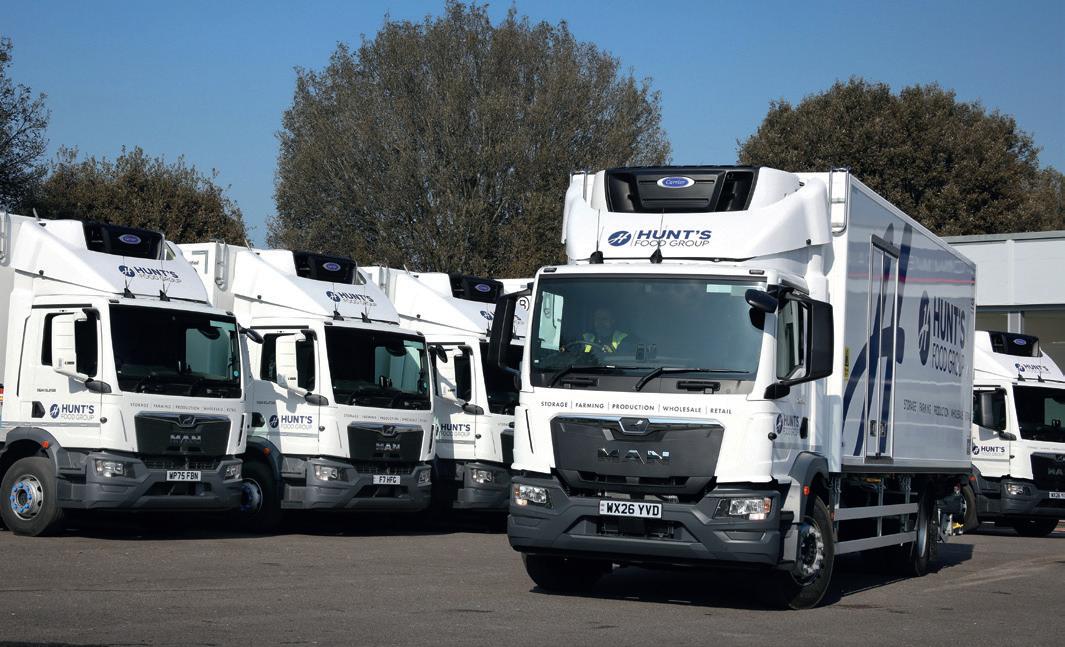
Hunt’s Food Group has strengthened its temperaturecontrolled distribution network with the delivery of 19 new rigid trucks fitted with Carrier Transicold Supra 850 MT and Supra 1250 MT systems. The new vehicles will support the distributor in maintaining consistent temperature control across its highfrequency, multidrop delivery routes.
As part of the order, nine Supra 850 MT units have been mounted to 15-tonne MAN TGM rigids, while 10 Supra 1250 MT systems have been paired with 18-tonne variants of the same vehicle. Each truck features an insulated box body supplied by Solomon Commercials. The delivery means the majority of Hunt’s Food Group’s 160 temperature-controlled vehicles will continue running on Carrier Transicold technology.
“Maintaining cold chain integrity across busy multidrop delivery routes demands
equipment we can trust,” said Phil Hopkins, transport director, Hunt’s Food Group. “Since we took our first unit in 2015, the Supra range has reliably delivered the pulldown speeds and temperature control we require. Carrier Transicold’s support, expertise and developing technology give us unwavering confidence in our operation, reinforcing our commitment to providing a consistent level of service to every customer.”
As with its existing Carrier Transicold systems, Hunt’s Food Group’s newest vehicles are supported by Carrier Transicold’s BluEdge fixedcost, full-service maintenance package. The coverage includes annual temperature control testing and certification, full regulatory checks and access to the company’s oneCALL 24/7 incident management service. ◼
Below: Hunt’s Food Group has chosen Carrier Transicold to upgrade its fleet
DAF LAUNCHES INTERACTIVE EV ROUTE SIMULATOR
IT PROVIDES AN INSIGHT INTO THE REAL-WORLD DEPLOYABILITY OF ELECTRIC
DAF TRUCKS
Using customer-defined routes, the DAF Electric Route Simulator provides an initial indication of range and operational feasibility for all variants within the broad DAF Electric truck program.
The simulator reflects the modular design philosophy of the New Generation DAF XB, XD, XF, XG and XG+ Electric vehicles. All these EV trucks are available with multiple battery pack options, as well as a wide range of e-motors, axle configurations and cab variants.
The simulator quickly shows how optimal vehicle specifications enhance the truck’s performance in daily use. Users of the simulator can adjust the number of battery packs, chassis configuration and vehicle weight to view the range and route viability.
For detailed calculations and further advice, operators can contact a DAF dealer through the simulator directly, which has advanced software available for in-depth, detailed advice.
The simulator is part of DAF’s allencompassing approach when it comes to electric transport. This includes among others, electric vehicle consultancy, charging infrastructure solutions via PACCAR Power Solutions, financing and leasing services, connectivity and fleet management tools, driver training and dedicated electric after sales and service support, through the professional dealer network throughout Europe and beyond, with well-trained mechanics and workshop
equipment, specifically installed for maintaining electric vehicles.
DAF provides a comprehensive portfolio of electric trucks, ranging from the 12-tonne DAF XB Electric designed for ‘zero emissions’ local distribution, to the XG+ Electric for longer-distance operations.
The XD and XF Electric models, built for a wide variety of applications, have been awarded ‘International Truck of the Year 2026’, in recognition of their advanced, efficient driveline technology and excellent driver comfort, in combination with a wellthought through vehicle concept for highest efficiency, safety and driver comfort.
The route simulator is accessible via: daf.com/e-mobility
Above: The simulator shows how optimal vehicle specifications enhance the truck’s performance in daily use. Users can adjust the number of battery packs, chassis configuration and vehicle weight to view the range and route viability
DAF PROVIDES A COMPREHENSIVE PORTFOLIO OF ELECTRIC TRUCKS
KUMHO’S MULTI-PERFORMERS
• Outstanding mileage
• Even wear
• Excellent all-season performance
cab is intended for those seeking a platform to build something tailored, unique and distinctive
Longline
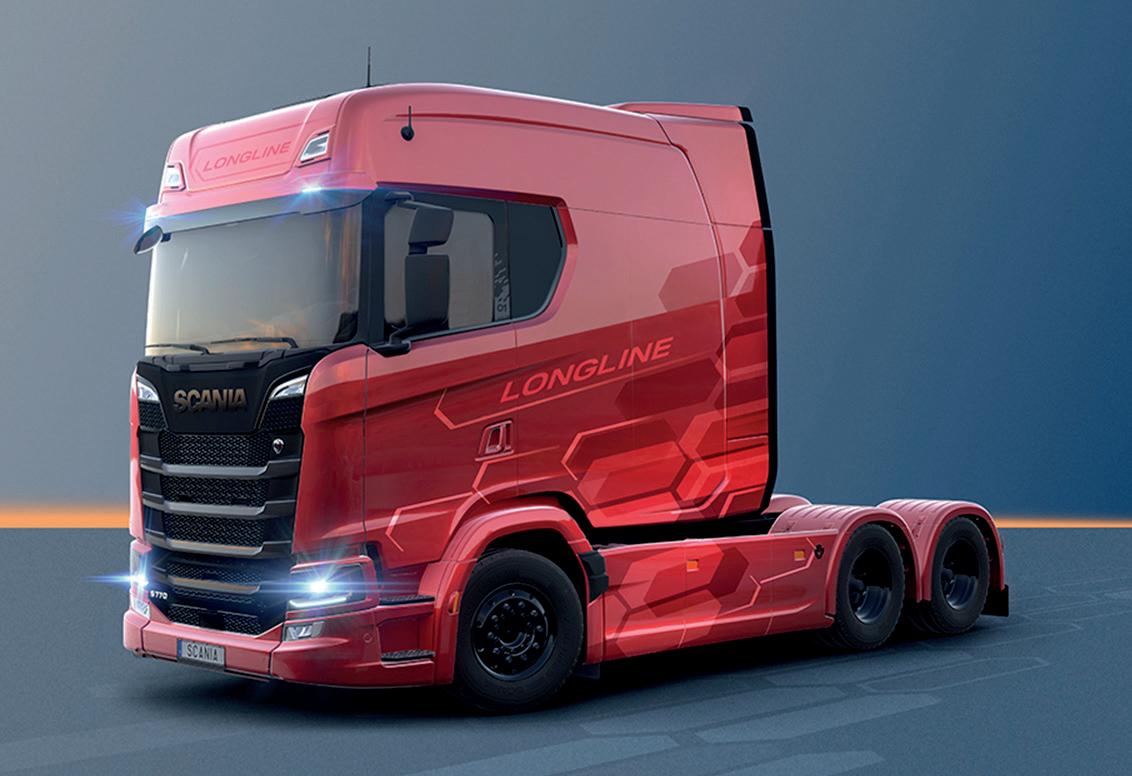
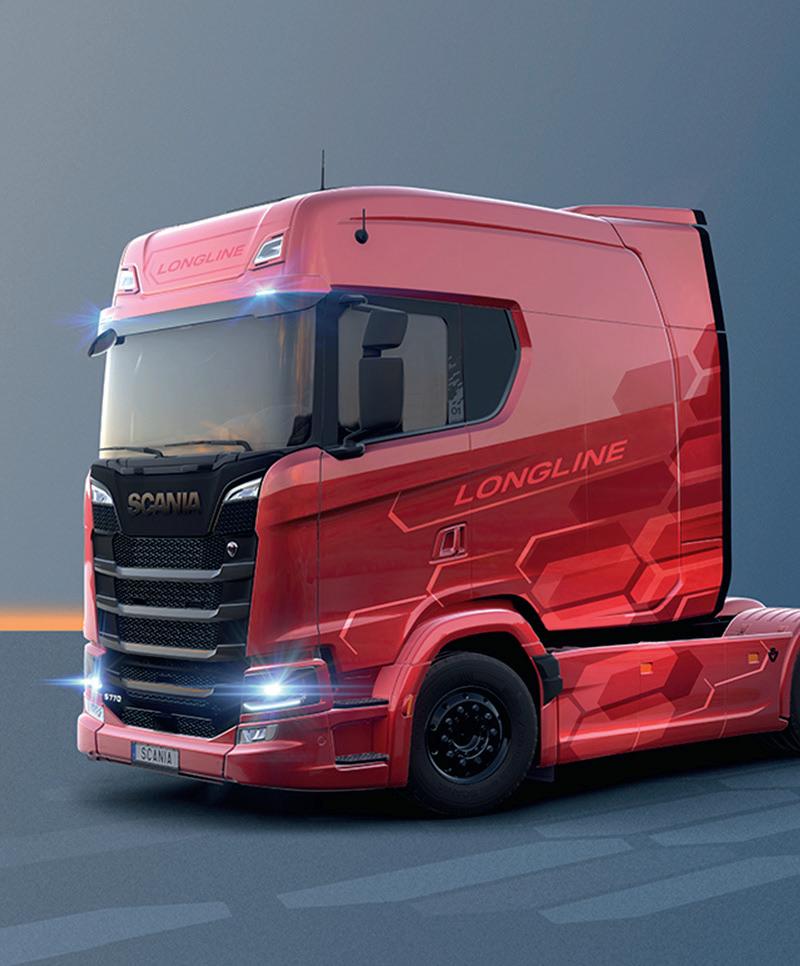
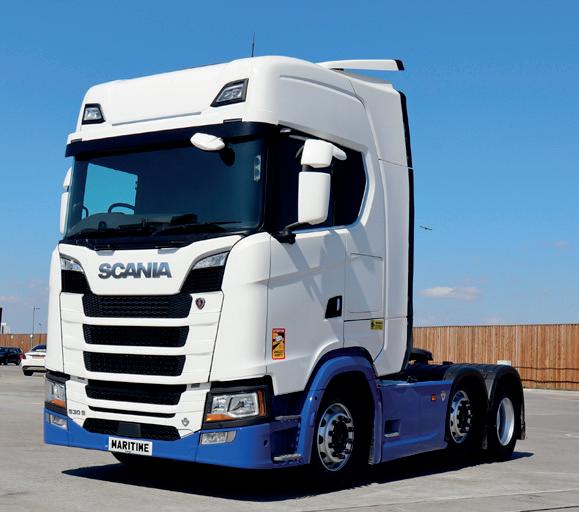
SCANIA INTRODUCES LONGLINE CAB FOR SERIES PRODUCTION
NEW MODEL TAKES NEXT STEP IN ITS PREMIUM CAB
Building on a strong heritage and enabled by Scania’s modular system, the new cab will be offered as a low-volume, factorycertified solution for customers seeking extended space, comfort and flexibility.
The Longline cab combines Scania’s CrewCab and S-series high-roof cab to create a product that no other OEM currently offers from factory. The cab will be produced in Laxå, with chassis built in Södertälje.
“This is a natural evolution of a concept that has long been appreciated by customers,” said Lars Gustafsson, head of trucks, Scania. “With Longline, we combine heritage with modern industrialisation and offer a platform that can be tailored to individual needs.”
The Longline cab is designed as a flexible platform rather than a fullyspecified interior solution. From the factory, it will be offered with a limited interior configuration behind the seats, including options such as a standard bed with storage or shelving – or a more open layout. The design focuses on clearly defined mounting points, enabling customers to design interiors according to their specific requirements.
“We simply don’t add things that aren’t needed, limiting waste in line with our sustainability targets,” added Samuel Suderbys, managing director at Scania’s operations in Laxå.
Many customers are expected to further personalise their vehicles through custom paint and interior solutions. To further support this, Scania will offer premium paint options of all automotive
colours available in collaboration with a Swedish custom painter reducing lead times from delivery to operation.
The Longline concept originated from market demand and a desire to improve driver conditions. By offering increased space and flexibility, the cab supports customers in attracting and retaining drivers – a key challenge in the transport industry. “The cab is not only about space, but about creating a better working environment for drivers. This is increasingly important for our customers,” said Lars.
Longline is adapted according to the European IVD legislation (Increased Vehicle Dimensions), that has enabled customers all over Europe to purchase longer vehicles. Initially, the cab will be available in two length versions – 28 and 31 – both with a high roof. The interior
WE SIMPLY DON’T ADD THINGS THAT AREN’T NEEDED
height will exceed two metres, providing standing room for most drivers.
The cab represents a continuation of Scania’s tradition of developing specialised transport solutions based on customer needs. The project started in 2022, following Scania’s established approach to special applications.
Sales began in April, with first deliveries expected this autumn. As a low-volume offering, the Longline cab is intended for those seeking a platform to build something tailored, unique and distinctive.
TRUCKERS’ SKILLS PREVENT ANY NUMBER OF CRASHES VOLVO BUILDS ITS TRUCK PRESENCE AT SERAS
BUT THEY RARELY GET THE FULL CREDIT FOR IT THEY DESERVE
Truckers are known to be about the safest drivers in Britain. They operate every day for a living and their trucks are limited to 56mph. Sadly, the same can’t be said of fleet car and van drivers.
In new analysis by Venson Automotive Solutions, 19% of business drivers said they felt more stressed and struggled to concentrate as they worry about being late and 28% admit to making harsh manoeuvres.
If that’s the case, it’s amazing that heavy goods vehicles are not involved in more accidents than they are. The conclusion to be drawn is that truckers’ driving skills probably prevent thousands of near misses from becoming crashes.
Venson is advising car and van fleets to review their Driving For Work policies (if they actually have them!) to stay compliant and safeguard employees, by ensuring harsh manoeuvres are avoided.
The survey found that 41% of drivers use satnavs or apps to
re-route and avoid congestion, with 22% taking alternative routes even when they do not know where they are, while 19% stick to their planned route.
Some 30% said they do not change their driving behaviour on congested roads, while 41% become more cautious and increase their following distance.
Simon Staton, client management director at Venson Automotive Solutions, said: “There are simple actions employers can take to help their staff who drive for work.
“For example, using driver risk management tools which help to identify the most at risk drivers on fleet and pinpoint if driving training is required to improve driving behaviour.
“By reviewing driving for work policies employers can help keep their drivers safe, reduce stress and reduce costs by minimising the number of accidents each year.” ◼
Below: Safe truckers are affected by unsafe car and van drivers
NEW VOLVO FH MODELS WILL COLLECT WASTE WOOD FOR FUEL
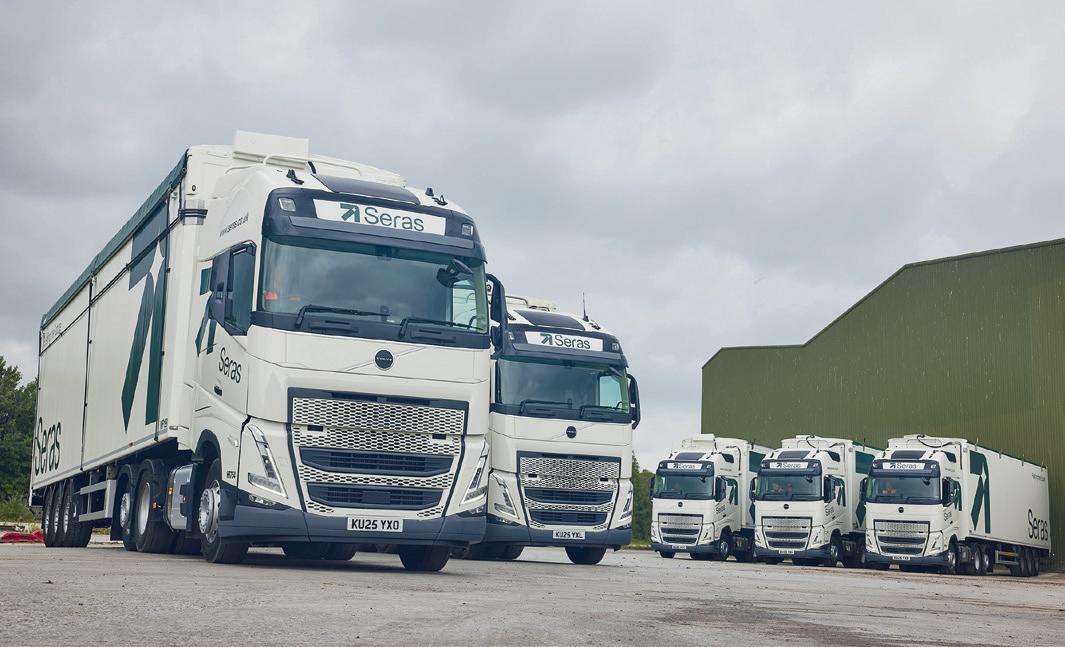
Sustainable fuel specialist Seras has increased the amount of Volvo trucks on its commercial vehicle fleet with the arrival of 14 new Volvo FH with I-Save 6x2 tractor units, equipped with Globetrotter XL cabs.
Working with moving floor trailers, the tag axle trucks feature hydraulic wet kits and will be used to collect waste wood from customers nationwide, transporting it for processing into biomass fuel which is then delivered to power plants across the UK.
The latest arrivals are powered by ultra-efficient D13TC Euro-6 Step E engines, delivering 500 hp and a peak torque of 2,800 Nm, with turbo compounding and intelligent software.
Further fuel gains are provided by Volvo’s I-Shift automated gearbox technology, which constantly evaluates information such as speed, weight, road grade and torque demand to perfectly time each gear shift. Volvo’s predictive
cruise control system, I-See, and I-Cruise with I-Roll are also included as part of the I-Save package.
SERAS HAS ENSURED ITS HARD-WORKING DRIVERS ARE WELL LOOKED AFTER
Inside the Globetrotter XL cabs, Seras has ensured its hard-working drivers are well looked after. Creature comforts include electrically controlled air conditioning, dual armrests, an adjustable leather steering wheel with neck-tilt, an under bunk mounted 33-litre fridge freezer, plus plenty of rear cab upper storage.
The trucks all feature a modern dashboard with a fully digital 12-inch, high-resolution instrument display, DAB radio and navigation. ◼
Below: Some of the new Seras Volvo trucks
Application
Our specialist for waste trucks: reinforced for resiliance, built for endurance
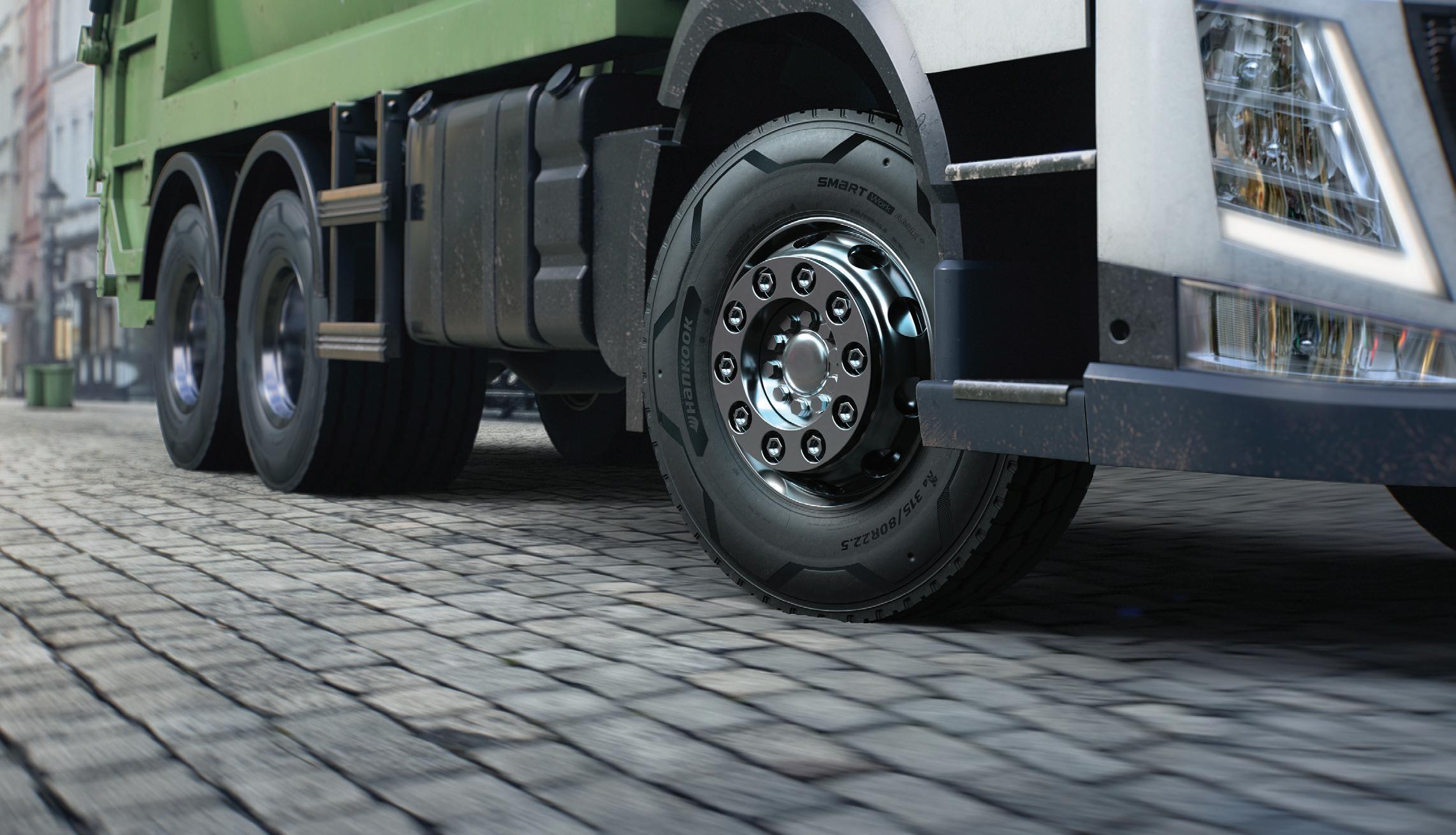
Reinforced sidewall for improved strength, durability and tyre life in urban areas.
and Snow Provides grip in mild winter weather.
3PMSF Certified Meets strict performance standards for reliable traction in severe winter conditions.
Mud
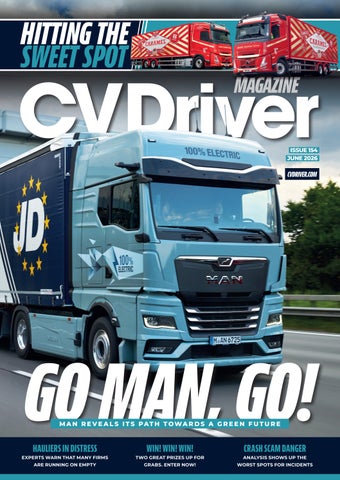
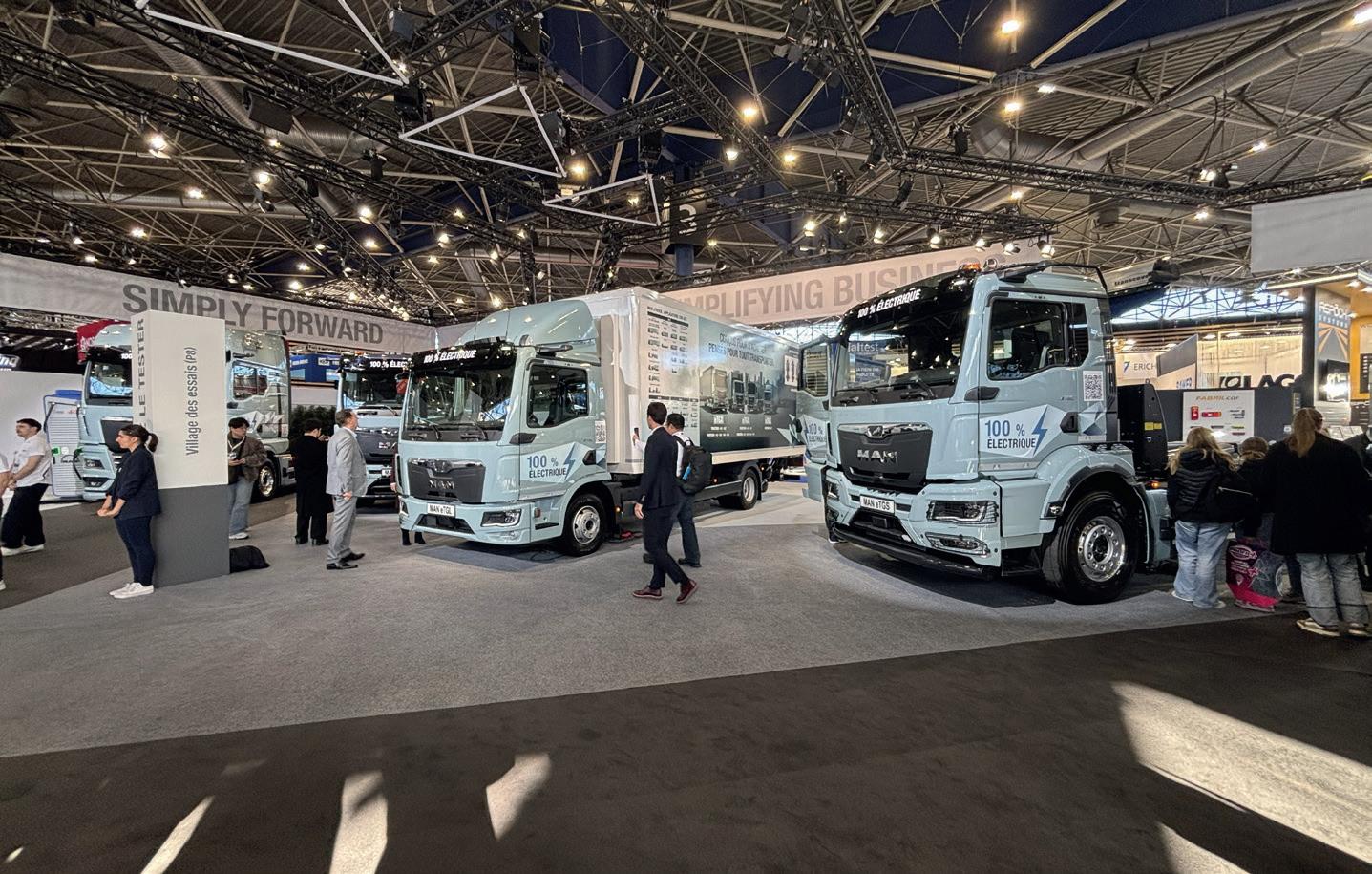
ELECTRIFYING FREIGHT THE MAN WAY
MAN TRUCK & BUS GLOBAL CHIEF EXECUTIVE OFFICER
ALEXANDER VLASKAMP TELLS STEVE BANNER WHAT IS NEEDED TO MAKE ZERO EMISSION TRUCKS MORE APPEALING FOR TRANSPORT FIRMS
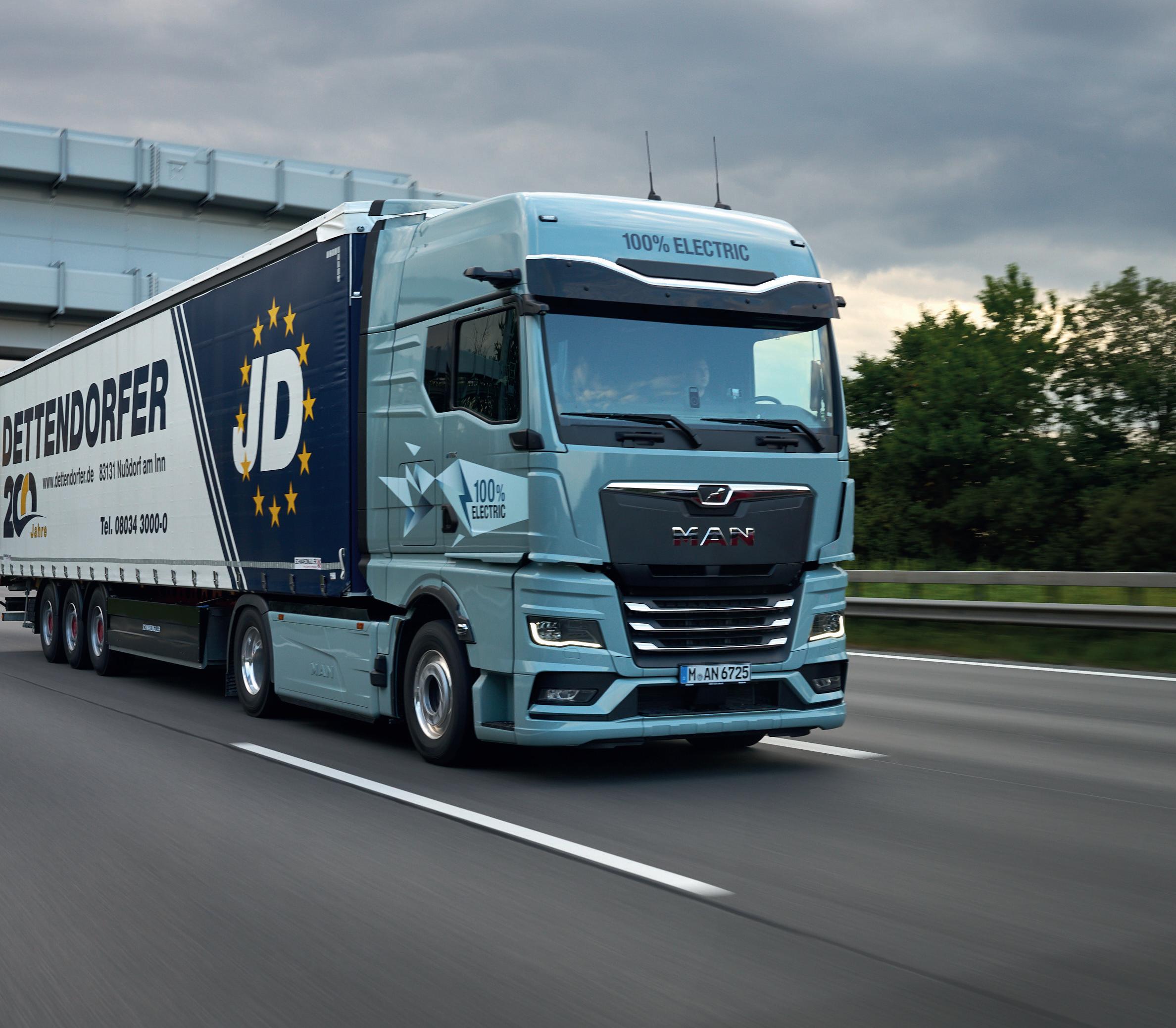
Extra taxes should be levied on diesel trucks to make switching to electric models more appealing, says MAN Truck & Bus global chief executive officer, Alexander Vlaskamp. Germany is increasing road taxes on diesels in a bid to reduce CO2 emissions and Vlaskamp would like to see other European markets, including the UK, follow suit.
“At the same time, we’re seeing some European cities banning older diesel trucks,” he says – an approach he applauds.
The stick needs to be accompanied by the carrot, however, and one that goes beyond government grants to cover the price gap between diesel and electric vehicles. Germany and Austria are exempting electric trucks from highway tolls, he points out, and that is a policy other countries should emulate.
He wants to see regulators adopt an even more flexible approach to gross weights with an eye to ensuring that the burden of heavy battery packs does not impose payload penalties, and put firms willing to go electric at a disadvantage compared with competitors who are sticking with diesels.
“Things are moving too slowly, with electric trucks accounting for just 2.1% of the total European market,” he told transport journalists at a recent conference in London. “That’s far below where it needs to be given that some fleets can electrify 80% of their transport operations.” And a lack of investment in electricity grids doesn’t help, he says.
“Unfortunately, we’re seeing what I would describe as grid congestion in many European markets at present and there
needs to be a step-change,” he observes. More capacity and wider coverage will be needed as the number of electric commercial vehicles rises.
No price cuts
Why aren’t the truck manufacturers encouraging sales by slashing the eyewateringly-steep front-end prices of electric models? Unfortunately that is unlikely to happen any time soon, Vlaskamp admits.
“The price is dictated by the cost of the raw materials that go into the batteries and that’s quite steep, so we will not see a significant fall,” he comments.
In the meantime, steps are being taken by truck builders to make the day-to-day use of their battery models less of a headache.
MAN is part of the Traton Group, which also embraces Scania.
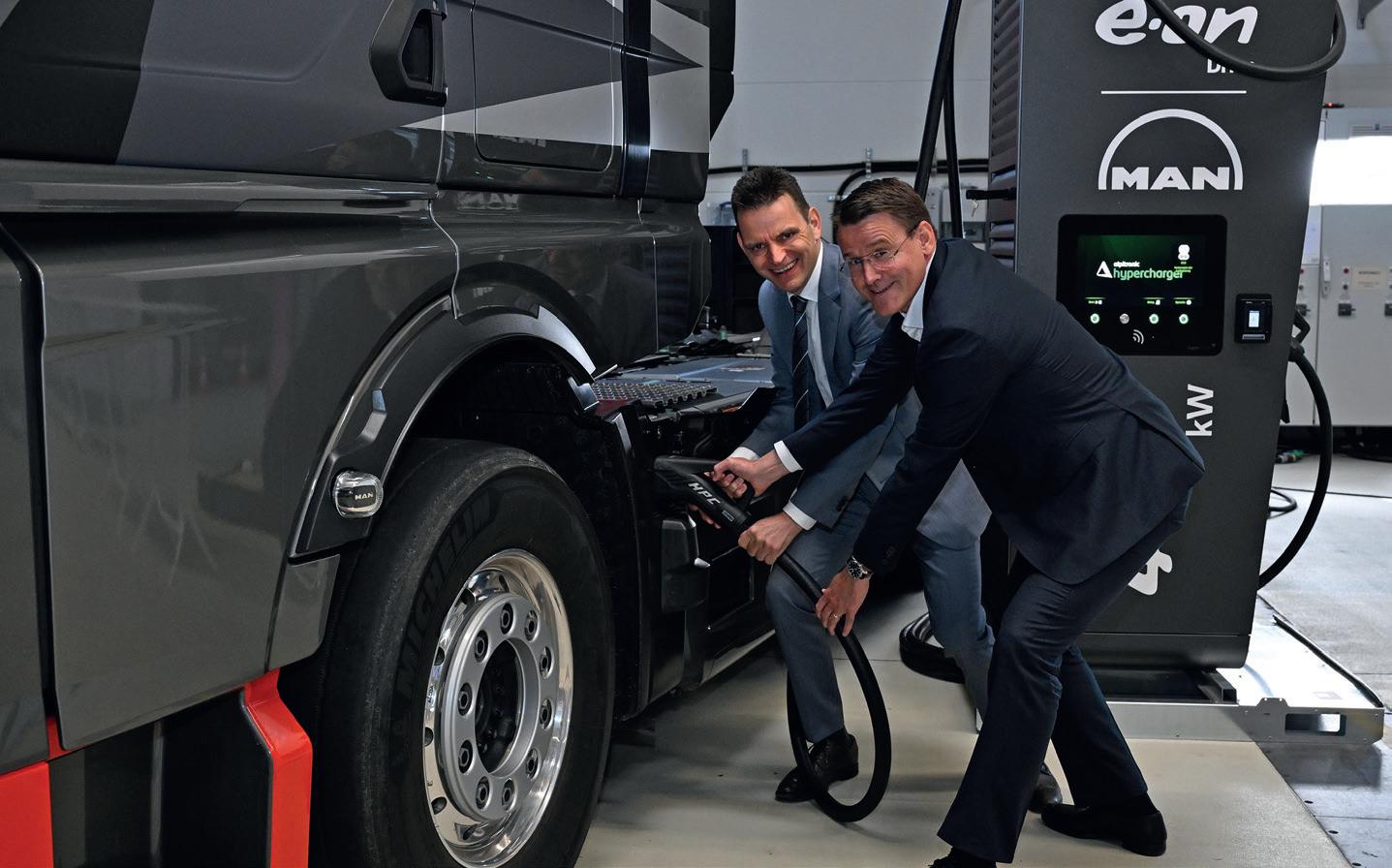
The group has been co-operating with Daimler Truck and Volvo to set up truck charging stations along core routes around Europe. The joint venture is called Milence and its first UK site is in Immingham. The move is welcome, given that the inability to recharge electric trucks when they are away from base is a significant barrier to their adoption so far as inter-city haulage fleets are concerned.
In addition, MAN is encouraging the use of its electric trucks as flexible energy storage systems. Technology developed under the SPIRIT-E banner enables them to feed power into an operator’s premises, or into the grid. Transport fleets that pursue this approach could cut their electricity bills by as much as 20% reckons the manufacturer.
Not that diesel engines are finished quite yet – far from it – and attempts are being made to mitigate their environmental impact while highway transport switches to zero-emission vehicles.
Vlaskamp says all MAN truck diesel engines can run on HVO – Hydrotreated Vegetable Oil – made from waste materials that can offer a well-to-wheel cut in CO2 emissions of up to 90%.
Gas not ignored
Nor is MAN ignoring hydrogen fuel cells or the use of hydrogen as a combustion fuel.
MAN chief says the UK needs a carrot and stick approach to encourage the uptake of electric trucks
The price of hydrogen remains a concern however, as does its availability, especially so far as green hydrogen made from sustainable resources is concerned.
“It is worth noting that a hydrogen fuel cell truck is 1.5 times the cost of an electric truck,” he remarks.
Despite all the hurdles they face, hauliers who have gone electric are in some cases seeing a return on their investment in vehicles and charging facilities in as little as two or three years, he contends.
MAN saw its European truck registrations suffer a modest decline of getting on for 1%
THINGS ARE MOVING TOO SLOWLY, WITH ELECTRIC TRUCKS ACCOUNTING FOR JUST 2.1% OF THE TOTAL EUROPEAN MARKET
last year compared with the previous year’s figure, from 63,655 to 63,296, he reports.
The total European truck market dropped by 8% in 2025 however, to 336,224, he points out.
Overall sales this year should total around 330,000, he predicts, and MAN’s order intake is up by 35% when compared with 2025’s level.
Sales of MAN’s TGE van, a rebadged version of Volkswagen’s Crafter, rose from 27,672 in 2024 to 31,344 in 2025 in a European market that declined by 9.6%, he adds. The company’s light commercial
order intake has risen by 28%.
Vlaskamp’s broadly positive sales outlook is tempered by understandable concern over the impact the current Middle East crisis is having on the global economy. “We are happy with the steady growth we’ve been seeing, but we’ve witnessed something of a slowdown in recent weeks,” he says.
The first of MAN’s latest electric eTGL 12-tonners are now arriving on this side of the Channel. This means the company will have a battery-powered range extending up to the maximum permissible gross weight, including 4x2 and 6x2 tractor units
alongside rigids. What MAN has to offer is being well received by customers contends UK managing director, Jan Kohlmeier. “We should have 100 electric models on the road by the end of the year,” he says.
Aftersales boost
Recognising that while the salesperson sells the first truck, it is the performance of the aftersales department that secures subsequent sales, MAN plans to boost service and repair back-up on this side of the Channel. “The UK is one of the markets we’re focusing on, and we aim to increase total sales of our vehicles there by 30% by 2030,” says senior vice-president, head of area Europe, Roman Sitte.
Eight service locations are being added to the dealer network which will see a total aftersales investment of around £35m.
Last September MAN re-opened MAN Truck & Bus Avonmouth, just outside Bristol, after extensive refurbishment. More recent initiatives include the announcement of a new wholly-owned dealership in Aberdeen.
Further developments include the opening of the MAN Experience Centre, at the heart of a £2m-plus training initiative.
Based at the company’s Trafford Park, Manchester, dealership, it delivers a broad assortment of courses for salespeople, parts department personnel, technicians and apprentices. MAN will have 180 apprentices on its UK training scheme by the end of the year says Kohlmeier. ◼
What electric trucks MAN has to offer are being well received by customers
MAN chiefs are seeing grid congestion in many European markets at present
Sales of MAN’s TGE van rose from 27,672 in 2025, in a European market that declined
NEW VOLVO POWERPLANTS RUN ON DIESEL AND GAS
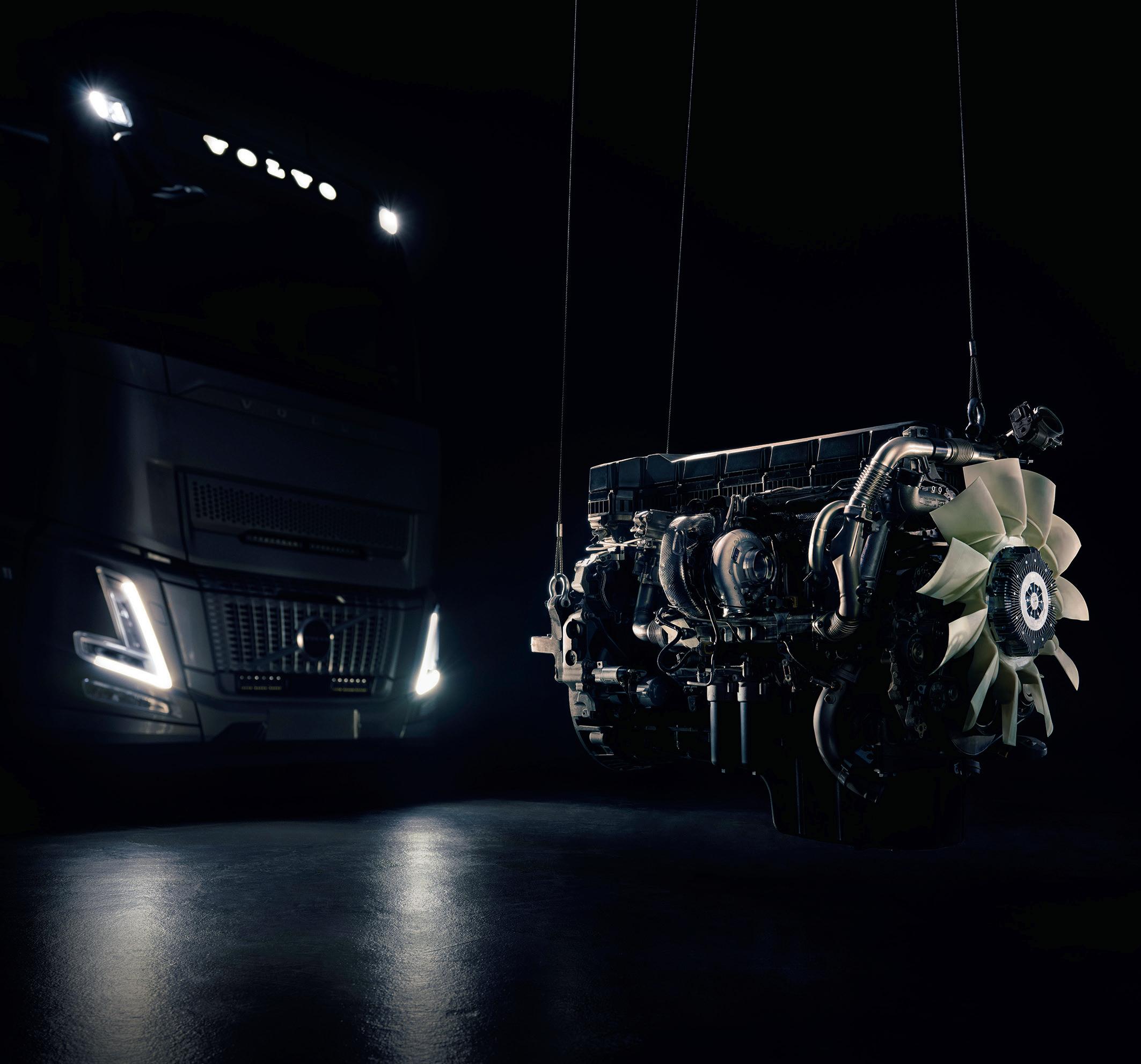
VOLVO TRUCKS HAS UNVEILED TWO ALL-NEW 13-LITRE ENGINES
They are Volvo’s most fuel-efficient ever – which are ready for renewable diesel and gas fuel types, including future hydrogen applications. Both are based on Volvo’s latest in-house developed platform.
The combustion engine continues to play an important role in Volvo Trucks’ driveline strategy and its latest products offer an attractive combination of more power with reduced fuel consumption, lower emissions, less noise and improved drivability.
The new engine can deliver up to 4% lower fuel consumption versus its predecessor when combined with Volvo Trucks’ latest fuel-saving innovations, which will now become available to more customers.
An all-new global combustion engine platform, Volvo Trucks has developed the new engines to cater for a wide variety of needs and conditions while also meeting or exceeding the requirements of new emissions- and noise-related legislation.
“These all-new engines are not only our most fuel-efficient powertrains ever, but they will also take our combustion engine into the future,” said Jan Hjelmgren, head
WE CAN OFFER TRUCKS WITH THE POSSIBILITY OF NET-ZERO EMISSIONS TO ALL OUR CUSTOMERS GLOBALLY
of product management at Volvo Trucks.
“The flexibility and readiness for all existing diesel and gas fuels – and also future hydrogen applications – means that we can offer efficient trucks with the possibility of net-zero emissions to all our customers globally.”
With a constant focus on improving fuel efficiency, Volvo Trucks has developed one
of the cleanest engine generations available on the market.
In combination with the Volvo FH Aero range – which cuts fuel consumption by up to 5% compared with the standard model – the all-new in-house developed engines will deliver further fuel savings of up to 4% across a wide range of applications and segments.
The new platform comes with a refined engine brake functionality for increased drivability, new cylinder and turbo designs, as well as an updated version of Volvo’s I-Shift transmission. Both the diesel and gas versions will also offer significantly higher torque levels.
Many variants of the diesel version of the new engine are also compatible with
Above: The combustion engine plays an important role in Volvo Trucks’ driveline strategy
Volvo Trucks’ I-Roll with engine stop/ start functionality, which means that more customers can save fuel and cut emissions by being able to turn off the engine while driving downhill.
Volvo Trucks is accelerating its transition towards fossil-free transport to reach its net-zero emissions target by 2040 using a three-path technology strategy. The approach is built on battery electric, fuel cell electric and combustion engines that run on renewable fuels like green hydrogen, biogas (bio-LNG), biodiesel, and HVO (hydrotreated vegetable oil). ◼
USING WASTE TO CUT DIESEL TRUCK EMISSIONS
MANY TRUCK FLEETS ARE HESITANT ABOUT CHOOSING ELECTRIC VEHICLES. BUT THEY HAVE THE OPPORTUNITY RIGHT NOW OF CUTTING HARMFUL EMISSIONS BY USING HYDROTREATED VEGETABLE OIL
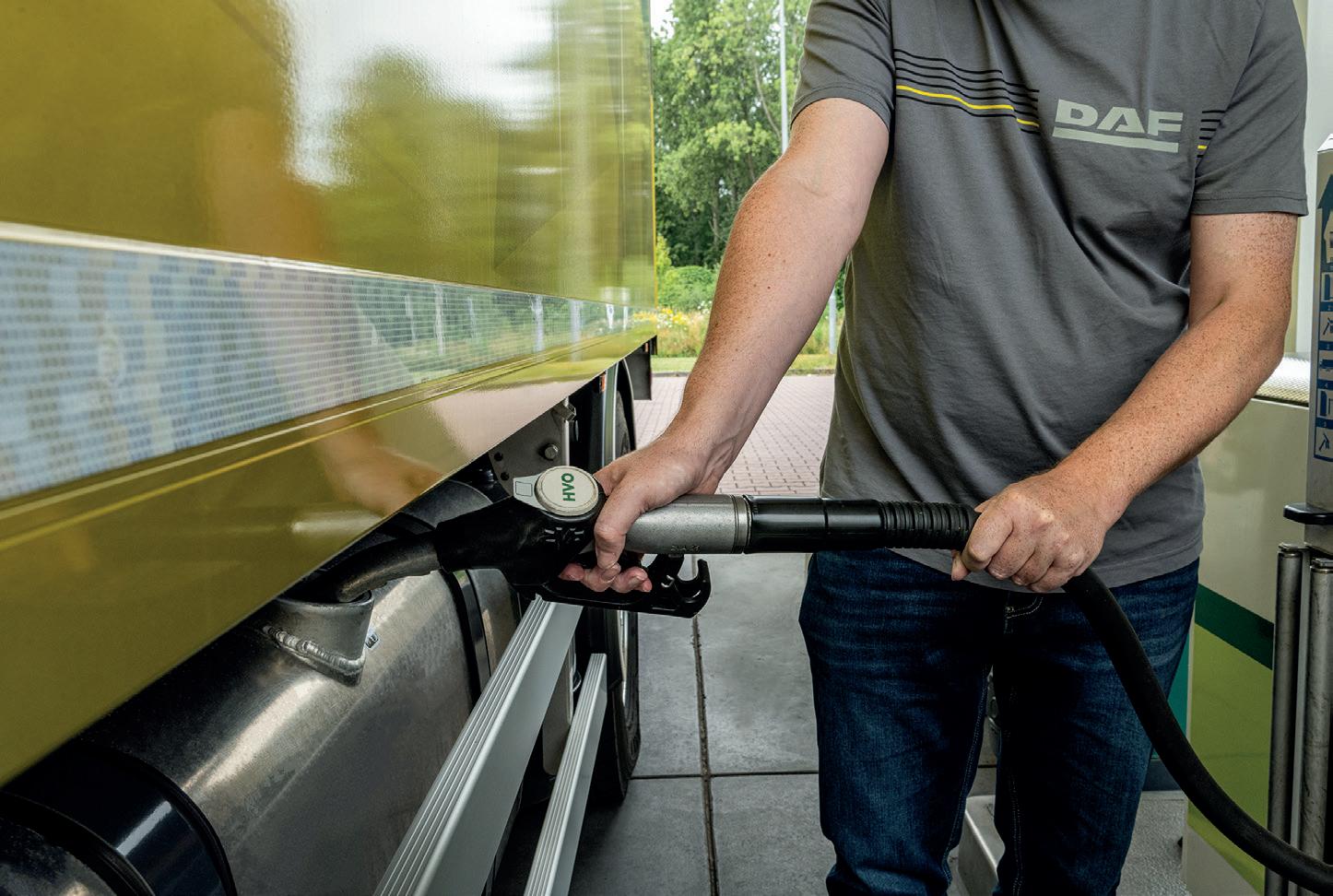
An increasing number of hauliers and local authorities are switching to Hydrotreated Vegetable Oil (HVO) in order to help meet short- and medium-term decarbonisation targets while still planning their transition to electric vehicles.
HVO is an advanced, renewable diesel fuel that is manufactured from waste fats and oils, that can cut CO2 emissions from a vehicle by around 90% compared to conventional diesel.
Being a drop-in replacement for fossil diesel, it also means no modifications are needed for existing engines – another plus point for road transport operators.
For example, Baxi has eliminated diesel as its standard truck fuel and switched to HVO, reducing HGV fuel emissions by about 99%. The move comes as the company aims to become carbon neutral in all operations by 2030.
Baxi said the adoption of HVO indicates
how transitional fuels can play a critical role in reducing emissions and protecting the environment now, while the company explores longer-term solutions such as fleet electrification and alternative drivetrains.
Dennis Reed, transport operations manager at Baxi, said: “We’re really pleased with how successful and cost-effective the switch to HVO has been. We’re seeing better miles per gallon now, meaning that HVO is letting us go further while keeping emissions for the fleet at a bare minimum.
“It’s also proving to be consistently better for the vehicles with no significant changes needed to maintenance.”
Short-term solution
Meanwhile, Swindon Borough Council is introducing HVO to around 675 vehicles in its fleet, including waste lorries, road sweepers and highway maintenance machinery.
The council said the fuel will offer a
Left: HVO offers advantages over conventional diesel, with greenhouse gas reductions leading to cleaner air and a reduced reliance on fossil fuels
practical short-term solution for reducing emissions at a time when full fleet electrification remains financially and logistically challenging.
Swindon Borough Council currently operates 28 electric vehicles, including four hybrids.
The council’s HVO supply is certified under International Sustainability & Carbon Certification (ISCC) standards, ensuring it is renewable, fully traceable and free from palm oil and associated deforestation.
Chris Watts, Swindon Borough Council’s cabinet member for the environment and transport, said: “Ending the use of fossil fuel to power council-owned vehicles will have a positive and immediate environmental impact.
“When you think that our waste crews make 20,000 collections every weekday using huge lorries, the environmental impact of switching these from diesel to this renewable biofuel is significant.
“Longer term we will continue to explore all options to decarbonise our fleet still further, recognising that widescale electrification is currently financially out of reach and comes with some operational challenges to resolve.”
Also, Newry, Mourne and Down District Council in Northern Ireland is taking an important step towards significantly reducing its carbon footprint by powering its vehicle fleet with HVO.
Introducing the fuel mix across the council’s current fleet is expected to reduce carbon emissions by almost 2,500 tonnes per year.
Currently, there is only one electric
battery powered vehicle across its 195-vehicle fleet which emits zero emissions. However, by the end of June this year, the council is aiming to have 17 zero emission light fleet vehicles on the road and is currently drafting proposals for all its small vehicles under 3.5 tonnes to be carbon neutral by 2035.
The council is currently consulting on its
draft Sustainability and Climate Change Strategy which commits the organisation to be net zero by 2050 when it aims to have its entire vehicle fleet, including heavy lorries, fully decarbonised.
All new vehicles the council operates are required to produce zero emissions by 2035, in line with Vehicle Emissions Trading Schemes (VETS).
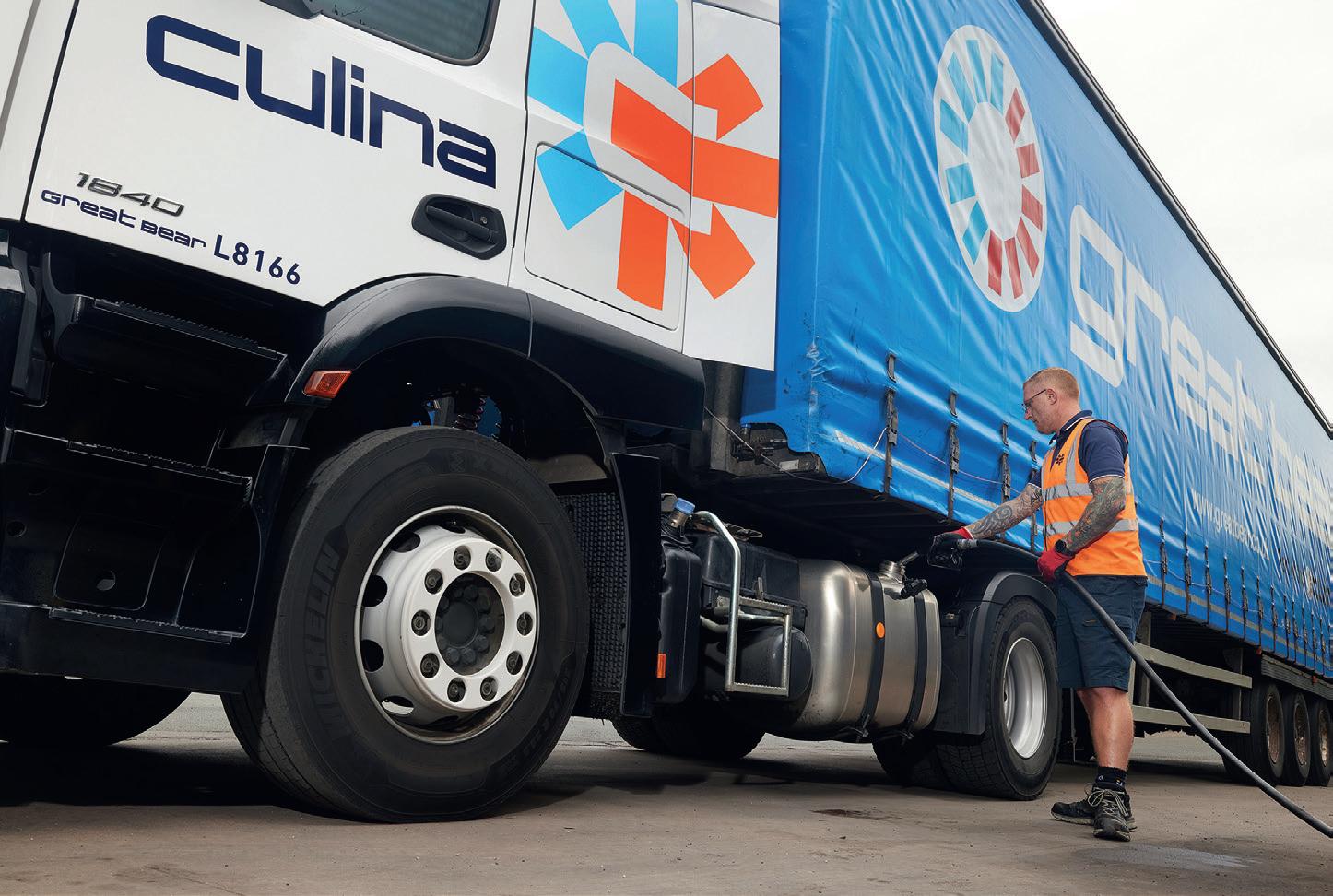
Left: Culina Group uses Hydrotreated Vegetable Oil (HVO) as a key transitional fuel to slash carbon emissions across its logistics fleet
Ideal mixture
Newry, Mourne and Down District Council chairperson, Cllr Philip Campbell, said introducing HVO requires no vehicle or infrastructure modification and can be mixed with the council’s existing diesel stock.
He said: “Introducing biofuel and zero emission vehicles across the council fleet is part of our vision for a low-carbon, climate resilient future, protecting the area’s fragile environment.
“The scale of the significant reduction in the council’s carbon footprint by introducing the biofuel mix cannot be underestimated.
“We are committed to integrating climate action and sustainability in all aspects of our operations and decision-making and policies. Introducing HVO is a critically important step on this journey.
“The fact HVO can be blended with regular diesel and used in many of the
Baxi has eliminated diesel as its standard truck fuel and switched to HVO
council fleet’s engines with little or no modification is positive and offers significant environmental benefits.”
Waste trucks run on waste
Adur and Worthing Councils have switched their fleets to renewable HVO, supporting their commitment to reducing the environmental impact of essential services while maintaining reliability for residents.
The waste and recycling vehicles, which cover more than 280,000 miles each year, previously accounted for about a third of the councils’ total carbon emissions when running on diesel.
Over the next few months, eight new HVOpowered trucks will join the fleet, replacing some of the oldest vehicles in operation.
Most of these vehicles were purchased in 2017 and are scheduled for replacement this year to ensure continued service reliability.
The councils will also take delivery of their first fully electric waste truck as part of a phased rollout.
This transition to HVO allows both to achieve significant emission reductions now, without waiting for EV technology to become fully cost-effective, while ensuring un-interrupted waste collection services for residents.
Andy Harvey, Adur’s cabinet member for the environment and leisure, said: “The introduction of HVO as an interim measure on our way to electrification of our
waste fleet has been a significant move. It allows us to make immediate, substantial carbon savings while continuing to invest in proven, reliable vehicles that meet the demands of our services.
“We will continue to monitor and adopt electric and other low-carbon technologies as they become viable for large-scale use.”
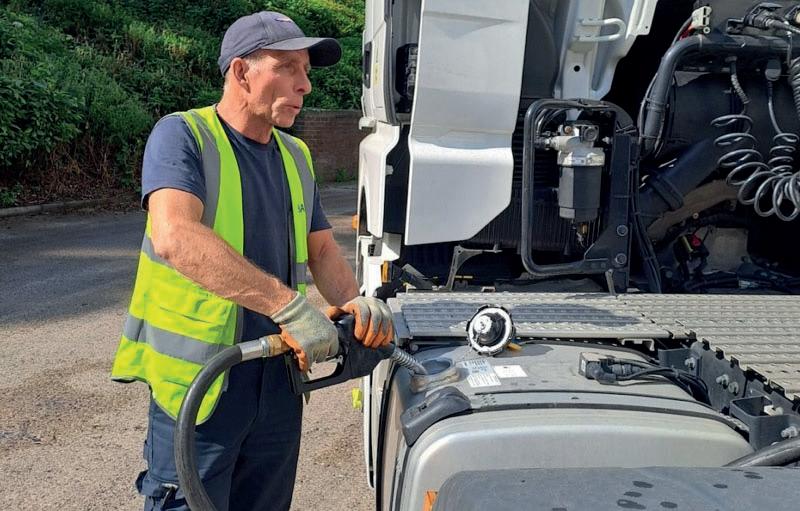
HVO offers advantages over conventional diesel, with greenhouse gas reductions leading to cleaner air and a reduced reliance on fossil fuels.
It is an important transition fuel for operators with diesel trucks that are not yet able to use electric or hydrogen
vehicles due to a higher upfront purchase cost or lack of charging and refuelling infrastructure.
Therefore, it is encouraging that the transport sector is actively reducing emissions from their operations now and planning for a zero emission future. ◼
◼ Article originally published in Transport Newsbrief by the Society of Motor Manufacturers and Traders (SMMT)
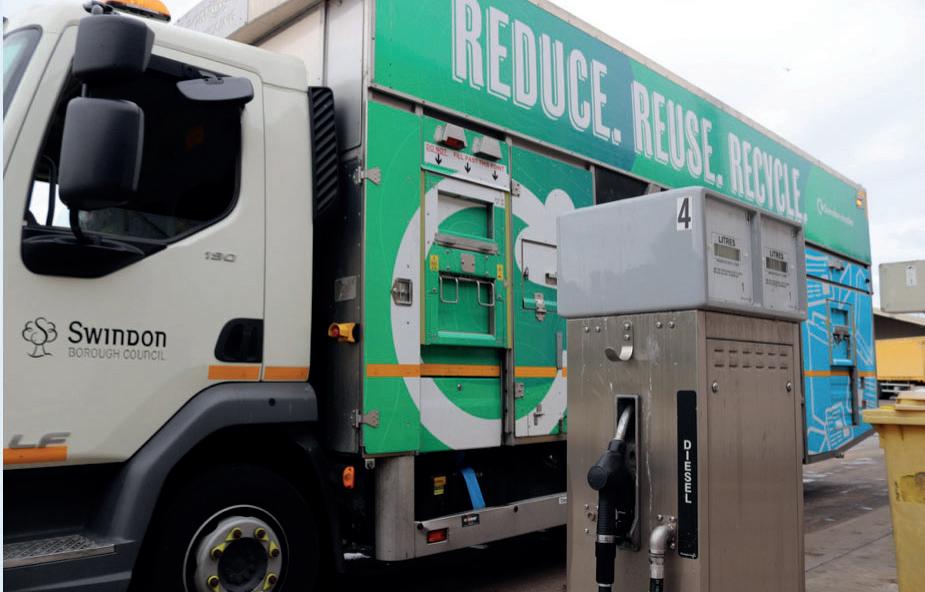
Below: Swindon Borough Council is introducing HVO to around 675 vehicles in its fleet
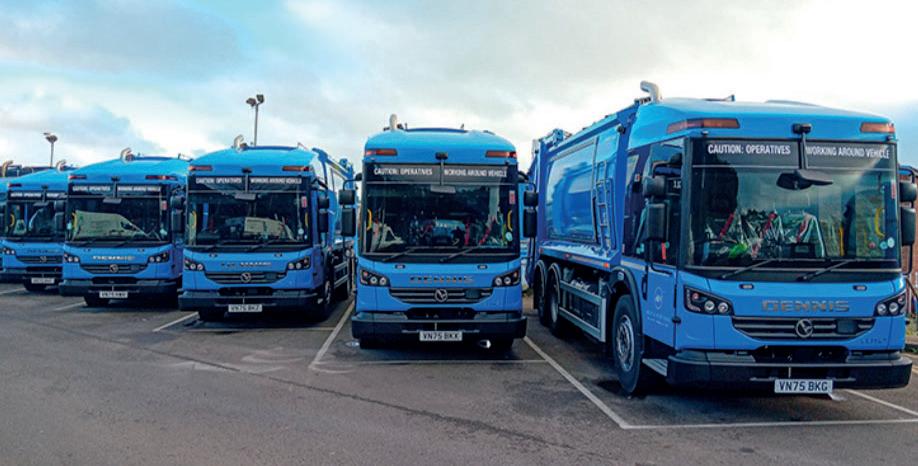
Adur and Worthing Councils have switched their fleets to renewable HVO fuel
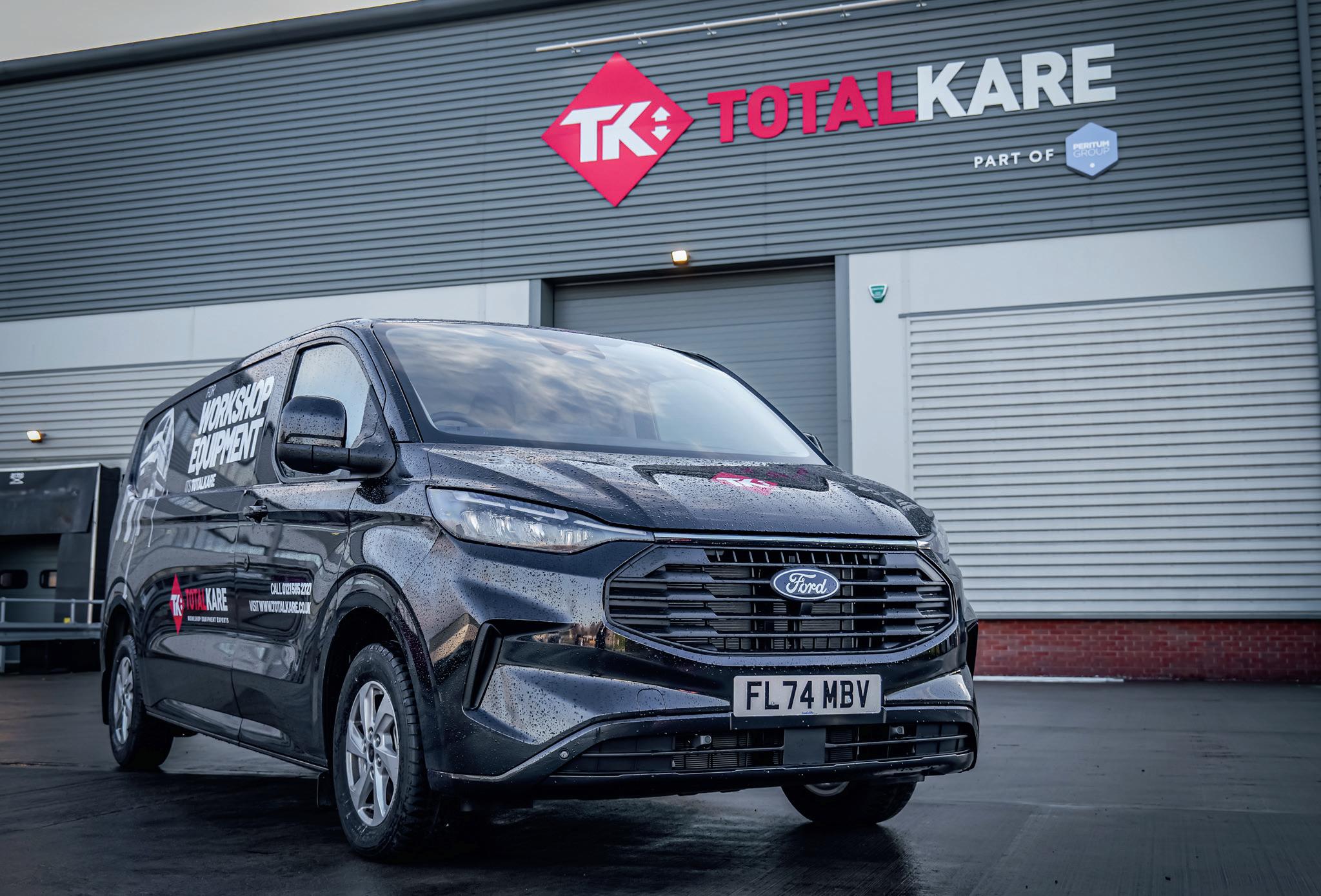
TOTALKARE – THE MAIN NAME IN KEEPING VEHICLES SAFE AND EFFICIENT
PRODUCTS ARE DESIGNED WITH WORKSHOP PRODUCTIVITY AND TECHNICIAN SAFETY IN MIND
Totalkare has been at the forefront of heavy-duty vehicle lifting and testing solutions for more than 40 years, supporting workshops across the UK and around the world with innovative, reliable equipment.
Specialising in mobile column lifts, brake testers and workshop equipment for commercial vehicles, buses and coaches, Totalkare has built a strong reputation for engineering excellence, safety and customer support. The company works closely with fleet operators, local authorities, service centres and OEMs to help keep vehicles maintained efficiently and safely.
Totalkare’s products are designed with
workshop productivity and technician safety in mind. Its market leading mobile column lifts are widely recognised for their durability, ease of use and advanced safety features, allowing workshops greater flexibility while maximising available space.
Beyond supplying equipment, Totalkare provides a complete aftersales service including installation, servicing, LOLER inspections, calibration, training and technical support.
Totalkare invests in product development to meet the evolving needs of modern workshops, particularly as the commercial vehicle sector adapts to new technologies and changing environmental requirements.
Above: Totalkare has built a strong reputation for engineering excellence, safety and customer support
Totalkare also offers flexible finance options across its product range, helping workshops invest in essential equipment while managing cash flow effectively. By providing tailored finance solutions, businesses can access high quality lifting and testing equipment without the need for significant upfront capital expenditure. This enables operators to upgrade facilities, improve workshop efficiency and maintain compliance with industry standards through manageable monthly payments. ◼
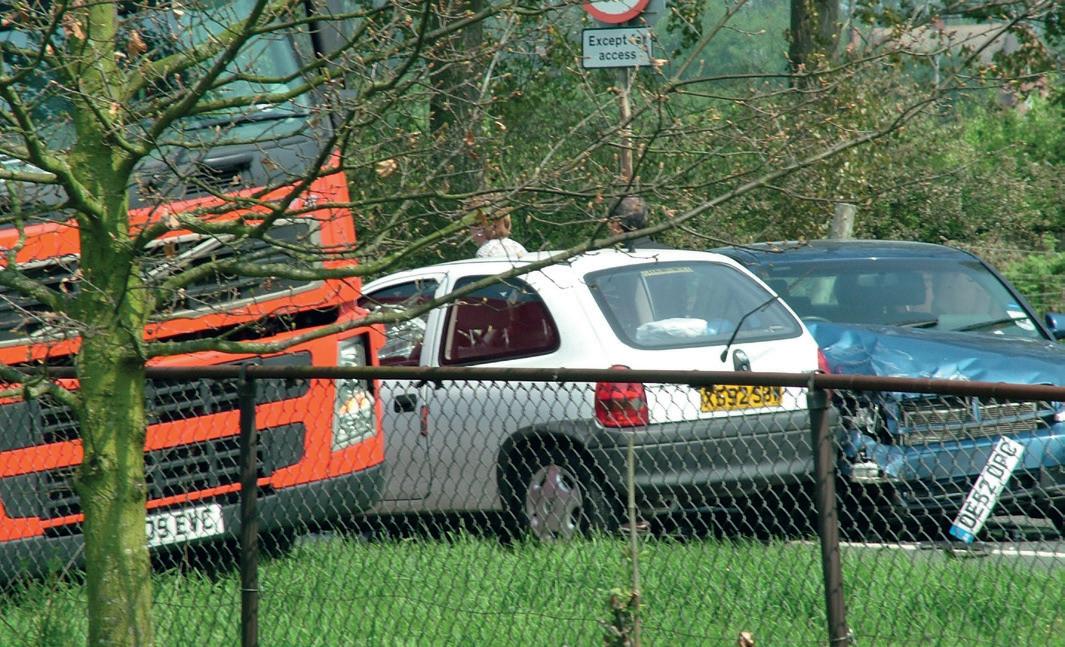
TRUCKERS FACE NIGHTMARE AS CRASH SCAMS INCREASE
BUT NEW ANALYSIS MAY HELP DRIVERS AVOID BECOMING VICTIMS OF THIS MENACE
One of the many problems facing truck drivers on a daily basis is the possibility that some low-life in a beat-up car might try to engineer a prang, then make a fraudulent claim against you, when in fact you were an innocent victim.
It’s a huge problem in the UK at present –one which is costing the country around £1 billion a year, according to the Association of British Insurers (ABI). The increasing use of dash-cams in trucks is helping transport firms avoid these cash-for-crash scams – but only after an incident has
happened. As these criminals will not know in advance whether your truck is dashcammed or not, every truck is a potential target.
Now in a new move, the IFB has revealed a list of the top hotspots for scamming. And while this knowledge may not lead directly to erasing the problem, at least transport managers can warn their drivers to keep a wary eye out for trouble while they are operating in these areas.
Fraudulent vehicle insurance claims rose 12% last year compared to the previous 12 months. Examples of fraud include
‘crash for cash’ incidents, where fraudsters deliberately cause a collision, then try to blame the driver to claim compensation through their insurance.
Signs include sudden, unexplained braking, being waved out when you do not have right of way, abrupt lane changes on roundabouts, or mopeds/motorbikes cutting into oncoming traffic.
Identity theft is also fuelling fraud, according to the IFB, with criminals stealing personal details online, including through fake job ads and social media, then taking out policies or submitting
The IFB has revealed the worst hotspots for crash scams
bogus claims in that person’s name. The IFB list was compiled after analysing 3.3 million vehicle insurance claims. In England, postcode area RM9 in Barking and Dagenham ranked top in a list of 30 hotspots, with Birmingham (B10) second and central London (EC1) third.
For Wales, Cemaes Bay (LL67) was ranked first, with Llanidloes (SY18) and Aberdovey (LL35) placed second and third respectively. Meanwhile, Scotland’s top motor insurance fraud hotspot was Crieff (PH5), with Glasgow (G23) next on the listing and the Isle of Skye (IV55) third.
Jon Radford, head of intelligence, investigations and data services at the IFB, said insurance fraudsters were relentless, and their tactics were evolving fast.
He said: “By revealing the UK’s top motor insurance fraud hotspots, our aim is to help protect those who are at greater risk. Insurance scams can put people in danger and drive up costs for honest consumers at a time when many are already under financial pressure.
“We’re working closely with the police and insurers to stop this activity and we urge the public to stay alert and report suspected insurance fraud to our confidential CheatLine.”
Roundabout traps featured in England’s top hotspot, Dagenham, with scammers deliberately moving into the wrong lane at busy roundabouts to force a collision.
Sideroad set-ups were also identified in Birmingham, where fraudsters encourage
drivers to pull out of side roads without right of way and then driving into the side of them.
Meanwhile, moped scams were common in London, where the rider drives into oncoming traffic, often with an accomplice to accuse victims of fault.
CRASH FOR CASH SCAMS REMAIN ONE OF THE MOST COMMON TYPES OF FRAUD
Other tell-tale signs of a crash for cash can include vehicles with disabled brake lights or pre-existing damage, along with passengers exaggerating injuries and being provided pre-written insurance details
Above: Using a dashcam will help to uncover any instances of crash fraud – but only after the event
after a collision.
Matt Crole-Rees, Confused.com motoring insurance expert, said scams were becoming more convincing and harder for drivers to spot.
He said: “Crash for cash scams remain one of the most common types of fraud, where fraudsters deliberately cause accidents and then blame innocent motorists in order to make compensation claims. One of the most common tactics is when a driver suddenly brakes sharply to encourage the car behind to crash into them. Other scams include ‘roundabout traps’, where drivers intentionally move into the wrong lane at roundabouts to cause a collision, and ‘sideroad setups’, where fraudsters wave drivers out of a junction before deliberately driving into them.”
Mark Allen, head of fraud and financial crime at the ABI, said: “The IFB’s latest analysis is a timely reminder that fraudsters are becoming bolder and more sophisticated and that the industry is responding with even greater resolve.
“Working closely with the IFB, insurers are stepping up intelligence - sharing and deploying new tools to identify and stop scams before they cause harm.
“We urge the public to stay vigilant and report anything suspicious, because every report helps us protect communities and hold criminals to account.” ◼
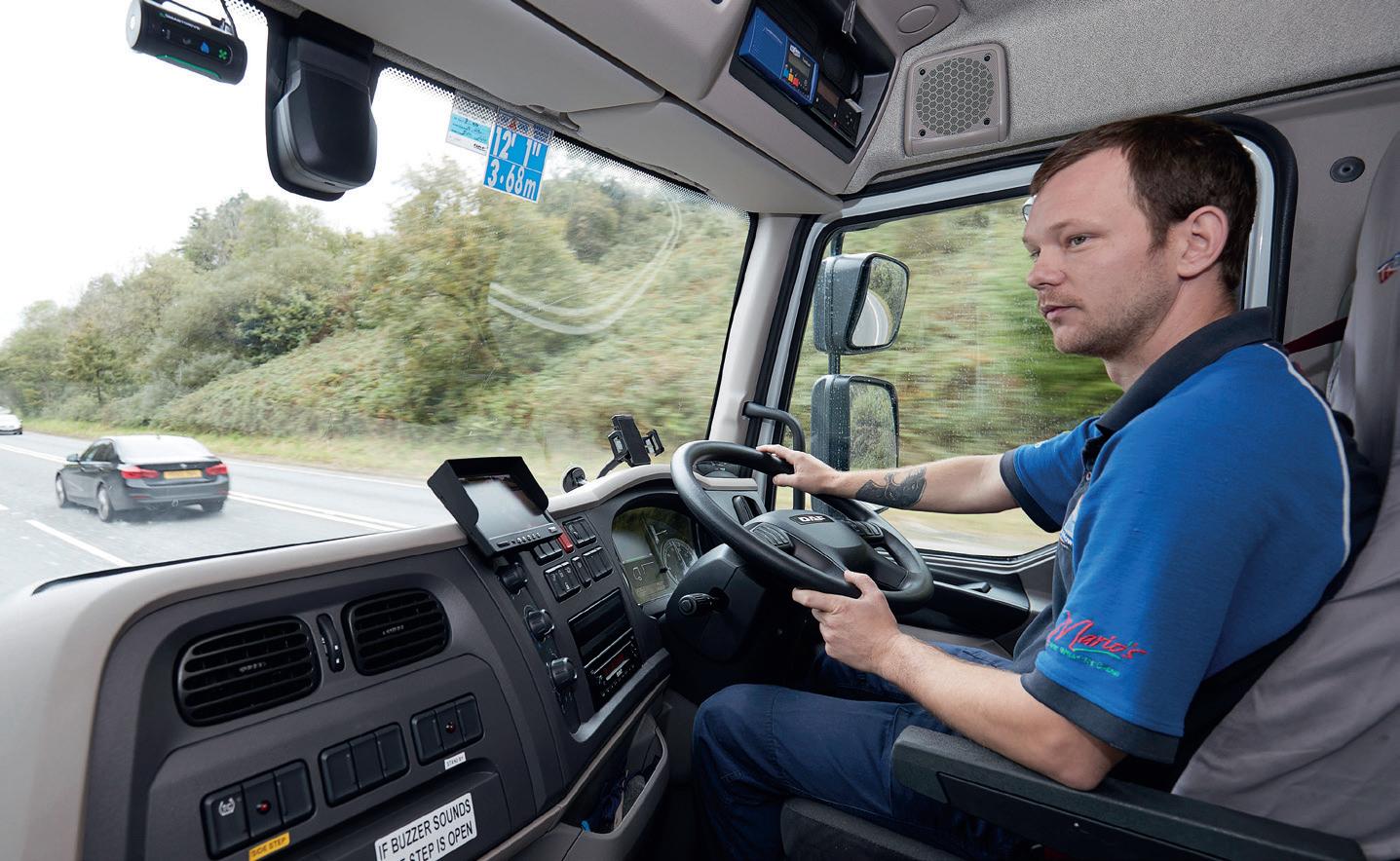
Below: Crash scams are just one of the dangers that truckers face every single day
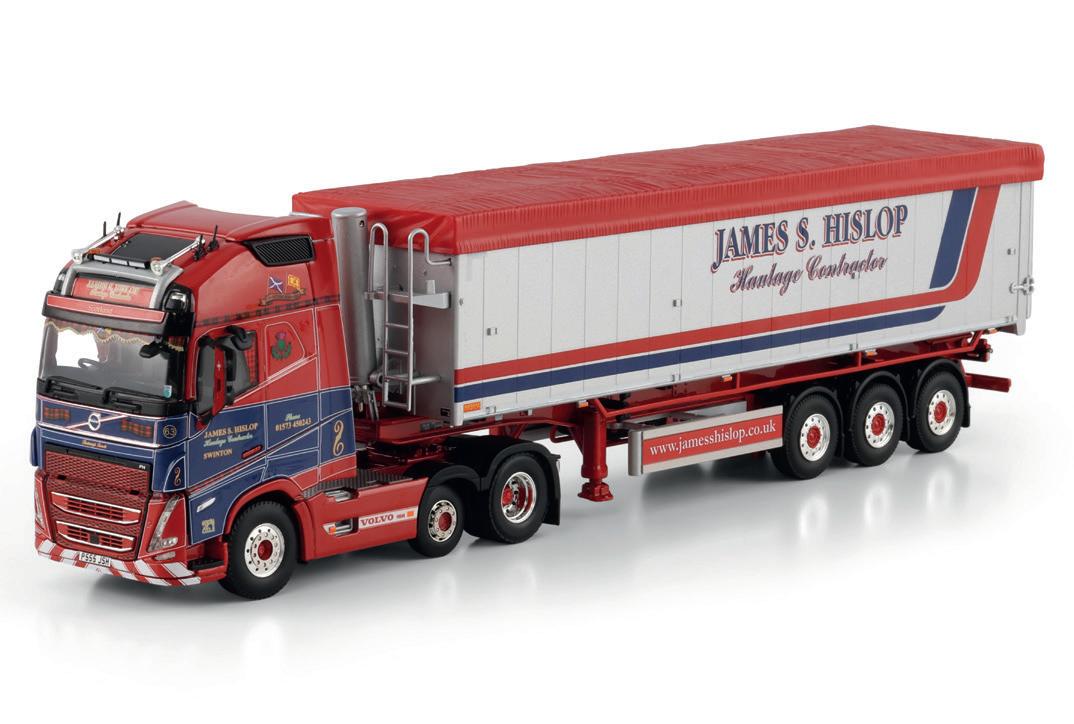
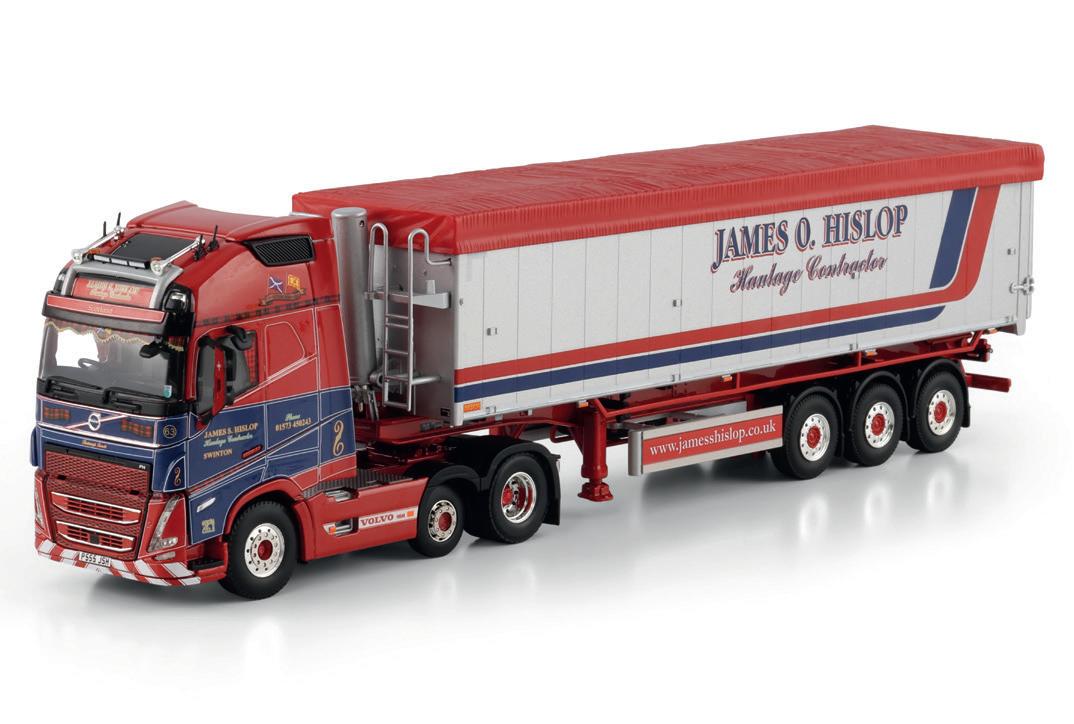
SPOT THE DIFFERENCE
CAN YOU SPOT 3 DIFFERENCES?
Search Impex has released a 1:50 scale Volvo FH 540 Globetrotter XL (6×2) with light weight mid-lift axle and bulk tipper trailer 3 axle, customised in the livery of long-established Scottish operator James S Hislop. The models have been produced exclusively for Search Impex by WSI Models as a certificated, Limited Edition (180 pieces).
James S. Hislop Haulage was founded in 1988 by Jim Hislop in Kelso, Scottish Borders. In 2015, the business moved to a larger three-acre site with 15,000
sq ft of warehousing in Swinton, Berwickshire.
Now run by Jim’s son Alan, the company operates 25 trucks (Volvo, DAF, Scania, Mercedes) with a wide range of trailers, including bulk tippers for agricultural produce (TASCC accredited), curtainsiders, flatbeds, low loaders, and step frames for machinery, abnormal loads, and caravans. They also provide escort vehicle services, operate a fully equipped workshop for servicing and repairs, and run a busy body shop.
The fleet includes five Volvo units in the company’s distinctive red and blue livery, each named with the prefix “Roxburgh” in tribute to Roxburghshire. One notable truck is the “Roxburgh Bandit.”
Models, available from Search Impex, are priced at £186 each (including UK delivery & VAT). For details of availability of this and other models, collectors can visit the Search Impex website at search-impex.co.uk
Search Impex is offering a 1:50 scale Volvo FH 540 Globetrotter XL (6×2) with light weight mid-lift axle and bulk tipper trailer 3 axle. Simply circle the three differences in the above image. Once completed, either cut out or photocopy and post to: CV Driver Magazine, 4th Floor, 19 Capesthorne Drive, Eaves Green, Chorley, Lancashire PR7 3QQ, or take a photo of the two images with the differences ringed on your smartphone and email it, along with your details, to: sales@cvdriver.com. Closing date: 6th July 2026
This month once again we are offering a fabulous box of goodies from Kumho Tyre in our easy to enter competition. The box contains a charging cable, umbrella, torch, pressure gauge for tyres and a high-capacity power bank. Kumho produces more than 68 million tyres every year, enough to provide every single person in the Netherlands with a set of four
COMPETITION
tyres… and a spare!
To be in with a chance to win, answer this simple question:
Do TPMS (Tyre Pressure Monitoring Systems) replace the driver’s obligation to conduct a daily walk-around check?
When you have decided your answer, simply
email it to: sales @cvdriver.com. Label your email: ‘Kumho Tyres competition’ and don’t forget to include all your contact details. Closing date is 6th July, 2026.
Employees of CV Driver magazine and Kumho Tyres are not allowed to enter and the editor’s decision will be final. No correspondence will be entered into.
INSURANCE: GET IT WRONG AND RISK DISASTER
Q. Tell us a bit about Compare HGV and what you do
A. We’re an independent insurance broker dedicated to the haulage and transportation industry. I’ve personally dedicated over 30 years to the industry and have established a wide network of clients and insurer partners, who together we’ve built a business based on trust and reputation. Our clients are at the heart of everything we do.
Q. I run a small fleet of trucks. What can you offer me that a standard insurance firm does not offer?
A. If, by standard firm, you mean a general insurance brokerage rather than a specialist then the answer is simple knowledge and expertise. We all too often have prospective clients come to us to
focus on any particular sector. They have sometimes received bad (or simply incorrect) advice or are not insured correctly. They may have saved a couple of pounds at the start but have often lost thousands when something went wrong.
Q. My fleet has a chequered history of insurance claims in the past. Will you be able to give me some expert advice about future fleet safety along with an insurance quote?
A. Absolutely. The industry has come a long way in my time with tech and AI focused telematics data driven pricing being very much the future. However, before we get all sci-fi, there are some basics that every haulier must have. Firstly cameras. Even if it’s just a basic dashcam, something is better than nothing. Defending liability (and therefore your future premiums) is much easier if there
It will come back and bite you if you do and the last thing you want is a cancelled or voided policy on your record too. Be open and honest and work with us to get things back on track.
Q. My present policy covers our trucks but we do not have cover for the cargo we carry. Is this something you can help with?
A. You’re referring to ‘Goods in Transit’ insurance, a sometimes-complex product over simplified by non-specialist brokers. We can absolutely help with this, along with other risks such as Employers & Public Liability, HGV Breakdown, Property and Legal Expenses to name but a few.
Q. OK you have persuaded me. How do I go about getting a quote?
A. Either put your details on our website
Proactively detect risky and distracted driving behaviours
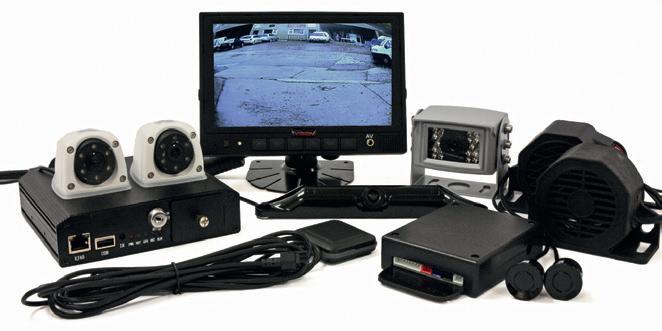
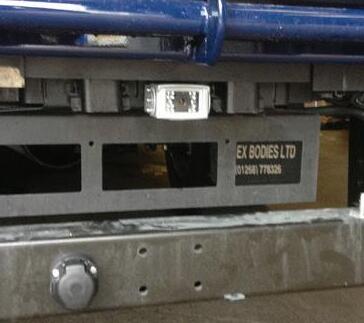
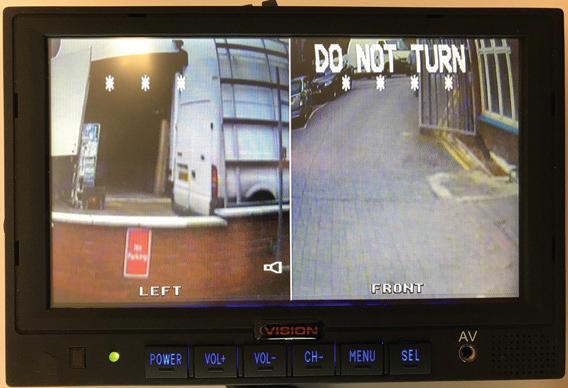
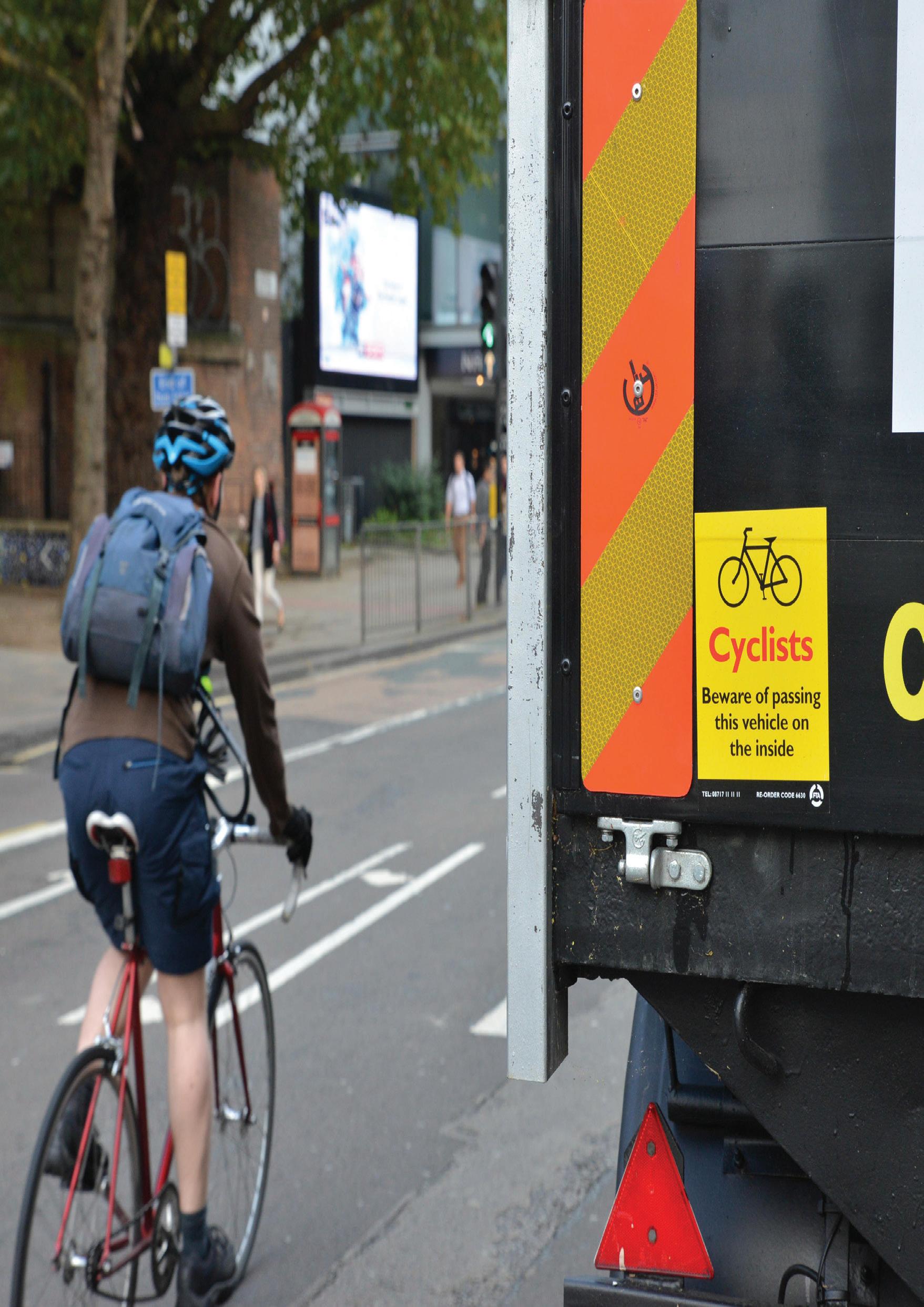
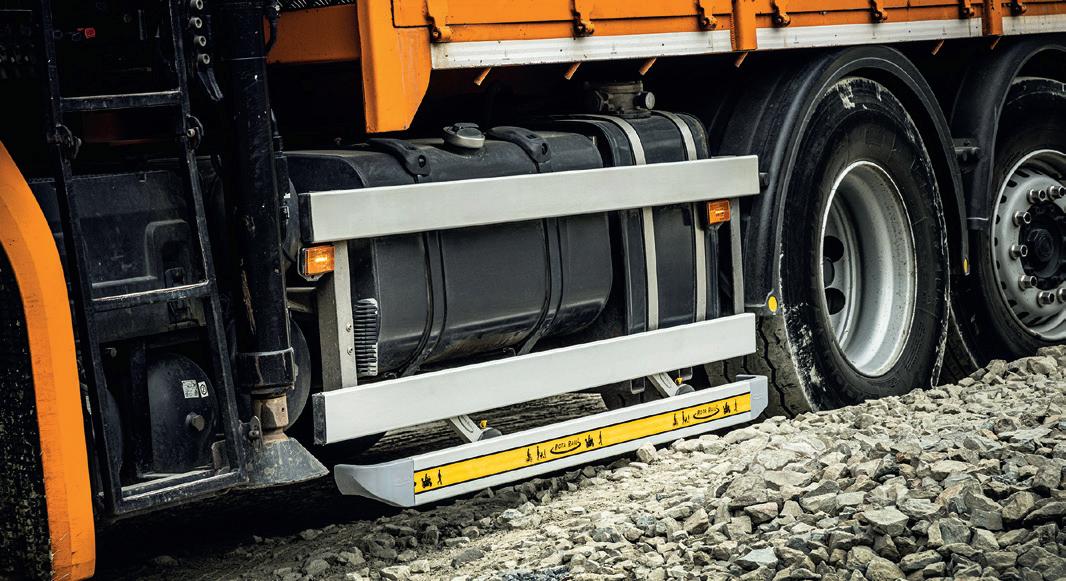
For 2021, Vision UK is offering safety equipment meeting the requirements of DVS, FORS and CLOCS schemes, to provide a higher level of driver assistance than is required by the guidlines
For 2023, Vision UK is offering safety equipment meeting the requirements of DVS, FORS and CLOCS schemes, to provide a higher level of assistance than is required by the guidelines 2026
l Compliance systems (LDVS-70 SD or HD)
l CLOCS-70 system (system updated for 2020 with HD cameras