By Melissa Daniels
Page 15


By Melissa Daniels
Page 15
Inside the fight to revive care and restore trust in a community’s ER

Mailing address: 31855 Date Palm Drive, No. 3-263 Cathedral City, CA 92234 (760) 904-4208 www.cvindependent.com
Editor/Publisher
Jimmy Boegle
staff writerS
Kevin Fitzgerald, Matt King
coveR and feature design
Maria Ratinova
Contributors
Haleemon Anderson, Melissa Daniels, Charles Drabkin, Katie Finn, Bill Frost, Bonnie Gilgallon, Bob Grimm, Terry Huber, Valerie-Jean (VJ) Hume, Clay Jones, Matt Jones, Keith Knight, Cat Makino, Maggie Miles, Brett Newton, Greg Niemann, Jeffrey Norman, Dan Perkins, Theresa Sama, Jen Sorensen, Robert Victor, Eleanor Whitney
The Coachella Valley Independent print edition is published every month. All content is 2026 and may not be published or reprinted in any form without the written permission of the publisher. The Independent is available free of charge throughout the Coachella Valley, limited to one copy per reader. Additional copies may be purchased for $5 by calling (760) 904-4208. The Independent may be distributed only by the Independent’s authorized distributors.
The Independent is a proud member and/ or supporter of the Association of Alternative Newsmedia, the California Newspaper Publishers Association, CalMatters, DAP Health, the Local Independent Online News Publishers, the Desert Business Association, and the LGBTQ Community Center of the Desert.



This is not the first time I’ve sung the praises of Wired magazine in this space, and it almost certainly won’t be the last.
The venerable Condé Nast-owned publication has focused on technology news for its entire 33-plus year history, making it perfectly positioned for this era in which the federal government and tech (i.e. Elon Musk, SpaceX, crypto, social media, etc.) are inextricably intertwined. In recent years—and especially since Donald Trump was elected president for the second time—editorial director Katie Drummond and her team have been kicking editorial ass, publishing scoop after scoop after scoop.
Today, in my opinion, Wired is one of top three journalism publications in the United States—and it has a strong case for being No. 1. (Yeah, the magazine has a metered paywall; in other words, you can only read a few articles per month before being forced to subscribe to read more. But good reporting is expensive and challenging to do, and you really should subscribe and support the work of Wired, if you can afford to do so.)
Wired’s most recent attention-getting scoop, however, hasn’t directly involved the federal government; instead, it focused on entertainment, specifically Madison Square Garden, the legendary New York venue and entertainment company owned by James Dolan (who also owns Sphere Entertainment).
On July 9, Wired reporters Noah Shachtman and Maddy Varner published a piece titled “Madison Square Garden Kept a List of Gay Celebrities.” The article focuses on MSG’s “talent” database—obtained by Wired as part of an online leak perpetrated by a hacker—of 39,539 VIPs and performers. An excerpt:
The talent database provides a window into how MSG internally views its famous, rich, and powerful visitors—its well-curated “celebrity row” and its hordes of highprofile fans. The comedian (and longtime Knicks obsessive) Adam Pally is “not to be hosted”—Garden lingo for getting free tickets—“due to previous comments.” Pally has at times been critical of the team’s management.
Iconic hip-hop producer and DJ Pete Rock, whose Instagram is a nonstop ode to the team, is nevertheless marked “DO NOT HOST” in the database. After beloved Knicks enforcer Charles Oakley was forcibly escorted from the Garden, Pete Rock says he called for a boycott of Dolan on Twitter. “None of the other owners are as petty as Dolan is,” Pete Rock tells Wired in a direct message, before addressing his comments to Dolan: “You can’t stop me from being a Knick fan, but your controlling behavior towards people is very unprofessional.”
Daisy Jones and the Six actor Will Harrison is flagged because “GF wrote NYT article.” (Harrison isn’t public about his romantic life in the way many stars are, and we couldn’t find an article that was in any way a match.) In the spring of 2024, actress and model Julia Fox appeared courtside in an extremely revealing outfit; by early April, she was barred from getting complimentary tickets. Anna Wintour, Condé Nast’s chief content officer and global editorial director of Vogue, always dresses impeccably when attending Knicks games and has no record of disparaging Dolan. She’s labeled as “medium risk.” …
The talent database also tracks some celebrities’ race, gender identity, and sexual orientation; 93 entries are marked as “LGBTQIA.” Why MSG felt the need to label Ricky Martin or Phoebe Bridgers or Geese’s Emily Green in this way is unclear.
Unsurprisingly, MSG and Dolan did not like this story at all. Somewhat surprisingly, they decided to sue Wired. As The New York Times reported on July 18: “The owners of Madison Square Garden have filed a defamation lawsuit against Wired magazine, claiming an article it published this month had manufactured a ‘false narrative’ that the company was tracking the LGBTQ community for ‘discriminatory purposes.’”
Uh, the Wired piece does not say that. It specifically says the reason for MSG’s tracking of LGBTQ+ statis was “unclear.” To elaborate, I’ll turn things over to Defector writer Dave McKenna, who penned a piece titled “James Dolan Sues Wired Magazine for Writing a Story About His Shitty Ways”: “The 40-page complaint does not challenge the accuracy of Wired’s reporting or facts and figures. It does allege that the reporters ‘combed the dark web’ and ‘cherry picked’ information that had been ‘stolen from MSG by an extortionist hacking group’ to ‘manufacture a false narrative portraying MSG as targeting the LGBTQIA community for discriminatory purposes.’ … The Wired story, from my reading, does not accuse MSG of any of those things.”
So, how did Wired magazine respond to the suit? They issued a statement saying calling the lawsuit “baseless and ridiculous”—and they exempted the story from their metered paywall, so anyone and everyone can read it, free of charge.
“We look forward to continuing our coverage of MSG, and on billionaire James Dolan’s use of technology across his entertainment empire,” said Wired’s statement, “It’s one part of our wider mission and the critical job of journalists, now more than ever: holding power to account.”
Badass.
Welcome to the August 2026 print edition of the Coachella Valley Independent. As always, thanks for reading.
—Jimmy Boegle jboegle@cvindependent.com


CELEBRATING 40 YEARS OF ATHLETIC EXCELLENCE THE DESERT FIGURE SKATING CLUB INVITES YOU TO SHARE AN EXCITING LUNCHEON WITH NANCY KERRIGAN
September 5th 11am-1:30pm
Agua Caliente Resort, Spa and Casino



BY THERESA SAMA
Extreme heat is here in the Coachella Valley! It is not pleasant—nor is it recommended—to be out on the trails unless you get up very early to beat the heat.
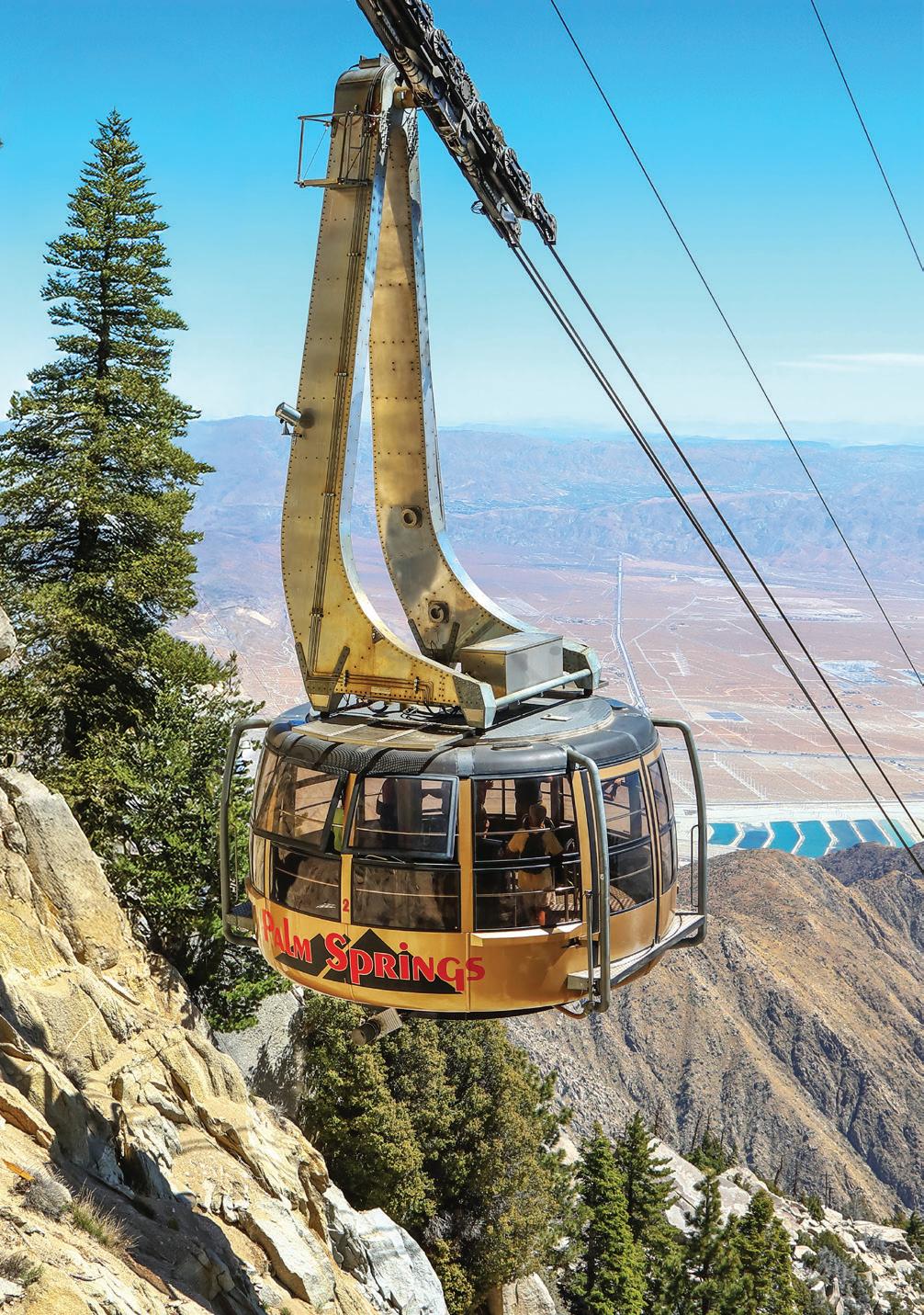
An alternative to hitting the trails at 5:30 a.m.: Venture out of the desert for a day hike at Jenks Lake, where average daytime temperatures in August are in the 70s to 80s—with temps usually in the low 60s during the morning hours. I was there recently, and it was 69 degrees at 2:30 p.m. as I was coming off the trail.
Jenks Lake is about 60 miles northwest of the Coachella Valley. Take Interstate 10 West to State Highway 38 toward Big Bear. From Highway 38, turn right onto Jenks Lake Road (East); about 2 miles down the road, you’ll make a left and proceed to the parking lot of this beautiful,
lush escape tucked away in the San Bernardino National Forest.
At an elevation of 6,800 feet, not far from Angelus Oaks, the 20-acre manmade lake is filled with water diverted from the South Fork of the Santa Ana River. Legend has it that in the 1870s, Capt. Lorin Shaw Jenks, aka “Cap Jenks,” dug the 1.5-mile diversion ditch himself, according to the information board posted at the lake.
Jenks Lake is for day use only—in other words, no camping—from 7 a.m. to 6 p.m. (Camping is an option nearby, however.) The parking lot is small, so it’s a good idea to start early, bring a picnic lunch, and make the most of what the day brings. Dogs on leash are welcome, but according to the information board located onsite, no swimming is allowed—and that goes for both humans and dogs. Small non-motorized boats are allowed, like kayaks and canoes, but no paddle boards. There’s a parking fee of $5 per vehicle. (Adventure Passes are accepted.) You can pay the host, or if you don’t have cash, you can scan the QR code at the parking lot kiosk (cell service works!) and
pay directly via the Recreation.gov mobile app. A California fishing license is required if you plan to fish.
Picnic tables and barbecue grills are located on the north side of the lake. There’s an accessible 1-mile trail that goes around the lake, starting from the parking lot. It’s a beautiful 20-to-30-minute easy (mostly flat) peaceful stroll in the shade. Learn more on the Forest Service website.
If you’re looking for a longer hike with a bit of a climb, check out the Jenks Lake Trail. It’s an easy 3.1-mile round-trip—it’ll take 1.5 to 2 hours—that starts at Barton Flats Visitor Center/Ranger Station (42045 Highway 38, Angelus Oaks) on the Rio Monte Trail and goes to Jenks Lake.
Per AllTrails, the Jenks Lake Trail has a gentle 485-foot elevation gain, through a picturesque and peaceful mixed conifer forest with towering Jeffrey pines, white firs, oak trees, manzanitas and so much beautiful flora. You will hear lovely sounds from a variety of songbirds while you enjoy a colorful array of amazing wildflowers. Beyond the various bird
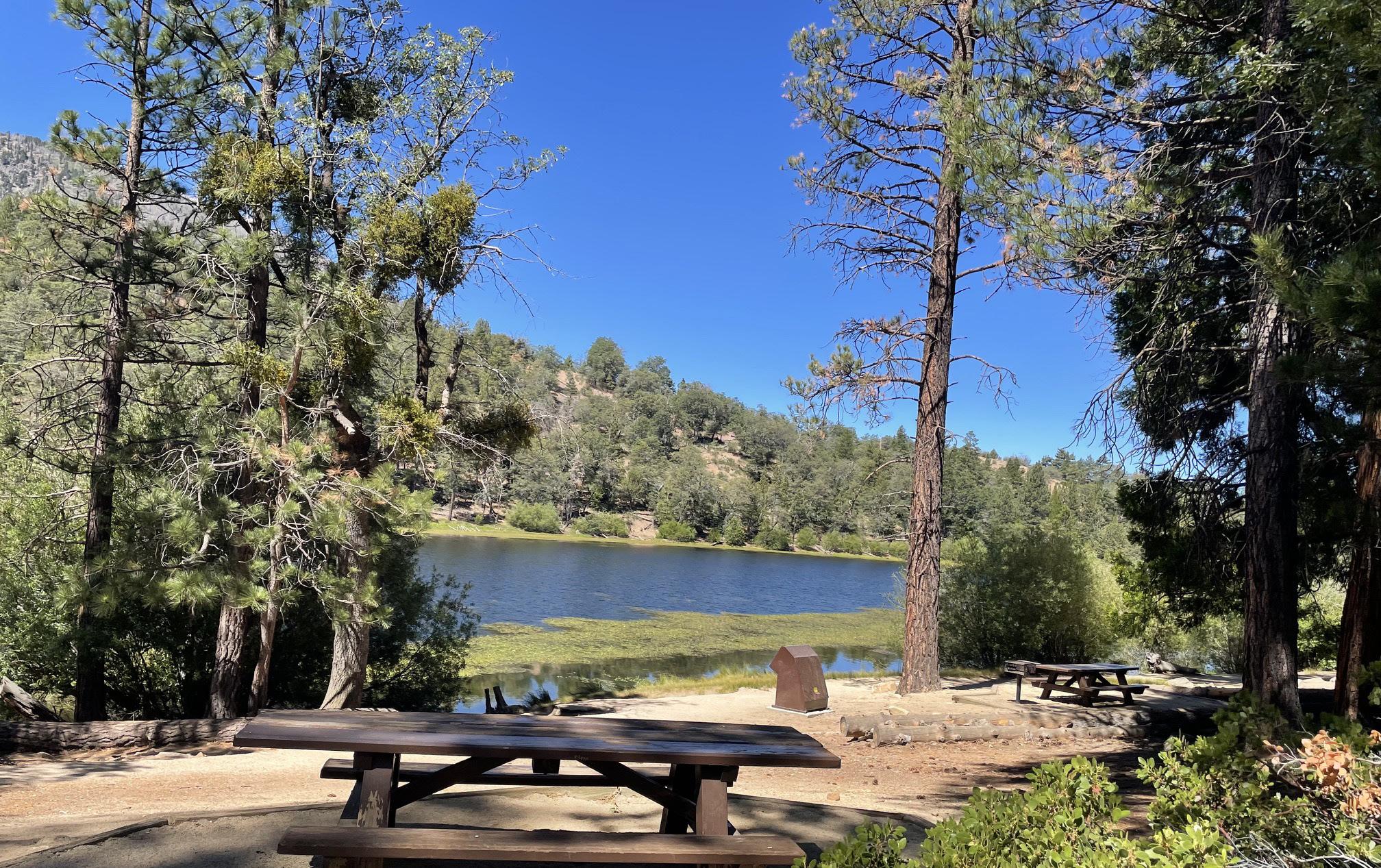
species, you will see chipmunks and squirrels frolicking about, and you may even be lucky enough to experience a bald eagle sighting. Also: Be bear aware! Black bears are common in the area. They aren’t looking for confrontation and will likely run away, but should you encounter a black bear:
• Don’t come between a mother and her cubs.
• If a black bear does approach you, stand your ground. Make yourself big and loud; it’s a good idea to carry a whistle or bell.
• Don’t run or climb a tree; a bear will outrun you, and they climb trees!
• Face the bear and back away slowly while avoiding direct eye contact.
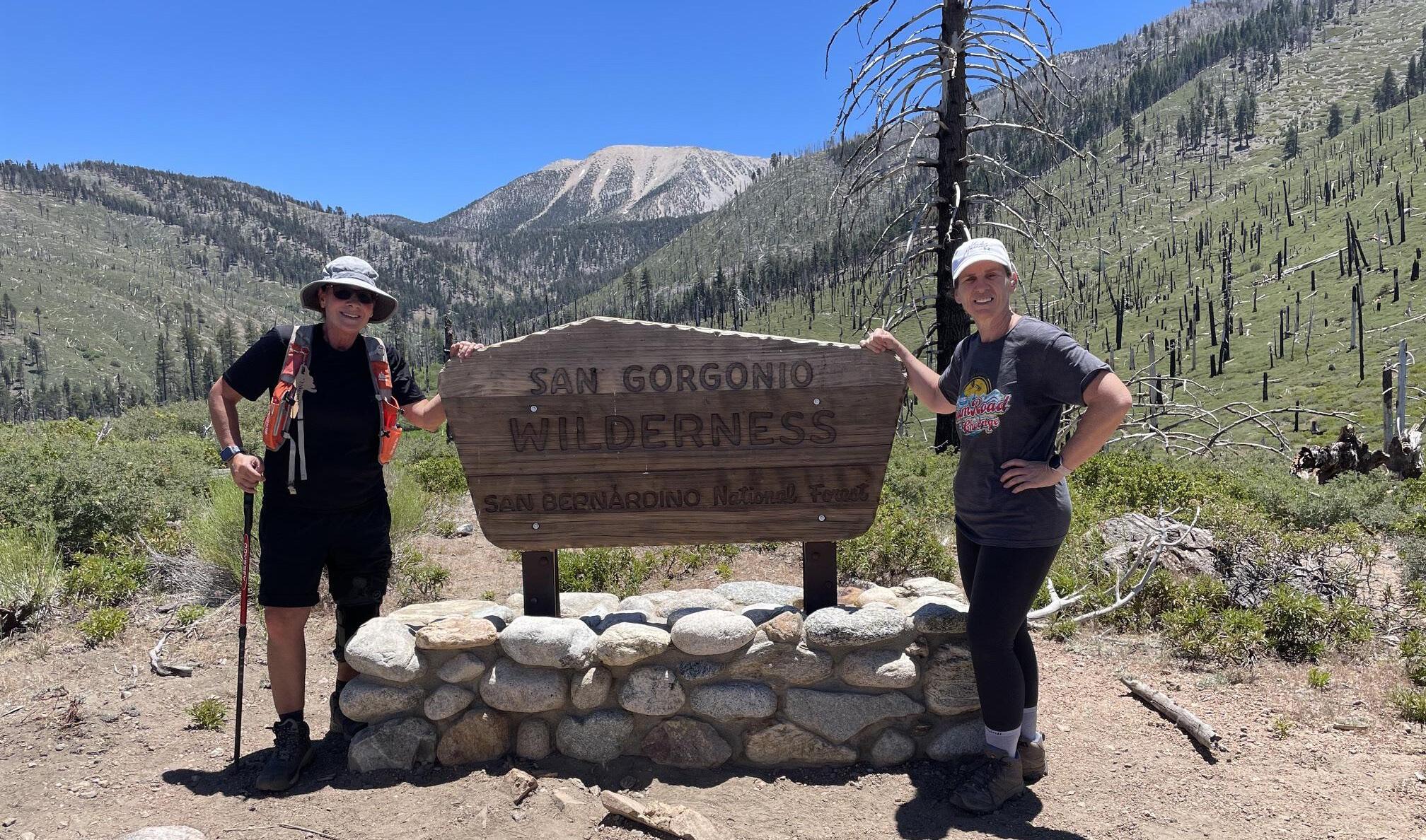
For a more adventurous, longer hike, the South Fork Trail to Poopout Hill is a moderate 4.5 miles, out-and-back, with a climb of more than 950 feet. A large parking lot (you must have an Adventure Pass) and nice restroom facilities are located just across the street from the trailhead. My buddy and I spontaneously found this trail along our way to Barton Flats, and we decided to hike it instead. It was a great decision—but little did we know that we would make it to Poopout Hill, or that there was even such a thing!
While hiking the South Fork Trail, you will hear the refreshing sounds of the Santa Ana River flowing beneath you. As you continue the climb, the trail eventually crosses a fire road, where you can cross over and continue—but be aware that you will enter an active bear habitat. It is recommended to make a left onto the fire road (thank goodness we ran into someone on the trail who informed us of that)
to continue to the summit of Poopout Hill. This area is perfect for meditation or to take a break and have a snack while enjoying the crisp fresh mountain air and picturesque scenery.
Aside from the burn area due to the 2015 Lake Fire—which, while sad, shows so much new flora growth—the views are absolutely stunning of the San Gorgonio Wilderness within the San Bernardino National Forest. Looking to the east, you will see San Gorgonio Mountain (aka Old Greyback) standing tall at 11,503 feet—the tallest peak in Southern California. To the north is Big Bear Mountain and the back side of Snow Summit. Then, far in the distance to the west, on a clear day, you can see into Los Angeles County and admire the remarkable view of Mount Baldy (aka Old Baldy, or Mount San Antonio), the highest point in the San Gabriel Mountains and Los Angeles County, at 10,064 feet.
After a stop at Poopout Hill, you can turn around and head back down, or you can begin a trek into the San Gorgonio Wilderness for the climb to the San Gorgonio Mountain— but please don’t continue without thorough research and planning, as it is difficult and lengthy, likely including an overnight stay. As always, carry lots of water; bring extra clothing to layer, including sun protection; use insect repellent; and wear proper hiking gear. Don’t go alone, or at least always tell someone where you’re going. One more thing: Hiking at higher elevations is not comparable to a walk in the park. Find helpful tips of things to know before you go at www.fs.usda.gov/visit/ know-before-you-go/hiking.
BY BONNIE GILGALLON
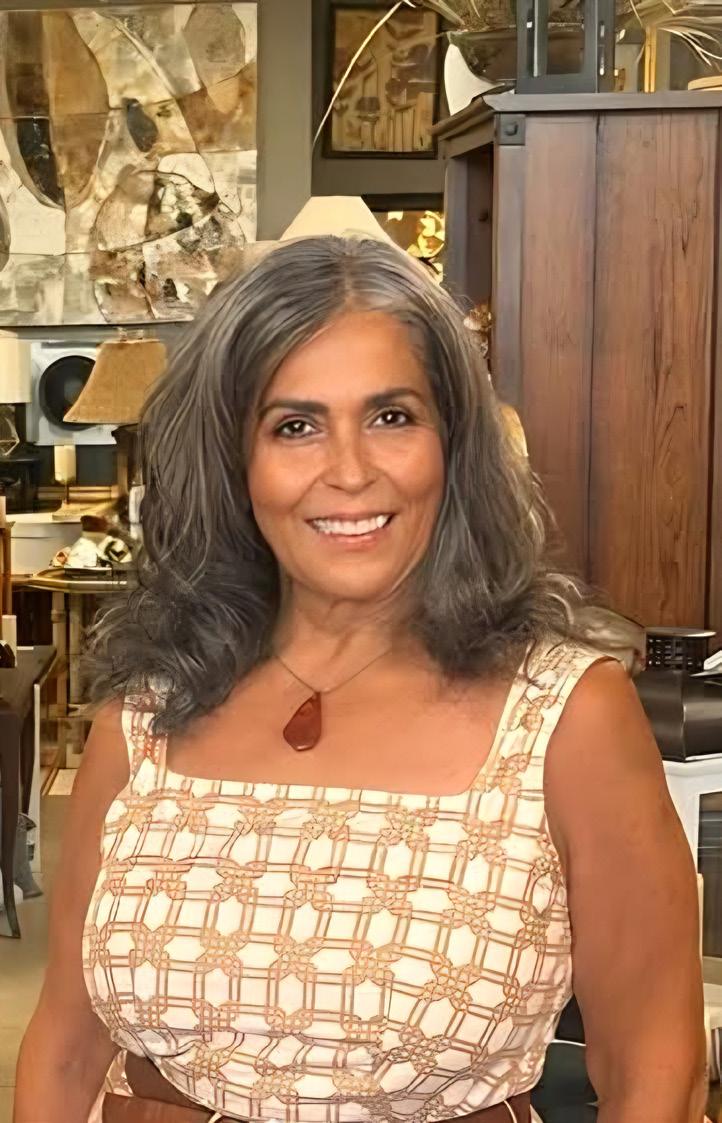
The moment Julieta Martinez says hello, you instantly notice her warmth and sparkling smile
As I chatted with her at her place of business, FOSS Resale House in La Quinta, Martinez’s engaging personality even eclipsed the huge inventory of furniture, clothing, knickknacks and home decor she has collected over the years.
Born in the 1960s in Puebla, Mexico, near Mexico City, Martinez was the second of four children; she has two sisters and a brother. She met and married her husband, Rogelio, there; they had two children. In 2006, the family moved to the Coachella Valley when her husband found a job as a Baptist minister at a La Quinta church.
“I am very grateful,” Martinez said. “We came with just five large boxes, with a lot of faith in
what the Lord has for us. My husband had legal documentation to work at the time, but it took a while for the rest of us. We had a lot of help through Riverside County services, etc.
“My kids both graduated from Coachella Valley High School. Now my son, Rogelio (Roger), is a pastor, and aided by scholarships and loans, my daughter is a doctor of internal medicine. She’s also a member of the National Guard.”
One interesting note: Martinez’s daughter, Evelyn Caballero, is believed to be one of only two graduates of Coachella Valley High School who became a doctor and then came back to practice in the Coachella Valley. The other is Rep. Raul Ruiz.
Martinez had been employed as a Christian educator in Mexico, and after the move,
she found work at the Trinity Baptist Church as a chaplain. She also took a job at Planned Parenthood. While interviewing with Planned Parenthood, Martinez said, she was confused by one of the questions.
“When I came here, my English wasn’t very good, and I didn’t know anything about ‘prochoice’ or ‘pro-life,’” she said. “Once I understood, I told them I was ‘pro-life’—but I also said that God gives us choice. He gives us free will, so you decide what is best for you, and then deal with the consequences.” She worked there for about two years.
A bit later, her husband was in a motorcycle accident that nearly killed him; he needed almost two years to recover.
“He was preaching part-time, but I knew I needed to get another job so that I can support the whole family,” Martinez said. “I went to work for the Coachella Valley Rescue Mission in their thrift store. Later, they opened two additional stores. I said to myself, ‘Why am I working for them? I could do this on my own!’ I spoke to my son and my daughter, who both encouraged me.”
In 2016, she opened FOSS (Focus on Student Success) Resale Boutique, and obtained non profit status. Her son, Roger, a musician who previously taught at Desert Christian Academy, began teaching music in a front room of the FOSS Resale building. The program started with a few troubled kids, and then expanded to include the entire community.
“With FOSS, I started small—like a garage sale,” Martinez said. “But then, gradually, peo ple started bringing items to donate, and we really grew.”
FOSS Resale Boutique now takes up nearly 10,000 square feet. An enterprise this large requires more than one person to keep things running. “I’m here all the time, but I have five volunteers who help me out on various days during the week,” Martinez said.
Martinez admitted that FOSS has struggled a bit since COVID-19. They don’t have an advertising budget or a website and rely on social media and word-of-mouth to bring in
author, mother, philanthropist
and businesswoman whose faith is her guide
customers.
“We bring in enough to keep the place going and to support the music program, which has since moved to Trinity Baptist Church,” she said. “The number of students really decreased after COVID, and it’s tough to afford teachers. We offer piano, guitar, bass and drums. All classes are free of charge to the students. We also offer the Strengthening Families Program, a nationally known program that promotes communication, improves parenting skills and helps decrease teen drug use and delinquency. It’s a 12-week program we run on Wednesdays and Sundays that also offers food.”
Martinez has faced some dark times; she divorced her husband in 2018. After discovering her husband was unfaithful, Martinez issued a warning: “I said, if you do it again, I will divorce you and tell everyone about it in a book.” The book, titled My Husband Wanted to Have a Girlfriend, is available on Amazon.
Martinez said the secret to keeping FOSS open is God’s blessings.
“He wants me to keep going,” she said. “…
We are here to listen, to help, to be friendly, showing the love. I think that’s the key.” She also touted her inventory. “You will find really nice things here you won’t find anywhere else,” she said.
Now living in Indio, Martinez said the top item on her bucket list is a trip to Israel. Three previous attempts—all pre-paid trips—had to be cancelled, first due to COVID, then a spider bite that required medical attention, and, finally, the ongoing military conflict in Israel. What advice would Martinez give to a young person just starting out in life? “Everyone has to figure that out for themselves. I would recommend serving. For me, it was to serve the Lord. But when you serve the Lord, you serve everybody,” she said—flashing that sparkling smile.
Bonnie Gilgallon has written theater reviews for the Independent since 2013. She hosts a digital interview show, The Desert Scene, which can be heard on www.thedesertscene.com and viewed on Mutual Broadcasting’s YouTube channel. Learn more at bonnie-g.com.



www.DPMGCR.com

by KEVIN FITZGERALD
The California State Water Resources Control Board (SWRCB) considers the chromium-6 chemical compound to be a dangerous carcinogen. In April 2024, the board restricted the delivery of water that contains chromium-6 levels above 10 particles per billion (PPB).
As a result, five of the Coachella Valley’s six water providers will need to invest more than $525
million to comply—all within the next one to two years.
This is the SWRCB’s latest attempt to enact such a standard. In 2017, a similar restriction was successfully challenged in court by water providers who argued that the state failed to consider the costs of them meeting the stringent regulation. California is only state to establish a specific drinking water standard for chromium-6, the chemical at the center of the film Erin Brockovich.
The largest potable water provider in the valley is the Coachella Valley Water District (CVWD), with 115,748 active accounts, delivering 80.3 million gallons daily to its domestic water customers. In a recent interview, Lorraine Garcia, the communication manager and public information officer, explained the dis-
trict’s chromium-6 response; 34 of the CVWD’s 96 drinking water wells are impacted by the new standard.
“This has been in the works for about 25 years,” Garcia said, “and there’s been a lot of conflict.”
In 2016, the CVWD initiated studies and design processes for buildout including new treatment plants, wells and pipelines, all focused on the reduction of chromium-6 levels.
“The MCL (maximum contaminant level) was thrown out years ago (in 2017),” Garcia said. “So it was back to the drawing board for the state, which was tasked to do an economic feasibility study.”
In the meantime, Garcia said, the CVWD began working on a compliance plan—which has already been submitted to the state for approval.


New state standards will require local water agencies to spend more than $525 million, according to estimates
“We still do not have that (state approval),” she said. “We’ve been waiting since last year.”
Back in 2015, the CVWD board of directors conducted a study to establish a five-year rate increase plan, which went into effect briefly in 2016, calculated to meet the then-estimated $250 million cost of chromium-6 reduction efforts. While some of those increases were paid, those funds have since been used to cover other expenses.
“The estimate is about $350 million at this point in time,” Garcia said. “So what we will have to do is a ‘cost-of-service study.’ We will have to look at all of the costs again … and see what the actual costs will be to customers.”
The Mission Springs Water District (MSWD) serves more than 40,000 domestic water customers of Desert Hot Springs and the surrounding areas. The Independent exchanged emails with Marion Champion, the assistant general manager.
“At Mission Springs Water District, four of our 13 groundwater wells are currently impacted by the new chromium-6 standard,” Champion wrote. “These wells have been removed from service while MSWD evaluates cost-effective treatment options to support future water supply needs and works through the state approval process for its chromium-6 compliance plan. … We have been open and transparent throughout this process by holding community workshops, creating a dedicated chromium-6 information section on our website, and regularly providing updates.”
Champion said the MSWD estimates it will cost about $25 million “for both well-clustering and treatment options.”
“We expect this work to be completed within approximately two years,” Champion said. “Working with our chromium-6 consultant, MSWD has already begun work on treatment design and will move into implementation once our compliance plan is approved by the state.”
At the east end of the valley, the Indio Water Authority (IWA) supplied “6.3 billion gallons (19,566 acre-feet) of water to approximately 85,000 businesses and residents in 2018,” according to the website.
Roman Gonzalez, the water project construction manager for the IWA, told the Independent that 13 of the 20 IWA wells have chromium-6 levels that exceed the 10 PPB. The authority’s compliance plan, which was delivered to the SWRCB in January, estimated a total cost of $130 million, or roughly $10 million per affected well, Gonzalez said.
In March 2026, the IWA was the only Coachella Valley water provider to join a court filing

seeking the overturn of the new chromium-6 regulation. After being denied in Fresno Superior Court, the petitioners filed an appeal, which is pending as of this writing.
The east valley city of Coachella provides roughly 43,500 domestic water customers with drinking water through the Coachella Water Authority and Sanitary District (CWA). According to the CWA website, five of the authority’s six wells exceed the chromium-6 MCL of 10 PPBs.
“Before the old limit (on chromium-6 levels) was abandoned, the Water Authority was working to find the most effective and economical way to reduce chromium-6 in affected wells,” the CWA website reads. “Ion exchange technology was chosen, and construction of treatment facilities is under way in anticipation of a new state standard. Treatment technology is a costly investment. To lower the burden on our ratepayers, the water authority is pursuing all possible grant funding. The cost of ion exchange systems on the impacted well sites will range from $10 million to $16 million, and will require $2 million to $3 million per year for operations and maintenance, which will affect water rates.”
The Myoma Dunes Mutual Water Company (MDMWC) was founded in 1953 and is a small mutual water company serving approximately 2,450 residents in parts of Bermuda Dunes and La Quinta. According to the MDMWC website’s chromium-6 information page, the company owns five water wells, and they all exceed the 10-PPB level. The projected total cost to bring the drinking water supply into compliance is $10 million to $15 million.
“These costs will significantly impact water rates once treatment systems are installed,” the website warns.
The western end of Coachella Valley, in and around Palm Springs and Cathedral City, has been served by the Desert Water Agency since 1968. “DWA currently has about 24,000 domestic water connections that serve approximately 75,000 people (including seasonal population),” according to the DWA website—and it is the only local water agency in compliance with the new state chromium-6 standard.
“DWA’s most recent testing confirms that all of our drinking water sources remain below California’s maximum contaminant level (MCL) of 10 parts per billion for chromium-6,” wrote Victoria Llort, the DWA’s public affairs and conservation director, and public information officer. “Those results are reflected in DWA’s annual Water Quality Report (www. dwa.org/wqr). … The agency has not needed to make operational changes as a result of the chromium-6 regulation.”
The SWRCB’s deadlines for compliance depend on the number of customers a system serves. For systems with 10,000-plus customers, the deadline is Oct. 1, 2026; for systems with 1,000-9,999 customers, the deadline is Oct. 1, 2027; and for systems with fewer than 1,000 customers, the deadline is Oct. 1, 2028.
However, many water providers statewide, including most if not all of our local systems, submitted compliance plans in 2025 or early 2026, as directed—but have yet to receive approval. As a result, they’re somewhat stuck.
“We’re still in preparation time to get these projects going,” said Garcia, of CVWD. “We want to be prepared, so if we get an approval, we can move forward. But that is challenging for water agencies, because construction design takes time. Getting contractors takes time, and we need to budget for these things. So we’ve been budgeting, and also thinking how, if we get approved, we can do these projects. … Other agencies are in the same situation—ready to move forward, but still needing to be approved.
“I do want to point out that … our engineering team is being very strategic when we are doing other projects, and keeping in mind that this MCL is 10 parts per billion. So, if we are constructing a new reservoir, or a well, or anything that has to do with the domestic system, we are strategically putting it in areas that make more sense in regards to the regulation.”
If the SWRCB could be convinced to establish a more lenient chromium-6 MCL—of, say, 15 PPBs—it would drastically reduce the financial costs to water systems and their customers across the state, with what many argue would be minimal health risks. But so far, the state is adamant about sticking to the 10 PPB MCL.
“This is all naturally occurring chromium,” Garcia said. “It’s been here since we’ve all been here, and even before that. The challenge is the 10 parts per billion MCL. That’s not just a challenge for Coachella Valley Water District; it’s a challenge across the entire state.”
The Coachella Valley Independent earned 28 awards in the California News Publishers Association’s California Journalism Awards, for work done in 2025.
The CNPA splits publications into seven contest categories, based on print circulation, website visitors and staffing size. Based on our monthly print circulation (16,000), we get placed into by JIMMY BOEGLE
Category 5, which is for publications with a circulation between 11,001 and 25,000, or between 300,000 and 399,000 unique website visitors, or six to 10 full-time employees. (Essentially, we’re in the second of four size tiers for non-dailies.)
Almost all of the publications in our category are bigger than we are, with a LOT more resources than we have. Despite that, the Independent was one of the most-honored in the category—including third place in the General Excellence category. (We won more awards than the publications that finished first and second, for what it’s worth.)
Here’s a list of the awards:
First Place in the Arts & Entertainment Coverage category for Matt King’s coverage of venue openings and closings.
First Place in the Best Newsletter category for the Indy Digest, by Jimmy Boegle.
First Place in the Editorial Comment category for “The Unconstitutional, Unchristian Motives Behind Many ICE Raids,” by Jimmy Boegle.
First Place in the Health Care Crisis category for “Local Medical Providers Prepare for an Upcoming Surge of Uninsured Individuals,” by Melissa Daniels.
First Place in the Online Story Presentation Page Layout and Design category, for CVIndependent.com.
First Place in the Print Front Page Layout and Design category, with covers by Dennis Wodzisz.
First Place in the Social Justice and Civic Engagement category for “Hate Emboldened: A Series of Anti-LGBTQ+ Incidents in Palm Springs and Cathedral City Force Residents and City Officials to Take Action,” by Haleemon Anderson.
Second Place in the Film and TV Writing/ Reporting category for “The Coachella Valley Onscreen: After Finding Success With Their First Film, the Men Behind -223 Have High Hopes for the Future,” by Haleemon Anderson.
Second Place in the Health Reporting category for “‘A Devastating Blow’: Coachella Valley Health-Care Providers Brace for Federal Budget Cuts—and Many of Them Are Afraid to Speak Out,” by Kevin Fitzgerald.
Second Place in the Informational Graphic category for “Threats to the Safety Net: Local Assistance, by the Numbers,” by Dennis Wodzisz and Kevin Fitzgerald.
Second Place in the Music Writing/Reporting category for “For Fans Of … : Check Out These Local Musicians Who Have Similarities to Coachella and Stagecoach Artists,” by Matt King.
Second Place in the Print Special Section category for the Best of Coachella Valley 2025-2026.
Second Place in the Profile Story category for “Know Your Neighbors: Meet Jason Powell, a Palm Springs High Music Teacher—and a ChildAbuse Survivor Who Tells His Story to Help Others,” by Bonnie Gilgallon.
Second Place in the Technology Reporting category for “Meeting Kids’ Needs: Palm Springs Unified School District’s eSports Program Showcases the Benefits of Gaming, Technology Reporting,” by Matt King.
Second Place in the Wildfire Feature Coverage for “Wildfire Ready: Palm Springs and the Rest of the Coachella Valley Are Better Prepared for Blazes Than Before—but Danger Remains,” by Haleemon Anderson.
Second Place in the Writing category for “Vine Social: Hide the Good Stuff—a Sommelier’s Survival Guide to Thanksgiving Wine,” by Katie Finn.
Third Place, Coachella Valley Independent, for General Excellence
Third Place in the Best Newsletter category for 11 Days a Week, by Charles Drabkin, Matt King and Jimmy Boegle.
Third Place in the Coverage of Business and the Economy category for “Reins of Change: A Proposal to Build Out an Equestrian Community in the Eastern Coachella Valley Promises Badly Needed Infrastructure—but Could Lead to Gentrification,” by Melissa Daniels.
Third Place in the Editorial Comment category for “ICE Raids Are ‘Causing Fear and Widespread Disruption’ in the Coachella Valley,” by Jimmy Boegle.
Third Place in the Homelessness Reporting category for “Civic Solutions: The Coachella Valley Rescue Mission Adds Beds for Unhoused Women and Children,” by Melissa Daniels.
Third Place in the Music Writing/Reporting category for “The Next Generation: Desert-Rock Legend John Garcia Chooses Two Young Bands to Open for Him at Pappy and Harriet’s,” by Haleemon Anderson.
Fourth Place in the Environment Reporting category for “Conservation Celebration: The Santa Rosa and San Jacinto Mountains Nation-
The ‘Independent’ wins 28 state journalism awards and two national honors
al Monument Marks 25 Years of Existence as Recovery From the Rosa Fire Continue,” by Kevin Fitzgerald.
Fourth Place in the Film and TV Writing/ Reporting category for “Ahead of His Time: Michael Childers Remembers His Partner, the Late John Schlesinger, With the ‘My Husband Makes Movies’ Series,” by Cat Makino.
Fourth Place in the Music Writing/Reporting category for “From Paris to the Plaza Theatre: Josh Homme Screens Queens of the Stone Age’s ‘Alive in the Catacombs’ Film With a Live Q&A,” by Matt King.
Fourth Place in the Tourism/Travel Writing/ Reporting category for “Vine Social: Scenes From a Trip to Uruguay, South America’s BestKept Wine Secret,” by Katie Finn.
Fifth Place in the Fine Arts Writing/Reporting category for “Mid-Century Marvelous: Dezart Performs Opens Its New Playhouse With a Concert Version of ‘West Side Story,’” by Jeffrey Norman.
Fifth Place in the Religion and Faith Writing category for “Music as Religion: Idyllwild’s Audiowild Studios Hosts Concerts to Raise Much-Needed Money—and Prepares to Become a Church, Religion and Faith Writing,” by Matt King.
We also won two national AAN (Association of Alternative Newsmedia) Awards, for work done in 2025. Publications of every size compete against each other. Our honors:
• Third Place in the Housing category for “Satisfying Settlement: After Two-Plus Years of Stress and Expense, Lake Tamarisk Residents Reach an Agreement With Intersect Power Regarding the Easley Solar Project,” by Kevin Fitzgerald.
“Well reported story on the personal costs to residents in fighting—and winning—an agreement from a solar installation developer to mitigate environmental and quality-of-life factors,” the judge said.
• Honorable Mention in the Political Column category for the Indy Digest, by Jimmy Boegle.
“Honorable Mention goes to the CV Independent for its balance between a strong editorial voice mixed with advocacy for readers to dig deeper into stories by providing ample links to articles that will further elaborate on given subjects,” the judge said. “The columnist assumes a level of intelligence from his readers and rewards that with commentary that is personal, universal and just ever so snarky.”
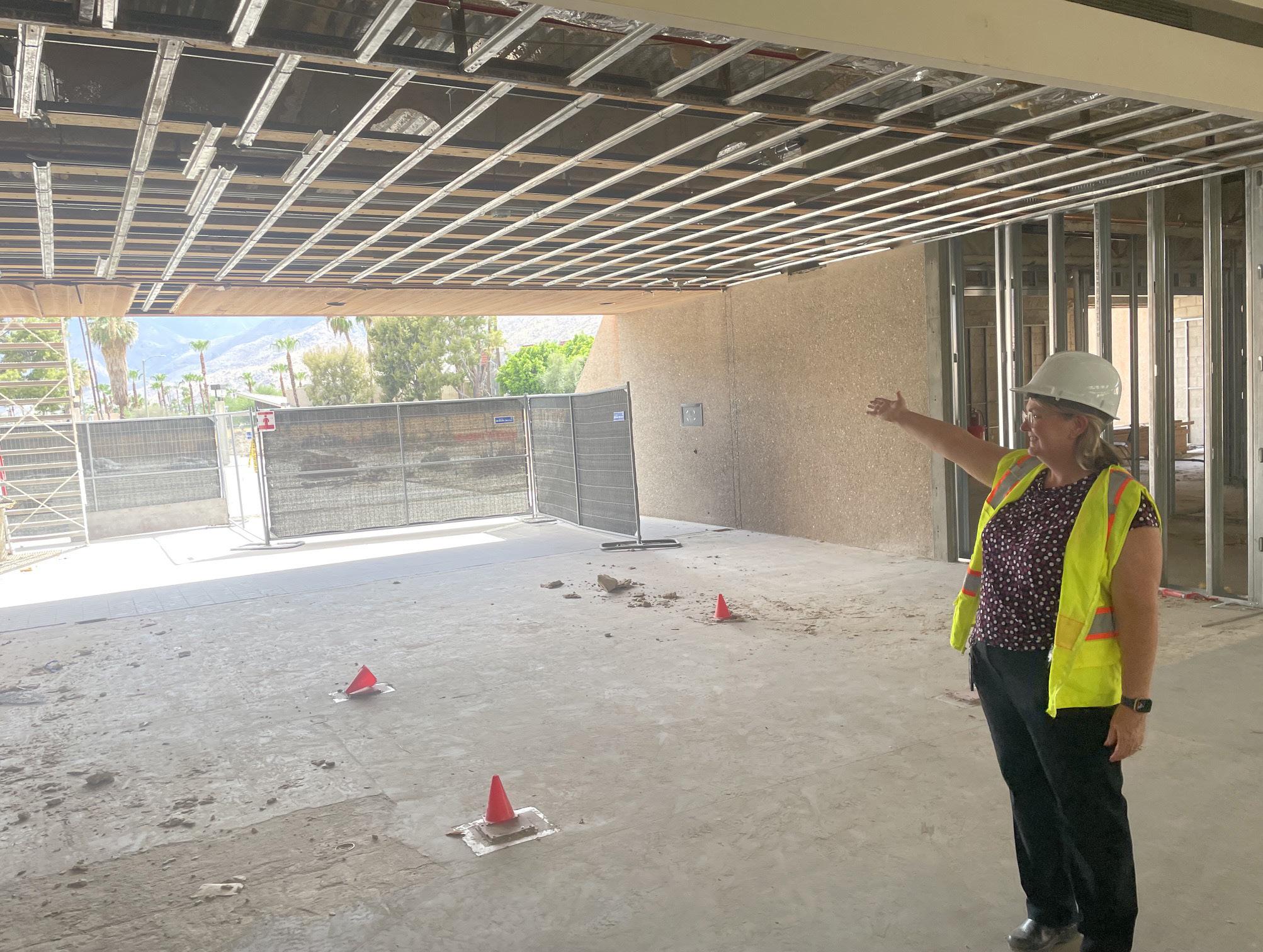
When I walked into the Palm Springs Public Library construction site on July 13, I was struck by how large the building—or, I should say, what’s left of the building—truly is. It was 10 months ago that Swinerton Builders began a $45 million renovation of the 51-year-old library, although the word “renovation” really doesn’t do the construction project justice. by Jimmy Boegle
“We’re essentially building a new library inside an old building,” said Jeannie Kays, the city’s director of library services.
Kays and Julie Warren, the library and public services manager, were kind enough to give me a tour of the construction goings-on at the 34,000-square-foot building, designed by William F. Cody. Joining us was Jeffrey Norman, a member of the Palm Springs Public Library Foundation board and a co-chair of the library’s capital campaign.
(Because it’s a very small valley, some disclosures: I serve with Julie Warren on the LGBTQ+ History and Archives of the Desert’s board of directors. Jeffrey Norman is one of my best friends, and I am on the Library Foundation’s Campaign Honorary Committee.)
Virtually everything that was part of the former library—other than load-bearing posts and walls—is gone. The plumbing, the electricity and the layout will all be brand-new. I noticed only two things remaining from the library’s previous iteration, other than the outside walls: the koi pond near the building’s center, and stacks of wood and other architecturally significant materials that were carefully removed, to be put back when the time comes.
The deconstruction phase is over, and the construction company is just starting to build some of the new walls. This led Warren, who’s worked for the library for two decades, to express excitement.
“I see progress that has been 20 years in the making,” Warren said. “I can envision all the things that are going to be there and the way the building is going to better serve our community … It’s one thing to see it on paper, but when you see the framing up … that’s really exciting. I can really see it coming to life.”
In her 20 years with library, Warren has seen various expansion/renovation/new building plans come and go. In fact, Warren said she didn’t completely believe the current renovation would come to be until she and her fellow staffers started packing for the move to the library’s temporary location, at 4721 E Palm Canyon Drive, Suite A, in the Rimrock Shopping Center.
“My first week on the job, I attended a City Council meeting where they were presenting a model of a library addition,” Warren said. “… Through the years, I just saw it sadly deteriorating from the inside out. We would have so
many plumbing issues, and they would find pipes disintegrating. We were trying to always figure out how to (find enough electric outlets) to get technology working.”
While some of those previous proposals were for a brand-new building, Warren said she’s thrilled the city decided to “rearrange spaces” in the existing footprint.
“I’m really excited about where we are now,” Warren said. “I’m a huge mid-century modern fan, and a huge William Cody fan, so to be able to stay at the library that he envisioned, with so many of the elements that were incorporated from his design being restored, including the original entrance and everything—it makes me really, really happy and excited.”
The library “transformation” was designed, both Kays and Warren said, after a lot of public input. The new library will have a larger community room, added outdoor courtyards, state-of-the-art areas for children and teens (including a teen workshop with tools like 3-D printers) and much more. (To take a virtual tour, visit nextchapter.pslibraryfoundation. org/tour.) Yes, the koi pond will return, too.
The other building on the library campus— the 4,000-square-foot J.C. Frey Building, which was built in 1965—is also being renovated. It will become the new Friends of the Palm Springs Library Building, named so to thank the nonprofit organization for their longtime and continued support of the library. It will be a space for the Friends, as well as the new, larger home of the library’s archives.
I asked Warren what she’s most excited about regarding the new library.
“The number one thing I always got asked about was: Are there any private study rooms or private meeting rooms that the public can use?” Warren said. “We will have four of those, and they will be free for the public to utilize. … The second thing I’m most excited about is the community room. It is doubling in size, and it’s moving to the front of the building. It has an adjacent patio that can overflow for events. It’s going to have state-of-the-art technology. We’re going to be able to do so many different types of events.”
As Warren mentioned, the library’s longclosed south entrance is being restored; with that will come more parking, and a new entrance from Sunrise Way is being built. The
A tour of the Palm Springs Public Library, as the new library (in the old building) begins to take shape
corresponding construction project is reducing Sunrise Way to a single lane between Baristo Road and Camino Parocela, with intermittent lane closures through Nov. 13.
Kays said she’s optimistic the main library will be open again by the end of 2027, hopefully sooner.
“There’s a good year of work in here, to put all this back together,” she said.
That doesn’t necessarily mean the end of the library space at Rimrock. Kays and Warren told me the Palm Springs library used to have four different locations around the city, but due to funding crunches, that was pruned down to two—the main library, and the Welwood Murray Memorial Library downtown.
“If money were no object, of course, I’d like to have a north branch, a south branch, a bookmobile—you know, all the things, because you can’t help your community enough. ... I absolutely would love to keep that (Rimrock) branch open,” Kays said. “… I think it’s a great resource. I know so many people come into that Rimrock library and they say how much they love it.”
That decision, of course, will come down to funding.
Meanwhile, the Palm Springs Public Library Foundation’s capital campaign has raised nearly $2.3 million of a desired $7 million. While the state of California (a $6.5 million grant)
and city of Palm Springs ($8.7 million from Measure J, $30 million from bonds) provided the budget for the building’s construction, the money from the capital campaign will go toward things not covered by the city and the state—like the tools in that teens’ workshop, for example. Some of it will also go toward an endowment that will allow the library to pay for future needs.
“The Friends (of the Palm Springs Library) have always been incredibly generous and bought the library things when they needed them,” Norman said. “But you know, this is a new space. There’s all this new technology. They may not even know (all of what they need) until they get in the new space.”
The library’s Board of Trustees matched the first $1 million in capital-campaign donations, leading to the first $2 million raised. As for the $4.7 million that still needs to be raised?
“We’re still having meetings with the known philanthropists, and we are hoping to inspire their generosity,” Norman said. “Then we’re going to be doing a more public campaign, which will announce at some point … because, you know, this is everybody’s library. Whether they, can put in $10, $100 or $1,000, a lot of people would love to play a role in that.”
For more information, visit nextchapter. pslibraryfoundation.org.
The Coachella Valley has a way of turning visitors into neighbors.
Sometimes, all it takes is one visit. For many people who now call the Coachella Valley home, the journey didn’t begin with a job offer or retirement plan. It began with a vacation.
A long weekend with friends. A family getaway. A week working remotely. Whatever brought them here, they discovered something they weren’t expecting: a community where everyday life felt just as appealing as vacation.
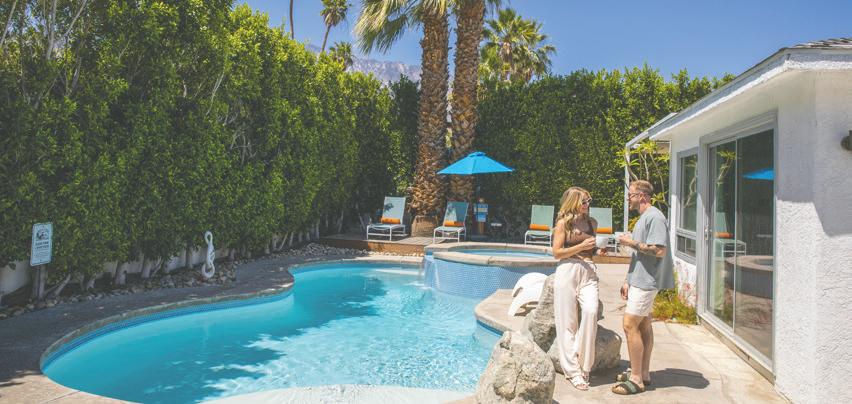
Staying in a neighborhood offers a different perspective than simply passing through. Visitors discover a favorite coffee shop, shop at local markets, hike nearby trails, and settle into the rhythm of daily life. They begin to imagine what it might feel like if those routines weren’t temporary.
Short-term vacation rentals generate more than $1 billion in annual economic impact throughout the Coachella Valley
For families and multigenerational travelers, sharing a vacation home often creates the kind of quality time that’s difficult to find elsewhere. Slow mornings, meals around one table, afternoons by the pool, and evenings together become the memories that keep people coming back. And many do come back.
What starts as an annual vacation often turns into weekends throughout the year.
Then longer stays. Eventually, some visitors begin exploring neighborhoods, meeting local business owners, and picturing a future here. Some purchase a second home. Others make the Coachella Valley their permanent home, bringing new businesses, new careers, volunteer service, and fresh ideas that strengthen the community.
That ripple effect benefits everyone. Short-term vacation rentals generate more than $1 billion in annual economic impact throughout the Coachella Valley, supporting local restaurants, retailers, attractions, small businesses, and over 4,400 jobs while generating tax revenue that helps fund important public services. Communities across the valley also work hard to ensure short-term rentals remain good neighbors. Every city has its own ordinance governing short-term rentals, including permitting requirements, occupancy limits, quiet hours, parking standards, and local enforcement. Most also maintain a 24-hour Good Neighbor Hotline so residents can quickly report concerns, helping preserve the quality of life that attracts both visitors and future neighbors.

The Coachella Valley is built on many stories. Some begin here and are passed down through generations. Others begin with a vacation that unexpectedly feels like home.
AUGUST 2026
By Davis Meyer
For many newcomers, one memorable stay becomes the first chapter of a life spent building a business, raising a family, giving back to the community, or simply putting down roots.
Sometimes, a vacation doesn’t just create lasting memories. It helps someone find home.
Learn more about short-term rental rules and resources at OneCV.org.
Every city in the Coachella Valley maintains its own Good Neighbor Hotline, giving residents a direct line to their city if a question or concern ever comes up:
Cathedral City: 760-553-1031
Coachella: 844-306-2041
Desert Hot Springs: 760-329-2904, option 2
La Quinta: 760-777-7157
Indian Wells: 760-834-7788
Indio: 760-541-4222
Palm Desert: 760-862-6900
Palm Springs: 760-322-8383
Unincorporated Riverside County Areas: 760-393-3344
Additional resources for hosts, residents, and guests can be found at OneCV.org.
Sponsored by Visit Greater Palm Springs
IIndio has grown from a railroad depot into the City of Festivals
In March 1872, surveyors hired by the Southern Pacific Railroad arrived in the area seeking a midpoint watering and depot site. They found what they thought was the only oasis on by greg niemann
ndio, the Coachella Valley’s largest city (with a population of about 95,000), came into being because of its precise location—halfway between Los Angeles and Yuma, perfect for the railroad.
the desert floor and initially called it Apostle Palms, as there were 12 large palm trees at the oasis. The oasis was a winter home to a band of Cahuilla Indians.
To encourage the construction of a southern transcontinental railroad, the U.S. government had deeded alternate sections of land to the railroad. This ideal location, with water that could be pumped, was quickly established as the central desert landing.
Work on the railroad began thereafter, and a small village emerged. They originally called the depot Indian Wells, but soon discovered that name was already on maps marking a small well and camping spot about five miles to the west. So in 1877, they changed the name to Indio, meaning Indian in Spanish.
Trains began running through the area in 1876. Along with a maintenance roundhouse and water tank, the railroad had built a few small sheds and some temporary housing for the workers.
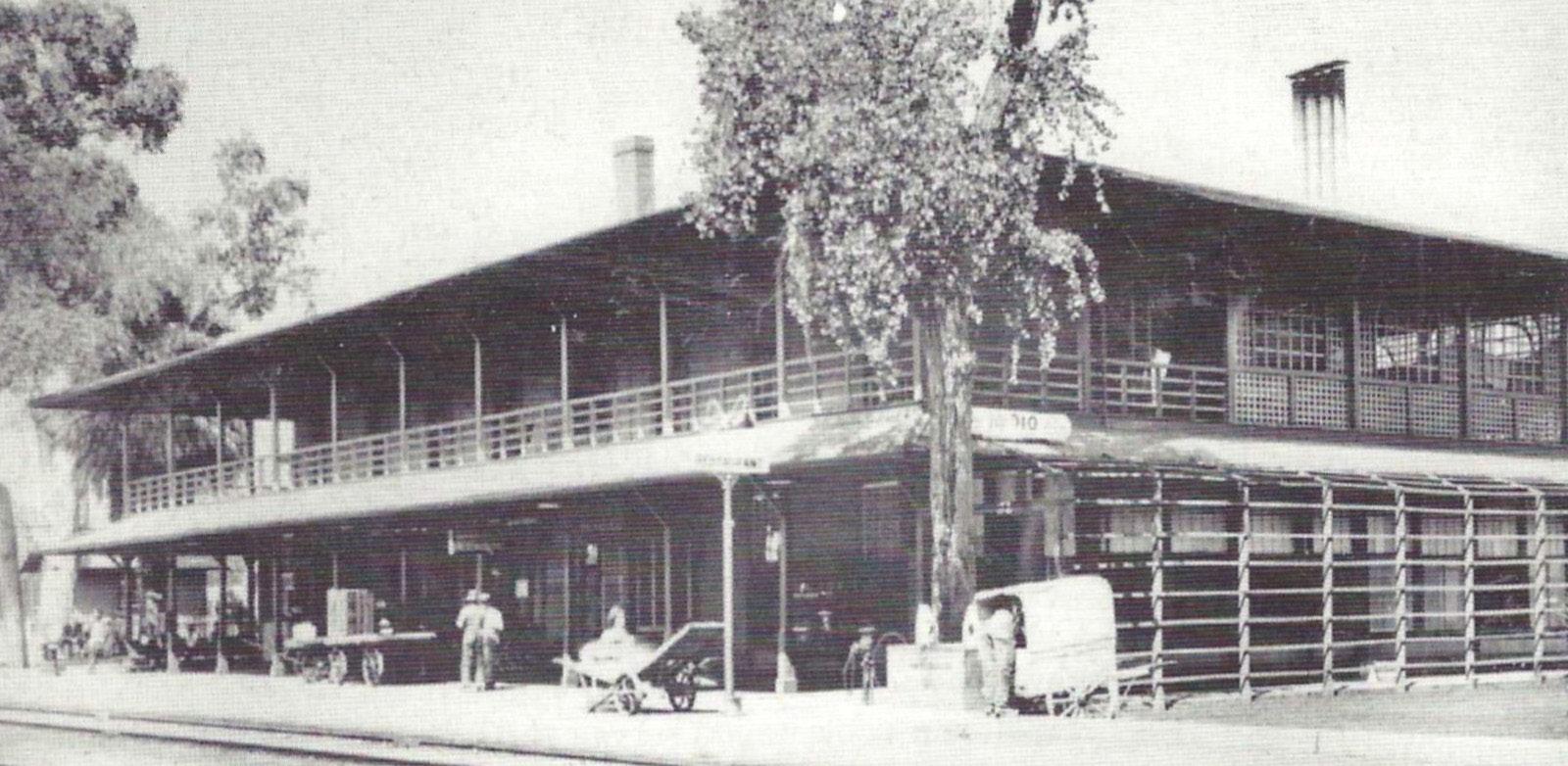
The first permanent building in Indio, the Southern Pacific Depot Station and Hotel, was completed in 1880. Serving both the railroad crews and passengers who began crossing the desert, the hotel/restaurant alongside the tracks became the center of social life. By 1896, the population of Indio was 96, mostly men who worked on the railroad.
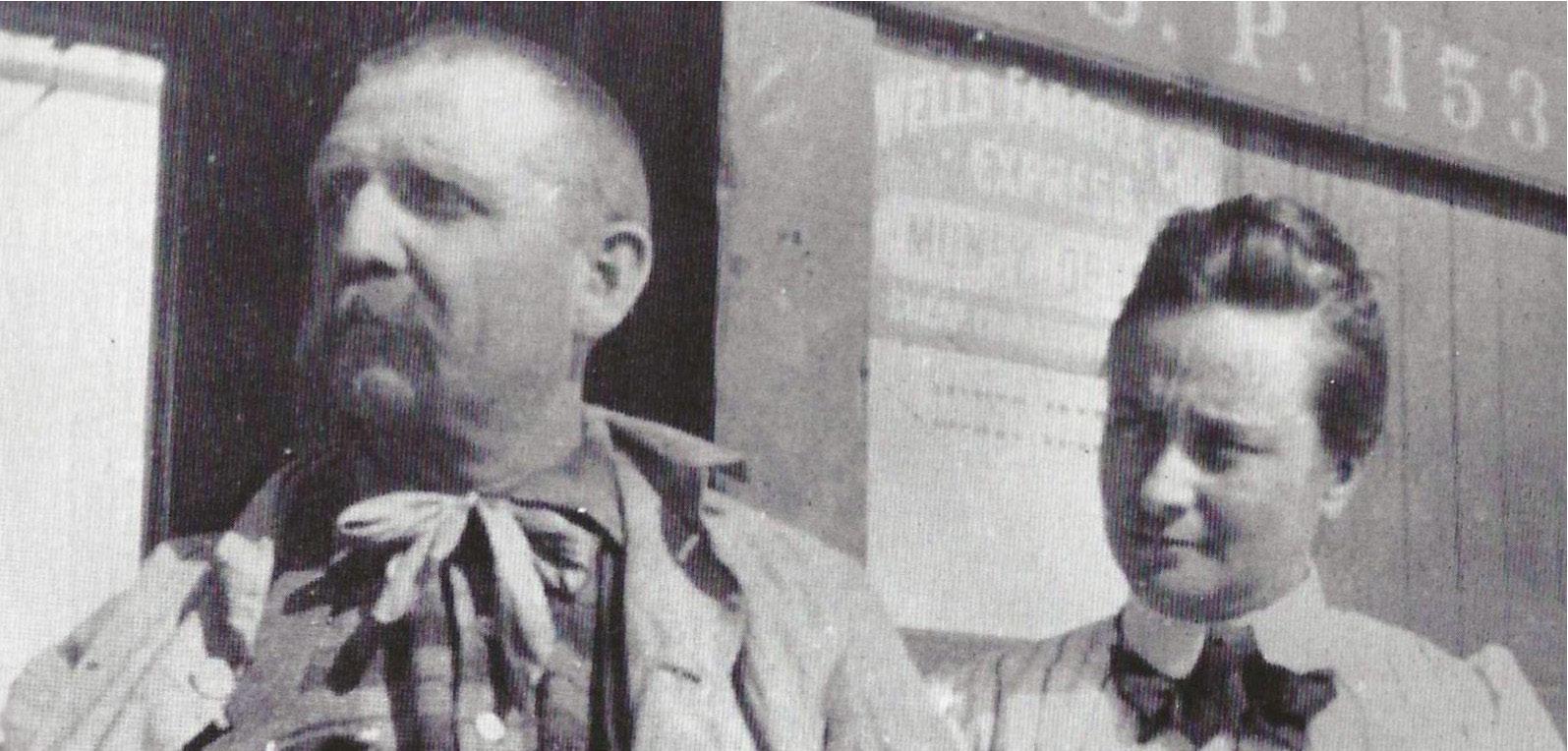
One of those early arrivals, the industrious Albert Garner (A.G.) Tingman, became known as the “Father of Indio.” Tingman began as a railroad construction boss in 1877 and became
the depot’s telegrapher and station agent in 1883. Tingman built Indio’s first store (General Merchandise Store) just northwest of the depot in 1885, and became Indio’s first postmaster in July 1888. He homesteaded and purchased 160 acres in 1891 and laid out the original Indio town site in 1894.
His most significant contribution—which led homesteaders, railroad engineers and others to settle there—was his drilling of a well next to his store. The abundance of water under the valley’s loamy soil would soon serve as the catalyst that sparked the area’s agricultural boom.
Within a year, others started tapping into the water supply with wells—some financed by Tingman, who strongly believed in the area’s possibilities. Homesteaders started taking up the available land and growing crops as more wells came into existence. By 1906, it was estimated that there were over 300 artesian wells in the valley.
The most successful crops initially exported via train to the east were cantaloupes and dates. By 1905, cantaloupes had become the chief crop of the valley. Tingman encouraged farmers to experiment with different crops, offering financial aid if needed.
Around the turn of the century, the United States Department of Agriculture (USDA) sent date palms from Algeria to the region, and in 1904, the USDA established a date experiment station near Mecca. The date went on to become a major crop for the Coachella Valley.
Indio was surveyed, with a town site map
filed in 1888 with the San Diego County Recorder. In 1893, as part of the newly designated Riverside County, Indio became one of 12 townships.
When A.G. Tingman laid out the original Indio town site in 1894, he also built a corral for the townspeople, travelers and prospectors who began to arrive seeking riches in the nearby mountains. Tingman himself succumbed to “gold fever” and sold his store in 1903 to spend more time on mining trips.
Born in 1855 in Sacramento, Tingman and his wife, Harriet “Hattie,” also maintained a home near San Diego, where she spent much of the time. Tingman had several successful mining projects and ultimately died at his Full Moon Mine in March 1925. The “Father of Indio” was buried in San Diego.
Bolstered by the railroad, Indio continued to grow and became known as the Coachella Valley’s center of commerce. Along with passengers, trains brought supplies and groceries from Los Angeles. To ensure future growth, a more-secure water supply would be needed. The Coachella Valley Water District was formed in 1918, leading to the construction of the All-American Canal, which still brings Colorado River water to the valley.
In the late 1920s, U.S. Highway 99 opened through Indio, mostly paralleling the railroad tracks. Since then, California State Routes 111 and 86 were built through Indio, as was the busy Interstate 10.
Indio incorporated in 1930, becoming the valley’s first city, with a population of 1,875. Indio boomed during World War II, thanks to Gen. George Patton’s nearby desert training grounds. A jumping-off place for troops and equipment, Indio also hosted many visiting soldiers.
The Cabazon Band of Cahuilla Indians opened a small Indio Bingo Palace in 1991. It
morphed over several expansions into the Fantasy Springs Resort Casino.
Today, Indio is known as the “City of Festivals,” hosting a glittering array of events. Foremost is the Coachella Valley Music and Arts Festival, held annually at the Empire Polo Club. Coachella is one of the most famous music festivals worldwide, attracting nearly 250,000 visitors over two April weekends.
Stagecoach, one of the nation’s premier country music festivals, is also at the Empire Polo Club; it spans three days and showcases both legendary and emerging Nashville stars.
The Riverside County Fair and National Date Festival is held in Indio each February. Along with the typical fair atmosphere of exhibits, rides and food, the fair celebrates the Coachella Valley’s date palm harvest.
Then there’s the International Tamale Festival in downtown Indio each December; 2026 will mark its 34th year. Along with dozens of booths offering tamales, there’s live entertainment and carnival rides.
Indio also hosts the Southwest Arts Festival, one of the country’s finest juried art festivals, featuring more than 200 artists from around the world. It is at the Empire Polo Club each January.
While the Indio Amtrak station closed in 1998, trains still rumble through Indio— which has grown well beyond the area where it all began, centered between Yuma and Los Angeles.
Sources for this article include Indio, by Patricia Baker Laflin, for the Coachella Valley Historical Society (Arcadia Publishing, 2008); “Indio Pioneer Helped Open CV to Settlement,” by Paul Wilhelm, Indio Daily News, March 17, 1983; and Coachella Valley’s Golden Years, by the Coachella Valley Water District, 1978.

By Robert Victor
In August, Venus, the evening “star,” gets interesting for telescopic viewers. Up to four bright planets and 11 bright stars are visible before dawn, when the annual Perseid meteor shower is also at its best. The Milky Way excels—and there’s a near-total lunar eclipse!
Mornings this month are prime for sky-watching. The month begins with the moon and three planets in a long grouping across the sky within the belt of zodiac constellations. On Aug. 1, their arrangement from west to east, an hour before sunup, is: the constellation Capricornus, about to set in the west-southwest; the moon, in the southwest in Aquarius; Saturn, high in the south in Pisces; and the compact Pleiades star cluster, well up in the east, with ruddy Aldebaran, eye of Taurus, nearly 14° below, closely accompanied by stars of the Hyades cluster, completing a letter “V”
marking the head of the Bull. Both star clusters are very rewarding sights through binoculars! The red planet Mars, also in Taurus, is 14° to the lower left of similarly colored Aldebaran on Aug. 1, and shifts about two-thirds of a degree daily, passing between the Bull’s horns on Aug. 2-3. Look daily and notice the change, which will bring Mars into Gemini by Aug. 12. The easternmost visible planet in the morning sky in early August is Mercury, found very low in the east-northeast, 27° to the lower left of Mars on the first few mornings.
Go out each morning in early August, to follow the waning moon, passing Saturn on Aug. 3 and 4, and passing just below the second- and third-magnitude pair of stars of Aries, the Ram, on Aug. 5. By Aug. 6, the moon is a fat crescent, to the upper right of the Pleiades. If you get out very early the next morning, Aug. 7, not long after moonrise, you can catch the Pleiades cluster very close to the moon’s earthlit upper limb, and watch the moon pull away from the cluster until morning twilight intervenes.
An hour before sunup on Aug. 8, the crescent moon cozies up to the tip of the Bull’s northern horn, with Mars below. On Aug. 9, a thinner crescent moon will appear closer to the red planet, about 6° to Mars’ lower left. That same morning, look to the lower left of the moon for three objects arranged in a diagonal straight line. From lower right to upper left, they are: Mercury, the brightest; Pollux, 6° to Mercury’s upper left; and Castor, the faintest, 4.5° to Pollux’s upper left. On Aug. 11, the moon’s last morning, look for the 2 percent thin crescent very low in the east-northeast, with Mercury just 1.7° to the lower right of the center of the moon’s disk. Binoculars will give the best view. Each successive morning, Mercury—heading toward superior conjunction on the sun’s far side on Aug. 27—drops a little lower, while Jupiter, emerging from solar conjunction because of Earth’s faster orbital motion, climbs higher. By Aug. 15, the two planets will appear virtually the same height above the horizon, with fainter Mercury passing within 0.6° to the north (left) of Jupiter. You can fit them in the same telescope field! Within
a few days, Mercury will be gone, and Jupiter will be the dominant morning “star” until Venus dethrones it at the end of October.
The moon returns to the morning on Aug. 27, when it’s full and low in the west-southwest an hour before sunup.
Other bright objects in the morning sky include, north of the zodiac plane, the Summer Triangle of Vega, Altair and Deneb in the west to northwest, beginning to set in twilight in the latter half of month; and Capella, the “Mother Goat” star, ascending in the northeast. South of our solar system’s plane, look for Fomalhaut, Mouth of the Southern Fish, far to the lower right of, or below, Saturn. Orion, with his 3-star belt flanked by red Betelgeuse and blue Rigel, has already emerged into the eastern sky by the start of August. Before midmonth, watch for the rising of Procyon, the “before the Dog” star, rising just north of east, to the lower left of Betelgeuse; and Sirius, the Dog Star itself and the brightest nighttime star, rising in the east-southeast, nearly in line with Orion’s belt extended downward. Sirius, Procyon and Betelgeuse form the nearly equilateral Winter Triangle.
The best occasions for viewing the Milky Way in the morning before twilight begins are the moonless pre-dawns of Aug. 11-24. Included within this span is the peak of the Perseid meteor shower, which is expected to offer its richest show before morning twilight on Aug. 13. The sky will be moonless throughout the night of Aug. 12-13, coinciding with the new moon.
Evening highlights: By far, the brightest “star” in evening twilight is Venus, of magnitude -4.3 to -4.6, low in the west to west-southwest at dusk. Venus is of increasing interest in the closing months of its evening apparitions, because it draws closer to Earth and appears larger in size, and begins to move between Earth and sun and become backlighted, as a crescent.
On Aug. 1 at dusk, find Venus just south of west at dusk, and locate the star Spica in the southwest, 29° to the upper left of Venus. Watch Venus approach this star all month, until it passes just 1.5° south (to the lower left) of the star on Sept. 1. Find another bright
Planets and Bright Stars in Evening Mid-Twilight For August, 2026
This sky chart is drawn for latitude 34 degrees north, but may be used in southern U.S. and northern Mexico.
The month brings lots of bright planets and stars, a meteor shower— and a near-total lunar eclipse!
zodiacal star, the red supergiant Antares, heart of the Scorpion, 46° east of Spica, or in the south at dusk on Aug. 1, drifting into the south-southwest by Sept. 1.
Evening mid-twilight occurs when the Sun is 9° below the horizon. Aug.1: 44 minutes after sunset. 15: 42 " " " 31: 41 " " "
The moon in August can be seen on 15 consecutive evenings at dusk, culminating with a deep partial lunar eclipse. On the first evening, Aug. 13, just half an hour after sunset, it may be a challenge to catch the 3 percent crescent very low, just north of west, and 28° to the lower right of Venus. Aug. 15 will present a great photo-op: a 14-percent crescent moon centered about 3.5° to the lower right of Venus! On Aug. 20, the 60 percent gibbous moon will stand within 2° to the lower right of Antares at dusk, and not long after 11 p.m., as seen from California, shortly before moonset, the upper edge of the moon will slide just more than one degree below the star. On Aug. 24, the 91 percent moon appears in the far eastern part of Sagittarius, nearly 15 degrees east of the second-magnitude star in the Teapot’s handle.
On Thursday evening, Aug. 27, we’ll find the full moon rising very shortly before sunset, already deeply embedded in the dusky but not very dark outer portion of the Earth’s outer shadow, called the penumbra Not until 7:33 p.m. does the moon begin to enter the dark, central core of Earth’s shadow, called the umbra, and the partial eclipse gets under way. From Palm Springs, the moon is then just 4° above the horizon, 15° south of east. This lunar eclipse won’t be total, but it is a significant partial, with 93 percent of the moon’s diameter covered by the umbra at 9:13 p.m. The umbral eclipse ends at 10:52 p.m., as the moon departs from the dark core of Earth’s shadow.
The Astronomical Society of the Desert will host a star party on Saturday, Aug. 8, at the Santa Rosa and San Jacinto Mountains National Monument Visitor Center; and Saturday, Aug. 15, at Sawmill Trailhead, a site in the Santa Rosa Mountains at elevation 4,000 feet. For more information, visit astrorx.org.





























For 13 years, the Independent has been telling the Coachella Valley’s stories. Our mission is to inform readers like you—and to help you build stronger connections with your community. To continue doing so, we need reader support!
Thank you for supporting the Independent!
NAME
ADDRESS
PHONE AND/OR EMAIL

Please consider becoming a sustaining Supporter of the Independent, or make a one-time donation, by visiting CVIndependent.com/support-our-publication, or by sending us a check using the coupon to the right. You can support the Independent directly (non-tax-deductible)—and now can make a tax-deductible donation via our fiscal sponsor, the Alternative Newsweekly Foundation (ANF). Via ANF, we can accept cash, grants and donations from donor-advised funds. We can even accept stock or crypto! Questions? Email jboegle@ cvindependent.com, or call 760-904-4208.
AMOUNT OF CHECK
Want your donation to be tax-deductible? Make your check out to the Alternative Newsweekly Foundation. Don’t need a tax deduction? Make your check out to the Coachella Valley Independent. Please mail to:
Coachella Valley Independent 31855 Date Palm Drive #3-263 Cathedral City, CA 92234

By Melissa Daniels
Dr. Michael Mesisca faced a tall order.
As the chair of the Department of Emergency Medicine at the Riverside University Health System, he needed to recruit doctors to work at Palo Verde Hospital in Blythe, along Interstate 10 near the California-Arizona state line, 110 miles away from the Coachella Valley.
He wondered who would be willing to take 24-hour shifts at an aging, remote facility, let alone drive two or more hours east in the heat of the summer.
“I lost some sleep over it, just wondering how we can staff this very remote, distant place with high-quality people,” Mesisca said during a June public meeting.
It ended up becoming one of the proudest moments of his career. Within 10 days, Mesisca recruited more than two dozen board-certified emergency room physicians from places like RUHS, Desert Regional Medical Center and Pomona Valley Hospital Medical Center.
“As I would recruit one doctor, two more would call me. They would call because the person that I talked to (about) what we were trying to do here to support the community would share that with their friend,” Mesisca said.
The Palo Verde Healthcare District filed for Chapter 9 bankruptcy in September 2025, a last-ditch effort to stay open after years of financial struggles. If Palo Verde closed its
doors, the nearest hospitals would be 50 to 100 miles away. Many residents are already driving about two hours for care at John F. Kennedy Memorial Hospital in Indio.
Rather than allowing the area’s only remaining ER to shut down, RUHS reached a 180-day management agreement in February to stabilize emergency services. But recruiting physicians is just one piece of turning around a distressed rural hospital.
Lisa Mackie, the RUHS clinical director of nursing, has been taking shifts at Palo Verde since February. She’s serving as the interim director of operations and head of nursing for the emergency department, where her goal is to stabilize day-to-day operations and support the existing staff.
Word is spreading that Palo Verde is improving, Mackie said, as evidenced by social media posts, as well as feedback that RUHS team members get at the grocery store when they’re out shopping in their scrubs. Other signs of success and stability: Staff are meeting regularly and receiving promotions; wait times are down; and the building itself has had significant upgrades like HVAC repairs and new cabinetry. In a literal sign of new life, three babies were born in Palo Verde’s emergency department this spring.
But it’s too soon to call the intervention a victory. The hospital’s finances are still precarious, and funding cuts to Medicaid and Medi-Cal could further threaten its stability.
Continued on next page
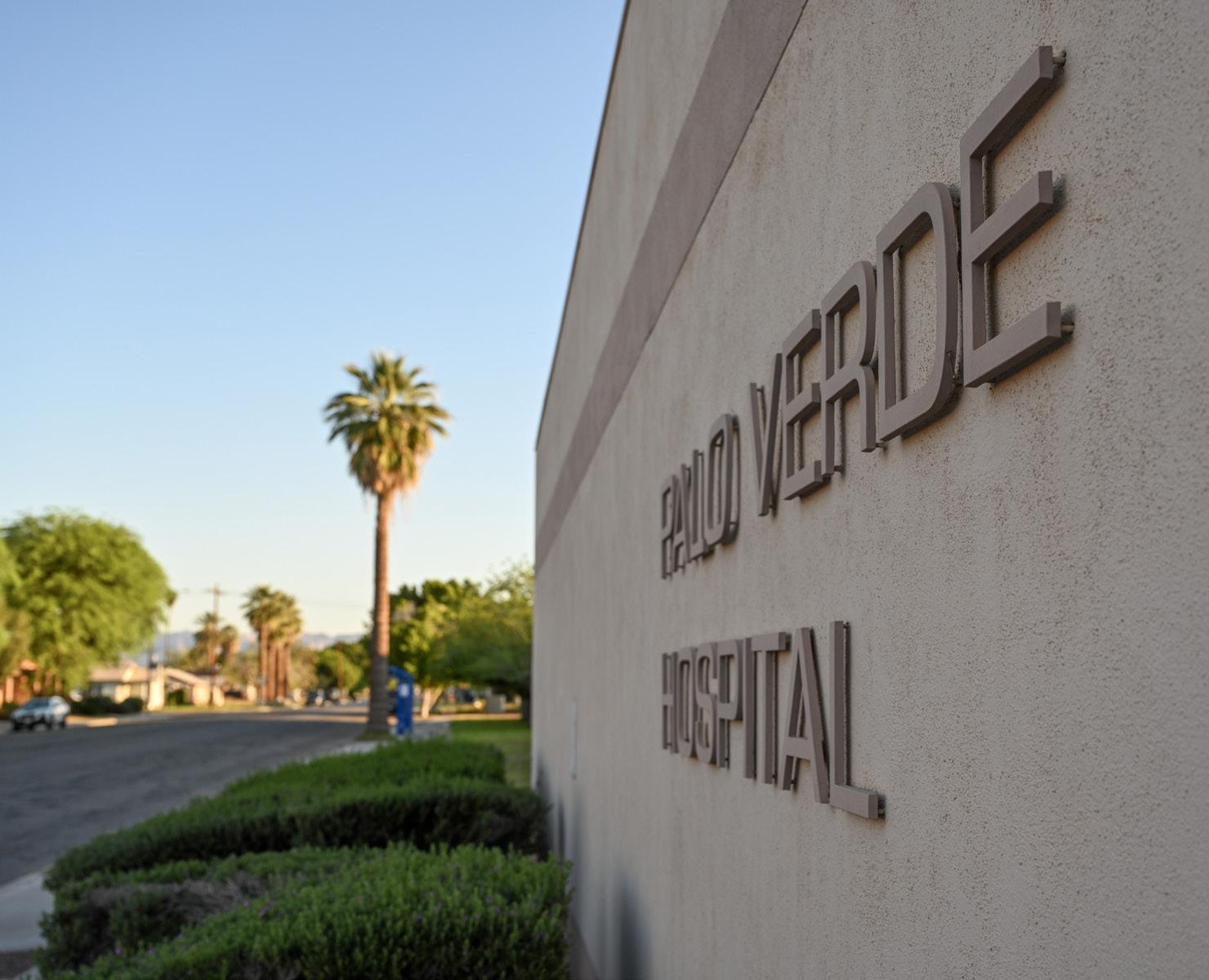
RUHS leaders say investments in staffing and operations have helped improve patient care during the management agreement.
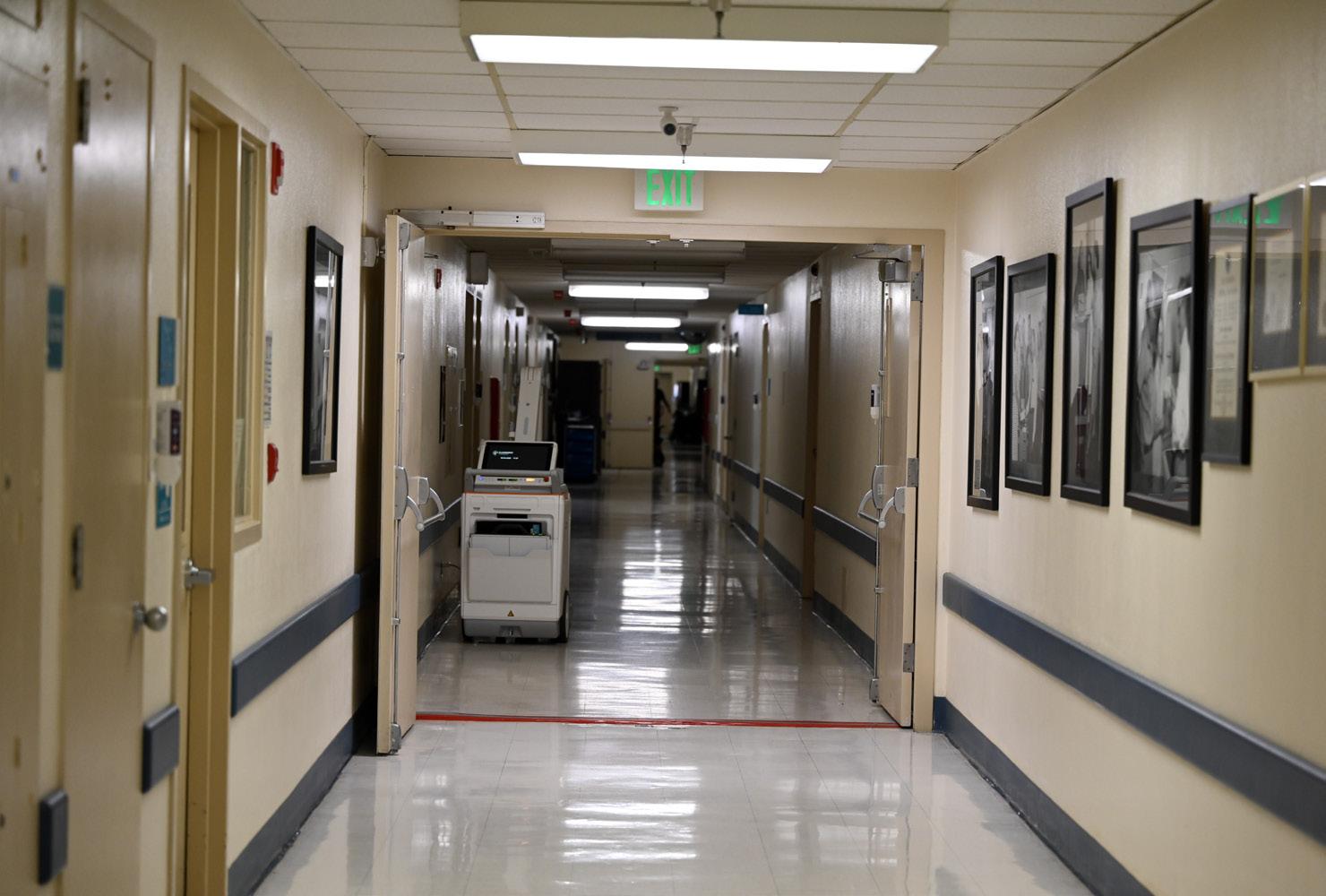
Verde for fear of being airlifted to a hospital that’s hours away, where families may not be able to follow. For less-emergent issues, patients may get referred to a specialist who is hours away.
“It’s gotten better, because the county has taken over operations of the emergency room,” George said. “But in the midst of this crisis, families are thinking, ‘If I take my kid to the emergency room, or if I go to the emergency room, I’m going to be flown out.’”
RUHS team members want to come and work at the facility, because they know the stakes if a hospital isn’t around.
“People will die if this place isn’t open,” she said. “If you’re having a heart attack, if you’re septic, if you’re having a baby, if your kid is seizing, I just can’t imagine how awful that would be if this facility was not available for people. It just seems like a fundamental need that can’t ever be let go.”
Mackie said one of the most crucial updates has been a partnership with the physician group Vituity. Since May 1, the two dozen, emergency-trained physicians Mesisca recruited are there to provide 24-hour clinical services in the ER.
Since February, Palo Verde Hospital has been operating under a management agreement with the Riverside University Health System as it works to stabilize its finances. The agreement means the ER can stay open; otherwise, residents would need to travel 50 to 100 miles to get to a hospital.
Continued from Page 15
As of this writing, RUHS and the county have yet to reveal what happens after the 180-day agreement ends. And as Mackie noted, it’s much easier for a hospital to lose the trust of its community than it is to gain it.
“What we don’t want to see is a patient come in and have a different experience two different times,” Mackie said. “Trust comes from consistency in what we do every day.”
Palo Verde Hospital’s emergency room has typically served about 2,000 people a month in the city of Blythe, a remote desert town with a dwindling population of less than 18,000. Like other towns nestled along the Colorado River, one of Blythe’s best-known assets is its recreation opportunities, like boating, fishing and camping.
But Blythe is also one of the most impoverished pockets of Riverside County, with about one in five residents living below the poverty line. The latest unemployment rate is 8.6%, compared to the Riverside County average of 4.7%. When Chuckwalla State Prison closed in late 2024, it cost the city about 800 jobs, according to news reports.
Angela and George Colangeli, who co-founded Blythe’s nonprofit mental-health outreach and advocacy group Peace From Chaos, have a long history with healthcare systems in Blythe, after navigating behavioral-health systems with Angela’s late son Steven, who was diagnosed with schizophrenia.
The Colangelis said Blythe’s struggle to
Hospital
attract and retain health-care providers leaves residents with little faith in the remaining system. A May 2024 survey from the Regional Access Project Foundation found that about 40% of Blythe residents said they had a hard time finding health care, because there are not enough doctors, or it takes too long to get an appointment.
“We went through a lot of therapists and psychiatrists, because nobody wants to stay in Blythe, so it was always hit and miss,” Angela said. “You always have to tell your story over and over again, because you get a new therapist or new doctor. We did that for six years.”
The onset of the COVID-19 pandemic put additional pressure on the system. Palo Verde Hospital saw a 30% increase in supply prices, plus the cancellation of revenue-driving elective services. By 2023, it closed its labor and delivery unit, meaning babies had to be delivered as far away as Indio. That year, it also received a $8.5 million loan from the state’s Distressed Hospital Loan Program.
More recently, Palo Verde faced costly litigation with a digital health company over a patient-data issue. The hospital also endured billing disruptions following a cyberattack in March 2025. That May, Providence Bank cancelled the district’s line of credit due to concerns about its year-end projections, and removed $2.8 million from its account. At that time, Palo Verde was dealing with about $1 million per month in negative cash flow.
The Colangelis said they’ve watched the financial issues unfold at Palo Verde Hospital, while seeing residents lose further trust in the institution. George Colangeli said people have been particularly wary of going to Palo
In June 2025, the Palo Verde Healthcare District implemented a 60-day emergency turnaround plan, which included ending inpatient services and surgeries. The hospital saved money by furloughing staff and ending physician contracts, but it meant that the facility was left with only an emergency room and support services, like radiology.
In late September, the Riverside Local Agency Formation Commission presented a report that noted the need for “a significant cash infusion” for short-term needs, and “a stable long-term revenue stream sufficient to support a fully operational and staffed hospital.” The report floated next steps like dissolving the district, a joint agreement with the city of Blythe and Riverside County—or filing for Chapter 9 bankruptcy.
Days later, the district filed for bankruptcy. Court filings showed that the hospital faced a structural budget deficit of up to $5 million, even after cutting $2.2 million in salary and staff, and making $4.7 million in non-salary cuts. Despite the attempt at reorganizing debts, the hospital’s finances continued to worsen, with the city providing a bridge loan of $330,000 to cover a week’s worth of operating expenses in January 2026. That led Fourth District Supervisor Manuel Perez and County Executive Jeff Van Wagenen to propose county intervention.
As far as concerns about medical evacuations, Palo Verde no longer has the ability to admit patients for inpatient care. Nationwide, about 20% of hospital visits result in admissions, according to hospital executives. Mackie, who used to work in hospital-transport services that flew patients out of Blythe, said providers will only transport out by helicopter or ambulance if “if the patient really requires it,” she said.

The Riverside County Board of Supervisors approved a $1 million loan, plus plans for a “strike force” to help stabilize operations via the RUHS management agreement.
In practice, the strike force includes a lot of RUHS health-care providers and support staff members taking on extra duties. Since February, Blythe has become a second workplace for many providers.
Leah Patterson, interim chief of patient care services and the chief nursing officer, said
Hospital officials say strengthening clinical operations— including a new physician staffing agreement to have board-certified doctors in the hospital— has been a key part of improving care and stabilizing the hospital's finances. Credit: Palo Verde Hospital
She said the team is well-trained and experienced, and is developing a strong working relationship with the nurses on staff, who have an understanding of their community and may even know their patients personally.
“They’re able to rapidly assess and stabilize, but also provide the patient with a sense of security about where their medical care is going to go, and provide them with the education and the resources that they’ll need for more long-term care,” she said. “I think it’s been one of the best things that we’ve seen so far.”
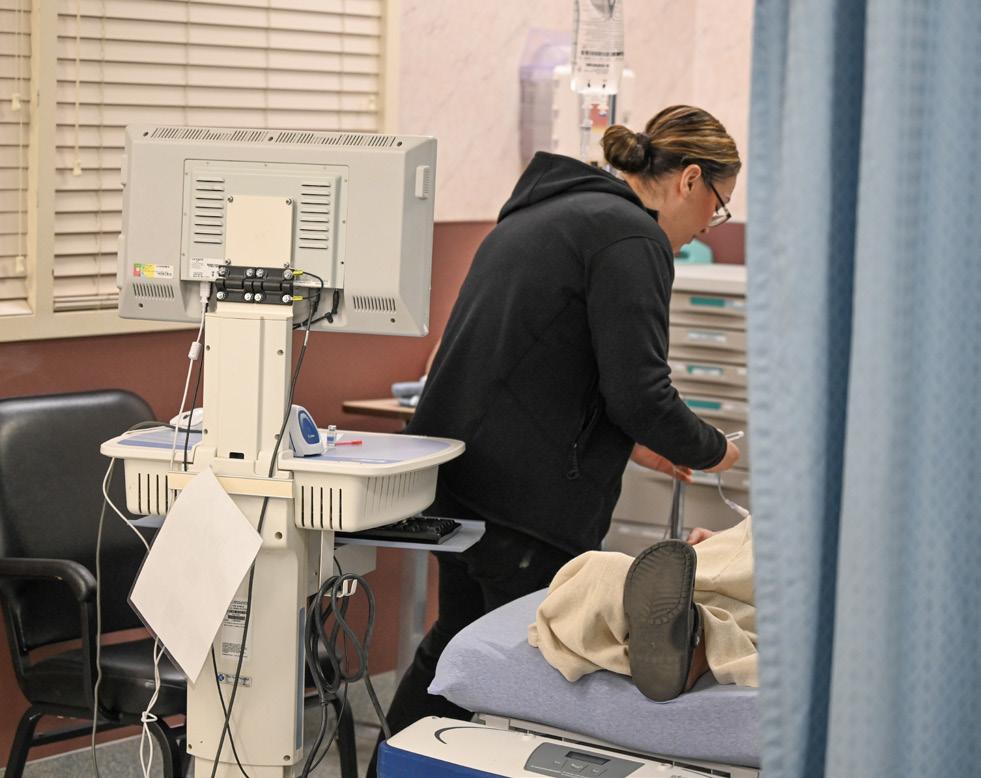
For many patients, the changes they’ve seen are welcome. A 76-year-old longtime resident of Blythe requested anonymity to speak candidly about her health.
“Nobody trusts this (hospital),” she said. "If it is not any type of emergency, they will refer you to go over to a specialist in Palm Desert.”
The woman said she went to the ER in mid-June while experiencing pain she thought could be a heart attack. Fortunately, it wasn’t a heart attack, and though she was disappointed to leave without a diagnosis, she said she noticed a change in the care.
“The newer doctors when I was there seemed very competent,” she said.
Other improvements are more tangible.
The ER has received new supplies, like an infant warmer and two more EKG machines. RUHS has assisted with infrastructure improvements like repairing bathrooms, cleaning sidewalks and fixing the roof and HVAC systems. Old furniture and equipment was cleared out to make more space in the facility.
Michelle DeArmond, the RUHS executive director who has been serving as Palo Verde’s interim executive director of administration, said these physical improvements help infection control and allow the hospital to meet regulatory standards. RUHS has also been able to provide services in-house or at a competitive price because of its supplier relationships.
“We’re finding ways to leverage existing resources as best we can,” she said.
RUHS has also implemented new boardmeeting procedures for the Palo Verde Healthcare District modeled after those used by the County Board of Supervisors,
DeArmond said. Meetings now have a process for people to sign up for public comment, and there is a consent agenda for faster votes. June’s meeting included training on ethics, the Brown Act (California’s open-meetings law) and public records.
Joanna Gonzalez, the clerk of the board and public information officer, said she’s grateful to the RUHS team “guiding us in the right direction.” She’s worked at the hospital for three years and said the employees are like family to her, so watching the improvements happen in real time has been an emotional journey.
“I’m moved to see all the support and effort and dedication they’ve brought with them,” she said of RUHS.
Robert Splawn, a doctor and consultant who is the patient-care ombudsman in the district’s bankruptcy case, wrote in his latest report that he’s received positive comments from staff members around “faster turn-around time for supplies and repairs, improved communication with frequent management meetings that include ‘huddles,’ and visibility of administrative staff.”
New leadership, even if temporary, has changed the demeanor of the place. Splawn wrote he “also experienced a sense of relief from staff since the facility is no longer pending immediate closure.”
To help the community learn about the improvements, Palo Verde Hospital had scheduled an open house for the end of July. DeArmond said it’s an opportunity to give the public a chance to tour the upgraded facility and ask questions.
"We have been very focused on supporting this hospital,” DeArmond said, “and now we feel that we’re finally at a space where we can maybe pull back just a tiny bit and allow some space for people to come in and see some of what we’re doing."
But it remains to be seen whether the RUHS efforts will lead to sustainable, quality health-care access in the long-term. As of this writing, details were not publicly available about what will happen when the 180-day management agreement with RUHS is over. The current agreement does not transfer ownership or the hospital’s license.
DeArmond told the Independent that RUHS and the county are still in its assessment period. At the end of the agreement, RUHS will make recommendations to the Palo Verde board as well as the Riverside County Board of Supervisors to review and consider. It’s unclear whether Palo Verde’s future will include the re-opening some of the shuttered departments like in-patient services.
George Colangeli, of Peace From Chaos, said the hope is that the county and RUHS will come up with a sustainable framework that can keep the facility open on an ongoing basis—one that improves care access.
“Whatever path we take, we want the same level of care that our other rural partners in the area have, whether the Coachella Valley or La Paz County or Yuma County on the Arizona side,” he said.
Regardless of what RUHS recommends, though, Palo Verde’s financial struggles are far from over. California’s health system stands to lose billions in federal resources in the next five years, per California Hospital Association estimates. That’s due to changes in HR1, or the so-called One Big Beautiful Bill Act, which cut federal Medicaid spending among other health-care policy and funding changes.
CHA president and CEO Carmela Coyle said smaller, disadvantaged communities often serve a disproportionate share of patients who are on Medicare and Medi-Cal.
Those programs don’t come close to covering the costs of care or other capital-intensive needs—even before the cuts.
“For any hospital, where they’re going to end up after all these changes depends on where they started. And if (a hospital) started behind the eight ball to begin with, which many of our rural hospitals do from a financial perspective, it’s going to be even more devastating,” she said.
But for the time being, the efforts of RUHS and the staff at Palo Verde are a step in the right direction.
Mackie, who lives and works in Moreno Valley when she’s not taking shifts in Blythe, said she’s felt welcomed and appreciated. In early July, she said, she was filling up her gas tank, and someone driving by noticed she was wearing an RUHS jacket.
“A gentleman had his window rolled down, and he had his arm out the window, and he’s screaming, ‘Woohoo, thank you!’” she said. “And so it just kind of makes you feel good, and it re-energizes you to keep pushing and supporting the good work that everybody’s already doing.”
Melissa Daniels reported this story while participating in the USC Annenberg Center for Health Journalism’s 2026 California Health Equity Fellowship.
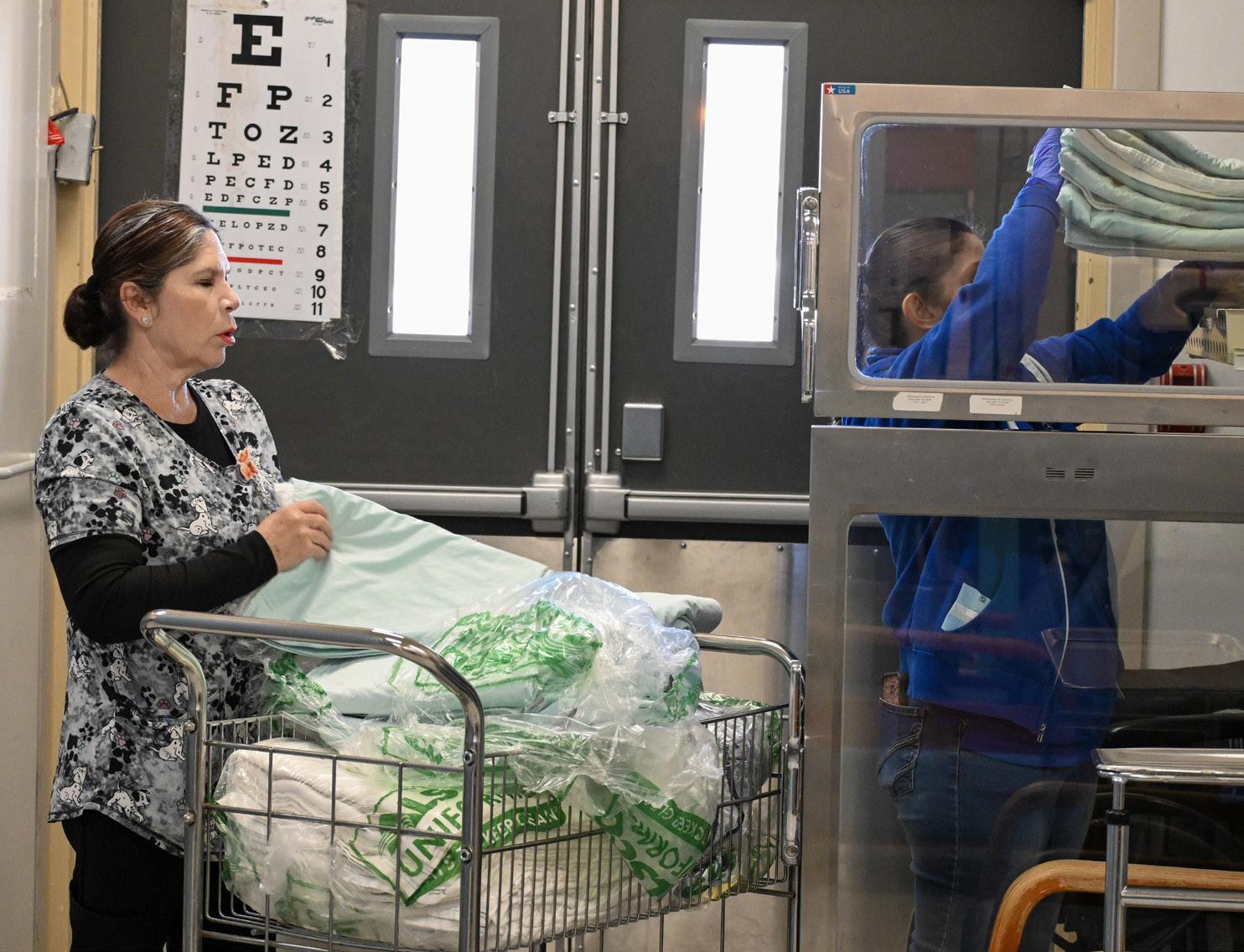

By JIMMY BOEGLE
The 2025-2026 season at the McCallum Theatre was a time of change.
It was the first full season on the job for chief executive officer Yvonne Bell, who was promoted from her senior vice president of development position in May 2025. The theater’s traditional November-through-April season was lengthened, and the theater started experimenting with dynamic pricing (meaning ticket prices can change depending on various market factors). For the first time, touring Broadway productions ran at the McCallum for full, eight-show
weeks. The theater, at Bell’s urging, increased its dance programming.
How did it all go?
“It went really, really well,” Bell said during a recent interview—while conceding that she and her team learned a lot of lessons.
Those changes and lessons are being carried forward into the 2026-2027 season, which as of now will begin with three shows in September—leading off with Ozomatli on Saturday, Sept. 12—and go into June, with a week of Mamma Mia! (June 1-6, 2027) and a McCallum Cabaret performance by Hugh Panaro on June 8.
Bell said she viewed the expanded 20252026 season as a success, even though some of the “shoulder season” shows didn’t sell as well as she’d hoped they would.
“I don’t think you can try something once and say, ‘We tried it; it didn’t work,’” Bell said. “I think it’s an investment. When Mitch (Gershenfeld, the former CEO) first started booking the (National Geographic Live speaker) series, it wasn’t that well-attended, and now it’s one of our best-selling series. We did three Nat Geos last year; we’re going to do four this year. So building that audience, it’s a period of three to five years. I get so many compliments from people, about, ‘Thank you for lengthening the season.’ People are here, and they’re looking for things to do—and it’s cool inside a theater.”
The longer season and the expansion of the theater’s new dynamic-pricing structure for some shows go hand in hand, Bell said.
“My mantra is, ‘Just do it, and then fiddle with it—but get it done,’” she said. “That’s what we did with dynamic pricing. One of the things I learned (last) season is that there’s price sensitivity in those shoulder months. I want to see a full audience. It doesn’t matter how much they pay. I want to make sure they experience the show. I would say we’re going to be leaning more heavily into dynamic pricing moving forward.”
Bell also spent the 2025-2026 season beefing up her staff.
“This season also allowed me to get some key executives on board,” she said. “I hired Michelle Yeager, and she is the vice president of finance. She came from the Old Globe
Theater (in San Diego), where she was for 10 years. It’s important that people who come here are theater people. I don’t want to hire somebody who’s an accountant but doesn’t know the performing arts world.”
She also is adding a new chief programming and operating officer, Eric Sims.
“We worked (at Los Angeles’ Center Theatre Group) for about 15 years together,” Bell said. “I ran into him at the Broadway League spring road conference in New York … and I’m like, ‘So, I have an open position; you know anyone?’ And Eric said, ‘Well, what about me?’ … He is excited to be moving to the desert with his wife. He starts on Aug. 10.”
As for the 2026-2027 season’s offerings: One of Bell’s personal passions is dance performances, and she said she’s happy that two of the dance shows last season sold out—a sign that the McCallum’s dance audience is growing.
“People are really responding,” she said. “My hope is that when people take a chance on something (like dance), their mind is blown.
… When you go to see, for example, Pink Martini, you know what you’re going to get. I find great joy in surprising people.
“There are so many dance schools in the desert. For such a small area, everywhere you turn, there’s another dance school—and I think it’s also something that attracts young people. A lot of young people are enrolled in dance. Now, the dance that I like to present is visual, very athletic, has a narrative arc and combines genres.
… You’re going to see something that kind of pushes the art form of dance.”
Bell pointed to a dance show about which she’s particularly excited: Ballet Jazz Montreal, on Saturday, Sept. 26.
“They are doing a program called Dance Me: The Music of Leonard Cohen. Leonard Cohen, before he passed, was involved in this project,” Bell said. “… I have been really talking it up, because I think it’s going to be spectacular, and everybody loves that music.”
Beyond dance, Bell touted a new partnership between the McCallum and LA Opera, which kicks off with a performance on Friday, Nov. 6.
“We’re doing a program they developed and called Hercules vs. Vampires,” Bell said. “It is
The McCallum Theatre’s Yvonne Bell reflects on a year of change, and discusses the upcoming 2026-2027 season
nine LA Opera singers, 26 LA Opera orchestra members, and the libretto … is to a 1961 Italian horror classic. There’s a movie playing that is campy as anything. When the actors in the movie open their mouths, you are actually hearing the LA Opera singers.”
Of course, when many people think of the McCallum, they think of touring Broadway shows. This year’s slate includes & Juliet (Oct. 27-Nov. 1) and a variety of reimagined favorites, such as The Bodyguard (Feb. 16-21), the theater’s fast-selling Broadway show of the upcoming season thus far. The McCallum will also host The Sound of Music on May 5-9, and Bell said the McCallum bought out a whole performance for local students to attend.
“We’ve never done that before,” she said. “They’ll see a full Broadway show.”
The 2026-2027 season will include six shows in the McCallum Cabaret series, starting with Chris Ruggiero on Tuesday, Oct. 20. While some online commenters gripe about the pricing for these shows—tickets for the Ruggiero show start at $189—Bell pointed out that these are not typical concerts.
“We don’t break even on them even at this rate, because we only have 200 seats to sell. It’s a totally different stage setup,” she said. “We have cabaret four-tops (on the stage). We have a riser for watching the artist—against the backdrop of an empty theater that is beautifully lit.
… You’re able to interact with fellow audience members. If you’re a couple coming, you’re going to be seated with another couple, and it’s so great to see the artist with their hair down, and it’s very intimate. … Furthermore, it’s fully catered, with complimentary beverages.”
Bell said she’s looking forward to a “full holiday season” in December, including returning favorites like Charo (Friday, Dec. 18) and Dave Koz and Friends (Sunday, Dec. 20), and newto-the-McCallum performers like country star Mickey Guyton (Tuesday, Dec. 22).
“The other thing that we’ve not done: We’re doing a New Year’s Eve show—Michael Feinstein, and it’ll be over by 9:15,” she said with a laugh.
In an era when many organizations are steering away from anything involving diversity, equity and inclusion, the McCallum is leaning into DEI, including a special weekend of shows coinciding with Greater Palm Springs Pride.
“On the Saturday night (Nov. 7), we have Indigo Girls. On that Sunday morning (Nov. 8), Cheyenne Jackson is representing us in the Pride Parade, and then he’s performing that evening,” Bell said.
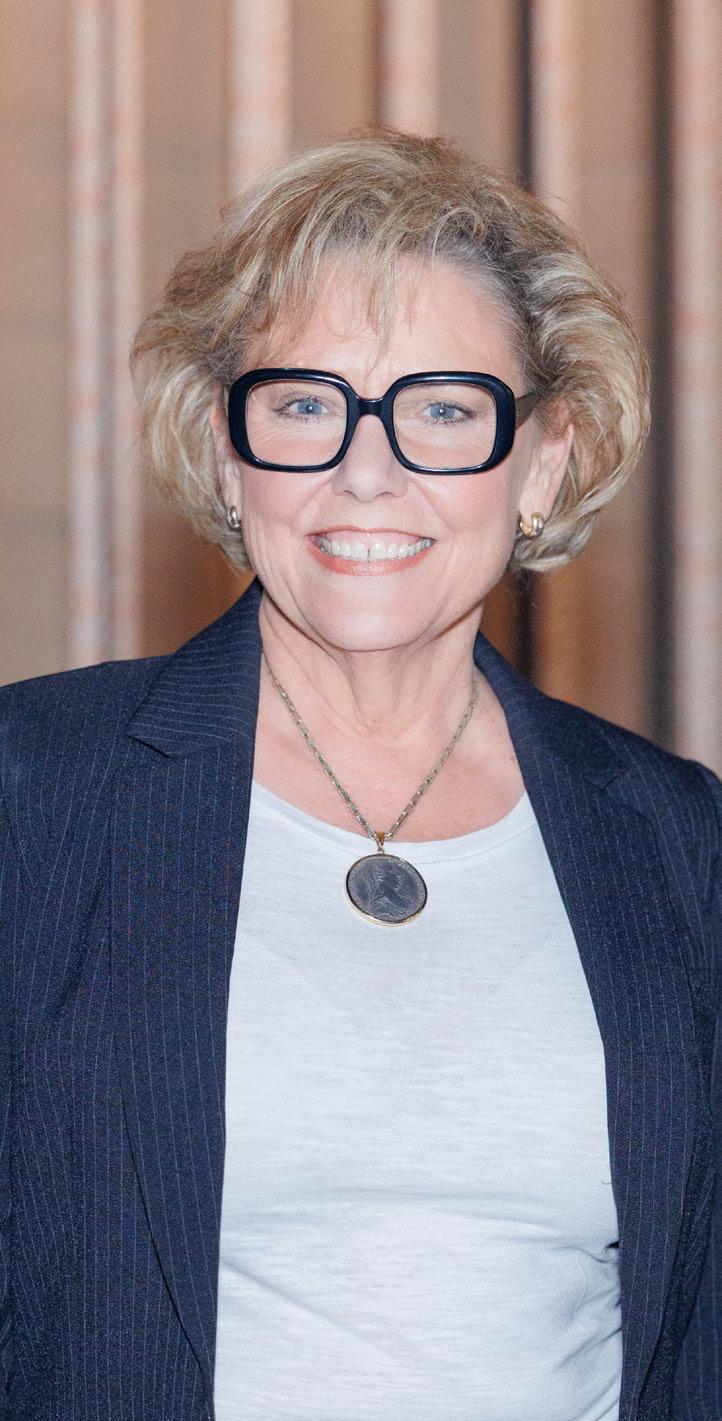
The McCallum’s 2026-2027 slate, of course, includes a lot of familiar names, including Neil Berg, Jeffrey Siegel’s Keyboard Conversations, Lucie Arnaz, Paul Anka, Patti LuPone and, of course, the Open Call Talent Project (Friday, April 30, and Saturday, May 1). Bell said that while she’s trying to expand the theater’s offerings, she wants to make sure the McCallum’s longtime patrons remain happy.
“We have a very loyal audience that will say, ‘I want to go to the McCallum tonight,’ as opposed to, ‘I want to go see Megan Hilty tonight,’” Bell said. “A lot of people are making the choice based upon, ‘I like to see the shows at that theater, and I trust that theater.’”
Tickets for the 2026-2027 season at the McCallum Theatre, located at 7300 Fred Waring Drive, in Palm Desert, are on sale now. For tickets or more information, call 760-340-2787, or visit www.mccallumtheatre.org.












By Matt King
An event combining stargazing with cosmic music, art and more is coming to Pioneertown. Space Craft will unite space and sounds during two days of astronomical fun on Friday, Aug. 14, and Saturday, Aug. 15—the weekend following the peak of the Perseid meteor shower. Expect talks with astronomers, film screenings, live music and, of course, plenty of telescopes (provided by Stargazing Joshua Tree) to check out the night sky.
The festival is organized by Megan Roberts and Adriana Molello of Night Howl Productions,
along with Matt French, who owns the Pioneertown Motel and Red Dog Saloon with his brother, Mike. Both Roberts and Molello worked for Atlas Obscura, the wildly popular home of unconventional travel guides, and helped produce two space-themed festivals in the past.
“I think something about bringing people together for a cosmic experience that they can share really speaks to this age-old human experience of looking up at the stars and really realizing you’re part of something greater,” Roberts said during a recent Zoom chat with the organizers.
Roberts and Molello were blown away when they first viewed the night sky in the high desert.
“One of the things that really stood out to us when we were first visiting Joshua Tree and Pioneertown was just how incredible the night skies are, and realizing that’s something that not everybody gets to even experience at all in their lifetimes,” Roberts said. “In doing a lot of work with different astronomers, we’re realizing that our night skies are changing very quickly, and they’re not going to look the same within the next few years with everything that’s being launched into space. Wanting to capture this precious time, we were really lucky to be introduced to Matt, originally through that work at Atlas Obscura, and we started brainstorming on creating a summertime experience in Pioneertown that would really highlight how beautiful the nights are.”
An excursion into the high desert is still worth taking during these hotter months, French said.
“I live in the desert full time, and spring and fall are when everyone’s clamoring to come out, and that’s when high season is, but as a local over the years, I have really been drawn into summer,” French said. “I think it’s, in some ways, the purest season in the desert, and the summer nights are truly magical. I’ve always wanted to help find ways for people to just have that experience personally, because it’s pretty otherworldly to be out in the desert under the stars when it’s balmy and warm, and you can just linger outside in your shorts and hike and hang out.”
This proved to be the perfect year for the inaugural Space Craft, thanks to an astronomical phenomenon coinciding with the meteor shower.
“This year is special in particular for the meteor shower, because it’s the first time in over a decade that the peak of the meteor shower coincides with a new moon, so we’ve got extra-dark skies at the period of time when we’re anticipating 50 to 100 meteors every hour,” Roberts said. “We took that in, and that led to the curation of so much art and music.”
The weekend will include “Cosmic Contemplations” with cosmologists and scientists at the Pioneertown Motel Speakeasy, film screenings and music at the Space Arena at Desert Willow Ranch, and headliner concerts from Tangerine Dream and ESG at Pappy and Harriet’s.
“There’s just so much built around our connection with space, so we wanted to create a whole weekend to really dive into that,” Roberts said. “‘What’s the best possible experience to have under a meteor shower?’ Let’s have some really mind-bending conversations with scientists; let’s have some beautiful cosmic music, and stargazing with high-powered telescopes, and really just give people a chance to choose their own adventure with an array of different types of experiences to have under the Perseids.”
Space Craft will cater to both die-hard astronomy fans and newbie stargazers.
“I think that we’ve hit a nice balance of having programming and offerings,” Roberts said. “These high-powered telescopes we’re bringing in will definitely appeal to people who are already very into astronomy, and we have some really great talks with everything from astronomers to astrobiologists. That said, I think that the music and the overall experience will also draw on people who are totally new to stargazing. The hope is that everyone’s going to get a little outside of their regular box and start to experience something different. We love when we’re combining education with entertainment and having an experience that does a bit of both.”
Added Molello: “I would also chime in and say that the way we curated the music, too, is you can be older, or you can be younger. It’s
Pioneertown hosts movies, music, stargazing and ‘contemplations’ during the first Space Craft weekend

kind of timeless. It’s cosmic music, so if you want to just contemplate and have a really peaceful experience, you can be at the Space Arena for the outdoor shows, but if you want to party and turn it up with ESG or Tangerine Dream, or at Red Dog Saloon, that’s also there. It doesn’t matter your age; the music is there to be enjoyed by everybody.”
The festival’s concerts will feature top-notch production, but the organizers promised that the offerings will not pollute the night sky.
“With the music we’re doing at Desert Willow Ranch, we’re being very intentional, not just with the curation of the kinds of music that we’re bringing in, but also with the way we’re approaching the sound design and the lighting design, to have it be something that complements, and does not compete with or interfere with, the stargazing experience,” Roberts said.
“We’re working with a wonderful local, Bear Glass of Mobius Acoustics, who’s built a custom quadraphonic sound system. It’s all facing in on the audience, and not just blasting out in a single direction, to make a much more intimate experience. We’re also being very intentional with all of our lighting, leaning heavily into red lights and lighting that won’t interfere with visibility. It really is meant to kind of be this immersive, dreamy experience.”
Space Craft features multiple high desert businesses working together for the first time.
“A huge part of us being able to bring this to life is this partnership,” Roberts said. “I would also say that Pappy and Harriet’s, the team there, has been very supportive as well, as has Heidi (Smith Cherry) at Desert Willow Ranch.
It feels like whenever we have an opportunity to really present the idea and get into what we’re envisioning, it resonates.”
One can’t miss event is the Welcome Space Brothers screening at 10 p.m., Friday, Aug. 14, at the Space Arena at Desert Willow Ranch.
“It’s the high desert premiere, and it’s a really phenomenal film about the Unarians, which were a female-led, UFO-believing creative collective that made a prolific amount of public-access TV movies with crazy self-made special effects and costumes and stories of them re-enacting past lives,” Roberts said. “… We’re going to have some of the Unarians actually show up to talk about making those films, and then there’s a midnight screening of The Arrival, which is kind of their cult-classic masterpiece, which has some of the most amazing homemade special effects you will ever see.”
Added Molello: “It’s going to be a really amazing weekend, and it’s nice to honor different people’s history and lives in the desert, especially in Pioneertown. I think we’re touching on a lot of different things, and it is the first time all of these partners have all come together to do something, so we hope to continue with them and make this event an annual thing.”
Space Craft will take place on Friday, Aug. 14, and Saturday, Aug. 15, in Pioneertown. Two-day tickets start at $267.09; a Friday pass is $128.75, and a Saturday pass is $179.01. You can also purchase tickets for the Pappy and Harriet’s concerts separately. For tickets and more information, visit www.spacecraftjoshuatree.com.
By ELEANOR WHITNEY
With warm summer nights and dark, wide-open skies, the high desert each year draws legions of stargazers to take in the Perseids meteor shower.
This year, the shower is predicted to peak the night of Wednesday, Aug. 12, and the morning of Thursday, Aug. 13, during a serendipitous new moon, meaning the sky will be extra dark for admiring the meteors and other celestial phenomena.
For those looking to supplement their star-spotting, the high desert is bursting with Per-
seid-inspired activities. Space Craft, a new, space-themed music and science festival, lands in Pioneertown featuring Tangerine Dream and ESG on Friday and Saturday, Aug. 14 and 15. (See the accompanying story.) In Twentynine Palms, inspired by the rich history of high-desert UFO sightings, the Area 29 Galactic Gathering celebrates the local, weird and otherworldly Aug. 13-16.
The Perseids is a “high concentration shower,” said Caitlin Gill, who runs Joshua Tree Astronomy Adventures. The meteors come from debris left behind by the Swift-Tuttle comet and burn up in the atmosphere between
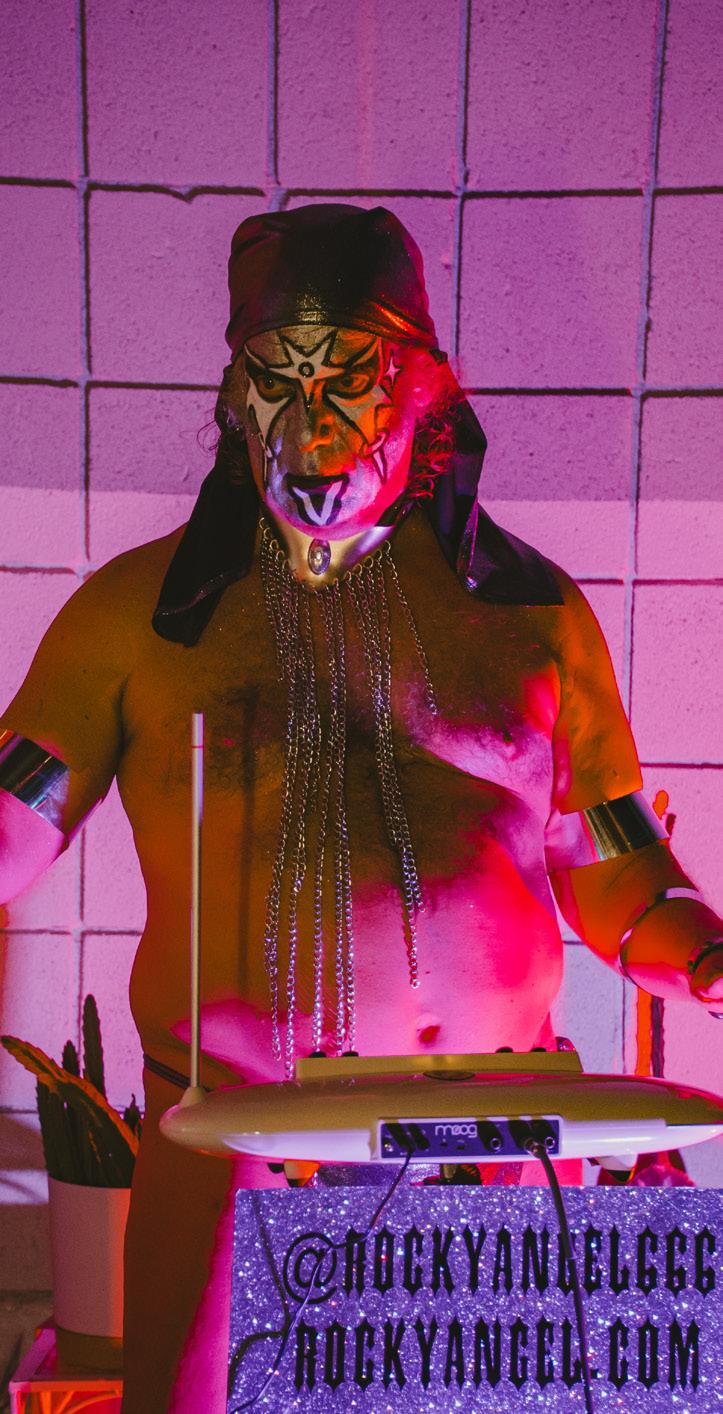
47 and 62 miles overhead. While the Perseids is often cited as generating up to 100 meteors an hour, Gill said that statistic can set visitors up for a letdown; instead, Gill encourages stargazers to avoid counting meteors and instead just enjoy the show, because the comet debris is “very small, but the speed at which we make the impact creates a beautiful lightshow.”
Dark places away from ambient light are best for maximum meteor viewing, which is part of what makes Joshua Tree National Park such a Perseid hot spot. If you’re planning to come to the park to see the shower, Gill recommends arriving early. Also, expect long lines to enter and exit—and prepare for company.
For those looking for an experience away from the crowds, Gill recommends going farther east to Wonder Valley or the Mojave National Preserve. If visitors are going remote, Gill said to pack lots of water and snacks; check vehicles’ tire pressures; and bring maps. You can also book a private tour with an astronomer like Gill for guided stargazing away from the crowds.
The meteor shower is easy to observe, Gill said. “It’s one of those celestial events that requires zero equipment except a comfortable blanket, pillow and chair,” she said.
While the shower is called the Perseids because the meteors seem to emanate from the constellation Perseus, you don’t need to look at the constellation to see them. Instead, take in as much of the sky as possible. Give your eyes 15 to 20 minutes to adjust when you first go outside; spend one to two hours without looking at your phone or other bright light (though you can use red light without impacting your night vision). Otherwise, let go of your expectations, and sit back, relax and enjoy.
While the sky is the star of the show, if you want to keep the celestial celebration going, there are multiple events from which to choose, including the inaugural Space Craft festival.
For those interested in a more community-oriented celebration of all things otherworldly, the third annual Area 29 Galactic Gathering in Twentynine Palms kicks off Thursday, Aug. 13, and runs through Sunday, Aug. 16. Organized by Rediscover 29, which
The high desert hosts otherworldly August events, from meteor-shower viewings to possible close encounters
represents locally owned businesses, the event celebrates “all the things that are weird, funny, whimsical and wonderful around UFO culture in the high desert,” said co-founder, organizer and Rediscover 29 president Sara Lyons.
Lyons added: “If everyone is looking at the sky, they might as well look for UFOs as well.”
For stargazers looking to experience the high desert’s unique culture, the galactic gathering offers plenty of opportunities. It begins Thursday night with a 21+ pool party at Luckie Park that includes a DJ set, projections by Memory Tax, and a psychedelic theremin set by Oakland-based artist Rocky Angel. On Friday, Corner 62 will host sci-fi readings, a lecture on the scents of outer space, and a screening of Alien Autopsy. Rocky Angel will also perform.
Saturday will feature an all-ages concert by ALiEN PROBE and a space standup comedy set by Billy Wayne Davis at the Elks Lodge. The weekend closes on Sunday with a black-light space jam dance party in Twentynine Palms’ his-
toric plaza. There are also art exhibits, pop-ups, a city-wide scavenger hunt and space-themed activities all weekend long. With the exception of the pool party, all events are free. More information about the schedule and lodging options can be found at rediscover29.com.
The Galactic Gathering is “scrappy, colorful and fun,” Lyons said. “It’s a little bit weird, and we like to lean into and have fun with that.”
Whether you’re seeking quiet, dark skies or want to collectively search for and celebrate what could be out there, the high desert has much to offer during the Perseids. It’s always important to come prepared with both plenty of water and a sense of wonder.
“Take only pictures; leave only footprints; and remember you’re visiting on a high impact weekend,” Gill said.
Who knows what you will discover? Lyons said that at a past Area 29 Galactic Gathering, “People claimed they saw unidentified objects in the sky during one of Rocky Angel’s sets. I do think we’re conjuring things up here.”





By brett newton
It has been 4 1/2 years since I interviewed Sam Gill via email (thanks, COVID-19 lockdowns) to feature Las Palmas Brewing Co. in this column. In the intervening years, I’ve chatted with him briefly when I’ve seen him at the taproom, and I’ve vociferously recommended the beer produced his and co-owner Rey Romero’s brewery to anyone who would listen.
I’m beyond overdue to check in with them—and this time, I drove to downtown Palm Springs to sit face to face with Gill and have a nice long chat—as well as a pour or two of Las Palmas’ delicious beer.
When I arrived, I was greeted at the bar by Gill’s wife, Judy, while Romero was moving a few kegs
out the door—presumably to go to the handful of local tap handles where you can find Las Palmas’ beer. Sam was in the brewhouse area cleaning (as any good brewer does often); Judy was just finishing cleaning the beer lines and poured me a raspberry version of their beautiful saison called, Fifty-Four. Fifty-Four is one of my favorite beers they make, and I will forever be grateful there is a local brewery that often has a saison on tap in a world where seemingly every other brewery has forgotten they exist. It reminded me of a saison I brewed years ago with raspberry and rose petals, but importantly, it still resembled the delicious ale that lies underneath.
Sam emerged after a short wait and poured himself a beer before we sat down at one of the two booths in the taproom. We did some catching up and talked a lot of nerdy beer talk before I began peppering him with questions. I asked if he had any plans to re-brew a beer he did as a tribute to Anchor Brewing
Co., named Common. (The style that Anchor Brewing’s Steam ale essentially “created” is referred to as a California Common.) Miraculously, he has one in the works that will be called Hill, which should be ready sometime this summer. Things like this are a big reason I adore Las Palmas.
When I asked what else was new with Las Palmas, Sam informed me that the taproom is now officially welcoming to all ages.
“We were getting tired of sending parents away with strollers, and wanted to allow them to stop in, potentially cool off, and have a beer,” Sam said.
This does mean that they no longer carry bottled natural wines, but there is one hard seltzer on tap (blackberry lemon when I visited), a TV on which a World Cup match was playing, and a well-curated selection of non-alcoholic beers and beverages in their fridge. I’m no businessman, but that seems
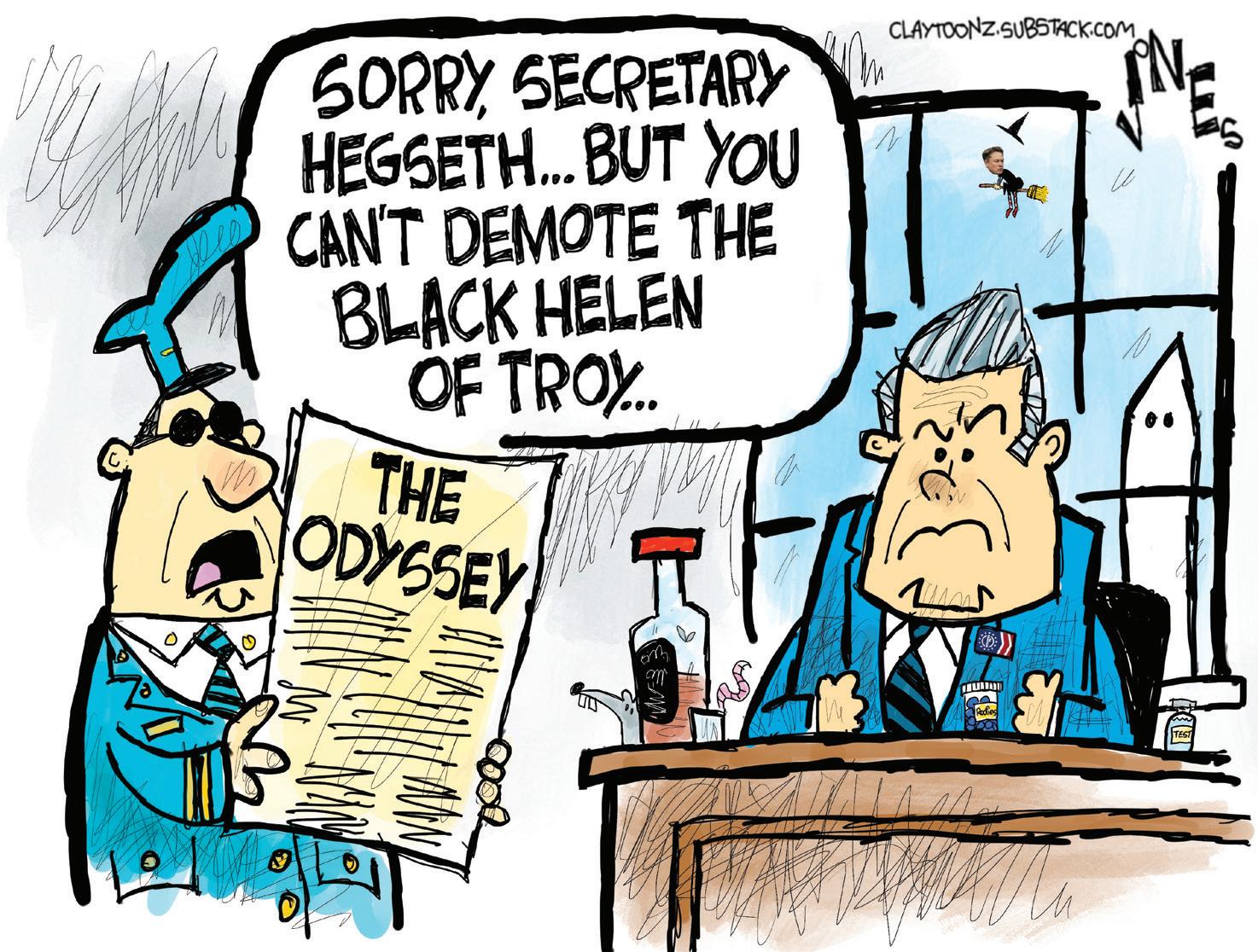
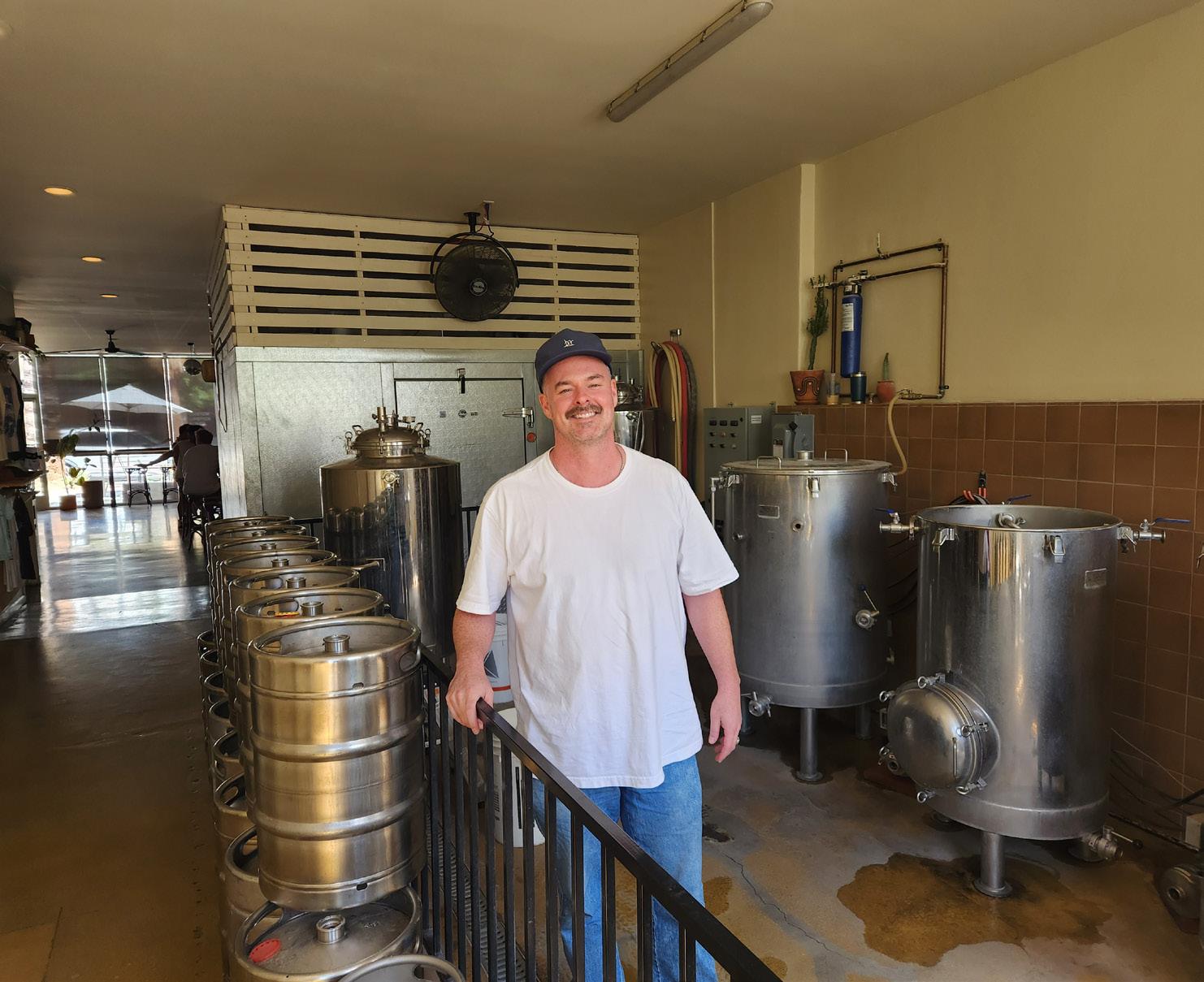
like a wise move with all of the foot traffic on the strip, and the Thompson Palm Springs right across the street.
By then, my glass had somehow emptied. (This keeps happening to me when I’m there.) Sam kindly got up and poured me some of the Mexican-style lager called Desierto and a sample of the above-mentioned seltzer. The lager features flaked maize and Motueka hops, and it was so fresh, hoppy and delicious that I wanted to drop all my plans for the day and drink that while watching soccer.
The seltzer was dry and tasty and is a little bit of a departure from the lemon/lime one he’s been brewing.
“I was using lemons and limes, because my brother has some prolific trees, but we wanted to mix it up a bit recently,” Sam said. Look for more flavors in the future if seltzers are your jam.
We talked quite a bit about our beer histories. I told him how I found my way to craft beer many years ago, and about my history of brewing the stuff at home. He recounted his history of brewing, which started from hanging around Ninkasi Brewing in Eugene, Ore. (which is still rocking, despite us not getting any of their bottles anymore), and proceeded from there—which I wrote about in my previ-
ous column on Las Palmas.
After a small pour of another of my favorite beers that they do—the gorgeous, rich, English porter-like dark ale they call Moonlight—Sam told me he had to pick up his kids from summer camp.
This is the type of brewery that the desert deserves; humbly serving excellent beer while representing the Coachella Valley proudly. Whenever I’m asked for a recommendation for local beer, they are who I recommend first. Las Palmas is what they are, with no pretense, no social media slickness, and no plans to expand uncontrollably and ruin what they have built (<cough> Modern Times Brewing <cough>). If you’re nearby, stop in. If you see their beer on tap at one of the select local spots where they self-distribute (such as Rosemary Hi-Fi in downtown Indio), ask for a pint. They are all about the community—and they know exactly who they are.
Las Palmas Brewing is located at 461 N. Palm Canyon Drive, in Palm Springs. Learn more at www.laspalmasbrewing.com.
Brett Newton is a certified cicerone (like a sommelier for beer) and homebrewer who has mostly lived in the Coachella Valley since 1988. He can be reached at caesarcervisia@gmail.com.
By Katie finn
There are summer camps where people make friendship bracelets, paddle canoes and roast marshmallows. Then there is Oregon Pinot Camp, where wine professionals voluntarily wake up before sunrise to discuss marine sediment, volcanic basalt and the reproductive habits of pinot noir.
In other words, I had found my people.
Oregon Pinot Camp is a four-day immersive experience in the Willamette Valley for sommeliers, wine buyers, retailers and other industry professionals from across the country. Calling it
“camp” is technically accurate, although there were no bunk beds, bug sprays or trust falls. There was, however, a bona fide yellow school bus—the cheese wagon—waiting for us every morning at 7 a.m. sharp.
That bus did not care that we had been drinking wine until late the night before. The bus had a schedule.
Each morning began at a winery or a university with a glorious breakfast buffet, followed by seminar after seminar after seminar. We studied biology, geography, geology and, at some point, possibly genealogy. We discussed soil types, clonal selections, vineyard aspects, elevation and sun exposure with an intensity normally reserved for U.S. Supreme Court arguments.
This may not sound riveting to everyone. But to wine nerds and dirt dorks, this is the good stuff. This is Comic-Con with corkscrews.
We tasted chardonnay, pinot gris, pinot blanc and more expressions of pinot noir than I could reasonably count. We compared wines grown on different soils, slopes and exposures, learning how small changes in a vineyard can create meaningful differences in the glass. Wine stopped being merely something delicious and became a map—a record of weather, farming, geology, history and human decisions.
Then came lunch. These were not sad conference sandwiches wrapped in plastic. We feasted at wineries overlooking vineyards, with Mount Hood hovering in the distance like Oregon’s most dramatic photobomber. Each meal reinforced what the seminars had been teaching us: Wine does not exist separately from place. It is part of the landscape, agriculture, food and people who live there.
The dinners were equally spectacular. At venues including Sokol Blosser, Vinovate and Stoller, tents appeared among the vineyards and were filled with winemakers, proprietors and a truly irresponsible amount of beautiful wine. Magnums circulated, followed by three-liter bottles, six-liter bottles and even Nebuchadnezzars.
A Nebuchadnezzar holds 15 liters of wine.
That is 20 standard bottles, or what I now consider a perfectly reasonable serving size for a table of wine professionals.
Library wines were poured from estates including Adelsheim, Beaux Frères, Domaine Serene and Bethel Heights, just to name a few. It was indulgent, yes, but also educational. Tasting older vintages lets you experience time—how acidity carries a wine, fruit evolves, tannins soften, and a vineyard’s identity can remain recognizable years later.
I stayed at the Dundee Hotel, which may have been the smartest logistical decision I made. It was not the budget option, but after full days of intense learning, eating and drinking, a quiet, spacious place to recharge felt less like extravagance and more like survival planning.
At the end of camp, I learned I had been assigned to the “drama-free bus.” Yay … I think. We certainly had fun, but apparently, we were mature, punctual and generally behaved like adults. That does not sound like me at all, so I thank my bus mates for keeping everything cool.
The campers came from everywhere, with large groups from the Carolinas, Georgia and across the East Coast. I unexpectedly reunited with Jade, a woman from Atlanta whom I had met two years earlier on a Washington State wine road trip. Then, over an early breakfast, I met Jordan from Tennessee, who was part of the wine program for a restaurant (or perhaps a group of restaurants … I had been drinking) in Chattanooga.
As our table worked through the usual introductions, a camper from New York mentioned that she had recently eaten at “a fantastic restaurant in Chattanooga.” She couldn’t remember the name of it at first, but she remembered “the awesome manager behind the bar” who had taken care of her.
After a few minutes discussing the details, it all came together. It was a Michelin Guide restaurant called Easy Bistro. The “awesome manager” was Jordan. What are the odds?
These moments are one of the things I
This one time at Oregon Pinot Camp … our resident sommelier learned a lot and made amazing connections
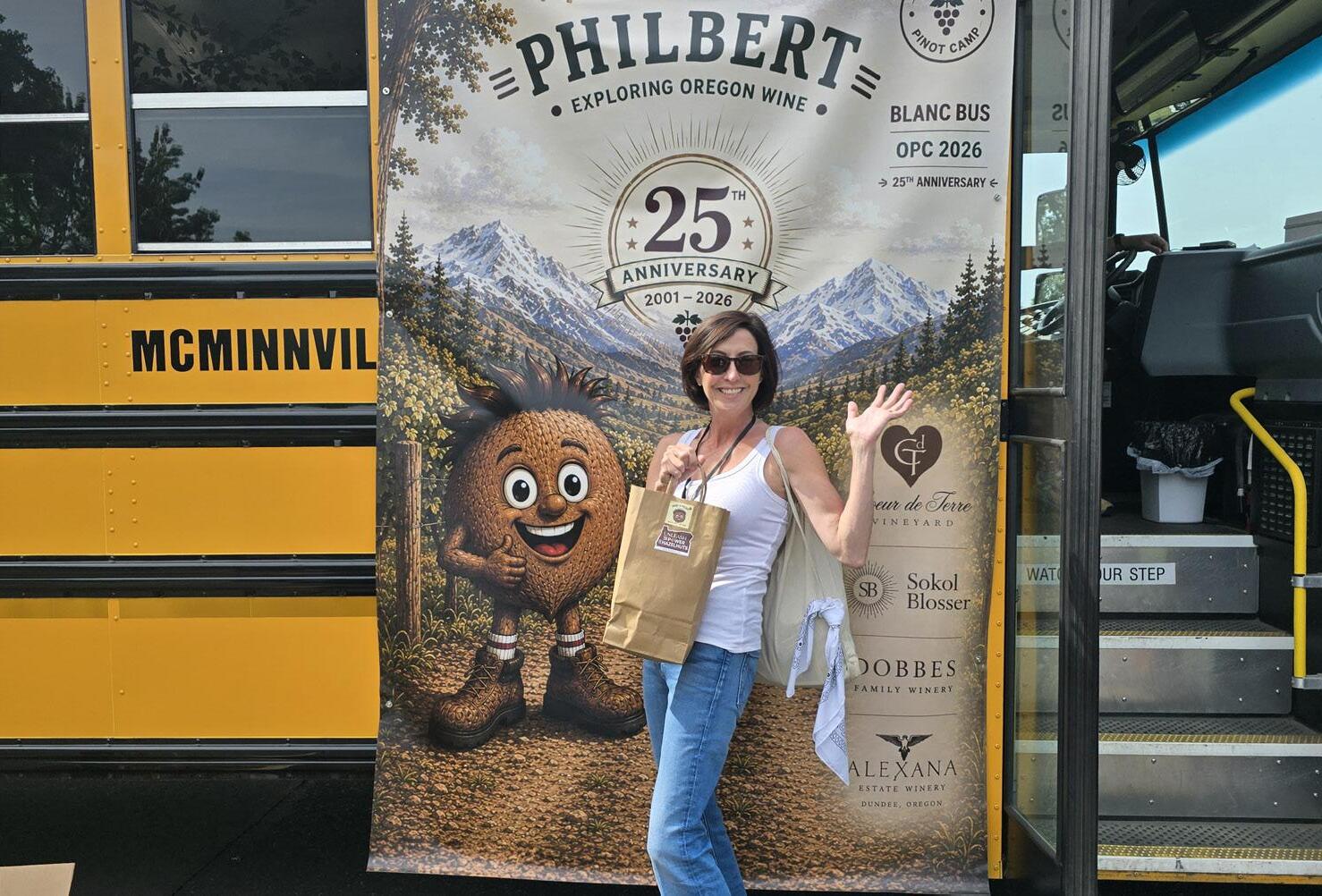
love most about the wine industry: For all its regions, classifications and grape varieties, it remains a wonderfully small world. Wine creates a strange little family of people who care deeply about place, farming, flavor and hospitality. We travel across the country to learn, only to discover that our paths have already crossed.
Naturally, after studying all day, we ended our evenings at Lumpy’s, a local Dundee hangout and wine-industry institution. I am not sure how anyone still had the energy to drink, dance and commit acts of karaoke into the wee hours, but “work hard, play hard” is apparently still alive and well.
My education did not end when camp wrapped. I spent my final day with Mark Björnson, of Björnson Vineyard in the Eola-Amity Hills, who took my already overactivated geek brain and turned it completely on its head. We talked about yields, dropping fruit, clonal integrity and the long-held belief that lower yields automatically produce better wine.
Dr. Patty Skinkis, of Oregon State University, has spent years researching that yield-quality relationship and questioning the rigid assumptions behind costly vineyard practices such as aggressive cluster thinning. The point is not whether higher yield is always better, or that growers should never drop fruit. The point is that wine education should challenge what we “know,” not merely repeat it. That is the real magic of education—it keeps curios-
ity alive. It reminds us that expertise is not having every answer; it is knowing enough to ask better questions.
I also discovered Willamette Valley Aligoté, Mondeuse, Gamay and Pinot Meunier—wines with major, capital-M potential. They deserve far more attention, and I plan to introduce as many people as possible to these beautiful, unexpected sides of Oregon.
After four days of dirt-worshipping, salmon-eating, wine-drinking and relentless learning, I came home exhausted, grateful and reinvigorated. Wine education matters, because it turns a beverage into a story. It connects what is in our glass to farmers, scientists, families, landscapes and generations of accumulated knowledge.
A special thank-you goes to Scott Neal, owner and winemaker of Coeur de Terre, for making this experience possible. Scott, thank you for welcoming me into your home, feeding our group an incredible barbecue with all the fixings, and including me in this unforgettable experience. You, your family and your wines are sublime—and they will always have a home in my shop.
Camp may be over, but class is most definitely still in session.
Katie Finn is a certified sommelier and certified specialist of wine with two decades in the wine industry. She can be reached at katiefinnwine@ gmail.com.
Amazing shrimp tacos for lunch, followed by Mediterranean branzino
By Jimmy Boegle
WHAT Gobernador tacos
WHERE Bohemios Prime, 34460 Monterey Ave., Palm Desert
HOW MUCH $24
CONTACT 442-268-5491; instagram.com/bohemios_prime WHY These tacos are stellar.

Olga’s Tacos has long been racking up enthusiastic fans, first inside Fiesta Market (next to Paul Bar/Food) in Palm Springs, and then at their current stand-alone space in Cathedral City. Now, the folks behind the popular Mexican restaurant have gone upscale.
Bohemios Prime by Olga opened in Palm Desert in January, offering breakfast, lunch and dinner seven days a week—with a later-than-most closing time (10 p.m. Sunday through Thursday, and midnight Friday and Saturday). In addition to elevated Mexican fare, the menu offers steaks, a lot of seafood, and even sushi.
On our recent visit—an early lunch before a Costco run—the hubby ordered the chilaquiles with eggs ($19) off the breakfast menu. He liked the dish, especially the accompanying rice. But we both agreed that my order of gobernador (“governor”) tacos were the hit of the day. In fact, these were some of the best tacos I’ve had in a long time.
The menu description of this Sinaloa-style taco is: “Handmade corn tortillas filled with sauteed shrimp, caramelized pico de gallo, and melted cheese.” But that description does not do these tacos justice. The toasted, melted cheese affixed to the inside of the tortillas adds extra dimensions, both in terms of flavor and texture. The menu doesn’t even mention the accompaniments—lime wedges, a roasted onion, a roasted pepper, pickled onions and a spicy salsa—one can use to tweak and enhance each bite. The tacos’ presentation, atop a wooden cutting board, is Instagram-ready. Oh, and the shrimp pieces were delicious and perfectly cooked.
Based on how much we enjoyed our two dishes, we can’t wait to go back.

WHAT Mediterranean branzino
WHERE Bougainvillea Fresh Cuisine, 555 S. Sunrise Way, Suite 108, Palm Springs
HOW MUCH $38
CONTACT 442-307-9017; www.bougainvilleacuisine.com
WHY The relish brought the dish together. When I learned that a sit-down, fine-dining restaurant was taking over the space formerly occupied by the late, lamented Guacamole’s, I was rather surprised— because the room is small
Sure enough, Bougainvillea Fresh Cuisine opened in the space last fall—and the food by owner/ chef Alex Hernandez instantly started earning raves. The hubby and I made our first visit there for dinner once recent evening, and I now understand all of the buzz.

I counted 22 seats inside, and tables are rather close together, meaning things can get pretty loud. (There is patio seating, too, for the times of year when temperatures drop below “convection oven.”) The menu is also on the smaller side, with three appetizers, three salads, three pastas (including a house-made pasta rigatoni) and six mains.
For starters, I ordered the Caesar salad ($13), with a strong, tart dressing that I enjoyed. The hubby got the burrata and beets salad ($19); while the pickled grapes added a unique touch, the salad could have used more of the vinaigrette dressing, or some other form of acid.
For mains, the hubby ordered the white bolognese with pappardelle ($33); it was fantastic, thanks to the creamy parmesan sauce and the pork-and-veal bolognese. It was not the largest portion, but it sure was delicious. While I liked the bolognese bites I had, I enjoyed my branzino even more. The fish by itself was tasty, thanks to the Zarandeado house marinade, but it was taken to a whole other level thanks to the green tomatillo relish. Next time, I may ask for more of the relish to make sure I get some with each bite.
Chef Alex knows what he’s doing. See for yourself what all the buzz is about.

By charles drabkin
I keep hearing and reading rumors that One More Bite Dumpling House has abandoned its plans to open two locations in the Coachella Valley.
When I spoke to management in mid-July, I was told that construction is basically complete at both locations—73547 Highway 111, in Palm Desert, and 105 S. Palm Canyon Drive, in Palm Springs—and they are waiting on permitting. If you can’t wait, they’re planning a soft opening at their Yucaipa location on Aug. 5.
Hopefully, by next month’s column, I’ll have news that at least one of the Coachella Valley locations has opened. In the meantime, watch www.instagram.com/onemorebite888 for updates.
The cities of Palm Springs and Rancho Mirage are currently running local discount programs. When you purchase a gift card, the city will add a 50% bonus. Cards must be spent at participating businesses—many of which are restaurants—in the respective city, and while the original gift card never expires, the bonus card must be used by a specific date. Get the details and shop at lovelocalps.com and rancho-mirage-ca.yiftee.com.
Speaking of RM: The annual Taste of Summer Rancho Mirage event has returned through Aug. 16. Buy a $10 wristband from a participating local nonprofit, and receive discounts and lagniappes at Rancho Mirage eateries. For information on where to buy your wristbands or find participating restaurants, go to tasteofsummerranchomirage.com.
Palm Springs is home to a new food truck festival on Saturday nights from 6 to 11 p.m. at Sunrise Park, at 480 S. Sunrise Way. The Wonderlust Food Truck Festival brought food trucks to the valley weekly in July and plans to continue year-round. Wanderlust has been successful around Southern California, so hopefully the community will support them. For more information, head to wanderlustevents.net.
Luchador Brewing Company has opened a tap room at 250 S. Palm Canyon Drive, in Palm Springs. It is currently open Thursday through Sunday, with beverages only, although it will be offering “taqueria street food” soon. Learn more at www.luchadorbrew.com/palm-springs-ca.
A few storefronts away, at 262 S. Palm Canyon Drive, Nashville Country Kitchen and Bar has reopened after a false start, which the owner tells me was due to unpermitted construction by prior businesses. My first bites, about a week after they opened, were quite good, and I am looking forward to going back for the smoked meats that are only available at dinner. Learn more at nashvillecountrykitchen.net.
Koffi will be opening a sixth location in the Gelson’s shopping center in Rancho Mirage, at Bob Hope and Gerald Ford drives. Although the location is not yet listed on Koffi’s website, branded construction fencing is in place. Keep an eye on this space for more details.
Palm Springs Bottle Shop is consolidating its operations into the Market Market store at 1555 S. Palm Canyon Drive. This gem of a wine shop focuses on LGBTQ+ and BIPOC makers, offering wine, beer, spirits and a variety of snacks. Learn more at psbottleshop.com.
My current sandwich obsession—Les Filles Café and More, at 67730 E. Palm Canyon Drive, No. 103, in Cathedral City—is preparing to open a second location just off El Paseo in Palm Desert. The owners vow to offer the same food, with perhaps a slightly more “Palm Desert” feel; they tell me they are shooting for an October opening. They’re now also offering arancini, traditional Sicilian deep-fried rice balls stuffed with cheese or meat. Learn more at les-filles-cafe.com.

By Matt King
After five years of recording bands and hosting concerts, Audiowild Studios is being forced to close its doors.
The Independent has chronicled Audiowild and owner Brian Parnell’s history of big concerts, locally adored fests and financial difficulties, as well as his successful effort to get IRS approval for a religious nonprofit, The Church of Divine Vibes. Along the way, Parnell has
used social media to air his grievances and keep locals updated, on both his successes and struggles at 54240 Ridgeview Drive, in Idyllwild-Pine Cove
On June 28, he posted on Facebook: “Some of you may have noticed some papers that were taped to the studio door at the beginning of this month. One of them was a 60-day notice stating that the latest owners have decided not to renew my lease. I’m supposed to be out by Aug. 1.”
Parnell elaborated during a recent phone interview.
“There were two notices on the door,” he said. “One was a pay-or-quit notice, because I was still late on May’s rent, and then there was also a 60-day notice of non-renewal of lease. Since it’s a commercial lease, they don’t have to give me a reason, so they technically have not given me a reason for why they’re canceling the lease.”
Parnell said the owners informed him the non-renewal decision was final.
“They weren’t asking for money; they weren’t asking for anything to change,” Parnell said. “It just seems like maybe they think that they’ll be able to flip the space super-quick and get somebody easier to deal with in there.”
After receiving the non-renewal notice, Parnell said he actually felt relief.
“To be perfectly honest, with all the struggles that I’ve been going through in fight-orflight mode with this place for the last 5 1/2 years, there’s a certain element of relief for me personally,” he said.
Then came the outpouring of love.
“Once people started reaching out and telling me how heartbroken they were, it really sunk in. … It’s not just about me and my struggles and all of that; it’s what (Audiowild) represents for the community, and the heart and soul of so many musicians up here,” he said.
Parnell’s Facebook page has long been a place to read about the harsh truths of owning a music venue in 2026.
“Deciding to share everything publicly, it’s not something that every business owner does—but I’m not every business owner,” Parnell said. “Authenticity and being genuine mean a lot to me, and it’s also a precautionary tale to other people. There’s such a myth: ‘You
can just pull yourself up by your bootstraps and make yourself something from nothing.’ I don’t think there’s enough emphasis put on how difficult it is to start a business and to be able to make money from a business if you aren’t already wealthy to some degree. I also wanted to be public with it, because I’m in a small town. Rumors start very quickly, so if you hear it from the horse’s mouth, that maybe combats a little bit of that. … The online stuff was sort of like my therapeutic, almost journaling kind of thing, just keeping people informed. Plus, maybe when people know what’s going on, then they’re more willing to reach out and try to help support and all that.”
While Parnell said being behind on rent is the major reason his lease is ending, other factors contributed to Audiowild’s closure— including his inability to serve alcohol.
“Had I been able to acquire a liquor license, that would have been the game-changer that we needed,” he said. “I make the joke that you could put a bar in a broom closet in Idyllwild, and people would still be there three nights a week. The space itself doesn’t necessarily matter; people just want the libations.”
While the California Department of Alcoholic Beverage Control offers a specific liquor license for music venues, Riverside County rejected Parnell’s attempts to get a license, because Audiowild’s zoning status doesn’t allow for music venues—but it does allow for churches. Enter The Church of Divine Vibes.
“Having a religious nonprofit makes it a lot easier to be able to pull permits, and to be able to do alcohol sales as a form of fundraising,” he said. “It was amazing news that everything got approved, and it seemed like the light at the end of the tunnel.”
Unfortunately, Parnell’s landlords said no.
“I did not anticipate the current owners and their real estate lawyer deciding that even if I have the permits, even if I have the security, they don’t want alcohol sales on the property, whether it’s for fundraising or for whatever,” Parnell said.
Parnell said his financial difficulties kept him from even finishing construction at Audiowild.
“(The owners) are not from here, and it’s just an investment opportunity to them,” he said.
After more than five years, Brian Parnell’s Idyllwild music venue, recording studio and church is being kicked out
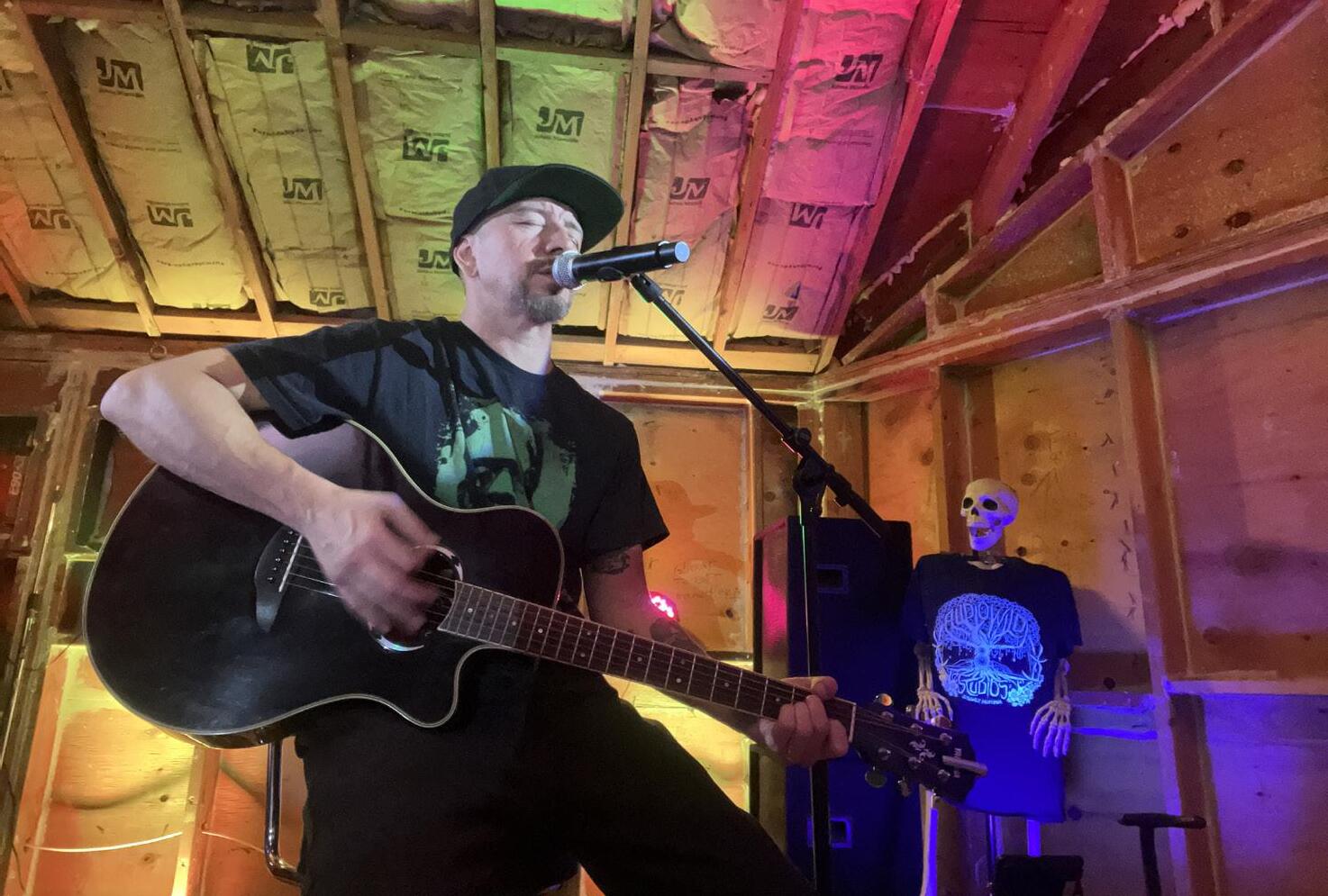
Audiowild Studios’ Brian Parnell: “There are a lot of people who view the arts as libtard shit. It doesn’t get the respect that it deserves.”
“… Construction isn’t even done, so it’s pretty much impossible for me to be able to adhere to the lease and get everything returned to its original status, and all the fixtures returned, and the drywall, and all this other stuff, before Aug. 1. I am honestly fully expecting to get sued by them.”
Parnell wants to be clear: The Church of Divine Vibes was not created as a tax loophole or a way to save the venue—it’s a legit religion.
“I do believe that music is sacred, and that its performance and teaching it and recording it are all sacred acts,” he said.
Despite the end of Audiowild, Parnell said The Church of Divine Vibes will live on.
“I don’t know where necessarily,” he said. “I considered the low desert, but obviously, there’s an epidemic of venues closing. … The vibe in the high desert is so amazing, so I really considered it—plus it’s San Bernardino County, and not Riverside County, so I’m curious what their music venue zoning is.
“I got a call from a guy, a TV and film producer who had a comedy club in Austin for a while, but they live in the desert. They came up for some event that we had, and they loved the place so much that when they saw the news that we’re going to have to close, they were like, ‘Oh hell no!’ They’re looking for a place to be able to do their thing, a comedy club, and the wife is a baker. We’ve been going back and forth on potential locations, but maybe there’s a glimmer of hope that I would still be able to
do the venue thing.”
Audiowild will join the long list of music-related spaces to close down as of late, joining The Oasis on Miles, the Academy of Musical Performance, the “World Famous” Repairland and Little Street Music Hall, among others.
“I think a lot of it, unfortunately, comes down to the whole political nonsense that we’ve been having in the country that’s been exacerbated over the last 10 years,” Parnell said. “There are a lot of people who view the arts as libtard shit. It doesn’t get the respect that it deserves. … Who knows where the idea for a song comes from? Half the time, you just tap into something, and then all of a sudden, it’s there. The inspiration comes from somewhere, and that’s not just music; that’s all forms of artistic expression. I feel like people are doing not just a disservice to humanity, but a disservice to wherever these things come from. It’s like slapping God in the face.”
Parnell said he remains hopeful—and grateful.
“I know how lucky I am,” he said. ‘I know how fortunate I am. I’m very, very grateful for everything that I have, for all the support that we’ve had, for just being able to, against all odds, stay the course for as long as we have. If this was three years ago, getting the lease termination notice, I would have lost my shit. Thankfully, I’m in a place now where I can see it as there’s another door opening; this door closes; that’s fine.”
By Matt King
Atrio of badass musicians have become a desert favorite thanks to their signature “greasy tumbleweed” sound.
Los Poncho Tones—the triple threat of Denny Weston Jr. on drums, Jon Ossman on bass and Josh Sonntag on guitar—craft a blistering blues-rock mix, complete with scorching-hot guitar tones, sweaty grooves and expansive jams perfect for our desert landscape. On recordings,
the band offers tight, well-produced gems that capture that jammy magic—but live, Los Poncho Tones set sail on a sonic journey through enchanting originals and reworked covers. Beyond their standalone shows, they have recorded with locals and have been a backing band for Rosa Pullman, Jessie Payo, Jesika Von Rabbit, Brad Byrd, Paul Chesne and others.
You can catch Los Poncho Tones on Friday, Aug. 7, at the Red Dog Saloon in Pioneertown, and Thursday, Aug. 27, at the Copper Room in Yucca Valley.
During a recent Zoom interview, the members of Los Poncho Tones explained the band was born.
“We got together from a jam at my house,” Sonntag said. “It was right in 2021, in June, after the hard times, and it was starting to feel a little bit more open, because the vaccine had come out, and people were starting to congregate a little bit. A mutual friend of ours, Matt Ellis—who’s also a great artist in his own right—got us together for a jam at my house, and he brought along Jon and Denny. I had just met Denny recently, and I think Jon and Denny might have known each other from before, from L.A. or something.”
Added Ossman, jokingly: “It was a salsa band in jail. They basically would just bring in congas and timbales and percussion items, and all the other musicians except the percussionists, and then, as inmates, we would rotate through the instruments.”
Sonntag was blown away by the musical capabilities of Ossman and Weston. After the COVID-19 Delta variant hindered their attempts to hit the Pappy and Harriet’s open mic, the trio began meeting once a week to hone in on their sound.
“We started meeting up at Denny’s spot in Twentynine (Palms) and just jamming and getting stuff together,” Sonntag said. “We were meeting there once a week from June to November, and by November, we were starting to get a little bit antsy, and called a buddy who had a spot up there in the Giant Rock Meeting Room, and just booked a gig.”
As for the band name?
“I think we came up with the name in the five minutes it took me to look at a painting
that I had on the wall, and I was like, ‘Do you guys like The Poncho Tones as a band name?’” Sonntag said. “And I think it was Jon who said, “Only if it’s in Spanish.’”
Since then, the band name has been subject to mispronunciations.
“People call us Los Poncho Tones, and some people can say it in Spanish, Los Poncho Tones,” Sonntag said. “Grammatically, I think it’s wrong, so some people, because it’s an ‘s’ at the end of Los, think that you need an ‘s’ at the end of Poncho, so we get called Los Ponchos Tones a lot as well.”
One thing unmistakable about Los Poncho Tones? Their “greasy tumbleweed” genre label.
“It came up as, not a joke, but as a way of saying something that wasn’t going to be your standard fare,” Sonntag said. “It does kind of describe us in a way, because the ‘greasy tumbleweed,’ the greasy part of it, is the groove. We like greasy grooves.”
Added Ossman: “‘Greasy’ has been a term that musicians use for years to describe the way an ensemble grooves together. You know, if it’s greasy, it’s got a certain something you can sink your teeth into. Greasy has always been a way to describe a feel, and it’s just been amongst musicians. It’s inner poetry, but it probably doesn’t translate to the public, the civilians, like it does musicians.”
The “tumbleweed” half of their sound stems from the twangy, dirty grooves of the high desert.
“We are out in the high desert, so it’s a little bit of a dusty top line, if you will,” Sonntag said. “I play a telecaster most of the time, and most of the time, I’m trying to get a little bit of twang in there—the high and lonesome melodies when we play instrumental—and I think the combination of those two words helped us nail down and have a quick response to people when they ask us the question.”
The charming nature of the words “greasy tumbleweed” have helped Los Poncho Tones draw interest.
“We deliver it with a certain confidence where everybody knows exactly what it is,” Ossman said. “I was on jury duty, and the judge and the lawyers were interviewing me, and the judge said, ‘Mr. Ossman, it says on your jury
The three members of Los Poncho Tones keep adding to their ‘greasy tumbleweed’ sound
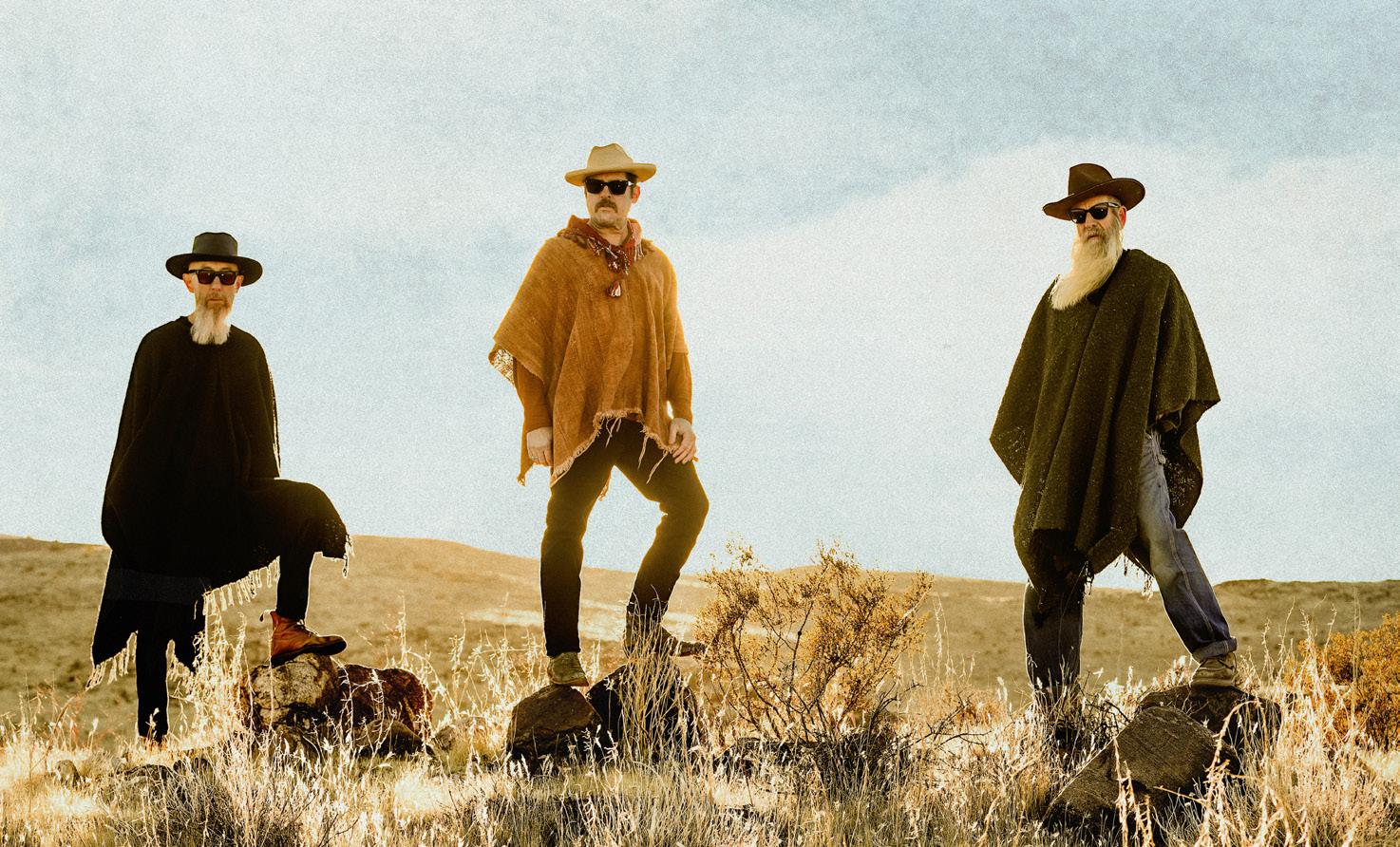
information that you’re a musician; what kind of music do you play?’ I just really put my flag on the ground, and I said, ‘That would be the greasy tumbleweed variety, your honor.’ It just ended there. I think if you just deliver it with conviction, or just matter-of-fact, and just spray some STP in your carburetor, it lands. It draws interest, and it’s poetic.”
Thanks to a never-ending itch to jam, the members of Los Poncho Tones have yet to tire of each other.
“(Jamming) is the essence of what we do,” Sonntag said. “Without that, the band would be super-boring, and we would have already been sick of it. It’s kind of what keeps it fresh, and it keeps it interesting. These cats are master musicians, so it’s always an adventure. ‘What’s going to happen tonight?’ It’s always something fun and always something good.”
Ossman clarified that the band views improvisational jamming as more than just playing freely.
“It’s improvising with genre and styles and time feels,” Ossman said. “Each night, it’ll be a decision to explore. For me, I’ll introduce an element that either challenges or lifts the situation. I think the fellas would agree that the improvisational aspect of it is beyond just playing notes. It’s a whole bunch of free-associative elements, almost like cut and paste, that we’ll bring in as elements and sonics and time feels and tempos.”
Beyond the jams and originals, Los Poncho Tones put a unique spin on cover tunes.
“We just pick tunes that we like, but it’s not like a jazz-standard book situation,” Sonntag
said. “It’s like, ‘Oh, you know that tune by The Police? What would it sound like if The Meters played it?’ Then we go on those types of explorations, and that brings us to these new places that breathe new life into these tunes that everybody knows.”
They are also implementing vocals (from all three members) after a mostly instrumental beginning.
“We started off very much instrumental, with Jon singing a couple of tunes here or there, and then we slowly started bringing that energy of singing in a lot more, and then Denny started bringing a little bit of his originals with singing on them, and then we all started getting a little bit more comfortable on the mic—and that’s where we’re at now,” Sonntag said. “I would say that singing is becoming a more and more important and interesting part of the mix these days.”
While you wait to catch a Los Poncho Tones live show, check out their YouTube channel, which includes more than nine hours of live music.
“We record every single show we play, on video and audio,” Sonntag said. “… We figured that would be a good way to show people what we’re about.”
Los Poncho Tones will perform at 7 p.m., Friday, Aug. 7, at the Red Dog Saloon, at 53535 Mane St., in Pioneertown; and 6 p.m., Thursday, Aug. 27 (and the last Thursday of each month) at the Copper Room, at 57360 Aviation Drive, in Yucca Valley. Both shows are free. For more information on the band, visit www.instagram.com/losponchotones.
By Matt King
Kings of Chaos, a band featuring a rotating lineup of rock stars helmed by former Guns N’ Roses drummer and Palm Springs resident Matt Sorum, will perform their next concert in the Coachella Valley.
Every show features Sorum on the drums, a who’s-who of music legends, and a setlist filled with rockin’ renditions of hit songs associated with each of the performers. You can catch Kings
of Chaos at 8 p.m., Saturday, Aug. 1, at Agua Caliente Rancho Mirage.
During a recent phone interview, Sorum detailed who will be joining him onstage.
“We’re gonna rock with Glenn Hughes again, who did the big show with me for my charity at the Plaza Theatre, from Deep Purple,” Sorum said. “He’s a Rock and Roll Hall of Famer, and still one of my favorite singers in rock ’n’ roll. Deep Purple was one of my favorite bands growing up, so it’s a bucket list (item) for me.”
“I’ve got Steve Stevens of Billy Idol on lead guitar, and then Phil X on the second guitar, who’s now with Bon Jovi, and they’re playing Madison Square Garden (throughout July).
I’ve got Jack Blades, the lead singer of Night Ranger and a bassist, so we’re going to be doing a set of Night Ranger. And then Kevin Cronin, (formerly the) lead singer of REO Speedwagon.”
Sorum’s Kings of Chaos project is similar to the all-star cast he performed with at the Plaza Theatre to honor Geezer Butler (Black Sabbath) and Paul Rodgers (Bad Company), which included Hughes, Stevens, Phil X, Lzzy Hale (Halestorm), Corey Taylor (Slipknot), Nuno Bettencourt (Extreme), Robert DeLeo (Stone Temple Pilots), Charlie Starr (Blackberry Smoke), Stevie Salas (Mick Jagger), Tanya O’Callaghan (Whitesnake) and Mike Mangan (The Cult).
“Kings of Chaos is me,” Sorum said. “It’s my band, and then I primarily put it all together.”
The lineup for the upcoming Kings of Chaos show is already stacked, but Sorum is inviting one special guest to make the evening even more special.
“I really wanted to blow it out at The Show at the Agua Caliente, so I’ve got four singers coming up,” he said. “The way we roll it out is we do about four or five songs from each singer, and it’ll be a good hour and a half show, and then Kevin Cronin will come up and do a set of REO Speedwagon songs—and then I got Richie Sambora to come, which is very rare, (because he has not) been out playing much.
“That’s going to be pretty special. After leaving Bon Jovi, he’s done some solo stuff, but hasn’t been in a band formation that much.
I’m really excited to have Richie, and of course we’re going to be doing songs he co-wrote
with Jon Bon Jovi, and all the greats—‘Livin’ on a Prayer’ and ‘Wanted Dead or Alive’—so it’s really a set filled with hits. We’re going to play the best of Deep Purple, the best of Night Ranger, the best of REO Speedwagon, the best of Bon Jovi, and then probably finish up with a couple of cool encores.”
Sorum is extending the rock ’n’ roll vibes beyond the musicians onstage.
“I’ve got a great crew on this, and amazing lighting and visuals,” he said. “They got a new LED wall at The Show, so I’m going to have a visual projectionist. I’ve got Metallica’s lighting guy coming out, and Journey’s sound guy. It’s going to be all the best of rock in every equation. We’re going to get the band sounding tight and get them to come out to the desert. It’s Aug. 1, so we’ve got to get people coming to a nice, air-conditioned indoor venue.”
Are some of these rockers past their prime? Sorum said definitely not.
“All these guys are in top form, like Glenn Hughes,” Sorum said. “I think his voice is better than ever. People say guys have issues with their voice when they get older, but that’s not Glenn’s case at all. He can still sing like the best of them.”
Even though the participating musicians represent varied spheres and sounds in rock, the musicians all get along, having been intertwined with each other’s careers for years.
“We’re all having a blast trying to show off to each other, because we’re all peers,” Sorum said. “We’ve all done well on our own and in different groups, but this is like a get-together. It’s almost like a family get-together. … We all know each other from doing different tours, playing festivals, and we’re fans of each other.”
Phil X and Richie Sambora are slated to share a stage 13 years after X took Sambora’s place as lead guitarist of Bon Jovi.
“We did one show for the firefighters after the big fires in L.A., and that was the first time Richie and Phil had ever met, and it was nice,” Sorum said. “It’s interesting, because we all come through different situations, and then you meet the guy that replaced you or something. It’s like how I met the drummer a while back who replaced me in Guns N’ Roses, and he’s like, ‘Hey, man, how’s it going out there?’

It’s an interesting life we’ve led, being guys coming in and out of bands.”
Sorum said his hometown show with Kings of Chaos may be the best the supergroup has ever done.
“Everyone’s very professional, so it’s going to be a kick-ass rock ’n’ roll show,” he said. “We’re not just going to roll through there. It’s not just another gig along the trail. This is a special one. This particular lineup in this configuration will probably never happen again.
The guys have had the set list for months now, and when we get into rehearsal, we don’t rehearse—we play the songs. It’s not about
learning. I always say this to young musicians: Don’t come to rehearsal to learn the songs; come to rehearsal to rehearse the songs. Everybody is prepared and ready to play the music. We all know we have to do our homework and show up and be pro. Once we get onstage, the crowd brings that extra level of energy that we feed off of.”
Kings of Chaos will perform at 8 p.m., Saturday, Aug. 1, at The Show at Agua Caliente Rancho Mirage, at 32250 Bob Hope Drive. Tickets start at $97.40. For tickets and more information, visit www.aguacalientecasinos.com.
By Matt King
Anew band is introducing a more melodic edge to the desert’s hardcore scene.
Materia is a six-piece group that taps into the metalcore genre, consisting of Santiago G. (vocals), another Santiago G. (drums), Christian R. (guitar), Isai H. (guitar), Matt B. (guitar) and Miguel A. (bass). (Initials were used instead of last names at their request.) They use bright, shredding guitar tones to elevate heavy, loud instrumentals and growling vocals.
Their five-song debut EP, Fine Lines, released on July 10, features glimpses of thrashy mayhem (“Rebirth”) and explosive headbanging (“A Fine Line Between Genius and Insanity”) while showcasing the band’s ability to mix aggressive tones with haunting melodies (“Sin”).
During a recent Zoom interview with Christian R., Isai H., and Santiago G. (the drummer), they explained how Materia was formed.
“I’ve known Santi since middle school— since, like, seventh-grade—so we’ve always been friends,” Christian said.
Added Isai: “We were always mentioning starting another band, and then we were all like, ‘Oh, let’s do metalcore,’ because we all really liked the genre. Just randomly, we would start jamming a little bit, and then it kind of just happened.”
They quickly moved from jamming to structuring songs.
“I think it was just me and Santi the first time at Miguel’s, and we just practiced or messed around writing,” Christian said. “Then Isai came, and then for a while, it was just the three of us—because we just didn’t know anyone else, really.”
The desert is filled with bands and musicians performing in a multitude of music genres–but not metalcore.
“It was really hard to try and find people who (were interested in) the stuff that we were trying to go for,” Santiago said. “Two of our members are from out of town. Our singer’s from Blythe, and one of our guitarists is from Fontana.”
Then came the band name.
“I just remember Santi had the band name ‘Materia,’” Christian said. “I was like, ‘Dude, that’s fucking dope.’”
Materia is a reference to the Final Fantasy video game series; it is the name for the crystal orbs that players use to level up.
“My cousin had shot it at me two years ago, way before Christian and I started jamming,” Santiago said. “Like Christian said, I just brought it up to him, just like, ‘Yeah, if we ever started something, it should be called this.’ Christian really liked it, and I’m glad. … I think it’s cool; it falls off the tongue; and we all like Final Fantasy. We’ve all played the games. We’re just big nerds.”
The love for Final Fantasy follows into the band’s lyrics. “Alone for a while, I’ve been searching through the dark / For traces of the love you left inside my lonely heart,” from the Final Fantasy IX song “Melodies of Life,” becomes “Alone for a while, I’ve been searching through the dark / For traces of the light left inside,” on the Materia track “A Fine Line Between Genius and Insanity.” Other song titles, like “Ifrit” and “Sin,” refer to characters within the games’ universe.
Materia’s lineup features musicians from other well-known area bands, including beatdown punks Killfloor (Christian and Miguel), maniacal mince-core outfits MxMxM and Chainsaw Emasculation (Santiago G., the drummer, and Isai), and Inland Empire pop punk group It’s Always You (Matt). Somehow, Materia sounds completely different than all of those other bands.
“I’ll say it’s way more thought out in terms of song structure,” Santiago said. “It’s so much more different from what Isai and I used to play,
but I think that’s also a part of the reason why we really like it, because it’s just something completely different for us to try and tackle.”
Added Christian: “For Killfloor … I naturally write more melodic stuff, and there’d be so much stuff I’d write, and just be like, ‘Oh, this doesn’t really work for Killfloor. I’ve always wanted to write more melodic stuff, so this kind of worked out perfectly, and it’s a lot more thought out than Killfloor. We (in Materia) have three guitar players, so there has to be three booming guitar parts that all work together and don’t mush and just sound good together, and sound fat—in a good way.”
The aforementioned bands helped spur other heavy bands to emerge in the desert. The members of Materia hope a similar pattern emerges with metalcore.
“We all like hardcore, but obviously there’s a lot of hardcore out here, and I feel like it’s super uncommon to run into more bands that lean into the sound that we do,” Santiago said. “We’re hoping people also want to try to listen to similar bands that we based our sound off of, and try to make their own thing with it. It’s not a knock on hardcore—we all like hardcore—but we’re just really hoping to see more variety out here.”
Learn more at materiamc.bandcamp.com.
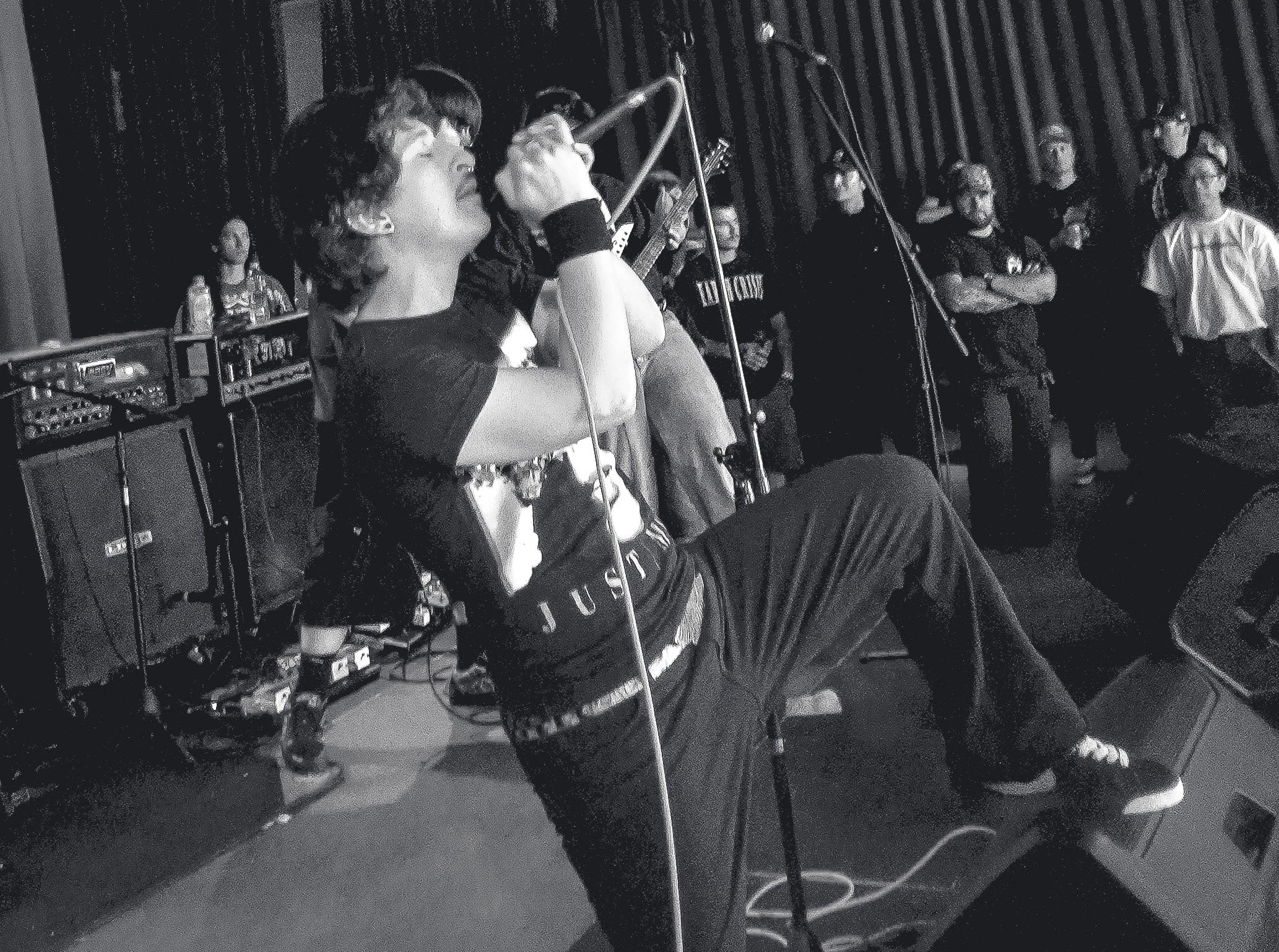
By matt king
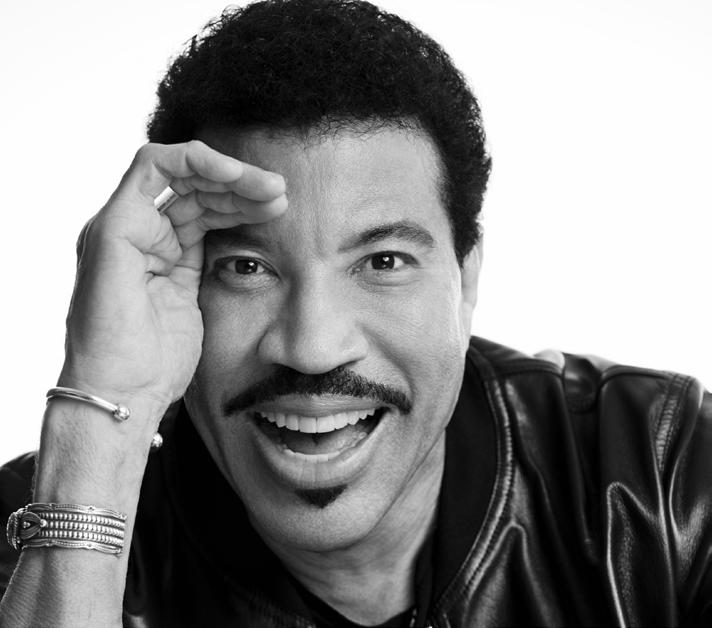
Happy August! It’s hot and maybe a bit muggy—but don’t fear, for the local entertainment scene is here! Here are some servings of desert fun for the month.
Acrisure Arena welcomes a couple of music legends. At 7:30 p.m., Saturday, Aug. 8, travel back in time for a double dose of hits from Lionel Richie and Earth, Wind and Fire. The best of these timeless discographies will have you feeling like a “Shining Star” “All Night Long.” Tickets as of this writing start at $172.55. At 8:30 p.m., Saturday, Aug. 29, king of norteño music Ramón Ayala is returning to the desert once again. Tickets start at $89.45. Acrisure Arena, 75702 Varner Road, Palm Desert; 888-695-8778; www.acrisurearena.com.
Fantasy Springs is hosting some cool concerts. At 8 p.m., Friday, Aug. 14, The Australian Pink Floyd Show—a Pink Floyd tribute from down under that swaps the inflatable pig for a kangaroo—will bring their Floyd-honoring sound to Indio. Tickets start at $52.50. At 8 p.m., Saturday, Aug. 15, country rocker Brantley Gilbert will bring outlaw vibes to the desert. Tickets start at $72.50. At 8 p.m., Friday, Aug. 21, catch Los Rieleros del Norte, who mix traditional norteño music with saxophones! Tickets start at $52.50. Fantasy Springs Resort Casino, 84245 Indio Springs Parkway, Indio; 760-342-5000; www. fantasyspringsresort.com.
The Plaza Theatre features music, movies and more! At 3 p.m., Sunday, Aug. 2, the Desert Classical Series returns with Latsos Piano Duo, who will perform classic piano duets. Tickets start at $25. At 3 p.m., Saturday, Aug. 8, the Disney classic Frozen will be screened as a part of the Summer Sing-Along series. Tickets are $20. Viral comic Jessica Kirson brings a billion views and plenty of laughs at 7 p.m., Friday, Aug. 14, and Saturday, Aug. 15 Tickets start at $55.80 on Friday and $54.15
on Saturday. At 3 p.m., Saturday, Aug. 22, cinema history hits the Plaza with a screening of The Wizard of Oz, featuring a Q&A with Judy Garland’s granddaughter Vanessa O’Neil. Tickets are $20. At 3 p.m., Sunday, Aug. 23, indulge in opera and Broadway bliss with Coachella Valley Classical Voices. Tickets start at $25. At 3 p.m., Sunday, Aug. 30, catch a filmed version of the London production of Kinky Boots. Tickets are $20. Plaza Theatre, 128 S. Palm Canyon Drive, Palm Springs; 760593-5818; www.palmspringsplazatheatre.com.
Morongo has a few concerts on the August calendar. At 9 p.m., Friday, Aug. 7, La Fiera De Ojinaga, another norteño-sax act, is set to perform. Tickets start at $68.75. At 9 p.m., Saturday, Aug. 8, funnyman Chico Bean will bring the laughs. Tickets start at $57.75. At 9 p.m., Friday, Aug. 21, rock out with Asia featuring John Payne (a spin-off of the rock supergroup Asia). Tickets start at $57.75. At 9 p.m., Saturday, Aug. 22, country-pop artist Walker Hayes will bring the twang to Cabazon. Tickets start at $78.75. Morongo Casino Resort Spa, 49500 Seminole Drive, Cabazon; 800-252-4499; www.morongocasinoresort.com.
Spotlight 29 is hosting two top-notch concerts. At 8 p.m., Sunday, Aug. 9, Aaron Lewis (the voice of metal band Staind) and the Stateliners will perform some chaotic country. Tickets start at $54.25. At 8 p.m., Saturday, Aug. 29, Latin pop icon Amanda Miguel will celebrate a long, storied career with a show in Coachella. Tickets start at $38.80. Honest Goodness Comedy Fridays feature Tino Cochino (Aug. 7), Chingo Bling (Aug. 14), Victor Vasquez (Aug. 21) and Arturo Vaca (Aug. 28). Tickets start at $17.85 to $28.50, and you must be 18+ to attend. Spotlight 29 Casino, 46200 Harrison Place, Coachella; 760-775-5566; www.spotlight29.com.
Beyond tribute shows and an event covered elsewhere in this issue, Agua Caliente Rancho Mirage boasts an impressive number of headliner events. At 8 p.m., Saturday, Aug. 8, French flamenco pop stars Gipsy Kings featuring Nicolas Reyes with Reyes Heritage will perform. Tickets start at $68.71. At 7 p.m., Friday, Aug. 14, bona fide country king
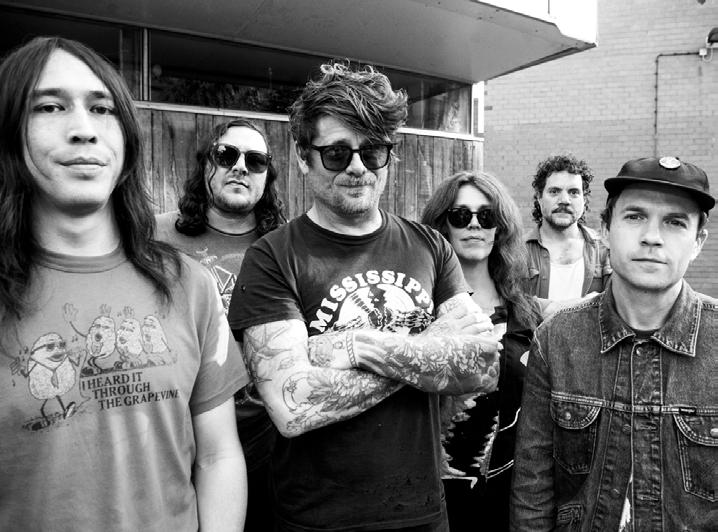
Dwight Yoakam will bring his transcendent yeehaw sound to town. Tickets start at $81.19. At 8 p.m., Friday, Aug. 21, South Korean singer and actor Lee Hyun Woo is set to perform. Tickets start at $79.90. At 8 p.m., Saturday, Aug. 22, accomplished rock duo Pat Benatar and Neil Giraldo will perform electric rock hits. Tickets start at $76.03. At 8 p.m., Friday, Aug. 28, 2000s country star Gretchen Wilson taps into that “Redneck Woman” sound. Tickets start at $39.91. At 7:30 p.m., Saturday, Aug. 29, ’80s new wave act The Fixx teams up with ’80s soul-punks the Plimsouls. Tickets start at $55.20. Agua Caliente Resort Casino Spa Rancho Mirage, 32250 Bob Hope Drive, Rancho Mirage; 888-999-1995; www. aguacalientecasinos.com.
Another month means another slate of residency events at Agua Caliente Palm Springs. Desert Blues Revival Wednesdays showcase Texas, Chicago and New Orleans blues from BoneThumpers (Aug. 5), vivacious vocals from Chris Thayer (Aug. 12) and a tribute to Van Morrison from Wild Night (Aug. 19). Shows are at 7 p.m., and tickets start at $17.85. Carousel Thursdays feature a tribute to legendary jazz voice Joe Williams from Doug MacDonald Quartet (Aug. 6), virtuosic bass skills from the Mauricio Morales Trio (Aug. 13), tasteful guitar chops from the Will Brahm Trio (Aug. 20) and a tribute to the songs of Schoolhouse Rock! by Skip Heller (Aug. 27). Tickets start at $19.98. There’s also one comedy event: Keith Pedro’s Filipino Comedy show, at 7 p.m., Friday, Aug. 28. Tickets start at $15.17. Tickets for all shows are available at eventspalmsprings.com. Agua Caliente Casino Palm Springs, 401 E. Amado Road, Palm Springs; 888-999-1995; www. aguacalientecasinos.com.
Here are some highlights from a stacked calendar at Pappy and Harriet’s. At 9 p.m., Sunday, Aug. 2, instrumental surf-rockers Los Straitjackets bring their reverb-soaked mix to the desert. Tickets are $32.90. At 7 p.m., Saturday, Aug. 8, modern psych-rock warriors Osees (with vocalist Brigid Dawson) return to Pioneertown to melt faces and eradicate eardrums. Earth Girl Helen Brown is set to open. Tickets are $62.43. At 9:30 p.m., Saturday, Aug. 22, W.I.T.C.H., the psychedelic funk act from Zambia, are set to share their “Zamrock” sound. Tickets are $41.71. At 9 p.m., Wednesday, Aug. 26, psychedelic-rock jammers Earthless will share their lengthy, heavy grooves. Local rockers Whiskey and Knives are set to open. Tickets are $33.94. At 9 p.m., Thursday, Aug. 27, desert favorites La Luz return yet again to spread their surfy sound. Tickets are $38.60. Pappy and Harriet’s Pioneertown Palace, 53688 Pioneertown Road, Pioneertown; 760-228-2222; www. pappyandharriets.com.





Get to know two local musicians celebrating the release of new music
by matt king
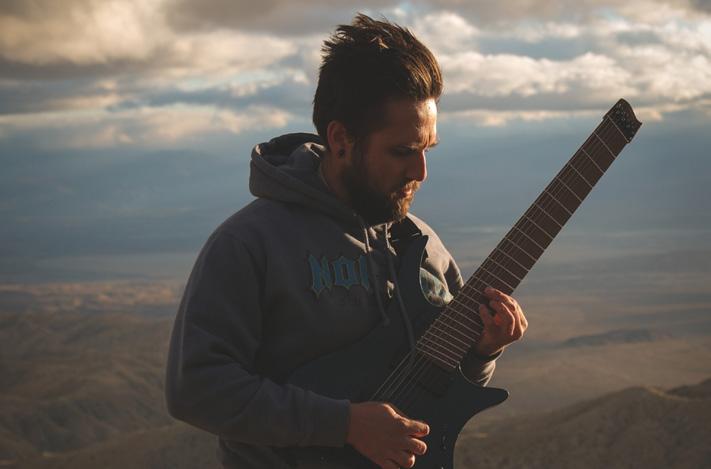
MORE INFO Dusk Axis, helmed by Braden Rigling, is an instrumental showcase of technically astounding guitar lines that stretch time-signature changes and abstract rhythms. Debut single “Swords Dance” showcases the shred-tacular ways in which Rigling’s guitar performance and tones can slice through sonic sections of hard rock, trippy electronics, mathcore mania and more—all pulled together by equally impressive bass performances and solid programmed drums. For more information, visit www.instagram.com/dusk.axis.
What was the first concert you attended?
Metallica, 2008, Oracle Arena in Oakland, for their World Magnetic Tour. I was 8 years old.
What was the first album you owned?
My parents have a vast CD collection that I perused a lot when I was little. Three standout albums from that perusing: Red Hot Chili Peppers, Blood Sugar Sex Magik; Green Day, Dookie; Counting Crows, August and Everything After.
What bands are you listening to right now?
Periphery, Animals as Leaders, Tigran Hamasyan, Plini, CHON, Sungazer, and Karnivool. This list is relatively unchanging, but it’s because of how much mileage and inspiration I get from these artists alone.
What artist, genre or musical trend does everyone love, but you don’t get? Stomp clap hey.
What musical act, current or defunct, would you most like to see perform live? Rage Against the Machine. To this day, I have never come across a band whose energy quite matches theirs. I only get to imagine the collective empowerment that their crowds felt at their live shows in the ’90s.
What’s your favorite musical guilty pleasure?
Justin Bieber. While my pop sensibility was short-lived, it is not gone forever. There is something about having watched his music grow up with him that warrants a special place in my musical heart.
What’s your favorite music venue?
As a kid, I had the opportunity to perform at several iconic San Francisco venues as a student at the SF Rock Project. My favorite? The DNA Lounge. A landmark of the Bay Area music scene, this was the venue of my first performance with SFRP, and playing on that stage at 10 years old remains a core memory and a defining moment of my career.

What’s the one song lyric you can’t get out of your head?
“Is it PetSmart or PetsMart? Are you saying that pets are smart? Or are you saying you’re a mart for pets?” “PETSMART” by Ben Lapidus.
What band or artist changed your life?
Tool. I was introduced to them at 9 years old and have never turned back. Everything I create is ultimately inspired by the concepts I learned from this band.
You have one question to ask one musician. What’s the question, and who are you asking?
If there’s any musician whose brain I’m most interested in picking, it is, hands down, Jacob Collier. If I only got one question, I would ask for a list of all his favorite tonal resolutions, organized from dark to bright.
What song would you like played at your funeral?
“The Great Gig in the Sky.” I decided this the first time ever I heard this song. My headcanon is that this was made to be a funeral song.
Figurative gun to your head, what is your favorite album of all time?
To Pimp a Butterfly (by Kendrick Lamar).
What song should everyone listen to right now?
Check out my debut single, “Swords Dance,” by Dusk Axis!
NAME Ryan Güt
GROUPS Stöner, Mario Lalli and the Rubber Snake Charmers
MORE INFO Ryan Güt has become one of the desert’s definitive drummers, with stints in Brant Bjork’s solo band and supergroups Stöner and Mario Lalli and the Rubber Snake Charmers. His latest venture, The Shastafarian, is a solo album with fuzzed-out bluesy funk (“Beggars and Choosers”). introspective soft rock (“Song for G”), psych-folk bliss “(Basically Dead [This Town])” and more. He’ll be hosting listening parties on Friday, Aug. 14, at Village Records in La Quinta, and Saturday, Aug. 15, at Up on the Sun Records in Yucca Valley. He’s performing on Friday, Aug. 21, at the Dune Room. Learn more at www.theshastafarian.com.
What was the first concert you attended?
A band called Floater at a venue once called The Brick Works in Chico, Calif.
What was the first album you owned?
Roberta Flack, Killing Me Softly. I was 9 or 10. It was sitting there in a bin in a thrift. I was learning piano at the time. I picked up the record, and there she was, sitting there on this cool piano, which I liked just for the art.
What bands are you listening to right now?
David Byrne, Love, CAN, Meshuggah, Weather Report, Khruangbin … lots and lots of bands.
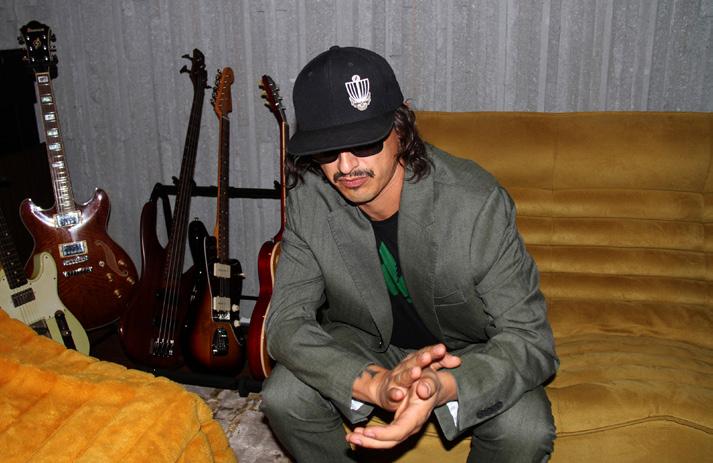
I’m always digging into the past and doing my best to stay present with what’s happening right now. Tripping on Angine de Poitrine, for sure.
What artist, genre or musical trend does everyone love, but you don’t get? I’d like to say I get it all, man. I think I get it. Who knows?
What musical act, current or defunct, would you most like to see perform live? CAN, because they were absolute monsters.
What’s your favorite musical guilty pleasure?
I think it sucks to feel guilty about liking something. Oasis.
What’s your favorite music venue?
Rocklette/PALP Festival in Val de Bagnes, Switzerland, the best place in the world I’ve ever been lucky enough to perform. The best people, place and music all in one. Plus, the cheese.
What’s the one song lyric you can’t get out of your head?
“Living in America. There’s nothing wrong,” James Brown (from his 1988 CNN interview).
What band or artist changed your life?
Ringo made it all click, and the Beatles are still changing my life. Louie Bellson was the main inspiration on drums before Ginger Baker.
You have one question to ask one musician. What’s the question, and who are you asking?
Noel Redding: “Why?”
What song would you like played at your funeral?
I’d like to not think about that. Right now, my new solo record, The Shastafarian, is an enjoyable listen! Suggested listening includes start to finish with no interruption or distraction, preferably while driving a long desert road or mountain highway.
Figurative gun to your head, what is your favorite album of all time?
Rubber Soul (by the Beatles), for so many reasons, but probably because it was the first one to turn me on to everything.
What song should everyone listen to right now?
“My Ever Changing Moods,” The Style Council.

“You’re Too Wise”—well, close enough. By Matt Jones
“___ Kapital”
“___ Don’t Use Jelly” (Flaming Lips song)
Part of a repeated dance movement
Designation for bands like Bon Iver
41. Start of many Italian dance track titles (it means “the rhythm”)
42. Silent assent
43. 1983 Washington-set taxi comedy starring 33-Down
45. Norwegian coast features
48. St. Louis highlight
49. ___ status (oldness, in Gen Z slang)
52. Fig end?
53. “Dude!” casually
54. She was Maid Marian in Robin Hood: Men in Tights
58. It’s extremely highpriced and seaworthy
60. Wolf Man portrayer ___ Chaney Jr.
61. Poem full of praise
62. Pine tree droppings
South American fruit called “pineapple guava” in some areas
June honoree, in cards made by little kids
Coffee vessel
Liqueur in a Negroni
Dairy product that may contain seeds
63. Night before
64. Anderson who directed The Royal Tenenbaums
65. A Midsummer Night’s Dream animal
66. My Chemical Romance genre
67. Garden droplets Down
1. Farmer’s measurement
2. 1965 Beatles concert stadium
3. Fasteners that lend their name to sharp curves
4. Actress Catlett who voices Mrs. Puff on SpongeBob
5. Pottery material
6. Pig pens
7. Bridal contribution of yore
8. Word with a sigh
9. Place to see constellations
10. Left undamaged
11. Iconoclasm
12. Airs the final episode
15. Move your wings
19. “Understand?” but beatnik-style
21. JFK’s veep
25. Luau root
26. Pet’s coat
27. Timeline portion
28. Acid-tongued
29. Exactly when an event takes place
32. Singer Grande, to fans
33. “I pity the fool!” exclaimer

34. Dr. Hank ___ (Michael Douglas’ Ant-Man character)
36. Peru’s Machu ___
37. Boring
38. Let out, like a garden hose
39. Unit equal to 5 1/2 yards
40. QB’s achievements
43. DJ behind the 2000 hit dance song “Sandstorm”
44. Pivotal points
46. Kipling’s ___ Stories
47. Spheroid
49. Hesitant agreement
50. Long-distance swimmer Diana
51. Travel by bike
53. Play the sax
54. Positive votes
55. Throaty attentiongetter
56. Sheltered inlet
57. Had a feeling
59. “Messenger” material
© 2026 Matt Jones
Find the answers in the “About” section at CVIndependent.com!