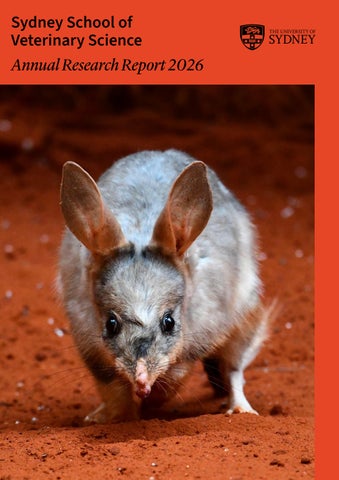
Sydney School of Veterinary Science Annual Research Report 2026
Professor Jacqueline Norris Head of School and Dean It is with great pride that we present the Sydney School of Veterinary Science Annual Research Report 2026. This report showcases the dedication, creativity and impact of our staff and students, whose work continues to advance animal health, welfare, biosecurity, conservation and One Health outcomes, in Australia and globally. Drawing on expertise that spans molecular biology to population health, our research community is united by a commitment to addressing some of the most pressing challenges facing animals, people and the environments we share. Over the past year, our researchers have delivered exceptional outcomes across a diverse portfolio of disciplines, from infectious disease prevention and wildlife conservation to clinical innovation, food security and animal welfare. The strength of our collaborative culture brings together partners across academia, industry, government and communities to create meaningful and lasting impact. I am particularly proud of the contributions of our research students (DVM, PhD and Masters), interns and residents, whose curiosity, talent and determination are shaping the future of veterinary science. Their achievements reflect the supportive and intellectually vibrant environment we strive to foster. None of this work would be possible without the support and encouragement of our donors, collaborators, funding partners, students, and staff. We thank them enormously for their ongoing commitment and support. Together, we continue to strive for excellence and to make a tangible difference for animals, people and the world we share through curiosity, care and commitment.
We recognise and pay respect to the Elders and communities – past, present, and emerging – of the lands that the University of Sydney's campuses stand on. For thousands of years they have shared and exchanged knowledges across innumerable generations for the benefit of all.
Professor Ruth Zadoks Associate Head of Research
Associate Professor Victoria Brookes Associate Head of Research Education
From cells to societies, from embryos to ecosystems – no topic is too small or too large for the research community in the Sydney School of Veterinary Science. Across our Camperdown and Camden campuses, our clinics, laboratories and farms, and much further afield, we search for new knowledge and new solutions to support the health and welfare of animals, people, and the world that we share. Our 4th Annual SSVS Research report provides a snapshot of the most recent achievements across our wide portfolio of species and disciplines and our wonderful world of collaboration and discovery in veterinary research.
Our Higher Degree by Research students are central to the research life of the Sydney School of Veterinary Science. Working alongside supervisors, collaborators, and communities in Australia and internationally, they bring curiosity and fresh perspectives to questions spanning animal health, welfare, production, conservation and One Health. Their research strengthens our collective professional and scientific capability and contributes solutions to complex challenges. As well as highlighting some of our students’ diverse research and achievements, this report reflects the supportive research environment that enables them to develop as independent researchers and future leaders in veterinary science.
Dr Samantha Livingstone Lecturer in Emergency and Critical Care (Education Focused) Clinical research lies at the heart of evidence based veterinary medicine, transforming clinical observations into new knowledge that improves the diagnosis, treatment and prevention of disease. Conducted across our hospitals, specialist services and collaborative networks, this research enhances patient care while addressing emerging challenges in animal health. The publications featured in this report highlight the breadth of clinical expertise within the Sydney School of Veterinary Science and our commitment to advancing veterinary practice through innovation, collaboration and discovery.
Introduction Research publications Evidence based clinical practice Genetics, genomics and zoology Infectious diseases and biosecurity Wildlife health and preservation HDR, Residents and Interns Spotlight
2 4 8 10 12 14 16
Infectious diseases and biosecurity Food security Evidence based clinical practice Infectious diseases and biosecurity Animal reproduction Animal welfare Funding and Acknowledgment of Benefactors
18 20 22 24 26 28 30
Research publications Sydney School of Veterinary Science With 1,099 publications between 2021 and 2025, the Sydney School of Veterinary Science has consistently demonstrated global research excellence, advancing interdisciplinary solutions to some of the most critical challenges in animal health, animal welfare and public health. Our research has been cited 10,912 times and is overwhelmingly represented in Open Access journals, demonstrating our commitment to reach a worldwide audience, enhance visibility and engagement, and increase our societal impact.
Our researchers also stay actively involved in the research community by contributing to journal editorial boards including for Frontiers in Veterinary Science, International Journal for Parasitology, Journal of Feline Medicine and Surgery, Journal of Veterinary Pharmacology and Therapeutics, Pathogens, PLoS Neglected Tropical Diseases, Preventive Veterinary Medicine, Transboundary and Emerging Diseases, Veterinary and Comparative Orthopaedics and Traumatology and the Veterinary Quarterly.
4
Research publications Sydney School of Veterinary Science Our research during the last 5 years has been published across 309 Journals. The Top-10 journals that we publish in include veterinary journals that reach specialist audiences as well as multidisciplinary journals that reach wider audiences. All our Top-10 journals are Q1 ranked or Australia based, reflecting our international reach and our home base. Almost 40% of our publications include an HDR student as author while almost 10% include a Doctor of Veterinary Medicine student as author, highlighting the School’s continued dedication to supporting the next generation of research academics.
5
#1 Veterinary school in Australia - QS Rankings by Subject 2026 6
Our Research Themes
7
Evidence based clinical practice Digesting the effects of food processing Dogs and cats are an integral component of many households in Australia. Finding solutions to identifying disease risk, obtaining early diagnosis, and effective monitoring of treatment outcomes is key to support this animal-human bond. Therefore, provision of the best care based on evidence is at the core of our research. The food we eat does more than provide nutrition, it also shapes the trillions of microbes living in our digestive system. Associate Professor Mary Thompson is exploring how different types of diets could influence the faecal microbiome, and with future research, what this could mean for the long-term health of both companion animals and people. A clinical specialist in small animal medicine at the Sydney School of Veterinary Science, Associate Professor Mary Thompson is particularly interested in the effects of minimally processed and ultra-processed diets on the body's hormonal responses and the communities of beneficial bacteria that support digestive health.
"What we eat influences far more than our nutrition—it affects the complex communities of bacteria that help keep us healthy."
These findings provide valuable insights into how nutrition could shape health and lay the groundwork for future studies investigating how to optimise diet choices for long health-spans in companion animals.
"Companion animals offer a remarkable opportunity to study nutrition because we can better understand how consistent diets influence long-term health." Together with collaborators at the University of Sydney’s Charles Perkins Centre, the team continues to build new evidence to understand how dietary choices influence health in dogs and cats and potentially people, one meal at a time.
Mary Thompson Associate Professor of Small Animal Medicine
Working with pet dogs living in their home environments, her team compared minimally processed diets with conventional dry kibble. The research found that diet change affected the faecal microbiome, blood sugar levels, and hormonal responses, with the two diets producing distinct physiological and microbial changes.
Campbell L, Thompson M, Muir M, Raubenheimer D and Holmes A. Diet-induced metabolic and faecal microbiome responses in pet dogs fed a minimally processed versus extruded kibble diet. Frontiers in Veterinary Science 2026;13:1734572. doi: 10.3389/fvets.2026.1734572
9
Genetics, genomics and zoology Unlocking new opportunities for biodiversity conservation We investigate and characterise diversity and variation in animals. The aim of this research is to understand the nature of variation of genes and whole genomes underlying speciation, immune response, gene evolution and diseases in companion animals, livestock and wildlife. Professor Jaime Gongora works at the intersection of conservation genomics, evolutionary biology, environmental peacebuilding and cultural competence.
“My work combines genomic analysis of wildlife populations with communitycentred approaches to biodiversity conservation.” He generates new insights into vertebrate evolution, providing evidence that directly informs conservation practice. For example, he demonstrated the effects of habitat fragmentation on genetic diversity in platypus and uncovered unique patterns of immunesystem diversity in crocodilians, which informs health management and conservation breeding programs. His recent work on the evolution of wild pigs and peccaries provides insight into their historical dispersal by humans and guides priorities for their conservation in the Americas.
“My research shows that understanding genetic diversity is essential for informing effective conservation strategies that enhance resilience to disease and environmental change.” Beyond genetics, Professor Gongora’s Peace with Nature program demonstrates how biodiversity conservation can advance peacebuilding and sustainable development.
Developed in Colombia's biodiversity-rich postconflict regions, it provides a scalable model that integrates conservation with community participation, sustainable livelihoods and inclusive environmental governance.
“By empowering local communities as active partners in biodiversity conservation, the program strengthens social cohesion, supports peace and reconciliation, and delivers lasting benefits for both people and nature.” Through engagement of communities as active partners in achieving global biodiversity goals, this research helps create locally owned conservation outcomes while improving livelihoods, strengthening resilience, and promoting lasting peace and reconciliation between people and nature. It also provides conservation practitioners, governments and policymakers with robust scientific evidence to support effective decision-making. Ultimately, people, threatened animal species and our shared ecosystems benefit through improved conservation planning, management and longterm genetic viability.
Professor Jaime Gongora Animal Genetics
Stanton DWG, Manin A, Evin A, […], Gongora J, Dobney K,Larson G, Frantz L. Genomic and morphometric evidence for Austronesianmediated pig translocation in the Pacific. Science. 2026;391(6780):eadv4963. doi:10.1126/science.adv4963.
10
“Peace with Nature has become a blueprint for ecological research and social transformation in post-conflict regions, demonstrating how scientific and social progress come hand-inhand.” - Professor Jaime Gongora
Pictured: Professor Jaime Gongora leading an exercise on full concentration and relaxation. [Credit: Dorlan Gomez, Peace with Nature]
Infectious diseases and biosecurity Measuring what could not be measured Infectious diseases and biosecurity remain two of the most critical global issues. Focusing on populations, we study the spread of infectious diseases to identify and implement interventions to protect and promote health of animals, people and the environment and reduce the burden of infectious diseases. Foodborne infections aside, Q fever is the most common reportable zoonosis in Australia. It is also a quintessential One Health problem: it involves people and animals, and transmission may occur through direct contact with infected animals or through the environment. It shares some complicating features with other zoonoses, including a disconnect between its source (mostly ruminants) and its health impact, which is mostly felt by people. Even the name of the disease, caused by the bacterium Coxiella burnetii, differs between people and animals: one is called Q fever, the other coxiellosis. Associate Professor Katrina Bosward led a team of veterinarians, immunologists, microbiologists and epidemiologists to improve our understanding of coxiellosis in cattle.
“This is not an easy task when you consider that laboratory tests struggle to tell you whether a cow is even infected.” Using a combination of direct methods, notably detection of Coxiella DNA, and indirect measures, such as antibodies or responses from the cows’ immune cells, the team tried to piece together the infection status of each cow, and its impact.
“Antibodies turn out to be important: Cattle that had antibodies in their blood at calving were less likely to become pregnant than those that were seronegative.” Antibodies did not impact the newborn calf. The calf’s survival, however, was negatively impacted if the cow shed Coxiella during birth. Finally, DNA fingerprinting showed that some Coxiella types found in cattle can also cause disease in people, confirming its zoonotic nature. This research provides farmers with an opportunity to consider selection of cows. Moreover, it shows that there would be value in a detailed review of the economic benefits and feasibility of vaccinating cattle against C. burnetii. Maybe this isn’t just a disease of humans that comes from animals, maybe a vaccine could benefit both.
Associate Professor Katrina Bosward Veterinary Microbiology
O'Shannessy L, House JK, Logan BG, Morton JM, Rowe S, Sheehy PA, Bauer BU, Bosward KL. Coxiella burnetii shedding in dairy cattle and its correlation with humoral and cell-mediated immune responses. Veterinary Microbiology. 2026;317:111011.doi: 10.1016/j.vetmic.2026.111011.
12
"Understanding how diseases move between animals, people and the environment is at the heart of my research. Through studying Q fever and the bacterium that causes it, I hope to help prevent human illness and deliver tangible benefits for communities and animal industries." - Associate Professor Kate Bosward Pictured: Associate Professor Kate Bosward and Stuart Glover (SSVS Technical Assistant). Photo credit: Sydney ID
Pictured: Dr Lee Campbell in her laboratory at Camden campus. Photo credit: Amy Laslett
Wildlife health and preservation Understanding and expanding the Tree of Life Most of Australia’s wildlife species can't be found anywhere else. In the face of rapid environmental change, their health is critical to their welfare and continued existence. Our research underpins understanding of wildlife immunology and evolution as well as wildlife conservation policy, from clinical interventions to ecosystem management. Dr Lee Campbell, a comparative immunologist, is tackling a question at the intersection of evolutionary biology and immunology: how have intracellular immune signalling pathways diversified across vertebrates, and what does that tell us about how different species interact with their microbial world?
"Wombat cells don’t do what the textbook predicts. That's not a problem; that's the whole point.”
To answer it, she has built a library of cryopreserved primary cells spanning native Australian reptiles, birds, monotremes and marsupials. Unlike the immune system of mice and men, their immune systems have barely been studied before, especially at the cellular level.
Beyond primary culture, Dr Campbell is working to establish immortalised cell lines across her entire “cellular zoo”, a feat already achieved with the creation of the world's first immortalised wombat kidney epithelial cell line. This will enable other scientists to benefit from her pioneering work and use the cells in future research.
"If you want to understand how immunity evolved, you have to go back to those branches of the tree of life where the divergence occurred." Her work on how the cells of native animals interact with pathogens has already yielded unexpected results. Stimulating wombat cells with a panel of immune activators elicited a response pattern not seen in any other vertebrate studied to date, challenging existing paradigms of innate immune signalling and pointing to genuinely distinct biology in marsupials.
Dr Lee Campbell; Sydney Profile
15
Understanding why these animals respond the way they do is the foundation for everything from disease surveillance to conservation medicine.
In an unexpected turn, that same cell culture work led to the isolation of a potentially novel organism from a koala patient: a divergent euglenozoan related to medically significant parasites such as trypanosomes, and apparently unlike any previously described species.
Dr Lee Campbell SSVS Research Fellow – Comparative Immunology
Higher Degrees by Research PhD Research As the next generation of veterinary researchers, Higher Degree by Research students are advancing knowledge across diverse fields of veterinary science. Australian Alpacas With an estimated 400,000 alpacas, Australia is home to one of largest flocks in the world, second only to Peru. They are raised for fleeces, meat, leather, as guard dogs for sheep and as companions for people, but we know very little about their biology and management. Under supervision of Associate Professor Russell Bush, PhD student Imogen Boughy addressed this knowledge gap. Boughey I, Hall E, Bush R. Daytime Paddock Behaviour of Alpacas Raised in an Australian Extensive Production System: A Pilot Study. Animals (Basel). 2025;15(16):2357. doi: 10.3390/ani15162357.
Raining rats and dogs No, that is not a typo. A growing number of dogs are catching rat lungworm disease, and on rare occasions, even people may be at risk. The parasite passes through snails, and their occurrence is affected by rainfall, temperature fluctuations and El Niña events. Under supervision of Professor Jan Šlapeta, PhD student Phoebe Rivory discovered how the rat lungworm travels through ecosystems and rats’ brains. Rivory P, Lee R, Šlapeta J. Isolate-specific rat brain transcriptional responses to rat lungworm (Angiostrongylus cantonensis). Pathogens and Disease 2025;83:ftaf003. doi: 10.1093/femspd/ftaf003.
Breeding for Health The University of Sydney’s database on Online Mendelian Inheritance in Animals (https://www.omia.org/home/) has catalogued inherited diseases of animals for more than three decades. Under supervision of Associate Professor Imke Tammen and Dr Brendan O’Rourke and in collaboration with colleagues at the Elizabeth Macarthur Agricultural Institute, PhD student Katie Eager keeps adding to the list of mutations that cause disorders in cattle and sheep. Eager KLM, Jolly RD, Manning L, Willet CE, Snell RG, Lehnert K, Mckean NE, Sneddon NW, O'Rourke BA, Dittmer KE, Tammen I, Littlejohn M. A novel frameshift variant in ALS2 associated with segmental axonopathy in Merino sheep. Genetic Selection Evolution 2025;57(1):60. doi: 10.1186/s12711-025-01005-w.
16
Residents and interns Training the next generation of specialists The University Veterinary Teaching Hospitals in Sydney (UVTHS) and Camden (UVTHC) are home to veterinary interns and residents across a range of disciplines. The research conducted by our interns and residents translates clinical experience into evidence-based practice. Through innovative studies addressing contemporary challenges in veterinary medicine, these early-career clinicians are contributing new knowledge that improves animal health, strengthens clinical care and supports the future of the profession. Case study UVTHS Sydney graduate Alex Teh completed a Residency in Anatomic Pathology between 2022 and 2025. He described some of his most interesting cases in Control and Therapy, a veterinary publication managed by the Centre for Veterinary Education at The University of Sydney, and in the Australian Veterinary Journal. He is now a Diplomat of the American College of Veterinary Pathologists, and an Adjunct Associate Lecturer at SSVS, so that he can continue to share his knowledge and enthusiasm with veterinary students. Teh A, Crisman R, Dwars E, Malik R, de Miranda LH, Meyer W, Krockenberger M. Cryptococcal meningitis due to Cryptococcus neoformans VNI in a koala (Phascolarctos cinereus) with progressive neurological disease. Australian Veterinary Journal. 2025;103(8):487-493. doi: 10.1111/avj.13446.
Case study UVTHC Dini Hapukotuwa, also a Sydney graduate, joined the Camden-based Livestock Veterinary Services team in 2022 for her Residency in Livestock Health and Production. She enjoys working with farmers to solve herd-level problems and is keen to find sustainable ways to maximise animal health, welfare and production on dairy farms. That starts with good care for the next generation: dairy calves. Her work on calf health and colostrum management addresses real-world problems with quality science published in the world’s leading dairy science journal. Hapukotuwa DA, House JK, Denholm K, Rowe S. Randomized clinical trial evaluating the practical and biological limits of single-feed colostral immunoglobulin G dosing in Australian Holstein and Angus - Holstein calves. Journal of Dairy Science. 2026;109(7):74437460. doi: 10.3168/jds.2025-27430.
17
Infectious diseases and biosecurity Predicting tomorrow's health risks today Focusing on populations, we study the spread of infectious diseases to identify and implement biosecurity interventions to protect and promote health of animals, people and the environment and reduce the burden of infectious diseases. This includes important emerging pathogens and diseases of wildlife and humans. As environmental change reshapes the way wildlife, domestic animals and people interact, understanding where infectious diseases may emerge has never been more important. Dr Renata Muylaert, Research Associate in Disease Ecology at the Sydney School of Veterinary Science, is helping governments and health agencies identify where future disease risks are most likely to occur, providing the evidence needed to prevent outbreaks before they happen.
"The pathogens are only one part of the story. To prevent future outbreaks, we need to understand the ecosystems in which they emerge." Working within Professor Michael Ward's Disease Ecology Laboratory, Dr Muylaert combines ecology, epidemiology, spatial modelling and artificial intelligence to synthesise large environmental and health datasets. Her work integrates wildlife monitoring, climate information and disease surveillance to develop decision-support tools that help governments and health agencies prioritise surveillance and prevention where they will have the greatest impact.
By synthesising global evidence, she has shown how climate, land-use change and biodiversity loss influence rodent populations and increase opportunities for viruses to spill over into human populations. This work is helping shape more proactive One Health approaches that recognise the interconnected health of people, animals and ecosystems.
"We're moving from reacting to outbreaks to anticipating where they are most likely to occur." Dr Muylaert's collaborations span Australia, Brazil and Southeast Asia, supporting wildlife disease surveillance, biosecurity and pandemic preparedness. By bringing together ecologists, veterinarians, public health professionals and policymakers, her research is helping build a future where healthier ecosystems contribute to healthier communities.
Dr Renata Muylaert Postdoctoral Research Associate in Disease Ecology / Epidemiology
Her recent research on hantaviruses demonstrates that preventing disease is not simply about responding to outbreaks.
Hopkins SR, Olson SH, ..., Muylaert RL, ..., Saskeld D, Walzer C. Assessing and reducing infectious disease risks in protected and conserved areas: the MAP–ACT–CREATE for One Health toolkit. IUCN 2026. doi.org /10.2305/HMQF1495.
18
"Prevention starts with understanding the connections between people, animals and the environment." - Dr Renata Muylaert Pictured: Necromys lasiurus Photo credit: Wikimedia Commons
Food security Disrupting paradigms in oyster health Veterinarians play an important role in society through contributions to individual and population animal health, which supports food security and rural or coastal livelihoods. Our research programs aim to provide solutions for production-limiting diseases, such as treatment or prevention programs, which enhance animal welfare and reduce the carbon “foodprint”. Oysters are one of Australia's most valuable aquaculture species, contributing approximately $285 million annually to the national economy. NSW is the largest oyster producing state, with an industry that supports around 2,300 jobs and is worth $78 million, underpinning regional and coastal communities.
“My research focuses on improving the health of farmed aquatic animals, including oysters and finfish.” Infectious diseases remain a major threat to industry sustainability. To manage them, we need novel diagnostic approaches and disease prevention strategies. My lab is developing one of the world's first vaccination platforms for shellfish, with a particular focus on Pacific Oyster Mortality Syndrome (POMS), a viral disease caused by Ostreid herpesvirus-1 (OsHV-1). POMS causes devastating mortality events and has severely impacted Pacific oyster farming in several Australian estuaries. Historically, vaccination was considered impossible in invertebrates because they lack the adaptive immune system, the part that forms antibodies in other species. Our research has challenged this assumption. We have demonstrated that oysters can be "primed" to better resist disease, achieving more than 90% survival following exposure to a lethal viral challenge under laboratory conditions.
“We are translating this discovery into practical vaccination methods that could be applied to millions of baby oysters (spat) at commercial hatcheries.” Currently, infectious disease management strategies in oyster aquaculture mostly rely on selective breeding for disease resistance, a process that can take several years and may not keep pace with emerging disease threats. A vaccine could provide a rapid, flexible and complementary tool to protect oyster stocks, improve farm productivity and strengthen industry resilience. Our research benefits oyster farmers, hatcheries, seafood consumers, and regional communities that depend on oyster farming. More broadly, it contributes to sustainable food production, aquatic animal health, and the long-term resilience of Australia's growing aquaculture sector.
Francisca Samsing Pedrals Senior Lecturer in Aquatic Animal Health
ABC: NSW Country Hour, Oyster Resurgence, Presented by Josh Becker
20
Pictured: Dr Francisca Samsing with oyster tanks at Camden campus. Photo credit: Amy Laslett
Evidence based clinical practice Building evidence for safer anaesthesia and better pain management We want to provide our Doctor of Veterinary Medicine students with exposure to the use of evidence-based practice in clinical settings as they progress through the degree. We also aim to add to the growing body of evidence in veterinary literature, to provide an expanded basis for this approach. Dr Eduardo Uquillas, Senior Lecturer in Veterinary Anaesthesia and Analgesia at the Sydney School of Veterinary Science, is helping veterinarians answer practical clinical questions through research conducted alongside Doctor of Veterinary Medicine (DVM) students, veterinary nurses, and early-career clinicians.
“Veterinary anaesthesia relies on thousands of clinical decisions being made every day, yet many of these decisions are based on tradition rather than evidence.” A key focus of Eduardo’s work is evaluating common assumptions in veterinary practice. Recent student-led projects have investigated whether cannabidiol (CBD) improves pain and mobility in dogs with osteoarthritis, while other studies have focused on peri-operative anaesthesia in dogs and horses.
“In several cases, the evidence challenged widely held beliefs.” For example, dose was found to be more important than administration speed in the development of apnoea when using certain anaesthetics in dogs, and there is limited scientific evidence to support the use of CBD as an adjunctive treatment for canine osteoarthritis.
Eduardo has also collaborated with veterinary nurses to improve patient safety. A recent study published in the Journal of the American Veterinary Medical Association revealed that almost 30% of surgical site preparations failed to meet recommended disinfectant contact times, highlighting the importance of quality assurance in preventing healthcare-associated infections. Follow-up research demonstrated that shorter, evidence-based preparation protocols may achieve effective bacterial decontamination during routine procedures.
“By teaching students how to critically evaluate evidence, we improve patient care today while developing veterinarians who will continue advancing the profession tomorrow.” His research helps clinicians make safer, more informed decisions. It also ensures that veterinary students become life-long learners. As a result, animals and their owners benefit from veterinary care that is informed by the best available evidence.
Dr Eduardo Uquillas Senior Lecturer in Veterinary Anaesthesia (Education Focused)
Burrows CS, Uquillas E. Observation of surgical site disinfection with chlorhexidine reveals a failure to meet minimum contact time requirements in almost 30% of cases. Journal of the American Veterinary Medical Association 2025;263(S2):S6-S9. doi:10.2460/javma.25.04.0226.
22
“Many of the questions we investigate come directly from everyday clinical practice.” - Dr Eduardo Uquillas
Pictured: Dr Luisa Monteiro de Miranda in her laboratory at Camperdown campus. Photo credit: Amy Laslett
Infectious diseases and biosecurity Finding and fighting fungi We explore the host, pathogen and environmental interactions associated with disease manifesting in a wide variety of species such as companion animals, livestock (both terrestrial and aquatic) and wildlife as well as the humans interacting with them. Where appropriate, we do this utilising a One Health approach. Luisa Miranda is a veterinary researcher with strong focus on mycology and host-pathogen interaction who advocates for increased visibility and awareness of fungal infections among veterinarians, students and other health professionals.
Luisa hopes her research will increase awareness of fungal disease among veterinarians in Australia and provide them with valuable clinical and epidemiological information to support early diagnostic investigations, avoiding delays on the start of appropriate treatment.
“Multiple warnings have been raised about the neglect of fungal diseases which, according to the World Health Organization (WHO), affect ca. 300 million people per year.”
“Early diagnosis is critical to ensure appropriate treatment and avoid unnecessary use of antimicrobials.”
Fungal diseases range from superficial to invasive, life-threatening infections in humans and animals, who are often infected by the same fungi. Global warming may facilitate their occurrence and expand their range, while the use of antifungal agents in agriculture contributes to antifungal resistance and treatment failure. Certain dog and cat breeds appear to be overrepresented in fungal infection case series but the burden of fungal disease in animals is largely unknown.
Establishing a solid research program to understand fungal diseases will also strengthen multidisciplinary capacity building and enhance preparedness of veterinarians and health professionals across different stages of disease management, including diagnostic investigation, patient care, and prevention and control measures.
Dr Luisa Monteiro de Miranda Lecturer - Veterinary Pathology
“Animals serve both as sentinels and as potential sources of infection for humans.” With funding from the Australian Companion Animal Health Foundation, Luisa investigates invasive fungal infections in dogs and cats that have occurred over the past three decades based on submissions to the University Veterinary Teaching Hospital in Sydney. Miranda L, Gillett S, Ames Y, Krockenberger M, Malik R. Zoonotic feline sporotrichosis: a small case cluster in Perth, Western Australia, and a review of previous feline cases from Australia. Australian Veterinary Journal. 2024;102(12):638-645. doi: 10.1111/avj.13375.
25
“Building and maintaining clinical expertise is crucial for earning credibility amongst colleagues, industry partners and research organisations.” - Dr Rory Nevard
Pictured: Dr Rory Nevard finding embryos. Photo credit: Livestock Veterinary Service, University of Sydney
Animal reproduction Mating artificial intelligence with assisted reproductive technology Our researchers and veterinarians are experts in improving and preserving the fertility of farm animals and wildlife. They strive to better understand the underlying reproductive biology in different species, develop strategies to enhance the efficiency of breeding programs, and refine the application of advanced reproductive technologies. Rory Nevard is a Registered Specialist in Veterinary Reproduction and Diplomate of the American College of Theriogenologists. He is also an educator, a clinician, and a passionate researcher in assisted reproductive technologies (ART) in large animals. This is no James Herriot work – it involves highly sophisticated instrumentation and technology.
“We want to refine embryo selection using artificial intelligence, time lapse videography monitoring, proteomics and improved oocyte maturation media.” With support from bequest funding, Rory and his colleague Guz Ruiz from the Theriogenology Department established collaboration between the University Veterinary Teaching Hospital Camden and the School of Medicine. The team started collecting oocytes from donor cattle to train AI models to predict competent embryos that improve post-transfer pregnancy rates and reduce risk of late-term foetal loss. The work supported training in laboratory techniques and led to successful production of IVF calves using time-lapse embryo monitoring and selection – the first ever for the University of Sydney.
Building on this initial collaboration, Rory became part of a Cooperative Research Centres Projects (CRC-P) project, led by industry with the School of Medicine. The project, titled “AI & Robotic Bovine IVF to Boost Productivity & Regional Adoption,” aims to enhance the efficiency and outcomes of bovine IVF, advance automation in embryo production, and support workforce training in regional areas.
“Genetic improvement of Australia’s cattle herd will help to meet growing global demand for food while addressing challenges such as climate change.” Long-term, there are opportunities for translational projects with human IVF companies, which are often looking for animal models between mouse and (wo)man to fully understand a concept or trial a product or treatment. Rory’s story shows that it is possible to excel in veterinary teaching, clinical service and research!
Dr Rory Nevard Clinical Specialist - Large Animal Theriogenology
Bird J, Nevard RP. Does synchronising follicular wave emergence improve outcomes in non-superstimulated donor cattle undergoing ovum pick-up (OPU) for in vitro embryo production? Australian Veterinary Journal. 2026;104(7):447-456. doi: 10.1111/avj.70089
27
Animal welfare Protecting animal welfare through osteoarthritis research We want to ensure that the implications of the way we care for animals – including the impacts on human wellbeing and the environment – are understood so that 'One Welfare' can be supported. This work focuses on empowering veterinary professionals to accurately assess and improve animal welfare. Osteoarthritis is one of the leading causes of chronic pain in companion animals, affecting mobility, behaviour and quality of life. Yet by the time the disease is diagnosed, irreversible joint damage has often already occurred. Associate Professor Sanaa Zaki is leading research to better understand how osteoarthritis develops, with the goal of identifying animals at risk earlier and improving their welfare.
These discoveries have led to the identification of promising blood-based biomarkers that may one day help veterinarians detect animals at increased risk of osteoarthritis before permanent damage develops. Her team is also investigating why dogs and cats respond differently to pain medications, with the aim of developing more personalised and effective pain management strategies.
As a veterinarian and researcher, Associate Professor Zaki has spent more than 20 years caring for animals experiencing pain. Her clinical experience inspired a research program focused on understanding why some patients develop chronic pain while others recover from similar injuries.
"Improving animal welfare isn't only about treating disease, it's about preserving quality of life."
"Protecting animal welfare begins with understanding pain and recognising it before it becomes chronic." Using a comparative medicine approach, Associate Professor Zaki's team studies osteoarthritis in both animals and people to uncover the earliest biological changes following joint injury. Her research has shown that even mild cruciate ligament injuries, those with no obvious signs of joint damage or lameness, can trigger biological processes associated with chronic pain.
Through the One Health Musculoskeletal Research Group that Associate Professor Zaki established, collaborations with veterinary, biomedical and clinical researchers are helping to accelerate discoveries that benefit both animals and people. By improving the early detection and management of osteoarthritis, her research is helping veterinarians protect animal welfare and give patients the best possible quality of life.
Associate Professor Sanaa Zaki Veterinary anaesthesia
Moradi B, Jackson MT, Shu CC, Smith SM, Smith MM, Zaki S, Platzer H, Rosshirt N, Giangreco D, Scanzello CR, Little CB. The Potential Role of Synovial T Cell Infiltration Following Knee Joint Injury in Symptoms and Progression to Osteoarthritis. Arthritis & Rheumatology. 2026. doi: 10.1002/art.70157.
28
Funding 2025 at a glance We at the Sydney School of Veterinary Science are sincerely grateful for the profound support and generosity of our funders. Your belief and trust in our mission empowers us to push boundaries in veterinary science, advancing research, education, and care that delivers real-world impact in the lives of animals and the people who care for and depend on them. Your contributions have enabled us to pursue bold ideas, nurture the next generation of veterinary leaders, and take meaningful strides towards solutions that improve the future of animal health and welfare. Thank you for your vital partnership, commitment, and vision, which makes all this progress possible. Together, we are creating lasting impact, transforming care, and shaping a better future.
$11.6 million
Received in research grants and philanthropic funds
External research funders
Philanthropic donors
Australian Research Council
Ms Leith Brooke -
Cooperative Research Australia
in memory of the late Prof. Frazer Allan
Australia’s Economic Accelerator
Dr Ramune Cobb
AgriFutures Australia
Dalara Foundation
Australian Eggs
Mrs Mary Holt OAM
Meat & Livestock Australia
Dr Kim Kendall-Linquist
Australian Pork Limited
Mr Michael Kilcullen
Dairy Australia
Mr Brian Mooney and Ms Jacqueline Chen
Fisheries Research and Development Corporation
Petstock Foundation
Canine Research Foundation
Mr Peter Robertson
Department of Primary Industries, Qld Government
Dr Marie Rowe and Mr David Rowe
MidCoast Council, NSW Government
University of Sydney USA Foundation
Australian Companion Animal Health Foundation
Emeritus Professor Richard Andrew LeCouteur
Morris Animal Foundation
Lonergan Foundation
Wildlife Disease Association
Mrs Rosemary Manusu
National Institutes of Health (USA)
The Webster Family
Winifred Violet Scott Charitable Foundation Burroughs Wellcome Fund
We extend our gratitude to all our generous donors, including those contributors who wish to remain anonymous, for their unwavering support and belief in our mission. To discuss the impact you could have on animal health and welfare research, please contact: Lavinia Liclican Development Associate, Veterinary Science M: 0468 810 882 30
E: lavinia.liclican@sydney.edu.au
Jacqui Norris
Ruth Zadoks
Victoria Brookes
Samantha Livingstone
Mary Thompson
Jaime Gongora
Francisca Samsing
Lee Campbell
Renata Muylaert
Eduardo Uquillas
Kate Bosward
Luisa Monteiro
Rory Nevard
Sanaa Zaki
Amy Laslett
Lavinia Liclican
31
The University of Sydney
Sydney School of Veterinary Science sydney.edu.au/vetscience
Veterinary science research sydney.edu.au/vetscience/research
Additional contact details: E: vetsci.research@sydney.edu.au
@Sydney_Vet
CRICOS 00026A
Veterinary Sciences, University of Sydney
Produced by Sydney School of Veterinary Science, the University of Sydney, July 2026. https://doi.org/10.25910/41we-7f86 The University reserves the right to make alterations to any information contained within this publication without notice.