













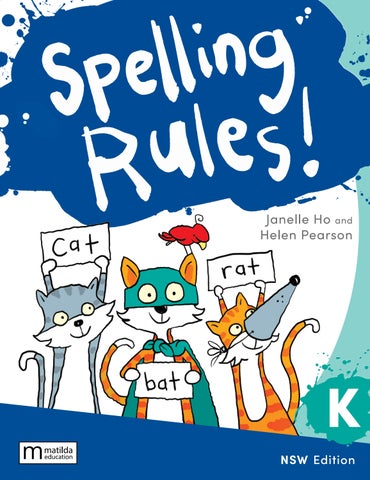


Spelling Rules! Student Book K
NSW Edition
ISBN: 978 0 6550 9257 5
Publisher: Catherine Charles-Brown
Designer and typesetter: Trish Hayes
Illustrator: Stephen Michael King
Series editor: Marie James
Indigenous consultant: Al Fricker
This edition published in 2023 by Matilda Education Australia, an imprint of Meanwhile Education Pty Ltd Melbourne, Australia
T: 1300 277 235
E: customersupport@matildaed.com.au www.matildaeducation.com.au
First edition published in 2006 by Macmillan Science and Education Australia Pty Ltd
Copyright © Janelle Ho, Helen Pearson 2006, 2016, 2023
The moral rights of the authors have been asserted.
All rights reserved. Except under the conditions described in the Copyright Act 1968 of Australia (the Act) and subsequent amendments, no part of this publication may be reproduced, in any form or by any means, without the prior written permission of the copyright owner.
Educational institutions copying any part of this book for educational purposes under the Act must be covered by a Copyright Agency Limited (CAL) licence for educational institutions and must have given a remuneration notice to CAL. These limitations include: restricting the copying to a maximum of one chapter or 10% of this book, whichever is greater. For details of the CAL licence for educational institutions, please contact: Copyright Agency Limited, Level 11, 66 Goulburn Street, Sydney, NSW 2000, Toll-free phone number (landlines only): 1800066844, Telephone: (02) 9394 7600, Fax: (02) 9394 7601. Email: memberservices@copyright.com.au Website: https://www.copyright.com.au
Printed in China by Central Sep-2022


Some students are natural spellers. But the vast majority of students need formal, systematic and sequential instruction about the way spelling works and the strategies they can use to become independent, confident spellers and spelling risk-takers. The Spelling Rules! program is based on sound linguistic and pedagogical theory. It is informed by research into how students of different ages acquire and apply spelling skills, and how those skills move from the working to the long-term memory. The program closely follows the NSW English Curriculum. NSW Curriculum references are provided in the Teacher Resource Books. The program consists of seven Student Books, fully supported by two Teacher Resource Books.
Each student book contains units of work, with each unit designed to be used over the course of a week. The content of each unit follows the suggested instructional sequence in the NSW English syllabus. Each unit simultaneously develops new skills and reinforces skills from previous units. Where appropriate, topic words from other curriculum areas such as mathematics, science and social sciences are included. When spelling rules and tips are introduced, only known sounds and letter patterns are used so that students focus on one skill at a time. Regular revision units enable teachers to assess student progress and reinforce key rules and patterns from previous units.
Learning to spell involves developing different kinds of spelling knowledge:
T Kinaesthetic knowledge – the physical feeling when saying different sounds and words, and when writing the shapes of letters and words
T Phonological knowledge – how a word sounds and the patterns of sounds in words
T Visual knowledge – how letters and words look and the visual patterns in words
T Morphemic knowledge – the meaning or function of words or parts of words
T Etymological knowledge – the origins and history of words and the effect this has on spelling patterns.
The following icons identify the main spelling strategy that students will use to complete an activity.

Say the word. (Kinaesthetic knowledge) These activities ask students to experience how sounds feel in the mouth and jaw. Changing the positions of the jaw, lips, and tongue changes the sounds we make. Encourage students to pronounce the sounds and words accurately. If they mispronounce a sound or word, they may misrepresent it in writing.


Listen to the word. (Phonological knowledge) These activities focus on discriminating between different sounds and breaking up words into syllables or individual sound segments (phonemes).
Look at the word. (Visual knowledge) These activities help students to see how the sound is represented using combinations of letters, and to associate this visual pattern with what they are hearing. Students will develop the ability to know when a word does or does not ‘look right’.
Understand the word. (Morphemic and etymological knowledge) These activities focus on word meanings, word families, prefixes and suffixes, spelling rules, word origins and so on – all of which help embed spelling in the long-term memory.

Practise writing the word. (Kinaesthetic knowledge) These activities develop students’ awareness of the physical movement involved in writing the word. By practising writing the word a number of times and in different contexts, the spelling becomes embedded in the long-term memory.


This icon highlights useful spelling rules.


This icon tells students that a special clue or hint is provided for an activity. It may be a spelling, grammar or punctuation convention, or a definition of a useful term.
U nits of work
The NSW edition of Student Book K contains 38 weekly units of work. You would probably start using the workbook around week 3 of the first year at school, once other routines are settled. Each unit focuses on one or more consonants or vowels. In this revised edition, students start to combine sounds from Unit 2 with high-frequency sight words introduced from Unit 2 onwards. In addition to common digraphs and split digraphs, the plural (s) and tense-marking (ed, ing) suffixes for simple regular words are taught. Common homophones are also introduced. See the Scope and Sequence chart on the inside front cover for more information.
w ord lists
From Unit 2 onwards, every unit includes a short word list. The words enable students to focus on the letter pattern, sound pattern, or etymological or morphological element being taught in the unit. They are selected to support the learning focus and spelling strategies.
Some words are provided with traceable letters. These words allow students to begin practising high-frequency sight words. By the end of Book K, students will have been introduced to almost all the high-frequency sight words they need for reading and writing.
U nit at a glance
List words support the learning of a specific letter, letter pattern or rule. Words come from across the curriculum.
Space to practise list words
Spelling focus highlighted in colour
High-frequency words also introduced
Traceable words allow students to practise high-frequency sight words.
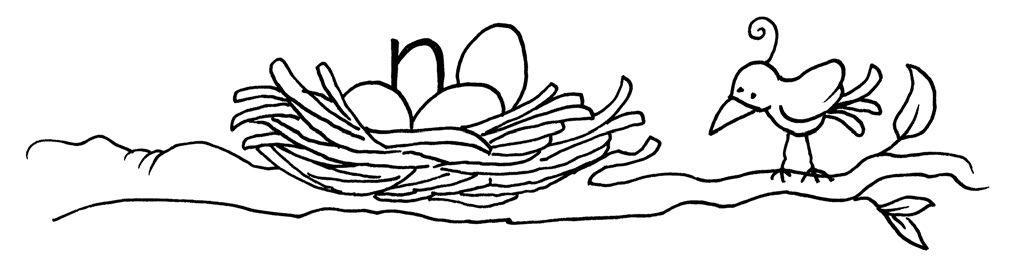
Unit banner features a hidden focus letter or letter pattern

Sequenced activities –each activity focuses on a specific spelling strategy. Icons identify the main spelling strategy students will use in an activity.
My own words –students can write theme words, personal words or extension words, or practise other words with the same spelling focus. Adapt this section to suit the needs of your class.
Full teacher support for Student Book K is provided by Spelling Rules! Teacher Resource Book K–2 . Here you will find valuable background information about spelling development and spelling knowledge, along with practical resources, such as:
T teaching tips for every unit in Student Book K
T extra word lists
T strategies for teaching spelling
T guidelines for assessing spelling and diagnosing spelling errors
T activities to support struggling spellers
T worthwhile extension for more able spellers.



What letter can you see in the pictures? Write the letter.
Circle the letter that makes the first sound.
Colour the shapes with p . What do you see?
4
Write the letter that makes the first sound.
Colour the shapes with t . What do you see?
at s at
a at as Say each word. Write the last sound you hear.
Write the missing letter.
Colour the picture if you hear a in the middle.
4 5
Circle a , at and as .
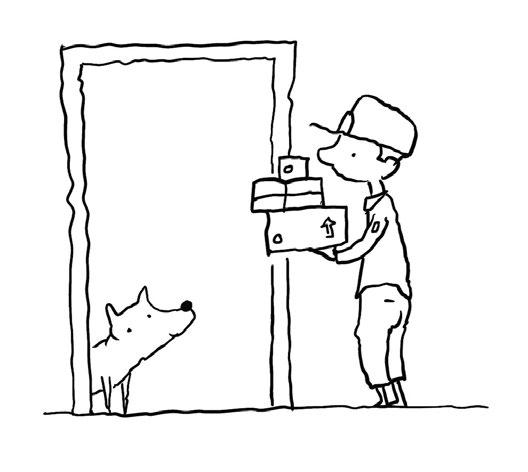
There is a man at the door.
That rat is as fat as a cat.
I like to tap as I count.
Colour p in blue. Colour t in red. Colour a in yellow. Colour s in green.
My own words

What letter can you see in the picture? Write the letter.
Say each word. Write the letter that makes the first sound.
Say each word. Write the letter that makes the last sound.
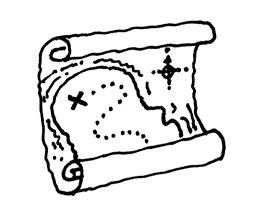
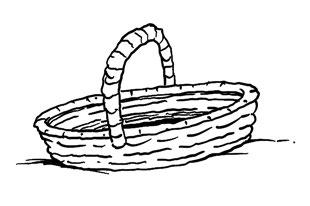
Write list words.
I see a in a .
Sam’s smile has a .
My own words
Say the words. Write i or m for the first sound.
Colour the shapes with i . What do you see?
Write list words.
Write list words.
Write different list words. on man cats pins
Write the letter that makes the first sound.
Make words with the same first sound.


Most words add s to show there is more than one. cat cats pin pins
4
Write the list words backwards to make a new word.
5 nap on nip tin
Add s to show more than one.


2 mat —
3 friend —
4 cup
5 rat
My own words
dad do did
Colour the pictures starting with d red. Colour the pictures starting with l blue.
Draw lines to join the rhyming words.
Make words with different last sounds.