SKILL FOCUS
Unit Vowels Consonants Letter patterns
Morphology and etymology Homophones/ Confusing words Topic words
1 two-syllable words with long sounds, silent e -s, -es, -ed, -ing: dropping silent e
2 short and long y ay, ey, oy -s, -es, -ed, -ing: changing y to i
pray/prey
WORD LIST
oppose, endure, revise, complete, arrange, escape, persuade, realise, collide, assume, include, declare
copy, hurry, guilty, mystery, variety, deny, apply, simplify, qualify, display, prey, annoy
3 adding -ed, -ing to twosyllable words: doubling final consonant begin, forget, regret, occur, prefer, enter, offer, visit, happen, target, label, detail
4 words ending in lf ph, gh phobia
engulf, behalf, cough, trough, phase, phobia, phantom, metaphor, emphasise, biography, amphibian, sophisticated
5 words ending in double consonants -er, -est odd, stiff, err, recall, install, swell, thrill, floss, discuss, possess, witness, embarrass
6 REVISION
7 ea led/lead, weather/ whether
least, eager, release, dread, ahead, heavy, health, meant, instead, pleasant, jealous, weather
8 -ion, -ness; claudere direction, suggestion, location, separation, confusion, decision, conclusion, greatness, selfishnesss, stubbornness, cleanliness, forgetfulness
9 j ge, dge, dj bandage, sponge, surge, stranger, siege, badger, pledge, reject, injection, adjust, conjunction, adjective
10 un-, in-, dis-; videre
unfamiliar, undeveloped, unbroken, unquestioning, inactive, incomplete, informal, invisible, disease, disqualify, discontented, discontinue
11 confusing pairs lose, loose, breath, breathe, desert, dessert, practise, practice, wonder, wander, stationery, stationary
12 REVISION
13 oa, ou ow fowl/foul narrow, sorrow, tomorrow, loan, poach, coward, foul, announce, voucher, boundary, council, knowledge
14 er/ear verse, superb, alert, convert, deserve, determined, certain, permanent, earthquake, research, earnest, rehearsal
15 or, ur, our court- worthy, senior, surprise, further, burden, survive, journal, flavour, labour, courtesy, honour, nourish
16 words ending in ure thermo-, -meter nature, future, capture, failure, creature, feature, measure, pleasure, leisure, adventure, furniture, temperature
17 colours, similes ruby, scarlet, lilac, violet, emerald, indigo, crimson, azure, khaki, ochre, turquoise, sapphire
18
REVISION
19 -th fourth/forth ordinal numbers fourth, fifth, eighth, ninth, twelfth, growth, warmth, length, strength, width, depth, breadth
20 words ending in ic -ic; -ed, -ing: adding k panic, picnic, magic, logic, critic, basic, mimic, fantastic, terrific, energetic, automatic, enthusiastic
21 words ending in al -al, il-, un- capital, hospital, final, logical, magical, national, natural, digital, criminal, critical, survival, emotional
22 -th, hyphenation numbers eleven, twelve, thirteen, fourteen, fifteen, twenty, thirty, forty, fifty, ninety, hundred, thousand
23 double consonants accept/except, affect/effect accept, accuse, attempt, attitude, pollute, approach, disappoint, opportunity, necessary, recommend, occasion, aggressive
24
25 soft g words ending in ous
26 -ous; rules for adding -ous
REVISION
ginger, gently, general, average, generous, religion, intelligent, fragile, generation, advantage, emergency, gymnasium
serious, precious, delicious, famous, nervous, dangerous, courageous, furious, cautious, envious, spacious, various
27 -en, -ise: rules for adding -en, ise; memor lessen, stiffen, toughen, sadden, awaken, straighten, finalise, memorise, fantasise, energise, sympathise, visualise
28 -ment movement, statement, argument, amazement, measurement, government, environment, treatment, development, attachment, encouragement, disappointment
29 compound words; abbreviations computers computer, laptop, email, internet, mobile, keyboard, program, download, insert, delete, icon, archive
30 REVISION
31 ie, ei rain/rein/reign niece, belief, achieve, alien, receipt, deceive, protein, weird, reign, seize, beige, feisty
32 ex exist, exchange, examination, explosion, expensive, exaggerate, excursion, exceed, except, extinct, exhausted, exhibition
33 -or, -er, -ant, -ian, -ist; apostrophes occupations; non-English words author, grocer, carpenter, lawyer, assistant, accountant, electrician, politician, journalist, pharmacist, chef, pilot
34
35 REVISION
holidays travel, relax, journey, caravan, luggage, budget, museum, attraction, entertainment, accommodation, sightseeing, restaurant
Student Book 4
U nits of work
Student Book 4 contains 35 weekly units of work. See the Scope and Sequence chart on page 3 for more information. Each revision unit gives students an opportunity to self-assess.
w ord lists
In Student Book 4, each unit (except Revision) has a list of spelling words. The core words in the lists have been chosen to support the learning focus and strategies being taught in the unit.
Spelling lists enable a spelling element to be focused on, and provide sufficient examples to consolidate the teaching point. Topic words come from other curriculum areas, such as mathematics and social sciences. In addition, homophones and words that are easily confused with each other are explained and practised.
sllU
r P
Each word list begins with a reminder for students to SLLURP. SLLURP summarises the strategies that will help spelling move from students’ working memory to their long-term memory. These strategies are provided on page 2, for easy reference.
U nit at a glance
SLLURP reminds students about strategies they can use to learn the words
List words support the learning of the spelling focus for the unit. Words come from across the curriculum
Space to practise list words; to write theme words, personal words or extension words; or to practise other words with the same spelling focus. Adapt this section to suit the needs of your class
Unit banner features the spelling focus in the context of an amazing fact
Spelling focus highlighted in colour
Sequenced activities – each activity focuses on a specific spelling strategy. Some activities refer to content in other curriculum areas Icons identify the main spelling strategy students will use in an activity
Spelling tips and rules introduced when students need them to complete an activity
Reflection Allows students to assess their progress
Spelling Rules! Teacher Resource Book 3-6
Full teacher support for Student Book 4 is provided by Spelling Rules! Teacher Resource Book 3–6 . Here you will find valuable background information about spelling development and spelling knowledge, along with practical resources, such as:
T teaching tips for every unit in Student Book 4
T extra word lists
T strategies for teaching spelling
T guidelines for assessment and diagnosis of errors
T activities to support struggling spellers
T worthwhile extension for more able spellers.
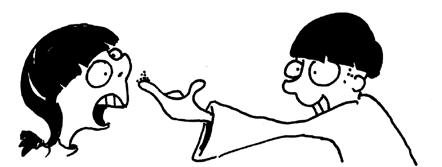
In China in 3000 bce, children had powdered smallpox scabs stuck up their noses to make them immu ne to the horrible disease smallpox. It worked!
Say Listen Look Understand Remember Practise
opp o s e
end u r e
rev i s e
compl e t e
arr a ng e
esc a p e
persu a d e
real i s e
coll i d e
ass u m e
incl u d e
decl a r e
2 3
Write a list word that rhymes.
Group list words using the final vowel sound.
a as in day
e as in bead
o as in soap
i as in by
u as in dew
list words left over
flows strange maid replied repair
Divide these list words into syllables. Underline the stressed syllable. For double consonants in the middle of a word, the syllable break comes between the double letters. assume realise suppose declare revise arrange conclude collide escape
4
Antonyms are words with opposite meanings. Make antonyms by adding missing letters.
Complete the table.
If a word ends in silent e , drop the e before adding the suffixes ed or ing . word add ed add ing waste wasted wasting oppose realise endure complete arrange collide
6
Add s, ed or ing to the word in brackets.
No one the student dressed as a clown. (recognise)
‘Stop me whenever you lose something!’ Vicki yelled. (blame) Each class is to perform an item at assembly. (require) When a chess piece is captured, it is from the board. (remove)
5 7
Add vowels to make words that match the clues.
r sc save from danger r m v take away pr v d supply ll str t draw
r t t turn p rf m pleasant fragrance
I can do this. I am not sure. I need help.
Nobody knows for certain how the pyramids in Egypt were built. It remains a my stery!
Say Listen Look Understand Remember Practise
cop y hurr y guilt y
m y ster y variet y
den y appl y
simplif y qualif y
displ ay pr ey
ann oy
If the word has a single vowel followed by a single consonant, double the consonant before adding y . mud muddy
Make adjectives by adding y . Remember to follow the rule you have just learnt. hair fur mess itch shine risk spot grub dirt guilt noise droop
If a word ends in y, change y to i before adding es or ed. Keep the y when adding ing .
Complete the table. word add es add ed add ing hurry deny reply simplify qualify 2
4
Rewrite each sentence, replacing the underlined word with a list word.
Troy felt regretful that his ball had broken his neighbour’s window.
Grandma’s patchwork quilts have a range of colours and patterns.
What happened to Sally’s keys is a puzzle .
Of all the animals on show, my favourite is the giraffe.
Don’t bother Amy while she is coding her robot.
5
Rewrite each sentence in the plural.
There is only one variety of apple in the store.
Auntie made a copy of the recipe for Mum.
I have a fantasy about what I want to be when I grow up.
6
prey and pray are homophones. Write the correct homophone.
As the king of the jungle, the lion has many . You can’t just . You also have to work hard!
The plural form of prey does not change. Such words are known as
I can do this. I am not sure. I need help.
The left side of your body is controlled by the right side of your brain.
Say Listen Look Understand Remember Practise
begin forget regret occur prefer enter offer answer visit happen target label detail
Each word has two syllables. Say each word and draw a line between the syllables. Underline the stressed syllable. gal lop begin regret occur excel forget admit
If the final syllable has two vowels, just add ed or ing . appeal appealed, appealing I 2 4 3
When adding ed or ing , double the final consonant if: 1. the stress is on the final syllable and 2. the final syllable has one vowel. occur occurred, occurring
Complete the table.
Write three list words that have a short final vowel sound. Write three list words that have a long final vowel sound. short final vowel long final vowel add ed add ing travel permit expel regret add ed add ing appear detail complain reveal
Complete the table.
word add ed
pre fer hap pen en ter re gret vi sit target
Add a suffix to each list word. Use the rules to decide if the final consonant should be doubled. The stressed syllable is underlined.
word add ing be gin forget off er occur la bel de tail
Complete each sentence using a word from the same word family as the word in brackets.
People sometimes get as they get older. (forget)
Mum is making a special dessert because we are having . (visit)
Rani wanted to learn guitar so she joined a class for . (begin)
Sean said he would meet me at the to the swimming pool. (enter)
You must wear goggles for this experiment. (safe)
A word family consists of words that share the same base word. act, act or, act ion, act ing, act ed, act ive, re act 7 6 5
Use list words to answer the questions.
Which word uses the same vowel sound twice?
Which two words have the same meaning? and
I can do this. I am not sure. I need help.
Say Listen Look Understand Remember Practise
engu lf
beha lf
cou gh
trou gh
ph ase
ph obia
ph antom
meta ph or
em ph asise
biogra ph y
am ph ibian
so phisticated
3
loaf self
calf hoof sniff wharf
Say each word aloud. Circle the word if you do not say the l.
calf wolf self
half gulf shelf roo cli gra blu rase inish dwar lau ield rou brie oto
Write f, ff, gh or ph.
Which digraph cannot begin a word?
Use the rules to write the plural word.
When a word ends in f, lf or fe, the f or fe usually changes to v before adding es to make the word plural. leaf leaves elf elves half halves
When a word ends in ff, add s to make the word plural. cliff cliffs
Add s to make these words plural. gulf gulfs proof proofs chief chiefs belief beliefs reef reefs roof roofs
Write the list words that are only nouns.
Use the clues to find ph words that complete the puzzle. Use a dictionary if you need help. a stage of development a group of words another word for ghost a wild bird you can eat a medical doctor a person who works in a pharmacy a person who studies philosophy
The word phobia is both a word and a word part. It can be combined with other word parts to describe different types of fear. Use a dictionary to write the meanings.
arachnophobia
acrophobia
nyctophobia
ophidophobia
Mrs Berg’s neffew tragically became an orfan when his parents died while swimming with dolfins. The dangers had been emfasised but their love of wildlife meant they took risks as fotografers. Ralph lives with the Bergs now.
Proofread this story. The text has five words that are incorrect. Circle the mistakes. Then write the correct spelling of the words in the boxes. 8 7 6 5
Colour the correct word.
Our team scored a goal in each of the two halfs half’s halves of the match.
I have so many books I need more shelfs shelf’s shelves . A wolfs wolf’s wolves eyesight is better than a human’s.
Cliff’s sniffs sniff’s are loud and annoying.
Can we go fishing of off the wharf on Saturday?
I can do this. I am not sure. I need help.
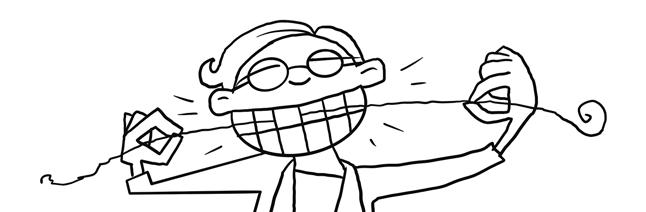
Levi Spear Parmly recommended using a waxen silk thread to floss That was in 1819.
Say Listen Look Understand Remember Practise
o dd
sti ff
e rr
reca ll
insta ll
swe ll thri ll
flo ss
discu ss
posse ss witne ss embarra ss
odd not oodd swell not sweell z
A syllable that has double consonants at the end has a single vowel.
Correct the following words.
stieff flooss stil
discuess witnes poesess
Unscramble the letters to make a word that ends in a double consonant.
lrhitl slepl slnailt sarbs fastf darseds
z
z The suffixes er and est are added to words to compare two or more things. kind kinder kindest
Some words that end in double consonants need to add y first. mess messy messier messiest
3
Add the word with the correct suffix.
It’s odd to see Joe with short hair but it’s to see him wearing a shirt and tie!
There are many dull books on the shelf. Unfortunately for me, I think I picked the .
4
Write the correct form of the adjective.
Jess says Ben is the player on the field. (boss)
Mr Cross is than Mr Bell about how we present our work. (fuss)
6
Use the clues to write list words. 5
An anagram is a word or phrase in which the letters can be rearranged to form another word or phrase. Write a list word for each anagram.
nil salt its news caller bears arms
Add the suffix.
7
Which word has the antonym of short?
Which word has a donkey in it?
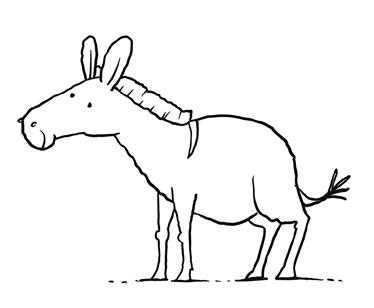
Which word has sickness in it?
Which word has the antonym of sickness? add s or es chill add bluff witness discuss add ed add ing swell install stuff stress embarrass
8 9
Imagine you have witnessed a robbery. Write your eyewitness account.
re + call = recall
Write other words that use the prefix re .
I can do this. I am not sure. I need help.