STUDENT BOOK
2
Australian Curriculum Edition
Name:
Class:
SLLURP
SLLURP summarises the spelling strategies that you can use to learn new words.
S ay Say the word carefully and slowly to yourself.
L isten Listen to how each part of the word sounds in sequence.
Look Look at the patterns of letters in the word and the shape of the word.
Understand Understand rules, word meanings and word origins.
Remember
UNIT Vowels Consonants Letter patterns
1 digraphs digraphs and blends
SKILL FOCUS
Morphology Homophones/ Homographs
2 split digraphs: a-e, i-e, o-e, e-e, u-e blends and digraphs -ed, -ing: dropping final ‘e’
3 short vowel sounds blends and digraphs -ed, -ing: doubling final consonant
4 short y as vowel sound -y: dropping final ‘e’, doubling final consonant
5 ck, medial ck
6 REVISION
Topic words
heel, steep, seal, treat, spark, charm, first, third, south, crowd
place, scrape, time, unite, slope, whole, complete, squeeze, rule, cure
beg, scan, clap, strap, swim, begin, block, throb, thud, scrub
lady, carry, sorry, busy, pony, ready, spotty, foggy, furry, chilly
chicken, bucket, ticket, packet, pocket, jacket, cricket, bracket, backpack, limerick
7 silent letters: kn, wr, mb knee, knife, knock, lamb, thumb, wrong, wrist, listen, castle, often
8 o-e, oa rode/road/rowed, groan/grown home, bone, smoke, alone, coat, road, loaf, soap, float, toast
9 ue ew new, knew, chew, grew, blew, threw, blue, true, argue, cruel
10 ear, eer tear, wind, bow; hear/here, dear/deer
fear, hear, tear, clear, spear, weary, appear, deer, peer, cheer, queer
11 re-, un-, dis- reread, renew, reuse, recycle, undo, untie, unkind, unfair, disagree, disappear
12 REVISION
13 compound words, plural words sunhat, gumboot, bedroom, shoelace, toenail, jellyfish, raincoat, hairbrush, newspaper, wheelchair
14
adding -es to words ending in s, x, ss, sh, ch, o
buses, foxes, classes, dresses, wishes, brushes, lunches, branches, potatoes, tomatoes
15 irregular plurals deer/dear fish, deer, sheep, mice, feet, teeth, geese, children, women, people
16 st, str, squ steel/steal stamp, stew, storm, style, street, strong, stroll, stripe, squeak, square
17 tch adding -es to words ending in tch witch/which
18
19 oi, ai oy, ay
REVISION
itchy, witch, stitch, catch, hatch, watch, fetch, stretch, clutch, kitchen
annoy, toyshop, join, spoil, noisy, stray, delay, trail, chain, explain
20 ie ey piece/peace chief, thief, field, shield, piece, believe, key, honey, monkey, turkey
21 -es, -ed: changing y to i babies, ladies, ponies, stories, puppies, cries, carries, worries, hurries, replies
22 aw, oor draw/drawer, paw/ poor/pour, saw/sore, raw/roar saw, draw, claw, straw, crawl, yawn, prawn, poor, door, floor
23 spr, scr, spl, thr, shr
24 REVISION
25 contractions
seasons of the year spring, sprawl, screen, scratch, split, splash, shrink, shrill, throw, thread
I’ll, he’s, it’s, isn’t, can’t, don’t, doesn’t, didn’t, won’t, we’re
26 -ly: changing ‘y’ to ‘i’ sadly, loudly, slowly, nicely, rudely, quickly, quietly, crossly, kindly, happily
27 er, ir -er, -est: practising spelling rules fern, serve, person, perfect, stir, shirt, first, dirty, thirsty, birthday
28 ur, or, ear turn, hurt, burst, nurse, curly, work, worth, learn, earth, search
29 -er, -or occupations farmer, leader, baker, teacher, shopper, doctor, actor, visitor, author, sailor
30 REVISION
31 days of the week Monday, Tuesday, Wednesday, Thursday, Friday, Saturday, Sunday, today, tomorrow, because
32 ie igh lie, pie, tie, high, thigh, right, night, flight, height, weight
33 ld boulder/bolder build, world, scold, would, could, should, wouldn’t, mouldy, shoulder, boulder
34 compound words with no, any, some, every no one, nothing, nowhere, somebody, something, anyone, anything, another, everyone, everywhere
35
REVISION
Note to teachers and parents
Spelling Rules!
Some students are natural spellers. But the vast majority of students need formal, systematic and sequential instruction about the way spelling works and the strategies they can use to become independent, confident spellers and spelling risk-takers. The Spelling Rules! program is based on sound linguistic and pedagogical theory. It is informed by research into how students of different ages acquire and apply spelling skills, and how those skills move from the working to the long-term memory. The program closely follows the Australian English curriculum. Australian Curriculum: English references are provided in the Teacher Resource Books. The program consists of seven student books, fully supported by two Teacher Resource Books.
Each student book contains units of work, with each unit designed to be used over the course of a week. The content of each unit simultaneously develops new skills and reinforces skills from previous units. The introduction of new sounds and letter patterns is logically sequenced and takes into account both frequency of use and complexity. Where appropriate, topic words from other curriculum areas such as mathematics, science and social sciences are included. When spelling rules are introduced, only known sounds and letter patterns are used so that students focus on one skill at a time. Regular revision units enable teachers to assess student progress and reinforce key rules and patterns from previous units.
The Spelling Rules! program also incorporates elements of self-assessment. A simple reflection activity allows students to assess their own progress and provides you with a starting point for discussion.
Spelling knowledge
Learning to spell involves developing different kinds of spelling knowledge:
T Kinaesthetic knowledge – the physical feeling when saying different sounds and words, and when writing the shapes of letters and words
T Phonological knowledge – how a word sounds and the patterns of sounds in words
T Visual knowledge – how letters and words look and the visual patterns in words
T Morphemic knowledge – the meaning or function of words or parts of words
T Etymological knowledge – the origins and history of words and the effect this has on spelling patterns.
Icons used in Student Book 2
The following icons identify the main spelling strategy that students will use to complete an activity.
Say the word. (Kinaesthetic knowledge)
These activities ask students to experience how sounds feel in the mouth and jaw. Changing the positions of the jaw, lips and tongue changes the sounds we make. Encourage students to pronounce the sounds and words accurately. If they mispronounce a sound or word, they may misrepresent it in writing.
Listen to the word. (Phonological knowledge) These activities focus on discriminating between different sounds and breaking up words into syllables or individual sound segments (phonemes).
Look at the word. (Visual knowledge) These activities help students to see how the sound is represented using combinations of letters, and to associate this visual pattern with what they are hearing. Students will develop the ability to know when a word does or does not ‘look right’.
Understand the word. (Morphemic and etymological knowledge) These activities focus on word meanings, word families, prefixes and suffixes,
spelling rules, word origins and so on, which help embed spelling in the long-term memory.
Practise writing the word. (Kinaesthetic knowledge) These activities develop students’ awareness of the physical movement involved in writing the word. By practising writing the word a number of times and in different contexts, the spelling becomes embedded in the long-term memory.
This icon highlights useful spelling rules.
This icon tells students that a special clue or hint is provided for an activity. It may be a spelling, grammar or punctuation convention, or a definition of a useful term.
Encourages students to assess their progress across each unit.
Student Book 2
U nits of work
Student Book 2 contains 35 weekly units of work. See the Scope and Sequence chart on page 3 for more information. Each revision unit gives students an opportunity to self-assess.
w ord lists
In Student Book 2, each unit (except Revision) has a list of spelling words. The core words in the lists have been chosen to support the learning focus and strategies being taught in the unit.
Spelling lists enable a spelling element to be focused on, and provide sufficient examples to consolidate the teaching point. Topic words come from other curriculum areas, such as mathematics and social sciences. In addition, homophones and words that are easily confused with each other are explained and practised.
sllU
r P
Each word list begins with a reminder for students to SLLURP. SLLURP summarises the strategies that will help spelling move from students’ working memory to their long-term memory. These strategies are provided on page 2, for easy reference.
U nit at a glance
Space to practise list words
SLLURP reminds students about strategies they can use to learn the words. List words support the learning of the spelling focus for the unit. Words come from across the curriculum.
My own words –students can write theme words, personal words or extension words, or practise other words with the same spelling focus. Adapt this section to suit the needs of your class.
Spelling focus highlighted in colour
Unit banner features the spelling focus in the context of a fun joke
Sequenced activities – each activity focuses on a specific spelling strategy. Some activities refer to content in other curriculum areas.
Icons identify the main spelling strategy students will use in an activity.
Spelling tips and rules introduced when students need them to complete an activity.
Reflection allows students to assess their progress.
Spelling Rules! Teacher Resource Book F-2
Full teacher support for Student Book 2 is provided by Spelling Rules! Teacher Resource Book F–2 . Here you will find valuable background information about spelling development and spelling knowledge, along with practical resources, such as:
T teaching tips for every unit in Student Book 2
T guidelines for assessment and diagnosis of errors
T extra word lists T activities to support struggling spellers
T strategies for teaching spelling T worthwhile extension for more able spellers.
Why did the dog get arrested?
Say Listen Look Understand Remember Practise
h ee l
st ee p
s ea l
tr ea t
sp ar k
ch ar m
f ir st
th ir d
s ou th
cr ow d
My own words
He didn’t pay his barking fee!
Write ee or ea.
Write
Say the words. Circle the words that have a different vowel sound.
Add s, ed and ing. Colour the correct word. What do you notice about all the words you circled?
add s add ed add ing cheat start peel crowd firm
The chick cheeps cheeped cheeping when it saw its mum. Gramps fears feared fearing he will fall if he walks too fast.
John is talks talked talking so softly that his friends cannot hear him.
Write a sentence using both words.
3 far warn ward farm war barn yard charm star yarn hard warm 4 6 first third 5
I can do this. I am not sure. I need help.
Say Listen Look Understand Remember Practise
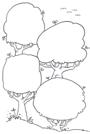
An adder. What snake is good at sums? l Write list words in the correct tree.
pl a c e
scr a p e
t i m e
un i t e
sl o p e
wh o l e
compl e t e
squ ee z e
r u l e
c u r e
My own words
Write the word. Then write it again, adding e to change the vowel sound. 2
Write two words that begin with the same sound as the picture.
3 list word extra word list word extra word
Homophones are words that sound the same, but are spelt differently. hole = empty space
whole = all of
4
Choose the correct homophone.
Shane ate the cake.
Jane dug a in the sand.
I tore a in my pants.
Did you see the movie?
5 place whole unite Words with a silent e drop the e before adding ed or ing . Smil ing , the monkey wav ed at me.
6 place + ed = placed place + ing = placing unite + ed = unite + ing = rule + ed = rule + ing = squeeze + ed = squeeze + ing =
Look for small words inside the list word. Write the small words. Follow the pattern.
I can do this. I am not sure. I need help.
My own words 3
Why couldn’t the leopard escape from the zoo?
Say Listen Look Understand Remember Practise beg scan clap strap swim begin block throb thud scrub
Because he was always spotted.
Write the vowels in the first column. Then write words with short and long vowels to fill in the spaces.
If a word has a short vowel sound and ends in a single consonant, double the consonant before adding ed or ing. 2 beg strap throb scan begin thud clap scrub block
Write the word when ing is added.
3
Circle the pictures that have short vowel sounds.
Write the missing letter.
Follow the pattern. beg ed rub ed spot ed plan ed pat ed stop ed skip ed hum ed
4 6
Most words add ed to make the past tense. Some words change. They are called irregular verbs . swim swam
5 swim sing stink begin drink swam s ng st beg thudded began
Write a sentence for each word.
I can do this. I am not sure. I need help.
What beans can’t you grow in a garden? Jelly beans.
Say Listen Look Understand Remember Practise
lad y carr y
sorr y bus y pon y read y spott y fogg y furr y chill y
My own words
3
Circle the word if the last vowel sound is short, like funny .
crazy cry why daisy by only sky pretty
If a word has a short vowel sound, double the last letter before adding y . fun funny l
2 l / a / d / y busy ready sorry worry hurry
Draw a line between each sound. Underline each syllable. The first one has been done for you.
Double the last letter and then add y . mud sun fur bag spot
Drop the final e and then add y .
4 ice choose flake wobble ease noise
Write a list word for each group. Add another word ending in a short y sound. 5 animals people feelings actions bunny aunty angry study
6
Proofread this story. The story has six words that are incorrect. Circle the mistakes. Then write the correct spelling of the words in the boxes. Tony’s front tooth was wobbley. When it fell out, he lost it. He was not heppy as he planned to put it under his pillow for the tooth fairy. Tony felt silly, but he decided to write a not.
Dear Tooth Fairy,
I am sory I lost my tooth. Please leave a shinny coin for me.
Tony
In the morning Tony rubed his eyes and felt under his pillow. He found two dollars! Wasn’t he lucky?
7
Change the first letter to make a list word. Which pairs of words do not rhyme? w orry soggy beady
I can do this. I am not sure. I need help.
When do chickens go to sleep?
Say Listen Look Understand Remember Practise
chi ck en bu ck et ti ck et pa ck et po ck et ja ck et cri ck et bra ck et ba ck pa ck limeri ck
My own words
Seven o’cluck.
Find a list word for each shape. l 2 rocket wicket packet
Write list words that rhyme.
3
Use the first vowel to put list words in the correct bucket.
Words that end in ck add ed to make the past tense. The number of syllables do not change.
4
Change one letter at a time to make a new word. The first set is done for you. jacket packed locked packet packet pocket docket socket ticket kicked
5 sucked jacket checked socket wicket pocketed kicked bracketed shocked
Say the word. Write the number of syllables in the circle.
I can do this. I am not sure. I need help.