beyondblue welcomes this addition to the literature which we hope will contribute to raising awareness of depression/anxiety and encourage people to seek help.
This edition published in 2021 by
Matilda Education Australia, an imprint of Meanwhile Education Pty Ltd
Level 1/274 Brunswick St Fitzroy, Victoria Australia 3065
Except under the conditions described in the Copyright Act 1968 of Australia (the Act) and subsequent amendments, no part of this publication may be reproduced, stored in a retrieval system, or transmitted in any form or by any means, electronic, mechanical, photocopying, recording or otherwise, without the prior written permission of the copyright owner.
Educational institutions copying any part of this book for educational purposes under the Act must be covered by a Copyright Agency Limited (CAL) licence for educational institutions and must have given a remuneration notice to CAL.
Licence restrictions must be adhered to. For details of the CAL licence contact:
Printed in Singapore by Markono Print Media Pte Ltd
1 2 3 4 5 6 7 25 24 23 22 21 20
Internet addresses
At the time of printing, the internet addresses appearing in this book were correct. Owing to the dynamic nature of the internet, however, we cannot guarantee that all these addresses will remain correct.
CLINICAL PSYCHOLOGY
MODULE five EDUCATIONAL AND DEVELOPMENTAL PSYCHOLOGY
Welcome to the second edition of Psychology in Action . We hope that this book may be the beginning of a life-long interest in psychology for you.
We have been amazed and encouraged by the number of teachers and students who have enjoyed our Psychology in Action course and know that you won’t be disappointed with our new edition.
Since our first edition was published we have been thrilled to see psychology, a subject of immediate relevance to us all, increasingly forming an integral part of the Year 10 school curriculum. We are passionate about this continuing and even hope that one day it becomes a ‘core’ subject at Year 10 level.
Psychology in Action, second edition, aims to connect with teachers and students by using contemporary examples to highlight concepts. We believe that all students will be able to relate to the concepts studied. This will not only make it easier for them to understand, but motivate them to learn.
We have enhanced each of the four existing Modules: Introduction to Psychology, Sport Psychology, Clinical Psychology and Forensic Psychology with new activities, break-out boxes, case studies and research, which we hope will stimulate interest in a very practical way. We are also delighted to announce that the Second Edition has a new, fifth Module: Educational and Developmental Psychology. This is sure to simulate student interest and create much lively debate within the classroom. This module focuses on topics relevant to early childhood, middle childhood and adolescence, including: cyberpsychology, romantic relationships, friendship difficulties and more mental disorders. Our selection of topics has been based on our experience as teachers, being the parents of children and adolescents, and clinical psychology experience.
The second edition is also different from the first in that it has the support of a fantastic organisation, beyondblue (incorporating Youthbeyondblue). This organisation shares our vision for education about the importance of good mental health and recognition of the early warning signs of mental ill-health. We would like to thank beyondblue for their support. Please visit them at www.youthbeyondblue.com.
Again we would like to thank our families for their support and Macmillan for their continued belief in our product. We look forward to hearing from students and teachers via our website www.psychinaction.com, which will continue to support you every step of the way on your journey through Psychology in Action
Best regards
Nicole Letch and Edwina Ricci
beyondblue: the national depression initiative
beyondblue is a national, independant, not-for-profit organisation working to address issues associated with depression, anxiety and related substance misuse disorders in Australia. It is estimated that, at any one point in time, approximately 120 000 or 3 per cent of young Australians have severe or ‘clinical’ depression with many more (about 15 per cent) experiencing periods of prolonged sadness leaving them at risk for ‘clinical’ depression. Other than the extreme distress depression causes a young person, it can significantly impact on their schooling, relationships and community participation. Although depression has serious consequences only a minority of young people with depression (estimates in Australia suggest less than one in three) receive professional help e.g. from a psychologist. Some don’t get the professional help they need because they’re unaware of the services and professions that exist to help young people with mental health difficulties. Conversely, some young people won’t seek help because they are worried about what others will think or they believe (quite mistakenly) that nothing or no-one can help.
Over the past decade, schools have become increasingly aware of the impact mental health problems such as anxiety and depression have on students and the broader school community. Since 2000, beyondblue: the national depression initiative has taken a leading role in raising community awareness about depression, anxiety, and related disorders. The Youthbeyondblue website (www. youthbeyondblue.com) was developed for young people 12 to 25 years to provide clear information about mental health difficulties, as well as information on how to support a young person experiencing difficulties. Its key messages are:
■ LOOK for the signs of depression
■ LISTEN to what the person is saying
■ TALK about what’s going on
■ SEEK HELP together
The other area beyondblue has been keen to address is the development of curriculum programs to develop the life skills of young people, often referred to as skills for resilience. These programs focus on prevention, targeting those skills
and capacities that ‘protect’ against mental health difficulties – making a young person less vulnerable to experiencing depression (and anxiety) in the future. Developing life skills has important pay offs for the whole school community. Students with better skills are more able to cope with the stressors of daily life, have better relationships with parents, teachers, and peers, and do better academically. .
The beyondblue Curriculum Program was developed by health and education professionals and is a comprehensive 30-session curriculum program delivered to students over a 3-year period beginning in Year 8. The Program is based on cognitive-behavioural principles. Cognitive approaches to mental health regard thoughts as playing a central role in influencing feelings and consequent behaviour. Specifically, when an event happens to us, it is our thoughts and interpretations of that event, and not the event itself, that leads us to feel certain emotions and act in particular ways. One of the more obvious examples occurs when students receive exactly the same scores on an exam but have completely different emotional reactions.
The beyondblue Curriculum Program was developed with the view to enhancing students’ thinking around themselves, their world and future though the development of six key senses. These are:
1 Sense of Self-worth (knowledge of and belief in one’s strengths, skills, and abilities – an acceptance of one’s inherent value)
2 Sense of Belonging (feeling valued, needed and accepted – being connected meaningfully to a social network)
3 Sense of Control (belief that one has the skills and ability to cope with life challenges and to manage one’s own emotions)
4 Sense of Purpose (capacity to make sense of the world and to perceive some meaning in one’s life)
5 Sense of Future (hopefulness about the future enabling us to act purposely and positively)
6 Sense of Humour (being able to see the lighter and ‘funnier’ side of life –including ones own foibles).
The beyondblue Curriculum Program was originally trialled across 25 schools in three States as part a larger research project. Upon the completion of the trial in early 2006, beyondblue has made these materials freely available to schools through its website www.beyondblue.org.au/schools. beyondblue is in the process of updating and repacking its Curriculum Program (due to be completed early 2010) providing specific modules on each of the six key senses as well as a school-community module which will provide teachers and parents with information on how to support young people experiencing difficulties
Both beyondblue and Psychology in Action have a strong commitment to enhancing the mental health of young people through education about the signs and symptoms of depression and anxiety and related disorders. Visit www.beyondblue.org.au and www.youthbeyondblue.com.
While every care has been taken to trace and acknowledge copyright, the publishers tender their apologies for any accidental infringement where copyright has proved untraceable. They would be pleased to come to a suitable arrangement with the rightful owner in each case.
MODULE one WHAT IS PSYCHOLOGY?
It is alleged that in January 2009, Arthur Freeman drove to the top of the Westgate Bridge, took his four-yearold daughter Darcey out of the family car and threw her 58 metres off the bridge to her death. A few days later, the public learnt that Freedman and his ex-wife had just been part of a Family Law dispute over custody of their children in the Federal Magistrates’ Court.
Ben Cousins is a professional Australian Rules footballer. During his career, he has won several of the Australian Football League’s highest individual awards including the Brownlow Medal, the League’s Most Valuable Player, a premiership medallion, six selections in the All-Australian Team and represented Australia in the International Rules Series. He was also West Coast’s Club champion for four seasons and captain for five seasons. However, at the height of his career, Cousins also became involved in several off-field incidents, (involving drug use, traffic convictions and associations with criminal activities), which attracted considerable negative publicity. These incidents eventually led to him being temporarily suspended from the game. Fortunately for Cousins, in November 2008, the AFL Commission lifted his suspension and cleared him to play football in 2009 – but with conditions. He was required to submit to regular drug tests, including urine testing up to three times per week and hair testing up to four times per year.
In April 2008, the world was left shocked and speechless when the case of 73-year-old Josef Fritzl broke. We learnt that Fritzl had imprisoned one of his daughters, Elisabeth, for 24 years in a small, soundproof and windowless cellar in the basement of the family home in Austria, claiming she had run away and joined a cult. During her captivity, his daughter had given birth to a total of seven children, all of
whom had been fathered by Fritzl. One of the children died shortly after birth, and Fritzl simply disposed of the body in a furnace. The discovery was made when one of his children to his daughter, Kerstin, fell unconscious, and Fritzl agreed to seek medical attention at the local hospital. Fritzl’s wife, Rosemarie, had, apparently, been unaware of what had been happening to Elisabeth. We also learnt that Fritzl had a very disturbing background – his unaffectionate mother used to beat him until he was left lying in a pool of blood, he had served time in prison in the late 1960s for raping a 24-year-old woman, he had a history of indecent exposure and was the prime suspect in another case of attempted rape. On 19 March 2009, Fritzl was sentenced to life imprisonment at a secure institution for mentally disordered offenders.
What possibly could have driven a father to do such a thing as throwing a child off the Westgate Bridge? Why did Ben Cousins, a talented footballer at the height of his career, behave in ways that jeopardised his future in the game? What could possibly have motivated Josef Fritzl to imprison one of his daughters against her will and father seven children with her?
If a psychologist had been involved with Freeman, Cousins and Fritzl at some stage earlier in their lives before these incredible turns of events, could the outcomes have been different? If so, what type of psychologist would have been the best suited to help these individuals and how might the psychologist have helped? In the chapters to follow, we seek to provide you with the answers to these and many other questions related to the understanding of human behaviour and the mind.
CHAPTER
What is psychology? 1
The term ‘psychology’ originates from two Greek words: psyche, meaning the mind; and logos, meaning study or knowledge. Psychology was formerly defined as the study of the mind but now its definition is much broader. Psychology is now commonly defined as the scientific study of behaviour and the mind.
In psychology, the term ‘behaviour’ refers to any observable action made by a living person or animal. Eating, sleeping, sneezing, watching TV, and reading this book are all examples of behaviours that can be observed. Mind refers to the experiences or mental processes that occur within an individual, which cannot be directly observed. That is, those activities that go on inside our heads, such as sensations, perceptions, memories, thoughts, feelings, dreams, motives and emotions.
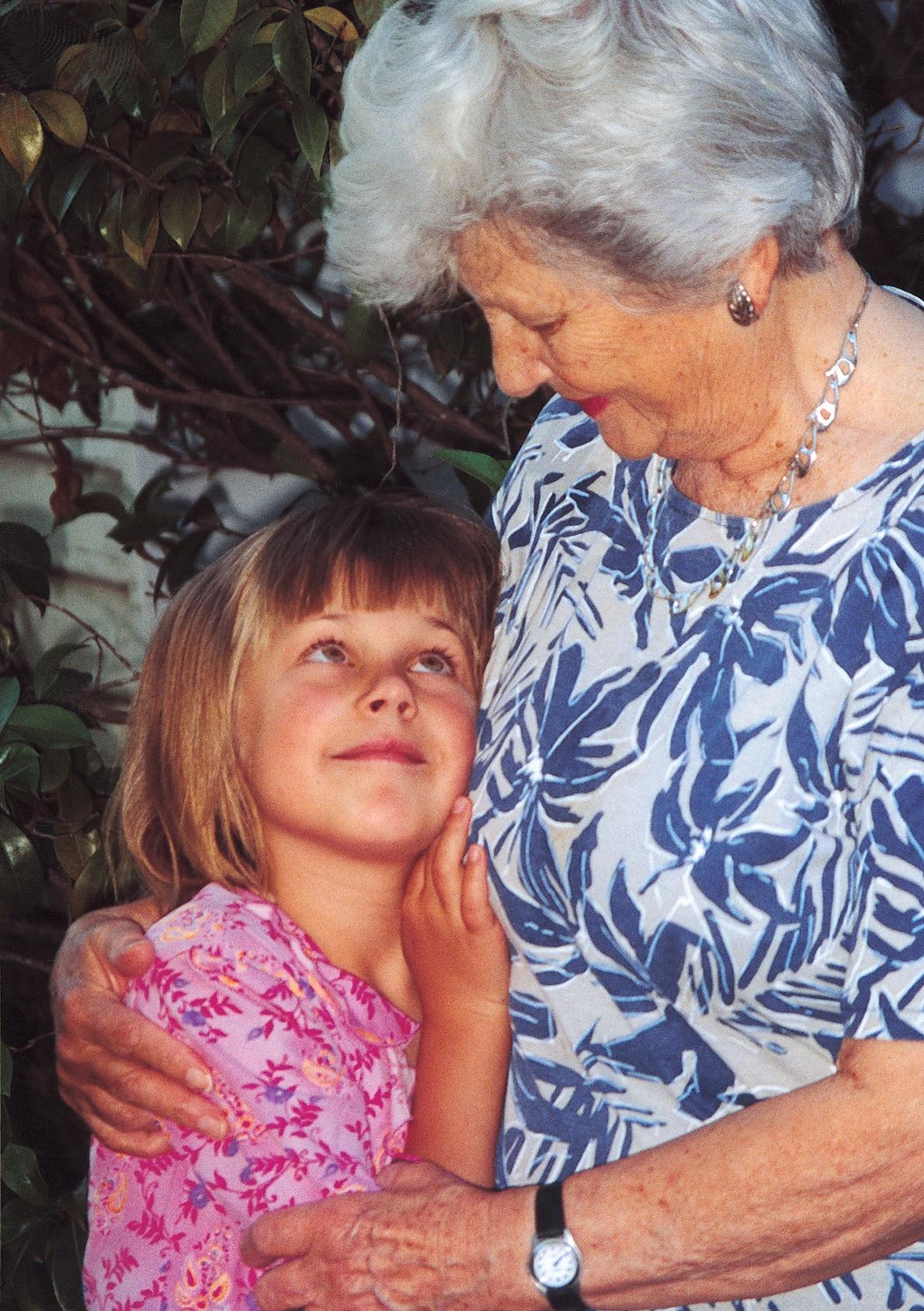
The relationship between behaviour and mental processes is frequently studied in psychology, and psychologists often attempt to determine what is going on inside a person’s mind by observing their behaviour (see figure 1.1).
Psychology is a science: a systematic study based on observations, measurements and experiments. As scientists, psychologists conduct research following scientific approaches and use observation, experimentation, and mathematical procedures (statistical analysis) to evaluate the results. All psychologists are trained as scientists, which is what makes psychologists different from others in the helping professions (e.g. nursing). Psychology as a science is discussed in more detail in chapter two.
Psychology is also a profession (occupation) that requires advanced education and training. Modules two to five of this textbook focus on psychology as a profession and investigates four of the specialist areas of psychology and the type of work undertaken by psychologists working in these areas.
p Figure 1.1
By observing this girl hug her grandmother, psychologists may determine that this girl is feeling affectionate.
Psychology is the scientific study of behaviour and the mind.
Behaviour refers to any observable action made by a living person or animal. Mind refers to the experiences or mental processes that occur within an individual, which cannot be directly observed.
A psychologist is someone who practises psychology, the scientific study of behaviour and the mind.
Activity 1.1 WHAT IS PSYCHOLOGY?
1 Define psychology in your own words.
2 Psychology is both a science and a profession. What is the difference between these two aspects of psychology?
3 The aim of this exercise is for you to think about the relationship between behaviour and the mind. Complete the following table in your workbook.
Under the heading ‘Behaviour’, list five behaviours that psychologists are able to observe. Under the heading ‘Mind’, list what psychologists may be able to determine about what mental processes are occurring by observing that behaviour. An example has been done for you.
Behaviour Mind
Eating The person may be experiencing hunger, sadness or boredom
Working as a psychologist
Roles of a psychologist
Close your eyes and picture a chemist at work. What do you see? Most people imagine a scientist in a lab coat surrounded by glassware and high-tech equipment. Now close your eyes and picture a psychologist at work. What do you see? Did you see:
■ a person sitting and listening to someone’s problems?
■ a person wearing a white coat probing a rat’s brain?
■ a person wearing plain clothes, holding a clipboard in a shopping centre who is stopping people and asking them questions?
■ a person wearing a suit giving a lecture to bank managers about a new ‘healthy life-styles’ program?
■ a person sitting at a computer keyboard analysing data?
You may be surprised to find out that any one of the above descriptions is correct: each person is a psychologist. This example highights how the title ‘psychologist’ doesn’t always describe the role the person performs. For example, many registered psychologists are called a range of titles, such as ‘counsellor’, ‘career consultant’ or ‘research assistant’.
Despite popular belief, psychologists do not just work with people who have mental disorders. Some of the many diverse roles that may be undertaken by psychologists include:
■ conducting research
■ counselling or interviewing people
■ examining the causes of accidents in the workplace and introducing ways to reduce how often they occur
■ assessing and treating people with mental disorders and psychological problems
■ teaching or lecturing
■ giving evidence in court
■ helping athletes improve their performance.
Sometimes, people confuse the role of a psychologist with that of a psychiatrist (see box 1.1).
Box 1.1 THE DIFFERENCES BETWEEN PSYCHOLOGISTS AND PSYCHIATRISTS
People often confuse psychologists with psychiatrists. This could be due to the fact that psychologists and psychiatrists both may work with people with mental disorders. However, there are some significant differences between the two professions. Psychiatry is a branch of medicine concerned with the prevention, causes, diagnosis, and treatment of mental disorders. Psychiatrists first train as medical doctors and undertake six years of university study and training to gain their basic medical qualifications. After they have obtained their medical degree, doctors must then work as interns in a general hospital for a further 12 months to gain experience in specialist aspects of medicine and surgery, in order to become fully registered as medical practitioners. Following their internship, they must complete at least a further year as a Resident Medical Officer. In Australia and New Zealand, specialist training for doctors to qualify as psychiatrists is conducted by the Royal Australian and New Zealand College of Psychiatrists (RANZCP). RANZCP’s program for postgraduate training in psychiatry takes a
minimum of five years, during which time, the doctors work under supervision in hospitals and community clinics.
Because all psychiatrists are medical doctors, they are legally permitted to prescribe medication. For example, a psychiatrist can prescribe anti-depressant medication in the treatment of severe depression. Psychiatrists can also perform medical procedures. For example, a psychiatrist can administer electroconvulsive therapy (electrical currents through the brain) in severe cases of schizophrenia if a client’s symptoms are not helped by other treatments.
Unlike a psychologist, a psychiatrist is a fully qualified medical specialist who has completed at least 13 years of medical education in all aspects of medicine, surgery and psychiatry. In contrast, psychologists complete at least four years of full-time undergraduate and postgraduate study in psychology. Psychologists are not legally permitted to prescribe medication or perform medical procedures. However, they are permitted to conduct psychological tests (e.g. IQ tests) whereas psychiatrists are not.
Although psychiatrists and psychologists are trained differently and have different roles, they sometimes team up to help people. For example, psychiatrists and psychologists often work together to help children with attention deficit hyperactivity disorder
(ADHD). When working with children with ADHD, the psychiatrist will usually prescribe the child medication, and the psychologist will help the child in other ways such as managing their anger and/or improving their social skills.
Areas of specialisation
In the same way that some doctors continue their studies and specialise in areas such as psychiatry, paediatrics or obstetrics, psychologists can also choose to specialise in one of a number of different areas of psychology. Each of these is now discussed. The Australian Psychological Society (see page 21) identifies 10 specialist areas of psychology.
Sport psychology
Imagine combining a love of sport and exercise with psychological theories you have learnt about, in order to push your client that fraction of a second closer to Olympic gold.
Sport psychology is a specialised area of psychology that deals with the psychological factors that influence, and are influenced by, a person’s participation in sport, exercise and physical activity. Sport psychologists are interested in how participation in activities may improve personal development and wellbeing throughout life. However, despite what you might think, sport psychologists do not only work with professional athletes. They may work with a range of people, such as:
■ recreational, elite and professional sport participants/athletes
■ coaches, managers, and administrators
■ trainers, physiotherapists and other sport scientists
■ umpires and referees
■ performing artists (e.g. musicians, dancers and actors)
■ employees and employers in any occupation concerned with optimal (the best) performance.
Sport psychologists can help people with:
■ improving performance through mental skills training (e.g. setting goals, applying imagery, managing self-confidence)
■ anxiety management and relaxation (e.g. coping with competition anxiety)
■ concentration and mental preparation (e.g. teaching athletes how to focus)
■ team building and leadership (e.g. before an important match)
■ recovering from an injury (e.g. returning to show-jumping after a fall)
■ grief and loss (e.g. de-selection and retirement from a sport)
■ weight management and health behaviours (e.g. eating disorders).
Since 1984, Australia has been leading the world in the use of sport psychology. At the Sydney 2000 Olympics there were twelve Australian sport psychologists accredited with the Australian Olympic Committee. National sport governing bodies and institutes/academies of sport across Australia continue to value the services provided by sport psychologists.
Clinical psychology
Imagine being able to help someone leave their house for the first time in three years or to help someone who has felt that life isn’t worth living feel happy again. If you’d like to have the knowledge and skills to do these things, then clinical psychology could be a career choice for you.
Clinical psychologists specialise in the assessment, diagnosis and treatment of mental disorders and psychological problems that affect children, families and adults. Clinical psychologists are trained to work with people of all ages and may work with psychiatrists and other health professionals in hospitals, universities, community health centres and private practice. Clinical psychologists may work, for example, with people who:
■ have starved themselves intentionally (anorexia nervosa)
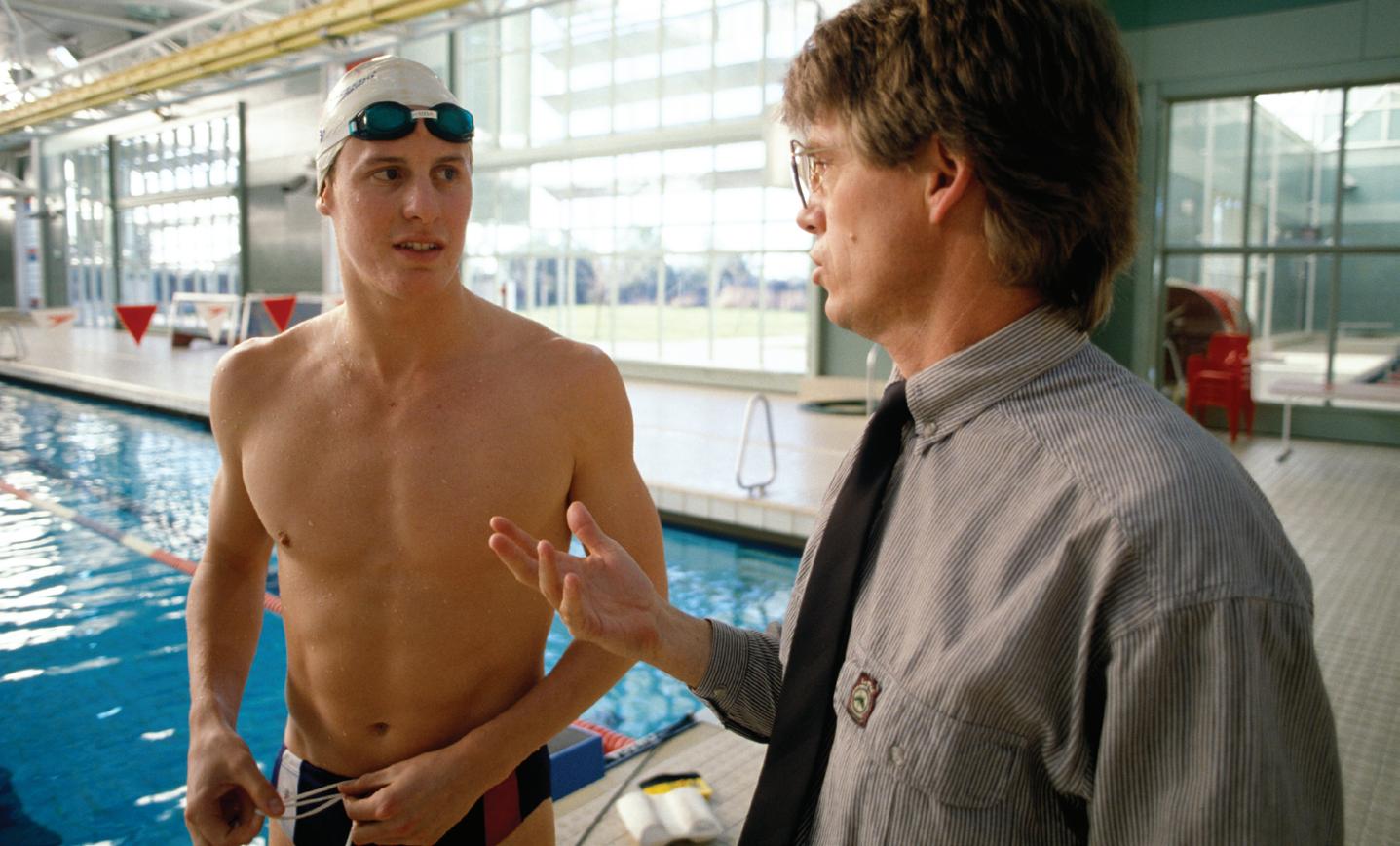
p Figure 1.2
A major focus of a sport psychologist’s work is to help improve the performance of individual athletes and teams.
p Figure 1.3
Clinical psychologists often provide psychological treatment to people with mental disorders such as major depressive disorder.
Forensic means related to or associated with legal issues.
■ are experiencing depression (major depressive disorder)
■ are experiencing difficulties sleeping (insomnia)
■ have irrational fears (phobias)
■ drink too much alcohol (alcohol abuse).
Forensic psychology
Imagine working as a criminal profiler helping the police catch criminals, researching why some people refuse to believe a relationship is over and stalk their ex-partner, or working with victims or perpetrators of crime. If you like the idea of combining psychological theories with the legal and criminal justice system, then forensic psychology could be a career for you.
Forensic psychologists specialise in the application of psychological theory and skills to the understanding and functioning of the legal and criminal justice system. The types of people seen by forensic psychologists may include:
■ convicted offenders, who have been given a prison sentence and need treatment in a psychiatric hospital
■ people who are accused of crimes, but are considered ‘unfit to plead’ because of their mental disorder
■ people who are considered not guilty of alleged crimes because of the presence of a mental impairment
■ offenders or alleged offenders, who are referred by courts for assessment or treatment
■ offenders living in the general community, who are considered a potential threat to others.
Forensic psychologists may use their skills in a number of different situations, for example:
■ performing psychological assessments and providing psychological reports for the courts
■ appearing in court as an ‘expert witness’ and giving opinions on psychological matters
■ assisting the police with the profiling of potential suspects, particularly for serious crimes such as serial murders
■ assessing and treating people who are the victims of crime or witnesses of crime
■ conducting research in areas of forensic psychology such as, witness studies, jury behaviour, psychology of the courtroom.
Clinical neuropsychology
Imagine you are in a car accident and your brain is injured. If you can’t remember your life pre-injury, including the names of your family members and friends, how
do you relate to them now? Or if you can’t lay down new memories – you’re stuck in the past – how would you cope? If you can only respond with an eye-blink, how do you share your thoughts with others?
Neuropsychology is concerned with the relationship between how thinking and behaviour are affected by brain dysfunction. Many things may cause brain dysfunction, for example:
■ illness, such as dementia or epilepsy
■ injuries, such as those caused by a car accident
■ other things, such as alcohol abuse.
Clinical neuropsychologists have particular expertise in conducting neuropsychological assessments and treating people with brain dysfunction. The results of the neuropsychological assessment are then used to:
■ understand the nature of the brain dysfunction (i.e. how it affects the person)
■ diagnose the cause of the brain dysfunction
■ make recommendations about what course(s) of action could be taken in order to help improve the problem. For example, if a client is found to have a poor memory, the clinical neuropsychologist will provide them with ideas about how to remember new information.
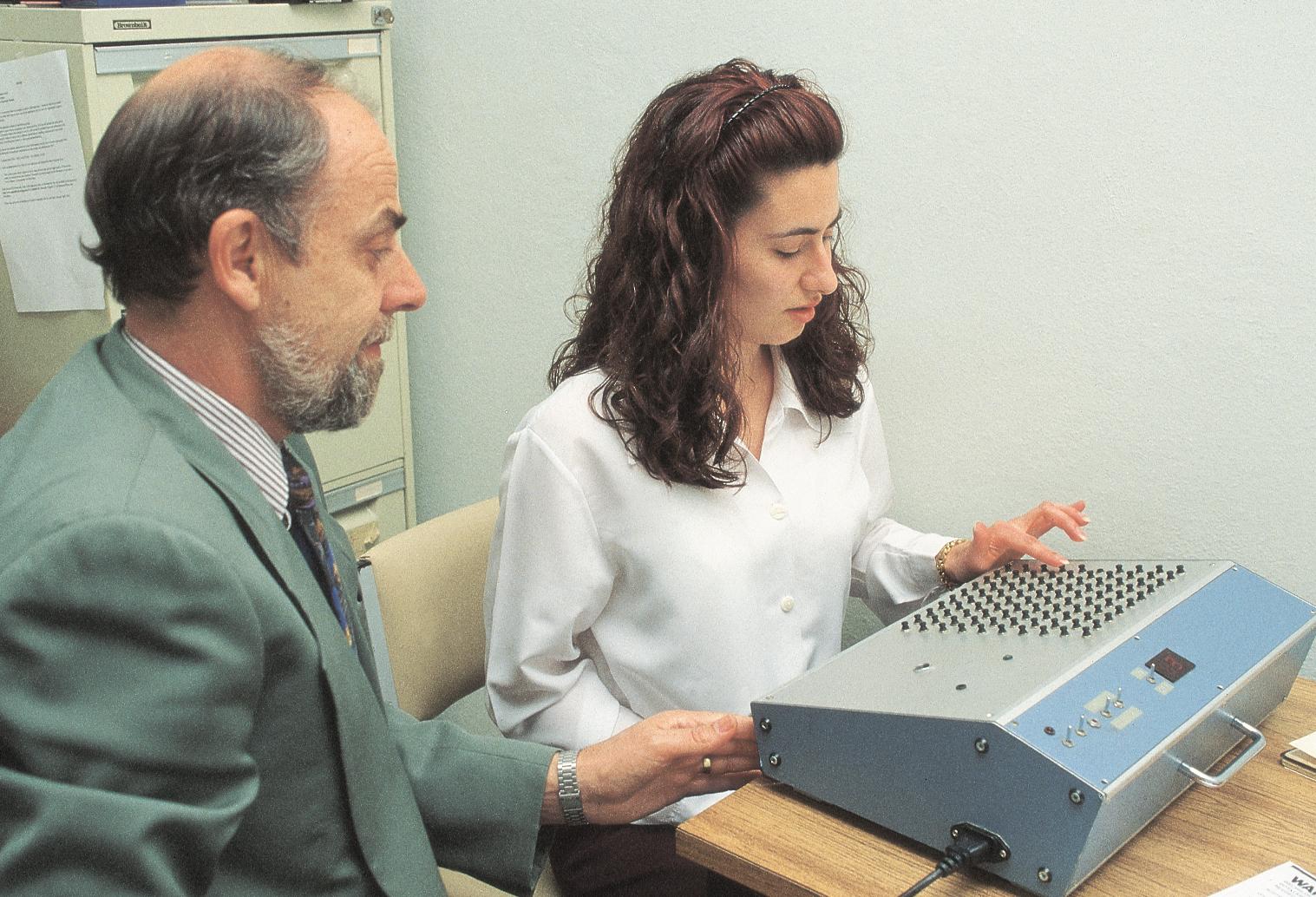
p Figure 1.4
Clinical neuropsychologists are experts in conducting neuropsychological assessments. Here a clinical neuropsychologist is administering a neuropsychological test called the Austin Maze.
Neuropsychology is concerned with the relationship between how thinking and behaviour are affected by brain dysfunction.
Brain dysfunction is an impairment of brain function (i.e. ‘brain damage’).
Neuropsychological assessment involves the measurement and evaluation of a client’s thought processes and behaviours through interviews, observations and use of specific psychological tests.
Activity 1.2 CLINICAL NEUROPSYCHOLOGY ROLE-PLAY
Neuropsychology is concerned with the relationship between how thinking and behaviour are affected by brain dysfunction. Many things may cause brain dysfunction, for example: illness, such as dementia or epilepsy; injuries, such as those caused by a car accident; and other things, such as alcohol abuse.
A neuropsychological assessment is the measurement and evaluation of a client’s thought processes and behaviours through interviews, observations and use of specific psychological tests.
YOUR TASK:
1 Get into pairs.
2 Research one of the following conditions commonly seen by clinical neuropsychologists:
■ Aphasia
■ Amnesia
■ Cerebro-vascular attack (CVA) (stroke)
■ Dementia of the Alzheimer’s type
■ Epilepsy
■ Korsakoff’s syndrome
3 Choose one of you to play the role of the client and one of you to play the role of the clinical neuropsychologist.
4 Prepare a five-minute role-play of a session with a client and a clinical neuropsychologist.
The task of the client is to behave as someone with that condition would.
The task of the clinical neuropsychologist is to provide the client with feedback regarding the outcome of the neuropsychological assessment. This should include an explanation of the following:
■ their diagnosis
■ which part of the brain is affected by their condition
■ what causes the condition
■ what can be done to help them.
The teacher may decide that some or all of the role-plays could be shown to the rest of the class.
Counselling psychology
How would you go about helping a 76-year-old man who has just lost his wife of 50 years? How would you help a 15-yearold girl whose father has just died? If you love to talk people through their problems – and really get to the bottom of them –perhaps you should consider a career in counselling psychology.
Counselling psychologists specialise in assisting individuals, couples, families and organisations in the areas of personal wellbeing, relationships, work, recreation, health and crisis. Counselling psychologists generally deal with psychological problems that are less severe than those dealt with by a
p Figure 1.5 One role of a counselling psychologist could be to help people deal with the loss of someone in a car accident.
clinical psychologist. Examples of ways in which they can offer assistance include helping:
■ individuals increase their self-esteem or manage stress
■ couples to manage disagreement
■ families cope with issues such as separation, divorce or re-marriage
■ organisations resolve interpersonal work conflicts.
Educational and developmental psychology
A small girl sits sullenly in the corner, her education (her future?) slipping away before the teacher’s eyes. What’s her problem? Can you discover what it is and help her?
Educational and developmental psychology is concerned with how people develop and learn throughout their lives. Educational and developmental psychologists assist children and adults with learning and developmental issues by providing assessment and counselling services. They may work in many different settings with individuals, couples, groups and organisations. As a result, they have many titles such as school psychologist, guidance officer, and child and adolescent counsellor. Areas in which educational and developmental psychologists provide help include:
■ early childhood (e.g. concerns about development or sibling rivalry)
■ school years (e.g. bullying)
■ adolescence (e.g. peer pressure)
■ adulthood (e.g. parenting)
■ older adulthood (e.g. healthy ageing).
Activity 1.3 BULLYING RESEARCH PROJECT AND POSTER PRESENTATION
One of the roles that may be undertaken by educational and developmental psychologists is to provide students and teachers with help on the issue of bullying in schools. For example, they may be involved in counselling students who have been bullied, or in advising teachers on ways to reduce bullying in their school. Conduct research on bullying in newspapers, magazines and the internet, and then display your information in an eyecatching poster, which could be displayed
around your school. Your poster must include the following information:
■ a description of bullying and the different types of bullying that exist
■ a list of ways to prevent bullying in your school
■ how being a victim of bullying can affect a person psychologically
■ a list of what people can do if they are being bullied.
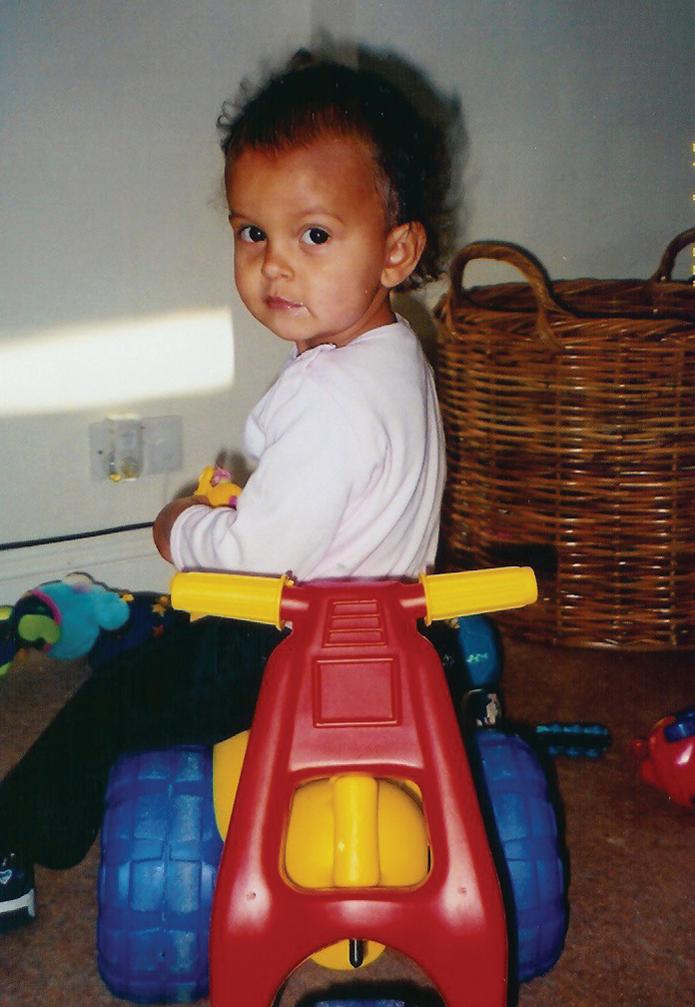
p Figure 1.6 Educational and developmental psychologists may assess a child’s development by observing the way they play with their toys.
Organisational psychology
What psychological knowledge would you use to increase the effectiveness of organisations, and to improve the job satisfaction of workers? If you want to use your psychological knowledge to change lives of large numbers of people in one go, perhaps organisational psychology is for you. The wheels of industry are oiled by happy workers, performing to the best of their ability in a safe and healthy environment. This is where you would come in as an organisational psychologist.
Organisational
Organisational psychology applies psychological principles and methods to the areas of:
■ work
■ human-resource management
■ training and development
■ market research
■ advertising.
Organisational psychologists try to understand the complex relationships in workplaces in order to improve an organisation’s effectiveness and productivity. They have a broad range of skills, such as:
■ selection and assessment (e.g. devising selection criteria for job applications)
■ career development (e.g. assessing an individual’s career potential and career options)
■ organisational development (e.g. helping with change in an organisation)
■ wellbeing management (e.g. conducting work-stress or job satisfaction surveys)
■ occupational health and safety (e.g. examining the causes of accidents and introducing ways to reduce how often they occur)
■ consumer and marketing psychology (e.g. identifying consumer reaction to products).
Activity 1.4 SELECTING A SCHOOL PRINCIPAL
Your school has a problem. The principal has left yet again. Over the last year, no principal has managed to stick with the job for more than three months. Recently, the staff have approached you, an organisational psychologist, for help.
1 Write down the characteristics of someone who you think would make a good school principal and who you think would be committed to the job.
2 Based on your profile, write and design a job advertisement for a newspaper, advertising for this position.
3 a As a class, compare your answers and advertisements.
b What were the similarities and differences in the characteristics that students thought would make a good school principal?
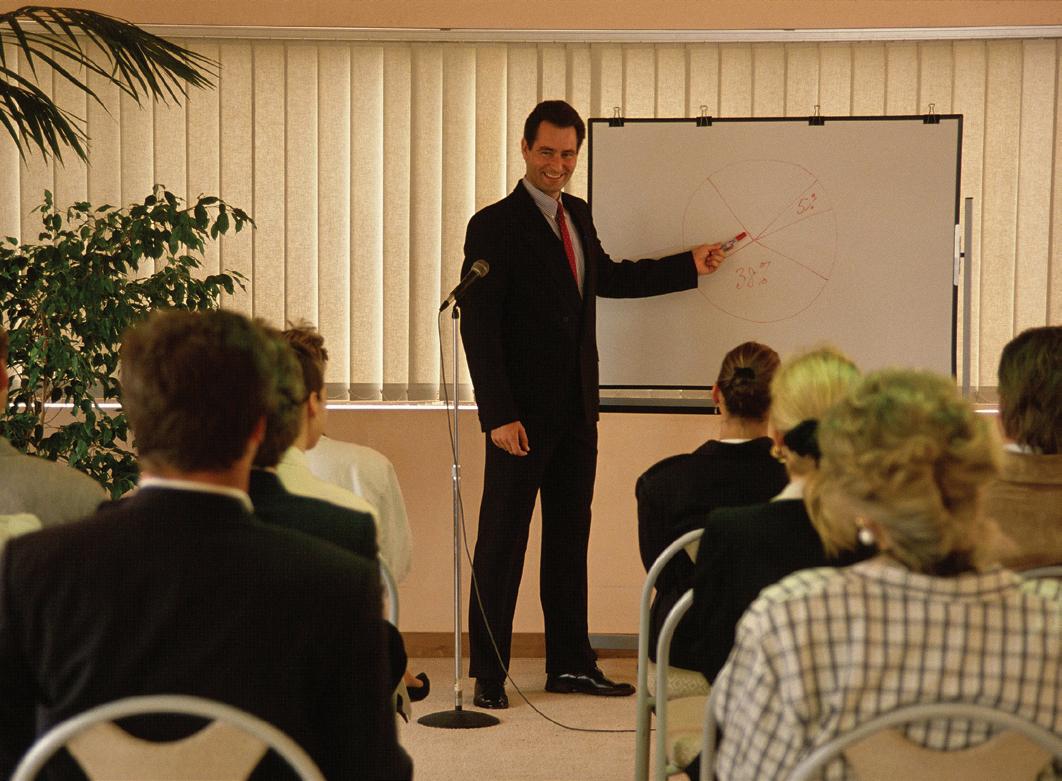
p Figure 1.7
psychologists can help large organisations improve their effectiveness and productivity.
Community psychology
What is the impact of crowded living conditions on someone’s mental health? What features of a school environment could be changed in order to maximise students’ learning? Why do some people recycle and others don’t? If you are interested in finding out the answers to questions such as these, then community psychology could be for you.
Community psychology developed in Australia in the 1970s when it was recognised that people’s psychological wellbeing could not be understood in isolation from broader society and the environment. Community psychology is about understanding people within their social worlds and their environment, and using this understanding to improve their wellbeing. Community psychologists work with community members and policy makers on the individual, social and environmental factors that contribute to a person’s psychological wellbeing within communities. Box 1.2 provides one example of how the environment can impact on people’s psychological wellbeing.
Community psychologists undertake a variety of roles that can include:
■ training staff
■ conducting community-based research
■ coordinating projects
■ conducting community consultation and project development
■ counselling or providing support for people.
Activity 1.5 ANALYSIS OF THE PHYSICAL ENVIRONMENT
The aim of this activity is to consider your school environment and the effect it has on you.
1 When I am in this classroom, I generally feel (list in your workbook all that apply): happy sad comfortable uncomfortable relaxed tense motivated unmotivated calm angry encouraged frustrated
2 What do you think could be changed about your classroom in order to make it a better learning environment? Consider things such as noise levels, temperature and lighting, as well as the positioning of entrances, exits, furniture, etc.
3 Where do you feel most comfortable in the school? Why?
4 What area of the school do you find least comfortable? Why? What do you think could be changed about this area in order to make it more comfortable for students?
p Figure 1.8
Community psychologists play a role in training staff.