Matilda Education Australia acknowledges all Aboriginal and Torres Strait Islander Traditional Custodians of Country and recognises their continuing connection to land, sea, culture, and community. We pay our respects to Elders past and present.
This edition published in 2024 by Matilda Education Australia , an imprint of Meanwhile Education Pty PO Box 118, Burwood, Victoria, Australia 3125
The moral rights of the author have been asserted.
All rights reserved. Except under the conditions described in the Copyright Act 1968 of Australia (the Act) and subsequent amendments, no part of this publication may be reproduced, in any form or by any means, without the prior written permission of the copyright owner.
Educational institutions copying any part of this book for educational purposes under the Act must be covered by a Copyright Agency Limited (CAL) licence for educational institutions and must have given a remuneration notice to CAL.
These limitations include: restricting the copying to a maximum of one chapter or 10% of this book, whichever is greater. For details of the CAL licence for educational institutions, please contact:
Copyright Agency Limited
Level 12, 66 Goulburn Street Sydney, NSW 2000 Toll-free phone number (landlines only): 1800066844
Grammar Rules! comprehensively supports implementation of the Australian Curriculum English V9, 2022, to develop ‘students’ knowledge and skills in listening, reading, viewing, speaking writing and creating’. The Grammar Rules! series is recursive and cumulative, with each year building on understandings developed in previous years.
The Australian Curriculum English recognises that knowledge and understanding of grammar at the level of the whole text and at the level of the sentence, clause, phrase or word, underpins students’ comprehension of oral and written texts, and their ability to create effective texts for various purposes and audiences.
Grammar Rules! provides a conceptually sound, scope and sequence of context-based activities that support teaching and learning in English. Although the title for the series is Grammar Rules! , the series in not just about grammar. Each unit of work in the series begins at the level of the whole text by identifying purpose and audience for the model text, providing teaching opportunities to activate students’ background knowledge of the topic or the text type, and then supporting students in reading comprehension. The texts provided can be used for discussion of text forms and features and sentence structures, as well as for vocabulary expansion. The texts can also be used as models for students to use when creating their own written, spoken or multimodal texts. The texts included in Grammar Rules! cover a variety of informative, imaginative and persuasive texts and hybrid texts that use elements of different types of texts.
Grammar Rules! also teaches the conventions of punctuation and some aspects of spelling (for example, plural nouns and homophones); literary elements such as onomatopoeia, rhyme and alliteration; and the way visual elements function to support or construct meaning. Other areas of the Australian Curriculum English covered in Grammar Rules! include critical reading and reflecting on character, setting and plot in narrative texts (literature).
Student Book 1
U nits of work
Student Book 1 contains 35 weekly units of work presented in a conceptually sound scope and sequence. The intention is for students to work through the units in the sequence in which they are presented. See the Scope and Sequence Chart on pages 6–7 for more information. There are regular Revision Units that can be used for consolidation or assessment purposes.
The sample texts in Student Book 1 are not tied to any particular content across other curriculum areas. This allows teachers and students to focus on the way language is structured in the different types of texts according to purpose and audience. Students can then use this knowledge to critically evaluate, respond to and create texts in other learning areas. icons
Encourages students to create texts of their own to demonstrate their understanding of the text structures and features taught in the unit. These activities focus on written language; however, many also provide opportunities for using spoken language to engage with others, make presentations and develop skills in using ICT.
Highlights useful grammatical rules and concepts. The rule is always introduced the first time students need it to complete an activity.
Tells students that a special hint is provided for an activity. It might be a tip about language features, or a reminder to look at a rule in a previous unit.
G rammar r U les ! G lossary
I can do this.
I am not sure.
I need help.
Encourages students to assess their progress across each unit.
A valuable glossary is provided at the end of Student Book 1. Teachers and students can use this as a reference for terminology used in Student Book 1. Page references are also given for the point in the book where the rule or tip was first introduced, so that students can go back to that unit if they need more information or further revision of the concept.
At the centre of Student Book 1 is a practical pull-out Writing Log so that students can keep track of the texts they have created or attempted to create. The Writing Log also includes a handy reminder of the writing process, as well as a checklist of types of texts for students to try.
Unit tag
States the main grammar focus
Text sample
Provides a context for learning about language
Type of text
Highlights the type of text and purpose of the sample text
Tip!
Reminds or gives a special hint
Sequenced
activities
Activities focus on reading comprehension, text features and structures, vocabulary or punctuation
Rule!
Introduces students to a new concept Try it yourself! Gives students opportunities to apply their knowledge and skills to create their own texts. Students can engage in planning, drafting and editing their texts and using different modes and media to enhance presentation of their texts.
Reflection
Grammar Rules! Teacher Resource Book 1–2
Encourages students to assess their progress through each activity
Full teacher support for Student Book 1 is provided by Grammar Rules! Teacher Resource Book 1–2
Here you will find valuable background information about teaching English, along with practical resources, such as: T strategies for teaching text structures and features T grammar and punctuation wall charts T literacy games and activities T teaching tips for every unit in Student Book 1 T assessment strategies T answers for every unit in Student Book 1.
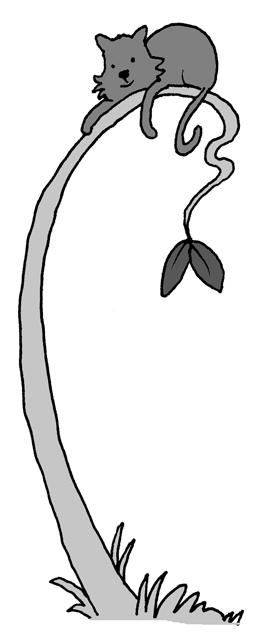
19 Sleepy Cat Poem to entertain personal pronouns rhyme
20 Dear Uncle Hugh and Uncle Kenan Personal response to respond sentences proper nouns, adjectives opinions and reasons
21 When I Grow Up Discussion to inform/ give an opinion clauses, conjunctions opinions and reasons
22 The Lonely Dragon Narrative to entertain clauses, conjunctions story characters, setting, plot
23 How We Get Milk Explanation to inform/ explain sentences fact and opinion, labels
25 Wednesday and Ruby Narrative to entertain sentences adjectives verbs onomatopoeia, story characters, paragraphs
26 Buy Now! Advertisement to persuade adjectives that compare alliteration, opinion and reason
27 Sharks Argument to persuade sentences thinking verbs opinions and reasons 28 Cinderfella’s Jobs List to inform/ instruct commands adverbs that tell how 29 Magic Potion Recipe to entertain commands noun groups, adjectives
Dingo and Wombat Narrative (fable) to entertain/ teach a moral conjunctions, word families animal characters, plot, setting
How to Get Home Directions and map for imaginary place to entertain commands adverbs and phrases that tell where story characters
33 Book Review Response to inform/ respond sentences, questions adjectives, noun groups saying verbs opinion and reason 34 Koalas Information report to inform clauses, sentences pronouns, adjectives being verbs, saying verbs adverbs and phrases paragraphs
doing verbs
This diagram is informative. It shows things in a garden.
Things in the Garden
Nouns are words for people, places, animals and things. baby garden bee ball
I flower tree bird ball dog fence bee grass nest frog
Label the things in the diagram. Write these nouns in the boxes.
Verbs tell what is happening in a sentence. Doing verbs tell the actions. jump swings run swims hopped
Choose the correct verbs from the box to complete the sentences. 2 flies ran rolls swims sits
A bird in the nest. A frog in the pond. A bee to the flower. A ball on the grass. My dog in the garden.
3
Circle the doing verb in each sentence.
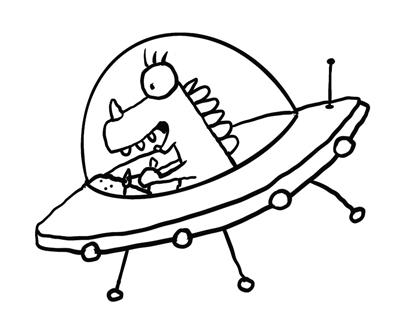
Tom threw the ball onto the grass. It rolled beside a flower. The dog took it into the pond. The dog sat in the garden. A spaceship landed beside her. She ran to it. It flew away. beetle elf worm flowers butterfly
Read the story below. Circle the verb in each sentence. 4
5
Circle the nouns below for things in a real garden. Underline the nouns for things in an imaginary garden. Some nouns might belong in both gardens.
Draw a real or imaginary garden where you would like to play. Label your drawing. Use nouns .
I can do this. I am not sure. I need help.
Phrases that tell where , nouns, doing verbs
This diagram is informative. It has labels to give information.
Look at the diagram of the fish. Write a noun from the diagram on each line.
Choose a noun from the box to label each animal. 3
dog duck koala sheep
Circle the doing verbs in the sentences below.
Write two phrases that tell where in the sentences.
The kangaroo jumped across the grass. It hid behind the trees. swim jump skip float swing eat look hop
Circle the doing verbs for things a real-life fish can do.
Write about an animal and what it does. Use doing verbs. 6
Draw a real or imaginary animal. Label your drawing. Use nouns .
I can do this. I am not sure. I need help.
This diagram is informative. The writer’s purpose is to show information about family members.
A Family Tree
Grandpa
Grandma Claire Nonno Stefano Nonna Marie
Write your name. 3
Draw a picture of yourself.
Write the names of three friends. 4
Label your drawing.
Write your teacher’s name. 5
Read A Family Tree . Tick to answer True or False. 6
True
False
Anna has a stepbrother.
Anna’s stepbrother is Luca.
Eddie is Anna’s father.
Nonno is a grandparent.
Anna is Luca’s sister.
Luca is Anna’s uncle.
Create your own family tree. Use photos or drawings. Label it. Use capital letters for proper nouns .
I can do this. I am not sure. I need help.
This weather chart is informative. Its purpose is to give information about the weather.
The days of the week and the months of the year are proper nouns. Proper nouns start with a capital letter
Adjectives tell more about nouns . They can describe. s unny happy black
Write the seven adjectives from Our Weather Chart . 3 Circle the adjectives in each sentence. 4
Wednesday was hot. Friday will be sunny. Monday was a busy day. Sana had a happy day.
Write an adjective from Our Weather Chart on each line. 5 a
Fill in the missing letters. Circle the nouns for things you wear on a cold day.
6 j mper scar bean e swim ers t ongs jacke short
Make a poster about weather. Add pictures and words. Tell about the things you can do. Use adjectives .