Today’s late-stage empire has endured thus far in part due to its virtuosic capacity for staging critical discourse while remaining bound to the very systems such discourse seeks to question. What, then, becomes possible to think, to say, or to sustain within the institutions responsible for staging that critical discourse? And what must wait, or move elsewhere, to come into being?
Insofar as all institutions are institutions of empire—and insofar as we are all its subjects—I invite you to consider the works in this exhibition, made by the twenty-nine artists of the Columbia Visual and Sound Arts MFA Class of 2026, as engaging with this question.
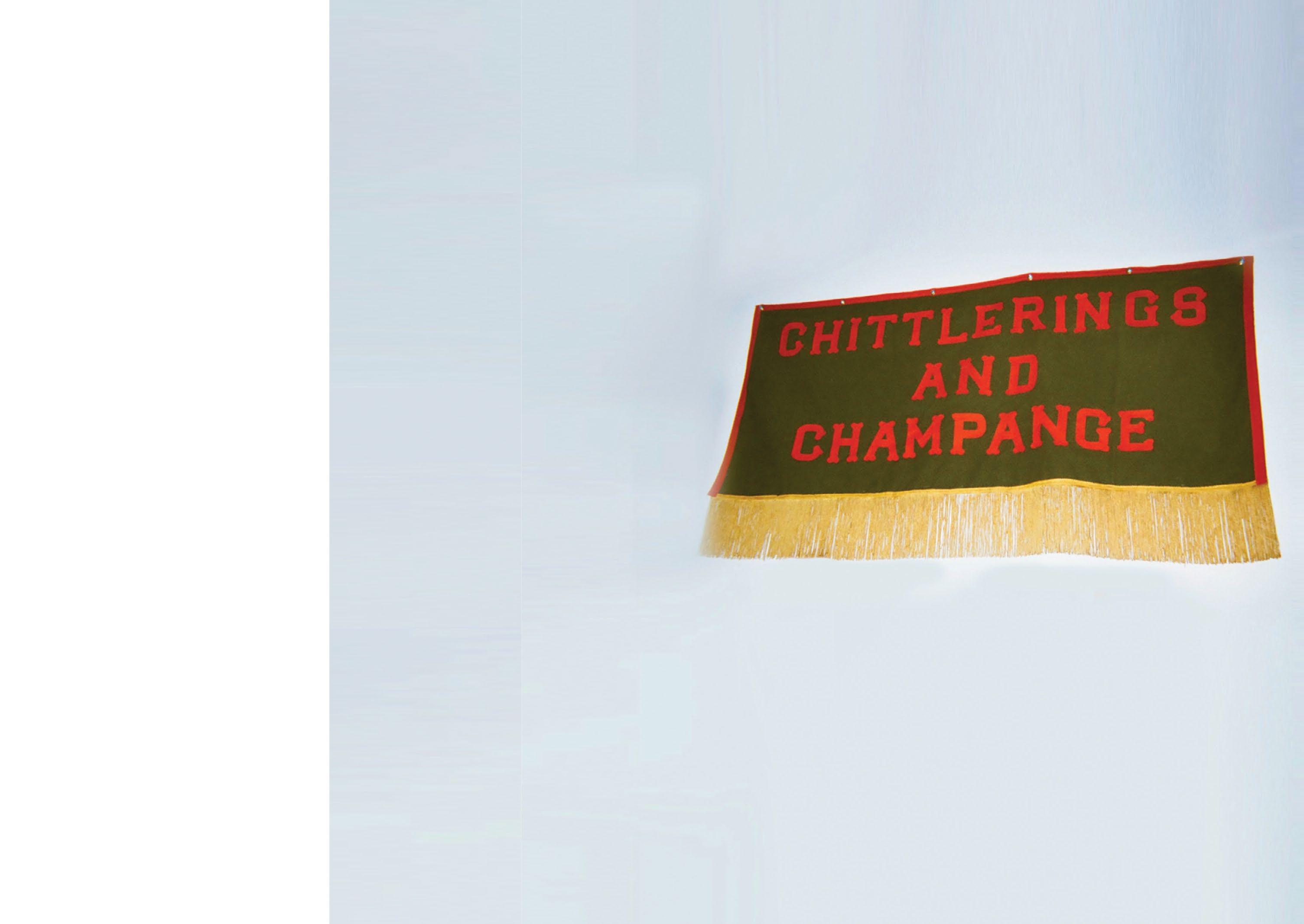
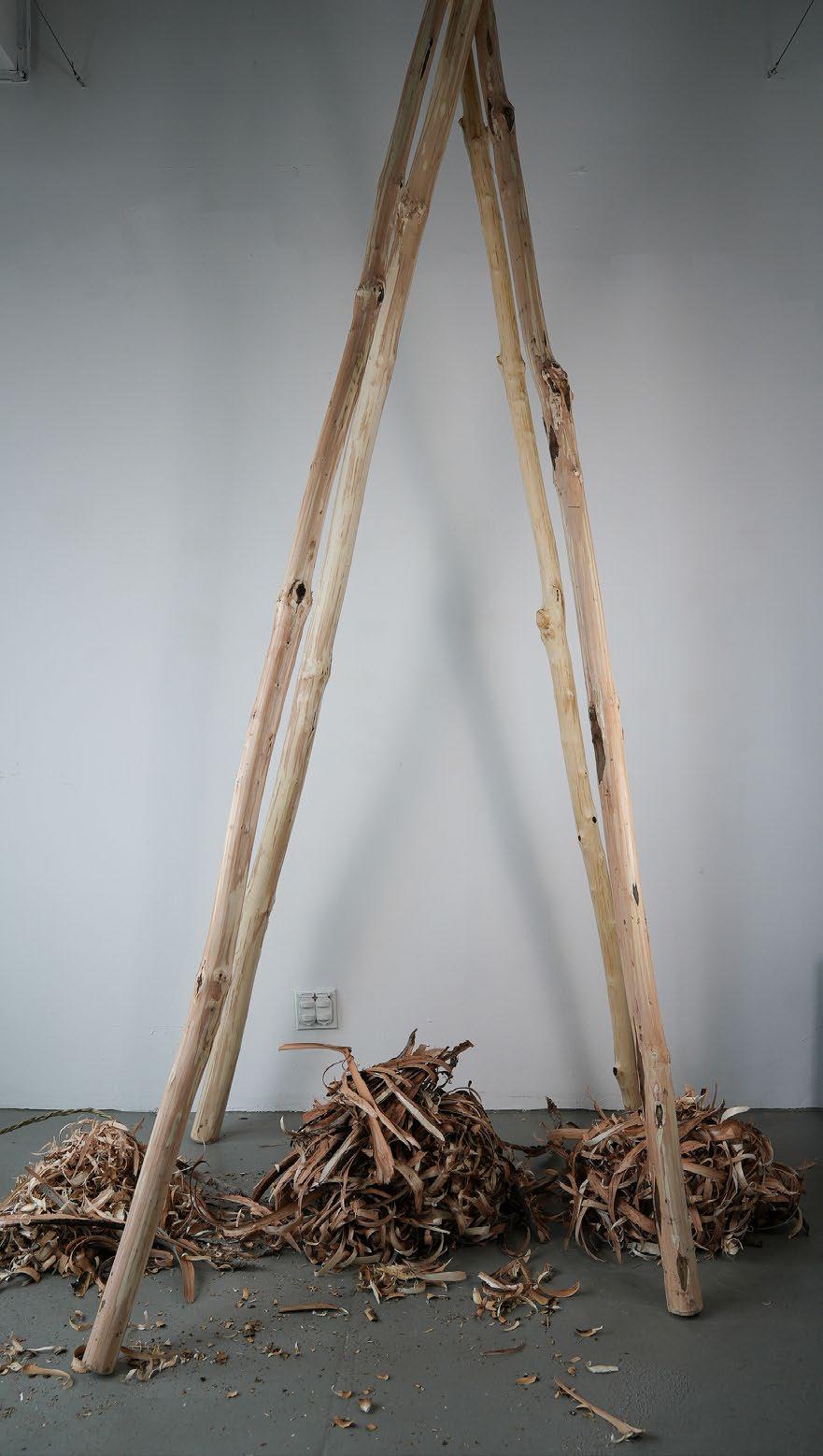
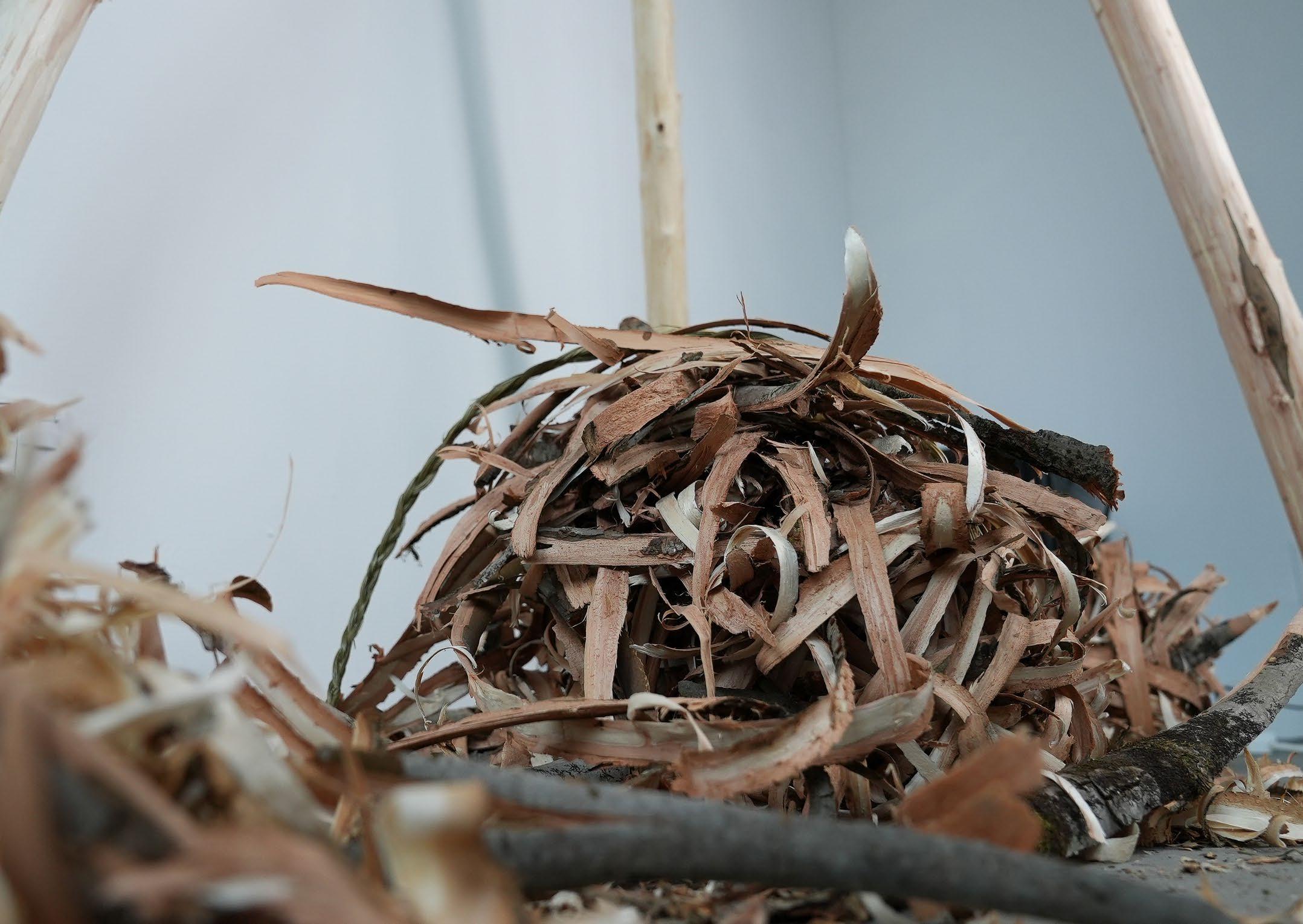
darylina powderface draws from her nation’s Nakoda and Blackfoot ways, wherein all beings—rocks, animals, plants, humans, place, space— are believed to be constituted and made whole in relation to fellow beings, in deep webs of kinship and reciprocity that extend well beyond imperial systems of relations, borders, and subjecthood.
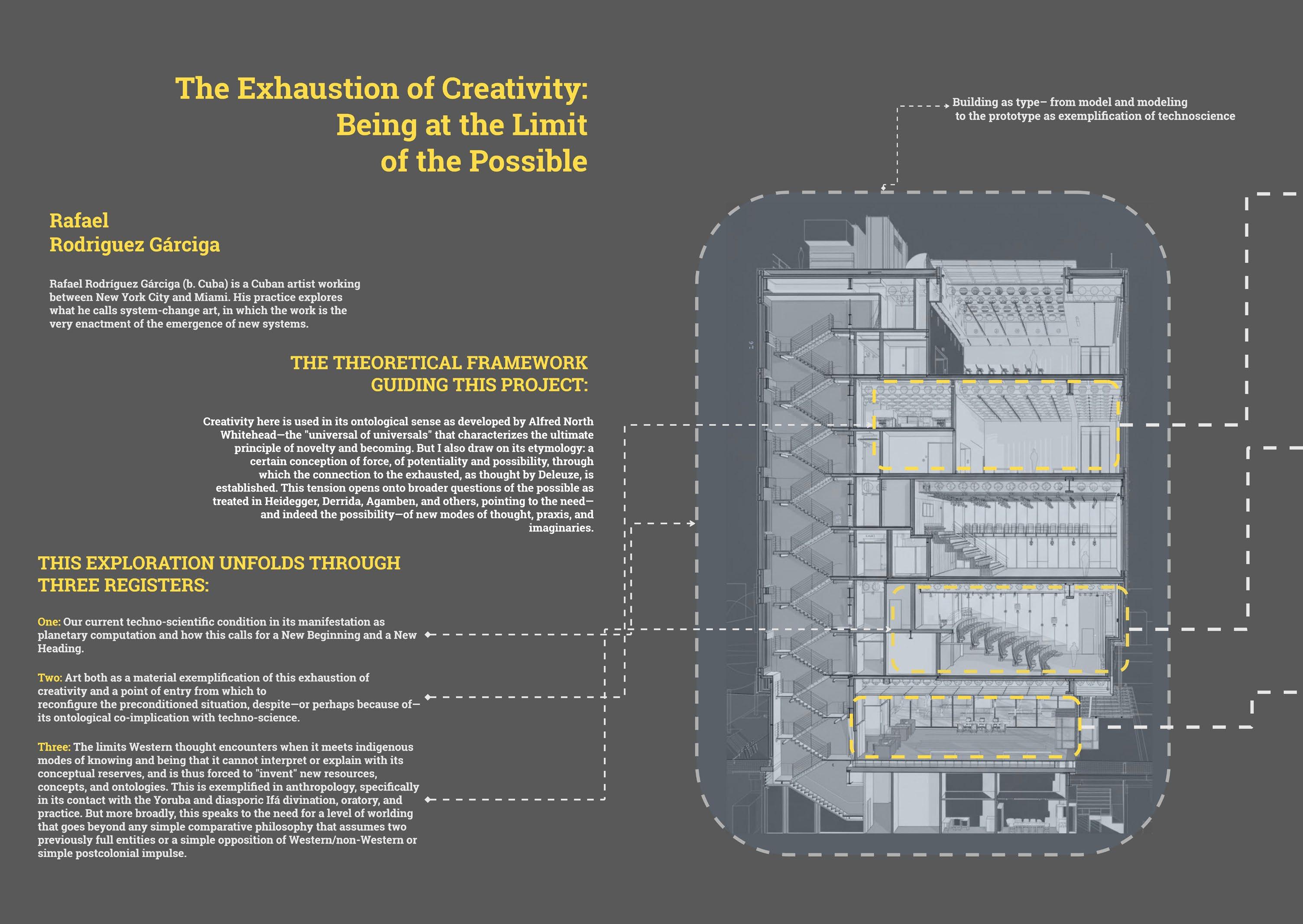
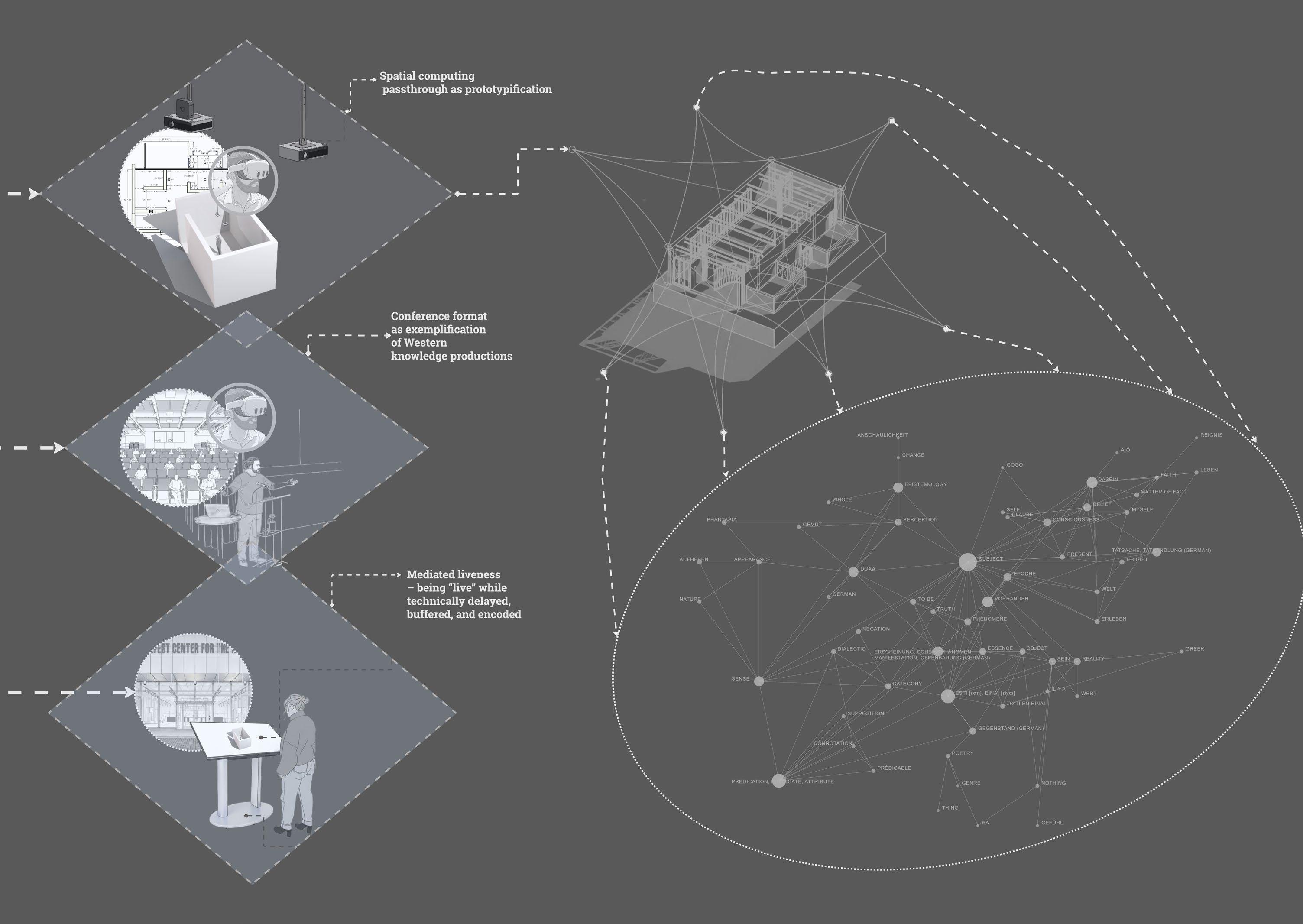
Rafael Rodriguez Gárciga contrasts aṣẹ, the creative life-force Yoruba and Ifá traditions believe runs through all entities of the universe, with the limits of Western thought at the crux of planetary computation, where creative possibility simultaneously overflows as it is depleted in an endless circulation of prototypes.
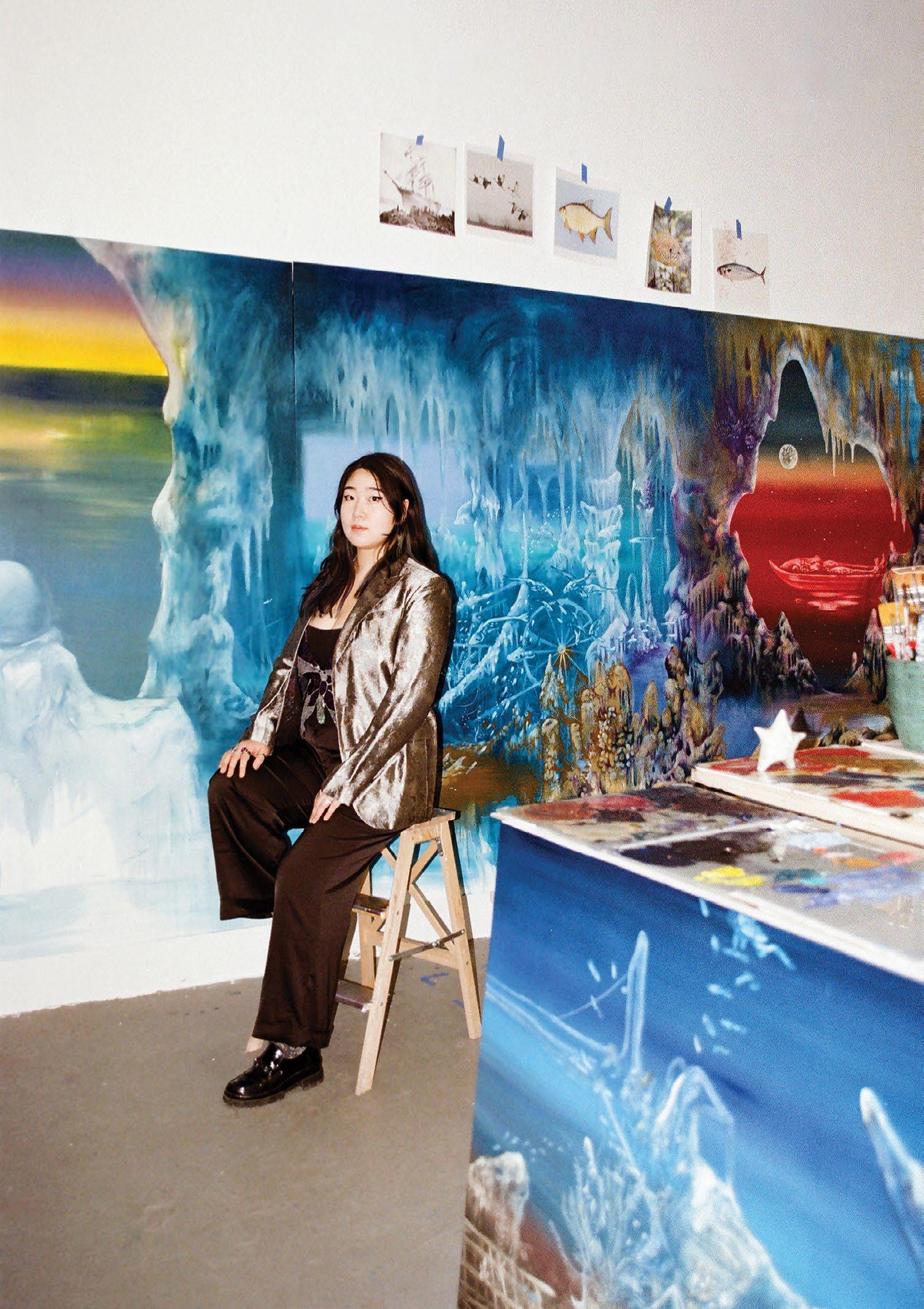
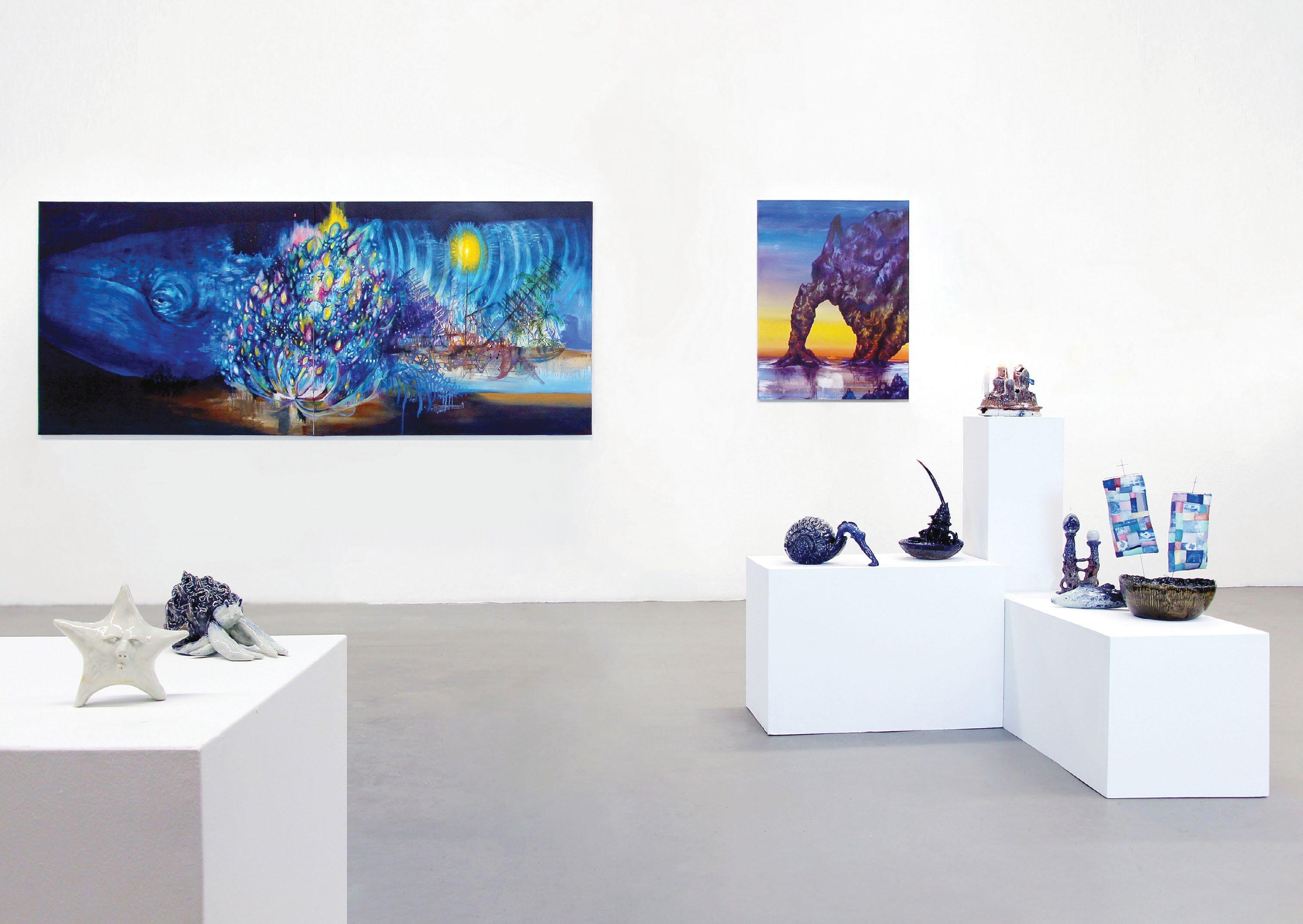
Jeannie Rhyu seeks the sea as a connective body able to facilitate an embrace between two continents. As witness to movements of history and commerce, such an evolutionary homeland absorbs triumphs and tribulations that affect us with a spookiness resembling quantum entanglement.
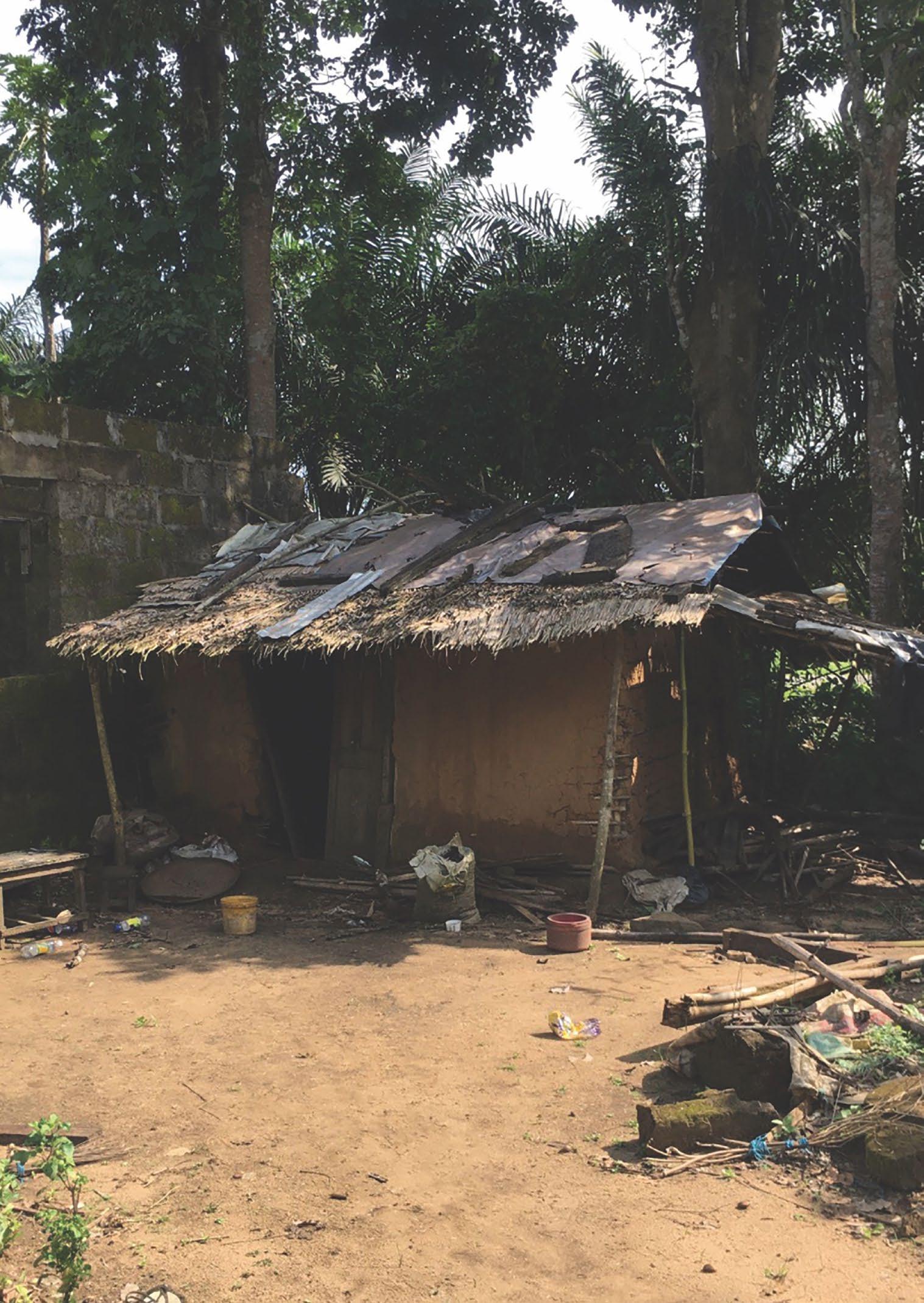
Ashley McLean encounters the power of place to confer intimacy and recognition on a rare visit to a homeland two generations removed, where history manifests less as visible traces and more as emotional residue.
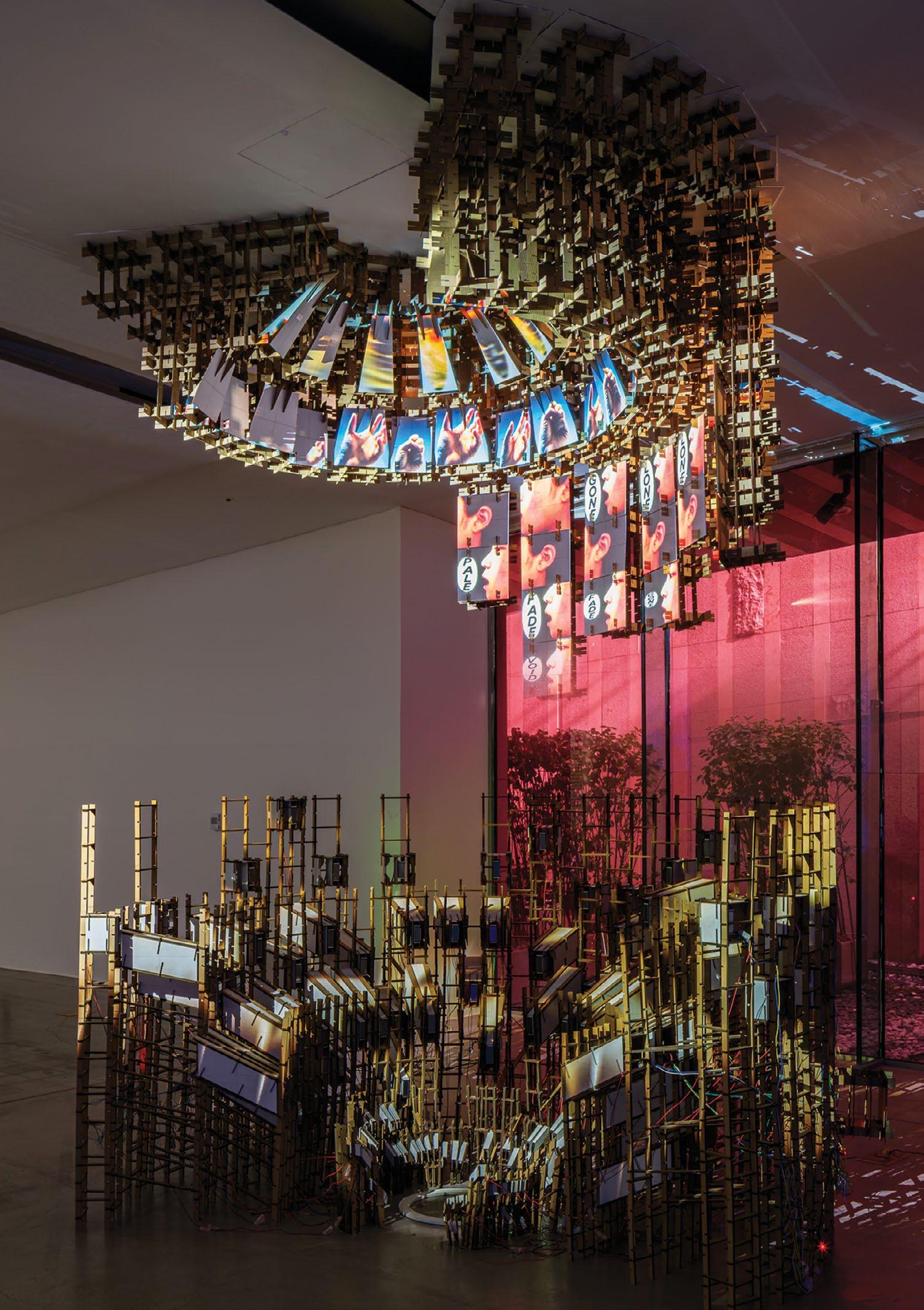
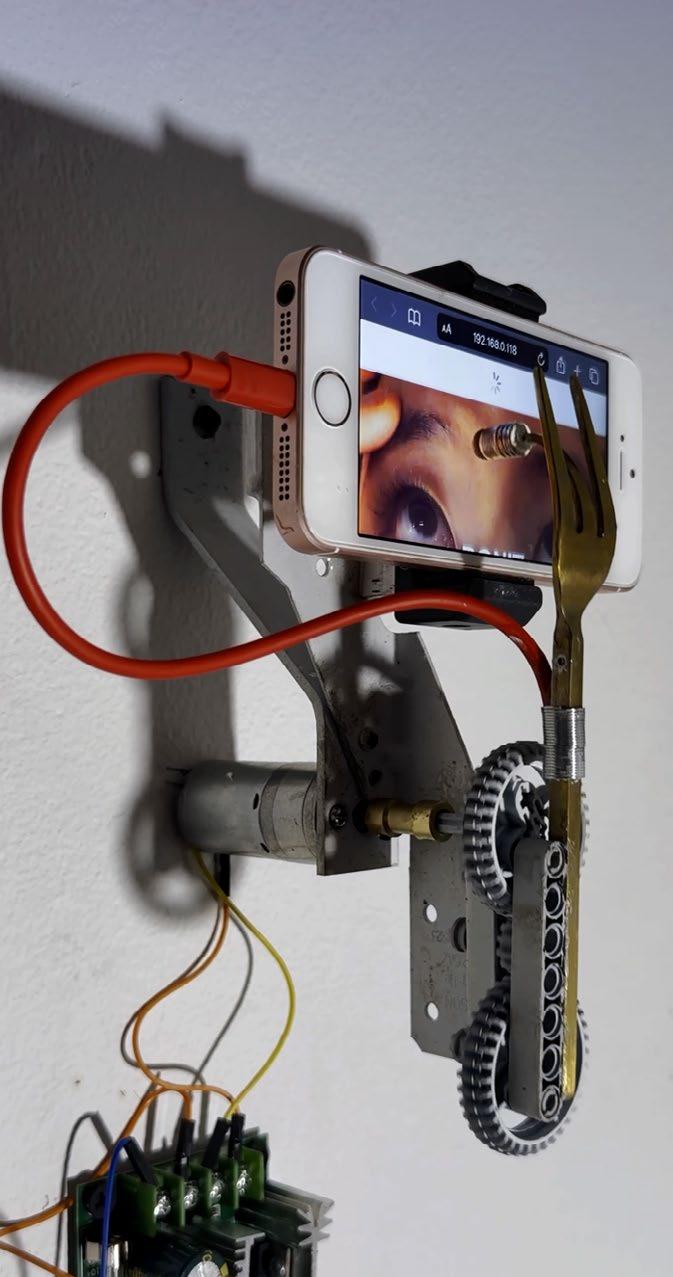
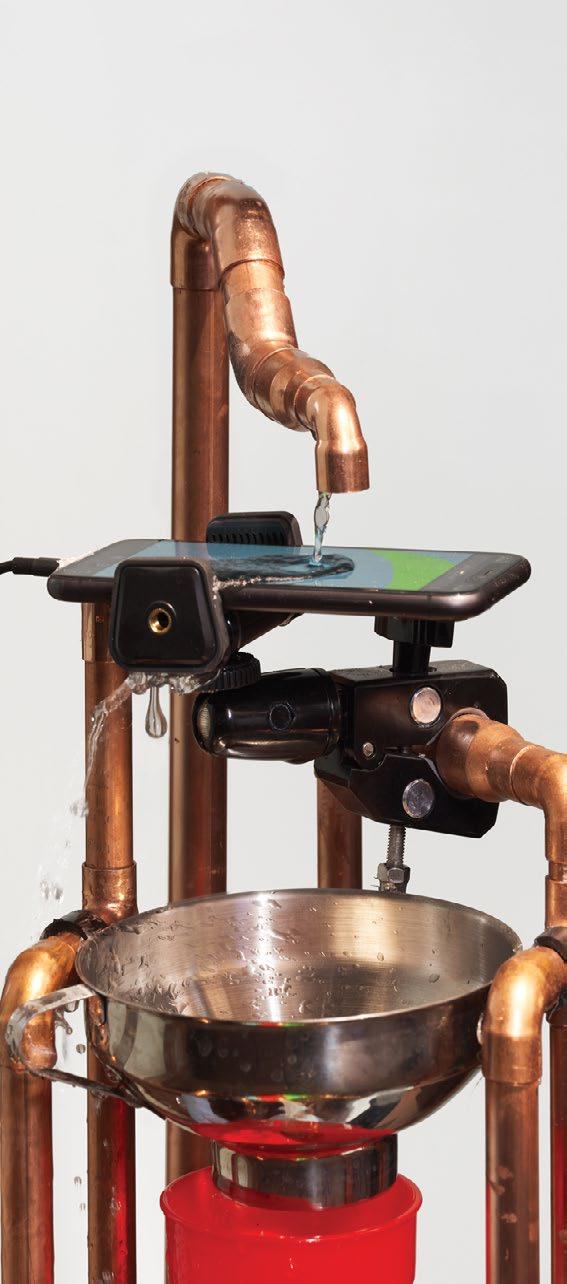
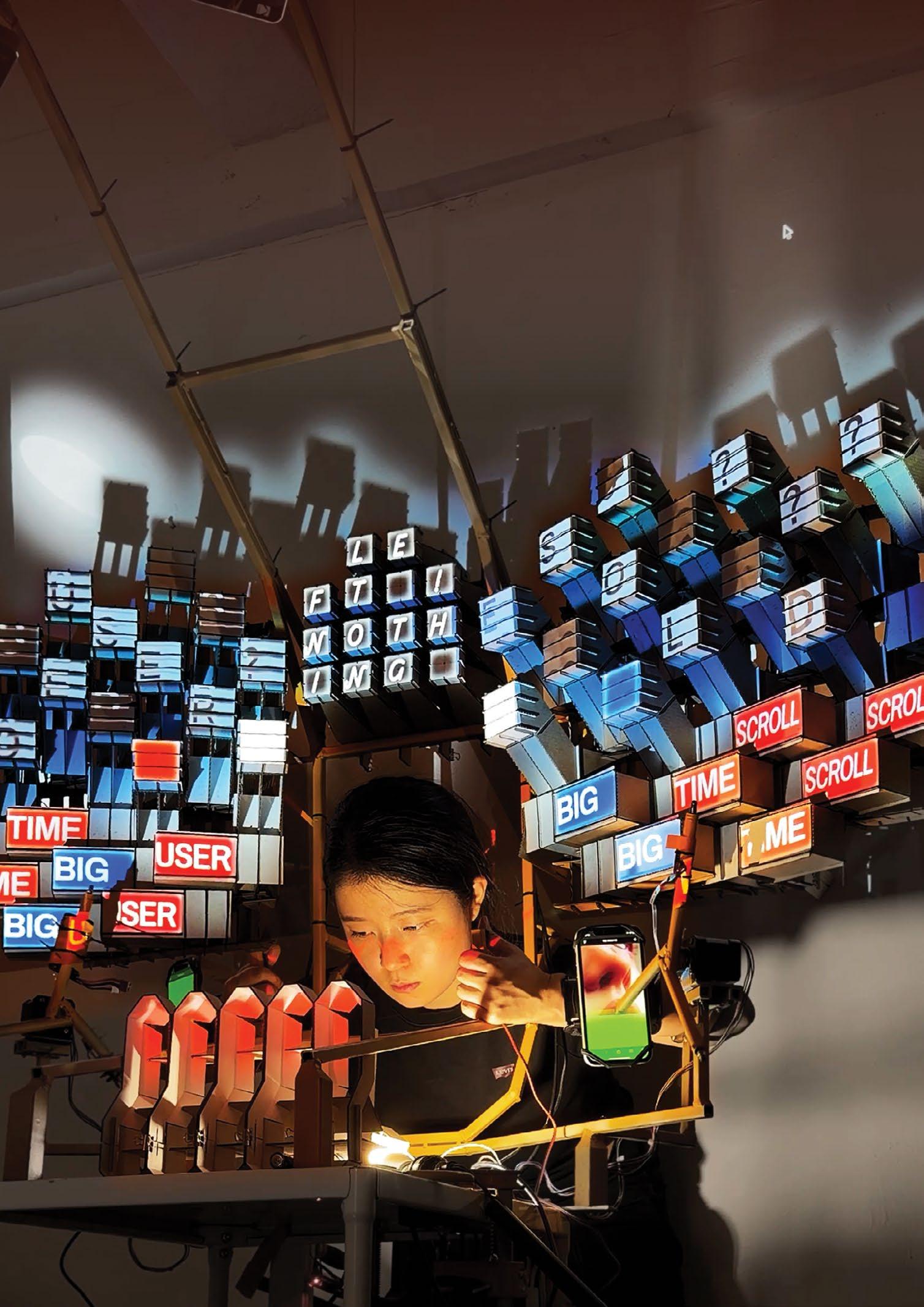
Yehwan Song considers how today’s intensely regulated and insanely heavy internet, once romanticized for facilitating direct democracy and peer-to-peer economy, reconfigures a society of “users”—automative subjects driven onto a track whose course they may influence but not alter.
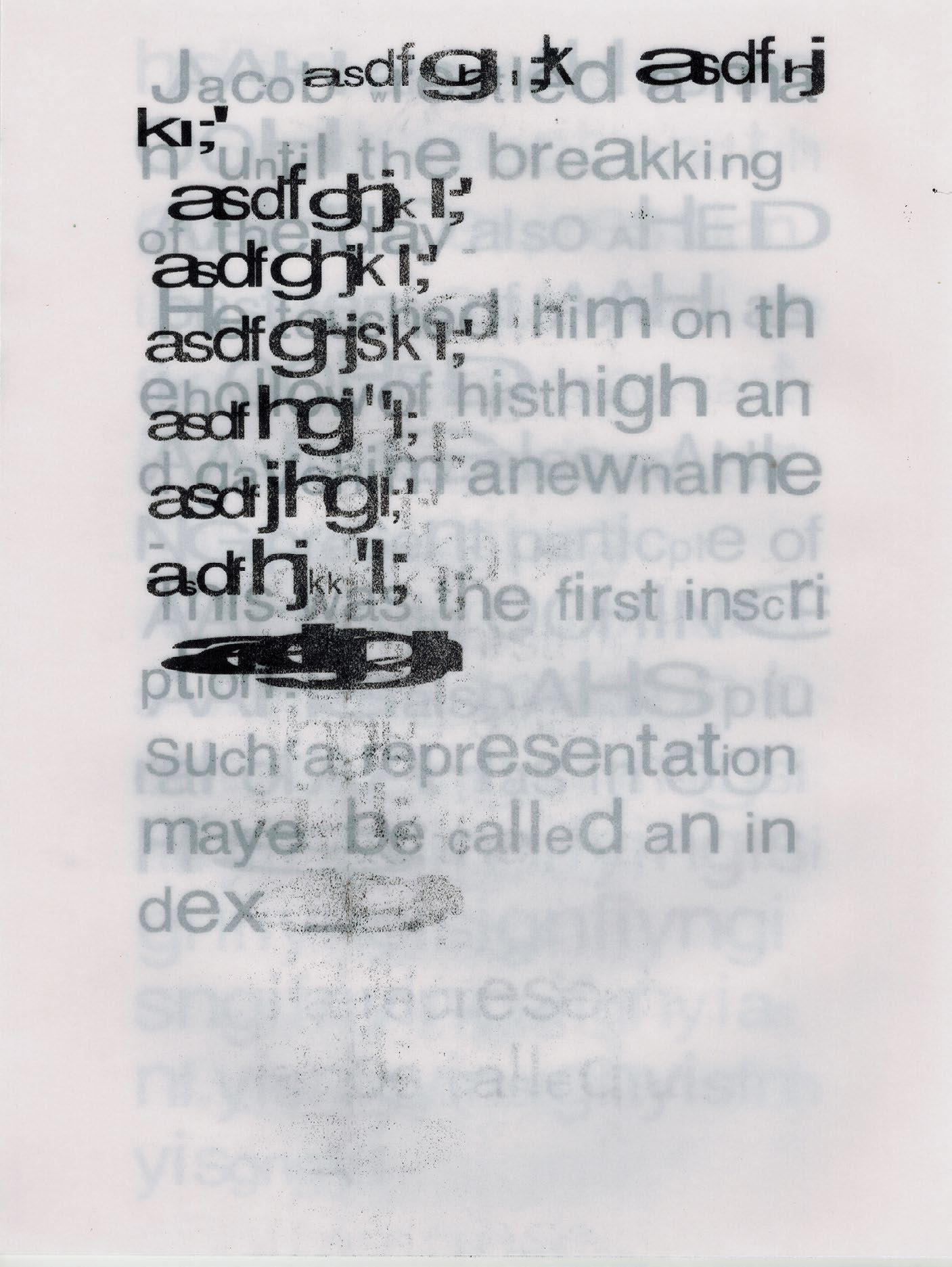
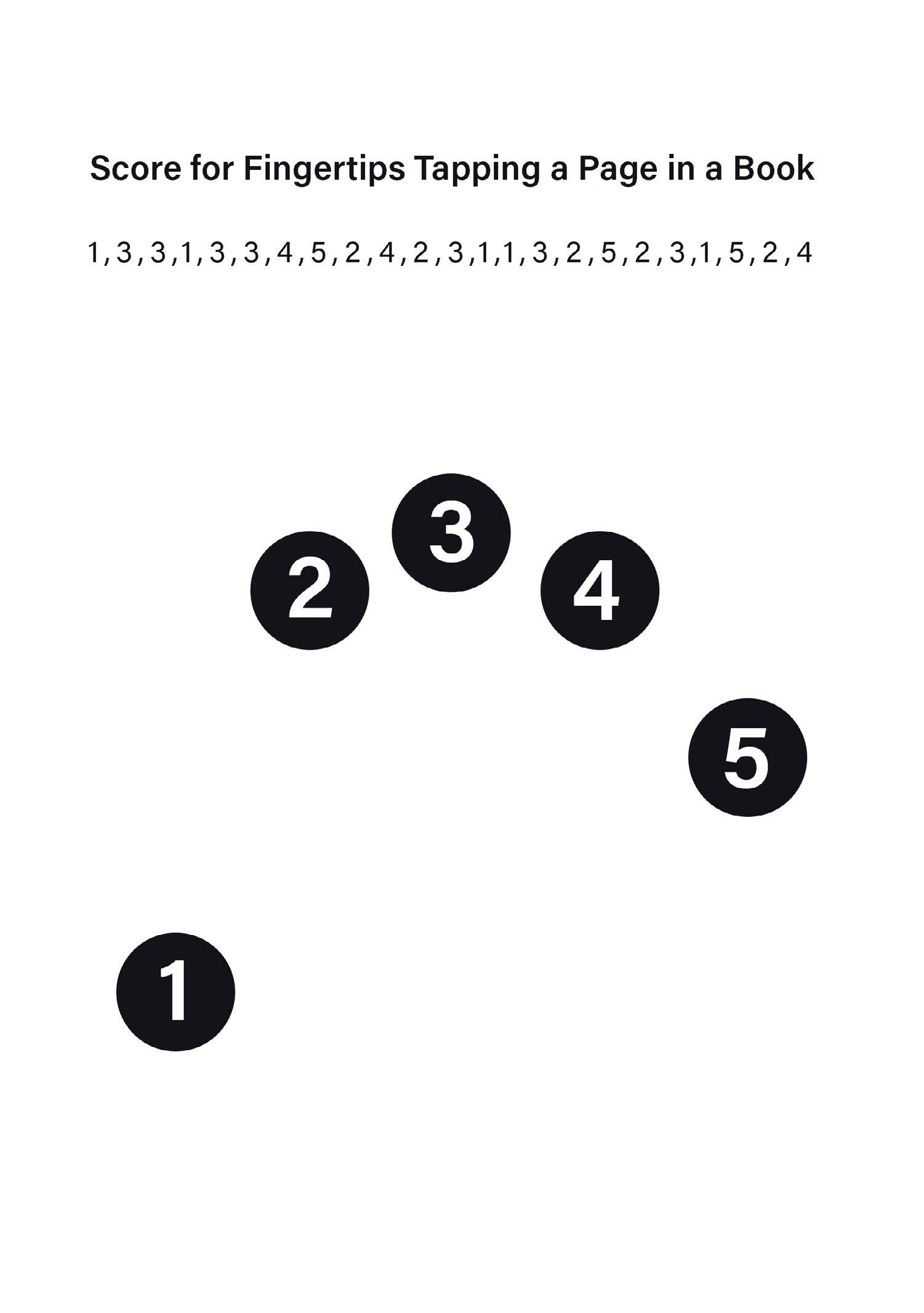
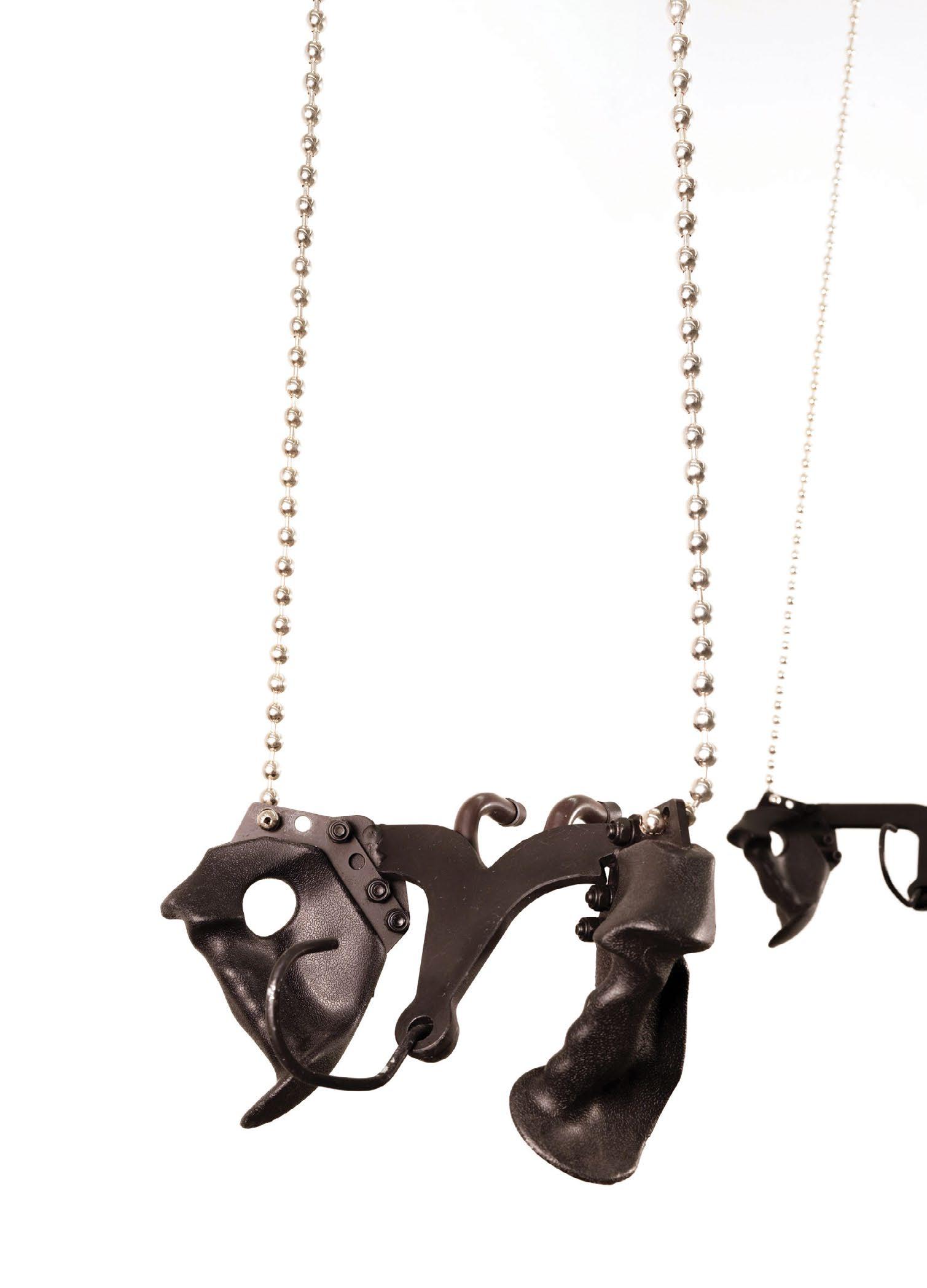
Miguel Gallego gives a visualizing interface to keystroke dynamics— typing behaviors, rhythms, and pressures that constitute a latent signature as expressive and telltale as one’s voice or handwriting. Indeed, these dynamics have been used as a form of biometric authentication as early as the nineteenth century,
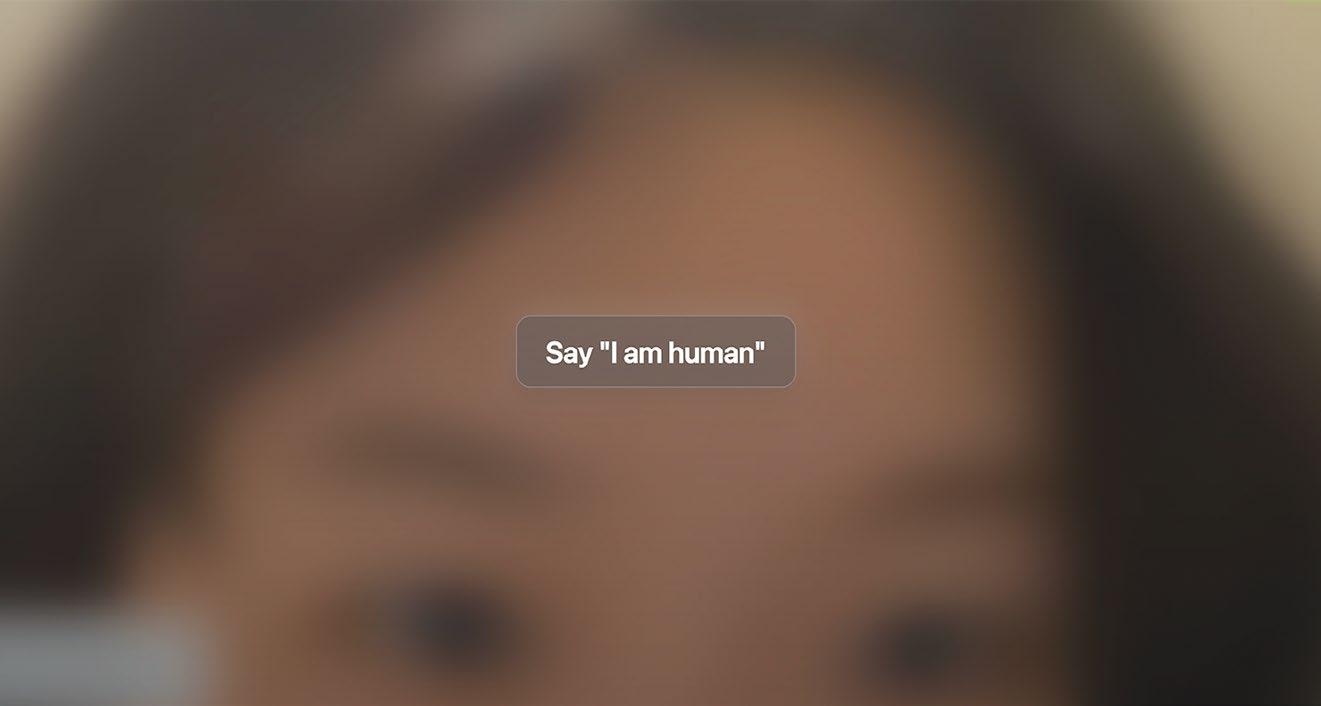
Cloris Dong ’s mirror guides viewers through a one-on-one smile-coaching experience, with elusive standards for what passes as genuine.
Yshao Lin invokes a flickering ceiling in a striving business to reflect on inversions of shame and desire, a racialized fetish, and the steady faith of an immigrant family exposed to extreme change.
CR4CKROCK invites firsthand reflections on rave spaces as surrogate places of worship where Black queer subjects enact rituals of ecstasy and communion.
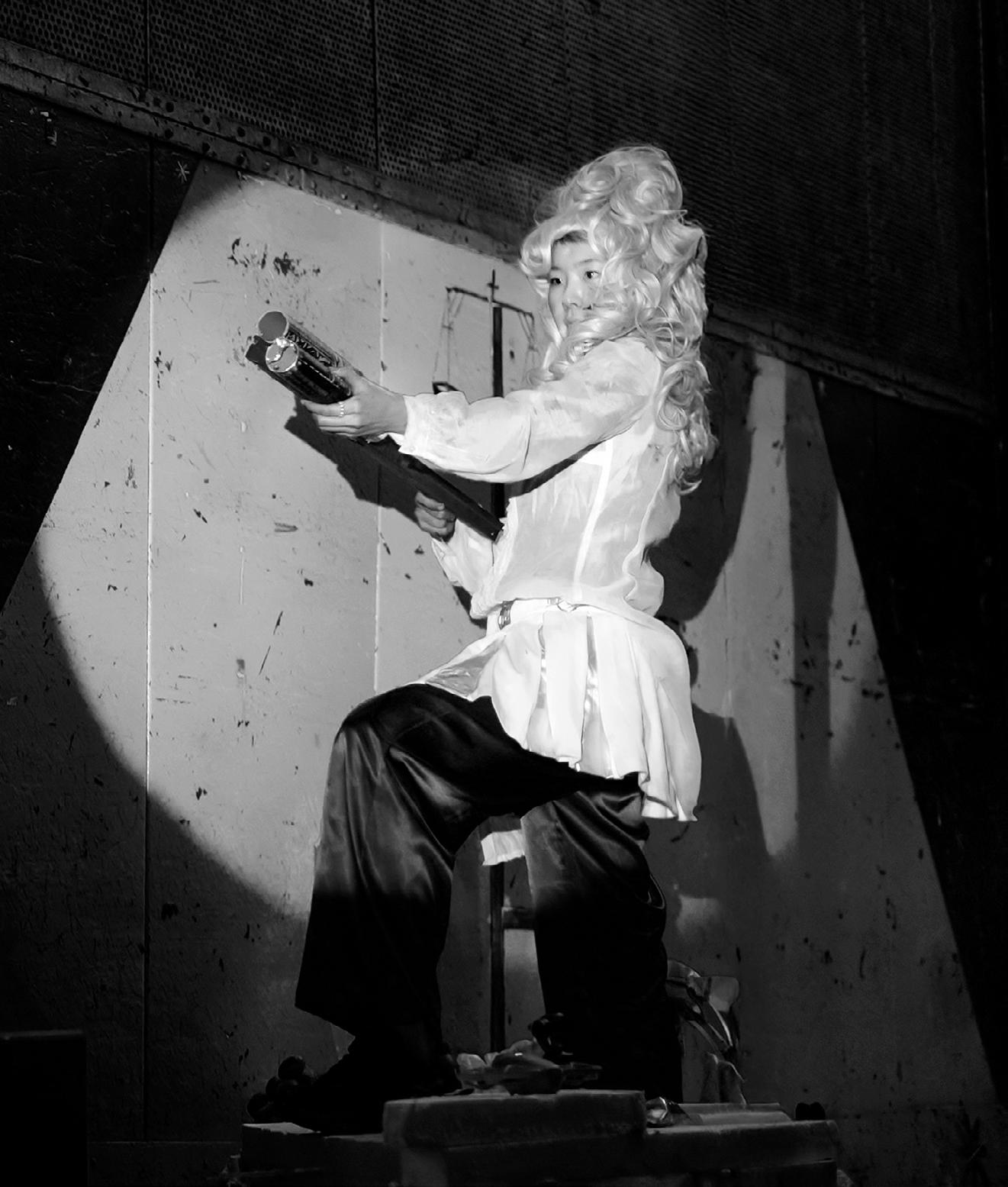
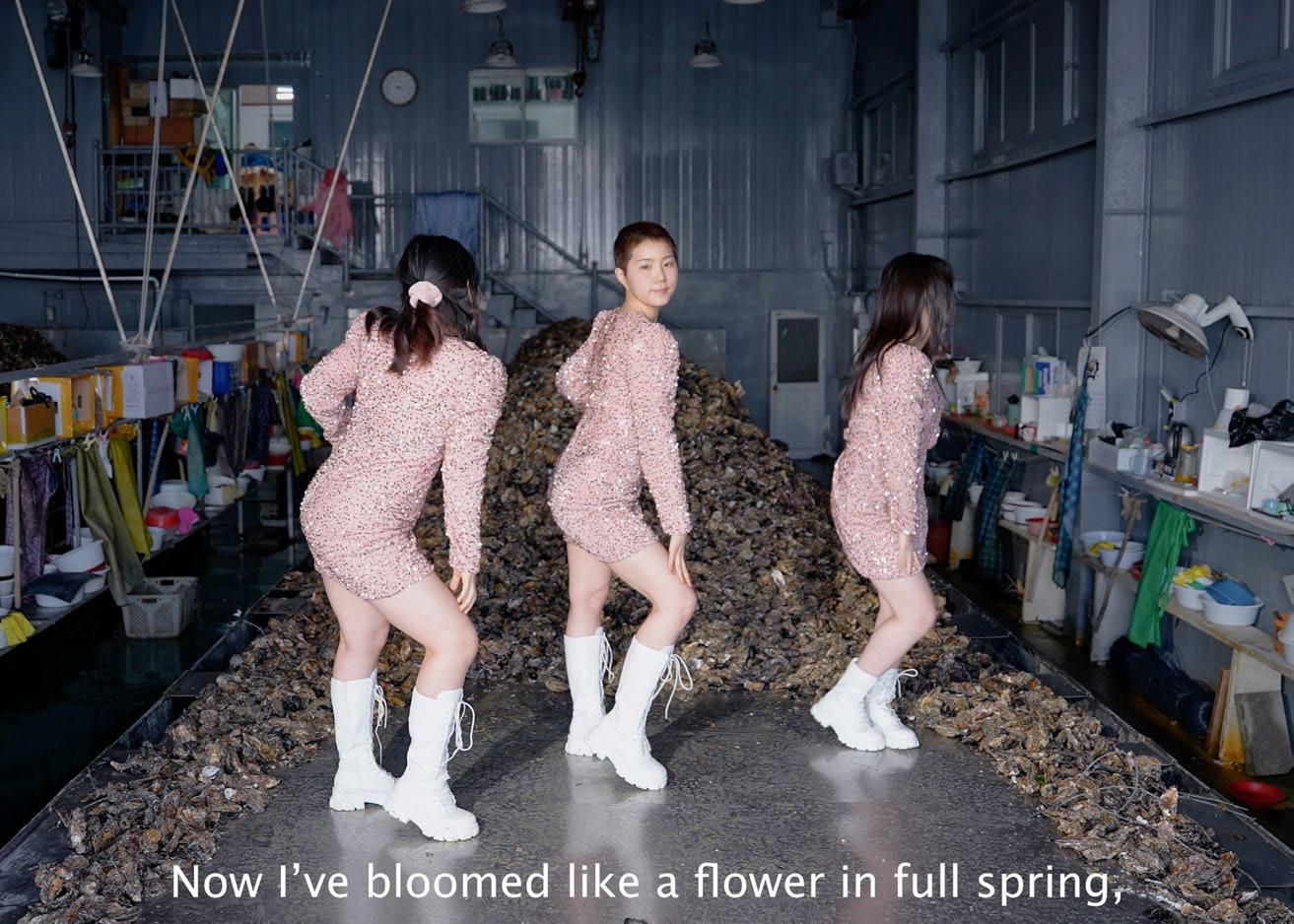
Youkyoung Cho reconstructs a festival that opens an opportunity for defection from North to South Korea, as the temporalities of control, chaos, violence, and celebration collapse.
Arel Lisette braves a road trip deep inside conservative America that allows a haunting glimpse of the psychic landscape supplying a seemingly eternal supremacist project with faith and renewal.
Maximiliano Rosiles draws materials from migrant living and labor environments to replicate a natural tendency for entropy that, like energy itself, resists containment within a closed system.
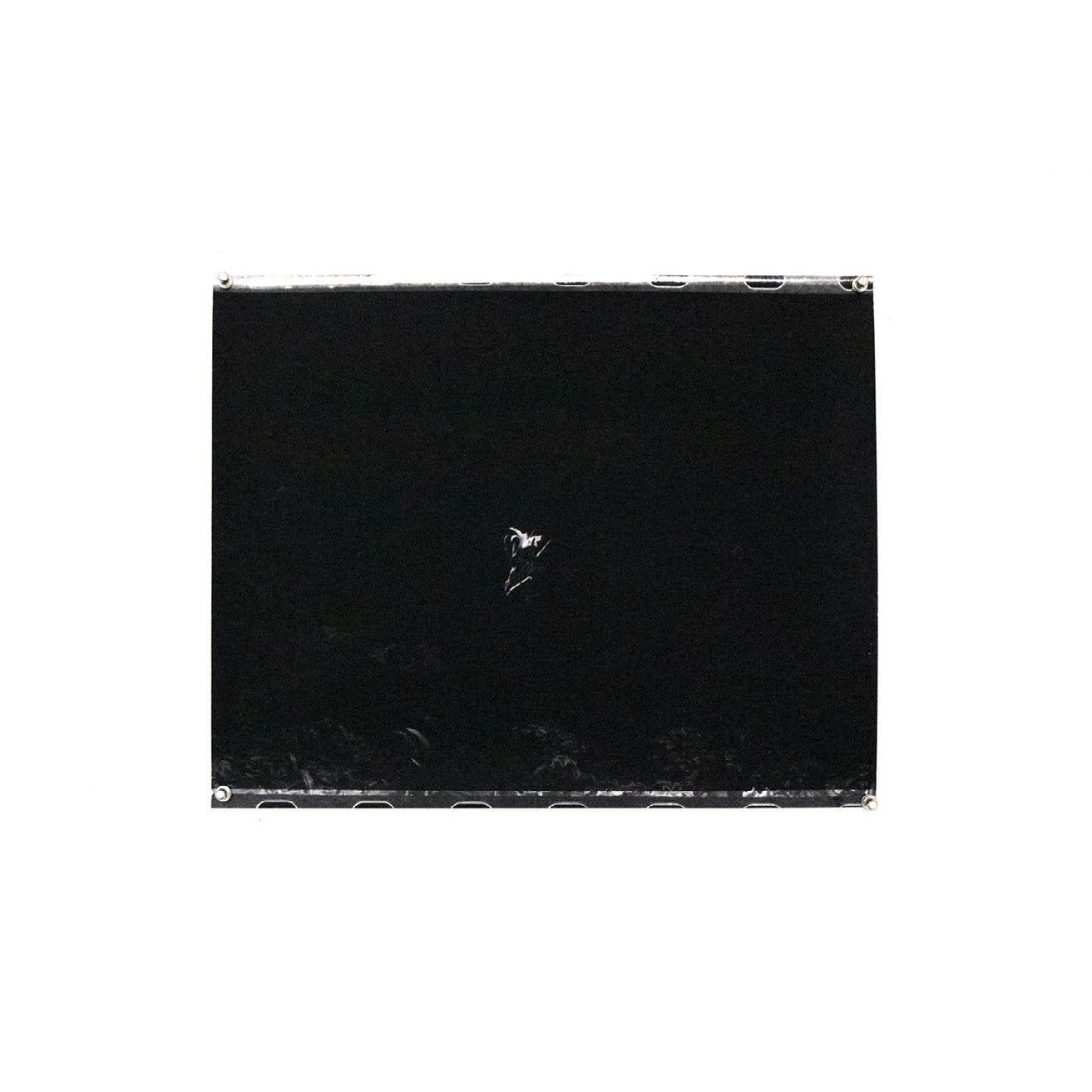
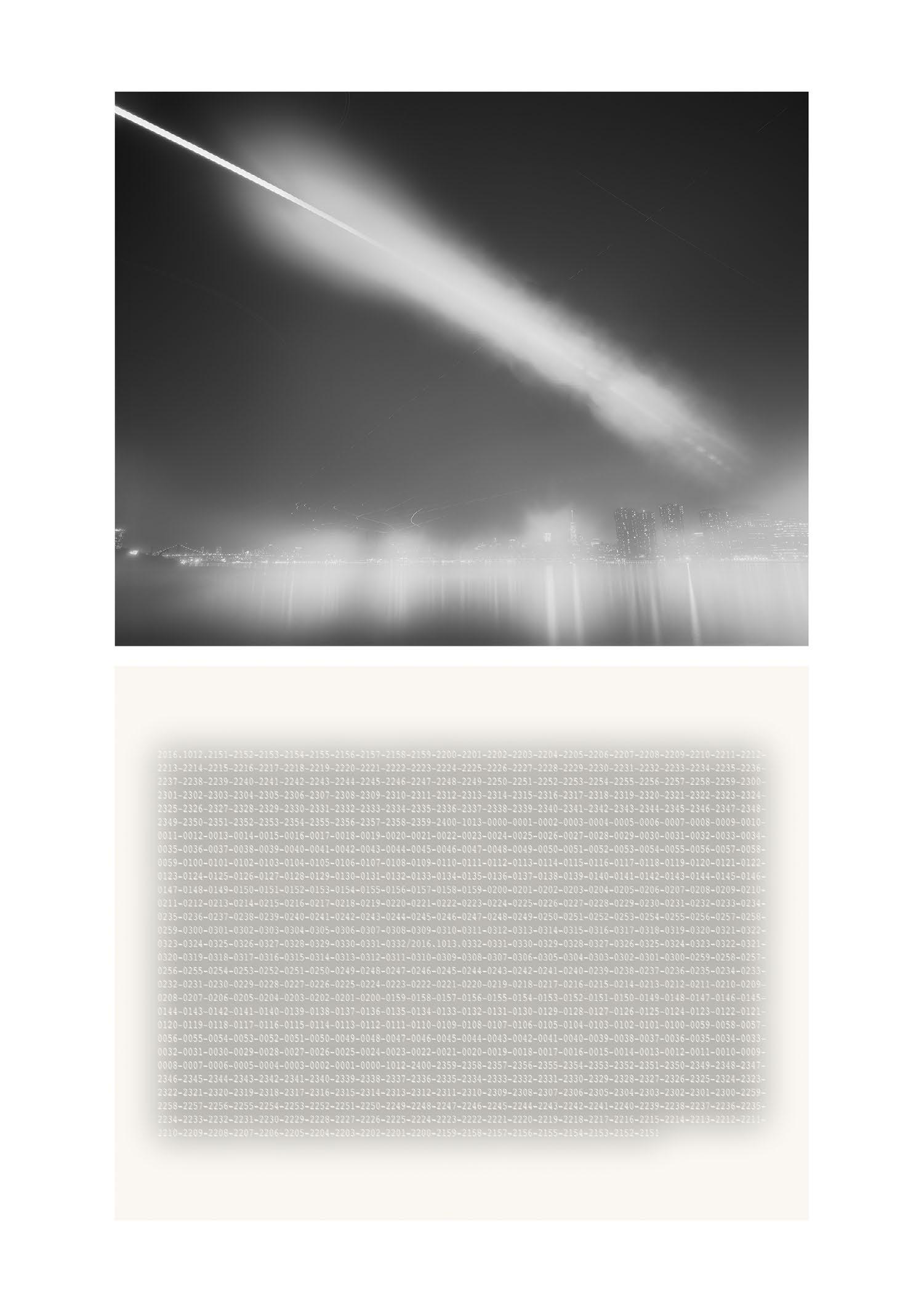
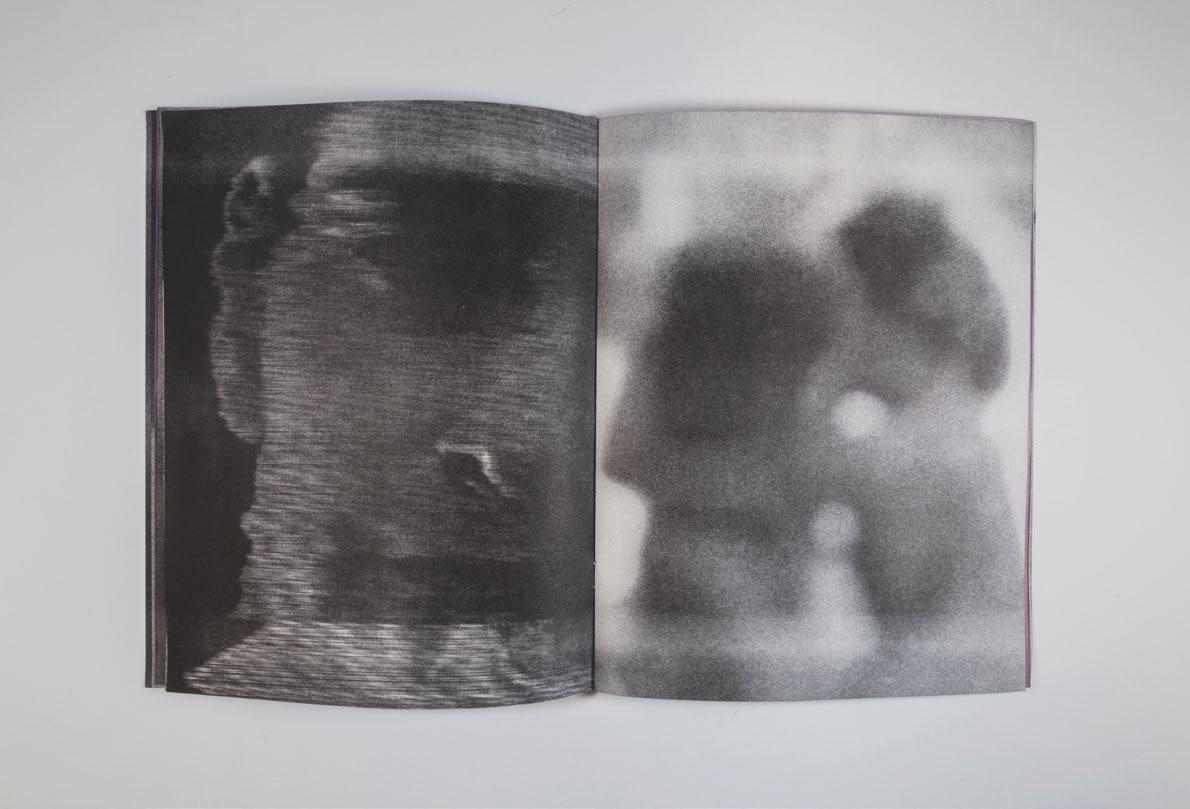
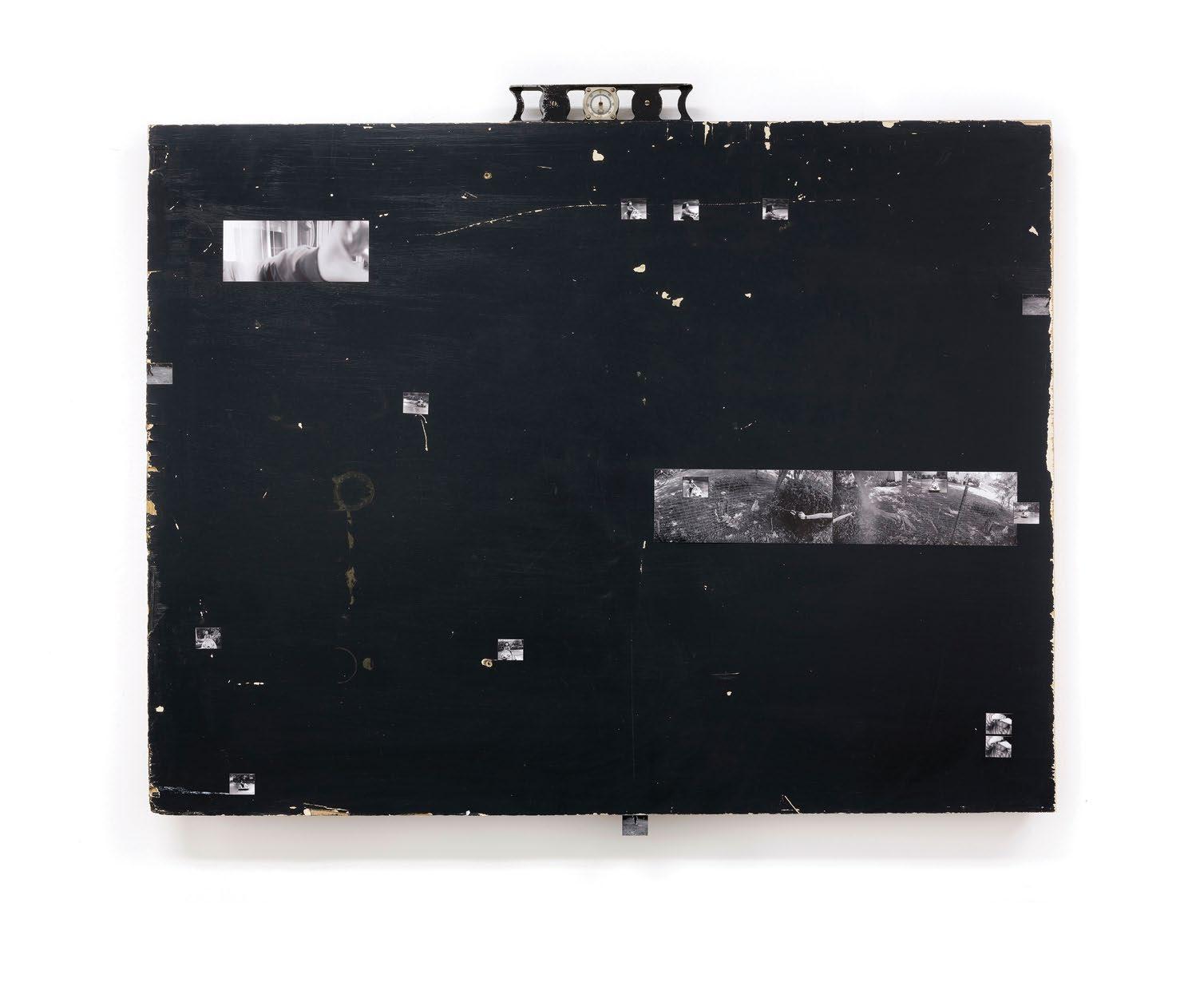
Akira Kawahata investigates photography as a chain of mediations. In this sequence, traces of dust and other flaws erased from a photograph stack up and thicken to a dense image that embodies distance, repetition, and the accumulated labor of looking.
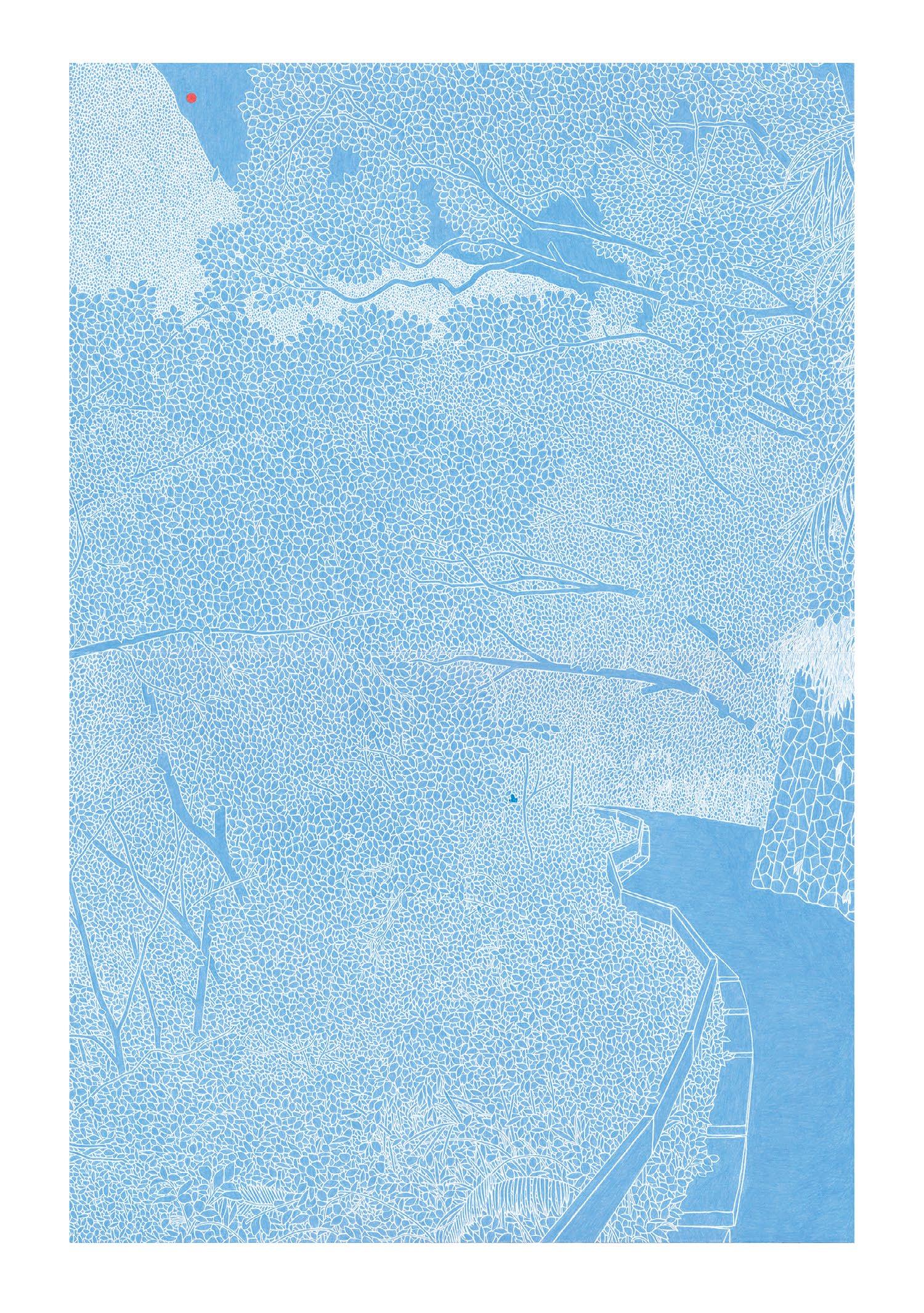
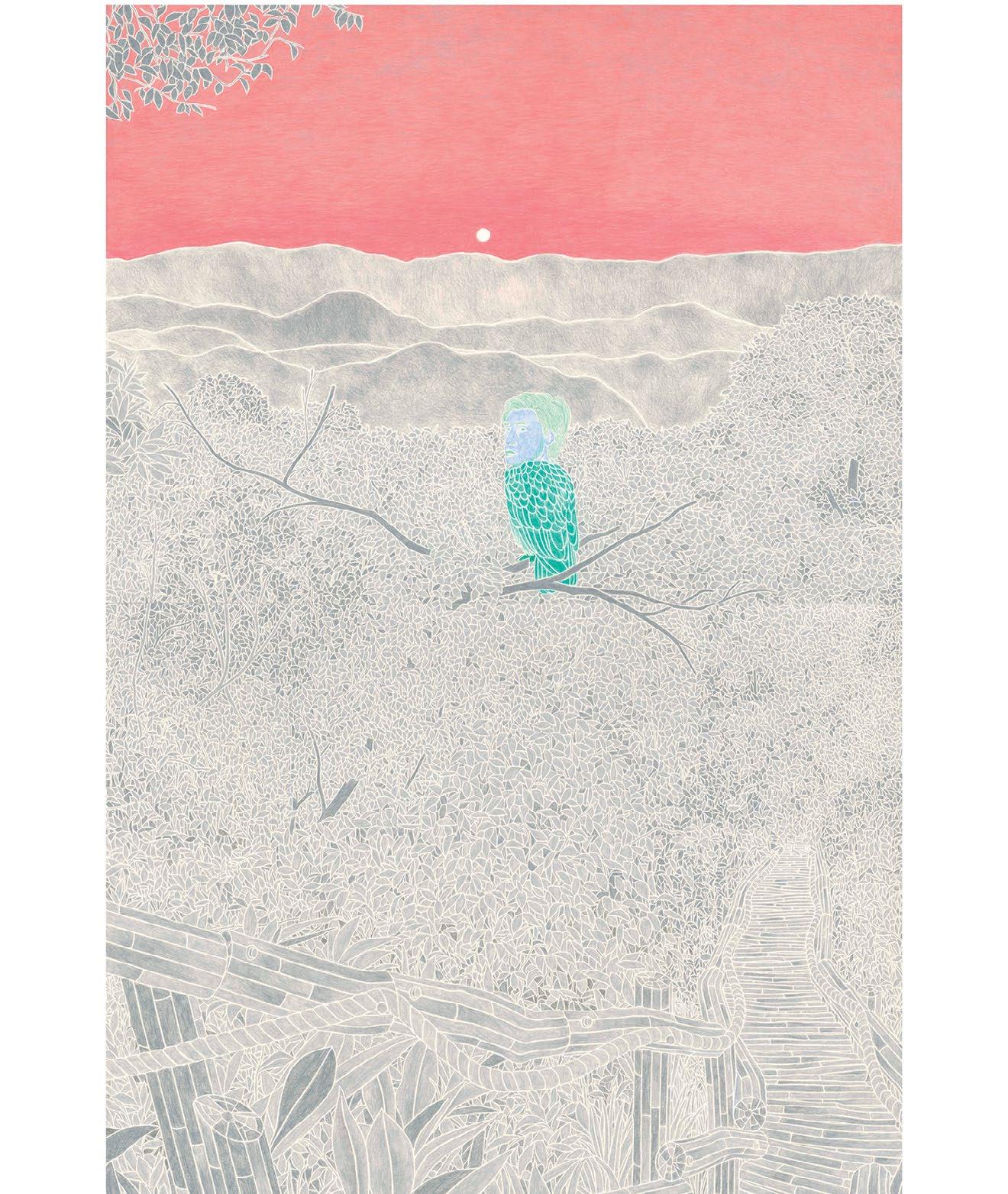
Timothy Bair adopts drawing as a ritual of care and return that honors his hometown landscape of mountains, forests, rivers, and trails he can no longer reach due to his disability, but that still exert a quiet spiritual ache.
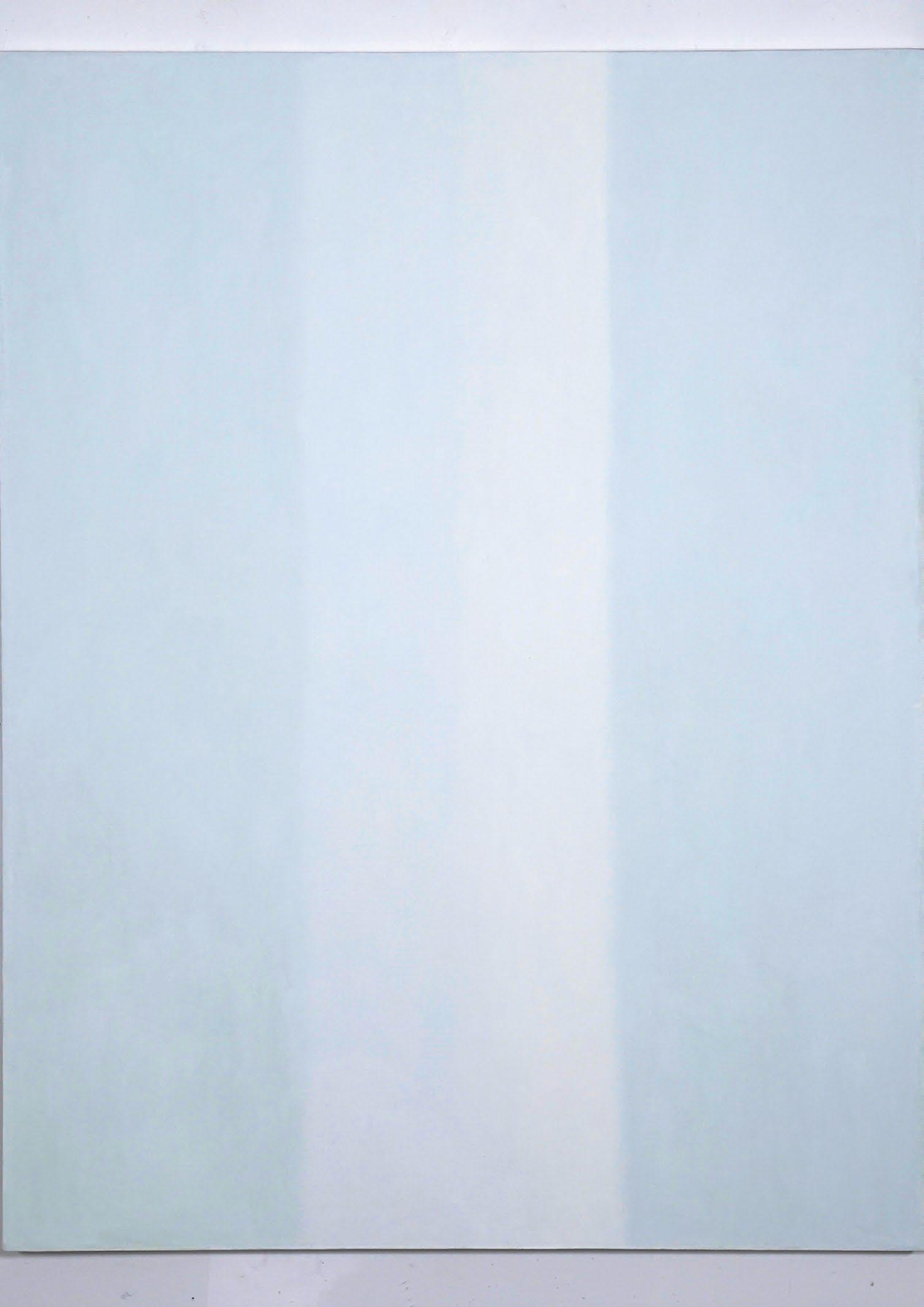
Sarah Huffard’s paintings depict nature as though just submerged in developer. In this ghostly imprint, very sensitive lapses of light and seeing deliver a perpetually lagging world.
Iris Wu allows us to glimpse photographs as part of a world that itself appears as a fleeting exposure, a still image poised in between states of being, precariously hinged on relationships that might hold or collapse.
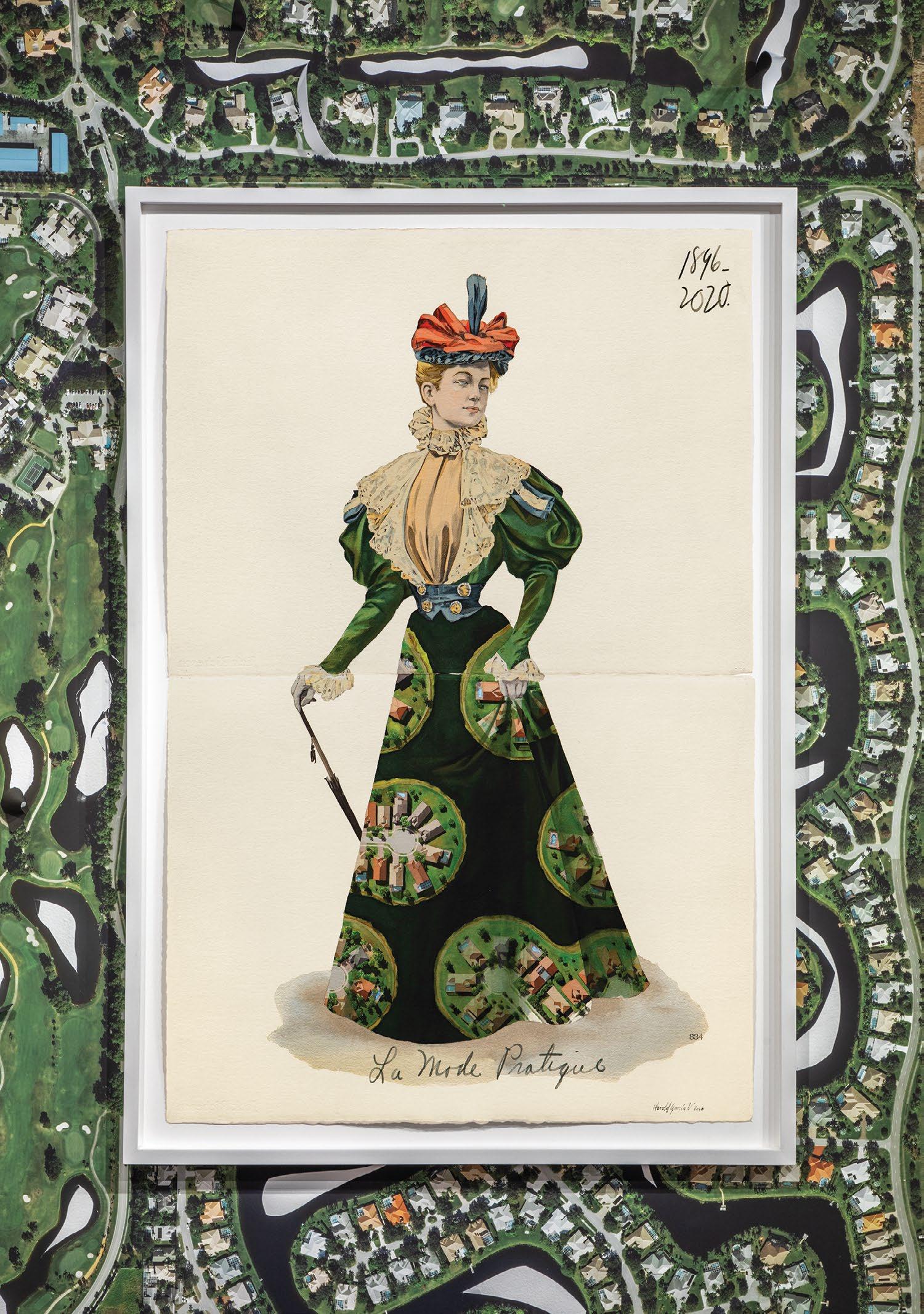
Harold Garcia V invites the viewer into a modular structure that stages the mechanisms of surveillance, recognition, legibility, and participation regulating identity and belonging in today’s societies of control.
Alek Green considers sound as a series of micromovements produced absentmindedly, as voices in your head, or as words and people encountered on a page.
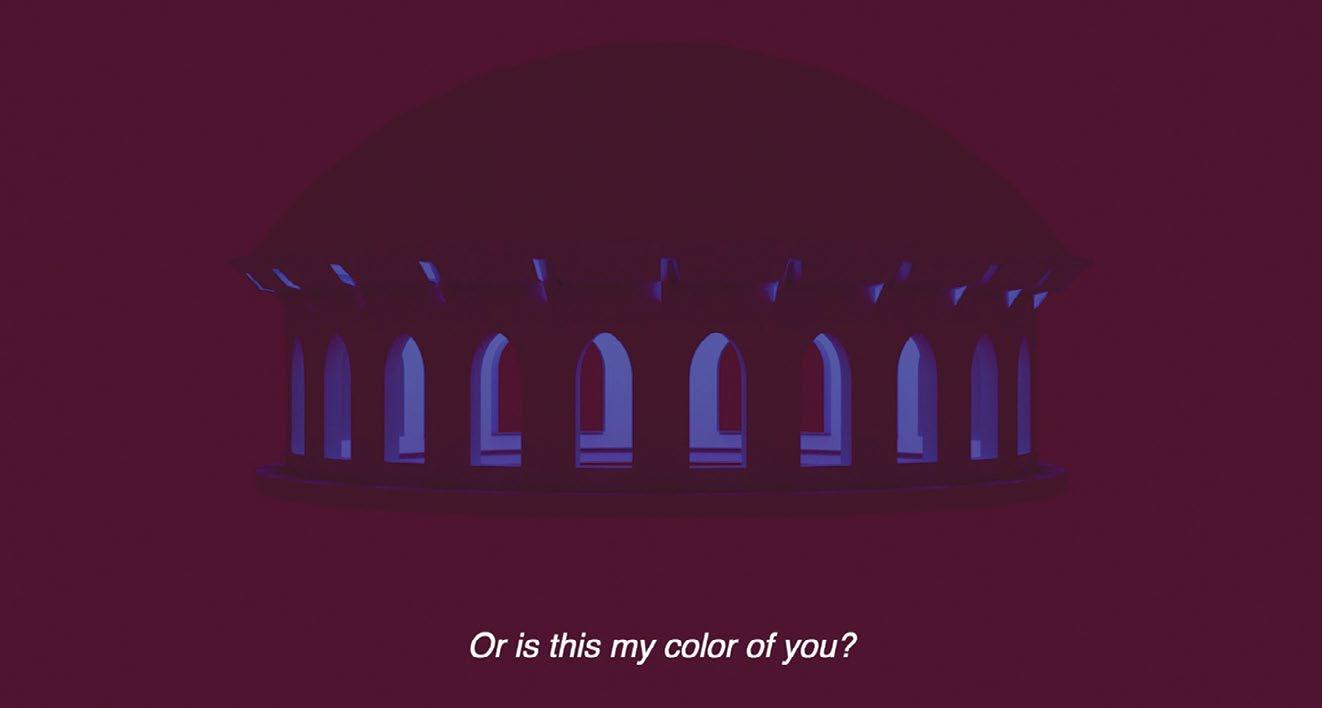
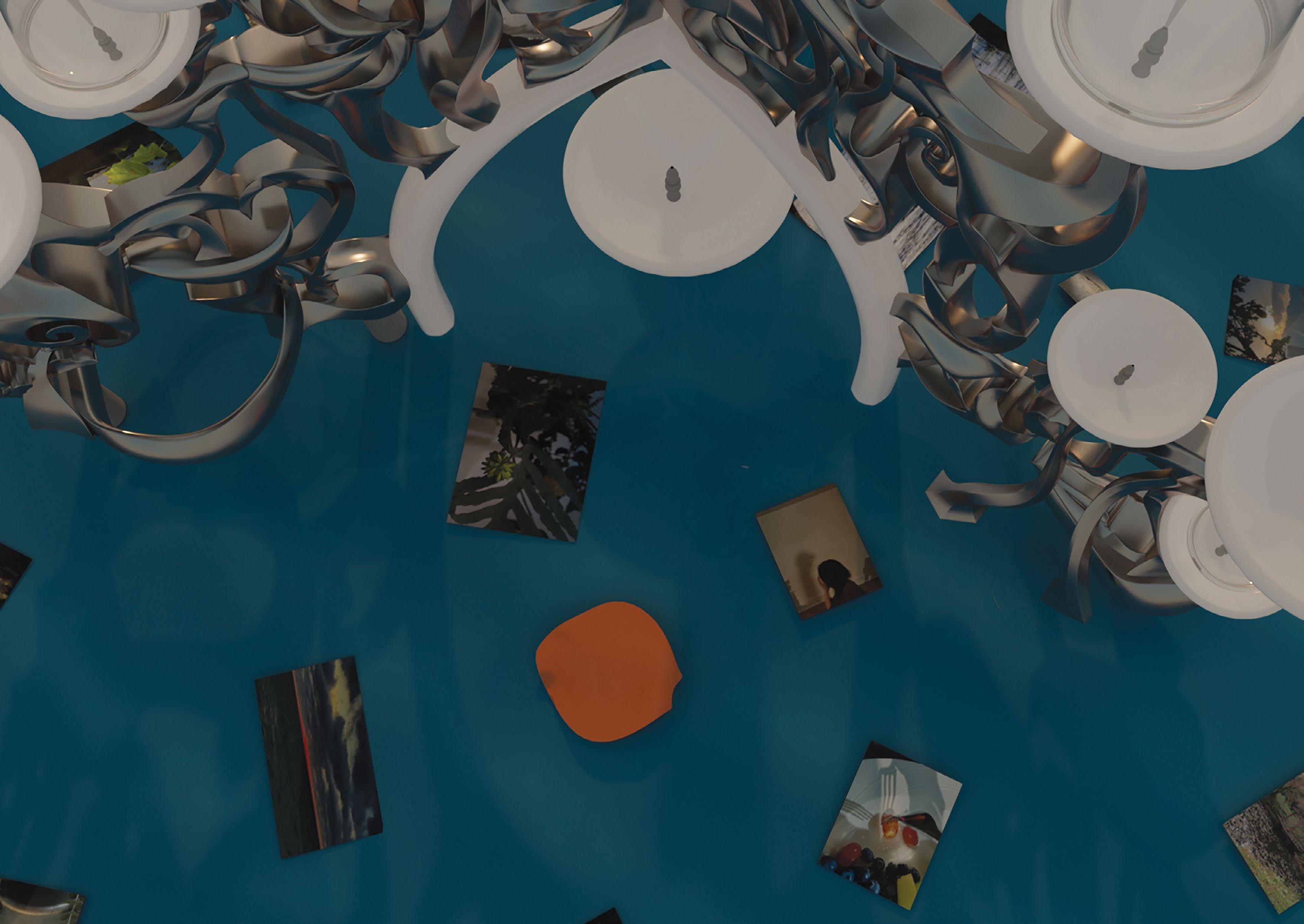
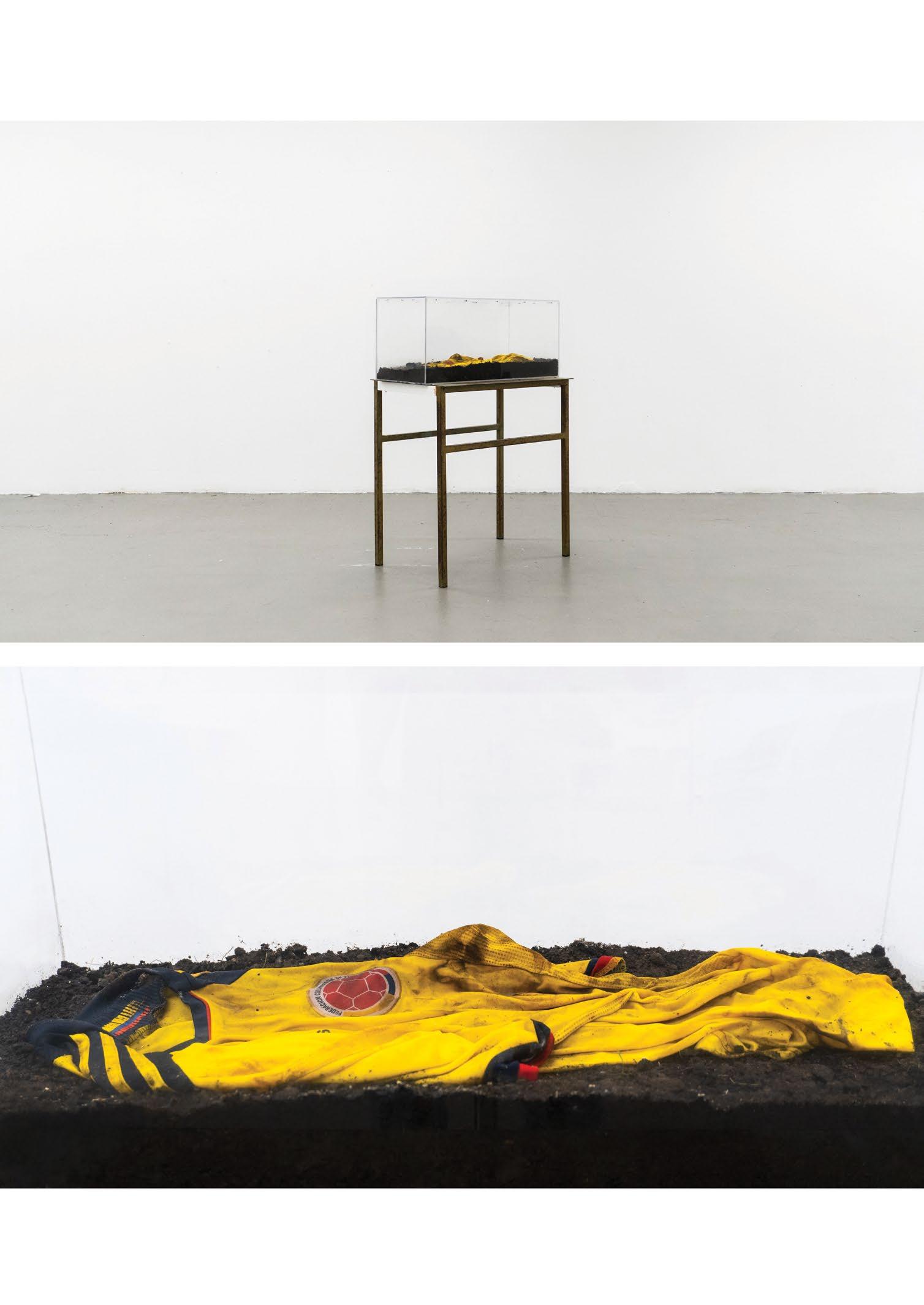
Alejandro Valencia depicts a campus landmark, once functioning as a time-piece and calendar, as a political stage turned on its side, casting shadows that register a tipping point in history.
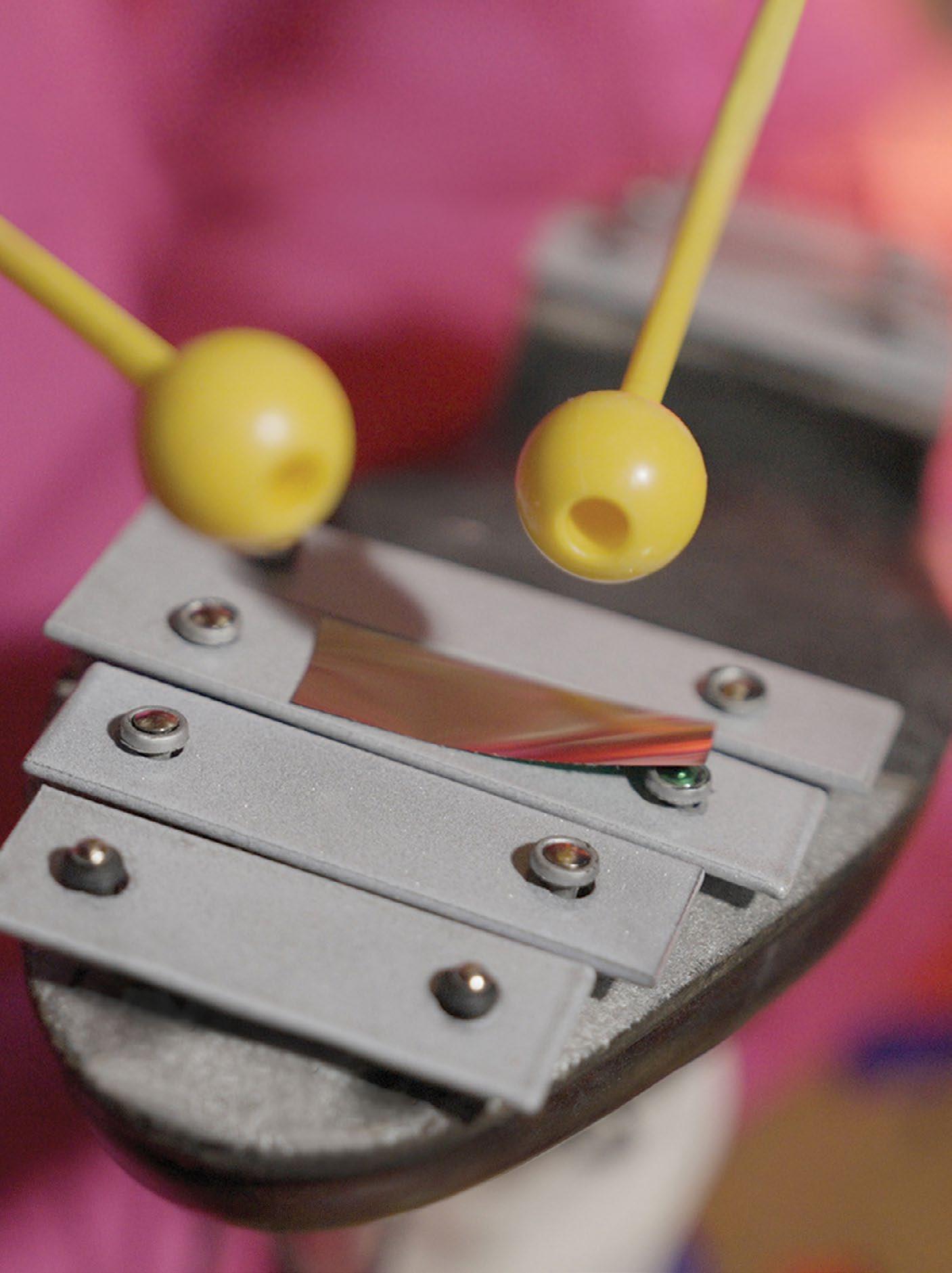
Yeji Cho invites two bodies concealed in a pod to send bioactive signals linked to kinetic instruments, translating them into audible forms that are neither solo nor duet.
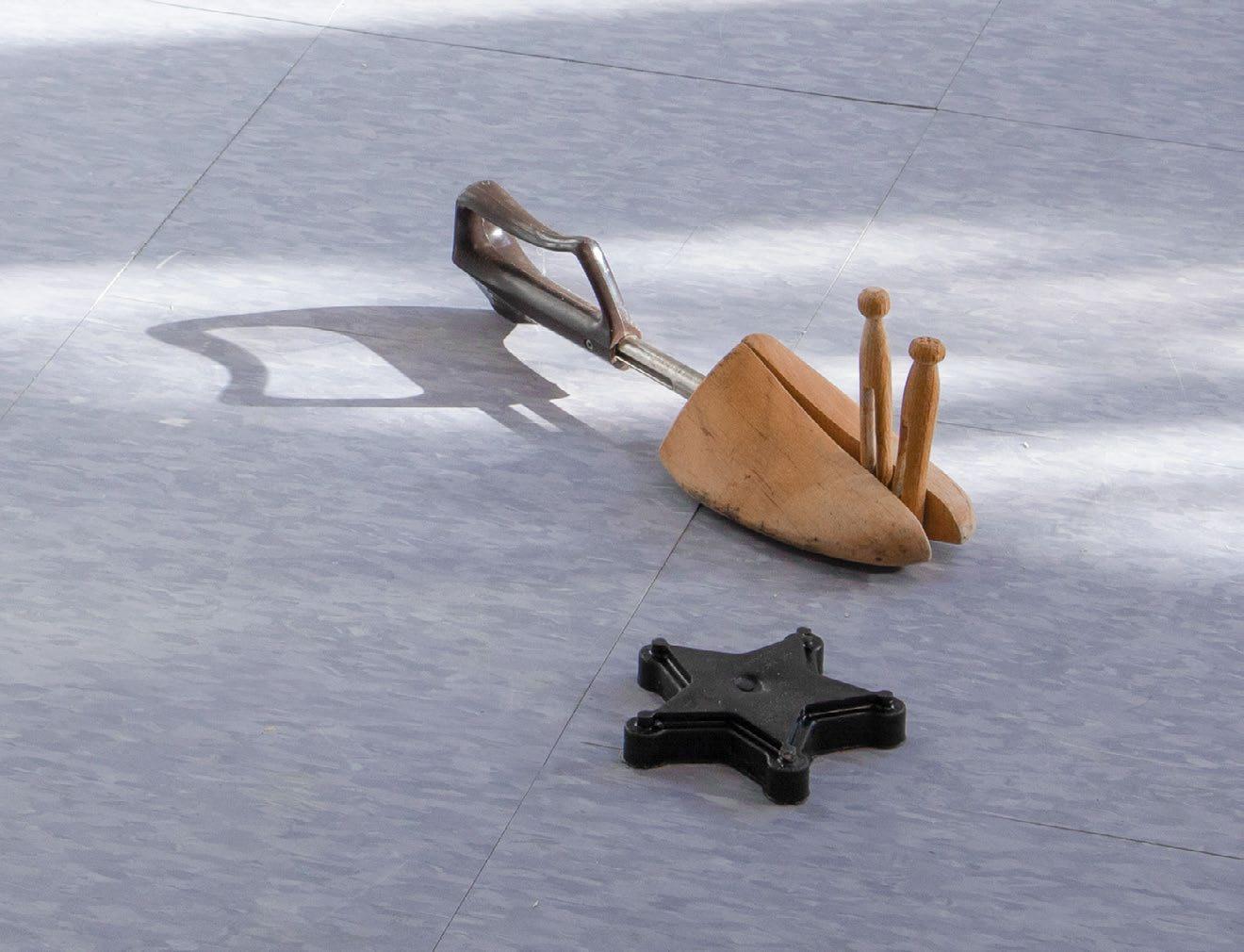
Soomin Kang stages a playroom offering a subtly didactic arrangement of ambiguously functional objects suggestive of pleasure and care.
Ása Önnu Ólafsdóttir amplifies seismic rumblings at the ends of the earth where a serene landscape belies a troubled ecosystem.
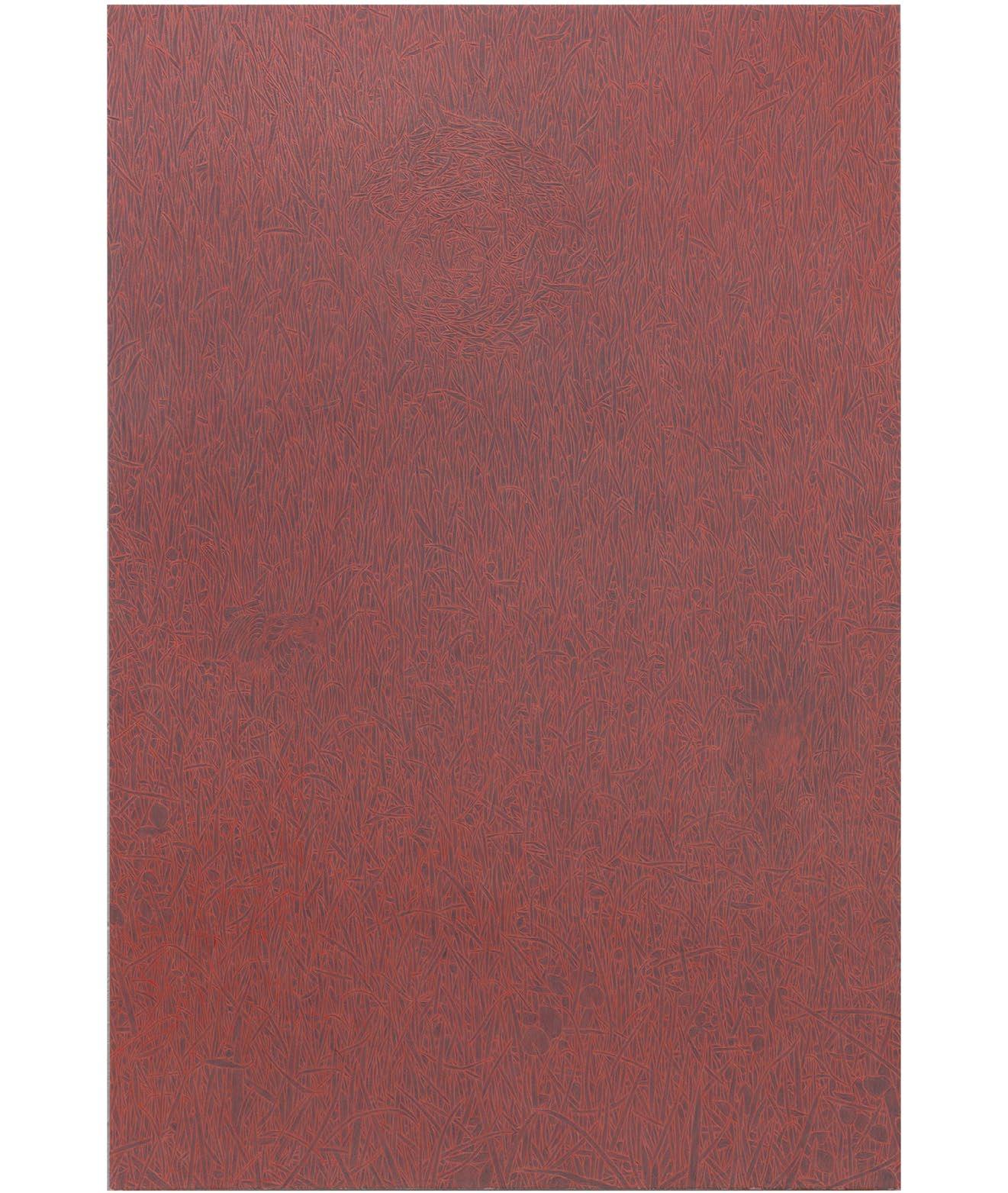
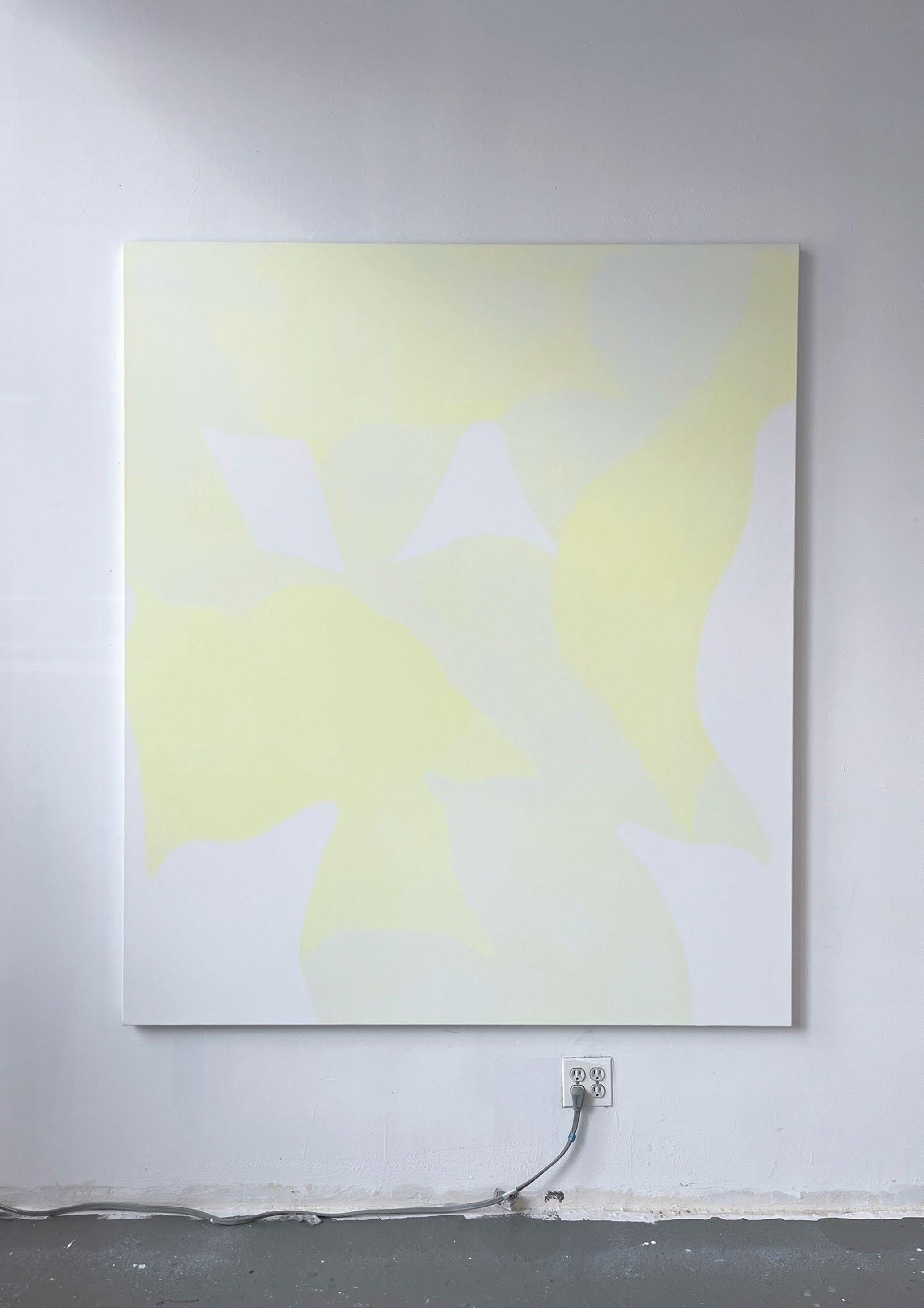
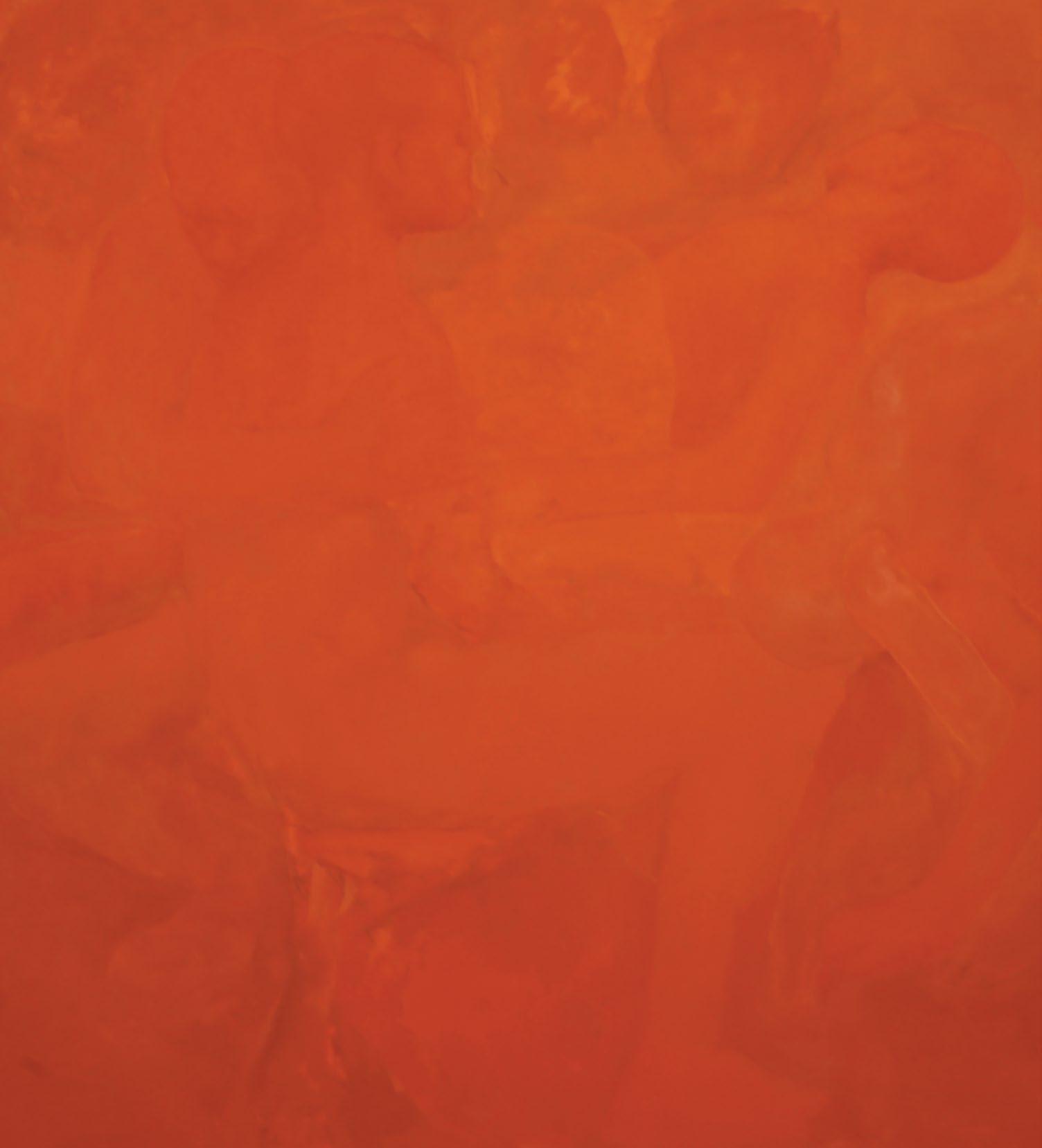
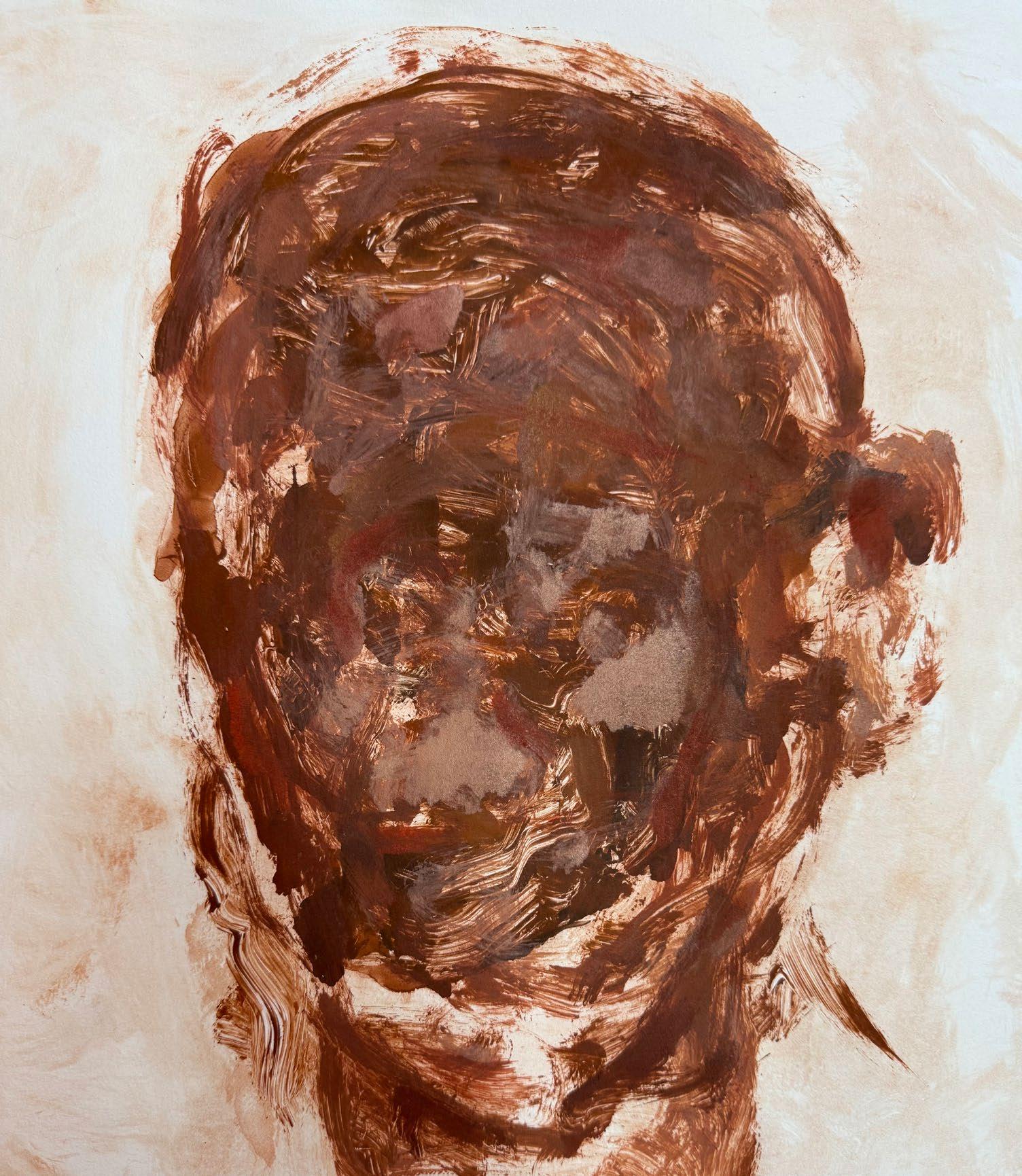
Michael Igwe goes though seemingly inexhaustible variations of a pigment that vibrates with a primordial frequency evoking blood and oxidized earth.
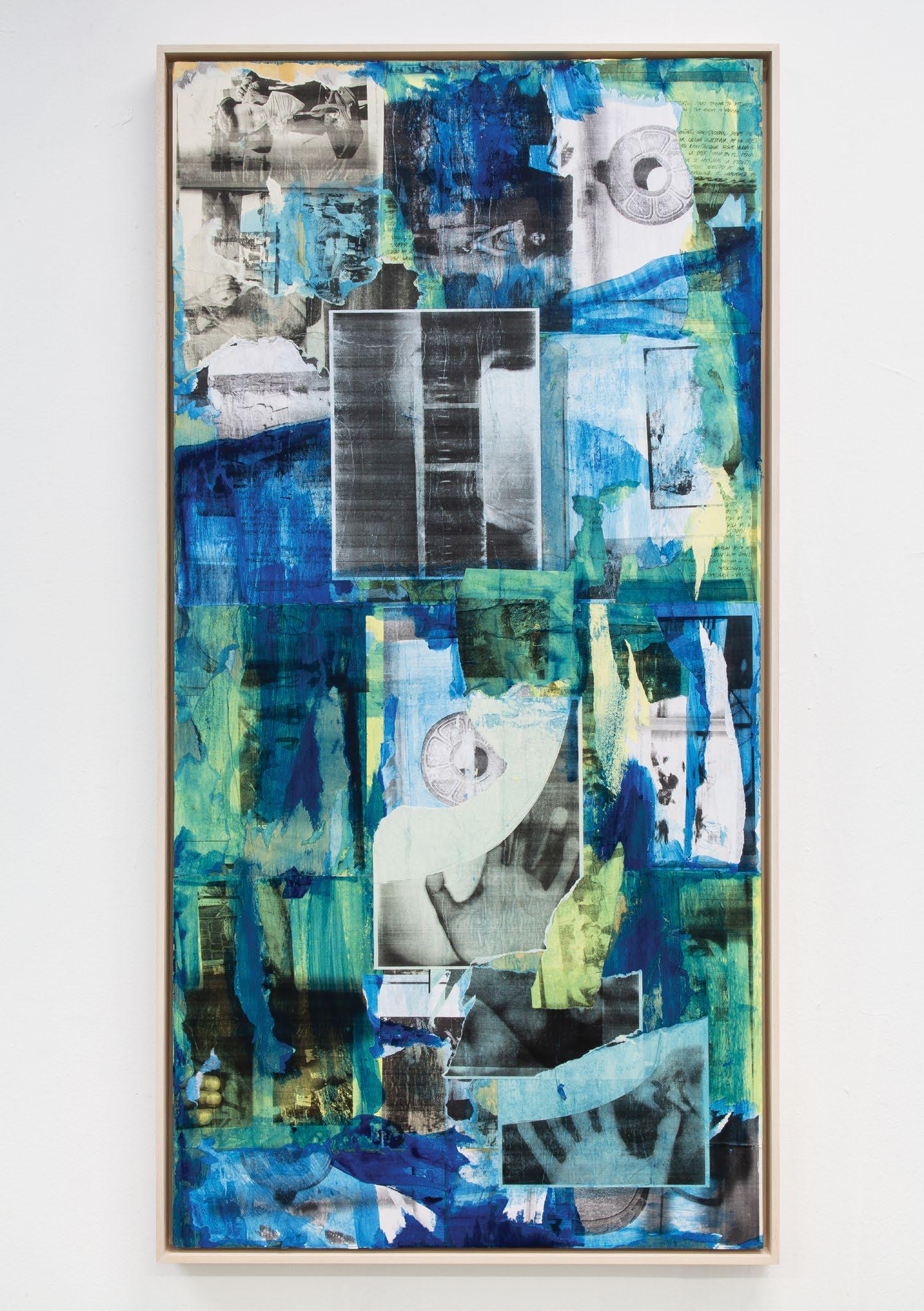
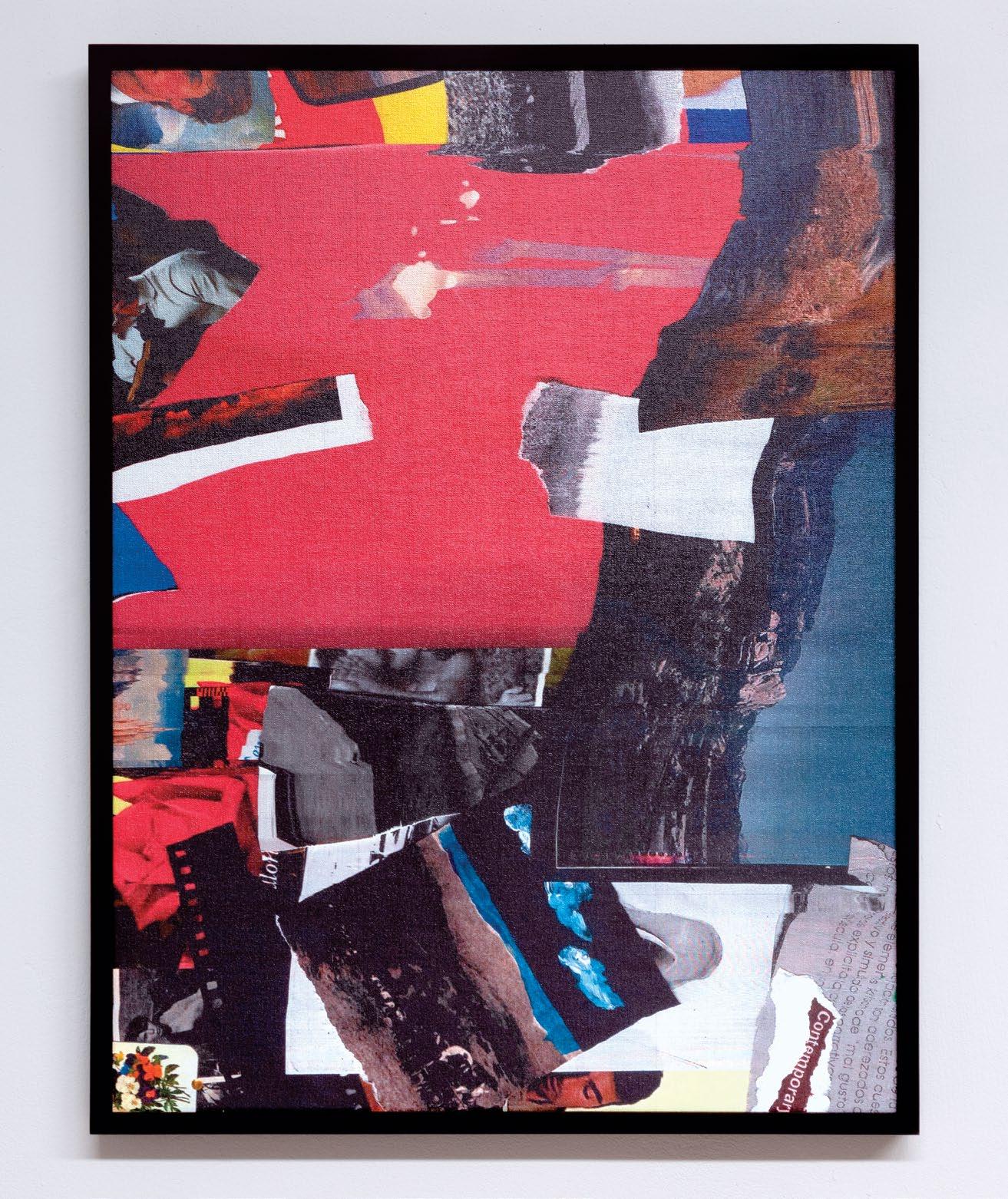
Francisco Javier Ramirez presents remixed versions of recent works as a compilation preoccupied with notions of history and queer immigrant identity, ncountered and dispersed on the outskirts of popular culture.
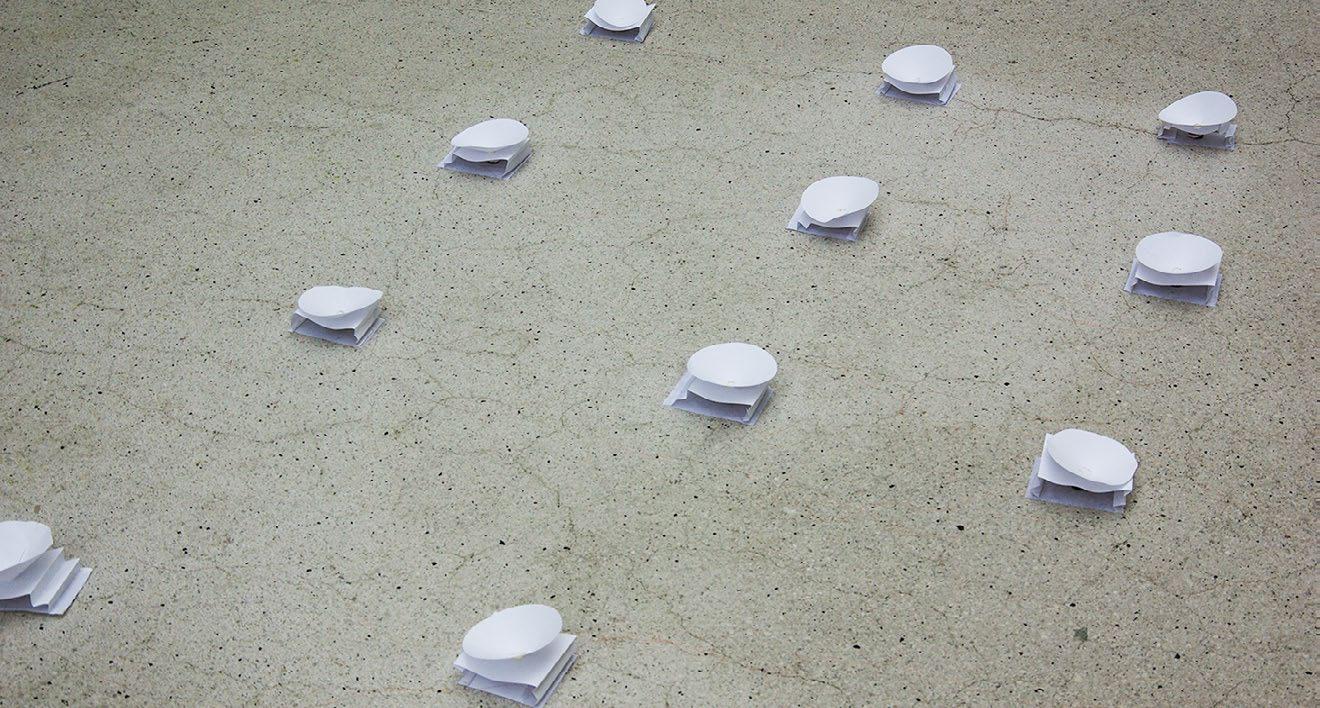
Jasphy Zheng provides liminal rest stops for two at intervals dotted throughout the gallery, where viewers are invited to unlock the artwork for one another.
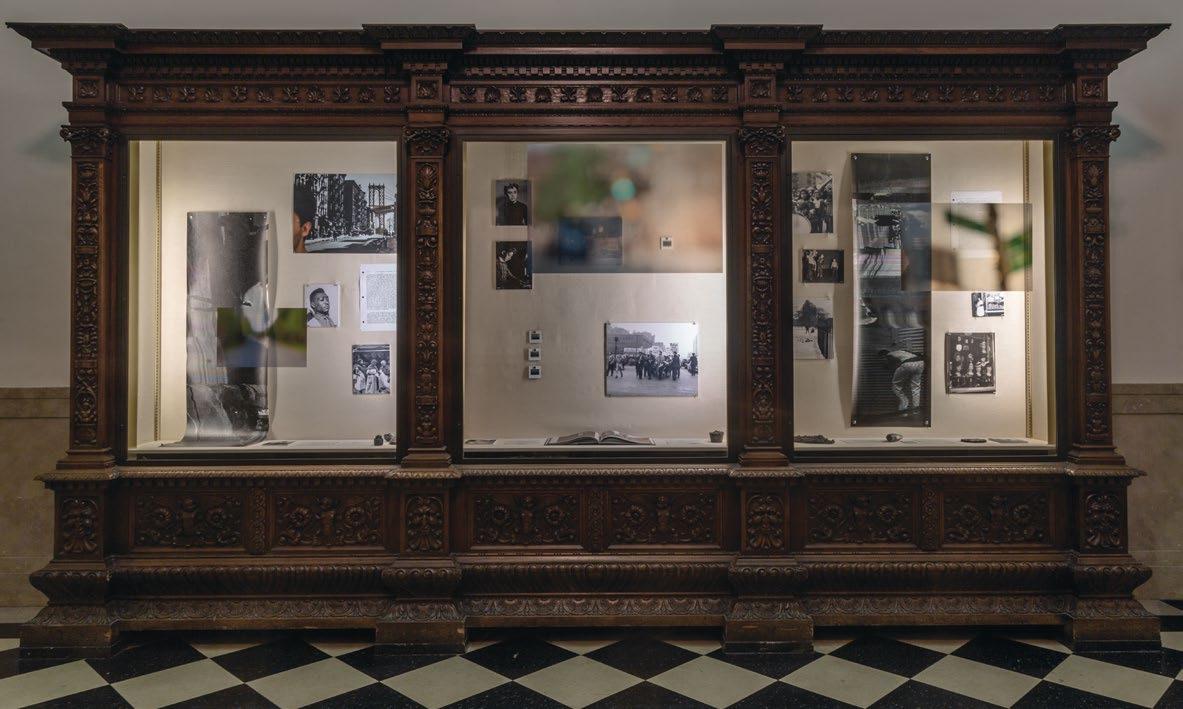
Christine Miller hosts a collection of racialized cultural material and counter-material spanning everyday objects, advertisements, propaganda, and memorabilia from the past two centuries, presented as a public-facing archive showcasing America’s deep-seated reliance on anti-Blackness in building and sustaining its empire.
Yuyu He uses carefully arranged obstructions and apertures to nudge the viewer on a meandering path through shifting spatial planes and relations, inviting us to experience how perception, memory, and agency are shaped by urban space.
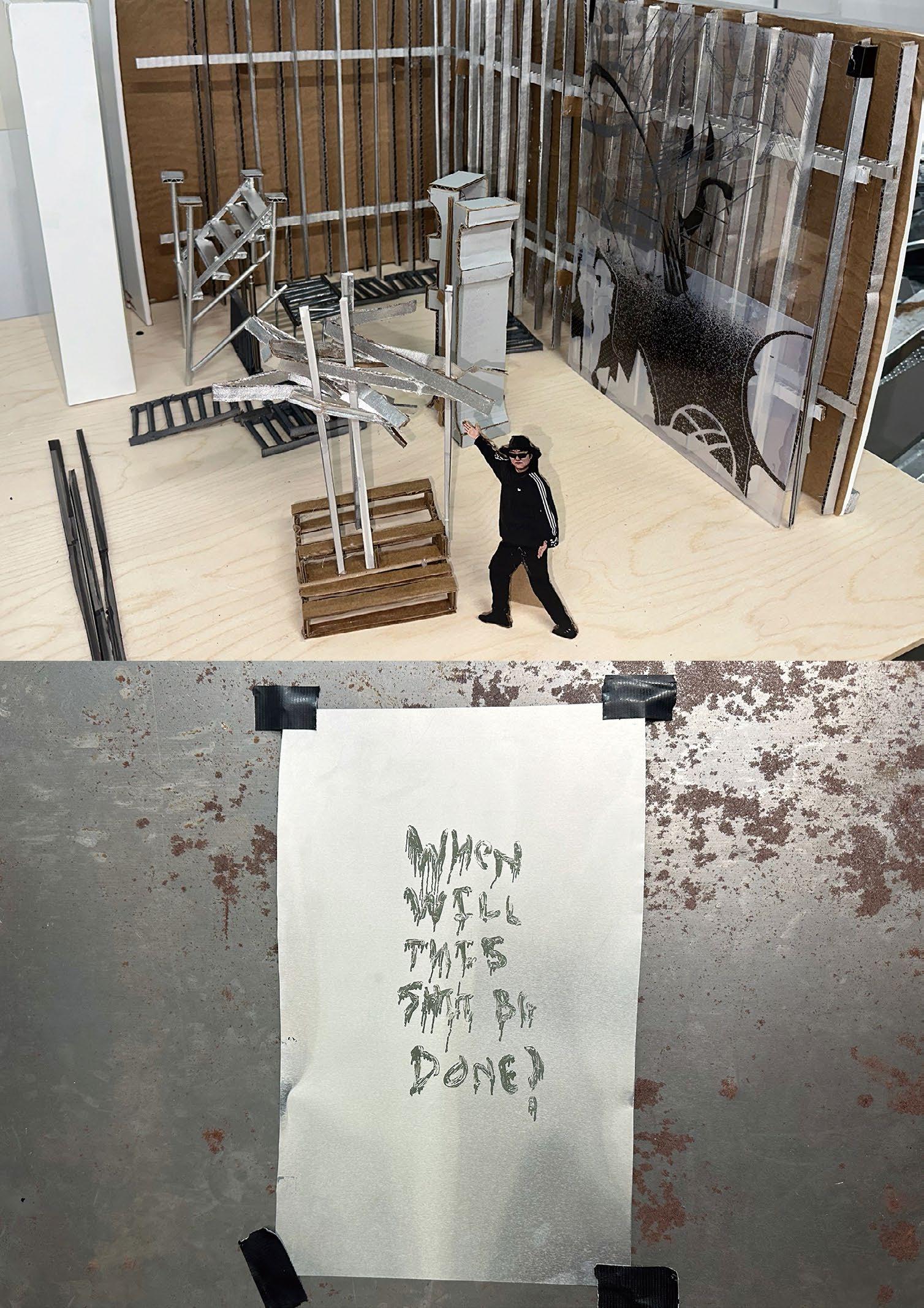
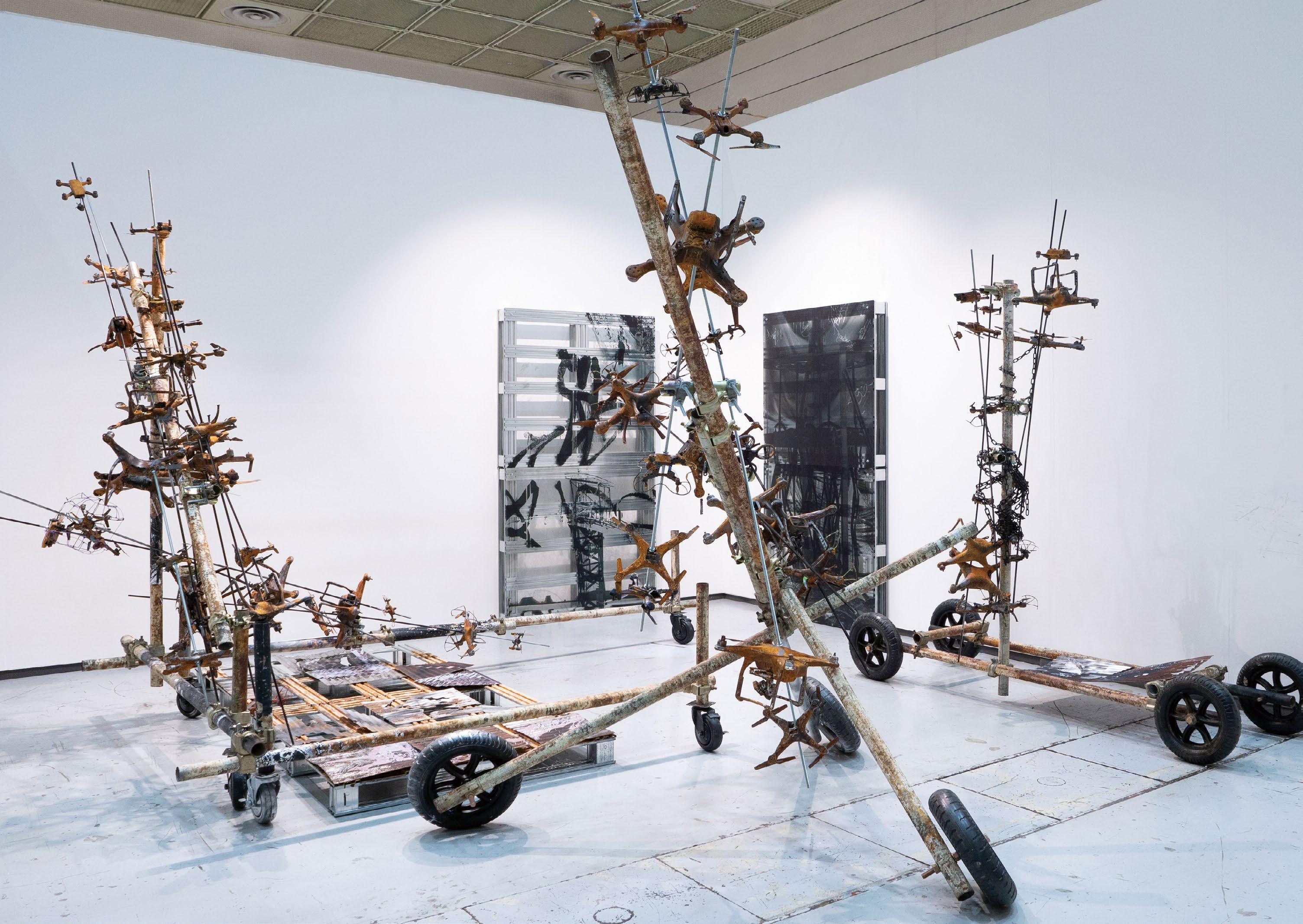
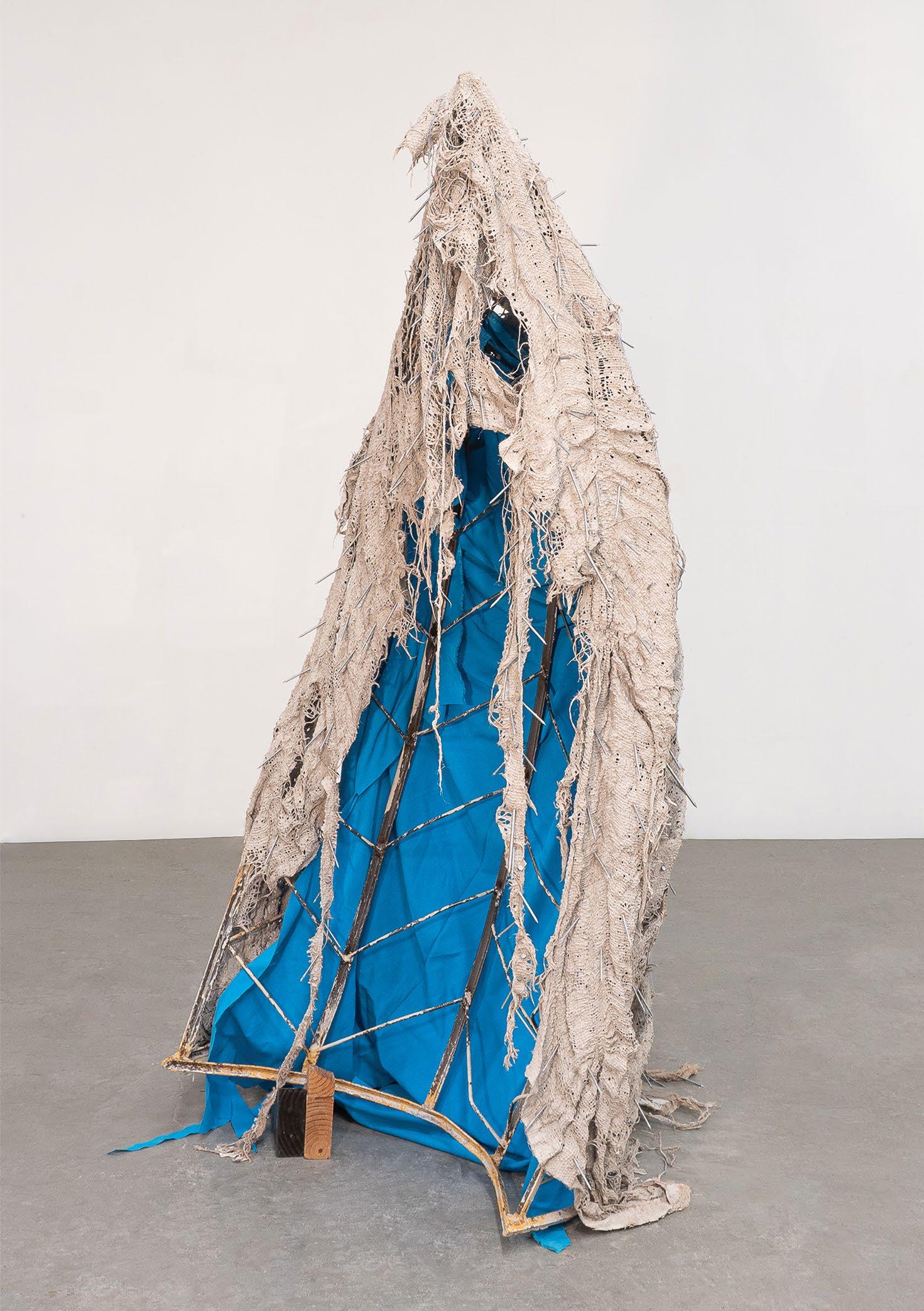
Eugene Jung assembles salvaged building materials into structures that appear to have been subjected to brute force. Such material acts as witness to an unseen but pervasive violence exerted by political crises, extreme capitalism, and collapsing infrastructures.
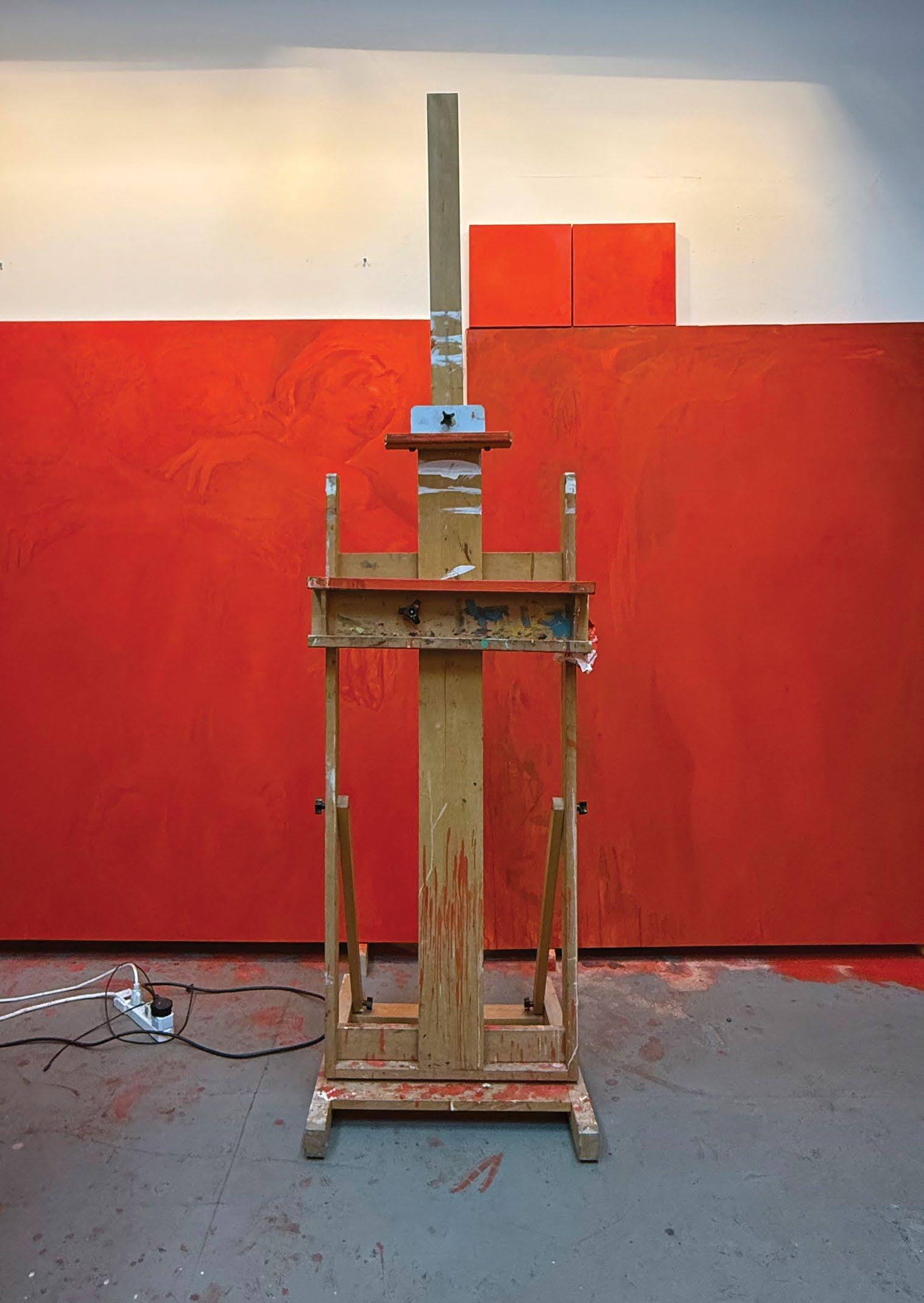
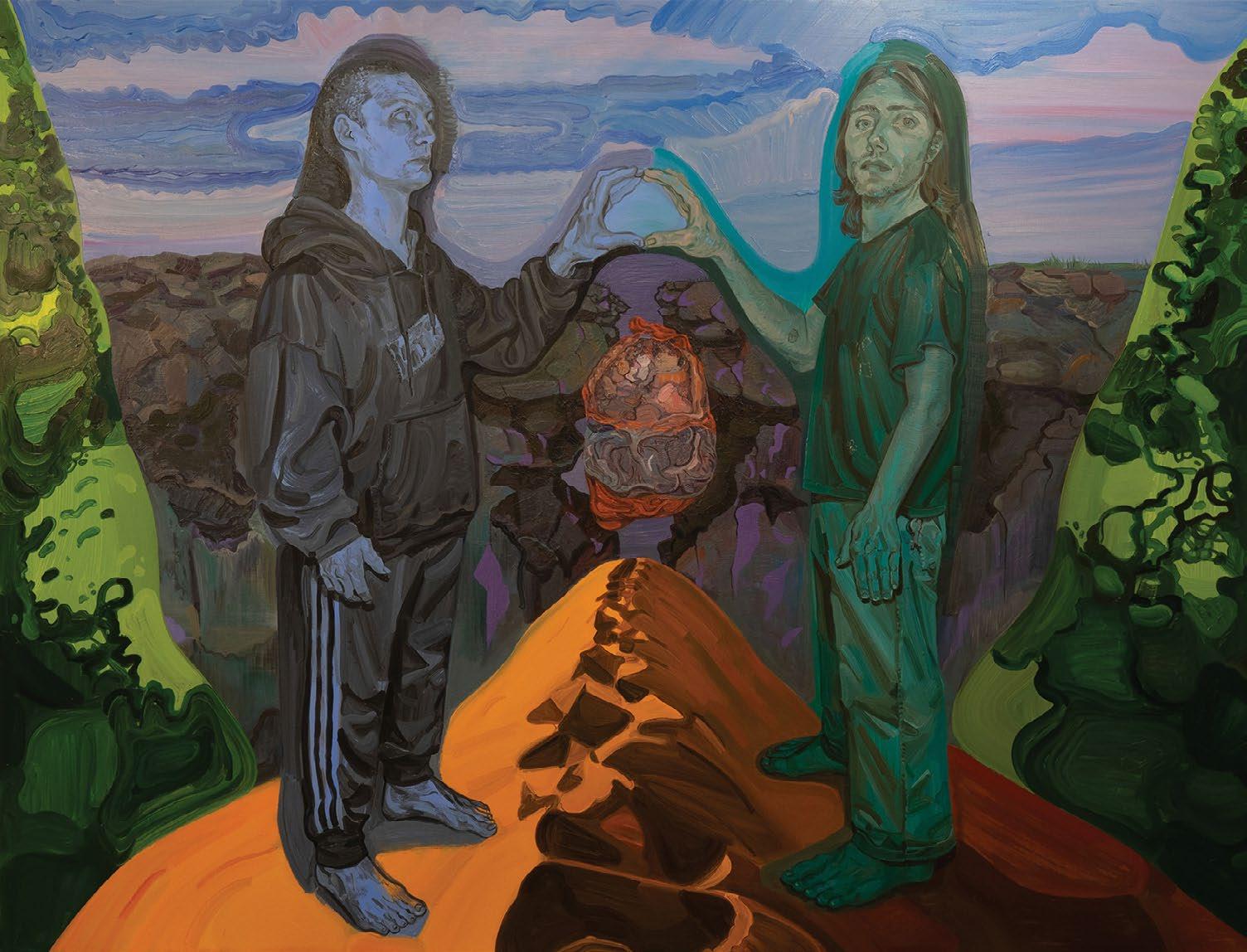
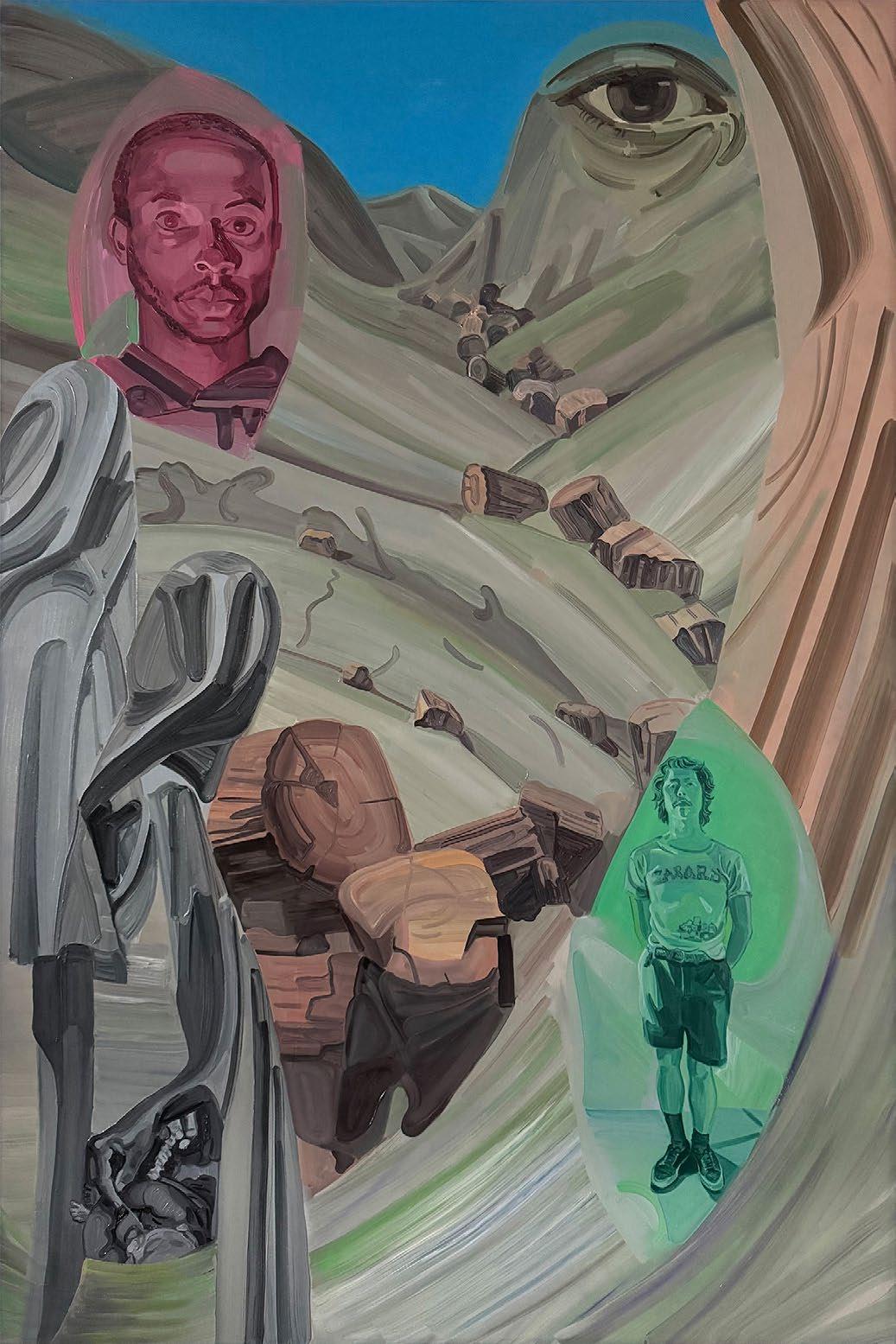
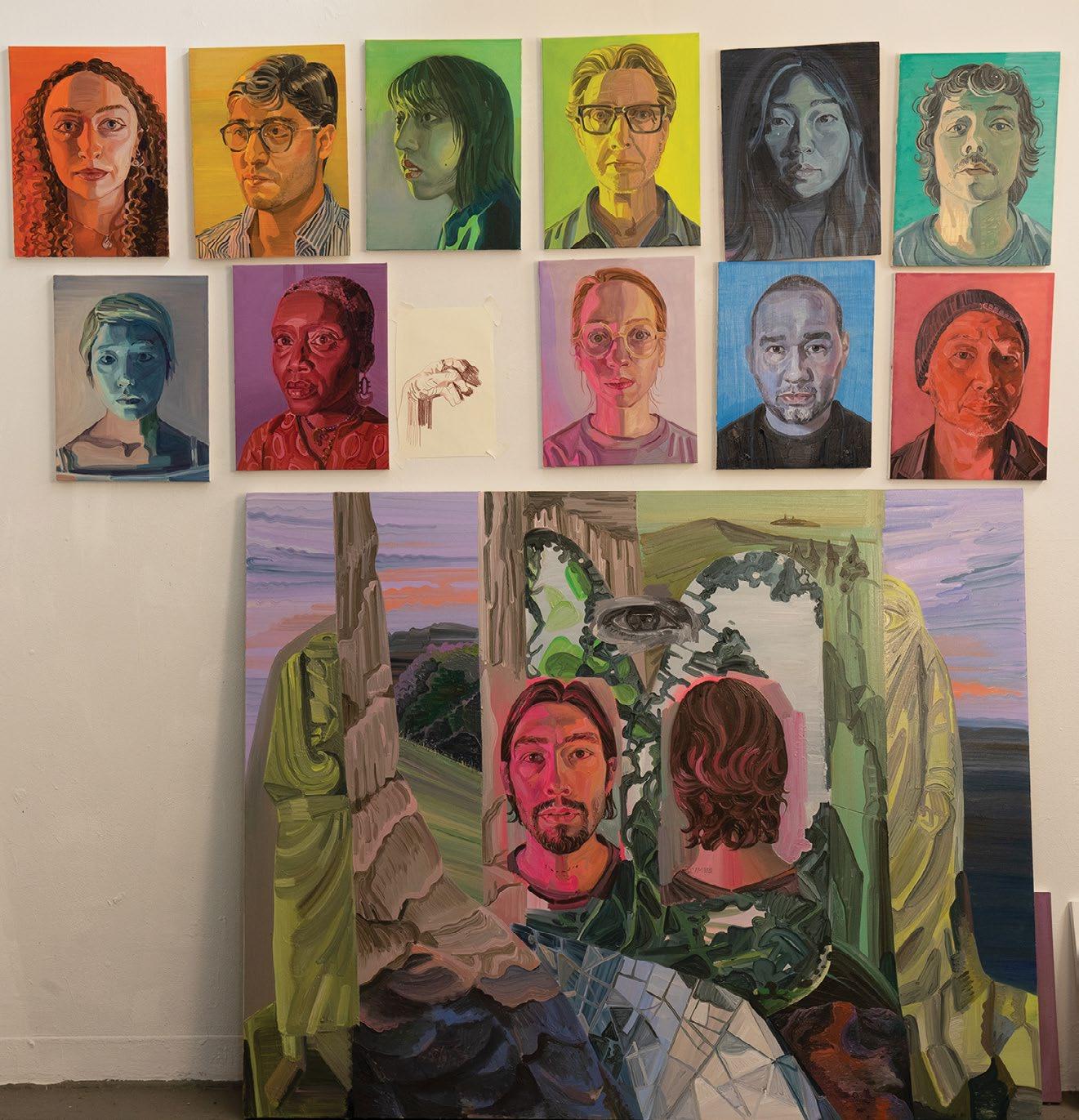
Protagonists in Jenny Williams’s paintings look on anxiously at something glimpsed just ahead, perhaps in the viewer’s space, while auras around them meld into swirling geological landscapes that glow with a prophetic heat.
AMAL ISSA is the curator of the Columbia MFA Thesis Exhibition 2025 and 2026. She has held positions at e-flux, New York, where she was Director of Programs and Exhibitions; and at Ashkal Alwan, Beirut, where she was co-founder and Director of the pedagogical art program Home Workspace. Issa was co-editor of the Sharjah Biennial 13 publication tamawuj , and has translated and edited books by Rabih Mroué, Fadi Toufiq, and Waddah Charara, among other publications. Issa studied painting and literature in Beirut. She lives in Brooklyn.
MIGUEL GALLEGO
Miguel Gallego is a sound and media artist. He develops strategies to reveal how the devices, protocols, and lexicons of contemporary discursive regimes structure and condition thought. He has exhibited at The LeRoy Neiman Gallery, theBlanc, and TRAMPS, and has performed at Dia Chelsea.
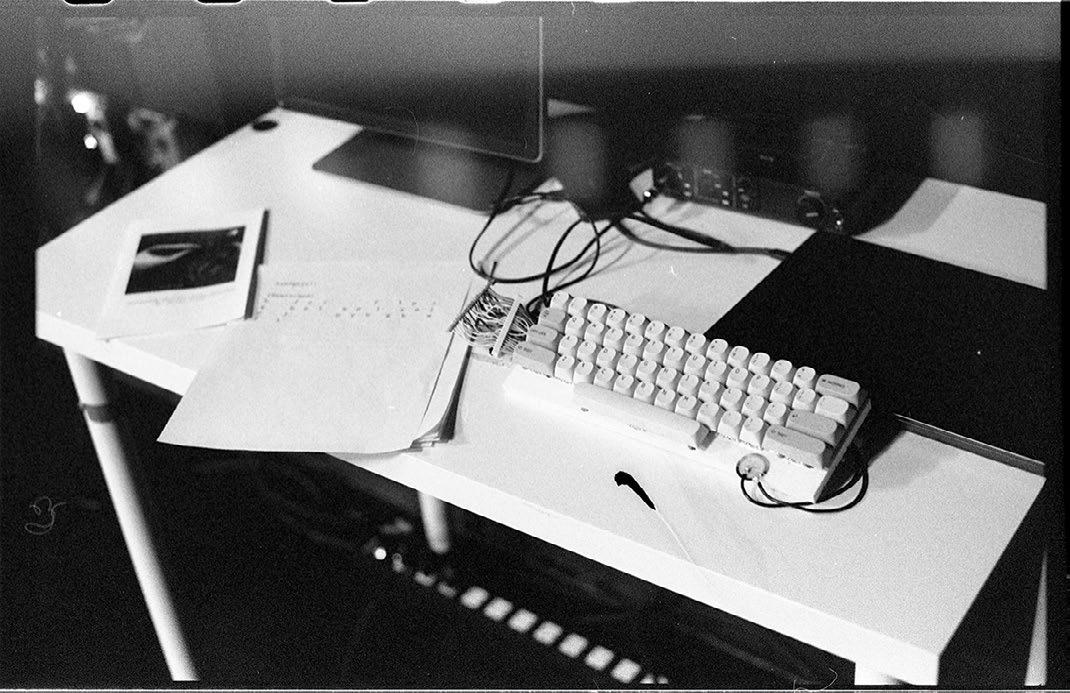
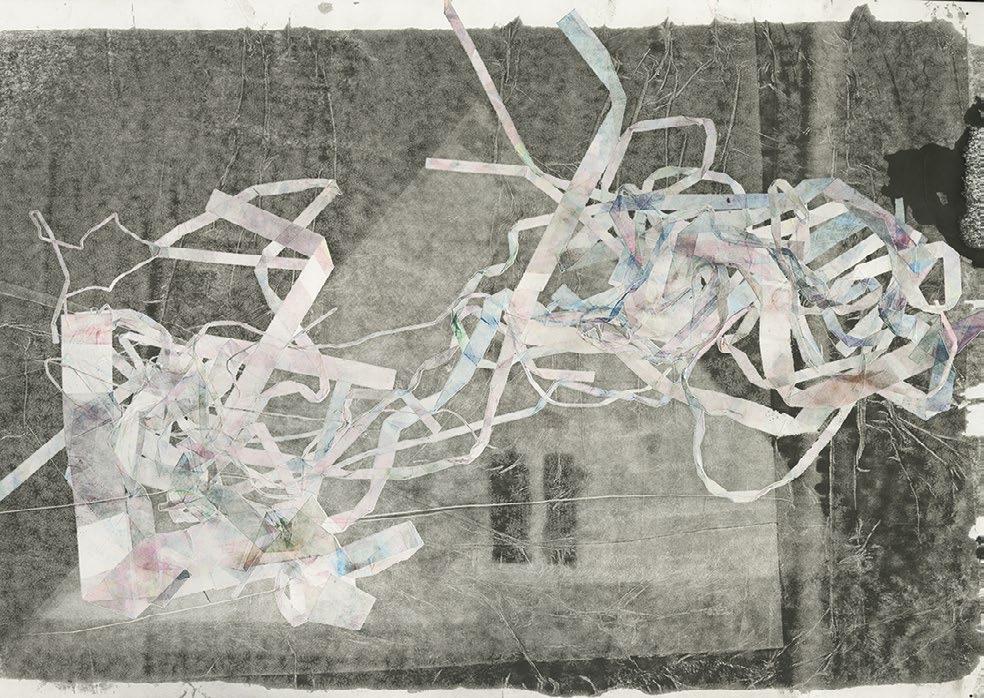
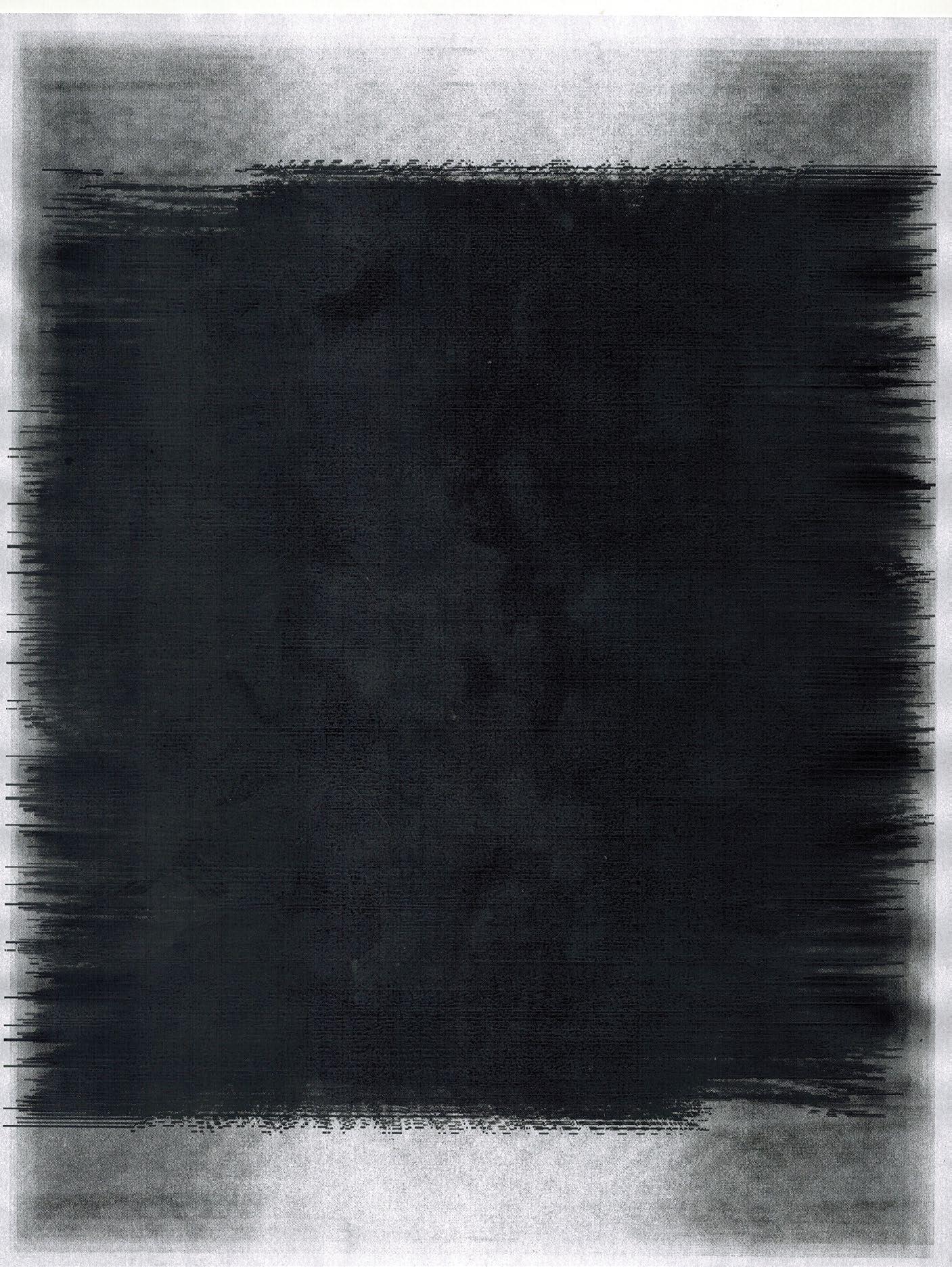
Typing is an expressive act. When you listen to somebody type, you hear the process of thought unfolding in the cadence of their keystrokes: the small hesitations, the satisfied strikes of the return key, and the sudden regret of rapid backspacing. Neither the traditional QWERTY keyboard nor contemporary word processing tools are designed to capture or represent this expressivity. These interfaces, ubiquitous in our daily lives, produce messages without traces. To intervene in this contradiction, I am fabricating keyboards that use the MIDI protocol to capture the intensity of a typist’s keystrokes and render it on a browser window, placing legibility in conflict with affect and the signifying body. These keyboards become instruments of expression, turning typing into performance, text into score, and language into image.
miguelgallego.net
TOP Studio Process, 2025
Keyboard and score for performance, photo on film
Photographer: Ása Önnu Ólafsdóttir
BOTTOM
Like a snake that’s been charmed by the snake charmer’s song I have tried, in my way, to be free 2025
Monoprint
17” x 12”
OPPOSITE
Imitations, registering folds in ink I, 2025
Laserjet on printer paper
8.5” x 11”
ALEK GREEN
Alek Green (b. 1997) is an interdisciplinary sound artist originally from lək ̓ʷ ə ŋ ən/ Songhees territories. His work, performances and workshops have been supported by or shown at the Los Angeles Contemporary Archive, THE BLANC, The LeRoy Neiman Gallery, The Wallach, TRAMPS, Khyber Centre for the Arts, Centre for Art Tapes, EVERYSEEKER, EYELEVEL, Hermes Gallery, Anna Leonowens Gallery, and Soundial, and in Europe with Rencontres Internationales. He currently sits on the board of directors for EVERYSEEKER and the Halifax Art Book Fair.
Alek’s work moves through text, objects, movement, workshops, printed matter, and body language. He relates to sound as a mycelium-like substance, running through bodies and architecture to connect people and place. He relates to books as a house where lots of people live. They spend their lives between the pages and when we read it we get to meet them. It’s nice to meet you now!
ASALAUS
Ása Önnu Ólafsdóttir (she/her, b. 2000), also known as Asalaus, is a sound artist, musician and composer hailing from Reykjavík, Iceland. Her works have been commissioned, exhibited and performed widely in Europe and the United States. Notable exhibitions and performances include Satellite Art Show, TRAMPS gallery, The BLANC, and Wallach Gallery in New York, in Glasgow at Nordic Music Days, in Reykjavík at Dark Music Days, the Reykjavík Art Museum, and Iceland Airwaves, and in Mexico at Neofonía. Ása currently lives and works in New York as she completes her MFA at Columbia University School of the Arts.
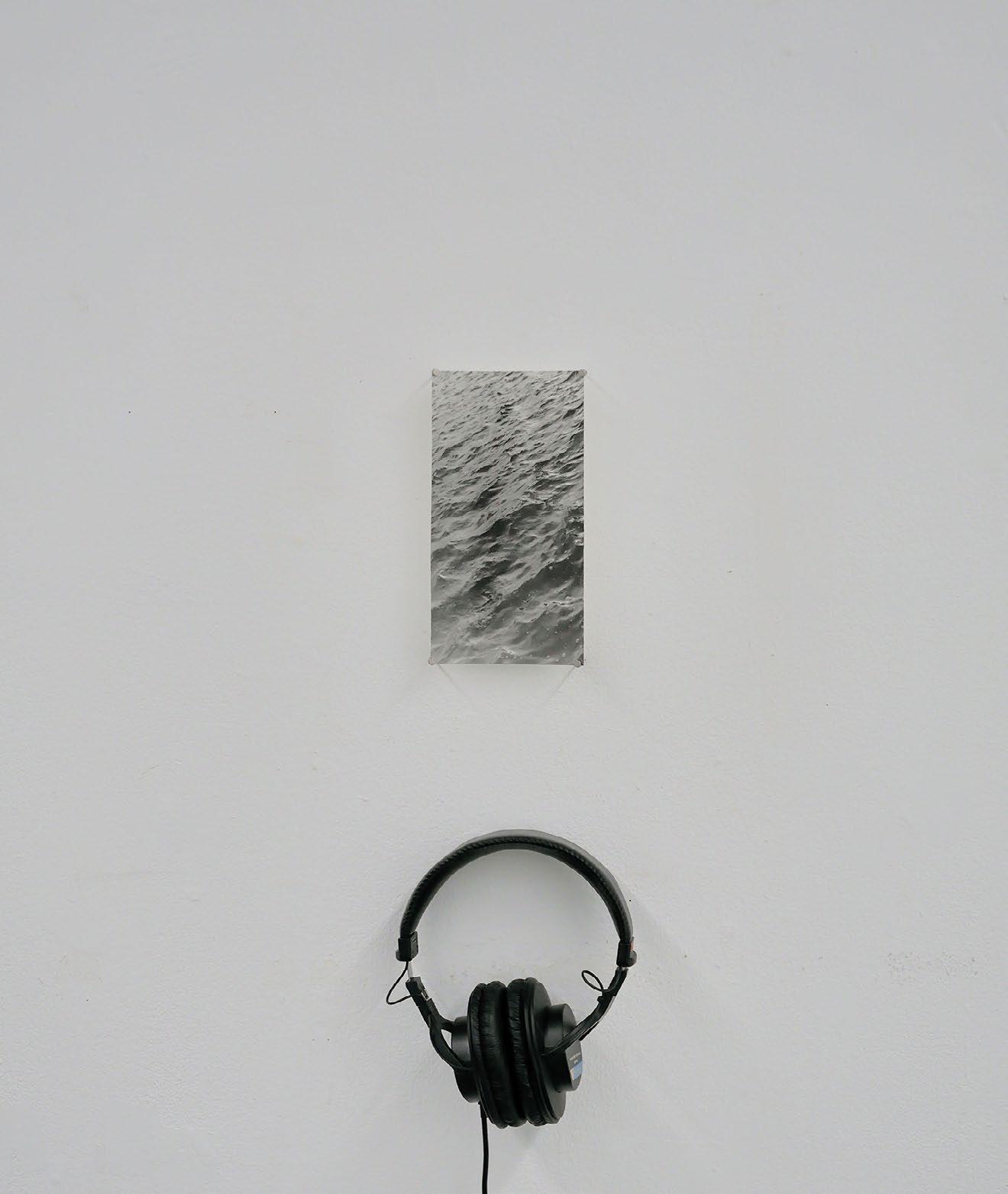
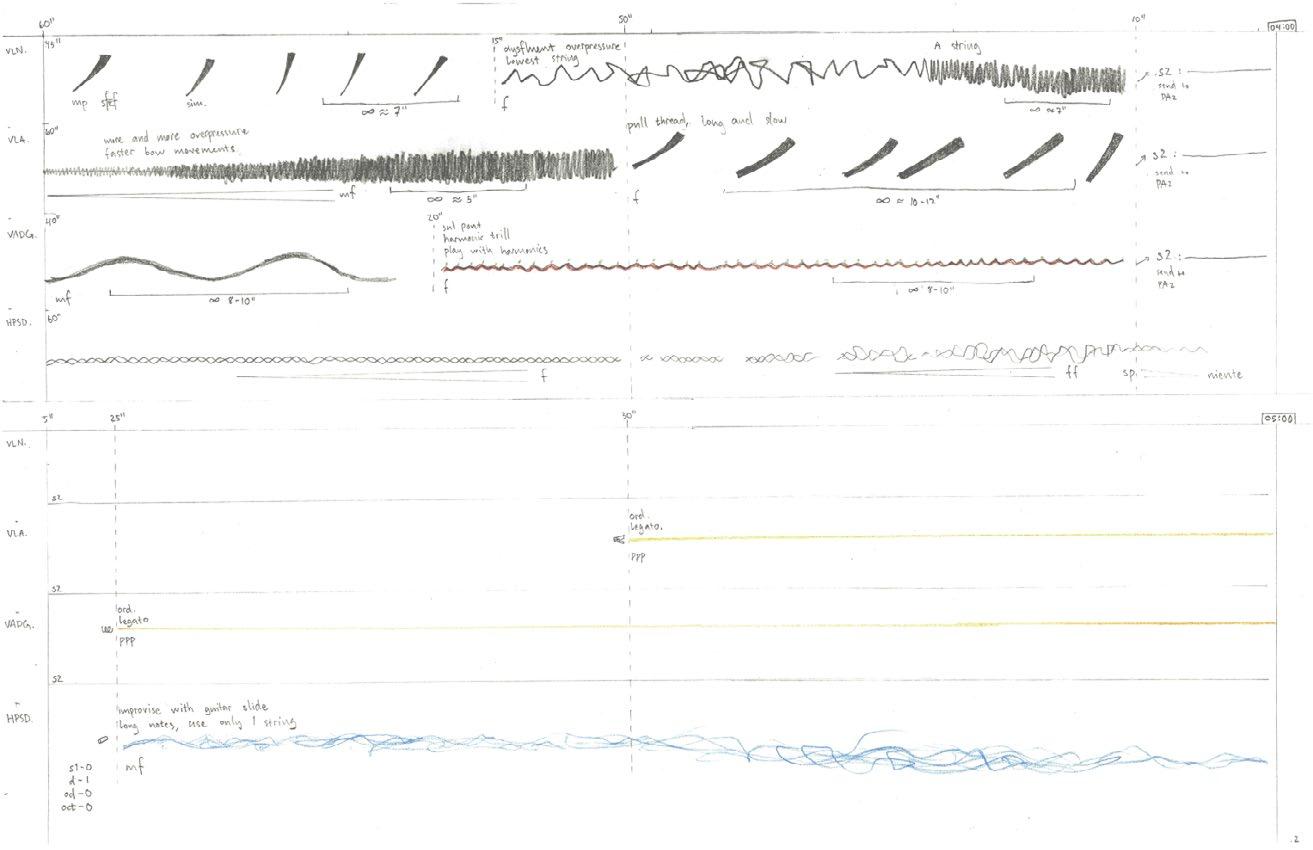
The relationship between object and sound is often at the center of my practice. Materials, such as magnetic tape and ceramics, guide the process of my work, and improvisation is an indispensable part of it. Current explorations are focused on functions of audio hardware and technology in sculptural installations, as well as themes of geology, seismic activity, and seismic waves, all of which inform my work today.
seilist haustið til hrjúfari strengja - score excerpt, 2025 Paper, pencil, colored pencil 11” x 16”
TIMOTHY BAIR
Timothy Bair (b. 1996, Taichung) is a Taiwanese American artist whose work moves between personal narrative and collective history. Through drawing, painting, and sculpture, Bair traces the ways culture is learned, inherited, and reshaped. His imagery often emerges from the subtle distortions and atmospheric biases that color his experience of the world as a person with a disability. Selected solo exhibitions include Bedtime Stories at Mark Christopher Gallery in Toronto (2020), Various Small Fires at Launch F18 in New York City (2022), and most recently As the Mountain Slides into the Sea at River Art Gallery in his hometown of Taichung, Taiwan (2025).
Timothy Bair reflects on distance, memory, and the quiet ache of disconnection from the landscapes that shaped him. As a disabled artist, he can no longer physically access the mountains, forests, trails, and rivers of his hometown in Taiwan. He returns to these places through drawing. The works are not attempts at replication, but acts of honoring the emotional and spiritual resonance those landscapes continue to hold. For Bair, they now exist in a different register: partially unreachable, partially luminous. They are not fully present, yet not entirely gone. His drawings create space for places his body cannot reach but that remain vividly within him. Using still outlines and restrained color, Bair conveys longing and distance. The dense patterning and use of a scattered perspective within many compositions is deliberate, reflecting both the loss of direct access and the way memory flattens what was once immediate and alive. Drawing becomes a form of care: a way to sustain connection, tracing what still matters even when it cannot be physically reached.
timothybair.com @timothybair
OPPOSITE
The Woods Were Full of False Starts, 2025
Colored pencil on paper board
60” x 40”
Sunset Owl, 2023-2025
Colored pencil on paper board
60” x 40”
Where It Settles, 2025
Colored pencil on paper board
30” x 20”
YEJI CHO
Yeji is an interdisciplinary artist working across sculpture, video, performance and drawing. She seeks an existence that emerges not from binary differences in language, but through the reconfiguring of being in personal modes of sensation and lived trajectories of action. Currently based in New York and South Korea, she held a solo exhibition in CICA Museum, and participated in group exhibitions in Wallach Art Gallery, Busan Museum of Contemporary Art, Museumhead, Seoul Arts Center.
Being is often found in the tug of a relationship or the echo of a sensation, rather than in labels and names. I set aside the entities from language and look for ways to reassemble being, starting from senses within the web of mutual reliance that makes existence possible.
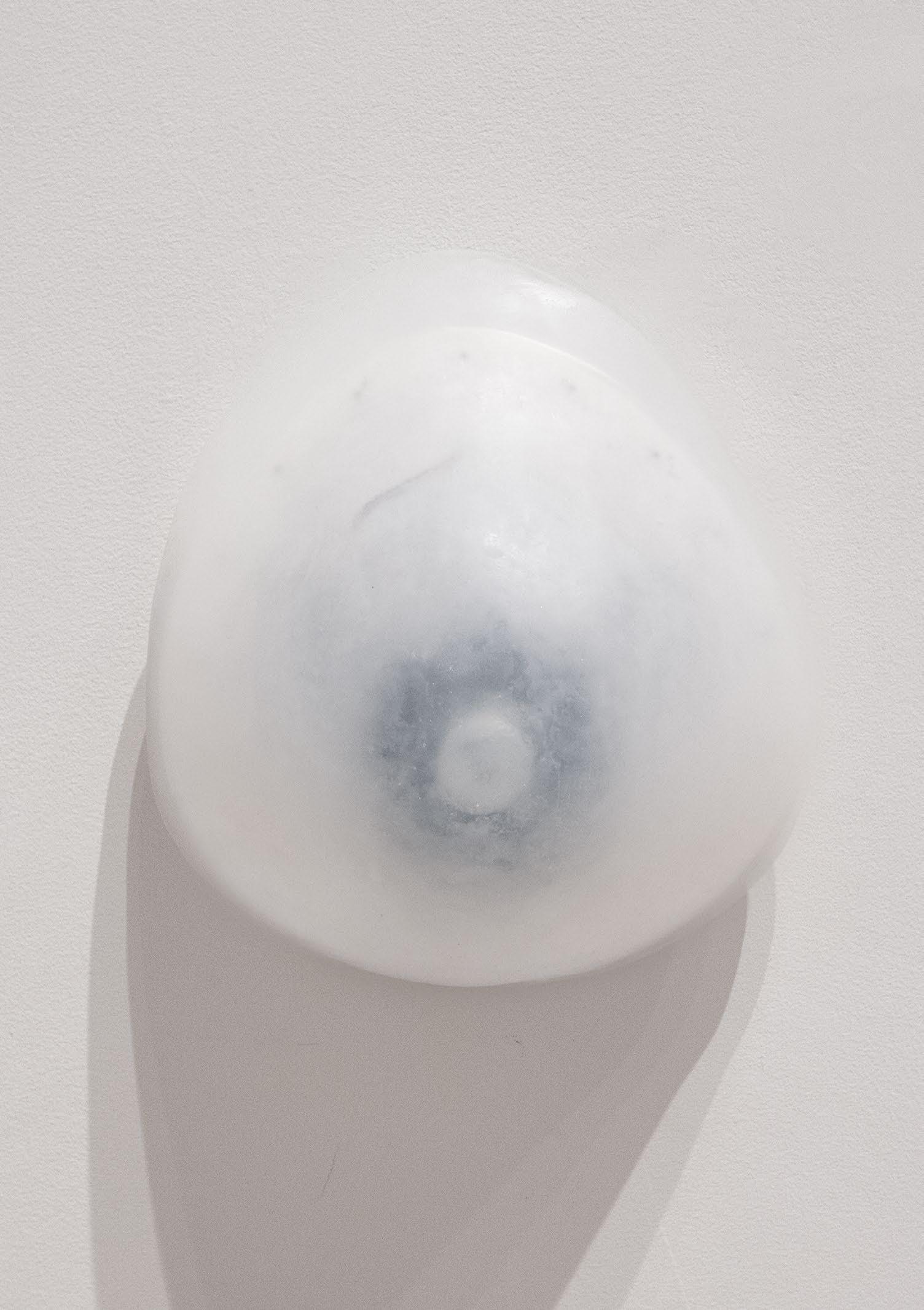
The experience of my work often incorporates other senses like touch, vibration, or sound to draw the audience into the web of relations. The recent work, Species (2025) comes from seeing the way the fetus and the mother lean into one another to exist. I often feel that a pregnant woman belongs to neither the category of man nor woman, but a new species. I took the dual pulses of the mother and the formless fetus, and merged them with the rounded weight of the pregnant belly, turning them into an independent existence. The rhythm of two heartbeats is familiar but strange under the silicone skin. The vibration is transmitted to the hand of the viewers and into the wall.
choyeji.info @__choyeji
OPPOSITE
Species, 2025
Silicone, speaker unit, sound, bass shaker, acrylic 12.5” x 11” x 5.5"
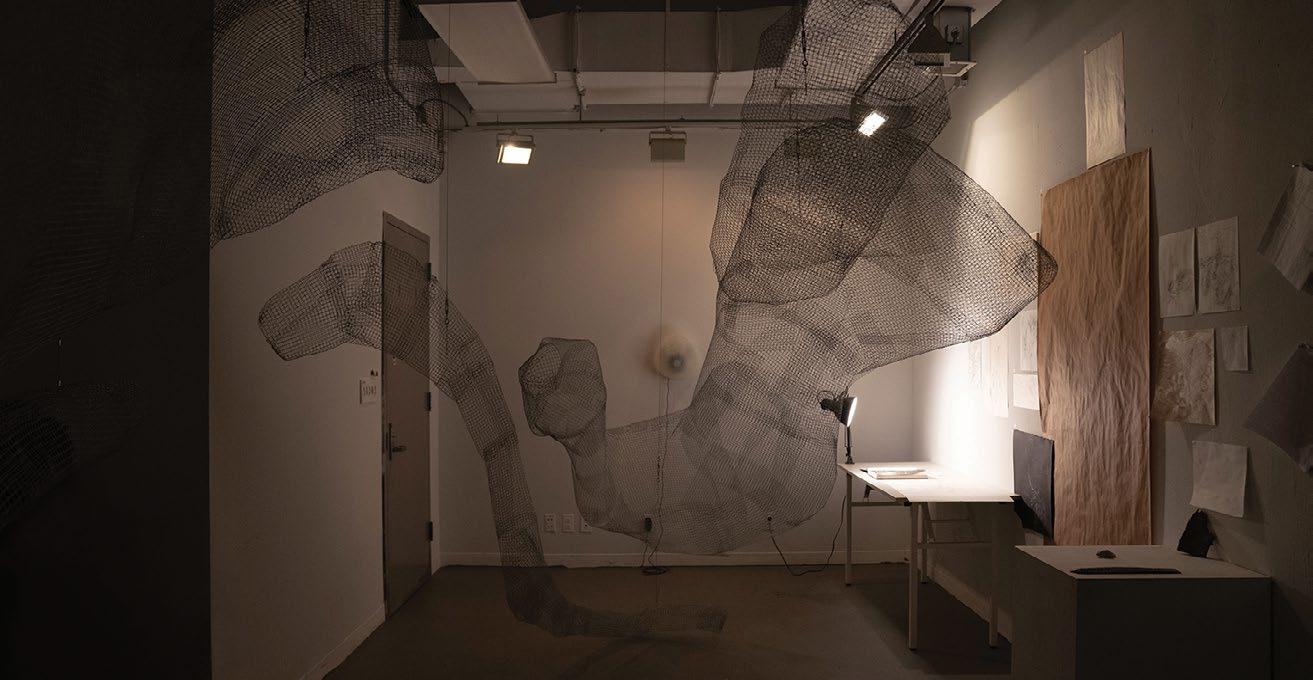
meaning(less): sculpture 2025 — in progress
Metal mesh, wire
OPPOSITE
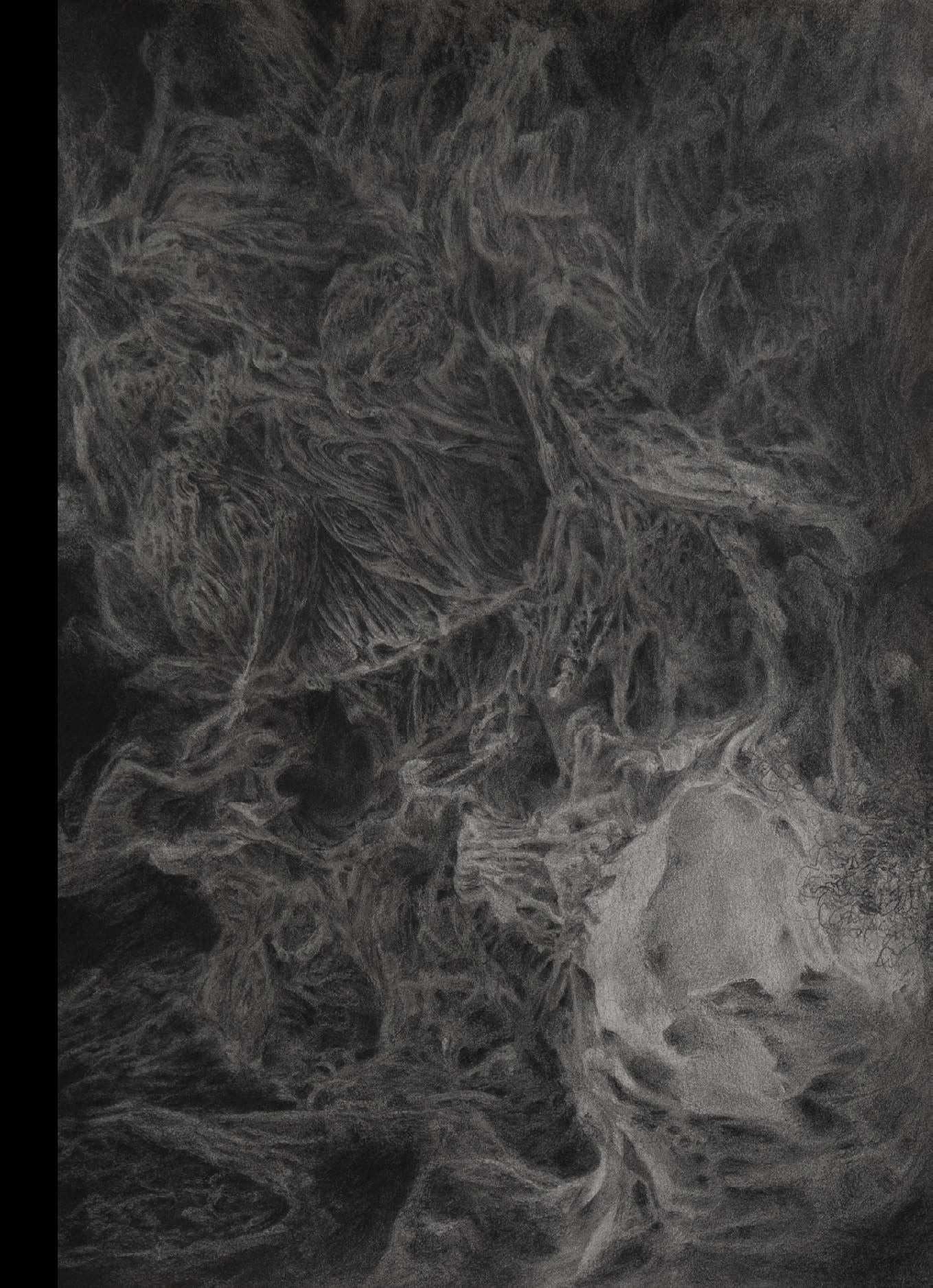
meaning(less): drawing, 2025
Graphite on paper
94.5” x 105.5” x 73"
11” x 8.2”
YOUKYOUNG CHO
Youkyoung Cho (b, Seoul, Korea) works in New York and Seoul. She is an artist working across video, performance, and installation.
Let’s open a festival
Something is about to happen
There is no script here
Flap the fins, disperse the fog
The muddy pitch will become a sacred site
This festival does not promise resolution
The momentary celebration is forgotten as quickly as it is experienced
Pour fuel onto the wasteful act
With a dog-like innocence, cross through boredom and nihilism
“Well, it’s just a celebration
...but it’s also an escape.”
“Oh, it’s like having fun
...but it’s also a war.”
The thick metal body bursts open Like a gun without bullets
Charging and discharging
The cycle never ends
With every startle, one note
Explosion becomes rhythm
Rhythm becomes escape.
It is the sound of fleeing feet
Tap Tap Tap, 2025
Performance, featuring the artist
20 min
Azalea Hill 2025
Video, loop, sound, color, featuring the artist
13 min
CLORIS DONG
Cloris (Han) Dong reconstructs perception and identity in the digital age through CGI animation, web-based art, fiction, and installation. She creates environments where boundaries between the human, digital, and non-human blur, unsettling linear time and stable space.
Through a post-human lens, she examines how the “I” is shaped by cultural systems, technological infrastructures, and unseen protocols. Her work approaches identity not as fixed, but as plural and relational. She reflects on subjectivity as lived and constructed, always in motion.
clorishandong.com @cloris_dong
HAROLD GARCIA V (EL QUINTO)
Harold Garcia V (El Quinto) (b. 1985, Havana, Cuba) is a multidisciplinary visual artist based in New York whose work examines ecological precarity, colonial legacies, and the politics of landscape, with a particular focus on South Florida’s Everglades. He will hold an MFA from Columbia University and has a BFA in painting from the San Alejandro Fine Arts Academy in Havana, Cuba.
Garcia has been featured in significant institutional exhibitions, including Water Ways: Indigenous Ecologies and Florida Heritage at the Florida State University Museum of Fine Arts (2025); Past as Prologue: A Historical Acknowledgment, Part II at the National Academy of Design (2025); Guilt-Ridden Landscape at the United Nations (2022); and ARTxiomas at the OAS AMA Art Museum of the Americas (2016). His solo exhibition, Welcome to the Everglades (2021), at the Thomas Nickles Project, was accompanied by the United Nations Documentation and Division Lecture Series.
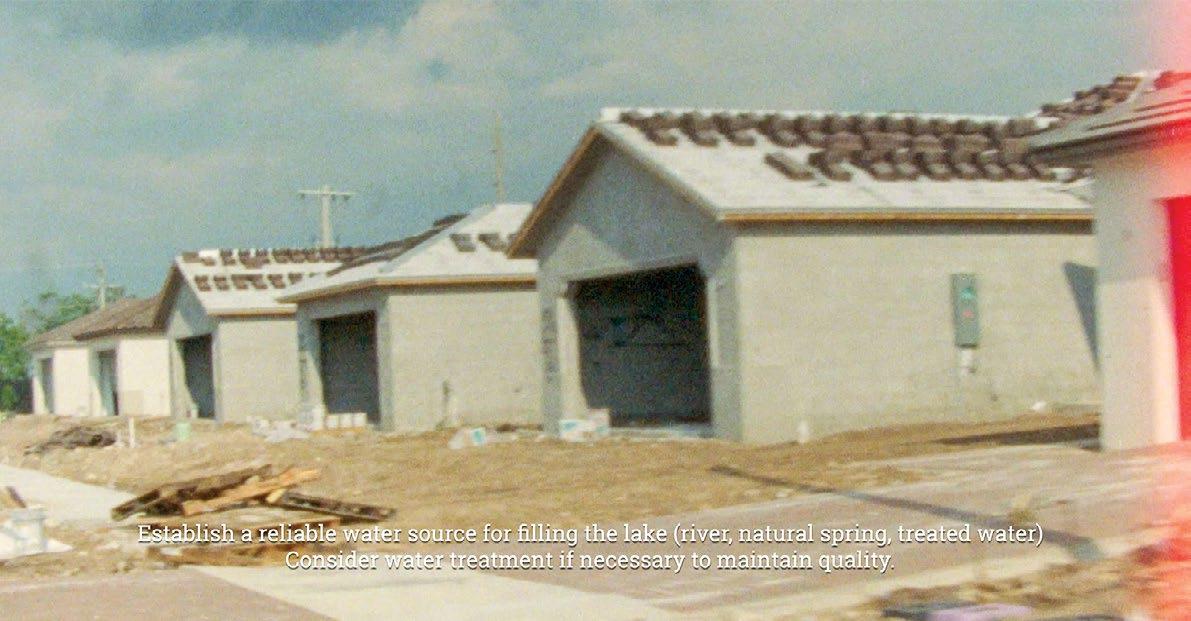
The project is both a sculptural environment and an operational system that stages the mechanisms regulating access, participation, and belonging. Viewers navigate permissions, checkpoints, and delays, becoming provisional subjects of a bureaucratic apparatus that exposes how cultural assimilation, exclusion, and self-regulation are produced. Their movements generate traces and decisions that are folded back into the work as material and evidence, forming a speculative ethnographic archive from within the very institutional logic the project critiques.
Through a theater stage and network of cameras and screens, invisible operations of control are translated into visible images so that surveillance becomes spectacle and administration becomes choreography that actively shapes behavior. Framed as an ongoing research process grounded in community engagement, participation, and ethical friction, the installation proposes transculturation not as neutral blending but as a contested, procedural process structured by law, infrastructure, visibility, and data, inviting audiences to feel the systems they move through every day.
haroldgarciathev.com @haroldgarciav
The View that Legitimizes a Status. La Mode Pratique Series 2020
TOP
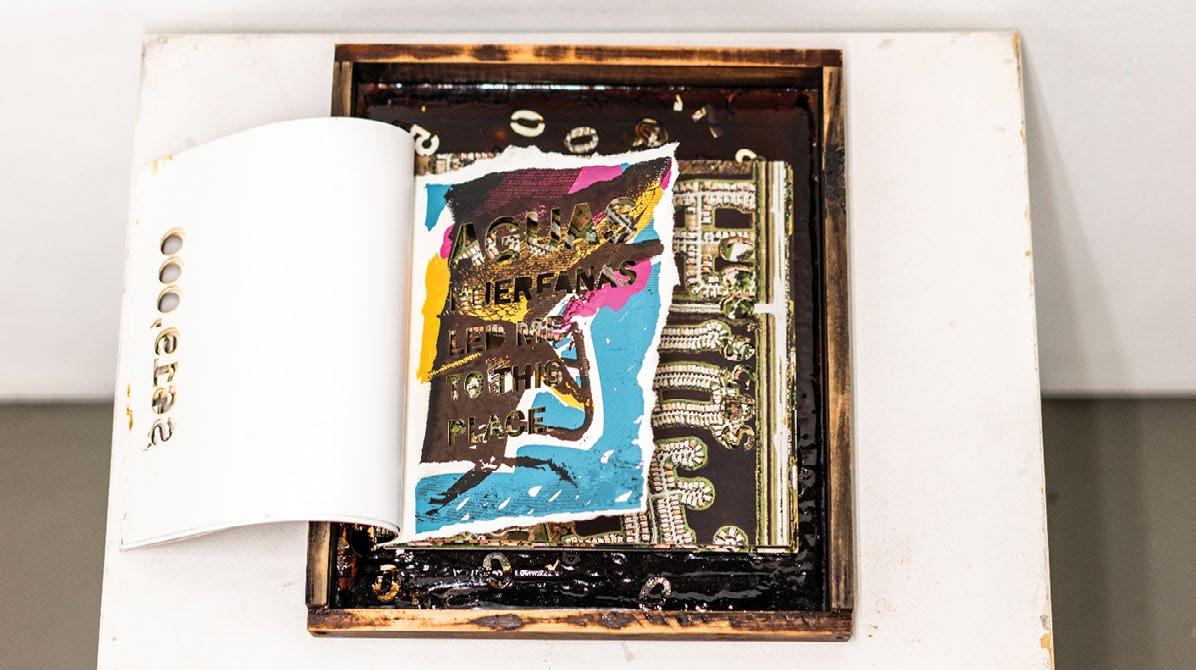
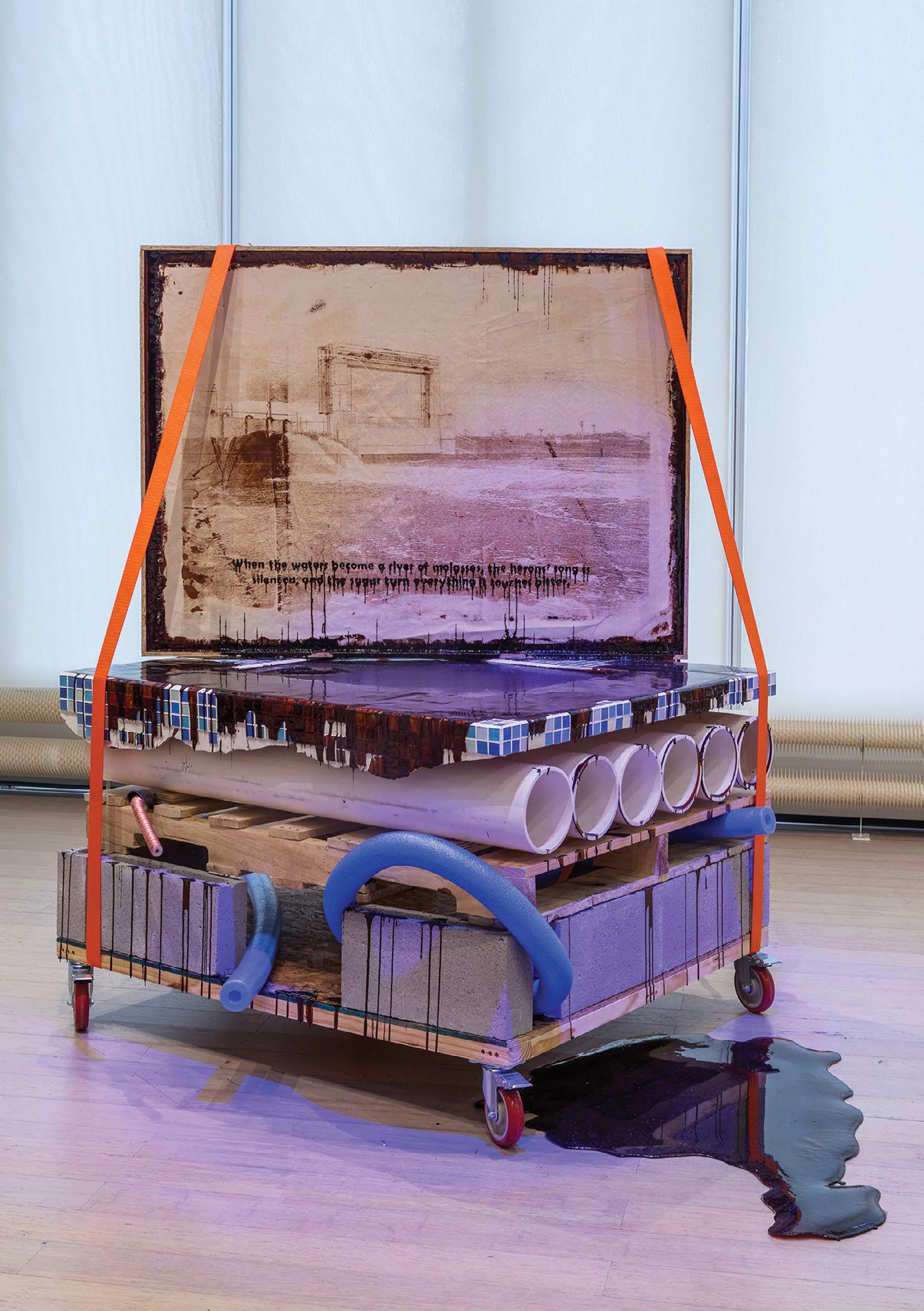
Ten Artificial Lakes and Thousands of Pools, 2025
Artist Book: molasses, silkscreen print on paper, photos, and wood box
Dimensions variable
BOTTOM
The Heron’s Silent Song, 2025
Film 5’01’’
16 mm
OPPOSITE
The Heron's Silent Song (Installation), 2025
Heron taxidermy legs, treated crystalized molasses, wood, pool tiles, PVC, concrete blocks, ratchet straps, caster wheels, pool noodles, rebars, metal rods, metal pipes, and canvas
Dimensions variable
YUYU HE
Yuyu He (b. 1992) is a multi-media artist and architect based in New York and Shanghai. She earned her degree from the Architectural Association in London. Her works respond to our built environments and investigate how perception is shaped through lived spatial experience. She has participated in group exhibitions across the United States, including Growth Postures at Tutu Gallery, Relational Thresholds at Nguyen Wahed Gallery, We Were Here at Sinkhole, and Imprints of Time at The Research House for Asian Art.
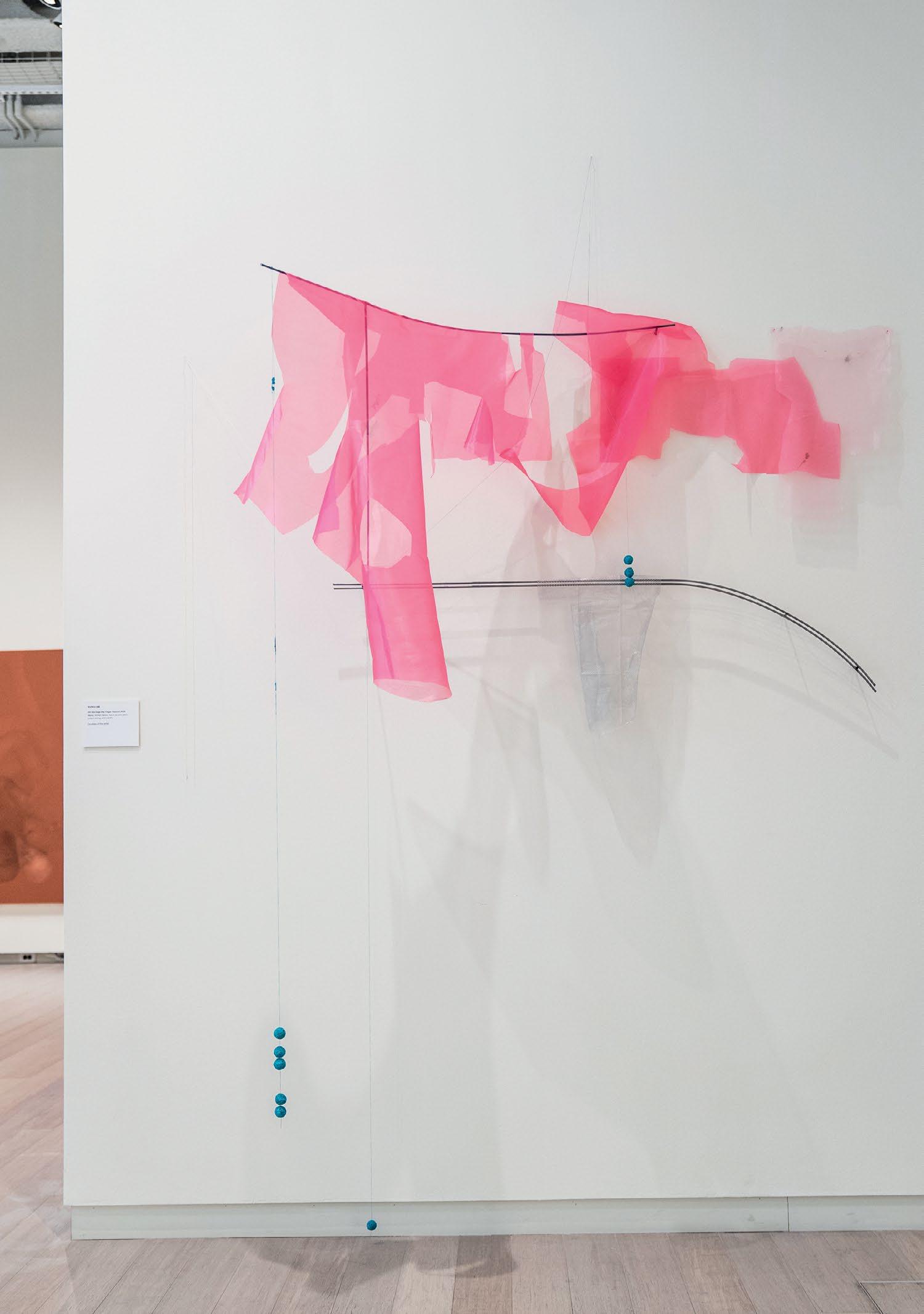
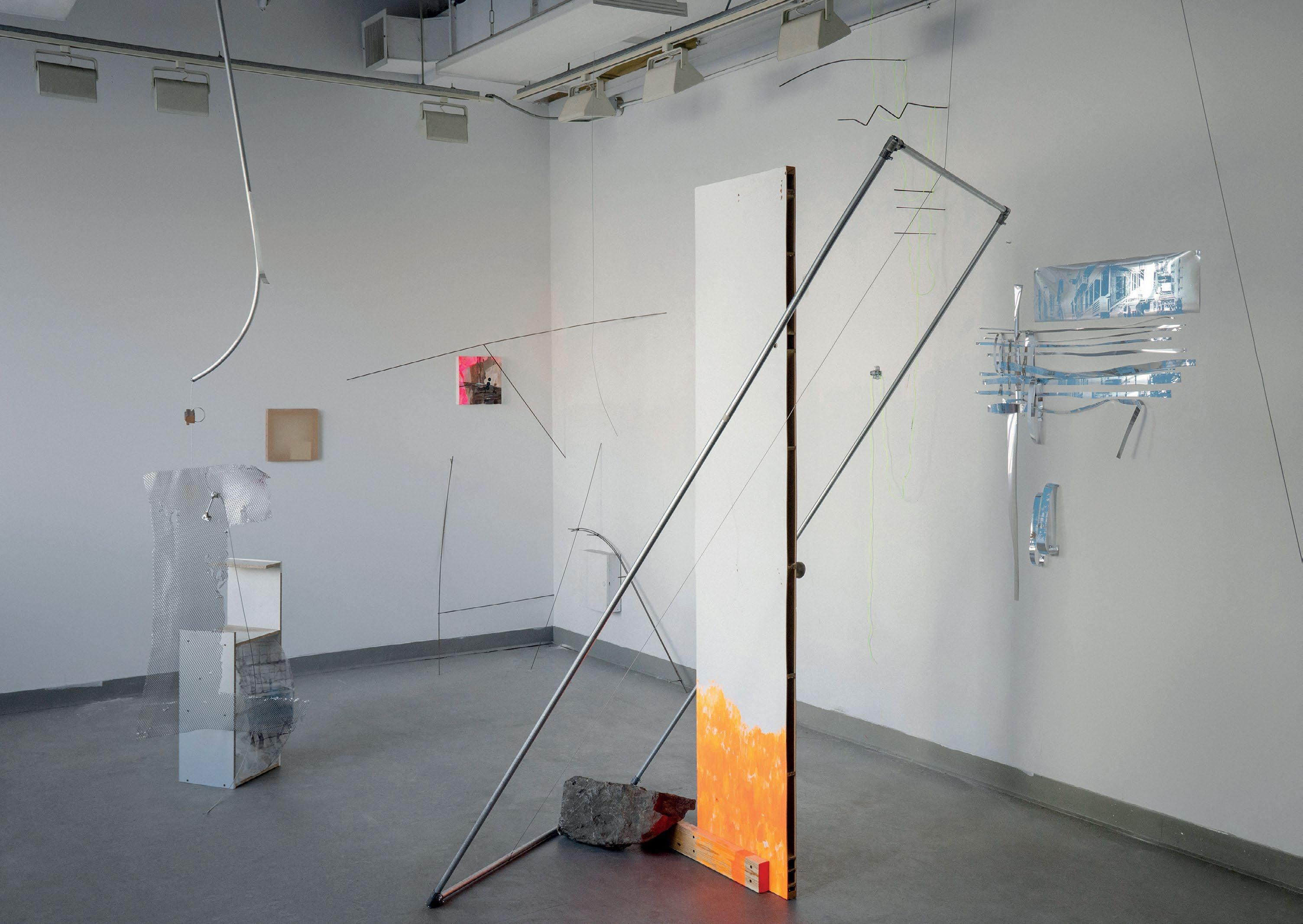
My practice investigates how space conditions perception through unstable and misaligned structures. Working between urban and domestic contexts, I construct installations that interrupt functional logic, slipping between openness and obstruction, stability and fragility. Using materials such as translucent fabrics, metal grating, and wire, I build layered compositions where planes shift as viewers move. Making becomes a way of reclaiming agency, and through it I seek to reconsider what is given and how it structures our understanding of reality.
@heyuyu
OPPOSITE
On the Edge My Finger Paused, 2025
Metal, chiffon fabric, foam, acrylic paint, cotton string, and needle
52” x 104” x 30” NEXT SPREAD
Studio Installation View, 2025
Photo credit: Jasphy Zheng
SARAH HUFFARD
Sarah Huffard (b. 1988) is a New York based artist working in painting and film photography. Sarah completed her undergraduate degree at Rhode Island School of Design (BFA Painting 2011) and is expected to complete her MFA in Visual Arts at Columbia School of the Arts in May 2026.
My studio practice is focused on exploring sensitivities in human visual perception through close observation and making. I am thinking about what it means to slow down and deconstruct perceptual processes. Studying fundamental elements of everyday visual experience, like light, shape, surfaces and color, has led me to question common notions about images, vision and sensory experience. It is within the nuances of these questions that the ideas behind my practice expand.
sarahhuffard.cargo.site @s.huffard
Untitled, 2025
Gelatin silver print
16” x 20”
OPPOSITE
Light Image no.5, 2025
Oil on canvas
70” x 60”
MICHAEL IGWE
Michael Igwe (b.1994, Lagos, Nigeria) works in painting, As an artist whose childhood is largely populated by folklore handed down orally, through Iko-Nke Annang, a poetic art form of the Annang tribe in Akwa Ibom, Nigeria, Igwe's interest lies in the dedicated discipline of such narration. Therefore, his work comes before our eyes as a clear reminder of the eternal image, herein kept continually alive.
EUGENE JUNG
Eugene Jung (b. 1995) lives and works between New York and Seoul. She has held solo exhibitions at Simjae Boxing Studio, Seoul (2024); Museumhead, Seoul (2022); and Art Sonje Center Art Hall, Seoul (2019). She has also participated in group exhibitions at the Hessel Museum of Art, New York (2025); Busan Biennale (2024); Thaddaeus Ropac, Seoul (2024); Arko Art Center, Seoul (2022); Audio Visual Pavilion Lab, Seoul (2021); and Doosan Gallery, Seoul (2019), among others. Jung was named in the Forbes 30 Under 30 Asia (2025) and the Dazed 100 Asia (2025).
Eugene Jung builds post-apocalyptic environments that respond to contemporary catastrophes through sculpture and installation. At times, cartoonist worldviews are added to the landscape of ruins to construct an alternative reality. Jung’s practice does not simply imagine fictional or futuristic landscapes, but instead investigates how the invisible systems that shape our world—such as urban development, technological infrastructure, media imagery, and the flow of capital—are perceived and operate. Her use of pseudo-real materials suggests a complex relationship between reality and artwork.
eugenejung.com @newgenejung
SOOMIN KANG
Soomin is a Seoul-born artist based in New York. Working in sculpture and installation, she explores the language embedded in everyday objects and designed environments, and how they shape bodily experience through care, familiarity, and subtle forms of control. She received her BFA from Korea National University of Arts and will receive her MFA from Columbia University in 2026.
The body stands, leans, sits, reclines.
Support becomes instruction.
How does the body want to move through rigid frames and subtle guidance, and what do they ask of us in return? My work begins with the sensual negotiation between the body and the everyday structures that hold it, translating it into a language of play and constraint.
kangsoomin.com @soomin_the_torangoook
Toys For, 2025
Commercial vinyl composition tile (VCT), plastic badges, clothespins, horse bridle rack, metal springs, fabricated and found objects, silicone
Dimensions variable
OPPOSITE
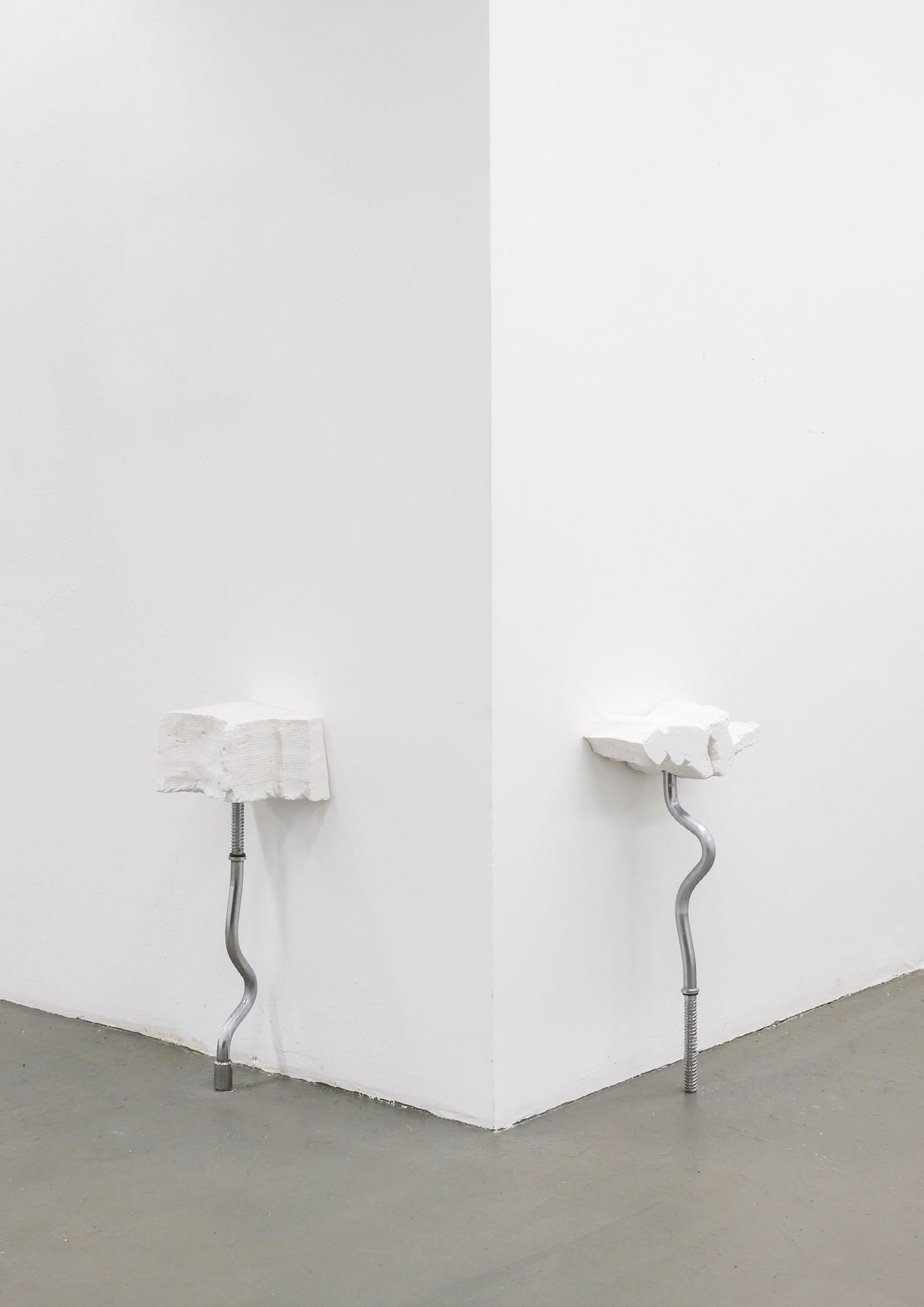
The Sinks, 2025
Weight lifting bar, rubber, plaster
28” x 10” (each)
AKIRA KAWAHATA
AKIRA KAWAHATA is a New York-based Japanese visual artist working in expanded photography. His journey began in Nagoya at age seven, capturing sleeper trains under the night sky. Influenced by his grandfather’s post-1945 documentation of Japan’s evolving landscapes, Akira explores simplicity, imperfection, and clarity, merging Japanese classical and Western modernist beauty. Trained under Eikoh Hosoe at Tokyo Polytechnic University, he moved to New York to evolve beyond Japanese aesthetic forms of 'perfection'. He blends traditional and contemporary photographic techniques to explore how image worlds mediate the relationship between natural rhythms, societal structures, and human perception of time.
My work investigates time as both material and condition—an invisible force that shapes perception, trace, and embodiment. Through photographic processes, I make the invisible visible, rendering time palpable and transforming what exceeds perception into shared experience. I approach time across cosmic, urban, and intimate scales. Through hours-long exposures, I hold slow-moving elements against the fast-paced landscape of compressed time, collapsing planetary and metropolitan temporalities into a single frame. By digitally cleaning archival negatives, I turn acts of repair into traces of duration, repetition, and the fragility of preservation. In still lifes, I follow the passage from nourishment to object, where desire, consumption, and loss quietly settle into form.
Photography functions in my practice not only as image-making, but as a temporal instrument— one that measures, accumulates, and withholds. Rooted in classical photographic training, my practice both resists and embraces technological acceleration by insisting on duration and material presence. By making time visible, I return to the human impulse to hold onto what inevitably passes.
akirakawahata.com @akira.kawahata
OPPOSITE
PHAGO-, 2026
Archival pigment print
32.375” x 24.25”
NEXT SPREAD LEFT
SELENO- 2016-1012-2151-1013-0332, New York
Gelatin silver print
20.16” x 25.125”
NEXT SPREAD RIGHT
STRATO- 2026
Chromogenic color print
62.74” x 50”
YSHAO LIN
Yshao Lin (Fuzhou, China) works across photography, artist books, sculpture, and installation. Drawing on personal history and collective experience, his practice explores displacement and the ways migration reshapes identity, memory, intimacy, and belonging. Rooted in family narratives and broader social histories, his work examines how home is carried across distance through images, objects, and emotional memory. He holds a BFA from the School of the Art Institute of Chicago. His work has been recognized with GUP’s Fresh Eyes Photography Award, Photoworks UK’s Graduate Issue, the Flash Forward Award, and the New York Times Portfolio Review.
My work explores displacement and the ways migration reshapes identity, memory, intimacy, and belonging. Working across photography, artist books, sculpture, and installation, I draw from personal history and collective experience to examine how home is carried across distance—not as a fixed place, but as something reconstructed through images, objects, rituals, and emotional memory. I am interested in how movement, separation, and cultural change leave traces on the body and the psyche, shaping how we understand ourselves and where we come from.
My practice often begins with lived experience, but expands outward into broader social histories. I think through family narrative, migration, faith, desire, and the fragile spaces between private life and public reality. Across different forms, I explore how memory is fragmented, how intimacy can hold both comfort and tension, and how identity is continually made and remade through loss, inheritance, and adaptation. Rather than seeking a single narrative, I allow contradiction to remain present. I am drawn to the space between distance and closeness, visibility and concealment, permanence and transformation. Through this approach, my work considers how people endurechange, and how images and objects can become vessels for what cannot be fully recovered, but still insists on being remembered.
yshaolin.com @yshaolin
OPPOSITE AND NEXT SPREAD
Not Even God Can Judge Me, 2021-Ongoing
Archival Inject Print
Dimension Variable
AREL LISETTE
Arel Lisette is a visual artist working with charcoal and pastel to create drawings on paper. Drawing through erasure, her works address the nuances of the American identities and narratives held within roadside business, political, and religious signs across the United States. She will be earning her MFA from Columbia University, is a graduate of the Tamarind Institute of Lithography, and received her BFA from the Corcoran School of the Arts and Design. Arel has been awarded an Elizabeth Greenshields Foundation Grant twice, and has attended artist residencies at the Vermont Studio Center, the Alex Brown Foundation, the Macedonia Institute, and the Atlantic Center for the Arts.
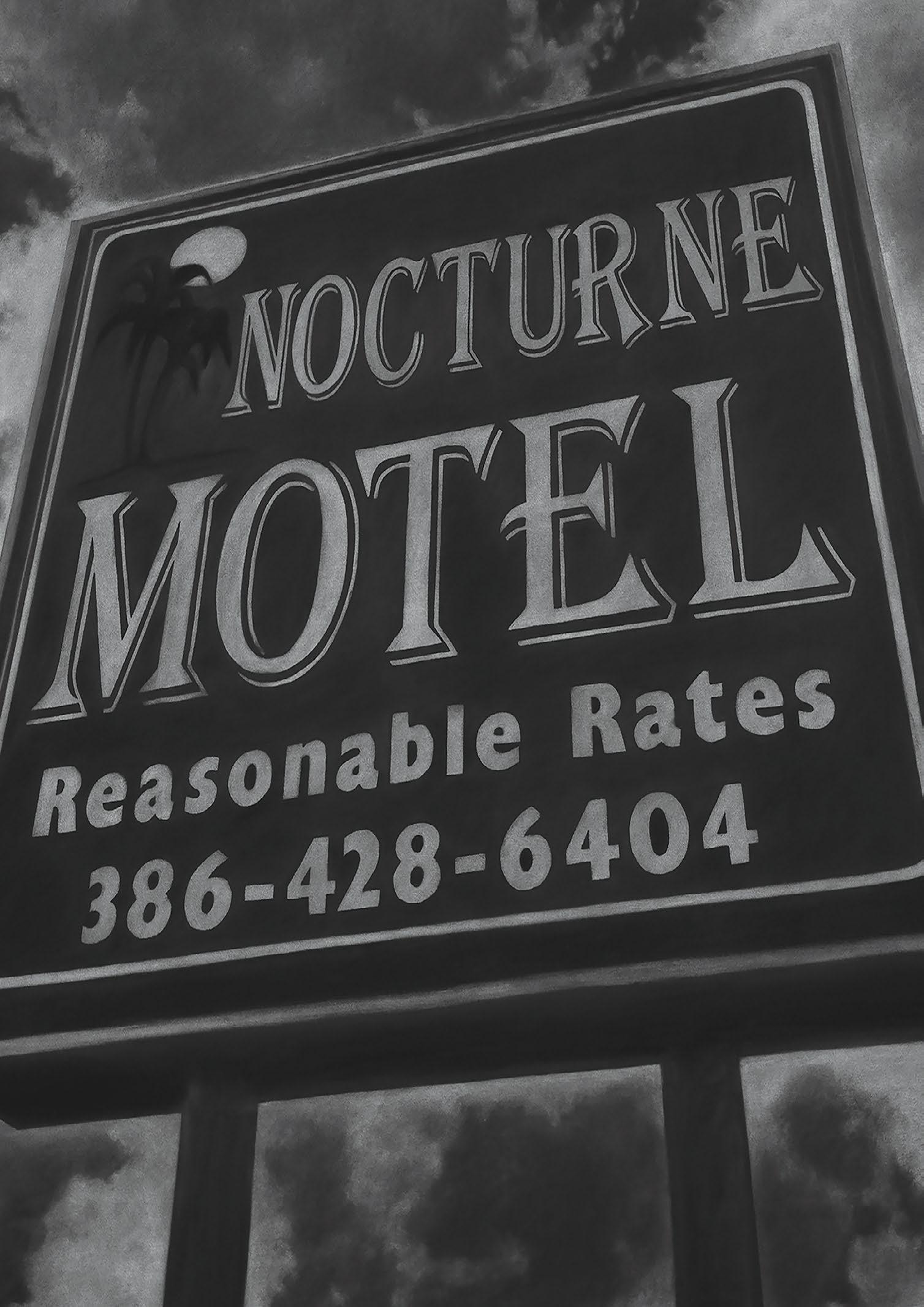
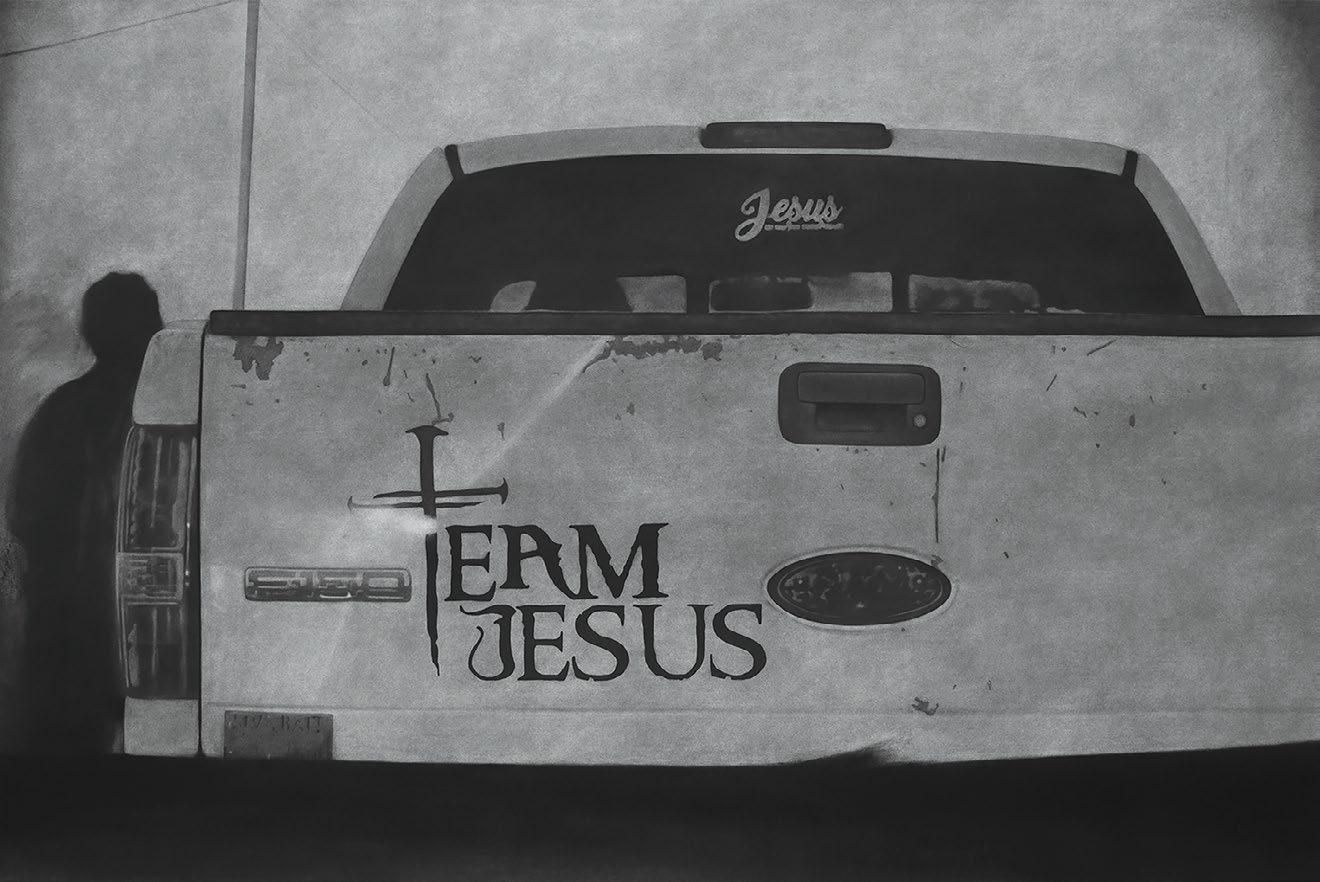
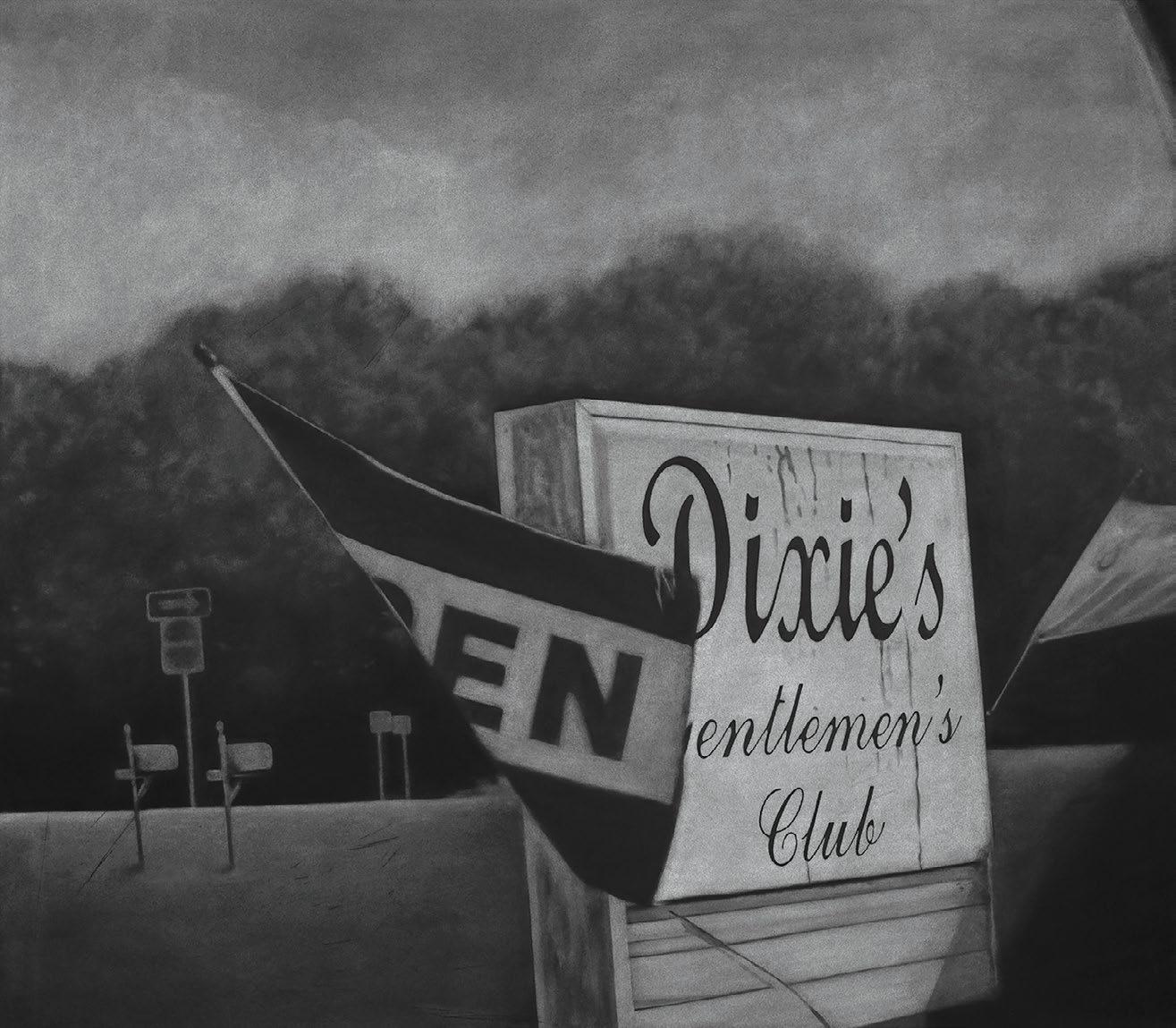
Volusia County is a place of intersecting paradoxes: situated on the east coast of Central Florida, it is the domain of cheap seaside motels, million-dollar equestrian properties, southern hospitality, and a majority white population deep within conservative America. Whether it is a sign advertising reasonable rates at the Nocturne Motel or a massive sticker declaring “Team Jesus” on the back of a truck, the Florida road tells a uniquely American story of faith, yearning, anger, and desire for belonging whose messages reverberate across state lines.
Drawing subtractively with charcoal on paper allows me to uncover and reflect on the disquieting undercurrents contained within this cultural signage, and to convey the breadth of humanity that exists beyond the divisive representations on display throughout national media. My drawings communicate that the past, present, and future are echoes of each other, and that the painful hidden narratives we carry must be made visible, reimagined, and renegotiated.
arellisette.com @arellisette
OPPOSITE
Nocturne Motel, 2025
Charcoal and pastel on paper
45” x 35.375”
Team Jesus 2025
Charcoal and pastel on paper
46.75” x 69”
Very Clean & Beautiful, Just Like the Girls, 2025 Charcoal and pastel on paper
39” x 45”
ASHLEY McLEAN
Ashley McLean is a visual artist and director based in New York City. Working across photography, film, sound, and installation, her practice examines memory, inheritance, and the emotional architecture of place. Her work engages Black diasporic identity and personal geography, often centering landscape and interior space as sites of residue and return.
McLean received her BFA in Photography and Video from the School of Visual Arts and studied in the Fine Arts program at the Universität der Künste Berlin in 2021. She will receive her MFA in Visual Arts from Columbia University.
Her work has been exhibited domestically and internationally, including at the Arles Photo Festival and in the Dior Photography and Visual Arts Award for Young Talents group exhibition. In 2023, she received the Creator Labs Photo Fund from Aperture Foundation and Google Pixel. She was most recently featured in Cultured Magazine ’s 2025 Young Photographers List.
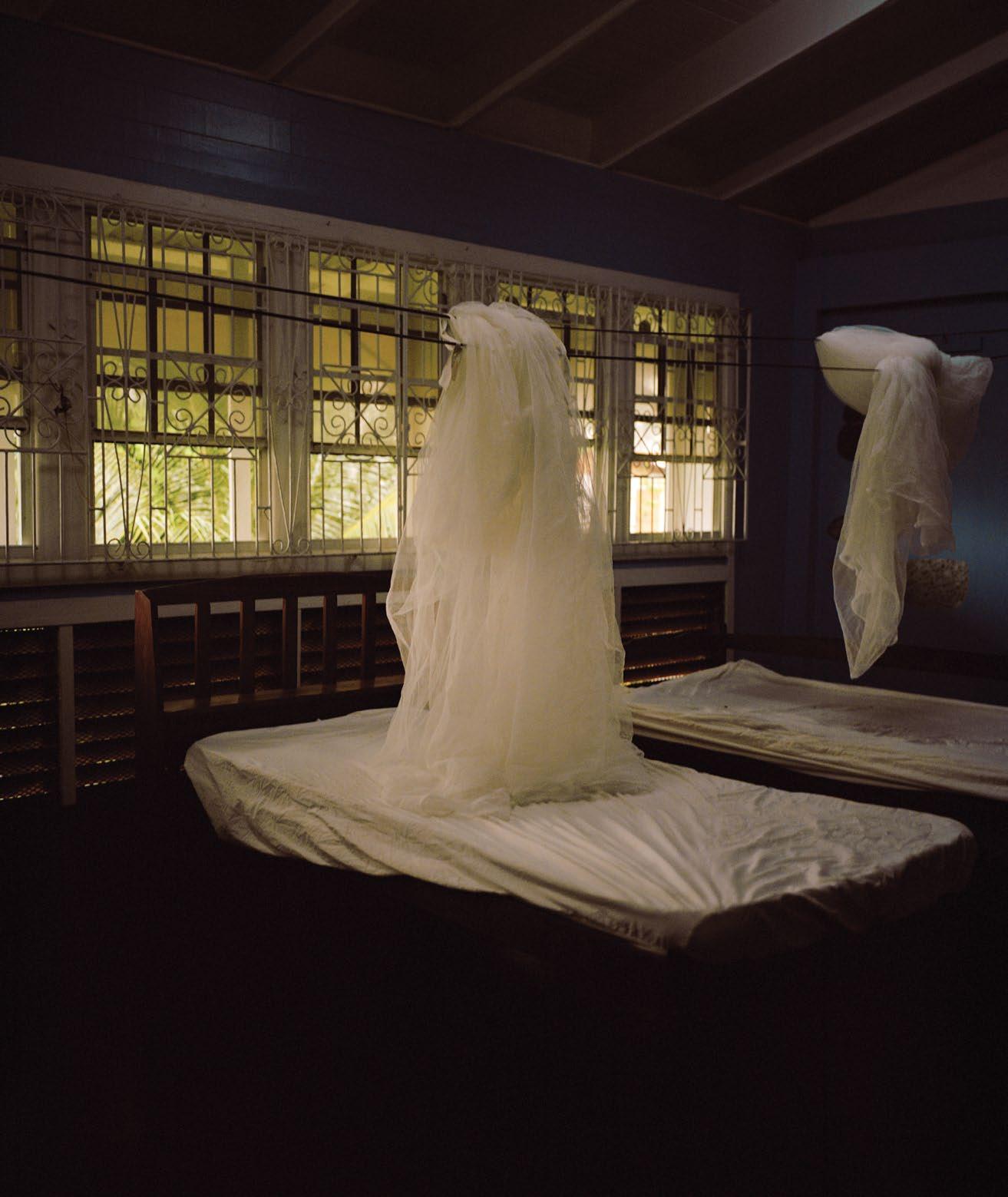
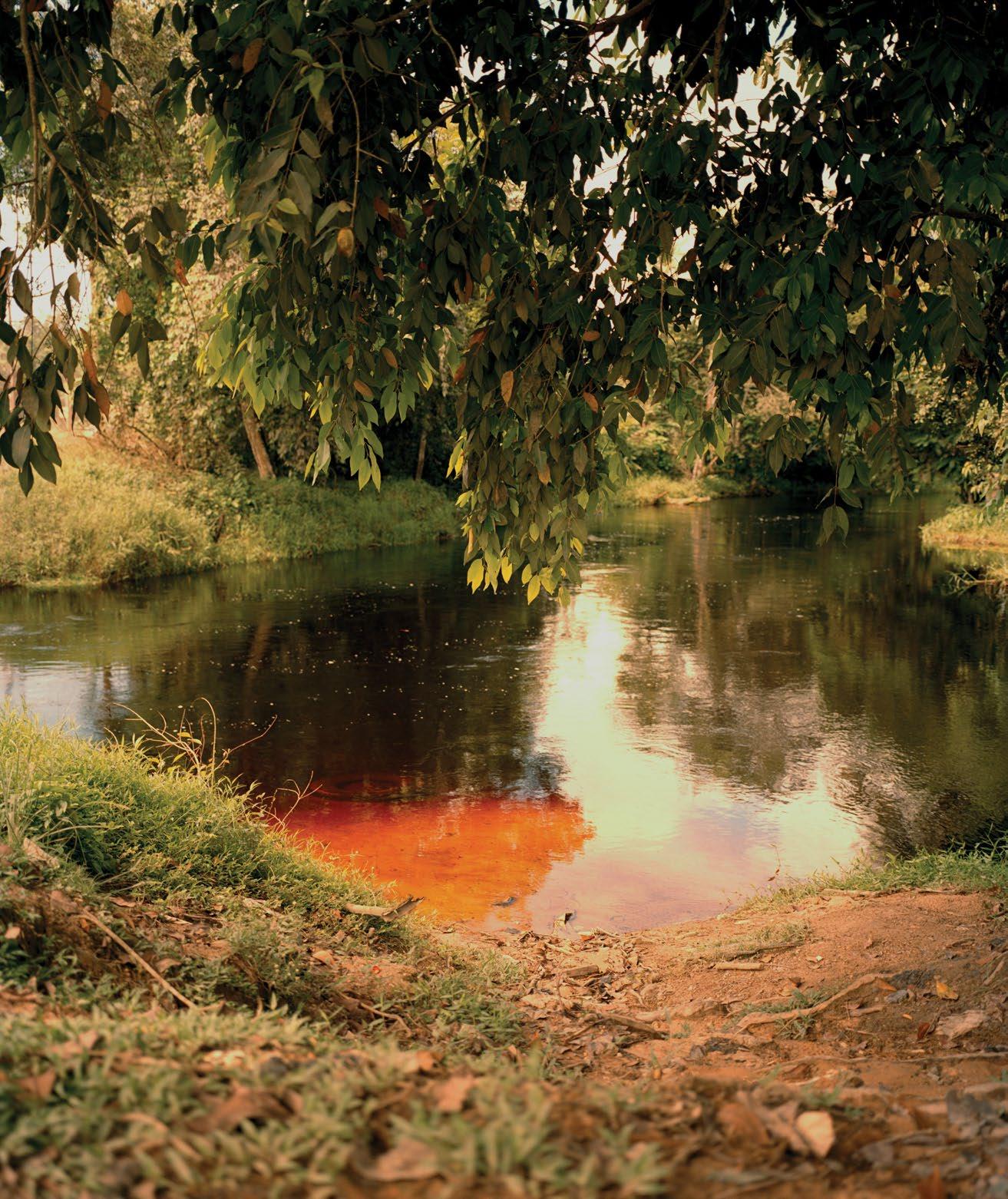
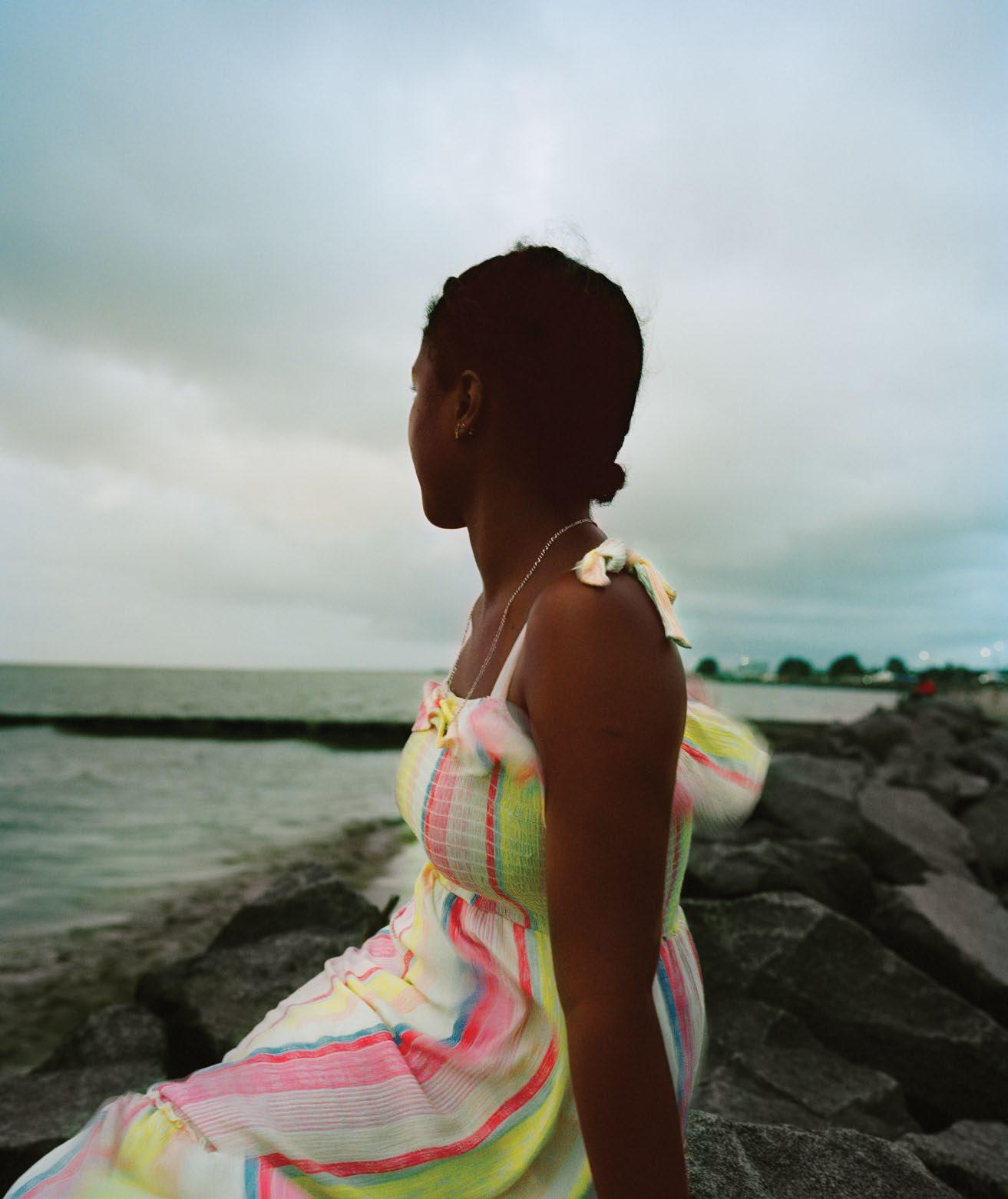
'Between Reverie and Memory' is a photographic and video-based project developed during my return to Guyana after twenty-two years. The work considers how memory is carried across generations, particularly through the fragmented recollections of my grandparents, whose relationship to place exists in partial and shifting form.
Rather than foregrounding portraiture, the project turns toward atmosphere, landscape, and interior space—toward the textures and quiet registers where memory accumulates. Working exclusively with natural light, I allow dimness and shadow to enter the frame, preserving the intimacy of each encounter. Many of the images function less as direct representations than as traces: surfaces, gestures, light moving through space.
The photographs are accompanied by video interviews and ambient sound recordings of my grandparents, whose voices operate as an oral compass throughout the work. Across image and sound, the project approaches photography not as evidence, but as echo—an attempt to hold space for what lingers between recollection and terrain.
CHRISTINE MILLER
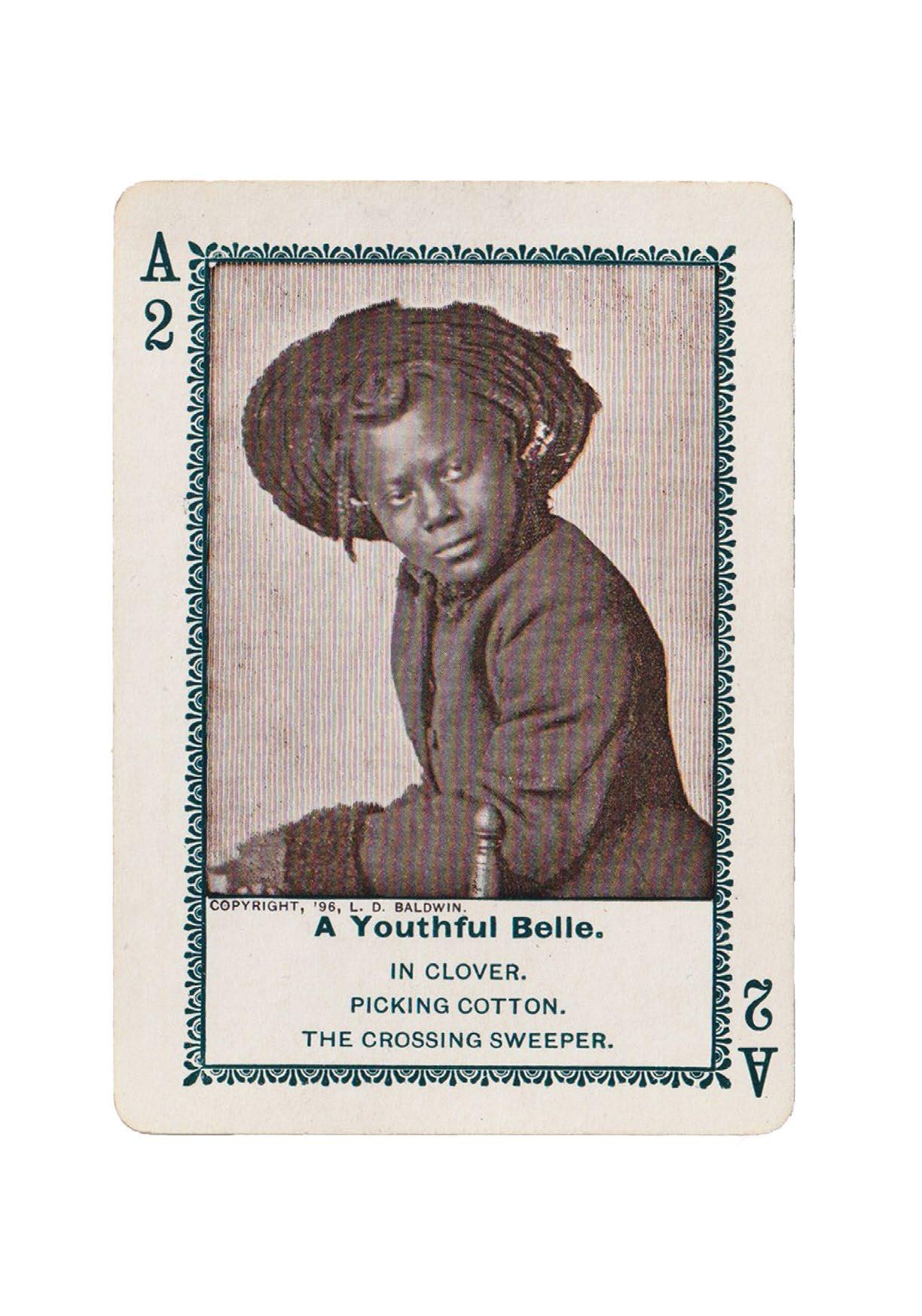
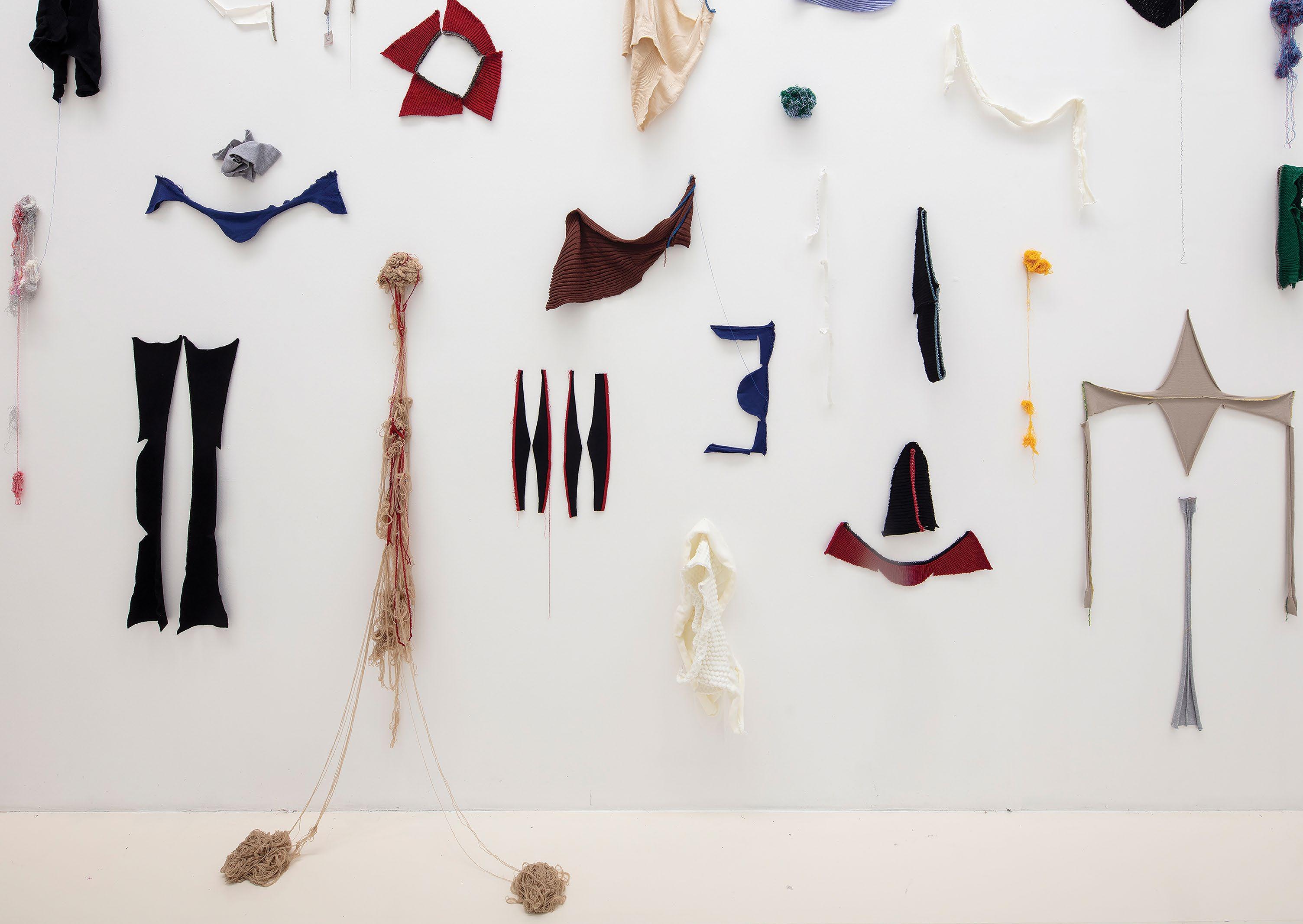
Christine Miller (b. 1990) is an interdisciplinary artist based in New York, NY with an extensive background in product development within the fashion industry. Her work examines the design intentionality of 19th and 20th century mass circulated objects and ideologies, including figurines, printed matter, newspapers, postcards, advertisements, and extremist propaganda that normalized and perpetuated the dehumanization of African Americans. She also collects and studies counter-materials: publications, speeches, and ephemera rooted in Black selfdetermination and resistance. Through recontextualization, she confronts racial stereotypes and anti-Black visual culture while exposing how material production shapes both whiteness and Black identity.
My practice examines how Blackness and whiteness are materially constructed through everyday objects and systems of exchange. In 2022, I began a series of watercolor paintings using the watermelon as a form of allegorical self-portraiture. The work centers on “eating the other,” (as theorized by bell hooks) and the consumption of Black watermelon flesh. What began as critique and self-exploration expanded into a broader investigation of how ideology is embedded in mass-produced objects. I collect 19 th and 20 th century racialized artifacts alongside counter-materials produced through Black autonomy and self-determination, examining the parallel narratives they create. I am particularly interested in how communication operates through mass-circulated objects and how scale, repetition, and distribution contribute to racial ideologies in America. Through painting, textiles, installation, and publication, I recontextualize these objects to expose how material culture has the ability to manufacture belief and to generate narratives grounded in agency and multiplicity.
DARYLINA POWDERFACE
darylina powderface is an interdisciplinary artist and storyteller from the Iyarhe Nakoda Nation, including one of the four nations of the Blackfoot Confederacy, the Siksika Nation. Community engagement has been central to her practice, reflected in collaborations with Indigenous-led organizations including Savage Society, Full Circle: First Nations Performance, and 2 Rivers Remix Society, as well as the Arts Council of New Westminster and Leaky Heaven Performance. She’s performed in ensemble works with Spiderwoman Theater, and Safe Harbors NYC. Her latest experimental short screened at ICA Boston in 2025 and 2026, the Blue Sky Documentary Film Festival in February 2026, and will be making its way to Portland, Oregon, at the Native Arts and Cultures Foundation. She also created a documentary series on Indigenous food sovereignty, in partnership with Full Circle: First Nations Performance, which has yet to be screened.
Working across multiple mediums, including theatre, movement, video, animation, and painting, my practice explores spatial, temporal, and embodied experience–weaving memory, land, and language into immersive, transformative expressions. I reflect deeply about relationality, and how objects, place, space, plants, humans, and more-than-human beings are constituted by a web of relations that are underpinned by culturally embedded practices.
darylinapowderface.com @darylinapdf
twelve components 2026, Wooden poles, 144” x 12.5” amber and ash
NEXT SPREAD
twelve components 2026, Wood shaving bundles, amber and ash 14” x 17”
FRANCISCO JAVIER RAMIREZ
Francisco Javier Ramirez is a Mexico City–born, New York–based interdisciplinary visual artist. He has exhibited and presented work internationally at venues including Print Center New York, Museo de la Ciudad de Querétaro, Centro de la Imagen, Storefront for Art and Architecture, and LeRoy Neiman Gallery. His publications have appeared at Printed Matter’s LA Art Book Fair, Brooklyn Art Book Fair, and ZONA MACO, and were a finalist for the Best Latin American Publication award at FELIFA Festival.
I am drawn to the role of myth, religion, and popular media in the construction of meaning. Exploring the intersections of personal and collective memory, reality and artifice, I draw from my own experiences to embrace complexity and reflect on broader social and political themes.
To visualize the layers of historicity we carry with us—approaching the world as a chaos that does not need to be tamed—I work with scanning, rephotography, collage, video, and bookmaking. I move through fragmentation, welcoming ambiguity, opacity, and amalgamation.
In my practice, transformation is both subject and method, mirroring my life as a queer Mexican immigrant and the child of an immigrant: continuously formed, deconstructed, and reassembled. I seek to inhabit this change and multiplicity, visualizing becoming and unbecoming as an aesthetic strategy.
franciscojavier.info @franciscoismyname
OPPOSITE
A Time to Cast Away Stones, 2025
Collage, laser toner prints, and acrylic paint on wood panel
50” x 25”
A Narrow Band Right Above the Horizon (Mal Gusto) 2025
Installation view of Streets Taken at Butler Library, New York, 2025
JEANNIE RHYU
Jeannie Rhyu is a Korean-Canadian artist, based in Queens, New York, whose interdisciplinary practice includes painting, printmaking, ceramic sculpture, and installation. Rhyu’s work has been exhibited internationally in shows in New York, New Bedford, Vancouver, Hong Kong, Seoul, and London. Selected exhibitions include shows at New Bedford Art Museum, Columbia Rare Book and Manuscript Library, Harper’s Gallery, and Spring/Break Art Show. She has given talks and workshops at Columbia University, 92NY, Kingsland Wildflowers, and other community organizations. She received a B.A. from Columbia University in Architecture and Visual Arts. When she isn’t making art, she works as a fellow at the LeRoy Neiman Center for Print Studies.
Jeannie Rhyu’s interdisciplinary practice spans across painting, printmaking, ceramic sculpture, and installation. Rhyu traces the roots of her emotional impressions by deconstructing and reimagining her cultural visual traditions, excavating the structural remnants of collective memory. Her works focus on the displacement and dislocation of collected images and how they become distorted and transformed through translation and across generations, placing her within a long lineage of Korean modern artists of the 20th and 21st century who have embraced new movements like impressionism and surrealism while incorporating their individual experiences. The parallel global history of maritime culture and migrant experience inform Rhyu’s exploration of humanity’s place within the natural world. Throughout her body of work, images of the fathomless ocean, migrating birds, intrepid seafarers, and the night sky resonate with generational wisdom that transcends borders. At the same time, she confronts a sense of grief and loss on a personal and universal scale, as the history of human exploration also provides a record of extinction and cultural misapprehension. From the deep primordial waters of generational wisdom, ancestral stories, and personal recollections, Rhyu’s emotional reality emerges, where she bridges the gaps between different cultural understandings through imagination and mythopoesis.
jeannierhyu.com @jeannierhyu
OPPOSITE
Jeannie Rhyu in studio
MAXIMILIANO ROSILES
Born in Guanajuato, Mexico, Maximiliano’s upbringing was split between Mexico and the borderlands of South Texas. Informed by questions surrounding how the self negotiates imposed systems that structure space, mobility, labor and belonging, his multidisciplinary practice unfolds through sculpture, installation, and video. His recent solo exhibitions include Entropía (2023) at La Nao Galería, CDMX; Exuvia (2022) at Museo Universitario Del Chopo, CDMX and Líneas en las Raíces (2021) at Guadalajara90210, CDMX. He is also the recipient of the Museo Jumex postgraduate scholarship awarded by the Jumex Foundation for Contemporary Art and the Support for Culture and Arts Professionals for Postgraduate Studies Abroad awarded by the Ministry of Culture of Mexico.
Rosiles’s practice investigates how displacement, informality, and material practices shape adaptive modes of inhabiting space. Treating improvisation as embodied knowledge and emergent place-making as self-preservation, he reworks materials, processes, and forms drawn from specific labor, transitory, or architectural context. Staging tensions that reveal unstable vernaculars produced through everyday encounters, his work foregrounds entropy as a method to understand how communities resist, transform, and adapt to the structures that seek to contain them.
maximilianorosiles.com @maximilianorosiles
OPPOSITE
DWELLER - 1 2025
YEHWAN SONG
Yehwan Song (b. South Korea) is an artist based in New York. Working across installation, performance, and web-based media, Song explores how digital culture reshapes perception, attention, and everyday life. Recent solo exhibitions include Are We Still (Surfing?) at Pioneer Works (New York, 2025) and The Internet Barnacles at G Gallery (Seoul, 2025). Song has participated in major exhibitions including the 17th Istanbul Biennial (2022), Helsinki Biennial (2023), and the Asia Art Biennale (Taichung, 2024), and presented work at the Museum of the Moving Image (New York, 2026). Upcoming presentations include the Victoria and Albert Museum (London, 2026) and a solo exhibition at Subtitled.nyc (New York, 2026).
Yehwan is a Korean-born, New York–based artist whose work approaches the web not as a neutral space, but as an environment shaped by historical, political, and economic forces. The internet appears weightless and open, yet it operates as infrastructure: structured around calculation, state surveillance, and the profit motives of governments and corporations. Rather than focusing on online content alone, Yehwan examines how interfaces, protocols, and terminology condition what the internet can be understood to be.
Terms such as “World Wide Web,” “cloud,” “streaming,” and even “user” function less as neutral descriptions than as metaphors that naturalize extraction, obscure ownership, and soften systems of control into the language of freedom and convenience. Yehwan treats language as a contested site, analyzing and rewriting these terms through counterdefinitions and alternative vocabularies that foreground infrastructure, labor, and governance.
Tracing how the “user” shifted as the internet moved from a knowledge network to a system of consumption and data capture, Yehwan maps a progression from subject, to consumer, to a continuous source of behavioral data sustaining platforms and markets. Across websites, installations, sculptures, and performances, Yehwan introduces subtle frictions into seamless systems, making the web’s underlying structures visible again.
yhsong.com @yehwan.yen.song
LEFT
Fountain, 2025
Tablet PC, copper, plastic, water pump
RIGHT
Please Don’t 2026
iPhone 5 interacting with a metal fork, website, LEGO, motor, cable, plastic-and-metal structure
15” x 7.1” x 4.7”
OPPOSITE
Big Scroll Time!, 2025
Installation and performance; projection mapping on cardboard-and-steel structure; Arduino, motor, cellphones, wrist cellphone mounts, Raspberry Pi
66” x 7.2 ” x 51.6”
34” x 34” x 50”
ALEJANDRO VALENCIA
Alejandro Valencia’s practice investigates the processes of political alchemy that disrupt and reconfigure power, history, and identity. Approaching history as a malleable material rather than a fixed narrative, Valencia examines dissent and consensus as forces that shape the transformation of individual, cultural, and collective identities.
Informed by his experiences of cultural and geographical migration, Valencia employs mestizaje as a method of joining, weaving, and remixing space, language, image, material, and context to produce works in which meanings are not settled but remain unstable, contested, and unresolved.
Valencia earned his BFA from the New World School of the Arts (2017) and will earn his MFA from Columbia University (2026). He pursued advanced research in Memory Studies at Universidad de Antioquia (2020) and in Political Aesthetics at Universidad Jorge Tadeo Lozano (2021) in Colombia. He was nominated for the Sara Modiano Contemporary Artist Award (2022) and the Harpo Foundation Emerging Artist Fellowship (2017), and is the co-founder of colectivo, an artist collective dedicated to exploring DIY culture in the Global South, and of NOMUSEO, a curatorial research initiative based in Manizales, Colombia. He lives and works between New York, Miami, and Manizales.
alejandro-valencia.com @a_ve_ces
OPPOSITE
Mausoleo (The Fearful Night Came to an End), 2025
Found Colombian soccer jersey, soil from Columbia University, grass, book, plexiglass, reclaimed steel, wood
43” x 30” x 12.5”
NEXT SPREAD
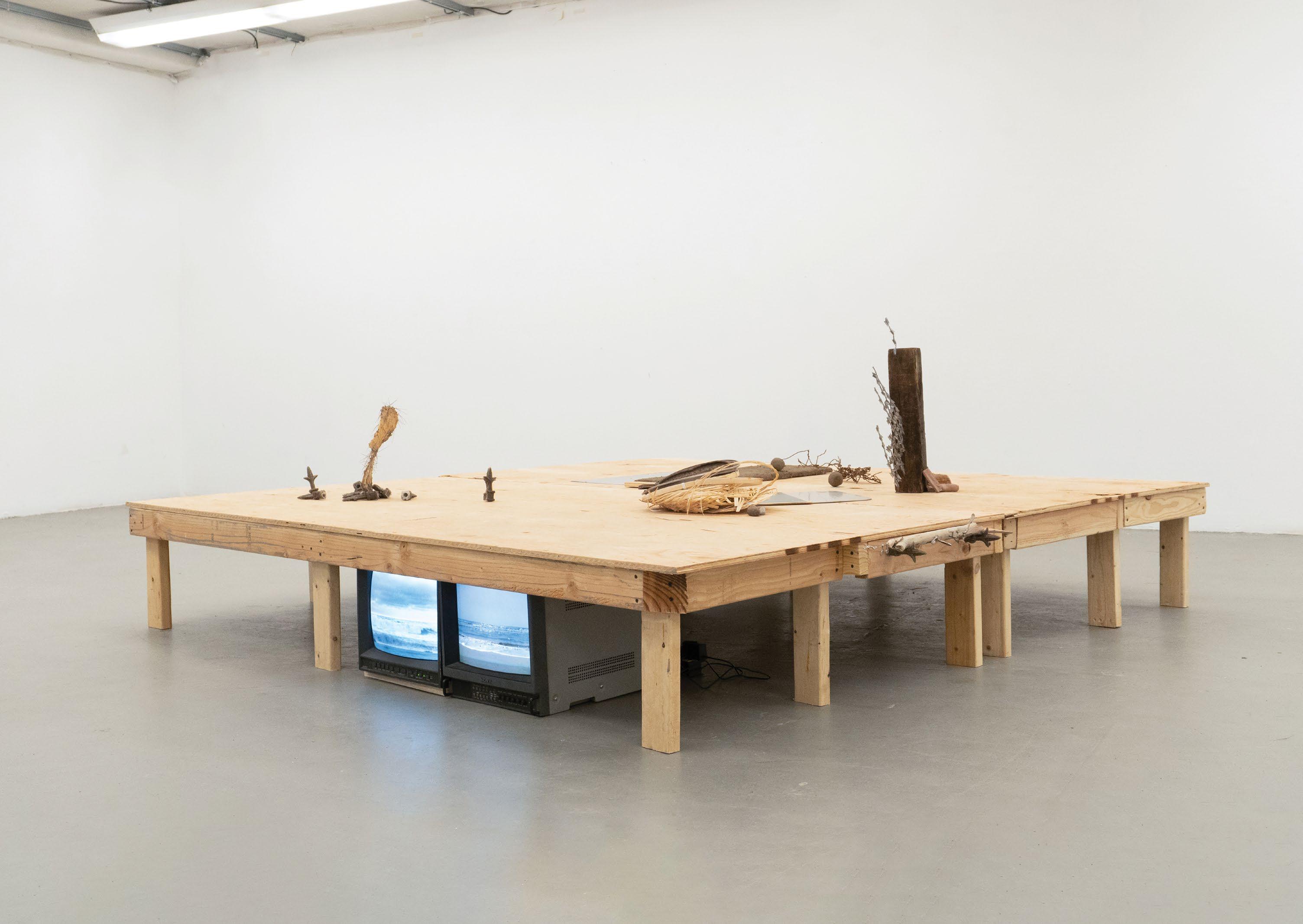
An Elsewhere, between a Here and a There, 2025
Reclaimed wood platform, two-channel video (15 min), cactus, road sign, vinyl sleeve and record, barbed wire, found driftwood, basket, car rim, rusted lid, Pueblo pottery shard, printed matter, flowers, rocks, 25-cent coin, clay, soil from Columbia University, soil from Colombia, interred US flag, plants, plexiglass, sand casted steel spikes, plexiglass
Dimensions variable
JENNY WILLIAMS
Jenny Williams is a Brooklyn-based painter. She received her BFA from the Cooper Union, and is an MFA candidate at Columbia University. She currently makes paintings, based on collages, of people in dream-like landscapes.
Paint is the alchemical medium that transmutes my obsessions. Those obsessions include alternate timelines, people and what they wear, the last lines of Shelley’s Ozymandias , the word poignant and poignant things, history learned from reading fiction, hands holding things, my late mother/1970s feminists, the background landscape in Dora the Explorer, David Chestnutt’s album cover art for the Let’s Pretend series of children’s records, rock formations, the icon montage from Gethsemane in the movie version of Jesus Christ Superstar, the song Oh Joy by Paco Cathcart, forgotten bookmarks, historian Heather Cox Richardson’s daily newsletter, the Magritte painting of a slice of ham with an eye in the middle of it, photographs of people embracing, and stories that end by circling back to the beginning.
Painting is my way of communicating and connecting with the future, the living, and the dead.
Studio view, 2026
Oil paintings on canvas and panel Various sizes
Michael and Miguel, 2025
Oil on canvas
74” x 48”
IRIS WU
(b.1999, Guangzhou)
I bring images old and new into relation with salvaged materials and the room. They lean. They press. They interrupt and depend. They risk collapse. Balance is negotiated. Support stays visible and provisional. If something falls, I pick it up and put it back.
The photograph is not fixed but placed, displaced, contingent on what holds it and how. The work accumulates through gestures. The materials hold time.
I work through touch and gap — between the work and the wall, between one thing and another. I test how distance becomes structural, how separation holds tension, how things hold together, or don’t.
Archival pigment prints, salvaged stone panel, salvaged wood
Dimensions variable
JASPHY ZHENG
Jasphy Zheng is an artist working across situations, structures, and encounters. Her practice constructs participatory conditions in which meaning emerges through shared presence, negotiated attention, and subtle exchange.
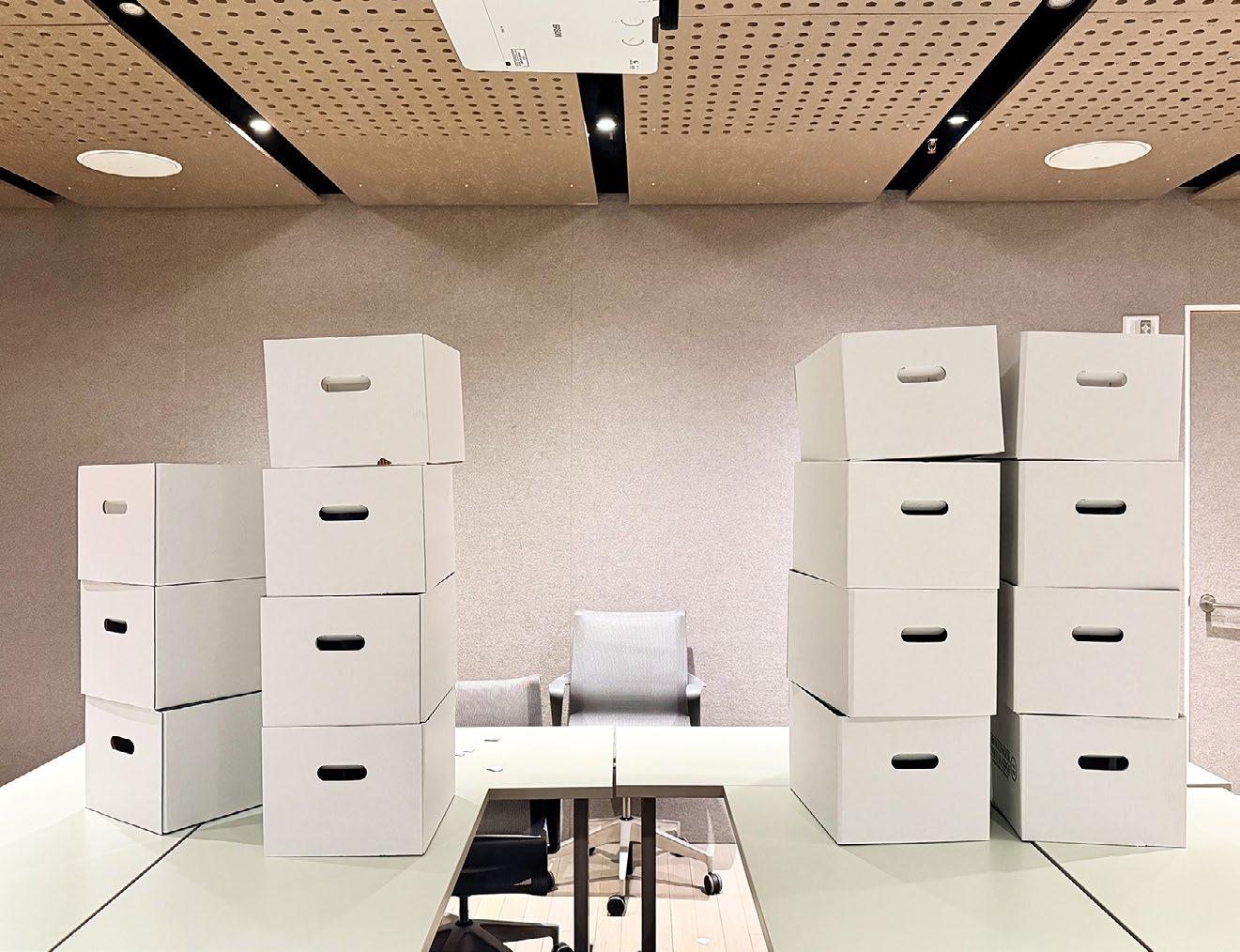
Try looking forward while focusing attention on peripheral vision said she
jasphyzheng.com @jasphy
Stories from the Room 2020–2023 (re-activated 2026)
Installation view, Séance for Underground, SVA, New York, 2026
Participatory project with site-specific installations and a group reading performance
OPPOSITE
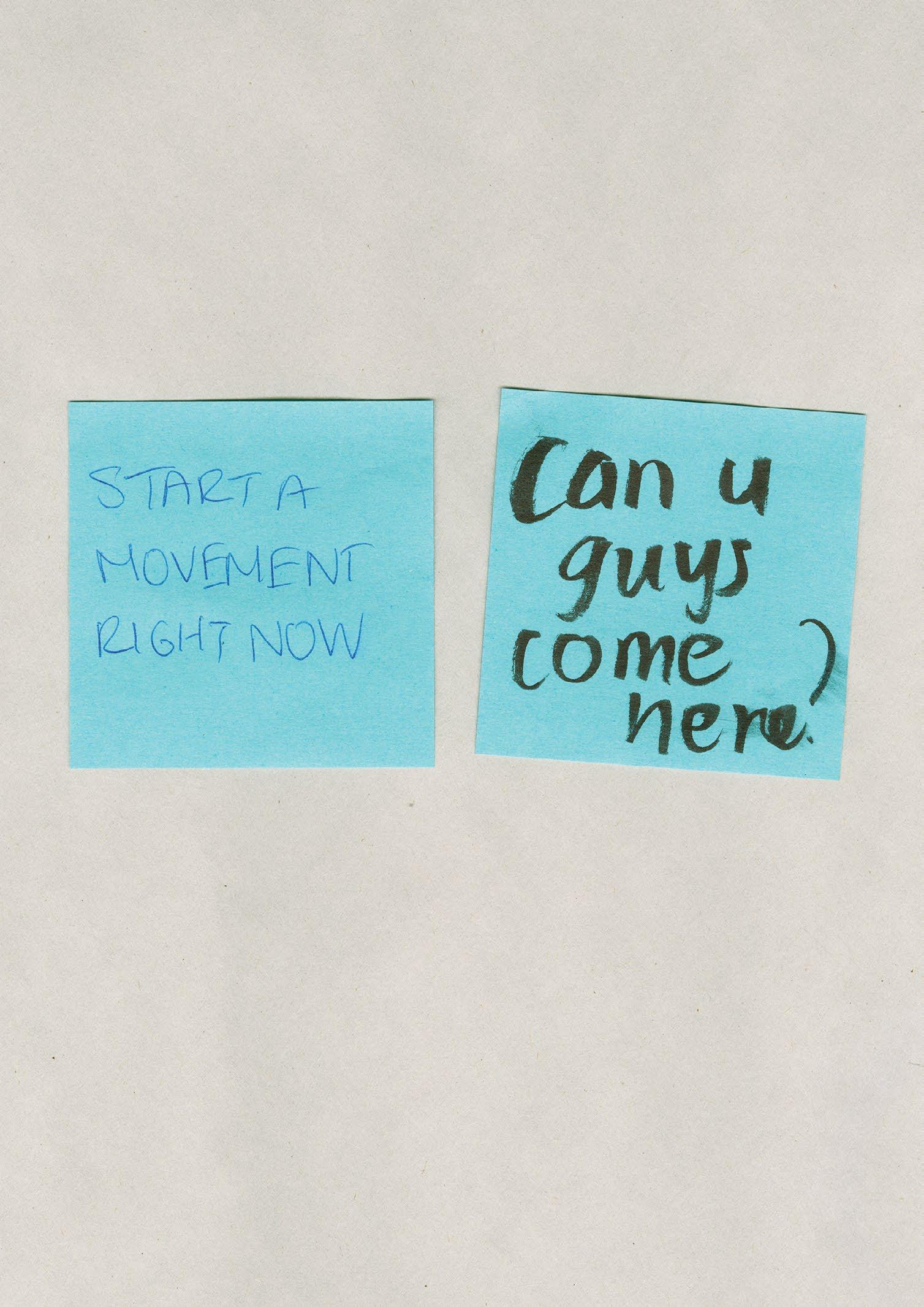
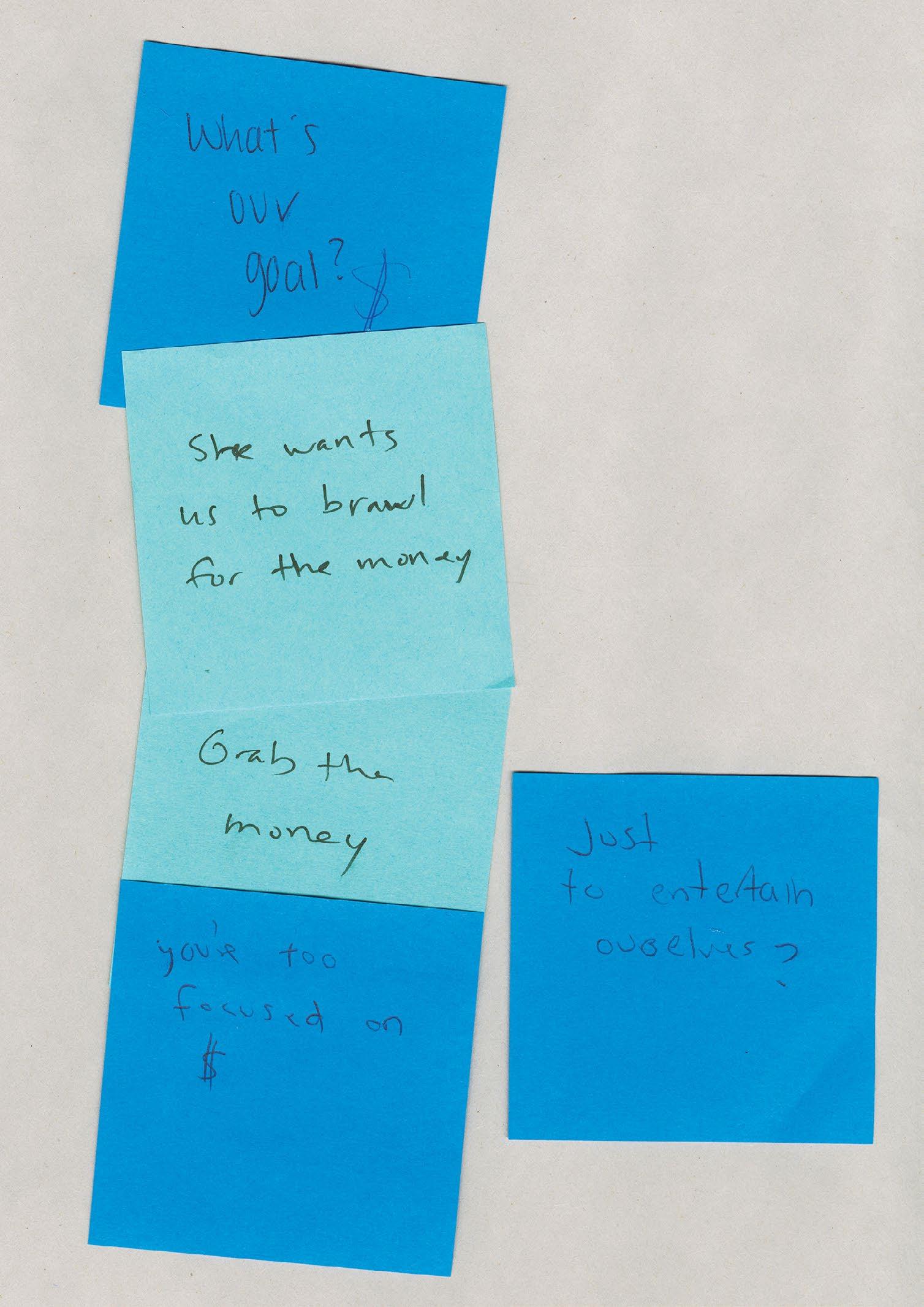
Sticky Notes 17, 509 Knox Hall, Dec 09, 2025
Residual traces from a collective action
11.7” x 16.5”
MESSAGE FROM THE DEAN
Congratulations to the Class of 2026 School of the Arts Visual Arts students! We are beyond proud of the work these students have done during their two eventful years on our campus. They have proven themselves to be stalwart, committed artists, forging their own vision, and have given everyone at the School much to admire and uplift over their time here. They have worked independently and collaboratively, and have moved through a demanding program, all the while working on their projects, creating enthralling and unique works of art.
You can see the results in this catalogue, and we hope you will also come to see these works in person at the Wallach Art Gallery in the Lenfest Center for the Arts. The students shown independent spirit and expended real energy at every stage, conceptualizing their ideas, developing the materials they needed, creating their narratives as they produced their installations, all the while working with faculty, curators, staff, and their fellow students to bring these amazing works to fruition.
You will find no reigning style or theme in these richly diverse and compelling projects. What they do have in common is that they all grew out of the education these wonderful artists received at the School of the Arts. We wish this brilliant cohort of artists all the very best as they move on from their time here, and we are so excited to see all they will do from here.
SARAH COLE Dean of Columbia University School of the Arts
MESSAGE FROM THE CHAIR OF THE VISUAL ARTS PROGRAM
On behalf of the faculty and staff of the Visual Arts Program I welcome you to the Class of 2026 MFA Thesis Exhibition. The ambitious and wideranging work you will find here is the result of two years’ intensive inquiry, study, labor, failure, perseverance, and success on the part of our students.
Many, many people have worked with and alongside these emerging artists to bring you what you see today. Our deepest thanks go to our intrepid curator, Amal Issa , for guiding everyone through the process of mounting such an amazing show during a very challenging time. Thanks also go to Betti-Sue Hertz, Director and Chief Curator of the Wallach Gallery; the entire staff of the Wallach; Lauren Weigel, General Manager of the Lenfest Center for the Arts; and to the Lenfest staff.
Special thanks are owed to the Visual Arts Program staff who tirelessly dedicate their care and attention to our students: Ray Barsante, Interim Shops
Monitor Andrew Brehm, Shops & Safety Manager; Cecilia Caldiera, Assistant Shops Manager; Dana Buhl, Senior Photography Facilities Manager; Nathan Catlin, Former Master Printer, LeRoy Neiman Center for Print Studies; Chloe Crookall, Assistant Studio Manager, LeRoy Neiman Center for Print Studies; Krista Gay, Program Assistant; Ben Gould, Shops Monitor; Calvin Kim, Manager of Academic Administration; Julie Malen, Shops Monitor; Laura Mosquera, Director of Academic Administration; Amber Rane Sibley, Former Ceramics Studio Coordinator; Samantha Rippner, Associate Director and Gallery Manager, LeRoy Neiman Center for Print Studies; Sarah Tortora, Former Assistant Shops Manager, Rider Urena, Senior Manager of Visual Arts Facilities & Prentis Hall; and Liz Zito, Assistant Director of Visual Arts Instructional Technology & Exhibitions.
At the School of the Arts our thanks go to Sarah Cole, Dean of Faculty, and her staff, Gavin Browning, Director of Public Programs and Engagement; Kayla Maiuri, Executive Assistant to the Dean Sarah Cole; Tiffany Davis, Former Assistant Director of Communications; Julie Dobrow, Dean of Admissions and Financial Aid; Bernardo Garcia Valencia, Graphic Designer; Andrew Hass, Associate Dean of Finance; Joel Jares, Production Assistant; Niquette Johnson, Admissions and Financial Aid Officer; Laila Maher, Dean of Student and Alumni Affairs; Jessica Pierson, Associate Director of the Artists' Resource Center and Alumni Affairs; Clarence Coo, Former Associate Director of Student Affairs; Nicole A Saldarriaga Coggins, Associate Director of Communications; Kristina Tate, Director of Communications; Peter Vaughan, Director of Motion Picture and Information Technology; Kenny Wong, Director of Admissions and Financial Aid; and Jana Wright, Dean of Academic Administration and Planning.
Most importantly, we thank our students. Without you there would be no exhibition and we would not be gathered here today. Your perseverance has been an inspiration to all of us and it has been a privilege working with you, learning from you, and to trying our hardest to support you in all that you aspire to do and all that you deserve. We pledge to continue this support now that you are leaving our program and joining us as colleagues in the field.
Yours, MIYA
MASAOKA
ABOUT THE SCHOOL OF THE ARTS
Columbia University School of the Arts awards the Master of Fine Arts degree in Film, Theatre, Visual Arts, and Writing. It also offers an MFA program in Sound Art in association with the Center for Computer Music, as well as a Master of Arts degree in Film and Media Studies.
The School is a thriving, diverse community of talented, visionary, and committed artists from around the world and a faculty comprised of acclaimed and internationally renowned artists, film and theatre practitioners, directors and producers, writers of poetry, fiction, and nonfiction, playwrights, actors, critics, and scholars.
Last year, in 2025, the School celebrated the 60 th Anniversary of its founding. In 2017, the School opened the Lenfest Center for the Arts, a multiarts venue designed as a hub for the presentation and creation of art across disciplines on the University’s new Manhattanville Campus. Lenfest hosts exhibitions, performances, screenings, symposia, readings, and lectures that present new, global voices and perspectives, as well as an exciting, publicly accessible home for Columbia’s Miriam and Ira D. Wallach Art Gallery.
VISUAL ARTS PROGRAM
The Visual Arts Program attracts emerging artists of unusual promise from around the world. They comprise a vigorous community working alongside an exceptional faculty at a world-renowned research institution in New York City. The Program, in association with the Department of Music and the Computer Music Center, also offers courses and an MFA in Sound Art. Visit arts.columbia.edu/visual-arts.
SOUND ART PROGRAM
Columbia University has been at the helm of sound innovation for over fifty years with faculty specializing in composition, improvisation, music theory, musicology, installation, sculpture, instrument building, acoustics, music cognition, and software development. Faculty from the Computer Music Center, along with colleagues from Music Composition, Visual Arts, Sound Studies, Ethnomusicology, Engineering, Computer and Data Science are all involved in the interdisciplinary area of Sound Art. The two-year program is highly selective, offering admission to only three or four students each year. Students with a deep engagement with sound as a medium join a diverse community of artists and musicians.
The Sound Art program is a studio-based degree offered by the Visual Arts Program in conjunction with the Computer Music Center. The program provides the opportunity to explore sound in the context of video, installation, and performance, as well as computer programming, historical archival research, and conceptual strategies for the production of creative work. Candidates are encouraged to consider diverse modalities for listening and earing while developing fluency in the creation and manipulation of sound in the context of environmental, social, and gallery-facing work. Visit arts.columbia.edu/sound-art.
WALLACH ART GALLERY
The Miriam and Ira D. Wallach Art Gallery is Columbia University’s premier gallery, offering opportunities for curatorial practice and discourse across university departments while also engaging the broader public. Established in 1986, the Wallach Art Gallery moved to a new, Renzo Piano-designed building on the university’s expanded campus in 2017, where it continues to advance the university’s historical, critical, and creative engagement in the visual arts. Operating in close relationship to the Department of Art History and Archaeology and School of the Arts, as well as the Avery Architectural and Fine Arts Library, the Wallach Art Gallery presents critically acclaimed exhibitions, a dynamic range of programming, and publications that contribute to scholarship. A primary commitment is to present exhibitions that reveal the complexities and nuances of culture and history while offering consideration of how aesthetic practices serve as unique vehicles of communication. As a platform for artists, scholars, curators, and creative thinkers, the Wallach Art Gallery serves as both a laboratory and a forum for contemporary discourse at the intersection of art and society, with a particular interest in the introduction of marginalized or underrepresented art to new publics.
COLUMBIA UNIVERSITY SCHOOL OF THE ARTS is supported in part by contributions from alumni, friends and patrons of the arts. These gifts provide student fellowships, educational programming and awards. For more information or to make a contribution to the School of the Arts, please contact the Development Office at 212-854-4849 or givetosoa@columbia.edu
We would like to extend a special thanks to contributors and recognize those for whom fellowships and awards have been named:
Anonymous (6)
Donald J. Abrams
Joon Ho Ahn, PhD
Dr. Angela A. Aidala
Martyne Aime
Roberta W. Albert
Paul R. Alter, Esq.
The American Gift Fund
American Online Giving Foundation Inc.
Ares Management II, L.P.
Dr. Kenneth Lee Ascher
ASU Gammage
Pam and Larry Baer
Mary Jo Bang
Bank of America Foundation
Bank of America Charitable Fund
Ramona and John Bannayan
Charles M. Barber
Barclays Capital
Holly A. and Albert Baril
Courtney Melaine Baron
Andrew F. and Avery B. Barth
Barth Family Trust
Warren F. Bass Jr., Esq.
Dean Carol Becker
Kristen Bell
Robert Bellon
Giselle Benatar
Kenza Benbrahim
Albert Berger
Joseph and Sue Berland
Katharina Otto-Bernstein and Nathan Bernstein
Reginald I. Berry
Michael B. and Margie Bogdanow
Renee Borkow
Naomi F. Bossom
Peter Lewis Brown
Gavin Douglas Browning
Dorothy Byrne
Ryan Dean Cairns
Rochelle Calhoun
Hexuan Cao
Cynthia Carlson
Ryan Carmichael
Lisa Landau Carnoy
Nicole Elizabeth Chalas
Edward Chan
Professor George A. Chauncey
Kai Chen
Janice Chan-Choy and Louis Choy
Pamela Janine and David A. Christman
Lauren Cognetti
Dean Sarah Cole
Columbia University HK Fund
J. Gary and Deirdre Condon
Patricia Connelly
Catherine P. Conrad
DAFgiving360
Lexing Dai
Tina N. DeNormandie
Richard Albert Dikeman
Disney Theatrical Group
Julie M. Dobrow
John McLaughlin and Susan Wilder Doelp
Liang Dong
Duchesne Drew
H. Hartley du Pont and E. Paul du Pont III
Alexander Dunker
Jane Dunn
Roger Arturo Durling
EBA Foundation
Carol S. Eisenberg, MD
Abigail and Richard Keith Elbaum, Esq.
Kathy Epstein
Dasha Epstein
Alison Eskow
Katharine Fast, MD
Meghan Jean Fawcett
Delphine Adama Fawundu
Meghan Fay
Harvey and Arlene Garbett Feldmeier
Nellie Ferguson
Professor Peter J. Fernandez
Fidelity Charitable Gift Fund
Professor Stuart J. Firestein
Kate Ellen Flanagan
Dr. Elizabeth F. Focht
Jan E. and Raymond Andrew Foery, PhD
Rich Freeman
Michael Gaillard
Norman M. Galinsky
Mark Gallogly
Dr. Thomas M. Garrett
Jacques and Natasha Gelman Trust
Gibson, Dunn & Crutcher LLP
Ann Gillen
Janet Clare Gilmore-Bryan
Goldman Sachs Gives
Estate of Marshall Glasier
Keith Fitzgerald Goggin
Alice A. Gordy
John Gore Organization
James P. Gorman
Jinko Gotoh Trust
Anne M. R. D. Goursaud
Beth Ann and David J. Greenwald, Esq.
Dr. Ronald E. Gregg
Nana Gregory
Daniel Bertram Grossman
Grossman Family Charitable Trust
Wenda C. Habenicht
Hartley Corporation
Andrew Hass
Lukas Kahane Hauser
Michel Hausmann
Hugh Hayden
Claire A. Heimarck
Raymond L. and Susan Held
William Talbott Hillman Foundation Inc.
Rena Hoffman
Taryn Brooke Holloway and Pablo Montealegre
Andrew Hurwitz
Carolyn Mitchell Jack
Diane Jacobs
Thomas E. and Verla J. Johansson
Phil Johnston
Sadie Foster Jones
Nicole Larkins and Gregory Jones
Professor Jamal Joseph Sr.
Ruth Kaplan
Mark Samuel Kaufman, Esq.
Jodi Shendell Kaye
Regina and Jaap Ketting
Yee Jae Kim
Edward J. Kimball
Richard and Dana Kind
The Mark and Anla Cheng
Kingdon Foundation
Elaine Kingman
Rita P and Thomas Kitt
Professor David Arnold Klass
Frank Konings
Laura Siner Kornegay
Hillary and Glenn Krevlin
Theodore Haw Huei Lam
Erin Langston
Kamsen Lau
Katherine P. Lee
Tania J. Leon
Grace and Nicholas Leone
Myra B. Levine-Harris
Andrew J. Levinson
Kendra Lider-Johnson
Eli Liss
Liu Shiming Art Foundation
Dr. Rebecca Locke
Winston and Carolyn Lowe
Larysa and Wolodymyr Lysniak
Ye Ma
Francois J. Macheras
John A. Donna H. MacPhee
Laila Maher
Mr. and Mrs. Peter L. Malkin
Madhumita Mallick
Ermelinda C. Mannetta
Monica Marchese
Dr. Lizanka Paola Figueiredo
Marinheiro
Julia Martin
Professor Miya J. Masaoka
Meredithe Mastrella
Lee R. Mayes
Wendy Mazo
Robert A. McDowell
Dr. Alexander McIntosh
Katherine Mary McVety
Tobias Meinecke
Elizabeth B. Metzger
Tracey Gabrielle Mitchel-Lai
Naeem Mohaiemen, PhD
Jennifer Lee and Alfred Molina
Charles L. Morey
Morgan Stanley Gift
Morgan Stanley Global Impact Funding Trust
Zuzana Nagy
The New York Community Trust
Michelle Nhin
Loralee Nolletti
Malissa O'Donnell
Frederick A. Obediente
Michael Pan
Taiping Peng
Carey Perloff
Piyush Phadke
Olivia A. Pi-Sunyer
Marta Almeida Pipponzi
Alexandra Platt and Jorge Villen
Adrian Platt
Alix Platt
Judy L. Polacheck, Esq.
David M. Pollack, MD
Amy Harris Pollack
The PQ Corporation
Jonathan Prince, DDS
Corinne Jolie Rabbin-Birnbaum
Brandan Radford
Andrea and Peter Resnick
Maggie Ress
Dr. Jennifer Ripton-Snyder
The Robbins Family
Barrie Roman and Henry Richardson
Jonathan M. Rosand, MD
Gerald M. and Laura S. Rosberg
Sheryl and William S. Rubinstein
Mr. Steven C. Sacco
and Dr. Roberta L. Salveson
James R. and Sally M. Scapa
Eliot Anthony Schain
Judith A. Schiff
Karl-Heinz P. Schmidt
Schwab Charitable Gift Fund
Schwab Charitable
Paul K. and Barbara W. Schwarz
Virginia A. Scripps
Christina Sebastian
Cheryl S. and Dr. Robert M. Seltzer
Julie Ellen Sexeny
Dr. Michael Neil Shadlen
Jeff Sharp
Alan M. and Carol Silberstein
Eric Sillman
Professor Blair G. Singer
SJS Charitable Trust
Loren Skeist, MD and Marlene Marko
David Lowell Skeist
Melissa K. Smey
Scott Barrie Snyder
Joline Stemerman
Aaron and Betty Lee Stern Foundation
Lise Strickler
Sarah Suleman and Hasan Malik
Kathryn Surace-Smith, Esq.
Rory Tahari
Ka Yee Tai
Julie Taymor
John M. Teitler
Sally Tippman
Richard L. Tooke
Richard L. Tooke Rev Living Trust
Dr. Rodney J. Umlas
Unilever United States Foundation Inc.
Bryan Roger VanDyke
The Vanguard Group Foundation
Vermont Community Foundation
Margo Viscusi
Martin Aaron Vogelbaum
Tamesha Nicole Walker
Walter & Shirley Wang Foundation
Dr. Feng-Ming Wang and Jean A. Kung
Shirley and Walter Wang
Robin S. Torbron Warde
Thomas P. Warren
Dr. David A. and Andrea L. Wasser
Joan L. Weber
Lauren W. Weigel
Rachel Wineberg
Sarah L. Wingerter
Christina Witwer
Hon Chung Woo
Jana Hart Wright
Guohu Xu
Kunlun Yao
Yin Yue
John J. Zeeb
Professor Alan Ziegler
Ann Obringer Zipkin
James Zug Jr.
as of March 3, 2026
NAMED FELLOWSHIPS & PRIZES
Artis Fund
Artists and Thinkers at the Lenfest Center
Arts Discretionary Gift
The Baril Family Student
Support Fellowship
Martin Birnbaum Scholarship
Jean Magnano Bollinger Fellowship Fund in Visual Art
Ramona Bronkar Bannayan Fellowship Fund
The David Berg Foundation Fellowship Fund
Dean Carol Becker MFA Fellowship Fund
Lucas T. Carlson Endowment Fund
Choy Family Fellowship Fund
The Andrew Fisher Fellowship Fund
Helen Frankenthaler Scholarship Fund
The Robert Gamblin Fellowship for Oil Painting
Ellen Gelman Endowed Fellowship Fund
The Herman and Eve Gelman
Studio Visit Series
Jacques and Natasha Gelman Fellowship Fund for Visual Arts
Herbert S. Germaise
Endowed Fund
Goodman Residency Gift
Solomon B. Hayden
Endowed Fellowship Fund
Solomon B. Hayden Fellowship Fund For Visual Arts Students
Hayman Fund
Esther Meisel-Dong Kingman
Endowed Chair in Painting in the Division of Painting & Sculpture
Regina Ketting Fellowship Fund
Ninah and Michael Lynne
Visual Arts Fellowship
Marshall Glasier Fellowship Fund for the Study of Drawing
Mariposa Visual Arts Gift
Edward Mazzella, Jr. Scholarship Endowment
The Morrocco/Mancini
Family Fellowship Fund
Lenfest MFA Scholarship and Travel Gift
LeRoy Neiman Fellowship Fund
LeRoy and Janet Neiman Fellowship
Helen and Adrian Platt Prize Fund
Helen Hartley Platt du Pont Fellowship Fund
Quinta Carolina MFA Fund
The Schapiro Fund for Visual Arts
School of the Arts Annual Fund
School of the Arts Student Support
Liu Shiming Fellowship Fund for Visual Arts
SJS Charitable Trust Fellowship Fund
SOA 60th Anniversary Gala
SOA Spring Initiative/Student Support
SOA Student Relief Fund
SOA Student Support - Visual Arts
SOA Visual Arts Division Annual Fund
Student Travel Fund
Joan Sovern Sculpture Award
Spring 2023 Initiative Honoring
Dean Carol Becker
Betty Lee Stern Prize for Artists
Aaron and Betty Lee Stern
Foundation Fellowship
TOMS School of the Arts
Scholarship Fund
Visual Arts Graduate Fellowship
Veteran Artists Scholarship Support
Winifred Johnson Clive Scholarship Fund for Student Veteran Artists
VISUAL ARTS FACULTY & STAFF
SOUND ART FACULTY AND ASSOCIATED FACULTY
Miya Masaoka (Director), Seth Cluett (Assistant Director), David Adamcyk, Zosha Di Castri, and Dave Sulzer
SOUND ART VISITING FACULTY/ARTIST MENTORS
Regine Basha, Kabir Carter, Jace Clayton, Ivana Dama, Luba Drozd, Ciarán Finalyson, Luke Fischbeck, Tali Hinkis, James Hoff, Barbara London, Katherine Liberovskaya, Sara Magenheimer, Tommy Martinez, Nour Mobarak, Keith Obadike, Matthew Ostrowski, Douglas Repetto, Marina Rosenfeld, Julianne Swartz, and C. Spencer Yeh
VISUAL ARTS FULL-TIME FACULTY
Daphne Arthur, Matthew Buckingham, David Antonio Cruz, Delphine Fawundu, Jon Kessler, Miya Masaoka (Chair), Naeem Mohaiemen, Kenny Rivero, Shelly Silver, Sable Elyse Smith, Sarah Sze, Rirkrit Tiravanija, and Tomas Vu-Daniel
VISUAL ARTS MENTORS
Linda Bryant, william cordova/Valerie Hammond, Ishmael Houston-Jones, David Humphrey, Michael Joo, Ralph Lemon, Ken Okiishi, Matthew Ritchie, Shahzia Sikander, Mickalene Thomas, and Rona Yefman
VISUAL ARTS GRADUATE ADJUNCT FACULTY
Karina Aguilera Skvirsky, Shirly Bahar, Andrew Brehm, Tyler Coburn, Dana DeGiulio, Matthew Deleget, Liz Deschenes, Lizzie DeVita, Neil Goldberg, Baseera Khan, Ajay Kurian, Dana Lok, Liz Magic Laser, Orlee Malka, Wardell Milan, Keegan Mills Cooke, Phoebus Osborne, Sadaf Padder, Laura Parnes, Joao Pina, Júlia Pontés, Cheyney Thompson, Tyler Rowland, Niama Safia Sandy, Ben Salesse, Judith Solodkin, Pamela Sneed, Sara Stern, Jasmine Wahi, Craig Zammiello
VISUAL ARTS VISITING
CRITICS
Pepe, Rocío Aranda-Alvarado, Nicole Awai, Uri Aran, Carol Becker, Michael Berryhill, Matt Bollinger, Daniel Bozhov, Sophie Cavoulacos, Christy Chan, Pamela Council, Ann Craven, Aruna D’Souza, Michael Famighetti, Derek Fordjour, Rochelle Feinstein, Mariam Ghani, Alan Gilbert, Chrissie Iles, Tom Kalin, Yashua Klos, Melanie Kress, Nora Lawrence, Jen Liu, Simon Liu, Jumana Manna, Karen Marshall, Susan
MB Chen, Susan Meiselas, Asif Mian, Carrie Moyer, Rachelle Mozman, Toyin Ojih Odutola, Lee Quinones, Diane Severin Nguyen, Larry OsseiMensah, Laura Parnes, Jackson Polys, Sara Reisman, Julie Reiss, Alan Ruiz, Lynne Sachs, Josh Siegel, Matt Taber, Lynne Tillman, Jovanna Venegas, Pauline Vermare, Alexey Yurenev
VISUAL ARTS STAFF
Ray Barsante, Interim Shops Monitor
Andrew Brehm, Shops and Safety Manager
Dana Buhl, Sen ior Photography Facilities Manager
Cecilia Caldiera, A ssistant Shops Manager
Nathan Catlin, Former Master Printer and Studio Manager of the LeRoy Neiman Center for Print Studies
Chloe Crookall, Assistant Studio Manager of the LeRoy Neiman Center for Print Studies
Krista Gay, Program Assistant
Ben Gould, Shops Monitor
Calvin Kim, Manager of Academic Administration
Julie Malen, Shops Monitor
Laura Mosquera, Director of Academic Administration
Amber Rane Sibley, Former Ceramics Studio Coordinator
Samantha Rippner, Associate Director of the LeRoy Neiman Center for Print Studies
Sarah Tortora, Former Assistant Shops Manager
Rider Urena, Senior Manager of Visual Arts Facilities & Prentis Hall
Liz Zito, Assistant Director of Visual Arts Instructional Technology & Exhibitions