The
Project
A Publication of The Miami Project To Cure Paralysis & The Buoniconti Fund To Cure Paralysis
The Miami Project To Cure Paralysis
Research Review
The
Project
A Publication of The Miami Project To Cure Paralysis & The Buoniconti Fund To Cure Paralysis
Research Review
4
RESEARCH HIGHLIGHTS
4
Number 1 Rehabilitation Hospital in Florida and South Florida
6
BikeSafe
8
Exosome Therapy
10
Neuromodulation Symposium
14
Research Funding
20
Miami Project Faculty
32
Scientific Research Publications 2025
6
Editor & Contributor, David W. McMillan, Ph.D. Managing Editor, Scott Roy Graphic Editor, Robert Camarena Contributors, Jeanette Bajo, Dalton Dietrich, Ph.D., Vania Almeida, Alejandra Hernandez, Diana Berning, Kurt Kaminer, Chad Hanson Photographs & Graphics, Robert Camarena, David McMillan, Ph.D., Aya Hanna and Bassel Awada, The Ali Lab, Kurt Kaminer Website: www.themiamiproject.org Physical Address: 1095 NW 14th Terrace, Miami, FL 33136 Phone: 305-243-6001 Mailing Address: Post Office Box 016960, R-48 Miami, FL 33101
8
The Project is published biannually by The Miami Project to Cure Paralysis, a Center of Excellence at the University of Miami Leonard M. Miller School of Medicine. All contents ©2026. Reproduction in whole or in part without written permission is prohibited. The University of Miami is an Equal Opportunity/Affirmative Action Employer. Privacy Policy: If you do not wish to receive The Project in the future, please send your request to the address above or call 305-243-6001.
10 2
The Project
Management, Administrative, and Scientific Support Staff Management Marc Buoniconti President
Dr. Barth A. Green Chairman, Professor of Neurological Surgery
Dr. W. Dalton Dietrich Scientific Director, Professor of Neurological Surgery
Dr. Allan D. Levi Clinical Director, Professor and Chair of the Department of Neurological Surgery
Dr. Jae Lee Associate Research Director
Stephanie Sayfie Aagaard Executive Director
Suzanne M. Sayfie Director Major Gifts Buoniconti Fund
Teresa De Jesus Arcay Assistant to Marc Buoniconti
Jeanette Bajo Center Administrator
Diana Berning Senior Manager, Business Operations
Teri I. Bendell-Bou Director, Web Services, Auction, and Database
Robert Camarena Senior Graphic Designer
Gigi Giobio Director, Sponsored Programs
Cynthia Jones Manager, Facilities and Operations
Jacqueline Manzano Manager, Marketing
David McMillan, Ph.D. Director, Education and Outreach
Randy L. Medenwald Senior Director, Advocacy and Donor Relations
Scott P. Roy Director, Public Relations and Communications
Alejandra Hernandez Executive Assistant to Dr. W. Dalton Dietrich
Jessica Lemma Assistant to Dr. Barth A. Green
Support Staff
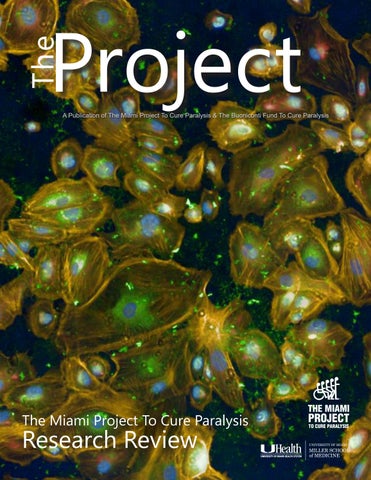
On the Cover - Cell painting for next generation drug discovery.
Rebecca Avshalom Javier Burgos Maria Chagoyen Frank Diaz Evelyn Gomez
Alejandro Labrada Carole Robbins Ethan Robbins Stephanie Lacayo Rodriguez Paul Sanchez
Scientific Staff & Trainees Dr. Alexander Marcillo Post-doctoral Fellows Graduate Students Medical/Residents/Observorships Undergraduate Students Volunteers Other Students Research Staff The Project 3
Christine E. Lynn at The Christine E. Lynn Rehabilitation Center for The Miami Project
The Christine E. Lynn Rehabilitation Center For The Miami Project To Cure Paralysis At Uhealth/Jackson Memorial Was Named The Number 1 Rehabilitation Hospital In Florida And South Florida We’re delighted to share some spectacular news with you. The Christine E. Lynn Rehabilitation Center for The Miami Project to Cure Paralysis at UHealth/Jackson Memorial was named the number 1 rehabilitation hospital in Florida and South Florida by U.S. News & World Report in its 2026–2027 Best Hospitals rankings. The Lynn Rehabilitation Center for The Miami Project was also ranked number 15 in the entire nation.
4
The Project
The Christine E. Lynn Rehabilitation Center for The Miami Project
This extraordinary recognition is a testament, first and foremost, to the visionary generosity of Christine E. Lynn, whose transformative lead gift brought this world-class facility to life. It also reflects the unwavering commitment of the many doctors, therapists, researchers, donors and supporters whose belief in the center’s mission and vision made this remarkable achievement possible. A National Recognition Worth Celebrating The Lynn Rehabilitation Center’s rise in the national rankings is truly remarkable if you think about the timeframe of this trajectory. In the few short years since it opened, the Lynn Rehabilitation Center has climbed from number 45 to number 15 in the country, and number 1 in Florida, reflecting the strength of its clinical care, research integration, patient outcomes, and commitment to helping people reclaim their lives after traumatic injury, illness, or complex medical conditions. This progress is a testament to the extraordinary partnership among The Miami Project to Cure Paralysis, UHealth, Jackson Health System, and the University of Miami’s Department of Physical Medicine and Rehabilitation. Most importantly, it reflects the impact of a community of supporters who invested in a bold idea: to create a worldclass rehabilitation facility where discovery, innovation, and compassionate care come together every day. Your Generosity Helped Build This Moment When the Christine E. Lynn Rehabilitation Center opened, it represented far more than a new building. It represented hope, determination, and a shared commitment to improving the lives of people living with paralysis, traumatic brain injury, cancer-related impairment, and other complex conditions.
Dr. Matija Milosevic in his lab at The Christine E. Lynn Rehabilitation Center
Because of generous support from philanthropic leaders, community champions, and public partners, patients and families now have access to an exceptional 250,000-squarefoot rehabilitation center. The facility includes 80 inpatient beds, specialized therapy gyms, advanced rehabilitation technologies, transitional living spaces, and patient- and family-centered areas designed to promote healing, independence, and dignity. Every therapy gym, research collaboration space, patient room, technology platform, and family-centered area reflects the belief that people facing life-changing injuries deserve access to the very best rehabilitation care available anywhere. A Shared Achievement This recognition affirms what so many of you understood from the beginning: that bringing world-class clinicians, researchers, therapists, nurses, patients, and families together under one roof would create something truly special. The Lynn Rehabilitation Center is not only a place of care, it is a place of healing, progress, and proven results. On behalf of all of us connected to The Miami Project to Cure Paralysis and the Christine E. Lynn Rehabilitation Center, thank you. Your commitment helped advance a vision that is now being recognized among the very best anywhere. The Project 5
Research Funding
20 N
Years of Creating Safer Streets for Children and Families
estled within the vibrant heart of Miami, the KiDZ Neuroscience Center—part of the renowned Miami Project to Cure Paralysis and University of Miami Miller School of Medicine—has become a beacon of hope and innovation for families, educators, and community leaders dedicated to protecting and empowering youth. Its mission is simple yet profound: to prevent pediatric injuries, encourage physical activity, and create safer streets for children and their families. Inside the Center, four dynamic programs thrive: WalkSafe, BikeSafe, SkateSafe and UConcussion. Each has its own story, but together their impact is woven into the fabric of Miami-Dade County. As many of the Center’s staff will tell you, “We’re not just teaching children to walk or ride safer — we’re helping them reimagine their neighborhoods as places where they can thrive, play, and grow.” WalkSafe’s journey began in 2003 as a pilot program, offering evidence-based pedestrian education to elementary schools. Its curriculum quickly became mandated by the Miami-Dade County Public School Board. Most recently, 6
The Project
Elementary school students at a BIKESAFE event.
the program has launched a brand-new pilot to expand this education to middle schoolers, through their new online educational portal, walkbikesafe.org. Now the lessons are accessible at home and in the classroom. “It’s inspiring to see how far we’ve come,” reflects Dr. Gillian Hotz, director of the KiDZ Neuroscience Center. “We had our first pedestrian safety poster contest 20 years ago, and now we’re on multiple platforms; continuing to empower kids and giving them certificates online.” BikeSafe, launched in 2009 by Dr. Hotz and Dr. Mickey Witte – program coordinator at the time; today the manager of the program and lecturer at the University’s Department of Kinesiology and Sport Sciences – broadened the scope of youth mobility by providing bicycle safety education and engaging bike-themed events throughout Miami. BikeSafe’s initiatives continue to shape students’ daily routines — and most recently, the innovative Bike Lane to School Day merged the excitement of Bike to School Day with pop-up protected bike lanes. The program is now expanding into the micromobility space following the popularity of e-bike and e-scooters, concurrent with the notable increase in youth injuries associated with these devices.
KiDZ Neuroscience Likewise, the UConcussion Program, with support over the years from the Miami Dolphins Foundation, has become Miami’s go-to resource for concussion awareness and care. Through UHealth Sports Medicine clinics, the multidisciplinary team ensures high school and college athletes receive baseline ImPACT testing and ongoing support. “Our model ensures every athlete receives the best of care,” says Dr. Hotz. Over the years, the KiDZ Neuroscience Center has marked milestones with unforgettable events. The WalkSafe Art Contest, launched in 2005, invites students to share their vision of safer streets, with winning entries celebrated by the Miami-Dade County School Board. WalkSafe and BikeSafe’s School Safety Presentations - now in their fifth year – reach students across all grades, sparking conversations about teaching pedestrian and bicycle safety throughout the years.
More recently, the Center has partnered with the Miccosukee Tribe of Indians, fostering safe streets through interactive events and creating student-led art crosswalks—celebrating community heritage and promising a safer future. In Coconut Grove, a collaboration with the National Safety Council’s Road to Zero program expanded upon BikeSafe’s pop-up protected bike lane, culminating in a comprehensive report of community feedback and comments guiding safer streets for all road users. Finally, the launch of the WalkSafe & BikeSafe Virtual Education Portal ensures that street safety knowledge is just a click away, with online lessons and outdoor activities making it easier for students to connect with their neighborhoods, even from home. The KiDZ Neuroscience Center is more than its programs and events—it is a movement, fueled by passionate leaders and team members supporting the youth of South Florida and beyond. As Dr. Hotz summarized, “We’re building safer streets, one child, one family, one community at a time - we’re making South Florida a place where kids can walk, ride, and play in safety.” Websites: https://kidzneurosciencecenter.com https://iwalksafe.org https://ibikesafe.org https://walkbikesafe.org/
Elementary students as a WALK SAFE event.
The programs see frequent community support both through celebrations for the community and through fundraising efforts. WalkSafe’s 20th anniversary was commemorated with a parade at Ben Sheppard Elementary, while a whimsical Wizard of Oz-themed party benefitted the program as part of an advance screening fundraiser of the film ‘Wicked for Good.’ “Seeing hundreds of students walking down the sidewalk for safe streets was a moment I’ll never forget,” recalls UConcussion research fellow Caroline DuBois-Weber. BikeSafe’s pop-up protected bike lanes in Coconut Grove (2021-2026) and Hialeah (2024) have demonstrated the transformative power of temporary infrastructure, showing local leaders the benefits of permanent changes for youth bicycling and walking. “If you re-envision your environment to have safer ways for people to move about – they will take advantage of it,” says Dr. Witte. The program has also held multiple bike rodeos with The Underline – Miami’s newest linear park – across its brand-new recreational facilities.
Dr. Gillian Hotz
The Project 7
Exosome Therapy
Exosome Therapy Shows Promise for Severe Peripheral Nerve Injuries
New research led by neurosurgeons Allan Levi, M.D., and Shelby Burks, M.D., suggests that a promising experimental therapy may work best when matched carefully to the type of injury.
N
ew University of Miami Miller School of Medicine research shows that Schwann cell–derived exosomes significantly improve recovery after severe peripheral nerve injuries, but offer little benefit for milder nerve damage. Peripheral nerve injuries can dramatically affect movement, sensation and quality of life, yet treatment options remain limited. This is especially true for severe injuries involving large gaps in damaged nerves. New research led by University of Miami Miller School of Medicine neurosurgeons Allan Levi, M.D., and Shelby Burks, M.D., suggests that a promising experimental therapy may work best when matched carefully to the type of injury. In a study published in PLOS ONE, Drs. Levi and Burks and researchers from the Miller School’s The Miami Project to Cure Paralysis, including postdoctoral researchers Ericka Schaeffer, Ph.D., and Emily Errante, Ph.D., report that exosomes derived from Schwann cells significantly improved nerve regeneration and functional recovery in severe peripheral nerve injuries, but not in milder crush injuries. Why Peripheral Nerve Injuries Are So Hard to Treat Peripheral nerves can regenerate, but only up to a point. Mild injuries, such as nerve crushes, often recover on their own over time. Severe injuries with large gaps and lost nerve tissue typically require surgery, often using nerve grafts taken from another part of the patient’s body. Even then, recovery is slow and often incomplete. Schwann cells play a critical role in nerve repair by supporting axon regrowth and myelin formation. In recent years, researchers have focused on exosomes. These tiny, membrane‑bound vesicles are released by cells that carry molecular signals capable of influencing healing without transplanting whole cells. 8
The Project
Dr. Allan Levi says his team’s research is an important step forward in developing therapies for peripheral nerve injuries. How the Study Was Designed To understand whether Schwann cell–derived exosomes could support recovery across different injury severities, the research team tested the therapy in two distinct pre-clinical models: • Severe injury involving a 15‑millimeter gap in the sciatic nerve • Mild injury created by compressing (crushing) the nerve without cutting it Research subjects were divided into five groups, including untreated controls, surgical repair using nerve autografts and treatment with nerve conduits loaded with Schwann cell–derived exosomes. Recovery was tracked over 11 weeks using a comprehensive set of measures, including sensory testing, gait analysis, muscle recovery, electrophysiology and detailed nerve histology. Clear Benefits in Severe Injuries The results showed a striking pattern. In severe nerve injuries, exosome‑loaded treatments led to:
Exosome Therapy According to Dr. Burks, co‑senior author and professor of neurological surgery at the Miller School, this may reflect the body’s own repair capacity. “In milder injuries, the nerve already has a strong ability to heal itself,” he explained. “That natural recovery may mask any additional benefit from a single dose of exosomes.” Studio portrait of Dr. Shelby Burks wearing a white lab coat over a light blue dress shirt and patterned tie, photographed against a dark neutral background. Dr. Shelby Burks cautions that exosomes aren’t a “one-sizefits-all” solution for peripheral nerve injuries. Another possibility raised by the study is injury‑specific exosome distribution. In crush injuries, exosomes may disperse from the injury site or exert effects elsewhere rather than directly enhancing local nerve regeneration. What This Means for Patients While the research is preclinical, it carries important implications for the future of nerve repair. Rather than applying one therapy to all peripheral nerve injuries, the findings suggest that precision approaches may be essential. • Improved motor function, measured by walking ability and limb coordination • Greater muscle preservation
“This study tells us that exosomes are not a one‑size‑fits‑all solution,” Dr. Burks said. “But in the right context, particularly for severe nerve gaps, they may offer a powerful new tool.”
• Increased numbers of myelinated axons
Before moving toward clinical use, additional studies will be needed to:
• Thicker, healthier myelin surrounding regenerated nerve fibers
• Track how exosomes distribute and persist in different injury types
In many of these measures, outcomes approached those seen with autografts, the current surgical gold standard.
• Optimize dosing and delivery strategies
“These findings suggest that exosome‑based therapies could one day help reduce our reliance on donor nerve grafts,” said Dr. Levi, senior author, professor and chair of neurological surgery at the Miller School and clinical director of The Miami Project. “That’s important, because nerve grafting often comes with tradeoffs, including loss of function at the donor site.” Why Mild Injuries Responded Differently In contrast, exosome treatment offered little added benefit in crush injuries. Functional recovery and tissue repair were similar whether or not exosomes were administered.
• Compare exosomes from different cellular sources • Address manufacturing and regulatory challenges A Step Forward in Regenerative Neuroscience By directly comparing mild and severe nerve injuries over a long recovery period, the study fills a critical gap in the field. It also reinforces the leadership role of Miami Project investigators in advancing cell‑free regenerative therapies. “Understanding when a therapy works is just as important as knowing that it works,” Dr. Levi said. “That insight brings us closer to meaningful, real‑world treatments for patients with devastating nerve injuries.” The Project 9
Research participant and researcher in the Neuromodulation Lab.
Neuromodulation Symposium Positions Miami as a Global Hub for Spinal Cord Injury Research The University of Miami Miller School of Medicine recently served as a focal point for international efforts to advance neuromodulation and neurotechnology for spinal cord injury. International experts convened at the University of Miami to examine how neuromodulation and neurotechnology are reshaping spinal cord injury (SCI) research, clinical trials and patient‑centered care. The Miami Project to Cure Paralysis, the Miller School’s Department of Physical Medicine and Rehabilitation and the National Institute for Disability, Independent Living and Rehabilitation Research (NIDILRR)-funded South Florida SCI Model System co-hosted a multi‑day scientific symposium bringing together researchers, clinicians, engineers and individuals with lived experience of SCI. “The Miami Project to Cure Paralysis and the South Florida Spinal Cord Injury Model System and the Lynn Rehabilitation Center, share a common mission to accelerate discoveries that improve the lives of people living with spinal cord injury,” said Leslie Morse, D.O., a member of The Miami Project and professor and chair of the Department of Physical Medicine and Rehabilitation at the Miller School. “Hosting this national neuromodulation conference allows us to bring together leading scientists, clinicians, industry innovators and individuals with lived experience to advance the next generation of therapies and move them responsibly into clinical care.” Dr. Leslie Morse says The Miami Project’s neuromodulation work is improving the lives of patients with spinal cord injury. The conference was organized by Dr. Morse, Elizabeth Felix, Ph.D., the South Florida SCI Model System’s project director, and James Guest M.D., Ph.D., professor of neurological surgery at the Miller School and a member of The Miami Project. 10
The Project
Neuromodulation Symposium
“Neuromodulation for spinal cord injury is really at a crossroads,” said Matija Milosevic, Ph.D., assistant professor of neurological surgery at the Miller School and director of neuromotor rehabilitation at The Miami Project. “It is our imperative to really translate this technology as quickly as possible in an equitable, reasonable way, because that is really what this is about — figuring out what can be translated and making that a real‑life application that will help improve the lives of our patients.” Miami Project and Miller School Unite Global Leaders in Neuromodulation “This was the third iteration of the neuromodulation of SCI conference, and the first time we hosted it here in Miami,” said Dr. Felix, professor of physical medicine and rehabilitation at the Miller School. “It was a great opportunity to showcase the breadth of talented clinicianscientists, engineers and SCI advocates we have across the community here at the university and to bring other national and international experts in SCI neuromodulation, as well as industry partners, together to move the science to the clinic more quickly.” Hosted at the Christine E. Lynn Rehabilitation Center, the symposium reflected the Miller School’s growing role as a destination for interdisciplinary SCI research, where neural engineering, rehabilitation science, neurosurgery and translational trials intersect in a single clinical and research ecosystem. University of Miami Faculty Perspectives on Neuromodulation University of Miami faculty framed the symposium around a shared challenge: how to responsibly advance neuromodulation for spinal cord injury while maintaining scientific rigor, ethical clarity and relevance to real‑world patient needs. “One of the most important shifts in our research approach is the intentional integration of individuals with lived experience of spinal cord injury,” said Dr. Guest. “Their perspectives help shape the questions we ask and ensure that our priorities remain focused on outcomes that are truly meaningful in daily life.”
Research participant in the lab.
Dr. James Guest echoed the neuromodulation conference’s emphasis on the lived experiences of people with SCI.
The Project 11
Neuromodulation Symposium
Dr. James Guest with research participant.
Miami Project faculty underscored that Miami’s strength lies in interdisciplinary collaboration. “Neuromodulation is no longer confined to a single lab or discipline in Miami,” Dr. Milosevic said. “It’s becoming a coordinated, institution‑wide priority, one that reflects how complex spinal cord injury really is and how carefully innovation needs to be translated into patient care.” From Discovery to Clinic: Why Rigor and Reproducibility Matter A major focus of the conference centered on rigor and reproducibility as neuromodulation research moves toward larger clinical trials. Each session of the conference was co-led by a person with SCI and a researcher or clinician who specializes in SCI. During Miami Project–led discussions on study design, speakers cautioned against allowing enthusiasm to outpace evidence, emphasizing that neuromodulation outcomes must be evaluated within tightly controlled experimental frameworks to avoid bias and false positives.
12
The Project
Conference speakers also highlighted the critical role of rehabilitation as both a therapeutic driver and a variable to be addressed in neuromodulation studies. Investigators noted that neuromodulation rarely acts in isolation. Instead, its effects are shaped by the timing, intensity and task‑specific nature of rehabilitation. Without standardization and careful documentation, it becomes difficult to compare outcomes across sites or determine the true contribution of neuromodulation itself. Redefining Success in Spinal Cord Injury Research Another recurring theme from Miami Project speakers was the need to redefine success in spinal cord injury research. Faculty emphasized that traditional clinical metrics may fail to capture outcomes that matter most to people living with SCI. University of Miami moderators stressed that improvements observed in laboratory settings must translate into meaningful changes “outside the clinic,” including independence, participation in daily life and quality of life. Alan Brown, a Miami Project research participant, reinforced why patient‑defined priorities must guide research direction.
Neuromodulation Symposium
Dr. Elizabeth Felix in the lab.
“Everything was just about the cure,” Brown said. “But now you have to think about the quality of life and the cure. That’s really important, because sometimes people go into this research thinking it’s going to get them out of the chair. As time goes by, you realize you have to figure out what life is going to be and what that balance is.” Miami Project faculty referenced Brown’s remarks as emblematic of a broader shift within the field, one that values incremental, meaningful functional gains rather than singular breakthrough narratives. Ethics, Access and the Role of Federal Support Ethical responsibility and expectation management also featured prominently in discussions. “Innovation outpacing access is a real risk,” Dr. Milosevic said, emphasizing that scientific advances must remain grounded in clinical reality and equity. Dr. Matija Milosevic says The Miami Project is striving to make “innovation real for people living with spinal cord injury.”
Conference themes further highlighted the importance of federal funding and coordinated advocacy in sustaining progress. University of Miami speakers pointed to support from the National Institutes of Health and the Congressionally Directed Medical Research Programs’ Spinal Cord Injury Research Program as essential to enabling long‑term, multi‑site trials and maintaining momentum across institutions. Taken together, Miami Project faculty presented neuromodulation as an evolving, multidisciplinary effort that demands rigor, collaboration and sustained engagement with the spinal cord injury community. “The work ahead is not only about discovery, but about making that innovation real for people living with spinal cord injury,” said Dr. Milosevic. Dr. Guest, who has been treating people with spinal cord injury for more than 30 years, said that the last decade has witnessed substantial advances that can benefit people living with spinal cord injury chronically, which previously was not thought to be possible. The Project 13
Research Funding
Research
Funding
Income
Grants & Contracts Restricted Gifts Endowment
IDC Allocation
Funding Process Steps Submit Proposals
Scientists apply each year to funding agencies and foundations.
15%
0%
3% 54% 28%
Peer Review
Fellow scientists rate the merits in a highly competitive process.
Best Projects Funded
Only the top-rated proposals receive support. • • • •
14
2025 Funding Sources
NIH: National Institutes of Health DoD: Department of Defense Foundations: Private and nonprofit funders Other agencies: Additional funding organizations
The Project
Expenses
Research Programs Fund Raising
General Administration
11%
2%
87%
Research Funding
National Institute of Neurological Disorders and Stroke (NINDS) Prasad A (PI) Effects of Iron Accumulation in Intracortical Implants and Protection by Iron Chelation
Lee J (PI) Targeting cell-type specific disease phenotypes to promote CNS repair
Levi A (PI) University of Miami Neurosurgery eDucation Strategy (UMINDS)
Ganzer P (PI) Enhancing Sympathetic Outflow Control Following Spinal Cord Injury Using Targeted Plasticity Therapy
Liebl D (PI) Stabilizing the tripartite synaptic complex following TBI Ali H (PI) Developing a kinase inhibitor drug to treat spinal cord injury
Lee J (PI) Targeting lipid clearance pathways to promote repair after SCI
Starke R (PI) Endothelial cell dysfunction in cerebral aneurysm pathogenesis Lemmon V (PI) (University of California, San Francisco (UCSF)) Pan-Neurotrauma Data Commons
Dr. Hassan Ali working with a student in the Drug Discovery Lab.
Dietrich W (PI) and de Rivero Vacari JP (Co-I) The Importance of Abnormal Inflammasome Activation as a Risk Factor between Traumatic Brain Injury and Alzheimer’s Disease Starke R (PI) (Von Medical) Development of a novel aspiration pump for neurointerventional procedures Tsoulfas P (PI) (Marquette University) Global Analysis of the supraspinal connectome after spinal cord injury The Project 15
Research Funding Shukla D (PI-Fellowship) Mechanisms of lipid-laden astrocyte formation after spinal cord injury National Institutes of Health (NIH) Dietrich W (PI) Human Schwann Cell-Derived Exosome Treatment for Traumatic Brain Injury National Institute of General Medicine Sciences (NIGMS) Dumont C (PI) Glycosaminoglycanenabled technologies to reprogram chronic inflammatory states National Science Foundation (NSF) Dumont C (PI) CAREER: Engineering the nanoparticle interface for tunable biomolecular aggregation National Cancer Institute (NCI) Hudon A (PI-Fellowship) Exploring the Immunosuppressive Role of Human Endogenous Retrovirus K in the Glioblastoma Microenvironment
Ramsoomair C (PI-Fellowship) Immuno-modulating Diffuse Midline Glioma by Epi-transcriptomic Reprogramming
augmentation after severe Peripheral Nerve Injury (PNI) involving volumetric muscle loss by tissue regeneration
National Eye Institute (NEI) Brambilla R (PI) Targeting cholesterol homeostasis for therapy of demyelinating eye disease
Noga B (PI) DBS Orientation Selective Pathway Activation for Gait Ignition Following SCI
National Safety Council (NSC) Hotz G (PI) Enhancing and promoting active school travel through a safe system approach Department of Defense (DOD) and United States Army Medical Research Acquisition Activity (USAMRAA) Levi A (PI) Systemic Hypothermia in Acute Cervical Spinal Cord Injury – A Prospective Case Controlled Study Levi A (PI) Clinical feasibility and potential efficacy of Autologous Human Schwann Cell (ahSC)
Researcher in the Atkins Lab. 16
The Project
Pearse D (PI) Targeting the arginylation pathway Neuroprotection After SCI Pearse D (PI) Functionalized Peptide Gels and Schwann Cells for Repair of the Injured Spinal Cord Ibrahim E (PI) A Novel Therapy to Improve Reproductive Potential in Men with Spinal Cord Injury (SCI) Widerström-Noga E (PI) Consumer perspectives on a multimodal approach to make neuropathic pain manageable after SCI
Research Funding
Researcher working in the Pearse Lab.
Widerström-Noga E (PI) Mechanisms and Utility of Multisensory Body-Representation in SCI and SCI-Related Neuropathic Pain Sagen J (PI) Development of human iPSC-derived chromaffin cell transplants for the treatment of chronic pain Sagen J (PI) Alleviation of chronic SCI neuropathic pain using novel engineered human iPSC-derived chromaffin cell grafts Dietrich W (PI) US Army Battlefield Exercise and Combat Related Traumatic Brain and Spinal Cord Injury Research Lee J (PI) Macrophage-Specific Drug Targets for Treating SCI
Burks S (Site PI) (Washington University) Nerve transfers to improve upper extremity function and quality of life in tetraplegic patients Burks S (Site PI) (Washington University) Nerve Transfers in high tetraplegia to improve patient function and quality of life Burks S (Site PI) (University of California, San Francisco (UCSF)) Expansile Duraplasty in Acute Spinal Cord Injury Veterans Affairs Medical Center (VAMC) & U.S. Department of Veteran Affairs (VA) Kerr N (Co-I) (Raval A) IPA Therapeutic interventions for poststroke rehabilitation Bramlett H (PI) Novel Pharmacological and Non-
Pharmacological Interventions for Bone Loss in SCI Sagen J (PI) Evaluation 6SHG/EM1 as a treatment for spinal cord injuryinduced neuropathic pain in a pig model Lemmon V (Co-I) (Hao S) IPA The molecular mechanisms of astrocytesneurons interaction in morphine use disorder Florida Department of Transportation (FDOT) Hotz G (PI) Sustainability and Expansion of the WalkSafe and BikeSafe Programs for K-8 Grades in Miami-Dade County Florida Department of Health (FDOH) Bramlett H (PI) Post-stroke exosome therapy improves cognition in animals The Project 17
Research Funding
Noga B (PI) Project 6 – Deep Brain Stimulation of the Midbrain for Facilitating Gait Following SCI State of Florida (Consortium for Medical Marijuana Clinical Outcomes Research) Widerström-Noga (PI) Effects of a hemp-derived cannabidiol and cannabidiolic-acid oral extract on resting-state electroencephalography and neuropathic pain in people with spinal cord injury
Dr. Jae Lee working with lab members.
exposed to electronic cigarette vaping Dietrich W (PI) SOF Alzheimer’s Disease COHFA Vontell R/de Rivero Vaccari (PI’s) Project 1 – The importance of ASC as a diagnostic biomarker for AD in MCI Patients
Dietrich W (PI) SOF General Revenue COPBV Dietrich W (PI) The Administrative Core
New Jersey Commission on Spinal Cord Research (Rutgers University) Atkins C (PI) Defining PDE2A directed mitochondrial dysfunction in TBI-related Alzheimer’s disease Atkins C (PI) Novel Mitochondrial Phosphodiesterase-2A Selective Inhibitors and Traumatic Brain Injury Induced Dementia
Tsoulfas P/Lee J (PIs) Project 1 - Reorganization of the vascular zonation after spinal cord injury
Lee J (PI) Effective Modulation of Inflammation for Enhanced SCI Repair using a Hybrid LNP-based Peptide Hydrogel DDS
Loewenstein D/Curiel R (PI’s) Project 2 – Highly sensitive surrogate markers for the diagnostic and treatment of Alzheimer’s Disease
Sagen J/Jergova S (PIs) Project 2 – Spinal cord injury pain therapy using intrathecal transplants of hiPSCderived secretory cells producing novel analgesic cannabinoid peptides
Craig H. Neilsen Foundation (CNF) Sagen J (PI) Human iPSCderived chromaffin cell transplants for alleviation of chronic neuropathic SCI pain
Cortes D (PI) Project 3 – Development and testing of a radioligand ASC tracers for detection of early AD
Brambilla, R/ Liebl D (PIs) Project 3 - Neuronal-specific TNFR2 gene therapy: a new strategy for neuroprotection in neurotrauma
Kerr N/Bramlett H/Dietrich W (PI’s) Project 4 – The role of the gut-brain axis after TBI in Alzheimer’s Disease
Milosevic M/Prasad A/Zhang Y (PIs) Project 4 - Artificial intelligence powered brain-computer interface for targeted lower-limb neuromodulation
Christopher & Dana Reeve Foundation (CRF) Guest J (Center P.I. and Co-chair) North American Clinical Trials Network for the Treatment of SCI
Dietrich W (PI) State of FL Brain and SCI Trust Fund - Brain and Spinal Cord Injury Research
Farkas G/Milosevic M (PIs) Project 5 – Gut-Brain Neural Coupling in Spinal Cord Injury
18
The Project
Bryon Riesch Paralysis Foundation Milosevic M (PI) Brain-Controlled Spinal Neuromodulation System for Walking Alzheimer’s Association Kerr N (PI) Pyroptosis-induced gut-brain disruption after Stroke in Alzheimer’s disease
Research Funding
Dr. David McMillan at The Miami Project Open House.
NeuroTrauma Sciences Atkins C (PI) Screening of Novel Neuroactive Steroids for Traumatic Brain Injury
individuals with spinal cord injury using the LIFT System to deliver non-invasive electrical stimulation (ARC Therapy)
Atkins C (PI) Evaluation of Systemic IM Administration of Pipeline Compounds for the Treatment of CNS injury in the Sprague Dawley Rat: Cerebral Edema and Short-Term Functional Tests
Friends of Underline (FUL) Whitte M (PI) The Way Kids Roll: Safety
National Aeronautics & Space Administration (NASA) (University of Texas at Rio Grande Valley) de Rivero Vaccari J (Site PI) Effects of Space Environment on Neuroinflammation Onward Medical Inc. Guest J (PI) Clinical Assessment of upper extremity performance in
Miccosukee Corporation Hotz G (PI) SS4A Planning and Demonstration Grant for the Miccosukee Tribe in Florida American Brain Tumor Association Ramsoomair, C (PI-Fellowship) Pharmacologically Targeting an RNA Editor for H3K27M+ Gliomas
American Physiological Society (APS) Albuquerque, E (PI-Fellowship) APS Porter Professional Development Fellowship Award Fondazione Italiana Sclerosis Multipla (FISM) Mini A (PI-Fellowship) Investigating mechanisms of MS disease progression using the PLP:mtPst1 inside-out model of demyelination Galen and Hilary Weston Foundation (University Health Network) Satkunendrarajah K (Site PI) MUSIC (Mathematical UnderpinningS of the Influence of Cadence (MUSIC) on Brain Health and Parkinson’s Disease
The Project 19
Faculty Profiles
Faculty
The Miami Project To Cure Paralysis
The faculty of The Miami Project are a talented multidisciplinary team. In the following Profiles, each faculty member describes their specific research focus and highlights of recent progress.
W. DALTON DIETRICH, PH.D. Scientific Director Kinetic Concepts Distinguished Chair in Neurosurgery Senior Associate Dean for Discovery Science Co-Director, Institute for Neural Engineering Professor, Neurological Surgery, Neurology, Biomedical Engineering and Cell Biology Neuroprotection and Improved Recovery of Function following CNS Trauma My laboratory is focused on clarifying the pathophysiology of brain and SCI with the goal of developing new therapies to protect and enhance functional recovery. My colleagues and I have studied the cellular and molecular injury mechanisms underlying various neurological disorders including stroke, TBI, SCI, and neurodegenerative diseases. We have advanced our pre-clinical therapeutic hypothermia findings into the clinic where we are conducting clinical trials in patients with SCI. Recently, we have also investigated the importance of abnormal inflammasome activation in the brain and SCI and identified a novel therapeutic target for neuroprotection. We are using novel cellular and drug treatments to promote reparative processes and functional recovery. My laboratory is funded by the NIH and DoD and I also train the next generation of scientists and clinicians in neurotrauma research. ALLAN D. LEVI, M.D., PH.D., FACS Clinical Director, The Miami Project Professor and Chairman Department of Neurological Surgery Professor, Orthopedics, and Rehabilitation Medicine Chief of Neurosurgery, Jackson Memorial Hospital Robert Buck Distinguished Chair in Neurological Surgery Cellular Transplantation Strategies after SCI/Systemic Hypothermia after Acute SCI My clinical research interests currently focus on developing cellular transplantation strategies to repair injuries within both the human central and peripheral nervous system. I am currently Co-PI on our clinical trials involving the transplantation of autologous human Schwann cells (SCs), which represent first-in-man studies of autologous human SCs for patients with sub-acute and chronic SCI. We are also conducting a phase I trial evaluating SCs for peripheral nerve injuries with long segmental defects, which follows up on our previous two single patient experiences. Hypothermia continues to show promise in a variety of acute central nervous system injuries. There are various factors that need to be considered with systemic cooling of the SCI patient, including methods of cooling, window from injury to initiation, duration and depth of hypothermia, rate of re-warming, etc. While profound levels of hypothermia (<32°C) can be difficult to administer and are subject to increased complication rates, mild (modest) levels of hypothermia (32-34°C) have been shown to provide significant protection against traumatic and ischemic neuronal cell death. I am currently the PI of our institutional protocol as well as a multi-center Department of Defense funded randomized trial studying systemic hypothermia induced via an intravascular catheter and continued for 48 hours after acute cervical SCI. 20
The Project
Faculty Profiles
BARTH A. GREEN, M.D., FACS Professor of Neurological Surgery, Neurology, Orthopedics, and Rehabilitation Co-Founder and Chairman, The Miami Project to Cure Paralysis Executive Dean for Global Health and Community Service Professor, Neurological Surgery, Neurology, Radiology, Orthopaedics and Rehabilitation Medicine Translational Interventions Over the recent years my research efforts have mainly involved taking the cutting edge basic neuroscience work product and data created by our Miami Project team from the bench to our UM affiliated clinics and hospitals. A good example of such translational research efforts has included the use of modest hypothermia for neuroprotection both in cases of acute spinal cord injury and for use in the operating room for patients undergoing high risk spinal cord surgery. I am also privileged to be able to collaborate with The Miami Project cellular transplantation programs and have been working on projects involving adult mesenchymal stem cells, as well as being part of the major effort transforming our successful Schwann cell laboratory model into clinical trials. Other areas of research and clinical interest include the diagnosis and treatment of tethered cord syndrome, spinal cord cysts and Chiari I malformation. SCIENTIFIC FACULTY MEMBERS:
HASSAN A ALI, PH.D., M.S.M. Associate Professor, Department of Neurological Surgery and Medicine Drug Discovery for CNS Repair As a chemical and computational biologist, my lab focuses on identifying pharmacological targets that can induce robust axon regeneration in the injured central nervous system. To accomplish this, my lab developed a unique drug discovery platform that combines phenotypic screening, target-based profiling, and sophisticated machine learning algorithms. The approach identified a promising drug candidate that is now in preclinical development. We continue to develop these methodologies to advance drug discovery in spinal cord injury, as well as in other therapeutic areas including cancer and kidney disease.
COLEEN ATKINS, PH.D. Associate Professor, Department of Neurological Surgery Developing Novel Therapies for Traumatic Brain Injury and Spinal Cord Injury The research in my laboratory focuses on developing novel therapeutic interventions for traumatic brain injury (TBI) and spinal cord injury (SCI). The research goal of my laboratory is to enhance rehabilitation and recovery by manipulating synaptic plasticity at specific levels of the neuroaxis following TBI and SCI. We have found that specific synaptic plasticity signaling pathways are altered after TBI, and we are currently using pharmacotherapies to target those pathways to improve behavioral recovery after TBI.
The Project 21
Faculty Profiles AYHAM ALKHACHROUM, M.D.. MSC Associate Professor, Department of Neurological Surgery Understanding Consciousness, Communication, and Recovery After Acute Brain Injury TMy research focuses on understanding, detecting, and restoring brain function in patients with severe acute brain injury who appear behaviorally unresponsive. A major challenge in neurocritical care is that clinical examination alone often fails to detect preserved cognition, intention, or capacity for recovery. This limitation can lead to inaccurate prognostication, premature withdrawal of life-sustaining therapies, and lost opportunities for recovery and communication.
ROBERTA BRAMBILLA, PH.D. Associate Professor, Department of Neurological Surgery Modulation of the Neuro-Immune Response in Neurologic Disease The main focus of my research is to understand the role of neuroinflammation in the pathophysiology of neurodegenerative disorders (e.g., multiple sclerosis, spinal cord injury and stroke), with a specific interest in the contribution of glial cells. We study astrocytes and microglia for their involvement in the neuro-inflammatory response to injury, and oligodendrocytes and oligodendrocyte precursor cells for their role in axon myelination, metabolic support of neurons and myelin repair. Currently, our primary lines of research in the area of neuroimmunology are centered on: (1) investigating the role of tumor necrosis factor and its receptors in the processes of neuroinflammation, demyelination and remyelination, and (2) understanding how mitochondrial dysfunction in oligodendrocytes may be involved in the etiopathology of multiple sclerosis. HELEN M. BRAMLETT, PH.D. Professor, Departments of Neurological Surgery and Psychology, Undergraduate Neuroscience Program Director, and Health Scientist Veterans Affairs The Pathophysiology and Treatment of CNS Injury The focus of my neurotrauma laboratory is to investigate both acute and long-term consequences of brain and spinal cord trauma. My current research interests are on the pathophysiology of traumatic brain and spinal cord injury with an emphasis on the pathogenesis of progressive white matter damage as well as the benefits of therapeutic hypothermia. My laboratory is also investigating mechanistic events leading to the development of posttraumatic epilepsy. Additionally, our current work is also focusing on complex traumatic brain injury models that mimic polytrauma as this type of injury has become more prevalent in combat areas. S. SHELBY BURKS, M.D., FAANS Assistant Professor, Department of Neurological Surgery Spinal Cord Injury, Peripheral Nerve Regeneration, Schwann Cells, and Exosomes Our lab emphasizes both clinical and preclinical research. We are conducting a clinical trial exploring a combination of surgery, regeneration, and rehabilitation to recover function after paralysis. Specifically, we are actively investigating nerve transfer in those with spinal cord injury to restore reaching and grasping function. Additionally, we are exploring challenges in traumatic peripheral nerve injury clinically. Peripheral nerve injury, especially injury-in-continuity, possess challenges for the nerve surgeon. By combining a host of technologies and translational research, we aim to improve outcomes for patients suffering from severe peripheral nerve injury.
22
The Project
Faculty Profiles JUAN PABLO DE RIVERO VACCARI, PH.D., M.S.B.A. Associate Professor, Department of Neurological Surgery Underlying Mechanisms of the Immune Response and Contributions to Various CNS Diseases My research focuses on understanding early inflammatory events in central nervous system (CNS) injury and disease, as well as aging. Currently, my laboratory studies how natural-aging produces inflammation in the brain, a phenomenon known as brain inflammaging, which potentially precedes the onset of age-related neurodegenerative diseases. In addition, we are studying the mechanism by which brain injury causes systemic inflammation such as acute lung injury. Moreover, we also study the prognostic and diagnostic potential of inflammasome proteins as biomarkers of CNS injury and disease, including brain and spinal cord injury, stroke, multiple sclerosis, mild cognitive impairment and depression. COURTNEY M. DUMONT, PH.D. Assistant Professor, Department of Biomedical Engineering Biomaterial Approaches for Spinal Cord Injury Repair We are currently exploring the integration of nanoscale biomaterials with our scaffolds to improve on-demand pharmacological agent localization within the injury site as well as cytokine scavenging capabilities to reduce inflammation. Together, these strategies will help to move the field of neural tissue engineering forward, while also providing essential information about the underlying cellular biology and injury pathophysiology.
cardiovascular risk.
GARY J. FARKAS, PH.D., MSCTI Assistant Professor, Department of Physical Medicine and Rehabilitation Neurogenic Obesity, Energy Metabolism, and Appetite in Spinal Cord Injury My lab is dedicated to understanding and addressing neurogenic obesity, diet/nutrition, appetite, eating behavior and their association with cardiovascular complications in individuals with spinal cord injury (SCI). We investigates the underlying neurobiobehavioral mechanisms contributing to obesity and food intake after SCI and develops and tests interventions to improve the management of these conditions and overall health outcomes. Our laboratory employs a multidisciplinary approach encompassing physiological, behavioral, and neurological techniques to test hypotheses. His research aims to translate findings into effective prevention and treatment strategies that enhance the quality of life for individuals with SCI while also reducing
PATRICK D. GANZER, PH.D. Assistant Professor, Department of Biomedical Engineering Neural Engineering, Brain-Computer Interfaces, Bioelectronic Medicines and Machine Learning Our overall research is focused on developing neurotechnology to treat disease and dysfunction. Our preclinical research focuses on using neuromodulation to promote neuroplasticity of damaged control systems and subsequent recovery. Here we use a variety of techniques including brain mapping, 2-photon microscopy, optogenetics, transsynaptic tracing, tissue clearing, nerve stimulation, and awake-behaving physiological recordings. Our clinical research compliments these preclinical studies and is conducted at the nationally ranked Christine E. Lynn Rehabilitation Center located on the Miller School of Medicine campus. Importantly, several of our efforts are in various stages of clinical testing to help promote recovery of lost function in patients.
The Project 23
Faculty Profiles MOUSUMI GHOSH, PH.D. Research Associate Professor, Department of Neurological Surgery Altering Host Glial Responses following CNS Injury and Disease to Promote Repair My research is focused on altering the hostile environment of the injured or diseased CNS to one that is conducive to repair through altering inflammation. Our work focuses on delineating the intrinsic and extrinsic signals present after injury that antagonize the conversion of activated microglia and macrophages to a reparative phenotype in experimental models of CNS injury and disease. We are also interested in understanding how altering the immunophenotypical profile of macrophages and microglia can modulate spinal cord injury induced central neuropathic pain, affect host glial responses, including glial scar formation, as well as influence the ability of transplanted cells, such as Schwann cells and stem cells, to mediate neurorepair. JAMES D. GUEST, M.D., PH.D., FACS Clinical Professor, Department of Neurological Surgery Augmented Recovery after SCI; Application of Therapeutic Combinations in Preclinical Studies, and Early Phase Clinical Trials The current focus of the our lab is on the transplantation of autologous glial cells to repair spinal cord injuries. We utilize several types of animal models with an emphasis on solving translational questions related to human clinical application. We also emphasize minimally-invasive surgical lesion-making and transplantation techniques. Sophisticated outcome assessment techniques are used to evaluate transplant effects in both the acute and chronic state of injury. These include kinematic assessment of hand function and gait, electrophysiologic study of conduction across lesion sites, and sensory testing. Other areas of research include studies of human post-mortem spinal cord tissue, intraoperative human spinal cord conduction studies, and research design for human clinical trials. GILLIAN A. HOTZ, PH.D. Research Professor, Department of Neurological Surgery Director, KiDZ Neuroscience Center; Director, Concussion, WalkSafeTM & BikeSafeTM Programs Injury Prevention and Concussion Management As a behavioral neuroscientist my clinical interests have always been investigating the neurocognitive deficits of those individuals that have sustained a traumatic and acquired brain injury. I have co-authored two neurocognitive tests, The Brief Test of Head Injury for adults and the Pediatric Test of Brain Injury for children. My research has focused on developing evidence based injury prevention programs in order to prevent brain and spinal cord injuries in children. In 2003, our team developed the WalkSafe program, which has been shown to decrease the number of elementary school age children that get hit by cars, and in 2009 we developed the BikeSafe program which educated middle school age children on bicycle safety skills. As the Director of the Concussion Program, we have spent many years developing and implementing a comprehensive countywide high school sports concussion care program, which includes neurologic evaluation, neuroimaging, neuropharmacological management, neuropsychological testing, and baseline test with ImPACT, a computerized neurocognitive screening measure. We also have developed a Concussion Injury Surveillance system. Our program is multidisciplinary and assesses and treats athletes from all levels of play. I am also the PI on many local and federal grants: Safe Routes to School initiatives, Transportation Alternative Programs, GE/NFL MRI Phase 2 study, Brainscope EEG study, one of the TRACK TBI sites, and a new project that will study the Effects of Cannabinoids on Mild TBI.
24
The Project
Faculty Profiles EMAD IBRAHIM, M.D., HCLD Assistant Clinical Profesor, Departments of Urology and Neurological Surgery Male Fertility Following Spinal Cord Injury The research is focused on understanding and improving the impairments to male fertility which occur following spinal cord injury (SCI). Following SCI, most men, but not women, experience impaired fertility. Specifically, most men with SCI are anejaculatory, and some experience erectile dysfunction. Although their semen may be obtained by medically-assisted ejaculation procedures, in most cases, semen quality is impaired, specifically, sperm motility and viability are abnormally low, although sperm numbers tend to be normal.
JONATHAN R. JAGID, M.D., B.S., M.E. Clinical Professor, Department of Neurological Surgery, Neurology, Orthopedics, Rehabilitation Medicine Chief and Fellowship Director, Functional and Epilepsy Neurosurgery Chief and Fellowship Director, Neuro-Trauma Division Deep Brain Stimulation and Hypothermia Research interests and experience include multi center studies in deep brain stimulation, hypothermia for both spinal cord injury and head injury, and laser ablation for refractory epilepsy. Current position as faculty at The Miami Project to Cure Paralysis and has played a significant role in translational research, as exemplified by his work in deep brain stimulation of novel targets for both intractable neuropathic pain in spinal cord injury and gait in neurodegenerative disorders. Additionally, Brain Machine Interface (BMI) studies to help restore limb function in spinal cord injury. STANISLAVA JERGOVA, PH.D. Research Assistant Professor, Department of Neurological Surgery Advancing Chronic Pain Relief: Recombinant Human Cells and Gene Strategies Our lab’s research goals involve investigating potential cell and gene therapies for chronic pain induced by spinal cord injuries (SCI) and other injuries of the central nervous system. We aim to better understand the mechanisms of chronic pain and develop new treatment options that can provide long-lasting relief for patients. As chronic pain is a multifactorial condition with several pathways involved, simultaneous targeting of different pathways with precise localization is essential. Recombinant cells and designed analgesic genes provide a great tool to achieve our goal. We explore different biomaterials as delivery vehicles to develop safe and potent approach to combat chronic pain. VIVEK V. KANUMURI, M.D. Assistant Professor, Departments of Otolaryngology and Biomedical Engineering Neural Engineering and Bioelectronic Medicines My overall research is focused on using non-invasive neuromodulation to promote neuroplasticity of damaged control systems and subsequent recovery. We specifically focus on enhancing recovery following spinal cord injury and tinnitus. We use a variety of techniques including brain mapping, 2-photon microscopy, optogenetics, transsynaptic tracing, tissue clearing, intraoperative nerve stimulation, and awake-behaving physiological recordings.
The Project 25
Faculty Profiles ROBERT W. KEANE, PH.D. Professor, Departments of Physiology & Biophysics, Neurological Surgery, and Microbiology and Immunology Regulation of Innate Immunity after CNS Trauma Innate immunity is the first line of defense against pathogens and host-derived signals of cellular stress. My research focuses on investigating mechanisms that direct normal innate immunity and its dysregulation in central nervous system injury and disease, including (1) agonists and activation mechanisms of inflammasomes, (2) regulatory mechanisms that potentiate or limit inflammasome activation after injury, and (3) emerging data linking inflammasome proteins as biomarkers for CNS injury. NADINE A. KERR, PH.D. Research Assistant Professor, Department of Neurological Surgery Mechanisms of Systemic Organ Dysfunction after Central Nervous System Injury The focus of our research is to examine the pathomechanisms of the systemic inflammatory response and non-neurological organ dysfunction following Central Nervous System (CNS) injury, particularly traumatic brain injury (TBI) and stroke. After CNS injury and damage to the blood-brain barrier (BBB), inflammatory mediators are released into the circulation and contribute to systemic organ damage. This can then lead to further neurological damage resulting in bidirectional communication between the brain and systemic organs. The two main organ systems that we are currently investigating are the respiratory and gastrointestinal systems. JAE K. LEE, PH.D. Professor, Department of Neurological Surgery Christine E. Lynn Distinguished Professor in Neuroscience Glial and Fibrotic Scar Formation in the CNS; Axon Regeneration After traumatic injury to the central nervous system (CNS), such as spinal cord injury or traumatic brain injury, non-CNS cells such as hematogenous immune cells and fibroblasts enter the CNS parenchyma and cause tissue damage. In response, glial cells attempt to form a protective barrier but during this process, these reactive glial cells (often called the glial scar) create an environment that is not conducive to tissue repair. The primary goal of our laboratory is to investigate how these CNS and non-CNS cells interact to form the scar in hopes that a better understanding of this complex process will help promote cellular repair and axon regeneration. VANCE LEMMON, PH.D. Walter G. Ross Distinguished Chair in Developmental Neuroscience Professor, Department of Neurological Surgery, Center for Computational Science, Hussmann Institute for Human Genomics, Sylvester Cancer Center High Content Screening and Functional Genomics of the Nervous System Our laboratory has developed methods to test thousands of genes or chemicals in hundreds of thousands of neurons each week to obtain quantitative information about cell morphology and gene expression. This “high throughput” capability allows us to tackle questions about axon growth and regeneration using systems biology approaches, and to query the results in animal models of injury. One project is to test the roles of known signaling proteins called protein kinases. In this screen we have tested >1600 kinase inhibitors, dozens of which strongly promote neurite growth in vitro. Using bioinformatics, biochemistry, and machine learning we can identify key kinases and their signaling networks as well as potential lead therapeutic compounds, one of which has proven active in two different models of spinal cord injury. A second project is based on the observation that injured peripheral sensory neurons initiate a genetic program appropriate for axonal regeneration. Our laboratory has combined next-generation sequencing with cellbased phenotypic screening to identify genes, especially transcription factors, that appear to mediate this genetic program, and is testing them in vitro and in vivo. The last project is to test several hit compounds identified in a screen testing 440 million different small molecules to see if the hits promote axon regeneration. 26
The Project
Faculty Profiles DANIEL J. LIEBL, PH.D. Professor, Department of Neurological Surgery Molecular Mechanisms that Regulate Cellular Dysfunction and Death Following CNS Injury, and Mechanisms to Promote Regeneration and Recovery The goal of my laboratory is to identify the mechanisms that lead to CNS pathophysiology and its regenerative potential. We focus on growth and guidance molecules, which play important roles in the developing, regenerating, and injured nervous systems. Specifically, we are currently interested in areas of adult neurogenesis, neuroprotection, apoptotic cell death, synaptic plasticity, angiogenesis, regeneration, and therapeutic strategies. Overall, our approach is to develop novel strategies to minimize CNS damage and maximize regeneration/tissue repair, which can be best achieved through a comprehensive mechanistic approach. ALBERTO MARTINEZ-ARIZALA, M.D., FAAN Clinical Professor, Departments of Neurology, Neurological Surgery, and Physical Medicine & Rehabilitation Pathophysiology and Treatment of Secondary Complications in Spinal Cord Injury My research interests focus on common complications that are seen following spinal cord injury: pain, spasticity, syringomyelia, and tethered cord syndrome. My interests include investigating the basis for the development of the different spasticity and pain profiles in the spinal cord injured population and to study potential novel treatments for those conditions.
DAVID W. MCMILLAN, PH.D. Director of Education and Outreach, The Miami Project Research Assistant Professor, Department of Neurological Surgery Understanding and Treatment of Secondary Complications of SCI; Community Partnership My dissertation pertained to the role of the autonomic nervous system in the absorption, trafficking, and fates of dietary fat. I am now refocusing my efforts to align with local opportunities seen from my Outreach role—aiming at the disproportionate risks and rewards posed by the Tropical Atlantic on people living with SCI (PwSCI). Regarding risks, I study the vulnerabilities of PwSCI to climate hazards in the form of flooding, heat, and hurricanes. Regarding rewards, I study the transformative potential that adapted ocean activities—such as sailing, scuba diving, swimming, and others—carries for adults with physical disability. MATIJA MILOSEVIC, PH.D. Director of Neuromotor Rehabilitation, The Miami Project Assistant Professor, Departments of Neurological Surgery and Biomedical Engineering Neuromotor Rehabilitation My research is focused on developing neuromodulation technologies and therapeutic approaches to restore and improve motor function of individuals living with spinal cord injuries. My research program applies a transdisciplinary approach, spanning the fields of neural engineering, neuroscience, and clinical translation to develop and test techniques and approaches for neuromotor recovery. My research team is developing approaches for therapeutic application of electrical stimulation to activate and elicit neuroplastic changes to spinal and corticospinal neural circuits.
The Project 27
Faculty Profiles LESLIE MORSE, D.O. Chair and Professor of the Miller School’s Department of Physical Medicine & Rehabilitation Joins The Miami Project to Cure Paralysis as a faculty member. Dr. Morse serves as co-director for the South Florida Spinal Cord Injury Model Systems (SCIMS) Center as she did for SCIMS centers at previous stops at Spaulding-Harvard and Minnesota Regional.
JENNIFER C. MUNOZ PAREJA, M.D. Associate Professor Pediatric Critical Care & Associate Program Director, Pediatric Critical Care, University of Miami Biomarkers in Acute Brain Injury The overarching goal of my laboratory is to gain a comprehensive understanding of the diverse pathomechanisms contributing to adverse outcomes in pediatric acute brain injury. We strive to identify specific biomarkers that can be employed as objective measures for assessing the severity of pediatric acute brain injury, as well as predicting patient outcomes. Moreover, recognizing neuroinflammation as a central pathophysiological aspect of acute brain injury and acknowledging that a limited understanding of the intricate cellular and molecular sequelae has hindered previous translational efforts, my current focus centers around studying the role of the inflammasome in the innate immune response following injury. By accomplishing this, we aim to enhance our ability to evaluate injury severity and provide valuable prognostic and therapeutic information to this vulnerable population. BRIAN R. NOGA, PH.D. Research Professor, Department of Neurological Surgery Brain and Spinal Mechanisms Controlling Walking Neuromodulation technologies are increasingly looked at as potential treatment options for paralysis associated with spinal cord injury (SCI). Deep brain stimulation is one such method that so far has had little or no application in persons with SCI even though most new and chronic injuries are incomplete. Recent work in our laboratory has pointed to a brain target for controlling walking. We are currently investigating the usefulness of stimulating this site to enhance walking in a translational large animal model of SCI.
DAMIEN D. PEARSE, PH.D. Professor, Department of Neurological Surgery, Health Scientist Veterans Affairs John M. and Jocelyn H.K. Watkins Distinguished Chair in Cell Therapies Repairing the Injured Nervous System with Cell-Based Approaches and Modulators of Protein Modification Pathways My laboratory focuses on several key aspects of CNS injury repair, including (1) the utility and clinical translation of exogenous and endogenously harnessed cell therapeutics (particularly when used in combinatory approaches), (2) understanding the role of, and developing therapies for, altered cyclic AMP (adenylyl cyclase, phosphodiesterases, and PKA) and MAPK signaling in neurons and glia after CNS injury, (3) the use of nanotherapeutics for multifunctional and sitedirected gene/drug targeting to the injured CNS, and (4) the application of methodologies for improved imaging of axonal regeneration and cell integration within the injured CNS such as 3D ultramicroscopy and diffusion tensor imaging. 28
The Project
Faculty Profiles ABHISHEK PRASAD, PH.D. Associate Professor of Biomedical Engineering Brain and spinal cord machine interfaces for spinal cord injury Our lab is investigating better and alternate materials for electrodes and insulation that will minimize the corrosion and delamination problem. To mitigate the foreign body response due to implanted materials, we are using therapeutic and pharmacological approaches to reduce the neuroinflammation and oxidative stress that occurs after an electrode implant.
SUHRUD M. RAJGURU, PH.D. Professor, Departments of Biomedical Engineering and Otalaryngology Assistant Vice Provost for Research Workforce Development, University of Miami Director, University of Miami CTSI Team Science NeuroTherapeutics Lab Our research is focused on characterizing, diagnosing and treating disorders and traumas that affect the inner ear functions of hearing and balance. Recent preclinical and clinical work in the NeuroTherapeutics group is focused on medical devices including cochlear and vestibular implantation, infrared neural stimulation, noise- and blast-induced hearing loss and vestibular dysfunction, and applications of mild therapeutic hypothermia for protection and preservation of neural substrate and functions. JACQUELINE SAGEN, PH.D., M.B.A. Professor, Department of Neurological Surgery Cellular Implants and Gene Therapy for the Alleviation of Chronic Pain and CNS Injury Our laboratory is exploring novel and more effective strategies in the therapeutic management of chronic debilitating pain. Our recent research is focused on (1) identification of more effective analgesic agents and combinations for alleviating pain using SCI and peripheral neuropathic pain models and (2) development of emerging therapeutic interventions, including cell transplantation and gene therapy, which have the potential to provide long-term alleviation in people with intractable pain, overcoming the need for repeated pharmacologic administration.
KAJANA SATKUNENDRARAJAH. PH.D. Associate Professor Biomedical Engineering Neural Circuit-Based Strategies for Motor and Respiratory Recovery After Spinal Cord Injury We aim to uncover how descending cortical networks, excitatory interneurons, and local spinal circuits coordinate movement and breathing. Our work has revealed that the primary somatosensory cortex plays a previously underappreciated role in locomotion control, even in the absence of motor cortex input. We use viral targeting and real-time imaging tools such as in vivo calcium imaging and optogenetics to interrogate this sensory-to-spinal pathway and its therapeutic potential for spinal cord injury (SCI). Current efforts focus on how modulating this network can initiate and control movement, particularly in individuals with disrupted motor cortex function. This novel circuit-based therapy opens a new dimension of intervention for SCI patients who lack traditional motor control pathways.
The Project 29
Faculty Profiles
PANTELIS TSOULFAS, M.D. Associate Professor, Departments of Neurological Surgery and Cell Biology & Anatomy Neurotrophins: Specificity of Action My laboratory is interested in two areas of neurobiology that are significant for developing new strategies for spinal cord injury repair. Over the past years, we have worked to modify neurotrophins that are better suited for use in SCI. We are also interested in understanding the processes involved in maintaining and differentiating neural stem cells.
MICHAEL Y. WANG, M.D., FACS Professor, Departments of Neurological Surgery and Rehabilitation Medicine Chief of Neurosurgery, University of Miami Hospital Spinal Cord Injury Outcomes My primary research has been in the investigation of SCI Outcomes. I work with Miami Project researchers Drs. Allan Levi and Barth Green in studying the clinical effects of Hypothermia. Currently, a multi-center randomized, prospective study on the effects of hypothermia in SCI is underway. In addition, I am studying the clinical application of SCI biomarkers to predict the effects of both injuries as well as therapeutic interventions with Drs. Dalton Dietrich and Ross Bullock.
EVA WIDERSTRÖM-NOGA, D.D.S., PH.D. Research Professor, The Miami Project to Cure Paralysis, the Departments of Neurological Surgery and Physical Medicine & Rehabilitation Interdisciplinary Research Approaches to Improve Neuropathic Pain Management after Neurotrauma My research program is interdisciplinary and includes the identification of clinical correlates of underlying mechanisms of neuropathic pain associated with neurological trauma as a way to facilitate the translation of basic research findings to treatments tailored to specific mechanisms. A recent line of research in my program aims to better understand cortical mechanisms of multisensory integration and how to manipulate these mechanisms by visual illusion and transcranial electrical stimulation to reduce pain. In addition, we have examined SCI stakeholders (people with SCI and neuropathic pain, their significant others and SCI healthcare providers) perspectives on barriers and facilitators to optimal management of neuropathic pain. Based on this work we have developed a preliminary pain education tool that is now further refined based on structured stakeholder feedback. My research program is highly collaborative and includes extensive interdisciplinary protocols for a multimodal evaluation of self-reported pain symptoms and its psychosocial impact, quantitative assessment of neurological function, and biomarkers including non-invasive brain imaging and electrophysiology.
30
The Project
Faculty Profiles
MARLON L. WONG, PH.D. Clinical Associate Professor of Physical Therapy Mechanistic Pain Phenotyping and Precision Neuromodulation for Chronic Neuropathic Pain Mechanistic pain phenotyping (QST, neurophysiological markers) Noninvasive neuromodulation (auricular vagus nerve stimulation, TMS) Chronic neuropathic pain (including diabetes related, HIV-associated, and chemotherapy-induced neuropathy) Translational rehabilitation and nonpharmacologic pain management Patient-centered, context-sensitive approaches to pain and function Interdisciplinary models of pain in medically complex populations
YINCHUAN ZHANG, PH.D. Professor, Biomedical Engineering Precision Rehabilitation My primary research aims to advance Precision Rehabilitation by integrating multimodal neuroimaging, neuroengineering, neuromodulation, and machine learning to quantitatively characterize brain and muscle activation dynamics and elucidate brain–muscle interactions. His research develops innovative approaches for disease diagnosis, phenotyping, and personalized interventions for neurological, neurodegenerative, and neuromuscular disorders, including stroke, spinal cord injury, depression, Alzheimer’s disease, pelvic floor dysfunctions, and related movement and pain conditions. Dr. Zhang has authored approximately 200 peer-reviewed journal publications.
JOACIR GRACIOLLI CORDEIRO, M.D., PH.D. Assistant Professor, Department of Neurological Surgery Neuromodulation and Neurotechnology in Functional Neurosurgery and Neurotrauma My primary research focuses on Neuromodulation for pain and neurological disorders Spinal cord stimulation (SCS) and brain-computer interfaces (BCI) Traumatic brain injury (TBI) and neurotrauma care Disorders of consciousness Epilepsy surgery and responsive neurostimulation (RNS) Deep brain stimulation (DBS) Neurocritical care and intracranial monitoring Translational neuroscience and neural signal analysis
The Project 31
Published studies that have passed the test of peer review are the benchmark of scientific progress. Listed here are research publications by Miami Project scientists and colleagues. Awada B, Williams I, Moreau T, Charrier-Savournin F, Roux T, Trask OJ Jr, Blackmore M, Bixby JL, Lemmon VP, Al-Ali H.Phenotypic Screening with Primary and Human iPSC-derived Neurons2013 Oct 15 [updated 2025 Dec 1]. In: Markossian S, Grossman A, Baskir H, Arkin M, Auld D, Austin C, Baell J, Brimacombe K, Chung TDY, Coussens NP, Dahlin JL, Devanarayan V, Foley TL, Glicksman M, Gorshkov K, Grotegut S, Hall MD, Hoare S, Inglese J, Iversen PW, Lal-Nag M, Li Z, Manro JR, McGee J, Norvil A, Pearson M, Riss T, Saradjian P, Sittampalam GS, Tarselli MA, Trask OJ Jr, Weidner JR, Wildey MJ, Wilson K, Xia M, Xu X, editors. Assay Guidance Manual [Internet]. Bethesda (MD): Eli Lilly & Company and the National Center for Advancing Translational Sciences; 2004–. Crenshaw KH, Ortega A, Curiel Cid RE, Zheng DD, Carrasquillo MM, Crocco E, Ramirez S, Frydman A, Remedios S, Morales YV, Vaillancourt DE, Wang WE, Garcia DF, de Rivero Vaccari JP, Ertekin-Taner N, Kuchenbecker L, Duara R, Loewenstein DA.Detecting Cognitive 32
The Project
Impairment in African American Older Adults Using the LASSI-L and Plasma P-Tau(217)Adv Alzheimer Dis. 2025 Jun;14(2):23-37. doi: 10.4236/ aad.2025.142002. Epub 2025 Jun 30. Andreu M, Castellanos A, Keane RW, de Rivero Vaccari JP, Muñoz Pareja JC, Bramlett HM, Dietrich WD, Kerr NA, McCrea HJ.Feasibility Study on Inflammasome Proteins as Biomarkers in the Cerebrospinal Fluid of Pediatric Patients with Hydrocephalus Due to Intraventricular HemorrhageBiomolecules. 2025 Dec 25;16(1):35. doi: 10.3390/ biom16010035. Swaby K, Skirvin AJ, Machado N, Mateo Chavez M, Bernal JA, Fuentes A, Pringle CP, Guthrie K, Coto J, Dhanashree R, Gober J, Perez PK, Solano JP, McCrea HJ, Loor-Torres R, Kaufman J, Alkhachroum A, O’Phelan KH, Kobeissy F, Keane RW, Wang KK, Dietrich WD, de Rivero Vaccari JP, Munoz Pareja JC.Potential Role of Serum Cytokines and Chemokines as Biomarkers of Injury Severity and Functional Outcomes Following Pediatric
Traumatic Brain InjuryCells. 2025 Dec 22;15(1):19. doi: 10.3390/cells15010019. Wang Z, Tsoulfas P, Blackmore MG.Retrograde viral delivery of hyper-IL-6 activates Stat3 in corticospinal tract neurons but causes severe tremors and weight loss in adult micebioRxiv [Preprint]. 2025 Dec 30:2025.12.30.697090. doi: 10.64898/2025.12.30.697090. Johnson NH, Casanova NG, White SP, Canizales J, Camp SM, Barcena JP, de Rivero Vaccari JP, Joseph B, Garcia JGN.Lung-Brain Axis-Generated Inflammatory Biomarkers in Traumatic Brain Injury and Acute Respiratory Distress Syndrome: Role of Mechanical Ventilation/StressAdv Biomark Sci Technol. 2025;7:238-247. doi: 10.1016/j. abst.2025.08.002. Epub 2025 Aug 15. Liebmann K, Castillo M, Jergova S, Rahimi B, Kaplan LD, Best TM, Sagen J, Kouroupis D.Functional Assessment of Genetically Modified Infrapatellar Fat Pad Mesenchymal Stem/Stromal CellDerived Extracellular Vesicles (EVs): Potential Implications for Inflammation/ Pain Reversal in OsteoarthritisCells. 2025 Dec 9;14(24):1952. doi: 10.3390/ cells14241952. Radzishevsky I, Harb L, Odeh M, Maoz I, Saeed A, Lahkar A, Agranovich B, Abramovich I, Chaudhry FA, Avital A, Liebl DJ, Wolosker H.SLC38A3 deficiency reveals a critical role of blood-derived glutamine in brain developmentBrain. 2025 Dec 24:awaf473. doi: 10.1093/brain/awaf473. Online ahead of print. Ghosh M, Elwardany O, Pan X, Saigh SJ, Pearse DD.Removal or inhibition of transglutaminase 2 decreases cellular stress, supporting tissue preservation, and recovery after SCIActa Neuropathol Commun. 2025 Dec 23;14(1):27. doi: 10.1186/s40478-025-02135-4.
Scientific Publications Batsel E, Wang Z, Otten E, Roshan S, Mohammad R, Pascual P, O’Shea D, Rosas J, Tsoulfas P, Blackmore MG.Sox11 overexpression restores embryonic pro-growth transcription in mature corticospinal tract neuronsSci Rep. 2025 Dec 23;16(1):3441. doi: 10.1038/s41598025-33479-5. Witte MM, Hellinger RL, Gomez C, O’Neil L, Hotz GA.Development of a Novel Pedestrian and Bicyclist Injury Prevention Tool: A Pilot StudyHealth Promot Pract. 2025 Dec 15:15248399251394703. doi: 10.1177/15248399251394703. Online ahead of print. Kafkoutsou AL, Hamdan S, Tovar Castro JD, Sanchez-Molano J, Borgia JA, Dikici E, Bramlett HM, Deo SK, Dietrich WD, Daunert S.Synthesis and Application of Nanovanilloids for Localized Therapeutic Hypothermia after Traumatic Brain InjuryACS Appl Mater Interfaces. 2025 Dec 31;17(52):70429-70441. doi: 10.1021/acsami.5c15152. Epub 2025 Dec 4. Martínez Santamaría JC, Fehlberg C, Conforti P, Ness JN, Justiniano FG, Manzitti P, Bucher F, Lee JK, Schachtrup C.Fibrinogen triggers perivascular fibroblast activation in a mouse model of cortical ischemic strokeiScience. 2025 Oct 24;28(11):113834. doi: 10.1016/j. isci.2025.113834. eCollection 2025 Nov 21. Batsel E, Wang Z, Otten E, Mohammad R, Pascual P, O’Shea D, Rosas J, Tsoulfas P, Blackmore MG.Sox11 overexpression restores embryonic pro-growth transcription in mature corticospinal tract neuronsbioRxiv [Preprint]. 2025 Sep 30:2025.09.30.679327. doi: 10.1101/2025.09.30.679327. Noga BR, Serville J, Guest JD.Deep brain stimulation of the mesencephalic locomotor region or lateral hypothalamus for facilitation of walking after spinal
cord injuryCurr Opin Neurol. 2025 Dec 1;38(6):667-677. doi: 10.1097/ WCO.0000000000001437. Epub 2025 Oct 23.
PolymorphismsBiomark Insights. 2025 Sep 23;20:11772719251378813. doi: 10.1177/11772719251378813. eCollection 2025.
Baral A, Vidot DC, Diggs BA, Jimenez I, Govind V, Widerstrom-Noga E, Weiner M, Ortega J, Reid M, Sagen J.Cannabis Use Patterns Among Adults Living With Chronic Pain Before and During the COVID Pandemic: Insights From the COVID-19 Cannabis Health StudyPain Res Manag. 2025 Oct 23;2025:9631487. doi: 10.1155/prm/9631487. eCollection 2025.
Jergova S, Huang Z, Lin CY, Akamatsu M, Sagen J, Niu L.Isolation, characterization and testing of RNA aptamers targeting glutamate receptors in a rat spinal cord injury pain modelCommun Biol. 2025 Sep 26;8(1):1375. doi: 10.1038/s42003-02508772-8.
Kim JJ, David JM, Wilbon SS, Santos JV, Patel DM, Ahmad A, Mitrofanova A, Liu X, Mallela SK, Ducasa GM, Ge M, Sloan AJ, Al-Ali H, Boulina M, Mendez AJ, Contreras GN, Prunotto M, Sohail A, Fridman R, Miner JH, Merscher S, Fornoni A.Corrigendum to “Discoidin domain receptor 1 activation links extracellular matrix to podocyte lipotoxicity in Alport syndrome” eBioMedicine, Volume 63, January 2021, 103162EBioMedicine. 2025 Nov;121:106003. doi: 10.1016/j. ebiom.2025.106003. Epub 2025 Oct 31. Zhu H, So KF, Feng X, Niu F, Guest JD.Kunming Locomotor Training: neurological, functional, and autonomic outcomes in complete spinal cord injuryCurr Opin Neurol. 2025 Dec 1;38(6):644-653. doi: 10.1097/ WCO.0000000000001439. Epub 2025 Oct 23. Ulloa JL, Vastano R, Jensen O, Brass M.Motor beta oscillations contribute to the temporal binding effectBrain Cogn. 2025 Nov;190:106362. doi: 10.1016/j. bandc.2025.106362. Epub 2025 Sep 30. Wang J, Hoover A, Townsend JH, Yehoshua Z, Stremousov K, de Rivero Vaccari JP, Jiang H.Blood Based Vascular Marker Responses to Ocufolin(®) in Diabetic Retinopathy Patients Carrying MTHFR
Mannarino C, Beke D, Callow L, Chlebowski MM, Fortkiewicz JM, Jones M, Matiasek M, McBride ME, Mille F, Pareja JCM, Riley C, Rodriguez Z, Justice L.Creating and implementing a novel international interprofessional bootcamp in paediatric cardiac critical careCardiol Young. 2025 Oct;35(10):1999-2004. doi: 10.1017/S1047951125109529. Epub 2025 Sep 25. Raffaele S, Mannella FC, Thougaard E, Nielsen PV, Blickfeldt-Eckhardt M, Tolosa E, Münsterberg J, Magnus T, Mikkelsen JD, Gelderblom M, Nielsen HH, Clausen BH, Brambilla R, Fumagalli M, Lambertsen KL.TNFR2 signaling shapes the sex-specific remyelinating properties of microglia after experimental strokeNeurotherapeutics. 2025 Oct;22(6):e00745. doi: 10.1016/j. neurot.2025.e00745. Epub 2025 Sep 18. Tigchelaar SS, Levi AD.Blood Pressure Augmentation in Patients With Spinal Cord InjuryJAMA Netw Open. 2025 Sep 2;8(9):e2525375. doi: 10.1001/ jamanetworkopen.2025.25375. Sherman BC, Schmidt Read M, Hoh DJ, Guest JD, Lane MA, Zholudeva LV.Combining Therapeutic Strategies to Treat the Injured Spinal Cord: A Translational PerspectiveJ Neurotrauma. 2025 Dec;42(23-24):2129-2148. doi: 10.1177/08977151251371710. Epub 2025 Sep 9.
The Project 33
Scientific Publications
Fedor BA, Torres-Espin A, Vavrek R, Martone ME, Bixby JL, Gensel JC, Lemmon V, Grethe JS, Huie JR, Ferguson AR, Fouad K; Preclinical SCI Common Data Elements (CDE) Workshop Participants.A Community Effort to Develop Common Data Elements for Pre-Clinical Spinal Cord Injury ResearchNeurotrauma Rep. 2025 Apr 28;6(1):391-401. doi: 10.1089/ neur.2025.0021. eCollection 2025. Yan Z, Orellana M, Alarcon D, German RA, Marcillo AE, Pantelis T, Nash MS, Guest JD, McMillan D, Szeto A, Mendez AJ, Muir WW, Hamlin RL, Ganzer PD.”Chronic Cervical Midline Contusion in Rats Disrupts Aerobic, Muscular, and Cardiovascular Function”bioRxiv [Preprint]. 2025 Aug 28:2025.08.24.671979. doi: 10.1101/2025.08.24.671979. Andriot T, Ghosh M, Pearse DD.Engineered Healing: Synergistic Use of Schwann Cells and Biomaterials for Spinal Cord RegenerationInt J Mol Sci. 2025 Aug 16;26(16):7922. doi: 10.3390/ ijms26167922. Kaur R, Lin J, Harvey JE, Brambilla R, Chandrasekharan UM, Husni ME.Targeting dendritic cell-specific TNFR2 improves skin and joint inflammation in a murine model of psoriatic arthritisSci Rep. 2025 Aug 27;15(1):31574. doi: 10.1038/s41598-02515175-6. McCown C, Ambrose EA, Patel DM, Al-Ali H, Scampavia L, Zhang F, Spicer TP.Cell based high-throughput screening for small molecule inhibitors of ATE1SLAS Discov. 2025 Sep;35:100263. doi: 10.1016/j.slasd.2025.100263. Epub 2025 Aug 13. Godeiro Coelho LM, Teixeira FJP, Koru-Sengul T, Manolovitz B, Taylor RR, Massad N, Kottapally M, Merenda A, Munoz Pareja JC, de 34
The Project
Rivero Vaccari JP, Keane RW, Dietrich WD, O’Phelan KH, Alkhachroum A.Predictive Value of Nervous Cell Injury Biomarkers in Moderate-toSevere Traumatic Brain Injury: A Network Meta-AnalysisNeurology. 2025 Sep 9;105(5):e213997. doi: 10.1212/ WNL.0000000000213997. Epub 2025 Aug 14. Ghosh M, Bayat AH, Pearse DD.Small Extracellular Vesicles in Neurodegenerative Disease: Emerging Roles in Pathogenesis, Biomarker Discovery, and TherapyInt J Mol Sci. 2025 Jul 26;26(15):7246. doi: 10.3390/ ijms26157246. Sanchez VA, Pradhyumnan H, Diaz IC, Patel SH, Perez G, Bramlett HM, Perez-Pinzon MA, Vontell RT, Raval AP.Exposure to electronic cigarette vapor exacerbates ischemic loss of tryptophan/tyrosine hydroxylase-positive neurons in the rat brainExp Neurol. 2025 Nov;393:115416. doi: 10.1016/j. expneurol.2025.115416. Epub 2025 Aug 7. Fehlings MG, Pedro KM, Alvi MA, Moghaddamjou A, Harrop JS, Stanford R, Ball J, Aarabi B, Arnold PM, Guest JD, Kurpad SN, Schuster JM, Nassr AN, Schmitt KM, Wilson JR, Brodke DS, Ahmad FU, Yee A, Ray WZ, Brooks NP, Wilson J, Chow DS, Toups EG, Thorpe KE, Huang J, Huang P.The sodium-glutamate antagonist riluzole improves outcome after acute spinal cord injury: results from the RISCIS randomised controlled trial analysed using a global statistical analytic techniqueEBioMedicine. 2025 Aug;118:105863. doi: 10.1016/j. ebiom.2025.105863. Epub 2025 Jul 24. Cooper J, Airey ST, Patino E, Andriot T, Ghosh M, Pearse DD.Temporal and Severity-Dependent Alterations in Plasma Extracellular Vesicle Profiles Following Spinal Cord InjuryCells.
2025 Jul 11;14(14):1065. doi: 10.3390/ cells14141065. Asari T, Tanaka S, Pearse DD, de Rivero Vaccari JP, Sawada T, Ishibashi Y, Keane RW, Dietrich WD.Effects of Acute Probenecid Administration on Histopathological and Functional Outcomes after Spinal Cord Injury in RatsNeurotrauma Rep. 2025 May 26;6(1):425-434. doi: 10.1089/ neur.2025.0044. eCollection 2025. Krishnan PS, Yepes MF, King CS, Rajguru SM.Development and Evaluation of a Novel Transcanal Catheter for Delivery of Hypothermia to the Inner EarOtol Neurotol. 2025 Oct 1;46(9):1171-1177. doi: 10.1097/MAO.0000000000004596. Epub 2025 Jul 17. Placeres-Uray F, Gorthy AS, Torres MD, Atkins CM.Inhibition of microglia priming by NLRP3 reduces the impact of early life stress and mild TBIJ Neuroinflammation. 2025 Jul 17;22(1):185. doi: 10.1186/s12974-02503512-5. Fehlberg C, John D, Kang B, Choi JS, Cerqueira S, Brake A, Lee JK.Molecular pathology of acute spinal cord injury in middle-aged miceJ Neuroinflammation. 2025 Jul 13;22(1):181. doi: 10.1186/ s12974-025-03494-4. Carney BN, Illiano P, Pohl TM, Desu HL, Mini A, Mudalegundi S, Asencor AI, Jwala S, Ascona MC, Singh PK, Titus DJ, Pazarlar BA, Wang L, Bianchi L, Mikkelsen JD, Atkins CM, Lambertsen KL, Brambilla R.Astroglial TNFR2 signaling regulates hippocampal synaptic function and plasticity in a sex dependent mannerBrain Behav Immun. 2025 Oct;129:757-777. doi: 10.1016/j. bbi.2025.07.006. Epub 2025 Jul 10. Thougaard E, Nielsen PV, Raffaele S, Nielsen AN, Larsen LL, Corradini S, Havelund J, Becirovic LV, Bouwman EM,
Scientific Publications
Fumagalli M, Færgeman NJ, Brambilla R, Clausen BH, Wlodarczyk A, Lambertsen KL.Systemic inhibition of soluble TNF significantly changes glial cell populations leading to improved myelin integrity and better functional outcome after experimental strokeBiomed Pharmacother. 2025 Aug;189:118334. doi: 10.1016/j. biopha.2025.118334. Epub 2025 Jul 10. Iyer P, Farkas GJ, LaVela SL, Hirani SP, Wong S.Protocol for developing the nutrition dataset for the international spinal cord society: an international eDelphi approachSpinal Cord. 2025 Aug;63(8):432-436. doi: 10.1038/s41393025-01102-z. Epub 2025 Jul 4. Scheuren PS, Kondiles BR, Filous AR, Bloom OE, Chow DS, Field-Fote EC, Freund P, Guest JD, Kwon BK, Kyritsis N, Leptak C, Perez MA, Szapacs M, West CR, Tansey K, Hsieh JTC, Jones L.Exploring the Landscape of Biomarkers in Spinal Cord InjuryTop Spinal Cord Inj Rehabil. 2025 Spring;31(2):1-12. doi: 10.46292/sci24-00076. Epub 2025 Jun 19. Zuckerman SL, Jo J, Rigney GH, Bailes JE, Bonfield CM, Cantu RC, Chan PCH, Cordover AM, Coric D, Feuer H, Gardocki RJ, Hecht AC, Hsu WK, Joseph JR, Lehman RA Jr, Levi AD, Liew SM, Louie PK, Ludwig SC, Maroon J, Miele VJ, Mullin J, Nemani VM, Phillips FM, Qureshi S, Riew KD, Rogers MA, Sasso RC, Smith GA, Turner JD, Vaccaro AR, Watkins RG 4th, Theodore N, Okonkwo DO, Sills AK, Davis GA.Return-to-Sport Recommendations for Athletes With Cervical Spine Trauma: A Modified Delphi Consensus Survey of Expert OpinionNeurosurgery. 2025 Dec 1;97(6):1335-1344. doi: 10.1227/ neu.0000000000003564. Epub 2025 Jun 27. Zuckerman SL, Jo J, Rigney GH, Bailes JE, Bonfield CM, Cantu RC, Chan PCH, Cordover AM, Coric D, Feuer H, Gardocki RJ, Hecht AC, Hsu WK, Joseph
JR, Lehman RA Jr, Levi AD, Liew SM, Louie PK, Ludwig SC, Maroon J, Miele VJ, Mullin J, Nemani VM, Phillips FM, Qureshi S, Riew KD, Rogers MA, Sasso RC, Smith GA, Turner JD, Vaccaro AR, Watkins RG 4th, Theodore N, Okonkwo DO, Sills AK, Davis GA.Return-to-Sport Recommendations for Athletes With Congenital Cervical Spine Pathology: A Modified Delphi Consensus Survey of Expert OpinionNeurosurgery. 2025 Dec 1;97(6):1345-1356. doi: 10.1227/ neu.0000000000003576. Epub 2025 Jun 27. Wong ML, Anderson KD, Roach KE, Robayo L, Cherup NP, Vastano R, Fernandez G, Widerström-Noga E.The meaning of manageable neuropathic pain after SCIFront Pain Res (Lausanne). 2025 Jun 11;6:1540395. doi: 10.3389/ fpain.2025.1540395. eCollection 2025. Brezinski A, Popp N, Konkel K, Kurpad S, Satkunendrarajah K.Targeted neuromodulation of spinal interneurons enhances breathing in chronic spinal cord injuryNeurobiol Dis. 2025 Sep;213:107007. doi: 10.1016/j. nbd.2025.107007. Epub 2025 Jun 18. Nodal S, Khalafallah AM, Sanghera BS, Garcia Barreto M, Errante EL, Levi AD, Ray WZ, Burks SS.A meta-analysis and systematic review: association of timing and muscle strength after nerve transfer in upper trunk palsyNeurosurg Rev. 2025 Jun 11;48(1):503. doi: 10.1007/s10143-02503641-8. Cherup NP, Anderson KD, Wong ML, Fernandez GE, Robayo LE, Roach K, Vastano R, Widerstrom-Noga E.Impact of a pain education program for people with spinal cord injury who experience neuropathic painFront Pain Res (Lausanne). 2025 May 27;6:1569446. doi: 10.3389/fpain.2025.1569446. eCollection 2025.
Arta RK, Watanabe Y, Egawa J, Lemmon VP, Someya T.Linking autism risk genes to morphological and pharmaceutical screening by high-content imaging: Future directions and opinionPsychiatry Clin Neurosci. 2025 Aug;79(8):435-446. doi: 10.1111/pcn.13847. Epub 2025 Jun 10. Shah KH, Tigchelaar SS, Khalafallah AM, Levi AD.Neurosurgical management of a giant anterior sacral meningocele in a patient with combined Currarino syndrome and caudal duplication anomaly: illustrative caseJ Neurosurg Case Lessons. 2025 Jun 9;9(23):CASE2572. doi: 10.3171/CASE2572. Print 2025 Jun 9. Fitzgerald CA, Barnes C, Bisgaard EK, McLafferty BJ, Harrell KN, Fleming MM, Meizoso JP, Walker J, Sciarretta JD, Succar BE, Cheng M, Lewis RH Jr, Davis GR, Puli O, Egodage T, Mooney J, Nguyen S, Kirsch JM, Jose AM, Lumbard D, Finn A, Sheppard K, Shively KS, Butts C, Lasinski AM, Beattie NG, Noory MN, Chaudhary SA, Irish W, Leung P, Luketic K, Noorbakhsh M, Almahmoud K, Cash A, Bernard AC, Kumar A, DeSantis AJ, Kozar RA, Prasad A, Siletz AE, Schroeppel TJ, Rodriquez J, Tackett N, Mentzer C, Sabu-Kurian A, Bankhead BK, Bhattacharya B, Maung AA, Chang G, Ramoutar U, Farrell MS, Hamdan M, Wong YM, Deci RT, Fernandez L, Pero B, Palacio CH, Rendon Garcia JJ, Myall JJ, Riggle AJ, Golestani S, Dilday J, Miller A, Taveras L, Grande P, Scott S, Dumas RP.Primary repair versus resection for American Association for the Surgery of Trauma grades I and II colon injuries: Does the management approach really matter? An Eastern Association for the Surgery of Trauma multicenter trialJ Trauma Acute Care Surg. 2025 Jul 1;99(1):105-112. doi: 10.1097/ TA.0000000000004649. Epub 2025 Jun 6. Nodal S, Khalafallah AM, Yunga Tigre J, Gultekinm SH, Sanghera BS, Levi AD, Burks SS.Resection of a rare lumbar epithelioid schwannomaSurg Neurol The Project 35
Scientific Publications
Int. 2025 May 16;16:188. doi: 10.25259/ SNI_267_2025. eCollection 2025. Fehlberg C, John D, Kang B, Choi JS, Cerqueira S, Brake A, Lee JK.Molecular pathology of acute spinal cord injury in middle-aged micebioRxiv [Preprint]. 2025 May 14:2025.05.08.652873. doi: 10.1101/2025.05.08.652873. Burke OM, Frerichs VR, Garcia DF, Stone RC, Lev-Tov H, Czarnowicki T, Keane RW, Ojeh N, Marjanovic J, Pastar I, Tomic-Canic M, de Rivero Vaccari JP, Sawaya AP.The impact of innate immunity and epigenetics in the pathogenesis of hidradenitis suppurativaFront Immunol. 2025 May 19;16:1593253. doi: 10.3389/ fimmu.2025.1593253. eCollection 2025. Njeim R, Awada B, Donow H, Gye H, Foster C, Kelly C, Molina J, Merscher S, Giulianotti M, Fornoni A, Al-Ali H.Novel Lipophagy Inducers as Potential Therapeutics for Lipid Metabolism DisordersACS Chem Biol. 2025 Jun 20;20(6):1406-1416. doi: 10.1021/ acschembio.5c00212. Epub 2025 Jun 2. Taylor RR, Keane RW, Guardiola B, Martí R, Alegre D, Dietrich WD, PerezBarcena J, de Rivero Vaccari JP.Acute Neurovascular Inflammatory Profile in Patients with Aneurysmal Subarachnoid HemorrhageBiomolecules. 2025 Apr 23;15(5):613. doi: 10.3390/biom15050613. Lohse I, Dutcher G, Al-Ali H, Alperstein W, Coulter DW, Trucco M, Trent JC, Wahlestedt C.Drug Sensitivity Testing in Osteosarcoma: A Case ReportCurr Oncol. 2025 May 7;32(5):271. doi: 10.3390/ curroncol32050271. Chowdary R, Suter RK, D’Antuono M, Gomes C, Stein J, Lee KB, Lee JK, Ayad NG.OrthologAL: a Shiny application for quality-aware humanization of nonhuman pre-clinical high-dimensional gene expression dataBioinformatics. 2025 Jun 2;41(6):btaf311. doi: 10.1093/ 36
The Project
bioinformatics/btaf311. Farkas GJ, Caldera LJ, Hodgkiss DD, Mitchell JR, Pelaez TF, Cusnier MA, Cole AJ, Daniel SG, Farrow MT, Gee CM, Kincaid-Sharp EA, Green Logan AM, McMillan DW, Nightingale TE, Perdue B, Portes P, Walson FT, Volmrich AM, Reynolds JM, Nash MS, Gater DR, Berg AS.Cardiometabolic Risk in Chronic Spinal Cord Injury: A Systematic Review with Meta-Analysis and Temporal and Geographical TrendsJ Clin Med. 2025 Apr 22;14(9):2872. doi: 10.3390/ jcm14092872. Franklin ME, Grant JL, Lee GM, Alvarez-Ciara A, Bennett C, Mattis S, Gallardo N, Corrales N, Cui XT, Capadona JR, Streit WJ, Olivier JH, Keane RW, Dietrich WD, de Rivero Vaccari JP, Prasad A.Effects of iron accumulation and its chelation on oxidative stress in intracortical implantsActa Biomater. 2025 Jun 15;200:703-723. doi: 10.1016/j. actbio.2025.05.026. Epub 2025 May 10. Saraf Lavi E, Aristizabal J, Yavagal DR, Starke RM, Khalafallah AM, Levi AD, Gorniak RJT.The Role of MRA as a Preliminary Diagnostic Tool in Diagnosing and Localizing Spinal Dural Arteriovenous FistulaAJNR Am J Neuroradiol. 2025 Nov 3;46(11):24142419. doi: 10.3174/ajnr.A8830. Zuckerman SL, Jo J, Rigney GH, Bailes JE, Bonfield CM, Cantu RC, Chan PCH, Cordover AM, Coric D, Feuer H, Gardocki RJ, Hecht AC, Hsu WK, Joseph JR, Lehman RA Jr, Levi AD, Liew SM, Louie PK, Ludwig SC, Maroon J, Miele VJ, Mullin J, Nemani VM, Phillips FM, Qureshi S, Riew KD, Rogers MA, Sasso RC, Smith GA, Turner JD, Vaccaro AR, Watkins RG 4th, Theodore N, Okonkwo DO, Sills AK, Davis GA.Cervical disc replacement in athletes: a modified Delphi Consensus Survey of expert opinionSpine J. 2025 Dec;25(12):2656-2666. doi:
10.1016/j.spinee.2025.05.009. Epub 2025 May 6. Cabrera Ranaldi EDLRM, Bramlett HM, Umland O, Levine LI, Keane RW, de Rivero Vaccari JP, Dietrich WD, Kerr NA.Gasdermin-D Genetic Knockout Reduces Inflammasome-Induced Disruption of the Gut-Brain Axis After Traumatic Brain InjuryInt J Mol Sci. 2025 Apr 9;26(8):3512. doi: 10.3390/ ijms26083512. Vastano R, Costantini M, WiderstromNoga E.ERPs evidence of multisensory integration deficits in spinal cord injuryNeuroscience. 2025 Jun 7;576:263-276. doi: 10.1016/j. neuroscience.2025.04.048. Epub 2025 May 2. Cao N, Sasaki A, Popovic MR, Nakazawa K, Milosevic M.Dose duration effect of concurrent and synchronized motor cortex theta burst stimulation and upper-limb neuromuscular electrical stimulationNeuroscience. 2025 Jun 7;576:253-262. doi: 10.1016/j. neuroscience.2025.04.047. Epub 2025 May 2. Failli V, Strittmatter SM, Schwab ME, Anderson AJ, Ruban A, Al-Ali H, Curt A, Cohen A, Hsieh JTC.Crossing the Valley of Death in Spinal Cord Injury: Learning from Successful TranslatorsNeurotrauma Rep. 2025 Apr 14;6(1):298-310. doi: 10.1089/neur.2025.0029. eCollection 2025. Frank SI, Mylavarapu RV, WiderstromNoga E, Vastano R.Early body representation EEG signals in cervical vs. thoracic spinal cord injuries with neuropathic painBrain Res. 2025 Jul 1;1858:149658. doi: 10.1016/j. brainres.2025.149658. Epub 2025 Apr 24. Cyr B, Vontell RT, Hadad R, de Rivero Vaccari JP, Keane RW.IC100 blocks inflammasome activation induced
Scientific Publications
by α-synuclein aggregates and ASC specksNPJ Parkinsons Dis. 2025 Apr 25;11(1):92. doi: 10.1038/s41531-02500963-8.
Bioactivity Assessment, and Omics CharacterizationInt J Nanomedicine. 2025 Apr 4;20:4123-4144. doi: 10.2147/IJN. S500159. eCollection 2025.
Kerr NA, Bramlett HM, SanchezMolano J, Higueras AF, Walters W, de Rivero Vaccari JP, Keane RW, Dietrich WD.Stool-derived extracellular vesicles increase inflammasome signaling and regulate the gut-brain axis after stroke in Alzheimer’s disease transgenic miceExp Neurol. 2025 Aug;390:115269. doi: 10.1016/j.expneurol.2025.115269. Epub 2025 Apr 18.
Telischi J, Rossborough J, Kuzbyt B, Rajguru SM, Snapp HA, Scaglione T.A Systematic Review of Psychometric Validation for Subjective Tinnitus Outcome Measures Assessing Acute Treatment EffectsOtol Neurotol Open. 2025 Mar 24;5(1):e067. doi: 10.1097/ ONO.0000000000000067. eCollection 2025 Mar.
Kerr NA, Choi J, Mohite SY, Singh PK, Bramlett HM, Lee JK, Dietrich WD.Single cell RNA sequencing after moderate traumatic brain injury: effects of therapeutic hypothermiaJ Neuroinflammation. 2025 Apr 18;22(1):110. doi: 10.1186/s12974-02503430-6. Noel JP, Bockbrader M, Bertoni T, Colachis S, Solca M, Orepic P, Ganzer PD, Haggard P, Rezai A, Blanke O, Serino A.Neuronal responses in the human primary motor cortex coincide with the subjective onset of movement intention in brain-machine interfacemediated actionsPLoS Biol. 2025 Apr 17;23(4):e3003118. doi: 10.1371/journal. pbio.3003118. eCollection 2025 Apr. Dusseau NB 2nd, Khalafallah AM, Xu KY, Burks SS, Levi AD.Brachial Plexus Lipoma Causing Neurological Impairment: A Case Series and Systematic ReviewNeurosurgery. 2025 Apr 9;97(3):559-568. doi: 10.1227/ neu.0000000000003432. Khan A, Oliveira J, Lee YS, Guest JD, Silvera R, Pressman Y, Pearse DD, Nettina AE, Goldschmidt-Clermont PJ, Al-Ali H, Williams I, Levi AD, Dietrich WD.Human Schwann CellDerived Extracellular Vesicle Isolation,
Roy U, Hadad R, Rodriguez AA, Saju A, Roy D, Gil M, Keane RW, Scott RT, Mao XW, de Rivero Vaccari JP.Effects of Space Flight on Inflammasome Activation in the Brain of MiceCells. 2025 Mar 12;14(6):417. doi: 10.3390/cells14060417. Neal CJ, Hazenbiller O, Hofstetter CP, Aarabi B, Harrop JS, Fehlings MG, Kurpad S, Rahimi-Movaghar V, Kwon BK, Guest JD.The feasibility and utility of intraoperative ultrasound in spinal cord injury patients: an international survey of AO spine membersSpinal Cord. 2025 May;63(5):252-256. doi: 10.1038/s41393025-01072-2. Epub 2025 Mar 25. Davis KC, Wyse-Sookoo KR, Raza F, Meschede-Krasa B, Prins NW, Fisher L, Brown EN, Cajigas I, Ivan ME, Jagid JR, Prasad A.5-year follow-up of a fully implanted brain-computer interface in a spinal cord injury patientJ Neural Eng. 2025 Apr 8;22(2):10.1088/1741-2552/ adc48c. doi: 10.1088/1741-2552/adc48c. Chen B, Gaikwad S, Powell RH, Jo HJ, Kessler AB, Chen D, Heckman CJ, Jones L, Guest JD, Wolpaw JR, Oudega M, Blight AR, Perez MA.Combinatorial approaches increasing neuronal activity accelerate recovery after spinal cord injuryBrain. 2025 Jun 3;148(6):1911-1923. doi: 10.1093/brain/awaf099.
Sowah MN, Klein BR, Lu VM, Komotar RJ, Levi AD.Pre-residency neurosurgical fellowship programs impact on a successful re-application: a departmental experienceNeurosurg Rev. 2025 Mar 12;48(1):294. doi: 10.1007/s10143-02503444-x. Yepes MF, Hoffer ME, Chiossone JA, Soejima N, King CS, Rajguru SM.Noninvasive Targeted Temperature Management of the Inner Ear: Numerical Simulations and Experimental Measurements in a Human Cadaver ModelOtol Neurotol. 2025 Jun 1;46(5):598-604. doi: 10.1097/ MAO.0000000000004476. Epub 2025 Feb 24. Donato ZJ, Levy AS, Sneij A, LaVela SL, Berg AS, Shapiro LT, Farkas GJ.Grocery Shopping and Eating Behaviors Differ Between Persons With and Without a Spinal Cord InjuryTop Spinal Cord Inj Rehabil. 2025 Winter;31(1):66-76. doi: 10.46292/sci24-00028. Epub 2025 Feb 14. Yepes MF, Minesinger K, Raciti FM, Salazar MC, Rajguru SM.Pan-caspase inhibitor protects against noise-induced hearing loss in a rodent modelFront Neurosci. 2025 Feb 10;19:1497773. doi: 10.3389/fnins.2025.1497773. eCollection 2025. Blaya MO, Pressman Y, Andreu M, Moreno WJ, Sanchez-Molano J, Kerr NA, Umland O, Khan A, Bramlett HM, Dietrich WD.Human Schwann cell exosome treatment attenuates secondary injury mechanisms, histopathological consequences, and behavioral deficits after traumatic brain injuryNeurotherapeutics. 2025 Apr;22(3):e00555. doi: 10.1016/j. neurot.2025.e00555. Epub 2025 Feb 22. Minesinger K, Yepes MF, Rajguru SM.Comparison of actions of ketamine and telazol on cochlear function in a rodent model of noise-induced hearing
The Project 37
Scientific Publications
lossBrain Res. 2025 Apr 1;1852:149496. doi: 10.1016/j.brainres.2025.149496. Epub 2025 Feb 15. Dallera CA, Placeres-Uray F, Mastromatteo-Alberga P, DominguezTorres M, Balleste AF, Gorthy AS, Rahimzadeh TS, Aliancin I, Dietrich WD, de Rivero Vaccari JP, Jacobs IC, Chlipala EA, Benton H, Zeligs MA, Atkins CM.3,3’-Diindolylmethane improves pathology and neurological outcome following traumatic brain injuryNeurotherapeutics. 2025 Mar;22(2):e00531. doi: 10.1016/j. neurot.2025.e00531. Epub 2025 Feb 4. Wong ML, Widerström-Noga E, Bolanos JL, Gonzalez G, Penedo FJ, Hosein PJ, Tovin MM, Gonzalez JP, McTeague LM.Feasibility of trancutaneous auricular vagus nerve stimulation in Black and Hispanic/Latino people with peripheral neuropathyFront Pain Res (Lausanne). 2025 Jan 17;5:1516196. doi: 10.3389/ fpain.2024.1516196. eCollection 2024. Remnitz AD, Hadad R, Keane RW, Dietrich WD, de Rivero Vaccari JP.Comparison of Methods of Detecting IL-1β in the Blood of Alzheimer’s Disease SubjectsInt J Mol Sci. 2025 Jan 20;26(2):831. doi: 10.3390/ijms26020831. Durrani S, Wang MY, Levi AD, Cote I.Commentary: Barriers to Care: Examining the Unique Obstacles of Indigenous American Patients With Acute Neurosurgical InjuriesNeurosurgery. 2025 Apr 1;96(4):e85-e86. doi: 10.1227/ neu.0000000000003186. Epub 2024 Sep 20. Errante EL, Tigre JY, Schaeffer EA, Costello MC, Kloehn AJ, Puerto A, Khan A, Pressman Y, Silvera R, Sanchez FJ, Noga BR, Dietrich WD, Levi AD, Burks SS.Comparison of cellular-based therapies following a long-segmental peripheral nerve defect in a rat modelPLoS One.
38
The Project
2025 Jan 7;20(1):e0313292. doi: 10.1371/ journal.pone.0313292. eCollection 2025. Wang Z, Kumaran M, Batsel E, TestorCabrera S, Beine Z, Alvarez Ribelles A, Tsoulfas P, Venkatesh I, Blackmore MG.Single-Nuclei Sequencing Reveals a Robust Corticospinal Response to Nearby Axotomy But Overall Insensitivity to Spinal InjuryJ Neurosci. 2025 Feb 19;45(8):e1508242024. doi: 10.1523/ JNEUROSCI.1508-24.2024. Balbinot G, Milosevic M, Morshead CM, Iwasa SN, Zariffa J, Milosevic L, Valiante TA, Hoffer JA, Popovic MR.The mechanisms of electrical neuromodulationJ Physiol. 2025 Jan;603(2):247-284. doi: 10.1113/ JP286205. Epub 2024 Dec 30. Tsugaya S, Sasaki A, Arai S, Nomura T, Milosevic M.Frequency-dependent corticospinal facilitation following tibialis anterior neuromuscular electrical stimulationNeuroscience. 2025 Feb 6;566:60-71. doi: 10.1016/j. neuroscience.2024.12.030. Epub 2024 Dec 18. Sheoran A, Fond KA, Davis LM, Huie JR, Vavrek R, Axtman PJ, Lemmon V, Bixby JL, Visser U, Gensel JC, Fouad K, Ferguson AR, Grethe JS, Bandrowski A, Martone ME, Torres-Espin A.Data reporting quality and semantic interoperability increase with communitybased data elements (CoDEs). Analysis of the open data commons for spinal cord injury (ODC-SCI)Exp Neurol. 2025 Mar;385:115100. doi: 10.1016/j. expneurol.2024.115100. Epub 2024 Dec 7. Ponzano M, Nash MS, Bilzon J, Bochkezanian V, Davis GM, Farkas GJ, de Groot S, Jin J, Larsen CM, Laskin J, Ma J, Nightingale T, Postma K, Smith BM, Strøm V, van den Berg-Emons R, Wouda M, Ginis KAM; ISCoS Physical Activity Special Interest Group. Consensus-Based Recommendations for
Designing, Delivering, Evaluating, and Reporting Exercise Intervention Research Involving People Living With a Spinal Cord InjuryArch Phys Med Rehabil. 2025 Apr;106(4):491-506. doi: 10.1016/j. apmr.2024.11.006. Epub 2024 Nov 26. Scott XO, Kerr NA, Sanchez-Molano J, de Rivero Vaccari JP, Hadad R, De La Cruz A, Larsson HP, Dietrich WD, Keane RW.Catecholamine-Induced Inflammasome Activation in the Heart Following Photothrombotic StrokeTransl Stroke Res. 2025 Aug;16(4):1317-1330. doi: 10.1007/s12975-024-01311-3. Epub 2024 Nov 18. Noonan VK, Humphreys S, BieringSørensen F, Charlifue S, Chen Y, Guest JD, Jones LAT, French J, WiderströmNoga E, Lemmon VP, Heinemann AW, Schwab JM, Phillips AA, Rizi MM, Kramer JLK, Jutzeler CR, Torres-Espin A.Enhancing data standards to advance translation in spinal cord injuryExp Neurol. 2025 Feb;384:115048. doi: 10.1016/j.expneurol.2024.115048. Epub 2024 Nov 8. Klein BR, Levi DJ, Shah AH, Ivan ME, Levi AD.Social media “SoMe” in neurooncology: a review of the literatureJ Neurooncol. 2025 Jan;171(1):11-19. doi: 10.1007/s11060-024-04845-6. Epub 2024 Oct 14. Guest JD, Santamaria AJ, Solano JP, de Rivero Vaccari JP, Dietrich WD, Pearse DD, Khan A, Levi AD.Challenges in advancing Schwann cell transplantation for spinal cord injury repairCytotherapy. 2025 Jan;27(1):36-50. doi: 10.1016/j. jcyt.2024.08.005. Epub 2024 Aug 23. LaVela SL, Farkas GJ, Berryman K, Kale IO, Sneij A, Felix ER, Reyes L.Health consequences associated with poor diet and nutrition in persons with spinal cord injuries and disordersDisabil Rehabil. 2025 Jun;47(11):2887-2898. doi: 10.1080/09638288.2024.2404182. Epub
Scientific Publications
2024 Sep 17. Desu HL, Thougaard E, Carney BN, Illiano P, Plastini MJ, Florimon Y, Mini A, Guastucci C, Kang B, Lee JK, Lambertsen KL, Brambilla R.TNFR2 signaling in oligodendrocyte precursor cells suppresses their immune-inflammatory function and detrimental microglia activation in CNS demyelinating diseaseBrain Behav Immun. 2025 Jan;123:81-98. doi: 10.1016/j. bbi.2024.09.002. Epub 2024 Sep 5. Seplovich G, Bouchi Y, de Rivero Vaccari JP, Pareja JCM, Reisner A, Blackwell L, Mechref Y, Wang KK, Tyndall JA, Tharakan B, Kobeissy F.Inflammasome links traumatic brain injury, chronic traumatic encephalopathy, and Alzheimer’s diseaseNeural Regen Res. 2025 Jun 1;20(6):1644-1664. doi: 10.4103/NRR. NRR-D-24-00107. Epub 2024 Jul 10. Echevarria-Cruz E, McMillan DW, Reid KF, Valderrábano RJ.Spinal Cord Injury Associated Disease of the Skeleton, an Unresolved Problem with Need for Multimodal InterventionsAdv Biol (Weinh). 2025 Jun;9(6):e2400213. doi: 10.1002/adbi.202400213. Epub 2024 Jul 29. Blackburn AZ, Prasad AK, Scott BL, Cote M, Humphrey TJ, Katakam A, Salimy MS, Lim P, Heng M, Melnic CM, Bedair HS.The Role of Risk Tolerance in a Patient’s Decision to Undergo Total Knee and Hip ArthroplastyJ Arthroplasty. 2025 Jan;40(1):40-44. doi: 10.1016/j. arth.2024.07.033. Epub 2024 Jul 25. Goldschmidt-Clermont PJ, Khan A, Jimsheleishvili G, Graham P, Brooks A, Silvera R, Goldschmidt AJP, Pearse DD, Dietrich WD, Levi AD, Guest JD.Treating amyotrophic lateral sclerosis with allogeneic Schwann cell-derived exosomal vesicles: a case reportNeural Regen Res. 2025 Apr 1;20(4):1207-1216. doi: 10.4103/NRR.NRR-D-23-01815. Epub 2024 Apr 3.
Farooqui M, Galecio-Castillo M, Hassan AE, Divani AA, Jumaa M, Ribo M, Petersen NH, Abraham MG, Fifi JT, Guerrero WR, Malik A, Siegler JE, Nguyen TN, Sheth SA, Yoo AJ, Linares G, Janjua N, Quispe-Orozco D, Tekle WG, Sabbagh SY, Zaidi SF, Olive Gadea M, Prasad A, Qureshi A, De Leacy RA, Abdalkader M, Salazar-Marioni S, Soomro J, Gordon W, Turabova C, Rodriguez-Calienes A, Vivanco-Suarez J, Mokin M, Yavagal DR, Jovin TG, OrtegaGutierrez S.Anesthetic management for large vessel occlusion acute ischemic stroke with tandem lesionsJ Neurointerv Surg. 2025 Jan 17;17(2):139-146. doi: 10.1136/ jnis-2023-021360. LaVela SL, Wu J, Nevedal AL, Frayne SM, Harris AHS, Arnow KD, Davis K, Farkas GJ, Reyes L, Eisenberg D.Nutrition and eating beliefs and behaviors among individuals with spinal cord injuries and disorders: Healthy or misconceived?Rehabil Psychol. 2025 Feb;70(1):1-14. doi: 10.1037/rep0000544. Epub 2024 Feb 15. Sanghera BS, Khalafallah AM, Mohiuddin MK, Yunga Tigre J, Nodal S, Stillman K, Levi AD, Burks SS.A Decade of Change: Trends in Medicare Part B Utilization and Reimbursement for Nerve Transfer SurgeryOper Neurosurg. 2026 Jul 1;31(1):66-73. doi: 10.1227/ ons.0000000000001783. Epub 2025 Oct 1. Khalafallah AM, Shah KH, Tierney LK, Vargas-George SA, Lange RJ, Komotar RJ, Levi AD.Educational and Professional Pathways to Leadership: A Cross-Sectional Profile of Neurosurgery Chairs and Program Directors in the United StatesNeurosurgery. 2026 Aug 1;99(2):295-310. doi: 10.1227/ neu.0000000000003884. Epub 2025 Dec 29. Farkas GJ, Cunningham PM, Berg AS, Jimsheleishvili G, Mendez AJ, Gater DR
Jr, Nash MS, Rolls BJ.Gastrointestinal dysmotility and impaired gut peptidesatiety coupling in men with spinal cord injuryPhysiol Behav. 2026 Mar 1;305:115207. doi: 10.1016/j. physbeh.2025.115207. Epub 2025 Dec 15. Nodal S, Oushy S, Wu EM, Elarjani T, Yunga Tigre J, Levi AD, Abla AA.Resection of a Lumbar Intradural Perimedullary Arteriovenous Malformation: 2-Dimensional Operative VideoOper Neurosurg. 2026 Aug 1;31(2):385-386. doi: 10.1227/ ons.0000000000001860. Epub 2025 Dec 16. de Rivero Vaccari JP, Keane RW.Neuronal inflammasomes: balancing immunity, neuroinflammation, and homeostasisTrends Immunol. 2026 May;47(5):375-396. doi: 10.1016/j. it.2025.11.007. Epub 2025 Dec 12. Brenman JS, Berg AS, Heinemann AW, Chen Y, Felix ER, Farkas GJ.Associations Between Obesity and Cardiometabolic, Physical, and Psychosocial Health in Chronic Traumatic Spinal Cord InjuryArch Phys Med Rehabil. 2026 Jul;107(7):1613-1622. doi: 10.1016/j. apmr.2025.11.018. Epub 2025 Dec 1. Schaeffer EA, Levy AS, Errante EL, Costello MC, Smartz T, Levi AD, Burks SS, Papa L.Biofluid Biomarkers of Acute Traumatic Spinal Cord Injury: A Systematic ReviewJ Neurotrauma. 2026 May;43(9-10):689-703. doi: 10.1177/08977151251401222. Epub 2025 Dec 1. Mostoufi SA, Farkas GJ, Blauwet C, Dalal K, Morse LR.Bone Health and Energy Availability in Adaptive AthletesPhys Med Rehabil Clin N Am. 2026 Feb;37(1):59-70. doi: 10.1016/j. pmr.2025.08.011. Epub 2025 Sep 30. Marin BG, Grant JL, Mei C, Tejeda G, Taylor RR, Lee GM, Ortega VL, Cozzone The Project 39
Scientific Publications
Ludwig SC, Maroon J, Miele VJ, Mullin J, Nemani VM, Phillips FM, Qureshi S, Riew KD, Rogers MA, Sasso RC, Smith GA, Turner JD, Vaccaro AR, Watkins RG 4th, Theodore N, Okonkwo DO, Sills AK, Davis GA.Return-to-Sport Recommendations in Athletes Requiring Cervical Spine Surgery: A Modified Delphi Consensus Survey of Expert OpinionSpine (Phila Pa 1976). 2026 Jan 1;51(1):16-24. doi: 10.1097/ BRS.0000000000005464. Epub 2025 Aug 21.
Researcher in the Drug Discovery Lab. IG, Robbio RM, Robbio T, Prasad A, Gadkaree SK, Dumont CM.Impact of buccal and marginal mandibular branch transection on neuromuscular junction integrity in a rodent model of facial nerve paralysisJ Neurosci Methods. 2026 Jan;425:110620. doi: 10.1016/j. jneumeth.2025.110620. Epub 2025 Nov 7.
Yoshida K, Milosevic M, Perez M, Gorgey AS, Spaich EG, Ferrante S.The International Functional Electrical Stimulation Society: Highlights From the IFESS Conference at RehabWeek 2025Artif Organs. 2026 Feb;50(2):316320. doi: 10.1111/aor.70019. Epub 2025 Oct 9.
Patel SH, Diaz IC, Zhang Z, Zhao W, Dietrich WD, Bramlett HM, SzczesnaCordary D, Raval AP.Recombinant Irisin Therapy Alters Brain Transcriptome and Protects Against Ischemic Damage in Middle-Aged RatsStroke. 2026 Jan;57(1):197-204. doi: 10.1161/ STROKEAHA.125.053168. Epub 2025 Nov 5.
C Munoz Pareja J, Mateo Chavez MB, Bernal JA, Swaby K, Machado N, Pringle C, Guthrie K, Coto J, Rajderkar D, Gober J, Solano J, McCrea HJ, Gonzalez Mosquera D, Alkhachroum A, O’Phelan KH, Kobeissy F, Keane RW, Wang KK, Dietrich WD, de Rivero Vaccari JP.Association of serum inflammasome proteins and pediatric traumatic brain injury severityPediatr Res. 2026 Mar;99(4):1494-1503. doi: 10.1038/s41390-025-04410-5. Epub 2025 Sep 26.
Shah KH, Knott MV, Khalafallah AM, Komotar RJ, Levi AD, Lu VM.Global Trends in the Neurosurgical Literature: A 20-Year Bibliometric Analysis by Country Income GroupNeurosurgery. 2026 Aug 1;99(2):334-344. doi: 10.1227/ neu.0000000000003827. Epub 2025 Oct 23.
40
The Project
Zuckerman SL, White M, Rigney GH, Jo J, Bailes JE, Bonfield CM, Cantu RC, Chan PCH, Cordover AM, Coric D, Feuer H, Gardocki RJ, Hecht AC, Hsu WK, Joseph JR, Lehman RA Jr, Levi AD, Liew SM, Louie PK,
Benedict B, Javeed S, Kaleem M, Zhang JK, Yakdan S, Botterbush K, Wen H, Chen Y, Belzberg A, Tuffaha S, Burks SS, Levi AD, Zager EL, Faraji AH, Mahan MA, Midha R, Wilson TJ, Juknis N, Greenberg JK, Ray WZ; Nerve Transfers in Spinal Cord Injury (NT-SCI) Consortium. Sex-Related Differences in Functional and Neurological Outcomes of Spinal Cord InjuryNeurosurgery. 2026 Jan 1;98(1):246255. doi: 10.1227/neu.0000000000003615. Epub 2025 Jul 17. Kloosterman VI, Gomez C, Ke H, Hotz GA.Acquisition and Retention of Pedestrian Safety Knowledge in Elementary and Middle School Students Through the WalkSafe Injury Prevention ProgramHealth Promot Pract. 2026 Mar;27(2):239-246. doi: 10.1177/15248399251345379. Epub 2025 Jun 21. Cardinal T, Jamshidi A, Di L, Jaman E, Levi AD.Ventral Thoracic Cord Herniation Repair: 2-Dimensional Operative VideoOper Neurosurg. 2026 Feb 1;30(2):329. doi: 10.1227/ ons.0000000000001567. Epub 2025 Apr 1. Yunga Tigre J, Dusseau NB 2nd, Sonik N, Sanghera BS, Khalafallah AM, Burks SS, Levi AD.Resection of a Cervical Spine Hemangioblastoma in Von Hippel-Lindau Disease: 2-Dimensional Operative VideoOper Neurosurg. 2026 Feb 1;30(2):325-326. doi: 10.1227/ ons.0000000000001545. Epub 2025 Mar 21.
A day in the Life at The Miami Project
The Project 41
The Miami Project to Cure Paralysis was established in 1985 to develop new therapies to improve function in paralyzed individuals. We are very enthusiastic about our current accomplishments and multi-disciplinary research programs. In addition, we are most eager about the future as we continue to move new treatments forward to treat paralysis.