Cured
ISSUE 01
BRINGING SCIENCE TO EXTRACTS SINCE 2014. NEW TEXTURES. NEW PROCESSES. NEW TIMES.
BRINGING SCIENCE TO EXTRACTS SINCE 2014. NEW TEXTURES. NEW PROCESSES. NEW TIMES.
Extractioneering is a scientific company with over 25 years of experience in the cannabis/biotech industry. We are a passionate team of dedicated and professional enthusiasts and we are known for having developed new scientific and biochemical standards of quality for cannabis products.
Our scientific approach and deep bench-strength in the fundamental understanding of plant biochemistry and the trials of plant extractions have given us tremendous insight into achieving and balancing oleoresin extracts.
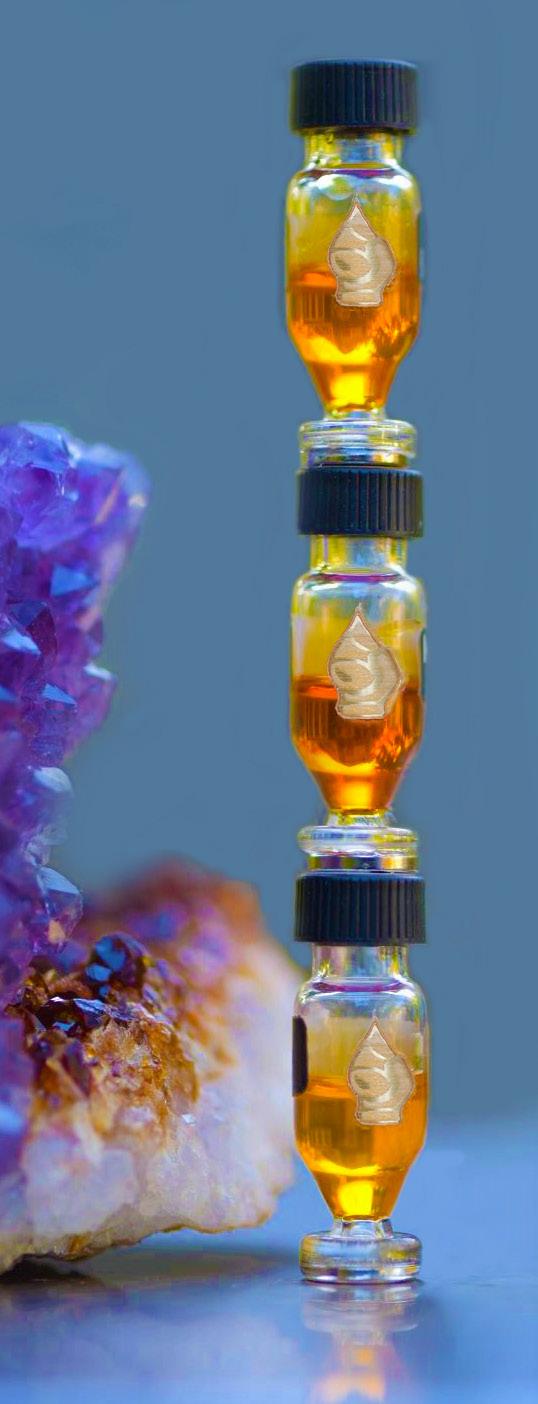
My own journey with biochemistry began many years ago as a plant molecular physiology student. Early on, I was fascinated by science, a wide-ranging discipline that encompasses the systematic study of the structure and behavior of the physical and natural world through observation and experiment. Within the many branches of science, plant biochemistry is a complex and exciting area, consisting of the study of both biological and chemical characteristics of plants.
As a science, the goal of chemistry is to simplify the complex. Chemistry is essentially substance identification and mathematics. It deals with the identification of the substances of which matter is composed, the investigation of their properties and the ways in which they interact, combine, and change, and the use of various processes to form new substances.
Biology is the study of living organisms, divided into many specialized fields that cover their morphology, physiology, anatomy, behavior, origin, and distribution. Biology is elucidating the mysteries of evolved complex relationships.
My own deep passion for science and biochemistry began and continues as a great desire to solve the mysteries of the natural world as well as investigate how things work in the physical world of organisms. Perhaps, if I could solve the mystery of how something works, I can better understand myself, the mysteries of life and ultimately, our own human experience on this planet.
We hope you enjoy CURED as part of that experience and wish you the very best on your own journey of discovery.
- Daniel M. Hayden, PhD.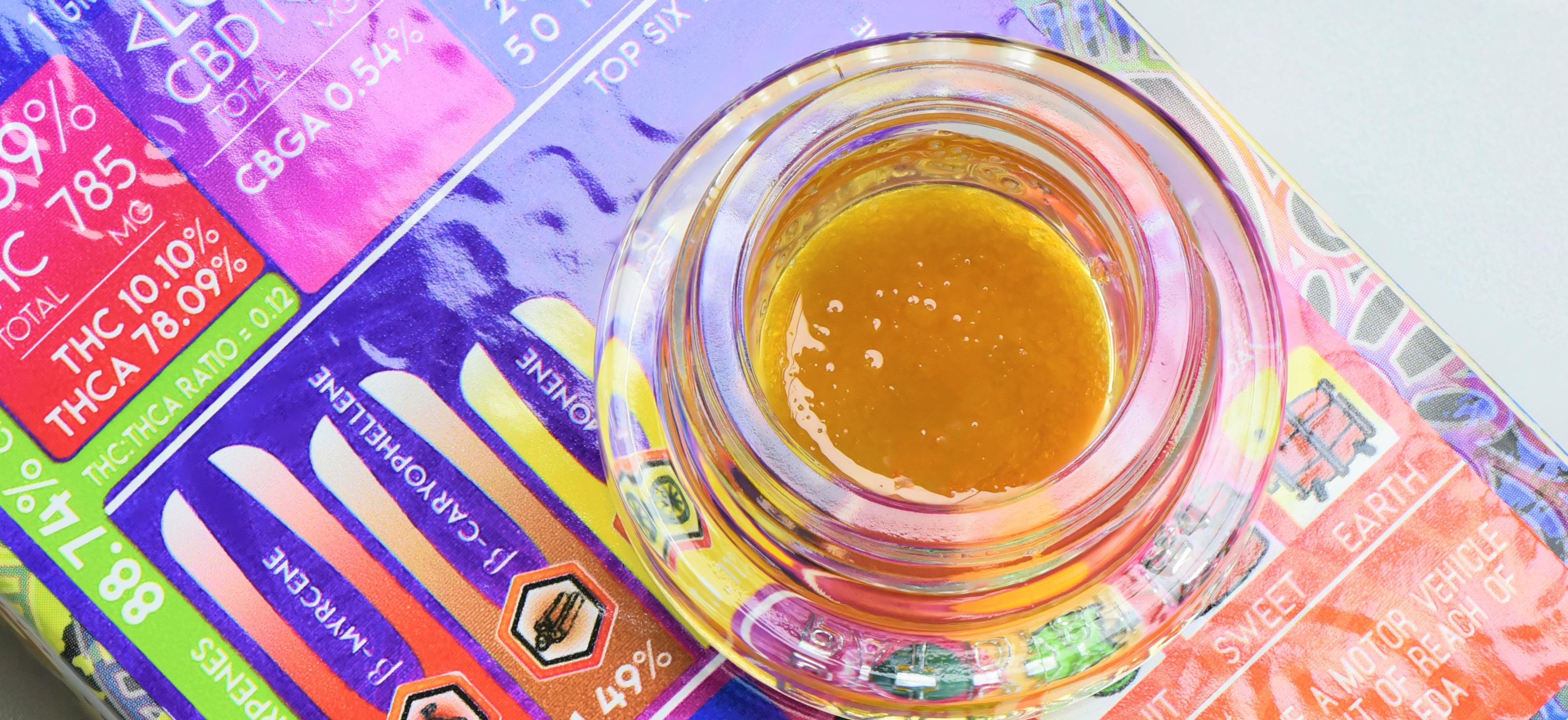
The Extractioneering team is so excited to bring you this first of what we hope will be many publications focused on our passion for the cannabis industry, bringing superior and high-quality products to the market and supporting this amazing community.
Allow me to introduce myself: I lead all things marketing at Extractioneering, a high-end small-batch Cannabis Extracts company, known for inventing High Terpene Full Spectrum Extracts (HTFSE). My family escaped a military coup in Myanmar (Burma) in the early 1960s, on one of the last planes allowed out of the country (you may have heard about Myanmar in the news recently as the military has just taken over the civilian government again.)

My extended family lives throughout Canada, Europe, South Africa, Australia and Asia, but my immediate family settled in North America over 45 years ago. I was born in Tucson, Arizona and have lived all over Canada and the United States, and am fortunate to hold dual citizenships in both the USA and Canada.
My first "official" foray into the cannabis industry was in 2013, when I founded and led ZeeFusion, a successful packaging and highend design company with multiple cannabis industry clients. We pioneered high-quality, beautiful and functional cannabis packaging and related products for an industry that, at the
time, was still primarily offering cannabis product to consumers in baggies and coin pouches.
Our innovative approach and packaging designs quickly raised the bar for the cannabis packaging industry and helped bring cannabis packaging design in line with other wellestablished industries. I was fortunate to create packaging for twelve High Times Cup winning companies as well as dozens of other cannabis companies before devoting my time fully to Extractioneering and its development in 2017.
In 2014, I married Dr. Hayden, one of the founders of Extractioneering. My responsibilities include managing our brand, packaging, social media, our website, PR and publications, sales and business development, and managing our customer service and the burgeoning edibles/topicals department.
This magazine, CURED, was born out of a desire to provide useful, entertaining and important information to cannabis consumers and others who are interested in cannabis and this industry. In this first issue, there is a wonderful mix of of rich and helpful information including personal stories, recipes, tips, reviews, and science - a lot of science (did I mention Dr. Hayden is a biotech scientist?). We also celebrate and showcase some of the incredible craft cannabis cultivator farms we work with - as you can see, it's very important to us to support this community.
You'll also notice that there are no advertisements in CURED - this is very intentional as we didn't want this to be a publication that is beholden to advertisers, investors or big business. And of course, since we're driven by

deep experience and knowledge of plant science, we wanted to bring you truthful information about cannabis based on real science. We know that when new ideas and exciting opportunities open up in new industries, misinformation can become rampant. We also know that those who speak scientific truth can often be drowned out or even silenced - think Copernicus, Galileo, Turing etc.. And in this age of social media, misinformation is far too easily shared and redistributed.
After much consideration (and a lot of effort), I'm thrilled and honored to bring you our very first issue of CURED. We hope it meets with your approval and that it provides you with valuable information, enhances your appreciation of cannabis and brings you closer to this wonderful community.
- Razia Hayden,Extractioneering uses cured material to create its extracts, from material that has grown to full maturation and has the full potential of the cannabis plant.

Cured cannabis has more beneficial biomolecules than unfinished, frozen, plant material.
In fact, cured cannabis has a greater variety of terpenes and flavonoids, providing a true Full Spectrum experience.
The full entourage of beneficial biomolecules are in cured cannabis. Any successful grower knows that the pheno-hunting is the best way to ensure the most superior genetics are passed from one generation to another.
Pheno-hunting is the process of sifting through seeds to find those with the dominant traits that the grower wants to cultivate.
Cannabis farmers select which specific strains to grow almost entirely based on their inspection of the cured flower and its structure and flavor.
They determine when to improve or remove strains and cultivation practices to make the best cured resin on the most complete flower for each harvest batch.
This selection process is learned over many years through experience. Thousands of years of cannabis pheno-hunting has been done to get the best experience through cured cannabis.
The cured resin has the highest medicinal potential because it has evolved and has been hand-picked by humans for this purpose.
We create shelf-stable products that do not need to be refrigerated, using our CoSolvent technology that has been perfected over the past ten years. Each of our extractions can take weeks or even months to create, in contrast to standard extraction methods which takes just a few hours..
We do not perform CRC on our products, which ensures the full benefits of the cannabis plant are left intact.
Our product is a cannabis solvent extraction that is performed using a mixed hydrocarbon solvent in conjunction with CO2 as a CoSolvent which captures greater oleoresin complexity than extractions performed with butane or CO2 extractions alone.
The CO2 buffers all molecules so they don’t polymerize during the solvent process. This allows for the efficient precipitation of waxes during winterization and the subsequent vacuum oven removal of residual solvents, while preserving the precise flavors and aromas from a native, single solvent extract.
Upon completion of residual solvent removal, the oleoresin is free to relax and release CO2 while forming crystalline THCA.
This process, which includes monitoring both crystal size and formation as well as the amount of time required, is unique to each cannabis batch.
A CoSolvent extract uses CO2 as a CoSolvent imbued into the resin prior to extraction.
This enables the resin to be extracted without polymerizing to itself, allowing solvent to be removed without affecting the taste and flavor.
CO2 remains in the resin which enhances the flavor.
Extractioneering works with extremely small batches in order to ensure quality, working with only locally- owned processors of the highest caliber.

Because we use cured material, we have much lower yields than those of our Live Resin or CO2 counterparts.
For example, the Donny Burger HCFSE only yielded 37 grams after extraction. The testing facility took 7 grams to do testing, leaving us with 30.5 grams total.
For the Slurp Juice HTFSE, only about 60 grams remained in total after the test batch was taken.
The average batch size for Live Resin or CO2 extractions can be around 2500 to 10,000 grams per batch. Our average batch sizes are 200 grams. When we say "small-batch," we mean it.
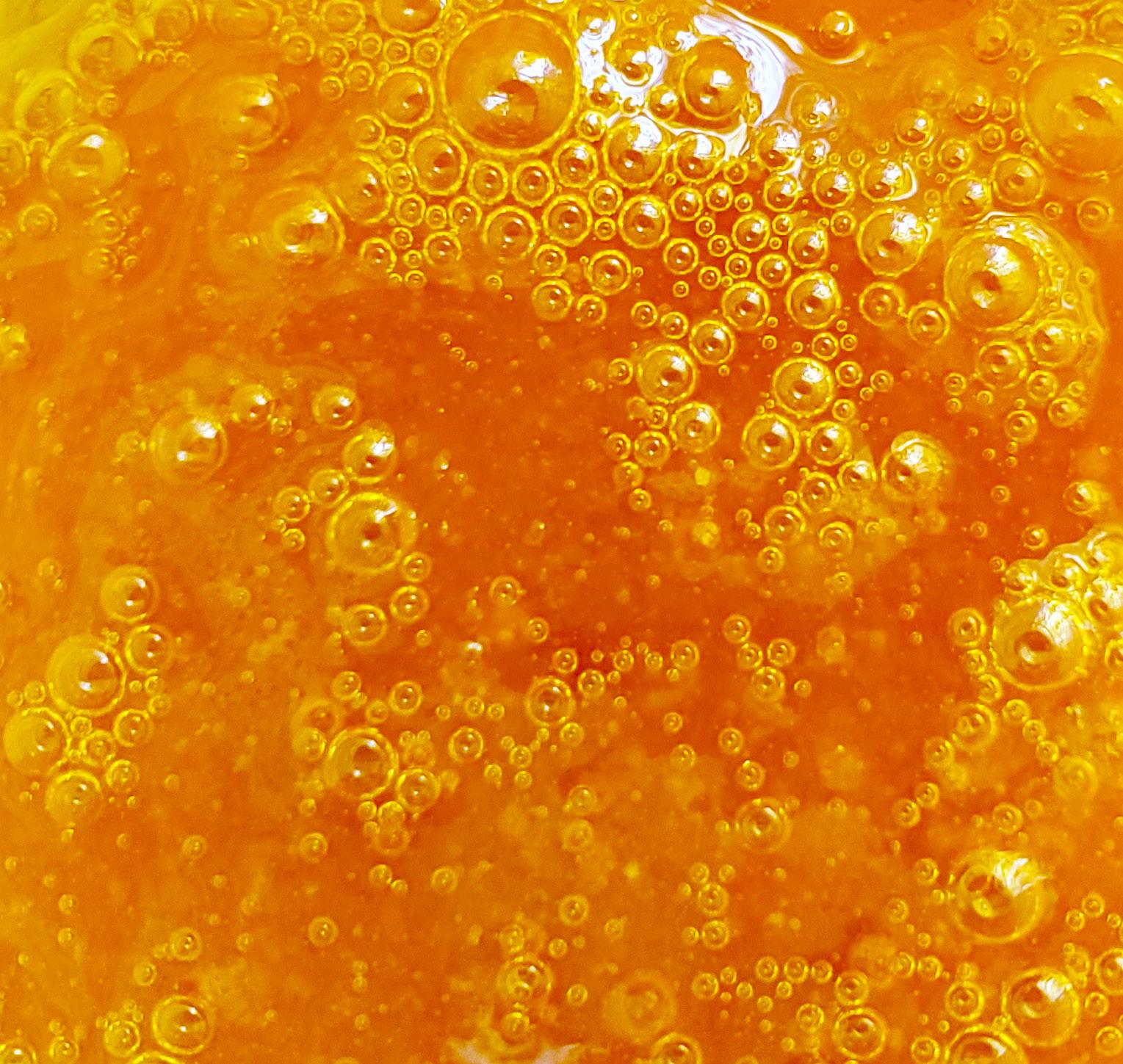
Extractioneering carbonates our extracts based on scientific principles. We charge our resin with carbon disoxide (C02) prior to extraction.
The C02 protects the molecules by binding carbon dioxide to the exposed sites that would otherwise tangle molecules or
One of the questions we get the most is “Why do you care so much about batch sizes?!”Photo by Kerri (@dabgaia)
oxidize during extraction. It also protects flavor sites and medically relevant sites on molecules that other extractions fail to do.
When the extract finishes, it sloughs off excess C02 until it’s balanced. When vaporized, the C02 further deploys and the user is able to taste a wider variety of molecules.
The molecules then have an easier time individualizing and being absorbed and distributed in the body, or what we call "bioavailable".
How do you charge resin with C02 before extracting?
We use a CoSolvent process. The cosolvent performs a function that neither solvent can do alone. C02 is exposed to the material (we source it from dry ice).
This carbonates the resin, which is then extracted with a tri-blend of 50-N/25-I/25-P. If CO2 or single hydrocarbon is used alone for extraction, the result is not the same.
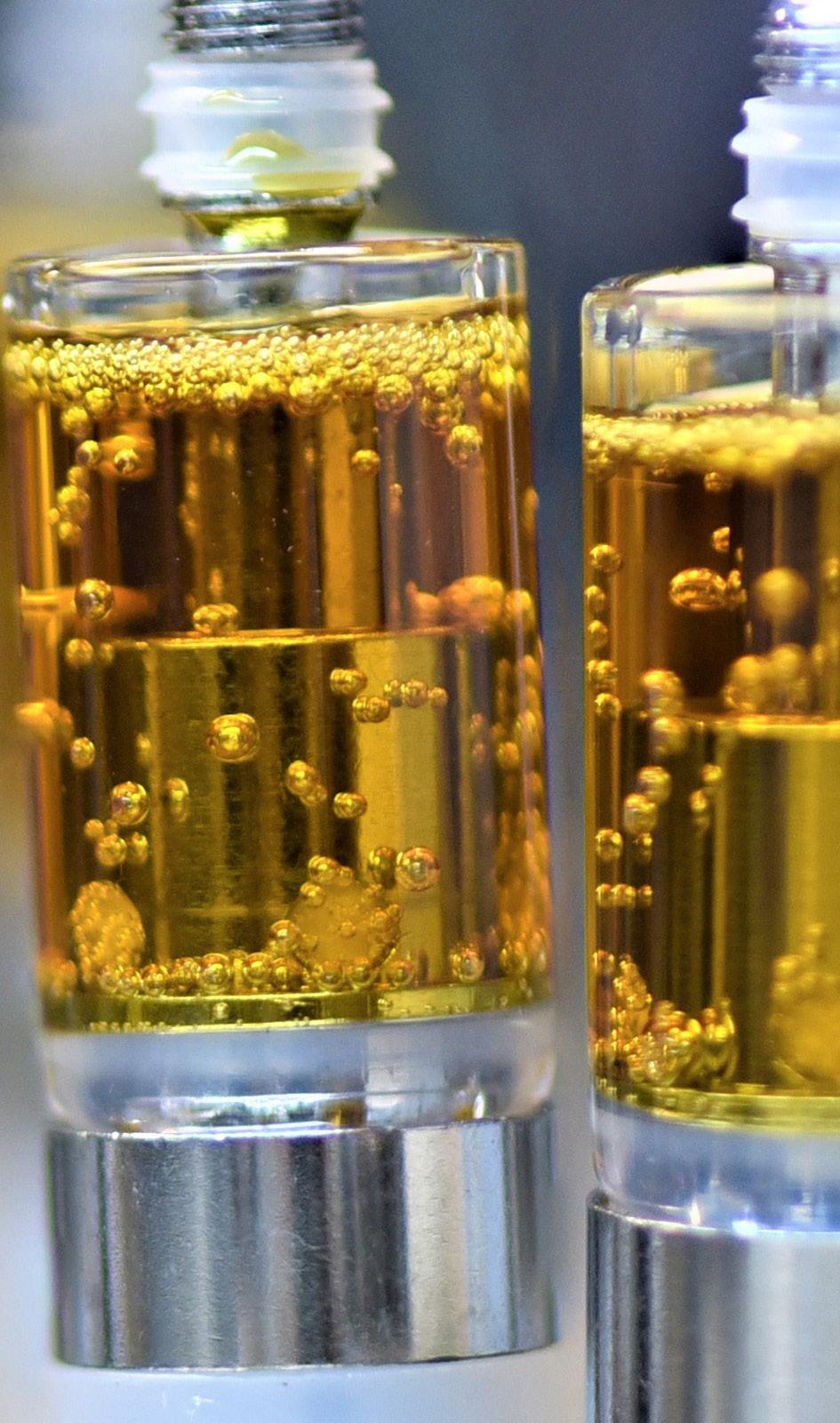
All our solvents are “ACS” grade solvents, the highest grade available, even those we use for cleaning our equipment. ACS grade is the highest purity chemical grade, meeting or exceeding purity standards set by the American Chemical Society (ACS).
This grade is acceptable for food, drug, or medicinal use and can be used in circumstances that require stringent quality specifications and a purity of ≥95%.
Why has "Fresh Frozen" cannabis become so popular?
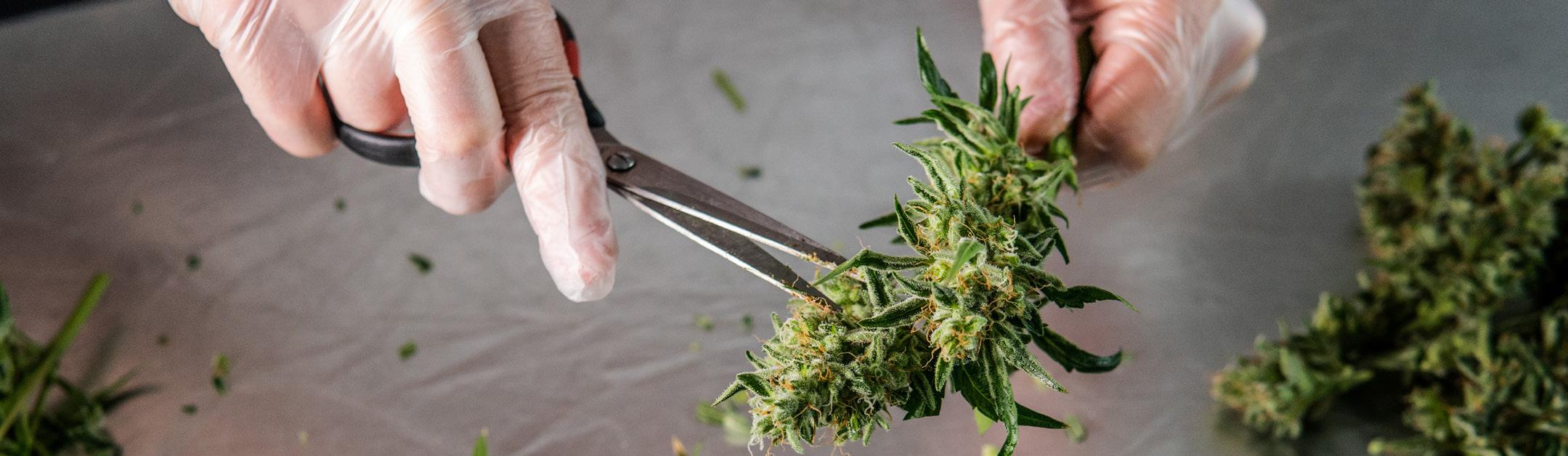
The answer is simple. Freezing harvested cannabis saves time and money. Properly curing and trimming a cannabis harvest is normally an extremely arduous process. With "Fresh Frozen", instead of having to wait until a plant is completely cured, farmers chop down the cannabis plants early and remove the big leaves, thick branches, and stems. All that remains to be done is to vacuum seal the remaining material and freeze it in an industrial freezer.
Freezing the material before it has cured locks in flavors, terpenes and cannabinoids (THC, CBD, etc.). This process also traps moisture for a later processing. For farmers, being able to sell material that wasn’t worthy of being on the shelf as buds, Fresh Frozen is a great way to earn lost income from a less than stellar grow. Fresh Frozen material doesn’t need to take up space in drying rooms or be trimmed. For the processor, it’s a way to obtain easy-to-use material that has a high yield.
However, there are several disadvantages to Fresh Frozen cannabis. Because the material was frozen along with water content, it is subject to freezer burn as well as degradation. Though vacuum sealing does limit the amount of degradation, the water content is still in the completed extraction, which contributes to it’s need for refrigeration.
Fresh Frozen extracts have an abundance of mono-terpenes, because the material used is cut down early and not cured. These large terpenes tend to evaporate easily and quickly when not kept refrigerated, even in closed containers. Butters and Batters, for example dry out and become crusty looking when left unrefrigerated.
Curing cannabis is a time-consuming and complex process that takes years to perfect The plant itself is treated differently when the buds are going onto a dispensary shelf, compared to a vacuum-sealed bag thrown into a freezer. The curing process does more than just dry the plant material; curing enhances the flavour and experience you get when vaporizing or through
combustion. It. Only the best growers are able to achieve a perfect cure.
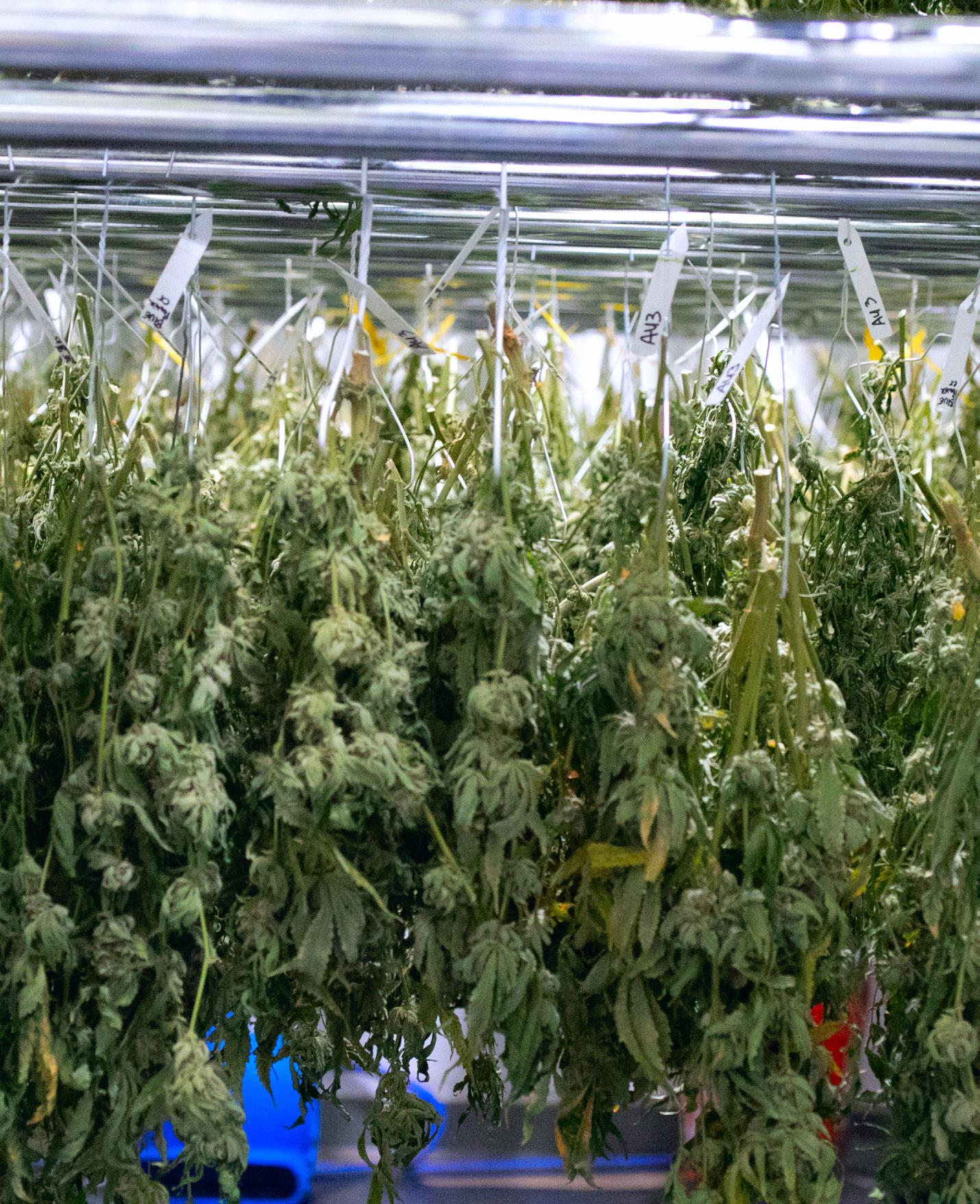
As a result, cured material tends to be more expensive because it takes much more labor to create completed, cured cannabis. In fact, in many grow circles, cannabis is not considered "real" cannabis unless it has been cured - it’s just "Fresh Frozen".
When you compare fresh frozen with cured cannabis under a microscope, you can see that that the longer, more diligent curing process has not only reduced the water content in cured cannabis but also helped break down chlorophyll and sugars that are still in the inner matrix of the material itself. Chlorophyll can contribute to the grassy and hay-like smell in some buds and fresh frozen extracts. During the curing process, chlorophyll evaporates and does not need to be removed with such vigor after the extraction process. This means that cured cannabis doesn’t need to have color remediation (CRC) process applied to look good.
Terpenes in cured cannabis plant are also able to continue to evolve into the final material you and I love to smoke.
But there’s a reason you don’t smoke wet flower... it’s because once you get past the harsh burning throat sensation, the high is sharp, jagged and jittery. In the cannabis curing process, the flavours and terpenes are allowed to balance, creating the optimal chemical composition which enhances your overall experience.
Our bodies have evolved over a millenia to work in tandem with cured cannabis. The properly cured cannabis flower, just like the extract, produces a much less volatile high, taking you on an easy and level ride before gently dissipating from your system.
A cured cannabis extraction results in a comes much more complex and refined flavour, resulting in a more complex bouquet as it continues to mature.
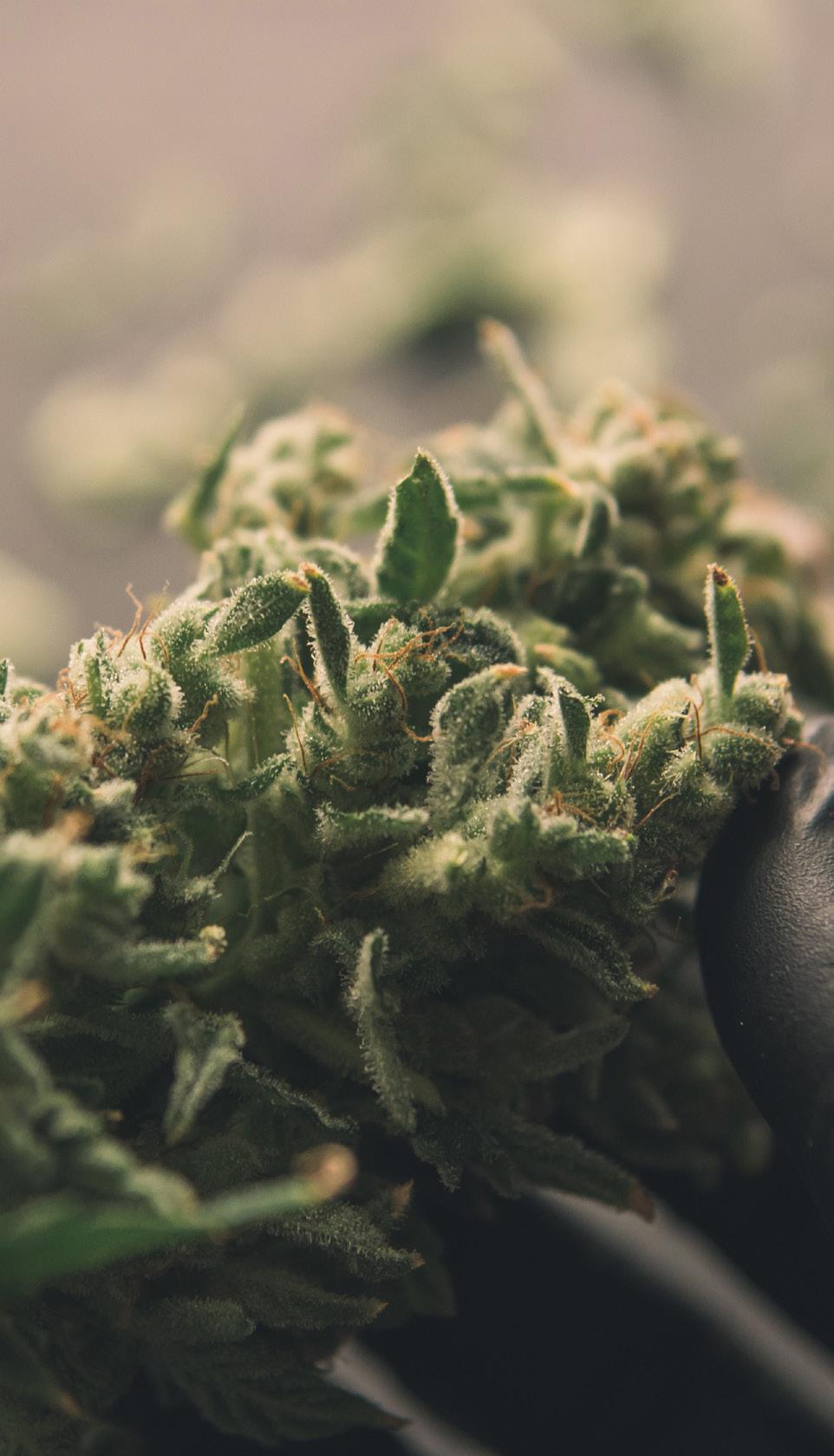

It was 1999, and as I entered Dr. Richard Mandshart’s lab to ask him to be on my graduate advisory committee, I was met with a man holding a spoon surrounded by 250 half cut papayas. He greeted me and explained, “I have to grade every one of these today for taste, texture, and sweetness". It was an incredible sight to behold.

Thus began my education in plant biology. It began right there, as Professor Mandshart explained that shoppers would not choose papaya with a ringspot on its skin, and those that had ringspots would be left to rot. In fact, every piece of produce in the supermarket was specifically designed to show consistency in color and size. This was seen as a positive sales attribute. Those that matched this and lasted the longest from farm to shelf to the fridge were the winners of our Agricultural Revolution. Flavor, it seems, ranked much further down on the customer's list.
Getting products on the biggest and busiest sales shelves (or supermarket aisles) is the priority for most producers and cultivators. This is in spite of numerous studies that show intermediaries that connect creators and customers to each other have an outsized influence on markets, seemingly engaged in collusion to ensure they collect the
largest profits. Responding directly to the demand for products that are deemed more enticing to the senses by both consumers and retailers, both cultivators and producers turn to long-standing traditions of curing, aging, and ripening.
The near-universal demand for attractive produce extends to other cultivated products as well. Of particular interest is cannabis.
For most of human history, we have hung and dried all our spices upside down in a cool, humid place.
The practice of hanging and drycuring cannabis originated for the same reasons - to allow the plants to specifically express their essential oils from the stems to the leaves, which creates the majority of the spice.
However, cannabis doesn't express essential oils in the same way. Still, the concept of curing cannabis is critical. Our ancestors learned this early on, without having to know anything about the science of trichomes, the structures on the cannabis flower that contain THC. They quickly learned that cannabis piled in the field, once dried, makes a quick-sieved and desirable hash. Cannabis is grown long in season until amber trichomes set, after which the cannabis is cut and stored for a long cure. Other techniques used today like bagging and burping also have historical roots.
For my Ph.D., I studied the concept of senescence, which is often confused with apoptosis (cell death).
Senescence is, in fact, a molecular genetic program that is initiated when an organ, such as a leaf, starts to die - often because it consumes more energy than it produces. This process results in the remobilization of nutrients to the plant's neediest parts, storage organs, and flowers. A cannabis flower (inflorescence) is among these needy parts, a combination of a sugar leaf and a calyx at cultivar specific ratios. On these leaves and calyxes of the inflorescence are trichomes. These organs are the true fruits of cannabis. If seeds were to develop inside the calyx, this would become a needier fruit, but until this process begins, the trichomes remain the neediest organ on the flower.
This is where cultivated seedless cannabis
takes a turn. For the most part, the plant remains green throughout its lifecycle, although trichomes go from clear to cloudy to amber. But it is better for the plant to mostly remain in the cloudy trichome stage to harvest good-colored oleoresin end products. A plant at this stage has not yet moved into the curing or senescence stage of its life cycle. After cutting and hanging, the plant consolidates its energy into a molecular end process that removes moisture while pushing the final results of its energy into the highest energy sink, the flower. In seedless cannabis, this result ends up in the trichome.
As this energy is thrusting into the flower, metabolism slows to a crawl, and fast-moving molecules like monoterpenes (C10H16), H2O, CO2, 02, N2, and other plant-based hydrocarbons continue to gas off. This is happening on the plant leaf, trichome stalk, and trichome surface and interior. The gassing off of these volatiles hardens leaves' surfaces and strengthens them against solubilization, like the difference between wet paint and dry paint. Water washes away wet paint, whereas dry paint is resistant. When a fresh living leaf surface is moist with volatiles and living waxes, these products are more likely to remain in the final extraction. Without CRC (a product filtration method), they are almost impossible to remove via winterization.
As these surfaces harden, the interiors draw up the remaining nutrients, and the cells that feed the trichome create their final products. Products remaining inside the bulb during final curing consolidate within their physical location and interact with enzymes floating on membranes that have higher chances of making more and more complex molecules or ornamentations on existing complex molecules. Thus, the qualities of the resin are furthered in both medical effect and molecular diversity.
A dislodged bulb usually occurs when the cells desiccate to the point where it becomes an abscission zone (nothing suggests disc cells or stipe cells are abscission zones, which would be hormonally regulated).
A bulb without its protection would be exposed to further degradation almost instantaneously, which is why great care must be taken to keep them as fresh as possible.
In that same way, a dislodged bulb from a living tissue is a traumatic event at the disc cell location
The earliest evidence of wine i n Geor g ia fr om 6000 BC, Ir an from 5000 BC, and Sicil y fr om 4000 BC. The earliest known wineries
The concept of aging dates back to 7000 B.C., whe re pottery and vessels in China we re found with r e mnants of w ine and gr apes.
C onf irmed writ ten evidence of ancient beer p roduction in Armenia can be obtained fr om Xenophon in his work Anabasis (5th century BC)
Ancient E g yptian harvesters slashed open the f igs they collected to stimulate ripening ,
Sidebar from Dr. Hayden: Historically, the term “calyx” has been used to describe the modified leaf surrounding each ovary (pistillate), which if pollinated using the white hairs (stigmas), becomes a seed. If you look closely, each bract sits on a tiny tooth-like leaf.
This is the calyx. The appropriate nomenclature for what we consider the calyx is called the Bract. However, the use of the term calyx has historical and common use significance, such as the use of the term ‘Strain” instead of “Cultivar”, so we use them interchangeably.
that would be the equivalent of pulling an antler off a deer's head. The bulb is compromised from that moment. There is no traditional chance of the plant relocating nutrients through the disc cells and into the trichome and the true ripening process taking place.
Curing, aging, fermenting, and drying are pervasive practices already in the food and
beverage industry.
The practice/art/craft becomes more or even ultra-rare in commodities, where rare and complex fragrance and flavors are well defined and valuable. Cannabis, on the other hand, contains one of the most complex storage organelles found in nature: the glandular, stalked trichome.
Along with the sessile (attached) trichome,
cannabis produces some of the rarest phytocompounds on earth, and most certainly the rarest oleoresin charted to date.
Cannabis has evolved us, and we have evolved it. Do we pick grapes and tomatoes early and cure them on a tray in a freezer? Do we prefer the flavor of grape juice or perhaps wait a moment longer and enjoy some wine? Why wait for cheese when we can just drink a bunch of milk?
Curing, aging, and ripening brings out the best qualities in flavor and experience and this holds just as true for cannabis oleoresins.
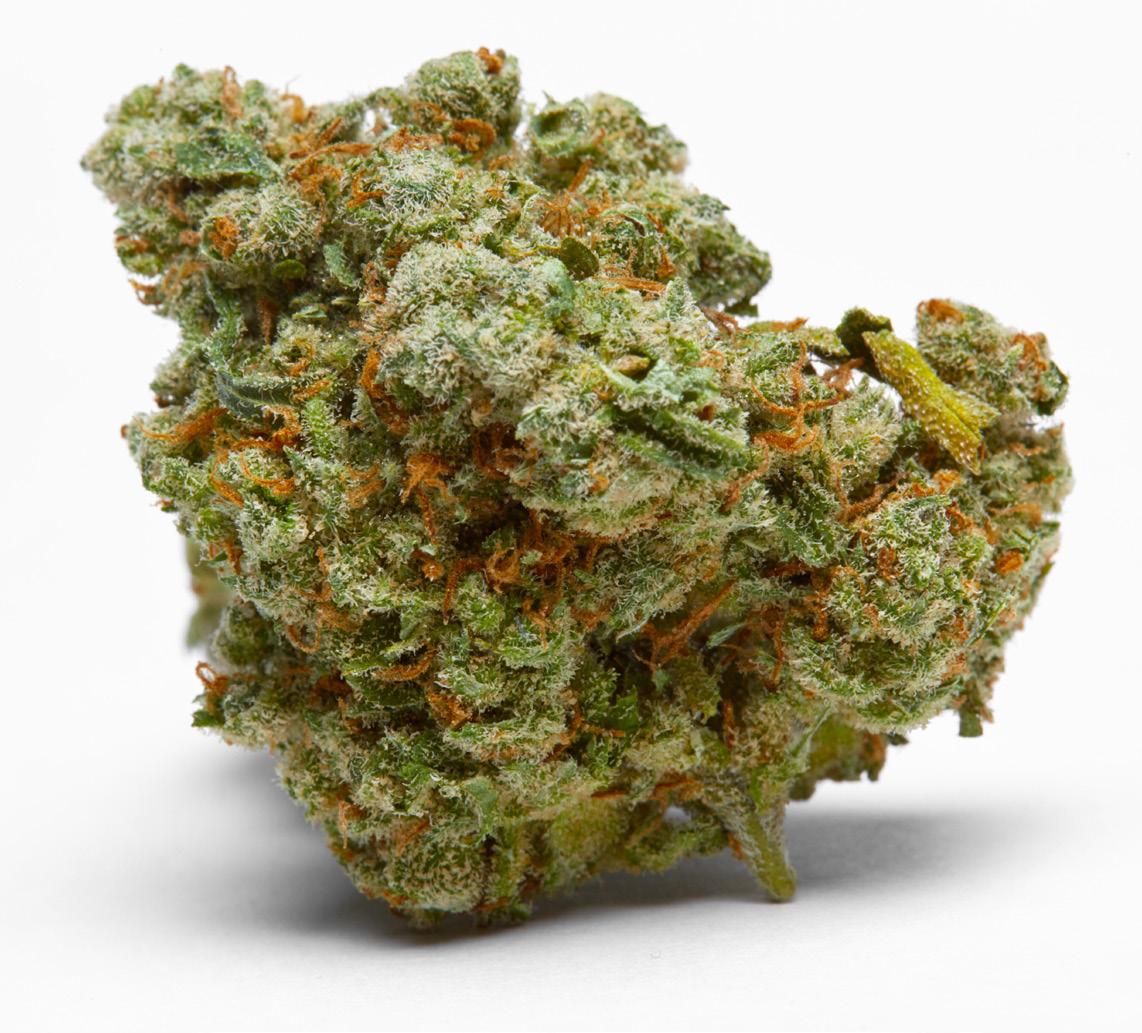
best cannabis is cured.
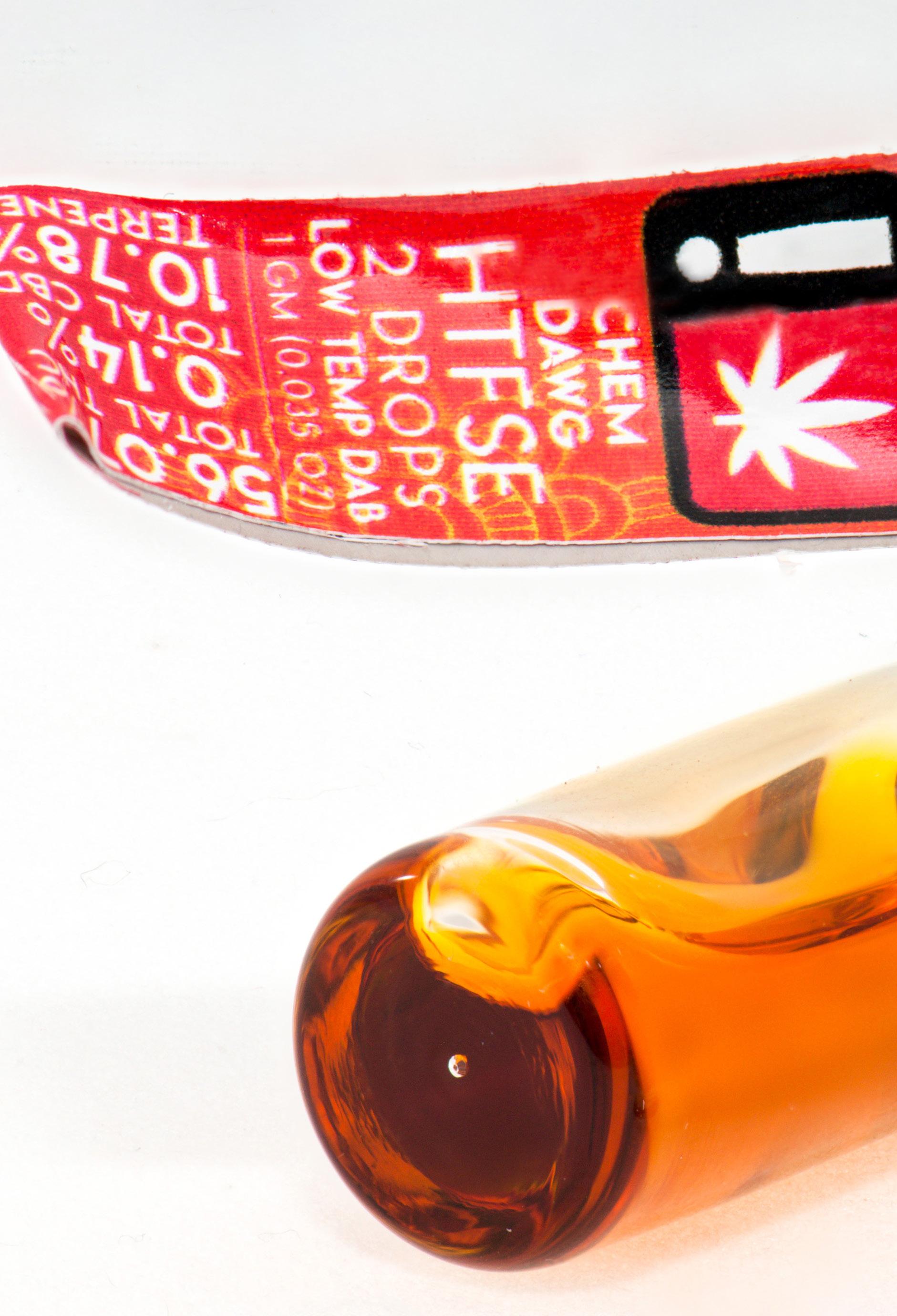
If you’re reading this, there’s a good chance you’ve heard the cannabis acronym “HTFSE” (HighTerpene Full-Spectrum Extract). You may even believe that you’ve tried some. However, the term “HTFSE” has very specific requirements that must be fulfilled to qualify as such.
by Dr. Daniel Maida Hayden, Ph.DHTFSE specifically refers to our liquid cannabis oleoresin extract, that has a minimum of 50% THC (Tetrahydrocannabinol) and more than 10% terpenes. Our average HTFSE contains 50-65% cannabinoids, 10-25% terpenes, and 20-30% other trichome cannabis biomolecules. The product is always carbonated, made from cured cannabis material, and is extracted using a co-solvent process using both butane and CO2.
What is HTFSE not?
High-terpene full-spectrum extractions cannot be created with fresh frozen material, or live resin. They can only be made with cured cannabis, and in Extractioneering’s case, the trim itself. The curing process adds tremendous complexity to resins and is a true evaluator of performance and value. Trim represents the most mature, ripened and complex trichome bulbs a cannabis plant has to offer.
In the process of creating live resin, the cannabis is flash frozen. Living plants contain many terpenes, lipids, and volatile compounds from living tissue that aren’t associated with the trichome bulb, and these compounds end up in the final extraction. It is only after a plant is properly cured that the flavor and complexity can be developed.
This is counterintuitive to what many believe in the industry today, which is that the drying and curing process is to blame for oxidation and losing terpenes and flavor.
What is more likely is that the cannabis extraction industry hasn’t quite yet developed the equipment, skills or techniques required to produce a functional, bioavailable cannabis extraction. Naturally, if the results are less than satisfactory and cannot be proven with cured resin, those extraction methods are likely to be inferior.
In fact, the resins that coat the exterior of cured cannabis flowers are the most complex and flavorful resins available in the world today. These resins are routinely trimmed off during the process that makes the plant more desirable for smoking and appreciating. Combusted alone, trim earns a reputation as being a 'harsh' smoke, but these resins, when extracted appropriately, become exceedingly complex and medicinal.
What sets HTFSE apart?
Extractioneering uses cured material to create extracts, material that has grown to full maturation and has the full potential of the cannabis plant. Cured cannabis has more beneficial
biomolecules than unfinished, frozen, plant material. Cured cannabis actually has a greater variety of terpenes and flavonoids, providing the real Full Spectrum experience.
Our methodology captures a balanced mix of all the trichome bulb molecules. This includes the polar, non-polar and neutral resin molecules as well as the flavor molecules which have unique properties which enable us to taste. Our extracts specifically contain what's missing from other extractions that are purified with CRC, distillations, or post-processing techniques.
Once they are aware of the difference in quality, we believe that most consumers prefer a balance of all compounds available in cannabis trichomes versus huge diamonds that consist of 99% THCA. Large THCA crystals, popularly known as "diamonds", are a result of live resin extractions performed on high-quality, fresh material. This does not necessarily mean that the resulting extraction is of a higher quality.
Usually, the result of this process is perhaps one cannabinoid and some "perfume" types of terpenes. We know the drawbacks of single cannabinoid preparations as medicine.
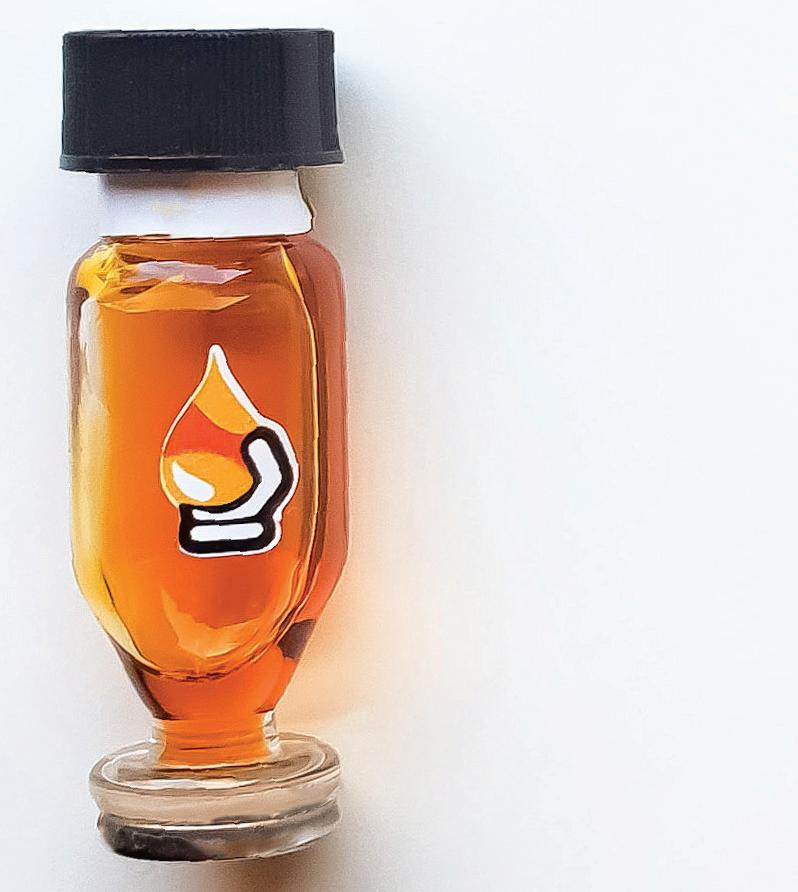
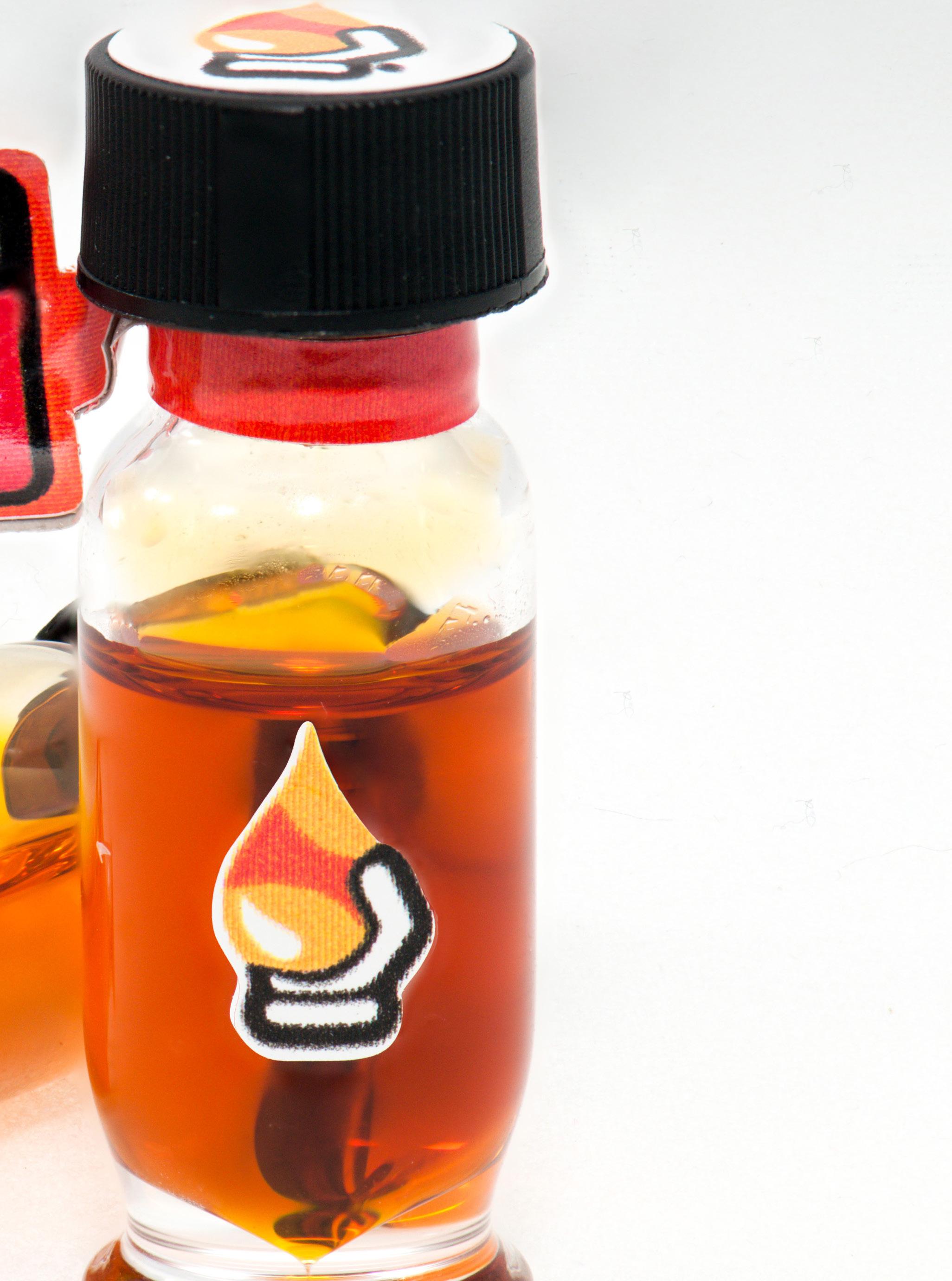
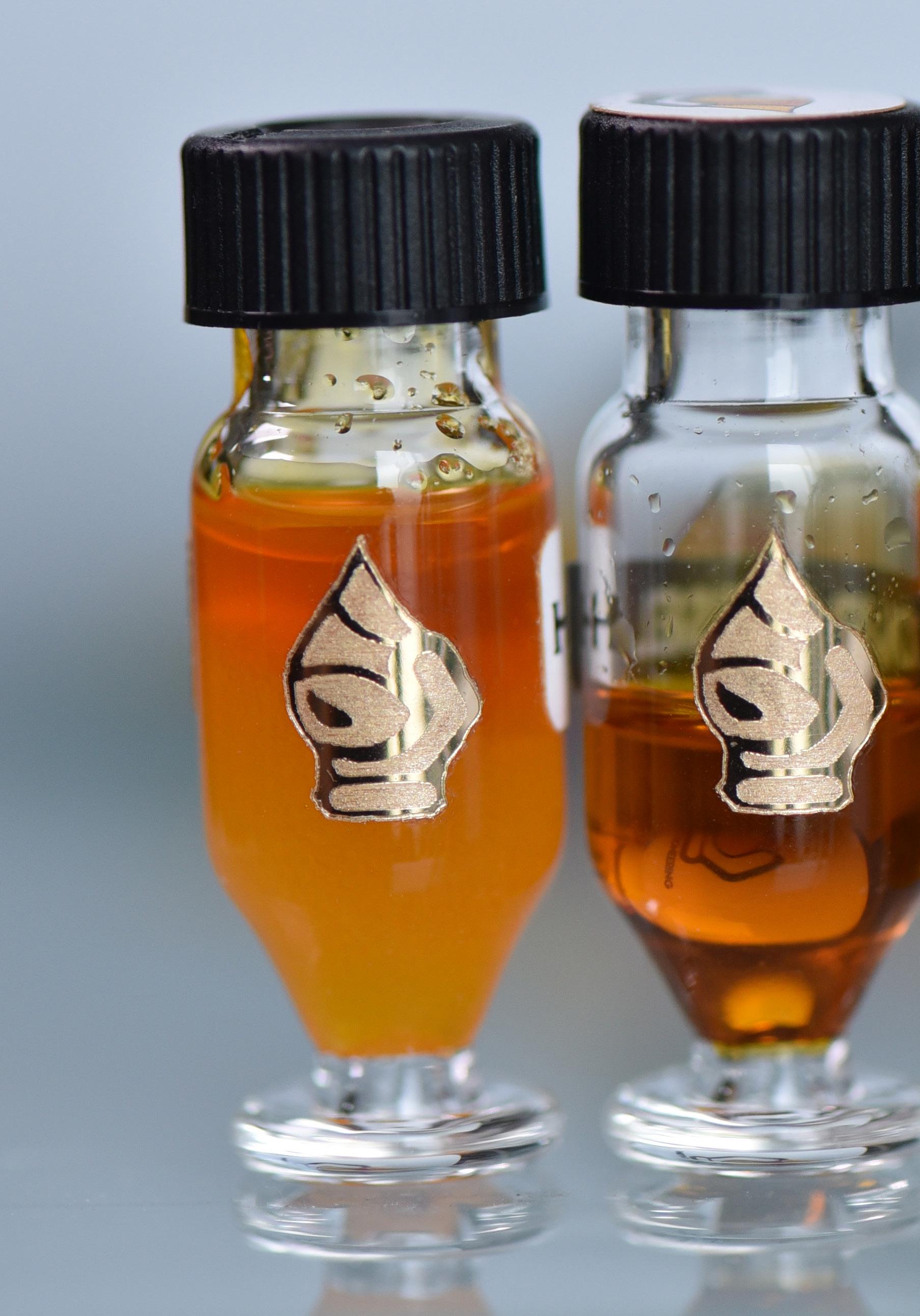
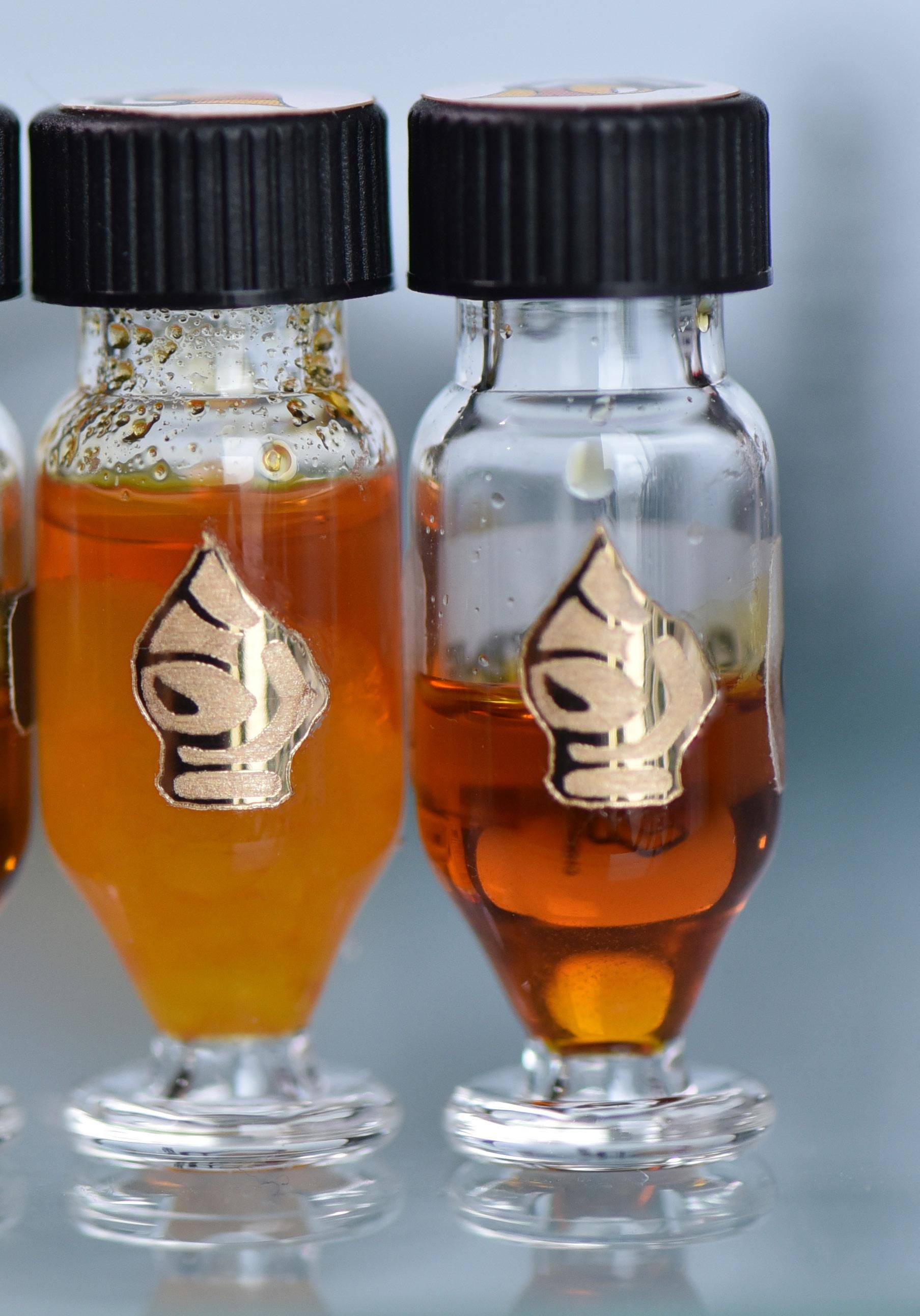
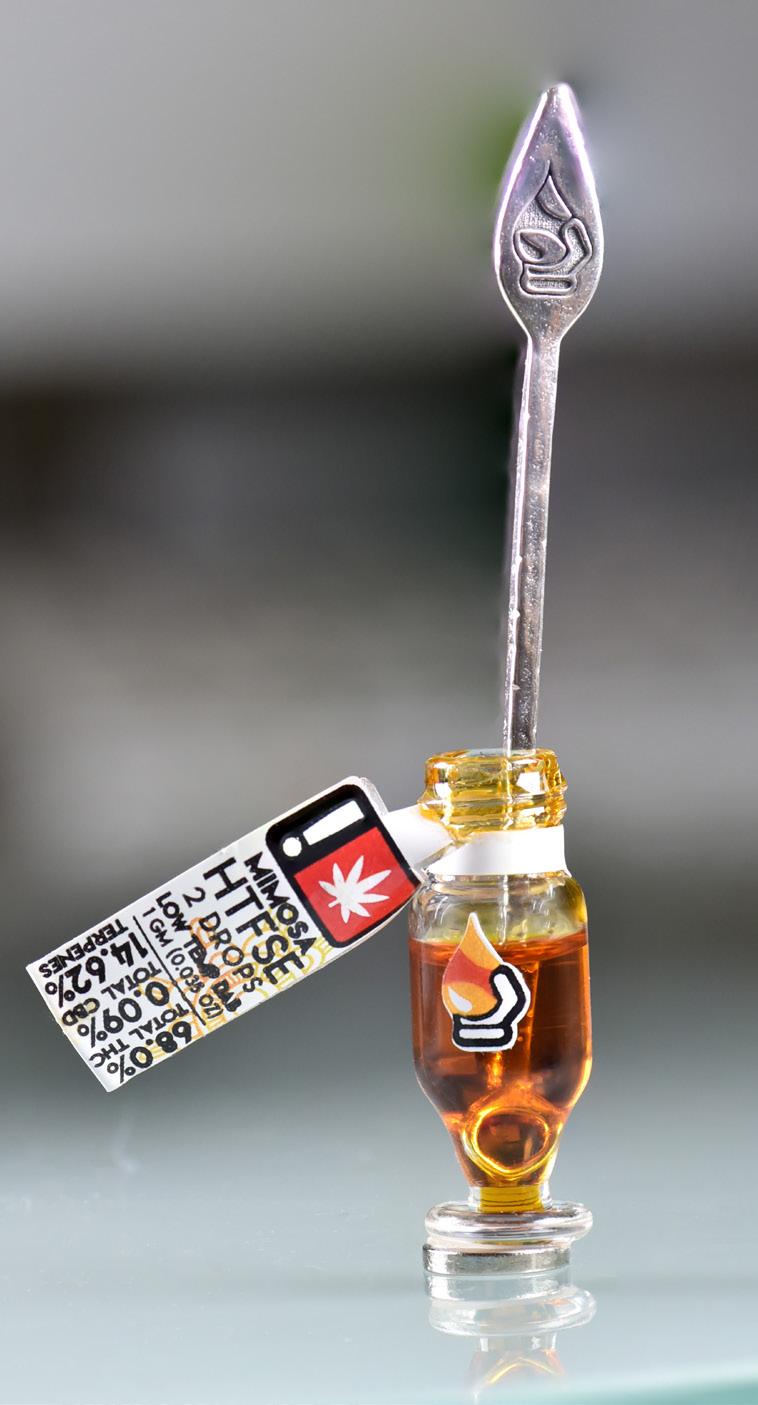
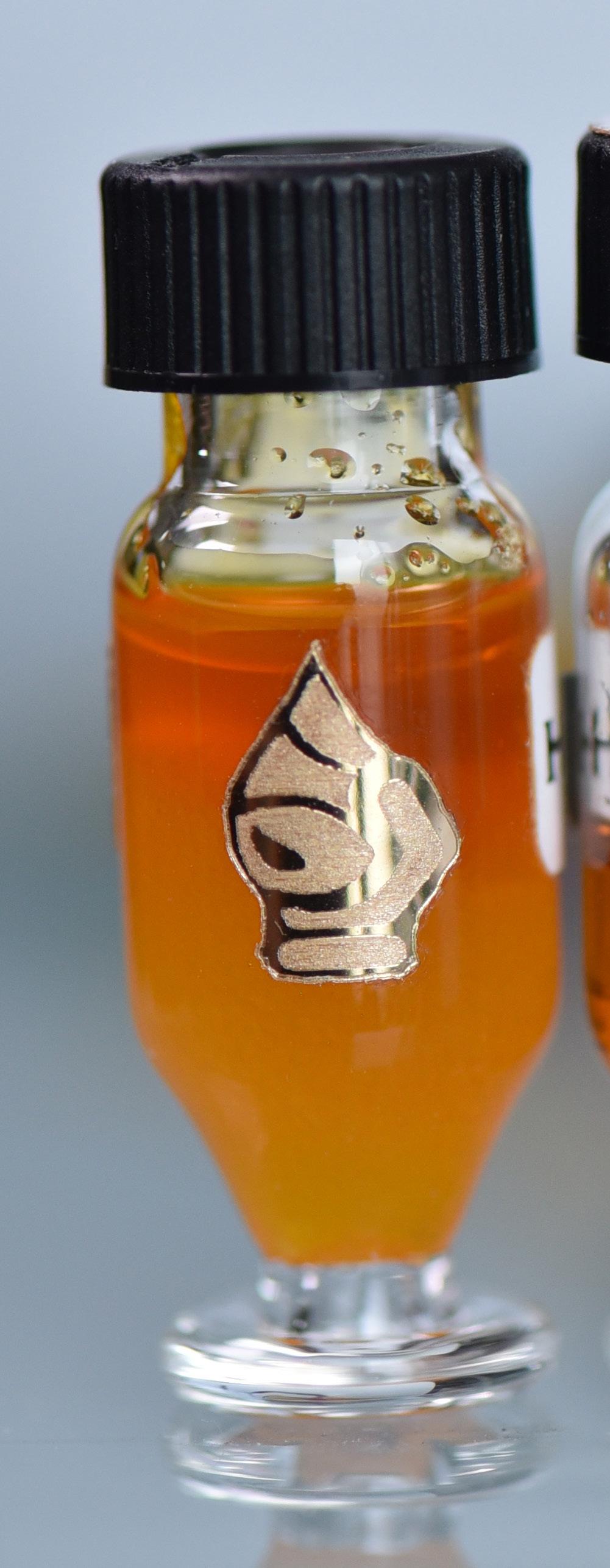
VIAL


1 GRA M

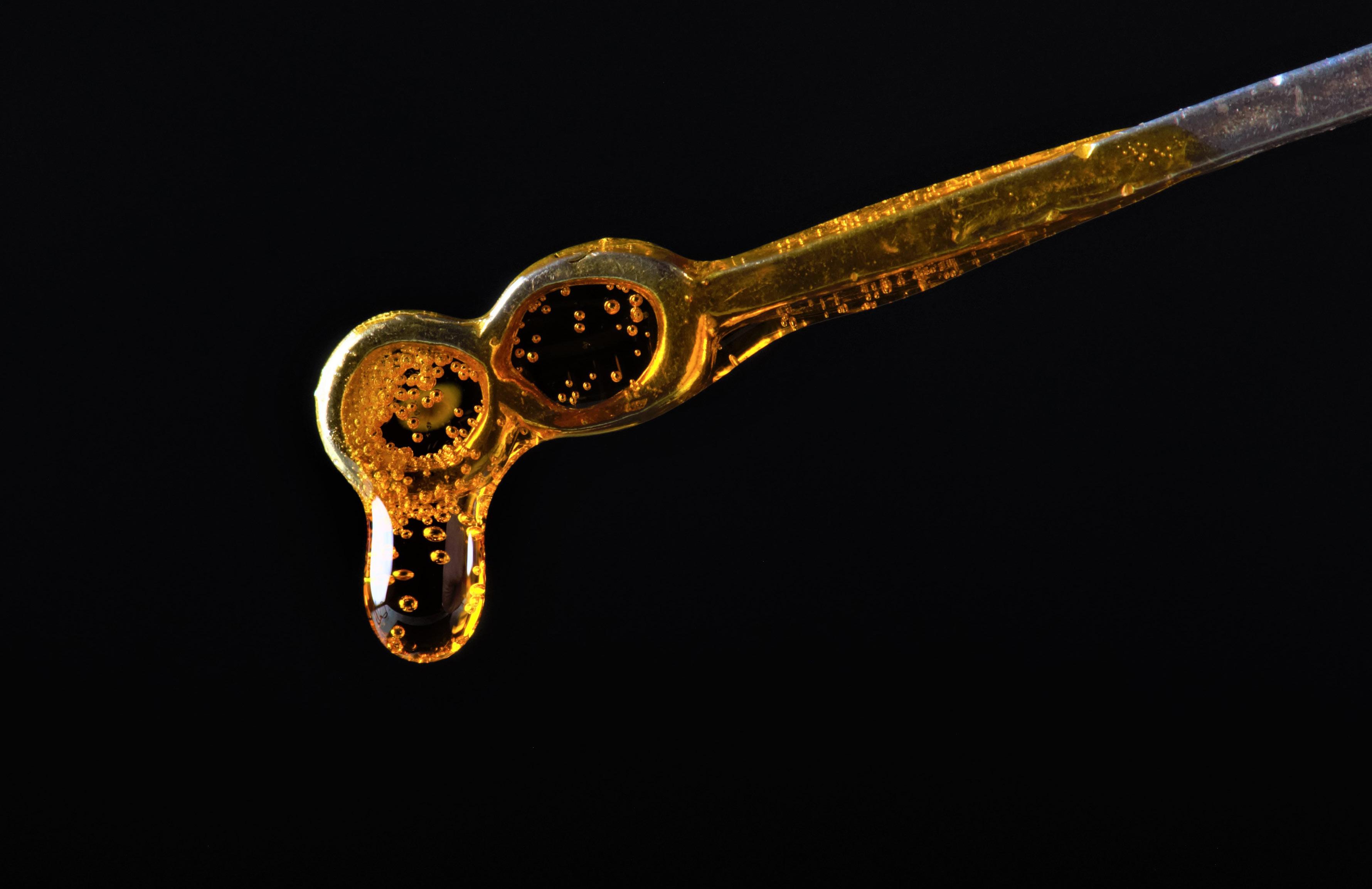
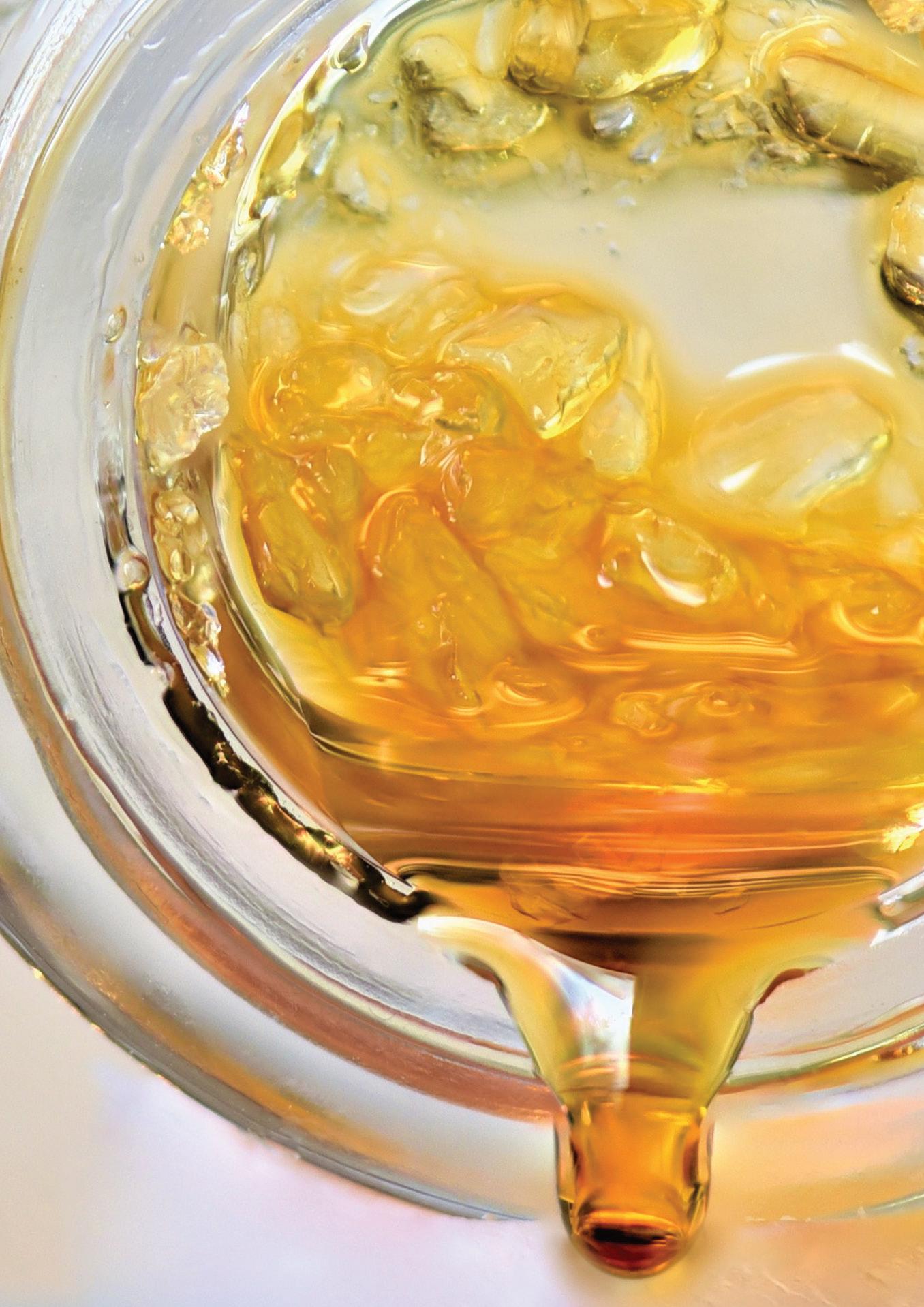
Our Vials have been specially designed for users to get every last drop. You can drip the vial into your banger or use a dabber to get the precious liquid out.
your own cartridges.
Only the most exclusive strains and batches get into our vials.
$40ish out the door, depending on shop
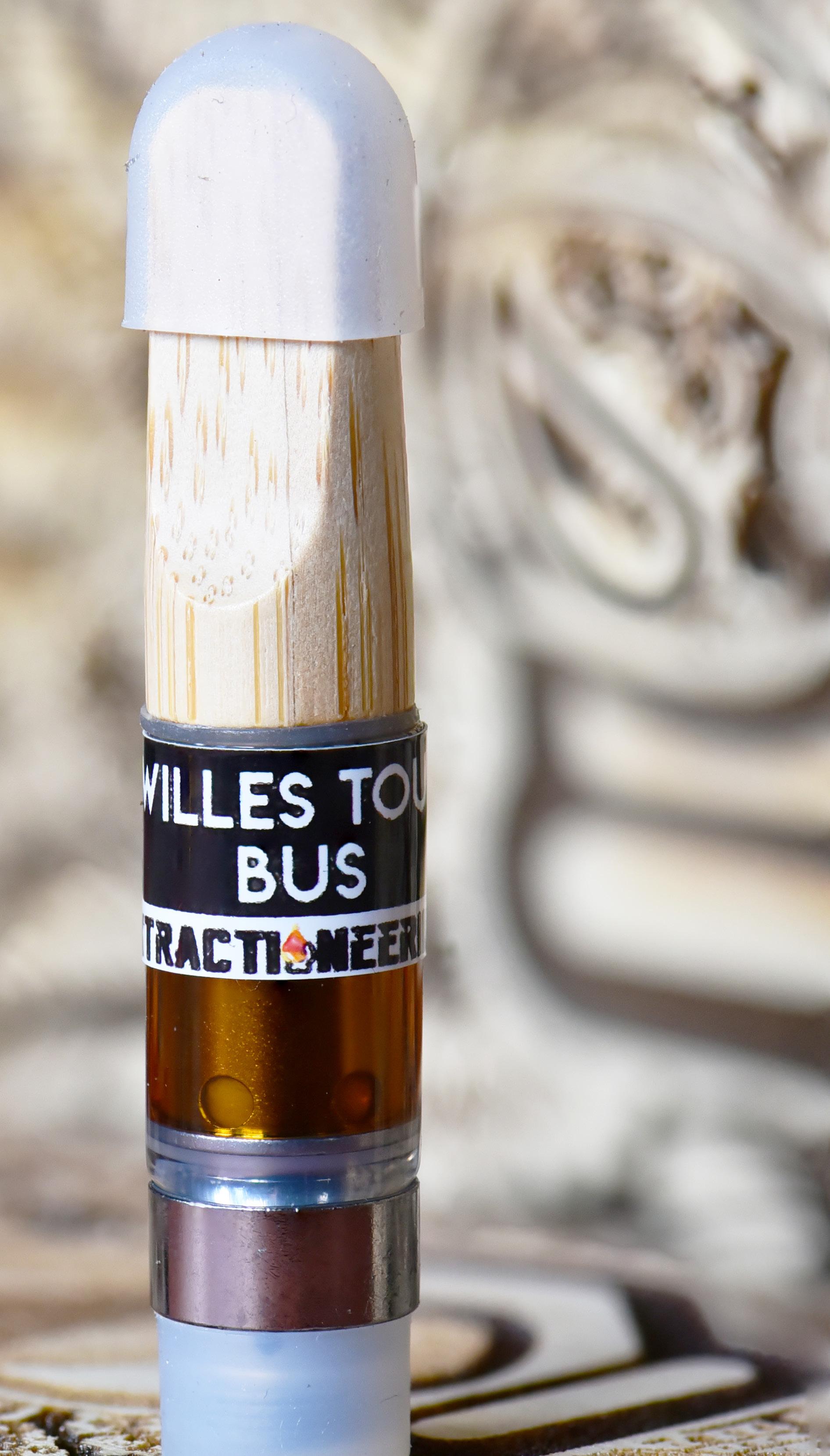
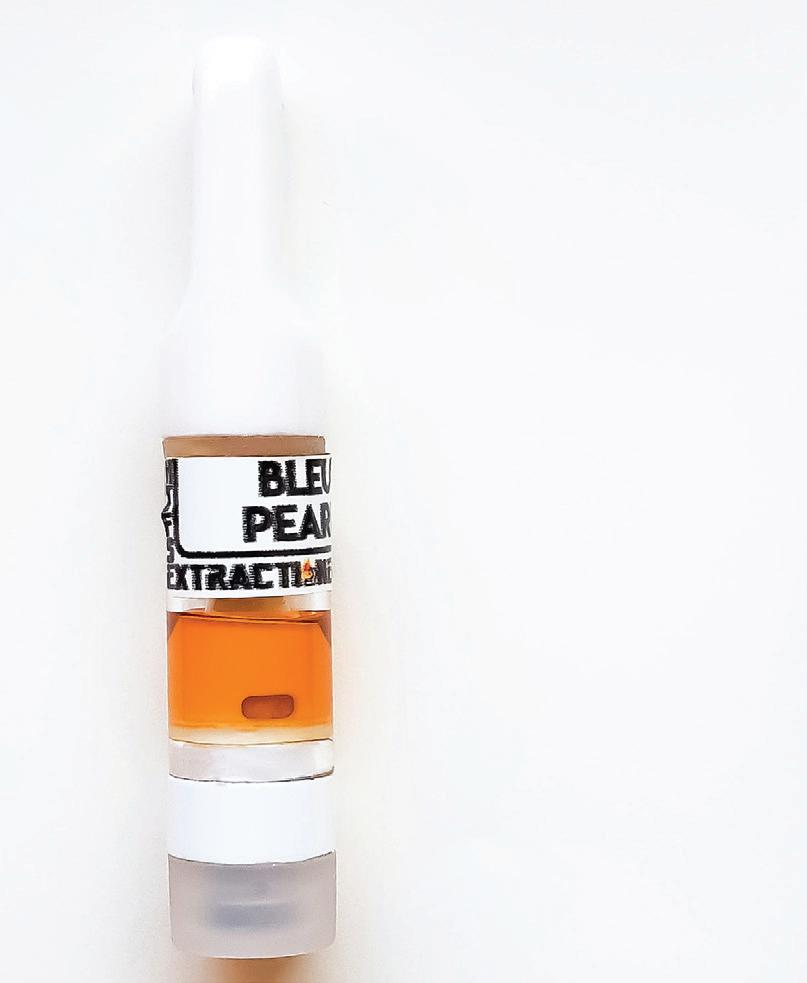
WHITE TIPC ARTRIDGE

0.5 GRAM
Our White Tip Cartridges are made of ceramic, from the mouth piece all the way to the coil itself.

The White Tip Cartridge is
Often only batches with less than 100gms total are put into ou r White Tip Cartridges .





$40ish out the door, depending on shop
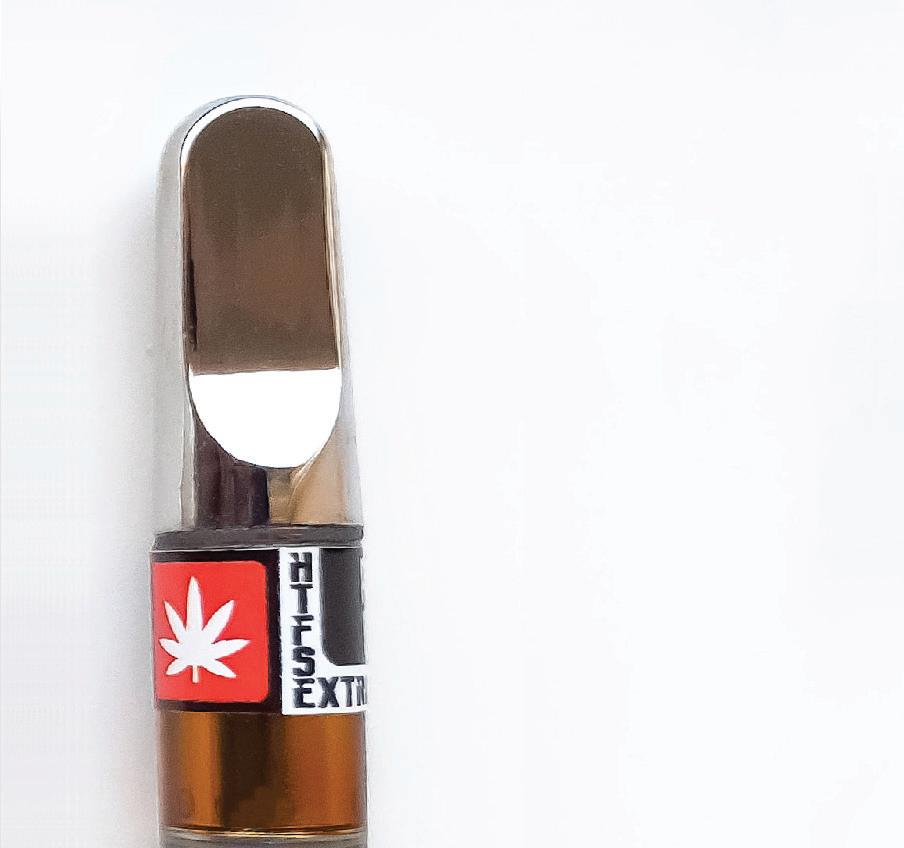
SILVER TIP CARTRIDGE
0.5 GRAM
Our Silver Tip Cartridges are made with a quartz coil.

We put our slightly larger batches and more standard strains into our Silver Cartridges. For us, a “large” batch is around 300gms. Still incredibly small and special.
$20ish out the door, depending on shop
The full entourage of beneficial biomolecules are in Cured Cannabis. Thousands of years' worth of cannabis pheno-hunting was done to get the best experience through cured cannabis.
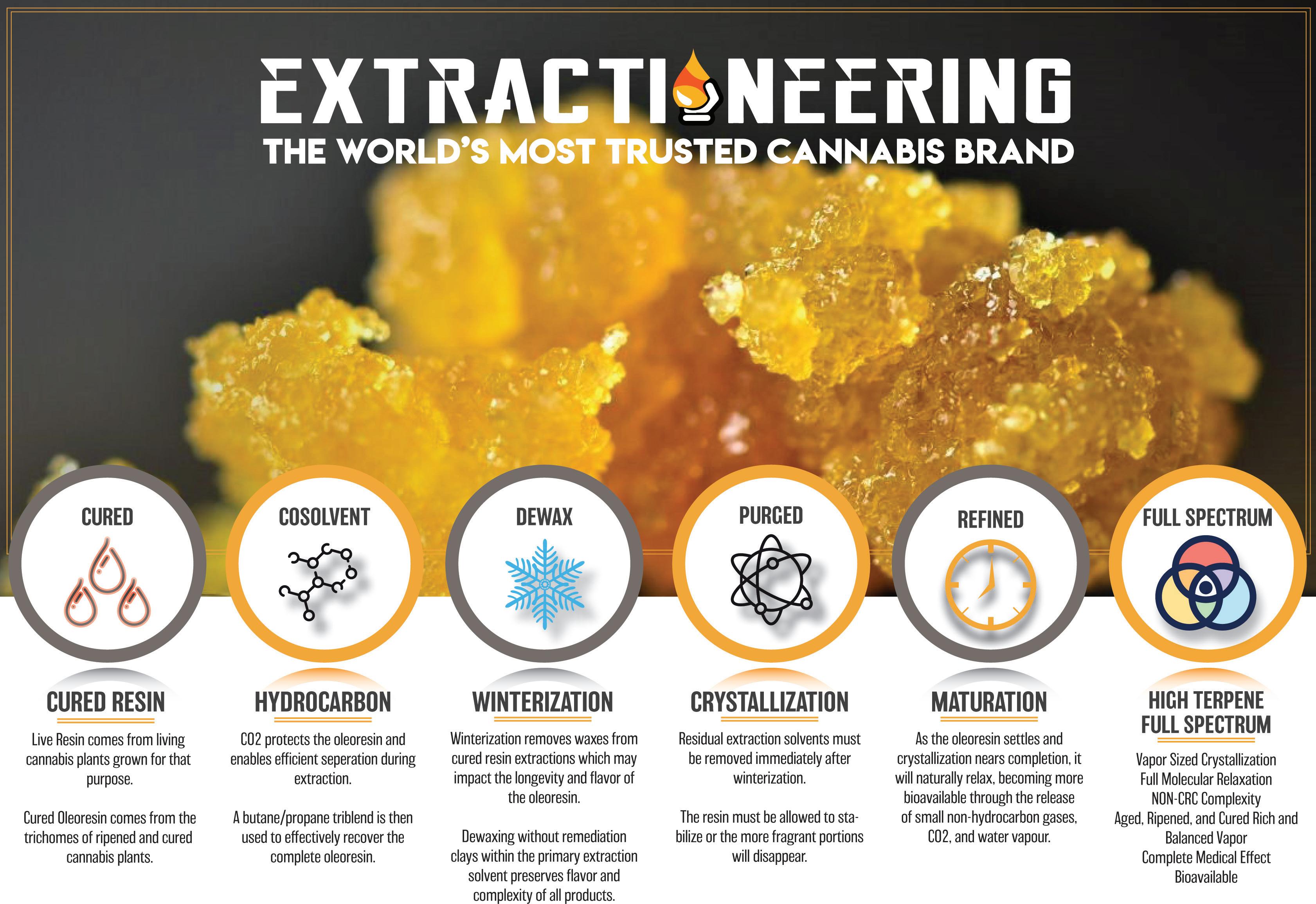
Thousands of years' worth of cannabis pheno-hunting was done to get the best experience through cured cannabis. Cannabis farmers grow and select specific strains, all dependent on their inspection of the cured flower and its structure and flavor. They determine when to improve or remove strains and cultivation practices to make the best cured resin on the most complete flower for each harvest batch. These techniques are learned over the years through experience with the plant. Cured resin has the highest medicinal potential because it has evolved and has been hand-picked by humans expressly for this purpose.
We create shelf-stable products that do not need to be refrigerated, via our CoSolvent technology that has been perfected over the past 10 years. Each extraction takes weeks or even months to create, in contrast to standard extraction methods which takes just hours. But the wait is well worth it. The longer the extraction sits, the better it gets - similar to the aging of whiskey and wine.
CoSolvent technology involves washing a light hydrocarbon solvent blend (butane/propane) over the material once, dewaxing, and then purging any remaining solvent from the extraction. We also charge the resin with CO2 before the extraction, in part so that the user is able to taste a wider variety of molecules which are more easily individualized, absorbed and distributed in the body.
The CO2 also protects the molecules by binding to the exposed sites that would otherwise tangle molecules or oxidize during extraction.The CoSolvent performs a function that neither solvent can do alone. CO2 is exposed to the material (we source it from dry ice), carbonating the resin. which is then extracted with a tri-blend of 50-N/25-I/25-P. If CO2 or single hydrocarbon is used alone for extraction, the results are not the same. All our solvents are the highest grade available, “ACS” grade, even those we use for cleaning our equipment.
CoSolvent Extraction also eliminates all forms of lipids, waxes, heavy oils, and fats through aversion using concentration, gravity, and time. On the other hand, all cannabis biomolecules - cannabinoids, terpenes, and other cannabis biomolecules such as flavones, esters, lignanamides, stilbenes, and flavonoids - are captured and preserved in physiologically native ratios.
This is specifically due to the fact that the CoSolvent method was designed based on long standing scientific principles of plant extractions and not based on a welders need or requirement to meet LPG fire codes, or on previous CO2 machines used for decaffeinating coffee, or rudimentary techniques like rosins and sifts that tend to spoil.
This single virgin extract is then presented to you unadulterated. We do not reintroduce terpenes because the terpenes were never separated. We also do not perform color remediation columns (CRC) on our products, which is so often used to mask low quality extracts as purer than they actually are. We would rather preserve the flavor of cannabis and we don’t need to remove color as we have developed natural winterization (cold filtration) techniques that work just fine, and don’t remove flavor.
We sometimes purify Cannabis into THC distillate and THCA crystalline using 100% Cured Resin and without clays or remediation. These products are used to create “Formulations” with existing virgin HTFSE workflow results. These formulations are specifically described as such on the label and are discrete product lines transparent to the consumer. We evaluate post-extraction outcomes and design specific experiences and flavor combinations with full intention and understanding of the final extracts flavor and effect.
In the end, we process as small or as large a batch of commercial cannabis trim that a small batch craft grower can produce. This resin carries the fingerprint of the grower's effort for that harvest. It becomes a chemotype when we extract it as a single strain, single source oleoresin. From season to season, grower to grower, this will change, but it is always celebrated as a small batch.
The average amount of cannabis trim a craft cannabis grower produces of a single strain in each harvest is anywhere from about 3 lbs to 12 lbs. Strain differences, larger farms, and popular strains can lead to lot sizes from 20 lbs to 40 lbs. The maximum amount of cured trim that we define as "small batch" is 40lbs. Our processing equipment can process fifty 1 pound batches or one 50 pound batch in the same amount of time. This material weight flexibility is designed to accommodate craft cannabis cultivators, as they grow a cornucopia of strains, each with unique trim outcomes. We try to avoid blending strains preprocessing as much as possible and if it does become necessary, evaluate each situtation carefully before proceeding. Discrete strain chemotypes are among our highest extraction priorities.
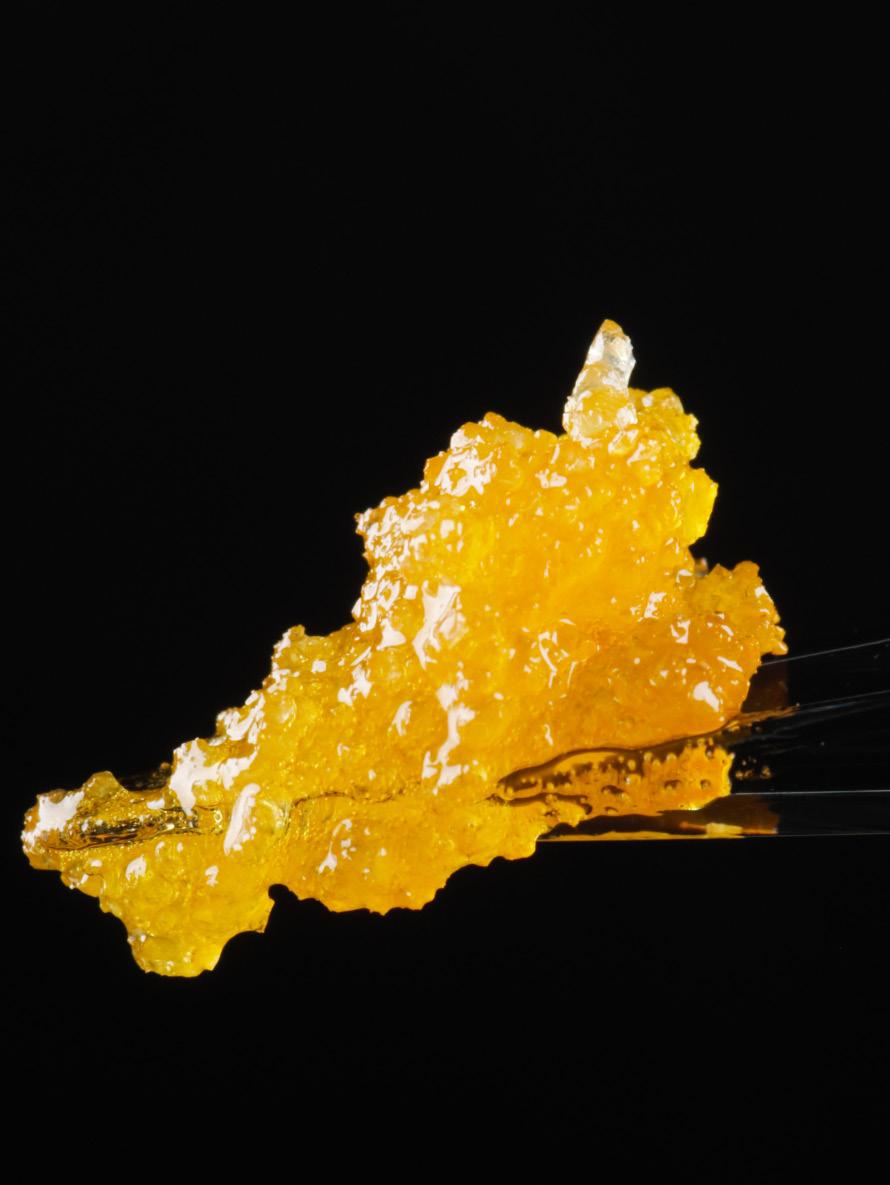
For an average material weight of a batch of 7.5 lbs, we average approximately 1 pound of extract. However, for the process to work correctly, that pound of extract is typically split into a whole plant crumble and a full spectrum liquid and sugar. We call the carbonated liquid "HTFSE", the crystalline THCA sugar "HCFSE" and the whole plant crumble our "RIND". Almost all of our products are small batches, which we define as 28 to 454 grams (of each extract, by texture type). All our extracts are a true tribute to the craft cannabis cultivator who painstakingly produced the oleoresin.
Craft Cultivated Cured Cannabis Flower and Cosolvent Carbonated Cured Oleoresins go hand in hand and preserve a long history of Cured Cannabis for medicinal benefit.
Disclaimer: Please DO NOT attempt to introduce CO2 of any kind into a (CLS) Closed Loop System designed for hydrocarbon extraction. CO2 is used as a type of molecular buffer and acts as a cosolvent, NOT a primary extraction solvent. Spontaneous expansion of CO2 used inside a Closed Loop along with butane has resulted in destruction of property and the death of an operator. Specialized equipment and methods are used. DO NOT ATTEMPT.
Q. Does it get you high?
A. Yes. HTFSE is not pure terpenes. It is actually an average of 65% THC, which means you do not even need to heat it before use. A lot of folks just put a drop on their tongue and go.
Q. How do I get it out of the vial?
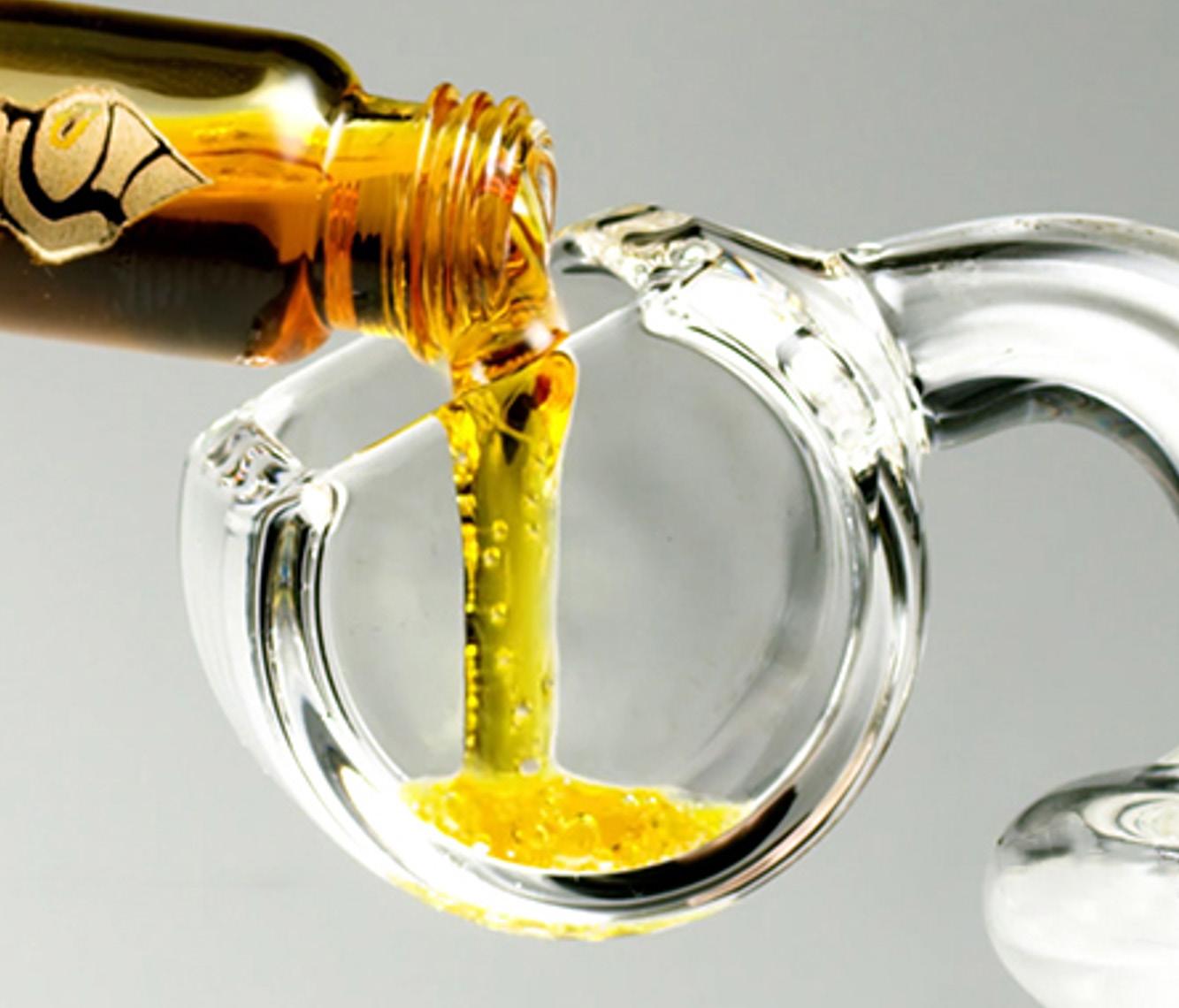
A. There are several "How-to" videos on the Extractioneering website that show you how to get the HTSFE out of the vial. The best way is to take the cap off, heat the tip of the vial so it's a little warmer than room temperature, and pour out 2 drops into your banger. You can also just use a dab tool.
High Terpene Full Spectrum Extractthis is Extractioneering’s liquid extract, the crowning achievement of our patent-pending extraction process. HTFSE usually tests at around 55% THCA and greater than 13% terpenes.
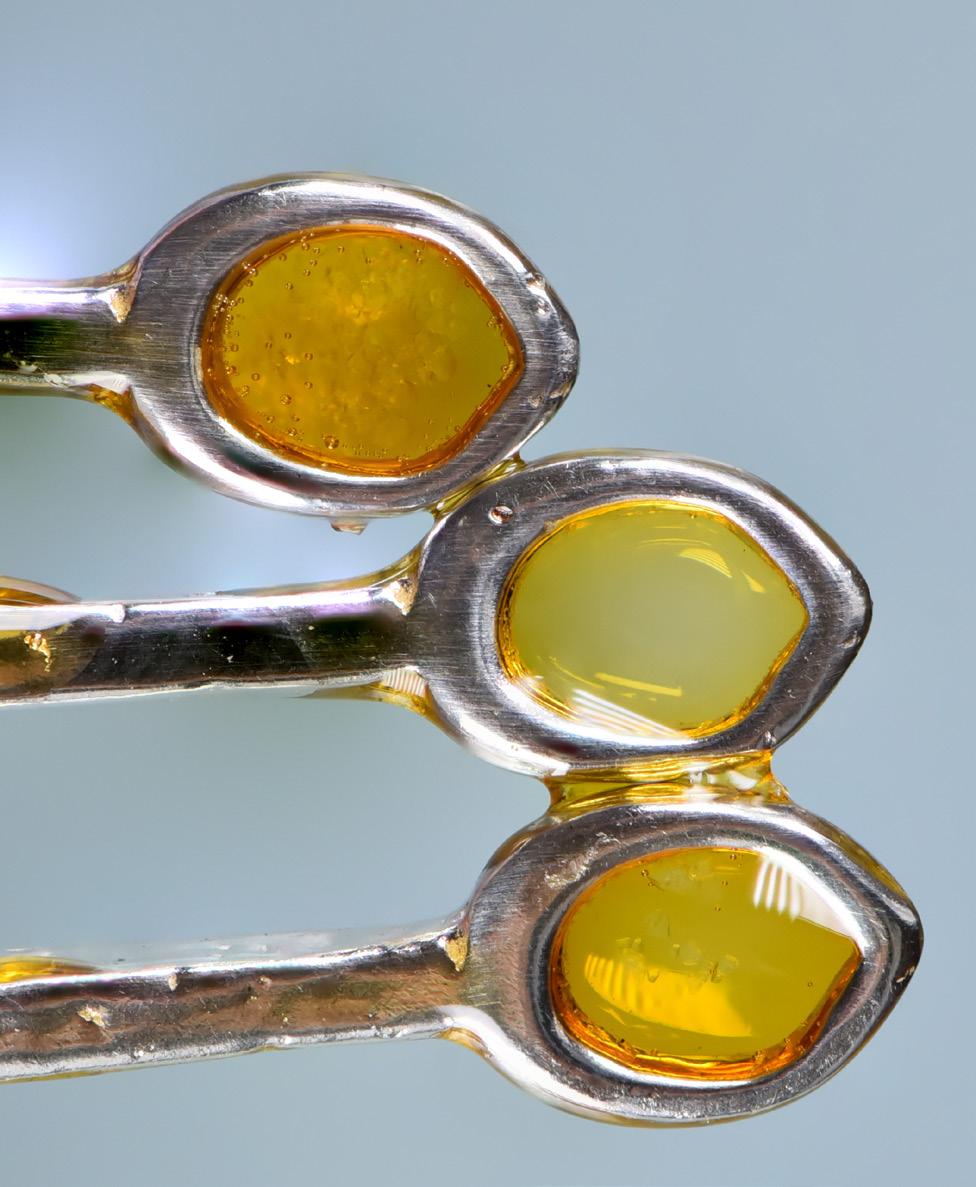
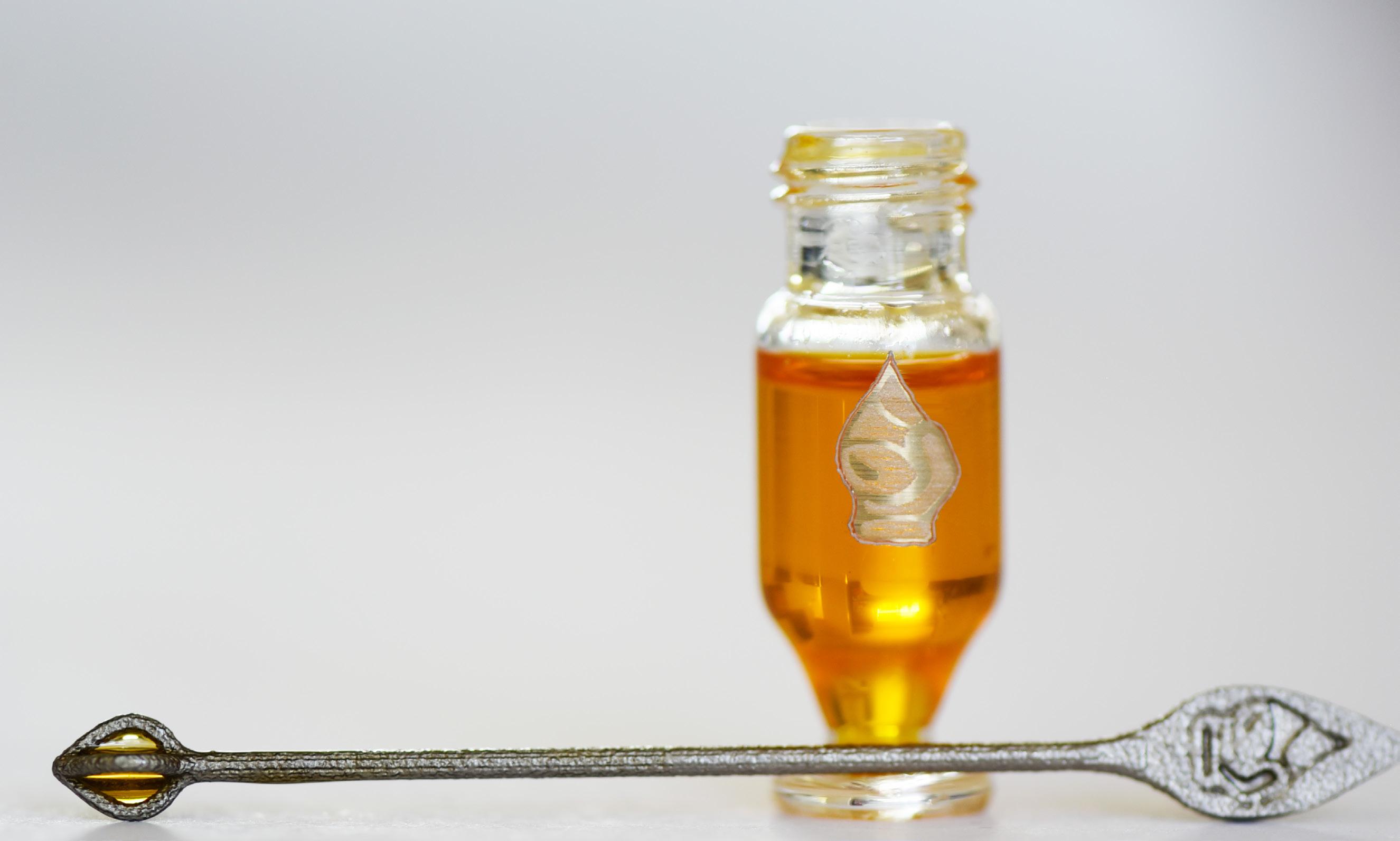
Prior to processing a batch of cannabis we analyze its biochemistry to predict the best winterization conditions that result in a native balance of oleoresin molecules perfect for vaporization.
We strive to create a complex cannabis extract: a carbonated liquid oleoresin from a cosolvent butane/propane/ CO2 extraction performed on cured cannabis.
Although we do an outstanding job in capturing the full spectrum of cannabis biomolecules with our solvent extractions, we admit that rosin and hash are full spectrum concentrates as well.
These products are desirable due to the absence of solvents but that also prevents the elimination of many undesirable plant biomolecules that sour the flavor and compromise the experience.
E xtractioneering is ultimately an extraction company, born from the skills and expertise of our Chief Scientific Officer, an individual with a Bachelor of Science in Biotechnology and a Ph.D. in Plant Molecular Biochemistry. Having spent his entire career extracting and purifying all sorts of biomolecules from a number of different plant species, Dr. Hayden has perfected the Extractioneering method of light hydrocarbon solvent based cannabis extractions.
Virgin Extract
This means we wash a light hydrocarbon solvent
MISSION
We stand by our extraction method, scientific analysis, and biochemical evaluation. These processes create a level of quality that will match or exceed all extract products to date. We will only retail the best of all extraction results. All the rest will be transitioned into high purity products.
blend (butane/propane) over the material one time, dewax, and purge any remaining solvent out of the extraction. All cannabis biomolecules (cannabinoids (i.e. THC/CBD), terpenes (i.e. Limonene/Myrcene) and other cannabis biomolecules such as flavones, stilbenes, and flavonoids - are captured and preserved in physiologically native ratios. This single virgin extract is then presented to you, the end user, completely unadulterated.
Nothing added, nothing reintroduced.
Reintroduction is defined as isolating THC and distilling (purifying) in combination with isolating terpenes in a separate process, and blending back together. We know this technique leaves some cannabis biomolecules behind and might chemically change others. Terpene isolations either increase monoterpenes (pinene and limonene blowouts) or co-isolate undesirables (that fishy smell). Some companies put dried fruit into primary extractions to increase flavor or use limonene as a solvent. We do NONE of this. We extract cannabis biomolecules without perturbation and with native, full spectrum, ‘whole plant’ profiles. Our Extractioneering

technique eliminates all forms of lipids, waxes, heavy oils, and fats. The presence of these molecules irreversibly blocks the full potential of cannabis extracts and binds the complexity together, preventing it from being fully absorbed into our bodies.
Extractioneering uses all forms of dried cannabis material and extracts the full complement of cannabis biomolecules. The better the material, the better the result. We only retail the best of all our extractions and pass along the ‘headies’ for our customers to enjoy.
Extractioneering extracts, just like fine wines, only get better with age. (I have a Tangie HTFSE from 2014 that is still in it’s liquid form . I smoked it when I got married, when I gave birth to my second child and when we got approval from the OLCC to extract hydrocarbons. I think the next time I break it out will be when this magazine is published!)
Extractioneering has been listening to budtenders and what they feel are your highest priority concerns about how to properly dab our HTFSE out of the vial (if you don’t have the handy dabbers that were custom designed for the vial).
Extractioneering recommends a temperature of between: 450° – 520° Fand you can hit it with a little extra heat if you need to finish up 2-3 drops.
If you have an AugustHaus enail or an Influx Labs Reflux, you can go really low on the temperature, 400° is great. But if you're heating it up with a torch, raise the temperature to 520° so you can be sure to finish up the dab as it cools off.
The Extractioneering lab manager suggests the best way to savor HTSFE is to "not over dab it. It’s just so good you want to savor it, because the liquid is just that precious."
Here are some more tips and tricks from the Extractioneering crew that should help you savour every last drop:
Tip #1
Gently heat the tip of the vial so it doesn’t create an air pocket when you pour it.

Tip #2
Immediately after the prefered amount of HTFS has been spilled from the vial, twist the vial as you put it back upright, to stop any excess HTFSE from escaping.
Tip #3
Use a tool to get the extract out, until you feel confident in your pouring skills. We have designed custom dab tools specifically for Extractioneering Vials available on the website.
Experience:
HTFSE is strong, much stronger than the live resin liquids you may be used to. Be prepared!
"I usually get a headache from carts. But these carts have me feeling great! They are by far the best carts I have ever had. They hit like I'm taking a dab and they are so smoooooth!"
- Johnathan MacGrath, Personal Chef
C02 is introduced to the Plant material prior to Extraction. This carbonates The trichomes and co2 is then Bound to all resin molecules protecting them through extract maturity.
After the extracted resin is ‘cured’ it continues to release co2 from these molecules and when agitated, it increases this release.
THE HTFSE VIALS ARE LIKE DOM PERIGNON... BECAUSE IT’S REALLY ONLY WORTHY OF SPECIAL OCCASIONS.
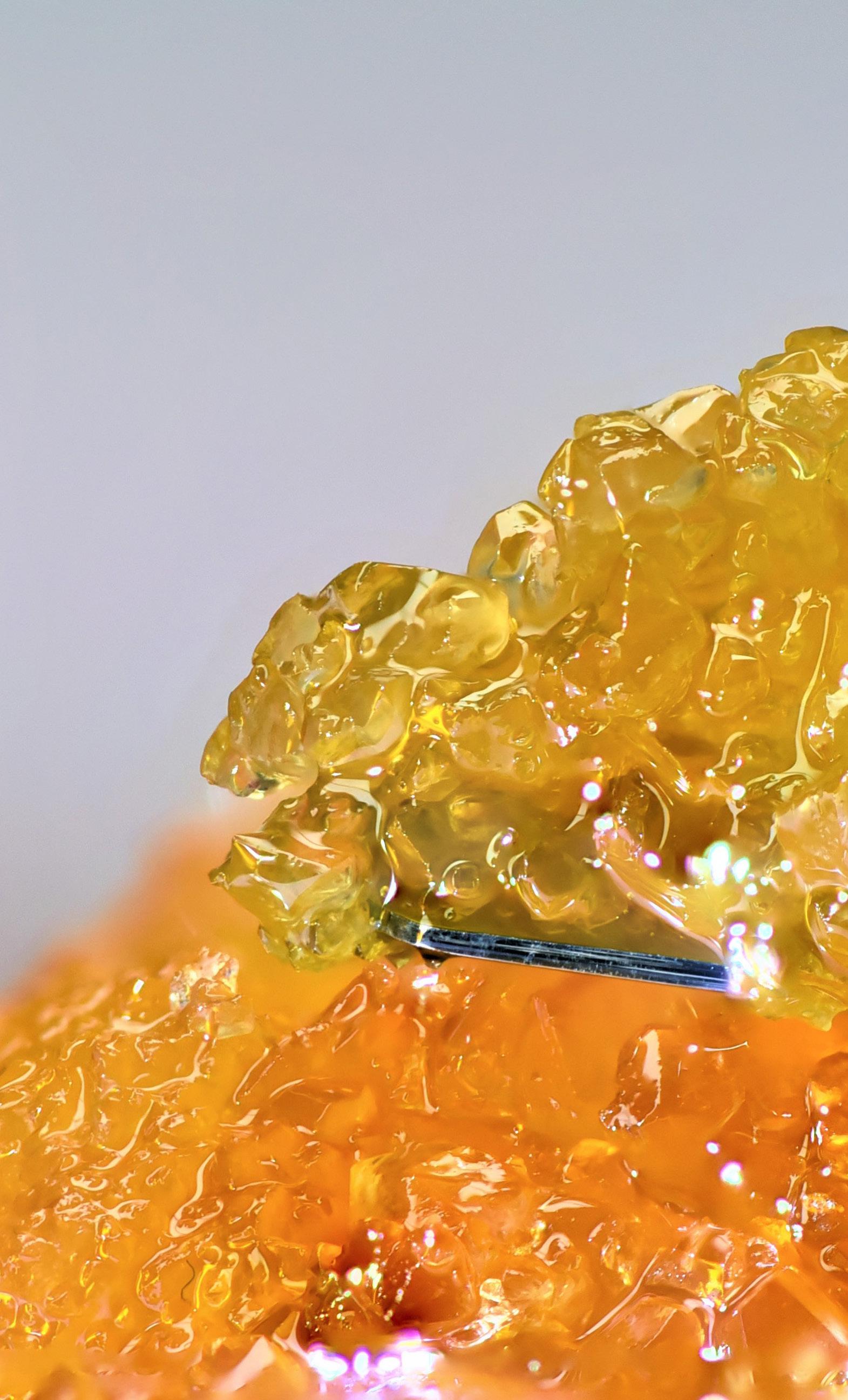
For HTFSE to stabilize, supersaturated THCA must crystallize out of the HTFSE solution. This happens at different rates, speeds, and consistencies depending on each unique cannabis extraction. Extractioneering carefully separates the HCFSE from the HTFSE, but not completely, so a percentage of HTFSE always remains in the sugar. As such, it is a designated full spectrum product, with high cannabinoid for full potency effect.
Most natural gemstones, such as rubies, sapphires and diamonds, form as crystals from minerals within the earth. These crystals are the result of very long geological processes that include heat (from volcanic or other geologic activity), pressure (such as from the earth’s tectonic formations) and of course, time. The size of natural diamonds is dependent on those long geological processes, and often formed over billions of years. Large, natural crystal formations are very rare events due to the variability in these processes.
In the world of cannabis, TCHA “diamonds” are also crystal formations, and are the purest form of cannabis concentrate. THCA stands for TetraHydroCannabinolic Acid. Both raw and live cannabis have the highest concentrations of this acid.
As a plant dries, the THCA within the plant converts to THC, or tetrahydrocannabinol, the main compound in cannabis that produces its psychoactive effects. Similar to the formation of natural gemstone crystals, the addition of heat accelerates the conversion process.
A THCA “diamond” is simply a larger crystal,
similar to the difference in size between table salt and sea salt or sugar. Table salt usually consists of small, fine and uniformly colored crystals, the result of bleaching and the salt manufacturing process. Larger crystals found in sea salt are generally formed by natural processes such as evaporation of sea water and with little industrial processing. This gives sea salt products a more authentic and natural look and feel. However, both products are still fundamentally and chemically the same –namely, Sodium Chloride (NaCl).
Large THCA crystals or diamonds are the result of live resin extractions performed on high quality fresh material. This does not necessarily mean that the extraction itself is of a higher quality. For the final product to be of a high quality, both high quality starting material and proper extraction techniques are necessary to produce large, clear THCA diamonds. To accomplish this, impurities
must also be removed, producing an even higher quality product.
When it comes to size, similar to the world of gemstones, size matters for THCA crystals. In fact, THCA crystals are often compared to the sizes of gems and precious stones. However, size does not always equal quality.
In cannabis, larger crystals are formed by “overdriving” the terpene portion of the oleoresin. When oleoresin is concentrated, a higher percentage of molecules are usually forced out of the natural material, diluting the smaller percentages of more complex molecules. An extraction containing extremely high amounts of one type of monoterpene will have the ability to form a larger THCA crystal with fewer inclusions. However, the liquid resin used to create these types of crystals is not stable or desirable to vaporize.
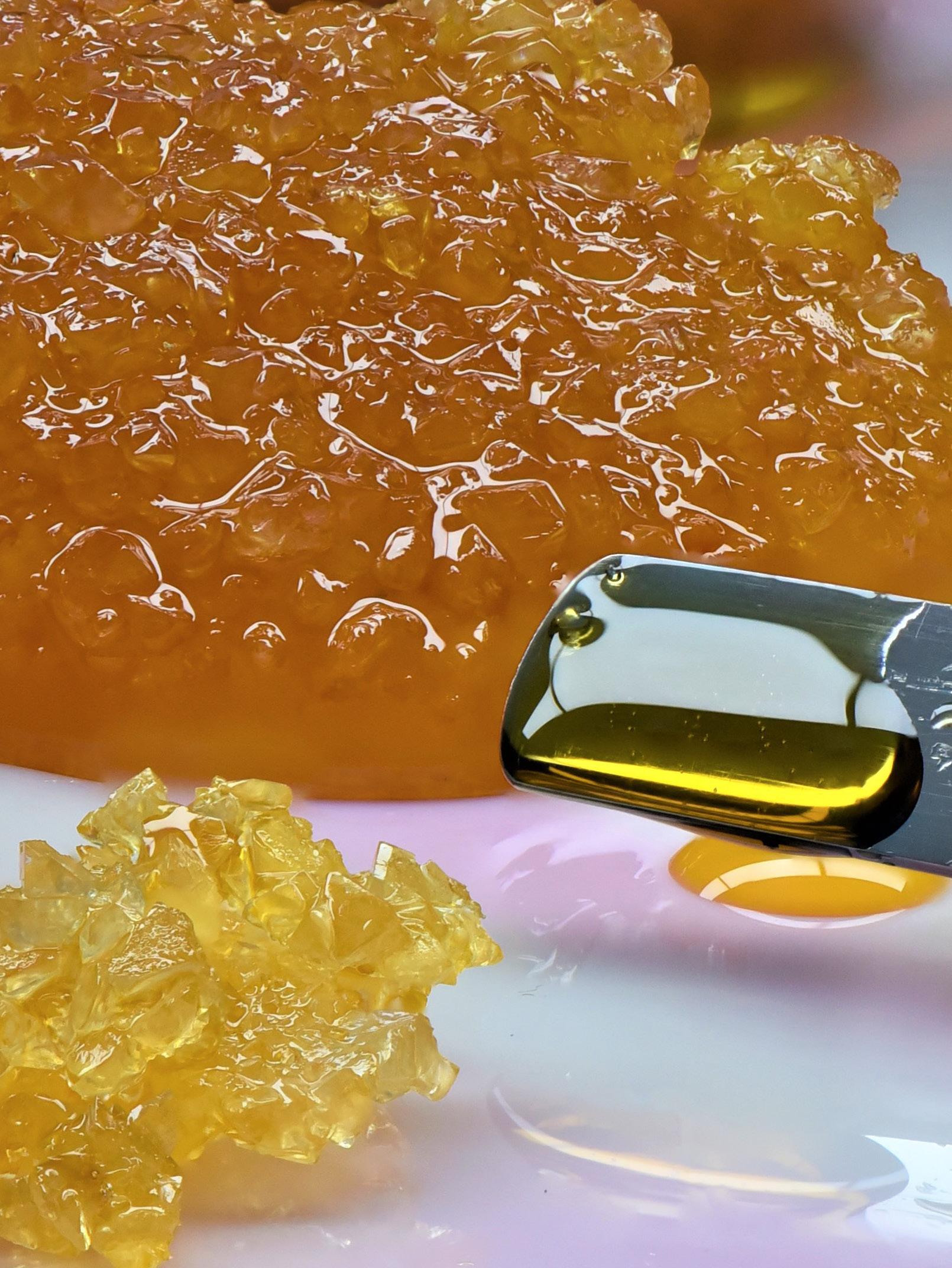
HCFSE is an acronym for High Cannabinoid Full Spectrum Extract. This extract is in the sugared form where THCA percentages can reach the high nineties. There is always a HTFSE component to sugars typically greater than 20%. In creating HCFSE, we maintain Complexity over Purity, to ensure a well rounded experience.
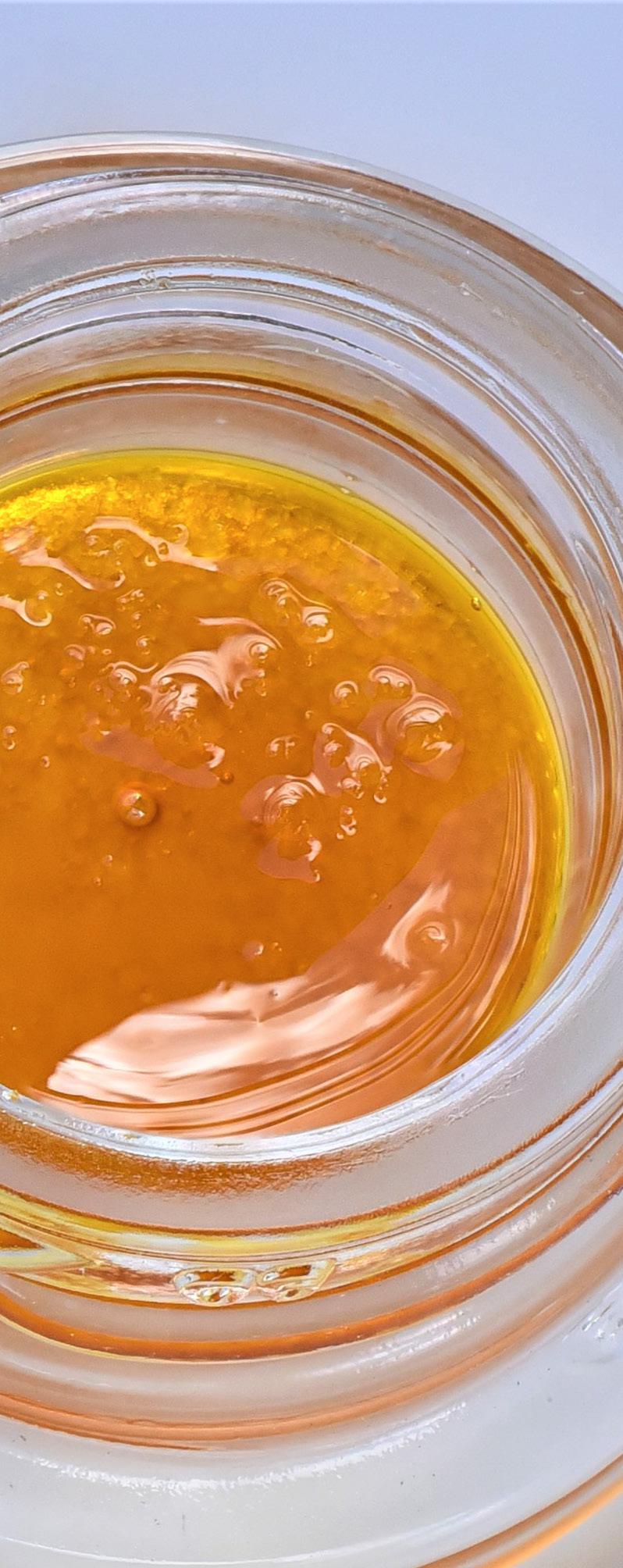
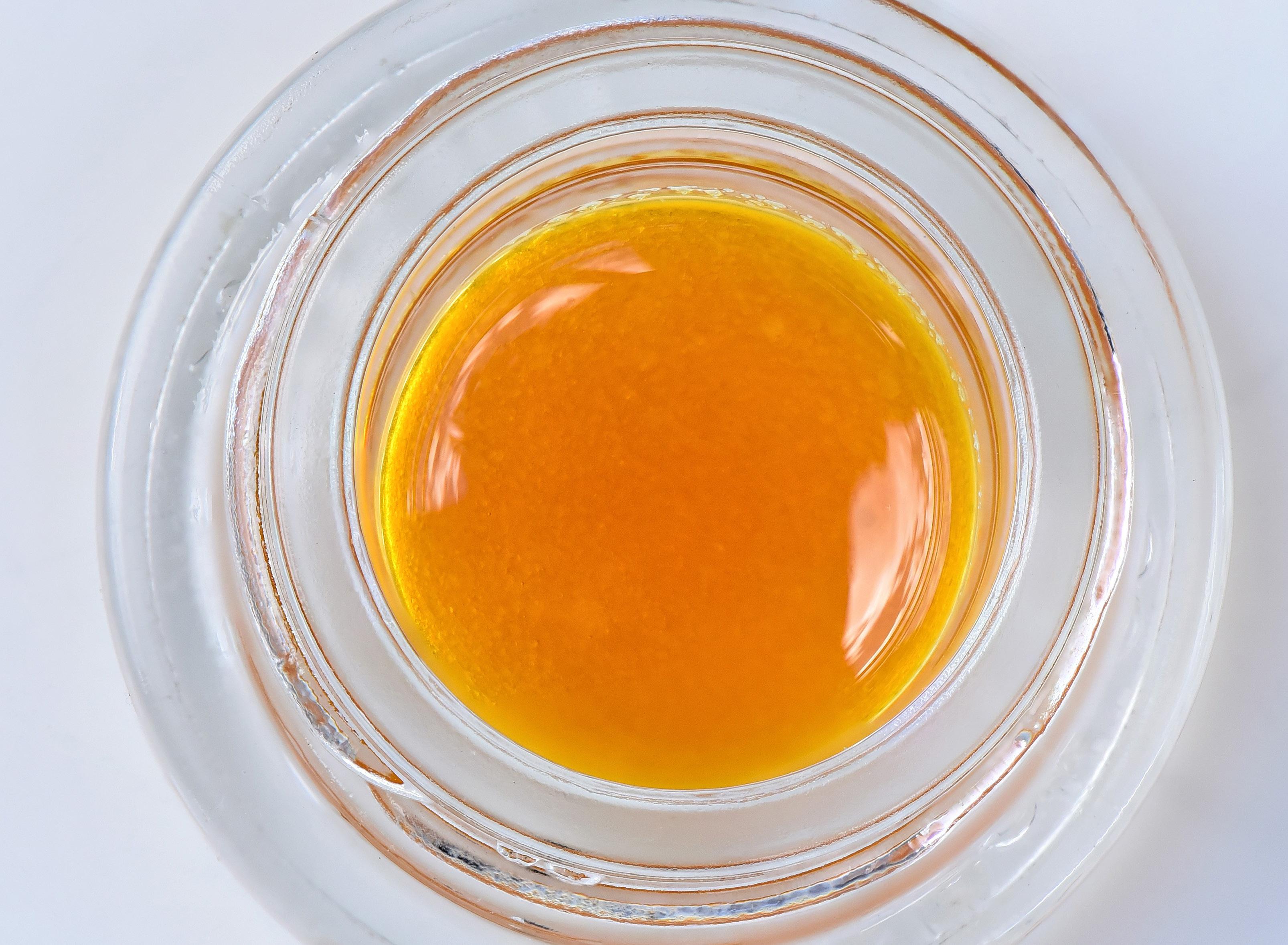
A Crystalline THCa Sugar coated in HTFSE. The perfect dabable Blend Of True Spectrum.
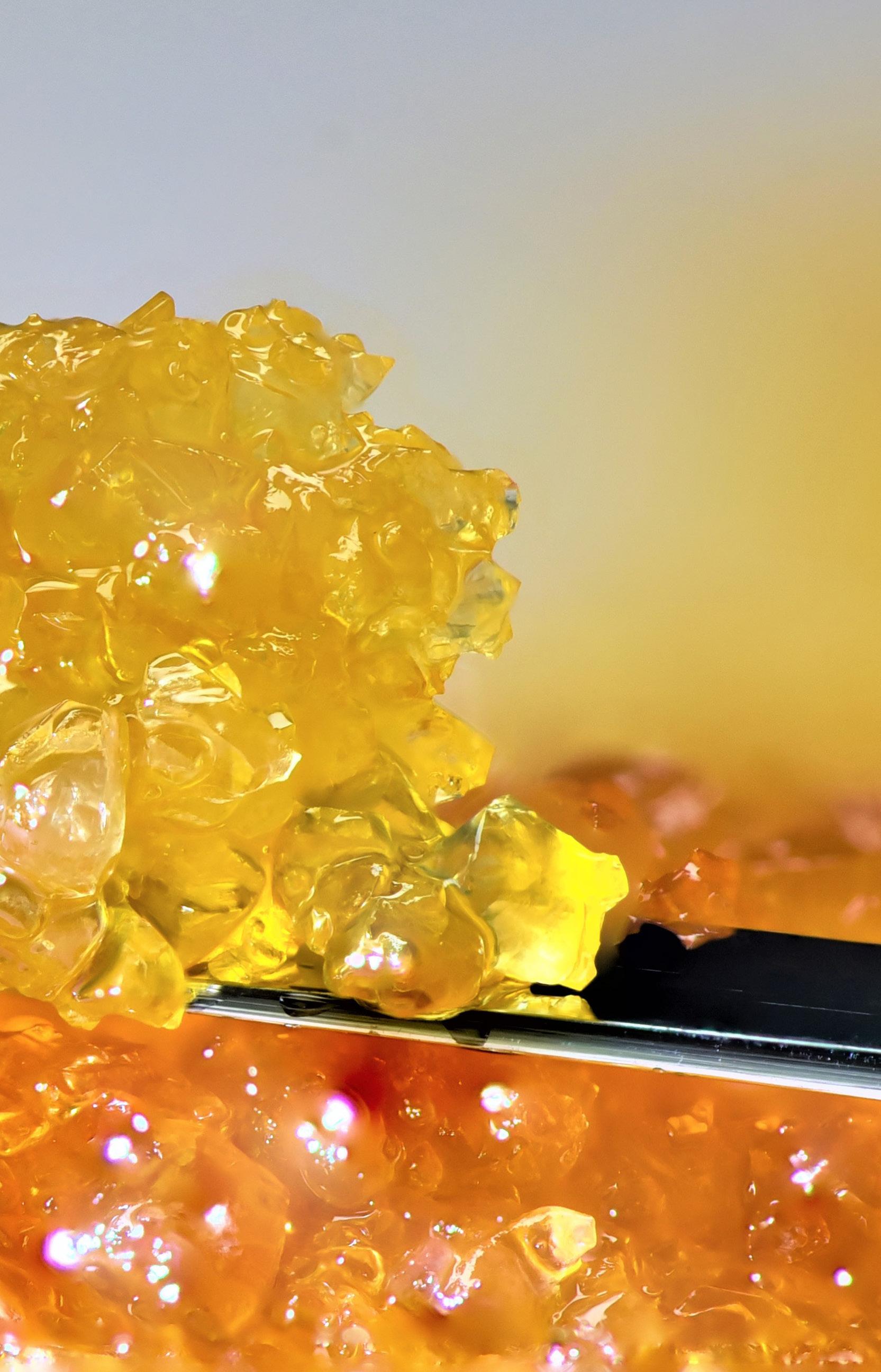
What are the Purity, benefits, and effects of CoSolvent vs Solventless?
HTFSE is closer to the concept of solventless than it is closer to any other hydrocarbonbased extract.
When solventless peeps discuss the craft and the resin, they use terms, adjectives and appreciative notes that we have used to describe resin for years. We have identical missions and we feel we speak the same language. We think the concepts in cannabis have shifted from "solvent vs. solventless" to "virgin vs. purity".
Accurate product composition is critical to repeat performance and reliability. Most important is the product transparency that no other company can deliver today. We procure craft cannabis and test the flower to reveal the completeness of the resulting extraction.
To activate the cannabinoids in cannabis and drive the potency of the product, cannabis must be decarboxylated. Decarboxylation is the process of applying heat to cannabis, usually by vaporizing or cooking. The process removes carbon dioxide and drives potency.
In itself, a large THCA crystal is a very poor product to dab, since it doesn’t provide the psychoactive effects that people enjoy from THC. This is because, when dabbed on a medium-heat device, THCA is only about 50% efficient in decarboxylating during vaporization.
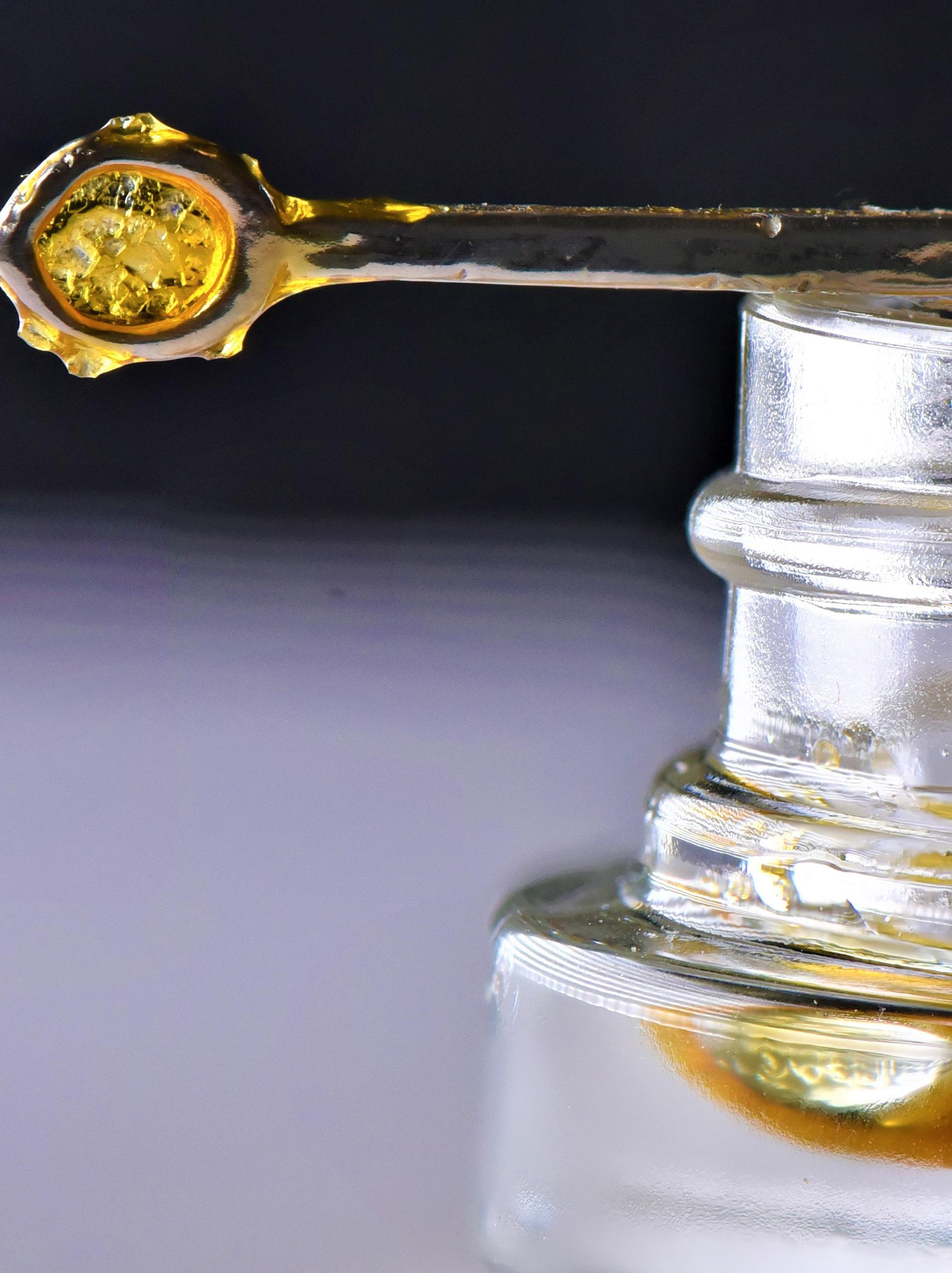
This means that when a user is dabbing crystalline THCA “sugar” products, a 50/50 ratio of THC to THCA is being ingested. When a large crystal is applied to the nail, this ratio drops dramatically. It takes some time for the crystalline to melt but there is still not enough time for efficient decarboxylation. The liquids that cover the diamonds are not complex and are full of wax, so they also don’t provide an effective flavorful experience.
Lastly, large THCA inclusion-free crystals are best grown in a secondary solvent like pentane, heptane, hexane, or acetone. These types of crystals are often grown free of typical virgin extract workflows and added to live resin monoterpene rich liquids in a later process.
The answer is to combine both and dilute the poor performance of each.
This is why Extractioneering products contain smaller THCA crystals. We find these crystalline structures form when a product is cured and matured correctly.
Multiple and quick nucleation (the crystal formation process) of THCA is critical to a complete product. This rapid, successive nucleation is essential until the product finds equilibrium in the final extraction. Smaller crystals hold together well when in contact with HTFSE, providing a proper balance of liquid HTFSE and small crystalline THCA. When vaporizing, this balance helps to completely vaporize the product and decarboxylate the THCA crystals effectively.

Through our scientific manufacturing approach, we are able to create products that have reproducible effects on those purchasing them. Product consistency and expectation is the only way that confidence and relevance can be derived from user experiences.
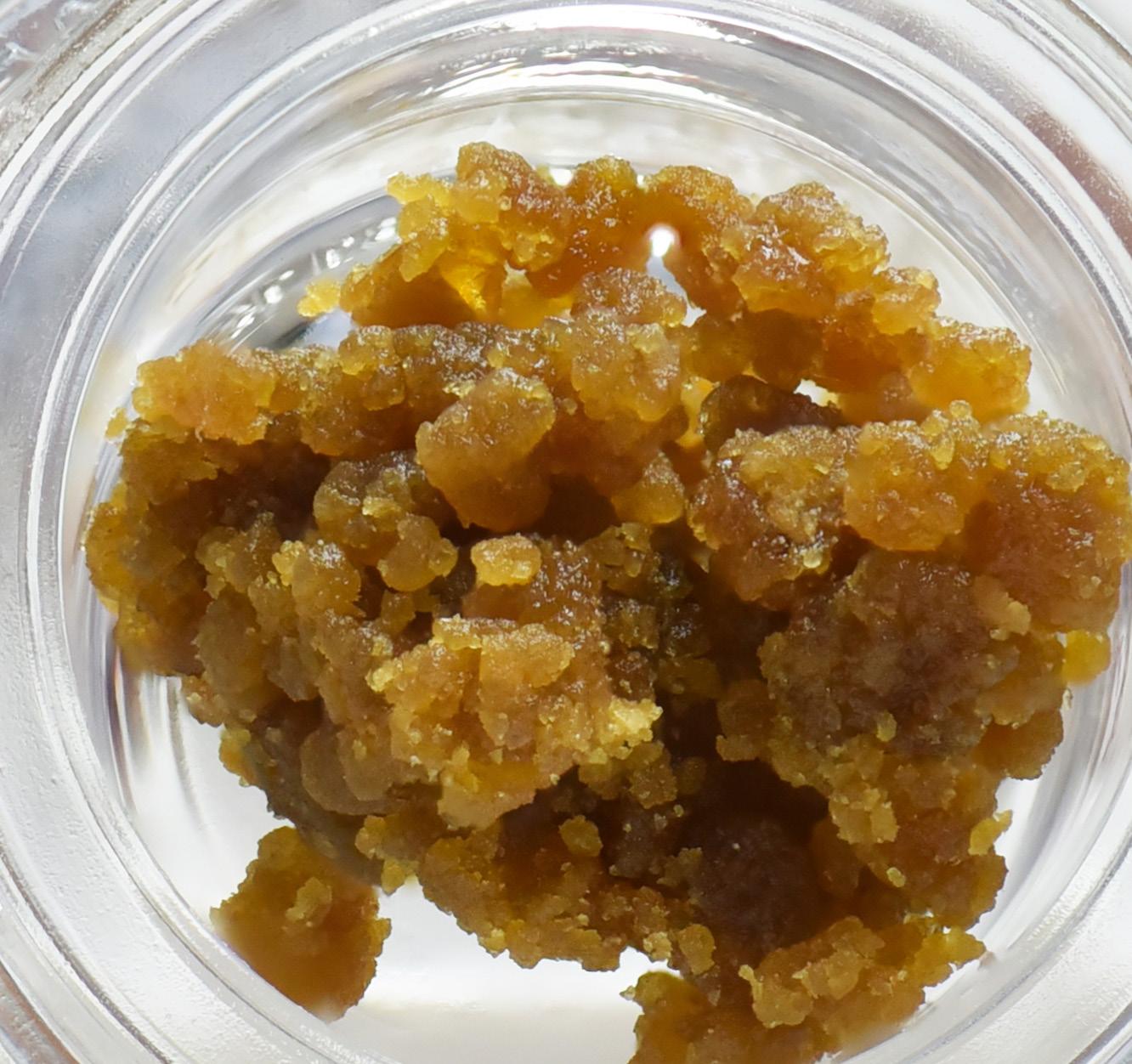
Our Whole Plant line of products is a more organic product similar to rosin or hash, but in a batter/crumble consistency for indoor and nugrun type material. We call these darker crumbles RIND.
RIND and RIND+ are both fully purged, solvent extracts without the ultra dewaxing performed with our executive products. However, even in our RIND products, only about 0.5% waxes on average remains. This allows the extract to retain some different types of therapeutic benefits.
Our RIND products are some of our greatest values, made from the most flavorful and potent material available including indoor trim, b-buds and nugs.
Indoor cultivators operate in controlled climates that allow them to grow
cannabis deep into maturity when the resins turn amber and the potency skyrockets. These deeper colors result in more orange and redder executive extracts and darker whole plant outcomes.
Whole Plant cosolvent crystallized crumble hash that is also carbonated for full flavor.
RIND has a powerful amount of THCA, which gives it a great kick for afterwork dabbing. It can also boast of being a part of the Full Spectrum family of extracts, which means you get access to the entourage effect usually devoid in most cannabis products, especially ones that have high THCA, above 90% of non-active THC.
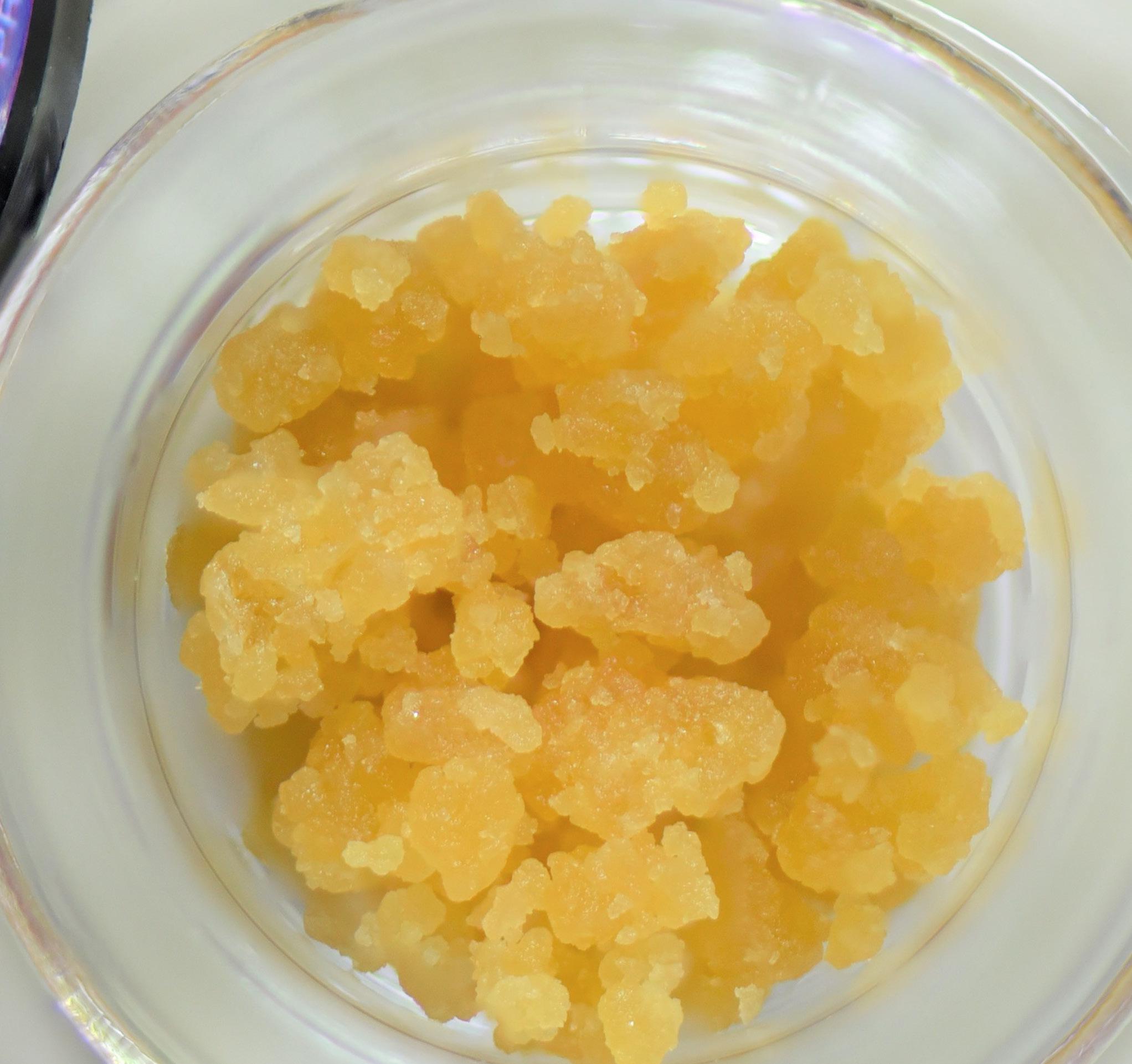
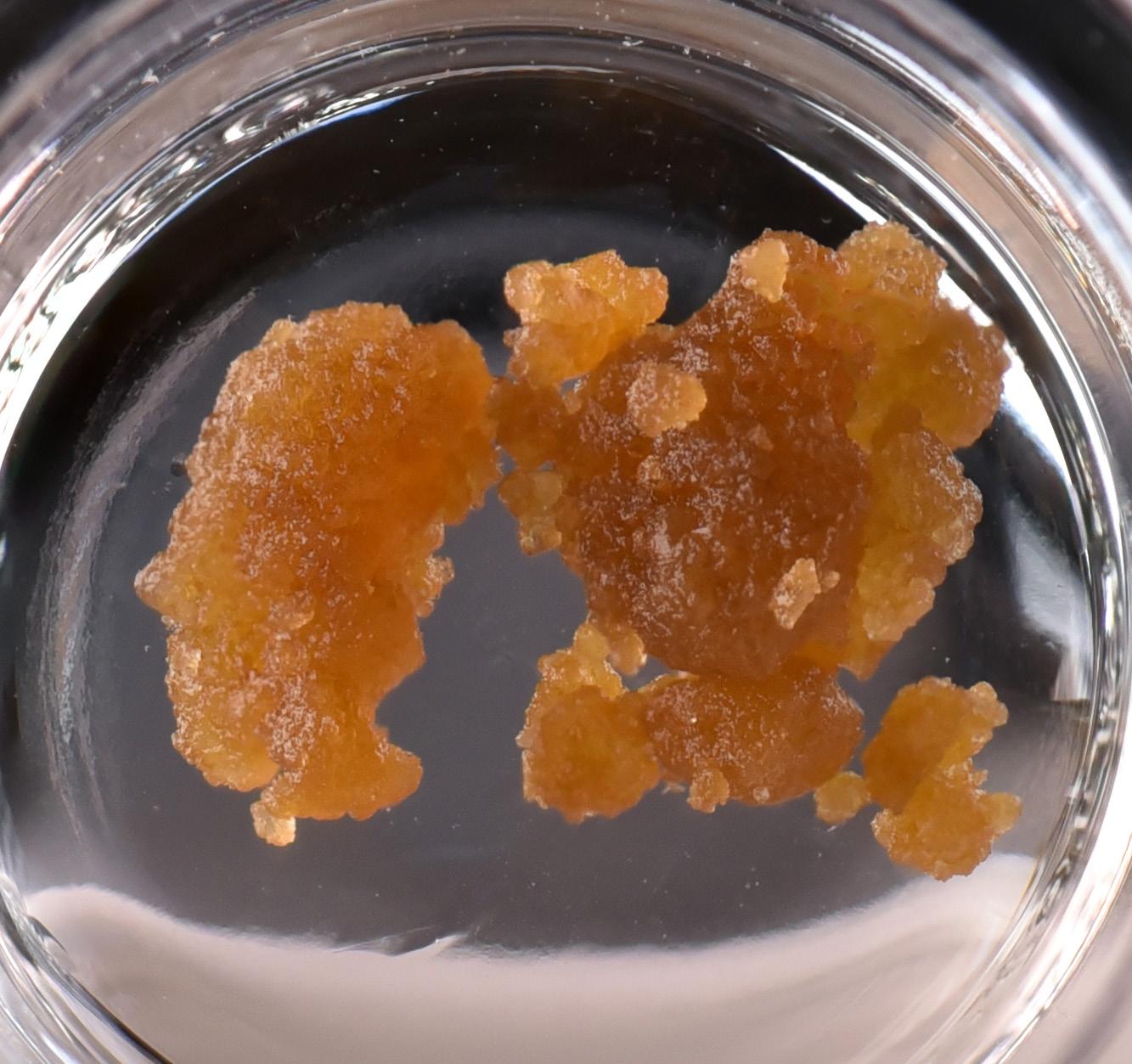
RIND products usually tend to have a darker brown coloration, with crumbles that resemble an "old-world", hash-like and spreadable consistency. Those who have a choice between distillate and RIND choose RIND every time.
RIND is created using our CoSolvent TM process, the same process we use to create HTFSE and HCFSE.
RIND is a carbonated Whole Plant Virgin Extract, which provides a similar experience to cured rosin, but without all the organic debris. RIND generally has around 90%+ THC and approximately 1% to 3% terpenes.
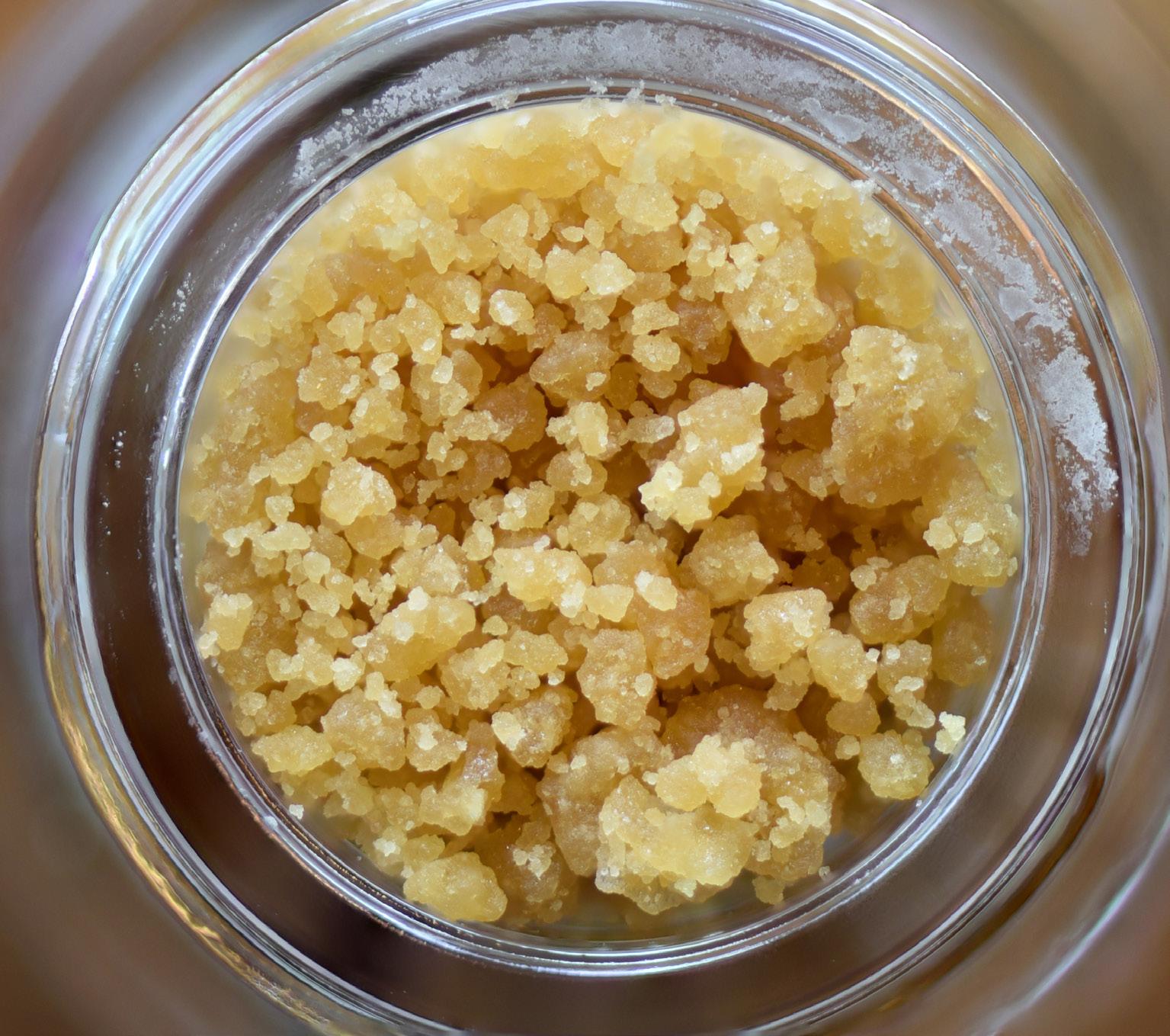
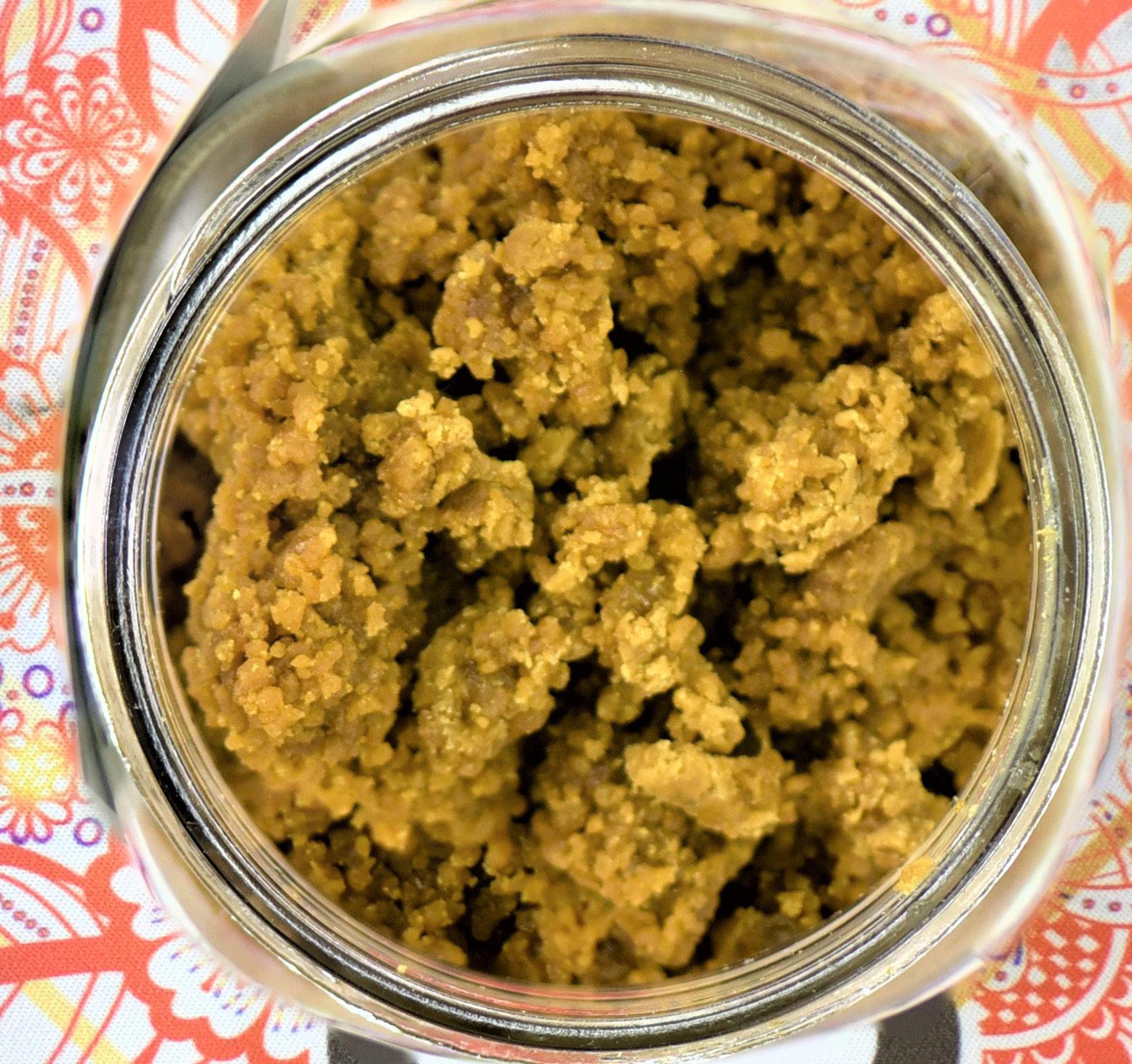
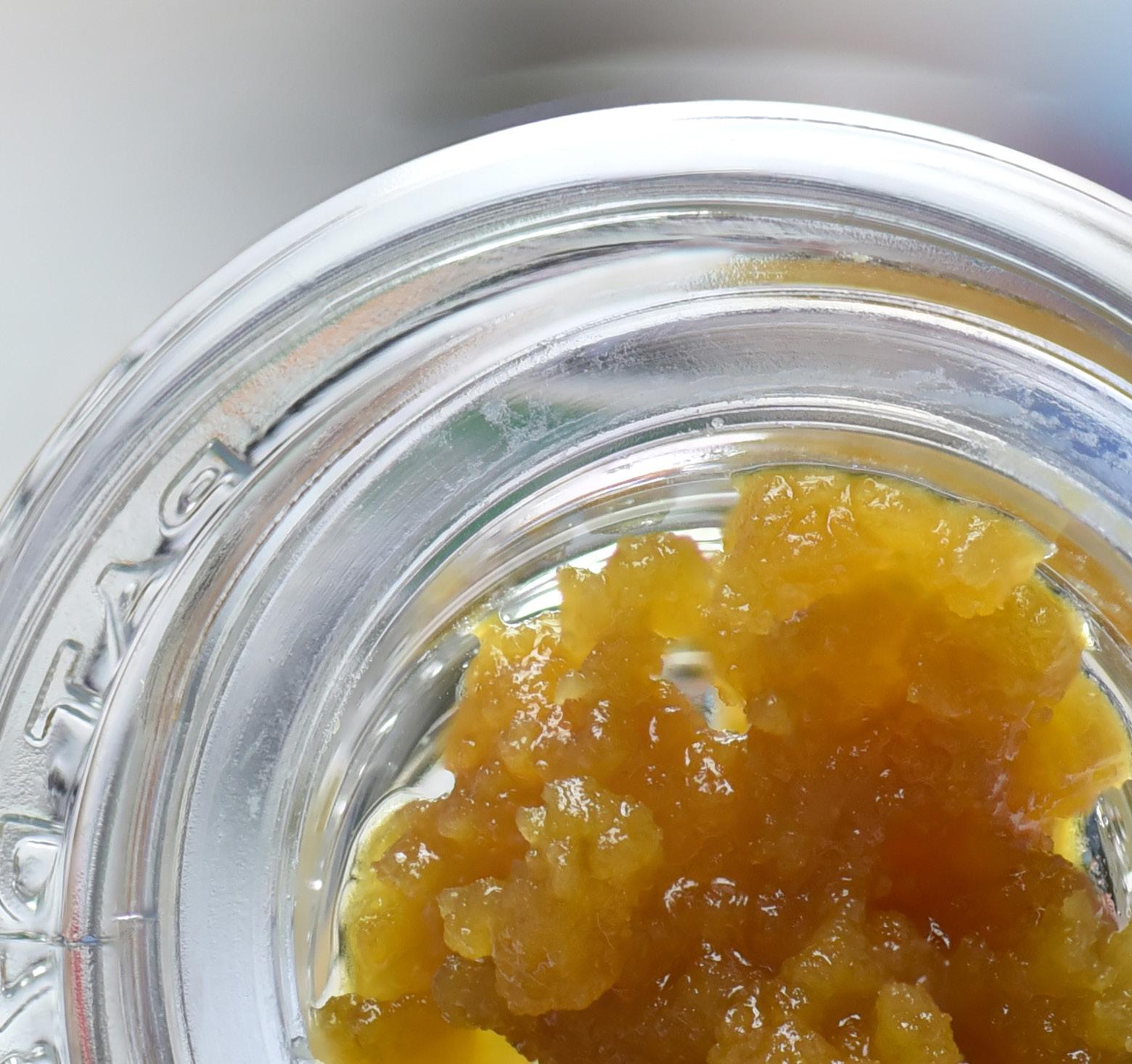
We think the dark golds, caramel, sepia and umber tones in RIND are gorgeous. We don't apply CRC (color remediation column) to our extracts because we prefer to preserve more of the natural compounds, thereby keeping all the benefits of cannabis that the CRC process strips away.
The best part of RIND is that it packs an incredible amount of taste into every experience.
To CRC or not to CRC
Many people have asked our opinion on CRC - here it is:
Live Resin was supposed to replicate the colour, textures and impurity-free resin of Extractioneering CoSolvent Cured Resin techniques that many processors struggle with, even today. CRC (color remediation column) is a technique applied to extracts to change the color, flavor profile and even texture of the end product. In some ways, CRC takes the live resin process to the extreme. In essence, the end product becomes similar to an isolate with terpenes added back in, but at a much higher price point. However, with the right ratios, it can be a pleasurable experience, and works for many people.
As part of the cannabis community, our goal is to offer consumers a wide range options. However, we have never used CRC on any of our products and we never will.
"rind and rind plus ARE SOME of the strongest extracts i have ever had the pleasure of dabbing"
- adam h.
We asked Allie, Luis and Allen, a few of the the experts in the Extractioneering lab, how to create the best experience with Extractioneering RIND.
Tip:
If you're using a torch, to use the Cold Start Method, Allie and Allen likes it at a temperature of 570° – 580° F. This might be a little warmer than you think, but it’s still super tasty. Above 600° might char it. Allie, who after a long day just wants the damn dab and doesn’t want to wait, tends to go a little hotter than Luis, who likes it at 550°, but it really just depends on your equipment. Luis (on the other hand) will miss his turn entirely if the temperature isn’t perfect.
Dab Size:
Allen goes for the more frequent dabber size of 0.1 – 0.2gms. Less frequent users might use 0.05gm or a pin head size, but it totally depends on your personal preference. There's no shame in doing a small dab - remember, it's all about making sure your experience is good for you.
Method: Allie and Razia like to use the Smash and Smear. Luis prefers to pick out the big boulders, but he is not afraid of the RIND.
Experience:
Heavy body with an intoxicating effect. Very potent, very quick acting. Heavy, strong, like a weighted blanket putting you to sleep with a smile on your face and good taste in your mouth.
Our 5150ies products are a perfect blend of HTFSE and THCA diamonds, ripened and aged to perfection.
These exclusive blends are released periodically in limited amounts, so be sure to follow us on Instagram to see which dispensaries will have them.
Made with 100% cured material, this mixture of diamonds and sauce is expertly developed to deliver a potent and exciting experience.
The THCA crystalline component is the solid version of our distillate, which is why we call our Jar version "5150ies On the Rocks".
We named the lineup "5150ies" as a tribute to our fellow mental health warriors and advocates, who continuously and bravely battle the stigma that is still often associated with mental illness.
With each purchase of our 5150ies products, we donate $2.00 directly to an Oregonbased mental health non-profit.

Through our scientific manufacturing approach, we are able to create products that have reproducible effects on those purchasing them. Product consistency and our high quality standards pave the way for the confidence, satisfaction and positive experiences our users derive from our products.
We named the lineup "5150ies" as a tribute to our fellow mental health warriors and advocates, who continuously and bravely battle the stigma that is still often associated with mental illness.
With each purchase of our 5150ies products, we donate $2.00 directly to an Oregon-based mental health non-profit.
“I got into a bad car accident about 15 years ago. All the drugs the doctors gave me didn’t help with my issues. The only thing that really worked was cannabis. The last few years though, my tolerance has been going up and even extracts just havn’t been working, unless I smoke so much that my throat ends up going raw. And then, the high only lasts for a an hour before I have to smoke more..
My buddy told me to try Extractioneering a few weeks ago and it works! It’s so nice to find a product that gets me lifted without having to wreck my throat. This works great off the first dab and lasts all day."
 - Cameron M. Thayes
After we create an extraction, which can take weeks or months to fully finish, we mix and match the smallest batches together to develop PULP. Choosing which strains to mix together takes the utmost finesse and understanding of how cannabinoids, terpenes, and flavors work together.
It's really our chance to shine, because it’s a blend of our virgin outcomes, selected and mixed to create the most beautiful combinations of strains. Essentially, PULP is a post-extraction blend that allows us to develop a more curated experience.
We begin by searching for the best material and the best cultivators to make our HCFSE. The extraction process is an art as well as a science, since every batch of natural cannabis material is different. Because of this variance, the quality of each batch can’t be determined until after it’s been extracted. If a small batch extraction meets our extremely high quality standards, we then consider whether there is a sufficient quantity of the batch to have it tested independently. If so, that batch then joins our HCFSE line of products. If there isn’t enough of a particular strain to create an HCFSE product, we add that batch to our PULP line of products, curated for the perfect experience.
Batches of extract that join our PULP line are most often blends of a few or many extracts that provide a wonderful experience. Additionally, we provide the terpene, cannabinoid, and flavor profile on our product packaging and online, so you can choose your adventure based on science. No more wondering if a particular extract has enough Humulene to help combat your anxiety, or if there is enough Beta-caryophyllene to help you with pain management. You won’t have to guess how much THC-a is in the product vs. THC, or whether there is enough THC-a vs THC to decarboxylate into CBN for your insomnia. We provide detailed information on every product package, so you don’t have to guess. In fact, the top six terpene results are readily available on each product.
While we don’t control retail pricing of our products, we do ask consumers to consider the costs and complexities of running a dispensary. We work with many wonderful dispensaries that offer our lines of PULP, HCSFE and other products and applaud them for continuing to serve cannabis to the people even in these highly uncertain times.
Extractioneering’ s line of PULP has been around for three years, but never here in Oregon. We are able to create PULP because we work with such incredibly small batches of material.
SELECTED TO CREATE THE MOST BEAUTIFUL COMBINATIONS OF STRAINS.
A POST-EXTRACTION BLEND THAT ALLOWS US TO DEVELOP A MORE CURATED EXPERIENCE.
INdica Traits SATIVA Traits


PINE FUEL FUNK SKUNK
HAZE Fruit

Sweets
Cakes

Frosting
Cookies & Cream
Honey, Mollasses, Caramel, Maple Syrup
Hard Candy

Herbs

Garlic, Mushroom, Onion
Black Pepper
Basil
Oregano
SAGE
Lavender
CLOVE









MINT








EUCALYPTUS
Rosemary Hops

Licorice
Cinnamon
Paprika
Citrus











Fruit

REd Fruit



Blue Fruit

Cayenne
Umami



SavoRY





EartH
Fermented Rum



Tree Fruit
Grapes



Mango



Tropical Fruit




Earthy, OAk





WINE, Sour

Balsamic
CoFFEE
Roasted
NUTS

 Rasperry Strawbery Cherry Blueberry BlackBERRY
Orange/Tangerine Grapefruit LEMON LIME PLUM
MElonDew
PEACH APPLE PEAR
Cantelope
APRICOT MANGO GRAPE Concord Watermelon
Rasperry Strawbery Cherry Blueberry BlackBERRY
Orange/Tangerine Grapefruit LEMON LIME PLUM
MElonDew
PEACH APPLE PEAR
Cantelope
APRICOT MANGO GRAPE Concord Watermelon
we take the guess work out of ordering by providing testing results and taste profiles Online.







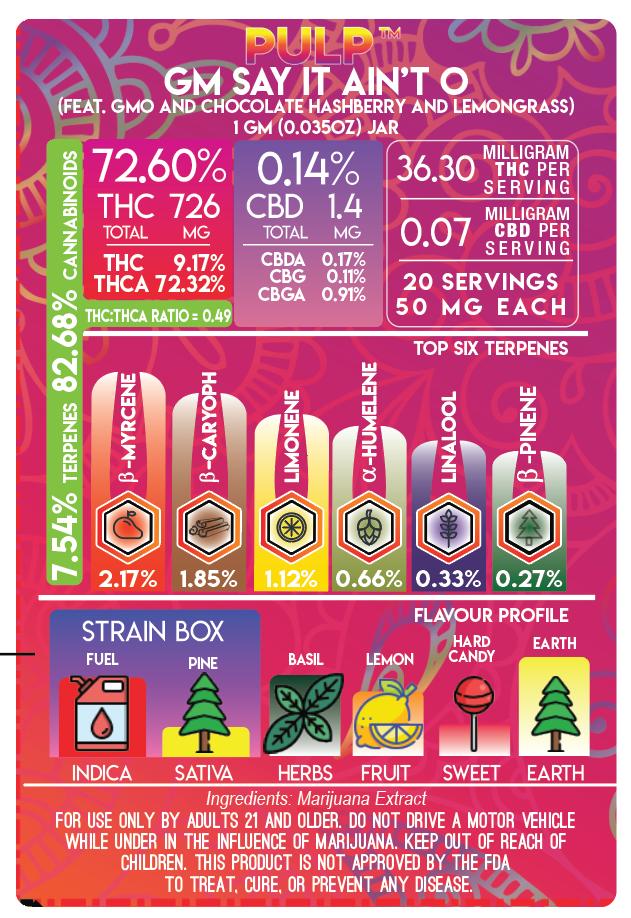






This list is th-e top si x terpene flavors and their proper names.
Batc h size : 448 (g)
tested by: SCLABS

batch: CDT06 8
date tested: 02/22/2 1
date made: 02/22/2 1
u id: 1A40103000254E1000006164





P roc. Lic# 030-1013287FF4D









P rocessor Name:



E XTRACTIONEERING OREGO N
l abel ID: 504 3
Activation time: Immediate
Serving : one 5omg dab
use camera phone to scan for test results
batch size - tells you how many units were made total of the product. QR CODE to online guide - The QR code will take you to the E xtractioneering website and provide you with detailed strain-specific information.
you deserve to have all the information before you make a purchase. extractioneering makes sure you do.

Cannabis use by humans can be dated back well over 10,000 years, with evidence of cannabis found in ancient archaeological sites in Japan, China, India and Mesopotamia.
However, restrictions on the use of cannabis began in the 14th century and expanded to most colonial countries by the 19th century, with sweeping restrictions on cannabis globally by the middle of the 20th century. One notable exception is India. Compared to much of the rest of the world, and despite several attempts by the British Indian government to criminalize cannabis use during the 19th century, cannabis use is common in India, which allows the consumption of “bhang” – a mixture of cannabis seeds and leaves. It is also still used daily within the Ayurvedic sects as medicine, in religious sacramental traditions and recreationally.
Adaptogens (non-toxic herbal pharmaceuticals such as certain herbs and roots) have been around for just as long as cannabis, if not longer. A natural substance used for centuries in Chinese and Ayurvedic healing traditions, adaptogens help the body to adapt to and resist physical, chemical or biological stresses with stimulant properties that can help regulate hormones.
In western cultures, cannabis and adaptogens have been used for centuries to help treat a myriad of issues, such as supporting heart health, boosting your immune system, reducing stress and helping to keep the mind sharp. InannaGenics, an adaptogens company that creates unique blends specifically targeted at conquering daily stresses, has combined cannabis and adaptogens for use in this wonderful cocoa recipe. This charming hot chocolate concoction will help you feel warm, calm and happy as well as help improve your metal acuity.
You can make this delicious Calming Hot Chocolate recipe whenever the mood strikes. Whether you need a quick and easy de-stressor or are looking for something special to entertain consenting adults, this delectable drink is perfect.
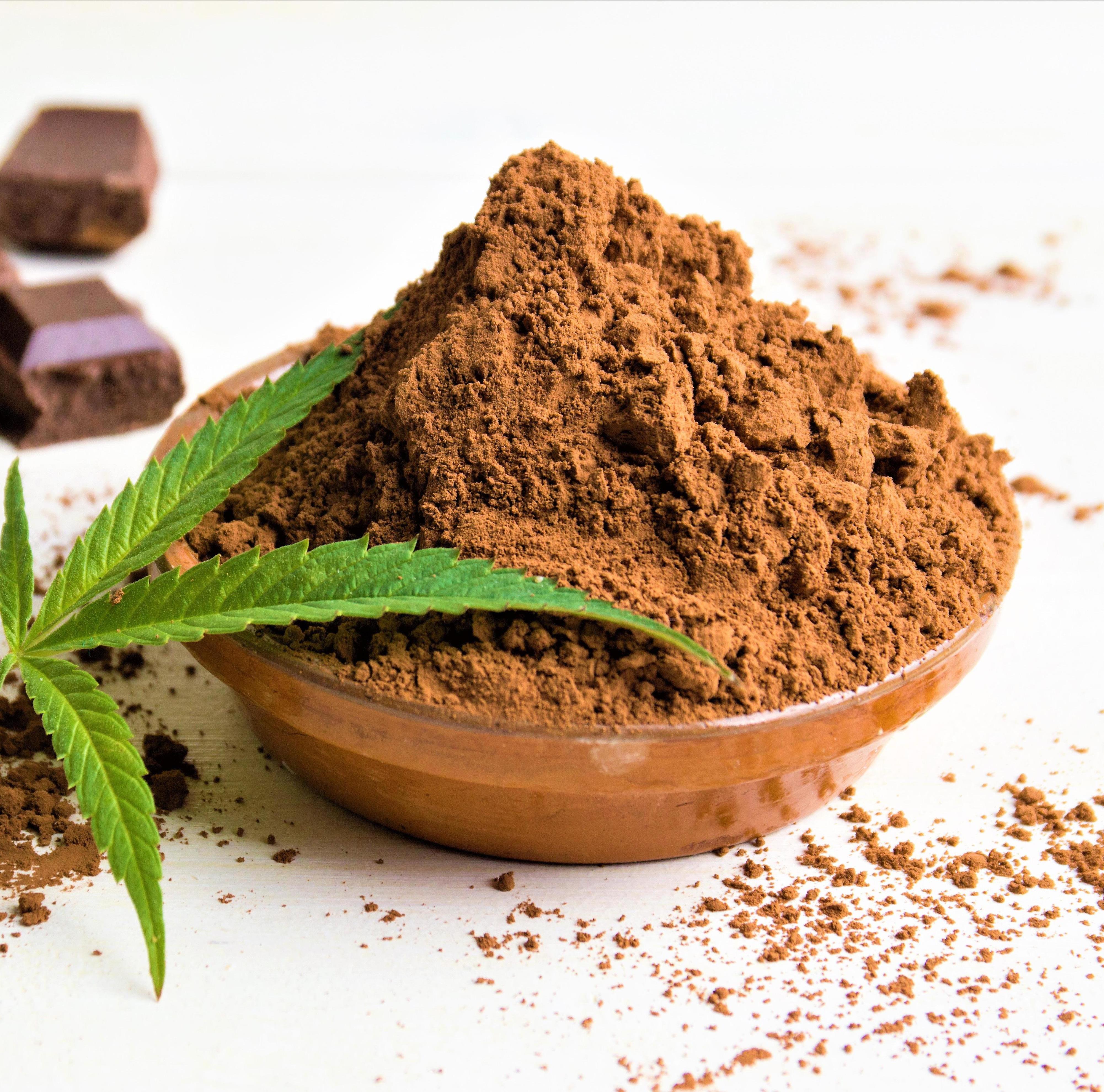
2 cups organic milk (you can use organic whole milk, almond milk, coconut milk or oat milk. I prefer organic oatmilk because it's thicker, but it has the most calories, so beware!)
6 tablespoons of Inannagenics Hot Chocolate Mix

1 tsp cinnamon powder
1 pinch of cayenne powder (or to taste)
1 pinch of Himalayan salt
2 tablespoons shaved dark chocolate
2 cinnamon sticks
1. Whisk together your choice of milk with the InannaGenics Hot Chocolate Mix, cayenne, cinnamon and salt in a saucepan or blender.
2. Heat mixture in a saucepan on low-medium heat until just about to simmer.
3. Place 1 cinnamon stick in each mug and pour the hot cocoa mixture over the cinnamon sticks.
4. Sprinkle shaved dark chocolate on top.
Enjoy!
Serves 2.
JUST ABOUT EVERY JOINT OR BONG IN HISTORY HAS BEEN LIT WITH FIRE OF SOME KIND.
 By Devin Kovach
The practice of concentrating and preserving cannabis has been around for nearly as long as humans have harvested the plant. In many parts of the world, you can find hash that has been made the same way century after century, for over a thousand years.
However, in the last few decades, scientific and technological advances have provided new and improved methods and techniques for extraction and refining cannabis, and these are now more commonly used today. Along with these newer techniques, cannabis consumption has also evolved and changed, leading to the industry’s desire to satisfy multiple ways of consuming cannabis and a variety of palates.
For example, as newer concentrates were developed, they weren’t as easily sprinkled on top of a joint or bowl, so specialized apparatus was developed to accommodate different options for consuming these concentrates. Queue the concentrate bong, also known as an “oil rig”.
Over the years, the cannabis oil rig has gone through several iterations, with various heating elements, designs, and functionality to obtain the biggest hits and best high. Initially, hookahs with charcoal pucks adequately did the job but the result was a muted flavor due to the charcoal delivery method.
Later, high quality metals like titanium nails and skillets were used in conjunction with glass water pipes to provide the high temperature surface needed to deliver a stronger flavor profile, and to satisfy the needs of inhalation enthusiasts.
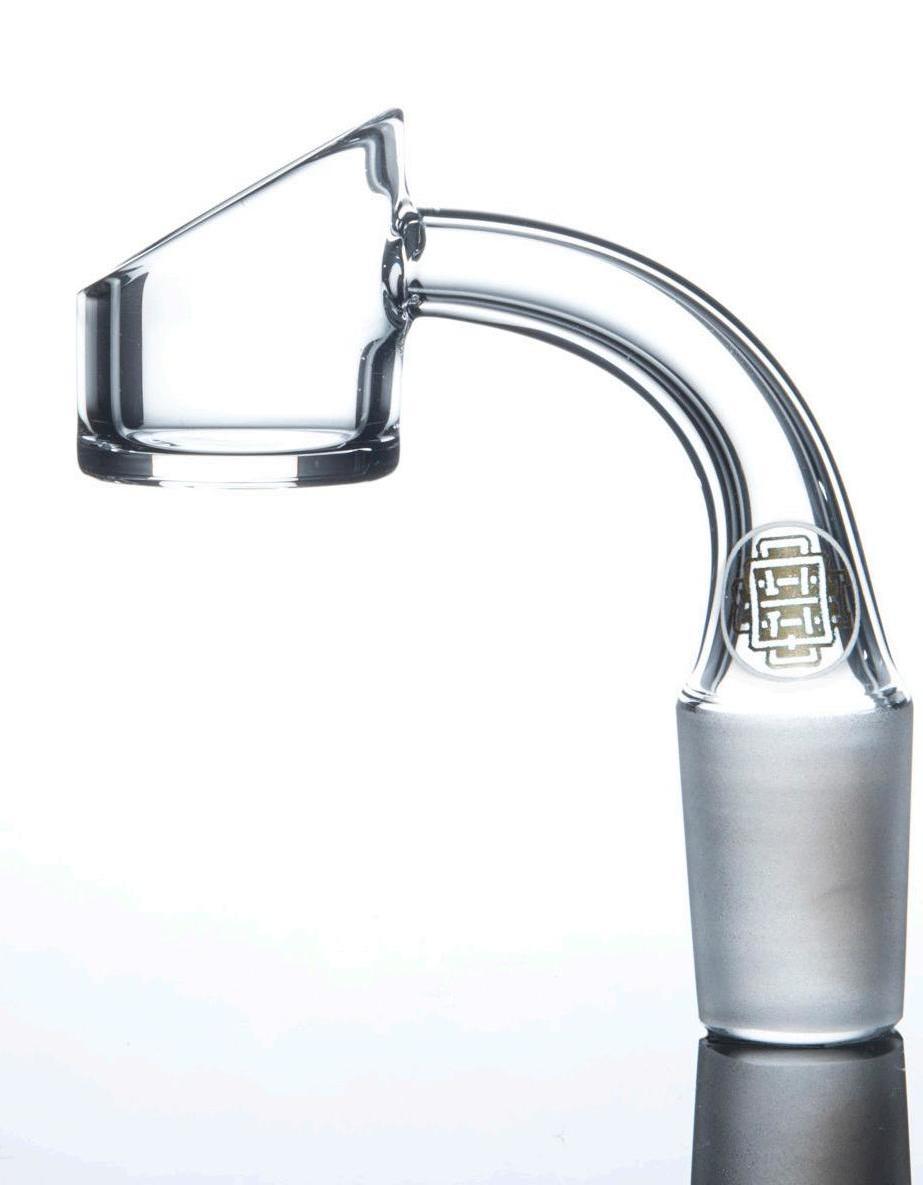
Still, these rigs required several steps to be completed, and the consistency of the flavor and experience often suffered from fluctuating temperatures. These challenges ushered in an era of another successor – the domeless nail. These nails, typically referred to as bangers, are generally made from thermally efficient quartz glass. This material can be heated to high temperatures and retains the heat well while providing a flavorful experience. However, while users’ heat preferences vary depending on several factors, recent studies suggest that
higher temperatures could in turn deliver higher levels of toxins as wellResearch published in 2017 in the American Chemical Society’s scientific journal, ACS Omega, suggests that high temperature dabbing increases the formation of pulmonary irritants as well as benzene, a known carcinogen. While this is just one study with very limited variables and a small sample size, it does suggest low temperature dabs are a better alternative.
Just about every joint or bong in history has been lit with fire of some kind. Lighters have even become ubiquitous with the “stoner” image. But what about those people who want to get the best possible experience from a concentrate? While a cigarette lighter can certainly get the job done for cannabis flower, very few people use one to enjoy extracts. This is because the temperatures recommended to vaporize these forms of cannabis are hard, if not impossible, to achieve with a natural flame.
This is when the use of a torch lighter first appeared. Initially, small propane tanks (like those typically found around a campsite) were fitted with an igniter to heat the titanium nails until they were red hot. With the introduction of the Blazer torch, a much more focused, butane-produced flame became the standard, with a cleaner burn and less time to heat up the banger.
In group settings, however, these torches can become overwhelming with the “whooshing” sound of the jet flame interrupting the conversation and the overall experience. Additionally, people who prefer to take their smoking equipment with them found it difficult to carry all the necessary paraphernalia easily. On the other side of the spectrum, some people preferred to keep their setups stationary. The evolution of electronic rigs sought to address each of these issues. There are several advantages to electronic rigs or “e-rigs”, including ease of use, portability, elimination of the need for a butane torch and precisely controlled temperatures.
There are many e-rig options these days, varying greatly depending on what you are looking for. The
most apparent improvement with these designs is that they are silent and typically have LED signals or a display that informs the user when it has reached a desired temperature. Several companies have developed completely portable options, such as the Carta V, an innovative e-rig for concentrates. This little contraption weighs less than 1lb and looks like a rocket ship. It is built to be used on-the-go with a rechargeable battery, multiple “inserts” to prep concentrates for future use, a bluetooth app to control temperature and an optional carrying case to keep everything secured.
On the other hand, some consumers truly enjoy all the bells and whistles of a high-end, multifunction rig, giving them complete control over their vaporization.
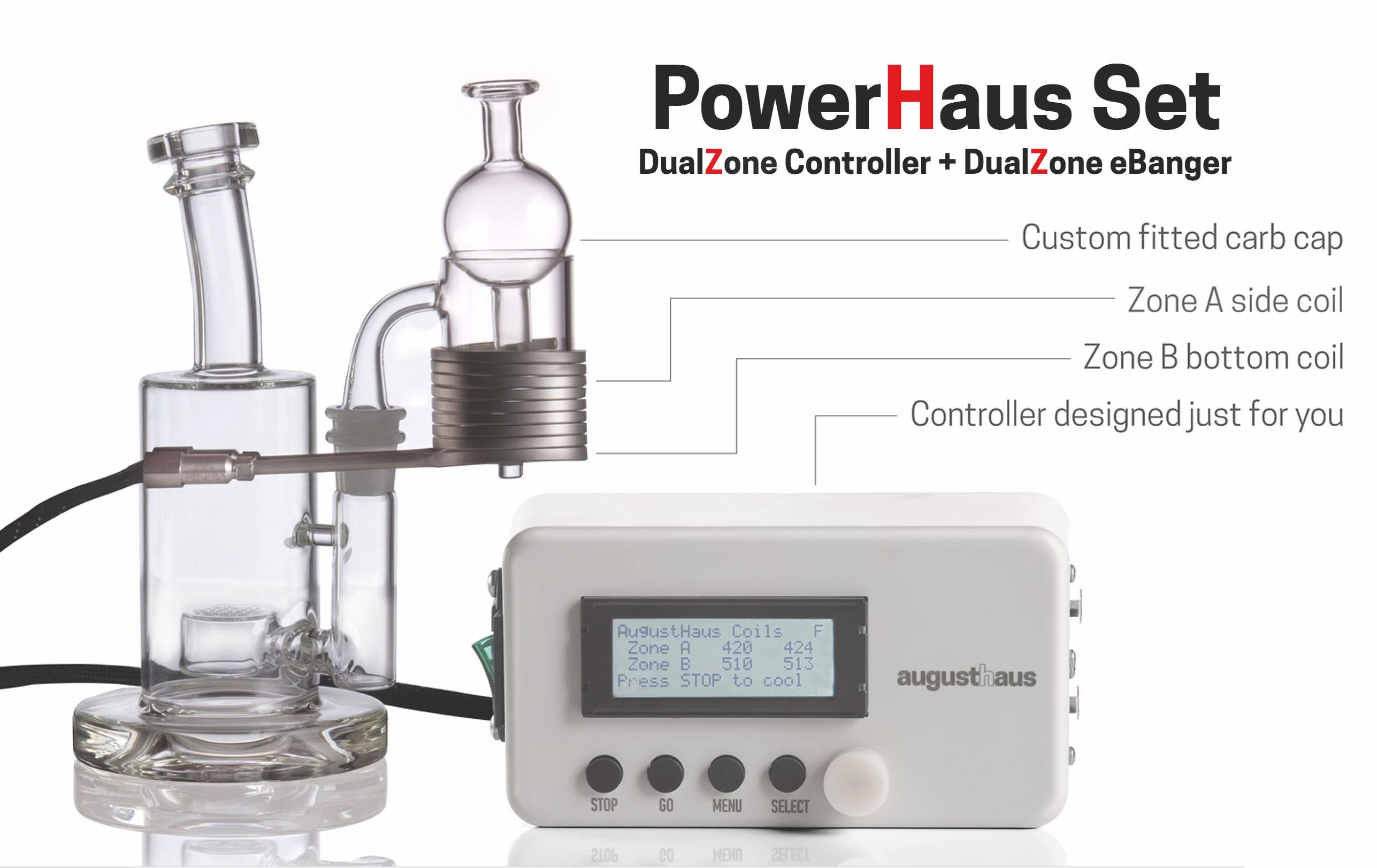
E-nails such as the AugustHaus KubeOne were designed to be used to heat a quartz banger, something most concentrate enthusiasts are very familiar with. These units are typically plugged into a wall outlet and offer extensive control over the temperature while retaining that temperature safely for as long as the unit is powered on. AugustHaus models offer many high-tech features including automatic safety timers and Celsius or Fahrenheit temperature settings as well as phone app control and bluetooth connectivity.
At the height of these e-rigs today sits the Indux Labs REFLUX. At first glance, this minimalist “black box” looks better suited to a lab environment than a concentrate experience, but it was designed from the ground up to be the most efficient and effective dabbing experience possible. The system utilizes glass pill containers in which users can
place the concentrate of their choice, and uniquely, a metal rod is placed inside as well before the pill is closed. These containers can be stored or prepped as needed, and then placed inside the center of the device when ready to be consumed. Turning the knob after the device is activated allows the rod inside the pill to spin, generating heat. The experience is longer than typical “dabs”, as the user can finely control the amount of spin/heat generated and thus the amount of vaporization of your concentrate, providing unmatched flexibility. This high degree of control and flexibility sets the REFLUX apart from other e-rig models currently available.
The Indux REFLUX is certainly grand and an ingenious new concept that is pretty imposing initially, and the instructions could use some improvement. But, once you do figure out how to use it, the functionality is unparalleled. The whole #puddlegang thing will be a hashtag of the past with this new device.
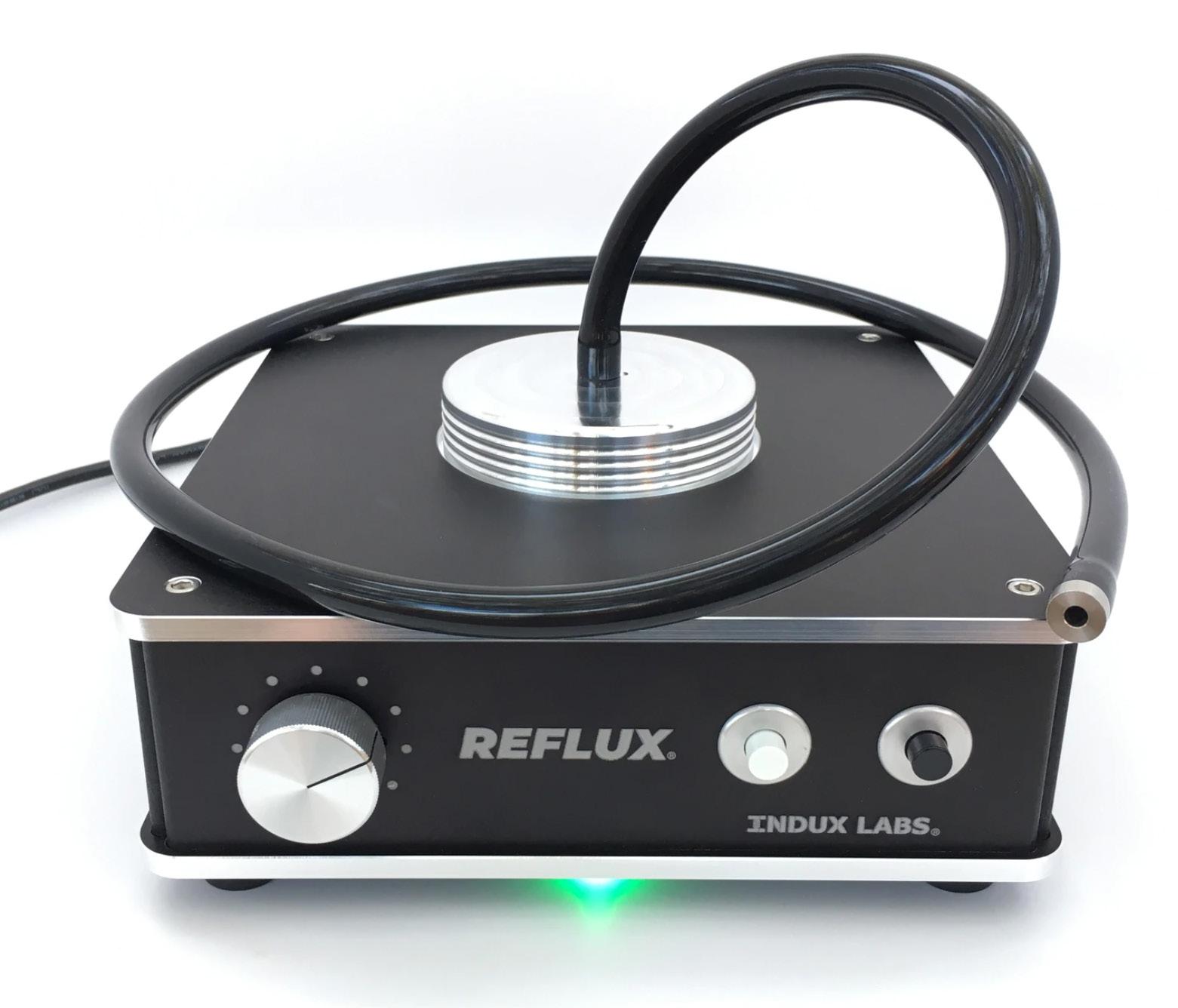
I like to load up two or three glass vials to use in rotation with the same size titanium rod for each vial. Once you find your preferred settings, you won't be able to stop yourself from using the equipment. It's easy once you work your way up the learning curve. And you will be able to taste all those delicious terps without worrying that you are burning them away.
As more devices hit the market and make waves for their ingenuity, it’s interesting to note that the features that appear most consistently in successful e-rig products are almost always those that improve convenience for the user. Flashy designs, big names, and high price tags don’t always float the boat for consumers in the cannabis world as they might in some other industries. In our experience, fewer steps from jar to inhalation always hits home with customers and we are certainly excited to see what the next big breakthrough in consumption will be.
FLAVORS TRIED: ORANGE CREAM
"Very affordable, and very potent. True medicinal qualities at a truly medicinal price. If you are a connoisseur taking only low temp dabs and looking for flavor profiles, this is not the extract for you. If you are someone who takes hotter dabs or utilizes potent cannabis extracts as a medicine, then this is absolutely the product for you.
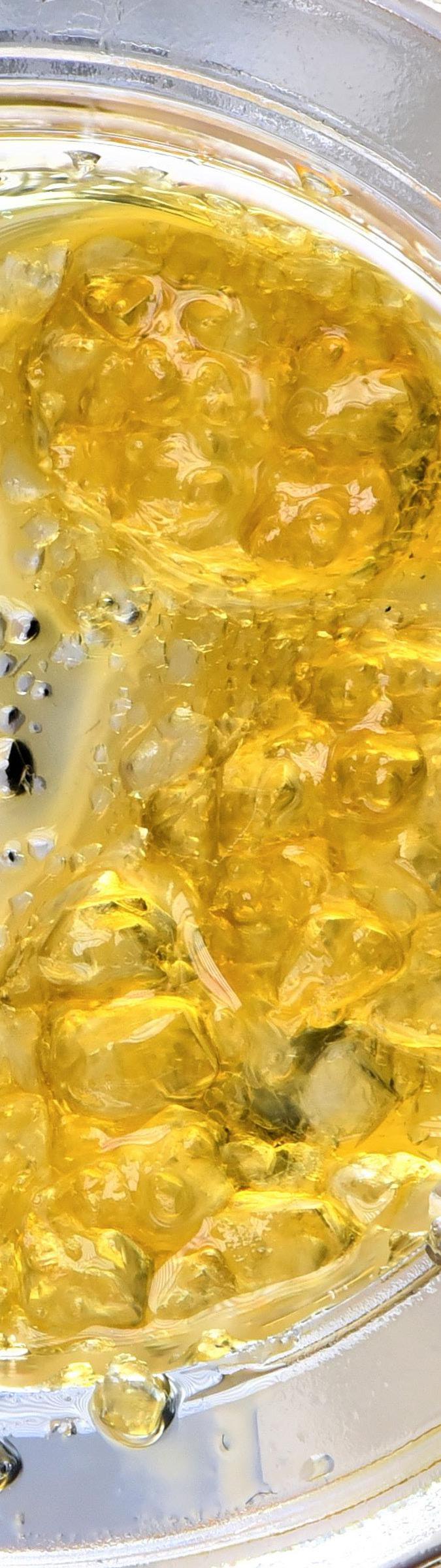
At a price point that allows the consumer to take larger dabs, the orange cream rind was been surprisingly smooth with very potent effects, which makes sense due to its high level of cannabinoids (92.16% for the orange cream). Along with such high levels of cannabinoids comes a color that many consumers would find unappealing in the midst of the CRC era, but I highly advise that every HCSFE strain I tried had a deeper flavor profile and more powerful medicinal effects than it’s similarly priced hash rosin competitors. Personally, I would not recommend this product to anyone who does not have a precise method for controlling temperature while dabbing. Also, I swear that my peanut butter breath got tastier the longer I held onto it and the less I opened it (no refrigeration needed)."
"As they said themselves, Extractioneering’s PULP line is truly their chance to shine. At a price point that is competitive with all the middletier extracts in the Oregon market, the pulp line from Extractioneering is definitely a step above the middle. Coming in at almost half the price of the HCFSE, the pulp line has been surprisingly reminiscent of the HCFSE in quality and potency.
The flavor profiles of the pulp have been well thought through before being mixed, and the end products with both fussy britches and granola funk have been very flavorful with potent effects. The pulp line has been a great all day dabbing line for me, as it is both satisfying and affordable."
"The combination of both smoothness and flavor of this product is phenomenal. The medicinal effects of the HCFSE are also quite powerful and clear. I was impressed by this product’s ability to capture both the true flavor and effect of the flower used. The HCFSE is not a pain to handle, but I would only recommend this product to the more experienced user who controls their dabbing temperature quite effectively as the depth of this product’s flavor profile only comes out when dabbed at the proper temperature, which is in the same ballpark as hash rosin.
This product is in the same price range as most high end Oregon hash rosin, but I found that most of the HFCSE strains I tried had a deeper flavor profile and more powerful medicinal effects than it’s similarly priced hash rosin competitors."
FLAVORS TRIED: PEANUT BUTTER BREATH and DONNY BURGER
"HTFSE is my favorite of the Extractioneering line (HCFSE is a close second), although it is also the trickiest to dab properly. The deliciously complex terpene content of the HTFSE does not get harsh like some of the BHO on the market does once it crosses the 16%ish terpene levels, despite being higher for some of the HTSFSE strains. If money were of no issue to me, I would be smoking mostly HTFSE. The only drawback to this product for me has been the difficulty of working with its consistency, although I imagine if I had been wise and grabbed one of the available HTFSE designed tools before they sold out, that might not be for the case. If Extractioneering were to include a punch out dab tool or something similar in the packaging that would also be quite handy.
The consistency does make it very easy to put this concentrate in joints, if you are a fan of that. Finding the perfect temperature was also a little tricky with the HTFSE as there is most definitely a sweet spot. Although there may be a bit of a learning curve to consuming this product properly, I did get the hang of things rather quickly, and once I did I was quite pleased with the result and will be coming back for more next time I am craving something similar to a high end live rosin.. which is always. I have had a vial of HTFSE in my dab tray ever since I first tried one."
"The HTFSE carts by Extractioneering are a great method to consume HTFSE and at a very competitive price. Considering the alternatives in the price range, I feel as though the HTFSE carts are in a strong position to become some of the most popular in Oregon.
The somewhat tricky to handle HTFSE is the perfect consistency for a cartridge as it burns slowly and evenly, and is just runny enough that you only need to hold the pen upright for less than a minute before the oil has returned to the bottom of the cart.
As with regular HTFSE, finding the right temperature is paramount. With a battery that is too powerful these carts do not seem to be anything special, but with a variable voltage battery that is able to go low, I find these cartridges to be comparable in flavor and potency to many hash rosin carts that cost significantly more.
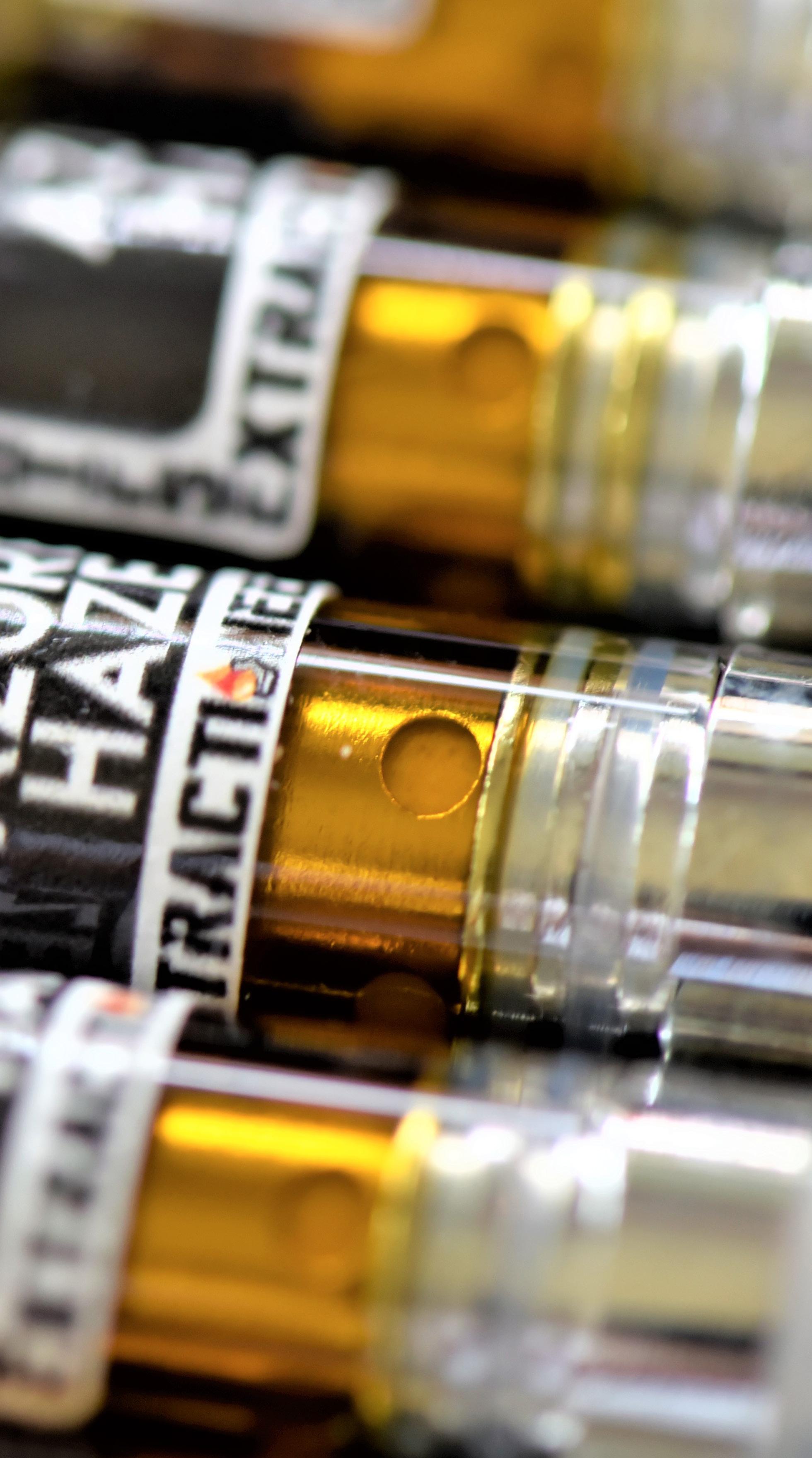
I had stopped using carts for a while, but the HTFSE Extractioneering carts have me back at it. The only room for improvement I have seen with this product is to list on the box the recommended voltage (apologies if it is listed and I somehow missed it before tossing the packaging) and perhaps switching to all glass hardware (but definitely keep the wood tip please).
Overall, I am surprised that I have not heard much chatter about the HTFSE carts, but I imagine that will change as time passes since they provide quite a lot of bang for the buck."
"Personally, I would not recommend this product to anyone who does not have a precise method for controlling temperature while dabbing. Also, I swear that my peanut butter breath got tastier the longer I held onto it and the less I opened it (no refrigeration needed)."
"Extractioneering’s product line truly does seem to have something for all types of dabbers! If you are a patient seeking a medicine that is affordable yet both smooth and potent, the rind is for you.
If you are a mid-tier dabber who would like to step things up a notch but you do not want to dish out for the top-shelf extracts, the pulp is perfect for you.
On the go a lot but don’t like walking around with a dab rig in your pocket? HTFSE carts are some of the few carts I have found that don’t make me wish I had brought my rig every time.
For those of us that enjoy the finer things in our nails, the HCFSE and HTFSE provide two very different yet comparably enjoyable products that provide a similar, if not more enjoyable, dabbing experience to high-end hash rosin.
I live a 2 hour round trip drive from the nearest dispensary that sells Extractioneering, but it has been worth doing 3 times so far. If a shop close to me held the entire Extractioneering line, it would account for about 75% of what I consume."
I felt so confidently about your HTFSE being worth it that I gifted the last half of my PB breath to said buddy, and now he is completely on board with the product
"I feel as though your product line has the potential to become the most impressive line in Oregon"
"I am a huge fan of the Extractioneering line but from my own experiences trying to convince others to buy your concentrates, it seems like you have some work in front of you.
Your product is so different from the rest of the market that it seems to bug some people. In a selfish attempt to get the dispensary that I go to in PDX that has the lowest prices to carry your products, I was met with some condescending attitudes for suggesting that a product that uses any amount of CO2, butane, or propane could be comparable to a live rosin. Normally polite people seemed to be somewhat insulted by my suggesting that they should take a 10 minute drive up the road to try a product that costs more than they feel like a butane based extraction should ever cost. When I insisted it was worth it, I received borderline hostile responses.
With the whole global pandemic situation I have been unable to sesh with people in order to give them a taste of your product (and sadly I currently can’t afford to gift much of it away), and it has proven VERY difficult for me to convince people to dish out to try your HCFSE or HTFSE without being shown beforehand that a solvent based extraction can be worth that price.
As an example, I have a local friend that is familiar with your product line from having done his own research and having listened to the podcasts
where Dr. Hayden is featured. When your product hit the shelves, the price point completely turned him off.
I felt so confidently about your HTFSE being worth it that I gifted the last half of my PB breath to said buddy, and now he is completely on board with the product and wanted another vial the next time I drove into Portland.
In summary, I feel as though your product line has the potential to become the most impressive line in Oregon as I do not see any other company producing such a wide range of products that truly cater to such different types of consumers, but I think that dropping during a pandemic has placed a lot of extra thorns on your path. Your products are so unique that I am convinced the best way to show people they should be purchased is by allowing others to experience the products first hand in a controlled dabbing setting.
I have full faith that when the national pandemic starts to subside and the cannabis community is able to be physically social enough to share again, your company will see continued and increased levels of success and appreciation from the broad range of different consumers throughout Oregon."
"Although there may be a bit of a learning curve to consuming this product properly, I did get the hang of things rather quickly, and once I did I was quite pleased with the result and will be coming back for more next time I am craving something similar to a high end live rosin"
It happened on Southwest night.
Honestly, it could just as easily have been the night before, on Italian night. Or the night before that, over Monday’s casserole.
It didn’t matter. The fight was always the same. Two out of three kids gathered around the small kitchen island in our tiny kitchen, complaining about the dinner I was plating.
Mealtime had become a catalyst for battle in my home. No matter how many times I braced myself or prompted my kids to be polite or behave, it was a battle. Unfortunately, it was just one of many battles fought over the course of
any given day. Like the battle that came after someone’s shoes were missing from the usual spot as we were making our way out of the door that morning. Or the battle after the IEP meeting being rescheduled again and a sitter needing to be rearranged as a result. It was the battle after my toddler refused to nap and became a clingy and cranky attachment by school pick-up time.
This was a day of many battles and, like any soldier, I was exhausted. Exhausted but determined.
This day, I was going to make it to bedtime without losing my cool. I was not going to lay on the sofa in the post-bedtime aftermath in a suddenly quiet house with my nerves frayed. I was not going to mentally berate myself for reacting or replying too quickly to a teary child. I knew that “Mom Guilt” was just a few steps away.
glass. Had I finished another bottle already? That could not be right. I was sure I had only just bought this one. Hadn’t I just popped the cork at dinner time yesterday? In fact, I was certain had only opened this bottle because the bottle before that had finished under the same mysterious circumstances. Maybe even a handful more at some point before that too. Was this a trend?
This was not good.


It finally dawned on me that my wine consumption was more than it should be.
Now, I knew an army of Mom bloggers and women from the carpool lane of my kids’ school would laugh this off as nothing more than a rough patch
That small but persistent voice in the back of my head was whispering the dreaded question “Maybe I’m a bad mom?”
Not today. Today, we were going to make it through. We were going to come out on the other side of difficult baths and bedtime stories with smiles on our faces and warm hugs. I just needed a little bit of help first.
Bingo. There it was. My wine glass next to an artsy looking bottle of some moderately priced (read: cheap) Cabernet Sauvignon.
My trusty Cab, always Instagram worthy, awaiting the ever popular (and socially acceptable) #WineMom hashtag. Mama’s little helper. I mean sure, I had already poured my usual nightly glass, but as the nights grew longer with each summer day, I happily topped off my half-full glass as I counted down the evening hours.
Only this time, as I poured, only a pathetic dribble spilled from the bottle into my
and needing a crutch to get by.
But I realized this could easily be a slippery slope. All too many “wine moms” have become dependent and even addicted to alcohol because wine has become such an embedded part of “mommy culture”. I knew I wanted something different - an alternative to wine that made me feel good but also fit into my healthy lifestyle.

But what could replace my nightly glass of wine, something that would give me that “something extra“ without the side effects of extra calories, alcohol addiction and dependence?
The answer was cannabis.
But before I dove in, I wanted to learn more. The next step was research. Google, here I come.
A lot has changed in the world of cannabis since my last experiences with it in college. Back then, bongs were used as household décor. In sorority and fraternity houses across the country, we counted down the minutes until the clock read 4:20 (am or pm) before passing around a blunt, as if that moment in time did something to heighten the experience (and not highlight our own immaturity).
Since then, the world of cannabis has dramatically changed. These days, cannabis is more widely celebrated as a “grown-up sport”. From seed to extraction to consumption, cannabis has blossomed into a multibillion-dollar industry alone in the U.S. alone and only seems to be moving forward. Pleasantly surprised by what I found on Google, there is a world of cannabis science at my disposal now, valuable information ’that’s readily available. And if I wanted to speak to someone, there were actual dispensaries I could go to and ask questions. I had quite a few of those.
At the top of my list of questions was “What’s the best way for me to use cannabis”?
Though it had been a while since my last cannabis experience, my Google research helped me narrow down some ideas, so I had a rough idea of what I was looking for, as well as what I did not want. I knew sneaking out to the back shed and rolling a joint wasn’t going to work because, as all moms know, trying to hide in the laundry room for a 5-minute break is a no-go. The kids will always find you.
I also knew delicious and enticing looking cannabis edibles in a house full of snack-hungry kids wouldn’t work. (Try telling a two-year-old
that a cookie isn’t a cookie.) Glass pipes were pretty but breakable. Vaporizers seemed to show some promise. From my research, they looked portable, discreet, and user-friendly. Yes, yes and yes. A portable vaporization device seemed to check all my boxes. More Google research told me that choosing a vaporizer as my own delivery method came with less exposure to carcinogenic compounds than smoking. I was on to something.
I found article after article about how cannabis could be consumed in ways where the health benefits are optimized. Now that I knew there was a huge variety of options for consumption, and I had narrowed the options down to using a vaporizer (also known as a “vape pen”), the next step was to consider what kind of product to consume.
Whenever any industry is booming, there will always be people who are trying to sell snake oil (or in this case THC) to make a quick profit. It’s easy to find claim after claim of thousands of products boasting that what they sell is going to be the cure to all that ails you. Clearly, those types of products are questionable at best, and harmful at worst. From my research, I had discovered that there were many potential benefits from
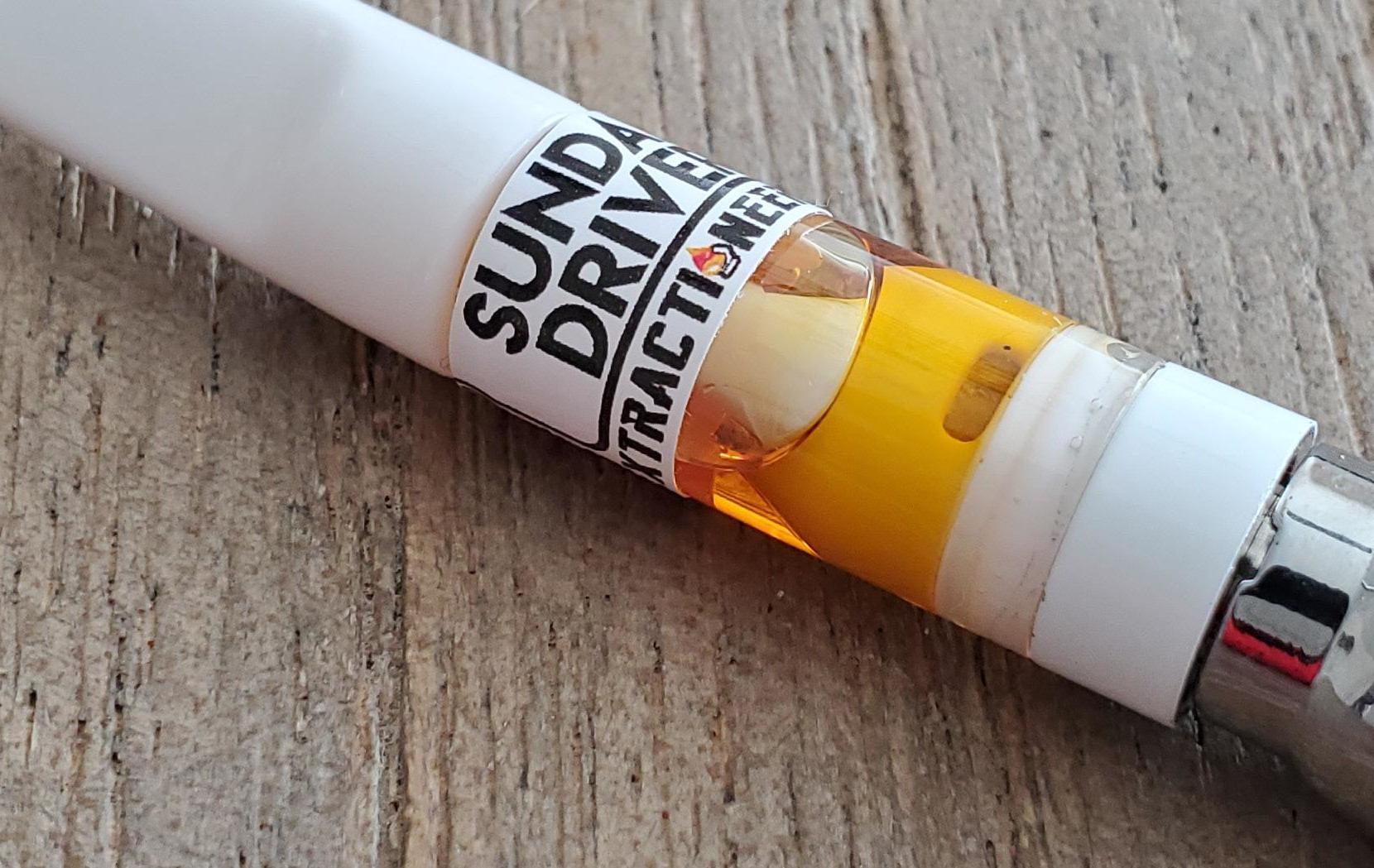
cannabis. But I also realized from my research that the type and quality of the cannabis I would be consuming really mattered.
Doing more homework, I realized that concentrates would work best with a new fancy vape pen (unless I wanted to finely grind up dry herb, which seemed out of my skillset for now). Now I needed to arm myself with information about concentrates, so I started with the basics.
It was relatively easy to find a definition for cannabis concentrate - a potent tetrahydrocannabinol (THC) concentrated mass, that often reassembles honey in texture. Clear enough. But what was this “Full Spectrum” I kept seeing mentioned?
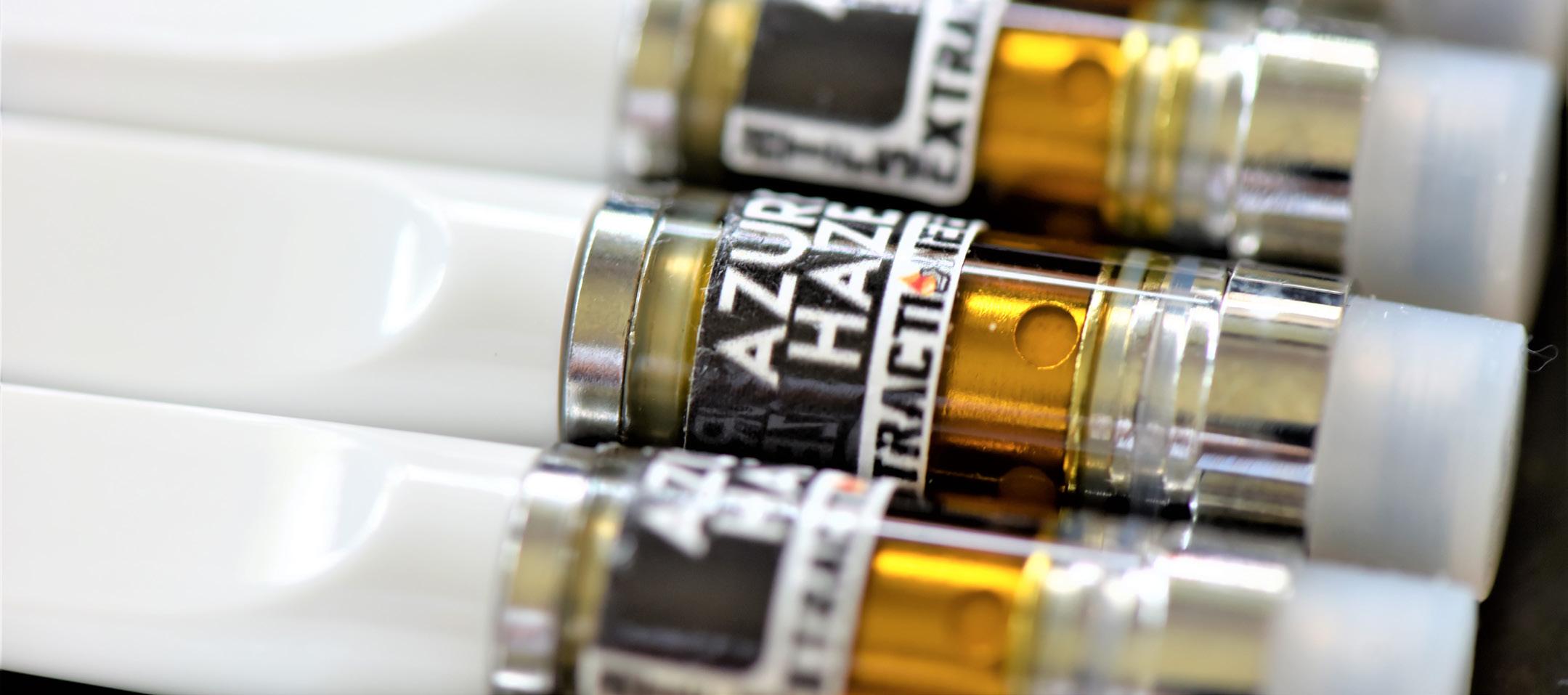
As I dove into the world of “Full Spectrum” concentrates, I quickly realized there is as much misinformation about Full Spectrum as there is desire for a high-quality product worthy of the distinction. Luckily, the website Weedmaps, one of the most popular online cannabis communities, had the best definition of what constitutes full spectrum. Here it is: A cannabis concentrate produced that preserves the full cannabinoid and terpene contents of the raw cannabis plant. The goal of a full-spectrum extract is to maintain the complex range of desirable compounds in a cannabis plant
without altering them through decarboxylation or oxidation. (“Full Spectrum Extracts” n.d.)
Well, we were getting a bit scientific, but for now, I was still following. Essentially, I understood that a full-spectrum extract is good because it preserves the good things in the natural cannabis plant. But the next part of the definition started to make my head spin: “Popular extracts that may be considered full spectrum include sauce, live resin, High Terpene Full Spectrum Extract (HTFSE), and High Cannabinoid Full Spectrum Extract (HCFSE). (“Full Spectrum Extracts” n.d.)
Here is where things began to blur. I was almost overwhelmed by the chemistry of it all. The incorporation of impressively applied science was well over my head. Terms like cannabinoids and terpene began to pop up attached to the acronyms HCFSE and HTFSE. The questions started to swirl. Why were these acronyms important? Why did parts from the same plant have different properties and consistencies? How much further did this rabbit hole go before I could no longer figure out what anyone was trying to say with their fancy science and fancier results?
I needed to find someone who knew exactly what they were talking about.
As I turned to Extractioneering to help me find my way in the world of cannabis, it became clear that their product is a passion. Their Instagram accounts and website reflect that passion and a desire to share and educate others with truthful information on a topic where misinformation can sometimes seem the norm. If they were looking for someone to educate, here I was, waving both hands above my head and shouting “teach me! I want to learn!”.

Dr. Hayden is a molecular biologist and the CEO and Chief Science Officer of Extractioneering. He and his team have more than 25 years of cannabis industry experience. Information flows from the team via numerous articles, with as much detail as you would ever need to know about cannabinoids, terpenes, and beneficial biomolecules you’ll find in each type of product offered. All that is just what you can expect when the process is backed by science.
Why is science so important in the cannabis industry? Well, as I mentioned earlier, there are a lot of companies who are trying to cash in on this high-growth industry and making cannabis products that do not adhere to any quality standards. And any time I am ingesting anything, I would prefer to know that the science behind it is solid. There is a whole lot of science behind Extractioneering, and it is all for good reason.
When you craft your product for a full and flavorful experience you get a full and flavorful craft product. It is not just enough to have the explanation if the product wasn’t worth the purchase, right? Extractioneering walks the walk.
I had found it and it had been well
worth the effort. I had concluded my search and found not only a product I trusted but also a community where I could go for further information.
These days, my beautiful vape pen and high quality, small-batch concentrate is a welcome alternative to that nightly glass of wine. And while the team at Extractioneering may not be offering to raise my kids and send them off to college for me, they have helped me be a little more chill and made my nights a little easier, whether it’s Southwest night, Italian night, or any other night of the week.
Funnily enough, I had heard of Extractioneering long before I had considered cannabis as an avenue for stress management. A friend had recommended that I follow one of the Instagram accounts for the company because of the stunning stylized imagery and gorgeous visuals in their Instagram Stories.
Recently, I grabbed what I thought was a HUGE jackfruit from Wholefoods. Not having a plan for what to do with it, I left it in the car in the car for a couple of days. Big mistake. It was so ripe, it stunk up my whole car with an overpowering sweetness. I knew I had to do something.
Since it was over 20lbs of fruit (relatively small in comparison to the largest versions of these fruits which can grow to be over 50lbs each), I decided to make something easy to freeze. And that’s the origin of this delicious jackfruit ice-cream recipe.
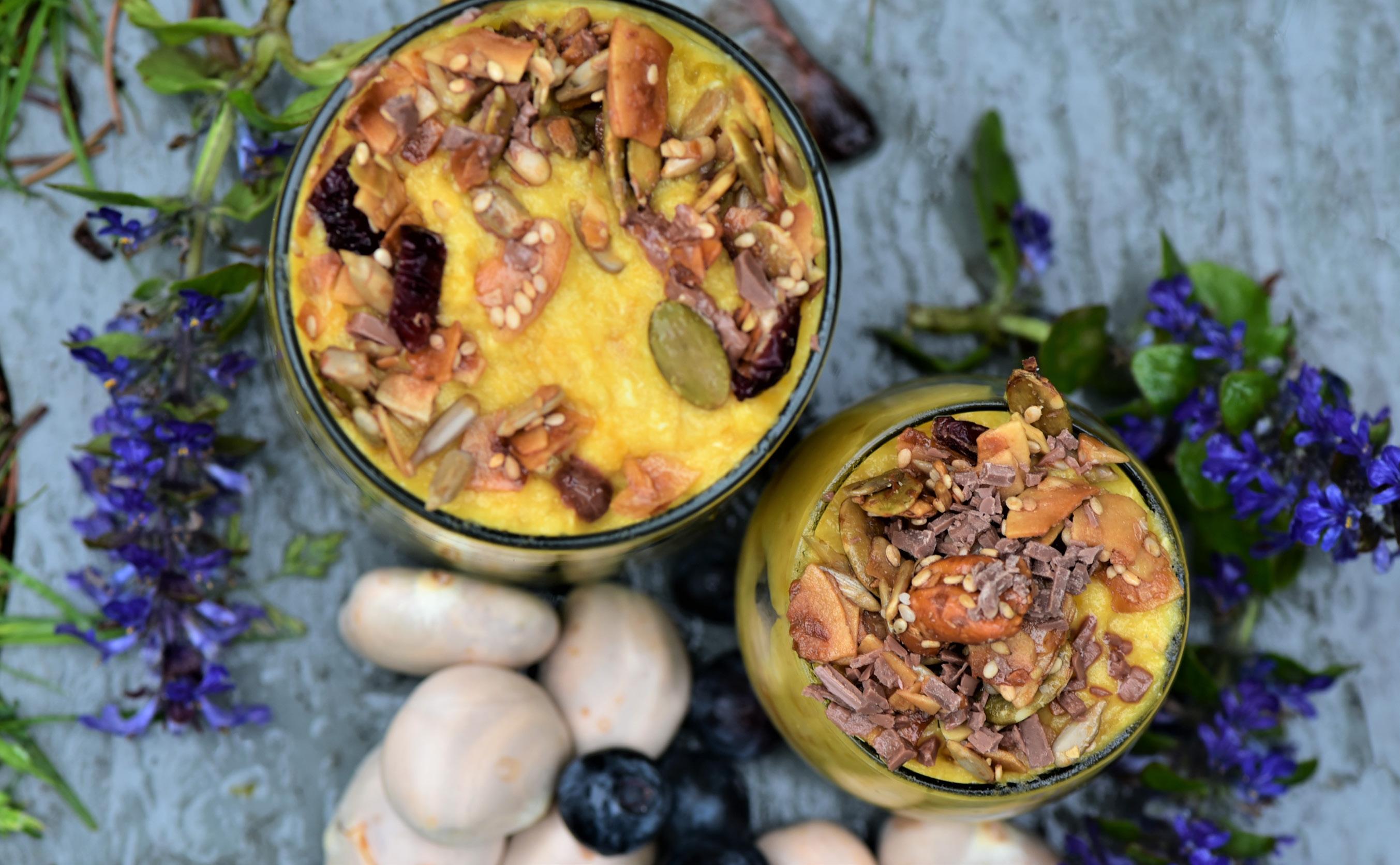
For those of you who are unfamiliar with this fruit, jackfruit is a relative of figs and breadfruit, and grows in tropical areas of Southeast Asia, Brazil and Africa. Jackfruit has become more popular in recent years, especially with vegans and vegetarians, because it is rich in antioxidants, has more protein that other similar types of fruits, and has a relatively low glycemic index. Because of its natural sweetness when ripe, it’s ideal for making a sweet dessert without adding a lot of extra sugar.
My daughter was ecstatic at the idea of making ice-cream and helped me to break the fruit open and de-seed all the delicious pods. Every time I popped a piece of sweet jackfruit flesh into my mouth, she scolded me, afraid we wouldn’t have enough jackfruit to make a big enough batch of ice-cream. But even with my nibbling, we were able to make about 2 gallons of jackfruit icecream.
Now for this recipe, I did do a little research online first but couldn’t find something I liked. So, as usual, and following a long family tradition of making up recipes as needed, I winged it and was pleasantly and incredibly surprised by the results.
I hope you enjoy making and eating this icecream as much as we have.
• 5 lbs of jackfruit pods, after removing the seeds (you’ll need a jackfruit that weighs at least 12-15 lbs to yield 5 lbs of fruit)
• 4 cans of coconut cream
• 6 eggs
• 1500 mg HTFSE oil (to your liking)
• 1/2 cup of honey + 1 cup or so of your favorite granola – to serve on top
• Two 1-gallon containers for the ice-cream mixture
1. If you’ve never done it before, I recommend watching a YouTube video on how to peel and take the pods out of a jackfruit before you begin trying to cut your jackfruit open. It can get quite sticky and messy so don’t skip this step if you’ve never cut a jackfruit open before!
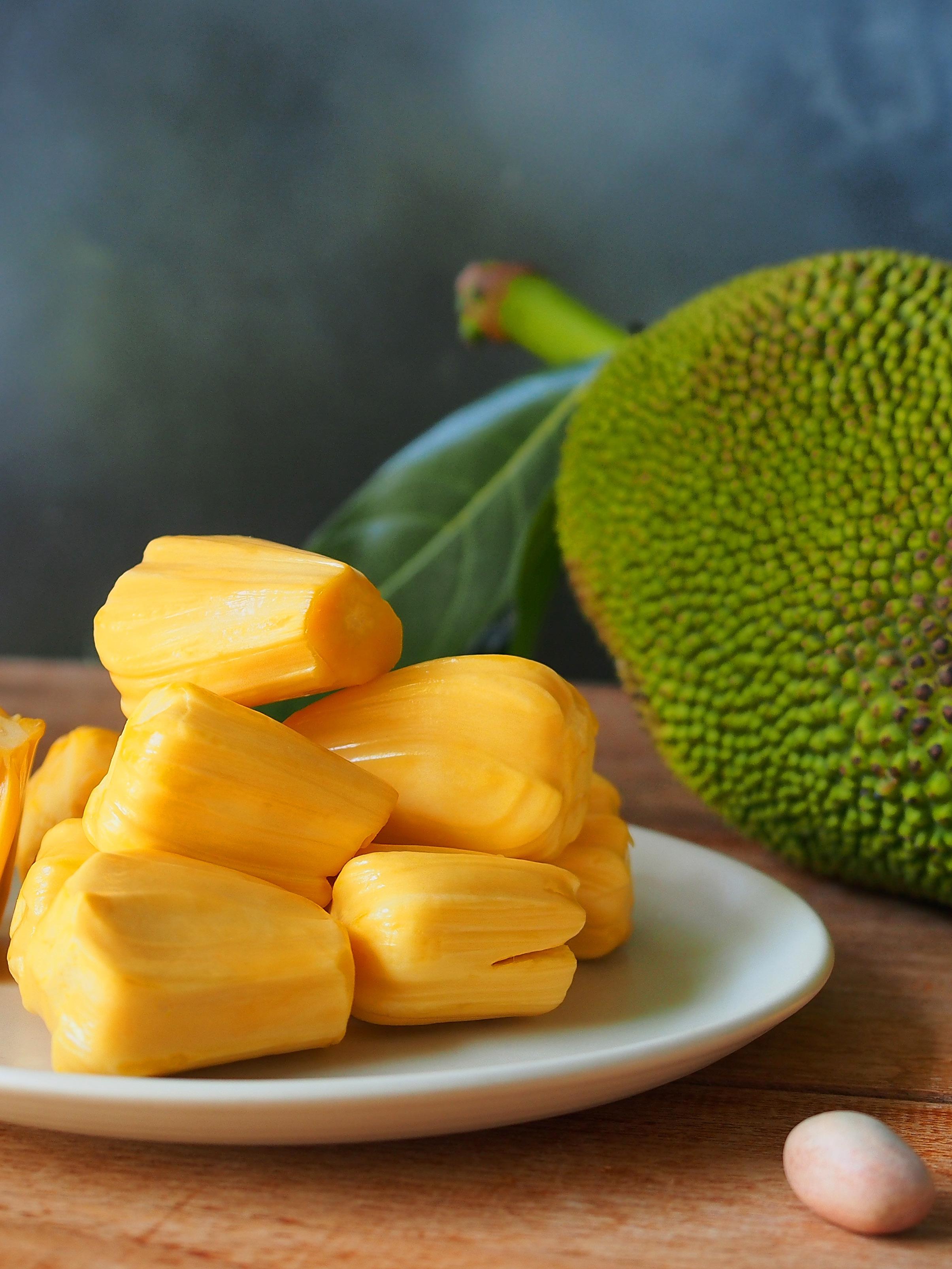
2. Cut open your jackfruit and take out all the pods. Make sure you put a little olive oil or coconut oil on your hands as you go. The sap of this fruit is incredibly sticky and not the kind of sticky you get with regular fruit (think latex paint kind of sticky), and this stickiness won’t come off with water.
3. Take all the seeds out of the pods and keep those in a separate container from the flesh of the pods. You can roast and eat the seeds separately if you wish (jackfruit seeds are high in protein).
4. Blend about 4/5ths of the jackfruit pods in a blender until well blended. Reserve the remaining pods (you’ll add these later).
5. Pour all the cans of coconut cream into a large pot on the stove. Turn the heat to a low/medium heat, you don’t want the coconut cream mixture to boil.
6. Divide the 6 eggs into yolks and egg whites. Add the egg yolks slowly into the coconut cream, beating well with a whisk until fully incorporated.
7. Pour the blended jackfruit into the pot with the coconut cream and egg yolks and mix well.
8. Chop the remaining jackfruit pods into small squares and add to the pot, mix well.
9. Rinse out your blender and make fluffy egg whites by adding all the egg whites and turning on high for several minutes.
10. Once fluffy, fold the egg whites carefully into the pot with everything else. It’s best to do this in batches so you keep as much of the lightness as possible in the mixture. Use a spatula or other wide, flat knife and take your time to fold in the egg whites. Gently mix until the mixture is all one color.
11. Turn up the heat slightly (to medium) and stir occasionally until the texture of the mixture is like pudding.
12. Add 1500 mg HTFSE oil or about 150 mg per serving.
13. Now I couldn’t wait and tried a little of the mixture while it was still warm. My daughter suggested adding some chopped chocolate (she’s a natural chef), which I was a bit skeptical about but of course, it was freaking awesome.
14. Once cool, place the mixture in airtight containers (for this quantity of jackfruit, you’ll need a couple of 1-gallon containers) and place in the freezer for a minimum of 4 hours before serving.
15. Serve drizzled with a little honey, and for extra deliciousness, sprinkled with your favorite granola.
Finally, serve and enjoy this most luscious Jackfruit Ice-cream!

At Extractioneering, we search the entirety of Oregon for material that meets our standards. Over time, we’ve come to work with some really incredible farms.
In 1998, Oregon legalized medical cannabis along with a few other states, including Washington, Arizona, and Nevada. Patients with qualifying conditions in Oregon can grow cannabis, or have cannabis grown for them, to treat their pain. While both medical and recreational cannabis are now legal in the state, the laws are changing as lawmakers continue to address issues that affect Oregon’s cannabis industry.
The history of cannabis in Oregon goes back many years, and many benchmarks have been set in this state for cannabis culture throughout the United States. Between decriminalization and legalization, with periodic historic events, failures and victories, the relationship between Oregon and pot has bloomed, littering the coastal state with an evolving flower.
1935
The Uniform State Narcotic Drug Act was
passed by Oregon voters in 1935, making cannabis an illegal substance. Prior to that year, cannabis was legal in Oregon. Citizens were able to light up free of fear and without restriction, similar to tobacco smoking.
Before 1973, Oregon had cannabis prohibition laws that were very similar to those of other states, with heavy consequences for those in violation. However, Oregon made history that year by being the first state to decriminalize the possession of cannabis in small amounts.
This change made possession infractions similar to traffic violation tickets, with a $500 to $1,000 fine for citizens carrying up to an ounce of weed, rather than a crime. Criminal charges remained for amounts greater than an ounce, though private use (excluding public intoxication or driving under the influence) was not considered a punishable offense.
Many states in the United States still consider cannabis possession a criminal offense, despite the fact that over half the country's states now allow cannabis in some form or another.
In 1998, medical cannabis was approved for consumption in Oregon, one of the first states to allow cannabis use for medical consumption. Medical consumers with specific and qualifying medical conditions were able to either grow their own flower or contract another person to do so on their behalf.
This was the era when the early stages of growing restrictions came into play, as medical consumers were allowed to possess up three cannabis plants. Once again, Oregon had taken a leading role towards the legalization of cannabis, while the rest of the world watched and waited if the federal government would change its position on cannabis.
By 2005, the Oregon legislature increased limits to possession amounts and plant grow limits for medical consumers within the medical cannabis program. This was also the year that a cannabis medical card first appeared, along with a registry for grow sites and a provision for growers to be reimbursed for utility costs. Medical cardholders were able to possess up to 24 ounces and own or grow six mature plants. More than 30 years after it was first deemed legal in the state of Oregon, cannabis could finally be grown in very small quantities.
In another first, the Oregon Board of Pharmacy in June of 2010 reclassified cannabis from a Schedule I drug (a classification reserved for highly addictive and non-medicinal use drugs such as heroin) to a Schedule II drug, a classification for drugs that have recognized medical use.
This decision displayed a progressive move on the part of lawmakers in how influencers were thinking about cannabis. Oregon was the first state in the United States to make this change.
Measure 80 was drafted and rejected by Oregon voters in 2012. The measure was an effort to legalize cannabis with no personal possession or grow limits, with opportunities for people to consume cannabis if they were aged 21 or older. This same year, "procannabis" legislation was passed, as lawmakers approved a medical cannabis registry system. This change facilitated the regulation of a retail market. Within the year, about 196 medical dispensaries received licensure.
The state legislature also reduced the punishment for possession (over one ounce and less than four) from a felony to a misdemeanor, in addition to repealing the law that suspended driver’s licenses for those in possession of an ounce of cannabis or less. This legislation was communicated as a way to alleviate cannabis-related infractions, however it also prevented producers and processors from being able to sell directly to their own customers. To make sales, producers, processors and growers now had to rely on dispensaries. In turn, dispensaries increased the price of cannabis to cover their own costs including the state’s requirement of (by now) a 30% sales tax on all cannabis sold.
In 2013, legislation was passed in Oregon that gave local governments more control over medical cannabis dispensaries. More specifically, they were allowed to issue moratoriums, a temporary pause for up to a year, on non-complying dispensaries.
As cannabis edibles gained in popularity, concern increased about children mistakenly consuming cannabis-infused foods. As a result, the Oregon Health Authority also started issuing rules this year regarding the labeling and packaging of cannabis edibles to make sure they stayed out of the hands of children.
For the cannabis industry, this was another example of uneven legislation in competing industries. For example, while alcohol and over-the-counter medications do not require child-proof containers, cannabis edibles and extracts do require them. There are also limits on how much can be purchased within a specific period of time.
In Oregon, you cannot purchase more than 5,000 grams of cannabis extract in one day. That purchase must be made in a dispensary and, in most cases, only cash can be used since there is still a federal banking ban on cannabis businesses. You are also required to be at least 21 years of age and have proof of identification.
Despite the government’s attempts to limit the growth of the cannabis industry, and in spite of other forces including COVID-19, wildfires, killer bees, droughts, floods, riots and other challenges, sales of cannabis and cannabis derivatives have continued to grow in Oregon.
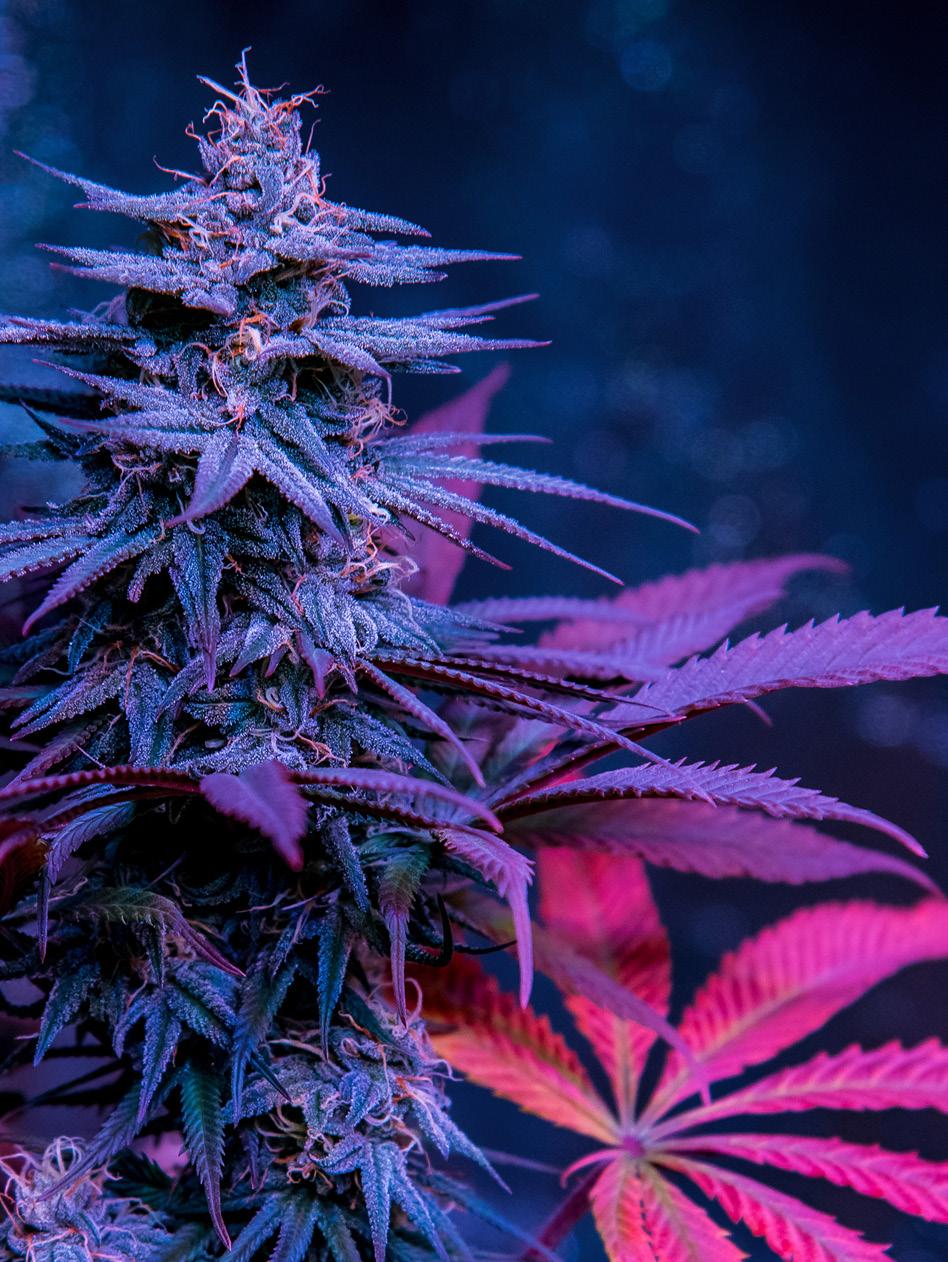
As cannabis use continued to grow within Oregon state, a system of taxation and licensure to regulate, tax and manage the fast-growing industry was being planned by the government.
By January 2016, the state had demanded that the Oregon Liquor Control Commission have their cannabis regulations drafted and in place for all aspects of recreational retail cannabis, including production, processing, and sales. Additionally, the state began accepting applications for dispensaries to receive licensure. Recreational stores began opening mid-2016 after licenses were approved and issued.
As of January 1, 2017, dispensaries that did not have an Oregon Liquor Control Commission license were not allowed to sell pot for recreational use. In the same vein, licensed dispensaries can sell cannabis for both adult recreational use and medical use.
Between December 2016 and early January 2017, the recorded number of licensed cannabis retailers jumped from 99 to 260. This number has continued to grow as more licenses have been processed and sorted, and in 2020, there are over 660 dispensaries registered throughout the state. It’s been estimated that Oregon made $54 million in tax revenue alone from cannabis sales from January to November in 2016.
Oregon remains a leader with regard to cannabis legislation and social impact, with ever-evolving cultural and legislative power in the cannabis world, cultivating a growing industry. Like new-found relatives, the relationship between Oregon and cannabis continues to grow and evolve.
At Extractioneering, we search the entirety of Oregon for material that meets our high quality standards. Over time, we’ve come to work with some really incredible farms. Here's a selection of some of our favorites.
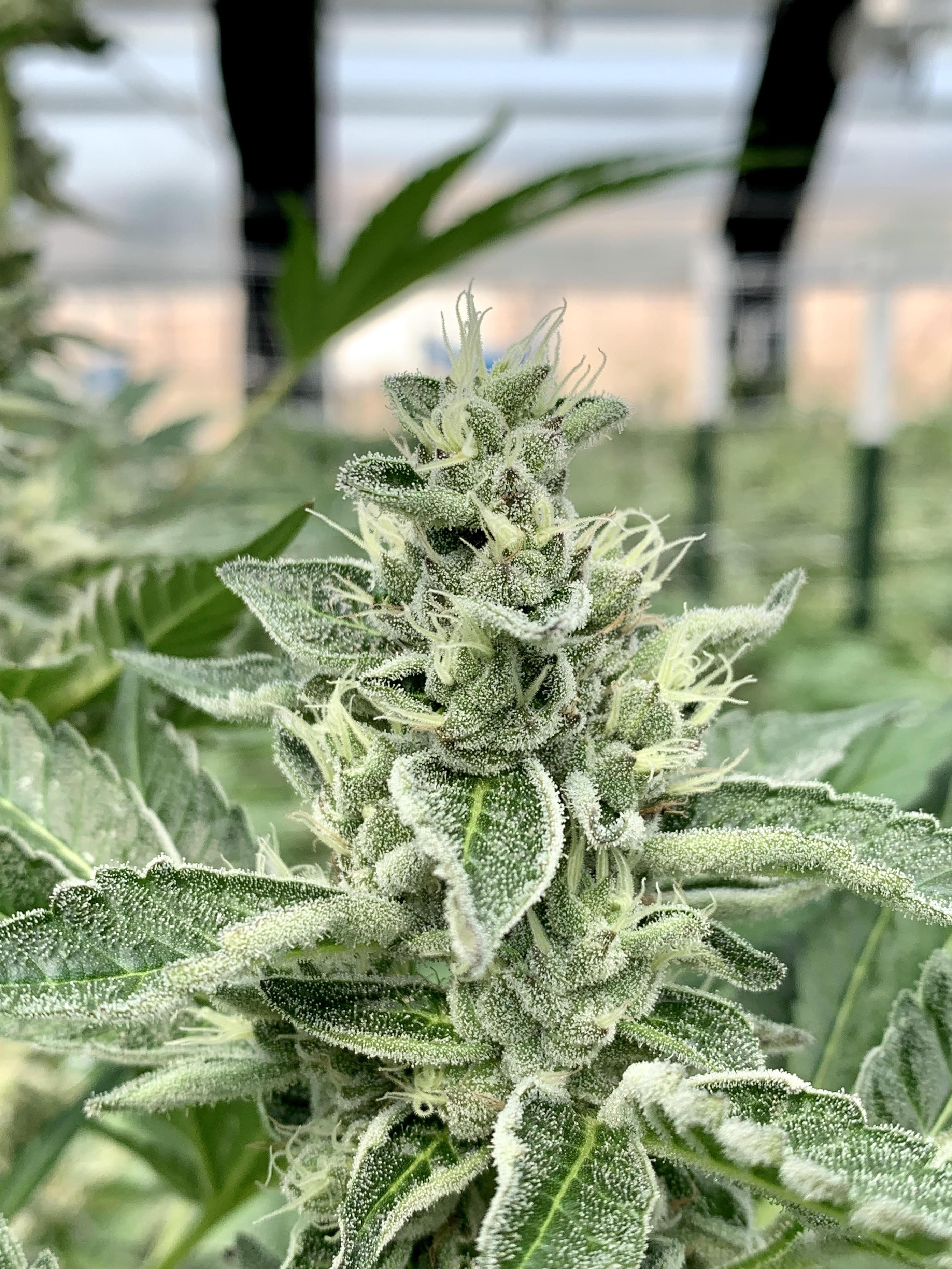

Livetia Farms have been family-owned and operated since their start in the cannabis community. They strive to produce the best flower possible.
One of their top contenders is Blueberry Muffin, an indica-dominant cross of Blueberry and Purple Panty Dropper. When extracted and finished by our lab technicians, this strain is delightful from the Rind all the way to the HTFSE - it really smells like you've walked into a bakery. Its berry sweetness is softened by a smooth, creamy finish of baking muffins.
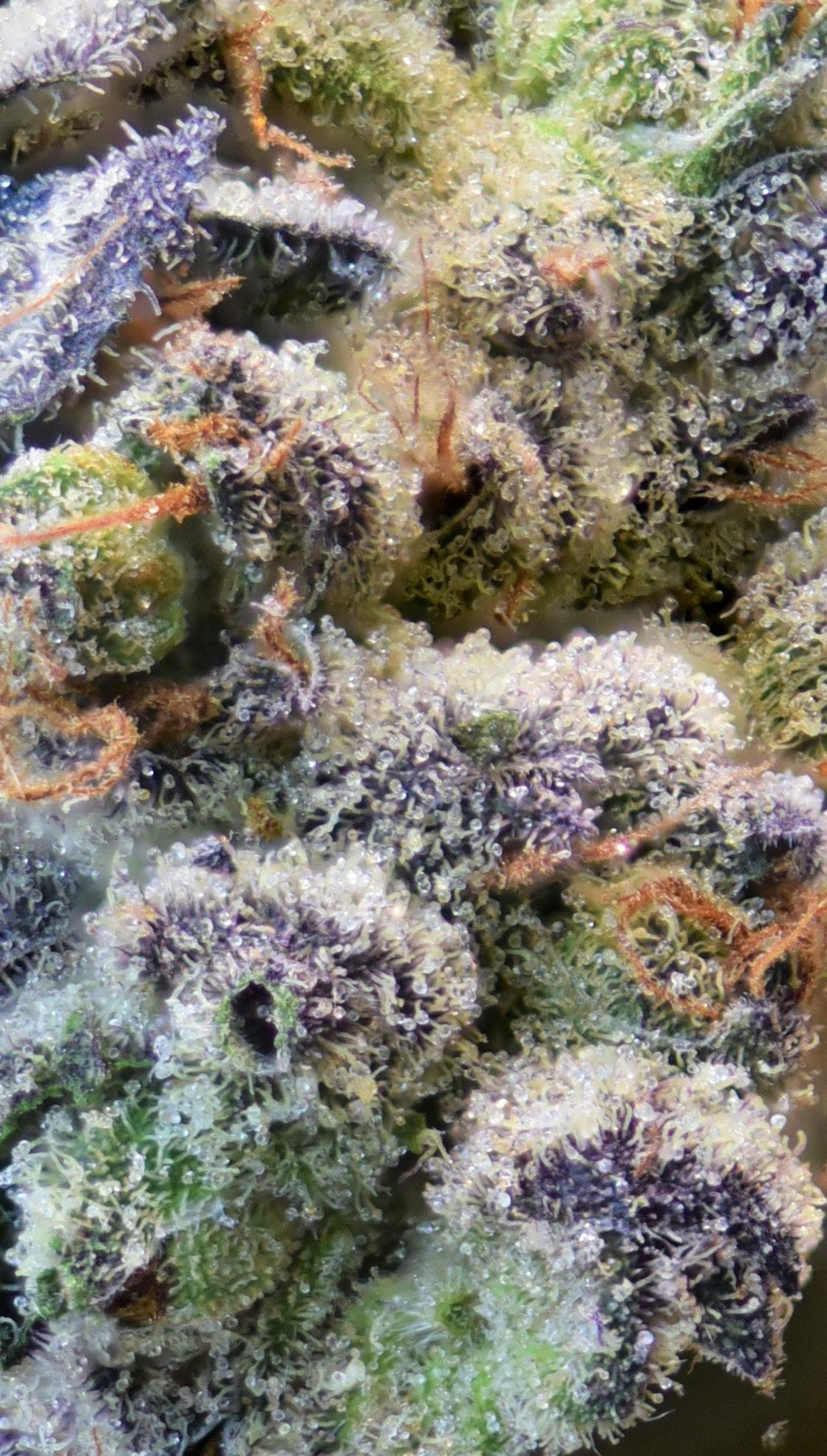
Livetia Farms is an OLCC Tier 2, sun-assisted indoor facility, located in the beautiful Siskiyou mountains of southern Oregon. Owned and operated by a husband and wife duo who are seasoned growers from their medical marijuana days, Livetia Farms focuses solely on quality and end-user satisfaction. Organic inputs, state-of-the-art greenhouses and some assistance from the powerful southern Oregon sun helps produce some of the finest, highest terpene cannabis found on the Oregon market.
With a wide library of sativa, indica, and hybrid genetics, Livetia Farms will always have a strain that fits your mood and time of day.
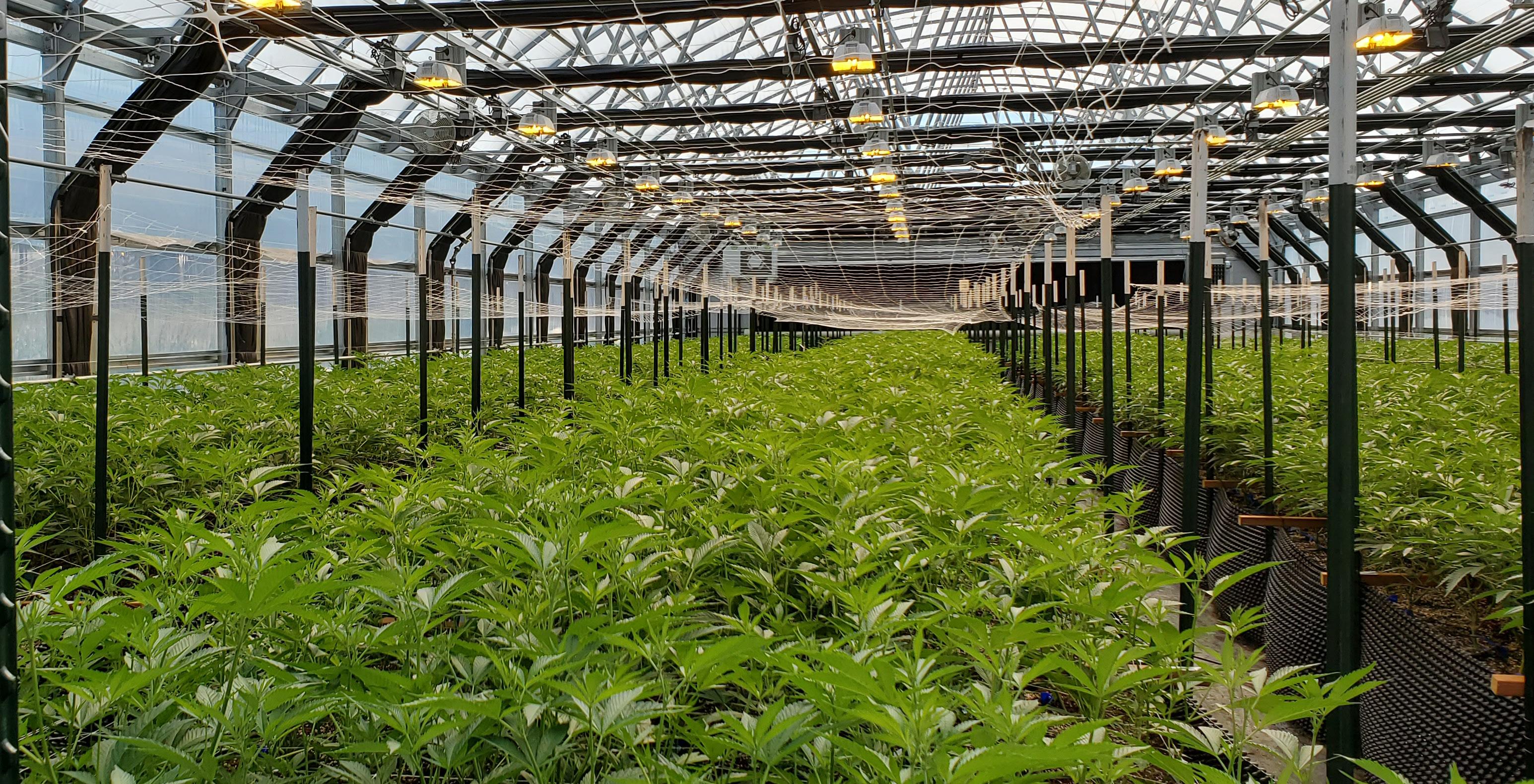
Livetia Farms is located in the heart of southern Oregon's prime growing region. They receive over 200 days of sunshine and benefits from prime weather conditions which provides the ideal growing situation.
"Hey! We’re Urban Canna and we’ve been cultivating Indoor cannabis since 2012. Our mission is to provide consumers with fresh, consistent, top quality cannabis from batch to batch. We do our best to provide a wide variety of flavors to meet any and all needs necessary. Our cannabis is cultivated indoors, using soil as the grow medium, in a sealed environment. We take extreme pride in our work and care of our plants from seed to harvest.

All of our batches are thoroughly inspected for quality and consistency so that we can provide you with our best product possible each and every time. We hope you enjoy our flower and truly appreciate your support! Thank you!"
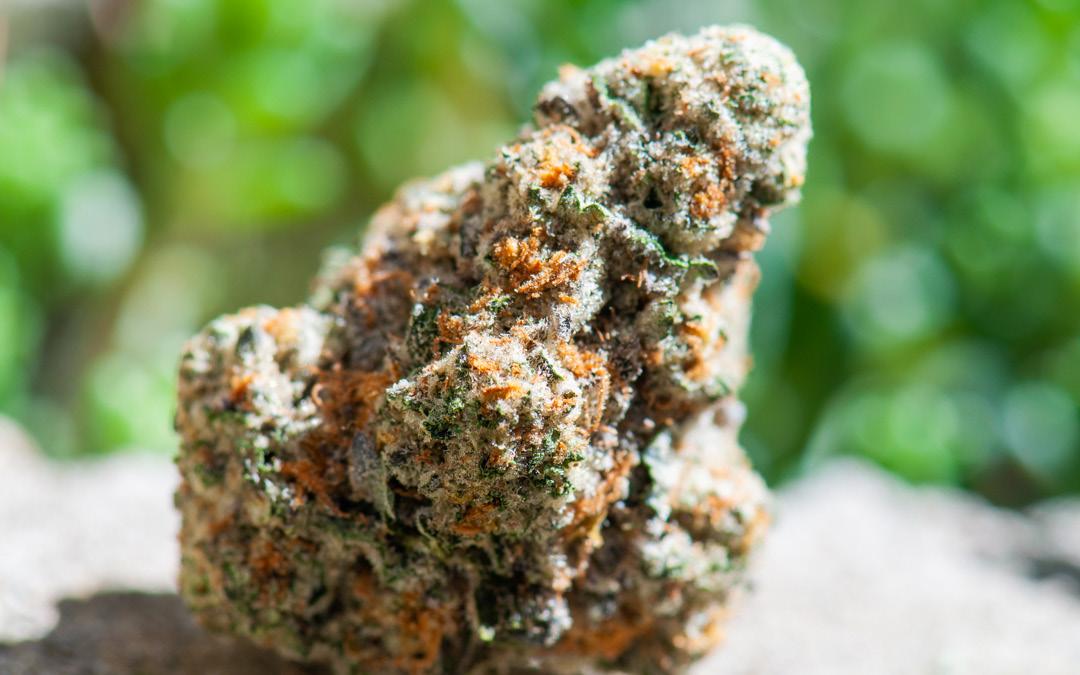 Justin The Urban Canna Guy.
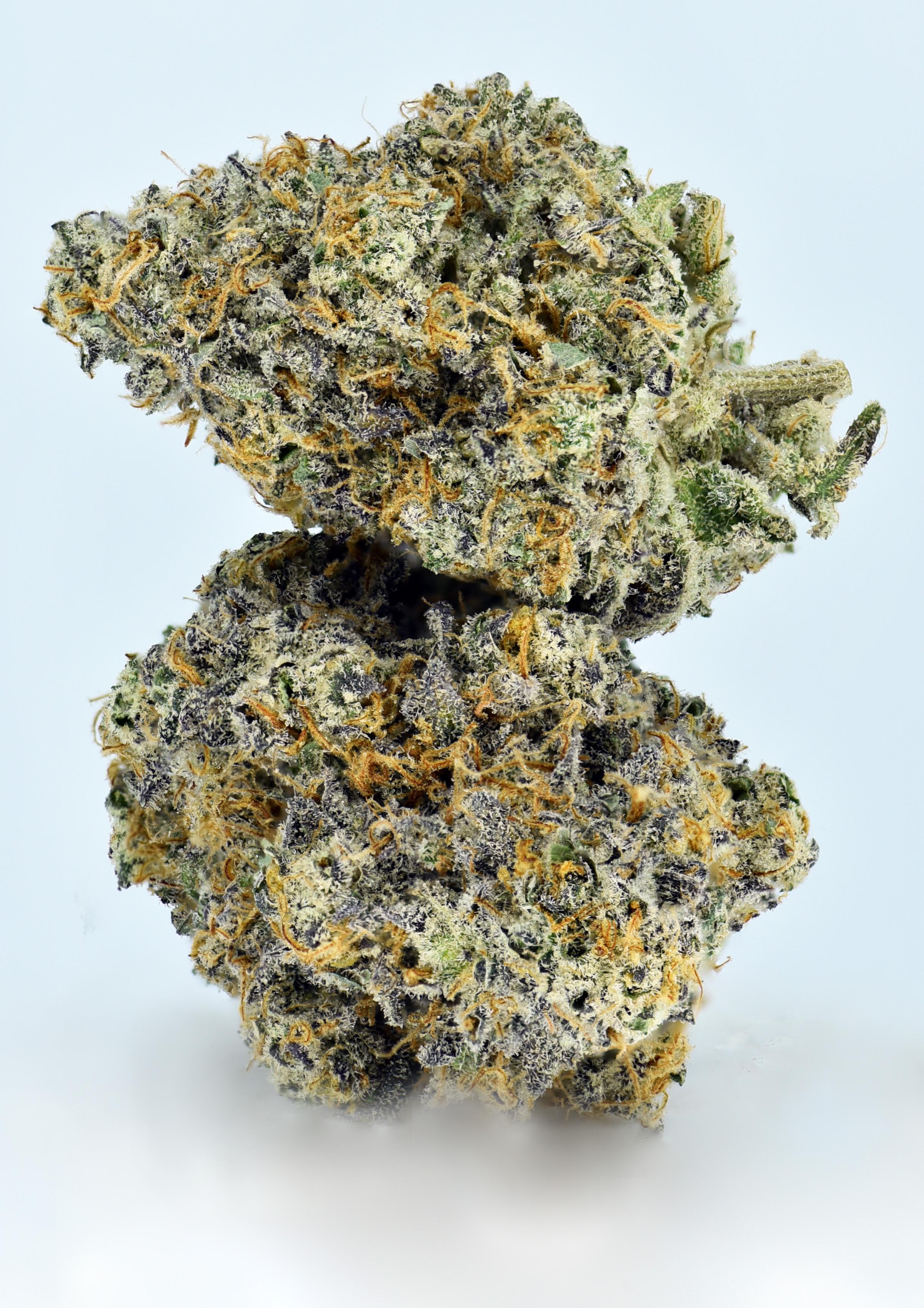
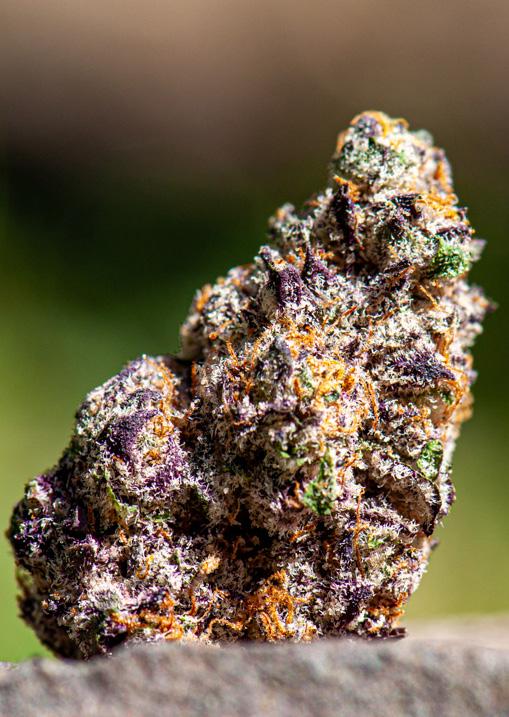
eugene oregon
Backedby the local Eugene community, Flowersmitwas built from the ground up and continues to evolve to make their dream a reality. The incredible successes have allowed them to create a better lifestyle for all those who work Flowersmith and have the opportunity to smoke Flowersmith grown flower and extracts.
The crew is small close knit groups of ever evolving experts, who are able to touch every part of the garden, in person. Each aspect of the grow, from seed to the painstakingly perfect, hand trimmed nug that you get in the dispensary, you know, it was done with the utmost care. Each of their crew has their hands in the dirt and because of their dedication, they stand behind everything that is entered into the market.
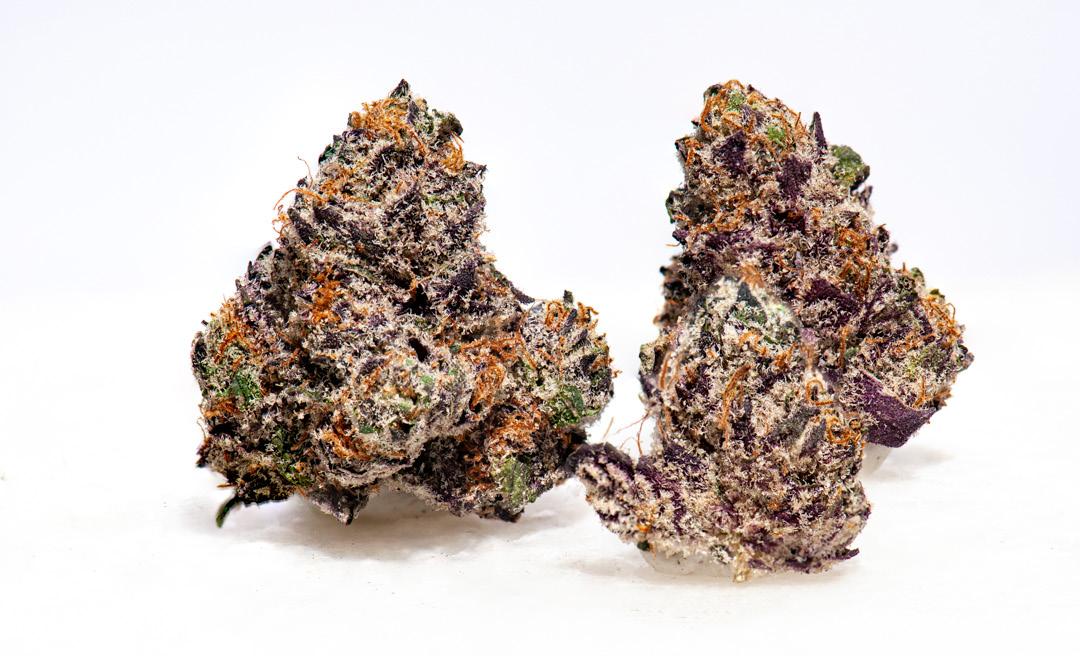
"Flowersmith plants are never treated with harsh pesticides or chemicals, and are fed nothing but earth-based goodness." They even have an incredible inhouse compost program they use to create custom fertilizer, created from their very own earthworms! Just one of the ways they create the "ideal indoor garden environment."

Rosebud Growers started in 2016. It is a family-owned and operated LLC with over 35 years combined experience in cannabis cultivation and over 8 years experience in providing medical patients with medicine that helps their pain and gives them a better quality of life under the Oregon state program Oregon Medical Marijuana Program (OMMP).

Rosebud Growers uses only the most experienced cannabis cultivators and our clients are our top priority. We treat what we do as high art: it’s beautiful and timeless. We love every moment of gardening and the opportunity to provide the State of Oregon with a high-quality product. We use our passion and knowledge to provide a great product that the public can safely consume and enjoy.
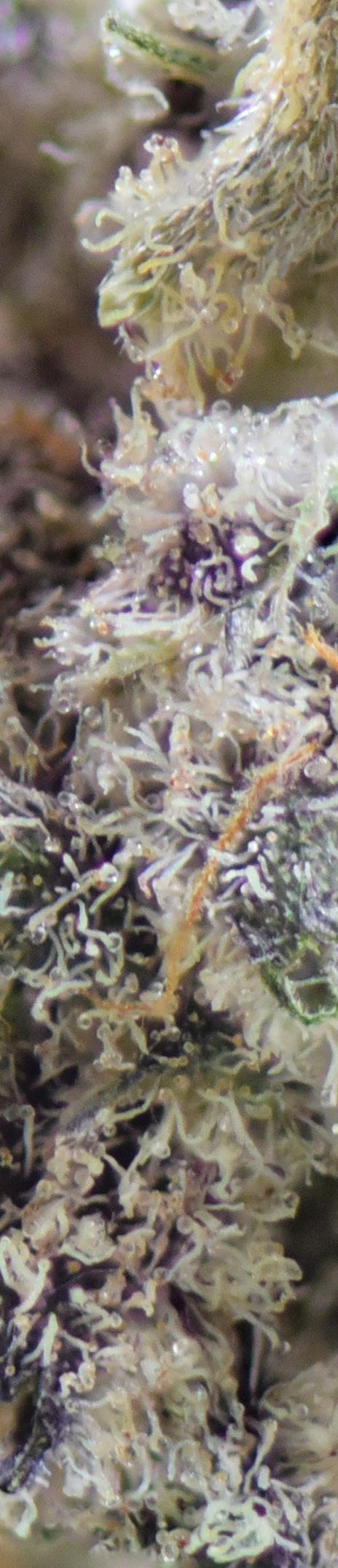
We strive to be an industry leader and establish a higher standard of Cannabis product in the newly formulated market. We learn and work with the Oregon Liquor Control Commission (OLCC), which licenses cannabis in Oregon, to maintain state and city regulations so that we can continue to produce recreational cannabis for many years to come.
We truly take pride and enjoy what we do and that shows in our product. Our goal is to create a brand that Oregon consumers grow to love and seek out. Our goal is to expand to provide our cultivation services and quality cannabis recreational products throughout the state of Oregon.
-- The Owners of Rosebud
Strain:
Strain:
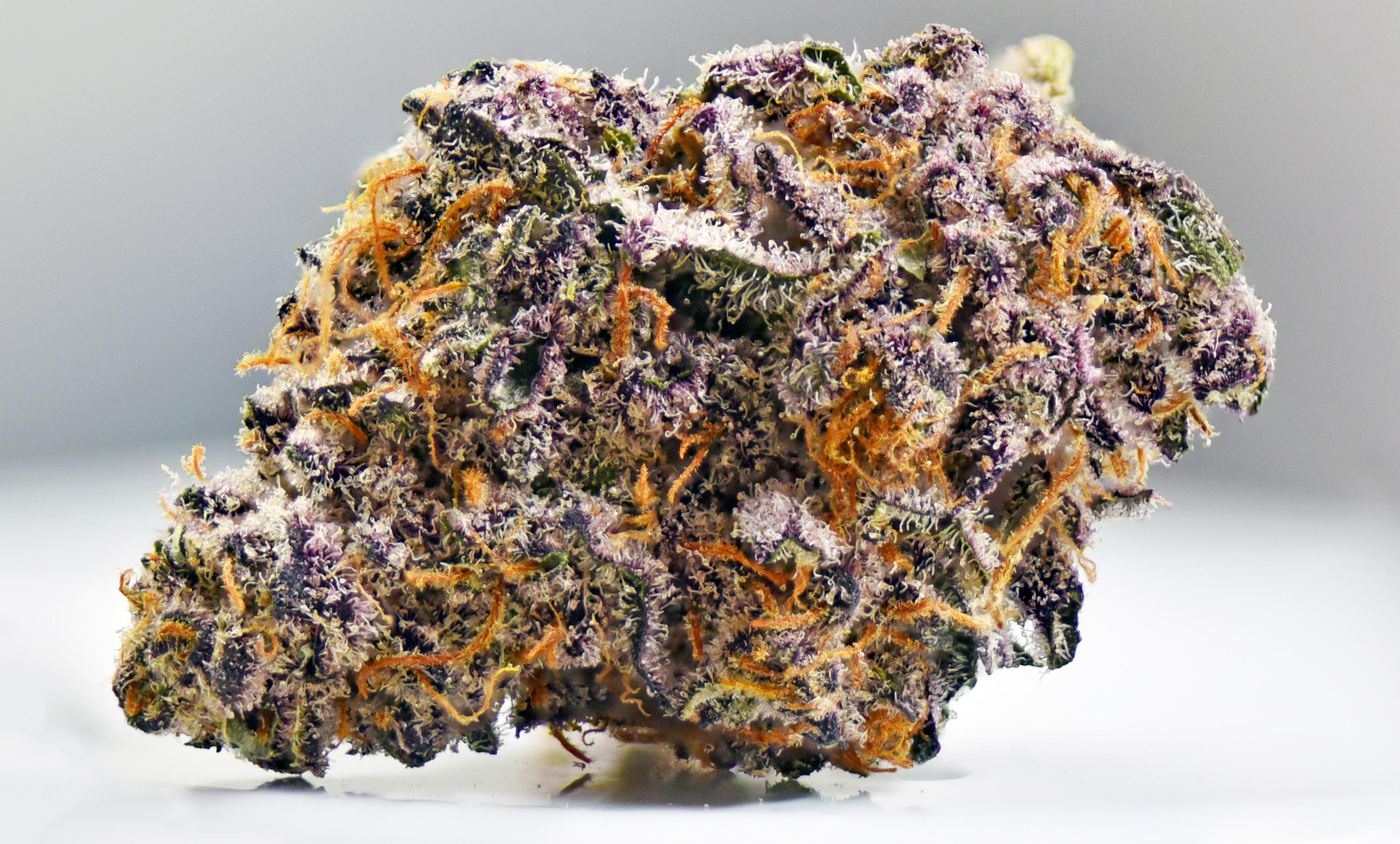
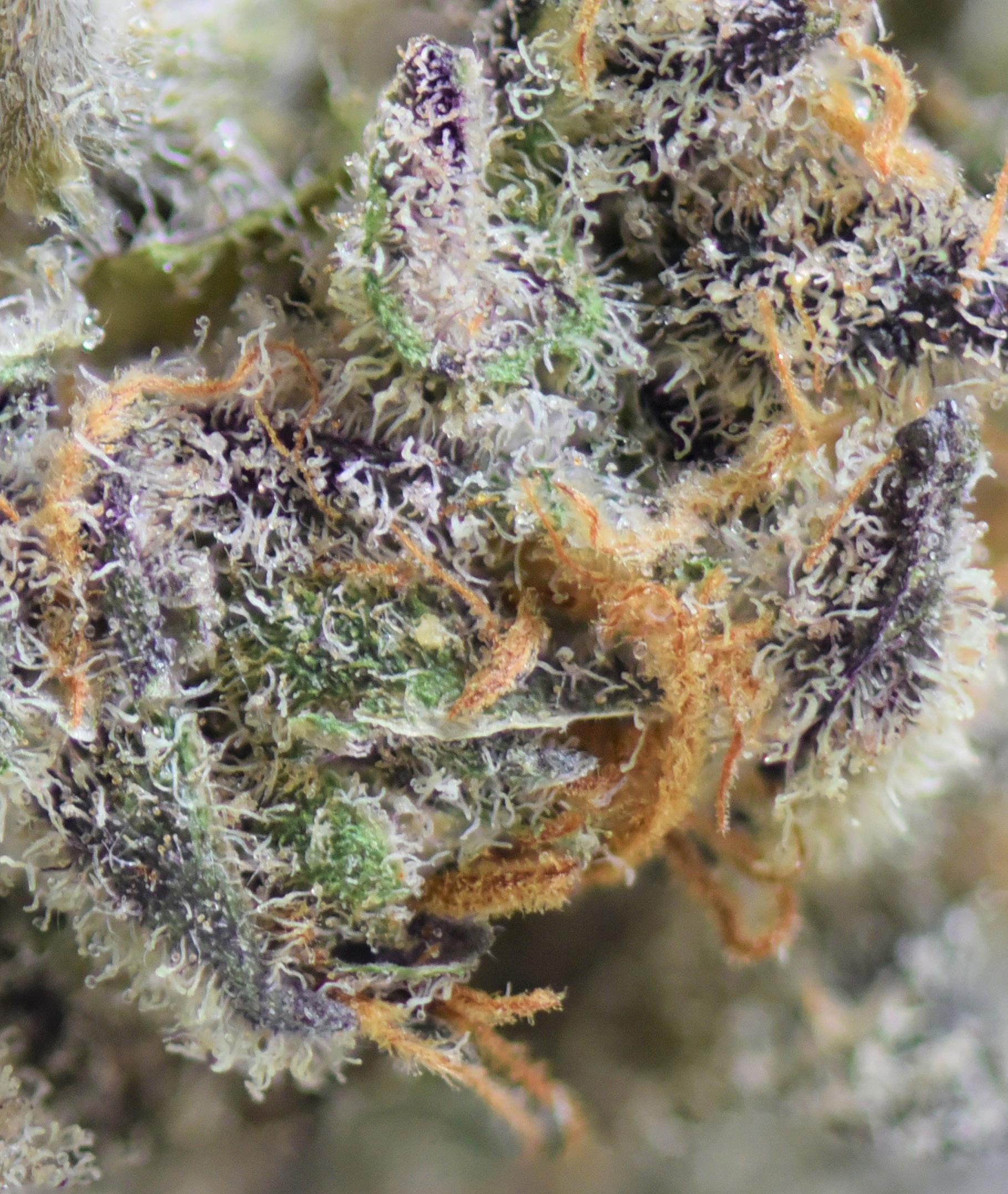
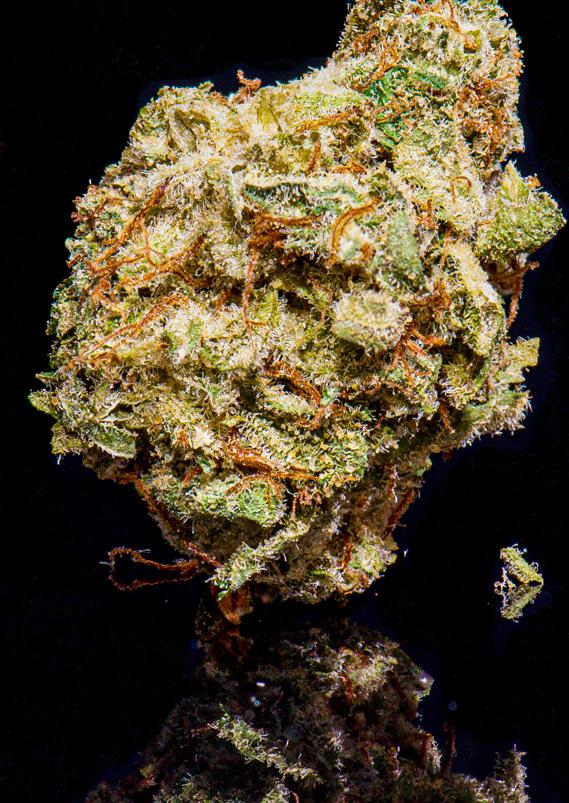

Dank Brothers strives to craft the best possible flower using innovative approaches to growing, while maintaining a strong connection to their community.
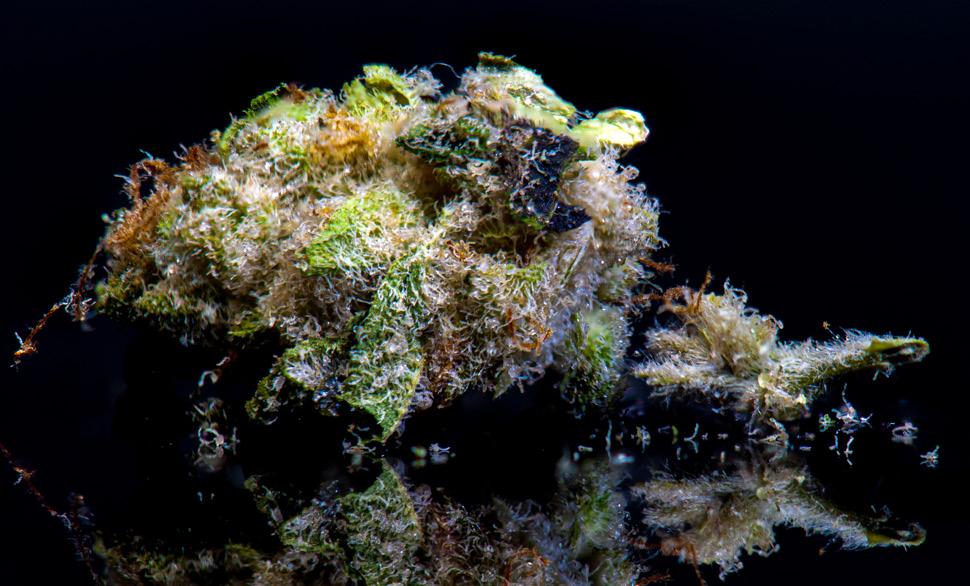
The Dank Brothers operation has been designed from the ground up to create an environment that is perfect for growing excellence. Currently, their Milwaukie, Oregon site has eight rooms, each one with meticulously engineered systems and space for the precise control you would expect and is needed from such expertly cultivated cannabis.
Each stage of a plant’s life is carefully developed to allow for the plant to become it's very best, ensuring the flower is just as good from the grow to pop-top. And, because everything is grown indoors, they are able to harvest year-round, meaning you can consistently get Dank Brothers all year long.
"We grow premium pot. That’s our business. But our focus is on the people and the love. Besides the love and the people at Dank Brothers, the most important reason to ask for Dank Brothers in your cannabinoid product is that the terpene chemistry has been carefully cultivated to appeal to the chemistry of your brain."
The eclectic team is made up of hard working folks who share a passion for creating strong and delicious cannabis. They do it with love and magic that you can feel every time you inhale.
The strains they make available for the market are chosen with a great deal of care, and proven to treat various physical and mental conditions.
Everything Dank Brothers does has a greater purpose, building up the quality of life for our community.
"According to an often debunked story, NASA has confirmed that marijuana contains “alien DNA” from outside of our solar system. True or not, the cannabis plant continues to amaze us earthlings with its alien like crystals and out of this galaxy aromas.

By far one of the most intriguing, dangerous, and often misunderstood plants of our times — we can thank our neighbors from light-years away for bringing us the fire.
In collaboration with alien civilizations across the galaxy, it’s our commitment to bring you the finest, dankest and stickiest weed known to alien-kind. We are not alone."
-- Surfr Select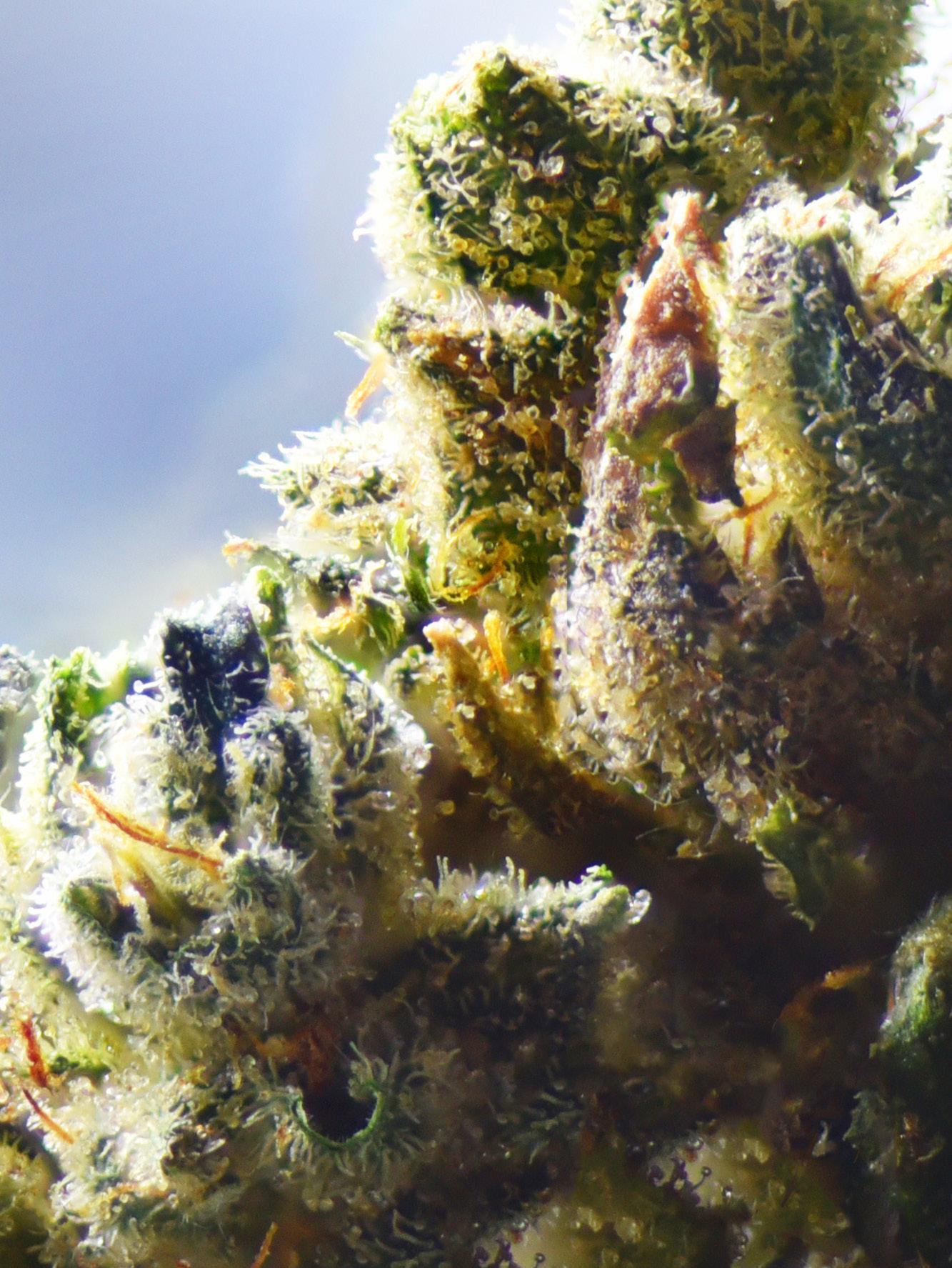


Ben grew up on the outskirts of Portland and has been growing and breeding cannabis since before Seinfeld was on the air. He’s learned a lot about greed and human behavior throughout his tenor as a grower on the great North West. Stardust is only two years old, aside from one or two strains, everything is bred in-house.
Frustrated with the cliques of the industry, Stardust has been paving the way for innovation and of moving away from some of the California hype strains. Believing in breeding their own strains to continue to
push diversity in Oregon and to prevent big profittakers from taking over the industry.
While many farms tend to stick to growing just three or four of the most popular strains such as Cookies or GMO, Ben continuously innovates by developing new and complex pieces. He is encouraged by new growers coming to Oregon who have begun to do the same, ensuring that Oregon will continue to provide the most PunkRock style of grow, and adhering to the philosophy of "Dare to be different. Don’t be a part of the flock if you want to stand out."
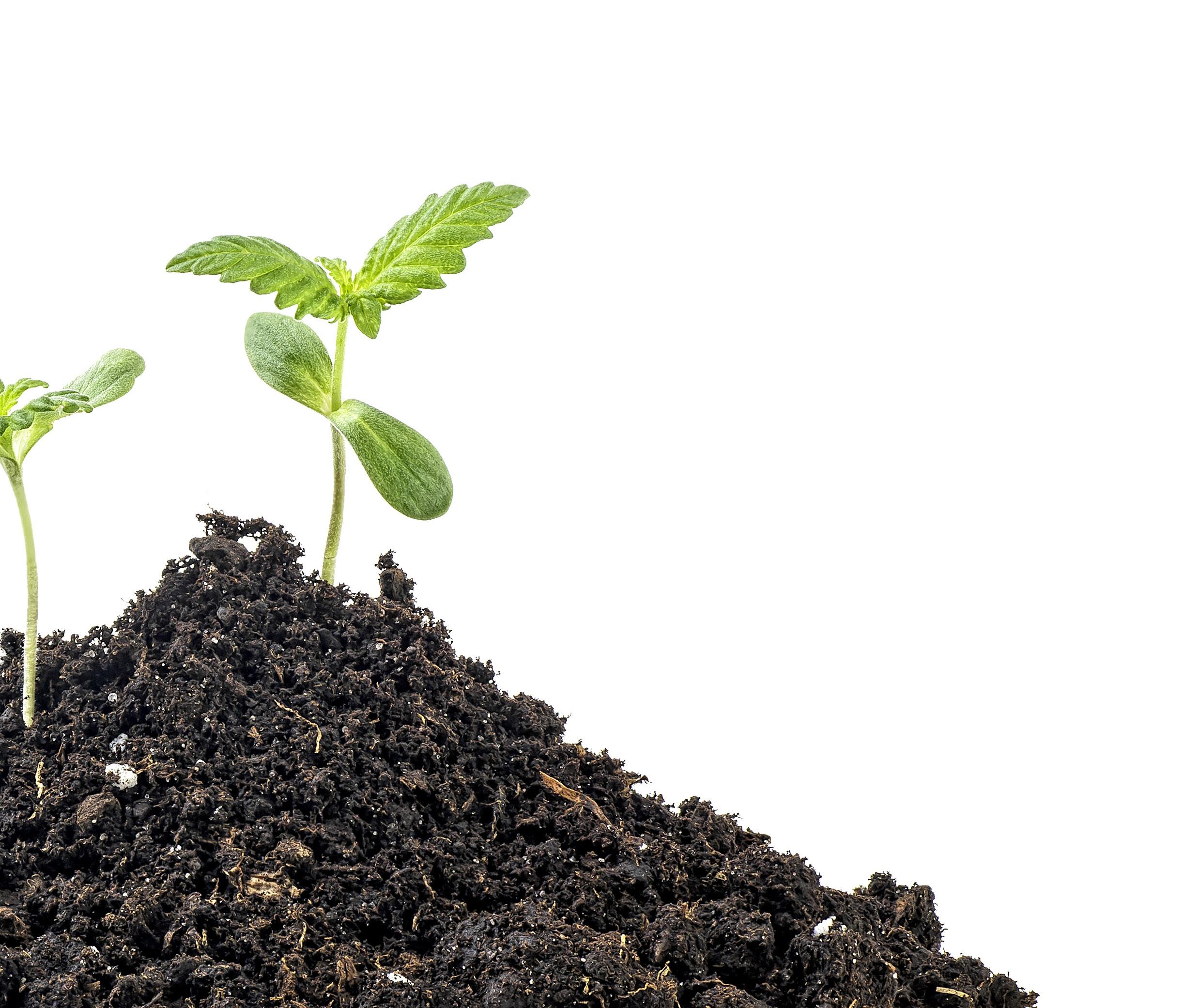
Legend Orange Magoo (Ice-cream Man x Blue Magoo x Lavender Aura x Wookie) and Purple
Urkle Genetics [Bodhi Seeds]
Grape MTN [Bloom - Hairy palms] - Grape Pie
Wedding Crasher x Tropica Cookies x (Girl Scout Cookies x Tangie)
White Fire Tang
Tang Breath x Secret Formula (wifi43 x Dosi-dos)
Guava Breath
Strawberry Guava x Blue Tang Clan (Tang Breath x Skittles Goo)
Guava Cooler
Kush Mintz x Guavaz
high quality cannabis in a state of the art indoor facility. They grow, dry, hand trim and cure beautiful buds in house to be delivered to dispensaries all over Oregon.
Quality and consistency are their guiding principles, and they serve the cannabis community with true professionalism and seriously good weed.
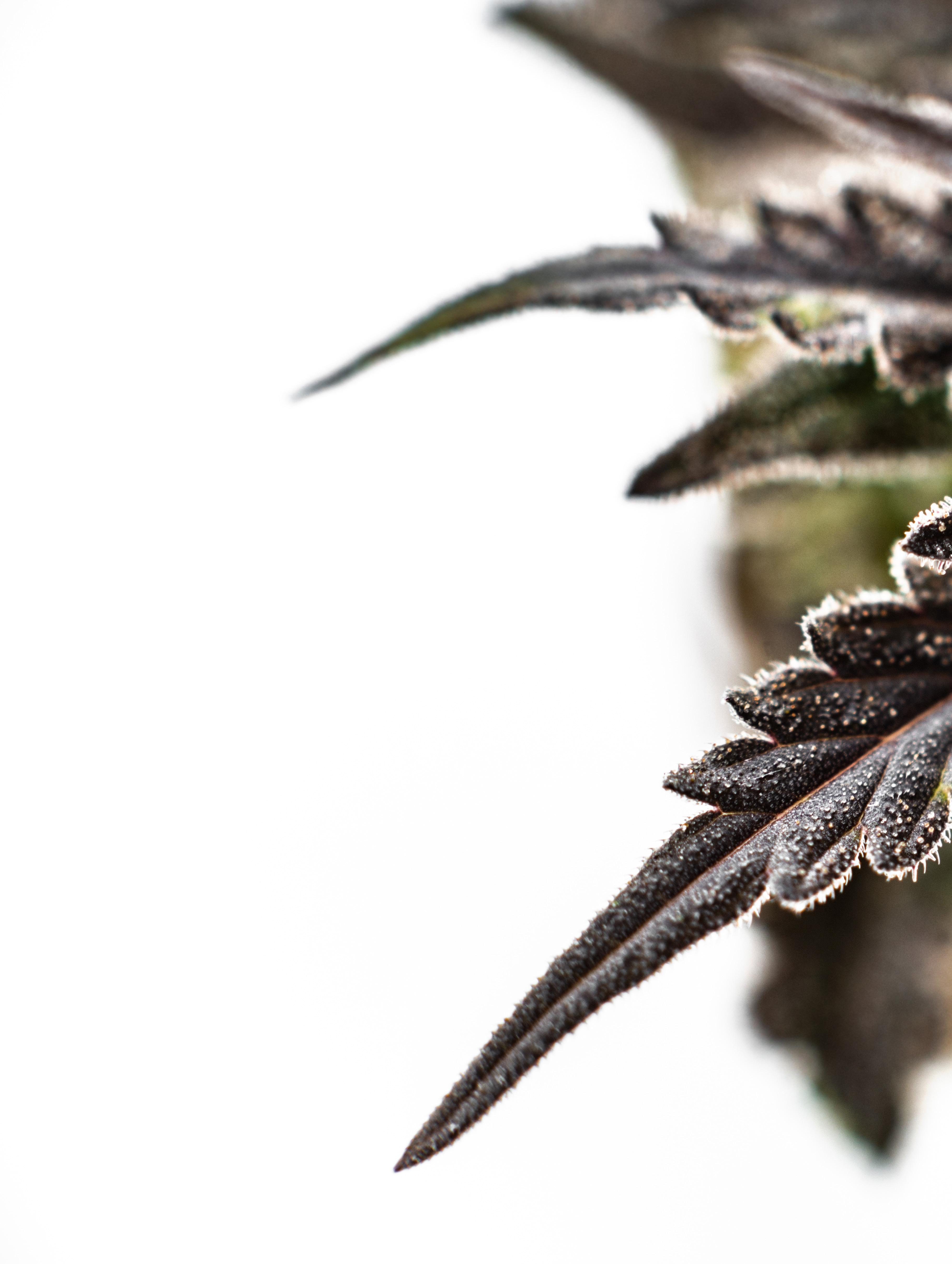
Mo Berry, one of De Terra's most popular strains, is a cross between GMO and Raspberry Gorilla Snacks.
Mike started De Terra by accident. He had retired from his company in Europe and his lawyer called and told him he should think about investing in a small cannabis company in Oregon. At the time, he was an investor in another company. As a "numbers guy", Mike realized the company wouldn't be able to survive without more money, so he invested and took ownership in the company. Late that same fall, the main utility provider suddenly stopped supplying electricity to the company. Mike immediately flew to Oregon to find out what was happening. When he arrived, the place was dark, with one just one small electricity generator running. Unfortunately, that generator was a 480 AC unit plugged into a 220 AC outlet. Of course, the AC froze and blew up 5 transformers. They didn't even have a permit.
Before the city came, Mike quickly destroyed all the plants. After discovering that over a million dollars worth of plants and equipment had been also been taken by a number of workers without approval, he made the difficult decision to let everyone go so the company could be rebuilt from
the ground up. Luckily, one of Mike's friends had this a soft spot for the region and they decided to partner to save the business. Mike particularly loved the medicinal benefits of cannabis and, despite all the negatives he'd encountered so far, he still wanted to help the industry.
With his wide background in investing and information technology, Mike began building a new approach for De Terra. First, he assessed the grow from the viewpoint of efficient and effective production, creating a set of standard operating procedures. He then spent a year building out a plan, without growing anything. Once he had a great strategy and plan, he executed - and the results are apparent in the quality of his product.
Everything Mike builds is purposeful - nothing is jerry-rigged, makeshift or haphazard. Sealed dry rooms are accompanied by a custom-built drying rack with precise blowing machines to ensure terpene and cannabinoid preservation.
Everything is also constantly inspected. One of the most important methods De Terra uses for testing the quality of their grow is Brix testing. This valuable testing method objectively measures the sugar content and other dissolved solids in plant cells. This provides vital information about precisely what the plant needs in terms of soil nutrients and other important elements.
Everything De Terra does to produce the highest quality cannabis is in-house, including a creating a custom-designed storage bag that can keep material cured and perfect for 6 or more months.
De TerraDeTerra Farm is proud to cultivate
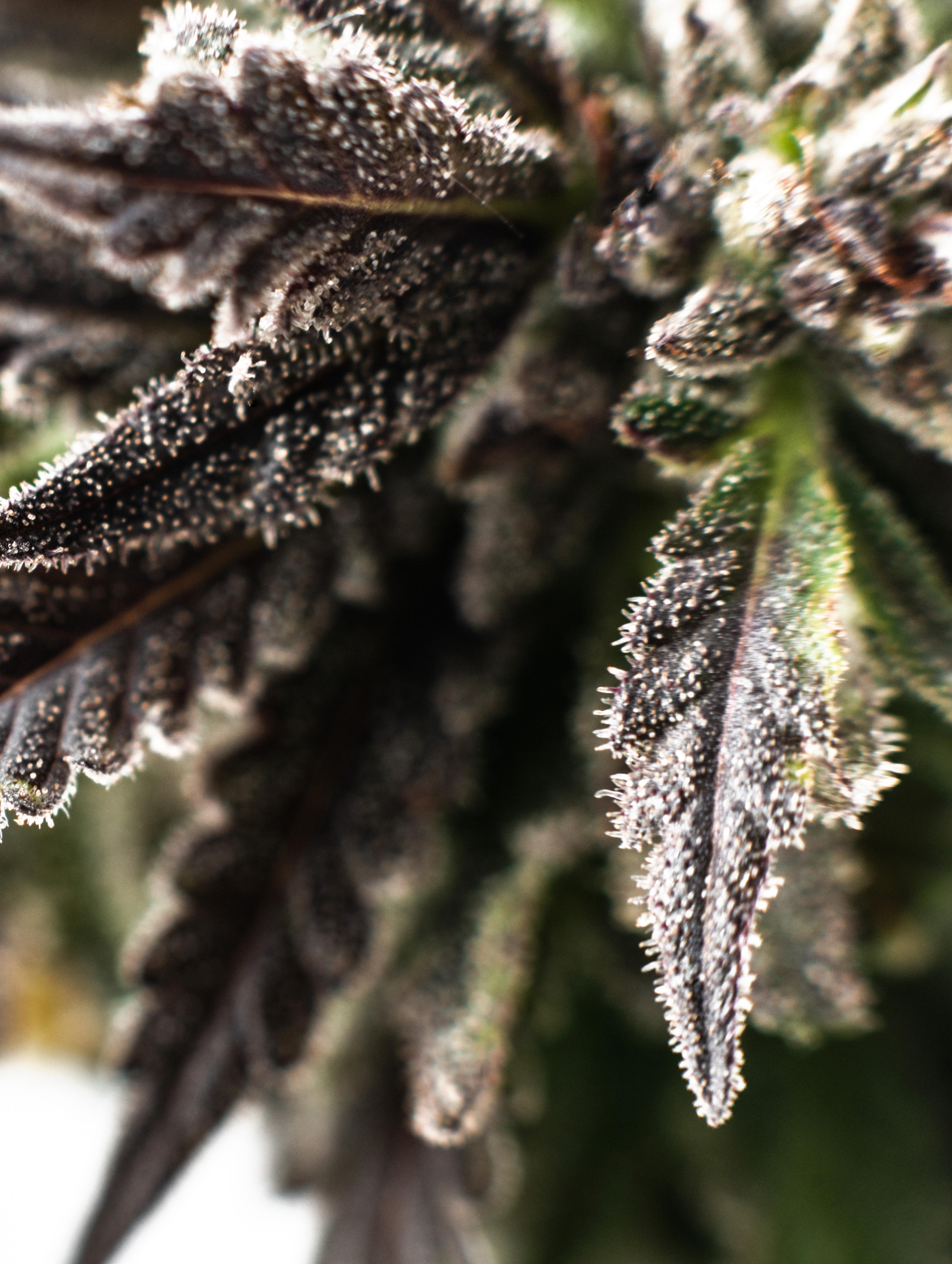

Cold Frame Farms specializes in growing exotic hybrids that reflect their passion for high-end cannabis. They strive to blend old school methods with new school technology to produce the finest quality cannabis possible.
Cold Frame Farms is an Oregon-owned cannabis producer, with a focus on high-quality production of the best strains available to the discerning cannabis aficionado. The name "cold frame" originated from the "bottomless" boxes that are set over plants to protect them from adverse weather. Known as a "cold frame", they are often used by gardeners in the spring when they plant their seedlings.
Cold Frame's custom 11,900 sq. ft. indoor facility was built from the ground up, ensuring that premium cultivation was considered as the highest priority in every decision. From the moment they broke ground to the present day growing over forty varieties of strains, Cold Frame consistently makes careful and deliberate decisions about every aspect of their cultivation process. They call this approach "Conscious Cultivation" - and it’s this guiding principle that helps them continuously deliver great products with a strong positive bias towards the environment and the community.
Lee Smith, Cold Frame's Master Gardener, has over 15 years of experience in organic gardening and farming. Lee has managed extensive horticultural operations in both Oregon and Hawaii. With a purposeful approach to indoor gardening, Lee has successfully led Cold Frame Farms to produce the highest quality flower possible. Lee has a long history of creating efficient farming and permaculture methods in cannabis, bamboo and organic landscapes. As the winner of the 2016 Oregon Growers Cup for indoor, Lee has developed an outstanding reputation in the region.
Some of our favourite Cold Frame strains we have had the honor of working with are Grape Octane, Scooby Snacks and Roasted Garlic Margy.
26% – 31% THC
This hard-hitting, high THC cross between High Octane OG & Grape Pie comes from Cannarado Genetics. Terpy, sticky buds swirled with greens and purples represent the parent strains beautifully. Together, they create an irresistible combination of grape and lemon with potent octane gas flavor mixed in. Appetite enhancement, pleasant relaxing euphoria, pain relief and peaceful sleep are all characteristics of this cross.
22% – 28% THC
Scooby Snacks is an indica-dominant hybrid that crosses Platinum Girl Scout Cookies with Face Off OG. Its dense, purple buds are full of piney OG Kush flavor and a sweet aftertaste. Don’t underestimate the potency of Scooby Snacks! The combination of popular West Coast genetics brings on stimulating cerebral effects that weigh heavy on your eyes and slowly relax the body. The end result is a calm, happy experience that keeps depression away and can help rock you to sleep.
25% – 30% THC
A stinky, sticky, heavy-hitting indica dominant strain with a pungent garlic and diesel aroma. Providing a quicker turnaround than the parent GMO Cookies, Roasted Garlic Margy exudes all of the best qualities while being easier to manage alongside our other flowering cycles. Roasted Garlic Margy will leave you wondering what you were doing before you took a hit while your eyes are barely able to open. Euphoria, pain relief and peaceful sleep are all characteristics of this cross.
Ibecame a budtender in early 2020 and have worked in Portland on the West Coast as well as in Ashland, Oregon. In my time as a budtender, I’ve had to deal with many different types of people from varying backgrounds. The interactions I’ve had are vastly different depending on the circumstances.
The person who comes in with their last $20 bill often has a very different attitude from someone who has a seemingly endless supply of money. Whoever said that “money doesn't buy happiness” never had to deal with no healthcare and having to choose between the cheapest thing on the shelf at the dispensary so they wouldn't be in agony all weekend from an injury they can't afford to have fixed, or food for their kids.
It’s very cliquish, and people down here don’t really seem to want to work as much. Many of the dispensaries seem to want to have competitions about whose dispen-

sary is better. In the Northern shops, budtenders feel good about sending customers to other shops to get what they need. But, in Southern Oregon, it can feel as if you are really pushed to sell what you have in the shop to people, regardless of what the customer wants or needs. There is not the same type of camaraderie. I don’t understand why people just want to knock each other down instead of helping each other. Otherwise, the big corporations are just going to take over. But it’s really hard to work with these dispensaries that don’t carry good extracts. I was over at a dispo working on the weekend and they asked me what I was smoking, and I had to say, "absolutely none of this shit."
I don’t understand why every person isn’t happy by the time they leave, when you’re coming in to buy weed. 80% of the time the interactions are really nice, and you can almost gauge the type of interaction it will be based on age. When I ask someone older than 50 for their medical card, they always let me know that they have been smoking since before I was born.
Younger folks just seem to care about brands and whatever has the Highest THC. The younger people tend to be nicer, unless they are from Washington or California, then they tend to be a bit bitchier. But that makes sense. It's a long drive to come all the way to Oregon to get extracts or flower.
I really wish people cared more about things that didn’t have to do with THC. That is not
An honest perspective from a budtender in the business.
the predictor of how high you will get and unless the company is using SClabs, the rest seem to just write in whatever number you want. It's not accurate. I only smoke stuff that's been tested by SClabs, because they are the only ones that seem to actually care about being accurate.

Even stranger, why do customers only want one-gram carts? Like, it’s weird. They are not getting a better deal. You can purchase 5 grams per store. Not five units. And because of the disconnect, now there are very few companies who even make half-gram carts. Half-gram carts are way better, all the oil doesn’t get gross because it’s been oxygenated and heated and re-heated as many times as a half gram cart, because there is less of it. And yes, I know, the environment, but there are great companies out there who use ceramic cartridges instead of plastic. People are awful about everything. Especially during COVID. I have to yell at least 2x a day at someone to get out or put on a mask and have a confrontation. The thing is, I don’t make the

rules and I get fired if I don't enforce the rules. Gawd, a woman went into a dispensary with her child the other day (which is not allowed by the OLCC) and was told to please leave by one of the staff. But then someone else helped her and everyone on the floor ended up getting fired just to appease the OLCC gods. Please do not put our jobs at risk because of some slight inconvenience.


This is almost impossible now. Back in the day, you could just roll up to a dispensary and ask them if they wanted it. But now, you must go through a purchasing manager, who maybe will try the products, if they feel like it. And if you're not personal friends with them or bribing them, good luck. Half the time, the purchasing manager doesn’t care and isn’t interested because it’s too much work for them. And even then, you have to hound them to give you a response. Even if they love the product and they want it on the shelves and the customers are asking for that particular brand, there are still so many who just don't want to do the work.
We tried to get a Rebel Roots RSO into our dispensary once for this older woman who said it was the only thing that worked for her. She had to drive all the way to Bend, Oregon to pick it up. She wanted the High CBD version, but nobody around here had it. I would ask Distribution to get it because this woman needed help. But they just didn’t care because it’s not “on-brand.” Or maybe they didn’t’ care enough about the patient.
If you do manage to get the product on the shelves and people are loving the product, the system in place for getting re-orders is non-existent. Purchasing managers often won’t bother to re-order before a product gets sold out. Worse, if it’s not their friend’s flower or extract company, then they just don’t care. You have to be “in the club” to get on the shelf and that’s not helping anyone get better meds. All that’s happening is a bunch of price-fixing and people getting stuck with products that don’t work for them, even if there is something better available.


Nobody at the dispensary wants you to be hired. Nobody wants the competition. And nobody will teach you anything. Need to learn Metrc to be a manager? Too bad. Nobody will teach you, because that will increase the pool of competition. And these jobs are clutch. Managers, especially purchasing managers have all the power. They can make or break a cannabis company. Next in line? The budtender.
One budtender in a shop can torpedo the sales for an entire company if they don't like them. It's crazy. And nobody wants to give up that power. I looked at and threw away half a dozen resumes every single day because the manager didn't want to bother with even filing them. Because, really, if a spot opens up, they will just hire whoever they want.
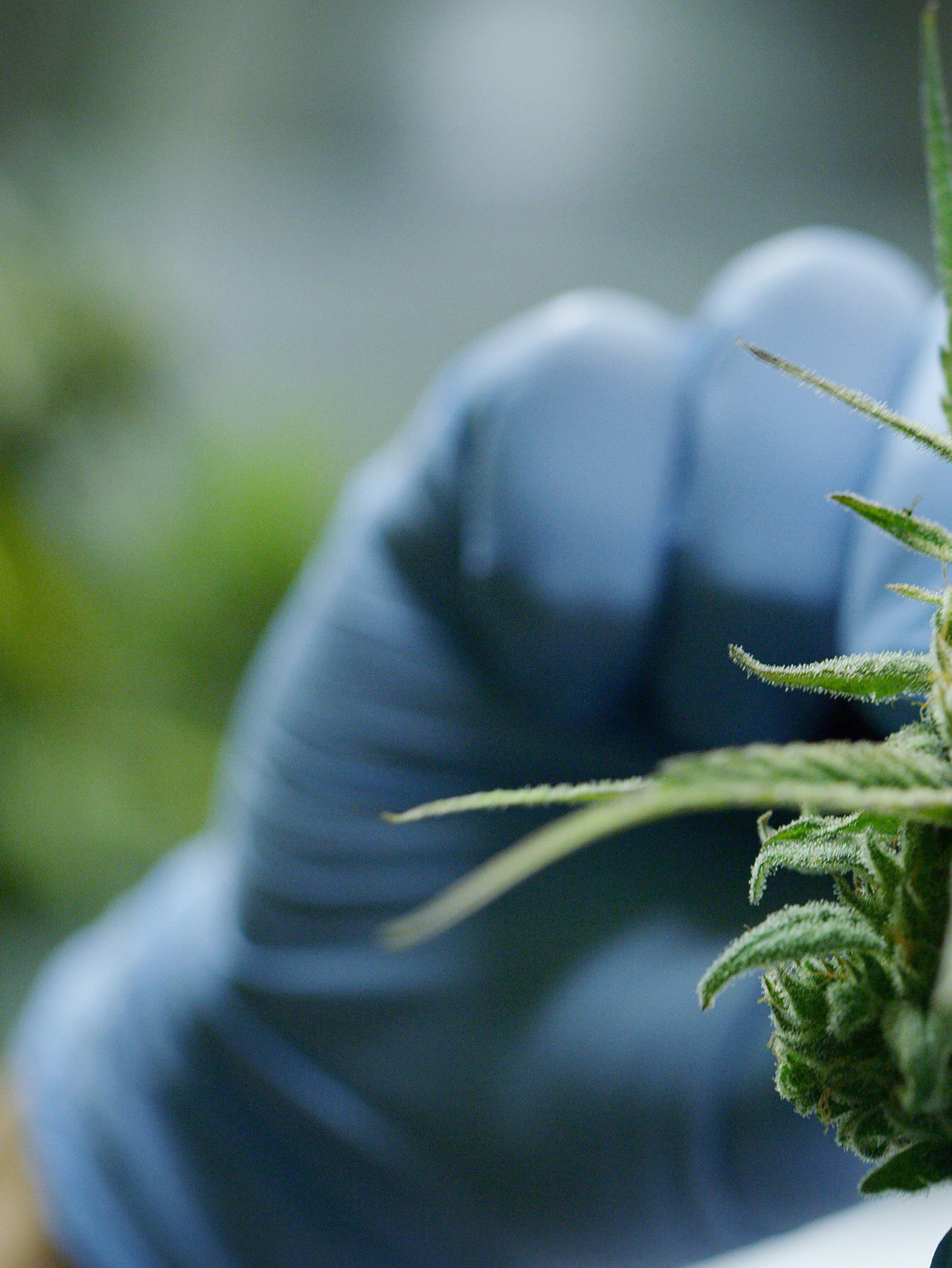 By Jason Wilson, MS
Theeducation industry is booming, the result of a growing global population. In the U.S., consistent increases in government spending, expected growth per capita and postCOVID-19 demand indicates that education will continue to be in demand for the foreseeable future.
As more and more states legalize cannabis and more people are exposed to the potential of cannabis, the cannabis industry has also recognized the value of delivering cannabis education to the public and is getting into the business of education.
In fact, many cannabis companies are learning that “education services” are a way to assert themselves as sources of authority to differentiate themselves, particularly in an extremely crowded market. Alternatives to these industry-driven sources of education are slim. There are currently very few formal academic programs that feature cannabis science courses. Courses on the human
endocannabinoid system are still not even taught in most medical schools. Research articles and reference texts on cannabis and cannabinoid science exist but are often published in scientific journals and highly scientific language, and therefore difficult to understand or inaccessible to the average reader.
Instead, the average cannabis consumer most often relies on people or sources they trust to provide them with information about cannabis. This might be a family member, a friend, a local dispensary, an online supplier or magazine, or some other trusted source. However, this information may not always be accurate. While scientific or technical information about cannabis may be simplified in some instance so that it is more digestible to a wider audience, the accuracy and integrity of the information may or may not remain intact. Indeed, the vast majority of cannabis education today is often grounded in cultural notions, anecdotes, memes without scientific basis, and basic misinterpretation of scientific research. As a result, myths are perpetuated, misleading information continues to be distributed and people are poorly educated about cannabis on the whole.
My own journey of learning about the cannabis plant began in my oral communications class in high school. One of our final examinations was a formal debate on a controversial topic. My topic was cannabis legalization, so I had to critically wrestle with many of the old traditional cannabis myths like the gateway theory, brain damage, cannabis’ effects on aggression and mental health, cannabis’ addictive potential, etc. Fast-forward 15 years and today, as a science educator, I am addressing myths about cannabis as a teacher instead of as a
student. Often, these myths are coming from within the industry, rather than outside of the industry. cannabis
Here are are a collection of myths, hyperboles, misleading interpretations or clarifications that highlight some of the nuances about cannabis and cannabinoid science, and which feed my passion for teaching about cannabis.
MYTH: Strains and Indica/Sativa designations correlate with chemical profile or genetic lineage
One of the first things that many people learn about cannabis is that there are different “strains” of cannabis with different effects, and these strains may be classified as either “sativa” or “indica”. Sativa strains are generally tall plants with narrow leaflets that have energizing or uplifting effects, whereas indica strains are shorter plants with wider leaflets that have sedating or calming effects.
Many budtenders, cultivators and other professionals and connoisseurs in the cannabis industry have recognized that this description is over-simplified and does not match consumer or producer experience. In spite of this, the belief remains that strain names and indica/ sativa designation must at least correlate with either genetics or chemistry – or both.
“Strain” is not a scientific term used in botany.
The concept of a “strain” is actually not used in botany but is more commonly employed in microbiology. Instead, the varieties of cannabis that people often refer to as strains would be better thought of as cultivars (cultivated variety) or cultigens (cultivated genetic). In the cannabis industry, strain names are used more like brand names than anything else.
There is no centralized or state-based registrar or authority that manages the use of “strain” names.
Additionally, until recently, cannabis cultivars have not been registered or uniquely identified by any centralized authorities or registrar. As a result, it has been very easy for people to use any cultivar name they like for any purpose they like, often following popularity trends. This is a direct result of cannabis prohibition. As registrars for things like rose varieties, hops varieties, and tulip varieties emerged, it would have been natural for such a system to have been developed for cannabis to assist nurseries, breeders, and cultivators and protect them from genetic fraud. Unfortunately, in the cannabis world, this has not happened.
“Strain” names are used inconsistently in both sexual and asexual propagation.
Beyond misuse of cultivar names for the sake of making a buck, names are also innocently used inconsistently during cultivation and breeding. For example, a “Blue Dream” plant grown asexually as a clone and a “Blue Dream” plant grown from seed could end up being very different plants. Yet that label “Blue Dream” will likely carry on through the progeny of all of those varieties of plants and circulate in the market, misleading the consumer into thinking they product has been derived from the same plant source material.
“Indica” and “Sativa” as used in the cannabis industry are not scientific terms, and do not represent any formal scientific classification of cannabis.
Researchers don’t agree on how cannabis should be categorized. What researchers do
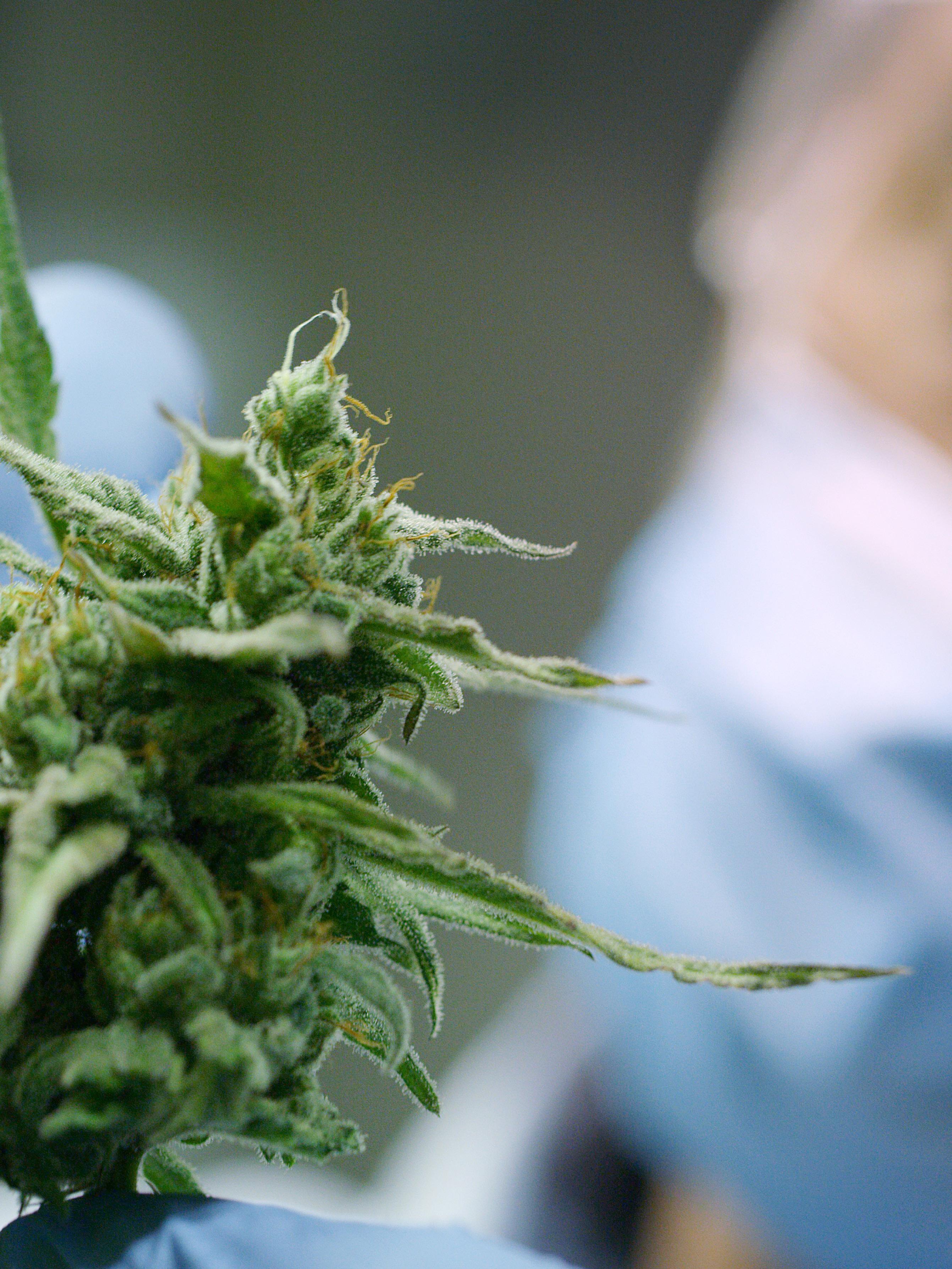
agree on is the fact that the way the terms “indica” and “sativa” are used colloquially has nothing to do with science, and much more to do with popular culture and a misunderstanding of outdated research. The indica/sativa model as it exists today confuses and mixes competing taxonomical theories from the 1970s and 1980s into a jumbled mess.
All modern cannabis varieties found in dispensaries are heavily hybridized.
Beyond the fact that the terms “indica” and “sativa” have no scientific basis, there is no scientific way to claim that something is “half indica, half sativa” or “70% sativa, 30% indica”.
cannabis companies are learning that “education services” are a way to assert themselves as sources of authority to differentiate themselves...
At Extractioneering, we search the entirety of Oregon for material that meets our high quality standards, and over time we’ve come to work with some really incredible farms.
These descriptions are not scientific and are more often used to describe the effects someone has experienced with a cannabis variety, rather than anything to do with the genetic lineage or level of hybridization.
MYTH: “Indica” and “Sativa” designations correlate with chemical profile or genetic lineage.
There are multiple genetic and chemical variability studies that have been done that demonstrate that these correlations are either not present or are too inconsistent to be reliable. There are various genetic databases and data visualization tools now available that allow anyone to see the inconsistencies between strain names, indica/sativa designations and genetic lineage firsthand (e.g. Phylos Galaxy, Kannapedia by Medicinal Genomics). There are also tools online that allow anyone to see data visualizations that map cannabis samples based on how similar their chemical profiles are. Sort the data by a strain name or an “indica” or “sativa” designation and more often than not, you will find very inconsistent results. Addiitonally, consumers do not agree on the effects of “indica” vs “sativa” strains.
Finally, one can dive into the data within message boards and strain review websites to see that consumers themselves are largely inconsistent in how they describe the effects
of different strains or indica/sativa varieties of cannabis. When thinking about strains, consider that the strain AK-47 has won prizes in both the indica and sativa categories of cannabis cups through the years.
Remember that cannabis, like any other plant, does have unique chemical varieties and genetic lineages. But while patterns among chemical profiles and cannabis varieties exist, those correlations are not strong enough to trust a strain name. This issue is more significant for popular strain names than it is for less known strain names.
Because there are unique chemical profiles among cannabis varieties, and the strain name may be unreliable for predicting these chemical profiles, some researchers and cultivators prefer the term “chemovar”, or chemical variety, rather than strain. The term chemovar could be used in parallel to the term cultivar, allowing the cultivar name to represent genetic lineage, perhaps, and the chemovar name to represent a distinct chemical profile. The term cultivar could be assigned after genetic testing to register a variety’s genome, providing an objective, measurable reference point for genetic lineage, whereas the chemovar name could be assigned after a thorough chemical assay. With an appropriate understanding of the terpene synthase genes
Consumers do not agree on the effects of “indica” vs “sativa” strains.
responsible for terpenoid production in a plant, it may even become possible to marry cultivar and chemovar names to some degree. One of the challenges with this approach is that the terpene profiles may change in products over time due to volatilization and oxidation, particularly of lightweight monoterpenoids, which would have an impact on the chemovar profile.However, with this approach, there remains at least a common taxonomy which could be utilized to standardize how cannabis is categorized and labeled. When we want to talk about varieties of cannabis with unique chemical profiles, the term “chemovar” may be more appropriate. If we want to talk about a plant’s genetic lineage, we may want to rely on a cultivar name – which could be unique from its chemovar name. Ultimately, what this means for consumers is that it makes sense to stop paying so much attention to strain names and indica/sativa labels, and instead focus on the actual chemistry and organoleptic properties (sigh, smell, taste) of the product.
How does the plant or extract smell? What is its cannabinoid profile? What is the THC:CBD ratio? What are the dominant terpenes? Use a journal to keep track of the effects of different products used at different times of the day and in different scenarios, and focus on the characteristics you should look for in a cannabis product without being limited by strain names or indica/sativa labels. Speaking from experience, this can be very liberating.
MYTH: You can predict the effects of cannabis by smell.
After ditching the concept of strains and indica/ sativa designations, many people move on to a “nose knows best” model for finding the “best” cannabis. Most people in the cannabis industry now understand that the effects of cannabis are about more than cannabinoids. Many people have heard the phrase, “entourage effect” – the theory that various cannabis
compounds work together to create unique effects and benefits for the consumer. Volatile terpenes, the aromatic compounds found in cannabis as well as other plants, are many of the chemicals responsible for the smells and tastes of cannabis, and contribute to the entourage effect (though at this time, we don’t know the extent to which terpenes influence this effect).
Given these influencing factors, it’s natural that people jump to the conclusion that the effects of cannabis can be predicted based on smell alone. After all, entire cannabis educational programs have been built around this idea. A very recent study examining publicly available data from a popular cannabis online magazine, partnered with publicly available chemical data on popular cultivars, purports to have demonstrated correlation between “flavor” and experience, to some degree. But there are some major problems with this notion (and that study) as well.
Now, it is true that you can learn to identify the dominant terpenes in a product by smell alone. This is already something that happens in the perfume, beer, and wine industries. Olfactory analytical equipment even exists, called the SNFR (aka “The Sniffer”), which allows someone to smell chemicals as they are separated and identified, so that the reviewer can narrate their experiences and calibrate their nose to specific chemicals. So, it is totally legitimate to say that someone could learn how to identify terpenes in a cannabis sample by smell alone. But is that enough information to predict how a cannabis product will affect you?
Cannabis contains hundreds, and almost certainly, thousands of chemicals. To this day, we still don’t understand the extent to which terpenes and the hundreds or thousands of other phytochemicals in cannabis contribute to the “entourage effect”. The chemicals in cannabis include cannabinoids and terpenoids, as well as other chemicals like stilbenoids, steroids, quinoids, and flavonoids, to name a few classes. And that’s just what is in the cannabis flower – before it is processed or consumed.
As you can see, there is much to be learned about cannabis. In our next issue, we’ll continue this fascinating look at the biological makeup of cannabis to learn more about how those terpenes and thousands of chemical compounds interact and how they affect your mind and body. We’ll also take a look at how cannabis interacts with the human endocannabinoid system. Stay tuned.
“entourage effect”
– the theory that various cannabis compounds work together to create unique effects and benefits for the consumer.
If the cannabis plant has evolved a complicated structure to house its complex oleoresin, is it even possible to solvent or mechanically extract a bioavailable oleoresin form for vaporization? Here, we take a closer look at buffers to see what solutions they might offer.
BUFFER IS DEFINED as a thing that prevents incompatible or antagonistic things from coming into contact with or harming each other. Cannabis species separates its oleoresin from all other cellular components, as if simply existing along or inside of cells or exuded onto the leaf surface would be disastrous.
If the cannabis plant has evolved a complicated structure to house its complex oleoresin, is it even possible to solvent or mechanically extract a bioavailable oleoresin form for vaporization? Perhaps through the use of a buffer we can protect, reject, and select without sacrificing oleoresin complexity.
In aqueous solutions, the hydrogen ion is the center of attention and needs to be quenched. In a cannabis oleoresin, CO2 can be po-sitioned at -COOH, OH, and =O groups and protect these sticky regions. In a sense, CO2 is a buffer that gathers and protects those molecular positions that are responsible for bioactivity. Without protection, rare and complex molecules are polymerized or lost during a non-buffered cannabis extraction process. Perhaps they are included in the final product, but remain too tangled to be individually volatilized during vaporization, which limits the flavor and effects of many extraction products.
A doctorate in plant molecular physiology is not required to participate in the cannabis industry. That being said, cannabis is a complex plant and as such, should benefit from those with years of experience in plant biotechnology research.
I was trained as early as 1994 in techniques involving the extraction of subcellular components from plants and organisms. My first lesson involved the use of buffers to help us do our job in these matters.
According to Wikipedia, a “buffer solution (more precisely, pH buffer or hydrogen ion buffer) is an aqueous solution consisting of
a mixture of a weak acid and its conjugate base, or vice versa. Its pH changes very little when a small amount of strong acid or base is added to it. Buffer solutions are used as a means of keeping pH at a nearly constant value in a wide variety of chemical applications. In nature, there are many systems that use buffering for pH regulation” (1–8).
My dissertation required me to extract a delicate, single-stranded nucleic acid transcript called mRNA from the living and dying tissues of the tropical plant anthurium.
mRNA are the transcripts encoded with genetic instructions being carried out at that moment in living cells, whereas DNA is the storage of those genetic instructions.
These tropical plant tissues resembled plastic more than green leafy tissues, and presented a huge problem during extractions. They were heavily imbued with exotic carbohydrates and phenolic substances that protected the plant in moist, tropical environments where pathogens can thrive.
To extract mRNA, I first tried commercially available kits with little success. During one of these trials with the branded RNA extraction buffer “Trizol,” I obtained a slightly brown, highly viscous RNA solution. My next step was to add isopropanol to precipitate the RNA. Upon introduction of the alcohol, the entire tube turned into a solid.
After spending a minute wondering how successful I was for obtaining so much RNA that it was almost solid, I realized a much different extraction had occurred. I had locked out any chance of getting mRNA because the carbohydrates and phenolics of the plant leaf had essentially formed an
irreversible polymer.
Conventional molecular biology wants to combine all extraction reagents in one solution, to be applied in one event. Trizol extraction reagent is composed of phenol, guanidine thiocyanate, ammonium thiocyanate, sodium acetate, and glycerol. This reagent is to be used in conjunction with chloroform to extract plant DNA and RNA.
However, this approach had to be quickly abandoned on tropical plant tissues. What I discovered is that exposure of complex plant substances to a complex chemical cocktail resulted in unavoidable polymerization of all substances involved. The appropriate technique to properly extract the entire composition of recalcitrant plant tissues was to parse the chemistry out into steps. In other words, remove the offending substances in a tiered approach, while protecting the molecules of interest. Instead of all extractions in a single solution, they must be separated out.
First, grind the plant, put in a protective aqueous buffer containing a specific molecular weight of polyvinylpolypyrrolidone (PVPP), and extract with chloroform. Then reconstitute in the buffer, then with phenol, in buffer, then with a low sugar and alcohol solution to precipitate only carbohydrates. Follow this with a wash and precipitation of nucleic acids.
In most cases, a blunt force extraction from plant material will result in some version of success (in my case the more abundant ribosomal RNA molecules), but what was lost was the complex, delicate, single-stranded and diversely unique messages of the mRNA population.
"What I discovered is that exposure of complex plant substances to a complex chemical cocktail resulted in unavoidable polymerization of all substances involved."
How does an aqueous nucleic acid extraction from living plant tissues have any relationship with oleoresin extraction from cannabis trichomes? In a way, identically.
In 1966, Norman E. Good penned a publication in Biochemistry introducing hydrogen ion buffers for biological research (9). He wrote: “The inadequacy of our inventory of buffers may be a more serious problem than we realize. It is impossible even to guess how many exploratory experiments have failed, how many processes have been distorted because of the imperfections of the buffers employed.”
One can only guess what Good would say today if someone told him that a diverse set of plant secondary metabolites were being isolated from its cellular environment without any concern for a buffering mechanism, and that the resulting compounds were being used to conduct medical efficacy experiments.
In the context of biological extraction for study, buffers are pervasively used to protect, isolate, and preserve molecules of interest. Buffers influence every aspect of inspection, construction, evaluation, and production of discovery (academic) and applied (commercial) biology.
Oils do not need buffers for extraction and they come in “virgin” or purified, both of which do not require additional components for extraction. Purified versions are shelf stable without adulterants or preservatives. However, oils are typically one or a few types of medium-to-long chain length fatty acids. This very specific class of lipids make up what are conventionally known as vegetable oils. These substances meet the true definition of the word oil. Cannabis is classified as an oleoresin because it contains a complex mixture of substances.
Juices from fruits and vegetables also don’t require buffers, more-or-less come as described, and are frozen or stored in the same manner.
This premise most aptly describes the solventless technique of concentrating trichome bulbs from cannabis plants. Whether living or cured plants, trichome bulbs are considered a concentration, like juice, and the rosin created would be considered a virgin oil, perhaps one with more biological debris.
In the production of polymers, such as those used in solar cell technologies, cosolvents can assist in separation between phases. Beginning with a mixture of polymer and solvent (top), cosolvents encourage the aggregation of polymers (right), simplifying production and improving performance. Without the use of cosolvent, droplets of primary solvent coalesce into distinct domains and polymer is more randomly dispersed (left) (16).
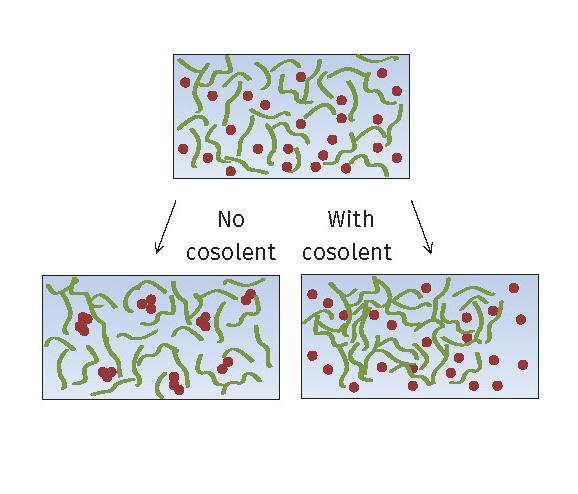 Figure 1:
These substances (hash, rosin) are more closely related to cannabis flowers in complexity but still suffer from spoilage, in that the matrix will decay and polymerize once outside of the biological structure (trichome) in which it was designed to exist. Additionally, they are finished maturing upon extraction from the living tissue and begin the process of decay precisely when the trichome bulb is sheared at the disc cell and removed from the stalk.
An intact trichome bulb attached to its stalk is protected from degradation and oxidation, an evolutionary design of the cannabis plant. Once the bulb is removed from the stalk, it suffers greatly.
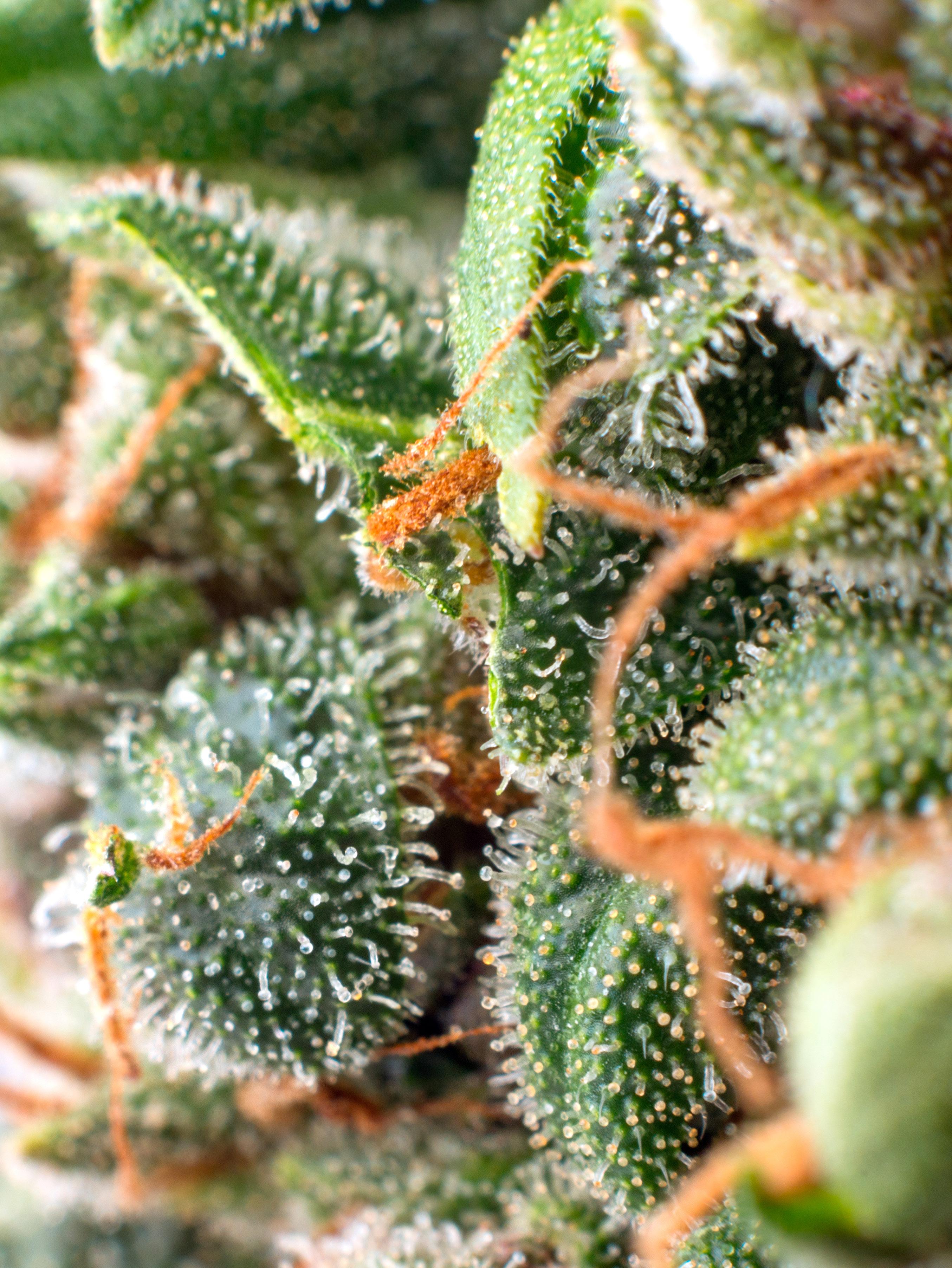
Once we approach solvent extraction, we begin to discuss the idea of a buffer to protect the oleoresin molecules of the glandular trichome.
The trichome is one of the universe’s most amazing structures. The oleoresin which the trichome contains is so delicate and toxic to the cells that it must be isolated and allowed to collect and accumulate over the course of a plant’s life cycle. Cannabis species have evolved specialty trichomes: the bulbous, the capitate sessile, and the capitate stalked. In designing an extraction, we focus on the substances contained within these physiological structures, as they contain meaningful medicinal compounds found nowhere else in nature.
Inside this trichome, in a sea of oleoresin, float membranes that have sloughed off the endoplasmic reticulum of the trichome disc cells and contain within them membrane bound enzymes, which catalyze the many reactions that make cannabis oleoresin molecules so complex.
Monoterpenes, the C10H16 molecules known for the characteristic perfume of living cannabis, are actually the matrix in which the trichome oleoresin conducts all its metabolism. In a nonaqueous environment, there needs to be movement of biology for molecules to come into contact with the floating membrane-bound enzymes and the substrates they require for synthesis. The disc cells continually produce monoterpenes and cell wall debris that push towards the trichome cuticle and increase and expand its size.
Once a living cannabis plant is cut, dried, and cured, the over-abundance of monoterpenes volitalizes away. It then reduces the trichome bulb into more concentrated substrates that come into closer contact with their catalyzing enzymes.
This is the essence of why the curing of the cannabis plant results in more complex and flavorful resins. It is due, in part, to the reduction of monoterpenes serving as the metabolic lubricant in the trichome, and the concentration of substrates and enzymes. This is why solvent extraction of oleoresin from cannabis is so critically important.
A solvent extraction is designed to shuttle desired compounds away from unwanted compounds of biology. In a sense, if we are able to remove biology that contributes to making cannabis extracts age poorly, then these products have an indefinite stable shelf-life. If we remove elements that corrupt and polymerize the extract, then it will indefinitely remain in good consistency for use and long term storage.
THE TRICHOME IS ONE OF THE UNIVERSE’S MOST AMAZING STRUCTURES.
influence every aspect of inspection, construction, evaluation, and production of discovery (academic) and applied (commercial) biology.
In biology, the extraction and preparation of proteins is performed very carefully to preserve the intact protein including its three-dimensional (3D) conformation. This is similar for other substances as well. The conformation of the molecule as well as its purity is important. Do oleoresin molecules have 3D conformation? In oleoresin molecules, do we have to worry about destabilizing and presenting them as something other than how they existed in planta?
The addition of CO2 into oleoresin prior to extraction creates a buffer similar to a protective sheath, which cloaks active sites of rare oleoresin compounds. A buffer as described, CO2 can be acidic itself and the portions of the oleoresin molecules by which it attaches are the acidic portions of the molecules. However, because of the use of nonaqueous substrates and hydrocarbon solvents, the term buffer is more aptly substituted with the term “cosolvent.”
“In chemistry, cosolvents are substances added to a primary solvent in small amounts to increase the solubility of a poorly-soluble compound. Their use is most prevalent in chemical and biological research relating to pharmaceuticals and food science, where alcohols are frequently used as cosolvents in water (often less than 5% by volume) to dissolve hydrophobic molecules during extraction, screening, and formulation.” (10–15).
CO2 acts as both a buffer and a cosolvent in our extraction process because it is an extraction solvent, but it represents a very small amount compared to the hydrocarbons (butane and propane) used for extraction. In the example shown in Figure 1 from Franeker and colleagues, the molecules shown in red would be either oleoresin contents or leaf surface waxes. These molecules, if left unprotected, would prefer to be permanently bonded to each other. CO2 helps eliminate that outcome.
CO2 bonds to active sites on all molecules and allows for effective in situ hydrocarbon separations such as avoiding unwanted substances during extraction while capturing very discrete and low-yield desirable substances. During the extraction process, due to CO2 molecular stabilization, the oleoresin compounds are not lost into or
around the plant material being processed. CO2 does not covalently (permanently) bind to molecules or change their structure in any way. It uses a combination of loose chemical reactions like hydrogen bonding or Lewis Base-Acid interactions to do its job, which is quite capable and 100% reversible (in Figure 2).
After extraction, but remaining in the primary extraction solvent, the extract can be manipulated and split into an extract containing some whole plant impurities, and an extract free from these compounds. This is a planned event of ratioed chemistry based on the oleoresin composition carried out in the primary extraction solvent through the use of cold temperature and gravity. Post extraction, the hydrocarbon solvent must be removed. During this event, the CO2 and the oleoresin molecules to which they’re attached form a type of reversible polymer that prefers to remain together than spill apart. The bonded oleoresin wishes to stay together and the noncharged butane propane is easily removed down to an appropriate concentration.
After the solvent is mostly removed, the oleoresin extract is placed in an incubator where it is hard capped. The CO2 desires to release itself as the chemistry has been reduced to a point where it favors its release. The pressure that builds from this CO2 release helps produce a cascade effect where the more pressure that builds, the more CO2 is released. This event happens alongside a small amount of remaining butane and water vapor, which is also released.
Eventually butane and H2O are completely released, in that the extract finds a sort of equilibrium with its remaining CO2. It will continue to release CO2 during the course of it’s maturation and aging. This will improve or subtly change flavor and effect. Upon vaporization, these products will spontaneously release CO2 such as the decarboxylation event of tetrahydrocannabinolic acid (THCA) to tetrahydrocannabinol (THC) during its vaporization.
The CO2 is not in sufficient enough volume to be noticeable or apparent to the individual consuming the extract, no more than consuming THCA crystals. Because of this action and the presentation of discrete
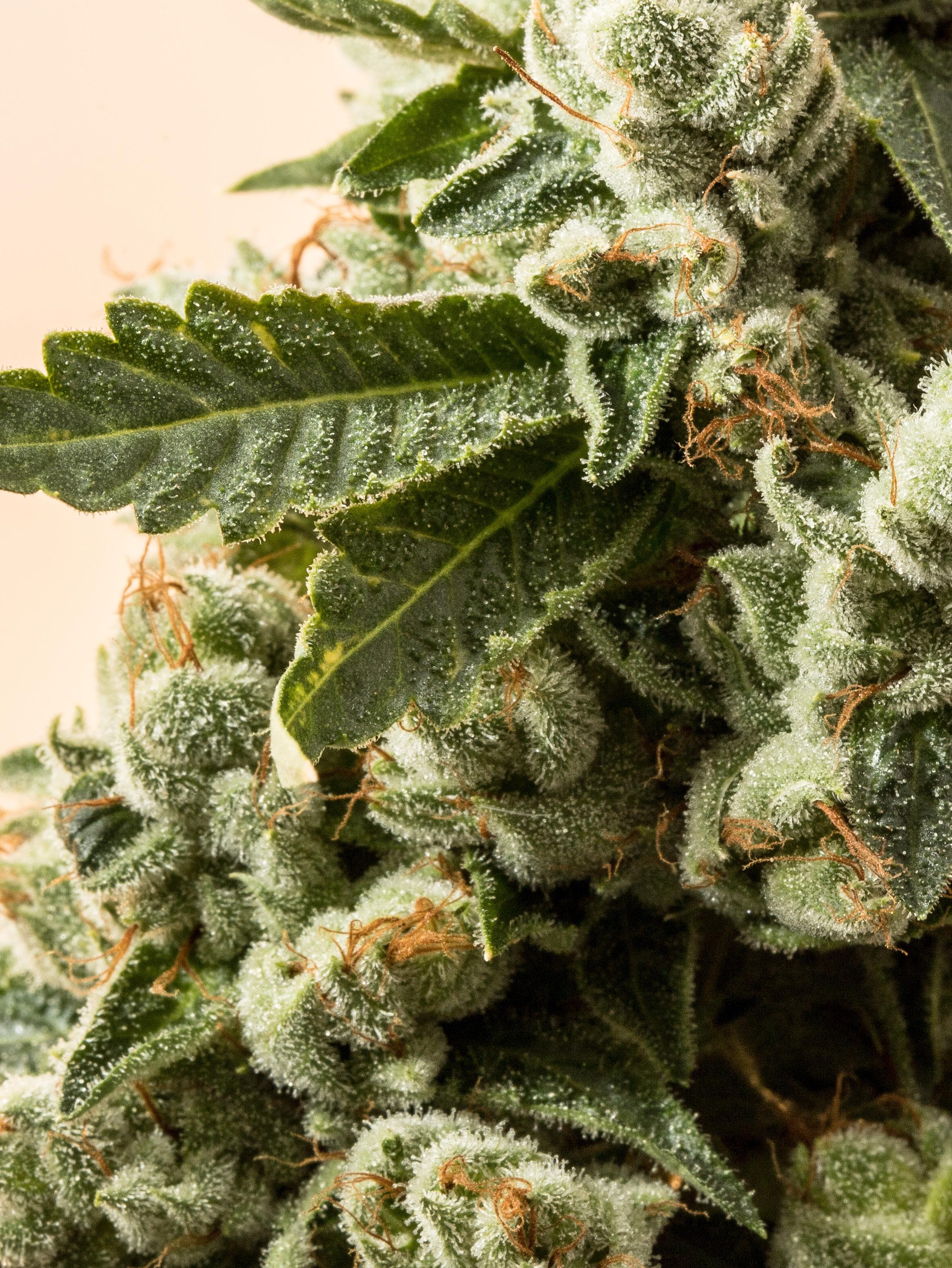
oleoresin molecules during vaporization, the product is able to be effectively vaporized at far lower temperatures than other available cannabis extractions and concentrates.
Because CO2 continues to buffer and protect the cannabis oleores-in during maturation and in retail packaging, the product stays slick and runny, and is able to be placed in small vials and easily dispensed upon use. Alongside THCA crystalline, it also remains slick and very easily dabbable and easy to recover the last remains of the product without difficulty. It performs flawlessly in cartridges because goop does not build up on the cartridge coil allowing the product to re-main tasting like the first few draws all the way to its finish.
(1) https://en.wikipedia.org/wiki/PH.
(2) https://en.wikipedia.org/wiki/Hydrogen_ion.
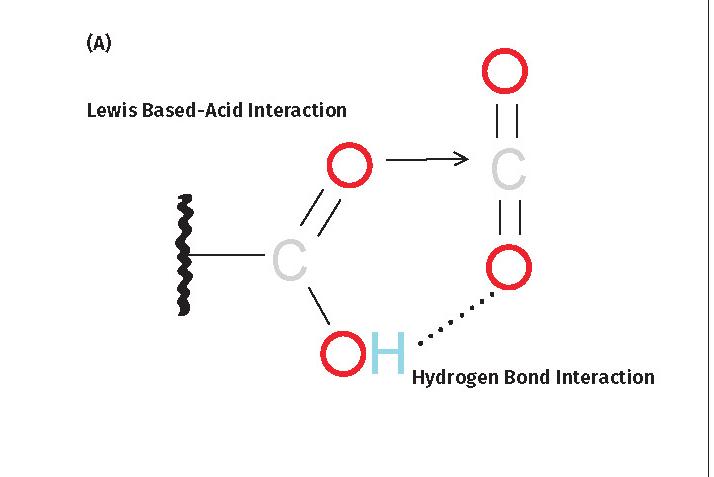
(3) https://en.wikipedia.org/wiki/Aqueous_solution.
(4) https://en.wikipedia.org/wiki/Mixture.
(5) https://en.wikipedia.org/wiki/Acid_strength#Weak_acids.
(6) https://en.wikipedia.org/wiki/Conjugate_acid.
(7) https://en.wikipedia.org/wiki/Acid_strength#Strong_acids.
(8) https://en.wikipedia.org/wiki/Base_(chemistry)#Strong_bases.
(9) N.E. Good, Biochemistry 5(2), 467–477 (1966).
Whether it be a buffer or a cosolvent, CO2 is absolutely critical to protecting cannabis oleoresin molecules during extraction. It is natively apparent as most phytocannabinoids have CO2 (as COOH) already affixed in planta and require heat or age to decarboxylate these compounds and reveal, as is the case with THCA, the more active and medical version of the molecule.
It is only reasonable to conclude that the inclusion of COOH during cannabinoid phytosynthesis somehow protects or helps accumulate and store cannabinoids and other rare cannabis oleoresin bound molecules. By imbuing oleoresins with CO2 prior to extraction, the protectionary mechanism of the carboxyl group -COOH can be mimicked universally throughout the entire resin, and prepare it for extraction and presentation as an elegant and complex, completely bioavailable natural plant substance ready for vaporization.
It is important to conclude with the fact that CO2, butane, and propane are simple molecules and can be added and removed from oleoresins and remain in concert with the native oleoresin chemistry. The ultimate goal is always to extract cannabis oleoresin completely without breaking it apart and reformulating it later, and to do so without exotic solvents or chemicals due to the fact that cannabis is a natural plant product and is consumed by humans with that intent.
(10) J. Shi, Functional Food Ingredients and Nutraceuticals: Processing Technologies, 1st ed. (CRC Press: Boca Raton, Florida, 2007).
(11) https://en.wikipedia.org/wiki/Solvent
(12) https://en.wikipedia.org/wiki/Solubility.
(13) https://en.wikipedia.org/wiki/Chemical_compound.
(14) https://en.wikipedia.org/wiki/Medication.
(15) https://en.wikipedia.org/wiki/Alcohol.
(16) J.J. van Franeker, M. Turbiez, W. Li, M.M. Wienk, and R.A.J. Janssen, Nature Communications 6, 6229. Bibcode:2015NatCo...6.6229V. doi:10.1038/ncomms7229. PMID 25656313 (2015).
(17) C. Pettinari and A. Tombesi, MRS Energy & Sustainability 7, 1–43 (2020).
Figure 2: A version of carboxylic acid and CO2 interaction when using COOH as a substrate to sequester CO2 (17).