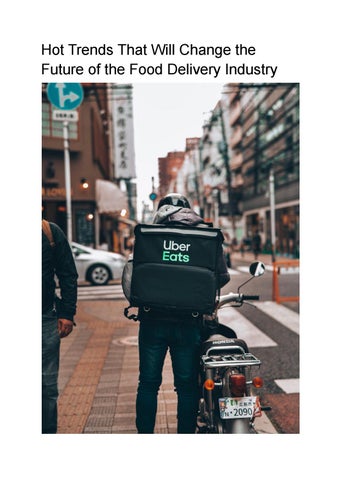
Hot Trends That Will Change the Future of the Food Delivery Industry
It's never been easier for food firms to engage with their customers.While estimates vary, online food delivery sales are expected to reach $220 billion by 2023, accounting for 40% of total restaurant sales. The $24 billion online grocery market, according to Deutsche Bank, will grow to 120 billion dollars by 2025. The global impact of the Covid-19 pandemic has accelerated this hypergrowth, but it was made possible by the (relatively) recent proliferation of fleet types and delivery models such as : same hour, same day and next day delivery, single and multi fleet, In-house and crowd-sourced fleets . Seamlessly handle deliveries from stores, curbside pickup, robotic warehouse deliveries, and so on. With all of this opportunity comes a lot of competition, so restaurants, grocers, and other food providers need to stay on top of what's going on in the market by looking at the future trends of the foodservice industry. The below mentioned are the trends that are currently ruling and shaping food delivery and will continue to do so for the next couple of years, based on data from the field and forecasts from industry experts: The following are the top food delivery trends to watch in 2021 ●
Increase in the third party delivery.
●
Restaurant delivery fleets that are owned by the restaurant
●
Tracking delivery data as a top priority
●
Food delivery is being taken over by tech giants.
●
The speedy augmentation of online grocery shopping
●
Subscriptions for food delivery are on the rise.
Moving further now let us have a look at some more ongoing trends depicting and growing the future of the foodservice industry.
Trends Redefining the Future Of Food Service Industry Well-known food delivery firms such as Zomato, GrubHub, Doordash, JustEat, and others dominate the market. However, as a result of rising rivalry, rising technology trends, and changing consumer expectations, businesses must improve their system and add unique developments in order to satisfy needs. So, let's talk about which trend will have the biggest influence and what they need to do about it.
The Z Generation - Most Active Users As previously said, the widespread use of smartphones and the Internet has altered millennials' lifestyles, as they increasingly seek out quick and clever solutions that save time and provide comfort. GenZ spends the bulk of their income on online meal ordering, compared to previous generations, because they enjoy trying new cuisines. As a result of this strategy, they have one of the most diverse demographics in the online food delivery sector. They prefer to purchase food online rather than cook due to their hectic schedules and fast-paced lifestyles. Generation Z, according to Technomic's Generational analysis, gets food online through delivery apps or orders takeout and due to which they contribute much more in the future trends of the foodservice industry. They also have a lot of money because they want quick and comfortable service where they can eat without worrying about anything. As a result, having an app for your food business could be the most beneficial advantage you'll ever have, as it can help you establish a strong customer base and draw attention to your firm.
Tapping New Channels to Place Orders As per the survey there have been at least more than 65% of Americans who abandon the digital orders if they undergo any sort of poor customer experience. And around more than 55% need access to user-friendly applications. This shows that the need of constant maintenance and update for the existing platforms is necessary, to smoothen the placing of orders. With new advancements the platforms can place orders via different modes such as social media, smart devices, virtual assistants and many more. Let us discuss a few of them further.
Via Tweet Domino's, a well-known pizza delivery company, has taken to Twitter, allowing consumers to place orders by Tweeting a pizza emoji. On the company's online delivery service, customers must create a "pizza profile" and place an order. In order to continue, users must link their accounts to their pizza profiles.
Via Smartwatch Smartwatches have been released by Apple and Samsung, who have taken a technology-driven approach and make sure to introduce and align the products with the Best Online Ordering System . Customers can also use their smartwatches to place orders at Domino's. It streamlines the ordering process and allows consumers to easily place orders via wearable devices.
Via Car Another novel approach allows the user to place an order while driving. Users of Accenture's Visa card can order pizza on their way to work. Visa checkout is incorporated into the dashboard of the car, allowing consumers to place orders using their voice while driving.
Big DATA - The Game Changer These days, big data analysis plays a significant role. In order to acquire accurate results from users, online delivery apps take this strategy. Without any delay, this improves reliability. Big Data information aids business owners in determining user moods, delivery times, targeted offers, and much more. Food delivery business owners can use the Big Data technique to examine a variety of data, including: ●
Road traffic notifications in real time
●
History of previous orders
●
On social media sites, customers can leave a review.
●
On numerous social media platforms, there are comments.
Food delivery companies can use Big Data technologies to precisely anticipate the aforementioned data and respond to client queries quickly if they emerge.
Diverse Delivery Options
Food delivery firms are no longer dependent on third-party delivery services as they explore new and novel delivery methods to reduce delivery time and costs, such as distribution by robots, drones, and even parachutes.
Via Robots The advancement of AI and machine learning technology is allowing food delivery companies to use smart robots to fulfil orders and explore the opportunities for the future trends of the foodservice industry. Startups such as Yelp and Marble have developed specialised delivery robots with enhanced cameras and 3D maps to aid in route planning. Overall, delivery time and cost are reduced.
Via Drones The initial stage of this idea was held in the San Francisco Area, USA through a leading eCommerce company, Amazon. Following that, Zomato has also tested its unique drone delivery technology, which cuts delivery time. Drone delivery is mostly utilised to avoid congested areas in cities. Drone delivery ensures on-time delivery while also lowering operating costs.
Via Parachute Jafflechutes, have you heard of them? Melbourne is the place to go if you want your Jaffles delivered by parachute. Customers may order toasties through PayPal at Melbourne's first float-down eatery. Customers simply need to wait in the X-marked drop-off place at the designated time and enjoy catching their meals.The products they have on the menu are drop it like its hot cheese toasties and gust of wind cheese ham toasties. Customers will be entertained while saving money on logistics with this delivery method.
Looking Out For New Niches Many food delivery firms have narrowed their attention to a certain area. We've already seen vegan-friendly meal delivery systems and businesses that specialise in burger boxes, farm-to-table cuisine, and healthy smoothies.
Food delivery firms can benefit from being in a specialty by overcoming entry obstacles and combating fierce competition.One should keep an eye out on outgrowing areas such as virtual kitchens, food waste reduction and pet food as a delivery service owner. Let's take a look at a few of them in the following sections.
Food Trash Applications Every year, one-third of all food produced is discarded. Food waste applications are designed to address this issue and contribute to environmental protection. They assist restaurants and supermarkets in getting rid of leftovers and providing low-cost food to those in need. One of the great examples is Food For All. Customers can get a 50% discount on unsold meals from local restaurants, cafes, and delis at this business. Anyone can get a tasty dinner for $3 in this way. You simply make an order and pick up your meals at a predetermined time. Food Rescue USA is an additional example supporting the future trends of the foodservice industry. This volunteer-run platform is involved in food rescue efforts. Food Rescue US works to reduce hunger in the United States by providing fresh, usable food from overstocked restaurants and grocery shops to more than 50 million people who are food insecure.
Applications For Pet Food As the trends are evolving the pet industry is known to be quite lucrative, the total revenue generated by the industry was $72.13 billion in 2018. Over 40% of US consumers buy pet food online, and 68% of American families own a pet. Pet food delivery to the home is particularly popular among parents and Millennials, who find it a handy, personalised, and healthful way to spoil their pets. Pet food delivery businesses have sprung up as a result of the increased demand. In the United Kingdom, Monster Pet Supplies launched a pet food delivery app to make shopping for pets easier. With just one click, pet parents can now order food for their cherished pets. Free delivery and order scheduling for repeat deliveries are also available through the app.
Virtual Kitchen Application
UberEats has created the concept of a virtual kitchen, in which the platform includes new restaurants and meals available only through their app. UberEats chose to assist restaurants in avoiding the expensive expenditures of creating a new physical location by allowing them to use their kitchen space to produce more meals. For example, Uber Eats may enable a salad cafe to expand its menu to include sandwiches with only minor changes to the in-store ingredients. This business may become a virtual sandwich café through the UberEats app while maintaining its real location as a salad cafe. Rice Cafe, a sushi restaurant, has already been transformed into Poke Cafe, a virtual restaurant serving Hawaiian poke bowls, thanks to UberEats. Food delivery platforms will benefit from this concept since they will be able to save money and focus more on product development and data analysis in order to find and offer the most popular cuisines in specific areas.
Crypto food orders A new service sector has emerged as a result of the advent of blockchain technology: crypto food orders. Customers from all over the world can use bitcoins to purchase takeout or delivery. For example, PizzaForCoins accepts over 50 different cryptocurrencies. Feastly, Takeaway.com, Papa John's Pizza, Levy Restaurants, and Lobster Gram are just a few of the food delivery firms that accept bitcoin payments and endorse the future trends of the foodservice industry. Companies can reduce fraud and improve the overall meal ordering experience by adopting bitcoins for orders. Customers are not restricted to a single mode of payment and can pay for their orders using cryptocurrencies that are still relatively unknown
Stay Ahead Of The Competition By Adapting The Current Trends in Foodservice People's routines and lifestyles have altered as their use of smartphones and the Internet has grown. ecommerce platform for grocery on the internet are quickly becoming a need in our daily life. Its use is expected to grow in the future. According to a recent study, eateries who don't have an online presence lose 20% of their income. Existing online meal delivery applications are using the aforementioned trends and working around the clock to improve the user experience. This is why owners of food delivery companies are adapting their business models to new trends.
Millenials are the first generation to prefer staying at home to going out, which often means ordering a customised meal kit to be delivered to their door. According to the Food Information Council, pre-prepared fresh meals, menu kits with raw ingredients, and other home food kits that help the customers to save the time and draws out top lined up restaurants for the millenials who value convenience over even taste.
Consumers who want to try new or different cuisines can get these subscription boxes, thanks to the booming food market. When you factor in the growing number of people looking for vegan, organic, gluten-free, paleo, or ethically sourced food, it's easy to see why specialised food subscriptions are on the rise. With online orders growing at a faster rate than ever before, food businesses have a once-in-a-lifetime opportunity to boost profit margins and expand their customer base. The challenge will be to strike a balance between customer demand for fast, convenient, and transparent delivery and the logistical complexity and costs necessary to meet these demands.