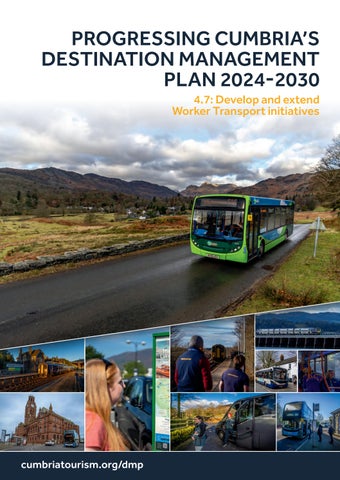
CONNECTING THE WORKFORCE BEHIND CUMBRIA’S VISITOR ECONOMY
Delivering Cumbria’s Destination Management Plan
Objective 4.7 of Cumbria’s Destination Management Plan focuses on ensuring the resources, infrastructure and transport connectivity needed to support a thriving visitor economy are in place. This includes the development and expansion of workforce transport initiatives.
To date, progress has been made in strengthening the infrastructure and transport provision that underpin the sector. However, there is more to do. The plan is centred on ensuring that transport networks, workforce access and supporting infrastructure have the capacity and capability to deliver a world-class visitor experience, while also improving resilience, operational effectiveness and productivity across the industry.
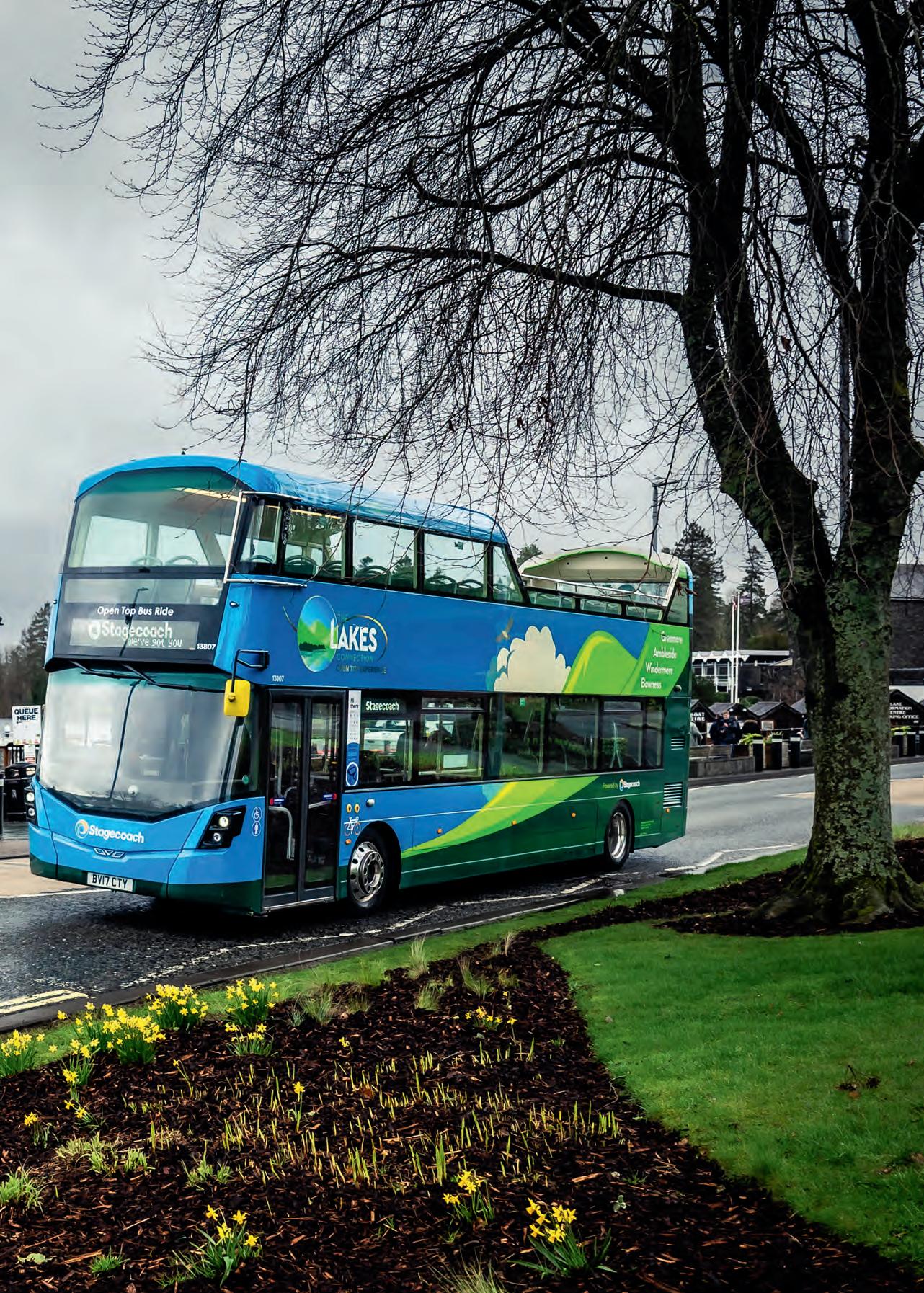
Cumbria Tourism LVEP (Local Visitor Economy Partnership) plays a central role in bringing together and representing the region’s tourism businesses, providing insight, championing shared priorities and helping to address common challenges. While Cumbria Tourism LVEP is pivotal in underpinning partnership working and supplying valuable intelligence, this progress is only possible through strong collaboration. We recognise and value the role of partners, including local councils, transport providers such as Stagecoach, and local MPs, who have acted on this insight, particularly in supporting initiatives such as the £3 bus fare cap.
Together, this collaborative approach helped secure the £3 bus fare cap until 2027, delivering lasting benefits for communities, the visitor economy and those who rely on public transport to get to work. Cumbria Tourism LVEP remains committed to continuing to lobby for low and affordable fares beyond 2027.
We value Cumbria Tourism’s role as we work together in enhancing our infrastructure & transport links to help support our important visitor economy, in providing clear, evidencebased insights and bringing partners together. This partnership approach is vital to helping us achieve the collective objectives set out in our joint Destination Management Plan for Cumbria.
Phil Greenup, Assistant Director of Sustainable Transport and Highways, Thriving Places, Westmorland & Furness Council
A DESTINATION MANAGEMENT PLAN FOR CUMBRIA: 2024 TO 2030
Cumbria Tourism’s work has been instrumental in bringing businesses together to develop coordinated solutions that make a real difference on the ground, demonstrating the critical importance of collaboration in delivering meaningful transport improvements.
Graeme Innes, Senior Manager - Infrastructure Planning and Transport Place & Economy, Cumberland Council
Over the past two years Cumbria’s Local Visitor Economy Partnership (Cumbria LVEP), has led a Workforce Development project in response to a growing staffing crisis. While pressures linked to an ageing population were already emerging, Brexit and the pandemic accelerated challenges. The loss of international workers has been significant and, with low overall unemployment, despite higher levels on the west coast of Cumbria, businesses are under increasing strain to recruit locally.
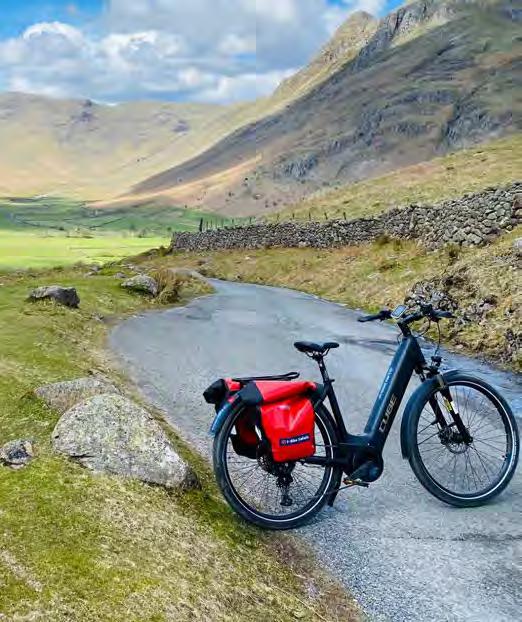
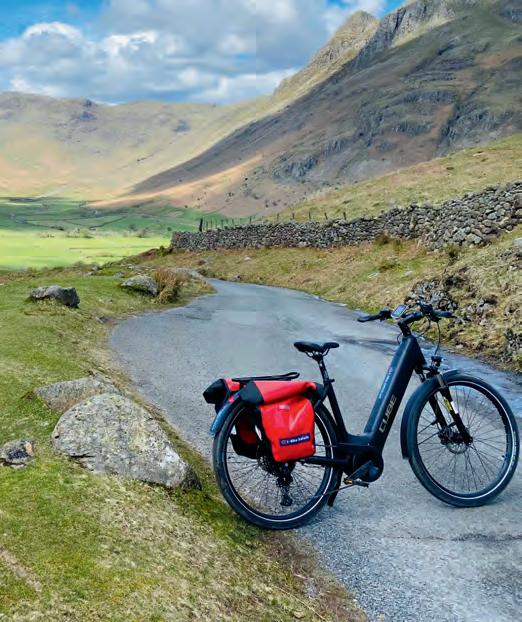
Transport is a key issue. Limited public transport, particularly around start and finish times, restricts access to jobs, while reliance on private vehicles contributes to carbon emissions. Cumbria Tourism LVEP is working to encourage more sustainable travel choices for both visitors and the workforce, supporting Cumbria’s net-zero ambitions.
Launched in March 2024 with Westmorland & Furness and Cumberland Councils, the Worker Transport Project aims to identify gaps in provision, understand business needs, and develop practical, coordinated solutions.
CUMBRIA’S WORKER TRANSPORT CHALLENGES
Transport-related staffing statistics, drawn from Cumbria Tourism’s LVEP Business Tourism Tracker (April 2026), highlight the continuing recruitment challenges in the region’s tourism sector, with 69% of businesses struggling to hire and citing poor public transport frequency, long travel distances, high travel costs, mismatched timetables, and limited route coverage as major barriers for employees.
Transport barriers are a key factor contributing to staff shortages, with businesses identifying the following leading issues affecting potential employees: 63% 58% 53%
Issues with public transport frequency. Poor public transport connectivity. Cost of travel for employees.
CUMBRIA-WIDE RESEARCH
Findings & Challenges
In 2024, Cumbria Tourism LVEP appointed a Worker Transport Coordinator (funded by Cumbria LEP) to address workforce transport challenges facing the visitor economy, working in partnership with local councils and transport providers. To build an evidence base, an online survey targeting HR managers and business owners was launched to identify key issues and inform both the Bus Service Improvement Plan consultation and the development of practical transport solutions.
The survey ran from April 2024 to November 2025 and received responses from 84 tourism businesses, collectively employing 7,355 staff. Findings highlight limited uptake of public transport, with only 16% of employees currently using it to travel to work, underlining the scale of the challenge and the need for targeted intervention.
BUSINESS ACCESSIBILITY
Key findings from the worker transport survey highlight significant challenge for the sector, contributing to staff travel difficulties and acting as a major barrier to both recruitment and retention.
Businesses were asked the extent to which they agreed with a number of statements about transport.
My business is accessible by public transport: My employees struggle with transport issues: A lack of public transport affects my ability to recruit workers: A lack of public transport affects my ability to retain my workforce:
53% DISAGREE
76% AGREE 74% AGREE 57% AGREE
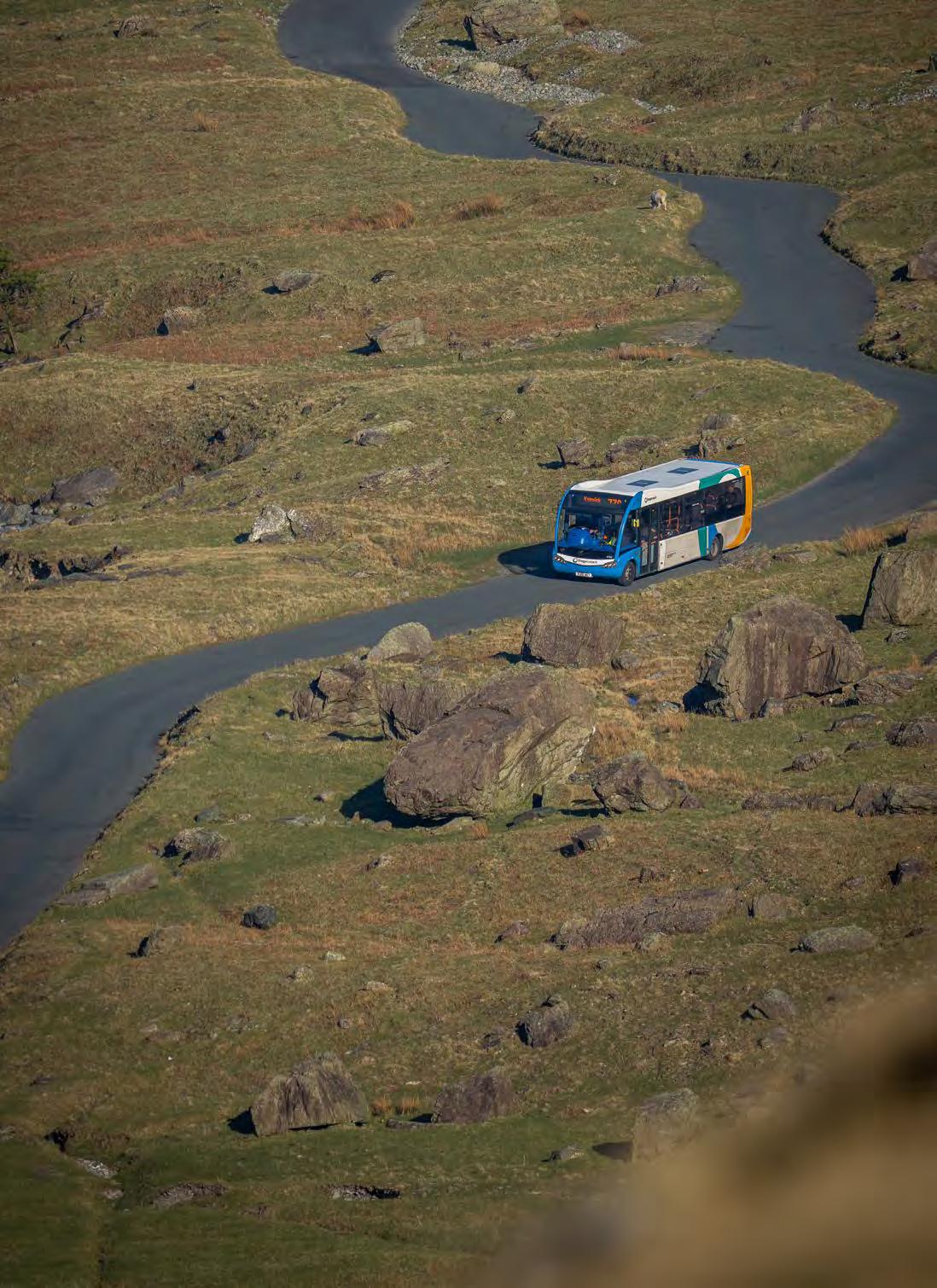
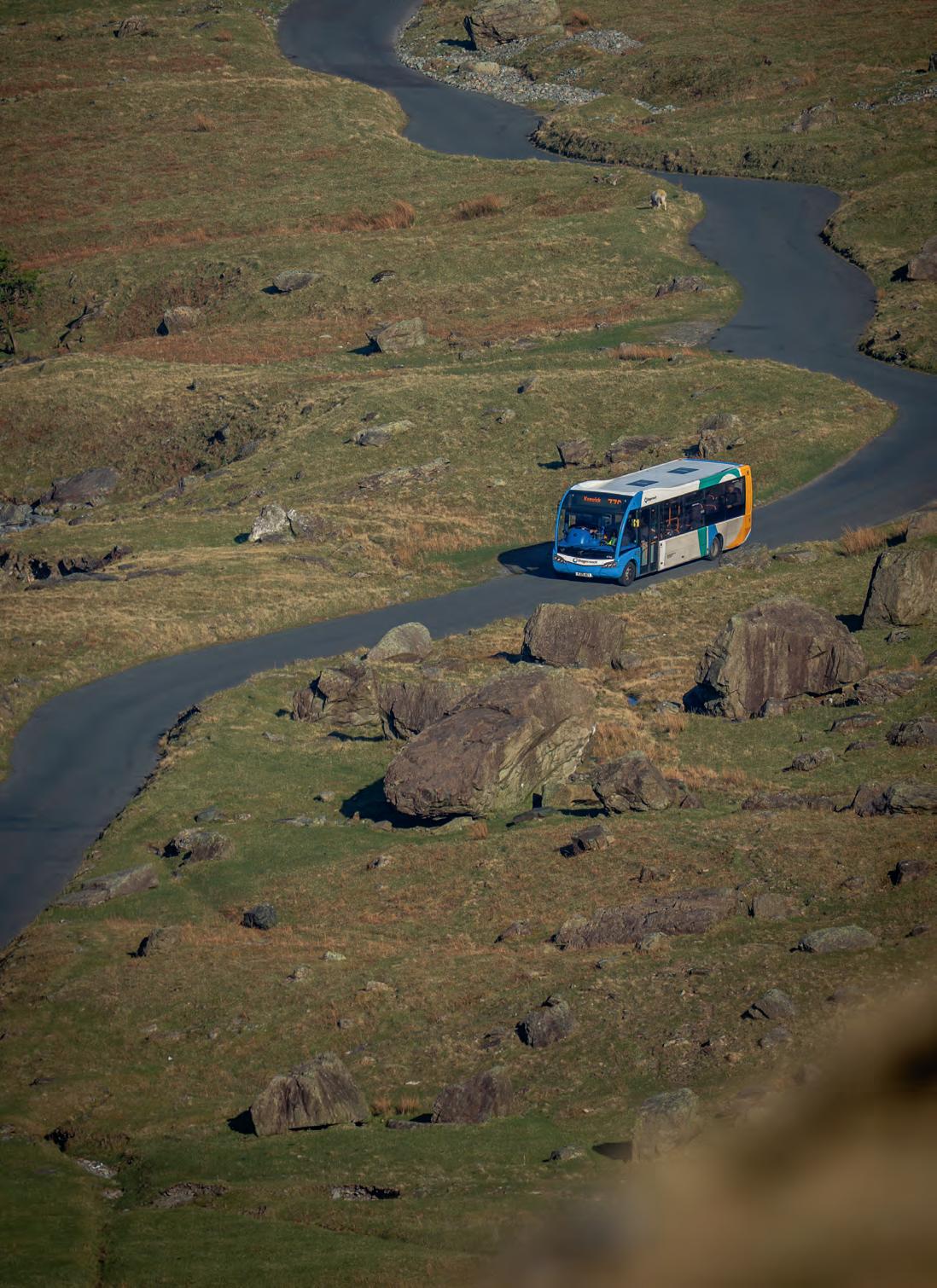
Honister Pass, Borrowdale
BARRIERS TO WORKFORCE MOBILITY IN CUMBRIA
Workforce access:
Inadequate public transport sharply restricts recruitment and retention, excluding non-drivers, young people, students and volunteers, and forcing businesses to rely on staff with private vehicles.
Timings misalign with work patterns:
Bus services do not match typical shift start and finish times, particularly early mornings, evenings and weekends, making public transport impractical for many roles.
Rural isolation:
Many businesses operate in locations with no viable public transport or significant “last mile” gaps, effectively making car ownership essential.
Unreliable services:
Cancellations, roadworks and seasonal timetables undermine confidence in public transport as a dependable way to get to work.
Affordability pressures:
High taxi costs, limited affordable parking and uncertainty around subsidised fares increase staff costs and deter applicants.
Infrastructure shortcomings:
Weak integration between buses, trains, cycling and walking routes further reduces the usability of sustainable transport options.
Business viability risks:
Transport constraints limit opening hours, peak-time staffing and growth, forcing some employers to consider costly private transport solutions and worsening wider challenges such as lack of affordable housing.
Westmorland & Furness businesses involved in this study:
Abbot Hall
Another Place, The Lake
Blackwell
Cafe Ambio At The Lakeland Motor Museum
Cafe Ambio, Grizedale
Cafe Ambio, Junction 36
Chestnut House
Fifty Seven Sedbergh
Gilpin Hotel & Lake House
Go Ape Grizedale
Grizedale Forest - Forestry England
Haven Lakeland Leisure Park
Hill of Oaks Caravan & Lodge Park
Lakeside Hotel & Spa
Lake View Garden Bar
Langdale Hotel & Spa
Lindeth Fell Country House
Lindeth Howe Hotel
Macdonald Leeming House
Meadowside Cafe
National Trust - Aira Force and Gowbarrow Park
Sedbergh School
Smatt’s Duo
Storrs Hall Hotel
The Ambleside Inn
The Angel Inn
The Coniston Inn
The Cranleigh Boutique
The Fizzy Tarté
The Inn on the Lake
The Quiet Site
The Swan, Grasmere
The Temperance Inn, Ambleside
The Waterhead Inn
The Wordsworth Hotel
Ullswater Steamers
Ullswater Steamers Gift Shop
Waterfoot Caravan Park
Wild Boar Estate | Bar, Restaurant & Inn
Windermere Jetty Museum
WESTMORLAND
& FURNESS
Worker Transport Challenges
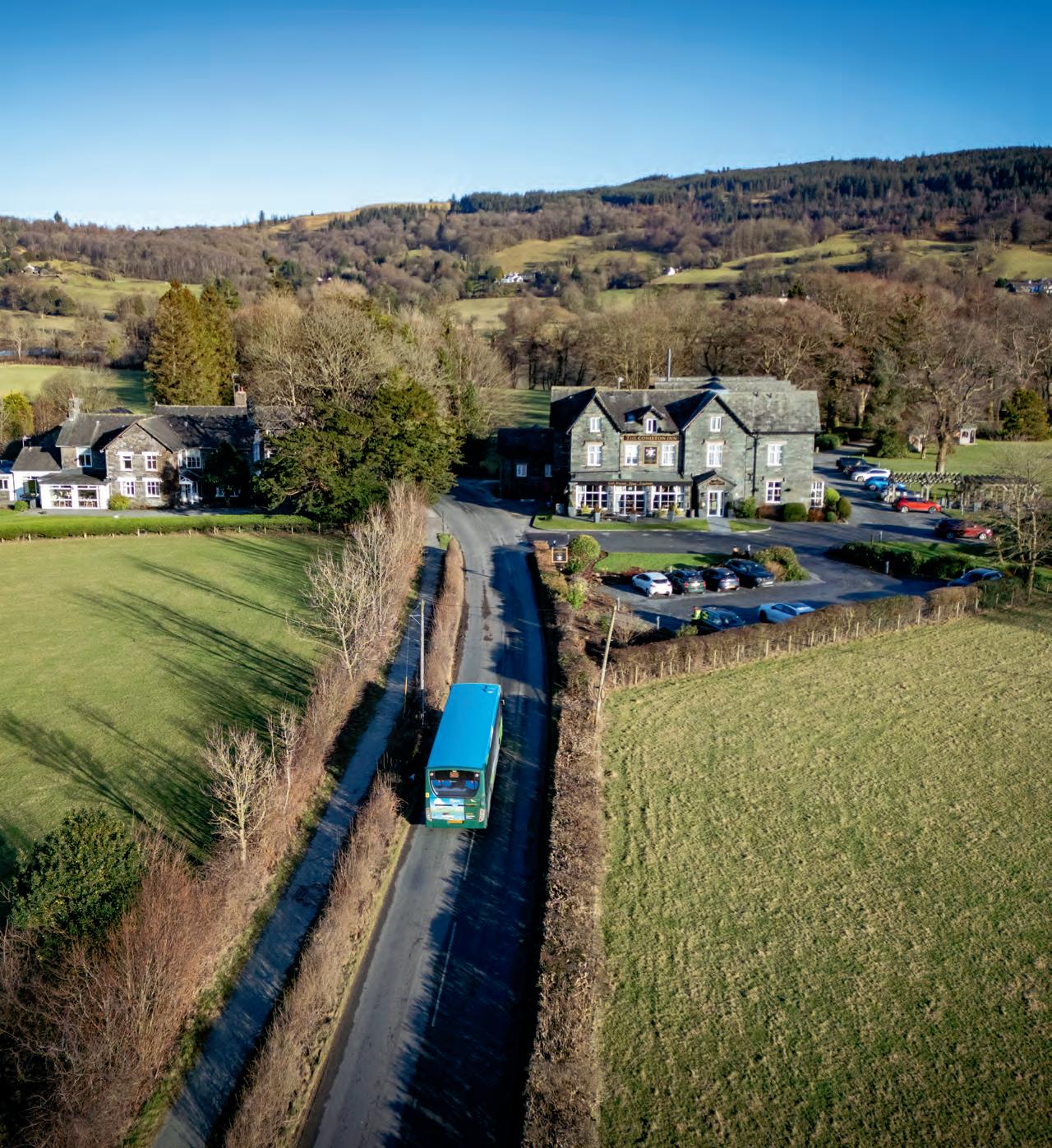
Local visitor economy businesses across the Westmorland & Furness Council area report severe worker transport challenges that stem largely from limited or non-existent public transport to rural tourism sites. Many key destinations such as Grizedale, Langdale, Flookburgh, and Coniston have limited or no viable bus links, leaving workers without cars unable to access employment. Even where services exist, timetables rarely align with hospitality shift patterns, particularly early mornings, evenings, and weekends, causing staff shortages and forcing employers to reduce operating hours or recruit only car owners.
Access Gaps & Safety
Access gaps are especially difficult for young workers, apprentices, and live-in staff who lack vehicles and face social isolation without transport to shops or services. Employers increasingly cover costs for taxis, minibuses, or private coaches, but for many these measures are financially unsustainable.
Safety barriers, such as unlit rural roads with no pavements or cycle routes, further restrict active travel alternatives.
Unlock Economic Growth
The combined impact is significant: recruitment and retention are undermined, staff wellbeing suffers, and business expansion or new investment is delayed or cancelled. Limited transport also affects intersite staffing flexibility, parking pressures, and wider visitor access.
Flookburgh
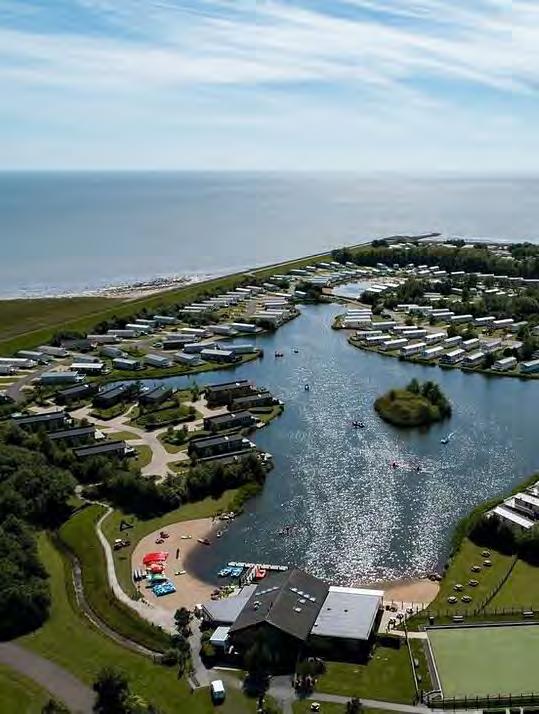
Haven Lakeland faces significant worker transport challenges due to the absence of direct public transport links to its Flookburgh site, creating major barriers for staff who do not drive. The nearest rail station at Cark-in-Cartmel is around 1.5 miles away and inaccessible on foot due to unsafe walking conditions, while a lack of bus services severely restricts recruitment, staff mobility, and access to essential services.
Around 90% of Haven’s 120 live-in workers do not drive and rely on public transport to reach nearby towns such as Ulverston, Barrow and Kendal for shopping, healthcare and recreation, yet no suitable connections exist. As a result, staff are dependent on scarce and expensive taxis or lifts from colleagues, leading to social isolation and reduced independence. Recruitment from Barrow and Ulverston is particularly challenging, and post-Brexit staffing shortages have forced Haven to operate its own minibus service from Lancaster and Barrow on peak changeover days as a last resort. These transport constraints also affect visitors, many of whom increasingly seek car-free travel options but are unable to access the park without a car. There is therefore a compelling need to support the 120 live-in workers who currently face significant barriers to mobility; improving transport would enhance wellbeing and reduce staff turnover.
Sedbergh
Poor public transport connectivity, infrequent bus services, and reliance on costly £35+ taxi journeys from Oxenholme and Kirkby Stephen rail stations limit access for staff and visitors alike, contributing to staffing pressures and reduced economic opportunity. With no bus route to areas like Cautley, accommodation providers struggle to recruit and retain workers who cannot travel independently. Improved connectivity could support recruitment, reduce travel costs, encourage sustainable tourism and position Sedbergh as an accessible hub between the Lake District, Yorkshire Dales and Morecambe Bay.
Haven Lakeland, Flookburgh
Public transport in Sedbergh
Grizedale Forest
Across Grizedale Forest, multiple businesses, including Go Ape, Café Ambio and other site tenants, share the same persistent worker and visitor transport challenges caused by the absence of direct public transport links. Staff across these businesses are heavily reliant on private cars or employer-provided transport, limiting access for non-drivers and restricting recruitment. At Grizedale, Café Ambio workers often depend on a complex journey using the #6 bus from Barrow to Backbarrow followed by a company minibus transfer, a system that is vulnerable and inefficient. Poorly aligned bus timetables mean staff frequently arrive late or must leave early, while limited Sunday services further constrain weekend operations. These shared transport barriers reduce workforce availability, increase car dependency, and create congestion and parking pressures, collectively limiting operational efficiency, business growth and the long-term sustainability of the Grizedale visitor offer. Café
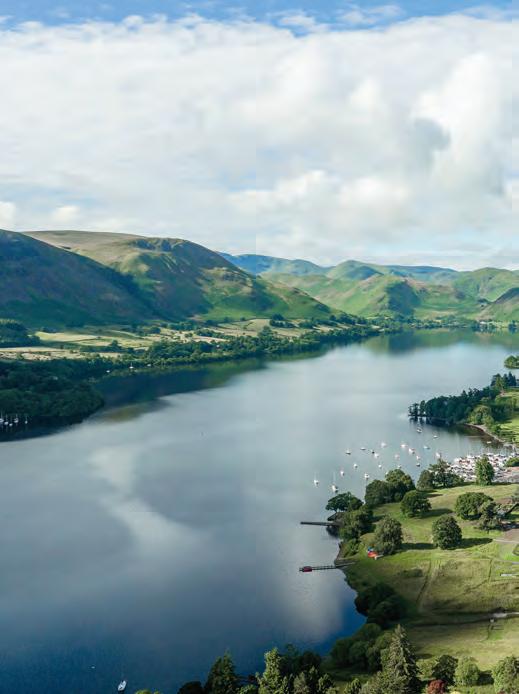
Ullswater
Businesses across the Ullswater Valley report that worker transport is a major barrier to recruitment and retention. Most sites have no staff using buses due to limited routes, reduced timetables, and services that do not align with early starts and late finishes common in hospitality and tourism, which can run from 4am to after midnight. Staff travel long distances from places like Penrith, Carlisle, Kendal and Barrow, with rural isolation and lack of car access increasing dependence on costly live-in accommodation. Improved transport provision could be transformative for staff mobility, business sustainability, and regional economic growth, particularly by improving winter access and extending services so staff can travel for essential wellbeing and social needs.
Ullswater
Grizedale Forest
Cumberland businesses involved in this study:
Bassenthwaite Lake Station
Birdoswald Roman Fort - Hadrian’s Wall
Bridge
Calvert
Eskdale
Farlam Hall Hotel & Restaurant
Glaramara Hotel
Grange Country House Hassness Country House
Honister Slate Mine
Keswick Alhambra Cinema
Lake District Wildlife Park
Lodore Falls Hotel & Spa
Muncaster Castle
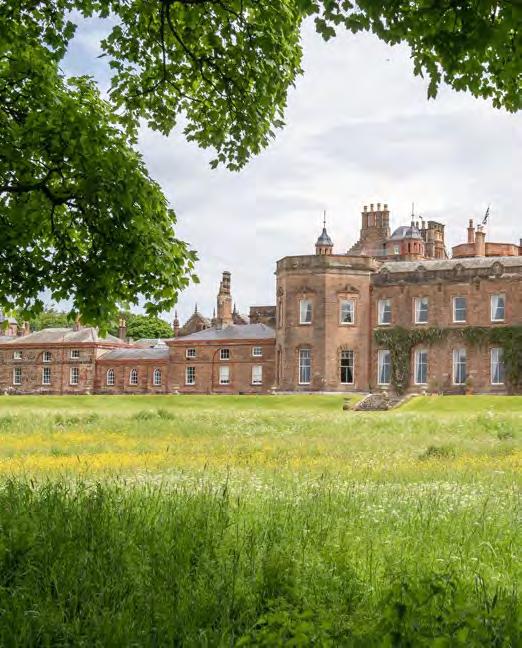
Netherby Hall
Pentonbridge Inn
Rosehill Theatre
Royal Oak Hotel
Solway Holiday Park
The Cottage In The Wood
The Langstrath Country Inn
The Melbreak Hotel
Trout Hotel, Cockermouth
Wallace Lane Farm Holiday Park
CUMBERLAND
Worker Transport Challenges
Visitor economy businesses across the Cumberland Council area report persistent worker transport challenges driven by limited, unreliable and poorly aligned public transport, particularly to rural attractions and hospitality venues. Many sites are either beyond the end of bus routes or served by seasonal, infrequent or cancelled services, meaning staff without cars cannot reliably access work. Where buses do exist, timetables rarely match hospitality and attraction shift patterns, with services starting too late, finishing too early and often not operating on Sundays. This significantly restricts recruitment, excludes young people and non-drivers, and forces businesses to rely heavily on car ownership.
Access Gaps & Safety
Access gaps are most acute for remote rural sites and evening economy venues. Staff and visitors are often required to walk long distances along busy, unlit roads with no pavements, cross major highways, or wait at unsafe bus stops, making public transport impractical or unsafe, particularly in winter and after dark. Poor reliability, inaccurate real-time information and weak bus–rail connectivity further reduce confidence in using public transport. In response, some businesses are considering or already providing private minibuses or taxis, increasing costs and highlighting unmet transport need.
Unlock Economic Growth
Transport barriers are limiting recruitment and retention, preventing young people and lower-income workers from accessing employment, and constraining business resilience. Visitor access is also reduced, particularly for evening events, cultural venues and rural attractions, lowering dwell time and spend. Planned business expansions and investment are at risk where workforce access cannot be guaranteed. Improving service reliability, extending operating hours (especially evenings and Sundays), addressing safety gaps and strengthening connectivity between towns and rural destinations would unlock workforce participation, support sustainable tourism and enable long-term economic growth across Cumberland.
Carlisle Train Station
Netherby
Hall & Pentonbridge Inn
Netherby Hall and Pentonbridge Inn face severe worker transport challenges due to their remote location beyond the end of the #79 bus route, which terminates in Longtown, six miles away. Although the bus runs frequently, staff are unable to complete the final part of the journey without lifts or expensive taxis, and existing timetables do not align with shift patterns. Poor connectivity from key recruitment areas including Carlisle, Brampton, Gretna and Longtown prevents young people, particularly 17–18-year-olds, from commuting independently. The lack of nearby amenities and public transport is often not fully understood by applicants, leading to difficulties in recruitment and high turnover among live-in staff who feel isolated without access to services.
These transport constraints pose a significant risk to future growth, particularly ahead of a planned £15m expansion requiring around 100 additional employees. The businesses are already using a private minibus to collect guests arriving by train and are considering providing worker transport due to prohibitive taxi costs. Without improved bus access, extended routes, or flexible solutions such as ondemand services from Carlisle, inadequate transport infrastructure will continue to restrict recruitment, deter young workers, reduce retention, and undermine the long-term sustainability of the business.
The Lake District Calvert Trust
The Lake District Calvert Trust experiences significant worker transport challenges due to the lack of viable and appropriately timed public transport services. Currently, only around 5% of staff use buses, not because of low demand but because existing services do not operate early or late enough to match shift patterns, making them unusable for many roles. For example, kitchen staff finishing at 7:30pm are unable to catch the last bus, which departs at 7:00pm. The absence of any Sunday bus service creates additional barriers for weekend staff, further restricting recruitment. As a result, the Trust is forced to rely heavily on car travel, limiting access to employment for non-drivers and reducing the potential workforce. The Trust believes that extending operating hours and introducing Sunday services could significantly increase public transport use and improve recruitment and retention.
Netherby Hall
Lake District Calvert Trust
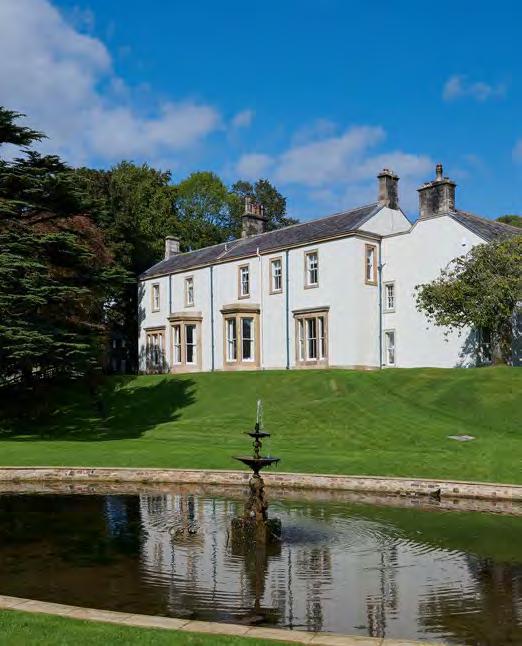
Farlam Hall
Farlam Hall faces severe worker transport challenges due to an almost complete lack of practical public transport options. No current employees are able to use public transport, as the nearest train station and bus connections are located in Brampton and require either a drive or a long walk along busy, unlit roads with no pavements, making them unsafe and impractical. Limited local bus provision means young employees often rely on parents for lifts, while a very restricted twice-weekly bus service operates at times that do not align with working hours.
These constraints significantly restrict recruitment and workforce diversity, with strong candidates from Carlisle unable to accept roles due to the absence of staff accommodation and reliable transport options. The lack of accessible transport prevents Farlam Hall from attracting non-drivers, particularly young people, and increases reliance on private cars. Visitor access is also affected, especially outside summer months, limiting midweek trade. Improved transport provision would deliver clear benefits for both employment and visitor experience.
Breaking down barriers with transport
In September 2025, Cumbria Tourism Workforce Development team members met with 15 people on Universal Credit at Whitehaven Job Centre, including residents from Whitehaven, St Bees, Egremont, Cleator Moor, and Frizington, to connect them with visitor economy jobs. However, all were non-drivers, and limited bus services made commuting difficult, severely restricting job possibilities, particularly for Cleator Moor residents, who couldn’t return home after 9:40pm, ruling out late-shift roles in pubs, hotels, and restaurants.
Worker Transport Challenges in Summary:
The dominant challenges are lack of reliable, frequent, and well-timed public transport, especially for rural areas and shift-based work. These issues directly undermine recruitment, retention, volunteer engagement, and visitor access, limiting business growth, reducing car usage, and operational resilience across Cumbria’s tourism and rural economy. service
Whitehaven
Farlam Hall
PROGRESS TO DATE
OBJECTIVE - 4.7 DEVELOP AND EXTEND WORKER TRANSPORT INITIATIVES
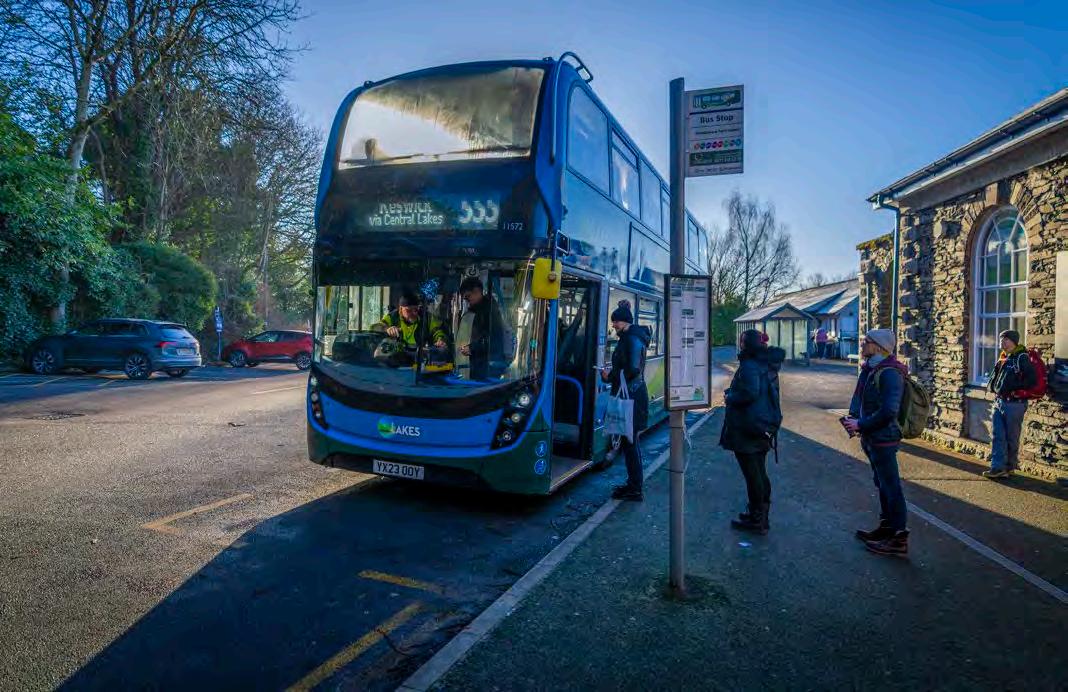
Cumbria Tourism LVEP is making strong progress against Objective 4.7 by working with partners to improve the transport and infrastructure that support a thriving visitor economy. Addressing limited public transport and reliance on private vehicles, efforts focus on enabling more sustainable, accessible travel in line with net-zero ambitions. Through collaboration with local authorities and providers such as Stagecoach, this has already delivered results, including securing the £3 bus fare cap to 2027 and extending services through Bus Service Improvement Plans. These actions are strengthening connectivity, supporting workforce access and enhancing the overall visitor experience, with continued momentum for further improvements.
Rosehill Theatre
Rosehill Theatre has historically faced transport barriers that have affected staff recruitment, audience access, and community participation. With no viable public transport options and bus timetables that did not support shift patterns or late-night events, almost all staff were required to drive, creating both financial and logistical barriers, particularly for young people, students, and those without access to a car.
Limited parking capacity and the nearest bus stop being a mile away along an unlit road with no pavement further compounded safety and accessibility concerns for workers and visitors.
However, through collaboration with Cumberland Council and thanks to BSIP investment, a solution has now been developed. The 1/1A bus route operates half-hourly between Whitehaven from 6:30am–6:30pm, stopping directly at Rosehill Theatre. This represents a transformative step in improving connectivity and making commuting by public transport a realistic option for staff, audiences and community participants. The new service opens the door for wider economic, cultural and social benefits, supporting recruitment, reducing car dependency, and enabling local residents to safely and affordably access opportunities at Rosehill.
Historically, Rosehill is an arts venue that has been difficult for the community to access. In recent years, as our programme has evolved to be more welcoming and accessible to all, our location has become increasingly challenging for staff, performers, volunteers, and audiences to reach. Specifically, the lack of public transport has limited us in all aspects of our operation, from recruitment and retention to community engagement and audience development. As a member of Cumbria Tourism, we welcomed the opportunity to contribute to their thoughtful consultation around worker transport. Needless to say, we are thrilled about the subsequent bus service improvements that are now being rolled out, with a bus running right past our building 6 days a week. Put simply, it’s a gamechanger; for us, for our extended team, and for the community who we exist to serve.
Jen Garrick, CEO, Rosehill Arts Trust
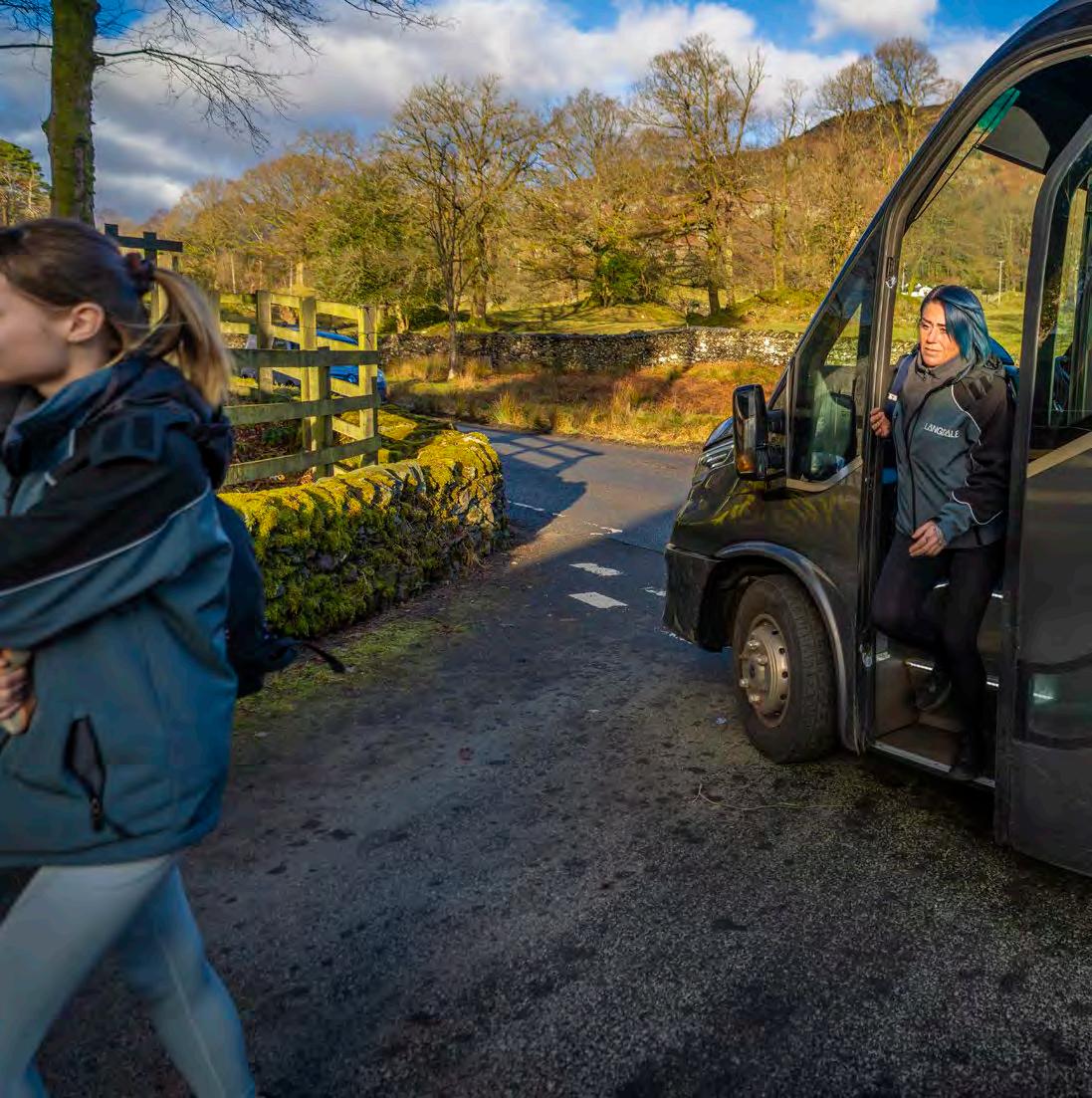
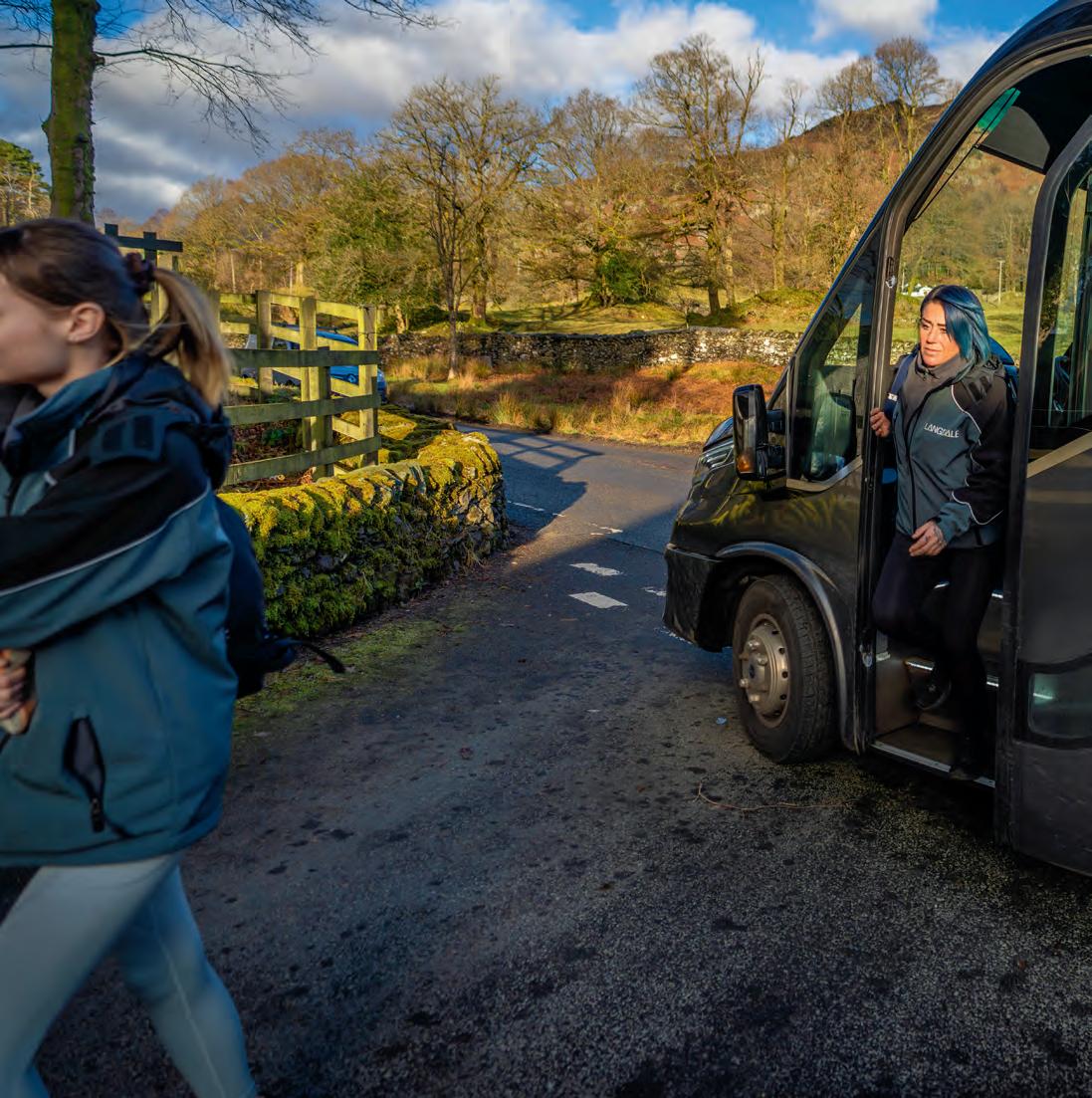
Langdale
Businesses in Langdale reported that transport issues were affecting recruitment and retention. Conversations with local businesses highlighted shared challenges, including infrequent bus services, late start times for early shifts, limited evening travel, and a lack of seven-day operation.
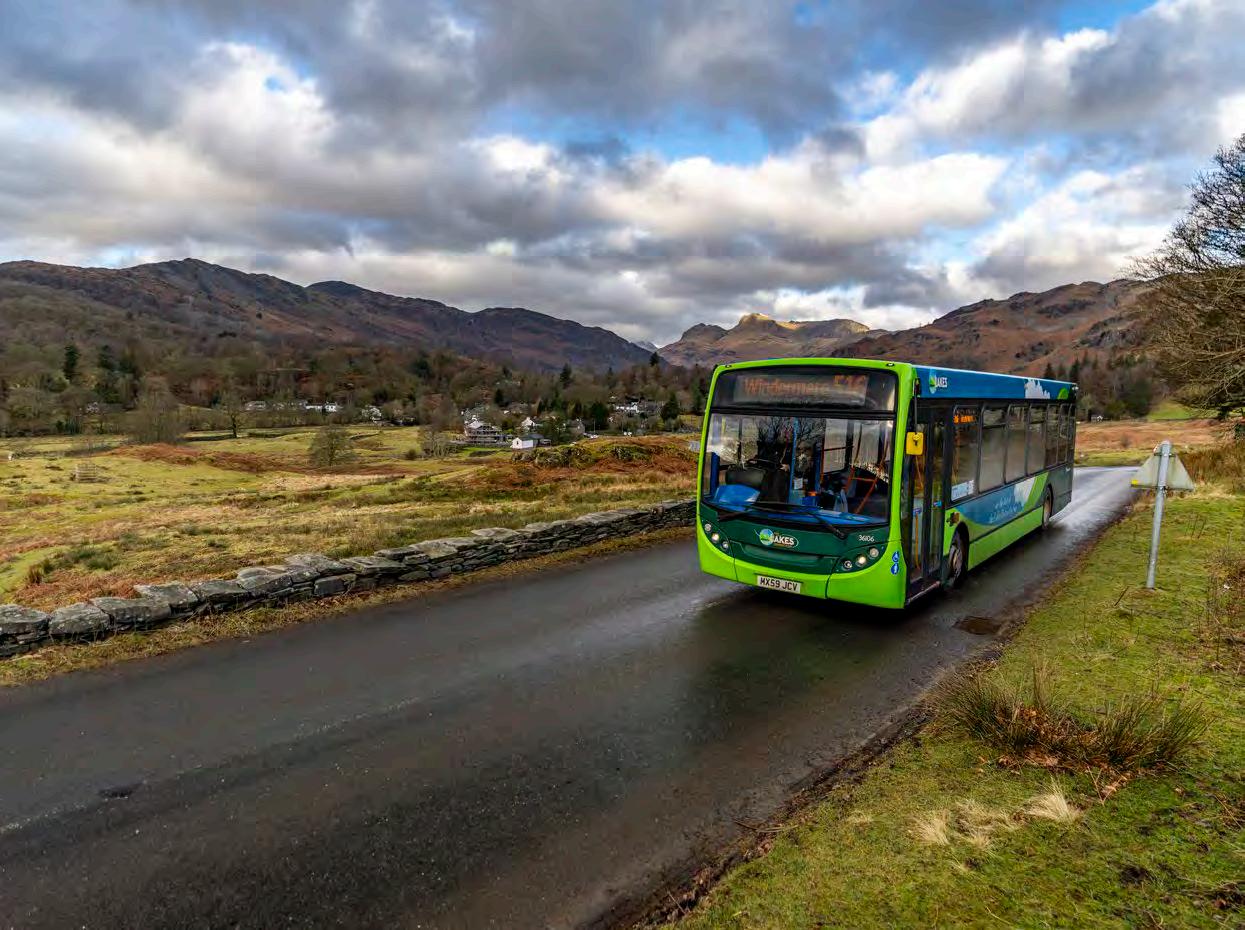
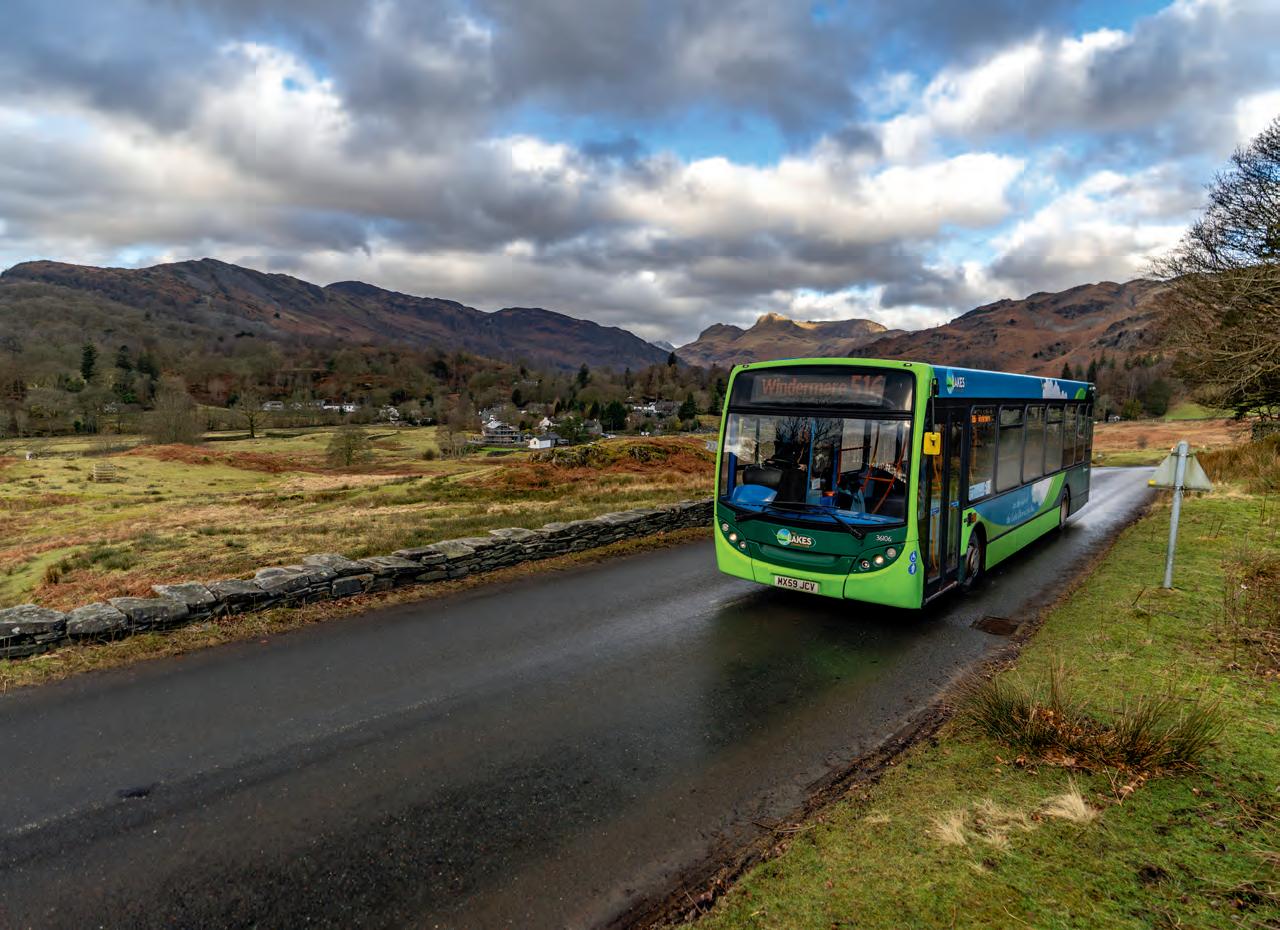
In response, Westmorland & Furness Council agreed to BSIP fund enhancements to the existing Stagecoach 516 route between Ambleside and Dungeon Ghyll, with additional early morning services to support staff access to work and extra evening journeys at weekends for both workers and visitors.
These changes aim to improve access to jobs for non-drivers, increase passenger numbers at key times, support year-round tourism, and encourage a shift from car use to public transport, reducing carbon emissions and easing parking pressures.
Muncaster
Muncaster faces workforce and visitor transport challenges due to limited public transport and poor connectivity, particularly the constrained link between Ravenglass station and the site, which restricts access for the 60 non-driving staff and hampers recruitment, resilience and retention.
Following the recent wave of Cumberland Council BSIP funding allocations, Muncaster has directly benefited from the newly announced #7 / X7 Barrow to Whitehaven bus service from Cumberland. The service is expected to offer valuable improvements in connectivity for both staff and visitors, aligning strongly with the transport priorities highlighted. Appreciation was expressed for the contributions made throughout the BSIP process, which have helped shape this positive outcome and support the ongoing case for enhanced public transport in the area.
The introduction of additional bus services in the Langdale Valley is a great step to enhance connectivity for businesses, the community and visitors. The benefit to those working and living in the valley represents a significant step forward opening up roles in the area to those who may have previously been excluded. Improvements in transport to rural locations for work not only benefits businesses in those locations but also the communities in which they are located.
We’re grateful to Cumbria Tourism for the work they’ve done to lobby for these improvements. The improvements to the X7 bus service are great news for Muncaster, and we’re keen to raise awareness so as many people as possible can take advantage of the route and the benefits it brings to our community.
Ewan Frost-Pennington, Director of Operations, Muncaster
Dan Visser, Langdale Hotel & Brimstone Hotel & Spa
HELPING TO SECURE THE £3 BUS FARE CAP EXTENSION
Cumbria Tourism LVEP conducted a county-wide survey to understand the impact of the Government’s £2/£3 bus fare caps on residents, workers and visitors across Cumbria, particularly following the end of the £2 cap in December 2024.
With 663 responses, the findings showed that affordable public transport plays a vital role in enabling access to employment, reducing travel costs and encouraging more sustainable travel choices. The research also explored changing travel behaviours and the wider benefits for communities, the environment and the visitor economy.
This work provided valuable, evidence-based insight to inform policy and support advocacy for continued affordable transport. Its impact has been strengthened through partnership working, with Cumbria Tourism supplying insight and partners, including local authorities, councils, local MPs and Stagecoach all acting on this evidence.
Together, this collaborative approach helped secure the £3 bus fare cap until 2027, delivering lasting benefits for communities, the visitor economy and those who rely on public transport to get to work, with Cumbria Tourism committed to continuing to lobby for low and affordable fares beyond 2027.
With the rising cost of living, even a small increase to the £3 fare could make it unaffordable for me to get to work. I might be forced to leave my job.
Naomi, Lodore Falls Hotel & Spa
Many of our employees rely on public transport to travel to other hotels, and keeping travel costs low helps them stay in work and on time. It’s a key part of how we support our employee’s wellbeing and reliability.
Lizzie, The Inn Collection Group
The £3 bus fare makes it possible for me to get to work without it costing a large portion of my income each week.
Since I don’t drive, the £3 rate is a game-changer for me. If it increased, I’d either have to rely on others to provide lifts or cut back on essentials elsewhere - neither is a great option.
Lesley, Lakeside Hotel
LOOKING AHEAD
Wheels 2 Work
Cumbria Tourism LVEP joined the Wheels to Work and Training Group (formed by Cumberland Council), representing the tourism industry and its members to ensure the needs of tourism employers are heard. The group is tackling the transport barriers that limit people’s access to jobs and training, and restrict employers’ candidate pools, by co-designing a sustainable, long-term solution with local businesses.
Options being explored include employersponsored places on group transport (e.g. demandresponsive services) and support for private transport (e.g. mopeds or cars, including licence help), with wrap-around benefits like discounted maintenance via local partners.
You.Smart.Thing Travel Planner
We are currently trialling a travel assistant, developed by You.Smart.Thing (YST), to help businesses and employees plan journeys across the county using public transport. It shows travel options and journey times, making it particularly useful for businesses operating across multiple sites.
Talent Matching Service
Cumbria Tourism LVEP brings together a range of services to support recruitment in the visitor economy, including the Tourism Talent Hub, a free online job board that connects tourism and hospitality businesses with job seekers and partners such as DWP and Inspira.
Alongside this, an active brokerage service provides hands-on matching of candidates to suitable roles, particularly supporting those facing barriers to employment.
Through its Welcome to Work initiatives, Cumbria Tourism helps people from underrepresented groups, including individuals with disabilities and ex-offenders, to access opportunities in tourism. This work is strengthened by partnerships with organisations such as Inspira, Right2Work, and the Cumbria & Lancashire Prison Group, as well as job seeker support through recruitment events, inclusivity support, and employability guidance.
Cumbria Tourism Grants
Cumbria Tourism’s Charitable Fund, introduced in its 50th year, offer grants of up to £500 to help cover travel costs for those newly employed in Cumbria’s visitor economy, as well as tourism and hospitality students aged 16+ who live and study or train in the county.
Visit: www.cumbriatourism.org/grants
Worker Transport Coordinator, Cumbria Tourism
Natalie
Fryer
With a background in marketing in hospitality and tourism, Natalie has returned to Cumbria Tourism (the organisation where her career first began) in a new capacity as Worker Transport Coordinator. Passionate about the visitor economy, its people, and the success of the businesses that drive it, she is committed to helping support businesses in Cumbria.
Natalie understands first-hand the frustration and real impact felt when transport simply doesn’t work. This personal experience fuels her determination to improve access to reliable and practical travel options for those working in hospitality and tourism across the county.
Partnership working sits at the heart of her approach. From day one, her strategy has been clear: to listen, gather insight, understand the challenges faced by employers and employees, highlight those issues where they need to be heard, and lobby for meaningful improvements. By collaborating closely with both of Cumbria’s councils, she is ensuring that shared understanding leads to shared solutions.
The Bus Service Improvement Plan (BSIP) has created a valuable opportunity to influence positive changes to bus services, but Natalie recognises that solutions must go further. Other modes of transport will also play a crucial role in improving connectivity and strengthening Cumbria’s transport infrastructure for workers.
Ultimately, Natalie’s goal is to drive practical change, ensuring people can access the jobs they love, and that the businesses that depend on them can continue to thrive.
Worker
Transport in the Visitor Economy
For more information:
Natalie Fryer, Worker Transport Coordinator, Cumbria Tourism 01539 825007