The Indulgence Issue DANIELLE MCKINNEY


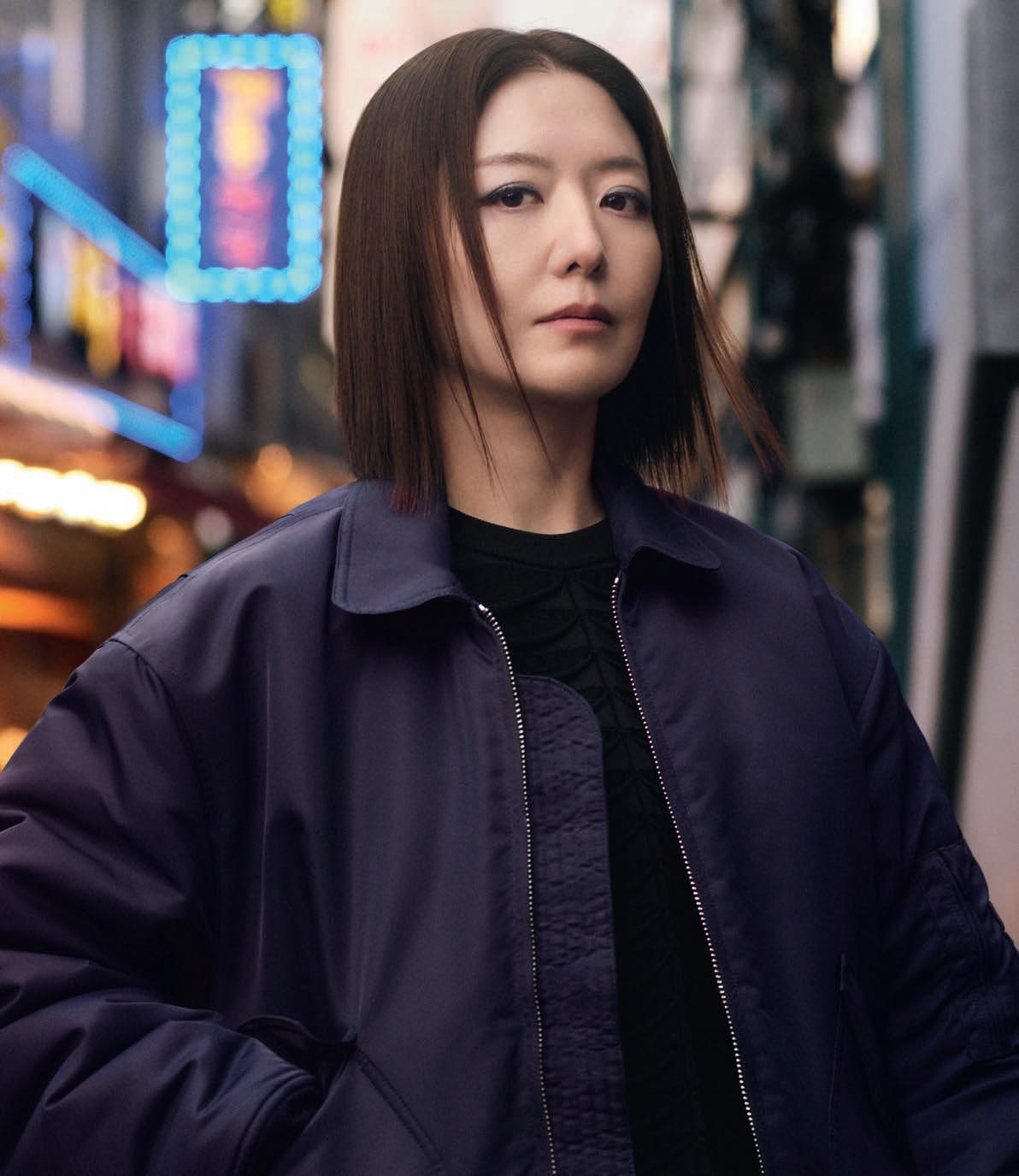
ayoung kim multidisciplinary artist
“I am an early adopter. In this era of generative media, none of us knows which direction is the right way. The good thing is that we have millions of universes to explore.”
Ayoung Kim multidisciplinary artist
Payal Kapadia Filmmaker
Pol Taburet Visual Artist Pan Daijing Artist & Composer

Álvaro Urbano Visual Artist
Emeka Ogboh Visual Artist
Marco da Silva Ferreira Dancer & Choreographer
Andrea Peña Choreographer & Artist
Bárbara Sánchez-Kane Artist & Designer
Ambrose Akinmusire Musician & Composer
Delivery Dancer’s Sphere, 2022 single-channel video, 25 min
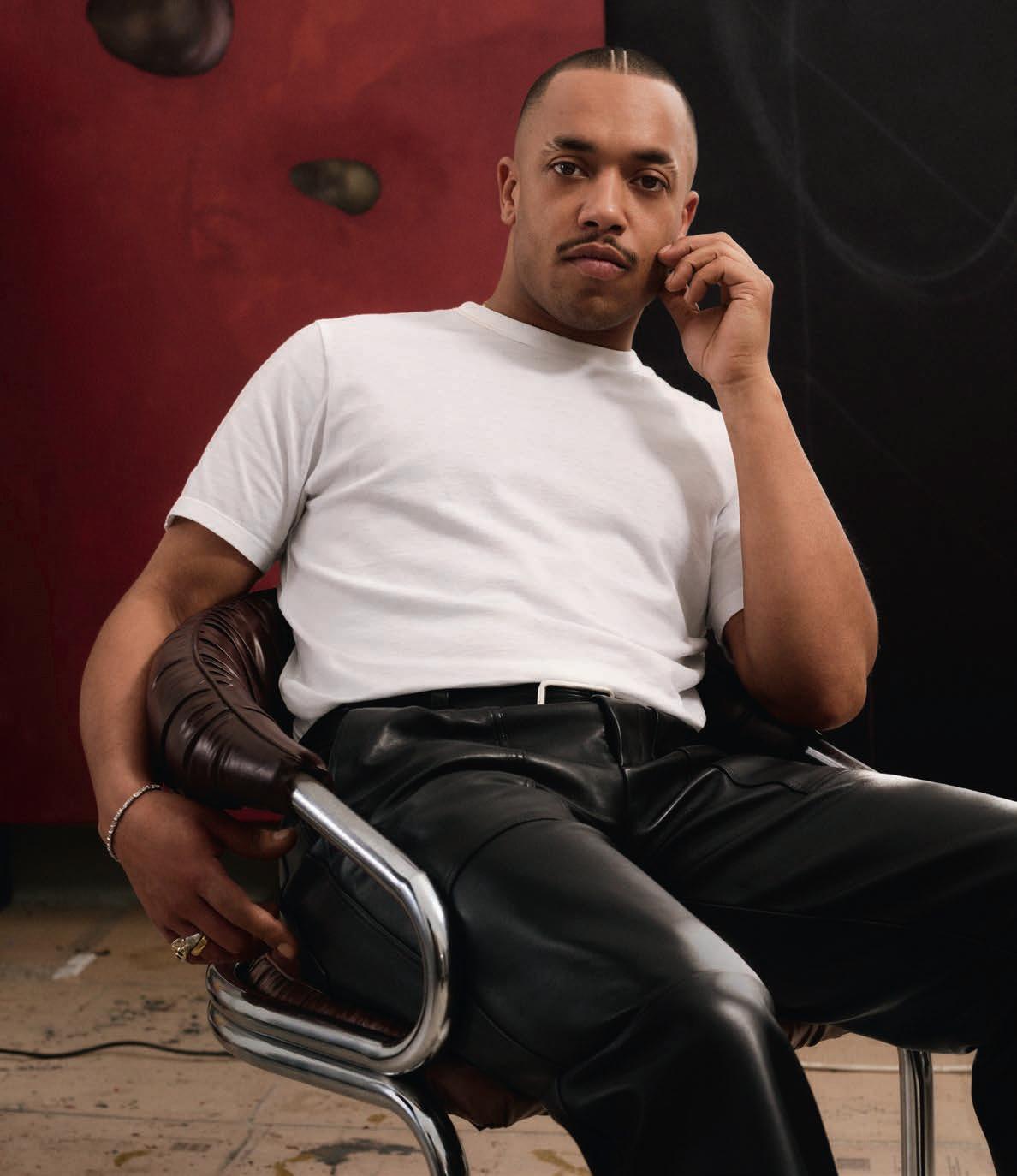
“In painting, there is a permanent search. It is about not staying too reliant on a habit or gesture, not becoming a gimmick. It must always be alive, like a fire.”
Ambrose Akinmusire
Musician & Composer
Pan Daijing
Artist & Composer
Pol Taburet
Visual Artist
Emeka Ogboh
Visual Artist
pol taburet visual artist
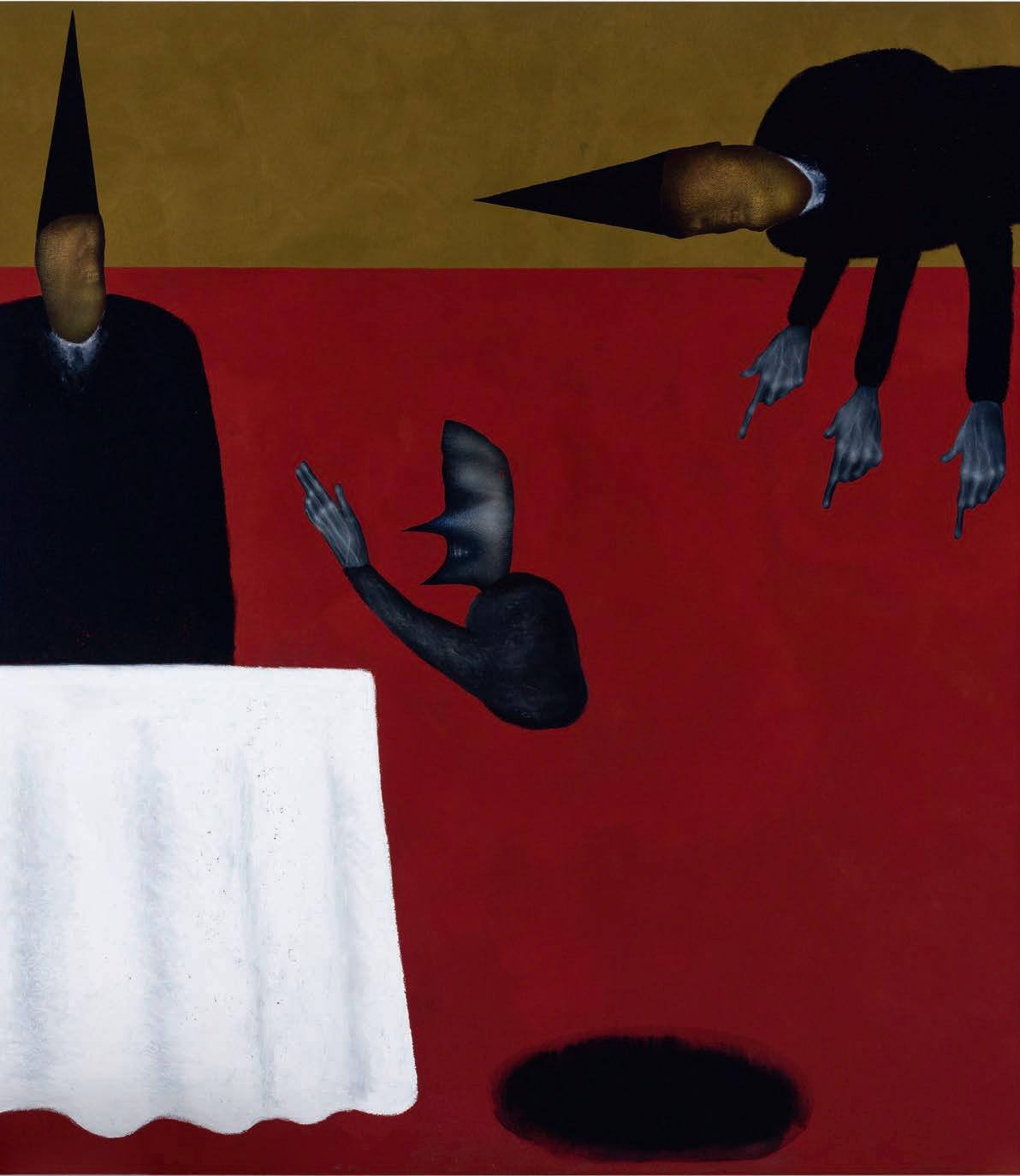
THAT’S THAT NEEDLE GUY!, 2025 ACRYLICS, ALCOHOL- BASED PAINT AND OIL PASTEL ON CANVAS, 220 X 220 CM COURTESY OF THE ARTIST AND MENDES WOOD DM SÃO PAULO, BRUSSELS, PARIS, NEW YORK
Ayoung Kim multidisciplinary Artist
Marco da Silva Ferreira Dancer & Choreographer
Andrea Peña Choreographer & Artist
Bárbara Sánchez-Kane Artist & Designer
Álvaro Urbano Visual Artist
Payal Kapadia Filmmaker

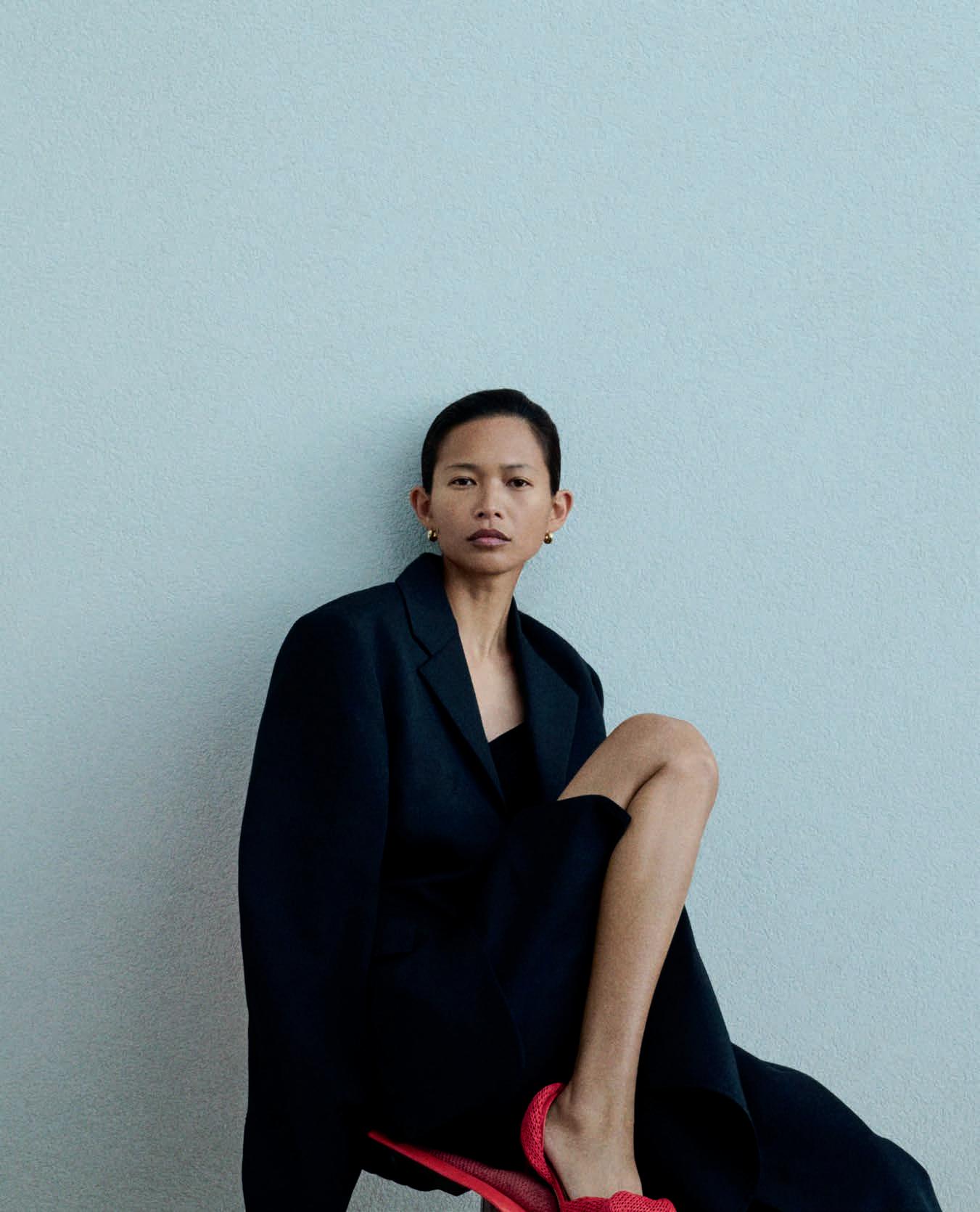



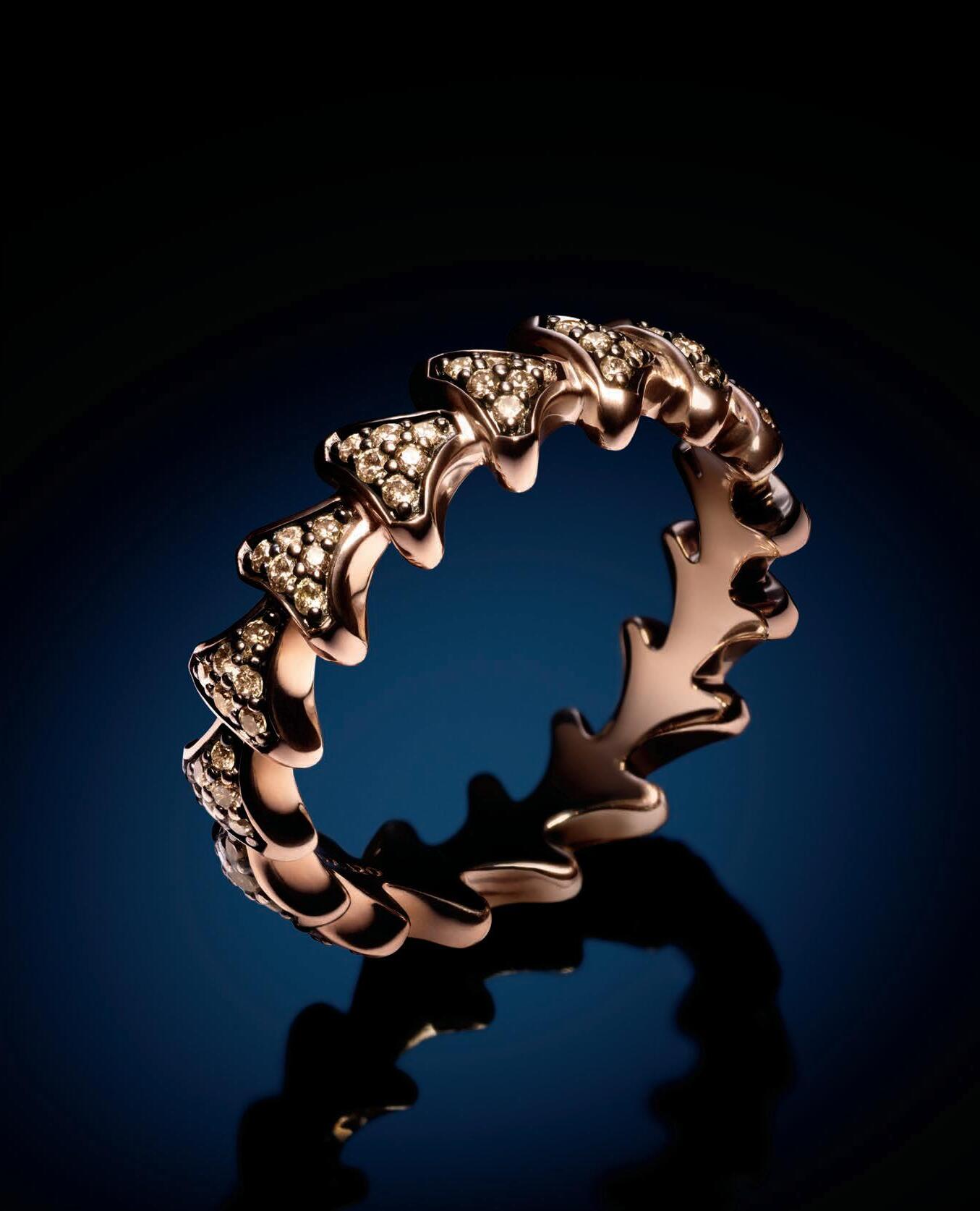
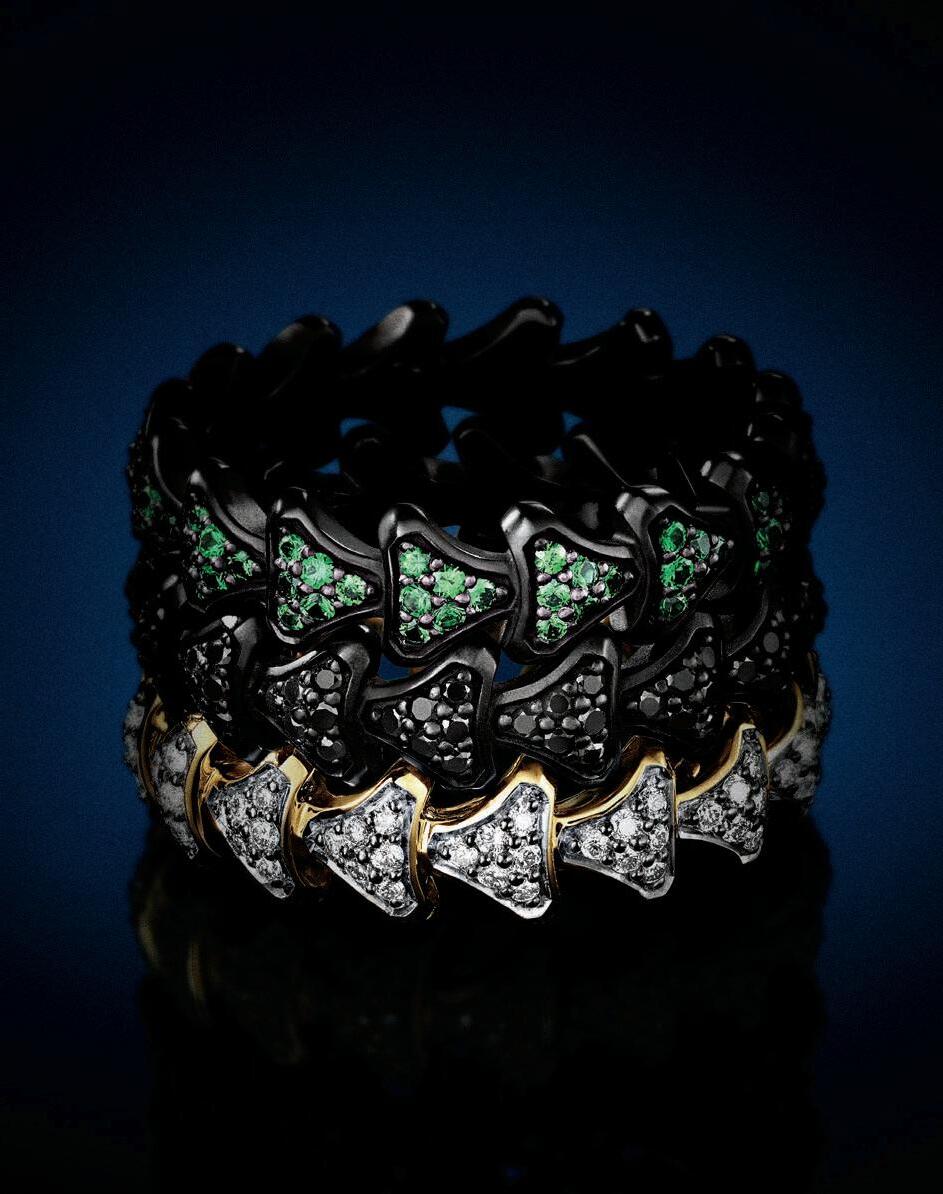
“Centuries-old armor inspires me—links engineered to be stronger together. I explore that craftsmanship and translate it into modern adornment.”
EVAN YURMAN





The designer’s source for furniture, lighting, and decor. Lumens.com




Where Beach Meets Bay.
The Resort Collection: One- to three-bedrooms
The Residences: Three- to four-bedrooms
SRRBahiaMar.com ◆ 954 364 9743
Future Residences:
801 Seabreeze Blvd.
Fort Lauderdale, FL 33316
Sales Gallery: 611 Seabreeze Blvd. Fort Lauderdale, FL 33316
ORAL REPRESENTATIONS CANNOT BE RELIED UPON AS CORRECTLY STATING REPRESENTATIONS OF THE DEVELOPER. FOR CORRECT REPRESENTATIONS, MAKE REFERENCE TO THIS BROCHURE AND TO THE DOCUMENTS REQUIRED BY SECTION 718 503, FLORIDA STATUTES, TO BE FURNISHED BY A DEVELOPER TO A BUYER OR LESSEE.
The St. Regis Residences Bahia Mar Fort Lauderdale (“St Regis Residences”) is a community of two towers: including Tower 1 of condominium residences developed by PRH/TRR BM Tower 1, LLC and Resort Tower 3 which includes a condominium within a portion of a building or within a multiple parcel building developed by PRH/TRR BM Condo, LLC. Resort Tower 3 includes a hotel. St Regis Residences are not owned, developed, or sold by Marriott International, Inc. or its affiliates (“Marriott”). The Developers use the St. Regis marks under a license from licensor, Marriott, which has not confirmed the accuracy of any of the statements or representations made about the projects by Developers. The Developer uses the trade names, marks, and logos of licensor, The Related Group®, which is not a Developer of any tower. Each condominium project offered here is offered solely pursuant to the respective project Developer’s Prospectus. Renderings depicting water, marina, surrounding buildings, or landmarks are modified with some surrounding buildings and landmarks omitted; all amenities, food services, resort services, finishes, designs, materials, furnishings, plans, specifications, or art contained in this brochure are proposed only. The St. Regis Residences are developed on a site that is near water, but water access and view is not guaranteed. Each tower will be governed by an association and be part of a master association which will require payment of master association assessments. Consult the Prospectus of the Developer for the Tower in which you desire a unit to understand the offering, the amenities, the proposed budgets, terms, conditions, specifications, fees, unit dimensions, size calculation method, site plans, estimated budgets for all associations, and to learn what is included with a purchase and by a payment of all assessments. New York Residents: THE COMPLETE OFFERING TERMS ARE FOUND IN A CPS-12 APPLICATION AVAILABLE FROM THE OFFEROR. FILE NO CP25-0034 for Tower 1 and FILE NO. CP25-0058 for Tower 3. The offeror for each Tower is the Developer named herein for each respective Tower. No offering is made here is to any resident of any jurisdiction where such an offering is prohibited by law or registration is required unless registration has been completed or is exempted. 2026 © by Related Group, PRH/TRR BM Tower 1, LLC and PRH/TRR BM Condo, LLC with all rights reserved.

FOOD'S FAMILY
89B Canal Street. New York. September 2025 to May 2026.
Lucien Smith A1A Adam Zhu Anastasiya Siro Ben Leventhal Ben Levin Blackbird Buzz Chambit Miller Charlie Gabe Rosner Georges Mefleh Isaiah Barr Jack Curran James Fisher Smith Jean Claude Van Ejera Jeanne Greenberg
Laurence Chandler Leina Seeley London Stewart Lucia Rodriguez Gerstein Luke Vu Malbon Golf Margaret Ross Nile Greenberg Nola Kim Mayer Nordic Knots Oiegario Reyes OJAS Sounds Onitsuka Tiger Paris Dwyer Pea Sergio Bellow Sophie Gubernick Taste of Heaven Thumns Tom's Juice Tony and Melody Vergara Uncle's Green
With respect
covers fed Miller Gubernick of Heaven

to Gordon Matta-Clark, Carol Goodden, Tina Girouard, and the family of 1971.
FISCAL FACTS
Charlie Klarsfeld Co Powers David Prutting Devon Turnbull Erica Malbon Ethan Daly Fletcher Kern
Greenberg Jessamyn Fiore Joanna Yu Johnny Sreenan Julian Williams Kaleidoscope Ken Farmer Larry Warsh
Ross Mathieu Canet Max Lamb Mia Manning Michael Abel Mo Koyfman Monte's Naim Johnson Nellie Kim
Ethan Daly Fletcher Kern Ken Farmer Larry Warsh Monte's Naim Johnson Nellie Kim
PJ Monte Priya Banerjee Psyche Organic Quillan Prenderville Salon 94 Scott Lynn Sean Kinney Green Curry Versace Xavier Penagos Zac Bahaj Zikomo McBurnie and everyone else we forgot
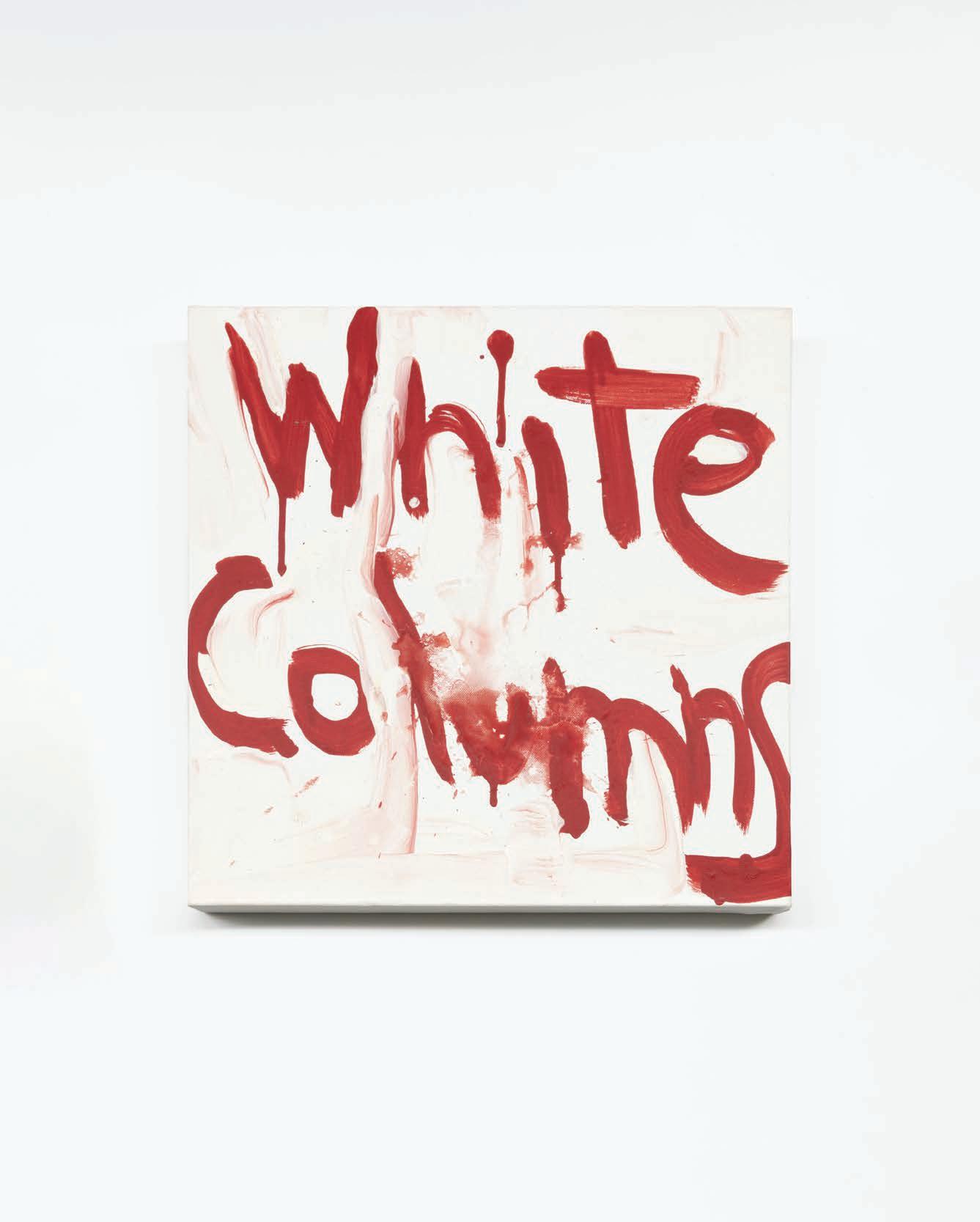
Kim Gordon, White Columns, 2011.

MADISON AVENUE
GREENWICH
SOUTHAMPTON
TORONTO PALM BEACH
BAL HARBOUR SHOPS
WYNN LAS VEGAS
MONTECITO
BEVERLY HILLS
SOUTH COAST PLAZA
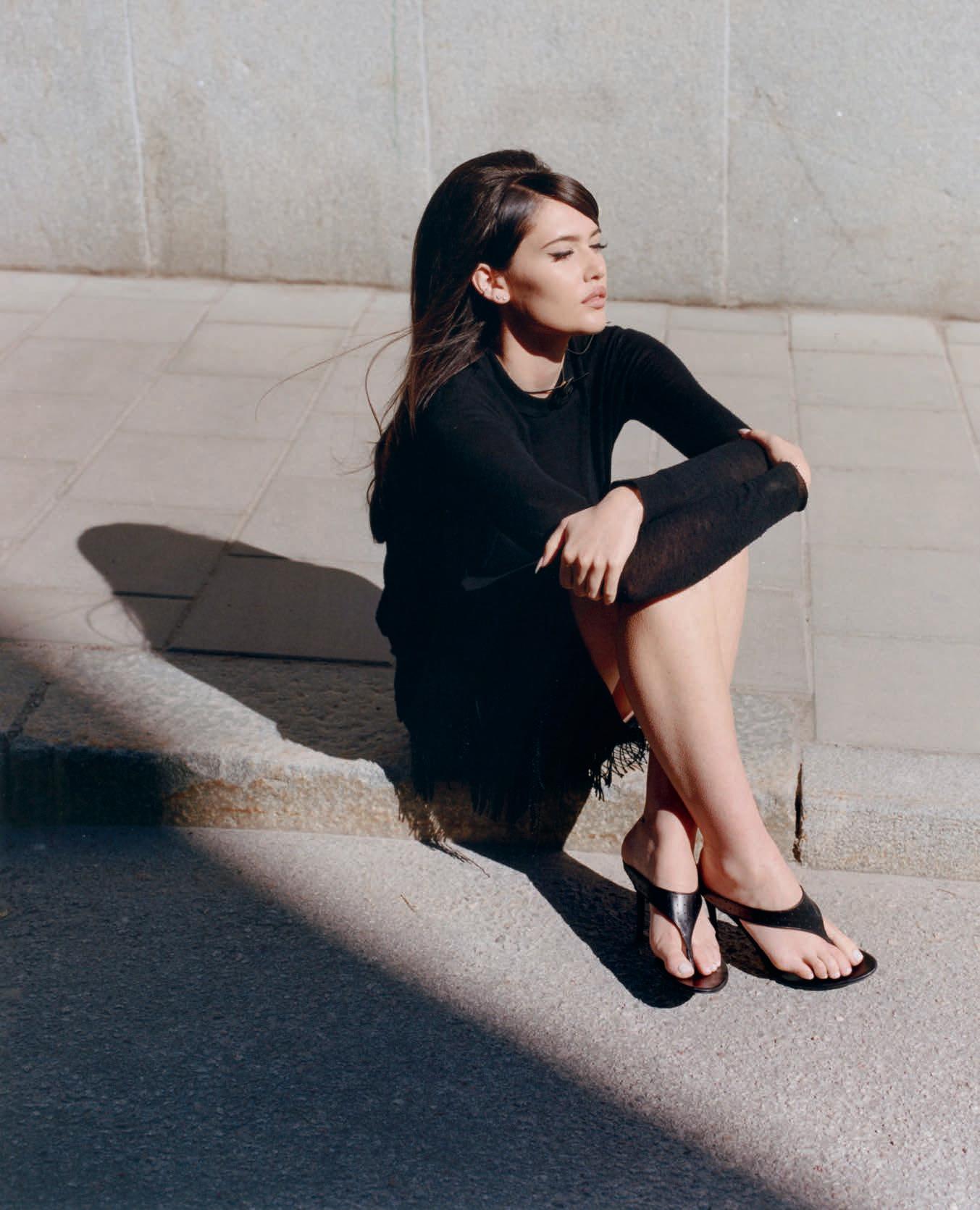
Sienna Spiro photographed by Fausto Elizalde wearing a vintage skirt by Dolce & Gabbana, necklace by Chanel, and vintage heels by Alexander McQueen, all from West Archive.
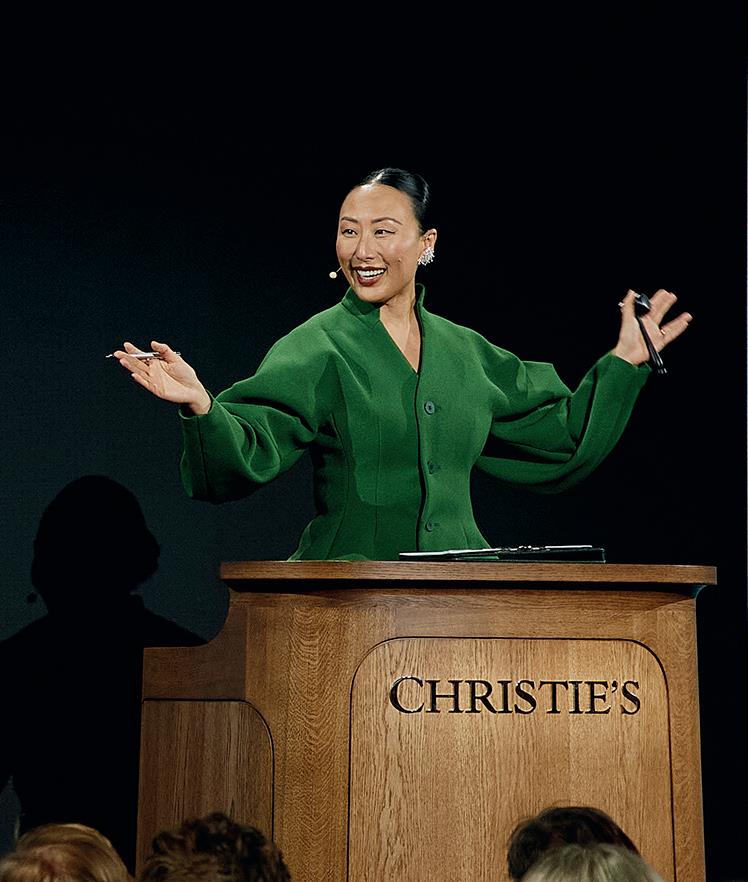
Christie’s is proud to connect people to their passions. From masterpieces to prints, from handbags and watches to rare books, there’s always something to see in our public galleries.
LEARN MORE
CRAFTED TO INSPIRE





LETTER FROM THE EDITOR
In a moment when most news is bad news, CULTURED’s Indulgence issue may come as a surprise. But the idea of dedicating this edition of the magazine to unexpected pleasures—whether through art, the pages of a romance novel, or an off-menu dish—felt, to us, like a much-needed form of escape.
This inquiry takes several forms across these pages. We look to queer nightlife, the personal balance sheets of artists living in New York, and the painstaking couture creations of Schiaparelli under Daniel Roseberry. We also invite a group of thinkers, artists, and performers to examine the seven deadly sins in the context of our looksmaxxing, scrolling-obsessed era. In an age of extreme self-modification, what form does envy take? When overconsumption is a cultural norm, what is greed? Is sloth still sloth in a culture of perma-fatigue? The essays of Griffin Dunne, Mia Khalifa, Brontez Purnell, Helen Molesworth, Christine Sun Kim, Dries Van Noten, and Jamieson Webster unpack these questions.
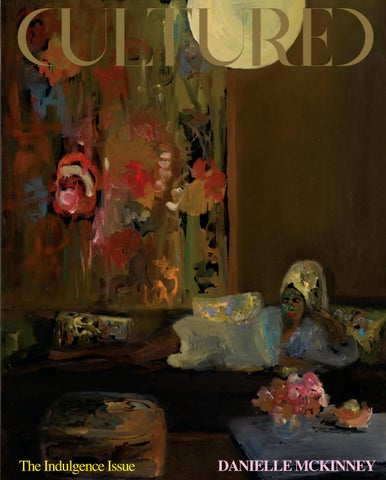
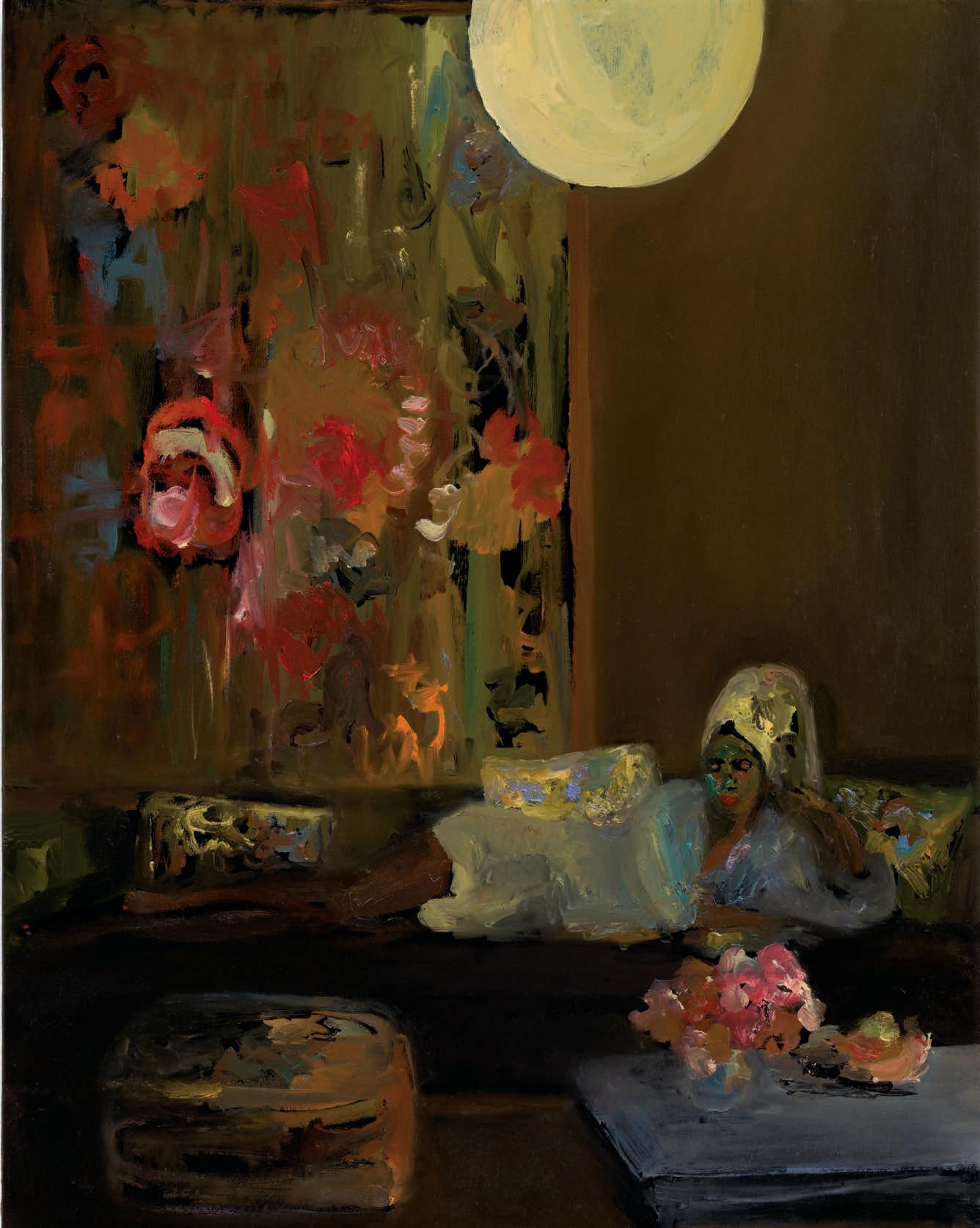
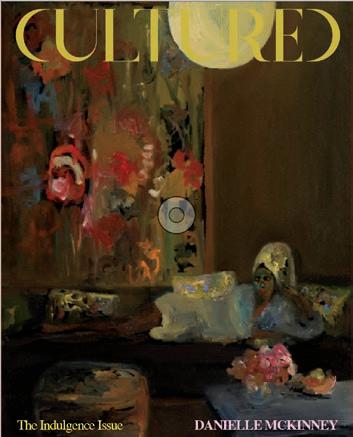
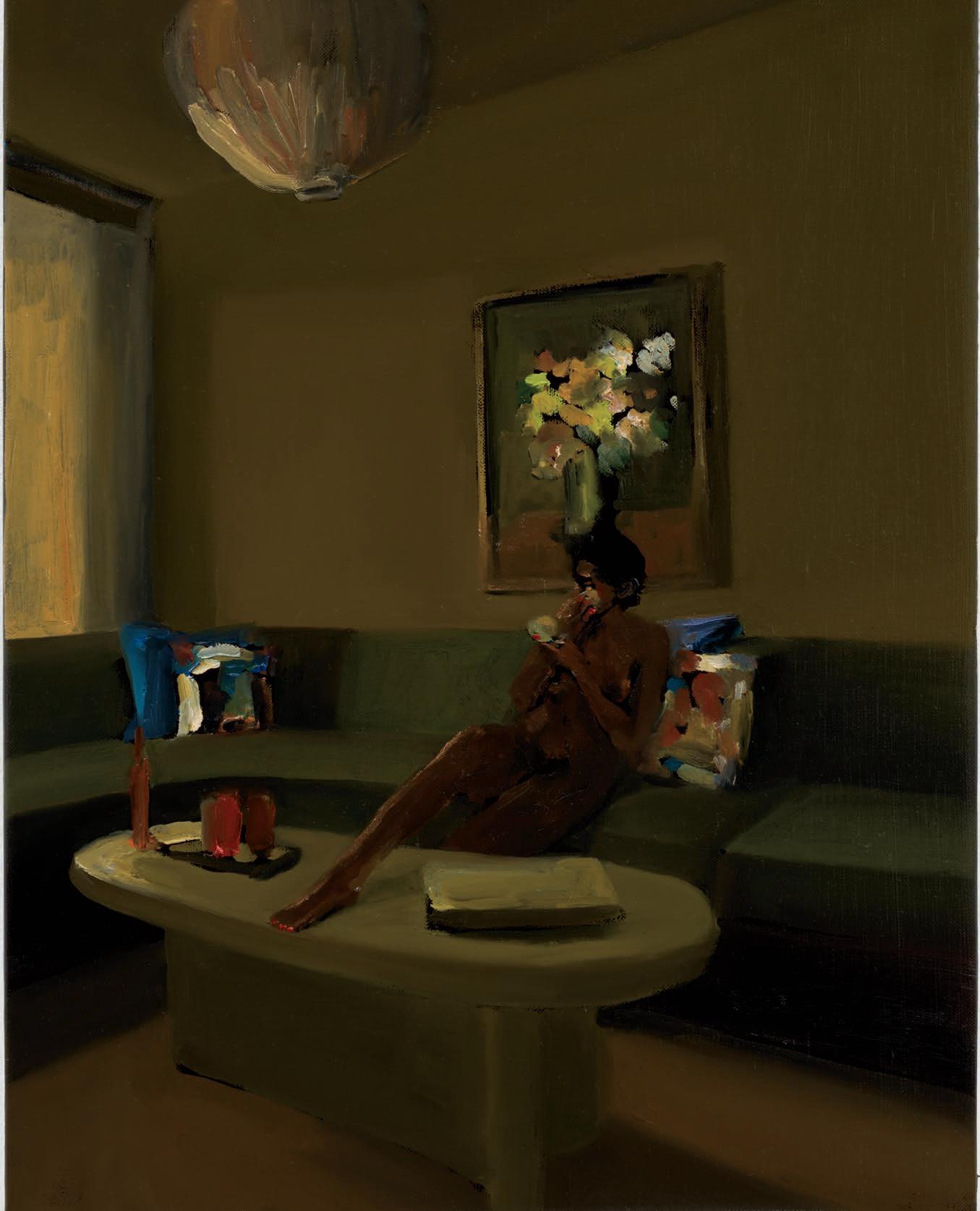
In an essay of her own, painter Danielle Mckinney—whose Recess, 2026, graces a limitededition cover of this issue—declares the need for an artist to keep the world at bay to sound out and mine one’s own interiority. Cover star Amy Adams talks to Amanda Seyfried about the delight she derives from tuning out industry pressure and
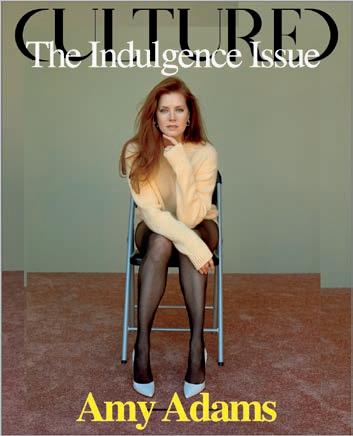
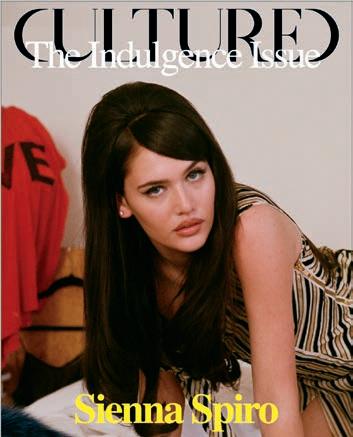
embracing the process of aging. On the other end of the spectrum, breakout musician and cover star Sienna Spiro confides in Jon Batiste about the dizzying speed of her rise as she works to develop an identity for herself, all before turning 21.
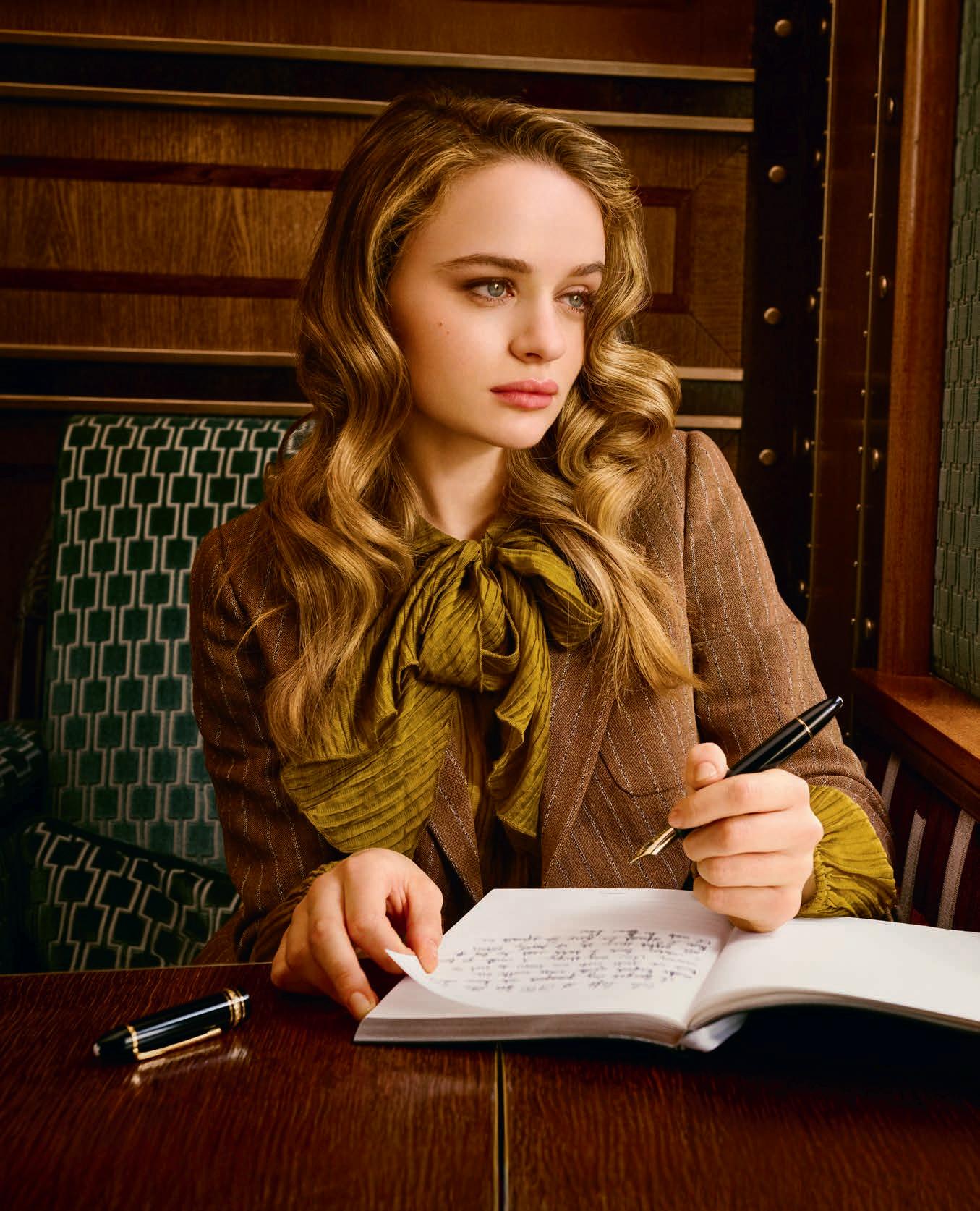
Elsewhere in the issue, we present our inaugural Young Writers list, developed in collaboration with Montblanc. The German maker of luxury writing instruments, watches, and leather goods is partnering with CULTURED to offer one of the list’s young authors an unrestricted $10,000 prize to support their ongoing work (the winner will be announced in the September issue). These 10 writers give us 10 reasons to be optimistic about the future of literature—and 10 eagerly awaited titles to pre-order.
In a time when our attention is in high demand and limited supply, the stories in this issue show us what art, music, and literature can offer us—the chance to stop in our tracks and indulge in the work for the work’s sake, and our own.
SARAH HARRELSON FOUNDER & EDITOR-IN-CHIEF
Amy Adams photographed by Daniel Jack Lyons in LA wearing a sweater by Bottega Veneta, earrings by Engelbert, and shoes by Gianvito Rossi.
Sienna Spiro photographed by Fausto Elizalde in Stockholm wearing a vintage Chloé by Stella McCartney dress, Spring/ Summer 2001, from West Archive.
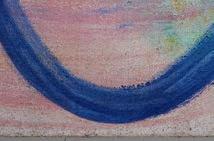
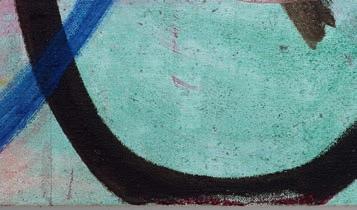
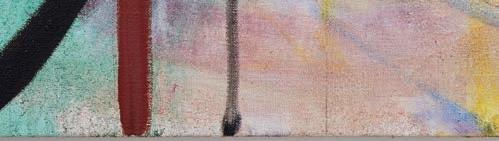
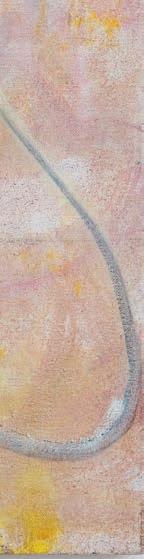
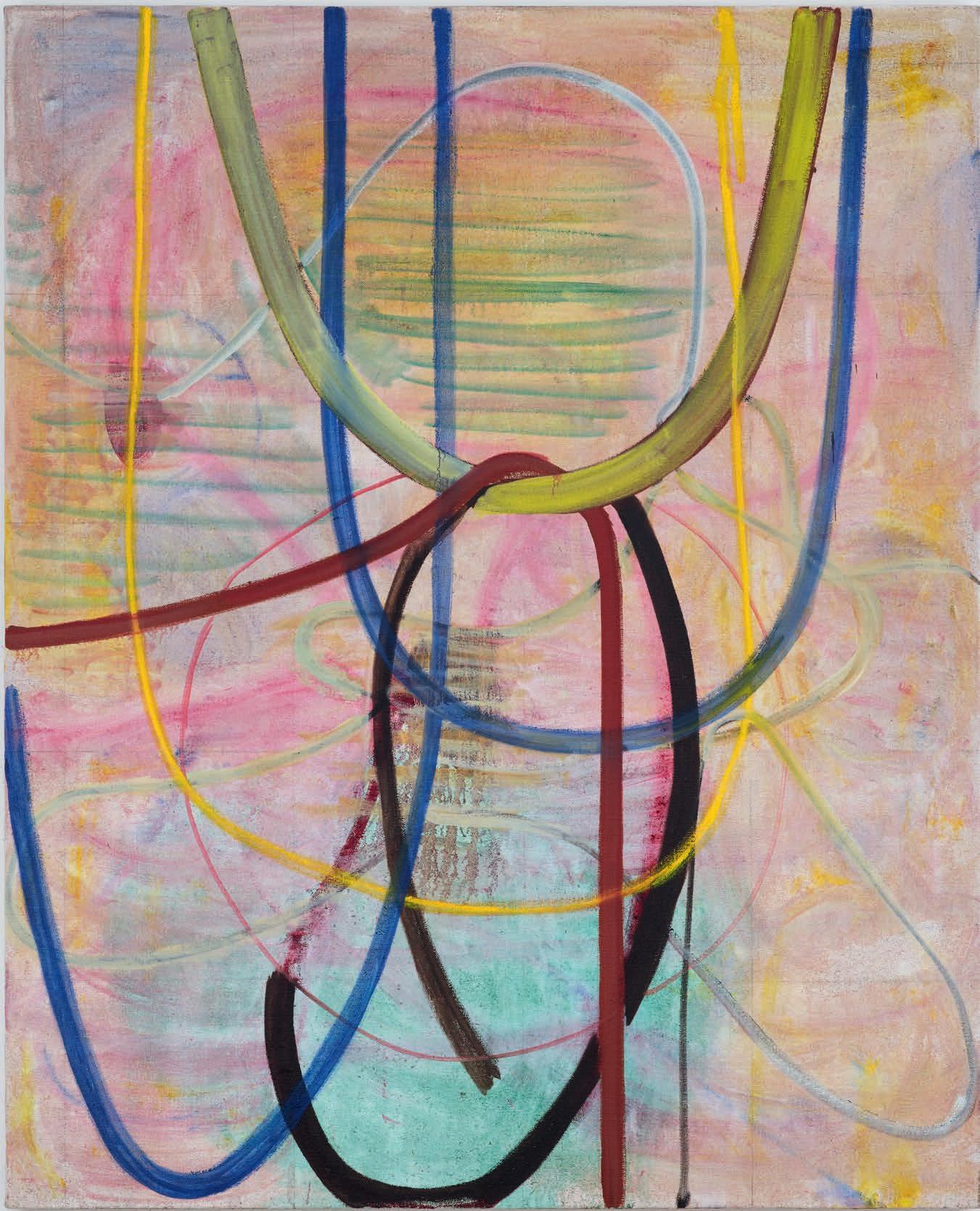
Danielle Mckinney’s Recess , 2026. Photography courtesy of the artist and Marianne Boesky Gallery.




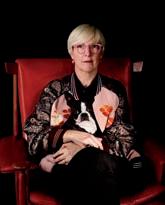
Helen Molesworth
Writer, Sloth
in the “Seven Deadly Sins” series
If you had all the resources in the world, what about your professional practice would you change?
Selling my time for money. What turns you on? What turns you off? Intelligence. Lack of curiosity. What’s a guilty pleasure you’ll never give up? Ice cream.
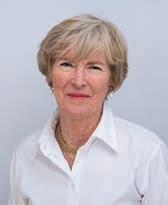
Georgina Adam
Writer, The Louvre’s Terrible, Horrible, No Good, Very Bad Year
What’s a moment from your contribution to this issue that will live in your head rent-free?
Realizing just how much of the Louvre’s crisis is invisible to visitors: exhausted staff, impossible conservation demands, and the strain of managing mass tourism while still trying to function as a serious museum.
If you had all the resources in the world, what about your professional practice would you change?
I’d spend far more time on long-form, deeply reported investigations—following the money, the politics, and the personalities shaping the art world across continents.
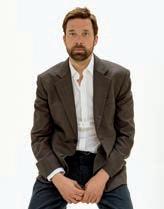
Christopher Bollen
Writer, Daniel Roseberry’s Desiderata
What’s a moment from your contribution to this issue that will live in your head rent-free?
Right after we finished, I walked home, crossing a bridge over the Seine, and while checking my phone to ensure our conversation was recorded (I had just read Ben Lerner’s Transcription), I walked straight into a bench. I scraped my shin, and it still hasn’t healed.
Do you identify as an ascetic or a hedonist?
It’s cyclical. I’m an unabashed hedonist until the excess disgusts me, and then I turn ascetic until the cold monasticism shouts too loud in my ears. This cycle can transpire over the course of months or within a single afternoon. I attribute it to being raised by Jesuits.
Fausto Elizalde
Photographer, Sienna Spiro’s Hard Core
If you had all the resources in the world, what about your professional practice would you change?
More time, honestly! I’d love to slow down a bit and build images properly. And I would also invest money in having the best teams, too. Amazing assistants, set designers, gaffers.
What turns you on? What turns you off?
Humor turns me on! Disrespectful people turn me super off.
“I’m an unabashed hedonist until the excess disgusts me, and then I turn ascetic until the cold monasticism shouts too loud in my ears.”
Clockwise from top left: Photography courtesy of Helen Molesworth, Georgina Adam, Fausto Elizalde, and Christopher Bollen.
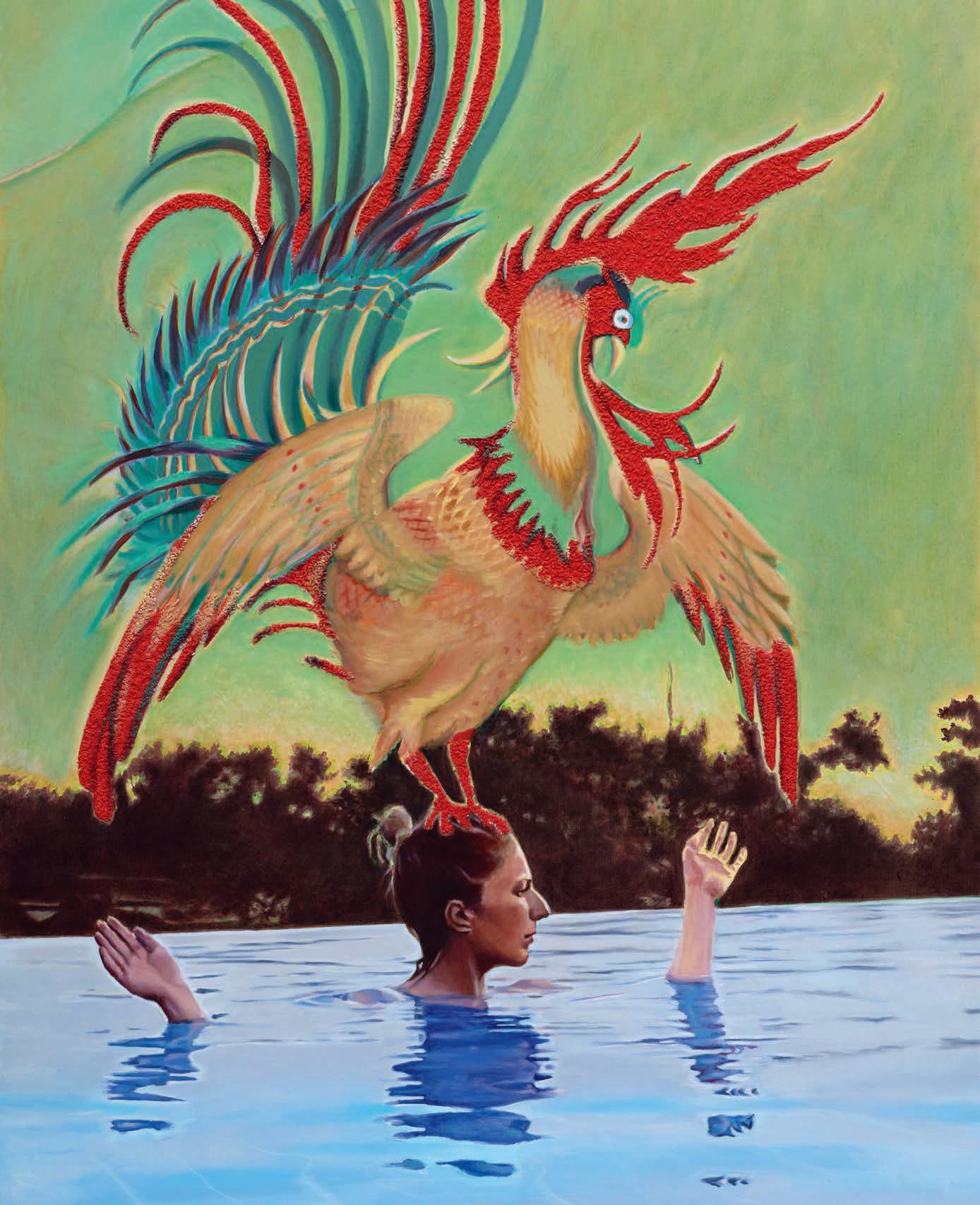




Daniel Jack Lyons
Photographer, Amy Adams: ‘I Can Just Be Me’
What’s a moment from your contribution to this issue that will live in your head rent-free?
Amy’s genuine kindness left a lasting impression on me.
Do you identify as an ascetic or a hedonist?
Natural-born hedonist. Ascetic in this economy. What’s a guilty pleasure you’ll never give up?
Peanut butter with a spoon.

Mia Khalifa
Writer, Lust in the “Seven Deadly Sins” series
Griffin Dunne
Writer, Envy in the “Seven Deadly Sins” series
What’s a wild extravagance you aspire to?
Buying an airline ticket for a flight that departs in hours for a destination in the Travel section of the Times that I’d read about that morning.
What’s a personality “flaw” you’d be flattered to have ascribed to you?
“That man just gives and gives and gives to others. I worry he never takes a moment to think about himself.”
Whom do you love to pamper?
I have never finished a rib eye in a steak joint because I know I’ll be bringing half of it home to my dog, Mary.

What’s a moment from your contribution to this issue that will live in your head rent-free?
How to get my algorithm to stop thinking I want to repent for my seven deadly sins.
Where’s the most luxurious place in the world for you?
My bed with fresh sheets.
Whom do you love to pamper?
My loved ones and myself. Pampering is always better shared.
Jutharat ‘Poupay’ Pinyodoonyachet
Photographer, The Rarest Dishes in New York
What’s a moment from your contribution to this issue that will live in your head rent-free?
I love food, so photographing these rare dishes from all the coolest restaurants in the city was so much fun. Most importantly, I had a chance to try them all! Such an opportunity.
If you had all the resources in the world, what about your professional practice would you change?
I’d love to photograph Asian aunties for magazine covers.
“I have never finished a rib eye in a steak joint because I know I’ll be bringing half of it home to my dog, Mary.” —Griffin Dunne
Clockwise from top right: Photography by Lucia Bell-Epstein, and courtesy of Poupay Jutharat, Mia Khalifa, and Daniel Jack Lyons.
Clayton Schiff Cosima zu Knyphausen
Darya Diamond Dustin Hodges Emma
McMillan Emmanuel Louisnord Desir
Franne Davids G.V. Rodriguez Herman
Cherry Malcolm Kenter Nan Montgomery
Nevine Mahmoud Nick Angelo Nick Hoecker
Nihura Montiel Timo Fahler Tristan Unrau
Sebastian Gladstone Gallery
Los Angeles | New York
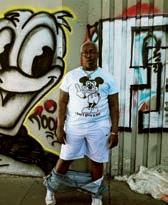
Brontez Purnell
Writer, Gluttony in the “Seven Deadly Sins” series
Do you identify as an ascetic or a hedonist?
I’m too lazy for either.
What turns you on? What turns you off?
I’m dead neutral about virtually everything these days. Social media has absolutely numbed all sense of direction for me.
How do you repent after a night of excess?
My karma tends to be immediate.
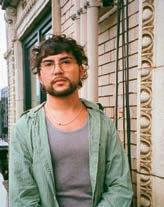
Matías Alvial
Photographer, Breakfast with Andrew Rannells
If you had all the resources in the world, what about your professional practice would you change?
I’d stop thinking about the algorithm and dedicate my life to hand-making books and zines for those around me. What’s the luxury you afford yourself after a long day of work?
Flamer’s “lobotomy” pre-roll and some light stretching. Where’s the most luxurious place in the world for you?
The Port Authority Bus Terminal.

Joshua Foltz
Illustrator, the “Seven Deadly Sins” series
If you had all the resources in the world, what about your professional practice would you change?
Letting go of time. To practice with greater slowness, richness, and freedom from worry.
What’s a wild extravagance you aspire to?
To indulge in exceptional food and, in turn, learn to make it.
How do you repent after a night of excess?
Self-flagellation.
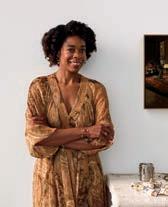
Danielle Mckinney
Writer, Recess, Then Return and artist behind the issue’s limited-edition cover
Do you identify as an ascetic or a hedonist?
I’m a minimalist. I need order to think.
What’s a guilty pleasure you’ll never give up?
I tend to be careful, but I’ll always splurge on travel and experience. I’m a sucker for nature and the sea. Those things feed the work in ways materials cannot.
“I’m dead neutral about virtually everything these days. Social media has absolutely numbed all sense of direction for me.” —Brontez Purnell
Clockwise from bottom left: Photography by Pierre Le Hors, Jesse Hepworth, Oliver Yan, and illustration by Joshua Foltz.
Founder & Editor-in-Chief SARAH G. HARRELSON
EDITORIAL
Executive Editor, MARA VEITCH
Senior Editor, ELLA MARTIN-GACHOT
Editor-at-Large, JULIA HALPERIN
Associate Digital Editor, SOPHIE LEE
Assistant Managing Editor, KARLY QUADROS
Assistant Editor, SAM FALB
Digital Coordinator and Junior Video Editor, PALOMA BAYGUAL
Copy Editors, EVELINE CHAO & MEGAN HULLANDER
Editorial Interns, MILA DIAZ, EVE EISMANN, DELANEY KIM, MOKSHAA SHIVLANI, ANASTASIA VAN BATENBURG
The Critics’ Table
Co-Chief Art Critic and Commissioning Editor, JOHANNA FATEMAN
Co-Chief Art Critic and Consulting Editor, JOHN VINCLER
Editors-at-Large
Arts Editor-at-Large, SOPHIA COHEN
Fashion Directors-at-Large, ALEXANDRA CRONAN & KATE FOLEY
Style Editor-at-Large, JASON BOLDEN
Columnists & Contributors
Cultural Columnist, JAMIESON WEBSTER
Art Market Writer, RALPH DeLUCA
Architecture Editor, KAREN WONG
Food Editor, MINA STONE
Books Editor, EMMELINE CLEIN
New York Arts Editor, JACOBA URIST
Travel Columnist, ROBERT GOFF
European Contributor, GEORGINA COHEN
Fashion Editor, ALI PEW
Beauty Editor, EMILY DOUGHERTY
Breakfast Columnist, JOSH DUBOFF
Theater Columnist, MATTHEW GASDA
PUBLISHING
Senior Vice President, Chief Revenue Officer, CARL KIESEL
Director of Brand, IAN MALONE
Vice President, Fashion, MICHAEL RIGGIO
Vice President, Sales, LORI WARRINER
Director of Brand Partnerships, DESMOND SMALLEY
Director of Marketing, SARA ZELKIND
Marketing and Sales Associate, HAILEY POWERS
Sales Consultant, Home & Travel, PRIYA NAT
Prepress/Print Production, SHAPCO PRINTING INC.
STRATEGY
Public Relations, ETHAN ELKINS, DADA GOLDBERG
Strategic Consultant, CAROL SMITH
DESIGN
Creative Direction and Design, ERIN KNUTSON Designer, PAUL BILLE
Social Media Director, KRISTIN CORPUZ
Junior Graphic Designer, AHIMSA LLAMADO
Social Media Interns, LAYLA HUSSEIN, HANNA KIM, NINA SHAKES
ADVERTISING
advertising@culturedmag.com
SUBSCRIPTIONS
hailey@culturedmag.com
ISSN 2638-7611
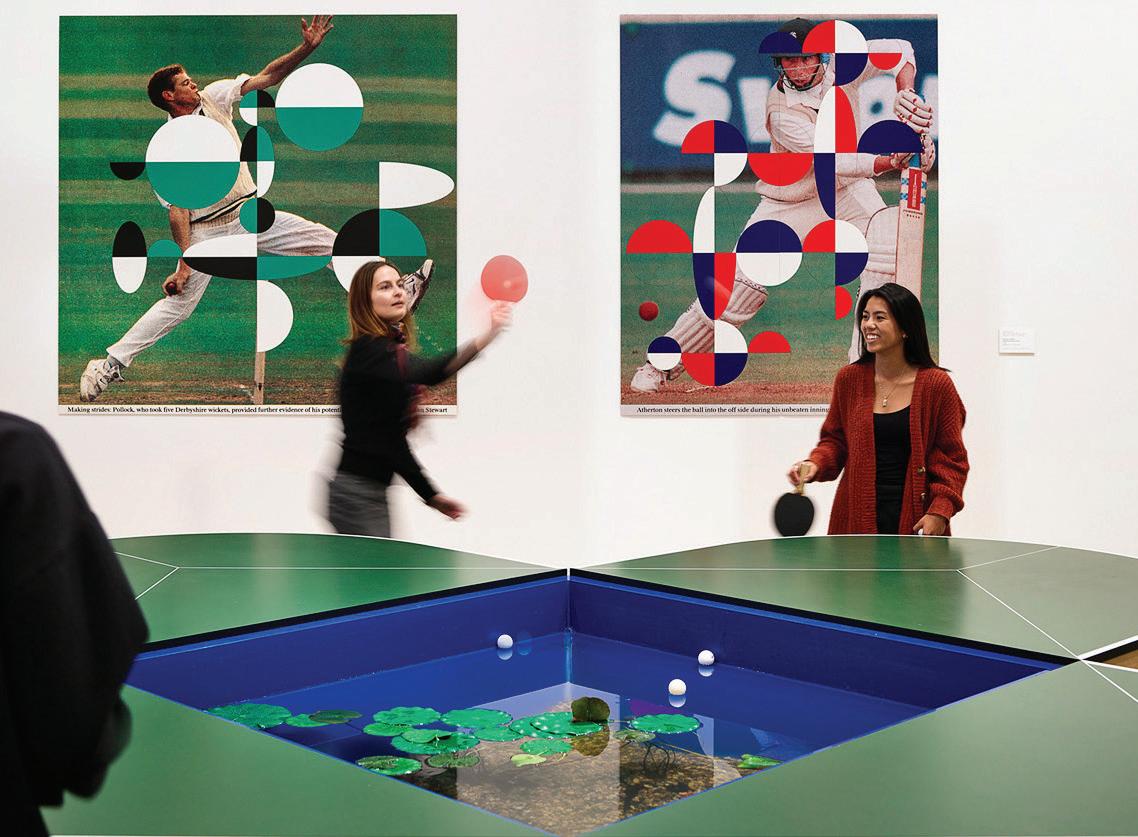
Get in the Game Sports, Art, Culture
On View Through August 23, 2026
Get in the Game (installation view, SFMOMA); photo: Matthew Millman, courtesy SFMOMA.
Get in the Game: Sports, Art, Culture is organized by the San Francisco Museum of Modern Art. The exhibition is curated by Jennifer Dunlop Fletcher, Helen Hilton Raiser Curator of Architecture and Design SFMOMA; Seph Rodney, independent curator and writer; and Katy Siegel, former Research Director, Special Program Initiatives, SFMOMA.
The Pérez Art Museum Miami presentation is organized by Sandra and Tony Tamer Director, Franklin Sirmans and Curatorial Assistant, Fabiana A. Sotillo. The exhibition is presented at PAMM by Bank of America and made possible with the support of the Miami-Dade County Tourist Development Council, the Miami-Dade County Department of Cultural A airs, the Cultural A airs Council, the Miami-Dade County Mayor and Board of County Commissioners.
Presented by

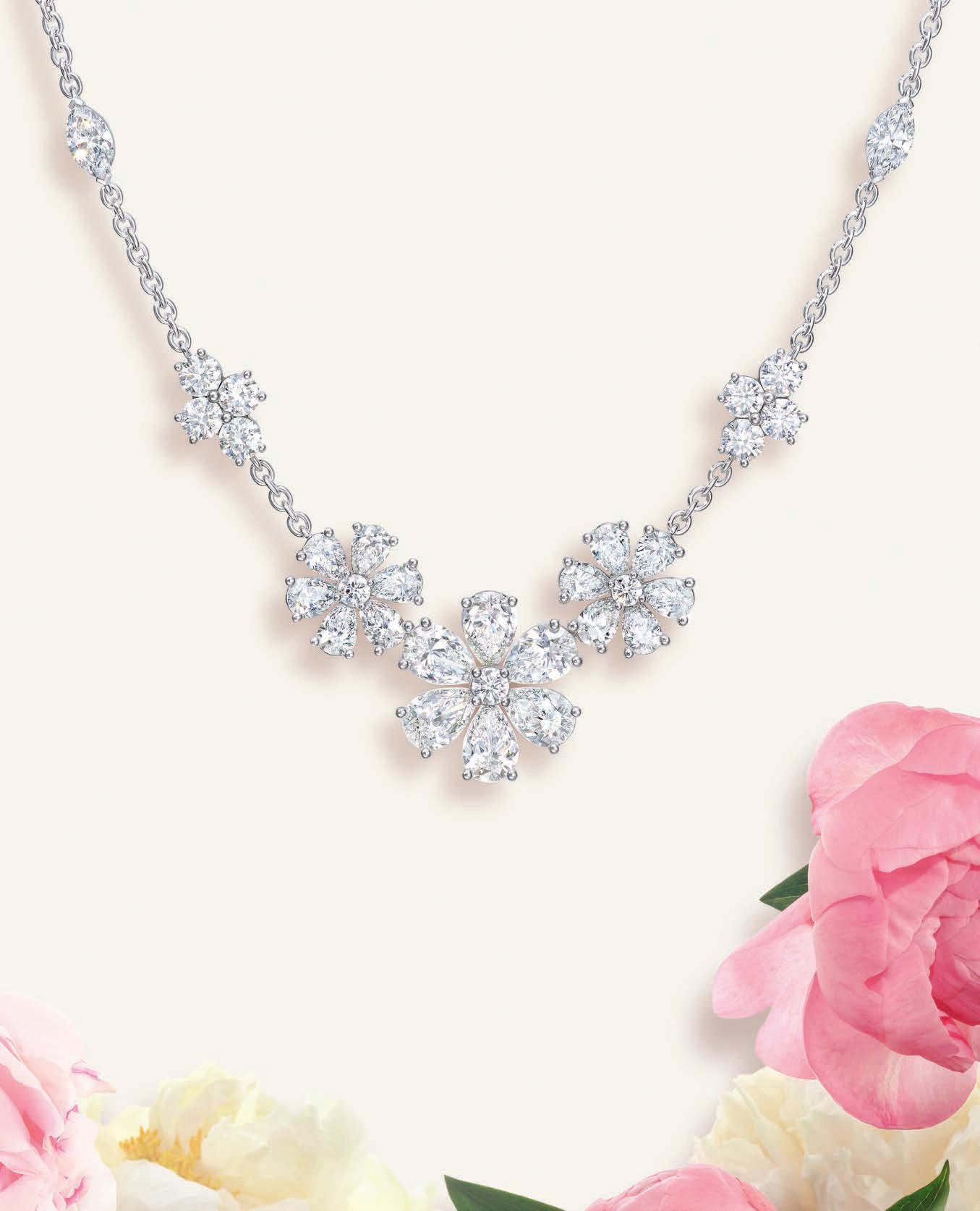
EDEN’S NECKLINE
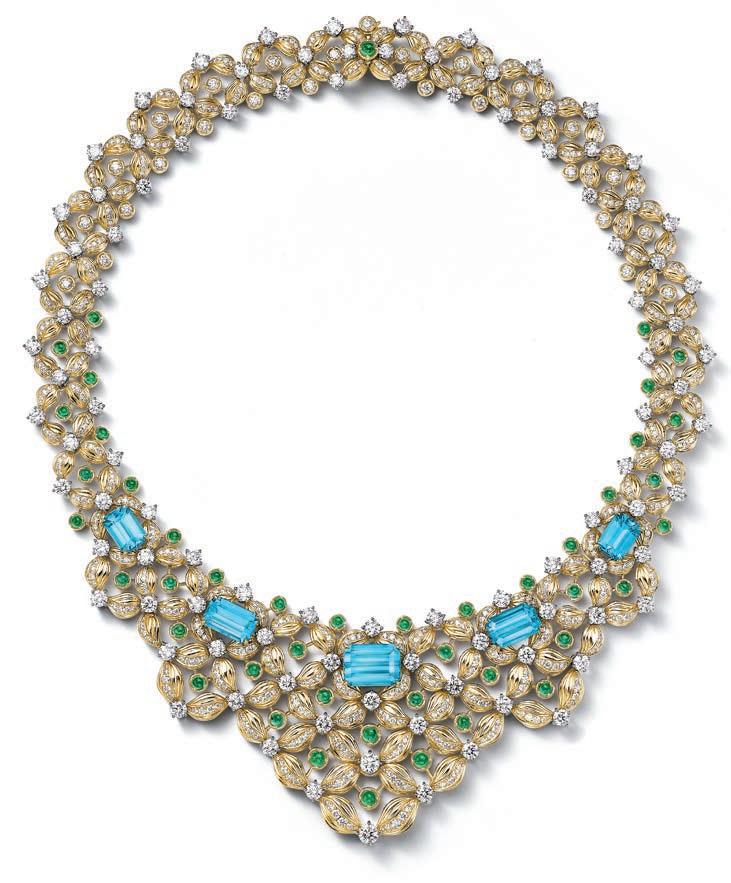
Tiffany & Co.’s latest Blue Book high jewelry offering sees one show-stopping necklace give everyday florals a run for their money.
By Sam Falb
Since 1845, when Tiffany & Co. first introduced its Blue Book high jewelry collections, the house has faithfully returned to nature as a narrative foil: blossoms and unruly botanicals rendered in precious stones, bringing a welcome wink of color to the cosmopolitan circles that swear by its pieces. Jean Schlumberger, who joined the house in 1956, brought Tiffany’s botanical tradition to new heights of artistry. “I try to make everything look as if it were growing, uneven, organic,” the designer once said. “I want to capture the irregularity of the universe.”
It is within this rarefied lineage that the Daisy Blue Zircon necklace, conceived by Chief Artistic Officer Nathalie Verdeille with Schlumberger’s flair in mind, inscribes itself. The heart of the 2026 Blue Book collection, its titular daisy is composed of 1,019 diamonds, 45 cabochon emeralds, and five emeraldcut blue zircons totaling more than 30 carats. The sky-colored gemstones descend in a V-shaped hierarchy that pulls the eye across the chest, their cool blue voltage the final touch in a piece rivaled only by the gardens from which it was plucked.
Photography courtesy of Tiffany & Co.
FASHION IS HER PETRI DISH
Iris van Herpen has made garments out of bioluminescent algae, mycelium, and glass bubbles. Her mid-career survey reveals the science behind each sartorial statement.
By Karly Quadros
Iris van Herpen’s mid-career retrospective at the Brooklyn Museum begins, as all things did, with water.
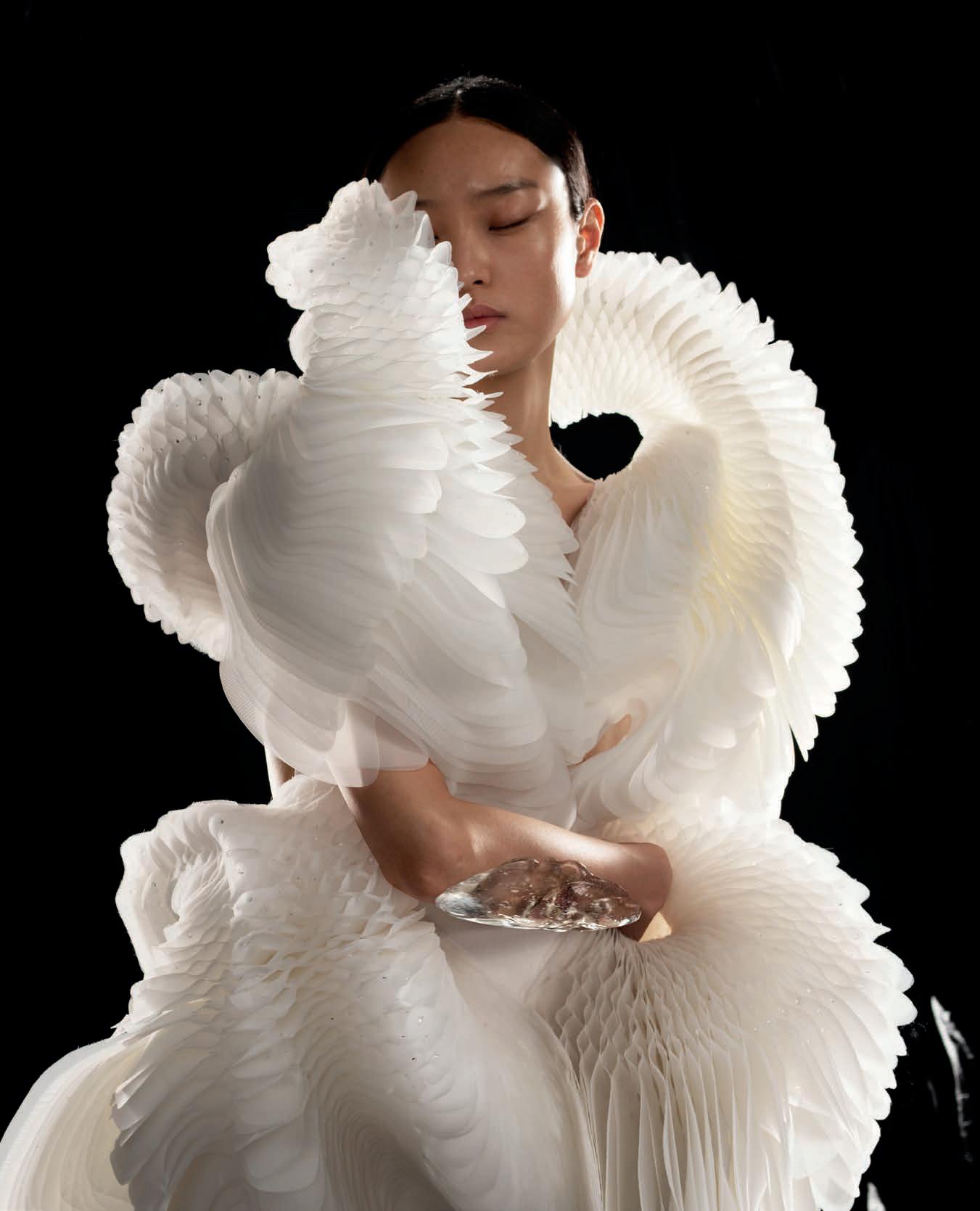
“We come from the sea,” says the Dutch couturier. “I wanted to start with the origin of life.” The opening looks of “Iris van Herpen: Sculpting the Senses”—like a minidress made of delicate glass bubbles caught perpetually mid-twirl, worn by Olympic freestyle skier Eileen Gu at this year’s Met Gala—set the tone for an exhibition driven by biomorphic structures and sensations. Van Herpen, who first made headlines for her use of then-novel 3-D printing technologies more than 15 years ago, executes her garments with a scientist’s toolkit. The exhibition’s labels catalog a laboratory’s worth of gizmos: thermoformed PETG waves, geodesic domes, and laser-cut fabric dendrites, to name a few.
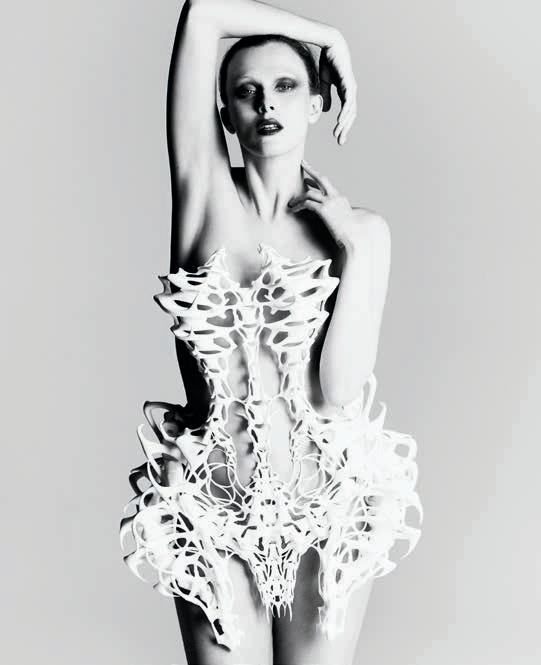
“Sculpting the Senses,” initially mounted at the Musée des Arts Décoratifs in Paris, is the designer’s first major museum presentation Stateside. It offers more than 140 haute couture looks alongside artworks, design objects, fossils, videos, and natural specimens.
The designer has dressed everyone from Beyoncé to Cate Blanchett, but few celebrity faces appear in the show. Instead, the exhibition’s 11 themed sections tackle van Herpen’s chief interests: skeletal structures, primordial fear, and the movements of the cosmos.
“My work is about so many different techniques—contemporary ones, but also historic ones—and they’re equally beautiful and important,” says van Herpen. One garment, a gown incorporating 125 million bioluminescent algae, took three months to construct with the help of a team from the University of Amsterdam and biodesigner Chris Bellamy (in the show, it lives behind glass and is periodically misted to stay fresh).
Her latest fascination is 4-D printing, an experimental technology that’s just as futuristic as it sounds. “It means that a material has a memory, and you can code the memory so it can change shape over time,” says van Herpen. For now, it’s purely theoretical, but that’s never stopped her before.
Dress from a 2011 collection modeled by Karen Elson.
Photography by Luigi & Iango and courtesy of Iris van Herpen.

FIVE CAKES, ONE HISTORIC MOMENT
The award-winning West End production Operation Mincemeat partners with Raffles London for a ripped-from-the-headlines event rendered in snack-size proportions.
By Sam Falb

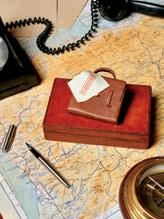

In 1943, British intelligence planted a corpse off the Spanish coast and changed the course of World War II. Eighty three years later, you can eat a cake inspired by it.
Just across from Buckingham Palace, Raffles London at The OWO has partnered with the West End musical Operation Mincemeat, which immortalizes the real-life episode, to launch an afternoon tea built around British espionage through next January. Guests dine in the Drawing Room inside the city’s former Old War Office, once home to Britain’s Ministry of Defence. During WWII, it was there that special operations agents were briefed, and MI9 was formed to help fugitive prisoners of war escape back to Britain.
The 1943 maneuver itself was breathtaking in its audacity: a floating officer washed ashore in Spain,



planted with documents that constructed a false British identity—all to convince Nazi Germany that the Allied invasion was headed for Greece and Sardinia rather than Sicily. The German high command took the bait, and the rest is both textbook and Olivier Award-winning West End history.
At Raffles, five cakes depict the plot points of the operation: a coffee and barley malt briefcase for the secret documents, a submarine filled with Spanish turrón for the coastline where the officer first appeared, and a love letter made from Scottish shortbread for the officer’s fictional fiancée. A propeller cake honors the fabricated plane crash, while a rotary telephone pastry nods to the intelligence rooms where the elaborate scheme was pieced together. The combined effect is nothing short of momentous.


WE’RE ALL FRIENDS HERE
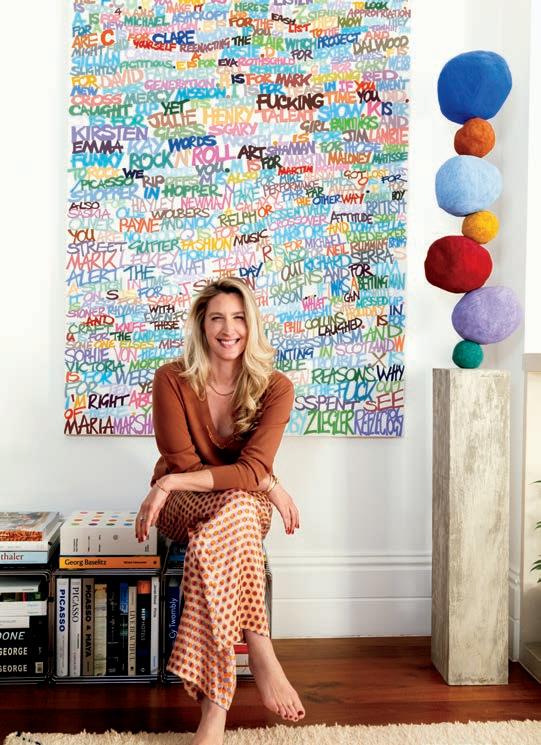
Georgina Cohen, a savvy art-world connector, is bringing Rashid Johnson, Sheree Hovsepian, and more pals to Château La Coste for the summer.
By Julia Halperin Photography by Mary McCartney
Georgina Cohen has a reputation as a thoughtful gift giver. To memorialize the passing of a friend’s father, she commissioned Joel Mesler to paint his name in the artist’s trademark balloon lettering, alongside ribbons spelling out the names of his wife and nine children. The painting’s recipient, Irish hotelier Paddy McKillen, was so moved that he invited Mesler to show at Château La Coste, the temple to art, architecture, and wine he opened in Provence in 2011.
Cohen has turned these kinds of connections into a calling. The London-based Gagosian director and collector helped instigate the exhibition “Rashid Johnson, Sheree Hovsepian and Friends,” which opens on July 5 and brings work by the former artist couple’s creative community to the storied 600-acre estate. Johnson and Hovsepian will concurrently take over two other spaces in the Château with solo presentations.
For the occasion, Hovsepian is making her most ambitious sculptures to date, eight-foot-tall bronze figures (“pregnant Giacomettis, as she calls them,” Cohen notes). Alongside paintings and a video featuring three generations of his family, Johnson will exhibit a custom wooden table whose almond shape recalls a
frequent motif in his canvases. “He wanted to create a space that would bring people together,” Cohen says.
Art has always been a communal affair for Cohen. The daughter of prolific British collector Frank Cohen, she grew up in an art-filled home and was recruited by none other than Larry Gagosian himself in 2006. (She’d been introduced by her brother, former Gagosian director Adam Cohen, who now runs the boutique New York gallery A Hug From the Art World.) Over the next 20 years, Cohen quickly transitioned from running PR and events to mounting special artist projects and advising collectors. Her career at the mega-gallery has coincided with a profound expansion of the industry. “It’s almost become too big for itself,” Cohen says. “When I started, everything felt much more personal.”
The intimacy of a bygone art world is what Cohen tries to preserve in her work and at home. Her walls are hung with art by friends, including Mesler, the married artists Annie Morris and Idris Khan, and Michael CraigMartin, who will be the subject of a show at Château La Coste next March. Since curating her first shows at the property in 2022, it’s become a very sentimental place, Cohen reasons, “like a home away from home.”
Georgina Cohen with Annie Morris’s Stack 7, Ultramarine Blue, 2021, and Peter Davies’s An A-Zof what-to look at, 2002-03.






















IRIS VAN HERPEN: SCULPTING E SENSES





















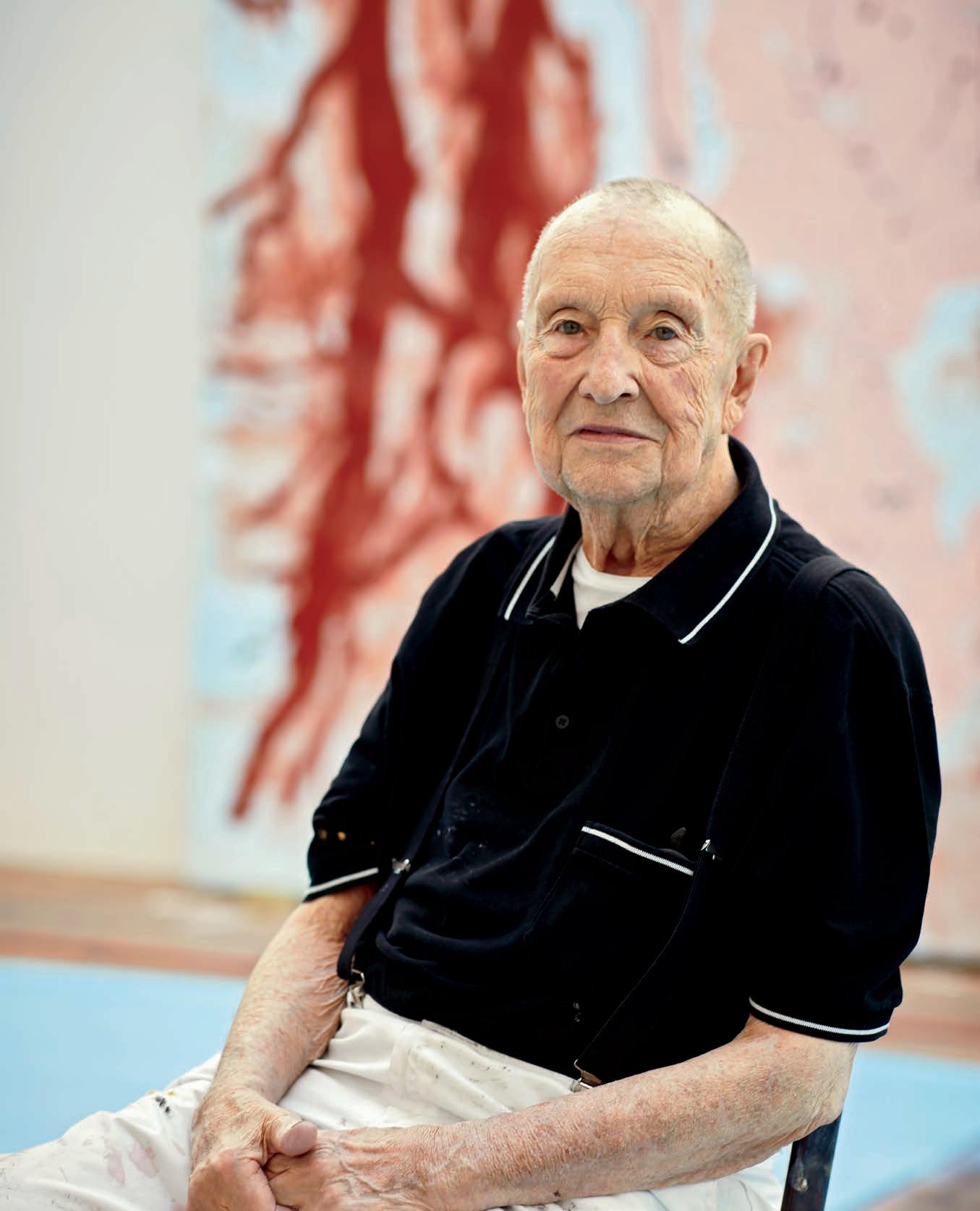
THE ANATOMIESGROTESQUE OF GEORG BASELITZ
In his final interview, the late artist unpacked his new nudes, identity art, and being a lifelong outsider.
By Devorah Lauter
“I’m sure that the Cini paintings will be the last ones,” Georg Baselitz told me in mid-April, sitting in his Munich office. Those words now ring eerily prophetic. Our conversation was the final spoken interview the legendary artist would give. Baselitz passed away on April 30; he was 88.
Known for his inverted, or upside-down, paintings, Baselitz eschewed artistic movements and trends despite often being associated with postwar Neo-Expressionism. He remained an outsider in many respects until the end. “I tried to belong to a circle in Berlin and beyond—but I never succeeded. Maybe I didn’t try hard enough,” he admitted while sitting in a wheelchair across from me, a black fedora cocked jauntily to the side.
Baselitz spoke to me in a deep, gravelly German through a translator ahead of a new exhibition titled “Eroi d’Oro [Heroes of Gold],” on view at the Fondazione Giorgio Cini in Venice through Sept. 27. For what we now know is his last completed body of work, the artist painted inverted, inky black portraits of himself and his wife, Elke—a favorite subject—on monumental canvases with gold grounds. In these works, they appear nude, withered further by age, and laid bare like delicate, celestial specimens—webs of gangly limbs and flesh twisted or held to the side. Painted on uniformly flat, metallic gold surfaces, with occasional flurries of colorful strokes, Orthodox icons or Sienese Renaissance paintings come to mind. Yet these are no saints.
“It’s about the nude, the Elke nude, and my own nude in a rather bleak way. The paintings are not very euphoric,” he told me of the gilded canvases, which together form a “key image” that encompasses a long career of genre disruption.
Baselitz’s curious language of self-described “ugly paintings,” which teeter between abstraction and figuration and speak to the trauma and guilt of postwar Germany, has been causing a stir almost from the start of his professional life. His 1962–63 painting The Big Night Down the Drain, depicting a stunted and dejected male figure masturbating, ended in an obscenity trial; his monumental series of morally ambiguous, bloody, bloated “Hero” paintings skewered prevalent notions of heroic male imagery. He explored the grotesque in fractured, torn limbs as well as “wounded landscapes,” depicting German forests. “They weren’t things people wanted to see,” he said. “I simply didn’t make it easy for people.”
He was born in 1938 in Deutschbaselitz, as Hans-Georg Bruno Kern, to parents who were both schoolteachers. (His father was a member of the Nazi Party.) He adopted the name Baselitz in 1961 to commemorate the bucolic village of his birth. But that natural beauty would contrast with a youth spent under the doomed
Nazi and then East German communist regimes. In response, Baselitz soon developed an instinctive distaste for “so-called order.” He was expelled for “sociopolitical immaturity” from East Berlin’s Academy of Fine and Applied Arts, where he enrolled at age 18, and moved to West Berlin’s Hochschule der Künste, where he met his wife, Elke Kretzschmar.
“There are artists who are ‘well-behaved’—they paint polite pictures from the start, or none at all, because they’re too well-behaved. Others make a big show, shout, ‘Abolish museums!’ et cetera… I have done all sorts of nonsense,” he said.
In more recent decades, he was criticized for his opposition to identity politics, particularly within the arts. He also famously made comments disparaging the abilities of women painters, then tried to course correct by pointing to the many women artists he did admire. Ten years ago, Baselitz once again turned heads by arguing that viewing and making art through an overwhelmingly sociopolitical prism is “fascist.”
In April, I asked how he saw the same issue now. “Today it’s much worse,” he said. “If an artist makes art to find identity and then finds it in a political party—Hamas, communists, whatever—then I say: ‘My God, you’re idiots.’ Because that is precisely the most important thing that has to be excluded from the outset. You have to go into the studio without a party card.”
To help break free from his own potentially limiting ideological thinking, Baselitz said he had always kept financial pressure out of his practice, remembering the years he and his wife worked for a company that produced coffee cups to sustain their family. Knowing he had artistic talent—which he could have used to make people-pleasing, easily sold works, such as “a beautiful picture of Stalin,” he offers by way of example—had always hung over him.
After years of experiments in opposition to the harmonious artworks he had called “bourgeois,” had Baselitz decided to make beautiful paintings for the Venice show? Could the viewer be forgiven for thinking so?
“Don’t rely on the viewer,” he said. “At openings, people say the usual nonsense: ‘Your paintings are so powerful. Where do you get the strength?’ Or ‘Your colors are so strong.’ It’s all nonsense, but what else can one say about paintings?”
Photography by Martin Müller and courtesy of Thaddaeus Ropac.

YOU MADE IT TO THE AFTERLIFE
After a life-altering experience, Nicolas Winding Refn reunited with video game creator Hideo Kojima for a heart-stopping Prada Mode installation in New York.
By Karly Quadros
In 2019, Nicolas Winding Refn’s heart stopped. Or, at least, a virtual version of it. The director provided his likeness for a character in the video game Death Stranding, created by longtime friend Hideo Kojima. Refn’s character, a grieving researcher, artificially stops his heart to scour the afterlife for his lost family. Just a few years later, in real life, the storyline took on a startling new relevance: Refn was diagnosed with a leaky heart valve. He underwent surgery and died on the table for 30 minutes.
The director awoke recovered, but the experience imbued him with a newfound urgency to create. In the last month, he premiered Her Private Hell, his first solo feature film since 2016’s The Neon Demon, at Cannes and unveiled a new installation alongside Kojima at the Hotel Chelsea for Prada Mode New York.
A Copenhagen-born, New York-raised film director known for saturated, ultra-violent thrillers like Drive and a Tokyoborn video game creator hell-bent on reinventing the form, Refn and Kojima have technically never even had a direct conversation, as they share no common spoken language. (Still, two decades into their friendship, the pair share a bond so deep they sometimes refer to each other as “twins.”) At the heart of their collaboration is instead a shared obsession with the boundless possibilities of the digital image.
“I had the privilege of starting over again. Like Donkey Kong, I’m back to square one.”
This took physical form in their Prada Mode commission, Satellites II, the sequel to the pair’s Satellites, 2025. The piece stages a conversation held through midcentury modern tube televisions spanning several floors of the hotel. It’s also a departure for the two artists, more personal than their other work. “Instead of constructing a narrative, we spoke of our daily lives,” Kojima told CULTURED via email. “It was the sort of thing ‘edgy’ creators like us, who express ourselves through our work, typically don’t do.” Across languages, cultures, and visions for the future, Satellites II reveals us for what we are: objects caught in each other’s orbits, subject to collisions and near misses with life and death. Here, Refn unpacks his evolving relationship to the image, what optimism looks like in practice, and why dying was just the beginning for him.
Having grown up in New York, what was your relationship to the Hotel Chelsea before the project?
I used to go to gymnastics at the YMCA across from the Chelsea Hotel when I was little. There was a comic book store I would go to right next door. For me, it was just another hotel.
When I came to New York from Copenhagen in ’78, I was 8 years old. I came from a society that had one television station with one hour a day of children’s programming. Coming to the U.S. and seeing a thousand channels—or at least that’s what it felt like—was my introduction to the creative space, the idea of the image. I could flick between emotions and ideas with a remote control.
Do you struggle with that commercial aspect of filmmaking? Oh, absolutely. Film or television or streaming, screen narratives—it’s not becoming stale, but you change. I must admit that these more artistic expressions are, in a way, more satisfying for me.
Creativity is, in its essence, limitation, because the tools you create with have limited potential. The fun part is to change those limitations into advantages. The process itself is where you’re alive. Those are the memories you take with you when you die, the times when life becomes living.
When you talk with Hideo about the future, what do you envision?
I believe that the future is always expanding. I am just a natural optimist, even though I certainly have had my share of challenges and hardship. And with having kids, you have to be positive for them. Most people are placed in the world in certain ways to make it a better place. We just sometimes spend a lot of time arguing about how to do it.
Would you say that your work in general is optimistic?
Having been dead once, which I have, you really understand when you’re brought back to life how amazing it is to be alive. Most of the time, we go through life not understanding the end. We may fear it. We may discuss it. We may experience it through family or friends, but it’s secondhand, like trying to explain to somebody what it’s like being in love. But when you try it yourself, you come to an understanding that everything is so goddamn short. You better have a good time all the time.
My dear friend Alejandro Jodorowsky is 97 years old, and every time I speak to him and ask him how he is, he always says, “I’m so happy I’m alive today.”
Does it change the way you make art or the projects you say yes to?
Oh, absolutely. It changes everything about you. I think you become more sensitive to time and the value of time. You get really annoyed at so many people who waste their time because they’ll never get it back.
Is there one project or one particular thing that you want to do now?
No, because I came to the end of the line in terms of what I wanted to do, and then I died. But I had the privilege of starting over again. Like Donkey Kong, I’m back to square one.
Photography courtesy of Prada.
Caring for New York’s shared backyard since 1980.
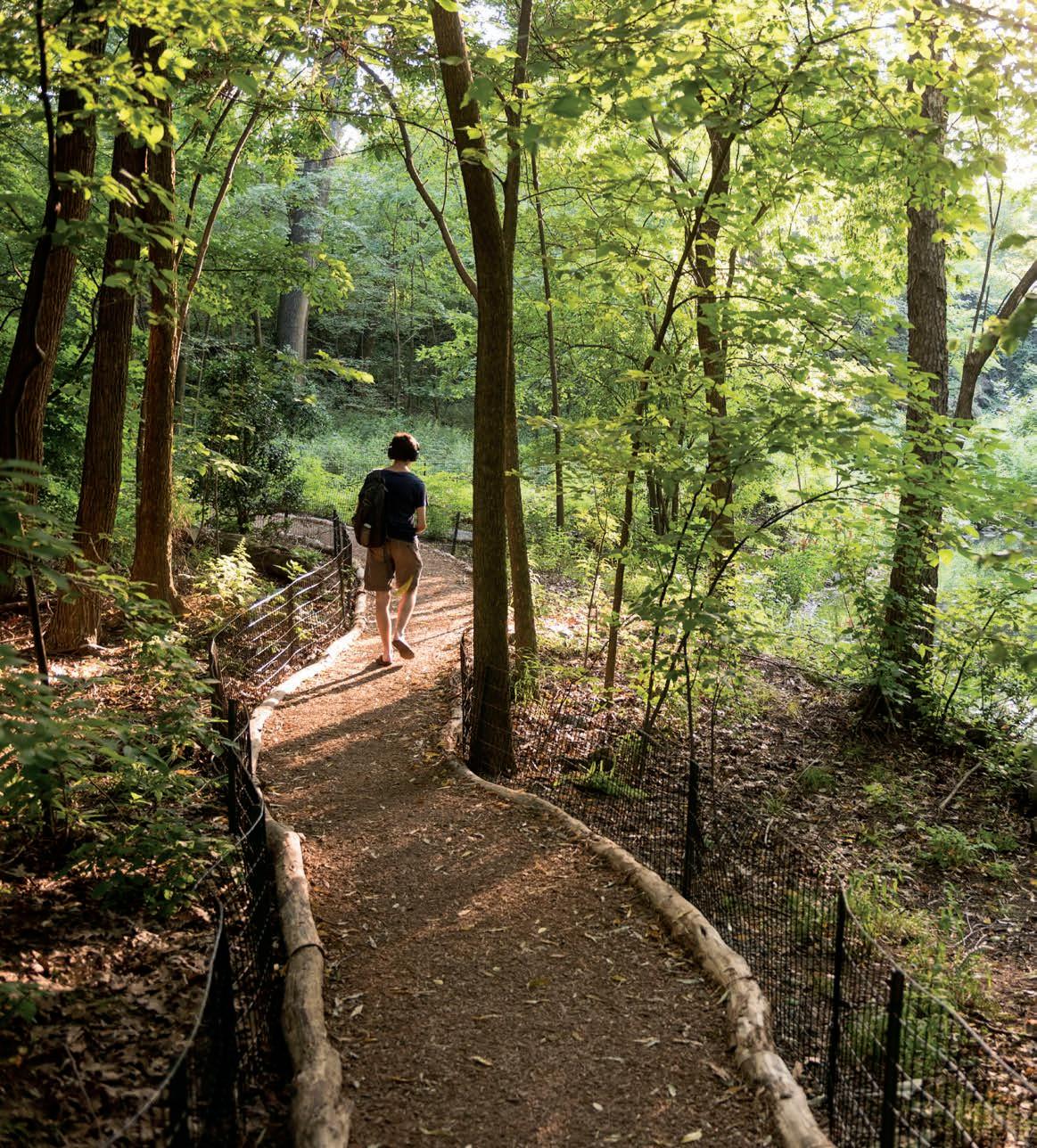
The Ravine
THE RAREST DISHES IN NEW YORK
In a town where scarcity often rhymes with luxury, ordering a dish that’s off the menu—or made in extremely limited quantities—is the ultimate insider nod. We visited four chefs responsible for the IYKYK dishes all the foodies fight over.
By Karly Quadros
Photography by Poupay Jutharat
Snapper Crudo, Penny
Location: East Village
Preparation: Mangrove snapper crudo with confit rhubarb and fava bean wasabi dressing
Cost: $28
Nightly Count: 10
Rarest Ingredient: Omakasegrade red snapper plucked from the Gulf of Mexico
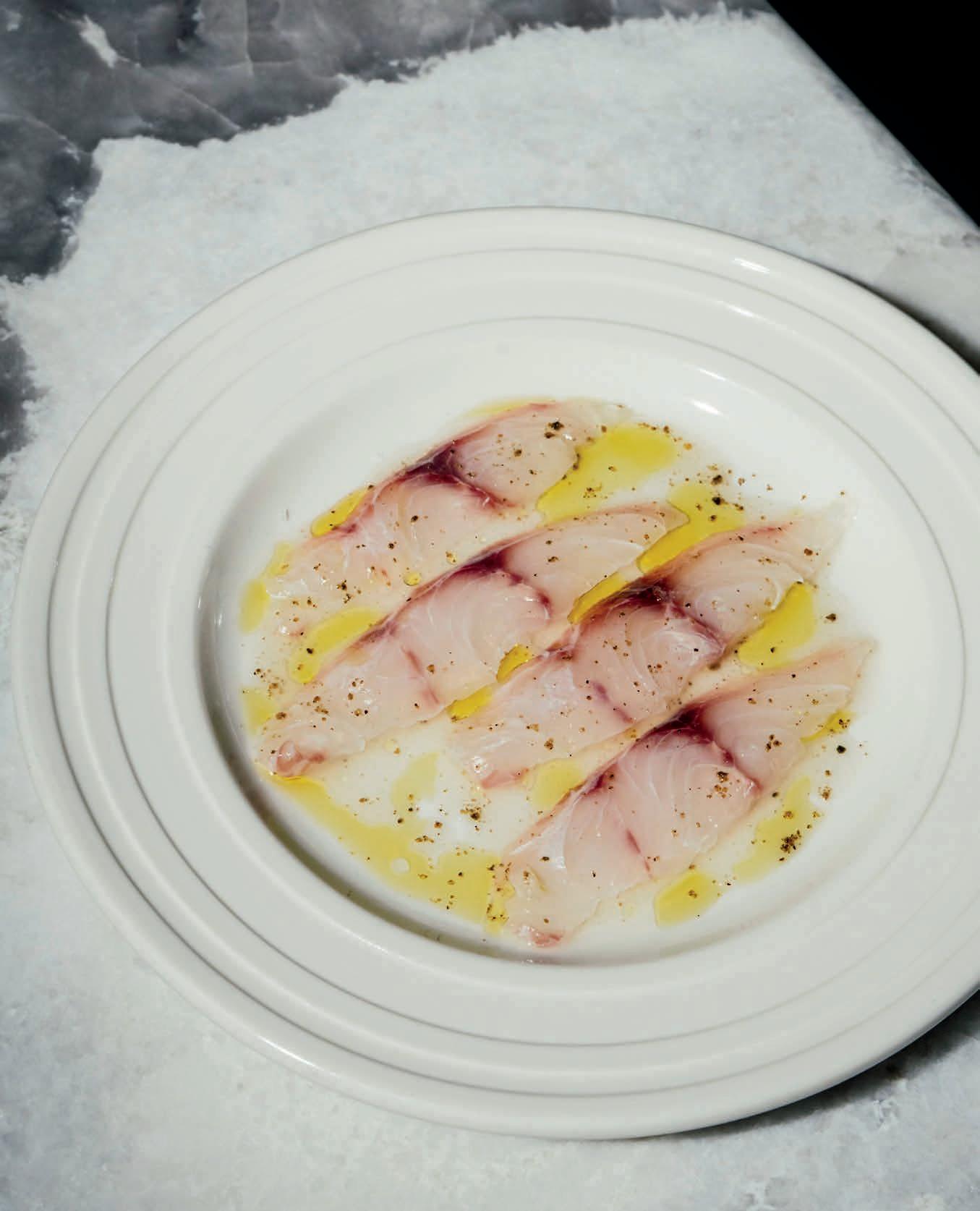
The Story Behind It: Chef Forrest Florsheim could only serve a fresher fish if it arrived impaled on the spear of the lone Florida fisherman who caught it. The snapper crudo is seasonal, so if you miss out, you can always try for the lobster. But good luck—the kitchen only cooks eight to order each night and they sell out so fast that the shellfish never even see the fridge.
The Rarest Dishes in New York
Short Rib Polpette, Forsythia
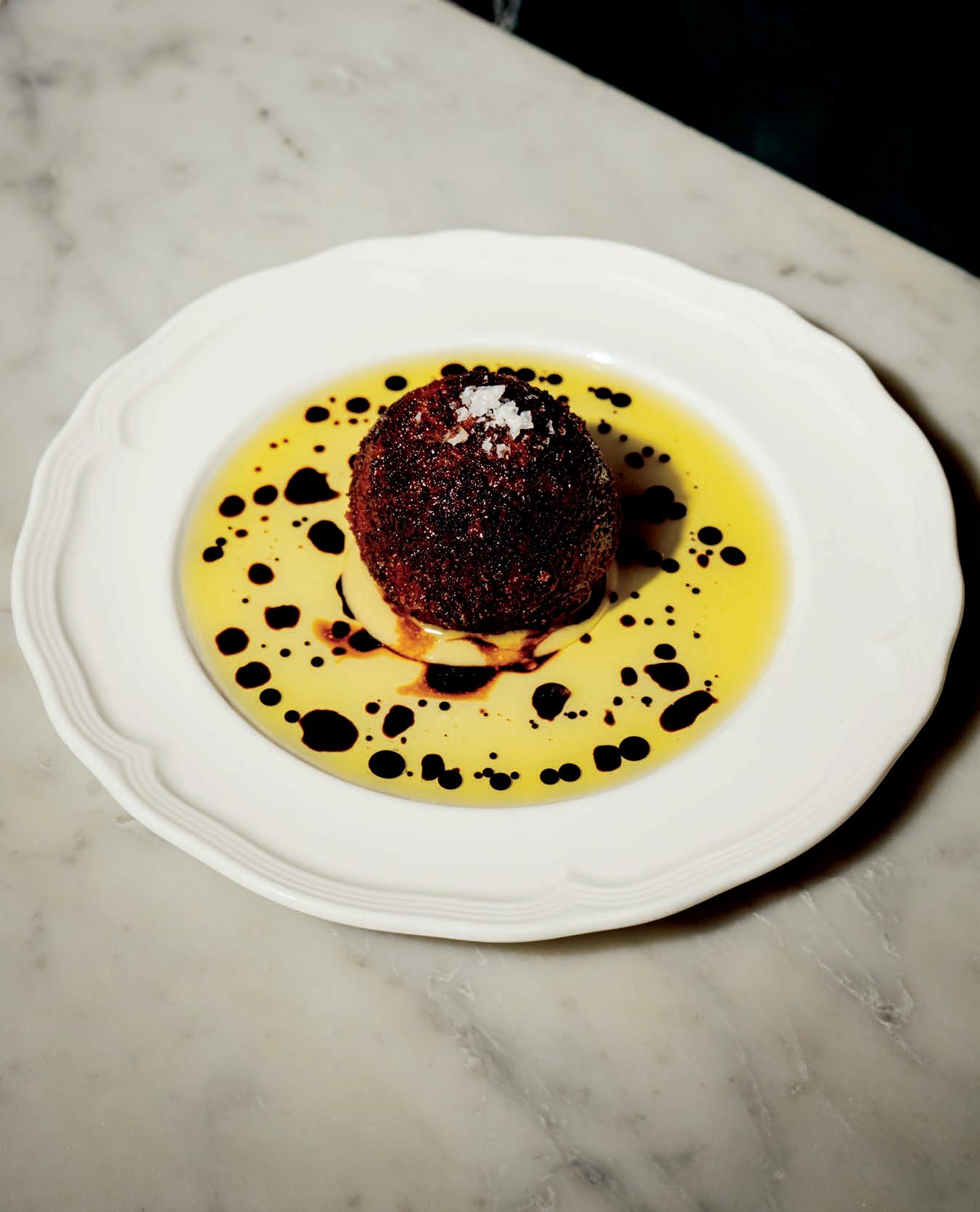
Location: Lower East Side
Preparation: Braised short rib polpette atop potato-leek purée with 25-year-aged balsamic vinegar
Cost: $24
Nightly Count: 5
Rarest Ingredient: Trucioleto, red wine vinegar from EmiliaRomagna
The Story Behind It: Chef Jacob Siwak based his polpette on one he used to prepare at a trattoria in Rome named Santo Palato. The Forsythia version graced the restaurant’s menu for the first year and a half it was open. Now off-menu, regulars know to ask for it by name.
GUGGENHEIM POP:
June 5, 2026–Jan 10, 2027
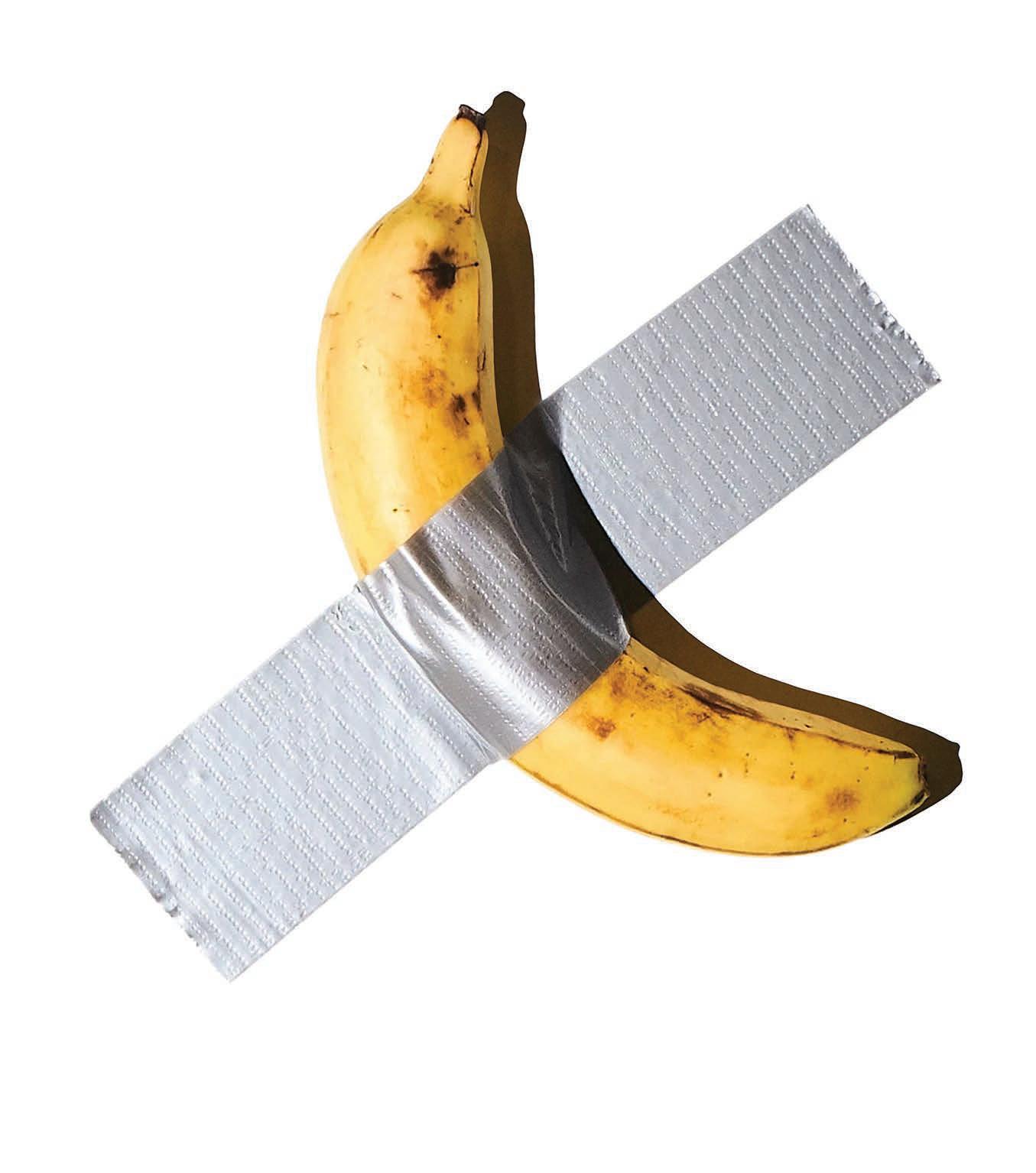
Maurizio Cattelan, Comedian, 2019. Banana and duct tape, dimensions variable, edition 3/3. Solomon R. Guggenheim Museum, New York, Anonymous promised gift T16.2020. © Maurizio Cattelan. Photo: Courtesy of the artist and Perrotin
The Rarest Dishes in New York

Whole Wild Rabbit, Dhamaka
Location: Lower East Side
Preparation: Whole wild rabbit (Khad Khargosh)
Cost: $250
Nightly Count: 1
Rarest Ingredient: Homemade garam masala, which marinates in yogurt and mustard oil with the rabbit overnight
The Story Behind It: Why do you have to pre-order this dish? Because it takes 48 hours to prepare. Adapted by chef Chintan Pandya from a traditional Rajasthani hunting method, the team at the LES restaurant roasts the meat low and slow over open fire pits.
SEE YOU AT THE GUGGEN EIM
Become a member for exclusive access to art, architecture and awe.
The Rarest Dishes in New York Brisket Burger, Raoul’s
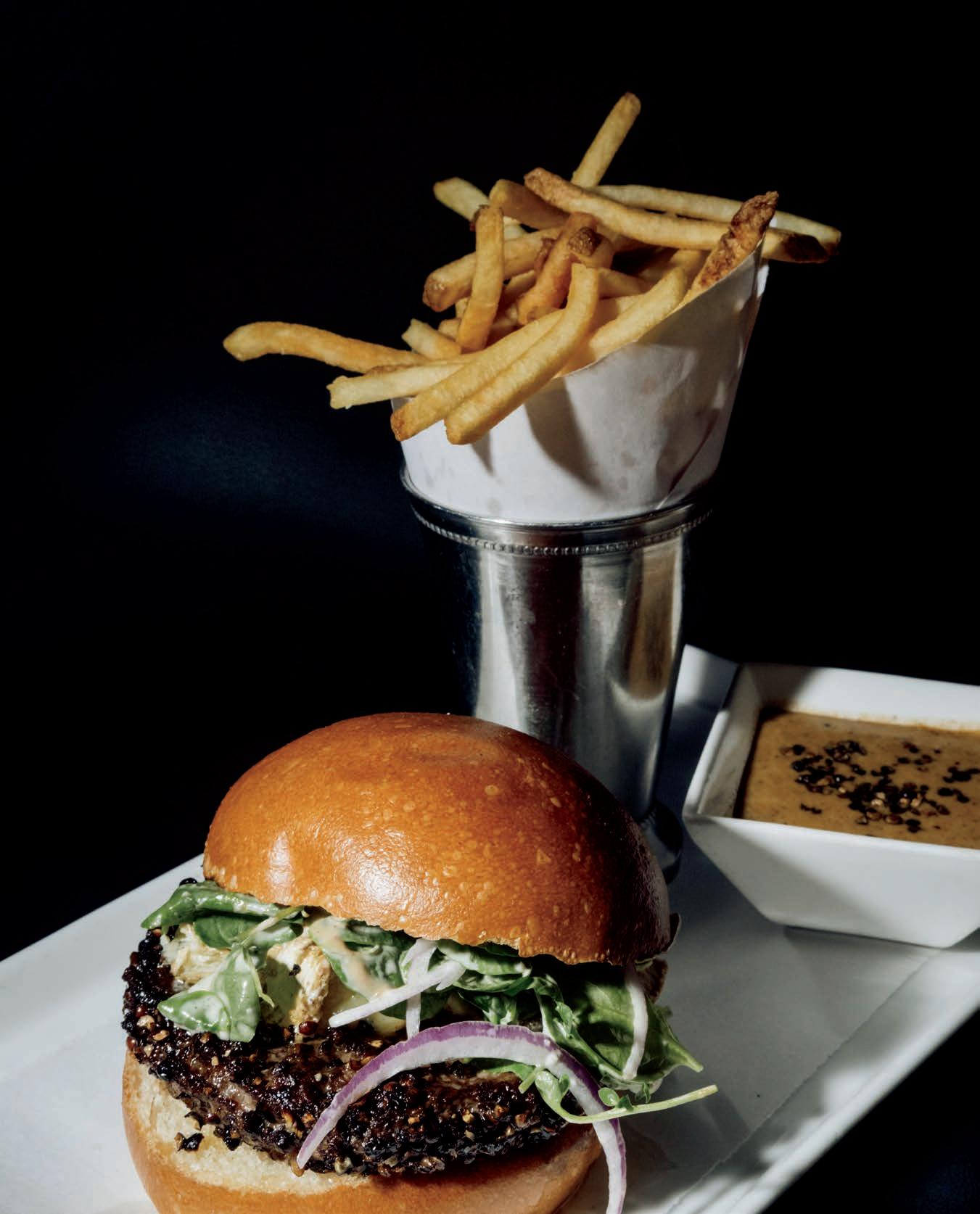
Location: SoHo
Preparation: Black-peppercornencrusted brisket burger with Saint-André cheese, watercress salad, and pommes frites
Cost: $34
Nightly Count: 12
Rarest Ingredient: Cream and cognac au poivre sauce
The Story Behind It: Only available at the bar and never once gracing the menu, the SoHo bistro’s pub burger has become the stuff of legend. When it was introduced more than a decade ago, Josh Ozersky swiftly declared it the best burger in America. With customers queuing up as early as 4 p.m. to get a taste, Raoul’s sells out of them faster than chef David Honeysett can sear them.
made
by the Marx Exhibition Fund. General exhibition support is provided by the Toby Devan Lewis Visiting Artist Fund. Additional support is provided by the AAM National Council.
Adrián Villar Rojas, Terrestrial Poems, 2025. Installation view at Aichi Triennale, Seto, Japan, 2025. Courtesy of the artist, the Aichi Triennale Organizing Committee, kurimanzutto, and Ruth Benzacar Galería de Arte. Photo: Jörg Baumann
‘I’M LIKE A MINIATURE CONTRACTOR’
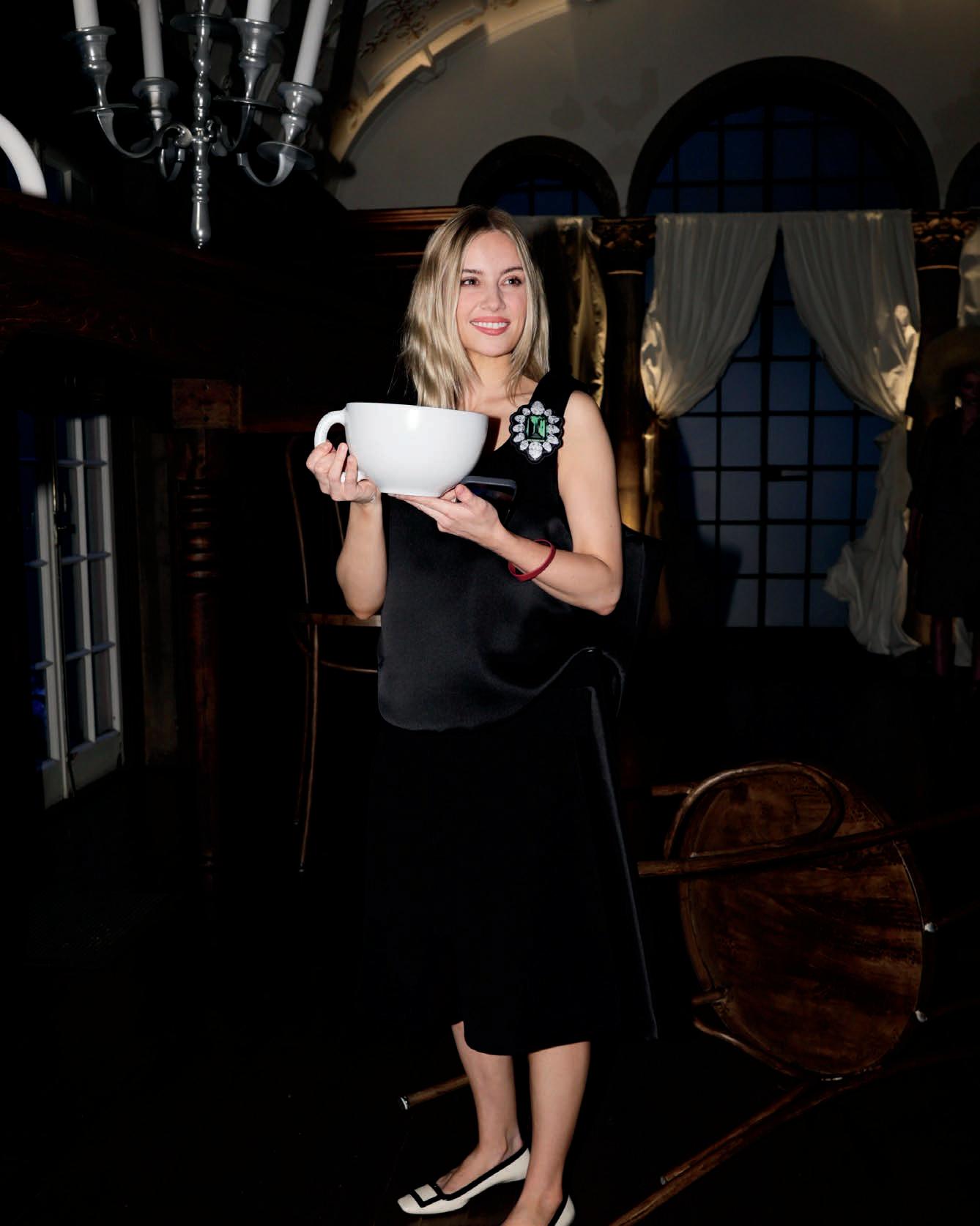
In Nashville, where she now splits her time with New York, Anna Weyant has picked up her first real hobby: making dollhouses from scratch.
By Sophia Cohen
Anyone familiar with Anna Weyant’s work knows that dollhouses have long occupied a central place in her visual language. Over the past year, the artist, a dear friend of mine, has become immersed in the actual craft of miniature-making. I’ve received countless texts and late-night calls from her documenting the intricate evolution of her dollhouse project. I was just as hooked hearing about the progress of her dollhouse as I was hearing the progress of my own home renovations. Partly because there’s something wonderfully indulgent about caring this deeply about a tiny house, but also because the obsessive attention, precision, and emotional investment behind it all feel quintessentially Anna.
Your dollhouses have been something you’ve been talking about with me for a while. How did this project come to be?
It’s the first hobby I’ve ever really developed. I’ve always loved dolls. I’ve always loved The Sims, which is like digital dolls. From there, I started making miniature models so that I could control the light on a model to paint from. I would build a sort of room box so I could light the house in a specific way. And I’ve painted exteriors of dollhouses before; I see them more as landscape paintings. Then maybe a year ago, Jason [Isbell], my boyfriend, got me an antique dollhouse for Christmas, and I started tinkering with that. A lot of it arrived broken, so I started to repair it. From there, it just turned into this all-consuming hobby. Now I build my own.
Do you think the dollhouse project is a reflection on the way you approach making art or making in general?
I like to say the process of painting is just solving one problem after another. I approach dollhouses the same way. I just wallpapered a room, and then I took down the wallpaper, and I’m re-wallpapering it because it wasn’t quite the right wallpaper. There’s a lot of editing similar to how I would paint a painting.
You’re literally just building a home on a small scale with little tiny tools. Is that meditative for you or frustrating at times, too?
I’m like a miniature contractor. I build my own tiles, and I just broke a tile, and now the project’s set back. It’s frustrating, but it’s low stakes, so it is meditative. I do it for me—I guess I’m the client. Sometimes I’ll make a painting, and I’ll
keep it, but this is the first project that I’ve made for myself. I don’t actually have dolls in the house…
Is the idea that your dolls live outside, or is it that this is your home, and it doesn’t even need a doll because this is representative of you as a builder?
I’ve never pieced that together—that the paintings are the dolls and the houses are the empty rooms. I actually do have one doll that came with the box that Jason got me. I’m scared she’ll curse me if I toss her, so I won’t throw her out. She just lives in a box in the basement.
“It’s the first hobby I’ve ever really developed. I’ve always loved dolls. I’ve always loved The Sims, which is like digital dolls.”
—ANNA WEYANT
The cover of your boyfriend’s recent album, Foxes in the Snow, was a dollhouse. I feel like this was all inching toward the real thing coming to life. What I love is it’s so indulgent in such a juicy way where it’s like someone could say, “That’s so ridiculous,” but it’s totally fun. It highlights how little people play in life.
Even just the term dollhouse—and this is why
I stress that there aren’t dolls in the house—is almost belittling, like, “Oh, she makes dollhouses.” There’s such a history of female craft and artisanship, and actually a very diverse community of miniaturists, but I think historically it’s been “for the girl” and not serious art. That’s partly why I have always loved Robert Gober’s dollhouses.
I don’t know if you saw the movie, but in the new Wuthering Heights, there’s a big dollhouse. It made me think of the metaphors of a dollhouse: being trapped, being a kept woman. You’re in Nashville, in a home creating a mini home.
I haven’t seen it, but I’m sure it’s about control. It’s a space that the girl can control.
180 YEARS OF LOEWE
The world’s second-oldest luxury house is celebrating a landmark anniversary with a deep dive into its storied
leather archive.
By Sophie Lee
In 1846, Neptune was discovered. The Liberty Bell cracked as it rang out in celebration of George Washington’s birthday. The saxophone was patented. And a small group of leather craftsmen in Madrid opened the workshop that would ultimately become Loewe.
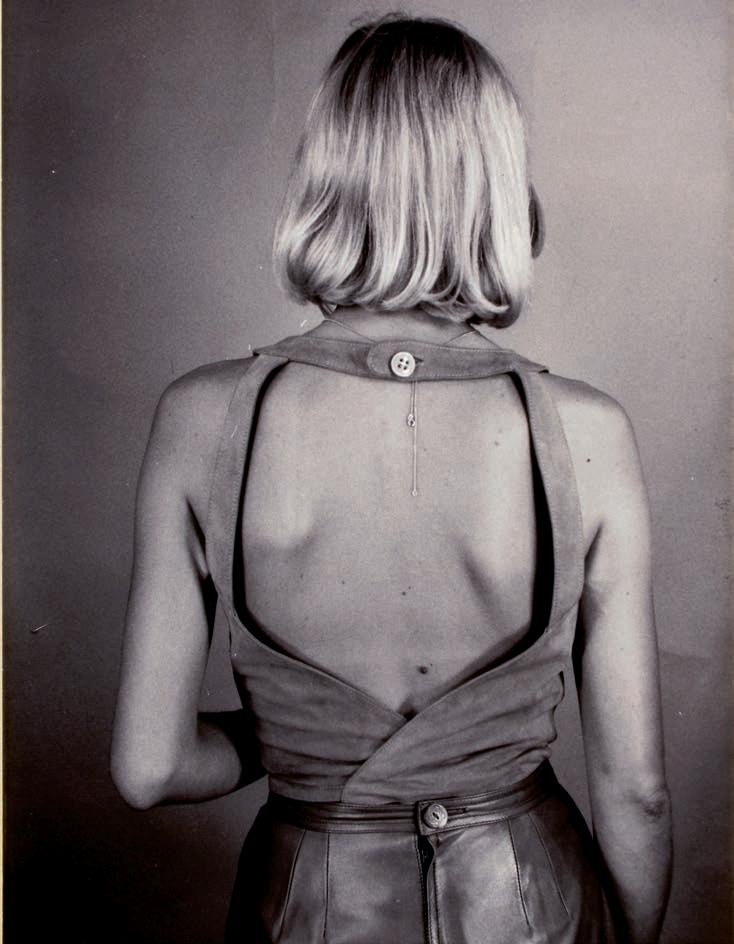
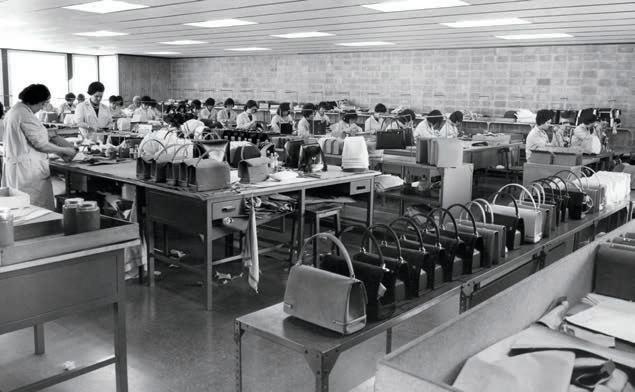
One hundred and eighty years later, the brand is the grande dame of LVMH’s global portfolio (not to mention the second-oldest operating luxury house in the world) and is celebrating its anniversary with proportionate vigor. Loewe’s history, after all, encompasses empires and international commerce. This is the house that brought the best of Spain’s
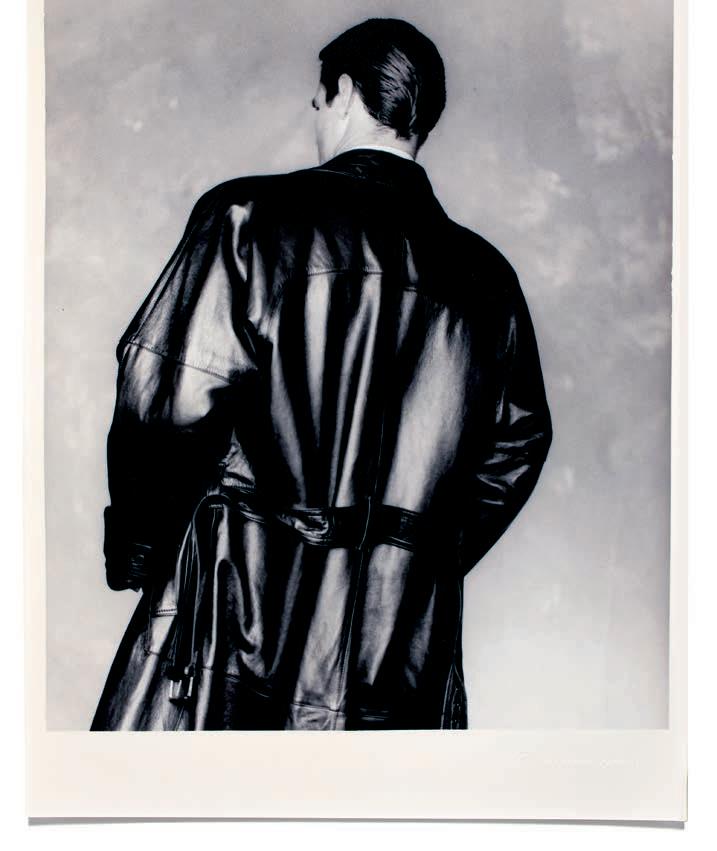
Loewe’s in-house lookbook, Spring/Summer 1983. All photography courtesy of Loewe.
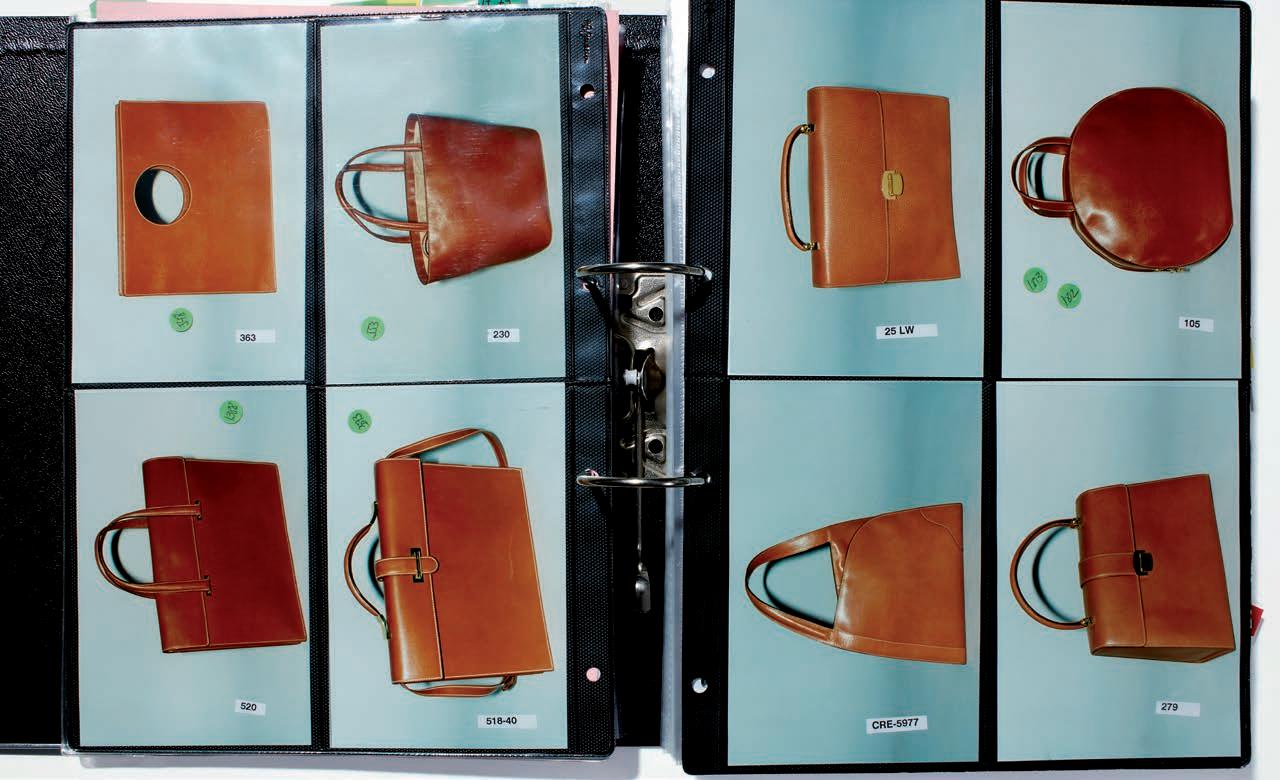

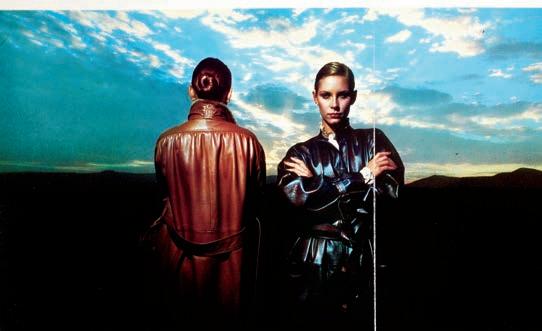
artisans together, unifying in 1872 under the name of German leather craftsman Enrique Loewe Roessberg, who joined that year after finding himself awestruck at the quality of the operation. It’s the same house that became an official purveyor to the Royal Household of Spain at the turn of the century, and, in 2016, established the celebrated Loewe Foundation Craft Prize to set the international standard for excellence in contemporary artisanship.
For its anniversary, a new campaign tracks this lineage through the house’s bestknown output: expertly engineered leather accessories. A series of images shot by Talia Chetrit sees Loewe ambassadors, including Julia Garner and Giselle, reclining with the Flamenco Clutch, a drawstring carryall from the 1980s, as well as the 2015 Puzzle bag, which came to epitomize the house’s 21st-century rejuvenation. The origami-like accessory was designed by then-Creative
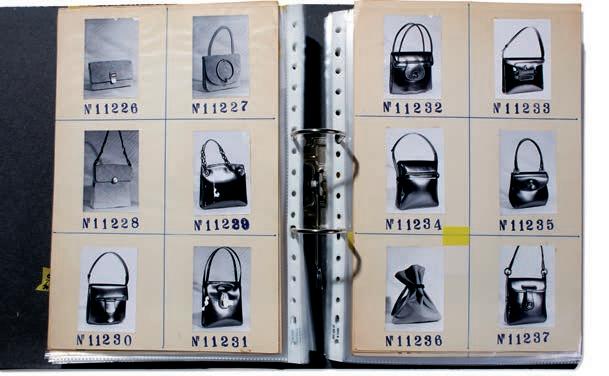
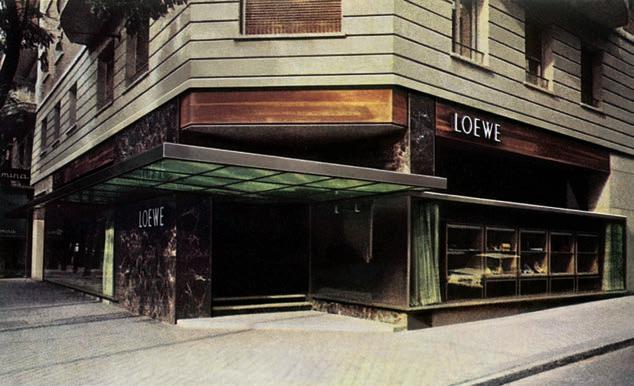
Clockwise from top: Bags book from Madrid Factory, Fall/Winter 1987-88; Fall/Winter 1979-80 catalogue photographed by Michel Malka; store in Paseo del Borne, Palma de Mallorca, 1963.
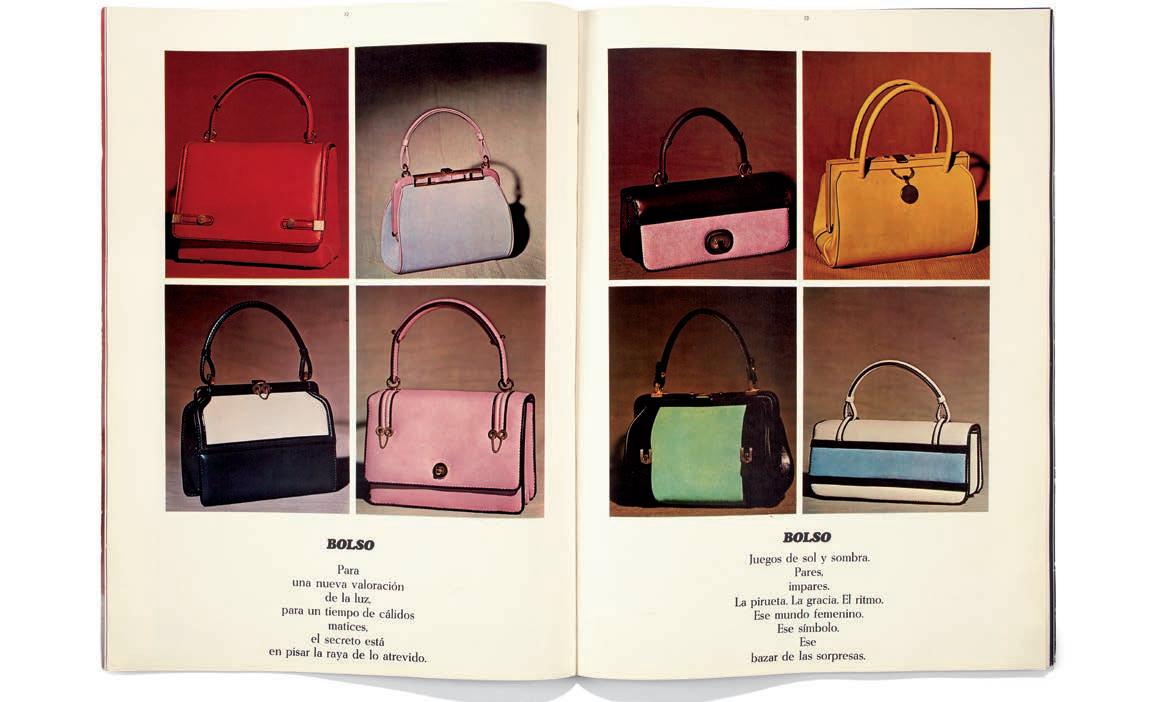
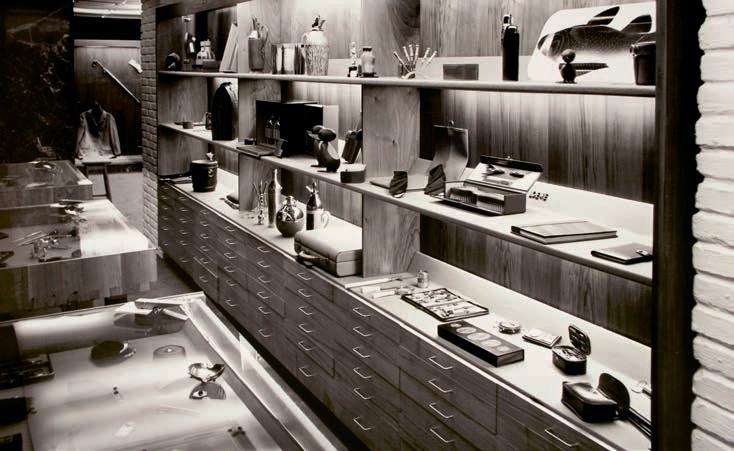
Director Jonathan Anderson (whose tenure saw Loewe blossom from cult leathersmith to multibillion-dollar revenue generator) in a feat of pattern-making and architectural vision.
Its current chapter is represented by the Amazona 180, a 1975 creation reimagined in Jack McCollough and Lazaro Hernandez’s debut collection last fall. The pair arrived
from Proenza Schouler with the aim of refreshing Loewe for its anniversary. But their archival excavations signal that legacy will never be abandoned at the house. With a trove of designs this storied, who would?
In its earliest iteration, the Amazona spoke to a changing Spain that saw women join the workforce in droves, becoming financially independent enough to invest in a staple
Clockwise from top: Revista Forma Issue 5, 1966; Fall/Winter 1978-79 press kit; store on Calle Serrano in Madrid, 1959.
that would grow with their ambitions, from home to boardroom to bar and back again. For Americans McCollough and Hernandez, the clientele they dress must seem much the same: driven, discerning, and in need of designers with the same attributes on side.
The duo’s Amazona, now rendered in supple calfskin, is at the center of the anniversary capsule collection, alongside a number
of other archival pulls all inscribed with the visage of a lion (a nod to the German translation of Löwe). In an accompanying animated film, Antonio Banderas narrates the history of the house, emphasizing its predating inventions like the lightbulb. When it comes to craft, Loewe has certainly brought no less illumination.
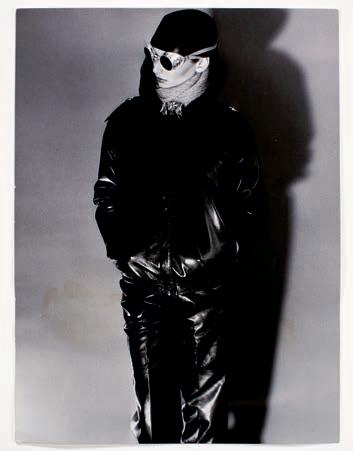
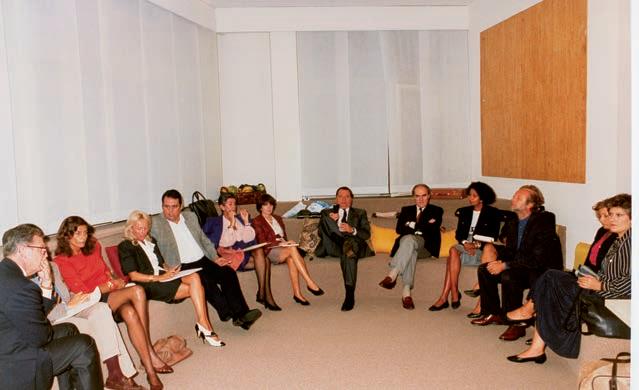
Clockwise from top left: Fall/Winter 1986-87 press kit photographed by Alejandro Cabrera; Castellana Street H Hilton, c. 1950; private showroom in Madrid, Fall/Winter 1989-90; Barcelona factory, 1964; bags book from Barcelona factory, 1960s.
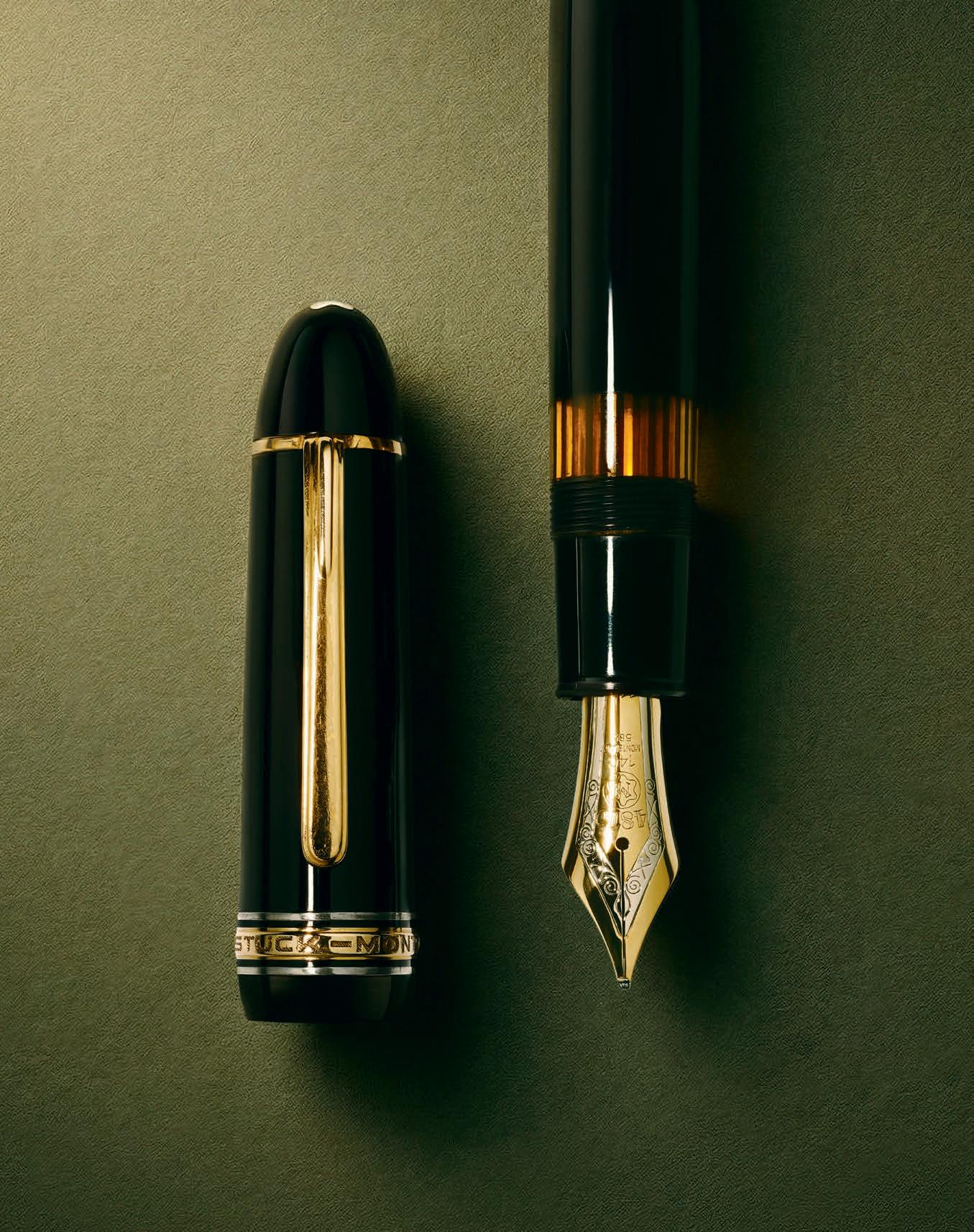
A Sunday Masterpiece
A century since its advent, Montblanc’s iconic writing instrument has only accrued in value.
In the early 1900s, Hamburg-based brand Montblanc began fielding an atypical request. Customers asked for a writing instrument designed for “Sunday use”—that sanctified day of the week when finer things are used, and indulgent rituals unfurl.
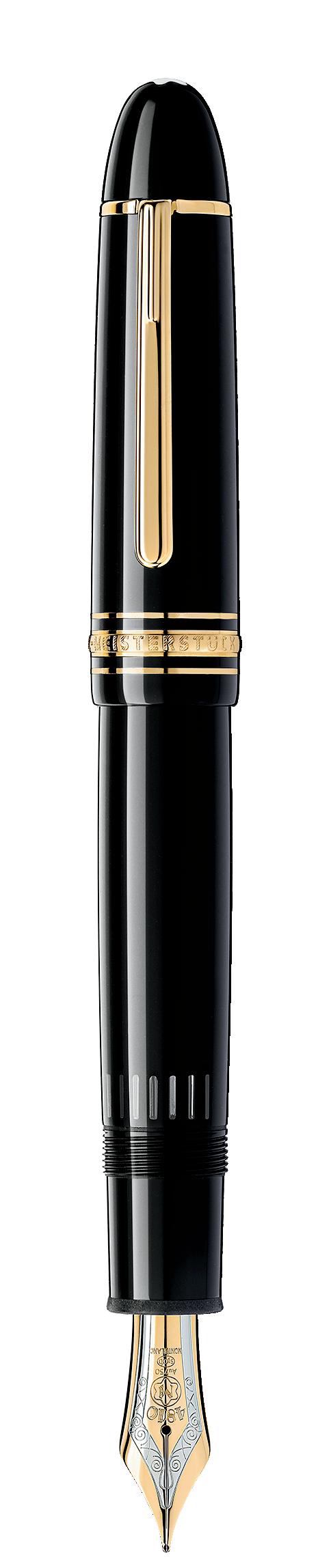
The Meisterstück, or “masterpiece” in the Maison’s native German, was first produced in 1924. From the start, it glided smoothly across the page and bore the number “4810,” referring to the towering height of Mont Blanc in meters. The pen would live up to this stature, as the product that transformed Montblanc from local artisan to household name.
By 1935, the Meisterstück had gold accents, a sturdy clip, and a signature two-tone meticulously constructed nib. In the 1950s, mod influence rounded out the pen’s edges, its body becoming “cigar-shaped.” The Meisterstück has stuck to these basic principles since, its nib still manufactured only in gold, with a rhodium-coated inlay that enables its two-tone appearance.
The pen—used by everyone from Ernest Hemingway to Queen Elizabeth II to James Bond and the 10 writers on CULTURED’s inaugural Young Writers list—confers significance on the words that flow from it, through both in the historical heft of its bearers and its legacy craftsmanship. It’s a purchase that puts one in league with a rarefied class of writers who have wielded the tool, and a century on, it remains, by design, a master stroke that still feels personal.
Photography courtesy of Montblanc.

CULT CLASSIC
Come Here
Three years ago, Ferragamo Creative Director
Maximilian Davis debuted a bag collection that has had lovers of the Italian house clamoring. Now, a new style joins the “Hug” family.
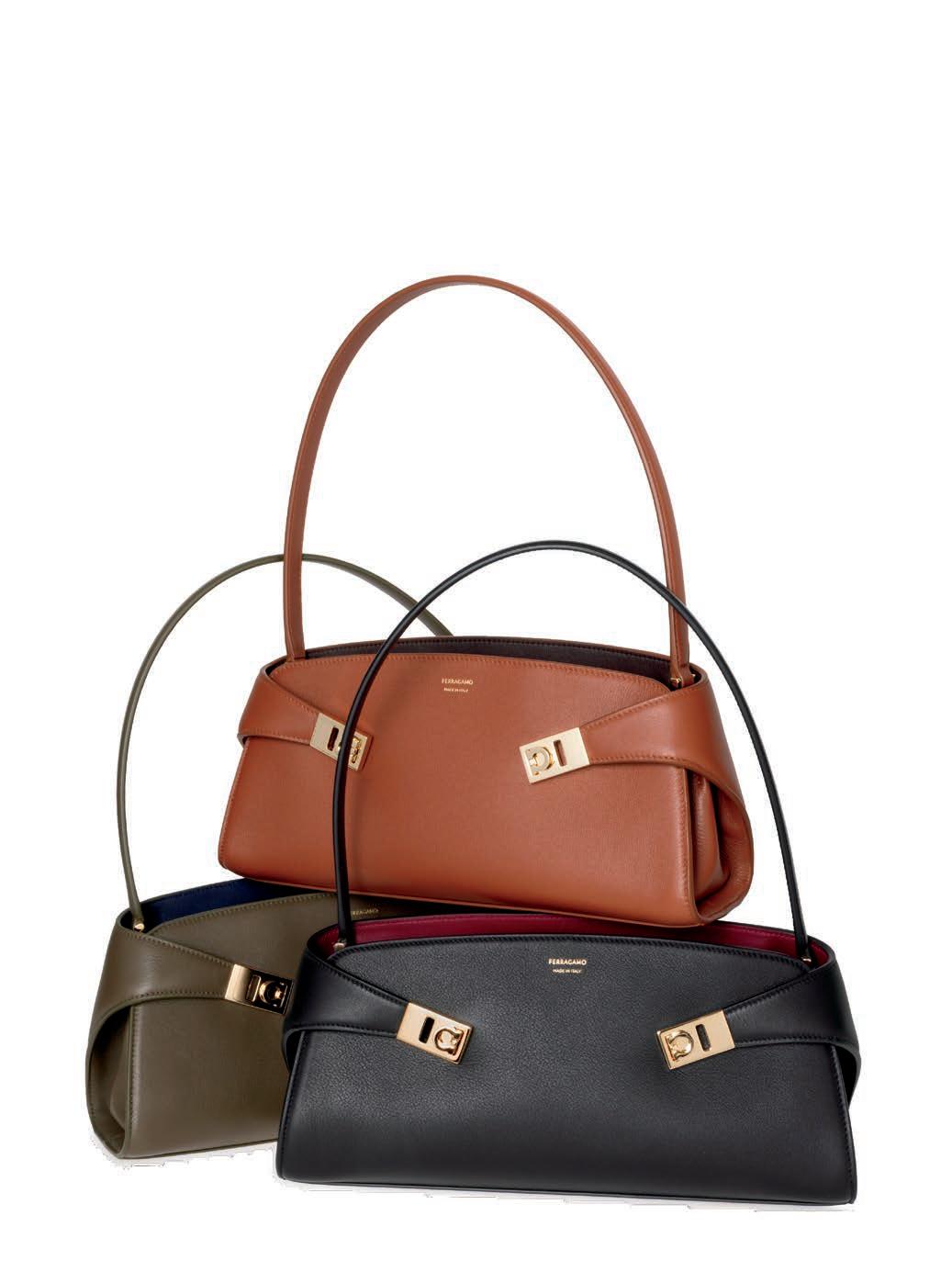
A year into his tenure at Ferragamo, Maximilian Davis unveiled the Hug bag on the runway as part of his Fall/Winter 2023 collection. It’s fairly clear where the design—one of the precocious designer’s most recognizable contributions yet to the Italian label’s legacy—gets its name. An ample, asymmetrical body is bracketed by two leather arms that wrap around the front of the bag in an embrace secured by the house’s iconic gold-tone Gancini closures.
This season, the Hug bag collection welcomes a newcomer: the Hug East-West shoulder bag. Crafted in sleek, modern proportions with a utilitarian sensibility, the latest iteration of the design boasts an elegant handle that slips neatly over the arm and an elongated body in supple calfskin leather that unzips to reveal a capacious interior in a contrasting hue. Made of more than 100 individual pieces—leather, metal, and otherwise—it’s the most elaborate hug you’ll ever receive.
Photography courtesy of Ferragamo.

WHAT IT TAKES TO LIVE AS AN ARTIST IN NEW YORK
Has living in New York become an unaffordable luxury for artists? Following the publication of Josh Kline’s viral essay “New York Real Estate and the Ruin of American Art” in October magazine and the arrival of Diya Vij as commissioner of the city’s cultural affairs department under Mayor Zohran Mamdani, the question is top of mind.
Here, CULTURED asked three artists to share what they’ve given up—and what they won’t—to maintain the biggest indulgence of them all: living in New York.
By Julia Halperin
Tony Oursler
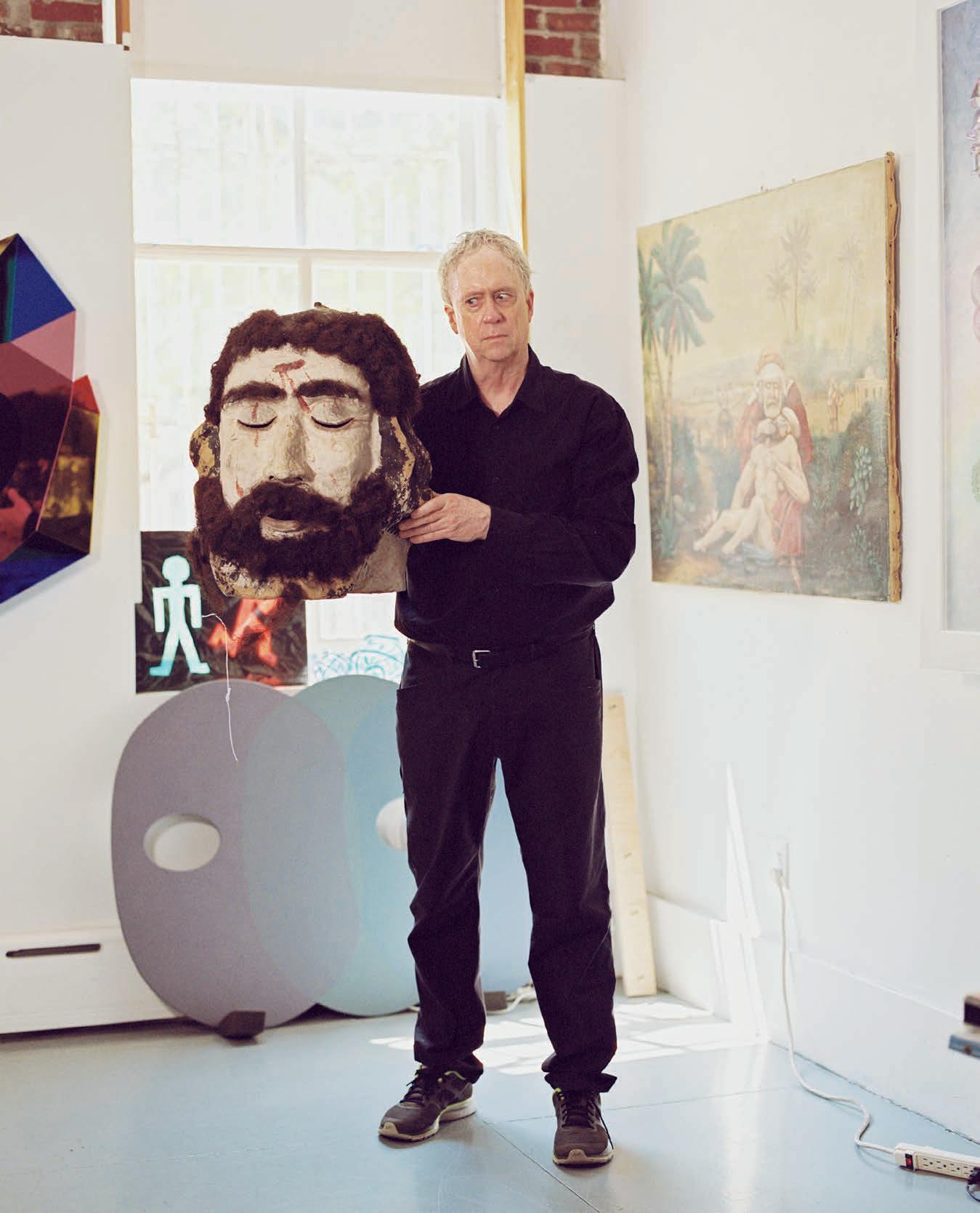
HOMETOWN: New York
AGE: 69
MAIN MEDIUM: Video and installation
GALLERIES: Lehmann Maupin and Lisson
HELD ONTO: WFMU/WQXR. Pinch Chinese. Experimental art projects. M5 Max chip, designed for extreme workflows, featuring an 18-core CPU and up to a 40-core GPU. AC. OST Cafe. Books, book fairs. A.I. optimism. The Wooster Group 4ever. Nightclubbing opera.
GAVE UP: The illusion of reliable FedEx, Amazon, USPS. Tyrian purple pigment. Drinks at Mudd Club. Local fabrication. Spirit photos. Cocaine/narcotics. Samuel Dickstein Plaza. Drinks at Windows on the World. Shipping to other nations. Séances.
Photography by Lindsay Perryman.
American Artist
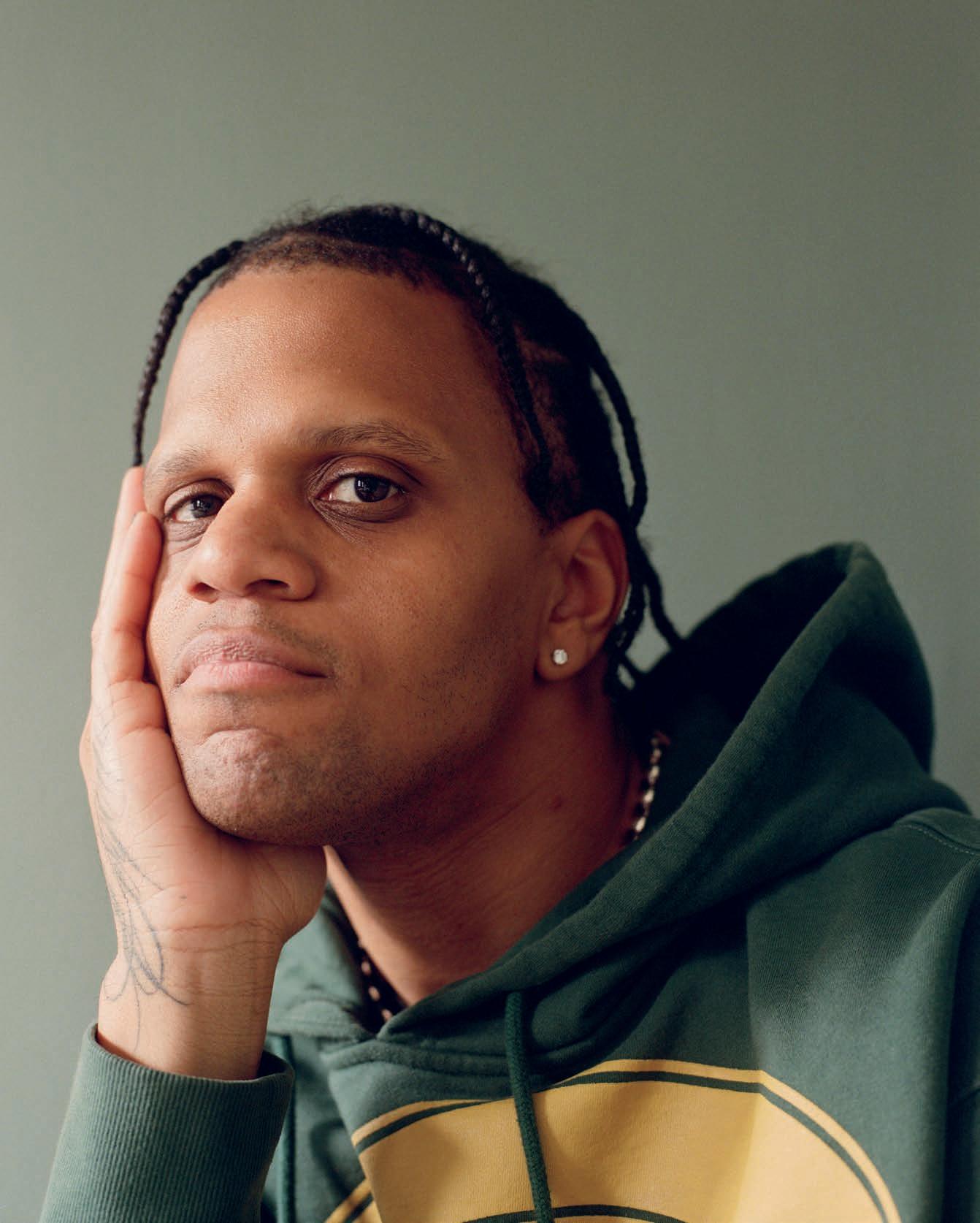
HOMETOWN: Altadena, California
AGE: 36
MAIN MEDIUM: Sculpture and video
GALLERY: Commonwealth and Council
UPCOMING SHOW: “Wake Me Up Inside” group exhibition at Rip Space, opening in July
HELD ONTO: Renting a studio. Floral arrangements. General strikes. Feeld Majestic. Laundry service. Telfar. HBO Max. Wine at home. Taking classes. Art from friends.
GAVE UP: Two bedrooms. Eating all the time (intermittent fasting is in). Studio assistants. Art openings. Ssense. Instagram ads. Car repairs. Hulu. Congestion pricing. Tasting menus.
Photography by Tom Scanlan.
Melissa Joseph
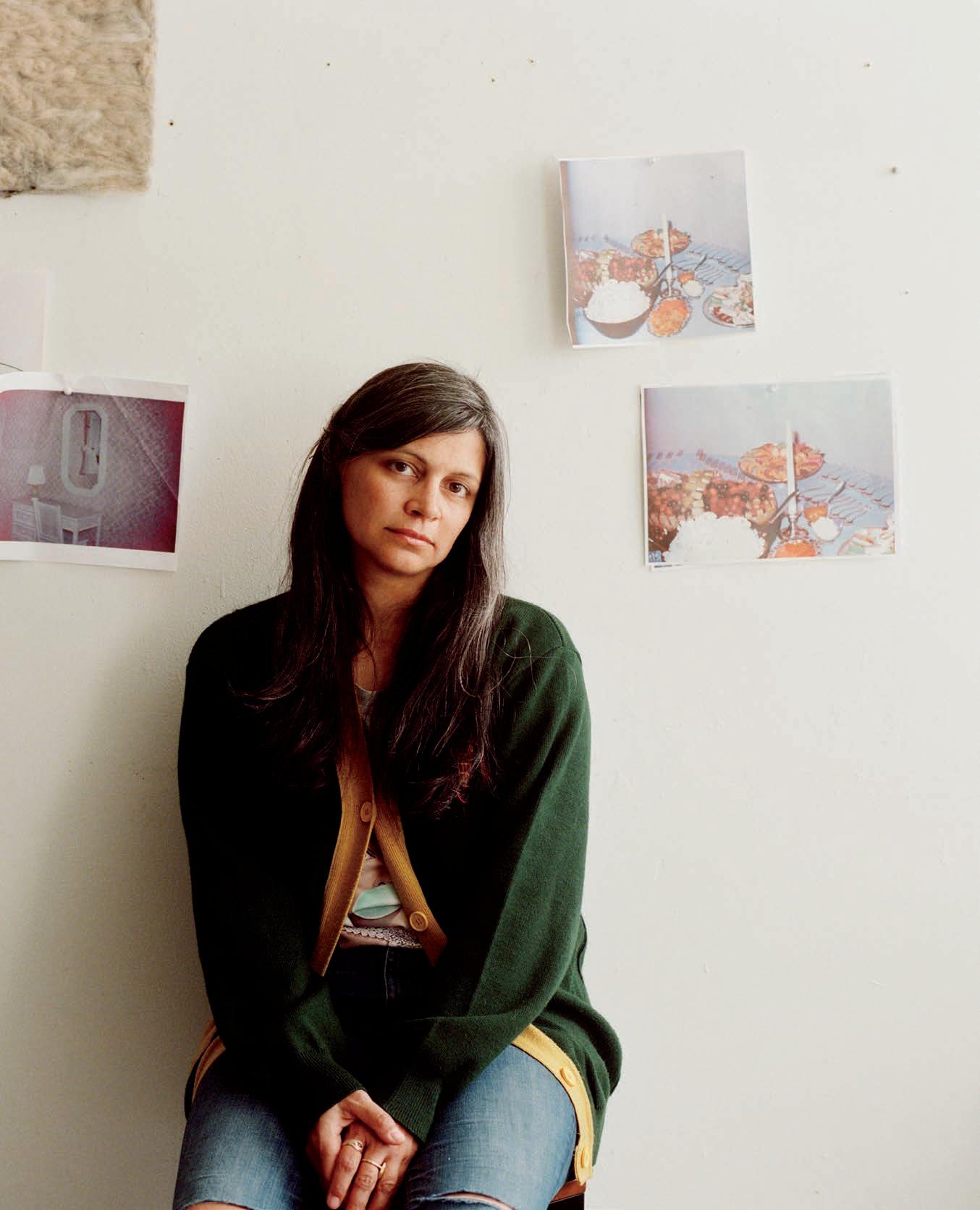
HOMETOWN: Saint Marys, Pennsylvania
AGE: 45
MAIN MEDIUM: Felted Wool
GALLERY: Charles Moffett
UPCOMING SHOW: “Casserole Culture” at Charles Moffett, opening in September
HELD ONTO: Oat lattes. Small artworks. Natural light. Good felting wool. Blueberries. Mani/pedis. Greeting cards (and stamps). Dishwasher.
GAVE UP: Space. Heat. Paying quarterly taxes. Gym membership. Most spa and salon treatments. Live entertainment. Media subscriptions (I borrow my sister’s logins). DoorDash, Uber Eats, Grubhub. Nature.
Photography by Tom Scanlan.
RECESS, THEN RETURN
Danielle Mckinney, whose solo show at the Norton Museum of Art in West Palm Beach is on view through Oct. 4, charts the emotional scaffolding of Recess, the painting selected as one of the three covers for the Indulgence issue.
By Danielle Mckinney
I spoke out loud and came up with the words.
There are moments at night when the house finally becomes quiet, and I can hear myself again. As a mother, as a woman, as someone constantly moving between emotional worlds, those moments have started to feel almost sacred to me. I think Recess, the painting on the cover of this issue of CULTURED, came from that feeling, the deep desire to slip away from the demands of being visible for just a little while.
The painting is intimate to me because nothing dramatic is happening in it. A woman reclines on a couch beneath this enormous glowing light. There are flowers beginning to open on the table, traces of life around her, softness everywhere. She wears a face mask, suspended somewhere between caring for herself and disappearing into herself. I kept returning to that detail while painting because it felt so human to me. There’s something vulnerable about seeing someone in the middle of a private ritual usually hidden from the world. The face mask became less about beauty and more about restoration. About trying to repair yourself quietly. I think women become experts at carrying emotional weight while still appearing composed. We learn how to continue functioning while exhausted, heartbroken, overstimulated, lonely, needed. Sometimes indulgence is simply closing the door. Sitting in silence. Letting your body soften. Letting yourself exist without performing strength or care for someone else for a moment.
The Jungian psychoanalyst James Hollis writes that much of adulthood involves trying to recover the self we abandoned in order to survive. That thought follows me constantly now. Painting has become the one place where I don’t have to organize my emotions into something understandable. The paintings hold what I cannot always articulate out loud. The figures in my work are never direct self-portraits but carry an emotional interior. They hold loneliness, sensuality, fatigue, longing, fantasy, and the complicated desire to both retreat from the world and be deeply seen by it.
When I painted Recess, I kept thinking about the title itself. A recess is temporary. You eventually have to return to responsibility, conversations, noise, the outside world. Maybe that’s why the painting feels melancholic to me despite its warmth. The room glows, but there’s also the awareness that the moment will end.
Lately I’ve been allowing the paintings to become looser and less resolved. Brushstrokes dissolve, forms emerge and disappear. I trust the work more when it leaves room for uncertainty because uncertainty feels emotionally honest to me now.
For me, indulgence is not really about luxury. It’s emotional permission. Permission to pause long enough to feel life again. Permission to nurture the parts of yourself that no one else sees.
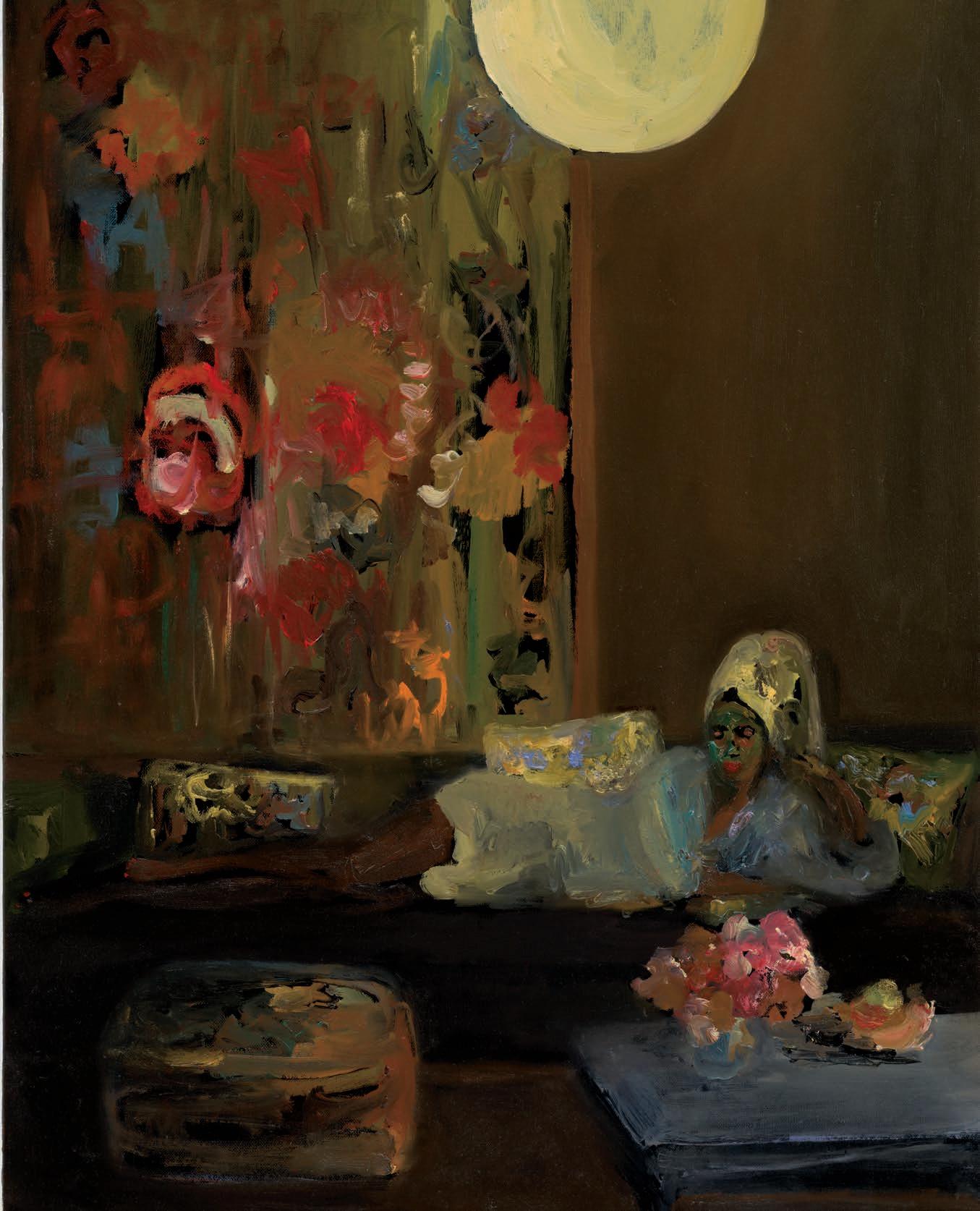
photography courtesy of the artist and Marianne Boesky Gallery.
Danielle Mckinney, Recess, 2026.
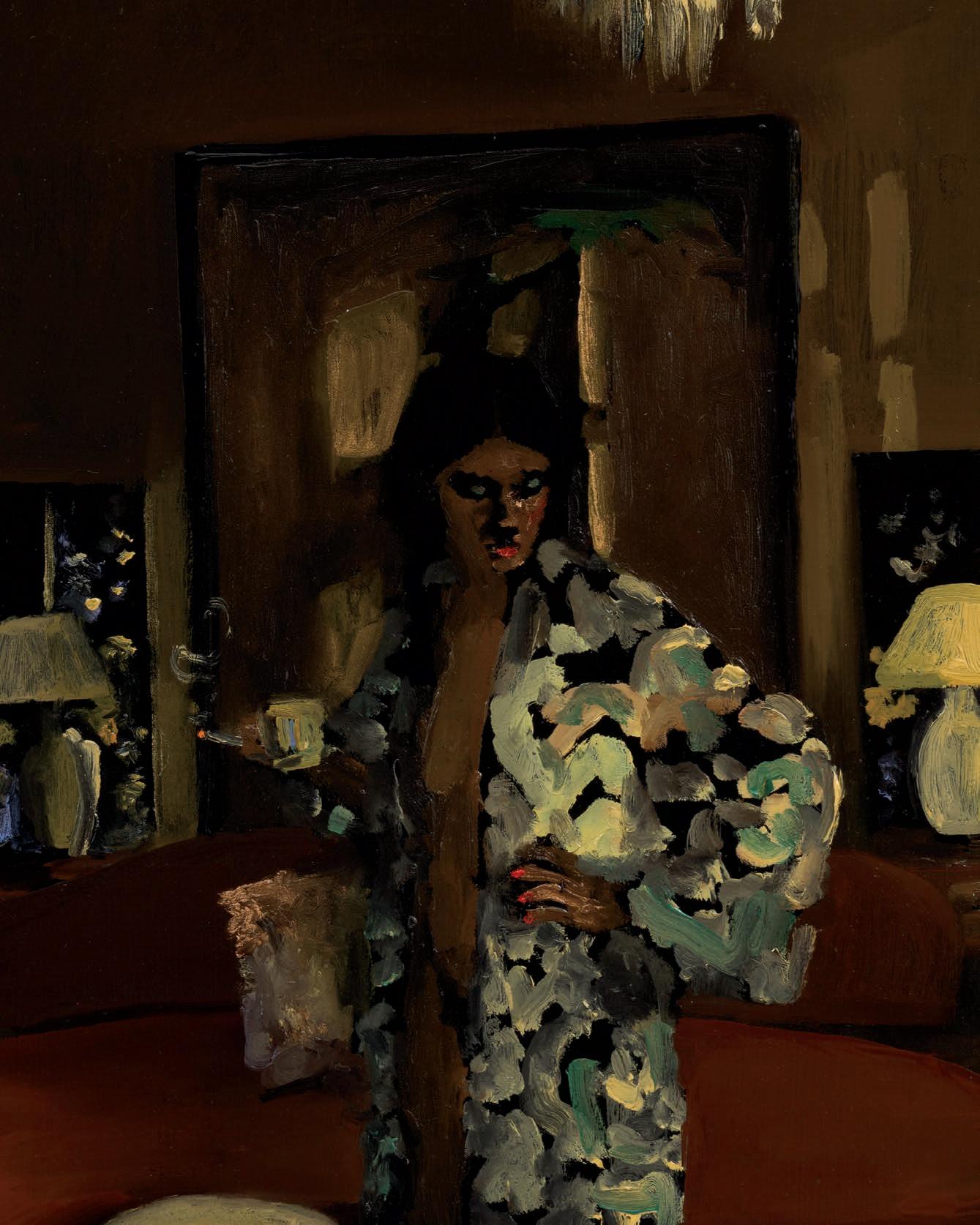
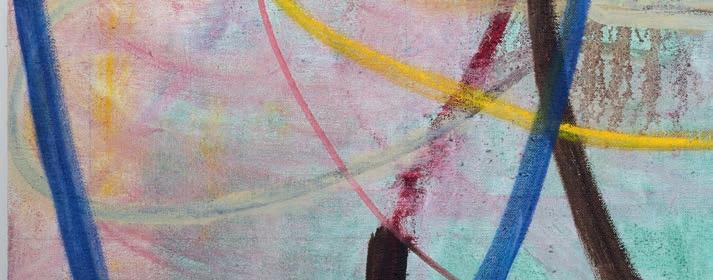
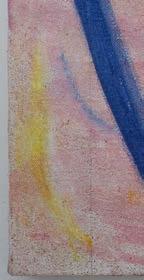
Danielle Mckinney, Forest for the Trees (Detail Shot), 2026.
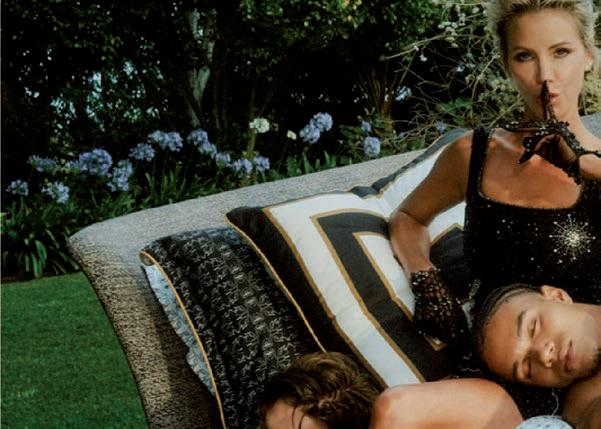
Danielle Mckinney, The High Road, 2026.
DANIEL ROSEBERRY’S MIDAS TOUCH
Schiaparelli’s creative director joined writer Christopher Bollen at the Tuileries Garden for a walk through his revolutionary tenure at the house.
By Christopher Bollen
Photography by Elliott Verdier
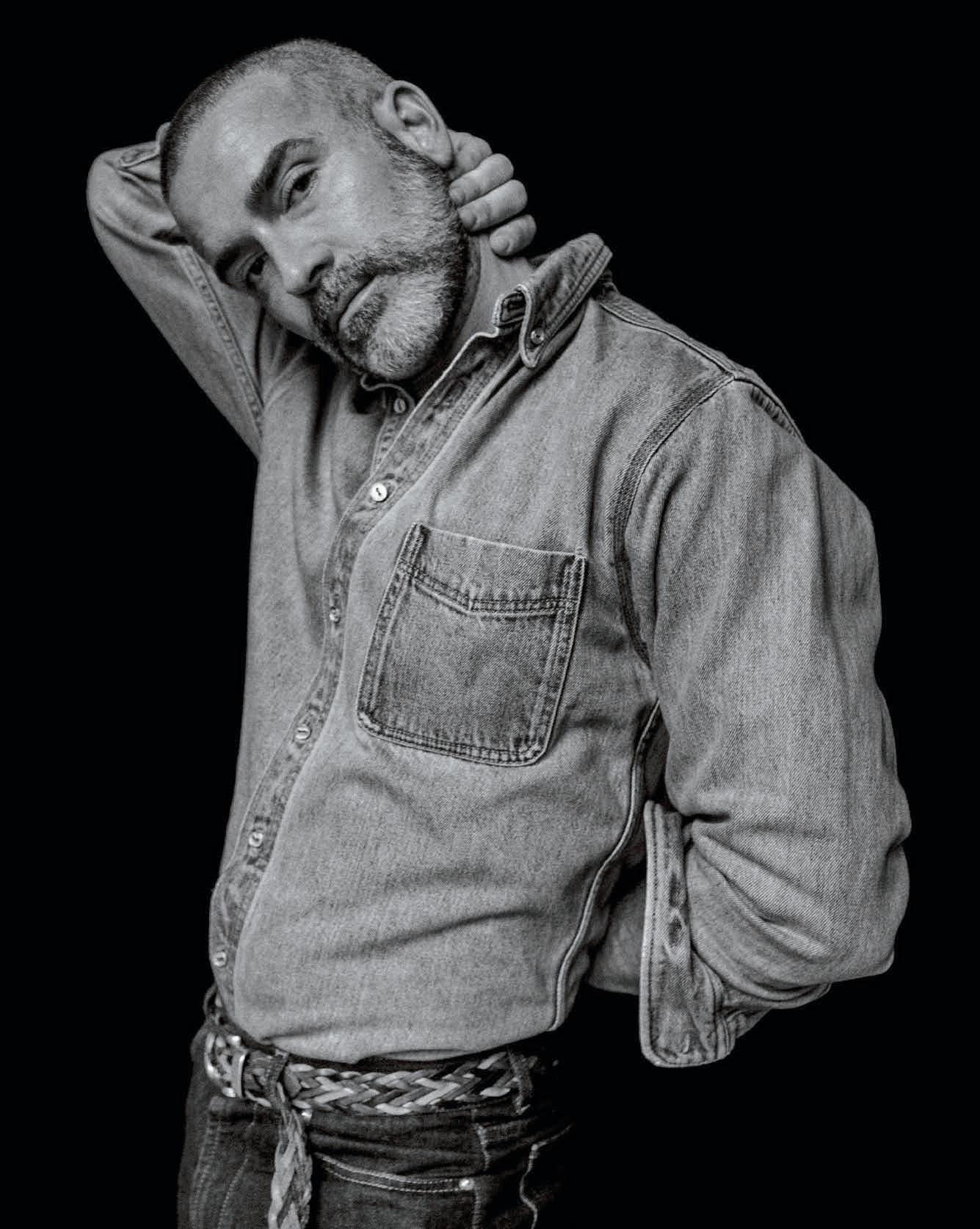
On a blindingly sunny April morning, Daniel Roseberry, the creative director of Schiaparelli, chooses a bench in the shade. It’s windy in Paris’s Tuileries Garden, the chalky gravel swirling into miniature sandstorms, and Roseberry’s brown suede boots and black parka windbreaker are lightly covered in the dust. At age 40, the designer is strikingly handsome, with dark brown eyes, olive skin, and a silvering close-cropped beard. Although he’s been living in Paris for the past seven years, he’s just bought his first apartment in the 7th arrondissement. “My walk to work goes right through here,” he says. “It’s hard not to stop and take a beat, just to prepare for the day.”
Roseberry hasn’t had many opportunities to stop and take a beat since his appointment to the house in 2019. Previously, he’d worked for over a decade at Thom Browne, and left his role as design director of the New York brand before knowing his next move. Roseberry isn’t one to play it safe: “My mom always said, ‘Leap, and the net will appear.’”
On paper, the Texas-born designer seemed an unlikely candidate to helm a couture house that was still finding its footing in the fashion ecosystem (the maison’s founder, Elsa Schiaparelli, closed her iconic brand in 1954; the current owner, Diego Della Valle, revived the label in the early 2010s after decades of dormancy; in 2013, Christian Lacroix designed a couture collection for the house). For one thing, Roseberry had zero training in the art of couture. For another, no American had ever been appointed to lead an established French couture house. Roseberry, however, was undeterred. “I knew it was mine to lose,” he says. “I could feel it in my bones.”
In hindsight, any industry doubt about the young designer’s bona fides now seems laughably myopic. Lacking the marketing muscle of most brands or even a meager advertising budget, Roseberry has managed to build one of the most cultishly adored labels in fashion while still managing to honor the spirit of its eccentric namesake. Consider the viral explosion of such Roseberry concoctions as the toxic-green Incredible Hulk leather bustier that Kim Kardashian donned in 2020. Or the Surrealist gold-leaf lung necklace that was designed to fetishize the respiratory system in the wake of
the Covid lockdowns. Or runway showstoppers like the faux-fur lion head growing out of a gown like a phantasmagoric corsage, a sci-fi dress embroidered with cords and crushed circuit boards in an ode to Ridley Scott’s film Alien, and, for his most recent season, lace bustiers transformed into menacing scorpion tails. Celebrities like Lady Gaga, Beyoncé, and Cardi B have gone out of their way to wear Schiaparelli to milestone events like the Grammys or a presidential inauguration (for Biden’s, Gaga’s look was constructed out of bulletproof fabric).
Certainly, Roseberry is a wizard at reading the public’s appetite for shock and shareability, although he tends to attribute the origin of his creations to sudden moods (several of his recent dresses were sketched in a moment of anger) or longtime fascinations. (“Ever since I was a kid, I’ve been drawing cats.”) What he doesn’t do is design with one enduring pop-culture muse in mind. “There’s no ideal Schiaparelli woman,” Roseberry says. “But everyone you see wearing ‘Schiap’ has chosen to do so. We’ve never paid anyone to wear it.”
In a cultural landscape overloaded with brand ambassadorships and lucrative pay-to-play redcarpet deals, it’s nearly unheard of to rely on a celebrity’s personal taste or affinity for a particular designer. In fact, the very notion of a celebrity’s personal taste hardly seems relevant to today’s conversation. But it’s easy to see why public figures are drawn to Roseberry’s work. His bravado in ignoring trends and celebrating spectacle ensures an attention-grabbing ensemble that, in our eyeball economy, pays a form of dividend to the wearer.
Such caution-free daring does have its costs. A few weeks after our meeting, Lauren Sánchez Bezos, a longtime client, wore a satin Schiaparelli dress with a plunging neckline to the Met Gala, which she and Jeff Bezos helped sponsor. The relatively demure design was inspired by a John Singer Sargent painting, Madame X, but because of the furor over the couple’s sponsorship, the dress became a symbol of class warfare and, for reasons other than the ones Roseberry might be accustomed to, the most contentious look on the red carpet. Roseberry drew a line between creativity and politics during our conversation. “I don’t think people are desperate to hear politics from fashion people,” he says.
“I never felt like Elsa was telling me to rehash the past. I think she would have been so fucking bored with that approach. She would have been more like, ‘Take it and run.’”
“I don’t think it’s my job to use fashion to politicize. I’d rather just say something.” (Schiaparelli’s PR declined to comment on Sánchez Bezos’s relationship to the brand.)
This past spring, the exhibition “Schiaparelli: Fashion Becomes Art” opened at the V&A Museum in London. The show, which runs through November, pays homage to Elsa Schiaparelli’s radical designs, from her 1920s trompe l’œil knitwear to Surrealist collaborations with Salvador Dalí, including her infamous Skeleton Dress. Roseberry played a large hand in putting the exhibition together. Of the 400-some pieces featured, 24 are from his own tenure at the house. Roseberry says that he never felt the pressure of following in Elsa’s footsteps. “I never felt like she was telling me to rehash the past,” he says. “I think she would have been so fucking bored with that approach. She would have been more like, ‘Take it and run.’” Still, this past March, when he toured the exhibition alongside Schiaparelli’s granddaughter, actor Marisa Berenson, “it was like some energetic loop had been closed,” he explains. “We had worked so hard to tell her story. Elsa was the first person to merge art and fashion. She was the inventor of the runway show. She was the first designer to set a show to music. And now that we told her story, I felt like she gave up the ghost a little bit.”
Roseberry was born in the North Texas town of Plano, the son of an Anglican priest and an artist. “Growing up, it was art and church, art and church,” he says. Early on, he felt the repression of his Texan roots and, like many curious young gay men with a creative streak, he escaped the provinces for the big city as soon as he could. He moved to New York at age 20 to attend fashion school. While Roseberry doesn’t consider himself a practicing
Christian anymore, the church did provide him with a sense of structure, and its traditions and iconography certainly shaped his aesthetic. “I think of our fashion shows as Sunday services,” he says. “People come together to see, hear, and feel something beautiful. Especially for couture. Readyto-wear is like party hopping. Couture is a different experience. People come wanting to receive.”
If Roseberry’s own years in New York were also a lot like a nightclub, his time in Paris has been far more monkish. He doesn’t drink or go out at night. Most evenings he eats alone in his apartment. For exercise, he takes runs—5 to 10 kilometers—along the Seine, and he’s even considering training for the New York City Marathon in November. Most importantly, though, he’s sketching. His pen of choice is a black fine-tip Tradio that draws lines like a quill. Usually he listens to music while he sketches (his current soundtrack is the latest Robyn album). He balks at the idea of designing with A.I. or Photoshop. “My atelier won’t do anything unless I give them a drawing,” he explains. “My hand for the line will compel their hand. That exchange is the beauty of couture.”
In this very park last October, only a few feet from where we are sitting, Roseberry sketched the scorpion tails and bird plumage that defined his most recent collection. Those fantastical dresses dominated social media practically the second they appeared on the runway, but Roseberry maintains that he isn’t designing to stir controversy to appease investors or satisfy the marketplace. “I feel so blessed to be at an independent house,” he says. “I feel like we’re beating the system with our own creativity. We can gag the world with a fraction of the resources of the big houses. We’re not just making piles of stuff.”
LEE UFAN’S TIME MACHINE
Our editor-at-large traveled to Japan to visit the living legend of an artist, whose trio of shows on view this season cement the legacy of his work’s esoteric magnetism.
By Julia Halperin
Photography by Casey
Kelbaugh
I arrive at Lee Ufan’s home huffing and puffing.
For almost six decades, the 90-year-old artist has created spare, meticulous paintings and sculptures that somehow manage to slow time and heighten our awareness of our bodies and breath. Greeting him with a dry throat and elevated heart rate seemed at odds with the contemplative spirit of his work. But we were running late.
Three other journalists and I had accidentally gotten off the bus one stop early on the way to visit the artist, who is deferentially referred to as Mr. Lee by those around him. Terrified that we might keep him waiting—a far graver faux pas in Japan than in the West—our guide, a local exhibitions manager, took off in a sprint. That’s how I found myself trotting behind her through a quiet street in Kamakura, the coastal city an hour outside Tokyo where Ufan lives and works.
Even before we broke into a jog, there was a bit of an “off to see the wizard” vibe to the proceedings. We’d spent the past two days in Naoshima, the transcendent art island that houses a museum dedicated to Lee’s work. We’d seen the chapel-like gallery he’d adorned with one gray lozenge-shaped gradient on each wall and the skinny steel obelisk he installed just outside the low concrete building. (The placement of the sculpture initially blindsided—but ultimately pleased—the building’s architect, Tadao Ando.) Now, we were about to meet the man behind it all.
The occasion for our visit is three major exhibitions of Lee’s work around the globe: a focused presentation of
paintings and sculptures the artist donated to the Dia Art Foundation in Beacon, New York (on long-term view), an elegant retrospective overlooking Saint Mark’s Square that coincides with the Venice Biennale (through Nov. 21 at the San Marco Art Center), and a collection of new indoor and outdoor works at the Serralves Foundation in Porto, Portugal (opening July).
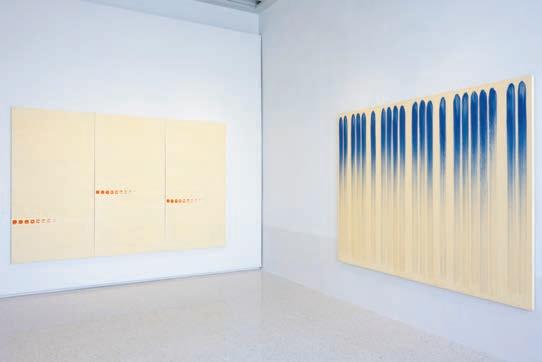
Lee, who lives between Kamakura and Paris, is perhaps best known for the rhythmic paintings of lines and dots he created in the 1970s and ’80s. To make them, he dipped his brush into (usually royal blue, sometimes vermilion) paint and applied it to the surface of the canvas until the brush ran dry. During each stroke, he held his breath; the repetitive cycle from fullness to emptiness played out in his body and on the canvas simultaneously.
Lee Ufan’s From Point , 1978, and From Line , 1980.
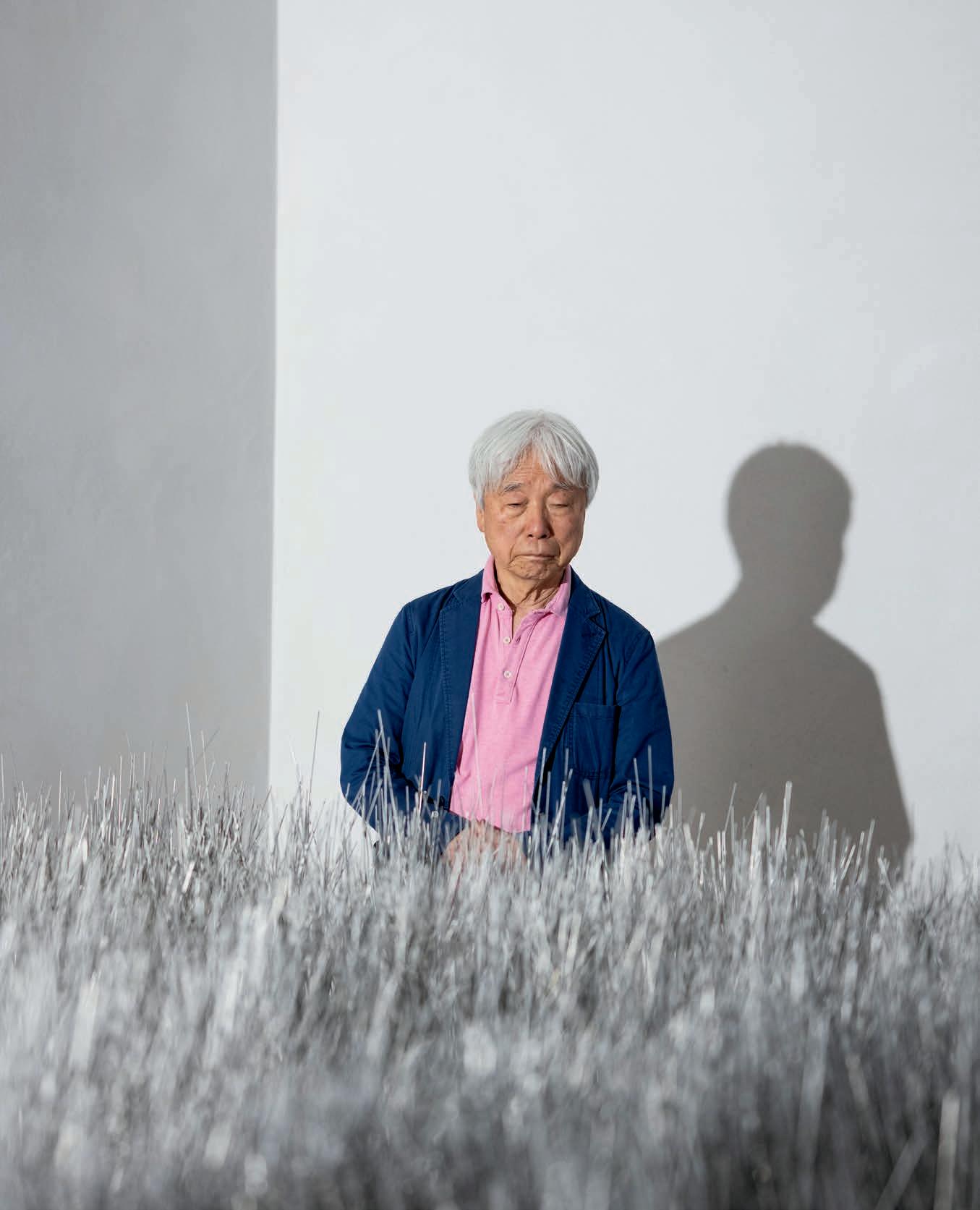
Lee Ufan surveying Relatum (formerly Iron Field) , 1969/2026, at SMAC in Venice.
The artist’s sculptures—somewhat lesser-known than his paintings, even though he started making them first—are arrangements of industrial materials, like metal plates or steel, placed in proximity to a carefully chosen rock or two. The relationship between the manmade and the natural worlds creates a kind of magnetic charge.
In a time of endless virtual inputs and noise from every direction, Lee’s work asks the viewer to “take the time to slow down, to reflect, to meditate on what it is that he’s made,” says Jessica Morgan, Dia’s director and the curator of the Venice exhibition.
During much of his adult life, Lee has felt that he didn’t quite fit in anywhere. Born in Japanese-occupied Korea, he traveled to Japan as a young man to deliver medicine to an ill uncle and decided to stay. He studied philosophy and joined forces with a group of Japanese artists to form “Mono Ha” (School of Things), whose members created art by arranging existing objects rather than creating new ones. While Lee was a central member of the group (as well as its in-house philosopher), he was excluded from several exhibitions, including an important show at the Guggenheim in 1970, because of his Korean identity.
For almost six decades, the 90-year-old artist has created spare, meticulous paintings and sculptures that somehow manage to slow time and heighten our awareness of our bodies and breath.
Lee greets us at the back door of his modest wooden home. (We are three minutes late; he does not seem too concerned.) Like many people whose reputations precede them, he is slighter in person than I imagined. Outfitted in gray socks, jeans, and a crimson half-zip sweater, he also looks about two decades younger than he is.
For an artist whose work is quiet and nearly impossible to reproduce in images, Lee has managed to accrue admirers the world over. Collectors have paid more than $2 million for his paintings. He has three dedicated museums (in addition to the Tadao Ando-designed temple in Naoshima, there are spaces in Arles, France, and Busan, Korea) and has been the subject of major exhibitions at venues including Versailles, the Guggenheim Museum in New York, and the Hamburger Bahnhof in Berlin.

“Koreans see me as being Japanized, the Japanese see me as being fundamentally Korean, and when I go to Europe, people set me aside as an Oriental,” Lee has said. “I am left standing outside the collective, seen on the one hand as a fugitive and on the other side as an intruder. The dynamics of distance have made me what I am.”
Lee’s oeuvre, like his life, straddles national borders. While his sculpture is associated with Japanese Mono Ha, his painting is affiliated with Tansaekhwa, a loose group of Korean artists who used distinctive processes, like pushing paint through burlap or peeling it from the surface, to make spare, minimal compositions. He was first inspired to paint after seeing the work of an American artist—the Abstract Expressionist Barnett Newman—in New York in 1971. “What I want to express is not something Eastern or Western, but a different horizon altogether,” Lee tells me over tea through a translator at his studio.
It’s notable that while the Dia Art Foundation organized our trip, it was Lee who paid for it, including a business class ticket from New York to Tokyo. As the author of 17 books, he presumably believes in the importance of critical engagement. But it’s still somehow surprising that he feels anything more needs to be done to secure his legacy.
“Once you reach a certain age, everyone—museums included—starts encouraging you to do a retrospective,” Lee says. “And through that process, you come to feel your own limitations. You start thinking about taking the things you already possess and carrying them to a higher place, in their most essential, distilled form.”
Lee Ufan’s Response , 2024, and Response , 2025.
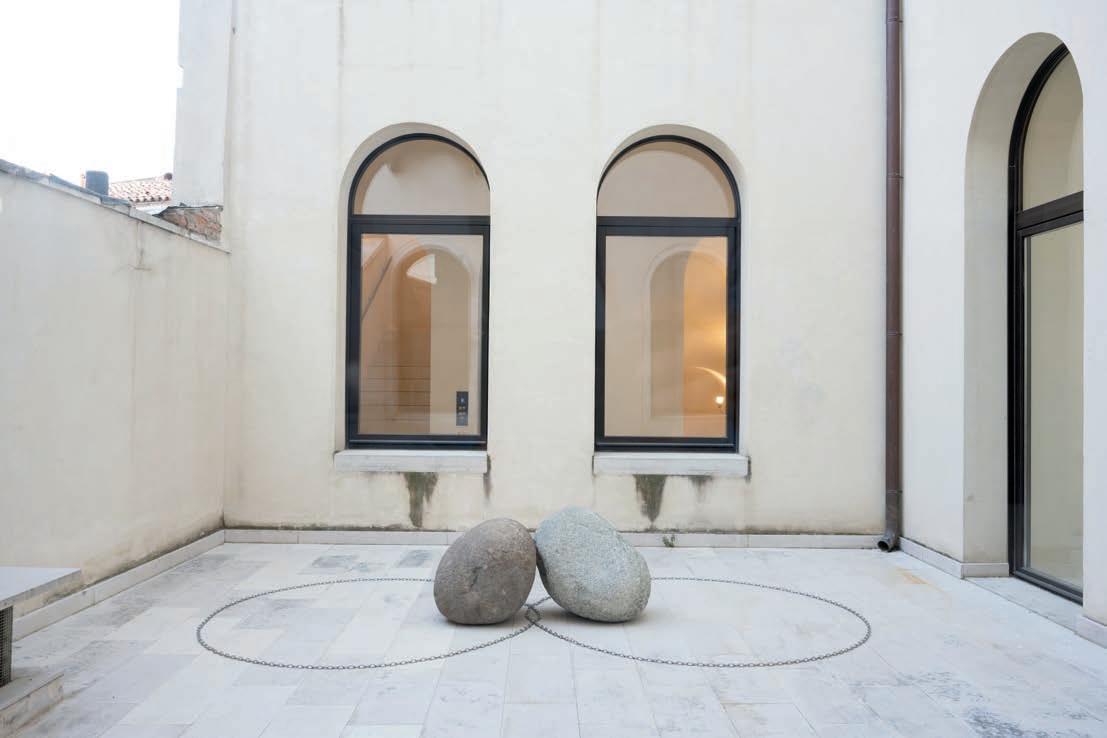
Lee is still working to get audiences to understand that the negative space in his work is as important as the positive space. “Say there’s a large canvas I’ve been painting, and there’s just one stroke on it. A photographer will photograph only the stroke and publish that. So the unpainted areas are completely ignored. That kind of thing leads to tremendous misunderstanding,” he says.
The artist’s work and outlook both possess a kind of restraint that is somewhat anathema to contemporary life, where more is more. Philippe Vergne, the director of the Serralves Fondation, fondly recalls a disagreement over the scale of the exhibition catalogue, which includes the first translations of Lee’s writings into Portuguese. “I wanted many texts and he selected two,” Vergne says.
Lee is still looking ahead. He continues to paint every day, and in the past few years, debuted a new series, “Response.” These gradients incorporate more movement—a kind of undulation of the paint—and richer colors than he’s ever used before. “For an artist who’s been so consistent, it’s actually a pretty dramatic move,” Morgan says. Even though the marks look like a single stroke, Lee builds them by layering many small ones; the process can take up to a month. Rather than recording the passage of time, as he did in the “From Point” and “From Line” series, this new approach is,
Lee says, about “expressing spatiality through the accumulation of time.”
The artist also shows signs of softening—even loosening up—in his later years. His daughter, Bona, notes that he has made new friends (who have nothing to do with the art world) in his 80s, after living most of his life with a regimented, singular focus. “Every Sunday, he goes to have tea [with them],” she says. “The family was very, very surprised to see that.”
After I leave Lee’s home, I think back to a plate sitting on a wooden chest in his living room. There was a browning, slightly shriveling lime next to a short, bright red brushstroke. It was presumably not intended for an audience, or even intended to last. But it embodied so much about Lee’s work: the juxtaposition between the natural and human-made, and the way art can suspend time but also record its passage.
“What’s essential is the desire to improve—not like a machine going through the motions, just mechanically repeating,” Lee tells me toward the end of our interview. “But within the human heart, I think it’s possible to aim for something truly other, another dimension entirely.”
Relatum – The Kiss , 2026.
ALLTHE RIGHT INGREDIENTS
This summer, Julia Turshen—the cookbook industry’s most wholesome ambassador—is moonlighting as a queer romance novelist. Expect dirt, sapphic yearning, and post-coital spaghetti.
By Mina Stone
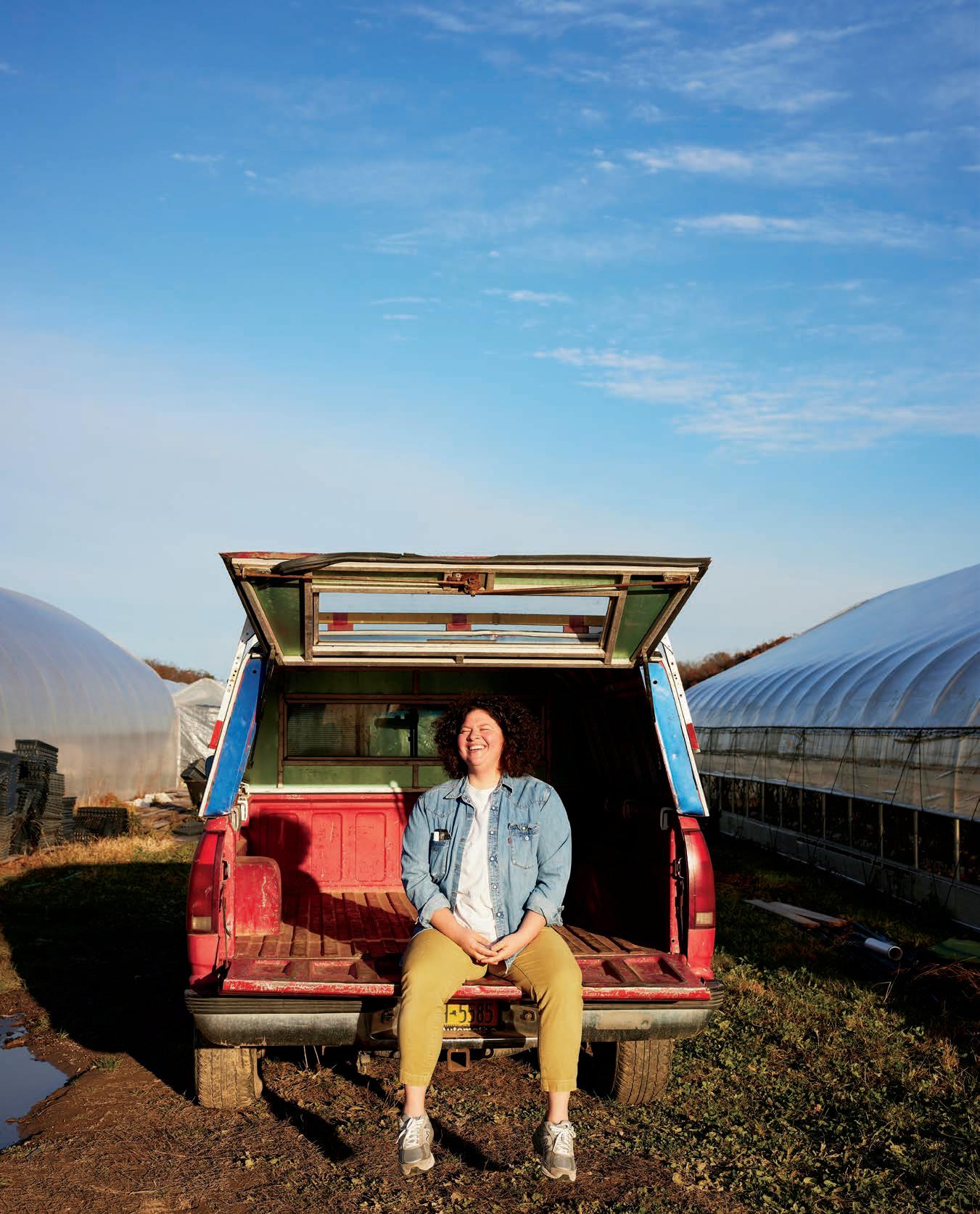
“If I could go back and tell my 30-year-old self, ‘In a decade you’ll be working part-time at your friend’s vegetable farm and releasing a romance novel,’ I’d be like, ‘What are you talking about?’”
That’s right. This summer, Julia Turshen, the award-winning, bestselling cookbook author known for her delicious and approachable recipes, dalliance with the Gwyneth Paltrow universe, and soothing Substack, can add romance novelist to her CV. The quickest synopsis for Down to Earth? Paige, a woman exploring a trial separation from her husband and city life, moves to a fictional town in upstate New York with her son. She meets Frankie, a lifelong vegetable farmer, and sparks fly.
The June release isn’t just a romance novel rife with sexual tension and near-pornographic food scenes (though there’s no shortage of tomato sandwiches oozing mayonnaise, bowls of post-coital spaghetti, or roast chicken drippings sopped up with bread). In the slim volume (a delectable 190 pages!), Turshen also seamlessly weaves together subjects ranging from body image, gender roles, and communication styles. Ahead of its release, I called her up to talk career pivots, genre misogyny, and why writing a recipe is just like writing a sex scene.
When did you decide to write this novel?
I’ve been a romance reader for a long time. What inspired the plot is my time at Long Season Farm, a small vegetable farm where I worked full-time in 2021. I’ve stayed tethered to it ever since—I still work there two days a week. It inspired the setting, but nobody in the book is based on anybody at Long Season Farm.
What were your inspirations?
Some of my favorite queer writers of queer romance include Casey McQuiston, Meryl Wilsner, Harper Bliss, and Clare Lydon. I believe I’ve read every book they’ve all written. And Jasmine Guillory’s books were my entry into reading romance, and I’m forever grateful!
What was the pivot from being a cookbook author to writing a romance novel like?
There’s a surprising amount of overlap. Both are incredibly popular book genres that are considered “just for women” and not taken all that seriously as literary forms, but their popularity indicates something actually quite serious and valuable. There’s this great old Laurie Colwin quote, “If you really want to know what a certain era was like, look at the cookbooks.” I think romance novels give us the same information. Also, both are formulaic. I think that’s actually fantastic. When you’re given some parameters, there’s a lot of room for creativity. And I like to go into a book kind of knowing what to expect; a lot of us read romance, myself included, because things end happily ever after. The same for cookbooks—I’ve always joked that a cookbook is a book you know is gonna end well. That kind of comfort is quite valuable. And they’re inherently both about desire—figuring out what we want and how to provide that for ourselves.
When I was reading the book, it made me really hungry. Food was often tied to flirting and desire—like the tomato and mayo sandwiches. I really liked the part where Frankie was like, “You can’t make it on nice bread. You have to make it on white bread.” Have you always known how to write a hot sex scene?
Years of writing cookbooks means I’m trained in writing very descriptively when it comes to the senses. My job as a cookbook author is to describe these moments in the kitchen, especially for people who haven’t experienced them before. I’m going to walk them through it and tell them what it looks like, smells like, feels like.
The midlife crisis takes on many different forms—it’s not always the Ferrari or the divorce. Midlife is about coming to terms with difficult things, whatever that means to you. Did you know that you were touching upon the idea of midlife? Do you relate to it?
I refer to my time working at the farm as my thirdof-a-life crisis because I hope to live long, but a big theme is being more aware than ever that our time is limited.
Your cookbooks, your romance novel, how do those two things represent your approach to life in general?
With food, we take care of ourselves and the people we love. It gives us access to pleasure every day. With romance novels, you get to write this little world that shows how people connect. I’m someone who really lives for these day-to-day joys. The big moments in life are great and fun, but those are few and far between. It’s the everyday things that add up.
After Hours
Amelia Abraham’s new photo book, Sex, Clubs, Dissent: Visualising Queer Nightlife, argues that walking into a club, just like being the focus of a camera’s lens, can be a powerful vehicle for feeling seen.
The impressive volume spans decades of nocturnal visual history through the lens of image-makers including Lola Flash, Wolfgang Tillmans, Lyle Ashton Harris, and more, juxtaposed with conversations and essays by the likes of Legacy Russell, McKenzie Wark, and Brontez Purnell. The photos revel in the expansive textures and temporality of a night out—from the frisson of communal ecstasy to the intimate prelude of getting ready. Dispatching from saunas and drag shows to campgrounds, they are a paean to the scrappy yet sexy art of queer place-making and its tenacity against all odds.
Amelia and I first met about seven years ago in London’s Park Square while she was reporting on the grassroots organizations that had come together to protest corporatization and transphobia in the city’s official Pride march. I have followed her work ever since, certain that she has a keen understanding of where the queer movement may—and probably should—go next. In a moment when queer nightlife spaces are not only disappearing but also under violent attack, Sex, Clubs, Dissent arrives as both a celebration and a warning. Pioneering lesbian photographer Susan Kravitz says it best: “Photographing these sacred places carries risk: if we tell the rest of the world about it, might they come?” For the issue, Amelia shares a selection of images exclusively with CULTURED that explore the precarious beauty of the queer night. —ADAM ELI
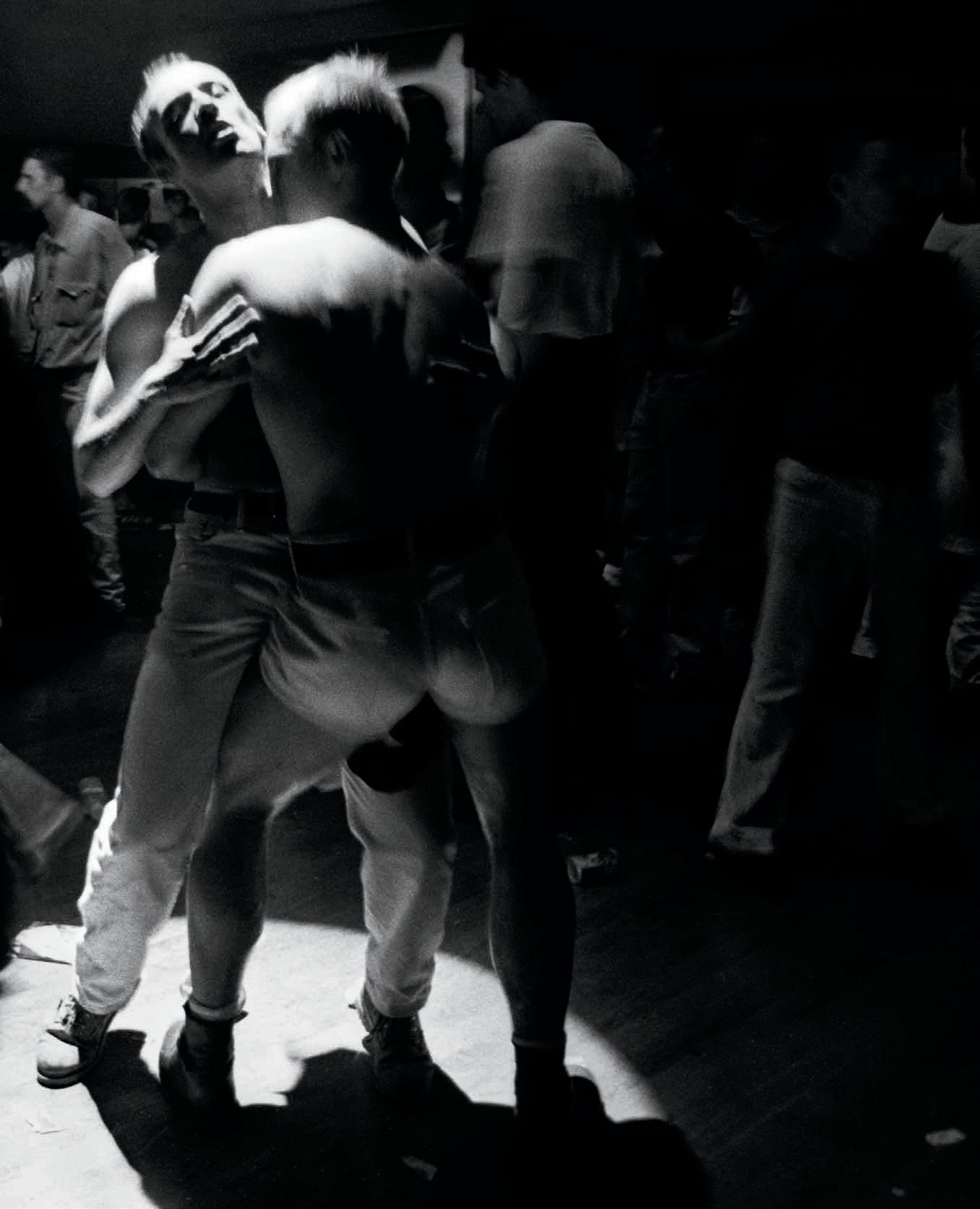
Jean-Marc Armani, Closing night of Gay Pride at the ‘Mutualité,’ Paris, 1994.
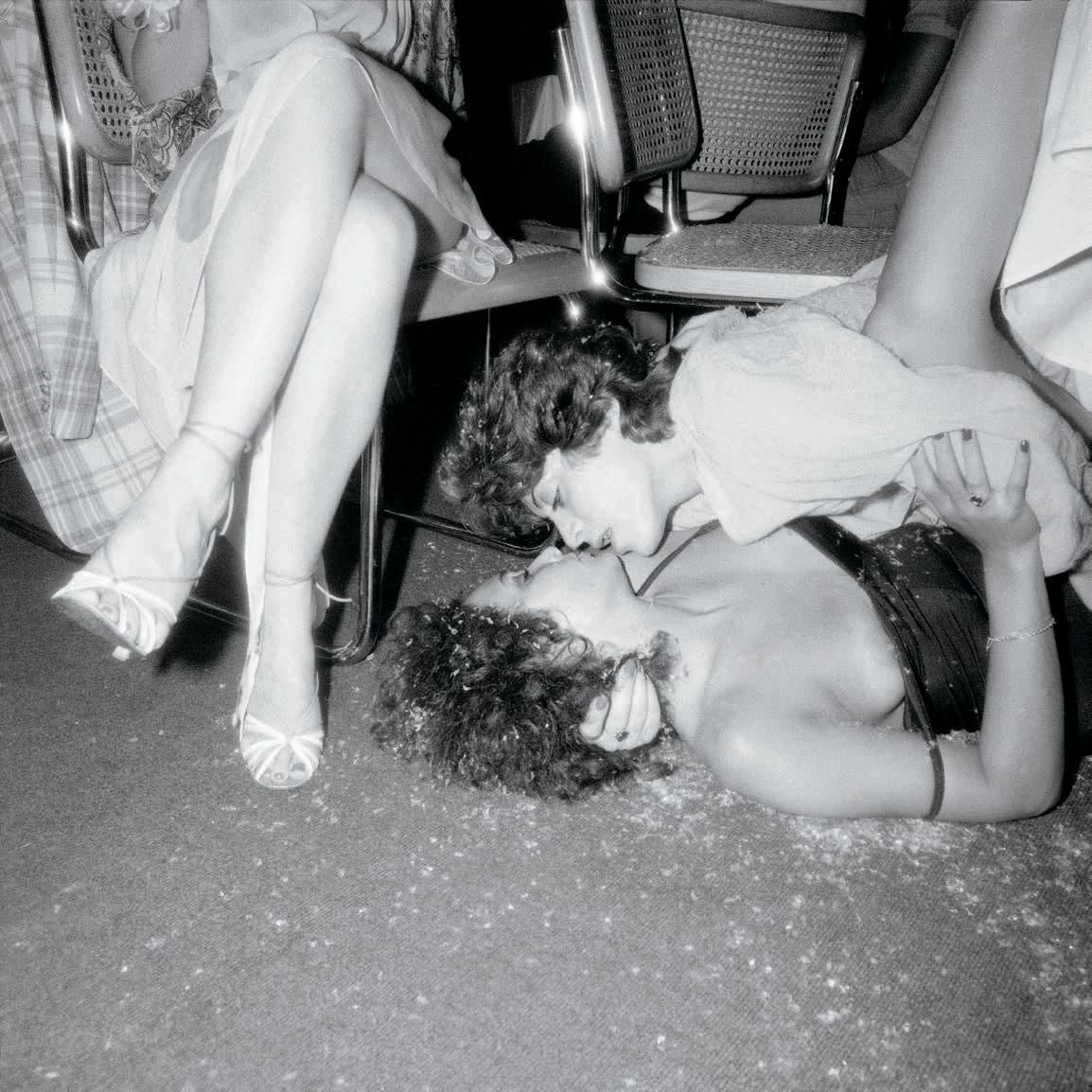
Meryl Meisler, Two Women Embrace on Floor Next to Judi Jupiter’s Legs, Les Mouches, NY, 1978. © Meryl Meister.
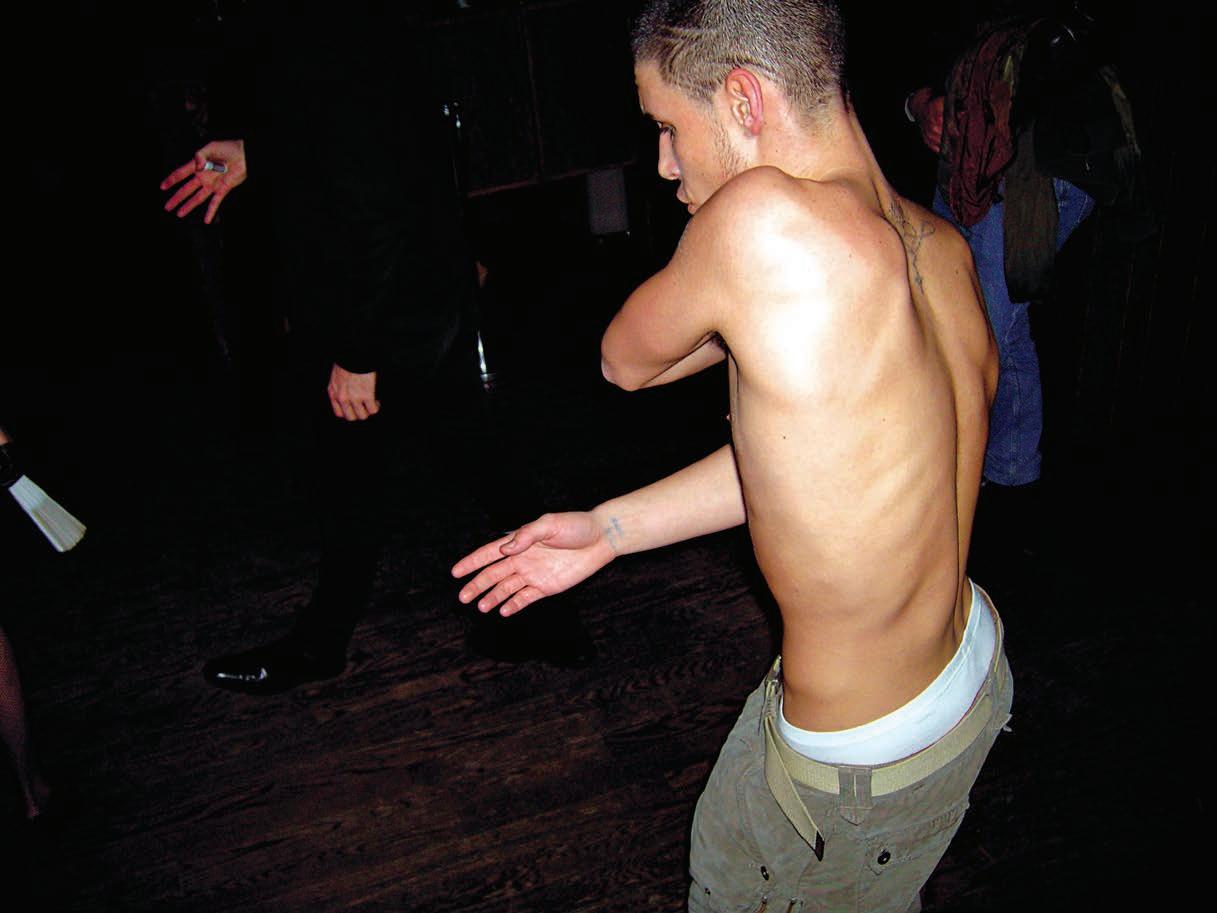
Slava Mogutin, NYC Go-Go, James Dancing, 2006. © Slava Mogutin.
‘I LOVE TAKING CHANCES’
The prodigious collector and recent Aspen acolyte is no stranger to big swings. His
latest? A 200-acre sculpture park on Snowmass Mountain.
Photography by Trevor Triano
Few names are so synonymous with Miami as Jorge M. Pérez. The larger-than-life figure landed in Florida on the brink of adulthood in 1968. Within three decades, he became the preeminent name in real estate development and a philanthropic force to be reckoned with. His firm’s new generation of projects, which include the St. Regis Resort & Residences, Bahia Mar in Fort Lauderdale, and the Ritz-Carlton Residences in West Palm Beach, have seen the founder of the Related Group leave an even deeper imprint on the state. In his 70s, Pérez has set his sights on more landlocked territory. His children introduced him to Aspen during the pandemic, and the patron quickly adopted the Roaring Fork Valley
as a second home. In December, the Aspen Art Museum announced the establishment of the Pérez Fund for Public Access, a $1 million gift with an emphasis on supporting the institution’s free entry and bilingual programming. (Pérez, born to Cuban parents, grew up in Argentina and Colombia.) But that’s not all: The collector is busy putting the final touches on a sculpture park, accessible by appointment, that will punctuate the 200-acre property he recently acquired in Snowmass. He sat down with Nicola Lees, the Aspen Art Museum’s CEO and artistic director, after a recent visit to what promises to become a destination in no time.
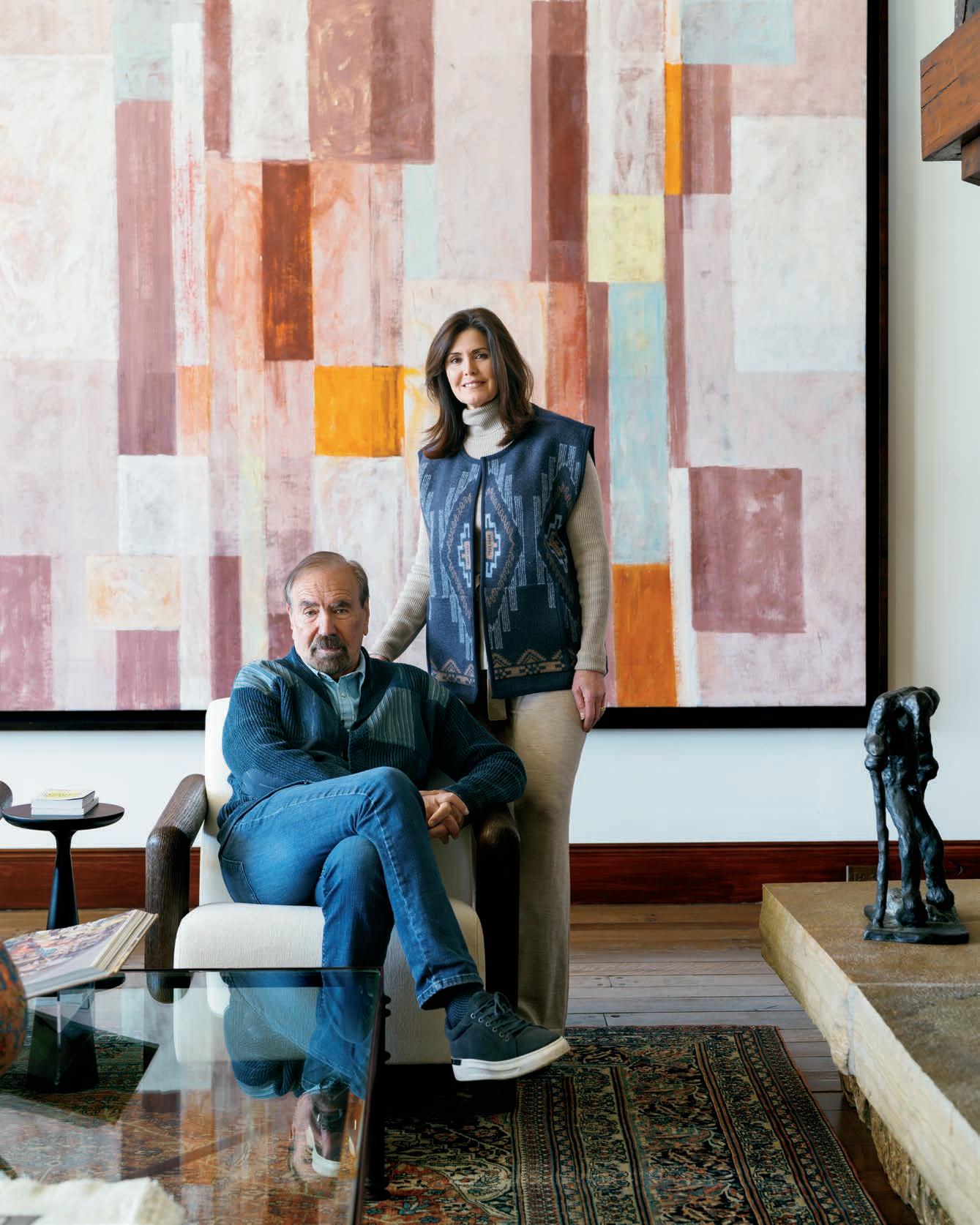
Jorge M. and Darlene Pérez with (on wall) Lee Krasner, Number 2 , 1951, and (on fireplace) Jörg Immendorff, Europa, 2003-04.
JORGE PÉREZ’S NEXT MOVE
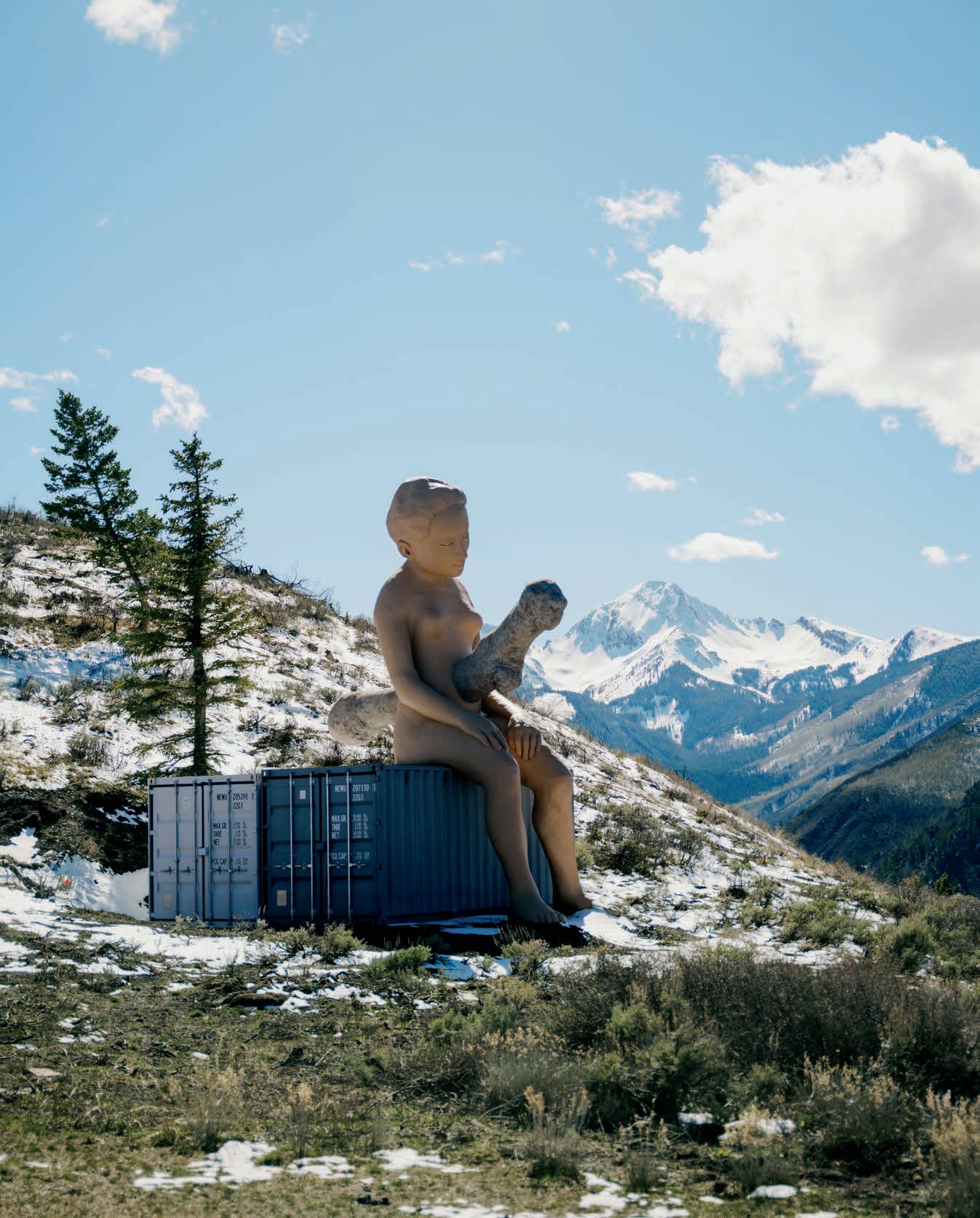
Paloma Varga Weisz, Foreign Body, Hot Dogs , 2022.
“My connection with artists comes from the fact that I love their art for art’s sake. It’s not just something I want to put on the wall.”
—Jorge M. Pérez
Nicola Lees: The one thing that struck me immediately when we met was your infectious excitement for artists. Artists adore you and respond to you, which isn’t always the case. Where does that come from?
Jorge M. Pérez: It started with my mother, who used to take me to museums and talk to me about art and philosophy. Then, when I first arrived in New York, I just fell in love with MoMA, the Guggenheim, and the Whitney. I think my connection with artists comes from the fact that I love their art for art’s sake. It’s not just something I want to put on the wall.
Lees: For me, it really is about wanting to dive into the unknown with artists. In many ways, you have been the person who brought that spirit to Miami.
Pérez: I had decided to stay in the United States, and I felt I was losing my roots. Art brought me back to Latin America—at the beginning, I only collected Latin American art. When the Miami Art Museum ran out of money and said, “We need funds to complete it, and we want a great collection, particularly in Latin American art,” I felt it was an obligation to give them every piece of art I owned at the time and the money to finish the museum Herzog & de Meuron had designed. I kept looking around and thinking, We’re becoming a bigger and bigger share of the U.S. population, yet we don’t have any great institutions named after a Latin person. I thought it was time to set an example.
When I gave that collection away, it freed me. That was in 2011, but we continue to part with works with huge personal significance. We just gave the Tate my favorite painting—a Joan Mitchell triptych. It had been in my bedroom; it was the one artwork in the house that never changed. I was very sad, but then when I saw it there, I just thought, This is the right thing. It looks so much better with all the Rothkos than it ever would in my house.
Lees: When you think about how many people will stand in front of that painting and have a transformative moment, it really is quite a moving gift.
We’re passionate about connecting with everyone in the [Roaring Fork] Valley, particularly the young kids in school with tiny budgets. The majority of youth in our service area identify as Hispanic or Latinx, so it’s really important for us to offer incredible bilingual education. Your gift is going to completely transform the museum.
Pérez: What really changed my mind in Aspen was this: I was totally rehabbing a house, and about 90 percent of the workers were from Mexico, Guatemala, Argentina. I started talking to them, and I said, “The Aspen Art Museum is free.” You should have seen how many of them actually went and really enjoyed it.
Lees: I came last month to visit you and your wife, Darlene, in this incredible new property. I’d love you to talk more about creating something that feels permanent up there in Snowmass.
Pérez: Walking around and looking at sculpture in nature is completely different from having a small space in a museum. I’ve always wanted room to walk and discover sculptures in different places.
Lees: How many do you have up there now?
Pérez: We’re getting close to 100.
Lees: When I think about your collection, I always think of the word vitality. When you’re standing in front of an artwork, and you say, “I really love this,” how does that happen?
Pérez: I almost always buy art in person. I get goosebumps in front of great art. But that response comes from study. People don’t believe it, but I probably spend three or four hours every day studying art. I follow these movements and try to complete those collections. Once I start studying an artist, I start buying across their career, trying to find pieces they made when they were 18 and pieces they’re making now in their 60s. It’s extraordinary to see that progression. When I’m spending a significant amount on a piece, I’ll reach out to specialists. They’re all very honest with me, and I want that. That said, it doesn’t mean I’ll always follow the advice. I tend to go counter to what’s popular. I love taking chances.
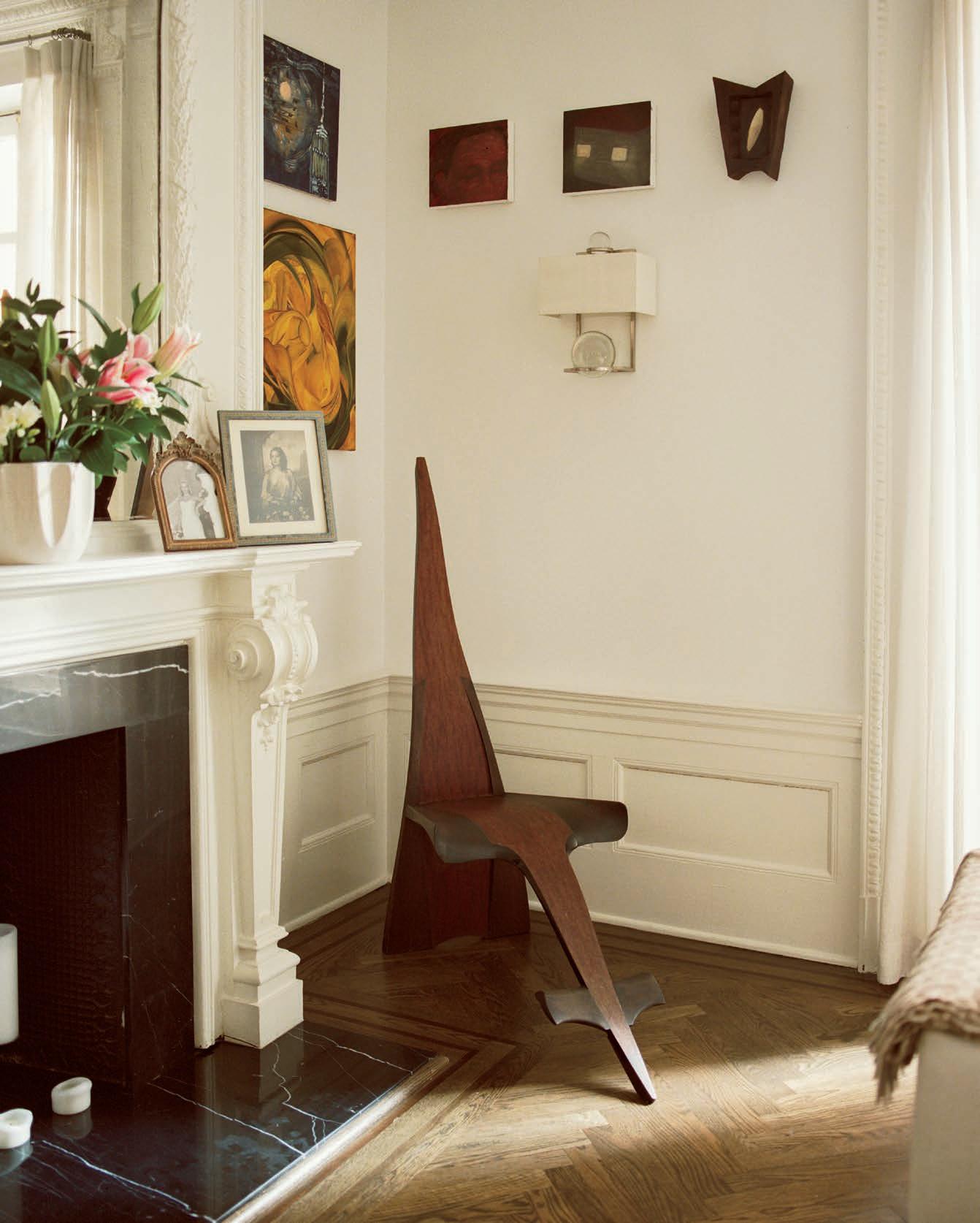
THE 2026 YOUNG COLLECTORS
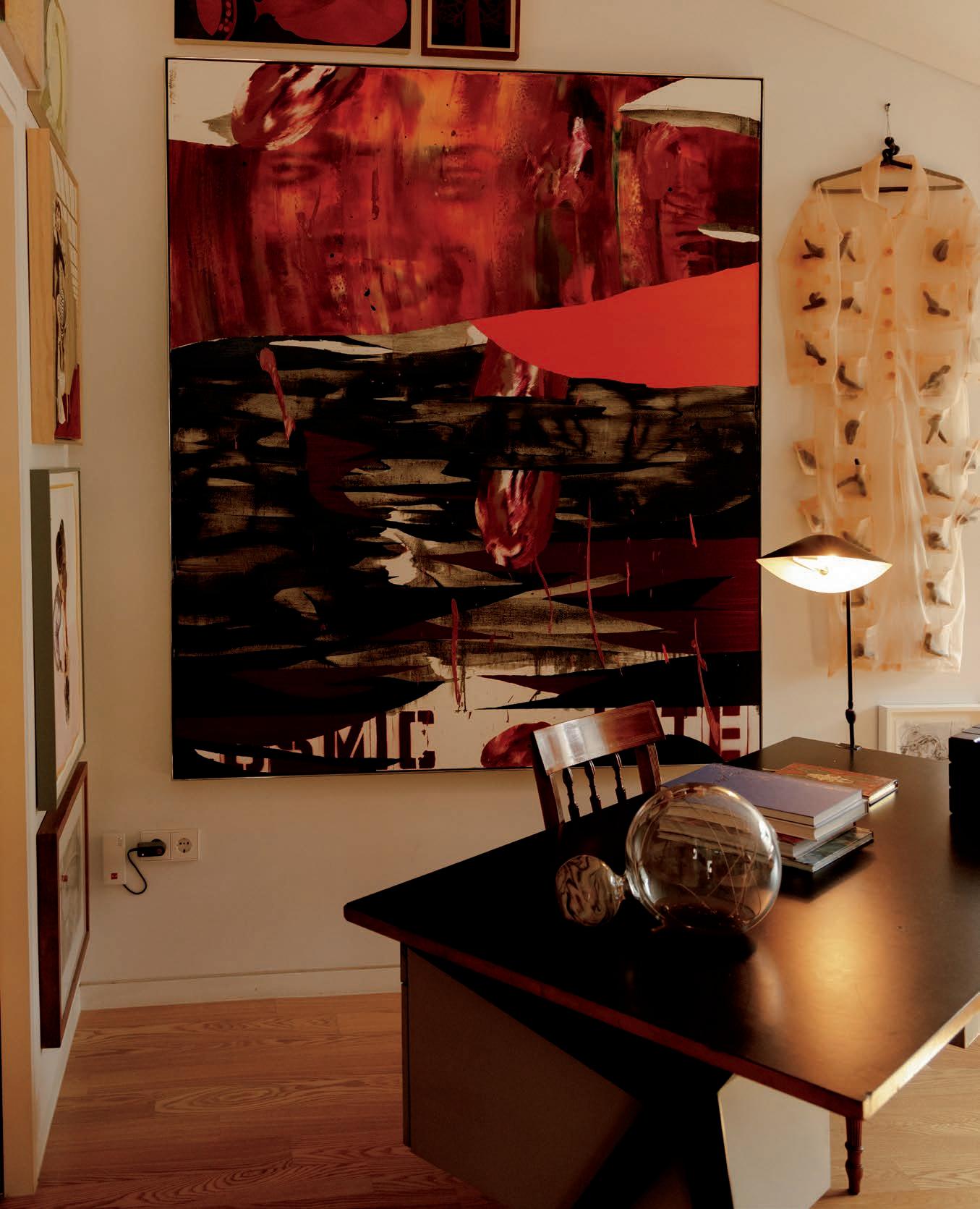
Being a true collector involves a lot more than just buying art. Sometimes, it requires advocating for artists inside bureaucratic institutions, match-making between creators and museums, and even selling yourself to a protective art dealer in order to convince them you will be a fitting custodian of a great work. These five young collectors share a commitment to going above and beyond for the chance to live with art they love.
PATRICK COLLINS
Dallas and New York, 46
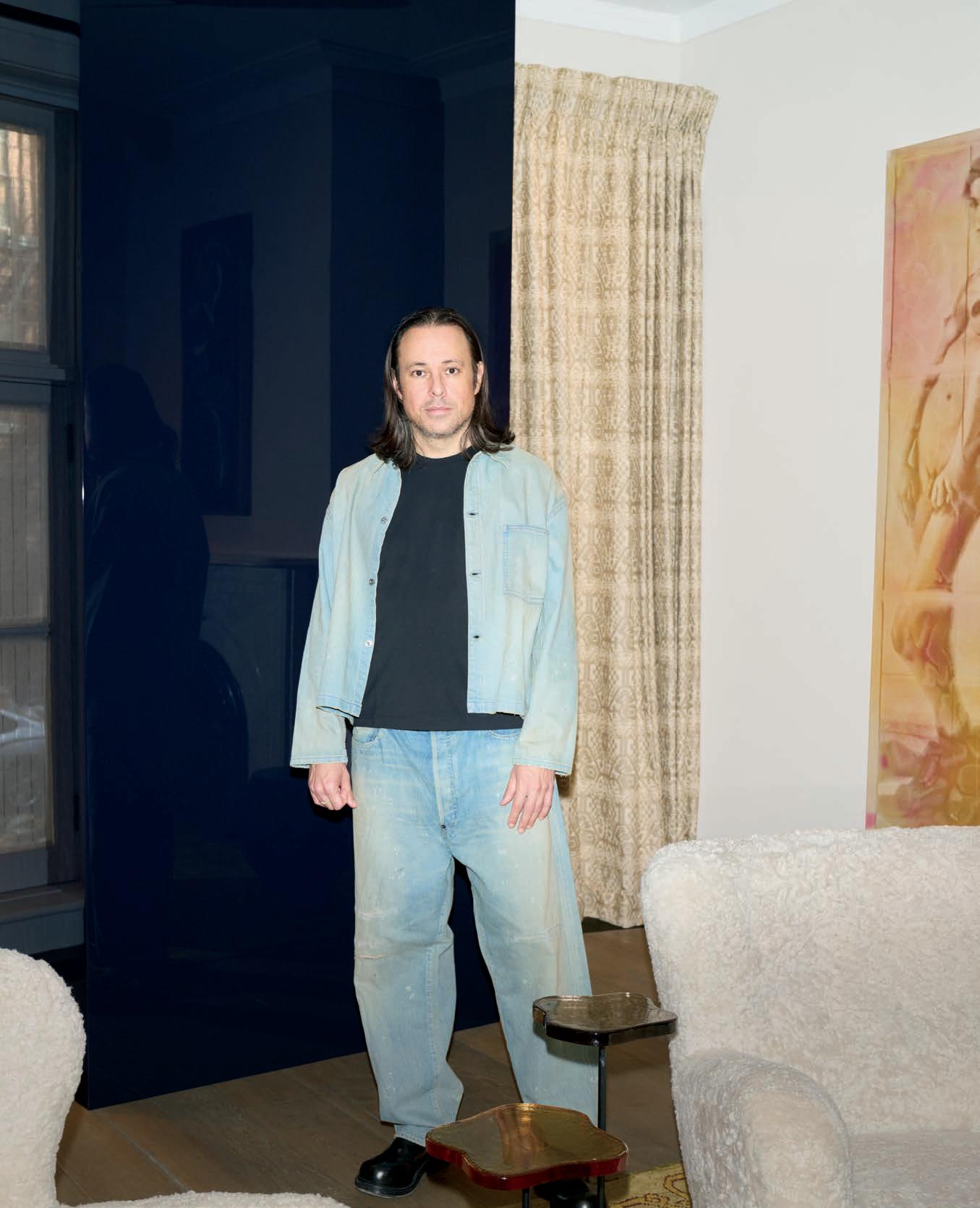
Collins, the head of a family investment office, doesn’t have his own museum—yet. But he does own art that would be right at home in one. In his brief collecting career, he has charmed his way into buying historic work that most collectors would dismiss as too challenging or complex.
Patrick Collins with (left) John McCracken, Untitled, Black Column , 1977, and (right) Ren Light Pan, Venus at Sunset , Dramatic Scrap , 2025.
Photography by Fyodor Shiryaev.
What work sits by your bedside table, and why?
The only bedside where I’ve hung an artwork is in my house in New York. The first was a Pope.L, hung shortly after his death. The second, hung there currently, is what appears to be a small Warhol screenprint of flowers but is in fact a Sturtevant “repetition.” Friends who know me best, without asking, know that it’s a Sturtevant, because it would be out of character for me to own that type of Warhol, but I like that it sometimes sparks questions and conversations. I’m happy to sleep beside something so conceptual.
Which work in your home provokes the most conversation from visitors, and in which home is it located?
I currently have one of the largest McCracken columns I’ve ever seen sitting in my New York living room; it’s so big that one almost doesn’t notice it at first. It’s almost 10 feet tall with a base that is 48 by 29 inches and is deep purple, so dark it looks black, almost like the monolith from 2001: A Space Odyssey. It usually catches people off-guard when they first notice it and has stoked many interesting conversations. The other was a pair of Scott Burton marble ziggurat chairs. They sat in the kitchen, so people were constantly confused as to whether they were art or furniture. Given Scott’s intentions in his practice, they are in fact both at the same time, so this also made for many great conversations.
“I
prefer to collect in depth.”
What has been the most challenging piece in your collection to acquire?
One of the most challenging pieces to acquire was an iconic work by Yoko Ono, Sky TV. Most or all of the editions are owned by major museums, and I was deeply interested in the work but understood, given its significance, how hard it might be for me, a collector, to acquire the work. After significant discussions with her and her studio, and explaining both the way in which I collect and the intentions I have for the collection, I was allowed to acquire an edition of the work. This is something I’m very proud of. I’ve also been able to add a number of her other works to the collection because, as with most every artist, I prefer to collect in depth.
What has been the hardest negotiation you’ve had with an artist or dealer?
Similar to the negotiation over the Yoko Ono, there was a young gallery in Germany working with an artist, and they were trying to place one of the artist’s largest and most important works. I was trying to acquire the work, but the gallerist and artist felt it should be for an “institution only.” Once
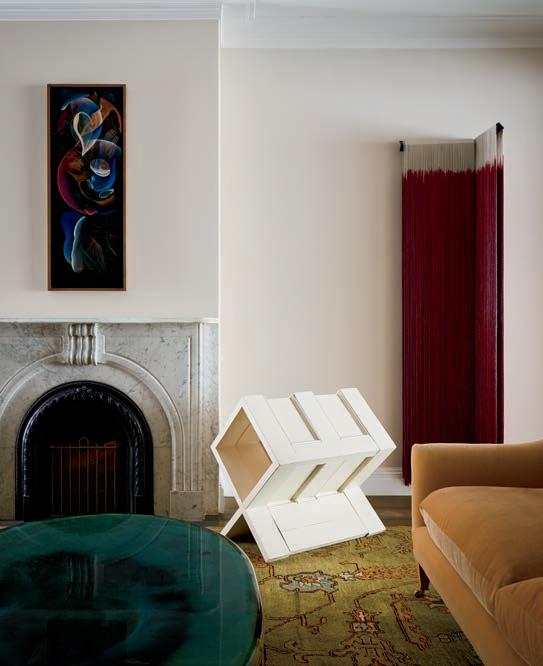
again, after explaining the nature of my collecting and collection, and long-term intentions for the work, they were willing to let it enter my collection (I also already owned a number of the artist’s other major works, so they are all safely together until the right future can be determined for them).
Every collector makes a rookie mistake or two—what was your most memorable?
Probably buying things too quickly. Early on, many galleries were hard to deal with, because they had no idea who I was or what I intended to do with my collecting. And frankly, they can sometimes be a little tough on newcomers. I was mostly offered work that was editioned and not particularly popular, like photography, or paintings that were also not in high demand by other collectors. Sometimes you have to go through some of this to show galleries you are serious and get access to better or more in-demand work, but I also could have had more patience and spoken with gallerists more before jumping in and buying things.
Left to right: Paulina Peavy, Untitled , 1930s; Robert Gober, Untitled , 1988; Delcy Morelos, Organized Salt Water (Agua salada organizada) , 2014.
MEREDITH VIRNIG
Miami, 40
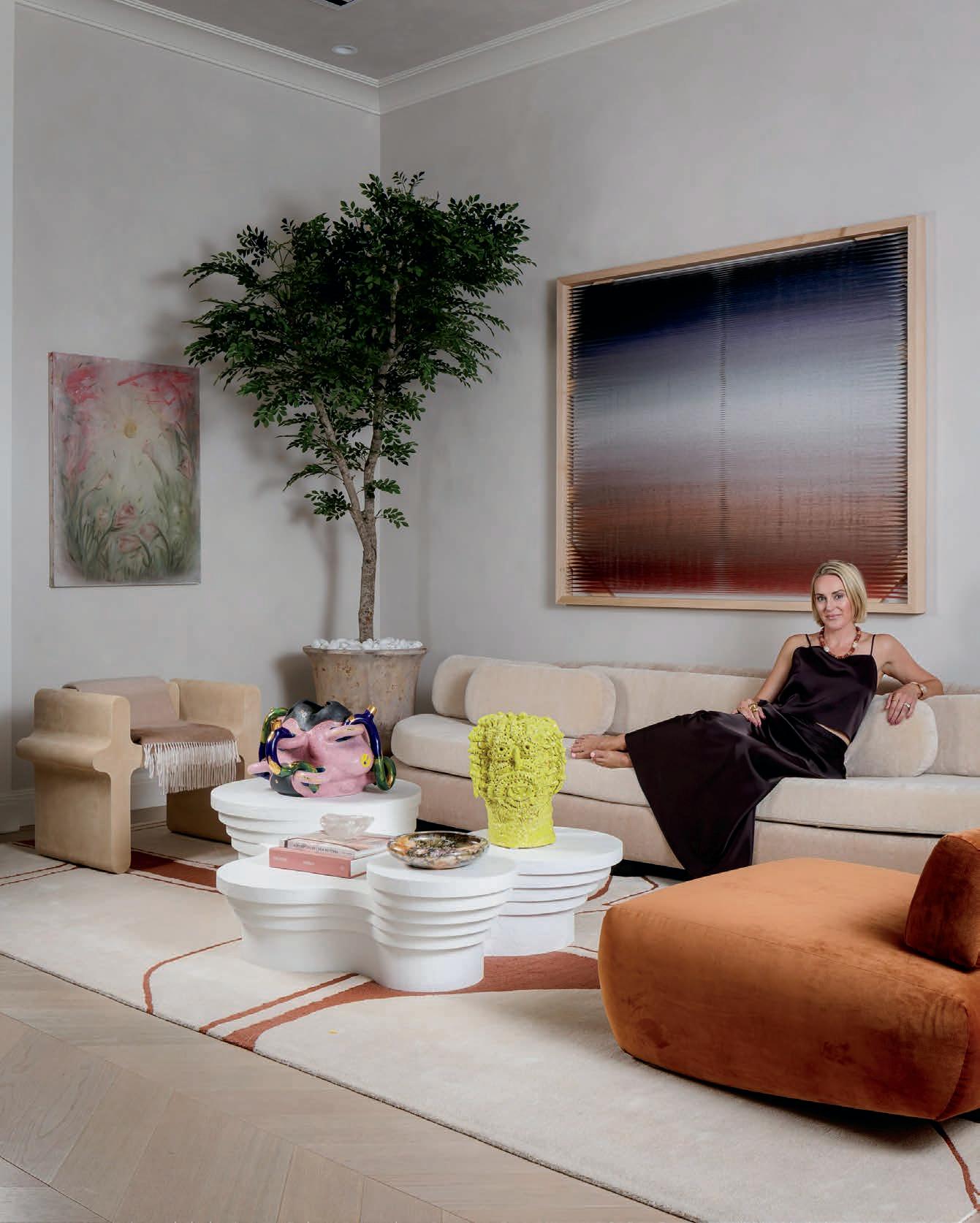
The former Salesforce employee has built a dynamic collection of emerging art with her husband, software investor Chip Virnig. In between gallery visits and philanthropic work supporting Miami youth, she is also studying to be a sommelier.
Left to right: Rachel Mica Weiss, Dark Opal VI , 2025; (yellow sculpture) Cam Caldwell, Jeff Goldblum , 2025; Tara Walters, The Summoner, 2025.
Every collector has made a rookie mistake or two. What was your most memorable?
Purchasing art without consulting my partner first. When I fall in love with something, it’s tough not to pull the trigger, for fear of someone else scooping up the piece. My approach of begging for forgiveness rather than asking for permission didn’t go over that well with my husband. He’s now more involved— viewing art together has become a bonding activity.
Who do you credit with teaching you how to navigate the art world?
My art consultant, Pilar Vahey, and my good friend Kat Herriman. I met Kat when she was working at Nina Johnson gallery in Miami. Kat has an incredible eye and understands things I’m drawn to, but more importantly is able to gently open up my eyes and heart to emerging artists and unfamiliar mediums and methods. Pilar was introduced to me by a New York friend, and I am so grateful for her wealth of knowledge, patience, and resilience. She truly knows all and I always get excited to work with her.
Tell us about the journey to a particularly hard-won acquisition.
We tend to collect emerging artists, so I wouldn’t say anything was hard-won, though there have been
times when the stars have aligned. I fell in love with a piece at Basel a few years back, but I was third on the waitlist for it—basically a lost cause. To my surprise, my name was called. It was meant to be.
What area of collecting are you excited to dig deeper into? Sculpture, specifically pieces for our garden. We recently built a home in Miami Beach; the backyard is our next project to tackle. We love to entertain, and when the weather is nice we take the party outside. How fun it will be to create conversation spaces centered around art outdoors!
Name three artists you are particularly excited about right now.
The first is Katie Stout. I’ve been watching her work for a while. I’d love to find a way to incorporate one of her benches outdoors on our property.
Next would be Ruby Sky Stiler. We have one piece in the entry of our home and it’s our favorite piece in the house. I feel pulled in yet calm and welcomed when viewing her work. I am excited to see what she’s going to do next.
Finally, Firelei Báez—a Dominican artist Pilar introduced me to based on my love for color, light, and movement in paintings. Her sculpture practice is equally as powerful and interesting. Her show at Hauser & Wirth’s 22nd Street gallery in New York (on view through July 31) is more feminine and delicate than her previous works. I love to see how an artist’s style evolves with each new collection.
“My approach of begging for forgiveness rather than asking for permission didn’t go over that well with my husband.”
If you could sit down for lunch with one artist, living or dead, who would it be?
Marc Chagall. He was the one who initially piqued my interest in art as a child. I admire how he was able to create such beautiful, ethereal scenes of peace, love, and joy in such a difficult and fearful time in history.
On wall: Jeppe Hein, Light Gold Bubble , 2022.
Photography by Kris Tamburello.
TAE UM
Seoul, 35
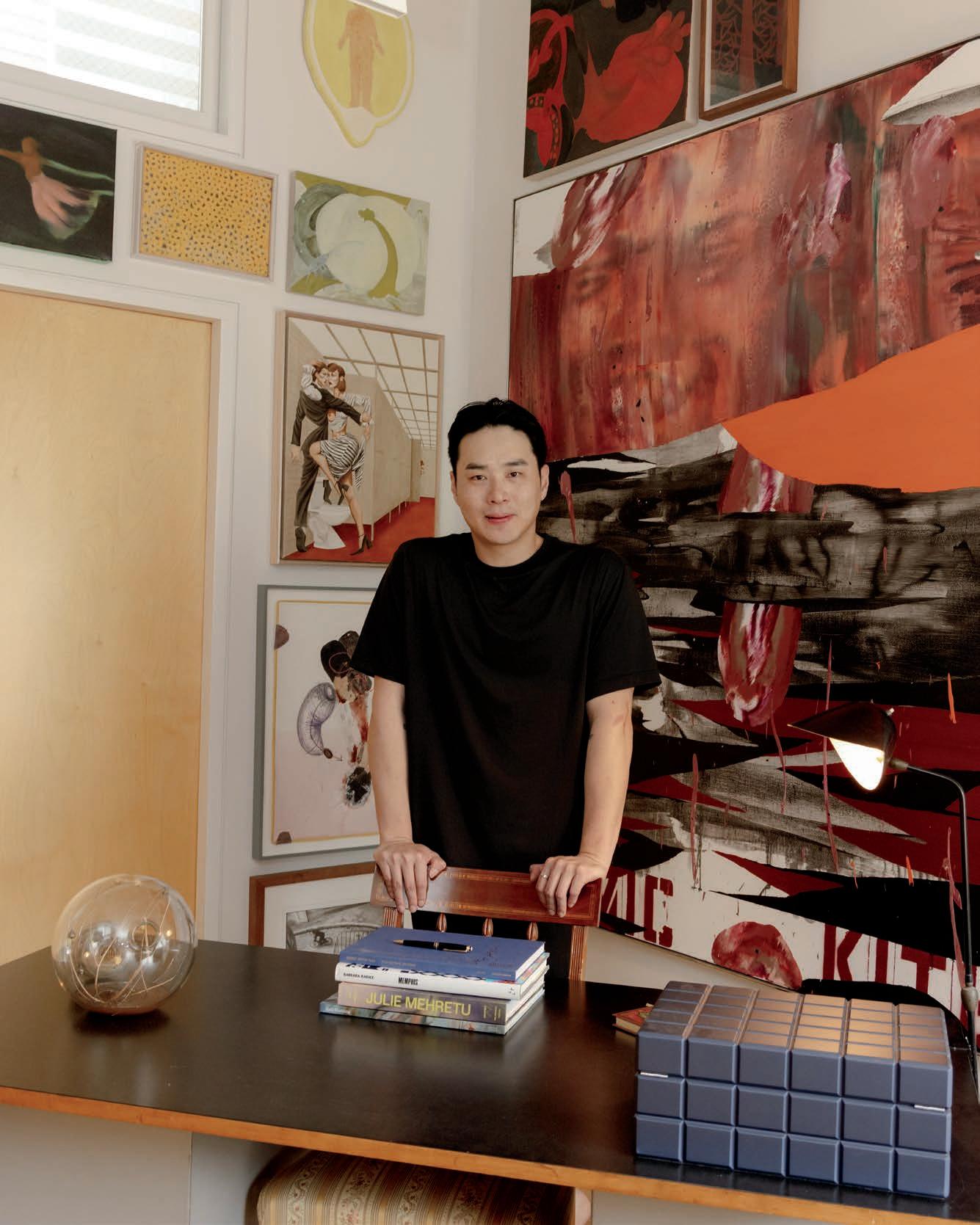
As a writer, curator, and founder of the art agency
Creative Resource, Um has worked to build bridges between the Korean and American art worlds. A similar interest in boundary-crossing and cultural exchange defines his collection of cerebral yet tactile contemporary art.
Clockwise from top left: Colleen Billing, Conduit (molecule) , 2024; Cameron Clayborn, CC23-32 , 2023; Jean-Pierre Villafañe, Executive Decision , 2024; Yayoi Kusama, No.40 , 1997; Zora Moniz, Broccoli , 2024; Zora Moniz, Sanctuary of Song Lovers , 2024; Chibuike Uzoma, Good For Us , 2021.
by Bomin Ahn.
Every collector has made a rookie mistake or two. What was your most memorable?
Early on, I bought purely on instinct—whatever caught my eye. Over time, I realized the problem wasn’t trusting my gut, but failing to consider how the work connected to its contemporary moment and to my own identity. My focus has since shifted from collecting objects to capturing something more elusive: the spirit of the times. For me, collecting is a way of preserving the present, so that years from now, I can look back and share these snapshots of contemporary life with others.
“I find myself gravitating toward work that foregrounds the irreplaceable human hand—the physical energy and specificity that comes from a body making decisions in real time.”
Who do you credit with teaching you how to navigate the art world?
I’ve been lucky to have mentors who’ve each opened up the art world for me. Commonwealth and Council played a huge role in helping me find my footing as a collector. They introduced me to artists like Suki Seokyeong Kang and Gala Porras-Kim, whose practices really shifted how I think about collecting. Grace Liptak from Skarstedt is a dear friend as much as a mentor; and our ongoing conversations mean a lot to me. More recently, Margaret Kross of Romance has become a real source of inspiration. I stumbled onto her program at NADA Miami, and I’ve been learning so much from her ever since.
Tell us about the journey to a particularly hard-won acquisition.
Acquiring a work by Gala Porras-Kim was one of the hardest ones. Her practice was gaining serious institutional momentum at the time, and the waitlist felt genuinely out of reach—especially as someone still relatively new to the U.S. scene. What I wanted to convey to the gallery wasn’t just that I loved the work, but why it mattered to me specifically, how her interrogation of cultural fragments spoke directly to my own experience. That took time. Proving that my interest came from real engagement, rather than just wanting to own something, eventually made the difference. When it finally came through, it felt less like a purchase and more like the beginning of an ongoing responsibility to the work.
What area of collecting are you excited to dig deeper into?
I’m increasingly drawn to artists who push at the boundaries of materiality, color, and medium. In this A.I. moment, I find myself gravitating toward work that foregrounds the irreplaceable human hand—the physical energy and specificity that comes from a body making decisions in real time.
Name three artists you are particularly excited about right now.
Lotus L. Kang, Florian Krewer, and Ken Gun Min.
If you could sit down for lunch with one artist, living or dead, who would it be?
Marcel Duchamp. I just want to be in the room with him.
Do you see collecting as an extension of skills you’ve honed in your day job, or an escape from them?
The analytical habits I’ve built professionally— learning to look carefully, to question what’s actually good versus what just looks good—carry over into how I approach acquiring work. It goes the other way, too. The freedom I give myself as a collector, to follow curiosity without an agenda or a client, loosens something that I bring back to the work. The professional eye ensures the quality, and the collector’s heart ensures the passion.
Gala Porras-Kim, 303 offerings for the rain at the Peabody Museum , 2021.
Photography
CATHY HO LEE
New York, 34
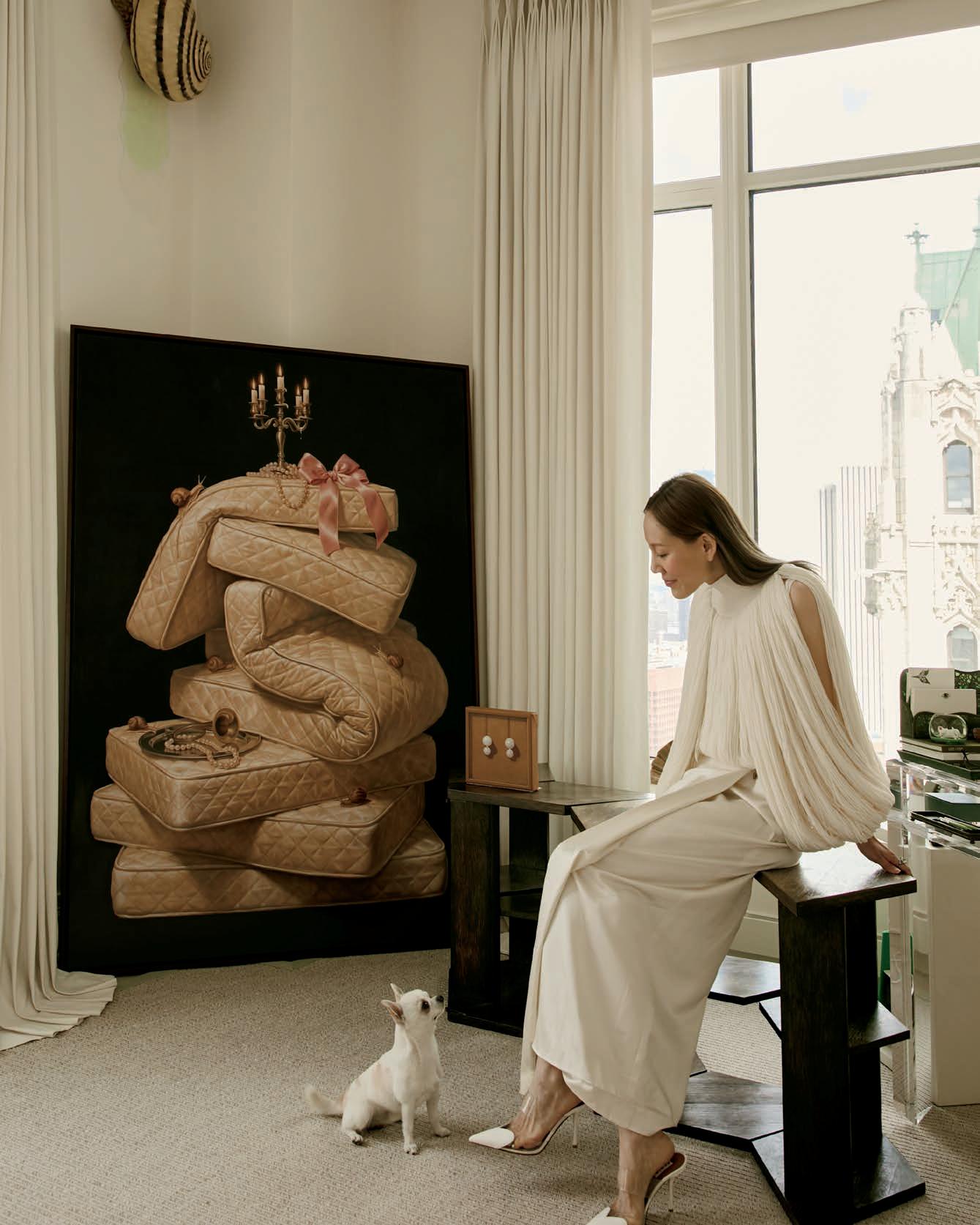
If you can’t find Lee at a museum, there’s a good chance she’s at a runway show or the ballet. The former fashion executive has applied the sense of proportion, novelty, and style she cultivated in business to her art collecting, with a focus on work both subtle and searing.
Top to bottom: Jean-François Fourtou, Untitled (Snail) , 1998; David Smalling, Giselle , 2026; and Anna Weyant, Pearl Earrings , 2025, displayed on a Eugène Printz Table-Bibliothèque c. 1928.
Who do you credit with teaching you how to navigate the art world?
One memorable impression was walking through Masterpiece London alongside the late chairman, Philip Hewat-Jaboor. He had a way of moving through a fair that I’d never witnessed before—pausing at a Sèvres or a Chippendale giltwood and unfolding its entire world for you: the history, the anecdotes, and what it was answering to at its moment. He treated objects as living arguments, and that contextual education was inspiring. Institutional experiences have also shaped me. My involvement with the Whitney has put me around curators, artists, and patrons whose looking is so much deeper than mine. I’ve learned the most by simply being quiet in those rooms. Then there’s my fashion background, which taught me to trust my eye before I had the vocabulary to defend it, and to never shy away from my own curiosity.
Do you see collecting as an extension of skills you’ve honed in your day job, or an escape from them?
Collecting is very much an extension of the skills I developed having worked in fashion. So much of that world is a daily practice in editing: weighing countless components, narrowing down, and refining until you arrive at something that feels right. You learn to trust your eye, to be decisive, and to know what you want even when the options are endless. Collecting asks for
the same discipline: a clear point of view, conviction in your choices, and the patience to keep refining as your taste evolves.
If you could sit down for lunch with one artist, living or dead, who would it be?
Andy Warhol, so I can tag along to Studio 54!
What area of collecting are you excited to dig deeper into?
Works on paper. For a long time, I shied away from the medium. The fragility made me anxious, and I worried about caring for something so delicate. But the more I’ve sat with it, the more I’ve come to see that fragility as part of its beauty. Works on paper often capture the inception of an idea, and for some artists this is part of their main practice. I am steadily warming up to the medium.
Name three artists you are particularly excited about right now.
Cornelius Norbertus Gijsbrechts, Tara Donovan, and Josh Kline. Cornelis’s works are simply breathtaking. There’s a quiet beauty in how he plays tricks with your eyes.
“Collecting asks for a clear point of view, conviction in your choices, and the patience to keep refining as your taste evolves.”
Tara’s work is endlessly engaging and genuinely speaks to me. The way she transforms the most ordinary materials into something organic and otherworldly invites you to slow down and really look.
As for Kline, when I visited the exhibition “Project for a New American Century” at the Whitney and experienced so many of his works in one space, I came to appreciate just how prophetic he is in projecting the future. He has a remarkable ability to hold up a mirror to where we’re headed, and I’m genuinely excited to see what his next conversation will be. His article in the journal October was also enlightening.
François-Xavier Lalanne, Lampe Pigeons , 1991; Vladimir Kanevsky, Blueberries , 2023.
Photography
ANNIE TAYLOR
New York, 31
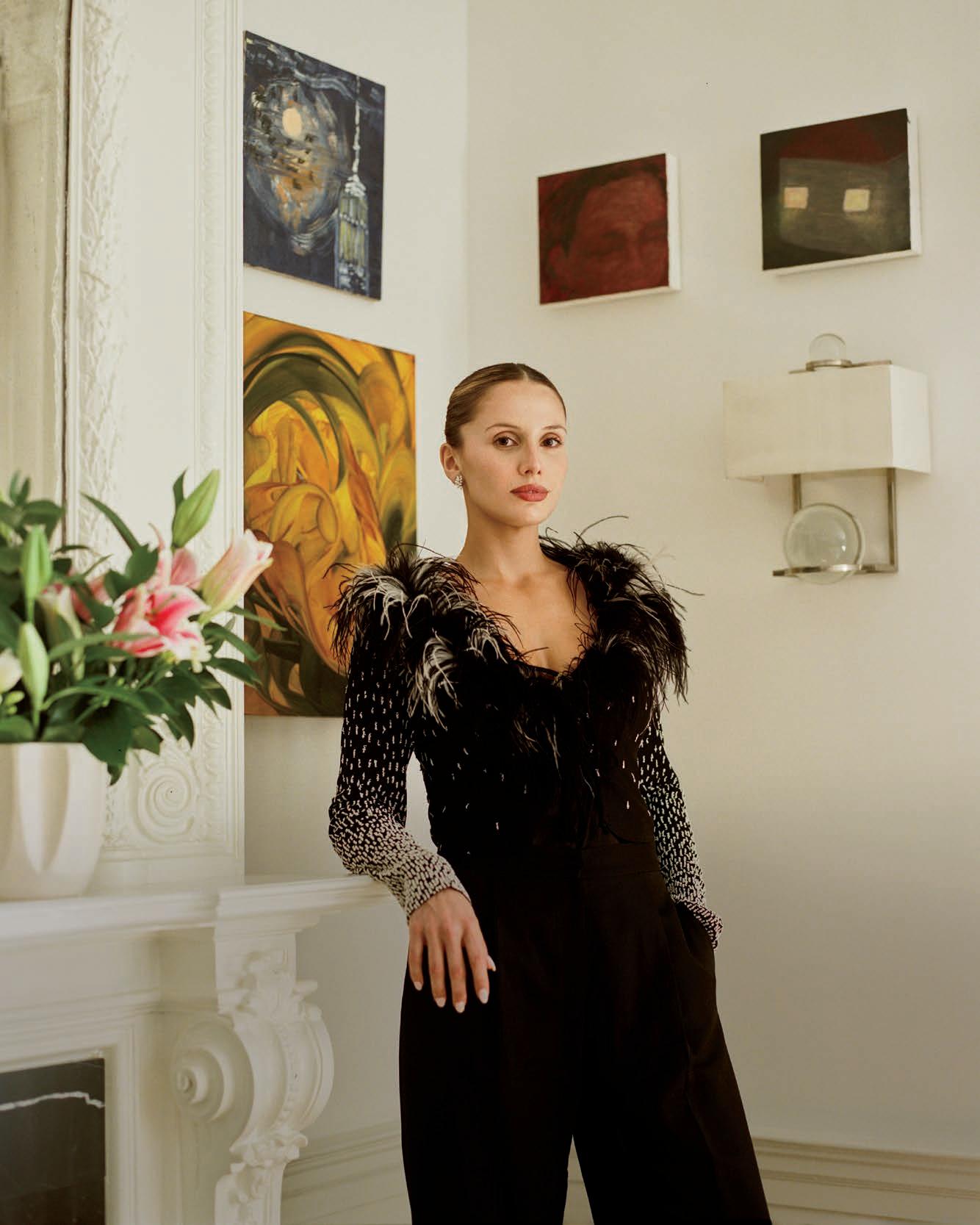
Art is a personal and professional path for Taylor, who has steadily been building a role for herself as a patron alongside her work as director of her family’s philanthropic foundation. She serves on the advisory board and contemporary art committee of the Brooklyn Museum, as co-chair of the Apollo Circle at the Met, and on the board and acquisitions committee of the Bronx Museum.
Clockwise from bottom left: Michele Fletcher, Fear is a Four Letter Word , 2023; Ann Craven, Moon (Paris Review Roof, NYC, 9-17-24 8:20 PM) , 2024; Zhi Ding, In Silence, In Tears , 2024.
Every collector has made a rookie mistake or two. What was your most memorable?
Dropping a Ben Cowan painting within two hours of bringing it home. I had just bought two beautiful works of his and managed to crack the resin frame on one almost immediately. I was completely mortified and had to text him to confess. He could not have been kinder or more understanding. What started as a careless mistake blossomed into a real friendship.
“I am interested in work that moves beyond the canvas, and in understanding how material can shape a space.”
Who do you credit with teaching you how to navigate the art world?
Danielle Falls has been incredibly influential for me, not just in how I collect, but also in how I approach my philanthropic work. We serve together on the board of the Bronx Museum, and I have learned a great deal from the way she advocates for her ideas with clarity and diplomacy.
Tell us about the journey to a particularly hard-won acquisition.
I had been looking for a three-dimensional work by Frieda Toranzo Jaeger for some time and had been working closely with Bortolami to try to secure one, specifically something tied to her accelerationist ideas with Indigenous woven elements from northern Mexico. There were not many available at the time. Eventually, the gallery received two works from her studio, one of which was exactly what I had been hoping for. The front panels are embellished with rhinestones and include a Leon Trotsky quote, “You might not be interested in war, but war is interested in you,” which feels especially poignant right now.
What area of collecting are you excited to dig deeper into?
I am interested in work that moves beyond the canvas, and in understanding how material can shape a space. That includes wall sculpture, but also more subtle decisions like framing and how a work sits within a room. Material has really come to the forefront for me, whether it is metal, wood, woven elements, or more unexpected details like bone inlay. That shift goes back to a small wall sculpture by Caio Marcolini that I bought at 1-54 [Contemporary African Art Fair]. At the time, I was mostly focused on painting, and this was the first piece that pulled
me beyond that. I had seen his work before in Mexico City, and when I came across it again, it stayed with me. Bringing it home and living with it changed how I thought about the role a work can play in a space. It made me more aware of how a piece occupies a room and how you move around it, not just how it looks on a wall.
If you could sit down for lunch with one artist, living or dead, who would it be?
Tracey Emin. Learning about her work in a college seminar completely shifted how I think about contemporary art. Pieces like My Bed challenged my understanding of what art could be and pushed me to think more openly about vulnerability, authorship, and personal narrative. It is such a raw depiction of emotional turmoil and offers a very real glimpse into the artist’s life. I really admire how uncompromising she has been throughout her career. She has also helped create space for female artists to be direct, messy, and honest in their work, which is something I am very drawn to.
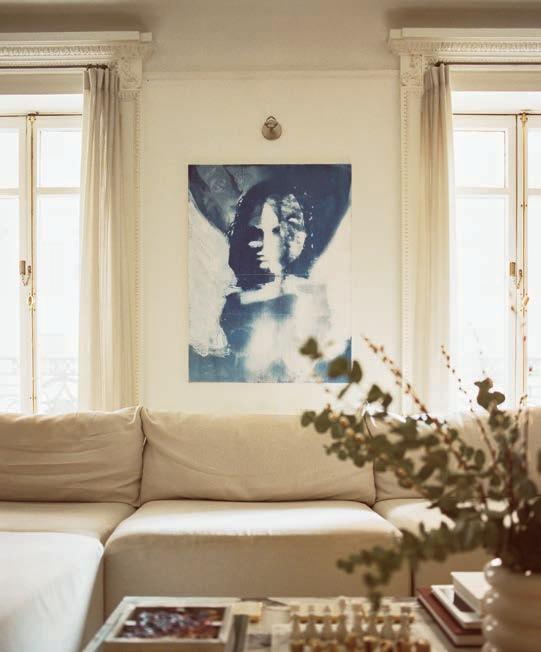
Praise Fuller, the unearthliness and spectrality of blue , 2026.
Photography by Tom Scanlan.
All for Connections
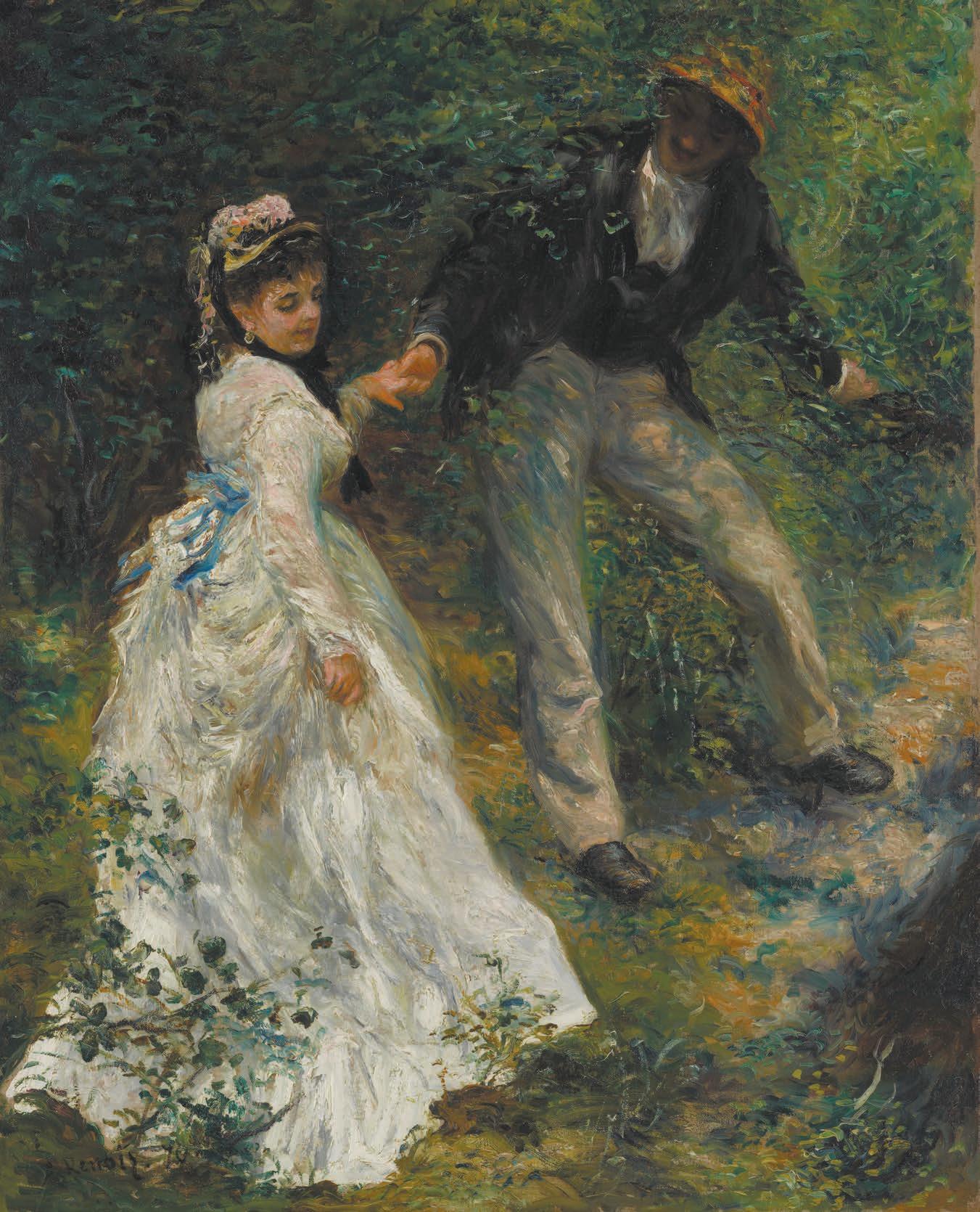




THE INDULGENCE ISSUE
Photography by Chelsie Craig.
SIENNA SPIRO’S HARD CORE
THE BRITISH SINGER GOT FAMOUS OFF A FEW SINGLES. EIGHTEEN MONTHS INTO HER DIZZYING RISE, THE 20-YEAROLD IS MEETING HER HEROES—AND IT’S BLOWING HER MIND.
Photography by Fausto Elizalde
Styling by Laura Savill
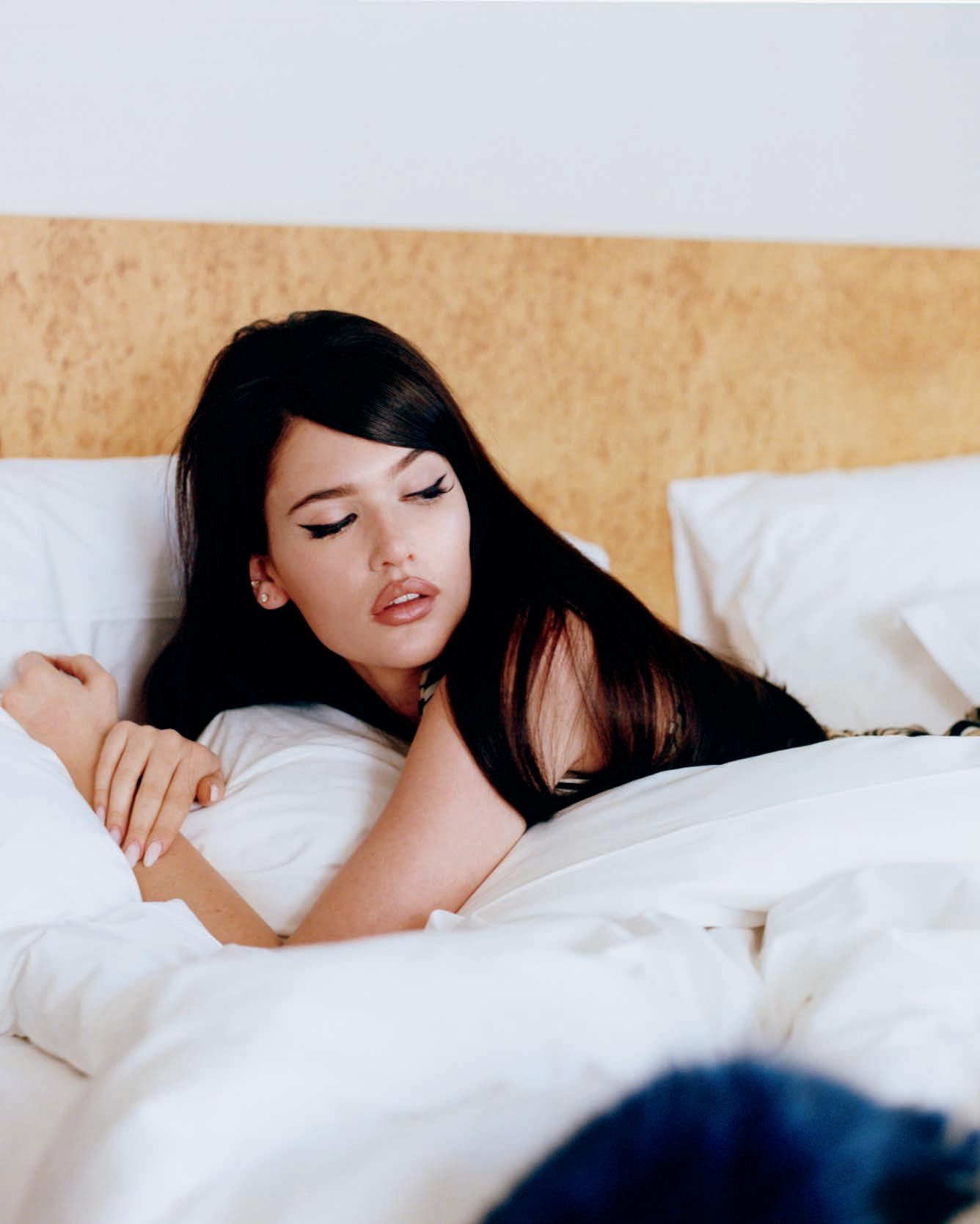
Sienna Spiro wears a vintage Chloé by Stella McCartney dress, Spring/ Summer 2001, from West Archive.
Every generation has its belters, the ones whose voices fill a whole room and then some. No Gen Z star has yet claimed the title as their own. Sienna Spiro, who turns 21 in September, is angling for it.
The London-born soul singer’s voice is mature beyond her years—world-weary with a raspy nuance so rarely heard in the age of Auto-Tune. A textbook ingénue, she has little formal training; she began writing songs at 10 before dropping out of a performing arts school at 16 to pursue music full-time. Spiro credits studying the records of the greats, listening attentively for every quaver, with teaching her how to telegraph the deep-seated longing all of us contain but few can crystallize.
This gift granted her a smash hit just over a year after she released her first single. The runaway success of “Die On This Hill,” amassing 453 million Spotify streams at the time of writing, has thrust Spiro onto the stage of the Royal Albert Hall and earned her a cosign from SZA, all before she’s even dropped an LP. Ahead of the release of her debut album, Visitor, in July, Spiro connected with another torchbearer for jazz in the digital era, Jon Batiste, to discuss why crooning is so much more than a nostalgia trick.
Jon Batiste: How are you?
Sienna Spiro: I’ve got the flu, so I’ve felt better.
Batiste: Touring, you’ve got to keep your body together and your spirit. I get so much stimulus just from living life and walking around on tour. It’s heightened.
Spiro: What do you do if you’re, like, dying?
Batiste: At first, I was very against the idea of canceling or postponing things. I would even do stuff when I would be deathly ill. That’s an important muscle to build too. You can go out and do the show, and nobody knows. The old-school cats would play four or five shows sometimes in a night. We can learn from that, and also understand that’s not sustainable and that’s a cautionary tale.
Spiro: I feel like you’ve got to do it for a little while to earn your stripes in order to say no. So I’ll just keep going.
Batiste: When or where did you realize that you could perceive life and form it into a song?
Spiro: I’ve been surrounded with music for a lot of my life. When I was 10, I started writing songs because I wasn’t very good at articulating myself.
Batiste: I relate deeply. I didn’t speak until I was, like, 10. If it wasn’t for music, I don’t know if I would’ve got there because it’s a way to learn how to project what’s inside and communicate. I was listening to your record. It’s not jaded, even though there’s heartbreak.
Spiro: A lot of people immediately go to romantic heartbreak when they hear songs like that, but it is about the lessons you learn from those situations and the self-awareness that comes with that.
That fear has come from being disappointed so many times. A lot of passionate people give a lot of themselves, which ends up in a lot of disappointment. You end up gaining this fear. The whole album is written about this fear of impermanence and of things being temporary.
Batiste: Were you listening to anything when you made the record, or were you not trying to channel a specific thing?
Spiro: The thing is I’m not really a trained musician. Everything I do is instinctual. How important is knowing technical things versus being intuitive and emotional, do you think?
Batiste: The thing that you know the most is the thing that you do. I’m on this kick right now: there’s wisdom greater than logic. The most important thing is the stuff that you can express and execute.
Spiro: When I sing, I always feel like I’m connected to a higher source. I honestly black out a bit.
Batiste: Everybody since the beginning of the first drum has been trying to figure out what you’re calling a source. I believe it’s a divine stream of consciousness where all ideas come from, and it just flows through us. We’re the vessels.
Spiro: I always refer to myself as a translator.
Batiste: You’re handling fame with a lot of grace. I just saw that someone covered one of your songs online, and you brought them to the concert?
Spiro: In Indonesia. Oh my God, she was the sweetest girl I’ve ever seen in my life. She was 8 years old.
Batiste: Right now I’m coming from an elementary school. They did a concert of my music at their school. I feel like we’re so kindred, just embracing the community and having them be a part of what you’re presenting in a way that feels like family.
Spiro: My mom would always just tell me, “Do to people as you would want to be done to you.”
That is the way I felt being a fan of music as well.
Batiste: I remember, when I was in university, transcribing Prince’s parts on the Dirty Mind record. A year after that, by this crazy sequence of events, I was playing a jazz club, and Prince was there. After, he invited me to join him on tour. I was like 19 or 20.
I learned from how he listened and the way that he was able to be fully present in the music. There’s an intensity to it. It almost feels like working out. After, you’re exhausted emotionally and mentally because you focused so much on what’s happening.
“EVERYTHING’S TOO SOFT. I ACTUALLY LOVE PEOPLE BEING MEAN TO ME, AND I LOVE A MUSICIAN WHO PUTS ME IN MY PLACE.” —SIENNA SPIRO
Spiro: I had something similar with Sam Smith. They allowed me to sing “Lay Me Down” with them last October in New York. I get so nervous around other singers, especially ones as good as Sam. I remember when I came off [stage] I’d never felt that grateful in my life. I threw up, actually. I had no one to talk to about it. No one was with me. So I went home, and I just threw up.
Batiste: That feeling is of being overwhelmed with gratitude—it’s really intense.
Spiro: Especially when something you didn’t think would happen, happens. Do you know who David Attenborough is? He’s my hero. For some reason, at the last minute, they let me sing at his 100th birthday at the Royal Albert
Hall. That was my first time singing with an orchestra, and I was so off time. The union musicians had absolutely no patience. They were laughing at me.
Batiste: That vibe with the union musicians—it’s business. I love it.
Spiro: I actually love people being mean to me. Everything’s too soft, and I love a musician who puts me in my place.
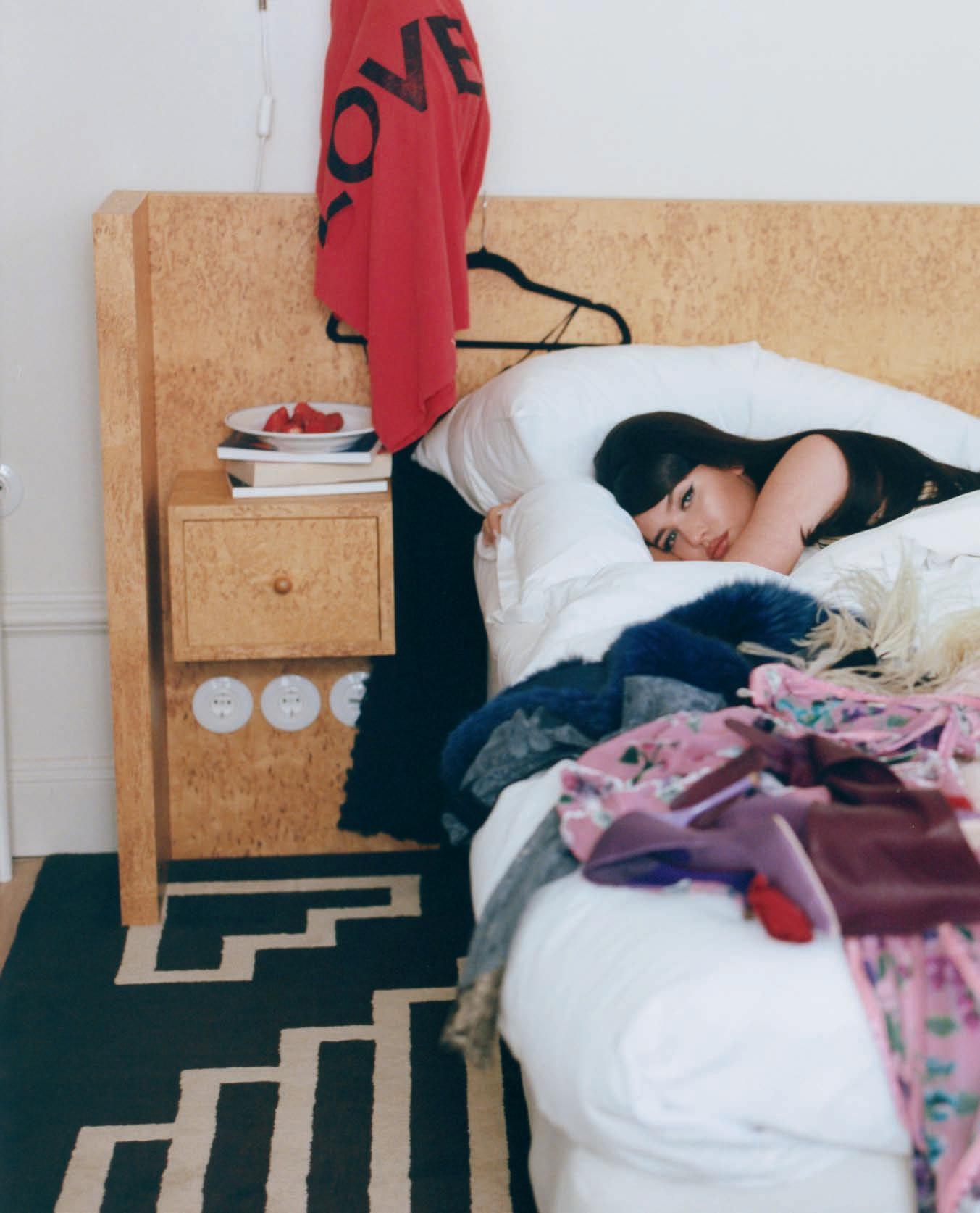
“WHEN I SING, I HONESTLY BLACK OUT A BIT.”
—SIENNA SPIRO
Makeup by Marina Andersson
Hair by Jack Luckhurst
Production by Sara Boork
Photography Assistance by Maria Trajtenberg
Styling Assistance by Phoebe Palmer
Production Assistance by Kornelia Eklund
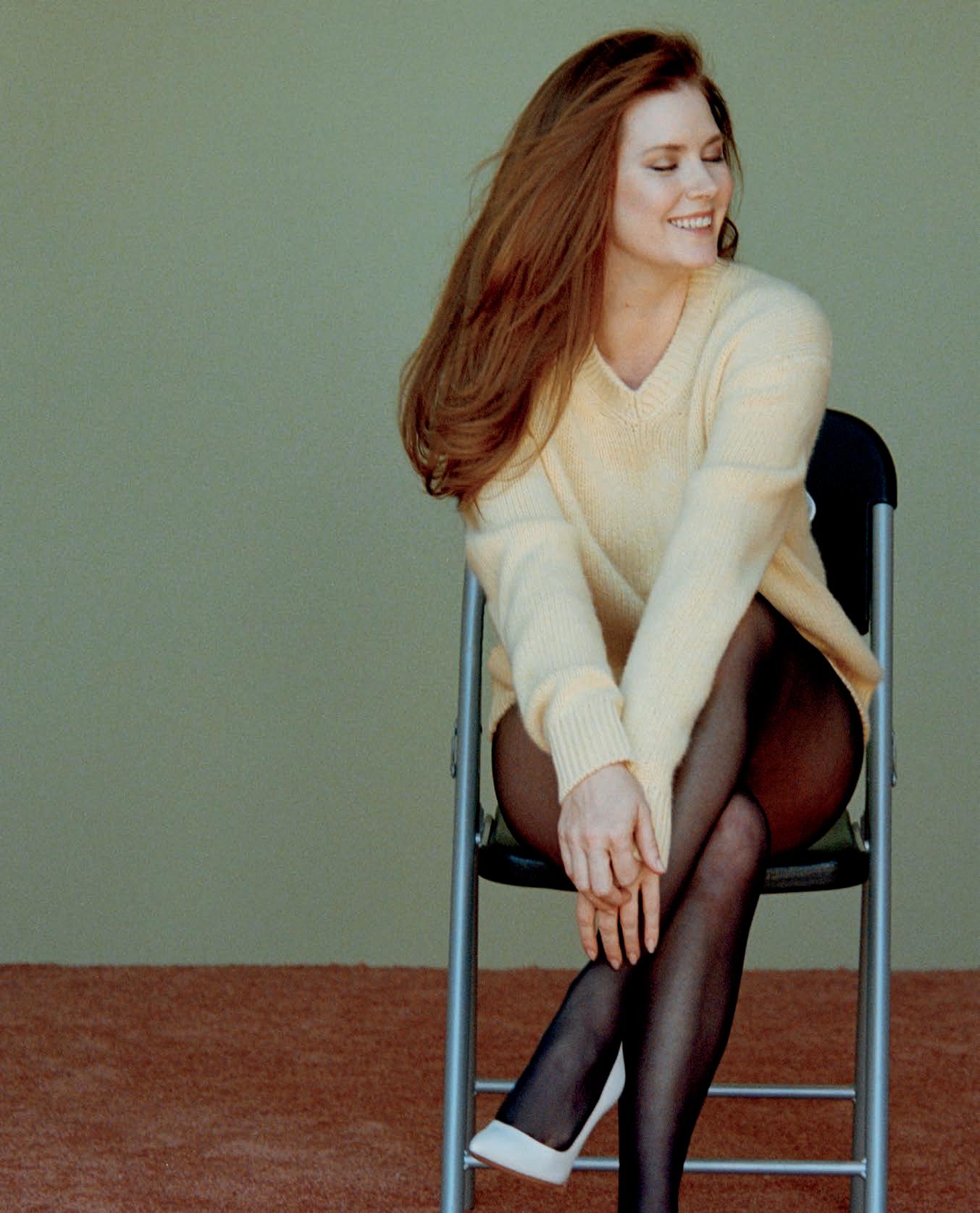
‘I CAN JUST BE ME’
Photography by Daniel Jack Lyons
Styling by Petra Flannery
Amy Adams in Los Angeles wearing a sweater by Bottega Veneta, earrings by Engelbert, and shoes by Gianvito Rossi.
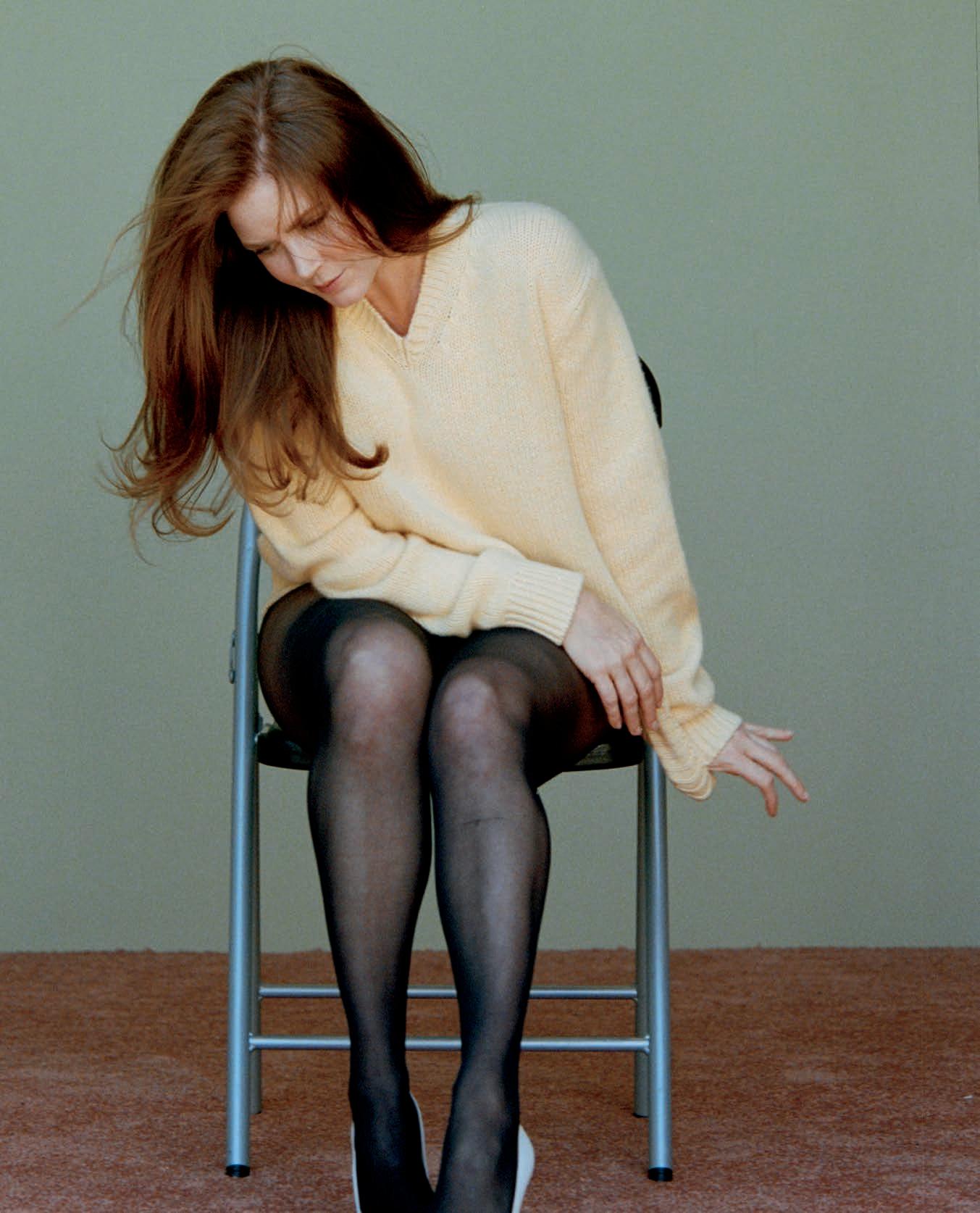
Getting older and having kids are often thought of as twin death knells in a woman’s career. The two experiences have only energized Amy Adams. The actor, whose unpasteurized portrayals of female experience have left a forever imprint on Hollywood, called up her new friend Amanda Seyfried to talk about getting back to reality.
‘‘THAT’S JUST LIFE,’’
Amy Adams says of the time she spends off red carpets and film sets. It’s what she speaks most passionately about: making runs to the grocery store, braiding her kid’s hair. She even gets a bit misty-eyed while doing so (her daughter turned 16 the day after this interview; feelings were fresh).
Crystallizing such moments, whether grand or minute, is what audiences count on Adams to offer. Year after year, the actor has slipped into roles that complicate the lives of women as they age, as in 2024’s Nightbitch, where her stay-at-home mom takes a turn for the surreal. Her latest, Apple TV’s Cape Fear, finds her opposite Patrick Wilson as an attorney couple whose lives are turned upside down by a killer client (Javier Bardem) freshly out of prison.
“I’ve loved getting older. I embrace it,” Adams, now 51, tells Amanda Seyfried (herself newly 40) when they hop on the
phone for this conversation. As booked as the actors both are, the pair’s chat focuses less on their upcoming film and TV slates than on the imperatives of family life and the decision to opt out of hours in the makeup trailer in favor of imperfect skin on camera. Neither is particularly concerned about hiding their flaws—in fact, they are eager to discuss them.
AMANDA SEYFRIED:
The first time I saw you, you were in braces in Catch Me If You Can. I was like, Who’s this woman—this kid— who gets to do what I want to do? Be with Leo. [Laughs] Do you ever have less makeup—or less of a look—just because you don’t want to be in the hair and makeup trailer?
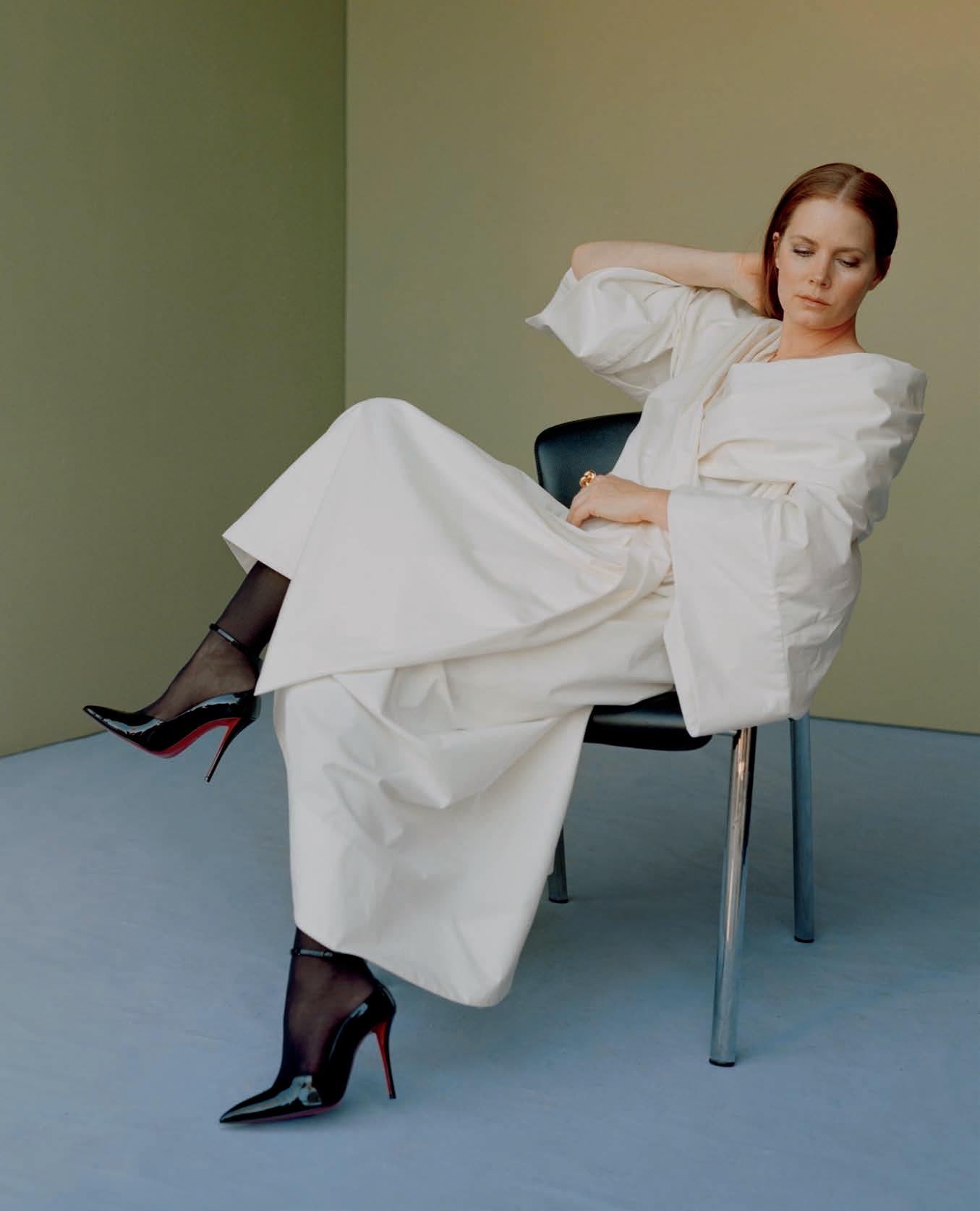
Amy wears a coat by Kallmeyer, ring by Engelbert, and shoes by Christian Louboutin.
AMY ADAMS:
I’m ashamed to admit it, but yeah. I’m less vain than I am tired. People know what I look like at this point. I don’t need to be pretty. I can just be me.
Seyfried: We both gravitate toward roles that are real people. We were the ingénues at one point, but our characters are more complex and more interesting now. If someone were like, “You have to do one of the movies that you’ve already done again,” which one would you choose?
Adams: Arrival. I want to work with Denis [Villeneuve] again. He was so empowering; it was a pivotal moment for me as somebody coming into my agency. My daughter would come to set and they let her sit in the corner as long as she stayed quiet.
Seyfried: Family. I love that you went straight to that.
Adams: Every job I take, we have a family meeting. There are some projects I can’t even consider because I can’t go to Australia for six months. Well, not now. My daughter’s turning 16. She got her braces off yesterday. [Adams tears up.] I’m so fragile about it. I should be more together.
Seyfried: I don’t think so. It’s the craziest thing that we will ever do on Earth: become mothers.
Adams: I talk with my daughter about it now, and it’s interesting to hear her perspective. She says, “I don’t remember you not being around. It always felt like you were there.”
Seyfried: Well, you did it then. I live fulltime on a farm. We have eight goats.
They get acupuncture now. It’s exhausting because I feel guilty when I’m gone, so on the weekends, I’ll be like, “I got the feed.” I love being a local and I also feel like I have a lot of privacy, too.
Adams: I go to the grocery store. It’s just life. I’ve loved getting older. I embrace it.
Seyfried: I agree. I’m gonna start taking care of myself. That full MRI body scan? I paid for it myself.
Adams: Let me know how you like it.
Seyfried: I’ll send you my results. About the aging thing, I’m definitely happier and more fulfilled. I feel like aging is a real privilege.
Adams: [After this] I’m doing a craft thing for my daughter’s birthday. It’s a big signage thing, pictures of her 16 years. I still have to finish it today. My husband calls me the Tasmanian devil because you can see everywhere I’ve been. He’ll walk into the bathroom and be like, “Somebody melted in front of the shower,” because of my clothes [on the floor]. Today I’m not picking my clothes up because I’m cutting out circles.
Seyfried: I just finished crocheting a tank top for Rachel Zegler for her [Octet] wrap gift and I already showed it to her. Then Sheryl Lee Ralph last night was like, “I love that,” and I was like, “Would you wear one? I have one that’s three sizes too big for Rachel.” So all the girls on the show are going to be wearing the same tank top.
Adams: Oh, that’s amazing.
Seyfried: Have the best time tomorrow. You’re a great mom and you’re a great human and actor. Leave your clothes on the floor. Do that for yourself.
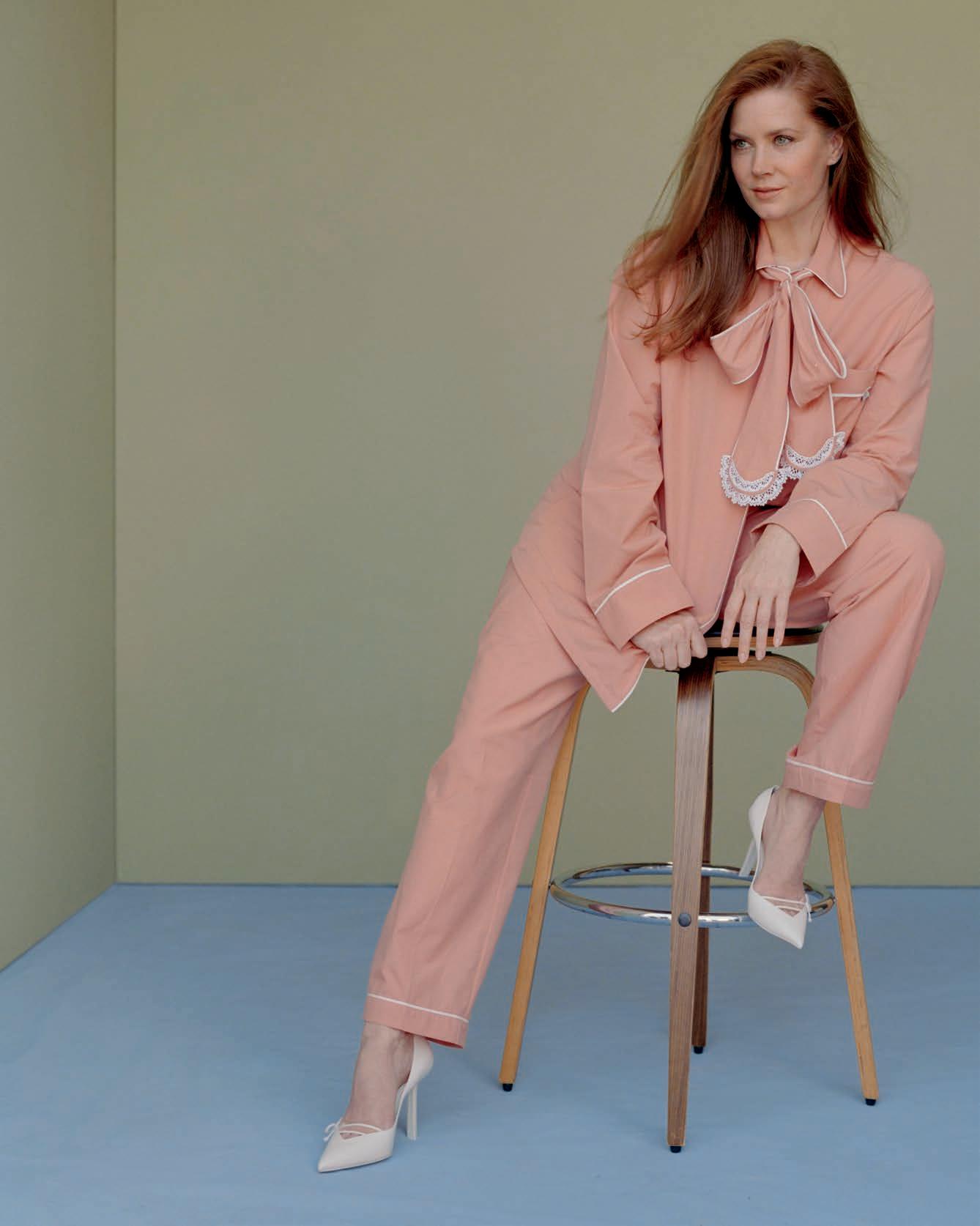
“I’M LESS VAIN THAN I AM TIRED. PEOPLE KNOW WHAT I LOOK LIKE AT THIS POINT. I DON’T NEED TO BE PRETTY.”
—AMY ADAMS
Amy wears a full look by Prada.
Hair by John D
Makeup by Stephen Sollitto
Production Design by Daniel Horowitz
Production by Alexey Galetskiy
Photography
by Kevin Faulkner and Sean Costello
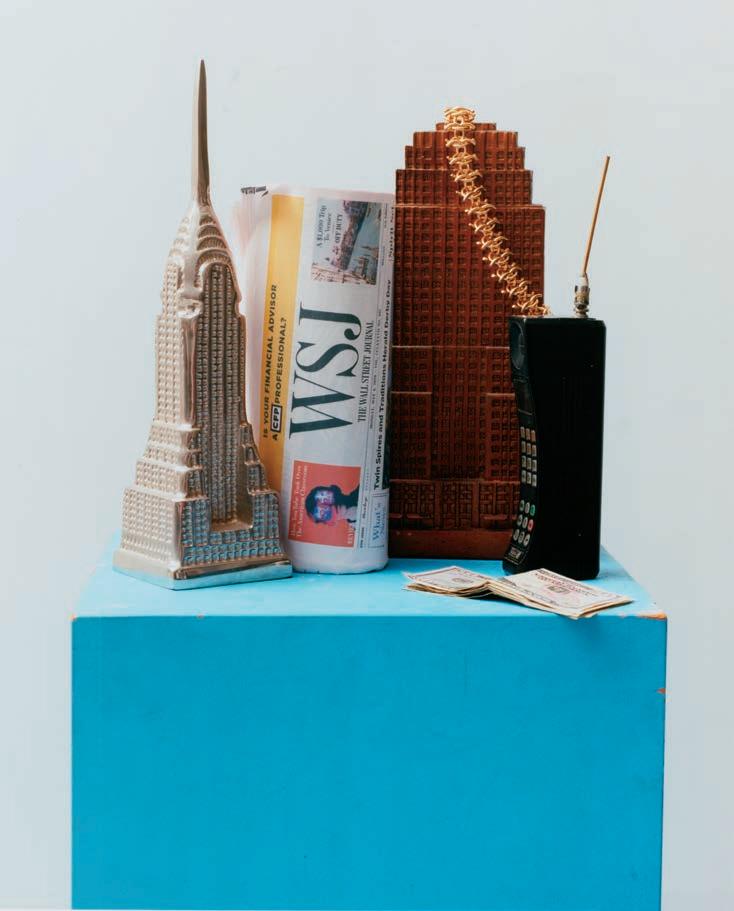
NEW YORK, ALWAYS
For the first Métiers d’art show of his tenure at Chanel, Matthieu Blazy chose New York’s underground as his backdrop. The collection debuted last December on a subway platform that’s been abandoned since 2004, the French-Belgian artistic director’s tribute to a city that brings you up as effortlessly as it puts you down.
Photography
by
Anaïck Lejart
Creative Direction and Styling by Studio&
All Clothing and Accessories by Chanel Métiers d’art 2026
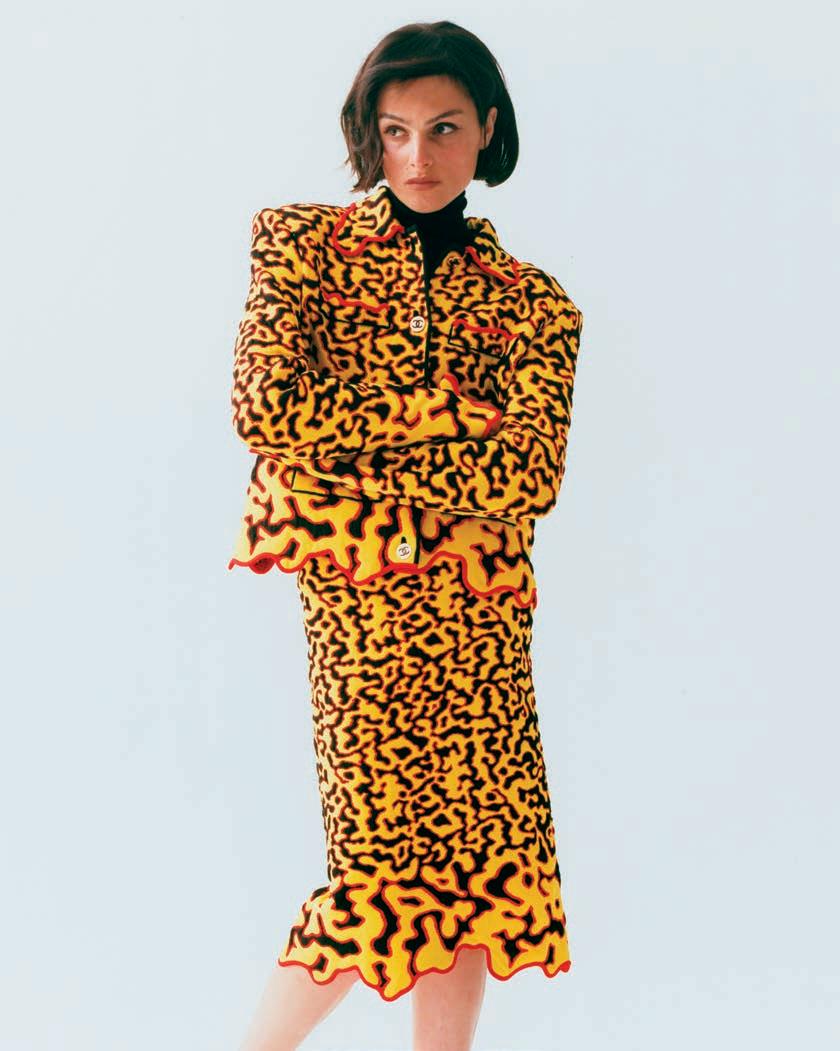
The Uptown Executive
In the subterranean world of Matthieu Blazy’s Chanel Metiers d’art show last December, beacons of painstaking craft meandered among red-painted steel columns and over gum-speckled cement in a parade of New York archetypes: the socialite skulking home in last night’s party gown and fringe of feathers, the always-in-a-hurry power broker marching to the office with her leather trench cinched tight, the leisurely grande dame in a sumptuous leopard-print tweed set savoring the luxury of time.
Each look—delightfully anachronistic, quintessentially urbane—represents a melding of the house’s codes over the last century, from slim-hipped flapper silhouettes for the 1920s to slouchy silk sets for the 2020s. Taken together, they represent the lavish chaos that New York embodies in the collective imagination—a metropolis rich with symbolism that no one, not even Blazy, can resist taking a bite.
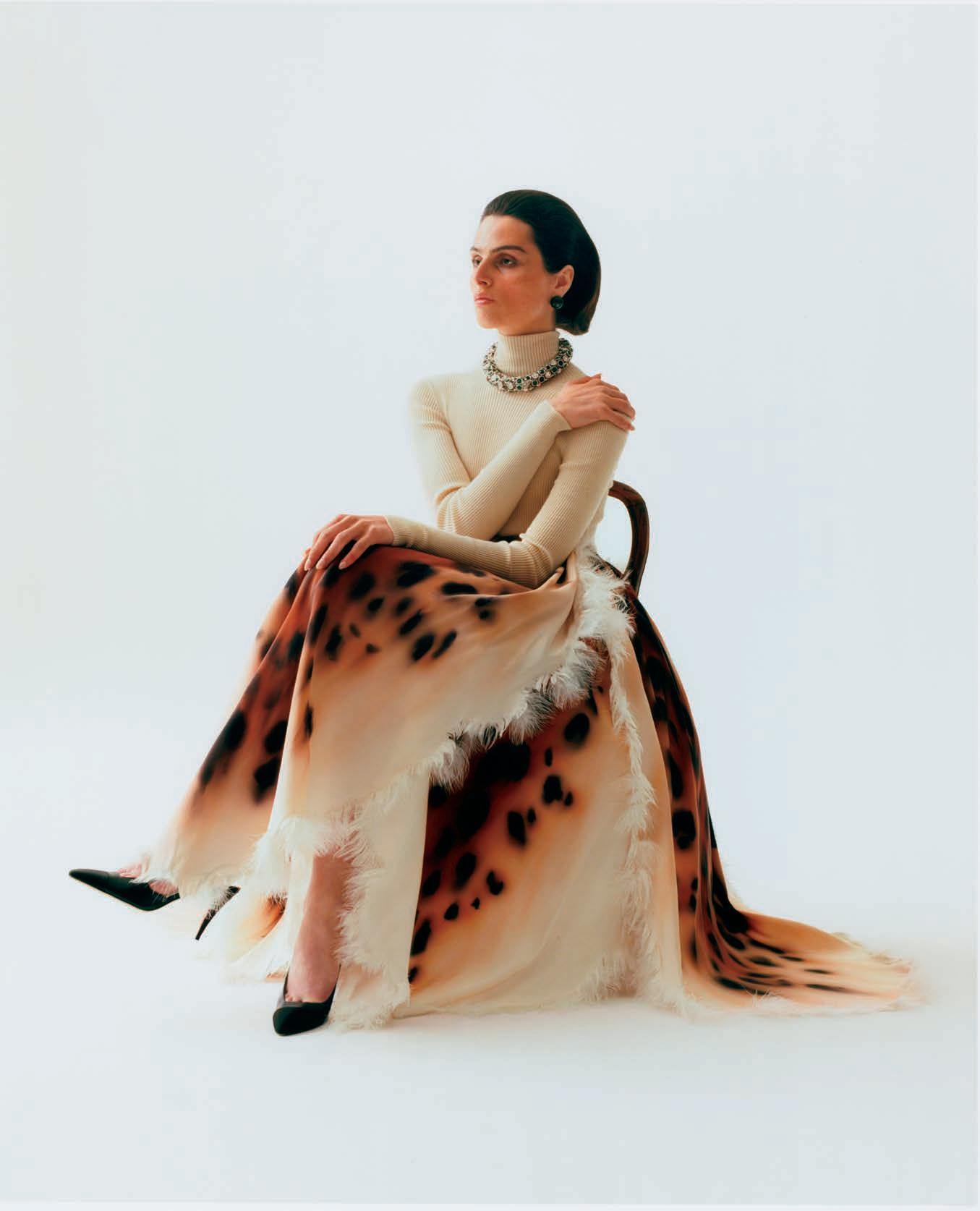
The Opera Patron
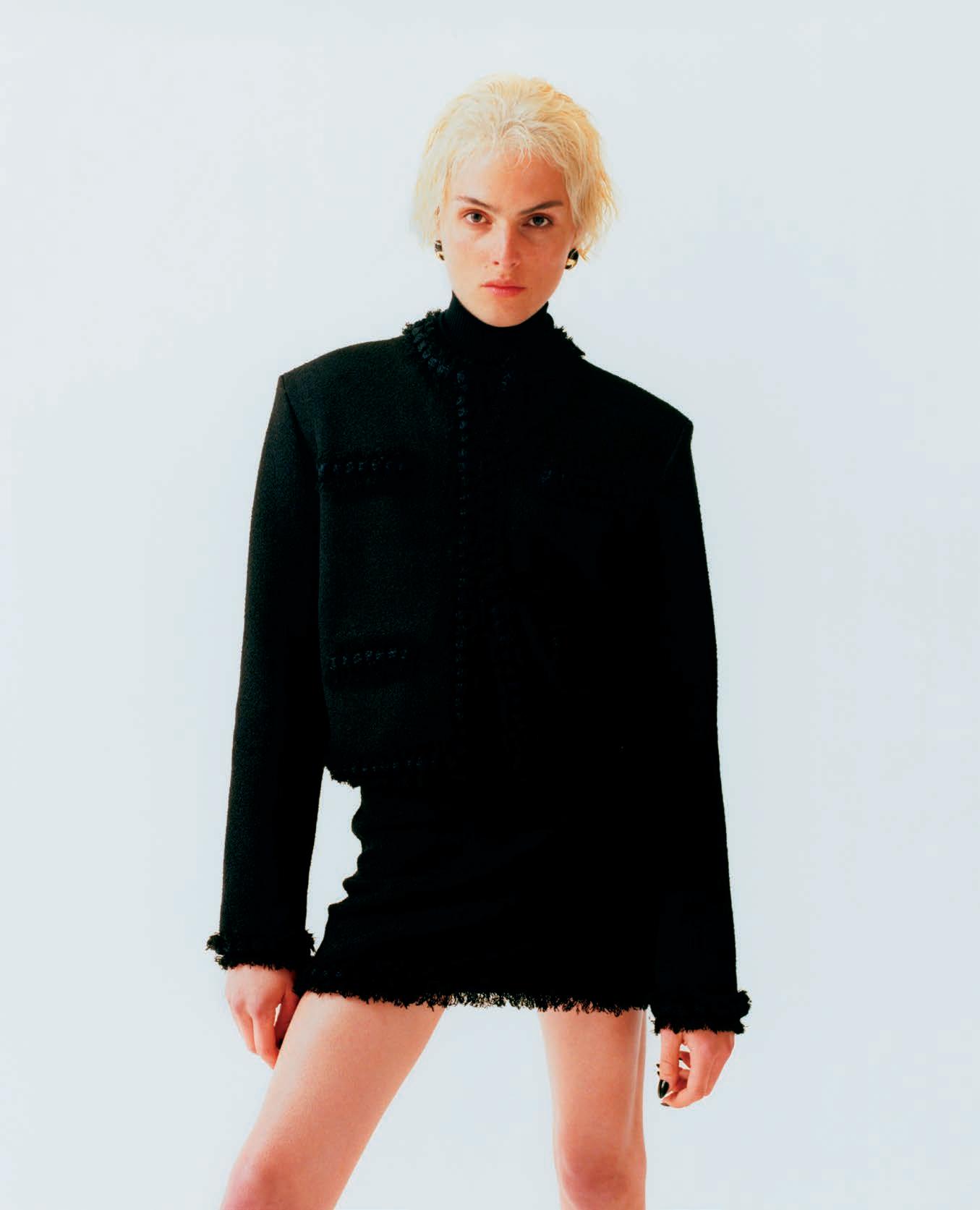
The Downtown Gallerist
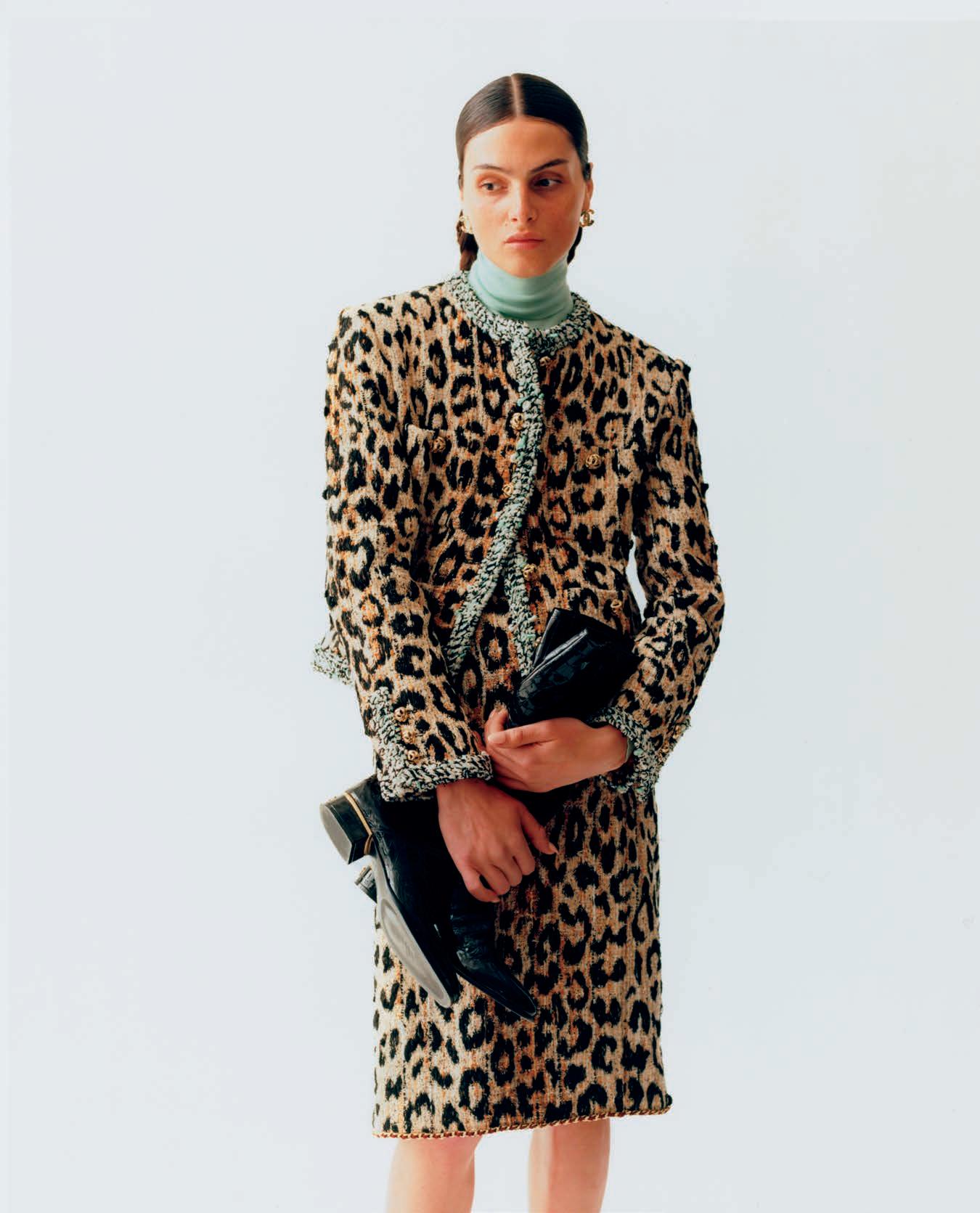
The Litchfield County Escapist
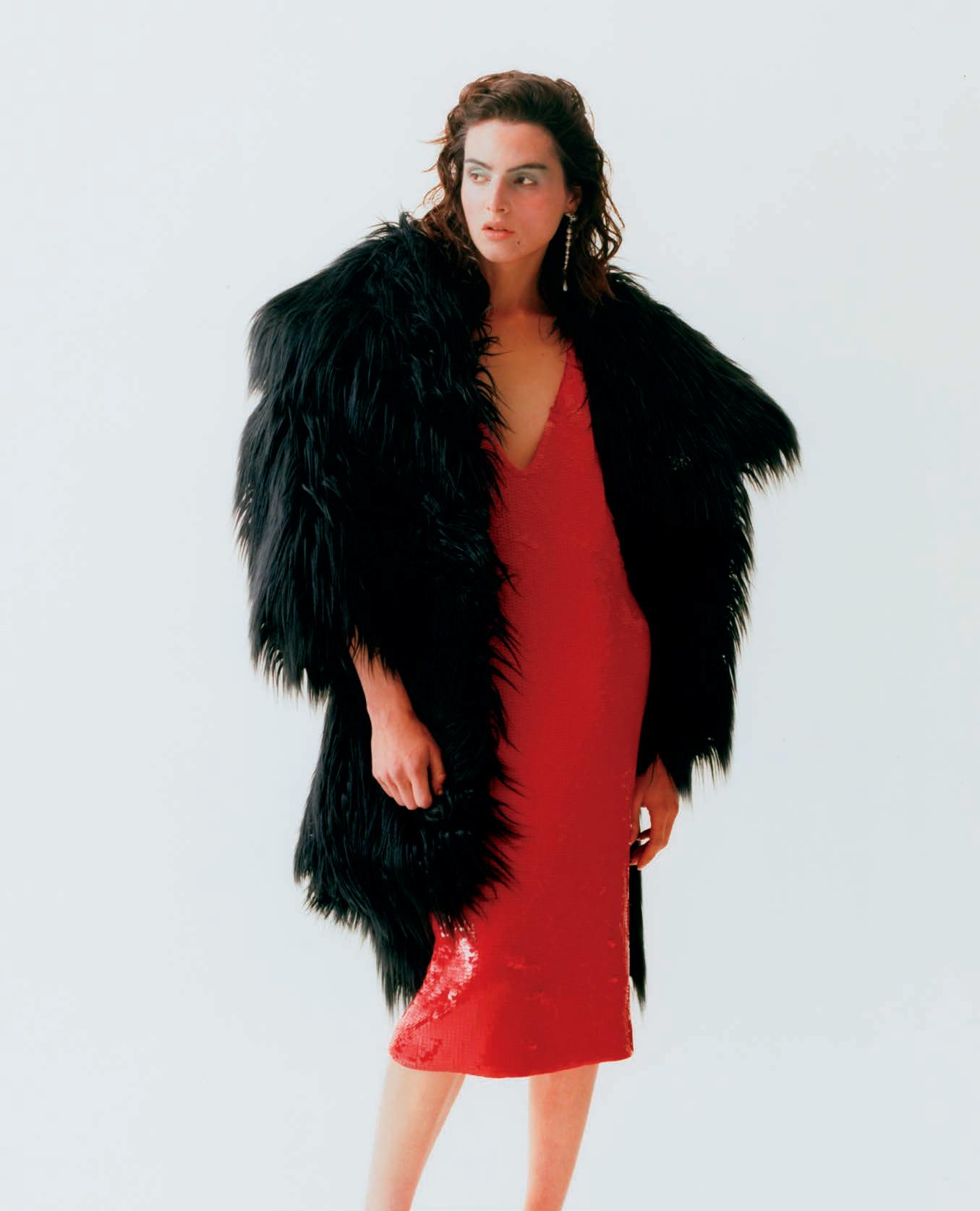
The Rising Starlet
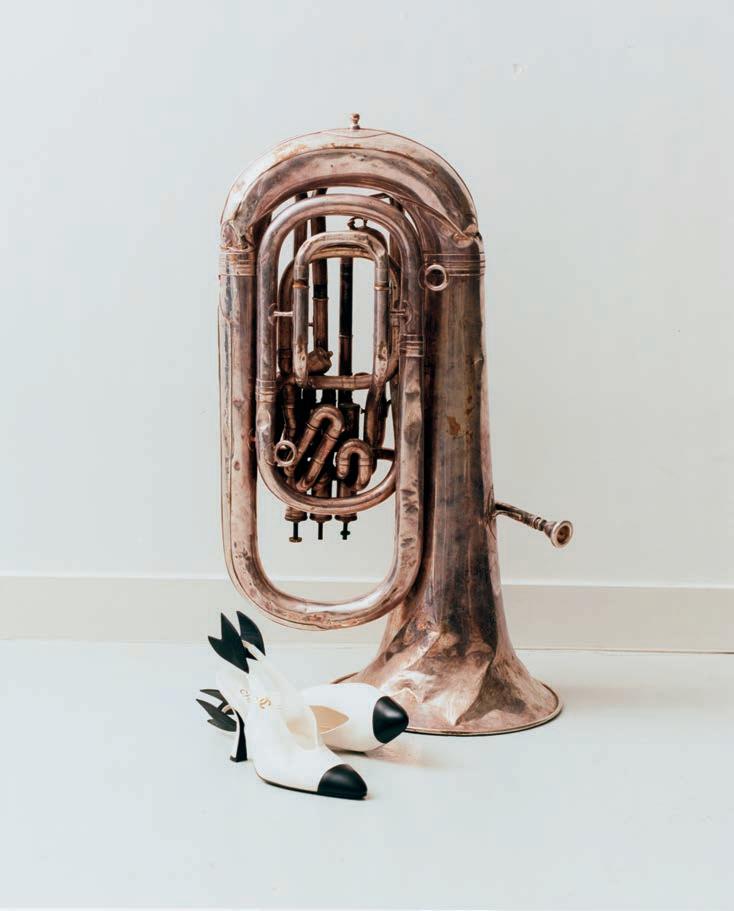
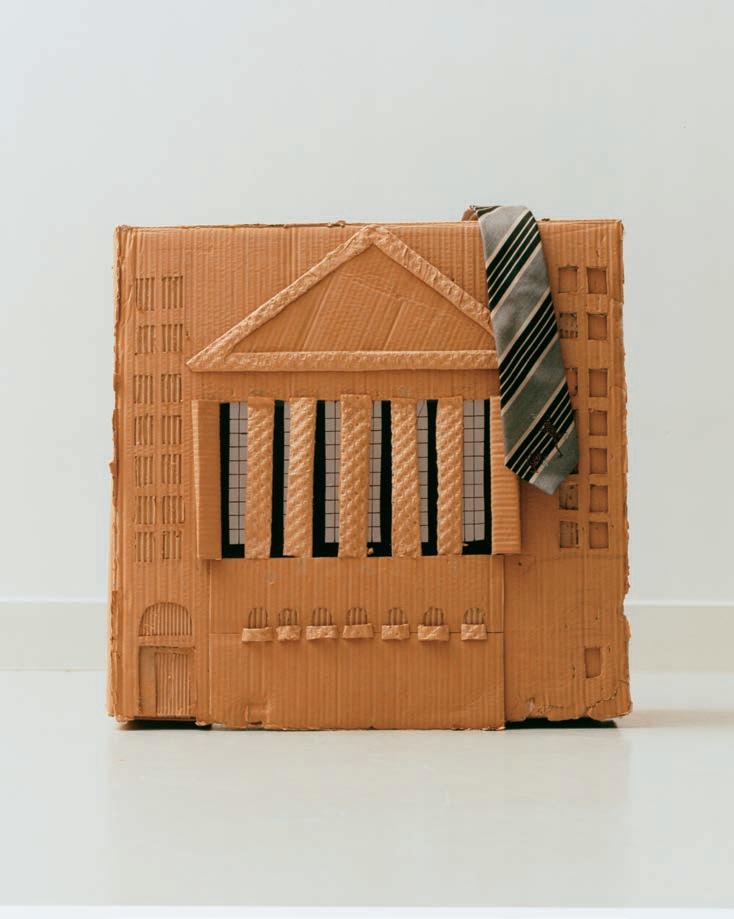
The Day Trader
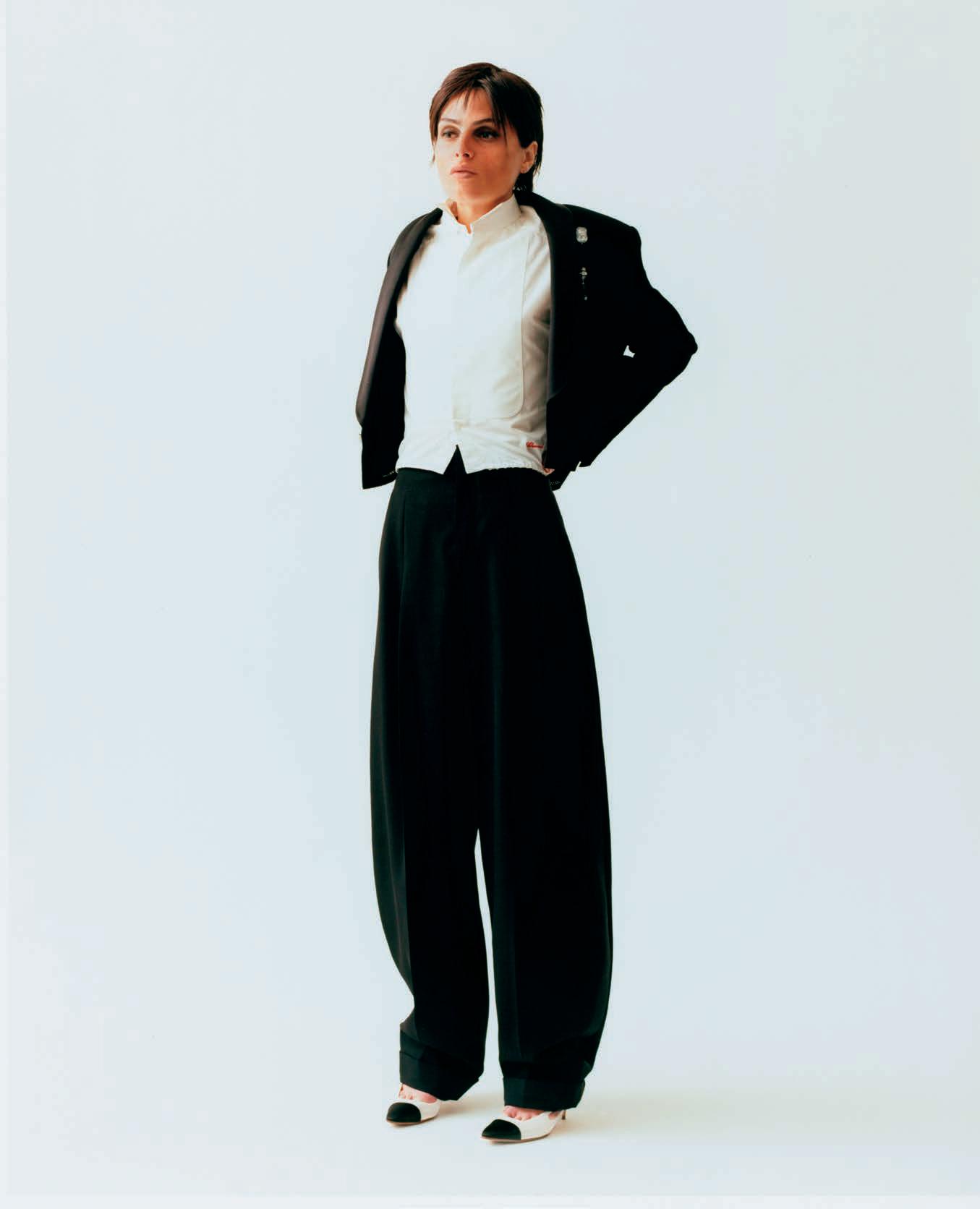
Project
Styling
Set
Production Assistance by Balthazar Astier
Lighting Assistance by Lucas Matichard
First Assistance to Studio& by Cydney Moore
Hair by Jacob Kajrup
Makeup by Tiziana Raimondo
Nails by Magda S
Modeling by Lou Seriot
Dog: Mia
Set Design by Marine Armandin
Production by Jules Crye at Lambert Lambert
Management by Chloe Kerins
Casting by Sébastien Hernandez Bertrand
Assistance by João Bengala
Design Assistance by Caroline Garnier
FALLING TOGETHER
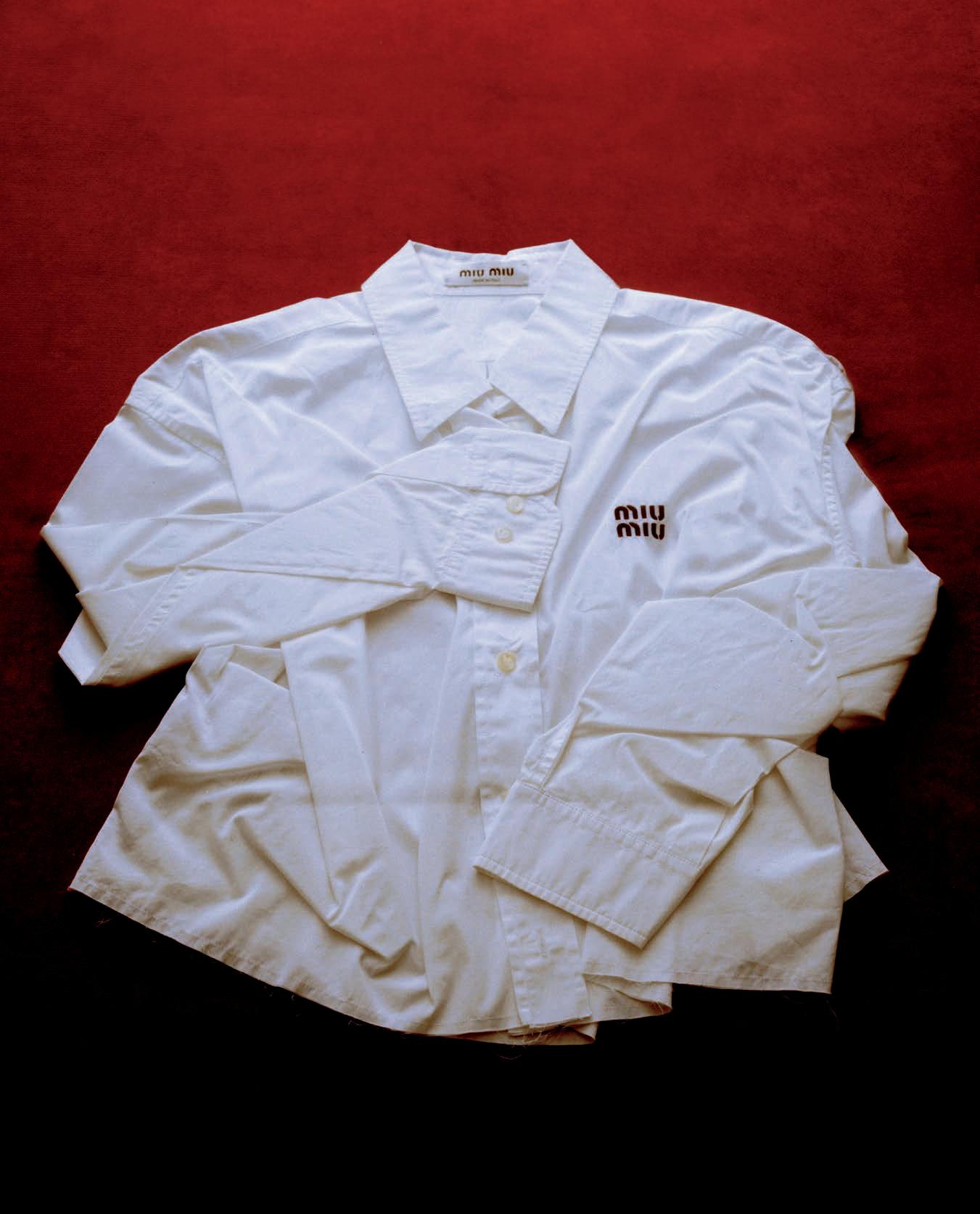
Everything, ultimately, falls apart. Inspired by the lush textures that arise when nature is acted upon by time, CULTURED presents a study of three bags from Miu Miu’s latest collection—the east-west Arcadie and oblong Wander styles, as well as the bowling bag-inspired Vivant—in a new light. From the buttery, intricately creased Napa leather of the first two Matelassé styles to the richly textured lambskin of the long-handled third, each image is a tribute to the ultimate indulgence: time.
Photography by Chelsie Craig
Styling by Selena Liu
All Clothing and Accessories by Miu Miu
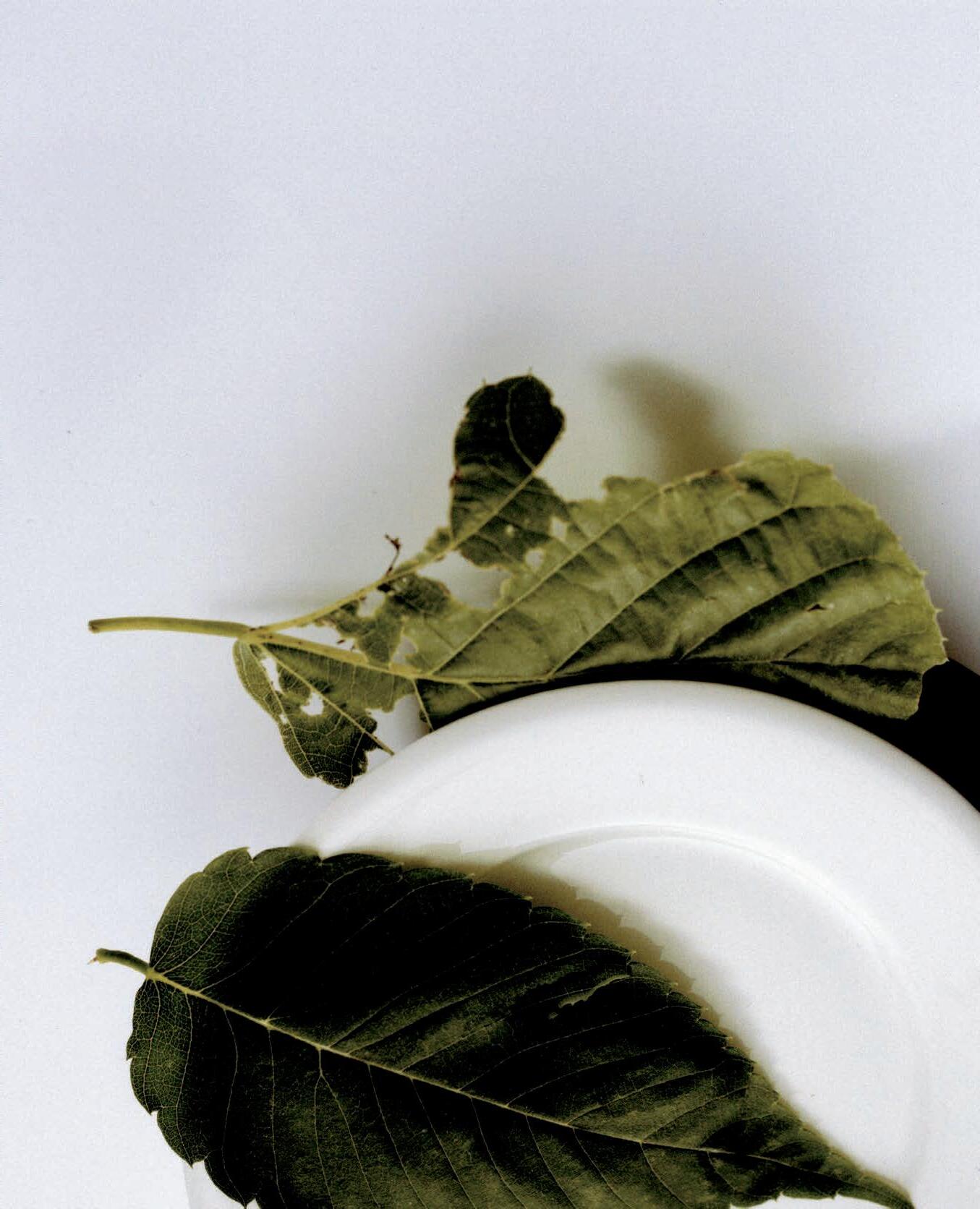
21ST-CENTURY GOTHIC
At Schiaparelli, Daniel Roseberry has never sacrificed his intense creative might in favor of titillating the masses. Instead, it seems, he’s managed to do both at once— designing daunting couture looks pulled from fever dreams with one hand while pointing Internet- breaking surrealist tributes down the ready-to-wear runways with the other. The house’s Spring/Summer 2026 couture collection, shot for CULTURED by Zhong Lin, might be Roseberry’s most arresting vision yet.
Photography by Zhong Lin
Creative Direction and Styling by STUDIO&
All Clothing and Accessories by Schiaparelli
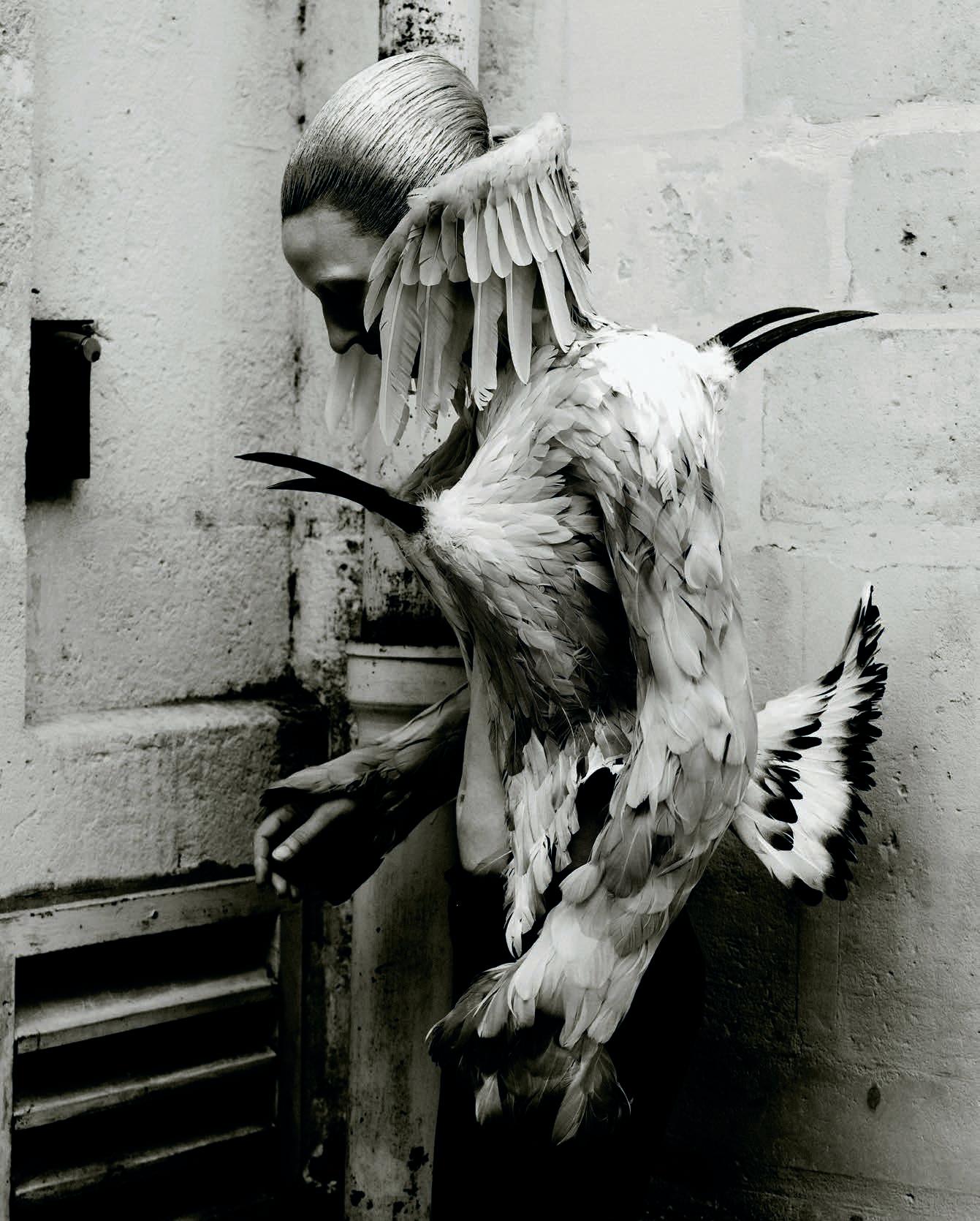
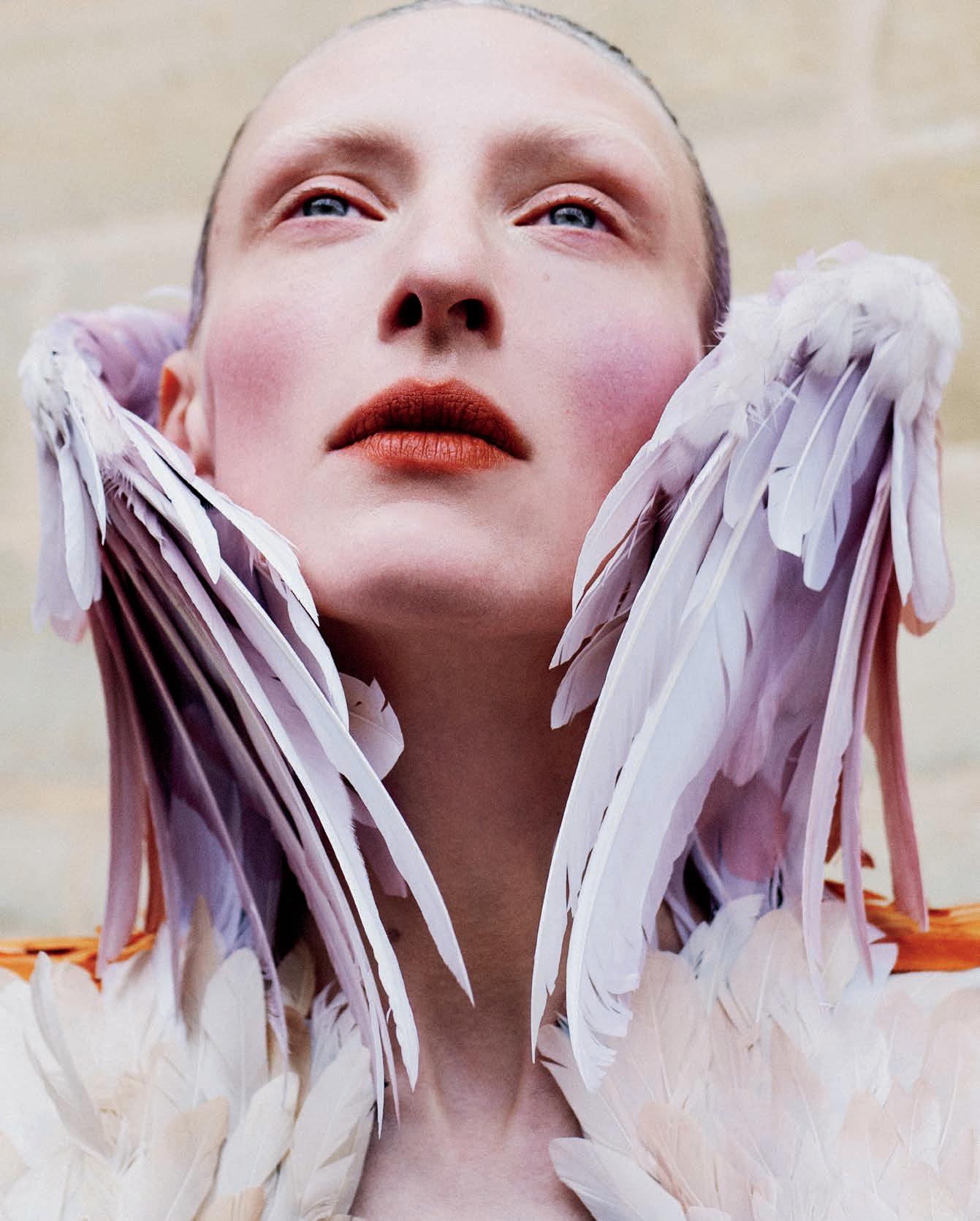
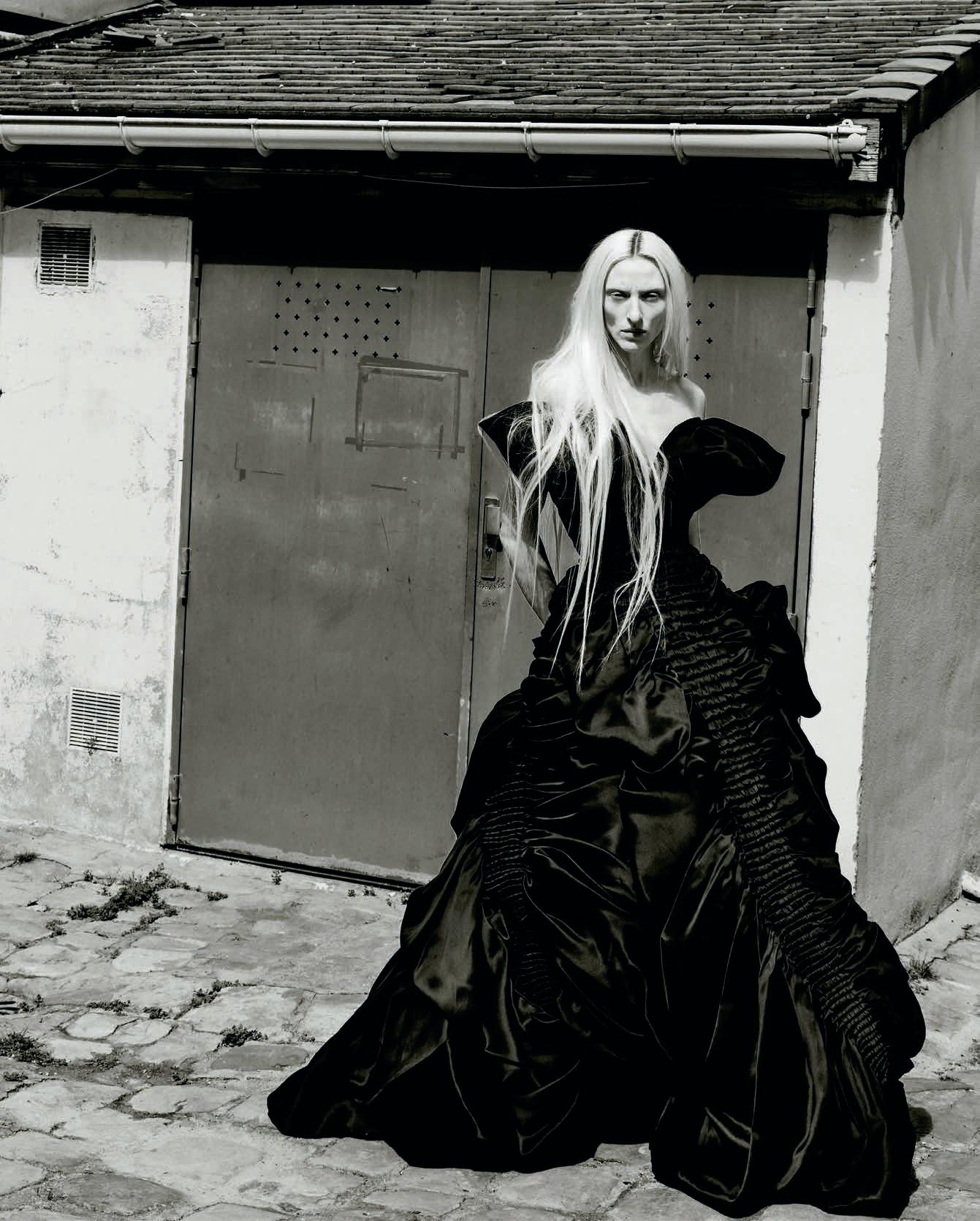
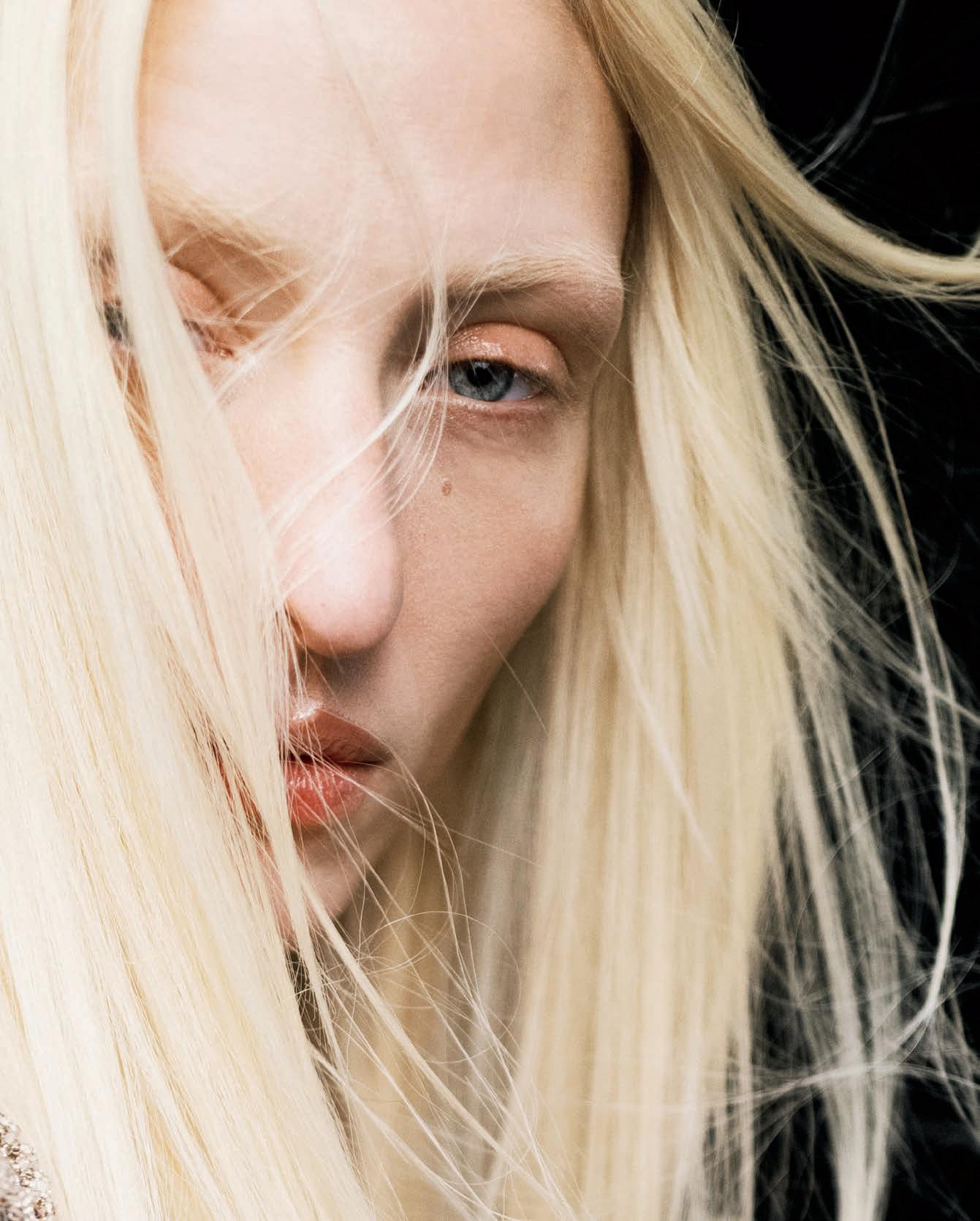
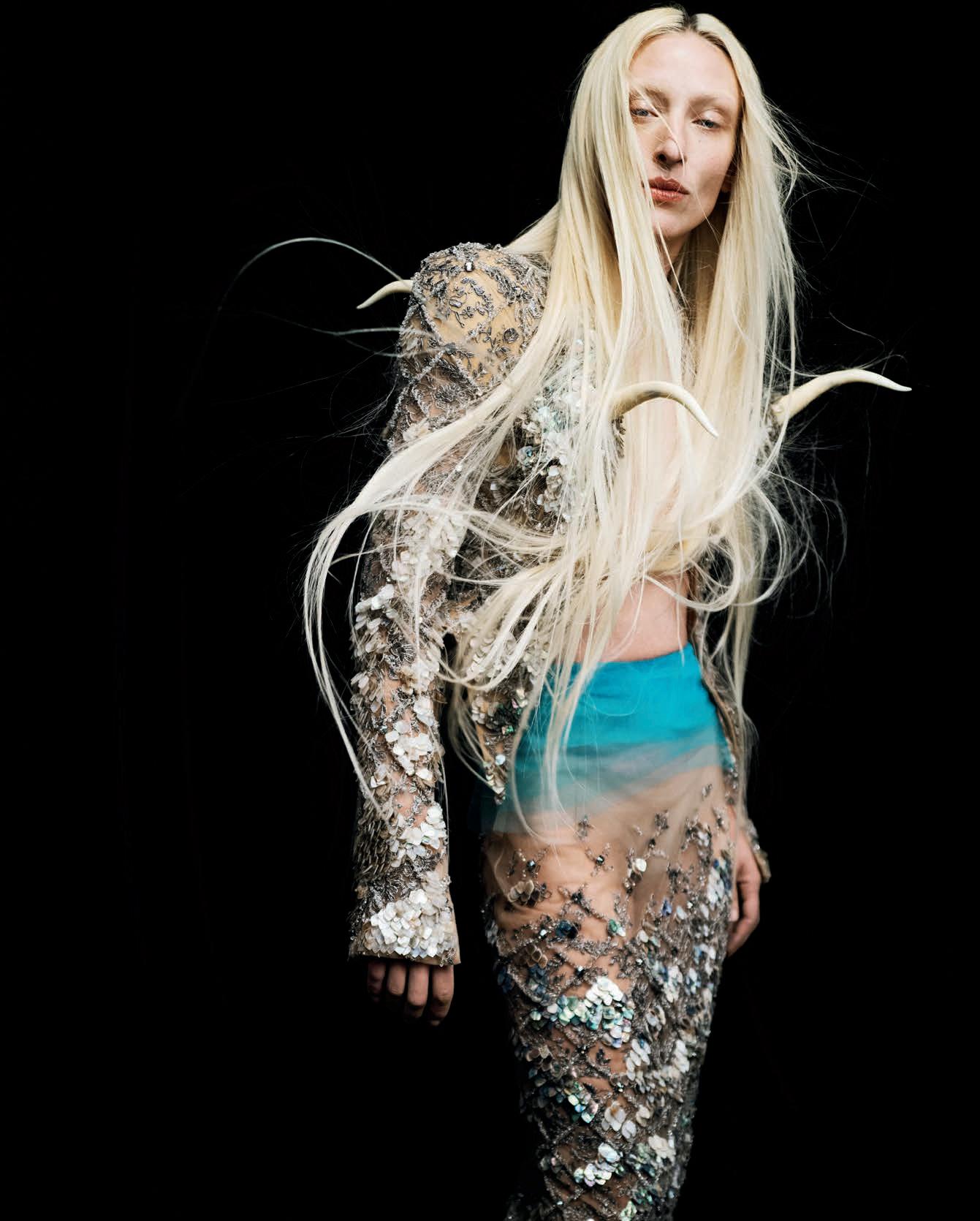
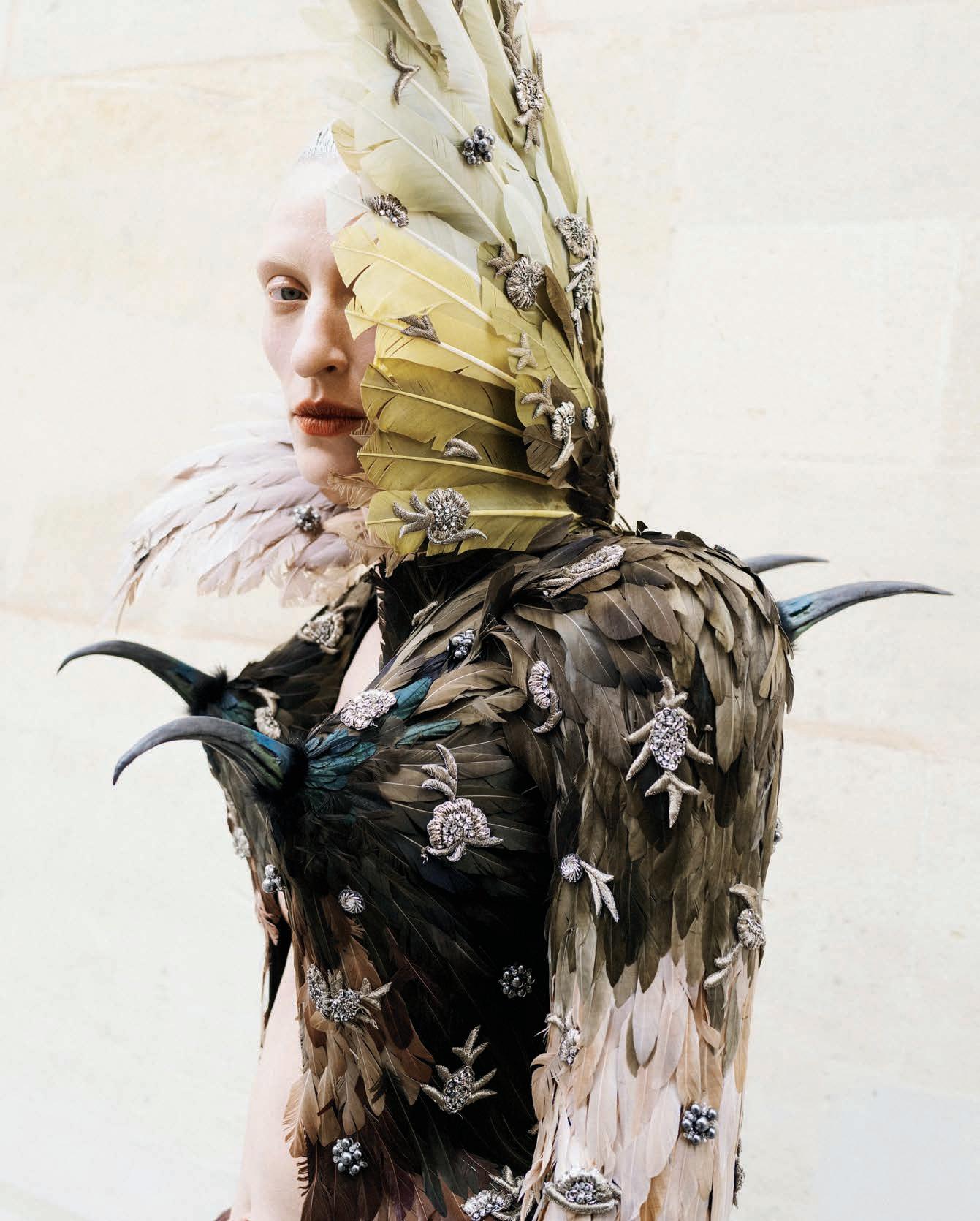
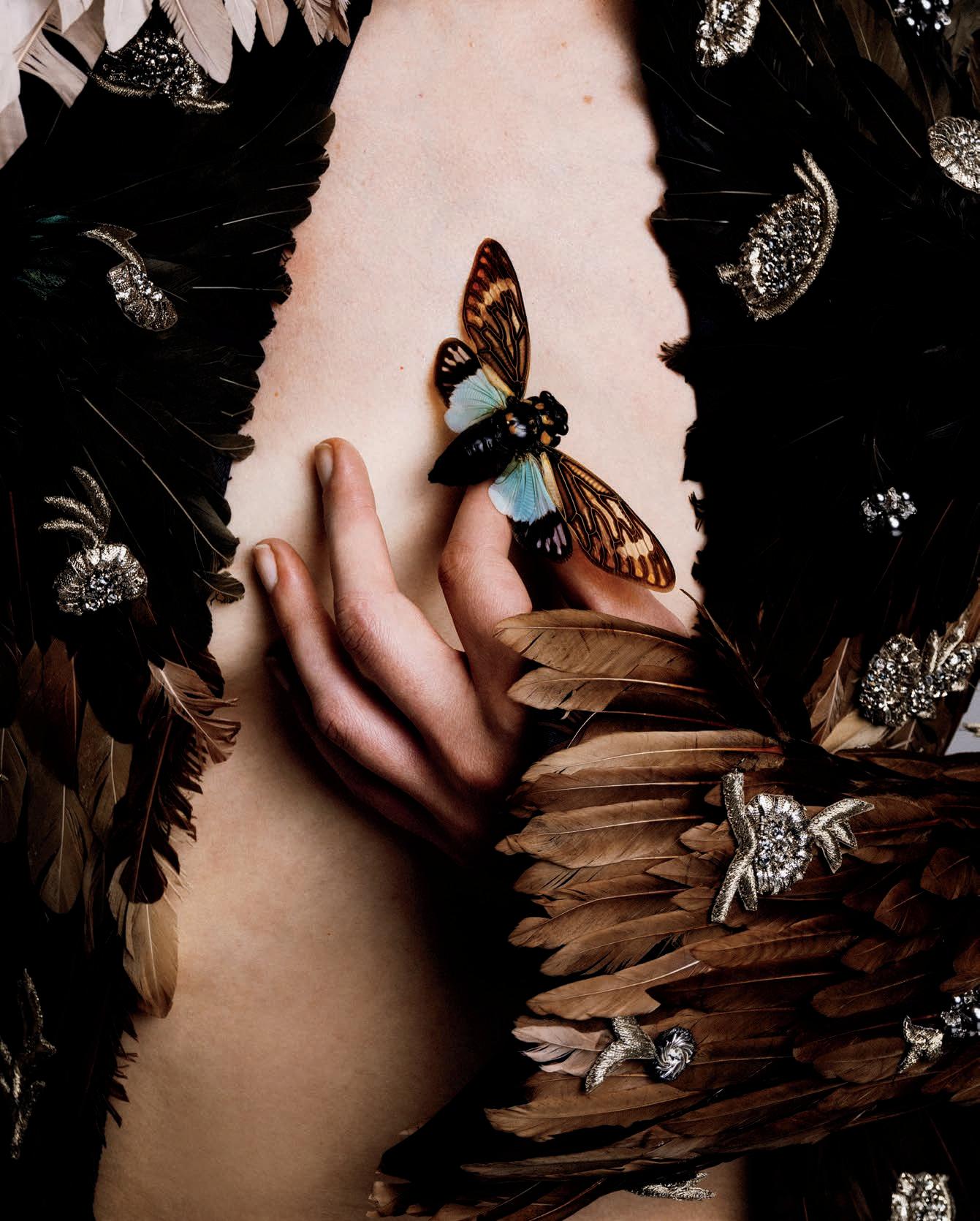
Modeling by Maggie Maurer
Hair by Laurent Philippon
Makeup by Simone Gammino
Nails by Christine Pho
Lighting Direction by Yuanling Wang
Set Design by Manon Everhard
Executive Production by Edlyn Ardivari
Production by Arthur et Philippine
Project Management by Chloe Kerins
Photography Assistance by Camille Suils
Porte and Emil Kosuge
Styling Assistance by João Bengala
Hair Assistance by Vincent Zimberlin
Set Design Assistance by Sassa Ann Van Wyk
First Assistance to Studio& by Cydney Moore
Seven Deadly Sins
Early Christian ascetics counted seven deadly sins—pride, greed, envy, sloth, gluttony, wrath, and lust—that threaten our ascension to goodness (and, by extension, to heaven). But in an era ruled by an allknowing Internet, a surreal beauty standard, and an insatiable appetite for material wealth, these vices are more of a playbook for success than a warning. What is a sin in 2026?
For the Indulgence issue, we asked seven figures—Jamieson Webster, Dries Van Noten, Christine Sun Kim, Griffin Dunne, Mia Khalifa, Brontez Purnell, and Helen Molesworth—to examine how one sin threads its way through their life and work.
By Mara Veitch
by Joshua Foltz
Illustrations
byPride Jamieson Webster
I think I now suffer from too much pride—I like my independence and self-reliance after more than 40 years of crawling my way there; I must maintain some semblance of professional integrity (for whom?); I want to be what little of what I am that I spent years painstakingly excavating in psychoanalysis (even as I know we are full of misrecognition, especially when it comes to oneself); I am tired of my wounds, which feel like limitations and not endless sources of inspiration. Woundedness feels old, the older I get. I prefer to live with hurt quietly. I know that I sound like a cliché of midlife.
“I could easily forgive his pride, if he had not mortified mine,” Elizabeth Bennet says in Pride and Prejudice. It may be that pride is coded differently for women. Like the American manosphere, we are talking about a certain kind of ambition, grandeur, tragic overreach. A woman with pride is accused of thinking too highly of herself simply for declining to disappear. Pride in women is rarely self- exaltation; it is more often the failure to yield.
When I was younger, strident refusal rarely felt prideful. More like a form of desperate survival. Or, I would yield with aplomb, hit the ground running, relish the gutter. Midlife has brought different movements: a desire to withdraw, to exit certain conversations, and the will to have my way with a little dignity and stay afloat. There’s so much further to fall now, so
much intimate knowledge of the distance. One of my few nostalgias is for the wildness of young ignorance, for the years when humiliation still felt theatrical rather than exhausting. The only reality television then was Girls Gone Wild and The Real World on MTV. Public disgrace still had a grainy, almost local quality to it. Now vanity arrives fully optimized. Was I a close cousin to Lauren Sánchez Bezos at the Met Gala, or that woman stealing champagne during the assassination attempt at the White House Correspondents’ dinner? A little pride, ladies!
Recently, I went to Florence to see Fra Angelico’s The Mocking of Christ. The titular figure shows an almost unbearable restraint amid a fragmented chaos of insult. Surreally, Christ is blindfolded, and as if from thin air, he is struck, spat upon, beaten with a stick. He does not defend himself. The scene is not only about humiliation, but about renouncing the narcissistic demand to restore one’s image before others or cast it off entirely.
To survive it without retaliation approaches something holy or terrifying. A simple fresco in a small cell with a little window, I imagined for a second this room as my own.
And yet I have to say I distrust humility too. Humility in women has long been rewarded because it keeps things running smoothly for everyone else. It is difficult not to hear moral injunctions against pride as covert instructions to remain accommodating, even ingratiating. Could my “indulgence” of pride simply be exhaustion with so many demands? The desire to stop apologizing for taking up space, but also to stop turning one’s injuries into prizes. Midlife brings a strange fantasy of restraint: not disappearance exactly, but containment. A little ground beneath your feet. Just a tad, to survive exposure without either collapsing or making a spectacle of yourself. Perhaps I’ll keep this strange pocket of pride, having made it to mortality, by which I mean really living from having lived.
Greed
The world today feels shaped more by greed than by beauty. You feel it in politics, in technology, in the relentless pressure to produce more and react faster. Everything accelerates while the space to reflect, to doubt, to truly look at things, quietly disappears.
Greed, as I understand it, is not only financial. It is emotional and intellectual, too. A desire to control, to optimize, to push uncertainty out of every corner of life. But we human beings do not grow through certainty. We grow when something changes us unexpectedly— through friction and mistake and surprise. That kind of change cannot be planned for.
The tragedy of greed is that it slowly closes people up. It standardizes desire, tells us what to admire before we have had the chance to discover anything for ourselves. The algorithm decides what deserves attention. Everything becomes predictable, and we consume endlessly while feeling less and less.
by Dries Van Noten
I grew up in a family of tailors, so commerce was never something abstract or frightening to me. I understood early in my life that fashion lives between creativity and business, that one is not the enemy of the other. But when business becomes the only language, something essential disappears. The care inside a garment. The quiet relationship between the person making it and the person who will one day wear it. The pressure to produce more collections, more images, more visibility rewards speed in ways that make it nearly impossible to ask why something should exist in the first place.
Stepping away gave me distance. It reminded me of what first drew me to this work, which was never really the industry. It was the feeling underneath it. The emotion a material carries. The atmosphere certain objects hold. The traces left by the hands that
made them. It reminded me of something I had never underestimated: how much creativity depends on other people. On being challenged. On being occasionally proven wrong. The moment you become too certain of your own perspective, something closes inside you. And when that curiosity goes, beauty goes with it.
Greed accelerates. Beauty asks you to slow down; you cannot experience it while rushing. For me, it is not about decoration or luxury; it is something necessary. It can calm you or bring a kind of order to your thoughts or simply make you notice the world differently for a moment. In a culture growing increasingly loud and aggressive, that is not a small thing.
In my own process, coincidence has always mattered enormously. You begin with an idea—then something unexpected
happens. Very often, a corrected mistake holds more life than the original intention. This is why I still believe so strongly in craftsmanship. Not because technology is bad, but because human beings bring something that resists replication. A sensitivity to atmosphere. An intuition about when something is technically correct but emotionally empty.
People are hungry for this again. There is a growing search for what feels genuinely human.
Maybe because greed has pushed life to such extremes, and reduced everything to usefulness. Beauty reconnects us to emotion, to memory, to other people, to the physical world. Not an escape from reality, but a way of remaining human within it.
Any actor who doesn’t envy the actor a step ahead of them is either lying or threw in the towel after landing a couple of credits on IMDb. From the first audition, there is always someone in the waiting room who shares your characteristics or vibe, with the main difference being that they often get the part you desperately wanted. At my first audition, an actor I would come to envy for years pulled a fiver from his wallet on his way out and gave it to the next guy in line, saying, “Blow the reading for me.” He went on to get the part. I thought that if I had his bravado, life might be different.
I often think of the lines Iago utters to Othello:
“O, beware, my lord, of jealousy!
It is the green-eyed monster which doth mock
The meat it feeds on.”
The last time I spoke these words was onstage during a dress rehearsal. I had no idea that afternoon that there would be no opening night, nor that it would be my last as a high school student. I was caught smoking a joint hours later, and the headmaster of my
boarding school sent me packing the next morning. Sitting on the Greyhound home, I decided to drop out and move to New York with dreams of opening as Iago on Broadway instead of the school gymnasium.
Ironically, the green-eyed monster that drove Iago’s lust for recognition would likewise propel my own.
Years later, in my flightless career, the green-eyed monster set its sights on the kindest actor I had ever met: Jeff Daniels. We had about as much in common as Jimmy Stewart and Ratso Rizzo, and despite how moved I was after seeing him in Lanford Wilson’s Fifth of July in 1980, a tumor of envy gnawed at me when I thought of how I might’ve approached that part.
By the mid-’80s, my career was—supposedly—orbiting Tom Hanks’s. We were both up for the role of Allan Bauer in Splash, a part I wanted so badly I can still conjure the feeling.
We all know how that turned out. As we working actors age, burning
with envy isn’t sustainable. Real things—like death, or divorce— finally trivialize the urge to deny our colleagues their hard-earned accomplishments.
Yet during my season of compareand-despair, it never occurred to me that while I conjured jealousy for others, another actor might feel the same toward me. At a party during a bygone era in a SoHo loft, I was introduced to a man about my age, of a similar weight and height, and with similar coloring. I put my Styrofoam cup in my left hand and stuck out my right to introduce myself. He looked at me and spat, “We’ve met twice. You never remember my fucking name.” I was deeply stung and never forgot it again, especially when he’d pop up on Criminal Intent and many other shows, often playing angry lawyers.
Some years on, a close friend of mine asked me to star alongside her in a network series. I couldn’t do it for reasons now forgotten, which upset her enough to beg, “If we can’t have you, is someone like you? Don’t you have a doppelgänger out there?”
by Griffin Dunne
I gave her the name of the angry young lawyer, and he landed the part. I learned later that, as the actors made small talk before the table read for the show’s pilot, my friend overheard him say, “Griffin Dunne thinks he’s such hot shit.” She stopped him cold. “How do you think you got this part? He’s the one who suggested you. I’d never even heard of you.” The table went quiet until the actor, shamefaced, said, “Griffin knows who I am?”
The entertainment industry— maybe all industries—thrives on the avarice, envy, and caged warfare that pits one constituent against another. But without a little green-eyed envy, we all might still be reading by candlelight. Maybe Steve Jobs had a bug up his ass about Edison, who had a bug up his ass about Tesla. Picture a young Robert De Niro nervously eyeing a young Al Pacino at a casting call. How many directors made their first great films while torturing themselves with the knowledge that Orson Welles was only 25 when he shot Citizen Kane? I have no idea, but I do know this: I have yet to play Iago.
Sloth is, for me, the most complicated of the seven deadly sins. I can easily resist the messy, unkempt part, but sloth also encompasses laziness, an attribute that haunts me. I come by it honestly: I am a Taurus, and indolence is one of the sign’s attributes. We like to lie around and luxuriate. Like Ms. Shirley Chisholm, we prefer to be unbossed (and unbothered). My idea of a great day is to read in bed, read at the beach, and have a good meal before heading off to bed early. Rinse and repeat. Yet I have never let myself be as lazy as I desire. This is probably because I am plagued by desire: for recognition (pride), beautiful things (envy), and great food
(gluttony). Then there’s the unfortunate reality that my taste has always exceeded my means. What’s a middle-class girl to do? I cultivated a work ethic that disguised my truer nature.
This explains why I am attracted to artists who flirt with not working, not making things— artists who succumb to laziness. There’s Lee Lozano’s General Strike Piece, 1969, which starts with a command to herself: “Gradually but determinedly avoid being present at official or public ‘uptown’ functions or gatherings related to the ‘art world.’” Imagine never having to work a room again. Dreamy.
Or how about Robert Barry’s Closed Gallery, also 1969? The invitation to the show read, “During the exhibition the gallery will be closed.” Barry said, “Nothing seems to me the most potent thing in the world.” In 1970, Tom Marioni started his decades-long The Act of Drinking Beer with Friends is the Highest Form of Art. Why make work when you can hang out with your friends? Why not try to do exactly what you want and call it work? It’s no mistake that these gestures emerged during the heyday of the counterculture in America, when everything, even what constituted labor, was up for rethinking.
Sloth by Helen Molesworth
No tract on an ambivalent relationship to working would be complete without Duchamp’s famous quip: “Deep down I’m enormously lazy. I like living, breathing, better than working.” I have long admired that when he did work, he did so out of view of others. If one was going to indulge in the ego gratification of work, one could at least have the good manners not to turn it into a performance that demanded everyone’s attention and praise. (I confess I find our contemporary equation of being busy with being important incredibly tedious.) Instead, when Duchamp worked, he did so behind a secret door.
His final major work, Étant Donnés, 1946–66, one of art history’s most beguiling mysteries, was born from just a touch of sloth.
The problem, of course, with true laziness, is that a woman’s work is never done. Just living takes work. Someone’s got to wash the clothes and clean the house and cook the food. This is why the genius Mierle Laderman Ukeles came up with the idea of “maintenance art.” From 1970–73, she made Private Performances of Personal Maintenance as Art in which her daily labor as a wife and
mother would count as art. Call it double-dipping.
But perhaps laziness is not the sin we imagine it to be? Perhaps capitalism truly is an aberration? Perhaps work is not what God intended for us after all? In his infamous tract The Right to Be Lazy, 1883, the French writer Paul Lafargue (who happened to be Karl Marx’s son-inlaw) wrote: “Jehovah the bearded and angry god, gave his worshipers the supreme example of ideal laziness; after six days of work, he rests for all eternity.”

and it was like the world finally said, “Be fat and love
Gluttony
yourself bitch,” to which I said “ASHE”—I was eating donuts and fried chicken all of quarantine pretending my genes ain’t hella diabetic. And then came the blood test.
“Um, you have type 2 diabetes,” said the doctor. All of a sudden, I was like, “Wait, you mean I’m mortal?! FUCK.” And then came the drugs.
I went on the designer one, Mounjaro, in 2024 and literally dropped 64 pounds in a month. I can’t tell you the DYSMORPHIA that ensued from going from proud fat bitch to fake skinny bitch in 30 days, but the main thing I noticed was less Black dudes hit me up online when I wasn’t thicc anymore. This is kind of why I love us, but in truth, it was a come-to-Jesus moment.
A friend said it best: “In gay world, you can be really skinny, really muscular, or even fat as fuck, but you can’t be average.” I was like, “DAMN, that seems very likely. I will immediately adopt this saying as absolute truth.”
The one thing lingering in the air was the fact that I actually had diabetes. Like, my doctor explained to me that when you actually have a disease, the cost of the drug drops like 96 percent—but I still had this weird knee-jerk reaction that by being a fake skinny bitch I was crossing this moral picket line, that I personally had never even thought about. By taking GLP-1s, was I “being a poser”?
As always, I called my biggest hater (and supporter), my mother, and she was like, “You are almost 50 fucking years old, you don’t have to justify yourself to ANYfucking-body.” She said it in a you’re half dead, bitch, just be skinny kinda tone. Okay, but then my whole skinny girl retrograde took another astrological shift—I lost my insurance, so they took me off the designer drug and put me on the cattle call GLP-1, Ozempic. Oof.
They put me on an extremely low dose (to make sure I didn’t shit myself—one side effect of the drug), and I started packing on
the pounds again. I felt like Icarus falling back to Earth, but then I realized that, after four decades of struggling with my weight or being wildly different weights, I have actually never known exactly WHAT the fuck I’m supposed to look like. I just didn’t wanna die like the grandma in that movie Soul Food (even though, I dunno, that food looked bomb so I can imagine her dying happy). I have learned the hard way that “beauty” as we know it isn’t about happiness—it’s about making sure that the world knows how much you suffered to be beautiful. My biggest question mark with the weight loss drugs was how EFFICIENTLY they cut through that equation. They left me with one deep ponderance: Is Ozempic just an elevated form of anti-gluttony? Is that sinful enough? Either way, elevated anti-gluttony feels elegant.
by Brontez Purnell
I’ve been giving a lecture recently, a performance where I hit audiences with scenes from television series and films featuring deaf characters. Over and over and over, the audience watches these characters get shot, get drowned, get stabbed, and die. The clips are gruesome. This section of the talk is meant to go on and on and make my point for me: In the televisual subconscious, there is a need to eliminate deaf people and deafness.
represented the beginning of the Americans with Disabilities Act (ADA) era. While we were having a glass of wine, I received a text from a hearing family member, who shared a New York Times article about the first FDA-approved gene therapy treatment for a rare genetic form of deafness. They mindlessly wrote: “amazing.”
After one of these lectures not long ago, I gathered with a group of deaf people from the audience, including Greg Hlibok. In 1988, Hlibok played a pivotal role in bringing Gallaudet University—the first and foremost university for deaf and hard-of-hearing students—its first deaf president. I was 8 at the time, and to me, he and other protest leaders
This treatment and the media narrative around it are in line with the countless instances of deaf death in popular media. It is eugenics, plain and simple. The broad deployment of these gene therapies erases any room for ethics or nuance in the broader cultural understanding of deafness not as a pathology to be fixed, but, as deaf activists have argued, as a crucial part of human biodiversity. I was 10 when the ADA was signed into law in 1990. I witnessed firsthand
what that accessibility looked like as it blossomed: captions on TV, interpreters in classrooms, protections in the doctor’s office, and widespread access to spaces that had been barred to deaf participants. As my rights expanded, so did my life and my identity. I was able to pursue my passions and gain a platform as an artist. Now I am watching that progress erode. Almost 10 years ago, I made a series of drawings called “Degrees of Deaf Rage.” At this point, rage is not enough. Wrath is.
When I look at my wrath closely, I get sick. I live alongside deaf people who have been deeply affected by inaccessibility. Two common injustices haunt me the most. One is the familial isolation that many of us encounter, especially with parents who never took the time or effort to learn sign
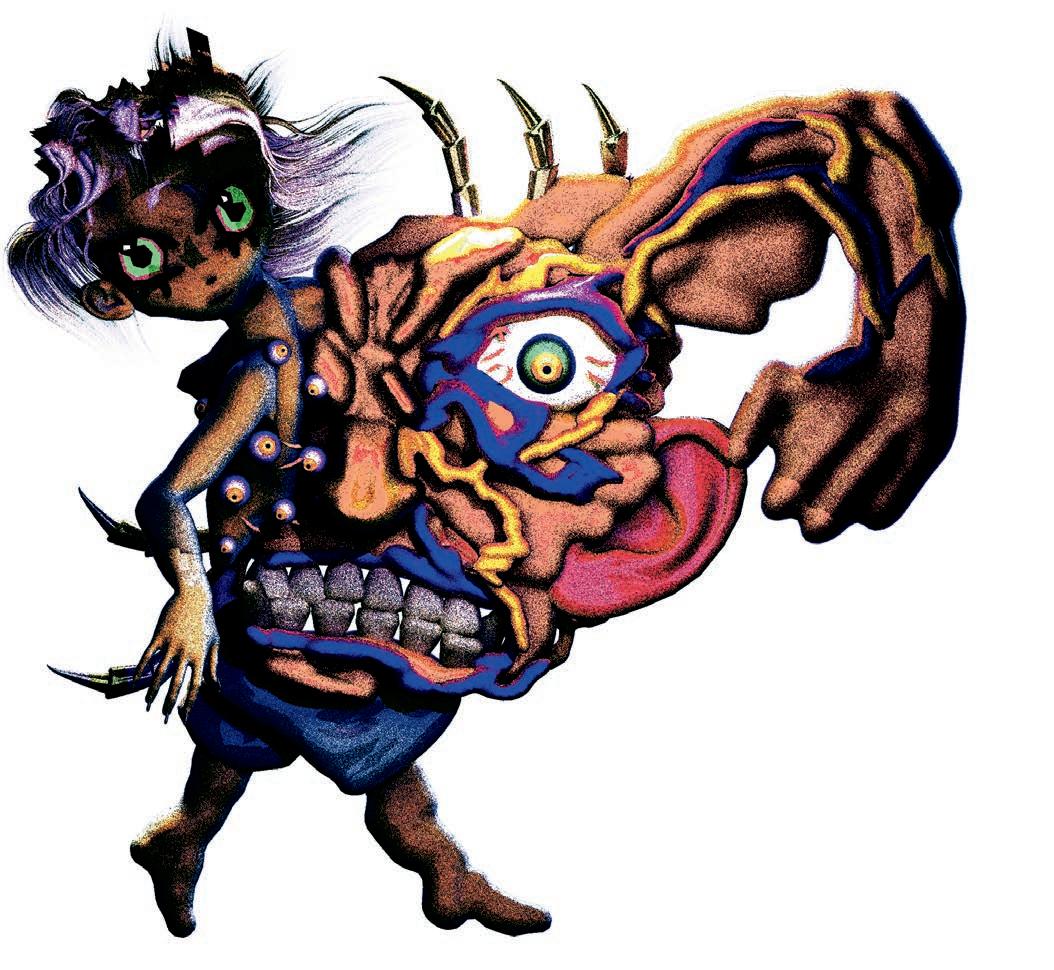
language. That severing of a parental relationship cuts deep. The other is language deprivation, where deaf kids are blocked from learning sign language during their critical language acquisition periods. Language deprivation impacts people for life.
Yet the dark moments are dark. Deaf people have survived countless attempts at erasure, but this one feels different. We are being erased before we are even born. I fear for my community, our history, our culture, and our language. And the fear grows into anger, into rage, into wrath.
I texted my family member back: “unsend ‘amazing’ please.” They reacted with a thumbs-up.
Disability rights are not perfect, but they have propelled me to where I am today. In moments of darkness, I am buoyed by the words of Dr. Corinna S. Hill, a professor at the Rochester Institute of Technology’s National Technical Institute for the Deaf. She has pointed out how, throughout history, the dominant culture has always tried to assimilate and eliminate deafness. They isolated us in mental institutions. They prevented us from learning sign language. They sterilized us. But we are still here, and our culture is still strong.
by Christine Sun Kim
Lust
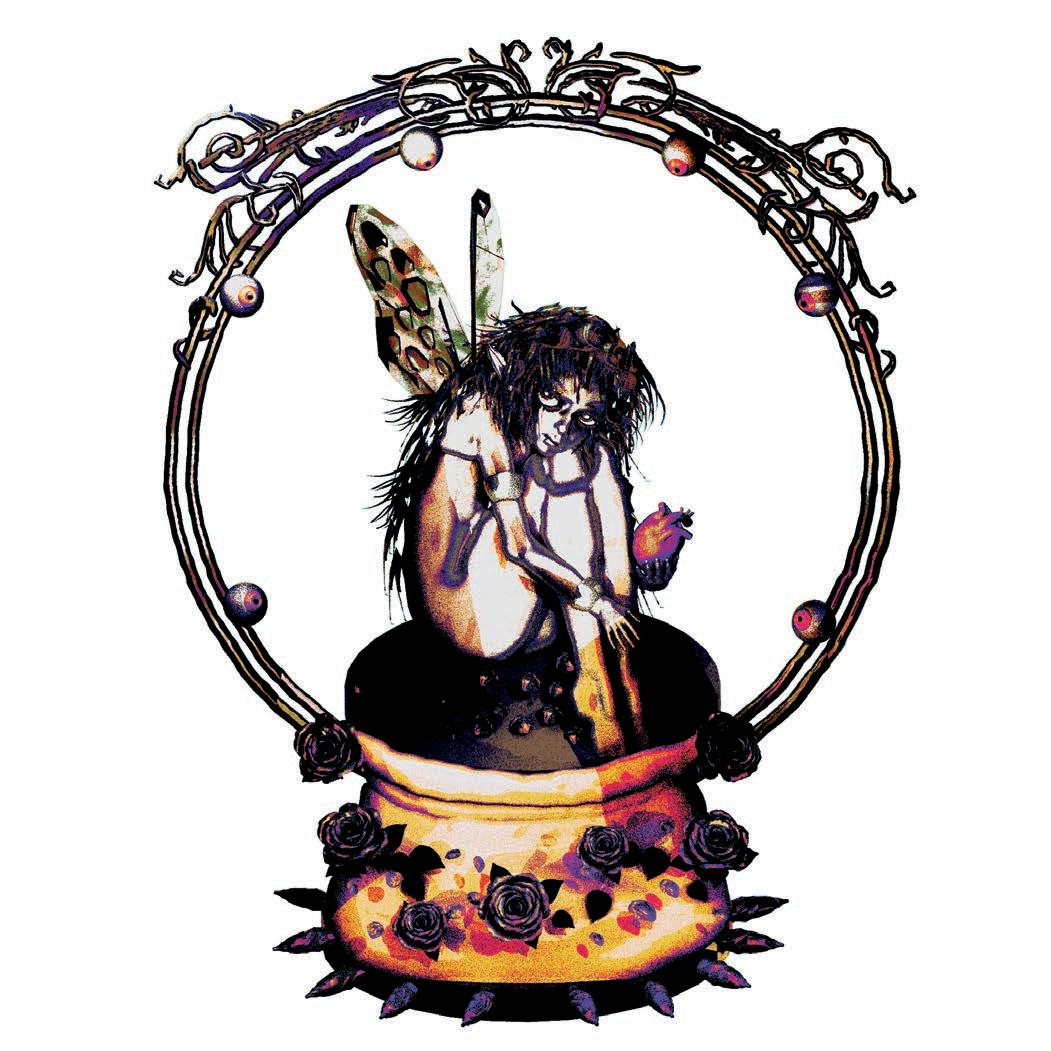
Lust, to me, is just carnal desire. It’s an impulse. You don’t care whether the outcome is good or bad; you don’t care about the consequences. In my teenage years and early 20s, I never thought that far ahead. I made a lot of decisions based on lust when it came to my sex life. All of that accidentally became very public… another impulse.
by Mia Khalifa
Doing porn was definite- ly part of that. I mean, I was in it so briefly. And as soon as I began to re- alize the gravity of what I had done, I left and never went back. Part of it was that my lust wasn’t necessarily for sex. It was for validation and accep- tance—these things made me betray myself and my values before I was old enough to even know what they were.
Finally, after a relation- ship with someone who didn’t control their lust, I took almost two years of celibacy. I felt like I’d lost control over who I shared my body with, be- cause he was sharing his with… everyone. At that point, I had been through enough in my life; I need- ed to fully step away. Two years is a long time, girl. I could hear colors. My friends joked and called
me a nun. There were a lot of times that I wanted to act on my lust, but—Is this person worth it? Are they going to add to my life, or are they just going to deregulate my nervous system?
I learned to look at lust the same way I look at jealousy or envy. It’s no longer an emotion that I want to put much energy toward—or even come close to acting on. The celibacy taught me that, in a big way, I’m healed. It’s not like I went two years acting like a nun, I still very much took care of myself—needing val- idation is one thing, the human need for orgasm is another—but it taught me how many interac- tions are rooted in a need for acceptance rather than connection. I learned how to discern the difference.
Maybe, as I’ve gotten older and experienced the dark side of lust in my life, I’ve overcorrected. Listen, I still have mo- ments where people are like, Were you thinking when you did that? But I have reined that in, to the point of over-analyzing and over-assessing risk versus reward when it comes to love, business. There’s something beautiful about the adrenaline, the—what’s the word when you do things on a whim? Spontaneity. You can’t replicate that with a slow burn or by inching toward a goal. Acting on lust is like taking a risk, and risk is such a big part of being alive.
THE 2026 YOUNG WRITERS
IN COLLABORATION WITH MONTBLANC
What is the future of literature? And who is shaping it? CULTURED’s inaugural Young Writers list presents 10 authors— and 10 answers to the burning questions confronting their work.
There’s something incandescent about a young writer. Perhaps it’s their intimate communion with the literary canon—or their ability to condense the ether of contemporary life into narrative archetypes that will ultimately yield a new one. Certainly, we owe our ever-growing reading lists to their willingness to sustain their work even when the demands often eclipse the rewards.
These days, young writers face a gauntlet of pressures laid out for them by a deeply distracted culture and a bedraggled publishing industry that once served to undergird a lifelong career. Advances are shrinking. Tours are a thing of the past. The urgency of an adaptation-worthy manuscript is bearing down harder than ever, and an online following is practically a prerequisite.
It is into this turbulent landscape that CULTURED is releasing its first-ever Young Writers list.
Developed in collaboration with Montblanc, the beloved companion of all serious writers, the list spotlights a group of rising talents. This September, one of the writers in these pages will be awarded an unrestricted cash prize to support their work, part of the historic brand’s longstanding commitment to literature and writing in an ever more digital world.
Here, 10 authors aged 30 and under, all of whom will release new books in the next year, give us 10 reasons to be hopeful— and 10 forthcoming titles to add to our reading lists.
Rayne Fisher-Quann 24, New York
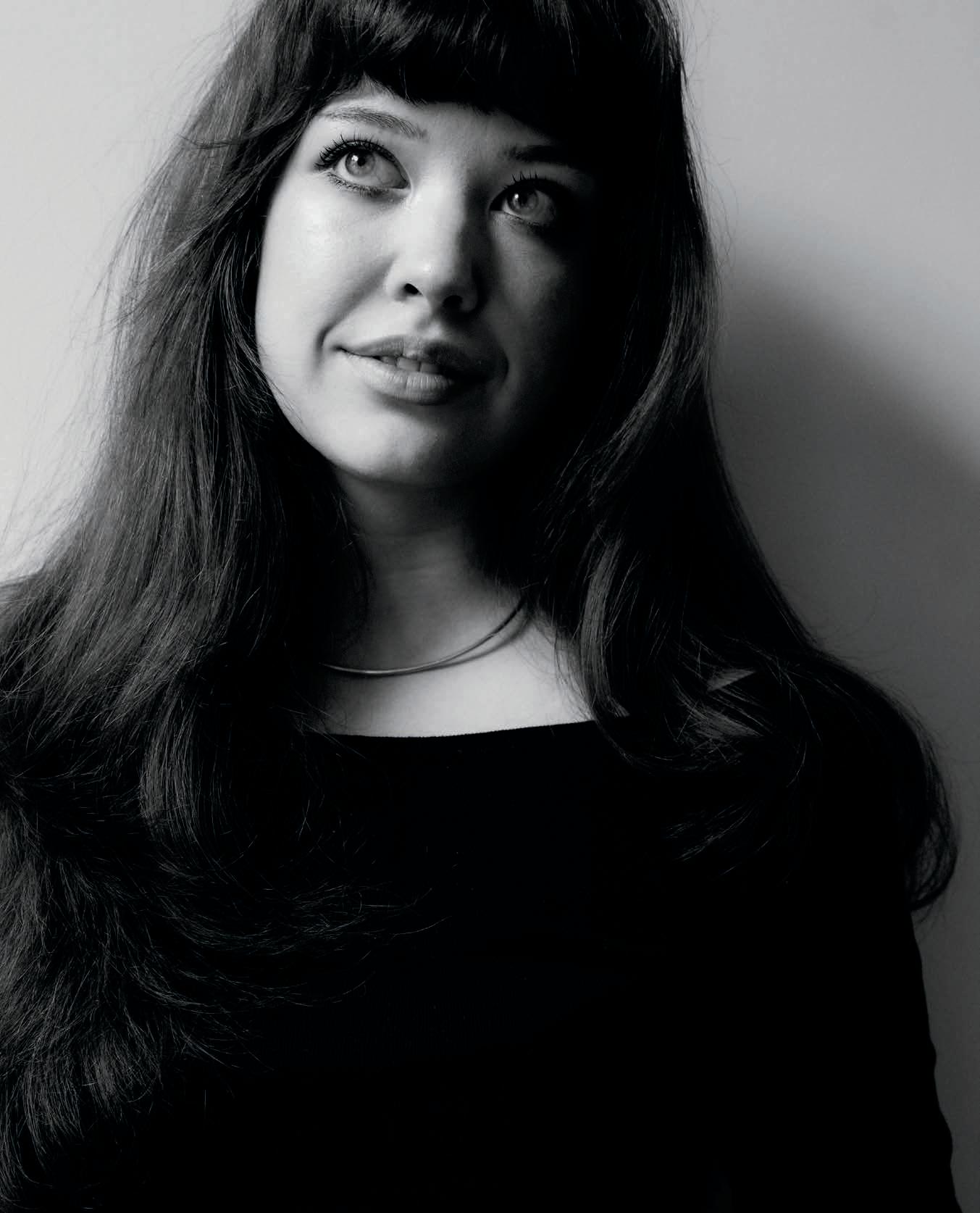
Around publishing circles and the proverbial social media water cooler, Internet Princess, Fisher-Quann’s Substack, is practically legendary. After using the platform (and a few well-placed op-eds) to publish such viral, verbiage-coining pieces as “The Cult of the Dissociative Pout” and “Who’s Afraid of Amber Heard?,” the writer is taking her sharp eye for cultural critique to Knopf with her debut book of essays.
Describe your writing ritual.
It’s always different. A lot of the time, I read, research, and sleep all day; go out with friends in the evening; get home at midnight; start writing at 12:30 a.m.; and fall asleep when the sun comes up.
If you had to blurb your own book, what would you say?
Yesterday, my dad told me what he wants to put on his eventual gravestone: “HE TRIED HIS BEST; HE HOPES IT WAS ENOUGH.” I think that applies. Describe a moment when you lost faith. What would you tell that younger writer?
I lose faith in myself as a writer every time I write anything. The advice I try to give myself is, “Remember that this happens literally every time!!!!” It’s hard because no feeling remembers another feeling. Once, I recorded a video of myself at the lowest point of writing
Complex Female Character, Coming Fall 2027
an essay (that one ended up working out). Now, I watch it whenever I feel hopeless to remember that I’ve been through the cycle before.
What’s one word or phrase that you find yourself using (or over-using) in your work right now?
It’s not even fun: “Strange and sad.” I guess I like the alliteration? I realized recently that I described like six things in my book as “strange and sad.”
What do you think your generation should read more—and less—of?
More stuff that was written over 75 years ago. Less micro-essays rehashing a discourse of the week.
What’s the most romantic part of living as a writer? The least romantic?
The most romantic part is that you meet a lot of romantic people. The least romantic part is that I have developed a neck hump from computer usage.
Where do you buy your books?
McNally Jackson, Spoonbill & Sugartown, and ThriftBooks.
Describe a “lowbrow” reading indulgence of yours.
I love really rich women’s blog posts about the makeup they buy. Or about anything, really. And I could read a million gift guides.
Photography by Hero Bean Stevenson.
Lydia Mathis 29, Atlanta
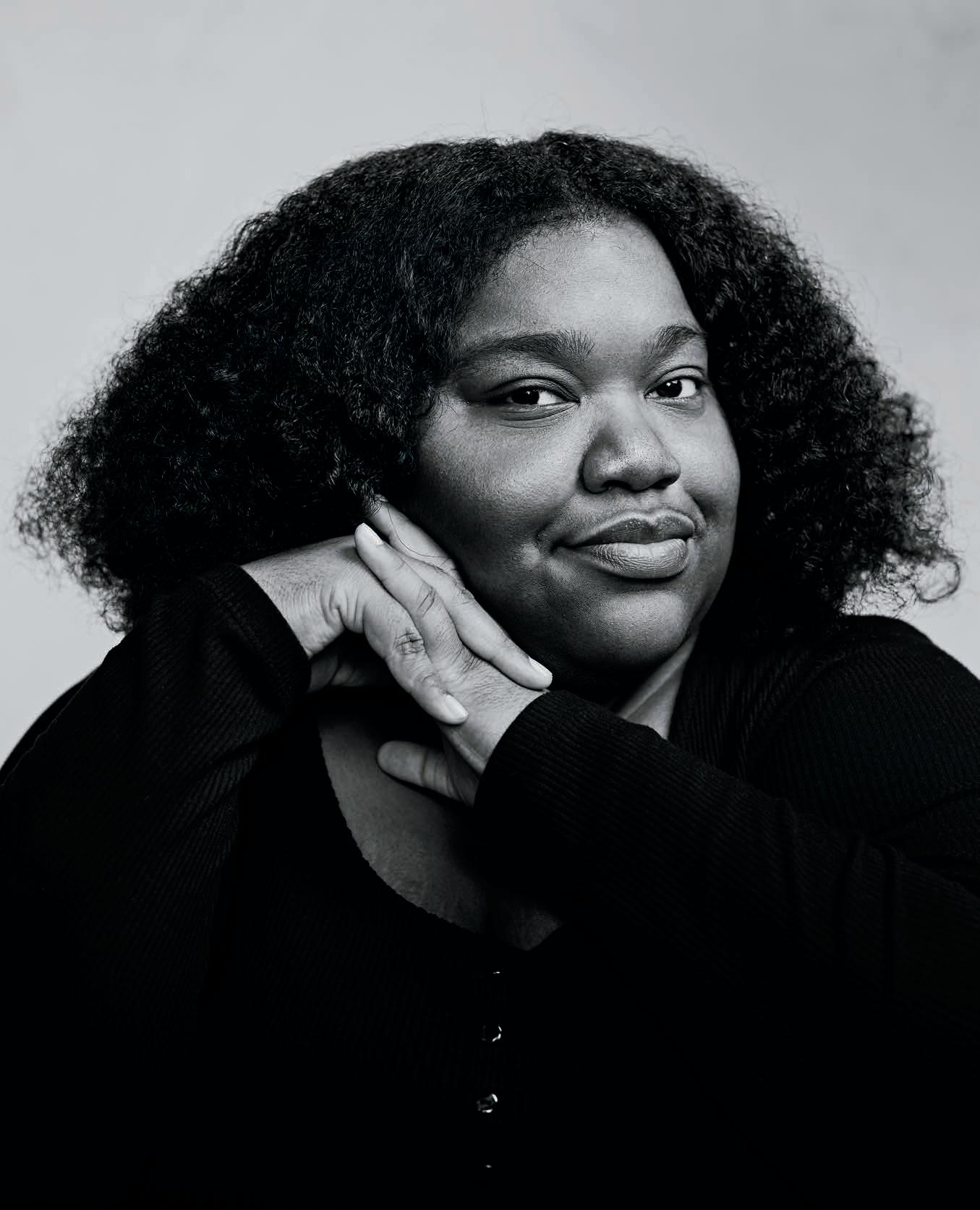
In her debut short story collection, Mathis explores the bodies of Black women and girls in both everyday and fantastical circumstances. A bloody figure steps into the office of a college safety officer, a sex worker and her client meet at a parent-teacher conference, a teacher shares her apartment with a ghost. Emerging from critic Roxane Gay’s imprint, the new title presses desire hard up against the power systems that would corral it.
What’s one work that crystallized your voice?
It’s hard to choose just one—every book I’ve read has given me a little insight into what I could do and permission to do it. Like when I discovered how long paragraphs could be in José Saramago’s Blindness or the mixed media, fold-out translation/memoir that is Nox by Anne Carson. But I think Ottessa Moshfegh’s Homesick for Another World was what really showed me the weirdness that I eventually let infiltrate my writing voice. What do you think your generation should read more—and less—of?
I think this generation would benefit from reading more widely and diversely. I mean that in a multitude of ways.
Desperate Bodies, Coming September 2026
They should be reading from a range of races, cultures, countries, and the like. They should also be reading different points of view in terms of narrative perspective. It is insane to me when people talk about hating first person or second person or third person—I think that is a result of low exposure. My generation should also be reading diverse writing styles (long paragraphs, long chapters, mixed media, no quotation marks, etc.) as well as different genres. People are closed off to a vast range of stories because they are convinced they hate some element it might contain.
Describe a “lowbrow” reading indulgence of yours. I wouldn’t call anything lowbrow. I know the work that goes into creating a book, and that applies to any genre or type of writing, but I do have things I read that are purely for pleasure and feel indulgent. I am a big fan of romance books that have a little something extra going on. I love a paranormal romance. Werewolves are my weak spot (though I’ll never be team Jacob). In 2020 or 2021, I discovered fan fiction. I haven’t been the same since.
Photography by Andrew Thomas Lee.
Emeline Atwood 30, Austin
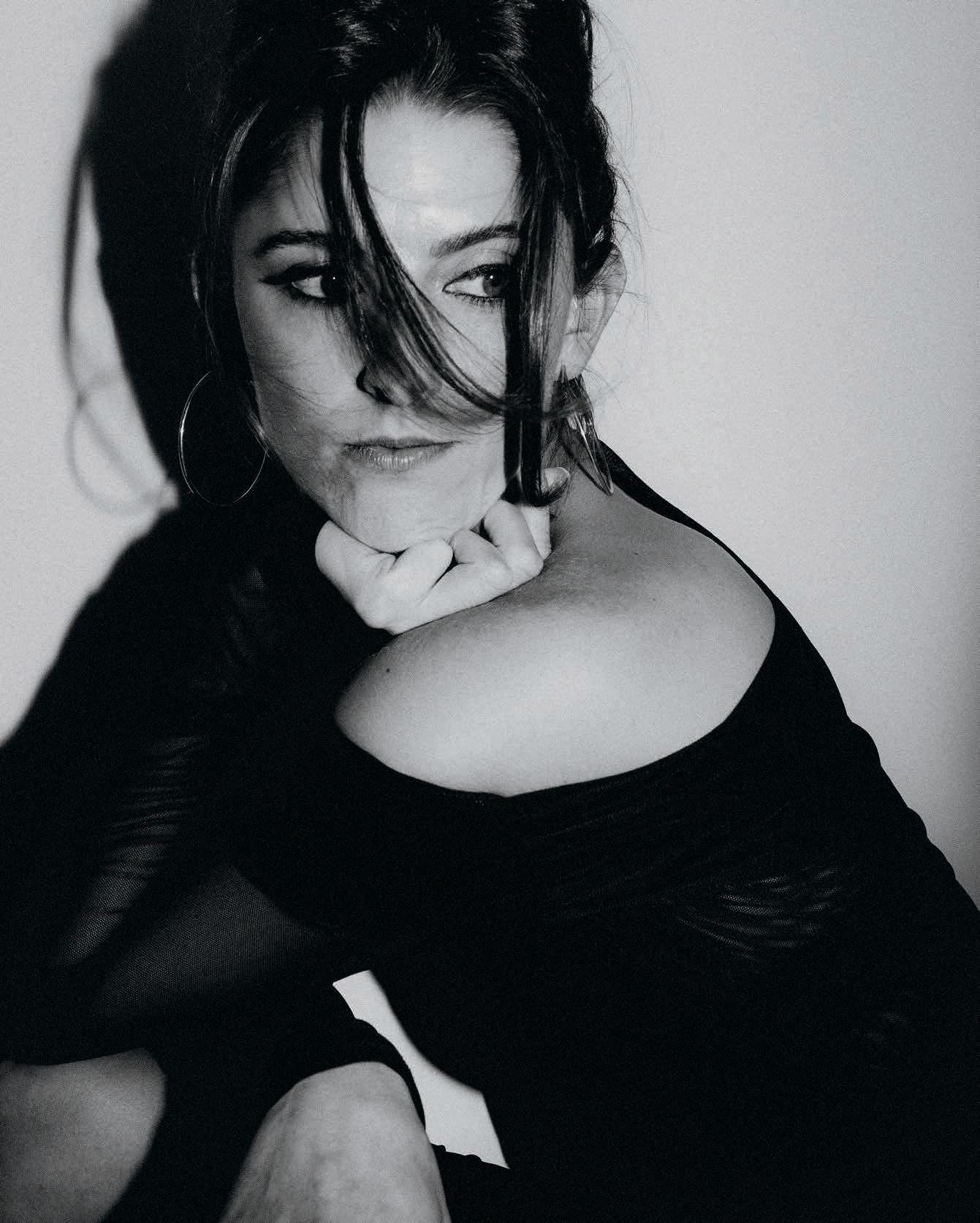
If you’ve scrolled through most-anticipated lists recently, you’ve likely seen Atwood’s provocative bull-meetswoman’s-crotch book cover. A Real Animal is the writer and poet’s debut novel, following a 20-something woman’s descent into her animal instincts while navigating sex, familial relationships, assault, and cross-country moves—the line, of course, between those instincts’ metaphorical and supernatural character becomes blurred.
What’s the biggest challenge young writers face today?
One that I’ve felt in my own body is this challenge of disembodiment, this farming out of our brains, this crisis of technological mimesis that would dizzy [Walter] Benjamin, this world that’s tricking us into thinking we’re connecting when we are not, that we are looking into the eyes of another when we are not.
It is possible, in this world, that people will stop reading, will stop being able to spell, stop being able to finish thoughts without the help of a chatbot, that people will no longer be able to hold a pen or write a cursive G. Don’t let that happen to you.
Describe the moment you decided to pursue writing as a career. What made you think you could pull it off?
I can’t think of a time when I didn’t dream of publishing
A Real Animal, Coming July 2026
a book. Lately, in the madness that is this world, I’ve become more envious of people with faith—the kind where your belief in a higher power makes you better at suffering and feeling and forgiving and shedding—but I have always had faith in my sensibility as a writer, that I can pick up on the nerves of a situation, the “moments of being” that “prick” you (Virginia Woolf), that are violent with meaning and full of narrative, that give and give when you press on them. Even if horrible things happen to me, I have faith that I can survive them because I can write through them and into them.
What do you think your generation should read more—and less—of?
More poetry. Less nonfiction about “optimization.” Read a whole book of poems, or read everything that a poet has ever written, like Walt Whitman, or Dionne Brand, or Emily Dickinson. Read things that make you forget yourself. Don’t read things that you hope you’ll remember so you can impress someone later when you regurgitate them. If you do want to remember what you read, then memorize the whole book. Know what you read by heart—as in, it’s in your heart.
by
Photography
Scout Hunt.
Cay Kim 27, New York
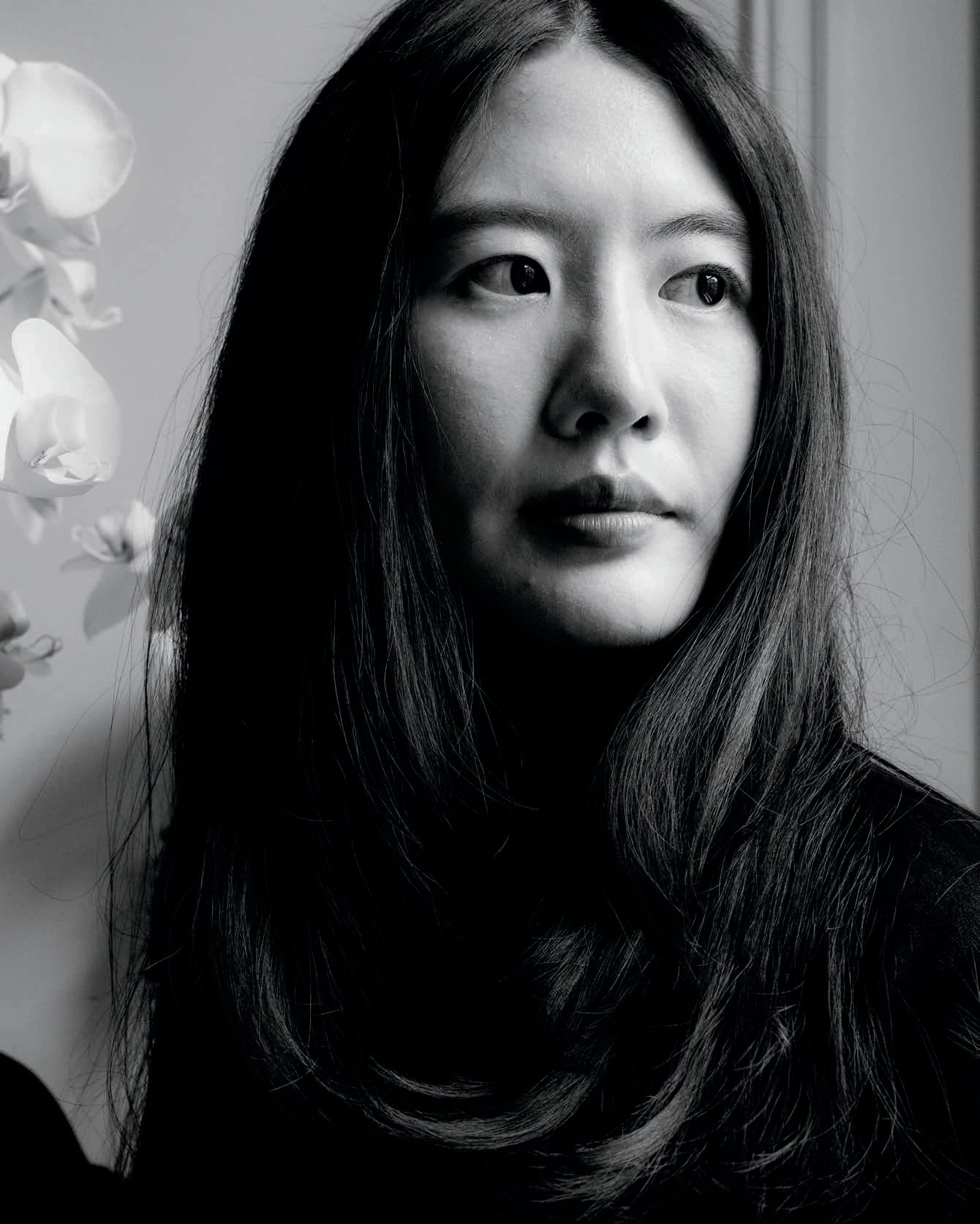
The delicate tension at the heart of Kim’s debut novel is one that the author—who was born in Seoul before being whisked Stateside and studying in New York (where she received her MFA from Columbia)—knows well. Caught between two places and cultures, her young protagonist travels between Korea and the U.S., subject to the whims of a mother intent on realizing their child’s full potential—at the expense, perhaps, of their present happiness.
What’s writing for you? An act of agony? Delight?
I write to mitigate the agony inside of me. I began writing through reading poetry. I was exposed to contemporary poetry in a classroom for the first time, and it felt astonishing, in an alter-your-brain-chemistry way, that black scribbles on white paper could induce an emotional release in me that had up to then been impossible by any other means. It’s been a one-way ticket from that moment.
What’s the biggest challenge facing young writers today?
The fact that we live in a society that increasingly only values capital. Literature is inherently anti-capitalistic because it dispels the myth that social or monetary valuation has any relation to the true worth of something. The structures that have raked in gargantuan profits
The Future Perfect, Coming June 2026
by perpetuating capitalism have squelched the literary ecosystem. It survives, but under great duress.
What three books make up your personal canon?
The Lover by Marguerite Duras for its inimitable originality in voice and form; The Passion According to G.H. by Clarice Lispector for capturing the language of human spirituality; Housekeeping by Marilynne Robinson for its rare feat of centering beauty without forfeiting subject matter of the utmost gravitas.
What do you think your generation should read more—and less—of?
We should all read more poetry. Nothing quite brushes upon the soul like poetry does. Literature in general does this, but poetry specifically is the opposite of certainty. Negative capability is the term for it—the willingness to embrace the unknown, the possibility that what I know to be true might not be true, etc. This kind of cognitive flexibility is what helps us move through the world in the most humane and evolved ways, I think.
What creature comforts do you turn to on deadline?
I can’t get enough of baths. The only other person I know who dies for baths as much as I do is my Japanese friend, and it’s obvious to me that this is because we grew up in bathhouse cultures.
Photography by Hero Bean Stevenson.
Harold Rogers 29, New York
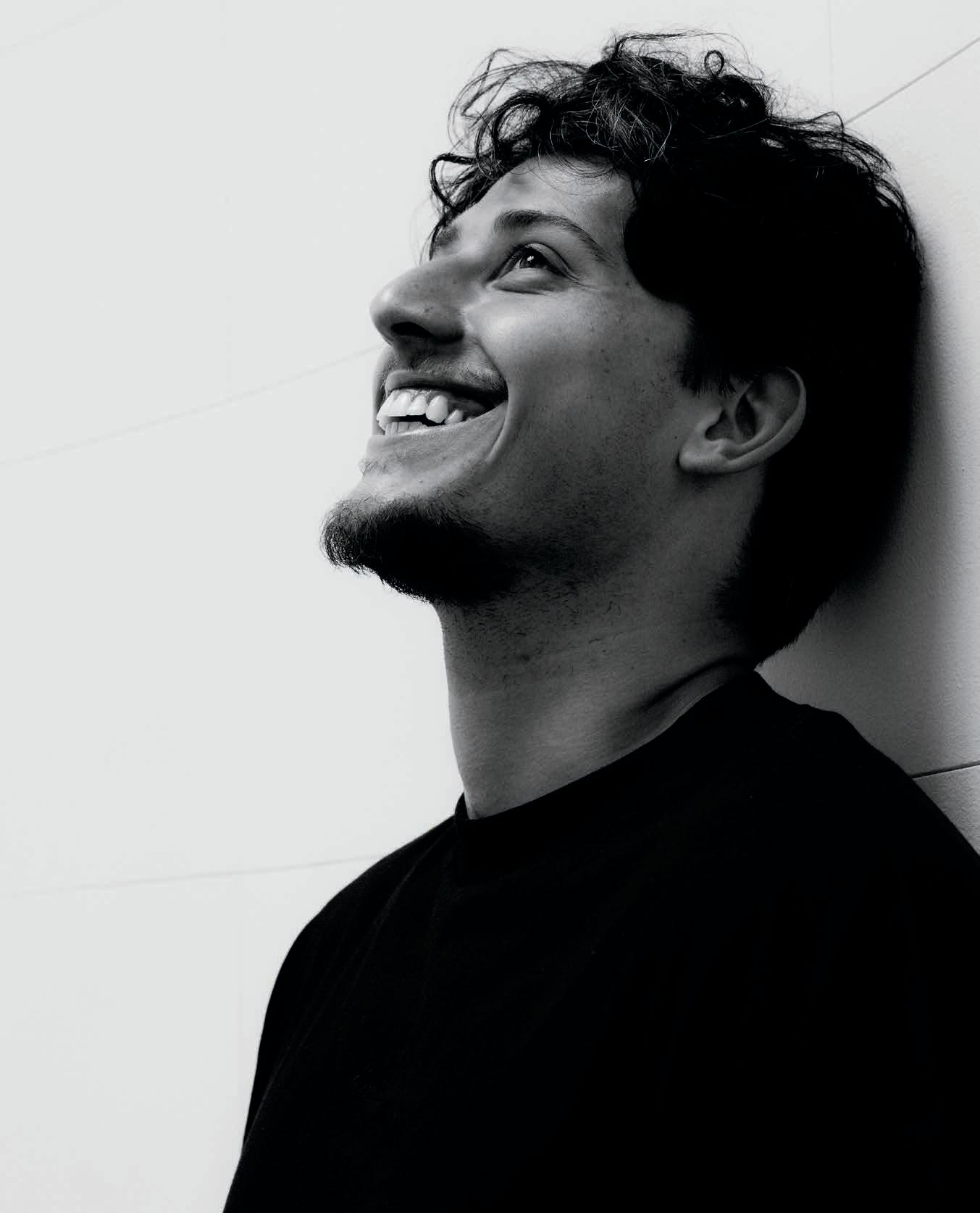
Boxing coach, stand-up comedian, author: Rogers’s life is a grab bag of gigs that transmogrify vulnerability into something else entirely. In the Brazilian-American’s writing, the humor and hardship of self-exploration coalesce. His 2024 debut novel, Tropicália, sees its newly dumped protagonist’s life upended by the return of the family’s matriarch to Brazil. His follow-up, Humpty Dumpty, stars a high school quarterback whose shine is dimmed by a series of salacious revelations.
What’s writing for you? An act of agony? Delight?
Pure joy. The world is designed to diminish your freedom: siloing you into readymade patterns of thought and behavior. The world drifts toward perfect conformity: You buying shit all day in your spiritual cubicle…
But when you write, you have the opportunity to be the most yourself: to actually think, invent, and be free! Describe a moment when you lost faith. What would you tell that younger writer?
Oh, this was very humiliating… In undergrad, I was in a literary magazine called Inklings. We would review the submissions together in a room, anonymously. I submitted this cantankerously tortured poem I thought
Humpty Dumpty, Coming November 2026
was a work of genius; when it came up for review, I sat back, ready for a standing ovation. Instead, this girl I had a crush on said, “I literally can’t with this one.” And she started cracking up. The laughter spread; everyone had to stifle themselves as I sat there with a huge hee-haw smile on my face… I would tell my younger self to do exactly what he did: Give up poetry!
What three books make up your personal canon?
I was having lunch with a Brazilian writer, Sérgio Rodrigues (whose novel The Move I’m translating); he said a New Yorker reporter called him once to ask questions about Paulo Coelho. She asked, “Why do you think other Brazilian writers haven’t broken through?”
He said, “Well, Paulo Coelho doesn’t have a lot to do with the Brazilian literary tradition.” She said, “Brazil has a literary tradition?” I’m Brazilian-American: I read in Portuguese, and Brazilian literature is so underrated worldwide. I’ll tell you the three most important Brazilian books to me: Dom Casmurro, 1899, by Machado de Assis; Vastlands: The Crossing by João Guimarães Rosa; and Pornographic Trilogy, 1991, by Hilda Hilst.
Photography by Hero Bean Stevenson.
Sotce 25, New York
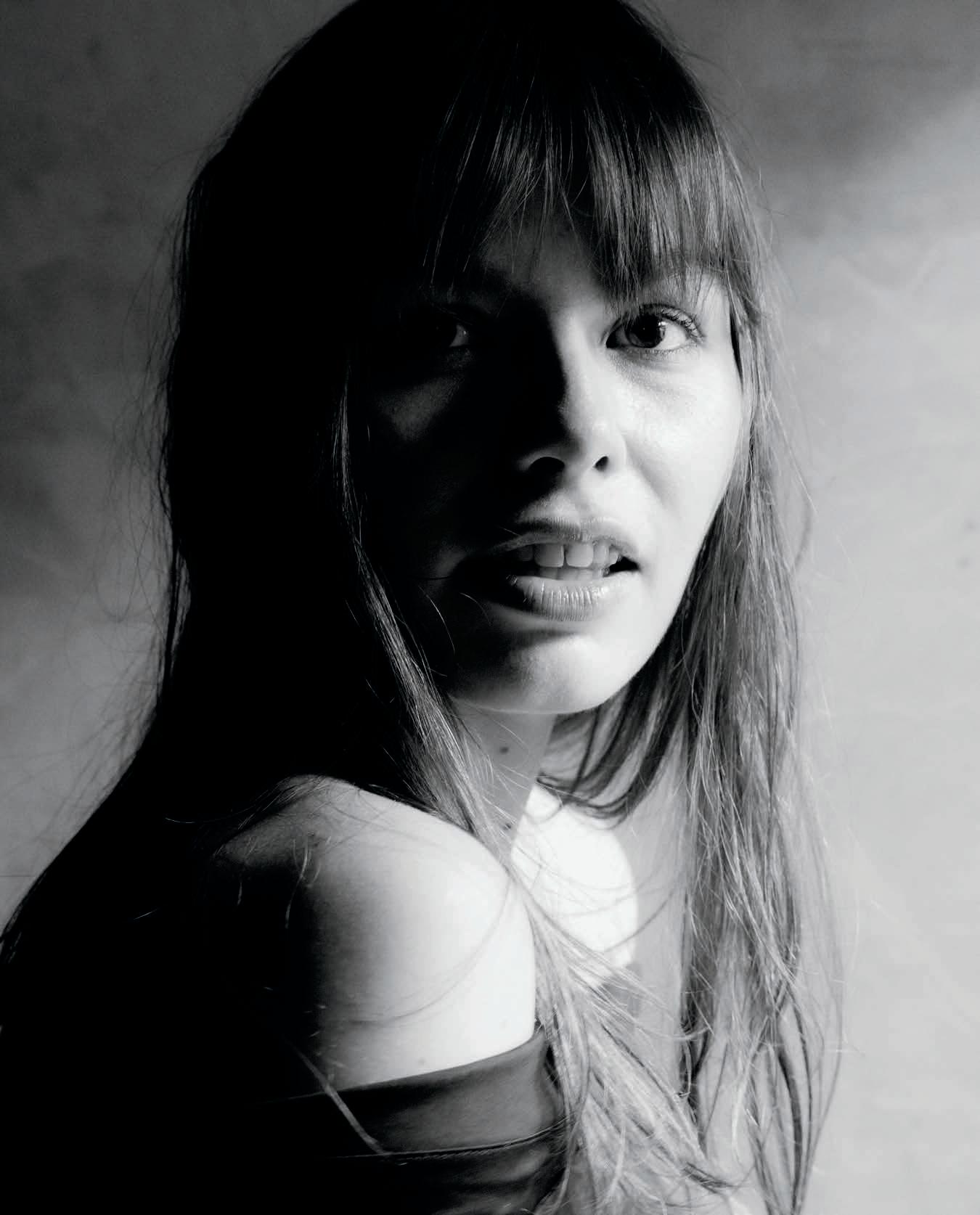
If New York needs a spiritual advisor, it makes sense for it to be Sotce: a post-monastery Buddhist telling the masses via TikTok how to be alone in their cramped rooms, suffer in the city, and navigate encounters with men. Her debut novel, Love You, pulls from her own now-viral life story—a young woman joins a secluded hermitage to escape the pull of the Internet, falling in love with a fellow disciple also under the spell of the retreat’s guru.
What’s writing for you? An act of agony? Delight?
Delight! I feel so lucky that I am able to put myself down. It is the gift of my life to somehow say things as they are, and I do not take the responsibility of that lightly. It has made all the sad and confusing bits worth it.
What’s the first thing you do when you sit down to work? For a long time, a story is just mine. It slowly crystallizes as I live with it. This is a precious time where I am dipping into its space and reaching for it all day long. It is intoxicating, and then it becomes physical and separate from me.
Describe your writing ritual. I wrote the first draft of my novel in two weeks. I decided
Love You, Coming Fall 2027
on that amount of time and abandoned all formalities to reach my deadline. I wore a blue sweatsuit and was nocturnal and never left the house and ate chocolate and cheese. I tend to sleep with my books piled around and go long periods without human contact.
Describe one rejection you experienced in your career that you can’t forget.
I am a model when I’m not writing. That world is crazy. One time I was on set thanking everyone for having me after we had wrapped, and this woman said, “You actually weren’t my choice.” I said something back like, “Well, maybe next time.”
What do you think your generation should read more—and less—of?
I am not really concerned with how other people spend their free time. I think everyone has a lot to be angry about.
What’s the most romantic part of living as a writer? The least romantic?
Most romantic: having a voice. Least romantic: other people’s opinions about how it should sound.
Photography by Hero Bean Stevenson.
Michael Waters 28, New York
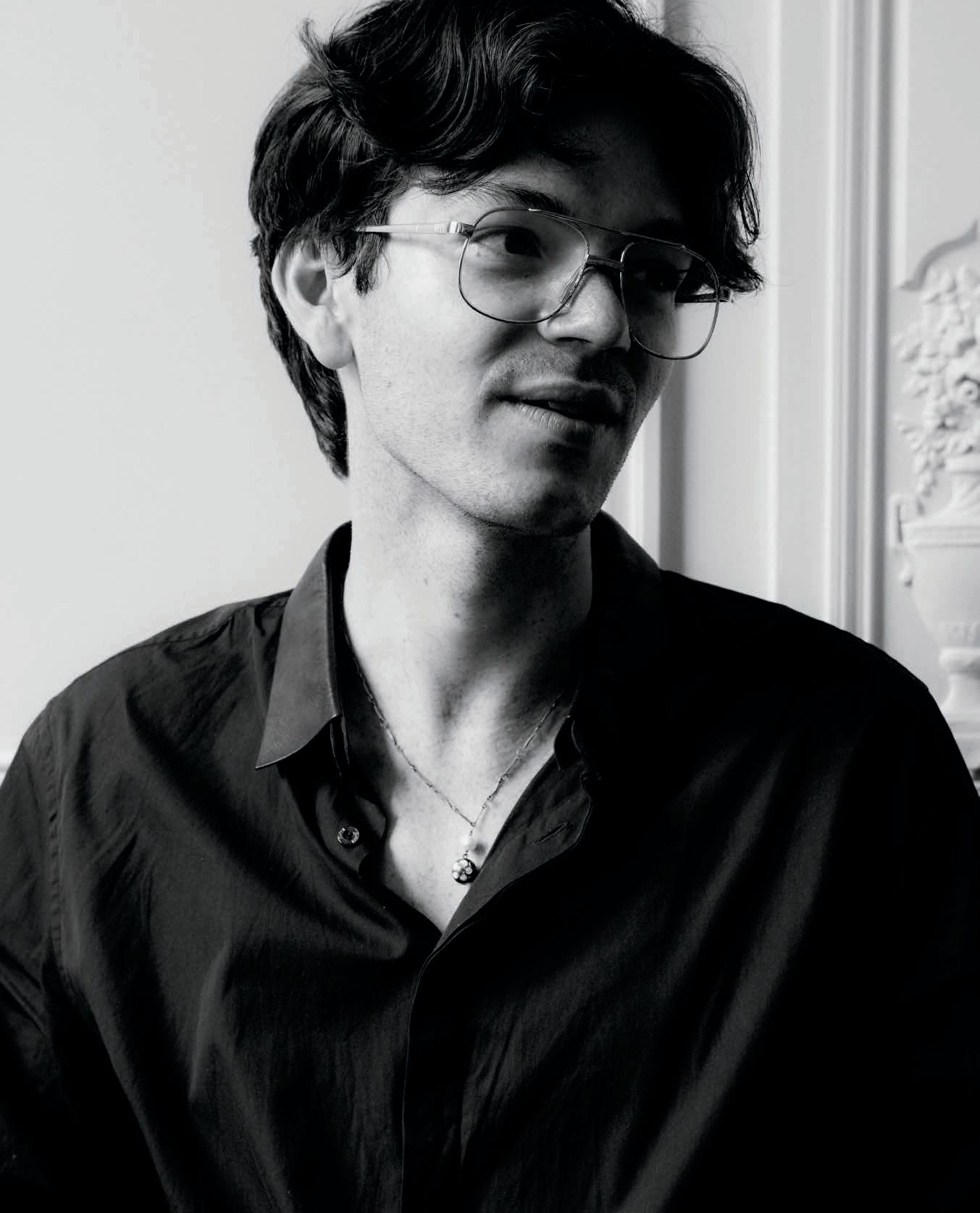
Fresh off a win of the 2025 Lambda Literary Award for LGBTQ+ Nonfiction—for his debut, The Other Olympians, tracing the history of pioneering trans and intersex athletes—Waters is already diving into another history project, this time on the American credit reporting system. The writer interrogates this financial circuit as a modern mode of surveillance and socioeconomic gridlock, rife with all the archival heft of his first title.
Describe one rejection you experienced in your career that you can’t forget.
In high school, when I was sending out a young adult manuscript to literary agents, one told me that I wasn’t ready to publish yet. He was right—the manuscript was bad bad—but that haunted me for years. I’ll write something and think, Is this the right time for me to publish it? I worry about pushing out a story years before I’ve processed it enough or developed the chops to write it properly. My writing is improving from book to book and article to article. So, in a decade, if I read back The Other Olympians, a book I wrote when I was 24 and 25, will I be completely mortified? I’m not sure I’ve fully resolved that question, other than to stick with
the projects that I just can’t shake… and accept the mortification that might come later.
What has been the most surprising aspect of your experience selling and publishing a book?
How nonlinear the post-publication process is. I felt, a few days after publishing The Other Olympians, that everyone had already moved on, that this story I’d poured so many years into had begun a slow process of fading away.
I don’t think I really appreciated how gradually books trickle into the world. They get digested and passed around slowly, becoming part of whisper networks. Sometimes there’s a week where I get a spurt of reader emails, and it’s this incredible proof that the book is alive in the world.
What’s one word or phrase that you find yourself using (or over-using) in your work right now?
I’m guilty of using the word “woozy” a lot. Please don’t Google it because I will be embarrassed, but I love to say that something has a “woozy logic.”
Photography by Hero Bean Stevenson.
Leah Abrams 28, New York
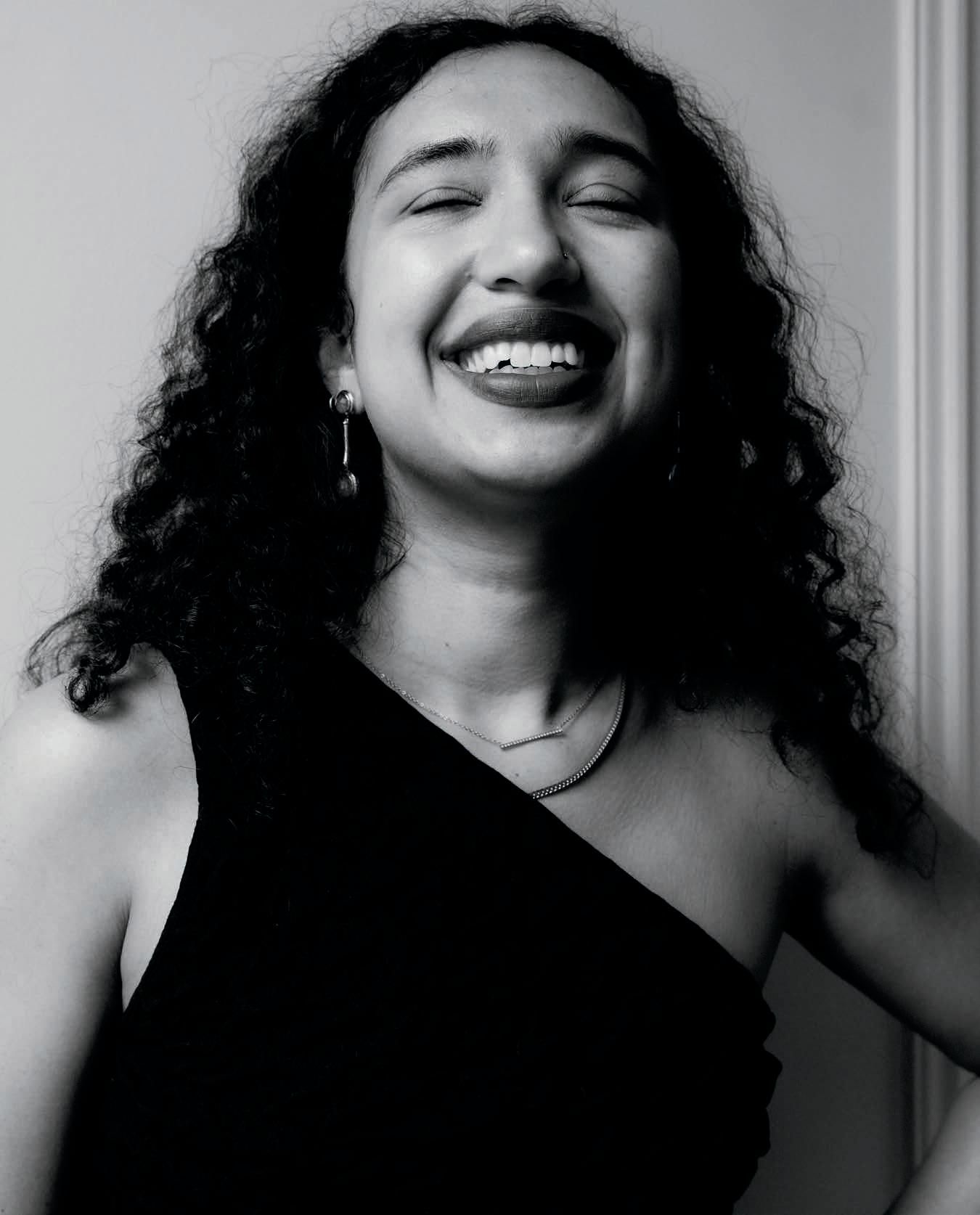
The speechwriter and comms specialist has been constructing political narratives for publications and well-trafficked social media accounts for years (just read her article in The Nation about being—that is, ghostwriting for—John Fetterman). Now, Abrams is reckoning with those experiences in her own voice. Her debut novel follows a young speechwriter optimistic about her entry into New York politics, only to be disillusioned when the mayoral candidate she’s been platforming takes a turn toward the right wing.
What’s writing for you? An act of agony? Delight? The illusion of complete control.
What’s the biggest challenge facing young writers today?
First, there’s no money. That’s a given now. Second, the crippling effects of political censorship on a young writer’s development cannot be overstated. We are living in a time of functional gag order on political dissent. It may take generations of hindsight to find out just how deep the rot has spread.
Describe a moment when you lost faith. What would you tell that younger writer?
Every time I’ve lost faith in myself as a writer, it’s been because I lost faith in myself as a person. I’ve felt useless,
Dated, Coming February 2027
helpless, confused, adrift, a waste, unworthy of the gift of a writing life. The only way I’ve found to go on is to write myself out of that state. So I guess that’s what I’d tell myself: When you feel least deserving is when you need it most.
Describe one rejection you experienced in your career that you can’t forget.
This isn’t exactly a rejection (God knows I’ve been rejected countless times, and at this point, recounting the list feels vindictive, hubristic, and boring), but I recently heard that a former mentor of mine from the political world said of me, “She’s smart, I just worry she’s not focused enough.”
When I first heard this, I was incensed and defensive, but I had to admit she had a point. Then I began to think that being unfocused is actually an incredibly useful trait for a writer—it lends you distance from yourself and whatever forms of work you do to get through the day. It’s the only way to guarantee you don’t fall into tunnel vision inside a larger and more insidious institution; it allows you to daydream, to wander; it keeps you from betraying yourself, your sensibilities, and your values. Focus is important, but following a dangled carrot will always lead you astray.
Photography by Hero Bean Stevenson.
Malavika Kannan 25, New York
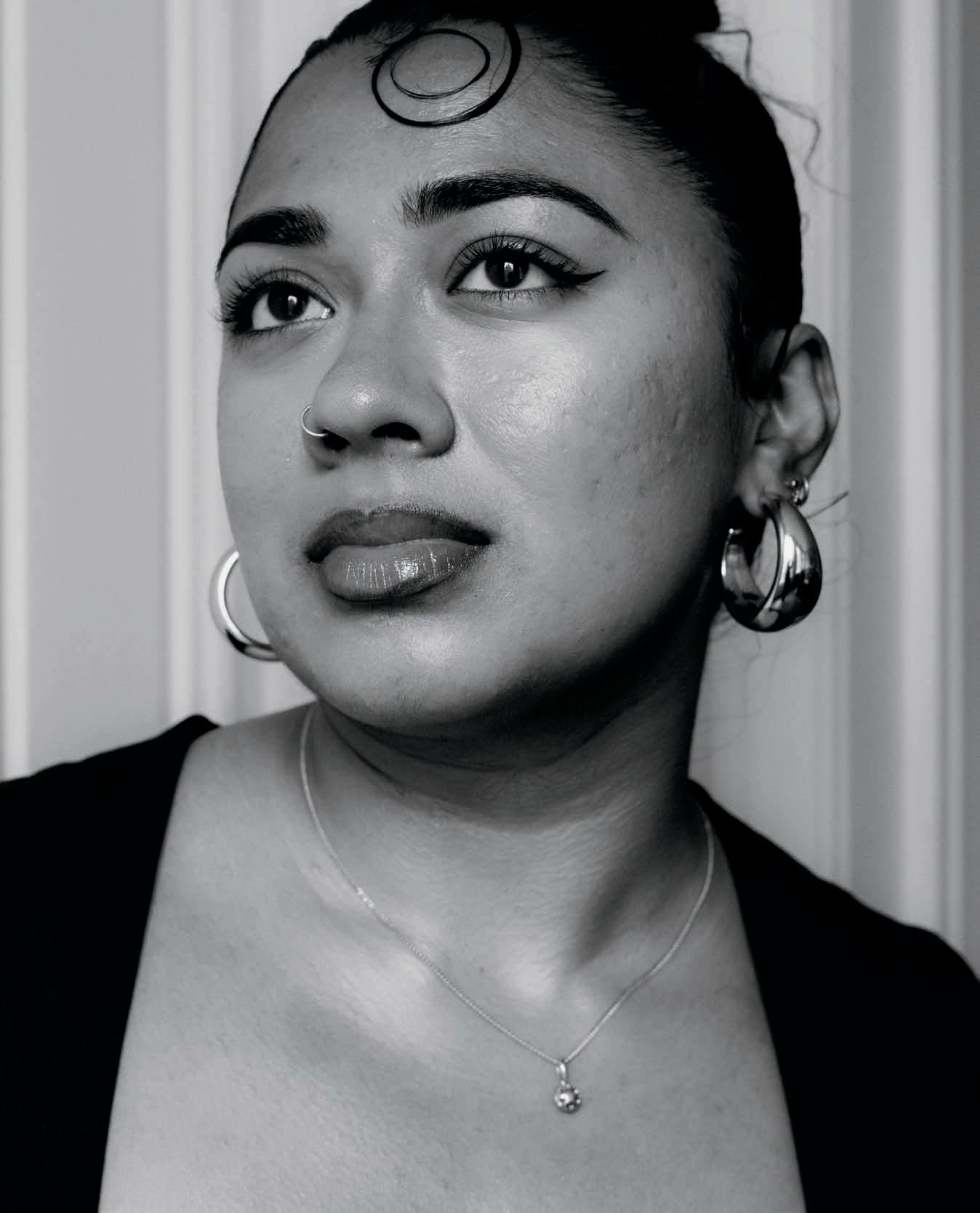
Gen Z has come of age, and now they’re writing novels about it. Kannan’s Unprecedented Times features a burnt-out youth climate activist (go figure) who arrives at college bent on starting a new chapter—only to be hit with Covid shutdowns (a generational trauma). Kannan constructs a farm collective for her young characters where, in the shadow of a pandemic, they learn about political disillusionment, sex, responsibility, and familial bonds.
What’s writing for you? An act of agony? Delight?
Total privilege and delight. I know how lucky I am. Generations of women before me were denied the privilege to write, let alone to be read. Describe your writing ritual.
When I was writing Unprecedented Times in college, I started treating writing days like going on a date with my project—put on a cute outfit, bike to a cafe from my bucket list, buy us a treat—to make it romantic and pleasurable. I started observing Free Will Fridays, where I’d go to a totally new neighborhood with my laptop to lock in. Now I have standing writing dates with friends on different weekdays. I also have Pavlov’d myself into only being able to write to male manipulator rap.
Unprecedented Times, Coming August 2026
Describe a moment when you lost faith. What would you tell that younger writer?
I’m really grateful this hasn’t happened yet. My self-esteem was established as a teenage activist against gun violence in Florida during the first Trump presidency, which permanently steeled my nervous system. If I’m ever not feeling myself, I remind myself that it is an honor and privilege to write, there is no gun to my head (lol), and I can always take a break until I feel excited again. What do you think your generation should read more—and less—of?
We should read more writers from outside of the West, more women in translation, and more people in the Global South contending with climate change in real ways. We should read fewer privileged American writers with autofiction allegations—that is, right after Unprecedented Times.
What’s the most romantic part of living as a writer? The least romantic?
The most romantic part is getting sweet messages from young queer women of color. The least romantic part is that my writing sometimes terrorizes the people I love, particularly my parents and exes, who see themselves reflected in my characters.
Photography by Hero Bean Stevenson.
K-Ming Chang 28, San Jose
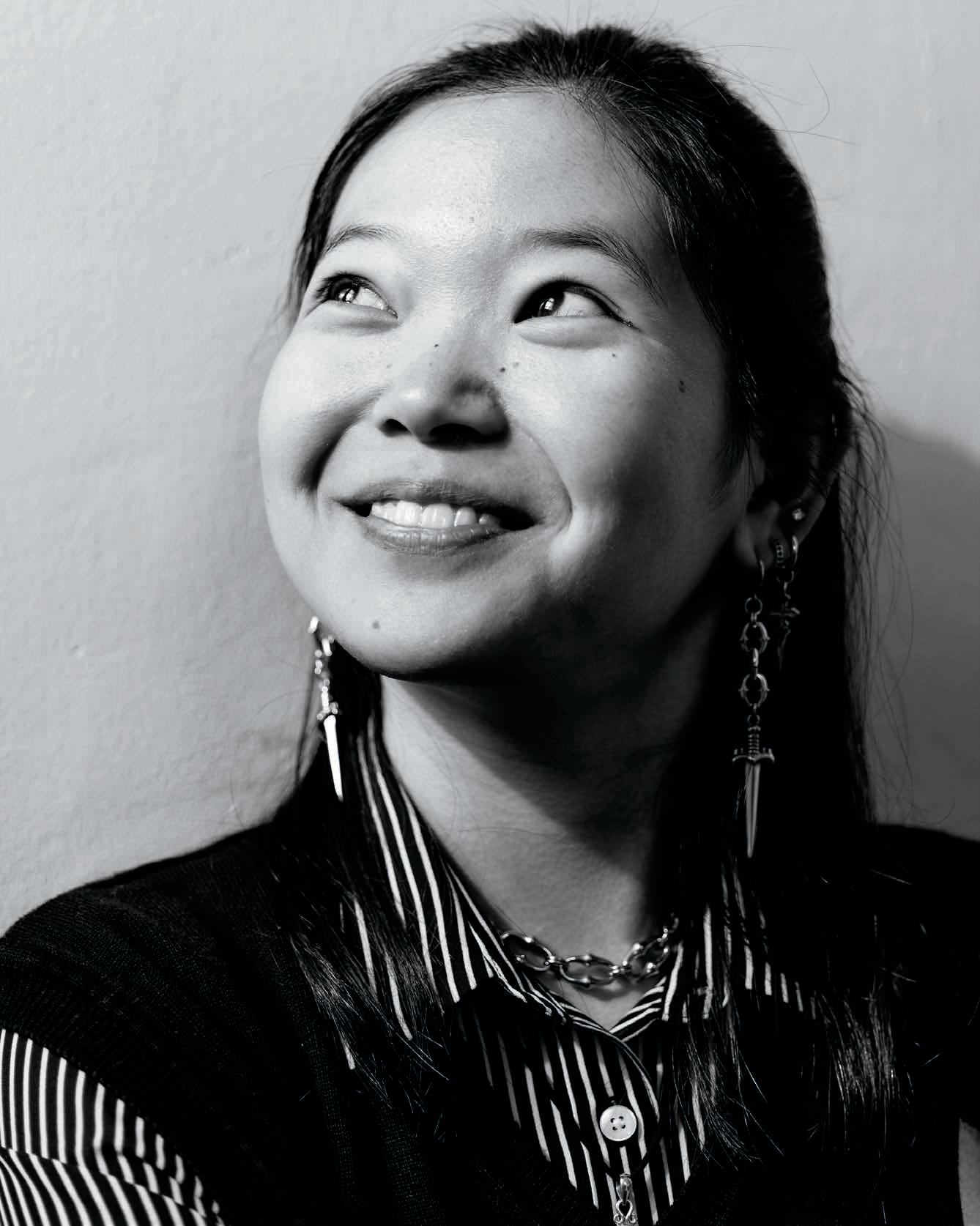
At 28, Chang has authored nine books, won a Lambda Literary Award for the short story collection Gods of Want, and been translated into Spanish, Chinese, Korean, German, and Turkish, among other languages. This fall, the staggeringly prolific young writer returns with Needlemouth, in which three cousins are set on a violent journey by a demon that appears bedside.
What’s writing for you? An act of agony? Delight?
I try to approach writing as an act of play, a place of infinite possibility and pleasure, and that’s probably why I tend to find drafting so endlessly generative and exciting. To me, drafting is about creating something unformed and therefore infinitely possible, while revision is about making decisions, which I find agonizing as a deeply indecisive person. Describe a moment when you lost faith. What would you tell that younger writer?
I lose faith all the time, sometimes multiple times a day! What helps sustain me isn’t faith so much as rage. A desire to make other worlds possible and a desire to create through destruction. I’d tell myself to let that rage fuel me, transform me, compel me, invent me, and perpetually
Needlemouth, Coming October 2026
challenge me. I’d tell myself not to fear it but to listen to it, and to worry less about whether it will be understood. Instead, that life-sustaining rage will lead me to a lineage of other writers, past and present, and it is a reminder not to compromise, a reminder that anything and everything is possible, and that all I have to do today is receive it.
What’s one word or phrase that you find yourself using (or over-using) in your work right now?
So many words! Moon, mouth, blood, anything related to the body and its fluids and its interior. I’m always obsessed with teeth and their many meanings. All kinds of teeth, all species of teeth! And this isn’t necessarily a word or a phrase, but right now I’m writing about a lot of birds, both mythical and directly outside my window.
What creature comforts do you turn to on deadline?
This is a very literal creature comfort—I love to play with my three pet parrots. They’re playful and talkative, and their favorite thing to destroy is books, which is difficult for someone who loves to leave books lying around unattended, and also heartwarming, because it means they respond to the sight of my own books with great enthusiasm.
Photography by Poppy Lynch.
THE LOUVRE’S TERRIBLE, HORRIBLE, NO VERYGOOD, BAD YEAR
In the last year, the Louvre has weathered a very public heist, ticket fraud scandal, labor strikes, and pervasive water leaks. Where does the world’s most-visited museum go from here?
By Georgina Adam
Photography by Léon Prost
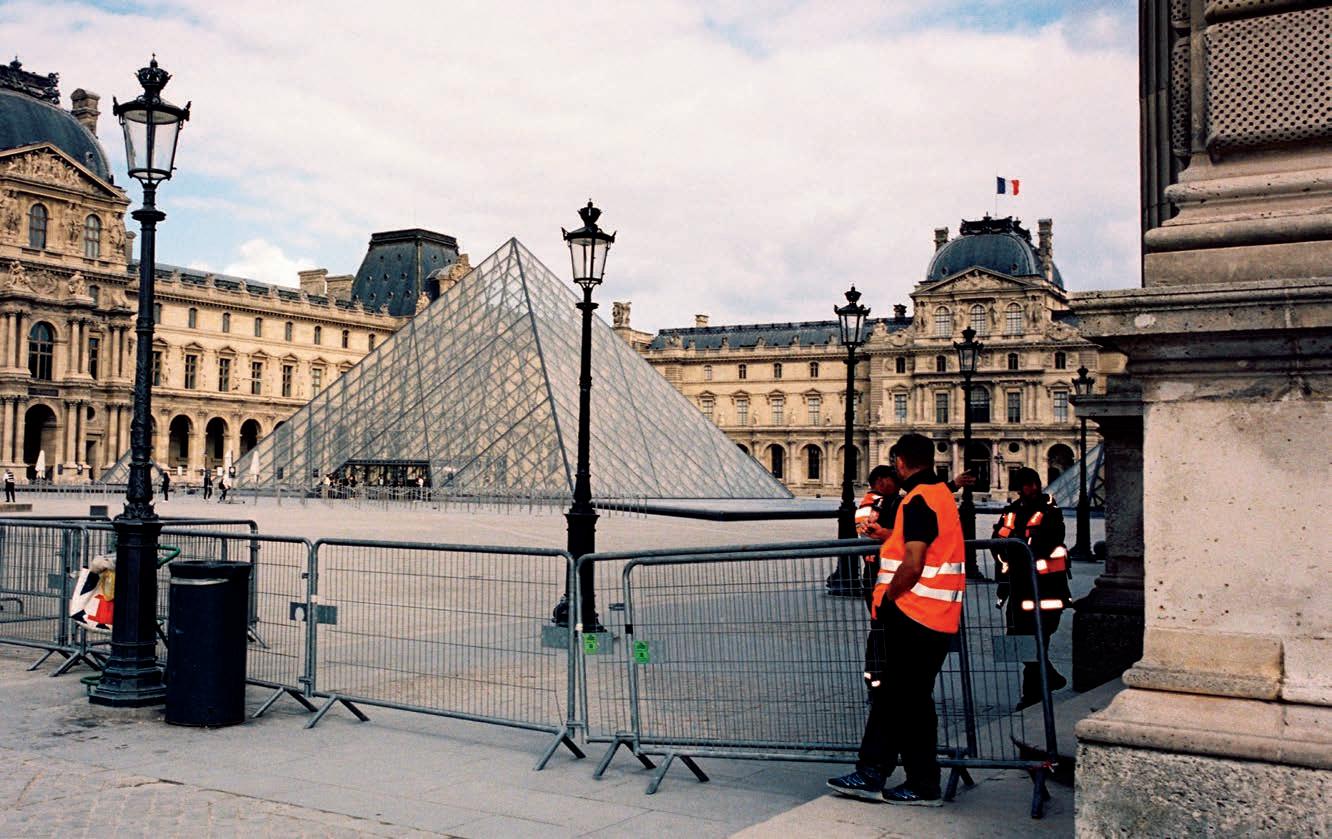
At 9:30 a.m. on Oct. 19, 2025, four thieves disguised as construction workers parked a truck-mounted mechanical lift outside the Louvre. By 9:38 a.m., they had cut through a window, smashed the display vitrines in the Galerie d’Apollon, and grabbed jewels that once belonged to France’s Empress Eugénie and Queen Marie-Amélie. They dropped a crown before making their escape on scooters.
Authorities arrested four individuals in connection with the crime. The jewels—worth some $102 million—were never seen again.
The theft sent shockwaves through France. The tiaras, crown, necklaces, and brooches belonged to monarchs far less famous than Marie Antoinette. Still, given France’s dearth of treasures predating the Revolution, they were considered the country’s “crown jewels.” The crime made the museum, an enduring symbol of national pride, into a punchline. Louvre thieves, decked out in high-vis vests and rhinestone tiaras, were a popular Halloween costume around the world that year. The robbery even inspired a bit on Saturday Night Live.
It was the most dramatic misfortune to befall the Louvre in recent years, but it was far from the only one. There have been disastrous water leaks, labor unrest, and heists, not to mention a massive ticketing scandal and ongoing court case against archaeologist and former Louvre president Jean-Luc Martinez for “money laundering and complicity in organized fraud” of illegally trafficked antiquities bought by the Louvre Abu Dhabi. (The lawsuit centers around a pink granite stele in the collection inscribed with Tutankhamun’s name; Martinez has maintained his innocence, but the case grinds on with the usual French lenteur.)
The state of affairs at the Louvre is a “catastrophe,” says Alain Quemin, an academic with a focus on the sociology of art. “It is such a pity,” he adds, “because the museum had been evolving favorably over the previous years. Martinez came from a modest background, and his nomination proved that candidates didn’t have to be from privilege. His successor, Laurence des Cars, was the first woman to hold that position, and the number of visitors was rising. The heist was really the worst thing [that could] happen.”
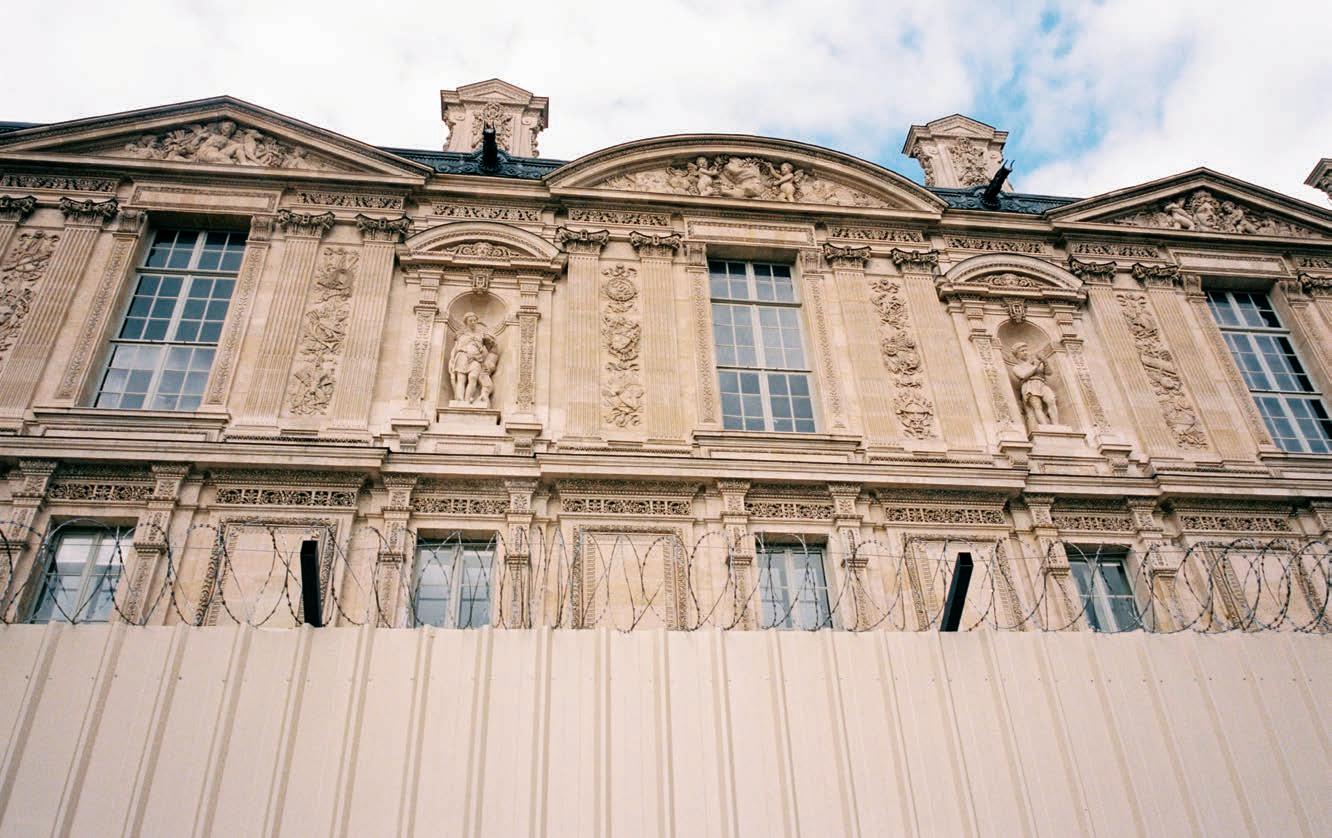
The Louvre, of course, has special resonance across France. It’s a symbol of national identity—a literal survivor of the country’s history. Once the treasure vault of Louis XIV’s personal collections, it has been open to the public since the 18th century. The museum is the most visited in the world, drawing 50 percent more visitors per year on average than the Metropolitan Museum of Art in New York and 40 percent more than the British Museum in London.
But the events of the past year have revealed that blockbuster shows, strong attendance, and pioneering scholarship mean little when an institution can’t manage the prosaic business of securing objects or maintaining its facilities. The Louvre is particularly compromised by its dependence on the French state, whose government is in disarray ahead of 2027’s impending presidential election. What does it imply if the world’s most famous museum can’t fulfill the most obvious duty in its job description: to care for art of historical significance?
Situated along the right bank of the Seine in the dead center of Paris, the Louvre originated as a 14th-cen-
tury royal palace built on the grounds of a 12th-century medieval fortress. After the guillotining of Louis XVI and Marie Antoinette, the newly established French Republic converted the building into a museum in 1793. Initially, it showcased a collection of more than 530 paintings, mainly royal or confiscated church property. Today, the museum holds about half a million objects. Almost nine million people jostle through its doors every year, making a beeline for the same painting: La Joconde (the Mona Lisa).
There were signs the museum was vulnerable. It has less than one security camera on average in each of its 465 galleries, offering surveillance of less than 40 percent of public space. To make matters worse, some 200 jobs have been cut since 2015, many from security. France’s former minister of culture, Rachida Dati, told the country’s Senate last December that “measures need to be taken, far beyond questions of safety and security.” Last May, a man was arrested over a planned jihadist attack on the Louvre.
Shortly after the robbery, a valve opened in the heating system and water seeped onto hundreds of books
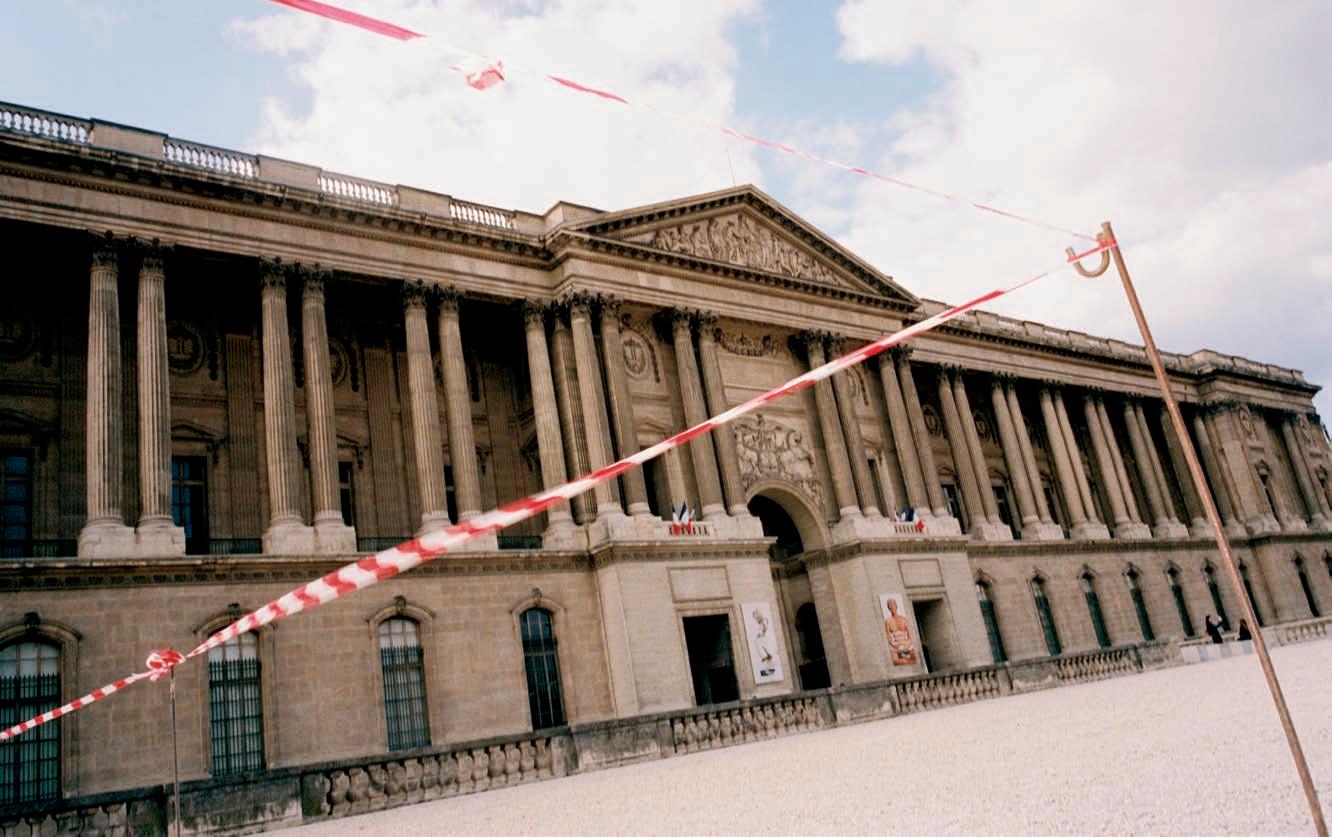
The events of the past year have revealed that blockbuster shows, strong attendance, and pioneering scholarship mean little when an institution can’t manage the prosaic business of securing objects or maintaining its facilities.
and documents in the Egyptian department. A few months later, a water leak damaged a 19th-century ceiling painting by Charles Meynier. (Fears about a ceiling collapse had already led to the closure of a gallery housing ancient Greek ceramics.)
“The leaks have brought into focus the lamentable state of much of the piping,” says art historian Didier Rykner, the publishing director of the magazine La Tribune de l’Art and a persistent critic of French museums. “They can’t even heat some rooms” because the pipes are “so dilapidated,” he adds.
In a damning report by the Cour des Comptes, the government body that oversees state spending, auditors blasted the museum for neglecting the building
in favor of more “visible and attractive” priorities. (Between 2018 and 2024, it said, the museum spent only $30.4 million on upkeep but $122.7 million on acquisitions.)
Then there was the ticket fraud. In February, officials uncovered a massive scam involving the reuse of tickets. Suspicions dated back to late 2024, when the Louvre filed a complaint with the police, suspecting that Chinese tour guides were reusing tickets and bribing museum employees to look the other way. According to investigators, the decade-long scheme cost the institution at least $12 million. Some of the money was reported to have been invested in real estate in France and Dubai, and authorities seized well over $1 million. Nine people are currently under investi-
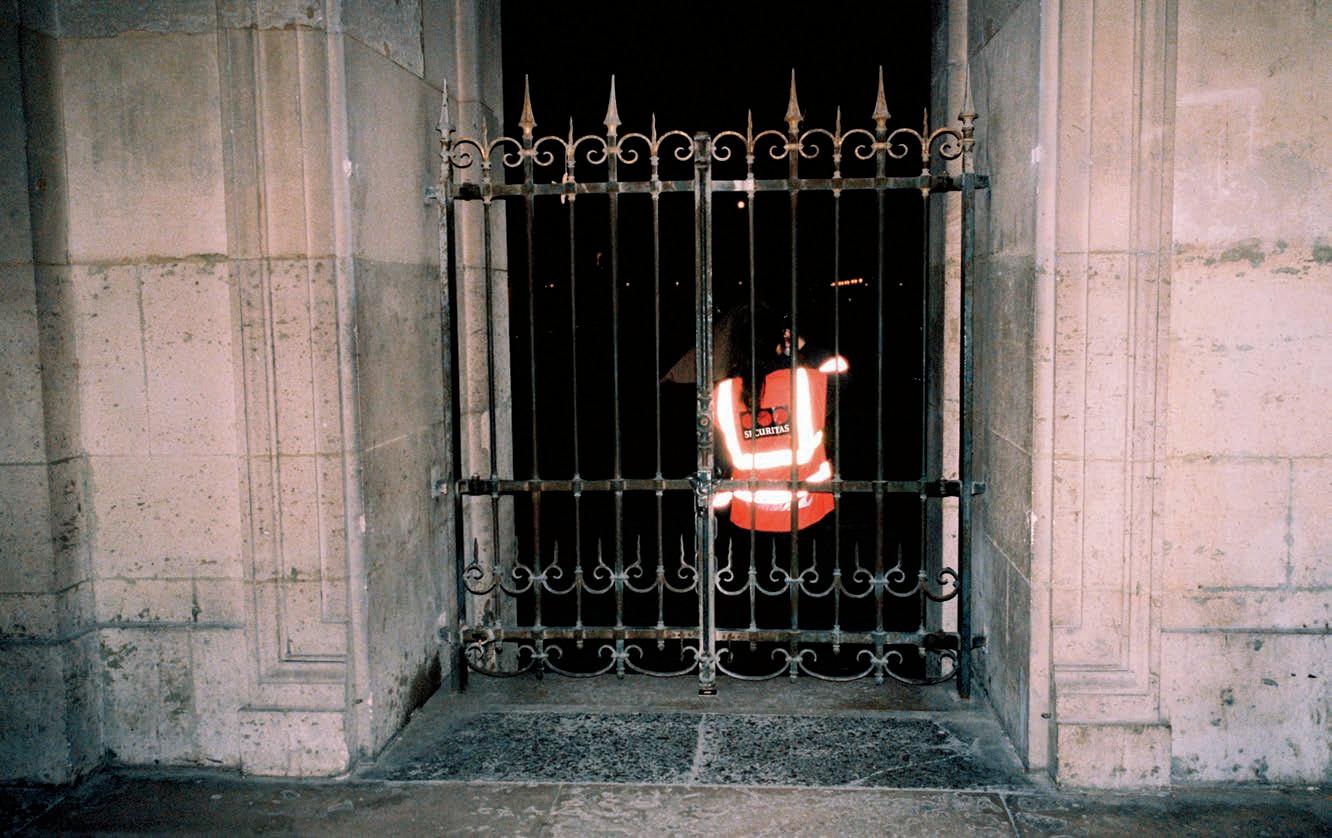
The museum is the most visited in the world, drawing 50 percent more visitors per year on average than the Metropolitan Museum of Art in New York and 40 percent more than the British Museum in London.
gation. A spokesperson for the Louvre says that the investigations “will shed full light on the reported activities,” adding that the museum had “implemented a structured anti-fraud plan” that includes measures both technical and legal.
France’s leadership was well aware of the threats that the building might pose to the treasures it houses. In a confidential letter sent on Jan. 13, 2025, and subsequently leaked, des Cars, the museum’s then-director, complained to Dati that the facilities were “worryingly obsolescent.”
Later that month, French president Emmanuel Macron unveiled a sweeping renovation plan dubbed “Louvre New Renaissance.” The cost—as estimated by the Cour des Comptes—would be more than $1
billion. The project proposed moving the Mona Lisa to a huge new space dug out under the courtyard. It would have its own dedicated entrance, with a separate timed entry ticket and fee. (The project would also be funded by an overall price hike, implemented this year, for non-European visitors from $25 to $37.)
Part of the goal was to address the increasingly untenable overcrowding. Some 80 percent of visitors, according to the Louvre’s own research, want to see the Mona Lisa, but most leave deeply unhappy, having faced a barrage of selfie-snappers in a packed room without having a real chance to approach the painting. “The cluster-crowd to see Mona Lisa has been like this for decades, and just gets worse,” said one disgruntled visitor.
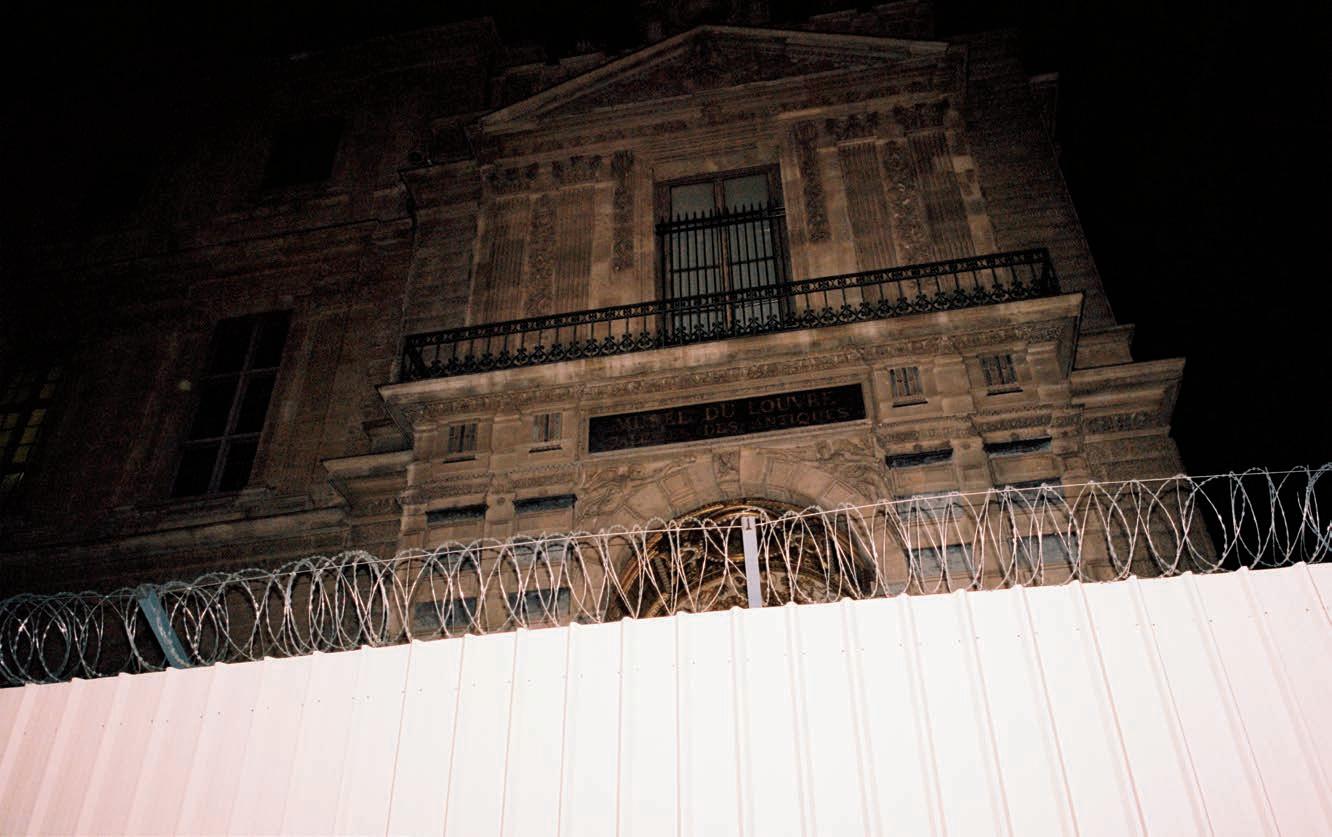
Macron’s plan would also involve a “new grand entrance” dubbed the Grande Colonnade, near the Seine. Scheduled to open in 2031 at an estimated cost of $779 million, the project has proven highly controversial. The Cour des Comptes tutted: “It is of the utmost importance that the museum be able to hierarchize to its projects, prioritizing investments that are decisive to its future, particularly the upgrading of technical infrastructure, especially its safety and security systems, and the restoration of the palace.”
According to two sources, there were hopes that the luxury goods mogul Bernard Arnault—CEO of LVMH—would step in to help finance the project. LVMH’s flagship department store, La Samaritaine, is just steps away, and there were rumors of plans to connect the store to the Grande Colonnade. (Nothing has been announced so far, and the Louvre said it had never heard of the plan. At press time, LVMH had not replied to a request for comment.)
Bowing to the storm, des Cars left the Louvre in February, having first offered to leave immediately after the robbery. “She was initially protected by Macron
because he so wanted the ‘Louvre New Renaissance’ project,” my informant told me. Traditionally, French presidents leave a grand projet—Mitterrand had his library, Chirac the Musée du Quai Branly. Macron wanted 12 million visitors to the Louvre, hoping this would be his cultural legacy. But apparently Dati insisted that des Cars should leave, and Macron finally relented. (Dati left her post as minister of culture later that month.) Shortly afterward, the art historian Christophe Leribault was nominated president of the Louvre following appointments at the Musée d’Orsay and at Versailles.
The artist Paul Cézanne is frequently quoted as saying that “the Louvre is the book from which we learn to read.” The problems of the previous year have shown us just how badly the book needs mending. One thing is certain: Leribault has a massive task on his hands.

SHADES
Photography by Hugo Yu
All Accessories by Gucci

What is a silhouette? The purest form of an object thrown into darkness by the force of light. This season, Gucci Eyewear’s distinctive forms cast new shadows, a tantalizing balance of transparency and hue, bold acetate and metallic details, wide cat eyes and oversized caravan silhouettes— birthing new classics that will always be recognizably Gucci, even in the dark.
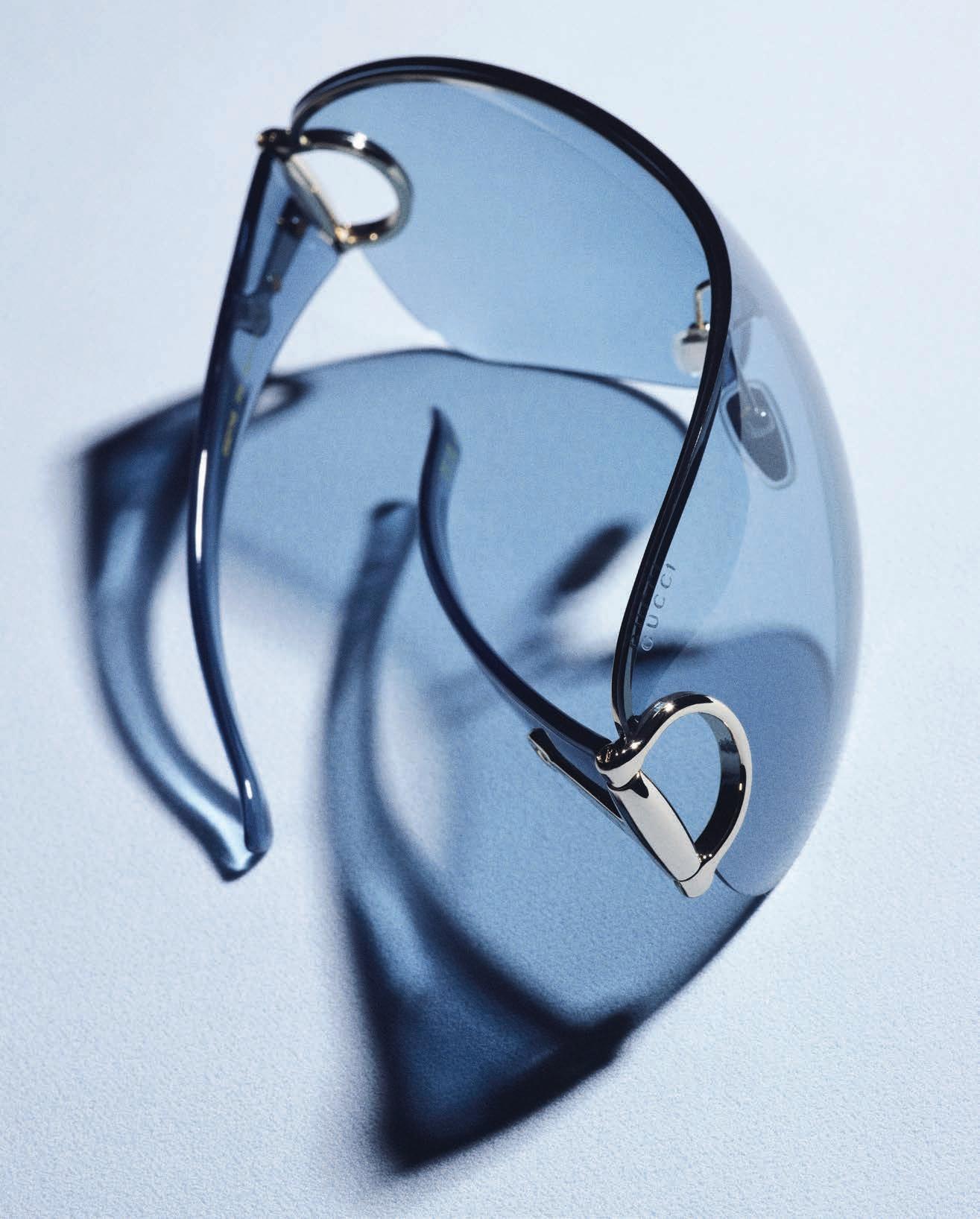

SETTING THE SCENE
The best films transport you out of your seat and into the screen. This feeling of immersion—in a living garden, looming castle, or haunted opera house— is what lingers long after the twists and one-liners fade from memory. As audiences prepare to pass sticky summer afternoons in dark, icy theaters, we compiled a selection of quintessential moments from cinema history—and paired them with the hottest design objects of the season.
MINOTTI
Tulla Table

The Tulla was designed with the Space Age—that hazy ergonomic fantasy of flying cars, astral projections, and chromatic objects that arise from the industrial mouth of Moloch—in mind.
Metropolis by Fritz Lang, 1927.
HOLLY HUNT Selina Slipper Chair

Audrey
on the hunt for a quarter-million dollars in a sublime mustard coat, might pause to recline for just a moment in an equally vibrant
Charade by Stanley Donen, 1963.
Hepburn,
Selina Slipper chair on a solid walnut base.
POLIFORM
Alfred Armchair

His Girl Friday by Howard Hawks, 1940. Rendered in black or white leather, the Alfred armchair seems at first glance to be the polar opposite of the brash, fast-talking duo in His Girl Friday. But by the time credits run, both reveal themselves soft enough to penetrate a tough hide.
EDRA Favela Chair
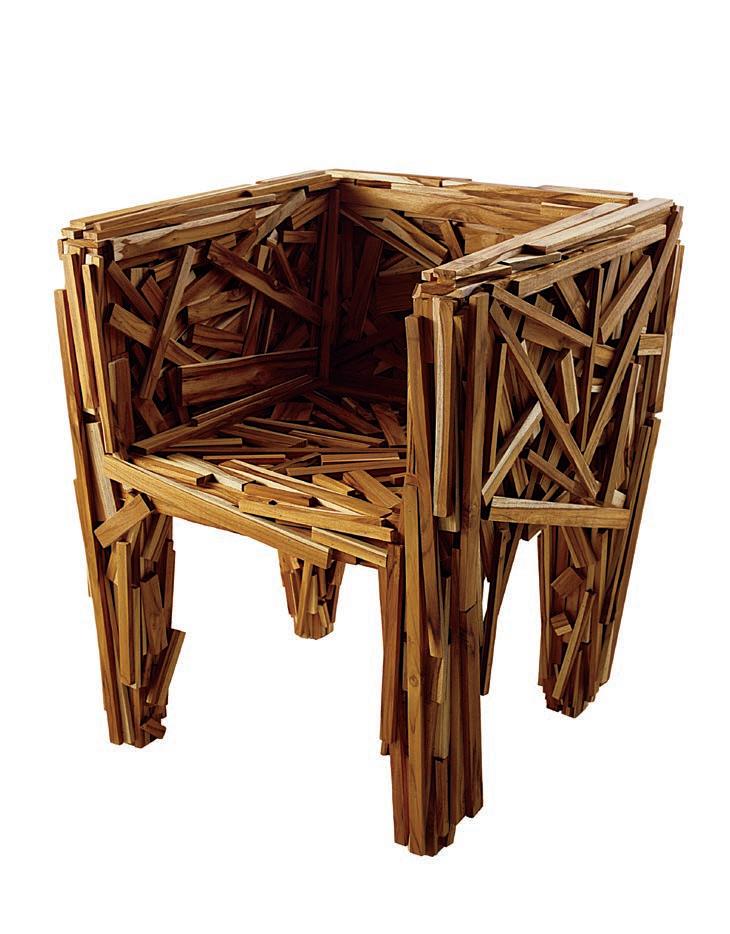
unique configuration of strips of wood, hammered into place with the kind of wild abandon characteristic of a West once roamed by cowboys.
by
Photography
Emilio Tremolada.
McLintock! by Andrew V. McLaglen, 1963. Each Favela chair is constructed in a
Justine Dining Chair
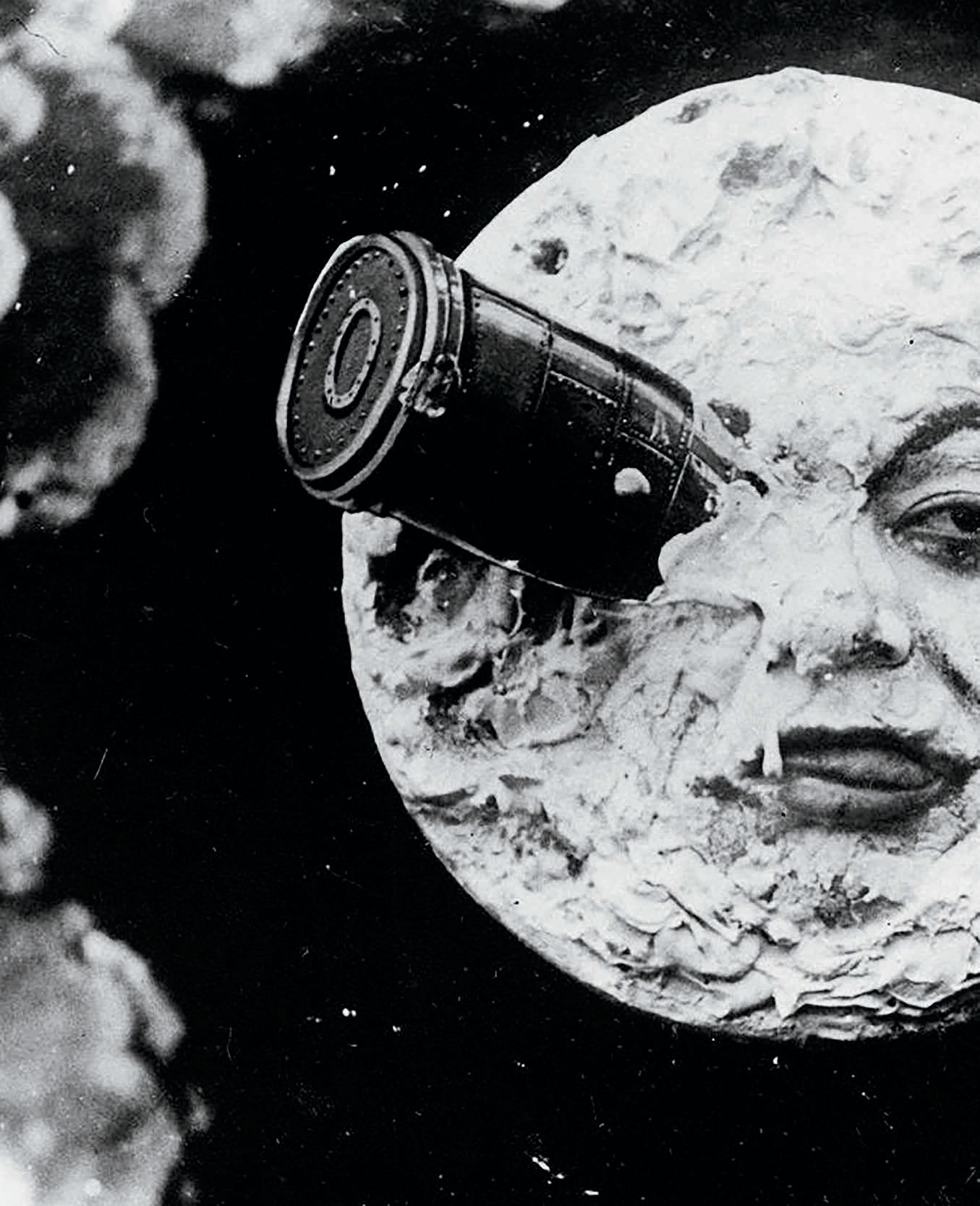

A Trip to the Moon by Georges Méliès, 1902. Italian design meets French filmmaking as the soft, linen surface of the Justine dining chair appears just plush enough for Georges
Méliès to sail through in his famed rocket ship.
FOUR HANDS Civita Table Lamp

Nosferatu by F. W. Murnau, 1929.
Off in the castle of Orlok, earthly overgrowth and delights creep to the fore—sending a vampire’s young guest spinning like the natural terracotta of the Civita.
AN ETERNAL SIGNATURE
On the 130th anniversary of its iconic monogram, Louis Vuitton looks back at the four motifs that inspired legions of imitators and revolutionized luxury branding forever.
by Karly Quadros
You know it when you see it. That was the idea that birthed Louis Vuitton’s unmistakable monogram. The design—an ochre emblem of a four-petaled flower encased in a circle, another encased in a diamond, and, of course, the interlocking L and V—is among the most recognizable and enduring patterns the world over. Burberry check, the Nike swoosh, and Gucci’s double-G logo all came after one luxury luggage company began to emblazon its founder’s initials across its bags.
The Louis Vuitton monogram was designed in 1896 by Georges Vuitton, just four years

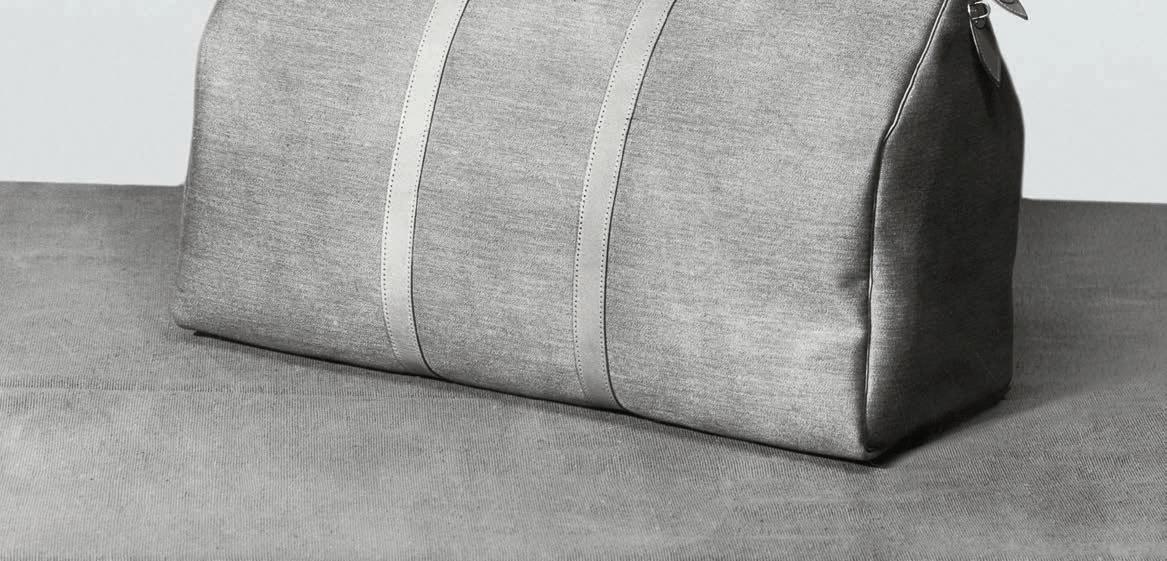
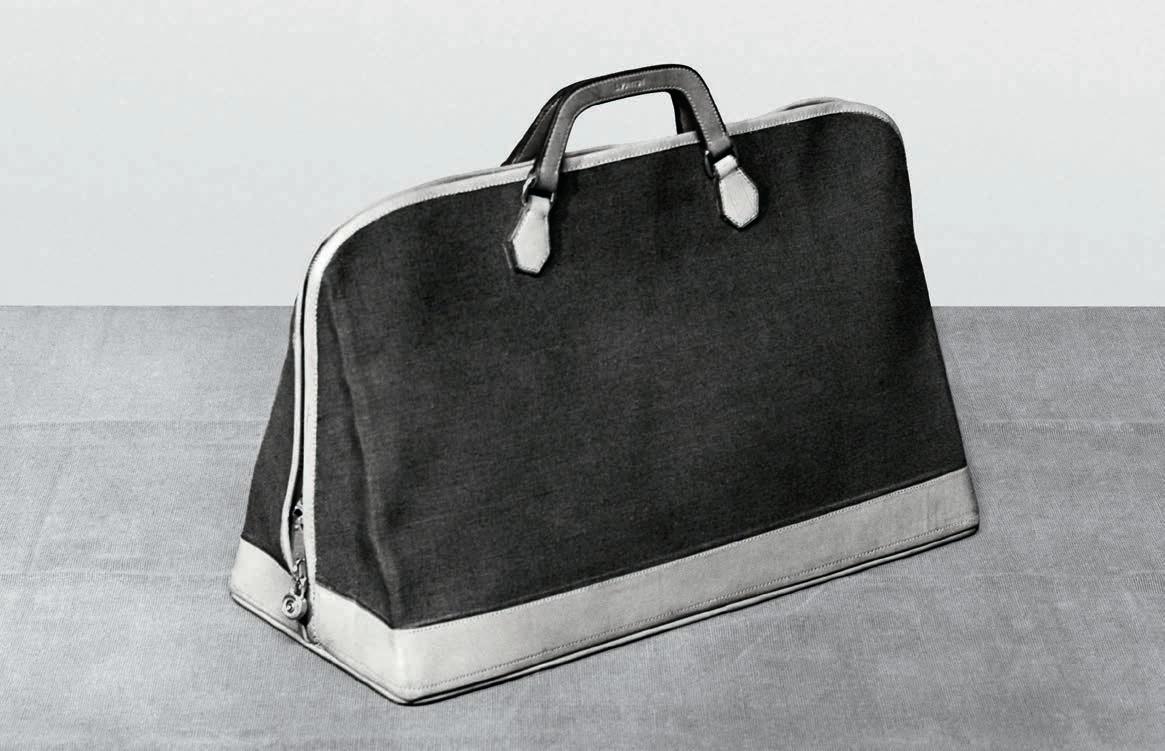
Left page: Louis Vuitton “Malles de Commerce” Catalogue, 1910.
Right page: Tina Turner over archival Keepall, Squire, and Tientout bags. All photography courtesy of Louis Vuitton.
after his father Louis’s death. The latter had established a trunk-making workshop near the Place Vendôme in 1854, where, amid a sudden boom in luxury travel, his work stood out for a few key innovations, such as waterproof canvas and flat-topped trunks that could be stacked neatly in a train car. As Georges took over and imitations of his father’s popular work proliferated, an homage to the paterfamilias’ singular vision took shape. When travelers and shoppers spotted the interlocking initials, they would know it was authentic Louis Vuitton.
At the time, it was not in vogue for maisons to draw such attention to themselves. But Georges’s tribute to his father’s legacy established both a visual signature and a new industry precedent, one that would become synonymous with luxury and modernity. The design itself nodded to Paris’s cosmopolitan milieu. The four-petaled flower motif followed similar designs found in the NeoGothic cathedrals that dappled the city, while the careful attention to geometry and nature was reminiscent of an obsession with Japanese craft (and in particular a style of circular family crests called mon) that gripped the Parisian elite as Japan increased its trade with the West. The resulting design was evocative of ornate fashions, but distinctly modern in its simple graphic nature. It became a pattern unto itself, later emblazoned across leather luggage like the Speedy and the Keepall, a sturdy duffel still slung over the shoulders of the jet set.
Over the years, the monogram helped cement the heritage maison as a leader in modern travel and, as it expanded into handbags and clothing, everyday refinement. The pattern evolved, first from embroidery using a jacquard loom and natural linen threads, to a hand-painted emblem and, eventually, a stencil designed to be as durable as it was rich in texture.
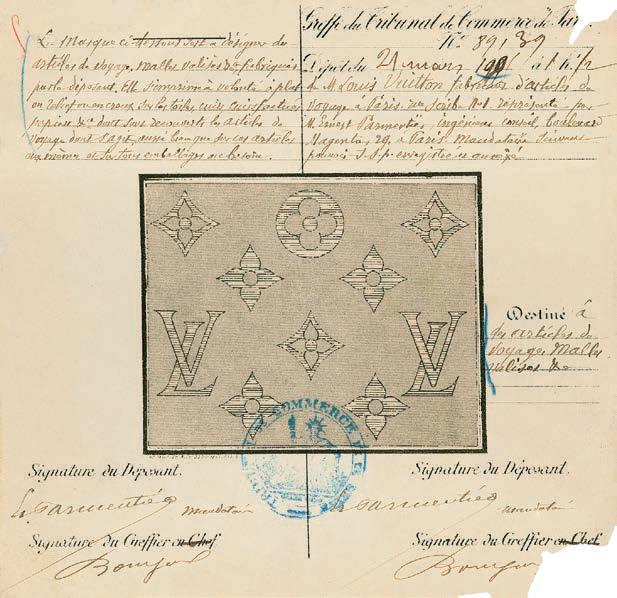

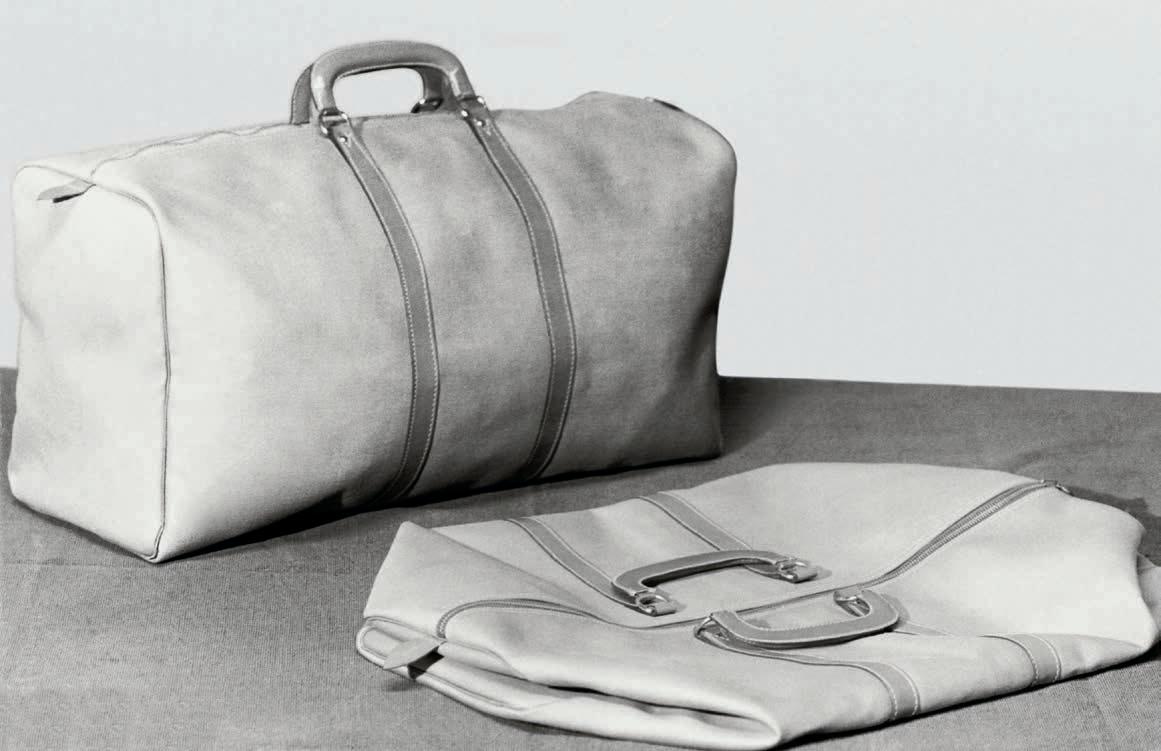
Left page, top to bottom: Certificate of renewal of the registration of the Monogram canvas, 1905; Louis Vuitton Product Catalogue for the Lille Store, 1924. Right page, top to bottom: “The train Journey” ad, 1929; Catherine Deneuve.
By the late ’90s, the Louis Vuitton monogram had become a cultural signifier reworked by artists and designers alike. For its 100th anniversary, the house commissioned a capsule collection from Azzedine Alaïa, Manolo Blahnik, and Vivienne Westwood, who fashioned her own rendition of a canvas bag worn on the rump like a bustle. The dawn of the 21st century saw further collaborations with the likes of Takashi Murakami, whose 2003 candy-colored reworks of the LV monogram became the It-purses of the era among young women looking for a convenient place to stash lip gloss and iPods. Only four years into his tenure at Louis Vuitton, Marc Jacobs commissioned Stephen Sprouse to coat the monogram in hand-painted graffiti. And in 2014, a veritable masterclass of creatives put their own spin on the monogram. Frank Gehry introduced a warped and twisted box purse while Rei Kawakubo deconstructed one with gaping holes. Perhaps no one embodied the spirit of play and durability more than Karl Lagerfeld, who splashed the logo across a trunk-set punching bag and pair of boxing gloves.
Now, on the occasion of the monogram’s 130th anniversary, Louis Vuitton has launched a year-long tribute campaign that includes its new Monogram Anniversary Collection. Drawing from the long legacy of its trunks, the Vache Végétale Naturelle selection, for example, employs LV’s signature supple cowhide. The Monogram Origine brings back the original jacquard weave, and the Time Trunk pieces use trompe-l’œil printing that echoes the style and patina of the house’s historic trunks. It’s a testament not just to the endurance of Louis Vuitton’s timeless designs but to the impact of one simple homage from a son to a father.

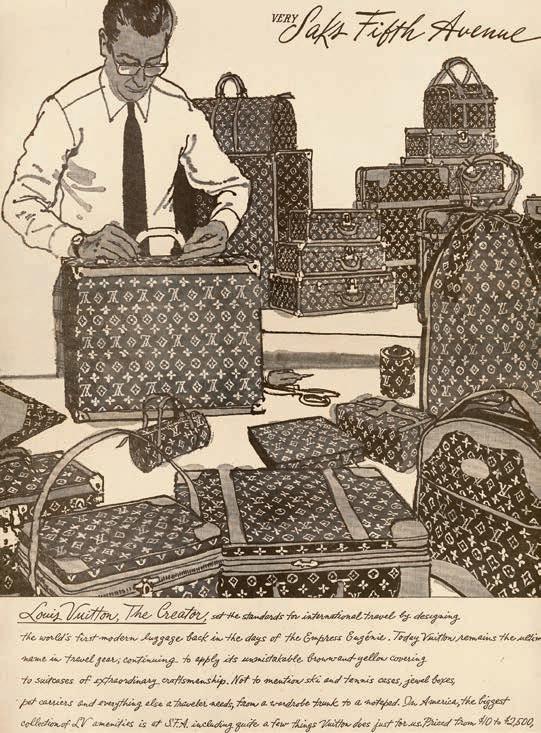
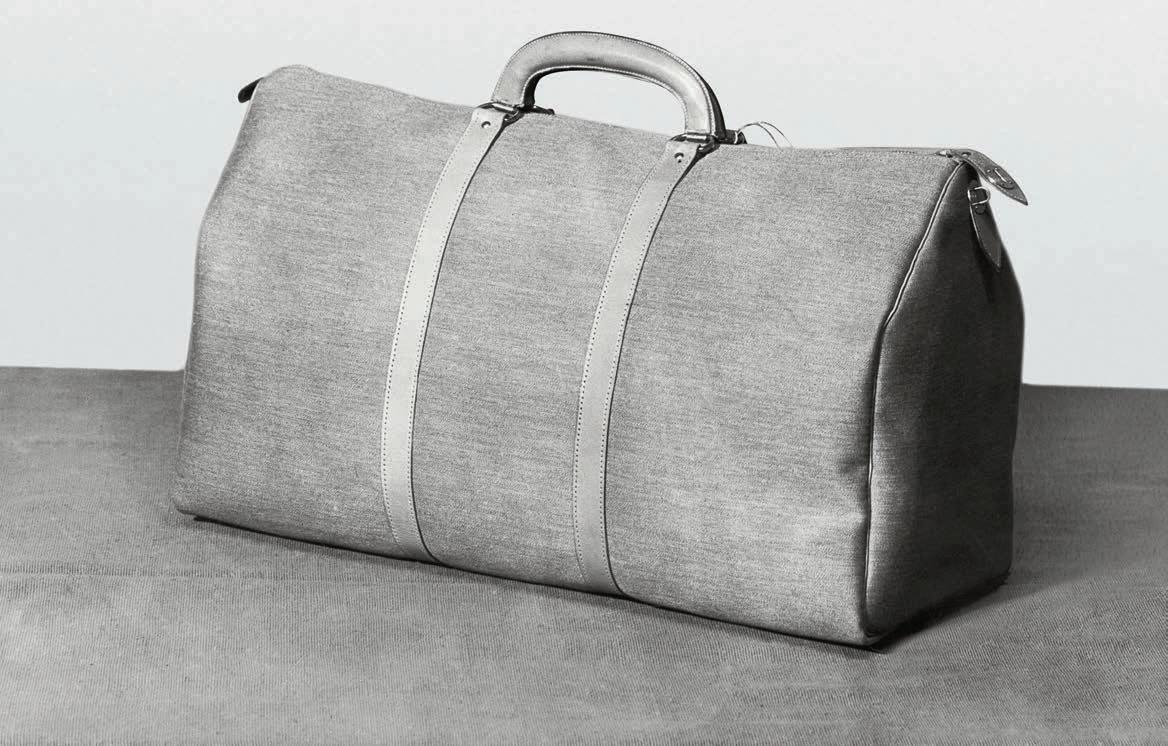

Left page, top to bottom: Le Voyage written by Georges Vuitton, 1894; Saks Fifth Avenue Advertisement in The New York Times, 1969. Right page, top to bottom: Louis Vuitton; Georges Vuitton circa 1930; ad in Vogue, 1928.
MORNING PEOPLE: BREAKFAST WITH ANDREW RANNELLS
Over two cold brews, the actor sounds off on living with teens, working with Allison Janney, and farmers’ market fan fiction.
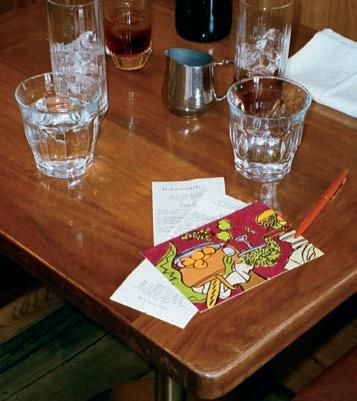
What’s your relationship to Los Angeles?
That’s where my partner Tuc [Watkins] is with his 13-year-old twins. We all live together in LA.
Do they want to do things with you, or are they in the teenage phase?
They don’t want to talk to us.
What is Allison Janney like to work with?
She’s much kinder than a lot of the women that she plays. Going to New Mexico with her was just the best. Strangely, we were finishing the shoot, and both got offers to do Another Simple Favor. Four days later, we were on a plane together to Rome. We would have days off where I would just walk around with her and watch her shop.
What do people most often say when they see you on the street?
“Your dad is gay.”
A line from Girls. Gen Z really caught on to it, right?
Lena and I had this young woman come up to us, and she said, “I don’t think you guys were being selfish. I think you were just taking care of yourselves.” I was like, “No, we were pretty bad.”
By Josh Duboff Photography by Matías Alvial
Andrew Rannells is so affable that, after much banter during our meal, we end up taking a picture with our waiter at the end of our breakfast. The actor first gained attention starring in The Book of Mormon on Broadway. Then came Girls, where he played Elijah Krantz opposite Lena Dunham’s Hannah Horvath. He’s followed that up with theater, movie and TV work, voice acting, and writing (he’s published two books, a memoir and a collection of personal essays). This spring, the now 47-year-old featured in the second season of the Hulu sitcom Deli Boys (as a Philadelphia mayoral hopeful and foe of the series’ protagonists) and hosted The Great American Baking Show with Casey Wilson. He also co-starred opposite Allison Janney in Jim Rash’s new HBO movie Miss You, Love You. Though he’s generally an early riser, Rannells does not identify as a breakfast person. Nevertheless, he enjoyed two cold brews, an omelet, and a side of breakfast sausage with CULTURED at the Wythe Hotel’s Le Crocodile in Williamsburg.
There was so much discourse around the show when it was airing.
Well, Lena took all the hits. I just remember even New York magazine was a friend at the beginning, and then started writing these hit pieces about Lena and about the show. She was playing and writing a character. Somehow, people got confused and thought it was her. It was not a documentary; it was a television show.
It got conflated.
I think because she was young and a woman and not your typical leading lady, people went from supporting her to being so critical. It was really hard to watch.
Do you feel things have gotten any better in Hollywood in terms of the representation of gay characters? Heated Rivalry got so much attention.
Heated Rivalry is an interesting example. It seemed to be written, well, by a straight woman for straight women. It felt a little bit like fan fiction of gays. There were things about it that were very moving and things that didn’t quite ring true. You’re like, “Oh, this woman has never been near a gay person.” The idea that these two young hot men have sex and they’re like, “This is it, let’s lock it down,” is not how it works. I started receiving
fan fiction when I was doing Falsettos with Christian Borle. You Andrew Rannells, or you the character?
It started as the character, and then it morphed into me, where these young women and girls were writing about me and Jonathan Groff. There was one about Jonathan and me going to the farmers’ market. It was about us running errands, just being cute together and wearing sweaters that complemented each other, and apple picking. That to me was a little like Heated Rivalry. When I moved to LA 15 years ago, I was doing a show called The New Normal for Ryan Murphy and Ali Adler. NBC was like, “Oh, Modern Family was such a big hit. People loved Cam and Mitch. So if there’s a whole show about a gay couple, that’d be great, right?” No. People were like, “It’s too much gay. It’s too much.”
What’s stressful to you these days? The state of the world. The state of our business. Will I ever work again?
Would you say you’re a morning person? I am with the kids. It’s a 6 a.m. wake-up most days. They have to leave for school by 7:30. So we get up, we feed the dog, and we get them out.