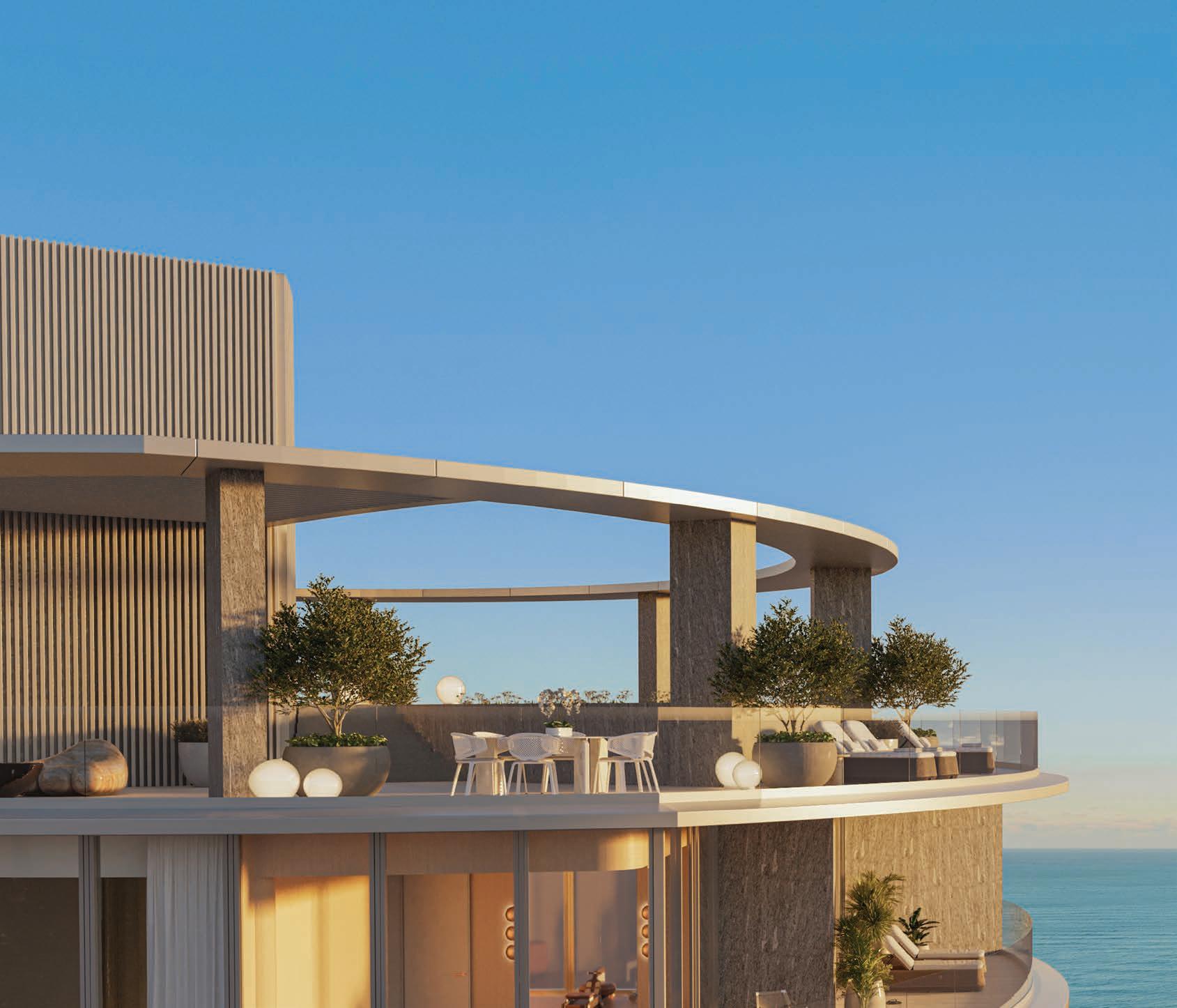
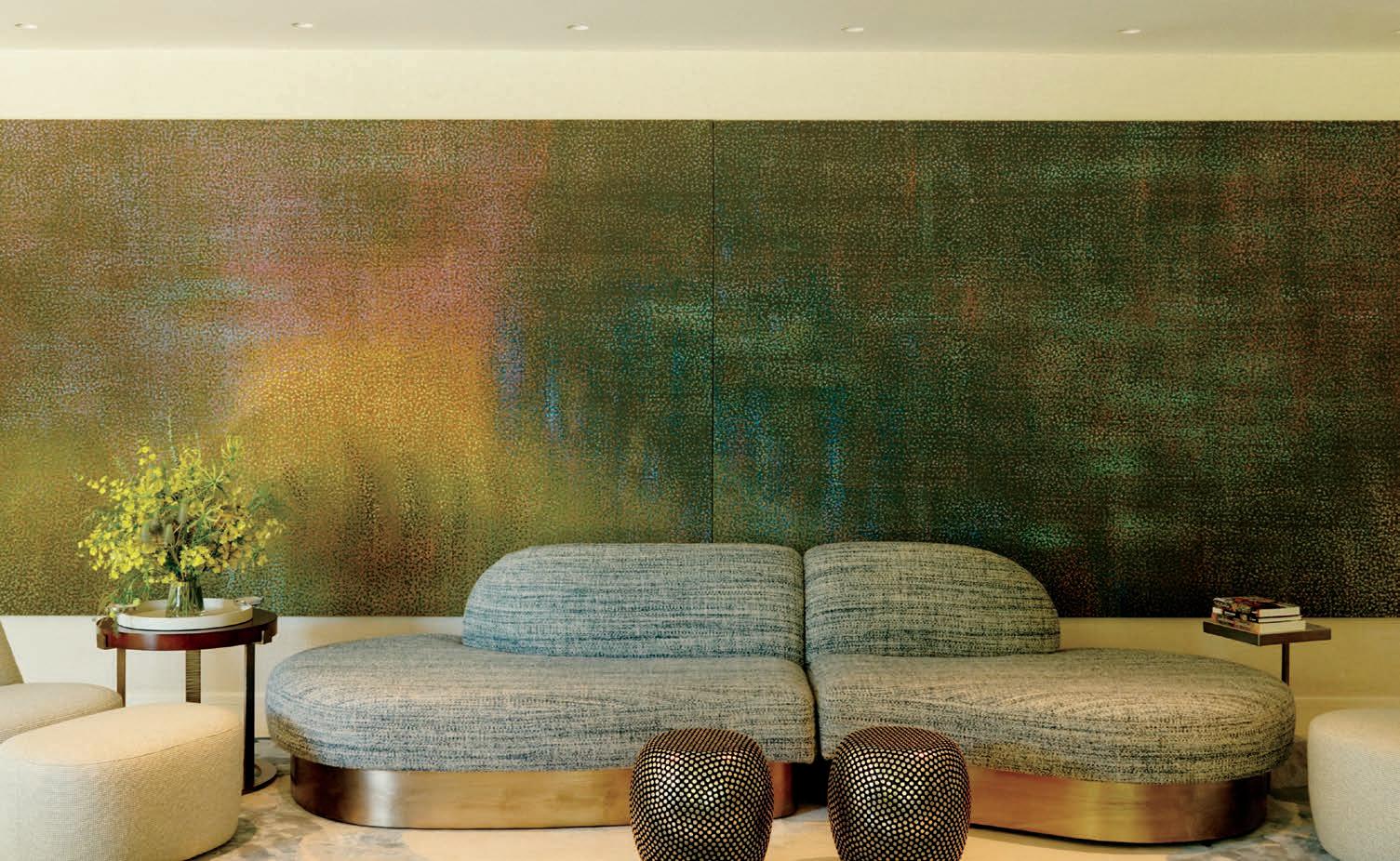
The Residences: Three- to four-bedrooms SRRBahiaMar.com ◆ 954 364 9743
Future Residences:
801 Seabreeze Blvd. Fort Lauderdale, FL 33316
Sales Gallery: 611 Seabreeze Blvd. Fort Lauderdale, FL 33316
ORAL REPRESENTATIONS CANNOT BE RELIED UPON AS CORRECTLY STATING REPRESENTATIONS OF THE DEVELOPER. FOR CORRECT REPRESENTATIONS, MAKE REFERENCE TO THIS BROCHURE AND TO THE DOCUMENTS REQUIRED BY SECTION 718 503, FLORIDA STATUTES, TO BE FURNISHED BY A DEVELOPER TO A BUYER OR LESSEE.
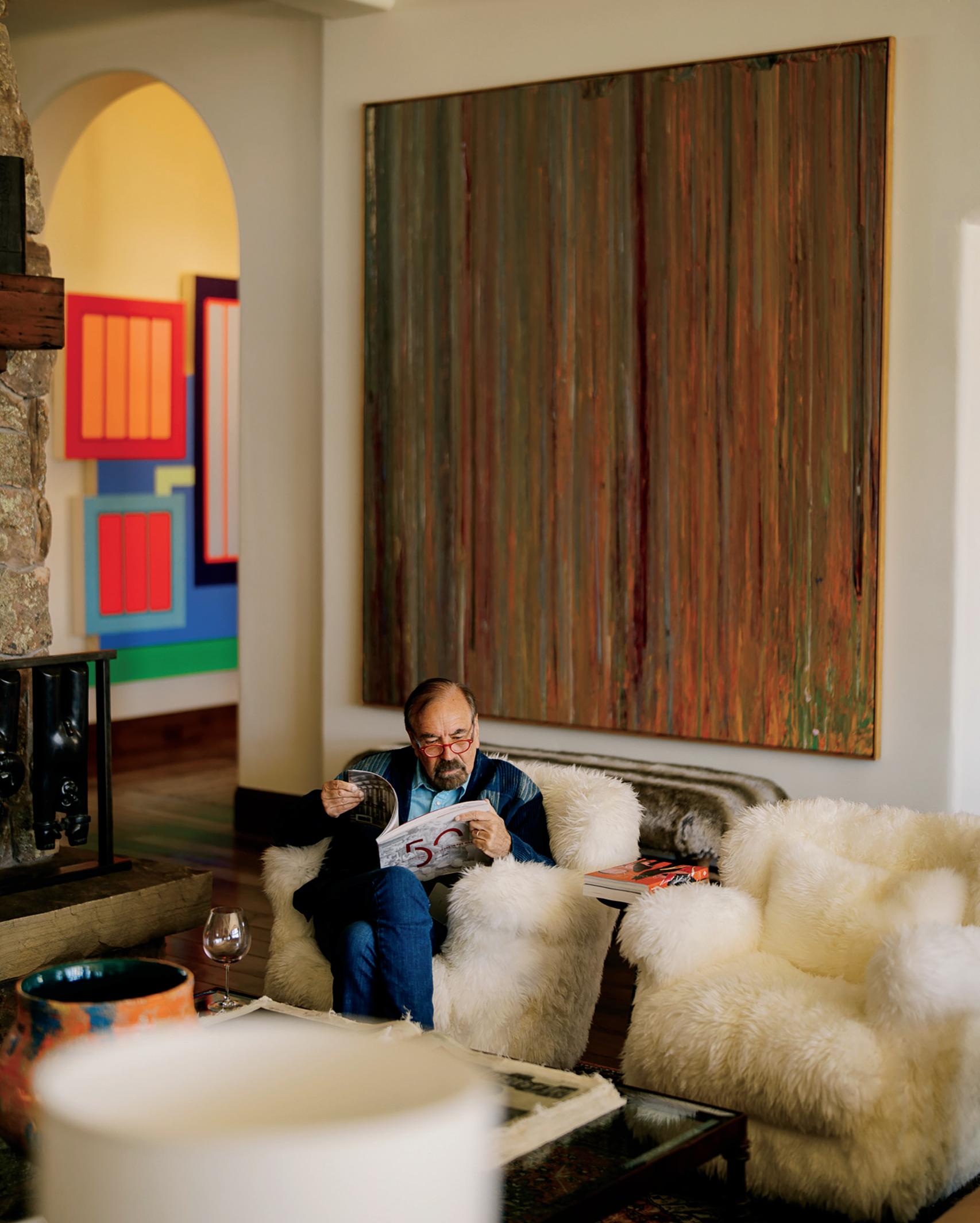
That’s the line that convinced preeminent collector Jorge M. Pérez to make the mountain town a second home, develop a 200-acre sculpture garden on Snowmass Mountain, and establish a $1 million fund at the Aspen Art Museum. It’s the same sentiment that convinces us to return each summer with a special edition of CULTURED dedicated to the artists, collectors, curators, and patrons who keep the town’s creative pulse alive year-round.
This summer, Pérez and his growing Aspen collection cover the issue, complete with an exclusive look inside his soon-to-be-revealed sculpture park,
which will be accessible by appointment. Accompanying him are features on Adrián Villar Rojas’s prehistoric-minded new work on view at AIR, studio visits with Lyle Ashton Harris and Ivan Cheng, and conversations with !lmmaker Julie Dash and longtime collaborators Deantoni Parks and Lucy Raven.
All this, of course, comes with our signature guide to the latest art openings and pop-ups, meant to be torn out, stashed, and referred to all summer long until the print fades. The only thing we can’t tell you is where you’ll begin.
— SARAH HARRELSON
24
ART DIET
These are the nine cultural events and exhibitions you won’t want to miss in Aspen this summer.
40
26
WHERE TO SEE AND BE SEEN THIS SUMMER
Mountain hikes and art intake aside, Aspen is fast becoming a paradise for shoppers and foodies.
28
FLOW STATE
Longtime collaborators Lucy Raven and Deantoni Parks will stage the former’s 2025 !lm at a ranch along Aspen’s Maroon Creek this summer.
30
STUDIO FREQUENCIES: LYLE ASHTON HARRIS
Ahead of the debut of a new performance at AIR, the artist let CULTURED into his studio for a visit.
32
STUDIO FREQUENCIES: IVAN CHENG
Ahead of the premiere of his new site-speci!c performance at AIR, the renegade artist sat down with CULTURED
42
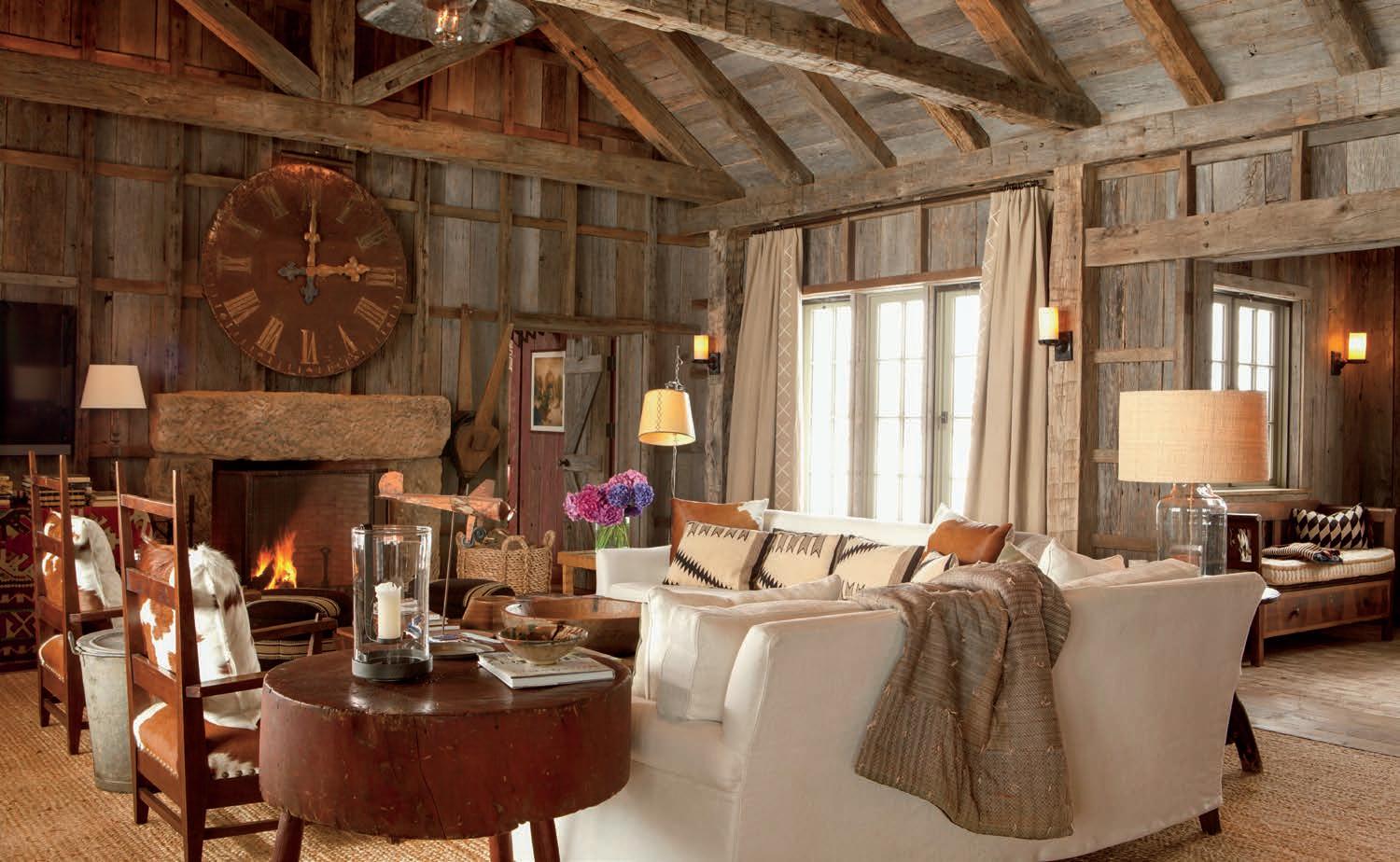
THE HOUSE THAT PETER BUILT Hoteliers Lesley and Thomas Slatkin enlisted designer Peter Dunham to transform a gambrel-roofed abode into a rustic Aspen retreat.
INTERSECT LEVELS UP
This year, the longest-running art fair in Aspen centers large-scale installations and dips into the rapidly evolving debate over technology in the art world.
44
‘JUST KEEP WATCHING’ Pioneering !lmmaker Julie Dash, the AIR festival’s keynote speaker this year, sat down for a sprawling conversation on her polychrome life in !lm.
46
ALPINE BAUHAUS
Streamlined silhouettes balance athletic utility with warm-weather indulgence, creating an alpine uniform where sport, leisure, and design are in perfect harmony.
48
‘I LOVE TAKING CHANCES’
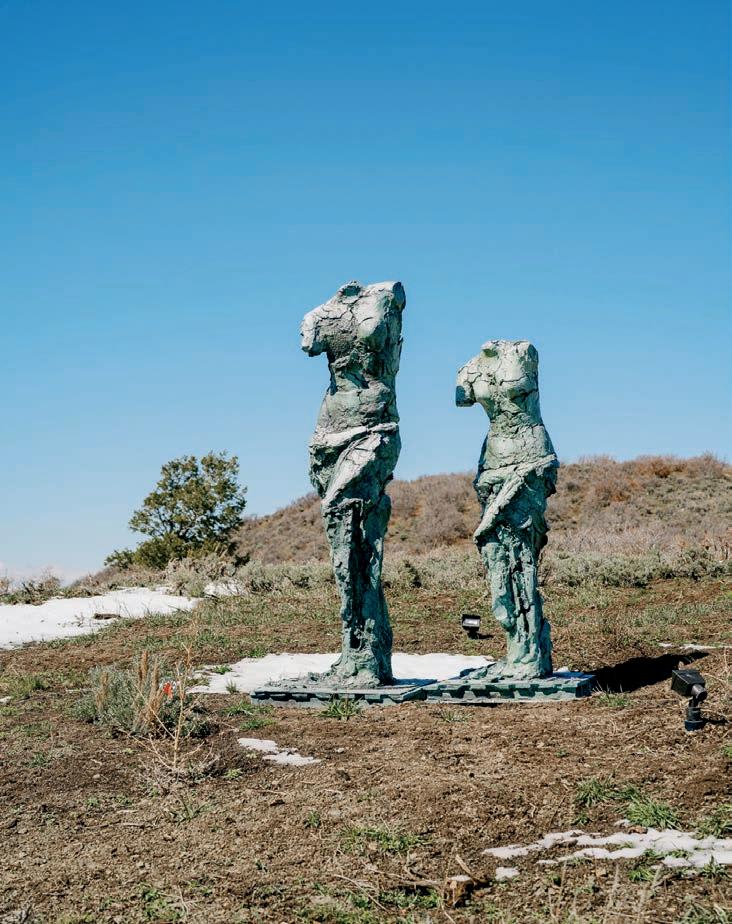
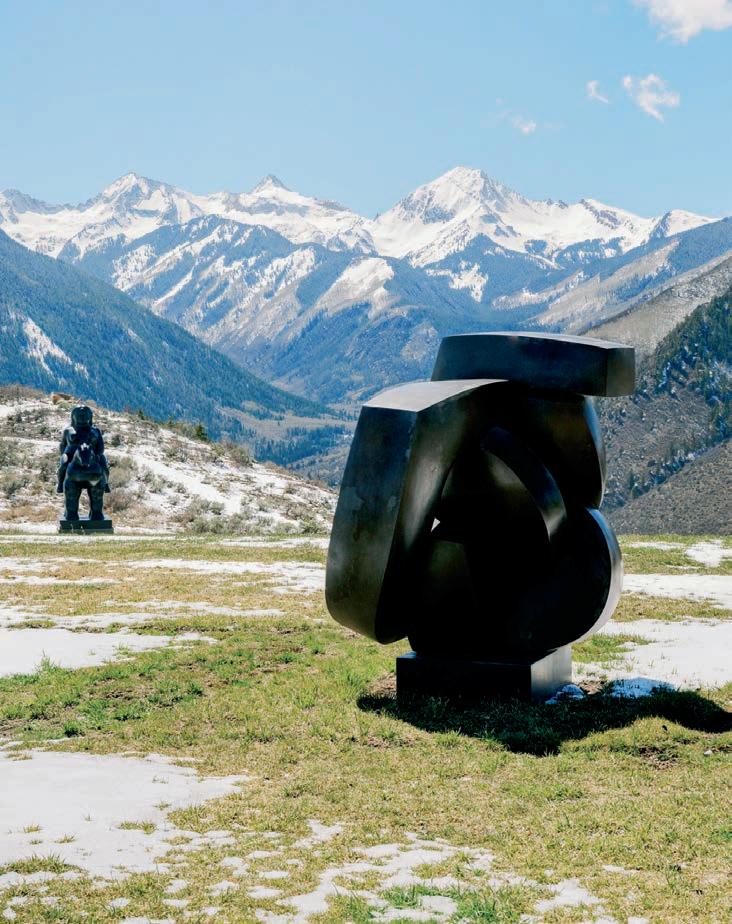
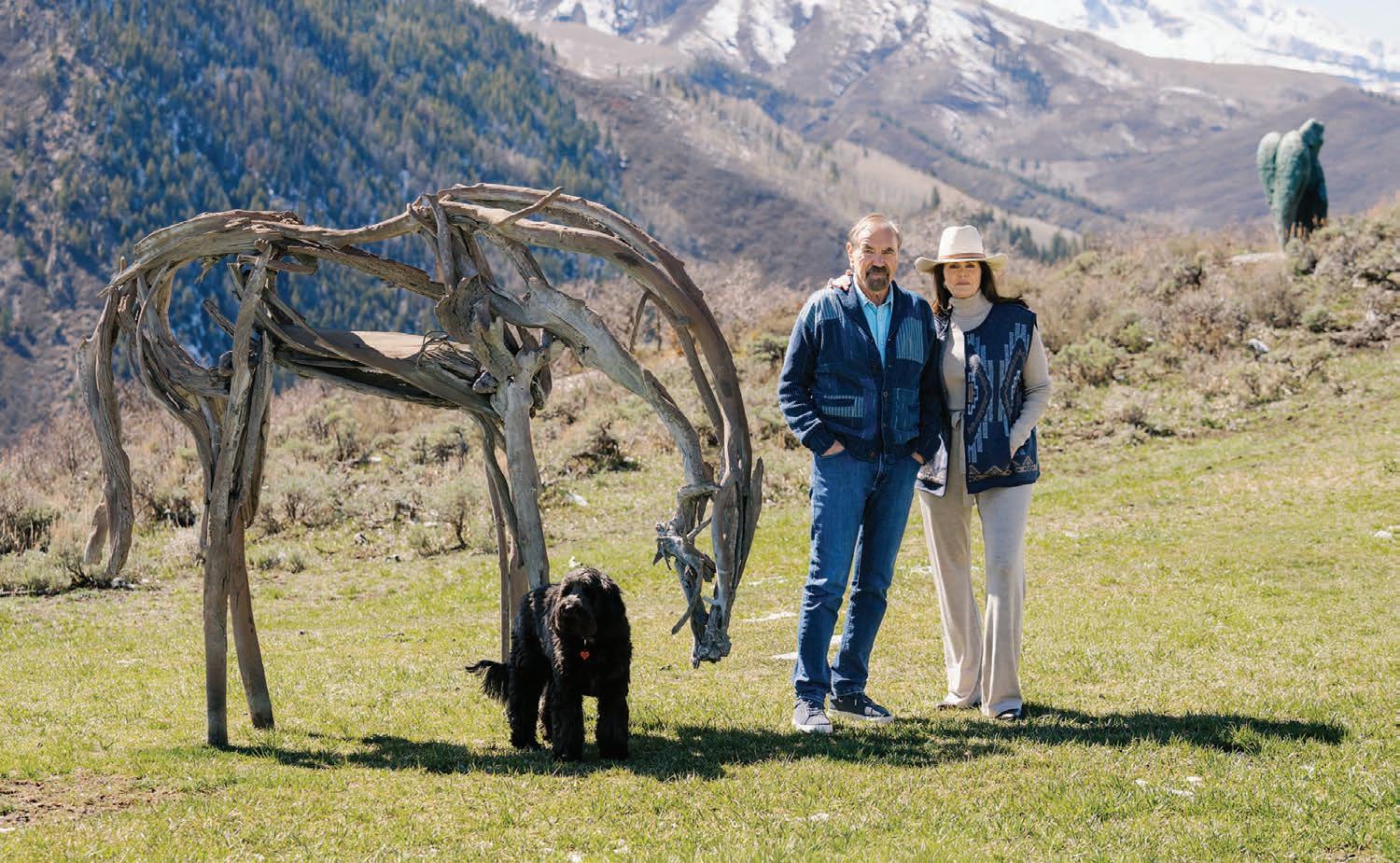
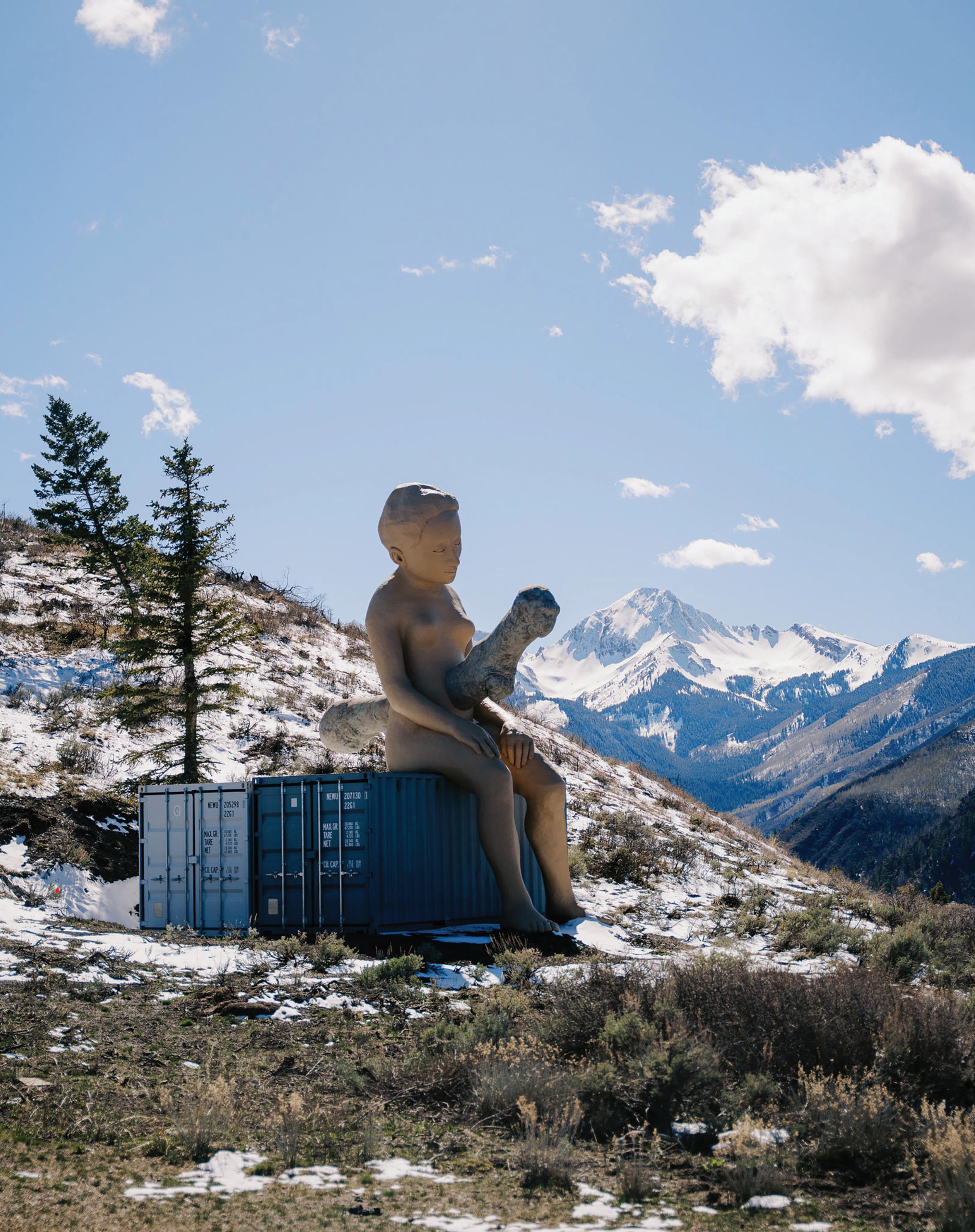
Prodigious collector and recent Aspen acolyte Jorge M. Pérez is no stranger to big swings. His latest? A 200-acre sculpture park on Snowmass Mountain.
34
ART WORLD DIPLOMAT
Former ambassador Alexa L. Wesner’s art collection started with a piece offered personally by Mark Bradford.
54
INTO THE CAVE WITH ADRIÁN VILLAR ROJAS
The Argentine-born artist speaks with curator Claude Adjil about his ambitious new show at the Aspen Art Museum.
38
SMALL TOWN, BIG FAIR
The Aspen Art Fair’s new director and co-founder are betting on more than booth appeal for the event’s third edition.
58
ART WITH EMOTION
In Los Angeles and Aspen, Deborah Beckmann and Jacob Kotzubei live among contemporary masterworks.
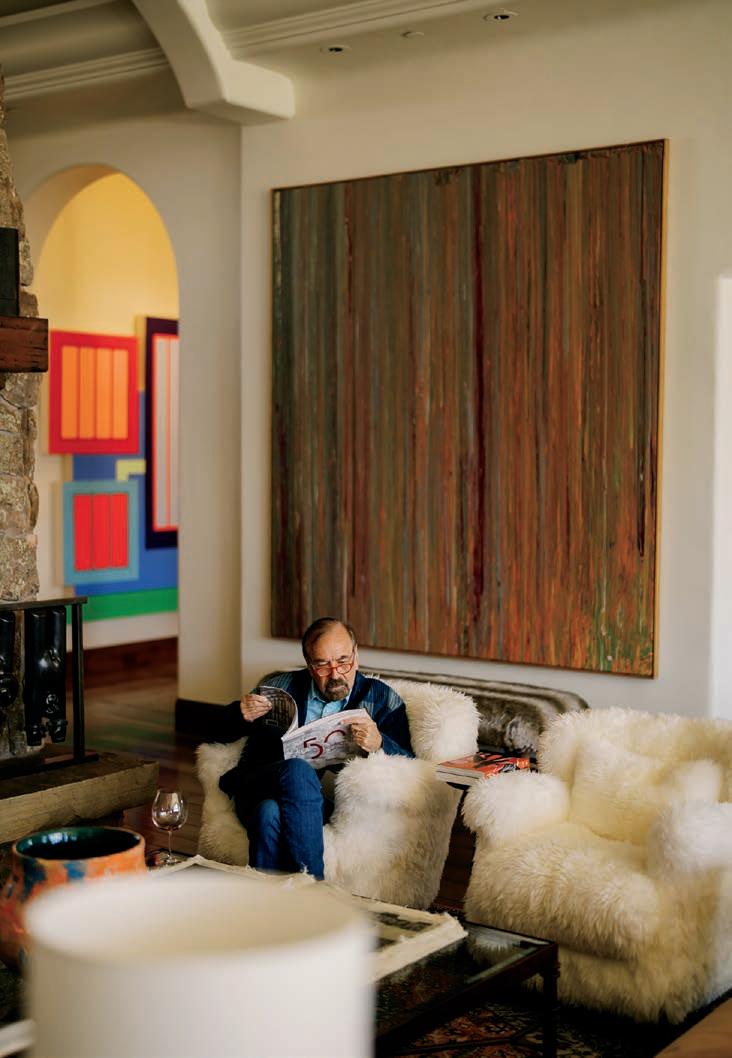
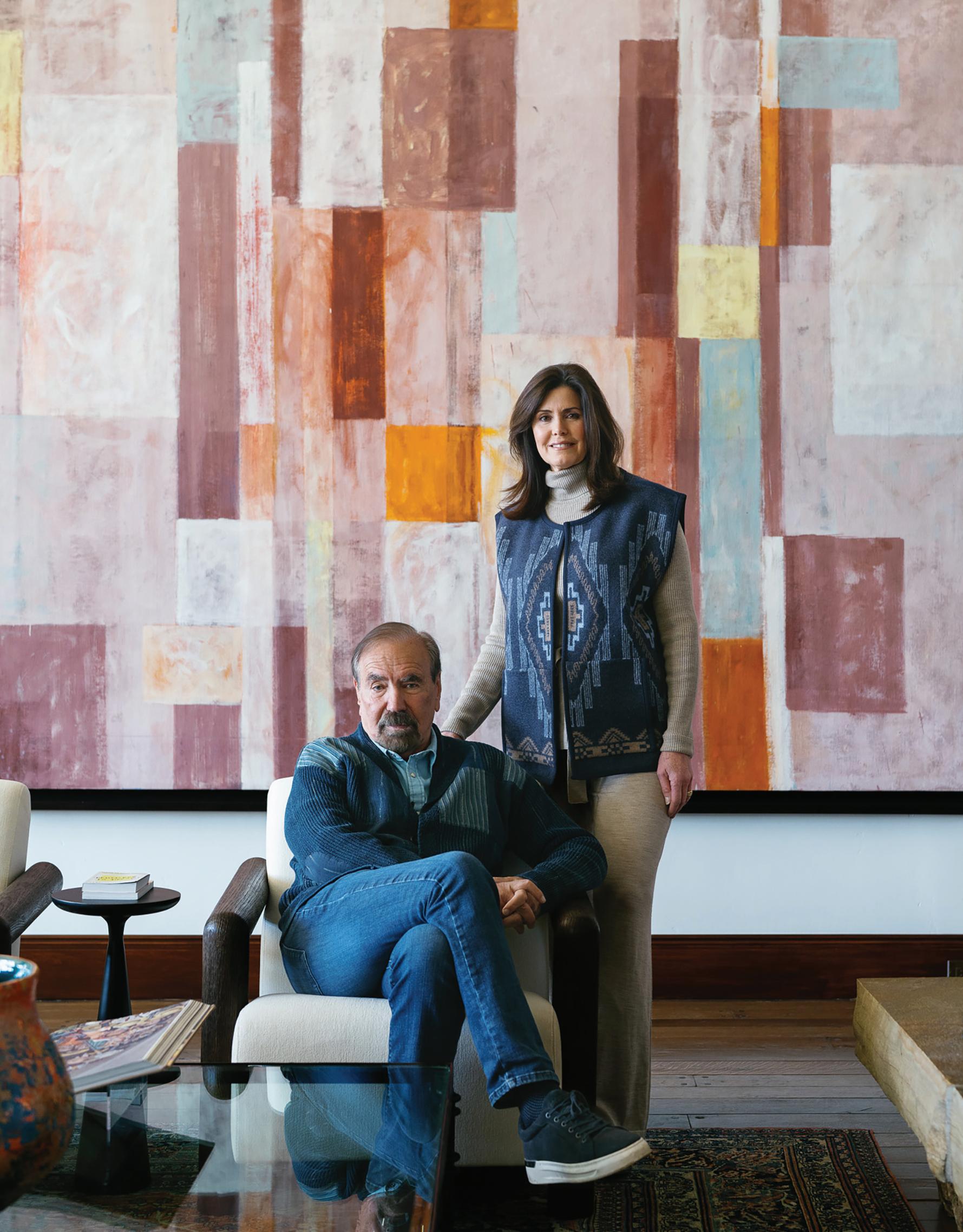
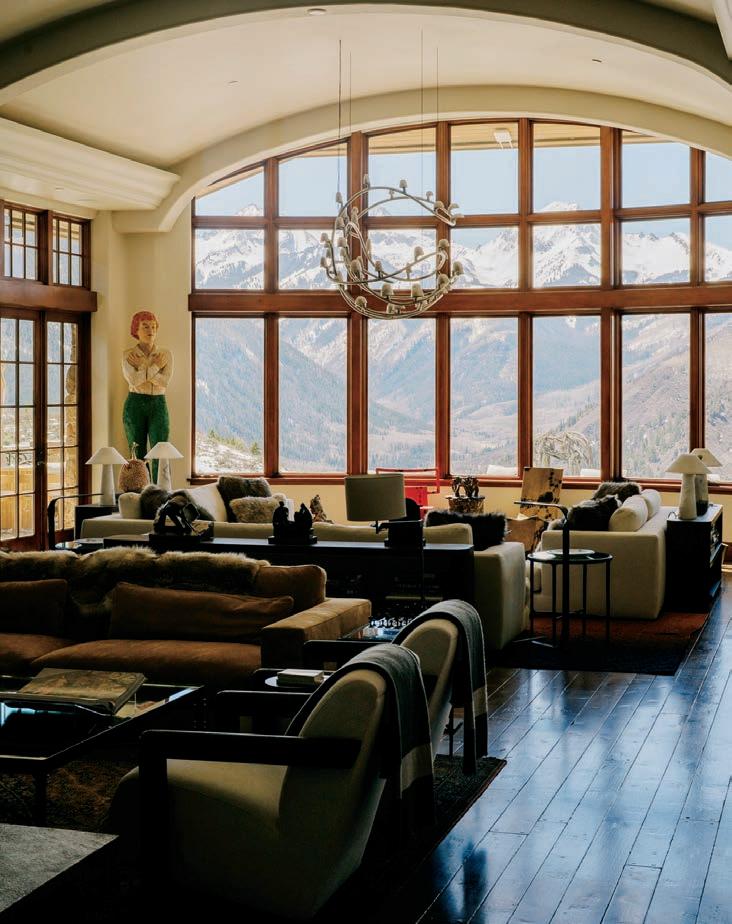
Jorge M. Pérez at home with (on living room wall) Larry Poons, Untitled PII, 1974, and (on back wall) Peter Halley, Arcturus, 2019.
Photography by Trevor Triano.
The Art Diet:
Where: Baldwin Gallery
When: July 24–Sept. 7
9 Cultural Events and Exhibitions
You
Won’t Want to Miss in Aspen This Summer
CLEAR SPACE IN YOUR CALENDAR. BETWEEN SCENIC HIKES THROUGH THE WHITE RIVER NATIONAL FOREST AND DINNERS AT SANT AMBROEUS, MAKE TIME FOR GALLERY SHOWS, PERFORMANCES, AND CONVERSATIONS SURE TO ENRICH YOUR SUMMER.
BY SOPHIA SHYER
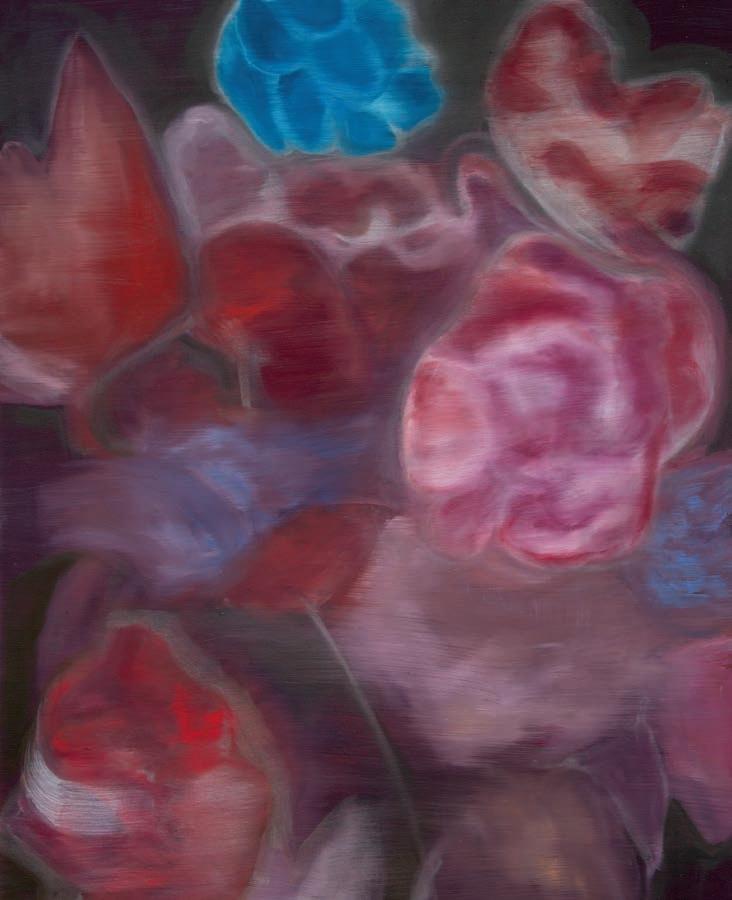
Why It’s Worth a Look: Bleckner’s art has always been an urgent and joyful reminder of life and the body’s !eeting beauties. As a prominent New York artist during the 1980s AIDS crisis, his luminous large-scale paintings evoke vivacity and fragility all at once.
“DOUBLE TAKE: RECURRENT DIALOGUES IN THE ART OF HERBERT BAYER”
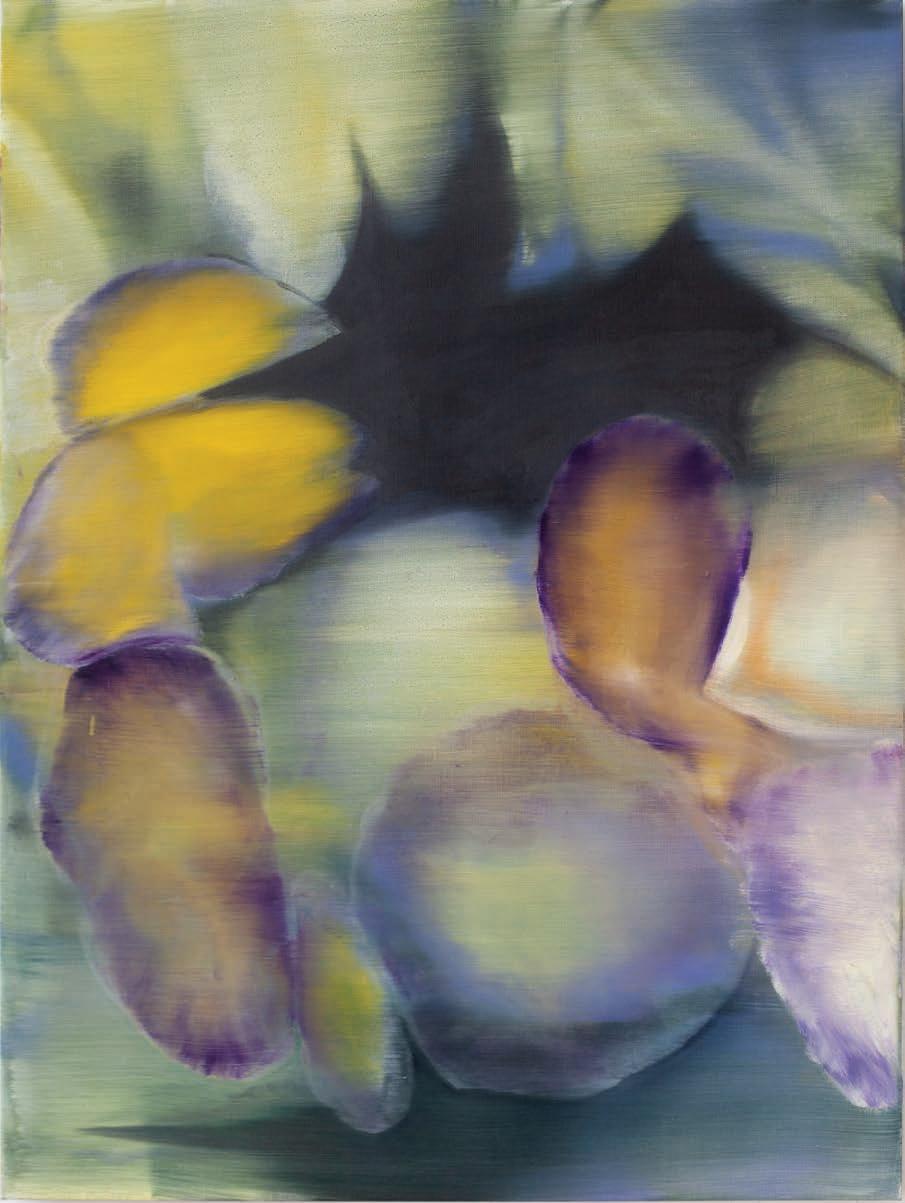
Know Before You Go: The show’s title, “Eunoia,” comes from ancient Greek rhetoric, evoking reciprocal goodwill between a speaker and audience, as well as wellness and stability in mental health fields. Across a series of hazy paintings, Bleckner probes the intricate connections between all living things.
Where: Resnick Center for Herbert Bayer Studies
When: Through Apr. 3, 2027
Why It’s Worth a Look: Bayer may have been born in Austria, but he was a longtime Colorado devotee and one of the key pioneers of the Bauhaus movement in the United States—and a veritable Swiss Army knife (graphic design, painting, photography, sculpture, interior design, architecture, he touched them all). This show takes an expansive look across seven decades of Bayer’s career, presenting 1930s photography alongside his 1970s abstractions.
Know Before You Go: The exhibition features 70 rare works, some on loan from museums across the country.
ARTWORK BY ROSS BLECKNER AND COURTESY OF BALDWIN GALLERY.
Where: Red Brick Center for the Arts
When: Through October
Why It’s Worth a Look: To herald the 50th anniversary of the Aspen Pedestrian Mall, the Red Brick Center is organizing a parade alongside two installations: a fluttering textile work by artist Rachel B. Hayes as well as a pavement mural, splayed between South Galena Street and East Cooper Avenue, by Chris Erickson.
Know Before You Go: Can’t get enough? Red Brick’s galleries are hosting a group show featuring work from Pattie Lee Becker, Joanne Seongweon Lee, Agustina Flores Maini, and Erin Rigney through Aug. 1.
ASPEN MUSIC FESTIVAL AND SCHOOL SUMMER SEASON
Where: Various locations
When: Through Aug. 23
Why It’s Worth a Look: For fine classical music, look no further than the Aspen Music Festival’s summer series. Find Leonard Bernstein and Beethoven compositions alongside works by Charles Ives, Aaron Copland, and John Adams spread across the city’s music halls, opera houses, and airy outdoor venues.
Know Before You Go: Matthew Aucoin will debut a new symphony and Yuja Wang will make her long-awaited return to Aspen for two performances. As Principal Guest Composer, Caroline Shaw will present three compositions and master classes throughout the summer.
ANDERSON RANCH’S SUMMER SERIES
Where: Anderson Ranch Arts Center, Snowmass Village
When: July 9–Aug. 6
Why It’s Worth a Look: The beloved artistic retreat has a venerable lineup for its annual summer series this year. The program kicks off with Roberto Lugo in conversation with Carmen Hermo, followed by Marilyn Minter in conversation with veteran museum director Lisa Phillips.
Know Before You Go: Anderson Ranch is ringing in its 60th this summer. Since 1966, the space has grown from a small wooden ceramics studio to a renowned hub for creatives, hosting speakers like Titus Kaphar, Charles Gaines, and the Haas Brothers.
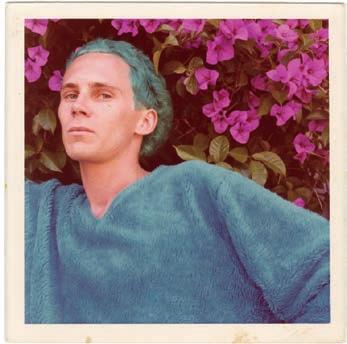
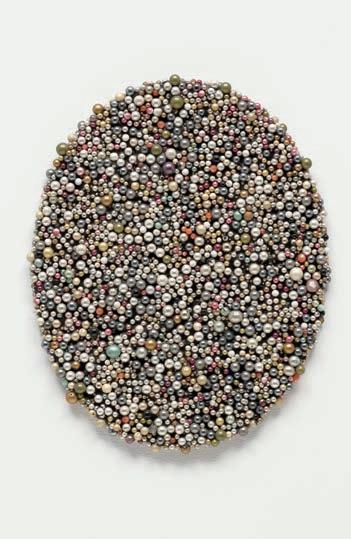
“ARCH CONNELLY: STRAIGHTEN YOUR WIG AND PRAY”
UP IN THE SKY MUSIC FESTIVAL
Where: Buttermilk Ski Resort
When: Aug. 7–8
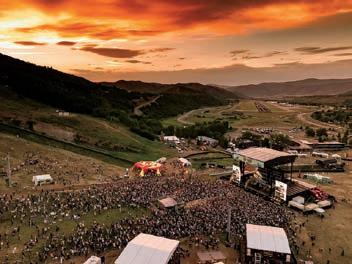
Why It’s Worth a Look: For those feeling a little more adventurous, there’s always live music in the great outdoors. Dance music festival Up in the Sky, nestled against the breathtaking Buttermilk Mountain, returns for its second year this August.
AIR 2026: FIGURES IN A LANDSCAPE
Where: Aspen Art Museum and around town
When: July 27–31
Why It’s Worth a Look: No location is better than Aspen for dramatizing the interplay between the spaces we inhabit and the stages on which we perform. For the second iteration of the Aspen Art Museum’s intellectually and artistically sprawling festival, artists and thinkers will tackle space through the twin subjects of the natural landscape and man-made set.
Where: Aspen Art Museum
When: Through Oct. 11
Why It’s Worth a Look: Despite his crucial position in the East Village’s 1980s art scene, Connelly has never had a solo museum survey until now. His multimedia works—encrusted with faux pearls, sequins, and even painted eggshells— re!ect the vibrant avant-garde scenes he participated in.
Know Before You Go: For even more Connelly in Aspen, find an exclusive selection of his pieces currently on view in Valentino’s Galena Street boutique.
Know Before You Go: On Friday, John Summit will headline alongside Empire of the Sun, Leon Thomas, Passion Pit, and Fcukers. Dom Dolla closes out the festival on Saturday, accompanied by Parcels, Polo & Pan, and Good Neighbours.
Know Before You Go: Camille Henrot is mounting a major performance drawing from the Italian Renaissance’s stock characters (aptly titled Commedia dell’arte), while experimental composer Kali Malone will present an early morning pipe organ performance in the Aspen Chapel. Meanwhile, comedian and performance artist Morgan Bassichis will mash up the work of Larry Mitchell, Frank Maya, and Amy Winehouse in a new performance. Matthew Barney returns to the festival after headlining the program in 2025. And that’s just the tip of the programming iceberg.
CASA TUA ASPEN’S 25TH ANNIVERSARY SHOW
Where: Casa Tua Aspen
When: Summer 2026
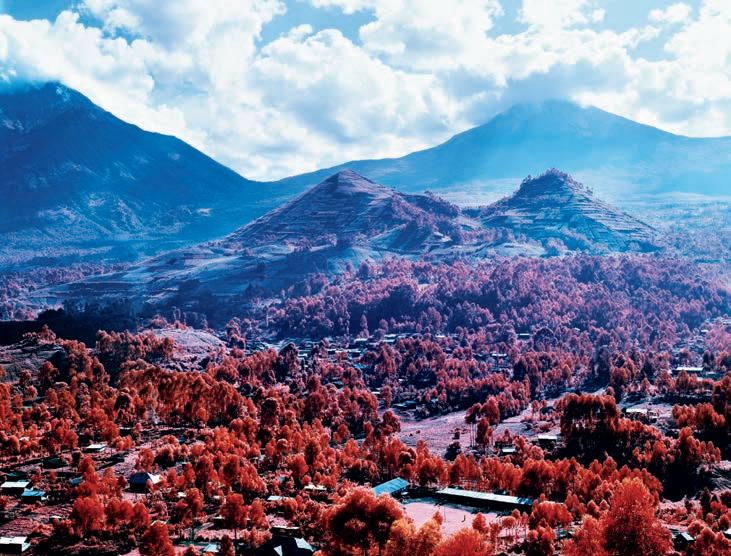
Why It’s Worth a Look: The buzzy private club has always been known for the tasteful art adorning its walls. For Casa Tua’s 25th anniversary, co-founders Leticia and Miky Grendene will curate an exhibition of in!uential photographers including Gregory Crewdson,
Richard Mosse, Lara Porzak, Anastasia Samoylova, and Roe Ethridge in their Aspen outpost.
Know Before You Go: This year marks a moment of accelerated expansion for the club, which opened its doors in Capri in April, with upcoming spaces planned in LA and Venice as well. Their 25th-anniversary book will also be coming out soon, made in collaboration with Phaidon.
RICHARD MOSSE, TOWER
PHOTOGRAPHY BY JACK FOX, COURTESY OF THE ARTIST AND THE RED BRICK CENTER FOR THE ARTS.
Where to See and Be Seen This Summer
MOUNTAIN HIKES AND ART INTAKE ASIDE, ASPEN IS FAST BECOMING A PARADISE FOR SHOPPERS AND FOODIES. THIS YEAR, A HANDFUL OF LUXURY HOUSES MADE LANDFALL, ALONG WITH SOME BELOVED COASTAL EATERIES AND A BREATHLESSLY AWAITED NEW HOTEL.
BY SARI ANNE TUSCHMAN
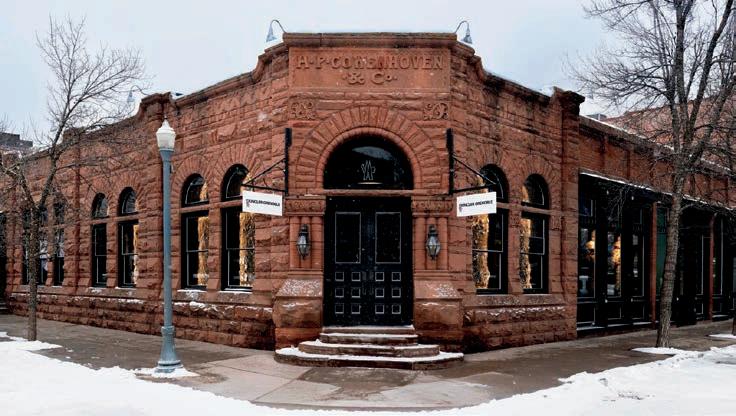
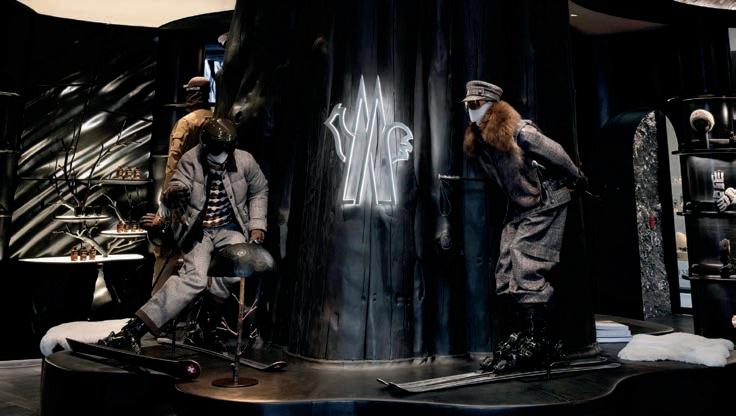
Moncler Grenoble opened its !rst U.S. flagship on East Hyman, a complement to its !rst U.S. boutique, located across the street. The Italian juggernaut commemorated the opening with a fashion show staged at a ranch just outside of town this past winter. The spectacular 2,690-square-foot flagship, designed by Swiss studio Küchel Architects, greets guests with a cave-like entrance that opens into an expansive space with the Grenoble collection displayed in circular bays. This summer, the brand has partnered with the Hotel Jerome for Hotel Jerome Treks by Moncler Grenoble, hosting guided hikes complete with custom Moncler merch and a Jeromecatered picnic midway. Chic!
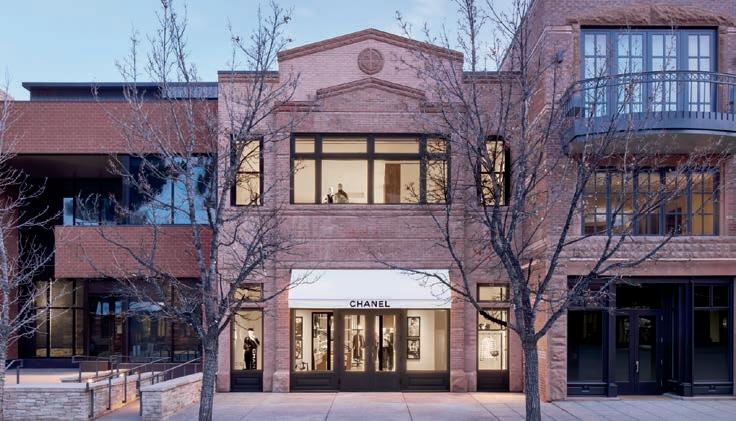
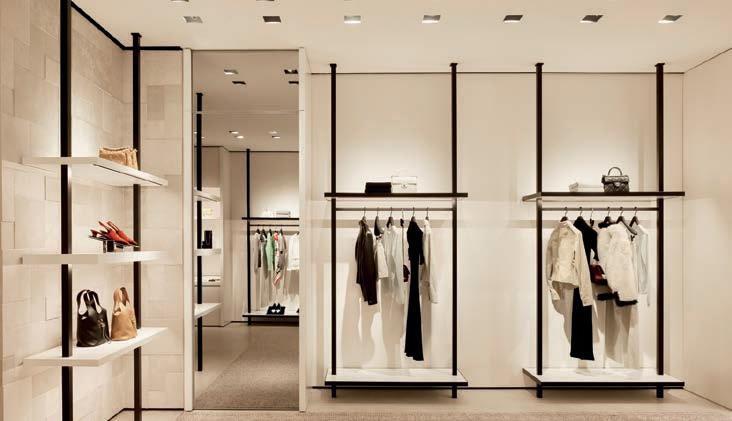
Chanel has also arrived in Aspen with an East Hyman boutique replete with a !replace, stone accents, and an array of rich textures (dark woods, plush carpet, tweed-upholstered furniture) seen throughout the 2,693-square-foot, two-floor space. This summer, new artistic director Matthieu Blazy’s Métiers d’art collection is on display.
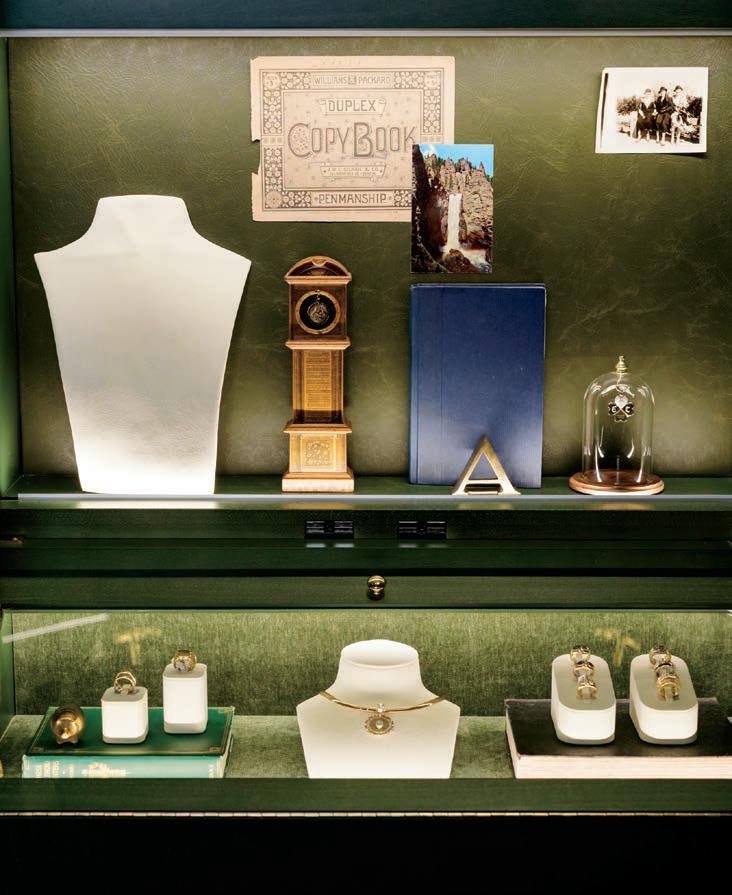
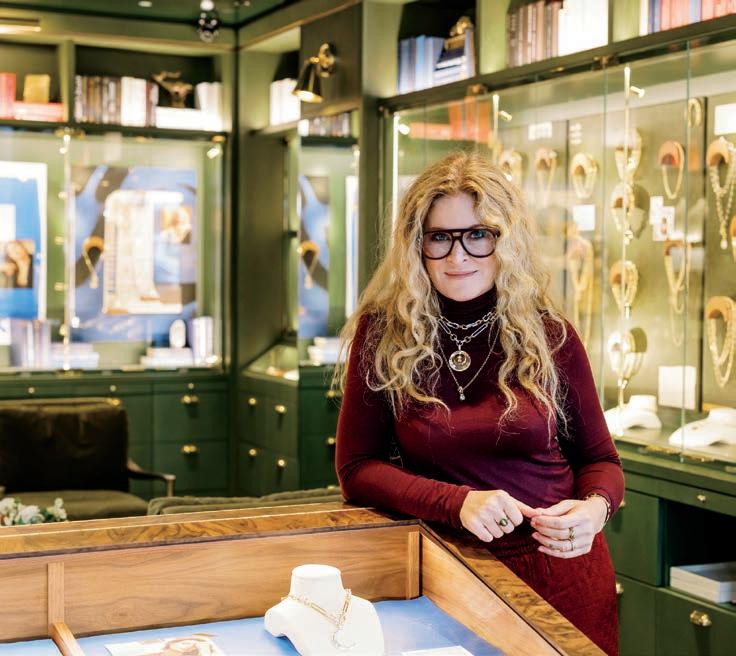
Right next door, FoundRae has also made a permanent home in the mountains. With its emerald green walls and full bookshelves, it feels more like a home library than a jewelry showroom. Hand-painted, quilted leather panels are a rich backdrop for glass vitrines bristling with gold chains and medallions.
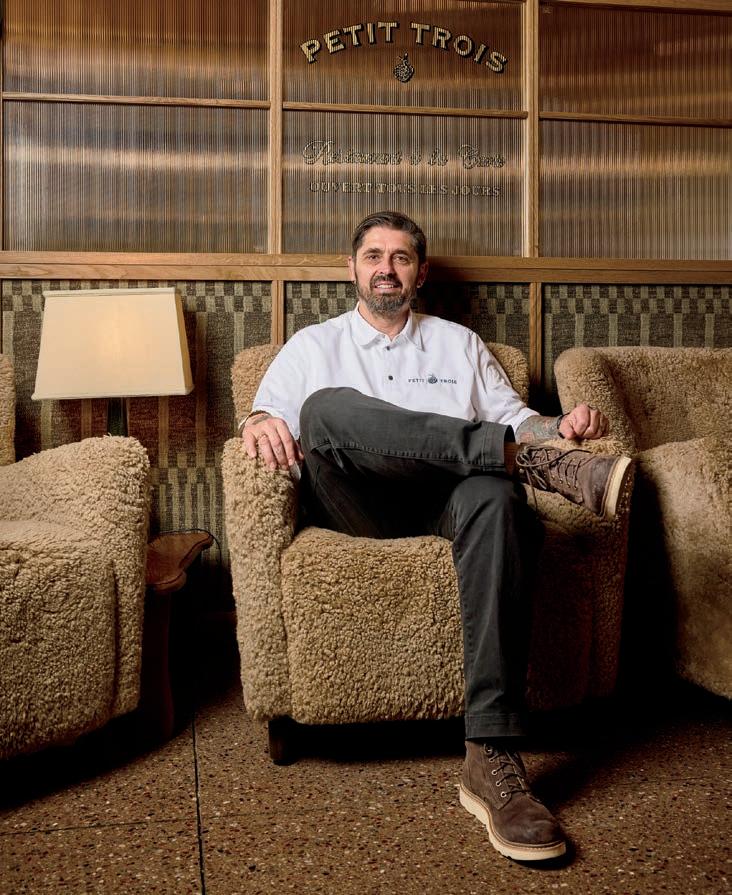
On the dining front, a new Parisian bistro has landed in Aspen: Ludo Lefebvre’s Petit Trois in the Mollie hotel. The restaurant’s !rst location outside of Los Angeles is elegant and neighborly, with its white tablecloths and cozy bar. This summer, Petit Trois introduces lunch service as well
as expanded outdoor seating. Find French toast with vanilla bean anglaise and a classic steak frites in the evening. And the hotel’s roof, Agave Bar, serves a curated selection of tequila, mezcal, and Lefebvre-crafted French-Mexican snacks.
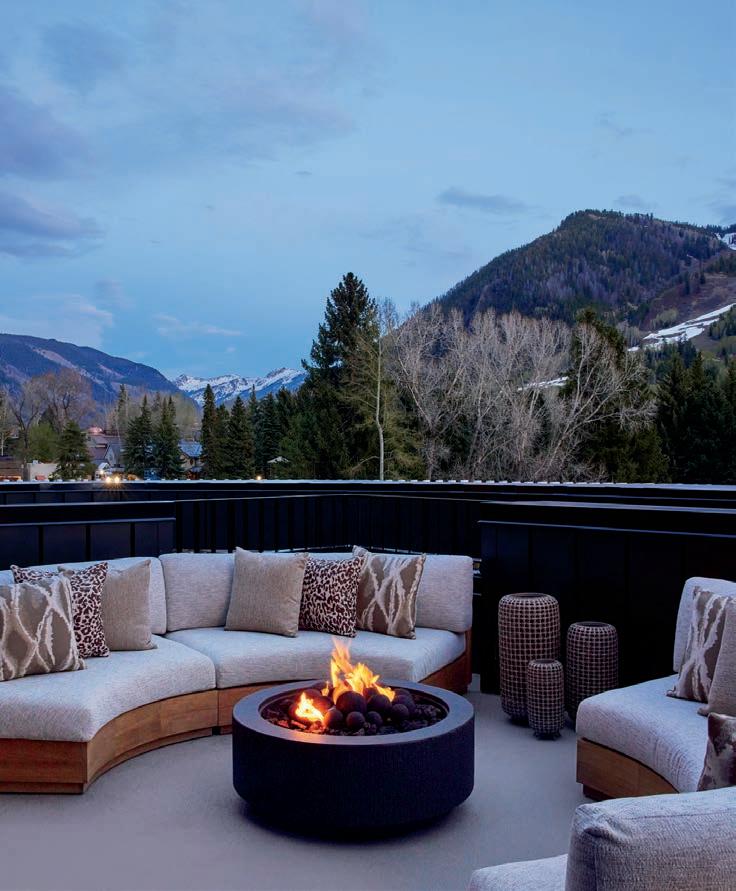
At long last, White Elephant has arrived. The hotel line’s third outpost after Nantucket and Palm Beach, the 54-key hotel fuses contemporary design with a Western touch (think rustic stone detailing and rich leather seating). Outside, the grounds open up onto a pool, two hot tubs, and a !re pit. Guests can drop by LoLa 41, known for its seafood menu, before hitting the speakeasy.
Another of this winter’s arrivals is the beloved New York eatery Rubirosa, which introduced the cheekily named Mt. Rubirosa at the base of Aspen Mountain (at the Residences at Little Nell). The spacious deck, long a favorite for après cocktails, is now a destination for basking with a full stomach. Inside, a large dining room awaits. The famed Tie Dye pizza— a thin-crust pie with vodka sauce topped tableside with a swirl of bright green pesto—and the homemade Spaghetti alla Chitarra are crowd favorites.
And last but not least, the long-awaited Golden Horn (named for a legendary Aspen establishment that opened in 1949 in the same spot and operated for decades) has opened its subterranean doors on East Cooper. Everything about the Golden Horn pays homage to Aspen: The bar features shutters rescued from the now-closed Mountain Chalet; ceiling beams sourced from the old Mi Chola; and a bar rail reclaimed from Compromise Mine. (Don’t miss the wallpaper in the
bathroom that’s collaged from vintage ski maps.) The 2,000-square-foot establishment offers a “healthy gastropub” menu with locally sourced ingredients and— believe it or not—affordable prices. There is also a golf simulator, pool tables, several TVs, and the “longest bar in Aspen”
at 24 feet. Membership in the restaurant’s “Mug Club,” an appealing prospect to many locals, means discounted beer and well drinks. The entry hall even boasts a “Wall of Fame” honoring !gures who have made a meaningful impact on our little mountain town.
Foundrae
520 E. HYMAN AVENUE, ASPEN, CO 81611
Petit Trois
Chanel
White Elephant
110 W MAIN STREET, ASPEN, CO 81611
Moncler Grenoble
432 EAST HYMAN AVENUE ASPEN, CO 81611
111 S GARMISCH STREET, ASPEN, CO 81611
516 E HYMAN AVENUE, ASPEN, CO 81611
FLOW STATE
THIS SUMMER, LONGTIME COLLABORATORS LUCY RAVEN AND DEANTONI PARKS WILL STAGE THE FORMER’S 2025 FILM, FOLLOWING THE LARGEST DAM REMOVAL IN U.S. HISTORY, AT A RANCH ALONG ASPEN’S MAROON CREEK.
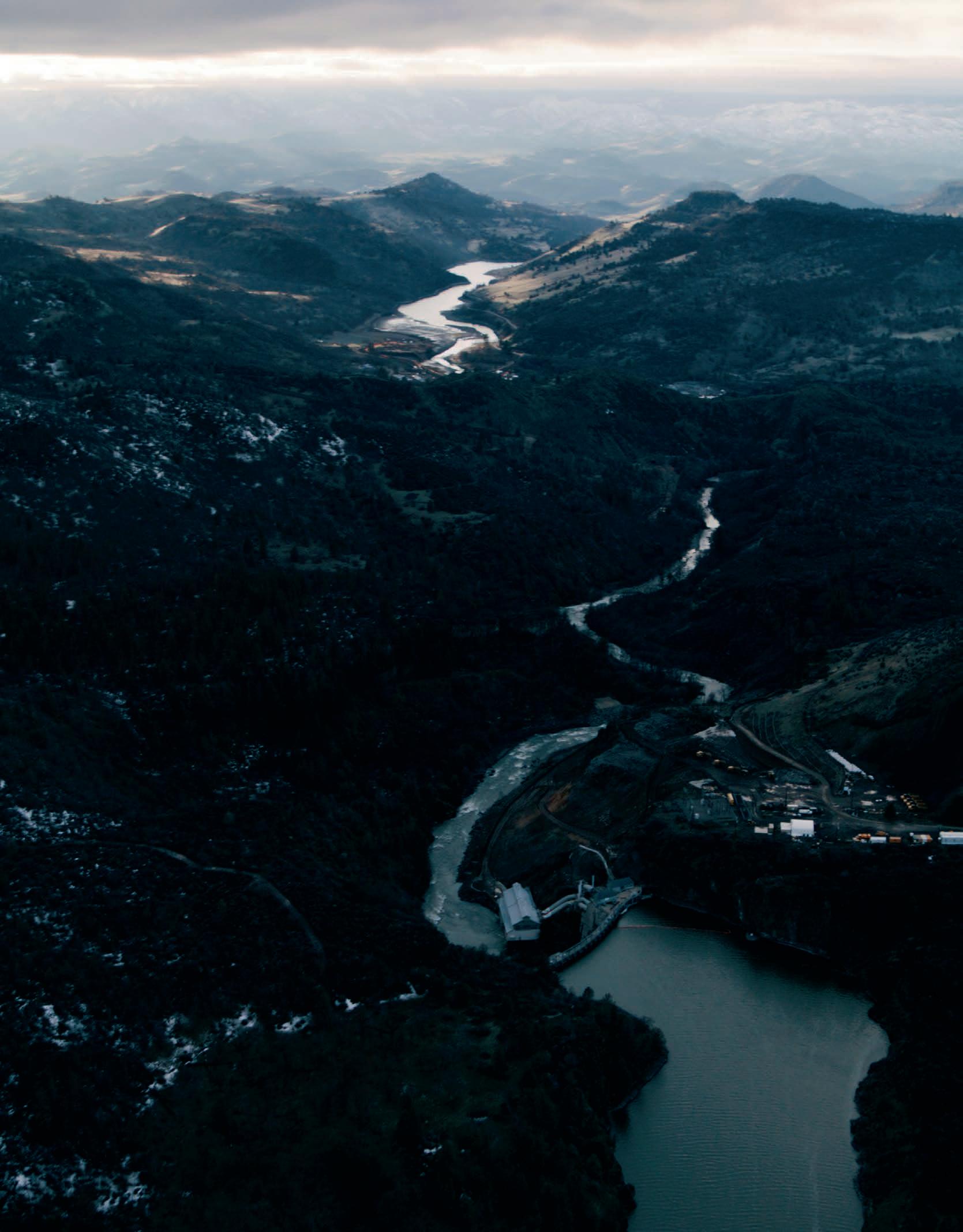
It’s not every day you get to project your !lm at high elevation. With composer and frequent coconspirator Deantoni Parks, Lucy Raven will present her 2025 work Murderers Bar, surrounded by the slopes of the Maroon Bells, for Aspen Art Museum’s 2026 AIR festival this year. The !lm and performance is the !nal installment of the Arizona-born artist’s “The Drum!re” series, exploring infrastructure under pressure, here chronicling the largest dam removal in American history, near the CaliforniaOregon border. (Parts one and two focused on a concrete plant and an explosives range.) In Aspen, Murderers Bar will be accompanied by a newly commissioned score from Parks, played across strings, percussion, and wind instruments.
Ahead of the performance on July 28, Raven and Parks sat down with CULTURED to talk about their communication style, Aspen’s extremes, and starting over.
How did Murderers Bar and the Aspen performance come about?
Lucy Raven: The piece that became Murderers Bar was part of the set of ideas that spurred this whole body of work that coalesced around cycles of material transformation and deformation, particularly as exerted through force and pressure, whether geologic or man-made or historic or economic, and the cycles of development, redevelopment, demolition, and violence. Water pressure always had a role in thinking about that, for me, particularly as it relates to the Western United States.
Deantoni Parks: It is built on what we’ve done previously by really playing the line between foley and composition. This is the most orchestral out of the collection, where the sound design was all to mimic an orchestra in flow state. We didn’t start with narration or notation. It’s almost the inverse of an orchestral piece. We wrote a piece that was then gutted and inverted to just reflect this chaotic and indeterministic style of water.
When it comes to collaborating, do you often work in an improvisational way?
Parks: I wouldn’t say improv. We do communicate a ton during the process. We’re building things, throwing things out, keeping things.
Raven: For each piece, we end up developing a verbal language to reflect what the song language of the piece is going to be.
Parks: Early on, we established an ethos where, I think I said it to you, “We’re a band.”
How are you thinking about staging Murderers Bar in Aspen?
Raven: Its main life has been as an indoor installation. In Aspen, the screen is going to be about twice as wide and thus, twice as tall. It’s quite massive, staged among a row of Aspen trees. The vision was to do something we haven’t had the opportunity to do, which is to stage the sound live with an ensemble.
Parks: We have a great group of musicians coming with AIR. [The Aspen performance
is produced in collaboration with the Aspen Music Festival and School.] Right now, they’re spending time with the !lm and getting familiar with the language.
Lucy, much of your work engages with the American West. Aspen is a unique place to put forth work in that vein.
Raven: I’ve long imagined “The Drum!re” presented outside at night, and this will be the !rst time actually seeing that at scale. Seeing the monumentality of that on this ranch in Aspen will be pretty interesting. It’s got all these Aspen trees. It’s looking at this massive mountain, Pyramid Peak. There’s a river running through it. There’s a giant irrigation pipe along the meadow where everyone’s sitting.
Aspen has such a rich history. It’s got an extreme altitude. It has an extreme economy. It also has all of this natural beauty all around it. It’s a version of a place in the West that’s a nucleus for all of the contradictions that I hope become present through the work.
Lucy Raven, Murderers Bar (Production Still), 2025.
STUDIO FREQUENCIES: LYLE ASHTON HARRIS
AHEAD OF THE DEBUT OF A NEW PERFORMANCE AT AIR, THE ARTIST LET CULTURED INTO HIS STUDIO FOR A VISIT.
BY ELLA MARTIN-GACHOT
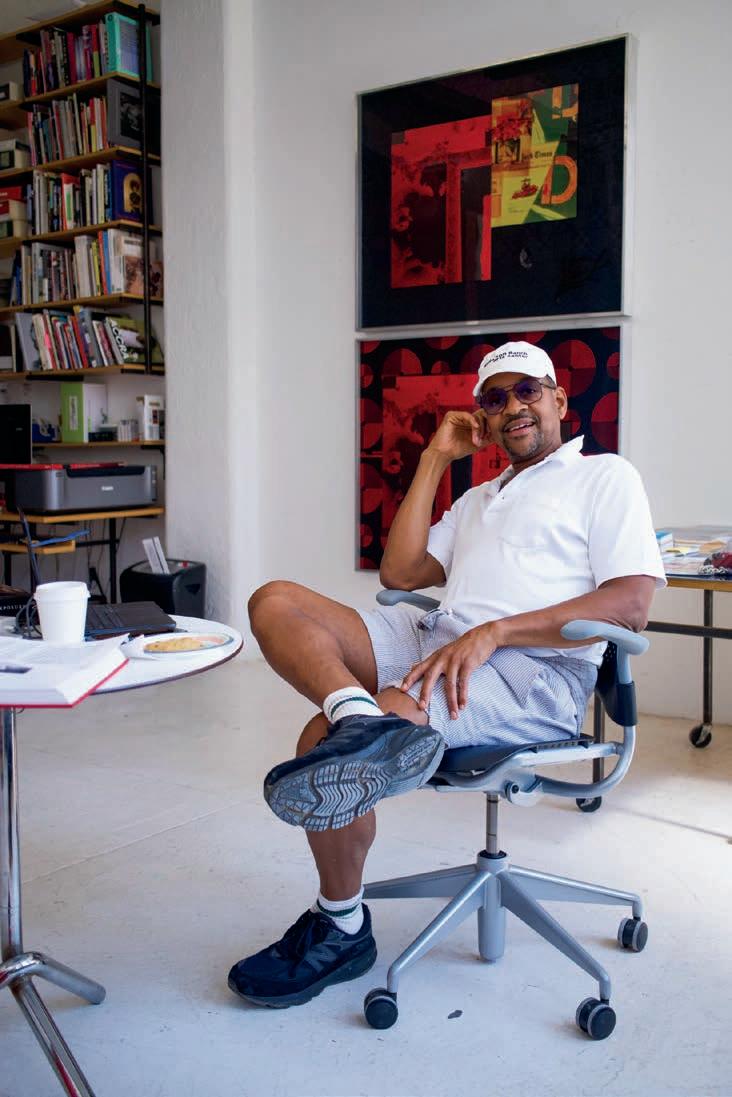
This past winter, Aspen was reintroduced to the work of Lyle Ashton Harris with a focused showing of the esteemed multidisciplinary artist’s “Shadow Works” series at Baldwin Gallery. The ongoing body of work is a codex of sorts for Harris, who Ryan McGinley once dubbed “the living godfather of gender, race and sexuality.” In the assemblages, kente fabrics, which Harris collected during his time living in Ghana, photographic prints, and intimate ephemera commune, creating a record that’s at once time-stamped and abstracted.
For the second edition of Aspen Art Museum’s AIR festival, he’s homed in on one work from the series, Oracle, 2020, activating it live through what he calls “performative montage.” On Oracle, which will unfold on the museum’s rooftop on July 29, sees Harris partner with writer and activist Darnell L. Moore and interdisciplinary artist and choreographer Raymond Pinto. Against a backdrop of projected images, the trio will invoke the personal and political themes Oracle began to unspool with a spoken-word performance.
Ahead of the work’s debut, CULTURED caught up with Harris, who splits his time between studios in New York City and Upstate New York, to discuss the soundtrack he works to, his mantra, and the work that changed the way he thinks about art.
What’s on your studio playlist?
Classical music, Aretha Franklin, and I’ve been listening to several audiobooks, like Happiness Becomes You by Tina Turner and Frederick Douglass: Prophet of Freedom by David W. Blight.
What’s the first thing you do when you enter your studio?
Tune into KUSC.
What’s in your studio fridge?
Raspberry lime sparkling water.
If you could have a studio visit with one artist, dead or alive, who would it be?
Weegee.
What’s the weirdest tool you can’t live without?
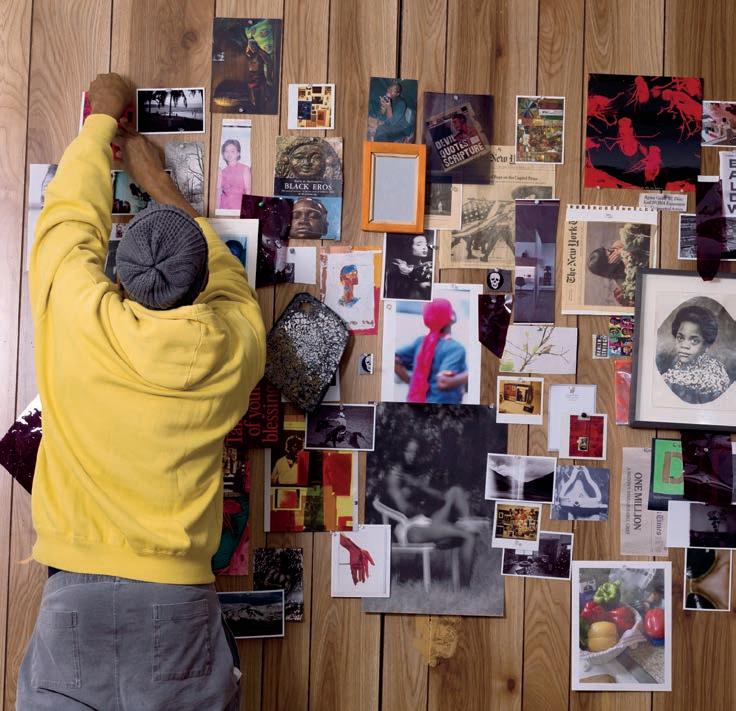
Push pins.
What’s the biggest studio mishap you’ve experienced?
Setting off a !re alarm from burning sage.
Have you ever destroyed a work to make something new?
All the time.
On a scale of hoarder to Marie Kondo, where do you fall?
Hoarder.
Is there a studio rule you live by?
Process is a bitch.
What book changed the way you think about art?
Photography Against the Grain by Allan Sekula.
Lyle Ashton Harris in his Chelsea studio preparing his “Shadow Works” series.
EXHIBITORS
193 Gallery
Albertz Benda
Alexandre Gallery
Anat Ebgi Gallery
Bienvenu Steinberg & C
Cadogan Gallery
Charlie James Gallery
Casterline | Goodman Gallery
El Apartamento
Friedman Benda
Galerie Gmurzynska
Galerie Maximillian Gattopardo
Harvey Preston Gallery
HESSE FLATOW
Hexton Gallery
Ippodo Gallery
IRL Gallery
James Barron Art
Jacob Arthur Gallery
Library Street Collective
Luce Gallery
Luis de Jesus Los Angeles
Marianne Boesky Gallery
Monique Meloche
Palo Gallery
Patel Brown Perrotin
Proyectos Monclova
R & Company
Ronchini
RYAN LEE
Sean Kelly
Secci
Southern Guild
The Spaceless Gallery
SPONSORS
Balmain
Berkley
Cadogan Tate
Private Client Select
Ruinart
The Fine Art Group
Willis Towers Watson
STUDIO FREQUENCIES: IVAN CHENG
AHEAD OF THE PREMIERE OF HIS NEW SITE-SPECIFIC PERFORMANCE AT AIR, THE RENEGADE ARTIST SAT DOWN WITH CULTURED TO DISCUSS THE SORRY STATE OF HIS FRIDGE, THE REALITIES OF WORKING ALONE, AND HIS DREAM STUDIO VISIT.
BY ELLA MARTIN-GACHOT
Warnings for live performances usually entail strobe lights, loud noises, and triggering content. For 16, Ivan Cheng’s site-speci!c intervention for the second edition of AIR, the Aspen Art Museum is recommending audiences wear closed-toe shoes, watch out for hazardous materials, and request PPE if they really want to be safe. The reason for all this caution? The work is being staged in an active land!ll.
16 follows in the tradition of the Australianborn, medium-agnostic artist’s “live situations for camera”; the performance will be !lmed in real time, the resulting video becoming the foundation for a future artwork. This temporal collapse and af!nity for remixing and recirculating his own IP are at the core of Cheng’s intrepid practice, which has been the focus of shows in Luxembourg, London, Milan, and Sydney just this past year. AIR is a rare occasion to see his work in action on this side of the Atlantic—his last solo exhibition stateside was in 2021.
Before he jetted off to Aspen, CULTURED caught up with Cheng in his studio in Amsterdam, where he’s also run the project space bologna.cc since 2017.
What’s in your studio fridge?
Nothing I’m proud of. Studio fridge equals apartment fridge equals project space fridge. It’s barren of desire, only remnant crap. Some might say passing by the shop is part of my ritual for the studio, just not one that is a consistent chime in the day. Lately there was a special on my favorite brand of frozen dumplings (two for €10), so I stocked up. It’s there beside old ice. To be honest, sometimes I feel like I’m trying to delete my corporeality through my work (in the studio).
If your studio were an animal, what would it be?
A happy donut or a minion. I think I’m unfortunately very distant from anything natural.
Do you work with any assistants, or do you work alone?
I work alone with no romance, only delusions. But I make structures so that collaborators can come in to help. I think I’m afraid of enacting centralized power, which might seem odd, since the performance parts of my work consistently stage an aggressive seizure of it.
Any rituals to prepare for a studio visit?
Reply to all emails. Do my Duolingo for dopamine. Steep a teabag in boiling water. Favorite a few things online that I’ll never buy. Read reviews of prosumer cameras. Toggle the VPN on and off. Text my friends. Listen to music. Basically satisfy most of the banalities of “contemporary” life so I don’t have to be “contemporary” in my answers, and rather throw myself toward the future.
What book changed the way you think about art?
Things I haven’t read in ages, probably…
Ban en Banlieue by Bhanu Kapil. Bernadette Corporation: 2000 Wasted Years Paper Exhibition by Raimundas Malašauskas. Cookie! by Jan Verwoert. I maybe am just a product of my past hunger, wondering now when the last revelatory moment I had was….
If you could have a studio visit with one artist, dead or alive, who would it be?
Selena Gomez. She seems so down to earth and has wonderful taste. She might ask questions I !nd irrelevant, but then I’d wonder what I categorize as “irrelevant.” Or Ethel Cain.
When was the last time you felt jealous of another artist?
Ten years ago. I’ve learned better since then. There’s little to be jealous of in artists; you should be jealous of people who have unconditional love, even if you’re uninterested in that.
PHOTOGRAPHY
ART WORLD DIPLOMAT
With such an anticlimactic U.S. Pavilion at the Venice Biennale this year, organized in part by a pet store owner and former Apprentice contestant, one longs for the days when the people in government funding art actually knew about it. Alexa L. Wesner, a former ambassador to Austria appointed by President Obama, spent years thinking carefully about what art communicates and to whom. The experience—including showing work by Félix González-Torres at the ambassador’s Vienna residence, as part of the Art in Embassies program—expanded her understanding of collecting beyond the personal and raised questions that still shape how she acquires work today.
Today, the DC native dwells in Aspen, where her home, designed by local architecture and interior design !rm Rowland+Broughton, holds an enviable collection built over decades through personal relationships, diplomatic postings, and a commitment to following genuine connection over market logic. Wesner invited CULTURED in to talk about her dream Ed Ruscha, art as cultural exchange, and her search for solace in the works she surrounds herself with.
Where does the story of your personal collection begin?
The collection really began with a work by Mark Bradford. In 2003, we spent time with him in his studio, and he generously offered us any piece we connected with. Of course, we loved everything, but we chose one.
What stayed with me wasn’t just the work itself, but the convergence of the work, his story, and who he is as a person. That trifecta continues to guide how I collect. It’s what makes a piece something you genuinely want to live with every day.
Which work in your home tends to provoke the strongest reaction from visitors?
The Kehinde Wiley tends to stop people immediately. It’s a striking work on its own, but it’s also about placement. It greets you as you enter the house, so there’s an immediate sense of scale, presence, and recognition all at once. Another piece that consistently sparks conversation is Protest by Tom Molloy. The work draws on imagery from decades of global demonstrations— civil rights, women’s rights, and broader political movements—layered together in a way that feels both urgent and intentionally
“There’s an intimacy to Aspen that allows for real dialogue around art. You don’t just see great collections, you talk about them.”
direct. It resonates deeply with me, given my own time in public service and my belief in the enduring importance of civic engagement and constitutional principles.
Which factors tend to guide you when exploring new acquisitions?
I collect for connection and an emotional response, not strategy. I want to live with the work. I don’t believe art should sit in storage. It should be experienced, shared, and woven into daily life.
Over time, my taste has evolved. Earlier on, I was more drawn to provocation. Now I !nd myself gravitating toward beauty, meaning, and work that carries cultural or historical resonance. Vija Celmins’s work speaks for itself, but my connection to it is also deeply personal. She was born in the same city and in the same year as my father, in Riga, Latvia, which gives the work an added sense of history and intimacy for me. The work in my collection needs to challenge me, but it also needs to sustain me.
As an ambassador, you participated in the State Department’s Art in Embassies program, including hosting art shows in your own residence. How did your thinking about collecting and showing art change during that time?
Serving as an ambassador made me think about art as a form of representation. Through the Art in Embassies program, I felt both a responsibility and a privilege to present not only American policy but American identity. I focused on contemporary American artists, many of whom had immigrant backgrounds, whose work reflected the country’s complexity and openness. It became less about personal taste and more about storytelling, about what a collection can communicate regarding who we are and what we value.
FORMER AMBASSADOR ALEXA L. WESNER’S ART COLLECTION STARTED WITH A PIECE OFFERED PERSONALLY BY MARK BRADFORD.
BY LUCIA PONTI PHOTOGRAPHY BY TREVOR TRIANO
“The work in my collection needs to challenge me, but it also needs to sustain me.”
Are there younger artists working today who are particularly exciting to you right now?
At this point, anyone younger than me is a “young artist.” I recently acquired a work by Huê Thi Hoffmaster, whose practice feels both delicate and deeply intentional. There’s a quiet complexity in the way material and narrative come together. Lindsay Adams’s work is emotionally charged in a way that feels
immediate without becoming overstated. There’s a con!dence in her storytelling that stays with you. She’s also originally from Washington, DC, and was recently commissioned for the Obama Presidential Center. Tony Lewis brings a different kind of rigor. His text-based works are restrained, but they unfold over time and ask you to slow down and really look.
What is your dream piece to complement your Aspen home?
One of Ed Ruscha’s mountain paintings. The landscape becomes a stage, and the word the event. In an Aspen context, that tension feels especially resonant: set against a place de!ned by vast natural beauty, the work both mirrors and disrupts its surroundings, bringing a conceptual voice into dialogue with the landscape itself.
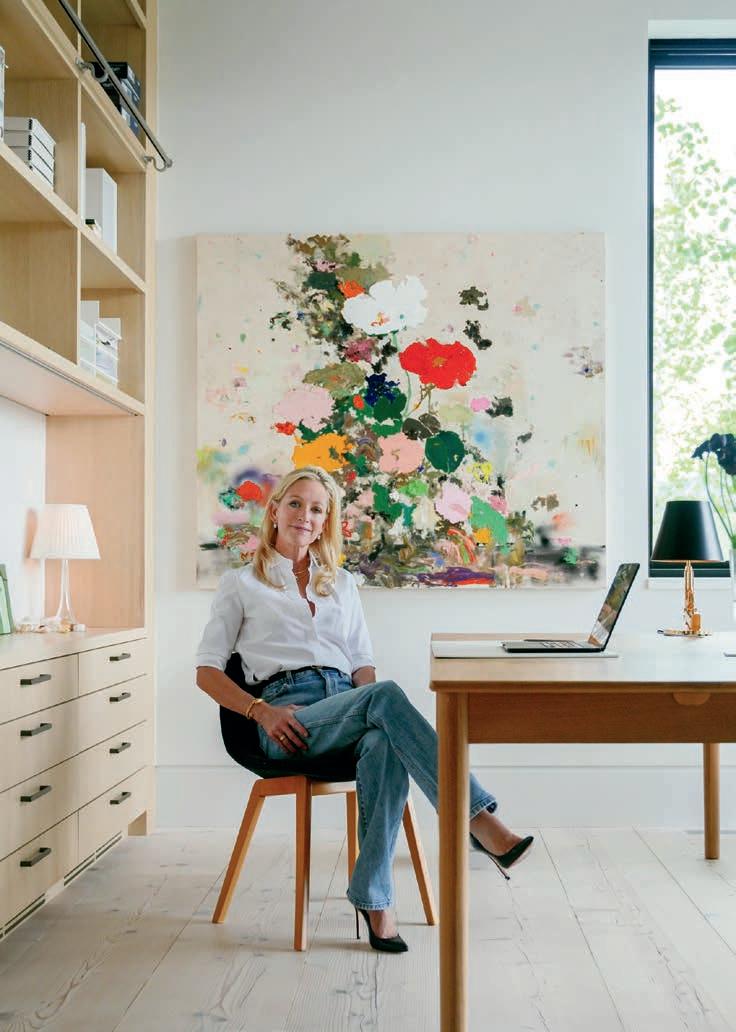
Alexa L. Wesner at home with Huê Thi Hoffmaster’s Untitled, 2025.
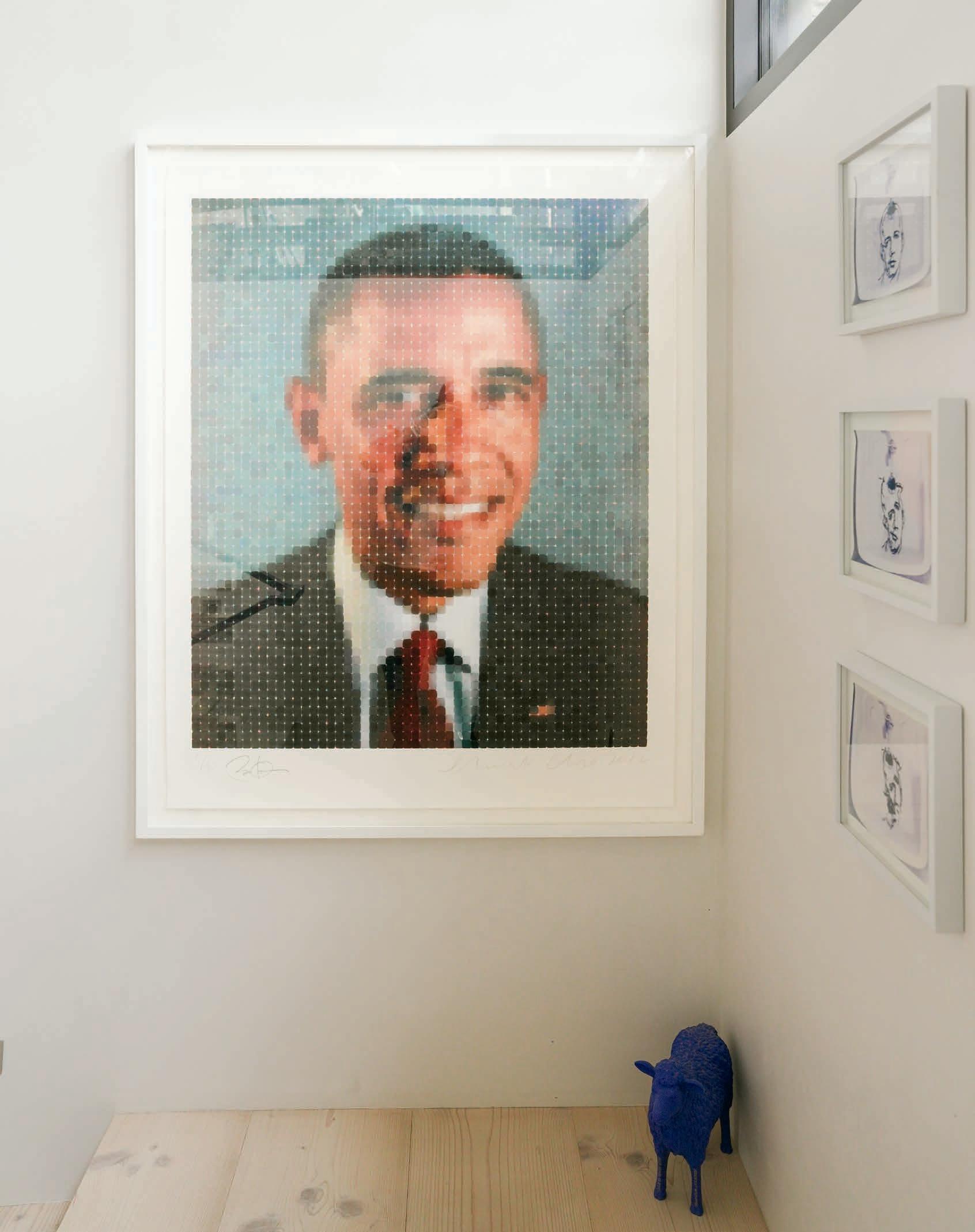
Left to right: Chuck Close, Obama 2012, 2012; Bluesheepfarm, Bluesheep; Oscar Muñoz, Narcissus, 2001–02.
Erwin Wurm, Muttie, 2023.
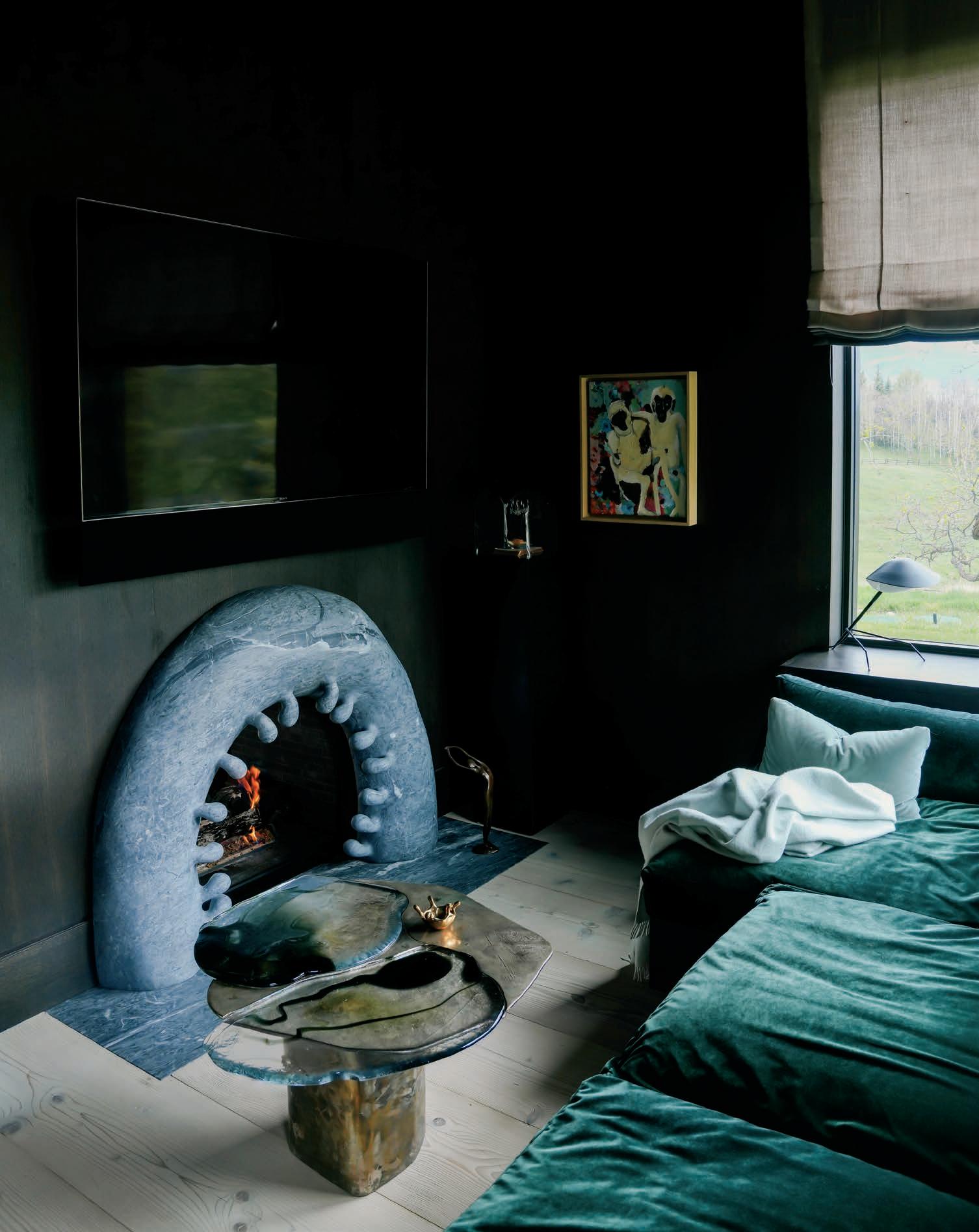
Fireplace: Haas Brothers, Fireplace, 2021. On pedestal: Polly Morgan, Kingfisher, 2006. On wall: Milena Muzquiz, Untitled, 2020. Coffee table: Vincenzo De Cotiis, Coffee Table DC1717, 2017.
SMALL TOWN, BIG FAIR
THE ASPEN ART FAIR’S NEW DIRECTOR AND CO-FOUNDER ARE BETTING ON MORE THAN BOOTH APPEAL FOR THE EVENT’S THIRD EDITION.
BY GIULIANA BRIDA
Certain expectations come with the title of a “destination art fair.” The air must be crisp. The background: cinematic. Beyond the booths, there should be enough festivities to justify the journey itself: conversations with insiders, collector home tours, perhaps even a cold plunge before cocktail hour. Three years in, the Aspen Art Fair has perfected the balance.
Housed at the mountain enclave’s Hotel Jerome, the fair will meld rustic charm with an unmistakable sense of occasion from July 29–Aug. 1. CULTURED sat down with the fair’s new director, Kelly Cornell, and co-founder Bob Chase to discuss the fair’s evolving vision, thinking beyond the booth, and punching above their weight.
Kelly, what drew you to the fair?
Kelly Cornell: There’s something incredibly compelling about the fair’s setting—the historic Hotel Jerome paired with the natural beauty of Aspen’s mountain landscape creates a truly unique environment for experiencing art. What also drew me in was the strong connection between Texas and Colorado.
Bob Chase: Another intangible with Kelly was her deep connection to the Dallas collector scene [as head of the Dallas Art Fair], many of whom spend time in Aspen. There has long been a connection between these two places, and we now get to amplify that synergy in a new and engaging way.
What highlights in the fair’s programming are you most excited about this year?
Cornell: I’m especially excited about our !lm programming this year, including a screening of Art’s Power to Change – All the Empty Rooms, presented in partnership with Aspen Film, followed by a panel discussion. The !lm is incredibly moving and speaks to the power of storytelling and art to process collective grief and create meaningful dialogue.
Bob, what gaps did you see in the Aspen art world, and how have you worked to fill them?
Chase: I saw two gaps. One, the institutions in this town are second to none and validate that Aspen punches far above its weight, yet many people still have not
engaged with these organizations. I believed that if we could create a demystifying and intimate way to access internationally renowned artists and galleries, and partner with our institutions in the process, we could not only create a worldclass experience for our community but also connect more people to the cultural heartbeat of this town.
Two, many of my friends who have important galleries elsewhere in the world have collectors in Aspen and would love to connect with them on this same intimate level. I was interested in a platform where I could facilitate that for them in a way that was also highly additive to our community. Nearly everyone who has done the fair thus far wants to come back.
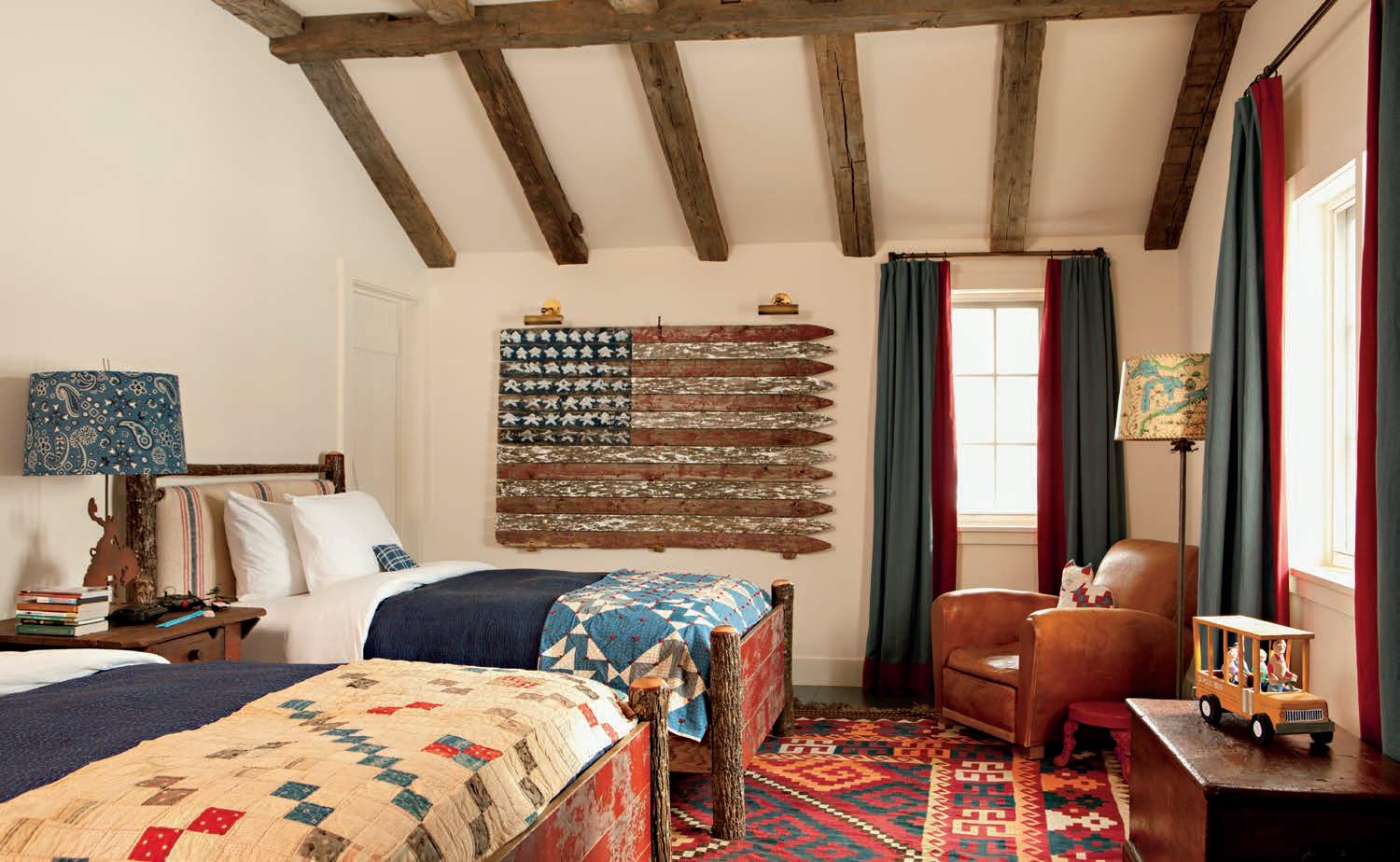
IN ASPEN, HOTELIERS LESLEY AND THOMAS SLATKIN ENLISTED DESIGNER PETER DUNHAM TO TRANSFORM A GAMBREL-ROOFED ABODE INTO A RUSTIC RETREAT, WITH 19TH-CENTURY BONES AND A FLOOR PLAN THAT CATERS TO PERPETUAL COMPANY.
PHOTOGRAPHY BY KARYN MILLET
As the owner of two of California’s most highly sought-after waterfront hotels, Lesley Slatkin knows a thing or two about making people feel at home. The same spirit that has long de!ned Santa Monica’s Shutters on the Beach and Hotel Casa Del Mar also animates her family’s Aspen retreat, where guests are greeted with overflowing Shabbat dinners, impromptu weekend gatherings, and an open floor plan designed to bring everyone together.
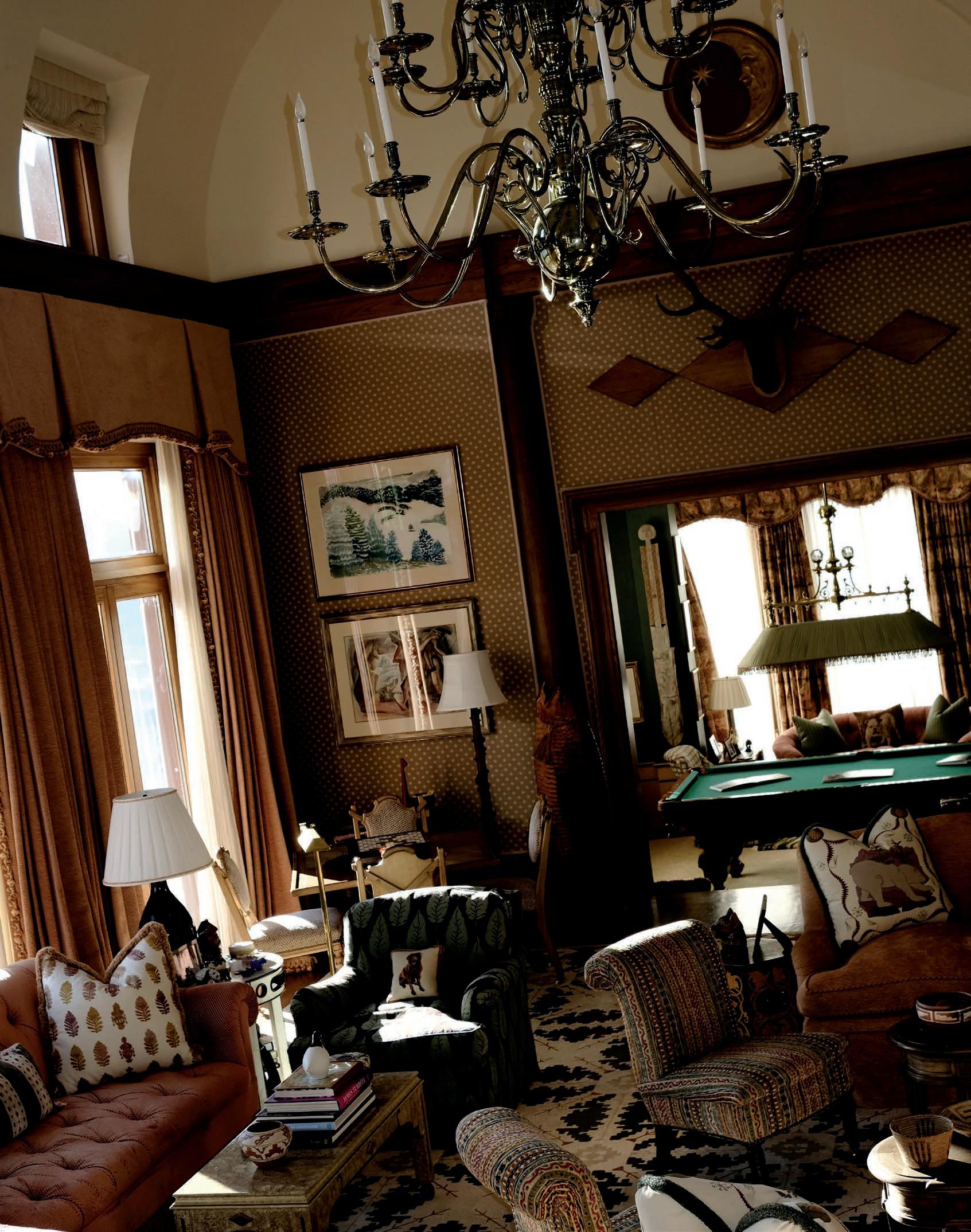
Working alongside the award-winning New York and Los Angeles–based interior designer Peter Dunham, Slatkin transformed a historic ranch property into a personal refuge that places hospitality (and a tasteful design object or two) at its center. For CULTURED, the duo sat down to explore their relationship to Aspen, as well as the reimagined barn Slatkin now calls home.
What first drew you to living in Aspen?
Lesley Slatkin: Before Tommy [ Slatkin’s husband ] and I had even met, my mom had rented a place here for a few summers. Once I met Tommy, he also fell in love with Aspen. It was—and still is— the perfect combination for our family. I love the nature and activities, but also the social aspects. Tommy could fly !sh on the rivers every day and only come to town for a good meal and, of course, to see our amazing community of friends.
What first excited you about embarking on this design project?
Peter Dunham: As a designer, it’s really fun to work in an area like Aspen that has a strong visual narrative in people’s heads: the mountains, the West, the romance of horses and of the countryside. It was really exciting to go and see this beautiful piece of property—one of the largest remaining ranches in town— and to start to imagine how this will play
into that story. I was lucky to be brought in from the get-go, which meant I had the opportunity to guide the clients to the choice of architect and come to a very concise vision between all of us, from the beginning.
How did the Aspen setting influence your approach?
Dunham: The piece of property was magni!cent. It very much felt like an old Colorado ranch. On-site was one of the oldest remaining buildings in Aspen, an 1840s farmhouse that was protected on the corner of the property with old stables. That put us on course for what the house was going to be—a kind of 19th-century agricultural architecture.
Which room in the home gets the most use?
Slatkin: Our house is basically a oneroom barn, so the kitchen and living room are de!nitely the hub. We did this on purpose because I wanted to see my family when we were in Aspen. We chose not to build too many additional rooms. We have plenty of bedrooms but only one living space. Tommy, of course, has his library to escape to when needed because I would run a bed-and-breakfast out of our home if I could!
Which detail in the home are you most proud of?
Dunham: In every house, I try to incorporate architectural salvage, which I absolutely love using and !nding. One thing we knew we wanted was a really fabulous island because the kitchen is part of the living room and dining room— it’s all one big room. I really did not want to have something jarring and boring. What we found, which was one of those holy grails of vintage, was a pair of matching 1830s Pennsylvania yellow painted shop counters, and we were able to put them together with the original, existing tops. We were able to keep all the original features on three sides,
which are the sides you see when you come into the room.
Can you describe your perfect Aspen weekend?
Slatkin: Shabbat dinner at home with a constant flow of both locals and houseguests.
Saturday morning at the farmers’ market. Lunch at the Maroon Creek Club, pickleball, and maybe a mahjong game. The HunterSmuggler Loop or a long walk around our neighborhood. Dinner in town at one of our favorites: Cache Cache, Matsuhisa, Las Montañas, or Ellina.
PETER DUNHAM AT THE SLATKINS’ ASPEN HOME WITH RICHARD SERRA’S AFANGAR SK I (PRINT), 1991.
INTERSECT LEVELS UP
THIS YEAR, THE LONGEST-RUNNING ART FAIR IN ASPEN CENTERS LARGE-SCALE INSTALLATIONS AND DIPS INTO THE RAPIDLY EVOLVING DEBATE OVER TECHNOLOGY IN THE ART WORLD.
BY GIULIANA BRIDA
In late July, the Aspen Ice Garden undergoes an annual weekend transformation. Skates, hockey sticks, and shouts disappear, making room for collectors, gallery booths, and an artistic event that has de!ned Aspen’s summer calendar for 15 years and counting. The Intersect Aspen Art + Design Fair returns to the rink for its 16th edition from July 28–Aug. 1 with a little more scale, a little more spectacle, and a lineup of programming poised at the intersection of art and technology.
The fair emphasizes its ability to curate expansive galleries and sizeable installations by creating space for works that hold their own, even against the grandeur of the Rockies. Visitors can expect to wander through presentations by regional and international creatives alike, including renowned conservation photographers Paul Nicklen and Cristina Mittermeier, whose work is rooted in environmental urgency and is as spectacular as it is emotional to behold.
Joining them is California artist Jay Kelly, showing a new slate of anti-representational offerings, as well as a local array of talent featured in “The Colorado Connection,” presented jointly with the Red Brick Center for the Arts. There, visitors will see everything from Whit Boucher’s keenly textured investigations of the landscape to John Doyle’s rustic wood sculptures.
“The excitement from our galleries, partners, and collectors is heartening,” Tim von Gal, the fair’s CEO, shared. “Our objective is to raise the level of the art and the excitement of the event each year.” The new schedule of programming will do just that. It includes curated talks and tours that move across the fault lines of contemporary culture: the ever-changing role of technology in the artistic process, the art world’s potential as a consciousness-raising force, the changing local landscape. With the mountains just steps away from the Aspen Ice Garden walls, the fair is more than ready to compete for your attention.
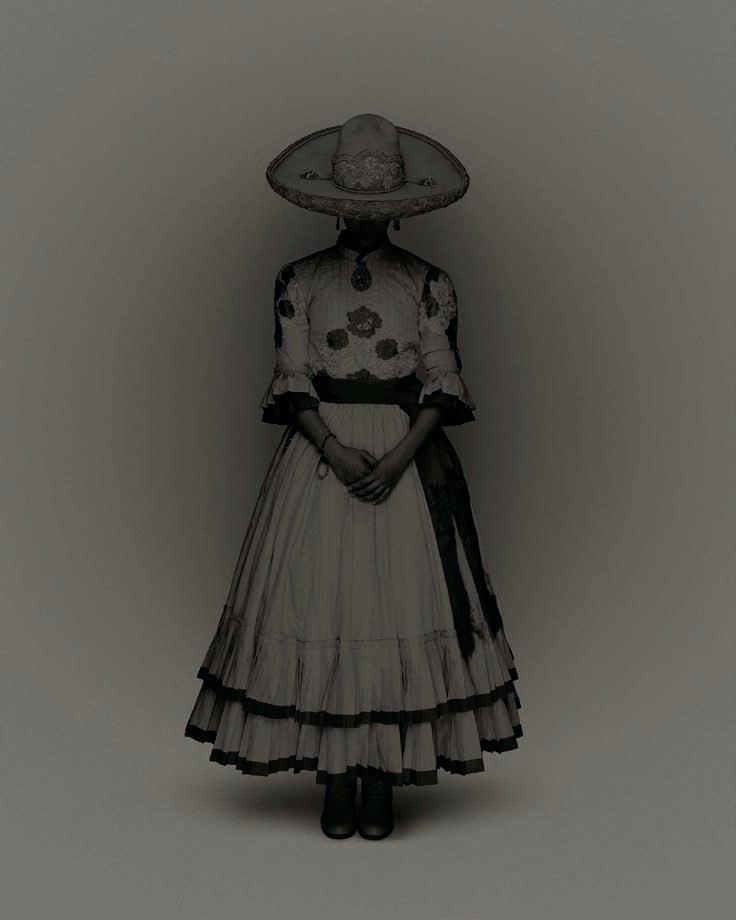
DEAN WEST, AMERICAN WEST, CORONELAS DE OREGON, OR (DAYANARA VILLASTRIGO ZAPATA) # 2, 2026.
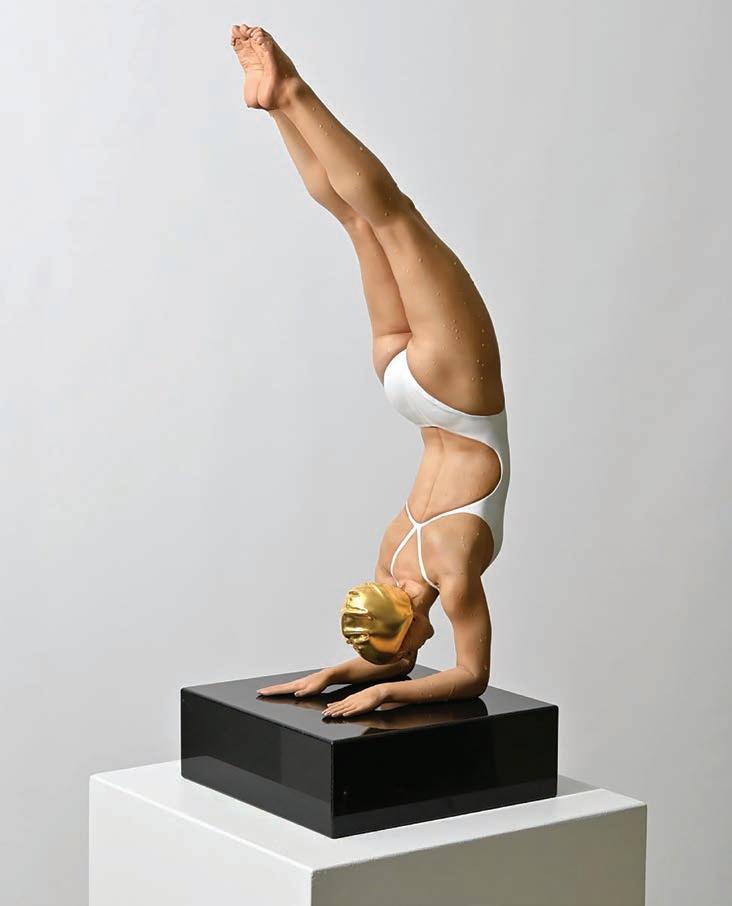
CAROLE FEUERMAN, PERSEVERANCE, 2024.
SUPPORT INDEPENDENT ART LIKE A VIP
5.8lbs of content stuffed matte paper 234,000 Words
Screenings with up and coming filmmakers Free passes to art fairs
Surprises in the mail Invitations to our parties
First access to special projects like podcasts and pop-ups
Studio visit opportunities A direct line to our editorial team Plus ones
‘JUST KEEP WATCHING’
PIONEERING FILMMAKER JULIE DASH, THE AIR FESTIVAL’S KEYNOTE SPEAKER THIS YEAR, SAT DOWN FOR A SPRAWLING CONVERSATION ABOUT HER POLYCHROME LIFE IN FILM.
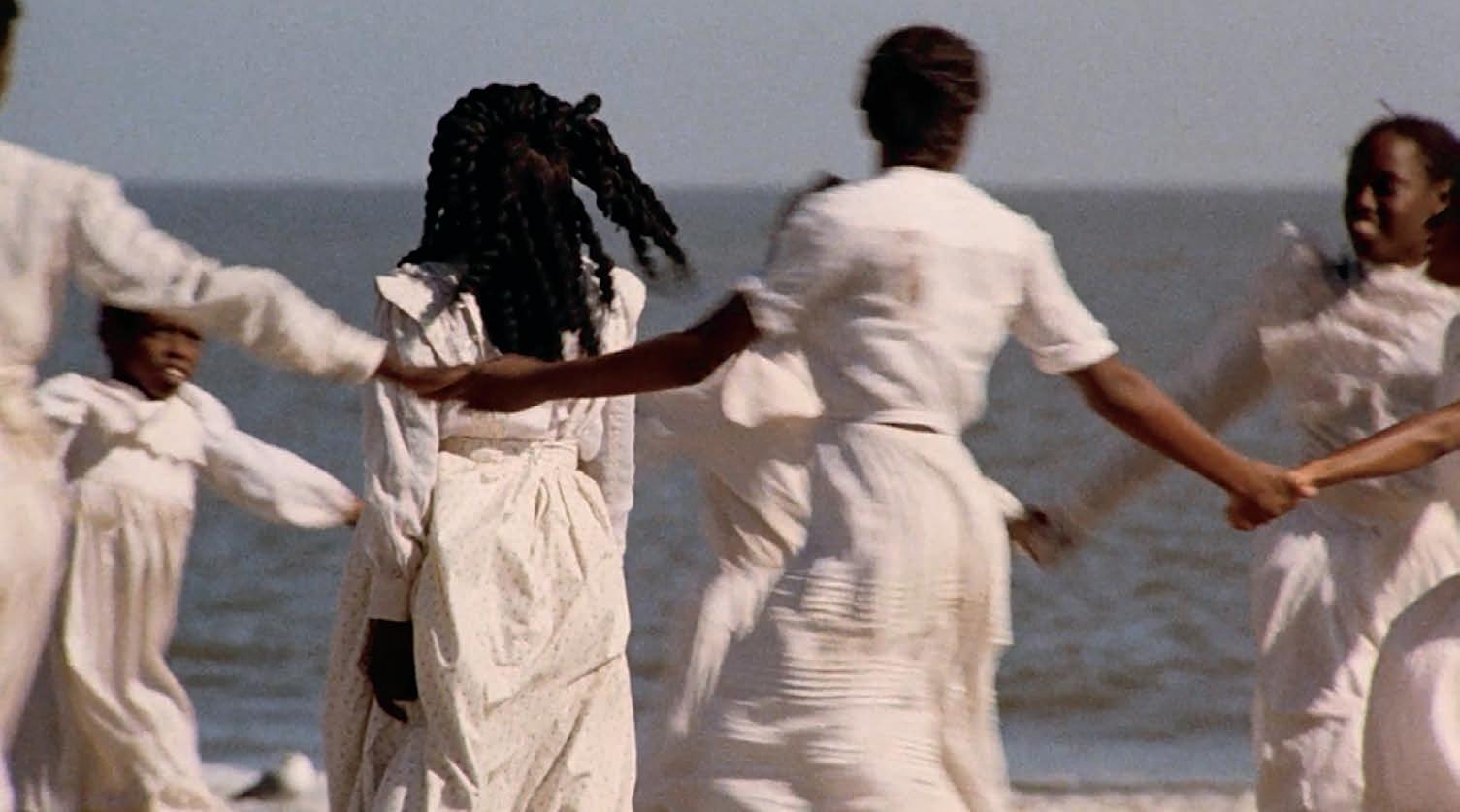
In 1992, Julie Dash became the !rst Black woman to have a feature !lm receive a wide theatrical release in the United States. More than three decades later, her seminal Daughters of the Dust, which follows three generations of Gullah women as they weigh the consequences of a move from their home on the Sea Islands off the coast of South Carolina to the mainland, remains both culturally and visually radical. Its aftershocks were still being felt when Beyoncé drew from it for the visual album Lemonade in 2016.
Dash grew up in the Queensbridge Houses in Long Island City. As a senior in high school, she enrolled in a !lm workshop at the Studio Museum in Harlem; screenings of François Truffaut, Sergei Eisenstein, and Satyajit Ray exposed her to the world beyond New York. But it was on the West Coast, where she attended grad school at UCLA, that she found her voice as part of a group of renegade Black !lmmakers dubbed the L.A. Rebellion in the ’70s.
Her ensuing career has been marked by a persistent restlessness and unwillingness to be boxed in by Hollywood’s dictums. Dash has worked on music videos, TV movies, documentaries, even Wanda Sykes’s recent comedy special.
This summer, Dash brings that omnivorous spirit to Aspen as the keynote speaker of the Aspen Art Museum’s AIR festival. Ahead of her address on July 30, Aspen Art Museum Chief Curator Daniel Merritt sat down with the !lmmaker to discuss landscape, creative freedom, and the long, joyful art of “!guring it out.”
Daniel Merritt: Can you talk about your formative cinematic experiences?
Julie Dash: I was especially drawn to !lms I did not understand. There was a blackand-white !lm called Portrait of Jennie—at the end you’re like, Was she dead? Was she a ghost? It made you think. And The Manchurian Candidate, where someone dressed up like a playing card.
Then years later at the Studio Museum, the director of the !lm program, Randy Abbott, was playing Jules and Jim. I had never even heard the term ménage à trois, but I loved the fact that these friends were running around having fun and she was dressed like a man. It was just so out of the ordinary. Then, of course, Sergei Eisenstein’s Battleship Potemkin—the !rst time I ever saw subtitles. We came from the Queensbridge housing projects, so you’d think that would be something uncool or uninteresting, but it was so other that it totally captured my attention.
I just fell in love with foreign !lms— Satyajit Ray, Japanese !lms, Latin American !lmmakers, African !lmmakers, Chinese cinema. My !lms have always sought to do something unknown. I embrace the other. I love when people are saying, “What’s going on? What are you doing here?” Just keep watching.
Merritt: In your !lms there’s a real embrace of the unresolved—characters
“I love when people are saying, ‘What’s going on? What are you doing here?’ Just keep watching.”
—JULIE DASH
caught between two forces. I’m thinking about Diary of an African Nun. How do you give form to that vision?
Dash: Diary of an African Nun was a project assignment at UCLA, really my !rst narrative !lm. The challenge was it had to be non-sync, narration only. I had to tell the story through visual rhetoric. And I knew nothing of Catholicism. I was raised in the Baptist Church.
It was based on Alice Walker’s short story of the same title, and I started looking
Here and next page: Film still from Daughters of the Dust, 1991.
through books, !nding pictures of nuns in Africa. I was fascinated by the barrenness that these women chose: nuns dressed in white with the wind blowing in front of icecold mountains.
Merritt: I just can’t believe that was a student assignment. It’s so fully realized. Did you have the vision from the beginning, or did it become something bigger as you developed it?
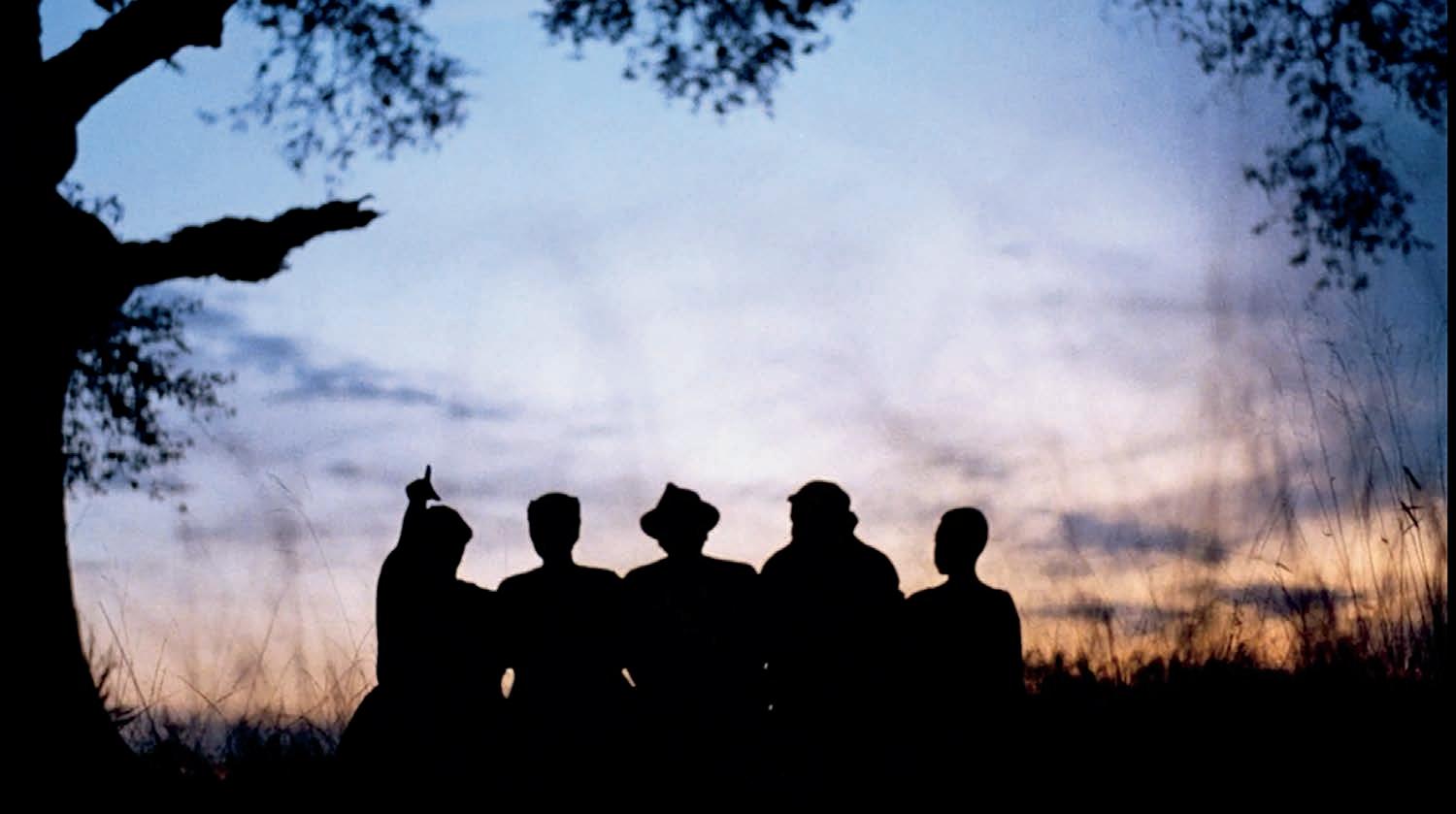
Dash: The locations de!ned the visuals. We hopped a fence at a construction site that is now the Fox Hills Mall off Sepulveda Boulevard. There was this one lonely tree on a hill, and I thought, That’ll look like Uganda. I’ve never been to Uganda, but it looks like Uganda to me. Let’s go.
Merritt: As you transitioned toward Daughters of the Dust, where the landscape is almost a character, can you talk about your approach to place?
Dash: I very much did not want to make a !lm that looked like Gone with the Wind, which is still the standard for Southern !lms. It looks nothing like that. The accents are nothing like that. I’ve done several !lms in coastal South Carolina and Georgia, most recently a short called Seeking: Mapping Our Gullah Geechee Culture. The production designer arrived and said the foliage wasn’t authentic to the location. I said, “Wait a minute. Yes, it is.” Even people who study art and production design can become very myopic. They think they know what the South
looks like. Either the Mississippi Delta or the swamps, and nothing in between. But there’s a lot in between, and I like to work there.
Merritt: You almost have to create these mediated conditions for an authentic understanding of landscape to come through.
Dash: Except you can’t control Mother Nature. One day while we were shooting something else on the dunes, the sea rolled back, and the sand was glossy and flat. We should have known that’s a warning sign for a tsunami. Instead we said, “The sea’s just rolled back, let’s go down there and shoot.” That’s the scene where the unborn child is seen with the men through the camera. I drove my !rst AD crazy—it was not on the schedule— but we grabbed our stuff, ran down, and shot the scene anyway.
“It’s exhausting trying to convince people of the story you’re trying to tell, and they keep trying to bring it down to something they’ve seen before.”
—JULIE DASH
Another time we were shooting a picnic on a dune and a windstorm picked up. I said, “We can shoot a scene where the wind is blowing.” Another time, the sky turned orangey-maroon. Kinda scary but interesting, so we shot the trolley car scene. Things would happen on the coast, and you could never plan for it. We had our little Farmer’s Almanac with us, but you never really knew.
We were in pre-production when Hurricane Hugo hit. The landscape changed after Hugo, trees just uprooted. We’d look at an exposed root and say, “That’s a visual metaphor. Let’s change the location for this scene to where the roots are exposed.” You’ve got to be open to whatever nature offers.
Merritt: There’s a real hypnotic quality to your !lms, a layering of image, voice, and music. Your relationship to the world of visual arts is really interesting, especially your relationship with Kerry James Marshall, who worked as the production designer on Daughters of the Dust
Dash: And also on a !lm called Praise House that we shot together, with [choreographer] Jawole Willa Jo Zollar and the Urban Bush Women. That was based on [artist] Minnie Evans—they had a two-hour stage production based on her work, Draw or Die, and we shot it in an Atlanta cemetery. When you’re dancing on the grass in a cemetery, the worms underground think it’s raining. So the worms started coming up; we had to hurry up and get out.
“There’s a lot in between, and I like to work there.”
—JULIE DASH
Merritt: Do you !nd that conversations with people who work in different media influence how you make your work?
Dash: I think it’s all very exciting. I teach too, and my students say, “Would you choose !lm now?” I probably would not. I would probably go into world-building through computer-generated animation as well as A.I. storytelling. I was just watching the news this morning—there’s an Iranian !lmmaker [Ash Koosha] who made his !rst feature !lm, [Dreams of Violets], entirely with A.I. He made it for $2,000.
It’s exhausting trying to convince people of the story you’re trying to tell, and they keep trying to bring it down to something they’ve seen before. As someone who came up in independent !lmmaking, we like to explore. I could do episodic television. I could do documentary. I’ve just completed a Wanda Sykes comedy special for Netflix. She gave me total autonomy. That was a lot of fun.
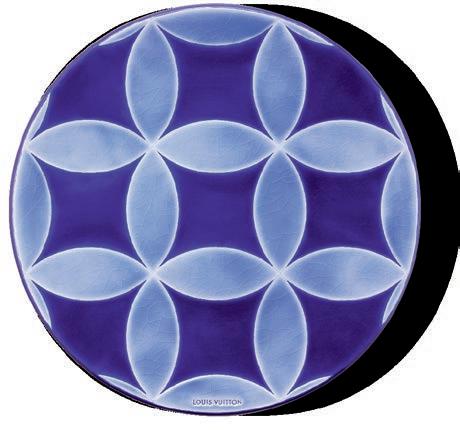
LOUIS VUITTON CENTERPIECE
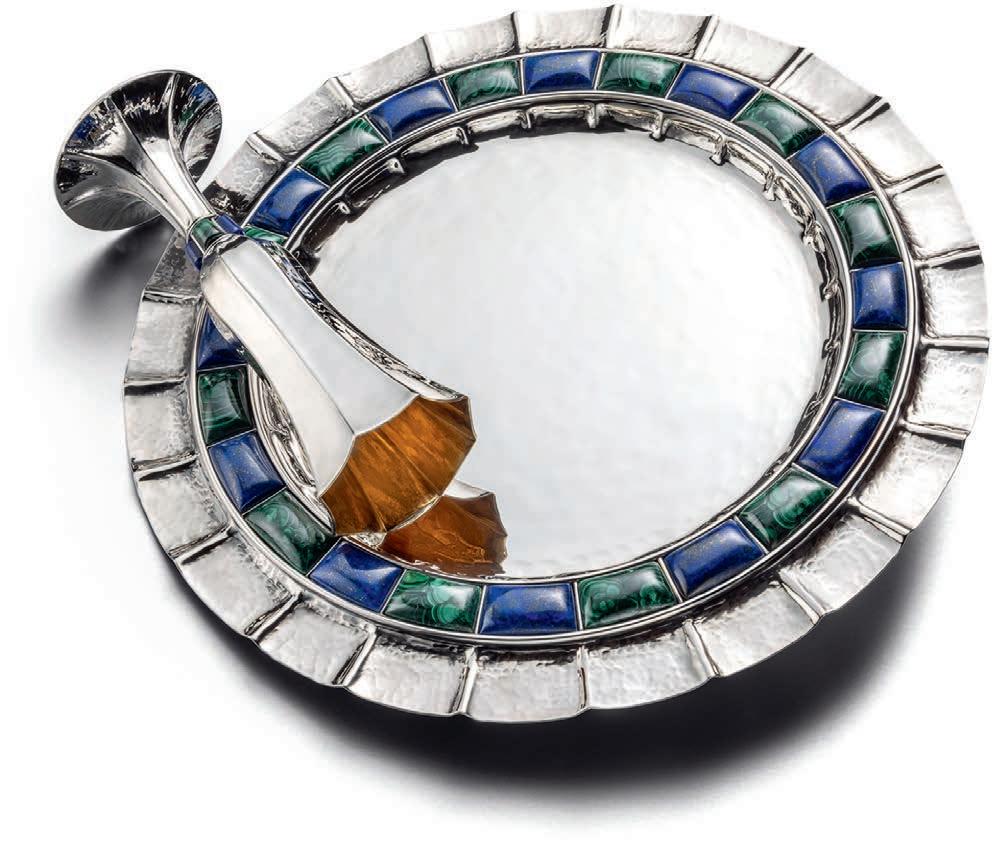
An eye-catching centerpiece from Louis Vuitton brings the structural discipline of the Bauhaus to the tabletop.
CHANEL ROUGE ALLURE
Searing and absolute, the intense red in Chanel’s Rogue Allure evokes the clarity and simplicity of the German design school’s palette.
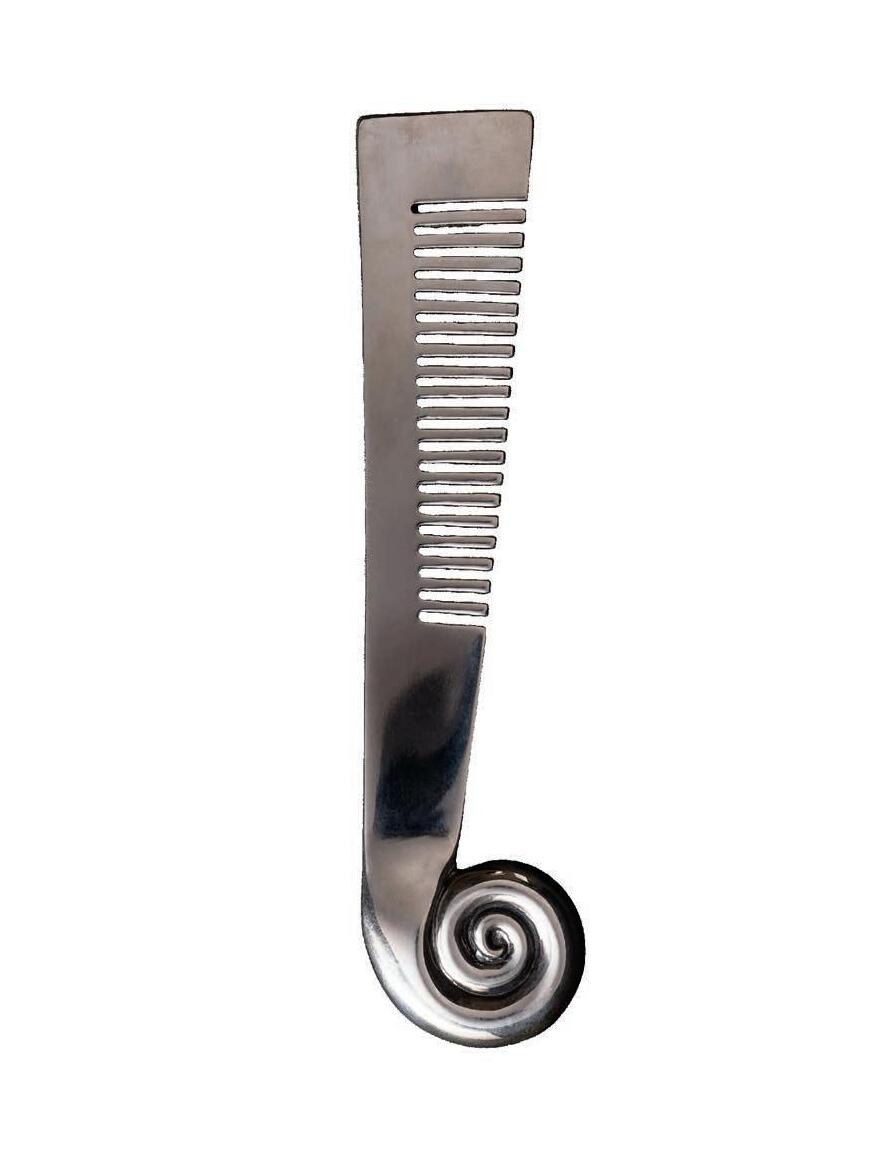
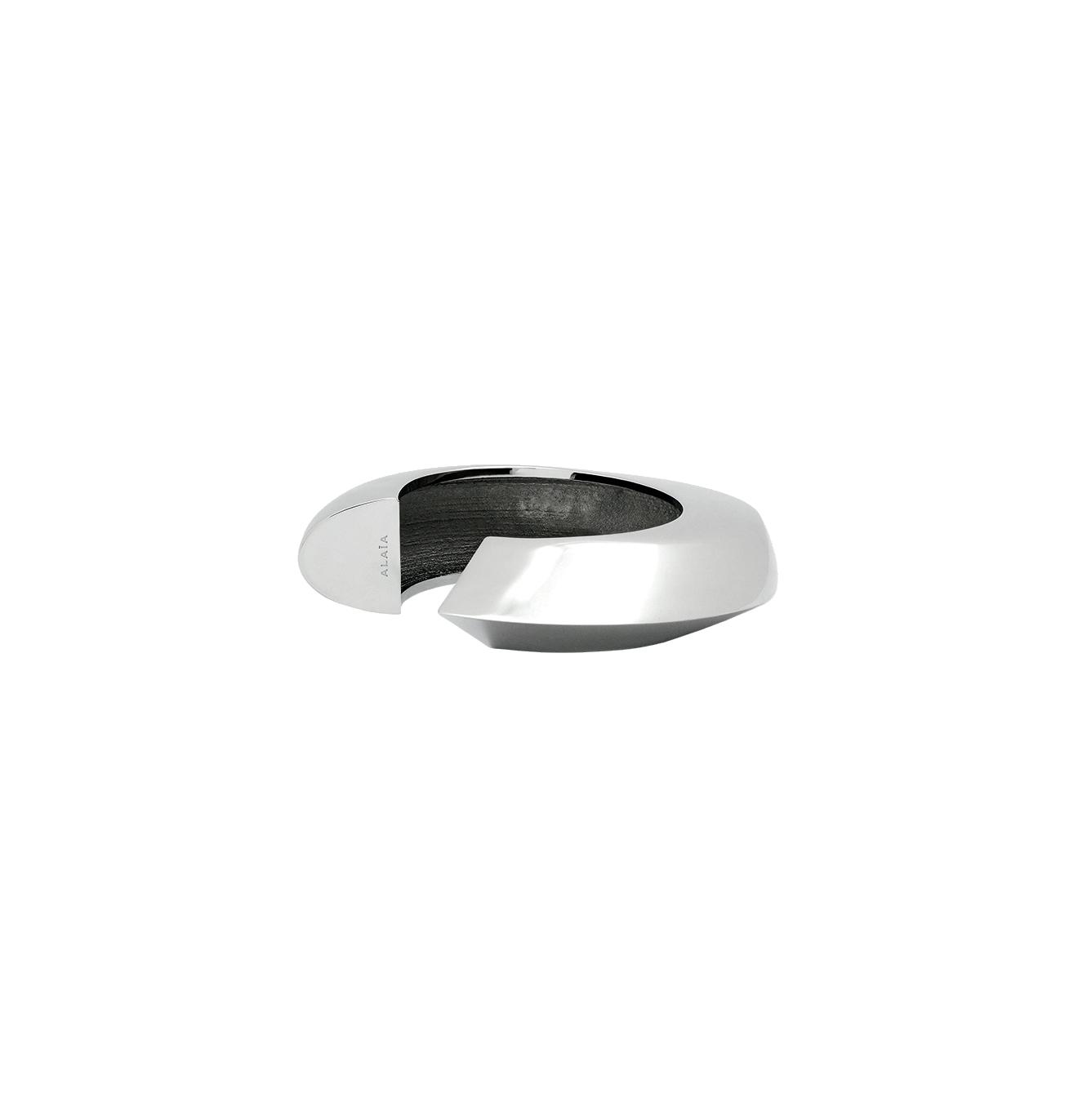
SOPHIE BUHAI NAUTILUS COMB
Sophie Buhai reimagines an ordinary tool as a functional sculpture with subtle echoes of Bauhaus metalwork.
ALPINE BAUHAUS
While “form follows function” might not be the !rst thing on one’s mind when touching down in Aspen, creative wunderkind Herbert Bayer’s Bauhaus legacy remains the town’s quiet gravity. Originally conceived to elevate the mind, body, and spirit, his “Aspen Idea” !nds new expression in technicolor dresses, functional objects, and sleek aluminum !nishes. Streamlined silhouettes balance athletic utility with indul gence, creating an alpine uniform where sport, leisure, and design converge.
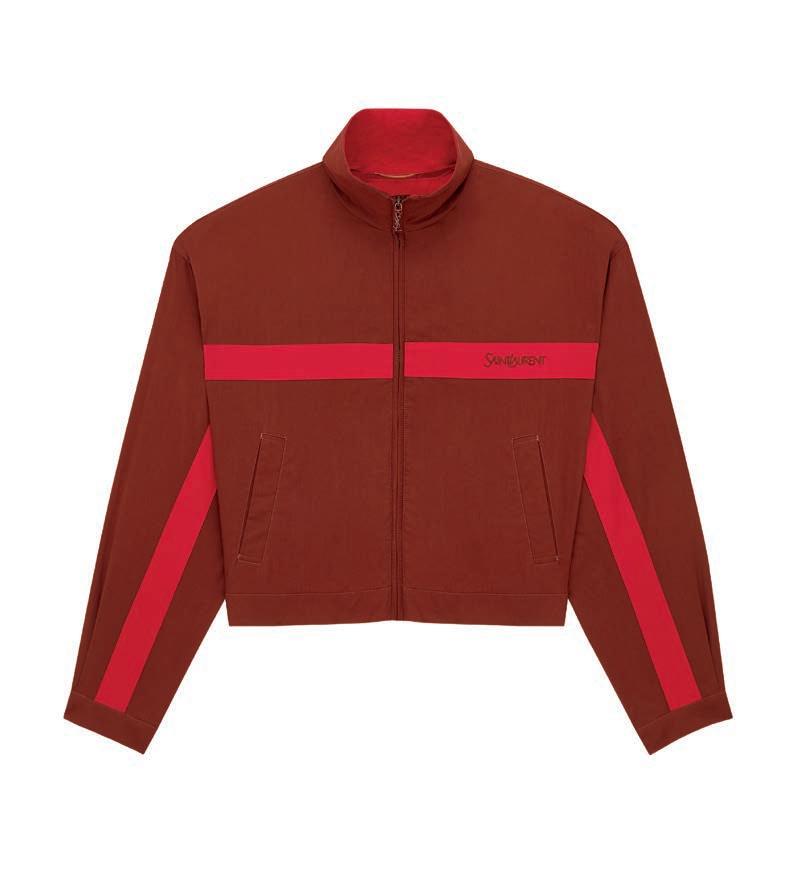
WINDBREAKER
Alpine sports get a modernist edit with this sleek, color-block windbreaker. Saint Laurent translates the “Aspen Idea” into a functional mountain uniform.
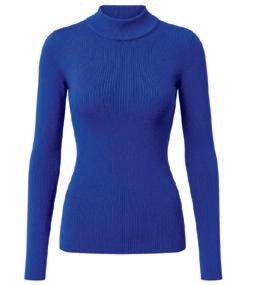
JIL SANDER KNIT SWEATER
This cobalt blue knit offers a functionalist take on alpine comfort, nodding to Jil Sander’s aesthetic roots in the Bauhaus movement.
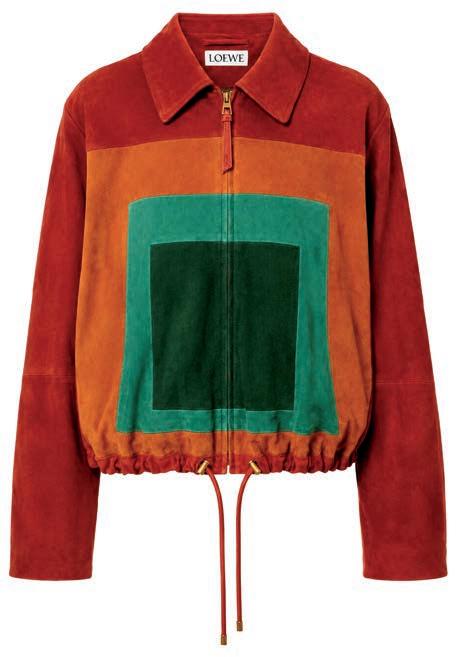
LOEWE BLOUSON
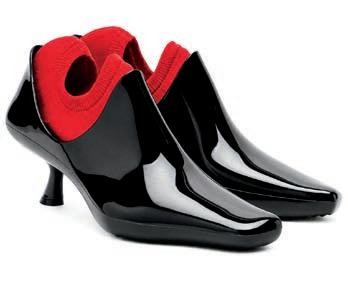
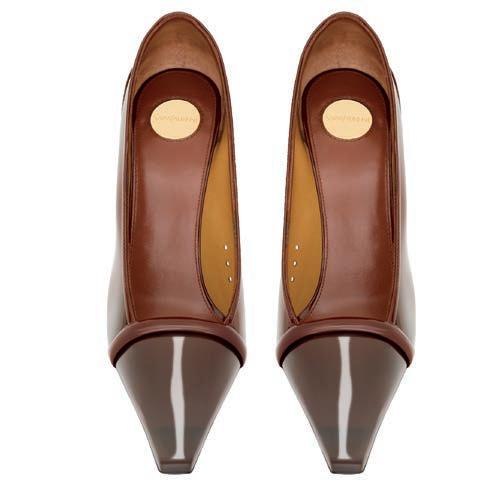
SAINT LAURENT PUMPS
LOEWE BOOTS
For après-hike nights, these two-tone pumps prove that technical rigor and evening elegance can coexist.
For evening soirées, the classic pump is re-coded with translucent contrast and a metal stiletto heel.
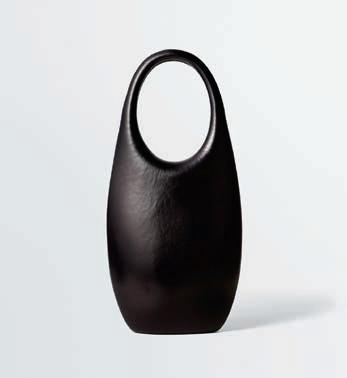
LEMAIRE NAHO BAG
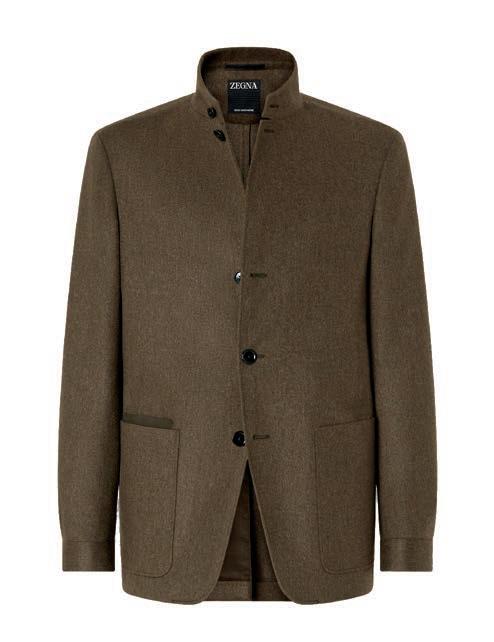
ZEGNA JACKET
Zegna’s cashmere chore jacket captures the purity of form, a sophisticated layer for high-altitude utility.
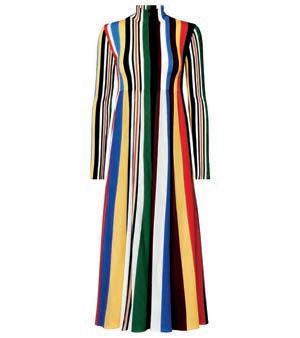
LOEWE DRESS
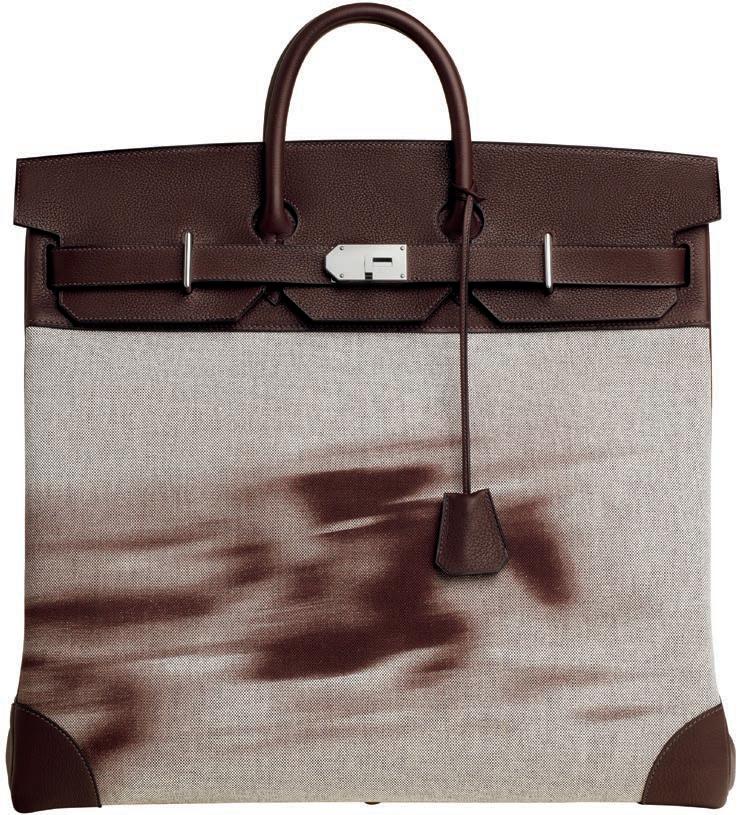
Industrial !nishes meet nomadic utility—this new aluminum luggage takes the best of both worlds.
A composition of modular blocks of green and maroon transforms this classic blouson into a wearable “Homage to the Square.”
Lemaire’s sculptural bag is a modernist artifact with its streamlined beauty and structural rigor.
Rhythmic, primary-colored stripes de!ne this column dress, bringing a sense of order to the Rocky Mountains.
‘I Love Taking Chances’
PRODIGIOUS COLLECTOR AND RECENT ASPEN ACOLYTE JORGE M. PÉREZ IS NO STRANGER TO BIG SWINGS. HIS LATEST? A 200-ACRE SCULPTURE PARK ON SNOWMASS MOUNTAIN.
PHOTOGRAPHY
BY
TREVOR TRIANO
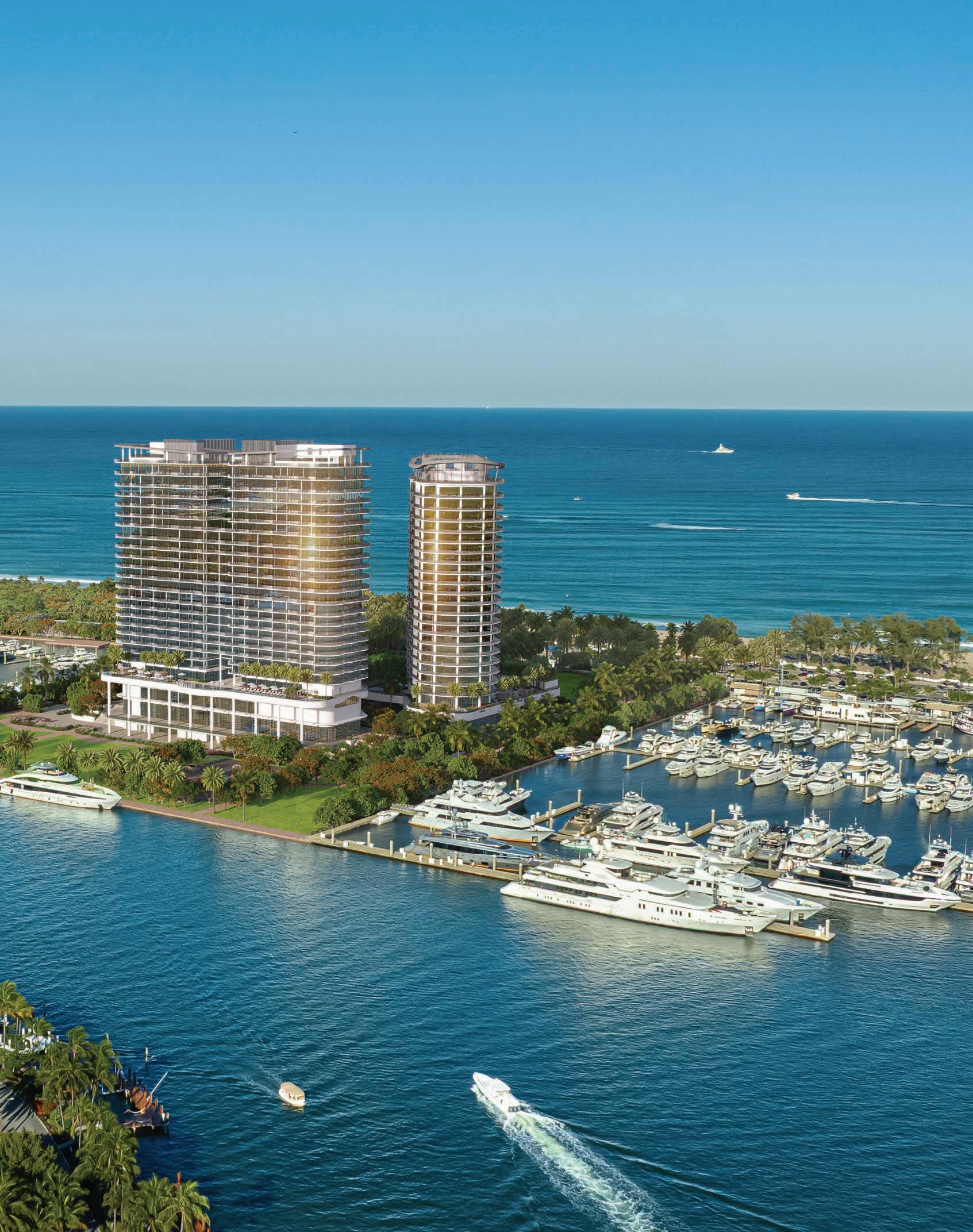
Few names are so synonymous with Miami as Jorge M. Pérez. The larger-thanlife !gure landed in Florida on the brink of adulthood in 1968. Within three decades, he became a preeminent name in real estate development and a philanthropic force to be reckoned with. His !rm’s new generation of projects, which include the St. Regis Resort & Residences, Bahia Mar in Fort Lauderdale, and the Ritz-Carlton Residences in West Palm Beach, have seen the founder of the Related Group leave an even deeper imprint on the state. In his 70s, Pérez has set his sights on more landlocked territory. His children introduced him to Aspen during the pandemic, and the patron quickly adopted the Roaring Fork Valley as a second home. In December, the Aspen Art Museum announced the establishment of the Pérez
Fund for Public Access, a $1 million gift in support of the museum’s educational and public engagement activities, as well as bilingual programming. (Pérez, born to Cuban parents, grew up in Argentina and Colombia.) But that’s not all: The collector is busy putting the !nal touches on a sculpture park, accessible to the public by appointment, that will punctuate the 200-acre property he recently acquired on Snowmass. He sat down with Nicola Lees, the Aspen Art Museum’s CEO and artistic director, after a recent visit to what promises to become a destination in no time.
Nicola Lees: The one thing that struck me immediately when we met was your infectious excitement for artists, and how artists respond to your interest and curiosity. Where does that come from?
Jorge M. Pérez: I think it started with my mother, who used to take me to museums and talk to me about art and philosophy. When I !rst arrived in New York, I just fell in love with MoMA, the Guggenheim, and the Whitney. I wanted to own these things, to be surrounded by them. In those early days, I could only afford lithographs. I still own my !rst ones; they happened to be a Man Ray, a Marino Marini, and a [Joan] Miró. Once I started, it was like I never wanted to stop. Now it’s like I’m a heroin addict— I need it.
My connection with artists comes from the fact that I love their art for art’s sake. It’s not just something I want to put on the wall and show people and say, “Hey, look, I have a great art collection.”
Lees: For me, it really is about wanting to dive into the unknown with artists. In many ways, you have been the person who brought that spirit to Miami.
Pérez: I had decided to stay in the United States and become an American citizen, and I felt I was losing my roots. Art brought me back to Latin America—at the beginning, I only collected Latin American art. When the Miami Art Museum ran out of money and said, “We need funds to complete it, and we want a great collection, particularly in Latin American art”—because Miami is 55 percent foreign-born, and most of that is from Latin America—I felt it was an obligation to give them everything I owned at that time, every piece of art and the money to !nish the fantastic museum that Herzog & de Meuron had designed.
Jorge M. and Darlene Pérez with Lee Krasner, Number 2, 1951.
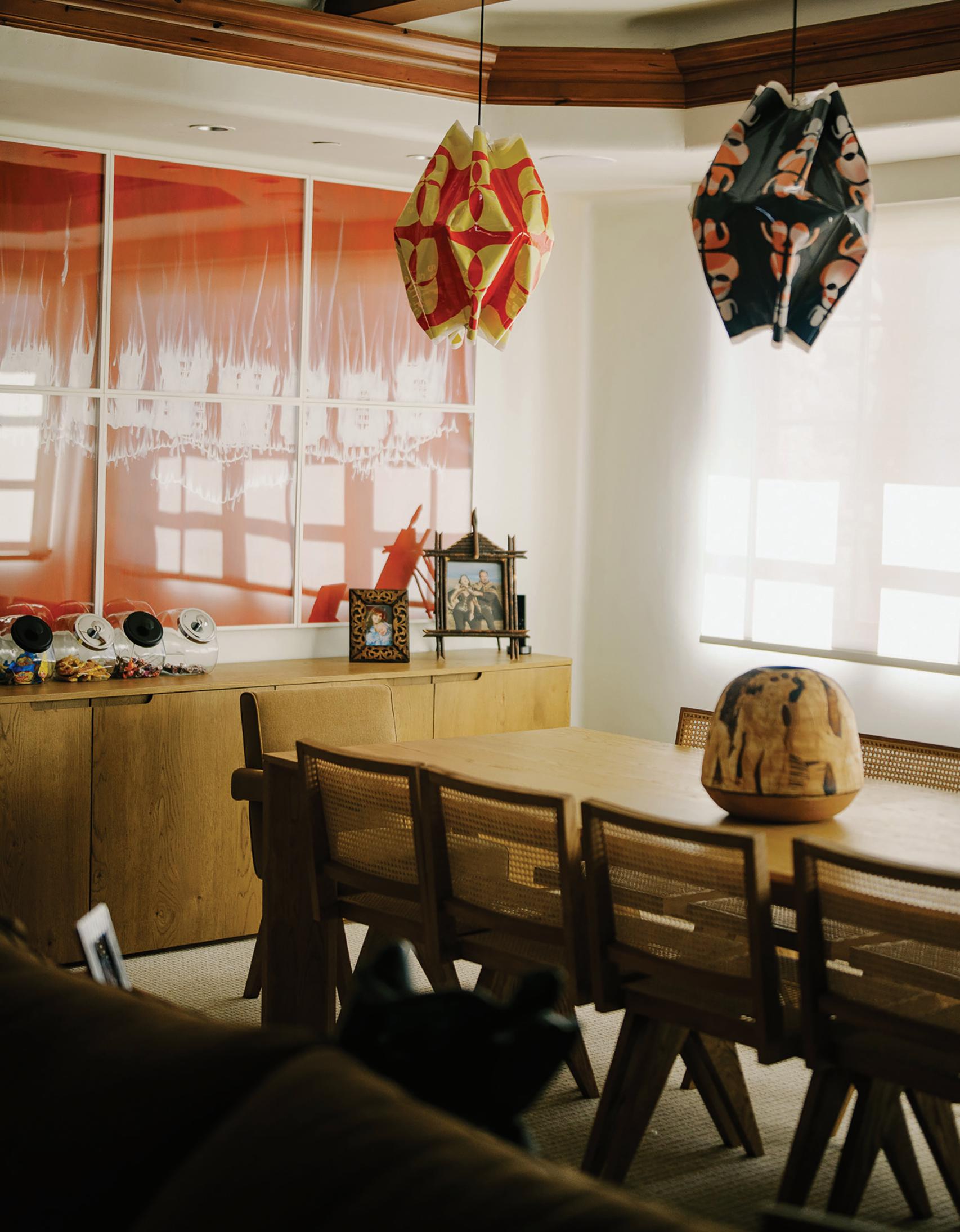
On wall: Gary Simmons, Study for Hollywood, 2008. Hanging: Rafael Domenech and Ernesto Oroza, Vinilo Lamps, 2019. On table: Viola Frey, Untitled, 1966.
Jim Dine, The Columbia River, 1987.
Left: Fernando Botero, Woman on a Horse, 2012. Right: Sophia Vari, Pointe Immobile, 1993.
Deborah Butterfield, Lark, 2002.
Paloma Varga Weisz, Foreign Body, Hot Dogs, 2022.
I kept looking around and thinking, We’re becoming a bigger and bigger share of the U.S. population, yet we don’t have any great institutions named after a Latin person. I thought it was time to set an example.
When I gave that collection away, it freed me. That was in 2011, but we continue to part with works of huge personal signi!cance. We just gave the Tate my favorite painting—a Joan Mitchell triptych. It had been in our bedroom; it was the one artwork in the house that never changed. I was very sad when I gave it, but then when I saw it there, I just thought, Wow, this is the right thing. It looks so much better together with all the Rothkos than it ever would in my house.
Lees: When you think about how many people will stand in front of that painting and have a transformative moment, it really is quite a moving gift, Jorge.
Pérez: Having children and people who can’t afford a museum ticket go there and see it, that is extremely important to me. Art should not only be for the rich.
Lees: We’re passionate about connecting with everyone in the [Roaring Fork] Valley, particularly children and young people, as well as schools whose resources are often limited. The majority of youth in our service
area identify as Hispanic or Latinx, so it’s really important for us to offer bilingual programs and education. Your gift is going to completely transform what the museum can achieve in this !eld.
Pérez: What really changed my mind in Aspen was this: I was totally rehabbing a house and doing an addition, and about 90 percent of the workers were Hispanic. I started talking to them, and I said, “The Aspen Art Museum is free.” You should have seen how many of them actually went and really enjoyed it.
Lees: I came last month to visit you and your wife, Darlene, in this incredible new property. I’d love you to talk more about your passion for sculpture in the landscape, and this idea of creating something that feels permanent up there on top of Snowmass Mountain.
Pérez: Walking around and looking at sculpture in nature is completely different from having a small space in a museum. One of the reasons I moved from a smaller piece of land in Aspen to this one—200 acres on top of the mountain—is that I’ve always wanted room to walk and discover sculptures in different places, communicating with nature.
Lees: How many do you have up there now?
Pérez: We’re getting close to 100.
Lees: When I think about your collection, I always think of the word vitality. Hearing you speak about what you’re building is actually very similar to how I think about the museum. I really want it to be a living museum. When you’re standing in front of an artwork, and say, “I really love this”— how does that happen? Does it need to happen in person?
Pérez: I almost always buy art in person. I get goosebumps in front of great art. But that response comes from study. People don’t believe it, but I probably spend three or four hours every day studying art. Once I start studying an artist, I start buying across their career, trying to !nd pieces they made when they were 18 and pieces they’re making now in their 60s. It’s extraordinary to see that progression.
When I’m buying art, particularly when I’m spending a signi!cant amount on a piece, I’ll reach out to specialists. If it’s a Spanish artist, I’ll call Manuel Borja-Villel or Manuel Segade Lodeiro and ask, “What do you think about this piece?” Koyo Kouoh, who unfortunately passed away, was someone I’d call every time I bought a piece. They’re all very honest with me, and I want that. That said, it doesn’t mean I’ll always
follow the advice. I tend to go counter to what’s popular.
I love taking chances. I don’t just want to buy artists who have already been proven. I also want to go to those who haven’t yet been proven, who aren’t in museum collections, but who I believe, through my research and observation, are going to be great.
Lees: Collecting artists who are in the early stage of their career, who may not have a market yet, is also a way to support them in crucial moments of their development, when they need the !nancial support to afford a studio or materials, for example. I am also curious to ask you, how did you connect with Aspen in the !rst place?
Pérez: During Covid, my kids said, “Dad, Aspen is the coolest place.” They were in their early-to-mid 30s, and it really is a great town for that age. I rented a house just for them. Within a week, I fell in love with Aspen.
I still have some negotiating to do with the family, but I’d love for the whole collection and the house to become a kind of artist colony and residency.
Lees: It really is the perfect place. We are so honored to have you as part of our community and can’t wait to spend the summer with you.
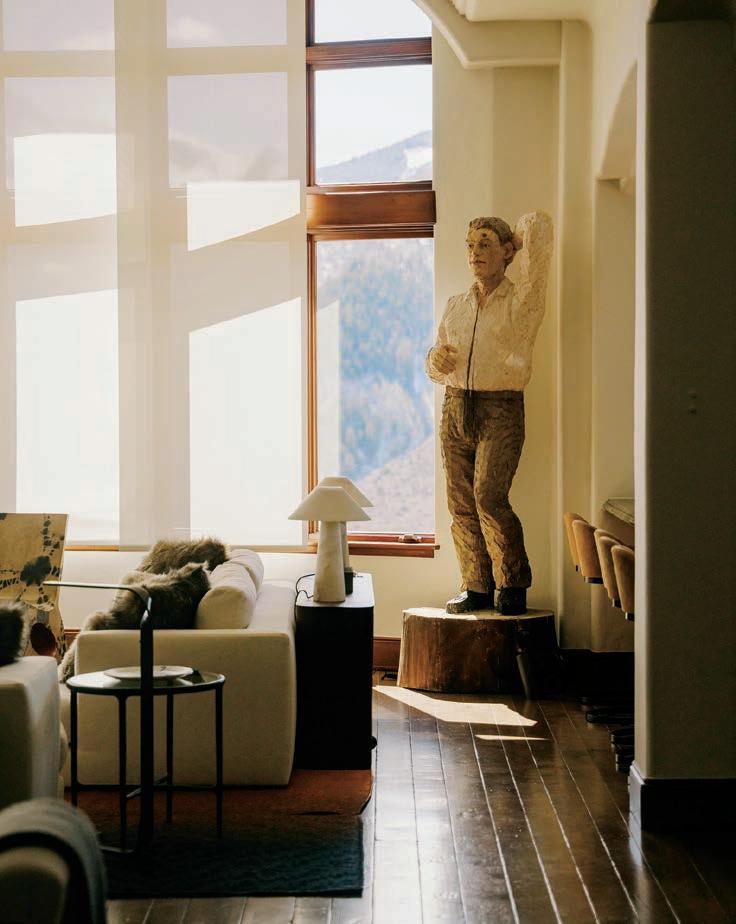
Sculptures here and in right image: Stephan Balkenhol, Large Woman with Green Pants and Large Classical Man, 1996. Chandelier: Frederik Molenschot, CL Arctic II, 2017.
INTO THE CAVE WITH ADRIÁN VILLAR ROJAS
THE ARGENTINE-BORN ARTIST SPEAKS WITH CURATOR CLAUDE ADJIL ABOUT HIS AMBITIOUS NEW SHOW AT THE ASPEN ART MUSEUM.
BY JULIA HALPERIN
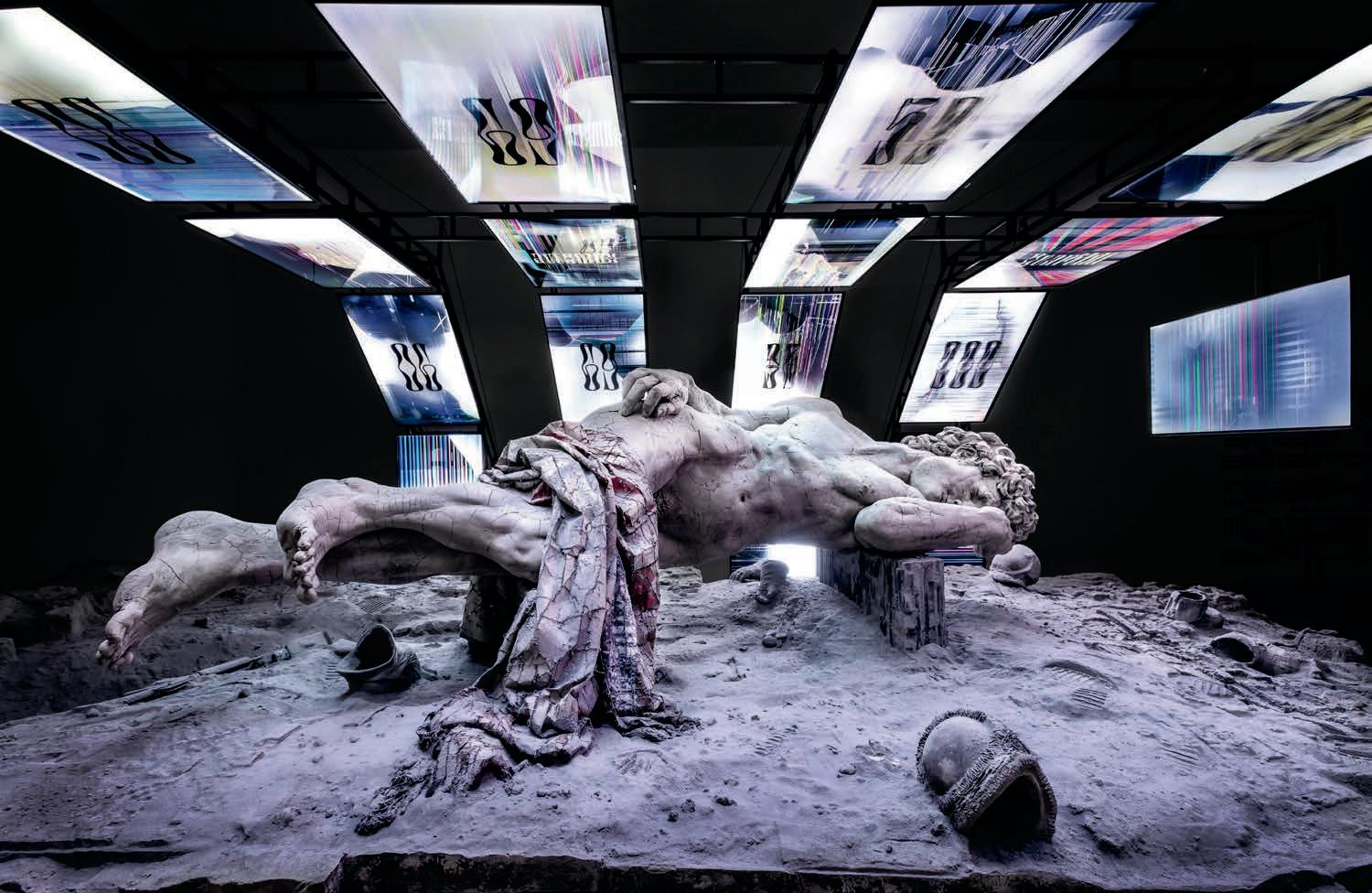
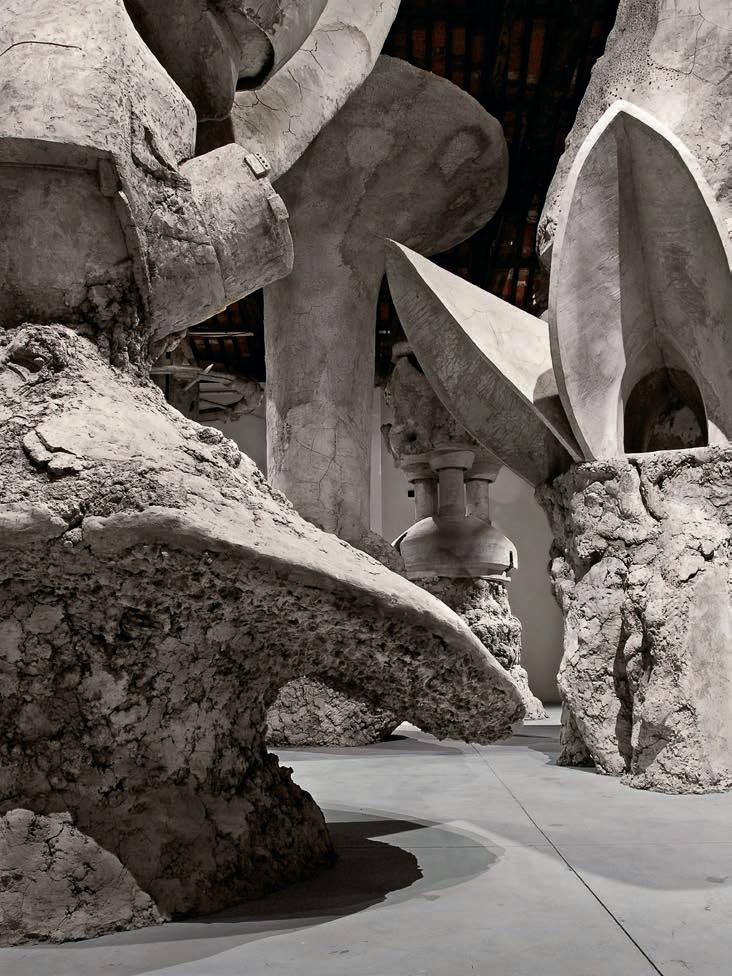
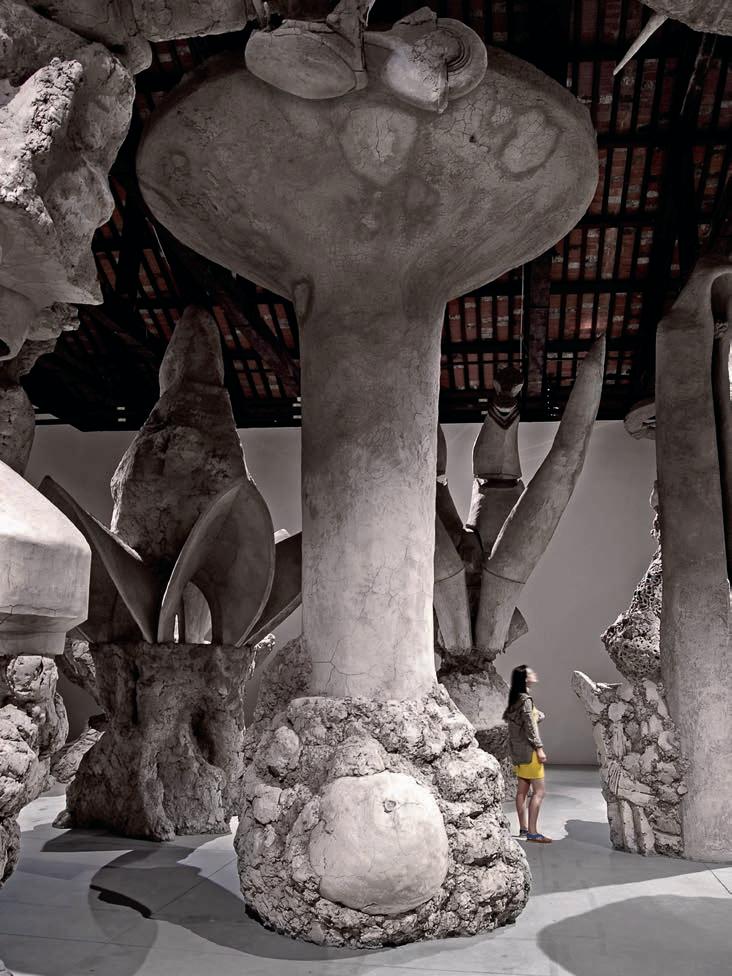
Adrián Villar Rojas is a kind of magician. The Argentine-born artist’s large-scale, site-speci!c installations often appear to collapse space and time. For his most recent trick, he has unveiled one of his most ambitious transformations yet, an environmental installation at the Aspen Art Museum. The overhaul is part of an expansive exhibition, “First Gods, Lost Animals,” that !lls two floors of the museum through next April.
The project extends the now-46-year-old artist’s long-held interest in exploring
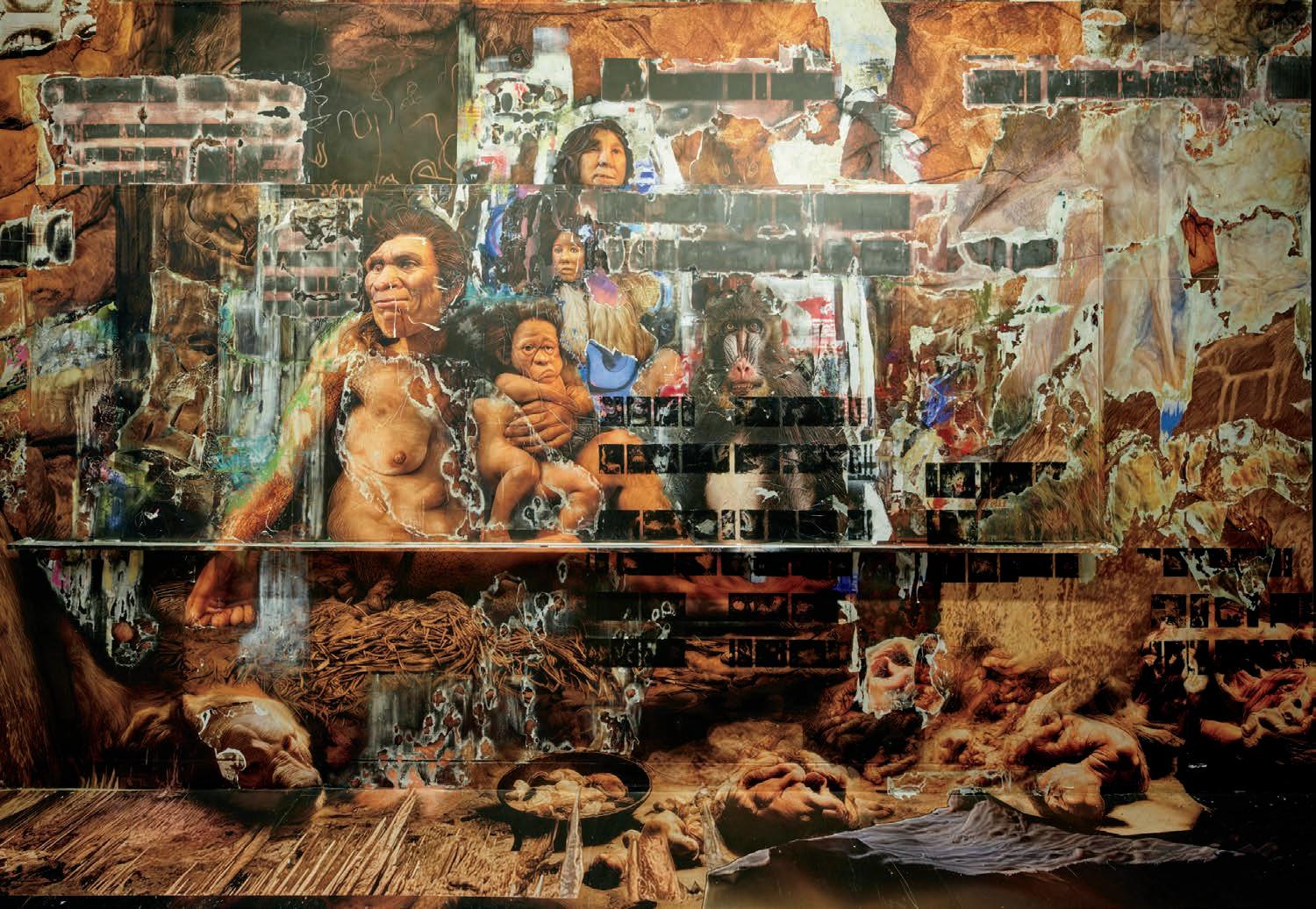
how information, traditions, and species evolve and reckon with the prospect of erasure or extinction. Alongside the exhibition’s environment, which includes a series of cave materializations derived from prehistoric sites, Villar Rojas has presented a new life-size sculpture of a Triceratops skull, co-commissioned by the Aspen Art Museum and Audemars Piguet Contemporary. The work expresses a provocative proposition: What if art were not an invention of Homo sapiens but, in fact, a gift from Neanderthals?
“Museums
often decontextualize things, severing them from the environments, relations, materials, and histories that give them meaning. The result is an orphaned object, increasingly available for projection and manipulation. What I hope my work does is move in the opposite direction.”
—ADRIÁN VILLAR ROJAS
Adrián Villar Rojas, Terrestrial Poems, 2025, at Aichi Triennale in Seto.
Adrián Villar Rojas, The Language of the Enemy, 2025, at the Art Sonje Center in Seoul.
Ahead of the exhibition, Villar Rojas sat down with Claude Adjil, curator-atlarge of the Aspen Art Museum and the Serpentine in London, to discuss the ideas that underpin his increasingly ambitious work—and the village it takes to make it a reality.
Claude Adjil: A central theme of the exhibition “First Gods, Lost Animals” is how humans create systems—mythology, art, mathematics, and now, A.I.—to make an incomprehensible universe legible. What do you think prehistory reveals about the instability of what we call human?
Adrián Villar Rojas: The instability begins with prehistory itself, an epistemological tool we created to understand ourselves. But this tool is not neutral; it is historically produced, socially situated, and shaped by political and economic conditions. As those conditions change, so does the tool’s perspective, along with our understanding of what counts as human. Paradoxically, constructing a prehistory reveals that the human is not a !xed condition but a negotiable one.
Adjil: A new body of work has emerged in this exhibition that takes the form of a cave that appears as a geological archive, psychological projection, technological
prototype, ritual theater, and a precursor to digital and A.I.-generated image spaces. How did the cave emerge as the central protagonist for the project, and did you think of it more as a physical environment, a philosophical condition, or a model for human consciousness itself?
Villar Rojas: What interests me about caves is that they may be among the !rst technological spaces where meaning emerges. Unlike a waterfall, a rainbow, or a volcano, which remain external phenomena, a cave is a world within the world: a place we can enter, inhabit, modify, and thus arti!cialize. I am interested in the possibility that meaning emerges through successive separations. An organism !rst becomes aware of itself as distinct from its surroundings. It then enters a space already separated from the world. The cave creates an interior within the exterior, a second reality within reality. Before paintings, representation, or fully formed symbolic systems, the cave becomes the condition in which a self discovers it can deposit an aspect of its interiority.
Adjil: Your installations suggest that artifacts are never neutral remnants of history, but projections shaped by mythology, institutions, and contemporary desire. Do
you see archaeology itself as a form of fiction-making?
Villar Rojas: What interests me is not whether archaeology is a form of !ction-making, but how objects become disconnected from the networks that produced them. Museums often decontextualize things, severing them from the environments, relations, materials, and histories that give them meaning. The result is an orphaned object, increasingly available for projection and manipulation. What I hope my work does is move in the opposite direction, creating ecological exhibition systems in which meaning is produced through relationships rather than isolated objects: less artifact, more ecology.
Adjil: Throughout your career, your installations have straddled the liminal space between artifact, sculpture, fossil, and found object. We’ve often discussed Elena Filipovic’s brilliant book The Apparently Marginal Activities of Marcel Duchamp. Can you tell us how this book and Duchamp have influenced your understanding of the readymade versus artifact?
Villar Rojas: I may not answer your question directly, but what I took from Filipovic’s book was the recognition of the artist as an administrator and a curator. The artist does not simply produce artworks; they organize
the conditions under which a project can exist, negotiating with institutions, shaping presentations, writing texts, managing circulation, conservation, and display. I already knew this because it has been part of my daily practice for years. The book gave the language to articulate a dimension of artistic work that remains profoundly underrepresented and underrecognized, despite being essential to how artworks come into the world.
Adjil: In your work, material environments possess agency rather than functioning as passive settings. What do you think about the relationship between materiality and intelligence?
Villar Rojas: What interests me is the possibility that environments can organize intelligence. The cave does not think, but it creates the conditions under which thought becomes possible. In that sense, it is less an intelligent object than a condition for intelligence.
Adjil: The exhibition repeatedly returns to scale—geological, biological, technological: the scale of the triceratops versus the scale of Return the World XIX, for example. Does thinking through planetary or deep time alter how you understand artistic production itself?
Adrián Villar Rojas, El fin de la imaginación, 2022, at the Bass in Miami.
PHOTOGRAPHY BY ZAIRE ARANGUREN, COURTESY OF THE ARTIST AND THE BASS.
Villar Rojas: Thinking at those scales fundamentally alters how I understand artistic production. Art stops appearing as a universal category and begins to look like a very local phenomenon, a recent and fragile behavior produced by a particular species under very speci!c conditions.
Adjil: Untitled (From the Series The Language of the Enemy) places the Venus of Lespugue within the body of a dinosaur fossil; the sculpture creates a temporal impossibility that collapses evolutionary, mythological, and artistic histories into one object. What does that temporal confusion allow you to think through?
Villar Rojas: The triceratops condenses a long chain of transformations. A living creature becomes a fossil, geology, archaeology, scan, digital model, computable geometry, fabrication, and !nally sculpture. But the work introduces another layer: a Venus !gure carved into one of its horns, as if Neanderthals and Homo sapiens had collaboratively transformed the fossil into a symbolic object. What interests me is how a single sculpture can contain an arc that runs from the earliest forms of representation to contemporary computational systems, creating an immense historical loop and effectively staging the evolutionary history of representation itself.
Adjil: There’s a striking tension between the tactile physicality of bronze and the invisible computational systems involved in shaping it. Were you interested in collapsing distinctions between hand, machine, fossil, and code?
Villar Rojas: The bronze, the fossil, the hand tool, the algorithm, the cave painting, the mathematical equation, the god, and the museum are all technologies produced by a !nite intelligence attempting to negotiate reality. Every technology speaks about a certain incompleteness in the human project; they are extensions of a !nite intelligence trying to understand, inhabit, and survive within a structured universe.
Adjil: The exhibition feels simultaneously sacred, archaeological, and speculative. Are you interested in creating works that function less as sculptures and more as cosmological propositions?
Villar Rojas: The cosmological feeling is not the goal. It is the consequence of constructing a suf!ciently dense reality and calling it an exhibition.
Adjil: Your work frequently destabilizes authorship: fossils are formed by geological processes, artifacts by collective cultures, and your sculptures through collaborations between digital systems,
“What interests me about caves is that they may be among the first technological spaces where meaning emerges. Unlike a waterfall, rainbow, or volcano, which remain external phenomena, a cave is a world within the world: a place we can enter, inhabit, modify, and thus artificialize.”
—ADRIÁN VILLAR ROJAS
your incredible office and studio team, and material behavior. It feels important to acknowledge how your work challenges this idea of singular artistic creation. Perhaps it’s interesting to discuss how this exhibition came together and the incredibly talented team that has brought it to life.
Villar Rojas: In theoretical physics and astrobiology, a von Neumann probe is a self-replicating machine sent into the universe. It lands in an unfamiliar environment, absorbs local materials and conditions, reconstructs itself according to what it !nds, and produces a divergent offspring. I sometimes think about my practice in similar terms. Each project absorbs the speci!c conditions of a place, its people,
materials, histories, and ecologies, becoming a new iteration within a larger system of world-building. Many of the people involved have worked together for more than a decade, so each new world also carries the accumulated memory of previous ones.
Adjil: I’m curious if you think about how future nonhuman intelligences will encounter your work and what they might perceive or misunderstand.
Villar Rojas: I have dedicated much of the last 25 years of my life to constructing positions from which humanity can be observed from the outside. I hope the work itself already constitutes a possible answer to that question.
Here and right image: Adrián Villar Rojas, Ahora estaré con mi hijo, el asesino de tu herencia (Now I Will Be With My Son, The Murderer of Your Heritage), 2011, at the Argentine Pavilion, 54th Venice Biennale.
ART WITH EMOTION
Deborah Beckmann and Jacob Kotzubei collect the unforgettable. Early on in their collecting journey, when the Los Angeles and Aspen-based couple couldn’t agree on an acquisition, they made compromises they still regret to this day. Their determination to surround themselves with pieces “of emotional necessity” ever since has made the couple a singular force in the collecting landscape. In addition to lending actively to institutions, Beckmann is a board member of Art21 and the Aspen Art Museum, where she and Kotzubei have endowed an artist production residency fund. (Their patronage is not limited to the arts; they also support educational institutions such as Washington University in St. Louis, Wesleyan University, and Columbia Law School, where they met.)
At home in LA and Aspen, Beckmann and Kotzubei live among works by a who’s who of post-war and contemporary art: Nairy Baghramian, Firelei Báez, Charles Gaines, Jaune Quick-To-See Smith, and Lisa Yuskavage among them. For CULTURED, Beckmann opened the doors of both of their abodes and sat down to discuss the unexpected places her collecting trajectory has taken her.
How has your approach to collecting evolved over the years?
My husband and I have been acquiring art since we !rst got married, but I would say I became a truly serious, perhaps obsessive, collector about 10 to 12 years ago. The turning point came when I was building our home in Aspen and commissioned works from a few Los Angeles-based artists to be integrated directly into the house. There was something transformative about the intimacy of working closely with artists, witnessing their creative processes !rsthand, and ultimately experiencing the joy of living with those works once the home was completed. It deepened my appreciation for how art shapes the world surrounding us, for how much it impacts me personally, and for how varied and vital artistic expression is to the artists themselves. The more we live with art, the more we want to experience art.
Are there particular qualities or instincts you look for when deciding whether to
acquire a work or support an artist more deeply?
Emotional response, above all else. Every work in our collection is meaningful to us, and we have a real relationship with each one. In Aspen, we recently installed a diaphanous Olga de Amaral “Bruma,” a series that we chased for some time, along with a John Chamberlain steel sculpture after years of searching for the right work. Each of these acquisitions followed its own path, but they all share a quality of emotional necessity.
What initially inspired your involvement with the Aspen Art Museum, and what has made the experience meaningful to you?
Having spent so much time in Aspen over the past two decades, the museum has been a home away from home for me, my friends, and my family. What drew me deeper into involvement was the quality and courage of the institution’s leadership. Nicola Lees’s vision is both sage and boundless, and the curatorial team, led by Daniel Merritt, brings a perceptiveness and daring to the exhibitions and overall program.
Your recent gift to the Aspen Art Museum is a transformative one. Can you share what motivated your support for commissioning new work by artists and helping sustain their residency and research needs while in Aspen?
We are most passionate about support that is artist-centric—helping artists have opportunities to create work that otherwise might not be possible and enabling experiences that might otherwise be out of reach. The ability to do this in Aspen makes it exponentially more meaningful.
Why do you believe it is important for artists to have dedicated time and resources for research, experimentation, and reflection, particularly in a place like Aspen?
Because that kind of unstructured, unhurried time is increasingly rare, and it is when new and interesting ideas and work are likely to originate. The pressure on artists to produce, to be market-relevant, to move quickly, is relentless.
In a place like Aspen, where the landscape itself is so unlike where most artists live and work, they may encounter
DEBORAH BECKMANN AND JACOB KOTZUBEI RELISH LIVING AMONG CONTEMPORARY MASTERWORKS IN LOS ANGELES AND ASPEN. BUT THAT JOY DOESN’T STOP THEM FROM SENDING WORKS FROM THEIR COLLECTION CROSSCOUNTRY TO FEATURE IN CANON-SHAPING EXHIBITIONS.
something that shifts their perception, or just gives them time and space to contemplate.
How do you hope your support will shape the experience of artists who come to Aspen through the Aspen Art Museum in the coming years?
I hope Aspen itself works on them in unexpected ways: that the mountains, the quality of light, and the community here open something new in their practice and makes them feel welcome and cared for. I also hope that the work supported here, born out of that freedom and this place, goes on to matter in ways none of us can yet anticipate.
What is your favorite local dish in Aspen? It depends entirely on the day and the hour! For lunch, nothing beats a Swift Kick bowl from Big Wrap or an Ajax Burger from Ajax Tavern. For dinner, you can !nd me regularly at Angelo’s, Campo di Fiori, Bosq, or Steakhouse No. 316.
Where is your favorite spot to source local goods?
As an avid backcountry skier and devoted hut trip participant, I am a big fan of two homegrown Aspen brands: Aztech Mountain and Strafe. Both make great-looking outerwear that performs well in the highest-level conditions in the backcountry. Performance Ski carries both brands, as well as tons of other desirable gear!
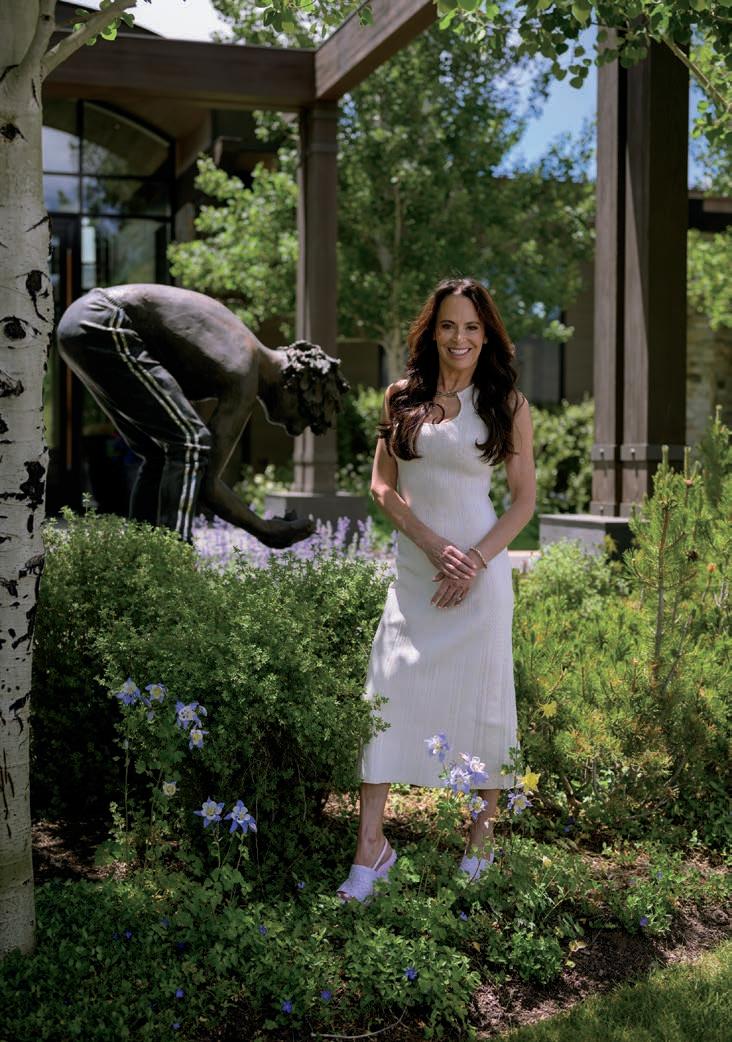
DEBORAH BECKMANN AT HOME IN ASPEN WITH NICOLE EISENMAN’S LOVE OR GENEROSITY MAQUETTE, 2019–21.
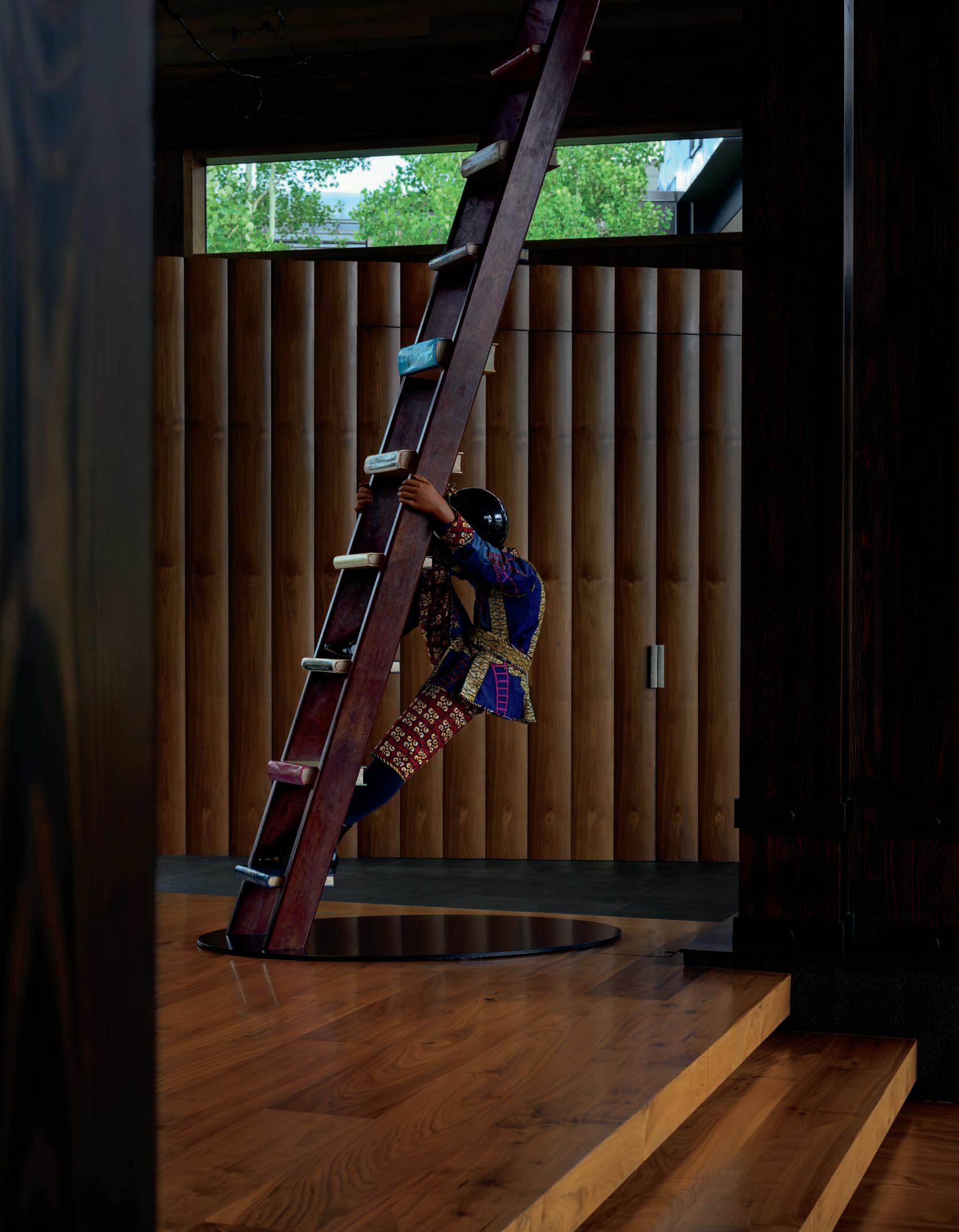
In Aspen: Yinka Shonibare, Magic Ladder Kid I, 2013.
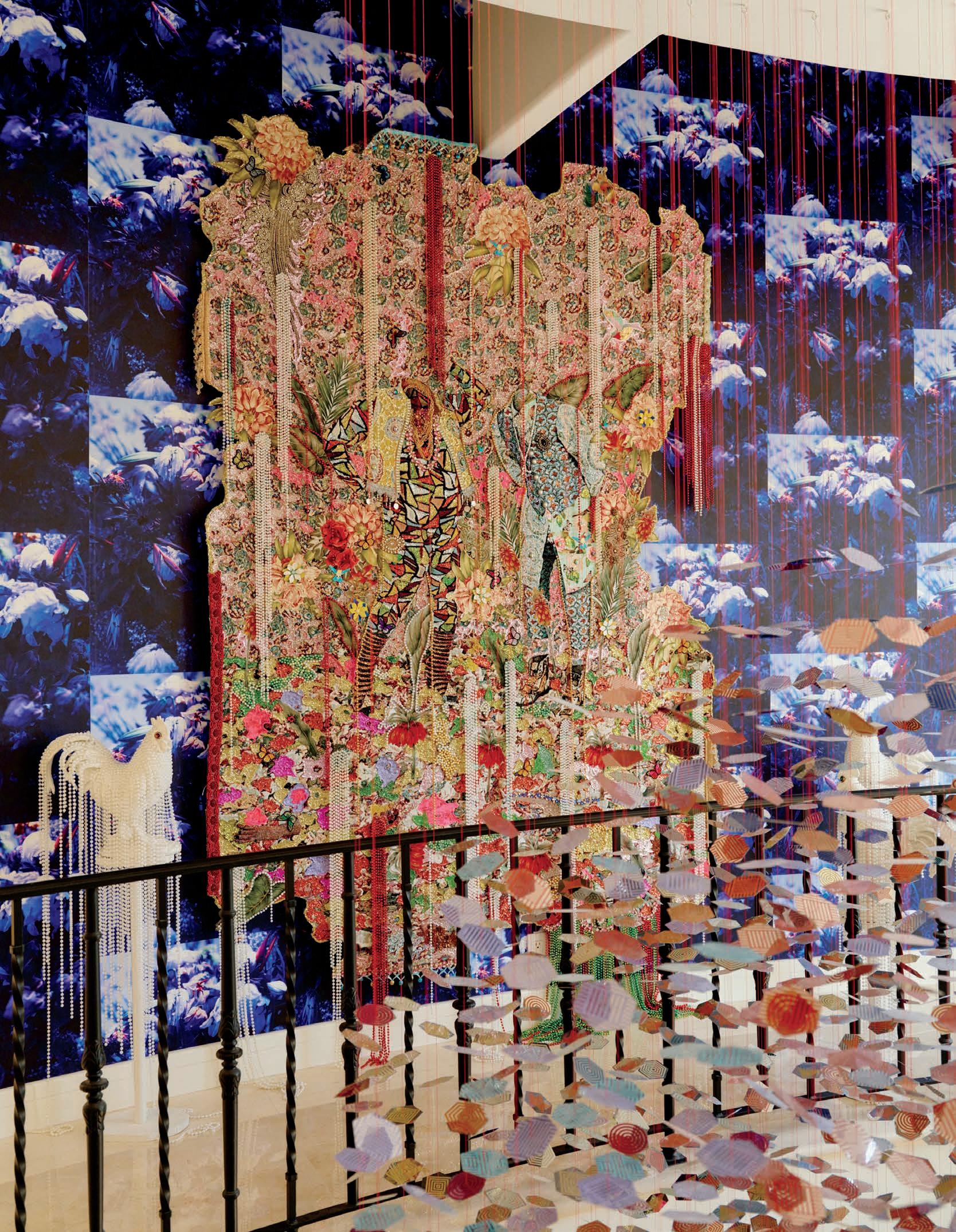
In Los Angeles, on wall: Ebony G. Patterson, …they wondered what to do...for those who bear/bare witness, 2018. Hanging: Pae White, Half Magic, 2020.
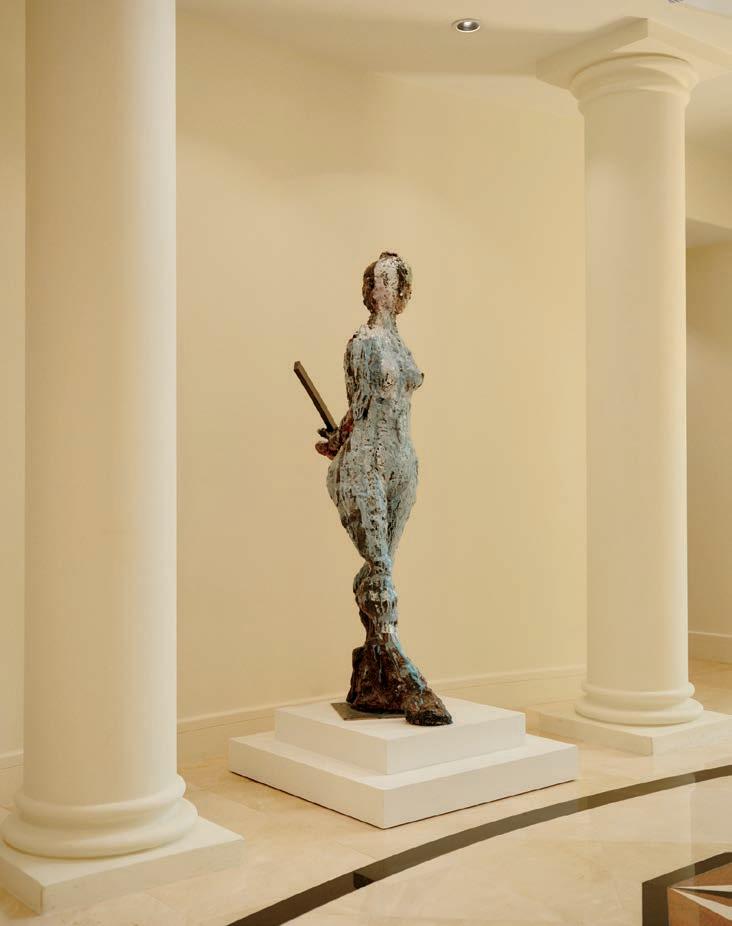
In Los Angeles: Rebecca Warren, CluTe, 2025.
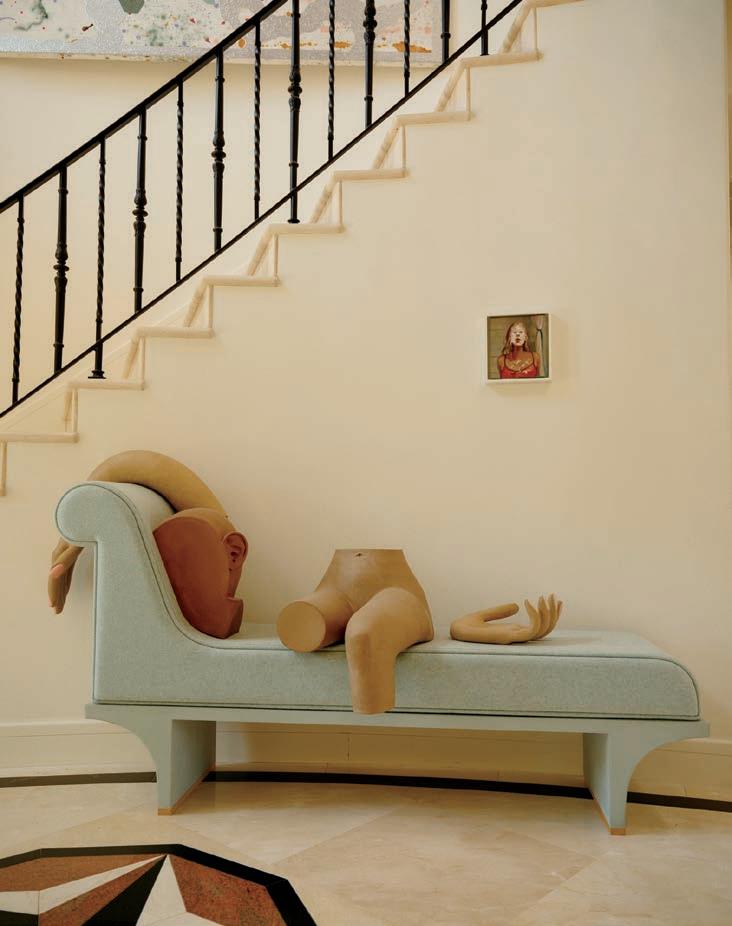
Sculpture: Genesis Belanger, Nude in Repose, 2022. On wall: Lisa Yuskavage, Pie Face, 2017.