Section 01 Setting the Scene
Foreword
The Cross-Party Group on Culture and Communities brings together MSPs, practitioners, academics and community organisations, offering a space where different perspectives can be heard and where experiences from across Scotland can inform our understanding of cultural life in our communities.
Over the past parliamentary year, the group focused on the theme “big ambitions for culture and communities”, hearing from a wide range of speakers and contributors who highlighted both the opportunities and the challenges facing the cultural sector.
Their insights reflected the diversity of cultural practice across Scotland - from rural arts centres and public libraries to community-led initiatives and research in arts and health.
Contributors emphasised the importance of ensuring equitable access to cultural opportunities, recognising the role of culture in strengthening communities, and supporting collaboration across policy areas such as health, education and placemaking.
The discussions also explored how we understand and measure cultural impact, highlighting the value of approaches that recognise a wide range of experiences and forms of knowledge.
What has been particularly valuable is the breadth of voices involved. Artists, cultural organisations, researchers and community leaders have all contributed their perspectives, helping to build a richer understanding of how culture operates within everyday life.
As this parliamentary session draws to a close, this report captures the key insights from these conversations and reflects on the themes that have emerged.
I hope it provides a useful contribution to ongoing discussions about the future of culture and communities in Scotland, and helps to inform future collaboration between policymakers and the cultural sector.
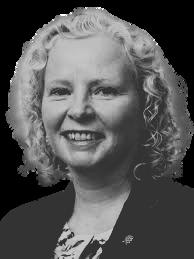
by Convenor Claire Baker
What is a Cross-Party Group?
Cross-party groups (CPGs) are groups of MSPs and other people who are interested in a subject or issue. Current CPGs are held on topics as diverse as space, brain tumours, care leavers, the Scots language and renewable energy.
CPGs are formed and led by MSPs, and can also have members (individuals or organisations) who are not MSPs.
MSP members
Claire Baker MSP
(Convenor, December 2025 onwards)
Clare Adamson MSP (Deputy Convenor)
Foysol Choudhury MSP
(Convenor, until December 2025)
Michael Marra MSP
Sarah Boyack MSP
Sharon Dowey MSP
Secretariat: Culture Counts
Cross Party Group Culture and Communities
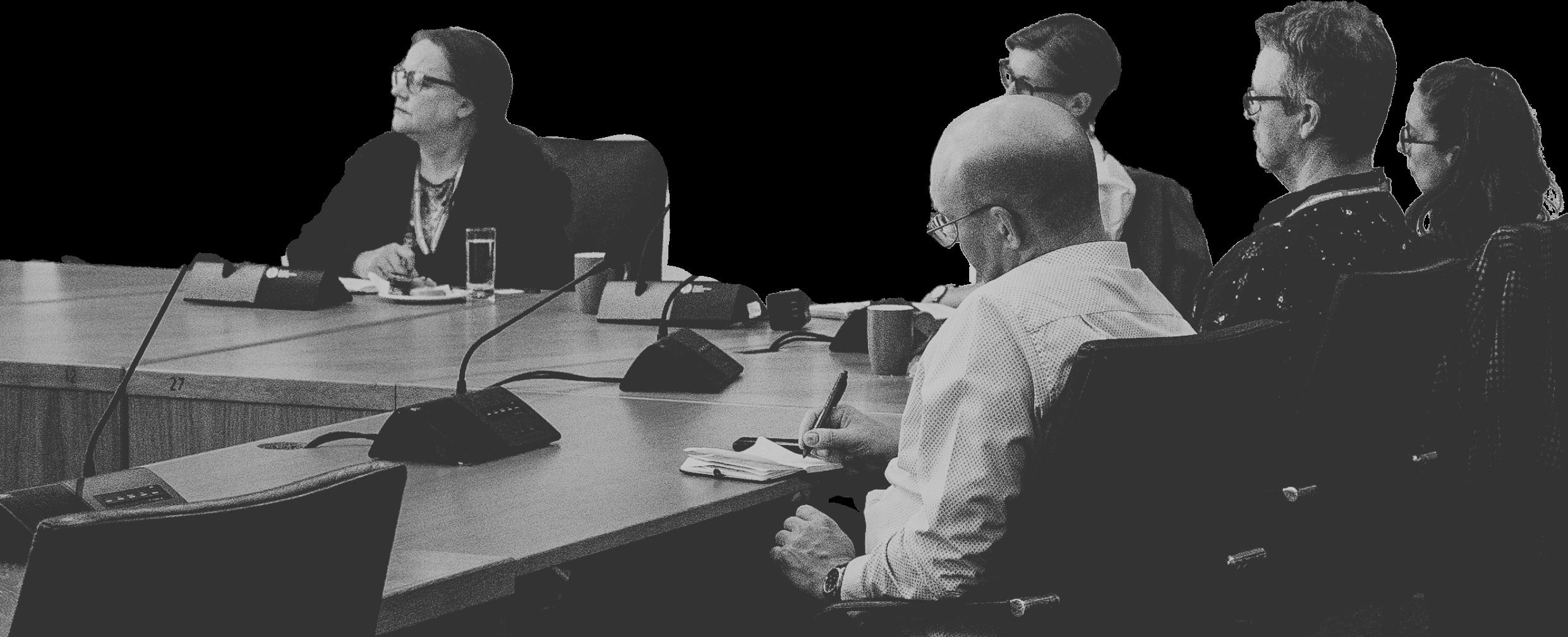
This CPG was established in September 2021. In addition to the six MSP members, there are currently 123 individual members and 170 organisational members. In September 2024, the Convenor and Secretariat met to discuss a theme to guide and focus discussions for the remainder of the parliamentary year.
The chosen theme was ‘big ambitions for culture and communities’, and meetings on this theme were held in February 2025, June 2025, December 2025 (AGM) and February 2026.
This report is intended to summarise these discussions, identify emerging themes and explore ways forward to capitalise on the expertise and insights that have been contributed by speakers and attendees alike.
Formal minutes of each meeting are held on the Scottish Parliament’s website.
Section 02 Discussions
Big Ideas
To kick off our investigation in a collaborative and participatory spirit, attendees were invited to join this meeting with a one-minute pitch about their 'big ideas' for an aspirational, effective and ambitious vision for culture and communities.
The ensuing discussion was wide-ranging, forward looking and aspirational, with 25 attendees sharing a fascinating range of ideas – from the visionary to the practical.
A number of key themes arose, including:
• The importance of celebrating, connecting and profiling Scotland’s rich diversity of black and global majority artists and creative practice.
• The work required to make equal access to performing arts for marginalised and disabled people a reality.
• The presence of culture already within all communities, and the role of artists and culture as ‘social glue’ and as essential catalysts for innovation, equity and resilience.
• Culture’s transformative role and potential in health and education, and the importance of embedding culture in public health, education and place frameworks.
• The work required to ensure that arts and culture are available to all children, regardless of background.
• The possibilities in terms of forging better links between culture and other areas of public policy.
• The practicalities of enabling and supporting cultural lives (through funding, infrastructure and pathways)
Further analysis of these themes and the input shared was used to inform the structure of the coming meetings of the CPG, and to define key areas of exploration for the group’s discussions.
Culture as Social Glue
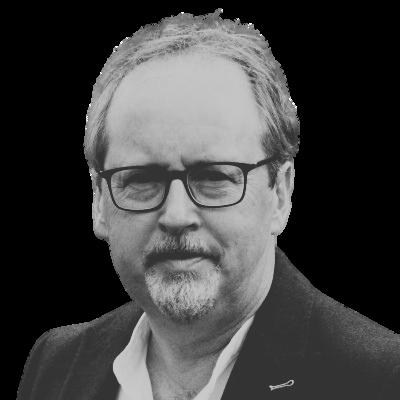
An opening address was offered by Richard Bellingham, Director of the Institute for Future Cities, University of Strathclyde.
Key points included:
• The current status and projected growth of cities, and the ecosystems that sustain them.
• Different understandings of what makes a good city, considering both basic needs and values. Ideas of a good city vary according to who, and where, you are.
• Looking ahead, we can expect demographic change, social change, economic change (including to high streets and retail habits), as well as unanticipated shocks (like Covid).
• Common ambitions for city living include them being easy, equitable, flexible, sustainable and distinctive.

June 2025
Culture as Social Glue
A panel discussion then took place with two guest speakers:

Giulia Gregnanin, Director of Timespan, Helmsdale (Sutherland)
Giulia introduced the role of a contemporary arts and heritage centre within a rural area, serving both a small local population and a large transient visitor audience.
She shared Timespan’s roots in exploring the local heritage of the area (and the Highland Clearances) and linked that to their global perspective and to international discussions around climate change, the legacies of empire, and social justice
She shared the importance of coproduction and cocreation in making work that belongs to ‘the commons’, including logistically - e.g. via the ‘people’s mobile archive’. She noted that this was a constant process of “learning and unlearning, doing and undoing”, toward reconfiguring the idea of a museum as a “non neutral place” working toward social justice.
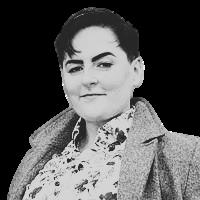
Éadaoín Lynch, Research and Evaluation Manager, Scottish Book Trust
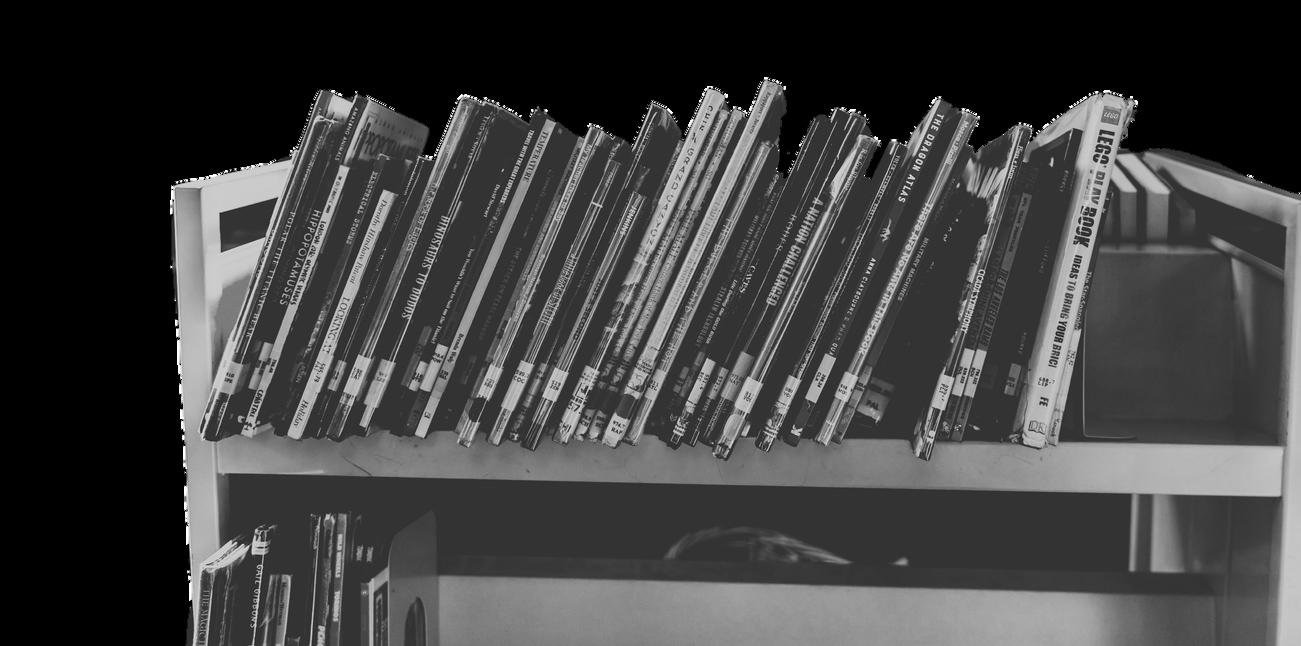
Éadaoín introduced The value and impact of Scotland's public libraries report by the Scottish Book Trust, launched June 2025, which spoke to 300 librarians and 2000 library users across every Local Authority in Scotland.
They looked at the challenges facing libraries, with 53 libraries closed since 2015, and the opportunities, with librarians as trusted professionals, as a key signposting point for all kinds of local services, and as a space for connection across socio-economic groups.
We heard about the role of libraries in engendering social consciousness and collective responsibility, and the interconnectedness of social cohesion and deprivation - with the risk (or conversely, the opportunity) of one dismantling the other. (Image credit: Lou McCurdy)
June 2025 Culture as Social Glue
Follow up discussion from the panel presentations explored the importance of open and free access to information for democracy and fostering opportunities
We discussed inequities of access to cultural spaces, in terms of resources, economics and cultural capital.
In the UK, 7% of libraries in the most deprived areas have closed, compared to 3% in the least deprived.
We considered the risk of burnout for key individuals who are leading activity (in a range of roles as volunteers, leaders of institutions, librarians etc), and the importance of supporting and enabling partnership working as a buffer to that (via an ‘infrastructure of leadership’).

Our lively Q&A then explored:
Learning from failure, and what could be done better in this work (especially in improving access, and around learning from those who don’t engage, or who no longer have access to local services).
Understanding the opportunities and costs of preventative spend (for example, in the cost of library closures).
The opportunities for collaboration between physical spaces and individuals and community leaders.
The opportunities of promoting the value of culture for health and wellbeing
Different generational patterns to using libraries, in particular, with a quote from a young person that “social media is where we spend our Saturdays”.
The risk of not seeing the value (of the “social glue” role of cultural institutions) until it is eroded or eradicated.
Re-thinking measurement of impact, and ‘what counts’ as evidence.
Culture as Social Glue
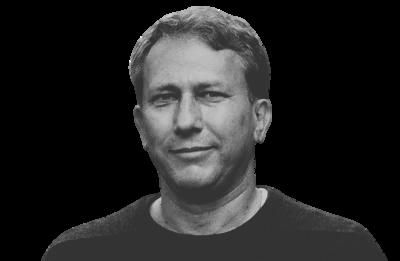
This meeting also welcomed writer researcher, academic and activist Professor Peter Beresford OBE.
Peter is Visiting Professor at the University of East Anglia, Emeritus Professor of Citizen Participation at the University of Essex and Brunel University London.
He is Co-Chair of Shaping Our Lives, the disabled people's and service users' national organisation and network, and the former Director of the Centre for Citizen Participation.
Peter was invited to attend the meeting as an active listener, and subsequently to write a reflective blog linking our discussions to his wider work on people-powered movements in politics, policy and practice.
Peter’s reflection included:
“We need to be doing things differently in more equal and inclusive ways if we want to challenge rising feelings of alienation and neglect – and people clearly are.
This invigorating occasion brought me back to my own work on participation in politics, policy and professional practice, particularly in these times of rising uncertainty, division and distrust.
My new book The Antidote: How PeoplePowered Movements can Rebuild Politics, Policy and Practice which addresses this and how we may combat it, highlights the importance of connection, just as this session did.
It takes as its starting point the modernist call to ‘only connect’ articulated by writer EM Forster, poet TS Eliot, sociologist Richard Hoggart and many others through to the present. Significantly such arts and cultural figures took the initiative then, as the Scottish Parliament event suggests arts and cultural activity and initiatives are doing now.
If there’s one thing I’ve learned though, it is that such connection needs to be updated for the twenty first century. The emphasis of this gathering confirms that.
We need to be talking about inclusive connection and involvement, which address the wonderful new diversity of our society –and building equal and inclusive alliances between our different organisations and movements to achieve it.
Hopefully the glue will stick, not just as a starting point for further events from Culture Counts, but also for more new imaginative thinking for formal politics and public policy”.
The reflection piece can be viewed in full here.
A planned CPG meeting for 08 October 2025 was postponed.
February 2026
Evidencing Impact

Three speakers gave an overview of their work and shared their experience of the opportunities and challenges associated with understanding impact:
Ben Jeffries, Head of Scotland for The Audience Agency
Ben shared insights from his work with The Audience Agency, a UK national charity for cultural participation and engagement, which helps arts and heritage organisations to connect with audiences and understand their impact.
They use data and build evaluation processes to help arts organisations understand audiences and benchmark behaviours and trends, and have developed evaluation principles with the Centre for Cultural Value to help arts workers undertake meaningful evaluation.
Ben’s work has highlighted the toll that evidence collection can take (especially for smaller organisations), skills and confidence gaps in evaluation practice, and the disconnect between evaluation and positive change. He noted an appetite from funders and organisations to approach evaluation as a tool for learning, not simply as a means to demonstrate success for external parties.
Ben concluded by recapping that doing evaluation well, and understanding impact, is best understood as an investment – not only of money, but of time, care and creativity. He reminded us that this investment is only valuable if we change and develop as a result of what we discover.
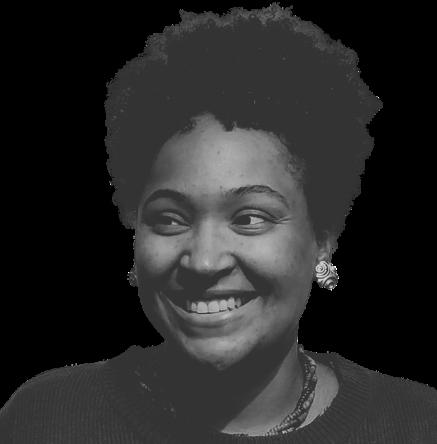
Claire Sivier, Co-founder and Co-director, tialt (There
Is An Alternative)
Claire’s introduction explored the ways that power dynamics shape what gets counted as evidence. Tialt works in contexts in which significant changes are often not immediate or visible, but rather can be relational and slow - showing up in shifts of confidence or agency and how people see their place in the world.
Claire’s work illustrated the value of an approach to evaluation that centres care, collaboration, co-design and relationship building, and that seeks to understand impact as a process, not a fixed end point.
Opportunities for the future include moving from accountability cultures to learning cultures, thinking about contribution not attribution, and designing evaluation as a process that supports practice rather than audits it.
Claire concluded by exploring the possibilities of evaluation to make organisations more equitable, by recognising different forms of evidence and treating more forms of knowledge as valid.
February 2026 Evidencing Impact
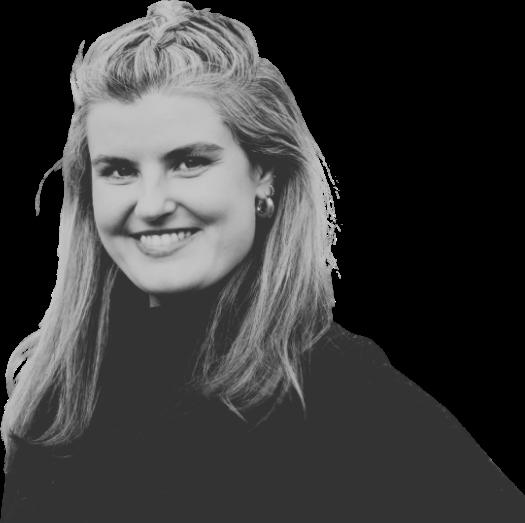
Dr. Olivia Turner, Deputy Director of the Edinburgh Centre for Research on the Experience of Dementia (ECRED), University of Edinburgh.
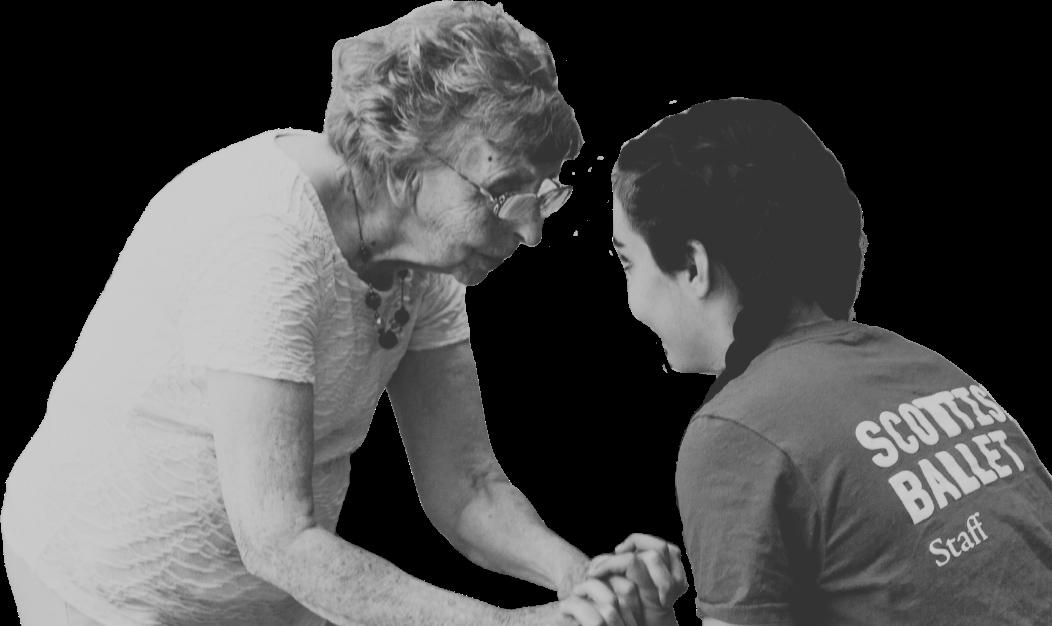
Olivia discussed co-produced research exploring participatory arts and dementia, and the opportunities for different approaches to meaning-making and evaluation in arts and health.
She noted that current evaluation has been shaped by instrumental, positivist models that prioritise cause-and-effect processes and measurable outcomes. While these approaches have been important for capturing certain forms of impact, they overlook the importance of meaning and relational experiences that do not neatly fit into a traditional hierarchy of evidence.
The University of Edinburgh’s IMAGINED project (led by ECRED with the Royal Conservatoire of Scotland, University of Florida, Queen Margaret University, St Columba’s Hospice Care, Music in Hospitals & Care and Scottish Ballet) seeks
to address these challenges by focusing on meaning-making as a way to understand the interconnections between participatory arts and experiences of wellbeing for people living with dementia.
Drawing on co-production, ethnographic data and a national survey, IMAGINED aims to 1) understand the challenges of capturing meaning-making processes; 2) explore the relationship between meaning-making and wellbeing; and 3) co-create an evaluation toolkit and associated online training course to support artists and arts organisations to better articulate the impact of their work.
Olivia concluded by questioning whose knowledge and what kinds of knowledge are valued in evaluation. She argued that meaningful evidence, knowledge and questions of value must be expanded to include relational, creative and collective ways of knowing. She maintained that evaluation processes should also be strengthened to enable equitable evidencemaking for people living with dementia and participatory arts.
Photo credit: Scottish Ballet's Time to Dance. Photograph by Christina Riley.
Evidencing Impact
Questions from the Convenor and audience explored the following topics:
The tensions between the desire for proof in evidencing impact, and listening to what is required in a particular context.
The limits of any standardised approach to evaluation that attempts to apply the same approach in very different contexts. Other barriers to evaluation include staff capacity and turnover, funding, and lack of knowledge and skills.
Opportunities to address these challenges, including approaches that question assumptions, make space for unexpected findings, explore ways to shift power back to participants in shaping knowledge, take a long-term approach to understanding impact, and listen to contradictory evidence.
That power dynamics shape both methodology choices and dominant ways of thinking. Different approaches to understanding impact are valid, and don’t need to be pitted against one another. There is an opportunity, though, to more thoughtfully embrace and champion the different kinds of evidence that arts and community projects can produce alongside more traditional forms of evidence.
For cross-sectoral working, there are important discussions to be had about who sets the expectations about evaluation, and who is forced to fit into the presentation of particular kinds of knowledge.
The pressure to tell good news stories in funding reports, in particular, risks obscuring more useful conversations about how change can be realised and understood.
A great treat of this CPG is the opportunity to hear from artists across Scotland, whose work has inspired and nourished our discussions.
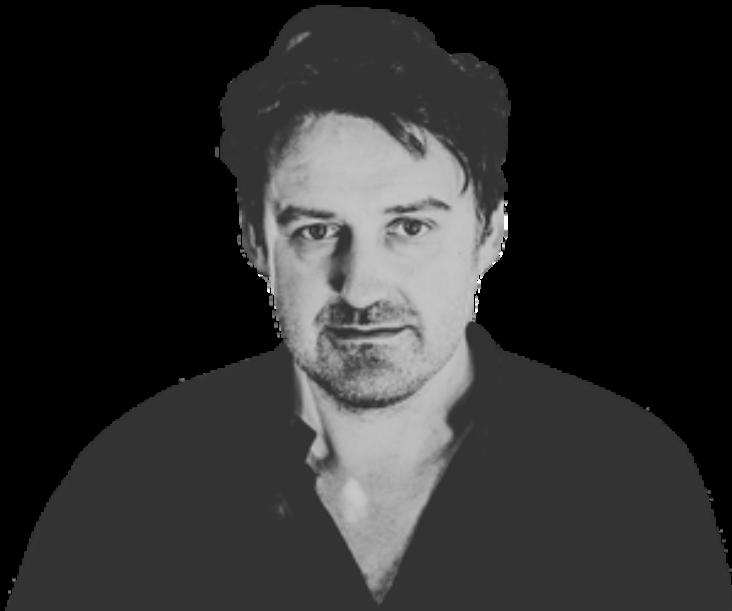
Katharine Macfarlane
At our June 2025 meeting, poet Katharine Macfarlane opened with a reading of The Library, celebrating the multiple roles libraries serve for people and communities.
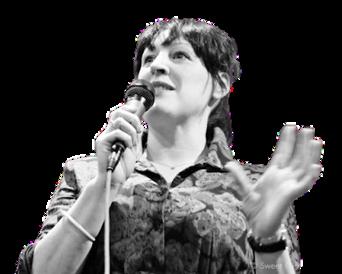
Pàdraig MacAoidh
At our February 2025 meeting, Scotland’s new Makar - Pàdraig MacAoidh opened the meeting by reading two poems in Gàidhlig and English - Deireadh an t-Samhraidh/The End of Summer and An Tonn/The Wave. (Photo credit: Annette Mueck)

Ashley Douglas
At our February 2026 event, writer, multilingual historian and translator Ashley Douglas read an extract from The Lass and The Quine (2025), the first ever original LGBT+ inclusive children’s book in Scots.
Extract from The Library, by
Katharine Macfarlane
Balancing miracles on shoestrings
Dealing in the ‘currency of humanity’
These guardians, friendly, forward-face of an unseen machine, Singing, organising, validating information, Answering queries on family history, Bestsellers, mystery, Opening times at the local gym, Past papers to prepare for a prelim, How to put a hearing aid battery in, Sorting, shelving, Ever-evolving.
Section 03
Reflections/ Looking Forward
Can you share one useful or interesting insight that stands out to you from this series of events?
I have greatly appreciated the discussion of Cultural Democracy as well as the latest insights into evaluation of impact in the Arts and Humanities. The CPG has been an incredible forum to hear from a range of fascinating speakers and engage with Parliamentarians and cultural advocates across the country.
It is vital in enabling true knowledge exchange between practitioners, academics, parliamentarians and the wider public. An incredible way to enact civic participation.
It was useful to hear from Richard Bellingham from the University of Strathclyde on city design. We are campaigning on the protection and creation of spaces for culture/creativity in communities, so it was very useful to have his perspective on the changing cityscape and healthy city planning.
The meeting about understanding impact was very informative in terms of power and ethics.
In the session on understanding impact, speaker Ben Jeffries (The Audience Agency) provided a useful, practical perspective on measuring impact and the arts.
The discussion on evaluation of impact of grassroots cultural initiatives was inspiring and informative - very impressive speakers and a safe space atmosphere for open discussion.
A useful conversation with another attendee on the meaning of the term "community" and its relevance today.
Generally, I find the linking of practice with academic developments to be the most effective - in that regard, having a diversity of speakers has been the most useful!
Key themes, learning and reflections
The CPG affords us opportunities to celebrate, showcase and spotlight the work of creative communities across the country. There has been a great deal of nourishing and insightful input from speakers working rurally, for example, as well as with communities experiencing poverty, discrimination and health challenges.
Some of the most exciting conversations at CPG meetings have been sparked by questions that encourage us to explore innovation and change, and to look ahead to consider the future of culture and communities. The group can act as an opportunity for us to ‘look up’ together from everyday concerns to take in a wider perspective.
The deep and multi-layered connections between culture, education, health and place have been recurring themes in discussions, as have the disparities in access to opportunities based on geography, demographics and income.
Some of the most interesting panels have included speakers from very different artforms, geographies, perspectives or areas of professional expertise. The opportunity to consider complex issues from multiple perspectives has prompted discussions about the infrastructures and invisible ecosystems that support and enable cultural lives.
The range of attendees from across the cultural sector also prompts opportunities for sharing practice, learning from work in different contexts, and understanding how opportunities and challenges are experienced differently across the sector.
MSP engagement has been challenging at times, and the forthcoming election offers an opportunity for refreshed relationships with both new and returning MSPs.
To act on the learning from this exploration
1. Cultural advocacy, policy-making and research bodies should consider how less dominant perspectives are heard and championed. We should all consider the spaces and opportunities we have access to, and proactively seek to widen the range of voices being heard in cultural policy-making.
2. The Scottish Government should take steps to resist siloed ways of working in favour of more wide-ranging collaborations that reflect the multifaceted nature of our lives.
3. Spaces should be created for active working across policy areas, and for the inclusion of cultural perspectives in such spaces.
4. In the face of increasing global concerns about polarisation and misinformation, it is vital to create and protect spaces for thoughtful dialogue, productive exchange and constructive disagreement.
For future crossparty group(s)
1.Seek to grow attendance and representation amongst both MSP and non-MSP members, especially to seek out perspectives from funders, academics, and those beyond the culture sector.
2.Continue to work thematically for defined periods of focus. Consider the role of the CPG in exploring futurelooking, big-picture topics that impact across the sector (and beyond).
3.Create more spaces for discussion, connection and input, either within or between meetings.
4.Continue to programme speakers representing a diversity of backgrounds, expertise, artform and geography.
5.Explore how to build stronger links between the discussions of the CPG and wider policy, advocacy or strategic action.
What topic(s) or areas of enquiry would you like to see explored at a future cross-party group?
It would be good to explore the importance of the traditional arts and languages and the increased interest in '"real" activities rather than digital or mass-produced content.
Planning and place-making: Creativity and culture in communities makes them healthier and wealthier, so how do we make sure the infrastructure they need are built in to place-making and planning policy?
Cross sectoral working and influencing.
Arts and health & wellbeing, issues of inequality in access, inequality in who sets agendas, arts & outreach practice.
Conversations around the value of culture across the Nation.
How disabled people can have equal access to the performing arts and can access drama training - especially if they are learning disabled.
Culture in community settings (not Creative Industries) in the context of the Community Wealth Building Bill.
Community arts; cultural democracy; access and diversity; economic value vs cultural value.
Accountability, tangible legislative commitment.
I'd like to see the CPG on Culture in Communities as part of a strategic national approach to grassroots culture in Scotland.
The intersection of architecture, heritage engagement, and social economic environments, exploring identity and its implications seen through the lens of social, health, and the educational impact of culture.
How to temporarily accommodate artists in vacant properties to enhance the cultural offering across the country.
New media and gaming.
The role of cultural organisations in the protection of Scotland's democratic space.
All CPGs are dissolved at the end of each parliamentary term – in this case in May 2026. Following the outcome of those elections, we will be looking to reform a CPG to bring MSPs and the sector together.
At that point, we hope to build on these discussions, explore some of the priorities identified by attendees, and continue to build connections between parliament, the culture sector, and communities across Scotland.
Meanwhile, Culture Counts would like to thank Claire Baker MSP, Clare Adamson MSP and Foysol Choudhury MSP for their leadership of this CPG, the artists who have shared their work to inspire our discussions, and all those who have joined us to share their insights and expertise on ‘big ambitions for culture and communities’.
To stay in touch with the work of this CrossParty Group, and to join future events, please join the mailing list here.
This report was published in March 2026.
Document design and collages: Daisy

Image credits: Steven Ward, Lou McCurdy, Christine Riley, Annette Mueck, Lucy J Toms Photography.
MacGowan.