Cultural Survival
JUNE 2026
VOLUME 50, ISSUE 2
BOARD OF DIRECTORS
PRESIDENT
Kaimana Barcarse (Kanaka Hawai’i)
VICE PRESIDENT
John King
TREASURER
Steven Heim
CLERK
Nicole Friederichs
Marcus Briggs-Cloud (Maskoke)
Keith Doxtater (Oneida)
Kate R. Finn (Osage)
Laura Graham
Richard A. Grounds (Yuchi/Seminole)
Lyla June Johnston (Diné/Tsétsêhéstâhese)
Stephen Marks
Mrinalini Rai (Rai)
Jannie Staffansson (Saami)
Stella Tamang (Tamang)
FOUNDERS
David & Pia Maybury-Lewis
Cultural Survival Headquarters 2067 Massachusetts Ave. Cambridge, MA 02140 t 617.441.5400 f 617.441.5417
www.cs.org
Cultural Survival Quarterly
Managing Editor: Agnes Portalewska
Contributing Arts Editor: Phoebe Farris (Powhatan-Pamunkey)
Copy Editor: Jenn Goodman
Designer: NonprofitDesign.com
Copyright 2026 by Cultural Survival, Inc.
Cultural Survival Quarterly (ISSN 0740-3291) is published quarterly by Cultural Survival, Inc. at PO Box 381569, Cambridge, MA 02238. Periodical postage paid at Boston, MA 02205 and additional mailing offices. Postmaster: Send address changes to Cultural Survival, PO Box 381569, Cambridge, MA 02238. Printed on recycled paper in the U.S.A. Please note that the views in this magazine are those of the authors and do not necessarily represent the views of Cultural Survival.
Writers’ Guidelines
View writers’ guidelines at our website (www.cs.org) or send a self-addressed, stamped envelope to: Cultural Survival, Writer’s Guidelines, PO Box 381569, Cambridge, MA 02238.
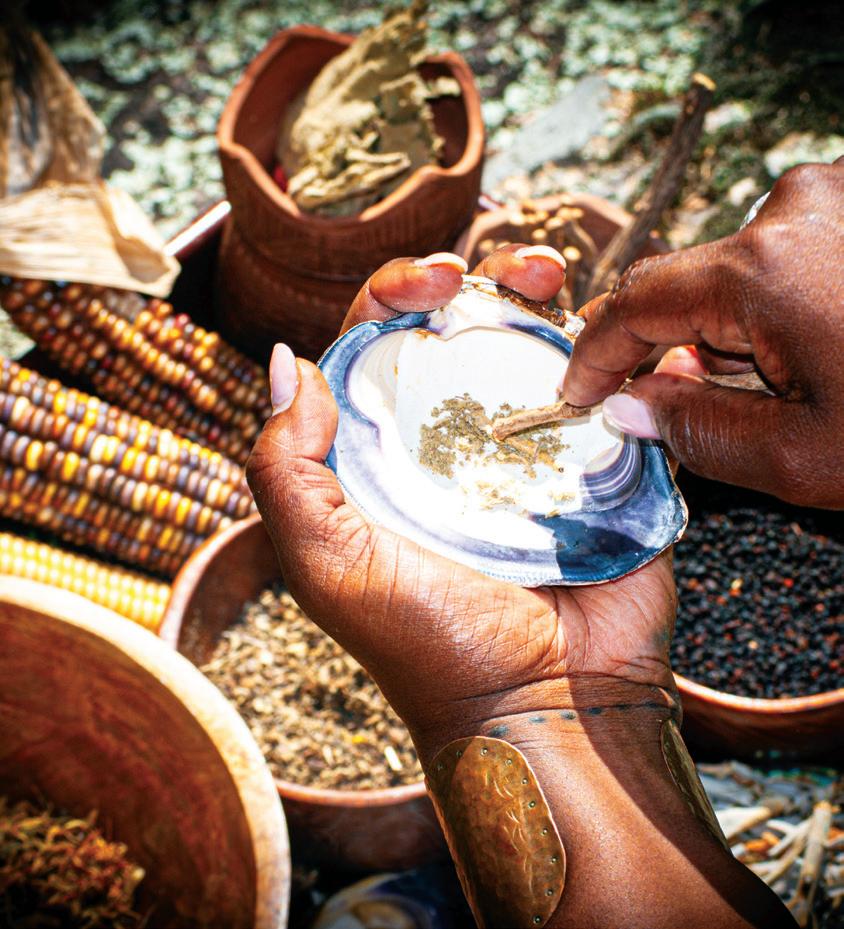
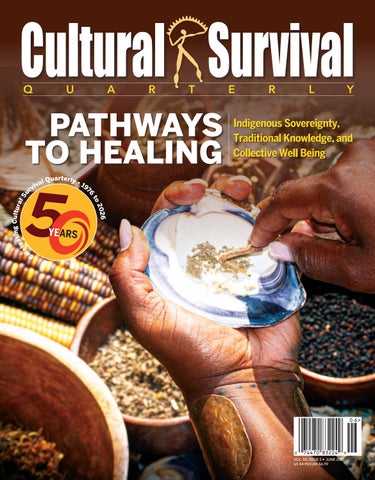
On the cover: Indigenous plant medicines being made (see page 22). Photo by Gabriel Rudd AKA Itsnotiq.

Donors like you make our work around the world possible. Thanks so much for being part of Cultural Survival!
16 The Evolution of the Indigenous Determinants of Health Framework and the Struggle for Indigenous Midwifery Recognition
Geoffrey Roth (Lakota), Dora-Lucia Mendez-Alfonzo (Tseltal), and Alejandro Bermudez-del-Villar (Mestizo)
An Indigenous rights-based approach to global health policy.
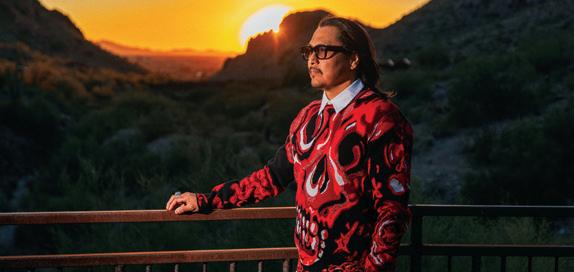
18 I’m Still Here: An Artist’s Journey of Sobriety, Resilience, and Presence
Jeremy Arviso (Diné, Hopi, Akimel O’odham, and Tohono O’odham)
Arviso shares his powerful journey from incarceration and addiction to a life of sobriety, global artistic leadership, and cultural advocacy.
20 Ancestral Healing in a Changing World: Voices from Chobokwane
Georges Theodore Dougnon (Dogon) Interview with Naro traditional healer Qhoncobe Khanxla Daxo.
22 Indigenous Knowledge-Based Medicine Expands the Future of Healthcare
Chenae Bullock (Shinnecock)
Indigenous Knowledge-Based Medicine is a sophisticated, holistic system of care.
Executive Director’s Message
In the News 4 Indigenous Arts MC from the Hills: Moko Koza (Naga)
In Guna Yala, the Hammock Holds Everything. The Sea Is Coming for It All.
Indigenous Knowledge
Regenerative Agriculture: Reclaiming Food Sovereignty Through Indigenous Wisdom
24 Social Workers’ Roles in Ensuring Indigenous Peoples' Health
Hilary N. Weaver (Lakota) Indigenous social workers leverage Traditional Knowledge and professional values to advance global health.
26 A Legacy of Helpers in Indian Country
Pamela Begay (Diné)
The Kathryn M. Buder Center for American Indian Studies at Washington University supports Native Americans and Alaska Natives to serve their communities.
27 Beyond Survival
Ukhing Nue Chak (Chak) Achieving Indigenous wellness through culture, community, and nature in Bangladesh.
28 Reviving the Feminine Path Kelaia Acevedo
Three Indigenous Youth Fellows safeguard Traditional Knowledge in Colombia, Costa Rica, and Ecuador.
12 Rights in Action
The Ayoreo Peoples, the Chaco, and the Right to Remain Uncontacted
14 Women the World Must Hear Sehila Mota Casper
30 KOEF Grant Partner Spotlight: Marka Cololo Copacabana Antaquilla Puquina Nation (MACCANP), Bolivia
32 Staff Spotlight
Nataly Domicó (Embera Eyabida)
33 Bazaar Artist Associação Indígena Pykôre
Halito akana (Hello friends),
Ihope you, your loved ones, and your communities are well. It’s Spring where I live; the plants are awakening, and the birds are singing exuberantly as the sun rises. After a dry winter, the streams and our community’s water supply are running low. Thankfully, rain arrived recently as we planted corn, giving us renewed hope for the growing season. Yet, it all feels pre carious as climate change underscores how globally cumulative actions impact our local conditions.
Indigenous cosmovisions centered on interconnectivity and relationality teach us how one cannot be truly well without also tending to the wellness of the beings and world around us. This Traditional Knowledge shapes how we care for ourselves and each other, informing what it means to be well and to heal in ways that are holistic, community-oriented, and guided by our relationships to Mother Earth. Although colonialism disrupted our lifeways, including our systems for nurturing health and wellness, Indigenous Peoples are revitalizing these practices.
we need our communities and our environments to be healthy to experience mutual flourishing.
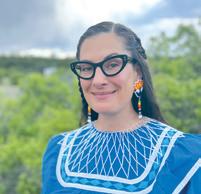
The World Health Organization (WHO) articulated health as a human rights issue in its 1946 Constitution, and it was formally bound in international law in 1966, via Article 12 of the International Covenant on Economic, Social, and Cultural Rights. More recently, in 2023, the UN Permanent Forum on Indigenous Issues adopted a member-led study with input from the Indigenous Determinants of Health Working Group. In the same year, the WHO adopted the Indigenous Determinants of Health, including “Indigeneity” and “colonialism,” when member states passed Resolution 76.16 on the Health of Indigenous Peoples and began directly supporting the design and development of Indigenous-led implementation plans. The second draft of the Global Plan of Action for the Health of Indigenous Peoples (2027–2040) is now available for review and consultations.
Aimee Roberson (Choctaw & Chickasaw), Executive Director
Mark Camp, Deputy Executive Director
Avexnim Cojtí (Maya K’iche’), Director of Programs
Alicia Moncada (Wayúu), Director of Advocacy and Communications
Verónica Aguilar (Mixtec), Program Associate, Keepers of the Earth Fund
Maha Akamine, Keepers of the Earth Fund Program Assistant
Edison Andrango (Kichwa Otavalo), Indigenous Rights Radio Program Assistant
Nadia April (Damara and Nama), Keepers of the Earth Fund Program Coordinator
Diana Ariza Monroy, Community Media Program
Assistant
Marita Calderon (Quechua), Executive Assistant
Carmem Cazaubon, Capacity Building Program
Assistant
Miguel Cuc Bixcul (Maya Kaqchikel), Accounting Associate
Jess Cherofsky, Advocacy Program Manager
Michelle de León, Grants Coordinator
Roberto De La Cruz Martínez (Binnizá), Information Technology Associate
Danielle DeLuca, Senior Development Manager
Nataly Domicó (Embera Eyabida), Keepers of the Earth Fund Program Assistant
Georges Theodore Dougnon (Dogon), Capacity Building Program Assistant
David Favreau, Logistics and Operations Assistant
Shaldon Ferris (Khoisan), Indigenous Radio Program Coordinator
Sofia Flynn, Accounting & Office Manager
Nati Garcia (Maya Mam), Capacity Building Manager
Cesar Gomez Moscut (Pocomam), Community Media Program Coordinator
Djalma Gonçalves (Aranã Caboclo), Brazil
Special Projects Associate
Byron Tenesaca Guaman (Kañari Kichwa), Fellowships Coordinator
Alison Guzman, Donor Relations Coordinator
Emma Hahn, Development Associate
Adriana Hernández (Maya K’iche’), Grantmaking Coordinator
Belen Iñiguez, Publications Distribution Assistant
Natalia Jones, Advocacy Coordinator
Mariana Kiimi (Na Ñuu Sàvi/Mixtec), Advocacy Associate
Dev Kumar Sunuwar (Koĩts-Sunuwar), Community Media Program Coordinator
In this issue, you’ll learn about holistic systems of care rooted in ancestral wisdom informing the present and shaping the future of our communities. These stories speak to the healing power of Indigenous midwifery, culturally-based arts, intergenerational transfer of knowledge about traditional medicines, reviving the feminine path, and a movement shaping social work that incorporates Indigenous Knowledge and respectfully serves Indigenous people. As Hilary Weaver (Lakota) writes, “When we are guided by and can embrace our own ways of being and knowing, we continue our focus on the person and their community, spiritually, physically, emotionally, and psychologically. The health of the whole person is essential for the health of communities.” And as Ukhing Nue Chak (Chak) explains, “…well being is not only about physical health, but also about safeguarding traditions, protecting nature, and maintaining strong community connections.” Our communities need us to be well, and
Reflecting Indigenous wisdom, the WHO and other bodies define Indigenous Determinants of Health as holistic, collective factors that shape well-being beyond just biomedical models, including connection to land, culture, language, self-determination, and traditional knowledge. These factors are essential for addressing health inequities rooted in colonization, racism, and environmental degradation, and ultimately, they benefit all of humanity and Mother Earth.
As a supporter of Cultural Survival, you are contributing to the efforts of Indigenous Peoples who are safeguarding knowledge systems, languages, and lifeways for future generations. You are also helping us to amplify the voices of those who are leading the way to healing humanity and co-creating a future of mutual flourishing for all of us. Please give generously at www.cs.org/donate.
Hטchi yakoke li hoke (I thank you all so much),

Aimee Roberson (Choctaw and Chickasaw), Executive Director
Rosy Sul González (Kaqchikel), Indigenous Rights Radio Program Manager
Marco Lara, Social and Digital Media Coordinator
Kevin Alexander Larrea, Information Technology Associate
Maya Chipana Lazzaro (Quechua), Bazaar Vendor Coordinator
Jamie Malcolm-Brown, Communications & Information Technology Manager
Candela Macarena Palacios, Executive Assistant
Ñushpi Quilla Mayhuay Alancay (Quechua/Kolla), Advocacy Coordinator
Edson Krenak Naknanuk (Krenak), Lead on Brazil
Diana Pastor (Maya K’iche’), Media Coordinator
Guadalupe Pastrana (Nahua), Indigenous Rights Radio Producer
Camila Paz Romero (Quechua), Keepers of the Earth Fund Program Assistant
Ilenia Perez (Guna), Panama Advocacy Coordinator
Agnes Portalewska, Senior Communications Manager
Tia-Alexi Roberts (Narragansett), Editorial & Communications Assistant
Elvia Rodriguez (Mixtec), Community Media Program Assistant
Mariana Rodriguez Osorio, Executive Assistant
Emilse Siares (Kolla), Bazaar Program Assistant
Carlos Sopprani, Human Resources Associate
Thaís Soares Pellosi, Executive Assistant
Abigail Sosa Pimentel, Human Resources Assistant
Adriana Sunun (Maya Kaqchiquel), Community Media Program Coordinator
Candyce Testa (Pequot), Bazaar Events Manager
Miranda Vitello, Development Coordinator
Candy Williams, Human Resources Manager
Pablo Xol (Maya Qʼeqchiʼ), Design and Marketing Coordinator
INTERNS
Kelaia Acevedo, Miranda Gonzalez, Mara Moldavan, Sandra I. Pelaez, Linda Ravolatsara
FEBRUARY
In a historic win for ancestral land rights, the Philippine Supreme Court ruled that mining companies must secure the Free, Prior and Informed Consent of Indigenous Peoples before renewing operations.
FEBRUARY
Indigenous Kichwa communities in Ecuador have launched a landmark initiative to serve as the frontline defenders of the 190,000-hectare Yasuní Biosphere Reserve from encroaching mining and oil interests. This strategic buffer zone borders the Tagaeri-Taromenane Intangible Zone, home to Tribes living in voluntary isolation.
FEBRUARY
In a significant victory for Indigenous land and water rights, the Brazilian government suspended dredging operations on the Tapajós River following two weeks of intense protests by Indigenous communities.
MARCH
Indigenous communities and environmental activists in Jujuy are intensifying protests against proposed reforms to Argentina’s Glacier Law that would potentially open the door to contamination of vital freshwater reserves.
7.5 Million Acres to Tribal Stewardship
MARCH
California has unveiled a landmark policy to return 7.5 million acres of land and coastal waters to Indigenous stewardship, fulfilling a 175-year-old promise.
MARCH
On March 2, representatives of Indigenous Peoples, Indigenous organizations, and civil society from Indonesia, the Philippines, Brazil, Colombia, Peru, Suriname, Paraguay, the U.S., Russia, Denmark, and the UK adopted the Jakarta Declaration, an international call to protect Indigenous Peoples in Isolation.
MARCH
“Voices from the Land,” a report by the Kenya National Commission on Human Rights, reveals that Indigenous communities are facing widespread land dispossession and environmental damage due to large-scale investment projects.
MARCH
Tanzanian Indigenous communities have filed a formal grievance against the World Bank, charging the institution with failing to repair the devastation caused by its $100 million REGROW project.
APRIL
The 25th anniversary of the mandate of the UN Special Rapporteur on the Rights of Indigenous Peoples was commemorated in April. Rodolfo Stavenhagen served as the first Special Rapporteur on the situation of human rights and fundamental freedoms of Indigenous Peoples from 2001- 2008. The current Special Rapporteur is Dr. Albert Barume (Batwa).
APRIL
The Nuchatlaht First Nation is celebrating the return of their land rights on Nootka Island on a ruling by the British Columbia Court of Appeal.
APRIL
Participants from 57 countries drafted a Position of Indigenous Peoples in the First Conference on Transitioning Away from Fossil Fuels.
MAY
An Alberta judge has thrown out a decision to issue a petition for a referendum on Alberta Providence separation. Athabasca Chipewyan First Nation and three Blackfoot Nations claimed victory in their legal challenge of the referendum, as they oppose separation.
MAY
Oglala Lakota youth occupied two active drill pads for one week to save Pe’ Sla, a sacred high-elevation meadow in the Black Hills of South Dakota. The mining company that had been drilling for graphite near Pe’ Sla formally withdrew their Plan of Operations for the Rochford Mineral Exploration Project.
MAY
Mining company Fortescue was ordered to pay approximately $150 million AUD ($108 million) for cultural damage linked to iron ore mining operations conducted without the consent of Yindjibarndi Traditional Owners in Western Australia’s Pilbara region.
JUNE
The 2026 FIFA World Cup is partnering with the Puyallup Tribe in Seattle, along with the Musqueam, Squamish, and Tsleil-Waututh Nations in British Columbia, to highlight Indigenous Nations.
APRIL
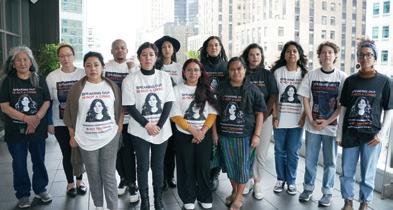
Cultural Survival, Batani International Foundation, and over 100 Indigenous rights activists from around the world demanded the immediate and unconditional release of Daria Egereva (Selkup) and Natalia Leongardt at the 25th Session of the UN Permanent Forum on Indigenous Issues. Both women, who are Indigenous rights defenders, have been accused of participating in “activities of a terrorist organization” under Article 205.5 of the Russian Criminal Code, which carries a sentence of 10-20 years of prison. In a joint letter to President Putin, press statements, and several actions during the Permanent Forum, the Russian government was urged to uphold its international human rights obligations, particularly those related to freedom of expression, association, and participation in public affairs. The message is clear: Indigenous defenders should not be criminalized for engaging in international arenas to defend their rights and territories.
APRIL


Cultural Survival’s Advocacy Program launches international campaigns in support of grassroots Indigenous movements as they put pressure on governments and corporations to respect, protect, and fulfill the rights of their communities.
suffered for defending his territory against extractive industries. He demanded effective protection measures in accordance with the Escazú Agreement for himself and other Indigenous defenders who have been criminalized, as well as real guarantees of protection for defenders of human rights in Colombia.
Cultural Survival, Qhana Pukara Kurmi
Contribute
APRIL
On April 15, Cultural Survival and Indigenous partner organization Qhana Pukara Kurmi in Bolivia submitted a report to the UN Secretary General of the Human Rights Council on the intimidation and reprisals that Pastor Carvajal (Aymara) and Guadalupe Fernández (Quechua) have suffered since their participation in last year’s UN Permanent Forum on Indigenous Issues. The report highlighted the link between their public activism during that time and the subsequent rise in threats, online violence, and attacks against them in the UN Headquarters and, upon their return home, Bolivia. Indigenous communities and Qhana Pukara Kurmi have been engaged in a struggle with the mining company Santa Cruz Silver Mining Ltd., as well as members of mining unions and state institutions, who have done nothing to prevent the poisoning of their lands or threats against them. Leaders have been forced to leave their territories, causing deep harm to their health and their communities.
MAY
A delegation from Cultural Survival attended the UN Permanent Forum on Indigenous Issues, held April 20-24 in New York. Our Advocacy team presented our annual “In Memoriam” report detailing murders of Indigenous defenders in Latin America. We also launched our campaign for Indigenous defenders with recommendations to states, companies, and international mechanisms, including petitions (see QR codes) to authorities in Colombia and Mexico, urging them to fulfill their obligation to protect Indigenous defenders, prevent violence, and ensure justice. Partner José Silva Duarte (Wayuu), a leader, activist, and human rights and environmental defender from Colombia, denounced the attacks and death threats he has
On May 6, 299 residents from Kargi and Kalacha in Marsabit county in northern Kenya, including 65 members of the Rendille and Gabra Indigenous communities, attended the Environment and Land Court in Isiolo to sue British Petroleum, the government of Kenya, and several government ministries. The main allegation is their failure to prevent and address environmental harm dating back to the 1980s when BP’s subsidiary oil company, Amoco, drilled exploration wells in the Chalbi Desert. Although the foreign experts involved in this process departed after finding no viable oil, local residents reported they left behind unlined pits filled with toxic waste that continue to impact their lives and territories. They contend that there is a connection between the contamination caused by the oil drilling waste, which contains toxic substances like nitrates, radium isotopes, arsenic, and lead, and the death of livestock and more than 500 people who have died from cancer derived from the consumption of polluted water.
Read more news at www.cs.org/latest
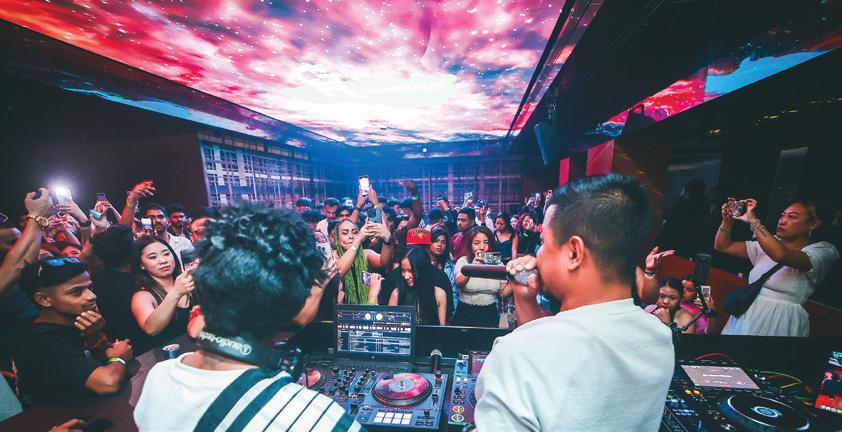
The Tribal Peoples of India’s far northeast live not just thousands of kilometers from the country’s political and cultural hubs, but in what can feel like another universe entirely.
In the state of Nagaland, rap artist Moko Koza (Chakhesang) emerged from the city of Dimapur as a defining voice of a hip-hop scene that eschews the Bollywood-inflected imaginaries of India’s cultural mainstream, adapting this urban U.S.-born genre into a distinctly local and Indigenized form.
Drawing on the rich cultural wealth of his heritage, Moko Koza’s songs speak to the lived realities of Naga Peoples today while paying homage to their ancestors, carrying forward the memories, stories, and songs of generations past. His lyrics brazenly confront the legacies of colonial intrusion, from the British Raj occupation and Japan’s World War II invasion to the fraught relationship that endures with the Indian state. He was recently honored with the Governor’s Award for Distinction in Music, the first hip-hop artist in Nagaland to receive it. Cristina Verán spoke with Moko Koza in Dimapur.
Cristina Veran: How and when did hip-hop first come to your attention in Nagaland?
Moko Koza: Well, western, rather than Indian, popular culture has probably the greatest influence here. The generation before mine was really into rock, especially punk, and hip-hop came after that. I was born in the ’90s in Kohima and grew up listening to U.S. rappers like Biggie, Jay-Z, and KRS-One. The first one that I really got into, though, was Eminem. From there, I started to dig deeper
into the history of the music and its culture, learning about who influenced whom, back to the earliest fruits from the tree; pioneers like Grandmaster Flash.
CV: What other rappers would come to inspire you, and what did you make of what they rapped about?
MK: I was immediately grabbed by the clever stories that Rakim [of renowned ‘80s duo Eric B. & Rakim] would tell, using quite complex rhyme schemes that were somehow different from those of other MCs in his era. Finding Nas, too, was especially exciting for me. Most artists I gravitated to were from New York and as I’d heard of the neighborhoods they’d rap about like the Bronx, Queens, Brooklyn, etc. I would imagine busy streets and crowded places, kids chilling on their front porch, gathering at record stores and barber shops.
At some point, West Coast gangster rap really started to catch the attention of young Nagas. I got into NWA, for example, a group that rapped a lot about guns and violence. I finally had to acknowledge, though, that the world they described was very different from our own. In Nagaland, we don’t have street gangs, mafias, or drive-by shootings. We do have armed freedom fighters, though, the Naga Armies, but theirs is a very different political reality. These fighters, by the way, are big fans of Tupac Shakur, the rapper who, I’d say, has had the biggest overall impact here, because they connect with his strong message about struggle and freedom.
I eventually decided that while I may be inspired by American rappers, I should focus on rapping in my own Naga way, about what’s going on here, where I live.
CV: When did you start writing your own rhymes?
MK: In the early days, we would download beats from the internet and insert our own verses into other rappers’ music. I’d rap over Tupac tracks, making my own versions of his songs. Back in high school, I wrote a love song rap and recorded a demo of it. When I went to university, I started to perform in front of audiences.
CV: How did your studies inform what you rap about?
MK: I have a master’s degree in Anthropology, and I’ve always been interested in how humans evolve from culture to culture and how all of that connects to who and where we are right now. That same interest comes through in my music.
CV: At what point did Naga hip-hop get its own sound?
MK: Initially, local music producers here didn’t really understand it. The big transition came around 2010–2011.
DJ Ina was one of the earliest and most significant; he really knew how to create hip-hop beats and how to structure a song. More and more youth here, after that, started to produce their own music, and that’s when we started shaping our distinctly Naga style of hip-hop. My generation was the first to start mixing Naga folk music elements into our hip-hop, sampling traditional melodies of the lullabies passed down from our grandmothers.
In my song “Boy From the Hills,” I use part of a Naga lullaby as the hook, and by doing so, pass down a new kind of oral tradition. These Tribal songs have slowly been dying out, and now hip-hop is helping us to preserve, record, and document them for future generations.
The story told in that song, meanwhile, goes back to World War II, when the Japanese army invaded Nagaland and burned down our villages. My grandmother, who was very young at the time, was forced to flee. Eventually, the British stepped in to fight them off, in what became known as the Battle of Kohima. Those experiences became part of our Tribal stories and songs. Not only did young people relate to it, but older generations in the villages also understood and connected with it. This made me realize that my music should not just be for the youth.
CV: Speaking of villages, hip-hop communities can also be quite village-like. Tell us about yours in Dimapur.
MK: Our scene is very close. Usually, we get together at someone’s studio. My own, for example, is not only a place where I record music, but also where other Naga rappers come to catch up, talk about music, or even work on some new music together. We’ll also meet up outside for a community cypher, rapping and beatboxing together; everyone is welcome.
CV: What does identity—being Naga and a Tribal person in the context of India—mean to you?
MK: I may be “Indian” by citizenship, but here in the country’s far northeast, it’s another world. Within Nagaland are

17 distinct Tribes but we are all Naga. We speak our own Tribal languages and also communicate in English, not Hindi. Most Nagas are Christian and don’t relate to India’s dominant Hindu religious culture, much less the pop culture promoted by Bollywood.
CV: What about your audiences outside Nagaland?
MK: I make music first for my Naga people, but now hiphop fans outside Nagaland know about me from YouTube and Spotify. I’m getting to perform in other parts of India now. Among the best experiences I’ve had so far was at the 2024 Spotify India show in Mumbai, one of that city’s biggest hip-hop concerts ever. I was the only MC from the Northeast in it, so I had to really come correct and represent! When I do shows in other places, I like to call out, “Where’re my Tribal people at!?” like those rappers in New York would shout, “Where’s Brooklyn at?!” or “Is the Bronx in the house?!” I love when artists from different areas come up after my shows like, “Hey, we’re also Tribal, and we really relate to you!” They’ll tell me all about their communities and their own experiences.
CV: How do you give back to your community?
MK: Well, as younger artists come to me for advice, asking how to write rhymes and record their music, I feel a real responsibility to listen to and guide them. It makes me so happy that, through hip-hop, I’m doing my part for Nagaland, now and for future generations to come. I want to be remembered not just as a musician or a rapper, but as a proud member of my Tribe.
Cristina Verán is an international Indigenous Peoplesfocused specialist researcher, educator, advocacy strategist, network weaver, and mediamaker, as well as adjunct faculty at New York University’s Tisch School of the Arts.
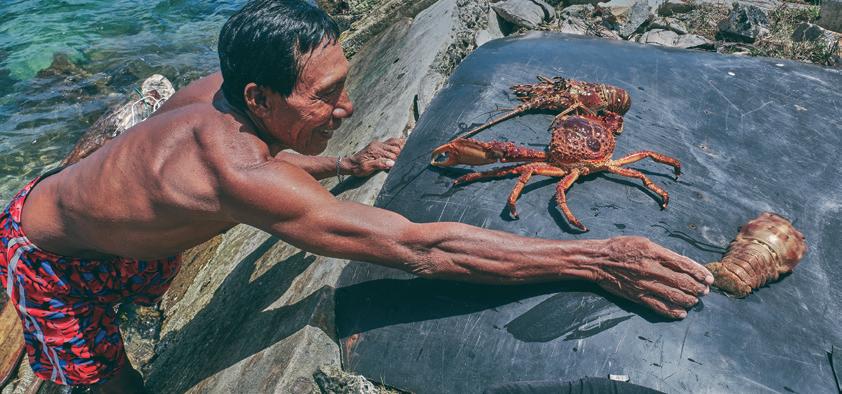
A Guna man returns from fishing. The area surrounding the community, surrounded by coral reefs, provides a readily available source of food for the community.
Brandi Morin (CREE/IROQUOIS)
Photos by Julien Defourny
To get to Guna Yala, you have to want it. From Panama City, you drive east for two-and-ahalf hours in a four-wheel drive, climbing into the cloud forest on a road that punishes bad tires, before descending to a port on the Caribbean coast. From there, a mid-sized motorboat—15 or so people packed in, Guna families and tourists alike— takes you out across open water. The waves are real, and the spray is cold. The boat pitches on the swells, and some people grip the rails. And then the islands appear.
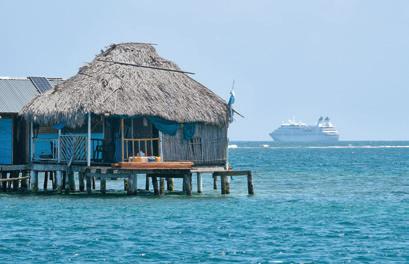
The water is extraordinary. Turquoise close to shore, deep blue at the horizon, coral clearly visible beneath the hull. The archipelago stretches nearly 400 kilometers along the eastern Caribbean coast of Panama—365 islands in total, though only around 50 are inhabited. Some are barely more than a strip of white sand and a palm tree. Others hold entire communities: houses packed close, canoes tied up in rows, children running the narrow paths between them.
Tourists arrive by the thousands. They come for the reefs, among the most biodiverse in the Caribbean and home to species found nowhere else on Earth. They come for the white sand, the coconut palms, the bioluminescence that lights the water at night. But the water that draws the world here is also the threat.
This is Guna Yala. What the Spanish once called San Blas, a name the Guna have formally set aside. And these are the Guna: one of the most culturally independent Indigenous Nations in the Americas, a Peoples who have
held onto their language, their laws, their cosmology, and their way of life against 500 years of colonial pressure that erased so many others.
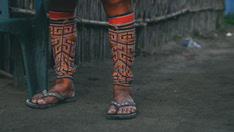
The women wear molas, blouses of layered, reverseappliquéd fabric, hand-stitched in intricate geometric patterns drawn from the same geometry as the cosmos. Their forearms and calves are wound in hundreds of beads, color stacked upon color, gold rings at their ears and noses. Each mola tells a unique story. It is knowledge worn on the body, carried forward one generation at a time.
The Guna grow cacao, pineapples, coconuts, plantains, and traditional medicines on their fincas (farms on the mainland), traveling there daily in hand-carved wooden boats, the same way their grandparents did. Their first language is Dulegaya. Their children grow up in it.
At the heart of Guna’s political and cultural life is the Ibeorgun Nega—the Congress House. These large, ovalshaped, traditional structures are where the community gathers to make decisions, interpret customary law, and manage daily affairs. The Sailas (community leaders) conduct meetings from hammocks strung inside the Ibeorgun Nega. It is from the hammock that the ancient songs are performed, some lasting 30 minutes or more for a single chant, some hundreds of years old, carrying within their verses the history of the Guna Peoples, their laws, their moral code, their relationship to the natural world. It is where the community’s future is decided.
The sea is rising. According to the Smithsonian Tropical Research Institute, sea levels near the islands are now climbing at more than three times the rate recorded in the 1960s. The islands sit between half a meter and one meter above the waterline. In June 2024, the first community
relocated to the mainland in what has been described as one of the first planned climate migrations in Latin America, according to Mongabay. The Smithsonian says all 50 inhabited Guna islands may need to be vacated by 2100. The Guna have contributed almost nothing to the crisis swallowing their home.
There is something else here, too: there is garbage in these waters. Plastic bottles are floating near the shore, wrappers littering the beach. Florina Lopez (Guna), a community leader and organizer from San Ignacio de Tupile, says the Guna built a world in which all waste was biodegradable—banana peels, fish bones, seeds, coconut husks. Everything decomposed. Then colonization came. Then tourism. Then plastic.
“Many of the things we started consuming were strange to us,” says Lopez. “At that time, we didn’t know how to handle this waste. The most logical thing was to throw it into the sea without thinking. It wasn’t little by little. It was in droves. An invasion of our territories with all those resources and materials that we have never handled. By the time we realized it, we already had all the world’s garbage in our communities.”
The plastic came with outsiders, and the Guna are the ones trying to clean it up now. To do so, they are doing what they have always done: adapting. Reaching back into ancestral knowledge—into chants, stories, botanical traditions, cosmological maps that exist in no European university—and finding in that knowledge not nostalgia, but tools. They are raising a new generation to carry it forward, into whatever comes next.
Daniera Brown (Guna) is 24 years old. She is a marine biologist and one of the first Guna women in her community to be certified as scuba divers. She goes down into the coral, documenting what the warming sea is doing to the architecture her ancestors called sacred. “I have seawater in my blood,” she says. “As natural as the blood that runs through your veins.”
Brown grew up in the Guna community of Nargana, where the sea was woven into everything—the lessons, the stories, the sense of who the Guna are and what they are responsible for. She was eight years old when she started
volunteering in turtle conservation and beach cleanups. By the time she finished school, she already knew research was where she was headed—and that the question driving her wasn’t only scientific, it was personal. “How can I honor my culture? How can I give back what they’ve given me?”
The organization Maral Dayan brought Brown and four other young Guna women into a coral monitoring program and trained them to dive. They were the first women in the community to obtain open water certifications in a territory where scuba diving is prohibited for outsiders and snorkeling is restricted, even for locals. She remembers the first dive with a tank: “It’s a feeling I can’t explain. It’s like everything is perfect, like everything is all right.”
Underwater, things are not all right. The study Brown participated in, counting coral height and diversity, monitoring bleaching, and mapping climate change across the reef, is not yet published. But what they found confirms what the Elders have been watching from their boats for decades. There are visible changes to the reef that the Guna have guarded for generations, which their ancestors called a sacred nursery for the sheer proliferation of life within it.
Brown describes how she was taught to enter the water: “We’re the ones entering territory that doesn’t belong to us, and you always have to treat it with respect.” She has dived alongside sharks, watched striped turtles move through the water. When asked about fear, she shakes her head. “Not afraid,” she says. “Respect.”
Brown moves between the Guna worldview and western science the way she moves between the surface and the deep, as if the boundary between them is a membrane, not a wall. “Science alone wasn’t enough to empower people,” she says. “One way to connect this was through the ancient reality that the people had, and how we’ve always been connected to nature.”
Guna ancestors considered turtles their brothers, which is why eating turtle meat is forbidden. The coral has always been sacred, a nursery teeming with life, what Brown calls “a kindergarten of the sea.” “Our ancestors said that corals are considered sacred nurseries because of the high biodiversity there,” she says. “We are their primary guardians. At what point did we lose that connection?”
When tourists arrive, the women come out of their homes to sell traditional molas.
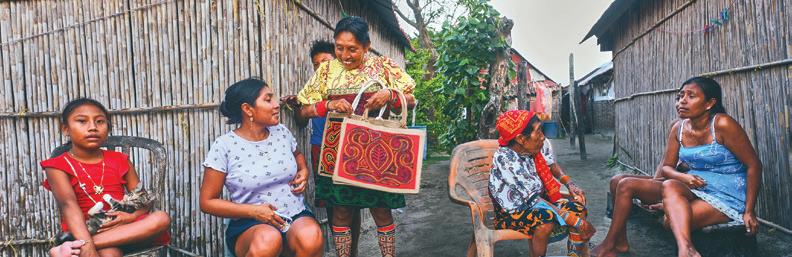
A moment of
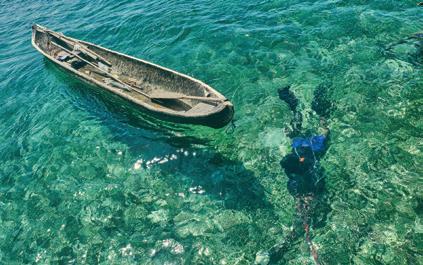
Right: Mangroves are an important part of this marine ecosystem. In addition to slowing the advance of rising waters onto land, they serve as a nursery for many species of fish.
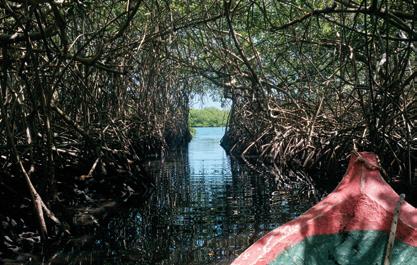
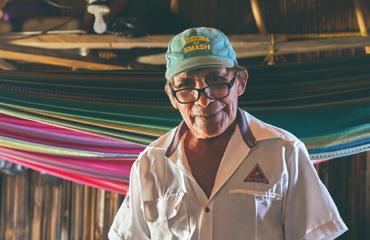
The mangroves tell the same Desiderio López (Guna), a 70-year-old man and Florina’s brother, from San Ignacio de Tupile, spent years as a park ranger. He remembers when the mangroves were so thick with lobster you didn’t have to go looking. “Back then, there were tons of them. We ate loads of them. Now you have to go 15, 20 meters out from the sea to get one,” he says. Today, the roots that once nursed entire ecosystems have been damaged; the animals that sheltered there are gone. “Many fish have disappeared. Before, there were tons of sardines all over the area. Not anymore. I don’t know where they’ve gone,” López muses.
López’s father was one of the great traditional medicine practitioners of the community. He taught his son how to use the mangroves’ roots and heartwood to strengthen bones after injury, to purify the blood, to protect the spirit. “The mangroves, even though they are in saltwater, you will never see their leaves turn yellow. If something is always green, it means it’s full of life,” he says.
The islands are shrinking. Communities, once desper ate for space, began pulling rock from the reefs to build up and expand their islands. “The Elders started talking about not doing so much of that because it would affect us later,” López says. “And we’re seeing it now. Several islands have already disappeared. There are two or three that are practically gone. Only the reefs remain.”
Sunday Vázquez (Guna), 73, a community leader also from San Ignacio de Tupile who spent 33 years working for the Panamanian government, puts it simply: “When I was born, all of that was beach. There was no landfill or anything. All beach.” He remembers going out at 3:00 in the morning with his father to fish on a shoreline that stretched.
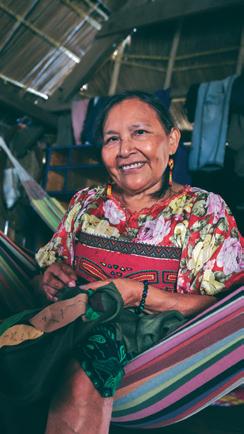
her mother, and her grandmother before that. From childhood, López received information in dreams and visions— not mystical decoration, but directional knowledge. In Guna culture, this is not unusual. It is a form of knowing that sits alongside the practical and the scientific. She runs initiatives now from San Ignacio de Tupile, training women to do weekly water quality inspections in family homes. Children in schools are learning the sacred significance of water, how it is used in ceremony, and has always been central to Guna tradition. Last year, her organization ran a competition offering a prize to whoever collected the most plastic bottles. They collected 60,000. Those bottles, mixed with sand, now form the foundations of new school classrooms rising on the island. She is also working on something less visible, but perhaps more important: keeping alive the transmission of knowledge through women. She describes a practice so woven into daily life it barely has a name: when a Guna mother rocks her baby in a hammock, she does not sing a pre-existing song. She composes one in the moment, specific to that child, weaving into it the story of who this person will be. To a boy, she sings that he will be a fisherman, that he will guard the marine ecosystem. To a girl, she sings that she will tend the seeds, carry the knowledge forward. “It’s not written down,” López says. “It’s transformed each time she sings to her child. She weaves it.” This is how knowledge survives. Not in archives. In breath and rhythm, in a mother’s voice in the dark.
Florina López (Guna) is in her 60s. She has traveled internationally to speak about Guna culture, climate change, and Indigenous women’s rights. She is also a seer, as was
The drug crisis is real, too. Colombian fast boats move through these waters, and when pursued by police or marines, they throw their cargoes of cocaine and marijuana overboard. The sea delivers it to the shore. Communities that never handled large sums of money are suddenly awash in both product and cash. Young people are using. Theft has increased. The community has responded with force when necessary—families found dealing have their
property confiscated and are exiled for years. But the pressure on leadership is visible. “I feel that the authorities, the political side, are weakening,” López says.
Women, though, are holding things together. They always have. “Women are characterized by giving order, organizing, structuring, always with open arms,” López says. “We can do that in science. Allow ourselves to occupy space so that curiosity isn’t lost, identity isn’t lost. Because when we lose our identity, we lose ourselves.”
When the mountains come up—the relocation that more communities are being forced to plan—López says “It is a decision that would have to be analyzed very carefully.” She knows what cannot be measured in a government impact study. “There’s a slow change that will bring negative impacts, both culturally and environmentally. It is a constant struggle. Nothing is separated. What happens on one side impacts others. It’s a chain reaction. We keep working. Keep defending what life is to us today. And as Indigenous women, we are always at the forefront of that fight.”
Pedro Félix (Guna) is a local philosopher in his early 70s with shoulder-length, white hair. He has been drawing, painting, and writing for decades, filling handmade books with detailed illustrations of Guna laws, cosmological maps, botanical knowledge, ceremonial records, and spiritual traditions—everything he has spent a lifetime learning and refusing
were never written down and bringing them back to transcribe. “Our history doesn’t come from Europe,” Félix says. “The true story of the creation of the world is written in the dimensional layers of Mother Earth and the diversity of elements that make up the universe. It is written before our eyes.”
In Guna cosmology, the hammock is the arc between birth and death; the place where a mother first sings a child into the world, where the sick recover. Where the Sailas sit inside the Congress House to govern. Where the dead are prepared for their return to the earth. Félix reads from one of his books, a passage about the hammock: “The hammock is sacred. It represents the sacred intermediary of prayer and sustenance. Mother Earth is a great plant that sustains us in her earthly womb, and the universe is an immense house sheet that shelters us. The moon, the air, the clouds, and the stars are dreams of thought.”
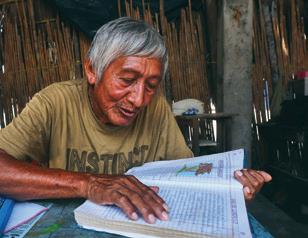
Félix is a philosopher in the oldest sense; someone who has given his existence to the question of truth and what happens when it is forgotten. He is also a botanist, healed by plants at the age of three when he broke his leg and was taken not to a hospital, but to a traditional botanical clinic. He is an artist. And he is, above all, a man in a race against time.
He has traveled to Colombia, where Guna communities still exist along the rivers, collecting oral traditions that
The Guna have moved before; their history as a Peoples is one of movement and survival. When Spanish conquistadors arrived in the Gulf of Urabá in the early 1500s, the Guna were living in what is now northern Colombia, in the forests along the border of Antioquia and the Darién. They were pushed north, first to the jungles of Panama near the Caribbean coast, and then, by the mid-1800s, down to the islands themselves, drawn by cleaner conditions, escape from disease-carrying insects, and access to trade routes.
The Guna came to the sea because they had no other choice, and they built a world there anyway. They have contributed almost nothing to the crisis swallowing their home. Now the water is rising to meet them. When asked how she holds all of this, Brown replies, “We are mountain and sea.”
Brandi Morin (Cree/Iroquois/ French) is an award-winning journalist reporting on human rights issues from an Indigenous perspective.
tourists. Around Wichub Wala, it is common to see huge cruise ships carrying thousands of tourists.
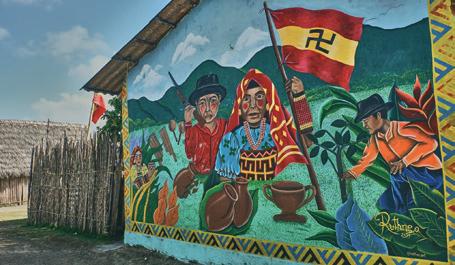
Right: Certain facades in the community reflect the Gunas’ way of life, which bridges land and sea.
❯ Read the full report at cs.org/guna
As Indigenous communities around the world face ever-escalating threats and endangerment as a consequence of destructive and extractive ideologies, practices, and industries, food sovereignty and water security are urgent priorities.
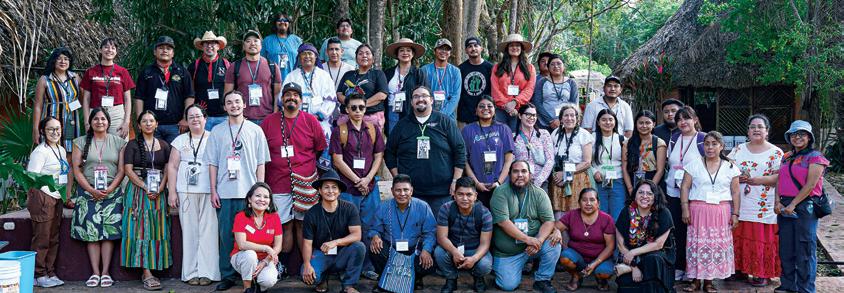
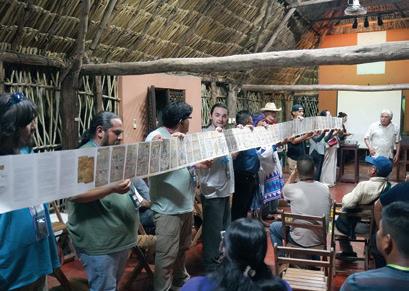
In January, Cultural Survival and the Indigenous Resilience Center (IRes) from the University of Arizona co-hosted the Indigenous Regenerative Agriculture Knowledge Exchange Gathering in Yucatan, Mexico. Inspired by our community partners and our mutual interests in these issues, we gathered representatives from 20 Indigenous collectives and organizations in the United States and Mexico who are working on regenerative agricultural projects to share knowledge and experiences about how they are positively impacting their communities and territories.
Before colonization and the current national borders were drawn, Indigenous communities were connected by kinship and trade routes spanning great distances across Turtle Island. Revitalizing wisdom and knowledge from our ancestors by drawing on our shared history and the strength of our cultures and traditional lifeways with our relatives on either side of the border is a way to rebuild networks and ensure a sustainable future for all our Peoples.
For both Cultural Survival and IRes, it is vital to create spaces where our partners from various communities can interact and share lessons, techniques, and strategies for Indigenous and regenerative agroecological practices. Keeping ancestral wisdom and practices alive is essential in the face of environmental threats such as climate
change, industrial-scale and monocrop agriculture, and biopiracy, as well as the degradation of the ecosystems and biodiversity that we all depend on.
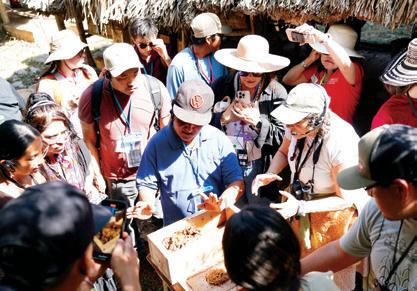
The knowledge exchange took place in the U Yits Ka’an Ecological Agriculture School, which opened its doors to host us. U Yits Ka’an has a deep and rich history in Maní, Yucatan, and has dedicated its efforts and resources to working with several Maya communities on agriculture, water conservation, medicinal plants, apiculture, seed selection and protection, and other environmental practices. The participants in this event, representing more than 10 Indigenous Peoples, work on a wide variety of agricultural projects, including crop production (coffee, corn, and native crops), livestock production, and beekeeping. This allowed participants to exchange knowledge and practices not only among themselves but also with the host organization, whose members generously shared their diverse production spaces, practices, and projects.
The diversity of communities and projects represented was a key element in making this exchange an enriching experience. Throughout the panels, presentations, and discussions, participants had the opportunity to delve deeper into one another’s expertise. They were able to ask questions, reflect on their current situations, and imagine ways to address environmental challenges by using Indigenous Traditional Knowledge as an antidote to the widespread industrialized agricultural practices that have taken an especially impactful toll on Indigenous territories.
The days we spent together offered an open space for reflection and for raising concerns that Indigenous Peoples have regarding threats such as corporate interests, displacement, and climate change. Participants agreed that the
wisdom that they and their communities hold serves as a bastion against these challenges. In particular, Traditional Knowledge concerning agriculture, which embodies more resilient and respectful attitudes and practices towards Mother Earth than modern methods of intensive, chemicaldependent agricultural production, is essential to ensuring each community’s continued and self-determined existence and to providing sustenance for generations to come despite our changing climate. Rekindling these traditional agricultural practices is a direct way to reclaim Indigenous food sovereignty.
The gathering also included a field visit to Milpa Colectiva, a collective agricultural project located in José María Morelos, Quintana Roo. Maya men and women from surrounding communities participate in the project, which is primarily focused on planting and harvesting various types of corn, potatoes, and squash using traditional and ancestral agricultural techniques. What began with the intention of promoting collective work locally to help families sustain themselves quickly grew into a broader movement connecting participants with similar initiatives in other communities and regions, and an expanded focus on the conservation and propagation of native seeds. Milpa Colectiva does not use any fertilizers or pesticides, which ensures the safety of its crops for human consumption and promotes biodiversity. At the same time, it allows them to maintain ancestral and regenerative practices grounded in connection and respect toward Mother Earth.
As our gathering progressed, participants highlighted the importance of sharing this communal space as a powerful way to build lasting relationships between the different Peoples in attendance. Our time together became a source of inspiration, enthusiasm, and momentum for each representative’s work in their home communities, as well as for the work of this newly formed network. We shared delicious meals prepared by members of the school and also learned about the locally grown ingredients. As we learned about the school’s ecologically conscious practices, each participant was fully immersed in a working environment and encouraged to implement or improve
these practices in their own communities and projects.
Towards the end of the event, we reflected on lessons learned and on the future not only for participants, but also for Indigenous Peoples in general. Among the key takeaways is that defending Indigenous food systems and sovereignty must be an intergenerational process that involves Elders, youth, and children. In the face of destructive neo-colonialist and extractive practices, revitalizing ancestral knowledge has become a priority, and participants urged one another to seek out and create more spaces like this gathering. The fact that all the projects represented in this gathering are thriving in spite of the multiple threats they face is living evidence that Indigenous kinship and cultures not only safeguard ancestral wisdom, but also build bridges, connect communities, and foster resilience. These elements are crucial to steward Indigenous lifeways and to be good stewards of Mother Earth.
Recognizing that food sovereignty is an inherent part of Indigenous rights, cultures, and self-determination, participants highlighted the importance of building networks of support and reflection to keep the momentum we created. Achieving and maintaining food sovereignty is only one way to defend and protect Indigenous lifeways, a process that must include both Elders and younger generations. Participants emphasized the importance of teaching the ancestral practices that have kept their foodways alive for many generations to the youth. This transmission is a form of resistance to extractivism and a way of advocating for Indigenous rights to govern our present, determine our futures, and be good stewards of our communities and Mother Earth.
The event was a meaningful opportunity to learn more about practices that Indigenous communities have kept for centuries. It was inspiring to see that, despite the complex issues the world currently faces, Indigenous communities continue to resist extractivism and remain connected to their traditional lands and livelihoods. One participant summed it up: “Our strength lies in sharing our knowledge. That is truly what we call autonomy . . . being able to decide what to do, when, how, and who to do it with.”
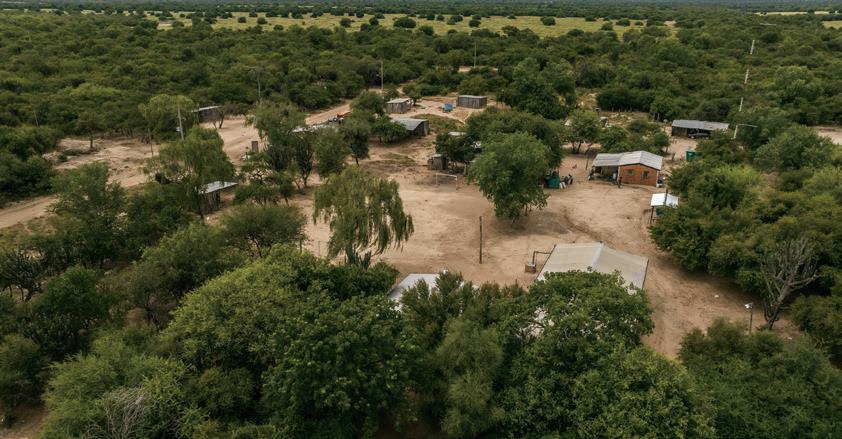
Ayoreo community of Ijnapui in the Central Chaco, Paraguay.
South America is home to the largest concentration of Indigenous Peoples in Isolation and Initial Contact (PIACI) on Earth. Living deep within the Amazon and Chaco forests, the areas the PIACI inhabit harbor biodiversity in its richest form and greatly contribute to climate stability. As they face increasingly escalating threats from mining, logging, and encroachment, their survival depends on securing their territories and forests.
While the situation of Indigenous Peoples in the Amazon is relatively well known, the dire situation of those living in the Chaco Forest—the second-largest forest after the Amazon, and one of the areas most threatened by deforestation—is not. The Chaco and the Amazon regions are interdependent, as the Chaco recycles water from the flying Amazonian rivers. These atmospheric rivers carry around 20 billion tons of water a day, providing crucial rainfall and regulating the climate for the entire continent,
Watch the trailer for a short documentary on the Ayoreo Peoples by filmmaker Jaye Renold from If Not Us Then Who?, exploring the trauma of contact and the path to community healing. The exhibition “Weave The Heart Beyond The Map” is part of their ongoing global awareness campaigns that challenge unjust policies and advocate for greater rights to protect the planet, in collaboration with Indigenous Peoples, local communities, and allies.

which in turn contributes to global climate regulation. If the Chaco is cleared, it will affect both the Amazon and the Chaco, with devastating consequences for their biodiversity. Respecting the rights of the Indigenous Peoples who live and steward these forests is vital to their survival and to the planet as a whole.
The Indigenous Peoples living in isolation in the Chaco are the last PIACI on the continent outside of the Amazon Basin. The Ayoreo are the largest of this group, whose current numbers, estimated between 80 and 150 individuals, are an indication of the extreme situation these forest peoples face, with extinction looming.
The traditional territory of the Ayoreo Peoples in Paraguay occupies approximately 110,000 square kilometers in the northern Chaco region. Roughly 18,000 square kilometers of this territory remains intact, but most of it is classified as National Protected Areas. While Paraguayan law guarantees Indigenous Peoples’ rights, many communities struggle to secure legal ownership within their traditional territory, resulting in land disputes. To date, only around 2,000 square kilometers remain under Ayoreo control. The Ayoreo want to continue their lives in their forest territory. Therefore, environmental monitoring of these areas by the Ayoreo and their allies is crucial to their defense and survival.
Today, the Ayoreo men living on the periphery of industrialized society resort to selling their labor, such as to cattle ranches and infrastructure projects, while Ayoreo women’s economic strategies center primarily on weaving. They weave their relationship with their territory, their families, their communities, and their own histories through
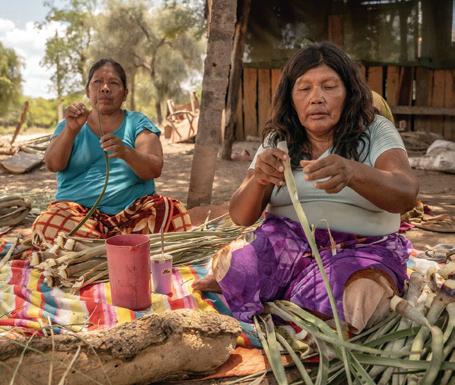
their weaving tradition with fabric made from threads of dajudie fiber collected within their territories, imbuing these fabric-texts with their cultural heritage. “Our mothers taught us this craft. Today, we carry on the tradition passed down by them,” says Chise Etacore, an oithedie (weaver). The colors evoke forest scenery, and the designs resemble the symbols of the Ayoreo clans and their natural relatives, such as the anteater’s footprint, tones from their skyline, deer tracks, or snake scales. Their designs reflect their efforts to remain connected to the elements of their territory and culture amid current realities and challenges. These beautiful weavings are no longer just for their own use; they are now being sold to support their families and communities. “Our main activity is working with dajudie, and we want it to be ongoing and steady. The weaving of dajudie fabrics must not stop, and the search for sales must not stop either,” says Eremilda Chiqueno, oithedie.
The Amotocodie Initiative is working with Ayoreo communities to protect the Paraguayan Chaco and defend the rights of the Ayoreo Peoples through legal defense, territorial monitoring, community empowerment, and environmental conservation. The Ayoreo have intensified their interest in effectively monitoring their territory in order to defend and protect it, and to formulate strategies for subsistence, contingency, and resilience. In partnership with Quipa Collective, a multidisciplinary collective of activists, community leaders, and systems thinkers committed to protecting the planet’s vast biocultural heritage, they support a number of processes crucial to the community’s survival.
Together with Ayoreo experts and community members, the Amotocodie Initiative monitors deforestation and fires in the north of the Paraguayan Chaco, the traditional Ayoreo territory, both on the ground and via satellite. It monitors and protects Ayoreo groups living in isolation by registering signals to identify areas where isolated Peoples are present, thereby preventing forced contact. The Ayoreo are the key actors in this work to protect their uncontacted relatives.
Additionally, the Amotocodie Initiative supports the processes of Ayoreo communities in defense of their environmental, territorial, and cultural rights, contributing to defending their right to avoid contact and to the selfdetermination of the Ayoreo who live in isolation. Most importantly, its focus is on the defense of the Ayoreo Peoples’ right to avoid contact and on promoting and protecting the self-determination of the Ayoreo who live in isolation.
The Amotocodie Initiative, the If Not Us Then Who? organization, and Quipa Collective are working in close collaboration to highlight this dire situation of the Ayoreo and bring their voices forward. During London Climate Action Week (June 20-28, 2026), the exhibition “Weave The
Heart Beyond The Map” will be held June 22-25, opening reception on June 22, 3:30-5:30pm. A PIACI panel will be held on June 24, 8:30-10:30am at the Rights & Nature Hub, The Stables, MYO King’s Cross, 2 Trematon Walk, London. More information: info@quipa.org.
Miguel Lovera, Ph.D is an agronomist who has dedicated his career to the conservation of plant genetic resources. He currently serves as an advisor to the Ayoreo Peoples and the Amotocodie Initiative. Miriam Anne Frank is an independent consultant and applied anthropologist working on Indigenous Peoples’ issues, focusing on environmental and human rights.
Gotó and Oide from the Ayoreo community of Ijnapui prepare dajudie leaves to extract fibers for weaving.
View the exhibition “Weave The Heart Beyond The Map,” which showcases new photography by Sara Aliaga Ticona and a film by Jaye Renold from If Not Us Then Who? made with Ayoreo communities from the Paraguayan Chaco. The film, “Weaving Eami,” documents the struggle to protect the Chaco forests amid rapid deforestation, international business interests, and criminalization. In the Ayoreo community of Ijnapui, sightings of forest Ayoreo who continue to live in isolation have increased dramatically following the rapid deforestation of a neighboring ranch. It was the site of a key traditional territory, with abundant water, food, and dajudie, the plant from which Ayoreo have made a vast array of vital equipment throughout their history as a People, including their beautiful weavings. This plant exemplifies a rich ancestral knowledge held by Ayoreo women rooted in the unique Chaco ecosystem— one that is under grave threat in a country with one of the highest deforestation rates in the world and a dearth of political will to halt it.

One of the phrases most often heard in historic preservation, especially as the United States approaches its 250th anniversary, is “national significance.” It is spoken with authority. It appears in criteria, nominations, review processes, and decisions that determine what is worthy of recognition, protection, and investment. It is often treated as fixed, self-evident.
Recently, during a conversation with a historic preservation partner in New York, a familiar concern surfaced: one of the challenges in advancing deeper, community-based, grassroots work, particularly related to Latinx preservation, is operating within a framework of national significance that too often excludes Latinx histories. She said that early in her career, this was experienced as a burden, rooted in the reality that many colleagues did not share the same historical references or lived experiences, requiring constant efforts to educate, persuade, and justify why a place or story deserved recognition.
Preservation practice has too often conflated documentation with existence. But today, that perspective has shifted. There is an opportunity to expand the definition itself, to reshape institutional training and practice. An opportunity to pause and ask a more honest question: what do we really mean when we say “national significance”? Because national significance is not neutral. It is subjective, shaped by those in power and whose stories have been deemed worthy of inclusion in the American record.
At Latinos in Heritage Conservation, we understand “place” differently. We do not see regions only through census boundaries, state lines, or administrative groupings. We see them through shared histories of colonization, Indigenous dispossession and continuity, migration, labor, and resistance. These histories overlap. They do not stay neatly inside borders. Water systems, agricultural traditions, foodways, trade routes, and ceremonial practices moved across these landscapes long before modern nation-states imposed fixed boundaries.
This matters deeply for Latinx preservation. Many Latinx communities in the United States carry multidimensional identities shaped by Indigenous ancestry, migration, displacement, labor, language, and survival across generations. Across the Borderlands, the Caribbean, the Pacific, and migrant corridors throughout the United States, communities have been shaped by Spanish colonization,
Mexican governance, U.S. annexation, border militarization, plantation economies, agricultural labor systems, refugee movement, and Indigenous survival. These are not separate histories. They live together in families, neighborhoods, landscapes, and memory.
Preservation systems often miss the ways communities actually carry history. An acequia, a barrio plaza, a mercado, a pilgrimage route, a mural, a farmworker camp, or a kitchen table where an abuela passed down language, medicine, prayer, and memory may hold histories that are local, national, and transnational at once. Their significance does not begin when an institution recognizes them. It begins with the people who have carried them. And yet, many of these places, and the people connected to them, have been told they are not significant enough. This is not due to a lack of impact. It reflects how significance has historically been measured: monuments over movements, architecture over people, permanence over lived experience.
Long before 1966, before the landmark report “With Heritage So Rich” issued the call to action for a national program for historic preservation that would lead to the National Historic Preservation Act, communities were already carrying their own histories. As that report reminds us, “Our nation began with migrations, grew with migrations, and remains a nation of people on the move. The natural result in too many cases has been a neglect of starting points and an indifference to our cultural trail of buildings and places. This is what we are trying to correct.”
Indigenous Peoples have long understood place as relational, sacred, and alive, long before borders or formal categories of significance. The lands now called the U.S. Southwest and Borderlands include Pueblo Peoples, Diné, Apache, Comanche, Ute, Tohono O’odham, Yaqui, and many other Indigenous Nations and communities whose relationships to land did not begin with the United States, Mexico, or Spain. In the Caribbean, Taíno survival and memory continue to shape conversations about identity, ancestry, and belonging. Across the Americas, Maya, Zapotec, Mixtec, Nahua, Quechua, Aymara, Garifuna, and many other Indigenous and Afro-Indigenous Peoples have shaped the histories carried by many Latinx communities today.
Some people identify directly as Indigenous. Some belong to Indigenous communities and Nations. Others carry Indigenous ancestry that was silenced, fragmented, or made difficult to name through colonization, forced assimilation, racialization, migration, and border formation. To honor Latinx heritage with care, we must make room for
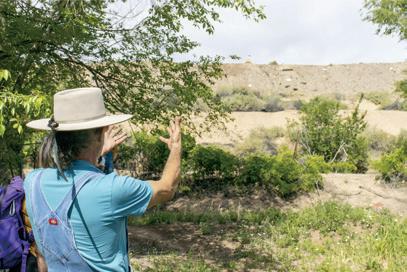
that complexity. This is especially visible in the Borderlands, where communities moved, traded, gathered, prayed, farmed, and cared for one another across these regions long before they were divided by nation-states, checkpoints, or preservation jurisdictions.
For many Latinx people, these histories are not separate from identity. They live inside family memory, language, foodways, ceremony, migration stories, agricultural knowledge, and relationships to land. These practices are not remnants of the past. In many communities, they remain active systems of knowledge, care, and survival. Women, especially abuelas, have held history not in formal archives, but in their bodies; in braids, routines, recipes, language, prayer, medicine, and acts of love.
Practices like acequia stewardship, chile cultivation, and traditional medicine continue to reflect relationships to land, water, community, and ancestral knowledge that persist despite imposed political borders. The Tohono O’odham Nation, for example, has communities and ancestral ties that extend across what is now the U.S.-Mexico border. That reality challenges preservation frameworks that treat borders as fixed containers for history, even when the people, memory, and cultural relationships predate those borders.
In my work, I have sat with Elders who speak about migration routes, gathering spaces, murals, churches, waterways, and neighborhood landmarks not simply as historic sites, but as living extensions of identity, belonging, and survival. Sometimes the building has changed. Sometimes the history was never written down in the language institutions expected. But the community knows. The memory is still there.
As the United States prepares to commemorate 250 years of independence, many Indigenous and historically marginalized communities are still navigating the ongoing realities of displacement, erasure, and exclusion from the narratives the nation uses to define itself. But if national significance is understood as something lived, collective, and cumulative, shaped by everyday people, migrations, labor systems, acts of resistance, and intergenerational memory, the story of this country begins to look very different.
This moment calls for a shift: to challenge institutions, preservation commissions, boards of review, and the criteria they rely on. To ask harder questions about whose significance has been overlooked, and why. It calls for investing in community knowledge, lived experience, and histories carried outside institutional archives. For training the next generation of preservationists to recognize integrity not only in materials, but in memory, storytelling, and cultural continuity.
Recognition has never been a prerequisite for knowing who we are. Communities have always been the historians of their own lives, carrying stories through survival, movement, labor, and inheritance. The question is not whether these places and stories are nationally significant. The question is whether we are willing to recognize that they always have been.
Sehila Mota Casper is Executive Director of Latinos in Heritage Conservation, an organization leading national efforts to preserve Latinx places, stories, and cultural heritage. She previously served as a senior field officer at the National Trust for Historic Preservation.
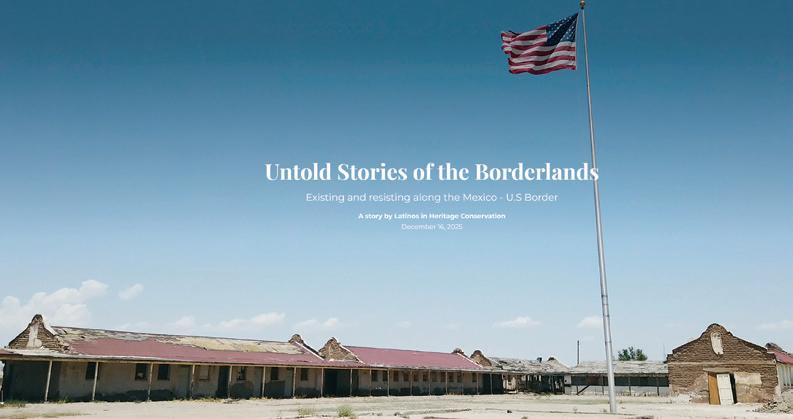
“Untold Stories of
part of the
Project by Latinos in Heritage Conservation to document the people, places, businesses, memories, and cultural landscapes that continue to shape life along the Mexico–U.S. border.
Geoffrey Roth (LAKOTA)
Dora-Lucia Mendez-Alfonzo (TSELTAL)
Alejandro Bermudez-del-Villar (MESTIZO)
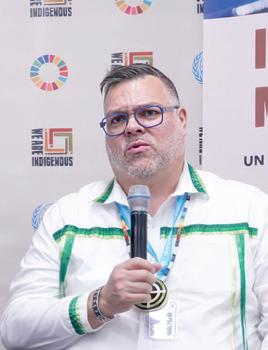
In recent years, global health and environmental institutions have increasingly recognized that Indigenous Peoples are central to biodiversity conservation, human health, and climate resilience. Yet, a persistent gap remains between the recognition of Indigenous leadership and the concepts and frameworks these leaders use to understand health, the environment, and the interconnectedness of all that exists. The Indigenous Determinants of Health (IDH) Framework emerged as a practical tool to guide policy, financing, and implementation based on the provisions of cultural safety and the UN Declaration on the Rights of Indigenous Peoples to address this gap.
Sponsored by the UN Permanent Forum on Indigenous Issues, the IDH Framework was unveiled in 2023 with the study “Indigenous Determinants of Health in the 2030 Agenda for Sustainable Development,” which reframed health beyond conventional indicators. It established Indigeneity as an umbrella determinant of health, including 33 risk and protective factors specifically impacting Indigenous Peoples’ health. This assertion established that Indigenous health is not solely defined by access to services, but through the integrity of relationships among Peoples, lands, governance systems, and knowledge. At its core, this study positioned self-determination as a primary determinant of health, shifting the narrative from vulnerability to rights.
The 2024 IDH study “Improving the Health and Wellness of Indigenous Peoples Globally: Operationalization of In-
digenous Determinants of Health” expanded this foundation more broadly, reinforcing that Indigenous worldviews are interconnected with all aspects of life and Mother Earth. This study marked a decisive shift toward structural and operational guidance explicitly designed to provide tools for UN entities, member states, and other institutions to implement Indigenous determinants of health in policy and practice. It outlines the institutional transformations required to do so, including recognizing Indigenous Peoples as rights-holders, embedding Free, Prior and Informed Consent, ensuring meaningful representation in decision-making, and developing organizational policies and procedures that support Indigenous-led approaches.
The 2025 study, “Evaluating Institutional Structures to Improve the Health and Wellness of Indigenous Peoples Globally: The Indigenous Determinants of Health Measurement Instrument” introduced the IDH Evaluation Instrument to assess how well institutions are addressing Indigenous health risks and protective factors, and whether they are equipped to uphold Indigenous rights in practice. It expands evaluation to include governance, environment, and community well being, offering a scorecard tool to support culturally safe, rights-based approaches and institutional accountability.
The IDH Framework does not simply add new indicators: it redefines the system of analysis, requiring institutions to account for rights, governance, and relationships, not just outputs. For that reason, the 2026 IDH study, “Restoring Indigenous Health by Connecting Systems Through the Indigenous Determinants of Health: Local to Global Evidence,” focused on demonstrating how
Indigenous health is a systems integrator and an indicator of the outcomes across sectors. In other words, Indigenous health must be understood as a diagnostic indicator of the integrity of policies across sectors, reflecting how decisions related to land, environment, governance, culture, and knowledge systems directly shape Indigenous well being. In 2023, 2024, and 2025, the UN Permanent Forum on Indigenous Issues put forward targeted recommendations urging member states and UN agencies to adopt the concept of Indigeneity, the IDH Framework, and its evaluation instrument as tools to advance Indigenous rights, promote peace, and support Indigenous-led environmental governance and global justice.
Following the 2023 World Health Organization’s Executive Board recommendation to recognize Indigeneity as a determinant of health, the WHO Report on the Social Determinants of Health Equity, released in 2025, officially recognized Indigeneity and acknowledged Indigenous Peoples’ specific determinants of health. Such recognition reflects the understanding that Indigenous health is holistic and encompasses all aspects of life beyond the clinical setting into the environment and the health of Mother Earth.
Subsequent to the UN Permanent Forum’s recommendation, the UN Convention on Biological Diversity issued Decision 16/19 in 2024, which officially references the IDH Framework as part of its Global Plan of Action on Biodiversity and Health. The implementation of the IDH Framework across UN agencies allows for Indigenous Peoples to have an encompassing platform to advance local Indigenous needs through a framework that respects, fosters, and protects Indigenous rights in all aspects of life.
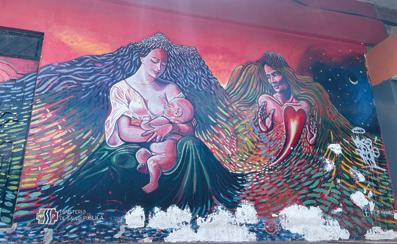
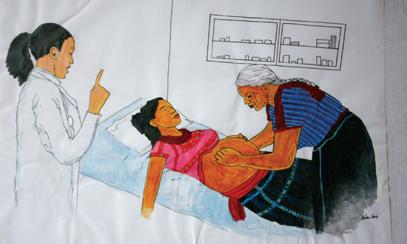
One of the clearest examples of the relevance of the IDH evolution as a holistic platform is Indigenous midwifery. Indigenous midwifery is not limited to childbirth as a clinical event; it is a system of health, rooted in relationships between people, land, knowledge, and spirituality. Midwives serve as knowledge holders, caregivers, and community leaders, guiding not only the birthing process but the full integration of new life into cultural, territorial, and spiritual systems. This reflects a core principle of the IDH Framework: that health is relational, intergenerational, and grounded in Indigenous governance and knowledge systems.
Indigenous midwifery practices are deeply connected to territory. Birth is supported through culturally specific practices that draw on local ecosystems such as medicinal plants, traditional foods, and environmental conditions appropriate to each region. Indigenous midwifery demonstrates that people’s health is inseparable from the health of their land, biodiversity, and knowledge systems.
However, Indigenous midwives face many systemic barriers that reflect broader structural issues, including a lack of recognition of Indigenous governance, knowledge systems, and rights. Their ancestral knowledge is often subordinated and devalued by policies that treat the practice as auxiliary to biomedical systems, denying its
autonomous character. Processes of professionalization and certifi cation—often framed as ensuring safety or “inter-culturality”—can regulate and reshape Indigenous midwifery to conform with external standards. And in some areas, their practices are criminalized.
At the same time, Indigenous midwifery has shown resilience. During public health crises and in remote regions with limited biomedical access, midwives often serve as primary providers of care, sustaining com munity health through culturally grounded practices. Their work illustrates that Indigenous health systems are not peripheral, but fully functioning systems of care beyond clinical settings.
The IDH Framework helps make these realities visible. It underscores that strengthening Indigenous health requires not only improving access to services, but recognizing, protecting, and supporting Indigenous systems of care—including midwifery—as autonomous, rights-based systems fundamental to communities’ well being. It affirms that protecting Indigenous Knowledge, governance, and relationships to land is essential to sustaining health across generations.
Geoffrey Roth (Lakota descendant of the Satnding Rock Sioux Tribe) is Chair of the Indigenous Determinants of Health Alliance, and former UNPFII Expert Member and Vice-Chair. Dora-Lucia Mendez-Alfonzo (Tseltal) is a midwife from the Alianza Continental de Parteras Tradicionales e Indigenas de las Americas. Alejandro Bermudezdel-Villar (Mestizo) is part of the Cedar Rock Alliance and the Indigenous Determinants of Health Alliance.
• Core Pillars: Indigeneity as an overarching determinant of health; Connection to traditional lands, territories, and resources; cultural continuity; language revitalization; and self-determination.
• Structural Factors: Impacts of colonization, systemic racism, and the need for Indigenous-led governance in health systems.
• Holistic Wellness: Balance of spiritual, environmental, physical, and mental dimensions, often viewed as a collective rather than purely individual right.
• Environmental Connection: The relationship with Mother Earth and the stewardship of biodiversity.
• Key Drivers: Intergenerational wisdom, traditional healing practices, and community resilience.
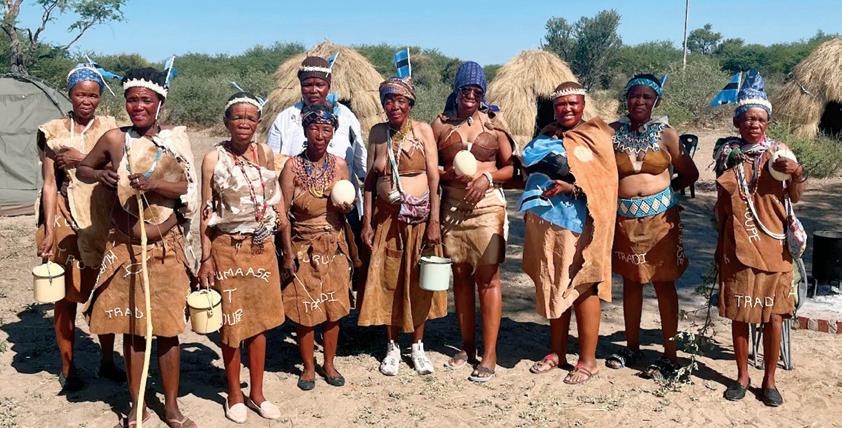
Family Support Center members in Chobokwane,
Georges Theodore Dougnon (DOGON, CS STAFF)
During Cultural Survival’s site visit to Botswana in April, we connected with grant partners and learned more about Indigenous communities from Maun and Chakawe. Passing through New Xade, Gumare, and Ghanzi, we met with organizations and collectives of youth and women who are working to safeguard Indigenous Knowledge, identity, rights, and ways of life, and who demonstrated resilience and innovation in building the capacity of Indigenous communities, particularly youth and women.
Indigenous Peoples in Botswana are primarily represented by the San communities, which are among the oldest continuous cultures in the world. Groups such as the Naro, !Kung, and G/wi have traditionally lived as hunter-gatherers and have developed extensive knowledge of medicinal plants, wildlife, and environmental cycles. Their cultures are deeply spiritual with strong ties to the land, and their sense of health, identity, and well being are closely linked to nature and ancestral practices.
We had the privilege of visiting the Naro community in Chobokwane, which offered deep insight into a worldview where health, culture, and nature are inseparable. At the entrance of the cultural village, a traditional healer and the women of the community welcomed us with a dance, followed by a purification ritual. More than just a symbolic act, it served as a spiritual cleansing to ward off negative energies and reconnect us with the land and its living essence.
Surrounded by rich vegetation, the village itself felt like a living pharmacy. Every plant seemed to carry meaning
and purpose, embodying Indigenous Ecological Knowledge and healing potential. There, we had the opportunity to speak with Qhoncobe Khanxla Daxo (Naro), a respected traditional healer and midwife, who shared insights into traditional medicine. Traditional healers like Daxo are true living libraries, embodying generations of Indigenous knowledge rooted in the relationship among people, nature, and spirituality.
The conversation that follows highlights that this knowledge is not only about healing but also about maintaining balance, identity, and continuity within the community. The collective effort of Indigenous communities and supporting organizations is essential today to safeguarding these traditions, strengthening the transmission of knowledge to younger generations, and ensuring this wisdom continues to contribute to sustainable development and cultural diversity.
Cultural Survival: Tell us about your role in your community.
Qhoncobe Khanxla Daxo: I am a Naro traditional healer and midwife in Chobokwane. My role is to assist pregnant women and new mothers during pregnancy and childbirth, and to help prevent diseases in children. I am also a ritesof-passage mother, training young girls in San values. I lead healing dances and speak to our ancestors on behalf of the community when issues require their intervention.
CS: How did you learn traditional healing, and who guided you in this journey?
QKD: I learned from my late father, Khanxla Kii, who was also a traditional healer. I followed him when he went to dig roots or collect medicinal plants. He would explain what each plant was and how it works in the body. He
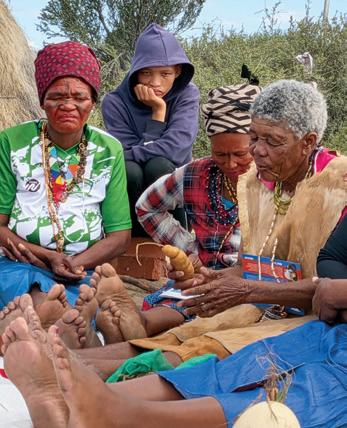
also allowed me to massage women during antenatal care. One day, I helped a woman give birth, and from that moment, I continued this work.
CS: How do you define health and well being in your culture?
QKD: Health and well being mean living in harmony with our environment, plants, trees, animals, and people. It also means taking care of yourself by following our cultural norms, rituals, and practices. Healing dances are also part of maintaining well being.
CS: What are the main causes of illness according to your knowledge and beliefs?
QKD: In our culture, every stage of life has its rites of passage. If these are not respected, it can bring bad luck and illness that is difficult to explain. Not following our values and traditions can also lead to sickness. Illness can [also] come from eating processed foods.
CS: What methods do you use to heal people?
QKD: For people who have not gone through rites of passage or who ignore the calling of the ancestors, we use spiritual dances. To ward off bad luck, we use rituals. For minor illnesses, we use medicinal plants.
CS: Can you share some examples of medicinal plants or remedies you use?
QKD: We use different plants depending on the illness, but this knowledge is carefully protected and shared [only] within the community.
CS: What types of illnesses or conditions do you commonly treat?
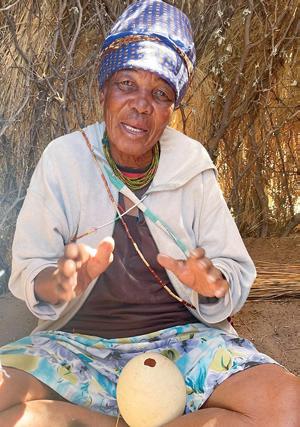
QKD: I support people with skin problems, sexually transmitted diseases, illnesses in children under five, miscarriage, infertility for both women and men, as well as pregnancy care, massage, and childbirth support.
CS: What role does the environment play in your healing practices?
QKD: The land is central to everything we do. Our medicinal plants grow in specific places, and their strength depends on the soil, the rain, and the seasons. When the climate changes or the land is disturbed, some plants become scarce or lose their power. We believe the land carries the spirit of our ancestors. When we harvest plants, we speak to them and ask for guidance. Without a healthy environment, our healing practices cannot continue.
CS: How is this knowledge passed on to younger generations?
QKD: During rites of passage, young people are taught about medicinal plants and healing practices. Some heal with plants, others through song, dance, or massage. When Elders see that someone has a gift, they guide them.
CS: What challenges do you face in preserving this knowledge? What is your vision for the future?
QKD: The main challenge is the lack of interest from young people. Today, many young people are not interested in learning. Some are interested in song and dance, but even those are sometimes changed and lose their original meaning. We are working to teach the few who are interested and to document our medicinal plants and their uses. Our hope is that this knowledge will continue and not be lost.
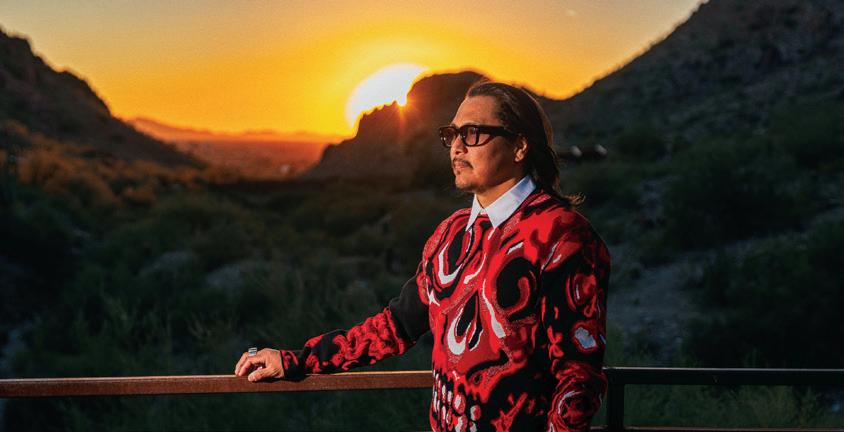
Jeremy Arviso (DINÉ, HOPI, AKIMEL O’ODHAM, AND TOHONO O’ODHAM)
What does it take to stay present every day as an Indigenous man, artist, father, and recovering alcoholic and addict?
Every morning I wake up with the sun and make my bed. I brush my teeth and wash my face, congratulating the man in the mirror. I push the power button on my thriftstore stereo, classical music echoing through the lo-fi speakers, and I light a sprig of cedar. Wafting the smoke onto myself, I walk through my home, speaking aloud everything that I’m thankful for and the gifts and blessings I’ve received. My ceremony offers prayers, and the smoke carries them through my humble abode. I say aloud how abundant the universe is in giving and receiving energy that flows through me like the air I breathe. My morning routine has become my ritual and is the way I welcome each day with renewal and gratitude. I’m still here.
My story is one of resilience, survival, creation, and destruction; a continuous cycle that is not linear, but moves in waves like the vibration emanating from the Earth. I’m a cultural strategist who uses art, fashion, and design to interpret the complexities of being a contemporary Indigenous person. My work is pulled from life experience and a lifelong history in the arts. I am a painter, muralist, graphic designer, graffiti vandal, multimedia artist, and fashion designer all balled up into one. I come from a long line of storytellers who are not what you see in museums. My family tree is made of people who shy away from the spotlight, as we’ve been known to break the law or are extremely private. Whether that be of a sacred nature or one that comes with street life, it’s all one in the same.


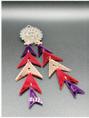
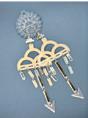
Only six short years ago, I was completely lost and disconnected from myself, my son, my culture, and my purpose. State prison isn’t the type of place you would imagine your life changing, but that’s where it happened for me. Alcoholism, drug addiction, hypertension, high blood pressure, type-2 diabetes, high cholesterol, heart disease, malnourishment, and dehydration was the state I was in. Sitting in Alhambra, a maximum security prison complex in central Phoenix, I thought about every choice and decision that got me to this point. My short sentence of 120 days seemed like 120 years. Before surrendering into state custody, I made the conscious decision to quit everything and use this time to work on myself. It was only four months, but that was plenty of time for me to figure out my next move. I would reinvent myself in the most unlikely of places.
I was in pretty bad shape physically, mentally, emotionally, spiritually, financially, and legally. My first goal was to start building physical strength; my mind wouldn’t heal itself if my body wasn’t strong enough. I needed both so I could heal my soul and start working on emotional and behavioral health. As a teenager I discovered yoga through a book called “Be Here Now,” and memorized the asana poses from years of practice. It must’ve been 10 years since I last tried, but there I was, dressed head-to-toe in orange, doing the downward dog and standing on my head. Every morning after chow, I would end my reps with a round of asanas. During this transcendental moment of alignment, I didn’t feel like I was in a prison until I opened my eyes. I spent hours in the library and purchased a dictionary to understand the literature I was absorbing. My hunger for knowledge increased as my vocabulary and comprehension of the written word grew. What started as three-page, double-sided letters turned to six, and my handwriting
improved. My fascination with learning kept me focused and steadfast. I wrote my goals down and drew diagrams and charts to keep them organized, which led me back to the basic fundamentals of drawing and composition. Never in a million years did I imagine designing jailhouse tattoos for inmates, but there I was!
At the time of my incarceration, the entire planet was topsy-turvy from the COVID-19 pandemic. Everything seemed to be in complete chaos, except for me. It seemed as if the world on the outside was of no importance compared to what I was doing on the inside of those prison walls. What grounded me and kept my fire strong was brotherhood, education, creativity, physical fitness, and ceremony. One of the first things I noticed at Phoenix West DUI yard was the frame for a sweat lodge. I longed to be in there with my brothers, but it was up to the chaplain and warden. They were worried about the virus spreading into the prison system, and our right to spiritual freedom was at stake. After weeks of waiting, we were granted one sweat with only a handful of us being able to take part. I was one of them. I attribute this experience and connection with the Creator that day to the continued success of my sobriety.
I recently returned from a two-week excursion through Sweden, Norway, Denmark, and Germany. My services as a creative director were sought out for an activation at the Världskulturmuseerna Museum of World Culture in Gothenburg, Sweden. One year ago, I served as exhibition designer and brand identity developer and collected artists showing work in the “Native American Fashion Exhibition: From Roots To Runway.” The museum asked me back to direct a collaborative activation for the one-year anniversary that included dance choreography, fashion design, and storytelling.
As I stood there receiving praise before a crowd of hundreds, I felt a slight chill run through my body. I grabbed the microphone and introduced myself. “My name is Jeremy Donavan Arviso, and I’m of the Diné, Hopi, Akimel O’odham, and Tohono O’odham Nations: four Indigenous Tribes from the state of Arizona in the southwest United States. I’m very happy to be here with you on your land to share our culture, fashion, and stories. Thank you all for coming today.”
Becoming present required sacrifice. In order to live the life I’m currently enjoying, I had to give up the old ones. This included a multitude of acquaintances, environments, attitudes, and behaviors. One cannot create the future if one holds onto the past.
Art is an imitation of life. Art, or creativity, among my People was never meant to be a commodity. It was developed for ceremony, survival, and community. Business is a whole other art form, and is what separates a commercially successful artist from a starving artist. The business of art has changed my life and how I move through the world now. It’s an experience that is defined by failure, but within those outcomes are lessons. It’s within these patterns that a code is tightly woven together by the architects of capitalism.
The system is meant to keep artists out, but if you can decipher the code, a whole other world can change your work, for better or for worse.
As a father, I’m responsible for another human being, and must be able to make a living for both of us. Leading by example, I’m able to share what I’ve learned not just with my son, but with the community around me. My work has never been just about fashion, art, or design. It’s about context, responsibility, and relationship. As Indigenous creatives step into global industries, there’s a growing need for cultural fluency, ethical collaboration, and strategy rooted in lived experience. That’s where I come in. I help brands, institutions, and organizations think deeper about the work they put into the world and the communities it impacts. From creative direction to cultural advisory, my role is to bridge worlds while protecting the integrity of the culture that shaped me.
Sobriety, creativity, and community changed the direction of my life. Today, the work I do through art, fashion, design, and entrepreneurship is about building ownership, opportunities, and pathways. I’m not just designing jewelry, clothing, or brands; I don’t just design products. I design exits from cycles I know too well. For anyone out there rebuilding their life, keep going. The work you’re doing matters.
Jeremy Arviso (Diné, Hopi, Akimel O’odham,Tohono O’odham) is a multifaceted artist, designer, entrepreneur, and the founder of RVSO78 and Original Landlords.
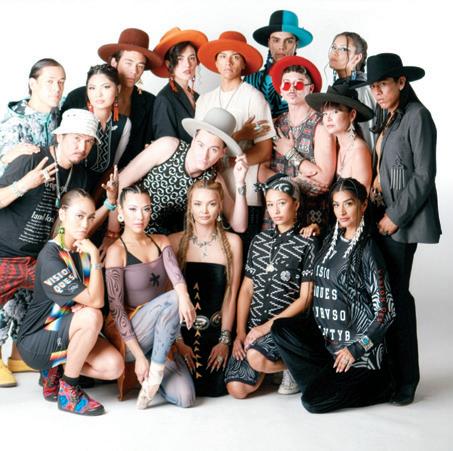
Chenae Bullock (SHINNECOCK)
For thousands of years, Indigenous physicians, healers, and knowledge keepers have developed highly sophisticated systems of medicine grounded in careful observation of the natural world, relational accountability, and intergenerational learning. These systems are not historical artifacts—they remain active, living frameworks of care that sustain the health and cultural survival of Indigenous communities. Yet, within many modern healthcare systems, their role is still minimized, misunderstood, or excluded, not due to a lack of depth or efficacy, but because they emerge from a fundamentally different way of understanding health.
Indigenous Knowledge-Based Medicine does not separate physical, emotional, spiritual, and environmental well being. These dimensions are inseparable. Across Indigenous Nations, health is recognized as dependent on balance within the individual, community, land, and spirit world. Healing is not limited to prescriptions or procedures and often takes the form of ceremony, plant medicine, storytelling, and collective care processes to address the underlying causes of imbalance rather than focusing solely on symptoms. The resilience of these systems is remarkable. Despite centuries of colonization and suppression of cultural practices, Indigenous medical knowledge has persisted, carried through oral tradition, embodied practice, and community responsibility. Each generation plays a role in safeguarding and renewing this knowledge, ensuring its continuity not as static tradition, but as living adaptation.
health science while addressing long-standing health disparities.
Interest has grown in broadening the definition of clinical evidence to include culturally grounded approaches, sometimes described as communitybased or “cultural clinical trials.” “Trials” does not fully capture the nature of these healing processes rooted in ceremony, tradition, and Indigenous methodologies. In Native communities, ceremony continues alongside contemporary care. Practices such as sweat lodges, talking circles, fasting ceremonies, and land-based healing programs are increasingly recognized for their impacts on trauma recovery, mental health, and community cohesion. Their effectiveness is not only biological, but relational and cultural, restoring connections overlooked by modern systems.
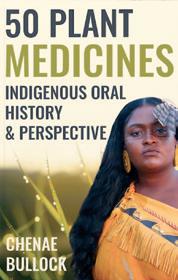
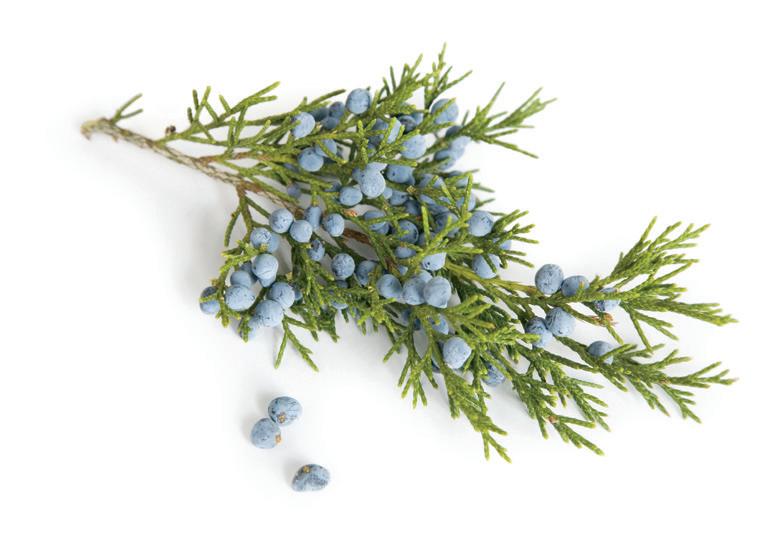
One of the newest such adaptations is Indigenopathic Medicine, led by Dr. Larry Fisher, Council Chief of the Mattakeeset Tribe, and the NU-keteam Research & Wellness Institute. This new framework integrates Indigenous Knowledge systems with scientific methods and is a relational system shaped by land, culture, biology, and spirit. His work is grounded in imaging science, functional medicine, and Indigenous theory. Another key innovation is the establishment of the Association of American Indian Practitioners Institutional Review Board, which governs ethics, research standards, and licensing for Indigenopathic practitioners. This structure is intended to ensure both cultural integrity and scientific accountability. These efforts position Indigenopathic Medicine as a structured discipline that reconnects Indigenous Knowledge systems with modern
Herbal medicine is a deeply rooted and actively practiced system of knowledge. Medicines such as echinacea, elderberry, and willow bark are understood not only for their biochemical properties, but as part of a broader relational world where plants are considered relatives, teachers, and active participants in healing. This knowledge has been carefully preserved through direct engagement with the land, ceremonial practice, and ecological observation across generations.
Indigenous-led initiatives, including contemporary expressions like Moskehtu Teas, which my company produces, demonstrate how this knowledge is evolving while maintaining cultural integrity. Indigenous plant medicine is not simply something to consume. It requires responsibility, correct identification, and an understanding of ecological relationships. Without context, these medicines risk being reduced to commodities, stripped of the knowledge systems that give them meaning.
Learning must be relational. Participation in Indigenousled plant walks, engagement with knowledge holders, and works such as my book, “50 Plant Medicines,” are essential pathways to understanding these medicines. In these settings, knowledge is not extracted; it is received through relationship, respect, and protocol. Indigenous plant medicine challenges the idea that healing can be reduced
to chemistry alone. It understands medicine as simultaneously physical, spiritual, ecological, and cultural. While western science has increasingly validated the biochemical properties of many of these plants, Indigenous communities have long recognized their full relational and spiritual significance. These practices are not being rediscovered; they have remained continuously alive.
This broader worldview explains why western medical and psychological systems have struggled to fully address the spiritual distress experienced by Indigenous Peoples. Conventional frameworks have focused on individual symptoms rather than collective, historical, and spiritual causes of suffering. Our distress is rooted in ongoing and intergenerational harms, including forced removal from ancestral lands that disrupted spiritual relationships to place, boarding school systems that separated children from families, suppressed languages, and inflicted widespread abuse, the criminalization of ceremonies and spiritual practices that weakened traditional healing systems, systemic discrimination and violence across housing, healthcare, and justice systems, enduring grief tied to Missing and Murdered Indigenous People, and the erosion of language and cultural identity, to name a few factors.
Western psychological and biopharmaceutical models attempt to treat conditions such as depression, anxiety, or substance abuse in isolation from their historical and spiritual contexts, failing to fully account for the realities of Indigenous people. Indigenous approaches to recovery understand healing as a collective, relational process deeply tied to land, culture, and community restoration. This difference shows a broader shift in how the “evidence” in evidence-based medicine is understood. Western clinical trials prioritize isolated, measurable variables, whereas Indigenous approaches emphasize relational outcomes of restored balance, strengthened identity, and renewed connection to land and community. Increasingly, researchers looking into documenting these outcomes without stripping their cultural meaning or reducing them to abstract metrics.
Some progress is emerging within standardized healthcare systems. Arizona, California, New Mexico, and Oregon have received federal approval through Medicaid waivers to recognize and reimburse traditional healing services, where Tribes determine what constitutes healing and who is recognized as a healer, marking an important shift toward Indigenous sovereignty in healthcare design.
While still limited, these developments signal a growing acknowledgment of Indigenous medical systems within public health frameworks, despite western biomedical models dominating policy, education, and clinical practice. This imbalance has real consequences: it can limit access to culturally relevant care, contribute to mistrust, and reinforce persistent health inequities among Indigenous populations. Meaningful integration cannot be symbolic. It requires structural change that supports Indigenous-led
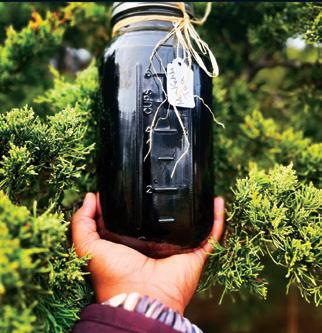
health institutions, protects Traditional Knowledge from appropriation, and creates pathways for Indigenous practitioners to operate within healthcare systems on their own terms. It requires a shift in perspective, from viewing Indigenous medicine as “alternative” to recognizing it as equal and foundational.
Where this shift is already taking place, the results are instructive. Indigenous-run clinics, land-based healing programs, and cross-cultural partnerships demonstrate that when Indigenous Knowledge systems are centered, healthcare becomes more responsive, humane, and effective. These models show that different ways of knowing do not need to compete; they can coexist in ways that strengthen both. Indigenous Knowledge-Based Medicine is not only about healthcare reform. It is about restoring balance in how knowledge itself is understood, challenging the assumption that scientific legitimacy belongs to a single tradition, and opening space for pluralistic understanding of healing. As global systems confront rising rates of chronic illness, mental health crises, and environmental disruption, Indigenous Knowledge offers practical, tested ways of understanding relationship, resilience, and care. The question is not whether this knowledge has value, but whether institutions are willing to make room for it.
Honoring Indigenous medical systems requires more than acknowledgment. It requires ensuring that Indigenous Peoples have the authority, resources, and respect to shape the future of healthcare. The benefits of Indigenous Knowledge-Based Medicine extend beyond Indigenous communities—they expand the possibilities of healing for everyone.
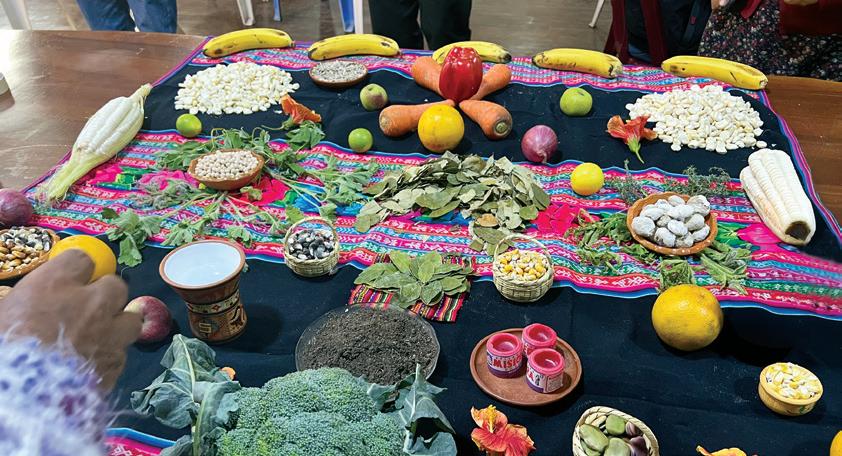
Grounded in our traditional understandings and teachings, as well as social work values of justice and human rights, Indigenous social workers are making a difference in the health and well being of Indigenous Peoples around the world. The International Federation of Social Workers (IFSW) is the worldwide body for professional social work. It comprises over 120 professional social work associations representing over 5 million social workers. IFSW has formal consultative status with the United Nations and other global bodies. In 2021, after years of advocacy from Indigenous social workers, IFSW established an Indigenous Commission. This commission consists of a Global Commissioner and five Regional Commissioners representing Europe, Asia and the Pacific, Africa, Latin America and the Caribbean, and North America. Hilary Weaver (Lakota) serves as the Global Indigenous Commissioner and facilitates the Commission’s work.
The IFSW Indigenous Commission provides leadership in advancing Indigenous issues in social work regionally and globally, centered on three interrelated themes: bringing visibility to Indigenous Peoples and issues, highlighting the importance of Indigenous Traditional Knowledge, and ensuring that the social work profession incorporates Indigenous voices and respectfully serves Indigenous people. A concise version of this article was entered into the record of the United Nations Permanent Forum on Indigenous Issues in 2026 under item 3, aligned with this year’s Forum theme, “Ensuring Indigenous Peoples’ health, including in the context of conflict.”
Members of the IFSW Indigenous Commission see important roles for social workers in ensuring the health of Indigenous Peoples. Social workers play key roles in ensuring Indigenous Peoples’ health, including in the context of conflict, as our work is often done in collaboration with community members, activists, and other professionals. Social workers can help Indigenous people access needed services and can work to change unresponsive or harmful systems and policies. When we are guided by and can embrace our own ways of being and knowing, we continue our focus on the person and their community, spiritually, physically, emotionally, and psychologically. The health of the whole person is essential for the health of communities.
Margaretha Karlberg Uttjek (Sámi) is a social worker representing the European region on the IFSW Indigenous Commission. She says that Sámi social workers can play crucial roles when Sámi individuals seek support from social service and health care systems. Her research documents that Sámi social workers bring special knowledge and skills to their work, drawing from inherited knowledge that must be valued and respected in mainstream society. For example, Sámi women and men report that Sámi women and children have been subjected to violence, which has led to trauma and various health issues contributing to decreased well being. Likewise, Sámi Elders and Sámi living with various disabilities have experienced misunderstandings and discrimination, including marginalization and racism. Uttjek points out that this can lead to inadequate treatment from systems that should serve them, resulting in isolation and health issues. Based on these experiences, some Sámi have demanded to work with Sámi professionals
due to their special knowledge and cultural values, as well as demand better care from non-Sámi professionals. There are examples of non-Sámi professionals who have listened, respected their Sámi client’s self-determination and own knowledge, and followed the guidance from the Sámi seeking support, and in these cases, Uttjek says, it has led to increased health and well being.
Daniel Flores (Kolla) represents the Latin America and the Caribbean region on the IFSW Indigenous Commission. He says that today—533 years after the invasion of Abya Yala—colonial legacies persist across many fields of knowledge, including health, and that public institutions and health professionals must recognize the contributions of traditional medicines in the healing and treatment of illnesses linked to addiction, emotional, mental, and physical conditions. For example, the midwives of Otavalo in Ecuador blend ancestral knowledge, including herbal medicine and upright birthing positions, with western practices, centering women’s intuition and cultural practices to improve maternal health. These practices have influenced Ecuador’s health policy and have been recognized by the World Health Organization.
The bonesetters of southern Chile are another example of the importance of Indigenous health practices. These healers treat fractures, dislocations, and sprains with manual manipulation, massage, and herbal remedies. Likewise, traditional herbal practices in the Andean regions during the pandemic provided undeniable evidence that, despite the dominance of western biomedical models and their reliance on pharmaceuticals, we continue to heal ourselves with our own medicines.
Member states of the World Health Organization and Pan American Health Organization that have ratified ILO Convention 169 on Indigenous and Tribal Peoples have a clear responsibility to ensure the effective implementation of its provisions on intercultural health. This requires adequate budgets, specific plans, and incorporation of traditional healers, particularly in primary care. These actions are essential to eliminate inequality, structural disadvantage, racism, and discrimination faced by Indigenous Peoples.
As we move through the International Decade of Indig enous Languages (2022-32), Flores says it is necessary to redouble efforts so that institutional and information systems, as well as health workers, recognize the ethnic and linguistic diversity of the regions where they operate. Social workers and other professionals must understand and support the health practices that families and communities continue to embrace. We must broaden our interventions to recognize their cultures, dietary practices, Indigenous languages, life stories, and ethnic identities. We must acknowledge the importance and socio-historical trajectories of the individuals and families we work with that extend far beyond the 200 years of history of the nation states in Latin America and the Caribbean.
Pamela L. Begay (Diné), who represents the North American region on the IFSW Indigenous Commission, says that Native people in North America reflect on their creation stories and Traditional Knowledge systems, which help ground our health. We rely on this knowledge to heal ourselves and our place in community from past events that have hindered our ways of living in balance.
The Asia Pacific region is represented by Carole TanaTepania (Māori). She says that in the Pacific region, health is understood through the vitality of the Vā, the relational space connecting people, ancestors, and the environment. While social workers have at times caused harm as agents of colonial systems, Indigenous practitioners are reclaiming the profession. Tangata Whenua, the Peoples of the Land, are grounded in the teachings of our wānanga (higher learning), and are moving from colonial expressions of social work toward the pursuit of holistic family well being.
Tana-Tepania describes how, as Tangata Whenua, we act as kaitiaki (guardians) of the mauri (life force) as we utilize kaupapa tuku iho (inherited values) to navigate modern conflict. We can integrate traditional healing, such as Rongoā Māori and the vibrational healing of taonga pūoro (traditional instruments), to soothe trauma that clinical models cannot reach. By centering whanaungatanga (kinship) and land-based wellness, we ensure health interventions are not imposed, but rather mana-enhancing acts of sovereignty. These community-led models, refined in our wānanga and practiced on our marae, prove that when Indigenous social workers lead with ancestral knowledge, we don’t just treat symptoms: we restore the sacred connections essential for enduring peace and wellness.
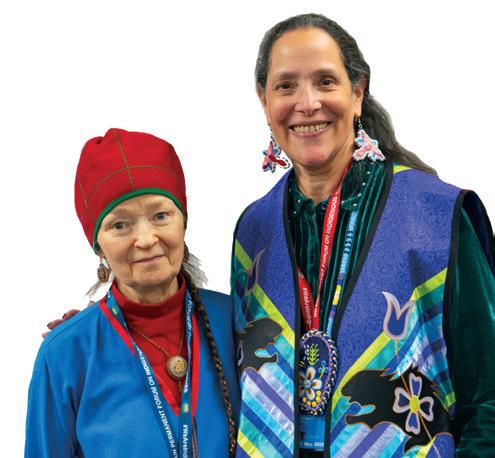
Hilary N. Weaver (Lakota) serves as President of the Indigenous and Tribal Social Work Educators’ Association as well as Global Indigenous Commissioner for IFSW.
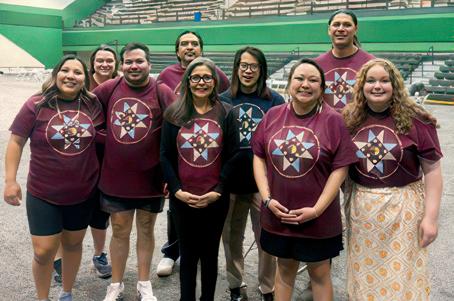
In 1990, Kathryn M. Buder founded the Buder Center for American Indian Studies within the Brown School at Washington University in St. Louis, Missouri. Since then, a total of 149 Master of Social Work (MSW) degrees have been earned and awarded through the Buder Foundation Scholarship. All scholars work with Native people and Native organizations on and off Tribal homelands, exemplifying the commitment of each graduate to acknowledge the needs of our Peoples and continue working toward future change.
In social work, we welcome all people. Our program engages theory and pedagogy with the connectedness and inclusivity of Native/Indigenous teachings. Incorporating communal and cultural ways help encourage and prepare our scholars for movement back to the center of a circle without linear constraints. When Native ways of knowing and Indigenous pedagogies are introduced into our social work curriculum, it offers a way back to where we once were as Native Peoples.
The Buder Center and the Brown School’s unique inclusion of seeing and recognizing culture and alternative ways of knowing allow for all voices to have a seat at the table. The Native-focused courses are specific in the areas of mental health, social policy, community development, and Indigenous ways of knowing, bringing together what we know as Native people to community and family work. For the last four-and-a-half years, I have been privileged to serve as the Director.
There are so many successes of Buder alumni working in the mental health field. Tescha Hawley (Gros Ventre Tribe), ‘07, founded Day Eagle Hope Project on the Fort Belknap reservation to offer support, including equine therapy, for Native people battling cancer and other health-related challenges. In social work, we realize the whole person does not just mean healing one part of the self, but all parts. The Day Eagle Hope Project engages and encourages healing of past, current, and intergenerational trauma through a healthy mind, body, and spirit.
Native child advocacy is another important area that must continue to move forward. In so many cultures, children
are sacred beings; they are gifts from our Creator. Dr. Sarah Kastelic (Alutiiq), ‘97, is the Executive Director of the National Indian Child Welfare Association (NICWA). She works tirelessly to empower Native child advocates and train those working with and for Native children across our nation. This organization is a cornerstone and an educational lighthouse in a time of healing and forward movement from past atrocities.
As part of this advocacy, graduating MSW Buder scholar Deezhi Thinn (Diné), ‘26, researched historical and intergenerational trauma to give context for those not familiar with Native history. She was invited to present her research under our Native Child Advocacy Studies grant at the Institute of American Indian Arts in Santa Fe, NM.
As Native American and Alaska Native social workers, we continue to trace and follow the original paths of our Elders and ancestors toward health through a spiritual, whole-person lens that captures what we yearn for as a Peoples, examining how we treat ourselves and others during the process. As Indigenous Peoples, we have culture. This culture is the heart of our continued survival in a world repeatedly turning the pages on our history of loss. When we take a strength-based approach, we empower one another with stories like the ones shared here.
The spirit of the Buder Foundation scholarship is to return, share, and give back to our Tribal and urban communities what was awarded to us through this education. We strive to inspire future generations of social workers while staying in community with each other. For 36 years, Buder scholars have committed to the profession of social work and are part of this legacy of helpers. We have become clinical practitioners, mental health champions and scholars, policy makers, educators, public health workers on national and global levels. We are leaders. And we are just getting started. Ahéheeʼ.
Pamela L. Begay (Diné), PhD, LCSW is Director at the Kathryn M. Buder Center for American Indian Studies, Assoc. Professor of Practice, North American Commissioner, International Federation of Social Workers and Commissioner for Diversity and Social & Economic Justice Council, CSWE, and Board Member, Association of Women Faculty.
Belonging and connecting are rooted in the land that holds, nourishes, and expands our existence. It is a cyclical motion that embraces healing and wellness, leaning into the backbone of the ancestral constellation of knowledge. Cultural Survival’s Indigenous Youth Fellowship fosters these connections for youth in their community.
Ukhing Nue Chak (Chak) is an Indigenous rights advocate, development practitioner, and community member in the Bandarban Hill Tracts of Bangladesh. She has dedicated her career to safeguarding Indigenous Knowledge, strengthening traditional livelihood practices, and promoting sustainable entrepreneurship for Indigenous women and youth. Through her grassroots initiatives and advocacy, she works to bridge the gap between cultural heritage and economic empowerment, ensuring the resilience of Indigenous communities.
For Indigenous communities, wellness is deeply connected to land, culture, identity, and community. Growing up in Bandarban in the Chittagong Hill Tracts, I learned that well being is not only about physical health, but also about safeguarding traditions, protecting nature, and maintaining strong community connections.
One of the biggest barriers to Indigenous wellness is the gradual loss of Traditional Knowledge and sustainable livelihoods. Many young people are moving away from cultural practices because of economic challenges and limited opportunities. Climate change and environmental degradation are affecting forests, water sources, and the emotional connection communities have with the land.
My understanding of wellness began by observing women in different Indigenous communities weaving together. In many communities, weaving is seasonal and
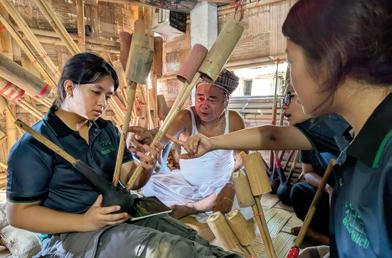
connected to tradition. Weaving is not only a cultural practice or source of income; it is part of identity and heritage. Women spend long hours weaving, which often causes physical health challenges from sitting for extended periods. Despite these struggles, they continue weaving to preserve their culture and support their families.
This understanding inspired our work through Bandarban Indigenous Roots Development and Sustainability (BIRDS) and the Barefoot Forest Campaign. Through BIRDS, we support Indigenous women from communities such as Chak by strengthening traditional weaving practices while creating sustainable livelihood opportunities. At the same time, the Barefoot Forest Campaign encourages youth and communities to reconnect with forests, protect nature, and strengthen their relationship with the land.
Through the campaign, young people learn about biodiversity, the importance of protecting native plants and wildlife, and how forests are connected to community well being and climate resilience. They also gain practical knowledge through forest walks, environmental learning, and community-based activities, which help them better understand how they can protect both nature and Indigenous Knowledge for future generations.
For me, healing comes from spending time in nature— walking forest paths, listening to birds, sitting beside rivers, learning from Elders. These moments remind me that wellness is both personal and collective. Today, more eels possible than ever before. I see more Indigenous youth becoming interested in cultural preservation, climate action, and community leadership. I also see women proudly sharing their weaving knowledge with younger generations. Through culture, community, and connection with nature, we are creating stronger and more hopeful futures together.
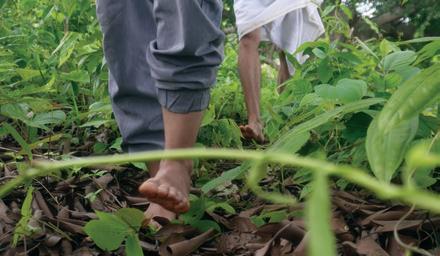

Kelaia Acevedo (CS INTERN)
Before modern medicine imposed its standards for defining health and healing, Indigenous Peoples had already developed sophisticated forms of care that identified, treated, and alleviated illnesses. Developed over generations of intentional listening, communities maintained relationships through their traditional practices, grounded in deep ecological knowledge and the prioritization of communal ceremonies.
Through Cultural Survival’s Indigenous Youth Fellowship Program, three young Indigenous women sought to share this ancestral knowledge intergenerationally. Hailing from communities of the Muisca in Colombia, the Ngäbe in Costa Rica, and the Kichwa Otavalo in Ecuador, the Fellows are revitalizing pathways their maternal ancestors once walked. In recentering the lifeways of the feminine, Traditional Knowledge on midwifery, menstruation, herbalism, and womanhood are once again accessible to their communities.
apprentice in Muisca ancestral medicine and midwifery. Through Cultural Survival’s Indigenous Youth Fellowship program, Daza, along with Erika Samantha Galeano, Wendy Lorena Díaz Pachón, and Deina Catherin Tovar as co-coordinators, created a space for the retention of knowledge in women’s medicine, midwifery practices, and herbalism through the Muisca perspective. Named after an existing school, their project, “Escuela de Formación en Medicina Natural de Mujer y Partería Tradicional Muisca (School of Training in Natural Medicine for Women and Traditional Muisca Midwifery),” illustrated the significance of reintegrating Indigenous identities through community building and information exchange.
Their mission was to engage Muisca women in preventive care contributing to their physical, emotional, and spiritual well being. Daza says, “Women in these communities are usually caring for others, but they don’t often have the time to care for themselves.”
2025 Fellow Gabriela Garibello Daza from Colombia.
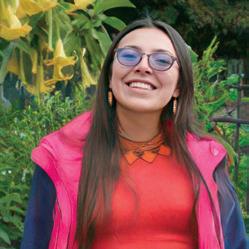
Gabriella Garibello Daza (Muisca) is from the territory formerly known as Mhuykytá, (now Bogotá), Colombia. After studying literature at Javeriana University in Bogotá, she co-founded the Tinzi (“Bloom”) Indigenous Collective, and is a leader of the Bosa Native Language Revitalization Program. Her experience facilitating spaces for cultural identity, health, oral traditions, and Indigenous education have guided her work and efforts in her community. She is currently an
Twenty participants from four Muisca communities met once a month for eight months to engage in knowledge transfer. The work was divided into four spirals: Tasqua (thought), Quyca (territory), Puyky (heart), and Sie (water). There were eight immersive, capacity-building workshops supporting the themes on topics such as weaving, menstruation and lunar cycles, womb work, traditional massages, baths, steams, and herbalism.
Daza says this knowledge has strengthened her desire to create spaces for women, by women, as she now understands that this level of connection is not only for learning and strengthening, but also for healing. In this intergenerational knowledge transmission, the women in the Muisca communities are pioneers. “The path of a leader is in company and not individually,” she says. “It’s not about one person leading everything; it’s a shared responsibility.”
Thalía Jiménez Tomás (Ngäbe) resides in the Limón province of Costa Rica. She is a co-founder of the Ngäbe Women Leaders of Sixaola and holds a degree in Local Management for Indigenous Peoples from the National Distance Education University. In 2018, she was a key figure in the creation of Law Number 9710, recognizing the identities of Indig-
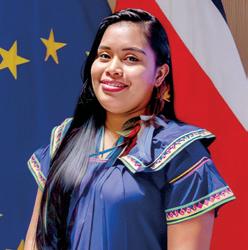
enous and Tribal people and laying out protective procedures in respect to their being.
For her work with the Indigenous Women’s Organization and promoting the rights of the Ngäbe people, Tomás received the 2024 European Union Gender Equality award.
The aim of her project, “Meritre krägae Dean nain, migatrë gare monsotre ngäbere (Maternal Health as a Vision for Ngäbe Youth),” was to facilitate the recovery of intercultural maternal health knowledge among Ngäbe midwives, women, youth, and state-sanctioned healthcare providers.
It is difficult for Ngäbe women to access medical care because of the distance and travel required. When they do go to health centers to give birth or receive medical care, they often face a language barrier. Due to this lack of communication, they often do not understand what they’re consenting to. There is a law meant to prevent this, but many communities are not aware of it. Usually, mothers give birth at home, and when their children are school-aged, they face the issue of not having a birth certificate. These lived experiences highlight some of the reasons this project was born.
Tomás’s work benefited over 40 women across four Ngäbe communities. Women had access to knowledge exchange and medicinal herbs and engaged in dialogue with healthcare providers such as obstetricians, where they advocated for their needs and received information grounded in their cosmology. The University of Costa Rica even reached out to request a workshop.
For Tomás, it was an honor to do this project for her community, with Cultural Survival. Impassioned by the results, she is fighting to secure a state-recognized territory where the Ngäbe can reside and call home. When Indigenous Peoples are forced to live outside of their territory, their ancestral practices and identities begin to erode. To prevent forgetting where they came from and who they are, Tomás continues this fight with her community.
Cenia Kaina Córdova Pichamba (Kichwa Otavalo), Ecuador
Cenia Kaina Córdova Pichamba (Kichwa Otavalo) is from Peguche, Imbabura, Ecuador. She graduated with a degree in Arts and Humanities and has continued her education in anthropology, research, and cultural heritage. Her
community, Doctor Miguel Egas Cabezas Peguche, comprises several Indigenous communities. Due to the history of textiles there, it is often viewed as a relic of the past. Elders have expressed concern about the loss of identity and culturally significant customs, such as midwifery.
Midwives are hard to find for a variety of reasons, including language barriers and a lack of documentation of ancestral knowledge. The objective of “Yuyaykuna (Knowledge)” is to assert Indigenous Knowledge not as folklore, but as a valuable part of everyday life. Pichamba describes her project as “an initiative to compile and recognize Indigenous science and knowledge.”
To carry out this work, the project focused on documenting and collecting oral stories through interviews with Kichwa midwives, and taking photographs of the midwives and medicinal plants. Through curated photography, “Yuyaykuna” seeks to dismantle harmful stereotypes associated with Indigenous Peoples, creating a dialogue on the impacts of constructing identity.
Once documentation was complete, Pichamba organized a meeting with 10 midwives for them to exchange information and feedback on their experiences. The midwives and an obstetrician gave presentations on how the bridge between traditional customs and modern medicine can be crossed. Once the presentations were completed, communal food prepared in traditional ways from Indigenous recipes was provided for the attendees, and all received certificates of completion.
The midwives who attended this gathering live in the same city, though many have different cultural upbringings and practices. Despite these differences, Pichamba succeeded in her goal of creating a supportive network for Kichwa women and midwives.
Pichamba will compile a photobook from the data she collected to help safeguard the Kichwas’ ancestral knowledge from the forces of globalization that threaten to erase their history and forms of knowing. By disseminating the contents of this project to the community, she seeks to create tools that will enhance the longevity of her culture and identity.
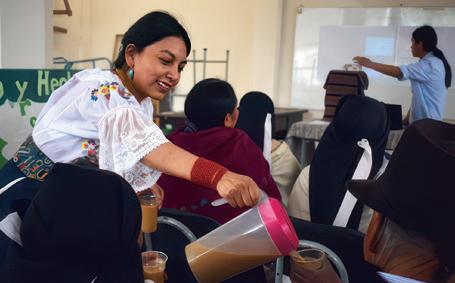
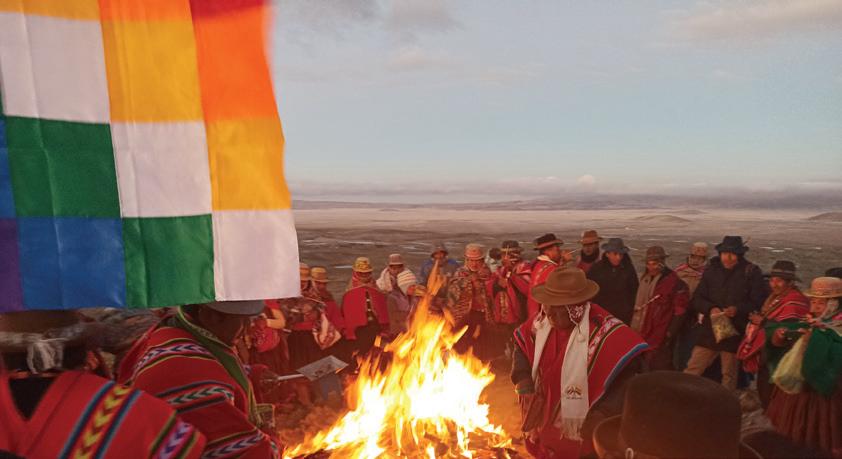
Yorema Gutiérrez Magne
When the COVID-19 pandemic reached the cold, high-altitude territories of the Pukina Nation in Bolivia, the conventional healthcare system collapsed. The nearest health center was left without a doctor. The closest hospital was hours away. The Pukina Peoples did what their ancestors had done for centuries: they turned to their plants, their traditional healers, and the strength of their community organization.
This is not merely a story about medicine. It is a story about how a Nation, which for decades lived under imposed structures that fragmented its ancestral ayllu (community) system, rediscovered itself and protected its people from a pandemic. The Marka Cololo Copacabana Antaquilla is the ancestral territory of the Pukina Nation, located about 300 kilometers northwest of La Paz, in the Apolobamba National Integrated Management Natural Area. The elevation ranges from 3,858 to 5,580 meters above sea level, from cold valleys up to the high puna (highland plains), where the air is thin and the mountains touch the sky.
The Pukina Nation comprises four markas (regions)— Agua Blanca, Cololo, Antaquilla, and Puyo Puyo—and 10 ayllus, home to approximately 2,000 people. But the number is not what matters most; rather, it is the fact that this Peoples has decided to reconstitute themselves, reclaim their own organic structure, and once again walk with a distinct identity of their own. The ayllus first organized to demand recognition of their Communal Land of Origin in
1999. In 2001, they obtained their legal status and ethnic certification, and eventually secured land titles for two land blocks totaling nearly 40,000 hectares. In 2012, they approved their first Plan de Vida (Life Plan), called Sumanu, a Pukina word meaning “a state of integral existence; living a holistic life among ayllus and markas.” Though the majority of Pukina people today speak Aymara and/or Quechua, their native language is currently undergoing a process of revitalization; in 2023, they established the Pukina Language and Culture Institute.
The Pukina have a three-level hierarchical organizational structure: the Pukina Nation, headed by its highest authority, the Jilir Apu Mallku; the markas, each led by the Mallkus de Marka; and the ayllus, led by the Irpiri Mallku. Strategic decisions are made during the tantachawi (assembly), which is held four times a year on a rotating basis across the various markas. Additionally, the authorities from each marka and ayllu meet on a monthly basis.
During the COVID-19 pandemic, the markas’ traditional healers—yatiris, midwives, and herbalists—took charge of caring for their people. Through interviews with traditional healers, field surveys, and workshops conducted across the four markas, 93 medicinal plants were used to treat various ailments, with 16 native species employed specifically to combat the coronavirus. The traditional healers prepared mates (herbal infusions), decoctions, and steam inhalations. They blended various plants, sometimes adding honey or urine, and provided clear instructions to the sick on how to
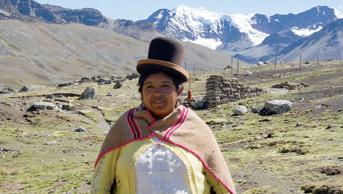
treat themselves. The most widely used plants belong to the Asteraceae family, known for its properties in relieving fever, coughs, and pulmonary ailments.
Juan Pablo Tito Kuno, a traditional healer from Agua Blanca, treated 70 people with COVID-19 symptoms with a blend of 12 different plants. “First, I test to ensure the medicine is effective; only then do I administer it to people. Since I consistently take my plant-based remedies, I never fell ill with COVID,” he recounted in 2021. Delfina Casilla, a traditional healer from Nube Pampa, treats susto (shock) and tends to the ánimo (spiritual strength). “Simply by looking at people’s faces and listening to my heart, I know what is ailing them. What we eat and drink gives us energy; it makes us happy and strengthens us—both in energy and in spirit. That is why plants are so vital: they heal both the body and the spirit. We must maintain balance,” she says. Traditional healers in the Pukina Nation face various challenges. The knowledge of Elders is at risk of being lost. Midwife Justiniano Mayhua, for one, learned everything through practice but never found anyone to whom he could teach; he has since passed away. According to the traditional healers themselves, many young people no longer place much importance on medicinal plants and prefer to visit conventional doctors. Carmen Mamani, a healer from Agua Blanca, says, “Young people don’t attach much importance to medicinal plants; they go to he doctor. But because of this disease, some are now willing to learn and have shown interest.”
Manuela Mendoza, another midwife, expresses a common wish: “It would be good if they gave us a certificate so that we could be recognized as traditional healers of the marka. That way, we could go to other places to provide training,” she says. There is also a shortage of financial resources. Guillermo Saturnino Mayta, who treated over 1,000 people during the pandemic before dying in an accident, dreamed of having a small laboratory to produce plant-based medicines in larger quantities. “That way,” he used to say, “we could cure many more people.”
The Pukina Nation does not wait for outside aid; they organize from within. They constructed the Sumanu Life Plan (2023–2032) as a roadmap to guide the management of their territory, the strengthening of their culture, and the care of their people. This plan seeks to revitalize traditional medicine, bolster the capacities of traditional healers, and ensure that their knowledge is passed down to future generations.
With funding from Cultural Survival’s Keepers of the Earth Fund, they have already carried out a project to
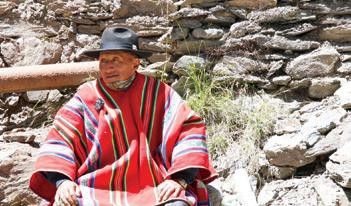
document and preserve traditional medical knowledge in the context of the pandemic. This initiative involved conducting interviews, undertaking field excursions with traditional healers, collecting plant specimens, and holding participatory workshops. And they produced a book—from which we have drawn this story—so that this knowledge would not be lost.
As the authorities of Agua Blanca said in 2021: “We want to reclaim our ancestral knowledge. We healed ourselves using our plants because we had no medicines, and doctors were unwilling to treat us. We were also afraid to go to the doctor. We know how vital our medicinal plants are, and we realize that the younger generation no longer recognizes them. That is why we want training sessions to be held—so that our traditional healers can teach us—and why we want to create a book of the Marka’s medicinal plants, ensuring our knowledge is never lost.”
Indigenous Traditional Knowledge is medicine. When the pandemic struck, the Pukina knew exactly where to find the medicines: on the hillsides, near the high-altitude wetlands, among the rocks close to the snow-capped peaks. The plants were close at hand, as they always have been. The Pukina also did not act in isolation. They acted as a marka—as ayllus, as a Nation. Their authorities coordinated efforts, committees organized logistics, and traditional healers worked side by side with their neighbors. Writing and documenting was an act of resistance: by recording the names of the plants, taking photographs, and documenting preparation methods, the Pukina ensured that when a traditional healer passes away, the knowledge does not die with them. Traditional healers also conducted workshops in schools for children and youth to disseminate knowledge to the next generations so that it is not lost.
The reconstitution of the Marka Cololo Copacabana Antaquilla is not finished. It is a path under constant construction, sustained by the participation of the ayllus, the commitment of traditional authorities, and the collective will to remain the Pukina Nation. For Indigenous Peoples, the message is clear: the knowledge of their ancestors is not merely a relic of the past. It is a living, powerful resource for confronting the challenges of the present.
* This article is based on “Medicina tradicional de la Marka Cololo Copacabana Antaquilla Nación Pukina frente al COVID-19 y otras enfermedades (Traditional Medicine of the Marka Cololo Copacabana Antaquilla Pukina Nation Against COVID-19 and Other Diseases” (2026).
I am Embera Eyabida from Colombia. Growing up as part of my Peoples shaped everything I do, from my connection to rivers and forests to my work as an educator, researcher, and Indigenous leader.
My childhood was marked by forced displacement. My family was threatened, and we had to leave our territory, Urabá, the Land of the Sun. We moved in with my maternal grandmother in Chocó, where Embera and Afro-descendant cultures coexist.
The river was my favorite place as a child and still is today. When the period of violence passed, I returned to my homeland to be with my grandmothers, who have been fundamental pillars in my upbringing.
I was invited to an assembly of Embera Eyabida women. On the way, I met an older woman who reminded me of my great-greatgrandmother. A bond formed, and we shared many moments during the event. One night, she asked me to braid her hair. As my hands wove through her hair, I felt a deep message in my heart. I decided then to dedicate my life to learning about the ancestral knowledge of my Peoples.
At university, I conducted my research on the ancestral songs of Embera grandmothers. Since then, I have worked to make visible and give value to Indigenous methodologies born from the wisdom of our Peoples.
My great-great-grandmother, Anita Bailarín Domicó, has been one of my greatest inspirations. In the 1960s and ‘70s, she helped organize our community. She was a traditional healer and singer of truambi, ancestral songs we perform to learn the languages of nature and the beings that dwell within it. She taught me that leadership and the defense of land and culture must be connected to spirituality. Her lessons continue to guide me today.
I am grateful to leaders who have dedicated their lives to the recognition of Indigenous Peoples’ rights. I learned to take pride in our knowledge, and I carry that into colonial spaces, where I assert that Indigenous Knowledge holds viable solutions to mitigate the climate crisis and harmonize human relationships. We are
guardian beings of the Earth, and our principles of living in community are an example of buen vivir in an ego-centered world.
Ancestral knowledge transmitted through music, dance, and ritual continues to be lost due to technology, poverty, and westernized education. If younger generations lose these roots, they will not have the tools to defend their territories or live their culture with dignity.
Recently, I coordinated a working group related to biodiversity and Indigenous Peoples, and I was the only woman present. This shows there is still a large gap between the participation of Indigenous women and men in decision-making spaces. Women possess an admirable power—our leadership combines strength and sensitivity. I participate in these spaces being exactly who I am, bringing what my grandmothers and my territory have taught me, especially the rivers. I remember what a brother from the Ecuadorian Amazon told me: “We, Indigenous Peoples are defenders and caretakers of the Earth by nature, and this principle applies to both women and men.”
I first learned about Cultural Survival when the Keepers of the Earth Fund supported my project on recovering ancestral songs. Later, while pursuing my master’s degree in sacred site protection, I became a CS youth fellow. I witnessed the positive impact of Cultural Survival’s work and dreamed of joining the team. My expectation is to continue supporting and learning from the struggles, defense efforts, and ancestral knowledge of Indigenous Peoples, not only in my country but also on other continents.
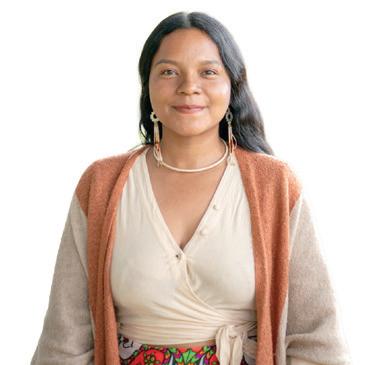
I want to support our traditional governance systems to recover and protect sacred sites, many of which are threatened by mining and monoculture. I dream of water sources running free and native animals thriving, so my community continues to thrive. I also want to continue learning about medicinal plants and pursue a doctorate to deepen my understanding of the integral connection between culture, nature, and human life.
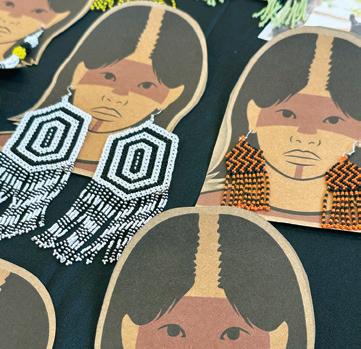
CS Staff
“
My journey as an artist has been built from lived experiences, identity, and a commitment to what I represent.
Each step I take carries not only learning, but also the responsibility of expressing stories, cultures, and struggles that are often not heard,” says Bepbere Pat-i Kayapó (Mebêngôkre Kayapó) from the Indigenous Territory in Southern Pará, Brazil. Kayapó is part of the Pykôre Indigenous Association, an artist collective, primarily involving women. He views his artistic practice as fundamentally intertwined with cultural memory and identity; a form of resistance that serves as a vital safeguard for his Peoples’ history and future.
Kayapó’s creative journey, which began by watching and imitating others, quickly developed into a profound commitment to his people. His work transcends mere aesthetics: it “carries identity, has purpose, and speaks directly both to those who understand it and to those who need to know this reality,” he says.
The materials Kayapó uses—beads, body paint, headdresses, photography, and video—are more than tools; they are instruments of cultural safeguarding. “The materials are very important to me. When I make a film about history or record the words of an Elder, I preserve them for the future,” he explains. By meticulously creating an archive to store his photos and videos, he ensures the continuity of Mebêngôkre Kayapó culture. “I hope young people will look for
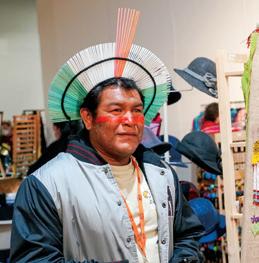
these records to see the photos and videos, learn more about our history, and learn from what has been preserved,” he says.
The safeguarding of culture is constantly challenged by external pressures. Kayapó identifies several obstacles facing Indigenous artists, beginning with a lack of appreciation. He notes that Indigenous art is “often still seen as ‘simple handicraft’ rather than as a rich artistic expression with history, meaning, and identity,” which hinders recognition. Cultural appropriation is equally problematic. “When people from outside use Indigenous symbols, designs, and cultural elements without understanding or respecting their meaning, [it] can devalue and even distort the culture,” he says. Limited access to exhibition spaces, economic difficulties, and deep-seated prejudice also make it difficult for Indigenous artists to be heard and respected.
Despite these hardships, artistic expression remains a cultural pillar. For Kayapó, and the women in his collective, jewelry and crafts are fundamental ways to keep tradition alive. A simple basket used to carry firewood and cassava holds deep significance because “it is not just an object: it carries everyday usefulness, memory, and the way the community preserves its knowledge,” he explains. Art fosters community unity, with creation becoming a collective process in which “the Elders teach, and the younger ones learn, strengthening respect and the bond between generations.” Art also affirms the intrinsic connection to the land; elements come from “the forest, rivers, and animals, showing respect and care for the territory,” Kayapó says.
For Indigenous Peoples in Brazil, where survival is often the struggle, these cultural expressions are vital. Issues such as land invasions and illegal mining, forest destruction, river contamination, and conflicts within communities are just a few of the threats they face. Despite the slow pace of land demarcation, violence against land defenders and leaders, and inadequate access to health care and education, the fight continues: “We want to show the world that we exist, that we have a voice, and that our culture is not for sale,” Kayapó says.
Kayapó Peoples are working to strengthen their culture through “sustainable projects, Indigenous education, and initiatives that value our way of life.” About the Cultural Survival Bazaars, he says, “We are taking our art and our culture to show it outside the community. This needs to be understood and respected. Respect is very important. Our greatest objective is to continue protecting our territory to keep our culture alive and guarantee dignity for our Peoples. Our cooperative has a very important partnership with the Bazaar. It is very important for us to show our art and culture.”
Attend the Cultural Survival Summer Bazaars—July 24-26, Tiverton, RI and August 1-2, Providence, RI. bazaar.cs.org
Honoring Indigenous cultures and values as we collectively dream and co-create a future of mutual flourishing because Ancestral Intelligence embodies the antidote to Artificial Intelligence and the extractive ideologies destroying our planet. A new podcast co-hosted by Dr. Lyla June Johnston (Diné/Tsétsêhéstâhese), Cultural Survival Board Member, and Aimee Roberson (Choctaw and Chickasaw), Cultural Survival Executive Director.